Pilate entered the headquarters again, summoned Jesus, and asked him, “Are you the King of the Jews?” Jesus answered, “Do you ask this on your own, or did others tell you about me?” Pilate replied, “I am not a Jew, am I? Your own nation and the chief priests have handed you over to me. What have you done?” Jesus answered, “My kingdom is not from this world. If my kingdom were from this world, my followers would be fighting to keep me from being handed over to the Jews. But as it is, my kingdom is not from here.” Pilate asked him, “So you are a king?” Jesus answered, “You say that I am a king. For this I was born, and for this I came into the world, to testify to the truth. Everyone who belongs to the truth listens to my voice.”
——————–
This is the Gospel selection that will be read aloud by a priest on the twenty-sixth Sunday after Pentecost, also called the Last Sunday or Christ the King Sunday [Proper 29], Year B, according to the lectionary for the Episcopal Church. It will follow one of two prescribed pairs of readings, either Track 1 or Track 2, which will be either the last song of David [2 Samuel 23] or the vision of Daniel shown four beasts being tried by Yahweh [called the Ancient of Days]. Those Old Testament readings will be accompanied by Psalms 132 and 93, which sing (respectively): “If your children keep my covenant and my testimonies that I shall teach them, their children will sit upon your throne for evermore;” and, “Ever since the world began, your throne has been established; you are from everlasting.” One of those two sets (depending on the pre-established path set for an individual church) will precede a reading from John’s Revelation, where is written, “I am the Alpha and the Omega,” says the Lord God, who is and who was and who is to come, the Almighty.”
I wrote about this reading the last time it came up in the lectionary cycle (2018) and those views can be read by clicking on this link. At this time, I will present different views than presented then. All views are valid, as Scripture is meant to have deep and evolving meaning; so, new insights will probably come three years from now.
The whole-view of this needs to be seen, in order to realize how John witnessed this conversation between Jesus and Pilate. The four Gospels are two sets of two perspectives. One perspective is that of immediate family (Luke and John) and the other is that of extended family (Mark and Matthew). Luke tells the account of Mother Mary, while John tells the story of the son of Jesus. Mark tells the perspective of Simon Peter, a cousin of Jesus, while Matthew tells the story of a sinner saved by Jesus, who became a disciple. In this whole-view, the extended family ran and hid out of fear when Jesus was being tried. Their absence distorts the real timeline of these events. Mother Mary was present with John when Jesus was before Pilate; but only Mary was allowed to witness Jesus before Herod Antipas. The disciples could then filter into a crowd setting, when Jesus was offered to the crowd, when it was to be him or Barabbas to be set free. Because John was able to hear the conversation between Jesus and the Roman governor of Judea, he was able to get close, while Mary (being a woman) was denied close access.
The reason John was allowed to write of this, when none of the other Gospel writers did, is it presents Jesus as a king. When asked if he was the “King of the Jews,” Jesus did not deny he was a king. His seeming avoidance to the question says the question was a false premise, simply because it used the term “Jews.” By saying, “My kingdom is not from this world,” Jesus was saying he could not be deemed a “king” in the sense that other human beings could claim that title. While he had been sent only to tell the lost Israelites the truth of the promised Messiah, his “kingdom” was not physical, but spiritual. It would be the soul of Jesus that would have dominion over other souls, individually and collectively, as their claim to flesh would be included in his domain.
For John to hear Pilate respond to Jesus’ use of the word “kingdom” and then clarify, “So you are a king?,” when John heard Jesus say, “For this I was born,” that was not stated as if Jesus had achieved kingship. The proof was clear; as Jesus’ thirty-something years on the earth had earning him no powers as an earthly king. The truth of what Jesus said to Pilate is this: Jesus was born to be executed as a sacrificial lamb.
The soul of Jesus “was born” when Yahweh took one of His purest elohim and joined it with the soul of Adam, making Adam be the birth of a Yahweh elohim. This is then said by Jesus to be “to testify to the truth,” which is personal knowledge of Yahweh in divine marriage. Yahweh is truth; so, all souls that are married to Yahweh are then His possessions, where each soul “belongs to the truth.” Those will then be the souls in which Jesus will be raised within as king [thus people today call him “Lord”], with his physical domain being within those spiritual kingdoms that are those souls-in-flesh who “listen to his voice.”
This reading is then closely aligned with the last song of David, who sang “The spirit of Yahweh speaks through me, his word is upon my tongue.” The “spirit of Yahweh” said David’s soul was married to Yahweh. Yahweh’s Spirit had been poured out upon David’s soul, which was a marriage that lasts forevermore. When David then sang, “his word is upon my tongue,” that is like John writing, “In the beginning was the Word, and the Word was with God, and the Word was God.” David spoke the word, because his soul had become the subject of Jesus – although that divine possession did not have that name at that time.
The reading from Daniel is a vision of the subjection of the elohim who refused to comply with Yahweh’s command to serve human souls. After the fallen angels [those who followed the beast of fire] were destroyed and subdued, the six days of Creation were finished. Then came the seventh day, when Yahweh made the soul of Jesus in the flesh we know as Adam. That plan for the seventh day was when the books were opened and religion would be found contained in Scripture. That means the spiritual element of Jesus is conveyed through the writers of the books opened, which then becomes one with the words they were divinely inspired to write. Jesus is the king whose kingdom is discernment of that truth contained in the word.
When John was divinely inspired to write in Revelation: “To him who loves us and freed us from our sins by his blood, and made us to be a kingdom, priests serving his God and Father, to him be glory and dominion forever and ever,” this refers to the marriage of a soul to Yahweh and the birth of Jesus the king within one’s being. The element of “love” denotes the bond that brings marriage to Yahweh. A soul is then “freed” from the worldly plane, where sins are the enslavement of souls to the four beasts. The blood is that of one’s sacrifice to Yahweh, like Jesus, like the paschal lamb, so one’s bodily flesh becomes infused with the spirit of Jesus. That is the resurrection of Jesus soul with one’s own soul – Jesus reborn as king over a soul in the flesh. That presence within makes Jesus be the high priest, with one’s soul being a priest that serves Father and Son. That union is everlasting life.
As a selection to be read aloud on the last Sunday after Pentecost, when one’s own ministry for Yahweh should already be well underway, the lesson here is to realize what Jesus said to Pilate. One needs to be a seeker of truth. That means one should yearn to learn to love Yahweh with all one’s heart, mind, soul and strength, so He will see one’s love for Him and propose marriage to one’s soul. With that divine union, a soul will merge with His Spirit. That becomes the source of truth. It means reading Scripture and being allowed to see the deeper meaning that is hidden from normal eyes. That then brings forth the resurrection of the soul of Jesus, as the king over one’s soul that has willingly entered into subjection to the truth. The Son is reborn back into flesh so the truth can be heard by other seekers of the truth, in apostleship. That is the point of ministry. Rather than play a role that kills Jesus, receive the Spirit and become Jesus reborn.
Grace to you and peace from him who is and who was and who is to come, and from the seven spirits who are before his throne, and from Jesus Christ, the faithful witness, the firstborn of the dead, and the ruler of the kings of the earth.
To him who loves us and freed us from our sins by his blood, and made us to be a kingdom, priests serving his God and Father, to him be glory and dominion forever and ever. Amen.
Look! He is coming with the clouds; every eye will see him,
even those who pierced him; and on his account all the tribes of the earth will wail.
So it is to be. Amen.
“I am the Alpha and the Omega,” says the Lord God, who is and who was and who is to come, the Almighty.
This is the Epistle selection to be read aloud on the twenty-sixth Sunday after Pentecost, also called the Last Sunday or Christ the King Sunday [Proper 29], Year B, according to the lectionary for the Episcopal Church. It will follow one of two parings of Old Testament and Psalms, either a Track 1 or Track 2 set, depending on the predetermined path an individual church has set upon. The Track 1 course offers a reading from Second Samuel, which is David’s last song. There he wrote, “The el of Israel has spoken, the rock of Israel has said to me: One who rules over people justly, ruling in the fear of elohim”. That will be accompanied by Psalm 132, where he sang, “Yahweh has sworn an oath to David; in truth, he will not break it: “A son, the fruit of your body will I set upon your throne.” The Track 2 pair will present a reading from Daniel, where his vision said, “I saw one like a human being coming with the clouds of heaven. And he came to the Ancient One and was presented before him.” That will be accompanied by a singing of Psalm 93, which sings, “Ever since the world began, your throne has been established; you are from everlasting.” All will accompany the Gospel reading from John, where Jesus told Pilate, “You say that I am a king. For this I was born, and for this I came into the world, to testify to the truth. Everyone who belongs to the truth listens to my voice.”
I have written quite deeply about this reading. I give a basic explanation as how I came to be able to read Scripture and see the truth of that written. I welcome everyone to read my background there, which I will not go into now. That commentary can be found at this link. Because I have discerned these five verses most deeply – segment by segment – I will not repeat those observations at this time. Instead, I will place a broader focus on this selection and show how it fits in with the other readings presented on the last Sunday after Pentecost, the ‘end times’ for Year B’s ordinary season.
One thing that I must point out is the translation that reads “Jesus Christ.” The Greek written is “Iēsou Christou,” which should not be translated as if John wrote the first and last name of Jesus. The Greek form that would say “Christ” is “Christos.” The form “Christou” is the genitive form of Christos, with the genitive case expressing possession. This means John wrote, “Jesus of Christ.” That is a statement that Jesus was possessed by Yahweh, as one “Anointed” divinely. The Greek word “christos” means: “anointed; messiah,” where “messiah” is an English variation of the Hebrew word “mashiach,” which means the exact same thing: “anointed.” The capitalization must then be seen as a divine level of importance placed on “Anointment,” which means by Yahweh. The man named “Jesus” was then “one of” all those souls who had likewise been “Anointed” by Yahweh; and, David was one who was so “Anointed.”
It is also important to point out that the word translated as “spirits” [“seven spirits”] is written “Pneumatōn,” where the capitalization has been erased in translation. Again, the capitalization must be seen and understood as a divinely elevated state of “spirit,” which makes it be the spiritual oil of Anointment, as Yahweh’s “Spirit.” The number “seven” (as I wrote about last week) has to do with the “completion, perfection, and rest” of a cycle. Thus, when the “perfection Spirit” is before the throne of Yahweh, it is importantly [use of “kai”] that which is displayed in Jesus, who was “of the Anointment” by that “perfect Spirit.”
The plural number of “Spirits” must be seen as all who appear before the throne of Yahweh in Judgement. It those are truly reflecting the “completion Spirits,” of those souls united as one with Yahweh, as “perfected Spirits,” those cleansed of all past sins through submission in divine marriage; and those “Spirits able to rest” knowing their service to Yahweh had been done, they all become the souls of the “faithful,” or those who have displayed the “obedience” of union and the “loyalty” of servitude [all uses of “pistos”]. This is because those souls, formerly in bodies of flesh, prior to death, are “witnesses” [from “martys”], where that denotes a personal experience as Jesus reborn within their souls, with all having that presence as the “Christs of” Yahweh.
This then reverts back to the segment that says, “kai from Jesus of the Anointed,” such that the “perfected Spirits” will all have been resurrection of “Jesus” [a name that means “Yah[weh] Will Save”], where that soul possessing one’s own soul [two souls in one body of flesh] is what makes all be “of Anointment” from Yahweh. This presence of the soul of Jesus, in union with one’s own soul [like twins] then makes belief to transform into true “faith,” which obediently allows the soul of Jesus to rule over one’s body of flesh [divine possession], all of which is personally witnessed by the host soul, experiences through the eyes and ears of its flesh.
When John wrote “firstborn of the dead” [“prōtotokos tōn nekrōn”], the use of “firstborn” must be seen as the Passover demands, which Moses said would bring Yahweh as the angel of death, so all firstborn males of families not marked by the blood of the sacrificial lamb would die. The “firstborn” would also be the demand of those so marked, where their firstborn male children were to be dedicated to serve Yahweh as a priest [Samuel is an example of this sacrifice of the “firstborn”]. The element of “dead” must be seen as what a soul in a body of flesh is marked by, as the body of flesh is like the doorway to the soul within. When that body of flesh dies, then the soul is released for Judgement, where it then stands before the throne of Yahweh. To be the “firstborn of the dead,” then one is covered in the blood of Jesus – the sacrificial lamb – so one’s soul is spared the repeat of death, which is Judgment of reincarnation [or worse].
The point I want to make now is the beginning what says, “him who is and who was and who is to come” and the end that says, “who is and who was and who is to come” repeats the eternal way of Judgment. All souls stand before the throne of Yahweh after release from their bodies of flesh. All will be judged as to whether or not those souls married Yahweh, received His Spirit and gave birth to His Son Jesus. The only way to secure Salvation is to follow this path; as it has been this way from the beginning, and will be that way until the end. To see John’s Revelation as a future thing to worry about is wrong. The future is always one’s own pending death and whether or not one has sought Yahweh in marriage, to become Jesus reborn and live a righteous life that earns Salvation.
When this reading is paired with David’s last song before his death, one needs to see that theme of a soul being released for Judgment. In the verse of his song [2 Samuel 23:3] that is translated to say “the rock of Israel,” the “rock” needs to be read as the “cornerstone” that becomes set in place, which ensures “Israel” means one “Who Retains Yahweh,” as one of His elohim. To be a Yahweh elohim is to be a soul married to Yahweh’s Spirit; and, to have the “rock” that makes this stay put, that is being resurrected as Jesus.
In David’s last three verses [5-7], his focus is on those who reject marriage to Yahweh, so their souls have become the “firstborn” who do not escape the Judgment of Yahweh, so they will be made to die again. David’s metaphor for them was “thorns,” which choke the desire to become saved by righteousness out of them and others surrounding them. This echoes the words of John, who wrote, “even those who pierced him; and on his account all the tribes of the earth will wail.”
In the Daniel reading, the first two verses speak of the Judgment Yahweh made against the evil spirits, who were not “seven Spirits,” but instead the elohim of the first six days of Creation. I see those verses as the Judgment against Satan [or Lucifer, or Azael], who was the beast that antagonized mankind, despite the commands of Yahweh. While Satan was cast into the inner darkness of the earth, the other three beasts were stripped of their abilities to attack humanity; but they could lure human souls to desire worldly things, possessing them demonically as being what those souls sought. This, again, matches the piercing and wailing of which John wrote.
As for the last two verses of Daniel, which are clear metaphor of the coming of Jesus, John’s metaphor matches well with this being all souls who stand before the throne of Judgment, after having welcomed the soul of Jesus coming from heaven, becoming a human being again in the flesh of another. It is that new body of flesh that becomes the kingdom of Jesus, the soul of a high priest merged with one obedient to Yahweh’s Will.
When John wrote in his Gospel of Jesus telling Pilate, “My kingdom is not from this world,” that means Jesus is not a king of matter or as a soul itself in a body of flesh. Jesus would die, so his soul stood before the throne of Yahweh and was judged as pure. With that Judgment, the soul of Jesus would be the soul sent to all souls who would receive Salvation, from the beginning to the times of Judgement, to the End Times, with all deaths of humans in flesh being the same repeatedly.
As the Epistle reading to be read aloud on the last Sunday after Pentecost, when one’s own personal ministry for Yahweh should already be well underway, the lesson is to let Jesus be one’s King, which means one’s soul must submit to Yahweh in loving marriage, so Jesus can come into one’s soul, as the Anointment of Yahweh upon His beloved. This is not only a guarantee of Salvation at Judgement, but the day one begins to serve Yahweh as His Son resurrected in the flesh. Ministry is how others are led to Salvation; and, one’s actions in life will be known when one’s soul stands before Yahweh to be judged.
9 Let your priests be clothed with righteousness; *
let your faithful people sing with joy.
10 For your servant David’s sake, *
do not turn away the face of your Anointed [mesiheka].
11 Yahweh has sworn an oath to David; *
in truth, he will not break it:
12 [11] “A son, the fruit of your body *
will I set upon your throne.
13 12 If your children keep my covenant
and my testimonies that I shall teach them, *
their children will sit upon your throne for evermore.”
14 13 [For Yahweh has chosen Zion; *
he has desired her for his habitation:
15 14 “This shall be my resting-place forever; *
here will I dwell, for I delight in her.
16 15 I will surely bless her provisions, *
and satisfy her poor with bread.
17 16 I will clothe her priests with salvation, *
and her faithful people will rejoice and sing.
18 17 There will I make the horn of David flourish; *
I have prepared a lamp for my Anointed [lim·šî·ḥî]
19 18 As for his enemies, I will clothe them with shame; *
but as for him, his crown will shine.”]
——————–
This is the accompanying Psalm for the Track 1 Old Testament reading from 2 Samuel 23 (David’s last song). If this path has been predetermined for an individual church, then it will be read aloud in unison or sung by a cantor on the last Sunday after Pentecost, also called Christ the King Sunday [Proper 29], Year B, according to the lectionary for the Episcopal Church. The last song of David includes this verse: “Is not my house like this with God? For he has made with me an everlasting covenant, ordered in all things and secure.” That pair will precede a reading from Revelation, where John wrote: “Grace to you and peace from him who is and who was and who is to come, and from the seven spirits who are before his throne, and from Jesus Christ, the faithful witness.” All will accompany a reading from the Gospel of John, where we read of Jesus before Pilate being asked, “Are you the King of the Jews?” Jesus answered, “Do you ask this on your own, or did others tell you about me?”’
This Psalm announces in the introduction of verse one that it is a song of ascents. As such, this Psalm would have been commonly sung by all Israelites proceeding up the steps of Mount Ophel, rising about the City of David, to where the Tabernacle had been placed, with the Ark of the Covenant within. This means all the Israelites would sing these words of David as their own words, confessing their commitment to Yahweh in marriage, their souls one with His Spirit. Thus, those who sang these words were truly those “Who Retain Yahweh as His elohim” [the meaning of “Israel”].
For some reason, the Episcopal Church has changed the numbering of this song of praise, dividing verse eleven in two, creating a verse twelve that is actually still verse eleven. This then offsets the remainder of the verse numbers, making an eighteen-verse psalm appear to be nineteen. The source for the non-psalms used by the Episcopal Church [the NRSV] shows Psalm 132 as having eighteen verses, not nineteen. The actual source is the Book of Common Prayers, which I imagine the Episcopal Church owns the copyrights for, implying that organization is the owner. Regardless, I have restored the correct verse numbers in bold type, within brackets.
In two places [verses 10 and 17] the NRSV has translated forms of “mashiach” as “your Anointed” and “my Anointed,” where the added capitalization [Hebrew has no capital letters] makes this a recognition of “your Christ” and my Christ,” when Greek is applied to state “Christ.” I have restored the Hebrew transliteration and placed as a replacement word “messiah.” That is the typical translation of the Hebrew into English; and, it is important to realize this means being “Anointed,” not with physical oil but with the Spirit of Yahweh, which come from a soul’s marriage to Him. David knew of that anointment, as would all who truly sang these words while ascending the steps to sacrifice before Yahweh.
The Episcopal Church has allowed church rectors to make the decision to save time by making verses fourteen through nineteen [actually verses thirteen through eighteen] as optional reading. This is why they have applied brackets before the first word in verse 14 [13] and after the last word in verse 19 [18]. Here, it is important to see the pronoun focus changing in verse eleven, from David singing for himself and other Israelites, to Yahweh singing in return. The first person use of “I” must be understood as a statement or “I Am,” which is not David, but Yahweh within him. To not read verses thirteen to eighteen would mean to cut Yahweh off, as if His words to us are unimportant.
Finally, at six places in these eighteen verses, David wrote the proper name “Yahweh.” I have restored each of those with bold text. The NRSV has translated them as some variation as “Lord.” This is incorrect and misleading, as Yahweh is Yahweh. One either knows His name from marriage to Him, so one takes on His name as one of His elohim; or, one does not truly know Him. Marriage to Yahweh brings on His influence over one’s soul, causing one to please Him in a loving relationship. Yahweh is one’s Husband, but one’s soul is the “lord” of one’s body of flesh. That is until one’s soul gives rebirth to the Son of Yahweh, which is the soul of Jesus, unknown as a proper name to David and the Israelites. The name Jesus means “Yah[weh] Will Save,” which says the divine soul sent by the Husband to possess the wife becomes one’s true “Lord.” As a song of praise sung on Christ the King Sunday, when David and Yahweh sing praise to the “Anointment,” that outpouring of Spirit is the soul of Jesus taking a position as the high priest and the king of the flesh, all through the divine union of a soul to Yahweh’s Spirit. Therefore, it is incorrect to call Yahweh one’s “Lord,” as that diminishes His greatness and erases the value of Jesus’ soul being resurrected in all Yahweh’s wives.
It is always important to realize Scripture was written in languages that are more complex than English. All English translations become paraphrases, even when literally translated, so the order of the words originally written become important and should not be changed. The application of syntax differences make the beloved translations that people who only speak English know and memorize become little more than a concept derived by a translator, who asks himself or herself (or itself), “Now, how would someone speaking English say this?” The truth is always closest to the exact written word, with the complexities of the original languages [Hebrew and Greek] making one selected word in English be a guess, with other possibilities always still applicable and viable. This means divine Scripture is written by souls married to Yahweh, speaking in divine tongues, which require those who understand to likewise speak in the language of Yahweh, through union with His Spirit. Those who memorize English and put their trust in translators, putting zero time in investigating the truth, to elevate their faith, are those who are more consumed with serving self, than serving Yahweh.
In my effort to eliminate as much of the paraphrase as possible, I have translated all eighteen verses into literal English. This song of ascents can now be read as stating the following, with my comments stated after each verse:
1. “remember Yahweh David , along with all his afflictions .”
The element of “remembrance” needs to be seen as relative to “mind.” This is then applicable as a statement to love Yahweh with all one’s mind. When all one’s mind is in love with Yahweh, then one’s mind is merged with the Mind of Yahweh, so all thoughts one has from Yahweh are instantly known. These divine thoughts will “accompany” those which are temptations to do evil. The word translated as “afflictions” means “to be bowed down to,” such as one’s submission. When one “remembers Yahweh,” then one’s submission is to do the Will of Yahweh, not one’s self-will.
2. “who he swore Yahweh ; vowed , to the strength of Jacob .”
This verse sings of the marriage vows between the soul of David and Yahweh. When a minister reads questions as to one’s commitment to another, when one says, “I do,” that is swearing an oath of forever commitment in marriage. For the marriage of a soul to Yahweh, the “vows” are those of the Covenant or Mosaic Law. It is the marriage of a soul that defeats evil influences, as Jacob [the Supplanter] knew, when he defeated his demons and became known as Israel. The “strength of Jacob” is the union of Yahweh’s Spirit forevermore upon his soul.
3. “if I will come into the tent of my house ; if ascend , upon the couch of my bed .”
The element of a “tent” or “chamber of my house,” where one would find a “bed” or “couch,” indicates the body of flesh, in which the soul resides. Twice in this verse the Hebrew word “im” is used, which states “if.” That means David sang of it being a choice that must be made, where the first person “I will come” is not a forced union, but one willingly made. The “if” is then stating this is only true when the decision made by David is also done by others. It is a hypothetical, in that sense.
When “chamber” and “couch” is written, the symbolism acts in two ways. First, marriage means a physical union, where two join to make a third – a child. This means the “bedroom” is where a marriage is consummated. Second, the symbolism of sleep, which is done in a “bedroom,” is death. The “if” is then whether or not one’s soul commits to the symbolic death of self, just as a wife submits her self-will to please her husband. In order to make a third, one must first die of self-will and receive the seed of the Husband. That consummation will bring forth the Son of Yahweh in the form of a man – the child of Yahweh.
4. “if I will give sleep to my eyes ; to my eyelids slumber .”
Here, the metaphor of self-sacrifice is shown in “sleep,” which symbolizes “death.” The way one saw oneself has died. Divine marriage brings forth a new way of seeing, which is through the eyes linked to the Mind of Yahweh. The “eyelids” symbolize the daily recycling of life and death, through a wake state and a sleep state. By not having the eyelids cover and uncover one’s sight, this is a statement of vigilance, which is the presence of Jesus within one’s soul, who always keeps watch.
5. “until I find standing Yahweh ; a tabernacle , for the strength of Jacob .”
In this, the word I have translated as “standing” is “maqom,” which better means “a standing place.” Here, the element of “standing” must be seen as raised, not fallen. The symbolism of “standing” is then a divinely placed “Yahweh.” By finding that within one’s being, one’s body of flesh then is transformed into “a tabernacle,” as a “dwelling place” [from “mishkan”] within – soul in body. It is this internal presence (not something left outside) that becomes a reflection of “the strength of Jacob” – earning the name of Yahweh [“Israel”].
6. “behold! we heard of it in Ephrathah ; we attained it , in the fields of the forest .”
Here, the name Ephrathah means “Fruitful” and is associated in Old Testament writing as a place near Bethel, also Bethlehem in Judah, and here the scholarly thought makes it be Zion or Jerusalem. This confusion means the base meaning of Fruitful must be the way to read this verse. Seeing that, “behold! is the realization of the “strength of Jacob” being his encounter with his own soul (which he defeated), which took place in Bethel [Hosea 12:4], with Bethel meaning “House Of God.” Bethlehem is where Ruth married Boaz and brought forth the fruit that would be Samuel. Thus, it is not important as one place, but wherever a soul will become “Fruitful” as a wife of Yahweh. David then proclaimed he and others like him (“we attained it”) had achieved the same “strength of Jacob,” thus were “Fruitful” wives of Yahweh. This included the places where fruit became food – “fields” and “trees” – such that Israel was a place of spiritual food.
7. “let us come to be his dwelling place ; let us bow down , footstool for his feet .”
In this verse, the tendency is to translate “nā·ḇō·w·’āh” as “let us go,” rather than its viable alternative: “let us come.” To use “god” leads to the thought of a fixed external structure, which one can enter. This misdirects a marriage as something one witnesses, not engages. The better way to read this says, “let us come to be his dwelling place,” which makes oneself be the building which Yahweh enters. In order to do that, one must submit one’s soul to Yahweh, such that one lowers one’s ego (head) and “worships” His holy presence. By “bowing one’s head” to Yahweh, one’s eyes only see His feet, which makes on kneel to be His “footstool.”
8. “stand up Yahweh in your resting place ; you , and the ark of your might .”
Here, again, is a word saying “stand up, arise, make a stand,” all of when must be understood as spiritual directions, not physically getting up from a laying or sitting position. It means to “elevate” one’s soul, in order to allow for the presence of Yahweh within. Again, the use of “resting place” becomes metaphor for “sleep,” which symbolizes the death of self-will. It means for one’s soul to “take a stance for Yahweh,” one has to lie down before Him. This symbolizes death and rebirth, in a reverse order of statement. Here, a new “you” becomes the sole focus, as “you” are no longer who one was, but who one has become – in the name of Yahweh. That new “you” is with Yahweh seated on His throne within one’s soul, as King, placing all His powers symbolized by the “ark” at one’s disposal, as He commands.
9. “your priests let be clothed in righteousness ; and your saints let shout for joy .”
In this, the use of “priests” [from “kohen”] is reference to what all whose souls marry Yahweh become. This is not a Levitical designation by David. All tabernacles require a priest to maintain it, so that is the role played by a soul. The clothes of righteousness are not physical garments, such as those worn by Aaron and the Levites, but the presence of Yahweh’s Spirit. Therefore, a “kohen” becomes a “chasid,” which is a “saint, godly or pious person.” This means the influences of the worldly realm cease to affect a soul married to Yahweh, so all past sins are wiped clean and no new ones will ever replace them. The shouting for joy is both the exuberance of the presence of Yahweh known, as well as the promise of eternal salvation also known.
10. “so that David your servant ; not do turn away , face of your anointed [messiah] .”
Here, the Hebrew word “ba-abur” is translated as “so that,” but it can equally say “for the sake of, on account of.” This means that the focus is on all being like David, “so that” all will be equally “servants” of Yahweh, shouting for joy, clothed in the righteousness of Yahweh’s Spirit. That means commitment, so a soul cannot “turn away,” due to deep, spiritual love. Whenever the Hebrew word “paneh” [“face”] is found, one must see this as a confirmation of the First Commandment, where “face” is a requirement relative to how one approaches Yahweh. One’s “face” must be the face of Yahweh, and Yahweh alone, as no other “faces” are to be seen by Him. Yahweh “will turn away” if the “face” of any other gods [including oneself worshiping “self” as a god] are worn. Only those who wear the “face” of Yahweh will become His “Anointed” or a “Messiah.”
11. “has sworn Yahweh to David ; faithfulness not he will turn from it of the fruit your body , I will set upon throne yours .”
Again, the use of “sworn” [repeated from verse 2] must be seen as the marriage vows, which are the Commandments, with only wearing the “face” of Yahweh being the first “sworn.” To then say “Yahweh to David” means the agreement is between Yahweh and a soul in the flesh. The name “David” means “Beloved,” so that “sworn” is an act of love, thereby marriage. The Hebrew word translated as “faithfulness” is “emeth,” which also means “truth” and “firmness.” This says “faithfulness” comes from knowing the “truth” and the “firmness” that is the presence of Yahweh’s Spirit. One will not ever attempt to wear any face other than that of Yahweh; and, in turn one’s body will become the “fruit” that walks in ministry as Jesus reborn, after Jesus becomes the “face” of one’s soul, in one’s body of flesh.
It is at this point that the Episcopal Church adds a new verse, subdividing verse eleven in two. The aspect of the “fruit of your body,” added to “will I set upon your throne” [NRSV], needs to be set apart because this reading selection is to be read on Christ the King Sunday. To be Jesus reborn means the soul of Jesus comes to one “Anointed” [thus a “Christ”], where Jesus is set by Yahweh upon the “throne” of one’s soul-flesh, becoming one’s “King.” The separation is due to the elders of the Church wanting to set this segment of verse eleven as separate and worthy of note for this day.
12. “if will keep your sons my covenant and my witness this ; I shall teach them their sons forevermore forevermore .”
Here is where the voice of Yahweh speaks. Because we know that Yahweh has now set His Son within one like David, upon a throne as king, this is when Jesus begins to speak as “I,” having been given that right for the Son to speak for the Father. In that, the plural number of “your sons” [“ḇā·ne·ḵā”] is Yahweh speaking of all who will become Jesus resurrected within their souls. Each [regardless of human gender] will be “sons” brought about by the Covenant of marriage. As His “sons” reborn through marriage, all will “witness” or see the truth of Yahweh through the Mind of Jesus, where this vision is spiritual insight. It is, therefore, Yahweh who will teach all His “sons” that become Jesus reborn in the same way, over and over, eternally being the same resurrection of the Jesus soul in the multitude of souls that will marry Yahweh.
13. “when has chosen Yahweh zion [a dry place] ; he has desired , for dwelling place his .”
In this verse, the meaning of “zion” must be understood as not being a mythical place, or a physical place such as Jerusalem or Israel. The name means “Dry Place, Sign Post, Tradition; or, Fortress.” While all can find merit in translation, I see the word root that means “Dry Place” as symbolizing a soul being no longer overrun with the ebbs and flows of emotions, from which fears, despairs, sensual urges, and hungers satiates bring excitement and pleasures. When a soul has turned off that flow of ‘weather’ related rainfall, the soul can seek spiritual nourishment from a higher source. Thus, “when one has chosen Yahweh [and He has chosen one in return], the soul becomes arid of desires – other than a desire for Yahweh. This leads to the segment that focuses on that. It becomes the truth of how one is not led by physical desires, only those of the soul. When Yahweh is married to a soul, the “dwelling place” is purely spiritual, with the time left in a body of flesh being fleeting, in the long run.
14. “hereby in my resting place forever forever ; here I remain , when I have desired it .”
This is the promise of eternal life. The use of “I” is Yahweh speaking through a soul that has become possessed by the Son Jesus. Once merged with the soul of Jesus, a soul becomes a Yahweh elohim and will always serve Yahweh as an angel, in whatever need that may bring (forever and forever is a long time). All of this is due to the love and “desire” of servitude to Yahweh.
15. “her game abundantly to bless I will kneel ; her in want , I will satisfy with bread .”
In this verse, the pronoun usage turns to the feminine, as “her game” and “her in want.” This becomes the voice of Yahweh (spoken through the Jesus Mind) that relates the soul He is married to as a wife. This “her” is a reflection on all souls, regardless of what sex organs their bodies of flesh might have. A soul in a body of flesh is feminine essence, due to the femininity of matter [death] clinging to that soul [neuter gender, when in the flesh]. This means “her game,” which is a hunting reference that makes one’s body of flesh be seen as sacrificial, like a slaughtered lamb. It is then through that sacrifice of the flesh that abundance will be allowed spiritually, due to the presence of Jesus causing the flesh to “kneel” in service to Yahweh. The Hebrew word transliterated as “’eḇ·yō·w·ne·hā” means “her poor, her needy, her in want,” which is a stand-alone statement of the desires of the flesh, which do require needs being met. This says the presence of Jesus within will bring forth the spiritual food to sustain a soul in a body of flesh, where “bread” or “food” is how Jesus said, “I am the bread of life. Whoever comes to me will never go hungry, and whoever believes in me will never be thirsty.” [John 6:35]
16. “and her priests I will clothe with deliverance ; and her saints , aloud shall shout for joy .”
Here, Yahweh is speaking through Jesus, repeating that said by David in verse nine. Again, the pronoun usage is feminine. Once more, this has nothing to do with human genitalia. A “her” is a soul born into human flesh – all genders. When those souls have married Yahweh, they then become His “priests,” which makes them become His “saints,” after the soul of Jesus possesses their souls. Being now “clothes with deliverance” says the clothes of “righteousness” – the covering of Yahweh’s Spirit – are now the clothes of souls reborn as Jesus – the name that says “Yah[weh] Saves.” The “clothes of deliverance” says one has been reborn as Jesus, the Son of man again in the flesh. The “shouts for joy” are then the ministry that attracts seekers to hear the Word of truth, as told by Jesus.
17. “there I will make sprout the horn of David ; I will prepare a lamp , for my anointed [messiah] .”
Following verses where the feminine pronoun has been incorporated into the lyrics, that needs to be seen here as a parallel to the parable told by Jesus, that of the ten bridesmaids or ten virgins. The “horn of David” is the “horn” carried by Samuel to Bethlehem, to anoint one of Jesse’s sons with the oil the “horn” contained. In this way a “lamp” prepared becomes the light kept lit by a seeker who is engaged to be married to Yahweh, where the oil of those “prepared lamps” is the love to know more. The light that shines keeps a lover’s heart open and awaiting more revelations of Yahweh’s truth. Those who will hold those “lamps” in good working order [full of oil, with a wick that is lit and a flame that is shining brightly] will then have the oil from the “horn of David” poured out upon their souls, when the day of spiritual marriage comes and the bridegroom has arrived for those prepared. When “anointed,” those souls all become Messiahs or Christs, and the presence of the soul of Jesus justifies that title.
18. “his enemies I will clothe with shame ; but above himself , shall sparkle his crown .”
Again using the metaphor of the parable of the ten virgins, the “enemies” [from “oyeb”] will be those who claim to be servants of Yahweh, when most could not pass a one-question test that asked, “What is the name of your God?” So many Christians claim to worship Jesus, while doing little more than lip service to Yahweh [calling Him “Lord”]. Their “prepared lamps” have no oil in them; and, they do not care to go down to the marketplace and buy some books that are somebody else’s opinion on religious matters, to put on their bookshelves at home. They are “enemies” of Yahweh because they do nothing to promote marriage to Yahweh in their children, family, or neighbors. They will be left behind, which is the meaning of the “shame” their souls will know on Judgment Day [it comes for everyone, one at a time]. This then leads to the exception [“but”], which are those souls who are joined with the possessing soul of Jesus, who becomes the soul “above himself” [a “self” equals a “soul”]. It is this ‘twin condition’ that is what has then been depicted in religious art, where a halo is the “crown” worn by Saints. This is the soul of Jesus emanating from the flesh of a soul married to Yahweh, which says “Christ the King” walks the earth again.
As the Psalm to be sung in accompaniment to the reading of David’s last song, on the last Sunday after Pentecost, when one’s own personal ministry for Yahweh should already be well underway, the lesson is clear. David sang, as did his one Jesus within, saying one’s soul must submit to marriage to Yahweh, so Jesus can be resurrected and lead those wives of Yahweh to eternal life. That does not mean running around showing all your friends how big the engagement ring you received is, as divine marriage is not about how good you look or how wonderful you might be in bed, or how rich you will become and how easy life will be. Marriage in these modern times has degenerated into arrangements not expected to last more than a few years, with agreements about who gets what, for nothing. Marriage means wearing the face of Yahweh and tossing your own face away, forever. It means love is what joins a soul to Yahweh. It says love is what leads that soul to be like Jesus and enter ministry, teaching others how to fall in love with Yahweh and become His bride.
3 [1] Ever since the world began, [2] your throne has been established; *
you are from everlasting.
4 [3] The waters have lifted up, Yahweh,
the waters have lifted up their voice; *
the waters have lifted up their pounding waves.
5 [4] Mightier than the sound of many waters,
mightier than the breakers of the sea, *
mightier is Yahweh who dwells on high.
6 [5] Your testimonies are very sure, *
and holiness adorns your house, Yahweh,
forever and for evermore.
——————–
This is the accompanying psalm to the Track 2 Old Testament selection from Daniel 7, which will be read aloud in unison or sung by a cantor on the last Sunday after Pentecost, also called Christ the King Sunday [Proper 29], Year B, according to the lectionary for the Episcopal Church. If an individual church has predetermined to be on this path, this it will follow verses that include: “As I watched, thrones were set in place, and an Ancient One took his throne.” That pair of readings will precede one from Revelation, where John wrote, “To him who loves us and freed us from our sins by his blood, and made us to be a kingdom, priests serving his God and Father, to him be glory and dominion forever and ever. Amen.” All will accompany the Gospel reading from John, where Jesus told Pilate, “My kingdom is not from this world. If my kingdom were from this world, my followers would be fighting to keep me from being handed over to the Jews. But as it is, my kingdom is not from here.”
This is a five verse song of praise to Yahweh, not six. The Episcopal Church has split the first verse into two full verses and part of verse three. Verse two is the second half of what they show as verse three. That adds a number that is not present in the NRSV source they use. I have adjusted the numbering by placing the appropriate numbers in bold type, within brackets.
Also, according to the BibleHub Interlinear page for Psalm 93, they add the title to this psalm that says, “The Lord Reigns!” The NRSV places this title before Psalm 93: “The Majesty of God’s Rule.” These uses of “Lord” and “God” are paraphrases, as nowhere in this psalm are “lord” of “god” written. Five times, in five verses, David wrote the specific name “Yahweh.” That must be any presumed title for this song of praise: Yahweh Reigns!
This title comes from the first two words written by David [“יְהוָ֣ה מָלָךְ֮”], which transliterate as “Yah·weh mā·lāḵ.” Those words translate into English as stating (literally), “Yahweh reigns.” Because Yahweh is known to be the Father, as the supreme god, He is masculine essence; so, a substitution for “reigns” would be “in king.” In the word written by David that specifically names the one who reigns, as king, it lessen this specific naming to refer to Yahweh as a “lord” or “god.” That is because it says the translator: 1.) Does not personally know Yahweh; and, the translator lumps Yahweh in with all the lesser elohim, who are eternal angels, a.k.a. gods. Yahweh made all the elohim, so He is the Creator; and, that elevates Him to greater than god status. Plus, when Moses asks, “Who should I say sent me?” the answer was not tell them a lower “lord” or one of the many “gods.” He specified “Yahweh” [“יְהוָ֣ה”] and throughout Old Testament Scripture that specific name is written (as seen here in Psalm 93).
Because the NRSV translation is weak and absent of any specific naming of Yahweh, I will now present a literal translation of these five verses. Following each verse, I will then add commentary as to what David meant.
1. “Yahweh reigns is clothed is clothed Yahweh strength encompassing ; also set firm the world , not so it be shaken .”
After beginning “Yahweh reigns” or “Yahweh is king,” the word (transliterated) “lā·ḇêš” is repeated, meaning “is clothed is clothed.” Here, one needs to be cognizant that Yahweh can only be understood in human terms, where humans have forms (bodies of flesh), which are so weak (compared to animals) they cannot exist in the climates of the world without wearing clothes (they have no hides, pelts, or fur to speak of). This repetition following a statement about “reign” means “is clothed” first becomes the cloak of presence that human souls who serve Him as king wear. The repetition a second time means this “clothing” is not only relative to the servant, but the master is denoted “king” by those He allows to wear Him. This says “is clothed is clothed” reflects the union of two joined as one (divine marriage). This then is the presence of “Yahweh” on earth, which is the “strength” of His kingdom, while also being the “strength” within each subject that makes up that kingdom. This presence of “Yahweh” is “strength encompassing” all.
Following a semi-colon mark, a separate but aligned to this theme of “reign” makes it clear where Yahweh’s kingdom is. It is “set firm in the world.” In that, “the world” must be seen as where souls fill dead matter that is flesh. The elements of a human body are all from the “earth,” thus physical and material. While “the world” is one of the elements of the Creation, which Yahweh ordered His elohim to make; and, all created in ‘six days’ would become “set firmly” in place, one aspect of His Creation was for “the world” to be where souls (eternal entities) would be released to enjoy “the world,” until death returned the souls to Yahweh for judgment as to where the souls would go next.
The final segment of words in this first verse then says this element of Creation would be “set firm,” “not so it would be shaken.” While that becomes a set-up of life on earth, where souls would be released and returned to “the world” through reincarnation, the advent of religion was a creation of Yahweh, when He made the first man and woman (Adam and Eve) who would be priests, set to teach “the world” about the “reign” of “Yahweh.” Once the seventh day began, Yahweh became the king of a kingdom of two souls in the flesh, which would grow greatly over time. They taught other souls in the flesh how “to be clothed” and how to “clothe others” in the presence of Yahweh as their king; so, the kingdom of Yahweh grew greater and greater. Once a soul marries with Yahweh’s Spirit, that union “not so it would be broken.”
2. “set firm your throne at that time ; from antiquity you .”
In this verse the repetition of “set firm” [“tik·kō·wn” in verse 1] is continued in verse two [as “nā·ḵō·wn”]. Now the focus has moved from “the world” to “the throne.” One must realize that “a throne” is where a king sits, thus from where “Yahweh reigns.” The use of “at that time” [“mê·’āz”] is not only when Yahweh ordered His Creation, but when the seventh day was when He personally made man and woman to be where His “reign” would reside. Therefore, “from antiquity” [where Daniel named Yahweh “Ancient of Days”] means from the beginning of religion teaching a soul to serve Yahweh as king, to “you,” who sits reading these words. “You” would know nothing of Yahweh had He not “set firm” His “throne” in souls walking the earth in human flesh.
3. “have carried the rivers Yahweh have lifted the streams their voice ; take up the canals their pounding waves .”
In this verse there are three uses of “nə·hā·rō·wṯ, from “nahar,” which means “a stream, river” or alternatively “canal, current,” implying “a flood.” Also repeated three times is “nā·śə·’ū” [once as “yiś·’ū,” all from “nasah”], which means “to lift, carry, take,” while implying “accept, advance, arise, able to, armor, suffer to bearer, up, bring forth.” The use of “voice, sound” [from “kol”] and “pounding waves” all tie together to show the fluidity of Yahweh’s presence, where the outpouring of His Spirit follows the course of His subject, who then become the voice of Yahweh that waters the land and makes it fertile with the knowledge of Yahweh. The “pounding waves” becomes metaphor for the heartbeat that denotes love for Yahweh, by a soul that seeks divine marriage.
4. “from the sound of waters many , more majestic the breakers of the sea ; great height Yahweh .”
The element of “voice, sound” [from “qō·w·lām” in verse 3] is then made the focus of verse four [as “miq·qō·lō·wṯ”]. This says the “sound” for Yahweh sings out His name, just as David’s psalms sing praises to Yahweh. This is from the “waters” [“mayim”] that make up the bodies of flesh on the earth. This “sound” then comes from “many.” At the time of David, the “many” were the true Israelites. The meaning of that name [“He Who Retains Yahweh as His elohim”] is then compared in metaphor to the “breaker waves of the sea.” Here, the use of “waves” connect this verse to verse three, where were “lifted up the canals their pounding waves.” The rhythm of Yahweh’s presence is “more magnificent” than even tsunami waves caused by earthquakes under the Mediterranean Sea. As tall as those crashing waves might be raised, they are miniscule in comparison to the heartfelt “waves” of Yahweh’s Spirit upon one’s soul.
5. “your witnesses do confirm abundance , your house befits sacredness ; Yahweh length of day .”
In this verse, all the “voice” and “sound” of verses three and four are stated as “your witness,” which can equally be translated as “your testimony.” In that, the pronoun “your” can be seen both from the perspective of Yahweh within His wives and those through from whom Yahweh speaks, from that marriage. The use of “witness” means a personal experience is the source of “testimony,” not hearsay. All who speak of the presence of Yahweh within “confirm” the truth of Him and all the “abundance” that comes with marriage to His Spirit. Therefore, all who give such “testimony” are where Yahweh resides, each a “house of the holy,” as Saints born onto the earth. The final segment of words then becomes a statement both of the eternity of those souls in submission to Yahweh, but also to the fact that His presence become the “length of day,” when only the light of truth shines forever. “Yahweh length of day” says the darkness of death has been overcome, through the promise of salvation; and, it says the remainder of one’s life will be to shed the light of truth to seekers, in ministry to His name.
In this song of praise that accompanies the Daniel reading that tells of the meeting of the elohim, who were all seated on thrones surrounding Yahweh, where judgment would be cast upon Satan and his wayward angels [at the end of the sixth day], this Psalm 93 message places focus on the seventh day, when Yahweh reigns as the king of one’s soul. This makes it important to see the name of this Sunday – Christ the King – as not being a direct reference to Jesus. Just as when Samuel spoke to Yahweh and told him the elders of Israel sought a king (to be like other nations), Yahweh told Samuel, “I am their king.” As such all who sing this song of praise truthfully are confessing to be each a Christ [Anointed by Yahweh’s Spirit], in whose soul Yahweh is their king. In turn, this brings about the resurrection within one’s soul of Yahweh’s elohim who saves each soul – Jesus. The soul of Jesus becomes one’s high priest, within the soul-body that has become the “house of Yahweh,” through divine marriage.
As a song to be sung loudly on the last Sunday after Pentecost, when one’s own personal ministry for Yahweh should already be well underway, the lesson to gain is submission of one’s soul to Yahweh, so one can receive His Spirit and let His presence reign over one’s soul. This is the only way for salvation, with redemption coming through self-sacrifice to His Will. One must serve Yahweh as a minister on earth, bringing other seekers into His realm.
The days are surely coming, says Yahweh, when I will fulfill the promise I made to the house of Israel and the house of Judah. In those days and at that time I will cause a righteous Branch to spring up for David; and he shall execute justice and righteousness in the land. In those days Judah will be saved and Jerusalem will live in safety. And this is the name by which it will be called: “Yahweh is our righteousness.”
——————–
This is the Old Testament reading selection that will be read aloud on the first Sunday of Advent, Year C, according to the lectionary for the Episcopal Church. It will be accompanied by a singing of Psalm 25, which includes these verses: “Let none who look to you be put to shame; let the treacherous be disappointed in their schemes. Show me your ways, Yahweh, and teach me your paths.” That pair will precede a reading from Paul’s first letter to the Thessalonians, where he wrote: “May [God] so strengthen your hearts in holiness that you may be blameless before our God and Father at the coming of our Lord Jesus with all his saints.” All will accompany the Gospel reading from Luke, where it is written: “They will see ‘the Son of Man coming in a cloud’ with power and great glory. Now when these things begin to take place, stand up and raise your heads, because your redemption is drawing near.”
I wrote about this short reading the last time it came up in the lectionary cycle (2018) and posted those views on my website at that time. That commentary can be accessed by clicking on this link. I will not repeat those views now, as I will add to that already stated. Feel free to read this and that, then compare the two.
It is important to realize the whole of Jeremiah 33, as the thirteen verses prior to this state the proper name “Yahweh” twelve times. Included in those twelve, Jeremiah wrote, “Thus says Yahweh who made the earth, Yahweh who formed it to establish it—Yahweh is his name: Call to me and I will answer you, and will tell you great and hidden things that you have not known.” [Jeremiah 33:2-3, NRSV, with adjustments that remove “the Lord” in translation.]
In verses six and seven the NRSV shows this as the translation: “I am going to bring it recovery and healing; I will heal them and reveal to them abundance of prosperity and security.” Plenty a wicked pretense of a Christian minister has used such translations as if Yahweh gives a squat about the things possessed by His human wives and servants. The truth of that verse says, “Behold! will ascend it restoration and health and I will heal them ; and uncover them , abundance of completeness and truth . And I will cause to turn backthe captives of Judah and the captives of Israel ; and will rebuild as of former .” This must be read as a prophecy that says the original promise made by Yahweh, through Moses, was a soul reaching the true ‘promised place,’ which is Heaven [not any land on the face of the earth]. To “uncover them” means to exposed their sins to the core of their souls, so they know the end result of not “turning back.” Their “captivity” was self-made, from putting their trusts in human beings [kings and priest who were the beasts feeding on the lambs], so they enslaved their soul to Satan, not Yahweh. Any value judgment added to these words is part of the lingering problem, not having anything to remotely do with being some financial solution to waywardness. These three verses read aloud on the first Sunday of Advent must be seen as having this known, as restoration is purely Spiritual – soul marriage to Yahweh, thus wiped squeaky clean from past sins – and in no way material in value.
A fresh start – the meaning of Advent – demands one realize that. Yahweh is not concerned with making preachers in suits off the rack at Men’s Wearhouse rich, at the expense of the poor they keep captive to poverty, by promising them wealth from Jesus, using mistranslation and lies as the evidence in Scripture, if they give everything they own to that sleazy weasel.
In verse fourteen, the NRSV has this translation: “I will fulfill the promise I made.” The Hebrew written in that part of verse fourteen literally translates as this: “I will raise the word good that I have spoken”. Even if the NRSV translations are used, the verse should then say, “I will fulfill the promise good I have made”. The use of the Hebrew word “towb” [transliterated as “haṭ·ṭō·wḇ”] means, “pleasant, agreeable, good,” with that that nowhere to be found in the translation to be read aloud.
The element of “good” needs to make one recall how the young, rich ruler of Jerusalem [I think it was Nicodemus] approached Jesus, saying, “good Teacher.” Jesus retorted, “Why do you call me good? God alone is good.” This needs to be read into this use by Jeremiah, as Jeremiah was a soul married to Yahweh and he was a prophet filled [possessed divinely] by the same soul as would become Jesus. It means what Jeremiah was told to surely come was a return of adherence to the marriage vows [the Covenant], which was “words” of “promise” for two [a wife and her Husband] to commit to doing “good” by those “words.”
In the verbiage where twice is states “the house” [of Judah and Israel], this should not be read as Yahweh speaking through Jeremiah to say, “Oh, and those temples you erected for Me to live in … well, I’m just going to rebuild those “houses” and make them ornate buildings you can be proud of!” All through Year B Epistle readings from Paul, the “house” was metaphor for one body of flesh. The “promise” made in the Covenant between the followers of Moses [Jacob’s tribes] was individual – soul to Spirit – and not some collective, “Let me see a show of hands for “I do,”’ followed by “The ‘I dos’ have it.”
The name “Judah” means “Praised, Let Him Be Praised.” The name “Israel” means “Who Retains Yahweh as His elohim.” Thus, all souls who praise Yahweh [the Hebrew words that translate into English as “Hallelujah!”] and are His elohim through marriage, living up to the goodness of the agreement [due to one’s soul being possessed by Yahweh’s Son and led to be righteous, not wayward, will each be a “house” of those names.
The name “David” needs to be understood as meaning “Beloved.” That makes “David” be a ‘pet name’ for each of the wives of Yahweh [flesh making males and females He marries their souls that are genderless]. Certainly David was given that name divinely, meaning Yahweh knew He would have Samuel Anoint His Beloved soul and make David be the love of Yahweh that led the people to become truly “Israel.” After David’s death, the people ceased being led by rulers who led their souls to maintain the Covenant with Yahweh, so they were lax in their commitment and stopped having any love of Yahweh [they loved money and things though!]. Thus, “from the stump of Jesse” [Isaiah 11:1] would “spring up a righteous branch,” which is “a growth of love for Yahweh” coming from the roots that had not totally died. This says true love of Yahweh is a desire [not resistant compliance] to live righteously, to please one’s divine Husband.
When the masculine pronoun is applied in the segment that the NRSV shows as “and he shall execute justice and righteousness in the land,” the Hebrew written [“וְעָשָׂ֛ה,” transliterated as “wə·‘ā·śāh”] simply says “and made, and did, or and done.” If a third person pronoun is to be applied, “it” would be better. This says actions will follow the growth of love, which each individual soul in a body of flesh that is married to Yahweh “will do justice and righteousness on the face of the earth.” This is because “God is good,” and “only God is good.” For any human flesh to do “good” – be just and be right – he, she, or it must be one with Yahweh – married to Him, as His elohim.
Where the NRSV has paraphrased “In those days Judah will be saved,” the reality is a segment of words set apart that says first, “in days those will be saved [or delivered.” The use of “days” means many people [the plural number] will experience the light of “day” in each of their souls, so they will know the truth of Yahweh. This means “those” is not a reference to “days,” but to “those” who experience “day.” It is then stated that from this experience of the light of truth that a soul will be “saved” or “delivered.” That is the promise originally made in the marriage agreement – submit to Yahweh and your soul will be promised salvation.
This is where “Judah” is repeated. Remembering that name means “Praised, Let Him Be Praised,” the name “Jerusalem” means “In Awe Of Peace, Teaching Peace.” More that Yahweh saying, “Oh, I just love the urban sprawl of Jerusalem, where Jews are now packed in like sardines, after killing every Arab in sight, armed with British weapons to take control,” the words spoken through Jeremiah speak of the meaning behind the names. Wherever a soul is that has married Yahweh, that will be where “Hallelujah!” is constantly said [truthfully] and where the truth of a “good Teacher” will be found. Their souls will “dwell in safety,” knowing salvation is promised through love and commitment. Those who know the day of Yahweh will spread that peace of truth for all seekers to find.
This leads to the NRSV switching into reverse, backing away from the masculine pronoun it falsely attached prior, so now they coast into the “neuter gender” and write: “And this is the name by which it will be called.” The reality of the literal translation into English that the Hebrew states is this: and this by who will be called.” Here, it is vastly important to see how “and this” is directly related to those souls dwelling in the safety of promised salvation, not any one person, place, or thing [it]. ALL who will be those springing up as the Beloveds of Yahweh “they will be called.” There is nothing written about a name, as that word is assumed [making the assumer be making an “ass” of “u” and “me”]. This is a statement of “calling” by Yahweh’s Spirit to act. They will hear the “call” and they will do as told. It is that plain and simple.
It is here that Jeremiah wrote two words [transliterated]: “Yah-weh ṣiḏ·qê·nū.” The Hebrew written is “יְהוָ֥ה” [“Yahweh”], followed by “צִדְקֵֽנוּ” [“us right, we right, our right”]. What is totally missed in this translation is the presence of the Hebrew word [or particle] prior to “Yah-weh,” which is “lāh” [“לָ֖הּ”], meaning “she.” This is a “third-person feminine singular personal pronoun” [Wiktionary], which directs itself onto “Yah-weh ṣiḏ·qê·nū,” meaning the feminine is a statement of each wife [souls in all sexes of flesh]. This makes “Yah-weh ṣiḏ·qê·nū” be akin to “Yah-weh elohim,” where the change is defining an “elohim’ now as the collective of wives, all married to Yahweh, which is then deemed “we righteous.”
Much has been made about the Hebrew words “Yah-weh ṣiḏ·qê·nū” being one of the names of Yahweh, from an assortment of combinations found in Hebrew Scripture. They transliterate it as “Yahweh Tsidkenu,” with most subverting this to the German name “Jehova” becoming the replacement for “Yahweh,” where the “J” of German is pronounced like an English “Y,” and a German “W” is pronounced like an English “V.” This means the name “Jehova” should actually be pronounced in English as “Yahawa,” which is some obliteration of “Yahweh.”
Many like to see the Hebrew ending as making this the possessive plural. While that would change “we” to “of us,” similar to “our,” the possessing element must be seen as Yahweh. This says those who are “righteous” are possession “of Yahweh.” This is not a name of Yahweh, but [if a name has to be seen] one of those walking the face of the earth as extension of Yahweh, all who promote “righteousness.” Yahweh does not make one be “righteous,” as one’s own soul welcome the Spirit of Yahweh out of love and desire to please that presence; and, that makes one want to live righteously.
The root Hebrew word in “ṣiḏ·qê·nū” is “tsedeq,” which translates into English as “rightness, righteousness” [Strong’s], but also implying “just, righteously, and justice.” There is even some who translate it as “prosperity.” There are similar combinations of “Yahweh” and “tsedeq,” such as in Exodus 9:27 – as “Yah-weh haṣ·ṣad·dîq,” or “Yahweh is righteous” – and Psalm 129:4 – as “Yah-weh ṣad·dîq,” or “Yahweh is righteous.” These examples are not read as a name for Yahweh; and, Yahweh is Yahweh – I Am IS – so, to define “IS” becomes a reduction of “I Am.” It is then a soul in a body of flesh that is either righteous or unrighteous, based on the presence or absence of Yahweh within.
As far as a name being a focus, the name “Jehozadak” means “Yah Has Justified, Yah Is Righteous.” Only one man in the Old Testament was named Jehozadak. According to Abarim Publications: “Jehozadak is a high priest, a son of Seraiah (1 Chronicles 6:14) and father of Jeshua, both high priests. Jehozadak was among the exiles to Babylon, and his son Jeshua was among the returnees (Ezra 3:2).” In those names, “Seraiah” means “Yah Retains” and “Jeshua” means “Salvation, Saved.” Thus, Jehozadak becomes metaphor for both “Israel” and “Jesus.”
As a reading selection for the first Sunday of Advent, when one needs to come to the dawning of realization that salvation cannot be obtained alone – as only a soul giving temporary life to a body of death waiting to return to death – that can only happen through divine marriage to Yahweh. As the first Sunday in a new year, in a cycle of years towards ultimate realization, so one’s soul is prepared for Judgement upon that coming time of death, this is when one realizes the need to become a wife of Yahweh. The only purpose for marriage is to make a baby; and, the baby that comes from marriage to Yahweh – in oneself – is Jesus. In this way, seeing “Yahweh sidquenu” as a prophecy of the coming of Yahweh and the coming of Jesus, one can then see both must come within one’s soul. To be saved, one must act in ways that will bring about a righteous state of being. The only way that can truthfully take place is divine marriage of one’s soul to Yahweh’s Spirit, so one can be reborn as His Son. Thus, Advent leads to Christmas.
let the treacherous be disappointed in their schemes.
3 [4] Show me your ways, Yahweh, *
and teach me your paths.
4 [5] Lead me in your truth and teach me, *
for you are elohe of my salvation;
in you have I trusted all the day long.
5 [6] Remember, Yahweh, your compassion and love, *
for they are from everlasting.
6 [7] Remember not the sins of my youth and my transgressions; *
remember me according to your love
and for the sake of your goodness, Yahweh.
7 [8] Gracious and upright is Yahweh; *
therefore he teaches sinners in his way.
8 [9] He guides the humble in doing right *
and teaches his way to the lowly.
9 [10] All the paths of Yahweh are love and faithfulness *
to those who keep his covenant and his testimonies.
——————–
This is the Psalm that will be read aloud in unison or sung by a cantor on the first Sunday of Advent, Year C, according to the lectionary for the Episcopal Church. These verses will accompany the Old Testament selection from Jeremiah 33, where the prophet wrote of Yahweh saying, “I will cause a righteous Branch to spring up for David.” That pair will precede a reading from First Thessalonians, where Paul asked, “How can we thank God enough for you in return for all the joy that we feel before our God because of you?” All will accompany the Gospel reading from Luke, where Jesus said, “There will be signs in the sun, the moon, and the stars, and on the earth distress among nations confused by the roaring of the sea and the waves.”
The first eight of these verses (according to the way the Episcopal Church numbers them) will be read each year during Proper 21A. This selection of nine verses (as numbered by the EC) will get more ‘air time,’ being designated to be sung on Lent 1B and again on Proper 10C. Relative to that schedule, I wrote a commentary about this reading as it applied to the Lenten theme. That can be read bysearching this site. I will not repeat that opinion now, as I will address it from a fresh perspective.
First of all, this Psalm is twenty-two verses long, with one verse for every letter of the Hebrew alphabet. The Episcopal Church will never read more than these ten verses (shown as nine). I have corrected the verse numbers in bold type, between brackets. Second, there are six references to the proper name Yahweh, which the NRSV translates (along with all other translators) as “the Lord.” This is wrong. As a Psalm following the three verses from Jeremiah 33, which ends with what people call one of the names of God [called “Jehova Tsidkenu” by many], nobody calls this name of God “the Lord Tsidkenu,” because “Yah-wehTsidkenu” is written. I have restored the name Yahweh, and it is important to learn that name. Finally, there are two references to “elohim,” in different forms. I have made those appear in italics. An “elohim” is not a capitalized “God.” An “elohim” is a soul in a body of flesh that has married Yahweh’s Spirit and become the hand of Yahweh on earth. They are angels in the flesh or Saints; and, this too should be learned.
The BibleHub Interlinear title for this song of David is “To You, O Lord, I Lift Up My Soul.” That title comes from the translation into English of verse one. Verse one literally states in English: “into you Yahweh my soul I take,” although BibleHub lists the literal English as “to you Yahweh my soul I lift up.” The words “el” and “nasa” offer the variation between the two. The word “eleka” is a form of “el” [not the word meaning “god”], which means “in, into, towards.” The modification as “eleka” adds “you” to this directional preposition, as “into you.” The word “nasa” means “to lift, carry, take,” with the modification as “essa” adding “I” to this. When one sees Yahweh and soul as the two nouns in this statement, it become ridiculous to think one’s soul has any ability (on its own) to give “to” Yahweh a soul “lifted.” If a soul could lift itself, it would not need Yahweh. Therefore, it becomes a clear statement of truth when one hears David state, “into you Yahweh I take.” That becomes a statement of trust and faith that is a giving of one’s soul to Yahweh, where a divine union places one’s soul within Yahweh’s Spirit, thereby “into Yahweh.”
Where verse two begins (which the Episcopal Church sees as a continuation of verse one), it places a comma after the first word, “elohay” [transliterated], which sets that one word alone as important to grasp. This translates into English as the possessive form of “elohim” [a plural form of “el,” meaning “gods”], as “my gods” [not a capitalized “my God”]. The reality of the possessive is it relates to that stated in verse one, where a soul has been “taken” or “uplifted.” The word “elohay” then becomes David singing that his soul [“my”] has joined with all the other souls [the plural number] that have also been “taken” and “uplifted” by marriage to Yahweh, having entered “into His” [“into you”] realm Spiritually. Thus, this one-word statement must be realized as David saying his soul’s state of being was as a Yahweh elohim [a combined term used eleven times in Genesis 2, after Yahweh declared it to be the seventh day].
Following that first word in verse two, the remainder of the verse literally translates into English as singing, “you I trust not to be ashamed ; not let triumph the enemies of me .” The first segment of words then makes a statement that is relative to David’s soul having been transformed into a Yahweh elohim through divine union. The combination of “you” with the first person singular “I” [“you I”] is then stating that marriage, where two have become one. The element of “I trust” is a statement of personal knowledge of Yahweh, through His presence, where “trust” equates to “faith.” More than belief in something never experienced, the union of “you” [Yahweh] and “I” [David’s soul] have made each know one another intimately, such that “trust” becomes the bond that joins two.
The element of “shame” must be seen as the cleaning of all past sins, where those who do not marry Yahweh are regularly said by David (in his psalms) to be put to “shame.” This says being a Yahweh elohim means all past sins have been erased and wiped clean, with there no longer being the threat of sin returning into a soul’s presence in a body of flesh. Thus, the final segment sings about that “not” happening, where the “enemies of me” are the lures of the physical realm [Satan and his temptations], who might have “triumphed” in the past, but never again. The “not” is then a statement that the bond of divine marriage with Yahweh is unbreakable.
Verse three then continues this element of the “enemies” who seek to make souls know the shame of sin. This verse literally states in English, “moreover all who wait for you not let be ashamed ; let be ashamed , who act treacherously vainly .” This defines the “enemies” of Yahweh, who prey on lost souls. They outnumber those who commit to serving Yahweh through eternal union, as the lie in “wait” as lures for self-gratification and self-worship. By having allowed one’s soul to enter “into Yahweh,” so His Spirit becomes one’s protection against “enemies,” the “shame” of sin will “not” have an effect on one’s soul. Instead, those souls who have “shamed” themselves will be those who are “ashamed,” when the judgement of death releases those souls. At that time, those souls will know their acts of sin, as well as their being “enemies” of lost souls, will be determined to be “treacherous acts” against themselves. The “vanity” or “emptiness” of their acts will become their punishment meted by Yahweh, where they placed more value on self, than salvation.
Verse four then literally translates into English as singing, “your directions Yahweh show me to know ; your paths cause me to learn .” This verse then shows the duality of two being one, as “your directions” is both a true statement of the “ways” one is led to take by Yahweh and also the “ways” of Yahweh that let one know He walks the same “paths.” By using “directions,” this acts as the lost having been found, so one is no longer wandering but has a “direction” of course in life. The plural number means many “roads” lead to the same end. The second segment of words becomes the lessons of life, where one often will travel the same “roads” or “paths,” but having circled back to the same points where one was lost before, one realizes the mistakes that cause one to lose “direction” and not repeat the same mistakes. This becomes learning how to be “righteous,” by submission to Yahweh and letting Him lead one through life.
Verse five then sings in literal English: “march me in your truth and have me learn ; because you elohe my deliverance , with you I wait the whole day .” Here, one finds the repeat of “elohim,” now stated as “the gods,” or “elohe.” This is still a form of the plural number of Yahweh’s elohim, or His angels in the flesh, the extension of Him on the earth plane. The first segment of words begins with “haḏ·rî·ḵê·nî,” a form of “darak,” which means “to tread or march.” To translate this as “march” makes it affirm the use of “directions,” where “march” is like a soldier’s trek, following orders. While orders might be too strong, one’s soul knows what is right and what is wrong, based on divine marriage and hearing the voice of Yahweh reveal the truth that makes those paths always known. A soul then follows the orders to travel the right path, thus one acts righteous. Again, this is an exercise that brings understanding from actually doing both, over the course of a lifetime and realizing the errors of one’s past ways. We learn by being able to hear the “truth.” When the combination of “you elohe” is a reflection on Yahweh’s lead [“you”], this then says “Yahweh elohim,” because one’s soul has become one with Yahweh and knows Him as “you.” Thus, David was singing the ‘truth” that says “deliverance” or “salvation” is only awarded to those who know Yahweh as His elohim. This, in turn, means salvation is based on “marching” to the orders of “truth,” which come from one’s soul being led by Him directly.
The final segment of words that sing, “with you I wait the whole day,” here again is a statement of marriage, in “with you” [knowing “you” is Yahweh] and “you I” [knowing “I” is oneself or David]. The aspect of “waiting” bears the element of desire, where the Hebrew [“qavah”] implies “eagerness” [“to look eagerly for”], while also having the “patience” required to receive that expected. The element of “day,” as always, has nothing to do with time [time only exists in the material realm] and everything to do with “light.” The “whole day” is then a statement about the “truth one’s soul marches its body of flesh to,” because one no longer stumbles along, lost and blinded by darkness. The “light of truth is always” present and leading oneself.
Verse six then literally translates to sing in English: “remember your compassion Yahweh and your goodness ; for eternity they .” Here, the Hebrew word “zakar” begins this verse, which means “remember.” One cannot see this as being a request of Yahweh, who is All-Knowing [omniscient] and will never be capable of forgetting. This is then David speaking of his own “mindfulness” that is able to compare his past with his present and promised future. This means “your compassion” [“ra·ḥă·me·ḵā,” from “racham”] becomes a statement of Yahweh’s “tender love” or “tender mercies” shown to David, through forgiveness. This forgiveness was not through petition or prayer, as a child saying to a parent, “gimme, gimme, gimme” until given something wanted out of desperation; but an agreement of marriage, where that merger makes the Husband take on the debt of the wife, freeing her of that past burden. That is an act of mutual love. The “goodness” is the presence of Yahweh within, remembering how Jesus said, “Only God is good.” One whose soul is married to Yahweh becomes the expression of that “goodness.” These qualities within a saved soul are not such that they wear off or only last until something new is wanted, as “for eternity they.” Once forgiven, always in debt, always in love, always giving thanks to Yahweh.
Verse seven then sings in literal English: “the sinful ways of my early life my transgressions ; not you remember because of your kindness remember me you , the purpose of your goodness Yahweh .” In this verse, David sings as a soul that knew forgiveness, through divine insight from his soul being married to Yahweh [not from his experience, being Anointed by Yahweh as a child or youth]. The point is his singing about the waywardness of the past is always the path human beings take to find Yahweh’s love and a desire to repent and be saved through divine union [self-sacrifice]. This then leads to the double statement of “remember,” which says David knew Yahweh does not dwell on past wrongs, once a soul has been taken in marriage and the Covenant vows are spoken as truth and commitment. David remembered his sins, but Yahweh’s focus is for David to most remember “me you” [David joined with Yahweh in marriage], which was when the past errors were to be remembered no more. Yahweh does not seek souls to punish. Those will all find their way to Him eventually. His “purpose” in marrying souls is to place the “goodness” of “Yahweh” in humanity, as Yahweh elohim in the world.
Verse eight then literally holds these words of song: “good and right Yahweh , upon thus he teaches sinners on the journey .” This verse sings praise to the qualities human being take on, after marrying their souls to Yahweh. Those human beings become good and right, because of His inner presence leading those directions. As all who marry their souls to Yahweh will have known sin, as a prerequisite to grasp the fullness of self-shame from waywardness, it is this “journey” through life on the physical plane that makes one become filthy spiritually, to the point of realizing a need to be cleansed spiritually. It is the “teachings” of other forms of cleaners [all temporary, at best] that lead souls to the despair that teaches them self-sacrifice [a last resort] is the only way for the past of sinful ways can be forgiven forever, through divine marriage to Yahweh.
Verse nine then sings literally in English, “he marches the humble in judgment ; and he teaches the poor in his manner .” This verse begins with the same root word that began verse five [“darak”], with the third person singular applied [as “he”]. Because the use of “march” made sense there, it should be reapplied here. The same Hebrew is repeated in this verse, such that “‘ă·nā·wîm” [rooted in “anav”] means “the poor, afflicted, humble, meek,” so different English translations can be used and still be the truth. This says that Yahweh restores the downtrodden and finds the lost, so they follow His voice in thanks for His choice to marry those souls. The Hebrew word “mishpat” translates as “judgment,” but because marriage is implied through “he marches,” the “judgment” should be seen as one following the “ordinances” of the Covenant, which is set by Yahweh and agreed to by the soul at the altar of marriage. It is then compliance to these rules of life that become desired, so that the “poor” of spirit are increased by “teachings” “in this manner.” One “learns” the values of the Law, once it is written on the walls of one’s heart and soul.
Verse ten then sings literally in English, “all the ways Yahweh goodness and truth ; to keep his covenant , and his witnesses .” This confirms that sung in verses four and five, while also confirming that the use of “judgment” in verse nine is relative to the “covenant.” When one is “to keep his covenant,” where “natsar” means “to watch, guard, keep,” this says more than complying to orders of marching, one desires to remain vigilant to all insight that comes and “keeps” one “mindful” of the “directions” that life can take one. All of the turns of life, once a soul has married Yahweh, means lessons are the teachers that can be taught to one’s children [et al]. Because of a personal relationship with Yahweh, through divine marriage of soul to Spirit, one is not offering hearsay as evidence of God. One is a verifiable “witness” to this fact, thus able to truly “testify” to Yahweh, so others can be led to His altar of marriage as well.
When this Psalm is read as a follow-up to the reading from Jeremiah 33, which says a certain day will come, when a branch of David will execute judgment and righteousness, David wrote of marriage to Yahweh in this Psalm 25, singing praise to that transformative state of being. David was Anointed as a child, but his soul was allowed to see the truth of all souls, including those when Jeremiah would likewise be shown the failures of soul supposedly committed to Yahweh by their ancestors. Knowing waywardness is the path that leads to Yahweh; and, finding Yahweh is the path that leads to righteousness and righteousness is the path to repentance and salvation.
As a song to be sung on the first Sunday of Advent, when one’s soul should be sensing there is a better way, feeling an emptiness within one’s soul, the lesson here is to listen to David sing about his love of Yahweh – a name that must be known and used. Just as verse one sings, one needs to let one’s soul enter into Yahweh’s protection, so one’s state of being can be uplifted. That speaks of a spiritual need that can only be met through a soul’s submission to Yahweh in divine marriage, so one is transformed into a Yahweh elohim. Before one can become ‘pregnant’ with baby Jesus, one needs to fall in love with his Father.
How can we thank God enough for you in return for all the joy that we feel before our God because of you? Night and day we pray most earnestly that we may see you face to face and restore whatever is lacking in your faith.
Now may our God and Father himself and our Lord Jesus direct our way to you. And may the Lord make you increase and abound in love for one another and for all, just as we abound in love for you. And may he so strengthen your hearts in holiness that you may be blameless before our God and Father father at the coming of our Lord Jesus with all his saints.
——————–
This is the Epistle selection that will be read aloud on the first Sunday of Advent, Year C, according to the lectionary for the Episcopal Church. It will follow a reading from Jeremiah’s thirty-third chapter, where the prophet wrote: “This is the name by which [a day surely coming] will be called: “Yahweh is our righteousness.” A selection from Psalm 25 will follow, where David sang, “Show me your ways, Yahweh, and teach me your paths.” All will accompany the Gospel reading from Luke, where Jesus told his disciples: “Truly I tell you, this generation will not pass away until all things have taken place. Heaven and earth will pass away, but my words will not pass away.”
I wrote deeply about these selected verses the last time they came up for reading in the lectionary cycle (2018) and I posted those views on my website at that time. That commentary can be read by clicking on this link. Because I broke these verses down into segments of literally translated English from the Hebrew I will not repeat that exercise. Most people calling themselves “Christian” are too lazy to take the time to listen or read such depth of explanation; so, Christianity is suffering in the same ways as were the Jews of the days when Jesus told of what was to come and Paul wrote these words that point to the requirements for correcting such a failed course. For that reason, I will simply add some observation that even the lazy can understand.
Let me first repeat a truth that I have state many times in the past, which is Scripture is written in a divine language, which is a language far greater than those who are fluent in Hebrew or Greek can fathom, without divine assistance. By the time that divine language has been drug through the gutter that is translation into English paraphrases, the beauty of its divinity means it still comes out smelling like a rose. Still, the rose scent is screaming, “Look closer! Show you love Yahweh and want Him to feed you the whole truth!”
Because I have already dissected these five verses into English segments, I want to pare this down further now, where I will only focus on the capitalized words. There are twelve in these verses (none in verse 10). A word in Greek Scripture that is capitalized must be read as being a word that has divine elevation; and, because one must read that word as divinely elevated in meaning, that word speaks loudest from Yahweh (the true author of the words capitalized). Those twelve words, in English, have been placed in bold text in the reading above that will be recited in Episcopal churches; but the ten words capitalized in Greek are as follows:
11. Kyriou [“Κυρίου”] – “of Lord, of Master, of Guardian, of Ruler, of Owner”
12. Iēsou [“Ἰησοῦ”] – “of Jesus”
If all these divinely elevated words were to be taken and placed in the same order, producing a most divinely elevated statement, it could say, “Whom God of God Self God Father Ruler Jesus Lord of God of Master of Jesus.” When one places a mark to denote the different verses these words are in, that would look like this: “Whom God of God – Self God Father Ruler Jesus – Lord – of God of Master of Jesus.” If the fact that verse ten is absent of any capitalized words by extra dashes, this statement would then look like this: “Whom God of God – – – Self God Father Ruler Jesus – Lord – of God of Master of Jesus.” This becomes quite revealing.
The Greek word “tina” (lower-case) is “accusative masculine/feminine singular of τίς (tís),” meaning “who?” [in the masculine/feminine]. It is an “interrogative pronoun” that means “who?” [again, in the masculine/feminine]; but it is related to “tis” [“τις, τι”], the “indefinite pronoun” meaning “a certain one, someone, anyone,” implying “any one, some one, a certain one or thing.” Thus, as a word needing to be divinely elevated (capitalized), one has to see this word as divinely pointing to one rising from a basis as “someone” to “one who” is possessed Spiritually by the presence of Yahweh. A lazy Christian could then be referred to as “who?” but a Saint would be a divinely elevated status made, as “Whom.”
When verse nine’s capitalized words form a segment that states, “Whom God of God,” this becomes a hidden statement of a “Yahweh elohim.” The Hebrew word “elohim” is routinely translated by translators that turn that plural number word into “God” (singular and capitalized). The reality of “elohim” is as one (an “el”) of the many, who are eternal souls in bodies of human flesh that have found love for Yahweh as the path to marrying Him, becoming one with His Spirit. This makes each one become a Yahweh elohim, a combined term written eleven times in Genesis 2, when the seventh day began and Yahweh made His first priestly Saint – “Whom” Christians call Adam. This means an “elohim” is “Whom God” has extended His hand onto the earth, possessing a soul that has become His Wife as one “of God.” This is because “Theou” is in the genitive case, which means: “A case that expresses possession or relation, equivalent to the English “of.”’
When the lack of capitalized words in verse ten is seen as a signal to understand the three found in verse nine, the lack acts as a signal of importance to follow [like the word “kai”], so the five capitalized words in verse eleven are important to see making another statement of divine elevation. Those five string to say, “Self God Father Ruler Jesus.” In that, the word “Autos” needs to be read as an emphatic pronoun, rather than enclitic, where the importance of “Self” is the point to be understood. A “self” must be seen as a “soul.” This means, coming from three words that tell of one being “Whom God of God” is divine language (in Greek) for “Yahweh elohim” (in Hebrew), the element of “Self,” of “Soul,” must be now realized as that which makes one divinely elevated. It has little to do with the body of flesh saying it believes in religious things; and, has everything to do with a soul being married to Yahweh, out of love and devotion.
Connecting to “Self” is “God Father Ruler Jesus.” This series of capitalized words says the “Self” is the “Same” as “God,” by having married one’s “Soul” with “God,” becoming an extension of “God” through His Spirit. This relationship is then as a Son to the “Father,” through Yahweh possessing the “Soul” with the “Same” “Soul” as His Son “Jesus.” It is this possession of one’s “Soul” by “God” that makes the resurrection of His Son become the “Lord” or “Governor” of one’s body of flesh. It makes one become the “Same” as “Jesus,” through rebirth. The name “Jesus” means “Yah[weh] Will Save,” so being in the name of “Jesus” earns a “Soul” [“Self”] Salvation.
The one word capitalized in verse twelve then speaks as an important word to grasp alone. That word is again “Kyrios,” which typically translates as “Lord,” but the repetition , along with the word have several valid translation into English, means all of the meanings need to be seen as a divinely elevated statement of what was stated in verse eleven. This is a word in Greek that parallels the English translation of the Hebrew word “Yahweh,” as that always comes out as “the Lord.” That means the importance here is an association to Yahweh, where “Jesus” is His heavenly presence [a “Soul”] that is resurrected in all of Yahweh’s wives [His elohim], so “Jesus” is the possessing “Soul” that becomes the “Lord” over a soul married to Yahweh, so “Jesus” is the “Lord” of that flesh, no longer being controlled by its host “Soul.” A “soul” (in the lower-case) is the “lord” over its flesh, but it makes so many mistakes [sins] that some demon spirit often possesses a “soul,” making that “soul” be a slave to the flesh. This is why “Lord” [as capitalized in Greek] must be understood, as it is not Yahweh directly. It is His Son.
This then leads to the last three capitalized words, which are all written in the genitive case, which the NRSV has translated as “our Lord” and “our God,” as a reverse possession, as if one owns Yahweh. The reality is Yahweh allows sinners to be the lords over their own flesh and sin all they want. Payment will then be due at death, when judgment comes. However, the truth is a “Soul” married to Yahweh becomes His possession, thus “of God.” It is a one-way commitment, as a wife has no say or equality. The Covenant of marriage are ALL commandments to do the Will of Yahweh, on no deal. Nothing is forced. All His wives submit themselves [a self is a soul] fully to Him, willingly, out of love.
The three capitalized words then say, “of God of Owner of Jesus.” One needs to see that as a statement of the Trinity, where being “of God” makes one the Son via His Spirit possessing one’s soul. Being the possession “of God” makes Him the Husband-Father-“of Owner,” who penetrates the wife, bringing forth the Son. That Son then takes on the name “of Jesus,” such that every wife of Yahweh gives birth to the Same Soul, so they all become in that name.
If one can see this coming from twelve divinely inspired words in five verses, then one knows the message Paul was conveying to the Christians of Thessaly. The same message applies today to all true Christians. I recommend reading what I wrote in 2018 and then comparing what I wrote then (with this concept not anywhere close to my mind then) to now and seeing if the message is anything more than the same, with extra details.
As a reading that accompanies a reading from Jeremiah, where the prophet said a time would come when a “branch” of Yahweh’s “Beloved” [the meaning of the name “David”] would “spring up” and that would be called “Yahweh our righteousness,” then see how these twelve words fit that theme. It is the same “up shoot” that will always be: marriage of a soul to Yahweh, Him bringing in the soul of His Son to possess His wives [every one the same], so ministry is always about Jesus – a name of Yahweh that “Will Save.”
As a reading for the first Sunday of Advent, when lost souls should be sensing an emptiness within their souls that needs to be filled with Yahweh’s love, this becomes the first step towards making Jesus become the possessor of one’s flesh, along with one’s soul, so Jesus becomes one’s Lord. This is the only way to gain eternal life with Yahweh. One has to become Yahweh’s Son reborn and let Jesus continue the ministry he is always sent to do in bodies of flesh.
Jesus said, “There will be signs in the sun, the moon, and the stars, and on the earth distress among nations confused by the roaring of the sea and the waves. People will faint from fear and foreboding of what is coming upon the world, for the powers of the heavens will be shaken. Then they will see ‘the Son of Man coming in a cloud’ with power and great glory. Now when these things begin to take place, stand up and raise your heads, because your redemption is drawing near.”
Then he told them a parable: “Look at the fig tree and all the trees; as soon as they sprout leaves you can see for yourselves and know that summer is already near. So also, when you see these things taking place, you know that the kingdom of God is near. Truly I tell you, this generation will not pass away until all things have taken place. Heaven and earth will pass away, but my words will not pass away.
“Be on guard so that your hearts are not weighed down with dissipation and drunkenness and the worries of this life, and that day catch you unexpectedly, like a trap. For it will come upon all who live on the face of the whole earth. Be alert at all times, praying that you may have the strength to escape all these things that will take place, and to stand before the Son of Man.”
——————–
This is the Gospel selection to be read aloud by a priest on the first Sunday of Advent, Year C, according to the lectionary for the Episcopal Church. It will follow an Old Testament reading from Jeremiah 33, where the prophet was told by Yahweh that “the days are surely coming … when [He] will fulfill the promise [He] made to the house of Israel and the house of Judah.” That will be followed by a singing of Psalm 25, where David sang, “Remember not the sins of my youth and my transgressions; remember me according to your love and for the sake of your goodness Yahweh.” Those will precede a reading from Paul’s first letter to the Christians of Thessaly, when he wrote, “Night and day we pray most earnestly that we may see you face to face and restore whatever is lacking in your faith.”
The last time this reading came up in the lectionary cycle (2018), I wrote a deep evaluation of what Paul’s words say. Because of that depth, I will not restate that already written. If you would like to read that commentary, it can be accessed by clicking on this link. I will now offer more of an overview of what this reading presents, relative to it being read on the first Sunday of Advent.
These words of Jesus follow his telling the disciples that the Temple of Jerusalem would be destroyed. That was the Gospel presentation on the twenty-fifth Sunday after Pentecost [Proper 28], the lesson before the last Sunday after Pentecost [Christ the King Sunday, last week]. This continuation here in the first week of Advent means the end of one will be the beginning of another, where the same destruction of the old is still ongoing into the reformation of the new.
This lesson of the change from an old to a new is then metaphor, where “there will be signs” that follow the same repetitive motions of the bodies of the Solar System, including the precession of the stars over ages. Jesus was saying change is inevitable, in the same way that birth [the new] always leads to death [the old], when the eternal life of a soul must be recycled or returned to a different state of being. The prophecy Jesus gave was, “Then they will see ‘the Son of Man coming in a cloud’ with power and great glory.” This means a soul will be reborn with the seed of the soul of Jesus planted inside the womb of one’s soul. A wife of Yahweh will realize inner changes that means the past must be wholly destroyed, so the future will be a new temple-tabernacle where Yahweh can reside and His Son become the high priest. This is what makes it possible to “stand up and raise your heads,” in order to begin a new rest of your life as a priest in the name of Jesus, as a Christ reborn, so “your redemption [can] draw near.”
In the parable of the fig tree, one needs to realize that summer is not the first season of a year. Winter is the season symbolizing death, with spring the season symbolizing rebirth. Summer is then when the signs of bearing fruit begin to show. When Jesus said this is when “you know that the kingdom of God is near,” that depends on the fruit one bears. Good spiritual fruit will be desired by many and it will nourish their spiritual needs. The same cycle also applies to weeds and poisonous fruits, which human cannot safely consume. This means “the kingdom of God is near” is the cycle of death coming closer, when judgment will be rendered. Just as the seasons never end, they only change, so too is it with a soul. The words of Jesus are those of Yahweh, so they have eternal meaning that will always be true.
The final segment in this reading then is Jesus warning that it is the fruit one produces that will be that which factors into one’s soul’s judgment. The cycle of old and new is yearly, so oneself can be transformed from a weed to a fig tree in a mid-life change. The thing that keeps people from this change that involves a soul divinely marrying Yahweh and receiving His Spirit, so within one’s womb of self circulates the coming of a new self, as the soul of Jesus possessing one’s soul and resurrecting as the Lord of one’s body of flesh. That is the good fruit of the true vine that must take place. However, Jesus warned of the weight placed on a heart that becomes the addictions of the worldly realm [drunkenness and worries], which keep one’s soul from desiring inner change. Everyone that has a soul will face this time of decision, when one must change for righteous sake or be judged as a selfish sinner. Thus, Jesus prayed that “you may have the strength to escape all these things that will take place, and to stand before the Son of Man.”
In the translation as “Son of Man,” the capitalization of “Man” gives the impression that Jesus is the only “Son of Man.” That misleading thought keeps others of mankind [men and women] from seeing the truth, thinking only Jesus can ever be Jesus. The truth is “anthrōpou” is not capitalized, so “of man” means everyone that is a soul in human flesh [mankind] will be called upon to be reborn as “the Son.” Failure to do this says one’s soul did not have “the strength to stand” and not lay down in defeat. When Jesus said “stand before the Son,” this is an indication that one’s soul will stand before Yahweh at a time of judgment – prior to death – when Yahweh will decide if He will marry one’s soul. This means one’s soul will “face” Yahweh [stand before]; and, the only way to do that and gain eternal life [life to face Yahweh] is to wear His face as one’s own. That new “face” will be “the Son of man,” who always wears the face of Yahweh.
The lesson fits the theme of Jeremiah, where the prophecy is the coming time when a new growth will spring out as a “Beloved” of Yahweh [a wife and the meaning of the name “David”], who will take on his name in marriage as “Yahweh one’s righteousness.” The name that we now know will be Jesus, which means “Yah[weh] Saves.” It will be like David was, when he was divinely inspired to write Psalm 25, beginning by singing, “into Yahweh my soul will be lifted up.” That will happen when one’s soul marries Yahweh and receives His Spirit. It is the love that brings two together in union, just as Paul wrote: “[bearing Yahweh’s Son within you] make you increase and abound in love for one another and for all, just as we abound in love for you.”
As a Gospel reading to be read aloud on the first Sunday of Advent, the newness of a cycle calls for inner change. One needs to let the old fall away, so a new self can emerge, one that is committed to a righteous path. That road can only be traveled with a helper or advocate, which is the gift of Jesus being sent into one’s soul by Yahweh. The only way to become saved, to earn the reward of eternal life with Yahweh, is to become His Son, reborn into the body of flesh [mankind] again.
[1] Take off the garment of your sorrow and affliction, O Jerusalem,
and put on forever the beauty of the glory from God (θεοῦ).
[2] Put on the robe of the righteousness that comes from God (θεοῦ);
put on your head the diadem of the glory of the Everlasting;
[3] for God (θεὸς) will show your splendor everywhere under heaven.
[4] For God (θεοῦ) will give you evermore the name,
“Righteous Peace, Godly Glory (θεοσεβείας – meaning religious service).”
[5] Arise, O Jerusalem, stand upon the height;
look toward the east,
and see your children gathered from west and east
at the word of the Holy One,
rejoicing that God (θεοῦ) has remembered them.
[6] For they went out from you on foot,
led away by their enemies;
but God (θεὸς) will bring them back to you,
carried in glory, as on a royal throne.
[7] For God (θεὸς) has ordered that every high mountain and the everlasting hills be made low
and the valleys filled up, to make level ground,
so that Israel may walk safely in the glory of God (θεοῦ).
[8] The woods and every fragrant tree
have shaded Israel at God’s (θεοῦ) command.
[9] For God (θεὸς) will lead Israel with joy,
in the light of his glory,
with the mercy and righteousness that come from him.
——————–
This is an optional First Reading offering that might be read aloud on the second Sunday of Advent, Year C, according to the lectionary for the Episcopal Church. If chosen for reading, then the Response will come from Canticle 16 (The Song of Zechariah, found in Luke 1), which sings: “Through his holy prophets he promised of old, that he would save us from our enemies, from the hands of all who hate us.” That pair will precede a reading from Philippians 1, where Paul wrote, “God is my witness, how I long for all of you with the compassion of Christ Jesus.” All will accompany a reading from Luke, where it is written: “In the fifteenth year … the word of God came to John son of Zechariah in the wilderness; so, he went into all the region around the Jordan, proclaiming a baptism of repentance for the forgiveness of sins.”
The Book of Baruch is not readily available in Hebrew, as it is found either in Greek (one of the Septuagint) or Latin (one of the Vulgate), as translations freely made of the Hebrew, which would have been its original language. This book is not considered canonical, in the sense it is omitted from the Old Testament, although it is placed between Jeremiah and Lamentations, in the section of “Prophets.”
Baruch is said to be the secretary of Jeremiah, who fled to Egypt and wrote messages for Baruch to deliver to the captives in Babylon. This reading is said to be that which led the wayward Judeans to repent their sins against Yahweh and return to a commitment to being His wives. Thus, the theme of this lesson is repentance; and, repentance is necessary before a soul can marry Yahweh, become His wife, and give birth to His Son – the theme of Advent.
You will note the bold type above, where I have made “God” stand out. I have followed those translations into English with the Greek written, translated as “God.” In the Greek text, six times the word “θεοῦ” is written and another four times is found “θεὸς,” [both transliterated as “Theos”] meaning “God.” One can assume, based on the regularity of Jeremiah writing “יְהוָ֛ה” [transliterated as “Yah-weh”], twenty times in Jeremiah 33 alone, that the Greek translation to “Theos” would be from “Yahweh,” meaning that would degenerate that specificity written to the simplicity of “God.” However, in the world of demonic scholarship calling itself religious [the reason for the exile to Babylon], that is only an assumption made on my part. Take it or leave it.
I have also numbered the verses, where the Episcopal Church sees no need to keep up with such matters. From looking at Baruch only in Greek and my rudimentary translations of that shown, it is easy to see this English translation as a paraphrase. As it is with paraphrases of Scripture, the basic truth shines forth, but the hidden truth remains hidden. Thus, this offering on the second Sunday of Advent acts like a reflection of a pregnancy, where something is going on within, but not much is yet visible on the outside.
The first verse, as translated, is a recommendation to change. From the “garment of sorrow and affliction” – the sins of the world – one is told to be clothed in the “beauty of the glory from Yahweh.” In terms of souls changing, the recommendation says wearing the old ways will not remove “sorrow and affliction.” Only Yahweh’s presence [His presence as one’s clothing] will do this.
Verse two is then the promise that changing to serve Yahweh will cause one soul to “put on the robe of the righteousness that comes” from Him. This signifies a change from sinner to saint, which can only come from Yahweh’s presence, through a marriage that vows to keep His Commandments.
When Baruch wrote, “for God will show your splendor everywhere under heaven,” a different way to read these words would be slowly, bit by bit. This then says that “God will show,” where this equates to the halo or glow that a soul – having become pregnant with Yahweh’s love – will “sparkle,” as His “splendor” within. As the soul of one’s body of flesh reaches all extremities of the body, “everywhere” says Yahweh’s Spirit envelops the soul totally. This is not visible for others to see, as it is “under.” It is not a physical presence that can be seen. It is spiritual, or of “heaven.”
Verse four then sings, “For Yahweh will give you evermore the name, “Righteous Peace,” which echoes the words of Yahweh through Jeremiah (last Sunday’s Old Testament reading), where many believe Yahweh prophesied a name coming that would be “Yahweh our righteousness” [“tsidkenu”]. Here, the name is Yahweh also, such that being married and taking on His name makes a soul find “righteous peace.”
The names “Jerusalem” and “Israel” need to be read as their root meanings, rather than places. The “children” had been forced to travel from “west” to the “east,” which is where they then needed to look for Yahweh. Yahweh is not locked into a place on the map. Wherever His children go, His “word” will be there. Baruch delivered them that “word.” They had been led to Babylon by themselves, who were their true “enemies.” To overthrow themselves and again become a “throne” for Yahweh to possess, the Judeans had to take their own souls off their thrones of self and welcome Yahweh to be seated there.
The mountains and valleys are the changing nature of human life on earth. By marrying a soul to Yahweh, those who Retain Yahweh as His elohim [Israel] will be able to walk safely; and, the highs and lows of a sinful world will no longer threaten them.
In the end, the true children of Yahweh will become trees of fragrance that produce good fruit. Those children will be true Christians, who will shade Israel in all times to come. They will all be reborn in the name of Yahweh’s Son, walking righteously as His saints.
In a season of renewal, when one’s soul is expected to see the folly of one’s waywardness and repent, bringing Yahweh to find the sincerity of those confessions, the purpose is to have reached the depths of despair so Yahweh becomes one’s hope. This is not a helping hand to return to Jerusalem and try to resist another siege. It is a submissive stance that commits fully to slavery to Yahweh, rather than slavery to a world in the flesh. Either way, one admits one cannot change the world alone. To find the joy of salvation, one must find love in one’s heart for Yahweh and swear to always serve Him totally.
See, I am sending my messenger to prepare the way before me, and ha-adown whom you seek will suddenly come to his temple. — indeed, he is coming, says Yahweh of hosts. But who can endure the day of his coming, and who can stand when he appears?
For he is like a refiner’s fire and like fullers’ soap; he will sit as a refiner and purifier of silver, and he will purify the descendants of Levi and refine them like gold and silver, until they present offerings to Yahweh in righteousness. Then the offering of Judah and Jerusalem will be pleasing to Yahweh as in the days of old and as in former years.
——————–
This is an alternate Frist Reading to be read aloud on the second Sunday of Advent, Year C, according to the lectionary for the Episcopal Church. If chosen, this will be read prior to Canticle 16 (The Song of Zechariah, from Luke 1:68-79), which sings in part: “You, my child, shall be called the prophet of the Most High, for you will go before the Lord to prepare his way, To give his people knowledge of salvation by the forgiveness of their sins.” That pair will precede a reading from Philippians, where Paul wrote, “And this is my prayer, that your love may overflow more and more with knowledge and full insight to help you to determine what is best, so that in the day of Christ you may be pure and blameless, having produced the harvest of righteousness that comes through Jesus Christ for the glory and praise of God.” All will accompany the reading from Luke’s Gospel, where the words of the prophet Isaiah were recited: “Prepare the way of Yahweh, make his paths straight. Every valley shall be filled, and every mountain and hill shall be made low, and the crooked shall be made straight, and the rough ways made smooth.”
As a reading selected to fit a theme of pregnancy, where the future holds the realization of spiritual change coming, which is now strongly sensed, the theme here focuses on what that change can be expected to be. As an alternative to the Baruch reading, which is difficult to grasp without the original Hebrew text making clear that references to “God” were Greek replacements for “Yahweh,” Malachi returns one to that reality of specificity. While the Baruch reading sang clearly of repentance being the requirement for redemption and salvation – a change within the soul – the wording makes it difficult to see the individuality of Jerusalem and Israel as being relative to souls. While Baruch was a plea, sent by Jeremiah through his ‘secretary,’ to change their path to destruction by submitting their souls to Yahweh in marriage, the words of Malachi are now making the promise about what will be born from such a divine union.
The first word in this reading is [transliterated] “hin·nî,” from “hen,” meaning “behold!, lo!” A translation as “see,” while possible, is weak and diluting the feeling that comes to a pregnant woman, once changes begin to be noticed within her body. Those changes will eventually be capable of being physically seen by others, when symptoms are displayed and her body increases in size, due to a fetus within. However, the pregnancy of change must be something “beheld!” by each individual that has become spiritually pregnant with the Son of Yahweh, after a soul’s marriage to His Spirit.
In verse one is twice presented forms of the word “malak” [transliterated as “mal·’ā·ḵî” and “ū·mal·’aḵ”], which have been translated by the NRSV as “messenger.” While this is the meaning of the word “malak,” the reality is this word is translated in Scripture more times as “angel, angels,” than it is as “messenger, messengers.” When one realizes Yahweh is the one speaking [He is named when Malachi wrote, “says Yahweh of hosts”], then one must also realize that Yahweh is not going to send a hotel bellhop with a message on a silver platter for one to read. Yahweh is going to “send His angel” to His wives; and, this is the truth of the words “Yahweh elohim,” stated eleven times in Genesis 2.
In that naming of Yahweh, as one “of hosts,” the Hebrew word “tsaba” means “army, war, warfare,” where “host” means “a large number of,” in this case “angels.” When one understands that Yahweh is the source of all souls, one can also see how He is the creator of all angels, which are eternal beings just like souls, only not placed in a prison of flesh, retained on the earthly realm. This is the meaning of “elohim,” as that was the “angels” created by Yahweh to exercise His plan for Creation. Part of that plan (which demanded a “host” of workers) came after six ‘days,’ when Yahweh told the “elohim” to rest. He then declared that point of cessation to be the seventh day; and, that was when a soul of one man (and one woman later) would be merged with an “angel” of Yahweh’s devotees, creating not just another “elohim,” but a “Yahweh elohim.” Thus, from the beginning of the seventh day (and we are still in the seventh day now), souls who will be saved from the prison of the material realm will need to receive His Spirit, from which a possessing “angel” will be “sent.” That is what one “beholds!” when one’s soul is ‘with child’ and the Son of Yahweh is to come – Jesus.
It is clear to most Christians who hear the words of Malachi read aloud to them, as they sit in pews and listen, that the metaphor is of Jesus Christ. To hear of “my messenger to prepare the way before me” and “the messenger of the covenant in whom you delight” is heard as Jesus; but those ears hear that coming as having already come and gone, through Mary, wife of Joseph. They sense that because they all know Advent is the four Sundays when lights on a wreath are lit, until Christmas Day comes and baby Jesus is once again found in a manger. The problem with that is none of those listeners are hearing Malachi speaking as Yahweh’s prophet to each individual sitting in pews, all of whom are souls placed into dead matter by His hand, none of whom have married Him, received His Spirit, and been sent Jesus to be reborn as them, in their souls, possessing their bodies of flesh.
In verse one, the Hebrew states [transliterated], “ū·p̄in·nāh-ḏe·reḵ lə·p̄ā·nāy”. Those words are marked off between a comma mark and a semi-colon, setting them apart as a segment of words that need to be understood separately. Those words literally translate into English as, “he will turn the manner to face me,” while the NRSV shows this as “to prepare the way before me.” This must be seen as relative to the following statement about the “angel-messenger,” who will be that of the “covenant.” The “covenant” is the marriage vows committed to by a soul, which then brings an “angel” that will change one’s soul from wearing the “face” of self, to “turn the manner” of being, so one’s soul then wears the “face” of Yahweh. The First Commandment says this, when known to say, “Thou shall not wear the face of any other gods [such as self] before My face.” This is a change that must come; and, it is one sensed by a wife [soul] submitted unto Yahweh.
Here, you will take note of how the NRSV’s translation saying, “and the Lord whom you seek will suddenly come to his temple,” has been changed to denote the Hebrew written, which is [transliterated] “hā·’ā·ḏō·wn,” a form of “adon.” This is a singular designation as “the lord,” in the lower-case, as a reflection of the plural word “adonay,” meaning “lords.” The plural is elevated to capitalized status, while translated in the singular, which “adon” is [not “adonay”]. In both cases, a soul is “the lord” over its body of flesh; but a soul is not considered to be an “adon,” nor one of Yahweh’s “adonay.” This makes the meaning of “the adon whom you seek” become a statement of Yahweh knowing a soul “seeks” to be led divinely, because one’s soul has proved incapable of being such a “lord.” In most cases, a soul will submit itself to demonic spirits, who will then “lord” over such a soul, causing it to submit to the weaknesses of the flesh, becoming a sinner with great regrets. That will be the soul’s motivation for seeking redemption and salvation, thereby “seeking a divine lord” that will rescue them.
This divine change – the pregnancy with Jesus theme of Advent – will transform a body of flesh (along with its soul) into a temple in need of a high priest. This is the meaning of Jesus telling his disciples that Yahweh would send them an Advocate, which would be his soul, after his soul had been released from his body of flesh; so, the soul of Jesus could return to being an “elohim” (angel) that could be sent back into the souls of Yahweh’s wives.
Verse two has Yahweh ask two questions through His prophet Malachi: “Who can endure the day of his coming?” and, “Who can stand when he appears?” These are not questions of who is great enough to receive the Spirit of Yahweh and give birth to His Son. Instead, they are stated rhetorically, as no soul is capable of retaining itself [a “self” equates to a “soul”] as the “lord” of itself or the body of flesh it is imprisoned within. None can “stand,” as all must bow down their heads and kneel at the feet of Yahweh AND His Son – one’s new “Lord.”
The metaphor that then follows, “like a refiner’s fire” and “like fullers’ soap,” is then answering the questions as to the only way that a soul can “endure” [a statement of eternal life] and “stand” is through a complete and thorough cleansing or purification. All souls, prior to divine marriage to Yahweh, are filthy dirty from sins, making them incapable of experiencing eternal life or standing before Yahweh as a soul in judgment (when death comes knocking). Not one impurity and not one speck of filth can be present in one’s soul, for it to be deemed a “temple” prepared to seat Yahweh’s Son.
The aspect of Levi must be realized as one whose sins of murder kept his descendants from receiving any land holdings in Canaan [look them up]. The Levites were granted placement within all of the tabernacles spread throughout the Promised Land, as the servants who maintained those holy places. They became the priests who physically cut the throats of sacrificial animals and burned them as sacrifices to Yahweh, on the sacred altar. Then they had to clean everything up. Thus, when Yahweh had Malachi write, “until they present offerings to Yahweh in righteousness,” that has zero to do with animal deaths caused by Levi and everything to do with the sacrifice of one’s soul to Yahweh, upon the altar of oneself, as an “offering to Yahweh” so one’s soul can be cleansed in receipt by His Spirit. This is the submission a soul makes in marriage to Yahweh at the altar, where one kneels before Yahweh as an offering to forever do as He commands. One’s soul is then the sinner Levi, maintaining the temple of one’s soul-body entity, sacrificing self-will and self-ego to Yahweh, in exchange for His blessing.
The names of Judah and Jerusalem are then necessary to understand the root meanings of “yə·hū·ḏāh wî·rū·šā·lim” [from “yehudah” and “yerushalaim”]. “Judah” means “Let Him Be Praised” and “Jerusalem” means “In Awe Of Peace.” To then be cleansed of sins and promised eternal life – freedom from the entrapment of reincarnation in the material realm – one’s soul must become like an “angel” and forevermore “Praise” Yahweh. In return, that redeemed soul will feel the presence of Yahweh and the pregnancy of His Son within, being “In Awe Of Peace,” with Jesus bringing that to bear into the world, in one’s flesh.
In the second Sunday of Advent, when one should be halfway into one’s expected delivery of Jesus reborn into the flesh, the Gospel reading from Luke, when John the Baptist was the beacon of Good News coming, the prophet Isaiah was said to prophesy: “all flesh shall see the salvation of God.” When “God” [from the Greek “Theos”] is understood to be “Yahweh,” then “salvation of Yahweh” translates as “Jesus” – “Yah[weh] Saves.” Thus, the Advent of “the offering of Judah and Jerusalem will be pleasing to Yahweh,” because “Praise” and “Peace” comes in the name “Jesus.”
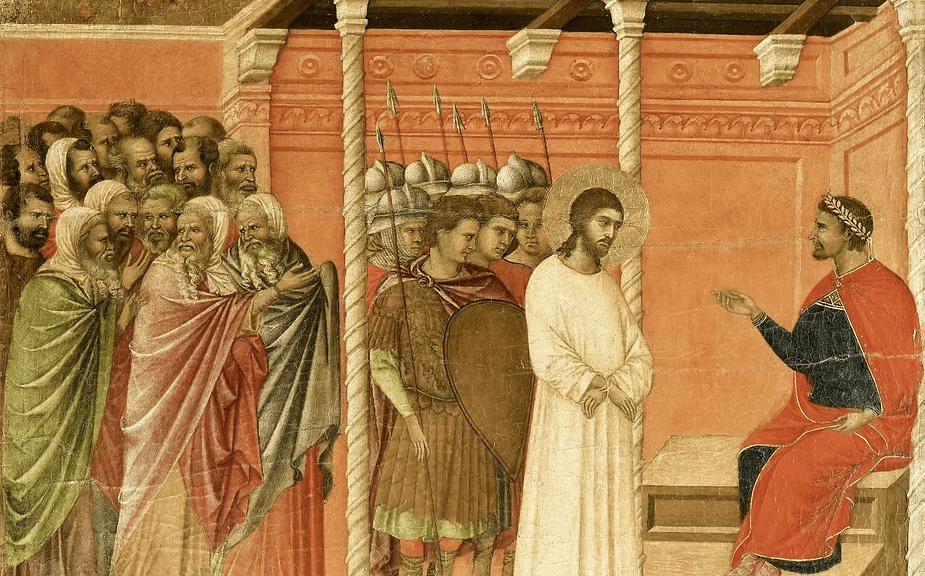
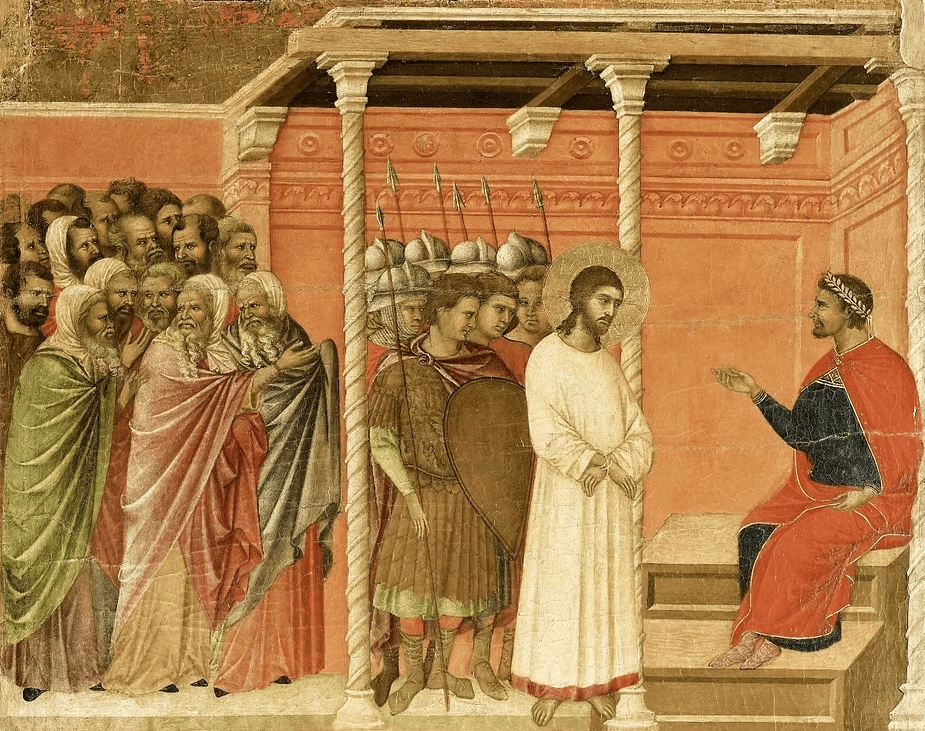
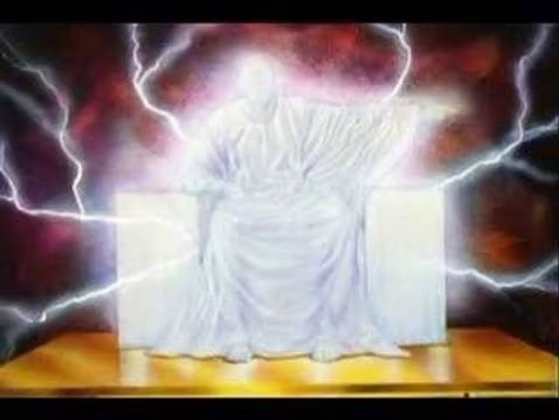
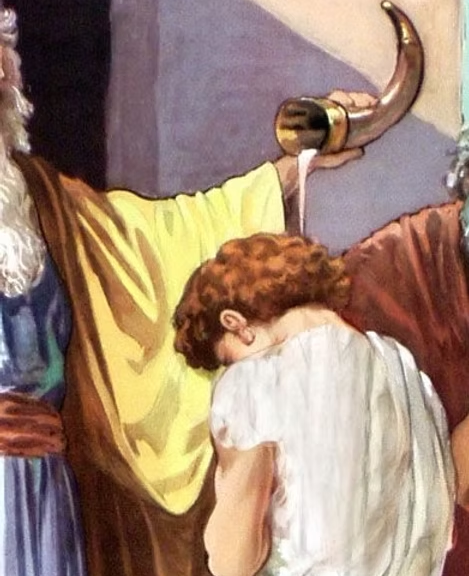
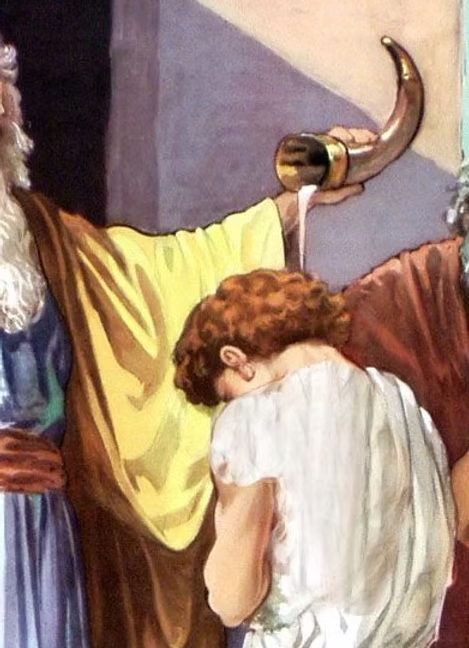












 Explaining the Readings