Matthew 2:1-12 – The third of ‘three wise’ readings after Christmas

In the time of King Herod, after Jesus was born in Bethlehem of Judea, wise men from the East came to Jerusalem, asking, “Where is the child who has been born king of the Jews? For we observed his star at its rising, and have come to pay him homage.” When King Herod heard this, he was frightened, and all Jerusalem with him; and calling together all the chief priests and scribes of the people, he inquired of them where the Messiah was to be born. They told him, “In Bethlehem of Judea; for so it has been written by the prophet:

`And you, Bethlehem, in the land of Judah, are by no means least among the rulers of Judah;

for from you shall come a ruler who is to shepherd my people Israel.'”

Then Herod secretly called for the wise men and learned from them the exact time when the star had appeared. Then he sent them to Bethlehem, saying, “Go and search diligently for the child; and when you have found him, bring me word so that I may also go and pay him homage.” When they had heard the king, they set out; and there, ahead of them, went the star that they had seen at its rising, until it stopped over the place where the child was. When they saw that the star had stopped, they were overwhelmed with joy. On entering the house, they saw the child with Mary his mother; and they knelt down and paid him homage. Then, opening their treasure chests, they offered him gifts of gold, frankincense, and myrrh. And having been warned in a dream not to return to Herod, they left for their own country by another road.

——————–

This is the third of the three optional Gospel readings that can be read aloud by a priest on the second Sunday after Christmas, Year C, according to the lectionary for the Episcopal Church. If chosen, it will follow an Old Testament reading from Jeremiah, where the prophet wrote: “I will turn their mourning into joy, I will comfort them, and give them gladness for sorrow. I will give the priests their fill of fatness, and my people shall be satisfied with my bounty”. That will be followed by a singing of Psalm 84, where David wrote: “The sparrow has found her a house and the swallow a nest where she may lay her young; by the side of your altars, Yahweh of hosts, my King and welohay.” That pair will precede a reading from Ephesians, where Paul wrote, “Blessed be the God and Father of our Lord Jesus Christ, who has blessed us in Christ with every spiritual blessing in the heavenly places, just as he chose us in Christ before the foundation of the world to be holy and blameless before him in love.”

I imagine the only reason this reading is optional on the second Sunday after Christmas is smaller churches that cannot afford a full-time priest will not be having an Epiphany service, which comes up on Thursday in 2022 (always January 6th). Because this Gospel selection is the only one for the Epiphany service, it can be read in advance. Still, in the quote here, stated after the words “written by the prophet,” they come from Micah, which was the Old Testament reading choice for the fourth Sunday of Advent, two Sundays prior. So, a little before and a little after and voilà – Matthew 2:1-12 is read today.

It was this specific reading that opened my eyes (divinely inspired to “behold!”) to the truth that is the Christmas story. It is my personal history that I was led to learn astrology in my younger years, to the point of being qualified to work professionally as an astrologer [something I never did, nor desired to do]. With that personal knowledge, I can understand what chickenshits and fraidy-cats run away from, peeing themselves while making a cross (those of Catholicism only), while praying, “Save me God from this evil.”

By knowing astrology, I was finally allowed to see the “star” [a word that appears in the singular number four times here in Matthew 2, five times in John’s Apocalypse, and twice in 1 Corinthians] as the “sun” – the only “star” in our “solar” system. The word “Magi” [written only in the lower-case, as “magoi, magous, magōn (2x), magon, and magos – the first two in this story, the next two in the story of Herod slaughtering the innocents of Bethlehem, and the last two in Acts, where the word is translated as “magician”] must be read [in the lower-case] as “astrologers.” It was in late November 2016 that it finally dawned on me (having long known this story and having long been knowledgeable in astrology) to connect the two. Doing that allowing me to see the truth. It led to me (eventually, in September 2019) publishing a book entitled The Star of Bethlehem: The Timing of the Life of Jesus.

When the two are put together this reading simply says astrologers from the east [Persia] had used the sun as the central point in their routine of producing forecasting charts, which they would have done in order to advise the King of Persia about coming trends, based on the known placements of the planets [at that time only the visible: two luminaries, five planets] and how astrologers would read those future placements. For divine “magi” [lower-case spelling] or holy “astrologers” to travel west to Jerusalem, they would have had to have received approval by the Persian king. That says their caravan would have been rather large, with an accompaniment of security, orderlies, animal caretakers, and the astrologers. That trip would have only been approved because of the phenomenal display [the alignment of the celestial orbs] made on an astrological chart.
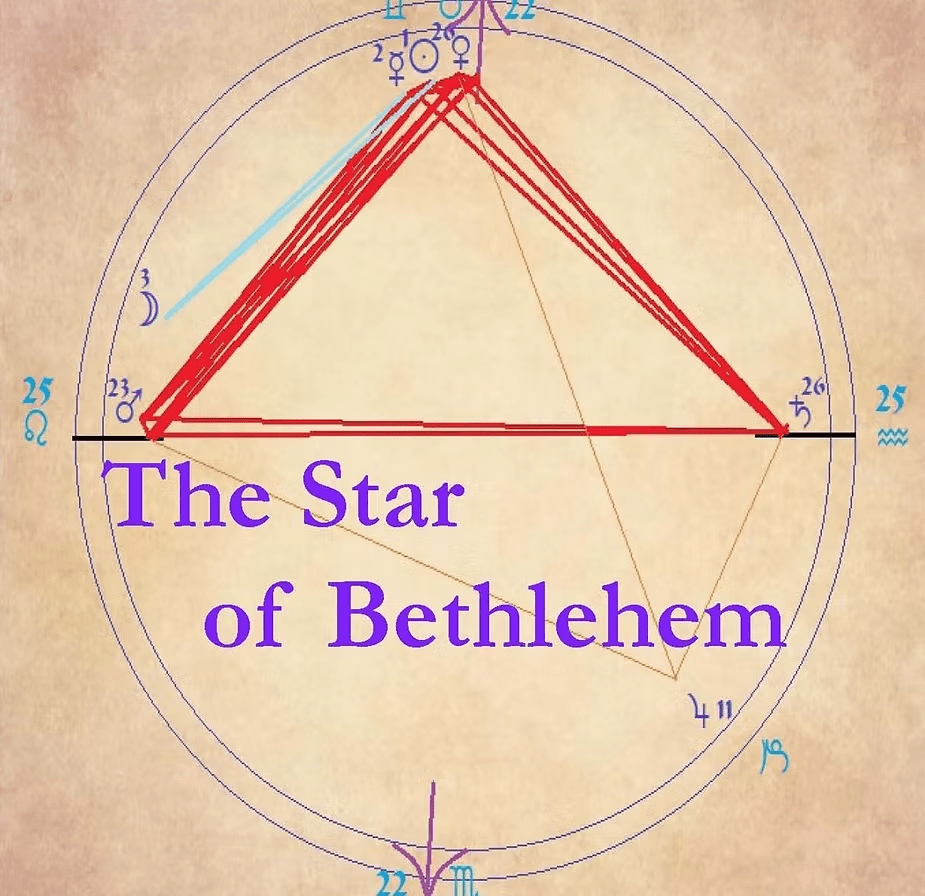
From the cover of my book. The red triangle actually forms a cross, upside down, but looks like a tabernacle this way.

Add to that the “magi” had some knowledge of a prophesied birth of a “Messiah” – the “king of the Jews” – one can grasp how they would have been part of the Jewish remnant freed from Babylon, who remained to assist their Persian liberators. That would make them all be priests, as Jews – call them early Kabbalists – who were not kept outside of the divine ‘loop,’ meaning they most likely would have bee assisted by angelic guidance, which informed them the chart they saw [well in advance of the time when it would appear in the heavens] was of a most holy birth. They would not arrive in Jerusalem (after traveling a month or so), get an audience with Herod and ask to see the newborn child that was the king of the Jews, simply because they followed some light in the night sky that was a one-time thing [that does not sway atheists to believe the story]. The Magi knew well in advance when a most fabulous birth would occur.

One must realize Herod did not know these people from squat. They, therefore, received no preferential treatment, as to when they could see Herod; but it would be essential that strangers arrive carrying with them some form of a ‘letter or marque,’ explaining, “I, the King of Persia, have sent these priestly ambassadors to see you with my approval. Please show them your highest respect.”

In verse two, the capitalized word “Pou” becomes a divinely elevated word of question that asks “Where” or “In what place,” leading this divine place to be relative to “the one being” or “the one existing” (from “estin” – third-person singular of “I am”), who is “this having been born.” This says the divine elevation makes it most important for these holy men from the east travel to be “Where” a newborn “is,” knowing that the birth was so special he was known beforehand to be coming as “the ruler” or “the king” of all known to be “Jewish.” By asking about one “having been born,” the “astrologers” had cast an event chart that was then seen as a “natal chart,” meaning a ”birth chart” of such an important child.

Here, it should be realized that “magi,” who were descended from Jewish ancestry and customs, arrived in Jerusalem with an expectation that King Herod also employed astrologers. Those would have then also foreseen this miraculous celestial arrangement in advance; and, the magi would have expected Herod to have known of this birth coming beforehand, just as they knew. This means they arrived with expectations that such a birth would have been praised and most welcome.

Following their question, we then read the magi having been received as I am these days, when I tell a stranger, “The star of Bethlehem is the sun.” Obviously, Herod was busy reading the letter or marque and listening to the magi, until he looked up and asked, “What makes you fellows think this?” To that the astrologers would have then explained, “for we observed his star at its rising.”

The literal translation of the Greek here says, “we perceived [from “eidomen”] indeed of him this star in the east.” In that, the “perception” that those astrologers “saw,” that “indeed” was “of him” – a newborn ruler of the Jewish people. That was based on “this” (which they might have then held out to Herod), with “this” (from “ton”) being a natal chart cast. A natal chart tells an astrologer the basic character traits expected to be found in the native [with the same alignments also able to be projected upon an event, which is called an electional chart]. A natal chart depends on the time of birth, the place of birth, and the date of birth; and, by knowing that basic data a chart can be cast, based on the sun’s position, with all the other orbs then plotted in relationship to the sun … on that specific day, place, and time. All originates because the daily motion of the sun – it moves about one degree each day, so a year can be forecast daily – with the “star” or “sun” being the anchor to which all the other orbs are aligned. This is what is basically called “sun sign astrology” today, where all people are designated to be the astrological sign that is relative to where the sun was on the day they were born.

When they explained they saw the star “in the east,” that simply means they cast the chart in Persia; but they would have seen the same basic arrangement of planets and luminaries with basic coordinates for a central location in Persia [even Babylon]. From that first-run chart, they then recognized [divinely assisted to see] the chart was not forecasting an event for Persia, but a global event coming. Seeing the alignments as those more pertinent to a natal chart, they would have deduced the alignments predicted a birth of a most special child. Persia having no prophecies of divine births expected made Judea a good bet, since the same alignments were also the same there [time of birth adjusted accordingly].

Again with divine inspiration helping them, they would have then set the coordinates for Jerusalem [central for Judea]. The planetary-luminary positions would remain the same, as long as the time was adjusted to a place further west. That updated chart, based on Jerusalem as the place of birth, would have been what they held out for Herod to see. That work producing the chart would have been all done “in the east.”

They did not follow a star by night, as absolutely nothing is written that says that. Shear stupidity would lead one to believe anyone traveled by night, when that is when people fall into pits and die. When verse nine says the magi left the king and saw [“behold!”] “the star they saw in the east,” well golly gee, it was daytime, so they saw the sun. They saw the sun in the same elevated position they had forecast the natal chart to be, when the sun was high overhead.

We then read in verse three how Herod reacted, after hearing who the magi had come visiting to see, with Luke writing “he was troubled” (from “etarachthē”). This means that he had read a letter signed by a real king – Xerxes I – who was not a puppet king of a Roman emperor, but an emperor himself. Xerxes, as a king, was a smart dude, with lots of other smart dudes advising him. An idiot would not finance a caravan to Jerusalem (800 miles, 1600 round-trip traveling requires lots of supplies and advance planning). The magi had been approved by Xerxes to venture to Jerusalem for the purpose of “worshiping” or “giving reverence to” [from “proskynēsai”] a holy birth. The expectation was [divinely assisted] then that the chart they had seen was of the one who had been prophesied to come, quite some time before (seven hundred years). That was the huge gulp that appeared in Herod’s throat; and, that was “troubling” for Herod to hear holy men saying to him, “The time has arrived.”

When the translation by the NRSV says “When King Herod heard this, he was frightened, and all Jerusalem with him,” this is confusing. It makes readers ask, “How would all Jerusalem know about a private audience between some foreign dignitaries and the King of Judea? How could that meeting be news that could possible spread so fast? Did some herald go to a tower and proclaim, “The Messiah has been born … news at 11:00”?

No.

This means “Jerusalem” has to be read as the meaning behind the name, with the capitalization divinely elevating the meaning to a level of Yahweh. When the name is known to mean “Teaching Peace,” what is said is this: Not only did the king show visible signs of being “troubled,” but in addition to his showing signs of not knowing what to say (stammering, sweating profusely, coughing, etc.), the ”whole” of Herod’s soul – that which “Teaches Peace” inwardly, keeping true kings from ever being shaken, knowing God is on their side – that soul presence was whispering to Herod, “This is not good for those who are false shepherds of My people, Herod ole boy.”

Because the astrologers had asked Herod “Where” or “In what place” they could visit the one who was symbolized by the natal chart they had cast (probably a year prior), the nervousness of Herod kept him from openly admitting he was a false shepherd, so he refused to say, “Gee, guys, I have no clue where that would be. Are you sure it is relative to Jewish prophecy?”

Instead, Herod called for his scribes (meaning he had no court astrologers to rely on … much like every branch of denominations associated with the Western Christian Church today). When the scholars arrived, smart as scribes are (because they memorize so well), Herod asked them to remind him “Where” the Messiah was prophesied to be born. They [maybe having been given a ‘heads up,’ so they checked some notes beforehand] immediately quoted Micah 5:2.

After they came and made that announcement, the magi most likely asked, “How do we get there from here? Our caravan is camped just down the road.” With directions given, Herod then emptied the room. A public meeting, with recorders and other state representatives present, such as historians normally assigned to be present for all meeting held in the palace of Jerusalem, the room was cleared for a “private” or “secret” continuation of this meeting. It was then that Herod asked, “What time did you use to calculate this birth chart?”

In the Greek text written, the word “ēkribōsen” is rooted in the word “akriboo,” which means “exact, precise,” implying “I learn carefully, inquire with exactness.” (Strong’s) From that, the word “ascertain” can be used, where the point of secrecy is now Herod knowing that the “exact time” of a natal chart is key to duplicating such a chart, so one with less expertise than a divine astrologer could mishandle the symbolic meaning seen in an astrological chart.

In this light, one must realize that Yahweh created astrology – per Enoch – so it is a tool to be used by divine priests. Just as a hammer is designed to be used in construction, the same tool can be misused as an implement of destruction. Evil is as evil does. In the same way, Yahweh created Adam to become the minister of truth on earth; but, because Adam and Eve gave birth to Cain, who would beget every evil form of religion known to mankind (after being banished), fearing astrology would be akin to fearing religion because of Cain. It is not the tool, but the divinity of the tool user [and that demands angelic guidance]. All of this means the secret question by Herod would not be something shared by the magi, because such information would make it possible for one untrained in divine tools to harm a native – at any time in that native’s life.

In verse eight, where we read Herod sent the magi to Bethlehem, there is nothing that says they gave him the birth time. In modern times, that information is deemed client-astrologer privilege, thus confidentiality is the expectation and Jesus was not yet anointed by the magi, so he was still not a public figure. I doubt they would have told Herod anything more than, “Bring us your court astrologers and we will let them look at the chart.” That would have been when Herod admitted, “Dang! We had cutbacks recently and did away with the astrologers.” Thus, divine astrologers did not divulge anything more than necessary.

When Herod told the astrologers to go find the Messiah in Bethlehem and then come back and tell him where he can be found … so he could go pay his respects too … this says two things. First, it says Herod was not fully believing this story told to him by strangers, despite the cold chill that ran down his spine when he lost his cool and became frightened with news of a divine king having been born. Had Herod fully believed the magi, he would have made immediate arrangements to accompany the magi to Bethlehem, where his presence would garner immediate attention and force the locals to point to any newborns there. Second, Herod was trying to make it seem to the magi that this kind of stuff happened all the time around there. There were plenty of zealots running around Judea claiming to be the Messiah, none newborns. To believe them all would mean Judea would be led by insanity. That would make Herod poopoo the power of astrology, which he would have used to sew the seed into the minds of the magi that suggested to them, “We need to prove to this Roman puppet that we know what we’re talking about.” Herod would use that lack of concern as motivation to have them running back to Herod, after they actually found a newborn who fit their natal chart expectations, telling him, “I told you so!”

Because the trip from Jerusalem to Bethlehem is going south, the east would have been to their left side. When we read, “went the star that they had seen at its rising, until it stopped over the place where the child was,” that means it was still morning; so, as they traveled south “the sun” slowly rose higher in the sky. By the time they reached Bethlehem, it would have been high overhead.

In verse ten, where it is written: “When they saw that the star had stopped, they were overwhelmed with joy,” the reality is nothing says “stopped.” The sun [a fixed star] always appears to be moving because the earth is always turning. However, if the astrologers reached Bethlehem and then recast a chart for that specific event of arrival, such that they “stopped the sun” for the purpose of casting an on-the-spot electional chart, they would have found that the changes made to the birth chart would make the adjusted chart more remarkable. Knowing they had arrived late – after the birthdate – the adjusted chart would say if they were still good on the timing or too late. Therefore, the new astrological revelation would have led them to have “rejoiced joyfully greatly and exceedingly.” In other words, they would not only be saying, “Wow!” they would have been dancing wildly in the street, just as when David led the Ark of the Covenant into his city. This new emotional outlet says they were even more convinced that they were at the right place, at the right time.

This is where there needs to be a pause in the story, so one can reflect on everything that led to this point of great celebration. There is reason for the magi recasting an electional chart.

1. The date of the natal chart had already passed. The magi knew a specific birth date and would have arrived to Jerusalem in time for that date; but they had not planned for it being festival time there. Due to Jerusalem being overwhelmed with pilgrims, all the places they could find a room were overflowing. So, non-Jews from the east would have been stopped by Roman guards, telling them the city was too packed for state visits, causing them to wait outside the city, until the festival was over and the pilgrims had left town.

2. Joseph and Mary were in Bethlehem only because Joseph had to register for the demanded census ordered by Rome. When they arrived (Mary riding on a donkey), Joseph stabled the donkey and off they went to the registration place. After registering (no child yet born) Mary’s water broke. Because of the influx of pilgrims, there were no rooms available for Mary to give birth in, privately. Because Joseph had paid to stable his donkey, that became their place to stay, so Mary would not deliver a baby out in the open. Midwives would have been called to attend to Mary, with Joseph standing outside the cave where the stable was, telling local menfolk, “My brother lives in Emmaus. His name is Cleopas. If he comes looking for us, tell him where we are.”

3. This means the festival was Shavuot, which is the Fiftieth Day [Pentecost] in the counting of the Omer, which began the second day of the Passover festival. After the morning of Shavuot, everything would be over and the pilgrims would clear out. After the linens were changed, Mary and Jesus would have been appropriately moved from the cave stable, into a nearby room that was now freed up. This means Jesus was born on the day before Shavuot, which would later be the day he ascended (after death and resurrection). [Jesus was born and ascended on the same day of the year! Only Yahweh would make a long-range plan like that!!!] The magi would have arrived during the height of the festival gathering, thus kept out of Jerusalem until the day after Shavuot.

4. This means the magi recast a chart for two days after their original cast date. While the sun had moved two degrees, with Mercury and Venus moving about the same, the Moon would have moved about twenty-four degrees. It was the Moon’s movement that made it become conjunct with Mars and the Ascendant [rising sign] that would have greatly excited them. The Moon reflects the Mother; and, Mars reflects the Son. The delay meant they arrived at a time that symbolized the Son and the Mother as one, all part of the grander configuration that led them to seek a holy birth in the first place.

When this element of the magi finding Jesus two days after he was born is realized, the concept of Epiphany being after twelve days – the Twelve Days of Christmas – with their arrival being thirteen days later is accurate only as a statement that the magi arrived after the birth of Jesus. Astrologically, thirteen days is almost half a month [symbolizing the time it takes a new moon to change into a full moon]; and, there would be greater movement of planets during that length of time, with the Moon making half a revolution through the signs of the zodiac in that timeframe. So, a recast chart would not be anything to cheer about at that late date. Two days after was still quite significant.

This is further realized when one knows Joseph and Mary were not permanent residents of Bethlehem. The move to a room in a “house” would be soon after one became available, and only necessary for about a day. In that amount of time, Joseph’s relatives would have arrived to assist with a cart (if necessary) or other transportation needs, in order to get Joseph, Mary and baby Jesus back where they belonged. Had the magi been held up longer [Yahweh would not have allowed that to happen], then their coming to Jerusalem would have been for naught. That tight window of opportunity would play into Herod waiting a year before ordering all two-year olds killed; because, if the magi had arrived well after the birth time, then they might have given up and left town, not coming back to see Herod and admit, “We missed him.”

The purpose of the magi coming was to anoint Jesus as Yahweh’s promised Son. This would not be as a “king,” but as a high priest to the Tabernacle. Just as “gold,” “frankincense” and “myrrh” were elements involved in the ceremonial garb of a high priest, the magi’s gifts would have been more probably a tiny crown and a little robe, with incense burned and oils besmeared on his forehead. The magi were then sent by Yahweh [just like Gabriel made his announcements to many], for that purpose of officially letting it be known that Jesus was indeed His Son.

When the last verse tells of the magi being warned in a dream, not to go back to Jerusalem and tell Herod anything, this divine warning needs to be seen as either collectively [all magi – and no number states how many there were, although the plural number is clear], or individually [where one who was shown a divine warning, who then told the others], this is another clarification that the magi were not hippy-dippy astrologers, like those found on the Internet today. They were priests first and foremost, who served Yahweh first and foremost; and, from that divine connection they were able to utilize a tool created by Yahweh, to lead others divinely. Therefore, they were not without prior experience in receiving divine dreams; so, they left Bethlehem via another route.

Relative to this departure and the story of Luke that tells of the slaughter of the innocent children in Bethlehem [a deed that was not recorded historically as documented proof to Scripture], that murder was selective and most likely secretly incorporated. Because there was no urgency for Joseph to take his family to Egypt, allowing for the bris for Jesus (circumcision and official naming) and the dedication in the Temple in Jerusalem after forty days, it was not like Herod was breathlessly waiting for the magi to return and report on their findings. As an important [and ego-driven] man, with lots to be in charge of as king, it is likely that a year passed before Herod realized the magi might have found what they were seeking [or not] and then purposefully did not return to tell him. A year later, perhaps, some court recorder could have reminded Herod procedurally: “On this date last year you met with astrologers from Persia …” and then Herod would have recalled the meeting. That would be well after Joseph had moved his wife and child to Egypt, to begin his training as a carpenter.

Here, it should be seen that Joseph is identified as a “righteous man,” which means he should be seen as an Essene priest. Mary’s uncle [a relative of some kind], Zechariah, was also an Essene priest. As such, their responsibilities were to the temple on Mount Carmel, not the Temple of Jerusalem [Herod’s Temple]. With the birth of John later bringing attention to him by the sons of Herod the Great, it is likely his birthdate and registration would have been checked, to see if a decree from Herod would cover someone like John (thought to be the Messiah). Because John was not born when the magi appeared before Herod and not in Bethlehem, he was spared that judgment. Jesus, however, could have been targeted as the son of an Essene priest, who had indeed registered in Bethlehem at the time covered by Herod’s order. By Joseph going to Egypt to learn a craft [he wasn’t a very good carpenter], and going yearly to Jerusalem for the Passover [not something Essene priests did], his change of ‘profession’ made it less likely to see Jesus as people saw John.

The report of the magi having not returned to report to Herod, as privately agreed, coming a year later would then be why Herod ordered the murder of two-year old males. It means a reminder led him to send his ‘secret police’ to investigate how many children were born in Bethlehem that were two years of age. Registration records reporting new births could have assisted their search. That means Herod did not get the time of Jesus’ birth from the magi; so, Herod was quickly figuring how old a Messiah could be, based on a year before the magi arriving, until then when he remembered. Not knowing when the magi first saw the star means he could have ‘covered all the bases’ by thinking they might have arrived to worship a one-year old male child. To reduce the number murdered (and keep locals from mounting a campaign against him) Herod would have ordered the deaths [some forms of accidents?] for all two-year old males in Bethlehem specifically; again, relying on census records [which says Joseph registered before Mary gave birth to Jesus, so at the time of registration it was just him and wife]. Because Mary had not delivered Jesus before Joseph registered for the census, Joseph was not listed as the father of a baby born there, at that time. This also plays into how old Jesus was when he began his ministry.

When Mary, the mother of Jesus told Luke that Jesus was “about thirty” when his ministry began, the Greek word translated as “about” is “hōsei.” That word translates as “as it were” or “as though,” which is a truthful way of saying Jesus was not actually thirty, but he was officially “about thirty.” No mother will forget her child’ birthdate. Mary knew how old Jesus was; but her information to Luke was the truth, just not the total truth. This would mean that after Joseph was told to return to Nazareth, he then later registered Jesus as his son [adopted legally], perhaps in a follow-up census [the one Mary recalled who was in charge of what, at that time]. When asked the age of Jesus, the person might have guessed Joseph had a new child at that time of registration, or he would have come registered Jesus sooner. Thus, a clerical misunderstanding could have made the records state that Jesus was almost thirty, when in reality he was years older [up to four].

All of this is explained in my book The Star of Bethlehem: The Timing of the Life of Jesus.” All of this is possible to see when the cataracts that keep Scripture from being clearly understood are removed. The Christmas stories, as repeatedly told on television and other media, which are then echoed by morons that know nothing about the Word … but [like the scribes] they can memorize the hell out of Scripture … means a fairy tale is celebrated [not the truth]. The true and deep meaning always falls to the wayside. It is like astrology being thrown out because Christians fear everything, when they should only fear Yahweh.
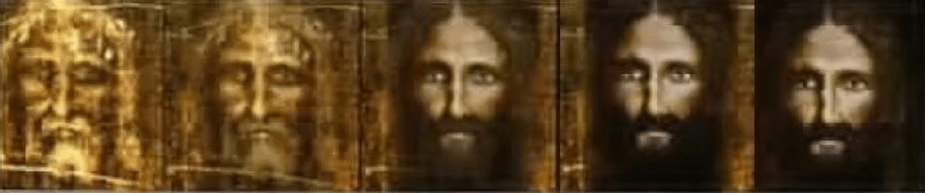
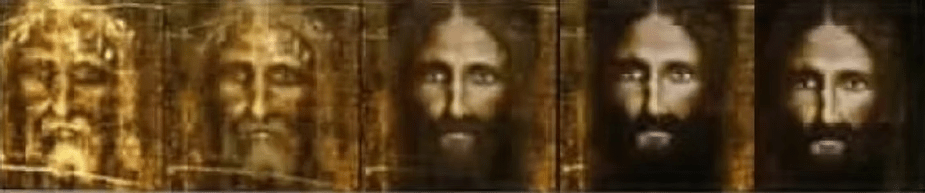
Isaiah 43:1-7 – The Appearance of Jesus within

[1] Thus says Yahweh,

he who created you, O Jacob,

he who formed you, O Israel:

Do not fear, for I have redeemed you;

I have called you by name, you are mine.

[2] When you pass through the waters, I will be with you;

and through the rivers, they shall not overwhelm you;

when you walk through fire you shall not be burned,

and the flame shall not consume you.

[3] For I am Yahweh eloheka,

the Holy One of Israel, your Savior.

I give Egypt as your ransom,

Ethiopia and Seba in exchange for you.

[4] Because you are precious in my sight,

and honored, and I love you,

I give people in return for you,

nations in exchange for your life.

[5] Do not fear, for I am with you;

I will bring your offspring from the east,

and from the west I will gather you;

[6] I will say to the north, “Give them up,”

and to the south, “Do not withhold;

bring my sons from far away

and my daughters from the end of the earth–

[7] everyone who is called by my name,

whom I created for my glory,

whom I formed and made.”

——————–

This is the Old Testament selection to be read aloud on the first Sunday after the Epiphany. It will be followed by a singing of Psalm 29, which says in part, “Ascribe to Yahweh the glory due his Name; worship the Yahweh in the beauty of holiness.” That will precede a reading from the Book of Acts, where it is written: “Peter and John … went [to Samaria] and prayed for them that they might receive the Holy Spirit (for as yet the Spirit had not come upon any of them; they had only been baptized in the name of the Lord Jesus).” All will accompany the Gospel reading from Luke, where it is said, “As the people were filled with expectation, and all were questioning in their hearts concerning John.”

The forty-third chapter of Isaiah is twenty-eight verses in all. These seven verses are only read on this one Sunday in the whole of the three-year lectionary cycle. You will note how the Episcopal Church does not number the verses. I have supplied the appropriate verse numbers in bold type, within brackets. Also, at two places you will take note that I have restored the proper name of “Yahweh” (also in bold type), which was written by Isaiah but incorrectly translated as “the Lord” by the NRSV [et al]. In all, Isaiah wrote “Yahweh” [“יְהוָ֔ה”] eight times in this chapter, all coming in the first sixteen verses; but only two of those references are in these first seven. Additionally, in verse three is written “Yahweh eloheka,” which the NRSV [et al] translate as “the Lord our God.” Because “our God” is incorrect and misleading, as if any human being could possess Yahweh and call Him ”our God” [like owning a monkey on a string and an organ to beg with], the reality is Yahweh uses souls He has married as His “angels in the flesh,” which are called “Yahweh elohim.” Thus, I have restored the Hebrew written, in italics.

On January 6th each year the Episcopal Church [basically all Catholic Churches] recognizes the fabricated event called “Epiphany.” In reality, “Epiphany” is one day only. The Sundays deemed or marked as “after the Epiphany” are not a ‘season,’ but the ‘leftovers.’ The number of Sundays after the Epiphany can range each year from four to eight, with everything dependent on when Easter is scheduled in that year. From Easter Sunday, forty days are marked off prior, which is the season called Lent. From the time Lent begins, backwards to the Epiphany (January 6th) is the non-season simply called “after the Epiphany.” It is this ‘no-man’s land’ that has been entered with this reading. Still, one needs to grasp the intent of the Epiphany, as that ‘hue’ colors all the Sundays “after the Epiphany.”

When the word “epiphany” is seen to be derived in Scripture from the Greek word “epiphaneia,” which means “appearance,” implying in usage “appearing, manifestation, glorious display” (Strong’s) and/or “epiphanés,” meaning “notable, manifest, glorious, illustrious” (Strong’s), to take that word and then apply it to the event that tells of the Magi arriving in Bethlehem, where they found the infant “king of the Jews” they sought and “worshipped him,” this implies “the Epiphany” is relative to all who: 1.) purposefully seek Jesus; 2.) worship him when found; and most importantly 3.) retain Jesus in their souls after having sought and met him.

Of course, that is a weak understanding of the Magi story, which is an optional reading on the second Sunday after Christmas and a mandatory reading on the Epiphany recognition on January 6th. The Magi were sent by Yahweh (divinely inspired and most likely guided by Gabriel) to perform a ritual anointment that recognized the holiness of a baby whose name had not yet been officially pronounced (an act done on the eighth day after birth, meaning thirteen days after birth is an impossibility, thus a manufactured piece of timing). The attendance of the Magi must be seen as Yahweh’s official statement that His Son was the promised High Priest of the Tabernacle, sent by Yahweh for the purpose of saving lost souls [the name “Jesus” means “Yah[weh] Will Save” or “Yah[weh] Saves”]. Thus, “the Epiphany” means “the Appearance” of Yahweh’s Son on the earth, whose soul is destined to become released [upon his death] so it can merge with the souls of Yahweh’s devoted.

When Jesus first “Appeared” it was as a soul in flesh that was perfect. Other than eat an apple once [in Eden, lured to do so by his wife at the time], the soul of Jesus was without sin. It also was a soul that spread beyond that little baby’s flesh, touching the souls of seekers. Thus, the “Epiphany” is an “Appearance” that never ceased. It is then the dawning of eternal light [Salvation] in the world, which is soul-borne and constant.

This understanding makes one then able to see the prophesied beauty of that “Appearance” in the words of Isaiah. Verse one sings loudly, “Thus says Yahweh, he who created you, O Jacob, he who formed you, O Israel: Do not fear, for I have redeemed you; I have called you by name, you are mine.” This sums up all the Sundays after the Epiphany nicely. The name “Jacob” means “Supplanter,” which was the soul given to his flesh at birth [Yahweh created a soul’s life in a body]. That soul was wayward, so the soul of Jacob was “formed” or “fashioned” by modification, so it became one “Who Retained Yahweh as one of His elohim” [“Israel”]. The name “Israel” is what “Yahweh has called Jacob’s soul by name.” The “name Israel” means the soul of Jacob was then possessed by Yahweh [“you are mine”]. This transformation is singing about the Epiphany of Jesus “Appearing” in Jacob.

In verse two, the metaphor of “water” and “fire” must be seen as Spiritual. The “rivers” are the outpouring of Yahweh’s Spirit, which is the “Anointment” that is the equivalent of having been made a Christ. One’s soul can then “walk through fire” and not be “burned by the flames or scorched.” This is the test of Satan in a physical body, where one will be capable of resisting all temptations to lose one’s soul, enabled by the divine possession of His Son within one’s soul.

When verse one begins by saying, “Thus says Yahweh,” one can see Him speaking through the prophet Isaiah. Still, the voice of Yahweh comes from Isaiah, because Isaiah’s soul has married Yahweh and His Spirit has become one with Isaiah. This is what took place when the Magi visited Jesus, as everyone in the room of that house then became possessed by Yahweh’s Spirit and spoke what Yahweh commanded them to say, in a most divine ceremony to Anoint His Son as the true Messiah. Thus, when Isaiah wrote in verse three, “For I am Yahweh eloheka,” this is Yahweh saying Isaiah was His angel in the flesh, who served Him as His wife-soul AND His Son resurrected within his soul. Isaiah, like all whose souls marry Yahweh, became a Yahweh elohim.

When verse three continues to say, “the Holy One of Israel, your Savior,” “Israel” must be known to mean “Who Retains Yahweh as His elohim,” with the “Holy One” [from “qə·ḏō·wōš,” meaning “sacred one”] who “Saves” being the “sacred soul” of “Jesus.” In the “ransoming” or “redeeming” that then has “Egypt Ethiopia and Seba” stated. Those three words can then transform to be meaning, “marriage to tragedy [Egypt] appearing as fire [Ethiopia] drunkard [Seba].” That is then Yahweh speaking through His prophet, saying the ability to “walk through fire” is relative to no longer being a sinner, who is “married to a body of flesh that will die” [the tragedy of mortality], while all the sins of the world are “appearing as fire” that comes in Judgment [the guilt a soul knows, leading to its purification from repentance], with the inability to marry one’s soul to Yahweh being solely due to a “drunken state” that lusts for carnal desires [temptations to sin]. This says the “Savior” is the promise of eternal life beyond the grave, when the soul is released.

Verse four then speaks of the divine marriage of a soul to Yahweh. For Yahweh to say, “Because you are precious in my sight,” this means one’s soul has done things to attract Yahweh. Those things are not sinful, but desires to do right, which come with earnest prayers for help and forgiveness. This says a soul expresses “love” for Yahweh, which brings His “love” in return. The power of “love” is it brings two together, with the promise of foreverness vowed.

When Isaiah then sang, “I give people in return for you, nations in exchange for your life,” this is Yahweh speaking of the gift of “Adam” (from “’ā·ḏām” written, but translated as “people”) to one’s soul, Yahweh’s firstborn – His Son. This gift is then the promise to return a soul to Yahweh [eternal life or salvation]. The word translated as “nations” [“ū·lə·’um·mîm,” from “leom“] is where “people” is the truth stated. The word means the promise of eternal life is for a soul saved in the flesh [a Yahweh elohim] to minister the truth to others [the “people”]. The acts of ministry then spread this “life” to those who likewise were lost in the world of flesh, thus dead.

When verse five then appears to sing, “Do not fear, for I am with you; I will bring your offspring from the east, and from the west I will gather you,” the reality says different. Still, one needs to remember the Magi came fro the “east,” to the “west,” for the purpose of anointing Yahweh’s Son. The literal Hebrew text translates to say, “no fear for with you I , from the east I will bring your sowing , and from the west gather you .” Here, it becomes clearer that Yahweh’s presence within a soul brings about the “you I” state of being [“it·tə·ḵā ’ā·nî,” from “eth ani – “with I”], where the only “fear” is in losing that state of being – a fear of losing Yahweh. Next, Yahweh then stated the Son [metaphor of the rising Sun] will become the seed planted within one’s soul. Therefore, once that seed has brought forth its intended fruit, then Yahweh will “collect” the souls redeemed.

Verse six is then shown to sing: “I will say to the north, “Give them up,” and to the south, “Do not withhold; bring my sons from far away and my daughters from the end of the earth—“. In this, the “north” should be read as those who are “upright.” The command to those producing good fruit is thus: “give” [“tê·nî,” from “nathan“]. Contrarily, the “south” should be read as those who lie down and impede the good fruit, as the weeds attempting to choke out the good wheat. Those are told, “do not restrain them.” The metaphor of “sons and daughters” must be seen as those who have been implanted with the seed that is the Son, as all will produce many “sons.” All who receive that seed are then those souls in the flesh that are metaphysically “the daughters,” who will each become the mothers of Jesus, as the brides of Yahweh.

This element of marriage, becoming the wives of Yahweh (soul to Spirit), is then confirmed when Isaiah wrote, “everyone who is called by my name, whom I created for my glory, whom I formed and made.” The “name of Yahweh” [“my name”] is the “name” taken in marriage by a bride-wife. This returns the focus back to verse one, where Jacob became a “daughter not held back” from divine marriage; so, when he took on the “name of Yahweh,” he took on the name “Israel.” This is the same name all “daughters” take in divine marriage of their souls to Yahweh’s Spirit. The birth of His Son within one’s soul means they then take on that “name” as well, which is the truth of being “in the name of Jesus Christ.”

As can be seen from the symbolism presented in this song of praise, Isaiah was letting Yahweh speak through him, because he was a daughter soul married to Him. He became the “glory” of Yahweh, in the same way that the Magi recognized that in baby Jesus; so, all within the house had the “Epiphany” that was their own “Appearance” of salvation in their souls. This is what all Christians should be experiencing, after having given birth to a new Spirit within, from having married Yahweh divinely.

Psalm 29 – Revisited after the Epiphany

1 Ascribe to Yahweh, bene elim, *

ascribe to the Yahweh glory and strength.

2 Ascribe to Yahweh the glory due his Name; *

worship Yahweh in the beauty of holiness.

3 The voice of Yahweh is upon the waters;

el of glory thunders; *

Yahweh is upon the mighty waters.

4 The voice of Yahweh is a powerful voice; *

the voice of Yahweh is a voice of splendor.

5 The voice of Yahweh breaks the cedar trees; *

Yahweh breaks the cedars of Lebanon;

6 He makes Lebanon skip like a calf, *

and Mount Hermon like a young wild ox.

7 The voice of Yahweh splits the flames of fire;

[8] the voice of Yahweh shakes the wilderness; *

Yahweh shakes the wilderness of Kadesh.

8 [9] The voice of Yahweh makes the oak trees writhe *

and strips the forests bare.

9 [9] And in the [his] temple of the Lord *

all are crying, “Glory!”

10 Yahweh sits enthroned above the flood; *

Yahweh sits enthroned as King for evermore.

11 Yahweh shall give strength to his people; *

Yahweh shall give his people the blessing of peace.

——————–

This is the Psalm that will be read aloud in unison or sung by a cantor on the first Sunday after the Epiphany, Year C, according to the lectionary for the Episcopal Church. It will be in response to the Old Testament reading from Isaiah, where Yahweh spoke through the prophet, singing “Do not fear, for I have redeemed you; I have called you by name, you are mine.” This Old Testament pair will precede a reading from Acts, where it is written: “Peter and John laid their hands on [seekers in Samaria], and they received the Holy Spirit.” All will accompany the Gospel reading from Luke, where the saint wrote: “John answered all of [the Jewish seekers] by saying, “I baptize you with water; but one who is more powerful than I is coming; I am not worthy to untie the thong of his sandals.”

I wrote a commentary about this song of praise when it last came up in the lectionary cycle: Trinity Sunday, Year B (May 30, 2021). That commentary can be read by searching this site. In that writing, I had not yet begun making necessary changes to the text presented by the Episcopal Church, in bulletins made available at their churches, passed out before a service. In the above presentation, it should be clear how many times David wrote “Yahweh,” when the translations say for all “the Lord.” I addressed that in my prior observations; so, there is no need to repeat that again now. I will point out how the verses are numbered (not a consistent feature of the Church’s style), but misnumbered, as I point out between verses seven and nine. In verse nine, the Episcopal Church had inferred “of him” (“autou”) to be “of the Lord,” so I struck out that assumption and restored the truth.

Because Trinity Sunday is when the ‘trifecta’ occurs and Father, Son, and Holy Spirit join as one, where the Father is Yahweh, the Son is the soul married to Yahweh, having given rebirth to His Son Jesus, this means the glue for those two becoming One is Yahweh’s Spirit, that date recognizing that most holy union is no different than the “Epiphany” when Magi officially recognized baby Jesus as the promised Messiah. The same interpretations can be found befitting both Trinity Sunday and the first Sunday after the Epiphany [this song of praise is sung every 1st Sunday after the Epiphany]. Therefore, I will not re-interpret this son.

I will point out a few nuisances that are befitting one’s soul having absorbed the soul of Jesus, after having witnessed his “Appearance” [the essence of ”Epiphany”]. This can be seen in verse one, where David sang, “Ascribe to Yahweh bene elim.” The two words in italics are the truth of the Hebrew written, which translate to say, “sons gods.” This says Yahweh is unquestionably greatest, the Creator, therefore the highest, so high that labeling Him a “God” (different from the “gods,” when “elohim” is the plural number of “gods”) diminished Him. This means Yahweh created “elohim,” which were thirty-two times said to be the “ones” (plural number) who did the Creation of Genesis 1. After three more references in the first three verses of Genesis 2, Moses switched to saying “Yahweh elohim,” which was focused on Adam (Man). That is the meaning of “bene elim,” as it means a soul merged with the soul of Adam (aka Jesus), so those souls become “sons” (including female bodies alive via a soul), who are then elevated soul, as “elim” (short for “elohim”). Verse one is the transference of the soul of the Son of Yahweh into an ordinary soul, making it be a hand of Yahweh on the earth (in the flesh). This is “the Epiphany.”

When verse two says to “give” (the word “hā·ḇū,” from “yahab,” means “ascribe, give”) “the glory due his name,” this must be seen as a statement of divine marriage. Idiots who run around saying “the Lord,” rather than “give the glory due Yahweh,” are obviously missing the point here. “Giving the glory due” means to allow the “glory” of Yahweh’s presence within one’s soul to shine forth. When Yahwehe’s presence is within one’s soul, then one’s soul has married Yahweh and taken on His name. That name is “Israel,” which means “Who Retains Yahweh as His elohim.” However, when the soul of Jesus [a name meaning “Yahweh Saves”] has been resurrected within that soul [the purpose of all marriage is “giving” birth to offspring], then “the glory due Yahweh” is being “in the name of Jesus.” This is “the Epiphany.”

The truth of verse nine (where the strike-out is shown) is “his temple” is one’s body of flesh, in which the soul of Jesus has been reborn, as the High Priest. When Jesus has been “given” the reign over one’s body of flesh – as “his temple” or tabernacle – then one’s soul becomes like a Levite, who has no ownership of property (i.e.: flesh), but it is assigned the duties of maintaining the “temple.” That means one’s soul, in thanks being to Yahweh that it has become Saved, it does all the ordinary stuff that keeps the body of flesh fit and clean. Meanwhile, Jesus – the High Priest – is making the body of flesh cy out, “Glory!” because that is what “temples” are for. That exemplifies “the Epiphany.”

Again, I welcome all readers to see the full commentary I posted for Trinity Sunday, Year B. What I wrote then should be seen as still applicable for the first Sunday after the Epiphany. As a reading chosen for that date (Year B) and this (all years), it should be seen how many times David wrote “Yahweh” in this song of praise. Yahweh must be known as the name of your soul’s Holy Husband. Yahweh must be understood to be the Father of one Son only, although that Son has two names: Adam and Jesus. One must also realize that the resurrection of Jesus IN ONE’S SOUL (not some icon on a wall or car bumper) makes one an “elohim” of Yahweh, so one’s soul has been given angelic powers. One of those is to walk the face of the earth in ministry, looking like you (male or female), while being the rebirth of Jesus. You become “Israel” and “Jesus,” both “in the name of Yahweh; and, Yahweh becomes both your soul’s Husband and Father.

Acts 8:14-17 – Scene 1: Acting like Jesus reborn

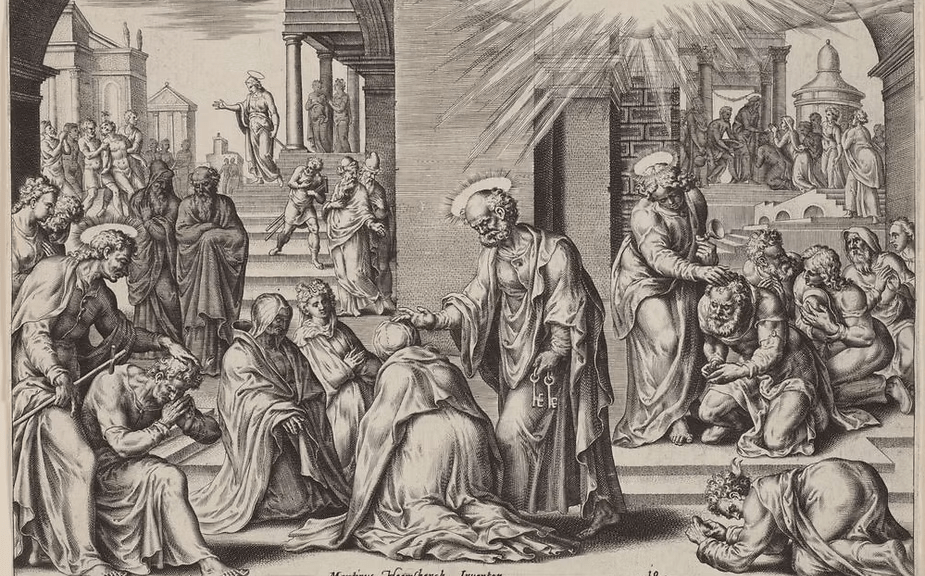
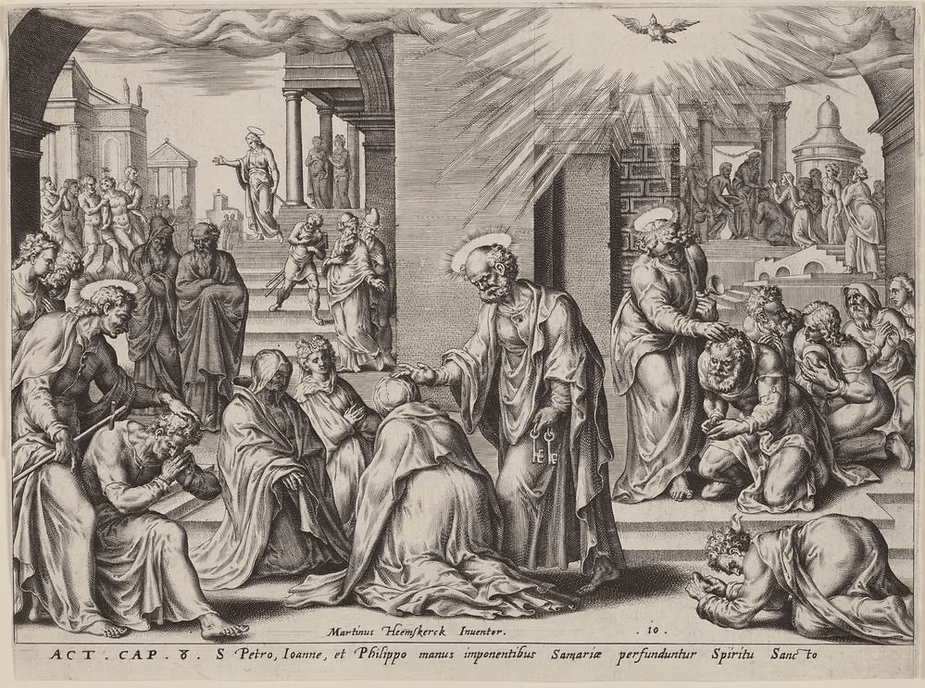
When the apostles at Jerusalem heard that Samaria had accepted the word of God, they sent Peter and John to them. The two went down and prayed for them that they might receive the Holy Spirit (for as yet the Spirit had not come upon any of them; they had only been baptized in the name of the Lord Jesus). Then Peter and John laid their hands on them, and they received the Holy Spirit.

——————–

This is the Epistle selection to be read aloud on the first Sunday after the Epiphany, Year C, according to the lectionary for the Episcopal Church. It will follow an Old Testament reading from Isaiah 43, where the prophet wrote: “I will say to the north, “Give them up,” and to the south, “Do not withhold; bring my sons from far away and my daughters from the end of the earth — everyone who is called by my name, whom I created for my glory, whom I formed and made.’” A singing of Psalm 29 will follow that, where David wrote: “The voice of Yahweh is a powerful voice; the voice of Yahweh is a voice of splendor” and “Yahweh shall give strength to his people; Yahweh shall give his people the blessing of peace.” All will accompany the Gospel reading from Luke, where the saint wrote: “When all the people were baptized, and when Jesus also had been baptized and was praying, the heaven was opened, and the Holy Spirit descended upon him in bodily form like a dove.”

In this short reading, it must first be pointed out that readings from the Acts of the Apostles are typically reserved for the Easter season [seven Sundays following Easter Sunday, including Pentecost]. Here, the realization is the first Sunday after the Epiphany is also designated as when readings from Acts are always found. This particular reading is only found read aloud on this Sunday, in Year C. Simply from this realization that connects the Acts of the Apostles to the ‘afterglow’ of Epiphany, one should see ministry as being the point of focus. As a reading from Acts is always read only on the first Sunday after the Epiphany, the motivation to begin ministry comes from that divine presence having been absorbed into one’s soul.

For regular Christians (those who put any time and effort into going to church and reading things Biblical on their own), their ears are trained to hear all the words of this reading and immediately assume they understand what is said. Overall, there is little impact – no epiphany of dawning – that comes from this very short and sweet reading. It is seemingly so void of minute details that listening to it read has the effect of a soft, warm breeze on the beach. Because it is so short, the impulse is to drift off to sleep, but then that quickly fades away. Still, the use of “apostles” [“apostoloi”] needs to be understood.

It is easy to hear the words “disciples” and “apostles” and imagine in one’s mind the same characters – the usual suspects. In one sense this is true, because nothing physically has changed. The all still look the same; and, they all are still seen as country rubes, with none having been afforded the finest education, best clothing possible, or given names that announce to Hebrew-speaking others, “Here walks God’s gift to the earth.” In fact, the word “apostoloi” means “messengers, those sent on a mission” [in the plural number]. That means “pupils” or “learners” [“mathētōn”] received permission to take a note down the hall for someone else to read. No one stops and brings attention to a “messenger,” because they are little more than ‘middlemen’ [and women].

This means the lack of capitalization, by Luke when he wrote “apostoloi,” says there is no divine elevation that needs to be read into that title. When one looks at the header for this reading, it only says “Acts,” with “the apostles” being so unimportant that we are left to assume it is their “Acts.” That lack means there is no need to waste space in print. It is the “Acts” that are important; and, those “Acts” are done because of the motivation to ministry. As such, ministry means being “messengers” for Yahweh, as the bodies of flesh that carry the soul of Jesus to where Jesus must be heard to speak. Jesus is the message, and the “messenger” simply passes that on.

Now, in the Greek written for verse fourteen, leading up to the word “apostoloi,” the NRSV has felt the capitalized word “Akousantes” need not be given the attention of divine importance [indicated through capitalization]. That word is the Aorist Participle, in the Nominative Masculine Plural, rooted in “akouó,” meaning “to hear, listen.” This is then a divinely elevated statement that says, “Having heard,” with “Heard” being relative to things not ordinarily heard [sounds processed through ears in a brain], much like they say a dog whistle works on dogs.

This word must be seen as a direct link to “the Epiphany,” as the presence of Jesus’ soul on earth, in human flesh, was not about one little baby keeping all that presence of Yahweh to himself. From the time Jesus was born, especially when the Magi arrived and Anointed him as the Messiah, his soul radiated out and connected to everyone who came in close contact with him. So, even when Jesus was a newborn, his soul was fully developed [made in heaven] AND the soul of Jesus spoke. Therefore, like the old E. F. Hutton commercials said, “When Jesus speaks people listen;” and, “Having listened, the messengers” took off.

By jumping into Acts 8 at verse fourteen, the casual listener has no divine elevation that leads him or her to realize what “the apostles Heard,” which was news that Philip was out being “a messenger” in Samaria, “proclaiming the Gospel concerning the power of God.” In that passing of the Jesus message, there was “a sorcerer” named Simon, who delighted the Samarians with his ‘magic tricks.’ Philip was so convincing (as Jesus reborn doing the talking) that the message passed onto those who heard him speaking, including Simon; so, all went down to the creek and Philip ceremoniously baptized them (as Jesus reborn). He acted like John the Baptist, paving the way for Jesus’ soul to enter their souls, by leading them to desire that presence. That meant first washing the sin off, through sincere repentance [the kind Jesus knew was sincere].

Meanwhile, back in Jerusalem, one need to realize this was well in advance of cell phones or even land lines with wires. We do not know how far away Philip was from Jerusalem, as the region known as Samaria can be as close as thirty miles; but the town Samaria (along a winding road) was over ninety miles away. Since that is too far for smoke signals to be seen, “Having heard” must be realized as Yahweh speaking to His wife-souls, the mothers of His Son Jesus, telling them, “Philip needs some help in Samaria. Go now!”

The thing about “messengers” is they don’t waste time arguing with the “message.” They are on stand-by; and, once the “message” (Jesus) is given, off they go.

When we read, “they sent Peter and John to them,” this needs to be realized in two ways.

First, “John” is the brother of James, a son of Zebedee. He should not be thought to be John (aka “the Beloved”), because that John was not old enough to grow a beard. Because Peter and the Zebedee brothers went way back, to their days as fishermen on the Sea of Galilee (all living in Capernaum and blood related), that John was much closer to Peter’s age. ‘Little John’ lived with his mother Mary (the Magdalene) in Bethany, the ‘man of the house’ after Jesus died on the cross. While that John and Mary (like all the “beloveds” of Jesus’ family) were also “apostles” [male and female He makes them], I recommend reading John 21:20-25 for a better understanding here.

Second, one needs to see the practice begun in ‘seminary,’ when Jesus was living and the disciples were still a rag-tag group of students. Then, he sent the twelve and then seventy out in pairs. While Matthew 10 does not say anything about pairing up the twelve, Mark 6 does. The numbering of “two two” [“dyo dyo”] means each disciple was paired with the soul of Jesus [“dyo”] and then paired with another likewise assisting disciple [“dyo”], so they were practicing being “apostles,” with each holding the “message” within their souls. To be sent in pairs of human flesh meant companionship [or brotherhood]. Most likely, Peter and John of Zebedee first teamed up when Jesus sent out the twelve; and, this pairing would have become natural for them to continue.

This is where everyone needs to realize that Philip was one of the twelve disciples sent out in practice ministry by Jesus; and, Philip was transformed into apostlehood (a divine messenger), just like Peter and John. One cannot begin to see hierarchy being developed in this short story, like that found in religious organizations, where the hired hands are compensated by how little each one “Acts” (the highest paid do the least work, while the grunts at the bottom do all the work and get little reward). Instead, this is where everyone should recall what I wrote about John (not too long ago, on the first Sunday after Christmas, when John wrote about “the Word” and John the Baptist). Then, I wrote that it dawned on me (for the first time ever) that what John said in his ministry was not so relative to him saying, “I am not worthy! There is one better than me that I have to wait for!” but relative to him saying, “First comes love, then comes marriage, and then come baby in the baby carriage.”

[That means John the Baptist was talking to single souls [unmarried to Yahweh] about the “dyo” part of “dyo dyo.” The one greater than John’s soul would be the Spirit of Yahweh AND THEN the soul of Yahweh’s Son [“dyo“]. John (at the time) did not know that soul was in the flesh and named cousin Jesus. Thus, when he said, “I cannot untie his sandal strap,” he actually said the “strap” or “binding” of John’s soul being joined by divine marriage could never be undone. The sandal was implied from John saying “sole,” which was metaphor about John’s soul was under the celestial ‘foot’ of Yahweh – powerless, but so in love he wanted it that way.]

This means Philip was the essence of John the Baptist in ministry, drawing all the sinners [the Samaritans were seen as sinners by the Jews] to “the Word” within him. That was so the sinners would first realize how in danger they were of sending their souls to punishment. The Gospel has a way of doing that, if told truthfully. Thus, Philip led seekers in their first step of repentance – that step symbolized at all times by John the Baptist – THE EPIPHANY – and Philip ceremoniously washed the bodies of the sinners – which is akin to a bridesmaid being given a lamp to keep lit until the bridegroom arrives.

When Yahweh called for a couple of messengers to, “Quick, bring some lamp oil!,” He did not specify Peter and John (like any messenger is faster or better, bigger or stronger). They were the ‘first team up.’ Thus they went.

Okay, now it is time to see the meanings of the names Peter and John. The name “Peter” means “Stone” or “Rock.” Here, it is important to realize Peter’s real name was “Simon,” the name of the guy in Samaria that was doing magic tricks. Peter was named because “Simon,” which means “He Who Hears.” Guess what, “Peter” was one “Having heard,” back when Jesus was calling disciples. Thus, Simon in Samaria was one who likewise “Heard” what Philip had to say, just like Simon-Peter “Heard” Jesus. Simon-Peter was most likely a follower of John the Baptist, because his brother Andrew was; so, both those experienced John the Baptist disciples, before they became disciples of Jesus. That fits the prophecy of John the Baptist; and, so does Philip spreading the Gospel in Samaria fit that in the same way. All the Samarians had become “disciples” of Jesus, because Philip was reborn as Jesus – just the messenger carrying the message. The name “John” means “Yah Is Gracious,” which was the name of the one accompanying Peter to meet Philip in Samaria. They were going to make the “Rock” of “Yahweh” be “Graciously” extended to new “disciples,” whose lamps were burning brightly for Yahweh. All they needed at that point was to be reborn as Jesus themselves.

When we read, “The two went down and prayed for them that they might receive the Holy Spirit,” this is the first of two mistranslations that mislead. The second comes when we read, “they received the Holy Spirit.” This is how translations into English lead ‘sheeples’ to hear two capitalized words be spoken together, so the ‘sheeples’ go away baaaing, “Jesus Christ” is the first and last name of the one I pray to;” and, “Rather than say Holy Father, Holy Son, Holy Spirit, I am just going to say Father, Son, Holy Spirit.” If anyone were to take the time to READ the Greek, they would realize that “Christou Iēsou” and “Pneuma Hagion” say, “of Christ of Jesus” and “Spirit Sacred.” Each capitalized word has its own divine elevation in meaning, which is why a saint wrote them for Yahweh that way [saints are, after all, just “messengers”].

To think Peter and John were necessary – as specific humans in the flesh – to rush and hand off something that is only capable to be given by Yahweh – is as stupid as thinking only Jesus in the flesh can save a soul. It is as stupid as thinking John the Baptist – a divinely born child of a barren women, informed of his coming by the angel Gabriel [angel means messenger also] – has to return in the flesh to you! Before Jesus can come in the flesh and save you. That is nonsense!

Just as Philip represents John the Baptist Spiritually, as Jesus resurrected (his soul in all), the Samaritan sinners are reflections of your souls in flesh, so you need somebody like Philip to tell you the truth of salvation; and, you need someone to pray that your soul receives the “Spirit,” so you can stop being a lost soul-sinner and become “Holy” or “Sacred” [in short, a “Saint”]. The missing link is marriage to Yahweh, which brings about His ”Spirit.” So, Peter and John are the ministers who read you the wedding vows that you commit your soul to doing FOREVERMORE. “Having heard” the Covenant, with you saying, “I do,” they conclude, “You are now a Saint. You may kiss Yahweh.”

It takes one to pronounce one.

Still, the key here is “prayer.” When Luke wrote, “[they] prayed for them,” the reality is he first wrote, “those whoever having gone down,” which was relative to the names “Peter kai John.” That says neither Peter nor John were entities called divinely to go assist the cleansed prepared by Philip. The meaning of that written [“hoitines katabantes”] says after the egos of Peter and John had descended to total submission to Yahweh, they were both Jesus, in different bodies of flesh than his pictures show. Thus, it was Jesus in two bodies of flesh, along with Philip being a third involved, who “prayed for them that they might receive Spirit.” This is no difference in that than reading Jesus metaphysically entering a room, where his disciples shook with fear, “breathing on them to, “Receive the Spirit.”’ The ”prayer” was not something that can be done by some bozo answering an Oral Roberts or Billy Graham prayer-line, nor anything of value gained by idiots making their fears be read on an Episcopal Facebook page, asking for help through “prayer.” This says ONLY JESUS’ PRAYERS ARE HEARD BY YAHWEH. Prayer then works when you personally want to marry Yahweh [life’s going downhill FAST]; and, then prayer works when one’s “dyo” is the resurrection of Jesus’ soul in yours.

If you don’t believe me, go pray for godlike abilities. Then call someone or post something online, asking others to pray for you to have godlike abilities. Then show you true faith in prayers, by jumping off a cliff, knowing your prayers will save you.

Do not do that!!!

Christianity began by the ACTS of Saints, who all became Jesus, who led to more ACTS that kept that Saint ball growing. However, we live now in times when Saints are an ‘endangered species.’ Organized religions have played a huge role in this decline [like buffalo hunters], which revolves around bad translations into English and few souls giving a damn about spreading the Gospel.

When we read as an aside (in parentheses), “for as yet the Spirit had not come upon any of them; they had only been baptized in the name of the Lord Jesus,” this was not set apart (by parentheses) by Luke. The word “Pneuma” was not repeated. The truth stated says Philip had only baptized the Samaritans with water, in the same ceremonial cleaning that John the Baptist had done when he was alive in the flesh. They had not yet “fallen” [“epipeptōkos”], meaning they still retained their egos as the lords over their bodies of flesh; although, those soul-lords sought marriage to Yahweh, as they all held the lamps of His brides-to-be.” What they lacked was divine marriage [union with the “Spirit”] and the subsequent resurrection of His Son in their souls.

That would mean their egos would fully submit to Yahweh, so Yahweh would become the property owner. Their bodies and souls would become possessed “of” their new “lord” and “master” [a non-capitalized “kyriou,” in the genitive case]. Once their souls fully submitted to Him in divine union, then the purpose of marriage would be to give Him a Son, which would be the soul resurrected within one’s soul, named “Jesus.” This would make them then be “of Jesus” [the genitive case of “Iēsou”], at which time “Jesus” would be the “Lord” of their flesh and souls.

In verse seventeen, there is no renaming of Peter and John. The Greek word “epetithesan” is the third-person plural imperfect, so it simply stated “they began laying upon” or “they began placing upon.” This third-person usage says “they” are whoever lowers his or her ego and allows Yahweh to send His Son in their bodies of flesh, as His messengers bearing His message. This is where the faith healer shysters of the world pretend all they have to do to transform people is touch them – to “lay hands upon them.” The souls of Peter and John had submitted to letting Jesus be their Lord (each), so they laid the soul of Jesus upon the Samaritans. The element of “hands” is separate. Another name for a “messenger” is God’s “hands.”

The Greek words written here are “tas cheiras ep’ autous,” which literally translates to say, “these hands on the basis of of themselves.” Here, the possessive pronoun “autous” says “of themselves,” where a “self” must be seen as a “soul.” Therefore, “they began laying upon [the Samaritans]” as “these hands” of Yahweh, who were under the power of their “Lord,” which made them be “of Jesus.” They were then – as human beings in the flesh – his “hands” [different from ‘hired hands’], because “their souls” had submitted to his control.

In terms of the Epiphany, when the Muslims say baby Jesus could talk, just days old, this need not mean his lips were moving and his little throat box was able to made adult sounds. His voice was heard because he had the powers of Yahweh, as a divine soul that did not need to speak audibly, as he talked ‘telepathically.’ In the same way, people named Peter and John do not need to place their hands on anyone to let Yahweh become their Husband and bring within their souls His Son. All they needed to do was be in the same room with the Samaritans; then, Jesus would do the rest.

Hopefully, it is clear that modern Christianity has fallen to the depths of being tricked by magicians like Simon of Samaria, whose use of hand gestures probably allowed him to do all kinds of tricks. The invisibility of Spiritual matters, such as angels, souls, and Spirits, of Yahweh and Jesus, makes it so easy to pretend to have powers, when all one has is the gall to lie about Spiritual matters. There might be some money to make from pretending to be something one is not; but money is as invisible in the Spiritual realm as are souls in the material realm. However, if one becomes like the repentant Samaritans (including the trickster Simon), then Yahweh will call for a couple of Saints to find your soul and let Jesus enter it.

As a reading selected for the first Sunday after the Epiphany, one needs to realize this is when a reading from Acts becomes important. One has to Act after “Having heard” the truth of the Gospel. One has to repent sincerely and keep one’s lamp filled with holy oil [not found in the market called a church] and keep the ‘midnight oil’ burning, lighting up the pages of Greek Scripture, showing Yahweh your soul really cares to find the truth – and will with His help. Sitting in a pew and gaining nothing from some watered down sermon that always says, “Aren’t I smart? Listen to me talk like I know something, without ever teaching a lick of truth” will not keep the lamp from burning out and running dry. The Epiphany means the “Appearance” of Jesus in one’s life. When that happens, it is not time to go home and do nothing. The time has come to Act.

Luke 3:15-17, 21-22 – Wait! Where did Jesus go?

As the people were filled with expectation, and all were questioning in their hearts concerning John, whether he might be the Messiah Christ [“Christos”]. John answered all of them by saying, “I baptize you with water; but one who is more powerful than I is coming; I am not worthy to untie the thong of his sandals. He will baptize you with the Holy Spirit Spirit Sacred and fire. His winnowing fork is in his hand, to clear his threshing floor and to gather the wheat into his granary; but the chaff he will burn with unquenchable fire.”

Now when all the people were baptized, and when Jesus also had been baptized and was praying, the heaven was opened, and the Holy Spirit Spirit this Sacred descended upon him in bodily form like a dove. And a voice came from heaven, “You are my Son, the Beloved; with you I am well pleased.”

——————–

This is the Gospel selection to be read aloud by a priest on the first Sunday after the Epiphany, Year C, according to the lectionary for the Episcopal Church. This reading will follow an Old Testament selection from Isaiah, where the prophet spoke as Yahweh, saying “Do not fear, for I have redeemed you; I have called you by name, you are mine.” That will precede a singing of Psalm 29, where David wrote, “And in the temple of Yahweh all are crying, “Glory!” Those two will be followed by a short reading from the Acts of the Apostles, where the author Luke wrote, “Two [apostles] went down and prayed for [new Samaritan Christians] that they might receive the Holy Spirit.”

This reading was posted not long ago, with the third Sunday of Advent Gospel choice being partially this, including verses fifteen through seventeen in it. The whole of that reading is Luke 3:7-18. To see what I wrote about these three verses, relative to that pre-Christmas lesson, that analysis can be reviewed by searching this site. For this commentary, I will address these verses in depth, as relative to the timing known as “after the Epiphany.”

One element that I did not address prior is verse fifteen beginning with a capitalized word: “Prosdokōntos.” The translation services do not realize capitalization is used to denote divinely selected words, where the prophet writing a New Testament book was told to purposefully use capitalization, in order to let readers [those filled with the Spirit] know to discern such words with a divinely elevated meaning. Thus, this word [written in the Present Participle Active – Genitive Masculine Singular] states, “Being of expectation.” While the NRSV translates this in the lower-case, as “were expecting,” the capitalization is going beyond simple anticipation, becoming a statement about divine pregnancy. When this verse is seen to be read on an Advent Sunday, this now can be seen to state the presence of John and his words “Impregnated” the souls of sinners; so, they were “Expecting.” More than dunking their heads underwater, the soul of John mingled with the souls of the seekers, making them await the birth of their promised salvation.

This intermingling can then be found explained by Luke, after he wrote the marker word “kai,” denoting importance to be found following, relative to this “Expectation.” The NRSV translates this simply as: “and all were questioning in their hearts concerning John.” The truth of the Greek written is this: “dialogizomenōn pantōn en tas kardians autōn peri tou Iōannou”. Those words literally translate as saying, “of themselves considering of each within them inner selves of same encompassing John”. When one reads these words as the souls of each Samaritan having been made “Expecting,” then “of each” were they [importantly] “considering their souls were the same as John’s, with the same Spirit that encompassed him [making him be special] then encompassing them.” Here, the naming of “John” has to also be read as a capitalized word, with divine elevation intended to be read, which leads to the meaning behind the name. With the name “John” meaning “Yah[weh] Is Gracious,” then “each” Samaritan felt the same love of Yahweh within their souls, as God’s Grace had come to them too.

This then leads to the final segment of words in verse fifteen, where I have stricken through the translation “Messiah” [a Hebrew word that means “Anointed one” – “mashiach” (not capitalized)], as the Greek word written by Luke is “Christos,” which bears the same meaning [“Anointed one”]. While the same effect can be read into this usage, the capitalization of a Greek word [impossible in Hebrew] becomes a divine elevation in meaning that says physical “anointment” is not the focus here. Instead, a Spiritual “Anointment,” which can only be done by Yahweh [as He Anointed David Spiritually, after Samuel did so physically], has to be seen as the intent to grasp.

In that usage, the Greek written by Luke is this: “mē pote autos eiē ho Christos”, where the literal translation says, “not how long self might exist this Anointed one”. In this, the negative “not” refers to the specific person “John,” who the Samaritans knew was impossible to be making them feel an “Expectation in their souls,” such that they knew it was “not John,” but something greater. They knew John had only spoken to them and dunked them in water, but their “Expectation” was now looking to “when” or “how long” their “souls” [the “self” of “autos” is a “soul”] had to wait, until each “might exist” or “might be” themselves – like John – “this Anointed one.” This becomes a statement about the time it would take to deliver themselves as new beings, Anointed by Yahweh, truly forgiven of all sins and promised eternal salvation.

When verse sixteen is then translated by the NRSV to present: “John answered all of them,” this is misleading. There really is nothing that indicates “John” addressed a crowd of people, who had not specifically asked John anything. The verb “dialogizomenōn” [“of themselves considering,” as the Present Participle – Genitive Masculine Plural form of “dialogizomai,” meaning “I reason (with), debate (with), consider”] is not a direct demand for an answer, especially when the feelings experienced were “heart” felt, as within their souls. Therefore, verse sixteen begins with the Greek word “apekrinato” [Aorist – Third-Person Singular], which says a conversation was taken up with those whose “hearts” wanted to know “how long” before they became like John – “Anointed.” This can then be seen as Yahweh leading John to speak aloud, saying that which is next written; but it is wrong to think anyone yelled out to John, “Hey dude! Are you the Messiah? We were just wondering among ourselves.”

This says Yahweh knew the hearts of the seekers whom John washed with words and ceremonies. His baptism was more than simply immersing their bodies in water. John’s attraction was more than his ability to perform water dunkings in a creek. John was possessed Spiritually by Yahweh, which means John’s soul also was joined with the soul of His Son, even though Jesus was that soul in flesh (unbeknownst to John). Here, it is vital to realize Yahweh cannot be limited in who can have the soul of Salvation risen in their sinner-repented souls.

Now, in my homily that was for the third Sunday of Advent, I explained how I read what John next said in an entirely new light. I saw John not speaking about Jesus the man, but Jesus the soul. All of the Samaritans had been sinners, just as John’s soul had been in flesh that sinned, quite some lives before. I mentioned that the soul of Elijah could have been the soul of John reincarnated, sent back to earth for the sole purpose being to be the precursor to Jesus (without his flesh knowing about that other person). What John did know was his sinner soul had been saved by his soul being joined with a much more divine soul [Jesus]. So, John began speaking (without a direct question from a Samaritan] about that soul. John spoke to the “hearts” of the Samaritans who were just ‘officially engaged’ to marry their souls to Yahweh’s Spirit, while “Expecting” a great new birth.

In the above translation of what John said, the ears and eyes need to be refocused, so the truth shines through. When John said, “I baptize you with water; but one who is more powerful than I is coming; I am not worthy to untie the thong of his sandals,” the reality missed is the English translation of “I” is actually the Greek capitalized word “Egō.” The capitalization divinely elevates this meaning to Yahweh [“I AM”], such that the “hearts” [“souls”] of the Samaritans heard Yahweh speaking. The reality of the Greek written here is this: “Egō men hydati baptize hymas ; erchetai de ho ischyroteros mou , hou ouk eimi hykanos lysai ton himanta tōn hypodēmatōn autou”. This literally can translate to say this: “I AM truly water submerge yourselves ; comes now this mightier of me , of whom not I exist sufficient to release this binding of these soles bound under of self”. This needs close inspection, as I wrote about this deeply in my prior commentary.

This says, in essence, Yahweh is the spiritual water [living water] that submerges one’s soul, like the physical water symbolically used by John. The immersion into Yahweh’s Spirit means there will come another soul to join one’s soul, which is stronger than the soul being saved [which could not resist sinning]. This immersion into Yahweh’s Spirit is marriage, bringing one’s soul into divine union with Him; and, there is no soul capable of breaking that bond, which is known to make one’s flesh become the feet of Yahweh on the earth [His ministers or apostles]. While the double-edge of Yahweh’s Word makes this perfectly fit the known history of the Gospels, John the Baptist did not know Jesus was the one [he questioned that via his messengers]. It is the truth of divine marriage, which is two souls in one body of flesh, possessed by Yahweh and controlled by the Son.

In the last segment of words in verse sixteen, the NRSV shows this: “He will baptize you with the Spirit Sacred and fire.” There, I have stricken out the order of words and shown an alternative translation, maintaining the order of words written by Luke. In this, rather than translating “autos hymas” as “he … you” [inserting a word between two written], those two better translate as “same yourselves,” where the word before a semi-colon is “autou” [“of yourself” or “of same”]. This makes the beginning of the following statement begin in the plural, saying “same [for oneself] for you all.” This is again talking about the one “mightier” that will “come,” such that the presence of the ‘twin’ soul will also “submerge” one’s soul [each individually the “same”] under that power. All of this will be from the same “Spirit” [“Pneumati”], with the difference being that presence will use the “Spirit” to transform a sinner into a “Saint.” To call the “Spirit” the “Holy Spirit” is to ignore the separate capitalization of both words – Pneumati and Hagiō.”

The “Spirit” is Yahweh’s reach unto the material realm. “Holiness” or “Righteousness” is only a state of being for a soul in a body of flesh [the opposite of waywardness], as it is foolishness to think an inferior human-soul has any right to judge Yahweh, in any way, even if it is a human opinion of goodness. As Jesus corrected the young rich man, “Only God is good,” we do not have any right to judge Yahweh in any way. He judges our souls.

The aspect of “fire” has to be seen as following the placement of the word “kai,” denoting “fire” is important to grasp. The word written is “pyri,” which is the Dative Singular form of “pur,” meaning “fire,” while implying: “the heat of the sun, lightning; fig: strife, trials; the eternal fire.” (Strong’s) The word’s use also can be seen as “funerary” or “sacrificial,” as well as indicating “a fever.” Its least likely intent is physical “fire,” meaning it is Yahweh speaking through John (recorded by Luke) saying how being “Sacred” is importantly “lightning” fast. One’s mind is no longer filled with doubt and hesitation [the tricks of temptations]. There is an “illumination” of insight that is instant; and, there is a strong desire to please Yahweh [a “fever” to serve Him]. That comes when one’s body is symbolically sacrificed – death of self [ego and will] – in the “fire” of the altar, releasing one’s soul to Yahweh [while physically still being in the flesh].

I refer you to my prior commentary to see what I wrote about verse seventeen, because today’s reading does not include verse eighteen. That prior verse is relative to the harvesting of good fruits, and the discarding of useless chaff. Here, one only needs to see that the difference between becoming “Sacred” or “Holy” [a “Saint”], compared to a soul in flesh that does not, is eternal salvation. That reward for becoming a sacrificial lamb is then compared to reincarnation or eternal damnation [depending on the soul and the sins], when the old, blemished sheep keep recycling.

When the story leaps forward to say in verse twenty-one, “Now when all the people were baptized,” this ignores the divine elevation in meaning written into the capitalization of the Greek word “Egeneto.” This is the Aorist Middle Indicative – Third-Person form of the word “ginomai,” which means “to come into being, to happen, to become” (Strong’s Definition), with the implication being “I come into being, am born, become, come about, happen.” (Strong’s Usage, my underline) To take this divinely elevated word written by Luke, led by Yahweh, and translate it as “Now when,” that is making this become some ho-hum passing of time, as if the translator got tired of waiting for all the little people to be dunked in the creek, just waiting until the big guy arrived. This leads readers to think it was then that Jesus, wandered down the bank, into the water. “Next!”

That is wrong.

Verse twenty-one actually is written as this: “Egeneto de en tō baptisthēnai hapanta ton laon,” which literally translates to say, “Born now within thereupon having been submerged altogether this [God’s chosen] people.” This can now be seen as a divinely elevated second “Birth” that has taken place, which [as Jesus explained to Nicodemus] is not physical, but Spiritual. It is not an outer cleansing, but one “within,” where the “submersion” is not physical water, but the living “water” Yahweh spoke of earlier. It is the outpouring of His “Spirit” upon the souls of His “people” [the word “laon” means “laity,” implying being chosen by God (hand-picked)]. There is no section set aside for an artificial hierarchy that ranks one “baptized” divinely by Yahweh as higher or lower than the rest. “Altogether” the “people” [chosen by God] received the same state of being, meaning all became “Saints” because of having been “Born” of Yahweh’s Spirit.

When verse twenty-one mentions “Jesus,” it is as if he stood at the back of the line, waiting his turn for John to dunk him in the creek. Again, due to the double-edged meaning Yahweh’s language accommodates, that is probably true; but it is not the point that needs to be seen. When the NRSV shows written: “and when Jesus also had been baptized and was praying, the heaven was opened,” the reality is this is written in Greek: “kai Iēsou baptisthentos , kai proseuchomenou , aneōchthēnai ton ouranon”. That includes two uses of “kai,” the word that marks importance to follow [no need to translate it]. So, the reality of the translation says, “[importantly] of Jesus having been submerged , [importantly] praying of him , was opened this heaven.” This says nothing about Jesus being baptized by John. This needs to be seen clearly.

By seeing the word used that is very similar to the word used just prior – “baptisthentos” following “baptisthēnai” – this is now saying those “Born … having been submerged,” are now “of Jesus having been submerged.” This says those who came to John were all transformed by Yahweh into ‘twin’ souls – theirs merged with that of Jesus. The one soul which is “mightier” than their ‘sinner soul’ is the one that has “come” into them. Their “Birth” is actually a “Rebirth” Spiritually [like Jesus explained to Nicodemus]. This is important to understand.

Following another marker word of importance to follow, the Present Participle – Genitive Masculine Singular form of “prayer-pray” is used, which then can be read as “praying [participle] of [Genitive] him [masculine].” Those who had received the soul “of Jesus” were then “praying of him,” which is an important statement about giving thanks to Yahweh [which usually is seen as very joyous]. Those prayers were led by a newborn soul of Jesus then within them.

This then leads to the after effect of them giving thanks to God that “was opened this heaven,” where “heaven” should be read as the Spiritual abilities that come to Saints from Yahweh, to “all” who have been Reborn as His Son. Normal human beings walk around and only see the physical and material, with the “heaven” invisible. When “heaven has opened” that means one’s soul in a physical body sees, hears, and speaks divinely. While everything is seen by others as just ‘ordinary world’ stuff, Saints write divine texts and translation services cannot see the truth in their words. Those services have not had the “heaven opened” to them.

When verse twenty-two is then shown by the NRSV to state: “and the Spirit this Sacred descended upon him in bodily form like a dove,” here I have stricken out the translation that says “Holy Spirit.” The reason is more than the first time, where the words were reversed, as now the words are again reversed, but now with a word in between. That word has been tossed away like excess garbage. There is nothing written in Holy Scripture that has no meaning and can be discarded at will. The Greek written here is: “Pneuma to Hagion,” where the literal translation says, “Spirit this Sacred.” Wholly, the Greek word “to” also precedes “Pneuma,” so it says, “this Spirit this Sacred.”

In the Greek written, the truth says, “kai katabēnai to Pneuma to Hagios sōmatikō eidei hōs peristeran epi’ auton ,” which can be seen to be an important statement to grasp. This says, “descended this Spirit this Sacred corporeally shape like a pigeon upon self”. In this, “descended” can be read as both the souls of those “praying thanks” and “having opened this heaven.” The prayers come from having bowed down before Yahweh, thus self-egos “descended” when their prayers were heard divinely. This is then also seen as Yahweh sending down His Son’s soul, when the soul of Jesus had already “descended” when he was “Born” in Bethlehem. From that awareness, it is not physical Jesus, but “this Spirit,” which is his soul. It is the soul of Jesus within another soul that is the only way to become “a Saint.”

The designation as a “Saint” is not Spiritual, but “corporal,” such that Jesus is not external as a Spirit that tags along, but one with one’s soul [every soul Yahweh sends his Soul into]. A “Spirit” has no limitations. Like Yahweh it IS … everywhere. A soul is also a “spirit;” and, a soul must conform to the shape of its corporeal body of flesh. Thus, the “Spirit” is sent in the same way, as a divine presence that is fitting the scope of the soul within a body of flesh.

The element of “a dove” (which I believe “pigeon” makes the imagery better seen) is it is not a graceful bird, either taking flight or landing. The motion of its wings should be seen (when it “descends”) as “fluttering.” Thus, when the soul of Jesus enters one’s soul, it comes with some “fluttering,” so one feels the presence and can even physically shake.

The next segment of words is another introduced by the word “kai.” The importance here comes from the word “phōnēn,” which means “a voice.” This needs to be seen as important because this landing of the “Spirit” within one’s soul (causing one’s heart to flutter) makes the one divinely possessed become “a voice” for Yahweh, as his Son reborn. This is more than one’s ordinary “voice” (although one still sounds the same), but the ability to speak in holy tongues, which is the language of Yahweh. Luke was such “a voice” for Yahweh; and, his writing style is not his own. It was holy tongues being recorded on a scroll. All words said by such “a voice” come from “heaven.”

This then leads to what Yahweh is saying to all souls who become His voice. It begins with the capitalized word “Sy,” which says “You.” The mistake is reading this as a simple “you,” which everyone thinks is Jesus. Instead, the “You” is divinely elevated to be everyone whose soul has been where Jesus’ soul has resurrected [well before he died … Yahweh has that ability]. This means “You” should be the one whose eyes are reading this Scripture. It equally applies to all souls in flesh that have become divinely elevated as Yahweh’s Son.

From there, Luke reported that Yahweh called all as those who “exist this Son of me”. After a comma mark, Yahweh then spoke through all fitting the “You” description, saying “this beloved.” In that, the word “beloved” should be read as a statement of marriage, as “love” is the glue that binds two together as one. Out of marriage, Yahweh has sired His “Son,” with “love” abounding in all who share that relationship with Yahweh.

The final segment of words in this verse and this reading selection then say [Yahweh speaking], “in of you I am well pleased.” Here, “in of you” [from a lower-case “soi” being written for “you,” in the possessive Genitive case] says the Genitive case form of “you” shows Yahweh in possession “of you.” This possession then puts Yahweh “in” one’s whole being [not close by or near, but in]; and, this then includes the soul of His Son, Jesus. That is the soul that always “pleases” Yahweh; so, being Reborn as Jesus means Yahweh has been “well pleased” in the signs of love shown by one’s soul. Jesus has then become one with “You,” leading the actions “of you,” so you too will make Yahweh “well pleased.”

Wait a minute. I thought I was dunking Jesus; but he is a beam of Spirit.

In this selection of five verses from Luke’s third chapter, the name “Jesus” is only written twice: once in verse twenty-one and once in verse twenty-three, with the later not read today. That reference instead begins where Luke was telling of the genealogy “of Jesus.” Those are the only references in all of this chapter; and, the one use here says “of Jesus” [“Ἰησοῦ,” “Iēsou”]. Verses twenty-one and twenty-two are called “The Baptism of Jesus,” which is true; but the truth says the baptism was in others, who received the soul “of Jesus.

This means this close inspection of the text written makes a divine “Appearance” come, which is the meaning of “Epiphany.” We are called to receive “the baptism of Jesus,” which means John the Baptist was himself a soul saved, which was possessed by the soul “of Jesus,” becoming his Lord. The name “Jesus” [a capitalized word of divine elevation] means “Yah[weh] Will Save.” Thus, John’s soul had been born Saved, to show others they too can be like him.

These five verses then need to be seen as purposefully selected to be read again, following a partial reading during Advent. Now, after becoming Jesus “Reborn,” it is possible to see these verses revealing what “the Epiphany” expects – the “Expectation” of a divine pregnancy and the “Rebirth” of Yahweh’s Son in human flesh.

As a reading for the first Sunday after the Epiphany, one needs to look closely at what I wrote about the accompanying short reading from Acts. There Luke wrote words that speak of a similar mass transfer of the “Spirit,” then in the Samarians. That reading also opens up to reveal similar hidden elements that translation services cannot see. It is much like this reading. Therefore, “the Epiphany” and the Sundays after that event need to be seen as the time when the truth becomes visible, like it was not prior. What was once inside has now come about. This is the stuff that makes Saints.

Isaiah 62:1-5 – This sounds familiar

[1] For Zion’s sake I will not keep silent,

and for Jerusalem’s sake I will not rest,

until her vindication shines out like the dawn,

and her salvation like a burning torch.

[2] The nations shall see your vindication,

and all the kings your glory;

and you shall be called by a new name

that the mouth of Yahweh will give.

[3] You shall be a crown of beauty in the hand of Yahweh,

and a royal diadem in the hand of elohayik.

[4] You shall no more be termed Forsaken,

and your land shall no more be termed Desolate;

but you shall be called My Delight Is in Her,

and your land Married;

for Yahweh delights in you,

and your land shall be married.

[5] For as a young man marries a young woman,

so shall your builder marry you,

and as the bridegroom rejoices over the bride,

so shall elohayik rejoice over you.

——————–

This is the Old Testament selection to be read aloud on the second Sunday after the Epiphany, Year C, according to the lectionary for the Episcopal Church. This will precede a singing of a portion of Psalm 36, which includes the verse: “How priceless is your love, elohim! your people take refuge under the shadow of your wings.” That song will be followed by a reading from Paul’s first letter to the true Christians of Corinth, where he wrote: “You know that when you were pagans, you were enticed and led astray to idols that could not speak. Therefore I want you to understand that no one speaking by the Spirit of God ever says “Let Jesus be cursed!” and no one can say “Jesus is Lord” except by the Holy Spirit.” All readings will accompany the Gospel selection from John, where we are told: “On the third day there was a wedding in Cana of Galilee, and the mother of Jesus was there. Jesus and his disciples had also been invited to the wedding.”

Verses 1-3 of this selection were part of the first Sunday after Christmas reading, Year C, read just three Sundays prior to this one’s presentation. Those three verses can be found interpreted by clicking on this link, but I will repost what I wrote then. Now, I will say that then – when parts of two chapters were linked together for one reading – the point was to show a focus on divine marriage, followed by focus on acceptance of a divine name from that marriage. The three verses from this reading (the first three) are then relative to a divine birth. Now that the Epiphany has passed, we read those three, plus two more verses, which all are themed on having received a divine name; and, the after the Epiphany period is when one, as Jesus resurrected and in that name also, should see the responsibility that comes with that.

This that follows is what I posted in my commentary for the first Sunday after Christmas reading selection of Isaiah 61:10-62:3.

With the grand conclusion of chapter sixty-one’s song being a divine marriage, the new song sung in chapter sixty-two is relative to a wife assuming the “name” of her Husband. The title given to this song by the BibleHub Interlinear translation is “Zion’s Salvation and New Name.” The NRSV gives the song the title “The Vindication and Salvation of Zion,” while the NIV says: “Zion’s New Name.” This comes from the second word of verse one being “ṣî·yō·wn” (from “צִיּוֹן֙”), which is translated as a name, not a word of meaning. The word “zion” means, “Dry Place, Sign Post, Tradition; or, Fortress.” Each should be given some thought as to what this means, rather than think a reader today in Omaha, Nebraska is asked to understand where Zion was then.

When verse one is translated to say, “For Zion’s sake I will not keep silent, and for Jerusalem’s sake I will not rest,” the meaning of “zion” must be seen as Isaiah singing about his old name, where his ‘single’ soul was “a dry place.” He sacrificed that for the flood of emotions that was outpoured upon him by Yahweh’s Spirit. It says Isaiah would no longer be a “sign post” that pointed the way to sin, as he would only point the way to the salvation of other souls. It says Isaiah would no longer adhere to meaningless “traditions,” as an Israelite without understanding what that meant; as he would begin the new “tradition” that would be Christianity (before that word was commonly used). This then leads one to look up the meaning behind the word “Jerusalem.”

The word “yə·rū·šā·lim” (from “יְרוּשָׁלִַ֖ם”) means, “In Awe Of Peace, Teaching Peace.” This then means Isaiah (a prophet attempting to return captives from Babylon) was more inclined to be in awe of the peace of Yahweh and teach that peace to others, than he was concerned with returning Israelites to Judah, where they could become Jews. The places Zion and Jerusalem were no longer the future, just as a brides name was no longer that of her father. Having been given away in marriage, she would take on the name of her Husband. And, for Isaiah that meant not resting his soul when there were others who needed to be found and saved.

That is then sung in the words: “until her vindication shines out like the dawn, and her salvation like a burning torch.” The “vindication” is not revenge for having been overthrown and forced into captivity, but to vindicate that by learning to accept divine marriage as a wonderful marriage desired. That desire is then the beacon of Yahweh’s light that shines forth as truth. The “dawn” is an awareness of why a soul is chosen to be Yahweh’s. It is to save that soul through divine union, based on a love that is a “burning torch,” which will then lead the way for others to see.

When Isaiah then sang in verse two: “The nations shall see your vindication, and all the kings your glory,” this says a marriage to Yahweh cannot come by decree. It was the nations of Israel and Judah that kept the truth from the people, causing them to be led to ruin. The “kings” of “nations” become reflective of the soul seeing itself as all-important, as the ruler [remember “adonay”?] of its body of flesh. When one has retained self-importance, one cannot see the light that leads one’s soul to salvation. The “vindication” such souls find is forced captivity and slavery. When one cannot escape slavery in the physical realm (ever), one should seek to find a form of slavery one loves. That is marriage to Yahweh and taking on His name.

This is then why Isaiah then sang, “and you shall be called by a new name that the mouth of Yahweh will give.” This is the same name that was told to Jacob, after he wrestled with himself all night long. When he was pronounced to be “Israel,” he had submitted his soul in marriage to Yahweh. That name means “Who Retains Yahweh as His elohim.” Of course, now that we know the name Jesus – which means “Yah[weh] Will Save” – all true Christians will take on that name in divine marriage. When Isaiah sang “the mouth of Yahweh will give,” that does not mean a booming voice will come from heaven, nor an angel will appear and say, “You are now Jesus.” It means oneself will then become “the mouth of Yahweh,” which is then the “name” one will be given – Jesus – when one enters ministry, having been born anew.

When Isaiah then sang in verse three: “You shall be a crown of beauty in the hand of Yahweh,” this is a way of saying one will be a “Christ” or a “Messiah,” where the “crown of beauty” becomes the halo that comes from the divine presence of Yahweh and His newborn Son. It says one’s soul will no longer project the ugliness of a sinner, as one will behold the “beauty” of a saint. None of this will be store-bought cosmetics. Instead it will all come from the presence of Yahweh – His inner presence and glow shining outward – because one will have become His “hand” on the face of the earth.

The final segment of verse three then sings, “and a royal diadem in the hand elohayik,” where once again a word meaning “hand” is used [“bə·yaḏ” first, followed by “bə·ḵap̄”]. After becoming “a hand of Yahweh,” one then incorporates oneself as “a hand” that welcomes others to the altar of marriage with Yahweh. This is where the plural presentation of “elohim” is written as saying, “of your elohim” [“elohayik”]. This expresses one’s soul having become the possession of Yahweh [“your”], where that possession leads one to be His servant in ministry [an “elohim”]. This is then relative to one’s soul being a “lord” that wears the “royal diadem” in service, as one with the necessary experience to offer a “hand” to guide others likewise.

These three verses then point to the separation that comes after divine union with Yahweh, as His brides becoming His wives, where one is then a resurrection of the Son, which makes Yahweh both Husband and Father. This is the delivery of baby Jesus, which turns a wife into a mother. Thus, the two themes sung by Isaiah are connective because one naturally leads to the other. It is the only reason for marriage: to bear a child.

With that assessment of verses one through three kept intact, I will now add an interpretation of verses four and five, with these two being the primary intent of this repeating of this coming from Isaiah 62, just a short while after being presented to consider.

Verse four shows to begin by stating, “You shall no more be termed Forsaken.” I do not know why they felt the need to capitalize “forsaken,” but what is stated by Isaiah is, “never again shall you speak of abandonment.” This becomes a statement of the eternal marriage of divinity [the “royal diadem” is a “halo” of righteousness] that can never be broken. Divorce was an issue the Pharisees and Sadducees tried to trick Jesus with, knowing some arranged marriages (especially those when a wife proved unable to have children) should be terminated. However, once a soul has given birth to the Son of Yahweh, becoming a mother and wife, there is no justification for divorce (divorce is then motivated by adulterous desires).

This is confirmed in the next set of words, which the NRSV shows as saying: “and your land shall no more be termed Desolate.” While the word “ū·lə·’ar·ṣêḵ” is a transliteration of “eretz,” which means “land, earth,” Yahweh was not speaking through Isaiah about his property holdings. When “your earth” is seen as that surrounding “your soul” (which is what Yahweh marries and in which Jesus is reborn), “your earth” becomes metaphor for “your flesh.” Since no one can ever say “your flesh is desolate,” that refers to the only legitimate excuse for divorce, which is barrenness (other than adultery). This says one’s body is fertile, which is capable of producing new growth.

When verse four then turns to what appears to be two names: Hephzibah and Beulah, this is why the NRSV capitalizes “My Delight Is in Her” [the meaning of “Hephzibah”] and “Married [the meaning for “Beulah”]. Again, the use of “eretz” becomes the confusion that says, “your land (shall be called) Married.” This says that Yahweh has not taken on any barren wife-souls, so nobody can say His wives are abandoned or desolate. Instead, they will be called Yahweh’s Delight, where “delight” must be seen as “pleasing.” This becomes a statement about Yahweh being quite attracted to a soul He marries, because that soul has done everything necessary to make Him happy with the sincerity of love and devotion a soul has shown. It is then from that ‘match made in heaven’ that the wife of Yahweh will most definitely be known as “Married” to Him.

When the remainder of verse four says, “for Yahweh delights in you, and your land shall be married,” this is restating the reality of “Hephzibah” and “Beulah.” It reaffirms that “Yahweh” likes what He sees in one’s soul; and, Yahweh is All-Knowing, so there is no chance He is wrong about what is in a soul’s heart. This means the soul and Yahweh’s Spirit will certainly be merged together; but that demands one realize why two become married in the first place. It is not to have sex without producing a child, as that is fornication. Marriage is the union of a man, into a woman, for the purpose of making a child. So, the certainty of “married” is saying the soul will produce His Son, Jesus.

When the NRSV translates verse five to begin stating, “For as a young man marries a young woman,” the Hebrew words denote “young man” [from “bachur”] but not “young woman.” The Hebrew written – “bə·ṯū·lāh,” transliterated from “bethulah” means one thing: “virgin” [although “maiden” can be used, meaning the same thing]. This can imply youthfulness, as a “virgin” is a female who has reached puberty, having never been penetrated by a man. It is not a female of promiscuity, or one on some form of birth control, who has been around the block quite a few times and knows well the feel of a penis inside her vagina. Again, one must realize that Yahweh is not looking to have sex with a soul, as neither have reproductive organs that tingle when touched physically. Yahweh is planning on penetrating the soul spiritually; and, that spiritual penetration will have never been experienced by a soul marrying Yahweh before. That means the Spirit of Yahweh comes on like a “vigorous young man,” entering the soul of one made pure by redemption, therefore a “virgin” spirit.

In the following words, Isaiah wrote “shall rule over your sons” [from “yiḇ·‘ā·lūḵ bā·na·yiḵ”], making the NRSV translation that says “so shall your builder marry you.” The word “baal” is capable of translating as “marry,” but also “rule over.” When “marriage” is seen as the penetration demanding offspring, “your sons” [from “bā·na·yiḵ”] now points to the joy that comes from a “bride” joining with the “bridegroom.” This “rejoicing” [from “ū·mə·śō·wś“] is not about the penetration of marriage, but the “rule” of the Father over the Sons. Here, the plural number must be recognized, which says one child is not enough, and only “sons” are produced by Yahweh. This needs to be seen Spiritually, where Yahweh is both the Husband and the Father, while the soul [those in male and female bodies of flesh – all “sons”] is both the wife and mother of “sons.” All Sons are Jesus, which means “Yahweh Saves,” so being in the name of Yahweh means Yahweh has “rule over” all souls reborn as Jesus.

The plural number of “your sons” is also what is the truth of a “church,” where all wives are Anointed by Yahweh (the penetration), thus all are Christs. When all are then the “sons” in the name of Jesus, then that which becomes “rejoice”-worthy is that known as Christianity. In the days of Isaiah, when nations were falling into ruin because very few were “sons” of Yahweh, the wish (prophecy) was for Christianity to come. Thus, “ the bridegroom [Yahweh] rejoices over the bride [souls of the wayward, who have repented and been cleansed].”

The final word of verse five is “elohayik,” which commonly translates as “your gods” [a plural number word]. Here, I regularly preach the plural number Hebrew word “elohim” means “the angels of God in human flesh.” Those who are reborn as Jesus are Yahweh elohim.” The possessive case that adds “your” to this state of being needs to be turned around, so it is Yahweh who possesses His elohim, with each elohim [an el] being His possession. One “el” becomes one of many elohim, which becomes “your family of angels in the flesh.” Again, this specific word was used in verse three; and, it was interpreted exactly the same, which is copied and pasted from the first Sunday after Christmas commentary, shown above.

As a reading purposefully chosen to repeat [partially] on this second Sunday after the Epiphany, the point should be to see the marriage relationship that is established after the Son of Yahweh has been born. The marriage of a soul to the Spirit of Yahweh [His penetrating powers coming into one’s “earth”] brings about the “sons of you,” who are the collective of His wife-souls. There is then an extension of a family relationship, which includes Father and Son. By seeing Yahweh will “rule over the sons,” this becomes a statement about ministry. While the purpose of marriage is to produce a male heir, the purpose of parenthood is to raise that Son to be worthy of an inheritance. When this is all known to be on the Spiritual level, then all you mothers of Jesus need to be out of the pews and spreading the truth for other to realize.

Psalm 36:5-10 – Get your decoder rings and read between the lines

5 Your love, Yahweh, reaches to the heavens, *

and your faithfulness to the clouds.

6 Your righteousness is like the strong mountains,

your justice like the great deep; *

you save both man and beast, Yahweh.

7 How priceless is your love, elohim! *

your people take refuge under the shadow of your wings.

8 They feast upon the abundance of your house; *

you give them drink from the river of your delights.

9 For with you is the well of life, *

and in your light we see light.

10 Continue your loving-kindness to those who know you, *

and your favor to those who are true of heart.

——————–

This is the Psalm that will be read aloud in unison or sung by a cantor on the second Sunday after the Epiphany, Year C, according to the lectionary for the Episcopal Church. This song will follow a reading from Isaiah, where the prophet wrote: “for Yahweh delights in you, and your land shall be married. For as a young man marries a young woman, so shall your builder marry you.” That pair will precede a reading from Paul’s first letter to the true Christians of Corinth, telling them: “There are varieties of gifts, but the same Spirit; and there are varieties of services, but the same Lord; and there are varieties of activities, but it is the same God who activates all of them in everyone.” All will accompany the Gospel reading from John, where Jesus performed his first miracle, as we read from this: “Now standing there were six stone water jars for the Jewish rites of purification, each holding twenty or thirty gallons. Jesus said to them, “Fill the jars with water.” And they filled them up to the brim. He said to them, “Now draw some out, and take it to the chief steward.”’

These six verses chosen from this song of praise will only be sung on this Sunday in Year C [verse eleven will be added for a presentation on Monday of Holy Week each year]. The other verses will never be sung in an Episcopal church, with reason. The NRSV gives this Psalm 36 the title: “Human Wickedness and Divine Goodness.” My BibleHub Interlinear reference for the Hebrew text calls it, “There is No Fear of God Before His Eyes.” From those differences in title, “human wickedness” and “fear” leading one’s soul-flesh are linked. That focus is found in the omitted verses; so, that omission – focusing only on “divine goodness” – is the intent of these selected verses being sung during this “after the Epiphany” time period.

You will take note that I have restored the specific proper name, “Yahweh,” and placed each in bold type, to highlight the error that must be recognized to come when one calls Yahweh “the Lord.” Such a translation into English is a dangerous aspect of semantics, where a generic term like “the Lord” leans the sheeple to keep a distance from the God they say they worship. True worship of Yahweh means to love Him intently, so one’s soul is asked to wholly sacrifice itself to His Spirit, at the sacrificial altar of divine marriage. To come into a deeply spiritual relationship with one’s Husband means no marriage can be consummated when the wife feels forced into submission, thereby calling her dominator her “Lord” and “Master.” These selected verses are heavily seeped in words of “love” and affection, meaning David’s soul was a wife to Yahweh; and, a wife in true love of her Husband knows His name … because marriage means a wife takes on that name forevermore. The name “Jesus” – the child born of divine marriage – means “Yahweh Saves” (not “the Lord Saves”).

When one sees this state of “love” being equated to “divine goodness” [NRSV title], then the “human wickedness” must be seen as reflecting the traits of people who refuse to marry Yahweh [preferring to call Him some forceful over-“Lord”]. In reality, all human beings [souls occupying bodies of dead flesh for a period of linear time] are born pure, only to be turned away from Yahweh as worldly existence grows. This means the reason David began with the filthy and fearful, before changing the tune to love and roses, is because that is the path all humans follow. Unless you are Jesus, John the Baptist, young Mary and young David, you begin life leaning towards waywardness, not salvation. Thus, the omitted verses are the dirty little secrets we all know from our pasts; and, now [the second Sunday after the Epiphany, when everyone is supposed to have given all that up for good] is not the time to air dirty laundry.

When the NRSV translates verse five to sing, “Your love, O Lord, reaches to the heavens, and your faithfulness to the clouds,” that is not a good presentation through paraphrase. Perhaps their seeing “Yahweh” being clearly written and their “fear” of that being a name only Jews use made their perception be clouded? The literal translation of the Hebrew text written is this: “Yahweh in the heavens your goodness ; your fidelity , even to the dust .” There is great meaning here, which is not seen in the nebulosity of “heavens” and “clouds.” Let me explain.

When Old Testament writers speak of “heaven” or “the heavens,” this is not to be understood as them imagining the depths of outer space or the endlessness of the atmosphere surrounding the earth. That imagery becomes metaphor for the all encompassing spiritual presence that reflects a soul married to Yahweh [the specific name written]. Next, the possessive personal pronoun “your” must not be read as oneself having any ability to project upon Yahweh, as “your goodness” to give, or “your” expectations that Yahweh will maintain “fidelity.” The possession is one’s soul being totally that of Yahweh’s possession, so David was singing about his “goodness” that had been given to him by Yahweh, through His presence within that was leading David. Likewise, it was David displaying commitment to Yahweh, such that “your fidelity” is not Yahweh being faithful, but Yahweh’s presence brings true faith to David, which he never wanted to lose. David was faithful to Yahweh out of love, so David’s return gift to Yahweh was his “fidelity.”

When the translation of “šə·ḥā·qîm” [from “shachaq”] is most often translated as “clouds,” this misses the viability of the word to fully mean “a powder (as beaten small): by analogy, a thin vapor; by extension, the firmament — cloud, small dust, heaven, sky.” [Strong’s Exhaustive Concordance] When “fine dust” is seen as the minute cells of one’s body of flesh, all of which came from dust and to dust they will return, the commitment being expressed by David (his “fidelity” to Yahweh) is then stated to last forever – “even to the dust”. When one reads the prior verses that speak of wickedness, a soul in human flesh can now be seen as an invisible shape that has been covered with a fine powder that gives it appearance in the material realm. Seeing this, David was singing about the wickedness being powder that would be blown away by the winds of divine love [like “the clouds” shift and dissipate], with the “fine dust” having no ability to blind one from the “goodness” beheld of Yahweh, leading to absolute trust in Him.

When verse six then begins by stating “your righteousness” [“ṣiḏ·qā·ṯə·ḵā,” form of “tsedaqah”], here again it is impossible for any human being to ever think he or she has any right or ability to determine Yahweh to be “righteous.” Yahweh IS. When one’s soul-flesh becomes the possession of Yahweh [the intent of “your”], then that previously “wicked” soul-flesh suddenly knows what “righteousness” is [an Epiphany]. The actions of the soul in the flesh cannot be equated to the totality that is unfathomably Yahweh.

By seeing that, the following comparison that mere human beings make is the great heights and impossible strength and inner depths that are the manifestations of “mountains.” This is then a statement that it would be easier for a soul-flesh entity to become as great as “a mountain,” than to ever begin to compare one’s tiny soul-flesh to His magnitude. Still, when one has been given the ability to become upright and righteous, through the presence of Yahweh, one becomes “like the mountains” because one has become an extension of Yahweh on the physical plane; and, here, unrecognized by the NRSV translation, one’s soul-flesh is said to be an “el,” which means one has become one of the many angels in the flesh that are Yahweh’s elohim. A soul married to Yahweh is transformed into an “el” that carries with it (invisibly) the “righteousness” possible in Yahweh’s elohim.

This then leads to David singing about “your judgments,” where (again) these are the “judgements” of Yahweh made possible for one of His elohim to understand. When this is then said to be “the great deep,” which is both “the abyss” and a “sea” of knowledge that the subconscious mind has access to, the word translating as “great” is better realized as “many.” This becomes reminiscent of David singing about the Leviathan and the “sea” of souls it swims among. The Leviathan is both a “sea monster” that devours those trying to maintain self-identity amid turbulent storms; but it also is the Spirit that overtakes a soul and leads it, making it synonymous with Spiritual possession. To then combine “judgment” with the “sea” or “deep” is then David singing that marriage to Yahweh offers the promise of eternal life, among the sea of souls He has released into the physical realm.

It is in this remembrance of the Leviathan that one can see the combined words – “’ā·ḏām- ū·ḇə·hê·māh” – which have been translated separately by the NRSV, as “man and beast.” Here, it is first important to see the use of “adam” and realize verse seven will again repeat that word, where it must be seen that “adam” is a double-edged word that cuts one way as “man,” but the other way as “Adam” – the Son of Yahweh. When one realizes “adam” is the soul of the Son, when it is then combined into one word, as “Adam within the beast,” this is the “goodness” meaning to the Leviathan in a “sea” of souls. The union of “Adam-and-beast” is the truth of an “el,” which is one soul married to Yahweh, who has received His Son to give them a “mountain” of strength, able to live “righteously.” This then leads to the words “ṯō·wō·šî·a‘ Yah weh,” which the NRSV translates as “you save … O Lord.” That is David singing the name of “Jesus,” which says “you save Yahweh” [“Yahweh Saves”]. The soul of “Adam” is the same soul in Jesus.

In verse seven, David then sang about “your loving kindness,” where the Hebrew word “checed” is repeated from verse five” [translated there as “your love” (NRSV) or “your goodness” (literal)]. The word still means the same: goodness, kindness. The aspect of the possessive state [“your”] again needs to be seen as that received by David, known only through the presence of Yahweh in a human body. There is no way for David to know Yahweh, thus know what is His. He does, however, know the goodness that overcomes his soul-flesh after marriage to Yahweh.

In this verse, that knowledge of “goodness” in himself is then separated by a comma mark, leading him next to explain how he knows “goodness.” The NRSV has paraphrased this to say, “How priceless is your love, O God!.” The reality of that written literally translates as this: “how splendid your goodness , elohim sons of Adam”. This explains how David knew the “goodness” of Yahweh, as Yahweh’s presence is a gift to him, because David knew his soul-flesh was one of Yahweh’s “elohim” – “angels in the flesh” – who were all “the sons adam” – the Sons of Yahweh reborn in different human flesh. The plural number (“sons”) were all of the same one (“adam“).

This means when the NRSV translates the remainder of verse seven to sing, “take refuge under the shadow of your wings,” these words show the “angel” metaphor as those human forms with “wings.” The use of “shadow” [from “tsel”] must be seen as one reads “heavens” and “clouds,” as the word reflects that which becomes hidden from clear view. A “shadow” is a ‘twin’ that is non-material, like a “cloud” within projecting outwardly. In this metaphor, the “wings” can be seen as the clothes of “righteousness,” which drape over one’s body of flesh, keeping one from sinning. Those “wings” can then also be relative to “yasha Yah-weh,” as the “sons of Adam” bears the name “Yeshua.” When one is in the name of Yahweh, then one has divine (unseen) protection, which is less concerned with the flesh and more concerned with the soul.

When the NRSV translates verse eight to say, “They feast upon the abundance of your house; you give them drink from the river of your delights,” this once again projects “your house” as if Yahweh has provided some place to live. Now the possessive is a reference to one’s body of flesh, in which a soul has been given a “house” to animate. An eternal soul is placed by Yahweh, at birth, in dirt, dust, or clay [human cells constantly changing to grow and adapt]. One’s body of flesh is possessed by its soul; but souls have a tendency to invite unwelcome guests, who move in and take over [demonic spirits]. When one has reached the depths of despair and begged Yahweh for His help, He will cast out the demons and take up residence in “your body,” which gives one the impression ‘self’ is a new “house” of God.

As far as the translation that places focus on “feasting,” which sounds to me like plenty of food to eat, the reality of the Hebrew word “ravah” [the root of “yir·wə·yun”] is it means “to be saturated, to drink one’s fill.” This then implies that “to feast upon the abundance of your house” means to get drunk on free drinks. Instead, it says a soul can never contain all the Spiritually that Yahweh pours outward, upon a soul. This is Yahweh’s Spirit overflowing upon one’s soul [as in “my cup runneth over”]. There is so much more than one little soul in a body of flesh can imagine.

The implication of a feast comes from the word “deshen” meaning “fatness.” This should not be seen as a statement of gluttony, but instead as a well-nourished sacrificial animal, where the essence of altar sacrifice is the burning of the carcass. The smoke created represents the soul’s release to Yahweh, while the fat makes for tasty drippings on the charred meat that will be served to those coming to the ceremony [seekers]. This makes the “house” be the Tabernacle, wherein is the Ark of the Covenant [the marriage vows] – the Law written upon one’s heart [soul] by Yahweh. So, the presence of the Son of Yahweh becomes the High Priest handing out the tasty morsels to the devoted.

When verse eight then concludes with the NRSV singing, “you give them drink from the river of your delights,” this speaks of the ministry of a servant-wife-soul of Yahweh. The purpose of divine marriage is not to make anyone special [higher than thou], but to provide a receptacle from which others can freely become intoxicated on the proposal to marry Yahweh. This should be seen in terms of Jesus telling the Samaritan woman of a presence that would be the well that provided living waters, which never needed to be replenished. When Jesus is the Son of Adam in one’s soul, then one’s body becomes his house, with his words and deeds being the food and drink that saves the souls of others [oneself having been saved].

This is then confirmed in verse nine, where the NRSV translates it to sing: “For with you is the well of life, and in your light we see light.” When David wrote “mə·qō·wr ḥay·yîm,” this literally sings of “the fountain of life” or “the spring alive.” To call this a “well” is to be reminded of Jesus and the Samaritan woman. Here. It is vital to see this verse in the light of today’s Gospel reading from John, where the belief is that Jesus changed water into wine. To think that means this verse of David is implying that Yahweh makes His apostles be the source of the finest wine in town. That is not the intent (in either reading), as living water is more intoxicating than any earthly wine containing the highest alcohol content. Jesus did not change water into wine. He changed water placed into purification jugs [those used for cleaning dirty bodies] into living waters of salvation. In that, “life” must be seen as eternal salvation, because without marriage of a soul to Yahweh, one’s soul is destined to repeat life in a dead body of dirt [reincarnation]. Getting drunk on wine merely allows sinners to forget their sins … until the hangover comes.

When verse nine then says, “in your light we see light,” once more the possessive is applied. Now it is “your light.” This gives the impression that Yahweh is reaching down from heaven with a flashlight, pointing the way for His ministers to see and go. The reality is it is the apostles who are each a “light,” possessed by Yahweh. His “light” is found in the ones who speak the truth so others can see. To “see the light” is to understand the truth. The key words involved there are combined as one – “nir·’eh-’ō·wr,” meaning “to see light.” Until one’s soul is married to Yahweh, it is like Jesus said, “You have eyes [physical flesh things], but you cannot see [understand spiritual matters].” Thus, “to see light” means to understand the truth. The truth will set you free; so, an apostle shines the light of truth so brightly that the blind are made to see.

When these elements of verse nine are seen clearly, verse ten can then be understood as connecting “the fountain of life” and “the light of truth” to the two themes set in verses five and six: “goodness” and “righteousness.” When the NRSV translates verse ten as singing, “Continue your loving-kindness to those who know you, and your favor to those who are true of heart,” this is again misleading. Simply by reading-singing “continue your loving-kindness” … and “your favor,” sheeple think David is singing like a Socialist Liberal Democrat politician. That translation makes is seem David was singing, “Everybody get in the free God stuff line. You deserve it! Just because He has it, then He can afford to give it to you. Therefore, you deserve it for doing nothing!!!” That is a bad message to send.

The truth of what David wrote literally translates to sing, “continue your goodness to those who you know ; and your righteousness to the upright in heart .” This takes the ministry of apostles shown in verse nine and then sings about them “continuing” the spread of the promise of salvation, through the light of truth. Those who know Yahweh are the souls married to His Spirit; and thus, are those reborn as the ‘sons of Adam.” They have been entrusted with the “goodness” of Yahweh expressed in their soul-bodies, so they take the message of divine marriage to the blind and let them see. Those who hear the truth being told will take a stand and take the steps of “upright” living, to attract Yahweh to propose marriage to them. When the word “heart” is found in Scripture [“leb”], it should be read as “soul.” An “upright soul” is one who will repeat verses five through nine. They will sing songs of praise to Yahweh, just as did David.

As a song of praise specifically chosen to be sung on the second Sunday after the Epiphany, the reason should be to understand the deeper message that hides from those who cannot see. The clouds of dust and them looking up into the sky to find an external God has been the result of bad translations and false shepherds. One needs to learn to have faith that one can be reborn as Jesus and then enter ministry with him doing as he did in the Gospels, in your body of flesh. The Epiphany is realizing one can be Jesus reborn. The after period is learning the value of why Yahweh chose your soul-body to be His house.

1 Corinthians 12:1-11 – Using the gifts of Christmas

Now concerning (the) spiritual gifts, brothers and sisters, I do not want you to be uninformed. You know that when you were pagans, you were enticed and led astray to idols that could not speak. Therefore I want you to understand that no one speaking by the Spirit of God ever says “Shun JESUS Let Jesus be cursed!” and no one can say “Lord JESUS Jesus is Lord” except by the Holy Spirit Sacred.

Now there are varieties of gifts, but the same Spirit; and there are varieties of services, but the same Lord; and there are varieties of activities, but it is the same God who activates all of them in everyone. To each is given the manifestation of the Spirit for the common good. To one is given through the Spirit the utterance of wisdom, and to another the utterance of knowledge according to the same Spirit, to another faith by the same Spirit, to another gifts of healing by the one Spirit, to another the working of miracles, to another prophecy, to another the discernment of spirits, to another various kinds of tongues, to another the interpretation of tongues. All these are activated by one and the same Spirit, who allots to each one individually just as the Spirit chooses.

——————–

This is the Epistle selection to be read aloud on the second Sunday after the Epiphany, Year C, according to the lectionary for the Episcopal Church. This reading will follow one from Isaiah, where the prophet wrote: “You shall no more be termed Forsaken, and your land shall no more be termed Desolate.” That will precede a singing of Psalm 36, where David wrote: “Continue your loving-kindness to those who know you, and your favor to those who are true of heart.” All will accompany a reading from John’s Gospel, where we find: “On the third day there was a wedding in Cana of Galilee, and the mother of Jesus was there. Jesus and his disciples had also been invited to the wedding” … and “the wine gave out.”

Let me first state that the vast majority of the English translations of the Epistles – by all divine authors – are little more than bad paraphrases of the meaning behind the words. People calling themselves “Christian” (those who put forth some efforts to live up to that name) memorize these English paraphrases as ‘Gospel,’ when translations like the one above are misleading and dangerous. Divine language demands divine insight for understanding, because Scripture is not written so just anyone can understand. Paraphrases shine just enough truth to lead true seekers to question, “Is there more to this story?” There is always more; and, this translation of Paul’s letter is embarrassing to see, when compared to that written.

Any reading taken from one of Paul’s letters (especially) that is more than five verses can generate around six thousand words of my explanation. Sheeple do not have the time to spend ‘grazing’ on my explanations. I get tired of writing after three thousand words; and, every word I write is a loving experience for me, hearing the divine voice within lead me to understanding. Still, with all that personal enjoyment, there is only so much my body can easily accommodate in one day. That means an eleven verse ‘mega-reading,’ like this one, is more than I am willing to fully explain. Therefore, I will only get the true seeker started; and, then I will leave it up to them to finish what I start [Tag! You’re it!].

In the first three verses above, you can see how I have stricken through way too much paraphrase, just to show the truth of what should translate into English. I gave up adjusting the NRSV ‘Scripture’ at that point. I will explain the truth of what the first three verses are saying, with a couple of summary additions after that. That is as far as I am willing to go, as far as in-depth discernment of this reading is concerned.

To begin with, the first word of verse 1 is capitalized. More than being some syntactical rule of English, which says the first word of all sentences should be capitalized, so capitalization is procedural and not denoting significance, does not divine language make. All capitalized word in divine Scripture must be seen as possessing elevated meaning, necessitating that signal to the reader. To further confuse this divine tool of prophets following Yahweh’s Will, the panderers of English translations run amok capitalizing non-capitalized words, as if God tapped them on the shoulders and said, “You speak for me.” Capitalization is a sign for seekers to follow; and capitalization will become more important later in this interpretation.

The first word of verse one is “Peri,” which the NRSV translates acceptably as “Concerning,” but that translation implies something prior stated, which now needs to be further explained. This takes on the meaning, “concerning that stated, let me state further.” That does not work here, as the first word of a new chapter. Because a word following “Peri” is translated as “spiritual,” one knows “Spirit” is the topic in chapter twelve [it is written twelve times in these eleven verses, in one way or another]. Had Paul spent a lot of time writing about the “Spirit” in chapter eleven, then one could assume Paul is now going to give further details about that, “concerning” his having written about “Spirit” prior. However, absolutely nothing is stated in chapter eleven that says “Spirit.”

This leads to two indicator signs, the first of which is the lower-case spelling of “pneumatikōn,” which means “spiritual.” The second indicator sign is the divinely elevated meaning of “Peri” fully complies with the meaning of the word, which is said to be this: “perí (a preposition) – properly, all-around (on every side); encompassing, used of full (comprehensive) consideration where “all the bases are covered” (inclusively). 4012 (perí) is often translated “concerning” (“all about”)”. [HELPS Word-studies] This says the word becomes elevated in meaning beyond a simple reference that is “concerning” something, to a divine statement about the “All-around, Encompassing” presence that is the unseen – the “spiritual.”

The first segment of words in verse one are these in Greek: “Peri de tōn pneumatikōn,” which literally translate to say, “All about now of these spiritual”. The NRSV (and BibleHub interlinear) makes the assumption that “spiritual” implies “gifts,” when the word “pneumatikōn” is simply the plural form of “pneumatikos,” meaning “spiritual,” with HELPS Word-studies adding: “(an adjective, derived from 4151 /pneúma, “spirit”) – spiritual; relating to the realm of spirit, i.e. the invisible sphere in which the Holy Spirit imparts faith, reveals Christ, etc.” Nothing whatsoever implies “gifts.” That is an assumption brought forward, from a later use of the word “charismatōn” [“of gifts”], found used in verse four. Thus, the beginning of verse one becomes a theme of Paul’s, which is relative to the “All-Encompassing” nature of the “spiritual,” as opposed to the ever-present (in human life) physical and material.

After that first segment’s introduction to the theme topic, Paul then addressed his audience in his letter, writing “adelphoi,” which clearly says, “brothers.” Now all the gutter-dwelling scum that have paid good money (via student loans or church endowments) to seminaries, in order to graduate with a sheet of paper that says “Officially Qualified Hired Hand” – having never once ever entertained the possibility of being filled with Yahweh’s Spirit and made a Saint, thereby never having been ‘ordained’ by the Highest Power – their employers have realized the lady-folk are the ones who pay the most into their businesses. With the power of lady-folk, ever since they first began seeking self-power as voters and then burning their bras in protest over not being able to legally kill their babies in the womb [babies infringe so much on the freedom for lady-folk to run the world], the religious organizations [employers of hired hands] pander to the lady-folk by changing “adelphoi” from “brothers” to “brothers and sisters.” Paul did not write “and sisters,” so I have stricken that out above.

If a reader of Scripture understood the tongues of divine prophets … Saints … they would know the “All-Encompassing now of these spiritual” are then said to be “brothers.” Certainly, you can bet your bottom dollar [meaning go ‘all-in’] that true Christians in Corinth included lady-folk, as well as men-folk. Paul was not writing to the miserable likes that swell [I use that word in COVID jest] the pews of Episcopal churches and the altars of said, as if Paul were a male dominated bigot. It is the “All-Encompassing” that “now” makes the topic come up that is “of these spiritual,” who are now all recognized as “brothers” [Spiritually].

First of all, the word “brothers” is a statement of relationship. It says “of these spiritual” is a clear-cut relationship (use of commas to separate “adelphoi” from that before and after) that says all are “now of these spiritual” related to the same Father (not a physical daddy). Because this is a “spiritual” relationship to Yahweh, all “of these spiritual” are reborn as His Son, with none of them reborn as His daughters [a daughter is a human: a soul in a body of feminine essence flesh]. Thus, it must be understood that “of these spiritual” is when physical sex organ become meaningless, because SOULS have no need for or capability of reproduction. Thus, the are all divinely married souls-in-flesh are deemed masculine, even the divinely married souls found in lady-folk.

After Paul made that distinction clear – “of these spiritual” they are “brothers” – he then completed verse one by writing, “outhelō hymas agnoein,” which literally translates to say, “not I care to be your souls to be unaware of”. In that, the pronoun “hymas” is “you” written in the second-person, which can translate as “yourselves.” Because a “self” should be seen as a “soul,” which is a “spiritual” presence in a body of flesh, Paul is then saying the purpose of his topic is the “All-Encompassing” change that has “now” come upon the true Christians of Corinth, so “of these” Corinthians having become “spiritual” relatives – a togetherness that is “All-around” and beyond blood relations or religious affiliations or racial distinctions, making all [males and females alike] be “brothers” in a “spiritual” way – this is “not” a “spiritual” presence like before, when one’s soul led one’s everything, when everything before was about “I want to be” or “I care to be” about this and that, but not that or this [from “thelō”]. Relative to the new state of being that is from Yahweh and “Encompassing” you, “your souls” [from “hymas”] need to now become something “you are unaware of” or you are ‘to be ignorant of.” In this new “spiritual” circumstance, your souls have fully submitted unto Yahweh and no longer have “ego-presence.” In short, this segment of words says, “not you shall care about the “I” that led your souls around prior, ignorant of Yahweh.”

With that theme topic stated, verse two is then more than the NRSV simply states as, “You know that when you were pagans, you were enticed and led astray to idols that could not speak.” To begin with, the first word of this verse is also capitalized, with that being “Oidate,” shown simply as “You know. This form is stating the second-person plural form of “eidó,” meaning “be aware, behold, consider, perceive,” makes this be stating a similar state that was “Peri,” or “Concerning” [NRSV translation]. As such, following the end of verse one saying “to be unaware of” or “to be ignorant of” self-ego, verse two is now making a divinely elevated statement about what “your Awareness” must come from, spiritually.

The Greek of verse two then is written as such: “Oidate hoti hote ethne ēte , pros ta eidōla to aphōna , hōs an ēgesthe , apagomenoi .” This is four segments that literally state: “Aware are you that when heathens you existed , advantageous for these images of worship these without voice , like as if you were led , you being led astray .” In the first of these segments, this divine “Awareness” that each of the true Christians of Corinth had realized spiritually was relative to what “they had been” before. It is then that prior “existence” that Yahweh’s Spirit has let them know that old you must no longer have control over your bodies of flesh. This is because the old you, for all of them, was as “heathens,” which needs further understanding.

The Greek word written – “ethne” – is the plural number of “ethnos,” meaning “a race, a nation, the nations (as distinct from Israel); while in use implying “a race, people, nation; the nations, heathen world, Gentiles.” In this word, the implication is all the Corinthians who were saved by Paul’s presence – their souls married to Yahweh, with each being reborn as Jesus, each a Saint – were Gentiles or non-Jews. The opinion of Paul is that he ministered to Gentiles only, when that must be realized as shear stupidity. As Saul, Paul traveled to where Jews (exiled Israelites) lived, with the luxury of Roman citizenship allowing him access to just about wherever the Roman Empire had power and control. Most likely, the diaspora knew of Saul, so few Christians had blossomed from spores in the wind landing on Jews that lived in places like Corinth. Paul would have gone into the Jewish neighborhoods, in the places his ministry took him; but he certainly would not forbid Gentiles from listening to what he had to teach as an Apostle of Yahweh, reborn as Jesus. Because Saul was a reflection of just how far from Yahweh the Jews had wandered, ALL JEWS were “heathens,” having turned themselves away from Yahweh so far that they had become those they disdained. They were the epitome of ‘the pot calling the kettle black.’ Thus, Jews and Gentiles alike would have understood [“Aware are you”] this old way of existence was the same for both classes of “people,” before their “spiritual” transformation.

In the second segment of words, following this recognition of the old ways “Known” by the true Christians of Corinth, Paul said, “advantageous for these images of worship these without voice.” In that, the first word, “pros,” means “motion towards to “interface with” (literally, moving toward a goal or destination).” [HELPS Word-studies] The Strong’s translation is “advantageous for,” as “towards” a goal, where “ta eidōla” can mean “these images of worship” or “these idols.” There, the word denotes “false gods.” This must be seen as Paul reminding the Corinthians that they all had prior lives, Jews and Gentiles alike, that included a misunderstanding of God [or the gods], which led their reasoning for living what amounted to being sinful lives. They felt justified because they used “false” concepts of God or the gods as their god-given right to cheat others, so they got more in return than they gave [“advantageous for” them].

When the second segment adds “to aphōna,” which then says, “these without voice” or “these speechless, soundless, voiceless, mute or dumb,” the impression is some temple with a statue in it, where people came and left food sacrifices or prayer notes and left, with nothing possible to be spoken by statues. While that would perfectly fit a Greek, who Paul said had a statue to every god known to man, even the “unknown god,” the Jews also worshiped Yahweh similarly. They would parade into synagogues and make offerings before “false shepherds” that were just as “voiceless” as were Greek statues in Greek temples. In that sense, the scrolls of the Torah, Psalms and Prophets were their idols, but before their “spiritual” transformation, none of them could repeat what any of those written words really said or meant. In today’s word of false Christianity, the same can be said of the copies of the Holy Bible in multiple English translations, which are silent in speaking the truth, so true Christians are transformed “spiritually.”

In the third segment of words, Paul then wrote, “hōs an ēgesthe,” which say that silence was “even as” or “like as” the same inability each of them had to speak the truth to others. None of them “had been led” to speak anything of value, based on them having heard nothing of value coming from those serving as hired hands, in any of the houses of the holy. None of the temple priests had taught them to speak the truth, so they “had been led” to an equal state of “speechlessness.”

Paul then ended verse two with one separated word – “apagomenoi” – which means “you being carried away” or “you being led astray.” As a concluding word in this remembrance of the past lives of all the “now” true Christians, who were all “brothers spiritually,” Paul reminded them that before their “spiritual” awakening, as “brothers,” they had become like lost sheep. Their shepherds did not care to keep up with them, because they themselves did not know keeping up with anyone other than oneself was beneficial to their souls. That led to a miserable state where all seekers of “spiritual” truth were lost in an ‘every man [and woman] for himself [or her soul]’ life circumstance.

Verse three then is presented in the Greek text as stating, “dio gnōrizō hymin hoti oudeis en Pneumati Theou lalōn , legei Anathema IĒSOUS , kai oudeis dynatai eipein , Kryios IĒSOUS , ei mē en Pneumati Hagiō .” This is a five-segment series of statements; and, in these it is vital to see there are not only eight capitalized words [first letter capital], but there are two words written in all-caps [which the NRSV decided not to reproduce. Let me say now that a capitalized word has a divine elevation that must be realized in that word. That can then be seen as magnified the all-caps presentations [twice] of “IĒSOUS,” so that spelling must each be realized as reflecting a need for extremely elevated divine meaning.

The first segment of words states: “on which account I make known of yourself that no one within Spirit of God speaking”. In that, the first word “dio” needs to be seen as a connection between sinners “having been misled” (and happily having gone “astray”), where it is their newfound understanding that the first-person “I” of each, including the sinner Saul, has had “made known” the greatness of their salvations. This divine “knowledge” is “of yourselves,” where each soul knew it had been divinely changed. In that “knowledge,” all realized themselves had nothing to do with some personal achievement that made any of them special. Saul was so embarrassed about his past “existence” that he changed his name to Paul, purposely known to mean “Small.” Their collective understanding, all known individually, was “none” of them [from “oudeis”] said or did anything [“oudeis” meaning “nothing”] of value that was not “in the Spirit.” The “Spirit” [“Pneumati” is a capitalized word] is greater than that ordinarily “spiritual,” as is a “soul,; but, all that is “spiritual” can only come from “God” [“Theou,” another capitalized word]. Thus everything “known” to Paul and the true Christians of Corinth was “God speaking” through them. Without that presence of “God speaking” through them, they had “nothing” of value to say.

This element of “speaking” must now be linked to “these images of worship” that were “these without voice.” The link here of “God speaking” has to be understood that “God” does not holler down from heaven, telling human beings what to do. “God speaks” through His priests, all of whom have married their souls to His “Spirit,” so they open their mouths and “Yahweh speaks.” This is supposed to have been how any priest of any god (especially Yahweh) tells the faithful how to act, so the gods are pleased. Nobody ever expects a statue to speak to them; so, the truth of the silence that “led them astray” came from bad priests. This is Paul saying that all the Jews who said Yahweh was their God were lying … and Saul knew about that firsthand, having himself been “led astray” by the priests of Jerusalem’s Temple, who told Paul to go persecute Christians.

This must be seen in the second segment of words, where Paul wrote in all-caps “JESUS.” He said, “calls a Curse JESUS,” where the Greek word “legei” is the third-person singular form of “legó,” meaning “he, she, it said, spoke, mentioned, meant, or told,” with the usage implying “commanded.” This command is then to “Curse,” where the capitalized “Anathema” must be seen in the vein of thought that is Temple related, where the usage means “concluding a process, which intensifies,” also as a “oath-curse,” and “referring to something pledged (given up) to destruction.” [HELPS Word-studies] This must be read with the insight that Saul had sworn such an “Oath-Curse,” which set him out so he acted harshly against anyone using the name “JESUS” as their Lord and Savior, saying he had been resurrected within their souls. In this example of what a true Christian has “God say” through him or her, this is not “Him speaking.”

In the all-caps presentation of “JESUS,” one needs to see the divine elevation going well beyond a simple capitalized “Jesus.” Besides knowing “Jesus” is the Son of Yahweh made flesh, the name behind the name – the reason Gabriel told Mary what her miracle baby would be named – is it means “Yahweh Will Save.” When that divine elevation is seen, then the all-caps speaks as all those souls who “Yahweh Has Saved,” through being reborn in the name of “JESUS.” The all-caps is then speaking of Paul, all the Apostles, and all the true Christians of Corinth. ALL OF THEM were individually “Jesus” reincarnated. The all-caps then means a much greater existence, more than someone saying simply, “I believe in Jesus being the Son of God.” Saul was not seeking them, because his torturous acts were known to have a way of forcing pretenders into confessing the truth [and the Romans would use similar tactics in the arenas that pitted ferocious wild animals and human beings saying they were Christian – meaning those who said, “I am JESUS reborn.”]

This then leads to the third segment of words in verse three, which is introduced by the word “kai,” a marker word that indicates importance to follow. By seeing all souls who have been “spiritually” elevated by Yahweh as the meaning of “JESUS,” so none of them can ever swear an oath of destroying the Son of Yahweh, as those who claim to be “JESUS” resurrected, “none” of them “have the power to command.” Here, following the use of the word “legei” as the “call” or “order” to “seek the destruction” of Christians [the truth of “JESUS”], that usage is matched by the word “eipein,” which means to speak in “answer” to a “command.” No one has the “capability” to speak anything [“oudeis” as “nothing”] other than what Yahweh “commands.” Apostles and Saints “answer” when called.

When the word “eipein” leads to a comma, followed by the capitalized word “Kyrios,” meaning “Lord” or “Master,” the standard divine elevation of this word makes it be a statement of Yahweh having married a soul and from that union was raised His Son within that wife-soul. This is the equivalent of a divine possession, where the soul of Jesus is merged with the host soul of a body of flesh, with Jesus being given full control over that body [loving and willing self-sacrifice]. With the body becoming the tabernacle of Jesus, the soul of Jesus is thereby that body’s “Lord.” However, this usage is followed by the all-caps “JESUS,” saying the thing that cannot be “said” is, “I am Lord as Jesus incarnate.” This is precisely what Roman Catholic popes have done for centuries; and, Paul was saying “no one can answer” (himself or herself) to be the “Lord” that all followers must follow, because that one is saying, “I am JESUS.” That is forbidden by Yahweh, as “no one” will make that claim, when his or her soul has Jesus as its “Lord.” [The caveat of this becomes the word “Christian,” where the truth behind that identification says, “I am JESUS” indirectly; but still, the point made here by Paul is: Deeds speak louder than words.] Even if a wife-soul of Yahweh knows he or she has Jesus’ soul within their souls, none have the right to proclaim, “I am Lord JESUS.”

The fifth segment of words appears to give such claims made by popes and false messiahs the right, “if” one’s soul is “in the Spirit Holy,” but that “if” is misread. The word “if” is a statement about when anyone would be so bold as to claim to be a “Lord” over Christians, as “JESUS” incarnate, that is “not” the truth. It is “not” a claim by any soul who is “in” the name of Jesus, as one married to Yahweh and “in” His name. Paul made it clear that the “Spirit” will “not” utter such words “among” Christians. This is “not” the use of divine Word by a “Saint.”

These three verses have now taken me close to four thousand words to explain. I explain them based on a system that allows me to read what is written in a divine syntax, rather than a normal syntax that translates Greek to English. The fact that few other people understand this divine syntax is not for me to discard and pretend the truth is not meant to be known [divine mysteries forever?]. I will now venture a short distance into verse four, using the same systems and talk about the “gifts” that Paul wrote of [“charismatōn”].

In the after the Epiphany time period recognized by these reading selections of the Episcopal Church, this is when Christmas gifts are still new and fun to play with or use. We tend to read of Paul’s “gifts” as if it is something we own, because someone gave us a “gift.” This is very similar thinking to one declaring, “I am JESUS,” as such claims can only be backed up by demonstrations of the “gifts” one possesses. In reality, no one possesses any “gifts” made available only by Yahweh, to be incorporated only by Jesus, who will have been resurrected within a soul’s body of flesh. This says ALL “gifts” are “spiritual,” and no soul [a “spiritual” entity given to flesh by Yahweh] possesses the powers of Yahweh. Only the soul of Jesus is “given” [from “nathan”] the ability to do what Paul says Saints can do.

When this is realized, the remaining verses of this reading explain this ownership of “spiritual gifts.” Still, when verse four begins with the capitalized Greek word “Diaireseis,” meaning “a division,” implying “distribution, difference, distinction,” the divine elevation of that word means Yahweh “Divides” His powers in “Different” ways. This means that Saints will not be able to claim any powers of Yahweh, as Yahweh will allow His Son Jesus to pick and choose when and where a specific “gift” of Yahweh can be exercised. It is not like a Saint has some handbag of “gifts,” from which he or she can pull out a “Different gift” to use, depending on what the brain of a Saint thinks would be best. Again, returning back to the aspect of a true Saint [a true Christian] never claiming to be “Lord” over others, such as Saint Peter could never claim to be pope because he possessed seven “gifts,” which he could use whenever he wanted.

In this example, not long ago the reading from Acts [8] told of Samaritans needing to be baptized with the Spirit, so Peter and John were sent. That chapter tells of Simon the magician, who saw Peter and John “laying hands” on Samaritans, so all were filled with the Spirit and made Saints. Simon asked Peter and John to sell him the trick of giving the Spirit that made people Holy … by laying on hands; and, he was told, “May your silver perish with you, because you thought you could obtain God’s gift with money!” Peter then added, “You have no part or share in this, for your heart is not right before God. Repent therefore of this wickedness of yours, and pray to the Lord that, if possible, the intent of your heart may be forgiven you. For I see that you are in the gall of bitterness and the chains of wickedness.” (Acts 8:20-23)

This says that Yahweh gives His “gifts” to souls in human flesh; and, those “gifts” are His “Spirit” and the presence of His Son’s soul to be one’s “Lord.” Receipt of those “gifts” are the true measure of Christmas. However, the abilities of Yahweh’s “Spirit” are many, “Divided” as needed, only utilized by the presence of Jesus. All “Saints” just say, “Yes sir” and let Jesus tell them what to do. No “Saint” would ever try to make Jesus do what they want; because that could bring about their greatest (on only) fear: losing the presence of Yahweh and the promise of eternal life beyond the flesh.

As a reading chosen purposefully for public announcement on the second Sunday after the Epiphany, the Epiphany now is complete servitude to Yahweh, with no self-ego maintained whatsoever. The true gifts of Christmas are the “Spirit” of Yahweh (through a soul being divinely married to Him) – the Advent season – and then giving birth to Yahweh’s Son, as a Virgin soul having a miracle delivery – the Christmas season. The after the Epiphany period of time – after the rebirth of Jesus has made one Anointed – the truth of being a Christian – is to delight in how Jesus leads one’s life. Nothing is about you anymore. You have died (the death imagery of a crucifix is you on a cross) and been resurrected. A soul saved only does as commanded, willingly and out of pure love.

John 2:1-11 – Turning purification water into living waters

On the third day there was a wedding in Cana of Galilee, and the mother of Jesus was there. Jesus and his disciples had also been invited to the wedding. When the wine gave out, the mother of Jesus said to him, “They have no wine.” And Jesus said to her, “Woman, what concern is that to you and to me? My hour has not yet come.” His mother said to the servants, “Do whatever he tells you.” Now standing there were six stone water jars for the Jewish rites of purification, each holding twenty or thirty gallons. Jesus said to them, “Fill the jars with water.” And they filled them up to the brim. He said to them, “Now draw some out, and take it to the chief steward.” So they took it. When the steward tasted the water that had become wine, and did not know where it came from (though the servants who had drawn the water knew), the steward called the bridegroom and said to him, “Everyone serves the good wine first, and then the inferior wine after the guests have become drunk. But you have kept the good wine until now.” Jesus did this, the first of his signs, in Cana of Galilee, and revealed his glory; and his disciples believed in him.

——————–

This is the Gospel reading to be read aloud by a priest on the second Sunday after the Epiphany, Year C, according to the lectionary for the Episcopal Church. It will follow an Old Testament reading from Isaiah, where the prophet wrote: “but you shall be called My Delight Is in Her, and your land Married; for Yahweh delights in you, and your land shall be married.” That will precede a singing from Psalm 36, where David wrote: “Your love, Yahweh, reaches to the heavens, and your faithfulness to the clouds.” Those will be followed by the Epistle reading from Paul’s first letter to the Corinthians, where the Saint wrote: “To each is given the manifestation of the Spirit for the common good.”

In 2016, I wrote a sermon entitled “The Miracle of New Wine in Cana.” That can be searched on this site under “John 2:1-11.” It was less specific than an in-depth commentary of mine; but it was derived from having ‘done my homework.’ The homework I did (I found out) was never published on my website. For that reason, I am now posting this that was written in late January 2016. I saved the file as “Turning water into wine.” Enjoy!

Regardless what you think you know about this miracle of “Jesus changing water into wine,” look at it with a fresh set of eyes. See what is really written once you slow down and realize that reading Scripture is not a speed-reading contest.

1. On the third day a wedding took place at Cana in Galilee. Jesus’ mother was there,

“Kai te hemera te trite gamos egeneto en Kana tes Galilaias kai en he meter tou Iesou ekei .”

“And on the day third a wedding took place in Cana of Galilee and the mother of Jesus was there.”

The third day of the week is our Tuesday. Interestingly, the website “Interfaith Family,” under an article posted: “Timing and Location of a Jewish Wedding” says, “In traditional Jewish communities, Tuesday is considered an auspicious day to hold a wedding because it is a day that a portion of the Torah is not chanted in the synagogue.”[1] An article posted on the website “My Jewish Learning” adds to this thought the explanation, saying, “This was so because, concerning the account of the third day of creation, the phrase “… and God saw that it was good” (Genesis 1:10,12) appears twice. Therefore, Tuesday is a doubly good day for a wedding.”[2]

The day that is third could be the third day of a month. Because this wedding is followed by verse 12 stating, “After this he went down to Capernaum with his mother and brothers and his disciples. There they stayed for a few days,” with verse 13 telling of Jesus overturning the vendor tables at the Temple, during the Passover week, one could assume the third day was 3 Nissan or 10 Nissan, since the Passover begins on 15 Nissan. According to the website “Chabad.org,” the second best time to schedule a wedding is in the first 15 days of a month, due to Jewish months being based on the moon’s phases. The article, “Approved Dates for a Wedding,” states that Rosh Chodesh is a good choice. They state, “First fifteen days of the Jewish (lunar) month: The moon is a metaphor for the Jewish nation, and the days of the month when the moon is waxing are auspicious days for a Jewish couple to be married.”

Because I have calculated Jesus was born in the Hebrew year 3652, with him beginning his ministry when he was 33, about to turn 34, so that would make the year 3686 important. The Hebrew year 3686 has 3 Nissan occur on a Tuesday (the third day of the week). Jewish tradition forbids any weddings during the week of Passover (8 days), the Counting of the Omer (49 days) and Shavuot (2 days) … as well as during the feast days of Sukkot (2 days), any Shabbat, and other days considered holy.

You should note that verse one tells that the mother of Jesus was in Cana of Galilee, set aside from the next verse that tells about Jesus and his disciples also being invited. This is an indication that Mary and Jesus came separately, as Jesus was living in Capernaum and Mary was presumably living in Nazareth. The separation also indicates Mary was at the wedding prior to Jesus, as an invitee but also assisting in the arrangements. She probably was not the coordinator, but she was keeping up with what was going on behind the scenes. This would be how she was aware they were out of wine; and, being an assistant to the wedding would indicate Mary was a relative who was lending a helping hand (as a woman, possibly on the groom’s side of the family).

From the website “My Jewish Learning,” in an article entitled “Wedding Rituals for Parents,” is written, “When it came to making arrangements for the wedding itself, much of the work continued to fall on the parents, in particular the bride’s mother. Since it was usual for the bride’s parents to pay for the wedding, they often took charge of planning the occasion according to their taste and budget. The young couple might be consulted for their opinions (certainly more the bride than the groom), but it was more often the parents who had the final word.”[3] This means Mary might have been at the wedding earlier than Jesus because it was the marriage of her son with Joseph, known as James. Because verse 12 tells of Mary, Jesus, his disciples and his brothers leaving Cana to spend a few days in Capernaum, one can assume the brothers of Jesus accompanied their mother to Cana, getting there early to also help and even playing a role as “best men.” The omission of Joseph informs the reader that Joseph (who was significantly older than Mary) has passed away.

Because we know that the wedding reception will run out of wine, there is the possibility of a Levirate marriage, which is defined as: “A type of marriage in which the brother of a deceased man is obliged to marry his brother’s widow, and the widow is obliged to marry her deceased husband’s brother.” This type of wedding was more common in ancient days and ordered in Deuteronomy. It was a way of strengthening a clan’s landholdings, which were inherited by the widow, by not allowing the widow to leave the family and let a husband from another clan get the rights to benefit from a new wife’s inheritance. It would make sense that less excitement would be put into planning and coordinating the ceremony, due to it being a procedural marriage. That could lead to not enough “spirits” being on hand; and it could help explain why Jesus was less than willing to volunteer to keep the after-party going. Such a wedding would set up the deeper reading into this miracle story as being symbolic of the lifeless-spiritless Jews of that day and age trying to retain possessions as a clan, rather than fulfill their agreement to be servants of the LORD.

2 and Jesus and his disciples had also been invited to the wedding.

“eklethe de kai ho Iesous , kai hoi mathetai autou , eis ton gamon .”

“was invited moreover also the Jesus, and the disciples of him, to the wedding.”

The presence of three comma marks in the Greek text means there is a separation between Jesus and his disciples going to the wedding. All were invited, but it would seem that the disciples of Jesus were his guests, more than having been invited by the marriage couple directly. The separation by comma can also mean the disciples were not yet accompanying Jesus in his travels, because it was not yet his “hour.” Thus, the separation leads one to think they all went to the wedding, from different places, as though all were told the directions to that place.

Since this is prior to Jesus beginning his ministry, we know that he has six disciples at that time. Four come from the accounts of Matthew and Mark: Simon-Peter and his brother Andrew, plus the brothers James and John of Zebedee. The naming of Philip and Nathanael, in John’s Gospel, makes the total reach six, prior to the wedding in Cana. While we know Jesus was living in Capernaum, the first six disciples were living in Bethsaida (both cities on the northern shores of the Sea of Galilee), so it is logical to see Jesus leaving before the others, with them joining him there later.

3 When the wine was gone, Jesus’ mother said to him, “They have no more wine.”

“kai hysteresantos oinou , legei he meter tou lesou pros auton , Oinon ouk echousin .”

“and having been deficient of wine , says the mother the Jesus towards him , “Wine not they have.”

The Greek word “hysteresantos” says that a state is noted that a situation is “at the end.” This ending is then due to a lacking, a falling behind, a coming up short, depletion, and a state of dissatisfaction where the result leaves one wanting. The intent is to state the failure to reach a goal and missing out on what is vital. While this leads to that state being “of wine” (that made from grapes), one must notice the presence of a comma mark, which separates that state where a wedding is about to come to an end prematurely, due to a lack of fermented grape juice.

A separate statement is begun after that statement of fact, which shows a failure to meet a goal. This statement focuses on Mary speaking to Jesus. It is not so much a command she is making to Jesus, but her mentioning the obvious. She saw there was no more wine and she spoke that news to her son. The mark of comma that follows can then be read as a direct quote (which it is); but the capitalization of “Wine” becomes significant. More than the simplicity of beginning a new sentence with a capital letter, the capitalization shows a greater importance being placed on that one word, “Wine.”

As a metaphor, more than a simple focus on an alcoholic beverage, “Wine” is a statement of religious Spirit. When Mary told Jesus, “They have no Wine,” this statement has no primary importance as a direction to Jesus, as what he should do. Certainly, Mary was not expecting Jesus to blink his eyes (like Samantha and Tabitha on Bewitched) and create fermented grape juice, as if that was the normal way the family procured beverages they had run out of. The surface meaning is a simple statement of fact, probably with a sad face, rather than some maniacal look, as if saying with her eyes, “Quick! Go buy some more wine! They have run out!”

On a deeper level of meaning (which EVERYTHING in the Holy Bible is intended to state), Mary was sad that Judaism had reached a point of failure. It lacked true Spirit. It was more about saving money (thus not enough wine planned) and going through the motions of keeping everything in the family, without sharing their God with the world. In that sense, Mary’s sadness was projecting a suggestion that – perhaps – because Jesus was born to renew that Spirit of devotion within the people – maybe – there was something he could do then, to renew the Wine that was run dry.

4 “Woman, why do you involve me?” Jesus replied. “My hour has not yet come.”

“kai legei aute o Iesous , Ti emoi kai soi , gynai ? oupu hekei he hora mou .”

“and says to her the Jesus , What to me with to you , my lady ? not yet is come the hour of me.”

The Greek word “gynai” means, “a woman, wife, my lady.” It can also be translated as “bride.”[4] In the first translation options, “my lady” would make the most sense, because a simple statement by Jesus’s mother would give him no rational reason to snap back at her, referring to his mother as “a woman.” Still, when the option of “bride” is seen, his response makes perfect sense as a dual question, “What is this to me or to you? Are you the wife of the groom, the bride, whose family should have prepared better?” When the conjunction “kai” is seen to also mean, “namely, also, and even,” the question reads better as, “What does no wine mean to me? Even to you? Bride?” Still, the interrogative pronoun “Tai” (capitalized) is better translated as “Who.” So, the real question is, “Who is the bride to me or you?”

Bringing the aspect of the “bride” into the storyline becomes metaphor for everything associated with the Jewish marriage process. It brings in the oft used parables that would come later about the ten virgins and the bridegroom, the bridegroom and the wedding guests, and a king who prepared a wedding banquet for his son (the bridegroom). The metaphor is for a marriage between God (the bridegroom) and the Israelites (the bride). As such, Jesus asked his mother how she had nothing to do with the lack of Spirit (“Wine”) as the “bride-wife-lady” of God (remembering that Mary was the mother of Jesus, while God was the Father.” The symbolism is that Jesus heard his mother’s lament that Judaism was without the true devotion as a wife of God, by asking, “Who is this you lament? To me born to you, the bride of God?” In essence, Jesus was the “bride” of God also.

In the Jewish tradition the marriage ceremony was less about two people in love and more about the contract between a husband and wife. Arranged marriages were standard. Jewish wives were never forced to have sex with their husbands, although they enjoyed full benefit of all that her husband had. Jewish wives retained ownership of everything she possessed prior to the marriage. A Jewish male was deemed unfit for rabbinical duty while single, which made marriage a mandatory obligation (between 16 and 24). A husband could have multiple wives (not common but allowed in instances), whereas the wife could only have one husband. This meant the wife was the part of the property of the husband, but the wife benefited from the protective partnership of a marriage.[5] That fairly well sums up the arrangement the Israelites had with God; and in the wedding in Cana the Spirit of commitment was missing.

Thus, when Jesus continued to say, “not yet is come the hour of me,” the intent was that his limited time to achieve a goal had not yet begun, nor ended. Jesus was fully committed to God, and he had just finished spending forty days being tested in the wilderness, after having been baptized by the Holy Spirit, by God. He was, therefore, full of the Spirit and in no way depleted, dissatisfied, or short of faith.

5 His mother said to the servants, “Do whatever he tells you.”

“legei he meter autou tois diakonois , Ho ti an lege hymin , poiesate .”

“says the mother of him to the servants , whatever certain thing he might say to you , accomplish .”

The Greek word “diakonois” means [plural number] “servants,” but also, “waiters, all who provide a service, and administrators.” In a Christian setting, it can mean “ministers” or “deacons,” while universally it is used to denote the servants to a king. Unless Mary was the mother of the bride and the coordinator of this event that had run out of wine, speaking direct orders to the waiters (doubtful), and only if she went to multiple people in charge of the waiters at the wedding, instructing them in how to save the wedding reception (also doubtful), Mary was speaking to the disciples of Jesus (who possibly were there to lend a hand).

When a disciple is seen as a “pupil, a learner, a follower” and “one who embraces and assists in spreading the teachings of another,” then such a “servant” is an “ad-minister” or “deacon” to a head master priest. The disciples served Jesus as part of their learning from him. It would be right for Mary to give instructions to them, as the heirs to the new religious Spirit that would inspire servants to the LORD, especially after Jesus told her he was quite filled with the “Wine” of faith. Therefore, Mary’s instructions are like a teacher’s aide, telling the teacher’s students, “Whatever thing he might say to you … do it without question.”

On a higher level, relative to the Church that would come totally through the servants of Christ, where the Blessed Virgin is venerated and held in the highest regard, verse five should be talking to you. The Mother of Jesus the Christ, who was filled with the Holy Spirit, married to God and a devoted follower of Jesus Christ as her King, is telling all who forever will read her words and likewise be filled with the Spirit of understanding, they will follow her instruction. Whatever is said by Jesus, in the records of the Gospels, you must do this. The Greek word “poiesate” follows a comma of separation, so it stands alone to say, “Act,” and after Jesus was ascended, the first Apostles did just that. The Book of the Acts of the Apostles tells of the evangelism and ministry of Jesus reproduced. The letters of the Apostles tell others how to stay true to the Holy Spirit and become Saints, through their actions and support of other disciples.

6 Nearby stood six stone water jars, the kind used by the Jews for ceremonial washing, each holding from twenty to thirty gallons.

“esan de ekei lithinai , hydriai hex , kata ton katharismon ton Ioudaion , keimenai , chorousal ana metretas dyo e treis .”

“were therefore in that place made of stone , water pots six , according to the purification of the Jews , standing , having room each a measure of 8.75 gallons two or three .”

This verse contains four separation commas, which are typically overlooked in the reconstruction for translation. When the comma mark is seen as an indication of separate focus, which then links to another separate focus, the words that can translate as “were therefore in that place made of stone” is a statement about the presence of a large stone bathing tub. One would presume the stone tub had a valve that could be opened to drain the water out of it after use. It would be an outdoor tub, not far from the well, surrounded by curtains or a wall. Without pipes and running water technology available, the stone tub would then require vases by which to bring water and fill it. The vases would be made with potter’s clay, making them lighter than stone and easier to carry with a full load of water from a nearby well. Instead of simply soaking in water, the vases might be poured over the bather.

With the comma mark separating the word “made of stone” and the statement “water pots six,” the separation then turns the focus to why there would be six pots for gathering water. The number six was seen as a number of perfection, because God made His Creation in six days. Bathing for six days was then the standard ritual cleansing a woman would go through after her period. A seventh bath would not require a ritual container, such that when Naaman was told to bathe seven times in the Jordan, to cleanse himself of leprosy, the last bath was to deem him holy, after six days of purification.

The measure stated is “metretas,” which is a measure of 8.75 gallons. The numbers “two or three” then act as multiplications of that measure, as estimates of total measure. Each jar was estimated to hold between 17.5 and 26.25 gallons of water. Rounded to 22 gallons per jar, the total gallons of water put into the jars would be 132 gallons. A U. S. liquid gallon of water weighs 8.34 pounds, meaning each jar would weigh 183 pounds. This would require two servants to carry a full jar from the nearest well (water source) to the place they were staged. For six water pots that size, one would expect twelve servants to carry them. Twelve servants is the size of Jesus’s “round table” disciples, although he only had six disciples at the time of the wedding in Cana (Simon-Peter, Andrew, Nathanael, Philip, James and John of Zebedee)

7 Jesus said to the servants, “Fill the jars with water”; so they filled them to the brim.

“legei autois ho Iesous , Gemisate tas hydrias . kai egemisan autas heos ano .”

“says to those the Jesus , “Fill the jars with water. and they filled them unto brim .”

The assumption here is that Jesus speaks to the servants (“diakonois”) that Mary instructed, but John did not write that word here. It is possible to read “legei autois ho Iesous” as Jesus speaking “to those of like mind,” to “those of Jesus.” In this sense, Jesus is speaking to his disciples. This would mean that Mary spoke to those she saw as servants or administrators of her son’s ministry, while also leaving open the possibility that the disciples were invited to the wedding as waiters. Either way, we see that John omitted the servant identification and simply says, “Jesus said to his.”

When Jesus instructs his disciples to “Fill the jars with water,” one needs to see that the jars are clearly purification jars, which all Jews would readily identify. The disciples Peter and Andrew were certainly former disciples of John the Baptist, who became disciples of Jesus after John identified Jesus as “the Lamb of God” and “the one” he spoke of (“Look, the Lamb of God, who takes away the sin of the world! This is the one I meant when I said, ‘A man who comes after me has surpassed me because he was before me.” John 1:29-30). John baptized the Jews with water AS A PURIFICATION, in the waters of the Jordan River, where Naaman was cured of his physical reflection of sin. Thus, this instruction to Jesus’s disciples bears much more meaning that the same instruction to some stranger waiters.

The next separate statement is the response of the disciples, where they filled the water pots full, up to the top. The word of interest here is “ano,” which not only means “to the brim,” but equally “above, heaven, things above, upwards, up to the top, and the heavenly region.” This becomes more significant than the simple filling of water pots, because it says the servants knew they were beginning a spiritual cleansing process, knowing that the water would completely (“up to the top”) be touched from “above,” by the “heavenly” Father. This means the disciples (regardless of whether or not they knew the wedding party was out of spirits) went to get water for a holy cleansing.

8 Then he told them, “Now draw some out and take it to the master of the banquet.” They did so,

“kai legei autois , Antlesate nyn kai pherete to architriklino . oi de enenkan .”

“and says to them , “Draw out now and carry to the master of the feast. and they carried.”

Again, the first separate portion of this verse is similar to that beginning verse 7, without directly naming Jesus. The conjunction “kai” (“and”) connects the two verses, so the same speaker is Jesus. What is missed is the hint that Jesus speaks as the one from above, who speaks to his disciples as having the earthly authority of God. The instruction comes in two parts, one before the other. The first step is to “draw out now,” where “to draw” means to pour out some of the water that fills the six water pots. If the water pots were not ornate, being tall and having narrow necks, then they would have large openings at the brim. Such an opening would allow for a pitcher or ewer to be dipped into the water, in order to draw some out. That is the purest meaning of “Draw out,” rather than to pour, as it often means to lower a bucket into a well and then draw the bucket back to the top. Still, this could mean that (without touching the water or the water pots) Jesus was commanding the water (due to the importance of a capitalized word) to have properties that “Draw out” sin from within a person, rather than to have the normal properties of washing surface dirt off the top of a body.

The word “nun” is used in commands and appeals, as meaning “at this instance.” While it does mean “now” or “at present,” such that the instruction was to immediately do as Jesus said, the word also bring light to how Jesus previously said his hour had not yet come. “Now” is a statement of time, which indicates that hour is “now at hand.” Therefore, a miracle of Jesus was then “Drawn out” of him, by the powers of heaven.

The second step then is for a portion of this holy water to be taken to the master of the feast. The word “pherete” means more than to simply walk something around, but “to conduct, to lead, and to make publicly known,” such that what was importantly drawn out is immediately brought to the attention of the man who is in charge of the wedding reception and the wining and dining going on. Still, one has to see the symbolic “master of ceremonies,” when the ceremony is a ritual purification by the Holy Spirit, is God. God is the one that Jesus instructed his disciples to make publicly known, as God had been “Drawn out at that time,” being in the water from heaven. That presence would be publicly known through the human being (Jew) acting as the headwaiter.

The last separate part of this verse then acts to continue the instruction to let God be known, as the act of carrying that announcement. God was publicly known through the act of taking a cup of drawn holy water to be tasted. The symbolism of this part is the chalice bearer in a Christian Eucharistic service. God is in the cup (wine mixed with holy water), which is then served to the faithful. The headwaiter is then symbolic of a rabbi (for Jews), who knows good wine from poor wine; but as one who has already been identified as “out of spirit,” Jewish teachers lacked the ability to carry the holy water to their needy members. It was the teachers that needed to be revitalized, so they could carry that spirit onward.

9 and the master of the banquet tasted the water that had been turned into wine. He did not realize where it had come from, though the servants who had drawn the water knew. Then he called the bridegroom aside

“hos de egeusato ho architriklinos , to hydor onion gegenemenon , kai ouk edi pothen estin , hoi de diakonoi edeisan hoi enlekotes to hyddor , phonei ton nymphion ho architriklinos ,”

“when moreover had tasted the master of the feast , the water wine having become , and not knew from where it was , the moreover servants knew the having drawn the water , calls the bridegroom the master of the feast ,”

The first separate statement is one of time, being “when” the cup of holy water has been passed (where “de” can mean “moreover” or “on the other hand”) the “taste” by the headwaiter becomes the “experience of the master of ceremonies.” The time when the transfer from the bearer to the needy takes place, one is able to taste the holiness of God. This is the primary focus of this statement, more than the simple tasting of water by a wedding master of the feast.

The second separate statement, following the first comma mark in this verse, says, “the water wine having become.” The statement makes it clear that it was water that was tasted by the headwaiter, yet it was water that contained the master of purification – God. Because what was in the cup was water, the taste is then that of “wine.” The flavor of wine is due to it being the fermented fruit of the vine (in most cases grapevines), where the addition of yeast (the leavening agent) acts to create the by-product known as alcohol. Alcohol quickly enters the bloodstream and makes one feel different. Thus, alcohol is considered a “spirit” because of this effect on a human being after consumption of alcoholic beverages. Therefore, this statement is less about water becoming wine, and more about the effect of water being like that of wine.

This leads to another comma mark and the third separate statement in verse 9. To ensure that the water is not mistaken for literal wine (red-colored, with sediment, smell, etc.), John wrote that this was “not” the case. The conjunction “kai” says, “and not,” where “kai” can translate as “namely,” meaning that to call the water wine was “not” correct. It was “water,” but they did not know what source made the water seem like spirits. They did not “know” because there were no physical signs of wine. The properties of the water were spiritual, which is a statement that John the Baptist had said, “I purify you with water, but the one after me will purify you with the Holy Spirit.” One cannot see the source of that Spirit, but it makes one feel high, like alcoholic beverages do.

At this point, John repeats the term “diakonoi,” so the ones of Jesus are identified as the servants who followed Jesus’ instructions. Following a comma mark of separation, John returned to the passing of the cup (“on the other hand”), back to the ones who carried the cup to the headwaiter. It was the taster who felt the effects of wine from the water. Here, John said the “servants” knew what they had dipped the cup into, which was not wine but water from the well, filled into water pots.

This then leads to the last comma mark and the separate statement that calls for the bridegroom to have a conversation with the master of the feast. While that is the reality of the wedding that was witnessed by John and the disciples, the symbolic statement completes the statement of the servants knowing where the water came from AND knowing that Jesus (the bridegroom) had called up God (the master of the purification ceremony). That was the holy source of the water taking on a wine taste-experience, which was felt by the master of the feast.

10 and said, “Everyone brings out the choice wine first and then the cheaper wine after the guests have had too much to drink; but you have saved the best till now.”

“kai legei auto , Pas anthropos proton ton kalon oinon tithesin , kai hotan methysthosin , ton elasso ; sy teterekas ton kalon oinon heos arti .”

“and says to him , “Every man first the good wine sets on , and when they might have drunk freely , the inferior ; you have kept the good wine until now .”

This verse begins with the simple statement that indicates what was said by the master of the feast to the bridegroom (“says to him”), but this conversation is to be seen as inspired by having tasted-experienced God in holy water. As such, the master of the feast is like a rabbi that had been out of Spirit, but after tasting-experiencing God in holy water – INTERNALLY- he has been transformed into the bridegroom. He has become married to God, no longer dry of emotional joy for God, but filled with the baptism of the Holy Spirit. This is the context by which the conversation should be read.

The capitalized first word is “Pas,” which means, “Every, All, The Whole, and Each Part of,” where the important focus begins with the universality of God to humanity and humanity’s need for God. As such, All mankind is to be the recipient of this experience of God, in a married relationship with the Lord unseen. Still, when we read what is first in this relationship, it is God that is the “good wine.” As for the Jewish people, who call themselves God’s chosen, they have been “set on” God through a Covenant that demands goodness from the people. High on the feeling of God having chosen them, the Jews have served God faithfully, as good fruit of His vine, fermented with “good Spirit.”

Unfortunately, they could not “set on good wine” forever, because they had not truly been cleansed by the Spirit within. This means that everyone can spend moments of time high on the Lord … when times are good; but when times sour, people often stop serving that “good wine” of devotion to God.

The comma of separation then states simply, “and when having drunk freely” or “and when intoxicated with wine,” where the abundance of God’s gifts have been abused. Instead of consuming the good wine of God for the purposes of becoming good wine that is shared with others (intended for “All”), the Jews had become intoxicated with their holiness, to the point of forgetting they were in a committed relationship with God. They became full of themselves as holy, without doing what they agreed to do. They became so drunk with the blessings of God that they lost everything.

This is stated in the next separate segment where we see how that drunken state led them to consume “the inferior” wines. More than physical wines, this means the acceptance of kings and queens who worshiped baals and lesser gods. They fell upon the hardship of doing nothing to stop the replacement of holy prophets and priests with those who served Lucifer and Satan. The “inferior” state of Judaism (the religion of Israel and Judah) led to them losing their land, having run completely out of “good wine.” The party was over, because they had no more wine.

This then leads to the final separate statement in verse 10, following a semi-colon, where the praise recognized is “You have kept the good wine until now.” This is a repeating of the timing of “now, at the present, and this instant.” The word translated as “have kept” (“tetērēkas”) also means, “have guarded, maintained, persevered, and watched over,” which reflects the continued acts of ritual ceremony the returned from exile Jews were maintaining, in hopes of renewing their Covenant with God. Because they had run out of wine and had no true Spirit left, God could see their efforts, such that “from the stump of Jesse would come a new branch.” That stump would be where the “good wine” would be stored, to be brought out by Jesus, when his time had come. It was that “now” time then.

11 What Jesus did here in Cana of Galilee was the first of the signs through which he revealed his glory; and his disciples believed in him.

“Tauten epoiesen archen ton semeion , ho Iesous en Kana tes Galilaias , kai ephanerosen ten doxan autou ; kai episteusan eis auton hoi mathetai autou .”

“This did beginning of the signs , the Jesus in Cana the of Galilee , and revealed the glory of him ; and believed on him the disciples of him .”

Verse 11 begins with the capitalized first word “Tauten,” which means “This,” which is reference to “You have kept the good wine until now.” The translation as “This” then becomes analogous to the best wine God has kept until then, which is the Holy Spirit offered by Jesus. Therefore, “Tauten” is the pronoun meaning, “He,” who is God through the Christ, as the Son. The “hour” of Jesus had begun then, with the sign that was the best wine being still to come. The sign was the first where Jesus baptized with the Holy Spirit, served as a cup of water that was experienced like fine wine.

It was a “sign” of the power of Jesus, as the Christ, which first took place in Cana of Galilee. It was a sign that took place at a wedding, a ceremony of union between two lovers. It was a sign that the union had been a loveless relationship, with all Spirit between the two run dry. The sign was the replenishment of God’s love in the Jews of Cana.

It was the first sign that was revealed publicly the relationship Jesus had with God. It was only witnessed by a select few; but those who knew could see the glory of God shining through Jesus. This one act made the disciples of John the Baptist, who had shown their faith to follow Jesus and see, be convinced he was indeed the one who had baptized with the Holy Spirit, returning the wine of Spirit to the Jews.

This miracle is less than a magician’s trick, where sleight of hand can swap a cup of water with a cup of wine. The disciple-servants never saw anything but water, just as believers in God can never see Him. The miracle that caused the disciples of Jesus to believe in him was they saw the results the water had on a taster, after Jesus had called forth the Father to bless that water. The water was consumed, so it had an internal effect, rather than an external one. Seeing, in the case of the disciples, was reason to believe; but the miracle the witnessed had nothing to do with physical wine being obtained so the same drunken state of Judaism could be maintained. Their eyes experienced a Spiritual renewal of a commitment to God.

As the Gospel reading selection for the second Sunday after the Epiphany, it should be realized that this miracle has little to do with wine. The wedding party ran out of alcoholic beverages. At no point did Jesus say, “The water is now fine wine.” The water became living waters, which brings on the ‘high’ that is the Spirit of Yahweh. Thus, the overall symbolism of a “wedding banquet” is it is a soul’s marriage to Yahweh being celebrated. The wives are all souls in human bodies of flesh that submit themselves to Yahweh. The fact that Jesus is present (but it was not yet his time) says people believe in his deity; but he has not yet become one with their souls. When he put water into purification jugs, this was symbolic of the spiritual baptism that Jesus brings. Thus, his first miracle is the Epiphany of his presence in one’s soul.


[1] http://www.interfaithfamily.com/life_cycle/weddings/Timing_and_Location_of_a_Jewish_Wedding.shtml
[2] http://www.myjewishlearning.com/article/time-place-for-a-jewish-wedding/ Article written by Barbara Binder Kadden.
[3] http://www.myjewishlearning.com/article/wedding-rituals-for-parents/ Article written by Gabrielle Kaplan-Mayer.
[4] http://biblehub.com/greek/1135.htm From Strong’s Concordance, “guné,” from “gynai.”
[5] http://www.jewfaq.org/marriage.htm Found under “Judaism 101 – Marriage,” and the subheading “The Marital Relationship.”

Nehemiah 8:1-3, 5-6, 8-10 – A new day dawning from the Book of Law

All the people of Israel gathered together into the square before the Water Gate. They told the scribe Ezra to bring the book of the law of Moses, which Yahweh had given to Israel. Accordingly, the priest Ezra brought the law before the assembly, both men and women and all who could hear with understanding. This was on the first day of the seventh month. He read from it facing the square before the Water Gate from early morning until midday, in the presence of the men and the women and those who could understand; and the ears of all the people were attentive to the book of the law. And Ezra opened the book in the sight of all the people, for he was standing above all the people; and when he opened it, all the people stood up. Then Ezra blessed Yahweh haelohim the great, and all the people answered, “Amen, Amen,” lifting up their hands. Then they bowed their heads and worshiped Yahweh with their faces to the ground. So they read from the book, from the law haelohim, with interpretation. They gave the sense, so that the people understood the reading.

And Nehemiah, who was the governor, and Ezra the priest and scribe, and the Levites who taught the people said to all the people, “This day is holy to Yahweh elohekem; do not mourn or weep.” For all the people wept when they heard the words of the law. Then he said to them, “Go your way, eat the fat and drink sweet wine and send portions of them to those for whom nothing is prepared, for this day is holy laadonenu; and do not be grieved, for the joy of Yahweh is your strength.”

——————–

This is the Old Testament selection to be read aloud on the third Sunday after the Epiphany. It will precede a singing of Psalm 19, which includes the verse: “The law of Yahweh is perfect and revives the soul; the testimony of Yahweh is sure and gives wisdom to the innocent.” That pair will be followed by a reading from Paul’s first letter to the true Christians of Corinth, where he wrote: “Just as the body is one and has many members, and all the members of the body, though many, are one body, so it is with Christ.” All will accompany the Gospel reading from Luke, where the Saint wrote of Jesus returning to Nazareth, where he read from the scroll of Isaiah, saying, “And [Jesus] rolled up the scroll, gave it back to the attendant, and sat down. The eyes of all in the synagogue were fixed on him. Then he began to say to them, “Today this scripture has been fulfilled in your hearing.”’

This one reading from Nehemiah is the only time in the entire three-year lectionary cycle that anything will be read from the Book of Nehemiah. This means the rarity of reading something he wrote makes the person be equally obscure. This means it becomes important to know who Nehemiah was and where he fits into the history of Israel.

Basically, Nehemiah was an exilic Jew in Persia, who is believed to have been castrated and then allowed to serve the King of Persia, including attending to the queen. He is called by some a “cupbearer,” which means he was trusted to serve wine at the king’s table, even tasting it for poison. That role would not be relevant as to why Nehemiah would be selected by the king to go to Jerusalem and begin a project that would first rebuild the walls of the city and then restore Judaism in that place, where much corruption had set in. One must assume Nehemiah had some abilities with architecture and building projects management. Above all, Nehemiah must be seen as a devout Israelite, based on the truth of that title. All of the history Nehemiah became involved in unfolds in thirteen chapters, with chapter eight being a public reading of the Book of Law, which (due to the collapse and ruin of Judah and Jerusalem) had been absent for some time (including well before that fall).

Nehemiah would be joined by Ezra, where together they would lead the resurrection of Judaism in a lost land, with exiled, scattered and mixed peoples of religious values. Both men were of Judaic histories or ancestry, which is why they petitioned the king as to their desire to rebuild Jerusalem. The king agreed this was right, as the Jews had been destroyed by the Babylonians; and, it was King Artaxerxes that sent Nehemiah with approval and financing, with Ezra sent later by the same king, who is named Cyrus I [or Xerxes I], with the specificity of which king(s) irrelevant for the understanding of this reading.

In the above translation presented by the Episcopal Church (sourced as from the NRSV), you will note how I restored five specific namings of “Yahweh,” in bold type. Each was erroneously shows as “the Lord.” A “Lord” is unknown. “Yahweh” is a supreme deity that is personally known … otherwise one is a pagan and should go play in the street, while reading fiction.

Additionally, in four places I took mistranslations and returned the Hebrew written, shown in italics. In three of those, some form of “God” is translated (of, your, the), when the plural root is “elohim,” meaning “gods,” in the lower case. Yahweh is MUCH MORE than a “god” or even “God.” Yahweh IS; and, anything spiritual and eternal is “a god,” where any demonic spirit that possesses a weak body of human flesh (dominating the soul giving that dirt-bag the animation of life) can become a “Lord” over that flesh. In the one other word mistranslated, it is shown as “Yahweh,” when the reality is the plural form of “lords” is written – “adonay”. That is a statement of those who are divinely possessed by Yahweh, so His Son [Jesus] then “lords” over their souls-flesh. Because the translation is wrong, I have corrected it in italics.

In the third Sunday of Advent reading choices, the Old Testament reading came from Zephaniah, who is another who gets little ‘air time.’ In my commentary for that reading, I wrote that Zephaniah was a prophet during the reign of King Josiah; and, I told how Josiah ‘discovered’ the Book of the Law, after he ordered a restoration of the Temple in Jerusalem. The Book of the Law had become hidden (there are a vast array of underground tunnels under where the Temple stood) and the people had not been told anything about Moses and the Law for a long time prior. They just sang the Psalms of David (I suppose). This reading from Nehemiah needs to be seen in that same light, as the people (Jews) living in and returning to Jerusalem (all Gentiles having been cast out) are who Ezra is reading the Book of Law to in these words of Nehemiah.

In verse one, the NRSV does not translate so it says, “All the people of Israel gathered together into the square.” Nothing whatsoever is written that says “Israel.” The Episcopal Church has thrown that in to mislead the people, because the NRSV does not show that. The whole of “Israel,” under David, included Judah and Jerusalem. After Solomon died, the nation split in two, with the Northern Kingdom retaining the name “Israel.” Thus, the rebuilding of Jerusalem, in what was a land under Persian rule, with Nehemiah an appointed Persian governor, had nothing to do with a place called “Israel.”

The truth written says, “and together gathered all the people as man one , in the open square”. The Hebrew that says “as man one” [from “kə·’îš ’e·ḥāḏ,” rooted in “ish echad”] needs to be seen as saying “all were as one,” where all shared a like mind that was relative to their religious beliefs, as devotion to Judaism. In that sense, they were the truth behind the word “Israel,” which means “all were those Who Retained Yahweh as His elohim.”

In verse two, the translation is somewhat correct in stating, “the assembly, both men and women and all who could hear with understanding.” The truth written says: “the assembly of men and women , and all with understanding.” This says two things of importance. First, “an assembly” or a “synagogue” or a “congregation” of people are known to always contain “men and women.” This must be always understood, so any references only to “men” needs to be understood, before adding in “women,” when that is not the point of that written. Women were never excluded from Judaism, so they can be assumed to be included in everything written that is relative to Judaism lessons [with that spreading to Christianity and its women].

Second, it says everyone (men and women alike) were able to understand Hebrew, so when Ezra read aloud they understood what was read aloud. However, the deeper understanding must be seen as the meaning contained in the words read aloud was also understood. That becomes a statement of a divine presence entering each soul, opening the minds of all so true understanding of the Book of Law could be understood.

When we read “This was on the first day of the seventh month,” this is the month of Tishri, with the first day of that month recognized as the Jewish New Year or Head of the Year – Rosh Hashanah. Tishri is the first month of the Hebrew civil year, as the ecclesiastical calendar begins in Nisan. The old Roman calendar matched the ecclesiastical calendar, because the ‘new year’ began on the first day of spring. However, the Romans adjusted their calendar to begin on January first, meaning Jews can celebrate a new year three times a year.

This must be realized as not being one of the three festivals commanded by Yahweh for the Israelites to observe. It is near Sukkot, which is in the same month, between 15 and 21 Tishri. This means Rosh Hasanah is a festival deemed most sacred by the Jews who returned from exile, which means it is self-recognition, more than Yahweh devotion. The event known as Yom Kippur is on the tenth of Tishri, which is the Jewish observance of a Day of Atonement. This, again, is a Jewish day of fasting that originated in the post-exilic period. Any day designated as a day to recognize Yahweh, not commanded by Him is thus a voluntary recognition; and, voluntary recognitions – like the Book of Law being read – is only as good as each individual’s commitment is to Yahweh (soul married to Spirit), otherwise it becomes the reason this reading is important. People forget and get self-involved. So, a religion saying, “Recognize this day” is meaningless. Each soul must recognize Yahweh at all times. Thus, “This was on the first day of the seventh month” must be seen as every day, like the old saying, “Today is the first day of the rest of your life.”

When we read, “He read from it facing the square before the Water Gate from early morning until midday,” it is important to realize where the “Water Gate” is.

From this diagram, one can see that Ezra read from a position that was near where the Tabernacle had been placed by David, when he moved it, along with the Ark of the Covenant [which contained the Book of Law] into the city named after him. Zion, or the City of David, had previously been known as Jebus, the stronghold of the Jebusites. This should be seen as not being where Solomon built his temple, which was where he ordered the tabernacle and the Ark of the Covenant be moved, into a stone building [where things found a way of getting lost]. This position must be seen as high over shear drops of elevation, into valleys below, making this scene be reminiscent of Jesus speaking from the mount alongside the sea, where the people below could hear him clearly. This needs to be seen as a place of acoustics (aided by Yahweh’s presence) that made it easy to hear the words read (while also understanding the meaning of those words).

Verse six is shown to state, “Then Ezra blessed Yahweh haelohim the great, and all the people answered, “Amen, Amen,” lifting up their hands. Then they bowed their heads and worshiped Yahweh with their faces to the ground.” This is not correct and dangerously misleading. It is misleading because it clearly gives the impression that Ezra was such a high and might priest [akin to a pope, an archbishop, a presiding bishop, or any other kind of ‘grand pooh-bah’] that he was in any position to bless Yahweh. That is an impossibility. No human can ever judge Yahweh, in any way, good or bad. Yahweh is the Judge of everything spiritual [and souls are spirits animating otherwise dead flesh], with Yahweh being the Creator of everything material [the physical universe].

The reality of that written is it translates literally to state this: “and blessed Ezra , did Yahweh his elohim in great magnitude ; and answered all the people truly truly while lifting up their hands , and they bowed down bowed down Yahweh with faces in the ground .” This makes it clear that Ezra was the one who was “blessed,” with that also meaning Ezra “knelt” before reading, in honor of Yahweh, as the Hebrew word “barak” means “to kneel, bless.” Ezra postured himself before Yahweh ceremoniously as fully subservient to Yahweh. With that statement made sincerely and symbolically, Yahweh not only gave His approval to Ezra, but He filled Ezra with His divine Spirit, making Ezra have the power of an angel in his soul and flesh – an “elohim” of Yahweh [“hā·’ĕ·lō·hîm”]. This divine presence then spread out among the people, so they felt the presence of Yahweh in Ezra, so they knew Ezra was a Saint and spoke the truth. All then were spiritually uplifted as also the “hands” of Yahweh on earth. They held their hands upward to signal they knew the heavens had descended upon them; so, they then turned their faces to the earth, wearing the face of Yahweh on each of themselves. [This is what the First Commandment says to do.]

When verse eight (jumping over verse seven) is shown to say, “So they read from the book, from the law haelohim, with interpretation,” the literal translation states more clearly, “so they read from the book in the law of the elohim distinctly ; and they had laid upon them insight , and helped to understand .” Here, again, the presence of “hā·’ĕ·lō·hîm” is a statement of those who are filled with the Spirit of Yahweh, becoming one of His elohim, so Yahweh is within their souls communicating with them. This is where it should be seen that the “Book of Law” is the Covenant, which becomes the marriage agreement committed to by ALL souls that marry Yahweh. ALL must agree to be His elohim [“hā·’ĕ·lō·hîm”], so the agreements found in the Book of Law are ONLY relative to “hā·’ĕ·lō·hîm,” not Joe Schmoe Jew or Henrietta Dogooder Christian, who equally like the ‘idea’ of special favors from a God they call “the Lord,” but have no intent of ever agreeing to ALL that is in the Book of Law [way too much for them]. Those who were filled with Yahweh’s Spirit and “intently” listened to Ezra read [for quite some length of time] all the terms of divine marriage, the divine Spirit within them made it clear what each term of marriage meant. They ALL had divine insight laid upon them; so, they were each led by the Spirit to understand.

When verse nine than has all the ‘elders’ [Nehemiah, Ezra, and the Levites] tell the people, “This day is holy to Yahweh elohekem; do not mourn or weep,” the word “hay·yō·wm” [from “yom”] needs to be fully understood. That use of “this day” is less about the particular “day” of the month, as if the ‘elders’ were all saying, “Mark this one day on your calendars at home!” It is more about the light of truth that is symbolized by the word “day.” This means the announcement spoken by several ‘elders’ was saying, “This truth and light of illumination is divine, sacred and holy.” That means they said the Book of Law [not 1 Tishri] is not made up crap served to you by someone in a robe, wearing a high hat, and holding some fancy stick. They said, “This light of day comes to you from you being Yahweh elohim – the Saints of Yahweh. The purpose of this enlightenment is so you fully understand that divine marriage of your souls to Yahweh will forevermore keep your bodies of flesh from weeping and mourning.” Weeping and mourning is what all the lazy pretenders end up doing, when their souls part ways with the dead flesh hanging from them and those souls then go to be judged by Yahweh. [They also gnash their soul-teeth at that time.]

The last verse of this reading is then shown to say, “for this day is holy laadonenu; and do not be grieved, for the joy of Yahweh is your strength.” In this is found the Hebrew transliterated word “la·’ă·ḏō·nê·nū,” which literally translates to say, “to our lords” [plural number]. This should then be realized to be a statement of possession, where “our” can be turned to face the other way, where “our” becomes “his,” to accommodate the plural number of “lords” [“adonay”]. This means that stated is “us who Yahweh makes lords.” This is then a statement of ministry, where Yahweh’s elohim go forth and lead others to also marry their souls to Him. This is then one becoming like the ‘elders’ Nehemiah, Ezra, the Levites, et al. All the Apostles and Saints become the leaders of others, therefore they become “lords of Yahweh.” All are filled with His Son, who guides this ability to be “lords,” as Jesus is the “Lord” over each soul-body of Yahweh. When Nehemiah wrote that “the joy of Yahweh is your strength,” His “joy” is His Son; so, His Son reborn in His elohim is the “strength” those need to be “lords” over others.

As a reading selection for the third Sunday after the Epiphany, the importance is to see the purpose behind a soul-body having married Yahweh and been allowed to give rebirth to His Son. Without a constant presence on earth that teaches the Book of the Law to others, so the marriage proposal is not lost and people do not become ignorantly wayward, Yahweh sends out His shepherds … like Nehemiah, Ezra, the Levites, Apostles and Saints. The go to teach others to know this agreement to divine marriage is the difference between the joy of eternal salvation and the weeping that comes with mourning cries that say, “Nobody told me I should take all this seriously!” This is then the gift of the after the Epiphany – ministry. One Epiphany demands another, or else the short attention spans of American Christians will lead them all to ruin and exile once more.