The Gospel reading for Sunday, June 28, 2020 – the Fourth Sunday after Pentecost – is one you will not hear any Episcopal priests preach the truth about. Beware of lies being told by false shepherds. Guard yourselves from being eaten up by wolves in sheep’s wooly vestments.
Jesus said, “Whoever welcomes you [his disciples] welcomes me [Jesus as the Christ], and whoever welcomes me [Jesus Christ again] welcomes the one who sent me [God the Father]. Whoever welcomes a prophet [one who speaks the truth of God] in the name of a prophet [Jesus Christ, meaning being reborn as that prophet] will receive a prophet’s reward [eternal life]; and whoever welcomes a righteous person [a Saint or Apostle] in the name of a righteous person [Jesus Christ again] will receive the reward of the righteous [eternal life again]; and whoever gives even a cup of cold water [some iota of emotional welcoming, even if as cold as a verbal insult of recognition*] to one of these little ones in the name [reborn as Jesus Christ] of a disciple [someone calling himself or herself truly “Christian“] — truly I tell you, none of these [aforementioned] will lose their reward [eternal life in Heaven].”
All of the bracketed insertions are mine. Print this out and take it with you to an Episcopal church [even if not a member … especially if not a member] and check off how many times an Episcopal priest will mention “being in the name of Jesus Christ.” It will not happen!
Why, you might ask?
Because when my wife died the Episcopal Church had no one filled with the Holy Spirit left within their organizational ‘priest pool’, no one righteous … by far, and no one a Saint … not even close. And, on top of that, outside of church you can forget about a priest even talking to you [unless you schedule a meeting in his or her church office], because it is Church Canon: Do not stoop as low as the sheeple, because the last thing the Church needs is the sheeple finding out its priests don’t know shit.
This means the whole concept of “welcoming” is a lie, as far as the Episcopal Church is concerned. Do not listen to any bull about “welcoming the poor immigrants who have not paid a dime in taxes to live off the fat of the land” [white people who work for a living and pay taxes]. The Episcopal Church priests do not have the time of day to offer anyone who calls himself or herself Christian. They are too busy wearing masks and being afraid their elderly (white mostly) congregations will sue them out of existence, because they went to an Episcopal church and caught COVID19 or some white person brought an assault rifle to church because the priest was marching in some protest that said “I hate everyone in my flock!”
The Episcopal priesthood, circa 2020. They served Pope Fauci.
I urge you to try to be welcomed in the Episcopal Church. I implore you to schedule time with a priest and demand he or she give you straightforward explanations about Scripture. I plead with you to stand up in the middle of church and ask loudly, “When did Jesus tell his disciples to devote their lives to forcing social justice, by standing before a rabble screaming, “Do not do what Pontius Pilate or Julius Caesar say to do!”
Ask them, please, in your most Spiritually raised voice, “When did Jesus say to only love those a priests decides who is worthy of love, when priests say to love those so filthy with sin they need to be left alone … just to keep from getting sin all over oneself?” Ask how a presiding bishop can openly be an active homosexual, which is an admission of sin and a stance that says, “I love sin too much to give it up! Screw God’s denouncement of it being an abomination! Screw Moses! Screw anyone who will not sell their soul for carnal delights!”
Beg them to answer the question, “When did Jesus say it was God’s Will to preach hate for anyone (much less those like yourselves, who claim to be “Christian”), because of their race? Wasn’t being Jewish a race? Did Jesus teach “Hate the Jews!”?
Please, as you file past a priest after his or her having ridiculed himself or herself before God and Christ, in word and deed, on the way out of church say, “You know, neither God nor Christ said you have to be religious. Free will says do as you wish. You can break all the Commandments whenever you like. However, pretending to be a priest when you are not will earn the ‘anti-reward’ – not that “eternal life reward” Matthew wrote that Jesus promised.”
The Episcopal Church has no one with any truth in them, as none of them are led by God and Christ. In that summation, my disgust it targeting the institution, from top down. Least are the minions that sparsely sit in pews [in non-pandemic times] and have never done anything righteous, simply from lack of being taught righteousness is expected by God and Christ – nothing less counts. Still, the whole system is one of enablers, from bottom to the top. So, all are guilty of sin … like all human beings; so redemption is still within their grasps. But ….
For that to happen, someone needs to slap some sense into them.
Jesus called the Episcopal Church out when he said, “You hypocrites! Woe to you, teachers of [Scripture, no better than] Pharisees. You shut the door of the kingdom of heaven in people’s faces. You yourselves do not enter, nor will you let those enter who are trying to.”
Can I hear an “Amen!”?
Amen!
* In case you can’t read between the lines … I post religious insight regularly and regularly some people read what I post. However, not a one has the Christian courage to comment, even if it is a cold splash of water that says, “I hate you for writing that … but it did make some sense. Still, I hate you!”
P.S.
Don’t get me started about the Epistle reading from Paul’s letter to the Christians of Rome, when he said, “Do not let sin exercise dominion in your mortal bodies, to make you obey their passions. No longer present your members to sin as instruments of wickedness, but present yourselves to God as those who have been brought from death to life, and present your members to God as instruments of righteousness. For sin will have no dominion over you, since you are not under law but under grace.” (Romans 6:12-14)
There won’t be anyone preaching the truth of those words either, because no Episcopal priests are under grace! They might, however, be protesting to free some rioters, flag burners, statue topplers, assaultors, murderers, thieves, arsonists, and faggots. They love those ‘lost creeps.’
Update Note:
It seems there is some Episcopal guidance booklet somewhere that knows priests will ask the question, “How the hell am I supposed to preach about the lessons of the Fourth Sunday after Pentecost, without making all the flock run away in fear?” The booklet says, “Simple son or daughter, just take where Jesus said, “Whoever welcomes” and preach about the hospitality of the Church.
It is sickening to me, but it should be frightening to all you who buy priests who will feed you Pablum [an old brand name of baby food] and place no expectations of piety on your sinful asses. I read one sermon where the ‘priest’ wrote about the Hospitality Committee at his first church [his first church employer, long since left for greener pastures], where he and his wife were wined and dined by those leading church officials. That fool complained that they did not maintain that luxurious amenities and accommodations for everyone in that church [including the lesbians who married in that church – I assume he officiated, but he did not fess up to that], as if Jesus said, “Welcome anyone and everyone with open arms. Spare no expense for the cheap who cannot afford luxury.”
My wife [a priest] and I were similarly treated. It is the wealthy of a church who run the church and who interview applicants and offer them jobs [called the Search Committee, the Vestry, and/or the Hospitality Committee … they are the same people recycled]. They do the wining and dining because they want to get to know the priest they selected better [not the spouse]. They want to make sure they chose a puppet wisely, so there will not be power plays later, when the priest’s eyes are open to the labyrinth of wealthy Mammon worshippers he or she has landed amidst. The “Welcoming Committee” is nothing more than a statement, “We run this church, and don’t you forget it.”
Ever wonder why priests get paid less than minimum wage, full-time Walmart employees and are happy with that position? It is because: they barely have to work; they get great benefits; and they get to prance around town with a collar that says, “Look at me! I am holy!” Do not fall for it. These days, they are all hired hands and false shepherds, with no intention of leading any flock to God and Christ.
The Epistle reading for the Seventh Sunday after Pentecost (Proper 11) will next be read aloud in Episcopal churches on Sunday, July 19,2020. It comes from Paul’s letter to the Christians of Rome. According to the New Revised Standard Version, the words read will be these:
Romans 8:12-25
So then, brothers and sisters, we are debtors, not to the flesh, to live according to the flesh– for if you live according to the flesh, you will die; but if by the Spirit you put to death the deeds of the body, you will live. For all who are led by the Spirit of God are children of God. For you did not receive a spirit of slavery to fall back into fear, but you have received a spirit of adoption. When we cry, “Abba! Father!” it is that very Spirit bearing witness with our spirit that we are children of God, and if children, then heirs, heirs of God and joint heirs with Christ– if, in fact, we suffer with him so that we may also be glorified with him.
I consider that the sufferings of this present time are not worth comparing with the glory about to be revealed to us. For the creation waits with eager longing for the revealing of the children of God; for the creation was subjected to futility, not of its own will but by the will of the one who subjected it, in hope that the creation itself will be set free from its bondage to decay and will obtain the freedom of the glory of the children of God. We know that the whole creation has been groaning in labor pains until now; and not only the creation, but we ourselves, who have the first fruits of the Spirit, groan inwardly while we wait for adoption, the redemption of our bodies. For in hope we were saved. Now hope that is seen is not hope. For who hopes for what is seen? But if we hope for what we do not see, we wait for it with patience.
———-
It is a passion of all the children pretending to be priests [those in particular hired by the Episcopal Church and sent out as community organizers, social justice advocators, and race-baiting ignoramuses, with no insight whatsoever from God’s Holy Spirit – ALL THINKING with pea-sized brains (as all children possess)] that God wants them to always protect the weak. That misconception leads the children priests to see ‘po black folk’ [an uncommon element in Episcopal churches, overall] as being in need of the sympathy of ‘dem racists white Americans’ [which is the majority of Episcopalians]. Since children are never able to fully understand the real world, it is important now to get a jump on their condemnations of “White privilege” and the delusion that there are “White Nationalists” that Jesus would protest against (if Jesus were here today). The need is to cut off their dim-witted sermons ‘at the pass’ and expose them as the charlatans they are – in advance. Therefore, the following sermon is necessary.
First of all, Jesus is supposed to be here today AS CHISTIANS, as those who have been reborn AS HIM in different bodies of flesh. Thus, the reason a true SAINT uses the word “Christian” is it explains that rebirth as meaning: IN THE NAME OF JESUS CHRIST. An idiot thinks , “All I have to do to be powerful is call upon my boy Jesus, by saying, “in your name Jesus, Come to me!” A child thinks Jesus walks invisibly next to him or her, with his invisible arm draped around his or her shoulders, asking, “What can I do for you today, massah?”
Idiots think Jesus is their slave. Idiots pretending to be priests, projecting that inane imagery is why there are fewer human beings calling themselves ‘Christians’ these days.
Today’s version of Christianity is a model of the rebirth of the final days of Nazi Germany, when all the adult soldiers, those between the ages of 18 and 45, had been so defeated and dwindled down to thin lines of panicked defense, there were too few of them left to be called up to defend the capital. The adult fight to the death for a lost cause was ending. It was then that ole Adolph called upon the Hitler Youth to defend Berlin. You cannot depend on children to save the day.
Just like that failed attempt to save something gone terribly wrong, children dressing like priests, with all the paraphilia used by true Saints, but not filled with God’s Holy Spirit – not in the name of His Son – does not make them capable of filling the void that has been created by a lack of true Saints. Pretending Jesus is beside you – that he has your back and wants to serve your wants and needs – always ends up with the result that Jesus prophesied would come: When [a hired hand] sees the wolf coming, he-she-it abandons the sheep and runs away. (John 10:12)
The hired hands of the Episcopal Church (presently led by a Martin Luther King-worshiping presiding bishop, who loves his hired hands to do the same) are just like Hitler’s youth, indoctrinated in the false philosophies of bad shepherds (many decades long now). As such, they will take the words of Paul and twist them like some pretzel dough into propaganda that supports selective anarchy in America. I guess (thinking about it now) that means they can freely call themselves: in the name of Josef Goebbels.
Since a full understanding of anything Paul wrote exceeds the Episcopalian twelve minute limit on oration [with no questioning of flawed premises allowed], most will only take the one word found above (“slavery”) and run amok with that, like looters who know some Black Lives Matter mayor has ordered the police to stand down and let anarchy reign. None will even give an inkling of thought to “slavery” being how the American media has made Americans, due to the pandemic threat. Unless one riots and protests, using masks as the way to avoid facial identification cameras still in operation, everyone else is a slave to catching the bad version of the common cold. That includes the shackles placed on church doors, keeping Christians from entering churches [unless to demand entrance to violently protest and tear down statues]. Episcopal priests (children that they are, with soft impressionable brains) have been told to believe that the only slaves in America are negroes, with anyone not negro being responsible for slavery.
Paul was IN THE NAME OF JESUS CHRIST, so Paul was a true Christian, filled with God’s Holy Spirit. Paul never limited himself to writing twelve minute letters. Anyone who calls himself or herself a priest of Yahweh – the One True God – but then does not fully explain what Jesus said (through the man named Paul) is due the ‘reward’ of drowning:
“If anyone causes one of these little ones—those who believe in me—to stumble, it would be better for them to have a large millstone hung around their neck and to be drowned in the depths of the sea.” (Matthew 18:6)
Jesus said through Paul, “if you live according to the flesh, you will die.” Not being filled by the Holy Spirit of God means all you have that is keeping breath going in and out of your lungs is a soul. A soul is an eternal spirit of life given to a body of flesh at birth. What that statement says is this: If your soul does what the body of flesh wants, then mortal death is a certainty. A soul cannot save your ass from death and recycling.
Thus, Jesus said through Paul, “if by the Spirit you put to death the deeds of the body, you will live.” That says the soul dies as the animator of sinful acts in the flesh, because one becomes filled with God’s Holy Spirit, which marries with the soul of a body of flesh [“Spirit” and “spirit” above] and the Holy Spirit becomes the overseer that denies any “deeds of the body” that are sinful.
Guess what? That means one becomes Jesus reborn, through the Christ Mind, which is where all the muscular activities of the body are originated. When one subjects oneself to Yahweh, becoming His Son reborn, no longer will the body be controlling the brain, no longer will a soul be a slave to the flesh.
When Jesus then said through Paul’s handwriting, “For all who are led by the Spirit of God are children of God,” the idiots wearing vestments and pretending to be speaking for Jesus, rather than as Jesus reborn, are incapable of understanding that God (Yahweh, the Only God) is not the Father of all humanity. ONLY those “who are led by the (Holy) Spirit of God are children of God,” thus that select group represents the only ones able to call God “Father” (with a capital “F”).
The idiot children pretenders act as if everyone is a child of God, no matter how filthy with sin they are. Born into the world that is the only place sin can thrive means being born to a father of flesh and a mother of flesh. One is then a child of the flesh, much like the Egyptians, much unlike the Israelites. Those hired hands have no clue that being clean from sin means being filled with God’s Holy Spirit, because they have never had the pleasure of that experience.
Listen hard in an Episcopalian service on July 19th and tell if you hear those hired hands talk, minimally, about Jesus saying through his Apostle Paul: “For you did not receive a spirit of slavery to fall back into fear, but you have received a spirit of adoption. When we cry, “Abba! Father!” it is that very Spirit bearing witness with our spirit that we are children of God, and if children, then heirs, heirs of God and joint heirs with Christ– if, in fact, we suffer with him so that we may also be glorified with him.”
Having never come close to ‘filling out the adoption papers,’ the sinners in robes and wearing crosses will not talk about how those sitting lifelessly in the pews having absolutely no right to “cry, “Abba! Father!” when praying to a God that does not know them. Listen and hear if that confession is forthcoming from the pulpit.
All the hired hands want to talk about is taking up your cross of responsibility for slavery having ever existed in America and feel the weight of guilt that should propel one to elect politicians that will enact new laws that will slap the shackles of reparations all over your white ass, making you responsible for adopting whole ghettos filled with worthless criminals and lazy welfare addicts. Your priests will write off many millions of human beings that are the vast majority of all races, who understand slavery is a fact of life, having nothing whatsoever to do with the pigmentation of one’s skin.
Jesus said through Paul, “All humanity is a slave to the flesh,” meaning human beings are all born as slaves to the material realm. Slavery to the flesh means death, as a soul being led to that end by a body of flesh. It does not matter what lies the material world is telling the soul, whether it is: “All police murder black folk, whose only sin is an inability to keep from breaking the law and resisting arrest;” or, “If you don’t hate the politicians I vote against, then you are showing your hatred for Jesus … who I speak for because I wear a collar.”
A lie is a lie is a lie.
The only way to be free of a mortal death sentence is to die of self-ego before your body of flesh physically dies and be reborn as a new baby Jesus, led by the Christ Mind and the love of God as your new Father. However, that does not free one from slavery.
It makes one a slave of God (Yahweh). You become a true priest that no longer gets to preach a political party platform and call that a sermon for Jesus. You naturally speak the WORD OF GOD, and that includes being able to tell the lies people speak, throwing filth all over the name of Jesus Christ.
Then Jesus said through the words in Paul’s letter to the Christians of Rome, “I consider that the sufferings of this present time are not worth comparing with the glory about to be revealed to us.”
If your worthless priest starts talking about the riots in major U.S. cities, the toppling and defacing of monuments and statues, the stealing of things not theirs from looted stores, the burning and destruction of cars and buildings, the savage beatings of innocent human beings, and the threats of armed insurrection – if anyone dared try to stop their “right to protest” – then listen intently to hear if he or she is telling you this:
“Don’t be swayed to accommodate sin, resist it with all the might God sends you, because when Jesus told Peter ‘Those who live by the sword will die by the sword’ that implies someone has to stand up and kill those living in the present by the sword.”
In the media broadcasts of the rioters (like a televised replacement ‘sport’ for it being to dangerous to play baseball or basketball), who is it now ‘living by the sword’? In the place identified as CHAZ in Seattle, who is it putting up barricades and forcing locals to bow to their will … or else? Seems to me that evil is wielding the sword, with no one willing to face evil down.
Listen, then, to your young priest. See if you can hear the children promising to lead you to kill the protestors ‘in the name of Jesus Christ.’
The glory that will be revealed to us true CHRISTIANS is the reward of being a good slave to the Holy Spirit. Tell me when Jesus ran and hid from the threat of those who wanted him dead. Tell me when Jesus was afraid to confront those in power by fighting – striking with truth against lies. Tell me when Jesus was said to have promoted overthrowing either the Romans or the Temple elite and starting a new government.
You can’t, because Jesus was never a coward; not anything like the cowardice that is seen all over the face of the United States of America today. The country is about to be overrun by evil and evil will not stop being evil, simply by gaining whole power of government. Slavery will be the reward everyone will receive, if they gain control. With that subservience comes assured death, with souls sold into the slavery of repeating that plight forevermore.
Jesus then added via Paul’s letter: “For the creation waits with eager longing for the revealing of the children of God; for the creation was subjected to futility, not of its own will but by the will of the one who subjected it, in hope that the creation itself will be set free from its bondage to decay and will obtain the freedom of the glory of the children of God.” The antithesis of those words are in play now.
There are no longer Saints touching the hearts of sinners, transforming the sinners into Saints. The futility of creation has returned in force, by the will of Satan, causing humanity to turn away from God and His Son. The bondage of decay is once again the death sentence of mortality, regardless of one’s racial distinction. If there are no “children of God” to stand and be counted, then the end will bring great misery.
Does the lesson of David mean anything? David was a child of God, leading other Israelite children of God. Israel constantly had to fight against evil; and they did so with God’s help. They had the Ark of the Covenant as their ally from God. Jesus Christ is the Ark of the Covenant that is no longer kept in a box in a building of stones, as he is kept within the being of a Saint. If there is no newborn David to fight age old Goliath today, then the illusion of freedom from the whips and chains of a world run by savages will bring about the end of the age of Christianity.
Jesus then spoke again as Paul, saying, “We know that the whole creation has been groaning in labor pains until now; and not only the creation, but we ourselves, who have the first fruits of the Spirit, groan inwardly while we wait for adoption, the redemption of our bodies.”
The labor pains of Christianity are being replaced by the labor pains of a new creation, brought about by the failure of Christianity to maintain a production of true Saints in the name of Jesus Christ. The good fruit has been lowered to spoiled fruit. The bodies redeemed these days are few and far between; certainly they are not those drawing a paycheck from the Episcopal Church.
They are the fathers of insurrection and destruction, because their souls are black and void of purity and righteousness. They do not promote adoption, as they promote the abject failure of the Western world, to be replaced by a slavery to the State [Marxism decaying into Communism]. The priests are too naïve to understand that they too will be beaten savagely into submission to an evil overlord.
In this Epistle reading, Jesus ended by having Paul write: “For in hope we were saved. Now hope that is seen is not hope. For who hopes for what is seen? But if we hope for what we do not see, we wait for it with patience.”
Hope cannot come from empty shells of flesh speaking empty words of promise. The hope of Christianity has been lost through the negligence of Church leaders. Hope is seen through priests, ministers, pastors, and rabbis all walking arm-in-arm, leading some worthless protest that serves only as a distraction, while true evil is freed elsewhere to do it damage. Such “hope” is not affording one redemption.
A pope was murdered in 1978. His murder was covered up by his murderers, those within the Church the pope was about to expose and discipline. A Communist was elected as the replacement pope. That False Shepherd led the Church of Rome to ruin, over the course of his twenty-five years at the helm. His co-accomplice in murder became his replacement; but then he resigned, rather than pretend to be holy any longer. He took the money and ran.
The Church of Rome was considered a root to the vine of hope that was the flow of the blood of Christ that brought the good fruit of its vine. That ceased to be. That vine now snakes across the ground, where all evil has become one with it. Patience will not restore that dead stump to life.
This is the sad state our religion has fallen into. It is a repeating story throughout the Holy Bible’s Old Testament. Forty years as faithful slaves, followed by forty years as worthless slaves, causing all the evils of an evil world to befall the children of God. The lesson of hope can only be found in the cries of those who see the truth, pleading for forgiveness and God’s help to return life to souls lost.
You cannot gain God’s ear by promoting race. You have to understand that a soul is without color, as color is a physical characteristic. There are no physical characteristics in a spiritual entity.
You have to realize that God is the creator of all lifeforms, even though He is not the Father of a sinful soul being returned to the earthly realm – a failure, not a Son. In that realization, one must understand that God decides what race, what birth defects, what imperfections, what barriers and hurdles one will be born to face. A new birth – a returning soul in a reshaped ball of matter – is by the design of God, for the purpose of the soul facing up to challenges and doing what is right, rather than what is wrong.
Believe you me when I say, it is easier to follow the crowd and do everything wrong, than it is to stand against the crowd and demand that right be done. That is the challenge we all face today. Where is the faith that lives and breathes, “Thou shall only fear the Lord thy God”?
The problem is confounded by priests being part of the crowd preaching, “Do the wrong thing!”
The Gospel reading scheduled for the Seventh Sunday after Pentecost (Proper 11), according to the Episcopal Lectionary, will come from the Book of Matthew. On Sunday, July 19, 2020 a priest of the Episcopal Church will read aloud, amid ritual pageantry from the center aisle of his or her church building, the following (from the New Revised Standard Version):
Matthew 13:24-30,36-43 Jesus put before the crowd another parable: “The kingdom of heaven may be compared to someone who sowed good seed in his field; but while everybody was asleep, an enemy came and sowed weeds among the wheat, and then went away. So when the plants came up and bore grain, then the weeds appeared as well. And the slaves of the householder came and said to him, ‘Master, did you not sow good seed in your field? Where, then, did these weeds come from?’ He answered, ‘An enemy has done this.’ The slaves said to him, ‘Then do you want us to go and gather them?’ But he replied, ‘No; for in gathering the weeds you would uproot the wheat along with them. Let both of them grow together until the harvest; and at harvest time I will tell the reapers, Collect the weeds first and bind them in bundles to be burned, but gather the wheat into my barn.’”
Then he left the crowds and went into the house. And his disciples approached him, saying, “Explain to us the parable of the weeds of the field.” He answered, “The one who sows the good seed is the Son of Man; the field is the world, and the good seed are the children of the kingdom; the weeds are the children of the evil one, and the enemy who sowed them is the devil; the harvest is the end of the age, and the reapers are angels. Just as the weeds are collected and burned up with fire, so will it be at the end of the age. The Son of Man will send his angels, and they will collect out of his kingdom all causes of sin and all evildoers, and they will throw them into the furnace of fire, where there will be weeping and gnashing of teeth. Then the righteous will shine like the sun in the kingdom of their Father. Let anyone with ears listen!”
———-
Omitted from this reading selection are verses 31-35. The heading given to those verses is “The Parables of the Mustard Seeds and the Yeast.” (NRSV) I believe reading verses 34 and 35 are worth knowing, before attempting to explain “The Parable of the Weeds.” Those two verses state:
“Jesus spoke all these things to the crowd in parables; he did not say anything to them without using a parable. So was fulfilled what was spoken through the prophet:
“I will open my mouth in parables, I will utter things hidden since the creation of the world.”
The fulfillment of prophecy, quoted by Matthew, was prophesied by David in his Psalm 78:2 (footnote supplied by NRSV). That is not a Psalm selection option for July 19, 2020. The words of Psalm 78:2 will be recited in unison during the Proper 21 and the Proper 27 Sunday readings, as determined by the Revised Common Lectionary, applied to the Year A Ordinary schedule. However, it should be seen how Jesus speaking in parables – metaphor that will explain “things hidden since the creation of the world” – should shake one’s memory and make one recall the reading from Matthew 11, which was orated on the Fifth Sunday after Pentecost (Proper 9 – Year A), when Jesus said:
“I thank you, Father, Lord of heaven and earth, because you have hidden these things from the wise and the intelligent and have revealed them to infants.”
Simply by hearing such words be read aloud in an Episcopal Church that alone should awaken the pew-sitter to the realization that what is read aloud publicly in a building set aside as holy (consecrated) demands explanation. The only ones who can easily supply that are those filled with God’s Holy Spirit. That is the truth of a priest, as a true priest is an Apostle (i.e.: a Saint) who has been reborn as Jesus Christ [God has revealed things hidden to newborns], so the deeper meaning is why seekers gather on days set apart as holy (consecrated) – they want to be fed Spiritual food by Saints.
One should not be forced to listen to an ordinary human being dress up like a priest and then orate opinions about the news of the day, because everyone sitting in a pew knows what is broadcast daily through media. The media has not been set apart as holy (not consecrated), because the media does not care about Spiritual matters. Saints of Yahweh do not explain the sins of the world. They explain the Word of God in ways that will open one’s hearts to a burning desire to know more of the truth to the meaning of Scripture. That is the only reason Christians go to church … on Sunday or any other day.
This is then stated in the reading today. Jesus told the parable of the weeds. Then he told the parable of the mustard seeds, followed by the parable of the yeast. After that, verse 36 says:
“Then he left the crowd and went into the house. His disciples came to him and said, “Explain to us the parable of the weeds in the field.”’
The question posed by Jesus’ disciples says two things. First it says that the disciples understood the parables of the mustard seeds and the yeast. They both related to the Psalm 78:2 prophecy of little things yielding big results. The “kingdom of heaven” is like an infant (a mustard seed) having access to the Godhead (a mustard tree). The “kingdom of heaven” is like a pinch of yeast added to a large amount of flour (plus salt, oil and water), rolled and turned and placed in an oven, giving rise to hot, freshly risen bread. The metaphor was of Scripture, which was the flatbread of Jewish sustenance, but just add God and the meaning of the words expand greatly. The disciples listened daily to Jesus feed them the bread of heaven, which was probably lessons lasting longer than twelve minutes. They were allowed to ask questions back then, because disciples always are students seeking to learn.
Second, it says the disciples did not understand the parable of the weeds. They did not ask to have anything else explained to them. Previously, in Matthew’s thirteenth chapter, Jesus had told the parable of the sower and the disciples asked him to explain that to them, which he did. Rather than listen to Jesus say something that made no sense to them, they asked him to explain what he meant, so they could learn.
This means that verses 37 through 43 are a classic example of what a sermon delivered by Jesus was like. Anyone professing to be “Christian,” thereby claiming to be “in the name of Jesus Christ,” should take the time to explain ALL READINGS delivered on a Sunday. Every sermon should begin with the invitation: “Anyone have any questions about what had just been read?” Any priest that does not make this offering and does not take the time to fully explain Scripture to those seeking to learn the meaning is not qualified to hold that position [because of a lack of Holy Spirit within].
Jesus explained to his disciples – his students who thirsted for learning – “The one who sowed the good seed is the Son of Man.”
Jesus said, in the Greek of Matthew, “Huios tou anthrōpou,” which is three words with three meanings, not one meaning in three words. The only capitalized word is “Huios,” which alone states the importance of “Son” or “Descendant.” That one word (capitalized) stands for the “Son” of God, stating the Father of Jesus was greater than a normal father. The word “tou” is a definite article (from “ho“), meaning “the,” which is omitted from translation. Still, as a form of “tis,” the word means “what,” as a statement of possession. The “Son” (a noun) is clarified as in “what” form God’s offspring possessed, which was “of man.” The Greek word “anthrōpou” means, “human, mankind, of the human race.” Therefore, the good seed sown is that grown into everyone stated in the Holy Bible, from Adam to Jesus, by all who had become the “Sons” of God, which were then the Jews, but which are today Christians. It should be read as stating “good seed yields the Son reborn in mankind.”
Jesus explained to his disciples, “The field is the world, and the good seed stands for the people of the kingdom.”
The Greek word “kosmos” is translated as “the world,” but the word also conveys “worldly affairs; the inhabitants of the world; adornment.” According to HELPS Word-studies, the literal meaning is “something ordered” “properly, an “ordered system” (like the universe, creation); the world.” The Greek word “agros” translates as “field,” but that should be seen as metaphor for the “material realm,” from which comes the order of bodies of flesh that are filled with souls. Here, the Greek word “huios” is written in the lower case, in the plural number (“huioi“) and translated as “people;” but, the truth says “the sons of the kingdom” or “the descendants of the kingdom.” Therefore, “the people of the kingdom” are the souls planted into the world to continue the lineage of God’s Sons of mankind of earth, being first “sons,” before they grow into “Sons.”
Jesus then explained to his disciples, “The weeds are the people of the evil one.”
Again, the lower case spelling of the Greek word “huioi” is found. The words “huioi tou ponērou” then states “sons what of evil” (or “sons possessed by evil”), where the Greek word “ponērou” also translates as “toilsome, bad, wicked, malicious, slothful” (Strong’s definition and usage), but means “properly, pain-ridden, emphasizing the inevitable agonies (misery) that always go with evil.” (HELPS Word-studies) Thus, the “weeds” are metaphor for the growth of “sons” that are natural in the “world,” as the earth is the only place evil can exist in human form.
Jesus then explained to his students, “the enemy who sows them is the devil.”
The Greek word “echthros” is translated as “the enemy,” but that is a substitute word for the real meaning: “hostile, hated,” with “a deep-seated hatred,” implying “irreconcilable hostility, proceeding out of a “personal” hatred bent on inflicting harm.” (HELPS Word-studies) The one who then planted the weeds upon the face of the earth is identified as “the devil,” coming from “diablos,” meaning “slanderous, accusing falsely. The word (if capitalized) gives a proper name read as “the Slanderer” or “the Devil,” but the lower case becomes a statement that evil one, like its weeds are, is weak, unworthy of being properly addressed or given heightened importance.
Jesus then explained to his Apostles-to-be, “The harvest is the end of the age.”
The Greek word “therismos” is translated as “harvest,” but the same word means a time for “reaping” that which has been sown and is fully grown. This then leads to the Greek words “synteleia tou aiōnos,” which have been translated as “end of the age.” The same words can also be stated as “completion what of a time span.” The Greek word “aiōnos” is the genitive case of “aión,” which is defined by Strong’s as meaning “an age, a cycle (of time), especially of the present age as contrasted with the future age, and of one of a series of ages stretching to infinity.” HELPS Word-studies adds, “characterized by a specific quality (type of existence).” This then does not mean “at the end of some unknown, distant time,” but it instead means the end of every human being’s life. Everyone’s soul will be harvested at “the completion of one’s time span on earth.”
Jesus then explained to his disciples, “the harvesters are angels.”
The Greek word translated as “angels” is “angelous.” The usage, according to Strong’s is ”a messenger, generally a (supernatural) messenger from God, an angel, conveying news or behests from God to men.” When one recalls how the parable stated: “The owner’s servants came to him and said, ‘Sir, didn’t you sow good seed in your field? Where then did the weeds come from?’’ One must realize that “the servants” of God, as “angels.” This awareness exposes the hidden reality that is consistently stated in all Hebrew usage of “Yahweh elohim.” The “elohim” are the “gods” of God, His servants who both planted (in the Creation) and harvested souls released, when their times on earth in bodies of flesh are completed. Thus, “the world” or “the universe” was “the field” into which Yahweh planted souls via His elohim – in their image was mankind – males and females – to be.
Jesus then explained privately to his children, “As the weeds are pulled up and burned in the fire, so it will be at the end of the age.” This referred them to remember the conclusion to the parable story that said, “First collect the weeds and tie them in bundles to be burned.”
Here it becomes valuable to look closely at the written Greek, as the NRSV translation has veered from the truth and transformed it incorrectly, by paraphrase (a common flaw of English). The Greek text states: “Hōsper oun syllegetai ta zizania , kai pyri katakaietai , houtōs estai en tē synteleia tou aiōnos .” This is clearly three segments of words, which state three stages of development. The second segment of words is introduced by the Greek word “kai,” which typically translates as the conjunction “and.” However, there is no need to write “and” following a comma mark, meaning this word in Greek alerts the reader to a vital element that must be understood. With this knowledge, the Greek literally can become translated as stating:
“Indeed just as therefore is gathered those worthless resemblances of wheat , kai in fire is burned , in this manner it will be in the realm that completion what space in time .“
The Greek word “zizania,” which the NRSV translates as “weeds,” is actually stated by Strong’s to mean (in the singular): “zizanium (a kind of darnel resembling wheat).” The usage is then said to mean, “spurious wheat, darnel; a plant that grows in Palestine which resembles wheat in many ways but is worthless.” HELPS Word-studies adds, “(figuratively) a pseudo-believer (false Christian); a fruitless person living without faith from God and therefore is “all show and no go!”‘ Therefore, rather than Jesus simply saying to his disciples, “As the weeds are pulled,” he stated the metaphor of those who clearly will be judges: “Indeed just as therefore is gathered those worthless resemblances of wheat.”
The capitalization of the Greek word “Hōsper” serves the purpose of stating the importance that must be seen in the translation “Indeed just as.” The metaphor of parable then clearly states moreover than “weeds,” but the souls of “false Christians” and “fruitless people living without faith” will be treated exactly as would be weeds harvested, which have no value. The importance of kai is then announcing those souls will likewise “be burned in fire.” The final segment then places focus on full opportunity being given to sinners to change themselves – die of self-ego and cease being worthless growth, as weeds, transforming into good wheat – over a natural lifespan. Once reaped, one’s soul will be judged by the results of one’s life – good seed grown mature or bad seed reflecting having been sown by evil.
Jesus then explained to his disciples, “The Son of Man will send out his angels, and they will weed out of his kingdom everything that causes sin and all who do evil.”
In this repeating of “Son of mankind,” just as seen previously, but those words are now complemented by the Greek “tous angelous autou,” which is best stated as, “those messengers of him.” Knowing that an “angel” is the same as an “elohim,” and knowing that all “elohim” are Spiritual creations of “Yahweh,” the reality of this statement is that Jesus is one of Yahweh’s elohim, as the Christ. His “messengers” then become elohim by being reborn as him, being transformed from worthless human beings into “angels in the name of Jesus Christ.” At the time Jesus was speaking to his disciples, he was still alive and well – as an elohim of the Father in the flesh. However, after his death, resurrection and ascension, Jesus Christ came back on Pentecost Sunday and then “sent out the elohim” that would be his Holy Spirit soul merged (married) to the souls of men and women who had previously been mere mortals.
Again, the NRSV does not adequately preserve the divine intent of the written text, so it becomes necessary to realize the Greek that is written. It states: “kai syllexousin ek tēs basileias autou panta ta skandala kai tous poiountas tēn anomian ,” which can translate better as:
“kai they will collect out from among those ruled by [the Christ Spirit] all who are stumbling blocks kai those causing this disobedience ,“
This translation makes it easy to see how this fully supports what Jesus would say later, found in Matthew 18:6-7: “If anyone causes one of these little ones—those who believe in me—to stumble, it would be better for them to have a large millstone hung around their neck and to be drowned in the depths of the sea. Woe to the world because of the things that cause people to stumble! Such things must come, but woe to the person through whom they come!” The same Greek word “skandala” is used, with it also written as “skandalisē” – “shall cause to stumble.”
This says, overall in verse 41, that the good seed sown as good wheat are the disciples of Jesus, who would fully develop as Apostles (i.e.: Saints), who would in turn act as elohim in the name of Jesus Christ to convert worthless Jews and Gentiles from weeds into wheat. All other Jews and Gentiles [i.e.: Romans] would continue to be worthless replicas of wheat (false Christians) or weeds trying to choke the life out of good wheat, while producing more weeds from their own evil works. The seed sown by the devil are the stumbling blocks to all growth and development of good wheat. Those will then be identified upon their deaths by the souls who gained eternal life as elohim in the name of Jesus Christ. In essence, this says “You can run, but you cannot hide.”
Jesus then explained this parable’s outcome to his disciples by stating, “They will throw them into the blazing furnace, where there will be weeping and gnashing of teeth. Here, the introducing word “kai” is missing. By adding that marker to the text, the verse then shows the importance of “they will throw them into the blazing furnace.”
The plural pronoun “they” is produced through the Greek word “balousin,” such that the third person future plural form of “balló” says, “they will cast.” The ambiguity of “they” needs to be realized as not being the elohim in the name of Jesus Christ, but instead the evil ones themselves. Their own actions as stumbling blocks will condemn their own souls, based on their actions while in the flesh. It will then be those lifestyles enjoyed while alive as mortal human beings, which did as much as humanly possible to block the growth of true Christians in the world, that will be what will “cast” the plural “they” into the “furnace possessing eternal fire.” Because sin is only allowed to exist on earth – in the material realm – the core of the Earth is where molten material generates the gravity that keeps all matter in this world from flying out into outer space. Thus, the metaphor of of ‘furnace possessing eternal fire” means those souls will be “cast” back into the world they so dearly loved, where Satan will form them new bodies of temporal flesh to die in once again [reincarnation].
The “weeping kai gnashing of teeth” are impossible of immaterial souls, especially those thought to be consumed by a furnace of fire. Therefore, eyes that weep and teeth that gnash are signs of a rebirth in a human body of flesh, which has grown old enough to know the errors of one’s ways and realize the anger of oneself not being less selfish before. This is the glimpse of the future God allows to the lost souls, before returning to the material realm.
At that point Jesus explained to his disciples, “Then the righteous will shine like the sun in the kingdom of their Father.”
The Greek word “dikaioi” translates as “righteous,” but this is a word that requires personal experience to begin to fathom. To be righteous is the actualization of Christ within one’s being. Anything less makes ‘righteous” just a word of human parameters, which is the ideal or concept of being “morally right or justifiable; virtuous.” (Oxford Languages definition) The use by Jesus, as written by Matthew, implies having released a soul from a dead body of flesh that had been in union (married) to Yahweh, a brother or sister in the name of Jesus Christ, the Sons of God the Father. Thus, those souls will return to “the kingdom of the Father.”
What is overlooked, due to one missing the aspect of the center of the Earth being the furnace of fire that creates a gravitational pull to the matter possessed by the devil, is how the “righteous will shine like the sun.” The Greek word “eklampsousin” is a statement (in the third person plural future) that says “will shine forth.” This is then a statement about the radiance that will be emitted from the souls of those filled with God’s Holy Spirit (i.e.: married souls to the Christ Spirit). It is the same shining forth that came from Moses’ face, when he spoke with God in the tent of meeting. It is the same aura depicted in religious painting of Saints with halos over their heads. The shining forth is then the righteousness of Jesus being the light of truth by which men’s souls are led. It is the shining light of the Good Shepherd, which cannot be hidden under a barrel or behind a veil, as it will always be known as a source of life for those souls lost in bodies doomed to die mortal deaths.
As a contrast to the magnetism of the earth’s gravitational pull, the sun emits a much greater field of influence, such that all planets in our solar system circle the sun. This, again, relates back to the lower case spelling of “diablos” – “the devil” – as no matter how hard the influence of earthborne evil is targeting human beings, it pales in comparison to the strength of the light of God – Jesus Christ. This is how Jesus said, “I am the light of the world. Whoever follows me will never walk in darkness, but will have the light of life.” (John 8:12) Therefore, the metaphor of “like the sun” is a statement of Jesus being the light, who shines through his Apostles (i.e.: Saints) as them being true examples of righteousness.
Finally, Jesus explained to his disciples, “Whoever has ears, let them hear.”
This is a statement that becomes the mantra of Apostles and the “Good News” of the truth being told. Jesus spoke those words to his disciples, which included Judas Iscariot, whose ears were probably tuned in to Jesus speaking heresies that could be sold for silver coins. The rest of the disciples would begin hearing the Word of God, as it flowed past their lips on Pentecost Sunday, when they spoke in foreign languages they had never learned, but then spoke so fluently that about three thousand with ears heard the truth and their hearts burned to know more. Jesus said that to his would-be-Saints, so they would be able to explain Scripture just as fluently as he did. Jesus said that to future Apostles who would explain the parables of Jesus in ways that go well beyond his explanations to them as disciples.
In the great overview of this parable told to the crowd of Jews, which was over the heads of Jesus’ disciples, causing them to ask him to give them insight to the meaning [the had also asked Jesus to explain to them the Parable of the Sower, which he did] it is important to know that the metaphor of servants planting good seed in their master’s field, finding good wheat surrounded by weeds, it is imperative to realize that the earth IS the place where weeds grow, without the need for servants planting them. The seeds of evil blow in the wind and land everywhere. Thus, the weeds were not the exception found by the servants. The exception was the wheat among weeds.
Without good priests explaining such things to the ones who show up in a church on Sunday, the fields of the world will be nothing but weeds.
You, mortal, I have made a sentinel for the house of Israel; whenever you hear a word from my mouth, you shall give them warning from me. If I say to the wicked, “O wicked ones, you shall surely die,” and you do not speak to warn the wicked to turn from their ways, the wicked shall die in their iniquity, but their blood I will require at your hand. But if you warn the wicked to turn from their ways, and they do not turn from their ways, the wicked shall die in their iniquity, but you will have saved your life.
Now you, mortal, say to the house of Israel, Thus you have said: “Our transgressions and our sins weigh upon us, and we waste away because of them; how then can we live?” Say to them, As I live, says the Lord God, I have no pleasure in the death of the wicked, but that the wicked turn from their ways and live; turn back, turn back from your evil ways; for why will you die, O house of Israel?
——————–
This is an important reading that might not be one many people are familiar with. It comes up in the Episcopal Lectionary schedule every third year (Year A), on the fourteenth or fifteenth Sunday after Pentecost (always Proper 18), but it falls under the “Track 2” designation, so it might always be overlooked. I want to focus primarily on what this reading says on a deeper level, while then tying it together with the other readings commonly accompanying it. Pull up a chair and grab a refreshing drink and learn what God has spoken through the prophets for your benefit.
“You, mortal” is written “wə·’at·tāh – ben-’ā·ḏām,” which pulls from the words “attah, ben, and adam.” This means “You, mortal” actually is an address that begins by saying “and you are” (or “and you’re”). The Hebrew root, “אַתָּה,” can be either masculine or feminine, singular or plural. Because of that flexibility coming from Yahweh, He was speaking to the male named Ezekiel, while also talking in eternity to all of “you,” who “are” the “son of man.”
You might recall how often Jesus referred to himself as the “Son of man,” with the Greek written being “Huios tou anthrōpou.” (Matthew 12:8 used as an example.) Wikipedia reports on this as such: “The expression “the Son of man” occurs 81 times in the Greek text of the four Canonical gospels, and is used only in the sayings of Jesus. The Hebrew expression “son of man” (בן–אדם i.e. ben-‘adam) also appears in the Torah over a hundred times.” They then add that another thirty-two times it is written in the plural, with “sons of man,” with that seen as a reference to “human beings.” Another way of stating that would be “mortals.” However, that is summed up in the plural form of “anthrōpou” (“anthrōpos,” as found used in Hebrews 13:6).
Hebrew does not used capital letters, as does Greek, so one needs to realize that the presentations of “Huios tou anthrōpou,” as a reference made by Jesus about himself, were capitalized by Apostles who wrote with a higher understanding of what they heard, when they were mere disciples of Jesus of Nazareth. The vocalization of the word “son” has no means possible to convey capitalization to the one hearing the word. That is, unless the mind recalling a word spoken is inspired through divine memory, where the spoken word is realized to be a statement about one’s relationship to God (Yahweh). This means the Gospel writers were well aware, through the Christ Mind that possessed their brains, that Jesus was indeed the “Son” of Yahweh, while having been sent into this world as “a mortal” or “man” – “human being.” Capitalization in Greek denotes a word that must be discerned as having a higher level of meaning, relative to the divine.
In Ezekiel’s case, where Hebrew has no indication of capitalization, the mere fact that Yahweh was speaking to him, addressing his as “ben-adam,” says that Ezekiel, like Jesus, was a “Son of man.” Ezekiel wrote his book as the equivalent of an Apostle, which means all the Apostles were like Ezekiel when they wrote their Gospels and Epistles. It means they were all like Jesus (including Ezekiel), because all were the “Sons” of God (Yahweh) and elevated above mere human being status (mortals).
That is why the disciples of Jesus told him the people (and most likely themselves too) thought he was one of the prophets (after naming John the Baptizer, Elijah, and Jeremiah). Normal people cannot hear the voice of God speaking to them. Prophets do. Thus, Ezekiel, as a recognized prophet, was like Jesus, who was also one who heard the voice of God speaking to him. Yahweh then placed His Holy Spirit into Simon Peter, causing him to speak the word of God (beyond the capabilities of his own brain), saying, “Sy ei ho Christos , ho Huios tou Theou tou zōntos .” – “You are the Christ [Messiah] , the Son of God of the living .“
When Simon Peter blurted those words out of his mouth, he was known by Yahweh to become an Apostle later. His heart was known to be devoted to both Him and to His Son. Simon Peter was thus receptive to the Holy Spirit and therefore easily moved to speak the Word of God. This is then how one should read this lesson from Ezekiel, because Yahweh told him AND ALL LIKE SERVANTS FOREVERMORE: “whenever you hear a word from my mouth, you shall give them warning from me.”
The translation that states “warning” is accurate, but reading that is misleading, in particular to those who feel they know God, thus they do not think they need His warnings. The Hebrew written is “wə·hiz·har·tā,” which pulls from the root verb “zahar.” The literal translation says “and illuminate” or “and enlighten,” as the root word means “to be light or shining.” This then converts to a “warning” that one is walking in darkness, and darkness is metaphor for sin, which lurks everywhere in the realm of death. Human beings, as mortals – a word that means death, as those born to die – walk in darkness as “sons of man” [not a statement about human gender]. Therefore, God (Yahweh) sends His Prophets to shine light to the world, which comes as a “warning” to stop sinning or suffer the known outcome of being mortal.
We know this is what the light of truth, spoken through God’s prophets, is meant to cease, because Ezekiel wrote multiple times in this reading the word (eight in the above translation) “rasha” and “resha” (as “lā·rā·šā,” “hā·rā·šā” and “rā·šā,” as well as “mê·riš·‘ōw“), meaning “wicked” and “wickedness.” The Hebrew word “rasha” means “wicked, criminal,” where “criminal” must be understood as meaning one who breaks the Laws of Moses. Still, Strong’s lists NASB Translations of this word as being: “evil (1), evil man (1), evil men (1), guilty (3), man (1), offender (1), ungodly (1), wicked (228), wicked man (21), wicked men (2), wicked one (1), wicked ones (3).” This makes the purpose of God’s prophets (including Jesus) be to warn mere mortals not to sin against God.
The crux of this reading says: If you hear the voice of God telling you to shine light onto sinners, so they will see their sinful acts and change, then you will save your own soul from the condemnations of the sinful – whether or not the sinful change, from heeding the message brought by God’s messenger (a Greek word identifies such as “aggelos” or “angeloi“). If you hear the voice of God telling you what to tell sinners, but you do not give them God’s message, then the sins of the sinful become the responsibility of the failed prophet. Therefore, the warning that must be shared is to the prophet, warning him or her not to hide the light of God’s truth (divine illumination) under the cover of secrecy or personal privacy.
This is then a reading paired with Jesus giving the instruction to his disciples: “If another member of the church sins against you, go and point out the fault when the two of you are alone.” That lesson is compounded by a failed prophet refusing to listen to another prophet of the Lord, such that an escalation of talks follow – a small group of prophets, followed by the whole congregation (all of whom are prophets). All of this direct consultation must then be seen as God verifying what was heard by a failed prophet within his head (or her head) restated by external voices of God, all telling the failed prophet the same thing. The process eliminates any confusion one might claim as justification for sinning. Everyone involved must then be Apostles that hear the voice of God, meaning a church of Jesus Christ does not involve novice students or adoring fans. [They are the ones Apostles preach to.]
This brings up the need to clarify “If another member of the church sins against you.” This translation comes from Matthew 18:15, but the word “ekklésia,” meaning “church,” does not appear in this reading until verse seventeen, when the congregation is called up to speak. What is written is this: “Ean de hamartēsē <eis se> ho adelphos sou,” which literally states, “If indeed now does wrong *among you* this brother yours.”
An observant reader will have noticed the use of two “angle brackets” that surround “eis se.” According to the Wikipedia article entitled “angle bracket,” when used in “terminology,” the definition is this: “〈 〉, used to enclose the name of the domain in which a concept and a term is used.”
This sets apart the “domain” as being this statement by Jesus [recalled by Matthew], where the “concept” of “church” is presented in the “term” “among you.” Because the concept is relative to the translation of “eis se,” the first thing to do is fully understand “eis.” The translation (NRSV) is “against,” setting the term as “against you,” making this “term” important to grasp. I have translated this as “among you.”
The Greek word “eis” is said by Strong’s to aptly translate as “to or into (indicating the point reached or entered, of place, time, purpose, result)” [its definition], with it also meaning “into, in, unto, to, upon, towards, for, among” [its usage]. HELPS Word-studies adds this about “eis“: “properly, into (unto) – literally, “motion into which” implying penetration (“unto,” “union”) to a particular purpose or result.”
Seeing how the translation of “against you” implies one’s sins “penetrate you” this is hard to discern. Translated differently (according to legitimate options), the use of “among you” gives a strong impression of a wolf (sinner) having penetrated the sheepfold (a church). This says “you” reflects the one first coming to that awareness. [Certainly, led by the Holy Spirit to uncover the sins and the sinner.]
Still, there is another element of this untranslatable set of symbols that must be considered. In Scripture, where all words written are those spoken by God to His devoted servants (Ezekiel, Jesus, and now Matthew), it becomes a bold move to see groups of words and read them as if they only have one meaning. A perfect example is “Son of man.” Christians see those three words and immediately think “Jesus,” without realizing the importance of “Son,” the value of “this” (the article between Son and man), and how all readers are named generally in the one word “man.” This means that the angle brackets surrounding two words draw one’s attention away from two separate marks, one of which is a “less than” symbol, with the other being a “greater than” symbol. This needs to be taken into account.
Seeing this, the word “eis” becomes “<eis,” where the symbol is pointing out a “lesser than” state that is relative to all the aforementioned translation possibilities for “eis.” Here, it becomes important to realize verse fifteen began with a capitalized “If” (a “big If”), which places a scenario of possibility to the statement. The “domain” is then one of choice, which is relative to the “concept” of true Christianity, which had not yet begun when Jesus was giving this instruction. At the time Jesus spoke these words, Judas sat and listened. Judas was a specific “you” in the group of disciples, such that he was “among” the others, but no one (other than Jesus) knew he was “against” what Jesus offered. Judas then becomes an example of one of the group who proves to be “less than” the rest. This needs to be read into the whole of the term “among you.”
In this translation I have placed two asterisks, rather than angle brackets, because each word needs to be individually understood, before the whole can leave an impression. The next Greek word, translated as “you,” needs to be understood similarly as was “<eis.” The Greek transliteration written here is “se,” which is the second person singular accusative form of “sú.” In this word written is another of the marks that are untranslatable. This mark is “>,” which is a “greater than” symbol. The actual word written is then “σέ›” and that has to be seen as meaning Jesus speaking as God to a collective of disciples, each of whom were second person singular “you,” with the greater than symbol indicating each of their souls will have then become married to the Holy Spirit (a greater than indication). Relative to the concept of a “church,” each disciple (including Judas) was then warned by Jesus speaking the word of God, as they would become true prophets of Yahweh, not run-of-the-mill disciples. Any “failures among you saints” (“<eis se>”) must be addressed.
By realizing that small nuisance (one that requires close inspection of the written text, not just a translation), one can then see how the use of “brother” becomes a statement of that “greater than” state of being. The word “adelphos” becomes more than just a group of guys (male versions of “anthrōpou“), but they all (males and females who would become part of the true “ekklésia“) are elevated as “brothers” in the name of Jesus Christ, as “Sons of God” [Huioi tou Theou], with “Huioi” translatable as “Children.” The lower-case assumes this elevation to a capitalized meaning, simply because of that little-bitty “greater than” symbol.
Simply by realizing what Jesus said, based on the divinely inspired writing of Saint Matthew, one can see how this Gospel reading becomes a mirror of that written by Ezekiel. Jesus spoke instructions that say what God told Ezekiel. If one has been filled with God’s Holy Spirit, then one hears the voice of God within one’s soul. If one claims to be filled with the Holy Spirit and is indeed able to hear the voice of God within one’s mind, but then does not speak the warning to those in darkness: “O wicked ones, you shall surely die,” then that failure needs to be addressed accordingly.
This become the truth of the phrase, “A chain is only as strong as its weakest link.” The chain is formed by all who are prophets of the Lord, each who is a link between Him and human beings. Christianity is the chain, where the only links that comprise it are those who are linked together in the name of Jesus Christ. That is not a chain link forged by one saying, “I believe in the concept that Jesus is the Christ.” A true link that joins into God’s chain is one who is reborn as Jesus, so all links share the strength of God as Sons of man (regardless of human gender). Anyone claiming to be a true Christian, who either cannot hear the voice of God (a liar) or will not share the voice of God (a failure) are then the weak links that break the chain; and this is why that weakness must be eliminated, not allowed to continue.
The reading from Ezekiel is often in competition with a reading from Exodus (Exodus 12:1-14), which tells of the commanded ritual of the Passover, including how the blood of lambs had to be spread over the doorposts of the homes of the Israelites. That compliance would prevent their deaths, when the Lord told Moses: “I will pass through the land of Egypt that night, and I will strike down every firstborn in the land of Egypt, both human beings and animals; on all the gods of Egypt I will execute judgments: I am the Lord.”
God spoke a warning that was heard by Moses. Moses was then a prophet of Yahweh, who spoke the warning to the Israelites as instructed, saving his life as well as all the Israelites who listened and obeyed. Moses was then like Ezekiel and Jesus, as a Son of man.
Also paired with the Ezekiel reading is the psalm of David (Psalm 119) that begins by singing, “Teach me, O Lord, the way of your statutes, and I shall keep it to the end.” It ends with the verse: “Behold, I long for your commandments; in your righteousness preserve my life.” David wrote his song lyrics by listening to the voice of the Lord within his heart, pouring it out through his harp as he sang. He taught the Israelites to sing the psalms and love them just as he did. As such, the words of God were learned by all of Israel and loved. Thus, we see David was another Son of God, in the form of mortal flesh.
Finally, Paul’s letter to the Romans is read, where we read, “It is now the moment for you to wake from sleep. For salvation is nearer to us now than when we became believers; the night is far gone, the day is near. Let us then lay aside the works of darkness and put on the armor of light; let us live honorably as in the day, not in reveling and drunkenness, not in debauchery and licentiousness, not in quarreling and jealousy. Instead, put on the Lord Jesus Christ, and make no provision for the flesh, to gratify its desires.” Paul wrote to saints in the name of Jesus Christ, telling that “church” not to let any weak links remain. He listed how a weak link looks back to the past ways of the world, not to the future ways God had blessed them with – shown the light of truth, which must be shared.
Paul was led by the voice of Yahweh to tell those who could also hear the voice of God speaking to them, to shine the light of truth that says, “Do not stop. Do not let your attention be distracted by the lures of the world. Do not become a weak link in the chain of Christianity.” Thus, Paul was also a Son of God, as Jesus Christ reborn into the flesh of a man, united with his soul.
There is beauty in these words that come from God through various servants. Those who need to listen to prophets speaking the truth, in order to believe and become transformed, rely on the words of human beings whose holiness is invisible, keeping saints from looking any different than anyone else. The people living in darkness are all who hear the voice of Satan in a world that pretends to offer delights – as Paul wrote, “provisions for the flesh, to gratify its desires.”
They are the ones who need to be shown the light of warning (“hiz·har·tā” stated by Ezekiel), so they can put on the armor of light (“hopla tou phōtos” stated by Paul) and find eternal life be felt in the strength given by God, His Holy Spirit, and the Christ Mind of Jesus. As a seeker of truth, finding it spoken means it is possible for them to transform into new chain links of Christianity. The failure of them not hearing the truth spoken then falls upon the heads of those who claim to offer the truth of God, but do not have that ability (liars).
God told Ezekiel that the seekers of redemption will say to the prophet, “Our transgressions and our sins weigh upon us, and we waste away because of them; how then can we live?” Yahweh then told Ezekiel to tell Israel, “Say to them, As I live, says the Lord God, I have no pleasure in the death of the wicked, but that the wicked turn from their ways and live; turn back, turn back from your evil ways.”
Jesus told his disciples to address failed prophets in the same way, because “whatever you bind on earth will be bound in heaven, and whatever you loose on earth will be loosed in heaven.” There, to bind means to set the rules straight and to loose means to break or destroy. An Apostle’s work, as a servant of Yahweh, is to make sure the links in the chain of Christianity are strong, otherwise removed.
Knowing this means it is hard to find one claiming to be Christian that sets any rules as hard and fixed. There are few these days that will try to destroy those who sin, while they are putting gifts of offering into felt-lined trays. Instead of telling a gathering assembled, “God will pass through this land and anyone whose body of flesh has not been painted with the blood of Jesus Christ will lose his or her life.” Rather than tell an audience that does not want to hear the truth, “O wicked ones, you shall surely die,” or “If you do not long to keep God’s commandments, then your life will not be preserved through the righteousness of the Lord,” the people will stand and cheer that failed leader, that liar.
Without one filled with the Holy Spirit saying to those believing they are Christians, “Let us lay aside the works of darkness and put on the armor of light, so we can no longer be reveling in drunkenness, in debauchery and licentiousness, and no longer be quarreling over petty jealousy,” the people will never change their ways.
It then becomes the responsibility of the serious disciple of Jesus to realize this shortcoming in their leaders. They need to address their priests and pastors as Jesus said to do. The reason is as God told Ezekiel: “If you do not speak to warn the wicked to turn from their ways, the wicked shall die in their iniquity, but their blood I will require at your hand.”
Save a minister by telling him or her to stop preaching politics and racism, because the world is going to Hell because of liars and failed prophets, too selfish to risk losing a paying customer.
Jesus said, “If another member of the church sins against you, go and point out the fault when the two of you are alone. If the member listens to you, you have regained that one. But if you are not listened to, take one or two others along with you, so that every word may be confirmed by the evidence of two or three witnesses. If the member refuses to listen to them, tell it to the church; and if the offender refuses to listen even to the church, let such a one be to you as a Gentile and a tax collector. Truly I tell you, whatever you bind on earth will be bound in heaven, and whatever you loose on earth will be loosed in heaven. Again, truly I tell you, if two of you agree on earth about anything you ask, it will be done for you by my Father in heaven. For where two or three are gathered in my name, I am there among them.”
——————–
The key instruction in this reading is: “if the offender refuses to listen even to the church, let such a one be to you as a Gentile and a tax collector.”
Americans are members of the ‘church of income taxes’ and they are gathered in your name, payabel to the Internal Revenue Service
That says Gentiles and tax collectors are sinners and sinners cannot possibly be “gathered in my name.” That is because it means sinners are those whose souls have not been merged with the Holy Spirit and therefore not reborn as Jesus Christ.
The Greek word “ekklēsia” (also “ekklēsias“) translates as “church.” When Jesus was speaking these words to his disciples, they were all happy Jews, all of whom went to synagogues regularly. None of them had yet become “Christians,” so there was no such thing as a “church,” per se. This means the true translation of the Greek is as “an assembly, a (religious) congregation.” (Strong’s)
When Jesus said, “For where two or three are gathered in my name, I am there among them,” think about what that means. Jesus was there among his disciples, when he said that. Judas was there as well. Jesus was still three Matthew chapters (19, 20, 21) away from his triumphal entry into Jerusalem for his final Passover. That means (minimally) Jesus was with an assembly of twelve. However, at that time none were gathered in his name. They were all gathered in their names, as disciples that followed Jesus around.
In verse 20, when Matthew wrote the word “onoma,” which is translated as “name,” that word also translates as “a name, authority, cause” [Strong’s definition], but also as “character, fame, reputation.” [Strong’s usage] HELPS Word-studies adds the following:
“3686 ónoma –name; (figuratively) the manifestation or revelation of someone’s character, i.e. as distinguishing them from all others.
Thus “praying in the name of Christ” means to pray as directed (authorized) by Him, bringing revelation that flows out of being in His presence. “Praying in Jesus’ name” therefore is not a “religious formula” just to end prayers (or get what we want)!”
This then follows (in brackets): [“According to Hebrew notions, a name is inseparable from the person to whom it belongs, i.e. it is something of his essence. Therefore, in the case of the God, it is specially sacred” (Souter).]
Simply from realizing all that, to say “gathered in the name of Jesus” does not mean, “Here meets the club that calls itself a gathering of those who like Christ.” In the name of Jesus means one is related to Jesus, as the Son of man reborn Spiritually, so all true Christians are Jesus Christ reborn. Anything less than that does not qualify as being in the name of Jesus. It qualifies as being in the name of Gentiles and tax collectors.
There is no such church on planet earth today that has pews with sinners sitting in them that would ever dare to confront someone claiming to be a true Christian, when there is nothing about his or her character, fame, reputation, authority or cause that says, “I walk the path of righteousness, as did Jesus, healing the sick, casting out demons, and explaining the Word of God for all who seek to know to become my brothers, in my name.” Therefore, the only way to confront this absence of another who needs to be called out is to stop hanging out with Gentiles and tax collectors and pray for God to send His Holy Spirit upon oneself.
The only ‘spirit’ in an arena like this is the ‘spirit’ to give to the rich, as if an installment plan on the stariway to heaven.
That makes a “church” of one, but when that “church” is where Jesus Christ truly resides, then it is just a matter of time before one can touch two or more others, so the Holy Spirit has brought about a true gathering of those in the name of Jesus Christ. Because Jesus will be there, two thousand years after his death-resurrection-and-ascension, the truth of that statement is Jesus will be there physically as those who are in his name, as him resurrected.
The only ones who profit from a church that is led by and filled only with a bunch of heathens pretending to be something they are most assuredly not are those who charge customers money [call it tithes, dues, club membership fees, pledges, or any amounts under 100% of a member’s ownings]. They pass off charging customers as though customers need to pay for the right to sit in a building that is supposed to be one God ordered built. They want the customers to pay the salaries of those who are hired hands (working for false shepherds), who do little towards keeping the building nice and clean. So, the warning Jesus gave to his disciples (including Judas) says, “Do not fall for those who claim to be the Christ, but are not, do not believe them.” (paraphrased from Matthew 24:23)
Realizing that their father was dead, Joseph’s brothers said, “What if Joseph still bears a grudge against us and pays us back in full for all the wrong that we did to him?” So they approached Joseph, saying, “Your father gave this instruction before he died, ‘Say to Joseph: I beg you, forgive the crime of your brothers and the wrong they did in harming you.’ Now therefore please forgive the crime of the servants of the God of your father.” Joseph wept when they spoke to him. Then his brothers also wept, fell down before him, and said, “We are here as your slaves.” But Joseph said to them, “Do not be afraid! Am I in the place of God? Even though you intended to do harm to me, God intended it for good, in order to preserve a numerous people, as he is doing today. So have no fear; I myself will provide for you and your little ones.” In this way he reassured them, speaking kindly to them.
——————–
Here is another reading that may never see the light of day in a church that follows the Episcopal Lectionary. This is like lower than Track 2, as it is the third option for the Old Testament reading, as Track 2-b, in the schedule used. The only time this reading is offered is the Proper 19 Sunday, in the Year A. Good luck hearing this one in a church that only offers one service-sermon per Sunday. The best chance might be in a major cathedral, where they have so many services each Sunday that somebody might get stuck with the chore of ignoring this reading being read aloud by some lay reader; since it is common practice for Episcopal priests to only find some slim way to sew modern politics into the Gospel reading, ignoring everything else read aloud.
[This is as if God spoke, but no one in the Episcopal Church was able to hear Him say, “Remember, you tell no one what I tell you, then you take on the responsibility of everyone’s sins, simply by not telling them what I tell you.”]
This potential reading goes along with the Gospel reading from Matthew (Matthew 18:21-35) that tells, “Peter came and said to Jesus, “Lord, if another member of the church sins against me, how often should I forgive? As many as seven times?”
The answer to that question by Peter is stated by Joseph, who said, “Do not be afraid! Am I in the place of God? Even though you intended to do harm to me, God intended it for good, in order to preserve a numerous people, as he is doing today.”
Relative to that good answer given, Jesus told Peter, “Not seven times, but, I tell you, seventy-seven times.”
In that answer (which is in two parts, separated by a comma mark), Jesus said “Not” (a capitalized “Οὐ”), which spoke loudly to Peter asking (like Joseph asked, “Am I in the place of God?”), “Who do you think you are that you can forgive shit?” After all, Jesus had just told the disciples it was their righteous duty to confront sinners among themselves – one-on-one; three-on-one; and then if need be many-on-one.
The metaphysical answer Jesus added (relative to “seventy times seven,” which converts to seven times eleven) is beyond the comprehension of any Episcopal priest alive today. None of them know that eleven is a master number in numerology, which becomes a statement of being elevated from a two (1+1=2, where one is a soul separate from God; but 11 is a soul joined with God’s Holy Spirit). The number seven is then the symbolism of perfection, which can only come from God. Thus, Jesus said the same thing as did Joseph.
In order to get this perspective clearly, look at the parable Jesus told. A king had a slave that owed him more money than any slave could ever come by naturally back then: “[A slave] who owed [a king] ten thousand talents was brought to [the king]; and, as [the debtor slave] could not pay, his lord ordered him to be sold, together with his wife and children and all his possessions, and payment to be made.” That becomes the legal way people forgive – by making a debtor pay in some way.
Jesus then told what happens when someone thinks he or she can forgive another’s sins or debts against God [through the one owed]: “out of pity for [the debtor slave], the lord of that slave released him and forgave him the debt.”
So, what happened then? The asshole who had faked being sincere, crying crocodile tears, goes laughing about and finds a slave that owes him for something, demanding payment. But, when that slave begs for forgiveness, the asshole slave has him thrown in prison. That, again, was the legal way people forgave.
When some other debtor slaves saw that and knew the asshole had been forgiven his debt (a much greater number), they went and tattled to the king. The king then summoned the asshole back before him, where he told him, “You wicked slave! I forgave you all that debt because you pleaded with me. Should you not have had mercy on your fellow slave, as I had mercy on you?” With that, the asshole-wicked slave was “handed over to be tortured until he would pay his entire debt.”
Then Jesus said, “My heavenly Father will also do to every one of you, if you do not forgive your brother or sister from your heart.”
God was the king in the parable and we are His slaves, all owning Him a debt we cannot pay (as sinners in a sinful world). All we can do is beg God to forgive us of our debts [trespasses] – individually, not us begging for someone else to be forgiven for sins – and then forgiveness can come from God through us [individually] to others, but only when all brothers and sisters are related, due to God being in each of his or her hearts, all reborn as Jesus Christ.
That, my friends, is the “seventy seven” answer.
Knowing that, look closer at the reading from Genesis 50. We read that Jacob [aka Israel] is dead. All the sack of shit brothers of Joseph know what they did to him. To protect their sorry asses, they went to Joseph and made up some bullshit lie. Jacob would have told his sons to beg God for forgiveness, because he would not have wanted wicked sons to go unpunished. They all put on the same act the wicked slave did who begged the king to forgive his ten thousand talent debt. That figure (which is like Elon Musk owing more money that his Tesla stock is worth) becomes relative to the sins of having sold a brother into slavery.
Think about that. Jesus had just told his disciples to confront a brother among themselves who sinned against one (or more). You don’t forgive that shit! You don’t have any power on earth to forgive sinners from sinning. Like Joseph said, “Am I in the place of God?”
When Joseph’s brothers prostrated themselves before their younger brother and wept tears, it was all an act. When Joseph wept, it was from the pity coming from the king within him (God), felt for beggars that were full of sin. Joseph assured his sinful brothers that he would care for them and their families, even though the law said he could torture them and all their wives and children by sending them all to prison, as slaves for their debts.
That is the lesson for the Fifteenth Sunday after Pentecost, year 2020, Proper 19 Year A. It says, “Forgiveness [like Vengeance] is mine sayeth the Lord.” The people who are in the name of Jesus Christ, as seventy-seven-souls [aka Saints] with God in their hearts, prove their piety by allowing themselves to let go of all sins against them, leaving all forgiveness up to God. The lesson is like Jesus said, “Love one another as I have loved you” [meaning the love between Apostles and Saints, Brothers and Sisters all reborn as Jesus Christ].
Here is the funny aside about these lessons that becomes like the slaves seeing the wicked asshole slave exacting punishment on the slave that owed him debt. It is all the wicked priests of the Episcopal Church that think they are owed something by Donald J. Trump. They demand he repay his debt by expecting him to quit, leave office, die, or volunteer to go to prison, all just to make Democrats, Socialist, Communists, and Episcopal priests happy. They preach about sending him to debtors prison, promoting the election of feeble-minded Joe ‘Lifer Politician’ Biden as president, so his keepers can run roughshod over everyone they hate. They have no forgiveness within their beings, other than to forgive all who destroy and kill in the name of “protest,” pretending the police are the problem.
Who are they thinking they are? God?!?! Donald J. Trump, like every other swinging-dick or swinging-tits politician in America has a debt with God that can never be repaid in this world. Jesus knows who is seventy-seven and who is short one soul for having sold it to Satan.
I expect politics (as always) will be the slant on these readings, as a November election looms on the horizon. Episcopalian priest are thinking like the brothers of Joseph, thinking they better make up a good lie that can cover their sorry asses if (God forbid!) Trump gets re-elected. Whoever gets elected simply means nothing changes – the world is where sin thrives and always is allowed to run amok. Meanwhile, priests sell their brothers who don’t think like them into slavery, but only after trying to kill them first [only finding out the mice-and-men reality of failure]. Just like the brothers of Joseph found the old ‘drown him in a cistern’ ploy didn’t work, neither does the ‘turn Scripture into hate’ tactic. Everyone is blind to the fact that only sinners play politics, so everyone is a slave around here owing somebody.
The lying brothers and sisters pretending to be prostrate before Jesus, so all their sins can be forgiven, are secretly chuckling at how easy it is to be forgiven in this world. They laugh at the goodhearted nature of Jesus, all the while plotting their next theft of another ten thousand talents, in a world that always rewards sinners. But, they always forget that God the King has many little eyes watching everything, who will come tattle to Him. So, liars beware the debt of sin!
When Joseph “reassured [his sinful brothers], speaking kindly to them,” God was chuckling inside Joseph’s mind, body, and soul. God was telling Joseph, “Give them all the rope they want, because they will hang themselves with it [similar to the death of Judas] when payment for sins comes due.”
Go ahead and hate and act like it isn’t a debt mounting; but it is.
Welcome those who are weak in faith, but not for the purpose of quarreling over opinions. Some believe in eating anything, while the weak eat only vegetables. Those who eat must not despise those who abstain, and those who abstain must not pass judgment on those who eat; for God has welcomed them. Who are you to pass judgment on servants of another? It is before their own lord that they stand or fall. And they will be upheld, for the Lord is able to make them stand.
Some judge one day to be better than another, while others judge all days to be alike. Let all be fully convinced in their own minds. Those who observe the day, observe it in honor of the Lord. Also those who eat, eat in honor of the Lord, since they give thanks to God; while those who abstain, abstain in honor of the Lord and give thanks to God.
We do not live to ourselves, and we do not die to ourselves. If we live, we live to the Lord, and if we die, we die to the Lord; so then, whether we live or whether we die, we are the Lord’s. For to this end Christ died and lived again, so that he might be Lord of both the dead and the living.
Why do you pass judgment on your brother or sister? Or you, why do you despise your brother or sister? For we will all stand before the judgment seat of God. For it is written,
“As I live, says the Lord, every knee shall bow to me, and every tongue shall give praise to God.”
So then, each of us will be accountable to God.
——————–
In all the readings possible to be read and sermonized today, this reading is the one most pliable to meet the needs of … as Paul wrote … “those who are weak in faith.” This means understanding Paul’s audience is necessary.
I watched a Baptist preach last Sunday morning on television. He read a verse from Romans and made a point of reminding everyone that “some scholars question if Paul wrote this epistle.” He said, “sure sounds like Paul,” after he read the verse [about being content with what you have]. I agree with the brother Baptist.
Paul was writing to Jews in Rome [whether dictated or passed on to someone who visited him, for him to remember – divinely – and write it down, it does not matter to those strong of faith]. The Jews of Rome represented a subclass of humanity, slaves living in the equivalent of slums, and the Christian movement – those truly filled with the Holy Spirit, reborn as Jesus Christ – brought forth those who were seen as even lower on this scale of worthlessness [in the eyes of the Roman elite]. There might have been some Gentile slaves from elsewhere around the city that had converted and relocated to where the Christians lived, but Jews cloister because they do not mix with non-Jews.
Paul asked those who were strong in faith [the true Christians] to accept those Jews who believed in the same God, but struggled greatly with understanding their Scripture. Thus, some could quibble over such meaningless things as figuring out what God wants Jews to eat. When Paul wrote, “for God has welcomed them,” the meaning says “Jews have received Yahweh as their lone God.” Paul was not making some political statement that God created all human beings on earth, even the heinous criminals and violent sinners, so God does not want anyone to not welcome those who are evil into their midst. Only those of no faith would think that; and those are called wolves in sheep’s clothing.
This means Paul was writing to the Christian-Jews of Rome, telling them his wisdom [from God, as Christ reborn] was to pull together and help each other find deeper faith. Judgement is for God to make, and some Jews will balk at being told to think differently about lessons taught to them by their family members. At one point, everyone was a Jew, thinking pretty much the same at some point in their lives, before God took up residence in the hearts of true Christians, with His Son running all the thinking parts of their bodies.
In terms of Christianity today, where there is a plethora of denominations, with some so far out on the edge that they barely qualify as religions, much less Christian, the food becomes the commonality of Scripture. Some only want to eat meme verses. Some want to stay away from the Jewish Testament. Some want to only eat the food that makes them stronger. The message of Paul is for those who are truly reborn as Jesus Christ to welcome those who claim to be ‘Christian’ without complaint. A true Christian is not a member of some brand of religion, because a true Christian is Jesus Christ resurrected, in communication with God the Father, becoming a burning light that will attract the weak seekers to it.
The danger that can come from this reading is it can very easily be politicized by priests that are like those Jews of Rome that Paul said to welcome. Probably, there were those who made suggestions to the impoverished, “Rise and kill the Romans! God will be on our side!” Most assuredly, all the young [thus still strong] Jews were easily inspired by that message; and the young Jews were ready, willing, and able to die trying to right some natural form of injustice that always has been, and always will be, in a world filled with sin and sinners. Probably, those who spoke the most moving vitriol that got the youngsters all riled up were old Jews, those too weak to do more than talk and plot.
If organizations are doing that today, then the same can be known to have gone on then. I imagine Rome was a filthy place two thousand years ago, especially in the ghettos. The United States of America might be cleaner in looks, because it is newer, but the same evil hearts have always existed. Protesting and complaining has long been an identifying characteristic of the Jewish race.
Paul was telling all Jews and Christians to stop the insanity of trying to physically defeat a machine that was too much to tackle. At that time, the Romans were rounding up the Jews and Christians and giving them an outlet for proving how great their God was, setting them free to demonstrate that excellence in the arena, against some wild, hungry beasts. Supposedly, Nero was known to light his garden walk paths with the burning bodies of Jews and Christians on stakes. So, when Paul advised the faithful, “If we live, we live to the Lord, and if we die, we die to the Lord; so then, whether we live or whether we die, we are the Lord’s,” that was a powerful statement about not judging the Romans for being Romans. Evil will always exist in the world. It just goes by many different names.
When Paul then added, “For to this end Christ died and lived again, so that he might be Lord of both the dead and the living,” he spoke from experience. Saul had been a “dead man walking,” as a Jew persecuting Christians. Paul became the resurrection of Jesus Christ, so he was still walking around in a body that was going to die (to be beheaded, as a Roman citizen), but as a true Christian he was living with the eternal promise of life everlasting. Everyone Paul wrote to (even readers today) has the same opportunity to be “both the dead and the living,” possessed by the Holy Spirit and reborn into the life of Jesus Christ.
When Paul asked why some Jews would cast judgment on Christians and why some Christians despise Jews for their hatred, he told it like it is: “We will all stand before the judgment seat of God.”
In the United States of America currently there is a strong Roman presence, as if a million little Nero reincarnations want to set fire to all who would stand in the way of their complete destruction of a way of life that once was proud to say “In God We Trust.” Judgement is cast condemningly on the police, as if protesters have some immunity from being treated like criminals, even while caught in criminal acts. Priests have come out publicly as being for racist, anarchist, and violence urging organizations … sounding just like the old Jews that wanted the youth to overthrow an empire.
Nowhere within the Episcopal Church do I see priests preaching to the multitude: “If we live, we live to the Lord, and if we die, we die to the Lord; so then, whether we live or whether we die, we are the Lord’s.”
I hear no one saying, “We are all accountable to the Lord, so Christians need to embrace Christians, whether one Christian says abstain from wearing masks, while another Christian says social distancing and wearing masks must be done in all public gatherings.”
Instead of preaching the meaning of Scripture – fully and completely like Apostles reborn with the knowledge of Jesus Christ, I watch Facebook sermons done by priests who give the impression they think: “Doctor Fauci lives, says the governor of my state, every face shall bow to expert opinion about a virus that cannot be seen, and every tongue shall give praise to the CDC for protecting us.”
Note: I refer to an interpretation of Matthew 18:15-20 in this interpretation [relative to angle brackets used], but that interpretation is actually made in my interpretation of Ezekiel 33:7-11. Sorry for any confusion created by that Old Testament reading being delegated “Track 2,” thus hidden under years of dust and barely seeing the light of priestly attention.
——————–
In my interpretation of Genesis 50 (a potential accompanying reading for this Gospel selection), I wrote of this reading in comparison: Joseph speaking to his brothers who sinned against him; and, Peter’s questions to Jesus about a brother who sins against him. I recommend reading that article for additional insight as to the meaning of this selection from Matthew’s Gospel, as I am not going to delve deeply here into the metaphor of the parable told by Jesus. (I did that in the other article.)
I want to make the point here about what I have said about looking at the original text of Scripture, as a way of confirming the English translations are accurately presented. Even when they are able to convey the truth, translation erases all potential for grasping deeper meaning. Truth is hard to nail down to a singular cross of meaning, as it has a way of expanding beyond one dimension.
An example that I routinely use to point this out is the translation of Acts 2:14, which the NRSV translates as, “But Peter, standing with the eleven, raised his voice and addressed them, “Men of Judea and all who live in Jerusalem, let this be known to you, and listen to what I say.’” Some can read that (or hear it read aloud) and think, “Man, I bet it was crowded there and Peter wanted those distant to hear him, so the poor fellow had to shout. I hope he didn’t strain his vocal cords.”
The Greek word written, “epēren,” is translated as “raised.” According to Strong’s, it actually states “he lifted up,” in the third person singular, aortic active indicative form of “epairó.” The simple truth says Peter was a ‘third person’ with a voice, so “he lifted up” his voice.
The Greek word translated as “voice” is “phōnēn.” According to Strong’s that word can truthfully translate as “voice,” but it can equally be truthful as “language” or “dialect.” Keep in mind that Peter and the other eleven new Apostles were speaking in foreign tongues in order to get everyone’s attention. So, what “language” was Peter speaking loudly?
When I once explained that this does not place importance on Peter yelling loudly, but that his voice was “raised” spiritually, by the Holy Spirit, one woman screamed at me, “Then why doesn’t it [the translation] just say that?”
She did not want to hear anything of value come from me, so it was pointless to argue with her in a Bible study surrounding. However, “it” does say that [when “it” is “ἐπῆρεν”], when one is reading the Greek text and having to look up every word, because one is not fluent in Greek. The singular translation in a reading takes one away from that realization; but a singular translation is how people are given a general overview of the truth. It is the stuff of syntax and how we make sense of anything spoken.
In Matthew 18:21 is another example, but this example is one that involves untranslatable marks that act as guides for the written text. Often we see in a reading from John how he placed parentheses marks denoting him making an aside statement. Such as: “Jesus crossed to the far shore of the Sea of Galilee (that is, the Sea of Tiberias),” from John 6:1. Or, “(For not even his brothers believed in him.), from John 7:5. Such marks do not change the text. They just assist the reader in understanding.
The NRSV translates Matthew 18:21 as saying: “Peter came and said to Jesus, “Lord, if another member of the church sins against me, how often should I forgive? As many as seven times?”
While that certainly can be a viable English translation that conveys the essence of what is stated, setting up that which follows, the reality is there is signage within that verse that is ignored. Those marks of direction are important, as they point one to see how something deeper is stated.
The Greek text shows the following (using transliterations and my system of marking punctuation as separation points that should be realized): “Tote proselthōn , «ho Petros eipen »⇔autō , Kyrie , posakis hamartēsei eis eme ho adelphos mou , kai aphēsō autō ? heōs heptakis ?”
Look closely at the symbols that are directions to the reader, which are ‘lost in translation.’ Notice also the comma mark followed by the Greek word “kai” is not something normally accepted by an English teacher, because it reads like someone stuttering. The comma mark intuits “and,” so to follow that with the word “and” is redundant and unnecessary. However, I believe “kai” is a marker word that does not simply say “and,” as it acts to identify text that follows to be read with heightened importance, as divinely elevated. That is why I make it bold text.
By noting this actual text, one can then see the importance of the capitalized Greek word “Tote” being overlooked by elimination. Capitalization in divine text means more than simply a name, title, or first word of a sentence. A capital letter (in Greek) is a mark that should be recognized in a heightened sense of direction.
The word “Tote” translates as “Then, At that time,” with the capitalization addressing the previous statements (the reading of Proper 18, Matthew 18:15-20). Because this reading is separated from Jesus telling his disciples about addressing the sins of those said to be in his name (commonly called a “church” – “ekklēsia“), the importance of the timing (“At that time” or “Then”) is lost.
The capitalization acts as its own stand-alone statement of divine elevation, making the timing important. It then links (solely) to “proselthōn,” meaning “to approach, to draw near” (Strong’s definition) and “I come up to, come to, come near (to), approach, consent (to)” (Strong’s usage).
The NRSV translation sees that word and makes a translation of “came,” implying Peter at some time later “went” to Jesus to ask this question. That is misleading, as this should be read as saying “As soon as Jesus finished telling the disciples to confront a sinner among themselves [not some global confrontation with sinners everywhere] Peter had “a revelation draw near.” The NRSV translation does not paint this picture, because it diminishes the value of these words in translation.
To see this is indeed the purpose of Matthew being led by the Holy Spirit to write those words as he wrote them, he then used a comma mark to separate that statement of sudden dawning. He then followed the comma mark with another mark, that of a double left angle bracket (“«“). This symbol should be read in two ways.
Relative to the first way to read it means one should read my analysis of Matthew 18:15-20 [found in the article Ezekiel 33:7-11], where a single left angle bracket and a single right angle bracket marks off the words “<eis se>“. Matthew is now using a different set of marks, where the angles are doubled. Individually, a double left angle bracket becomes a statement of “much lesser than,” whereas a single left angle bracket is a “less than” symbol.
Jesus had stated generically the potential of a sinner “among you” (“<eis se>“), with the lesser than left angle bracket being a signal of one found to be less “in the name of Jesus” than the rest. Again, this is found in the analysis of Matthew 18:15. [Ezekiel 33:7-11]
Here, in Matthew 18:21, the double left angle bracket now should be seen as Peter having a specific remembrance of one just as Jesus spoke. Therefore, this untranslated mark makes a statement that the sinner Peter is remembering is a specific sinner that is indeed “among” them, sitting right there, who has done as Jesus warned the disciples to confront. The mark does not name anyone specifically, meaning Peter can himself sense he has been much lesser than Jesus expects.
The double left angle bracket can then be read as a pronounced state that is relative to “Peter” (as “« ho Petros,” or “the answer [“proselthōn“] of a sinner [“«“] dawned [“ho” as “this answer”] on Peter [the one Jesus called “the Rock”]”). The double left angle bracket appearing after in the section immediately Matthew using a single left angle bracket has to be read as a guide to connect the two sections together, meaning “« ho Petros eipen »” is complimentary to “<eis se>”.
That means the second way to read this double left angle bracket is as one-half of a tandem, with the double right angle bracket that follows the word “eipen” being the other completing one whole set of enclosing marks. This means a set of brackets surround the words “ho Petros eipen” makes those words be indicated to be read together, as a silent aside rather than an outward statement.
The NRSV translates “eipen” as “said,” but Strong’s says it means “answer, bid, bring word, command.” While “said” can be a statement of truth, seeing it in an enclosed setting, as a silent aside, means one should intuit nothing is actually “said” audibly. Instead, this is the dawning that “drew near At that time,” within Peter’s mind. Therefore, to understand “this Peter answer” or “this Peter command” means this aside is less about Peter speaking words to Jesus, and more about God having moved into Peter’s brain, spurring his memory to see an “answer” to what Jesus spoke, as well as being “commanded” by God to remember and then speak.
Here, with the word “eipen” being followed by a double greater than symbol (the double right angle bracket), says Peter remembered a sinner among them. When I wrote about the single right angle bracket (a “greater than” symbol) connected to the Greek word “se,” meaning “you,” I said Jesus implied his disciples would reach a “greater than” state of being, which would necessitate them confronting sinners “<among you>”. Now, the “much greater than” indication of a double right angle bracket following “answer” says Peter’s silent remembrance was led by God, urging him to raise a question to Jesus. This element of interpretation is missed in the simple English translation.
Following the placement of double left and double right angle brackets surrounding “this Peter answer” is a mathematical symbol that is called a left right arrow (“⇔ “). I have written in the past about this symbol being used, where important clarity comes from realizing a statement is being made about the truth of a statement, or the falsity. This is became the symbol says, if that said before is true, then that which follows is true; or, if that which is said is false, then that which follows is false. The arrow is a marker to connect two together as one. Here, that symbol points to the word “autō,” which is the dative singular form of “autos,” meaning “him” as an indirect object.
The implication of the double right angle bracket [a heightened state of awareness, due to the Holy Spirit moving within Peter] and the left right arrow symbol acts to project the truth being a reflection of Peter’s “answer,” which is a recall of sins that had been witnessed by “him.” Jesus is, therefore, not the primary person being stated by “autō” (although that can be a secondary “him”). This is not realized by a translation that implies simply, “Peter said to Jesus,” which is not written.
The totality of double angle brackets setting off “this Peter command,” as a silent reflection within that becomes the “truth” pointing “to him,” says Peter was the one who knew the truth of which Jesus had just preached. Peter had experienced a sinner among the group of disciples; but, the falsity was Peter’s having allowed the sins to go unconfronted. That became a sin Peter had just realized “of himself,” which elevated “him” to confess to Jesus.
The indication of Jesus is then seen by two comma marks setting off the one capitalized word “Kyrie,” which translates as “Lord.” That makes it appear to be an address to Jesus, where Peter called him “Master” or “Sir.” This is relative to the NRSV translating “eipen” as “said.” However, when the word is realized to Peter having a conversation with “himself,” inside his mind, the address of Jesus is less important to grasp (even if it is true).
Reading “Kyrie” that way diminishes the importance of a capitalized word, such that the comma marks separate the fact that Peter has just had an epiphany, based on what Jesus said about confronting one of their own who is found sinning. This means the left right arrow pointing “to him” (as the “self” of Peter, a viable translation) has become the truth that is then separately identified as “Lord.” As a stand-alone word of heightened divinity, the capitalization says the word is the same Holy Spirit existing in Peter as existed also in Jesus. The comma marks then state the divine elevation (temporarily), when Peter became an Apostle in the name of Jesus Christ (the point of the prior lesson). He then was coming forth as the “Lord,” addressing Jesus as another Son of the Father, a brother of Jesus.
Following the comma to the right of “Kyrie” begins a statement that implies a question, but does not end with that punctuation mark. Stated literally is: “how often will make a mistake upon myself this brother mine”. The same words can state, “how many times will sin among me this brother mine”. While this is the root of a two-part series of words, which does end as the first of two questions, this is also Peter speaking in the presence of Jesus and the other disciples, as God announcing, “many times will sin brothers, both in front of you (to you and to others among you) and discretely, requiring one be led to realize sins having been done by a brother, based on deductions of reason made.”
To read that as a statement, one should see how God was speaking through a disciple who was not yet in the name of His Son. When Jesus taught his disciples to confront sinners among themselves – as being in his name – they would be empowered with the Christ Spirit (the Holy Spirit), individually (an Apostle-Saint) and collectively (an assembly of Apostles-Saints), therefore enabled to cease all sins within one (Jesus) and many reborn as Jesus.
When Jesus said to confront a sinner one-on-one, in a small group speaking to one, and finally for the whole “assembly,” all had to be in the name of Jesus Christ. Only with that divine presence within “a church,” speaking to one sinner, could the result be the sinner returning to the fold (as a lost sheep) or be rejected (as a wolf pretending to be “among you”) through that correction process. Thus, Peter was speaking as the voice of God, stating “there is not one among us who can cease sinning on one’s own will-power, as brothers of man are born sinners and will remain sinners until they have each become in the name of Jesus – the Son of man.”
The first of the two questions asked by Peter is then separated by a comma mark and followed by the Greek word “kai,” which is a marker word announcing importance must be read into “aphēsō autō ?” The word “aphēsō ” (“ἀφήσω”) is translated by the NRSV as [somewhat loosely saying] “should I forgive,” seen as a subjunctive form of “aphíēmi.” That translation does not hold up to close inspection.
The same word (“aphēsō “) also appears in John 14:18. There it is translated as “I will leave,” relative to Jesus promising “Not I will leave you orphaned.” There is no subjectivity used there, neither is anything pointing to “forgiveness” being the intent, based on the context. This makes “should forgive” a poor translation.
The Greek word “aphíēmi” bears these definitions: “to send away, leave alone, permit.” The usage adds, “(a) I send away, (b) I let go, release, permit to depart, (c) I remit, forgive, (d) I permit, suffer.” (All from Strong’s.) As the future active indicative first person singular, the word states what “I will” do, relative to “sending away, leaving alone, permitting, letting go, permitting to go on, or allowing to suffer.” In this way, the word is a dependent form of the root verb, as a statement of an action completed in a moment. This means any possibility of “forgiveness” is momentary, at the time of witnessing a sin being committed, meaning the question is relative to “I will look the other way” or “I will ignore the sin.”
The importance of this question has to be seen in the light of Peter having had an epiphany of awareness, based on what Jesus had just taught about confronting sins. Because God’s Holy Spirit had forced Peter to realize “how may times” he has seen sins and not done anything to confront them, God was moving Peter to ask how “I will permit him?” At the same time, Peter heard himself ask, “Will I forgive him?”
This is an important question for Peter to make, simply because the Pharisees witnessed Jesus’ hungry disciples eating grains from the field without washing their hands before eating – a sin they called a “break of tradition.” Jesus was confronted by those leaders, because Jesus was the one expected to be responsible for the actions of his students. [Matthew 15:1-20] Jesus responded to the Pharisees that it was not what goes into the body that defiles, but that which come out – from the heart.
When one sees Peter speaking as the mouth of God, via His Holy Spirit, the first person becomes God speaking. God sees all sins and knows the hearts of all, especially those students of His Son. So, Peter was given the eyes of a Saint and enabled to realize all the sins that God puts up with, while seeing himself as needing to trust God in this process taught by Jesus. Therefore, the greatest importance of the first question is: “[how many times] must God ignore sin?,” while being rhetorical because the purpose of Jesus is to address this failure.
The follow-up question is then shown as being “heōs heptakis ?” That is translated by the NRSV as “As many as seven times?” A better translation would be “until seven times,” noticing there is no capitalized word that should be given greater importance. By seeing “until” as the translation, the point is less about a stroke count that needs to be remembered, as “until” allows for any number to pass as unaccounted for sins ignored or forgiven. That makes “seven times” be the important element of this second question; and that demands one recognize the symbolism of the number “seven.”
The number seven is symbolic of perfection. It bears the sense of completion, in a base-seven system, where Creation took six days [a non-fixed amount of time], and the seventh day was the day deemed holy by God. [Today we are still in the “seventh day.”] This should be read into the word “heptakis,” as “seven times” [only used here in Matthew and in Luke’s account of the same question by Peter] is relative to coming to that point of rest, after all the work of creating an Apostle has been done. Man will always be sinners “until perfection is completed.”
When this one verse is read in this way, the question posed by God in Peter was asked for all the sinning disciples (remembering Judas was there) to hear, as “seven times” would immediately bring their minds to the Sabbath – as the seventh day. Hearing one of their own ask “seven times” would get them to think the strength to confront a sinner amongst themselves would be greater if done only one day a week. The question heard was then akin to them all asking, “Should I make confrontations to my brother(s) on the Sabbath, when sins are more in need to bring out into the open?”
Keep in mind here that this was the consistent theme the Pharisees had against Jesus, for healing sinners on the Sabbath. If healing was wrong on a Sabbath, then what about confronting someone for sinning? Therefore, God had Peter ask a logical question about what day would be the best day to confront a sinner among Jesus’s followers.
The answer given by Jesus (who also spoke what God told him to say) was a resounding “No (from “Ou” being capitalized). He said do not “wait until the seventh day.” He said do not ignore sin for six days and only address it “once a week.” Then, following a comma mark of separation, Jesus said, “but until seventy times seven.” This is not meant to be read as 70 X 7 = 490!!!
God does not speak trivially. God does not mean for little articles, prepositions and conjunctions to be ho-hum wastes of breath. Thus, the word “alla,” translated as “but,” also means “otherwise, on the other hand, except and however.” When this is understood to be Jesus responding to Peter and the other disciples – none of whom were yet ready to confront anyone among themselves – “but” becomes the time of exception, when a permanent change would set upon them, making the Apostles-Saints, reborn as the Sons of God. That is the meaning of “but” here.
Form that and the restatement of “until” or “as many as,” which confirms those listening who would find that change within themselves (remembering Judas would not make that cut), each number must be read separately: “seventy times” and “seven” Here, again, numbers need to be understood symbolically.
The number seventy converts to “seven times ten.” The number “ten” is another number that is associated Biblically to perfection, for various reasons. The way I see it is numerologically, where it is an elevated form of one (as 1+0=1). This is relative to the base-10 number system, where numbers 0 through 9 are ten numbers, which recycle, such that 10 is another 0 beginning on the first level above 0-9. The number 1 equates to man or self, but 10 equates to the highest level man can achieve by himself. Ten then becomes a symbol of one (1) striving to be the best one can be. As such, all the disciples of Jesus were learning to be tens.
When that striving for perfection is done by each disciple seven days a week – not just on the Sabbath – then they become a seventy number. Still, a seventy is no better than a Pharisee, Sadducee, scribe, high priest, or rabbi, as all see that as their responsibility seven days a week. In today’s Christianity, a priest, minister, pastor or leader of a church equates to a seventy or “seventy times,” but a seventy is still man alone with his (or her) good intentions. Thus, the Law (the Ten Commandments) is related to the symbolism of ten, with following the Law seven days a week equating to being a (self-willed) seventy.
That is where the extra “seven” added by Jesus becomes the perfection of God, which comes through the addition of the Holy Spirit. That was where Jesus was, as a human being; and it was where the disciples would be, once the Holy Spirit had joined with their souls, in their flesh. The extra “seven” makes a “seventy times” (10 x 7 = 70) become a seventy-seven (11 X 7 = 77).
Eleven is a master number that numerologically is 1+1=11, where it could be reduced to a 2 (if a human refuses God’s help – ala Cain). Cain spoke with God, thus he was one who had been raised to a level of seventy, as a disciple of Adam. However, when it came time to become “seventy times seven,” Cain refused God’s help. He was reduced to a 2 – a body with a soul. An eleven equates to the one being the soul with the other one being the Holy Spirit, so when the two are added together they becoming an eleven. That becomes the perfection of God walking in a human body seven days a week, not just on the Sabbath. Therefore, this is the meaning of verses 21 and 22.
The parable told is then one that needs to be seen in this light, where God is the only one who can forgive the sins of any. I wrote about this in my explanation mentioned earlier; but do keep in mind the aspect I mentioned about the Pharisees complaining to Jesus about his disciples not following tradition. The end of that lesson says it is what comes from one’s heart that determines what defiles. Likewise, this parable ends by Jesus saying, “So my heavenly Father will also do to every one of you, if you do not forgive your brother or sister from your heart.”
When God saw what the people of Nineveh did, how they turned from their evil ways, God changed his mind about the calamity that he had said he would bring upon them; and he did not do it.
But this was very displeasing to Jonah, and he became angry. He prayed to the LORD and said, “O LORD! Is not this what I said while I was still in my own country? That is why I fled to Tarshish at the beginning; for I knew that you are a gracious God and merciful, slow to anger, and abounding in steadfast love, and ready to relent from punishing. And now, O LORD, please take my life from me, for it is better for me to die than to live.” And the LORD said, “Is it right for you to be angry?” Then Jonah went out of the city and sat down east of the city, and made a booth for himself there. He sat under it in the shade, waiting to see what would become of the city.
The LORD God appointed a bush, and made it come up over Jonah, to give shade over his head, to save him from his discomfort; so Jonah was very happy about the bush. But when dawn came up the next day, God appointed a worm that attacked the bush, so that it withered. When the sun rose, God prepared a sultry east wind, and the sun beat down on the head of Jonah so that he was faint and asked that he might die. He said, “It is better for me to die than to live.”
But God said to Jonah, “Is it right for you to be angry about the bush?” And he said, “Yes, angry enough to die.” Then the LORD said, “You are concerned about the bush, for which you did not labor and which you did not grow; it came into being in a night and perished in a night. And should I not be concerned about Nineveh, that great city, in which there are more than a hundred and twenty thousand persons who do not know their right hand from their left, and also many animals?”
——————–
It is impossible to read this reading about Jonah and not be reminded of what Jesus said in Matthew’s Gospel: “The men of the city of Nineveh will stand up with the people of this day on the day men stand before God. Those men will say these people are guilty because the men of Nineveh were sorry for their sins and turned from them when Jonah preached. And see, Someone greater than Jonah is here!” (Matthew 12:41)
Anyone who reads the Holy Bible and does not see every reading as God speaking directly to him or her, the reading will always make one be left with the impression that something happened a long time ago, with no bearing on my life. Anyone who reads the Holy Bible as if God has a message for her or her, personally, to read and make his or her life become a reflection of a lesson learned AND to teach that lesson learned (vocally and as an example) to others, then the reason God speaks through the Holy Bible is realized.
Jonah is then you. Not part of this reading above, but the wholeness of his story makes Jonah be the equivalent of a Christian today who spends a lot of time studying the Holy Bible and listens for God to explain the meaning to him or her. In a world filled with sin that makes it very difficult for a true Christian to walk a road of righteousness day after day, people like Jonah want to “run away to Tarshish.”
Christians flee their responsibility as servants of God all the time, bringing upon them the need for them to be swallowed up by a whale. Jesus spoke to Pharisees who asked for a sign, as if that would help them [the non-believers!]. The Pharisees had transformed into the Ninevites and Jesus had become a ‘land whale,’ complete with Jonah within his being, ready to swallow that wicked and adulterous generation like a swarm of krill. Christians often run away and try to hide, as Jonah did.
The Hebrew place named Tarshish is an unknown location, but scholars with big brains think it might be in Spain, near Gibraltar. The point is Jonah had to go by boat to get there, thus the whale became part of his story. That is not the point of the name Tarshish.
The name Tarshish is not clearly from Hebrew, as it probably has root in a local language. Some say it can mean “His Excellency” or “Refinery,” as a statement of wealth. Others draw in the Hebrew that makes the word sound like saying “Shatter” or “Breaking,” or “Subjection.” Finally, some say the Hebrew makes the word come across more as an indication of a “White Dove” or “A Search For Alabaster.” All can be true in Jonah’s story.
As a true prophet of Yahweh, who spoke to Him regularly, Jonah felt as if he was a prince of the true King. When the “White Dove” is added to that, Jonah becomes symbolic of the “Prince of Peace,” which is Jesus. Thus, Jesus said, “Someone greater than Jonah is here!” (with Jesus actually saying, “greater Jonah here!” [from “pleion Iōna hōde .“] That says Jonah is both a reflection of one who was reborn as Christ then and a projection of one who will become reborn as Christ today [forevermore].
As to the meaning of Tarshish meaning “Breaking” or “Subjection,” this is the way the devoted are tested by seeing disgusting sin all around and no lightning bolts, strong winds, heavy rains, or other acts of God coming to selectively take sinners and destroy them for their sins. Thus, Jonah admitted, “That is why I fled to “Breaking” at the beginning,” as he was fed up with living among sinners who never stopped sinning and never were punished for sins, while he was kept from judging others as a Son of God.
When that is seen and one realizes “Tarshish” can also mean “A Search For Alabaster,” my mind jumps to the unnamed woman [a known sinner, not Mary Magdalene] who anointed the feet of Jesus with fragrant perfume from a jar of alabaster. (Luke 7:37) Alabaster is metaphor for purity, transparency and protection. Thus, Jonah was like all men and women of true faith that seek to join with God and walk in His presence, which is the anxious desire brought on by the misery of life on earth – to ‘just die and get it over with.’
In this story above, Jonah became angry with God. God told him to go prophesy to the Ninevites and tell those sinners that if they did not change the way they lived, then they would be destroyed. Lo! and Behold! the Ninevites listened, believed and changed – they heard a prophecy, they believed the prophet, and they acted because of the prophecy. None of the Ninevites ever heard the voice of God talk to them. They all just heard some guy named Jonah passing on a message, but that worked. Thus, Jesus was “greater Jonah here” in Jerusalem AND Jesus is “greater Jonah here” in true Christians today [those reborn as Jesus Christ]. However, Jonah was angry because the Ninevites listened and changed, so God did not destroy them as promised.
The anger of Jonah has to be seen as the strength [actually a weakness] that self-ego plays in one’s life today. We do as God says to do, but we then say, “Dammit! Why am I the only one!?!?” Everybody wants to rule the world; but when we realize that is well beyond our grasps, we all sit down in a heap and pout, just like little toddlers that can’t have their way.
It is important to see that childish reaction to Jonah, because God treats him as His Son. As the Father of Jonah, God knows what is best, not Jonah. God the Father understands the heart of Jonah is pure, but the head of Jonah (his big brain) is tested by selfishness, as he refuses to let the Christ Mind rule over him. Childish Jonah wants all the sinners to be destroyed like the Father promised they would be [and they would be … later], but Jonah’s brain wants to be in charge and determine when that occurs.
Christians act like Jonah all the time, casting judgments onto the rest of the world and then pouting when no one comes to their door pronouncing [like Publisher’s Clearinghouse], “You’ve just been anointed King of the world for life!” Childish imaginations are because the brain is still trying to lead the flesh.
We read: “Then Jonah went out of the city and sat down east of the city, and made a booth for himself there. He sat under it in the shade, waiting to see what would become of the city.” This is childish Jonah telling himself, “I will show God what I expect to happen, by my sitting here to watch all the destruction coming below.” It is like a child thinking running away from home is possible, when they have absolutely no knowledge of what it takes to survive in the world.
Children cannot see just how much their parents watch over them and make life comfortable and safe for them. Servants of God cannot see just how much God keeps their labors manageable and not oppressive. [Note: This reading accompanies Matthew 20:1-16, which is Jesus telling the parable of the landowner hiring laborers for his vineyard.]
When we read that Jonah pitched a tent [or built a shelter or set up a booth-tabernacle], this was done symbolically as a statement of just how religious Jonah was. He was making the place where he sat be his ‘holy ground’ with him then representing the high priest at that new ‘center of the world.’
Take a moment to reflect how every church building in Christianity today is the same thing as Jonah erected. It sits to the east (the Holy Land) and looks to the west (Europe and America). Each priest, pastor, or minister running the show in a Christian church is safely inside a sanctuary that looks out upon the world, from a position of piety. There is no difference in Jonah and every Christian that looks out at the world as separate and due punishment, feeling oneself is safe and secure.
In Jonah’s part of the world [Nineveh was the equivalent of modern Iraq], it can get rather sunny and hot during the day; and it did just that. The heat built up, but God knew Jonah was not about to get out of the heat without a fight. So, God made a “bush” grow [actually, “qiqayon” translates as “a plant”], so it towered over the tent of Jonah and provided him some shade from the heat.
The use of “bush” implies the story of Moses and the burning bush, but the Hebrew word used there is “seneh.” There are scholars that think the burning bush was possibly a blackberry bush and the “plant” of Jonah was possibly a castor oil plant. Neither distinction matters.
The point of “plant” is metaphor, less than the reality of a growth that occurred where Jonah was. The metaphor of something that comes from the earth and grows tall must then be applied to Jonah himself. The “bush” or “plant” that provided shade from the heat is symbolic of a calmness that came over Jonah as he sat waiting for what he wanted to arrive. God was the source of that growing calm state, which cooled down the anger within Jonah and made him return to a state of normalcy as a child of God.
Likewise, what we read next must be seen as the inner peace brought on by God being evaporated by the reality of the situation Jonah had put himself in. We read: “But when dawn came up the next day, God appointed a worm that attacked the bush, so that it withered. When the sun rose, God prepared a sultry east wind, and the sun beat down on the head of Jonah so that he was faint and asked that he might die. He said, “It is better for me to die than to live.”
The advent of a worm is not some blight that overcame a plant, but it is the realization of mortality in Jonah. Since worms are the stuff that feed on dead flesh [proverbially], the bliss of peace that came over Jonah soon got slapped in the face with reality and Jonah knew he was just a child way in over his head. He felt just how weak his flesh was. Instead of sitting so he could watch the sinners of Nineveh die, there was Jonah thinking he was the one who was going to be destroyed; and, why? Because he tried to play god.
When we read that God asked Jonah if he was wanting to die because his peaceful state had evaporated, hearing Jonah cry like a baby, saying “Yes!” has to make every parent of a child laugh, having heard that confession before. God then said to Jonah: “You are concerned about the bush, for which you did not labor and which you did not grow.” [Note: This also links well to Matthew 20:1-16.]
The peaceful state that overcame Jonah was because he was God’s child, who protected His Son from great harm. The loss of that peaceful state was a lesson taught to the Son by the Father, which said, “Your comfort in the world comes from Me and only Me.” Jonah learned that turning away from God [being a childish brat] did nothing but bring on the misery the world, which is quite capable of being used to destroy – the natural state of death that always surrounds the flesh.
God explained to His Son, “[Calm] came into being in a night and perished in a night.” Thus are the ever-changing emotions human being live with. That says you [Jonah and all who read this story] are always one step away from finding out just how difficult life in the flesh is, when you act selfish and demanding. Likewise, Jesus said [as the voice of God to John in his Apocalypse] being hot or cold in faith is preferable to being lukewarm.
As such, God continued by saying, “And should I not be concerned about Nineveh, that great city, in which there are more than a hundred and twenty thousand persons who do not know their right hand from their left, and also many animals?” That is a statement that must speak to everyone as saying, “God cares for everyone, including animals – everything with the breath of life is God’s to do with as He sees fit.”
Animals do not know their right hand from their left, so the people of Nineveh were like animals in that sense. Jonah was sent to those animals to teach them to be human beings with hearts. That makes Gentiles also be like animals that need to be trained in how to heed God’s Word; but then who hasn’t been there and done that? [Arf!]
The moral of this story, just as is the moral of the parable told by Jesus [“greater Jonah here”] in Matthew 20:1-16, is the only human being that youneed need to worry yourself with is you. Leave the rest of the world up to God to manage. Know that God will manage the rest of the world just as fairly as God manages you.
Still, God’s protection of you is based on how well you comply with God’s wishes. For God to be one’s Father, one has to be His Son [God is masculine Spirit, thus not goddess spirit; so, all of God’s children will be masculine Spirit as well – Holy Spirit merged with soul]. To be God’s Son means to obey His Will – learn from His lessons and teach what His message is to the world. Beyond that, never think being the Son of God makes one greater than one drop of water in an ocean.
For Jonah to sit at a vantage point that awaited the mass destruction of Nineveh, God asked Jonah (in essence), “Am I not the protector of the children of sinful parents? Am I not the protector of the innocent animals of sinful people?” The question posed by God was not only to Jonah, but to all Christians scattered across the face of the globe today. It asks the same question, when between the lines it says, “Didn’t I send you as My Apostle to save the world?”
Knowing the answer, one can then intuit God asking, “Then why don’t you get up off you ass and go wait for Me to send you somewhere else to save lives?”
For as long as I have been posting explanations and interpretations here, assuming that not all of the readers of my posts are evil creatures looking for insight to Holy Scripture that can be used to destroy Christianity, my hope is that some actually are seekers of truth, who receive the message of God sent through me. Still, few readers ever say anything to me. That makes it seem to me that I am just some furry animal of God that waits for people to come take advantage of what I offer – freely – with no debt owed to anyone for taking what God freely offers [even the Russians, et al, who try to sell something like this to idiots]. While that makes me a servant of the Lord, willingly writing His message on a blog for all the Ninevites to read and heed, what does that make you, the reader?
Are you planning to go tell someone else what I wrote, pretending it is the Word of God spoken directly to you? Or, are you going to go tell others that R. T. Tippett says this! That is okay, as long as you use my name in the same sense that you use Paul’s name, or any other Apostle, as that means you recognize that I am in the name of Jesus Christ. What I write comes from the Christ Mind, as the voice of God in a servant on earth. Still, shouldn’t you be there too? Shouldn’t you be hearing the voice of God speak to you, saying something other than, “Go read a blog my son.”
Christianity seems to have become a nest of secret squirrels – all the same rodent, with each thinking it is the greatest detective on planet earth.
Everyone seems to have their religious tent pitched, waiting for the rest of the world to be destroyed. Do we need secret squirrels spying, in order to know when the end will come?
A “church” is the assembly of true Christians, meaning true Christians communicate with one another. Paul wrote letters in order to do that. Because none of the return letters were saved and made canon does not mean Paul wrote to ignorant bastards that simply shrugged and whispered to himself or herself, “Tha Paul sure is the writing fool.” Whatever you do, pass it on. Don’t not be a selfish, childish brat. Give thanks to the Lord in all that you do.
Jesus said, “The kingdom of heaven is like a landowner who went out early in the morning to hire laborers for his vineyard. After agreeing with the laborers for the usual daily wage, he sent them into his vineyard. When he went out about nine o’clock, he saw others standing idle in the marketplace; and he said to them, ‘You also go into the vineyard, and I will pay you whatever is right.’ So they went. When he went out again about noon and about three o’clock, he did the same. And about five o’clock he went out and found others standing around; and he said to them, ‘Why are you standing here idle all day?’ They said to him, ‘Because no one has hired us.’ He said to them, ‘You also go into the vineyard.’ When evening came, the owner of the vineyard said to his manager, ‘Call the laborers and give them their pay, beginning with the last and then going to the first.’ When those hired about five o’clock came, each of them received the usual daily wage. Now when the first came, they thought they would receive more; but each of them also received the usual daily wage. And when they received it, they grumbled against the landowner, saying, ‘These last worked only one hour, and you have made them equal to us who have borne the burden of the day and the scorching heat.’ But he replied to one of them, ‘Friend, I am doing you no wrong; did you not agree with me for the usual daily wage? Take what belongs to you and go; I choose to give to this last the same as I give to you. Am I not allowed to do what I choose with what belongs to me? Or are you envious because I am generous?’ So the last will be first, and the first will be last.”
——————–
First of all, I welcome seekers to read the article I posted in September 2017. I stand behind everything I wrote then today.
Because I wrote that then and because I just recently wrote about the accompanying Track 2 reading from Jonah 3:10 to Jonah 4:1-11, where I mentioned the parable of the vineyard owner, I just want to focus on the nuts and bolts coming from the text above (as presented by the Episcopal Lectionary’s NRSV rendition) and how that meshes with the Jonah reading. There is a sermon just in the connections there and this Gospel reading.
First, and foremost, Jonah 4:10 has God telling Jonah, “You are concerned about the bush, for which you did not labor and which you did not grow.” Also relevant is Jonah 4:2, which is Jonah’s assessment of God as being, “I knew that you are a gracious God and merciful, slow to anger, and abounding in steadfast love, and ready to relent from punishing.” Those play well into the parable setting of a landowner who put up with poor laborers.
The bush, an overnight, one day only appearance, becomes metaphor for the vineyard owned by the landowner. The bush was created by God to provide shade from the heat of the day, so the metaphor there is the good laborers are workers that happily do the work hired to do, not worried about the physical conditions. The bush acts as the creation within a worker of God’s Holy Spirit. No worker grows that by will, as it can only come as God’s blessing upon His servants.
The confession made by Jonah, about the mercy of God, His ability to not be angered by mistakes, and amazing love, disliking to mete out punishment speaks of the way a Father cares for a Son, which is not the same as a mother’s care. For Jonah to use that confession about God’s ways as his reason for running away from the work expected by the Father, one should intuit the vineyard theme being place where Mother Earth welcomes her sons – those who tend a garden.
It can then be seen how the laborers who stopped working, just as Jonah ran away from his obligation, were not punished by the landowner at the end of the day because the laborers were all the children of God – children who ran to momma saying, “It is too hot!” Momma then said, “Well lay down in the shade and rest. You have done enough.” As the children of a forgiving Father, each child was paid for a day’s wages, as agreed, but the sons who did what the Father expected (not what the Mother allowed without punishment) are the one most highly rewarded.
As a parable, where metaphor is the objective to grasp and not the literal picture painted by words, one must keep in mind this reading begins by stating clearly, “The kingdom of heaven is like ….” There was no earthly vineyard where a landowner went and hired human beings to pick grapes. The owner of heaven is God. Since no physical bodies of flesh ever go to “the kingdom of heaven,” the metaphor of laborers becomes focused on souls. That makes the metaphor for the vineyard be Christianity, where the good fruit of the vine is Christ; and that means the labor done is relative to those souls that has been merged with God’s Holy Spirit (reborn as Jesus Christ), harvesting new Christians.
The metaphor for Christians is clear: What was told to Pharisees by Jesus is told to all the leaders of Christian denominations (equally by Jesus). The comparison to Jonah is that he was a true prophet of the Lord – like Jesus, as a Son of God – and Jonah not only ran away from his responsibility, he had to spend three days and nights in the belly of a whale [more metaphor for another time to explain] before he was forced to go to Nineveh and work [thrown into the vineyard as a reluctant laborer].
It is important to realize that the landowner with the vineyard that needs harvesting is offering the opportunity for employment. The landowner going out looking for laborers is God speaking to the souls of human beings, asking them if they would like to work for Him. All of the laborers are idle, which means they are doing nothing for themselves or for others.
The Greek word “argos” is written and translated as “idle.” The definition says “inactive, idle,” but the usage implies “lazy, thoughtless, unprofitable, and injurious.” (Strong’s) When the landowner is seen as God the Father and the laborers given the opportunity to work for the Father, becoming His Sons, this says normal human existence is non-productive and selfish. To then see how that opportunity to be ‘adopted’ by God is only an opportunity taken for a short while, until the heat and work becomes too much, says those who enjoy the title of “God’s servant” [call it Christian, Jew, or Israelite] comes with most returning to the idleness of human life, doing nothing to save themselves or anyone else.
In that vein of thought of idleness, priests, pastors, minister, and rabbis for Jesus would rather run to some far away place and pretend they are righteous, sneaking off to some shade to hide and avoid the true work demanded. This becomes like some Roman Catholic pope that can retire to a villa and spend all the promised wealth of a day’s wages, when the “usual daily wage” is a “denarius” (Greek “dēnariou“), or the physical wealth of life, not the spiritual wealth of redemption. The Christian vineyard needs true Apostles-Saints-Prophets going into the world teaching others how to be good fruit of the vine, which requires self-sacrificing labors to receive that reward.
The problem with that plan is it is hard work, done in the hot sun of persecution. Priests, pastors, ministers and rabbis for Jesus love the titles they have and collars they wear and cars they drive (paid for by donations made to organizations that hire ‘temp laborers’), but none of them want to get their hands dirty. The reason is telling someone, “You are going the wrong way,” usually gets the response, “Who the f**k are you?” When a priest has one of the pewples say that to him or her, then he or she starts planning on looking for a new parish, because pewples like to hire a priest that says, “God loves you all, so you are all going to heaven. Amen.”
This make the time for payment for services, when the landowner said, “Call the laborers and give them their pay, beginning with the last and then going to the first.” That order of payment for services rendered meant the ones who did the most work, in the least amount of time, got the highest amount per hour. The ones who were hired first, who might have done an hour’s work, but had to stay all day to get paid, their grumbles were over thinking [a big brain malfunction] they should get paid the same hourly rate the first got paid, meaning their length of service demanded more money. That must be seen as metaphor and not the reality of twenty men all holding a denarius, with a few happy and the most unhappy.
The agreed wages for doing God’s work is not going to hell. All got paid that wage for serving God the Father. However, the ones who really did the work the Lord expected, they were given the price of admission to the kingdom of heaven – eternal life. All the rest who pretended to do the work got the price of admission to an new life on earth, as a reincarnated soul. This is the unseen aspect of day – when the light of life shines – and night – when a life comes to an end and the soul has to find a new place to call home.
A day’s labor in the vineyard is a lifetime of service to God. To be hired to work for God is the equivalent of when one hears the call to serve God and responds by saying, “Yessir, please use me.” That is one’s age at the time of becoming “Christian.” Some are sprinkled with water as infants, so they hide in the shade all their lives, having maybe picked a few Bible Stories grapes in children’s church. Some see the errors of their lives in their teens and turn to religion as the work to do for salvation, but then they too find the work too hot to enjoy, so they sit and rest. Others find God calling them to serve in their adult years and serve for a time, until distracted by selfish concerns. Those who hear the call later in life and thank God for the opportunity and do the work without stopping – until death – they are the last who become the first rewarded.
While it is easy to read this story, knowing the setting of Jesus being in Jerusalem talking to Pharisees, where the landowner was looking for workers that were first the twelve tribes of Israel, but they didn’t work. So, it then became the two nations of Israel, but they didn’t work either. So, then it was the returning from exile Jews, but they didn’t work either. So, late in the day, the Apostles went to work and the job got done. Still, the same can be said of Christians today.
The Holy Roman Empire was hired first, but then they got hot and went to sit in the shade. So, then the Lutherans and Anglicans (Henry-ites, who love their women with heads cut off), but they too stopped working. That led to the hiring of migrant workers: Baptists, Methodists, Presbyterians, and all the other breeds of Christianity that formed in the New World; but they too laid down and stopped working from the heat of persecution. That meant in the evening of day some true Christians not killed by all the others came to work and stuff got done.
The metaphor of this story is not who you know and who you blow [i.e.: born a Jew means as little as being baptized a Christian as an infant]. It is about works [thank you brother James]. All the ones hired to do the labor in this vineyard were those who walked up to the landowner and said, “I believe in God.” The landowner (God) then said, “You’re hired! Go bring me some souls!” Instead of souls, he found a bunch of malingerers pretending to be working, expecting to all get the same pay – A free ticket to Heaven [or: a Get Out of Hell Free card].
To go to a church in America today is to go hear some young pastor or minister tell people that come to, “Join in!” The people then watch a bouncing ball on the huge teleprompter that displays the song lyrics they sing [not the old standards]. The audience [cannot say “assembly” for a rock concert] stands and claps as they do the wave by their seats, while the five-piece band [not just an organist and pianist] play hot licks, with a choir of berobed swinging sisters dancing in place. There is some swarthy lead singer and lead guitarist acting like they are making musical love on stage [cannot call it an “altar”]. Those laborers long ago quit working for souls. They sit in the shade, got it made.
To go to an Episcopal or Anglican-Methodist-Lutheran-Catholic church and hear some young priest tell the pewples that protesting is a God-given right in a democracy, as if a protest that is only a smoke screen set up to protect rioters, thieves, and murders is all done in the Lord’s name is pure laziness and injurious. Taking a Scripture reading and twisting it into some false message that suits one’s agenda is ceasing work and sitting in the shade of clergyhood. Lying so someone seen as an evil president can be defeated in an election, is worse than being simply a quitter. It is someone who is eating the grapes he or she is supposed to be gathering; or destroying the souls of those they are supposed to be saving. When the pewples praise the young priest for having the courage to decry his or her own race, as a false way of projecting love of one’s lesser brothers, the only positive is showing up, although the results shows nothing positive was done.
All the early laborers are trying to be Jonah, knowing what work one was hired to do, but preferring to run away or tell everyone what they want to hear. All those answering the call because easy money could be made, while still being idle and useless is not something the Father sees as being responsible. Mother Earth might wrap her loving denarii around her babies, excusing all their sins as just being born of a woman, in the flesh; but God the Father is strict about who enters His realm.
Then, there are the laborers who love telling the world how evil it is and God is going to kill you for sure! The pewples who give them praise leap with joy, maybe even handling poisonous snakes to prove they are not afraid of believing in God. Then, they rally to protest the protesters, carrying crosses and bearing chains, knives, and guns, hoping that some BLM or Antifa rat tries to mess with them. Surely, God is on their side.
They are the workers hired that are like angry Jonah, certain that God is going to nuke Portland, Oregon and Seattle, Washington, just to prove to the adulterous and wicked that God don’t mess around with sinners. Then, when it goes on and on and on, never ending, or if their president is overthrown and some other worthless politician takes his place, they sit and pout in their houses of the holy, being anything but responsible laborers.
The ones who do the work and save souls are those who walk fearlessly into arenas and face the hungry beasts that will tear them limb from limb, all while praising God Almighty. They have been taught the lessons of Scripture properly. They do not fear death, so a little hard work and a lot of persecution in the heat of the day is know to be just a passing discomfort. They look forward to pay time. They might have come to the vineyard late, but they come wholehearted and willing to work until the job is done.
Of course, Jesus spoke in metaphor about the harvest taking until the end of an age. In human years, that means there is still time now. It is still only five o’clock, with plenty of daylight left to get the job done. The problem is too many have no Spirit within them to do the work. Their souls fear death, so they enter the vineyard under false pretenses. Their will-power is always short-lived and easily tossed away when the going gets rough.
This is where Jesus said [based on the above*], “So the last will be first, and the first will be last.” Jesus was telling parables like this for a week before his final Passover. He told parables like a vineyard laborer hired at 5 o’clock, with only an hour until nighttime. He told of sheep and goats being separated and judged. He told of virgins having oil in their lamps, with others forgetting to buy the oil needed to stay alert.
Night time is quitting time, because night is like darkness, which is like death and sleep time. Payment is made when the clock hits six and day becomes night. Payment being the option of Go to Heaven free and Get Out of Hell free means the true Christians get to go be with God at death, while all the pretenders get recycled through reincarnation. Pretending to do God’s work got them another chance at life in the flesh in a godforsaken world.






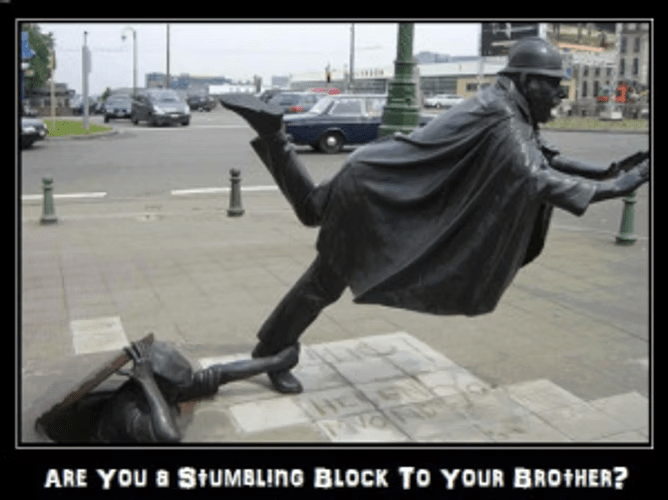










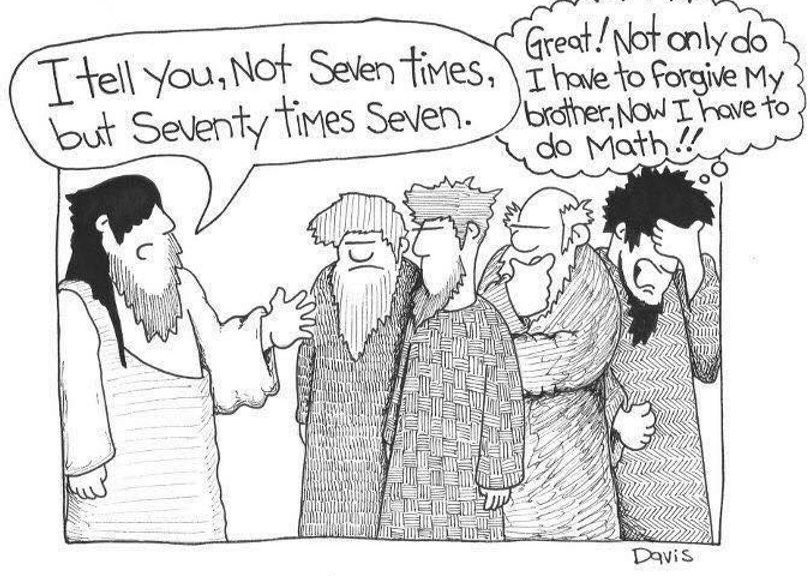
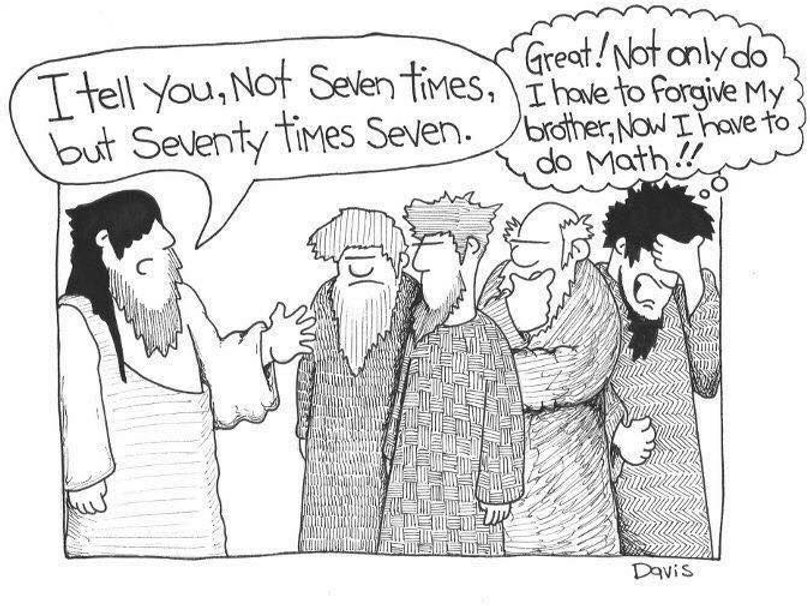
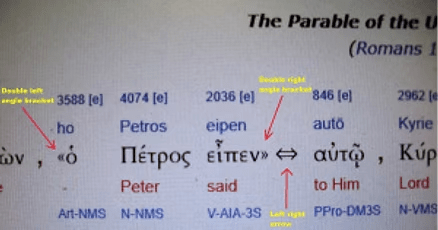
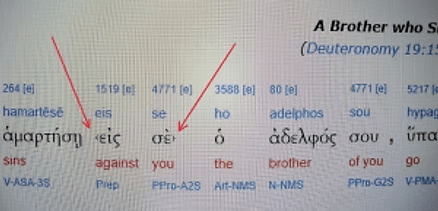



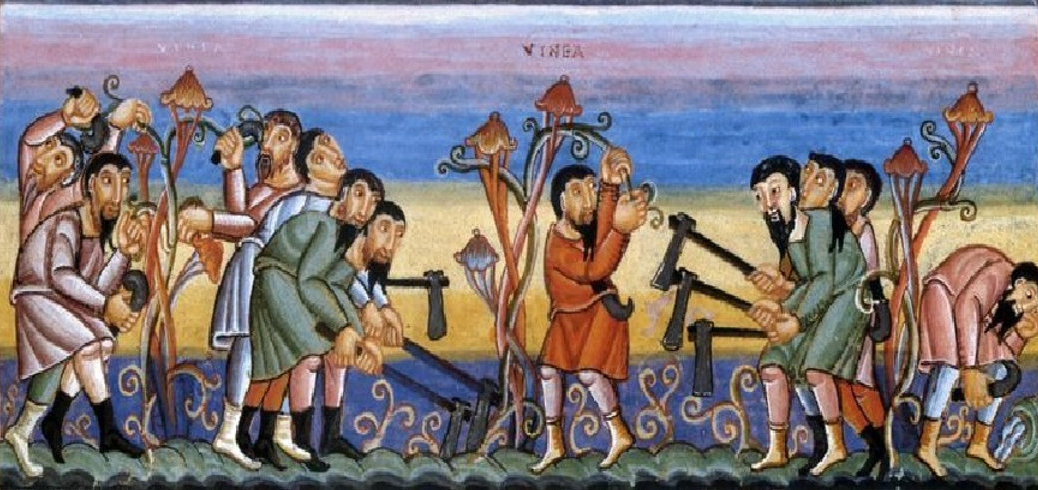
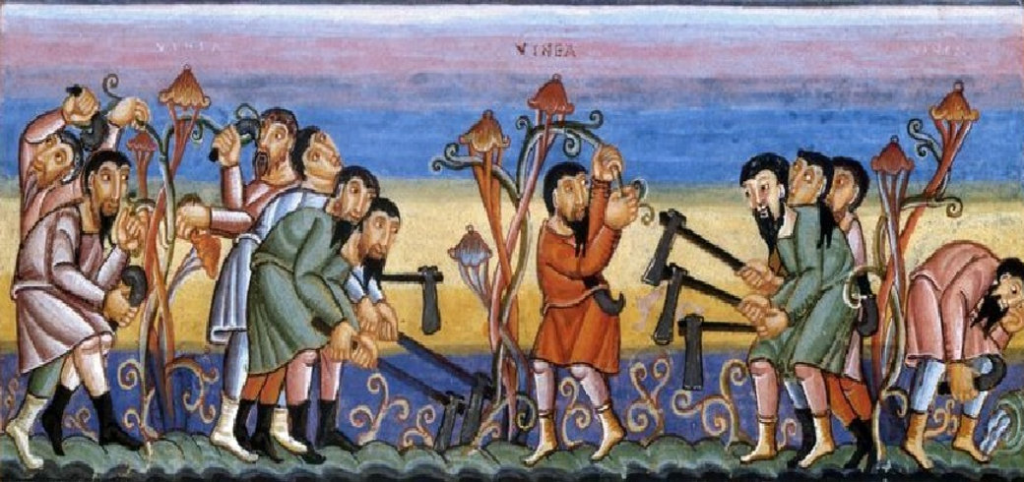
 Explaining the Readings