For the promise that he would inherit the world did not come to Abraham or to his descendants through the law but through the righteousness of faith. If it is the adherents of the law who are to be the heirs, faith is null and the promise is void. For the law brings wrath; but where there is no law, neither is there violation.
For this reason it depends on faith, in order that the promise may rest on grace and be guaranteed to all his descendants, not only to the adherents of the law but also to those who share the faith of Abraham (for he is the father of all of us, as it is written, “I have made you the father of many nations”) —in the presence of the God in whom he believed, who gives life to the dead and calls into existence the things that do not exist. Hoping against hope, he believed that he would become “the father of many nations,” according to what was said, “So numerous shall your descendants be.” He did not weaken in faith when he considered his own body, which was already as good as dead (for he was about a hundred years old), or when he considered the barrenness of Sarah’s womb. No distrust made him waver concerning the promise of God, but he grew strong in his faith as he gave glory to God, being fully convinced that God was able to do what he had promised. Therefore his faith “was reckoned to him as righteousness.” Now the words, “it was reckoned to him,” were written not for his sake alone, but for ours also. It will be reckoned to us who believe in him who raised Jesus our Lord from the dead, who was handed over to death for our trespasses and was raised for our justification.
——————–
This is the Epistle reading selection for the second Sunday in Lent, Year B, according to the Episcopal Church lectionary. It is read along with the Old Testament reading from Genesis 17, where is found the covenant God made with Abram to become the father of many nations. It is also read along with Psalm 22, where David sang that “kingship belongs to the Lord,” as it is He who “rules over the nations.” Finally, Paul’s selection from his letter to the Jews of Rome is accompanied with the Gospel reading from mark, where Jesus told his followers they must pick up their crosses and follow him.
Verse 13 here is very important to grasp, as Paul said the Law is not the source of salvation. Paul was not necessarily referring to Mosaic Law, but all the laws of man that have streamed from that [for Jews], which become the foundation for many civil laws. As such, the law [from “nomou”] is a collection of customs that are an external force of influence that impels actions. This form of external law becomes a way for forced conformity, rather than being representative of an internal influence to do what is right [righteousness]. This is opposed to doing that which is against a law [sinfulness].
Paul then wrote this assessment: “If it is the adherents of the law who are to be the heirs, faith is null and the promise is void.” By “adherents of the law,” the reference is to Jews, the descendants of Abraham, Isaac, and Jacob [at that time]. The use of “heirs” is relative to the promise between God and Abram [to be named Abraham] that a multitude of nations would come, with kings who will rule those nations. This means all nations professing to be Christian then fall into this lineage.
The change of course that says “faith is null” means the concept of a birthright as a form of exclusivity, as a child of God amid others who are no so blessed, ceases all true faith. This is like James wrote: “faith without deeds is dead.” (James 2:26b) Without true faith, there is no promise of a multitude of nations with kings born of Abraham’s blood.
This concept was stated by Jesus in Matthew 5:5, when he said, “Blessed are the meek, for they will inherit the earth.” The Greek word translated as “meek” is “praeis.” According to HELPS Word-studies: “This difficult-to-translate root (pra-) means more than “meek.” Biblical meekness is not weakness but rather refers to exercising God’s strength under His control – i.e. demonstrating power without undue harshness.” They add that the word is read as a combination of “gentleness (reserve) and strength.” Therefore, Jesus preached that the kings of a multitude of nations from Abraham would be “meek,” like their progenitor.
This is why Paul then wrote, “it depends on faith, in order that the promise may rest on grace and be guaranteed to all his descendants, not only to the adherents of the law but also to those who share the faith of Abraham.” That says that meekness is a demonstration of faith. Where there is faith there law exists within, with no need for it to be externalized in written law. Had the Israelites all possessed true faith in God [as Moses possessed], then there would have been no law needed to be brought down from the mount.
This is why Paul said, “For the law brings wrath; but where there is no law, neither is there violation.” “Wrath” is a legal punishment for breaking a law, demanded in a society where all are not on the ‘honor system’ of true faith. True faith means one never goes beyond the boundaries of law, as if no law existed beyond oneself.
Abram had faith without any external laws guiding him. When Paul wrote of Abram, saying “the presence of the God in whom he believed, who gives life to the dead and calls into existence the things that do not exist,” he was saying God was within Abram, so the law was written on his heart, exercised by his mind. The “life to the dead” is relative to any and all descendants of Abram, who at that point was childless, having cast away Hagar and Ishmael [a statement that God disowned a child born to Abram that was not from Sarai].
All souls come from God. They are breathed into clay [flesh], such that all humanity [including Abram and Sarai] is soul-flesh life forms called “into existence” that become all descendants of God, beyond those who adhere to any law given Moses. Law did not exist external to Abram; but God breathed into Abram the ways of righteousness, as an addition to his breath of life in a body of flesh, which became the codes by which Abram lived.
The faith of Abram led him to live righteously, not because he benefited from others for his good acts, but because it pleased God and that made Abram happy. The promise made to Abram by God was that he would sire a child through Sarai, when he was ninety-nine years of age, and seemingly beyond the age of parentage. As such, God made a promise of a miracle birth coming, which did not change Abram in any way [other than he started going by Abraham]. Paul wrote: “No distrust made [Abraham] waver concerning the promise of God, but he grew strong in his faith as he gave glory to God, being fully convinced that God was able to do what he had promised.” The promise increased Abram’s faith.
The promise of one producing a multitude of nations is a way of promising eternal life, through progeny. This is then a story of God’s promise to all human beings, as they too can live on forever through lineage that is founded in true faith. God’s promise that we recognize today is the eternal live through the covenant of Jesus Christ. This promise must increase one’s faith, rather than let one lose faith because one believes more in a promise than God.
When Paul then used the story of Abraham and the covenant made to him by God to turn it to a Christian theme, he wrote: “Therefore his faith “was reckoned to him as righteousness.” Now the words that translate as “it was reckoned to him” were written not for Abram’s sake alone, but for ours also. Thus, Paul wrote, “It will be reckoned to us who believe in him who raised Jesus our Lord from the dead, who was handed over to death for our trespasses and was raised for our justification.”
This says true faith is much more than a profession of belief. Whereas belief in an inheritance to God’s family through birth [Judaism and now Christianity] will be tested, judged by how righteous one is, the reckoning we all face today, in Lent, is one’s faith in God. Lent is not a test of beliefs, but a test of one’s true faith in God.
In verses 22 and 23 is the translations above that state “was reckoned to him.” In the Greek, the capitalized word “Elogisthē” is written, which means [in the lower case spelling], “was reckoned, was considered,” with usage including “was counted, charged with; reasoned, decided, concluded; thought, supposed.” However, that ignores the importance Paul placed on that past state of being between God and Abram, where the capitalization places importance on a time “Taken into Account.” Just as Abram was judged by God to be righteous, as a demonstration of his true faith, so too will everyone who claims the right to be a child of God, through Abraham, will be judged.
That is the meaning of Paul writing, “It will be reckoned to us who believe in him who raised Jesus our Lord from the dead, who was handed over to death for our trespasses and was raised for our justification.” We will be judged as to how well we have faith in a promise between us and God that says we will be granted eternal life and the absolution of past sins. Without the true faith possessed by Abram, we will distrust God, we will waver in our commitments to serve God unconditionally, and we will grow weak in what we say we believe in, as far as God’s promise is concerned. This becomes why this reading is read during the season we call Lent.
For a Christian to say he or she believes that Jesus of Nazareth “was handed over to death for our trespasses and was raised for our justification,” we need to fully understand what “justification” means. The word written by Paul is “dikaiōsin,” which means “the act of pronouncing righteous, acquittal.” (Strong’s) The word implies “a process of absolution,” whereby a demand is made upon us, individually upon each of our own deaths, such that the word’s usage “is closely associated with the pressing need to be released from deserved punishment.” (HELPS Word-studies) In other words, each individual’s faith will be judged by God, based on one’s acts of righteousness.
To say one believes Jesus died for our sins is meaningless, unless one has walked that walk, so one has the right to talk that talk. One needs to become Jesus, so one’s self-ego becomes “handed over to death,” due to the guilt one has for one’s own sins of the past; so, sacrifice of self-ego, replaced by the name of Jesus Christ, one can be judged so one’s own sins are no longer reflective of one’s faith. One has to become Jesus to know Jesus firsthand, in order to have faith that Jesus Christ has redeemed one’s soul.
The only way one can then become “raised for our justification” is to have died of self, having been reborn as Jesus Christ. The “process of absolution” can only pass the Lenten test of faith when God looks upon our flesh and sees His Son reborn within. Otherwise, one will be sweating bullets to give up one meaningless sin for forty days, longing for that time of pretend sacrifice to end, so one can return to the ways that justify eternal damnation.
This is where one needs to look closer at the story of God’s covenant with Abram, so one can understand just what it means to be a multitude of nations, where kings born of Sarah will proliferate. Each body of flesh must be a nation alone unto God, whose laws are the faith that result in righteous acts. The laws of one’s flesh are written on one’s heart, not on something external to oneself. Each body of flesh that becomes such a nation is ruled by the Christ Mind, where the true kingdom of Jesus resides. With that guidance in one’s brain, one becomes the rebirth of Jesus [name meaning “Yah(weh) Will Save”]. To be that, one must die of self.
When Abram was ninety-nine years old, the Lord appeared to Abram, and said to him, “I am God Almighty; walk before me, and be blameless. And I will make my covenant between me and you, and will make you exceedingly numerous.” Then Abram fell on his face; and God said to him, “As for me, this is my covenant with you: You shall be the ancestor of a multitude of nations. No longer shall your name be Abram, but your name shall be Abraham; for I have made you the ancestor of a multitude of nations. I will make you exceedingly fruitful; and I will make nations of you, and kings shall come from you. I will establish my covenant between me and you, and your offspring after you throughout their generations, for an everlasting covenant, to be God to you and to your offspring after you.
God said to Abraham, “As for Sarai your wife, you shall not call her Sarai, but Sarah shall be her name. I will bless her, and moreover I will give you a son by her. I will bless her, and she shall give rise to nations; kings of peoples shall come from her.”
——————–
This is the Old Testament reading selection for the second Sunday in Lent, Year B, according to the Episcopal Church’s lectionary. It precedes a reading from Pauls’ letter to the Romans, in which he uses the story of Abraham as being relative to Jesus Christ and faith. It also is read before Psalm 22, where David sang, “My soul shall live for him; my descendants shall serve him; they shall be known as the Lord’s for ever,” which reflects the faith of Abraham, Paul, and Jesus. Finally, this history of Judaic lineage precedes the Gospel reading from Mark, when Jesus foretold his death, leading to him warning his followers to pick up their crosses of faith, or forget about inheriting anything heavenly.
This reading begins by making a point of stating the age of Abram. For us today, ninety-nine would be well beyond normal expectations for life in the flesh. Knowing that Abraham lived to be one hundred seventy-five years, at ninety-nine he had lived 56% of his life. In today’s standards of living eighty years, 56% would equate to the age of forty-five. For a male American today to not have children by the age of forty-five, most would have little desire to go through the challenge of raising a baby and caring for it until one’s retirement years. But, that reflects the selfish nature of these times, when there are few males who have children when they are one hundred and fewer who live to be one hundred seventy-five.
The telling of Abram’s age serves two purposes. The first is it says Abram was not a descendant of ordinary blood. Being a descendant of Noah (from Shem), who lived to be nine hundred fifty (Shem lived to be five hundred), the age of Abram says he was born of holy blood. Abrams’ father, Terah, lived to be two hundred five years. (Genesis 11:32) Still, the second purpose lets the attentive reader realize that it had been twenty-four years since Abram left Haran, as commanded by God when Abram was seventy-five. (Genesis 12:4) That says Abram had clearly been devoted to God, along with Sarai, for quite some time, dating back to when they married while living in Ur [perhaps sixty years earlier]. Thus, it is important to realize those years of service to God that led to this conversation about to take place.
The translation presented by the New Revised Standard Version [NRSV] above, has God tell Abram, “I am God Almighty; walk before me, and be blameless.” This comes after we read, “the Lord appeared to Abram.” Both of these statements should be taken as absolute truth, but they need to be understood in terms of Abram being a long-time servant of God.
From jumping ahead in the Holy Bible and knowing all about Moses, we have an understanding that God told Moses that no one can look upon the Lord and live. That knowledge needs to be brought back to this reading, so we can clearly see the truth of what is written [it was all dictated by Moses, many years after the fact, from divine visions of pertinent history]. Sleep is metaphor for death, meaning dreams are visions in a dead state of being. When in a dead state of being, one can have a “face-to-face” meeting with God.
Moses would enter the tent of meeting and once in that chamber he probably went into a deep sleep state, when he then had God appear before him. In this same way, Abram had “the Lord appear to him” in a dream. It should be realized [from having read his story in Genesis] that this was not the first time God spoke with Abram; so, it is important to see Abram was a prophet of the Lord who regularly had God appear before him and give him instructions.
From there the statement to Abram was made, but it cannot be read like an introduction that tells Abram, “I am God Almighty.” The two were already well acquainted. That means the Hebrew needs to be closely inspected.
The Hebrew written [realizing Hebrew has no capital letters] is as follows:
“’ă·nî-’êl šad·day” – “I god of the land” ,
“hiṯ·hal·lêḵ lə·p̄ā·nay weh·yêh ṯā·mîm” – “walk with face and be blameless” .
There is no need for God to announce His greatness. As God [Yahweh] speaking to Abram, His name needs no embellishment. Thus, God spoke of “el,” which is a “god” [in the singular number], that is “shadday” or a god of the world, land, fields. This is then a statement not about God – Yahweh – but about Abram. It says “You are Me incarnate in the flesh. As Me, You are a “god of the earth.”
In the second part, the word “walk” [from “halak”] becomes a statement of how far Abram has “come,” while also a statement of how far he will “go,” because he has become the vehicle of “god on earth.” Wherever Abram “walks,” so too does God.
Next is a word that clearly says “face,” but one that is regularly translated as “before me.” There can be no human being ever who walks before God, as “before” becomes a statement of greater than, or a leader of God, making God be seen as a follower. The root Hebrew word, “panim [sing.] or paneh [plur.],” means “face or faces.” This word becomes key in understanding the first Commandment given to Moses.
There, the Hebrew states: “lō yih·yeh-lə·ḵā ’ĕ·lō·hîm ’ă·ḥê·rîm ‘al-pā·nā·ya,” with the last word again a form of “panim.” The standard translation says, “You shall have no other gods before me,” but the literal translation says, “not you shall have gods other [as your] face [before my face].” The first Commandment says no one can come before God [in a meeting or an appearance] as self. To be received by God you must wear the face of God, as onlyone who has been possessed by Godcan enjoy the presence of God. Without oneself wearing the face of God, one is thinking one’s ego is a god [an elohim]. Thus, here in Genesis, God told Abram in a dream, “As Me in You on earth, you walk with My face, which makes You walk without sin.”
See the masks of Mardi Gras as symbolizing the face of self-pleasure worn for the last time, before the face of self comes off on Ash Wednesday and the face of God is then worn forevermore.
This becomes a significant statement that Abram had long before sacrificed any and all forms of self-ego, so he only wore the face of God as he went through life. When we read that Moses’ face would glow greatly after meeting with God, the Israelites made him wear a veil to cover the face of God, or else they feared they would die from looking at God. Certainly Jesus wore the face of God in the same regular way as did Abram, which was evidenced every time Jesus said, “I do not speak for me, but for the Father.” That means wearing the face of God is a requirement to “walk blamelessly,” or live a life of righteousness.
This quote by God then leads to him telling Abram of a promise He was making to him. A promise made by God is thus a covenant. Still, a covenant with God implies an agreement being made between God and the one to who God makes a covenant, such that the one receiving God’s good will will continue to be the face of God on earth. [One’s face still looks like one’s face, as God is invisible; but one’s face has a glow of holiness surrounding it – a halo.]
Simply by understanding that God does not make Covenants with just anybody, such that Abram had long proved his metal to God [think about that in Lenten terms], God was giving to Abram the one thing he knew Abram wanted, but never asked for [begging for self is selfish]. In addition, God was giving to Sarai the one thing she had long wanted, but could never reward her husband with – a son. Sarai was also a long devoted servant of God, but she had never made demands of God to make her pregnant. She did not blame God for her being barren, thus she too was “blameless.” All of this must be seen as God caring for those who serve Him unconditionally.
As a purposeful selection for the second Sunday in Lent, this story of a covenant between God and Abram [and by extension Sarai] is told one week after a purposeful selection that told of the covenant between God and Noah. This trend forces one to realize that humans having been long dedicated to serving God [Noah five hundred years; Abram ninety-nine years] do not go unrewarded. The stories of Noah and Abram [largely unwritten in the Holy Bible] say these men were upright and righteous, which means they listened to the voice of God telling them what to do. As they did what God told them to do, God supported them in those tasks. Both Noah and Abram are then projections of how we should listen for God’s lead, act upon having gained a good conscience, and thank God for leading us, rather than demand God do more to please us.
The symbolism of the Lenten experience – forty days of self-sacrifice – is not about recognizing the time Jesus spent in the wilderness of Judea and it is not about us being asked to give up one indulgence – one recognizable sin of selfishness – because Lent is a marker in one’s personal life, relative to when one ceased wearing the face of self-ego and began wearing the face of God. Once one puts on the face of God there is no end to that subservience. Thus, the lesson of this reading is hearing the voice of God say to you – from within – “I am the god of the land. Walk on holy ground forever wearing the face of God and being blameless for only doing what God has led you to do.”
All of the seasons of the liturgical year are set up the same way. None of them are expectations to remember the life of Jesus and force one to believe Jesus did this and Jesus did that. Jesus is the model for all who seek to serve God. Serving God cannot be done alone. Serving God demands one become married to God, through the receipt of His Holy Spirit, it then becoming meshed irrevocably with one’s soul.
Advent is when an individual servant of God remembers when he or she first felt the need to serve.
Christmas is when one first felt the birth pangs of a new being within.
The Epiphany is when one realized Jesus Christ has been born within and one is no longer wearing the face of selfishness.
Lent is about one’s test of commitment to God.
Easter is about the death of all past connections to sin and the resurrection within one’s soul to the state of Apostle-Saint, when one no longer keeps God a secret experience.
Pentecost is when one truly walks in the name of Jesus Christ, as a minister or priest that tells the world God wants to marry them too.
Thus, the seasons call believers to become the faithful, through coming to know God and Jesus Christ personally – not through stories told us about someone else’s life.
Jesus began to teach his disciples that the Son of Man must undergo great suffering, and be rejected by the elders, the chief priests, and the scribes, and be killed, and after three days rise again. He said all this quite openly. And Peter took him aside and began to rebuke him. But turning and looking at his disciples, he rebuked Peter and said, “Get behind me, Satan! For you are setting your mind not on divine things but on human things.”
He called the crowd with his disciples, and said to them, “If any want to become my followers, let them deny themselves and take up their cross and follow me. For those who want to save their life will lose it, and those who lose their life for my sake, and for the sake of the gospel, will save it. For what will it profit them to gain the whole world and forfeit their life? Indeed, what can they give in return for their life? Those who are ashamed of me and of my words in this adulterous and sinful generation, of them the Son of Man will also be ashamed when he comes in the glory of his Father with the holy angels.”
——————–
This is the Gospel reading chosen with purpose for the second Sunday in Lent, Year B, in the lectionary for the Episcopal Church. This reading is partnered with an Old Testament reading from Genesis that tells of God’s covenant with Abram, Psalm 22, where David sang, “They shall come and make known to a people yet unborn the saving deeds that he has done,” and the epistle of Paul to the Romans, which related the sacrifice of Jesus to that of Abram.
As a reminder that is important to realize prior to any reading of Scripture, one must see oneself appear in the reading. Faith should lead one to grasp how divine Scripture is intended for the reader to gain insight for his or her own life, more than thinking Scripture is God’s way of wanting one to hear a story read to you that makes it seem there is nothing one can do about things past. It is from such a position of basic ignorance that everyone must see themselves (individually) as Peter and also as those Jesus knew wanted to save their lives, simply from hanging around one of righteousness, rather than being one of righteousness. One needs to always see oneself as coming up short in divine expectations and being in need of Scripture to save one’s soul.
This specific choice of verses are actually split into two separate events, one with Jesus only talking to his disciples and the other with Jesus having called the crowd to join with the conversation. In the versions of English translations available online, these two sets of verses will each have their own heading. For example, the New International Version (NIV) has verses 31-33 headed as “Jesus Predicts His Death,” with verses 34-38 headed “The Way of the Cross.” Simply by recognizing that separation, one can see there are two groups of people who followed Jesus then, just as there are two different groups today: those seeking to learn from Jesus; and, those wanting to be near Jesus.
Because the vast majority of people professing to be “Christians” today fall more in the second group, with those designated as seminarians and their teachers [including those ordained as ministers in churches] in the “disciples” category, most people will overlook the importance of Mark writing, “Jesus began to teach.” It is much easier to stay seated on a pew and hear those words, while imagining them saying, “Jesus began to talk.”
The Greek word written by Mark is “didaskein.” That is the present active infinitive of “didaskó,” saying “to teach, to direct,” or even “to admonish.” HELPS Word-studies adds the word literally means “to cause to learn,” by instruction and imparting knowledge. That source also states the word “nearly always refers to teaching the Scriptures (the written Word of God).”
By simply understanding that “Jesus began to teach,” one cannot read the following words in verses 31-33 as if Jesus began to prophesy his coming life. To prophesy his coming suffering, rejection, death and resurrection makes “to teach” a most inappropriate word choice. Jesus could not “teach” the future, even though he could know what was coming. Because of this one word – “didaskein” – the reader is forced to figure out how the following words [known in hindsight to perfectly fit what happened to Jesus] are “instructions, imparting knowledge.” It must drive one to ask, “What was Jesus teaching?”
The answer to that question comes in the words written: “hoti dei ton Huion tou anthrōpou.”
Those words have been translated by the NRSV as saying, “that the Son of Man,” but they are better translated as stating: “what necessitates this Son who of man.”
Here, in the NRSV, one finds another common liberty taken, which is the capitalization of words not capitalized in the original text. This is quite prevalent in the Old Testament, since Hebrew has no capital letters, leading one to improvise when it comes to proper names and other words that need importance shown by way of capitalization. However, because Greek is not like Hebrew in that regard, the capitalization of “Man” misleads one into thinking Jesus referred to himself, bringing about a need to capitalize “anthrōpou” as it three words created a title for Jesus – Son of Man.
With that mis-capitalization [commonly done through the Gospels], one is led to think that Jesus is not teaching about how to become a “Son of man,” so one thinks Jesus is not teaching, but talking about himself. The removal of the capitalization of “Man” [which would be Jesus] and reducing it to “man,” as written, Jesus can be seen “to teach his disciples” about how to be like him.
It helps to see Mark as himself an Apostle-Saint. As such when writing his Gospel he would have not only listened to Simon-Peter tell his eyewitness account of Jesus’s ministry, but Mark would have been led by the Holy Spirit to understand things in ways that normal minds cannot. As disciples, Peter and the others heard Jesus use the term “Son of man” and heard it as Jesus’ title for himself. However, after they had become married to God and their souls had been merged with the Holy Spirit, they too became Sons of man, as the resurrection of Jesus Christ. Therefore, Mark wrote divinely, saying that Jesus began to teach those who would become themselves the “Son of man” what they needed to know that transformation demanded of them.
By realizing that this verse states Jesus teaching what all Sons of man need to know, the lesson then becomes the following, all of which are important [preceded by the word “kai”] stages of “great suffering” that one “must undergo”:
· One will “be rejected by the elders”.
· One will be rejected by “the chief priests”.
· One will be rejected by “the scribes”.
· One will “be killed”.
· One “after three days will arise”.
The lesson there, which Mark [thereby Peter too] knew, was becoming the Son [of God], in a body of flesh called “man, one of the human race” meant connecting to a source of knowledge and truth that was well beyond all scope of religious education. That which the “elders” had been taught to believe was wrong. That which prompted some from within the people to perform sacred rituals and preside over holy congregations was based on beliefs, not true faith. All that had been written divinely prior was misinterpreted, thus all which was written as how one should treat holy mysteries of text was half-truth, wild guesses, or outright lies. Therefore, possessing true knowledge of God and understanding sacred texts, as a mere mortal not sanctioned by a religious organization and its leaders, meant total rejection from that establishment, in a most unkind manner.
When Jesus then got to the point of saying “be killed,” the Greek word “apoktanthēnai” is written. That word can equally state “be put to death,” where the figurative usage means “be abolished” or “be extinguished.” That figurative meaning can be seen, relative to the series of rejections taught to be expected from the leaders of the Jews [taught to Jewish disciples], to mean a form of excommunication or the end of their ability to be called “Jews.” That becomes a lesson that the disciples , once they would become Sons of man, would lead to them no longer calling themselves Jews.
That then leads to Mark recalling Jesus saying, “after three days to arise.” Here, it becomes important to slow down the reading process in one’s brain, so one no longer sees that statement as if it solely means “after seventy-two hours have passed [the sum total in “three days”] one with then arise from having been dead.” When one reads very slowly, the following appears:
“meta” – “in company with”
“treis” – “three”
“hēmeras” – “days”
“anastēnai” – “to raise up.”
From these four words are found important statements that say: One’s soul will be joined with the Holy Spirit and be in company with God; one will no longer be alone, but one of three – the Father, the Holy spirit, and the Son; the darkness of death will be replaced with the sunlight of truth, where the light of Christ means one has been saved from the death of a world of matter; and, one’s soul will ascend to a heavenly state of being.
That last statement also means that the transformation in the flesh from being a Jew will rise in a new philosophy of life that will be named after the Messiah, called Christianity – where all members are reborn in the name of Jesus Christ. When those four words are read with that scope of meaning, which still allows for them to be prophetic of the near future in Jesus’ life, one then sees this lesson taught by Jesus has a very happy ending – for those who are good disciples and receive the Holy Spirit, becoming apostles [Judas Iscariot would not be one].
For anyone who has followed my interpretations in the past, it will be remembered how I have often said the Greek word “kai” is a marker word [much more than the conjunction “and”] that denoted importance follows. At every place where a bullet point marks [mine above] the different steps in this lesson, one can find that Mark wrote the word “kai.” That word must be seen as intended to show where close attention should be placed, more than as just a word that allows a brain to scoop up large quantities of words and make them something less than divine Scripture intended. To begin this series of verses, verse 31 begins with a capitalized “Kai,” stating how important it is to realize Jesus began to teach his disciples [denoted as “them” – “autous”]. In verses 31 and 32 there are six presentations of “kai,” meaning those two verses are packed with important things to know.
From the interpretation I have just presented, there will certainly be many who will reject what I have written, simply because others have not seen the same depth of meaning that I am proposing [exposing?]. This then becomes a prophecy fulfilled, as the lesson Jesus taught brings the expectation of scholarly rejection [“the scribes”]. Still, I do not feel alone, as the next verse [32] points out how Peter immediately rejected what Jesus said. While his rejection was from misunderstanding what Jesus taught [a common mistake, one still made today], Peter then becomes an example of how one should see oneself, rather than think one knows what these verses teach [about Jesus’ life bringing suffering].
When the NRSV says Mark next wrote, “He said all this quite openly,” the word translated as “openly” needs to be understood. That word is “parrēsia,” and rather than being the last word in this segment, it is the first, immediately following yet another “kai.” The word means “freedom of speech, confidence,” (Strong’s) but its usage relative to speech implies “boldness, confidence.” Here, one needs to recall the state of Jesus speaking in the synagogue in Capernaum [told in Mark’s first chapter], as the Jews present said Jesus spoke with “authority” [“exousian”]. The same sense should be felt in Jesus teaching his disciples; so, rather than his words being expressed “openly,” they should be heard as being confidently stated, without any reason for anyone to question the truth they contain.
When we then read that Jesus had confidently made a series of teaching instruction to his students, Mark next said that Peter took Jesus aside and began to “rebuke” him. This must be seen as a more powerful statement than one student asking Jesus to speak with him for a moment, privately, because this series of words also begins with the word “kai.” The importance then makes Peter become the lesson himself, as a live demonstration of what Jesus had just taught means. Peter then reflected how the education system of the Jews had permeated their brains also, controlling the way they thought about the expectations set by the prophets.
This means Peter heard the words of Jesus in the same way Mark wrote them, which was written by design to make people who are not true disciples think in simple terms, which are false. Peter thought the prophets had forecast a Messiah that would overthrow the world powers [like the Romans] and return the lands of Israel and Judah to their rightful owners, because of a covenant made with God [long since broken, made null and void]. This way of thinking, based on the education of the Jewish leaders, meant [to Peter] Jesus had to be protected and kept alive, because he was seen [by his followers] as the one who would lead an uprising that would have God come and defeat their foes. Peter then spoke as one having in his brain everything that Jesus had just said [symbolically, thus misunderstood by Peter] was wrong and was not the path to take to obtain the redemption of souls.
When this rebuke by Peter has taken place, the NRSV has Mark writing, “But turning and looking at his disciples,” as if Jesus heard what Peter had to say, but then wanted to show him up in front of the other disciples. That is not that case, as the Greek words written are: “Ho de epistrapheis,kaiidōn tou mathētas autou,” which literally says, “This [capitalized] now having turned ,kai having perceived this disciples of him”.
The capitalization of “Ho” makes an important recognition of what Peter had just done, rebuking Jesus [“This”]. From that Second Aorist Passive Participle Nominative Singular Masculine form of the verb “epistrephó” [“to turn back, turn around, return”] becomes a statement that says: the student is rebuking the teach; and, that was the lesson of rejection all will face from standardized religion, so wrong will stand up to right as a way to destroy that which is righteous.
Following the marker of importance [“kai“], Mark then tells us that Jesus saw Peter was not the only one with his opinion. Not only had Peter turned away from receiving the teachings of Jesus, but Jesus perceived Peter was speaking for all of the disciples. Jesus then divinely knew they all wanted Jesus to stop talking about what they all thought was him predicting his own death.
When we then read that “[Jesus] rebuked Peter and said, “Get behind me, Satan! For you are setting your mind not on divine things but on human things,” this was Jesus the rabbi [teacher] telling the student to get back in his seat. Once that rebuke was made [not knowing what private words were shared then], Jesus then confidently and probably loudly announced to all of his disciple, “Get behind me, Satan!”
Get behind me, Satan!
The thought that Jesus would identify Peter alone as the physical embodiment of Satan is giving Peter too much credit. Peter was just one disciple, who thought like all the other disciples, who all thought like the elders, chief priests and scribes. They all had an opinion that they thought was best, whether or not they knew how God felt about those opinions. This is then where one needs to return to the wilderness experience that Jesus had, where Satan did attempt to make Jesus give honor to his opinions and promises. Satan was told then (basically) the same thing. “Get behind me” says, “I lead. You follow.”
To Peter and all the twelve disciples, those words were a demand, spoken by Jesus as the voice of God coming through His Son. God spoke as Jesus, saying (in essence), “Stop having any role in my ministry, if you are not going to learn what I teach.”
When Jesus said, “For you are setting your mind not on divine things but on human things,” the same “human things” were offered after Jesus had finished forty days fasting. The promises of stones being bread and angels keeping one from harm and kingdoms of the earth to rule were all human things, just as was Peter and the eleven promising to keep Jesus safe from all those he named that would make him suffer. The “divine things” were his lessons of what they all would face in their graduation, becoming Sons of man.
By seeing how the story of verses 31 through 33 tell of twelve disciples being turned towards standard religious beliefs and past teachings by elders, priests-rabbis, and scribes, not hearing the meaning of what Jesus was teaching, we see that surrounding the class setting was the presence of others who followed Jesus, but were not officially his students. Because this continuous story is told with the same continuity by Matthew and Luke, the story being told by Luke says Mother Mary was one of the so-called “crowd” that Jesus called near to his disciples. Because the disciples had just proved to be as unknowing as the other followers – the ‘common people” [a translation possible of “ochlon”] – Jesus extended his teaching to all who were present.
At this point that all had come close enough to Jesus to hear his words, he said, “If any want to become my followers, let them deny themselves and take up their cross and follow me.” This translation of the NRSV is another that does not capture the full truth of what Jesus proposed.
The Greek word translated as “want” is “thelei,” which translates as “wills, wishes, desires, is willing, intends, or designs.” (Strong’s) A better choice would be “plans,” rather than “want to.” Next, the word translated as “to follow” is “elthein,” which translates as “to come, go.” Thus, Jesus states, “if anyone plans after me to come,” which needs to be read slowly again, as “if anyone plans … after me … [me] to come.”
That becomes a statement [and Saint Mark would have known the truth of this meaning] that says, “What I am about to say next is important, because there will be a time after me, and if you want to be me then … as a continuation of me in you … then listen up!”
At this point Jesus began teaching again, just as he had earlier about the expectations of becoming Jesus Christ reborn. Instead of telling about who will reject them and how one will die and be reborn, Jesus then said these instructions:
· Deny oneself.
· Raise up yourself as an upright stake not fallen over.
· Follow me.
Those three instructions stated in verse 34 are conditional, as the use of a capitalized “If” [“Ei”] states. That one word speaks loudly as Jesus telling those who had their own personal opinions about how to live their lives; and, at that point in time, those surrounding Jesus were thinking their ideas about the way things should be were better than those Jesus was teaching them. The “If” sets up the scenario that one is not asked to follow Jesus around, especially if the only reason is self-benefit. The “If” says plainly that the choice is each individual’s to make about salvation of one’s soul. Thus, “If” one wants to find redemption from one’s sins, then [like Jesus had just said about death-three-days-arise] one must “disown, repudiate, disregard” [all possible translations other than “deny” for “aparnēsasthō”] oneself.
To “deny” oneself means a figurative death of self-ego and self-will. Jesus had used words that taught the disciples must face rejection to the point of death as Jews. While Jesus would be punished to death in his physical body, that body would not truly be dead, because it would be resurrected. However, Jesus was not teaching his disciples about his physical death, but their own figurative death of self, which caused them to listen to Jesus teaching but reject what he told them. To be cleansed of their sins, they had to die of their old ways.
Now, I have written in the past about how Jesus did not tell all his followers that they must build a crucifixion cross out of lumber and kill themselves physically, as a means of self-denial. The Greek word “stauron” was commonly used [thus commonly heard in language use] as a statement about the stakes in the ground that the vines of grapes grew upon. The weight of good grapes would cause the stakes in a vineyard to lead over, allowing the clusters of grapes to hang down close to the ground. When low to the ground, animals could eat the grapes easier and the soil could cause the grapes to turn bad. Therefore, Jesus said their figurative deaths of self-ego must be followed by raising up the stakes that kept them all from being like Cain and rising up to a life that acts righteously.
Again, knowing this transformation was a ‘big IF,” since not all those hearing his words would do as Jesus said [Judas being one], Jesus said his disciples must rise to his state of being. Thus, after Jesus would die, resurrect, teach some more and then ascend, those choosing to do as Jesus taught then would be the next man up, as Jesus Christ reborn. Everyone listening was already following Jesus around physically; so there was no reason to tell them to “follow me” in human ways. The Greek word written by Mark [“akoloutheitō”] actually tells those followers “to attend” or “to accompany,” where the spiritual means a union of soul to Holy Spirit, accompanying Jesus Christ within their bodies of flesh. Still, to reach that state of being [the ‘big If’], one must get rid of self-importance, practice being righteous and ask God to let Jesus Christ be reborn within one’s soul.
After making those three stages of development be heard, Jesus then stated two scenarios that would be relative to the “if” condition, based on what each listener held dear. First, he said “if you desire to save your soul,” where the Greek word “psychēn” was written. Whereas the NRSV translates that word as “life,” as if the question was about saving a mortal life [a known state of being that would eventually no longer live in human flesh], the source of “life” is the “soul.” Thus, Jesus asked each to ponder “if you want to save your soul.”
When Jesus then said “you will lose it,” the word translated by the NRSV as “will lose” is “apolesei,” which also means “will destroy, will kill.” This becomes a return to the first step towards salvation of a soul, which is denial of self. That means to save a soul one must kill that which imprisons that soul with sin. This is not a scenario of killing one’s flesh [suicide], but one stating as instructed – self-denial.
Jesus then supplied a scenario that was relative to one choosing to deny self, such that it was to allow one’s body of flesh to receive the Holy Spirit and become reborn as a Son of man [the “me” of Jesus] and to do so for the purpose of becoming an extension of “the good news of the Messiah” [from “euangeliou”]. If one made that choice, then that one was promised to have saved his [or her] soul by having raised his [or her] stake to a righteous state of life, following as a line of Jesuses in the world [the true “Gospel”].
After having restated his lesson for all ears to hear, Jesus then asked his followers two questions:
1. What does it gain a human being to inherit all the wealth of a material world, if finding that profit means a soul condemned to an eternity of loss?
2. What is a soul worth, when measured in physical things?
Those questions are rhetorical, when one knows they are asking about spiritual goals, not human ones. Everything gained in the material world will be left behind at physical death; but a soul sold for such temporal gains will pay the price of eternal loss. Therefore, the obvious answer says nothing material is worth eternal sacrifice.
When the NRSV has Jesus finish this lesson to his followers by having him say, “Those who are ashamed of me and of my words in this adulterous and sinful generation, of them the Son of Man will also be ashamed when he comes in the glory of his Father with the holy angels,” the issue at hand is embarrassment felt by a body of flesh that surrounds an eternal soul. All of the brains that thought Jesus should bite his tongue and stop saying things about death were doing nothing more than acting as the prison guards of a captive soul. It is the flesh that teaches the soul to sin. Thus, it was the flesh of the followers that was ashamed for everything done in the past that was keeping all of them from having their souls saved from that control.
That means the lesson of Jesus about sacrifice meant self-denial of the flesh’s influences. The stake of righteousness had fallen over and any fruit the disciples and others had produced was being eaten by the lowlifes of the world. They were doing nobody any good, least of all their own souls. Any shame felt in feeling guilt from being unable to raise themselves upright was because they all knew how difficult it was to be righteous in an unrighteous [an “adulterous and sinful”] world [“generation”]. To forego the lesson of Jesus and to continue onward as a soul chained to the lusts and desires of a body of flesh meant the time would certainly come when the soul would be freed from its prison of flesh, only to stand naked and afraid before the judgment of God. At that point, all who had felt ashamed of doing what Jesus said to do would feel the wrath of Jesus advising God to let those souls pay for their choice to sin.
Now, I cannot fathom anyone who considers himself or herself a Christian could read the words of this Gospel reading and not come away with the insight that Jesus spoke to us today, because we too live in an “adulterous and sinful generation.” Not only do the sheep who meander into church pews on Sunday [when COVID19 allows that possibility to happen], but also the leaders of those religions considering their organizations as “Christian,” they all routinely feel too ashamed of Jesus to actually become Jesus Christ reborn. They vehemently reject anyone [like me] who thinks that is a possibility.
Modern Christianity has become the fulfillment of what Jesus taught in the Gospel reading, because our brains [a material-flesh organ] have been filled with the teachings of the religions, who [like the elders, high priests, and scribes] see it as much easier to let Jesus be a one-of-a-kind, which no one can ever duplicate [even though Christianity was created by Apostles reborn in the name of Jesus Christ – all being Jesus reborn].
It is so much easier to believe all one has to do is sit and wait for death to come naturally, at which point Jesus will wrap our souls up in his spiritual arms and take us to the Father’s house, where there will be rooms for Episcopalians, rooms for Catholics, rooms for Buddhists, rooms for anyone who ever lived, with none of them ever being required to do anything to have their souls saved. It is a philosophy created by embarrassment to admit, “I read the words, but I still have no clue what they really mean.”
This is what makes understanding that Jesus is threatening your soul with a judgment that says, “Jesus will tell God about your soul – ‘I do not know you.’” For Jesus to know one, one has to follow the instructions he gave in this reading: sacrifice self-ego, act righteously, become reborn in the name of Jesus as the Christ. One has to be Jesus to know Jesus.
If one cannot see that in this Gospel reading, then one is too blind to see the truth. Not realizing the message of this Gospel reading means one knows the love of sin [i.e.: being one with Satan] rather than know the peace of salvation [i.e.: being one with Jesus Christ].
——————-
As a Gospel selection for the second Sunday of Lent, which is a season of self-denial, when one should be practicing righteous ways [something much greater than giving up smoking], the lesson here says Lent is when one’s soul will be tested for faithfulness [not simply beliefs].
When Peter took Jesus aside and rebuked him for talking crazy, Peter must be seen as a reflection of all who think becoming Jesus – through death and resurrection and ascension – is crazy talk. If one’s brain has led one to think like Peter, then one is being led around like a bull with a nose ring by Satan. One is too weak or too ashamed to tell Satan to serve God, by getting out of the way of His Sons of man.
Lent must be realized as that kind of soul testing for eternal salvation, not some brief period of time of possible limitations, a time that endlessly repeats, year after year, with nothing ever permanently changing.
23 For he does not despise nor abhor the poor in their poverty;
neither does he hide his face from them; *
but when they cry to him he hears them.
24 My praise is of him in the great assembly; *
I will perform my vows in the presence of those who worship him.
25 The poor shall eat and be satisfied,
and those who seek the Lord shall praise him: *
“May your heart live for ever!”
26 All the ends of the earth shall remember and turn to the Lord, *
and all the families of the nations shall bow before him.
27 For kingship belongs to the Lord; *
he rules over the nations.
28 To him alone all who sleep in the earth bow down in worship; *
all who go down to the dust fall before him.
29 My soul shall live for him;
my descendants shall serve him; *
they shall be known as the Lord’s for ever.
30 They shall come and make known to a people yet unborn *
the saving deeds that he has done.
——————–
This is the Psalm selection for the second Sunday in Lent, Year B, according to the lectionary for the Episcopal Church. It will be read aloud in some manner or sung by a cantor, accompanying an Old Testament reading about the covenant between God and Abram (Genesis), an Epistle of Paul where he spoke of Jesus in comparison to Abraham (Romans), and the Gospel selection from Mark, where Jesus told his followers to raise up their stakes if they were to follow him. This song of praise by David is read (in parts) on other lectionary schedule occasions.
In verse 22 [verse 23, according to the BibleHub Interlinear translations], David announced that all the descendants of “Yahweh” [rather than “the Lord”] must praise Him, saying all the offspring of Israel must respect Him with honor and glory. Relative to this second Sunday in Lent, when the story of the covenant between Yahweh and Abram is told, those descendants [specifically those of Jacob’s line] are the ones promised to be a multitude of nations. This multiplicity must now be seen not as many countries or the control of empires, but the people who, like David, give praise to Yahweh.
In verse 23 [24] we read, “[Yahweh] does he hide his face from them.”
There the word “pā·nāw” is written [a form of “panim”], meaning “his face.” This should be read as supporting detail to the Genesis reading, when God spoke to Abram, telling him, “walk before me” [“hiṯ·hal·lêḵ lə·p̄ā·nay”], where “le-panay” is translated as “before me.” The usage actually says, “walk with my face upon you.” Therefore, what David said in this verse is from personal experience from himself have worn the face of God, as one who deeply loved God with all his heart and gave Yahweh praise for all his successes in life. By saying God “does not hide his face from them,” “them” becomes all descendants of Abraham, Isaac, and Jacob who live dedicated lives to Yahweh, as did Abram and David [and all in between of similar devotion].
In verse 24 [25], David sang, “I will perform my vows in the presence of those who worship him.” Here, the Hebrew “nə·ḏā·ray” is written [from “neder”], where “a vow” must be seen as a covenant that binds one to God. The covenant God made to Abram was “a vow,” but the covenant of one means an equal covenant from another. This says Abram made his “vows” to Yahweh, as equal promises made to one another. This means “neder” becomes a statement of a marriage, where the blessing given by Yahweh to one of His faithful wives, also says that faithful wife owes God the same blessing of commitment.
In verse 25 [26], the song confirms the “vows” to be based on a love of God, which can only be upheld when fully committed through marriage [one’s soul merged with God’s Holy Spirit – a divine possession of Master to servant]. Here, David sang out: “those who seek the Lord shall praise him: “May your heart live for ever!”
This says the kingdom of God is within one’s heart. Each body with a heart that is totally committed to God then has a soul that loves God for eternity [“for ever”]. Important here is David saying he was not the only one filled with God’s Holy Spirit, as all in Israel who likewise had God abiding in their hearts, they [like David] had sought that presence. Seeking “Yahweh” [rather than “the Lord”] means doing everything necessary to make Yahweh see the beauty of one’s soul in the flesh, so Yahweh will seek marriage with one in return.
When David sang these words, he was saying Israel was not great because all were descended from Abraham, Isaac, and Jacob – by birthright or blood – but because divine descendants will always be like their forefathers and seek to serve Yahweh with all their hearts, all their souls, and all their minds. That is a bond of love, which brings about marriage to the Holy Spirit.
In verses 26 and 27 [27-28], David sang out the promise made by God to Abram, singing:
All the ends of the earth shall remember and turn to the Lord, and all the families of the nations shall bow before him.
For kingship belongs to the Lord; he rules over the nations.
In these verses is a statement that the “nations” [“gō·w·yim,” the plural of “goy”] are the creations of “families” [“miš·pə·ḥō·wṯ,” plural of “mishpachah”]. This means each individual is a solitary “nation unto the Lord” [Yahweh], through absolute love and devotion, such that the presence of Yahweh within leads all other “family” members to likewise see the value of God’s presence and also seek to love and serve the Lord. Israel was a “family” under David, so all served Yahweh in kind. In this way Abraham was given a son through Sarah, who became “family,” and foreshadowed this model. That is how the covenant would become a multitude of nations. Rather than see a country under a king as a nation, where subservience is to that king, the subservience of a covenant of vows is to God as the king of the individual, making each a wife of Yahweh become a nation under God. Israel under David was a multitude of nations all married to the Lord [Yahweh].
In verse 28 [29] is found above, “all who go down to the dust fall before him.” Cut off from that line is Hebrew that translates to say, “even himself cannot be kept alive” [from “wə·nap̄·šōw lō ḥî·yāh”]. Here, David acknowledged the human flesh was bound to die, thus a return to the dust of the world, from which it came. All “dust” [“aphar”] is lifeless and only from receiving the breath of life from God can matter become animated. Thus, David sang that “even the soul” [where “wə·nap̄” comes from “nephesh,” meaning “a soul, living being, life, self, person, desire, passion, appetite, emotion” – Strong’s], which will be released upon death of the body of flesh, “cannot live.”
That is David knowing that death of the body releases an eternal soul, but the soul remains captive to the past deeds of the flesh. As such, the soul becomes sentenced to a return to a new body of flesh [eternal death, not life], if one’s life past had not been a marriage of that flesh’s soul to God. Thus he wrote, “To him [Yahweh] alone [totally] all who sleep in the earth [born in a dead body of matter] bow down in worship [become married to Yahweh for the promise of eternal life after death of the body].”
This realization of the afterlife caused David to then sing in verse 29 [30], “My soul shall live for him; my descendants shall serve him; they shall be known as the Lord’s for ever.” Here, when one is talking about souls, for David to say “my soul shall live for [Yahweh]” says he was married to the Holy Spirit. Therefore, a covenant of marriage had been made between David and Yahweh. The promise made to David was then the same as that made to Abram – eternal life of the soul.
When David then added, “my descendants shall serve [Yahweh],” that is not a statement of bloodline, but a statement that says all who follow after David, those who also marry their souls to the Holy Spirit, they will be the “descendants” spiritually. David had physical sons and daughters, but only those [and those of Israel] who came to know God as His wives [like David] would also gain eternal life.
When these selected verses end [verse 30 above, verse 31 in BibleHub] with David singing, “They shall come and make known to a people yet unborn the saving deeds that he has done,” the “saving deeds” are those acts based on a total commitment to do the works of Yahweh. In the Hebrew that is written here is the word “ṣiḏ·qā·ṯōw” {from “tsedaqah”], which clearly is a statement that the “saving” element is “righteousness.” When this is sang by David as the legacy of himself and the nation of people called Israel [after the divine name given to Jacob in marriage] is and can only be seen through acts of “righteousness.” Thus, when David sang, “my descendants shall serve him,” he then made that service be known as acts of “righteousness.” Nothing less can ever make one a descendant of Abraham, Isaac, Jacob, Israel or David.
It is also important to read “people yet unborn” [from “nō·w·lāḏ,” meaning “to bring forth, beget, bear”] as those souls in the flesh that have no yet been led to wear the face of Yahweh, through marriage to His Holy Spirit. This becomes an important link between the Genesis presentation of a covenant between God and Abram and the Gospel reading in Mark, where Jesus is found teaching those who had yet to receive that Holy Spirit and be reborn as Jesus Christ. That means “people yet unborn” is everyone in the world who has not committed his or her soul to serving the One God through lives of righteousness.
As a song of praise to God that is sung aloud on the second Sunday in Lent, these words of David perfectly explain the meaning of the covenant made between God and Abram [including his wife Sarai]. It perfect cements the meaning stated by Paul, in his letter to the Christians of Rome [all converted Jews], when he wrote: “For the promise that he would inherit the world did not come to Abraham or to his descendants through the law but through the righteousness of faith.” Furthermore, David confirmed in his psalm that not only must Jesus suffer rejection, death and resurrection, but all who are the descendants of the Most High must make the same sacrifices of self to Yahweh, in order for their souls to be saved eternally.
As a song of praise for Yahweh during a time dedicated to a personal sacrifice to God, as a test of one’s commitment to live righteously, one should feel the presence of Yahweh in one’s heart, if one is going to find a Lenten test a natural state of being, where only love permeates. If one is straining to go forty days without one trivial delight the world offers, one is missing the point of David’s praise. One must feel the love that exudes from a marriage to Yahweh as a normal state of being, where sacrifice has become a way of life.
I am the Lord your God, who brought you out of the land of Egypt, out of the house of slavery; you shall have no other gods before me.
You shall not make for yourself an idol, whether in the form of anything that is in heaven above, or that is on the earth beneath, or that is in the water under the earth. You shall not bow down to them or worship them; for I the Lord your God am a jealous God, punishing children for the iniquity of parents, to the third and the fourth generation of those who reject me, but showing steadfast love to the thousandth generation of those who love me and keep my commandments.
You shall not make wrongful use of the name of the Lord your God, for the Lord will not acquit anyone who misuses his name.
Remember the sabbath day, and keep it holy. For six days you shall labour and do all your work. But the seventh day is a sabbath to the Lord your God; you shall not do any work—you, your son or your daughter, your male or female slave, your livestock, or the alien resident in your towns. For in six days the Lord made heaven and earth, the sea, and all that is in them, but rested the seventh day; therefore the Lord blessed the sabbath day and consecrated it.
Honor your father and your mother, so that your days may be long in the land that the Lord your God is giving you.
You shall not murder.
You shall not commit adultery.
You shall not steal.
You shall not bear false witness against your neighbor.
You shall not covet your neighbor’s house; you shall not covet your neighbor’s wife, or male or female slave, or ox, or donkey, or anything that belongs to your neighbor.
——————–
This is the Old Testament selection for the third Sunday in Lent, Year B, according to the lectionary established by the Episcopal Church. It precedes Psalm 19, which contains the verse that says: “The statutes of the Lord are just and rejoice the heart; the commandment of the Lord is clear and gives light to the eyes..” It also accompanies the Epistle from Paul’s first letter to the Christians of Corinth, which speaks of the “wisdom of God.” It also is united with the Gospel reading from John, where Jesus overthrew the vendors’ tables and said he would rebuilt the temple in three days. Several parts of this reading are also the Old Testament selection for Proper 22-A.
I have done a thorough interpretation of the eighteenth Sunday after Pentecost [2017], which was the Proper 22, Year A choice. It is posted here under the title “The Ten Commandments.” found by a search of this blog. Because that reading selection for Proper 22-A omits verses 5-6 and 10-11, I will focus more closely on the words of those verses here; but please read the other interpretation for a whole view and a more standard view of this special covenant.
As a reading selection for the ordination season after Pentecost, the focus is solely placed on the laws that one should have written on one’s heart, as a standard way of life for one being ordained into ministry for God. The verses omitted are then more focused on the Law being an external document of an agreement between God and the Israelites, which was brokered to them by Moses. Thus, as a reading selection for the third Sunday in Lent, Year B, one should see this as a natural continuation of the theme of covenants between God and holy men: Noah; Abram; and, Moses.
In this reading selection, verse 1 is very easy to skip over and leave alone. To read, “Then God spoke all these words,” it is assumed to be an accurate translation that leads everyone to listen and hear God speaking to Moses. However, in this translation is the scholastic error of ignorance that takes the plural form of “el” [a lower-g “god”], which is “elohim” [the lower-g “gods”], and translates it as the upper-g “God.” That is not what begins this reading.
The Hebrew of verse 1 begins with two words that are separated from the remaining five words [plus the letter samekh, which denotes the end of the verse]. Those two words are [placed from left to right, not as the right to left as is Hebrew]: “וַיְדַבֵּ֣ר אֱלֹהִ֔ים” [“way·ḏab·bêr ’ĕ·lō·hîm”]. Those two words have been translated as if saying, “Then God spoke,” when they say “and will speak gods.” This is an important beginning to grasp.
The Hebrew word “וַיְדַבֵּ֣ר” is conjugated by the website Pealim.com as being “Part of speech: verb – PI’EL – to speak, to talk.” The site continues by stating: “ו־ + יְדַבֵּר = yedaber,” which is the “Future tense, 3rd person, masculine, singular,” which says, “and he / it will speak.” That future tense is obliterated by a translation that becomes “Then God spoke.” The future tense is key to understanding how “elohim” clearly states “gods.”
The scholastic religious view of Christianity says idiots wrote the books that become the library of books considered to be sacred, thus “Holy.” Only an idiot would scribble out extra letters, in order to change “el” (the singular number) into “elohim” (the plural number), and mean the singular number. Rather than think divine authors were idiots, it makes much more sense to me to consider the scholastic religious brains as those who are the idiots. The word “elohim” clearly states “gods,” so it is up to the scholar to understand why “gods” was written.
The mistake of this scholastic view, where they have invented some imaginary “E writer” of Old Testaments texts [“E” for “elohim,” but not “el”] is because Genesis 1 contains many references to “elohim” [none to Yahweh], as they who made this and they who made that, during the first six days of Creation. The scholars see all that as the writings of an idiot, as they translate every use of “elohim” as “God” [which makes them the idiots].
The first three words of Genesis 1 are “בְּרֵאשִׁ֖ית בָּרָ֣א אֱלֹהִ֑ים” [read from right to left, as Hebrew], which presented left to right are transliterated as “bə·rê·šîṯ bā·rā ’ĕ·lō·hîm,” with a semi-colon mark following “elohim,” meaning those three words make a separate statement that begins the who chapter. Those three words state, “In the beginning created gods.” When separated from the following text, that becomes a statement that the first stage in Creation was the creation of lesser gods. That implies, by absence, that YHWH was the creator of lower-g gods; and, it says God let His gods do the work of His Creation, meaning they all worked according to God’s design.
That should not be hard to imagine. After all, God [YHWH] is omnipotent and able to make lesser gods. Simply by realizing that “elohim” fits the model of everything immortal, such as angels and Satan, as well as souls giving life to clay, one should easily be able to see “elohim” doing the word of Creation, just like one can imagine seven dwarfs working in a diamond mine.
In that same vein of intellect, one should see Exodus 20 beginning by having God [YHWH] speak what His “gods will speak.” The implication is God talking to gods, in a covenant that means the “gods” must come to terms with what Yahweh says; so, like a parent speaking to one’s children, to ensure they agree with what they are being told, the parent does not simply say the words to them. The parent says “now you say what I said.” Thus, as a covenant for the future, the “gods will speak” in agreement says the “elohim” must not be silent. They all must speak the words,“I do.” That is simple to understand; so, now one needs to understand how the Israelites are “elohim” all of a sudden.
The answer to that question is the realization that a soul is eternal and (like God) never dies. In understanding that, one must admit that life in a body of dirt (called “flesh”) comes from the breath of life given by God at birth. That breath is like a little bit of God being sent into clay, to make it animated with life. The work of life is then done by a itty bitty bit of God, thus a “god.” By grasping that fairly simple concept (something very difficult for atheists to do), one should be able to see that Exodus 20 begins by saying God will set out a covenant for all the souls of Israelites to agree with. What God spoke to Moses, those “elohim will speak” back to God, as their way of confirming they know what they are expected to do, in order to be claimed as the children of God, His chosen people.
Verse 2 then begins by making this line of thought official, as it says, “’ā·nō·ḵî Yah·weh ’ĕ·lō·he·ḵā,” (again with a separation mark – a comma), so verse 2 begins by saying, “I am Yahweh your god.” The word “’ĕ·lō·he·ḵā” is a pronominal second person singular [either masculine or feminine, depending on the imaginary vowel choice] form of “elohim,” so it says “I YHWH possess your souls, making me your god of life source.”
It is from that realization that verse 2 then says, “who brought you out of the land of Egypt, out of the house of slavery.” This becomes a two-part statement about what God has done to regain the souls [“elohim”] that had become lost. First, they had gone into the land of Ham, called “mizraim,” which is translated as meaning Egypt. Both Canaan and Mizraim were sons of Ham, who were cursed by Noah for getting him drunk on wine and leaving him naked and uncovered in his tent, where Ham saw his nakedness. Noah’s curse then fell upon the children of Ham. The children of Jacob had lived in Canaan as cursed [their father had stolen the birthright of his brother Esau] and then moved to Egypt, where they remained cursed, as the descendants of Israel. Therefore, the first statement by Yahweh says their souls had been redeemed from that curse.
The second part then speaks of those souls having been removed from “the house of slavery.” The “house” is again a reference to the “dwelling place” that was named Egypt. As descendants of Mizarim, the people of the Nile had become examples of the world of power, wealth and influence, such that system of Pharaohs and their religious acceptance of polytheism had enslaved the Israelites, forcing them to accept their system of religion or be shunned as second class citizens. Rather than being free to have the equal rights of normal Egyptians, the Israelites had become slaves to the overseers of the land. Still, for a soul within a body of flesh, it was easy to accept the demands to recognize multiple gods [“elohim”] and be given less punishment as an outcast. By following Moses out of Egypt, the Israelite souls had bee freed from slavery to polytheism and the worldly sacrifices demanded upon a soul.
The totality of verse 2 then is God expecting His breaths of life, breathed into those who were the descendants of Abraham, to agree that to be His souls again, redeemed of a curse [to regain the promise of Shem’s line, through Isaac, upon Jacob – the Supplanter] and removed from the world of evil influences. For that offer of salvation, those souls then had to agree to God’s terms thus coming. Egypt must be seen as the limitations placed on a soul, which become those of a body of flesh. Leaving Egypt was the Israelites’ engagement to God, leaving all past lovers behind; reaching the wilderness at Mount Sinai was when they came to the altar of marriage. Therefore, Moses leading them into the wilderness [remember this is the season of Lent] meant those souls were God’s only concern, not the flesh they brought with them.
According to the NRSV translation that is used by the Episcopal Church, verse 2 ends with a semi-colon, with verse 3 following as if a separate statement that is a continuation of verse 2’s idea of God giving freedom to the Israelites. While that is not entirely wrong, verse 2 ends with a period mark, making verse 3 become a free and separate statement that stands alone, although relative to everything stated prior in this chapter of Exodus. Other versions show this the way it was written: the NIV, the KJV, and the NASB for three.
Regardless of the presentation, all versions translate the Hebrew that follows verse 2 as saying, “You shall have no other gods before me.” I have written in-depth on how this is not a translation that states the truth of what is written in the Hebrew text. My interpretation entitled “The Ten Commandments” explains this more detail than I plan to offer here. Rather than repeat that depth, it is still important to again address what the meaning is; simply because the proper translation relates to last week’s [the second Sunday in Lent] Old Testament readings, when God told Abram, “walk before me and be blameless.” (Genesis 17:1c)
The word in that statement by God relates to a similar usage in Exodus 20:3, where “panim,” is written. In Genesis the word appears as “lə·p̄ā·nay” and here in Exodus as “‘al-pā·nā·ya.” Both uses have been translated as “before me,” such that Exodus 20:3 says “no other gods before me.” The word, according to Strong’s, means “face,” as a masculine noun. Only when one mutates it into an adverb does it bear the intent of stating location, implying “before” and also “behind.” As a noun, the word states a “face” – literally of man; a “face” – of relationship with; and, “face” – as when repeated as “face to face.” (Brown-Driver-Briggs)
By presenting a translation here that says “you shall have no other gods before me,” the implication of the adverb is not location, but order. It implies there are multiple “gods,” when the use of “elohim” in verse 1 was changed to state “God,” as a denial that there could ever be any “gods” other than the one “God” Yahweh. Still, “before me” gives the strong impression that Yahweh told Moses to pass it along, “You can have other gods, just none of them seen as more important than me.” That concept, when transferred to the Genesis reading of the exchange between God and Abram, says God approved Abram to “walk before God,” as if God was just tagging along, making Abram be a little-g “god before God.” That is not the way to translate the uses of “panim.”
When one grasps that God began this listing of Commandments by saying, “And spoke gods,” where one must see “gods” as the souls of the Israelites, the Commandments are setting the rules by which a soul will be freed from a curse upon their lineage [by Noah] and the captivity of their bodies of flesh, where urges lean them to sin while cast into the world of many “gods.” This says the Commandments are all about what a body of flesh must accomplish [righteousness] before its soul can stand “before” God and be judged. At that time, the sins of the flesh will become the “face” of one’s worship of other “gods” – those of the world and that of self-ego – which will mean rejection by Yahweh. Only when a soul appears before God wearing the “face of God” [“face of me”] will one be seen as without sin [“blameless”]. Therefore, verse 3 is a stand-alone statement that must be read as saying, “You shall wear the face of no other gods before me.” [Or, “You shall only wear my face before me.”]
This is imperative to hold firmly in one’s mind, as this become the first Commandment; and, that makes this instruction by God (through Moses) be the answer given by Jesus, when the Pharisees attempted to trick Jesus by asking his, “Teacher, which is the greatest commandment in the Law?”
When Jesus responded by saying, “Love the Lord your God with all your heart and with all your soul and with all your mind.’ This is the first and greatest commandment,” (Matthew 22:34-40) that says the only way one can give God absolute love – of heart, soul, and mind – is to be totally committed to wearing the “face of God” as one’s own, having submitted to God in marriage (soul to Holy Spirit), out of a mutual love that is all-encompassing. One cannot tie the first Commandment [which Jesus named in his response to the Pharisees] to absolute love. Simply by seeing the first Commandment as meaning all one’s love – cubed – one can see that means wearing the face of God wholly. If one’s love is shared among many “gods,” although the One God is given over 50% of one’s heart, soul, and mind, then one has broken the first Commandment.
Simply from understanding verse 3 as being the first Commandment that says a soul (an “el” of YHWH) must submit to Yahweh, totally, can one then read verse 4 as a separate Commandment that [as Jesus said] “hangs” from that sacrifice of self-face. As such, reading “You shall not make for yourself an idol, whether in the form of anything that is in heaven above, or that is on the earth beneath, or that is in the water under the earth” with a fresh set of eyes allows one to see this Commandment as how the faces of other gods cannot be worn. From the literal translation of the Hebrew written, verse 4 states (in stages):
“Not you shall make yourself an idol” , [with God’s face worn this cannot happen]
“or any likeness who in heaven rises” , [with God’s face worn one does not appear as Jesus]
“of that on the earth underneath” , [with God’s face worn one one does not appear as Satan]
“of that with the water underneath the earth” . [God’s face is worn as an emotional halo]
The second Commandment is not a demand not to make graven images of some household god, which will be placed on the mantle over the fireplace or the dashboard of one’s car. It is a series of what one’s face must not become, as the flesh covering one’s soul. One cannot think of oneself as some idol of worship [self-worship especially, but not a reflection of someone else, such as a political leader seen as one’s “god”]. One certainly cannot think of oneself as having attained deification, in pretense that one is like a god from heaven, who is expected to make others bow down before oneself. All of this becomes the pretense of being a little-g god of the earth, made of flesh and bones, all of which are mortal and bound to die. Finally, the physical water under the earth become metaphor for the emotions one has within one’s flesh, which becomes the motivation for one’s idolization of self or others.
When one sees how water is the element of Creation that reflects the emotions all humans are made to contain, the water becomes the love of which Jesus spoke. If one’s love is for self or other human beings, including the things offered up in a world of sin as the rewards offered by little-g “gods” – wealth, power, influence – then one’s emotions are not totally for Yahweh.
This then brings us to verses 5 and 6, which are omitted from the Proper 22-A reading, making them important to understand during the season of Lent. According to the NRSV above, they state:
“You shall not bow down to them or worship them; for I the Lord your God am a jealous God, punishing children for the iniquity of parents, to the third and the fourth generation of those who reject me, but showing steadfast love to the thousandth generation of those who love me and keep my commandments.”
It should be rather easy to see how these two verses are erased from the reading during Pentecost, because that reflects a time when the laws are written on the hearts of an Apostle [one Ordained into ministry], meaning that total love of God, in heart, soul and mind, makes these warnings unnecessary. However, when God was speaking through Moses to the souls of the Israelites, they were just beginning to learn what it would take to reach that ultimate goal of ministry, when each would become a true priest of Yahweh.
Again returning to what Jesus told the Pharisees, verse 6 stating “those who love me and keep my commandments” is a statement that prophesies the future time when total love of God will bring about God’s presence in their hearts, where the Law will be written as God in their hearts, with Jesus being reborn as the Christ Mind that will lead their minds, and the Holy Spirit being the divine presence of God that will show love in one’s soul. By God saying, those who will show “steadfast love” will have gained eternal life, that means God’s love will be repaid a thousand time over [infinity].
Conversely, when verse 5 says, “you shall not bow down to them or worship them,” the pronoun “them” [“לָהֶ֖ם֮”] means oneself and any other human or deity [all dead]. To “bow down” means to lower one’s “face” to the ground, so one refuses to wear the “face of God.” Bowing down to them means wearing those other faces as one’s polytheism, so one worships many gods, more often than or in the exclusion of wearing Yahweh’s face. Therefore, when verse 5 says, “those who reject me,” the Hebrew written [“lə·śō·nə·’āy,” from “sane”] says “those who hate me,” meaning the only excuse for refusing to wear only God’s face after marriage to Him says love is not present, but hate. By grasping how “hate” is a flow of emotions [water] that is the opposite of “love,” there can only be two ways a soul can reflect the powers of the flesh over it: “hate” of God, thus love of self; or, “love” of God, meaning hate of self [and the sins self brings].
This meaning that one must reject self, rather than God, then flows into the next Commandment, which says [from the literal Hebrew translation into English], “not you shall take the name Yahweh your god with emptiness.” Here, the words “Yah·weh ’ĕ·lō·he·ḵā” are repeated, as they were presented in verse 2. When the Commandment says not to take the name Yahweh, the use of “your god” seen as meaning “your soul,” says one cannot claim to be married to Yahweh and then produce zero evidence of having taken that name as “your god” in marriage. This does not means uttering the “name God” wrongly, in a way that Muslims will want to kill anyone who draws a picture of Mohammed or Allah, or how the Jews do not even spell the whole word, using “G_d.” The name of Yahweh is a statement of marriage, where a soul is no longer married to its body of flesh, led by lusts and carnal desires, having instead married a soul to the Holy Spirit of Yahweh, taking His holy name as their own, thereby wearing His face as theirs.
When one reads “in the name of Jesus Christ,” this is not speaking of Jesus as the Christ, or as if his last name is Christ. It means one has married God, so one’s soul is merged with His Holy Spirit, taking on the name of God, which is the Christ – His Anointment of one. That marriage then gives rise to the Son of God within one’s flesh, so one becomes [regardless of human gender] Jesus reborn. All of this means wearing the face of God, in His name.
The ultimatum that God “will not acquit anyone who misuses his name,” where the word translated as “acquit” is better stated as “will hold guiltless,” becomes a repeat of what God told Abram. When he said “walk wearing my face and be blameless,” He was saying the soul of Abram has proved to walk in the name of God and was thus without sin. However, to say one is a Christian, when one does not wear the face of God – one has not been reborn as Jesus, as the Christ resurrected anew – then one is taking that name vainly. That is not what God wants; and, God will not excuse those who sin while claiming to wear God’s face.
Verses 8 and 9 then tells the “elohim” to remember the “Sabbath day,” which is in fact the day we still live in today, just as it was the “Sabbath day” when Moses took the Israelites into the wilderness. The “Sabbath day” is not one twenty-four hour period [either Saturday or Sunday], but the time when God made religion come to earth in the form of His Son, the one we call Adam. After six “days” of Creation – over billions of years – Yahweh made a man to bear a soul that was married to Him. Thus, Genesis 2 says, “God blessed the seventh day and hallowed it, because on it God rested from all the work that he had done in creation.” There, the two references to “God” actually are written as “elohim.”
When Genesis 2 is translated so it states the truth, it becomes a statement saying, “The “elohim” blessed the seventh day and hallowed it, because on it the “elohim” rested from all the work that they had done in creation.” That becomes a reflection of Exodus 20 being God speaking to His “elohim,” about what they needed to say in agreement. Thus, the souls of the Israelites were those descended from the “elohim” God created to do the work of Creation. Those souls would have to become married to Yahweh so they would fully comprehend that the “Sabbath day” begins when one’s soul says, “I do” and the “Sabbath day” does not ever end after that.
As such, verse 9 states, “six days you shall labor and do all your work.” That becomes a reflection of that work done, as the descendants of Jacob, enslaved in a foreign land, resisting the influences of evil. The work of those souls had brought them to the altar of marriage to God, as bridesmaids who had kept their lamps full of oil, even in the darkest hours when their lights of faith in God still shined brightly. It was that commitment of love that brought them to the wilderness, to the wedding vows Moses was passing onto them, from God, their bridegroom.
The omitted verses 10 and 11 [omitted from the Proper 22-A reading] are then presented by the NRSV as stating: “But the seventh day is a sabbath to the Lord your God; you shall not do any work—you, your son or your daughter, your male or female slave, your livestock, or the alien resident in your towns. For in six days the Lord made heaven and earth, the sea, and all that is in them, but rested the seventh day; therefore the Lord blessed the sabbath day and consecrated it.”
While this can be seen in support of what I have stated, it is best to look at this according to the BibleHub Interlinear’s literal English translation, complete with the breaks that are based on the placement of punctuation marks. That then shows the following:
10
“but day seventh Sabbath Yahweh your “elohim” —
“not you shall make any occupation” ,
“you” ,
“nor your son” ,
“nor your daughter” ,
“nor your servants” ,
“nor your handmaids” ,
“nor your livestock” ,
“nor any traveler who within your gate” —
11
“for six days did Yahweh the heavens and the earth” ,
“the sea” ,
“and all which they and rested the day seventh” .
“so blessed Yahweh the day Sabbath” ,
“and set it apart sacred” .
Verse 10 has to be read as stating the exception of the Sabbath, as the seventh day.” The first six days were done by the “elohim,” as directed by God. Each of the “gods” had its own specific role to play – its assigned “work” to do or an “occupation.” In that regard, the “elohim” were given the freedom to create for God. However, after the Creation was finished, the powers of the “gods” ceased. This means the Sabbath [which takes place in Genesis 2] was when the “elohim” rested and Yahweh took over. Therefore, none of the “elohim” would be allowed to be recognized as special: not any of the forms listed in verse 10.
This means that verse 11 is stating within the confines of the material realm the only “things” that can be found anything of value are souls within flesh, but only those “blessed by Yahweh.” Being so “blessed” means an “el” has been set apart from the material world – the earth [flesh] and the water [blood] has transformed, making one “sacred” – married to Yahweh via the “Holy” Spirit. Therefore, the marriage between Yahweh and the souls of the Israelites would set them apart, having been blessed through holy matrimony.
With the omitted verses now understood, as necessary additions to the Covenant between God and the Israelites, which state their marriage vows being established, the remaining six verses in this reading selection states what becoming “blessed and set apart as holy” will bring in their lives. That becomes a group of individuals, all equally placed together, thus a list of commitments as wives in common – all married to Yahweh – stating how they would relate with one another, all being wives of God living separately from the civil world, where sin proliferates.
Being filled with God’s Holy Spirit would mean their souls would cause their flesh:
· To honor their father and mother, as souls descended from Abraham with the promise that walking with the face of God will keep them sin free and blameless upon the death of the flesh.
· Not to murder the flesh of another in their midst, whose soul had also been blessed and set apart as holy.
· Not to commit adultery, which would be a reflection in the flesh of one’s soul seeking to cheat on God, causing another soul in the flesh to do the same.
· Not to steal, which would be a lust for material things, when the reward of a blessed soul is greater than anything ever made in the material world.
· Not bear false witness against one’s neighbor, where the element of lying can never arise when one’s face is that of God, and one’s neighbor is a reflection of oneself, as all the souls within the Israelite family would have been married to Yahweh, all becoming Yahweh elohim.
· Not covet anything or anybody related to one’s neighbors, again because everything they possess is the same as one possesses – the love of Yahweh and the blessing of righteousness.
These Commandments are then not external demands [at that time nothing was written on parchment – only stone tablets etched by the finger of God], as much as they were shared vows of marriage, all willingly made out of love. When the elohim had been merged with God’s Holy Spirit, making them all become Holy Spirits within flesh, the Covenant would be written upon their hearts and everything stated as “you shall not” will not be by willful force, but by loving desire, as a soul consecrated.
As a Lenten reading, one should see the self-sacrifice of commitment, made between a soul and God. This is a test in the wilderness that becomes a life without sin, led by the sanctity of God presence within, which is for much more than forty days. It shows the period of Lent as being synonymous with the institution of marriage, where holy matrimony between two partners is sworn to be “until death do us part.” All who are married as human beings joined together know the tests of commitment are known beforehand to include the good with the bad: better or worse; richer or poorer; and, sickness and health. Therefore, Lent must be seen as the first day of forever, and not a honeymoon before divorce.
The message about the cross is foolishness to those who are perishing, but to us who are being saved it is the power of God. For it is written,
“I will destroy the wisdom of the wise, and the discernment of the discerning I will thwart.” [Isaiah 29:14]
Where is the one who is wise? Where is the scribe? Where is the debater of this age? Has not God made foolish the wisdom of the world? For since, in the wisdom of God, the world did not know God through wisdom, God decided, through the foolishness of our proclamation, to save those who believe. For Jews demand signs and Greeks desire wisdom, but we proclaim Christ crucified, a stumbling block to Jews and foolishness to Gentiles, but to those who are the called, both Jews and Greeks, Christ the power of God and the wisdom of God. For God’s foolishness is wiser than human wisdom, and God’s weakness is stronger than human strength.
——————–
This is the Epistle reading selection for the third Sunday in Lent, Year B, according to the lectionary for the Episcopal Church. It accompanies the Old Testament reading from Exodus 20, which lists the Ten Commandments. Psalm 19 is sung along with this, saying: “Although they have no words or language, and their voices are not heard, Their sound has gone out into all lands, and their message to the ends of the world.” Finally, the Gospel reading from John, which tells of Jesus overturning the vendor tables and saying he would rebuild the temple in three days also fits the thread of Paul’s words.
In verse 18 that begins this reading, the word “cross” is found as the translation for “staurou.” While a “cross” is read by modern brains that know the whole story of Jesus of Nazareth, so the accepted global symbolism of a “cross” is it states how Jesus of Nazareth died for the sins of everyone in the whole wide world, that limits severely the truth. That meaning of a “cross” as an instrument of death is a viable translation of “staurou,” but the word was most commonly used in spoken and written language two thousand years ago [in an agrarian society] as meaning “an upright stake,” one most typically found (in the hundreds) in vineyards, as the instruments upon which grapevines grew.
Here, in order to grasp the full intent of Paul writing verse 18 as he did, placing focus on “the cross,” it is good to look closely at how the structure of what he wrote is presented, based on marks of punctuation. Whereas the NRSV presents verse 18 in two segments, with one comma in the middle, the BibleHub Interlinear presentation shows this verse broken into five segments, including a semi-colon. They are as such (literally translated into English):
“This word for those of the cross” ,
“to those truly dying foolishness is” ;
“those now being rescued” ,
“to us” ,
“strength of God it is” .
Because this verse begins with a capitalized first word (“Ho”), a meaning more substantive than “the” must be found. An acceptable substitution in translation, according to NASB Translation list of the uses of “ho” in the New Testament allows “This” to be a viable alternate translation, found translated as that thirty-one times. The capitalization as “This” makes verse 18 be referencing back to what was just written by Paul. There, Paul had asked the Corinthian Christians if they had been crucified or baptized in the name of Paul. [The obvious answer is “No.”] In verse 17 he wrote [according to the NRSV translation]:
“For Christ did not send me to baptize, but to preach the gospel—not with wisdom and eloquence, lest the cross of Christ be emptied of its power.”
As can be seen, “This” becomes an important clarification of his words stating “the cross of Christ be emptied of its power.” There, Paul wrote the Greek word “stauros,” which has equally been translated as “cross.”
When verse 18 is broken down into segments that makes each need to be grasped independently from the others, the first segment sets up the whole verse and all segments that follow, such that Paul is announcing he was then writing about the “word” [from “logos”] that is “stauros,” relative to it being heard as an instrument of dead – the Roman crucifix. More than “the message of the cross,” this verse addresses the “word” translated as “cross.”
The second segment then addresses that issue of death, where to project that all Christians-to-be must die on a Roman crucifix is seen by them as “foolishness,” an “absurdity,” or “folly” [the meanings for “mōria“]. By translating the Greek word “stauros” as meaning an instrument of death makes no sense to those hearing the word as that. Because Jesus of Nazareth was crucified on a Roman “cross,” hearing that one must pick up his [or her] own “cross” and carry that [the lesson of the second Sunday of Lent] sounds like being asked to go down to some Roman office and ask to be killed by crucifixion. Paul said those who were “truly dying” could not fathom such a message of suicide.
The deeper meaning of Paul writing “to those truly dying” [“tois men apollymenois“] is it says all who are not saved from their sins are mortals and bound to die at some point. Without finding the salvation of Jesus Christ means they are “truly dying” of souls in bodies of sinful flesh. There is no crucifix that can possibly save their souls from a judgement by God that will send them back into new bodies of flesh, which also being mortal will be bound to die … again and again.
From seeing that deeper meaning about “truly dying” [“men apollymenois”], the “word” or “message” [“logos”] of the “cross” [“stauros”] is that of being “an upright stake.” While a Roman crucifix is likewise placed upright in the ground, it is first laid down on the ground, so a living body can be nailed to it. As an upright stake in a vineyard, the grapevines have support that allows full clusters of juicy grapes to hand from the cross members of the stake, without touching the ground and becoming ruined. This means becoming the good fruit of the vine [such as Paul] are those who offer salvation, by becoming another upright stake that supports the good fruit of the holy vine of God and Christ. This meaning can also be found reflected in the Genesis reading of the past Sunday, when God told Abram “walk with my face [the face of God] and be blameless], such that Abram lived his entire life as a “cross” that was upright.
This means the ability to be saved, in order to save others as an upright stake, is all from “the strength of God” awarded to an upright stake. God’s power is not displayed in instruments of death. God’s power is displayed in human beings, whose souls have married Him [merged with His Holy Spirit], giving rise to His Son within [in the name of Jesus Christ]. The power of God is to produce good fruit in the name of His Son, through others of true faith, who have become upright stakes, just as was Jesus of Nazareth.
In support of this intended message [“logos”], Paul then quoted Isaiah 29:14, where Isaiah said [paraphrasing] that God will destroy the wisdom of the wise and frustrate the intelligence of the intellectuals. This then states the intent of Paul writing about “foolishness, absurdity, or folly” from reading about a “stauros” and thinking of an instrument of destruction, the quote from Isaiah says reading divine Scripture can be a most tricky thing for scholars and people who are more connected to a university degree than God Almighty. The use of Isaiah’s verse says “stauros” can only be seen as an upright stake in God’s vineyard by those allowing their brains to be led by the Mind of Christ.
Paul then asked a series of rhetorical questions, the first three beginning with the word “pau.” The first question uses a capitalized “Pau,” which makes it important to realize the word is not meant simply to ask “where,” but to importantly ask, “In what place” one is. The importance places focus of where one’s thought process come from: scholarly intellect or divine insight.
The four questions are:
“In what place is learned” ? [the “wise”]
“in what place is a writer of Jewish law” ? [“the scribe”]
“in what place are philosophical arguments those of this age” ? [“the debater”]
“has God not made the fools of the world’s intelligence” ? [“the wisdom of the world”]
Why else would Paul turn to ask such questions, after introducing a verse that deals with “the message of the cross”? These question become a strong statement that seeing “stauros” as meaning the crucifix upon which Jesus of Nazareth faced death is shear intellect, overthinking and not being led by God’s insight to see the truth of its deeper meaning. A “staurou” is an “upright stake,” where that symbolizes “righteousness,” which is only possible through the “strength of God.”
In verse 21, where the NRSV translates Paul to state: “For since in the wisdom of God the world through its wisdom did not know him, God was pleased through the foolishness of what was preached to save those who believe,” the “wisdom of God” [“sophia tou Theou”] must be seen as the insight given to all whose books are canonized and presented as divine texts. The Holy Bible is a collection of texts that represent the wisdom of God, not the intellect of men.
When Paul wrote of those in “the world [who]… did not know him” [“ouk egnō ho kosmos”], the use of “egnō” says: “properly, to know, especially through personal experience (first-hand acquaintance).” (HELPS Word-studies) The absence of a personal relationship with God [marriage of one’s soul to His Holy Spirit] means intellect has no value beyond the material realm.
This then says that “those who believe” [“tous pisteuontas”] is not simple belief, but a deeper statement of true faith. Being relative to faith, where faith is based on personal experience, not hearsay, says the truth must come from being married to God and as one with Him becoming one with His wisdom. Instead of having eyes that cannot see, one is shown the truth that others are blind to, through their brains getting in the way. Brains believe, souls know, as faith.
It should not be overlooked how Paul writing “God was pleased through the foolishness of what was preached.” This is not a statement that God found pleasure in the preaching of the “cross” as an instrument of death. In reality, those words are divided into two segments of words, where “was pleased this of God” is relative to those who expressed belief in One God, such as did the Jews and some Greeks. They were the ones pleased, based on their intellect that preached belief in God was all they needed. Thus, the Jews were blessed simply by being Jews and the Greeks were blessed by claiming to be believers in Jesus as the Jewish Messiah.
Their preaching the “cross” made the death of Jesus only be for their benefit, which was foolishness. This is a message still preached today, which the intellectuals who lead the churches of Christianity refuse to see a call for sacrifice through righteousness, making them become fools in the eye of God.
Paul then wrote (according to the NRSV): “For Jews demand signs and Greeks desire wisdom, but we proclaim Christ crucified, a stumbling block to Jews and foolishness to Gentiles.” This says both the Jews and Greek philosophers demand evidence to what is written, as proof to believe that as holy. The Jews can only see the sign of “stauros” as a Roman crucifix, which angers Jews to revolt against foreign domination. The Greek philosophy was to see how death on a Roman cross means anything other than death, since there is limited proof of one dead returning to life. The evidence of Jesus would be enhanced by his still walking around, showing people his scars of death and telling his story as a firsthand witness. The metaphor of signs and the intelligence of logic is what keeps belief from becoming true faith. Still, for Gentiles, all talk of dying on a cross and being resurrected is difficult to believe, especially when those talking about it are obviously holding doubts of their own.
Where verse 23 states, “we proclaim Christ crucified” [“hēmeis de kēryssomen Christon estaurōmenon”], it is that message heard that becomes a “stumbling block to Jews, and foolishness to Gentiles.” That says the message preached in that way is wrong, simply because we recently read how Jesus told Peter he was a stumbling block and needed to get behind him, calling Peter “Satan.” God does not want stumbling blocks be part of His message through His Saints. Therefore, one who is frightened by a “cross,” because it symbolizes torture to death, is being misled.
Paul then wrote “to those who are the called,” where the Greek words written express “those” who have been led to stumble are to be helped upright, by “those called” by God, as Christ reborn in their flesh. Paul is one who was “called” [“klētois”], where the implication says “summoned by God to an office or to salvation.” (Strong’s usage)
It is then from those who God has called, as the ones who possess divine wisdom, that “stauros’ can be explained to be an “upright stake” that has the strength of God within, enabled to bear the weight of the truth of Scripture. That truth becomes the food that feeds those seeking knowledge, so they can then find “Christ the power of God and the wisdom of God.”
That understanding then led Paul to conclude here that “God’s foolishness is wiser than human wisdom, and God’s weakness is stronger than human strength.” All of this says human intellect will never be able to know the whole truth, but that half-truths discovered through human brains are easily misused and ultimately turned against them. To worship knowledge possessed by human brains is to turn one’s back to God, where one then bows down before scholastic knowledge and worships the Big Brain as all-powerful. The grand total of that power of human knowledge is nothing compared to the insight given to the faithful by God. Therefore, if one can see just how perverted human knowledge has become by preaching “stauros” means a cross of death, then one has become a fallen stake in God’s vineyard that has been raised and given the strength of God to bear the weight of His Christ Mind.
As a reading selected for the season of Lent, the element of “the cross” must be seen in the light of self-sacrifice. This was the lesson of the second Sunday in Lent, where Jesus was explained to have instructed all his followers to raise up their stake to an upright position in God’s vineyard and then become him reborn [“follow me”]. While the crucifix upon which Jesus’ dead body hung was an instrument designed to kill, rather than support vines with clusters of grapes, that cross must be seen as an upright stake upon which the good fruit of the vine hung. Because Jesus did not remain dead, rising after three days and returning in the flesh to his disciples, to complete their training, his cross does not stand for death, but rather a transition to a higher state of being.
Jesus did not die on a crucifix because his soul had married God’s Holy Spirit, making him in possession of eternal life, beyond the physical state of his flesh. Death is only a state of the physical and a soul can only experience death through an incarnation in the flesh, without the presence of God in one’s heart. To die in the flesh, releasing a soul that still is responsible for its sins means to return to the world (via reincarnation), not having gained the freedom of death that eternal salvation offers a soul. Thus, Lent becomes a time when one must raise up his or her state and prove that one has already died of self-ego and married God into one’s heart. The only way to survive this test of commitment is to be a soul merged with God’s Holy Spirit.
The message about the cross, told here in Paul’s first letter to the Christians of Corinth, says the only reason one will not marry God and will not sacrifice self-ego, thereby failing a Lenten test miserably, is due to thinking one is too smart to need to totally sacrifice oneself to the Lord. Thus, when Paul wrote “For Jews demand signs and Greeks desire wisdom, but we proclaim Christ crucified,” the stumbling block found is thinking Jesus died, so I don’t ever have to suffer and be tested. That is not the case; and, Lent is a season [whether or not anyone realizes it] when one knows why self-sacrifice is all important, as a total commitment to God. Marriage to God is the only way to raise one’s stake to an upright position and gain the strength necessary to go the rest of one’s life [well beyond forty days] as God’s wife.
The Passover of the Jews was near, and Jesus went up to Jerusalem. In the temple he found people selling cattle, sheep, and doves, and the money changers seated at their tables. Making a whip of cords, he drove all of them out of the temple, both the sheep and the cattle. He also poured out the coins of the money changers and overturned their tables. He told those who were selling the doves, “Take these things out of here! Stop making my Father’s house a marketplace!” His disciples remembered that it was written, “Zeal for your house will consume me.” The Jews then said to him, “What sign can you show us for doing this?” Jesus answered them, “Destroy this temple, and in three days I will raise it up.” The Jews then said, “This temple has been under construction for forty-six years, and will you raise it up in three days?” But he was speaking of the temple of his body. After he was raised from the dead, his disciples remembered that he had said this; and they believed the scripture and the word that Jesus had spoken.
——————–
This is the Gospel reading selection for the third Sunday in Lent, Year B, according to the lectionary for the Episcopal Church. This reading by a priest [if the Church allows its priests to speak before human beings] will follow a reading from Exodus 20, stating the Ten Commandments; also, a singing of Psalm 19, where is said, “the judgments of the Lord are true and righteous altogether. More to be desired are they than gold.” Immediately before this Gospel reading is read from Pauls’ first letter to the Christians of Corinth, where he spoke of the wisdom of God being foolishness to the wise.
This reading from John’s Gospel is similar to that found stated by Matthew, in his Gospel (Matthew 21:12-13). It is important to realize the two similar events are not the same one event. This reading from John takes place after he told of Jesus moving to Capernaum from Nazareth [following the wedding in Cana]. This is then Jesus’ first trip to Jerusalem as a rabbi in ministry. The account told by Matthew takes place after Jesus’ triumphal entrance into Jerusalem, in his final visit for the Passover. This says two things: first, Jesus acted the same during each visit to Jerusalem, because Jerusalem acted the same each year; and second, it says the disciples of Jesus [then only a few] each went to Jerusalem separate from Jesus, each with their own families and not as followers of Jesus. The Passover is a time to recognize oneself being a follower of Yahweh and nothing less.
In verse 13, where it is translated “Jesus went up to Jerusalem,” it is easy to see these words as directional, such as Jesus traveled north to Jerusalem. That is not the meaning intended by John writing the word “anebē,” where the infinitive verb “anabainó” means “I go up, mount, ascend; of things: I rise, spring up, come up.” (Strong’s) In the logistical sense, to say Jesus “went up” means he went to the Temple Mount, which means he walked up steps to where the temple was built on Mount Moriah. Still, the logistics is not the deeper meaning of that word being used.
In John’s second chapter, at the wedding in Cana, Jesus had told his mother, “My hour has not yet come.” When Jesus traveled to Jerusalem for the Passover, he had done that many times before, as one of many Jews in pilgrimage. However, at this time Jesus rose from a pilgrim to a rabbi of Yahweh, as the Son of man. Therefore, with that understanding grasped, everything that follows in this reading is based on Jesus having become spiritually elevated to the voice of God, who the Jews believed lived in the Temple in Jerusalem on Mount Moriah.
In verse 14 are found four uses of the marker word “kai,” which is written not as a simple conjunction [“and”] but as a word that denotes importance to follow that marker, which needs to be grasped. When verse 14 is broken down into its parts or segments of words, separated by the word “kai” and commas, the verse is found to have greater impact when read slowly, as:
“kai he found in the temple those selling oxen” ,
“kai sheep” ,
“kai doves” ,
“kai the money changers sitting” .
The uses of “kai” have to be seen as a word that says, “slow down and think about these things.” When one does that, one can begin to get the scene physically, especially if one has gone to a petting zoo, a zoo for exotic animals, or even better – a farm or ranch, where one knows that livestock are mindless creatures. One certainly has to be careful where one steps and the smell of manure is not conducive for prayer and worship. In fact, a priest once told us parishioners that the use of incense in the early church was due to the meetings of Christians being held in barns [they had no cathedrals then] and the incense was used to mask the odor in the barn or stable. By reading the presentations of “kai” as John [and all other divine authors of Scripture] saying, “I write not to stutter, but to make important things be known,” one can see Jesus doing some housecleaning when faced with holy ground being like some livestock exchange.
Verse 15 also contains four uses of “kai” and therefore acts the same way, such that one needs to slow down and see the importance of stages of actions done by Jesus. Here, those segments of words appear as this:
“kai having constructed a whip of ropes” ,
“all he drove out from the temple” ,
“this both sheep” ,
“kai those oxen” ;
“kai from those money changers he poured out the coins” ,
“kai whose tables he overthrew” .
In this verse beginning with Jesus making a whip out of ropes, one must be reading slowly enough to be there, standing by Jesus, watching him go from sheep to sheep and from ox to ox, releasing each from a rope restraint that kept them each tied in place. Then, with a few of those ropes held onto, Jesus used then as a whip to motivate the untied beasts to run away from the Temple courtyard, fleeing into the outer reaching of the mount. With the animals running away, the merchants saw their possessions leaving them, so they would have naturally gotten up from their seats and run after their animals. While they were busy chasing animals, they left unattended their baskets of coins, which Jesus lifted up like cups and slowly allowed the coins to flow out like water, probably on top of piles of dung, as if washing the place clean with money. Then, with those acts complete and the vendors still trying to catch their livestock, Jesus overturned all the tables, as a statement that said, “Shop closed.”
It is important to see the uses of “kai” as necessary to show the time of a real event having taken place. To read verse 15 all in one breath is to give the impression that Jesus waved a wand and all that is stated happened all at once. That impression comes from reading “and” as just a word that says “and all this happened then.”
Verse 16 is then focus placed on those vendors who sold doves, which would have been kept in cages and not set free by Jesus. Here, it should be noted that when the mother of Jesus went to the temple to be purified after having given birth to Jesus, Joseph purchased two doves, “to offer a sacrifice in keeping with what is said in the Law of the Lord.” (Luke 2:24a) That says it was standard practice for one to bring his own hooved beast for sacrifice [not purchase one there], but as a substitute for the poor or travelers birds could be offered. Still, the sales of those birds would have been outside the temple proper, which was not the case when Jesus came this day. One can imagine how someone giving vendors selling sheep and oxen access to the temple proper, those selling birds would have followed the crowd, not to be left out. Thus, verse 16 tells how Jesus also demanded the dove sellers to go back to where their rightful place was and “Stop making my Father’s house a marketplace.” [The use of exclamation points are those of the NRSV and presumably for making it match the mood of Jesus being upset.]
It is in verse 17 that confusion comes from the translation by the NRSV, saying “His disciples remembered that it was written, “Zeal for your house will consume me.”’ First of all, this translation misrepresents the word “mathētai” [meaning “learners, disciples, pupils”] as the disciples that would later specifically number twelve lead disciples, who attended to the needs of Jesus as he taught them how to become rabbis. Because no other recollection of this first Passover event is written in either Mark of Matthew, as occurring at the beginning of Jesus’ ministry, Jesus had none of the six disciples named up to that point in time with him [Peter, Andrew, James and John of Zebedee, Philip, and Nathaniel-Bartholomew]. Second, it implies that someone other than Jesus recalled a Scripture verse AND that verse falsely gives the impression it spoke of Jesus having zeal. All of this is the wrong impression to take, as it confuses the reading.
The Greek written by John states: “Emnēsthēsan hoi mathētai autou hoti gegrammenon estin:Ho zēlos tou oikou sou kataphagetai me.” Before addressing the literal translation, it is important to see this verse contains two capitalized words: Emnēsthēsan and Ho. Each of those two words must be seen as capitalized for the purpose of showing importance in their meaning, beyond a normal way of understanding a lower-case word. Capitalization is like the use of “kai,” but rather than introducing concepts that are important, capitalization elevates one word to a divine level of meaning; and, that is important to note.
With that stated, the literal translation of the Greek then states, “Called to mind this learners of him what has come to pass : That zeal of this house of you will devour me .”
As to the capitalized word “Emnēsthēsan,” it is the aorist passive indicative, 3rd person plural form of the verb “mimnéskó,” which means “I remember, call to mind, recall, mention.” If this word were written in the lower-case, it could be possible to see some minion disciple watch Jesus clear merchants from the temple and then blurt out a quote from Scripture; but because the word is capitalized, it is spoken by Jesus, as the word of God having “Called to mind” something relative to God Almighty. Therefore, God speaking through Jesus was not some private soliloquy, but God preaching to Jewish ears on the heads of those who were captivated by Jesus, some of whom might well have become “pupils” of Jesus, as his new “disciples.”
The Greek word “gegrammenon” is translated simply as “written,” meaning God spoke through Jesus “Reminding” those who watched everything taking place of words they all knew by memorization. Still, the words spoken were said as a prophecy “written” would be “Remembered,” as that which “has come to pass.” As a quote from Scripture, that acted as a prophecy unfolding before their eyes with what Jesus had been witnessed doing. Thus, the meaning of the root word “graphó” says God spoke through Jesus as a way of pointing out “it stands as written what is now happening.”
The quote comes from Psalm 69:9a, where the whole of verses 8 and 9 say “I am a foreigner to my own family, a stranger to my own mother’s children; for zeal for your house consumes me, and the insults of those who insult you fall on me.” Just as David was filled with the Holy Spirit when he wrote those lyrics, so too was Jesus when he spoke of God “Reminding” those who listened that making the temple a marketplace is destroying their relationship with God. God told David that being zealous was devouring the relationship the Israelites had with their God, meaning being zealous was selfish. The “zeal” was not to be found of Jesus, from clearing out the temple of evildoers, but it was the “zeal” of the evildoers who took up a zealous position as proprietors of the temple in the first place. God was speaking to those who listened, seeking to learn (disciples-to-be) saying, “You insult me by not having done this clearing before my Son came for me.”
When that quote is seen as coming from the lips of Jesus, the rest of the words spoken become understandable, because verse 17 begins with the capitalized word “Apekrithēsan,” which means “Answered, Replied,” or “Took up the conversation.” Rather than the nebulosity of some Jews hearing some disciple quote a half-verse from a Psalm of David, so the NRSV translated this simply as “The Jews then said to him,” one must see the “Jews” [the capitalized word “Ioudaioi”] as the temple leaders – the Pharisees, Sadducees, scribes, et al – as hearing Jesus quote David, hearing him calling them an insult to God. That becomes why they responded to what he quoted, taking up the conversation that follows.
Verse 18 then has the leaders of the temple ask Jesus (according to the NRSV translation], “What sign can you show us for doing this?”
The Greek actually states this as a two-part question, with a comma in the middle. The “Reply” made to God speaking through Jesus was to ask, importantly, “What sign can you teach us?” where the capitalization of “Ti” becomes the “Jews” responding to God as if their being leaders of the temple made them all-knowing of Scripture, thus able to detect an insult made to them through the use of Scripture. The first half of their question was intended to belittle Jesus, just as God (through Jesus) had belittled them.
More than a sign expected from God, the temple leaders were asking Jesus for some signed document that someone had given to him, allowing him to let animals free, dump coins in dung, overturn tables and tell dove salesmen to go back to where they used to set up shop, outside the temple. Then, the second part of the question asked, “how can you do these things [without some official authority]?”
This two-part question is then “Answered” by Jesus, where the capitalized word in Greek is written: “Apekrithē.” Here, the importance of capitalization says God continued to speak through His Son. At this point in time, Jesus had just begun his official ministry as a rabbi of Yahweh, so Jesus was not thinking how to respond to a question that asked him to produce some form of evidence that he had authority to do what he was doing, at such a money-making time as Passover. To fully understand how Jesus did in fact continue the conversation, one has to look closely at what John wrote.
Again, a capitalized word begins what is said to the Jews, through Jesus. That word is “Lysate,” which translates as the second-person plural aorist active imperative of the verb “luó.” The second person says Jesus was directly responding to the Jews, as “you” in a direct, personal distinction. This second person usage says the “Jews” [plural] were indeed the ones responsible for what happened in and around the temple proper. The root verb means, “loose, untie, release, set free, set aside, allow,” but the imperative mood makes the capitalization be a command from God that knows the rulers of the Jews had “broken, destroyed, and annulled” all connections between that building they worshiped and the God they thought still lived there. Thus, the “sign” Jesus had for them was their own lackadaisical attitude towards being true priests to Yahweh. The sign was their acts that would “Destroy” the temple was everything they did, holding profits [from vendors paying for space to sell their products in the temple] as a value above God. The destruction would come from being self-serving, not God fearing.
Just as the Jews had asked Jesus a two part question, the answer given to them also comes in two parts. The first was the “sign,” which was a great Temple in Jerusalem that would again come tumbling down, due to mismanagement of the Covenant that married God to their souls. The Jews were little more than cheating floozies at that point in time, bound to die as all mortals do, with no chance of redemption. Therefore, they had no way to prevent an foreseeable end. The first part of Jesus’ answer was a prophecy of 70 A.D.
The second half of the answer given by Jesus begins with the word “kai,” and importantly states: “in three days I will raise up same.” While this gave the Jews the impression that Jesus said he would rebuild the Temple in Jerusalem in three days, his response was to “how Jesus could act as he was acting,” as if he had some document allowing him to cast out people and animals. Here, his answer speaks more than figuratively [as John would explain in verse 21], but esoterically as well.
The Greek words written by John, attesting to what God said through the mouth of Jesus, are “kai en trisin hēmerais egerō auton.” Before stating the literal translation possibilities comes from those five words [following “kai”], it is worthwhile explaining how divine texts are not normal sentences, as is prose that follows the rules of syntax presented in human language.
While the words written do form syntactical segments of words that are understandable in known languages, divine language does not require adjustments from one human language to another, such that subject-verb placements make more sense one way in this language, but reversed in another language. Divinely inspired words stay in the order they are written, meaning each word expresses fully one thought from the Godhead, which needs to be received by the brain possessing the Christ Mind.
By accepting that analysis of divine language, it is easy to see how human languages need to process “trisin hēmerais” as an all-important statement about time, as “three days,” and nothing else works. The word “en” is heard as nothing more than a filler preposition. The word “auton” became a common pronoun referring to the noun “temple.” That is how the Jews heard those words spoken, and they were thinking with highly educated brains, as the rulers of the Jews. They heard with human ears, unable to grasp divine language, in the same way the NRSV [and all other version translating divine text into English] makes similar mistakes.
The esoteric way to read the second part of Jesus’ answer, relative to “how comes it that” [meaning of “hoti” according to Thayer’s Greek Lexicon], the answer needs to be read as five separate statements, as follows:
· “among” [viable translation for “en”] – means how is Jesus being more than alone.
· “three” [translation of “trisin”] – means how Jesus is a reflection of the Trinity.
· “the light of days” [viable interpretation of “hēmerais”] – means how Jesus is the light that never goes out.
· “I will awaken” [viable translation of “egerō”] – means how Jesus will revive all those born of mortal death that have been kept in figurative sleep by the rulers of Jerusalem.
· “the same” [viable translation of “auton”] – means how Jesus will become the temple where seeking Jews will come to pray and worship God.
This esoteric view of Jesus speaking the divine language sent to him by the Father says [as John would refer to in verse 21] says his answer to the Jews about how he could cast out vendors and have his way on their turf says he will replace the temple the Jews have destroyed by allowing animals to defecate on grounds set aside as holy by becoming himself holy ground. The use of “three days,” where that becomes a prophecy of the three days Jesus’ body would be dead from crucifixion, brought about by the rulers of the Temple, the number “three” still has to be seen as Jesus being joined with the Father, via the Holy Spirit, even when his body [the Son] appeared lifeless and was indeed dead. The use of “days” still says that the soul of Jesus, as the Trinity, never experienced death, having the “days” of eternal life always with him.
Verse 20 then has the Jews retort to Jesus, making their misunderstanding what Jesus said become an example of how they did not truly know the meaning of what David said in Psalm 69. By rhetorically asking (NRSV), “This temple has been under construction for forty-six years, and will you raise it up in three days?” the Jews stated where their hearts truly were. That makes knowing the history of the Second Temple important.
The Second Temple was a project allowed by Cyrus the Great, after defeating the Babylonians in 586 B.C. Reconstruction was begun when the Persians took control of Jerusalem, with the Jews returning there from exile in Babylon in 538 B.C. The Second Temple was completed under Darius in 515 B.C., meaning the building of the Second Temple lasted seventy-one years. By the time Herod the Great became a Roman dictator over Judea, the Second Temple had stood for nearly five hundred years, meaning Herod began a renewal of its conditions having come from age. Because it was also a beautification project, it took on the name Herod’s Temple.
This history, which undoubtedly took many freed Jews doing the labor of building a temple says no one in his right mind would say he would take a destroyed building of very large stones and timbers and rebuild that structure alone, much less do that physical work in three days. For the Jewish leaders to think only in terms of the beautification rework and how much more money the new works had brought into their coffers over forty-six years, to even think Jesus had just told them that says they were counting up how much money they would have lost, simply from losing that cash cow for three days. They did not ask what Jesus meant, as if they had misheard the intent of his words, because they thought his answer explained why he used the word “zeal” from David’s song of lament. They could not see themselves as the cause of Judaism’s destruction, through being teachers of spiritual matters, but with no connection whatsoever to God.
In verses 21 and 22, where John explained that Jesus was not speaking in physical terms about a temple, the NRSV translation needs more tweaking to fully grasp what was written by John. That translation says, “But he was speaking of the temple of his body. After he was raised from the dead, his disciples remembered that he had said this; and they believed the scripture and the word that Jesus had spoken.” The Greek written is as follows:
21 “Ekeinos de elegen peri tou naou tou sōmatos autou.”
22 “hote oun ēgerthē ek nekrōn,
“emnēsthēsan hoi mathētai autou hoti touto elegen,”
“kai episteusan tē graphē kaitō logo hon eipen ho Iēsous.”
This begins with the capitalized word “Ekeinos,” which importantly states “The one there.” More than a simple, lower-case translation as “he,” referring to Jesus of Nazareth – the mortal man talking with the leaders of the temple – this capitalization acts as an important statement that God was “The one there” doing all the talking that came from the lips of Jesus. Without understanding that important clue, obviously stated in divine language, one thinks the body of Jesus is the only temple in the flesh that can ever be; and, that is not the case.
To think that limits the power of God. While it can state that Jesus’ flesh was a temple unto the Lord, it becomes Jesus-worship to think he is the only temple God can ever live in. The Jews made the same mistake, when David first had the idea to build a cedar house for the Ark, on which God could live. God told Nathan to let David know God does not need a physical building that cannot move freely. That meant the temple unto God was David; and, just as Jesus was another temple unto God, so too were twelve of Jesus’ Apostles and many, many others who were reborn in the name of Jesus Christ. God cannot be limited as to who He can enter and set up divine residence.
When that is understood, verse 21 says, “God then was speaking concerning the temple of the body for God.” Those words came out of John, who wrote as a temple unto God, as a Saint in the name of Jesus Christ. Just as Jesus was a body of flesh that spoke the words of God, so too was John and all other true Christians. This makes Jesus the model by which all who are married to God will become.
This then has verse 22 state first: “at which time then Jesus Christ [the Son of God] has been raised up out from dead,” this is no longer limited to the coming death of Jesus of Nazareth on a crucifix, three years later. Instead, it says that everyone who ceases being of death [a mortal with a soul imprisoned in flesh bound to die], through self-sacrifice [marriage to God, as a soul merged with His Holy Spirit], then God will live in one’s heart, making one become a temple unto God. One becomes raised up as a soul awake with eternal life, having been resurrected as Jesus, with his Christ Mind once more leading a body of flesh. Jesus becomes the ruler of the Christians, the King of a spiritual realm that is one’s soul.
The second part of verse 22 then follows by stating: “called to mind those learners of him [Jesus as the Son of man] that this [transfiguration] God has commanded.” This says the disciples transforming into Apostles makes them all be like Jesus, where they are “called to mind” through the brain stepping aside and allowing the Mind of Crist take control over their flesh. This is what Jesus would tell his disciples, some of who began to follow Jesus after encountering him that first Passover of his ministry.
Finally, verse 22 includes two use of “kai,” which forces one to take notice of the importance written in this third part. It says (importantly), “they were entrusted with the truth of meaning found in Scripture.” That means they no longer needed some rabbi to tell them the meaning of the sacred texts, because they began to understand divine language and speak it also.
Then verse 22 ends by saying (importantly), “this [ability to understand] divine utterance that had spoken Jesus,” which was they later understood the meaning of what Jesus spoke that day to the Jews of the temple. This means they also would have a God-given ability to have total recall, not only of experiences in their lives, but the whole history as written in sacred texts. Just as Jesus had that ability, as a human extension of God, so too did the Apostles as human extensions of God, reborn in the name of His Son.
As a reading selected for the season of Lent, when self-sacrifice is a call to be tested in one’s commitment to God, the lesson must be seen as a question that asks: Are you a bridesmaid with plenty of oil in your lamp [Jesus and Apostles]?; or, Are you an empty lamp pretending to be a bridesmaid to God [a leader of the Jews, a destroyed temple to God]?”
On a Sunday where the Ten Commandments have to be seen as the marriage vows between a soul and God, the first agreement is to wear God’s face only, taking on His holy name. Jesus was married to God and when he went into ministry his face did not rise to speak to anyone. The face Jesus wore in the temple was the face of God, so God spoke through his lips. The Jews who ruled over those who knew nothing, kept them ignorant, therefore beholding to their interpretations of Law, none of which instructed the commoners to have their souls marry God.
For modern Christians, the same scenario needs to be seen. People calling themselves Christians are just as lost as were those people calling themselves Jews. Because they were told they were God’s chosen people, with nothing more to do than be born and breathe air; so too are Christians told all they have to do to be God’s chosen people is believe in Jesus as the Christ, with little else required, all else being optional, due to weekly forgiveness at church. The rulers of the Jews are in essence the same as the leaders of the denominations of Christianity, whenever a Christian leader teaches from a position of ignorance, not having his or her soul married to God, thus being able to understand Scripture as did Jesus in this story.
A test in the wilderness cannot end successfully if one wanders out alone, having only his or her brain to will-power them through forty days of some form of external denial. Lent can only be successful when one’s soul is married to God. Only then can one release all thought of the lusts for things in the world and become in the name of Jesus Christ, able to become the temple of the Lord.
5 In the deep has he set a pavilion for the sun; *
it comes forth like a bridegroom out of his chamber;
it rejoices like a champion to run its course.
6 It goes forth from the uttermost edge of the heavens
and runs about to the end of it again; *
nothing is hidden from its burning heat.
7 The law of the Lord is perfect
and revives the soul; *
the testimony of the Lord is sure
and gives wisdom to the innocent.
8 The statutes of the Lord are just
and rejoice the heart; *
the commandment of the Lord is clear
and gives light to the eyes.
9 The fear of the Lord is clean
and endures for ever; *
the judgments of the Lord are true
and righteous altogether.
10 More to be desired are they than gold,
more than much fine gold, *
sweeter far than honey,
than honey in the comb.
11 By them also is your servant enlightened, *
and in keeping them there is great reward.
12 Who can tell how often he offends? *
cleanse me from my secret faults.
13 Above all, keep your servant from presumptuous sins;
let them not get dominion over me; *
then shall I be whole and sound,
and innocent of a great offense.
14 Let the words of my mouth and the meditation of my
heart be acceptable in your sight, *
O Lord, my strength and my redeemer.
——————–
This is the Psalm of David selection for the thirds Sunday in Lent, Year B, from the lectionary for the Episcopal Church. This song of praise will be read in unison or sung by a cantor, following an Old Testament reading from Exodus 20, listing the Ten Commandments. It will precede an Epistle reading from Paul’s first letter to the Corinthians, where he talked of God’s foolishness being greater than all the world’s wisdom. Finally, this song of David accompanies a Gospel reading from John, which tells of Jesus’ first trip to Jerusalem for the Passover and his encounter at the temple.
This song of praise paints a clear picture of one’s faith, trust and devotion to Yahweh, the Lord God. Verses 1 through 4 show poetically the wonders of Creation, where the workings of nature – the sun, stars, planets, moons – have all be set on their courses with purpose and plan, which goes far beyond the ability of a human brain to comprehend. They become the way David sang about the wisdom of God being greater than human intelligence.
In verse 5, where the sun is said to rise above the horizon, bringing light and life to the earth, this is said to be “like a bridegroom out of his chamber.” The significance of that imagery states how David’s soul was married to God’s Holy Spirit. David’s soul was a wife to God. To then sing, in the same verse, “it rejoices like a champion to run its course” says the light of day is when the truth can be known. The joy of that light is the joy held in one’s soul.
In verse 7, where David sings, “The law of the Lord is perfect,” this refers to the Ten Commandments, which are the wedding vows that married the Israelites to God, as all became His wives. “The Law,” in Hebrew is “Torah,” which goes far beyond the Ten Commandments. The “perfection” becomes a statement of “completeness” (from “tamim”), where that implies a cleansing of a soul from blame or sin, making one as sound as is God. This state cannot exist in one without union, two joined as one whole. That unity is what “revives the soul,” where the Hebrew “shub” states a “return” of a lost soul to God.
When David sang in verse 8, “The statutes of the Lord are just and rejoice the heart,” this refers to the union of God placing His throne within one’s heart, where the laws are etched upon the walls of that organ. The heart center is the place of love, meaning God can only enter one’s heart when one loves God with all one’s heart, soul and mind.
When David sang in verse 9, “The fear of the Lord is clean,” the intent of “tahor” is purity, as a soul no longer dirtied by transgressions, past, present or future. That purity leads one’s life in the flesh to be righteous, so the only judgment of one’s soul by God can be the reward of eternal bliss in union with God. This reward is far greater than anything the material realm can offer, where gold is lusted for by so many who remain lost. Salvation is far better than gold.
In verse 11, David refers to the one whose soul is married to God as His “servant” (“ebed”), but service unto the Lord is enlightening and it leads one to repair all past inequities, especially those kept in secret. The Lord knows all, so no secrets can ever be hid.
It is that exposure that leads one to surrender self to the Will of God. This commitment of marriage then will “keep [God’s] servant from presumptuous sins; let them not get dominion over [one]; then shall [one] be whole and sound, and innocent of a great offense.” (verse 13)
Verse 14 then says poetically how a servant of God will speak the words that are God, which please Him and one’s soul. Those words come from the “meditation of the heart,” which is where God lives within a wife. That presence says one’s soul has been redeemed or saved from death of all mortal limitations. To avoid the traps of death demands one have the strength of God within one’s being. Without God, one is too weak to defeat the lures of the world.
As a song of praise read during the season of self-sacrifice that is Lent, it is clear that marriage to God is the epitome of that price one must pay for redemption. Lent is a period of personal experience, more than a test of what one has been taught to know, without having “been there, done that.” One cannot experience marriage by living with one’s parents or seeing friends being married at an altar. One can only know marriage by being married; and marriage to God is a feeling that cannot be imagined without personal experience.
This song of praise during Lent says a wilderness testing is not about forced compliance or an expectation to hurt and suffer from being torn from something one thinks one cannot ever do without. The Lenten experience can only be passed through love and willingness to be tested. This element of love is the essence of marriage to God. David sang praise to state how wonderful it is to be tested for one’s faith, because one’s faith comes from personal experience that one never wants to let go.
From Mount Hor the Israelites set out by the way to the Red Sea, to go around the land of Edom; but the people became impatient on the way. The people spoke against God and against Moses, “Why have you brought us up out of Egypt to die in the wilderness? For there is no food and no water, and we detest this miserable food.” Then the Lord sent poisonous serpents among the people, and they bit the people, so that many Israelites died. The people came to Moses and said, “We have sinned by speaking against the Lord and against you; pray to the Lord to take away the serpents from us.” So Moses prayed for the people. And the Lord said to Moses, “Make a poisonous serpent, and set it on a pole; and everyone who is bitten shall look at it and live.” So Moses made a serpent of bronze, and put it upon a pole; and whenever a serpent bit someone, that person would look at the serpent of bronze and live.
——————–
This is the Old Testament reading selection for the fourth Sunday in Lent, Year B, according to the lectionary for the Episcopal Church. It is read aloud along with Psalm 107, which sings: “He gathered them out of the lands; from the east and from the west, from the north and from the south. Some were fools and took to rebellious ways; they were afflicted because of their sins.” It also precedes the Epistle selection from Ephesians, where Paul wrote: “You were dead through the trespasses and sins in which you once lived, following the course of this world, following the ruler of the power of the air, the spirit that is now at work among those who are disobedient.” Finally, it accompanies the Gospel selection from John, when Jesus said to Nicodemus, “For God so loved the world that he gave his only Son, so that everyone who believes in him may not perish but may have eternal life.”
It can help to realize the logistics of that which is stated in verse 4. Mount Hor is east of the Jordan River, in modern Jordan’s southwestern quadrant. The mountain range it is in runs parallel to the river, south from where it leaves the Dead Sea bodies of water. The Hebrew word translated as “Red” actually says “reeds,” so that reflects the narrow point between the main portion of the Dead Sea [north] and that to its south. This is an area known to have reeds, as the water does not cover the land deeply there.
This area of the Dead Sea is to the north of the land of Edom, which was what is today southern Israel, from the Jordan River and to the west, with it also spread on the eastern shore of the Jordan. Thus, the placement in Mount Hor was to the east of that eastern border of Edom, forcing the Israelites to travel through rugged terrain going north, As such, one can imagine the mountainous terrain became a struggle for them.
Roughly presented
The Hebrew words translated as “the people became impatient” are “wat·tiq·ṣar ne·p̄eš- hā·‘ām,” rooted in “qatsar nephesh am.” The key word left out of the translation stems from “nephesh,” which means “soul.” This means the text says, “the soul of the people became short.” The meanings of “qutsar” include “cut down, much discouraged, reaper, harvestman, mourn and loathe” (Strong’s Exhaustive Concordance), such that the best essence from this one should take is the eternal souls [married to Yahweh] suddenly wanted to “cut off” that relationship, killing their commitment to God. To say this is “impatience” is putting it too mildly.
To best grasp this meaning, one needs to recall the lesson of the third Sunday in Lent, where Exodus 20 was shown to begin with the words “waydabber elohim” – “and the gods spoke.” With the Ten Commandments seen as the wedding vows God prepared, they were not spoken by human flesh, but by the “gods” giving life to that flesh. Those “gods” are now identified as “souls” in Numbers [“ne·p̄eš- hā“].
Recalling that language from Exodus can then be seen echoed in Numbers, when verse 5 begins, “waydabber hā·‘ām bê·lō·hîm.” Where the NRSV translates this as saying, “and spoke the people against God,” in reality it says, “and spoke the people against gods,” which can only be their souls. It says the people spoke as the people, refusing to be led by souls in marriage to Yahweh. Thus, they next spoke “against Moses,” as he was the one who officiated the marriage of their souls to God, as His priest. The negative of “against” says the flesh of the people spoke up for themselves, angry that leading the pious life was too difficult and too painful.
This aspect of the flesh complaining about their souls being always following the lead of Moses, with the Promised Land always remaining a place that takes more work to obtain, the flesh began saying it only had so much time for wandering, before flesh dies [being mortal]. This can be seen in their question posed: “Why have you brought us up out of Egypt to die in the wilderness?” In that question, the mortality of their flesh [not their souls] is not so much a surprise necessity for all human beings, as much as it is about having been taken away from fun places [Egypt], where the flesh can [seemingly] die happy. Their bodies of flesh complained about dying in a place barren of fun things to do. In that question, the word “wilderness” [“midbar”] should be read as meaning “an uninhabited land” (Brown-Driver-Briggs), such that while they were there, they had no life to speak of.
To confirm their complaint was less about the physical strength their bodies of flesh needed, in order to walk in mountainous terrain, their focus was no “bread” [“lechem”] and no “water” [“mayim”], which was not so much a complaint about not having basic life sustaining necessities, as much as it was a statement that they missed the variety of foods and drinks they had given up, when they left Egypt, following Moses. The key to understanding this as such comes from the next complaint that came in the same breath.
When the NRSV translates their complaint as if saying, “For there is no food and no water, and we detest this miserable food,” the word “food” is repeated, which is important to look closer to see just what is said. Also, when the translation simply says “we,” it gives the impression that a bunch of complaining Israelites were throwing another of their rebellious tantrums. However, the Hebrew written for the last segment where “food” is repeated does not say that.
What is written is actually two segments, each consisting of two combined words: “wə·nap̄·šê·nū qā·ṣāh , bal·le·ḥem haq·qə·lō·qêl.” In the first segment the word “nephesh” is repeated, such that “wə·nap̄·šê·nū” says, “and our souls.” This is followed by “qā·ṣāh,” which is similar to the prior use of “qutsar,” because the word used here also means “loathe.” This means the previous statement of “cut down souls of the people” is now clarified as meaning “loathe souls of the people,” because here the statement following no bread or water says, “and souls loathe.” Following a comma that is not transferred into the translation is the statement “bread this worthless,” where “bê·lō·hîm” [from “lechem”] is “bread.”
This becomes significant when the use of “our souls loathe this worthless bread,” where the comma becomes a pause before they spit that out. By saying their bodies of flesh were tired of the same ole “bread and water,” with none of the variety of Egypt given to them as a form of pleasure [like a carnal sin], the “worthless bread those souls loathe” is manna. This says manna was not physical food [the first “le·ḥem”] for nourishing a body of flesh, but spiritual food [the second “bal·le·ḥem”] for nourishing the soul. Therefore, the Israelites’ souls were complaining “against gods” that had to follow Moses and digest manna from heaven, in order not to complain about all the pain and suffering of a wilderness test.
With this seen, verse 6 is translated to state, “Then the Lord sent poisonous serpents among the people, and they bit the people, so that many Israelites died.” This translation shows three segments of words, but the Hebrew shows four, as:
“so sent Yahweh the people” , [“way·šal·laḥ Yah-weh bā·‘ām,”]
“and they bit the people” — [“way·naš·šə·ḵū ’eṯ-hā·‘ām;”]
“and died” . [“way·yā·māṯ”]
In the first segment of words, the verb “sent” [“shalach”] is read as if Yahweh heard the complaining of the Israelites and their souls, so He becomes the sender. However, if one realizes the previous verse says what the people’s souls spoke against Moses [and thereby Yahweh], it becomes them who did the sending of that message to “Yahweh,” seen because this separate segment of words only identifies the two ends of the message as being “Yahweh” and “the people,” not what is “sent.”
The root words in the second segment of words are “nachash,” meaning “serpent,” and “saraph,” also meaning “serpent,” but used as “fiery serpent.” To translate this simply as “fiery serpents” is wrong and misses the importance of repetition in “serpents.” Because it is the “elohim” who sent this message of loathing to Moses [which Yahweh heard], those souls spoke as influenced by the wisest and craftiest of all animals in Eden, who had been cast out for influencing the sins done by Adam [man] and Eve [wife]. Therefore, the face worn by the Israelites was no longer that of Yahweh [the First Commandment in their wedding vows], but that of the “serpent” Satan, who had penetrated their Big Brains.
The repetition of “serpents” that are “fiery serpents” needs to be seen also on the level of immortality, where the Hebrew word “saraph” [singular number] means “seraphim” [plural number], who were “beings originally mythically conceived with serpents’ bodies, represented as majestic beings with six wings, and human hands and voices.” (Brown-Driver-Briggs) By realizing that, the second segment of words identifies “serpent-influenced seraphim,” which are “elohim” cast out of Heaven, forever contained in the physical realm.
Seeing how the first two segments of words identify how the souls of the Israelites became engaged [so to speak] with the evil whispers of a “divorce attorney” that advised them to complain and point out all wrong Yahweh was causing them, as grounds for divorce, it was they who brought about the “serpents sent,” which were “poisonous.” It was their souls that became poisoned by this evil influence [a sin to turn away from Yahweh and wear the face of other elohim], so their complaint about being led into the wilderness to die became the truth of a “self-fulfilling prophecy.” The serpent deity they were bowing down before then brought out his pet “fiery serpents,” who did what they knew to do, which was to “bite people and kill them” with poison.
The purpose of death was to release the souls from their bodies of flesh, which Satan would then claim as his possessions, no longer the wives of Yahweh. We then read that “many Israelites” suffered death, which was caused by the “serpents.” Knowing this was due to themselves, and not some punishment meted by Yahweh, we read: “The people came to Moses and said, “We have sinned by speaking against [Yahweh] and against you.” This becomes a confession of sins made before a divine priest of Yahweh, who they asked, “pray to [Yahweh] to take away the serpents from us.”
Here, it is vital to see their petition to “take away the serpents from us” was not asking God to kill all the snakes, which were causing them death. The admission that “we have sinned” says they realized their souls had become influenced by evil, so those who died had become the souls divorced from Yahweh and married to Satan. Those in that same condition of sinning, through “speaking against Yahweh” and His most divine priest, knew their souls would also be sold into slavery to the devil, if the snakes they had allowed themselves to become a plight to them were not removed from access to them. Therefore, “Moses prayed for the people” to be saved by God, meaning he begged God to take back their souls as His wives.
Yahweh heard the prayers of His priest Moses and responded to his prayers, telling Moses, “Make a poisonous serpent, and set it on a pole; and everyone who is bitten shall look at it and live.” This translation appears as three separate segments of words, thereby representing three stages of acts being required, for the salvation of the Israelite souls to be met. However, the Hebrew states this in four stages, including a very important word that has been omitted from the NRSV translation. Thus, it becomes helpful to look at what Yahweh actually said to Moses.
The segments appear as this (literally translated into English):
“make a likeness of a seraph” ,
“and set it on a standard” —
“and it shall be that” ,
“everyone who is bitten” ,
“and when he looks at it and he shall live” .
When the first segment says, “make,” the Hebrew adds “to you” [“lə·ḵā”]. This (basically) untranslatable addition should be seen as Moses being told to “make” what he thought “seraphim” [“śā·rāp̄”] looked like. He was not told to go catch a snake or kill one. He was told to make himself appear as a deity sacrificed unto Yahweh.
Here, it becomes important to realize last Sunday’s interpretation of the Ten Commandments [Exodus 20], where the marriage vows to Yahweh [spoke by one’s soul] included: “You shall not make for yourself an idol, whether in the form of anything that is in heaven above, or that is on the earth beneath, or that is in the water under the earth.” This means that Yahweh told Moses to break this covenant purposefully, to set an example of what a marriage commitment to God means – figuratively [because an immortal seraph could not be caught or killed].
When the second segment of words has Yahweh telling Moses to take his image of a seraph and “set it on a standard,” or “a pole, ensign, signal, sign” (Strong’s usage), the intent is to place the likeness of a seraph on an instrument that will raise the image up high. This then becomes a continuation of the marriage vows agreement God sent Moses to the Israelites with, which explained not making idols by saying, “You shall not bow down to them or worship them.” By having an idol raised high, one must stand and look upward [not bow down before or submit one’s being unto] in order to see it.
See this as Moses raising a likeness of himself, as a Saint of God, whose body was like all the Israelites – mortal.
The one word that has been omitted from the NRSV translation comes after this instruction to place the image on a pole, with the word separated by hyphen, making it an extension of this order by Yahweh. The word is “wə·hā·yāh,” which translates as “and it shall be that” or “and it shall come to pass.” The separation makes it importantly known that an image of a seraph atop a standard becomes a prophecy of oneself in marriage to Yahweh. Looking upon it will come to represent just what bowing down before another “elohim” and worshiping it will mean to one’s soul. It says to the soul seeking redemption from sins, sacrifice the soul of you to God in marriage or your soul will eternally find it sentenced to death, one body of life after another. Marry Yahweh or the god you see yourself as will forever be imprisoned on a stake for all to see the worthless reward that comes from not marrying one’s soul [and staying married] to Yahweh. “That will come to pass.”
From that important distinction, projected by an icon, will be a reflection of what one must not become [a little-g god lifeless on a sign post], the fourth segment of words becomes the stage where the symbol becomes the cure, as it is what “everyone who is bitten” by self-importance and the influence of evil to sin, causing them to reject marriage to Yahweh must look upon. One must stand up [arise and awaken] and lift up one’s eyes [raise up one’s stake], so one sees the outcome of living to please a body of flesh that most certainly will die. Because an “elohim” is lifeless on a pole, one’s soul will gain nothing more than the same return to a body of flesh, always complaining about not getting more of what one wants in the world.
By seeing this image of oneself, as a soul always trapped within a body, where death becomes repetitious, one is able to see one’s life of suffering is nothing, when compared to endless lives of suffering. By looking upwards to see the reflection of one’s soul mounted forever on a pole, one will realize service to Yahweh, no matter how much one’s flesh might suffer and strain, is the path that frees one from falling down and becoming the prey of Satan.
When this reading ends by stating, “So Moses made a serpent of bronze, and put it upon a pole; and whenever a serpent bit someone, that person would look at the serpent of bronze and live,” two points need to be realized. First, it says Moses did as the Lord told him. Even though Yahweh told him to do something that was against the marriage vows, it was not a sin to do whatever God told him to do. As such, “make” and “made” [forms of “asah”] is a command from the master to the subject, so nothing “done” on the command of Yahweh can ever be a sin. This becomes a lesson that confirms how Jesus said God within one’s heart will inscribe the Law on the walls there, meaning an external Law could have people wonder “Should I make an image, when I said I would not?” making them do nothing out of fear of breaking a Commandment. The order to “make” and Moses having then “made,” according to what God said, means God was in his heart.
Second, the use of “bronze” or “copper” is important as Moses made the image of an eternal “seraph” [singular of “seraphim”] out of a metal of low value, which lasts much longer than wood, where the metal can catch the light of the sun and become an attraction to the eyes. Bronze [or copper] becomes a color that is symbolic of the earth, nature and that which comes from the ground. (Colorology.com) Because, as a metal, it reflects lasting strength, durability and sturdiness as a functional element, it became the metal of choice by Moses to symbolize a fallen god, forever trapped in the earth. As a most common metal, usually an alloy of copper mixed with tin, it shows just how lowly a soul is when attempting to call oneself a god. Thus, Moses erected a metal and wood icon that symbolized a soul giving life to that which is dead and will always return to that state of being.
As a reading selection for the season of Lent, it must be seen that this says all souls who hear the proposal of Yahweh for marriage and accept it, but then find the ways of righteousness are difficult to travel, the Israelites had struggled for decades following Moses. Trying to will oneself to be righteous is impossible, because that misuse of willpower comes with few perks that are offered a soul by the material realm. Struggling to do something not truly desired says the lesson is clearly saying a soul alone cannot make the journey to eternal salvation without God. The lures of a sinful world will always become a distraction if one’s soul is not divinely committed to serve God, as was Moses. It says it is always the easy way out to blame God and blame those who serve God as His saints, than it is to keep one’s head [thus face] bowed down in subservience, always saying, “You know, Lord” when God speaks to one. [This shines new light on what being “blameless” is really about.]
This particular reading says the wilderness experience that comes from a marriage to God’s Holy Spirit is longer than forty days. In hindsight, from our modern perspective, we find it difficult to fathom forty years that the Israelites followed the lead of Moses. For Lent to be some imaginary concept of self-sacrifice, forty days becomes a reflection of a child playing church, not a soul making a commitment of marriage to Yahweh. Our complaint is more than “no food and no water” for forty days, as it is the ungrateful attitude that “I” will force myself to do without one excess of addiction, which is only one of the plethora of lustful desires available in the social environment of one’s own personal “Egypt.” A Lenten season not seen as the anniversary of one’s soul’s marriage to God, lasting until the end of one’s physical life on earth, when one’s soul is released forever to be with Yahweh, is nothing more than a game being played.
When every reading in the church lectionary ever presented must call upon oneself to see what oneself needs to see, in order to correct the mistakes of one’s own life [one’s sins confessed, begging God for absolution], this reading from Numbers calls everyone claiming to be “Christian” to see just how much one’s soul is complaining to Yahweh, “I detest having to eat this spiritual food you send from heaven.” One has to ask oneself, seriously, “Do I put any real effort into reading the divine texts prepared for my soul’s salvation, so I begin to see clearly how the divine texts are speaking loudly to me and telling me what God expects from me?”
The answer to that question, to anyone who embarks on a forty day camping trip without cigarettes of chocolate bars [whatever trivial sin one admits to], is “no.” By not taking the time to read Scripture and listen to what God tells you it means, says your soul loathes consuming that spiritual food sent to you. Sporadically listening to sermons on Sundays is far from a commitment that looks for daily consumption of spiritual food. [Spiritual food is not wafers handed out by priests at a church’s altar rail.] Whenever the thought of “Bible studies” makes you want to complain to God [and the authors of the divine texts who were the true priests of Yahweh], you then are telling God, “I prefer wearing my face, as a little-g god, rather than put on God’s face and suffer the ups and down of a mountainous terrain, in order to reach the Promised Land [i.e.: not any land on earth].”
The lesson for this Lent is then look upon yourself as a seraph on a pole, because you have been bitten by the poisonous snakes of a modern world of lusts and pleasures.
You were dead through the trespasses and sins in which you once lived, following the course of this world, following the ruler of the power of the air, the spirit that is now at work among those who are disobedient. All of us once lived among them in the passions of our flesh, following the desires of flesh and senses, and we were by nature children of wrath, like everyone else. But God, who is rich in mercy, out of the great love with which he loved us even when we were dead through our trespasses, made us alive together with Christ– by grace you have been saved– and raised us up with him and seated us with him in the heavenly places in Christ Jesus, so that in the ages to come he might show the immeasurable riches of his grace in kindness toward us in Christ Jesus. For by grace you have been saved through faith, and this is not your own doing; it is the gift of God– not the result of works, so that no one may boast. For we are what he has made us, created in Christ Jesus for good works, which God prepared beforehand to be our way of life.
——————–
This is the Epistle reading selection for the fourth Sunday in Lent, Year B, according to the lectionary for the Episcopal Church. It follows an Old Testament reading from Numbers, which tells of the Nehushtan, or the bronze serpent on a pole, which saved the souls of the Israelites who were wandering from Yahweh. There is also Psalm 107 read prior to this Epistle reading, which sings, “Some were fools and took to rebellious ways; they were afflicted because of their sins. They abhorred all manner of food and drew near to death’s door.” Finally, it accompanies the Gospel reading from John, when Jesus said, “God did not send the Son into the world to condemn the world, but in order that the world might be saved through him.”
In this reading, I feel it is important to explain that this is the beginning of chapter 2 and the only reference point possible for verse 1 can come from chapter 1, which ends with the verse 23. The last two verses in chapter 1 make a complete “sentence,” which states, “And God placed all things under his feet and appointed him to be head over everything for the church, which is his body, the fullness of him who fills everything in every way.” With that known, verse 1 in chapter 2 begins with the capitalized word “Kai,” which is a marker word that denotes importance to follow, not simply the conjunction “And.” Still, as an important “And,” one needs to know what this is being added to.
Verse one actually begins with the two words, “Kai hymas,” before a comma mark forces one to focus importantly on “you.” That “you” was the Christians of Ephesus, but “you” is important because it refers to every reader thereafter, who seeks to be a true Christian.
Relative to the end of chapter 1 placing focus on the church, “you” becomes the central focus of any form of church possible. Because Jesus defined a “church” [“ekklasia”] as “any time two or more meet in his name [i.e.: in the name of Jesus Christ],” this makes “you” be importantly introduced as to what a true Christian is. Only true Christians make up the church Jesus referred to, as Paul knew well.
Once one knows the beginning of chapter 2 is placing focus on individual Christians, with “hymas” being the second person plural, in the accusative case, Paul then completed the first verse by saying all were individually “dead” [“nekrous”] in “being” [“ontas”], before they were transformed into true Christians.
In the two Greek words written following the comma after “you” [“hymas”], “nekros ontas“can also translate as saying “existing mortal” or “living in a corpse.” That is important to grasp, as it is not an insult, but rather a statement of fact. A body of flesh is dead matter without the spirit of a soul within it. When the two are separated, the body of flesh returns to its only state possible, which is death.
When this fact is understood, Paul then explained why this is also a condition of death imposed on a soul, which is eternal. He stated the soul is kept in a state of death because of its “transgressions” or “trespasses” [“paraptōmasin”], which are then importantly [the use of “kai”] stated to be “the sins of you” [“hamartiais hymōn”].
By repeating “you,” Paul is saying the death of the body of flesh is natural, but the death of an eternal soul is due to the “lapses” in the flesh done by souls. The use of “kai” makes “sins of you” most important to grasp, because the Greek word “paraptōmasin” can also state “sins,” such that Paul understood by repeating that focus through saying, “the sins of the flesh [death] are the sins of the soul, which cause death to the soul.”
Verse 2, according to the NRSV translation, says, “in which you once lived, following the course of this world, following the ruler of the power of the air, the spirit that is now at work among those who are disobedient.”
The translation read aloud makes it appear as if verse 1 continues to imply “sins in which you once lived,” stating Christianity represents a change of lifestyle. With the reality being Paul placed a comma after stating “death,” relative to “the sins of you,” meaning one’s souls’ sins, so the soul needs rescue from the death sins cause. The comma separates the next segment of words, making them relative to but subsequent to, such that the comma says “death” is relative to knowing “once you lived” or “once you walked” [from “pote periepatēsate”], where the essence of “periepatēsate” is how the soul once conducted the flesh to act sinfully.
This revelation then leads to two segments where Paul says the soul was “following,” where the Greek word “kata” is repeated, better translated as “according to.” When that translation is amended, Paul said “according to your soul being’s” desires. The only “following” a soul does, as stated by Paul, is “according to” what makes one’s soul profit, without care for other souls. Thus, “according to” becomes relative to external urges that come from [NRSV translation] “the course of the world; and, the ruler of power in the air.” This translation gives an incomplete picture of what Paul wrote.
These two statements about how a soul acts “according to” sin, is first said to be “according to the age” [from “aiōna”]. This is then expounded on the “conditions of this world” [from “tou kosmou toutou”], as its own segment between comma marks. The second way one’s soul acts to sin is “according to this [the soul being] ruler with the authority from the air” [from “ton archonda tēs exousias tou aeros”]. This is then further explained as being “this spirit who commands activity in these sons those of disobedience.”
All of this says the outer influence is based on the “age” of man, and what that “age” has degenerated into, thereby accepting as allowable ‘norms’ that which was then sinful. Sin is sin throughout all ages, but the ages bring about waywardness. The inner influence is the soul believing it is a little-g ‘god,’ because it is a breath of eternal life from Yahweh, so it has all the authority is wants over its ‘kingdom’ it rules – that in and over the flesh.
When Paul makes a point of calling all souls who sin and are thus condemned to death as the life breath that moves from one mortal body to the next [reincarnation means sentenced to death because of past transgressions]. These are called “the sons of disobedience” [from “tois huiois tēs apeitheias”]. Here, the spelling of “sons” in the lower-case becomes the opposite of “Sons,” which is a spiritually elevated state of “being” or “you.”
The Greek word “apeitheia” not only translates as “disobedience,” but also as “willful unbelief,” such that the word’s usage implies: “properly, someone not persuaded, referring to their willful unbelief, i.e. the refusal to be convinced by God’s voice.” (HELPS Word-studies)
By grasping how Paul explained to Christians in Ephesus what they knew of themselves having this experience – having been controlled by external influences of the world and the inner lusts of a soul – one can then see why Paul then wrote in verse 3: “All of us once lived among them in the passions of our flesh, following the desires of flesh and senses, and we were by nature children of wrath, like everyone else.”
Here, Paul is translated as saying “following the desires of flesh and senses,” which are mutations of “influences of “the world” [“kosmou”] and the “power of the air” [“exousias tou aeros”]. They are now stated as “flesh” [“sarkos”] and “thought” [“dianoia”]. This state of being is “natural” [“physei”], but it is controlled by “impulses” [“orgēs”], which become the “wrath” that befalls a soul [“us”], even when our emotions will lead our bodies of flesh to do good deeds on occasion.
It is this natural state of being that the Christians of Ephesus understood, Paul was then led to write in verse 5 (according to the NRSV translation): “But God, who is rich in mercy, out of the great love with which he loved us.” This translation is misleading, when one does not slowly read divine Scripture for purposeful insight.
Verse 5 begins with the capitalized word “Ho,” which is a word of importance due to its capitalization. The word, however, is disregarded in the ways of human syntax, as a word unnecessary to translate into English. The word appears to be a useless article, as stating nothing more than “the;” but the capitalization transforms the word to an important “This,” which become a significant statement about this “natural” state that brings “wrath” upon one’s soul.
“This” is then stated to be the exception (“but”) that is “God” [“Theos”]. The importance becomes a reflection of that which is “natural” as a state of being for one who is without Yahweh, the One God. All souls are born naturally into flesh without God.
It then becomes important to see God as the source of “mercy” or “pity, compassion” [from “eleei”], which God has a great “wealth” of in His “being.” This is then a statement how sinners can become saints, due to the forgiveness God offers to all who will naturally fall prey to the lusts of a body of flesh. Repentance can mean that the sinful body can be made alive by a cleansed soul.
It is natural for a body of flesh to become the baby of the soul, such that whatever the baby asks for the parent gives. This type of care for a baby can lead a soul to become the slave of the baby. That child then leads the parent soul to greater and greater sins, even though the parent soul believes the baby was given to it by God for the purpose of giving the baby everything within its power as a soul to allow. Because God is the parent of the soul, He too understands how easy it is for a parent to become led by the child, rather than teach the child moderation. Allowance for this is why God breathes a soul into flesh in the first place: a soul wants to exist in the flesh. However, God also knows the wraths a soul will bring upon itself, due to allowing the flesh to mislead it too much; so, the soul naturally cries out to God for help, just like a baby in need.
Relative to this parent-child comparison, Paul continued in verse 5 by stating, “out of the great love with which he loved us.” In this segment of words, Paul is equating “great love” [“pollen agapēn”] to God’s “wealth of mercy.” In this, the Greek word “agapēn,” as a form of “agape,” has to be seen as not a form of “love” that is that known by a body of flesh [like “wrath, like everyone else” – meaning “like all other emotions caused by the flesh’s control over a soul”].
The Greek word means “benevolence, good will, esteem,” all relative to the “mercy, pity, and compassion God has in great supply. It cannot be seen as if God has feelings that overcome Him, leading Him to acceptance of the sins of a soul let loose in a body of flesh. That kind of “love” becomes synonymous with feelings of desire, thus lusts.
It should be seen as a statement of a parent’s love for the child, where “love” means forgiveness for having done wrong, after a promise never to do anything that will damage the “love” between a parent and child again. Therefore, when Paul said “God loved us,” the meaning is God had compassion and pity for those who realized the errors of their ways and begged God for help.
Here, Paul divided a line of thought, begun in verse 5, by making verse 6 become a statement that branches from the forgiveness of God. In that verse Paul wrote, “even when we were dead through our trespasses, made us alive together with Christ—by grace you have been saved—”. Here it still appears the line of thought continues [due to the hyphen], but divine language cannot be gulped up too quickly. One must desire to understand what this subset of being without God says.
Here, Paul repeated his beginning assessment of “you” as a soul “dead through trespasses,” or sins. The forgiveness of God’s love is then stated to be the transformation from death, so one’s soul becomes “alive together with Christ” [“synezōopoiēsen tō Christō”]. This separate statement by Paul, following one saying a soul was “dead from transgressions, is really saying “made alive together with” [“synezōopoiēsen”]. The intent is to say a soul that was dead has been ”made alive together with God.” This intuited meaning must be seen, so one can then see how Paul said (in the same breath) “this togetherness is called the Christ state of being.” That means “made together with God” makes a soul in a body of flesh become “the Anointed One of God.” The presence of a hyphen forces one to focus solely on this element that is “the Christ.”
It is then after the hyphen that Paul continued by stating, “by grace you have been saved.” Here, “by grace” [“chariti”] must be understood as “a favor” of God. The element of “saved” [“sesōsmenoi”] means one’s soul has been “rescued” from death. In between, the word translated in the past tense, as “has been,” is “este,” which is a present tense verb that says, “you are,” meaning one’s soul ceases being dead by a promise to be alive, by escaping death from sins. This is then stating a cleansing of one’s soul, through God’s favor given out of love. That clean slate is when one’s marriage to God welcomes the anointing of one’s soul as “the Christ.”
Following the segment of words that were set off by hyphens, relative to the “favor of salvation,” Paul wrote verse 6 so it began with the word “kai.” That beginning makes it important that one understand what has just been said about the Anointing a soul receives by being made alive together with God, as His favor for true repentance. The importance introduces one to: “raised us up with him and seated us with him in the heavenly places in Christ Jesus.” (The NRSV translation read above.) Within that translation is hidden another use of “kai,” such that “and seated with us” is also important to understand.
This places the word “synēgeiren” between two presentations of “kai,” makes it important to realize the deeper meaning of “he raised up together”. That is the third person singular form of “sunegeiró,” where the aorist tense makes the word refer to a simple past act. That says “he, she, or it [was] raised up along with,” where “he” becomes indicative of God [not God’s Christ]. The aspect of being “together with” refers to one’s soul merging with God, which becomes a statement of God’s Holy Spirit – God’s extension into the material plane – where a soul is seen as a spirit of God that has been elevated via marriage to God, through merger with His Holy Spirit. The two together (both from God) make a natural-state-led soul spirit become subservient to God, as a soul “raised” by a divine-state-led Holy Spirit. It is then most important to grasp that meaning.
From that comes the second use of “kai,” where that divine marriage makes one’s soul become “seated together in this spiritual realm.” That realm is where elohim (gods) live on earth – holy souls in bodies of flesh [i.e.: Apostles or Saints]. Paul then said (through the use of capitalization) this marriage of the soul with God’s Holy Spirit is what defines one being in “the Anointed” state of being that is “the Christ.” Therefore, that soul in a body of flesh, as a Saint, ceases being whatever name he or she went by before this divine transformation was allowed by God. The marriage of spirits means one of God’s breaths of life into death (a soul) has just taken on the name of God [the Christ], so the flesh that Holy Spirit controls then takes on the name “Jesus.”
The common mistake most [if not nearly all] Christians make is reading the words “Christō Iēsou” [“Christ Jesus”] as one name (and one name only), which becomes “Jesus Christ.” This makes it seem that the last name of Jesus was Christ, which is not the truth of what Paul wrote. If God truly wanted Paul to write with that intent in His Mind, the two words would be written as one: Christōiēsou.
In divine text, each word is written with divine purpose; and, two capitalized words do not merely state proper nouns, as names, but each states the importance of the words. As such, each word stands alone as a statement of importance, with meaning beyond simply a name. The two capitalized words go together because a soul of death that begs God for forgiveness from past sins has been divinely transformed into God’s extension on earth [His Christ], which makes that Saint become reborn in the name of Jesus.
Here, it is important to realize that the names in the Holy Bible are not like the names people today seem to come up with, using a sack and scrabble letters that are randomly pulled out. Each name is capitalized because of the meaning behind the name. The stories of name changes in the Holy Bible then state a divine transformation taking place.
Abram transformed from one who represented “Exalted Father,” to one who reflected “Their Protection” as Abraham. Jacob’s name changed from “Supplanter” [Holding the Heel] to Israel, meaning “He Retains God.” Saul was a name meaning “Asked For,” but his name changed to Paul, meaning “Small,” after he had a vision of Jesus. Thus, from seeing the significance of a name, a sinner’s soul goes from whatever name they held in the flesh to Jesus, a name meaning “Yahweh Will Save” or “Yah[weh] Saves.”
When one realizes that the name of Jesus was told to Mary by the archangel Gabriel [Luke 1:31], to think “Christ Jesus” is the name of Jesus, that name would say “The Anointed Yahweh Will Save” {Christ Jesus]. That makes Jesus fit that name, but Jesus was not the only human being named Jesus. Just as Jesus was not the only one to have a name that said “Yahweh Will Save,” God cannot be limited in who He can approve to be His Son, also Anointed by His Holy Spirit in marriage to a soul. This means to only see Jesus identified by Paul here, as “Christ Jesus,” is limiting God; and, is itself a sin by thinking that.
From this statement about the meaning of “Christ Jesus,” the line of thought then continues (following a comma mark) in verse 7. The NRSV translates that continuation to state: “so that in the ages to come he might show the immeasurable riches of his grace in kindness toward us in Christ Jesus.”
Here, again, is the presentation of “ages,” like that stated in verse two [“aiōna” in the singular number, verses “aiōsin” now in the plural number]. This becomes Paul stating that God [the third person pronoun “him” – “autou”] will continue to “show the immeasurable riches of his grace,” where that sums up verses 4 and 5, restating the “wealth of God’s mercy” translating into His “favors” continually saving the souls of human beings,” throughout the “ages” of time.
This is then Paul prophesying to us today that the same “kindness” [“chrēstotēti”] shown “towards us in Christ Jesus.” The word stating “kindness towards us in Christ Jesus” need close inspection to fully grasp.
The Greek written by Paul is: “chrēstotēti eph’ hēmas en Christō Iēsou,” where a viable alternate translation can be: “uprightness on the basis of us souls among the Anointed [as] Jesus [reborn].” This makes it not simply being the “kindness” of God that wants everyone in the future to believe there was a man everyone liked to call “Jesus Christ,” but a statement that the continuation of the concept of being reborn in the name of Jesus Christ comes from Saints and Apostles who will have changed from being “you of death from sins” to being “us upright” from forgiveness of sins. It forces one to accept “chrēstotēti” means a state of “righteousness” that can only come from one’s soul having been “seated with God’s Holy Spirit,” as one “Anointed” in the holy name “Jesus.” This says Paul foresaw true Christianity being God’s gift continuously, given freely to lost souls who truly seek to be found.
To make sure all the true Christians in Ephesus understood clearly what was said [including all to come “in the ages to come”], he began a new line of thought in verse 8. The NRSV translates that to say, “For by grace you have been saved through faith, and this is not your own doing; it is the gift of God—“. In this translation, once again, a capitalized first word is disregarded, due to the rules of syntax.
The verse states (in the Greek): “Tē gar chariti este sesōsmenoi dia pisteōs , kaitouto ouk ex hymōn;Theou to dōron,” which literally can translate to say, “This indeed gratitude souls are rescued by reason of faith , kai this not from out of yourselves ; God this a sacrifice”.
The capitalized word “This” places focus backwards onto “Jesus” [from “Christō Iēsou”], where “indeed” the name of “Jesus” is one earned, so received with true “gratitude” by the soul taking on that name, having received it from a “favor” from God. That name comes upon one’s “being” [root word “eimi” for “este”] as a sign of that one soul having been “rescued” or “saved” from death in a sinful body of flesh. This salvation does not come from simple belief in Jesus Christ, because it can only come from true “faith,” after having proved to God the commitment of marriage. Then after one is Anointed in the name of God’s Holy Spirit, can one then truly say, “Yahweh Saves” [“Jesus”].
The Greek word “pistis” is said by Strong’s to mean “faith, faithfulness,” with usage including “faith, belief, trust, confidence; fidelity, faithfulness.” The word is rooted in “peithô,” which means “persuade, be persuaded.” According to HELPS Word-studies, the proper intent of “pistis” is “persuasion (be persuaded, come to trust); faith.” As such, “faith” is said to “always [be] a gift from God, and never something that can be produced by people.”
This makes it different from “belief,” as people can believe in anything, especially if told to believe, without needing personal experience. It is personal experience that “persuades” one to have “faith,” from having come to know something on a deeper level, where trust has developed through the reality of personal experience. Therefore, having heard people say to believe in Jesus Christ is not the same as coming to know God personally through marriage to His Holy Spirit; as only then can one fully comprehend what it means to take on a name that says “Yahweh Will Save” me personally.
From that realization, one sees a comma mark followed by the word “kai” [a syntactical error], such that a pause reflecting on “faith” is then importantly shown to mean “this” [faith] cannot come “from out of yourselves.” The importance of this segment of words, relative to “faith,” is that “faith” demands oneself [a multiple as “yourselves”] be joined with God to know the reality of Anointment as Jesus [“Christ Jesus”]. When one is alone, without God, there is no divine marriage of the soul to the Holy Spirit, so one cannot truthfully call oneself “Yahweh Will Save.” Alone, one can have untested beliefs, but “not faith from out of yourself.”
Here, the Greek word “ex” means “from, from out of.” (Strong’s) It can intend a meaning in usage as “from out, out from among, from, suggesting from the interior outwards.” HELPS Word-studies says of this word: “properly, “out from and to” (the outcome); out from within.” When this word is attached to the word “hymon,” as a statement of what can possibly come “out from within one’s self,” this becomes an important statement [“kai”] that “faith in God is impossible by a soul alone.” It says [in reverse], “faith is a soul married to God,” where one has come to ‘Biblically’ know God.
From this conclusion being drawn, one can then understand the final segment of verse 9, which states, “it is the gift of God” [from “Theou to dōron,” which literally says, “God this gift”]. This says a soul must be married to God for faith to be possible. One can say one believes in God, but that cannot be proved simply from saying those words to others – “thus faith not from out of oneself.” Faith is therefore a “gift of God,” such that the word “dōron” acts as a statement of a wedding “present.” That “present” can then be seen as the presence of God within oneself [joined as one with one’s soul], so faith is not the words of oneself speaking, but having the ability to have God speak through oneself, as one of the gifts of God’s Holy Spirit.
Paul clarified this by writing in verse 9: “not the result of works, so that no one may boast”, which is a two-part clarification. Here the negative “ouk” is repeated, making it address his having written “[faith] not from out of yourselves,” where the word translated here as “the result of” is the same “ex” that says “from out of.” This now clarifies that inner lack of faith being outwardly expressed.
This, certainly, makes the word “ergon” correctly translated as “works,” but the word can also indicate “tasks, deeds, acts, or things done from physical works.” This means words expressed outwardly and charitable deeds, where one makes sure others give one credit for having done acts of faith, are not the purpose of marriage to God. That is not God’s works through a body of flesh.
Following a comma mark, the second half of this clarification says, “so that no one may boast.” This becomes a clear statement that a soul married to God will never go about doing or saying anything that places oneself at the center of attention. God does not need any human flesh telling anyone about how “I” did this or “I” did that, because that nullifies the marriage agreement that says first of all, “You will always wear My holy face in marriage.” Therefore, no one will take notice of a Saint in their midst, because God expects servitude to be the complete surrender of self-ego and self-will, so nothing done will ever be seen as self-serving, when one’s soul is in the name of God or His Christ.
In the final verse in this reading selection [10], Paul is shown by the NRSV to state, “For we are what he has made us, created in Christ Jesus for good works, which God prepared beforehand to be our way of life.” Again, it helps to get a fuller picture of what the words Paul wrote mean.
The word translated as “what he has made” is “poiēma,” where the focus is not the simplicity of something “made,” but the “workmanship” of a craftsman. When a soul is unified with God’s Holy Spirit through a bonding commitment of marriage, the body of flesh transforms from sinner to Saint.
From that position, the “workmanship” is then stated to be a “creation,” where “ktisthentes” becomes the finished product of “having been shaped” by the hand of God. In the same way that one would never give credit to a block of wood, a block of clay, a block of marble, or a blank canvass, for “having been created” by a master workman or artist at one’s craft, the same can be said about a Saint, as none of their creations from sin into righteousness came without God’s working them as He wants.
This then led Paul to repeat the capitalized words “Christō Iēsou,” which (again) cannot be read as one word or a whole name. It says the creation of God is “the Christ,” or “the Anointing” of a soul in a body of flesh to be a merger with God. It is then from that merger that the creation extends into that body of flesh being seen as “Saved By Yahweh” [“Yahweh Will Save”], so it truthfully can be in the name of “Jesus.”
From having been made as Jesus reborn into the flesh, this name is then proved by “good works.” Here, the word “ergois” restates the “works,” which cannot be coming out of the creation, because the bad soul-body (of a sinner) has been molded into shape by the hand of God, so it is His Son named Jesus, who only does “good.” The purpose of an Apostle-Saint is not self-preservation but to be God’s instrument that also will save others, which is how one does good works in the name of Jesus.
When Paul wrote , “which God prepared beforehand to be our way of life,” this says Jesus has been the model of all Saints since the Creation. Every leader in Hebrew history who did “good” was the master workman forming His creation in man. Jesus called himself the “Son of man” because he was a block of clay like all human beings animated by God’s life breath are. The difference was Jesus had been the design before he was born, so he did not need any changes made in the flesh, after birth. That becomes the promise for all souls in sinful flesh, who commit to marry God so He can transform them also into His Son of man. Once transformed, good works [righteousness] becomes one’s way of life.
As a reading choice for the season of Lent, the message must be seen as one’s recognition of a sinful life, where one sees death as the only expectation at the end of the line. By seeing that prior to physical death, one has to see one’s soul in need of marrying God in order to receive Salvation. This self-sacrifice must come before that union of soul to God’s Holy Spirit. One must do acts of sacrifice prior to becoming married,. so God can see one’s true willingness to commit to serve Him as a wife [regardless of one’s human gender]. This makes Lent become the ‘honeymoon’ that comes after marriage; and, the purpose of a honeymoon is to create a new you, which means getting impregnated with baby Jesus. The test of Lent is to become Jesus reborn.
Paul is a most divine writer of Scripture, as himself being one of God’s creations. In ten verses of this letter penned by Paul to true Christians in Ephesus, 207 [Word count] words were written. The true Christians of Ephesus, being themselves God’s Creations as the Christ, in the name of Jesus reborn, could read Paul’s letter and understand its meaning. They knew how to read divine text through the Christ Mind, not human brains. They would not need to read a lengthy interpretation, as this has become [now over 5,100 words]. The only ones who will need to read this Biblical commentary are those living lives of sin, seeking something to help them find salvation. Most will refuse to seek such help. Thus, Lent is never about those who refuse to admit a need to seek God, in order to avoid eternal damnation through reincarnation.




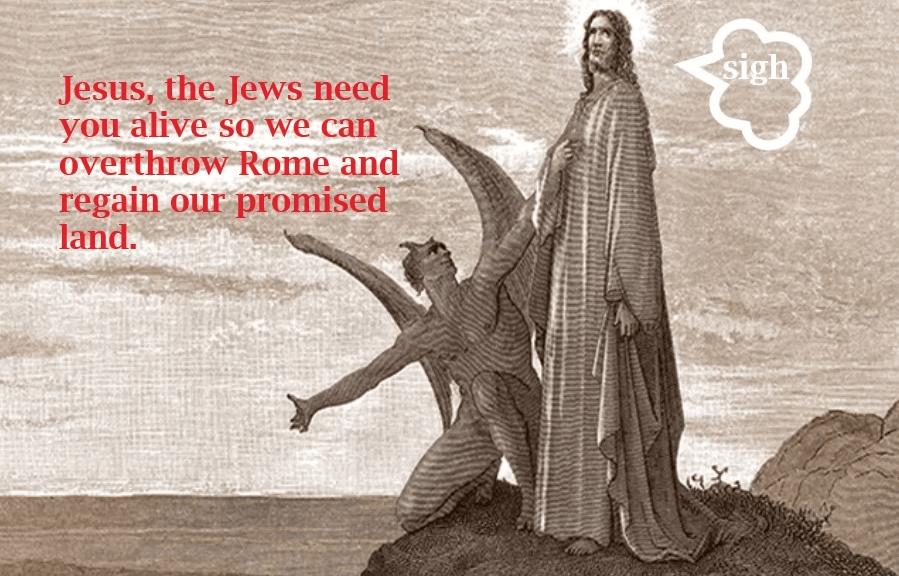
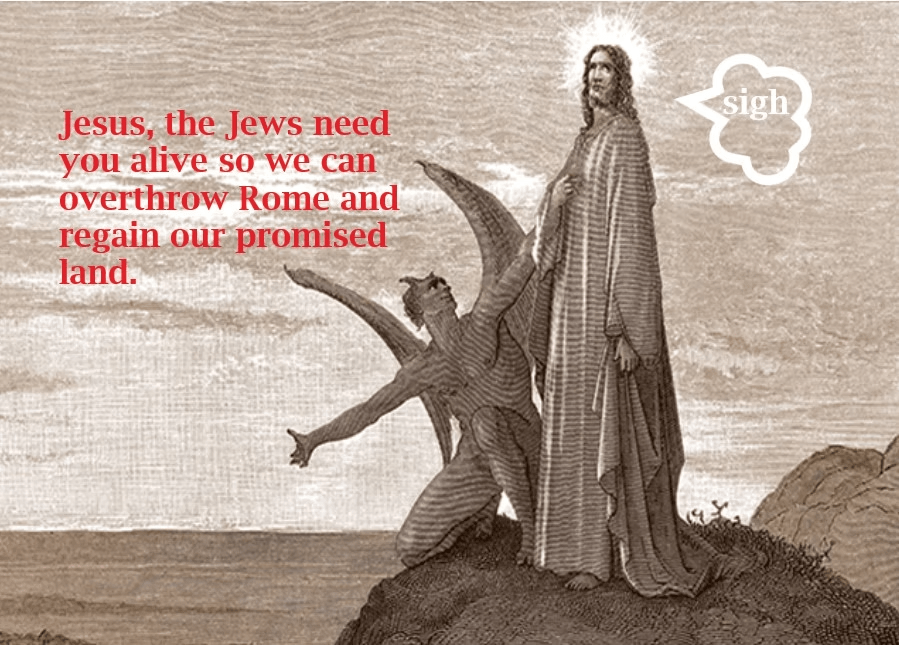


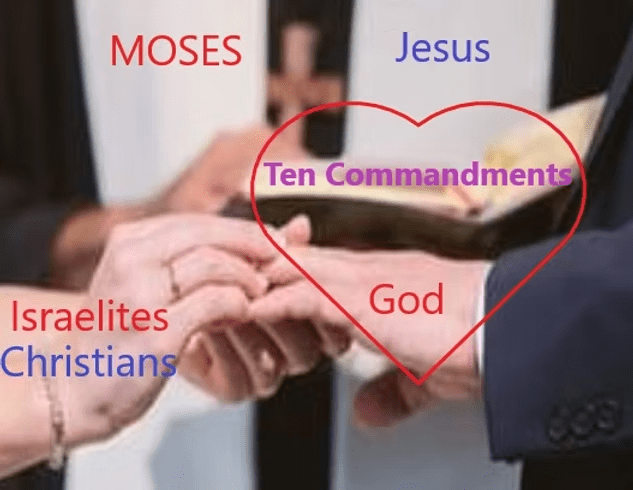
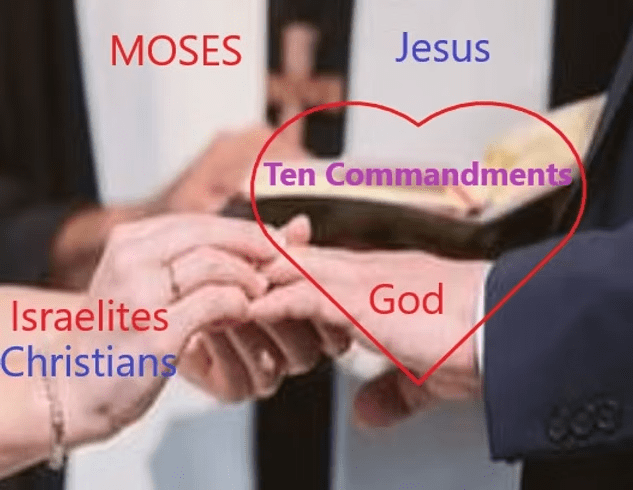





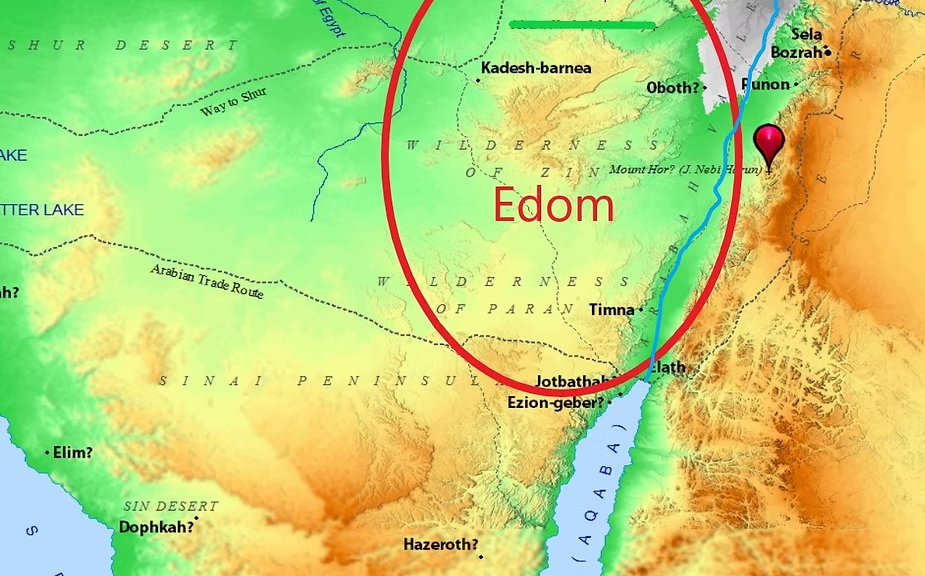
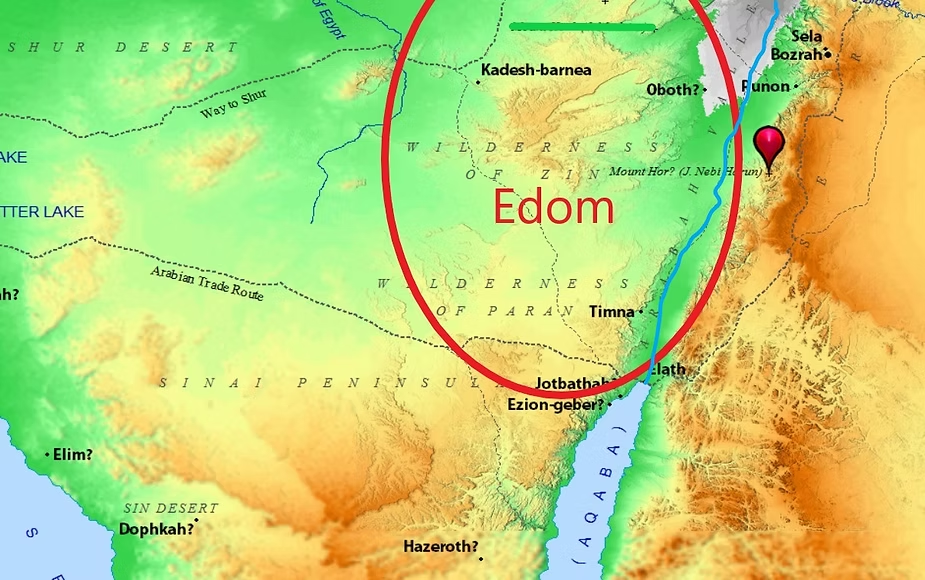


 Explaining the Readings