9 Have mercy on me, O Lord, for I am in trouble; *
my eye is consumed with sorrow,
and also my throat and my belly.
10 For my life is wasted with grief,
and my years with sighing; *
my strength fails me because of affliction,
and my bones are consumed.
11 I have become a reproach to all my enemies and even to my neighbors,
a dismay to those of my acquaintance; *
when they see me in the street they avoid me.
12 I am forgotten like a dead man, out of mind; *
I am as useless as a broken pot.
13 For I have heard the whispering of the crowd;
fear is all around; *
they put their heads together against me;
they plot to take my life.
14 But as for me, I have trusted in you, O Lord. *
I have said, “You are my God.
15 My times are in your hand; *
rescue me from the hand of my enemies,
and from those who persecute me.
16 Make your face to shine upon your servant, *
and in your loving-kindness save me.”
——————–
This is the Psalm selection that will be read aloud in unison or sung by a cantor on Passion Sunday, Year B, according to the lectionary for the Episcopal Church. With an outdoor service held first, when palm leaves are passed out to all in attendance, other readings are presented, called the Liturgy of the Palm [thereby “Palm Sunday”]. Afterwards, the congregation is then solemnly led inside, where the regular service is called Liturgy of the Word. This particular selection from David’s songs will be read in indoors, in all three years of the lectionary cycle (A,B, and C); but due to the length of the Palm Sunday service [aka Passion Sunday] nothing will be said about these words at those times. However, these verses will also be presented (partially – two verses) on two other occasions in the church calendar [one a set Sunday service], with it being possible something will be said about verses 15 and 16, but even that is doubtful to leave lasting value.
The NRSV title for this song of David is “Prayer and Praise for Deliverance from Enemies.” The NASB calls it “A Psalm of Complaint and of Praise,” while the BibleHub Interlinear heads it as “Into Your Hands I Commit My Spirit.” When these verses of this psalm are read on Passion Sunday (from the Greek word “paschó,” meaning “to suffer, to be acted upon, to experience ill will”), they become heard as prophetic of Jesus’s arrest, trials, punishment, ridicule, and execution. It is from the fifth verse in the Psalm 31 that Jesus was heard to recite, before he breathed his last breath of life on the cross. (Luke 23:46) Still, this is a song from the heart of David.
To hear this song sung and only think it is prophetic of the punishment that Jesus would go through, thus no longer applicable to anyone else, is wrong. David felt this need to pray for deliverance from enemies, because Israel was land given to the followers of Moses – a promise by God for the marriage between their souls and Yahweh – and the people who had lived on the land of Canaan before (and after) knew nothing of Yahweh; and, they always saw the Israelites as thieves. Thus, David led Israel as a warrior king, one who led his troops out and back in, always doing battle with the enemies that held only hatred for Israelites. Thus, this psalm is written for everyone who has ever lived and who will ever live, because everyone has and will always have enemies; and, successfully dealing with enemies is why souls need to find God and marry Yahweh.
Again, where the translation says “O Lord,” “Yahweh” is written. The name “Yahweh” is written ten times in the Psalm 31, with two of those times found in these parsed verses read aloud. In verse 14, where the second usage of Yahweh is found, David is shown to state, “You are my God.” In reality, what David wrote (thus intended to be understood) is “’ĕ·lō·hay ’āt·tāh,” which literally translates to say, “gods of you.” The word “elohim” (which is plural for “gods,” not “God”) has to be read as a claim that David’s soul (an eternal spirit, like a “god”) was married to Yahweh, thus becoming one of His “elohay.”
To translate it as if David was making some statement of possession, as “You are my God,” this is the opposite meaning intended. Its intent becomes why David prays to Yahweh for help. Rather than be seen as possessing God, so God acts to save the flesh of David (at his beck and call), David knows his flesh is meaningless; it is his soul that begs Yahweh for salvation. Therefore, David would put up with any punishments his enemies could bring upon his body, because his soul was entrusted to Yahweh.
By realizing that error of translation, which is even present in the King James Version (KJV), thereby a longstanding problem for English-speaking Christians, it becomes worthwhile to review all that is translated in this selection. Verse 9 is another that has embellishments that miss the point of what God spoke through the words of David.
The Hebrew written by David in verse 9 states: “ḥān·nê·nî Yah·weh,kî ṣar-lî ‘ā·šə·šāh ḇə·ḵa·‘as ‘ê·nî,nap̄·šî ū·ḇiṭ·nî.” That is divided into three segments that are rooted in “chanan Yahweh , ki sarar ashesh ka’ac ayin,nephesh beten.” Literally those segments state: “show favor on me Yahweh , for bound am I to waste away with anger in my eye , my soul my body .”
This becomes a prayer to God for the strength of Yahweh to withstand the constant barrage of anger and wrath that is always before one to see. It admits one’s own mortality, as a confession that a body of flesh will always be in need. The prayer is then for the soul of David to be strengthened, so then can be the body able to withstand punishments, undue or naturally caused. When David is seen as a wife to Yahweh [a “soul,” a “nephesh”], who has trust in Yahweh – and will forever – this statement to “show favor” becomes a known blessing given to all His wives. In that, David becomes a reflection of Jesus, as well as a reflection of all who are born again as a wife of God.
Verse 10 is then translated so the points of focus are the same. It continues this prayer for divine strength, more closely related to the needs for a “body” of flesh [not a womb or belly]. Rather than David’s “life” being “spent with grief or sorrow,” the word “life” is found in the second segment of words. By removing it from the first segment, the statement recognizes the world is a place where grief and sorrow can find need for Yahweh as its husband.
The focus placed on “my life” [the life of David] is then all “the years” of marriage between his soul and God. The concept of “life” can only come from that union, where marriage to Yahweh allows one to escape the death a soul faces from a body limited by mortality. This means the “sighing” present is that sorrow and grief a soul-body is always confronted with in the state of death that is mortality. All “failures” found in human beings are the “iniquities” that come from being unmarried to Yahweh. Thus, human strength, that found in bones and muscles, always wastes away over the years, with age, when the soul is not strengthened by marriage to Yahweh.
In verse 11, David points out how being married to Yahweh makes one an outcast in a world where so many souls stand alone in their bodies of flesh, unable to find the strength of Yahweh to assist them. The use of “enemies” means those who bind one in the world (from the meaning of “tsarar”), which relates to verse 9 saying, “for bound am I.” This makes “enemies” those who entwine a soul-flesh with expectations of worldliness, not righteousness.
By following that with the word “neighbors” [“shaken”], David said he lived among those who were not married to Yahweh. That was not only Gentiles who submitted to the will of Israel, but also included Israelites who followed rules set by Moses, without marriage to Yahweh. The translation of “acquaintances” [“lim·yud·dā·‘āy,” rooted in “yada”] means others will be known not to be true wives of Yahweh (by their deeds), causing them to run away (an act of a cowardly enemy). They flee a responsibility of commitment to Yahweh, so their actions are not those of a friend and neighbor, not as another of Yahweh’s wives.
In verse 12, David should be heard as Yahweh speaking through his body, as the first person singular “I” having been “forgotten.” For the Israelites to have forgotten the God of their forefathers, that was a present time recall of David. It was his fathers [the elders of Israel] who went to Samuel and demanded a king, to be like other nations. They had forgotten that Yahweh was their King, their Lord.
This forgetfulness then means their “minds” [“mil·lêḇ,” meaning their “inner man, mind, will, heart”] had lost divine insight and guidance, having become solely dependent on the size of their brains. David certainly was not useless and neither was Yahweh; but to those Israelites who were working against being wives of Yahweh, Yahweh was a useless to them as a broken clay pot. Likewise, Yahweh was discarded by many, just as a broken clay pot was tossed into a heap of waste.
In verse 13, David again is speaking the words of Yahweh as the first person singular “I.” The “whispering heard [from “dibbah,” which means “whispering, defamation, evil report”], God hears all minds and all talk, being omniscient. David could then become knowing of those secret plans as a king with aides who reported the scuttlebutt to him.
When “fear” is about, that becomes a signal that many have not accepted the proposal of Yahweh to be married with their souls. Without His presence, the world becomes a place that readily generates fears. Here, again, the element of “life” means a soul granted eternal life, due to a divine merger with His Holy Spirit. Therefore, the plots and schemes are to weaken the aspect of religious education, fearing its call for commitment. That plot would be so others would soon forget all about the delivery of land and protection coming with the promise [marriage vows] of complete servitude, as a holy wife.
With this train of thought realized, it is then that verse 14 proclaims David to be such a wife, one that is thoroughly devoted to serving Yahweh. The “trust” [“batach”] put in Yahweh goes well beyond belief, as “trust” comes from personal experience. It is meant as a statement of true faith. That trust comes from marriage and the experience of the Holy Spirit leading one’s body of flesh, so it only serves God. Therefore, David says he (like all like him) is one of Yahweh’s “elohim,” or souls granted eternal life from servitude in a body of flesh.
Verse 15 then follows this statement of commitment to Yahweh by David singing, “My times are in your hand.” Here, the Hebrew begins with one word – “bə·yā·ḏə·ḵā” – where the root importance is laser focused on “in your hand” [rooted in “yad,” or “hand”]. David sings out that everything about his being – soul-flesh – is in the hands of Yahweh. It is then that power of God that gives David the ability to withstand the “times” when his enemies come down on him. It is that “hand” of God that delivers David’s soul and body the strength to overcome any and all persecutions his enemies can ever bring to him.
Finally, in verse 16, David sings praisingly about having lowered his face in submission to Yahweh, by “Let[ing] your face shine upon your servant.” This is a confirmation of the First Commandment, where one must not wear one’s own face before Yahweh, as that acts as if oneself is a “god,” equal to God. Those who love Yahweh and seek to marry Him will never try to act as equals to Him, by showing one’s face [or any number of other faces of gods] before His. David was married to Yahweh, thereby he wore the face of Yahweh to the world. That means the soul of David had achieved the comfort of knowing salvation was his [“hō·wō·šî·‘ê·nî” as “I am saved” or I have been delivered”].
As a psalm sung aloud on Passion Sunday [the Liturgy of the Word, not the Palm] and easily attributed to Jesus and the enemies that had brought him pain and suffering, the lack of focus on educating the seekers about the deeper meaning become an example of what David’s song sang. If this message from God being in David’s heart goes without explanation, it cannot be applied to all who seek to become wives of Yahweh. As some misguided extension of the forty days of Lent, where somehow Sundays do not count, making Lent extend all the way to “Holy Saturday” [six days from Passion Sunday], the message of marriage to Yahweh is foregone through ignorance.
Jesus was able to withstand the sufferings, read aloud about his suffering, because he was one with Yahweh’s Holy Spirit. David was equally filled with that divine husband, as were all the Apostles. To listen to these selected verses of David and then simply be left go, sent home to let them sink into some subconscious state, simmering under a plethora of other words, all telling of injustice and human enemies of the flesh, means our ‘teachers’ [rabbis, priests, pastors, ministers, etc.] never allow their flocks to be fed the truth. Yahweh expects all seekers to submit their selves to Him and become His servants. Without that alliance of marriage, then one’s soul is only filled with fears brought on by a world of sin.
21 I will give thanks to you, for you answered me *
and have become my salvation.
22 The same stone which the builders rejected *
has become the chief cornerstone.
23 This is the Lord’s doing, *
and it is marvelous in our eyes.
24 On this day the Lord has acted; *
we will rejoice and be glad in it.
25 Hosannah, Lord, hosannah! *
Lord, send us now success.
26 Blessed is he who comes in the name of the Lord; *
we bless you from the house of the Lord.
27 God is the Lord; he has shined upon us; *
form a procession with branches up to the horns of the altar.
28 “You are my God, and I will thank you; *
you are my God, and I will exalt you.”
29 Give thanks to the Lord, for he is good; *
his mercy endures for ever.
——————–
This is the Psalm selection that will be read aloud in unison or sung by a cantor on Palm Sunday, Year B, according to the lectionary for the Episcopal Church. The same psalm of praise will be scheduled for presentation in Years A and C. Each year the Liturgy of the Palm will include a Gospel reading that tells of Jesus’ “Triumphal Entrance into Jerusalem” [Mark 11:1-11 and Matthew 21:1-11]. All will be performed in an outdoor service that is held first, when palm leaves are passed out to all in attendance, this and another reading are presented, called the Liturgy of the Palm [thereby “Palm Sunday”]. Afterwards, the congregation is then solemnly led inside, where the regular service is called Liturgy of the Word [thereby “Passion Sunday”]. This particular selection from David’s songs will be read in all three years of the lectionary cycle (A,B, and C), but due to the length of the Palm Sunday service [aka Passion Sunday] nothing will be said about these words at those times. However, these verses will also be presented on two other occasions in the church calendar (partially on Easter Sunday [A,B, and C] and entirely, with additional verses on Easter 2-C), with it being possible something will be said about the meaning of these verses from David’s Psalm 118.
In this collection of verses, the translations of “Lord” are written as “Yahweh,” ten times. In verse 28, twice is translated “my God.” The first of these is written “el,” and the second is written “elohay.” Neither of those, nor the appearance of “God” in verse 27 [“God is the Lord”], where “el” is again written, should be capitalized. Capitalization is only allowed for words of divinely elevated meaning, as Hebrew has no capital letters in it usage. Still, the repetition of “Yahweh” has to be known and recognized as the specific God to whom David sang praise.
Because these parsed verses begin with verses 19 and 20 using the word “gate” and “gates,” this seems to be an appropriate choice to partner with the story of Jesus’ triumphal entrance into Jerusalem. He entered Jerusalem’s City of David, at the gate known as Zion, with Mount Zion being the hill [the steps formed upon that hill] he climbed to get to the Temple of Jerusalem, atop Mount Moriah. That Temple of stone and mortar did not include the cornerstone that had the name “Jesus” inscribed on it. Thus, this is another song of David that is easily heard as a prophecy of Jesus; but it is God speaking through David, because David was devoted to Yahweh, like Jesus, which means these words are prophetic for all who become Spiritually born as a Son of man.
Because verses 1 and 2 can be seen simply as David expressing his faith in Yahweh, from having surrendered his self-ego to serve God completely, these verses must apply to all who will be able to truthfully sing these words of praise. It can only be from that surrender of self to Yahweh that Yahweh is good and that goodness endures forever. That speaks of having received the gift of eternal life to one’s soul. Only a soul can know Yahweh. Therefore, when David sang to all Israel, verses 1 and 2 speak to all who proclaim belief in Yahweh as their Lord and Master. One must submit in that way for receipt of God’s Holy Spirit, through a marriage to one’s soul, in order to know God personally.
In verse 19 it is most important to see the “gates of righteousness” [“ša·‘ă·rê-ṣe·ḏeq,” from “shaar tsedeq”] are metaphor for the opening of one’s soul to receive the Holy Spirit. The “gates” are then reflections of all the inhibitions of a physical world, where the body has become the fortress in which the soul is imprisoned. In Jerusalem, all gates are entrances within high and imposing walls of defense from attack. The gates were opened at sunrise and closed at sunset, and always manned with guards. This is a projection of the way a human body of flesh defends against the unwanted; but for most sinners, Yahweh is unwanted, thereby the gates are closed to His presence. God will never force His Will to smash down any gates of resistance. It is up to one to lower one’s guard, as a bride must do for her husband to enter her body.
The thanks given to Yahweh represents praise to His presence. That becomes the willing receipt of the Holy Spirit and the birth of a righteous way of being. Because Jesus is the model of righteousness, the Holy Spirit’s penetration into one’s body, upon willing submission by marriage, means David became like Jesus [a name that means “Yah Will Save]. After that birth of righteousness, the gates of one’s body will forevermore refuse entrance of sin. The body of flesh becomes a fortress of righteousness, which is the freedom granted a soul, from a prison representing a body of flesh, so one wholly is granted eternal life. Verse 21 then sings of this salvation [“lî·šū·‘āh” or “yeshuah”].
When it is recognized how verse 22 sings, “The stone that the builders rejected has become the chief cornerstone,” that cornerstone is eternal life, which comes from salvation. The Hebrew word for “salvation” is (in essence) the name “Yeshuah,” which translates into a name as “Joshua” or “Jesus.” The main building block for one’s body to become a temple unto Yahweh is righteousness. Righteousness can only come from the presence of the Holy Spirit; and, the Holy Spirit can only become the ruler over a body of flesh through willing sacrifice of the soul to Yahweh.
When David then sang, “This is the Lord’s doing; it is marvelous in our eyes,” that says no soul-body alone can transform one’s temple of flesh into a palace of righteousness. All the beautifications Herod the Great began to remodel the Second Temple, meaning decades of hard physical labor, was all thrown down in a sudden act of violence. That speaks against human will-power being enough to will oneself to resist sins of the flesh. Only the presence of Yahweh can bring about “marvelous” [from “nip̄·lāṯ,” from “pala,” meaning “to be surpassing or extraordinary”] acts of self to behold. The eyes of self cannot believe its own acts of body; and, the eyes of others find it miraculous that the human being they knew before has now been so remarkably transformed.
When David then followed that verse by singing, “This is the day that the Lord has made; let us rejoice and be glad in it,” that “day” is the Sabbath day, which was made holy. It is also the “day” when one’s soul was forever transformed through a spiritual marriage of one’s soul to Yahweh. It is as one’s wedding day. It is also when the “daylight” of truth entered into one’s being, never to leave. That “day” is when the rejoicing of a freed soul becomes glad it sacrificed self to God, a day never forgotten.
In verse 25, confusion can come from thinking the presence of Yahweh will bring about wealth, influence and power over others. The translation that says, “Hosannah, Lord, hosannah! Lord, send us now success,” actually states the power of prayer overtaking one’s body and soul. “Hosannah” means “I pray.” One prays as Yahweh allowing one to freely talk to Him. The meaning of “send us now” is separated by comma mark from “success.” That becomes a prayer to God to be sent out to do His Will. Therefore, the successes prayed for are to find other lost souls and deliver them a marriage proposal, just like the one they said “Yes” to. Successes are measured by souls saved, not by material gains received from prayers.
Verse 26 is then a most popular verse for Christians to sing aloud. It says, “Blessed is the one who comes in the name of the Lord. We bless you from the house of the Lord.” Verses 25 and 26 become those sung by the people along the road Jesus travelled into Jerusalem. While they sang those praises in mockery, as disbelief in the words’ meanings, David sang them as a statement of truth about all who are filled with God’s Holy Spirit and made righteous. Those wives will truly be “blessed,” having taken on His Holy name [which would later be known to be “Jesus”], as a “Son” of the Father [regardless of human gender]. The “house of Yahweh” is one’s body of flesh, which God’s Holy Spirit then controls fully.
Verse 27 begins by saying, “el Yahweh,” which is more than the translation “The Lord is God” states. The word ‘el” means a little-g “god,” which is one’s soul. Because a soul is eternal and never dies, it is godlike, as a god. David was then saying “My soul is Yahweh’s” or “Yahweh owns my soul.” That is important to grasp, when David then added, “he has given us light.” The “light” given [from “or”] is the truth that leads one to a life of righteousness.
This then had David sing the words that are vital to know, relative to a Palm Sunday outdoor psalm being sung: “Bind the festal procession with branches, up to the horns of the altar.”
The word “festal” comes from the Hebrew “chag,” which is a “festival gathering, feast, pilgrim feast,” one where “sacrifice” has been made to Yahweh. This means the sacrifice is the sacrifice of living “branches,” not cut date palm leaves [where no Hebrew is written that states “branches”]. The Israelites were those who Yahweh had commanded recognition of sacrifice of pure lambs, whose flesh would be burned upon the altar. Therefore, “a procession with branches, up to the horns of the altar” is a call for wives to submit to Yahweh forevermore, so Israel would eternally be filled with the light of truth, as servants to Yahweh. Only living branches can supply that need, not dead ones.
Verse 28 is then where two uses of lower-case spelling of “el” and “elohim” are used, both of which must be seen as David speaking about the souls called to be sacrifice upon Yahweh’s holy altar. The translation by the NRSV says, “You are my God, and I will thank you; you are my God, and I will exalt you.” In reality, the way this verse should be understood is as: “I am a god , and I will confess you , to other gods , I will be exalted because of you.” This becomes a confession [from “wə·’ō·w·ḏe·kā” rooted in “yadah,” meaning “to throw, cast,” as “confessing”] of s soul’s weakness without the presence of Yahweh within. The mission of a wife to God, as David proved in his psalms, is to bring other lost souls into the light of truth, and marriage to Yahweh.
Finally, verse 29 sings, “Give thanks to the Lord, for he is good; his mercy endures for ever.” This is a return to the very beginning of this song of praise, so it can end as a cycle completed, with a new cycle to begin. From a wife of Yahweh having confessed the blessings of becoming one with Yahweh, then others will receive the Holy Spirit and renew this cycle of eternal life.
As a psalm that is sung outside of churches in a ceremony that passes out dead palm leaves for all in attendance to hold, it is important to take it upon oneself and contemplate the words of this song written by David [at least the verses selected to be presented]. No one will take the time to do that for you. The words sing of David being in a loving relationship of commitment to Yahweh. The truth of that relationship – that marriage between a soul and God’s Holy Spirit – is it is not limited to just David.
While David was a king over Israel, it was when he was a boy that God had Samuel anoint David. It was that Anointing that made David the Christ, as a wife of God. Jesus was born with his soul married to Yahweh, so he too was the Anointed One. Still, this song sings praises that all can be just as was David and just as was the man Jesus, because marriage to Yahweh makes one a Son of man, as the Christ. That makes Jesus be reborn time and again in the “elohay” who sacrifice those little-g gods to service to the Lord.
On this mountain the Lord of hosts will make for all peoples
a feast of rich food, a feast of well-aged wines,
of rich food filled with marrow, of well-aged wines strained clear.
And he will destroy on this mountain
the shroud that is cast over all peoples,
the sheet that is spread over all nations;
he will swallow up death forever.
Then the Lord God will wipe away the tears from all faces,
and the disgrace of his people he will take away from all the earth,
for the Lord has spoken.
It will be said on that day, Lo, this is our God; we have waited for him, so that he might save us.
This is the Lord for whom we have waited;
let us be glad and rejoice in his salvation.
——————–
Beginning with Easter Sunday and lasting throughout the season of Easter (including Pentecost Sunday), the standard reading choices change. Instead of a prescribed Old Testament reading, followed by a Psalm and then Epistle reading, the choices are deemed: First Lesson, Psalm, and New Testament. In this special set-up for the Easter Season, mandatory readings from the Book of the Acts of the Apostles is the reason. One reading from Acts will be selected each Sunday, which can either replace the Old Testament reading or it can replace the Epistle reading. Whichever position the reading from Acts takes, the other will either be from the Old Testament or an Epistle. This change should be seen as a statement each Sunday during the period representative of the risen Lord Jesus preparing his disciples for the times to come, when being transformed from a death of the old self into the new representation of God’s Christ becomes a time to act as Yahweh commands one to act.
In the event that the reading from Acts is not chosen to be the First Lesson, this reading selection from Isaiah 25 will be the Old Testament choice to be read aloud on Easter Sunday [primary service], according to the lectionary for the Episcopal Church. It will then precede the singing of verses from Psalm 118, which includes the verse, “I shall not die, but live, and declare the works of the Lord.” That would then lead to the reading from Acts, where Peter told Cornelius, “[The risen Jesus] commanded us to preach to the people and to testify that he is the one ordained by God as judge of the living and the dead.” That then leads to a Gospel reading from Mark, which tells of the women of Jesus going to his tomb and finding the tomb opened and “a young man, dressed in a white robe, sitting on the right side.”
[Note: The season of Easter introduces Track 1 and Track 2 choices for the Gospel reading. While such options are primarily for the Ordinary season after Pentecost – when acts of apostles become the norm of divine ministry – the same assumption can be gathered here. The reading selection from Mark is listed second, which implies it should be read along with the second option for the First Lesson, which is the Isaiah reading. If the Acts reading is chosen over this reading from Isaiah 25, then the Epistle from 1 Corinthians would be read, followed by a similar reading of Jesus found risen in John’s Gospel. Isaiah 25:6-9 will be read on Proper 23-A and 1 Corinthians 15:1-11 will be read on Epiphany 5C, so whatever choice is made on Easter B will not exclude a reading from explanation another time. Mark 16:1-8 can only be read on the Easter Vigil service, Year B, or the primary Easter Sunday service the same year, whereas John 20:1-18 is an option in all three years for Easter Sunday. That makes the choice of Mark more important on this Easter Sunday, Year B.]
In these four verses from Isaiah’ twenty-fifth chapter, four times are found the word “Lord” translated. Each of those times the word “Yahweh” is written. Twice the capitalized word “God” is found, with the first actually being “ă·ḏō·nāy” (“adonay”) and the second being “’ĕ·lō·hê·nū” (“elohim”), which are general statements of “lord” and “gods.” Because Hebrew actually has no capital letters in its alphabet, it is translations using capitalizations that personify and elevate a word to divine status, as inferences made by the translator. This can be seen as an acceptable practice for the name of God being equivaled to Yahweh. However, the practice of changing “Yahweh” to “Lord,” and the changing of the plural word “elohim” to the singular, as “God,” is misleading and wrong. It becomes too easy for lost sheep, those calling themselves “Christians,” to read “Lord” and think, “This is a prophecy of Jesus,” without ever coming to know that Yahweh was indeed the Lord of Jesus.
With that understood, verse 6 begins by stating, “On this mountain the Lord of hosts will make for all peoples.” Here, the word “mountain” and its repeat in verse 7, can be read as that of Mount Moriah, upon which the Temple of Jerusalem [Solomon’s Temple] was built. The literal translation of the Hebrew written says, “and will make Yahweh of hosts for all people mountain this a feast of choice pieces”. While Jerusalem rests upon seven hills (called mounts), the greater meaning comes from seeing Isaiah being led by Yahweh, as a “mountain” of God’s strength in the flesh, such that Isaiah is only one of a “host” [from “tsaba” meaning “army”] of such “mountains” spread to “all peoples.”
The translations that have Isaiah singing, “a feast of rich food, a feast of well-aged wines, of rich food filled with marrow, of well-aged wines strained clear,” gives the impression that Yahweh will reward His servants with fine dining and drinking. Instead, “a feast of rich food” is relative to those people made into mountains of God. They will become the “fat” [from “shemen,” translated as “rich food” or “choice pieces”] that will be served to the world, as that coming from them having sacrificed their selves [souls] to become God’s gift of the Passover feast.
This makes a “feast of well-aged wines” become those who bring with them the “blood of Christ,” which means the “well-aged wine” that is the Holy Spirit, poured out by Yahweh, into the vessels that are His Sons [not restricted to only male human beings]. It makes “the rich food filled with marrow” be the explanations of truth that comes from the bones of Scripture, sweet truth hidden deep within. It makes the “well-aged wines strained clear” be the removal of all misconstructions and errors of reasoning [also stemming from bad translations], so the Holy Spirit can be consumed by those led to one of Yahweh’s saints.
By seeing this element of a prophecy that promises the coming of a time when Christianity would mean many people will be filled with Yahweh’s Holy Spirit and be sent to all parts of the world to let other seekers know the truth and also be saved, verse 7 is then translated to say, “And he will destroy on this mountain the shroud that is cast over all peoples, the sheet that is spread over all nations.” While that translation clearly paints a picture of destroying that which blocked so many from being told the truth of Scripture, there is deeper truth that is exposed from closer examination of the Hebrew written.
Does that billowing smoke look a lot like God reaching down, helping the Romans in destruction?
The repeating of “mountain” has to be seen as both Jerusalem [the collective known as Judaism today] and the individual, whose soul has been saved. The “mountain” that connects both collective and individual is Yahweh. Thus, that means “he will destroy on this mountain” [where “ū·ḇil·la‘,” from “bala,” says “he will engulf,” or “swallow up”] both means the end of Judaism [a collective mountain swallowed up] and the beginning of Christianity [an individual mountain engulfed], so only those who allow the “mountain” to be Yahweh survives that flood of Spirit that will be poured out.
This makes “the shroud that is cast over all peoples, the sheet that is spread over all nations” become the restrictive way the Jews forbid Gentiles from knowing their God, while also representative of the expansive way Christianity would become the comforter all nations. Still, the word translated as “shroud” is actually written “pə·nê- hal·lō·wṭ” [from “panim lot”], meaning “face-coverings;” and, the word translated as “the sheet” is actually written “wə·ham·mas·sê·ḵāh” [from “maccekah”], more appropriately read as “a veil.” That last word can also mean a poured metal mask or “molten image,” which acts as a breakage of the covenant not to have any graven images or idols.
When the translation of “shroud” is used, it becomes a statement of a “face-covering” placed over a body’s face at death, in preparation for burial. The “sheet” is then the linen cloth placed over the whole body. The face cloth is called a “sudarium.” It is placed under the “tachrichim” or “kittel,” which is the linen covering the whole. This overall covering is then said to be symbolic of the canopy used in wedding ceremonies. [Wikipedia] As a statement of death,” following the “destruction,” the implication is Judaism will cease to have life, but individually born again as Jesus Christ will figuratively die – of self-ego and self-will – so their bodies of flesh will have surrendered their souls to Yahweh – in marriage to His Holy Spirit. This is a most important aspect of this prophecy sung by Isaiah that needs to be realized.
Here, again, we find an Old Testament reading that includes the word “paneh,” which means “face.” This, as I have written often prior, becomes relative to the first Commandment, which actually says, “You shall wear the face of no other gods before me,” such that the true meaning of a typical memorization – “You shall have no other gods before me” – is one must wear the face of Yahweh, in order to become His wife. As I stated before, about the Ten Commandments, those are the agreements of marriage [wedding vows] to which all potential wives of Yahweh must agree. Judaism wore the face of itself, as a god before Yahweh, breaking that covenant of marriage – therefore death comes to its “mountain.” Individuals who die of self-ego then surrender their individual faces, in submission to Yahweh, wearing His holy face after marriage.
Verse 8 then confirms this imagery of death [made through self-sacrifice] by singing, “he will swallow up death forever. Then the Lord God will wipe away the tears from all faces, and the disgrace of his people he will take away from all the earth, for the Lord has spoken.” Here, again, is found the word “faces” [“panim” is the plural of “paneh”], following the combination of “adonay Yahweh.” In reality, that which will be “wiped away” is “adonay,” which is the “lord” of self, the breath of life given by Yahweh at birth – the “soul.” When the word “adonay” is followed by “Yahweh,” that becomes a statement that the soul has been wiped away from rule over its body of flesh, allowing “Yahweh” that mastery as “lord.” It must be assumed that “Yahweh” alone is Lord of all, thus it is unnecessary to use two words to describe that supremacy. Therefore, having “wiped away self-ego, Yahweh” takes over, so all “tears” of sinful living are dried up, when “Yahweh’s face” is worn by His wives.
The translation of “disgrace” is for the Hebrew word “cherpah,” which bears that intent, as a “reproach.” The same word can also be translated to imply “scorn, contempt, and taunting,” where there is a “rebuke” of those “people” whose “faces” once were [or still were] resisting marriage to Yahweh. The “rebuke” is of sinful ways, either recognized by one’s soul through self-denial or self-guilt. This means those who marry God’s Holy Spirit will see their own evils and feel “shame” [another viable translation of “cherpah”], sacrificing their old faces in order to take on the face of Yahweh. As for those who will continue to wear faces that cast “shame” and “contempt” on Yahweh, indirectly through “taunts” against those transformed through figurative deaths, they will be a “disgrace” to Yahweh. Death to them means the condemnation of a mortal life in the flesh, where they commit eternal life suicide. That is the most “disgraceful way to be taken away from the earth.”
Where it is easy to seen how Isaiah threw in some add-ons, such as “for Yahweh has spoken,” that segment of words ends with the Hebrew letter “peh” [or “פ”], which is a mark that denotes the end of a “petuhah,” or a paragraph of statements. I believe that mark intends the readers of Hebrew [who read from left to right] to see that mark as a signal something very truthful has been said [or will be said]. As such, the truth of “Yahweh has spoken” is less about a booming voice coming from heaven commanding Isaiah to make sure everyone heard what he commanded, and more about those who have spoken as Yahweh, like was Isaiah. It will be those who speak in the name of Yahweh that will have died of self and been reborn wearing the face of Yahweh, speaking for Him as His wives.
With that mark seen as ending a paragraph, verse 9 must then be seen as beginning a new line of thought. The translation there says, “It will be said on that day, Lo, this is our God; we have waited for him, so that he might save us. This is the Lord for whom we have waited; let us be glad and rejoice in his salvation.” This needs to be seen as beginning with a focus set “on that day,” when a wife of Yahweh has begun to speak for Him. Here, the importance is less about when that transformation will take place, as all wives of Yahweh begin new lives that wear His face at many times [all times]. Thus, the element of “day” must be understood as more important when seen as the Word being spoken, so it shines the “light” of truth so those in darkness can suddenly see.
To grasp that concept firmly, the word translated as “Lo” is really written “hin·nêh” or “behold!” This makes a statement that Yahweh speaking will be “seen” by human beings who will be His wives, His spokespeople. When that sight is seen, what is witnessed is “this is our God,” where the reality is the written word “’ĕ·lō·hê·nū,” as His “elohim.” It says beholding Yahweh speaking through a human body of flesh means the “soul” [an eternal “el”] of that flesh has married to Yahweh, so that soul becomes one of Yahweh’s little-g “gods.” A soul alone speaks from the brain, but one of Yahweh’s “gods” speaks from the marriage of a soul to God’s Holy Spirit.
When Isaiah is then translated to say, “we have waited for him, so that he might save us. This is the Lord for whom we have waited,” This actually says [from a literal translation of the Hebrew], “this we have waited for him to save us , this Yahweh we have waited for him.” The naming of Yahweh makes it better known that the souls of the people who will be transformed into those who speak for God are those souls who were bridesmaids with lamps filled with oil. It was their keeping the light of truth shining, through prayer to Yahweh to become their husband [again, no human gender should be read into this, as I am talking neuter gender souls, not bodies of flesh], it is they who will have waited for that most holy matrimony. That becomes a statement of faith, based on self-sacrifice and the death of self-ego. It is then that marriage that becomes “saving.”
In the final words of this selection, which are translated to say, “let us be glad and rejoice in his salvation,” that repeats the theme of waiting to be saved. Here, both of the words that have been translated as “be glad and rejoice” can be seen to mean a repetition of “rejoicing.” That repetition then reflects the utmost form of gladness that can come upon a body of flesh, making it sing and praise God without end. Salvation means the soul has been promised something much greater than a plot of land on earth to call one’s own. It is the soul celebrating a release from the prison that is mortal death in a body of flesh. The rejoicing is a figurative death of self-ego realizing no physical death yet to come to its flesh can ever be feared, because that physical death becomes the release of a soul trapped in a human cage, free to fly away and be forever with Yahweh in heaven.
As a reading choice for Easter Sunday, when Jesus is found risen from death, it is important to see oneself as having the same potential for resurrection, as seen in these words Yahweh spoke through His prophet Isaiah. The problem Christianity faces today all come from seeing these words of Yahweh’s prophet as being prophetic of Jesus, and no one else. That become a repeat of the problem the Judeans faced when Isaiah prophesied, because they had turned away from the God of their ancestor’s marriage, boldly wearing the face of believers in Moses and the Law. Christians [as seen through the wide variety of denominations bearing the name “Christ”] do the same bowing down before Lord Jesus, wearing the face of idolaters, none married to Yahweh, none wearing His face. Few Christians today having submitted their own faces of self-ego to Yahweh. The refuse to see how Jesus is the model for all souls who seek salvation. To have a soul be saved, that soul must be resurrected as the Anointed One [the Christ], who acts and speaks just like Jesus did.
When this reading is read aloud, meaning it has trumped the Epistle reading from 1 Corinthians as the one chosen to present to seekers, it should be explained as the Acts of the Apostles having been prophesied by Isaiah. A good shepherd will choose this reading because it can clearly make points about becoming a wife of Yahweh. A good shepherd will then be one whose self-ego has long been lowered in submission to Yahweh, so Yahweh will speak through him or her, so others can be saved. The way a priest must be judged is on how many hear the truth of light they project, so others will see for themselves how to follow in the path of Jesus. A true priest of Yahweh will speak the Word so others will themselves submit their souls become the wives of God.
Peter began to speak to Cornelius and the other Gentiles: “I truly understand that God shows no partiality, but in every nation anyone who fears him and does what is right is acceptable to him. You know the message he sent to the people of Israel, preaching peace by Jesus Christ–he is Lord of all. That message spread throughout Judea, beginning in Galilee after the baptism that John announced: how God anointed Jesus of Nazareth with the Holy Spirit and with power; how he went about doing good and healing all who were oppressed by the devil, for God was with him. We are witnesses to all that he did both in Judea and in Jerusalem. They put him to death by hanging him on a tree; but God raised him on the third day and allowed him to appear, not to all the people but to us who were chosen by God as witnesses, and who ate and drank with him after he rose from the dead. He commanded us to preach to the people and to testify that he is the one ordained by God as judge of the living and the dead. All the prophets testify about him that everyone who believes in him receives forgiveness of sins through his name.”
——————–
This is the mandatory selection from the Acts of the Apostles that will be read aloud on Easter Sunday, Year B principal service, according to the lectionary for the Episcopal Church. It will either be the First Lesson, removing Isaiah 25:6-9 from the schedule, or it will be the New Testament reading, eliminating 1 Corinthians 15:1-11 from the schedule. In any case, this reading will be accompanied by a reading from Psalm 118, which sings, “The Lord is my strength and my song, and he has become my salvation.” Depending on the selection process, this reading will precede a Gospel reading (either from John 20:1-18 or Mark 16, 1-8), which speaks of Jesus being found not in his tomb by women who came early on the first day of the week with spices.
Acts chapter 10 tells of a divine vision Peter had, where God showed him Gentiles were no longer forbidden from belief in Yahweh. This led to Peter being called to meet with a Roman Centurion, named Cornelius, who was a Gentile. The first thirty-three verses tell this story, none of which are ever scheduled to be read aloud in Episcopalian churches. This reading becomes the soliloquy of Peter speaking to the Gentiles at Cornelius’ home, telling of his association with Jesus, who was killed but resurrected. This translation reads as if Peter was bragging about having personally witnessed all the power of glory of Jesus, “in Judea and in Jerusalem.”
There is a concept in Christianity known as “witnessing.” From the website for a Roman Catholic Diocese is this definition of a Christian “witness”:
“As followers of the Lord Jesus, we are called to serve as “witnesses” to our faith. To be a witness to Christ is to demonstrate by our words, actions and attitude the sacred mystery that we have “seen”, heard and believe in our hearts about the Lord who has forgiven us of our sins and offered us eternal life. In contrast to the world, Christian witness is to be offered 24 hours a day, 365 days a year.” [Diocese of Bridgeport (CT.)]
In this reading selection, Peter is quoted as saying “witnesses” twice. While there are other places in the Epistles where Christians point to references such as this being a characteristic all Christians must display, some pointing to these specific verses in support of that concept, the “definition” above makes it clear that “witnessing” is not about seeing Jesus, but about experiencing Yahweh personally. That makes “witnessing” be as relevant today as it was when Peter spoke with Cornelius. It also makes it clear that “witnessing” is not a power of brain, because a brain only thinks about certain things [consciously] when queued to thought. That “24 hours a day, 365 days a year” part of the definition above says “witnessing” is more subconscious than conscious, as it is impossible to stop. That becomes a statement that the soul has married to Yahweh and the body acts in righteous ways, without any need to use forethought.
In this soliloquy, it is the translation into English that misleads those who hear them read aloud or read these words silently alone. Even those fluent in Greek cannot see the whole truth of this conversation. This is because these words of Peter, like those of Paul, John, James, and all prophets who wrote divinely, were spoken in a divine language. Divine language requires divine assistance to understand, therefore translate properly.
This can be seen stated in Acts 2, on Pentecost morning, when all the Apostles began “speaking in tongues.” Rather than them beginning to make unintelligible noises [as some ‘Pentecostal’ churches promote], they all began to explain the lesson of the prophet Joel. Not only did they speak that in Hebrew, but in all the foreign languages, for the benefit of foreign pilgrims. What the Apostles spoke was a depth of understanding that came from being able to understand Joel wrote in the divine language of Yahweh. The Apostles suddenly began to understand Scripture and suddenly began to explains Scripture in new ways it had never been explained before [thus the thought that they must be drunk on new wine].
That receipt of God’s Holy Spirit within Peter and the others [including three thousand who heard the word and also became saved souls] meant he began [like all the others] to speak in divine ways that normal translation misses. From then on Peter spoke in ways that demanded someone explain the Word he spoke in new ways. This is a concept held by ‘Pentecostal’ religions, where someone “speaking in tongues” requires someone to translate what has been spoken “in tongues.” However, rather that one being forced to make up meanings for gibberish spoken, a Saint is required to understand what an Apostle wrote.
This can be seen where the translation above [NRSV] begins with Peter saying, “I truly understand that God shows no partiality.” In reality, Luke [the believed writer of Acts] wrote: “Ep’ alētheias katalambanomai hoti ouk estin prosōpolēmptēs ho Theos,” which literally translates to state: “Above truth I comprehend because not being one who shows face this God.” This shows the words of Peter were spoken in divine language, which is impossible to state in other language translations correctly, unless the translator is led by the same Holy Spirit and enabled to understand divine language of Yahweh [speak in tongues].
From what is written, the capitalization of “Ep’” [an abbreviation of “Epi”] means a divinely elevated translation must be seen. Rather than simply being read as the preposition “of,” it becomes “Above,” where the capitalization makes that direction be heavenly. This is then the source of “truth,” such that Peter was not bragging about “truly understanding,” but his divine [“Above”] source of “truth” being how he then had an ability to “comprehend,” relative to that which he did not understand before.
He then said that limit is placed “not” on “one who shows [his or her own] face” [from “prosōpolēmptēs” means “one who is an accepter of a face”], meaning Peter was once known as Simon, which was a flawed human face. As Peter [meaning {Rock”], he became “one who shows a face” that is God’s.” This means that instead of Peter seeming to say, “God loves everyone,” Peter said a Saint stops being himself or herself and puts on the face of Yahweh, so the truth will be revealed [otherwise the full truth remains hidden].
This has to be seen as what Peter was saying to Cornelius, who was Roman. As someone from Rome, it makes sense that Peter would say, “in every nation anyone who fears him and does what is right is acceptable to him.” That means Peter was speaking the Word, as Yahweh speaking through him, saying, “The same sacrifice of self, to wear the face of God, applies in all places.” In no way did Peter imply that he spoke with the authority to determine who was a Saint, because Peter was just one servant of Yahweh.
The translation then has Peter say to Cornelius and the other Gentiles, “You know the message he sent to the people of Israel, preaching peace by Jesus Christ–he is Lord of all.” That translation implies that the Romans were present in Jerusalem when Jesus was executed, but then leaps to an expectation that they knew all about the truth of who Jesus was. While the Scripture gives some impression that Roman guards and leaders made remarks when weird things happened when Jesus was crucified, Peter’s initial rejection to meeting with Gentiles [not read today] says he would not have known anything about what “they” [as “You”] knew. He did not care to know what Gentiles knew. This becomes cleared up with a better translation of what is written here.
Luke wrote that Peter said, “ton logon honapesteilen tois huiois Israēl,euangelizomenos,eirēnēn dia Iēsou Christou—houtos estin pantōn Kyrios.” This literally translates to state: “this word which he sent with them sons Israel , proclaiming the good message , wholeness through Jesus Anointed One — this being in all Master.”
As can be seen, what Peter said [only understood by divine assistance] is greatly different than some simple history of Jesus, which [at that time] was not that widely known. The power comes from hearing Peter tell Cornelius, “before now this state of righteousness that is acceptable to Yahweh has only been received in those sons of Israelite descent , we are the sons who proclaim the truth of God’s messages through prophets , we give wholeness to the written word that have only partially been grasped and this ability come through us having been reborn as Jesus so we too have become the Christ — this state of being we all possess means Yahweh is the Lord over our souls.”
When Peter then is shown to have said to Cornelius, “That message spread throughout Judea, beginning in Galilee after the baptism that John announced,” this is where the importance of “You” is written. This series of words begins with the capitalized Greek word “Hymeis,” which becomes Peter recognizing Cornelius and the other Gentiles were likewise given a taste of the Holy Spirit, leading them to summon Peter as one truly filled. Thus, the following word, “oidate” says they were able to “appreciate” the message [as “declarations” or the spread of talk] of righteousness that had spread throughout the lands there controlled by Romans.
Included in what the Romans had heard, from having open ears to the common talk, was: “how God anointed Jesus of Nazareth with the Holy Spirit and with power; how he went about doing good and healing all who were oppressed by the devil, for God was with him.”
In that, the central focus becomes written: “echrisenauton ho Theos Pneumati Hagiō.” This says, “this anointment of him this God Spirit Holy.” This places more importance on Jesus being a man made special by God [where “anointed” reflects the “Christ”], through [as John had said: someone would come not baptizing with water, but by …] the Important divine Spirit of Yahweh, married to the soul of Jesus. That focus says that the union of Spirit made Jesus Holy, as God incarnate in human flesh. This then leads to the word “kai,” which announces importance to come, where that importance is then stated “power.” The “power” of Jesus was all due to God’s Holy Spirit” being upon Jesus.
It was that empowerment of the Holy Spirit that allowed Jesus to do good and healing all, while also being the one who ordered his disciples into internship, doing the same. The power was not limited to Jesus, because the power came from Yahweh … from “Above.” The power was to counter the “oppression of the devil,” where “diabolou” is better understood as a soul that has been trapped in the lures of the world [not heaven].
While that is a concept that most Christians today will freely profess faith in: Jesus being anointed by God and given His Holy Spirit; the point of Peter saying that was Peter too [and all other Apostles – Saints] was anointed in the same manner. Peter was not telling Cornelius and his Gentile soldiers who wanted to receive Yahweh’s Holy Spirit and become righteous, with saved souls, “Man, you should have been there. You could have touched Jesus and got some of that on you.” Instead, Peter explained why he told them about how special Jesus was, by saying “We are witnesses to all that he did both in Judea and in Jerusalem.”
Here is the first of the two uses of “witnesses” [“martyres,” from which “martyrs” comes]. The word translates as “eye-witnesses,” which can only attest to “witnessing” God anoint with Spirit Holy when the same state of being has come upon Peter and others like him, all like Jesus reborn. No one can speak the “truth” [verse 34] and say, “We were there watching Jesus be made Holy.” Thus, the reason why “martyres” has become the English word “martyr” [meaning “a person who is killed because of their religious or other beliefs”] is because Peter [and all likewise filled with Yahweh’s Holy Spirit] had died of self-ego and self-will, sacrificing one’s soul-flesh to God, so they could become Sons of man [not a human gender distinction].
To make this point, Peter is then shown to have told Cornelius, “They put him to death by hanging him on a tree; but God raised him on the third day and allowed him to appear.” This talk of death and resurrection is then Peter explaining that he, just like Jesus of Nazareth, had to sacrifice his soul to Yahweh, so he could be reborn as His Son, also in a body of flesh that was human.
In this, Peter called the instrument of death “a tree” [from the Greek “xylou”], which is different than the “stauros” or “upright stake” Jesus told his disciples they had to raise, in order to follow him. The difference says an upright stake means righteousness, where an instrument of death is made of dead matter – a tree killed and honed.
When Peter said “God raised him on the third day,” the slower way to receive divine meaning from that is to see the value of the number “three” alone. This says Jesus was raised “upon the third,” which means death is equated to the number two. Two becomes the body and the soul united, which can also be stated as a son [souls have only masculine gender] with God’s breath of life. To then become “on the third” [from “en tē tritē”] means to have then received the “third” element that brings a “raised” state of being, becoming righteous and eternally saved. That “third” addition is the Holy Spirit [or the “Spirit” that makes one “Holy” or “Sacred” – a Saint]. With that elevation to divine status, all becomes the light of “day,” as darkness has forevermore been overcome.
When Peter said that Jesus was resurrected and allowed to appear, the surface meaning is he came to the disciples, so they knew he was raised. However, the deeper, divine meaning is after Jesus ascended, after which he was then allowed to appear in the bodies of his disciples. That transformation was possible because they too had died and the third state of being had been received. It was then the Apostles saw the same light of day as Jesus reborn. The surface meaning becomes little more than a tidbit of ‘inside skinny’ told by Peter to Cornelius, making it be rather meaningless to him; but, as a statement about Peter coming to Cornelius as the resurrection of Jesus within his flesh, Jesus was then appearing before Cornelius [looking like Peter]. That becomes powerful, when read with divine assistance.
Then, Peter is shown to say to Cornelius, “not to all the people but to us who were chosen by God as witnesses.” That says what I just presented. Jesus did not simply appear to everyone in the world, nor to all Jews, nor to just disciples trembling with fear because Jesus had died. The resurrection of Jesus was only to appear in those who submitted their souls to Yahweh, who had then become reborn as His Christ, Sons of man, Jesus newly appearing. Again, the use of “witnesses” says Peter was speaking from personally knowing the presence of the Holy Spirit and the life of righteousness known by Jesus from birth.
Next, the NRSV translation has Peter telling Cornelius, “[it was us] who ate and drank with him after he rose from the dead.” That once again sounds like Peter telling Cornelius he got to do some things nobody else can ever do, after Jesus left the world. Instead, those “chosen by God” have to be seen as given the divine blessing that says, “to us who did eat with” [from “hemin hoitines synephagomen”], where there is no mention of Jesus. The disciples who became Apostles dined on holy texts and singing psalms of prayer and lament, all while praying to Yahweh to lead them.
The holy texts became the spiritual food upon which they fed, which suddenly made deeper sense, once filled with God’s Holy Spirit. Thus, it was that outpouring of divine understanding that became [following the use of “kai”] importantly: “drink with him after this rising him out from dead.” That says they became the blood of Yahweh’s Christ, which allowed them all to become “him” [Jesus], them “rising” to that state of being “after drinking with Yahweh.” It was then their own deaths of self that made room in their soul-body duality for the third Holy Spirit.
The translation then has Peter telling Cornelius and his soldiers, “He commanded us to preach to the people and to testify that he is the one ordained by God as judge of the living and the dead.” Here, a confused Christian today hears the third person pronoun “he” and immediately thinks that Jesus appeared in the upper room and began telling the disciples what they needed to do, after they ate some fish and drank some leftover Passover wine together. That is wrong to think, because “he” is Yahweh, the one whose Word they consumed and who Holy Spirit filled their bloodstreams.
Just as Yahweh commanded Jesus of Nazareth [born of a woman in Bethlehem] to “preach to the people and to testify” that Yahweh was his Father, being the Son of man, it was Yahweh’s Holy Spirit that told Peter and his fellow Saints to do the same. Once they had become Jesus reborn, they would then testify to that fact, having become that themselves. All of this is “ordained by God,” who is the “Judge” [where the capitalized word “Kritēs” is written].
Here, the Greek written by Luke needs to be more closely inspected. From realizing Peter was speaking of the power of God to ordain and certainly “Judge” [not “judge”], the words written become: “zōntōn kai nekrōn.” The presence of “kai” between those words surrounding it means Yahweh is the “Judge of the living” [from “Theou Kritēs zōntōn“]. Without going beyond that point, that says Judgment by Yahweh is based only on those souls who have gained eternal life, therefore “of living.” That judgment comes when one is ordained as a righteous soul married to the Holy Spirit, becoming the rebirth of Jesus in the flesh. Judgement Day for that soul is one “living” eternally, before physical “death” comes upon one’s flesh [and it will come].
That certainty is then emphasized by the word “kai,” such that “death” requires no judgment from Yahweh. Simply by being born mortal, one’s flesh will die, meaning a soul not saved [true Judgment] will return to another body of flesh [a baby born], bound to repeat that cycle of death endless [or when one becomes ordained by Yahweh as “living”]. The use of “kai” makes it important to realize that “death” becomes one’s own soul bringing that judgment upon itself.
This reading then ends with Peter telling Cornelius and Gentile soldiers, “All the prophets testify about him that everyone who believes in him receives forgiveness of sins through his name.” While it is true that Jesus is the model for all who are ordained by Yahweh to lead righteous lives and preach the good message of Salvation [the meaning of “Jesus” is “Yahweh Saves”], all the prophets wrote of Yahweh. It is belief of Yahweh, as God Almighty [not Jesus], that brings true “forgiveness of sins.” Jesus is the model of one who has never sinned, so once God has made a soul’s past sins be erased, then one becomes the resurrection of Jesus. The “name” Jesus is then that of Yahweh, such that being “in the name of Jesus Christ” means having married Yahweh and taken His name in marriage, Anointed with the Holy Spirit so all past sins are forgiven, allowing for one’s flesh to become the new home of Jesus resurrected.
As a mandatory reading selection for Easter Sunday, the first of eight mandatory readings from the Acts of the Apostles, the importance of this reading comes from not seeing it as Peter telling Cornelius all about how well he knew Jesus of Nazareth and followed him all around. Seeing that weak meaning means Cornelius would end up being just like a modern Christian, doing little more than saying he believed Peter, never actually becoming Jesus reborn. We have to read this selection as if we are Cornelius and Peter is himself the resurrection of Jesus [as an Anointed One] telling us how to save our souls from death.
During the Easter Season [which ends on Pentecost Sunday] the symbolism is fifty days [seven Sundays and then one more makes fifty]. This makes Easter synonymous with the Jewish Counting of the Omer. An omer is a dry measure, which are amounts of green fruits – the First Fruits of the year – that would be placed in the Temple of Jerusalem before the Passover feast. A daily count would be made, beginning on the second day of the festival of the Unleavened Bread [16 Nisan], so on the Fiftieth Day [Pentecost] those fruits would be deemed ready to eat. The ripening element of Easter [which is hidden from Christian eyes] is the time a disciple is prepared to become an Apostle. Thus, readings from the Acts of the Apostles [and not some book called the Acts of Jesus – aka the Gospels] is the need for a seeker of truth to find the need to surrender his or her soul to Yahweh and become ordained to enter ministry AS JESUS REBORN. One must be a true “witness” by having died of self-ego, putting on the face of Yahweh, so one personally knows what being Jesus means.
This is why this reading selection was purposely chosen to be mandatory, because it is written in divine language that one needs to be trained how to read it, so the truth shines through. This reading should be seen as leading to the unwritten book that proclaimed The Acts of Cornelius and his Gentile companions who became true Christians, because they heard, believed, and were transformed by the Acts of Apostle Peter. There should be seen a need for someone to write the book of the Acts of [You – Fill in the name].
I would remind you, brothers and sisters, of the good news that I proclaimed to you, which you in turn received, in which also you stand, through which also you are being saved, if you hold firmly to the message that I proclaimed to you–unless you have come to believe in vain.
For I handed on to you as of first importance what I in turn had received: that Christ died for our sins in accordance with the scriptures, and that he was buried, and that he was raised on the third day in accordance with the scriptures, and that he appeared to Cephas, then to the twelve. Then he appeared to more than five hundred brothers and sisters at one time, most of whom are still alive, though some have died. Then he appeared to James, then to all the apostles. Last of all, as to one untimely born, he appeared also to me. For I am the least of the apostles, unfit to be called an apostle, because I persecuted the church of God. But by the grace of God I am what I am, and his grace toward me has not been in vain. On the contrary, I worked harder than any of them–though it was not I, but the grace of God that is with me. Whether then it was I or they, so we proclaim and so you have come to believe.
——————–
This will be the New Testament reading selection, if the mandatory reading from Acts 10 takes the place of the Old Testament choice from Isaiah 25. If so, it will be read aloud on Easter Sunday, Year B principal service, according to the lectionary schedule of the Episcopal Church. If chosen, it will follow the Acts 10 reading, which states, “We are witnesses to all that [Jesus] did both in Judea and in Jerusalem.” That will be followed by verses read from Psalm 118, which sings, “The right hand of the Lord has triumphed! the right hand of the Lord is exalted! the right hand of the Lord has triumphed!” Following this should be a reading from John’s Gospel, which says, “go to my brothers and say to them, ‘I am ascending to my Father and your Father, to my God and your God.” [A similar account from Mark’s Gospel is an alternate Gospel choice.]
In this letter of Paul to the true Christians in Corinth, it is important to see the comparison to the Acts 10 reading. There, the verses have been chosen so we only hear what Peter said to Cornelius, his household and some of his soldiers, who were all seeking to become Christians. Cornelius was a devout man who prayed and offered alms, so God sent an angel to him, telling him to go with his followers to Joppa and seek a Jew named Simon, called Peter. That soliloquy becomes a reflection of all of the Epistles found in the New Testament, where one writer has been filled with God’s Holy Spirit [from marriage of a soul to God], has become Jesus reborn in the flesh, as another Anointed One of Yahweh [the Christ], who thereby speaks to many seeking to be Christians. It is from this realization that one must examine all of Paul’s letters, so that truth clearly stands out.
Immediately upon inspection, we find this NRSV translation is playing to the hearts and minds of those who tend to be the most active in the churches of Christianity today, which are primarily women. In the translation, which properly separates the segments of words “I would remind you” from “of the good news that I proclaimed to you” with comma marks, the error is finding between those marks the words “brothers and sisters.” That is not written.
In reality, this beginning to verse 1 states this in Greek: “Gnōrizō de hymin,adelphoi,to euangelion ho euēngelisamēn hymin,” There is only one word written in that space between comma marks; and, that word translates to “brothers.”
This must be seen as a purposeful statement from Yahweh, sent through the pen of Paul and not Paul being caught up in the male-domination of ancient times. Yahweh is all-knowing, enough to know a time would come when false Christians would pander to human sexuality; still, He did not have Paul write the Greek word for “sisters.” In some places in his letters, Paul referred to women by name, which says the Christians he wrote to included both human sexes; and, one can assume that early Christianity likewise had a strong number of women present, as it does today. This means if is important for a reader to closely look at what is written, because a translator might be taking liberties that will lead one away from the truth of Scripture.
It is most important to understand the concept of marriage of a soul to Yahweh. Yahweh, as the Father, just as the word “God” is masculine, whereas “goddess” is feminine. Since Christianity does not worship any “goddesses” [or “gods”], the realm of the Spiritual – of Yahweh – is masculine. As such, all human beings who marry Yahweh become His wives, where this is not a statement about souls being feminine in gender [a distinction found only in the flesh]. To see that best, one must realize that everything of the material world is dead, while everything in Yahweh’s Spiritual realm is living. A soul comes from the masculine, as an extension of Yahweh, so it brings the breath of life [a masculine trait] into dead matter [a feminine trait]. The freedom a soul is given at birth then makes it lose it masculinity, becoming neuter gender in a body of flesh. Because the flesh is feminine, as matter, it has been penetrated by Yahweh [the Father] and a neuter soul gives animation to dead matter [the feminine].
When this basic concept is understood, a wife of Yahweh becomes a neuter soul in a feminine body of flesh [nothing relative to sexual organs can be intuited in that scenario], which has submitted its control over that dead matter to Yahweh. In that marriage, when God’s send to the soul His Holy Spirit [a masculine soul addition], that soul is no longer neuter, having been made masculine. In that marriage of Yahweh and soul [a return to the Father, while still in the death of flesh], the soul ceases being feminine, having become Spiritually the Son of the Father, while still in a human body [of man]. Once that transformation has occurred Spiritually, the body of flesh that was feminine [dead matter controlling a neuter soul] becomes righteous and totally serves the will of the Father. Therefore, the wife has become an Anointed One of the Father, as a Son of man, which brings about the name of Yahweh – Jesus – which means “Yahweh Saves.” A soul has been saved by returning to Yahweh, before the death of the flesh it inhabits.
To me, this is a simple concept. We all see Jesus as a male, who called himself the Son of man. It becomes simply that acceptance that is then projected onto every human being [those “this of man” – “tou anthrōpou”], meaning all who become the Christ, chosen by Yahweh to be married to His Holy Spirit, are also made His Son, as Jesus reborn. Thus, all true Christians becomes “brothers” in that common relationship with the Father, regardless of the gender of their dead matter surrounding their transformed souls.
Simply by understanding this most solid cornerstone of truth that IS CHRISTIANITY – where all members, male and female, are Jesus Christ resurrected in dead matter – all are “brothers,” because “sisters” becomes a statement of refusal to become masculine by the Spirit. It reduces the truth of Christianity to the same level of failed devotion to Yahweh that was Judaism and all other religions in the world.
Another error of translation is overlooking the capitalization of the word “Gnōrizō,” which is the first person indicative and the first person subjunctive usage of “gnosis,” meaning “known.” This means the capitalization shows the importance of a statement of fact [the indicative mood] and a statement of the future and/or present hypothetical [the subjunctive mood], where the importance becomes a divine statement being made by Paul. His chapter then begins by stating, “I make known” or “I could make known.” That duality from the same word then speaks directly to the “brothers” in Christ, as those who were Jesus reborn in Corinth [males and females] that Yahweh is speaking in this letter [indicative]. At the same time, the same word is speaking to all [then and now] who need to hear the voice of Yahweh speaking through Paul’s words, so they will receive the knowledge that leads one [all sexes] to become “brothers” [subjunctive]. The translation as “I would remind” is then misleading, in the subjunctive mood only, lacking any way of being seen as a statement of vital importance [from capitalization].
From that word comes the little Greek word “de,” which the NRSV sees as unimportant, thus not translated. The word bears the importance of a statement that says “now” [a present tense declaration], while also reflecting “next, on top of this, or moreover.” (Strong’s Usage) As this is the beginning of Paul’s fifteenth chapter in a letter sent to the Christians of Corinth, these first two words say Yahweh has been speaking through Paul in everything written prior, so “now” here is another lesson that God is stating “to you,” where “you” is then clarified [after a comma mark] as “brothers” [in Christ].
Following the comma that sets off “brothers” is Paul writing, “of the good news that I proclaimed to you.” This means he wrote the word “euangelion,” which is generally known as “the Gospel,” which means “the good news.” This, like reading Paul write “adelphoi” and then believing that means “brothers and sisters,” becomes a severely misleading element of today’s Christianity. The truth relative to the meaning of “good news” has been completely lost.
When Paul wrote, as the voice of Yahweh speaking to true Christians in Corinth, “of the good news that I proclaimed to you,” that “good news” was not Paul going from town to town saying, “Jesus is the Messiah. Our Messiah has come … and gone … but he rose again … then ascended … but it is all a sign of good news to believe!” That is how many Christians think, when they hear someone say “spread the Gospel.”
Realizing there was no New Testament yet published when Paul wrote, and realizing none of the four “Gospels” were known by anyone, like they are known today, the “good news” Paul spread was akin to him saying, “Remember when this prophet you have memorized said this?” Or, “Remember how David wrote this in his Psalm?” Paul was addressing the questions the Jews [and then Gentiles] had about a prophesied Savior; and, Yahweh was answering those questions in ways that no one had ever heard explained before.
Those answers were the “good news” and it was so good that those hearing it became saved Spiritually. When Paul arrived in Corinth and began answering the questions Jews [and Gentiles] had about Scripture, which had never been convincingly explained to them before, his answers [spoken by the Holy Spirit] transformed them. It was to the new Christians in Corinth just as three thousand [or so] heard Peter and the others doing the same explanations of Joel, telling that “good news.” The truth of explanations of Scripture opened hearts and minds, allowing the Holy Spirit in.
Seeing that, Paul then wrote, “which you in turn received.” That means they heard the truth be spoken and accepted it as the truth they had been seeking to find. It also says they then “received” the Holy Spirit, which made them Christians, just like those three thousand pilgrims on Pentecost.
Confirmation of that “receipt” of the Holy Spirit is why Paul then wrote, “in which also you stand, through which also you are being saved.” The Greek word “hestēkate” is translated as “you stand,” but this means they “stood firm” in faith of the truth, which makes this a parallel of Jesus telling his followers they had to raise their stakes. To “stand firm” is to become a solidly planted stake in the earth, upon which the good vine grows good fruit. Being “saved” means having married their souls to Yahweh, becoming His wives.
Paul then wrote something like a disclaimer, which becomes the prior possibility of the subjunctive mood having been written, stating, “if you hold firmly to the message that I proclaimed to you–unless you have come to believe in vain.” That says true Christians “take possession of the message” [the meaning of “katechete”], where “take possession” means the sacrifice of self-ego, so one’s soul can be divinely possessed by the Holy Spirit. Those who truly married Yahweh will be in that transformed state of being; but, those faking it will “have come to believe in vain.” There, the Greek word “eikē” [“vain”] says they exist with “no value,” which is the same state of being one had before [since birth]: a soul ruled by its flesh.
In the translation that follows, where the NRSV shows Paul writing, “For I handed on to you as of first importance what I in turn had received,” the literal English translation says, “I delivered,” where the capitalization of “Paredōka” becomes a statement that the self-ego of Paul was not the “I” [first person singular] speaking. Instead, Paul spoke by being led by the Mind of Christ, as the messenger of God. That delivery was “for” the need “of you,” who questioned the meaning of divine texts never explained. Paul then delivered the answers to the “what,” most importantly [the unseen use of “kai”] that which Paul “received” from Yahweh. There, again, the first person singular says Paul, a seeker like those in Corinth, sacrificed his “I’ to “receive” the Holy Spirit and be in possession of the Mind of Christ.
This has to be grasped, because the normal Christian brain today reads [or hears], “that Christ died for our sins in accordance with the scriptures” and thinks “Christ” means Jesus. It does not. It cannot, because one who has been “Anointed” by Yahweh has been awarded eternal life, which cannot die. Jesus was the “foremost Christ,” who died in the flesh and was resurrected, but Paul could not attest to that as fact.
Paul could attest to himself having “died,” so he could become the “Christ.” Thus, because Paul had become the “Christ” [his name change from Saul to Paul], he “died” of self-will and his sins [Jesus asking Saul, “Why do you persecute me?] were erased. It was the Torah, Psalms and Prophets, whose writing tell everyone who sacrifices self to Yahweh will be saved, through becoming the “Christ” [Greek for one “Anointed” by Yahweh].
The known story of the time of the feast of the Unleavened Bread, when Jesus died, was buried, and after three days raised becomes a distraction to modern Christians, because they only know that was what happened to Jesus. Paul spoke as Jesus reborn, so he could see his old self [Saul] “was buried,” never again to be the flesh that ruled over his soul. In Saul’s case, he specifically was blind “for three days,” before his sight returned and he saw the light of Christ, changing his name to Paul. He had been raised after three days. Paul’s story was the same as Jesus’ retold, which means all the true Christians in Corinth had similar stories of themselves: died, buried, raised. The number “three” becomes the addition of the Holy Spirit to their body and soul, as the Trinity: Father, Son, Holy Spirit.
When the NRSV translation then says, “that he appeared to Cephas, then to the twelve,” it must be remembered that Saul was not a friend of Simon Peter or any of the disciples of Jesus. Because Judas Iscariot had been a traitor that was not present in the upper room, what Paul wrote is then relative to Pentecost, not Easter. It was after the seven weeks “Counting the Omer” had passed, when Simon, called Peter [aka “Cephas” or “Rock”] had the Holy Spirit come to him, so he “appeared” as Jesus reborn. The same happened to “the twelve,” because by Pentecost Sunday they had elected another follower of Jesus to take the place of Judas Iscariot.
When Paul then wrote [led by the Holy Spirit], “Then he appeared to more than five hundred brothers and sisters at one time,” the number “five hundred” does not jive with the nearly three thousand who heard Peter and were transformed. The meaning of “he appeared to more than five hundred brothers at one time” [no “sisters” written] says that the spread from twelve to three thousand then [from “epeita” being a statement of “afterwards”] led to the transformation of “five hundred more resurrections of Jesus” [males and females included]. It says all were transformed at the same time [from “ephapax” meaning “once, once for all; at once”]. The use of “at one time” also means this transformation was a permanent bonding of a soul with Yahweh, never to be undone.
The numbering of “five hundred brothers at once” becomes clarified, when Paul then added, “most of whom are still alive, though some have died.” This then has less to do with only “five hundred” becoming reproductions of Jesus Christ, but more to do with the other twenty-five hundred on Pentecost. Paul was saying “most of them were still alive in the Christ Mind,” which means they took a little more time to truly transform into Jesus reborn and earn their souls eternal life. Three thousand [there about] were touched by the Holy Spirit, with five hundred of those touched becoming full, permanent resurrections of Jesus as the Christ, instantly. Some, however, reverted back to being Jews, who came under heavy rejection by the Jews [men like Saul persecuting them], so they stopped receiving the Holy Spirit. In doing so, they returned to a death sentence, which is the judgment all mortal creatures are born to find, without receipt of Yahweh in marriage to their souls. Still, most would eventually make the full transformation.
From this God-led knowledge of what happened before Paul’s soul was saved by Yahweh, he then knew that James was later transformed. This is worthy of being understood that the Saints married to Yahweh’s Holy Spirit were able to transform disbelievers, such as was James, the brother of Jesus [the son of Mary and Joseph]. The name “James” is related to “Jacob,” such that the name means “Supplanter” or “He Who Closely Follows.” This name remaining the same [after conversion from Jew to Christian] says James was sent by Yahweh to be the brother of Jesus, who would later be reborn in the name of Jesus, supplanting him in the line of Mary and Joseph. James would become a ‘twin’ of Jesus, figuratively. Just as Jacob took the birthright of Isaac from his brother Esau, James would assume the role as leader of the Jews [versus Gentiles], as Jesus had been. Those two brothers were wary of one another, just like James rejected Jesus as the Son of man.
With this mention of James, before the mention of Paul [as the last saved], in between is “then to all the apostles.” This use of “apostolois” cannot be seen as “the twelve,” who were saved well before [not “afterwards”]. It then says all who are married to Yahweh, who will become reborn as Jesus Christ, will be “messengers” of the clarifications of truth, as to the meanings of Scripture.
When Paul is then shown to write, “Last of all, as to one untimely born, he appeared also to me,” here that little word “de” is omitted from translation, which means “next, on top of, moreover.” As such, the statement of “last” [from “eschaton,” a word connected to “eschatology”] says another phase comes last. This use, at the beginning of a new verse [not capitalized] becomes a statement of the “endlessness” of salvation. It says salvation will “last until the end of time” and it will be the “next” step that comes “to all” souls saved.
The meaning of “as to one untimely born” simply says when this transformation takes place, no one will know. One cannot set a fixed date beforehand, as to when one’s soul will be saved. No checklist of good things to do can be marked off, like being married to Yahweh brings a set number of merit badged that have to be earned, in order to become deemed an Eagle Scout. Still, the same word “last” means when that birth of salvation does arrive, then there will be no time limit as to when it ends. It is “last” because it is “untimely born.”
For Paul to say, “he appeared also to me” means his birth of salvation was totally unexpected, seemingly coming from nowhere. Saul was traveling to persecute Christian Jews, when he saw a light flash and heard a voice asking him why he did what he did. Saul had not planned the transformation that would come over him.
It is this aspect Paul having been “untimely born” that led him to write, “For I am the least of the apostles, unfit to be called an apostle, because I persecuted the church of God.” In reality, that is a poor translation. What is written makes this become crystal clear, as the Greek text states: “Egō gar eimi ho elachistos tōn apostolōn.” Literally that says, “I for exist the least of the apostles,” which must be looked at closer.
The capitalized first word is “Egō,” which is the first person pronoun “I,” but the capitalization makes it become the importance of “Self,” which is a “Soul” that is led by its body of flesh. It is why the English usage of “ego” is synonymous with “self-importance” [thanks to Freud and Jung]. This is then followed by the word ”eimi,” which is a statement saying, “I am” or “I exist.” This means the focus of Paul’s words were not on himself, or his own “ego,” but importantly a statement about all “Ego” that declares “I am.”
That becomes a declaration of how little “Ego” means, compared to salvation by Yahweh. It says the “least” element that makes one a “messenger for Yahweh” is self-importance. That becomes a statement that the sacrifice of self, in marriage to Yahweh, is how one retains the permanence of salvation and does not turn away and re-embrace death, as a desire to become again a mortal prison for a soul.
That realization becomes why Paul said he was “unfit to be called an apostle, because I persecuted the church of God.” The same lack of fitness applies to all who wear the face of Self and refuse to submit that “Ego” before Yahweh, refusing to wear His face as His wife.”
Here, the Greek begins as “hos ouk eimi,” where the word “eimi” is repeated, as “who not exist.” This becomes relative to the “Egō gar eimi,” where the negative state of “ego” [“not exist”] is then “fit to be called an apostle.” Rather than apply “not” to “fit” and change that to state “unfit,” Paul wrote “no ego” makes on “fit to be an apostle.” Therefore, Paul was certainly not making a claim that he [an apostle, a Saint] was unfit to serve God; only those clinging to self-worth fall into that category.
This is then why we read Paul writing, “But by the grace of God I am what I am, and his grace toward me has not been in vain.” In all cases of apostlehood, it is the sacrifice of self-ego that bring about the “favor” [from “chariti” meaning, “grace, favor, gratitude, thanks”], because [following a comma mark] Paul said, “eimi ho eimi” – “I am that I am.” In case you have forgotten, YHWH [Yahweh] is derived from the Hebrew meaning the name of God is “I AM That I Am.” Therefore, the “grace of God” comes when oneself has submitted fully to Yahweh’s control.
From that remarkable understanding, one can see why Paul wrote, “his grace toward me has not been in vain.” Here, Paul is shown to be repeating the earlier use of “vain” [“eikē”], when in reality his word choice now is “kenē,” meaning “void.” The same use as “vain” is possible, but the point made is that sacrifice of oneself to Yahweh is not simply made by “empty” words. This relates to those [in the subjunctive mood] who say they want salvation, but then refuse to receive the Holy Spirit to get it, doing nothing that tells Yahweh one will sacrifice self-ego to be His wife and follow His Will completely.
This commitment is then why Paul wrote, “On the contrary, I worked harder than any of them–though it was not I, but the grace of God that is with me.” The opposite of “kenē,” which can mean: “empty (in moral content), vain, ineffective, foolish, worthless, false, unreal, pretentious, hollow” (Strong’s Usage) means Paul fully sacrificed himself to do the work of the Father who adopted him. This is not Paul bragging about doing more works than “all” other apostles, but “all of them” who offered Yahweh “empty” promises of devotion, doing nothing, made Paul’s work a willingness to do difficult tasks. The work Paul did was not self-motivated [“it was not I”] because he had sacrificed his “egō” [“not I”]. With that sacrifice brought upon Paul God’s Holy Spirit, as “charis tou Theou hē syn emoi” – “the grace of God was with me” [“me” being a statement of being, in union with Yahweh].
In the final verse of this reading selection, we read Paul stating, “Whether then it was I or they, so we proclaim and so you have come to believe.” Here, the conditional is presented as “if” [“eiti” means “whether, and if”], which becomes relative to “me” [“emoi”] being with Yahweh, such that the “if” is the union that makes an apostle. Paul was an “I” with the Holy Spirit. Likewise, the same “if” refers to many unions with the Holy spirit, so marriages to Yahweh also makes other be just like Paul. Those many act as “they,” all who are in union with Yahweh, all true Christians. It will then become the true trait of a Christian, as those who will “preach” [from “kēryssomen” meaning “we proclaim, preach, herald”]. Everyone married to Yahweh will speak in His name, so other souls can also be saved.” Paul wrote that to the Corinthian Christians in the second person, as “episteusate,” which goes beyond belief, to mean “you have faith.”
As a reading selection possible on Easter Sunday, when Jesus proved the truth of his raising after three days, the point of that miracle of Yahweh says Jesus was raised so he could become Paul. As Paul reborn as Jesus, others were led to true faith, from hearing the truth of the Word explained to them so their hearts opened up to Yahweh and they had faith by becoming another Christ, Anointed Ones of the Father, Sons of man – Apostles and Saints. The Easter season is not about repeating the story of Jesus coming out of his tomb, because the readings of Easter are all about others dying of self and becoming Jesus reborn in new flesh. The Easter season is seven weeks of basic training, so new Pauls and new Peters are sent by Yahweh out into the world, ministering His Word to those who have questions in need of answers.
Early on the first day of the week, while it was still dark, Mary Magdalene came to the tomb and saw that the stone had been removed from the tomb. So she ran and went to Simon Peter and the other disciple, the one whom Jesus loved, and said to them, “They have taken the Lord out of the tomb, and we do not know where they have laid him.” Then Peter and the other disciple set out and went toward the tomb. The two were running together, but the other disciple outran Peter and reached the tomb first. He bent down to look in and saw the linen wrappings lying there, but he did not go in. Then Simon Peter came, following him, and went into the tomb. He saw the linen wrappings lying there, and the cloth that had been on Jesus’ head, not lying with the linen wrappings but rolled up in a place by itself. Then the other disciple, who reached the tomb first, also went in, and he saw and believed; for as yet they did not understand the scripture, that he must rise from the dead. Then the disciples returned to their homes.
But Mary stood weeping outside the tomb. As she wept, she bent over to look into the tomb; and she saw two angels in white, sitting where the body of Jesus had been lying, one at the head and the other at the feet. They said to her, “Woman, why are you weeping?” She said to them, “They have taken away my Lord, and I do not know where they have laid him.” When she had said this, she turned around and saw Jesus standing there, but she did not know that it was Jesus. Jesus said to her, “Woman, why are you weeping? Whom are you looking for?” Supposing him to be the gardener, she said to him, “Sir, if you have carried him away, tell me where you have laid him, and I will take him away.” Jesus said to her, “Mary!” She turned and said to him in Hebrew, “Rabbouni!” (which means Teacher). Jesus said to her, “Do not hold on to me, because I have not yet ascended to the Father. But go to my brothers and say to them, ‘I am ascending to my Father and your Father, to my God and your God.’” Mary Magdalene went and announced to the disciples, “I have seen the Lord”; and she told them that he had said these things to her.
——————–
This is one of the two Gospel selections possible to be read aloud on Easter Sunday, Year B principal service, according to the lectionary for the Episcopal Church. While the Track 1 and Track 2 options that become vogue during the Ordinary season after Pentecost have not officially begun in Easter’s season, one might presume that choosing the mandatory Acts 10 reading as the choice over the Old Testament reading from Isaiah 25 would lean one towards a Gospel reading from Mark afterwards. This reading from John seems like it would be chosen if the mandatory Acts selection were to override the Epistle reading from 1 Corinthians 15. Whichever the case [knowing Episcopalians never have the time to excessively read Scripture, preach about its meaning briefly, and then allow a full-pledged discussion that would lead anyone towards faith in Yahweh], something on the schedule will not be read and something will.
When one realizes this reading from John is an option in every year of the Episcopal lectionary cycle [A, B, and C], it has a chance to be read every year. The option of Mark 15, however, is now or never. The days when someone Episcopalian asked, “Want to study more from the Bible?” and anybody said, “Yes” are long gone.
The appearance of this reading from John [two blocks above] gives the impression it tells two stories, one of Peter and another disciple and another of Mary Magdalene. In reality it tells of three parts, where the first part is only verse 1. That first verse is John’s assessment of the eight verses that are told in Mark 16:1-8 [the alternate Gospel choice]. Matthew and Luke also wrote about this event, with both adding details that add to the depth of Jesus being found risen. Still, the scope of Mark, Matthew and Luke does not go beyond John 20:1-10. This makes the part of John’s story about Mary Magdalene seeing Jesus unique and above and beyond what the others tell.
In the NRSV translation, verse 1 begins by stating, “Early on the first day of the week.” While this is heard and quickly understood as being Sunday, there is unseen significance in John writing this. The Jews were limited in how far they could travel outside the city on the Sabbath.
The end of John 19 tells of Jesus being prepared for burial and then placed in the tomb of Joseph Arimathea. That took place on “the day of preparation,” which means Friday, the day before the Sabbath. This means Jesus was placed in the tomb before 6:00 PM on Friday, when the Sabbath technically began, so everyone could go to a place to observe the Sabbath. That Sabbath was actually the last day of the festival of Unleavened Bread, but because all Jews were limited to going no further than .569 miles [two-thousand cubits] on the day of rest, they all hung around town. There they would be restricted as to how far they could walk, until 6:00 AM on Sunday, meaning thirty-six hours would have passed since Jesus was placed in that tomb.
In actuality, the literal translation of the Greek John wrote says, “This next one of the sabbath.” In that, the word “Tē” is capitalized, which means more than that being the first word of a new chapter. Capitalization shows importance, such that divine meaning shines on those words capitalized. The word written is the feminine dative article, which normally states “the.” However, as “This” (an acceptable alternate translation), the capitalization says John is writing divinely, so “This” alerts the reader the Word of Yahweh according to John is continuing here.
That is then followed by the word “de,” which is often not translated, but means “next, on top of this, or moreover.” Therefore, the first two words are importantly announcing the next divine occurrence in the story of Jesus. “This” begins the “next” stage of the divine life of Jesus.
The word “mia” means “one.” In Hebrew, “the first day” is written “yom echad.” That really only says “day one.” By John writing “mia” it has been assumed that “day” was implied, since the word “yom” is absent. While that assumption can be correct, it is not the only way to read the number “one,” following the importance of “This” which follows as “next” in the story of Jesus. The number “one” becomes a new “one” of importance, which follows an older “one” of importance. Think of this as why Christians recognize the seventh day on the first day of the week.
To then find the Greek word “tōn” written, which is the genitive plural form of the article “the,” this becomes translated as “of the.” As a case stating possession, “one” is “of” that which then follows. Still, rather than use the generality of “the,” it is again worthwhile to translate “tōn” as “of this.” This leads one to see “one” as the “next This of” value.
This is where the word “sabbatōn” is written, which translates as “sabbath.” Because the Greek is not capitalized, the assumption is that “seventh” refers to the number of days in a “week,” so the translators see John stating “on the first day of the week.” Again, while that assumption can be seen as correct, it again becomes too limiting, especially when this series of words began with a capitalize “This,” signaling the reader to see what “This” is. What this word means, in the lower-case spelling, is a new sabbath [seventh day, a day made holy by God] is being determined from this event. Therefore, John wrote divinely, “This next one of the sabbath,” meaning Sunday will become the new Sabbath, because of the events about to unfold.
The NRSV translation then shows written, “while it was still dark, Mary Magdalene came to the tomb.” This is a paraphrase of what was actually written. The Greek literally states, “Mary the Magdalene comes early , dark still it being , to the tomb”. By paraphrasing this, it appears that John’s sole focus was on one woman, “Mary Magdalene.” That becomes a limitation of John’s Gospel that can lead some to argue difference in the Gospels make them questionable. That is wrong and can be explained.
The central focus is incorrectly paraphrased by mistranslating the Greek written: “Maria hē Magdalēnē” as simply “Mary Magdalene.” We see her having a last name, just like we see Jesus Christ having a last name [he does not]. In that written, two capitalized words [names] are present, with capitalization a signal of divine importance, such that two statements of divine importance are states as “Mary” and “Magdalene.” When the Greek word “hē” [or “ἡ”] is seen as the feminine normative article [as “the”], it too can be translated as saying “this.”
By realizing that, the capitalization of “Maria” can then be seen as stating the woman’s name “Mary,” with the name being importantly stated. Without any further clarification, as to which or how many going by the name “Mary” there are, one word now becomes the focus of John. Any number of women named “Mary” is stated. When that possibility of multiple people being named is realized, all being individually a “Mary,” John is not excluding Mary the mother of Jesus, nor Mary Salome [who are named by Luke in this story]. It still includes Mary Magdalene, simply as “Maria,” because she too was a “Mary.”
“Three Women” – Picasso
It is then from that name that John attached the feminine normative article “hē” [“ἡ”], which then separates one from three women name Mary. The focus turns from three to “this Magdalene.” That mention becomes necessary because three women of the same name are present at the same time.
The word “comes” [from “erchetai”] is stated in the third person singular present, meaning John’s focus is now only on the one Mary, who was differentiated from the others of the same name as “Magdalene.” That names means “Of The Tower,” which should now draw closer attention, as a capitalized name of divine meaning [as it should every time it is written]. In this, the name should not be seen simply as some weakly understood name of a place from where Mary came, as the names of places demand knowing the root meaning of that naming. Thus, John is singling out Mary Magdalene because she reflected a “tower” among the followers of Jesus.
The symbolism of a tower is confinement, in the sense “Magdalene” needs to be seen as a divine statement of one [in this case, feminine] who has submitted self-ego unto a higher power, but feels trapped by that commitment. Instead of the name being an indication of one filled with the Holy Spirit and having become a wife to Yahweh, it reflects one who has been submitted [sacrificed by others] to a commitment in marriage, for holy purposes, but not wholly of one’s own choice.
For those who have pondered the idea that there was a relationship between Jesus and Mary Magdalene, seeing this name of distinction in this light makes it easy to see such a relationship. It would have been arranged; and, Mary can be seen as not completely fulfilled by her submission to Jesus, more than she willingly [at a young age] submitted to be placed in such a “tower.” This makes her sacrifice become relative to an Essene religious belief system, where the prince Jesus needed to be paired with a vestal virgin priestess. Because she was placed in a “tower” of responsibility so young, she never had been allowed the complete freedom to know life as a woman [not that ancient Judea or Galilee offered women much in such freedoms].
It is then from this grasp of the name “Magdalene” that John wrote she “comes early.” This is where the Greek word “prōi” appears, rather than as the first word shown in the paraphrase of verse 1. The Greek implies a timeframe that is “early in the morning” or “at dawn.” Again, while this clearly leads one to assume John was referring to “early on the first day of the week, while it was still dark,” that single understanding misses the importance of two names being presented.
A deeper meaning surfaces, from seeing “Magdalene” as not only relative to one Mary, but to all three named Mary. They were all similarly placed in “towers” of commitment at a young age [see the story of Gabriel and Mary at sixteen], where that “early in life” commitment was what led them to go prepare the body of Jesus for moving to the family tomb [see the story of Lazarus].
Following a comma mark, separating the word stating “early in the morning,” John wrote “dark still it being” [“skotias eti ousēs”]. Set apart by comma marks, those three words can be seen as standing alone in meaning, saying separately: “spiritual darkness even now exists.” Here, John was making a statement about those in the “tower” of religious devotion still being unfulfilled. All the potential of willing submitting to serve a sect of religion still has not brought the light of truth, as all three women are still “in the dark” spiritually.
This can be better seen when one realizes “at dawn” [the meaning of “prōi”] is when light of the sun has reached the horizon. While “darkness” means the sun has not fully risen, the Jewish clock begins at the “morning hour” of 6:00 AM. This timing is relative to sunrise, as well as denoting when the Sabbath officially ended and the first day began. Thus, women would be less likely to walk in darkness, and more as soon as sunrise made a trip of commitment safe in morning light.
When John then wrote the next segment of words that say, “to the tomb” [“eis to mnēmeion”], here the dual meaning says women named Mary went to the tomb where Jesus’ body had been laid the prior Friday. Still, it is also making a statement about the commitment made by the three women servants. They were prepared to go to their own tombs in the darkness they were surround by, each in a “Tower,” in particular one rising from Jesus
It is at this point, following a comma mark, that John wrote the word “kai,” which signals the reader to pay close attention to the following segment of words. Here, John wrote [literally translated]: “she sees the stone having been removed from the tomb.” Once again, there can be found dual meaning coming from these words, which the use of “kai” says to look for.
More than simply seeing ahead to the garden where the tomb is, and more than seeing the round stone used to seal the tomb has been rolled away, the deeper meaning speaks spiritually. As such, the sight become spiritual perception, which is the future of Mary [each of the three] perceived to lead to her [their] death[s], because Jesus was the “cornerstone” thought to be the escape from the “Tower.” Instead, the darkness of captivity in a mortal body, committed to serve Yahweh blindly, the three women were thinking [“she perceives”] Jesus’ [“cornerstone”] death [“tomb”] ends that hope and promise.
The happy ending to this first verse of John is then by “seeing the stone” of Jesus “having been removed from the tomb.” That becomes an important prophecy [the use of “kai”] that foretells all has not been lost, as their minds had thought from Jesus’ death. Simply by seeing the tomb’s doorway opened becomes the promise that hope still exists. While the three Marys did not know this, this says their hearts began beating faster when they saw the tomb open.
The Magic Eye acts as the way Scripture is written. [This one has Easter eggs.]
I have purposefully delved deeper into this first verse of John’s reading because it is important to see how this one verse more closely aligns with that which Mark wrote [as well as Matthew and Luke]. One needs to realize that this story [told by all four Gospel writers] was written well after the event of Jesus being found not in the tomb. Neither story contradicts another. They all sew together as a perfect robe for a priest of Yahweh. And, with verse 1 now explained in that deep manner, I will now more quickly address the rest of the verses in this reading.
Verse 2 then tells, “So she came running to Simon Peter and the other disciple, the one Jesus loved, and said, “They have taken the Lord out of the tomb, and we don’t know where they have put him!” At this point, after realizing John did not exclude anyone named “Mary” from having the same vision of the tomb of Joseph Arimathea being opened, the immediate reaction would not to think that someone robbed the tomb. It also certainly would not be that Jesus had risen like promised, maybe inside cleaning the tomb up, because it was a loaner. The women had left early to get there to prepare the body for moving to another tomb, one in Bethany. Seeing the tomb opened would have immediately made the women think, “Oh my! The people coming to remove Jesus’ body have already beat us here and taken the body!”
It is from that panic that the two older women would have said to the younger Mary, “Run and get help!”
It is also worth thinking about where the women had walked from, to which Mary was now running back. It is not written where anyone stayed, beyond the known upper room in the Essene Quarter of Jerusalem, for the final Passover Seder meal [the last supper]. It is unlikely that the upper room would become a place of residence for all of Jesus’ followers, as all Jesus’ disciples had their families with them, staying somewhere in or near Jerusalem for the Passover feast and the festival of the Unleavened Bread. That mandatory commitment to Yahweh had begun on Friday and just ended the day before, on the Sabbath [when Jesus was actually risen, after 72 hours of death]. Everyone would have made prior arrangement where to stay, but it would not have been in the same room.
I have a theory about this place, relative to where the three Marys had come from, to which Mary Magdalene then ran. Because Joseph of Arimathea was a secret disciple of Jesus, secret because he [like Nicodemus] was a member of the Sanhedrin, he had a place of residence just outside the walls of Jerusalem, not far from where the garden was that he had a tomb newly hewn. Not only did Joseph allow the body of Jesus be placed in his tomb, but Joseph allowed the family of Jesus to stay at his place, knowing that would make it easier on the family to move Jesus’ body to Bethany on Sunday [the first day of the week]. This would also be where Peter stayed, which would deem him a cousin of Jesus, therefore family.
When John wrote, “the other disciple, the one Jesus loved,” the translation of “the other disciple” [from “ton allon mathētēn”] is misleading. The person being identified is John himself, not naming himself directly, because at that time John was not an adult male. He was a child. He was family, based on his writing, “the one who Jesus loved,” just as was Mary Magdalene. This means the better translation of those three words is as, “this different pupil.” The one Jesus loved was taught by Jesus as his son, meaning Mary was his mother. This arrangement means Jesus was married to Mary, thus the symbolism of “Magdalene” meaning “Of The Tower.”
One should see how John had been at the execution of his father and stayed to watch the whole event with his mother and grandmother [among other women and some uncles]. Peter went and hid, along with the other disciples, making his denials more meaningful, when seen as a relative who denied being one of Jesus’ followers. John wrote about those denials, because Peter stayed with his relative, who needed to see what was happening to his father. In Mark’s Gospel [the author of Peter’s story], John was identified on the night of Jesus’ arrest as “A young man, wearing nothing but a linen garment, was following Jesus. When they seized him, he fled naked, leaving his garment behind.” (Mark 14:51-52) Rather than be “a young man” the text better translates to say, “a certain youth,” which was young John.
This says that Peter had taken up the responsibility of being the father figure of John, staying with the family at that time of need, knowing it was safe to be at the home of Joseph. This means that Mary Magdalene ran as a woman in her late twenties or early thirties, as well as a woman of that age could run in dress-like clothing. She first told “Simon Peter” and then she told her son John, telling both “They have taken the Lord out of the tomb, and we don’t know where they have put him!”
This was heard by both Peter and John as a call to immediately respond, which they did. John then wrote, “So Peter and the other disciple started for the tomb. Both were running, but the other disciple outran Peter and reached the tomb first. He bent over and looked in at the strips of linen lying there but did not go in.” (John 20:3-5)
Here, it becomes clear that John is more agile than Peter and able to run faster, taking shortcuts that an adult male could not take. Still, after beating Peter to the tomb and finding it open, like his mother had said, he waited for Peter. That is a clear sign that John was a child and not privileged to make adult decisions. Even after John said Peter entered the tomb, John did not enter until authorized by Peter. Peter, as an adult, wanted to make sure nothing foul had been done to the body of Jesus, which would have been traumatizing for his son to see his father’s body in that way.
When John wrote, “Simon Peter came along behind him and went straight into the tomb. He saw the strips of linen lying there, as well as the cloth that had been wrapped around Jesus’ head. The cloth was still lying in its place, separate from the linen,” (John 20:6-7) this speaks of the shroud placed around the body of Jesus the previous Friday evening [of day].
In John’s nineteenth chapter, he wrote that Joseph of Arimathea “was accompanied by Nicodemus, the man who earlier had visited Jesus at night. Nicodemus brought a mixture of myrrh and aloes, about seventy-five pounds.” While nothing is written that says the whole amount of embalming ointments and fragrant wood lotions were used; but one would think the face covering and shroud would have reeked of dead body mixed with sweet perfumes. The rolled up face cloth and the shroud would have had to have a scent to them, but nothing is written about that detail.
I believe that so much was taken by Nicodemus because the Temple elite feared some zealot [they called the Essenes that a lot] would come and try to steal the body of Jesus and say he rose from death, but then ran away. Matthew wrote of the guards placed around the tomb to make sure that did not happen. Thus, one can assume that Nicodemus carried with him so much strong ‘dead body’ perfumes, not so much to anoint Jesus’ body with sweet smells, but to get some of that identifying scent on any would-be body thief. Still, because John did not write about a strong odor [nor anyone else], it becomes safe to assume that God [His angels] made sure there was no smell of death or perfume present.
In verse 10 the NRSV shows, “Then the disciples went back to where they were staying.” There is more to this than is shown.
The literal Greek states, “Returned therefore back with themselves these disciples.” While this can be read as John simply saying, “Peter and John returned to where they were staying,” that misses the importance of the capitalization of “Apēlthon,” which means, “Returned, Arrived, or Followed.” The divine elevation says Jesus not being found in his tomb, with the linens folded and rolled, means “Jesus has risen.” He is “therefore back with these disciples,” just like old times between “themselves.”
It is at this point that the duality of verse 10 means both, in the sense that Mary Magdalene has returned to the tomb. Peter then goes back to find the other disciples and tell them what he found. John, seeing his mother is there, stays with her, especially since she is crying and peering into the tomb. Just like a child not being able to make decisions left for men to make, neither could Mary Magdalene simply walk inside a tomb she did not own. By John staying, he could write about what took place next as a firsthand eyewitness. Had he returned with Peter, he would be telling something Mary told to him alone [a sign of a mother speaking to a son].
Here also, one is able to see how the other Mary women had never left. They had remained, most likely in prayer, arising to join Mary Magdalene when she returned and after Peter had left. This makes Luke’s account [mother Mary’s story] of “two men in clothes that gleamed like lightning stood beside them” [Luke 24:4] be no different than John writing that “saw two angels in white, seated where Jesus’ body had been, one at the head and the other at the foot.” (John 20:12)
While the other Mary women would have seen the same “two angels,” it makes sense that the other two Marys left after being told, “Why do you look for the living among the dead? He is not here; he has risen! Remember how he told you, while he was still with you in Galilee: ‘The Son of Man must be delivered over to the hands of sinners, be crucified and on the third day be raised again.” (Luke 24:5-7) It would have been the dawning that Jesus said he would rise after three days that sent those two off to tell the others what they remembered. That would have left Mary Magdalene and John alone at the empty tomb.
Still distraught because she does not know where the body of her husband is, even if he has risen, this is when a figure comes to Mary and asks her why she is still crying. Here, John wrote, “Thinking he was the gardener, she said, “Sir, if you have carried him away, tell me where you have put him, and I will get him.” This needs to be heard with ears that understand she too heard Jesus say he would die and be raised after three days, but Jesus never said what state of life raised that would be. She probably thought Jesus was barely alive, in need of medical attention, having seen all the damages done to his body the past week. To see someone obviously not in need of medical attention made Mary see Jesus as someone else, without looking closely at who came up to her.
When John wrote, “Thinking he was the gardener,” he began that series of words with the single capitalized word “Ekeinē,” which says, “She.” This word does not show in the NRSV translation, and it is stated separately, before what John said Mary thought of this person.
As the feminine normative singular of “That one,” the proper substitute is “She.” Following the question asked, “Whom do you seek?” the divine elevation as the female companion of Jesus, “She” being “That one” who should be seeking her husband be the “Wife.” The importance of that one word statement [between a question mark and a comma mark] becomes why “She” began “thinking [Jesus] is the gardener.” This becomes a connection between Jesus and Mary as that same connection between Adam and Eve, where Adam was the gardener of Eden. In this case, “thinking” [from “dokousa”] becomes a spiritual flashback, of Freudian proportions.
John then wrote, “Jesus said to her, “Mary.”’ In that, “Mariam” is written, unlike the “Maria” of verse 1. For an unrecognized figure to speak the name of Mary, perhaps in a close personal ‘pet name’ way, it was a voice that Mary recognized. It might have even been the cemetery gardener in whom the soul of Jesus had entered and spoke, or it might have been an apparition [like the two angels or men dressed in gleaming white]. Regardless of who or what appeared, the voice spoke as Adam to Eve. Either way, the voice of Jesus was heard speaking lovingly to Mary, as there was no shouting her name, as if a call for her attention.
When Mary recognized her name spoken by Jesus, she called him “Rabbouni,” which John clarified meant “Teacher.” Both words are capitalized, giving them both divine essence. Both “Rabbouni” and “Didaskale” mean the same as “Master” or “Teacher,” while “Rabbouni” can mean “Rabbi,” as a clerical title. This response can mean that Mary was also a “disciple” or “pupil” of Jesus, but the divine meaning says the mind of Mary was flashing back to her soul’s time in Eden, where Adam loving called her “woman” or “wife” and she always responded, “My Master.” That means Mary responded as the wife of Jesus, to Jesus’ soul speaking. Still, the highest meaning of that says the soul of Mary was remembering the Son of God, from whose DNA ribs she had been made, making the body of Jesus be her “Master” copy.
This understanding then leads one to read John write, “Jesus said, “Do not hold on to me, for I have not yet ascended to the Father. Go instead to my brothers and tell them, ‘I am ascending to my Father and your Father, to my God and your God.’” Here, the Greek importantly states, “Me mou haptou,” where the capitalization of “Me” places divine relevance of “Not.” To follow that with “me,” which is a statement of “being,” Jesus is importantly telling Mary that he is “Not Adam,” thus he is “Not” her biological twin standing before her, as that “Master.” Nor is the one standing before Mary Jesus, as the voice is “Not me” in that body. This makes the use of “haptou” go beyond a command not to touch, such that the word means “perceive.” This means Jesus appeared as something akin to a hologram or a ghost, which could only be perceived, not touched.
John actually wrote that Jesus told Mary, “not yet for I have ascended to the Father,” which says the body of Jesus is “not yet” back,” with his spiritual appearance being “I have ascended to the Father.” There is nothing that Mary could do to keep Jesus from doing what God would have Jesus do, so there is nothing about physical touching Jesus that would have kept him from ascending to the Father [see Thomas sticking his fingers in the wounds of Jesus to grasp that point]. This statement also has no sexual connotations, as if Mary wanted to kiss and hug someone who sounded like Jesus, but looked like a gardener. The translation of “touch” is better left alone, going with “to grasp with the senses, apprehend, perceive.” (Wiktionary meaning for “haptou“)
In this set of instructions given to Mary, where the capitalized “Patera” [“Father”] is found written three times [repetition is important] and “Theon” [“God”] is written twice, says Mary was the perfect wife for Jesus, as her soul was that of Eve [not her actual name, if she had an actual name]. Thus, the uses of Father and God apply to the Father of both Adam and Eve, who were both born as immortals, having to sin to become mortal and be sent to teach the world about Yahweh – “God.”
In that set of instructions is found one use of “brothers,” which should not be read as the sons of Mother Mary, sons of Joseph. Here, the use of “adelphous” means all of those disciples who would become Apostles. In that transformation, they too would become Sons of the Father, whose God would be their God too [Adam’s and Eve’s, Jesus’ and Mary’s]. For that to happen, the disciples would all need to be rebirths of Jesus, all as Yahweh’s Anointed Ones, so as Sons of Yahweh [including the women], who would be their Father just as Jesus would be related. That relationship would be spiritual, rather than material, so all would change by receipt of the Holy Spirit and become “brothers of me” [“adelphous mou”].
With all that understood as taking place in the cemetery where Joseph of Arimathea had a tomb, John wrote, “Mary Magdalene went and announced to the disciples, “I have seen the Lord”; and she told them that he had said these things to her.” In that, Mary spoke the capitalized words “Heōraka” and “Kyrion.”
By seeing capitalization brings about a divine meaning, higher than normal spoken language conveys, she said, “I have perceived this Master.” She did not say she saw Jesus, as his body was still missing. Therefore Mary uttered a prophecy of what would happen on Pentecost, saying “I have perceived Jesus as the Lord over all of us here.” Just as Eve saw Adam as her Master copy, such that she was in Adam and Adam was in her, the same future awaited the disciples, where Jesus would be in them and they would be in Jesus, as “brothers.” Like Jesus, the Father would be in the Apostles, as the Apostles would be in the Father.
As a Gospel selection for Easter Sunday, the depth of this interpretation shows why there should be no restriction of one or two Gospel rendition of the first Easter Sunday, but a desire by all who are true Christians to make it clear to all seeking to be come true Christians how Yahweh speaks through His prophets … like Matthew, Mark, Luke, and John et al. Rather than cut out one reading, to accommodate a mandatory Acts reading, true Christians should have the desire to take all the readings into their homes and pray to God for inspiration to see the truth and more firmly have true faith.
When the sabbath was over, Mary Magdalene, and Mary the mother of James, and Salome bought spices, so that they might go and anoint Jesus. And very early on the first day of the week, when the sun had risen, they went to the tomb. They had been saying to one another, “Who will roll away the stone for us from the entrance to the tomb?” When they looked up, they saw that the stone, which was very large, had already been rolled back. As they entered the tomb, they saw a young man, dressed in a white robe, sitting on the right side; and they were alarmed. But he said to them, “Do not be alarmed; you are looking for Jesus of Nazareth, who was crucified. He has been raised; he is not here. Look, there is the place they laid him. But go, tell his disciples and Peter that he is going ahead of you to Galilee; there you will see him, just as he told you.” So they went out and fled from the tomb, for terror and amazement had seized them; and they said nothing to anyone, for they were afraid.
——————–
This is the second option [Track 2?] for the Gospel selection to be read aloud on Easter Sunday, Year B principal service, according to the lectionary for the Episcopal Church. In the season of Easter, beginning with Easter Sunday, the Church makes a certain reading from the Book of the Acts of the Apostles mandatory to be read, either taking the place of an Old Testament reading possibility [the First Lesson] or taking the place of the Epistle reading possibility [the New Testament slot]. In some way, by design or chance, this reading from Mark can be chosen over the first Gospel choice from John. The John 20:1-18 option is optional to choose in all three years of the lectionary cycle, whereas Year B primary service is the only shot Mark 16:1-8 has to be read aloud and thereby be explained in homily.
Knowing this is the second option for the Gospel and assuming it will be read if the mandatory Acts reading takes the place of the second lesson [the New Testament category], that would mean this reading from Mark will be preceded by a reading from Isaiah 25, where the prophet wrote, “Then the Lord God will wipe away the tears from all faces, and the disgrace of his people he will take away from all the earth.” That will be followed by a selection of verses from Psalm 118, which sings, “The Lord has punished me sorely, but he did not hand me over to death.” Lastly, the mandatory reading from Acts 10 will be read, which states, “They put him to death by hanging him on a tree; but God raised him on the third day and allowed him to appear.”
Before delving into what Mark wrote about the first Easter Sunday, it is important to realize the Gospel of John recounts this differently. There certainly are opponents of Christianity who will challenge any seeming inconsistencies as being weaknesses that make the foundation of Christian faith crumble, from stories that approach one event from different perspectives. Different perspectives do not mean contradiction. In this regard, I recommend a true seeker, even an opponent of Christianity, read my interpretation of John 20:1-18 [on this website’s blog], because I show how nothing John wrote is contrary to what Mark wrote. It should be realized that Mark wrote the accounts of Simon Peter, so John’s direct mention of Simon Peter entering the empty tomb does not mean that Mark has to also tell of Simon Peter doing that. Not telling of something is not evidence that another who told of something was incorrect.
It is now important that I attest to a divine syntax that I have been led to realize and become somewhat fluent in reading, over years of practice. This divine syntax is necessary to follow, if one wants to grasp the deeper meaning of what is written. By reading under a new set of rules of language [by “speaking in tongues”], hidden meaning rises from the surface meaning that is all allowed to be seen by normal syntax. In this regard, one has to admit the texts of the Holy Bible were written in either Hebrew or Greek, such that English translations [beginning with the King James Version and multiplying like rabbits ever since] have been memorized by Christians and made to seem as if the Biblical characters all spoke English – a language with syntactical rules that differs from the divine language all Scripture is written by [from the Godhead]. The source of all holy text is God [Yahweh] and must be realized as perfection, as written; therefore, any changes made to that perfection [to suit the needs of translators] weakens the truth that is divinely told.
With that disclaimer stated, this reading has verse 1 begin with the benign phrase, “When the sabbath was over.” That is not what Mark wrote. The Greek text shows: “Kai diagenomenou tou sabbatou,” where the first word is a capitalized “Kai.”
The Greek word “kai” is ordinarily a simple conjunction that is translated as “and,” according to the normal rules of Greek and that language being translated into English. I have found that the divine rules of syntax tell me to see “kai” as a marker word [not “and”], one that does not need to be read in English. The word “kai” should just be noticed, so one realizes something important will follow that marker word. In this case, where “Kai” is capitalized, such that another rule of divine language says all words capitalized take on higher meaning, of spiritual essence. This verse beginning with “Kai” [improperly translated as “When”] says the first series of words [to the comma mark] is an important spiritual statement that needs to be seen in that light, above the simple surface meaning that says, “When the sabbath was over.”
A literal translation of the Greek stating “Kai diagenomenou tou sabbatou” says, “Kai having passed this seventh day.” Because the capitalized “Kai” is seen as a signal to look for higher meaning in those words, “having passed” becomes a divinely inspired statement of time elapsing. Because the last verse in Mark 15 told about the burial of Jesus [on a Friday], the spiritual meaning of “having passed” is less about the days of the week having gone by, but the timing of Jesus prophesying he would die and after three days be raised. Seeing that, “having passed” becomes a divine statement of when those three days were officially over. By adding to that meaning “this seventh day” [not capitalized, therefore not specifically stating the Sabbath], Mark is making a very important statement [“Kai”] that the timeframe of Jesus’ prophecy was up on the seventh day, which was the day after his burial on Friday [the sixth day]. It also [by counting backwards] makes an important statement that Jesus died at 3:00 PM on Wednesday [the fourth day].
From seeing that being the deeper intent of Mark writing those words, the rest of verse 1 states, “Mary Magdalene , and Mary the mother of James , and Salome bought spices, so that they might go and anoint Jesus.” While that seems to be Peter telling the names of three women who went to the tomb to anoint Jesus, one has to slow down and realize in these segments of words are five capitalized ‘names,’ each of them having a root meaning that importantly [capitalization] needs to be understood. Those root meaning are as follows [all sourced from Abarim Publications]:
Mary – “Beloved”
Magdalene – “Of The Tower”
James – “Supplanter” [or “He Who Closely Follows”]
Salome – “Peace”
Jesus – “Yahweh Saves”
When these root name meanings are seen as divinely raised to the intent behind the names, the rest of verse 1 can be read as: “Beloved Of The Tower, and Beloved the mother of Supplanter, and Peace bought spices, so that they might go anoint Yahweh Saves.” In this being based on the translations into English and not the literal Greek text, we find with closer inspection that some words have not been translated and the places one find “and” written and where the word “kai” is adding a mark of importance.
Based on that awareness, that written literally translates into English as the following segments:
“this Beloved this Of The Tower” ,
“kai Beloved this the one of He Who Closely Follows” ,
“kai Peace” ,
“purchased perfumes” ,
“in order that having come” ,
“they might anoint [the dead] him” .
Again, I recommend reading what I interpreted about John having also written (similarly) of “Mary this Magdalene comes early,” where the use of the root names are discussed deeply. Here, I want to focus more on all who are named “Mary” are women who are spiritually deemed “Beloved.” The raised essence that must be seen now is “Beloved” means family relation, not just some friend or follower of Jesus.
Because some tend to see Mary Magdalene as some woman Jesus knew, who was a female disciple, this makes it clear that she was related to Jesus [“Of The Tower”] through marriage, as the wife of Jesus. As the wife “Beloved,” she was first in the list of women responsible for preparing the dead body of her husband for transfer from a loaner tomb, to the ‘family plot’ [the one Lazarus had been buried in].
The second most important “Beloved” is the mother of James, the half-brother of Jesus. Still, the word “mother” is not written, but implied from an article – “hē.” That same word [a letter in Greek – “ἡ”] is written before the first “Maria” and before “Magdalēnē.” At neither place has a translator seen reason to imply the word “mother” needs to be added. The presence of the word “kai” before the second “Beloved” says this woman has greater spiritual importance than the wife, where “kai” becomes the indication of the mother, one who conceived Jesus without physical penetration or intercourse. This makes “James” become a statement of her having since become a mother who conceived through intercourse with Joseph, her husband; but that couple had more children than just James. Therefore, the meaning of the name says the “Beloved” mother of Jesus also was one “Who Closely Followed He,” making that name become representative of her divine Son of man.
After seeing that identification of Mother Mary, one finds another use of “kai,” which says “Peace” is another element that must be understood. The name of the woman Mary Salome is that of an aunt of Jesus, as the wife of a brother of Mary the mother of Jesus. Her husband is believed to have been Zebedee, making Salome be the mother of James and John of Zebedee, saying they were cousins of Jesus. By a third woman being announced as important to know on a spiritual level, “Peace” must be read as the strength that held all three women up, enabling them to do the work they were leaving to do. Mary Salome became that “Peace” with them. She was a presence of calm for two women who were most distraught over the death of a husband and son.
The following segment is separated by comma marks, saying “purchased perfumes” or “bought spices.” That has to be recognized as a statement of the past, as acts done in preparation for this day. Since there would have been no buying nor selling on the Sabbath, these three women had gone on the day of preparation [Friday] and “bought spices” for the purpose of preparing the body of Jesus for transfer, from one tomb to another. They would have done that separate from Joseph of Arimathea and Nicodemus taking seventy-five pounds of embalming perfumes with them to prepare Jesus’ body for burial. This segment means Jesus was representative of their Sabbath to recognize, based on prior preparations. Their “day of preparation” was for Sunday, the first day of the week, not the Sabbath.
Most likely, these women did little more than cry and pray on the Sabbath, in preparation for doing what had to be done on Sunday morning. This becomes the focus of the next segment of words: “in order that having come.” More than them walking to the tomb as the meaning of “having come,” it was a day prepared for “having come.” Therefore, the word “hina” is written to connect that which had been bought in preparation, so it follows an order or schedule, such that a day of work had arrived.
The final segment of words places focus on anointing. The Greek word “aleipsōsin” states the conditions planned in preparation, which were to be apply olive oil scented with fragrances to the face of Jesus. It is here that one finds the translation that has “Jesus” listed is incorrect, as that name has been applied to the Greek word “auton,” which simply means “him.”
The intuiting of Jesus, a name that means “Yahweh Saves,” says two things. First, a corpse no longer has a name. A male corpse is “him.” Second, the plan to anoint one who had already been the Anointed One of Yahweh means the conditional (“might anoint [the dead]”) says the women had given up hope that Jesus could not die, having assumed he had been given eternal life, therefore impossible to ever be dead.
Verse 2 then states, “And very early on the first day of the week, when the sun had risen, they went to the tomb.” This verse also begins with the word “kai,” although not capitalized. This says the timing is important to understand. The two words “lian prōi” translate as “very early,” but the importance of “kai” says “lian” must be read as “exceedingly” or “extremely,” where the “earliness” means the second 6:00 AM ticked off. Any earlier and it would have still been technically the Sabbath.
When Mark wrote “the first day of the week,” this is the same terminology used by John. This being stated in verse 2 says the elevated meaning found in verse 1 is correct, as that stated the timing of Jesus resurrection of death, more than identifying it was now the day after the Sabbath, as the first day of the week [Sunday]. This also says it was immediately upon that new day having arrived.
There are two segments of words, set off by comma marks, that make the NRSV translation a paraphrase. The literal translation into English shows those segments as stating: “they come to the tomb , having arisen the sun.” The order of those segments is important to grasp.
First, “they come to the tomb” is stated in the present inductive, not in the aorist past, meaning the women left before the sun actually rose. That says sunrise had not yet occurred at 6:00 AM. However, the aorist active participle of “anateilantos” [“having arisen”] says sunrise occurred after they left to go to the tomb. It was then, second, as they were walking that “having risen the sun.”
Verse 3 then has Peter recall a conversation, one which he personally should not have been present to hear. By Mark writing, “They had been saying to one another, “Who will roll away the stone for us from the entrance to the tomb?” this implies the conversation happened at the cemetery. For Peter to tell this to Mark [his writer], it means less in hearsay, but when this is shown to be the past, it says Peter could have heard the women voice their concerns as they were preparing to leave. It makes “among themselves” reflect back to a memory of Peter, as one present overhearing them talk. This past tense use of “were saying” could have been early in the morning, when the women voiced that concern before leaving to the cemetery. In that case, Peter sat nearby and heard them purposefully talk so he could hear them, as a way of them trying to motivate him to volunteer to go with them and do that work [as trying to make him feel guilty]. In that case, Peter knew he had let the women go alone, without offering to go along and possibly help them.
That verse is introduced by the word “kai,” such that the importance becomes this element of them talking among themselves. As women knowing they were not strong enough to roll away a heavy tomb stone, they also knew it was not their place to do a man’s work. Therefore, the importance of this becomes a confession by Peter that he knew about this conversation beforehand, rather than after the fact, as hearsay.
Verse 4 then says, “ When they looked up, they saw that the stone, which was very large, had already been rolled back.” Here, again, is a verse begun by the use of “kai,” showing importance needs to be seen in “having looked up they see that” [from “elegontheōrousin hoti”]. This puts emphasis on that point of their prior discussion, now showing it to be needless worry.
This makes “having looked up” be akin to having a premonition or imaginary vision of them reaching the tomb and seeing a stone in need of being rolled away. From this, going back to the “bought spices” or “purchased perfumes,” these women had not been to the tomb to watch the interment, as it happened so late in the day Friday, while they were shopping. Peter most likely had watched that interment [as secretly as a casual bystander could] and knew there would be guards there to help the women. Thus, he did not offer to go and possibly help, when he knew his help would not be needed and he did not want to be arrested. The vision the women has conjured up [“having looked up”], from fear of going without a man, disappeared when they saw the tomb already opened.
When Mark is shown to have written, “the stone, which was very large,” the separation by comma marks says the stone for the tomb of Joseph of Arimathea was “extremely large,” using the same extremity as was found in the earliness of the hour prior. This says the imaginations of the women led them to “see” which tomb was his [an act of “perception” beyond personal knowledge from past experience] and to realize that tomb was opened, no longer sealed by a stone greater than they had expected.
When the translation states in verse 5, “As they entered the tomb, they saw a young man, dressed in a white robe, sitting on the right side; and they were alarmed,” this ignores the presence of another capitalized first word that is “Kai.” This places great importance in understanding “having entered into the tomb” [from “eiselthousaieis to mnēmeion”].
This is where linking John’s story to Mark’s is important, as John makes it easier to intuit that women and children did not have any rights to enter into tombs. That was only allowed to adult males. Therefore, the great importance comes from not thinking three women casually walked into an open tomb, previously where a dead body had been placed. The presence of a capitalized “Kai” has greater power when seeing the meaning coming from understanding someone [not the women] was evident, as “having entered into the tomb” because it was opened. The divine importance says God was the one “having entered into the tomb,” to retrieve the soul of His Son, who also was another “having entered into the tomb.”
From grasping the importance of that statement, rather than thinking women would go into a tomb not owned by either of them, without asking permission first, makes sense that the next segment of words tells of them seeing “a young man,” not inside the tomb, but outside, “sitting on the right.” This then gives the impression that “a young man” was thought to be “an attendant” [the meaning of “neaniskon”], who was employed by the garden cemetery. By stating he was “sitting on the right,” this implies the stone had been rolled away to the left. A “sitting” position [from “kathēmenon”] can even be a statement of him being in a “dwelling” or “residence,” implying the “attendant” was under a canopy or tabernacle.
The next segment of words, separated by comma marks, says this “attendant” was “clothed in a robe white.” Here, the symbolism of “white” needs to be seen as a statement of “purity.” The Greek word “leukēn” can mean, “bright, brilliant,” implying dazzling white.
When this is combined with the prior statement of “on the right,” where the word “dexiois” equally can translate as “the right hand,” this becomes descriptive of Jesus’s soul, which has ascended to the Father and sitting at the right hand of Yahweh. Seeing this, the word “sitting” can now be read as “enthroned.” This makes the reading from John [as explained in my commentary about that] be supported here, as to when Mary Magdalene was told by Jesus [who she thought was the gardener], “Not me appearance.” Instead of a “young man” actually being outside the tomb, the women saw Jesus there, as an unrecognizable transfiguration.
In the NRSV translation that adds, “and they were amazed,” this segment of words is begun by the word “kai,” signifying importance must be seen in what was witnessed. The “kai” leads to one word in Greek, “exethambēthēsan,” which makes the important statement: “they were greatly amazed.” Here, again, there is a superlative used [embedded in the usage applied normally to the root word “ekthambeó”], which elevates this word so it means the women suddenly felt as if they somehow had come into the presence of God. As such, their “amazement” was actually “great fear.”
In Luke’s version of this event, two angels were said to have been seen, such that he wrote: “In their fright the women bowed down with their faces to the ground.” While not written here in Mark that they bowed down, one can expect the women felt such a strong presence before them [unnatural and quite holy] that they would have prostrated themselves out of a fear of God Almighty.
This state of being is then confirmed when Mark is shown to have written in verse 6, “But he said to them, “Do not be alarmed; you are looking for Jesus of Nazareth, who was crucified. He has been raised; he is not here. Look, there is the place they laid him.”
Keeping in mind that no words have been exchanged between the women and the “attendant” or “young man,” it is now clear that the one in a bright robe knew the hearts and minds of the women. From that source of divine knowledge was spoken a series of segments that are missing important signs that keep the reader of the NRSV from comprehending.
To best grasp this, I will now do as before and break down the segments of words, complete with the correct punctuation, and literally translate the Greek into English. What was said goes like this:
“Not be terrorized” .
“Jesus you seek” ,
“the Nazarene” ,
“this one having been crucified” .
“he is risen” !
“not being here” !
“behold the place where they laid him” .
Because John wrote of Jesus speaking to Mary Magdalene, one must see this “young man” as the spirit [or soul] of Jesus, as an apparition. Rather than being a physical body, as would later seem to appear in the upper room, the appearance of a young man makes the soul of Jesus take on the appearance of Adam, the Son of God, made by His hand. Therefore, just as John wrote that Mary thought Jesus was the gardener [John later knowing it was Jesus, but not the man], that same entity has just spoken to three women in Mark’s Gospel.
In the first segment, the capitalized Greek word “Mē” is written, importantly stating “Not.” This then leads to the word “ekthambeisthe,” which was similarly stated as how the women felt great fear and fell down. The power of “Not” is then less about being a spoken word, but a presence that spoke to the women, such that the fear they had felt from seeing holiness before them suddenly ceased oppressing them. Because these two words end simply with a period mark, there is no sense of command that should be read into words spoken; but one should see that just as suddenly as the women felt weak and meaningless, they stopped and felt secure enough to stand up or kneel before this presence in white.
The next three segments are broken into important mind-reading steps, such that all three women were thinking the same things, all of which were known by the soul of Jesus, because he was married with the Holy Spirit and therefore one with the Father. In the segment that says, “Jesus you seek” [from “Iēsoun zēteite”], here is found the capitalization of the name “Jesus.” Returning to the previous section where I explained several names presented in verse 1, the meaning here now bears the same translation presentation. Thus, first stated is “Yahweh Will Save you seek.” That becomes the knowledge of Yahweh reading their hearts and minds, saying He knew they sought salvation through Jesus.
When next is said “the Nazarene” [from “ton Nazarēnon”], the capitalization of “Nazarene” brings out the name meaning [of a place, Abarim Publications] “One Of The Scattering.” While this statement can go quite deep in explanation [which I will sidestep for now], the point of this should be seen as knowledge that Jesus was born of Mary [there before this “young man”] in Bethlehem, not Nazareth. The use of “Nazarene” then speaks of Jesus as human, while also becoming spiritually elevated, as one of Yahweh’s spiritual seeds sown on earth. Jesus was one of many in the line of Adam’s soul that the hand of God had spread, planting holy seeds upon Israel.
The next segment then knows the three women stayed vigilantly at the cross upon which Jesus of Nazareth was crucified and taken down dead. The reason the women had left so early in the morning to get to the cemetery was because they witnessed that death and wanted to care for the corpse. They wanted to pour olive oil with sweet fragrances one last time upon his face and say prayers of lament for him. As women named “Beloved,” they all wanted to show the respect of love for one they had lost.
Then, the next segment begins a new line of though, following a period mark. It ends with an exclamation point. The word exclaimed is “ēgerthē,” which is the third person aorist passive indicative form of the verb “egeírō,” which is translated as “he is aroused, awakened, risen.” The third person is assumed to be “he,” but because the soul of Jesus is then the one speaking, and because the first person singular is not used, a better translation would be “it is risen.”
The “it” would be the soul; and, the use of “awakened” or “aroused” attests to what Jesus had said about Lazarus (on the other side of the Jordan): “Lazarus is only sleeping.” Lazarus likewise was in need of “raising, arousing, awakening” from the sleep that is death. A body never has life without a soul, thus a body is always asleep; but, a soul never dies, as it is always awake, but in need of a body if not saved from death.
To fully understand the impact of “it is risen,” Jesus was not standing physically before the women. The brilliance of his “robe” means he was observed in a transdimensional state of being, just as Peter, James and John saw Jesus “transfigured” along with Moses and Elijah. The soul of Jesus spoke to the women, saying “I am risen,” meaning his soul was then where he could truthfully say something like, “I am seated at the right hand of God, but you can see me as an apparition now. Later, you will have my body before you as you expected when you came early in the morning to here.”
This is then confirmed in the next segment of words that state, “not being here,” ended with an exclamation point. The “being” of all living creatures is the soul in the flesh. Just as Jesus would ascend in the flesh on the forty-ninth day [day before Pentecost], and just as Elijah ascended in the flesh before Elisha, the “being” [from “estin,” a form of “eimi”] that was recognized as Jesus of Nazareth was not available at that time. Think of this as God having ‘beamed Jesus’ body up to heaven.’
Thus, verse 6 concludes with the soul of Jesus telling the women, “behold the place where they laid him.” That becomes an invitation to peer into the tomb and see for themselves it was empty [except some linen wrappings and coverings], which acts to inform the reader that none had prior entered the tomb to look around.
Verse 7 then has the soul of Jesus tell them, “But go, tell his disciples and Peter that he is going ahead of you to Galilee; there you will see him, just as he told you.” In this, the exception [“but”] says seeing nothing in the tomb means nothing, because the body of Jesus had left the plane of the earth. This then speaks symbolically to the women [and Peter and John if there by then], saying, “enter your own tombs of self-ego death, so you too can “go” to the same place as went Jesus. It says Jesus will “go” to “tell his disciples” after you “go.” In this translation, the use of the third person pronoun “he” becomes confusing and could use clarification.
Clarification comes after a comma mark about telling the disciples, where one finds another usage of “kai.” This shows the importance of specifically naming Peter and the place Galilee. In addition to those two capitalized names is found between them the capitalization of “Proagei,” which means “It leads forward.” Again, the presence of capitalized names makes it important to see the root meaning of the names imposed into what was stated.
“Peter” – “Stone”
“Galilee” – “Rolling”
Simply from seeing the two names brings out importance to “Stone” and “Rolling,” where the women had just arrived to find a massive stone rolled away. By realizing the possibility that names are leading readers away from the hidden meaning, the instruction can now be read as: “this Stone that It leads before you towards these Rolling.”
Amazingly, this statement reflects back on Jesus knowing all about the unwillingness of Peter to come to the tomb, having nothing pertinent to do with talking about Galilee [the region where the disciples lived]. The capitalization of “Proagei” becomes an important statement about “It,” as the third person present indicative, meaning the Holy Spirit. That becomes the “Leader” that will become the same power “Rolling” away the “Stone” covering their tombs, after they submit them to Yahweh and become Jesus reborn. That “Leader” becomes metaphor for the “Christ,” which comes along with the name “Jesus” [Yahweh Saves].
The last two segments of verse 7 place focus on “there you will see him , just as he told you.” The use of “there” seems to mean “Galilee,” but when the name meaning spiritually says “Rolling,” “there” then becomes a place in the future, when the Holy Spirit will allow one’s eyes to open and “see” the truth as Jesus had seen. That place in the future will then be one prepared in the spiritual realm, as a room within the Father’s house. It will mean when all the things taught by Jesus will be understood perfectly and a soul will have come to know Yahweh personally.
Finally, verse 8 states, “So they went out and fled from the tomb, for terror and amazement had seized them; and they said nothing to anyone, for they were afraid.” Here, rather than “So,” this last verse begins with another capitalized “Kai,” signaling it to be most important to grasp properly. This word leads to one word, “exelthousai,” which has been used similarly twice before, meaning “having gone out” or “having come out.” The importance stated is then spiritually realized to be the whole experience of a glowing white presence speaking to them telepathically, as if it knew them personally. That becomes an impact statement about Jesus having come out of the tomb to greet his relatives and loved ones, not looking like himself and making them all fear God, while having their hearts warmed at the same time.
The next segment of words say, “having fled from the tomb.” This has the dual meaning [minimally] of saying they all ran away from the cemetery, returning to where they stayed quickly, while also saying deep within their souls they all knew they had escaped the fear of death, which is symbolized by the tomb. The promise of salvation means escaping the repetition of a dead body of flesh entombing a recycled soul, life after life. That “fleeing from the tomb” means salvation from reincarnation.
The next segment says that before this moment they “had seized for them trembling,” meaning they feared death tremendously. That past sense of fear had been removed. Thus, the next word is set apart by the use of “kai” internally in this segment of words. The “kai” states the importance of them having “amazement,” where the deeper meaning of “ekstasis” [the root for ecstatic] says they were overcome by a “trance-like state of being.” The fears they once let lead them had become disconnected, which was in itself bewildering to them.
The last two segments then say, “kai to no one nothing was said ; they had reverence for.” This says none of them had been told to go tell the disciples what they had seen, as they had seen nothing – the absence of what they expected to see. What the soul of Jesus had told them prior was to speak as the disciples of Jesus had been taught to speak. There was nothing they could say that Jesus had not already said, preparing them all for this time coming. Thus, they said nothing to nobody because they revered the experience of Jesus at the tomb and had faith that everything would be better soon.
As a short Gospel reading selection for Easter Sunday, it should be seen how much can unfold from only eight verses. The depth of understanding that comes from this selection is tremendous, while on the surface it seems other Gospel selections say more. The use of names in this selection, just like in that from John, becomes powerful; but few will ever see that or point it out so others can see it. Few will stand firm and say the three Marys saw Jesus. Many will be looking for something to happen in Galilee. This all becomes capable from true discernment, when one knows a divine system of language is in play; but most people are blinded by the syntax of English and paraphrases that dilute the truth. Therefore, no one is fluent in the language of God, so no one tells anyone the whole story that is written.
As the first Sunday in the Easter season, when it is most important to see how the mandatory readings from Acts are telling Christians it is not enough to meekly believe, but one must be prepared for ministry and the works of faith, few have teachers leading the seekers to that goal. At one time the Church knew this was important, setting up a system that is inspired by Yahweh; but over time that knowledge became lost. It is time to rekindle that Spirit and be prepared by the Word of Jesus Christ to return Christianity to what it is meant to be.
21 I will give thanks to you, for you answered me *
and have become my salvation.
22 The same stone which the builders rejected *
has become the chief cornerstone.
23 This is the Lord’s doing, *
and it is marvelous in our eyes.
24 On this day the Lord has acted; *
we will rejoice and be glad in it.
——————–
This is the Psalm selection that will be read aloud in unison or sung by a cantor on Easter Sunday, Year B primary service, according to the lectionary of the Episcopal Church. This same song of David was read during the outdoor presentation of the Liturgy of the Palm just last Sunday. The difference now is verses 14 through 18 have been added, while verses 25 through 29 subtracted from the Psalm 118:1-2, 19-29 selection read last week. As the theme transitions from Lent to Easter, or death to resurrection, that change makes the focus of a song of praise need to shift from pain and suffering to promise and hope. The additional five verses now come to the forefront of this reading at Easter, with the removal of the verses singing praise that matched Jesus triumphal entrance into Jerusalem [“Hosanna!]. Because of the duplication of verses 1-2 and verses 19-24, I will leave what I analyzed for Palm Sunday as is, as it too applies to Easter. I will only address the new verses with new interpretative text.
In this collection of verses, the translations of “Lord” are written as “Yahweh,” appearing here seven times, with an additional four written simply as “Yah.” Capitalization is only allowed for words of divinely elevated meaning, as Hebrew has no capital letters in it usage. The Hebrew words “yah-weh” and “yāh” should be seen as worthy of divine elevation, but that capitalization allowance must be seen as greater than any word equating to “lord,” “god” or “gods,” coming from words like “adonay, el,” and “elohim.” The repetition of “Yahweh” and “Yah” has to be known and recognized as the specific God to whom David sang praise.
Because verses 1 and 2 can be seen simply as David expressing his faith in Yahweh, from having surrendered his self-ego to serve God completely, these verses must apply to all who will be able to truthfully sing these words of praise. It can only be from that surrender of self to Yahweh that Yahweh is good and that goodness endures forever. That speaks of having received the gift of eternal life to one’s soul. Only a soul can know Yahweh. Therefore, when David sang to all Israel, verses 1 and 2 speak to all who proclaim faith in Yahweh as their Lord and Master. One must submit in that way for receipt of God’s Holy Spirit, through a marriage to one’s soul, in order to know God personally.
In verse 14, the NRSV translation shows David singing, “ The Lord is my strength and my song, and he has become my salvation.” As the new ‘first’ verse added for Easter Sunday, it is easy to hear and see these words and think only of Jesus, as this is seen as the day he resurrected. In reality, Jesus rose from death on the Sabbath, while in the tomb, prior to anyone leaving at the crack of dawn to go attend to his corpse. It is thus them who should be seen as singing the words of this verse, just as David sang them. Yahweh must be the strength of all who are seeking salvation. The name “Jesus” means “Yahweh Will Save,” thus we all, like David, must become resurrections as those whose faith sings, “Yahweh Will Save,” because Yahweh has sent me the strength to become Jesus reborn.
The floggings of life always leave marks that only Yahweh can erase.
In the next verse, the song says “There is a sound of exultation and victory in the tents of the righteous.” Here, the Hebrew word translated as “sound” can equally be stated as “voice.” From singing about “my salvation,” rather than “sound,” David knew that was due to his hearing “the voice” of Yahweh speaking to him, leading him to “rejoice” from having defeated all fears of death. That means the true meaning of “salvation” comes from hearing Yahweh say, “Your soul is saved” [the meaning behind the name “Jesus”]. This inner voice then becomes the “sounds” of the “righteous,” who speak out within their “homes” or “tents,” so others will also find “salvation.”
Verse 16 then adds: “The right hand of the Lord has triumphed! the right hand of the Lord is exalted! the right hand of the Lord has triumphed!” Here, the Hebrew has “The right hand of the Lord has triumphed!” as the final segment of verse 15, with verse 16 beginning with “the right hand of the Lord is exalted!” It is obvious that the NRSV [possibly others?] has combined the three segments together, so they all act as a chorus. As they, they all sing the word “yə·mîn” [or “yamen”], which means “right hand,” while repeating “ḥā·yil” [or “chayil“], translated as “triumphed,” but meaning “strength.”
In all Scripture repetition is a statement of importance. The meaning of “right hand” or “right side” is to be seen as a position taken where Yahweh is within one. The English word “righteous” has roots in “right wise,” as a reflection of one being “right” in one’s actions, with “right” meaning one knows the ways of the Lord. Thus, the “right hand” refers to one who has married Yahweh and become an extension of Him on earth. It is from this ability to act righteously that one becomes victorious over the evils of the world and triumphs over the traps the world sets for lost souls. One’s soul has become “exalted” by the presence of Yahweh, an undefeatable presence.
From that repetition of a righteous state reached, David sang in verse 17: “I shall not die, but live, and declare the works of the Lord.” In this declaration of faith, one knows a body of flesh will forevermore cease to be a place of imprisonment for an eternal soul. All flesh is earth or clay, thus all flesh is death that can only temporarily be animated by a living soul. To triumph over death, David knew the life granted his being was freedom from the prison a body of flesh becomes for a soul. By not dying, David was saying his soul had been freed of reincarnation by Yahweh. The gift of life, while still in a body of flesh, means the soul leads its body to sing praises to Yahweh, doing the works of a Saint. The purpose of those works is to allow others to come to God and likewise be saved.
In the last of the Easter Sunday additions to this song of praise, verse 18 sings loudly, “The Lord has punished me sorely, but he did not hand me over to death.” This is an important verse to be sung aloud on Easter Sunday, because those who arrived at the tomb found Yahweh had released His Son from death, even though his body of flesh had suffered greatly at the hands of the Romans. Again, this has greater meaning when one hears the words singing to oneself, as one who has a lifetime of experiences that knows full-well the meaning of “punishment sorely.” Many wounds still linger and keep one’s past festering. It is therefore the promise of Yahweh, made to all who completely submit to His Will and become His wives, that the same freedom from reincarnation can be one’s own. All one has to do is commit to Yahweh in spiritual marriage.
[Note: From this point on, until verse 24 is explained, the same is presented here, as is written in the Palm Sunday interpretation. Please read them in the light of the Resurrection, keeping in mind it is your soul placed in the tomb that is a body of flesh. Therefore, it is your soul that needs to be found risen, just as was Jesus in the flesh on Easter Sunday.]
In verse 19 it is most important to see the “gates of righteousness” [“ša·‘ă·rê-ṣe·ḏeq,” from “shaar tsedeq”] are metaphor for the opening of one’s soul to receive the Holy Spirit. The “gates” are then reflections of all the inhibitions of a physical world, where the body has become the fortress in which the soul is imprisoned. In Jerusalem, all gates are entrances within high and imposing walls of defense from attack. The gates were opened at sunrise and closed at sunset, and always manned with guards. This is a projection of the way a human body of flesh defends against the unwanted; but for most sinners, Yahweh is unwanted, thereby the gates are closed to His presence. God will never force His Will to smash down any gates of resistance. It is up to one to lower one’s guard, as a bride must do for her husband to enter her body.
The thanks given to Yahweh represents praise to His presence. That becomes the willing receipt of the Holy Spirit and the birth of a righteous way of being. Because Jesus is the model of righteousness, the Holy Spirit’s penetration into one’s body, upon willing submission by marriage, means David became like Jesus [a name that means “Yah Will Save]. After that birth of righteousness, the gates of one’s body will forevermore refuse entrance to sin. The body of flesh becomes a fortress of righteousness, which is the freedom granted a soul, from a prison representing a body of flesh, so one wholly is granted eternal life. Verse 21 then sings of this salvation [“lî·šū·‘āh” or “yeshuah”].
When it is recognized how verse 22 sings, “The stone that the builders rejected has become the chief cornerstone,” that cornerstone is eternal life, which comes from salvation. The Hebrew word for “salvation” is (in essence) the name “Yeshuah,” which translates into a name as “Joshua” or “Jesus.” The main building block for one’s body to become a temple unto Yahweh is righteousness. Righteousness can only come from the presence of the Holy Spirit; and, the Holy Spirit can only become the ruler over a body of flesh through willing sacrifice of the soul to Yahweh.
A “cornerstone” with no straight edges would easily be rejected by builders of a temple.
When David then sang, “This is the Lord’s doing; it is marvelous in our eyes,” that says no soul-body alone can transform one’s temple of flesh into a palace of righteousness. All the beautifications Herod the Great began to remodel the Second Temple, meaning decades of hard physical labor, was all thrown down in a sudden act of violence. That speaks against human will-power being enough to will oneself to resist sins of the flesh. Only the presence of Yahweh can bring about “marvelous” [from “nip̄·lāṯ,” from “pala,” meaning “to be surpassing or extraordinary”] acts of self to behold. The eyes of self cannot believe its own acts of body; and, the eyes of others find it miraculous that the human being they knew before has now been so remarkably transformed.
When David then followed that verse by singing, “This is the day that the Lord has made; let us rejoice and be glad in it,” that “day” is the Sabbath day, which was made holy. Jesus was risen on the Sabbath. The day of Resurrection becomes the day Yahweh has made holy for all who will be raised from death. It is the “day” when one’s soul is forever transformed through a spiritual marriage of one’s soul to Yahweh. It is as one’s wedding day. It is also when the “daylight” of truth entered into one’s being, never to leave. That “day” is when the rejoicing of a freed soul becomes glad it sacrificed self to God, a day never forgotten.
As a psalm that is sung within churches on Easter Sunday, it is important to take it upon oneself and contemplate the words of this song written by David as your praises to Yahweh, for all Yahweh has truly done for you personally. No one can do that for you. The words sing of David being in a loving relationship of commitment to Yahweh. The truth of that relationship – that marriage between a soul and God’s Holy Spirit – is it is not limited to just David.
While David was a king over Israel, it was when he was a boy that God had Samuel anoint David. It was that Anointing that made David a “Christ,” as a wife of God. Jesus was born with his soul married to Yahweh, so he too was the Anointed One. Still, this song sings praises that all can be just as was David and just as was the man Jesus, because marriage to Yahweh makes one a Son of man, as the Christ.
Now the whole group of those who believed were of one heart and soul, and no one claimed private ownership of any possessions, but everything they owned was held in common. With great power the apostles gave their testimony to the resurrection of the Lord Jesus, and great grace was upon them all. There was not a needy person among them, for as many as owned lands or houses sold them and brought the proceeds of what was sold. They laid it at the apostles’ feet, and it was distributed to each as any had need.
——————–
This is the First Lesson reading selection for the second Sunday of Easter, Year B, according to the lectionary for the Episcopal Church. It is the mandatory reading from the Book of the Acts of the Apostles and it is only read as the First Lesson because there is no alternative Old Testament choice available for this Sunday. As such, this reading is not optional as the New Testament reading, with only a reading from the first Epistle of John taking that position. There, John wrote, “we declare to you what we have seen and heard so that you also may have fellowship with us.” In between is a reading from Psalm 133, which sings, “Oh, how good and pleasant it is, when brethren live together in unity!” This then accompanies the only Gospel selection, which comes from John’s twentieth chapter, saying, “Jesus did many other signs in the presence of his disciples.”
It is necessary for me to now point out that my presumption of the Easter season being to introduction of Tracks 1 and 2, although I noted that is a function the Episcopal Church designates for the Ordinary period after Pentecost, I presumed wrongly. In my check of multiple reading choices during the Easter season, I only checked Easter Sunday and Pentecost Sunday, the two bookends to the season. While both of those Sundays do offer reading choices [without a known system as to what choices must or can be made], none of the ‘interior’ Sundays have that flexibility. Each of the six Sundays, from the second to the seventh, have only four designated readings [First Lesson – the Acts reading, Psalm, Epistle, and Gospel] and no alternates. The Epistle is called that, not “New Testament.” I apologize for my presumptions made erroneously. While I am an Episcopalian [someone who has papers in that regard … somewhere], I do not write here as someone who acts in an official capacity for that church. I never have. I do, however, see the value of having a set lectionary to follow, as where I can go to discern Biblical reading selections methodically. I just have to also discern the meaning of that schedule, from time to time.
In this reading choice, it is worthwhile to see the typical headings that lead these verses [Acts 4:32-37, wholly], as a translator’s summary of the meaning of these verses. The BibleHub Interlinear shows them as headed “Sharing among Believers.” The New Revised Standard Version (NRSV) shows a heading that announces, “The Believers Share Their Possessions,” which is the same heading used by the New International Version (NIV). This makes these verses explain what I call the “All-In Church” model; and, this concept needs to be very closely analyzed to be understood. For that reason [and the fact that this is only four verses to analyze deeply], I will present the Greek text and a literal translation in English that will change what the NRSV shows above. The changes will be significant.
Please be advised, this is a lengthy explanation of a mere four verses. The surface meaning, as translated by the NRSV above, seems fairly easy to analyze. Easy analysis leads to easily misconstrued beliefs and a weakness in defense of those beliefs, from what amounts to a ‘children’s church mentality’ about Scripture. Many professional clerics [they are paid to do what they do] have absolutely no greater knowledge than this, as teaching the truth about Scripture is not done in seminaries. The purpose of this lesson is to expose the underlying truth, which the simple translations always miss. To do this, divine systems of language are consistently applied. Therefore, defense of the truth from logical analysis will always overcome all challengers. This commentary then reads like a graduate level Bible Studies course [of which there are no such animals to be found, other than here].
Verse 32:
“Tou de plēthous tōn pisteusantōn ēn kardia kaipsyche mia kaioude heis te tōn hyparchontōn auto , elegen idiom einai,all’ ēn autoia panta koina.”
In this one verse, before any translations are presented, it is important to see where the word “kai” appears [in my presentation of bold text]. There are two. It is also important to see where the punctuation marks are placed [in my presentation of extra spacing and bold type], as these segments of words need to be seen as separate statements. There are two in the middle and a period at the end. As such, verse 32 breaks down into three segments of words, all making separate statements, with the first segment of words being broken at two internal places by the word “kai.” That word always signals importance that needs to be found following that marker word. As a marker word, it need not be translated. In that regard, the first segment of words breaks down into three parts, in five sections. I will now present translations based on that sectioning.
“Of this now assemblage of them having faith were mind “
In this segment of words, the first word is capitalized, which must not be seen as a function of Greek syntax, but of divine syntax. In that, all capitalized words have a higher meaning intended to be seen, with higher meaning of a divine quality. The word capitalized is “Tou,” which is not translated into English by the NRSV, making the word seem to be a meaningless waste of ink on parchment. In divine text, all words have meaning and purpose.
The word is the genitive singular form of “ho,” which generally translates as “of the” or simply “of.” Because the first word is possessive [genitive] it must be seen as reflecting back on that previous stated, where verse 31 says [NRSV], “After they prayed, the place where they were meeting was shaken. And they were all filled with the Holy Spirit and spoke the word of God boldly.” Therefore, this first word speaks “Of this,” which is the possession of God’s Holy Spirit and the same ability the Apostles had on Pentecost, which is they all “spoke the word of God boldly.” “Tou” says the presence of Yahweh is the divine state “Of.”
With the first word seen as a divine statement of transformation, the word following sates “now.” That timing is relative to a present state of existence that denotes a changed state “Of” being. That timing is then applicable “Of” “an assemblage,” more commonly referred to as a crowd, group, great number or a multitude. Because the scene has not changed away from the place where Peter and John had returned from being held by the leaders of the Temple, this “assemblage” must be seen as a “gathering” of followers of Jesus, of whom Peter and John [of Zebedee] were related. The use of “pléthos,” rather than “the twelve,” means a much larger number of followers of Jesus are included.
Another possessive article, this one in the plural number, is translated by the NRSV as “of those,” but the word relates to those who were gathered together in that “assemblage,” therefore not anyone else. This makes the word be better translated as “of them,” where the genitive is again stating the possessive case. This then connects to the present [active] participle in the recent past tense [aorist], which says “they” had [in verse 31] been transformed by “having faith.” It is important to get used to the depth “faith” brings into Scripture, as it means more than simply stating, “those who believed.”
The root Greek word, “pisteuó,” means “I believe, have faith in, trust in” or “I am entrusted with,” such that when the Holy Spirit of Yahweh is within them all, this becomes the truth of faith having been received. When one recalls verse 31 said they “spoke the word of God,” the meaning of that says they knew the truth of Scripture, which others did not know, because divine text demands a divine presence to understand. Therefore, the difference between “belief” and “faith” is knowing what is true, from personal experience.
While it is not easily seen, such that the word “were” is a past tense statement of being, as the third person plural of “I exist” [“eimi”], it becomes most important to see this word as strongly reflecting the individual presence of the Holy Spirit. As such, in the recent past everyone in the “group” was a believer in Jesus, but still needed more to have them reach a state of faith. That recent event of the near past came through the Holy Spirit entering them [they were shaken], so they all became Jesus reborn in their core “beings.” This is most important to be seen in the use of “were.”
This state of being which they “were” then in is connected to the Greek word “kardia,” which most commonly translates as “heart.” The NRSV translates this as “one heart,” where the use of “one” can only be a reflection back on the individuality of “were,” as “heart” cannot be seen in a physical sense. There was no “one heart” that all had life from. Because “one heart” is difficult for many people to grasp [“What does one heart mean?”], it is important to realize the word “kardia’ also was used to denote: mind, character, inner self, will, intention, center. (Strong’s Usage) The word is never used in Scripture as a statement of a physical organ that pumps blood, so it is best to read it as stating “our “desire-decisions” that establish who we really are.” (HELPS Word-studies) This then becomes a statement that all of the new [and old] Apostles were alike in “character, mind, and intention,” because each of their “inner selves” had become married to Yahweh.
“kai soul one “
In the NRSV translation, the words “one heart and soul” roll off the tongue like a poet speaking metaphorically about love, or something similar. In their liberty taken, to remove the word “one” from after “soul” and place it before “heart,” the meaning then becomes one combination of “heart and soul.” That is like a vanilla swirl ice-cream cone [it seems]. The presence of the word “kai” [besides being fixed solidly in its place in a ‘sentence’] announces great importance that needs to be seen. Immediately after speaking of “heart” or an “inner self,” the word “kai” now equates [“and” as a joiner of equivalents] “inner self” with one’s “soul.” That importantly states an “inner self” is indeed the eternal life source within the flesh.
When that importance of one’s “soul” is seen, knowing that every individual in the gathered “assemblage” has a “soul” and an “inner self,” the number “one” becomes applicable only to the “soul.” The “inner self” [or figurative “heart”] is one’s identity in a body of flesh. The “soul” and the flesh become “one” entity that lasts a lifetime, but in that sense the “inner self” is more akin to having the “breath” of life, given to all newborns at birth. The addition of “one” [“kai psychē mia“], which is relative to the “soul” [not simply the “breath”] is God. That is stated in verse 31 as “they were filled all of this Holy Spirit.” Therefore, the important meaning of “one,” relative to “soul,” is a “soul” [in each “one” filled] became “one” with Yahweh, through a divine marriage with Him and their individual “souls.”
“kai not one certain of them they possessed same ,”
In case anybody is questioning this meaning, the NRSV has miraculously created a comma mark in translation, which is not present in the Greek text. They place the comma before the word “and” [a poor usage of grammar], as if there is now a new statement being put forth, rather than a continuation of the central theme of the verse. That transition then allows them to put forth the concept that states: “and no one claimed private ownership of any possessions.” This is clearly not what was written.
By recognizing the presence of “kai” as a marker that forces the reader to look for an important addition that clarified the concept of the “soul” being “one” with Yahweh, the following “kai” announces the importance that “one” is “not” something that can be seen or observed. By seeing “not” as an important statement all by itself, the word states “one” is “not one,” which means the “soul” has been made “one” by the addition of another “one,” which is so powerful that the new “one” makes the old “one not” be the impetus of one’s “inner self.” The new “one” that comes from the old “one not” being in control means submission through marriage to the “one certain,” who is God Almighty.
The Greek word “ti” is a form of the root “tis,” which often appears in the Gospels as a statement of “a certain person.” That designation means the person is known, due to being of the same Jewish blood. The word “tis” is said to mean “any one, some one, a certain one or thing.” (Strong’s Usage) The NRSV has translated this [weakly] as “any,” which misleads one to think the “soul” of “one” is “not anything,” which then leads down the rabbit hole of private possessions and things owned. When read correctly as a statement of “one certain,” as “one known” who is “not one” that anyone can point to with certainty, saying “That is the Holy Spirit of God!” “one certain” is a statement that “one’s soul be certain it is one with Yahweh.” The important realization is that what was is no longer, because a new “one” has emerged.
Here the plural possessive form of “the” is used, which translated best as “of them.” All of the “ones” filled with the Holy Spirit in the “assemblage” that “now” freely speaks the word of God is “of them possessed.” The root word here [“huparchó”] means “I begin, am, exist, am in possession” (Strong’s Usage), which relates it to the word “eimi,” which means “I am, I exist.” This the speaks loudly of the new “one” that is not the old “one,” because they have all individually “begun anew,” by having been divinely “in possession” of a “certain one.”
The word “hyparchontōn,” in the NRSV’s desire to make this reading all about things, has been translated not as the present active participle genitive plural the word is, but instead as “possessions.” The translator then attaches this presence to the past tense, as having “claimed private ownership,” which is nowhere to be found stated. None of this translation is worthy of remembering, as the truth states, “of them being possessions” [a genitive statement].
When this is known to be relative to “inner selves” and “souls,” where “one” becomes “not one” but one with a “certain one” unseen [Yahweh’s Holy Spirit], this states a divine possession has taken place. It is a divine possession that is individually applied to everyone of those in the “assemblage.” It is another ‘mass divine possession’ that parallels the nearly three thousand Jewish pilgrims in Jerusalem on Pentecost who likewise were divinely transformed. Here, I recommend everyone read this Wikipedia article Eudaemon, rather than write more here about this element of divine possession.
The last word written in this segment is “autō,” which implies the masculine “him,” but needs to be read as “same.” The root word “autos” bears the definitions: “(1) self (emphatic) (2) he, she, it (used for the third person pronoun) (3) the same.” Here, again, is a return to the “inner self” stated before the first use of “kai,” relative to “karia” or “heart.” The meaning must be seen as all of the individuals were “the same” in the changes each “self” experienced.
“except were they same the whole common .”
In this segment, which is separated by a comma mark, making it become like a new sentence, the first word is “alla.” That is a statement of an exception becoming the focus. As a word that can be seen as stating “otherwise, on the other hand, but” (Strong’s Definition), this follows the prior statement that ended by stating they were “all the same,” where the similarity was in the “self” they possessed as Yahweh’s brides [an asexual spiritual statement]. This becomes both a condition that is the exception to that, while also being an addition to that condition.
This says then “except were,” where again is the word “ēn,” the same statement of being or existence last used before the word “kardia.” In the past tense, as “were,” the addition “on the contrary” now clarifies how a change had come over them all, such that before they “were inner self” souls, so all were individuals that were only “the same” in them being souls controlled by bodies of flesh. The “exception” now, as it “were,” is all are “the same,” as “they [are the] same.”
The word “autois” is written in the masculine dative plural, where the meaning as “(1) self (emphatic) (2) he, she, it (used for the third person pronoun) (3) the same” becoming the indirect of that past state of being [“were”]. As such, that says there was nothing obviously changed “to them” as “them same,” other than becoming a collective of “them same,” as a “whole” or “all” together as “them same” as “one assemblage” where no one differed spiritually.
The last two words of this verse – “panta koina” – separately state “all common.” The reading of things into “all” is misleading. The totality is relative to the “apostles” and nothing else. This then becomes a statement that the similarity of each “self” is they “all” shared “the same” marriage of a “soul” to Yahweh. The one thing [if one is hellbent on looking to drag things into the interpretation] “all” shared” in “common” was their individual marriages to Yahweh, as each filled with the Holy Spirit, all able to speak the word of God. The thing they all shared in common was they were “all” Saints.
Verse 33:
“kai dymanei megalē,apedidoun to martyrion hoi apostoloi«tou Kyriou Iēsou»⇔«tēs anastaseōs»;charis te megalē ēn epi pantas autous.”
Here, I want everyone to look very closely at what is written and see the appearance of marks that do not translate. These marks are rooted in mathematics, from which philosophy and logic reside. They become unread ‘asides’ that must be realized. They are double angle marks [left and right] and a left right arrow. I highly recommend looking these up independently and getting a hang of what they mean.
“kai power great ,“
Here, the word “kai” begins a new verse, after following a period mark. Because it is written in the lower case and not capitalized, this supports what I said initially about the capitalization of “Tou.” Divine language does not capitalize word without them needing divine elevation. The word “kai” begins this verse by marking the need to see importance in “power great.” There is nothing that says anyone was “with power great, as the word “dynamei” is itself a statement about that which was commonly shared among the apostles. That “power great” is God, whose “power” is so “great” that nothing on earth can match that.
“were giving this proof them messengers”
This segment is translated as part of a paraphrase that says, “the apostles gave their testimony.” The first word in the segment places the focus on the act of “giving,” where the imperfect tense becomes a statement of the recent past moving into the present. This usage can be seen as bearing a dual meaning, where the past being is “were” and the present act of “giving” is both the disciples being given the gift of the Holy Spirit, which having been given then cause them to keep “giving” the same to others. The use of the word “to” then says “this” they “were giving” is “this” having been given them by a “power great.” What they “were giving” was then “the proof” of a “power great,” which made “them” become willing “messengers” of the word of God they spoke. That ability is [as Paul declared] a talent, which can only come to “them” by the “power great” that is the Holy Spirit.
“« of this Lord Jesus » ⇔ « of this resurrection » ; “
This series of marks and words is all part of the previous segment, but must be realized as untranslatable, such that the NRSV run-on mistranslation shows, “the apostles gave their testimony to the resurrection of the Lord Jesus,” shown to be one statement [added to “with power great”]. These marks are indicators of much information that needs to be realized. Individually, the double angle marks, left and right, become statements of greater than and lesser than statements. When combined to surround a segment of words [one left and one right], they act as angles that set certain words apart. The doubling acts as its own ‘capitalization’ that means a divine essence needs to be applied to that greater and that lesser. In between, where a left right arrow is found, this is a mathematical statement that says: If this then that; or conversely, If not this then not that. All of this needs to be grasped as Luke placing marks instead of words, as indications necessary to understand for this verse to make perfect sense.
As the first mark meaning a lesser than signal, the double left angle following “messengers” [“apostoloi”] says the “messengers” are not as great as is one “of this Lord Jesus.” The divine implication says they were “of this Lord Jesus,” as his “messengers.” When “of this Lord Jesus” is seen within double angle marks, the “messengers” are themselves conveyors of this presence, while not being able to outwardly show “of this Lord Jesus.”
The word “tou” is again a statement of “of this,” where the first capitalized word of verse 32 made that relative to possession of the Holy Spirit and an ability to speak the word of God. As such, “of this” means that presence of the Holy Spirit [“of this”] is what makes one a “messenger” or “apostle,” because within “one not one” is the “Lord” unseen, which makes all “messengers of this Yahweh” become the resurrection of Jesus. Thus, when the left right arrow points from this distinction, the initial assumption must be: “If of this Lord Jesus” is true, then the following angled off statement, “of this resurrection” is also true. The state of being a representation of “this resurrection” is then a lesser than state of actually being the return of Jesus of Nazareth into the world. Still, “of this resurrection” becomes the increase [greater than double angles] that is known widely as Christianity.
favor both great were on all them .
By seeing the great than double angles pointing to the semi-colon mark, it is still possible to see the state of having become the resurrection of Jesus is a ‘favor” bestowed upon “one.” The root word “charis” is defined as “grace” or “kindness,” but relative to “the resurrection” within “one” this is a weak translation, simply because it is so vague it is hard for people to grasp the deeper meaning. The usage is shown as: “(a) grace, as a gift or blessing brought to man by Jesus Christ, (b) favor, (c) gratitude, thanks, (d) a favor, kindness.” (Strong’s Definition and Usage) The aspect of “a blessing brought to man by Jesus Christ” still demands that one recognize such a presence is not by the soul of Jesus floating around, holding a magic wand, which he touches people here and there with. That fantasy is wrong, as there is no external Jesus spirit waiting for some soul in a body of flesh to command that spirit to bring one’s wishes into fulfillment. Jesus reborn is the reality of a soul merging with God’s Holy Spirit, meaning “Jesus” can only be found in flesh devoted to God. Yahweh is the one granting all “favor,” such that the “power great” that becomes “of this Lord Jesus” – “of this resurrection” comes solely from God.
This is where the word “te” must be understood to mean “both” or “and both,” where the word places focus on a duality present. This is the “one not one” being explained and the “soul” of one being joined with the Holy Spirit of God, so the presence of “both” becomes the “grace” of Yahweh bestowed. That brings about the repeat of the word “great” [“megalē”], which is the “power” that is a soul being “both” a human body of flesh and a Son of man, reborn as Jesus. The name “Jesus” means “Yahweh Saves,” so when a “messenger” of Yahweh is married to His Holy Spirit, that wife’s “Lord” is the Holy Spirit of God, named “Jesus.”
Here, again is written the word “ēn,” which has been used twice before, as “were,” a statement of the being in the past tense, plural number. This is another statement of changes coming upon those who devote their souls to Yahweh, to become His wives, so those past tense beings have been made new as both the old “one” with the new “one,” bringing about the rebirth of Jesus. It is this state of new being that is “on all them.
Verse 34:
“Oude gar endeēs tis ēn en autois;hosoi gar ktētores chorion ē oikiōn hypērchon pōlountes,epheron tas timas tōn pipraskomenōn,”
“Neither for poor certain were among them ;“
Here, the first word is capitalized and that word that must be seen as bearing elevation of meaning to a divine level. As the first word of a new verse, this needs to then be reflected back on that stated just before. There, the last segment of words placed focus on “favor great on all of them, so now “Neither” brings about the aspect of none being the recipient of greater favor that another. The aspect of “not” also becomes elevated, such that the “not” preceded by a “kai” is reflected in this “Not” here. “Not” becomes a statement of divine presence that now keeps “one” from expressing its old behaviors.
From that grasping of a capitalized “Oude,” that leads to “for need,” where the word “endeēs” can also denote a state of “destitution.” This implies the state prior was one where the soul [the “inner self”] was impoverished by not being married to Yahweh. By having married their souls through union with His Holy Spirit, “Neither” would ever want to give up that state of being “for” the “poverty” of a “soul” that does “not” possess salvation and eternal life. The importance of a divine “Not” now says no “one” married to Yahweh will ever be “in need.”
Next, we encounter the word “tis,” which I mentioned is used to denote “a certain” entity known. This then takes the aspect of being “poor” or “needy” and relates it to that “certain” state existing before marriage to Yahweh, when they “were” [that word “ēn” again] “poor” souls. This explains “need” as the necessity of Yahweh for a soul to be saved from death [its repetition through reincarnation]. All “Not one” with God, “Not one” whose “Lord is Jesus” within is thereby a “poor” soul.
This then leads to the words “en autois,” where the directional preposition, “in,” is another reference to their “inner self” [“kardia”]. This ending as a reflection on “them” and what “were in them,” becomes the motivation held by all, never to go back to being “destitute” spiritually again.
“as much as for owners of properties or dwelling exchanging has possessed , “
The first word in this segment makes a comparative statement, “as much as” or “how much, how great, how many” or “as much.” When this is related to the previous segment talking about how little one wants to return to an impoverished soul state, this segment directs the focus to a comparison. As souls possessing bodies of flesh, the point now is made to being “owners of property.” The specific comparisons are made to “pieces of land” and “dwellings,” which would include anything from parcels of land to portions of fields, and extra homes or even inns for rentals. The aspect of “being in possession of” these material things did not mean they had to be sold, but ownership allowed one the freedom for “selling, exchanging, or bartering” that which one possessed.
When one realizes that the souls where the room was shaken and they immediately were filled with the Holy Spirit and began to speak the word of God, those souls who own bodies, those bodies of flesh have been given away in marriage. Those bodies of the “apostles” or “messengers” have become “the possessions” of Yahweh. As the one who holds the deeds and titles, the “properties” of Yahweh are his to use as He sees fit. Here, it becomes vital to see oneself as a commodity of righteousness, renovated by God, to be ‘put on the market’ to do God’s Will.
“were publicly making known this prices of them of this sold , “
The Greek word “epheron” is translated by the NRSV as “brought.” The spelling is the imperfect active indicative, so the past tense application is better translated as an act of doing, as “were bringing.” The root word “pheró” means “I carry, bear, bring; I conduct, lead; perhaps: I make publicly known.” (Strong’s Usage) In the focus of this segment going towards “prices,” coming from having the ability to sell themselves [like material commodities], the meaning implies these “apostles” or “messengers “bore” a responsibility of making anything sold be known within the “assemblage.” Still, this becomes a focus on material things and not the truth of spiritual matters.
When one’s eyes open to the reality this segment of words does not say property has been sold and the price land or houses were sold for need to be exposed, it amazingly says the “price” of one’s soul is that body’s remaining lifetime being devoted to serving Yahweh. The “price” of salvation is complete submission, which is the truth of a marriage that is holy matrimony. When the spirituality of this state of being is realized first, one can then be lowered back into the material realm and see everything on earth is rated by its value. Everything has a “price.” Thus, as servants of the Lord, His messengers can sell themselves as laborers, earning a wage that needs to be let known.
Because the world demands ownership and values, it is impossible to exist in that earthly realm without having material needs. When one suddenly becomes married to Yahweh, completely submissive to His Will, God knows the world comes with prices that must be paid. As a wife of Yahweh, those needs will be met divinely. For an “assemblage” to suddenly find themselves in a total commitment state, God will be the one who leads their minds to organize the realities of life on earth: who owns land, who grows crops, who has houses, who needs to be laborers, etc., etc., etc. Thus, the divinity of that stated in this segment says, “Ask and you shall receive.” Make the world’s price known and Yahweh will meet one’s needs.
The word “timas” [plural form of “timé”] means “accord honor, pay respect,” or “properly, perceived value; worth (literally, “price”) especially as perceived honor.” (HELPS Word-studies) When this segment of words is seen as separate from that before it [comma usage], a statement saying “were bringing them respect” or “were publicly making known them honor,” then the tone shifts away from a comparison of self-ownership to material ownership and what rights one holds as an owner, to a statement of what a union of one’s soul to God’s Holy Spirit “brought to them in perceived value.”
When that flow of words is realized, the Greek word “pipraskomenōn” needs to be seen as coming from the root “pipraskó,” so it not only means “I sell,” but also means in a passive sense, “I am a slave to, am devoted to.” (Strong’s Usage) While the element of “sold” can be seen, it must be applied to spiritual matters, not the selling of lands and houses. That “sold” becomes the “souls” of other Jews and Gentiles that had been “sold” into slavery to the world. To demonstrate their “worth” as the wives of Yahweh, the meaning of this segment says they “were bringing this value of” receipt of the Holy Spirit to “them” who had been “sold” into slavery.
Verse 35:
“kai etithoun para tous podas tōn apostolōn;diedideto de hekastō kathoti an tis chreian eichen.”
“kai were establishing in the presence of those feet of them messengers ; “
Again one finds a verse beginning with a lower-case “kai,” showing importance is about to unfold that should be recognized. As a separate segment of words in a new verse, the focus is in addition to those who “were bringing value to those sold,” who then “were establishing” in “those sold” changes that made others become “side by side” or “alongside” those who had married Yahweh. Here, the root word “tithémi” says, “I put, place, lay, set, fix, establish,” such that the simple act of “laying” has to be seen in spiritual terms. This says it is better to use a word that denotes reparations, as a form of repentance, which those sold “were fixing” in themselves.
The element of “posas” meaning “feet” can then be seen as metaphor, rather than physical body parts. According to the idiom “to lay at the feet” that means, “To make or hold someone responsible for something.” (The Free Dictionary by Farlex) By seeing that meaning, the purpose of “apostles” [or “messengers”] going into ministry was to help those sold, into slavery to a world of sin, be “fixing” themselves so they can join with the “assemblage” and stand “side by side” as true Christians. However, all responsibility for that transformation “lay at the feet” of those hearing the truth of the Word spoken by God’s wives.
“redistributed now to each in proportion to as certain need had .”
In this final segment of words, the first word is “diedideto,” which is rooted in the word “diadidómi,” meaning “I offer here and there, distribute, divide, hand over.” As the Imperfect Passive Indicative 3rd Person Singular, this word is said to translate as “distribution was made,” although some align the word to “redistribution.” When one’s eyes have become set to see “things,” where “prices” equate to monies, it is easy to think of “redistribution” as the way money flows from the hands of those earning it and into the hands of those needing a handout. However, the purpose of these verses is not in the physical sense but the spiritual; so, any “distribution made” or “redistribution” has to do with the Holy Spirit, sent by Yahweh.
This makes the focus of “redistribution” be more in line with redemption than a question asking, “How much do you need to tide you over for the month?” Since “each” individual “soul” has differing sins of the past to atone for, redemption is then made by Yahweh “in proportion to” that confessed sincerely, “as certain” known deeds of failure, serving self not God.
——————–
Certainly, there are two ways to read these verses and both are true, with the way the NRSV shows this stated in human terms, not spiritual commitments. This says the element of money never ceased being a necessity in a human world, where everything has a price and everything costs something, rather than being free for the taking. Still, it is not this flawed existence that Yahweh began through sending His Son to the world. Christianity is the story told in Acts, which needs to be seen clearly during this season of Easter.
It is important to see how the ministry of Jesus demanded others provide for him, as well as for all of his followers and lead disciples. We are told multiple time that Judas Iscariot was the keeper of the purse, which made him the equivalent to a CFO in some church organization today. As evil as Judas was made out to be, by freely taking from the purse for personal gains, he held that position because then (as now) nothing is free.
When the rich young ruler asked Jesus how he could get to heaven, it is a misconception to hear Jesus tell him to sell everything he owns and give it to the poor, then become a disciple of mine. Jesus did not have a ministry that had no material values; so, he could never tell anyone to “sell everything and give it away.” If one is rich and another is poor, to transfer one’s wealth to the other maintains the same system of inequality. Jesus never preached that, because that would indicate owning possessions was evil. Why would Jesus tell anyone to give evil away to those who have none? He didn’t say that.
The material essence of this lesson says all true Apostles cannot be limited by needing to work for pay, when God has blessed them with the ability to speak His Word fluently. God awarded His Apostles with those gifts or talents for the purpose of ministry. To have one’s needs be met in ministry does not mean turning religion into a cash cow. That is a reflection of why God sent Jesus to Judaism … to fix that which had gone totally wrong. Therefore, for those who must go out into ministry [as did Jesus, as did Paul and others], they need financial supporters; but that support cannot be seen as one buying favor from Yahweh, by giving to the poor “messengers.” God’s Judgment is on souls, not how much one leaves behind in bank accounts. Whatever way God leads one to serve Him – investor, backer, minister – all must be wholly committed to Yahweh, as His wives.
As I discerned these four verses as I wrote this, my mind returned to thoughts of the Cathars, who were Gnostic Christians who suddenly appeared in southern France in the twelfth century. They were all known as “Good men” [“bon hommes”], with “Cathar” derived from the word “katharsis,” meaning “pure” or “purged.” They did not name themselves, as others did so by witnessing their commitment to serving Yahweh. They were known as hard workers, who were weavers by trade. They had a system of making and producing things, which were of such high quality that people bought them. Over the century the Cathars thrived in France, southern France was an economic paradise – business was booming. After the Roman Catholic Church had almost all Cathar people executed for not converting to Roman Catholicism, southern France became and has remained ever since economically poor. I have been led to recall that history because it is foolish to read these verses and only think true Christians would sell everything and become evangelists begging for handouts. God expects hard work in this world, with few frills; but the rewards after this life are great.
In this Easter season, when mandatory readings from the Acts of the Apostles are read, the reasoning needs to be remembered as this: The lessons are teaching us to become ministers of the Word. These readings become Jesus spending time teaching us to take his place, after he ascends. The lessons in the Book of Acts cannot be found to be about how wonderful Jesus was [boohoo he’s gone]. Instead, he must be seen as news worthy of rejoicing, because Jesus is still here, in his apostles.
We declare to you what was from the beginning, what we have heard, what we have seen with our eyes, what we have looked at and touched with our hands, concerning the word of life– this life was revealed, and we have seen it and testify to it, and declare to you the eternal life that was with the Father and was revealed to us– we declare to you what we have seen and heard so that you also may have fellowship with us; and truly our fellowship is with the Father and with his Son Jesus Christ. We are writing these things so that our joy may be complete.
This is the message we have heard from him and proclaim to you, that God is light and in him there is no darkness at all. If we say that we have fellowship with him while we are walking in darkness, we lie and do not do what is true; but if we walk in the light as he himself is in the light, we have fellowship with one another, and the blood of Jesus his Son cleanses us from all sin. If we say that we have no sin, we deceive ourselves, and the truth is not in us. If we confess our sins, he who is faithful and just will forgive us our sins and cleanse us from all unrighteousness. If we say that we have not sinned, we make him a liar, and his word is not in us.
My little children, I am writing these things to you so that you may not sin. But if anyone does sin, we have an advocate with the Father, Jesus Christ the righteous; and he is the atoning sacrifice for our sins, and not for ours only but also for the sins of the whole world.
——————–
This is the Epistle reading selection for the second Sunday of Easter, Year B, according to the lectionary for the Episcopal Church. It will be preceded along with the mandatory Acts reading chosen for this week, which says, “the whole group of those who believed were of one heart and soul.” It will follow a reading from Psalm 133, which sings, “Oh, how good and pleasant it is, when brethren live together in unity!” It will also be accompanied by the Gospel reading selection from John 20, where Jesus said, “Blessed are those who have not seen and yet have come to believe.”
——————–
A Lesson in Scripture Reading
In the NRSV translation above, I have placed in bold type every use of the word “and.” The Greek word “kai” has been translated as “and.”In the first chapter of this letter by John there are ten verses. In those are found twenty-two uses of the word “kai,” with one of those capitalized. Eighteen are translated in the above’s first two blocks. There are three more uses of “kai” found in the two verses read from chapter two [the third block above]. The translation above shows two of them. The NRSV translation above totals 307 words [a Word ‘word count’], with eight percent [8 out of 100] of that total being the word “kai.” That proliferation of “and” comes across like an uneducated youth continuously repeating, needlessly, “you know,” in an attempt to communicate.
It needs to be realized that all uses of the word “kai” in the Greek texts of the New Testament need not be translated as “and,” as the word is not God commanding, “And another thing” through His prophets. It is, instead, a signal for the reader to pay close attention to the important statement that follows that ‘marker’ word. That statement following “kai” can be one word or a series of words.
In the total of twelve verses, there are 54 word segments, where a segment is a series of words clearly separated by punctuation marks, or the presence of the word kai, or both together where punctuation is immediately followed by the word “kai.” In 1 John 1 – 2:2 there are no verses where the word “kai” is absent. One verse [verse 1:4] is only one segment [nine words, excluding kai], but it is begun by the signal word that says that whole verse is important.
Each verse begins a new segment of words. Once begun, a verse can be divided into separate segments, marked by punctuation marks. In a segment of words separated by punctuation marks, there may be the appearance of the word “kai” internal to a segment. While the word “kai” does not present a separate line of thought, it does break the segment it appears in into parts, where its presence denotes important parts of that segment’s statement [line of thought]. In some verses there is a separation by punctuation, immediately followed by the word “kai.” Those separate into a new line of thought, where that new line importantly begins with an impact statement to be noted.
In this specific reading from John’s first letter, the breakdown of the twelve verses is as such:
Chapter 1:
First verse has 6 segments [4 commas, 1 kai], ending in a dash.
Second verse has 5 segments [2 comma – kai combos, 3 kai], ending in a dash.
Third verse has 9 segments [3 commas, 1 comma – kai combo, 1 period – kai combo, 3 kai], ending in a period.
Fourth verse has 1 segment [begun by kai], ending in a period.
Fifth verse has 5 segments [2 commas, 2 comma – kai combos, 1 Kai], ending in a period.
Sixth verse has 4 segments [1 comma, 1 comma – kai combo, 1 kai], ending in a period.
Seventh verse has 5 segments [3 commas, 1 comma – kai combo], ending in a period.
Eighth verse has 3 segments [1 comma, 1 comma – kai combo], ending in a period.
Ninth verse has 4 segments [2 commas, 1 comma – kai combo, 1 kai], ending in a period.
Tenth verse has 3 segments [1 commas, 1 comma – kai combo], ending in a period.
Chapter 2:
First verse has 5 segments [3 commas, 1 period – kai combo], ending in a period.
Second verse has 4 segments [1 comma, 1 semi-colon, 2 kai], ending in a period.
To look at each of the places where the word “kai” is written, in order to grasp the fullness of importance, there should be no paraphrasing from translation allowed. In addition, the various ways the Greeks write “the” and pronouns such as “I, we, us, our,” need to be carefully inspected so a general “he” [“he” who?] is not translated. Here, look at where I have used “ours” or “of this” or “this.” Such translations act more definitively, requiring one to look to the text to realize who or what “this” is. Based only on the segments or parts of segments begun by the word “kai,” and the literal translations I provide, see how this forces one to see importance stated, rather than an “oh another thing” addition written.
1:1 “kai hai cheires hēmōn epsēlaphēsan” – “and them hands of ours have touched”
1:2 “kai hē zōē ephanerōthē” – “and this one life was made known”
1:2 “kai heōrakamen” – “and we have seen”
1:2 “kai martyroumen” – “and bear witness”
1:2 “kaiapangellomen hymin tēn zōēn tēn aiōnion hētis ēn pros ton Patera” – “and we proclaim to you this life this eternal who were with this one Father”
1:2 “kai ephanerōthē hemin” – “and was made clear to us”
1:3 “kai akēkoamen” – “and have listened”
1:3 “kai hymin” – “and to you”
1:3 “kaihymeis koinōnian echēte meth’ hēmōn” – “and you personally spiritually fellowship may have in company with this one Son of his”
1:3 “kaihē koinonia de hē hēmetera meta tou Patros” – “and this fellowship now this of ours in company with this one Father”
1:3 “kai meta tou Huiou autou” – “and with this one Son same”
1:4 “kaitauta graphomen hēmeis hina hē chara hēmōn ē peplērōmenē” – “and these write we in order that this one source of joy of ours this fulfill”
1:5 “Kaiestin hautē hē angelia hēn akēkoamen ap’ autou” – “And exists here this one message which we have comprehended from same”
1:5 “kai anangellomen hymin” – “and we declare to you”
1:5 “kai scotia en auto” – “and spiritual darkness in self”
1:6 “kai en tō skotei peripatōmen” – “and in this moral darkness would conduct life”
1:6 “kai ou poioumena tēn alētheian” – “and not causes this truth”
1:7 “kai to haima Iēsou” – “and this blood of Jesus”
1:8 “kai hē alētheia ouk estin en hemin” – “and this truth not exists in us”
1:9 “kai dikaios” – “and righteous”
1:9 “kaikatharisē hēmas apo pasēs adikias” – “and might cleanse us from every kind of unrighteousness”
1:10”kai ho logos autou ouk estin en hemin” – “and this word of this not exists in us”
2:1 “kai ean tis hamartē” – “ and if certain would have sinned”
2:2 “kaiautos hilasmos estin peri tōn hamartiōn hēmōn” – “and same appeasement to God exists concerning of them failures ours”
2:2 “kai peri holou tou kosmou” – “and concerning complete of this world”
The only point I want to make from all this painstaking breakdown of what John wrote in his first epistle is this: There is much more than first meets the eye, when holy texts are concerned; and, they should be seen as translated into English as ‘primary school’ ways to learn the Word of Yahweh.
——————–
The Apostle John who wrote epistles, including The Apocalypse, was not John the brother of James, sons of Zebedee. John must be seen as a common name, just as the name Mary. More than one person can be named “John.” The John who wrote epistles is the same John who wrote one of the four Gospels. That John referred to himself in his Gospel as “the one who Jesus loved.” He also wrote that about Mary Magdalene the same way [and others], with that being a sign of family relationship. Therefore, John was related to Jesus and Mary Magdalene, as the son born between those two parents.
In John’s Gospel, as the last two verses in chapter 21, he wrote: “[John] is testifying to these things and has written them, and we know that his testimony is true. But there are also many other things that Jesus did; if every one of them were written down, I suppose that the world itself could not contain the books that would be written.” (John 21:24-25, NRSV)
Nope. Bigger than that!
In that simplified translation, John said everything he wrote, and therefore anything anyone wrote as direct testimony from one who has been reborn in the name of Jesus [as Yahweh’s Anointed One], everything is “true.” That means every word is divinely inspired, simply because the Greek word written [“aléthés”] means: “unconcealed, true, true in fact, worthy of credit, truthful.”
The usage of “true” says, “what can’t be hidden,” and that “stresses undeniable reality when something is fully tested, i.e. it will ultimately be shown to be fact (authentic).” (HELPS Word-studies) That definition of “true” is why I have displayed what John wrote in this letter as I have. It is “truth” that has been concealed in simplistic language, the same whether one is reading with a Greek language brain or with an English language brain. It is “truth” that stares one right in the face and cannot be seen, unless one takes the time to look for the unconcealed “truth.”
When John then wrote, “if every one of them were written down, I suppose that the world itself could not contain the books that would be written,” this must be seen as a reference to the knowledge Jesus passed onto his Apostles. That goes well beyond the forty days the physically resurrected Jesus spent with them, before they became Apostles on Pentecost. It speaks of the depth that Jesus pointed out to his disciples was written in the Hebrew texts.
When one realizes John wrote in hindsight about times when he was young, after having matured in Christ, it speaks of all the Gospels and all the Epistles as well. To write everything so explicitly clear that there could never be any doubt as what Scripture says, no one would have time to live, much less evangelize, if always either writing or reading that endlessly written. Therefore, divine texts are written according to divine syntax, which allows the truth to be ever-present, but requiring a desire that seeks the truth. [Seek and you will find.]
The segment of words that the NRSV has translated as saying “if every one of them were written down” is written in Greek as this: “ean graphētai kath’ hen”. That translates literally to say, “if scripture should stand written according to one.” The word “one” needs to be seen as only “one” way for scriptures to be read, based on one way they are written. If that were to be the case, then “the world itself could not contain the books that would be written.” That means a lot is stated in a little, with there being [divinely placed] another way to read scripture. That other way is what I call divine syntax; and, that includes “kai” being a marker word.
——————–
In the translation of the NRSV above, there are 23 presentation of “we.” Greek manufactures forms of words [verbs mostly] that mutate from the root word because of case, mood, tense, and number [simply put]. The third person plural is the intent, such that “we” becomes the translation into English. This means that John wrote in the third person plural, such that everything he wrote was similarly done by other Apostles. The use of “we” must be seen as an indication of the spread of Christianity, where many people were just like John, with all doing the same writings, so others could find the truth in their words.
From the simplicity of the NRSV translation, it becomes important to see how John first wrote about the presence of Jesus within his body of flesh [and others, as “we”], which is how he wrote about spiritual contact with God, so he and the others were all reborn as Jesus resurrected in their flesh. From that, the second block places focus on those who have not been so transformed, as they walk alone [their souls in their bodies of flesh], so the truth of the Word does not appear to them. That lack of spiritual insight is stated as “darkness.” The presence of Jesus within one’s being, from a soul having married Yahweh and been merged with His Holy Spirit, becomes the light of truth shining forth. This contrast needs to be seen.
Finally, when the two verses from the second chapter are read, the focus is then placed on one’s need to cease sinning and become righteous in one’s life actions. Righteousness is not something possible by those who walk in darkness and cannot see the truth of the Word. This means one has to return to the first block and realize becoming righteous in one’s actions is totally controlled by one being filled with God’s Holy Spirit and made to be Jesus reborn.
Here, John refers to “little children.” This means those who cannot see the light of truth are those with childish brains and ‘children’s church’ mentality about spiritual matters. The affection, as “children of John,” says Jesus was speaking through John to the readers of his letters, as the children of God in need of careful teaching. To be one of the children of God, one must grow into a maturity of spiritual awareness and righteous ways. This says the reader needs to admit a need to be taught, so one can receive the spirit of truth.
In the season of Easter, when one must grasp the time is set aside for being taught to enter ministry, it is important to realize there are few teachers of scriptural meaning. Few realize the truth, therefore few can be taught how to see the truth for themselves. Many offer reasoning and memorized opinions, which are then expressed as opinions dearly held. Many opinions are contrary to the light of truth. This becomes a problem when that approach to adult ‘children’ acting like ministers, when the maturity of Jesus Christ has yet been attained. Therefore, the Easter season is about letting the old self die, so a new self [“little children”] can join with the Holy Spirit and the truth known by Jesus reborn become the guiding light that leads one away from darkness and towards eternal salvation. That state must be reached before one can entertain any ideas of ministry.


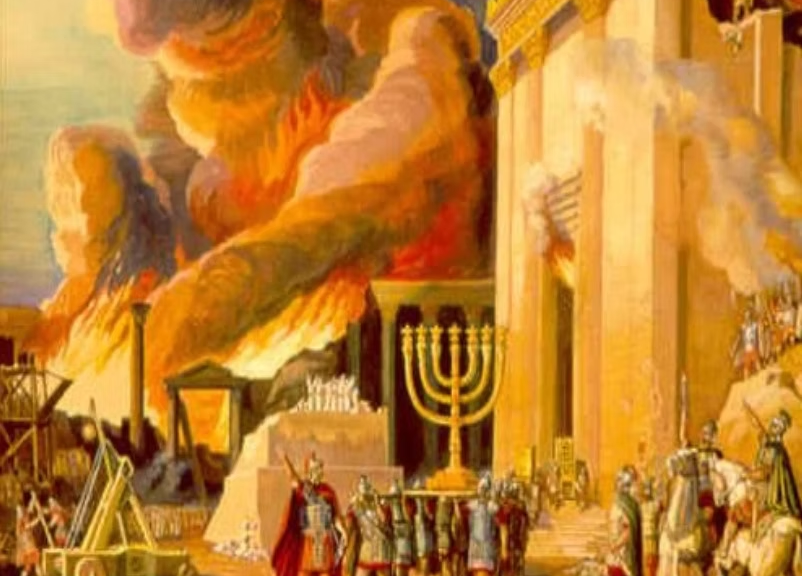
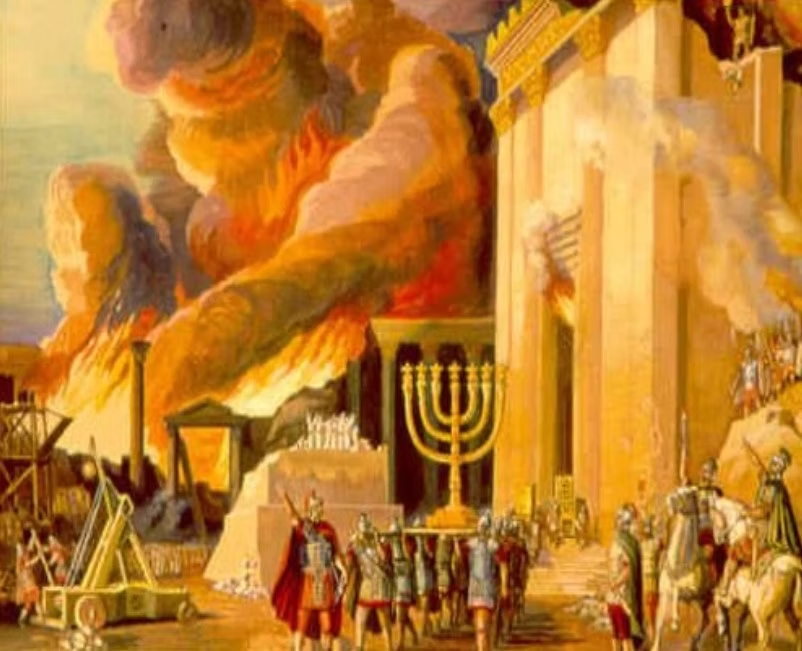
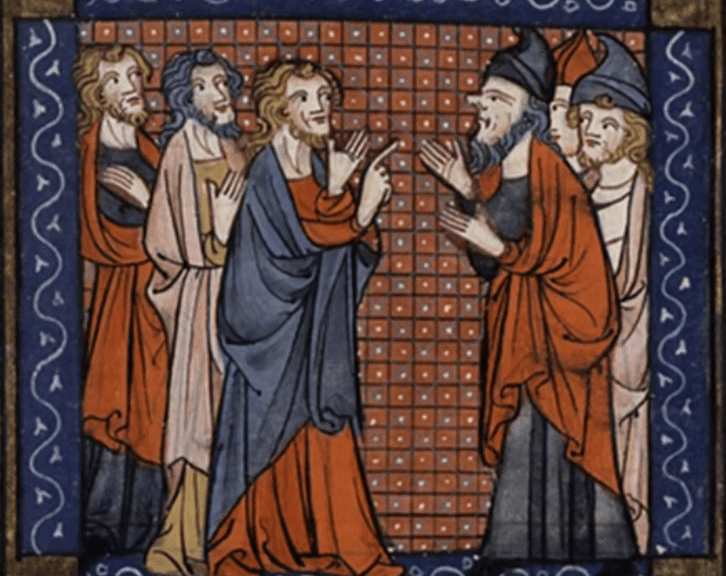
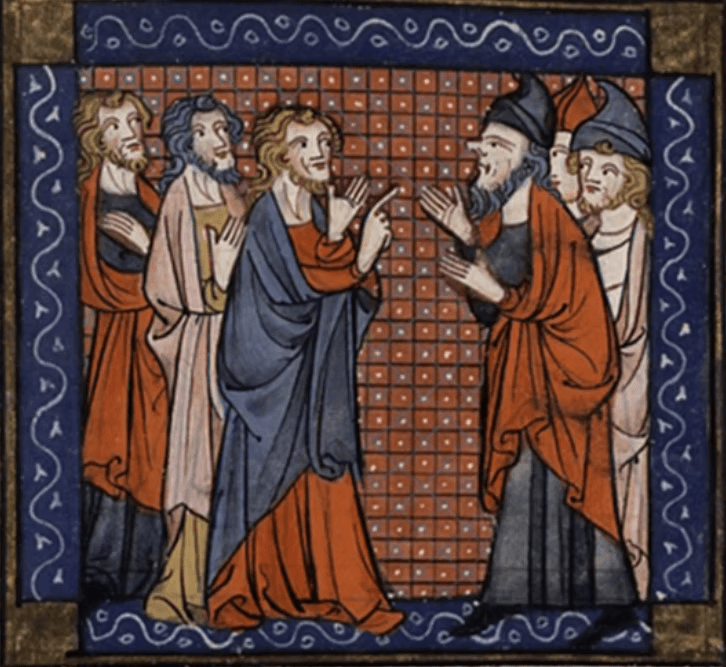





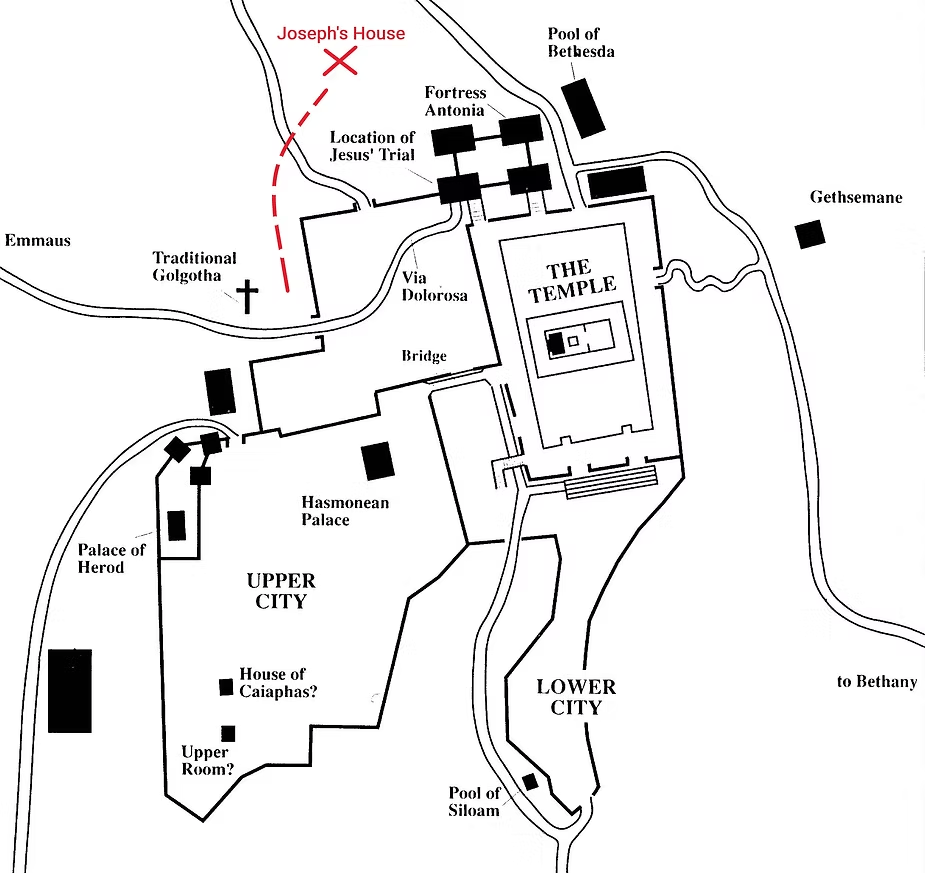


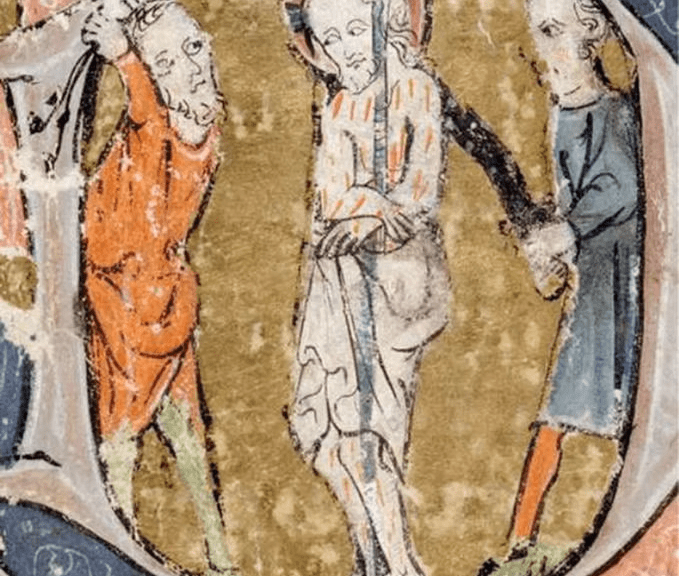
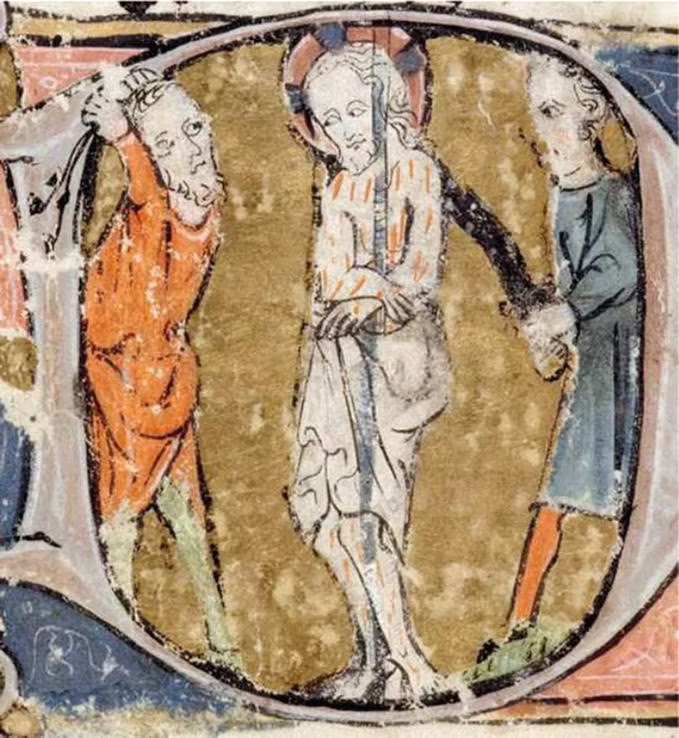
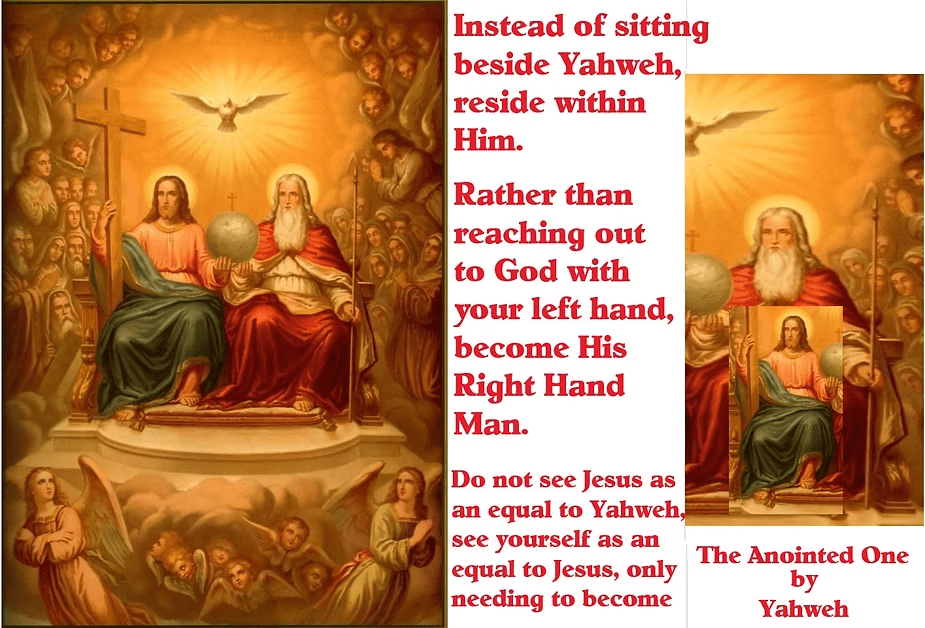
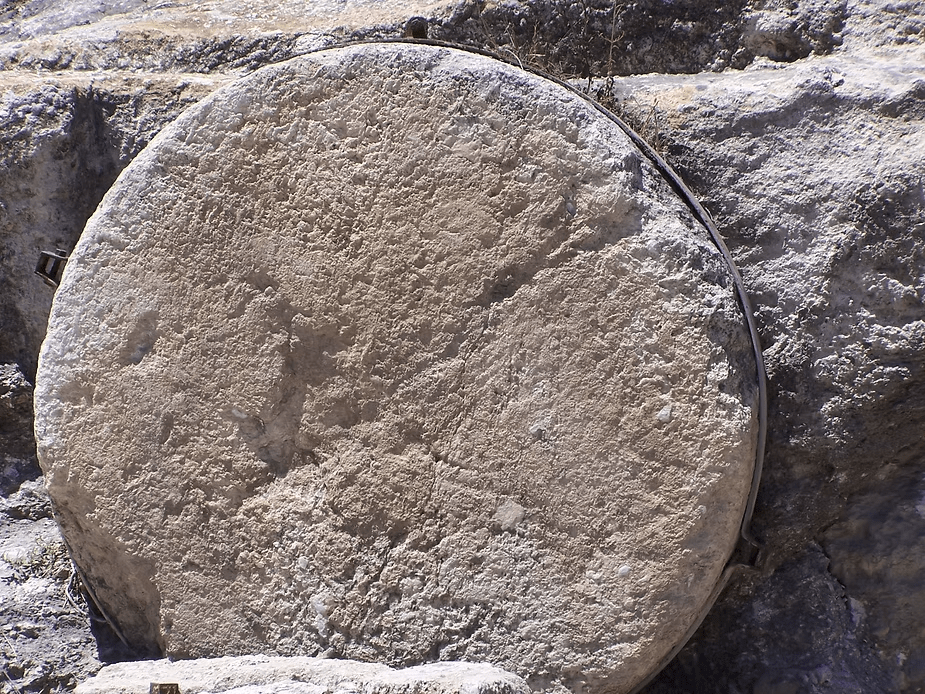
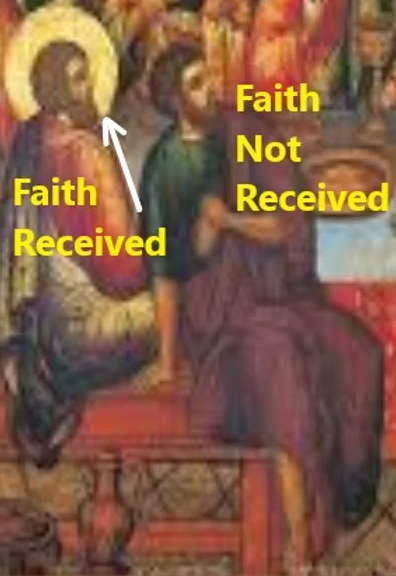
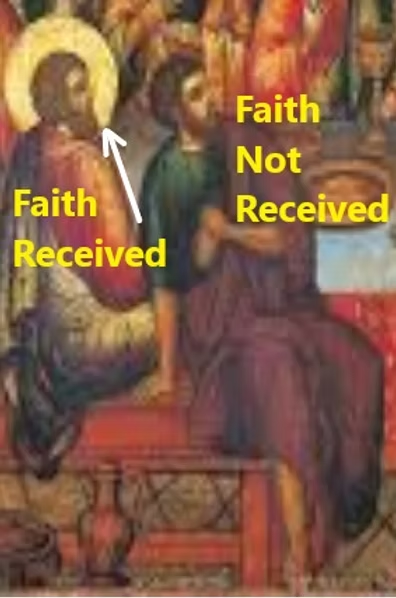
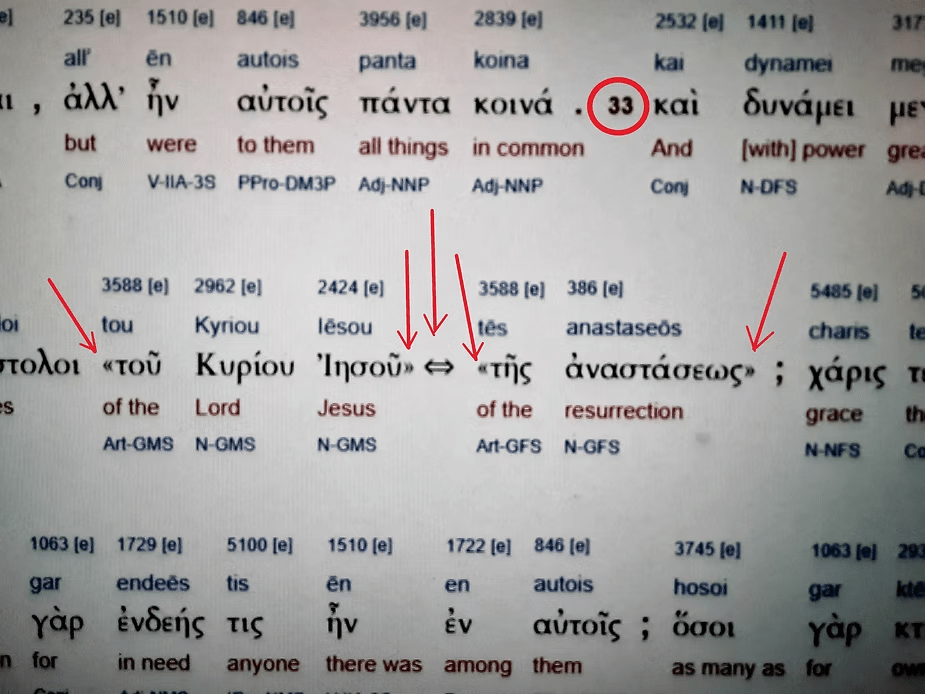



 Explaining the Readings