Jesus said, “I am the bread of life. Whoever comes to me will never be hungry, and whoever believes in me will never be thirsty.”
Then the Jews began to complain about him because he said, “I am the bread that came down from heaven.” They were saying, “Is not this Jesus, the son of Joseph, whose father and mother we know? How can he now say, ‘I have come down from heaven’?” Jesus answered them, “Do not complain among yourselves. No one can come to me unless drawn by the Father who sent me; and I will raise that person up on the last day. It is written in the prophets, ‘And they shall all be taught by God.’ Everyone who has heard and learned from the Father comes to me. Not that anyone has seen the Father except the one who is from God; he has seen the Father. Very truly, I tell you, whoever believes has eternal life. I am the bread of life. Your ancestors ate the manna in the wilderness, and they died. This is the bread that comes down from heaven, so that one may eat of it and not die. I am the living bread that came down from heaven. Whoever eats of this bread will live forever; and the bread that I will give for the life of the world is my flesh.”
——————–
This is the Gospel reading that will be read aloud by a priest on the eleventh Sunday after Pentecost [Proper 14], Year B, according to the lectionary for the Episcopal Church. It will follow either a Track 1 or Track 2 pairing of Old Testament and Psalm readings. Track 1 places focus on the death of David’s son Absalom, while Track 2 tells of Elijah falling asleep under a broom tree. The sons that accompany them are lamentations and praises, accordingly. All will be presented with a reading from Ephesians, where Paul wrote, “Therefore be imitators of God, as beloved children, and live in love, as Christ loved us and gave himself up for us, a fragrant offering and sacrifice to God.”
I wrote about this reading and published it in 2018, when it last came up in the lectionary cycle. That commentary can be read by searching this site. I welcome all to read that posting, as it is still valid today. However, I will add comments now that direct the focus of this reading towards the thread that connects all the readings grouped with it on this Sunday after Pentecost.
Before I go in that direction, as an act designed to see the importance of the capitalized words written by John in Greek, I found more evidence of the divinity of Scripture, which is remarkable. I did this two Sundays back, with the Paul letter to the Ephesians. Simply by reading the capitalized words, a supporting statement appeared that guided the other text to a point of focus. The same thing appears in the capitalized Greek words in this selection (verses 41-51). Here is the list of the capitalized words and their translations into English:
“Ouch” – “Not” – the Jews against Jesus as heavenly
“Iōsēph” – “Joseph” A name meaning “Increaser” or “May He Add”
“Ek” – “From, From out of” – A question of where
“Apekrithē” – “Answered” “Replied, Took up the conversation” – Jesus responding
“Iēsous” – “Jesus”
“Mē” – “not” to grumble, said Jesus
“Patēr” – “Father”
“Kai” – importance to follow
“Theou” – “of God”
“Patera” – “of Father”
“Theou” – “of God”
“Patera” – “of Father”
“Amēn” – “Truly”
When these words are stated as a divine statement of Yahweh, who was guiding the mind and the pen of John, it becomes an intentional use of capitalization, which John could never have planned from a simple human brain. It shows the source as divine. Here is the statement made by these words (in their order of appearance in these eleven verses):
“Were Grumbling Jews – I Not Joseph From – Answered Jesus – Not Father – * – of God of Father – of God of Father.”
Where I have placed an asterisk ( * ), this is where the capitalized word “Kai” would be found. Rather than a word translated as “And,” the word is a marker of importance that must be grasped to follow. When this word is capitalized, it brings about greater importance, of a divine level of meaning. The words that follow “Kai” need to then be seen as most important in this series of capitalized words, such that they should be found as a strong statement about what “Not Father” means. That following statement says this:
“they will exist all taught of God,” which leads to the following capitalized word “of God.”
This then places great importance on “all” who “will be” [a statement of future being] “taught.” That important focus explains who can truly claim Yahweh as the “Father.” The grumbling Jews all saw themselves as the children of God, but because none of them had ever be “taught” how to be a Son of Yahweh and live righteously, none of them could make that claim. Thus, their focus on Joseph says their fathers were all human, not spiritually taught to teach their children to likewise be taught. The importance of this is then Jesus saying the Jews were lost and could only be found by becoming true children of Yahweh.
Seeing this arise from the capitalized words is not what I planned to write, although this adds support to the commentary I am about to present. The theme that runs through all the readings on this Sunday is one of children of the Father. In the Second Samuel reading, Absalom is the son of David, his human father. Paul wrote in the beginning of his fifth chapter to the Ephesians, “be imitators of God, as beloved children,” where the word translated as “imitator” is better translated as “emulator.” John wrote of Jesus saying, “No one can come to me unless drawn by the Father who sent me; and I will raise that person up on the last day. It is written in the prophets.”
It is more difficult to see this Father-Son relationship in the short optional reading from First Kings; but it is there. When we read of the “angel of Yahweh” [not written “the Lord”], it is the voice of Yahweh that says, “Get up and eat.” This is the soul of Elijah being taught by Yahweh. It is the truth of what Jesus said to the Jews.
When that is seen, the bread given to Elijah for him to eat is then the spiritual food that made him the Son of Yahweh. It is the bread that feeds one’s soul the goodness of Yahweh that grants one eternal life. It is how Jesus said, “Your ancestors ate the manna in the wilderness, and they died,” because manna is spiritual food for a day.” Daily consumption leads to the death of the body, when the soul separates. When manna is seen as Scripture, the bread given by the angel of Yahweh to Elijah is the bread that transforms one into the Son, with Yahweh the Father. Jesus was that angel speaking to the disgruntled Jews. He was telling them, “Arise and eat.”
In the two Old Testament readings the heavy thread that connects them both is that of a tree. The oak branches that caught Absalom [a name that means “Father Of Peace”], one must see the history of Israel. The shade of the broom tree that covered Elijah must be seen as the prophets and judges of Israel, with the oak tree for the kings and tribal patriarchs. That element is now stated by John when he addressed the “Jews,” which was a capitalized word. They had become the stump of Jesse, as there no longer was any tree their history could be written in. Jesus was the new shoot from which the “Jews” who were not disgruntled could become the new branches, all as saints. Jesus represented the mustard seed from which would grow the largest tree in the garden.
As the Gospel selection for the eleventh Sunday after Pentecost, when one’s own personal ministry to Yahweh should already be well underway, the lesson here is to listen to Jesus when he says, “No one can come to me unless drawn by the Father who sent me.”
Today’s Christians see Jesus as a co-equal to Yahweh, like the new name for God. So often Christians say, “You have to believe in Jesus,” when in reality one has to believe in Yahweh [not some generic Lord or God]. One has to believe Yahweh has offered believers His hand in marriage; but, to take hold of that hand, one must submit oneself fully and completely to Yahweh, as His wife. Without that marriage of one’s soul to Yahweh’s Spirit, there can be no belief in Jesus, because Jesus is not external to anyone. Jesus is the product of one’s marriage to Yahweh.
Jesus is the Son of man, as the soul-spirit of repentant Adam, the only Son of Yahweh. The name “Jesus” means “Yah[weh] Will Save.” The only way to receive eternal life is through becoming the Son resurrected within one’s soul-flesh being. Studying Scripture and being led to see its meaning does not make one Jesus reborn. One has to reach that broom tree and beg Yahweh to let one’s self die, so one can be reborn as the Son. The bread one must eat is Jesus. One must consume the life-giving Spirit of Jesus to gain eternal life. The only way to be able to call Yahweh the Father is by eating the bread of life and them emulating the Son in the flesh again.
Ministry with being Jesus is being a child, playing church. Absalom was the son-king of a holy man who had sinned against Yahweh. As the son of a man, Absalom was as great a sinner as was his father. Absalom was conceived when his Father Was At Peace with Yahweh, but being born of a holy man does not make one a holy man. Each soul is separate; each soul is the property of Yahweh. No soul can return to the Father without consuming the bread of life and being reborn as His Son. Anything short of that is pretense and self-worship.
let your ears consider well the voice of my supplication.
2 If you, Yah[weh], were to note what is done amiss, *
adonay, who could stand?
3 For there is forgiveness with you; *
therefore you shall be feared.
4 I wait for Yahweh; my soul waits for him; *
in his word is my hope.
5 My soul waits for adonay,
more than watchmen for the morning, *
more than watchmen for the morning.
6 O Israel, wait for Yahweh, *
for with Yahweh there is mercy;
7 With him there is plenteous redemption, *
and he shall redeem Israel from all their sins.
——————–
I last posted a commentary about this Psalm on May 27th of 2021. It was the song of praise that accompanied the presentation of David’s Song of the Bow, after Saul died (along with Jonathan). The same breakdown of each of these seven verses applies now, when Absalom has likewise reached his peak of human achievement and fallen back down hard, can be found by searching this site. I will simply offer now a short adjustment to the accompanying readings for the Proper 14 reading selections.
As a Psalm that fits well with the Epistle reading from Paul’s letter to the true Christians of Ephesus, the chapter four verses about how one needs to transform oneself [a “self” always equates to a “soul”], away from cheating, towards commitment, away from lying, towards the truth, away from theft, towards giving, and away from violence, towards peace, the only way for one to make such drastic changes is to make Yahweh one’s salvation. The truth of the Hebrew word “adonay,” is it means “lords” [the plural number of “adon”]. The body of “self” has many “lords” that rule over it. They are everything that is external to one’s soul, including one’s body of flesh. The only way those “lords” that lead one to cheat, lie, steal, and hurt can be overcome is through marriage to Yahweh and the union of His Spirit with one’s soul.
The Old Testament reading from First Kings [which has its own Psalm connected to it] speaks of the bread and water set by Elisha’s head, after he lay down and fell asleep. The metaphor of sleep is death. Elijah surrendered his soul to Yahweh, much in the same way David’s Psalm 130 sings of calling upon Yahweh for help. This Psalm is then like manna from heaven, as Yahweh strengthening David’s resolve to defeat his “lords” and gain forgiveness. Elijah, on the other hand, died of self and was fed the spiritual food of rebirth. Elijah would be reborn as the Son of Yahweh.
In the Gospel reading from John, Jesus is announcing he is the fulfillment of David’s prayer in song. He is the “lord” of the Jews; but he cannot be an external king that lords over them. For Jesus to become their “adonay” [one soul ruling many soul-body combos, each individually], they have to sacrifice their heads [self-egos] and die of self, to arise and eat the bred of life that will transform them into Jesus.
“and there at his head was a cake baked on hot stones”
As a song asking for the help of salvation, one a day when so many big brains hang suspended in the web of branches, born from their sinful pasts, the lesson so often sung in Psalm 130 is to marry Yahweh and stop sinning. A marriage to Yahweh takes one beyond the daily strength one helping of manna will bring. It brings the bread of life and the everlasting waters of an eternal presence with Yahweh as one’s wedding gift. Only by turning one’s back to the “lords” of sin can Yahweh bring the “Lord” of a soul into one’s being. The whole purpose of ministry is to become Jesus resurrected in the flesh, so others can know Yahweh offers them the same opportunity for salvation.
7 The angel of Yahweh encompasses those who fear him, *
and he will deliver them.
8 Taste and see that Yahweh is good; *
happy are they who trust in him!
——————–
This is the accompanying Psalm to the First Kings reading selection that tells of Elijah falling asleep under a broom tree [when “sleep” equates to “death”]. If Track 2 is chosen for Year B, then this pair will be read along with the Ephesians reading, where Paul wrote, “do not grieve the Holy Spirit of God, with which you were marked with a seal for the day of redemption.” All will join with the Gospel reading from John, where Jesus said, “I am the living bread that came down from heaven. Whoever eats of this bread will live forever; and the bread that I will give for the life of the world is my flesh.”
Today’s verses from Psalm 34 will present eight of the twenty-two that compose this song of praise. Next Sunday a second set of verses from Psalm 34 will be read. A Sunday later a third set will present every verse in this Psalm, with some parts read again on three other occasions; so, this is a Psalm that gets much attention.
One will note that I have taken the NRSV translations [others do the same] that call Yahweh by the generic name “Lord.” Please, feel free to call upon some generic Lord all you want. David specifically named Yahweh and the Jews who ‘assist’ Christians with translations that say “O Lord” have as close a relationship with some “Lord” as do the Christians who happily dance along behind people who barely believe in God, much less ever dare to say His name. David wrote a song of praise to the specific God named Yahweh; and, I have placed that name back into the translation.
Missing from the Episcopal Church’s presentation of verse 1 is the words that the NRSV has spliced out and turned into the ‘header’ of this son. Their translation states: “[A Psalm] Of David, when he feigned madness before Abimelech, so that he drove him out, and he went away.” According to my research into Abimelech, the popular opinion is the name is actually Ahimelech, who was the only priest with a name similar that David encountered. He was the high priest of Nob [a place near the border of Judah and Benjamin, close to Jerusalem], where the Tabernacle was kept during Saul’s reign.
When David was fleeing Saul, along with his devoted soldiers, David entered the Tabernacle in Nob and convinced Ahimelech that he was on a mission ordered by Saul, David convinced the high priest to give David five loaves of showbread [which routinely was only to be consumed by priests, but Ahimelech saw hunger and need the reason to give those loave away to David, to feed his troops]. This story would make the ‘title’ be less about David faking madness and transform it into saying, “David went beyond normal protocols by presenting the face of poor judgment to Ahimelech, who saw that face of David as a demon that he cast out of David, sending him away healed [with five loaves of showbread].”
In what David wrote in verse one [as the ‘introduction’], the Hebrew word “lip̄·nê” is rooted in “paneh” or “face.” Whenever “paneh” or “panim” is used in Hebrew Scripture, it needs to be read as the “face” one wears to the world, which is either the “face” of Yahweh [a righteous soul-body] or the “face” of a lesser god [like self]. When one sees how David showed his “face” to Ahimelech, he was fearful, due to Saul pursuing him, wanting to kill him.
While the Spirit of Yahweh had been poured out upon David’s soul, David was seeking some form of asylum within the lands of the Israelites; and, he entered the Tabernacle unjustly. David would have to find refuge in Gath, under Philistine protection; but fear of killing Saul drove him to the Tabernacle, which could be considered a form of madness. Either way, Ahimelech played a role for Yahweh, where the face of fear was removed from David, so David could continue to evade Saul, without worry about Saul being killed by David. This fortunate encounter should be seen as Yahweh’s blessing of David guiding him, beyond the loyalty of David’s body of flesh; and, that becomes the motivation for this song of praise.
Verse one [according to the translation read aloud] is then a statement that no other faces will be worn by David again. He will give Yahweh the praise of his body and voice by only wearing the face of God to lead others.
Verse two sings that the face David will wear will come from the marriage of his soul to Yahweh. Verse two sings the word “nap̄·šî,” which is rooted in “nephesh,” meaning “a soul, living being, life, self, person, desire, passion, appetite, emotion.” The NRSV translation seems to have translated this as “glory,” when in reality David said his “soul” would be “humbled” by having married Yahweh. This will lead to a sense of joy and gladness that comes from his soul, no longer afraid of anything.
The aspect of verse three that leads the NRSV to translate “Name” as a capitalized word [meaning the name of Yahweh], becomes affirmation of this spiritual marriage. The word written is “šə·mōw,” rooted in “shem,” which means “name.” David was singing that his soul would wear the face of Yahweh as His wife, completely in willing submission to the Will of Yahweh. A wife routinely takes on the “name” of her husband; and, David’s body of flesh was feminine to the masculinity of the Spirit. Here, one must see the absurdity of one taking on the “Name” of one’s Husband, and being to idiotic to call that Husband by His Name [instead wallowing around the bush, saying “Lord”].
Verse four is then where the ‘heading’ can be found to make sense, as it was the ‘madness’ or “judgment” that was led by “fear” that was driven out of David by Ahimelech. The translation by the NRSV that says, “I sought Yahweh, and he answered me and delivered me out of all my terror,” takes “mə·ḡū·rō·w·ṯay” and states it as “my terror.” The root word, “megurah” or “magur” means both “storehouse” and “fear.” As such, David’s body acted like a silo that filled up with fear, as that was the crop being harvested by Saul’s madness over the land. David sought the help of a high priest to be “delivered,” where “hiṣ·ṣî·lā·nî” [rooted in “natsal”] meant having the storehouse “stripped clear” or emptied. Thus, David’s fears were “cast out.”
Verse five is then the only verse in this sequence that does not directly name Yahweh. Instead, David speaks in the plural, as “their faces,” which “were not ashamed.” This speaks of Ahimelech and the other tabernacle priests at Nob, who were not shaken by the fears David brought into their presence. The face of Yahweh was worn by them all, as the “radiance” of Yahweh glowed as “their faces.”
Verse six is David’s confession that he was lacking the wealth of faith, as he proclaimed he was “a poor man [“‘ā·nî”] who cried out” from “troubles.” Yahweh heard his pleas, so He led David to the tabernacle in Nob.
In verse seven, David wrote that “the angel of Yahweh encamps all around those who fear Him.” This is the angel that is one with one’s soul, making that soul be elevated to an elohim. David had that angel within his being; but his fears had crippled that presence. Therefore, David was divinely led to enter a presence where the “radiance of Yahweh” could ease the fears and Ahimelech could cast out his demons.
Verse eight then speaks of Ahimelech “tasting” the fear that overwhelmed David, with David likewise “tasting the good” that was in Nob. Yahweh was with Ahimelech and also with David, so the fear was cast out of David and that place.
As a reading selection that accompanies the story of Elijah asking Yahweh to take his life, he too was afraid of Ahab, who had promised Elijah’s death, after he heard Elijah had killed four hundred fifty priests of Ba’al. While David found the angel of Yahweh in Ahimelech, Yahweh sent an angel of transition to Elijah, which made it impossible for Ahab to kill that which was already self-sacrificed to Yahweh. Elijah experienced the same casting out of fear while under the broom tree. Thus, the lesson here is to recognize fear cannot lead one to righteousness. One must be purged of fear, so the only fear that remains is the fear of Yahweh and losing eternity with His presence.
David slept with his ancestors, and was buried in the city of David. The time that David reigned over Israel was forty years; he reigned seven years in Hebron, and thirty-three years in Jerusalem. So Solomon sat on the throne of his father David; and his kingdom was firmly established.
Solomon loved Yahweh, walking in the statutes of his father David; except that he sacrificed and offered incense at the high places. The king went to Gibeon to sacrifice there, for that was the principal high place; Solomon used to offer a thousand burnt offerings on that altar. At Gibeon Yahweh appeared to Solomon in a dream by night; and said elohim, “Ask what I should give you.” And Solomon said, “You have shown great and steadfast love to your servant my father David, because he walked before you in faithfulness, in righteousness, and in uprightness of heart toward you; and you have kept for him this great and steadfast love, and have given him a son to sit on his throne today. And now, Yahweh elohay, you have made your servant king in place of my father David, although I am only a little child; I do not know how to go out or come in. And your servant is in the midst of the people whom you have chosen, a great people, so numerous they cannot be numbered or counted. Give your servant therefore an understanding mind to govern your people, able to discern between good and evil; for who can govern this your great people?”
It pleased adonay that Solomon had asked this. elohim said to him, “Because you have asked this, and have not asked for yourself long life or riches, or for the life of your enemies, but have asked for yourself understanding to discern what is right, I now do according to your word. Indeed I give you a wise and discerning mind; no one like you has been before you and no one like you shall arise after you. I give you also what you have not asked, both riches and honor all your life; no other king shall compare with you. If you will walk in my ways, keeping my statutes and my commandments, as your father David walked, then I will lengthen your life.”
——————–
This is the Track 1 optional Old Testament reading for the twelfth Sunday after Pentecost [Proper 15], Year B, according to the lectionary for the Episcopal Church. If chosen, it is paired with Psalm 111, which sings, “The fear of the Lord is the beginning of wisdom; those who act accordingly have a good understanding; his praise endures forever.” They will precede the Epistle reading from Ephesians, where Paul wrote, “Be careful then how you live, not as unwise people but as wise, making the most of the time, because the days are evil.” All will accompany the Gospel selection from John, where Jesus said, “Very truly, I tell you, unless you eat the flesh of the Son of Man and drink his blood, you have no life in you.”
In 2018, the last time this reading came up in the lectionary cycle, I wrote a commentary and published it on my website I maintained at that time. The article is available on this website, which can be found by a search of the reading name and number. I welcome all to read the views I posted then, as I still stand behind them. It is a view that still applies today. However, at this time I will take a new direction with this reading.
In the first nine verses of 2 Kings 2, David has chosen Solomon to follow him to the throne. Before David’s death, he counseled Solomon to be a king that obeyed all the laws and ordinances of Yahweh. David had been so led, so he told his youngest son to be likewise. Twice, David told Solomon to be wise in his decisions, which were David’s way of influencing his young son to exact revenge against those who were secretly and openly David’s enemies, who had been past allies. Young Solomon acted on his father’s guidance, ordering a series of executions that ceased any possible subversion that would take advantage of a young king; and, it was David’s sage advice that ensured “his kingdom [passed to Solomon] was firmly established.”
When we read, “David slept with his ancestors,” the better translation says, “so laid down David with his fathers.” The image of death being taking a nap, resting, or laying down to sleep is metaphor for reincarnation. While the body of David ceased to support life on the physical plane, the soul did not die. Because the soul is eternal and cannot die, death is then symbolic of sleep; and, just like sleep brings a new day when one rises and gets out of bed, so too does a soul come back into a new body of flesh. When we see that David’s soul followed suit of his father – those elders of Israel – this becomes a statement that David’s soul had not gained eternal life with Yahweh. Yahweh was not the Father of David; and, that is why David could sin and be punished with reincarnation, not rising with the Father into His kingdom. It is in this statement that one can return to the relationship David had with Jonathan, where both their souls had lived past lives together, in service to Yahweh; so, for David’s soul to be reincarnated, this was arranged by Yahweh, with David’s soul in full agreement.
When we read, “Solomon loved Yahweh, walking in the statutes of his father David,” this gives the impression of a one-way love: Solomon’s love of Yahweh. The same words can also be read that Yahweh loved Solomon, whenever Solomon walked in the statutes of his father David. What is easy to overlook is the NRSV translation of “only,” which I have adjusted [in bold type] to say, “except that.” The Hebrew written is “raq,” which means “but, even, except, howbeit howsoever, at the least, nevertheless.” This small word states what Yahweh did not love that Solomon did. When that exception is said to be, “he sacrificed and offered incense at the high places,” it must be understood that “high places” were in the presence of the Ark of the Covenant, which was kept hidden behind a curtain, where only a high priest could enter and make burnt offering of incense.
In the history of the nation of Judah, which would come after Solomon’s reign ended and the two regions split into two separate nations, King Uzziah was said to be the second greatest of the kings of Judah, who reigned for fifty-two years. After forty-one years of excellent rule, Uzziah tried to burn incense at the altar in the temple and was stricken with leprosy. That physical curse came from Yahweh, because Uzziah had broken the rules. Of this, the Wikipedia article on Uzziah states this:
“[Uzziah] entered the Temple of Yahweh to burn incense on the altar of incense. Azariah the High Priest saw this as an attempt to usurp the prerogatives of the priests and confronted him with a band of eighty priests, saying, “It is not for you, Uzziah, to burn incense to the Lord, but for the priests, the sons of Aaron, who are consecrated to burn incense.” (2 Chronicles 26:18). In the meantime a great earthquake shook the ground and a rent was made in the temple, and the bright rays of the sun shone through it, and fell upon the king’s face, insomuch that the leprosy seized upon him immediately (Josephus Flavius, Antiquities IX 10:4). Uzziah was suddenly struck with tzaraat before he had offered the incense (2 Chronicles 26:19), and he was driven from the Temple and compelled to reside in “a separate house” until his death (2 Kings 15:5, 27; 2 Chronicles 26:3). The government was turned over to his son Jotham (2 Kings 15:5), a coregency that lasted for the last 11 years of Uzziah’s life (751/750 to 740/739 BC).”
It must be realized that Solomon broke the rules of Moses and he did not follow the advice of his father David, who said: “observe what Yahweh eloheka requires: Walk in obedience to him, and keep his decrees and commands, his laws and regulations, as written in the Law of Moses.” In that use of “Yahweh eloheka” the meaning says David expected Solomon’s soul to be merged with Yahweh’s Spirit, so Yahweh was not only Solomon’s divine Husband, but Solomon (like David) would be one of Yahweh’s elohim – the extensions of Yahweh on earth in the flesh. To be one of Yahweh’s elohim, Solomon would have to fully submit his self-will and self-ego to Yahweh, as Yahweh’s wifely king.
When we read, “The king went to Gibeon to sacrifice there, for that was the principal high place; Solomon used to offer a thousand burnt offerings on that altar,” that is a statement of ‘field trips’ Solomon would make, north of Jerusalem, while the Temple of Solomon was being built. It was in Gibeon that Solomon’s dream occurred, where he spoke with God. Following the promise, “If you will walk in my ways, keeping my statutes and my commandments, as your father David walked, then I will lengthen your life,” Solomon went to Jerusalem and offered burnt offering. Not read aloud, but stated in verse fifteen is this: “Then Solomon awoke—and he realized it had been a dream. He returned to Jerusalem, stood before the ark of the Lord’s covenant and sacrificed burnt offerings and fellowship offerings. Then he gave a feast for all his court.”
In the history of Solomon, it is said he lived to be sixty. David lived to be seventy. The fact that Solomon did not have a live that exceeded the length of his father says Solomon did not walk in the ways of Yahweh and he did not keep Yahweh’s statutes and commandments. With this known, one needs to take a closer look at what occurred in this dream that Solomon had.
We read, “At Gibeon Yahweh appeared to Solomon in a dream by night; and said elohim, “Ask what I should give you.” This appearance comes after we are told, “The king went to Gibeon to offer sacrifices, for that was the most important high place, and Solomon offered a thousand burnt offerings on that altar.” This boy king had prior [not read aloud] married an Egyptian princess, to bring a Gentile [maybe] alliance, which subverted total faith that Yahweh would protect the people of Israel. Solomon then had a temple built to replace the tabernacle that David had established in the City of David [formerly Jebus]. Nathan was still alive and advising Solomon, so either Nathan no longer talked with Yahweh (after David’s death) or Solomon rejected the advice of a prophet, which said Yahweh does not want a house built for him. It was while that temple was being built [along with other palaces and walls of defense] that Solomon took the time to go break a law of Moses, with one thousand slaughtered animals burnt as an offering [not to Yahweh] but to Solomon’s new reign. Therefore, when Solomon heard a voice ask, “What should I give you,” he was too stupid or ignorant to understand the question was about punishment, not reward.
The failure of Solomon to realize this was Yahweh speaking to him through divine possession, which was the Spirit merged with Solomon’s soul – an elohim – it was not Yahweh speaking to Solomon, but his ego. When Solomon responded to the question by saying, “You have shown great kindness to your servant, my father David, because he was faithful to you and righteous and upright in heart,” this translation misses an important aspect. Where the translation says, “he was faithful to you and righteous and upright in heart,” the Hebrew is “hā·laḵ lə·p̄ā·ne·ḵā be·’ĕ·meṯ ū·ḇiṣ·ḏā·qāh ū·ḇə·yiš·raṯ lê·ḇāḇ ‘im·māḵ.” That literally translates to say, “he walked with the face of truth with righteous and uprightness of soul with you.” That says David was blessed by Yahweh when he wore His face of truth and led a life directed by Yahweh’s marriage with David’s soul. This was not Solomon knowing this, but the elohim that possessed his soul.
Solomon’s ego then assumed it was that marriage to Yahweh that brought about little baby Solomon to rule after daddy was dead. That ignorance does not know that when David stole another man’s wife, forced her to have sex with him (because he was king and had that power), which brought about her pregnancy with Solomon, causing David to lie to keep Solomon from being his responsibility and then murder when he could not get out of that, then David had stopped that relationship with Yahweh that brought David’s soul such great kindness. Solomon’s ego assumed he deserved to rule. Thus, his ego heard the question, “What should I give you?” as an opportunity to enhance himself further.
To read Solomon say, “I am only a little child and do not know how to carry out my duties,” that must be understood as an admission of fear. Everything Solomon had done, up to this point in his reign, he had done because David gave him advice. Now that there was no external guide supplying him with suggestions for action, little boy Solomon wanted to forego any need for a prophet to tell him what to do. Solomon did not want to rely on Yahweh to tell him directly what to do either. Therefore, Solomon asked for himself to be like a god on earth.
In this aspect of Solomon admitting his fears about being too stupid to rule as a child, knowing others would readily take advantage of his lack of knowledge and mature wisdom, he spoke much unlike David. David had the experience of a shepherd, one who was led by the Spirit of Yahweh to know no fear. Had Goliath faced an Israel led by Solomon, it would have fared no better than the fear that shook Saul. Most likely, a Solomon-led Israel would have surrendered, because he admitted he did not know how to lead out or lead in. There was no fight in Solomon, other than for self-preservation.
Solomon then said, “So give your servant a discerning heart to govern your people and to distinguish between right and wrong. For who is able to govern this great people of yours?” In the words that have been translated to state, “give your servant a discerning heart to govern your people,” the word translated as “heart” [“lêḇ”] must be seen as a soul. A soul equates to a self, which is a request to be a god – an elohim – that is capable of “understanding how to judge Yahweh’s people.” David had been a true “judge” of the Israelites, because Yahweh controlled his soul. Now, Solomon wanted to have full control to himself.
When Solomon then continued, stating “to distinguish between right and wrong,” or “between good and evil,” this is a request that says the soul of Solomon was led by the serpent that tricked Eve to eat the fruit of the tree that leads a soul to be banished from heaven. This must be read as Solomon’s soul seeking banishment from Yahweh’s advice. Rather than submit his soul to Yahweh, so Yahweh would lead him in response to his prayers, which included Yahweh speaking to a true prophet to guide Solomon with faith, Solomon asked to be free of Yahweh’s involvement in his rule over God’s people. The people would then be left to follow Solomon’s lead, not Yahweh’s.
This is where having been written about Yahweh telling Samuel to anoint David, when Yahweh then poured out His Spirit into David’s soul, which remained with him forever, nothing like that being written about Solomon speaks a lot about how Solomon was nothing like his human father. Like the sons of Eli, the sons of Samuel, and the sons of David – all three true judges of the Israelite people – Solomon was as corrupted as are all sons of human fathers. Therefore, the people of Israel would be led by having true judges sent by Yahweh, so their marriage to Yahweh’s Spirit would flow from them to the people, leading the people to follow the lead of Yahweh, through a judge. Solomon’s soul was so devoid of Yahweh’s presence that the people of Israel would refuse to follow his son, after Solomon’s death.
This is where it is vital to realize that “Yahweh,” “elohim,” and “adonay” are not references to one and the same. Both “elohim” and “adonay” are plural forms of “gods” [from “el”] and “lords” [from “adon”], neither of which is a fixed statement of Yahweh’s presence. Certainly, a soul married to Yahweh is divinely possessed, so a soul in union with Yahweh’s Spirit becomes a divinely led “elohim,” a soul can equally be possessed by evil spirits, which enslave a soul to serve its flesh and not Yahweh. These evil spirits gaining possession of one’s soul-body then become that soul-flesh’s “lords.” Thus, I have adjusted verses ten and eleven in the above text, where the proper translation should say, “It pleased adonay that Solomon had asked this” and “elohim said to him”. This says the dream experienced by Solomon was not truly Yahweh in possession of bad boy King Solomon, when asked what punishment he deserved; although Yahweh was well aware of this conversation.
For verse ten to say, “It pleased adonay that Solomon had asked for self-control,” that says the “lords” of Solomon were all of the flesh, not of a soul divinely led. For verse eleven to then say, “elohim said to him, “Because you have asked this, and have not asked for yourself long life or riches, or for the life of your enemies, but have asked for yourself understanding to discern what is right, I now do according to your word,” this is nothing short of a pact being made with Satan. Solomon’s elohim was not Yahweh’s Spirit making promises to his flesh, but Satan promising worldly powers, in exchange for Solomon’s soul.
The reward for breaking the rules of a non-priest of the tabernacle burning sacrifices and incense being to grant Solomon a bigger brain that anyone ever possessed before was not given by Yahweh. Instead, it was allowed by Yahweh, as Yahweh knew the soul of Solomon when He placed it into his body of flesh at birth. Solomon was the child of sin; and, he would be the perfect new king to lead a nation of people to ruin, becoming the model of how wrong minds can be, when they are led by Satan. Therefore, the truth of Yahweh’s promise came through as the hypothetical, “If you walk in obedience to me and keep my decrees and commands as David your father did, I will give you a long life,” knowing Solomon could only break the rules and walk according to his own path of self-righteousness.
When verse fifteen [not read aloud] says, “Then Solomon awoke—and he realized it had been a dream,” this says Solomon was living a dream. The soul state of being is according to the ways of the flesh, such that to dream is to enter the everlasting realm of eternity, where true life never ends. For Solomon to “awaken” says he returned to the realm of death that is the material world. The think one has “dreamed” of promises from God, that says Solomon no longer believed in Yahweh. He saw Yahweh as a dream, and his new wisdom said dreams are not real. Therefore [also not read aloud], Solomon went to his new Temple and offered himself some fresh kill sacrifices, knowing there was no God who could ever punish a god on earth.
This reading option to be read on the twelfth Sunday after Pentecost, when one’s own personal ministry to Yahweh should already be well underway, is a lesson in selfishness. Anyone who believes he or she can break the laws of Moses and make up new rules [said to be what Jesus meant, as if one’s brain can figure out what Jesus meant] means one is playing a role like that of young King Solomon. One sees Solomon as being given the gift of great wisdom, when such a gift is actually a curse. It is the brains of the world that lead the people away from a commitment to Yahweh. The seminaries of Christianity have long since given up belief in Yahweh [they now call him a generic “Lord”], as if being Jesus resurrected is only a dream, one which can never come true.
Ministry to Yahweh means submitting one’s heart, mind and soul to Yahweh, out of the love of marriage. One does not think what is best or what is worst, as one only acts according to the divine possession of Yahweh’s Spirit. One’s personal “Lord” is Jesus, the Son of man reborn as one with one’s submissive soul. One becomes like young David, not like young Solomon. One does not point to the diplomas and plaques of achievement in a church that serves an organization, not Yahweh and certainly not the people who choose to believe in a God. A true priest of Yahweh does not teach dreams that are beyond materialization. They teach the reality of dreams come true.
She has slaughtered her animals, she has mixed her wine,
she has also set her table.
She has sent out her servant-girls, she calls
from the highest places in the town,
“You that are simple, turn in here!”
To those without sense she says,
“Come, eat of my bread
and drink of the wine I have mixed.
Lay aside immaturity, and live,
——————–
This is the optional Track 2 Old Testament reading that might be read aloud on the twelfth Sunday after Pentecost [Proper 15], Year B, according to the lectionary for the Episcopal Church. If chosen, it will be paired with a reading from Psalm 34, which sings, “Keep your tongue from evil-speaking and your lips from lying words. Turn from evil and do good; seek peace and pursue it.” These will then precede a reading from Ephesians, where Paul wrote, “Be careful then how you live, not as unwise people but as wise, making the most of the time, because the days are evil.” All will accompany the Gospel reading from John, where Jesus said, “Those who eat my flesh and drink my blood have eternal life, and I will raise them up on the last day; for my flesh is true food and my blood is true drink.”
In 2018, the last time this reading came up in the lectionary cycle, I wrote my opinion and published them on my website. That article can be viewed by searching this site. I stand behind those views now, as nothing has changed in the Scripture presented; and, I welcome all to read what I wrote then, as it applies to what I will add now.
It is clear from these six verses that the Hebrew was written in the feminine, such that seven words say “she” and six words say “her.” This obvious direction to the feminine gender must be seen as Solomon (a male) writing about the power of “wisdom,” which does not come from Yahweh (the supreme masculine Father). In this, the Hebrew word translated as “wisdom” – “ḥā·ḵə·mō·wṯ,” from “chokmoth” – means “wisdom, every wise woman,” where the word implies the feminine. This must be understood metaphorically.
Anyone who has regularly read my observations on Scripture will recall how I have regularly written about a soul’s marriage to Yahweh. I have come to the conclusion that all references to the feminine in Scripture are references to the soul trapped in the flesh, where the material world – the physical – is a reflection of the feminine state of being (or negative). Conversely, the spiritual realm, including all angels and immortals related to Yahweh are the masculine (or positive). It is in this way of seeing the material universe, as opposed to the ethereal, spiritual universe, where all matter is feminine and all spirit is masculine, that all humanity led to religion are feminine [regardless of human gender role], therefore potential bridesmaids of Yahweh. Thus, with that said (again), this song about “wisdom” has nothing to do with Yahweh and all to do with a marriage between a soul in human flesh and the goddess that is Mother Earth, which brings a feminine spirit into one’s being.
Another thing that I commonly point out, whenever Old Testament writings have been wrongly translated into English, is the Hebrew word “elohim” does not translate as “God” [the common error found]. It is the plural form of “el” [the singular, lower case “god”], this “gods.” An “elohim” is created by the marriage of a divine spirit, such that a soul placed in a body of flesh has a neuter essence [as do children], with the body of flesh having a feminine essence, simply from being a body of matter [clay, dust, elements of the earth]. Still, a soul-body that is feminine is not an “elohim,” as an “elohim” is created by the possession of that neuter gender soul by the masculine essence of Yahweh’s Spirit, such that a positive added to a neutral makes a positive. On the other hand, an “elohim” can likewise be possessed by an earthly spirit [including Mother Earth and Satan, an angel or elohim cast into the earth], where the neutral soul takes on the feminine spiritually. The presence of “wisdom” in this song sings about that possession of the feminine, of which Solomon was one.
In verse one, the Hebrew literally states, “the wise woman [Mother Earth] has built her house , she has hewn out her pillars seven .” The “house” [“bayith”] is the equivalent of Solomon stating an “elohim” having found a home in a living body of flesh – in this case Solomon. A spirit can only possess a soul, which is eternal life, as flesh without a soul is dead matter and cannot be animated by possession. The seven pillars hewn out can be seen as the chakras of Hinduism.
It should be noted that the practices of Hinduism are meditative, designed to bring spiritual powers of the physical universe [the feminine elohim] into oneself [a “self” always equates to a “soul”]. This means Hinduism is not a religion that worships gods [“elohim”], but a philosophy that the self [soul] can control or master these dead ‘energies,’ for selfish purposes. The mistake of thinking Hinduism is a religion that believes in gods comes from not realizing the only “gods” that are alive and conscious are those of the self [soul], which is then trained how to utilize unseen powers within one’s physical body. This is a philosophy that is common in other pseudo-religions, such as call their teachings some mastery of life. All believe in self as a god that can control natural powers of the universe, with all relegating Yahweh to a dead power of the material realm.
In the little known history of Jesus, during his teens and early twenties, he ventured into India and spent considerable time learning the practices of Hinduism. Jesus did not go to learn to master unseen, dead natural powers of the universe for personal benefit. Jesus was born with all of these powers available to him, because Jesus was divinely born of Yahweh. Jesus did not have to practice meditation for the purpose of learning how to reduce his state of being to become that akin to an antennae that received natural vibratory powers. Jesus prayed regularly and was in communication with Yahweh routinely; but Jesus never sought any powers for selfish reasons. While in India, Jesus displayed an easiness in possessing abilities that the Indians struggled mightily to master. The Hindus saw Jesus as a god, when he was a divinely possessed elohim of Yahweh – masculine and positive – the Son of Yahweh. When Jesus told the Hindu masters how much folly their practices were, Jesus was threatened with death, to the point that he had to leave.
Jesus understood that the story of Genesis, where Yahweh created His Son [we call him Adam], the realm where the spiritual joined with the physical was called Eden. Those two realms were joined by the presence of two trees: the tree of life and the tree of the knowledge of good and evil. The reason Adam was told never to eat the fruit of the tree of knowledge of good and evil was [as learned from breaking that rule] learning how to master life [the way Hindu try] means being banished from Eden (or Heaven). To submit one’s soul to the worship of the earthly powers, which are dead and are freely available to all souls trapped within bodies of dead flesh, means one’s soul cannot remain in a place where all dependency of life comes from sole worship of the tree of life. When one’s soul is fed only from that tree, then the natural powers that come from the tree of knowledge of good and evil are supplied by Yahweh, where the tree of life is His Spirit married with one’s soul. When married to Yahweh’s Spirit, one naturally benefits from the powers of the universe, without any need to eat that fruit of meditative practice.
After Adam and Eve were banished from Eden because they broke the one rule and had their chakra become sources of receptivity, those receptive centers also freely welcomed the influences of the serpent. The serpent was the wisest of the creatures created by Yahweh; so, when the serpent was cast into the earth to crawl, Satan took wisdom from the tree of knowledge of good and evil with him. When young Solomon wished to be able to discern good from evil, it was his openness to receive the influences of Satan (the serpent), rather than submit his soul to Yahweh and do penitence for sins [aka Adam and Eve], so their souls could again marry Yahweh and be returned to Eden after death in bodies of flesh.
By grasping all this insight from Scripture and apocryphal history, one can then read how verse two in this song of Satanic worship literally begins by saying, “she has slaughtered her meat and she has mixed her wine , also , she has furnished her table .” That “slaughtered and butchered” is one’s soul submitting its body of flesh as a sacrifice to the serpent, such that the feminine spirit of worldly desires has become mixed with one’s soul. This says one has become an “elohim” in possession of earthly powers, not heavenly ones. That makes “her table” be the material plane.
When verse three is shown to sing, “She has sent out her servant-girls, she calls from the highest places in the town,” the “servant-girls” [or “maidens”] are the natural powers of the material universe, which have become the fleshy parts of a body enhanced by Satan. The most prominent of these are the brain, the eyes, the hands, the tongue, and certainly the reproductive organs, all of which become the temporary objects that a soul has become enslaved by, from receiving them willingly. The Hebrew word translated as “places” is “gap·pê” [from “gaph”], which means “body, self, height, elevation.” (Strong’s) Thus, the self that has the highest abilities from these new slave girls will control more of one’s surroundings. Certainly, Solomon took great delight in possessing these powers as king.
Verse four then taunts anyone who does not sell his or her soul for the delights of self-power, singing “You that are simple, turn in here!” This calls all who do not deny Yahweh for the rewards of immediate gratifications an “those without sense.” The words that have been translated as “without sense” actually say, “lacking a soul,” from “ḥă·sar-lêḇ.” The word “leb” means “inner man, mind, will, heart,” where “chaser” means “needy, lacking, in want of.” This says young Solomon was in such need that he readily sold his soul to gain a big brain.
In verse four the shift in pronoun use turned to “him,” where the “simple” can also mean “open-minded” [from “pthiy”] are referred to in the masculine gender. Because a soul is a spirit, therefore eternal and from Yahweh, it is born of the masculine, but like children born of gender, that gender is not realized until puberty. Thus, the lure of Satan, parading as a “wise woman,” is selling souls that are “open-minded” (as was Eve), so “him turning,” because of “him lacking” the pretense of wisdom, will be tricked into “him hearing” what she whispers.
Verse five sounds so much like the serpent’s suggestion to Eve in the garden, as Solomon sang, ““Come, eat of my bread and drink of the wine I have mixed.” This reading is an optional view of Solomon’s wisdom; but both choices will be read as a companion to Jesus saying to eat his flesh and drink his blood. Those instructions must be seen as relevant in this song of Satanic worship. This verse is enticing ignorant Eve to take a bite of the apple and become a god. It is suggesting a soul walk in the ways of wickedness, while shown the illusion of piety.
Verse six literally translates to sing, “forsake foolishness and live , and advance , in the way of understanding .” The same word translated as “simple” is now called “foolishness.” The meaning is akin to Ezekiel’s vision of a valley of dry bones, when Yahweh asked his soul, “Mortal can these dry bones live.” Ezekiel responded as a “simpleton,” saying, “you know,” which says, “I know nothing.” The lie is the false presentation of “life” [as “wiḥ·yū,” from “chayah”] is only possible in the flesh, which is always bound to die. The solitary influence “to advance” [from “ashar” meaning “to go straight, go on, advance”], is more on a human level of existence, because advancement into heaven will certainly be denied. All of this comes from growing a big brain, which is an organ of impediment towards spiritual goals.
In First Kings, chapter three, verse nine, young Solomon asked the voice he heard in his dream to give him “lêḇ šō·mê·a” [from “leb shama”], which was requesting an ability “to hear” on a “mind” level. For asking that talent, Solomon was told he would receive “lêḇ ḥā·ḵām wə·nā·ḇō·wn” [from “leb chakam bin”], which is the promise of a “mind wise to discern.” The same use of “bî·nāh” or “bin” is the promise of verse six, such that “the way of understanding” is not a lesson of Yahweh, but the mind’s ability to do without that divine guide.
As an optional Old Testament reading for the twelfth Sunday after Pentecost, when one’s own personal ministry for Yahweh should already be well underway, the lesson here is not to fall for the lure of intelligence as the means to understanding. In my ministry over the past decade, I have used the examples of simpletons as how one submits one’s soul to Yahweh. Fictional characters, such as Forrest Gump, Chance the gardener, and Navin R. Johnson show the way to truly reap the benefits of divine marriage to Yahweh. Intelligence is all about self-aggrandizement, so one rises above others and leads them as would a king. Solomon was such a king; and the lesson of Israel’s kings is they were all total failures in the eyes of Yahweh.
Be careful then how you live, not as unwise people but as wise, making the most of the time, because the days are evil. So do not be foolish, but understand what the will of the Lord is. Do not get drunk with wine, for that is debauchery; but be filled with the Spirit, as you sing psalms and hymns and spiritual songs among yourselves, singing and making melody to the Lord in your hearts, giving thanks to God the Father at all times and for everything in the name of our Lord Jesus Christ.
——————–
This is the Epistle reading selection for the twelfth Sunday after Pentecost [Proper 15], Year B, according to the lectionary for the Episcopal Church. It will follow one of two possible Old Testament and Psalm pairings, where the Track 1 option places focus on Solomon’s rise to power after David’s death, asking for the gift of wisdom. The Track 2 option is a Proverb of Solomon, which sings about the love of wisdom gained. The Psalms are songs of praise, with warnings for the necessity of repentance. All will accompany the Gospel reading from John, where Jesus said, “I live because of the Father, so whoever eats me will live because of me.”
I wrote deeply about this reading selection when it last came up in the lectionary cycle, in 2018. I published it on my website then, which can be accessed by searching this site. While I today use the same techniques for analyzing the words of Paul, new insights have come to me over the past three years, which I now add to another deep commentary of the meaning of Paul’s words. I stand behind my analysis of 2018, as those opinions are still valid today; and, I welcome all readers to read that and this and see where my new insights are stated. I welcome feedback on everything I write and post, as everything is for the benefit of other souls.
The first word of verse fifteen is capitalized, meaning “Blepete” takes on a divine level of meaning. The lower case spelling means the word ordinarily would be the second person plural form of “blepó,” meaning “you look, see, perceive, discern” (Strong’s Usage), while also being an important statement to “beware of.” The capitalization takes this to a heavenly [spiritual] meaning, such that HELPS Word-studies explains, “blepó suggests ‘to see something physical, with spiritual results (perception).’ That is, it carries what is seen into the non-physical (immaterial) realm so a person can take the needed action (respond, beware, be alert).” Thus, the meaning Paul intended is to remind the Ephesians [true Christians] to rely on their divine insight, more than what the accepted ways of the world allow, as far as how to live righteous lives.
Rather than being “careful” for their own safety and wellbeing, Paul meant for them to live according to conducting their loves so others are cared for. Such care cannot be based on foolishness, which is either fear-related reluctance to act or fear-driven rushes of action. When Paul wrote the word “sophoi,” the intent was to be one governed by piety and integrity. This cannot be determined through intellectual decision making, as that is too slow. It becomes a statement about one’s soul being married to Yahweh’s Spirit, so one’s actions are immediately taken through divine guidance.
Where the translation says, “making the most of the time, because the days are evil,” the operative word mistranslated is “exagorazomenoi,” which better translates as “ransoming” or “redeeming.” This says a life led before a soul is led to marry Yahweh is filled with plenty of sins that were brought on by both intellect and stupidity. Being led by a big brain leaves one with a life of past sins to repay. Marriage to Yahweh’s Spirit makes up for wasted time, where the continued presence of evil needs good shepherds placed into ministry to protect the flocks and lead more to also marry their souls to Yahweh. The element of “days” reflects how one must represent the light of truth, which lights the path that others must take, to cleanse their souls of past sins.
When Paul then wrote, “So do not be foolish, but understand what the will of the Lord is,” this series of words [in three segments, not two] says being “foolish” is not having married one’s soul to Yahweh, because it is impossible to fully have “understanding” [“syniete”] when one’s “will” [“thelēma”] is self-motivated. A self-motivated will makes one’s soul be the “lord” of one’s flesh [or worse, if demonically possessed by an evil spirit], where “kyriou” would need to be written in the lower case. Because of the capitalization taking this word to a divine level of meaning, where it is the “Lord” that controls one’s body of flesh, because “of the Lord” [“Kyriou”] means the resurrection of Jesus’ soul within one’s own soul [divinely possessed]. The only way to have that “perception” is to know Jesus personally and think what he is thinking [both using the same fleshy brain], which comes from the Father.
When Paul is then shown to write, “Do not get drunk with wine, for that is debauchery,” it must be understood that the ritual of the Passover Seder meal is to finish the evening getting drunk on wine, staying up as long as one cane, before passing out drunk. Paul was not saying that; and, to imply that in a letter means he wrote to both Jews and Gentiles.
The meaning must be seen as metaphor for using physical aids for artificially accessing what seems to be a higher realm of thought. Artists and musical talents in modern time [since Christianity became mainstream] have seen drugs and alcohol as a way to get in touch with the ‘gods of creativity.’ On the famous Pentecost, when the Spirit of Yahweh poured out upon the Apostles, their divine insight [things they said that impressed, as new and fresh takes on Scripture] was seen as the effects of drunkenness. While wine was a common drink that could lead to this seemingly elevated state of being, it was known to be temporary and leave a trail of forgotten sins in one’s wake. Thus, the advice given by Paul was to stay away from artificial means for attaining creative goals.
This is why Paul then followed that warning with the alternative, which said “be filled with the Spirit,” where the word “Pneumati” is capitalized. That capitalization elevates the meaning [which Christians readily recognize] to a divine state of meaning, which is beyond the lower case meanings of “life, breath, or wind.” Because the alcohol of fermented wine enters the bloodstream and yields the effects of drunkenness [such that hard liquors are called ‘spirits’], the capitalized “Spirit” is divinely entered into the soul, which thereby affects the body of flesh in ways that were how Peter and the eleven spoke divinely. In the same way that wine can allow one’s brain to access knowledge from a relaxed brain when under the influence of alcohol, the Spirit of Yahweh makes such access automatic and not temporary. The result of the “Spirit” is righteousness, never “debauchery.”
When Paul then wrote [NRSV], “as you sing psalms and hymns and spiritual songs among yourselves,” this is a further example of the excessive wine drinking after a Seder meal. The fourth ritual cup of wine is poured at the table, but then taken into a family gathering room, when the singing of songs and the reciting of psalms goes along with the drinking until one passes out drunk. For many people, especially those who do not have beautiful voices and singing is not a strong suit for them, drinking alcoholic beverages [beer or wine] will have the effect of loosening them up to singing, without worry. When attending a Seder meal, most attendees are usually family, with some close friends invited; so, the “among yourselves” element says those singing are all Jewish. All Gentiles would have then been taught what the Jews memorized, with all being elevated by the Spirit to understanding what the words of the songs meant.
To then be “singing and making melody to the Lord in your hearts” [which literally states, “singing kai making melody in the inner self of you to the Lord”] says “singing” is a way of praising Yahweh. More than reciting memorized words or reading lyrics from a hymnal, the “making melody” becomes a statement of a vibratory elevation within one’s soul, which singing enhances. Singing becomes the ‘wine’ of music, which opens one’s soul to being led willingly [and happily] by the divine possession that is the presence of Jesus’ soul with one’s own soul [submissive to that of Jesus], so the vibrations of music open one up to speaking without forethought. One then channels the Will of Yahweh, coming through the Son’s presence.
It is then in this way of celebration of marriage – the true symbolism of the Passover Seder, as a wedding feast – that Paul wrote, “giving thanks to God the Father at all times and for everything in the name of our Lord Jesus Christ.” In this verse, the capitalized words “Kyriou,” “Iēsou,” “Christou,” “Theō,” and “Patri” are written [in that order of presentation], such that all have divinely elevated meanings that must be fully grasped.
The literal translation of the Greek says: “giving thanks always on behalf of all with name of this our Lord ourselves of Jesus of the Christ to God kai Father .” In this, the genitive case states possession, which is found in “our Lord” [not simply “Lord”], “of Jesus” [not simply “Jesus”], and “of the Christ” or “of the Anointed one” [not using “Christ” like a last name]. The presence of the word “kai” between “God” and “Father” makes a profound statement that one’s soul has married Yahweh, thereby “to God” betrothed, with the “kai” making an important additional statement that the Holy Husband is also the “Father,” which means holy matrimony has brought the Son of God into one’s soul-flesh being. The marriage is what makes one “in the name of Yahweh,” with His name [“Jesus” means “Yahweh Saves”] being one’s “Lord,” so one is possessed by the same Lord,” as “our Lord” commonly. Each is then the Son reborn, such that with that possession comes each the identification of being “of the Christ,” which means the presence of Jesus’ soul is what makes one “Anointed” by Yahweh. Jesus’ soul is the pouring out of Yahweh’s name into one’s soul.
As an Epistle reading for the twelfth Sunday after Pentecost, when one’s own personal ministry to Yahweh should already be well underway, the lesson here is to run away from physical and material means to artificially ‘get high.’ So many times I have heard Episcopalians pretend to be moved by eating a wafer and sipping wine at a church rail. That is pretense and a temporary elevation of spirit, no different than drinking a shot of whisky. Paul is saying one must get the permanent “Spirit” and become Jesus reborn, so Yahweh is not only one’s God, he is also the Father of one’s ministry in His Son’s name.
Jesus said, “I am the living bread that came down from heaven. Whoever eats of this bread will live forever; and the bread that I will give for the life of the world is my flesh.”
The Jews then disputed among themselves, saying, “How can this man give us his flesh to eat?” So Jesus said to them, “Very truly, I tell you, unless you eat the flesh of the Son of Man and drink his blood, you have no life in you. Those who eat my flesh and drink my blood have eternal life, and I will raise them up on the last day; for my flesh is true food and my blood is true drink. Those who eat my flesh and drink my blood abide in me, and I in them. Just as the living Father sent me, and I live because of the Father, so whoever eats me will live because of me. This is the bread that came down from heaven, not like that which your ancestors ate, and they died. But the one who eats this bread will live forever.”
——————–
This is the Gospel selection to be read aloud on the twelfth Sunday after Pentecost [Proper 15], Year B, according to the lectionary for the Episcopal Church. It will follow one of two possible sets of Old Testament and Psalm readings, with Track 1 placing focus on the death of David and the ascension to the throne by Solomon and his gaining of wisdom. The Track 2 option places focus on a Proverb of Solomon, which sings praises to wisdom. All will be read along with the Epistle from Paul’s letter to the Ephesians, where he wrote, “Be careful then how you live, not as unwise people but as wise, making the most of the time, because the days are evil.”
I wrote my opinions on this reading and published them on my website in 2018, the last time this reading came up in the lectionary cycle. I welcome all to read that commentary by searching this site. My views at that time are basically the same as they are now, so the opinions I expressed then are still valid today. However, I have been led to deeper insights from Scripture since then, which means I can offer some new views that are worthwhile, which I will post now.
I want to first state that the vast majority of readers of this Scripture – the overwhelming percentage of those who call themselves ‘Christians” today – will be exactly like the crowd gathered around Jesus were then. This continuing series that places focus on the aftermath of the feeding of five thousand, where those who looked for and found Jesus came to him for all the wrong reasons. They were shortchanged by having been served a sermon and some tidbits of food by Judas Iscariot. They people were mostly pilgrim travelers, who had ample supplies of bread and drink with them, which they freely gave so their section of the five thousand [one-twelfth] could be fully fed, with leftover scraps of bread. While the majority went away fulfilled by the Spirit, passed onto them by the other eleven apostles, it was this group which was disgruntled and wanted Jesus to give them what they deserved. They then become the model for all the riff-raff denominations of the corruption of Christianity into an organized religion, led by wolves and administered by worthless hired hands who preach like did Judas. The people are always lacking and seeking more for the money they give. Therefore, it is vital for everyone to see himself or herself as those who ridicule Jesus in this reading; because that is you.
When Jesus said [NRSV], “the bread that I will give for the life of the world is my flesh,” the Jews then and Christians today read or hear those words spoken and think of Jesus as a separate, external being. They see Jesus as a body of flesh, which is not what was meant by what he said. The Greek written by John divides his words into two segments, which become one statement followed by another. The NRSV makes it all one paraphrased statement. The Greek is literally translated as follows:
“kai this bread next which I will give , this flesh of me being on behalf of this of the world life .”
In that, the first segment is introduced by the word “kai,” which is a marker word that denotes importance needing to be seen in the words that follow [up to the comma mark]. When that importance directly points to “this bread,” that relates back to what Jesus said: “I am the living bread that came down from heaven.” This means forget all about the concept of physical bread and see the importance of Jesus saying, “kai this life from heaven which I will give.” That is the importance of a life that does not already exist within those who will receive this gift of life.
Keep in mind here how the majority of those fed by the sea did not follow Jesus. It was only those fed crap by Judas. The others had received this life which Jesus gave through his apostles; and, they went out into the world filled with the gift of eternal life for their souls. That gift received meant they went into ministry AS JESUS REBORN. Receiving this life gift is not because one is the prettiest or the smartest. It is because a soul has married Yahweh and become his committed servant. Committed servants do not show up some place Sunday after Sunday looking for physical food and drink, only to go home and do nothing for anyone other than themselves. The people who followed Jesus are exactly like those who never were given life from heaven.
Following the comma mark, Jesus then added, “this flesh of me,” where the genitive case applied to “egó” says “of me.” That is misinterpreted as if Jesus was talking about “his flesh,” when in reality “his flesh” is whoever’s flesh becomes “of Jesus” [“of me”]. That makes his “flesh” be the one receiving the gift of life from heaven, because that flesh has become “of Jesus,” as his place of possession. That is then one who enters into holy ministry, as Jesus reborn; and, those were the ones who did not follow Jesus to Capernaum and hound him because a bad priest had fed them crap.
The problem so-called Christianity has today, is the vast majority of Christians see Jesus as some external deity, who sits on a throne in heaven [“wherever that is … surely not within me” – they say] and there can only be the one Jesus. Even when the Gospels tell of Jesus appearing in different bodies of flesh and the Apostles suddenly becoming filled with the Spirit and speaking in tongues, nobody seems to realize the Apostles all became reborn as Jesus. Nobody realizes Paul and all the first true Christian [who began a life-transforming movement, not a religion] were all exactly as Jesus says in this reading: They ate the flesh and drank the blood of the bread of life. Their flesh became Jesus resurrected.
Christians today, those who regularly go to a church each week [the number is getting less each week, especially now that COVID19 has become the excuse du jour], do little-to-nothing to help others. They think they are the poor lost sheep that Jesus will come find, no matter how filthy with the sins of the world’s ‘mud holes’ as they are. As long as they go to church [little more], Jesus will take them to heaven, because somebody told them to believe, “Jesus died so you can sin.” They firmly believe Jesus will come down and drive them in a holy Uber car to heaven, then open the door and escort them to their fancy suite in the Father’s house. They think they are owed that service, because they believe without ever being shown any proof, nor demanding the proof be shown to them.
In the use of “egó” [“I”], which is restated in “mou” [“of me”] and with “autou” [“of him”], all are reflections of “being” [along with three uses of “estin,” or “is”]. Jesus was not stating his “ego” when he said “I” or variations on that theme of “self.” They have to be read as one’s own “self-ego,” which must die in submission to a divine marriage to Yahweh, so that one’s own “ego” is replaced by that of Jesus. The Jesus “egó” occurs when one hs been reborn as Jesus, whose “ego” then controls one’s brain, as one’s flesh and blood is the body of Jesus resurrected.
In the Greek of John is written, “ean mē phagēte tēn sarka tou Huiou tou anthrōpou,kai piēte autou to haima,ouk echete zōēn en heautois.” This literally translates to state, “if not you shall have consumed it body of which of Son of this of man ,kai shall have drunk of self this blood , not you possess life in your souls .” The placement of “kai” must be seen as marking the important segment here, which says, “shall have drunk of self this blood.” Rather than seeing “blood” as metaphor for wine, as some physical liquid poured into a cup and swallowed by mouth, one needs to read “blood” metaphorically as a statement of relationship or lineage. The element of drinking should then be seen as metaphor for baptism, where there is no physical water involved, but the pouring out of Yahweh’s Spirit into one’s soul. It must be seen as Jesus saying one’s relationship with Yahweh must have taken place, so one’s soul [“autou” as the genitive case of “self” – “of self”] has submitted to Yahweh in marriage. That makes one’s “blood” related to a most holy line of saints.
In this Sunday’s readings – the twelfth Sunday after Pentecost – one must recall last Sunday’s bread and water that an angel of Yahweh placed by the head of Elijah. That was not physical bread and water. It was symbolic of the life brought down from heaven, which was Jesus. Elijah died of self, with his soul leaving his body of flesh. Once dead, he was touched by Jesus’ soul, where Elijah was told to eat. His soul consumed the body of Jesus, so the two were one. The jar of water was the relationship where the blood of Elijah’s body of flesh mingled as that of two souls in relationship. When Elijah lay back down, his newly joined soul reentered his body of flesh, and the second touch was Jesus telling Elijah to continue to consume the body of the Son of man, so he would gain eternal life [symbolic of forty days].
As a Gospel selection for the twelfth Sunday after Pentecost, when one’s personal ministry for Yahweh should already be well underway, the lesson here is to be Jesus reborn. There can be no life offered to anyone by a false shepherd or hired hand, because one has not consumed the body of Jesus and become another that is the Son of man [regardless of human gender]. When there is no life to offer the world, one has denied marriage to Yahweh and forbidden divine intercourse make one give birth to the Son of Yahweh in one’s flesh. The only way others can be served by one’s ministry is for oneself [a self always means a soul] dying, so the angel of Yahweh can bring the bread from heaven [Jesus] and set it by one’s “ego” [a “head”] and tell one’s soul to “eat.” When one “eats” Jesus [the spiritual bread] then one’s flesh becomes where Jesus resurrects. If one cannot grasp that truth, then one is just following Jesus around, making things worse for one’s soul.
I will give thanks to Yahweh with my whole heart, *
in the assembly of the upright, in the congregation.
2 Great are the deeds of Yahweh! *
they are studied by all who delight in them.
3 His work is full of majesty and splendor, *
and his righteousness endures forever.
4 He makes his marvelous works to be remembered; *
Yahweh is gracious and full of compassion.
5 He gives food to those who fear him; *
he is ever mindful of his covenant.
6 He has shown his people the power of his works *
in giving them the lands of the nations.
7 The works of his hands are faithfulness and justice; *
all his commandments are sure.
8 They stand fast for ever and ever, *
because they are done in truth and equity.
9 He sent redemption to his people;
he commanded his covenant forever; *
holy and awesome is his Name.
10 The fear of Yahweh is the beginning of wisdom; *
those who act accordingly have a good understanding;
his praise endures forever.
——————–
This is the accompanying Psalm for the Track 1 Old Testament reading from First Kings, which will be read aloud in unison or sung by a cantor on the twelfth Sunday after Pentecost [Proper 15], Year B, according to the lectionary for the Episcopal Church. The First Kings focus is on David’s death and Solomon rising to power, asking for and receiving the gift of wisdom. This will precede a selection from Ephesians, where Paul wrote, “do not be foolish, but understand what the will of the Lord is.” All will accompany the Gospel reading from John, where Jesus said, “the bread that I will give for the life of the world is my flesh.”
In the translation presented above, one will note where I restored mistranslations that say “Lord” with the proper “Yahweh” [ in bold type]. It is vital that each and every child of God learn His proper name and become comfortable speaking that name, rather than be trained to always think of God as some distant and separate entity that one recognizes as a great power, albeit one to great to ever come to know personally. By calling Yahweh a “Lord” one subjects oneself to an unknown power. The call for God’s chosen people is to marry their souls to their God and take on His name after that marriage. As one’s Holy Husband, a wife [regardless of human gender] calls her Husband by His proper name, such that speaking the name Yahweh says one is in a personal relationship with a known God – Yahweh.
To see just how hidden is the name of Yahweh in these English translations that are commonly read aloud in churches of Christianity, the first word in this translation is a word as recognizable as is “Lord” – “Hallelujah.” In reality, the Hebrew written is two words: “hal·lū yāh,” which have the roots “halal” and “yah,” saying “to shine Yah” – with “Yah” the “proper name of the God of Israel.” That says, “praise Yah,” where “Yah” is the short version of Yahweh. Thus, the word “Hallelujah” is praising a specific God, the one named Yahweh; but few Christians understand that.
When “Hallelujah” is understood to mean “give praise to Yahweh,” the following statement says “Hallelujah” is more than some fluff added without cause. To follow a specific statement of giving praise to Yahweh, David then wrote, “I give thanks to Yahweh with my whole heart.” This clearly has David telling all the children of Yahweh to give praise to their Holy Husband, just as David thanked Yahweh by surrendering his “whole soul” [“leb” means “inner man”] in marriage to Yahweh. It says David not only praised Yahweh, he thanked Yahweh for overwhelming his soul.
When verse one then adds, “in the assembly of the upright, in the congregation,” this says all who do the same as David are the true children of Yahweh, as all will be alike in their souls being married to Yahweh’s Spirit, so all live righteous lives [“the upright”] and all gather together as the “congregation” of Yahweh’s wives – Saints.
Here, it is important to realize how Jesus said the first most important commandment was “to love God with all one’s heart, all one’s mind, and with all one’s soul.” That confirms what David knew, as he also followed the Laws of Moses. All of Israel [a name that means “He Retains God”] must be married to Yahweh and all who retain Yahweh within their souls will praise and give thanks to that most holy union. The “assembly” [ not a “synagogue” but a “counsel” – from “sod”] is not Jewish and is not Christian. It is all whose souls have married Yahweh and submitted their souls to His Will. The proof of that marriage says one’s soul has become joined with the soul of Jesus, so that pair within one body of flesh [countless times over] means that flesh has been Anointed by Yahweh, thus is the rebirth of a Christ, as in the name of Jesus – which means “Yah Will Save.”
Verse two then states, “Great are the deeds of Yahweh!” This says the “works” of Yahweh are done by His wives, who are true Israelites, in whom Yahweh raises all to be “upright” and “righteous.” That is not simply some glow that one receives from marrying Yahweh, as if being the prettiest and the smartest is why Yahweh picked out some arm candy to show off to the world, like a lap dog that can do nothing but make a mess that needs to be cleaned daily. Righteousness means acting, which are the “works and deeds” of true faith.
When David then added, “they are studied by all who delight in them,” this says it is the acts of the righteous – those souls married to Yahweh’s Spirit – that brings in those lost sheep who want to also be able to act righteously. Those, of course, are the sinners who want to know “the Lord,” but never thought it was possible for lowlifes like themselves. Those need to be brought to desire marriage to Yahweh; and, they can only find the light shining on that path to redemption by those who possess the light of Christ in their souls. Their acts in the name of Yahweh is what brings others to “seek” [translated as “studied”] what their souls are missing.
Verse three then expands this concept of “deeds” and “works.” David sang, “His work is full of majesty and splendor, and his righteousness endures forever.” This says Yahweh is the one doing all the greatness of a soul’s actions. The four Gospels tell of the “works” and “deeds” of Jesus. Jesus performed miracles, which no one else could do. Jesus has been worshiped as a god, when Jesus routinely said he did the work of the Father, because he was in the Father and the Father was in him. Everything Jesus did was “Yahweh’s work,” done “full of majesty and splendor.” The promise of Jesus is, “You too can be redeemed and do greater works than I have done.” The meaning of the name “Jesus” is “Salvation,” which does not come by believing in Jesus, but by marrying “Yahweh.” Doing the “works” of Yahweh will bring one eternal life in the spiritual realm.
Verse four says “to be remembered” [from “zê·ḵer”], which the NRSV does not translate as such. This says it is most important to keep in mind that no human being is capable of doing any of the “works” or “deeds” of true “righteousness” – no miracles performed – without all honor and glory being given to Yahweh. Those are “his marvelous works” [“lə·nip̄·lə·’ō·ṯāw”] and all “gracious and compassionate” acts [as the miracles of curing are] are the acts of Yahweh alone. This is the truth behind the translation that says, “He makes his marvelous works to be remembered; Yahweh is gracious and full of compassion.”
Verse five then sings, “He gives food to those who fear him; he is ever mindful of his covenant.” In this, the Hebrew word “tereph” [from “ṭe·rep̄”] has been translated as “food,” when the full scope of meaning includes “prey” and “a leaf.” This should be seen as the treatment given to the sick and frail, who have become the “food” of predators, such that many illnesses [seen as from sins] are treated by medicinal concoctions based on the leaves of plants. The healings of Yahweh, through a saint, become the bread of life passed on by a medium, which are given to those who seek Yahweh through fear of having not pleased Him. These healings become transformative.
When one has been touched by Yahweh, through one who serves His Will as His ministers, the one who has then been fed spiritual food – the result of healing, as being “touched by an angel of Yahweh” – those will be “ever mindful” of the power of Yahweh [not the servant]. In that, the use of “ever mindful” [“yiz·kōrlə·‘ō·w·lām”] means the same as having become “upright.” The soul has become promised “everlasting life,” such as that promise takes over one’s body of flesh, leading it to always be lawful in one’s actions. Still, the “covenant” is less about remembering the laws of Moses, but understanding those laws are one’s marriage vows that join a soul to His Spirit. Being fed healing not only cleanses one’s soul of sins, but also writes the laws of the Covenant on the walls of one’s inner man [i.e.: soul].
Verse six then sings, “He has shown his people the power of his works in giving them the lands of the nations.” This says Yahweh’s proof is known through those whom He possesses divinely. This is not a nation of people, as the Jews mistakenly believe, because all the nations who thought that way failed miserably and turned to ruin. Yahweh shows His power through those whose souls have married His Spirit, giving birth to the power that is a Christ in human flesh. They are all Sons of man [regardless of human gender], who go in search of seekers of the truth. The element of “giving them the lands of the nations” means ministry throughout the world, in all nations. However, this is not an organizational pursuit, but individual [sent in pairs of pairs – individuals both married to Yahweh], as no religious industry can ever display the power of Yahweh.
Verse seven then sings, “The works of his hands are faithfulness and justice; all his commandments are sure.” Here, the key words of importance are “verity” [“emeth”] and “judgment” [“mishpat”], meaning “truth” is the power of all works and “judgment” is one’s own, based on the “faith” produced by the truth. Faith can never be the result of reading or hearing of good things, as that is only the first step towards belief. One’s soul judges what is true, based on personal experience. By testing the truth and finding “all his commandments are sure,” then one knows from having walked the walk that the truth is indeed true. It has been proved by “the works of His hands” in the hands of sinners redeemed.
Verse eight then sings, “They stand fast for ever and ever, because they are done in truth and equity,” which echoes how faith is found through personal experience. Words of promise are spoken by ministers sent into the world; all souls married to Yahweh [Saints]. The presence of Yahweh’s Spirit in their being, the uprightness in their acts, touches a seeker and this touch drives them to test the truth as such. The result of those acts of testing is the truth is found just and one seeking has found righteousness, through soul’s marriage to Yahweh. That divine spiritual marriage is what becomes eternal life.
Verse nine then sings, “He sent redemption to his people; he commanded his covenant forever; holy and awesome is his Name.” Whenever one hears David singing about “his name” [“šə·mōw”], this is a statement of marriage. A wife takes on the name of her husband. Likewise, a soul takes on the name of its Husband, Yahweh. The element of “redemption” [“pə·ḏūṯ”], where the true root word “peduth” means “ransom,” says a life of sin was headed towards utter failure, but then was saved. The use of “his name” means “Jesus” become appropriate upon redemption, as it means “Yah[weh] Will Save.” The marriage vows [“his covenant”] are forever, as the truth of “until death do we part” means death has been erased by the gift of eternal life. There will never be a parting, once a soul has united with Yahweh’s Spirit.
Verse ten then sings, “The fear of Yahweh is the beginning of wisdom; those who act accordingly have a good understanding; his praise endures forever.” It is in this verse that one can see a connection to the First Kings companionship that tells of Solomon being granted wisdom. Solomon broke the covenants by burning incense in the tabernacle, which says he did not fear the punishment of Yahweh. It was not a marriage of his soul to Yahweh that granted him wisdom. Solomon married a demonic spirit of the world, which granted him the powers of the tree of knowledge of good and evil – the spirit of the serpent. Where David’s words are translated as “good understanding” [from “sekel twob”], this is the fruit of the tree of life, where no knowledge of evil needs to cloud one’s mind. Only good comes from the fruit of the tree of life – the fruit that is Jesus – the bread of life. The food from the tree of life last forever, whereas the fruit of the tree of knowledge of good and evil banishes one from the eternal realm, condemning one to death and reincarnation.
As a companion song to that story of young Solomon falling prey to the lures of Satan, the lesson must be seen as Solomon was not a soul married to Yahweh, as his father David was. When the saying goes, “the apple doesn’t fall far from the tree,” Solomon was the fruit of a fallen David. Young David and young Solomon are night and day opposites. The lust for knowledge, where multiple college degrees allows one to earn higher salaries and become empowered over more and more people is the sin of selfishness. Solomon would belittle those who did not seek wisdom as their goddess. David sang out, “Praise Yahweh! I give thanks to Yahweh for His marrying my soul completely.”
but those who seek Yahweh lack nothing that is good.
11 Come, children, and listen to me; *
I will teach you the fear of Yahweh.
12 Who among you loves life *
and desires long life to enjoy prosperity?
13 Keep your tongue from evil-speaking *
and your lips from lying words.
14 Turn from evil and do good; *
seek peace and pursue it.
——————–
This is the companion Psalm to the Track 2 Old Testament option from Proverbs, which is a song of praise to the goddess wisdom. If chosen, this will be read aloud in unison or sung by a cantor on the twelfth Sunday after Pentecost [Proper 15], Year B, according to the lectionary for the Episcopal Church. They will be partnered with the Ephesians reading that has Paul writing, “Do not get drunk with wine, for that is debauchery; but be filled with the Spirit.” All will accompany the Gospel reading from John, where Jesus said, “Those who eat my flesh and drink my blood abide in me, and I in them.”
Last Sunday the first eight verses of this song were read. Today the next six verses are sung. With these verses now being attached to Proverb 9, where Solomon had the audacity to praise the “woman of wisdom,” with the feminine stated repeatedly as “she” and “her,” it is most important to see how David expressly sang of Yahweh [not some generic Lord]. To make that point clear, I have reinstated the three uses of “Yahweh,” striping this song bare of “Lord.” Hopefully, one can see how Solomon’s lust for some goddess of wisdom [called by different specific names in different mythologies] would equate to such a generality, as generalities are all dead gods.
In verse nine is the Hebrew word “qə·ḏō·šāw,” from “qadosh,” which has been translated as “saints.” The word means “sacred, holy, or consecrated,” which is not a distinction of anyone who has not married their souls to Yahweh. Thus, David was saying that a “fear” of not having Yahweh in one’s life leads one’s soul to that marriage, thereby transforming one into a “saint,” or one who acts “holy.”
In the second half of verse nine, David sings that all souls who do marry Yahweh and become His saints will “lack nothing.” Here, the Hebrew word “maḥ·sō·wr” is written, rooted in “machzor,” where the translation of “lack nothing” is better stated as “need” or “poverty.” The intent says all needs will be met; and, one will never feel impoverished by the world temptations of things, which force human souls to fear death more than Yahweh. David meant the presence of Yahweh through marriage is a greater reward than all the unnecessary things the world offers, and Yahweh will provide a means for all needs.
When verse ten sings, “The young lions lack and suffer hunger,” this is metaphor for the drive to succeed that younger humans sell their souls for. The lusts for worldly goods has then overextending to the point of never having enough to suit their wants and desires. The use of “hunger” is metaphor for these lusts that lead to sin; and, this is not relative to physical needs for food. The deeper meaning of “hunger” is their souls “lack” spiritual food, because they are so involved in placing themselves above others, making self all-important.
The second half of verse ten then sings that those who “seek Yahweh” will find nothing lacking in their souls. When Yahweh is merges with one’s soul, within one’s flesh, then that presence brings joy and peace, which makes whatever one has be “good.”
Verse eleven then turns the focus on “children,” where the Hebrew written actually says “sons” [from “ḇā·nîm,” plural of “ben”]. For Israelites, education of one’s laws was home taught, with local rabbis or teachers assigned for basic intellectual development of children [sons more than daughters]. In that system of schooling, the Psalms of David were taught and learned. Thus, David is speaking to the “sons” of Israel, as their king, teaching them in son to fear Yahweh. To be taught to fear Yahweh was to be taught to sacrifice one’s soul for spiritual gains, so one does not act like a wild animal that preys on the weak.
Verse twelve then sings a question, asking “Who among you loves life and desires long life to enjoy prosperity?” In that, the first part makes a statement that focuses on “mankind” [“hā·’îš,” from “ish”] that asserts that being “alive” [“ḥay·yîm,” from “chay”] brings the flesh all the “pleasures” [“he·ḥā·p̄êṣ,” from “chaphets”] of the world. It is this “love of life” that makes one fear death. The question is then turned to the “days” [“yā·mîm,” the plural of “yom”], where the NRSV evades the question of life being most desirable in the light, when one feels more alive. The question then posed by David is: Why would one not desire the light of day to always surround one’s being, because the light of day makes all the good be easily seen?”
Verse thirteen then sings of the benefits of the light of truth, which is the eternal “day” that comes when one’s soul has married Yahweh and been promised eternal life after death. The translation that says, “Keep your tongue from evil-speaking and your lips from lying words,” those are the actions of darkness. Such words would rarely be spoken in the light of day, face-to-face with another. The light of day exposes the truth; so, the presence of Yahweh makes telling the truth a standard, based on a fear of losing the promise of eternal life in heaven, for one’s soul.
The last verse in this selection then sings, “Turn from evil and do good; seek peace and pursue it.”
It is in this verse that the concepts of “good and evil” are presented. This is relative to what young Solomon asked the voice in his dream to receive: the ability to determine good from evil. This becomes the paradox of two trees in the center of the garden that Yahweh told His children they could only eat the fruit of one. The tree of life is then the source of “completeness, soundness, welfare, and peace” [“shalom”]; and, that fruit is what one must “seek.” To “turn aside evil” means to receive the Spirit of Yahweh within one’s soul [the truth of the tree of life], so one will always only do good, with there being no need to know what “evil” is. To seek to know evil is to become evil, and thereby be cast out of the promise for eternal life.
As a Psalm chosen to partner with the Proverb that sings praises to the goddess of wisdom, where simple folk are mocked for not desiring to be wise [on a human level of being], the lesson to learn here is David taught the sons of Israel not to fear death, which is rooted in the young lions always being starved of spiritual food. This lesson then aptly applies to the Gospel reading in John, where Jesus said he was the bread of life. To eat that spiritual food – and become Jesus resurrected – means to fear Yahweh and turn aside evil ways. When ministry is the work that must be done to gain eternal life, one needs no big brain to figure out the best way to reach that goal. The smarter one thinks one is, the further away from the light of truth one strays.
[Solomon assembled the elders of Israel and all the heads of the tribes, the leaders of the ancestral houses of the Israelites, before King Solomon in Jerusalem, to bring up the ark of the covenant of Yahweh out of the city of David, which is Zion. Then the priests brought the ark of the covenant of Yahweh to its place, in the inner sanctuary of the house, in the most holy place, underneath the wings of the cherubim. And when the priests came out of the holy place, a cloud filled the house of Yahweh, so that the priests could not stand to minister because of the cloud; for the glory of Yahweh filled the house of Yahweh.]
Then Solomon stood before the altar of Yahweh in the presence of all the assembly of Israel, and spread out his hands to heaven. He said, “Yahweh elohe Israel, there is no elohim like you in heaven above or on earth beneath, keeping covenant and steadfast love for your servants who walk before you with all their heart, the covenant that you kept for your servant my father David as you declared to him; you promised with your mouth and have this day fulfilled with your hand. Therefore, Yahweh elohe Israel, keep for your servant my father David that which you promised him, saying, ‘There shall never fail you a successor before me to sit on the throne of Israel, if only your children look to their way, to walk before me as you have walked before me.’ Therefore, elohe Israel, let your word be confirmed, which you promised to your servant my father David.
“But will elohim indeed dwell on the earth? Even heaven and the highest heaven cannot contain you, much less this house that I have built! Regard your servant’s prayer and his plea, Yahweh elohay, heeding the cry and the prayer that your servant prays to you today; that your eyes may be open night and day toward this house, the place of which you said, ‘My name shall be there,’ that you may heed the prayer that your servant prays toward this place. Hear the plea of your servant and of your people Israel when they pray toward this place; O hear in heaven your dwelling place; heed and forgive.
“Likewise when a foreigner, who is not of your people Israel, comes from a distant land because of your name —for they shall hear of your great name, your mighty hand, and your outstretched arm—when a foreigner comes and prays toward this house, then hear in heaven your dwelling place, and do according to all that the foreigner calls to you, so that all the peoples of the earth may know your name and fear you, as do your people Israel, and so that they may know that your name has been invoked on this house that I have built.
——————–
This is the Track 1 optional Old Testament reading selection for the thirteenth Sunday after Pentecost [Proper 16], Year B, according to the lectionary for the Episcopal Church. If chosen, this reading will be partnered with a singing of Psalm 84, which sings, “Happy are they who dwell in your house! they will always be praising you.” Both will then precede a reading from Ephesians, where Paul wrote, “Put on the whole armor of God, so that you may be able to stand against the wiles of the devil.” All will accompany the Gospel selection from John, where Jesus said, “It is the spirit that gives life; the flesh is useless.”
I wrote about this reading selection in 2018 and published it on my website then. By searching this site it can be read. I stand behind my views then, as they are still relative today. I will point out that now, three years later, I correct the language of the English translation, so it shows the proper name “Yahweh,” which is used eight times [not “Lord”]. In addition, there are six variations of the word “elohim,” which do not translated to “God,” so I have restored them to the spellings as written. Because of those changes, I will address how that plays into my additional views today.
It is important to realize that Moses was instructed by Yahweh to build an ark for the covenant stones, as well as a tent [tabernacle] in which the ark would be placed, when Moses spent forty days on top of the mountain. In Exodus 40:34-38 is written:
“Then the cloud covered the tent of meeting, and the glory of the Lord filled the tabernacle. Moses could not enter the tent of meeting because the cloud had settled on it, and the glory of the Lord filled the tabernacle. In all the travels of the Israelites, whenever the cloud lifted from above the tabernacle, they would set out; but if the cloud did not lift, they did not set out—until the day it lifted. So the cloud of the Lord was over the tabernacle by day, and fire was in the cloud by night, in the sight of all the Israelites during all their travels.”
In Exodus 40:12-15, after Moses had set up the tabernacle for use, is written:
[Moses said] “Bring Aaron and his sons to the entrance to the tent of meeting and wash them with water. Then dress Aaron in the sacred garments, anoint him and consecrate him so he may serve me as priest. Bring his sons and dress them in tunics. Anoint them just as you anointed their father, so they may serve me as priests. Their anointing will be to a priesthood that will continue throughout their generations.”
On the “sacred garment,” Exodus 39:2 states, “They made the ephod of gold, and of blue, purple and scarlet yarn, and of finely twisted linen.” In 2 Samuel 6, when David brought the Ark into the City of David, we read: “Wearing a linen ephod, David was dancing before Yahweh with all his might, while he and all Israel were bringing up the ark of Yahweh with shouts and the sound of trumpets.” [2 Samuel 6:14-15]
“They brought the ark of Yahweh and set it in its place inside the tent that David had pitched for it, and David sacrificed burnt offerings and fellowship offerings before Yahweh. After he had finished sacrificing the burnt offerings and fellowship offerings, he blessed the people in the name of Yahweh of hosts.” [2 Samuel 6:17-18]
When David moved the Ark from the place it had been kept for fifty years [Kiriath-jearim], when they had moved it halfway the Ark seemed to slip on the cart it was moved on, which cause one of the house of Abinadab to touch it and die [Uzza]. That took place at Nachon’s threshing room (a winery), where the cart with Ark was left for about two months. The death made David give second thoughts about his moving it, seeing the death as a sign not to go further. That death probably played a role in David’s wild dancing before the Ark, as a display to Yahweh that his motives for moving the Ark were to marry Israel with the stronghold that had been Jebus.
This respect for the Ark is mildly stated in this chapter from First Kings. The fact that the Ark was taken from a tent designed to be mobile and placed into a building of stone, the symbolism that must be seen is not a marriage celebration, but a funeral.
To put Yahweh in that mausoleum, the only “setting out” and “coming back” would be when an invader or occupier would destroy the temple, until someone else came to build it back. Of course, in that history there is not accounting for what happened to the Ark; so, in hindsight it was idiotic for Solomon to move the Ark from where it was. The Philistines [their main enemy] certainly wasn’t going to touch that again.
In the dedication of the grand temple, where Solomon stood prominently and “blessed all the assembly of Israel,” he said, “Blessed be Yahweh elohe Israel, who with his hand has fulfilled what he promised with his mouth to my father David.” In the use of the combination of words that say, “Yahweh elohe Israel,” the truth of those words says, “Yahweh’s gods in human form where each is He Retaining God.” That is the divine understanding, but Solomon, in all his wisdom, would have told the English translators, “Write the Lord God of Israel,” because the possessive form says I, as King of Israel, possess God, so He does what I want. Solomon, therefore, spoke the truth without understanding it, because his soul was not married to Yahweh.
Subconsciously, that is stated above in Solomon stating, “he [Yahweh] promised with his mouth [Yahweh’s voice] to my father David.“ Solomon was not even a figment in David’s corrupted imagination when Yahweh appeared in a dream to Nathan and told Nathan to tell David, “I have moved about with all the sons of Israel,” meaning David [a true son of Israel – one who retained God] was a tabernacle unto Yahweh, so wherever David moved, so too did Yahweh. Therefore, Solomon only knew what Nathan told him about that divine dream; and with all Solomon’s wisdom he could not discern the meaning of what Nathan said to him.
Solomon referenced “my father David,” while calling Yahweh blessed by his words. Solomon was not so blessed; and, because Solomon was not one of the “sons of God,” he could not bless the people, as had his father David. Four times in the speech made by Solomon he said, “my father David,” which took all the responsibility for a fixed building, instead of a tabernacle, away from Solomon and made it seem as if he were doing the plan of his father David. When Solomon then went into his prayer of dedication, three times he said, “your servant my father David,” not once implying he was also a servant of Yahweh [as “your servant and mind”].
In verse twenty-eight, where the NRSV has Solomon say, “Regard your servant’s prayer and his plea, O Lord my God, heeding the cry and the prayer that your servant prays to you today,” the reality is “Yahweh elohay” was written, which makes “my God” [“elohay”] need to be more closely examined.
The meaning of “elohay” is it expresses the possessive case that changes “elohim” [the plural of “god,” as “gods”] into a word stating “my gods” [not “God”]. By seeing the egotism of Solomon, who thinks he is as wise as Yahweh, from having eaten of the fruit of the tree of knowledge of good and evil – as the serpent suggested, an equal to God – him saying “Yahweh of my gods” means Solomon saw Yahweh as his personal servant god, with him an equal god, thus the two made “Yahweh gods.” Thus, all times that Solomon followed by saying “your servant,” this suggests more that Solomon was the one served by Yahweh, because Solomon only served himself.
In verse twenty-nine, when Solomon said, “that your eyes may be open night and day toward this house, the place of which you said, ‘My name shall be there,’ that you may heed the prayer that your servant prays toward this place,” that too requests that Yahweh follow the orders of Solomon and stay put in this place he has built. In the command given by Yahweh to Nathan, to pass on to David, Yahweh said of David’s “seed” “will build a house for my name.” That means the seed of David would be a soul who would make Yahweh a tabernacle that moves within his body of flesh. That “seed” would be minimally the prophets to come afterwards, but certainly Jesus, all of whom would be houses built righteously unto Yahweh. Again, Solomon’s wisdom misunderstood the words of Nathan; and, with David’s death removing the Spirit of Yahweh from nearness to Nathan, it is likely that Nathan could no longer talk to Yahweh to confirm things said.
When Solomon asked the question, “But will elohim indeed dwell on the earth?” [the NRSV translates “God”], the only possible meaning that can come from such a question asks, “Will human souls be married to Yahweh and become His temples?” It would be a clear statement that Solomon did not believe Yahweh truly existed, or the Ark was a tool available for his use. Solomon answered his question by saying [NRSV], “Even heaven and the highest heaven cannot contain you, much less this house that I have built!” This relates back to the dream Solomon had, when he spoke to both Yahweh and Satan. In the end, Solomon realized “it was a dream,” meaning his newfound wisdom said dreams are not real. As such, Solomon saw himself as a god on earth, as the reality of power, influence, and wisdom; so, there would be no problem burying Yahweh and His Ark in a mausoleum named after the god Solomon.
To add insult to injury [done by Solomon to his soul and the future of the Israelite people], Solomon prayed that Yahweh would bow down, roll over, and do tricks for foreigners coming to town. This, of course, was when the kingdom created by David was firmly set, with no major threats to its place from outsiders. That would change greatly after Solomon would welcome foreign influences within his Israel. He had married an Egyptian woman as a way to form an alliance with Egypt, which would help keep the Philistines appeased. In this prayer for foreigners, Solomon was taking a major step towards making Israel a nation like other nations [the lands of kings and royalty], no longer being a nation of people whose God was Yahweh.
As a reading selection for the thirteenth Sunday after Pentecost, when one’s own personal ministry to Yahweh should already be well underway, the lesson of the dedication to the Temple of Solomon is to beware all institutions that have the pretense of being a religion unto Yahweh [when they dare say His name, preferring to call Him “Lord”]. Solomon was the first to place Yahweh in a tomb, but all models of churches ever since are dedications and prayers to the entombed “Lord,” so that humans can assume all the powers of a god, in the name of the true God. It is a Satanic road to travel. So, beware how you walk this road.






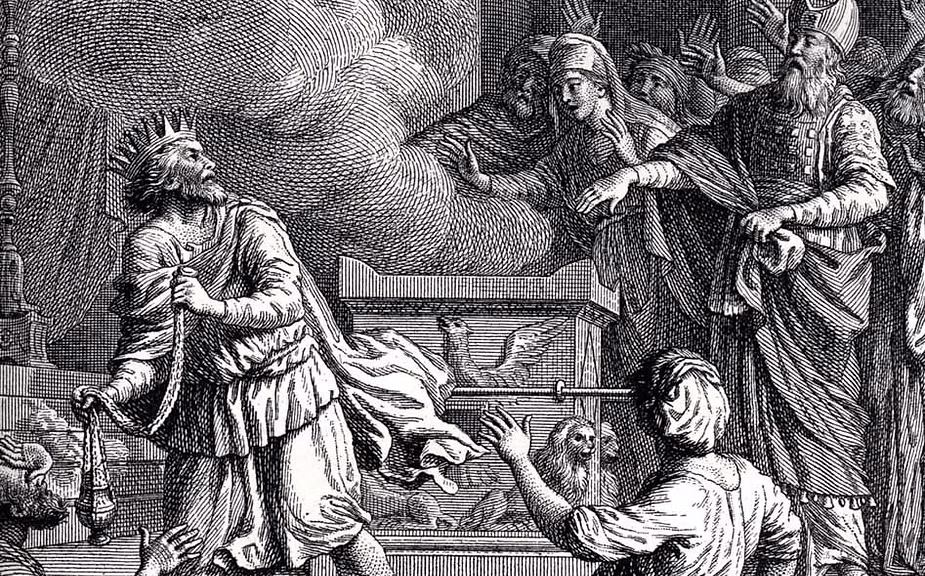
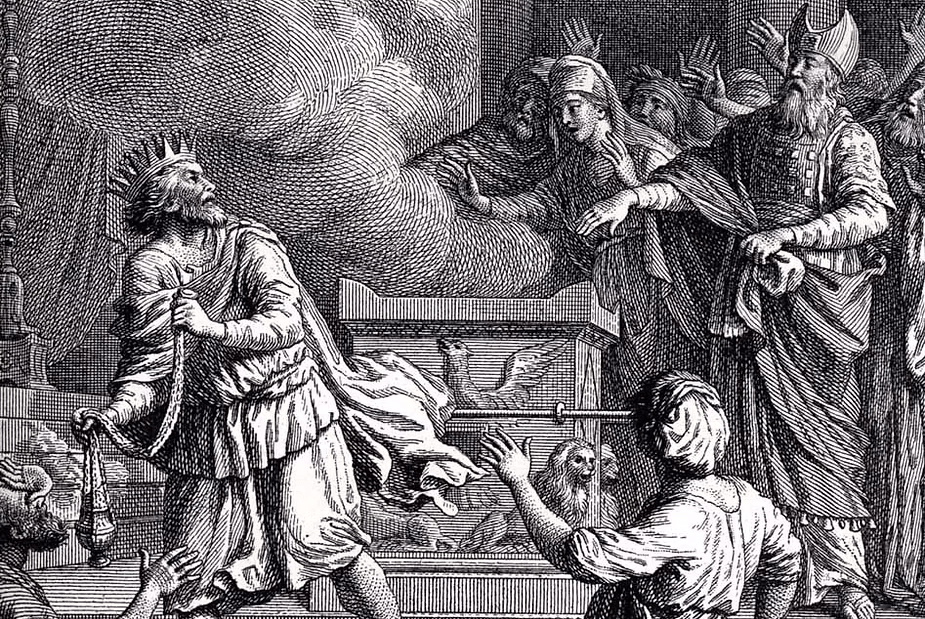
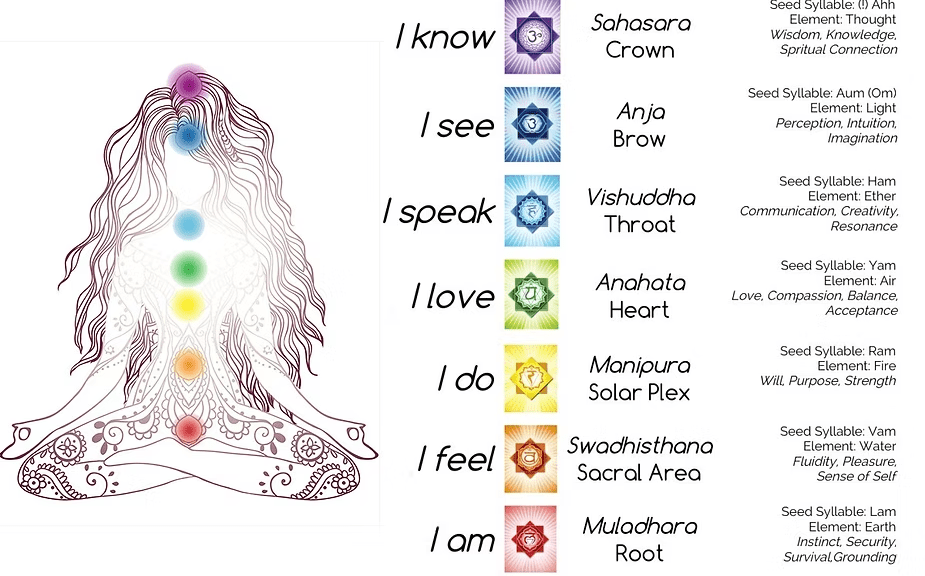
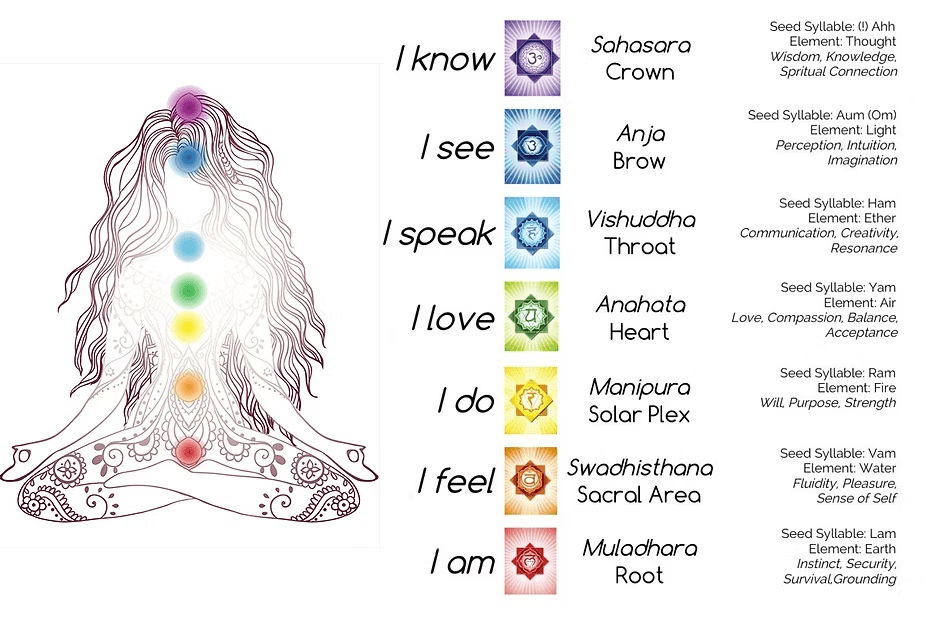







 Explaining the Readings