Mark 10:2-16 – Letting no man tear one’s soul asunder

Some Pharisees came, and to test Jesus they asked, “Is it lawful for a man to divorce his wife?” He answered them, “What did Moses command you?” They said, “Moses allowed a man to write a certificate of dismissal and to divorce her.” But Jesus said to them, “Because of your hardness of heart he wrote this commandment for you. But from the beginning of creation, ‘God made them male and female.’ ‘For this reason a man shall leave his father and mother and be joined to his wife, and the two shall become one flesh.’ So they are no longer two, but one flesh. Therefore what God has joined together, let no one separate.”

Then in the house the disciples asked him again about this matter. He said to them, “Whoever divorces his wife and marries another commits adultery against her; and if she divorces her husband and marries another, she commits adultery.”

People were bringing little children to him in order that he might touch them; and the disciples spoke sternly to them. But when Jesus saw this, he was indignant and said to them, “Let the little children come to me; do not stop them; for it is to such as these that the kingdom of God belongs. Truly I tell you, whoever does not receive the kingdom of God as a little child will never enter it.” And he took them up in his arms, laid his hands on them, and blessed them.

——————–

This is the Gospel selection that will be read aloud by a priest on the nineteenth Sunday after Pentecost [Proper 22], Year B, according to the lectionary for the Episcopal Church. It will follow one of two pairs of Old Testament and Psalm readings, either Track 1 or Track 2, depending on the individual church’s path for Year B. Track 1 will feature a reading from Job, where Satan was allowed by Yahweh to test Job’s faith. Psalm 26 sings, “As for me, I will live with integrity; redeem me, Yahweh, and have pity on me.” Track 2 features a reading from Genesis 2, when Yahweh made Adam’s opposite companion, Eve. Psalm 8 then sings, “You have made him but little lower than the angels; you adorn him with glory and honor.” The Epistle from Hebrews will then be read, where Paul wrote, “When he had made purification for sins, he sat down at the right hand of the Majesty on high, having become as much superior to angels as the name he has inherited is more excellent than theirs.”

I wrote about this reading the last time it came up in the lectionary cycle (2018) and posted those views on my website back then. That commentary is available to be read on this website; and, it can be found by searching this site. That article is quite deep with reflections and background that deal with the issues of marriage and having children. I stand firmly behind my opinions expressed then; and, I invite all readers to read those observations and compare them to those I will add here soon. As always, I welcome comments, questions, suggestions and corrections via the website contact form or signup and comment on the blog article as a regular visitor. Now, I will address some views that take this reading in the whole-view of the other readings presented with it.

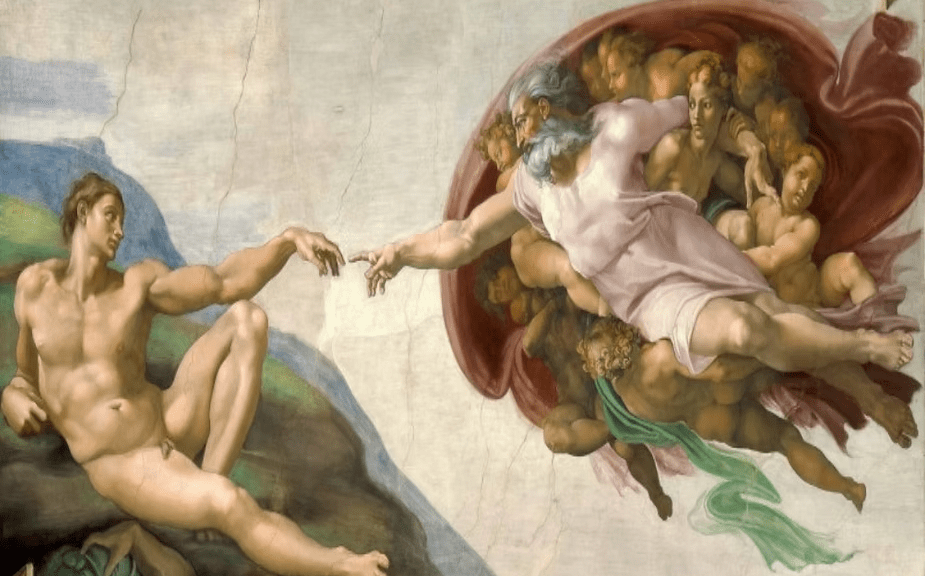
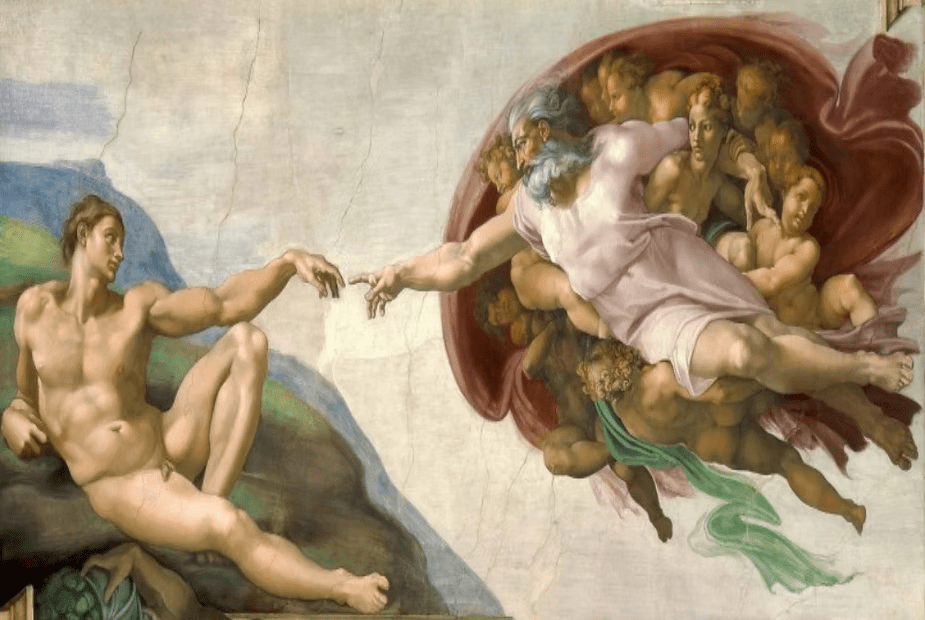
Jesus quoted from Genesis in his response to the question on divorce, presented to him by “some Pharisees.” When he said, “God made them male and female,” this comes from the day six, where the Hebrew translates as “in the image elohim it created with him, male and female it created them.” In the English translations that take “elohim” [meaning “gods”] and have it state “God” [thirty-two times “elohim” is translated as “God” in Genesis 1], means examination of Jesus saying “God” [in Greek] needs to take place.

What is found in the Greek of Mark is this: “arches ktiseōs , Arsen kai thēly epoiēsen autous”. In that, there is no capitalized use of “Theos,” meaning “God.” What is written that Jesus said is this: “beginning of creation , Male kai female it made them”. In that, the Greek word “epoiēsen” is written in the third-person [he, she, it] aorist [past] active indicative [speaking of the past in the present], meaning “it made.” One must also take note that “Male” is capitalized, which gives it a divine level of meaning, which can be seen as a statement about “Adam,” which was the divine “Male” first made by “Yahweh elohim.” (Genesis 2) It is also important to read this as a sexual statement (“Male”), rather than a statement of mankind or man. The presence of the word “kai” marks importance to follow, such that “female” is a statement that reproduction demanded a sexual counterpart to “Male,” in order for generation to take place. By quoting Genesis 1, Jesus was saying marriage was an intended union of a male and a female, for a species to grow. However, by making divine importance be places on “Male,” as Adam, Jesus did not quote Genesis 2, but spoke of the focus that comes from the reading that accompanies this reading in Mark, from Genesis 2.

It is in Genesis 2:24 that Jesus quoted, “For this reason a man shall leave his father and mother and be joined to his wife, and the two shall become one flesh.” In this translation, the confusion comes from “gynaika” being translate solely as “wife.” The word also means “a woman” (Strong’s Definition) or “my lady.” (Strong’s Usage) In the Hebrew of Genesis 2:24 is written “bə·’iš·tōw” [transliterated], which is rooted in “ishshah,” meaning “woman, wife, female.” Because this verse tells of Adam having been presented the baby that is customarily named “Eve,” to assume Adam knew what a “wife” was is poor judgment. The words of Adam, repeated by Jesus, are the truth coming from a child’s mind that expressed joy that he [the “Male” of Yahweh and Earth, “father and mother”] now had another human being as a playmate [previously he only had animals to play with], and that playmate [more like a twin sibling] was a “female.” Seeing that intent behind the words spoken by Adam, that makes it possible to understand this is not a plan of Adam’s for making babies [the sole purpose of a “wife”].

In the mind of Adam [I surmise his brain was as developed as a ten-year old boy], he was happy that he had another of the same species. As such, he did not name Eve, he said now “male” has a “female” [from “ish” comes “ishshah”]. Because Adam had not come from human parents, his “father” was “Yahweh” and his “mother” was the “elohim” that was Mother Earth, he was not thinking like ordinary human boys think. Thus, in the mind of a ten-year old boy, he was celebrating a “Yahweh elohim” [a divine soul in a body of flesh] that was not only “Male” [him, Adam], but also one that was “female” [the one we love to call Eve]. As such, Jesus was not quoting Genesis 1 and Genesis 2 as examples of what Moses said about human marriage, but what Moses was told by Yahweh to write down as an example of divine marriage that should take place between a soul and Yahweh, in a body of flesh.

When Jesus stated, “What God has joined together, let no one separate” [using the capitalized Greek word “Theos”], this is speaking of divine marriage. In the aspect where a man and woman marry and become husband and wife, then father and mother, they can never do more than get real close and feel as one flesh. A man and a woman will always remain that. The two are capable of reproduction because of possessing bodies of flesh that have opposite reproductive organ; but still, all a man can do is leave a sperm deposit within a woman’s vagina.

Everything that happens beyond that deposit is done by elohim, who were created by Yahweh’s design. Sperm swims as “gods.” An egg rejects all but one particular sperm as one of the “egg gods” inside a woman’s body of flesh. The splicing of DNA, the RNA-transfer, the re-splicing together are done by “elohim,” guided by the hand of Yahweh. The entire growth of the fetus in the womb is done by “elohim,” guided by the hand of Yahweh. Thus, once Yahweh has made a baby, from the parts of a father and a mother, to abort that baby or kill it unnaturally is sinful; but that was still not the point made by Jesus.

In the argument presented by the trickster Pharisees, their question about divorce should be seen as motivated by a reading from the Torah or a Psalm that dealt with marriage. According to the Wikipedia article “Jewish views on marriage,” they state: “In traditional Judaism, marriage is viewed as a contractual bond commanded by God in which a man and a woman come together to create a relationship in which God is directly involved.” In Deuteronomy 24:1 is stated the aspect of a divorce. This was what Jesus referred to, but when he said, “Because of your hardness of heart he wrote this commandment for you,” that was a statement about what a “contractual bond commanded by God” means. Because the Pharisees were just pretending to be in a relationship with God, it was their hardened hearts that kept their souls from marrying Yahweh and being true Israelites.

Because Jesus told the Pharisees their souls [metaphor for “hearts”] were cold, that said they had no real love of Yahweh. To them, Yahweh was just the God who made them special, as chosen people. They had absolutely no concept that marriage [as Jews understood it, contractually … being lawyers] was possible in any way other than by physical pairings. To them, it could only be between Jewish males and females, with many marriages arranged and plenty of adultery about, due to arranged marriages not being sexually pleasing. When Jesus said, “What God has joined together, let no one separate,” his disciples heard that like the Pharisees, who walked away muttering, “Yeah, right. Tell that to Moses. He knew why it was necessary for a contract of marriage allowing for divorce.” The disciples [all married men with children] probably knew well the difficulties of having a non-pleasing wife, to whom one was forever stuck, because of children.

Once the Pharisees were gone and Jesus and his disciples were inside the house where they were staying, the disciples asked why Moses would be wrong about allowing divorce. Jesus then spoke of the human lusts of the flesh, where all sex outside of marriage to a wife – the mother of one’s children – is adultery. Animals might do similar things, as far as being promiscuous and non-committal, but they have no brains that think like human beings. Humans have the option of divorce, because Moses knew human beings were just animals by nature. This makes sin be unavoidable, unless one’s soul is married to Yahweh; and, that was the whole point of Moses taking Israelites [not Jacobites] out of Egypt.

When Jesus then said, “Let the little children come to me; do not stop them; for it is to such as these that the kingdom of God belongs,” this reflects back on Adam being the equivalent of a ten-year old boy [regardless of how many ‘years’ he had lived in a body of flesh in Eden] and Eve was just a newborn baby girl. Both were of the same species, so their chromosome count made it possible for them to mate, after the serpent got involved; but, at that time, they were both two “Yahweh elohim,” formed not merely by a soul joined with a body of flesh, but divine angels placed in the womb of Mother Earth. Those children had become the marriage of their souls to Jesus, as divine human beings.

The “kingdom of God” is a body of flesh, so that flesh becomes the temple of the soul, where Yahweh sits enthroned. Jesus is the High Priest of that temple. Jesus was one of the Yahweh elohim to whom Yahweh spoke, before Adam was born. Adam was Jesus. All who are Saints are the same.

As the Gospel selection to be read aloud on the nineteenth Sunday after Pentecost, when one’s own ministry for Yahweh should already be well underway, the lesson here is to marry Yahweh and become the little child that welcomes being in the name of Jesus, as a child welcomes being in the arms of its Father. One has to know that state of being, in order to present it to others; so, they too will become that child in heart and soul.


Psalm 26 – Being governed by Yahweh so one walks with integrity

1 Give judgment for me, Yahweh,

for I have lived with integrity; *

I have trusted in Yahweh and have not faltered.

2 Test me, Yahweh, and try me; *

examine my heart and my mind.

3 For your love is before my eyes; *

I have walked faithfully with you.

4 I have not sat with the worthless, *

nor do I consort with the deceitful.

5 I have hated the company of evildoers; *

I will not sit down with the wicked.

6 I will wash my hands in innocence, Yahweh, *

that I may go in procession round your altar,

7 Singing aloud a song of thanksgiving *

and recounting all your wonderful deeds.

8 Yahweh, I love the house in which you dwell *

and the place where your glory abides.

9 Do not sweep me away with sinners, *

nor my life with those who thirst for blood,

10 Whose hands are full of evil plots, *

and their right hand full of bribes.

11 As for me, I will live with integrity; *

redeem me, XXXXX and have pity on me.

12 My foot stands on level ground; *

in the full assembly I will bless Yahweh.

——————–

This is the companion Psalm to be read aloud in unison or sung by a cantor following the reading of Job on the nineteenth Sunday after Pentecost [Proper 22], Year B, according to the lectionary for the Episcopal Church. In Job is written: “[Job] was blameless and upright, one who feared God and turned away from evil.” This pairing will precede a reading from Hebrews, where Paul wrote, “God did not subject the coming world, about which we are speaking, to angels. But someone has testified somewhere … You have made them for a little while lower than the angels; you have crowned them with glory and honor, subjecting all things under their feet.” All will accompany a reading from Mark’s Gospel, where is written: “[The Pharisees] said, “Moses allowed a man to write a certificate of dismissal and to divorce her.” But Jesus said to them, “Because of your hardness of heart he wrote this commandment for you.”

You will note that in six places I have restored the text written, as “Yahweh,” in bold type. In each of those places the English translation has erroneously shown “Lord.” That was not written. Additionally, in verse eleven you will find my insertion of “XXXXX.” This is to show my erasure of the NRSV translation [there may be other translators also, I don’t know] of “Lord,” where nothing was written in that regard, meaning it is a fabrication of Holy text. Because of these errors making everything presented be a paraphrase of what was actually written, with paraphrases having a tendency to mold themselves to personal, hidden agendas, I will not analyze the verses as translated. Instead, I will offer a literal translation into English and interpret from that.

Verse one literally says, “govern me Yahweh that I in my integrity have walked ; Yahweh I have trusted , not shall I waver .” In this, the Hebrew word “shaphat” begins this verse, meaning “to judge, govern.” This means David is placing immediate focus on his submission of self-will to that of Yahweh’s. For Yahweh to “govern” (or “judge”) David, Yahweh has to be married to David’s soul. This makes the theme statement for this song be relative to all souls, like David’s, who allow divine possession to guide one’s actions.

The Hebrew word “ani” means “I.” This must be seen as the equivalent of the Greek “ego,” which is a statement of “self.” When David stated “that I in my integrity have walked” (with “my” being a statement about the possession of self), the use of “I” and “my” says Yahweh has taken the role of “I” from David, although David gets credit for that guidance being perceived by others as his “integrity.” The Hebrew word “tom” means “completeness, integrity, also part of the high priest’s breastplate,” and the same word was used in Job 2:9, when Job’s wife asked Job why he still held onto his “integrity” [from “tom”]. This is then why this psalm is linked to the Job reading; and, “integrity” becomes a statement about one’s self being possessed by Yahweh, with that soul not wavering from that guidance.

When David used the first person form of “batach” in saying, “I have trusted,” this is the ego of David having faith in the presence of Yahweh leading his actions. It is the personal experience (“I”) that knows Yahweh through divine possession (“have trust”), not someone telling him about this, as an influence to believe. It is only from that personal possession experience that “trust” becomes the cornerstone of faith, which does not ‘waver.” Thus, David is establishing a song of praise that states his steadfast love of Yahweh, who is one with his soul.

Verse two then says, “try me Yahweh and test me , [refine] (my inward being) and my heart .” In this, “try me” and “test me” must be seen as one who understands metallurgical testing, where the combination of Yahweh with a soul is like the addition of carbon to iron, mixed with other metals. These metals are smelted with fire and pounded with hammers, to mix the elements together into a strong alloy, before quenched in oil or water, to prove the metal to be hard and strong.

In the second half of this verse, “refine” [“tsaraph”] becomes a similar heating process, but because this word appears in brackets, it should be seen as a statement that is non-physical. The brackets [not shown in translation] are an indication of the soul’s “refinement,” as opposed to the body being fused with a new Spirit. Then, following that soul’s testing, David wrote in parentheses “kilyah,” which literally means “kidney,” but reflects “inward parts” or “inmost being.” That should be seen as the soul. Again, the surrounding of this word with marks [brackets and parenthesis] show this not to be physical parts, but the soul of the body, now being alongside a Spirit of Yahweh. No longer just a soul in a body of flesh, Yahweh has joined as an overriding purifier. This becomes a test of purity, where “my heart” is a statement of one’s “soul” or “inner mind, mind, will” being made refined by the presence of Yahweh testing.

Verse three then says, “for goodness before my eyes ; and I have walked , in your truth .” This is David singing about his wearing the face of Yahweh, so the “goodness” of Yahweh becomes the face through which David sees. By having that divine face glowing upon his face [the sign of a true Saint – artistically depicted as a halo], the “I” of David has walked righteously. That path of righteousness is based on being shown the “truth” of the world, known by Yahweh. It also is the “truth” of the meaning of Scripture, which otherwise is overlooked and unknown.

Verse four then says, “not I have dwelt with men of emptiness ; and with pretenders , nor will I go in .” This is David singing about the company he keeps, as a wife of Yahweh. Those of his family, as well as those of his nation of people, all are likewise filled with the Spirit of Yahweh, from also having married their souls to Him. In David’s Israel, the name of the nation was a true reflection that all within its boundaries were truly “Those Who Retained God.” There were no ”pretenders,” where the Hebrew word “alam” means “to conceal,” where the meaning is to hide the fact that one’s soul has been retained for selfish purposes. David’s Israel found those out and converted them to welcome divine marriage or be banished. When David sang “I will not go in,” this says there was nothing offered by the Gentile peoples surrounding Israel that lured him to turn away from Yahweh, to seek their ways.

Verse five then sings, “I have hated the congregation of evildoers ; and with the criminal not will remain .” In this verse, David is saying that Israel still had those who broke the laws of Moses and promoted lives that were not righteous. Saul was an example of that. Samuel had sons who did not follow in his ways. So, there were pockets of people calling themselves Israelites, but who were the ones retaining their own souls, while doing lip-service to Yahweh and Moses. David is saying that one whose soul is married to Yahweh will find disgust in those who do evil works; and, he will not add any support to those who think of ways to sidestep Mosaic Law.

Verse six then says, “I will wash in innocence my feet ; so I will walk about your altar Yahweh .” Here, the Hebrew word “kaph” means, “hollow or flat of the hand, palm, sole (of the foot), a pan,” such that the standard translation would be “hands.” In the Tabernacle, according to the decrees of Exodus that a “bronze laver” was constructed for the priests of the Tabernacle to wash both their hands and their feet, before going to the altar of sacrifice. [Exodus 30:17-21] As feet are dirtier than hands, from walking in sandals in dusty ground, it is more important to see “feet” as that area [the sole or instep] least likely to be clean. The aspect of Jesus washing feet needs to be seen here. Each body in submission to Yahweh is a sacrifice upon His altar. Thus, the Hebrew word “sabab,” which means “to turn about, go around, surround,” is viable in translation as “will walk about.” As for “innocence,” instead of water to bathe in, the outpouring of Yahweh’s Spirit is the “innocence” that cleans a soul.

Verse seven then sings, “that I may hear of the sound of thanksgiving ; and relate all your wonders .” This is David singing that all who are the wives of Yahweh are not silent about His presence within them. There is the singing of praises for all He does. It is not just one guy telling everyone how wonderful it is, when no one else could hear that as anything more than selfish bragging. This sings of the widespread glory given Yahweh from His faithful.

Verse eight then says, “Yahweh I have loved the dwelling of your house ; and the standing place , tabernacle of your gloriousness .” In this, the first half of the verse sings about Yahweh “dwelling” within one’s being, such that David was the “house” in which Yahweh lived and gave him true life [eternal life]. The second half is then relating to the Tabernacle, where the Ark and the Covenant was where Yahweh rested between the Cherubim.

Verse nine then sings, “not do gather with the sinners my soul , not with men bloodthirsty for my life .” This is David singing about his knowing that there were enemies that wanted to kill him. This verse can be seen as the truth of Jesus saying to “love your enemies and pray for those who persecute you,” because “[Yahweh] causes his sun to rise on the evil and the good, and sends rain on the righteous and the unrighteous.” The way to love your enemy is to leave them alone to hate you, while you pray Yahweh will lead them to righteousness, without your presence igniting hatred within them. Faith in Yahweh working miracles without one’s presence needed elsewhere, which means sometimes it is better to stay in a state of love oneself, while others find the same.

Verse ten then says, “who in one’s hands a wicked scheme ; and whose right hand is full of bribes .” In this, the mention of both “hands” says one who plots evil against others has put his or her own soul in the “hands of wickedness.” This says “one’s hands are full,” which does not leave any room for anything other than evil doings. Because the “right hand” [“yamin”] is typically a statement of that which leads a soul, when it is holding “bribes” it has been paid by Satan in material gains, none of which will have any lasting value. Rather than be at the “right hand” of Yahweh, as His servant, with Him leading one’s soul, one’s soul has been sold for thirty pieces of silver.

Verse eleven is where the non-existent “Lord” was removed above. It literally sings, “but I in my integrity will walk , ransom me and show favor to me .” Following a verse that says the wicked will waste their time planning to get rich and powerful, at the expense of others, David is now saying his soul will not be distracted by such temporary profits. He will reject bribes because Yahweh will maintain his “integrity” and committed state of divine being. When the Hebrew word “padah is read as “ransom me,” rather than “redeem me,” David is saying he sacrifices himself to be the “bribe” that draws others to Yahweh. David is willing to be used by Yahweh, trusting that whatever happens to his body of flesh, his soul will be promised “favor.”

Verse twelve then says, “my foot takes a stance in uprightness ; in the assemblies I will kneel to Yahweh .” This sings of the stability that comes from having the “integrity” of David and the patience of Job in one’s soul, married to Yahweh’s Spirit. All who share this inner presence, as an “assembly” of His wives who are all known truly as Israelites, the kneeling to Yahweh is a restating of the wedding vows. All who acknowledge the Covenant as their contract to be the people of Yahweh, they must all “kneel” in submission of their souls to His presence, in order to live up to that agreement.

As the accompanying Psalm to the Job reading, to be read on the nineteenth Sunday after Pentecost, when one’s own personal ministry for Yahweh should already be well underway, the lesson here is stated in the theme of verse one: Let Yahweh govern your life, so you walk with the integrity of Job. Yahweh boasted to Satan how faithful Job was. It should be one’s ministry to be equally committed to walking with true faith that is unwavering. Only with that commitment can others see Yahweh on your face and feel His presence.

Psalm 8 – A little lower than angels

1 [1a] Yahweh adonenu, *

how exalted is your Name in all the world!

2 [2a] Out of the mouths of infants and children *

[1b] your majesty is praised above the heavens.

3 [2b] You have set up a stronghold against your adversaries, *

to quell the enemy and the avenger.

4 [3] When I consider your heavens, the work of your fingers, *

the moon and the stars you have set in their courses,

5 [4] What is man that you should be mindful of him? *

the son of man that you should seek him out?

6 [5] You have made him but little lower than the angels; *

you adorn him with glory and honor;

7 [6] You give him mastery over the works of your hands; *

you put all things under his feet:

8 [7] All sheep and oxen, *

even the wild beasts of the field,

9 [8] The birds of the air, the fish of the sea, *

and whatsoever walks in the paths of the sea.

10 [9] Yahweh adonenu, *

how exalted is your Name in all the world!

——————–

This is the accompanying Psalm for the Genesis 2 reading about Adam being handed Eve to name, which will be read aloud in unison or sung by a cantor on the nineteenth Sunday after Pentecost [Proper 22], Year B, according to the lectionary for the Episcopal Church. This pair will precede the Epistle reading from Hebrews, where Paul wrote, “Now in subjecting all things to them, God left nothing outside their control. As it is, we do not yet see everything in subjection to them, but we do see Jesus, who for a little while was made lower than the angels, now crowned with glory and honor because of the suffering of death, so that by the grace of God he might taste death for everyone.” All will accompany the Gospel reding from Mark, where Jesus said, “Let the little children come to me; do not stop them; for it is to such as these that the kingdom of God belongs. Truly I tell you, whoever does not receive the kingdom of God as a little child will never enter it.”

In the above translation, you will notice that I have renumbered the verses, so the reality of nine is shown [not ten]. The NRSV shows the proper numbering; but the Episcopal Church has found some unexplainable reason to alter divine Scripture, changing nine verses into ten. They take a portion of verse one and slip it into verse two, changing the rest of verse two, while then changing the remainder of verse two into verse three. They add the extra verse in the process. In addition to that, the first and last verses begin with “Yahweh adonenu,” which translates as “Yahweh of lords.” The NRSV translates this as “O Lord, our Sovereign,” while the Episcopal Church shows, “O Lord our Governor.” Because both are errors of translation, I have restored the written text.

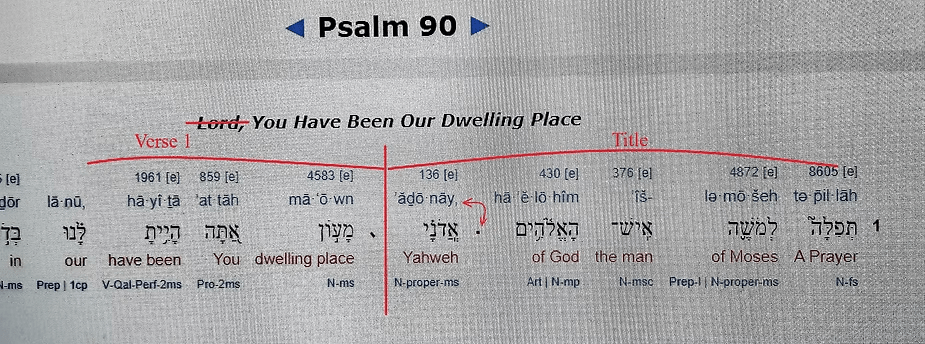
My main resource for the translations of the Hebrew is the BibleHub Interlinear website. That site assigns names for Psalms and also adds headers for segments of other texts. None of these are part of the actual text, but they are taken from key words in the text. Other translation versions do the same, while others add nothing. The ‘title’ for this Psalm is “How Majestic is Your Name!” The NRSV applies one that says, “Divine Majesty and Human Dignity,” with others getting further away from what is written by David, as summations of the content. I feel the BibleHub Interlinear ‘title’ is most appropriate, simply because it includes the key term used in verse one, which is “name.” It must be understood that the only way a “name” has any greater power or glory, as far as Yahweh is concerned, is when His name is part of one’s being. That becomes a statement of marriage, when a Husband’s “name” is taken by the wife. That is when all “divine majesty” can be known.

In verse one, as well as its repetition as verse nine, the beginning words written by David are “Yahweh adonenu,” which literally translates as “Yahweh lords of us.” The plural form of “adon” [a singular “lord,” which is not written] is the possessive case, as “our lords.” That can be restated as “lords ours” or “lords of us,” as long as the plural number of “lords” is maintained. This specific form of “adon” [“adonenu“] is found written seven times in the Old Testament, with two of those times in this Psalm. All English translations show it in the singular, as “our lord,” which is not the truth of the word written. The truth is “adonay” [plural “lords”] is much like “elohim” [plural “gods”], in the sense that both words are referring to divine possession [“our” or “of us”]. The divine is “Yahweh.” Thus, “Yahweh adonenu” is a statement about David being one of the hands of Yahweh on the earth, whose souls are governed by His Spirit, making them take positions of importance as guides over other souls that need to be led to marriage to Yahweh. This whole song is praising that presence in David, as he was one of those experiencing “Yahweh lords of us.”

Verse one then literally says, “Yahweh lords of us , how majestic your name in all the land ; who have been given your majesty , upon the heavens .” In this, “how majestic your name” means the definition of “majestic” [from “addir”] must be realized as: “having or showing impressive beauty or dignity.” (Google search, Oxford Languages) To grasp that “Yahweh” is the “name” of “us lords” means “us lords” then display (“showing”), via Yahweh possessing many (“having”), “in the land” that is called Israel. Still, “earth” can be the translation of “eretz,” with that a statement of “matter” or “substance,” from which human flesh is made. That says the “majesty” that is Yahweh is then the “majesty” displayed in human form … on “earth.” This presence is through divine marriage, between souls and Yahweh’s Spirit.

This is then stated to be a “gift” [from “nathan”], as “us lords” “have been given” the “majesty” of Yahweh. When the word “shamayim” is translated as a physical entity – as “sky” or “heavens” – it loses the ability to be clearly seen as a statement of the spiritual. This last segment of verse one must be read as a statement about how “the majesty has been given,” as it is placed “upon the souls.” In “‘al-haš·šā·ma·yim” the preposition attachment (“al-“) should be read as “upon,” rather than “above” or “over,” although those additions state an elevated state of being as becoming part of the “majesty” felt by a soul. A “soul” must be realized as the “heavens” within a dead body of flesh, which animates that flesh. Thus, the “gift” is an elevation of the “soul” to a “heavenly” state of being, within the “earth” of one’s flesh.

Because David sang this in verse one and then repeated it in the last verse, it is imperative to realize that “Yahweh adonenu” is more than some worthless statement that says, “Lord God.” That is much ado about nothing, because it means nothing of value. If begs the question, “”Lord of what, who, how many, etc., etc.?” By seeing “adonenu” as a statement of all who are divinely possessed by Yahweh, sent into ministry in His “name,” one can realize the truth of all the verses in between that theme.

Verse two then literally sings, “out of the mouth of children and sucklers you have established strength intent your binds ; you may cease enemy , and the avenger .” Here, the use of “children,” commonly translated as “babes,” must be seen purely as metaphor, where the focus is not on infants, but on newborns of faith. When verse one ended saying “upon the soul,” that “heavenly” presence within cannot be contained. Now it comes “out of the mouth,” which means the soul is led to speak as the presence of Yahweh on “earth,” which is the power of “lords” in His “name.” As those reborn anew, all that is said comes from Yahweh, just as Jesus regularly said, “I speak what the Father says.” Thus, souls “suckle” on that source of knowledge, as the source of their words.

It is here that the Hebrew verbiage is twisted to make it appear that “enemies” are why Yahweh possesses His “children.” That is not what is written, as “you have established strength intent your binds” becomes reflective of swaddling clothes wrapped tightly around a newborn. It is then the “intent” [from “le-maan”] for a newborn Saint to have no freedom to move beyond God’s Will. That becomes the “strength” possessed by a “lord” like David. Rather than be possessed because enemies threaten, the “intent” is then stated to “cease” all who would go against Yahweh, where unmarried souls become their own worst “enemy.” Rebirth in the Spirit then stops that self-abuse. By being divinely possessed, one has “avenged” his or her own sins, through the redemption of Yahweh.

Verse three then sings literally, “when I see your divinity the deeds of your fingers ; the moon and the stars , which you have set firm .” In this, the Hebrew word “raah” [transliterated as “’er·’eh,” – “I see”] must be understood as being beyond a meaning of physical sight. The word reads as “understanding,” such that the ones who are Yahweh’s “lords” on earth are able to intuit the vastness of the “works” and “deeds” that Yahweh has commanded. To write “’eṣ·bə·‘ō·ṯe·ḵā,” saying “of your finger[s],” the focus placed on a “finger,” rather than a whole hand, says that the acts of Yahweh demand little effort on His part. Therefore, each of the “lords” in His “name” are like “fingers” touching the earth with His presence.

To then make a comparison that one like David was as equal a creation by Yahweh, as were His commanding “the moon and the stars” to be “set firm” in place, says the “intent” of verse two is no different than the “intent” in stellar formations. The magnitude of a “moon” and all the “stars” become a reflection of the axiom ‘as above, so below,’ so all Yahweh adonenu” are equally as purposeful. Divine possession does not happen randomly, as scientists would propose, as if Creation were haphazardly occurring laws of physics, with no controls whatsoever. David is saying everything is “appointed” and has been “firmly established.”

Verse four then literally says in English, “what is mankind that you are mindful of it ; the son of man , that you appoint him .” Here, David has come down from outer space and placed focus on the presence of life on the planet, that of human brains, called “mankind.” It rhetorically asks, “what is mankind?” The answer is “mankind [from “enosh”] is eternal souls imprisoned [some would say freed] in bodies of flesh that are made of dead matter. David questions why souls in human bodies of flesh are any more than souls in animal bodies of flesh. All flesh will die, releasing their souls.

When David then sang, “the son of man,” where “man” in Hebrew is now “adam” [a change from “enosh”], the focus is explaining that Yahweh is “mindful of” humanity because it has been given the gift of a brain that creates a mind that will act in ways that other animals do not. The souls of animals are only able to act in natural ways, meaning they do not devise ways that hurt their own souls [the “enemy” that needs ceasing]. Therefore, Yahweh was “mindful” of the ability of “mankind” to sin, creating the need for Yahweh to forge the first divinely possessed “man” [“adam“], who would then be “appointed” to lead sinful “man” [“enosh”] away from its mind-driven lust with death.

Verse five then sings literally, “you have made him lacking a little than the angels ; and with glory and honor you have crowned him .” Here, it is imperative to realize that David wrote [transliterated] “mê·’ĕ·lō·hîm,” where “elohim” becomes a comparison to the “adonenu.” The tendency of translators of Hebrew into English is to see “elohim” and twist and turn it into “God.” Unfortunately (for them), they cannot do that here, as they would then be forced to translate this verse as, “you have made [man] lacking a little than God.” The reality is the truth says Yahweh [the One God] has “lowered” Himself into “man,” making “man” become an “elohim” or one of the “adonenu.” Thus, it is the presence of Yahweh within Adam [divine “man,” like divine David] that became [unlike “man” of “enosh”] his “crown of glory and honor.”

Look at this like God is the bus driver, dropping Adam-angel off at earth, telling him, “Remember I’ll be back when school lets out.” Meanwhile, the bus is still full of “elohim.”

This verse and the verse to follow are quoted by Paul in his letter to the Hebrews. This Psalm is a companion to the Genesis 2 reading, which tells of the creation of Eve from Adam. In that Genesis reading, the truth stated is that both Adam and Eve were “mankind” from “enosh” that had been made into “sons of man” [male and female], which were “Yahweh elohim.” The elohim are “angels.” The “Yahweh elohim” are still angels, but those who support Yahweh. When “man” [as “adam”] is a “Yahweh elohim” [as were Adam and Eve] they were angels within bodies of flesh.

Realizing that, verse six then sings in English, “you have made him to have rule over the works of your hands ; all you have put under his feet .” This says that a divine Adam, or all “sons of man,” have been given the power of Yahweh incarnate into dead matter, placed on earth. When David then said, “all you have put under his feet,” that says divine man – all who are souls married to Yahweh – are angles, therefore they are on a higher level of consciousness than are mere mortals. This in no way implies divine “adonenu” will walk all over mere mortals. They simply are sent by Yahweh to show mankind [“enosh”] that there is a higher way of living: uprightness and righteousness.

Verse seven then sings in English, “sheep and oxen all ; moreover , beasts of the earth .” Here, the metaphor of “sheep” must be seen as those “under the feet” of divine “man,” who become the shepherds of the flocks. The Hebrew word translated as “oxen” [from “eleph”] can mean “herd, such that the first segment of words states, “sheep and herd.” For that to lead to a one-word statement that says “even, moreover, also” [“from “gam”], this says the shepherd and the sheep are the same: man [but one is “adam” and the flock is “enosh”]. Thus, all are “beasts of the world,” where the Hebrew word “sadeh” means “field,” implying “agriculture.” Thus, the purpose of mankind is to do the works of “beasts” that will bring forth a yield of good fruits for those labors.

Verse eight then sings, “the birds of heaven and the fish of the sea , that pass over the way of the sea .” In this metaphor, “the birds of heaven” are not flying, feathered creatures, but angels in the name of Yahweh. The metaphor of the “fish of the sea” is why Jesus told his disciples, “I will make you fishers of men.” This makes the “fish” be those willing to follow a divine leader, such as Moses, David, and Jesus. That then lead to the word “abar,” which means “to pass over,” which is the defeat of mortal death, through a soul’s commitment to Yahweh, becoming His “elohim.” That becomes the “path” the Israelites took, following Moses, where “the sea” was parted so they could cross.

Verse nine is then a repeat of verse one, which states that those who “pass over” will become the new “Yahweh adonenu.” It means taking on the “name” of Yahweh, as His spiritual wife. It is that commitment that purifies the soul of all past sins and forever leads one to do His Will.

As the companion Psalm to be sung aloud on the nineteenth Sunday after Pentecost, when one’s own personal ministry for Yahweh should already be well underway, the lesson here is to be reborn in the name of Yahweh. To be reborn in that name, one needs to learn the name and stop referring to Yahweh as a “Lord.” It is one’s soul’s responsibility to realize Yahweh “lords” the world through His Saints. Those are souls who divinely marry His Spirit and suckle His knowledge, so the truth comes out of their mouths. One does not come to this state of being by trying to memorize the library at the seminary where diplomas mean easy-money jobs in the religion industry. One must become a true shepherd of a flock; and, that means hard work in the name of Yahweh.

Job 23:1-9, 16-17 – Eli, Eli, lema sabachthani?

[1] Job said:

[2] “Today also my complaint is bitter;

his hand is heavy despite my groaning.

[3] Oh, that I knew where I might find him,

that I might come even to his dwelling!

[4] I would lay my case before him,

and fill my mouth with arguments.

[5] I would learn what he would answer me,

and understand what he would say to me.

[6] Would he contend with me in the greatness of his power?

No; but he would give heed to me.

[7] There an upright person could reason with him,

and I should be acquitted forever by my judge.

[8] “If I go forward, he is not there;

or backward, I cannot perceive him;

[9] on the left he hides, and I cannot behold him;

I turn to the right, but I cannot see him.

[16] we-el has made my heart faint;

the Almighty has terrified me;

[17] If only I could vanish in darkness,

and thick darkness would cover my face!”

——————–

This is the Track 1 Old Testament reading choice to be read aloud on the twentieth Sunday after Pentecost [Proper 23], Year B, according to the lectionary for the Episcopal Church. If a church is on the Track 1 path in Year B, it will be companioned with fifteen verses from Psalm 22, one of which sings, “He trusted in Yahweh; let him deliver him; let him rescue him, if he delights in him.” That pair of readings will precede one from Hebrews, where Paul wrote, “The word of God is living and active, sharper than any two-edged sword, piercing until it divides soul from spirit, joints from marrow; it is able to judge the thoughts and intentions of the heart.” All will accompany the Gospel selection from Mark, where we read, “A man ran up and knelt before [Jesus], and asked him, “Good Teacher, what must I do to inherit eternal life?” Jesus said to him, “Why do you call me good? No one is good but God alone.”

You will note that I have numbered the verses, which I see as important, simply because there is a skip between verse nine and verse sixteen. There are thirty verses in Job’s twenty-third chapter; so, this reading does not attempt to address everything said by Job, in his response to a visitor [Eliphaz]. Also, in verse sixteen is the one reference to “God,” according to the NRSV translation. I have restored the Hebrew text to ”we-el,” which translates as “for god,” in the lower case. I will explain more about that later.

I wrote my observations about this selected reading the last time it came up in the lectionary cycle (2018). I published those views on my website at that time. That commentary is available now on this website, which can be read by searching this site. I did a good job dealing with the background materials and the translations of the Hebrew, relative to the response made by Job. I stand behind what I wrote then; so, I will not attempt to restate that already said. I welcome all readers to read that article and then compare those findings to what I will soon add here now. I have recently had new insight about Job, which I stated in my analysis of the past Sunday’s optional reading from Job 1 & 2, which I will address in this much later chapter’s soliloquy. I will also add insight that connects this reading to the other readings for this Sunday.

Based on what was read last week, where Satan appeared before Yahweh (as one of the “sons the elohim”), that had to be prior to the war of the angels and Satan [call him Lucifer or Azazel]. When the association of Job is made to Adam, such that “adam” is Hebrew for “man” and Job is believed to mean “Returning,” neither are proper names. In that regard, “satan” in Hebrew means “adversary” or “accuser, withstand,” meaning “satan” is not truly a proper name, in the same sense that neither is “adam.” Still, based on Yahweh saying, “he is in your power; only spare his life” [literally, “he is in your hand; but soul is preserved”] says Satan was not only responsible for causing Job to have sores all over his skin. Satan had everything except death at his disposal, to use against Job.

In 2014 I published about Genesis 4, entitled The Cain & Abel Story.” I saw the Hebrew listing of names that descended from Cain as an unseen story that told of the creation of all religions that pretended to serve gods, of all kinds, giving the impression that there was One God in common with all others. I surmised that Cain and his sons [the sons of Cain, being all his descendants listed] beget all the false religions in the world. As such, the ‘friends’ who came to visit Job to offer him advice were demonically possessed by elohim, which Yahweh said Job feared and turned away from. This now is seen to be where Elipaz has come from; as Satan not only caused Job’s skin to bring pain and suffering, he also came like human ‘serpents,’ whispering ideas designed to defeat Job’s “integrity.”

In chapter 22, which the NRSV entitles “Eliphaz Speaks: Job’s Wickedness Is Great,” Eliphaz made five Hebrew references that state “god” in the singular, but none worthy of capitalization. Had he said, “Yahweh,” that would be worthy of capitalization. By his making references to an “el” [as “hal-el, ‘el, and elowah” – all in the singular], this is Eliphaz attempting to have Job be influenced to reduce himself from a “Yahweh elohim,” by shunning Yahweh. Satan appeared in the form of Eliphaz, which was a deception designed to trick Job.

In this regard, when one finds Job responding to “we-el,” he is not blaming Yahweh, but the “elohim” that had brought the skin disease upon him. By saying, “for god made weak my inner man, and the almighty terrifies me,” this attests to Yahweh telling Satan that Job “fears elohim and turns away from evil.” The “heart” or “inner man” [also “mind,” from “leb”] of Job was a Yahweh elohim, which meant he feared losing the presence of Yahweh from his being. Already being an “el” of Yahweh, Job was saying he knows his complaints and questions were being influenced by an “el” like Satan, who possesses the almighty strength to penetrate Yahweh’s protective Spirit.

In David’s Psalm 22, which is the companion song for this reading from Job, verse one sings classically, “My God, My God, why have your forsaken me!” Jesus cried that as he died on the cross, with Matthew not stating those words in Greek, but Aramaic. Matthew wrote that Jesus said, “Eli, Eli, lema sabachthani?” The Hebrew of David is [transliterated], “’ê·lî ’ê·lî lā·māh ‘ă·zaḇ·tā·nî,” from the roots “el, mah, and azab.” In the same way that Job did not blame Yahweh [he would have named Him specifically if he were doing so], Jesus was not blaming Yahweh, who was his Father. Jesus was quoting David, who also was not blaming Yahweh for pains and suffering, but his own inner man [“leb” or “heart”] that was an “elohim” of self-protection, which was not doing a whole lot of protecting when times are difficult. That verse speaks of the meaning of “el” used by Job.

The alternate Old Testament reading from Amos goes to the last days of the two kingdoms, Israel and Judah, when those leaders had been misled by those who serve evil elohim. Thus, his writing, “you that turn justice to wormwood, and bring righteousness to the ground!” was Yahweh speaking through him [as a Yahweh elohim] telling them they worshipped false gods [elohim]. Yahweh spoke through Amos, telling the King of Israel, “For I know how many are your transgressions, and how great are your sins—you who afflict the righteous, who take a bribe, and push aside the needy in the gate.” That says the “affliction of the righteous” is what evil elohim did to Job; so, that waywardness was nothing new to Yahweh.

In verse fifteen, Amos wrote of “Yahweh elohe-ṣə·ḇā·’ō·wṯ,” which told of “Yahweh’s host of gods,” which can be seen both as “angels” and “Yahweh elohim” in the flesh [like Amos, Job, Jesus, David, et al]. That says Yahweh has an “army” of divine creatures at His command; and, they can all turn bad times around, simply by killing their self-egos and submitting to His Spirit in marriage. Amos delivered that element of redemption, in order for Salvation to come; but he found no takers. Job would not be buying into the influence of evil elohim, those sent by Satan to change him, leading his soul in the opposite way as Amos tried.

In the reading from Hebrews, Paul wrote, “For we do not have a high priest who is unable to sympathize with our weaknesses, but we have one who in every respect has been tested as we are, yet without sin.” Certainly, his words were referring to Jesus of Nazareth; but they likewise fit the end of Job’s story. When Paul says “we have a high priest,” he was not talking about someone dressed in fine robes and wearing fancy hats. The outerwear does not define a Saint. It is the “inner man” – the soul-heart – that is where Yahweh lives in His prophets that are “high” because they are Yahweh elohim. For Job to be a “blameless and upright man,” his soul was married to Yahweh, making him also be a high priest of Yahweh.

In the Gospel reading, when the rich, young ruler [a Pharisee, probably Nicodemus] came to Jesus and asked about the kingdom of God, Jesus told him, “How hard it will be for those who have wealth to enter the kingdom of God!” That implication says a man of many material means is more distracted by the worldly elohim that turn one’s eyes away from Yahweh, than to stay focused on the goal of Salvation. Job had plenty of things [land, animals, family], prior to Yahweh allowing Satan to play games with him. Job lost everything. When his wife said to curse the elohim and die, Job told her, “Yahweh gives and Yahweh takes away. Can we accept only the good and not also the bad?” That says people will sell their souls for the illusion of wealth, which is why Jesus said it was harder to get a camel through the eye of the needle than to get a rich man into the kingdom of Yahweh. The “eye of the needle” was a very small gate into Jerusalem, which a fully loaded camel could never get through. It would have to be off-loaded and then re-loaded once through the gate, which means there would be a lot of work involved, with desire for getting on the other side of the gate necessary. For a rich man to do that, it would mean losing all the distractions of wealth first. The story of Job tells of his having lost everything because of Satan’s first attack; but then, he got more back, after proving his faith.

As an optional reading choice to be read aloud on the twentieth Sunday after Pentecost, when one’s own personal ministry for Yahweh should already be well underway, the lesson here is to look within when one’s life has become miserable. Things like deaths often affect one’s faith, where the blame is placed on Yahweh [God above], rather than seeing how Yahweh always tests His faithful. Most fail that test miserably. We are called to be like Job and ask why one’s own inner servant to Yahweh has failed – one’s own “el” in the harem of Yahweh’s wives that are His elohim. Before one can serve Yahweh by ministering to others’ needs, one has to prove one’s worth to Him. That proving is a test of fire that makes one hard and strong, while also pure and refined.

Amos 5:6-7,10-15 – Life is much ado about nothing, without Yahweh

[6] Seek Yahweh and live,

or he will break out against the house of Joseph like fire,

and it will devour Bethel, with no one to quench it.

[7] Ah, you that turn justice to wormwood,

and bring righteousness to the ground!

[10] They hate the one who reproves in the gate,

and they abhor the one who speaks the truth.

[11] Therefore, because you trample on the poor

and take from them levies of grain,

you have built houses of hewn stone,

but you shall not live in them;

you have planted pleasant vineyards,

but you shall not drink their wine.

[12] For I know how many are your transgressions,

and how great are your sins—

you who afflict the righteous, who take a bribe,

and push aside the needy in the gate.

[13] Therefore the prudent will keep silent in such a time;

for it is an evil time.

[14] Seek good and not evil,

that you may live;

and so Yahweh elohe- of hosts, will be with you,

just as you have said.

[15] Hate evil and love good,

and establish justice in the gate;

it may be that Yahweh elohe- of hosts,

will be gracious to the remnant of Joseph.

——————–

This is the Track 2 Old Testament selection that will be read aloud on the twentieth Sunday after Pentecost [Proper 23], Year B, according to the lectionary for the Episcopal Church. If a church is on the Track 2 path during Year B, then this will be paired with a singing of verses from Psalm 90, one of which says, “Make us glad by the measure of the days that you afflicted us and the years in which we suffered adversity.” That pair will precede the Epistle reading from Hebrews, where Paul wrote, “The word of God is living and active, sharper than any two-edged sword, piercing until it divides soul from spirit, joints from marrow; it is able to judge the thoughts and intentions of the heart.” All will accompany a Gospel reading from Mark, where it is written: “Peter began to say to [Jesus], “Look, we have left everything and followed you.” Jesus said, “Truly I tell you, there is no one who has left house or brothers or sisters or mother or father or children or fields, for my sake and for the sake of the good news, who will not receive a hundredfold now in this age—houses, brothers and sisters, mothers and children, and fields with persecutions—and in the age to come eternal life. But many who are first will be last, and the last will be first.”

I wrote about this reading and posted my opinions on my website back in 2018, the last time it came up in the lectionary cycle. That commentary can be read by searching this site. At that time, I placed focus on the message of Amos being a prophecy of bad times coming, such that I leaned heavily into the political signs of the times (2018), as if Amos were here today warning Americans where they were headed. While I do not disagree with my opinions then, I feel this song of doom and gloom needs to be seen from the whole view of the setting that is Proper 23 and the accompanying readings. I welcome all readers to view my prior article and then compare what I wrote then to what I now add. As always, I welcome comments, questions, suggestions and corrections via email.

In this presentation above, you will note that I have added the verse numbers, which the Episcopal Church erased, for some reason. Because there is a gap that excludes verses eight and nine, I see it as a nicety to let the readers know where something has been jumped over. Also, in three places Amos wrote “Yahweh,” which typical translations into English change to “Lord.” Because Israel fell into ruin for having way too many “lords” to whom their leaders had sold their souls, it is important that Yahweh’s name be respected and given His full due in presentation. Also, in the last two presentations of “Yahweh,” that word is attached to the Hebrew words (joined together): “’ĕ·lō·hê-ṣə·ḇā·’ō·wṯ” (from the roots “elohim tsaba”), where “elohim” is used.

The typical English translations show those words as “God of host,” when “elohim” clearly says “gods” (plural number, unworthy of capitalization). The word “tsaba” means “army, war, warfare” (Strong’s) Merriam-Webster says “host” means “multitude,” such that an “army” would then be a “multitude of soldiers.” When the key term is seen to be “Yahweh,” then the “host elohim” would be all His “angels,” which also includes all His Saints [Yahweh elohim]. Because that needs to have a chance of being seen, I have restored the Hebrew text “elohe-.”

In the first verse of Amos, in this parsed selection, we read how Yahweh led him to say, “Seek Yahweh and live.” In that, “seek Yahweh” says the leaders of Israel were “seeking elohim,” who were the vast number of “lords” that ruled over them. The Israelites had welcomed in the “gods” of other nations and built altars to them, importing priests who tended to the sacrificial needs of those false “gods” [“elohim”]. This is what goes on today, and for all times, because anything in the world can become one’s “lord.” Sports (watched and played) can be a “god” one bows down before, leading one to wear t-shirts and hats that reflect one’s ‘religion.’ Faith in government, where political parties become the “gods” to whom one sells a soul. Drugs can easily become one’s “Lord,” causing one to lie, cheat, steal, prostitute oneself and even kill (including oneself) for another temporary ‘high.’ This means to “seek Yahweh” specifically means to do everything possible to bring Yahweh into one’s life [married to one’s soul], showing Him one’s desire to marry Him and become His wife, totally in submission to His Will.

The aspect of living means having gained the promise of eternal life, beyond the time a soul spend in a body of flesh, which is always nothing more than animated dead matter. Because everything in the physical realm is dead, it will always return to death. A soul can only remain in a body of death until that body of death dies and returns to the ground from which it came. To see life in the flesh as “life” is the illusion that turns souls away from Yahweh. Satan is then the influence of a soul to seek worldly things, ensuring that the soul will always return to the realm of death, for Satan to start all over again, tempting souls to turn away from Yahweh. It is the realization that true life lies in Salvation, which demands Redemption before marriage of a soul to divine Spirit can take place. That is the meaning of “seek Yahweh.”

When verse fourteen says, “Seek good and not evil, that you may live; and so Yahweh elohe– of hosts, will be with you, just as you have said,” one needs to see how Jesus responded to the address, “Good Teacher,” by saying, “No one is good but God alone.” When that truth is applied to the words of Amos, that has Amos saying, “Seek Yahweh” again … the same as found in verse six. That means for Amos to then add “not evil,” the implication is the “elohim” that Job “feared,” making it so he “turned away from evil.” By saying, “do not seek evil,” Amos is saying there are evil elohim, those who will marry the souls of the ignorant and lead them to ruin. The ruin of Israel was because its leaders had become demonically possessed [or were led by unclean spirit] and were turned away from Yahweh.

It is from that recommendation of Amos that he then said, “that you may live; and so Yahweh elohe– of hosts, will be with you, just as you have said.” This is vital for Christians today to grasp, as modern Christians have fallen into a dangerous state of religious being, because (like the ancient Israelites) they seek evil, not good. Change is necessary for eternal life. When Job then explained seeking good would then mean being one added to the multitude of “Yahweh elohime,” this was how the Israelites thought they were already. That is how modern Christians also think. Everyone always thinks “I am saved! I love God! I love Jesus!” when those words are empty, based on the reality of one’s actions. It is then how one seeks in one’s way of living in the flesh that determines if one is truly seeking good (to be a Yahweh elohim) or seeking evil (to be demonically possessed and thinking, “He, I’m rich! God must love me!).

Just in case some thick-skulled Israelites (and Christians today) missed the point of verse fourteen, Job then said in verse fifteen, “Hate evil and love good, and establish justice in the gate; it may be that Yahweh elohe– of hosts.” Here, in repeating “Yahweh elohe-sabout” (host of elohim), the issue of one’s heart was brought up. To say “hate evil” is to say the opposite of “love good.” When “love” (from “aheb”) is stated, this becomes relative to that which brings about a marriage of one’s soul to Yahweh. In order to “love Yahweh,” one must “hate evil” elohim. Being one of the “host of elohim” that are married to Yahweh means not being one of the greater “host” that are all the demonically possessed souls that walk around the earth, in their daily existence. Those are the truth of ‘walking dead,’ therefore I ventured into that in my 2018 article.

When one reads “hate evil,” one must come to grips with that being a statement (made by Yahweh through one of His elohim prophets) that says, “hate yourself.” In today’s reduced to nothing state of Christianity, all the fancy pants in high hats love to preach, “Jesus said love everybody.” That implies that any form of “hate” is to be rejected as evil. They are only spouting their sold souls when they preach that self-serving message. To “hate” is to have an enemy. Jesus said it was taught to “hate your enemy.” What Jesus said by telling them, “I say love your enemy and pray for those who persecute you,” means “love” comes from not seeing an enemy as someone to confront. It recognizes the truth that an enemy exists; and, wherever an enemy lives, so too does hate. Confrontation only causes hate to arise (in an enemy and oneself); so, to “love your enemy” means to let the enemy hate you alone, while one spends time praying to one’s lover – Yahweh. Then, one only loves good and stays away from evil.

In Yahweh telling Satan that Job was one who “feared elohim and turned away from evil,” that is a statement that says, “Job loved Yahweh and prayed that those evil elohim that surely exist in the world would find Yahweh and love Him.” There is nothing said that evil should be loved. Amos is speaking for Yahweh when he said, “hate evil. Therefore, “hate” is a divine way of seeing demons of evil, so one must hate to even look at them. One turns away from evil out of love for Yahweh, with fear of elohim being from hatred of an enemy. To love good means to turn away from evil, because seeing evil only elicits hatred in one’s heart.

It is important to see this Track 2 reading as firmly being in alignment with the Epistle reading from Hebrews. When Paul wrote of Jesus as the “high priest” as one “who has passed through the heavens,” the “heavens” are the place where true “life” exists. A soul is a tiny piece of “the heavens,” but it is only on loan for as long as a tiny piece of dead matter can envelop a soul, before becoming unusable. Thus, Paul said, “Jesus [is] the Son of God,” which means the soul-Spirit of Jesus [a name that says “Yah[weh] Will Save”] enters into one’s soul, as a divine possession [a Yahweh elohim]. That union and that resurrection becomes the marriage that “loves good and hates evil.” That “hate of evil” leads oneself to “confession” of one’s evil deeds, which is a truthful assessment of hating what one had become, worshiping evil demons. To marry Yahweh (and become one of the host of His elohim) means the resurrection of Jesus within says, “we do not have a high priest who is unable to sympathize with our weaknesses, but we have one who in every respect has been tested as we are, yet without sin.”

As a Track 2 reading to be read aloud on the twentieth Sunday after Pentecost, when one’s own personal ministry for Yahweh should already be well underway, the lesson here is to hear Amos as Yahweh’s prophet sent to you, telling you that now is the time to turn away from evil and find love in your heart for Yahweh. The message is life only comes from a divine marriage, between one’s soul and Yahweh’s Spirit. Anything else means reincarnation or worse [eternal damnation of a soul]. To understand one needs to “seek Yahweh and live,” one will then find that one soul living is not why Yahweh takes on wives (souls). Those wives will give rebirth to His Son Jesus, so people like Amos will go into the world (where persecution readily awaits) and project the truth of Yahweh onto other souls. To reach that point of commitment, one must see one’s own soul as some king of a failing kingdom. Otherwise, one will hate the messenger and also hate Yahweh. The message is to hate yourself and repent. If you have not reached that point of true confession, it will be impossible for you to lead anyone else to do that.

Hebrews 4:12-16 – Souls cut in two and laid bare

The word of God is living and active, sharper than any two-edged sword, piercing until it divides soul from spirit, joints from marrow; it is able to judge the thoughts and intentions of the heart. And before him no creature is hidden, but all are naked and laid bare to the eyes of the one to whom we must render an account.

Since, then, we have a great high priest who has passed through the heavens, Jesus, the Son of God, let us hold fast to our confession. For we do not have a high priest who is unable to sympathize with our weaknesses, but we have one who in every respect has been tested as we are, yet without sin. Let us therefore approach the throne of grace with boldness, so that we may receive mercy and find grace to help in time of need.

——————–

This is the Epistle selection to be read aloud on the twentieth Sunday after Pentecost [Proper 23], Year B, according to the lectionary for the Episcopal Church. It will follow one of two possible pairings of Old Testament and Psalm readings, depending on what Track the church is following during Year B. The Track 1 offering presents Job’s response to the claims of wickedness having befallen Job, by Eliphaz. Psalm 22 will offer David singing, “My God, my God, why have you forsaken me? and are so far from my cry and from the words of my distress?” The Track 2 offering will present a reading from the prophet Amos, who told the King of Israel, “Seek the Lord and live, or he will break out against the house of Joseph like fire, and it will devour Bethel, with no one to quench it.” Psalm 90 has David sing, “So teach us to number our days that we may apply our hearts to wisdom.” All will accompany the Gospel reading from Mark, where Jesus said to Peter, “Truly I tell you, there is no one who has left house or brothers or sisters or mother or father or children or fields, for my sake and for the sake of the good news, who will not receive a hundredfold now in this age—houses, brothers and sisters, mothers and children, and fields with persecutions—and in the age to come eternal life. But many who are first will be last, and the last will be first.”

I wrote about this reading and went into some depth of interpretation, explaining the way all Epistles should be read. I published my commentary on my website the last time this reading came up in the lectionary cycle [Proper 23], which was in 2018. I will not be repeating that depth here at this time; but I stand behind my views at that time, as they are still valid today. I welcome everyone to read those views by searching this site. As always, I invite comments and questions, suggestions and corrections. However, now I will address how Paul’s letter to the Hebrew-speaking Christians of Rome fits into the whole of the Proper 23 readings.

One thing that I did not address in my 2018 analysis is the use of the Greek word “kai” in New Testament Scripture. The word translates as “and,” which is a simple little word of conjunction, which rolls off the tongue as easily as does “um” and “you know” in conversational English. When seen in this manner, the word “kai” becomes unimportant; and, there is nothing unimportant in New Testament Scripture, because all comes from the Christ Mind, onto paper by a prophet [a Yahweh elohim].

The word “kai” should not even be translated, but instead read as a mark of language. When one sees a comma mark or a semi-colon, one does not read (silently or aloud) the name of the mark read. Marks are symbols of direction in reading, as vital parts of language. The fact that punctuation was inconsistent and a refining element of the cavemen Europeans before the eighteenth century [A. D.] means nothing; as Yahweh knows all rules of language and the original parchments implied pauses and ends, separations and when to denote asides and examples about to be given. While marks can be argued, the word “kai” is written. The way to read it is as a direction that the ignorant masses miss, being those who cannot see the truth that is right before their eyes. To read “kai” as “and” means to be separated from the ones led by Yahweh to understanding. Paul understood divinely; and, he wrote divinely to those who would understand divinely, meaning they would know how to read “kai” (among other hints and signs).

The word “kai” is a marker word that always denotes importance to follow. To be read as a simple conjunction might be a way to see additional truth, but not the whole truth. One must always see “kai” as one sees a comma mark. It is a sign that says, “Look for importance now coming.” In verses twelve through fourteen in this reading there are nine uses of “kai.” In all, there are a total of ten in four verses, meaning the two verses to follow only have one use of “kai,” whereas the first two verses have many uses of “kai.” Four uses follow comma marks [“, kai“] – which is an English no-no, because a comma is a symbol for “and” – and one follows a period mark, so those three announce importance to be found in new segments or statements. Then, there are five uses that are found internally in a segment of words. Those appear to be connecting the word before and the word after. In those internal uses, the word before should be seen as importantly restated in the word that follows.

Now, I have administered this lesson in ‘New Testament Scripture reading’ because the first internal use of “kai” has been translated by the NRSV as this: “it divides soul from spirit.” They take a word Strong’s says means “and, even, also” and translate it as “from.” Strong’s Exhaustive Concordance and the NASB Translations find no places where “from” is acceptable. That is not what was written; and, it is not what is said by Paul. Paul wrote (literally translated): “the division of soul kai spirit.” In that, a “soul” [“psuché”] is the same thing as is spirit [“pneuma”], especially when “pneuma” is not capitalized [capitalization denotes a divine level of meaning]. Both words mean “breath,” which is the “breath” of life given by Yahweh at birth. That life is a “soul.” The importance of “spirit” is then shown to be that to which Yahweh will merge; but it can also be where demons can merge.

[In the Gospel story of Jesus encountering the man possessed by the demon spirit called “Legion,” that was an example of gross multiple personality disorder, or an ancient event of Sybil or The Three Faces of Eve.” In The Exorcist – a movie where a Roman Catholic priest was called to address a demonic possession – there was an additional “spirit” that had become attached to the native “soul.” This is how one should see the depth of meaning that comes from Paul’s words. He is saying the only way to achieve Salvation of a “soul” is through the divine addition of Yahweh’s “Spirit.”]

Seeing that importance of “spirit” then says a “soul” can be divided by the “sword two-edged” [“machairan distomon”], where a “spirit” can be added to the “soul,” which is a possession by a “spirit.” Paul was rejoicing how he was given true “Life” [a capitalized “Zōn”] by “God” [“Theon”], which was importantly “kai penetrating as far as dividing of soul kai spirit.” That must be seen as Paul saying his soul was saved by it being married to Yahweh’s Spirit. However, the “sword two-edged” means a soul can also be divided, where the possession is by a demon “spirit,” and that is important to realize also.

[In last Sunday’s Gospel reading, when Jesus quoted Adam, from Genesis 2, the element of “what God has joined together” should here be seen as a soul being like a genetic code or DNA strand. Yahweh is the master DNA code, which is the code for entrance into heaven. In the entrance of a sperm into an egg, the DNA of both father and mother are split into two half-strands and one half of each is rejoined to make the one master cell of a fetus. One needs to see this divine process – the truth of marriage – as being symbolic of the way that a soul is merged with the Spirit of Yahweh. It is a forever merger, which cannot be torn apart.]

In verses fifteen and sixteen, where the uses of “kai” have been greatly reduced, the focus is not on the receipt of the Spirit of Yahweh and all the wonders that brings one [the purpose of life, the strength of resistance to weaknesses, and the purity of Yahweh’s presence]. Instead, Paul then spoke of the resurrection within one’s divinely purified soul-flesh of Jesus. This is stated as a divine possession, by verse fifteen beginning with the capitalized word “Echontos,” which means “Possessing” or “Having.” Paul wrote, “Possessing then a high priest great.” It is the soul of Jesus, as the “Son of God,” that “has passed through the heavens.” The “heavens” [“ouranous”] are the coupling of a soul-spirit and the Spirit of Yahweh, such that everything spiritual is “the heavens.”

These four verses can be honed down to the bare bones or the nuts and bolt that say, “Marriage to Yahweh brings about His most divine Spirit, which purifies one’s soul, so it can be reborn as Jesus Christ, making one another Son of man in the flesh.” That then means one can resist all temptations the world can offer, including all demonic spirits (elohim), and be capable of entering ministry for Yahweh as His Son reborn. This fits snugly into the theme of Job resisting the suggestion of Eliphaz. It fits snugly into the message taken by Amon to the leaders of Israel, telling them to “seek Yahweh and live,” because everything they were doing was for naught. It also fits snugly into the Gospel reading where a rich man was seen as so married spiritually to wealth that it was extremely hard for a soul of a rich man to enter heaven.

When Paul ended his chapter saying, “that we may receive mercy and find grace to help in time of need,” the time of need is prior to death. It is for all readers to hear Paul’s words in the same way they are to hear all the words of the other readings. Every reader is influenced to reject Yahweh, by Satan disguised as someone helpful. Every reader is a leader of a nation headed for ruin. Every reader is a rich man who refuses to marry one’s soul to Yahweh and do as Jesus said, becoming him reborn. Until a reader sees himself or herself in all these readings, then they will never marry Yahweh. They will never become the high priest Jesus, as the Son of God; and, they will never enter heaven. The time of need is now, before death comes; otherwise, it will be too late.

As a reading that will be read aloud on the twentieth Sunday after Pentecost, when one’s own personal ministry for Yahweh should already be well underway, the lesson is to learn to read divine Scripture divinely. In Paul’s thirteenth verse, the NRSV translates it to say, “And before him no creature is hidden, but all are naked and laid bare to the eyes of the one to whom we must render an account.” That sounds like a fine thing to memorize and say to people, making oneself seem knowledgeable of Scripture. That translation is weak and serves no purpose; so, memorizing it says the one memorizing it, likewise, serves no purpose.

The Greek word translated as “creatures” is “ktisis.” That word means, “creation (the act or the product)” (Strong’s Definition), but implies “an institution, ordinance.” When this is seen, Paul said, “with God’s divine presence in marriage, no ordinance is hidden.” The “ordinance” is Scripture, of all kinds, Old and New Testaments. That “hidden” is reading “kai” as “and” and getting no depth from that written. All that will be “naked and laid bare to the eyes” is the truth of the Word. The “one to whom we must render an account” is Yahweh. We must “Live” the Word, or we fail Yahweh. Therefore, “Life” means being reborn as Jesus and knowing how one’s life must be led. That leads to true ministry, so others can also be led to marry Yahweh.

If one is playing priest or pastor, when one cannot read the truth of Scripture, that says one is a free-swinging single, whose soul is one’s ticket to wealth, with no plans to ever marry Yahweh and have His truth laid bare before one’s eyes. These four verses of Paul should be read and re-read. They should cause your soul to feel the penetrating cut of the sword that slices deep to the core of one’s being. You either understand you are failing God and need to repent now, or you thank God for having found Him already, as you preach His truth for others to hear.

Mark 10:17-31 – Go, sell everything you have

As Jesus was setting out on a journey, a man ran up and knelt before him, and asked him, “Good Teacher, what must I do to inherit eternal life?” Jesus said to him, “Why do you call me good? No one is good but God alone. You know the commandments: ‘You shall not murder; You shall not commit adultery; You shall not steal; You shall not bear false witness; You shall not defraud; Honor your father and mother.’” He said to him, “Teacher, I have kept all these since my youth.” Jesus, looking at him, loved him and said, “You lack one thing; go, sell what you own, and give the money to the poor, and you will have treasure in heaven; then come, follow me.” When he heard this, he was shocked and went away grieving, for he had many possessions.

Then Jesus looked around and said to his disciples, “How hard it will be for those who have wealth to enter the kingdom of God!” And the disciples were perplexed at these words. But Jesus said to them again, “Children, how hard it is to enter the kingdom of God! It is easier for a camel to go through the eye of a needle than for someone who is rich to enter the kingdom of God.” They were greatly astounded and said to one another, “Then who can be saved?” Jesus looked at them and said, “For mortals it is impossible, but not for God; for God all things are possible.”

Peter began to say to him, “Look, we have left everything and followed you.” Jesus said, “Truly I tell you, there is no one who has left house or brothers or sisters or mother or father or children or fields, for my sake and for the sake of the good news, who will not receive a hundredfold now in this age—houses, brothers and sisters, mothers and children, and fields with persecutions—and in the age to come eternal life. But many who are first will be last, and the last will be first.”

——————–

This is the Gospel selection to be read aloud by a priest on the twentieth Sunday after Pentecost [Proper 23], Year B, according to the lectionary for the Episcopal Church. This will follow either a pair of Old Testament and Psalm readings designated as Track 1 or Track 2, depending on the course set for an individual church during Year B. The Track 1 course offers a reading from Job 23, where Job responded to Eliphaz, saying, “If I go forward, he is not there; or backward, I cannot perceive him; on the left he hides, and I cannot behold him; I turn to the right, but I cannot see him.” That will go with Psalm 22, where David sang, “All who see me laugh me to scorn; they curl their lips and wag their heads, saying, “He trusted in Yahweh; let him deliver him; let him rescue him, if he delights in him.” The Track 2 offering comes from Amos, where he said, “Seek good and not evil, that you may live.” That is paired with Psalm 90, where David sang, “Make us glad by the measure of the days that you afflicted us and the years in which we suffered adversity.” One of those sets will precede the Epistle reading from Hebrews, where Paul wrote, “For we do not have a high priest who is unable to sympathize with our weaknesses, but we have one who in every respect has been tested as we are, yet without sin. Let us therefore approach the throne of grace with boldness, so that we may receive mercy and find grace to help in time of need.”

I wrote about this reading selection the last time it came up in the lectionary cycle (2018) and posted my views on my website at that time. I went into great depth explaining what needs to be seen in this important reading. I will not repeat that now. Instead, I have made that commentary available by searching this site. I stand behind my views stated then, as they still are valid today. I welcome all to read what I wrote then and compare those observations to those about to be added. As always, I welcome comments and questions, suggestions and correction, via email. Feel free to sign up and post directly to the articles. Now, I will place more focus on how this reading fits in with the other readings that accompany it on this Proper 23 Sunday.

In this reading (as I stated in my 2018 commentary), I believe Nicodemus is the man who “ran up and knelt before” Jesus. In John’s Gospel, after Jesus’ body had been taken down from the cross, Nicodemus carried a large supply of expensive perfumes (“a mixture of myrrh and aloes, about seventy-five pounds” – John 19:39b), along with Joseph of Arimathea, as they planed to prepare the body for temporary burial. One reason for so much perfume would be from knowing the tomb was only temporary, as the body would be removed later; so, masking the stench of death would have been necessary. However, a second reason would be in case Jesus did indeed rise from death (or someone stole the body to make it appear that happened), then a strong presence of perfumes would make for a strong trail of odors to follow.

In a completely sideline piece of evidence, Edgar Cayce (in a trance) was asked about the “Last Supper,” at which time he gave an account of the scene in the upper room. One thing he said was Jesus wore a fine linen tallit that was very expensive, which was given to him by Nicodemus. If that is true, then Jesus wore that on the night of his arrest and it would have been the fine garment the soldiers did not want to tear, so they drew lots to see who would get it. Edgar Cayce was not a highly educated man, so it is doubtful he studied to determine such as he said about the last Seder meal of Jesus. Still, if true, it says Nicodemus gave an expensive gift to Jesus and Jesus accepted it out of love; but Jesus’ garments worn were not a reflection of his seeking gifts through ministry, to either support it or to make it appear he could be trusted because he wore fine clothes.

It should be known that both Nicodemus and Joseph of Arimathea were “secret disciples of Jesus, for fear of the Jewish leaders” (John 19:38b); but I believe Nicodemus was a ‘double agent’ and the one who motivated Judas Iscariot to turn Jesus in. Therefore, this seeming random event (which Luke offers more details to), which follows the story of Pharisees asking Jesus about the legality of divorce, says the same man was part of that questioning. So, the question about “inheriting eternal life” was most likely another attempt to trick Jesus and get evidence against him.

Relative to this opinion of mine, verse seventeen begins with a capitalized “Kai,” which is a word that denotes importance to follow. With the capitalization of the word here (not because it begins a new sentence), that should be seen as denoting divine importance to follow. The first segment of words in verse seventeen (in Greek) states, “Kai ekporeuomenou autou eis hodon”, which appears to simply say, “And going forth here into path.” When the “Kai” is seen as a signal word that marks much importance, the question that should arise is, “Who is this talking about? Who is going forth here into path?”

Because the second segment of words immediately says (literally in English, from the Greek), “having run up one kai having knelt before him,” the statement of “one” (from “heis”), rather than “man” [NRSV translation], implies the one running was “one” known to be sympathetic to Jesus. To then (importantly, from “kai”) add, “having knelt before” Jesus, that says “one” is also a follower, if not a disciple. The elevated meaning of the capitalized “Kai” is then saying the “one” crossing Jesus’ “path” had not been a part of the entourage of disciples accompanying Jesus to the region beyond the Jordan, but “one” who had “gone forth” from Jerusalem, for the purpose of going to where Jesus was known to be (“autou” translated as “here, there”). The divine level of meaning says Jesus knew of this coming encounter, so the “one” who had “knelt before him” as a disciple would be identified as a traitor or conspirator, sent by the Temple elite.

In the question posed to Jesus, which was initially ignored, due to the return question about “good” being a statement that Jesus knew the person and his greeting stank of subversive tactics, the literal translation says, “what shall I do , that life eternal I might inherit ?” This question does not ask about entering the “kingdom of God.” Instead, the use of “klēronomēsō” is rooted in the meaning “to inherit,” implying “I inherit, obtain (possess) by inheritance, acquire.”

That says he asked a question about lineage to God. As a prominent Jew, who was one of the ruling elite (as a young man), the question was leading Jesus to say Jews have nothing guaranteed them by Yahweh. Thus, as an inheritance – something received simply by being one of God’s chosen children (unlike Gentiles) – that asked if eternal life was only available to the living, not the dead. As for “life eternal” (from “zōēn aiōnion”), for a Pharisee (who believed in Sheol as an area to wait until the delivery of the Messiah) the words spoken meant, “I am here alive now, and the Jews are always God’s children.”

Jesus heard that question exactly as it was meant to be asked, which is why he said what he said, “No one good , if not one same God .” That was less a retort of Jesus hearing a trick question, which buttered him us as a “Teacher good” [with “Didaskale” capitalized, making “Teacher” be one of divine insights]. By responding the way he did, Jesus said the only “Teacher” who is “good” is Yahweh, who speaks through “one” that is married to Him [“one same God”]. By saying “no one is good,” Jesus saw the “one” who crossed his “path” [known as he was] as not being “one” whose soul was married to Yahweh. Thus, the foregone conclusion was, “Not you, Nicodemus. As it stands now, you have no inheritance to look forward to.”

By Jesus then saying what he said about the Law and Nicodemus saying he had done all that since a child, what Jesus said about “no one good , if not one same God” is missed. So, when Jesus said, “One to you is lacking,” where the capitalization of “Hen” [“One”] places divine meaning on “One,” he was repeating, “you are not one good” enough to inherit eternal life. Jesus said he “lacked Yahweh” with his being.

When Jesus then said, “go,” that is what Nicodemus lacked. The word written in Greek is “hypage,” which means “depart, go away,” but also means “die.” In that sense, Jesus said for him to “die” of self and “lead away under” a new soul possession, one that has Yahweh married to it. Because Jesus placed importance on “One,” that is all he said to do. “Die of self,” and then it will be possible for you to earn such an inheritance, as a Son of man.

For Jesus to then add other instructions, which are selling everything, giving to the poor, and following him, that all adds up to more than “One.” Thus, the “One” thing – the dying of self – meant all those following things would then naturally take place afterwards. All would be part of his soul earning eternal life, which his [Nicodemus’] was not able to earn at that point in time.

After Nicodemus walked away sad, not about to sell anything he owned and not about to do anything for the poor, we find the disciples as perplexed as they were when Jesus had said divorce was a sign of adultery in one’s heart. The disciples all knew the world revolved around having money and possessing things; so, they could not see how poverty was the way to the kingdom of God. To make sure they were completely confused, Jesus told them it was easier to get a camel through the eye of the needle, than to get a rich man into heaven.

That was when Peter stood (once again) to speak for all the disciples, saying how much all Jesus’ followers had sacrificed, in order to follow Jesus. Here, Jesus did not rebuke Peter, as Peter and the others were recognized for their sacrifices. To that regard, Jesus said everyone who sacrifices will receive one hundred times back what they give up. That was what Jesus had just told Nicodemus, without being so specific with numbers. The aspect of “life eternal” should be seen as the epitome of “a hundredfold” (from “hekatontaplasiona”), but to get that R.O.I. [return on investment], one has to first invest. That first ante is everything you possess. You do that so things no longer possess you.

The story of the “eye of the needle” is this: That was the name of the smallest gate into Jerusalem. It was a gate that was large enough for a camel to walk through, but not with a rider and not with a load of wares. If one’s destination was on the other side of that particular gate, then a merchant would have to offload everything from his camel, lead the camel through the gate, and then carry all the offloaded wares through the gate and put them back on the camel. In other words, to get a camel through the eye of the needle meant more work than most people were willing to do. It was worth it to a merchant, because everything he had would be sold inside that gate, netting him a hundredfold what everything cost him. One has to be prepared to do what it takes to earn (not inherit) such a reward. Simply because one is a merchant does not mean being a merchant makes one deserve to be rich. Therefore, the Jews were not promised physical land and the riches of the material world; they were promised heaven for maintaining the agreements of their marriage vows to Yahweh [the Covenant].

When the ‘moral of this story’ is: “Many who are first will be last, and the last will be first,” that says what Jesus had told his disciples prior, when he said, “Anyone who wants to be first must be the very last, and the servant of all.” (Mark 9:35) The way human beings measure “first and last” is by determining how many ‘things’ one possesses. To be last in possessions does not mean having zero possessions. It means having only what one needs. That which is a necessity will be provided by Yahweh, when one’s soul is married to His Spirit. Being ‘rich in Spirit’ does not mean being ‘poor of things.’ Job was given great wealth after he passed his test by Satan.

Being ‘rich in Spirit’ means Yahweh is the focus of all one’s love, so worldly things are just environmental surroundings, meant to be openly shared. The more one shares, while in total love with Yahweh, the more one receives to share. Sharing this wealth of Spirit is foremost, as that wealth never gets depleted. One’s focus is then pleasing Yahweh and nothing else – maintaining the Law as a natural extension of His Will. Even then, if one becomes rich with ‘things,’ one’s focus is not on how many one has. It means ‘things’ no longer possess one’s soul, because one’s soul has been divinely possessed by Yahweh; so, one’s soul has given rebirth to His Son.

In the story of Job, one needs to see how he was “good,” because he was “not alone,” instead “one with God.” In Job 1 is told how Job lost all his possessions, due to the influence of Satan (in his first attack on Job). The suffering of Job was withstood, as every verse in the reading from Job 23 can be seen as his total commitment to Yahweh through the pains, not seeking anything other than His presence and an ability to talk with Yahweh again. In the end of the Job story, he was rewarded with many more ‘things’ than he had before his faith was tested.

In the reading from Amos, he told the leaders of Israel: “You trample on the poor and take from them levies of grain, you have built houses of hewn stone, but you shall not live in them; you have planted pleasant vineyards, but you shall not drink their wine.” All of that states how wasteful they were in putting themselves first, while making Yahweh the least of their concerns. They measured their success in what they had, not willing to give any of it up for eternal life. In the same way that Nicodemus walked away sad, so too would the leaders of Israel, after the Assyrians had overrun their precious kingdom and laid them all to waste.

In the Hebrews reading, Paul wrote (although this is a poor translation), “The word of God is living and active, sharper than any two-edged sword, piercing until it divides soul from spirit.” The truth of those words written tells of a soul that divides and becomes possessed. A soul can become possessed divinely, like Job was, or a soul can become possessed by unclean spirits, like the leaders who led Israel to ruin were and like Nicodemus secretly was. They were all possessed by the idea of riches – the god Mammon, a son of Ba’al. Their souls were sold into slavery to Satan, who lured them with wealth and pretty ‘things,’ in order to merge his spirit to their souls. When Jesus told Nicodemus to “die,” that meant to be possessed divinely by Yahweh, and die as one possessed by Satan.

The importance of this reading is always great. In the times when Nicodemus led Jerusalem with other Pharisees, he firmly believed he had a birthright to inherit eternal life, as the good life [wealth and status]. He thought his memorization of Mosaic Law made him be blessed by God, so God allowed him to become wildly rich, at the expense of the poor and lesser ranked Jews. Nicodemus should be seen as every well-intentioned Christian today, all of whom believe God is letting them sell their souls, day-by-day, a little bit here and a little bit there, rather than go all-in for Yahweh. The vast majority of Christians today are just like the disciples who were perplexed by Jesus telling the rich man, “go, sell everything you have, give to the poor, then come, follow me.” Nobody sees the “One to you that is lacking” statement. No one is told to give their souls fully to Yahweh and stop worrying about, “How am I going to pay the bills?” That worry is a complete lack of faith.

As the world slowly dissolves away into ruin, America stands today just as did the nation of Israel [the Northern Kingdom], headed to governmental ruin and the total destruction of its peoples’ status as the world’s elite. Amos is coming today to tell our leaders [all parties, all functions of government and all religions that call themselves “Christian”], “Ah, you that turn justice to wormwood, and bring righteousness to the ground!” We all need to hear that warning loudly, because the news is all about “justice to wormwood.”

America is said to be the rich man of the world, who loves to act like he gives to the poor. America has become rich from its worship of Satan, so it indeed is the Great Satan. It is called that by the Satan worshipers, who are the Eliphazes of the world [modeled after the ‘friend’ of Job, who advised him to admit his wickedness and curse god]. America is like Job, covered in the sores from head to toe that are the ruined souls of its leaders. The world sees us by our outer history, which shows us all to be wicked. We scrape that evidence off with potsherds and burn the oozing flesh with hot ash; but then there is always another Joe Biden that will come back and be another boil and sore to scrape off again. He is just one skin cell of the flesh of America that is rooted in the curse of Satan that is political. The leaders of the religions are just as sinful. Only the core soul of America is crying out, “Why doesn’t God answer me.” It is a test; but, unlike Job, America is failing that test!

The lesson of this reading from Mark, which is read on the twentieth Sunday after Pentecost, when one’s own personal ministry for Yahweh should already be well underway, is to be last, rather than first. This country must be seen as unworthy of allowing anyone believe it should come here, thinking America is where getting rich is a way of life. The lesson is to stop being a Great Satan and start being one individual soul that releases all ties to ‘things’ and goes to work serving Yahweh as His Son reborn. That does not mean doing anything outside the realm of one’s home and family. Serve them until they too marry Yahweh and become inheritors of eternal life. It is time to see the poverty of one’s own soul be a disgrace; and, it is time to stop trying to change anyone other than oneself. America needs to do as Jesus said and “die,” because the way it is now headed is to eternal damnation. It needs to die and be reborn in the name of Jesus Christ; but there can be no ‘things’ left to possess one’s life.

Psalm 22:1-15 – Oh how my soul has forsaken my flesh

1 eli, eli, why have you forsaken me? *

and are so far from my cry

and from the words of my distress?

2 elohay, I cry in the daytime, but you do not answer; *

by night as well, but I find no rest.

3 Yet you are the Holy One, *

enthroned upon the praises of Israel.

4 Our forefathers put their trust in you; *

they trusted, and you delivered them.

5 They cried out to you and were delivered; *

they trusted in you and were not put to shame.

6 But as for me, I am a worm and no man, *

scorned by all and despised by the people.

7 All who see me laugh me to scorn; *

they curl their lips and wag their heads, saying,

8 “He trusted in Yahweh; let him deliver him; *

let him rescue him, if he delights in him.”

9 Yet you are he who took me out of the womb, *

and kept me safe upon my mother’s breast.

10 I have been entrusted to you ever since I was born; *

you were eli when I was still in my mother’s womb.

11 Be not far from me, for trouble is near, *

and there is none to help.

12 Many young bulls encircle me; *

strong bulls of Bashan surround me.

13 They open wide their jaws at me, *

like a ravening and a roaring lion.

14 I am poured out like water;

all my bones are out of joint; *

my heart within my breast is melting wax.

15 My mouth is dried out like a pot-sherd;

my tongue sticks to the roof of my mouth; *

and you have laid me in the dust of the grave.

——————–

This is the accompanying Psalm for the Track 1 Old Testament reading from Job 23. It will be read aloud in unison or sung by a cantor on the twentieth Sunday after Pentecost [Proper 23], Year B, according to the lectionary for the Episcopal Church. It will follow Job saying, “Would he contend with me in the greatness of his power? No; but he would give heed to me.” This pai will precede a reading from Hebrews, where Paul wrote, “Let us therefore approach the throne of grace with boldness, so that we may receive mercy and find grace to help in time of need.” All will accompany the Gospel reading from Mark, where Jesus said, “How hard it will be for those who have wealth to enter the kingdom of God!”

This Psalm was begun by Jesus as he died on the cross, according to Matthew 27:46. Matthew recorded that Jesus sang out the Hebrew that begins verse one, not writing in Greek what Jesus cried out. It is a known Psalm to Jews, so they would have recognized those words as Psalm 22; and, they would not have heard them as Jesus blaming Yahweh. In Matthew 27:47, he wrote, “When some of those standing there heard this, they said, “He’s calling Elijah.”

In the Abarim Publications Biblical Dictionary they write this:

“In names אל (‘el) usually refers to אלהים (‘elohim), that is Elohim, or God, also known as אלה (‘eloah). In English, the words ‘God’ and ‘god’ exclusively refer to the deity but in Hebrew the words אל (‘l) and אלה (‘lh) are far more common and may express approach and negation, acts of wailing and pointing, and may even mean oak or terebinth.”

That explanation is found on their page that states the meaning of the name “Elijah.” That meaning is said to be “Yah[weh] Is God.” Thus, those near the cross as Jesus was about to die heard him begin a known Psalm, where David’s use of “eli” was not clearly known, as to what “eli” meant; but after Elijah had come and ascended, he was expected to come back. The verse told in Matthew’s Gospel tell of them holding up a sponge soaked in vinegar to Jesus’ lips, saying, “Now leave him alone. Let’s see if Elijah comes to save him.” By saying Jews heard “eli” and did not know what that meant, means Christians and Jews now read that word and (like Abarim Publications said: “In English, the words ‘God’ and ‘god’ exclusively refer to the deity” – wrongly) have no clue as to what it truly means.

In these fifteen verses of Psalm 22, you will note where I returned the English mistranslations from “my God” to the Hebrew written: eli, eli, elohay, and eli. None of these words should bring about a capitalized word that would indicate “Yahweh.” David knew Yahweh as his One God, and the true God of Israel; and, he wrote the name Yahweh in verse eight. A focus on a complaint against Yahweh is not what David wrote here in his song; and, that must be seen as why these verses from Psalm 22 are the companion reading to Job 23, where Job likewise made pleas about forsakenness.

When Abarim Publications states, “In names אל (‘el) usually refers to אלהים (‘elohim),” the truth in that says “el” is a singular “god” [or “angel, spirit”], from the “elohim” or many “gods” [or “angels, spirits”]. When one realizes the eternal qualities of an “el,” they are no different than those of a “soul.” This means a “soul” is the “god” of one’s body of flesh. A “soul” is “ruach” from Yahweh, as the “breath, life, spirit” that animates dead matter, which is given by Yahweh at birth and returned to Yahweh at death. For a “soul” to remain with Yahweh after death, it has to have married Him prior; and, such a divine marriage means a life of service in the flesh, prior to death. Without that divine marriage, a human being is no different than the animals of the world, who live, die, and repeat, using the same souls reincarnated. Because Jesus cried out the beginning verse to Psalm 22, he knew death was near.

When one realizes that “eli” is a modification of the word “el,” so it states the possessive [in Greek it would be the genitive case], the word states, “my god.” It is vital to realize that one (a human being’s soul) cannot possess Yahweh. Only Yahweh can possess a soul. In all such cases, the name of Yahweh would be stated, as “Yahweh elohim.” The possessive is then a statement of one’s own soul, as saying, “god of me.” Thus, David began Psalm 22 with the cries about his own soul having misled him away from Yahweh, causing himself to be forsaken. David was possibly channeling the soul of Job, who cried out in Job 23 about his own soul having done something that caused Yahweh to forsake him. Jesus sang that verse because, like Job, Jesus’ time of death was a test of the truth of his divine soul.

Now, when the element of being an “elohim” is seen as a higher level of possession, by Yahweh (or a demon), to cry out “my god, my god, why have you forsaken me?” is not an expectation that a soul has turned away from serving its flesh – it cannot do that. A spiritual possessor is then who the cry is made to. In the story of Job, he was a “blameless and upright man,” not because he was a ‘righteous dude’ [a Ferris Buehler’s Day Off line], but because Yahweh had married his soul and made him become one of Yahweh’s elohim – an angel in the flesh. During his time of pain and agony, when Satan attacked his commitment to Yahweh, Yahweh had become a silent presence within Job’s soul-flesh being. As a truly righteous man, Job counted on that inner link, which was how he communicated to Yahweh directly. While Satan had the power to test Job, Job’s “el” had indeed forsaken him. David sang about that testing in song, divinely led to feel the pain and agony of being lost, while knowing one is married to Yahweh and totally committed to that marriage and its vows. Jesus, likewise, knew he could not count on any divine assistance as he died, as death was his test, while Yahweh had forbid Satan from killing Job and releasing his soul.

In David’s song writing experiences, it is vital to see that he was not writing his ideas from the top of his head. He was divinely inspired to write meaningful and lasting songs, which were his legacy, more than his role as the King of Israel. In Psalm 22, it can be seen that David was divinely led to see the distant past and the distant future, knowing the truth of emotions felt by both Job and Jesus. As such, this should not be seen as a life story of David, as that would be too narrow-minded and specific to be why Yahweh would inspire David to write these words. One can assume, because Jesus had yet to be born and the Book of Job was known by David, that David was prophetically writing while seeing a past event he knew of. David would have fully understood the pains of both Job and Jesus, as he was likewise a Yahweh elohim, who knew the fear of losing the presence of Yahweh within. As such, all readers of this Psalm forever should feel the pain and agony of losing touch with Yahweh, knowing life is worthless without His presence and His comforting Word.

When this is seen, the verses of Psalm 22 are rather clear in their statements about oneself [a “self” equals a “soul”] not being able to communicate with Yahweh like before. This is a song that can only be understood by a wife of Yahweh, as a soul that has known the power and comfort from His presence within one’s being; but now that presence seems to have left. That sensation is a test of one’s faith.

Verse one then asks oneself what happened to the inner voice that answered prayers and provided guidance.

Verse two uses “elohay,” which takes the plural “elohim” and uses it “with first-person singular personal pronoun as possessor.” This is again a statement of “my god,” which repeats “eli” as the inner guide. Here, the timing of day and night means the inner whispers of silent prayers and the expectation of divinely inspired dreams have stopped.

Verse three sings of the “elohim” that possess all in Israel – those who retain Yahweh as an el – which is the only reason the people can consider themselves “holy” [from “qadosh”], thereby saints.

Verse four sings of the “trust” [from “batach”] that has been throughout the history of Moses leading the Israelites out of Egypt. Such “trust” can only come from maintenance of the marriage vows, which are those of the Covenant stated by Yahweh.

Verse five then sings of the wives of Yahweh crying out [from “zaaq”] for help and being “delivered” [from “malat”], which means the cries came from times of sin, when souls realized they had turned away from Yahweh. To cry out was then an act of repentance.

Verse six then speaks of the root of evil, which turns a soul away from Yahweh. This form of “elohim” is a “worm,” which finds a way into the inner reaches of one’s soul, influencing it to sin. This is the ‘reproach” [from “cherpah”] that the people “despise” [from “bazah”].

Verse seven then sings of the visible evidence of sin, as an outer manifestation of an inner spirit. The sores that covered the body of Job was seen in that way; and, this speaks of why the Jews would likewise reject lepers, the lame, the mute, the blind, and those of all imperfections of body.

In verse eight, David uses the name “Yahweh,” saying Job was “committed” [from “galal”] in marriage to Yahweh. In this verse comes the reason some Jews said to let Elijah come save Jesus. This verse is sung in ridicule for those who as perceived to be sinners, because of their outer appearances.

Verse nine then sings metaphorically of the ways that material things become the surrogate “elohim” that act as signs that Yahweh is caring for His children. In this, the promise of a land of milk and honey can be seen as the “sugar teat” that the land became, after the child was deliver from the womb of the wilderness. Still, the land is not the truth of Yahweh, as the truth of Yahweh is Spiritual.

Verse ten then sings of the “god” [from “eli”] that is the inner soul having been reborn, as a possession of the divine Spirit. It says the soul has become the “mother” [from “em”] of an “el” within, which makes Yahweh the Father of that inner “god.”

Verse eleven then sings of the dependence on that inner “el,” which is the “god of me” [from “eli”]. It is the inner voice that answers prayers when troubles arise and comforts one with an inner strength. It is the voice that leads one to a life of righteousness.

Verse twelve then sings of the influences of outer els or the pagan “gods” that were depicted as “bulls” [from “par”]. These are those who pray to the false gods of Ba’al.

Verse thirteen then sings of the inner “god” becoming as fearsome as a “lion” [from “ari”], when it meets pagans and false idols. This brings out condemnations, which erupt as “raging roars” [from “taraph shaag”].

Verse fourteen then sings of the fluidity of one’s being, when one’s emotions erupt uncontrollably. They flood outward. This then causes the body to tremble and the heart (the center of courage) to melt. To react to outer influences is to distract one’s soul from the inner truth that is a soul married to Yahweh.

Verse fifteen then sings of the strength that comes from being stable, rather than emotional. Rather than flowing freely like water, one becomes like a dry river bed. The voice becomes mute, as the “tongue clings to the jaw.” This means oneself has to cease trying to project onto others, what only Yahweh can brings within their souls. This verse then sings of the death of the self-ego, so the soul no longer tries to command its own being.

As the companion reading for the Job offering, to be sung aloud on the twentieth Sunday after Pentecost, when one’s own personal ministry for Yahweh should already be well underway, the lesson is to realize the “god” of one’s flesh is one’s soul. That soul can just as easily (if not easier) marry a demon spirit and become led by the lures of things in the material realm. When one has surrounded oneself with worldly powers, then one will find how quickly they fail one in times of trouble. The lesson is to find the sacrifice of one’s soul to Yahweh, which demands much word maintaining the vows of the Law. That is merely the first step, as one must die of self-ego and submit one’s soul fully to Yahweh. One must become one of His wives, as the “god of me” will be an inner voice that leads one to righteousness. The lesson is to be prepared to be tested in this commitment to Him.

Psalm 90:12-17 – When in doubt, make things up and pretend that helps

2 So teach us to number our days *

that we may apply our hearts to wisdom.

13 Return, Yahweh; how long will you tarry? *

be gracious to your servants.

14 Satisfy us by your loving-kindness in the morning; *

so shall we rejoice and be glad all the days of our life.

15 Make us glad by the measure of the days that you afflicted us *

and the years in which we suffered adversity.

16 Show your servants your works *

and your splendor to their children.

17 May the graciousness of adonay elohenu be upon us; *

prosper the work of our hands;

prosper our handiwork.

——————–

This is the accompanying Psalm to the Track 2 Old Testament reading selection from Amos. If a church is one this track, then this will be read aloud in unison or sung by a cantor on the twentieth Sunday after Pentecost [Proper 23], Year B, according to the lectionary for the Episcopal Church. The Amos reading says, “For I know how many are your transgressions, and how great are your sins — you who afflict the righteous, who take a bribe, and push aside the needy in the gate.” That pair will precede a reading from Hebrews, where Paul wrote, “Before him no creature is hidden, but all are naked and laid bare to the eyes of the one to whom we must render an account.” All will accompany the Gospel reading from Mark, where it is written: “Jesus, looking at [the young, rich man], loved him and said, “You lack one thing; go, sell what you own, and give the money to the poor, and you will have treasure in heaven; then come, follow me.” When he heard this, he was shocked and went away grieving, for he had many possessions.”

In the above selected verses (the last six of this Psalm), you will note where I restored the written text of David. In verse thirteen the English translation said “the Lord,” when in reality David named “Yahweh” specifically, not some generic god. Also, in verse seventeen, the English translation says, “the Lord our God,” when the reality is David wrote “adonay elohim.” Now, ask yourself, “How is it possible for “Yahweh” to be transformed into “the Lord,” when “adonay” is shown exactly the same?” It is wrong. So, I have restored the Hebrew written in that verse as well.

The title of Psalm 90, as given by translation services, often takes what David wrote in verse one, which is not read as part of the song. Examples of this would be instructions to the “chief musician,” or a statement about the psalm being dedicated to the “sons of Korah.” This particular Psalm has punctuation that is ignored in how the NRSV states: “God’s Eternity and Human Frailty; A Prayer of Moses, the man of God.” In that, the title is a creation of the NRSV, based on the verbiage in the song. When they place in the ‘title,’ “A Prayer of Moses, the man of God,” this comes from what David wrote in verse one. However, that is not all that David wrote for that title.

In verse one, prior to what is considered to be the song lyrics of verse one, is this [in transliterated Hebrew]: “tə·p̄il·lāh lə·mō·šeh ’îš- hā·’ĕ·lō·hîm ’ă·ḏō·nāy ,” which translates literally into English saying, “a prayer of Moses man haelohim adonay”. The Hebrew words “haelohim adonay” are the reverse of that written in verse seventeen: “adonay elohenu.” What the NRSV has done is ignore the fact that there is no comma mark at the end of “haelohim,” choosing to make believe one should be there, because they do not understand how David could write, “A Prayer of Moses man of elohim adonay.” They should translate that (according to the cheat sheet about how to translate “elohim” and “adonay” in the singular, rather than the plural) as “A Prayer of Moses man of God Lord.” Because that sounds funny, they take “adonay” and pretend it is the first word of verse one, translating that as saying, “Lord, you have been our dwelling place in all generations.” None of that is said by David.

The reality of what David wrote as the precursor to verse one is this [my capitalizations, as Hebrew has no capital letters]: “A Prayer of Moses man of saints lords.” This takes the word “elohim” and recognizes that as a statement of a divinely possessed person. Moses was not just some really cool guy who did some stuff, like calling him a “man of God” would imply. A “man of God” could be a title given to any priest or “man of the cloth,” including all the pedophile priest of the Roman Catholic Church, before they have been outed as such. Anyone who claims to be a ‘believer of God’ can also take on the title “man of God.” It is meaningless. To then add “lords” to that [the confusion the translators into English face, which forces them to ignore marks of direction and make things up] means one needs to understand “lords” is a statement that all “elohim” serve Yahweh as His wives [souls married to His Spirit], but all wives of Yahweh [“elohim”] are then sent out into ministry to lead others to also be Yahweh’s wives [souls married to His Spirit]. As such, those “elohim” will become the teachers of others, as divine “lords.” In all cases, Yahweh is the Lord who rules over each individual wife [body of flesh animated by a soul], so both “elohim” and “adonay” imply those of divine possession. However, both “elohim” and “adonay” can be demonically possessed; so, the naming of Yahweh must be indicated as who Lords over one’s soul. [“Yahweh” is found written by David in verse thirteen.]

In the Ordinary time after Pentecost, Year A, the first verse of Psalm 90 is read on two occasions [Proper 25 and Proper 28]. On both those occasions the title is not mentioned, with verse one beginning with the word “Lord.” This, as I have proved, is not written and makes it appear that Moses [who was told the name of Yahweh by Yahweh] would offer a prayer to a generic “Lord.” In reality, verse one states [literally translated into English from the Hebrew text], “dwelling place you have been ours , dwelling and dwelling .

Here, the Hebrew word “maon” is used to denote “dwelling place,” which can also say “habitation, dwelling.” Then, after the comma mark, the word “dor” is repeated [as “bedor” and “wador”], where the meaning each time is “dwelling, period, generation.” This says David began this song by saying Moses took the children of Jacob and transformed them [those who entered the Promised Land] all into “elohim adonay” as the priests of Yahweh whose souls “dwelled in Yahweh, from generation to generation … always.” The only truth of an “Israelite” is one “Who Retains God,” as an “elohim adonay.”

When one understand that theme statement, which states the basic premise of this Psalm 90, one can then leap-frog over the first eleven verses and jump right into verse twelve, knowing this is a song that acts as “a prayer of Moses, who was the main “god of Yahweh” over a band of “gods of Yahweh,” who would become the “lords” teaching how to be “gods of Yahweh” in the world. With that understood, here is a verse-by-verse breakdown of the rest of Psalm 90.

Verse twelve says, “to appoint our days set upright aware ; that we may gain a mind of wisdom .” As “a prayer of Moses,” which David wrote through divine insight, connecting to the same source of “wisdom” as was both his and Moses’ to know, this prays that all the “days” of one’s life that “count” are those when one is learning how to live righteously from Yahweh; and, in turn, one is “teaching” others how to live likewise. This is the life of an “elohim,” and the teacher that makes one an “adonay.” Everything comes from the “Mind of Yahweh,” which is only accessible by His wives [souls married to His Spirit].

Verse thirteen then literally sings, “return Yahweh until when ; and be sorry , upon you slaves .” As a soul in a body of flesh in the earthly realm, a soul being eternal means it will “return” to be one with “Yahweh” at death, when the soul is released. That is a time of Judgment, when how a soul lived during its time on earth will determine how the future will be ruled to be. Only when a soul “returns to Yahweh” while in the flesh, “until when” death will come, can it be freed from a sentence [self-imposed] that says, “Return to earth and try again.” Thus, to be married to Yahweh means to repent and “be sorry” for one’s past sins. Then one accepts that an “elohim adonay” is a willing “slave” to the Will of Yahweh, for the Promise of Salvation [the true Promised Land].

Verse fourteen then literally sings in English, “us to be satisfied with the dawning of goodness ; that we may joyfully sing and be glad , all our days .” This says that the promise of Salvation brings about the energy of first light in the “morning,” when the sleep of death is shaken off. The light of truth is rising above one’s head, to light one’s path of righteousness. The light of “day” is the truth of heaven, so a soul still in the flesh wants to always sing songs of praise to Yahweh, knowing His presence within. One realizes heaven is wherever Yahweh is; so, heaven is being an “elohim” of His. This is not temporary, as is a “day” in the physical realm, where the revolutions of the earth cause day to turn to night. Instead, the presence of Yahweh within makes it “always day” to the wives of Yahweh.

Verse fifteen then literally sings in English, “make us glad for the days you have afflicted us ; the years , we have seen evil .” This sings that true praise, coming from knowing Salvation, can only come from a personal perspective of having lived a life of sin and then know those sins have been erased through divine marriage. This says the “years” of one’s history with sin are no longer the misery of daily regrets. By having personally “seen evil,” one knows how close one’s soul had come to eternal damnation. Yahweh lets one see the errors of one’s ways, so true repentance is the first step towards Redemption. The promise of Salvation makes one sing with gladness, in all one’s remaining “years” in the flesh.

Verse sixteen then literally sings in English, “let see in your servants your work ; and your honor , upon the children .” This sings of the ministry for Yahweh that all His “elohim” have sworn [the vows of the Covenant] to maintain. The Mind of Yahweh leads one to see the path of righteousness, which becomes the “work of servitude.” All of that “work” is done in “honor” of Yahweh. When “the children” are seen as the “work” done, the reality is the “sons” created through ministry, with all of them being new souls married to Yahweh. Each of the “elohim” will give birth to a possessing soul [in the name of Yahweh – “Jesus” – “Yah[weh] Will Save”]. That is the “Son” of Yahweh resurrected in all His children.

Verse seventeen then literally sings in English, “and become the pleasantness of lords of us gods of you , and upon us the work of our hands set above ; and the work of our hands , to be certain .” From having ended verse sixteen with the element of “children” being those to whom Yahweh is “upon,” this is now stated in the final verse of this “prayer of Moses” as a state of being that will “become the pleasantness [or beauty] of “adonay elohenu,” which is the multiplicity of “lords of us gods,” who are all the servants of Yahweh. It is this servitude that is twice stated, as “upon the work of our hands.” In that, “our hands” can be stated as “the hands of us,” which is a reflection of the plurality of “adonay elohenu,” who are “lords of our self-souls married to Yahweh.” Again, the word “adonay” means “lords,” which is the work assigned to “elohim,” which is ministry – “the work of our hands.” That ministry is directed by Yahweh and manifests exactly as it did in Moses, who was the prototypical “man of elohim adonay.”

As the accompanying Psalm to the reading from Amos, who was another example of “a man elohim adonay,” one who spoke the Word of Yahweh to the leaders that called themselves Israelites. They saw themselves as sons of a God none of them knew personally; and, that is the reason Amos did the “work” of Yahweh, as one of His “hands” on earth. Everything David sang about, as “a prayer of Moses,” the prayers of an “elohim adonay,” Amos did. All the Saints of Jesus were “elohim adonay,” who taught us children the lessons of faith and commitment. Because we are blinded by English translations that keep our leaders from knowing an “elohim adonay” when one comes up and says, “You have it all wrong,” people calling themselves holy still kill the messengers, just as they did in ancient Israel. That is always a sign that a society is headed for ruin. The reason is nobody will be transforming into “the pleasantness of the adonay elohenu,” for which David prayed, in the name of Moses.

When this song of praise is read loudly on the twentieth Sunday after Pentecost, when one’s own personal ministry for Yahweh should already be well underway, the lesson is to take the time to look at what it is you say you believe, when your eyes have been purposefully blinded from birth, by those who pretend to lead you to heaven. One needs to see these are the “years” of one’s life when one is “seeing evil” and doing nothing to remove the regrets of sins. The lesson is to [once again, as evermore in Scripture] to marry one’s soul to Yahweh and become His “elohim,” with the intent on being one who “lords” others to the same state of commitment. [Be a good shepherd.] To marry Yahweh, one first needs to love Him, and true love means doing everything that attracts Yahweh to your soul. That means looking at what He said through all his “elohim adonay.” That would be a wonderful first step towards true love.

Job 38:1-7, (34-41) – Hearing the voice of God for the first time

[1] Yahweh answered Job out of the whirlwind:

[2] “Who is this that darkens counsel by words without knowledge?

[3] Gird up your loins like a man,

I will question you, and you shall declare to me.

[4] “Where were you when I laid the foundation of the earth?

Tell me, if you have understanding.

[5] Who determined its measurements—surely you know!

Or who stretched the line upon it?

[6] On what were its bases sunk,

or who laid its cornerstone

[7] when the morning stars sang together

and all the heavenly beings bene elohim shouted for joy?

[[34] “Can you lift up your voice to the clouds,

so that a flood of waters may cover you?

[35] Can you send forth lightnings, so that they may go

and say to you, ‘Here we are’?

[36] Who has put wisdom in the inward parts,

or given understanding to the mind?

[37] Who has the wisdom to number the clouds?

Or who can tilt the waterskins of the heavens,

[38] when the dust runs into a mass

and the clods cling together?

[39] “Can you hunt the prey for the lion,

or satisfy the appetite of the young lions,

[40] when they crouch in their dens,

or lie in wait in their covert?

[41] Who provides for the raven its prey,

when its young ones cry to el,

and wander about for lack of food?”]

——————–

This is the Track 1 Old Testament reading selection to be read aloud on the twenty-first Sunday after Pentecost [Proper 24], Year B, according to the lectionary for the Episcopal Church. If ta church is on the Track 1 path for Year B, this reading will be accompanied by a singing of Psalm 104, which says, “You wrap yourself with light as with a cloak and spread out the heavens like a curtain.” This pair will precede a reading from Hebrews, where Paul wrote, “So also Christ did not glorify himself in becoming a high priest, but was appointed by the one who said to him, “You are my Son, today I have begotten you.” All will accompany a Gospel reading from Mark, where Jesus told his disciples, “You know that among the Gentiles those whom they recognize as their rulers lord it over them, and their great ones are tyrants over them.”

I wrote about this expanded selection from the thirty-eighth chapter of Job the last time it came up in the lectionary cycle, in 2018. That writing can be viewed by searching this site. I wrote about verses one through eleven, focusing on explaining what “gird your loins” means, with that commentary also available by a search of this site. That was posted in May of 2021, as my assessment of the reading assigned for the Proper 7 Sunday readings [the fourth Sunday after Pentecost, Year B]; so, it is fairly recent. Still, that was an expansion on the commentary I produced in the previous cycle of Year B (2018), when I posted this commentary here. I stand behind all of my prior postings, because there is merit in all that comes from the Word of this reading selection. I welcome all readers to view each of my prior publications and compare them to one another and what I will now add today. As always, I invite your comments, question, suggestions and corrections. Please sign up to comment to the blog, so others can see your opinions.

In the above presentation of the verses to be read, I have attached the verse numbers. I feel it is important to see where the verses are separated from one another, and to know where the leap from verse seven to verse thirty-four comes, rather than make that assumption from the brackets, which mark verses seen as appropriate to be read optionally. Also, in verse one I have restored the name appearing in the text of Job, which is “Yahweh,” replacing the erroneous translation that says “the Lord.” Further, in verse seven I have stricken out the translation that says “heavenly beings,” restoring the Hebrew written – “bene elohim” – which says, “sons gods.” Finally, in verse forty-one, the translation of “God” has been replaced by the Hebrew word written: “el.” It is foolishness, in a dialogue of Yahweh, to have Him refer to Himself [the implication of a capitalized “God”], when Yahweh is much more that the simplicity of an “el.”

Today, I want to address this reading from the perspective of all readers being Job. See it as written to each individual whose soul has married Yahweh, making it possible to long for His voice AND to be able to hear His voice when it speaks. I am reminded of a time when a mentor of religious studies asked the class, “I wonder what the voice of God sounds like, because I have never heard it.” I told him, “It would sound like your voice, as when you speak to yourself in your thoughts.” I want everyone to imagine this response of Yahweh to be to you, as if you have longed to hear the voice of God.

The Hebrew word translated as “whirlwind” is “ca’ar.” The word means “tempest,” which is metaphor for the storms of life. See this as one who has become lost in the speed of the world and the complexities of thoughts that then constantly surround one, all coming from outside sources (family, career, news of the day, etc.), Yahweh’s voice becomes the eye of the storm, where calm can be found. Thus, the voice of Yahweh is centering calm.

When verse two asks, “who here who darkens counsel by words,” this speaks of the mistranslations of English versions of the divine Scripture of the Holy Bible. It is “words” that I have amended above, from the “words” produced by the NRSV and the Episcopal Church.
One needs to be “here,” in front of a reading from the Book of Job, trying to figure out how it relates to you, the reader. Your vision of the truth has been darkened, so the truth cannot become a true source of “counsel.”

It is following a comma mark (that the NRSV fails to let you be aware of) that Yahweh says of them, “without knowledge.” Just like all those false shepherds who spoke to Job had no knowledge of Yahweh, so too does any translator of Hebrew into English know Yahweh by divine marriage. They are “without knowledge” of the intent behind the “words.” All they can do is read Hebrew and make things up, because the truth is hidden from the wise and intelligent, only revealed unto Yahweh’s children by marriage.

Verse three is where I have had so many views in the past, with Internet searches being, “What does gird your loins mean?” To see this as a statement by Yahweh to Job, as a ‘man to man talk’, leaves all the women on the sidelines, waiting for the church ladies’ group to talk about Esther or some other female figure. Perhaps it is women without loins that are searching the Internet for answers? The way to read “gird your loins like a man” [from “ezar-na kegeber”] is to see Yahweh speaking to one’s soul, not one’s flesh.

The words written can equally state, “encompass yourself like a man,” where it becomes necessary to realize the Spirit of Yahweh AND all His elohim is masculine in spiritual essence. A human being, as an eternal soul animating a body of dead matter, takes on the essence of femininity (or negativity, or receptivity), such that all males and females [earthlings] are “like mother earth” and not “like a masculine deity.” A “soul” alone is like a neuter-gender child, where its puberty has yet to develop.

There is absolutely nothing that says “loins” in the Hebrew text. The Hebrew word “na” means “I (we) pray, now,” implying “I beseech pray thee you, go to, now, oh.” (Strong’s) It is adjoined to “ezar,” which means “to gird, encompass, equip,” implying “bind compass about, gird up, with.” (Strong’s again) Thus, Yahweh is saying to “bind oneself” [where a self equals a soul] to the Spirit of Yahweh, so one’s soul is a masculine elohim and not some wimpy, whiney human being of either adult gender.

As Job was already a Yahweh elohim, Yahweh was simply telling him, stop crying like a girly man and we can talk, like we used to. That says to you, the reader, if you want to hear the voice of God and know what it sounds like, then “man up.” That means both males and females need to marry their souls to Yahweh and become His elohim through Spiritual growth. Growing up means transforming from the femininity of a soul led by a body of flesh (all genders) to the masculinity of a divine soul married to the Spirit of Yahweh and led to do His Will.

When verse four asks, “where were you when I laid the foundations of the world?” it is vital to see how Job is metaphor for Adam, who was the Son of Yahweh. The soul of Job, as Adam, possessed the soul of Jesus. This makes the statement at the end of the verse – “if you have understanding [of where one was when Yahweh Created]” – that demands one be a Yahweh elohim.

The answer to the question is found in John 1:1, where he wrote, “In the beginning was the Word, and the Word was with God, and God was the Word.” When a soul has been merged with the Spirit of Yahweh, then it gives resurrection to the soul of Jesus, a name that means “Yahweh Saves.” In Genesis 1 is written, “In the beginning created the elohim,” which were the souls-angels-heavenly spirits made by Yahweh. So, as an elohim created by Yahweh, the answer to the question is, “I was sent by you to lay the foundations of the world in the beginning.”

This means verses five, six, and seven all have the same answer. “I did all the work you say, Father, by your direction, with your hand guiding my angelic form.” is a truthful answer by a Yahweh elohim. Thus, verse seven ends by saying, “You did these things as My Sons elohim.” All of this says you, the reader, will also possess knowledge of all times – past, present, and future – through the Godhead (or Christ Mind) – when your soul loves Yahweh so intently that He takes your soul as His bride and impregnates your soul with His Son. You then become the Word, with God from the beginning, doing all things commanded by Yahweh.

When the Episcopal Church decides to leap forward to verse thirty-four, one sees that Yahweh is still asking questions that can only be answered by the “sons elohim,” with “sons” being a confirmation of the command to “encompass yourself like a Yahweh elohim [masculine spirit].” Here, the questioning is focusing on the ethereal being made worldly, from the metaphor of “clouds, lightning, and wisdom, being applied to dust in clumps.” Again, the answer is always the same, as only an elohim of Yahweh have this capability.

Verse thirty four asks, “can you raise dark clouds with a sound that an abundance of water may cover you?” This refers back to the question, “who darkens,” where the “clouds” are the failures of mere mortals to grasp the depth of meaning in Holy Scripture. Yahweh is asking if you, the reader, can make the emotions of truth flow freely from the pages of the Holy Bible, through speaking in divine tongues and explaining from the emotion of divine ecstasy? You can with His help.

Verse thirty-five then asks, “can you send out lightning bolts that they might walk; and say, “behold!”? Imagine the scene from an old Frankenstein movie, where lightning was used to bring life into a corpse. Relive the scene where Doctor Frankenstein shouts, “It’s alive!”

This is Yahweh asking you, the reader, can you jolt life into the dead by explaining Scripture, so dry bones can prophesy? The answer is you can, with God’s help, as His elohim.

Verse thirty-six then asks, “who has set the inward parts of wisdom? Or, who has given one’s soul understanding?” Everything comes from Yahweh, through His bringing the Christ Mind through His Son resurrected within one’s soul. There is no question that cannot be answered. The truth flows forth from all Yahweh’s angels in the flesh.

Verse thirty-seven asks, “who has the wisdom to count dust particles on earth? Or, know how many jars will contain the sky above?” Again, only Yahweh knows these answers; but they are made available to those He creates through divine marriage.

Verse thirty-eight then asks, “when flows the castings and the clods to cling together?” This is a question of who joins souls to flesh [“clods”] and guides the formation of a fetus in the womb? Only Yahweh can make a body and give it life. In the same way that the miracle of life comes into dead matter, the greater miracle is the promise of releasing that soul of life to eternal life, once again with the Father in heaven. This creation comes when a soul has shown love and devotion to Yahweh, so He has made that soul His wife, to become the mother of His Son.

Verse thirty-nine then asks, “can you hunt prey like a lion? Or, give life that satisfies the young lions?” This becomes a question of ministry, where one hunts for souls who are seekers and ready to die of self and become reborn as young lions. This is when the metaphor of C. S. Lewis lion character [Aslan], seen as a Christ [meaning an Anointed one]. A “Christ” is one anointed by the Spirit of Yahweh, as His elohim.

Verse forty states the scenario of “when they crouch in their dens and lurk in their lairs lying in wait.” This becomes the courage of the heart of a lion, which has no fear. When one has married Yahweh, losing that presence is one’s only fear. Thus, the dangers of persecution in the world [which Job knew all so well] does not deter a Yahweh elohim from going into ministry, seeking those who seek to die of self and be reborn as saints.

The final verse is then where the presence of “el” is found. Here the question is, “who provides ravens as game when the children of el cry and wonder about lack of food?” Here, the metaphor is of “eating crow,” which becomes synonymous with the “darkened counsel” of bad translations of Scripture into English. One big “crow” or “raven” is seeing the word “elohim” and translating it one time as “God,” then another time as “gods,” and still another time as “heavenly (sons).” You cannot feed the children so they grow up to be “el” material, seeking to marry their souls to Yahweh, crap that is untrue, misleading, and full of errors.

The word translated as “lack” is “taah,” which actually means “to err.” Only when one is filled with the Spirit of Yahweh, can one then fill one’s “children” with the same heavenly bread. This is how Jesus said, “I am the bread of life,” so to become a Yahweh elohim, one must consume Jesus. One consumes Jesus by being reborn in his name.

As a reading possible for the twenty-first Sunday after Pentecost, when one’s own personal ministry for Yahweh should already be well underway, the lesson is to stop cry babying about a little difficulty here or a little pain and suffering there. Everything in one’s life will have meaning, if one can die of self-ego and be reborn in the name of Jesus, as a Christ. All questions can be answered. All things are possible with Yahweh’s help. Yahweh wants wives who will go forth and multiply on the face of the earth, making more become Jesus reborn. Thus, you, the reader, need to hear this reading as Yahweh talking to your soul.