All posts by R. T. Tippett

I have an ability to understand Nostradamus in a way that no one else can. I can translate and interpret what he wrote in the letters and verses of The Prophecies, in such a way that can be logically defended. That ability has led me to find that I am able to understand the books of the Holy Bible in ways I never imagined I could. None of this talent has come to me through educational institutions or seminaries, as everything dawns upon me. No one has taught me what I understand. My understanding is purely by divine assistance, which I did not seek to possess, but which I wholeheartedly welcome. Because I do not have this ability to keep to myself, I write freely about those translations and interpretations that come to me, so others may find how they too can understand how Nostradamus was a prophet of God and how Christianity is now failing Christ, just as the children of Israel failed God. Understanding what I have to offer is the only chance this world has for survival. If you would like to ask questions and take the time to seriously discuss this topic, feel free to send me an email or post a comment on one of my blog articles.

1 John 4:7-21 – All you need is God’s love

Beloved, let us love one another, because love is from God; everyone who loves is born of God and knows God. Whoever does not love does not know God, for God is love. God’s love was revealed among us in this way: God sent his only Son into the world so that we might live through him. In this is love, not that we loved God but that he loved us and sent his Son to be the atoning sacrifice for our sins. Beloved, since God loved us so much, we also ought to love one another. No one has ever seen God; if we love one another, God lives in us, and his love is perfected in us.

By this we know that we abide in him and he in us, because he has given us of his Spirit. And we have seen and do testify that the Father has sent his Son as the Savior of the world. God abides in those who confess that Jesus is the Son of God, and they abide in God. So we have known and believe the love that God has for us.

God is love, and those who abide in love abide in God, and God abides in them. Love has been perfected among us in this: that we may have boldness on the day of judgment, because as he is, so are we in this world. There is no fear in love, but perfect love casts out fear; for fear has to do with punishment, and whoever fears has not reached perfection in love. We love because he first loved us. Those who say, “I love God,” and hate their brothers or sisters, are liars; for those who do not love a brother or sister whom they have seen, cannot love God whom they have not seen. The commandment we have from him is this: those who love God must love their brothers and sisters also.

—————————————————————————–

This is the Epistle selection from the Episcopal Lectionary for the Fifth Sunday of Easter, Year B 2018. It will next be read aloud in church by a reader on Sunday, April 29, 2018. This is important because John goes into great detail about the love that is the bond between a Saint (Apostle) and God, which brings about the Resurrection of Jesus Christ within those lovers. John also makes it clear that not everyone knows this love of God.

In the 326 words of this reading selection, the word “love” (or “loved) appears 27 times (roughly 8.3% – a high frequency), according to this English translation. According to the Greek text, variations of the words “agapē” or agapō are found.  The breakdown is as follows: agapē – 15 times; agapō – 1 time; agapōn – 4 times; agapōmen – 3 times; ēgapēkamen – 1 time; and ēgapēsen 3 times. Those words translate into (in order of listing here): love; [I] love; loving; [we should] love; [we] loved; and [he] loved. These are in addition to the two times John referred to the recipients of his letter as “Beloved” (“Agapētoi”), which addresses the objects of one’s love.

This preponderance of words placing focus on “love” is reminiscent of the translation of John 21:15-19, where Jesus and Peter had an exchange about “love,” when Jesus told Peter to “feed my lambs,” “shepherd my sheep,” and “feed my sheep.” The reality of the Greek in that selection is that Jesus asked asked Peter twice, “agapas me pleon toutōn?” (“Do you love me more than these?”) and “agapas me?” (“Do you love me?”), using the word “agapas.”  The word “agapas” asked in the second person singular, “do love you.” The response Peter gave to those questions was the same each time: “sy odias hoti philō se.” (“You know I have affection for you.”)

The word “philō” says, “I have affection for.” In a reading where it is important to see oneself as Peter, which makes it YOU who was asked by Jesus Christ, “Do you love me?”  One then has to see how one, like Peter, will hear the question and respond to the question of love as if asked, “Do you have human affections for me?”

That reading demonstrated how there is a difference between LOVE and the warm, fuzzy feelings that a human brain automatically thinks to remember, when that word (in all its shapes and forms) is heard. What John was writing about in his epistle goes beyond the physical sensations that are interpreted as “love” and explains the Spirituality of LOVE that is so much more. That is why Jesus asked Peter if he understood what “love” meant, but Peter (not yet filled with the Holy Spirit) was blinded from seeing the intent of Jesus’ question.

That prompted Jesus to ask Peter a third time, “phileis me?” (“Do you have affection for me?”) That time Peter (who was grieved at having been asked the same question about love three times – remembering that Peter had denied knowing Jesus of Nazareth three times) said, “panta sy odias” (“all things you know”) ,sy ginōskeis hoti philō se.” (“you realize that I have affection for you.”)  Peter responded (according to John) with two different words that translate as “know.”

Each time Jesus heard Peter’s answers, Peter had equated “love” to caring for others.  Peter was like all those disciples who loved Jesus. Still, Peter failed to grasp the significance of what questions about love demanded as acts that proved Spiritual love and human affection for family.

When Jesus said “feed my lambs,” he meant give the knowledge (food for thought) of God’s love to those newly in the fold (newborn sheep), who are then hungering for it. When Jesus said, “Shepherd my sheep” (or “Tend my sheep”), he meant to support those who would grow into Apostles and Saints, in the name of Jesus Christ, with God’s love. When Jesus then to Peter to “have affection for” him by “feeding my sheep,” he meant for Peter to show human feelings toward other Christians, as a support form of God’s love. In all cases, the follow-up Jesus made, using my, projected Peter as being Jesus Christ, through the love of God.  Thus, the question,  “Do you love me?” is also a command: “You do love Peter,” when you become “me.”  Therefore, Jesus said, “When you become me via God’s loveyou as me will feed and shepherd lambs and sheep as have done with you.”

The conversation John remembered, via the Holy Spirit, was the same that Jesus has with all disciples that are about to be tested as metal is proved by fire.  It is the conversion requirement all true Christians will face.  The irritation Peter displayed (as felt by John), where he mildly snapped at Jesus, “You know all things,” represents the hesitancy disciples have receiving God’s love.  Still, to be Christian, one cannot expect God knows all things, so words of “affection” prove a commitment of the heart.  After all, Peter – Jesus’ lead disciple – still held onto the raw guilt of having denied “knowing” this man three times.  It is easier to deny “knowing Christ,” than it is to receive God’s love.

For John to use Greek to recall a conversation most likely held in Aramaic, where there may or may not be different words for “love,” one must realize John wrote both his Gospel and his epistles from the Christ Mind.  John, therefore, knew the intent of the questions, by knowing the mind of the questioner.  The Greek then becomes a guide to find the intent and purpose, from language subtleties.

Again, this lesson shows the differences of speech and language that the human brain misses (like Peter’s had).  It is human tendency to think we understand the words, when in reality we do not.  Three times Jesus asking the same question is symbolic.  His changing of terms is also symbolic.  The exchange between Jesus and Peter says we can depend on our human emotions as signs of our Christianity, hearing “love” in human ways.  However, because we have not yet elevated our minds to spiritual abilities to truly grasp the meaning of LOVE, it becomes easy to mistake the love in Jesus (from God) as a lesser human emotion.

From this understanding, look at what John wrote, by taking his explanations of love and examining the meaning, step by step.

First, John wrote, “let us love one another, because love is from God.” That is not explaining that love is a physical attraction to someone, due to increased levels of hormones making one’s head swell from desire to have sensual contact with another. That becomes a human emotion that stimulates outreach to another, where the cause is based on laws of attraction and not based on love from God.  That is a low concept of “love,” because sensual “love” is fleeting, always seeking new sensual experiences.

To love another because love is from God means one emits God’s love to another, simply by one being in love with God. God’s love becomes one with the core of one’s being, which naturally projects outwardly to others, attracting them to one. The misunderstanding of “love” is to seek external sources that fill one’s inner lack. Thus, without God’s love within, one is incapable of projecting anything other than human feelings to another, which will be a love that changes (like emotions do) to varying levels (or definitions) of love.

To understand this concept better, I recommend reading The Path to Love, by Depak Chopra. (Disclaimer: Depak Chopra may not claim this love source to be  identified as the One God, the Father of Jesus Christ, but his concept is valid as sourced within, not external.)

Second, John wrote, “everyone who loves is born of God and knows God.” This is actually a divided statement in the Greek, with a comma separating the two.  It should be read as: “everyone loving , from God has been born.” This has a double meaning (as Scripture has intended multiplicity), where true LOVE is not something that adult human beings freely exude. As babies (having been born into the world), love is natural and from God.  Everyone is naturally attracted to infants and babies. Over time, however, this love becomes hidden and diminished, eventually lost and confused with a plethora of human feelings that make it difficult to mentalize what “love” means. Therefore, the dual aspect here is being reborn as Jesus Christ, which comes from the love of God having been born again.

Third, John wrote, “Whoever does not love does not know God, for God is love.” The Greek word “egnō” is used here, as a form of “ginóskó.” which means “has known.” Thus, “has not known God” means to have not personally experienced God. It is a word that is at the root of “Biblically know,” which has sexual connotations, but really implies two who have never joined together as one have not known the other … even though the two recognize each other. When John said, “God is love,” the meaning is Spiritual love requires one having been joined with God as one, as the prerequisite for being able to love.

Fourth, John wrote, “God’s love was revealed among us in this way: God sent his only Son into the world so that we might live through him. In this is love, not that we loved God but that he loved us and sent his Son to be the atoning sacrifice for our sins.” As a Saint, John was speaking for all Apostles of Christ, who all had “God’s love revealed in this way” of becoming one with God. It says that God’s love is what brings forth the presence of His Son, Jesus Christ, “so that we might live through him.”

Living as the Resurrection of Jesus Christ is how one comes to know God’s love. It was “not that we loved God,” because human beings know only the changing emotions of which “love” is one of many. Human beings are therefore incapable of loving God before He loves them. Through submission to God, in a way that never tries to be equal to God … always saying, “You know” (ex.: Ezekiel 37:3), with head bowed down … God will love us by joining His love to us. Only by receiving His Son, sent by love, can one’s sins be atoned through the sacrifice of self to God, allowing one to become holy, which is what warrants the presence of the Savior … as a Saint.
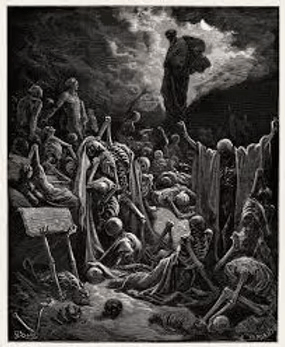
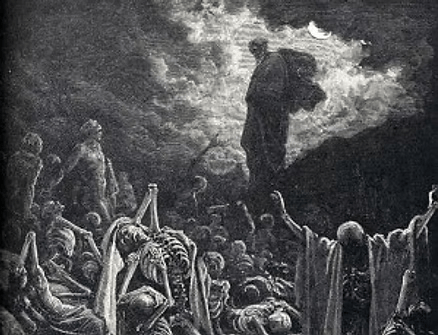
We are all dried bones awaiting life, through the love of God. That is initiated with repentance.

Fifth, John wrote, “Beloved, since God loved us so much, we also ought to love one another.” This says John wrote to another Saint, who was likewise loved by God. The correct translation from the Greek is, “If so the [one] God loved us,” where the condition of love is from “atoning sacrifice” (Greek “hilasmon“), that gift is not for one, as many have been harmed in one’s history of angering God.  Thus, “since God loved us so,” that love is not to be held selfishly.

Just as Jesus was send by the Father to offer salvation of sins to all who know God, that presence cannot be limited. By saying, “we ought to love one another,” there is a debt of thanks owed by each Saint.  That debt is repaid by loving support of one another; and that is the essence of a Church of Jesus Christ, whose cornerstone is the love of God, through His Son.  We shine a light that attracts the sinful to salvation (feed the lambs); we guide the disciples to receive the Spirit (shepherd the sheep); and we love one another as ourselves (feed the sheep).

Sixth, John wrote, “No one has ever seen God; if we love one another, God lives in us, and his love is perfected in us.” When John said, “No one has ever seen God,” this is the reality that the Spiritual and Heavenly is beyond the detection of physical sense organs, such as eyesight. This is the meaning of God telling Moses, “You cannot see my face, for no one may see me and live.” (Exodus 33:20) That means human beings can only face God after death, through the soul’s sense of sight; and then that can only be by wearing the face of God, as the righteousness of His Son, Jesus Christ. Therefore, we do not know God by sight. We know God through the new life given to us by the presence of His love.

A “Near Death Experience” means a soul release through death. While death is not permanent, God may be seen. Returning to life with this vision is like the Resurrection of Christ within.

That brings the desire to support the lives of others who have the same love of God in them. This means that when God lives in us, then we are alive in His love, with the “perfection” being the “completion” (the Greek word “teleioó”) of the Trinity within each Saint, where each have the love of the Father, as the Son reborn, through that presence sent via the Holy Spirit.
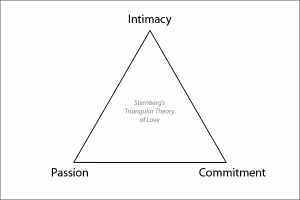
This theory is based on human “love,” but it can be translated on Spiritual terms: Submission to God = Commitment; God’s love within = Passion; the Resurrection of Jesus Christ within = Intimacy.

Seventh, John wrote, “By this we know that we abide in him and he in us, because he has given us of his Spirit. And we have seen and do testify that the Father has sent his Son as the Savior of the world. God abides in those who confess that Jesus is the Son of God, and they abide in God. So we have known and believe the love that God has for us.” This more fully states the reason for saying, “his love is perfected in us,” by reading the Greek literally.  In that way it states (in translation), “The love of him having been perfected in us is.”

The word “is” is a statement of “being.” We have meaningful being through the Trinity – we in him and him in us, through the Spirit. The creation of Saints (reproductions of Jesus Christ in human form) allows God to speak through His Son (as we do testify), and the Saints then confess “that Jesus is the Son of God, and they abide in God,” as the Son reborn. That union as One is “so we have known and believe the love that God has for us.”

This is the essence of “being there.”

Walking on water is symbolic of doubt having been overcome by God’s love.

Eighth, John wrote, “God is love, and those who abide in love abide in God, and God abides in them.” The first segment of this verse is often repeated – “God is love” – so much so that many Sunday sermons have taken those three words alone and preached them alone as the intended meaning of this reading. God is not the same “love” that human emotions know and which everyone in a congregation hears and identifies with having felt. However, when one adds the remainder of the verse, one knows the completeness of “God is love,” where one knows that presence of God within, as to abide in God, with God One with a Saint.  That is to truly know love.

Ninth, John wrote, “Love has been perfected among us in this: that we may have boldness on the day of judgment, because as he is, so are we in this world.” This verse is separated into four parts by three commas, rather than the presence of a colon and two commas. The literal translation of the Greek adds more insight into the intent of this verse (17).

Literally it states, “In this has been perfected [the one] love with us , that confidence we might have in the day of judgment , that even as he is , also we are in the world this.” Again, the “perfection” is the joining of three as One – Father, Son, and Holy Spirit. We abide in the Father and He in us, bringing about the Resurrection of the Son as us, through the power of the Holy Spirit in our souls. Just as Jesus of Nazareth was God incarnate, so are all Saints in his name.

The day of judgment is the death of a mortal body (our personal “end of the world”); but with a saintly presence, as Jesus Christ reborn, our souls are confident not to return to the earthly realm (via reincarnation). Just as was the righteousness of Jesus Christ, as God incarnate, we are also Jesus Christ in this world (as many have been, are and will be) … when we have been perfected by the love of God with us.
Art projects God’s love as a halo.

Tenth, John wrote, “There is no fear in love, but perfect love casts out fear; for fear has to do with punishment, and whoever fears has not reached perfection in love.” Human beings are mortal creatures, which mean their bodies are temporal and destined to cease having a capability to support physical life for a spiritual soul. Once one learns to fear, one loses touch with the God love one is born possessing. Fear is a human emotion, much like doubt, shame, guilt, and remorse; but fear is felt and then repressed, just as is human “love.”

There is no fear in God, so there can be no fear in the Saints with whom God unites His love. The unity is the perfection of the Trinity, such that love casts out fear in the One. The fear of punishment is the soul’s fear of reincarnation (or worse – eternal damnation). Thus, anyone who fears anything (except God) is afraid of His judgment at a human host’s death.  Such doubts being present means that one’s soul has not “reached perfection in love.”
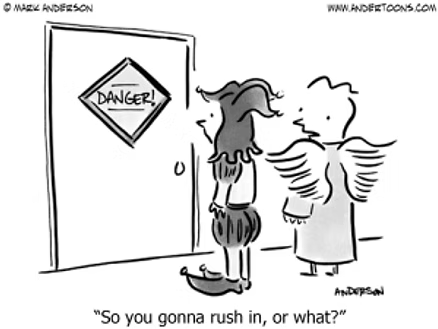
Without the love of God, one is a fool controlled by human emotions. Fear is not of God, but a sense of worldly danger.

Eleventh, John wrote, “We love because he first loved us.” We are loved by God when our soul is allowed reentry into a human form, as a newborn. We are therefore first loved before our brains develop beyond a point that keeps it from knowing love. The time spent living acts to pare away the love of God from us, as sins bring fear, doubt, remorse, guilt, and shame (all human emotions), which takes the place of God’s love. We live as children and adults thinking “love” is occasional moments to cherish, as God’s reward for the good things we do; but that is not God’s love. Only when we submit ourselves to God can we first know God’s love as having been reborn back into our souls.
The mythological rebirth, from fire and ashes comes an immortal resurrection.

Twelfth, John wrote, “Those who say, “I love God,” and hate their brothers or sisters, are liars; for those who do not love a brother or sister whom they have seen, cannot love God whom they have not seen. The commandment we have from him is this: those who love God must love their brothers and sisters also.” This becomes a further assessment of what a true Church is. What a true Church is cannot be seen as a general collection of people who say, “I “love” God.” This is at the root of the argument over what defines one’s relationship with Jesus Christ: Faith or works?

The Holy Bible is primarily a work that tells the stories that project the living vine of God’s love, which led to Jesus Christ and his living vine Saints. The peripheral figures that come and go are like those who say they “love” God, but cannot produce the works or acts God demands.  They cannot hear God’s voice, due to their own voices speaking to them so loudly.  The Church that was originated by the God of Abraham, Isaac, and Jacob, devolved into the Judaic religion, which professes a “love” of God. From that (and due to that devolution) stems Christianity, the direct result of God’s Son, Jesus Christ.  The original spread of Christianity has to be recognized as ONLY being based on the proclamation: “I love God,” from the truest meaning.

When the statement of John says that there cannot be a state of God’s love, if members of a Church are those professing devotion to the One God, but then saying or demonstrating otherwise means that “church” is a lie.  To say, “We are Christians,” and then “hate their brothers or sisters,” those said to believe in Jesus Christ, is a lie of “love.”  To profess Christianity without love means to be a disciple in need of a guide (someone to feed the lambs with love). God’s love raises oneself above the pettiness and mutability of human emotions, such that love cannot change with the winds of time. To say one “loves” God, but then “hates” another male or female within a congregation means one is a liar.

The weak of heart will seek and find liars to follow.

The Greek word written by John, “pseustēs” (“a liar”), says one is not telling the truth, which is a statement (the duality of meaning) of not knowing the truth, such that lying is a common state of flawed humanity. As such, an alternate translation can be “a deceiver,” where one’s rejection of God’s true love means one deceives others by saying “love” and preaching “hate.” That causes disciples to mistake human “love” for God’s love.  However, the “deceiver” is more dangerous when seen as one’s punishment of oneself, where the denial of God’s love is mostly harmful to that self’s soul.

It is vital to realize that a “brother” and a “sister” are statements of familial relationship. As God’s love is the foundation of a Church, where the reproduction of His Son, Jesus Christ, IS the cornerstone of that Church.  That resurrection in male human beings (“brothers”) and female human beings (“sisters”) means all members of that Church have been reborn as the Son of God, completely enveloped in God’s love. That righteous state of being joins with others in the same state, so true love is shared between all Saints, all brothers and sisters in God’s love alike. Therefore, when John wrote, “The commandment we have from him is this: those who love God must love their brothers and sisters also,” this is stating the rule that makes a Church true and strong.

A Church of Christ cannot have members that are not related to the other members, as family, born of the same Father, as the Son reborn in multiplicity.  It can act as a place of refuge (a sheepfold), but all who enter the gate (Jesus Christ) must recognize the shepherd’s call to come to him.  The sheepfold becomes discipleship, with the exit from it being one’s holy ministry with the Shepherd.  Each individual is responsible for his or her own reception of the Spirit, meaning all must listen for the voice of Jesus Christ – their Shepherd.  Once heard, one must act as the Good Shepherd, filled with God’s love.

By understanding this truth about God’s love, one can then see that the Church of Christianity is only One, with no denominations. A separate denomination means the rejection of another denomination, where that rejection can be classified as “hatred.” The Greek word written by John, which has been translated as “hate” is “misē,” also means, “to detest (on a comparative basis); hence, denounce; to love someone or something less than someone (something) else, i.e. to renounce one choice in favor of another.” (HELPS Word-studies).
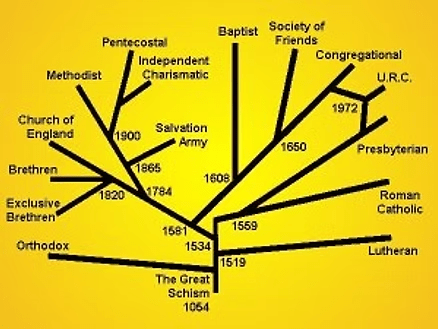
Forks in the path?

That definition source further presents the word’s usage as an example found in Luke 14:26.  There the statement by Jesus, “If anyone comes to Me, and does not hate his own father and mother and wife and children and brothers and sisters, yes, and even his own life, he cannot be My disciple” (NASU).” The source above states how the word “miseo” translates better when meaning, “to love less than the LORD.” To be a disciple of Jesus, one must love God, first and foremost, with all others “loved” less (i.e.: “hated”).  That interpretation then leads one to understand Jesus meant his statement was directed to all who would have a lesser concept of “love,” than the love of God.  Familial love is the love of brothers and sisters in Christ, which may or may not include those who share physical lineage.

One cannot become the disciple of Jesus Christ if one cannot turn away from self and human emotions, and go beyond human relationships and physical bonds.  To transform, one must seek to begin the process that brings about the love of God and the resurrection of Jesus Christ within oneself (one’s soul).  When one submits to God in marriage, one is then welcomed into the Spiritual family that is the true Church.  That personal Transfiguration means one has been transformed from disciple to saintly Apostle.

As a lesson during the Easter season, when one is in the process of transformation from disciple to Saint, when the love of God will elevate one above the changeability of human emotions to the steadiness of Jesus Christ, one must realize a need to sacrifice human dependencies and take a leap of faith. When one has a human view of family, one becomes lost in the justifications of one family’s way, versus another family’s way, even if multiple families propose to be going in the same direction – to God, through Jesus Christ. Human paths lead in circles, which mean the birth, death, reincarnated rebirth cycle for eternity. This is opposed to a straight path of heaven and eternal life for a forgiven soul. The threshold to that path and the path one must find is God’s love.

————————————————————————–

In the title of this article is a modification of the song by The Beatles – All You Need Is Love.  The lyrics of that song make it clear to understand the total misinterpretation of love they intended, where the hippy-dippy days of peace and “love” had nothing to do with Christian Spirituality.
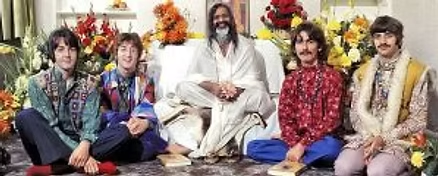
The multitude of Christian denominations are confused today about love because of this past focus on human “love” being the answer that had been missed since Jesus died.  When the Beatles suggested “love is all you need,” that was more a political recommendation than a demand to submit oneself to God, the Father of Jesus Christ.  No human “love” can fix a world that has always been in “love” with “hating” one another.

John 15:1-8 – The fruit of the true vine

Jesus said to his disciples, “I am the true vine, and my Father is the vinegrower. He removes every branch in me that bears no fruit. Every branch that bears fruit he prunes to make it bear more fruit. You have already been cleansed by the word that I have spoken to you. Abide in me as I abide in you. Just as the branch cannot bear fruit by itself unless it abides in the vine, neither can you unless you abide in me. I am the vine, you are the branches. Those who abide in me and I in them bear much fruit, because apart from me you can do nothing. Whoever does not abide in me is thrown away like a branch and withers; such branches are gathered, thrown into the fire, and burned. If you abide in me, and my words abide in you, ask for whatever you wish, and it will be done for you. My Father is glorified by this, that you bear much fruit and become my disciples.”

——————————————————————————-

This is the Gospel selection from the Episcopal Lectionary for the Fifth Sunday of Easter, Year B 2018. It will next be read aloud in church by a priest on Sunday, April 29, 2018. This is important as Jesus taught that his disciples must become part of the true vine, required to bear fruit into the world. The symbolism of the vine fits his command to “lift up your stakes and follow me,” as the “cross” that IS oneself is that which raises the vine off the ground and allows the good fruit to come forth.

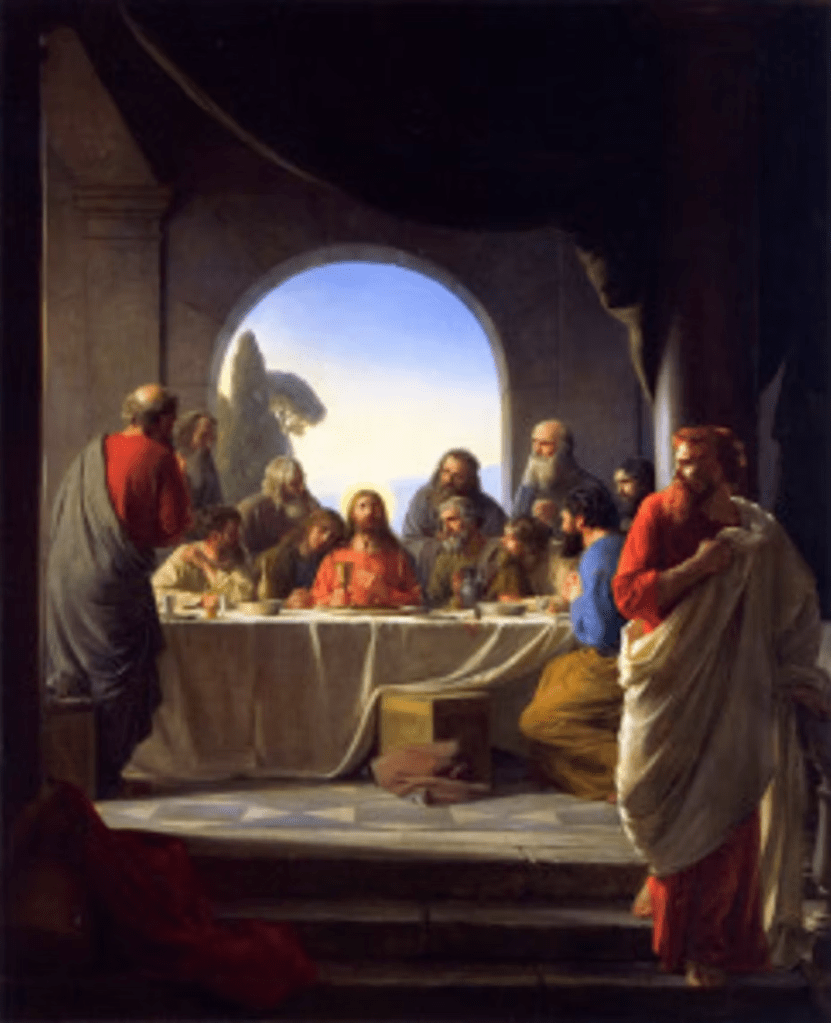
To grasp the context of this reading, one has to understand that John alone wrote of Jesus teaching the disciples this lesson, which took place during the evening of the Passover Seder meal (commonly called “The Last Supper”). While Matthew and Peter (the writer of Peter’s account of the Gospel is Mark) were present at these lessons given by Jesus, they were busy getting drunk on wine that is part of the Seder ritual (a standard objective into the night).  John, on the other hand, was paying attention to what Jesus had to say.

This is how Jesus could make a reference about “going to my Father’s house to prepare a room for you,” only to have Thomas say, “We do not know where you are going, so how can we know the way?” (John 14:1-5) Thomas was getting drunk, so he was not thinking clearly.  So, Thomas would not recall these lessons. John, however, was a child, so not freely welcomed to drink. Therefore, he stayed alert and listened to Jesus speaking, which was recalled in chapters 14, 15, 16, and 17. This reading then focuses on the second phase of Jesus’ Passover teachings, after the group had left the upstairs room (John 14:31).

In this reading, Jesus said, “I am the true vine,” where the Greek word “ampelos” more specifically means “grapevine.” This statement generates mental imagery, especially in those who have never grown grapes as produce, nor possessed a vineyard, where it is easy to mistake a grapevine as being like power lines and telephone lines along the roadside – seeming to go on endlessly. This concept that lacks a farmer’s mentality leads one away from the power of Jesus’ statement.

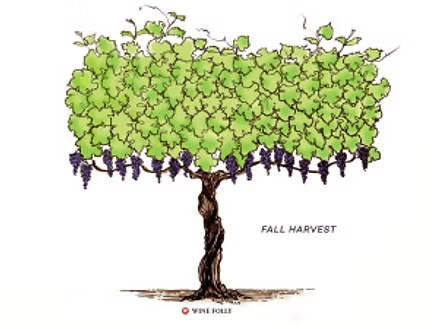
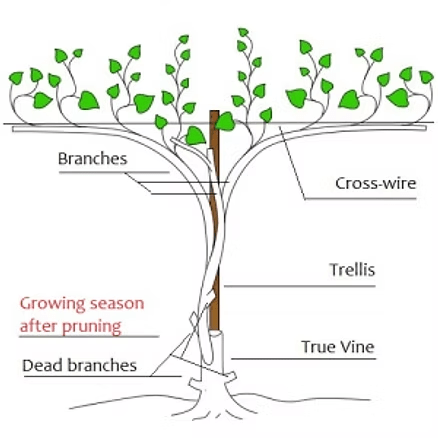
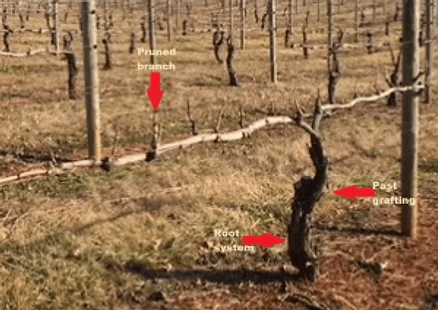
To say he is the “vine” is similar to Jesus saying he is the gate to the sheepfold. Both are self-contained, with limits, where the parameters or boundaries are of optimum value when those limits are full of purpose: a grapevine is full of grapes; and a sheepfold is full of sheep. This view of a “vine” being one (thus the “true vine,” implying others exist that are false), one can see how a vineyard is many grapevines together. Here is a diagram of one grapevine and a picture of a vineyard of grapevines in winter:

This imagery can then be used to see how the books of the Holy Bible tell of the previous harvests of good fruit, from Adam to Noah, from Abraham to Moses, and from David to the Prophets, with all being from the seed of God and the true vine of His Sons. In this reading from John’s Gospel, Jesus told his disciples how Jesus of Nazareth, the promised Messiah, was the true vine of God. He was speaking to the flowers that would soon bud into the branches that would produce his good fruit, the product of the Father. By understanding this terminology properly, everything Jesus told his disciples becomes crystal clear metaphor.

John remembered Jesus saying, “[The Father] removes every branch in me that bears no fruit. Every branch that bears fruit he prunes to make it bear more fruit.” This is routine maintenance of a grapevine that bears good fruit. As such, at the time Jesus said this Judas Iscariot was absent, having gone to betray Jesus. He was a branch that would never bear any fruit in the name of Jesus Christ. Judas would never submit his ego to God and become Jesus Christ reborn. He was pruned the day Judas hung himself from guilt. Still, the branches that would bear the fruit of Jesus of Nazareth – the Apostles – they would all lose their lives so more Apostles could be produced. They were pruned for the good of the true vine.

Here is a branch that was pruned so the vine could bear more fruit.

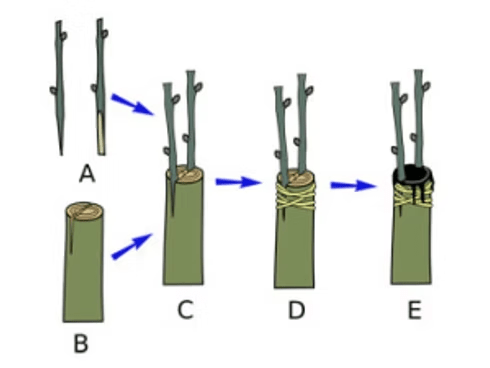
When Jesus then said, “You have already been cleansed by the word that I have spoken to you,” the word “katharoi” was used and translated as “cleansed,” and the word “logon” translated as “word.” This states in two segments, “Already you are pure [or clean]” and “by reason of the word that I have spoken to you.” The element of cleanliness loses focus on the metaphor of vineyard cultivation. The root meaning of “katharos” is “purity,” such that the example of grafting a shoot system (scion) to rootstock (the “true vine”), then the shoot will develop buds based on the root system. This means the “word” is the command of the true vine to regenerate cleanly from the rootstock, not from the root system the shoots were pruned, for the purpose of grafting. Thus, this verse told of Jesus informing his disciples their grafts had taken hold and they were then prepared for producing good fruit in the coming new season.

From common stock to disciples attached to the true vine to branches one with the true vine (Apostles).

“Abide in me as I abide in you” is then a statement that the eleven (and John) were no longer separate, but had become one (each individually) with Jesus. While all the disciples had mortal mothers and fathers, such that the DNA of those mortals was what made them reproductions in the likeness of their parents, they had become spiritually grafted to Jesus, whose Spiritual DNA was from the Father. Because of that linkage, the souls of the disciples were one with the soul of the Son of God, such that the Spirit of Jesus Christ was then within each of them.

Jesus then moved beyond this oneness to explain, “Just as the branch cannot bear fruit by itself unless it abides in the vine, neither can you unless you abide in me. I am the vine, you are the branches.” A branch (scion) that has been cut off from its root system is incapable of bearing fruit by itself. Once it is grafted onto good rootstock, the flow of growth is then passed onto the attached shoot (branch). The ability to bear fruit comes from the root. Since Jesus is the true vine (i.e.: rootstock for Apostles), his disciples were the newly budding branches, which were budding with the holiness of the Father, through the Son. Therefore, Jesus said, “I am the vine, you are the branches,” where each was grafted individually to the true vine.

It is important to grasp the implication of his next two statements. John wrote that Jesus said, “Those who abide in me and I in them bear much fruit, because apart from me you can do nothing. Whoever does not abide in me is thrown away like a branch and withers; such branches are gathered, thrown into the fire, and burned.” Rather than a statement of warning or threat, this was a statement of truth and fact. It goes beyond those who were gathered around Jesus, and well beyond the implication of Judas Iscariot being a discarded, as a withered branch.

These statements of Jesus say that the “true vine” is the only path to heaven and eternal life. Not only were the Jews not abiding in Jesus [as Jesus would soon be arrested by the Jews], neither were the Romans – who had their own religion that worshiped pagan gods. This truth says (without saying overtly) that no religion (as religion was known at that time) abode in Jesus, such that Islam (to come later, after Mohammed), Hinduism, Zoroastrianism, Buddhism, Taoism (or Daoism), Shintoism, etc., etc., and all forms of pagan worshipers all around the globe (monotheistic or polytheistic) are rootstock of death, not eternal life.

Because a religion is defined as “belief in and worship of a superhuman controlling power,” there is no “faith” that defines the process of a grapevine.  Just as Jesus was the “true vine of the Father,” there was no philosophy held by Jesus that defined what Jesus believed.
Jesus taught in parables that require one experience the meaning, rather than learn a set of rules to follow.  Because all ‘religions” fall into the error of belief in dogma, rather than being extensions (as reproductions) of the true vine, no “religion” seeks to become one with God.  As such, no “religion” abides in Jesus, who IS the true vine of God, the Father – the ONE GOD. Therefore, for Jesus to say, “Those who abide in me and I in them bear much fruit,” the whole world was, is, and is destined to be scions of false vines – the philosophical thoughts that act as “religion.”  The misled and misguided branches of philosophies will have to sever their shoots from their rootstock and seek to be grafted onto the Apostles … in order to become extensions of the oneness of true vine.

This broad stoke view of what Jesus said to his disciples should then be seen as John remembering a lesson for all who will sit and learn the lessons of Jesus Christ. The vast majority of proclaimed Christians around the world today are far from being branches that are producing the fruit of the true vine. The creation of branches within the “family tree” called “Christianity” (a religion), which veer wildly in many different directions, is not indicative of a grapevine producing fruit that carries the seeds of Sainthood. Instead, the millions who call themselves Christians seem to be at war with each other, more than simply being one with God’s love. It is more like the branches from the true vine have been pruned from truth and grafted onto false vine rootstock, making the present state reflect “Christianity” as weakened varieties of Jesus grapes, with none of them capable of producing good fruit.

Does this shape resemble the grapevine T-cross?

In this regard, I recommend the reader here look up the term “Cathars” and get a grasp of the original concept of true Christian. Much of their history has purposefully been destroyed, due to the hatred held by the leaders of the Roman Catholic Church against the Cathar people. Their name (as a group of people) was not theirs, as if they chose that name to be new branch of Christians. The name comes from the Greek word seen earlier – “katharoi” – which means “pure.”

Others, those who called themselves Christians, came to know these people (who primarily lived in Southwest France between 1,000 and 1230 A.D.) as those who were “pure” in their devotion to God.  They acted as those who were reborn as Jesus Christ, possessing profound knowledge of the word spoken by Jesus. The Roman Catholic Church exercised their first act of genocide to kill the Cathar people, because they would not convert to Roman Catholicism. To justify the first of several crusades known as Inquisitions, the Church called the Cathar people heretics, accusing them of being dualists and Gnostics, whose ways of life were not consistent with those philosophies held dear by the Vatican. In reality (in my opinion), the Cathar people were those who had “already been cleansed by the word that” Jesus had spoken, because they were true vine reproductions of Jesus Christ and knew the deeper meanings of Scripture, unlike typical Catholics.

Look up the Albigensian Crusade (aka Cathar Crusade).

From this awakening, which says true Christians should have more in common with Judaic teachings, where the communal commitment the Cathar people had to one another was similar to that of Jews living separately from Gentiles, the Cathar people were together as a Church of reproductions of Jesus Christ, as those reborn of his Spirit.  Jews, on the other hand, represented those branches growing from the vine of Moses, only to have grown wildly along the ground of the Promised Land, losing the “purity” of the “true vine” that Moses offered the Israelites through Law. Western Christians have likewise become wild grapes, through the ground clutter of philosophies that place more emphasis on the equality of inferior vines and branches, rather than seeking to maintain the “cleanliness of the word of Christ.”  American Christians today live among multicultural people they barely know, where governments force them to accept principals that are contrary to the teachings of Jesus Christ.  Unlike the Cathars, American Christians readily convert to the will of empires, with few willing to die for the way of the true vine.

This destruction of the true vine model can be seen in the statement of Jesus to his disciples, which said, “If you abide in me, and my words abide in you, ask for whatever you wish, and it will be done for you.” The promise that “whatever you wish will be done for you” meant – that night in Jerusalem, following Jesus’ last Seder meal – “whatever miracles you need to be able to perform in my name” – as the good fruit of the true vine – “you will have the power of God the Father available to you.” Modern Christians have mutated this statement into a weakened promise that makes Jesus Christ out to be some magic genie in a lamp, where you make a wish for wealth and it will be granted. All wishes today are selfishly based, with no one trying to heal any of the ills of the world, one Gentile convert at a time. All of this failure is due to no one abiding in Jesus Christ and he in one as Jesus Christ, Without that state of being reached first, all wishes can ONLY BE selfish, thus never granted by the One God.

In the last verse of this reading, John wrote, “My Father is glorified by this, that you bear much fruit and become my disciples.” The literal Greek makes this easier to understand, in terms of having one’s wish come true. The first segment says, “In this is glorified the Father of me.” That clearly says that “In this” abiding in the true vine, so the true vine becomes one’s Spirit leading one’s soul, then God the Father has made all desires for Oneness with God come true. By saying, “the Father is glorified,” where “edoxasthē” (from “doxazó“) is translated as “is glorified,” the reward of that wanted can only come from the sacrifice of self-ego, in “honor” and “praise” of the One God having entered one’s heart (and soul). When Jesus said, “the Father of me,” the intent is for a disciple to feel the power of the LORD within, such that one has to seek to become a rebirth “of me,” via “the Father.” Therefore, all desires cease to be of selfish motivations, only being wishes to serve the LORD’s needs, where “the Father is glorified” by the obedience of His servant.

The second segment can then be read literally as, “that fruit much you should bear.” This means that a branch extending from the true vine will produce grapes filled with the word of the Lord Christ. The succulence of full grapes from the true vine is then due to the holy water that has coursed through the xylem of that vine. From root system to branch to fruit, everything is filled with the word of God. It becomes a repeating of holy water poured out as in the miracle of Cana, which tasted as the finest wine that is usually served first. By keeping in mind how this “living water” that tasted like fine wine was taken from “purification” jugs, one can then see how the wedding guests had been cleansed by the word Jesus had spoken (to fill the jars with water).

The miracle of the purification water tasting like good fruit goes well beyond the physical.  It signifies the fermentation of the soul.  This means the disciples will produce more disciples, all who will become Apostles.  This miracle is opposed to the norm seen in the various denominations of churches gathering. like guests coming to celebrate a would-be marriage.  The norm can only expect a tithing pew sitter, who knows nothing that glorifies the Father, to show success by recruiting another tithing pew sitter, who also will know nothing of the Father.

The reason is a tithing pew sitter is a selfish ego and not one possessed by God’s love, reborn as His Son, Jesus Christ – the true glorification of the Father.  Today’s churches can be said by the master of the banquet to be typical, as the best wine of Jesus in his Apostles was served first, until the world was drunk and unable to notice that poor wine is now pouring freely.  Today’s Christians mistake their drunken state as being the fine wine from good fruit that glorifies the Father, when so much more is expected.

Finally, the last segment says, “and you shall be disciples of me,” where the glorification of the Father comes from “disciples of Jesus Christ.” This does not mean those who ONLY learn of Jesus Christ as pupils are true disciples. It means those whose hearts are afire with learning the power of Scripture, so their minds are filled with the knowledge of God – the Christ Mind – are those who thirst for truth. The purpose of learning is not to forever claim student status, but to graduate and become the teacher. The teacher (rabbi) was and is Jesus, who enlightens his disciples with a desire to become the Christ Resurrected. This is the call to all who seek the promise of eternal salvation, as that reward demands commitment to learn (deeply) and to apply that “education” freely, so others who are seekers of truth can find it alive in other human beings.

As a Gospel reading during the Easter season, a season when all lessons are calling disciples of Jesus to become the Resurrection of the Christ, we must grasp the concept of the grapevine and the branches that come from the “true vine.” In Scripture is the crucial point in time, when Jesus turned to his disciples and said, “If anyone wishes to come after me, he must deny himself, and take up his cross and follow me.” (Matthew 16:24) That command needs to be understood in terms of this reading and the dressing of grapevines.

First, the word translated as “wishes” is the Greek “thelei.” The same root Greek word, “theló,” was written here in John’s Gospel, meaning “wish, will, desire, intend, and design.” The intent of the word is therefore not to offer one a “wish” fulfilled, but to ask one if he or she “seeks” God, as their “desire, will, intent, design, or wish.” This means Jesus told his disciples on the evening of the Passover Seder, “whatever your heart desires, it will be fulfilled.” The result may or may not be God and the Christ Mind – thus the wisdom of “be careful what you wish for, as you just might get it.” When Jesus told his disciple to choose their path, he said, “If you desire to become me, then you must sacrifice your ego [deny oneself] and accept my righteous goals.”

Second, when Jesus told his disciples the path to “follow him” required one “take up his cross,” there are two grapevine elements contained in those words. First, the Greek word “aratō” means, “take away,” but it also means “raise” and “lift up.” It implies “hoisting,” as well as “carrying” and “bearing.” This becomes a demand for the strengthening of a grapevine, where years of growth and the crafting of the vines along a cross-wire create a T-cross that is capable of bearing weight. In terms of Scripture being the word spoken by the Christ Mind, like a tendril of a vine, one should always be close to Scripture and ever-reaching to see its deeper meaning.  That reflects a design to reach the optimum height, so the shoot strives to be uplifted and amplified in strength.  A vine does not reach high due to a philosophy or written plan.  It does so naturally, so it can not only produce branches, but also so it can grow to support the fruit produced. In spiritual terms, being “raised” means to go beyond self (“deny self”) and “[be-]come” Jesus Christ “after” him. This “uplifting” is in soul Spirit, where Christ abides in one and one abides in Christ.

In reference to the Roman Catholic Church and their genocide of the Cathar people, one can see how this can be reduced to a level of symbolic focus. The Church reveres the crucifix and loves to nail the body of dead Jesus to dead wood – not a living vine. The original symbol of Christianity was the fish, which is associated with the astrological sign Pisces. Pisces represents self-sacrifice for a Spiritual reward. Therefore, to read Matthew 16:24 as if Jesus were telling his disciples to foresee his crucifixion as his end and the disciple’s time to follow on without him, that avoids the point of self-sacrifice (which may or may not be death by crucifixion) for a higher soul self (as Jesus reborn).

See how dead driftwood has been fashioned into a symbol that screams “dead branch”?
See the difference in imagery when we have become grafted onto a living cross within?

The second element in “take up his cross” is the word that translates as “cross,” which is “stauron.” It has been the teachings of the Roman Catholic Church that has taken this Greek word and absorbed its meaning into the dead timbers of a crucifix, as though the word solely means the pain and suffering of Jesus of Nazareth. The reality is “stauros” means “stake in the ground that forms a T.” The stake hold the cross-wire, which symbolizes the inner strength the Holy Spirit offers.  A crucifix forms a T, but many other T formations existed long before anyone figured out how to nail human beings to two dead tree trunks hewn and nailed together, in the shape of a cross. People cultivated grapevines into the shape of a T-cross well before the Romans saw that shape was strong enough to bear heavy weights. Thus, Jesus was telling his disciples to form a strong shape, just as he had shown through his strength in supporting his disciples and the Jews who sought him.

In this fifth Sunday in Easter, in the year 2018, this message to become branches of the true vine, as the fruit of the Father’s vineyard, goes along with the reading from Acts, where Philip produced good fruit in the Ethiopian eunuch. He did that be being tested in the wilderness, led by an angel of the Lord, where his strength was proved to bear the weight of Sainthood. It also accompanies the Epistle reading from 1 John, which defines God as love. The fruit of the Father’s true vine is the love of Christ, which is only found in true Saints – the fruit of the true vine.

The Easter call is to heed the word of Jesus and become “clean” and “pure.” One must be washed clean of past sins, in order to be given the reward of eternal salvation. To desire that reward, one must be a living branch of the true vine and produce good fruit. To be a living branch, one must be resurrected as Jesus Christ, so he abides in one, as one abides in him.

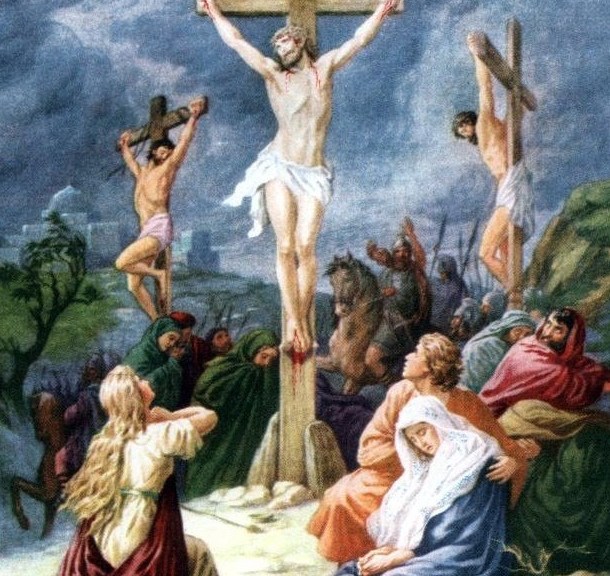
The purpose of Jesus dying on a cross was to show his disciples how death is not a permanent state of being, as a soul can never die. The soul will graft itself to another root system and be reborn according to that root-stock. Therefore, the purpose of the seven Sundays in the Easter season is to drive home the point that it is not enough to let Jesus die and be Resurrected, then Ascended. Christians miss the point of the price they too must pay.  If they do not follow that same path to salvation, by being reborn as the fruit of Jesus Christ, they will lose as fruitless branches thrown into the fire.

Acts 10:44-48 – Good Gentiles calling for more insight

While Peter was still speaking, the Holy Spirit fell upon all who heard the word. The circumcised believers who had come with Peter were astounded that the gift of the Holy Spirit had been poured out even on the Gentiles, for they heard them speaking in tongues and extolling God. Then Peter said, “Can anyone withhold the water for baptizing these people who have received the Holy Spirit just as we have?” So he ordered them to be baptized in the name of Jesus Christ. Then they invited him to stay for several days.

——————————————————————————–

This is the Acts reading from the Episcopal Lectionary for the Sixth Sunday of Easter, Year B 2018. It will next be read aloud in church by a reader on Sunday, May 6, 2018. It is important because it tells how the Holy Spirit is for all human beings who seek the truth and hear the word of God speaking to them, individually. As non-Jews hearing the word and receiving the Holy Spirit, this means bloodlines that share no DNA with the tribes of Israel, as those not direct descendants of Abraham, Isaac and Jacob, and those not educated in Mosaic Law, Gentiles have the capacity to be reborn as Jesus, the Christ promised to the Jews.

Certainly, the key element in this reading that makes one worthy of being awarded the Holy Spirit is, “the Holy Spirit fell upon all who heard the word.”

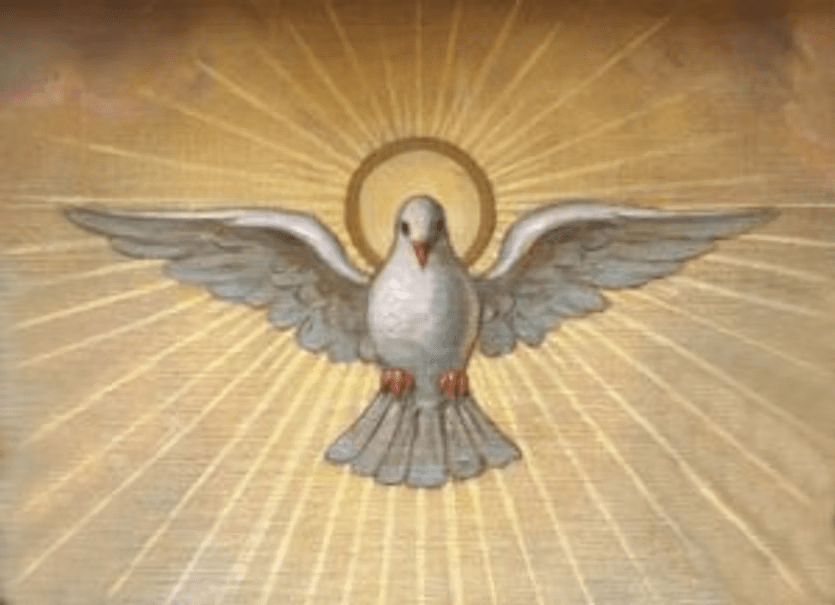
It descended like a dove.

The limiting caveat is the Holy Spirit is not something everyone receives. It is not guaranteed to devoted Jews who profess to adhere to Mosaic laws; and it is not guaranteed to all Gentiles who gather around a true Christian who speaks.

As a reading presented on the Sixth Sunday of the Easter season, the key theme of the Epistle and Gospel reading is clearly “God’s love.” We see that here when we read, “The Holy Spirit had been poured out even on the Gentiles, for they heard them speaking in tongues and extolling God.” The Gentiles – Romans who worshiped pagan gods – who were filled with the Holy Spirit were highly praising [the One] God, which is a sign of the love that overcame them – a love from God.

When Peter asked, “Can anyone withhold the water for baptizing these people who have received the Holy Spirit just as we have?” the focus was on how rules, dogma, laws, or edicts that state a right to symbolically wash a body clean of sin, plays no role in true baptism. When we learn that Peter “ordered [the Gentiles of Cornelius] to be baptized in the name of Jesus Christ,” they had already been baptized by the Holy Spirit, filled with God’s love, and reborn as Jesus Christ. This states that baptism by water can ONLY truly be done after the presence of God has transformed [or Transfigured] one of faith, by His presence in one’s heart.

It is natural for Christians today to want to claim this presence; but after centuries of training by the various denominations of Christianity the majority opinion has been reduced to a belief that baptism by water (done first, as early as infancy) is the call for the Holy Spirit to come to one. We believe ministers, priests, pastors, preachers and educated church leaders are the “Jesus Christ tamers,” who command Jesus to surround a congregation, by invoking that name (“in the name of Jesus come!”). Unfortunately, this reading from Peter’s acts as an Apostle says the truth is quite different.

Prior to these verses from Acts chapter 10, Peter and fellow Apostles spoke to Cornelius and fellow Gentile soldiers.  Peter said the following:

“We are witnesses of everything he did in the country of the Jews and in Jerusalem. They killed him by hanging him on a cross, but God raised him from the dead on the third day and caused him to be seen. He was not seen by all the people, but by witnesses whom God had already chosen—by us who ate and drank with him after he rose from the dead. He commanded us to preach to the people and to testify that he is the one whom God appointed as judge of the living and the dead. All the prophets testify about him that everyone who believes in him receives forgiveness of sins through his name.” (Acts 10:39-43)

Significantly embedded in that text is the truth that states, “[Jesus, the risen Lord] was not seen by all the people, but by witnesses whom God had already chosen.” That says that after Jesus has resurrected from death, he appeared to the ones who had been prepared to see him. This is why he appeared in unrecognizable form to Mary Magdalene, to Cleopas and his wife Mary, and to the disciples beside the Sea of Galilee (an event that was actually a dream). It was after Jesus spoke to those disciples that they knew who it was speaking “the word” to them. Because they had been prepared, as “witnesses whom God had already chosen” (during three years of Jesus’ ministry and lessons), they saw Jesus in the flesh and received the Spirit.

This same selectivity that is relative to who can know God’s presence is nearby and to know Jesus is the Messiah can be seen when John told of Jesus predicting his death as the Passover Festival neared. There John wrote, “[Jesus said,] “Father, glorify your name!” Then a voice came from heaven, “I have glorified it, and will glorify it again.” The crowd that was there and heard it said it had thundered; others said an angel had spoken to him.” (John 12:28-29) The point of that is it says not everyone heard the voice of God speak. It was only heard by those who had opened their hearts to God, with faith in Jesus as His Son.

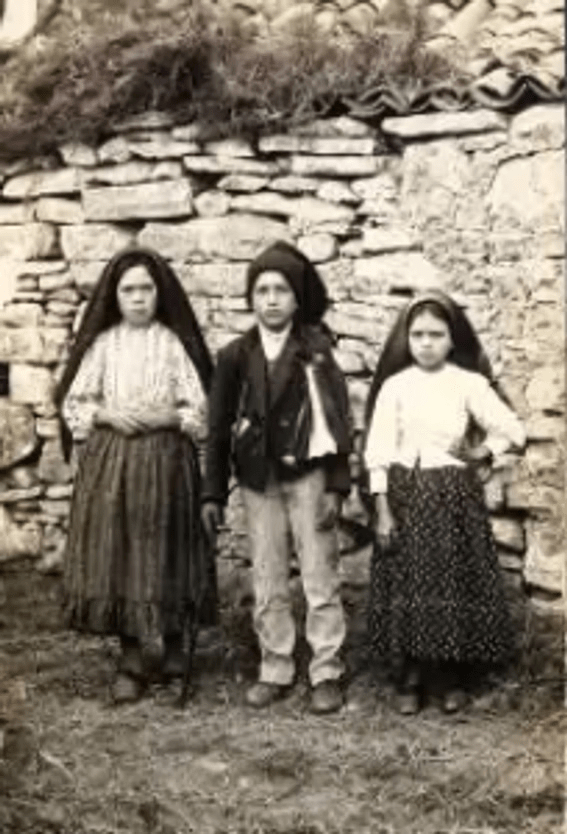
This inability of some to hear the voice of God is still in effect today. It is reminiscent of the event that was witnessed by an estimated crowd that ranges between 30,000 and 100,000 people. It occurred in Fatima, Portugal on October 13, 1917, as the sixth (and final) Marian apparition before three shepherd children (all on the 13th of the months from May and October). The children had prophesied that a miracle would take place on that final date, attracting a much larger crowd than prior. The “voice of God” can be read then as visual words (a picture is worth a thousand words), rather than spoken words. (source: Wikipedia)

The three shepherds of Fatima.

The voice of God for that event is called the “Miracle of the Sun.” According to the Wikipedia article about that event: “Newspapers published testimony from reporters and other people who claimed to have witnessed extraordinary solar activity, such as the sun appearing to “dance” or zig-zag in the sky, careen towards the earth, or emit multicolored light and radiant colors. According to these reports, the event lasted approximately ten minutes.”

This event was officially recognized by the Roman Catholic Church in 1930. However, there are critics of this recognition, such as reported by Wikipedia:

“According to theologian Lisa J. Schwebel, claims of the miracle present a number of difficulties. Schwebel states, “not only did not all those present not see the phenomenon, but also there are considerable inconsistencies among witnesses as to what they did see“. Schwebel also observes that there is no authentic photo of the solar phenomena claimed, “despite the presence of hundreds of reporters and photographers at the field.”

That is basically restating what Peter said about people not being able to see the risen Lord, as he spent time teaching the disciples for forty days before his Ascension. In John’s Gospel, where his words say, “The crowd that was there and heard it said it had thundered; others said an angel had spoken to him,” become a precise parallel to the criticism of “inconsistencies” that occurred in witnesses to the Miracle of the Sun. It is what should be expected, because not everyone is prepared by God to hear His Word.

In addition to the prophesied miracle that some witnesses claimed took place, no one in the crowd of onlookers said he or she saw the Virgin Mary. The three children knelt at the same spot they had been told to kneel each month (by an angel), with the crowd gathered each time seeing their gazes fixed upward, as if there was something above and before them. No one in the crowds gathered ever witnessed anything other than three children kneeling and gazing upward.  However, after each visitation of the Virgin Mary, the accounts given by the children was how all three children had vividly seen the Blessed Mother, but only two could hear her speaking to them.

This too fits what John and Peter said, as the voice of God is relative to how well prepared one is to hear that word.  The boy shepherd was said by the Virgin to need to do more repentance, which was why he could not hear.  Still, he was uplifted by the visions he was allowed.

The proof of someone hearing the divinity of apostolic words being spoken is then found in Peter’s statement that the Gentiles began “speaking in tongues and extolling God.” That statement in Acts is actually divided into two separate segments (denoted by a comma), such that the word “and” has caused translators to omit the comma.

The Greek states, “lalountōn glōssais , kai megalynontōn ton Theon,” with a literal alternate translation saying, “proclaiming with languages , and enlarging (or increasing, or magnifying) the God.” This translation then allows one to stop being mesmerized by a concept that is misinterpreted by man – “speaking in tongues” – so that “languages” is more appropriate when the “voice of God” and “speaking the word” is the motivation for this reaction.  Rather than them “extolling God,” the separation allows one to see how it was “the God” within them that was “increasing” their ability to speak the word, which the Gentiles suddenly were doing.

This means that the miracle of hearing God’s voice, from listening to the voice of God through Peter (an Apostle-Saint of Jesus Christ), those Greco-Roman-Gentiles began speaking fluent Hebrew and Aramaic, rather than Greek or Latin. As they spoke in those “languages,” they not only quoted from the Torah, Psalms and Prophets (a task they had no training in), but they expanded on the word of Scripture. Peter saying they “magnified” the “languages” of Holy text says the Gentiles began divinely explaining how those words prophesied Jesus Christ. They “spoke the word” just as Peter had been speaking.

This means the proof of having the Holy Spirit “fall upon” one is the God-given ability to explain and defend the books of the Holy Bible, without prior explanation or defense being taught one.

Arthur being knighted by Merlin

That proof was clearly visible to Peter and his companion Apostles, as there was only one way such automatic utterances could come to be. God had sent His Holy Spirit to the Gentiles, transforming their souls to a purely righteous state (i.e.: Saints). That then moved Peter to mark the event with the element of water, where they were not so much “baptized” as we Christians understand that today, but “christened” with water.

The purpose of that naming (the definition now applied to the word “christening”) was to officially proclaim those Gentiles were in the name of Jesus Christ. That is the truest form of one’s right to profess Christianity; and it is the root of the word “christen,” such that one is given a Christian name: Jesus.  Therefore, the ritualistic pouring of water (or a river dunking) was done after the soul had reached a state of righteousness, through a Spiritual rebirth.

When we then read, “Then they invited him to stay for several days,” this is vital to grasp.  That statement is not a simple element thrown in at the end. It is actually what links this reading to two others that have crystal clear themes of love.

The whole of Acts 10 is about God preparing Peter to accept non-Jews in his ministry (through a vision).  This reading’s event occurred soon after Cornelius sent men to request a visit from Peter, asking Peter to go to Caesarea Philippi. Because of a vision Peter had experienced prior, he traveled with Roman soldiers and entered a Gentile home, which was a forbidden act of Jews. Cornelius (a centurion) and his closest soldiers were good human beings and had treated Jews with kindness and fairness. He had heard some Jews speak if Peter, who was then in Joppa, so he sent for him.

Still, neither Peter nor Cornelius expected what happened in this part of Acts 10 to happen; however, when it did, Peter was moved to recognize Cornelius and his men as brothers in Christ. Because they were then of the same “church” (those who gathered “in the name of Jesus Christ”), staying together “for several days” was then an important act of acceptance, out of love for one another, their love of God, and the love of the Holy Spirit.

As a Easter lesson, it is this aspect of God’s love that instantly came over two groups of strangers that fits into a theme of the Sixth Sunday of Easter, Year B 2018. The Easter lessons are all about a personal Resurrection of Jesus Christ needed in each of us.  This Resurrection is only possible when one willingly surrenders oneself to God, dying of ego so one can be reborn as a soul cleansed by the presence of God and the Mind of Christ (which allows one to know everything about Scripture, so a Saint can “speak the word of God” fluently).  Thus, from this reading we are to see ourselves as Gentiles who have been prepared for God’s presence, which “falls upon” us by our acts of goodness and fairness towards those who serve the One God faithfully.

Still, being prepared through acts of human love does not fully make one a true Christian.  This reading says we need to strive for more.  We need to know the love of God.

The Resurrection of Jesus Christ in us can be seen reflected in this story from Acts. Cornelius did good, but he went beyond by sending for Peter. As a Gentile, he wanted to know more. He wanted someone to convince him to convert to Judaism, rather than remain a polytheistic Roman. He reached out to find the truth.  God saw that, so He prepared Peter to be His servant who would offer the truth to Cornelius.

We must become opened to receive God. We must pray that the truth will open our eyes and minds. When the bearer of truth comes, we need to listen to the word and let the Holy Spirit fall upon us, so we see the meaning. We must seek to see the truth where others have not seen it. We must desire to know the truth where others have only heard its sound. We must surrender ourselves so our brain is freed to know the truth of the Mind of Christ.  When one experiences that knowledge, it is because one has been truly baptized by the Holy Spirit, with one’s soul cleansed by the presence of God, with one then in the name of Jesus Christ.

When that state of existence has been reached, one knows love. One then can recognize all others who have the same state of love surrounding them. Once one knows that love, one enjoys spending a few days with others of the same Godly heart and the same Christian mind. It is like a newfound reunion, where joy abounds.

1 John 5:1-6 – Believing in the present tense

Everyone who believes that Jesus is the Christ has been born of God, and everyone who loves the parent loves the child. By this we know that we love the children of God, when we love God and obey his commandments. For the love of God is this, that we obey his commandments. And his commandments are not burdensome, for whatever is born of God conquers the world. And this is the victory that conquers the world, our faith. Who is it that conquers the world but the one who believes that Jesus is the Son of God?

This is the one who came by water and blood, Jesus Christ, not with the water only but with the water and the blood. And the Spirit is the one that testifies, for the Spirit is the truth.

——————————————————————————-

This is the Epistle selection from the Episcopal Lectionary for the Sixth Sunday of Easter, Year B 2018. It will next be read aloud in a church by a reader on Sunday, May 6, 2018. It is important as it clearly sets a “love” theme for this day in the Easter season, accompanying the Gospel reading where Jesus instructed his disciples to love one another. Here, John wrote of the love of God, which allows one to obey such commandments.
In this relatively short passage, some form of the word “agapé” is found five times: agapōn, agapa, agapōmen (2), and agapē. All are found in the first three verses.  This is John again addressing a state of love that goes well beyond the human emotions that create a range of temporary feelings, from passion, joy, and happiness, to sympathy, empathy, and sorrow for a loved one.  John used “agapé” rather than “philos,” as reflecting a motivation to do as God prefers, not as self desires. (John went deep into this in 1 John 4:7-21 – the Epistle reading for the Fifth Sunday of Easter)

Surrounding these references to love (“loving”, “loves”, “we love” (2), and “love”) is the word “pisteuōn,” from the root “pisteuó,” which means, “I believe, have faith in, and trust in.” That Greek repeated word has been translated above as “believes,” but in reality it states “believing.”  There is a difference and this difference needs to be understood, just as one needs to know the difference between human love and God’s love.

By adding an “–ing” ending, a verb becomes a present participle form.  That states an action that is presently ongoing, versus an act past or one yet to come. Still, it can (in certain cases) change a verb into a noun (a gerund), which is something defined by its intended actions. By translating this verb as though the writer’s intent was to demonstrate a different verb usage, through the third-person plural form of “believe,” one misses the purpose of John’s letter being intended for one specifically (the reader) to be “believing.” By reading “Everyone who believes,” the implied intent is seen as having less to do with the reader presently “believing,” allowing one to imagine oneself among a generic group of individuals who “believe.”

When this individual aspect is realized in the present participle state, the first verse becomes more powerful.  When one sees oneself as the measure by which “everyone” like one is “believing Jesus is the Christ,” that then urges each individual reader to ponder, “Do I truly believe?” and “Am I believing this very moment?”  “Everyone believing Jesus” is then “believing” as “the Messiah.”  That is much more than belief proposed or assumed.

The answer that truly matters comes when one can truly identify with Jesus, because one knows personally (a soul’s knowledge) that Jesus is my Savior. It forces one to realize how true belief can only come through direct experience that proves beyond a personal shadow of doubt or question of belief, due to a lack of personal knowledge.  That is unlike a presumption of belief, due to being told something that one’s brain has deemed valid and reliable, because nothing has yet rejected the premise for belief.

From this beginning point of “believing,” one can then understand how belief is “born of God.” It has not been an idea brought forth by some other human being. It is because of the love relationship that has been established, thus experienced, between the Father and the child … the one who is believing.

When the Son of God is known to be born of the Father, that duplication is then present in all the children of God, in the same way that “Everyone is believing” and “everyone is loving.”  “Everyone” is not the whole world who believes that Jesus was the Christ, but “Everyone” who has been reborn as Jesus Christ – a very select group.  It means one gains the same personal knowledge as Jesus Christ had. Therefore, believing and loving is through the resurrection of Jesus Christ in each individual, so that all who are born of the Father, become mirror images of the Son reborn.

I read the English translations and am often moved to examine the Greek parallel versions.  That helps me see more.  It helps me see what can easily be missed in one translation from the original text.  Perhaps, reading a literal translation of the Greek will be helpful to you, especially as a way to see the actual segment break points.

Punctuation is a relatively modern invention, but one must give some credit to Apostles knowing where pauses should be read.

John (like most Apostolic writings) is purposefully written in a way that takes its meaning well beyond what the surface translation implies. In the translation of 1 John 5:1-6, one will note how often the Greek article “the” (in various forms) is often translated as “the [One]” or regularly omitted, in order to accommodate a translation in English. That implies the Greek language unnecessarily adds words.  I prefer to see how “the [one]” adds to understanding.  Still, the break points (marked by commas and semi-colons) are important signals to contemplate what has been said, as if John placed a mark to let one know to stop and contemplate what he said before adding that to the next segment.

Here is 1 John 5:1-6 literally translated:

[Note: Not stated in 2018, but most important to realize, is the Greek word “kai” should be read as a marker of importance to follow, rather than a simple conjunction “and.”  I am changing all places where “and” was written to bold type, so the reader can contemplate where statements of importance are written.  I have also underlined the capitalized presence of “Kai,” as the capitalization acts as greater importance added to one word.]

“Everyone [the one] believing [present participle verb – not a gerund] Jesus is the Messiah  , [comma]  of the [one] God has been born , and everyone loving the [one] having begotten [him]  ,  loves also the [one] having been begotten from him.”

“By this we know we love the children the [one] of God   when the [one] God we love  ,  and the commandments of him keep.”

“This indeed is the love the [one] of God  that the commandments of him we should keep  ; [semi-colon] and the commandments of him burdensome are not.”

“For all the [one] having been born of the [one] God  overcomes the world  ;  and this is the victory the [one] having overcome the world   [double dash] the faith of us.”

“Who now is the one overcoming the world  ,  if not the one believing that Jesus is the Son the [one] of God?”

“This is the [one] having come by water and blood  ,  Jesus Christ  not by the water only  ,  but by the water and the blood. And the Spirit is the [one] testifying  ,  because the Spirit is the truth.”

From that literal translation, added to the transition from believing and loving coming from God, we see how John explained how the love of God is what allows one to keep His commandments.  This becomes much more than learning the laws on a mental level and using personal will-power to not venture beyond those rules. The reason Catholic-based religions have a “confession of sins” as part of their liturgy is because human will-power ultimately fails, due to the overwhelming influences of a world filled with temptations to break the rules of God.

This means the love of God is the presence of an all-controlling desire to live a life within the Law, because nothing of the world can then be a distraction from that goal. Personal will-power no longer comes into play, as the ego has surrendered to God, and the soul has become one with the Holy Spirit. When that happens within a human form, the result is the resurrection of Jesus Christ.

This is the ONLY WAY to overcome the world and find that obedience to God’s Law is not a burden. The Jews of Jesus’ day memorized Mosaic Law but found it difficult complying with it.  Disease was seen as a failure of sin, and being a tax collector was seen as going beyond the boundaries of legal permits.  When the translation above states, “And this is the victory that conquers the world, our faith,” the definition of “faith” has to go beyond written laws.  It must be read as relative to believing. True “faith” is relative to the personal proof that leads one to truly “believe.”

The Greek word for both “faith” and “believe” is “pistis,” meaning there is no difference in meaning between the two translations. The problem is when an English word, such as “faith,” is transformed into a noun, such that the translation then takes on the limitations of dogma that is applied to a particular “faith” (a regular occurrence in Scriptural interpretations). However, as a noun in New Testament usage, “faith” and “belief” are completely intended to be understood as oneness with God, as an ongoing experience where the proof is within.

The present participle of believing can be seen as a leap of faith, always being mid-leap.

In no way can “believing” be dependent on the human brain’s power to discern a multitude of external thoughts that ponders the issue of “faith”.  It is the same relationship as that where “breathing” defines “life.”  The two are synonymous, without any need to consciously ponder if “life” causes “breathing,” or vice versa.  Faith is believing and that is naturally known. just as is love mutually known between the Father and His children.

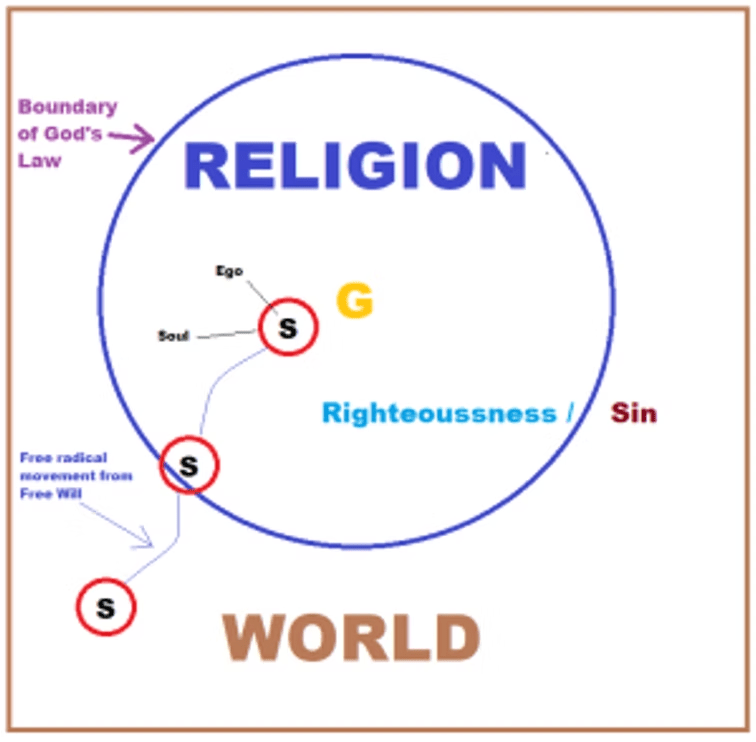
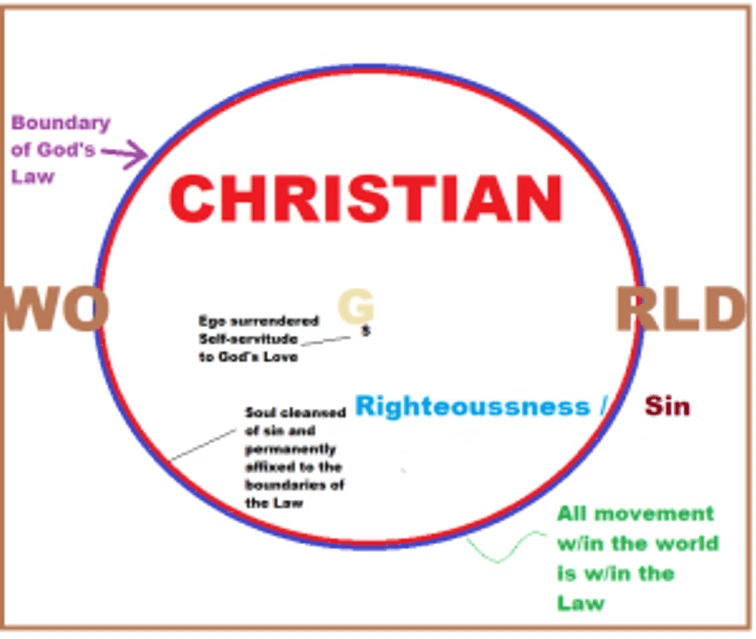
Reading this passage in 1 John and pondering this relationship between God’s love and an individual’s believing as synonymous with faith, it led me to create these diagrams.  They show how the same words can have two meanings: one externally driven and the other internally driven.  Perhaps, these will help the reader to grasp the direction my thoughts have gone.

The Law of God externalized.
The Law of God internalized.

To me, this demonstrates what John meant by, “when we love God and obey his commandments.”  Love has gone beyond a human emotion for God, as generated by the self and the ego of one’s soul.  It demonstrates how John said, “For the love of God is this, that we obey his commandments.”  In the first diagram, moving outside of the Law would imply one ceases to “love” God, instead “loving” the world.  However, the second diagram shows how the love of God makes one subservient to God’s Will, thus always obedient no matter what the world surrounds one with.

When John wrote, ” Whatever is born of God conquers the world,” the second diagram displays this as the submission of self-ego to God, where one becomes married to God through God’s love.  This then expands the soul so that it becomes one with the boundaries of God’s Law.  It is that soul change that is born of God.  It is the transformation from mere human to the rebirth of Jesus Christ.

When John added, “And this is the victory that conquers the world, our faith,” this is a statement that faith is identical with believing, where one is transformed from wandering human to Saint affixed to the Will of God.  Whereas the Judaic “faith” produced many wanderers (free radicals), only true faith cleanses one’s soul of sin.  One is then believing in the name of Jesus Christ, as that name has become one’s own.

In verse 6, where John posed the existence of a duality in “water and blood,” the diagrams above make it possible to see the difference between “water and blood.”  Such words in the same sentence is reminiscent of the saying, “blood is thicker than water,” where “blood” bears the connotation of relationship.  That makes “water” more casual in nature; but water is necessary for life on earth.  This can then be easy to misunderstand, as a conundrum that asks, “Which is better: blood or water?”

Water is an esoteric element that symbolizes emotions, where one’s feelings flow like water, always changing states (like liquid, solid, gas), rates of speed (like rapids, falls, streams, and rivers) and exploring a range of depths (like ponds, lakes, seas, and oceans). Still, water is a physical element, one which is a basic solvent and cleaner. We bathe dirt from things with water.  The human body is up to 60% water; thus life is dependent on water.  The body must consume water regularly, because that which is stores is quickly used.

Blood, on the other hand is esoteric as an indication of relationship, where every race in the world has different genetic characteristics that can be examined in one’s blood.  There are different blood types, inherent diseases, and types of blood cells found in human blood.  Blood is a physical necessity for life, because it is internal to the body.  Blood is the most vital element in a system controlled by the heart, where every cell in the human body is strengthened by its blood supply.  Loss of blood is life threatening.

All of these esoteric and physical characteristics of water and blood can be seen reflective in the diagrams.  The first diagram represents the physical aspects of water and blood, such that the boundaries of God’s Law act as a pool of water that is necessary for life.  The world incorporates God’s Law into civil laws.  Without that water, life would die of higher purpose.  For individual human beings, religions become the blood that leads to the responsibilities of adherence to the Law of God and civil laws.  Just as blood is oxygen enriched, by the lungs and the heart, sent out red in arteries, but exhausted of oxygen in the return to the heart in veins, human being act as individual blood cells.

This then allows the second diagram to reflect the internalization of the principles of water and blood.  The two become Spiritual in nature.  The joining of the self to God, at the death of the ego, becomes the water of God’s love that washes over one cleansing the soul of sins.  The expansion of the soul to the boundaries of God’s Law is then the blood of Christ that fills one’s heart and mind.

Religion can then be seen as the water of baptism, which proposes remission of sins and absolution.  Christianity is then the baptism by the Holy Spirit, done by the Messiah.  Religion is the life blood that teaches acts of goodness and self-constraint to a higher cause.  God’s marriage to one’s heart is then the true blood that relates all Christians as the Sons of God (regardless of human gender).  Jesus came as water in the physical sense that he lived on earth as a man.  However, that water was only available to those living around him.  The living water of Jesus is then his being reborn as the blood of Christ.

In the first diagram (Religion – World), it does not matter what the religion is. It can be any that places emphasis on a god, which certainly includes the “big three” that claim the same God: Judaism, Islam, and Christianity. All of those can then be subdivided into sects, branches, and denominations, still falling under the heading of “Religion.” Every different division has its own distinguishing dogma, ethics, and rites that followers of a system of faith or belief (the misnomer of “faith” and “belief”) are expected to follow.  Those “laws” then govern the people within a religion, as the determining factors as to who is to be held in high standing within each respective segment of people.

The role of each individual is then denoted by the red circle (a soul) with a black “S” within (the ego of the self), which denotes how each human being is contained within the boundaries of one’s soul. Individuals learn the differences between righteousness and sin, in the schools of the world, which include religions.  As such, God’s gift of “Free Will” allows the individual to migrate (become a “free radical”) between those two realms that exist in the world.

Human beings are then free do move away from religion, go back to religion, or straddle the boundaries of religion. To maintain interest (again, a diluted definition of “faith” and “belief”), the religions offer absolution and penitence on a regular basis. This does nothing to lessen the validity of “righteousness,” based on the parameters of “God’s Law,” as it also states it is ultimately the responsibility of the individual to strive for a lifestyle that pleases God.

This becomes reflective of the “water” element of which John wrote. The various churches act as the holy water that bathes the sin from the individuals that are members. It creates a body of emotions that are soothing and dissolving, in which members can soak. Still, such external water is not enough to bring about true faith and belief.

The right diagram replaces an institution (“Religion”) with God, such that the ego has surrendered to God’s Will, no longer able to pick and choose what influence he or she will follow at this instance. The close relationship between God and oneself is one of Father to Son (regardless of human gender), so the soul (the red circle) is cleansed (by the Holy Spirit) and expanded to the perimeter of God’s Law. Rather than an institution (a lifeless entity without individual human beings) acting as a place of refuge in the world, each one who is in a personal relationship with God can freely go anywhere in the world, remaining always within the boundary of God’s Law.

One is then only influenced by God’s Will and the world is only a place for one’s faith and beliefs to be shared. The individual is a temple unto the Lord, thus projecting to the world as the light of Christ. From that God-centered state of being (the present participle), the burden of the world (the guilt of sinning) is removed.

This becomes reflective of the “blood,” where it is the circulation of God’s Holy Spirit within one’s being that is the meaning of the blood of Christ. It is the baptism of the soul, which expands its heartfelt desires to fit God’s Will. Christ has become one with the soul, just as God has become one with the heart. Because the heart is the engine of the blood, there is a Spiritual uplifting that exceeds any human emotional capability. This Spiritual elation is brought on by God’s love.

This explanation (I hope) makes it possible to grasp the meaning of John writing, “The Spirit is the one that testifies, for the Spirit is the truth.” That says that the sacrifice of the ego has allowed the Holy Spirit to be the impetus for everything a human of faith and belief says. Nothing is kept private and secret, as the world needs to know the truth of God’s word (i.e.: Holy Scripture). The truth was spoken by Jesus of Nazareth; and, by his death, resurrection, and ascension – to be used by God (the Father) over and over again (as His right-hand “man”) – one who receives God’s love becomes as pure and clean as was Jesus, speaking the truth through the Christ Mind. The truth continues to be told, always present.  The Holy Spirit is sent by God, the Father, to the Son, via the Holy Spirit, so all servants of God can only speak the truth of God (as Jesus of Nazareth always did).

As a lesson in this sixth Sunday in the Easter season of personal resurrection and rebirth as Jesus Christ, one needs to see the importance of personal responsibility. A true Christian is born of God, not anyone or anything that is less than the Father above. A Christian does not recite words written on pages as the source of one’s faith and as that in which one believes, when one cannot explain the meaning of those words with truth and conviction. One has to elevate to a state where the world can be conquered and self-driven will power cannot reach that height and remain in that state eternally in the present.

This lesson flows into the Gospel reading in John, where Jesus told his disciples to love one another. That lesson is easily heard and yet constantly found too difficult to do. This lesson shows how “whatever is born of God conquers the world,” with that only attainable through true faith.

That is the answer to the question, “Who is it that conquers the world but the one who [has faith] that Jesus is the Son of God?”  The answer should be you.

———-

[Note: When I see someone has viewed something I have written, I re-read it to see if I made errors that need correcting (my normal grammar is bad).  As I re-read this article, I added a note above.  Still, I feel it necessary to add an explanation about the “free radicals” of the diagram above.  For that soul-ego to be placed within the influence of a religion, this becomes primarily how a child is raised within a church and taught to believe in Bible Stories.  As the child grows and is more influenced by the world, the natural movement is away from religion and towards the world.  That experience is necessary for one to return to God (not a religion) later in life.  The sad thing about this is modern parents are missing that childhood development within religion, so their children are mostly born of the world, without religion’s influence.  This is the danger we presently face: few believing.

#1John516 #beliefversusbelieving

John 15:9-17 – The commandment to love one another as Jesus has shown love

Jesus said to his disciples, “As the Father has loved me, so I have loved you; abide in my love. If you keep my commandments, you will abide in my love, just as I have kept my Father’s commandments and abide in his love. I have said these things to you so that my joy may be in you, and that your joy may be complete.

“This is my commandment, that you love one another as I have loved you. No one has greater love than this, to lay down one’s life for one’s friends. You are my friends if you do what I command you. I do not call you servants any longer, because the servant does not know what the master is doing; but I have called you friends, because I have made known to you everything that I have heard from my Father. You did not choose me but I chose you. And I appointed you to go and bear fruit, fruit that will last, so that the Father will give you whatever you ask him in my name. I am giving you these commands so that you may love one another.”

——————————————————————————-

This is the Gospel selection from the Episcopal Lectionary for the Sixth Sunday of Easter, Year B 2018. It will next be read aloud in a church by a priest on Sunday, May 6, 2018. It is important because it tells of Jesus instructing his disciple to love one another, just as he has loved them. It is more important when one understands exactly what that commandment to love one another means.

———————————————————-

Preface Note: I believe this is a vital lesson that all Christians should be able to know and defend.  For that reason, I have expanded the scope of this interpretation to include other Scripture in support of this lesson.  As such, this writing is longer than usual, in order to make this reading fully understandable.

———————————————————–

It is worthwhile realizing that this reading from John is the second time where Jesus told his disciples to love one another. The first time is also found in the Gospel of John, two chapters earlier.  There one reads:
“A new command I give you: Love one another. As I have loved you, so you must love one another. By this everyone will know that you are my disciples, if you love one another.” (John 13:34-35)


Both times that John recalled this instruction being given were on the same day – the the evening of the Passover Seder meal (15 Nisan). The first time was soon after the ritual dinner, not long after Judas left to betray Jesus. Jesus knew Judas was going to do that as he said, “What you are about to do, do quickly.” (John 13:27)

That timing makes it worthwhile to know that Jesus did not say to Judas, “Before you leave to betray me, I have a new commandment you need to hear first. It is: Love one another as I have loved you. Okay Judas, what you are about to do, do it quickly.”

Leaving friends behind.

Because that conversation did not take place, nor get recorded as a lesson of love, the omission acts to show how Jesus gave this commandment to a select group of followers – his disciples. By waiting for a traitor to leave, Jesus did not say that commandment as a lesson for the whole world to follow.   Although that would be the ideal, just as would Heaven being on Earth would be ideal, the whole world would have to be followers of Jesus Christ; but because that cannot be, one cannot read that ideal as the intended message in this lesson.

Recently, I encountered a man who had solved the whole world’s problems, based on misunderstanding this teaching of Jesus. He had written a short story that used this flawed logic: Because Jesus said his disciples must love one another, then all the world’s problems are rooted in the failure of Christians to follow that order.

This man was less concerned with helping anyone but himself (through sales of his short story), because his ultimate motivation was to throw blame on Christians for not living up to the lessons of Jesus Christ, through the sacrifice of their beliefs to the beliefs of others. He surmised that all the mental problems in the world were due to Christians not forgiving sinners, as though love means not judging anyone. He rationalized that Christians are to blame for pushing guilt onto the guilty, making sinners become psychotic due to a lack of love and acceptance of sins.  This man concludes (I presume) that Jesus taught forgiveness as the only expression of love.

The sad thing is this man does not stand alone in using this passage from John 15 as a stick to beat Christians into submission to a world of sin.  His view is how so many misunderstand this lesson (especially atheists). People misunderstand this command given for several reasons, but foremost is the difficulty that people have understanding God’s love. The theme for the Sixth Sunday of Easter is God’s love, but the mistake comes from thinking Jesus gave a command relative to human “love.”

Before discussing today’s Gospel lesson, it should be noted that Jesus gave other commandments about love. Unless those commands are understood as still in effect, making this reading’s order be additional, one cannot properly grasp the meaning here.

First, Jesus presented this lesson about loving your enemies:

“You have heard that it was said, ‘Love your neighbor and hate your enemy.’ But I tell you, love your enemies and pray for those who persecute you, that you may be children of your Father in heaven. He causes his sun to rise on the evil and the good, and sends rain on the righteous and the unrighteous. If you love those who love you, what reward will you get? Are not even the tax collectors doing that? And if you greet only your own people, what are you doing more than others? Do not even pagans do that? Be perfect, therefore, as your heavenly Father is perfect.” (Matthew 5:43-48, but similarly in Luke 6:27-36)

It looks harmless.

That passage directly instructs one to love an enemy, but it refers to love of a neighbor also.  Jesus directly addressed that love later in his ministry. Jesus was asked what the greatest of the Commandments was, to which he said:

“‘Love the Lord your God with all your heart and with all your soul and with all your mind. This is the first and greatest commandment. And the second is like it: ‘Love your neighbor as yourself.’ All the Law and the Prophets hang on these two commandments.” (Matthew 22:37-40, but similarly in Mark 12:30-31)

When we read in John 13:34, “A new commandment I give you,” the Greek word “kainēn” means “fresh, new, unused, and novel.” That indicates Jesus was not offering a replacement or superseding command. In the same way, the New Testament is an additional Covenant with God, through Jesus Christ.  It does nothing to change or eliminate the importance of the Old Testament.

It is as Jesus said: “Do not think that I have come to abolish the Law or the Prophets; I have not come to abolish them but to fulfill them.” (Matthew 5:17) Therefore, Jesus did not make any changes to his previous statements about loving enemies and neighbors. He added another element to the love commands.

When the totality of these commandments to love is grasped, it is easy to see how Jesus recognized there were natural divisions in the world. For Jews, their “enemy” was any and all who sought to take their focus off Yahweh and their Covenant with Him (i.e.: Gentiles). For the disciples, collectively the family and followers of Jesus, they lived among Jews (by Law), many of whom not only broke the laws of Moses but also displayed anger and resentment towards the disciples and Jesus (i.e.: the Temple elite). This means the love that needed to be found between those closest to Jesus (one another) was different than the same love that needed to be found for enemies and neighbors.

When Jesus told those listening to his sermon on the mount, “You have heard it told, ‘Love your neighbor and hate your enemy,’” he was addressing the rulers of Judaism teaching the law based on human principles, not divine guidance. They taught a misleading principle, because they understood the Law only on human levels, not Spiritual .

Because there are enemies, it is human nature to hate those who are opposed to you.  Likewise, it is human nature to love those who agree with you. Because Mosaic Law speaks more about guarding from falling under the influence of people who worship other gods, demanding the Israelites submit to complete obedience to the Law of Yahweh, all who are of those distracting influences are deemed enemies.

Because Yahweh promised land to His Israelite people (those who agreed to His Commandments), the people who resided on that land prior (and subsequently) all worshipped other gods.  Those indigenous peoples saw the Israelites as their enemies, because they took their land from them. The result was a mixture of races and beliefs, where all who resided on opposing sides were then both neighbors to one another (the Israelites), while also enemies because they opposed one another (all the other inhabitants of Canaan – Israel).

Enemies confront one another.

When this view is established, one can see that neighbors are those who profess belief in the One God (the Jews and scattered Israelites collectively). Enemies are then all Gentiles. The commands to love all who profess belief in the same God and also love all who believe in other gods becomes a love that is above and beyond human “love,” because human “love” must be defined by “hate.”  Human emotions are like coins that must have two sides.  For every emotion, there is an equal and opposite counter-emotion.

The wheel of human emotions.

The way that God’s love allows one the capacity for an uplifting ability, to rise above all human differences, is done by reaching a state of love that is heart-centered and within oneself. The world’s petty differences become inconsequential because one has found the truth of being chosen by God; and that means loving all others who have not reached that state of bliss.   By allowing those who focus on differences to do as they choose, without interference, one is loving others of all kinds.

The love then shown to both neighbors and enemies is a willingness to “Do unto others as you would have them do unto you.” (Matthew 7:12, Luke 6:31)  This is not a recommendation to surrender one’s beliefs to another, but an understanding that others are like oneself.  Just as one does not want to be told to surrender one’s beliefs, one should not ask others to surrender their beliefs.  That mutual respect requires a higher level of love to accomplish.

This love is not self-willed, as an attempt to gain neighbors or eliminate enemies. As a human being in the world, human beings will always be divided and at odds with one another. Wars and fights will always be waged.  As such, God did not send Jesus into the world to bring about human peace and “love.”

Jesus said, “Do not suppose that I have come to bring peace to the earth. I did not come to bring peace, but a sword.” (Matthew 10:34) All Christians know that the presence of Jesus caused the ruling elite of Judaism to become the enemy of Jesus.  They plotted to kill Jesus; and they recruited Judas from his followers, while convincing the Roman governor to sentence Jesus to death. Thus, Jesus did not teach love as the way to transform the earth into such a wonderful place that no one would ever strive to be good enough to go to Heaven.

From this understanding, one can then see how Jesus is speaking to a select subset of those who profess belief in the One God (Yahweh) – “his disciples.” It is also vital to always keep in mind how Jesus spoke from a human being perspective, having been born of a woman, so he knew his personality was separate from the Father’s.   Still, everything Jesus said that is recorded in the Gospels of the Holy Bible was not his brain calculating, but the Mind of Christ that led him to speak.

We know this because Jesus said, “The Son can do nothing by himself; he can do only what he sees his Father doing, because whatever the Father does the Son also does.” (John 5:19) Further, Jesus also said, “I did not speak on my own, but the Father who sent me commanded me to say all that I have spoken.” (John 12:49)

Who said that?

This means that the commandments about love come from God, as requirements that will set one apart from normal human beings through the elevation to Christ status (sainthood). As such, “his disciples” were students on the path to righteousness.  That distinction makes “his disciples” unlike those who simply believed in the same God (neighbors) and those who believed in other gods (enemies).

In today’s aftermath of the spread of Christianity, “his disciples” are those who believe in the One God and take steps towards understanding the words Jesus spoke as the means to reach the elevated state of being truly Christian. Now, those who are merely professed Christians and never go beyond learning children’s Bible stories are the neighbors. Now, those who formulate ways to destroy Christianity through belief in lesser gods (philosophies and other worldly idols), some who may even mimic the One God (as false shepherds), they are the enemies.

The command is then to love in three different ways, as love expressed toward three different groups of human beings.  This means one must not be blind to the fact that there are indeed enemies, neighbors, and family in the world. This means that the love of God will be expressed differently, accordingly, through those who have received God’s love.

In the reading today from John, we begin by hearing Jesus tell his disciples, “As the Father has loved me, so I have loved you.” That has to be seen as a love of family, where the disciples were the children of Jesus.  All the others who followed his ministry and supported it were family members – as brothers, sisters, including his mother. The Gospel stories paint pictures of how Jesus acted differently, yet still from love, to his family, to his neighbors, and to his enemies.

First, his family sought to learn from Jesus. To receive that knowledge, they became subservient to his needs. They carried tents, fetched lunch, prepared meals, and anointed his head and feet with oil. That says a love of family is total commitment to one another.
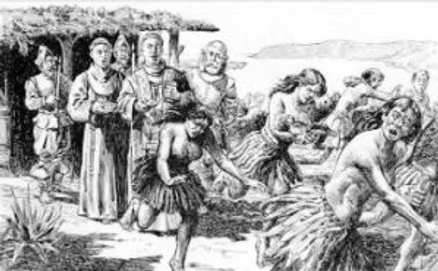
In this regard, after the crowds would leave Jesus, having heard Jesus speak in profound, yet unclear and uncertain language (as in a parable or a question answered by words that required the listener to truly answer), the disciples were just as confounded as were neighbors and enemies. They would ask Jesus to explain his words; and, Jesus would explain to them. The difference, therefore, in family and friends from neighbors and enemies is the family of Jesus sought to know more.

The neighbors and enemies could sense that was where Jesus was going with his words and that was where they did not want to go. They did not ask questions for fear of being exposed as unknowing or ignorant.  When they did ask questions, it was to trap Jesus and expose him as a false leader; but Jesus always turned the tables on them, so they fell into their own traps.  Thus, Jesus loved his family and friends by guiding them closer to where they were ultimately intended to go.

Seeing an advisor on registration day is advisable.

As for the neighbors, this primarily meant the Jews. Jesus said he was only sent to the Jews (“the lost sheep of Israel”), which by extension included his disciples. In the great commission, Jesus ordered them, “Do not go among the Gentiles or enter any town of the Samaritans. Go rather to the lost sheep of Israel.” (Matthew 10:5-6) This identifies the Jews as the neighbors who were to be loved. Still, Jesus encountered the outcast neighbors, who typical Jews saw as enemies and worthy of hatred.

In the story of Jesus encountering the Samaritan woman at a well, the woman said to Jesus, “You are a Jew and I am a Samaritan woman. How can you ask me for a drink?” (John 4:9) In the story of Jesus encountering a Canaanite woman, Jesus said to his disciples (who urged Jesus to send the woman away), “I was sent only to the lost sheep of Israel.” (Matthew 15:26) A leper was essentially a Jew that was forced to be outcast because skin lesions were seen as signs of sin; and, contact with a sinner was forbidden by Jewish law. Jesus touched a leper, saying, “I am willing (to make you). Be clean.” (Matthew 8:3) Jesus then encountered a Centurion (a Roman officer who had Jewish slaves), who told Jesus one of his slaves was deathly ill. Again, Jesus would have been forbidden by Jewish law to visit the home of a Gentile, but he asked the Centurion, “Shall I come and heal him?” (Matthew 8:7) All of these examples (and the many more) show the love of Jesus to neighbors, as those who came to Jesus because they believed he was holy.

Because they sought him out, as those who lived in the neighborhood (so to speak) but were not approved Jews, those neighbors were given the same treatment as if they were family and friends. They were lost sheep that heard the voice of their shepherd and came to Jesus willingly, without him seeking them out (against Jewish law). Therefore, the unwritten message of neighbors is it represents all those who live together but in segregated into groups, because of cultural demands, kept from intermingling by protocols. 

Jesus loved those neighbors by not rejecting them at face value.

Some neighbors do not believe in cutting grass.

As for the enemies that surrounded Jesus, one has to look at the examples where Jews were angered by something said by Jesus. In Nazareth, we read how all the Jews in the synagogue there, “were furious when they heard [Jesus speak]. They got up, drove him out of the town, and took him to the brow of the hill on which the town was built, in order to throw him off the cliff.” (Luke 4:28-29) While speaking to the Jews on the steps of the Temple, he told them the truth would set them free, which led to them denying they were enslaved. Jesus then spoke of the Father, to which the Jews claimed Abraham as their parentage. This inability to hear the truth in Jesus’ words angered them so, “At this, they picked up stones to stone him.” (John 8:59) During the Feast of the Dedication (now called Hanukkah), we read how the Jews gathered around Jesus and asked when he would clearly say he was the Messiah. He explained to them how they had heard that but did not believe, due to them not being his lost sheep. We then read, “Again his Jewish opponents picked up stones to stone him.”

Those were all the enemies of Jesus, yet Jesus loved them by telling them the truth, even though the truth hurt. Jesus did not capitulate to their demands to accept illegitimate reasoning, as if “love” meant not causing a stir.

It is also important to see some of the acts of Jesus that were also motivated by the love of God are often misunderstood as if an expression of pent up human emotions. For example, when we read, “In the temple courts he found people selling cattle, sheep and doves, and others sitting at tables exchanging money,” we then see the response Jesus had was, “So he made a whip out of cords, and drove all from the temple courts, both sheep and cattle; he scattered the coins of the money changers and overturned their tables.” (John 2:14-15) Later in his ministry, we see how, “When Jesus entered the temple courts, he began to drive out those who were selling.” (Luke 19:45 and similar in Matthew and Mark)

As Jesus was commuting between Jerusalem and Bethany during the pre-Passover week, we read, “Seeing a fig tree by the road, he went up to it but found nothing on it except leaves. Then he said to it, “May you never bear fruit again!” Immediately the tree withered.” This is given a title “Jesus Curses a Fig Tree.” (Matthew 21:19)

It is very easy to miss how Jesus acted appropriately in each instance, because his actions were backed by Scripture, as God’s love being that of a Father (not a mother). His physical acts were vivid and shocking lessons, but they were all backed up by divine words.  By those actions, Jesus taught lessons to his family and friends, and also to neighbors and enemies who witnessed them.  Jesus demonstrated love as an act in defense of one’s beliefs.

You’ll thank me later, although that is beyond your grasp now.

With that in-depth interpretation of love being much more than human “love,” where one comes from God in one’s heart, with the other coming from self-will that is ever-changing, one can then fully grasp the true intent of Jesus having a heart-felt chat with his students, on the eve of their graduation to Sainthood. This is not a conversation that equally applies to anyone who has not proved a committed relationship with God, through a love bond with His Son. This means understanding these words requires the presence of the Holy Spirit, as the disciples who were told this command did not write about it. (John was not a disciple, as he was family.)

Thus, students of Jesus to this day will have these words fall upon drunken ears, only to forget them when the fear and panic – generated by a world that is filled with dangerous enemies – grabs hold of their hearts and fills them with doubt. (“Oh you of little faith, why did you doubt?” – Matthew 14:31; and, “You of little faith, why are you so afraid?” – Matthew 8:26)

When Jesus told his disciples, “abide in my love,” he had just said his love was that of the Father, so the disciples were commanded to be in the same state. The Greek word “menó” (root of “meinate”) not only translates as “abide,” but also as “await” or “wait for my love.” That must be taken as Jesus telling anyone who desires to be a Saint, like Jesus, how he or she must wait until he or she becomes Jesus reborn.

Because the Father spoke through Jesus, the Son, Jesus saying, “If you keep my commandments, you will abide in my love, just as I have kept my Father’s commandments and abide in his love,” is saying all who have God’s love in their hearts will always obey God’s Will. This means each disciple will never again disobey the Father out of selfish will. That is the sacrifice of self that is awaited, which brings forth the Mind of Christ, so one is a new Jesus.

When Jesus then said, “I have said these things to you so that my joy may be in you, and that your joy may be complete,” the friends and family of Jesus had been seeking the “joy” and “gladness” that comes from “rejoicing” (all derivatives of the Greek word “chara”) that the promised Messiah had been delivered. In modern terms, Christians have the same desire in the promise of Jesus returning. The Jews all said they believed in the Prophets who promised the coming of a Savior, in the same way that Christians believe in the interpretations of Scripture that predict a Rapture and Second Coming. The Jews are still waiting for their Christ, while Christians who do not become Saints are still waiting for the End Times.

The “joy made in” a true disciples is “complete” when the return of Jesus Christ is now, in oneself. As such, the Greek word “plērōthē,” which means “may be complete,” also represents the conditional form of “might be filled.” This “fulfillment” depends on whether or not one opens oneself up to receive the Holy Spirit, which first requires one accept a marriage to God, becoming subservient to His love.

Understanding that self-sacrifice is the conditional demand makes it easier to see how Jesus saying, “This is my commandment, that you love one another as I have loved you. No one has greater love than this, to lay down one’s life for one’s friends.”  That says how the ability to possess God’s love demands one sacrifice one’s ego (the Greek word “egó” is the first-person pronoun “I,” emphatically stated as “I am.”). It means that the reward of that sacrifice is love, which is much greater than human “love.”

That sacrifice makes one capable of understanding the divine love that had been established between themselves and Jesus, as the Father being in touch with them through the Son. Thus, as Saints, they would have the love of family and friends between others of the same person (all begat from YHWH – “I Am That I Am” – as the Son reborn).  They could then promote the same love in multiplicity to other seekers, so more would become the children of Jesus Christ.

While it is easy to hear Jesus speak of laying down his life for his friends, through the Big Brain Syndrome of knowing the end of the story from the beginning, we can jump to the conclusion that meant Jesus would soon die on a wooden cross.  Unfortunately, such a conclusion is wrong. Jesus did not die on a cross so “philōn” (“friends”) could be saved, because that would deny all neighbors and enemies the same opportunity for Salvation.

If that were the case, then call back all the missionaries who travel the world trying to preach the Gospel to heathen enemies.

The meaning of what Jesus said has to be applied to Jesus’ life, not his death.  His life began at his birth, which means Jesus willingly sacrificed his human life before his soul was breathed into the human body that was born of a woman. Jesus laid down his life as a mere mortal, so he could become the Son of God, the Messiah.

By his making that sacrifice – laying down his life prior to birth – Jesus could live to create family and friends who would be saved by God’s love through that living body of Christ. Therefore, the conditional demands one exude God’s love amid the lives of neighbors and enemies, so that one will attract the seekers who desire to be close to one of righteousness.

When Jesus said, “You are my friends if you do what I command you,” this is the conditional proposition. If one reads the New Testament of the Holy Bible – the Gospels and the Epistles – and hears Jesus speaking to oneself, then one is a friend of God and Christ. That friendship is then conditional on obedience, which is by definition, “submissive behavior.” (see Collins English Dictionary definition 2)

That then defines a disciple as a slave or servant, such that a student must follow the lead of the teacher in order to obtain a passing grade and the ultimate goal – graduation to teacher status. When one has progressed to teacher status, one has become part of the family of teachers, who then teach their own begotten student friends. When one becomes a teacher of the Word of God, then one has become reborn as Jesus Christ.

In this line of thought that projects a student-teacher relationship that is intended to make the students self-sufficient as teachers, one can see the purpose of Jesus saying, “I do not call you servants any longer, because the servant does not know what the master is doing; but I have called you friends, because I have made known to you everything that I have heard from my Father.” The sacrifice of self that yields obedience, or servitude to the master’s orders, is itself a relationship that calls for love that does not accept failure as passing.

The students are the friends of the master because the master’s desire is for the students to learn the correct way. That level of love for friends means dressing the student down who has failed a test and praising the student who has successfully grasped a lesson. Jesus did this to Peter when Peter tried to rebuke Jesus, when Jesus told Peter, “Get behind me Satan.” (Matthew 16:23) Still, Jesus praised Peter when Peter answered Jesus’ question, “Who do you say I am?” (Matthew 16:15) The praise was because Peter’s answer, “You are the Messiah, the Son of the living God” (Matthew 16:16) was divinely inspired and not memorized (or hearsay). Therefore, Jesus the master told Peter the student, “Blessed are you, Simon son of Jonah, for this was not revealed to you by flesh and blood, but by my Father in heaven.” (Matthew 16:17)

When Jesus said, “You did not choose me but I chose you,” this is a statement of family. It is the relationship a parent has with a child, such that the saying goes, “You can choose your friends, but not your family.” Jesus then became the father of his disciples, telling them, “Follow me” individually, as his children.

That was a selection process based on divine insight, which says (in a way) that the souls who fill the bodies of our children are divinely chosen, by God, with purpose. Nothing happens by chance.

Students do not choose a course of study because they idolize a certain teacher. They choose a course of study because they desire to know that discipline. The disciples of Jesus chose to know righteousness, through one identified as the Christ. They never expected to become Jesus. Therefore, Jesus said it is up to the student to choose to achieve a goal that is higher than the teacher; and, for that reason Jesus chose his disciples because of their hearts having already opened to learn to love God – the ultimate goal.

Realizing that, when Jesus said next, “I appointed you to go and bear fruit, fruit that will last, so that the Father will give you whatever you ask him in my name,” Jesus affirmed he had chosen the eleven because they too would become teachers. They were buds that would blossom and grow into fruit, filled with seeds that would continue as the spread of Christianity.  As soon to be fruit from the true vine, the Apostles would become the offspring, true duplications of the Christ fruit.

By seeing this and by realizing that Jesus spoke these words to his disciples after Judas had left to betray him, Judas was like the fig tree that had born no fruit, which became cursed and died. This statement says a true Christian is appointed to also teach disciples, so they too become Jesus Christ reborn. Only by having been so resurrected can one ask God in the name of Jesus Christ for anything that will bear favorable results. Therefore, to be chosen is to be resurrected as Jesus Christ.

With the ending statement being, “I am giving you these commands so that you may love one another,” one must grasp that Jesus was not sitting in the dark of night on the Mount of Olives, speaking to a multitude of doubting Jews and enemies. Jesus, again speaking for the Father, spoke of God’s love being the DNA that joined them all together as brothers, who within fifty days would be reborn as Jesus Christ via the Holy Spirit. This means the command “to love one another” is an order to form a church – a graduate school of brotherhood and sisterhood, where only true Christians can support one another on a human level, as family.  In a Church family, every member has bonded to God as His Son reborn. (“For where two or three gather in my name, there am I with them.” – Matthew 18:20)

See this view of Church as a teachers’ breakroom or a faculty lounge, as a place to go when there are no classes of students for the masters to teach.  As a teacher of God’s love, one is still “on the clock,” but occasionally in need of re-energizing.  The command to love one another is then a command to give support to those in the same “line of work.”  The Church is how Christians maintain connection with all who are in the name of Jesus Christ. That is then a new command to amend the teachings of the synagogue.

A Church should be modeled after the rules set forth by Moses, where there are three “break times” a year – Passover, Shavuot, and Sukkot – with a call for Christians to share their love with their neighbors and enemies on every Shabbat. The natural abuse that would then be inflicted on those Christians, by neighbors and enemies, would require them to help each other’s wounds in healing.

Lend a hand.

Jesus wept and felt human emotions, because he was human. He was unable to carry his instrument of destruction to his execution, because he was human. He was able to take all the abuse because of God’s love within him, overriding his human feelings. As Jesus hung dying on the cross, he looked down and saw the true members of his Church … his family and friends.

To all the subsequent graduates of Jesus’ teaching, it was knowing their sacrifices would be worthwhile, for a great reward to come. The addition of new student believers, those who sought to know more about the promised Messiah having been delivered, would add to the joy of completeness felt in all having been Jesus Christ reborn. Those new masters would always find support in the others just like them … their family and friends.

As a lesson in the Easter season, it should be easier to see how one fits into this command to love one another. One has to have served one’s time learning the foundations of one’s religion. One has to desire to know God and from that desire seek the teacher that is the Holy Bible and those who can explain its deeper meaning.

Then one has to die of self-will and be reborn of God’s Will, with His love in one’s heart and the Christ Mind exposing all the truth that divine Word holds. All the commandments become second nature and not forced. One lives a life or righteousness for the purpose of attracting more seekers to oneself.

One understands how loving enemies is done by allowing others to hate you, without adding fuel to that hatred. One understands how loving a neighbor is done by living at peace with others who share the same belief in the One God, although others may not share the same devotion to God’s Will. Finally, one understands how loving one another as Jesus loved friends and family means to support others who have also been reborn as Jesus Christ.  One is devoted to that end so that the fruit produced will come from enemies and neighbors, led to seek God by the master’s light shining from within a servant of the Lord.

Acts 1:15-17, 21-26 – Casting lots for leaders Anointed as Jesus reborn

In those days Peter stood up among the believers (together the crowd numbered about one hundred twenty persons) and said, “Friends, the scripture had to be fulfilled, which the Holy Spirit through David foretold concerning Judas, who became a guide for those who arrested Jesus– for he was numbered among us and was allotted his share in this ministry. So one of the men who have accompanied us during all the time that the Lord Jesus went in and out among us, beginning from the baptism of John until the day when he was taken up from us– one of these must become a witness with us to his resurrection.” So they proposed two, Joseph called Barsabbas, who was also known as Justus, and Matthias. Then they prayed and said, “Lord, you know everyone’s heart. Show us which one of these two you have chosen to take the place in this ministry and apostleship from which Judas turned aside to go to his own place.” And they cast lots for them, and the lot fell on Matthias; and he was added to the eleven apostles.

——————————————————————————–

This is the reading selection from the Episcopal Lectionary, from the Acts of the Apostles, for the Seventh Sunday of Easter, Year B 2018. It will next be read aloud in church by a reader on Sunday, May 13, 2018. This reading is important as it addresses the replacement of Judas Iscariot among the Apostles of Christ.

In this selected passage, it is worthwhile to look at the first verse (Acts 1:15), based on the Greek and pause points (punctuation). The Greek states, “Kai en tais hēmerais tautais  ,  anastas Petros en mesō tōn adelphōn  ,  eipen , ēn te echlos onomatōn epi to auto  ,  hōsei hekaton eikosi  ,” which is broken into five segments, not two (where one segment is set apart by rounded brackets – parenthesis). This means the literal English translation states, “And in the days these  having stood up Peter in midst of the brothers  said  ,  was moreover number of names the same  ,  about a hundred twenty  ,” which is more profound than the translation read aloud in church.

In the first segment’s statement, the plural pronoun “these” refers back to the verses prior, where the disciples had watched Jesus ascend into Heaven from the Mount of Olives and then returned to the upstairs room. There they rejoined the larger group of followers of Jesus, who were his family and friends, including “Mary the mother of Jesus, and … his brothers.” (Acts 1:14) This took place on the Sabbath, which was the “Sixth Shabbat” after Jesus was found risen (Easter Sunday). It was the Seventh Sabbath, counting his Resurrection on a Sabbath and his Ascension also on a Sabbath.  Thus “the days” had numbered 41 since Jesus appeared to his disciples – in resurrected body.  It was also the 49th of “the days” in the Counting of the Omer.  That means “these” can be seen as a plural pronoun referencing the times since the relationship between Jesus and his followers had forever changed.

In the second segment, which names Peter, it is vital to see how the word “anastas” (a variation of the verb “anistémi” – as “having stood up”) is a name in Greek, as “Anastas,” that means “Resurrection.” This should not be overlooked, as the use of this word is intended for the reader to realize how Peter did more than just stand up from a seated position and begin to talk to a room full of people.  It says that Peter became elevated by the Holy Spirit while among the others who followed Jesus.

Notice how priests stand to present a sermon?

This uplifting of Peter can then be seen as the Resurrection of Jesus within him.  Whereas Jesus had previously been “in the middle” of “these” people who were in the upstairs room, as their leader and the “center” of their attention and devotion, Peter then took that position. It is then also vital to grasp that this was on the Sabbath, and the day before Pentecost (the “Fiftieth Day”), when the Holy Spirit came upon all of the disciples.  Peter then spoke as a rabbi, before his synagogue family.

The separation of the Greek word “eipen” (the past tense of “legó”), which translates as “said,” is then placing important emphasis on the act of speaking that Peter commenced doing. This acts then as a precursor to the writing in chapter 2, when on the day of Pentecost we read, “Then Peter stood up with the Eleven, raised his voice and addressed the crowd.” (Acts 2:14) The same elevation of Peter’s spirit took place then, so that he spoke the Word of God (as “uplifted voice”), rather than simply standing up and yelling at a crowd of people. While it can also be assumed his voice was loudly heard, the greatest importance is intended to be on the message that came forth. Thus, the segregation of this one word in chapter 1 places the same focus on the Word being “said” by Peter.

When a separate segment of words translates to say, “Was moreover number of names the same,” this raises the intent of “auto,” being at the end of a “number of names,” to a higher level.  The translation of “te” as “moreover” can be misleading, as it makes this segment clearer when translated as “both.” This then is saying that “both” Peter and the “number” (or “crowd” of “people in common,” from “ochlos”) of those he stood in the middle of were “the same” in “having stood up,” where (again) that means they had all become resurrected in spirit. It says they understood what Peter “said,” because all of them then shared the “same name,” as their “names” had become one (“the same”) with Christ.

That is significant to grasp, because in this scene Peter acts like a priest in a church, amid a congregation. Because he spoke, it is easy for modern Christians to see Peter as special or more filled with the Holy Spirit than the others. However, that is not the case and should not be taken as such, then or now.

Because “the number of names was the same,” Peter “said” what everyone else would have “said,” as it was also “said” within “them” (alternate translation of “auto”). Those to who Peter spoke were just like Peter, “both” (“auto”) human and divine, because Jesus Christ had entered “them.”  Regardless of what “names” their parents had given them, they were all resurrections of Jesus Christ. That is why those (or “these”) Jews were also Christians (“both” and “the same”). Therefore, none of them were lost intellectually as Peter spoke; and none left the upstairs room saying, “I had no clue what Peter was talking about.”

Not on the same mental wavelength?

When the final segment of verse 15 says, “about a hundred twenty,” this can be misleading too.  It can seem as if the number was not clear, as an estimate, where the number could be more or less. That is not the way to read the meaning of the Greek word “hōsei.”

The “number of names” totaled exactly one hundred twenty – no more, no less. This means the word “hōsei” is better translated as “like” or “as it were.” This then makes the word become a direct link to the previous segment, where being “the same” is then being “alike.”  As such, it conveys the message: “the number of names [of those] like” Jesus Christ was “one hundred twenty.”

This number is then a factor of ten, which yields twelve. According to Wikipedia, under the heading “Tithe,” Mosaic Law established ten percent as the amount of one’s produce reaped at harvest, which is owed to the Levites (who owned no land and grew nothing to harvest.  Thus, the Israelites were required to supply their priests with the bounty of the land (the Counting of the Omer is a ritual associated with that first harvest).

The article states: “The first tithe is giving of one tenth of agricultural produce (after the giving of the standard terumah) to the Levite (or Aaronic priests).”

Since Jesus was of Levitical descent and himself a Temple of the LORD, he too would set aside ten percent of his fruit harvested, as that dedicated to doing God’s work. This would now be reflected in those numbering one hundred twenty, who served God through Jesus.  That would have been a number fixed during Jesus’ ministry – after he had gathered together his own. He chose twelve disciples as a ten percent tithing to God.  Therefore, the speech given by Peter, which was well understood by the others, was saying that Jesus Christ required ten percent of his followers to become dedicated leaders of his Church. Without Judas, that number was unfulfilled and in need of replenishment.

In addition, this made the selection of twelve also be symbolic as the “elders” of the Twelve Tribes of Israel, where each leader was like the father (patriarch) of a family (women and children), while being brothers to the other elders. Because Judas Iscariot had been selected to represent one group of Jesus’ disciples, he acted as the father to that group of followers (a priestly term).  Judas’ death meant it was necessary to elevate a new follower of devotion into his vacated slot.

While not stated (just as Matthias and Joseph called Barsabbas, known as Justus were unheard of prior, and never mentioned directly again in Scripture), it may be that those two names were selected from those who were of the “family group” headed by Judas Iscariot. The meaning of the name Joseph implies an “Addition,” where “Barsabba” is not of Hebrew origin, believed to mean “Son of War.”  Because Justus means “Just,” it implies a Roman name, which could be stating that Judas Iscariot recruited a former Roman soldier (a Jew) to follow Jesus.  As for Matthias, his name meaning is “Gift of Yah[weh],” which could indicate one who was a financial contributor the Jesus’ needs.  If so, Matthais would have been introduced to Judas because he was the holder of the money for the family of Jesus.  That could mean that Judas Iscariot, in all sincerity, opened Matthias to becoming a devotee to Jesus, in the group fathered by Judas.  This analysis makes these lone appearances of the names here have hidden meaning be exposed, which adds to the depth of the meaning that is otherwise missed.

By seeing the death of Judas as a need to promote one of his own recruits to the position of respect that Judas once had (as one of the twelve), that makes the words of Peter speak the truth.  When he said that Judas was, “one of the men who [had] accompanied us during all the time that the Lord Jesus went in and out among us, beginning from the baptism of John until the day when he was taken up from us,” Peter pronounced that Judas was a good disciple until he fell from grace.  Even then, he fell from grace with purpose, as a necessary sacrificial lamb, one who fulfilled the prophecies of David (in psalms).  Therefore, the selection of Matthias (by casting lots) would then mean that the guilt of one evil disciple would not transfer to others (guilt by association), as the devotion to Jesus, by those who had liked Judas and come to Jesus because of him, had not wavered by Judas’ betrayal of Jesus.

To further this possibility, one should look to the Psalms quoted by Peter (omitted from this reading). The first quote comes from Psalm 69, verse 25, where David wrote, “May their place be deserted; let there be no one to dwell in their tents.”  That says the traitor Judas had no blood family that followed Jesus. Thus, there was no one who would stand by Judas, in support of his betrayal.  While it would have been natural (possibly even a requirement) that the disciples of Jesus would have previously fulfilled their roles as married fathers (respectful Jews in the eyes of God), it was not a requirement that the families of the disciples also follow Jesus. For example, James and John of Zebedee left their father behind, so those two would be replaced by hired hands. This means Judas had led other people to follow Jesus, not his own blood relatives.

As such, Psalm 109, verses 8 through 10 states:

May his days be few; may another take his place of leadership.

May his children be fatherless and his wife a widow.

May his children be wandering beggars; may they be driven from their ruined homes.

That says Judas’ time as a disciple was limited, but another would rise from his ashes to take his place. Instead of a blood relative, it would be a spiritual brother who was devoted to Jesus, one who was in the church of his followers, due to Judas. The implication (in my view) is that Matthias and Justus were nominated by the family group that was in Christ because of Judas Iscariot.  That group chose two men from among their group of ten people, with those choices then approved by the whole church (all 120). After that process was concluded, the two chosen “cast lots,” which could mean they chose from straws cut to various lengths [or maybe they tossed smoothed stones at a wall].  The one who pulled the straw of the desired length [or tossed the stone closest to the wall] was then selected the leader of a family group, as the twelfth disciple.  While Matthias was chosen, Justus would have remained a devoted disciple.

This is how the selection of any church leader should be, from vestry members to bishops to popes.  The selection process demands that the whole body be: A.) Capable of being chosen as a representative for a family group; B.) Filled with the Holy Spirit, as a true resurrection of Jesus Christ; and C.) Led by the Mind of Christ, thus in access of full knowledge of God’s Word.  If all in the Church meet these requirements, then all votes to place a member at the table of twelve should be unanimous.

As a lesson set forth in the final week of the Easter season, the grasping of a personal  need to have the Resurrection of Jesus Christ be within is realizing one’s need to “stand up within the midst” of oneself.  In one’s own heart one must be Anastas, a name meaning Resurrection.  One must be reborn of “brother” Jesus, whether one is a male or a female human being.. One needs to be added to the long list that is the “number of names” that have all shared “the same” Holy Spirit as Jesus Anointed in those reborn.

It is important to see how oneself must speak in the name of Jesus Christ, led by the Holy Spirit to speak of Scripture powerfully, so others can feel drawn to know the same truth. A Christian is then defined as a “friend” in a church of family, where all are “allotted [each] his [and her] share in this ministry” of God’s Word. To stand up and speak is to be true to Jesus Christ; but to sit silently (or to speak against Scripture, literally and figuratively) is to betray the Lord, as did Judas Iscariot.

It is a valid point to see Gentile converts to Christianity (Americans who are not Jewish by birth) as the family gathered by Judas, led to the truth by the truth.  Regardless of the flaws within he who initially showed that light of truth to others, true Christians are devoted to God, not His servants. The stigma of being Christian comes when one has been told there is nothing more to do, once one professes belief that Jesus was the Son of God.  People who preach that message are only looking for their own thirty pieces of silver, betraying God and Christ by misleading souls.

The Temple leaders knew their payment to Judas was blood money, once he threw it back at them.  The money was cursed to them, so they used it to purchase Potter’s Field, where the earth was red clay.  That name has become synonymous with graveyard for paupers and wayward souls.

Mass graves with no last rites?

One who follows the lead of a Judas then find his same end, which leaves one standing on the “field of blood,” like the one where Judas was destroyed.  The omitted verses in the middle of this reading has Peter telling the story of that tragedy, which comes when one cannot stand and speak the Word:

“With the payment he received for his wickedness, Judas bought a field; there he fell headlong, his body burst open and all his intestines spilled out. Everyone in Jerusalem heard about this, so they called that field in their language Akeldama, that is, Field of Blood.” (Acts 1:18-19).

The Easter message is to be filled with the blood of Christ. One needs to be Resurrected in his name for that relationship to commence.  The sacrifice of ego, for a higher self, brings that about, while the sacrifice of servitude to God brings about the weakness of Judas.

1 John 5:9-13 – Human testimony demands the testing of truth

If we receive human testimony, the testimony of God is greater; for this is the testimony of God that he has testified to his Son. Those who believe in the Son of God have the testimony in their hearts. Those who do not believe in God have made him a liar by not believing in the testimony that God has given concerning his Son. And this is the testimony: God gave us eternal life, and this life is in his Son. Whoever has the Son has life; whoever does not have the Son of God does not have life.

I write these things to you who believe in the name of the Son of God, so that you may know that you have eternal life.

——————————————————————————–

This is the Epistle reading selection from the Episcopal Lectionary for the Seventh Sunday of Easter, Year B 2018. It will next be read aloud in church by a reader on Sunday, May 13, 2018. This reading is important as John clearly says eternal life requires one be a reproduction of God’s Son, more than taking a position that believes the words of those who lived alongside Jesus of Nazareth.

There are five verses in this reading.   All are taking what is stated in the first verse (verse 9) and supporting that on deeper levels. The translation of verse 9, as shown above, is acceptable as stated, other than verse nine is two complete sentences.  Each sentence is then broken into two segments by commas, which the above translation does not show. When one reads verse 9 slowly and contemplates the meaning of each segment, through two segmented sentences, a profound message comes clear, which is easy to miss otherwise.

It says first, “If we receive human testimony.” That sets forth a conditional situation, based on faith and belief. It applies not only to religions (of all kinds) but to all philosophies of mankind. It is stating the confusion that is pervasive in American society today, where “human testimony” is constantly in all forms of media … all of which is sent out for the masses to receive.  This first segment of words is then saying that hearing people’s claims of what is belief-worthy, reading books written by the latest craze authors, or simply making life decisions based on personal experiences, can become what “we accept” as the truth.

As such, Christians read these words and automatically hear John talking about the divinity of Jesus (as the Christ). John was a human being and the author of this letter. As Christians, we identify with John, because we are human beings that also say we believe in Jesus as the Christ. We go to church to hear these words read aloud and we read them at home in our Holy Bibles. Still, the conditional word – “IF” – is asking us if we believe and have faith because we believe what what our brains hear, and not what we can personally testify to.

This beginning segment of words is then stating the condition that faith and belief requires instruction, given by someone who knows, as the proverbial person who has – “Been there, done that.” We can sense the conviction in someone’s words, so that someone’s words have a mesmerizing effect on us, coming from charisma that can be projected from human testimony. The Greek word “martyrian” means, “witnessing, evidence, testimony, or reputation,” so public words about Jesus Christ is called “witnessing.” Thus, the acceptance (or “receipt”) of testimony acts as one’s confirmation of the truth being spoken; and the power of someone else’s witnessing publicly should motivate us to seek more truth, through a teacher-student arrangement that fills us with the same conviction found in another.

That was the state of Judaism when God sent Jesus into the world. There were many who spoke of God and His promises to obedient servants.   So, there were many who believed it was the truth they heard. As such, many followed what they heard said in human testimony.  This is following the leader, more than following the Will of God.

The prophets of Israel and Judah had promised the people a Messiah; and the people of Israel believed that human testimony. The ruling elite of the Temple in Jerusalem preached the Law of Moses to the Jews, and the Jews of Galilee and Judea believed in the Law. Still, the teacher-student relationships that were established could not extend beyond the written words of Scripture, so no one was receiving the meaning of them. Much less, neither teacher or student understood how to apply the laws of Moses in a changing world that more often than not forced them to go against the Law for survival.

When Jesus came, he offered more human testimony, as he was born of a woman.  Some received his words as truth, but some rejected them (mainly for selfish reasons). Rather than heed what Jesus the rabbi said, even though he only spoke the truth of God, it was the truth no other rabbis knew.  To silence him and the questioning he aroused in the people, it was easier to kill him than listen and learn from him. Death, they hoped, would return the world to its former status quo.  No more human testimony from Jesus of Nazareth.

After Jesus rose from death, he taught his disciples for another forty days, in human form.  That body then ascended to Heaven before his witnesses. Ever since then (more fittingly, ever since the Apostles began telling the story of Jesus Christ in texts), the world has had access to “human testimony,” from which a new faith arose.

The state of Christianity today is largely belief in the four Gospels and the Epistles of the New Testament. Belief from that alone is blind faith, based on humanity having lost touch with the human teacher that Jesus of Nazareth was, whom the Jews of Galilee and Judea personally experienced. Instead of Jesus in the flesh, Christians today love their “rock star” church idols (which come in all denominations, in all forms), who use their charismatic ways of preaching to make human testimony feel like the truth. They tell the world that Jesus will come again … someday … soon … when the end of the world is nigh.

Many preachers learn to act sincere at seminaries, which are schools that teach the theatrics of charisma. Many human beings who want to increase their faith and beliefs go to schools that teach them the written words, the opinions about those words, and the history of changing opinions. Still, some schools focus on teaching students the tricks of a trade that intends to draw people in, without leading anyone to obtaining the true Holy Spirit. They preach enthusiasm, by doing little more than putting on a good show of faith.

Priests, pastors, ministers, and preachers all believe the Word is truth. Those listening to them do too.  By standing in front of other human beings of faith and beliefs, many believe all they have to do it use those words of truth and others will absorb holiness. It is easier to give the impression that one actually knows the truth, than it is to pass that torch of insight and knowledge onto others.

Keep in mind the warning given by Jesus of “false prophets.” He said, “Beware of the false prophets, who come to you in sheep’s clothing, but inwardly are ravenous wolves.” (Matthew 7:15) When Jesus said a false prophet comes wearing “sheep’s clothing,” that means they put on an act that makes them appear to be preachers of the truth. This does not mean all false prophets intend to mislead, but that is the result.  Still, if false prophets all wore red devil suits, carrying pitchforks, then who would fall for their tricks?

No one would.

If you go online, there is some site that advertises “7 Traits of False Teachers.” That is itself a “ravenous wolf in sheep’s clothing,” simply because that title presumes to know that all false prophets are limited to seven warning signs that are stated in Scripture. I presume (having not read the article) that they have stitched together a frightful image of the Big Bad Wolf that waits for innocent little lambs. Their purpose seems to be: Memorize these seven “traits” and you will be safe.

I imagine there is the potential for that page to add: Please, don’t forget to send money so we can help others be afraid.

Maybe they added that, maybe not. Regardless, my interest to see what human testimony they have to offer would depend on if I am willing to accept or receive their human testimony as the gospel. Human testimony is what it is – an opinion about what one believes is true; but that should always be tested first, before believing hook. line and sinker.

We realize that need for deeper examination of human testimony when John then wrote his second segment of verse 9, where he said “the testimony of God is greater.” That statement says how one does not need to memorize the seven characteristics of wolves trying to steal lambs. Looking at a list of traits, scribbled on a piece of paper, will not save one from the attacks of such wolves. Ravenous prophets steal innocent lambs by sweet talking them to come closer, telling them things the lambs want to hear, such as, “Believe in Jesus.” They say, “Come closer dearie and I’ll tell you the story of baby Jesus in a manger.”

Chomp!

Once you have heard human testimony that feeds you the truth, the next step is not “Repeat step one,” but listen to God. God is invisible and cannot be seen. God is Spiritual, not human.  God speaks in mental whispers that become the voice of one’s personal teacher within. God speaks so one will hear a lesson. God speaks to answer the questions we ask. God speaks so that we – as individuals – go as far towards faith and belief as our individual hearts’ desire. God is the inner voice that exposes false prophets and approves all Apostles.

When John then began a new sentence in verse 9 (following a period mark), he said, “For this is the testimony of God.” That is where another pause of a comma gets inserted, making one reflect on the meaning of that statement.

The word “this” means the epistle that John wrote. It means “this” verse in that letter, the next verses, and all others verses and letters that John had and would write. “This” means the words he, John the Beloved, had just written was the Word of God. That says “this” is the “testimony of God” because John gave God the credit for leading his hand to write a letter. It says, indirectly, “I, John, am a prophet of God.” Therefore, “If you receive (or accept as truth) this human testimony as being from God,” then you should know that this testimony of God is greater than someone who says or writes testimony, supposedly of God, while claiming he or she as the author.

Prophets of the LORD are not meant to be celebrities elevated onto pedestal status. Prophets of the LORD make it clear that God filled their lips with human testimony. Prophets of the LORD make it clear that other human beings should not do as I say, but listen to God; then stand beside me and prophesy.

To clarify that concept, John then finished his second sentence in verse 9 by stating, “That he has testified to his Son.” The word “that” referred to John’s claim (prior to the comma) that “this letter is the testimony of God.” John then said the truth of that statement can be realized by understanding that God did not tell the human being John what to write (as that would be mere human testimony), but that God told “his Son” Jesus Christ to write it.

That means Jesus Christ heard the whispers from the Father while he was one with the human being named John. That means the presence of Jesus Christ was within John, which is the proof (the truth of testimony) that John was a prophet who wrote the testimony of God. To be a prophet of God (not a false prophet), John had to have the Mind of Christ within him; and that made John the Beloved be reborn as Jesus Christ, the Son of God.

As you can see, one verse says a mouthful. From that verse, the other four following verses then hang.

The translation of verse 10 – “Those who believe in the Son of God have the testimony in their hearts” – is true, while the actual Greek says, “The one believing,” which places belief on an individual level of responsibility, which then is multiplied in all who likewise are perpetually believing in union with (the Greek word “eis” means “into,” more than “in,” but infers a result, as “union,” as “upon”) the Son of God. “Those” are then all who are like John the Beloved, as true prophets that speak what God tells them to speak, speaking as Jesus Christ having been reborn.

The translation that says, “in their hearts” is also a paraphrase of truth, where John wrote in the first-person singular, rather than the plural. The verse does not refer to “hearts,” but “himself” (Greek “hautō“). It can then be assumed that “believing” is relative to the proof within one’s being, as one’s personal experience of the Holy Spirit, by its having brought about the resurrection of Jesus the Aointed.

The use of “hearts” can then be justified as the Spiritual core of “those believing,” as the heart is the throne of God, to be set aside for His presence by each individual of true faith. God then sits upon that throne after one has become married to God, as His subservient wife [regardless of human gender], leading to the Holy Spirit giving rebirth to His Son into a human form.  The Son of God is then he who sits at the Father’s right hand as the Mind of Christ, leading one’s soul within one’s human body.

Now, verse 10 is divided by a semi-colon, which makes it read similar to the two sentences in verse 9. Following the semi-colon (which is implied, as has been passed on by the divine testimony of subsequent translators), John wrote a segment of words that says, “the [one] not believing the [one] God,” with the words that follow separated by a comma. This makes this segment of words be complimentary to the previous statement (which began verse 10), with the difference being the first segment focused on “one believing in union with the Son of God.”  Now, the reference is simply to “not believing the [one] God.” The comma forces one to pick up on that difference.

John had then just said that there are two kinds of people. The first is he or she who is believing by the presence of the Son of God upon him or herself. If one has been reborn as Jesus Christ, then one has to believe in God, as one cannot believe in the Son without believing in the Father. The other type of person is anyone who does not believe in the Son of God, because he or she does not believe in God. Therefore, all the Jews of Galilee and Judea who said they believed in God did not live up to that lip-service.

Following the comma, John then explained, “A liar has made them.” This means God is considered a liar by anyone who says God promised a Messiah – the prophecy received by the human testimony of Israel’s and Judah’s Prophets – but then deny that Jesus of Nazareth was the fulfillment of that promise. The Jews denied that even when they later heard the Apostles give holy testimony of the resurrection of Jesus Christ, as Jesus Christ resurrected in them. Indirectly, the Jews in general were led to disbelief by false prophets, who did not believe in God – the Temple leaders.  The influence that “a liar made them” was Satan, not God.

The Jews who clung to their position of favor, rather than welcome a position of servitude, where God would have them sent to preach amid Gentiles, they fervently refused to receive that human testimony. They had no connection to the God they used for their benefit, as a name that made them special in the world.  To this day, people say Jews and Muslims pray to the same God (called either Yahweh or Allah), but no one can be truthful in a profession to believe in the true One God, when one does not believe in Jesus Christ. By calling God a liar, they become liars.  Only Christians truly believe in God, because they are in union with His Son.

That is the meaning of the remainder of verse 10, where the translation above is fair in saying the reason this backfires is because Jews were still, “not believing in the testimony that God has given concerning his Son.” The prophets foretold of the Messiah coming, just as Jesus of Nazareth came. The Scriptures of the Torah had been fulfilled by the known history of Jesus of Nazareth. To say none of that is true means to say God lied through His Prophets. One cannot have any love in one’s heart for God if one calls God a liar.

It is like God (through John) using the children’s taunt: “I am rubber, you are glue.  What comes from your lips bounces off Me and sticks on you.”  Or, “Liar, liar pants on fire nose is long as a telephone wire.”  The denouncers of Jesus “a liar has made them.”  In reality, they denounce themselves from God’s love.

In verse 11, John begins by stating, “And this is the testimony.” That refers back to verse 9, where one needs to receive human testimony with a grain of salt, especially when someone says, “My testimony comes from God.” Rather than believing the human, one has to make one’s own contact with God and verify that the testimony being spoken is indeed the truth. That comes by God being in one’s heart, because one loves God. Thus, John is now restating, “This is the testimony of God” … in case you still think God is a liar.

Through John, a human Prophet of God, God then said (and I paraphrase a little), “God gives eternal life to those believing in my Son.” (And I add further …) “I do not give land as gifts anymore. I do not give worldly riches that are to be wasted on ornate temples, where the elite-minded can rule as oppressors over My people. And I certainly do not give My blessings to anyone who calls Me a liar.” The literal Greek-to-English translation here states: “That life eternal has given the [one] God,” with me adding a little extra to that.

As an extra added by John, he then wrote (literal translation), “To us and this the life in the Son his is.” That means, to John and all other Saints (Apostles), eternal life (“this”) comes in the form of Jesus Christ (“the Son”) in each of them. In the Son of God IS eternal life, which IS the being of ALL Saints. The part of one’s being that is unquestionably eternal is one’s soul, but for the soul to maintain eternal life outside of Jesus Christ, it must reincarnate into a new body over and over again.  Eternal life is then always starting over, always repeating, always failing to return to God.  It is eternal life interrupted.

It means that IF one likes to imagine life in Heaven, such that we think it is where granddaddy, mom, old dog Spot and our long lost friends are all running around having a good ole time, then that is not quite grasping the big picture. Heaven is set aside for one type of people – those believing in the Son of God. It is for those who believe because the Son of God is in union with them, so they believe knowing the truth as Jesus Christ born into new souls. Therefore, Heaven is for God and a whole bunch of Saints whose souls were saved by Jesus Christ. Rather than running around aimlessly, they sing songs of praise to God eternally.

Just in case someone misunderstands my interpretation here, John then wrote, “Whoever has the Son has life; whoever does not have the Son of God does not have life.” The key verb here is “echo” (root to “echōn”), which is translated as “has,” as a possessive form of the infinitive verb “to have.”  It also means “holds” or “possesses.” One cannot “have, hold, or possess” the Son by human testimony. One cannot “have, hold, or possess” Jesus Christ by not being “in union with” that divinity of the Holy Spirit, thus not knowing Scripture has been fulfilled by knowledge coming from the Mind of Christ.

Eternal life is the reward of complete servitude to God, through love.

Take these Gospels and make them grow. Then climb the vine to the top, learn the truth, and come back down!

John then began concluding his epistle by writing, “I write these things to you who believe in the name of the Son of God, so that you may know that you have eternal life.” A long time ago, when the ink was still wet on the parchment upon which John wrote this letter, it was to be sent to Saints John knew. All of them had assumed the title “Christ,” because they had been awarded the presence of the Son, by the Father.  Today, we read this letter roughly two millennia later, with our eyes intended to ponder these words. We can be the Saint unto whom John wrote. Or, we can deny that God sent this prophecy to us, for us to fulfill it by making a full commitment to God, so we can come to personally know Jesus Christ as Jesus Christ reborn.

As a lesson in the Easter season, those who love God, but have still not yet said “Yes” to His proposal of marriage, the call is to make that commitment now. That union is what brings about the Resurrection of Jesus Christ within one who is subservient to God’s love. One has to move beyond receipt of human testimony and know the truth that is God’s testimony, which comes from the Mind of Christ overseeing one’s human brain. This commitment was made by John and all the many others who have spread true Christianity to the world. Thus, the call is to join that lineage of Saints, who serve the LORD as His Prophets – the lights of truth that shine in the darkness of the world.

The message here is there are only two types of Christians, as Christianity has not remained true to its origin in only Saints. It has been diluted, just as the Israelites lost their way after Moses delivered them to the Promised Land and their faith slipped. Their failures to God were due to them wanting to be like the people of other nations, who praised leaders instead of God. Christians today are just as distracted by the things the world offers, which makes them moan and groan about having to be personally devoted to God’s Will.  Like a child who has been told “No” by the father, the next step is to go ask mom and have her change that edict.

This childish behavior is repeated in human adults, as the influence that leads humans to follow leaders that will become surrogates to our selfish desires.  The leaders we choose to lead us will always be liars – false prophets – who will tell the people what they want to hear.  They always say God wants his children to be special, as wealthier, smarter, and healthier than other mere mortals. To gain those benefits, all one has to do is say, “I believe in Jesus Christ as the Son of God.”

The Pied Piper of Hamlin leading the children to their ruin, all over again.

Your playing my song!

The message here is God only offers eternal life as a reward of faith and belief.  That only comes by one’s soul being one with the Holy Spirit of Jesus Christ. The rewards of a mortal life are hard, honest work, and the persecution for one’s true beliefs, as Satan surrounds believers with evil and difficulty.  He tempts them first with material gifts that are mirages, compared to eternity.

To say one is Christian and then not know Jesus Christ personally … to not speak the Word of God so that others can be led to the truth … is to call God a liar. Satan loves to have souls call God that.  Rejecting that holy presence says one believes Jesus Christ will not be sent by God again until the world is ended … after I have grabbed as many comfortable things as I can … regardless of who suffers so I can find favor.

This Easter lesson poses the question: From where did your beliefs come? Did you receive human testimony and place total belief in the words of another human being, without asking God to prove those words were true and worthy of belief?

All Easter season we have been asked to discern the difference from “believing” (in the present tense) and “belief,” where so many lambs follow the leader, too frightened to test what they believe as truth. This lesson wants you to know all about that which you profess as belief.

John 17:6-19 – Jesus prayed for his disciples

Jesus prayed for his disciples, “I have made your name known to those whom you gave me from the world. They were yours, and you gave them to me, and they have kept your word. Now they know that everything you have given me is from you; for the words that you gave to me I have given to them, and they have received them and know in truth that I came from you; and they have believed that you sent me. I am asking on their behalf; I am not asking on behalf of the world, but on behalf of those whom you gave me, because they are yours. All mine are yours, and yours are mine; and I have been glorified in them. And now I am no longer in the world, but they are in the world, and I am coming to you. Holy Father, protect them in your name that you have given me, so that they may be one, as we are one. While I was with them, I protected them in your name that you have given me. I guarded them, and not one of them was lost except the one destined to be lost, so that the scripture might be fulfilled. But now I am coming to you, and I speak these things in the world so that they may have my joy made complete in themselves. I have given them your word, and the world has hated them because they do not belong to the world, just as I do not belong to the world. I am not asking you to take them out of the world, but I ask you to protect them from the evil one. They do not belong to the world, just as I do not belong to the world. Sanctify them in the truth; your word is truth. As you have sent me into the world, so I have sent them into the world. And for their sakes I sanctify myself, so that they also may be sanctified in truth.”

——————————————————————————–

This is the Gospel reading selection from the Episcopal Lectionary for the Seventh Sunday of Easter, Year B 2018. It will next be read aloud in church by a priest on Sunday, May 13, 2018. This is important as it is a prayer submitted to the Father, by the Son, for his children to be accepted as his fruit of the vine. This not only applied to the disciples close to Jesus of Nazareth, who would become Saints as Apostles, but to all who would be born of the true vine afterwards.

Let me first state that this reading led me to write a companion piece that details the last hours of Jesus’ ministry, prior to his arrest. This prayer that sometimes has the title applied, “Jesus Prayed for His Disciples,” is not stated by John as to where it occurred, although it was after Jesus led his followers out from the upper room, after the Passover Seder meal and ritual was completed. This prayer took place on a hill that had olive trees on it, just outside the Essenes Gate of Jerusalem.

The above graphic has been modified (by me) to show how the known general area of the Upper Room and the easiest exit point from the city of Jerusalem.  The graphic is part of an article on Jerusalem’s Essenes Gate, written by Bargil Pixner and published by Century One Foundation.  With little question about the Upper Room being in the Essenes Quarter, and with the Essenes known to be a sect of devout Jews (along with the Pharisees and Sadducees), it is easy to see how some believe that Jesus was a member of that sect.  The only point I wish to make here, relative to the place where Jesus prayed for his disciples, is Luke, Matthew, and Mark all agree that Jesus left the upstairs room and went to the Mount of Olives (more literally a “hill of Olives”).

This prayer for his disciples was amid prayers for his glorification and for all believers (all of John 17).  Following this, John wrote that Jesus took his disciples to the garden across the Sidron Valley, which was Gethsemane.  This would indicate that John’s account of Jesus praying preceded the prayers of pain and agony that Jesus was witnessed to have prayed in the garden at Gethsemane (by the other three Gospel writers). To get an in-depth perspective of the flow of movement, after the disciples were led away from the Upper Room, please read my account of The last four or five hours that preceded the betrayal and arrest of Jesus of Nazareth if you want to know more about this topic.

Let me also add that John wrote of conversations Jesus had with his disciples, prior to John recording the prayers of Jesus.  From the perspective of the map above, get a mind’s eye view of Jesus and his male followers (including John) leaving the Upper Room and meandering their way through the Essenes Quarter, before exiting at the Essenes Gate.  Because it is not clearly stated, it becomes natural to see the disciples carrying a jug of wine with them (the Seder tradition to drink until you pass out) and drinking as Jesus talked to them (drinking being why they did not recall to write about those lessons).  As the Seder ritual would have been celebrated in the same way, throughout all of Jerusalem, it would seem logical that Jesus and his followers met and shared wine with other Essene Jews who were likewise outside on a spring evening.  After an hour or so milling about, Jesus and John excused themselves to go among the olive trees on the hill that overlooked the Hinnom Valley, so Jesus could offer the prayers John of which John wrote.

It is important to realize that the entirety of chapter 17 in John’s Gospel tells of Jesus praying. Verses six through nineteen are of Jesus praying for his disciples. The verses prior are for Jesus to be glorified by God, and the verses following are of Jesus praying for all believers. The fact that John dedicated an entire chapter to the prayers of Jesus, whereas the other Gospel writers make mention of Jesus praying on a lesser degree, sets John apart from the other Gospel writers … in more ways than one. I address that in the other article.

In the same way, John wrote chapter 14, which told of lessons given to the disciples that no other Gospel writer wrote of.  It was in that chapter that Jesus said there were many rooms in the Father’s house, and he was going there to reserve one for them.  Philip said (basically), “You never told us where your father lived.”  That was a sign of drunkenness.  At the end of chapter 14, John indicated Jesus said to the disciples, “Come now, let us leave,” (John 14:31d) which meant they either left the Upper Room then, or they left the Essenes Quarter, going outside the Wall of Jerusalem.

Once outside, John wrote chapters 15 and 16 that was Jesus telling his disciples that their future was bright, with nothing to worry about.  Still, because none of the others recorded those pep talks in the other Gospels, the disciples were struggling to think clearly, plus the later it got the sleepier they became.  Outside the Essenes Gate, Jesus could have broken away from the group with ease, leaving them to talk amongst themselves and also relieve themselves of their wine at the sewage channel just off the path.

Here, in chapter 17, John recalled prayers said by Jesus, with none here duplicated in another Gospel.  This omission should not be seen as if John was making things up or remembering things out of sequence.  Rather, John has to be seen as the one follower that was not drunk.  He was not drunk because he was not an adult.  He followed Jesus as a close family relation, who carefully listened to everything Jesus said.  John was excited to be walking with the adults, as part of the Seder late evening experience, while the disciples were falling asleep from drunkenness (or still drinking Seder wine).

In this scope of John’s chapter 17, looking only at his prayer for his disciples, the character that was John is totally removed. The reader has become the one overhearing this prayer, as if one has become John. We are allowed to be close to Jesus at an intimate time of prayer with God.  The reader of this prayer should consider him or herself one of “his disciples,” for whom Jesus prayed, while also seeing oneself as a child of Jesus that thirsts for the knowledge of God that comes from Jesus.

With that in mind, it is important to grasp the first verse. When Jesus said, “I have made your name known to those whom you gave me from the world,” this does not mean Jesus told a group of heathens who the One God is.  When Jesus then stated, “They were yours, and you gave them to me, and they have kept your word,” he clarified that his disciples were ALL Jews (Israelites in good standing), who sought to serve the LORD faithfully, and they had adhered to the laws set forth by Moses.

The disciples were ALL looking for the promised Messiah to serve the LORD through, as the followers of God’s Christ.  God had led Jesus to find those men of devotion. Therefore, the “name” that was God’s “name known” IS the Messiah of God – the Christ.  As the Messiah, Jesus proclaimed the title Son of Man and that was made known to his disciples.  Jesus was the Son of the Father, thus the Son of God, a name made known.  All that Jesus made known to his disciples was through words and deeds – lessons and miracles – assignments given and real encounters witnessed.

At that point in time, as Jesus knew his time of ministry was concluded and he would soon be taken from his disciples, Jesus told God, “Now they know that everything you have given me is from you.” Jesus had repeatedly said that he did not speak for Jesus of Nazareth, but for the Father. The ego of Jesus had been subjected to the Will of God.  Jesus had explained that the Father was in him, just as his human body was the seat of the LORD. The disciples had been told that everything from the Son comes from the Father. This was confirmed by Jesus praying, “For the words that you gave to me I have given to them, and they have received them and know in truth that I came from you; and they have believed that you sent me.”

When Jesus next said, “I am asking on their behalf,” this is the true power of prayer – for specific others. Jesus said he was not praying for the whole world to find benefit from God’s Son sending forth a prayer on such a broad scope. Jesus clearly stated that his prayer was for the disciples “whom God gave Jesus,” because they too were God’s, as the children of Jesus. For Christians today, a prayer of this nature is the cement that bonds the parts of the Church of Christ to that one cornerstone that is Jesus Christ. A child of Jesus Christ’s – as a Son or Daughter of the One God – should pray specifically for others who are also in the name of Jesus Christ.

Selfishness prays for those the ego deems politically correct, just as the Pharisee proudly prayed aloud in the Temple – “Thank you God for making me me and not that loser over there!”  Think about how that applies to priest who pray for the equal rights of everyone in the world – those other than Christians, Christians who need someone praying for them, whose “equal rights” are ignored.  When in the name of Jesus Christ one’s prayers are specifically directed, for specific purposes that fit the Will of God, not the philosophical brains of mankind.

To be able to see the future implications of this prayer (where we today are the focus), Jesus then told God, “All mine are yours, and yours are mine; and I have been glorified in them.” That statement goes far beyond eleven drunken disciples who were most probably sitting on the ground or leaning against the Wall of Jerusalem, arguing about who was more important to Jesus or dozing off from being tired. The Holy Spirit had not yet come upon those who were to be of Jesus, as he was of God. Still, those buds of fruit on the most holy vine (what John remembered Jesus saying in John 15:1-8) would become the glorification of Jesus Christ … as him born again, again and again, to this day onward.

Jesus had told his disciples about the seed (a kernel of wheat) that must die so that its fruit could come forth (John 12:24). Now he confessed to his Father, “I am no longer in the world, but they are in the world, and I am coming to you.” That was an admission that the words given to Jesus, by the Father, were soon to be fulfilled. There was no further ministry on earth for Jesus to command, in the human form that was his body. The disciples would fill that need in the future.

Rather than the world missing one Jesus of Nazareth, there would soon be many Christs following him.  This is as Jesus said, “Holy Father, protect them in your name that you have given me, so that they may be one, as we are one.” That protection would be their duplication – the Resurrection – of Apostles in the name Christ. Just as Jesus of Nazareth had been in the name of Christ, the name given to him by God, so too would God give the Saints of Jesus Christ the same oneness. Their souls would be filled with God’s Holy Spirit and their brains with the Mind of Christ, and true Christians would spread across the face of the world.

Jesus then prayed, “While I was with them, I protected them in your name that you have given me. I guarded them, and not one of them was lost except the one destined to be lost, so that the scripture might be fulfilled.” That says that Jesus in the flesh, as the Son of God incarnate among men, was the protection of the Christ for the disciples and followers of Jesus of Nazareth. That presence guarded the children of Anointment, as would wild beasts protect her young from external threats. Protection comes from love.

Jesus had just earlier said (after they had left the Upper Room) that there was no greater love than could be shown for a friend, such that he would lay down his life for his friends (John 15:13).  That was his commitment to protecting his followers. Jesus would then continue to provide his protection through the love of God and the transformation of disciples into Apostles, all surrounded by the Spirit of Anointment.

The one he had lost was Judas, who was necessary to lose; and the betrayal by Judas was prophesied (Psalm 41:9). Jesus would repeat this statement made in prayer – that the prophets might be fulfilled – upon his arrest that would come.  Recorded by Matthew and Mark … Jesus said, “This has all taken place that the writings of the prophets might be fulfilled.” (Matthew 26:56a)

Jesus then said, “Now I am coming to you, and I speak these things in the world so that they may have my joy made complete in themselves.” This conforms that Jesus is asking the Father to enter the hearts of those who wanted so hard to please God, but had never had someone to show them the way to God’s love. The words “my joy made complete in themselves” means Jesus Christ will be the reborn as a result of the disciples’ marriage to God.

Just as Jesus was married to God, with God’s love filling his heart, Jesus was assured eternal life. God’s gift of complete Salvation was the joy of Christ in the disciples’ souls. That was the promise made to the disciples of Jesus, where not long before he told them, “In My Father’s house are many dwelling places; if it were not so, I would have told you; for I go to prepare a place for you. If I go and prepare a place for you, I will come again and receive you to myself, that where I am, there you may be also.” (John 14:2-3) The promise made, in words in this world, was to be rewarded in Heaven.

When Jesus said, “I have given them your word, and the world has hated them because they do not belong to the world, just as I do not belong to the world,” he was making reference to the training ministry the disciples had been sent out to experience. The “great commission” was an exercise of one’s commitment, to go and tell other Jews (Israelites), “The kingdom of God has come near.” (Matthew 10:7) That meant the disciples were bearing the presence of the Holy Spirit in a world of faithless doubt. Those who proclaimed to know the word and be close to God were hated by those who were stubbornly lost. That natural response was due to a Saint belonging in Heaven, not on earth. It was why Jesus was rejected and soon would be killed (with the Apostles all to face the same fate).

Jesus knew that his disciples would have similar futures. Therefore, he prayed, “I am not asking you to take them out of the world, but I ask you to protect them from the evil one.” That meant there would be no Greek tragedy theatrics, where a angel of god would rush in and save a hero from a terrible end. Likewise, Jesus would not be swept away by his Father, to prevent the Son from crucifixion. That escape would mean no resurrection could be possible, with Heaven not a greater reward than life on earth. The only thing Jesus sought for his disciples (Judas excluded) was for none of them to fall to the temptations of Satan. That test would come in their futures, and God would answer this prayer by having the disciples all become graduates to Sainthood.

When Jesus said, “They do not belong to the world, just as I do not belong to the world,” the reason is their hearts and souls had been purified and glorified by God. They all belonged in Heaven, through eternal salvation. Their souls had been baptized by the Holy Spirit that was Jesus the Anointed one.  They were in the world to bring others to that same state of not belonging in the world. One stops belonging to Satan, when one starts belonging to God, as Jesus reborn.

To belong in Heaven is to be pure of soul, with no tarnishing of sin remaining. Jesus prayed to God, “Sanctify them in the truth; your word is truth.” The truth is the Word of God, which is only partially spoken in the Holy Bible. The truth goes beyond the words that can be written, spoken, or thought by human brains. The truth comes from the Godhead, accessed by the Mind of Christ. To reach that state where the truth is available to one, one has to be completely pure. The only human being to have such perfection is Jesus of Nazareth, because he was the Messiah. Thus, all subsequent servants of the LORD must have their souls purified by the Resurrection of Jesus Christ within those souls. It means only souls in the name of Jesus Christ go to Heaven to be with God.

Jesus then ended his prayer for his disciples by saying, “As you have sent me into the world, so I have sent them into the world. And for their sakes I sanctify myself, so that they also may be sanctified in truth.” This states that the model of perfection will forevermore be that of Jesus Christ, whose life would be written of in a New Testament. All true Christians are to become just like Jesus of Nazareth, in the sense that they abide by the Will of God (His Law).

It is impossible to reach that level of perfection when one fails to sacrifice self and ego in a marriage to the LORD that calls for absolute subservience. Anything other than that would equate to “too many chiefs and not any Indians.” This prays that all subsequent disciples of Jesus Christ will understand the soul’s need to be baptized by the Holy Spirit, which brings about sanctification. Sanctification does not mean “a pretty good dude,” “a fine statesman,” or “a big benefactor to a religious organization.” It means obedience to God’s Will … totally and completely.

As one can see, this prayer is in no way spoken by a troubled spirit. There was no worry in Jesus when he prayed to the Father to bless those who would be reborn as Jesus Christ. John wrote this in a sequence of events that preceded Jesus leading the disciples to Gethsemane, the garden across the Kidron Valley. It fits the other Gospels that say Jesus took the disciples to the Mount of Olives, outside the Upper Room.

Jesus would not have made this prayer be overheard by his disciples, as some grandiose public gesture. John witnessed a private moment of prayer.  Jesus’ prayer for his disciples was said in solitude, with only one young boy close enough to hear his words. Unlike this calm and serenity, the prayers coming from Jesus as Gethsemane were troubled and agonizing, for Jesus to be given the strength to withstand his mortal end.  John did not record any troubling prayers from that garden, as he was not close enough to Jesus then to overhear any (unlike John of Zebedee).

As a Gospel reading in the Easter season, when the call is to have Jesus resurrected within oneself, one needs to see oneself as who Jesus was praying for. The call of his prayer asks for you to find God as your protector, such that your heart will open to His love, giving birth to the Christ Spirit within. Without being resurrected as Jesus Christ, one is not sanctified, thus one is still unworthy of Heaven. The call is to become righteous, so one no longer belongs in this world for selfish reasons. The call is to go forth and announce to the world that the kingdom of God has come near … in you.

As the final Sunday in the Easter season, the next step is to be filled with the Holy Spirit. That personal event becomes one’s own Pentecost. Pentecost is the ordination of a priest that serves the One God as Jesus Christ.  Pentecost signals when one’s ministry begins in earnest, just as Moses came down with the Laws that forevermore must be maintained.  Jesus has prayed to God for you. May you be ready to heed the calls.

Ezekiel 37:1-14 – Can these bones live?

The hand of the Lord came upon me, and he brought me out by the spirit of the Lord and set me down in the middle of a valley; it was full of bones. He led me all around them; there were very many lying in the valley, and they were very dry. He said to me, “Mortal, can these bones live?” I answered, “O Lord God, you know.” Then he said to me, “Prophesy to these bones, and say to them: O dry bones, hear the word of the Lord. Thus says the Lord God to these bones: I will cause breath to enter you, and you shall live. I will lay sinews on you, and will cause flesh to come upon you, and cover you with skin, and put breath in you, and you shall live; and you shall know that I am the Lord.”

So I prophesied as I had been commanded; and as I prophesied, suddenly there was a noise, a rattling, and the bones came together, bone to its bone. I looked, and there were sinews on them, and flesh had come upon them, and skin had covered them; but there was no breath in them. Then he said to me, “Prophesy to the breath, prophesy, mortal, and say to the breath: Thus says the Lord God: Come from the four winds, O breath, and breathe upon these slain, that they may live.” I prophesied as he commanded me, and the breath came into them, and they lived, and stood on their feet, a vast multitude.

Then he said to me, “Mortal, these bones are the whole house of Israel. They say, ‘Our bones are dried up, and our hope is lost; we are cut off completely.’ Therefore prophesy, and say to them, Thus says the Lord God: I am going to open your graves, and bring you up from your graves, O my people; and I will bring you back to the land of Israel. And you shall know that I am the Lord, when I open your graves, and bring you up from your graves, O my people. I will put my spirit within you, and you shall live, and I will place you on your own soil; then you shall know that I, the Lord, have spoken and will act,” says the Lord.

——————————————————————————–

This is the optional Old Testament selection from the Episcopal Lectionary for Pentecost Sunday, Year B 2018. Act 2:1-21 may replace it.  It will next be read aloud (if chosen by the priest) in church by a reader on Sunday, May 20, 2018. It is important as it is the words of the prophet Ezekiel telling how dried lost souls could be reborn to new lives. The glory of God to renew humans born of death, offering them eternal life, is the symbolism of this prophecy.  It foretells how the Holy Spirit would fill the disciples of Christ on Pentecost (also on a Sunday), marking them for eternal salvation.

I published a “bus stop sermon” that placed focus on this reading, the last time it came up in rotation.  That was on May 24, 2015. It was a sermon relative to all the readings of Pentecost Sunday, Year B, with references to Ezekiel’s vision of dried bones made then that are still applicable today. If you want a longer commentary to read, I recommend clicking here [no longer available]. For now, I plan to be shorter, offering only slightly new views that have come to me about this reading.

I don’t think there are too many serious Christians that are unfamiliar with this reading from Ezekiel. It is a favorite of mine, because it offers a classic example of how a prophet answers a question coming from God: “You know LORD.”  As Sergeant Schultz used to say on Hogan’s Heroes, “I know nothing.”  Why try to match one’s tiny brain to the Mind of God?

In a world of simpleton heroes, I cannot see a Nazi POW guard as fitting that bill.

A good Saint has no answers other than the ones God gives him or her.  Apostles are closer to being simpletons than scholars; but having access to the Godhead and being able to fully understand what God shows them (in dreams and visions) makes them be more like savants … without any credentials from prestigious institutions.  After all, when one’s ego has been sacrificed, one’s human brain ceases trying to figure anything out.

That is what faith is all about, be that divinely inspired or blindly misguided.  The brain is useless either way, as one will always counter faith with thoughts of doubt.

In this reading, God told Ezekiel, “Mortal, these bones are the whole house of Israel.”

As a prophet of Judah, driven into exile in Babylon, Ezekiel was shown the future by God. Dried bones filled a valley before Ezekiel, which reflected the past. The Israelites – both Israel and Judah – had lost everything promised to them by God, through Moses, by breaking their commitment to the Covenant. The dried bones symbolized the death that had befallen the priests of the One God.  They received the Promised Land and only their dried bones were left to cash that windfall in.

The whole of the house of Israel was meant to be multitudes of servants to YHWH.  All had failed, save the few prophets God kept sending to warn those priests who worshipped kings and queens … those who worshipped the gods of worldly things.

A well in the ground draws physical water out, which is a necessity for keeping sinews, flesh and skin moist. It only last a while. Then you need to draw more.

The underlying message in this vision shown to Ezekiel appears loud and clear when viewed through the lens of the Pentecost Gospel message of the “Advocate” that will be sent.  That presence will be the “Spirit of truth.”  It is clearer when viewed through the Acts 2 reading of the Holy Spirit rushing upon the disciples, giving them the abilities of that Spirit of truth. It is refined in our eyes by the words of Paul to the Roman Jews (an optional reading that will be omitted if Ezekiel is chosen) that says “the Spirit helps us in our weakness.”  The “breath” God told Ezekiel to prophesy about is all of the above, as it told of the Holy Spirit being the life for the dead.

“The Holy Spirit is coming,” said Ezekiel (paraphrasing).  It came as Jesus of Nazareth.  It has remained ever since in his Apostles in Christ.

A truth is that Man is born to die. This is why mankind is called mortal … from Old French “mort – al,” meaning “characterized by death.” Being born of death mean a soul is constantly in need of new bones, new sinews, and new flesh with new skin, so it can find comfort in a new home. Being born of death always leaves behind dried bones, after the softer tissues have returned to dust. It is the breath of the Holy Spirit that God that brings eternal life to dried bones.

Ezekiel must be seen as alive, amid a scene of death.  As such, Ezekiel was filled with the Holy Spirit. He had been in that valley of death before his exile from Jerusalem by Nebuchadnezzar.  He personally knew the breath of life that comes from complete servitude to God.

God told Ezekiel, “I will cause breath to enter you, and you shall live.” Ezekiel was the living proof of that promise of eternal life from divine breath.  Thus, as a prophet of the LORD, God told Ezekiel, “Prophesy to these bones, and say to them: O dry bones, hear the word of the Lord. Thus says the Lord God to these bones: I will cause breath to enter you, and you shall live.”

Prophecy is better when spoken with conviction, not the probability of prediction.  Ezekiel knew the breath of God.

The reincarnation of souls into new bones, new sinews, and new flesh with new skin was why God told the prophet Ezekiel, “Prophesy to the breath, prophesy, mortal, and say to the breath: Thus says the Lord God: Come from the four winds, O breath, and breathe upon these slain, that they may live.”

Dirty (worldly) souls cannot go to the spiritual realm for eternity.  They go temporarily, for judgment and processing for a return to the earthly plane.  They need a new physical body then; but, more importantly, they need someone holy to shine a light on the way to eternal life when they are born anew and grow amidst the influence of sin.

Man needs prophecy.  God sends prophets to meet that need.

The lesson is simple. There are two types of souls: Those blinded by the illusions of a worldly existence; and those baptized by the Holy Spirit. There are two types of mortals: Those living in darkness, destined to death (and repeat); and those living in the light of the Holy Spirit, destined to eternal life.

God gives tarnished souls the gift of the breath of life in new human forms. It is the spirit of mortal life that comes with a baby’s first breath, replacing the amniotic fluids of the embryonic environment of the mother’s womb, whose maternal waters fill the lungs of an embryo that awaits its own soul and its own life. The breath of life in a newborn is the rebirth of an ageless soul into the worldly plane; but it is only a temporary permit. It begins another journey to find the God of life and be born again through the breath of the Holy Spirit.

With each new life a mortal must choose. Do I live for me? Or, do I live for God?

This lesson of Ezekiel is it prophesied the coming of Jesus the Messiah. Ezekiel was shown a vision when new bodies would be offered eternal life. He had a dream of what was to come. Ezekiel was a Saint because he did what God told, without asking questions. God blessed his servant with eternal life, through the Holy Spirit.  He lived a prophecy that could be fulfilled in others; but all have to make a decision that allows them to receive the Spirit.

The lesson is the same one that Christians know of Pentecost.  Just as the Holy Spirit came like a rush of wind into their bodies, dividing their tongues with inspired abilities, it was God saying to Ezekiel, “Come from the four winds, O breath, and breathe upon these slain, that they may live.”  The difference is living for death to come and living so others may live.

In his vision, Ezekiel then stood as the Messiah, filled with the Christ Mind. He saw the return of the exilic Jews to Jerusalem – to the valleys surrounding that place, where their dried bones had been left. Lost souls were shown to return to the site of their graves and their lost lives, seeking to regain those worldly possessions.

Those lost souls would fill their rejoined bones, their new sinews, and their new flesh and new skin. Jesus would be sent to breathe the Holy Spirit upon those returning Israelites.  Jesus of Nazareth would give those dead men walking another chance at redemption and salvation. Jesus would come saying, “Follow the LORD and find eternal life. Follow me and receive the Spirit.”

The new bodies would fulfill Ezekiel’s prophecy – ‘“I will place you on your own soil; then you shall know that I, the Lord, have spoken and will act,’ says the LORD.”

The Israelites would stand again on the soil that was once Israel and Judah, in a rebuilt Jerusalem, with a new Temple. Like the mortals reborn, so too was the land they once enjoyed.  However, that body of land was inhabited by a Roman spirit, so the Jews were like a possessive spirit cohabiting Galilee and Judea.

Jesus came telling the Jews, “The kingdom of the LORD has come near.” The kingdom of God is not on this soil.  Jesus was Christ the king in a heavenly realm.  He was designated to rule within the minds of God’s priests.  That state of Roman domination made dried spirits seek a warrior Messiah, not a humble rabbi.  The moral of their decision can be seen in the new State of Israel today:  The land is just as godless today, as the world is Satan’s domain.

Some showed interest in Jesus of Nazareth. Some felt threatened by him. Some followed him and received the Spirit. Some refused and became dried bones once again.

The question remains: Do I live for me? Or, do I live for God?

The Day of Pentecost means (from the Greek) “The Fiftieth Day.” That number of days is how long it took the freed Israelites to leave Egypt and receive the Holy Covenant. God breathed His Holy Spirit onto stone tablets; and He sent the Law to mortal beings through His servant Moses (an Ezekiel-Jesus Messianic prototype). The mortals of death that were slaves of the Pharaoh were given the promise of salvation through that breath of life that was-is-will always be The Law.  The Israelites gave an oath of agreement.

They failed to live up to their end of the bargain.  They lost the gift of land … their seminary to become mentally trained priests that would serve only the One God.  God saw that failure, which he showed to Ezekiel.  Still, God would give the Israelites another Covenant, with a higher reward than soil and dirt.  The same offer is given to all who believe in Jesus Christ, because through receipt of God’s breath of life one has proof of Jesus Christ as Jesus Christ.  The ability to live the Law comes without needing to think about anything.

God says, “Act,” then you act.  You know nothing better than following His instructions.  You live for God’s instructions.

The Easter season has ended.  It stretched over the last seven Sundays.  That span of time is meant to reflect the freedom of Jesus of Nazareth, bound by the original sin born in his soul [Adam].  He was born to serve the LORD, from his inception.  He was given over as the sacrificial lamb of Salvation; and he was returned to be with God forty-nine days later.  Pentecost is the day Jesus Christ returned to serve the LORD in Saints.

Jesus was arrested on a Sabbath, he rose from death on a Sabbath, and he spent five Sabbaths breathing the Holy Spirit into the Saints that he would leave behind (as Him). Seven Sabbaths are forty-nine days. On the Fiftieth Day, as Israelite pilgrims gathered to celebrate their receipt of the broken Covenant, the Messiah of God returned twelve-fold, offering a New Covenant, which was the breath of obedience within … not memorized from writings and oral lessons without.

This means Pentecost is personal. It is when one signs his or her mortal life away in service to the One God, gaining in return the eternal life that comes from becoming the Messiah reborn. The Day of Pentecost signals when one stops living for self and starts living for God, as His Son Jesus Christ. No one is forced to make the decision to live for God. However, be forewarned that living for self will lead to some dried bones being left behind, at the end of another selfish time on earth.

Romans 8:22-27 – Groaning in labor pains

We know that the whole creation has been groaning in labor pains until now; and not only the creation, but we ourselves, who have the first fruits of the Spirit, groan inwardly while we wait for adoption, the redemption of our bodies. For in hope we were saved. Now hope that is seen is not hope. For who hopes for what is seen? But if we hope for what we do not see, we wait for it with patience.

Likewise the Spirit helps us in our weakness; for we do not know how to pray as we ought, but that very Spirit intercedes with sighs too deep for words. And God, who searches the heart, knows what is the mind of the Spirit, because the Spirit intercedes for the saints according to the will of God.

——————————————————————————–

This is the optional Epistle selection from the Episcopal Lectionary for Pentecost Sunday, Year B 2018. It will next be read aloud (if chosen by a priest) in church by a reader on Sunday, May 20, 2018. This is important as it speaks from the perspective of one born of death, who has gained the promise of eternal salvation, through the Holy Spirit. It alludes to the weaknesses that cause dried bones in those born mortals, which can only be brought to life by the love of God, the Mind of Christ, and the Will of God through His Holy Spirit.

The chances are this short reading from Paul will never be read aloud in an Episcopal church, simply because it is in a “pick two out of three,” with one of the three a must pick. That leaves the battle of the Scripture readings to Ezekiel 37 (the dried bones in the valley) and this from Romans 8. Simply from a theatrical perspective, Paul is always good for an audience response that says, “Huh?” That makes it probable that this reading may never be read aloud in church. The reason the probability is not zero is it is short, so some priests might choose it to save printing costs on any accompanying read-along handouts.

Imagine this, a Scripture waiting three years to be chosen for presentation to a congregation, and it never gets picked. If churches were like seminary and tests were required for graduation as a Christian, everyone would fail the test if passing meant writing an essay about the meaning of Romans 8:22-27.

Who remembers this reading?

While some concepts are easy to see here – creation, labor pains, hope, and the Holy Spirit – few would jump and scream, “Romans 8:22-27!!!” … if asked to quote a verse of Scripture that was relative to those concepts.

Maybe I’m wrong and just don’t hang out with enough Pauline scholars?

If it were not for the demand to choose the Acts 2:1-21 reading for Pentecost Sunday – because (after all) what is a Pentecost without the Pentecost story from Acts 2, right? – this reading from Paul’s letter to the Jews of Rome paints a perfect picture of how difficult it is for a bag of dried bones in new flesh (zombie Christians?) to actually move those chest muscles and breathe deep, after being prophesied to the breath.

Begin C.P.R. to open the heart to God.

Out with the dusty air. In with the Holy Spirit.

Out with the egomania. In with the Mind of Christ.

While Ezekiel can be seen as the Holy Spirit in a human Saint prior to Jesus Christ, Paul should be seen as the Holy Spirit in a human Saint after Jesus Christ. Just as God told Ezekiel to prophesy to the dried bones in new bodies, God likewise to Jesus of Nazareth (His Son) said to prophesy to dried bones in new bodies. Now, God is telling Paul to prophesy to those who received the Holy Spirit and eternal life in re-hydrated bodies, while indirectly prophesying to dried bones in new bodies reading his words today. The same God is using multiple righteous bodies (prophets) as His Christ to prophesy to the breath of eternal life.

What if the Transfiguration occurred in Ezekiel’s vision and the past, present, and future were prophesying to the breath at the same time?

Paul was told to prophesy to those like him about what “we know” (Greek “oidamen”). This was relative to faith as belief based on personal experience. Paul could make that statement in the plural number because he had witnessed others who had transformed from dried bones in new bodies of flesh, from mortals plodding along like zombies towards certain death to Saints filled with the light of truth and assured eternal life.

For those who know Paul’s story, he was named Saul before he encountered the Spirit of Jesus Christ, was knocked off his mule and blinded for three days. Saul was transformed from Christian-persecuting Pharisee into Saint in the name of Jesus Christ; but that transformation was not a smooth snap of the fingers, presto-change-o, where Jewish Saul became Christian Paul. He went through labor pains, from being born Saul headed towards another dead end, to being reborn as Jesus Christ. To give a name to the new him, he began going by the name Paul.

Saul was a creation, who was like all the Apostle-Saints Paul encountered in his travels. They had all been created of matter – bones, sinews, flesh and skin – forming as fetuses in their mother’s wombs, and grown to maturity in a world of evil influences.  The Jews Paul sought were clinging to their Judaism as a way to justify their sins. Saul was one of them, a reflection of their lifeless state.

It has always been a challenge for a soul released into a universe of matter to find its way beyond the veil of deepest, darkest outer space as to the origin that is God. That must be where He lives and watches over us dust mites of His Creation.  The labor pains of finding God, especially for souls locked inside zombie bodies, comes from straining and groaning to reach the highest, widest, deepest outer edges … to where brains think God must be ….

When God has always been within.

For Saints like Paul and his fellow Roman Christian Jews, the receipt of the breath of the Holy Spirit did nothing to ease their pains. To those first fruits of the Spirit, their souls still resided in temporal bodies and they faced the same struggles Ezekiel and Jesus faced – prophesying to dried bones standing before them like zombies.

The first fruits are the earliest harvest of grains, which are then measured by a weight called an “omer.”  As a symbolic gesture, those early grains and fruits were gathered and placed in the Temple on the second day of the Passover Festival. The first fruits were then allowed to become ripe and matured, which began a daily count to when those fruits would be worthy to eat. They were ripe and ready on the Fiftieth Day – Pentecost.

All the Apostles serving the Father in the name of Jesus Christ had “groan inwardly” waiting for their “adoption” as true Christians, just as do everyone who seeks the same gift of eternal life. The redemption of their bodies meant, like first fruits that appear ready for harvest, their egos had to be removed.

In the zombie analogy, the walking dead or the living dead can only truly die when their brains are blown to bits.  I imagine the “death” of a zombie would symbolize eternal damnation, where the soul can no longer find anything earthly to call “home.”  Still, the zombie analogy says the living dead live because of a brain and not because of a soul.  Thus, the first fruits represent the initial receipt of the Spirit of Christ, so the soul begins to retake control over what was a lost cause before.  Life for a zombie consists of destroying life in others; but dried bones without a brain – sacrificed for the Holy Spirit – have life to offer others.

Just as Jesus breathed on his disciples, giving them the first fruits of the Salvation harvest, they needed to be aged to perfection.  The disciples and followers of Jesus would then begin a forty-day test of one’s true readiness to have eternal life.  That education was mandatory and had to be passed. Therefore, the “groan inwardly” is one’s time spent in the Wilderness, where brains cannot find water and food; only angels can keep the body of flesh thriving on heavenly manna and living waters.

When Paul wrote to his brothers in Christ, he stated, “For in hope we were saved.” The Greek word “elpidi” is translated as “hope,” but the word equally means, “expectation, trust, and confidence.” This means an Apostle knows that salvation has come, when one has met the test for “redemption of the body,” because of an inner presence that instills deep trust and confidence in the Holy Spirit, with an expectation of eternal life.

The Apostles were saved as examples of hope that others could sense and feel.  The presence of “hope,” as most mortals know the meaning, is the thrill and excitement that is brought on in anticipation of good things coming.  The righteousness of hope comes by a willingness to serve the LORD, no matter what the earthly consequences might be.

When Paul made the statement and then questioned, “Now hope that is seen is not hope. For who hopes for what is seen?” this is the “hope” that comes from others. When in danger, we are trained to respond – “Call 9-1-1!”  We look for rescue to come to us, in the form of flesh and blood heroes.

Human beings routinely place their hope, expectations, trust and confidence in leaders. The Israelites went to Samuel pleading for a king to lead them, like those who led others nations. They wanted to see a king as holy, rather than take the responsibility of being holy themselves. Individually, one offers little value as hope for others, when one sees oneself, and others see one as well, as an ordinary human being that is lowly and insignificant.  We equate the power of worldly influence as the rays of hope to bow down before.  We look for that which can be seen … not God.

That error is what makes people be born to death, as walking brains on top of dried bones and rotting sinews, flesh and skin.

For the majority of people today who profess belief in Jesus of Nazareth as the Messiah promised by God to the Jews, and said to be “our Christ,” the error comes from placing the body of a dead man on a wooden instrument of death. We look for the “second coming of Christ” as though that is eons down the road of linear time. The error is in making an idol of Jesus to pray to externally, such that the hopes, expectations, trusts and confidence is that Jesus Christ will come down from heaven like a Greek hero and slay evil with his double-edged sword and rapture all Christians up to heaven. All of that “hope” calls for no one talking self-responsibility, no self-sacrifice is necessary, no groaning inwardly has to be experienced, and no fruits need be grown that will be in the name of Jesus Christ.

Paul said, “But if we hope for what we do not see, we wait for it with patience.” We cannot see God, but God wants our hearts to open for Him. God wants dried bones with new sinews, flesh and skin to love Him enough to be wedded to Him. God wants our souls to be in Holy Matrimony with His love.

We cannot see the Holy Spirit, but God wants to wrap His wives in that protective covering. We cannot see the child growing within us that brings the labor pain as we are reborn as the Son of God, Jesus Christ [regardless of one’s human gender]. No one can see the hope of Jesus Christ in us, as we still look like Saul did, before he took the name Paul. No one can see the hope an Apostles breathes upon dried bones, zombie-brained people.

That is why patience is required.

In that period of patience, weakness will come. Once a bag of dried bones, then always a bag of dried bones. It is why priests say at funerals, “Ashes to ashes, dust to dust.” Forget the possessions (land, money, jewelry, etc., etc.), you can’t take your bag of bones with you.  Believe me, the Egyptians tried and we have the dried bones of mummies to prove that.  That means evil influences will pull on dried bones, just as gravity will always make what goes up always come down.

Patience means not over-reacting to that which is normal.  Patience means not becoming disoriented.  Patience means remaining centered in the Holy Spirit.

So, with hope, trust, confidence, and expectations being based on the unseen, influences of evil will always drift by. When you pray to an external God and kneel before a Jesus hanging on a cross on a wall, you find those worldly temptations always wrapping their tentacles around you, choking the mortal life from you. That is why it is so important to receive the breath of prophecy and know the true meaning of faith.

True faith is knowing nothing that comes from a small human brain can bring anything that lasts forever. It is the Holy Spirit that maintains one’s path to eternal life, swatting away the lures of Satan. When you are Jesus Christ reborn, another in the line of Sons of God, you tell Satan to go where the sun don’t shine.

And, he has to obey that command, when he knows it was spoken with confidence.

So much influence of the world, while living in a worldly domain, means fear of failure to withstand it all. As Christians, we believe in the power of prayer. Prayer is indeed a powerful ally.  Reciting serial prayers helps place our hearts in a centered state of reception.  The problem, as stated by Paul, is “we do not know how to pray as we ought.”

The disciples of Jesus raised this issue when they asked Jesus to teach them to pray. From the point that “The Lord’s Prayer” was written on paper and published in books called Holy Bibles, zombies have been repeating the same words without understanding what righteousness was the intent behind those words. It reminds me of the movie Monty Python and the Holy Grail, and the scene at the rope bridge over the great abyss.

There each knight had to answer three questions to get across. Repeating the answers someone else gave did not work out too well.  That is like reading a prayer from a book of prayers for all occasions, when sometimes it is best just to wing it and speak from the heart.

When God is in one’s heart, when the Christ Mind overrides an imperfect brain, and when the soul has been baptized by the Holy Spirit that means prayer is faster that a thought can be verbalized. It is known before a human brain could ever know what to ask for. This is what Paul meant by saying, “God, who searches the heart, knows what is the mind of the Spirit, because the Spirit intercedes for the saints according to the will of God.”

This is how God could ask Ezekiel, “Mortal, can these dried bones live?” and Ezekiel could only answer, “O LORD God, you know.”

If a Saint cannot answer a question posed by God, how can a Saint propose to ask God a question in prayer, without God already knowing the question?

Too often, our prayers are scripted. Too often our prayers are for personal wants and desires. Too often our prayers are public, rather than private and personal. And, too often we visualize what our brain thinks we want to come as an answer to a prayer, ignoring any possibility that the answer has been there before we prayed.

As a too often overlooked reading choice for a Pentecost Sunday service, it should be easy to see now how Paul is an equal to Ezekiel, as both were Saints in service to God. The symbolism of Pentecost is the maturation of the first fruits, where zombies are transformed into righteous examples of the way to be. Saints act like the twelve who were filled with the Holy Spirit, leading others to immediately cease being bags of dried bones in warm flesh and become alive with the Holy Spirit also.

Paul called it as it is, when he wrote to those like him who knew what it was like to be Saints. He wrote, “The Spirit intercedes for the saints according to the will of God,” and Paul and friends were Saints.

The call each week is not to be good, because no one really knows what that means. The call is to stop holding God and Christ at arm’s length, trying to keep you one of the living dead.  The answer is not and can never be endless begging for forgiveness [misuse of prayer] because the brain’s will power slipped yet again. The call is to actually be a Saint – “hagios” in Greek – which means, “set apart by (or for) God, holy, sacred.”

No one is good enough to be that without God’s help.  God knows we need help before we do.

The call then is to open your mouth and breathe in ….  Receive the Spirit.

#zombiesofdriedbones #Pentecostreadings #Faith #Patience #FirstFruits #Saints #Romans82227 #Hope