Elijah went a day’s journey into the wilderness, and came and sat down under a solitary broom tree. He asked that he might die: “It is enough; now, O Lord, take away my life, for I am no better than my ancestors.” Then he lay down under the broom tree and fell asleep. Suddenly an angel touched him and said to him, “Get up and eat.” He looked, and there at his head was a cake baked on hot stones, and a jar of water. He ate and drank, and lay down again. The angel of the Lord came a second time, touched him, and said, “Get up and eat, otherwise the journey will be too much for you.” He got up, and ate and drank; then he went in the strength of that food forty days and forty nights to Horeb the mount of God.
——————————————————————————–
This is an optional Old Testament selection from the Episcopal Lectionary for the Twelfth Sunday after Pentecost, Year B 2018. In the numbering system that lists each Sunday in an ordinal fashion, this Sunday is referred to as Proper 14. If chosen, it will next be read aloud in an Episcopal church by a reader on Sunday August 12, 2018. It is important because it tells of the power of spiritual food that comes from sacrifice for God.
This selection seems odd, when viewed in the context of the chapters surrounding it. It reminds me of the vision Abraham had of Lot in Sodom and Gomorrah, where angels visited Lot’s family and the native people there were so evil that God had the cities destroyed. I say that because both that story from Genesis does not match the mundane story told of Abraham rescuing Lot from the kings of the five cities on the plain. This story in 1 Kings 19 also seems to be dream sequence, rather than actual events, simply because the before and after do not match.
I say this because 1 King 18 tells of Elijah’s ‘sacrificial calf cook off’ against 450 priests of Ba’al. Jezebel’s prophets lost both the challenge to have their god light their altar wood and their lives. Even after letting the Baal priests have a head-start, while dousing his wood and sacrificial animal with water, Elijah won. Yahweh lit his altar’s fire.
After the contest was over, Elijah had all 450 prophets of Ba’al killed in the Kishon Valley (1 Kings 18:40). Ahab witnessed this and the people of Israel’s response , who saw Elijah’s fire be lit by God. We read, “they fell prostrate and cried, “Yahweh—he elohim! Yahweh—he elohim!” (1 Kings 18:39)
They said, “Yahweh hū elohim,” not “Ba’al.” The people, including Ahab, recognized the God of Israel was the only supreme deity. They recognized Elijah as a prophet of that Almighty God. Thus, they would be fools to go against that God and His prophet.
Additionally, prior to that contest, Elijah had met with Obadiah, who had hidden one hundred prophets of Israel in two caves (fifty prophets in each cave), and there was nothing that says either Ahab or Jezebel knew where those prophets were. In 1 Kings 19, prior to these verses read above, Ahab told Jezebel that her prophets had been killed and she threatened to have Elijah killed that day. While nothing said she planned to kill or had killed in response all the prophets of Israel, in 19:10, Elijah told God he was the only prophet left, which could only be true if he was seeing the future in a dream.
It is also important to see the symbolism of sleep and death, which coincides with Elijah’s statement to God, “It is enough; now, O Lord, take away my life, for I am no better than my ancestors.”
Thanatos The Greek poet Hesiod established in his Theogony that Thánatos is a son of Nyx (Night) and Erebos (Darkness) and twin of Hypnos (Sleep).
Following that surrender of his self, Elijah then went to sleep. The angel’s presence, twice, can then be seen as similar to the angels that were present in the tomb of Jesus. This possibility of a death dream sequence makes Elijah’s seeming ascension without death become more like the ascension of Jesus, following his death and resurrection, aided by angels.
The bread and water provided by the angel is like Jesus being attended by angels while he was in the wilderness, after he encountered Satan. The angels also fed Jesus the spiritual food that allowed him to last forty days and nights in the wilderness. This is then the same as the manna and water from the rock that nourished the Israelites spiritually during forty years of wandering
This means this chapter is Elijah’s talk with God after his symbolic death, but before his taking Elisha to be his replacement. He could have actually died and been reborn by the angel’s touch, replenished by the food and water from heaven. This transformation also acts to explain the unnamed prophet of 1 Kings 20, who asked other prophets to strike him with a sword, as a resurrected Elijah would be appearing as someone other than himself, just as Jesus did when he resurrected.
The forty days and forty nights spent in the wilderness without food or drink is then a parallel to Moses on Mount Horeb, as well as Jesus in the wilderness prior to beginning his ministry. It then is parallel to the Transfiguration of Jesus on the high mountain, when Peter, James and John (of Zebedee) saw Jesus talking with Moses and Elijah. These comparisons make Moses, Elijah and Jesus like souls as they all submitted fully to the will of God. They are then the models of whom all followers should become, where sleep and death are symbolic of one’s sacrifice of self-ego.
When we read that Elijah ended one day in the wilderness by sitting “under a solitary broom tree,” we need to realize the timing of night, when sleep normally takes place. If the temperatures turned cooler at night, it is possible that this tree supplied wood to burn for warmth. If so, it is good to know that a broom tree is also a juniper tree, as the Hebrew word “rō·ṯem” implies.
According to the symbolic nature of a juniper tree is its wood is not good for fast burning, but for slow burning and the release of aromatic scents. According to one site, the smoke of juniper wood, “was used for the ritual purification of temples. The smoke was said to aid clairvoyance, and continued to be burned for purification and to stimulate contact with the Otherworld.” This aspect can then be seen as why Elijah “asked that he might die.”
As a dream sequence, more than an actual event, the wilderness represents Elijah embarking on a journey where he has had all the prophets of Jezebel killed and is aware of her threat to have him killed in response. Rather than risk death at the hands of an evil queen, the symbolism is Elijah praying for the LORD to take his soul, regardless of what physical punishment Jezebel can cause. The response of that prayer is the presence of a guardian angel sent by God to nourish one with spiritual food and living water, thus enabling one to withstand any persecution that may arise.
As an alternate reading selection for the twelfth Sunday after Pentecost, when one’s personal ministry for the LORD should be underway – one is on a journey into uncharted waters, no longer following the desires of personal ego – the message of Elijah is willing sacrifice. It is up to each individual to ask God that he or she might die of self-importance, so an angel of the LORD can be sent to assist one on one’s journey. That angel can be understood as being God’s Holy Spirit.
Again, it is most important when reading Scripture not to get caught up in the antiquity and seeing no comparison in a modern world. While our mind’s eye might see a desertscape in southern Judah, in a place so barren that only one prickly shrub is around, this wilderness is no different than a life in the world today that is void of true commitment to Yahweh – the LORD elohim (God of gods). One has to be willing to place oneself in the sandals of Elijah and feel the fear of living in a place that scorns prophets of the One God. One has to be able to see the solitary broom tree as one’s own soul amid a barren setting, where survival is impossible alone. One needs God’s help; and the first step towards that grace is realizing a big brain cannot lead a soul to eternal happiness.
The setting in which one finds Elijah is void of any external source of support. This says that no matter how many people, institutions, or holy places one puts trust and value in, when death comes and one’s soul is separated from one’s flesh, there will be only God and His reckoning of one’s soul. One will become accountable for all of one’s misgivings in a life. However, if one seeks this redemption prior to one’s physical death, one can die of self and then be resurrected to serve God’s needs in the world of flesh.
A minister of the LORD has made this sacrifice and knows the value that the presence of God within brings. One becomes a presence among those who have yet to show their trust in God, much less give up their self-importance for the unseen and intangible. Much of this can be a ministry of spreading the truth of Scripture in a way that makes it both profoundly believable and personally enlightening. Anyone who teaches, ministers, preaches, and prophesies can only make a doorway become available for a seeker to open and enter. That threshold is the wilderness and entering into service of the LORD requires one sit under that broom tree and request God to accept one’s soul as His servant.
David slept with his ancestors, and was buried in the city of David. The time that David reigned over Israel was forty years; he reigned seven years in Hebron, and thirty-three years in Jerusalem. So Solomon sat on the throne of his father David; and his kingdom was firmly established.
Solomon loved the Lord, walking in the statutes of his father David; only, he sacrificed and offered incense at the high places. The king went to Gibeon to sacrifice there, for that was the principal high place; Solomon used to offer a thousand burnt offerings on that altar. At Gibeon the Lord appeared to Solomon in a dream by night; and God said, “Ask what I should give you.” And Solomon said, “You have shown great and steadfast love to your servant my father David, because he walked before you in faithfulness, in righteousness, and in uprightness of heart toward you; and you have kept for him this great and steadfast love, and have given him a son to sit on his throne today. And now, O Lord my God, you have made your servant king in place of my father David, although I am only a little child; I do not know how to go out or come in. And your servant is in the midst of the people whom you have chosen, a great people, so numerous they cannot be numbered or counted. Give your servant therefore an understanding mind to govern your people, able to discern between good and evil; for who can govern this your great people?”
It pleased the Lord that Solomon had asked this. God said to him, “Because you have asked this, and have not asked for yourself long life or riches, or for the life of your enemies, but have asked for yourself understanding to discern what is right, I now do according to your word. Indeed I give you a wise and discerning mind; no one like you has been before you and no one like you shall arise after you. I give you also what you have not asked, both riches and honor all your life; no other king shall compare with you. If you will walk in my ways, keeping my statutes and my commandments, as your father David walked, then I will lengthen your life.”
———————————————————————————————————-
This is an optional Old Testament selection from the Episcopal Lectionary for the Thirteenth Sunday after Pentecost, Year B 2018. In the numbering system that lists each Sunday in an ordinal fashion, this Sunday is referred to as Proper 15. If chosen, it will next be read aloud in an Episcopal church by a reader on Sunday August 19, 2018. It is important because it tells of Solomon’s choice of wisdom as the best asset a child can have.
When David slew Goliath, he was not yet twelve years old. He was still a young boy when he led the troops out of Gilbeah and back in, after battle. He might have only been sixteen when Saul put David in command of a thousand soldiers. This youthful age of David did not make his son Solomon his equal in courage, when also just a young boy.
The story of David and Bathsheba took place when David was in the twilight of his life, probably occurring when he was around fifty-eight years of age, or twelve years before the end of his life. That means Solomon was conceived when David was around fifty-nine and born when David was close to sixty. When “David slept with his ancestors, and was buried in the city of David,” Solomon was then around ten years old. This means that when “Solomon sat on the throne of his father David,” at a time when David’s “kingdom was firmly established,” Solomon had done nothing to establish Israel. As a child king, Solomon became a “turn-key” ruler, with no threats to the Israelites because of the inexperience of their new king.
In the verses skipped over, one has to be aware that Solomon oversaw the executions of those who took advantage of David in his last years. David’s fourth son, Adoijah, tried to claim the throne, with the aid of Joab (a military general of David’s) and Shimei (who cursed David as disposed by Absalom). Solomon was advised by the priest Zadok and the prophet Nathan in these acts of retribution. Solomon did not shy away from those he would order killed at his young age.
Assuming those executions took a couple of years to administer; Solomon was still “only a little child” when “the Lord appeared to Solomon in a dream by night.” He was probably twelve years of age, before his bar matzah of thirteen. This young age can be overlooked when one reads how Solomon “sacrificed and offered incense at the high places. The king went to Gibeon to sacrifice there, for that was the principal high place; Solomon used to offer a thousand burnt offerings on that altar.”
It becomes important to see these sacrifices and burnt offerings to God were because Solomon was following the “statutes of his father David.” This means Solomon did what was required of him, led by wise men of God; but as a young boy he was still learning what was required of a king.
It makes sense to me that Solomon’s youth and his having experienced so much of the adult world so fast, led him to pray for God’s help. In response, this would have been when God appeared to him in sleep and said, “Ask what I should give you,”
Solomon wanted the wisdom he had come to know in the adult servants to God, Zadok and Nathan. By telling God, “I do not know how to go out or come in,” young Solomon was saying that he was being told where to stand, what to say, and how to act kingly. Because Solomon knew so many people depended on an intelligent leader, he asked God, “Give your servant therefore an understanding mind to govern your people, able to discern between good and evil.”
The Hebrew word translated as “mind” is “lêḇ,” which also means “heart.” It can likewise mean the “inner man” or “will.” This word shows the link between the heart and the mind, where emotions of the heart stimulate the thought processes. By asking for an “understanding heart to judge” Israel, Solomon was asking for control of his emotions, so his judgments would not be rashly done. One can imagine that ordering the executions of his father’s enemies was a learning experience, one which he might have been advised by a priest or prophet not to let fears cloud his judgment.
This element of “heart” is also relative to the statement that says, “Solomon loved the Lord.” The first step towards being filled with the Holy Spirit is to fall in love with God. One needs to sacrifice oneself to be the bride of God, where one’s heart opened for the LORD to enter and sit upon His throne, commanding over the kingdom that is His earthly servant.
David had loved the Lord in this manner and never once questioned if God would lead him astray. David gave up his mind so God could rule his actions from David’s heart. David made all his greatest decisions by saying, “As surely as God lives,” because God lived within David and David’s decisions were made by God. Solomon, however, did not love the Lord in that same way as his father had.
When we read how Solomon was “walking in the statutes of his father David,” David was not said to have been walking in the statutes of Jesse, his father. David was walking in the statutes of the Lord, because David loved the Lord. Solomon loved God because he had been told to love God, not because Solomon knew God as his husband. By following the rituals of David, Solomon was “showing his love of God,” a viable translation of “aheb.” Solomon acted logically as how he understood “love” to be shown, by following the steps of the leader before him (his father). Therefore, Solomon loved God as an external presence worthy of praise as the God of Israel, but not as the God of Solomon.
When Solomon asked God for understanding of mind, rather than ask God to be his understanding of heart, we read, “It pleased the Lord that Solomon had asked this.” This leads one to recall how God told David, “Out of your own household I am going to bring calamity on you.” (2 Samuel 12:11) Solomon was of David’s household, and was therefore not immune from playing a role in the distress that will befall the House of Israel. Solomon would cause a split in that house, based on how he would run his kingdom. Therefore, the pleasure God took from Solomon’s request is misleading, as the Hebrew word “way·yî·ṭaḇ” (from “yatab“) can easily mean God “pleased” Solomon by granting him his request.
God then told Solomon, “Because you have asked this, and have not asked for yourself long life or riches, or for the life of your enemies, but have asked for yourself understanding to discern what is right, I now do according to your word. Indeed I give you a wise and discerning mind; no one like you has been before you and no one like you shall arise after you.”
Pay a coin, ask one question, receive the truth … but it might not be what you want to hear.
This might sound good at first, but this falls under the old Chinese proverb that says, “Be careful what you wish for, you might just get it.” Because Solomon asked for (in essence) a Big Brain to judge the world with, God (in essences) said, “Since I cannot give you my Christ Mind [because you didn’t ask to marry me], I’ll give you more natural insight than anyone in the world has ever had and will ever have. There will never be a Bigger Brain that the one I will let you have.”
Then, with the wisdom of Solomon as the gift God gave, God added, “If you will walk in my ways, keeping my statutes and my commandments, as your father David walked, then I will lengthen your life.” Here the reading ends, but it is worthwhile to note that Solomon would die around age fifty-three, of natural causes, the wealthiest king Israel would ever know, failing to follow in the holy footsteps of his father. For all the wisdom Solomon had, it brought him only material rewards. When Solomon died, so too did Israel as one nation under God.
As an optional Old Testament reading selection for the thirteenth Sunday after Pentecost, when one’s personal ministry should be underway – asking not what God can do for one, but what one can do for God – the message here is to put more value in the heart center than the head. The head is where the ego lives. The heart is where one’s love of God resides.
Some people will read this set of verses in 1 Kings and think how wonderful God was to Solomon. The brand of Christianity that has spread across the Western World, in particular in the United States, sees how God blesses his people with riches and honor. It seems that the more bling one has, the more one can proclaim loudly, “Thank you Jesus! Thank you God!”
But, is that really the case?
When one sees the immaturity of young Solomon wanting to be as smart as an adult, rather than learn life’s lessons the hard way – the way the masses are forced to learn – he was asking for an easy way out. Solomon wanted to be his own man, rather than have to rely on advisors to tell him what to do.
Solomon did not once pause to think that God was his wisdom, as all he had to do was ask God, “What do I do, Lord?” God went to Solomon and prompted him to ask for help, saying, “Ask what I should give you.” When Solomon did not ask for God to give him His love, Solomon rejected God as his King, just as the elders of Israel had, when they first asked Samuel for a king, to be like other nations. Solomon, only a little child, wanted to be a king like those of other nations.
Because Solomon rejected God as his lover and husband, God gave Solomon what he did not ask for: wealth and honor. That reputation lasts till this day; but what good did wealth and honor do for Solomon? Wasn’t Israel worse off when Solomon died, than it was when David died?
The same mirage is all around us today. We see wealth as a blessing. We are given honor by credit agencies, banks, and fraternal orders of secrecy. The richer and more powerful one gets, the more praises to God are little more than lip service.
All the wisdom of Solomon would have rejected Jesus, had Solomon asked Jesus to tell how he was assured of eternal life in heaven. Jesus would have told Solomon the same sacrifices that needed to be made he told the young rich Pharisee, and Solomon would have rejected Jesus as did the young rich Pharisee. The only difference might be Solomon offering some smart retort for Jesus (words of wisdom?), but he still would have walked away from any form of self-sacrifice.
A minister to the LORD knows the lures of money and power and has walked away from them. God provides in mysterious ways, as long as one is committed to serving the LORD. One does not need more than enough to feed oneself and one’s family – the same principle of the manna that fell from heaven and God’s orders given through Moses. Being given exceeding wealth and honor means having the problem to figure out how to sell everything and give the profits to the poor … doesn’t it?
That problem is best solved by being poor in material things, but rich in spiritual things. Then giving from the heart and teaching from the Christ Mind is more valuable than all the precious metals and gemstones the world has to offer.
[Solomon assembled the elders of Israel and all the heads of the tribes, the leaders of the ancestral houses of the Israelites, before King Solomon in Jerusalem, to bring up the ark of the covenant of the Lord out of the city of David, which is Zion. Then the priests brought the ark of the covenant of the Lord to its place, in the inner sanctuary of the house, in the most holy place, underneath the wings of the cherubim. And when the priests came out of the holy place, a cloud filled the house of the Lord, so that the priests could not stand to minister because of the cloud; for the glory of the Lord filled the house of the Lord.]
Then Solomon stood before the altar of the Lord in the presence of all the assembly of Israel, and spread out his hands to heaven. He said, “O Lord, God of Israel, there is no God like you in heaven above or on earth beneath, keeping covenant and steadfast love for your servants who walk before you with all their heart, the covenant that you kept for your servant my father David as you declared to him; you promised with your mouth and have this day fulfilled with your hand. Therefore, O Lord, God of Israel, keep for your servant my father David that which you promised him, saying, ‘There shall never fail you a successor before me to sit on the throne of Israel, if only your children look to their way, to walk before me as you have walked before me.’ Therefore, O God of Israel, let your word be confirmed, which you promised to your servant my father David.
“But will God indeed dwell on the earth? Even heaven and the highest heaven cannot contain you, much less this house that I have built! Regard your servant’s prayer and his plea, O Lord my God, heeding the cry and the prayer that your servant prays to you today; that your eyes may be open night and day toward this house, the place of which you said, ‘My name shall be there,’ that you may heed the prayer that your servant prays toward this place. Hear the plea of your servant and of your people Israel when they pray toward this place; O hear in heaven your dwelling place; heed and forgive.
“Likewise when a foreigner, who is not of your people Israel, comes from a distant land because of your name —for they shall hear of your great name, your mighty hand, and your outstretched arm—when a foreigner comes and prays toward this house, then hear in heaven your dwelling place, and do according to all that the foreigner calls to you, so that all the peoples of the earth may know your name and fear you, as do your people Israel, and so that they may know that your name has been invoked on this house that I have built.
———————————————————————————————————-
This is an optional Old Testament selection from the Episcopal Lectionary for the Fourteenth Sunday after Pentecost, Year B 2018. In the numbering system that lists each Sunday in an ordinal fashion, this Sunday is referred to as Proper 16. If chosen, it will next be read aloud in an Episcopal church by a reader on Sunday August 26, 2018. It is important because Solomon has followed in the steps of his father and moved the Ark of the Covenant from the place it had rested for years, to a new house built for it and God.
The whole of 1 Kings’ chapter eight is 66 long verses that tell of the moving of the Ark of the Covenant from the City of David to the new temple built by Solomon and his prayer and dedication of all of that. It was scheduled to be incorporated into the God-commanded feast of Sukkot (the Festival of Booths), so it happened on 15 Ethanim(aka Tishri), which was the equivalent of a modern September or October. As such, the dedication of Solomon’s Temple was during the seven-day harvest festival (Feast of the Ingathering – from Genesis), when the Jews also recognized the dependence of the people of Israel on God (Feast of Tabernacles – from Exodus).
So, while this reading is parsed down to just a fraction of that whole, it still reads (to me) like a state fair event, held in a capital city in early fall, when all the deep-fried butter on sticks, cotton candy, grilled corn on sticks, foot-long corn dogs, powdered sugar dusted funnel cakes, caramel apples and a wide assortment of carnival amusement rides are all waiting on the other side of the entrance gate that is blocked by a big blue ribbon and a bunch of dignitaries in suits holding a giant pair of scissors.
Solomon sounds like the governor that has come, bringing with him a posse of political party advisors and a gaggle of news reporters and photographers, to the dedication of the newest and biggest ride the fair has ever known. Of course, that would have never happened if the governor hadn’t used his sway with powerful connections; so, pats on the back for many are publicly made, so all to get some glory … and more votes. It reads like there was a lot of pomp and circumstance surrounding the opening of the fair, more than usual. However, the smells of the foods and the sounds of the carnival music make all the sweat from waiting for the speeches to end, on a warm day, is worth waiting for.
The people of Israel saw more animal sacrifices than could be counted. The altar was ablaze and the air was filled with barbecue smoke. The harvest was plentiful, as always while Solomon was king; so a fun time was had by all.
Still, the movement of the Ark from its tabernacle in the City of David, up the path less steep on Mount Zion, across the old city of Jerusalem to the height of Mount Moriah, was made in a more dignified manner than was when it was moved from the house of Abinadab to Jerusalem by David. Nothing says Solomon was skimpily dressed and dancing wildly before the Ark. I imagine Micah, daughter of Saul, would have been glad that a King of Israel acted stately and dignified.
This is how I see Solomon treating God – like a side-show to his great accomplishment, the temple named after him. If you read the words of this reading selection carefully, Solomon talks to the Israelites and elders as if God had made a covenant to make sure Israel was always the greatest nation on earth. He even told God to take care of the foreigners who had come to Jerusalem, so the world knew how great Israel’s God was. Set the hoops up and let the tamer’s whip begin snapping!
P. T. Barnum would have been glad.
However, this is where one needs to be reminded of the past.
Solomon was officially king at age thirteen. The temple construction began when he was seventeen, in his fourth year as king. The temple was completed for the transfer of the Ark when Solomon was twenty-four, seven years later; but, Solomon’s Temple would be a work that lasted his entire reign. This history says that the dedication of Solomon’s Temple was made by a young adult king. While Solomon was highly intellectual (presumably Mensa genius level), he still was confronted with life situations that he had no personal experience to prepare him for, having to problem solve on the go. At the age of twenty-four, he still depended on prophets and priests to advise him on history, religion, and government issues.
In reference to his father’s history, Solomon had to have been told of father David’s plan to build a house of cedar for the Ark, so God would no longer have to live in a tent. Nathan the prophet agreed with David, knowing David’s thoughts were in line with God’s. However, God visited Nathan in a dream and told him what to say to David. This relates to the building of a permanent house for the Lord:
2 Samuel 7:12-16 – “When your days are over and you rest with your ancestors, I will raise up your offspring to succeed you, your own flesh and blood, and I will establish his kingdom. He is the one who will build a house for my Name, and I will establish the throne of his kingdom forever. I will be his father, and he will be my son. When he does wrong, I will punish him with a rod wielded by men, with floggings inflicted by human hands. But my love will never be taken away from him, as I took it away from Saul, whom I removed from before you. Your house and your kingdom will endure forever before me; your throne will be established forever.’”
Nathan was the prophet who advised David. He was still around to anoint Solomon as king and help with the elimination of David’s old enemies. It may or may not be that Nathan advised Solomon of Yahweh’s prophecy sent to David; but it is likely that Solomon, as the approved offspring that ascended to the throne of Israel, would be told it was his place to build a house for God. In a part not read today from 1 Kings 8, Solomon announced that he was fulfilling that prophecy delivered by God to Nathan, repeated to King David.
But … was that true?
For all of Solomon’s wisdom, he missed the point of who God would “raise up.” He overlooked the prospect of a kingdom lasting forever. He regularly made references to his father, David, and not to God as his father. The house that Solomon built, while new then was not a house that will last forever. Solomon knew that.
According to Jewish Encyclopedia and their article on Solomon, they say Solomon ordered secret underground rooms to be carved into the rock below the temple, in which the Ark could be placed at a later date.
Their article writes that this was because Solomon knew the temple would eventually fall into enemy hands (the wisdom of knowing that, strategically, Jerusalem was indefensible). When it did fall to the Babylonians, Solomon’s Temple was destroyed. After the Persians allowed the Jews to rebuild their lost temple, and the long beautification project begun by King Herod, the Romans would destroy that temple. The eventual eviction of Jews from the Middle East meant Mount Moriah became the home of a Muslim mosque on that mount. Therefore, history allows one to surmise that Solomon’s Temple was not what God had told Nathan an offspring of David would build.
What lesser god lives here?
The Temple in Jerusalem that was ordered built by Solomon was little more than an upscale version of David’s plan for a cedar house. When God told Nathan to tell David, “The Lord declares to you that the Lord himself will establish a house for you” (2 Samuel 7:11), God made it clear that He did not want any immobile, physical structure to ever be built for the Ark that held the Covenant within it, over which God presided.
When Solomon said, “Even heaven and the highest heaven cannot contain you, much less this house that I have built!” he was smart enough to realize God did not reside in the Ark, or a tabernacle, or a temple of stone. Solomon should have figured out that God never asked for him specifically to build an everlasting house, when Solomon was part of the House of David God made. Solomon was a brick in that house built by God; but bricks have a way of crumbling to dust over time.
Solomon’s wisdom allowed him to see how dangerous it was to have the Ark placed on low ground, covered only by canvass. Anyone who became an enemy of Israel could easily take it into their possession; so higher ground made more logical sense. However, could it have been that David placed it where others could readily see it, knowing that God would protect the Ark, and Israel and its king, as long as all served the Lord with all their hearts?
That is the difference between having complete faith in God and having a Big Brain, greater than anyone anywhere at any time.
God told Gideon to send all the trained soldiers home and keep the three hundred that felt safe enough to lap water from the stream like dogs. That was enough to defeat the enemy; but would a Big Brain make that decision?
Of course, as Christians two thousand years removed from Jesus Christ, we know that the “offspring to succeed David,” of his bloodline, coming in the flesh, who would “establish his kingdom” was Jesus Christ. He was the offspring of David God told Nathan about. As such, we have a bigger brain than Solomon, in that one sense of understanding Scripture. Therefore, we are not Solomonists.
We are Christians.
Jesus has built the “house in the name of God,” which is the name an Apostle-Saint takes: Jesus Christ. Each true Christian is reborn as Jesus Christ and becomes a living temple of the LORD, in the house of that name. Apostles and Saints can then call God their Father, as they have all (regardless of human gender) become God’s Son, resurrected in the flesh. An Apostle is all about faith in God and absolutely nothing about strategizing.
The dedication of Solomon’s Temple and the prayer he said needs to be more closely examined. The reader says Solomon orated:
“O Lord, God of Israel, there is no God like you in heaven above or on earth beneath, keeping covenant and steadfast love for your servants who walk before you with all their heart, the covenant that you kept for your servant my father David as you declared to him; you promised with your mouth and have this day fulfilled with your hand. Therefore, O Lord, God of Israel, keep for your servant my father David that which you promised him, saying, ‘There shall never fail you a successor before me to sit on the throne of Israel, if only your children look to their way, to walk before me as you have walked before me.’ Therefore, O God of Israel, let your word be confirmed, which you promised to your servant my father David.”
The boastfulness of the Pharisees in the Temple make them seem like Solomonists.
That prayer was for God to live up to his promises to David, Solomon, and Israel. There was little there that says the Israelites have to do anything more than walk before a magnificent building … three times a year … to earn their side of the bargain made between the Israelites of Moses and God. Solomon spoke those words on a day during the festival of Sukkot, which is reminiscent of how the Israelites were placed in booths (tabernacles, tents, or dwellings) in the wilderness … as a sign that they owed everything to their God. The bounty of the harvest coincides with that dedication and devotion. However, Solomon spoke as if an eternal house of David had been established, so the rest was up to God to ensure.
After David brought the Israelites closer to God than they had ever been before, David’s sins with Bathsheba and against Uriah cut them loose and began their drift away from God. Solomon, as the offspring of that sin-born relationship, was given a Big Brain by which to steer the course of Israel to ruin. He asked for it and got his wish granted by God. Building a grandiose temple was one of many steps away from God that Solomon began taking, as his magnificent temple tried to imprison God in a man-made structure, enslaving God to do the will of Israel’s kings.
The House of David will last forever, but not because of Solomon’s Temple. Jesus Christ would build the house in the name of God. The Christ (Greek for Messiah) is the name given by God to His Son Jesus, born of a woman and raised in Nazareth. Jesus took the name of God by being the Christ. Jesus is then the cornerstone of the house in the name of God that will live forever. It lives forever through countless human beings losing their ego-driven sense of self-importance, and being reborn as Jesus Christ, servants of God. The true Temple of the LORD is then Christianity.
As the primary Old Testament option for reading on the fourteenth Sunday after Pentecost, when one’s own personal ministry for the LORD should be underway – one has cut the ribbon and opened the park to the public, in thanks for God’s blessing of a harvest – the message here is to dedicate one’s personal heart and soul to God. There is no building made of stone that God looks upon lovingly.
The Ark of the Covenant has been lost to the world. That physical case for stone tablets, robes, staffs, or whatever other holy material objects might have been placed inside it have been replaced by Jesus Christ. The Gospel theme the entire month of August (2018), from John 6, has been Jesus saying “eat my flesh and drink my blood,” which is (in essence) saying Christians must build the only temple that Yahweh will reside within. That must be built around their souls, using only the materials of Jesus Christ. The Ark is one’s heart and the Law that binds one to God and God to one is then written on that heart by God.
A “church” of Christians is not a physical place of building. It is wherever two or more people that possess the flesh and blood of Jesus Christ have come together. It is a gathering of those having become Jesus Christ reborn. It is the place where two or more come together in the name of Jesus Christ, Jesus Christ will be there, as will the Father. Therefore, a church of Christ is a house built of true Christians.
We read how Paul wrote letters to the churches of Greece (when Turkey was Greek) and the tendency is to think in terms of houses of worship. We see the Ephesians, the Philippians, and the Corinthians as being like a Christian church is today – filled with people who believe in Jesus as Christ, but none who will state, “I am Jesus Christ resurrected.”
I imagine that reading “church” and thinking “building” began when the Roman Emperor assumed control of Western Christianity. Over time, building cathedrals and basilicas became more important than building Saints. Basking in the glory of a huge building became more important than regular home study of Scripture and living a life of righteousness.
The Pope’s Temple?
There is probably a parallel between the rise of grandiose Christian churches and the decline of Apostles and Saints. Perhaps, this is due to reading about Solomon’s Temple and assuming that was a good thing to do. Putting God in a box that cost a lot of wealth and time was the easiest way to show one’s love of God. It was hard work, of course; but it was easier to do than give up sin.
A minister for the LORD is a mobile church, always on the move and in search of members to join that church. He or she is unlike a church building that is run by volunteers and a small handful of paid clergy [employees of an organization or institution]. They offer newcomers baskets of trinkets and free coffee with a possible snack – all designed to get one to come back. Their friendliness is built on a desire to have others help with their work; but it is an endless task that loses its sincerity over time. After all, a building gets old and begins to deteriorate, just like those who are sworn to maintain it.
A minister for the LORD is not seeking fellowship and human companionship through an organization that enslaves God by expecting Him to do organizational chores, while hanging Jesus on the cross over the altar. A building called a church that does not create true Christians is really only a building; and a church that creates true Christians usually will only have need for two or three chairs, because most members of that body of Christ will also be mobile churches, always on the move in search of members to join Christ with him or her. As long as the vine is alive and growing, the fruit that comes and goes with the seasons has served a purpose.
Still, remembering the words of the philosopher and storyteller Joseph Campbell, he told Bill Moyer in his interviews that there was something special about being inside a great cathedral. This is a feeling one experiences, usually the strongest when the building is empty. The hugeness of the building becomes like the greatness of God. In that case, a building promotes a sense of reverence.
That presence felt says that God watches over His Temples, His Cathedrals and His Basilicas, because they are part of the house of Christianity; and, God watches over those who seek Him. Therefore a building can be where God can be found; but as Solomon said, “But will God really dwell on earth? The heavens, even the highest heaven, cannot contain you. How much less this temple I have built!” – God cannot be placed inside a box.
God is everywhere. He watches the seekers, many of which enter buildings called churches. He gets to know those seekers who make themselves a church for the LORD. As Jesus said, “Ask and you shall receive.” Asking for God’s help can be done anywhere.
Just remember to ask God what you can do for Him and leave the asking what God can do for Israel to Solomon’s prayer.
The word of the Lord came to Elijah, saying, “Go now to Zarephath, which belongs to Sidon, and live there; for I have commanded a widow there to feed you.” So he set out and went to Zarephath. When he came to the gate of the town, a widow was there gathering sticks; he called to her and said, “Bring me a little water in a vessel, so that I may drink.” As she was going to bring it, he called to her and said, “Bring me a morsel of bread in your hand.” But she said, “As the Lord your God lives, I have nothing baked, only a handful of meal in a jar, and a little oil in a jug; I am now gathering a couple of sticks, so that I may go home and prepare it for myself and my son, that we may eat it, and die.” Elijah said to her, “Do not be afraid; go and do as you have said; but first make me a little cake of it and bring it to me, and afterwards make something for yourself and your son. For thus says the Lord the God of Israel: The jar of meal will not be emptied and the jug of oil will not fail until the day that the Lord sends rain on the earth.” She went and did as Elijah said, so that she as well as he and her household ate for many days. The jar of meal was not emptied, neither did the jug of oil fail, according to the word of the Lord that he spoke by Elijah.
———————————————————————————————————-
This is an optional Old Testament selection from the Episcopal Lectionary for the Twenty-fifth Sunday after Pentecost, Year B 2018. In the numbering system that lists each Sunday in an ordinal fashion, this Sunday is referred to as Proper 27. If chosen, it will next be read aloud in an Episcopal church by a reader on Sunday November 11, 2018. It is important because it tells a story of faith being rewarded by God.
This is not the primary Old Testament reading selection, which means it will probably not be read in most Episcopal churches on the twenty-fifth Sunday after Pentecost. It is obviously chosen, however, because the message is centered on a widow woman, which is half of the focus in the Gospel reading of Mark 12. The alternative Old Testament reading selection (from Ruth 3 and 4) also deals with a widow (two actually: Naomi and Ruth) and a son, although they are not named as widows and the boy is a birth celebrated by a new marriage to a widow.
That theme of a widow with child is more pronounced here in 1 Kings. It should be read as symbolic of Mary and Jesus, as a prophecy of God protecting that most holy lineage. In the story of Ruth, Obed was the child born from her marriage to Boaz. Obed would be the father of Jesse, who would be the father of David. The same preservation of a bloodline is stated here in 1 Kings, although the woman and her child are nameless.
When this reading begins, “The word of the Lord came to Elijah,” Elijah is not named in these verses. It is understood that “to him” (Hebrew “’ê·lāw”) means Elijah, from his name having been mentioned earlier in chapter seventeen. The reading is best translated to begin by saying, “And came about the word of Yahweh.” While Elijah was a prophet of the Lord, one who heard the Word, the Word of God was a presence that was not limited “to him” alone.
Because this is a story of God speaking to Elijah, it is worthwhile to realize that the name “Elijah” means: “Yahweh is God” or “Strength Of The Lord.” Every story of Elijah is then one that shows the STRENGTH [this is the meaning of the name “Boaz”] of YHWH in a human form in worldly settings. Elijah had been sent “east” by Yahweh, after he confronted Ahab about his wicked ways, where Elijah could find safety. Ravens brought food to Elijah each day that he was in a place Ahab could not find him.
The setting now has God telling Elijah, “Go now to Zarephath, which belongs to Sidon, and live there.” Zarephath was a “Phoenician village that belonged to Sidon and was located in the northern extremity of Canaan.” Its name means, “Workshop For Melting And Refining Metals” or “Smelting Place.” Sidon was a “town a little over a day’s journey north of Tyre.” Based on the name meaning, “Sidon” was a “Fishery” or a “Place Of Fish.” Zarephath was between the two towns, but under the rule of Sidon.
One way to look at Zarephath is as a place where raw ores and other materials were placed in a furnace and transformed from separate solids to a unified molten liquid. This liquid would then be poured in shapes, such as ingots and bars, for easy handling and shipment elsewhere. The production of refined [purified] metals [most likely iron alloys] was hard work, with danger being ever-present from accidents from burning by molten rock or crushing under raw materials being offloaded and transported from a nearby pier [perhaps how the widow woman became a widow?]. Because it was the possession of Sidon [a larger seaport town], it could have smelted more valuable metals, such as gold, copper-bronze, tin-lead or any of the ancient iron alloys, depending on the number of smelting furnaces that were built there. The symbolism of God telling His Prophet to “live there” should be realized as that where the metal of the widow woman’s heart would be tested for purity.
It also should be recalled that Jesus traveled to Tyre (Matthew 15:21), where he was confronted by a Canaanite woman that pleaded with Jesus to heal her demon possessed daughter (Matthew 15:22). Jesus said he had only been “sent for the lost sheep of Israel.” (Matthew 15:24) The woman begged for help, causing Jesus to say, “It is not right to take the children’s bread and toss it to the dogs.” (Matthew 15:26) The woman agreed and then said, “Even the dogs eat the crumbs that fall from their master’s table.” (Matthew 15:27) Jesus was amazed at her having spoken via the Holy Spirit and said, “Woman, you have great faith! Your request is granted.” That story then says, “her daughter was healed at that moment.”
Because that story was of Matthew saying, “Jesus withdrew to the region of Tyre and Sidon” [Phoenicia], the implication could be that the mother traveled to Tyre to find Jesus, having left her daughter in Sidon, but the whole region had once been the land allotted to the Asher tribe. It became an “alloy” of Israelite, Hittite, and Canaanite blood.
When God sent Elijah to the same region, the land that was once given by God to the Israelites had long been ceded to the neighboring Hittites, who later became the Sidonians and Phoenicians. This region is then symbolic of the outward reach of the Israelite faith, which remained true to Yahweh amid Gentile influence. Just as God sent Jesus into that mixed land, at a time when Jesus was sought by the evil rulers of the land, so too had God previously sent Elijah into the same mixed land for the same purpose of avoiding those searching for him.
When we read, how God told Elijah, “I have commanded a widow there to feed you,” the story obviously does not play out as if the widow woman had received any divine orders from God. Therefore, the Hebrew word translated as “I have commanded” (“ṣiw·wî·ṯî,” from “tsavah”) is better understood as, “I have put” or “I have committed a widow there to feed you.” The implication is a statement of God knowing the commitment of a devoted servant in that region, whom God would allow to serve Him through Elijah; further protecting Elijah, through a woman whose life was committed to following God’s Commandments.
Once Elijah reached the entrance into Zarephath and saw the widow there gathering sticks, one needs to know that the land was near the end of a three and one-half year drought. Rather than picking up vegetables and things growing in a garden, the widow was picking up the death that surrounded Zarephath as sticks were then plentiful. It should be understood that sticks (from “‘ê·ṣîm,” wood from trees) would have been used to feed the furnaces. It would not be unexpected to find a woman gathering sticks for that purpose. However, during a period of drought, the smelting operations would probably have been curtailed, if not shut down completely, to avoid a wildfire burning down the village.
When Elijah asked the woman to bring him a cup of water, she immediately began going to the well, which had not gone dry. One needs to see how water symbolizes emotions, so when God appeared in the form of Elijah asking the widow to produce the emotions of faith, she was prepared to readily show God her love.
Because the widow woman did not hesitate when asked to serve Elijah a cup of water, God had him then command, “Bring me a morsel of bread in your hand.” One needs to see how bread is more than simply food that keeps human beings alive. It is the nourishment that comes from faith and is shared with those of the same faith. When it was instructed to come from her “hand,” God wanted the widow woman to share her own encouragement with a stranger, beyond showing her love of God.
When we hear the widow woman say, “As the Lord your God lives,” that was a confession of faith. By adding, “I have nothing baked, only a handful of meal in a jar, and a little oil in a jug; I am now gathering a couple of sticks, so that I may go home and prepare it for myself and my son, that we may eat it, and die.” That confession said she said she was unprepared to serve encouragement to anyone beyond her own family, which was just her and her son.
The meal symbolized the Torah and the oil symbolized those who were anointed by God as the blood of Israel. The sticks would burn as an altar fire, with death being self-sacrifice.
The assumption could then be made that her husband had died leaving his wife and their young child with enough physical foodstuff to last through three years of famine. Elijah then arrived when that inheritance had dwindled to one last supper. Death was then their sacrifice of themselves to God, in thanks for all they had already received. The husband [like Ruth’s departed Mahlon – meaning “Sickly” or “Great Infirmity”] had left behind the Laws of Moses as his only possession. While that had kept the widow and son alive until Elijah’s arrival, she had not foreseen prolonged life on earth.
When God spoke to the widow woman through Elijah, saying “Do not be afraid; go and do as you have said,” the widow was told not to fear death. She was to go and prepare for herself and her son to die, but that would not be soon. She was going to die, as all mortal human beings die … eventually, but her soul had just been assured eternal life, with God’s command through Elijah.
When Elijah then said to the widow, “First make me a little cake of it and bring it to me, and afterwards make something for yourself and your son,” the implication was asking her to make more bread than the woman had said she had left. There is a change of request made, from “a morsel of bread” (from “paṯ-le·ḥem“) to now a “small cake” (from “‘u·ḡāhqə·ṭan·nāh). From unleavened flatbread [implying hand me one of your scrolls of text] to a cake of risen bread [implying the fullness of knowledge that comes from the Holy Spirit], God had Elijah ask the woman to share her knowledge of the meaning of God’s laws, because she had then been touched by a divine presence.
Just as Jesus remarked to the Canaanite woman, “Woman, you have great faith! Your request is granted,” the faith of the widow woman of Zarephath has also been blessed. The Holy Spirit fell upon her. She was no longer an unmarried widow, as she was one with Yahweh, her Lord.
This is then the miracle of Jesus feeding the multitudes (twice), before that event occurred. While Jesus had this same effect of marrying God to His devoted lovers, in numbers of five thousand and four thousand [minimally], each one that was touched by Jesus [as him through his disciples] was exactly like the widow woman touched by Elijah. In all cases, it is God telling His devotees, “Prepare for eternal life by not fearing death by first serving others before you serve yourself, trusting that I [God] will provide for all My [His] children.”
This reading ends by stating: “For thus says the Lord the God of Israel: The jar of meal will not be emptied and the jug of oil will not fail until the day that the Lord sends rain on the earth.” She went and did as Elijah said, so that she as well as he and her household ate for many days. The jar of meal was not emptied, neither did the jug of oil fail, according to the word of the Lord that he spoke by Elijah.”
That says it was Yahweh speaking through Elijah. The Law of Moses and the anointed of God will not be emptied [disappeared from the world] before new emotion falls upon the land [the rainwater of God’s love]. The widow woman followed the instruction given to her by God’s Prophet. She never once questioned how a miracle could happen. She never doubted that Yahweh lived. Just as the widow who put all she had into the Temple treasury boxes [to feed the poor], the widow woman of Zarephath also gave everything she had to God.
In return, she was promised eternal life.
As an optional Old Testament reading for the twenty-fifth Sunday after Pentecost, when one’s own personal ministry for the LORD should be underway – one should be willing to die without losing one’s faith in God – the message here is God knows His flock. He watches over them all and sees who needs Him to appear before them as a Prophet. Strangers will come when true Christians need reinforcement and strength, to keep one’s spiritual emotions high and to give all you have to other Christians that bring orders from God.
In many Old Testament texts where a prophet is recognized as such, but not known by name, the address given to them is read as “Man of God.” It was a title of respect for the position. The widow woman did not make such an address to Elijah.
That says she only recognized him as an Israelite, but since all Israelites were expected to be men and women of God, she acted without pretense as any Israelites making demands on her during a famine would have found the same responses of service. This also says that Elijah did not travel to draw attention to himself [especially when Ahab was hunting for him], which Jesus pointed out the scribes did. He said they wear their long robes in the marketplace, meaning that made sure the common people knew what rank they held upon their arrival. They took advantage of the poor without concern for their lives. Elijah did nothing of the sort.
In the optional reading from Ruth, the conclusion said the women gave Naomi a name in Hebrew that proclaimed “A son have been born to Naomi.” The son [Obed] was actually born to her daughter[in-law] Ruth, who married Naomi’s kinsman Boaz. Naomi took that son to her bosom and nurtured it, which caused her women friends to name her as a wet-nurse. Naomi was not a wet-nurse, but a woman much like the widow woman here. She helped Ruth much like Elijah helped the widow woman and her son – Elijah took them to his bosom and nurtured them, so the bloodline of God would grow strong and remain pure.
In this way it is vital to see oneself [regardless of human gender] as the widow woman. The assumption always seems to be of an old woman, but the human age [like gender] does not matter. We are all women looking for a husband’s redemption, where redemption means having all one’s debt be assumed by one who had the means to pay that off. Our debts are our sins and the only one who can forgive those debts is God. We must find a way to please God so He will marry each of us; but for that to happen we must be totally committed to pleasing God.
The widow woman was submissive to God when He appeared in the form of His Prophet Elijah. We must likewise be willing to hear the commands of God and obey as good wives. When we prove our devotion, God will show us how the bread and oil will not run out. The basic materials of faith will give rise to new knowledge that must be shared with others. The child born to each of us, through marriage to God, will be Jesus Christ. We will take him to our bosoms and nurture him forever.
Elijah went a day’s journey into the wilderness, and came and sat down under a solitary broom tree. He asked that he might die: “It is enough; now, Yahweh, take away my life, for I am no better than my ancestors.” Then he lay down under the broom tree and fell asleep. Suddenly an angel touched him and said to him, “Get up and eat.” He looked, and there at his head was a cake baked on hot stones, and a jar of water. He ate and drank, and lay down again. The angel of Yahweh came a second time, touched him, and said, “Get up and eat, otherwise the journey will be too much for you.” He got up, and ate and drank; then he went in the strength of that food forty days and forty nights to Horeb the mount ha-elohim.
——————–
This is the Track 2 optional Old Testament reading for the eleventh Sunday after Pentecost [Proper 14], Year B, according to the lectionary for the Episcopal Church. If chosen, it will be paired with a selection of Psalm 34, which sings, “The angel of Yahweh encompasses those who fear him, and he will deliver them.” That set will be presented prior to the Epistle reading from Ephesians, where Paul wrote, “do not grieve the Holy Spirit of God, with which you were marked with a seal for the day of redemption.” All will accompany the Gospel reading from John, where Jesus said to the crowd, “Whoever eats of this bread will live forever; and the bread that I will give for the life of the world is my flesh.”
I wrote about this reading and published those thoughts back in 2018, the last time it came up in the reading cycle. I welcome all to view that commentary by searching this site. I include some background details that place these five verses in historical context; and, what I wrote then is still valid conclusions today. I offered that I saw this reading as symbolic, perhaps a dream; but I will now offer new insights, which do more to highlight why the ‘elders’ chose these verses as an option to the other Old Testament reading from Second Samuel.
The clear connection between a reading about the death of Absalom and this episode of Elijah telling Yahweh to “take away my life” is a tree setting. Absalom’s troops of Israel were routed in the forest [“bə·ya·‘ar” – also “thickets, woods”] of Ephraim, but he himself became entangled in one of the “tenrebinth” [“ḇā·’ê·lāh” – “elah”] or “turpentine trees.”. This becomes the similarity here, as Elijah “sat down under a solitary broom tree” [“rō·ṯem”], which means a “juniper tree.” While the differences in tree species can lend additional symbolism to each story, the commonality of “tree” is it is a trunk coming from roots, with a myriad of branches that make both trees uninviting to human presence. Thus, the tree symbolism in both cases needs to be seen as metaphor for the history of Israel being planted into the Promised Land.
Broom tree or Juniper.
In both stories the ‘victims’ found under a tree were running away from danger. Absalom’s army had lost twenty thousand men, many to the branches of the turpentine trees that created a thicket that was difficult to navigate swiftly. Those who did not slow down when they reached the thicket in Ephraim were killed by swords, arrows and spears. Those who attempted to rush through the branches were beheaded or pierced by tree limbs. Absalom’s hair became entangled in a branch, which left him hanging (still alive) “between heaven and earth.” Isaiah was likewise running away from the threat upon his life, ordered by Ahab and Jezebel. As Elijah sat down under a “broom tree,” he too was suspended between heaven and earth in a figurative way.
In the case of Absalom (the verses selected to be read), he was hanging still alive, after Joab had come upon him and [not read], “(Joab) took three spears in his hand, and thrust them into the heart of Absalom.” For this not to have killed Absalom, the fact that Joab had “armor bearers” with him says Absalom most likely also wore armor which kept the act by Joab from killing him. The “three spears” can be seen as one spear with three points – a trident. The “heart” can then be read as the chest of Absalom, where there was enough penetration to strike at the “will” [alternate translation of “bə·lêḇ”], so Absalom was still alive, but unconscious and utterly defenseless. He had been reduced to the state of incapacitation that ten children could then strike his body and kill him.
This is a three-pronged fork [mazleg], which was used as an altar tool for uplifting and turning large portions of sacrificial meat. If Joab took one into battle with him, it would be for symbolically using it on enemies representing sacrificial beasts.
In that story [mostly unread aloud in church], Joab represented Ahab and Jezebel (the evil influence behind the king), with Absalom being seen the same way Elijah was seen by his pursuers. Absalom had risen to become a king of Israel and Judah; so, his head became one worthy of being transcribed in the history books [like First Kings is], which David ordered the Song of the Bow be written into the Book of Jasher [the history of leaders the Philistines remembered]. Absalom was just another human being who rose to be a king, but then fell back to the earth, in the arc and trajectory of self-importance. He lived by the sword and he died by the sword. The end.
Elijah, on the other hand, sat down under a tree of branches, of his own free will. Instead of his head being caught up in self-importance he welcomed death. He invited Yahweh to take his life. When the NRSV translation says, “ He asked that he might die,” it must be realized that Elijah was “asking” this of Yahweh, so the Hebrew word “way·yiš·’al” [“shaal”] can be read as “he prayed.” One can imagine that Absalom’s ego had him trying to free himself the whole time he hung on the branch, trying to free himself to live another day as a threat to his father. Elijah, on the other hand, represents a willing sacrifice to Yahweh, praying: “It is enough; now, Yahweh, take away my life, for I am no better than my ancestors.”
In that translation, the Hebrew word “mê·’ă·ḇō·ṯāy” is translated generically as “ancestors.” The core word in that [“ab”] means “fathers.” This relates Elijah to a lineage of prophets, where the “fathers” – Abraham, Isaac, and Jacob – were not to be confused with the masses that ascribed blood relationships, but only those whose souls were related through marriage to Yahweh. The prayer then meant with his being condemned to death by Ahab, Elijah’s acts proving the divinity of Yahweh as the God of Israel was over. There was nothing more Elijah could do, after he had Yahweh ignite his altar wood and burn his sacrificial cow, which then led to the slaughter of four hundred fifty priests of Ba’al. Rather than try to save himself from being killed by Ahab, Elijah was offering his soul into Yahweh’s hands.
Now, the reason a “broom tree” is called that is because the branches grow straight, with prickly small leaves at the end. They are said to be capable of providing shade for one person, with little room for covering more. All of that becomes metaphor for Elijah being a singular prophet of note in the history of the “fathers” of those peoples. The symbolism of a Juniper tree is as a protector of evil spirits. [Ref.] That acts as how the divine “ancestors” of Yahweh protected the laws [the marriage vows] of Moses from corruption. Thus, Elijah was one broom of Yahweh, which was sent to sweep out the evil presence [the grime and filth] that had dirtied the Northern Kingdom.
The aspect of Elijah going to sleep must be seen as his death. Minimally, his soul left his body of flesh, which means Yahweh granted his prayer; but, unlike the death of Absalom, where children came to hack his body to pieces, Elijah was attended to by an angel. More than a dream Elijah had while asleep, the angel bringing bead and water must be seen as his soul being cared for, protecting Elijah from evil. If one sees Elijah physically dying under a tree, just as Absalom died under a tree, one can begin to equate everything written about his subsequent life as the equivalent of Jesus’ resurrection from death, whereby no second physical death would be necessary before his ascension to heaven before witnesses [divine replacements].
When this physical death is seen, to read “there at his head was a cake baked on hot stones, and a jar of water,” the aspect of “by his head” [“mə·ra·’ă·šō·ṯāw,” rooted in “meraashoth”] needs to be seen as parallel to Absalom’s head being “suspended between heaven and earth.” The presence of bread and water by Elijah’s “head” says his ego was replaced with spiritual food [bread cooked on coals] and everlasting water [a jar of water]. Because Elijah was “touched by an angel,” his soul had become joined divinely. When death is seen at the point of that touch, being told “Get up and eat” – the actual command is “arise” [from “qūm”], meaning leave the body of flesh and enter the heavenly realm – Elijah was commanded to partake of the offerings of Yahweh.
When we then read that Elijah “ate and drank, and lay down again,” rather than see Elijah as being very tired [after only a day’s journey], one needs to see the duality of two. When one means death, two means the resurrection, as “again” returning to life in the body of flesh. This then means the soul of Elijah “lay down again” in the body of flesh that was dead. When we then read, “The angel of Yahweh came a second time, touched him, and said, “Get up and eat, otherwise the journey will be too much for you,”’ this becomes Elijah being resurrected from death. In the same way that Jesus told Jarius “give her [his risen daughter] something to eat” there is a need for spiritual food to feed the soul returned to the body of flesh. This is not a need for physical food, as resurrection from death is not about the physical flesh but for the soul to be strengthened.
We then read, “He got up, and ate and drank; then he went in the strength of that food forty days and forty nights to Horeb the mount ha-elohim,” where I have corrected the translation to show the Hebrew “ha-elohim.” The plural number that says “of the gods” [rather than “of God”] becomes a statement that Elijah’s eternal soul had been joined with the “angel of Yahweh” [“mal·’aḵ Yah-weh”], which clearly is a non-human, spiritual entity of eternal life. Simply from two eternal entities joining as one, the result is an “elohim.” This is not to say that Elijah was not also an “elohim” while a living prophet, as the fact that he was a prophet who called upon Yahweh says Elijah was a soul married to Yahweh’s Spirit [another “angel” – “malak”]. The distinction now says the resurrected body of flesh that was Elijah is no longer necessary for Elijah to carry around. Thus, “the forty days and forty nights to Horeb” was impossible in a physical body of flesh.
In my 2018 commentary, I speak of the similarity of Moses, Elijah and Jesus spending forty days in the wilderness, where that was s link that had them all appear together in the Transfiguration. More than that being a statement of time [although it can be that too], the purpose here is to say that Elijah was in a state of being that no longer required a physical body. When Mount Horeb is seen as a place of union with Yahweh, so Elijah did not need to travel to a distant land and climb up a mountain, Elijah was divinely elevated to a state of being that parallels Moses and Jesus. The cave in which Elijah would go [another Sunday’s reading] is his tomb, which makes that parallel to the tomb in which Jesus’ body was placed after his death from crucifixion. No longer needing a physical body, as his body could be seen as an angel can be seen, the second helping of bread and water was to feed this presence.
Again, returning to the comparison of the Absalom head caught in a turpentine tree branch, where he was incapable of avoiding his pending death, Elijah becomes the precursor of Jesus, in the sense that he willingly sacrificed his body of flesh so his soul could be resurrected as an angel walking the face of the land. Absalom would be mutilated and disgraced, which became a reflection of the kingship that David had used to lead the Israelites to serve Yahweh as their king. Absalom’s death ended all thought of the mangled tree of Israel ever producing a worthy king. Elijah was not sent to be a prophet of Israel for the purpose of overthrowing a king. He sacrificed his body of flesh so that an “elohim of Yahweh” could be preserved.
As an optional reading for the eleventh Sunday after Pentecost, when one’s own personal ministry for Yahweh should already be well underway, the lesson of this reading is to see the fear of death as a selfish quest for power that can never be obtained. One must sacrifice one’s life through marriage to Yahweh. One must die and then be reborn by the marriage that sends an angel to be one with one’s soul. Today, Christians know that angel by the name of Jesus – a name that means Yahweh Will Save. To have one’s soul saved by Yahweh, one must die of self-ego and self-will and be resurrected as Jesus, the Son of man reborn.
Jesus then becomes the bread baked on coals and the jar of water that nourishes one’s soul. This makes this reading option fit the Gospel reading from John, where it is repeated that Jesus said, “I am the bread of life.” The bread of life is set by one’s head, when one’s head has been emptied of self-ego. Otherwise, one hangs suspended between heaven and earth, trying to figure a way to save one’s life, when that is an impossibility. Elijah shows us the true quest should be to save one’s soul; and, that means telling Yahweh, “This is enough. Take my life.”
David slept with his ancestors, and was buried in the city of David. The time that David reigned over Israel was forty years; he reigned seven years in Hebron, and thirty-three years in Jerusalem. So Solomon sat on the throne of his father David; and his kingdom was firmly established.
Solomon loved Yahweh, walking in the statutes of his father David; except that he sacrificed and offered incense at the high places. The king went to Gibeon to sacrifice there, for that was the principal high place; Solomon used to offer a thousand burnt offerings on that altar. At Gibeon Yahweh appeared to Solomon in a dream by night; and said elohim, “Ask what I should give you.” And Solomon said, “You have shown great and steadfast love to your servant my father David, because he walked before you in faithfulness, in righteousness, and in uprightness of heart toward you; and you have kept for him this great and steadfast love, and have given him a son to sit on his throne today. And now, Yahweh elohay, you have made your servant king in place of my father David, although I am only a little child; I do not know how to go out or come in. And your servant is in the midst of the people whom you have chosen, a great people, so numerous they cannot be numbered or counted. Give your servant therefore an understanding mind to govern your people, able to discern between good and evil; for who can govern this your great people?”
It pleased adonay that Solomon had asked this. elohim said to him, “Because you have asked this, and have not asked for yourself long life or riches, or for the life of your enemies, but have asked for yourself understanding to discern what is right, I now do according to your word. Indeed I give you a wise and discerning mind; no one like you has been before you and no one like you shall arise after you. I give you also what you have not asked, both riches and honor all your life; no other king shall compare with you. If you will walk in my ways, keeping my statutes and my commandments, as your father David walked, then I will lengthen your life.”
——————–
This is the Track 1 optional Old Testament reading for the twelfth Sunday after Pentecost [Proper 15], Year B, according to the lectionary for the Episcopal Church. If chosen, it is paired with Psalm 111, which sings, “The fear of the Lord is the beginning of wisdom; those who act accordingly have a good understanding; his praise endures forever.” They will precede the Epistle reading from Ephesians, where Paul wrote, “Be careful then how you live, not as unwise people but as wise, making the most of the time, because the days are evil.” All will accompany the Gospel selection from John, where Jesus said, “Very truly, I tell you, unless you eat the flesh of the Son of Man and drink his blood, you have no life in you.”
In 2018, the last time this reading came up in the lectionary cycle, I wrote a commentary and published it on my website I maintained at that time. The article is available on this website, which can be found by a search of the reading name and number. I welcome all to read the views I posted then, as I still stand behind them. It is a view that still applies today. However, at this time I will take a new direction with this reading.
In the first nine verses of 2 Kings 2, David has chosen Solomon to follow him to the throne. Before David’s death, he counseled Solomon to be a king that obeyed all the laws and ordinances of Yahweh. David had been so led, so he told his youngest son to be likewise. Twice, David told Solomon to be wise in his decisions, which were David’s way of influencing his young son to exact revenge against those who were secretly and openly David’s enemies, who had been past allies. Young Solomon acted on his father’s guidance, ordering a series of executions that ceased any possible subversion that would take advantage of a young king; and, it was David’s sage advice that ensured “his kingdom [passed to Solomon] was firmly established.”
When we read, “David slept with his ancestors,” the better translation says, “so laid down David with his fathers.” The image of death being taking a nap, resting, or laying down to sleep is metaphor for reincarnation. While the body of David ceased to support life on the physical plane, the soul did not die. Because the soul is eternal and cannot die, death is then symbolic of sleep; and, just like sleep brings a new day when one rises and gets out of bed, so too does a soul come back into a new body of flesh. When we see that David’s soul followed suit of his father – those elders of Israel – this becomes a statement that David’s soul had not gained eternal life with Yahweh. Yahweh was not the Father of David; and, that is why David could sin and be punished with reincarnation, not rising with the Father into His kingdom. It is in this statement that one can return to the relationship David had with Jonathan, where both their souls had lived past lives together, in service to Yahweh; so, for David’s soul to be reincarnated, this was arranged by Yahweh, with David’s soul in full agreement.
When we read, “Solomon loved Yahweh, walking in the statutes of his father David,” this gives the impression of a one-way love: Solomon’s love of Yahweh. The same words can also be read that Yahweh loved Solomon, whenever Solomon walked in the statutes of his father David. What is easy to overlook is the NRSV translation of “only,” which I have adjusted [in bold type] to say, “except that.” The Hebrew written is “raq,” which means “but, even, except, howbeit howsoever, at the least, nevertheless.” This small word states what Yahweh did not love that Solomon did. When that exception is said to be, “he sacrificed and offered incense at the high places,” it must be understood that “high places” were in the presence of the Ark of the Covenant, which was kept hidden behind a curtain, where only a high priest could enter and make burnt offering of incense.
In the history of the nation of Judah, which would come after Solomon’s reign ended and the two regions split into two separate nations, King Uzziah was said to be the second greatest of the kings of Judah, who reigned for fifty-two years. After forty-one years of excellent rule, Uzziah tried to burn incense at the altar in the temple and was stricken with leprosy. That physical curse came from Yahweh, because Uzziah had broken the rules. Of this, the Wikipedia article on Uzziah states this:
“[Uzziah] entered the Temple of Yahweh to burn incense on the altar of incense. Azariah the High Priest saw this as an attempt to usurp the prerogatives of the priests and confronted him with a band of eighty priests, saying, “It is not for you, Uzziah, to burn incense to the Lord, but for the priests, the sons of Aaron, who are consecrated to burn incense.” (2 Chronicles 26:18). In the meantime a great earthquake shook the ground and a rent was made in the temple, and the bright rays of the sun shone through it, and fell upon the king’s face, insomuch that the leprosy seized upon him immediately (Josephus Flavius, Antiquities IX 10:4). Uzziah was suddenly struck with tzaraat before he had offered the incense (2 Chronicles 26:19), and he was driven from the Temple and compelled to reside in “a separate house” until his death (2 Kings 15:5, 27; 2 Chronicles 26:3). The government was turned over to his son Jotham (2 Kings 15:5), a coregency that lasted for the last 11 years of Uzziah’s life (751/750 to 740/739 BC).”
It must be realized that Solomon broke the rules of Moses and he did not follow the advice of his father David, who said: “observe what Yahweh eloheka requires: Walk in obedience to him, and keep his decrees and commands, his laws and regulations, as written in the Law of Moses.” In that use of “Yahweh eloheka” the meaning says David expected Solomon’s soul to be merged with Yahweh’s Spirit, so Yahweh was not only Solomon’s divine Husband, but Solomon (like David) would be one of Yahweh’s elohim – the extensions of Yahweh on earth in the flesh. To be one of Yahweh’s elohim, Solomon would have to fully submit his self-will and self-ego to Yahweh, as Yahweh’s wifely king.
When we read, “The king went to Gibeon to sacrifice there, for that was the principal high place; Solomon used to offer a thousand burnt offerings on that altar,” that is a statement of ‘field trips’ Solomon would make, north of Jerusalem, while the Temple of Solomon was being built. It was in Gibeon that Solomon’s dream occurred, where he spoke with God. Following the promise, “If you will walk in my ways, keeping my statutes and my commandments, as your father David walked, then I will lengthen your life,” Solomon went to Jerusalem and offered burnt offering. Not read aloud, but stated in verse fifteen is this: “Then Solomon awoke—and he realized it had been a dream. He returned to Jerusalem, stood before the ark of the Lord’s covenant and sacrificed burnt offerings and fellowship offerings. Then he gave a feast for all his court.”
In the history of Solomon, it is said he lived to be sixty. David lived to be seventy. The fact that Solomon did not have a live that exceeded the length of his father says Solomon did not walk in the ways of Yahweh and he did not keep Yahweh’s statutes and commandments. With this known, one needs to take a closer look at what occurred in this dream that Solomon had.
We read, “At Gibeon Yahweh appeared to Solomon in a dream by night; and said elohim, “Ask what I should give you.” This appearance comes after we are told, “The king went to Gibeon to offer sacrifices, for that was the most important high place, and Solomon offered a thousand burnt offerings on that altar.” This boy king had prior [not read aloud] married an Egyptian princess, to bring a Gentile [maybe] alliance, which subverted total faith that Yahweh would protect the people of Israel. Solomon then had a temple built to replace the tabernacle that David had established in the City of David [formerly Jebus]. Nathan was still alive and advising Solomon, so either Nathan no longer talked with Yahweh (after David’s death) or Solomon rejected the advice of a prophet, which said Yahweh does not want a house built for him. It was while that temple was being built [along with other palaces and walls of defense] that Solomon took the time to go break a law of Moses, with one thousand slaughtered animals burnt as an offering [not to Yahweh] but to Solomon’s new reign. Therefore, when Solomon heard a voice ask, “What should I give you,” he was too stupid or ignorant to understand the question was about punishment, not reward.
The failure of Solomon to realize this was Yahweh speaking to him through divine possession, which was the Spirit merged with Solomon’s soul – an elohim – it was not Yahweh speaking to Solomon, but his ego. When Solomon responded to the question by saying, “You have shown great kindness to your servant, my father David, because he was faithful to you and righteous and upright in heart,” this translation misses an important aspect. Where the translation says, “he was faithful to you and righteous and upright in heart,” the Hebrew is “hā·laḵ lə·p̄ā·ne·ḵā be·’ĕ·meṯ ū·ḇiṣ·ḏā·qāh ū·ḇə·yiš·raṯ lê·ḇāḇ ‘im·māḵ.” That literally translates to say, “he walked with the face of truth with righteous and uprightness of soul with you.” That says David was blessed by Yahweh when he wore His face of truth and led a life directed by Yahweh’s marriage with David’s soul. This was not Solomon knowing this, but the elohim that possessed his soul.
Solomon’s ego then assumed it was that marriage to Yahweh that brought about little baby Solomon to rule after daddy was dead. That ignorance does not know that when David stole another man’s wife, forced her to have sex with him (because he was king and had that power), which brought about her pregnancy with Solomon, causing David to lie to keep Solomon from being his responsibility and then murder when he could not get out of that, then David had stopped that relationship with Yahweh that brought David’s soul such great kindness. Solomon’s ego assumed he deserved to rule. Thus, his ego heard the question, “What should I give you?” as an opportunity to enhance himself further.
To read Solomon say, “I am only a little child and do not know how to carry out my duties,” that must be understood as an admission of fear. Everything Solomon had done, up to this point in his reign, he had done because David gave him advice. Now that there was no external guide supplying him with suggestions for action, little boy Solomon wanted to forego any need for a prophet to tell him what to do. Solomon did not want to rely on Yahweh to tell him directly what to do either. Therefore, Solomon asked for himself to be like a god on earth.
In this aspect of Solomon admitting his fears about being too stupid to rule as a child, knowing others would readily take advantage of his lack of knowledge and mature wisdom, he spoke much unlike David. David had the experience of a shepherd, one who was led by the Spirit of Yahweh to know no fear. Had Goliath faced an Israel led by Solomon, it would have fared no better than the fear that shook Saul. Most likely, a Solomon-led Israel would have surrendered, because he admitted he did not know how to lead out or lead in. There was no fight in Solomon, other than for self-preservation.
Solomon then said, “So give your servant a discerning heart to govern your people and to distinguish between right and wrong. For who is able to govern this great people of yours?” In the words that have been translated to state, “give your servant a discerning heart to govern your people,” the word translated as “heart” [“lêḇ”] must be seen as a soul. A soul equates to a self, which is a request to be a god – an elohim – that is capable of “understanding how to judge Yahweh’s people.” David had been a true “judge” of the Israelites, because Yahweh controlled his soul. Now, Solomon wanted to have full control to himself.
When Solomon then continued, stating “to distinguish between right and wrong,” or “between good and evil,” this is a request that says the soul of Solomon was led by the serpent that tricked Eve to eat the fruit of the tree that leads a soul to be banished from heaven. This must be read as Solomon’s soul seeking banishment from Yahweh’s advice. Rather than submit his soul to Yahweh, so Yahweh would lead him in response to his prayers, which included Yahweh speaking to a true prophet to guide Solomon with faith, Solomon asked to be free of Yahweh’s involvement in his rule over God’s people. The people would then be left to follow Solomon’s lead, not Yahweh’s.
This is where having been written about Yahweh telling Samuel to anoint David, when Yahweh then poured out His Spirit into David’s soul, which remained with him forever, nothing like that being written about Solomon speaks a lot about how Solomon was nothing like his human father. Like the sons of Eli, the sons of Samuel, and the sons of David – all three true judges of the Israelite people – Solomon was as corrupted as are all sons of human fathers. Therefore, the people of Israel would be led by having true judges sent by Yahweh, so their marriage to Yahweh’s Spirit would flow from them to the people, leading the people to follow the lead of Yahweh, through a judge. Solomon’s soul was so devoid of Yahweh’s presence that the people of Israel would refuse to follow his son, after Solomon’s death.
This is where it is vital to realize that “Yahweh,” “elohim,” and “adonay” are not references to one and the same. Both “elohim” and “adonay” are plural forms of “gods” [from “el”] and “lords” [from “adon”], neither of which is a fixed statement of Yahweh’s presence. Certainly, a soul married to Yahweh is divinely possessed, so a soul in union with Yahweh’s Spirit becomes a divinely led “elohim,” a soul can equally be possessed by evil spirits, which enslave a soul to serve its flesh and not Yahweh. These evil spirits gaining possession of one’s soul-body then become that soul-flesh’s “lords.” Thus, I have adjusted verses ten and eleven in the above text, where the proper translation should say, “It pleased adonay that Solomon had asked this” and “elohim said to him”. This says the dream experienced by Solomon was not truly Yahweh in possession of bad boy King Solomon, when asked what punishment he deserved; although Yahweh was well aware of this conversation.
For verse ten to say, “It pleased adonay that Solomon had asked for self-control,” that says the “lords” of Solomon were all of the flesh, not of a soul divinely led. For verse eleven to then say, “elohim said to him, “Because you have asked this, and have not asked for yourself long life or riches, or for the life of your enemies, but have asked for yourself understanding to discern what is right, I now do according to your word,” this is nothing short of a pact being made with Satan. Solomon’s elohim was not Yahweh’s Spirit making promises to his flesh, but Satan promising worldly powers, in exchange for Solomon’s soul.
The reward for breaking the rules of a non-priest of the tabernacle burning sacrifices and incense being to grant Solomon a bigger brain that anyone ever possessed before was not given by Yahweh. Instead, it was allowed by Yahweh, as Yahweh knew the soul of Solomon when He placed it into his body of flesh at birth. Solomon was the child of sin; and, he would be the perfect new king to lead a nation of people to ruin, becoming the model of how wrong minds can be, when they are led by Satan. Therefore, the truth of Yahweh’s promise came through as the hypothetical, “If you walk in obedience to me and keep my decrees and commands as David your father did, I will give you a long life,” knowing Solomon could only break the rules and walk according to his own path of self-righteousness.
When verse fifteen [not read aloud] says, “Then Solomon awoke—and he realized it had been a dream,” this says Solomon was living a dream. The soul state of being is according to the ways of the flesh, such that to dream is to enter the everlasting realm of eternity, where true life never ends. For Solomon to “awaken” says he returned to the realm of death that is the material world. The think one has “dreamed” of promises from God, that says Solomon no longer believed in Yahweh. He saw Yahweh as a dream, and his new wisdom said dreams are not real. Therefore [also not read aloud], Solomon went to his new Temple and offered himself some fresh kill sacrifices, knowing there was no God who could ever punish a god on earth.
This reading option to be read on the twelfth Sunday after Pentecost, when one’s own personal ministry to Yahweh should already be well underway, is a lesson in selfishness. Anyone who believes he or she can break the laws of Moses and make up new rules [said to be what Jesus meant, as if one’s brain can figure out what Jesus meant] means one is playing a role like that of young King Solomon. One sees Solomon as being given the gift of great wisdom, when such a gift is actually a curse. It is the brains of the world that lead the people away from a commitment to Yahweh. The seminaries of Christianity have long since given up belief in Yahweh [they now call him a generic “Lord”], as if being Jesus resurrected is only a dream, one which can never come true.
Ministry to Yahweh means submitting one’s heart, mind and soul to Yahweh, out of the love of marriage. One does not think what is best or what is worst, as one only acts according to the divine possession of Yahweh’s Spirit. One’s personal “Lord” is Jesus, the Son of man reborn as one with one’s submissive soul. One becomes like young David, not like young Solomon. One does not point to the diplomas and plaques of achievement in a church that serves an organization, not Yahweh and certainly not the people who choose to believe in a God. A true priest of Yahweh does not teach dreams that are beyond materialization. They teach the reality of dreams come true.
[Solomon assembled the elders of Israel and all the heads of the tribes, the leaders of the ancestral houses of the Israelites, before King Solomon in Jerusalem, to bring up the ark of the covenant of Yahweh out of the city of David, which is Zion. Then the priests brought the ark of the covenant of Yahweh to its place, in the inner sanctuary of the house, in the most holy place, underneath the wings of the cherubim. And when the priests came out of the holy place, a cloud filled the house of Yahweh, so that the priests could not stand to minister because of the cloud; for the glory of Yahweh filled the house of Yahweh.]
Then Solomon stood before the altar of Yahweh in the presence of all the assembly of Israel, and spread out his hands to heaven. He said, “Yahweh elohe Israel, there is no elohim like you in heaven above or on earth beneath, keeping covenant and steadfast love for your servants who walk before you with all their heart, the covenant that you kept for your servant my father David as you declared to him; you promised with your mouth and have this day fulfilled with your hand. Therefore, Yahweh elohe Israel, keep for your servant my father David that which you promised him, saying, ‘There shall never fail you a successor before me to sit on the throne of Israel, if only your children look to their way, to walk before me as you have walked before me.’ Therefore, elohe Israel, let your word be confirmed, which you promised to your servant my father David.
“But will elohim indeed dwell on the earth? Even heaven and the highest heaven cannot contain you, much less this house that I have built! Regard your servant’s prayer and his plea, Yahweh elohay, heeding the cry and the prayer that your servant prays to you today; that your eyes may be open night and day toward this house, the place of which you said, ‘My name shall be there,’ that you may heed the prayer that your servant prays toward this place. Hear the plea of your servant and of your people Israel when they pray toward this place; O hear in heaven your dwelling place; heed and forgive.
“Likewise when a foreigner, who is not of your people Israel, comes from a distant land because of your name —for they shall hear of your great name, your mighty hand, and your outstretched arm—when a foreigner comes and prays toward this house, then hear in heaven your dwelling place, and do according to all that the foreigner calls to you, so that all the peoples of the earth may know your name and fear you, as do your people Israel, and so that they may know that your name has been invoked on this house that I have built.
——————–
This is the Track 1 optional Old Testament reading selection for the thirteenth Sunday after Pentecost [Proper 16], Year B, according to the lectionary for the Episcopal Church. If chosen, this reading will be partnered with a singing of Psalm 84, which sings, “Happy are they who dwell in your house! they will always be praising you.” Both will then precede a reading from Ephesians, where Paul wrote, “Put on the whole armor of God, so that you may be able to stand against the wiles of the devil.” All will accompany the Gospel selection from John, where Jesus said, “It is the spirit that gives life; the flesh is useless.”
I wrote about this reading selection in 2018 and published it on my website then. By searching this site it can be read. I stand behind my views then, as they are still relative today. I will point out that now, three years later, I correct the language of the English translation, so it shows the proper name “Yahweh,” which is used eight times [not “Lord”]. In addition, there are six variations of the word “elohim,” which do not translated to “God,” so I have restored them to the spellings as written. Because of those changes, I will address how that plays into my additional views today.
It is important to realize that Moses was instructed by Yahweh to build an ark for the covenant stones, as well as a tent [tabernacle] in which the ark would be placed, when Moses spent forty days on top of the mountain. In Exodus 40:34-38 is written:
“Then the cloud covered the tent of meeting, and the glory of the Lord filled the tabernacle. Moses could not enter the tent of meeting because the cloud had settled on it, and the glory of the Lord filled the tabernacle. In all the travels of the Israelites, whenever the cloud lifted from above the tabernacle, they would set out; but if the cloud did not lift, they did not set out—until the day it lifted. So the cloud of the Lord was over the tabernacle by day, and fire was in the cloud by night, in the sight of all the Israelites during all their travels.”
In Exodus 40:12-15, after Moses had set up the tabernacle for use, is written:
[Moses said] “Bring Aaron and his sons to the entrance to the tent of meeting and wash them with water. Then dress Aaron in the sacred garments, anoint him and consecrate him so he may serve me as priest. Bring his sons and dress them in tunics. Anoint them just as you anointed their father, so they may serve me as priests. Their anointing will be to a priesthood that will continue throughout their generations.”
On the “sacred garment,” Exodus 39:2 states, “They made the ephod of gold, and of blue, purple and scarlet yarn, and of finely twisted linen.” In 2 Samuel 6, when David brought the Ark into the City of David, we read: “Wearing a linen ephod, David was dancing before Yahweh with all his might, while he and all Israel were bringing up the ark of Yahweh with shouts and the sound of trumpets.” [2 Samuel 6:14-15]
“They brought the ark of Yahweh and set it in its place inside the tent that David had pitched for it, and David sacrificed burnt offerings and fellowship offerings before Yahweh. After he had finished sacrificing the burnt offerings and fellowship offerings, he blessed the people in the name of Yahweh of hosts.” [2 Samuel 6:17-18]
When David moved the Ark from the place it had been kept for fifty years [Kiriath-jearim], when they had moved it halfway the Ark seemed to slip on the cart it was moved on, which cause one of the house of Abinadab to touch it and die [Uzza]. That took place at Nachon’s threshing room (a winery), where the cart with Ark was left for about two months. The death made David give second thoughts about his moving it, seeing the death as a sign not to go further. That death probably played a role in David’s wild dancing before the Ark, as a display to Yahweh that his motives for moving the Ark were to marry Israel with the stronghold that had been Jebus.
This respect for the Ark is mildly stated in this chapter from First Kings. The fact that the Ark was taken from a tent designed to be mobile and placed into a building of stone, the symbolism that must be seen is not a marriage celebration, but a funeral.
To put Yahweh in that mausoleum, the only “setting out” and “coming back” would be when an invader or occupier would destroy the temple, until someone else came to build it back. Of course, in that history there is not accounting for what happened to the Ark; so, in hindsight it was idiotic for Solomon to move the Ark from where it was. The Philistines [their main enemy] certainly wasn’t going to touch that again.
In the dedication of the grand temple, where Solomon stood prominently and “blessed all the assembly of Israel,” he said, “Blessed be Yahweh elohe Israel, who with his hand has fulfilled what he promised with his mouth to my father David.” In the use of the combination of words that say, “Yahweh elohe Israel,” the truth of those words says, “Yahweh’s gods in human form where each is He Retaining God.” That is the divine understanding, but Solomon, in all his wisdom, would have told the English translators, “Write the Lord God of Israel,” because the possessive form says I, as King of Israel, possess God, so He does what I want. Solomon, therefore, spoke the truth without understanding it, because his soul was not married to Yahweh.
Subconsciously, that is stated above in Solomon stating, “he [Yahweh] promised with his mouth [Yahweh’s voice] to my father David.“ Solomon was not even a figment in David’s corrupted imagination when Yahweh appeared in a dream to Nathan and told Nathan to tell David, “I have moved about with all the sons of Israel,” meaning David [a true son of Israel – one who retained God] was a tabernacle unto Yahweh, so wherever David moved, so too did Yahweh. Therefore, Solomon only knew what Nathan told him about that divine dream; and with all Solomon’s wisdom he could not discern the meaning of what Nathan said to him.
Solomon referenced “my father David,” while calling Yahweh blessed by his words. Solomon was not so blessed; and, because Solomon was not one of the “sons of God,” he could not bless the people, as had his father David. Four times in the speech made by Solomon he said, “my father David,” which took all the responsibility for a fixed building, instead of a tabernacle, away from Solomon and made it seem as if he were doing the plan of his father David. When Solomon then went into his prayer of dedication, three times he said, “your servant my father David,” not once implying he was also a servant of Yahweh [as “your servant and mind”].
In verse twenty-eight, where the NRSV has Solomon say, “Regard your servant’s prayer and his plea, O Lord my God, heeding the cry and the prayer that your servant prays to you today,” the reality is “Yahweh elohay” was written, which makes “my God” [“elohay”] need to be more closely examined.
The meaning of “elohay” is it expresses the possessive case that changes “elohim” [the plural of “god,” as “gods”] into a word stating “my gods” [not “God”]. By seeing the egotism of Solomon, who thinks he is as wise as Yahweh, from having eaten of the fruit of the tree of knowledge of good and evil – as the serpent suggested, an equal to God – him saying “Yahweh of my gods” means Solomon saw Yahweh as his personal servant god, with him an equal god, thus the two made “Yahweh gods.” Thus, all times that Solomon followed by saying “your servant,” this suggests more that Solomon was the one served by Yahweh, because Solomon only served himself.
In verse twenty-nine, when Solomon said, “that your eyes may be open night and day toward this house, the place of which you said, ‘My name shall be there,’ that you may heed the prayer that your servant prays toward this place,” that too requests that Yahweh follow the orders of Solomon and stay put in this place he has built. In the command given by Yahweh to Nathan, to pass on to David, Yahweh said of David’s “seed” “will build a house for my name.” That means the seed of David would be a soul who would make Yahweh a tabernacle that moves within his body of flesh. That “seed” would be minimally the prophets to come afterwards, but certainly Jesus, all of whom would be houses built righteously unto Yahweh. Again, Solomon’s wisdom misunderstood the words of Nathan; and, with David’s death removing the Spirit of Yahweh from nearness to Nathan, it is likely that Nathan could no longer talk to Yahweh to confirm things said.
When Solomon asked the question, “But will elohim indeed dwell on the earth?” [the NRSV translates “God”], the only possible meaning that can come from such a question asks, “Will human souls be married to Yahweh and become His temples?” It would be a clear statement that Solomon did not believe Yahweh truly existed, or the Ark was a tool available for his use. Solomon answered his question by saying [NRSV], “Even heaven and the highest heaven cannot contain you, much less this house that I have built!” This relates back to the dream Solomon had, when he spoke to both Yahweh and Satan. In the end, Solomon realized “it was a dream,” meaning his newfound wisdom said dreams are not real. As such, Solomon saw himself as a god on earth, as the reality of power, influence, and wisdom; so, there would be no problem burying Yahweh and His Ark in a mausoleum named after the god Solomon.
To add insult to injury [done by Solomon to his soul and the future of the Israelite people], Solomon prayed that Yahweh would bow down, roll over, and do tricks for foreigners coming to town. This, of course, was when the kingdom created by David was firmly set, with no major threats to its place from outsiders. That would change greatly after Solomon would welcome foreign influences within his Israel. He had married an Egyptian woman as a way to form an alliance with Egypt, which would help keep the Philistines appeased. In this prayer for foreigners, Solomon was taking a major step towards making Israel a nation like other nations [the lands of kings and royalty], no longer being a nation of people whose God was Yahweh.
As a reading selection for the thirteenth Sunday after Pentecost, when one’s own personal ministry to Yahweh should already be well underway, the lesson of the dedication to the Temple of Solomon is to beware all institutions that have the pretense of being a religion unto Yahweh [when they dare say His name, preferring to call Him “Lord”]. Solomon was the first to place Yahweh in a tomb, but all models of churches ever since are dedications and prayers to the entombed “Lord,” so that humans can assume all the powers of a god, in the name of the true God. It is a Satanic road to travel. So, beware how you walk this road.
The word of Yahweh came to Elijah, saying, “Go now to Zarephath, which belongs to Sidon, and live there; for I have commanded a widow there to feed you.” So he set out and went to Zarephath. When he came to the gate of the town, a widow was there gathering sticks; he called to her and said, “Bring me a little water in a vessel, so that I may drink.” As she was going to bring it, he called to her and said, “Bring me a morsel of bread in your hand.” But she said, “As Yahweh eloheka lives, I have nothing baked, only a handful of meal in a jar, and a little oil in a jug; I am now gathering a couple of sticks, so that I may go home and prepare it for myself and my son, that we may eat it, and die.” Elijah said to her, “Do not be afraid; go and do as you have said; but first make me a little cake of it and bring it to me, and afterwards make something for yourself and your son. For thus says Yahweh elohe of Israel: The jar of meal will not be emptied and the jug of oil will not fail until the day that sends [the gift of] rain on the earth.” She went and did as Elijah said, so that she as well as he and her household ate for many days. The jar of meal was not emptied, neither did the jug of oil fail, according to the word of Yahweh that he spoke by Elijah.
——————–
This is the Track 2 Old Testament reading selection for churches set upon that path, to be read aloud on the twenty-fourth Sunday after Pentecost [Proper 27], Year B, according to the lectionary for the Episcopal Church. If this path is taken, then Psalm 146 will be sung as a companion, saying, “[Yahweh will be] Who gives justice to those who are oppressed, and food to those who hunger.” This pairing will precede a reading from Hebrews, where Paul wrote: “And just as it is appointed for mortals to die once, and after that the judgment, so Christ, having been offered once to bear the sins of many, will appear a second time, not to deal with sin, but to save those who are eagerly waiting for him.” All will accompany the Gospel reading from Mark, where it is written: “A poor widow came and put in two small copper coins, which are worth a penny. Then [Jesus] called his disciples and said to them, “Truly I tell you, this poor widow has put in more than all those who are contributing to the treasury.”
I wrote about this reading selection the last time it came up in the lectionary cycle (2018). If you would care to read those observations, they can be viewed by searching this site. Because I offered many valid opinions on the meaning of this reading, I will not attempt to reproduce what has already been written. Feel free to read that commentary, as well as the many other commentaries I offer, and comment as you see fit. Today, I will address this reading from a slightly different angle.
In 2018, I was not concerned with the routine mistranslation of the Hebrew into English, as I was then like most Christians (then and still today), putting complete faith in the English translations that many different versions of the Holy Bible are published in. I am reminded of an old episode of Gunsmoke, where Marshall Dillon and his sidekick Festus were stuck in the wilderness, expecting to die soon. Matt said it would be nice to read something from the Bible at that time. Festus told him he had a Bible. Matt said, “I didn’t know you could read.” Festus said he could not read, but liked carrying a Bible with him. Matt told Festus to get him his copy of the Bible; and, Festus gives Matt a copy of Little Women. Matt looked at it and asked Festus if someone told him that was a Bible; and, Festus said, “Yessir. He said that was a good book.”
I mention this because Christians are just as illiterate as Festus, full of beliefs that are based on what someone told them to believe. They cannot read for themselves. They do not speak Hebrew or Greek, and they do not seek to learn to read at such a late stage in their lives; so, they bow down and give all honor and praise to someone who is only in the Bible business to make a buck. They will gladly say what the people want to hear, for a profit. The name of Yahweh is “Yahweh” [“יְהוָ֖ה”] and all Old Testament Scripture states that plain as day. However, translators change that to “the Lord,” which is wrong.
In verse one of this chapter, we read of “Elijah the Tishbite” telling Ahab (the King of Israel, the Northern Kingdom) that “Yahweh elohe Israel” would not let rain fall until Elijah said it was time. Ahab was married to the foreigner Jezebel, who imported all kinds of evil prophets of Ba’al. Ba’al was “the lord” of Jezebel, and thus Ahab. Thus, from that history of Israel and from the mouth of a true prophet, anyone who likes to rely on the words of false prophets and call Yahweh “the Lord” will have no rain of insight fall upon their souls. In my version of the reading selection today, you will note where I restored “Yahweh” in bold text. This corrects the wrong.
This correction need mirrors the mistranslations commonly presented for forms of “elohim” – a word that is clearly the plural Hebrew for “el,” meaning “gods.” Translation services make all the Festus-like ‘Christians’ of the world bow down and worship lower-case “gods” as “God.” This, again, is the false religions of polytheism, which Jezebel loved so much. The use of “elohim” is a statement of humans possessed by spirits or the Spirit, as enslaved mutations or elevated creations of souls. Elijah was one of Yahweh’s elohim, as an extension of Yahweh in the flesh, as a true prophet. His soul was married to Yahweh, meaning Yahweh’s Spirit possessed the soul of Elijah. An elohim written in association with the name “Yahweh” means all who serve Yahweh as His angels in the flesh – His hands on the earth. Only a “Yahweh elohim Israel” has the power to decide when rain will fall. That means it is important to open your eyes and read the truth, or be misled.
When we read that Yahweh sent Elijah to Zarephath, a place of Sidon, the name “Zarephath” means “Blast Furnace, Workshop For Smelting And Refining Metals.” The name “Sidon” means “Fishery, Hunting Place.” These two places are capitalized, meaning they bear a divinely elevated meaning that goes beyond the names of two places. This elevation comes forth from realizing the meanings of the words chosen to be the names of places.
This should be realized as being geographically along the coast of the Mediterranean Sea, where fishing would have been a source of plentiful food for the people. As a seaport, Zarephath would have been where ores were shipped, in order to be refined. For Yahweh to send His prophet to a region outside Israel [Assyrian controlled] and find Israelites living there suffering from the same famine from a lack of rain, this says the lack of rain or drought was wherever Israelites lived. This makes the lack of rain controlled by Elijah be more than physical rain from the sky, but also a drought in the spirituality of faith. That lack was caused by those who allowed Ahab and Jezebel to govern their commitments to Yahweh. To send Elijah to a mining-smelting town means he was sent to where people suffered to make valuable metals for kings and queens. The elevation becomes a statement of labors [worshiping] for valuables taken from the earth, not worshiping values obtained from the ethereal.
Elijah was told that a widow woman would provide for Elijah, as commanded by Yahweh. That says the widow, like Naomi, was a soul married to Yahweh and would do everything Yahweh ordered. Elijah heard that and his belief in Yahweh speaking the truth led him to ask the widow woman for a cup of water first. That request was a test if the woman he met was the one who would provide for him. After asking the widow woman to get him water to drink, she went to draw Elijah water; so, Elijah then further tested her as the one, asking for a morsel of bread. Water and bread are then metaphor for an everlasting soul married to Yahweh (cup of water) and a word of truth from the inner guide (a morsel of bread). The test was for spiritual proof, not material means. The widow woman provided Elijah with what he asked for.
When the widow woman said to Elijah, after he requested a morsel of bread, “as lives Yahweh to whom you are one of His elohim [the truth of “eloheka”] I do not have any bread,” that expressed how her soul knew Elijah was a soul married to Yahweh. One must realize that she had never met Elijah before. There was no social media or television to promote Elijah as some celebrity televangelist, who she recognized. Her soul was also married to Yahweh, as was Naomi’s, so she knew who Elijah was through divine inspiration. Her soul sensed that another like her, albeit one more elevated in devotion to Yahweh than she, was in her presence.
This must take one back [if one has been following these lessons I offer, through this Ordinary season after Pentecost] to the story of Elijah “falling asleep under a broom tree.” I said then that Elijah died and was reborn as a most divine Son of Yahweh on earth, which would allow his body to later ascend without seeming to physically die. It was after this transformation of Elijah that Scripture calls him “Elijah the Tishbite.” Elijah has yet to die, as this story is soon after he is introduced in Scripture. His introduction also identifies him as a “Tishbite.” The name “Tishbite” means “Returnee.” Thus, the widow woman was one preparing to become like Elijah and lie down preparing for physical death, before being released as was Elijah’s soul. Elijah’s soul, having returned to be with Yahweh while still in living flesh (à la Jesus’ resurrection), was sent to this servant of Yahweh to save her and her son, reviving the spirit of Israel in the true faithful. Elijah was sent to bring the rain of Yahweh.
When the widow woman said all she had was a handful of flour in a jar and a little oil in a jug, showing that she had gathered two sticks to burn in the oven for their last supper for her and her son, Elijah told her to have no fear. That was a command from Yahweh, telling the soul of the widow that Yahweh was there. As a wife to Yahweh, her only fear should be losing Yahweh. Elijah assured her that Yahweh was there; so, Elijah told her to make him a cake. He assured her it would feed him and her and her son.
This is where a translation that says, “For thus says the Lord God of Israel” is meaningless. Where does “the Lord God of Israel” say, “The jar of meal will not be emptied and the jug of oil will not fail until the day that the Lord sends rain on the earth,” anywhere other than here in First Kings seventeen? Nowhere!!! This is because Elijah said those words, as “Yahweh’s angel in the flesh [“elohe”] who was “One Who Retains Yahweh as one of His elohim” [the meaning of “Israel”]. That identified Elijah the Returnee making that promise, as a servant of Yahweh [an “elohe“]. It is the same as Jesus telling his disciples to feed well over five thousand people (including women and children) with five loaves of bread and two fish. Only Yahweh elohim can make miracles happen. The “jar of flour and the jug of oil will not fail” as they will continue to feed spiritual food and anoint His wives as messiahs [Anointed ones], until the rain of salvation comes.
This is the promise made by Yahweh to all His servants (divine wives). Naomi and Ruth were the equivalent of the widow and her son, as all they had in this world was Yahweh. They trusted in Yahweh and were not afraid of death. Yahweh spoke to them all and told them He would provide, so they could provide.
When Paul wrote that “Christ did not enter a sanctuary made by human hands,” so many Christians read those words and think they say, “Jesus did not enter a sanctuary made by human hands.” The Greek word “Christos” means “Anointed one,” which is a soul that has the Spirit of Yahweh poured out upon it, forever, like Yahweh “Anointed” David’s soul. Paul wrote his words meaning Jesus the Tishbite did not enter a sanctuary “made by human hands.” Elijah was like Jesus Christ, as Elijah Christ. The sanctuary Elijah entered was the soul of the widow woman and her son. The spiritual food of Yahweh was raining down upon them, Anointing them as His beloveds.
That eternal presence is what so many Christians today lack. Christianity is suffering from a spiritual famine, due to a drought of heavenly rains. Jesus the Returnee would be sent to the United States of America, where it has so many hunting and fishing for precious metals (even the printed on paper ‘ores’), so they can heat everything up to make molten images of the gods they love to call “my Lord.” Where are the widows who live only on the presence of Yahweh within … when no Christians these days are taught the name Yahweh, much less how to call upon Him in divine marriage? America today is filled with fears, having strayed so far from Yahweh they cannot possible conceive how to fear losing the One God none have been raised to know personally.
In the accompanying Gospel reading from Mark, Jesus warned his disciples, “Beware of the scribes, who like to walk around in long robes, and to be greeted with respect in the marketplaces, and to have the best seats in the synagogues and places of honor at banquets! They devour widows’ houses and for the sake of appearance say long prayers. They will receive the greater condemnation.” That must be seen as a perfect fit for all the popes, bishops, and priests that love pretending they have some inside skinny on what Jesus would say, if Jesus were here today. If they had that, then there would be no spiritual drought leading the Western world to ruin and destruction!
The lesson is Jesus should be here today, in those who are truly Anointed ones – the Christs of Yahweh – all who have become the resurrections of Jesus within their own souls – a most holy possession. Jesus should be here as the high priest in all who proclaim to be Christians.
But, he is not. Those who profess to be Christian ‘scribes’ are liars. They are false shepherds. They are the drought upon the land, because the people look to them for spiritual feeding [that does not come]. They are the cause of the spiritual famine, because they are the Ahabs and Jezebels who seek to destroy Elijah the Tishbite. Their later ancestors, Christian predecessors, would nail Jesus to a cross, thinking that act had killed him. However, Yahweh cannot be killed.
The reading of this Track 2 Old Testament selection on the twenty-fourth Sunday after Pentecost, when one’s own personal ministry for Yahweh should already be well underway, presents a lesson that says there are true Christians in the world who are suffering. They are preparing to leave this world and let it have itself to destroy all that is good in true Christianity. When the last true Christians leave, those left behind will be condemned prisoners of earth – souls destined to reincarnate over and over, until the world is no longer an inhabitable environment. Then, all hell is let loose upon the wayward souls. Now represents the last times to be sent by Yahweh to save others whose souls are married to Yahweh. The question is, “Are there any who will hear the voice of Yahweh and say, “Here I am. Send me.”’
Ahab told Jezebel all that Elijah had done, and how he had killed all the prophets with the sword. Then Jezebel sent a messenger to Elijah, saying, “So may the elohim do to me, and more also, if I do not make your life like the life of one of them by this time tomorrow.” Then he was afraid; he got up and fled for his life, and came to Beer-sheba, which belongs to Judah; he left his servant there.
But he himself went a day’s journey into the wilderness, and came and sat down under a solitary broom tree. He asked [one] (one) he prayed that he might die: “It is enough; now, Yahweh, take away my life, for I am no better than my ancestors.” [Then he lay down under the broom tree and fell asleep one. Suddenly an angel touched him and said to him, “Get up and eat.” He looked, and there at his head was a cake baked on hot stones, and a jar of water. He ate and drank, and lay down again. The angel Yahweh came a second time, touched him, and said, “Get up and eat, otherwise the journey will be too much for you.”] He got up, and ate and drank; then he went in the strength of that food forty days and forty nights to Horeb the mount ha-elohim. At that place he came to a cave, and spent the night there.
Then the word of Yahweh came to him, saying, “What are you doing here, Elijah?” He answered, “I have been very zealous Yahweh, elohe of hosts; for the Israelites sons of Israel have forsaken your covenant, thrown down your altars, and killed your prophets with the sword. I alone am left, and they are seeking my life, to take it away.”
He said, “Go out and stand on the mountain Yahweh behold, Yahweh is about to pass by passover.” Now there was a great wind, so strong that it was splitting mountains and breaking rocks in pieces before face Yahweh, but Yahweh was not in the wind; and after the wind an earthquake, but Yahweh was not in the earthquake; and after the earthquake a fire, but Yahweh was not in the fire; and after the fire a sound of sheer silence whisper small. When Elijah heard it, he wrapped his face in his mantle and went out and stood at the entrance of the cave. Then there came a voice to him that said, “What are you doing here, Elijah?” He answered, “I have been very zealous Yahweh, elohe of hosts; for the Israelites sons of Israel have forsaken your covenant, thrown down your altars, and killed your prophets with the sword. I alone am left, and they are seeking my life, to take it away.” ס Then Yahweh said to him, “Go, return on your way to the wilderness of Damascus.”
——————–
This is one of the two Old Testament selections that can be read aloud on the second Sunday after Pentecost (Proper 7), Year C, according to the lectionary for the Episcopal Church. If chosen, it will be followed by the singing of both Psalm 42 and Psalm 43. Those two song include the verses that say, “My soul is athirst for lelohim, athirst for the living le-el; when shall I come to appear before the presence of elohim?” and “Give judgment for me, elohim, and defend my cause against an ungodly people; deliver me from the deceitful and the wicked.” Those will precede a reading from Paul’s letter to the true Christians of Galatia, where he wrote: “Now before faith came, we were imprisoned and guarded under the law until faith would be revealed. Therefore the law was our disciplinarian until Christ came, so that we might be justified by faith.” All will accompany the Gospel selection from Luke, where it is written: “When they came to Jesus, they found the man from whom the demons had gone sitting at the feet of Jesus, clothed and in his right mind. And they were afraid. Those who had seen it told them how the one who had been possessed by demons had been healed. Then all the people of the surrounding country of the Gerasenes asked Jesus to leave them; for they were seized with great fear.”
I wrote and posted my views on verses one thorough four in 2021, when this was an optional Old Testament reading selection for Proper 14, Year B. At that time, I wrote that I saw Elijah dying and being resurrected, as the meaning of him “falling asleep under a broom tree.” As my views from that time have not changed, I welcome everyone to read the commentary entitled Death under a Juniper tree. Because the selection today (including the ‘optional verses’) is much longer, I will put more attention to evaluating those not written of before.
Please take note of the twelve times is written the proper name “Yahweh,” which I have restored in bold type. When verse one is shown to state: “Ahab told Jezebel all that Elijah had done, and how he had killed all the prophets with the sword,” this must be realized as Ahab telling his foreign-born wife-queen that all the false prophets she brought into Israel (the Northern Kingdom) worshiped other “gods” and called lesser “gods” their “lords.” That makes “lord” a generic name, one so beneath the dignity of Yahweh that it shines the light of of false prophet on all who call “Yahweh” “Lord.” To not speak His proper name is to deny Him one’s submission of commitment. They externalize an unseen “Lord” (in no way welcomed to displace the soul that “lords” over their body, enthroned in a Big Brain), within coming to know Yahweh by name, within one’s soul-flesh.
In that regard, look and see how I have restored the Hebrew (in italics) that says “elohim, ha-elohim, and elohe of hosts.” These have been translated as forms of “God” (improperly capitalized), when this is Elijah speaking to Yahweh about the inner elohim that allowed him to call upon Yahweh, so He would light an altar fire (with wet wood), when the other “gods” called upon by Jezebel’s false prophets could do nothing. One needs to come to a firm understanding of what “elohim” means; and, stop letting the false prophets of English translators mislead one’s soul.
You will also need to take note of the strikeouts that I have placed in the NRSV translation, where I have removed the paraphrases (in places) and replaced it with the truth. These changes (which are by no means all) are necessary to realize, in order to begin to see the depth of meaning that comes from this Scripture selection.
When we read that Elijah received a message from Jezebel that said, “So may the elohim do to me, and more also, if I do not make your life like the life of one of them by this time tomorrow,” the use of “elohim” must be seen as Jezebel having prayed to her “gods” to avenge Elijah’s having killed 450 of her priests to Ba’al (a god over many lesser gods). This forces one to read early in the Old Testament books, to see how “elohim” was reference to spirits created by Yahweh, a third of which refused to obey Yahweh’s command to serve Adam-man, as the only true priest, the Son of Yahweh. Thus, when Elijah heard of Jezebel’s prayer for vengeance, he ran in fear, believing there was nothing he could do to avoid being killed by Jezebel’s “elohim.”
The elohim that came to Hagar was not the same as appeared to Abraham.
To find that Elijah went to Beersheba, a name that means “Well of the Oath,” this should be understood as being where Abraham and Abimelech swore an oath. It is also where Hagar met with “malak elohim” (“angel gods”), when she and Ishmael were dying in the wilderness (the desert of Beersheba). It also is where Jacob saw “malak elohim” ascending and descending a ladder between earth and heaven. Thus, this place in Judah – a word meaning “Praised” or “Let Him Be Praised” – should be seen as holy ground that Elijah ran to, for protection.
To read, “[Elijah] came and sat down under a solitary broom tree. He asked [one] (one) he prayed that he might die,” the strikethroughs needs to be seen, along with the addition of the correct text that says, “[one] (one) he prayed.” In the NRSV translation, they have taken the two presentations of “one” (from “[e·ḥāṯ] (e·ḥāḏ)”), where the first is within brackets and the second is within parentheses; and, they have condensed that to say “solitary.” The enclosures both say “one” is spiritual and silent, therefore unstated and immaterial. It is a known state of being; and, this should be related to the place being holy, where angel elohim are present. Thus, “[one] (one)” is a statement of Elijah’s soul (“[one]”) and his inner “elohim” (“(one)”) are “under broom tree.” That then becomes metaphor for Elijah making contact with Yahweh’s “malak elohim.”
It is here that I have seen Elijah requested Yahweh to let him die, because he knew he had angered Jezebel, because he slew so many of her priests. The influences of evil brought into Israel by Jezebel had equally angered Elijah, such that when he proved them powerless to call upon false gods [elohim] to light a fire for sacrifices, he acted in evil ways, the same as Jezebel planned for him. His death would be granted by Yahweh; but he would then encounter the “malak Yahweh” and be resurrected.
This death and resurrection needs to be seen as parallel to the death and resurrection of Jesus, making the “broom tree” be the “crucifix” where Elijah hung in death. This makes sense of Peter saying (more than once), “They hung him on a tree,” rather than specifically stating “a cross.”
In verse six, where the NRSV translates this: “Suddenly an angel touched him and said to him, “Get up and eat.” He looked, and there at his head was a cake baked on hot stones, and a jar of water,” one can see the stone that Jacob laid his head on as the “cake on coals.” The “jar of water” is like the sponge soaked in vinegar, which was raised to Jesus’ lips, prior to his death. This says Jacob likewise died, in the sense that his soul left his body when he saw the stairway to heaven, with angels coming and going from earth [symbolizing reincarnation]. In death Jacob saw spirits leaving the world and returning to it. As such, Jacob, Elijah and Jesus would have their souls leave their bodies in death, where the metaphor is “falling asleep.” This is how Jesus could speak the truth when he said, “Lazarus is only sleeping,” when he was dead.
When we read, “The angel Yahweh came a second time, touched him, and said, “Get up and eat, otherwise the journey will be too much for you,” there was no prior mention of “Yahweh,” when Elijah first encountered “an angel.” To read “a second time,” the actual Hebrew text states: “and returned angel Yahweh second and touched him”. This literal translation says Elijah’s soul “returned” (after he “laid down”), but his soul returned with a “second” soul with his. This “second” soul was Jesus, which is the “angel” (“elohim”) made by “Yahweh” (the “Yahweh elohim” that is Adam-Jesus). This says the soul of Elijah died of self and was reborn as Jesus in his soul, the new Lord over his flesh.
When verse eight begins by saying Elijah “rose up,” this is not a statement that he got off the ground he was sleeping on and stood. It says his soul was “made to stand,” so the fear he had possessing him prior was replaced by the strength of an inner Lord. To then see that Elijah was instructed to “eat because the journey ahead is too great,” this becomes synonymous with the transfiguration the disciples of Jesus experienced when the soul of Jesus entered each of their souls in the upper room, when their fears were also strengthened. That eaten is spiritual food, which means the inner guidance of Jesus’ soul within.
The parallel is then the “forty days and forty nights on the mountain ha-elohim Horeb.” This relates to the time Jesus spent training his disciples to become Apostles; and, Jesus also spent this time preparing Elijah for what was ahead. Jesus becomes the “mountain” that was Elijah’s strength; and, the name “Horeb” means “Dryness, Arid,” which says the self-will of Elijah’s soul had become evaporated, in submission to the Spirit of divine Baptism. The “forty days and forty nights” were not a time to debate and question the ”food and drink” given to Elijah’s soul.
The metaphor of “a cave” must be seen as not a physical-world hole in the ground, but the inner self of Elijah. He ceased looking without and looked within. His within was his “cave,” where “the word of Yahweh” was in “him.” Jesus’ soul was the Lord speaking that “word.” The question Yahweh asked Elijah was, “What are you doing here, Elijah?” In this, the name “Elijah” must be known to mean “Yah Is God.” When “God” is seen to be a statement of “elohim” (from “Eli”), with YAH being from “jah,” his name means “Yahweh elohim.” Thus, by Yahweh stating that name, His question was, “What does My Son do when in the flesh?”
It was here that Elijah’s response was, “I have been very zealous Yahweh elohe of hosts,” which was a statement that admitted Elijah had been just like Jesus was, when he would enter the Temple in Jerusalem, find it being desecrated by vendors and animals, such that his zealousness caused him to act out to let others know they were sinning. By saying he was one of the “Yahweh elohe of hosts,” Elijah knew he was not the first zealot for Yahweh on earth as a priest. Yahweh had the wherewithal to raise an army of Yahweh elohim in bodies of flesh and in pure spirits (angels). Elijah then said his zealousness was due to the altars of Yahweh being torn down by those supposed to be “sons of Israel” (means “sons” of Yahweh, living up to the name that means “Who Retain Yahweh as His elohim on earth”). The false prophets of Jezebel had killed all the true prophets, except Elijah. Here, Elijah repeated his request to be killed by Yahweh, because he had been too zealous.
When Yahweh then told Elijah “to stand” tall as “the mountain” that was Jesus within his soul, he said Elijah wore “the face of Yahweh” (from “lip̄·nê Yahweh”). Elijah then “beheld” that change, realizing Yahweh had “passed over” his soul in the flesh, granting his wish for death. That death had been raised, by the “face of Yahweh” coming upon him as Jesus resurrected. This was not with great fanfare, such as loud winds, great earthquakes and large fires would make mere mortals fear as the wrath of gods. Instead, the presence of Yahweh was like a “thin whisper.”
Once Elijah knew he was reborn as the Son of Yahweh, he returned to the physical realm (after forty days and forty nights) prepared to return as a priest of Yahweh, with no fears. When he “wrapped his cloak around his face,” Elijah would no longer seek to be known as a prophet of Israel. He was Jesus reborn. When Yahweh asked him again, “What are you doing here, Elijah,” “here” meant Elijah was back in the material realm, where Ahab and Jezebel were destroying the values of the nation called Israel. Elijah answered Yahweh the same as he had before, but this time knowing his life had already been taken by Yahweh. With His Son’s presence guaranteeing his soul would no longer face death, Elijah proceeded without any reason to fear.
It is then at the end of verse fourteen that a samekh is written, indicating the end of a section of importance. Verse fifteen is then beginning a new section, which says Yahweh then led Elijah to do His Will. His first duty was to anoint Hazael King of Syria [not read today], while on his way to the wilderness of Damascus. In that, the name “Damascus” means “The Beginning Of Salvation.” The name “Hazael” means “God Has Seen.” The name “Syria” means “Elevated.” Therefore, Yahweh told Elijah to reconsecrate the land, because the love of Yahweh still lives in the wilted land that had fallen under the evil worshipers that were Ahab and Jezebel.
As an Old Testament possibility on the second Sunday after Pentecost, in Year C 2022, the element of ministry is shown in the acts of Elijah. To be a true priest of Yahweh, one must be Jesus resurrected, as nothing less will save a soul. Elijah shows he acted alone, because of his faith in Yahweh, with great success. His zealousness led him to become the arm of justice upon the face of the earth; but Elijah then felt like a sinner for having acted harshly. Elijah symbolizes each disciple’s need to ask Yahweh to take one’s life, due to one’s self-made failures, in order to go deep within one’s soul and speak to Yahweh in Judgment. When the “angel Yahweh” is resurrected in one’s soul (Jesus), one has been returned to everlasting life. The realization that no harm can be done to one’s soul ever again is what leads one boldly into ministry.
[15] Yahweh said to Elijah, “Go, return on your way to the wilderness of Damascus; when you arrive, you shall anoint Hazael as king over Aram. [16] Also you shall anoint Jehu son of Nimshi as king over Israel; and you shall anoint Elisha son of Shaphat of Abel-meholah as prophet in your place.”
[19] So he set out from there, and found Elisha son of Shaphat, who was plowing. There were twelve yoke of oxen ahead of him, and he was with the twelfth. Elijah passed by him and threw his mantle over him. He left the oxen, ran after Elijah, and said, “Let me kiss my father and my mother, and then I will follow you.” Then Elijah said to him, “Go back again; for what have I done to you?” He returned from following him, took the yoke of oxen, and slaughtered them; using the equipment from the oxen, he boiled their flesh, and gave it to the people, and they ate. Then he set out and followed Elijah, and became his servant.
——————–
This is the Track 2 Old Testament selection that will be read aloud on the third Sunday after Pentecost (Proper 8), Year C, according to the lectionary for the Episcopal Church. If a church has set upon the Track 2 path, this reading will be followed by a singing of Psalm 16, which includes the verse that sings, “My heart, therefore, is glad, and my spirit rejoices; my body also shall rest in hope.” That pair will precede the Epistle selection from Galatians, where Paul wrote: “For freedom Christ has set us free. Stand firm, therefore, and do not submit again to a yoke of slavery.” All readings will accompany the Gospel selection from Luke, where we read: “To another [Jesus] said, “Follow me.” But [the other] said, “Lord, first let me go and bury my father.” But Jesus said to him, “Let the dead bury their own dead; but as for you, go and proclaim the kingdom of God.”’
In the selection of these verses, verse fifteen-a was the Track 1 Old Testament reading the previous Sunday. While this is a Track 2 optional reading path, the same words will not be repeated on back-to-back Sundays. As such, the whole of verse fifteen is presented today, along with verse sixteen, to show who Yahweh told Elijah to anoint. In this, the root verb is “mashach” (from the construct “tim·šaḥ,” as “you shall anoint”) must be recognized as the root source for the English translation “Messiah.” The word means “anoint” and is the equivalent to the Greek word “christos,” from which we get “Christ.”
In these first two verses are found several capitalized names, all of which are capitalized in English translation, because Hebrew has no capital letters. Those names are important to know the meaning that is behind them. The name Elijah is not stated, as the Episcopal Church has placed that name as replacement for the pronoun “him” (from “’ê·lāw,” as “to him”) and Yahweh needs no explanation, other than Yahweh IS (“I AM that I AM”). The names that follow need closer examination: Damascus; Hazael; Aram; Jehu; Nimshi; Israel; Elisha; Shaphat; and, Abel-Meholah.
Here is that meaning:
Damascus – “The Beginning Of Salvation” or “The Full Turn Of Being Drawn out”
Hazael – “God Has Seen”
Aram – “Elevated, Citadel”
Jehu – “Yah Is He”
Nimshi – “Rescued From Danger”
Israel – “He Retains God” or “God Is Upright”
Elisha – “God Is Salvation”
Shaphat – “Governor” or “He Has Judged”
Abel-Meholah – “Stream Of The Dance”
In these two verses, it is vital to grasp the story leading up to these instructions from Yahweh to Elijah. That is the story of Elijah praying to Yahweh to end his life, which Yahweh allowed when Elijah “fell asleep under a broom tree.” The angel that came took Elijah’s soul away to Yahweh and then prepared Elijah for what was ahead of him is internal to Elijah’s soul. The conversation only makes it appear two separate figures. That angel was the Yahweh elohim that is Adam-Jesus, which became the soul resurrected in Elijah’s soul. When Yahweh told Elijah to enter a cave, that is metaphor for his tomb of death. Elijah’s body of flesh did not exit that cave-tomb, as only his soul was sent to do these anointments. That spirituality must be understood, to discern the truth of this story.
In the story of young David, when the prophet Samuel was told by Yahweh to anoint one of Jesse’s sons, not telling Samuel which one, Samuel was a servant of Yahweh in the flesh (a prophet), who was not a Son of Yahweh. Samuel was married to Yahweh as a boy, when left with Eli to be raised as a priest of the Tabernacle. As a wife of Yahweh, Samuel spoke with Yahweh; and, those conversations were not some loud voice coming down from the sky. Yahweh spoke to Samuel in his mind, so Samuel was hearing Yahweh tell him what to do. Samuel was an obedient soul-wife that did as told. When Samuel anointed David (made him a messiah by pouring oil on his head), that was a human-to-human encounter with David, which pledged David’s soul in his body of flesh to marry Yahweh, as another of His soul-wives. When Yahweh poured out His Spirit upon David’s soul that then made David’s soul not only be married to Yahweh, but it also implanted the Yahweh elohim into David’s soul. That was the soul of Adam-Jesus. That Spiritual Anointment (which made David a Messiah by divine Baptism) made David a Son of Yahweh, like a Jesus reborn (before Jesus was physically born). This story sets apart an anointment by a prophet (a human-to-human exchange) and an Anointment by a Son of Yahweh (a spirit-to-spirit exchange) as different.
The name “Elijah” means “YAH Is God.” Elijah had been a prophet of Israel – the Northern Kingdom. Like Samuel, Elijah could talk with Yahweh; and, Elijah was able to have faith that Yahweh would do as he asked, which was why he challenged Jezebel’s priests of Ba’al to an altar fire burn-off. When Elijah won that challenge and then killed four hundred fifty false priests, he did that as a prophet his body of flesh was sentenced to death by Jezebel. That caused Elijah to run in fear to the place where the stairway to heaven was [Bethel – a name meaning “House of God”], where he asked Yahweh to take his life (or take him up to be with Yahweh.
When Elijah’s soul exited from his cave-tomb, it was as a Son of Yahweh – the soul of Adam-Jesus resurrected. That made Elijah a spirit, as his body of flesh was taken by the angel, in the same way the angel took the body of Jesus’ flesh, leaving his soul to be seen by those whose souls were marked for his divine resurrection [those who would be raised from the dead – the death of their own flesh surrounding their individual souls].
It was this state of soul-being that was told by Yahweh to “anoint Hazael [“God Has Seen”] king over Aram [“Elevated”]. There is absolutely no mention of Elijah meeting Hazael. Hazael would meet Elisha; and, Hazael would become King of Syria (Aram); so, this means the soul-spirit of Elijah-Jesus entered into the soul of Hazael, making him be “anointed” by the outpouring of Yahweh unto his soul. Hazaek experienced a spiritual encounter like that which happened to David, with the caveat being the soul-spirit of Elijah-Jesus was that “Anointment.” That made Hazael become the possession of Yahweh, because “God Had Seen” his soul as worthy. It was not a physical anointment that came from a prophet pouring oil from a horn on Hazael’s head. It was an unseen, spiritual anointment. Hazael was made a Messiah by the soul-spirit of Elijah-Jesus.
In verse seventeen, where the soul-spirit of Elijah-Jesus was told to also anoint Jehu [“Yah Is He”], the son of Nimshi [“Rescued From Danger”], and make him king over Israel [“He Retains God”], the remainder of 1 Kings (three chapters) and the first chapter of Second Kings says nothing about Jehu. Most of that Scripture deals with Ahab still being the king of the Northern Kingdom. In that text, Yahweh called to Elijah and told him to “Arise” (from “qum”) and then “Descend” (from “rêḏ”), in order “to meet with Ahab” (from “liq·raṯ ’aḥ·’āḇ”). That says the soul-spirit of Elijah-Jesus was commanded Spiritually to make a stance (“arise”) in the physical realm (the flesh of Ahab) and “to meet” that soul. Once that union took place, the soul-spirit of Elijah-Jesus denounced Ahab; and, Ahab saw the errors of his ways and repented. Had Elijah the prophet walked in to see Ahab, in order to denounce him, then that prophet would have been chopped to pieces and Ahab would have never repented. In that exchange, there is absolutely no mention of Elijah ever going “to meet” Jehu; but Jehu would not become king until well after Elijah ascended and Elisha took his role in the flesh.
Only when we read that Yahweh told the soul-spirit of Elijah-Jesus to “anoint Elisha [“God Is Salvation”] … as prophet in your place” does that take place soon after. Still, that needs to be understood as a Spiritual encounter, not Elijah simply walking up to Elisha as he plowed one of his father’s fields, telling his, “You’re my guy! Come with me.”
It reads like this, but this misses the point.
When we read above [NRSV], “Elijah passed by him and threw his mantle over him,” the construct written that is translated as “passed by” is “way·ya·‘ă·ḇōr,” which can just as easily say “passed through” or “passed over” [as seen in other Old Testament uses of the same construct]. The root verb is “abar,” which is the word used to signify the “passover,” where that “passing by” was Yahweh, or the ‘angel of death’ (to all firstborn males not protected by the blood of the lamb). Here, with Elisha busy doing the work of his father Shaphat [“He Has Judged”], controlling a large plough, pulled by twelve oxen, Elijah spiritually “threw his cloak upon him” (Elisha). The NRSV translated “cloak” as “mantle,” which would have to then be the same “mantle thrown by Elijah” from the chariot taking him away from Elisha. However, the Hebrew word written (“’ad·dar·tōw,” rooted in “addereth”) means “glory, a cloak,” implying in usage “garment, mantle, robe, or splendid.” (Strong’s) When one realizes this is the soul-spirit Elijah-Jesus, which has been told to spiritually “anoint Elisha,” that “throwing of his glory upon Elisha” is the “anointment.” The “cloak” is the unseen “glory” of Yahweh’s Spirit being poured out upon Elisha’s soul; rather than a physical “garment” placed by a physical prophet over the shoulders of a man working in a field.
This is why we then read [NRSV], “[Elisha] left the oxen, [and] ran after Elijah.” The Hebrew written literally translates to say this: “and he forsake the bulls and ran following behind Elijah.” In that, the “twelve oxen” should be seen as metaphor for some sort of specialty that Elisha had as a prophet, which had been taught to him by his father Shaphat. This says “He Has Judged” can be discerned that Elisha’s father was a priest of the tabernacle, who wore the priestly breastplate that contained “twelve” stones. When this is related to the Urim and Thummim [the predecessor of the Kabala], the number “twelve” symbolizes a way to prophesy, one that is relative to “twelve.” That could well be the signs of the zodiac, where an ”ox” is relative to the astrological sign Taurus.
That would be an art of judgment [created by Yahweh, but misused by prophets not sworn to His guidance in the usage of His tool] that demanded the ‘astrologer’ be married to Yahweh to be truly accurate. The “oxen forsaken” would be the tools of divination that were more popular in ancient times [Abram was an astrologer unlike any other – per Nostradamus], when the bull was the idol of Ba’al. As Jezebel had imported priests of Ba’al into Israel (the Northern Kingdom), any prophets utilizing astrological tools would have been granted royal favor. Therefore, to “forsake the oxen” means Elisha immediately stopped being a prophet that ‘channeled’ Yahweh through any external ways for reading signs … such as the symbolic arrangements of planetary orbs. With that sacrifice made, Elisha then “followed behind Elijah.” This “following behind” must be read in the same way Jesus would tell his disciples to “follow me.” That was not intended to instruct one to physically walk behind one, but to be one spiritually reborn afterwards, of the same mold.
To then read Elisha telling the soul-spirit of Elijah-Jesus that had just possessed his soul, “Let me kiss my father and my mother, and then I will follow you,” that suggests that Elisha still recognized his physical parents as his creators. By making a brain-led decision that placed more immediately importance on physical blood, than on the Spiritual blood that just made Elisha become a Son of Yahweh, Elisha was attempting to retain himself as the ‘god’ of his body of flesh (its lord). It was then self that was calling the shots, not his new inner Yahweh elohim.
To “kiss” says metaphorically “to touch,” which says Elisha’s soul felt the presence of Spiritual Anointment. By expressing his desire to pass that Spirit on to those of his self-will, rather than fully submit himself to the divine Father and do the work assigned as His Son, he neglected that his own soul had become “the mother” of the soul-spirit of Elijah-Jesus. He became a wife of Yahweh, who then give rebirth to His Son’s soul in his own soul, making him have the Father within, with his own soul-flesh being the mother (spiritually) of Elijah-Jesus. This cause the inner voice he just birthed to say in response [NRSV], “Go back again; for what have I done to you?” That questioned Elisha’s commitment to Yahweh, as His Son reborn. The question asked, “Would you give up eternal life and return to being an ordinary son of a man and his wife, where you are born into assured death?”
The question posed by the soul-spirit of Elijah-Jesus pointed out that what Elisha proposed was to “walk backwards,” where to go to his human father and mother was to “return” to the flesh.” To give that earthly origin a “kiss” would be to stay in “touch” with the material realm. Thus, the soul-spirit of Elijah-Jesus asked if that reverse course could seriously be considered, “for what I have made you?” What Elisha “had been made” was a Son of Yahweh, who was a soul eternally saved. It was a salvation ordered by Yahweh and carried out by His Son soul-spirit – Elijah-Jesus. That voice within Elisha’s brain made him “return to following behind” the soul-spirit possession of Elijah-Jesus.
When we then see the imagery that came next, of Elisha slaughtering the oxen and using the equipment that yoked them together, connecting them to the plough, the aspect of “boiling” becomes confusing. The way this should be seen as Elisha sacrificing the tools of his prophesy trade, because he would never need to use them again. His success with metaphysical-astrological forecasting was led by his insight from Yahweh; but all of that depended on his “boiling” the calculations onto some chart and then praying for guidance. Since there is no mention of the number “twelve” in this sacrifice, that omission means it was only the tools that were gathered up and left for the people to use. Elisha no longer had any use for that which he did not need to know as a Son of Yahweh. The soul-spirit of Elijah-Jesus would lead Elisha to walk a path of righteousness, which let that Spirit become his voice, speaking only what the Father wanted spoken, without any calculations necessary. The soul-spirit of Elijah-Jesus would teach Elisha to become like Ezekiel, such that when Yahweh asked a question to his soul, then all he should ever say is: “Yahweh, you know.”
When the last verse says, “[Elisha] followed Elijah, and became his servant,” this can equally say this: “Elijah-Jesus became the Lord [the true meaning of “adonay”] of Elisha.” This says Elisha went into ministry for Yahweh as His Son reborn. Elisha was raised from the mortal status of prophet in Israel to become the next Son of Yahweh, who would then train true priests of Yahweh for their ministry. Elisha would be an “adonay” passing on the Spirit of “elohim” to others, who were married to Yahweh and committed to serving Him.
As the Track 2 Old Testament possibility for the third Sunday after Pentecost, this shows the need to see the spirituality involved in serving Yahweh. One needs to see the story of Jesus having been previewed in the story of Elijah. This spiritual aspect makes sense of the Track 1 reading from Second Kings, when Elijah ascended and again “threw his mantle” towards Elisha. In the same way, every priest of Yahweh must wear the mantle of resurrection, whereby all true priests in ministry are resurrections of Jesus. So often the desire is to “return” to the mortal realm and serve self, rather than Yahweh. That ‘fork in the road’ is the dilemma all souls in the flesh face. Yahweh allows souls in the sea of the world ‘free will.’ We like the feeling of being holy, but we prefer retaining the right to be sinful. This story asks us all, “Would you turn away from the gift of eternal life, just to play godlike for a few decades more?” We all must be like Elisha and turn away from our old lives and follow Jesus … which means being Jesus reborn. That path cannot be walked alone. It cannot be navigated by oneself.
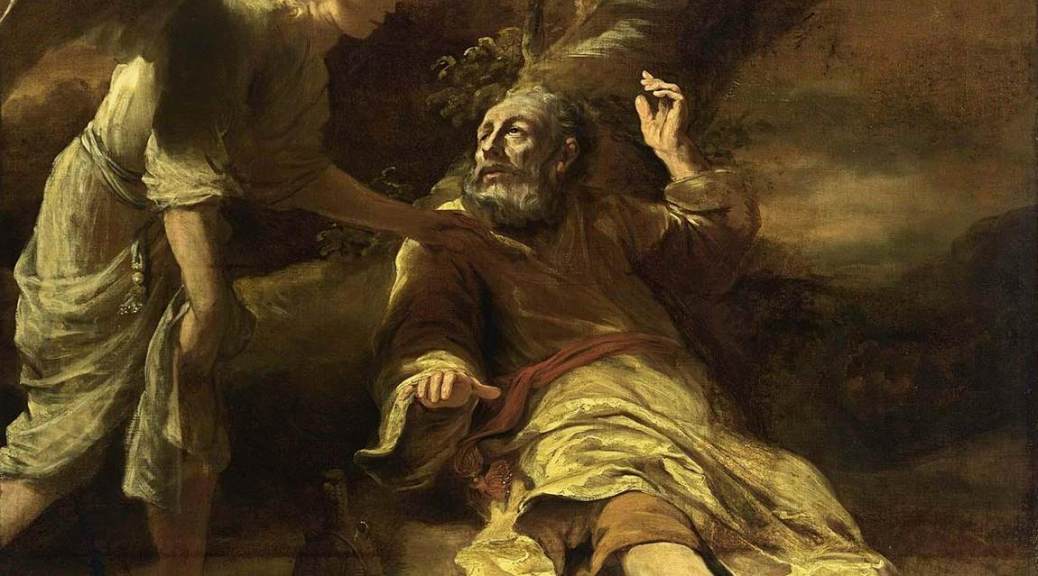
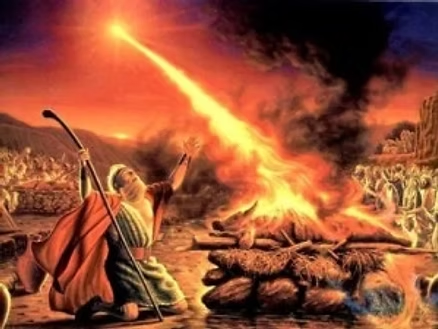
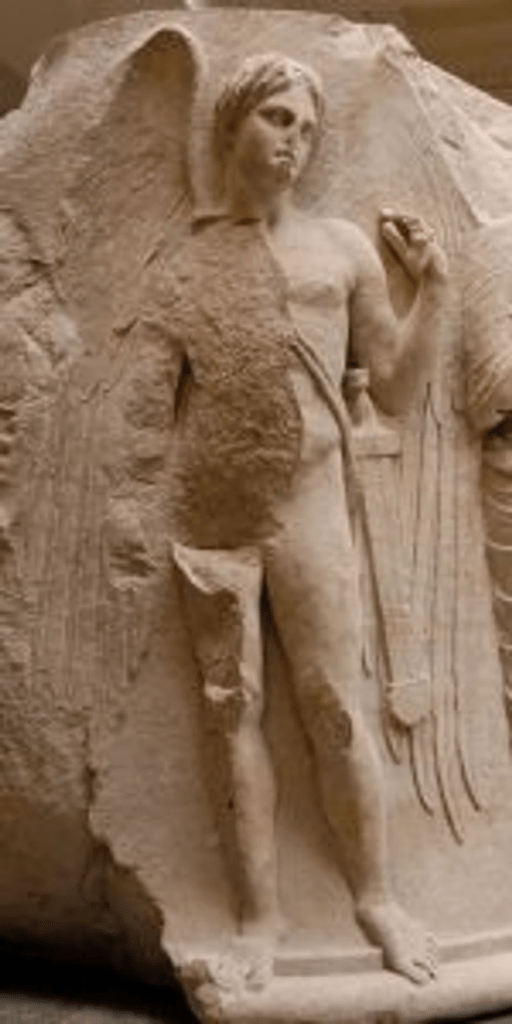



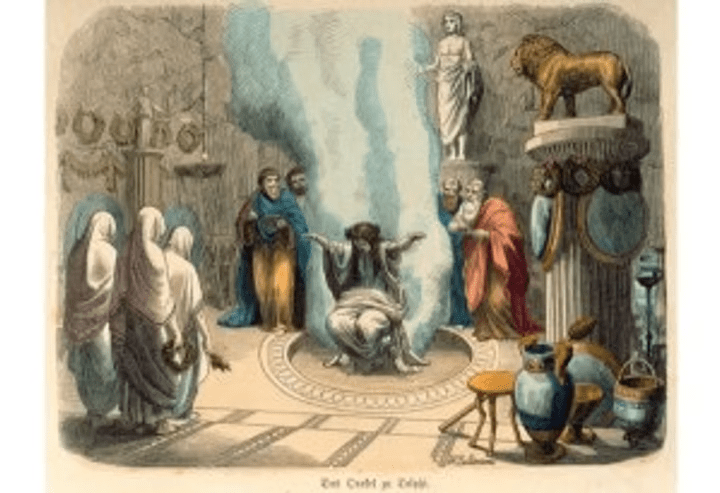
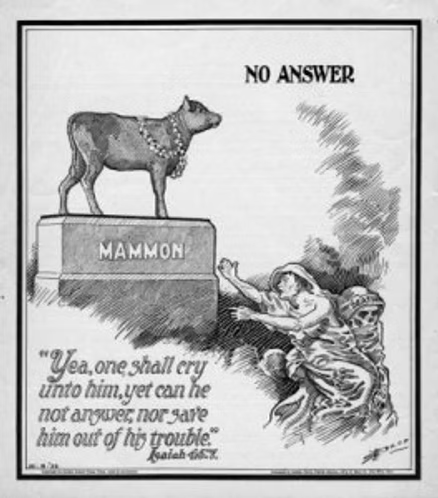



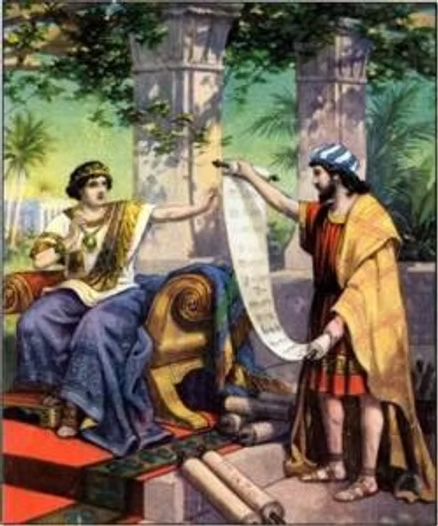


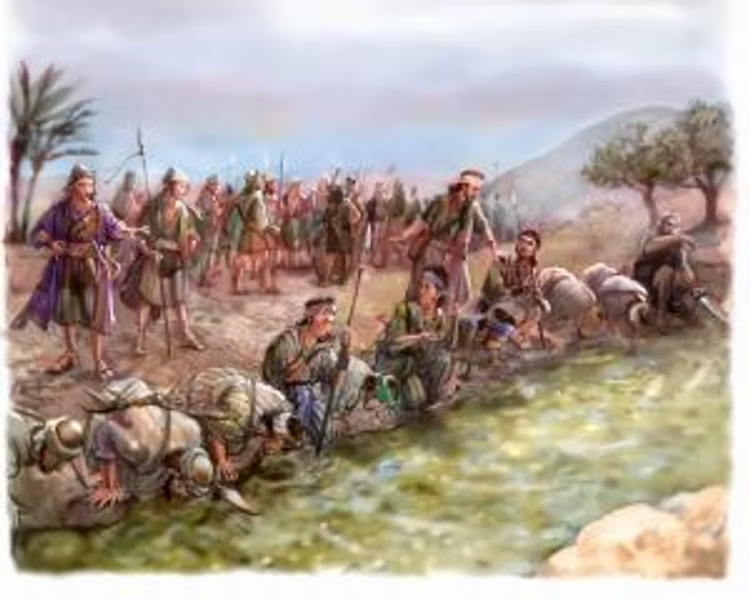
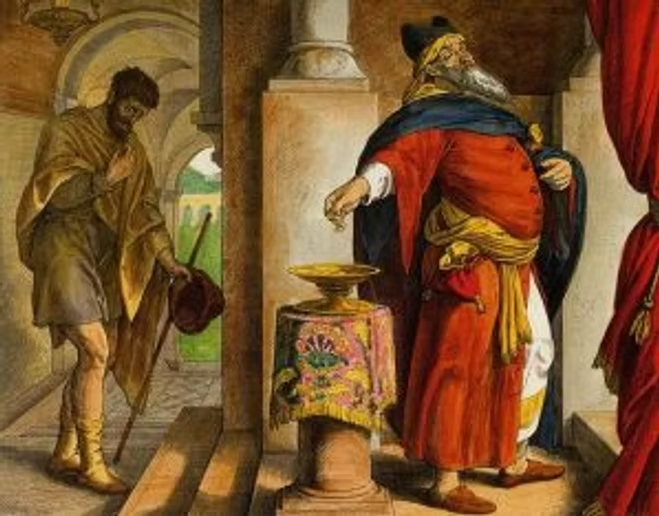

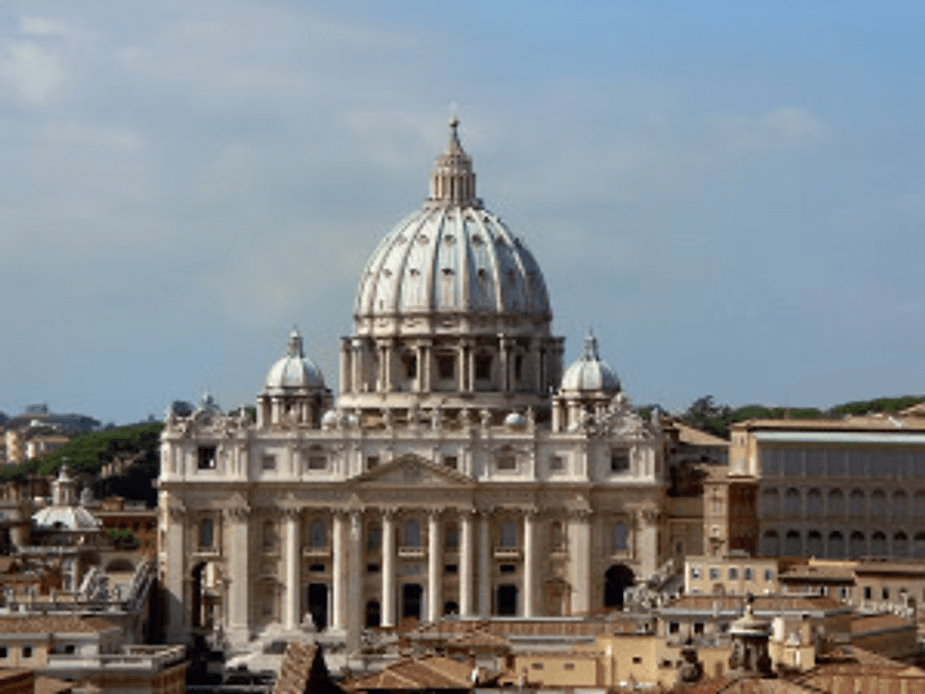

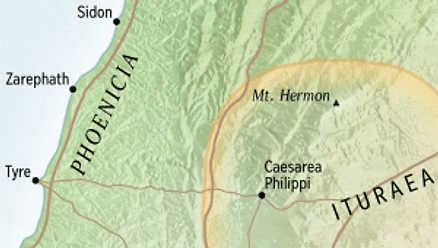
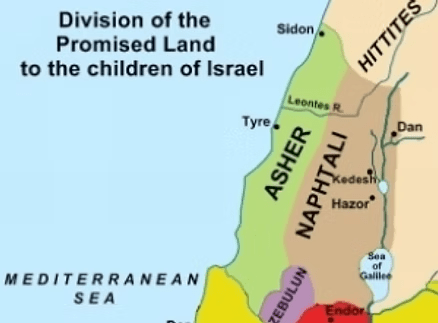
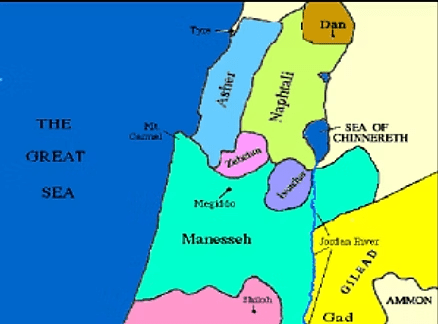
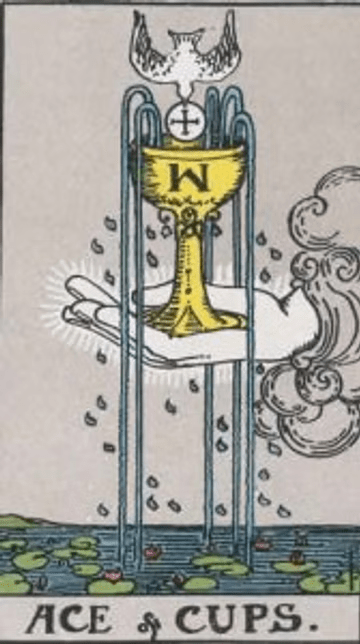



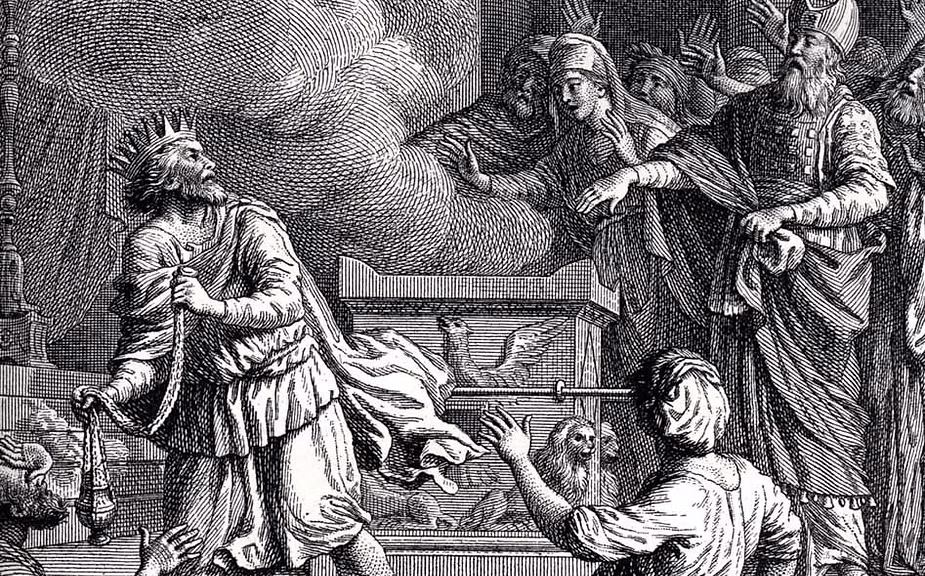
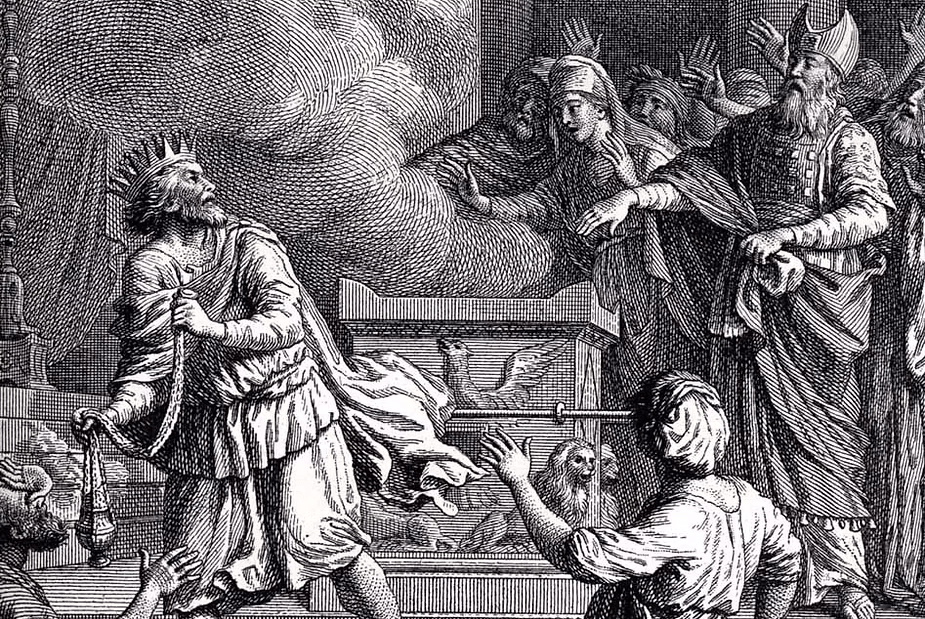
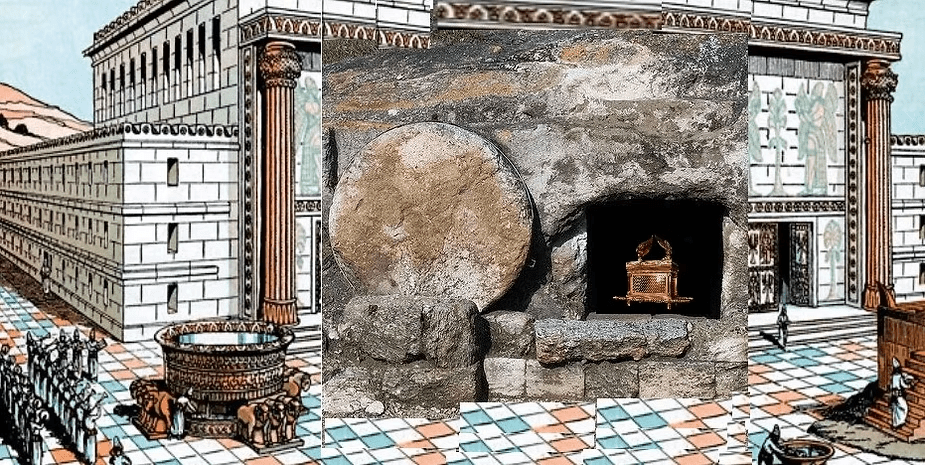
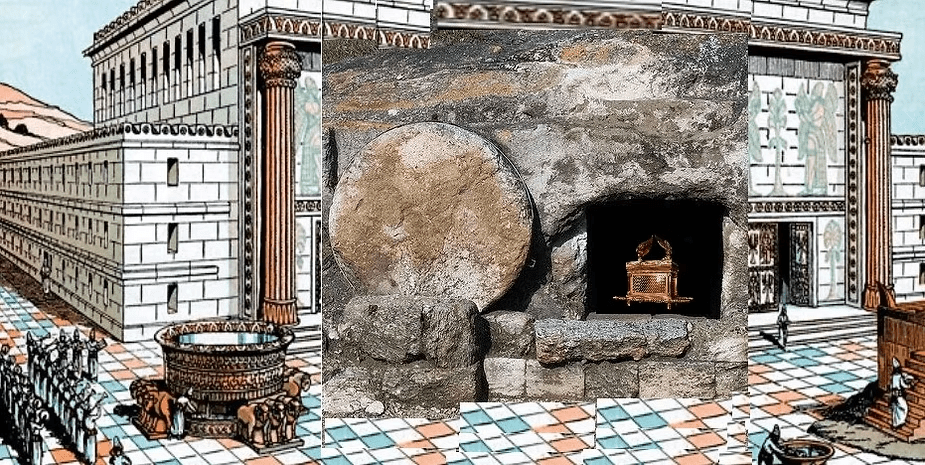
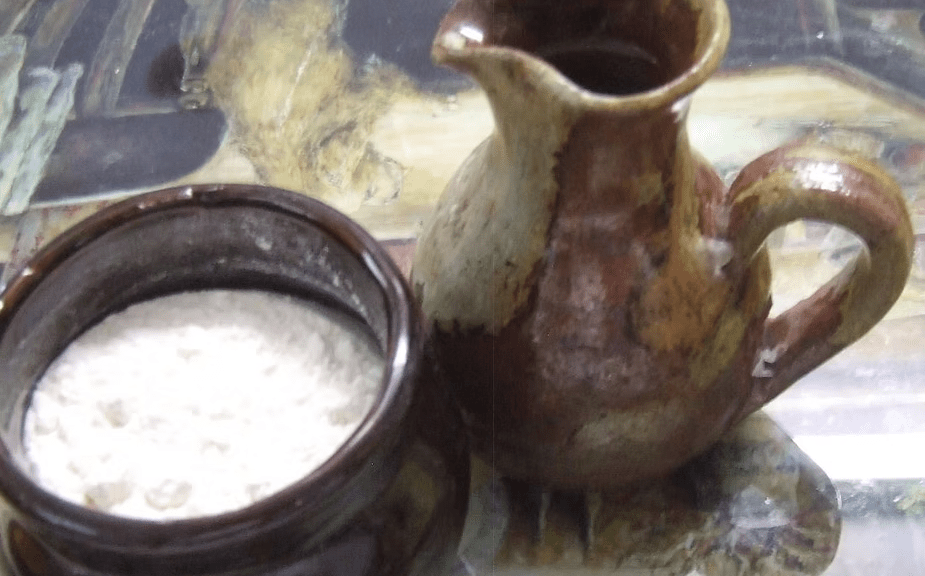
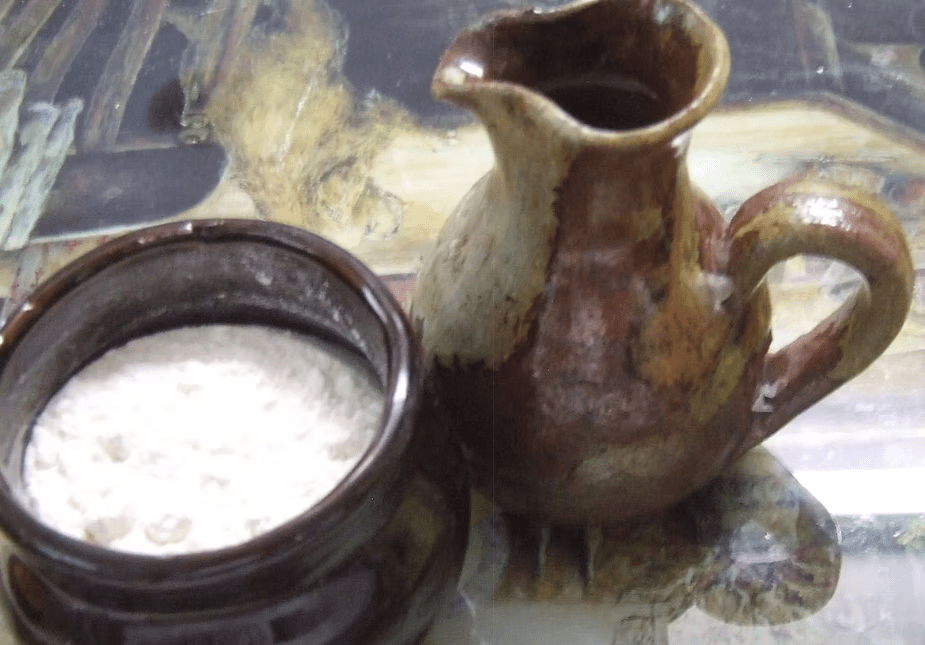
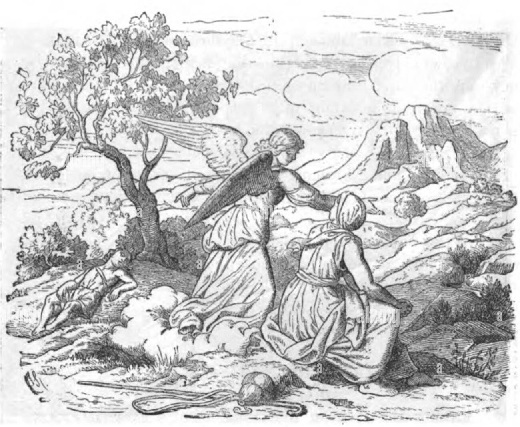
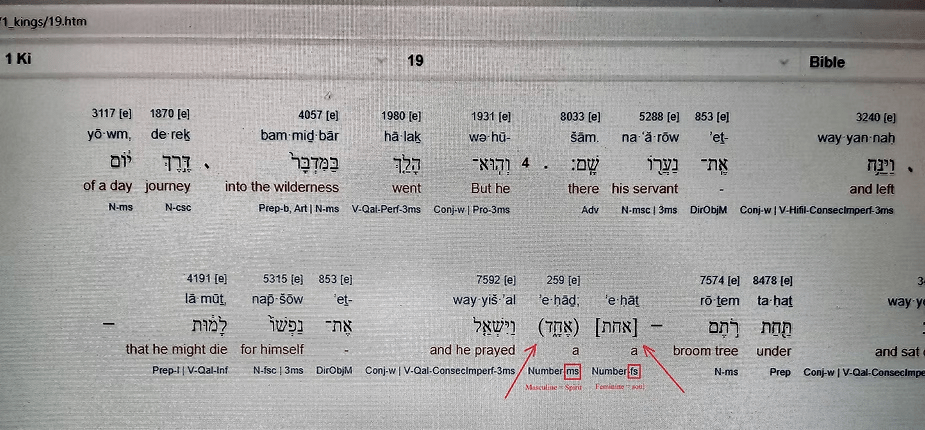
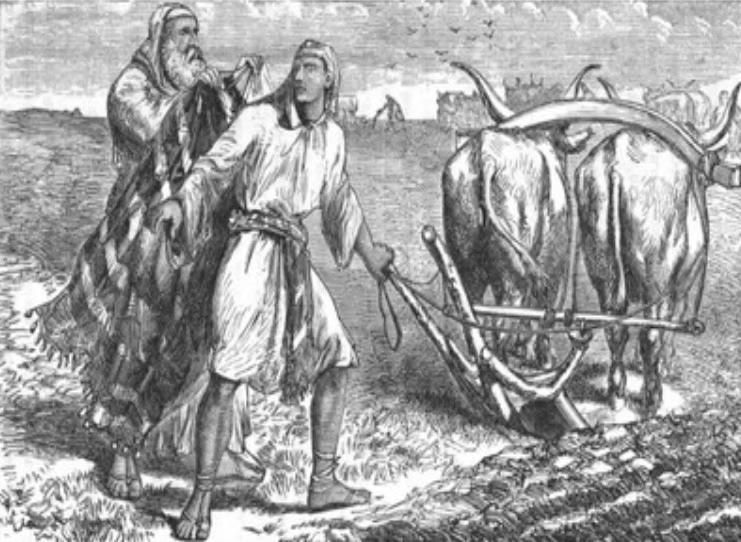
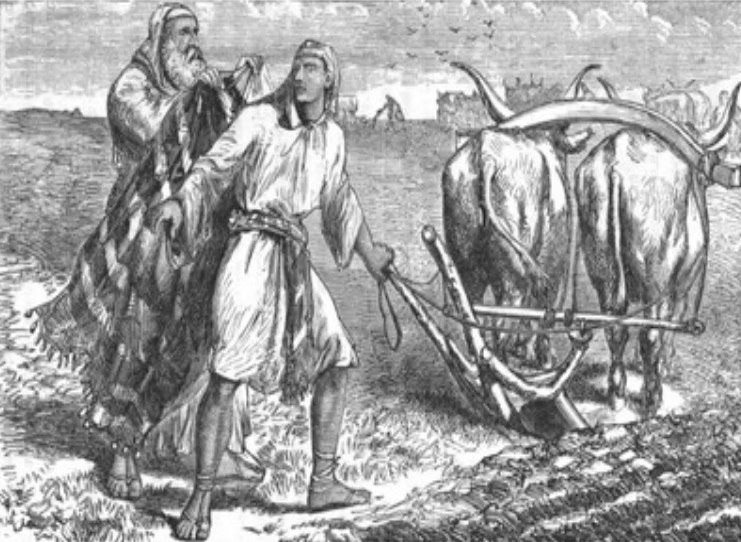
 Explaining the Readings