Category Archives: 1 Peter

Psalm 116:1-3, 10-17: Proposing marriage on the Third Sunday of Easter (Year A)

The Third Sunday of Easter, like all Sundays inside the confines of Episcopalian churches in America, finds a Psalm of David read aloud.  Usually the congregation reads aloud, either by half or alternating whole verses, although some fancy churches will have a chanter sing the Psalm (which means “song”).  The production made over the Psalm is unlike the production made over the other readings, where only one person reads aloud (not singing aloud) and all the rest just listen.

Think back to when you were in elementary school.  Think back to your high school and college days.  No teachers sang any lessons to the class.  While some classes would read something from a book out loud, going from desk to desk, that was more to practice being bold enough to talk to a group, more than an exercise in learning what a book said by having people read only a portion aloud.  If anyone else is like me, then you will agree that it is hard to focus on what is said by someone else out loud, when I am trying to keep track of when I will have to read aloud.  Thus, no matter how powerful a Psalm of David is, it is only an exercise in “togetherness” – “See, we all read aloud together.  Aren’t we special?”

The problem with this approach is no priest will then walk into the aisle, announce a reading from a Gospel, read that aloud, and then rise above the masses at a podium saying, “I want to talk to you today about that Psalm we read.”  Nope.  Never happens.  However, it should today.

In the Gospel reading from Luke is read the story of Jesus appearing in unrecognizable form as Cleopas and wife (“two of Jesus’ disciples”) walked to their home in Emmaus.  That reading comes up Wednesday of Easter Week, Easter evening in Year C, and here on the Third Sunday of the Easter season, Year A.  So, regular church attendees regularly hear a sermon about that story from Luke’s Gospel.  The repetition might force a priest to put a new slant on an old topic, so his or her words don’t conjure up feelings of déjà vu.

In the Easter season there is always a reading from the Book of the Acts of the Apostles, and today we read about Peter speaking with a raised voice and how three thousand Jewish pilgrims would “save themselves from that corrupt generation” by being baptized in the name of Jesus Christ that day … instantly.  That is another reading that comes up multiple times during the Easter season.  Certainly, a sermon or two will have been focused on that story, so you remember that reading.

This year (A), during the Easter season, is the only time we read from 1 Peter.  So, if you did not listen carefully today, there is a good chance you will have forgotten all about what Peter wrote in his first epistle.  It is fairly short and says things that can easily be incorporated into any sermon, simply because the epistles tend to state the “catch phrases” that most adult Christians know.  Today Peter wrote, “live in reverent fear,” “you were ransomed,” “with the precious blood of Christ,” “your faith and hope are set on God,” and “you have genuine mutual love.” 

The Epistles do not get much deep attention in the Episcopal Church, simply because Episcopalians have short attention spans and a priest is limited to twelve minute sermons.  Those two traits are not conducive of deep understanding of anything; so it is best to just stick with the catch phrases found in the letters and maybe give the Apostle a quote credit (or not).

Parts of Psalm 116 are read on three different Sundays over the three-year cycle, and on two other week days.  It is read on Maundy Thursday – the foot washing service few people attend – so its words might ring a bell, but probably not.  Because we need to realize that David was led by God to write songs of praise and lament, his words are recorded to speak to us in the same way God led the other writers of Scripture to record God’s conversations as though directed to each of us, individually.

The people who organized the lectionary were also led by God to choose readings that link everything together, so divine purpose is in play here today and every Sunday.  The readings are not randomly picked, and they are not based on what a priest wants to talk about.  Certainly, they are not the product of some people in a smoke-filled room saying, “Okay what snippet do we have next to add here and there?”  By having that understanding – that everything read today is part of a whole with purpose – we are able to read the words of Psalm 116 and know they deeply relate with the words written by Peter and Luke.

Knowing that the divine purpose is to teach, not to attempt to twist words into some self-serving political message or current event words of encouragement, a sermon has to be a model of the Acts reading, where “Peter, standing with the eleven, raised his voice and addressed the crowd.” 

Were his words uplifted by the Holy Spirit; or did he scream like a maniac to get everyone’s attention?

The Greek word translated as “raised” is “epēren,” a form of “epairó,” meaning “to lift up” are “to exalt.”  Rather than “raised his voice” giving the impression of twelve Apostles screaming at the tops of their lungs, so three thousand Jewish pilgrims were scared into signing a petition to join the new Church of Jesus Christ, it is more sacred to read “with lifted voice.”  That way, it is easier for us to understand the Apostles spoke divinely.  Therefore, their words “testified with many other arguments and exhorted them.” 

That means God was speaking through the mouths of the Apostles, who not long before were still nervous about public anything.  Surely, before the Holy Spirit hit them, they were not longing to have some rabbi to tell them, “Today class we will read Psalm 116 out loud, with each disciple reading one verse.  Andrew, why don’t you start us off.”  God then spoke through the Apostles just as God had spoken through the mouth of Jesus.  We must agree that it was God coming out of Peter that encouraged seekers to be filled with the love of God in their hearts.

Therefore, the first verse read from Psalm 116 sings out with the same exalted voice of God.  There, David began by stating, “I love the Lord, because he has heard the voice of my supplication, because he has inclined his ear to me whenever I called upon him.”

Three thousand pilgrims in Jerusalem “welcomed [Peter’s] message [and] were baptized” because they were Jews seeking a closer relationship with their God.

David then sang, “The cords of death entangled me; the grip of the grave took hold of me; I came to grief and sorrow.  Then I called upon the Name of the Lord: “O Lord, I pray you, save my life.”

Peter told those whose ears heard his words, “Repent … so that your sins may be forgiven … saying, “Save yourselves from this corrupt generation.” 

The Greek actually written (“geneas tēs skolias tautēs”) says, “generation the perverse this,” where geneas means “race, family, and birth.”  One cannot presume Peter was only talking about those who just watched the Romans crucify Jesus, but all who think they are added to the family that calls Yahweh their God – at all times between then and today.  Thus, as Christians today, WE live in the perversion that has been allowed to be born around us – the generation of perverseness or a degenerate state.  It exists now, just like it existed prior to Jesus, when David cried out in fear.

Every Jew in Jerusalem who heard Peter (and the other eleven Apostles) felt the cords of death – MORTALITY – strangling them, not knowing how to ensure God would not punish them because they all had unforgiven sins.  They, like us and like David, called upon the name of the Lord to be saved.

You have to see yourself in that light of failure, or you do not call upon the name of the Lord for salvation.  If you are okay with your life of sin and say, “Its okay.  I’m good,” then you certainly are not getting God’s attention, whether you want it or not.  God does not compete with lesser gods – like oneself – so you are free to be part of the definition of a “corrupt generation.”  After all, we are each the center of our own universe, which goes whichever way we direct our universe to go.

Seekers, on the other hand, feel guilt and want to stop living lives that cannot cease wallowing in lusts and self-pity.  Like the hated tax collector Jesus saw, seekers silently beat their chests and bemoan there is no way to stop.  Sure, the money is great, but it all makes me feel dirty inside.

If only sin wasn’t so damn rewarding.  Then, like the Pharisee Jesus saw, one can be led to thank God for material things.  That’s when one prays, “How shall I repay the Lord for all the good things he has done for me?  I will lift up the cup of salvation and call upon the Name of the Lord.”

Everyone here today has many reasons to thank the Lord, more than for a good career, a nice house, or a fancy car.  God does more for you than give you the latest gadgets of technology to play with.  God has given you health, or children, or a sense of redemption.  Whatever your personal rewards, God gave them to you without you having to do anything in return.  Many Christians just take God for granted, like they deserve all that is good, simply because their parents let a priest drip some holy water on their little foreheads.  Not to mention them not complaining too loudly after being forced to learn all those Bible stories in children’s church.

Typical Christians today are just like the typical Jews of Jesus’ days – wallowing in self-gratifying sins with the pretense of being special because they were descended of the people chosen by God.  One corrupt and perverse generation after another.  The world is a place where perversion is easily handed out, asking nothing in return.  Christians do not even know what “the cup of salvation” is.

In the Episcopalian Church, where the Eucharist flows like welfare checks to the poor, freely given at the rail, asking nothing in return, it is easy to think the cup of salvation is the chalice that comes before one, with the altar server saying, “The blood of Christ the cup of salvation.”  That is not what David had in mind when he wrote those words.

THE cup of salvation is the second cup of wine poured out at the Jewish Seder meal.  That IS called “the cup of salvation,” which is poured out to commemorate the freedom from bondage in Egypt.  Whether David’s Israel practiced the Passover exactly the same as do Jews today is immaterial.  The “cup of salvation” was the marriage of the children of Israel to God.  A cup of wine is then symbolically drank to commemorate that eternal bond.  It is like a toast to the covenant, where marriage is a covenant.  One MUST marry with God, meaning He is the husband and everyone else is the wife.

With that understood, David then sang, “I will fulfill my vows to the Lord in the presence of all his people.”

The “vows” are the Laws Moses brought down to the Israelites.  Everyone had to announce their agreement to the covenant, in order to enter into a bond of commitment.  The wife submits to the will of the husband and the husband guarantees the wife will always be protected.  A marriage is therefore a public event of celebration.

Still, when David then sang, “Precious in the sight of the Lord is the death of his servants,” one needs to see how marriage means the death of the old self.  Commitment demands sacrifice.  In order to receive salvation, one must die of one’s old ways.  God does not take delight in the physical deaths of human beings, simply because death is nothing more than a stage of life.  Death is like the old 45-rpm records played on a phonograph – when the needle hits the space at the end, it rose and waited for it to be placed back down on that record again.  The soul is like the etched meaning in the grooves of the record, which is why it was made.

In the Hebrew of David’s Psalm 116, the word translated above as “servants” is “lahasidaw,” which is a statement from the root word “chasid,” meaning “kind, pious.”  The statement better says, “of his saints” or “of his godly ones.”  That means the death of God’s “servants” is the end of their life of sins, committed to fulfill a purpose of holy priesthood.  In a marriage ceremony, rather than drinking wine to celebrate a new partnership or union, a desired death is then like how the Jews symbolically break a glass wrapped in a napkin when a couple gets married.  The death of the old can never cut the marriage asunder.  The fragility of a sinful life is shattered, so it can no longer ruin a soul.

Marriage to God must be recognized as what that commitment truly means.  David sang, “O Lord, I am your servant; I am your servant and the child of your handmaid; you have freed me from my bonds.” 

Here, the repetition of “servant” is accurate, from the Hebrew “abdika,” from the root “ebed,”  meaning “servant, slave.”  To rise from the lowest of the low, which the state of being a “child of a maidservant” indicates, means one must feel deeply indebted to God for that favor granted.  The only thing one so low can ever be expected to repay is one’s complete devotion.  Devotion to God means serving His every need as His priest.

David then sang, “I will offer you the sacrifice of thanksgiving and call upon the Name of the Lord.”  This does not say that “thanksgiving” is a “sacrifice,” as if one begrudgingly has to suffer through repayment with lip-service, like: “Oh okay.  Thank you God.”  THE sacrifice is the death of your self-ego, which you do in the most sincere “thanksgiving” to God.  No words are necessary, as God knows each and every heart of His wives (i.e.: saints).  Still, when David sang, “call upon the name of the Lord,” that is equally not some “catch phrase” that is meaningless.  That needs complete understanding.

The literal Hebrew there says, “ubesim Yahweh eqra,” which means “upon the name Yahweh will proclaim.”  This is where one grasps that the wife in a marriage takes on the name of the husband.  Regardless of modern perversions of the human institution of marriage, “in the name of” means, “I am now known as.”  To take “upon the name of Yahweh” one has become married to God, becoming a saint in His service, so one can “call” or “proclaim” just like we read Peter spoke “with raised voice.”

This is important stuff, becuase just as David used “the name of” so too did Peter.  In Acts Peter said to the pilgrims, “Repent, and be baptized every one of you in the name of Jesus Christ so that your sins may be forgiven; and you will receive the gift of the Holy Spirit.”  That says one IS JESUS reborn.  God is the one who forgives sins through the “cup of salvation,” thus when one has married God then one’s sins are forgiven and one receives the wedding gift of God’s Holy Spirit.  The Holy Spirit is what baptizes one so one becomes Jesus resurrected in the flesh.

In Peter’s epistle he wrote, “with the precious blood of Christ,” [the sacrificial lamb] “you have come to trust in God, who raised him from the dead and gave him glory” [as THE WIFE OF GOD].  Peter then added, “You have purified your souls by your obedience to the truth so that you have genuine mutual love, love one another deeply from the heart.”  That is a statement about marriage and commitment.

From that, Peter was led to write, “You have been born anew, not of perishable but of imperishable seed, through the living and enduring word of God.”  To be “born anew,” one must first experience death, where David wrote, “Precious in the sight of the Lord is the death of his saints.”  Marriage to God means the death of the sinner and the rebirth of the Saint in the name of Jesus Christ.

David then sang again the words, “I will fulfill my vows to the Lord in the presence of all his people,” but this is not the same as the marriage vows first taken.  Those vows are taken publicly; but the life of a Saint is not for one’s personal enjoyment. 

A Saint lives to BE the resurrection of Jesus on earth, as God incarnate.  This is not so one can boast, “Look at me!  I am married to God!”  Instead, one becomes like “the child of [God’s] handmaiden,” a servant to the Word of God.  A slave whose only role is to offer the cup of salvation to seekers of the truth.  The vows of marriage to God are the realities of being a priest of God, using the gifts of the Holy Spirit in the midst of the public eye.

That is then the meaning in David’s last verse, where he sang, “In the courts of the Lord’s house, in the midst of you, O Jerusalem.  Hallelujah!”  That says the Saint, as the reborn Jesus Christ, is the house of God.  God resides within one’s heart center. 

Jesus is the High Priest who rules over one’s brain, as the Christ Mind.  Every area of life one comes into becomes the courts where divine judgment will keep one from wandering into the worldly traps of sin.  When David wrote “in the midst of you,” he was not focusing on a place on the earth, but his being one with God.  It has the same meaning as Jesus saying, “I am in the Father as the Father is in me.”  The word “Jerusalem” then bears the eternal meaning of “foundation of peace.”  Jesus Christ is the perfect cornerstone from which the foundation of eternal peace in heaven is built.

By seeing this coming from Psalm 116, it is easy to set one’s eyes on the affect an unrecognizable Jesus had on two disciples who had known him all his life.  Cleopas looked at his wife, Mary, and said, “Were not our hearts burning within us while he was talking to us on the road, while he was opening the scriptures to us?”  Those two were just like the three thousand who listened to Peter offer “arguments” as explanations of Scripture.  They all received an invitation of marriage to God, carried by God’s messenger Saints, and they all happily said, “Yes!”

On this Third Sunday of the Easter season, when the counting of fifty days marks when Moses came down with the marriage proposal of God to his Israelite brides AND also when Jesus returned from heaven and wrote the marriage Covenant on the hearts of those who said “Yes,” it is time to make your choice about God’s proposal to you.

Do you say, “I love the Lord, because he has heard the voice of my supplication, because he has inclined his ear to me whenever I called upon him”?  Do you love God because he feels like your sugar daddy, giving you everything you want?

Or, do you say, “The cords of death entangled me; the grip of the grave took hold of me; I came to grief and sorrow,” so you pray to God for forgiveness of your sins?

David sang a song about your life.  You just need to understand what the lyrics mean.  Ignoring them will do you no good.

A serious proposal has been made.  It is up to you to determine your outcome.

1 Peter 3:13-22 – The fear of suffering

The Epistle reading for the Sixth Sunday of Easter comes from the first letter of Peter, his third chapter.

In Peter’s first epistle, chapter three (which is not read) begins sounding like a woman’s high school Home Economics teacher [look it up youngsters], talking about good wives and husbands.

Typical Home Ec classroom

That is not what Peter was writing about, as the voice of God on paper. All human beings are of the earth [i.e.: of dust and clay] and all souls given life on earth in a human body are spirit [i.e.: ethereal]. This is the duality of life in humanity on earth.

I actually heard a priest on one of these Facebook ‘need to keep the paying customers connected to church by pretending to hold church on streaming video’ productions say, “God is the Father, but [since it was Mother’s Day] some people like to call God the Mother, which is okay.” No, it is not okay.  There is no duality to God – YHWH – Yahweh.  

The word “God” is a masculine gender noun. The word “Goddess” is a feminine gender noun. Those two words were created so no one could ever justify saying, “Well God means goddess.”  God is the Father because “God” is a masculine gender noun and “Father” is a masculine gender noun. Has anyone ever heard the term “Mother Earth”?

Meet Gaea – Earth Mother of the Titans.

Well, “Mother” is a feminine gender noun that complements the “Father.” God is masculine and Earth is feminine. Gaea and all her kin are (by the way) elohim.  This is the duality of Creation: God + that not God.

Because everything came from God, God is the Father of everything, including Earth. Because humanity is creatures made of dust and clay (and to dust shall they return), we are born of feminine matter (Mother Earth). Thus humanity is feminine, regardless of what sex organs God has given a human being in His womb works. Thus, when Peter seemed to be giving advice to girls to be good wives he was writing to all true Christians (men and women), reminding them of a wifely duty [expectations] to their Husband [God].  So men … don’t start thinking you are gods, when you have not married God yet.

Being a wife to God means having ‘spiritual intercourse’, which means the masculine [God the Father] penetrates the feminine [a human being of either human gender]. This is called the “consummation” of a marriage. This is not an act of sex, because God penetrates the soul, which is masculine spirit and masculine deity … the stuff elohim are made of.  The earth of one’s flesh just lies there, as God injects the Holy Spirit, which envelops the soul. There is no physical pleasure or physical climax that comes from the penetration, but there is a continuous sensation of warmth and joy that remains within the soul and surrounding the wife, which is unlike human natural emotional sensations.

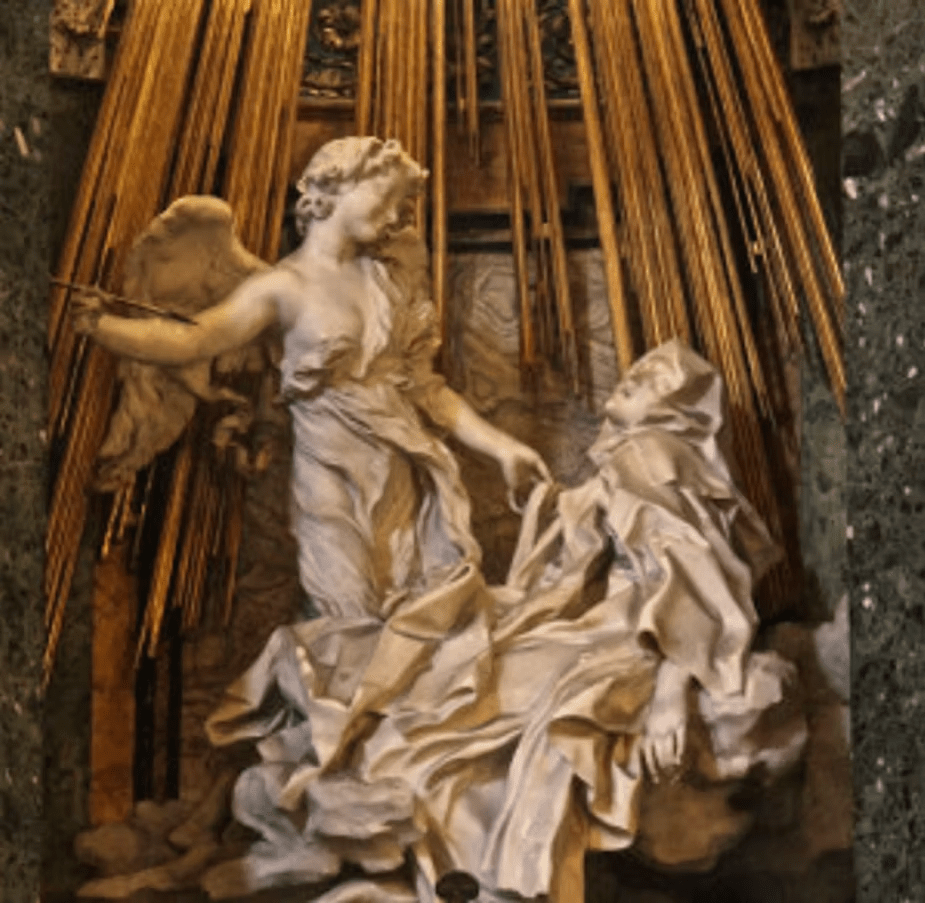
Ask Saint Teresa about the feeling.

The soul still exists, but it is then within an ‘egg shell’ of righteousness and holiness. God’s Son goes by the name Jesus, which means “Yah Will Save.” This is a male name because Jesus is the Son of God [and no, just like it is not alright to call God a goddess, it is not alright to call female a Saint a “daughter” or a “mother,” since male priests like being called “father”].

The birth of Jesus in God’s wife brings with it the Mind of God. The Mind of God then communicates with the Son Jesus, who has enveloped the soul of life breath that is within a body of flesh.  When that transformation takes place it represents a repeat of Jesus saying, “I am in the Father as the Father is in me.” At that point, Jesus the Son of God has complete control over the thoughts and actions of the body of flesh, which leads that body to living righteously [NO MORE SIN]. This path of righteousness grants a soul an eternity in Heaven after mortal death, thus Salvation. Therefore, the Mind of God, through the Son of God, becomes the Mind of the Messiah (Savior), also called Jesus Christ.

The makes the wife of God become the Son of God, which is a statement about the masculinity of the spiritual within the feminine of the earthly. Think of the dualities you recognize: life and death; awake and sleeping; and, mortal and immortal. The presence of the Son of God masculinity represents the “living waters” Jesus spoke of.  Thus, when a human male is reborn as Jesus, that human male is a wife of God and the Son of God reborn. Likewise, when a human female is reborn as Jesus, she too a wife of God and the Son of God reborn. This means every Apostle-Saint, regardless of human gender, IS a Christian and a brother in the name of Jesus.

This context of Peter’s letter must be realized in order to grasp the meaning of his question that begins the reading: “Now who will harm you if you are eager to do what is good?”

This question (which is actually two statements plus a question at the end) is relative to not becoming a wife of God, as opposed to being Jesus Christ reborn and being enabled to withstand the temptations of evil. It is Satan who will bring great harm to one’s soul, without the protection of God as one’s Husband. Therefore, the question is more than being “eager to do what is good,” but being driven (Peter used the word “zēlōtai,” meaning “zealot”) to do good.  Being driven – being a zealot – requires extra help within one’s normal drive mechanisms.

As easy as it is to say, “Oh, just sacrifice your self-ego, marry God, and be reborn as Jesus Christ,” the reality of that plan is harder to find.

In the past, when true Christianity was just taking off and spreading rapidly, the grand life of having plenty (thus more to give up) was not as prevalent. Today, especially during this “shelter in place” fear that has government ruling over the citizens, wealth and prosperity is an expectation of many in the world. People are so comfortable with the lures of sin that being forced to do nothing (thereby doing nothing bad, forced to do nothing in the name of Mammon) means many in the world are clamoring for financial handouts and gifts for staying at home.

The meeting Jesus had with the rich, young ruler (a Temple Pharisee), where he was then in the vast minority is gone.  He (I believe he was Nicodemus) was too young, too rich, and too influential to give that up. Most normal Jews had little extra to give away, after taxes to the Romans, the Temple, and the synagogue. Today, most people in the civilized world consider themselves to be too rich to quit being rich or too in debt to stop going further into debt.

The want to do good deeds is not enough to become righteous in one’s lifestyle; but it is a start. One has to do what Jesus told the rich, young ruler and 1. Obey the Law; 2. Give up lust for wealth, by spreading the Word to those poor in spirit; and 3. Become Jesus Christ reborn.

The problems here are: 1.) Most people do not read the Holy Bible more than ten seconds a week, so they do not have a clue about the Law. 2.) Without knowing the Law, it is impossible to quit work and become an evangelist and count on God miraculously leading one to understand His Word. 3.) Giving up one’s self-ego is like death, and everyone fears death too much to want to die (they fear taxes second most).

That is where Peter asking, “If you want to do good, then shouldn’t you be zealous about that desire?” That can only come from becoming the wife of God and giving birth to His Son.  Doing a “Lent” trial run every year might be good practice; but, you will probably need to reach rock bottom first, one way or another, and you have few other choices than trust God.

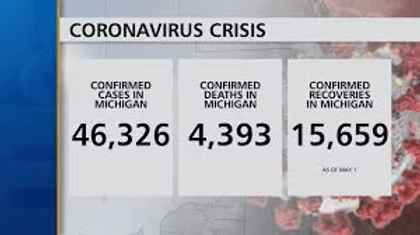
Peter then spoke about fear. He wrote about “suffering for doing what is right.” People fear suffering. It is fear of suffering that keeps so many quarantined in their homes – when physically well, not sick – and to keep that fear motivating people to keep staying at home, all the propaganda networks broadcast, “Death, death, death! Look at the numbers of dead!”

This is more than a ‘catch phrase’ to be thrown about lightly. To “sanctify Christ as Lord in your hearts” means a Holy Matrimony between God (the Holy) and a soul (through the heart). It means the Mind of God has brought His Son to be the Savior (Christ), as the Master of one’s flesh (Jesus is Lord). This does not happen as a matter of self-will. This does not happen because someone in a robe holding a large cracker says, “in your hearts sanctify Christ as Lord.”

This does not happen because words have no lasting power.  As soon as one returns to normal life, after kneeling and taking sacraments, the sins start all over again; and, the fears come back.

We know this does not happen when one kneels at a pew, Sunday after Sunday, saying,

“Most merciful God, we confess that we have sinned against you in thought, word, and deed, by what we have done, and by what we have left undone. Etcetra

Keep in mind the first step in going to heaven is obedience to the Law.

Here, it is worthwhile to make a comparison to what Peter said and what David sang in Psalm 66. There we hear his words singing:

“Come and listen, all you who fear God, and I will tell you what he has done for me.
I called out to him with my mouth, and his praise was on my tongue.
If I had found evil in my heart, the Lord would not have heard me;
But in truth God has heard me; he has attended to the voice of my prayer.”

That is what Peter meant by “in your hearts sanctify Christ as Lord.”

Still, think back to what Paul was recorded to have said in the Acts reading:

In him we live and move and have our being’; as even some of your own poets have said, ‘For we too are his offspring.’ Since we are God’s offspring, we ought not to think that the deity is like gold, or silver, or stone, an image formed by the art and imagination of mortals. While God has overlooked the times of human ignorance, now he commands all people everywhere to repent.”

Peter was saying become the bride of God by letting Him “in your hearts,” whereby Paul said, “In him we live and move and have our being.” We become “the offspring” of God as the Son reborn; but none of that is possible if our hearts are filthy from the sins of self-importance and self-lusts.

We fear the suffering that comes by killing off self-will, fearing the suffering that comes from giving up everything we sold our souls to get. We fear the unknown, just like a virgin girl fears being given away to some man, with expectations she knows nothing about. All the fears of suffering are imaginary and self-induced.

Get outta my face!

The path of righteousness cannot be traveled alone. God knows that. Still, like a baby needs to fall in order to learn to stand and walk – without the aid of a parent – falling down, suffering, crying, and pains are all part of the growth required to prove to God you are not just ‘flirting’ with Him.

His hand is outreached to you, as a proposal of marriage; but it is up to you to show God you desire being His bride. You have to become (regardless of human gender) a bridesmaid who lamp is always filled with the oil of devotion to good, produced by the sacrifice of self.  Men cannot use the excuse, “Well, I have to go to work to support a family and going to work means sinning with the boy to keep a job.”  There is a way, guys.

That typically means years of service, just like we read in the story of Jacob and his bargain with Laban for Rachel’s hand in marriage. That story reflects: It is not up to you to determine when God deems your heart clean enough for His Holy presence in it. You might think you are ready, you might think you are due a reward, but it is not up to you. God will come when He Knows you are ready and not before. In the meantime, you keep doing the work you promised to do and you keep your lamp filled with the oil of self-sacrifice.

In that respect, Peter said, “Always be ready to make your defense to anyone who demands from you an accounting for the hope that is in you; yet do it with gentleness and reverence.”

Sometimes we have to break off old relationships that always have a tendency to pull us towards sin. Sometimes, our new commitment to doing good will bring about insults and ridicule from people who no longer serve a purpose in our future lives. Sometimes, we are called to look at how much our souls are being sold into a slavery to sin, to the point that we reach a time to decide that major life changes are in order and need to be taken.

Keep you head up, thus the saying “head in the clouds.”

Leaps of faith are not insurable and do not come attached to ‘golden parachutes’. Thus, Peter wrote:

“Keep your conscience clear, so that, when you are maligned, those who abuse you for your good conduct in Christ may be put to shame. For it is better to suffer for doing good, if suffering should be God’s will, than to suffer for doing evil.”

Suffering is not avoidable in this world. As the old saying from the eighties goes: “Sh*t happens.” When married to God and reborn as His Son, you can have faith that you will always come up smelling like roses.

When Peter then said, “For Christ also suffered for sins once for all, the righteous for the unrighteous, in order to bring you to God. He was put to death in the flesh, but made alive in the spirit, in which also he went and made a proclamation to the spirits in prison,” this can be misconstrued as the catch phrase “Christ died for your sins so you can be saved.” Therefore, it needs to be clarified.

This is what Peter wrote [literal translation]:

1. kai [a signal to take note of importance coming] The Anointed One [Jesus] once for all around sins suffered  ,

2. innocent on behalf of unjust  ,

3. so that you he might bring to God  ,

4. having been put to death indeed in flesh  ,

5. having been made alive on the other hand in spirit  ,

6. in which also by among prison spirits  ,

7. having died he preached  .

This says:

1. God sent His Son as one seed from which all who live in a world of sins can be saved from suffering. Importantly to realize – There will be no more Messiahs sent, no more Saviors to come, as Jesus was “The Anointed One” who was sent to likewise suffer in this world.

2. Jesus was innocent of all charges from which persecution came. Persecution comes from all who love sin and will unjustly try to destroy those who walk paths of righteousness and teach others how to do likewise.

3. Jesus was sent by the Father to teach human beings how to get to Heaven.

4. In order to reach the vastness of humanity, well beyond the one time Jesus the man walked the earth, Jesus (as the one seed) had to die so the seed could take root and grow into a vine of righteousness that would stretch to the end of the age.

5. The death of Jesus the man gave rise to Jesus the Christ, as the Holy Spirit, the right hand of God the Father.

6. The Holy Spirit of Jesus Christ would be joined with the souls [from “pneumasin” – the breath of life souls from God] of those which were imprisoned in the mortal flesh that were his disciples (including those followers well into the future).

7. From those disciples dying of self-will and self-ego, Jesus Christ would be resurrected in Apostles and Saints, who would continue the teachings of Jesus, the one Son of God in a brotherhood of Sons of God.

Peter then went into talking about how “God waited patiently in the days of Noah,” which is a statement about God having patience with sinners, whose souls (the breaths of life given by God at birth) life after life [reincarnation] love to wallow in sin so they cannot return and be with God. God flooded the world to remove much of that sin through mortal deaths by drowning, causing those souls to be released, to be later placed back into the world at God’s decision when. Only the eight from Noah’s family were allowed to keep their lives. That means the Great Flood was a cleansing of the earth, which (like the Son of God) will be a ‘one time thing’ and never again.

Water is a great cleansing agent. Water also symbolizes the emotional state of human beings, which is always ebbing and flowing, changing with the latest news or events of life. Water can wash away the dirt of dust and clay; but water cannot wash a soul clean from sins. Thus, Jesus Christ was “prefigured” as the “baptism that now saves you.”

Jesus Christ is the new Great Flood that will drown all the souls of sinners in their own sins, while only saving those who are led to the ark. When Noah took pairs of animals, realize how the Apostles traveled in pairs. Take notice of how David sang, “I will offer you sacrifices of fat beasts with the smoke of rams; I will give you oxen and goats.” They reflect all the ones who will sacrifice themselves in order to get booked on the ark of Jesus Christ.

To get one of those tickets, one has to do as Peter wrote: “appeal to God for a good conscience, through the resurrection of Jesus Christ, who has gone into heaven and is at the right hand of God, with angels, authorities, and powers made subject to him.”

This is a statement about a series of life changes to come, which begin with sincere prayers for survival, confessing a willingness to change and do good works and to prove one is committed to serving God … to the point of making life-changing sacrifices.

God will hear those prayers and God will know the hearts of those praying. Prayers are a first step, but a housecleaning is the follow-up second step.

This reading comes in the Sixth Sunday of Easter. Easter must be realized as being a season of waiting for the Lord to come. It represents when the Israelites camped at the base of the mountain, waiting for Moses to return and tell them what God said. Moses would return with the marriage contract offer, but the Israelites became fearful that Moses was dead; and, they built an idol of a golden calf and began praying to it for help. Their fear almost called off the wedding; but God has patience. 

All of that is mirrored in Jesus’ death causing his disciples to hide in fear.  They had all been feeling good about the future, having thoughts of being married to Jesus as they had been for three years.  Then the leaders had Jesus killed and they feared just like the Israelites had.   Jesus resurrected just like Moses came down with the Covenant.  The wedding was back on.

Still, the Easter season represents when Jesus whispered to his disciples encouragement to do good deeds and follow the Law. Jesus prepared his disciples to marry God and give him the body he would need to be reborn into.  When Pentecost came, God entered a new breath into the twelve and Jesus returned in the flesh of his newborn Apostles.

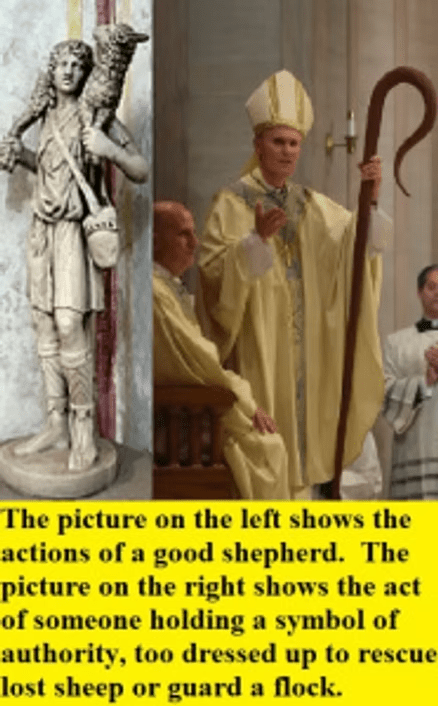
The Easter season means lessons to lead lost sheep into the sheepfold of the Good Shepherd.  The readings are his voice calling out to you.  You call yourself “Christian” so you recognize his voice.  Being lost seems to be not too bad, as long as the pastures are green and the waters are cool and clear.  However, Satan is the wolf that is always watching lost sheep, waiting to pounce when the time is right.  Mortal death is when Satan always feasts, when the sheep have not gone into the sheepfold and found salvation.

Each Christian has a different birth of Jesus within (a personal Christmas).  Each Christian has his or her own epiphany, when the realization that change must take place within them occurs.  Every Christian has a different time come that demands sacrifice of self (a personal Lent).  Every Christian finds a different point when death and rebirth come (a personal Easter); and once reborn as Jesus Christ, each true Christian finds a different time when ministry becomes the answer to God’s call (Ordinary time after Pentecost).

For every year that a Christian seasonal cycle comes and goes, with nothing to show but a well-worn pew seat, with none of those markers reached, the less time there is in a mortal’s lifespan to prove to God one’s sincerity and commitment.  The proposal has been made and God is patient, but one cannot let fear cause one’s epitaph to be “Here lies another fool.” 

The age old question is, “When we going to make it work?”

Advice for the Young at Heart

1 Peter 4:12-14; 5:6-11 – The suffering of commitment

This is the reading chosen from the first epistle of Saint Peter, read on the Seventh Sunday of Easter. It is scheduled to next be read on Sunday, May 24, 2020.

If you notice, this reading is a cut and paste, where three verses from Peter’s fourth chapter (12-14) are cut out of the middle of that chapter and pasted to six verses cut out of the middle of Peter’s fifth (and final) chapter (6-11). The verses selected speak of the pains of being truly Christian. Peter wrote of the “fiery ordeal,” the “sufferings,” the “anxiety,” and the “discipline” that become the set expectations for one who gives up his or hers self-ego, so God can take up residence in a new Holy Tabernacle of flesh and His Son can be reborn as the king over that individual’s actions.

Since we have been placed in the ‘cut and paste’ mode with this reading, I thought it would be good to add some ‘cut and paste’ context to this setting of suffering. To better establish each of the sets of verses from the middle of chapters, I thought it would be good to show the verses that begin each chapter, from which the middle verses fall in support.

The first three verses in chapter four state this:

“Therefore, since Christ suffered in his body, arm yourselves also with the same attitude, because whoever suffers in the body is done with sin. As a result, they do not live the rest of their earthly lives for evil human desires, but rather for the will of God.  For you have spent enough time in the past doing what pagans choose to do—living in debauchery, lust, drunkenness, orgies, carousing and detestable idolatry.” (1 Peter 4:1-3, NIV)

This clarifies that the sufferings of Apostles and Saints is a natural extension of being reborn as Jesus Christ. In the above translation, where the second segment of verse one says “arm yourselves also with the same attitude,” the Greek word translated as “attitude” is “ennoian.” That word better translates as “mind,” but Strong’s states its definition as being “thinking, thoughtfulness, moral understanding.” This means an Apostles or Saint has “the same understanding” as did Christ, which is taking on the Christ Mind.

When Peter then went on to say suffering as Jesus Christ reborn means being “done with sin” and able to reject “evil human desires” (generalized as: living in debauchery, lust, drunkenness, orgies, carousing and detestable idolatry). This says being reborn with the “same mind” as Jesus had means leading one’s own flesh is enabled to reach the only way one can be and live righteously, denying the lures of the world. ALL human beings are addicted to sin, because they have all lived in a world of sin, without knowing God personally as their Father, not knowing Jesus Christ personally as their king. The result of changing from sinner to saint is the ‘heebie jeebies’ or withdrawal sufferings.

Examples of withdrawal symptoms for alcohol addicts.

In this regard, Peter wrote “do not be surprised at the fiery ordeal that is taking place among you to test you, as though something strange were happening to you.” The “strange things happening” means one is walking the path of righteousness, which is a road seldom traveled and leads to a destination unknown.

For all the Bible Stories learned as a child, and for all the ‘visions of sugar plums dancing’ in that child’s head, life as an adult brings a cold hard reality that needs fresh bottles of excuses to wash down and plenty of pity pills to make all the normal pains and suffering of life in a sinful world seem bearable. Walking the path of righteousness requires a guide, but that road is so untraveled it is overgrown with the brush and brambles of suffering that must be cleared … as a test of faith.

As the reading from the first chapter of Acts ended with Jesus having disappeared from view and angels told the disciples (of whom Peter was one) to go about their business, as they had nothing to find from looking up in the sky.  The resurrected Jesus (Jesus reborn into a dead body) had taught them for forty days, preparing them for an unknown return.  We then read, “They all joined together constantly devoting themselves to prayer.”

The Greek word “proseuché,” which translates as “prayer,” means a dialogue between the faithful and God was part of their new normal. Jesus had promised them, “what you ask for in my name the Father will do.”  That line of communication must be maintained at all times (“constantly”). What is completely overlook in that translation from Acts is how the word translated as “joined together” (“homothymadon”) actually means the disciples and friends of Jesus became “with one mind.” Therefore, that meaning says the named followers of Jesus did not simply all go pray in the same room, as they all had instilled within them the mindset of prayer.

It was from that unified mindset of prayer that the names listed and generalized – the devoted followers of Jesus of Nazareth – became willing and prepared brides of God. They did not know that just the next day, at nine in the morning of Pentecost Sunday, the Holy Spirit would enter them and they would give birth to the Son of God many times over. They all would become Saints or Apostles that day, because they were married to God in their hearts and the voice of His Son burst out of their mouths immediately. For as fearful as they had been of the dangers of being known as followers of a man executed by the Romans, at the behest of the Temple elite, they all stood up and began speaking in foreign languages, fluently speaking the truth of God’s Word (the Torah, Psalms, and Prophets).

The immediate reaction was, “Oh, there is a group of people still drunk on new wine.”  It was not, “Oh look!  There are the people with all the answers we have long been seeking!”

This is why Peter wrote, “If you are reviled for the name of Christ, you are blessed, because the spirit of glory, which is the Spirit of God, is resting on you.” Those who immediately rejected those new bodies of flesh that had the Christ Mind and spoke the truth of God as Jesus Christ, experienced how fast the world is to turn on someone not ‘toeing the party line’ or keeping the standard of bad shepherd-run religion.  Rejection of truth being told is always the way a sinful world strikes out, in fear of being discovered as evil. However, because ALL Apostles (including the women of Jesus) have the Holy Spirit of God as part of their being, the truth was heard and souls were saved that day.

We read not too long ago about three thousand receiving the Holy Spirit that day.  Three thousand became Jesus Christ reborn.  Three thousand went out into ministry because of the preaching of just a few followers of Jesus of Nazareth.  They all went and found the same rejection that they had to face, as their test of faith.

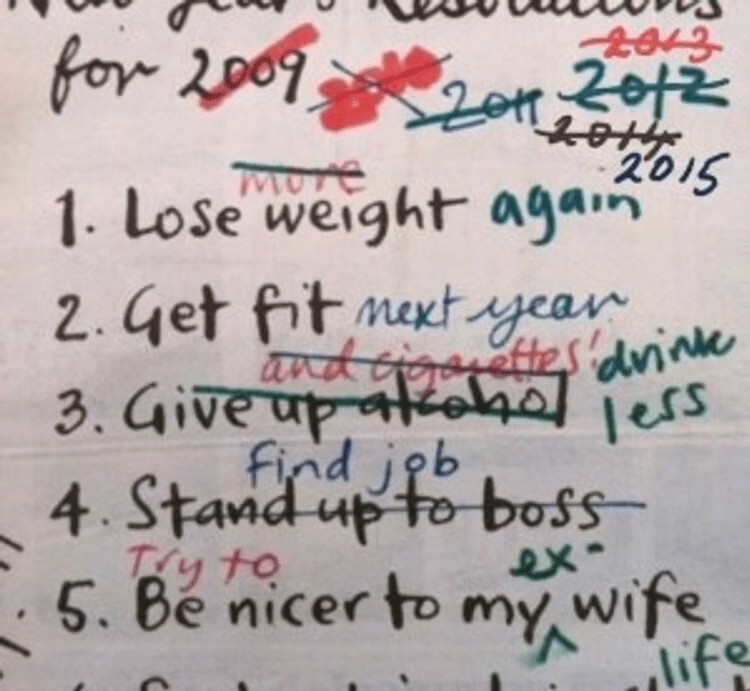
The problem we experience today, where the same standards of bad shepherd-run religion are just as prevalent, is people who profess to be Christians are just as apt to grab rocks to stone to death prophets and very easily prone to speak insults (to their faces or behind their backs) to those who tell them something they did not read in some book, sold in hardback copies at the Christian book store or preached about by their hired hand leader.  The reason people are so prone to strike out in anger first is this: Nobody wants to do what is necessary to walk a path of righteousness, simply because Lent proved (just like failed New Year’s resolutions) that living up to a child’s dream is impossible, when all their friends are not of the same mind.

6. Kill my ego and be Jesus Christ.

Rather than change, according to the Word, it is so much easier to crucify Jesus, over and over again.

To ease the pain and suffering of that failure to serve God as His Priests, people go to churches and listen to an Epistle and think, “Aaaahh. That nice Apostle told me everything I am doing is okay.”

The pewples cannot understand that Peter and Paul and all the other Saints wrote letters of encouragement to the ones like them – to other Saints and Apostles – who were struggling to find Jews and Gentiles who wanted to marry God and give birth to His Son Jesus. Thus, when they hear a reader in church say the words: “If you are reviled for the name of Christ, you are blessed, because the spirit of glory, which is the Spirit of God, is resting on you.” They think, Peter just told me everything is okay.

It is easy to make that mistake in logic when the verses from Peter’ fifth chapter omit the introduction (verses one through three, which clearly are addressed “To the elders among you.”

Peter wrote: “I appeal as a fellow elder and a witness of Christ’s sufferings who also will share in the glory to be revealed: Be shepherds of God’s flock that is under your care, watching over them—not because you must, but because you are willing, as God wants you to be; not pursuing dishonest gain, but eager to serve; not lording it over those entrusted to you, but being examples to the flock.”

Christianity became a separate gathering of Apostles and Saints, with their devoted followers-in-training (mostly the ‘have nots’).  “Churches” began (versus synagogues) because of the sufferings of being outcast from Jewish houses of assembly. The Apostles did not write to formal institutions in places around the Middle East (such as the Church of Ephesus), but to the Apostles of a place where the Holy Spirit had been spread to humans.  The Apostles did not write to people who were not reborn as Jesus Christ, as if the Epistles were some influence to ‘buy into Christianity if outcast’ promotion. The Apostles wrote letters of support and encouragement to other Apostles, all of whom knew the challenges of trying to save a world of sinners. 

The “elders” to whom Peter addressed were then also Apostles and Saints, who led gatherings of others seeking to be reborn as Jesus Christ.

In our present aborted return to bad shepherd-run religion, the tendency is to see a priest, minister, or pastor as an “elder.” The problem with that is there are no such people dressed up in robes, crosses and collars these days. Christian churches for years have been pumping out young, inexperienced priests, with not enough life experience to be termed an “elder,” much less know the Holy Bible and what it means.  They are all hired hands who get paychecks from some institution or organization.  It is that business (not God or Christ) who tells those hired hands what to do and what to believe.

Thus, when Peter wrote, “Humble yourselves therefore under the mighty hand of God, so that he may exalt you in due time,” priests, ministers and pastors embolden themselves as the spokesmen and spokeswomen of Jesus Christ, saying [I paraphrase from experience hearing them]: “I speak for Jesus when I say you should contribute to and take part in my political and philosophical mindset.”

An “elder” is not some political hack, nor a socialist partisan.  Karl Marx was not Jesus Christ reborn.

Today’s religious leaders ignore the dangers of pretending to be spokespeople for Jesus, by ignoring how Peter wrote, “Like a roaring lion your adversary the devil prowls around, looking for someone to devour.” Those false leaders do not read that and learn to teach that message to the paying customers.  Young priests and pastors today do not preach, “Anyone who is not Jesus Christ reborn, the Son of God resurrected in the flesh by the glory of God Almighty IS GOING TO BE DEVOURED BY EVIL.”

They do not teach followers how to become what they know nothing of (although they might occasionally support a youngster’s attempt to find work in that religion, as a seminarian applicant).

They set the expectation that doing nothing is why God sent His Son into the world of sin, which was not made better by the presence of Jews revering Mosaic Law … doing nothing.

This means people misunderstand Peter and Paul (et al) as Apostles. They are not seen as rebirths of Jesus Christ, but as devoted Christians who went out to spread Christianity around the world. They paint them as ‘do-gooders’ who had a desire to be well-known.  Now, when everyone older than twenty knows about Jesus Christ, it is time to lay back and do nothing, because others before us did all the work. Just sit back; sin all you want (within legal limits, but advocate extending those limits), and wait to die and go to Heaven.

Christians are blind today that the same failure occurred long ago. The lesson is repeating the same failure does not work out well. Here is the lesson that should be remembered on this seventh Sunday of Easter:

Being Israelites in their new Promised Land was a lot of hard work – always praying and always living according to the Laws of Moses. Work, work, work. And then, on top of all that work, the people who lived there and were not Israelites were always causing pain and suffering. The Israelites would get tired of fighting and let their enemies get their way; and, the next thing they knew was their enemies were persecuting them terribly. That brought about the yo-yo effect of working hard to win God’s grace, then relaxing and doing nothing, which only brought on more persecution. All that hard work led to the “elders” going to the prophet Samuel, who they told, “Tell God we want a king, to be like all the other sinful nations of the world. What the king says to do, we will do, and let that be our agreement with God (now that we have our Promised Land).”

The end of that story did not work out well.

Constantine somehow told the movement of Apostles, “What you guys need is an emperor, instead of something as simple as a king.  Therefore, I will rule all of Christendom as a pope!”  Just as Israel split in two after Solomon died, so too did the Christian churches.  And it has been going downhill (split after split) thereafter.  The repeating of the same story, second verse.  It also does not end well.

The end of the world as we know it will be because of hatred.  American and English Christians allowed the Zionist Jews (a political organization) to steal Palestine and rename it Israel. There can be no support from Yahweh for theft of anything.  Western Christians have played God and promised land that was not theirs to promise to anyone.  The Church of Rome has collapsed in disgrace.  The royal blood of Jesus (the man) has been reduced to a series of impure families with closets full of evil secrets.  In a repeat of the past, the Jews will let someone else condemn Jesus and nail him on a tree once again.  The whole world has now become the Promised Land that needs voices crying out in prayer, “Save us from ourselves, Lord!”

Mistaking philosophies with God’s Will is not an act led by the Christ Mind.

When the Jesus of John’s Apocalypse comes, it will not be to save the world anymore.  The letters to the seven churches are statements of judgment that waits Christian churches’ approval.  The new covenant says, “Yeah, you did some good, but you best receive the Spirit.”

Unfortunately, Christians today bow down and pay homage to kings of nations, bishops of religious organizations, and idols of entertainment. Very few have allowed their bodies of mortal flesh to become nations unto God, whose king given in rule is His Son, Jesus Christ. Very few see Jesus Christ as the right hand of God who rules over their bodies, as they do God’s Will. Very few today are true Apostles and Saints trying to get the attention of people calling themselves ‘Christians’.

Many are living evil lives and pretending that Jesus says it is okay. Anyone who speaks messages that are contrary to that newfound sense of redemption is persecuted. This is not a new development. Peter wrote to the “elders” who were “shepherds of God’s flock,” saying, “know that your brothers and sisters in all the world are undergoing the same kinds of suffering.” Wherever Jesus Christ stands reborn, evil will attack that body of mortal flesh just like the Jews of Herod’s Temple did two thousand years ago.

There is no easy way to heaven. The path of righteousness cannot be walked alone. A mortal needs immortal assistance. An Apostle needs the support of other Apostles.

Easter is not about doing nothing. It is all about the suffering of death – one’s self-ego being laid to rest. It is about resurrection through marriage to God – when Jesus said “Receive the Spirit.” The Easter season is about the wedding plans – a mindset joined with God through prayer. Next week it is all about the graduation day experience.

Unfortunately, when one looks around churches today (after fear of coronavirus has eased and churches reopen) you see old congregations.  In the pews are ‘veteran’ Christians, all claiming thirty, forty, fifty years of ‘service’ to a Church, an institution, having never once gone out in ministry for the Lord. Not once have any of them ‘graduated’ as Jesus Christ resurrected.

Christians see that as normal; but go to any college and university campus and ask, “Where are the fifty year students hanging out these days?”

The normal answer there would be, “Get out of here! No one goes to school that long. They either graduate or drop out.”

1 Peter 3:18-22 – Realizing Jesus died so we can become him reborn

Christ also suffered for sins once for all, the righteous for the unrighteous, in order to bring you to God. He was put to death in the flesh, but made alive in the spirit, in which also he went and made a proclamation to the spirits in prison, who in former times did not obey, when God waited patiently in the days of Noah, during the building of the ark, in which a few, that is, eight persons, were saved through water. And baptism, which this prefigured, now saves you– not as a removal of dirt from the body, but as an appeal to God for a good conscience, through the resurrection of Jesus Christ, who has gone into heaven and is at the right hand of God, with angels, authorities, and powers made subject to him.


——————–


This is the Epistle reading selection for the first Sunday in Lent, Year B. It accompanies an Old Testament reading from Genesis, which tells of God’s covenant with Noah, where no other lives would be lost due to a great flood. It also is paired with the Gospel reading from Mark, when John baptized Jesus, where the verbiage of his coming up and the heavens tore apart is closely related to the rainbow sign in Genesis. Peter mentions that Genesis event in this reading, while relating Noah and his family as saved in a comparative baptism. This becomes the important element to grasp in his words here.

Because Peter was a Saint, therefore filled with the Holy Spirit and the resurrection of Jesus Christ after Pentecost Sunday, he wrote (as did all prophets in the Holy Bible) using divine language. Just as Paul is known to be the most prolific writer of letters [epistles] in the New Testament, which have seemingly strange, long-winded statements that run on and on, making it difficult to keep up with a central theme – the way normal language syntax is designed – translations of Peter (and Paul) take liberties to fit divinely selected words into a standard syntax format, simply to make understanding easier. A perfect example here, in these five verses of Peter’s letter, is where the translation above says, “Christ also suffered for sins once for all, the righteous for the unrighteous, in order to bring you to God.” That gives the impression, which has become a cornerstone of belief in Christian denominations, that Jesus died (suffered for sins) so everyone (the unrighteous) can be saved. However, that is not truly what Peter stated, nor what the intent was.

The best way to realize the divinity of what is written by a New Testament Saint is to pay close attention to the Greek text, especially the punctuation [implied, if not directly written], which is available online, by several websites. I use the Interlinear provided by BibleHub. From their presentation of the Greek [along with literal translations and links to the root words, for deeper meaning], these five verses can be broken down into segments of words, contained within each verse. These segments are like divine sentences, which make important full statements that must be understood before trying to link all the segments of one verse into one statement. In these five verses there are 90 words written, with 19 comma marks and only one period [at the end]. Verse 18 does not begin with a capitalized first word. There are eight capitalized words in the ninety, being either God, Jesus, Christ, or Noah.


18

hoti kai Christos hapax perihamartiōn epathen ,
dikaios hyper adikōn ,
hina hymas prosagagē tō Theō ,
thanatōtheis men sarki ,
zōopoiētheis de pneumatic ,

because kai Christ once for sins suffered ,
righteous for unrighteous ,
so that you he might bring to God ,
having been put to death indeed in flesh ,
having been made alive however in spirit ,

19

en hō kai tois en phylakē pneumasin ,
poreutheis ekēryxen ,

in which kai to the in prison spirits ,
having gone he preached ,

20

apeithēsasin pote ,
hote apexedecheto hē tou Theou makrothymia en hēmerais Nōe ,
kataskeuazomenēs kibōtou ,
eis hēn oligoi — tout’ estin ,
oktō psychai — diesōthēsan di’ hydatos ,

having disobeyed at one time ,
when was waiting this those of God longsuffering in days of Noah ,
being prepared with ark ,
in which a few — that is ,
eight souls — were saved through water ,


21

ho kai hymas antitypon nyn sōzei baptisma ,
ou sarkos apotheosis ,
rhypou alla syneidēseōs agathēs ,
eperōtēma eis Theon ,
di’ anastaseōs Iēsou Christou ,

which kai you corresponding to now saving baptism ,
not of flesh a putting away of filth ,
but of a conscience good ,
demand towards God ,
through the resurrection of Jesus Christ ,

22

hos estin en dexia [tou] Theou ,
poreutheis eis ouranon ,
hypotagentōn auto angelōn kai exousiōn kai dynameōn .

who is at right hand this of God ,
having gone into heaven ,
having been subjected to him angels kai authorities kai powers .

When the words of Peter are laid out in segments, it can be seen that Jesus dying once was God’s plan to send His Son only one time into a world that has sin everywhere. Whereas God could have easily had Jesus escape death [and he was mysteriously kept from harm several times, when threatened], the plan was for God to become human only one time, so death once could release the model of salvation for a sinful world. The death of Jesus, at the hands and minds of sinners, was due to sin [unrighteous acts]. The release of the Christ Spirit, which goes by the name “Jesus” in human flesh, makes that soul of Jesus be possible for all who are sinners to accept within their flesh, becoming reborn “in the name of Jesus Christ.” Paul and Peter were two such sinners who were saved in this manner [there were many more Saints in the creation of Christianity].

In the third segment of words in verse 18 is the conditional verb that says the one time death of Jesus “might bring” the soul of a sinner “to God.” That is a condition of opportunity, which means the sinner must opt out of an unrighteous state of being [as a sinner] and choose to serve God totally. The choice is up to the sinners of the world. It is not forced by God.

However, God made it possible for a soul to be saved from eternal damnation through the one time opportunity that is Jesus Christ. When Peter wrote the opportunity was to become “alive” in the “spirit,” the use of “alive” says a soul [“spirit”] is condemned to death on the worldly plane, meaning repeatedly being reincarnated into bodies of flesh that are likewise bound to die.

This then leads to verse 19 explaining that the flesh of death becomes the “prison” in which souls that have lived unrighteous lives in bodies of flesh [sinners], because they disobeyed the Law of Moses. As such, Jesus did not die and go to some ethereal place where lost souls meander about, because he immediately came back as Saints [his Apostles], so Jesus could preach to every soul who is imprisoned in a body of flesh, given the opportunity to accept the Holy Spirit and serve God eternally thereafter.

It is then that Peter is led to compare the salvation of God, through the opportunity of being reborn as His Son, in the name of Jesus Christ, to Noah and his family in the ark. The souls of the unrighteous were separated from their bodies of flesh in the Great Flood. When he wrote the segment of words that translate as “being prepared in the ark,” that is a statement of how a disciple become protected from the influence of sin, through devotion and faith in God. It becomes the Christ being compared to the ark that kept “eight souls” from drowning in water, due to their sins. Those eight were but “a few” out of the vast many, but God protected them then by a boat to stay afloat so they would be “saved through the water.” That statement equates the Great Flood to a cleansing of sin, which was ritualized in Jewish cleaning with water. John baptized Jews of their sins “through the water” of the Jordan.

Peter then stated “baptism” after writing about Noah, but this is “corresponding to now saving baptism,” which was not cleansing by water, but salvation by the Holy Spirit. The ark becomes the model of the Holy Spirit, with Noah a Patriarch on the level of Son of God [i.e.: the name of Jesus Christ in the flesh]. This is then not washing flesh of filth, but bringing about a “good conscience,” which is the Mind of Christ knowing past sins have been forgiven [cleansed], never again to return. That absolute confidence comes “through the resurrection of Jesus Christ”.

In that “resurrection,” one must realize that Jesus of Nazareth – a man – suffered death, was buried, and then resurrected to life in the same body of flesh that had lost its life. While that can be seen as a power of being God’s Son – the Christ – the body of Jesus did not resurrect as Jesus Christ. The body of Lazarus was also resurrected to life in the same body of flesh; so, Lazarus was resurrected as Lazarus, although his soul had become married to God and Lazarus served God as His Son, until he physical death returned to that body of flesh. Jesus ascended as Jesus of Nazareth, just as Elijah ascended as Elijah. The resurrection of Jesus Christ was what came upon all who were disciples that became Apostles [Saints]. Therefore, Peter said salvation demands one become the “resurrection of Jesus Christ.”

The final verse [22] then talks not of the amazing powers of Jesus in heaven, but of Jesus Christ resurrected in the body of flesh of a new Jesus having been reborn on earth. In Peter was reborn his flesh as “the right hand of God.” The same in Paul and every other Saint. When Peter wrote the segment of words that translate “having gone into heaven,” this is a statement of a figurative death, which means to be reborn as Jesus Christ and become the right hand of God on earth, one’s ego or self-image must be that “having gone.” The replacement of the self-ego is then a spiritual presence that surrounds one’s soul. The use of “heaven” is then the equivalent to the ark that surrounded Noah and his family.

After one has died of self-ego and been reborn in the name of Jesus Christ, the God will have commanded that saved soul have the assistance of God’s elohim – His angels, along with one’s flesh being given the authority to speak for God the Father, as the Son of God reborn. Finally, a Saint will be given the same “powers” that Jesus of Nazareth possessed, which Paul called the gifts of the Holy Spirit.

——————–

As a reading presented aloud on the first Sunday in Lent, as the fifth day of sacrifice out of forty, one should see the reference to Noah as a statement that five days of flooding means there is nothing of land that can become a place of refuge. Land is the place of sin, with the earth being purged of its evil. The ark is the only place where safety can be found. One cannot think jumping overboard is a good thing to do at this time. This reading then calls for faith in God’s Holy Spirit.

When this reading is joined with the reading from Mark’s Gospel, where we read of the dove lighting upon Jesus, this should be seen as when the forty days have ended and a dove returned with a sprig of hope for the land having returned, this time cleansed. The period of Lent is a mystical time of forty days that is not about the length of time spent forcing one’s will to accept denial of sin; but it should be seen as a time of sacrificing self-will until one can handle returning to a world that loves sin more than God, without any fear of returning to sinful ways. Lent is about faith that God will save you, through the resurrection of Jesus Christ within one’s soul-flesh being, so one feels the power of becoming God’s right hand, supported by angels.