Category Archives: 1 Thessalonians

1 Thessalonians 1:1-10 – The message of the Gospel comes spiritually not vai sound waves [Twentieth Sunday after Pentecost]

Paul, Silvanus, and Timothy, To the church of the Thessalonians in God the Father and the Lord Jesus Christ:

Grace to you and peace.

We always give thanks to God for all of you and mention you in our prayers, constantly remembering before our God and Father your work of faith and labor of love and steadfastness of hope in our Lord Jesus Christ. For we know, brothers and sisters beloved by God, that he has chosen you, because our message of the gospel came to you not in word only, but also in power and in the Holy Spirit and with full conviction; just as you know what kind of persons we proved to be among you for your sake. And you became imitators of us and of the Lord, for in spite of persecution you received the word with joy inspired by the Holy Spirit, so that you became an example to all the believers in Macedonia and in Achaia. For the word of the Lord has sounded forth from you not only in Macedonia and Achaia, but in every place your faith in God has become known, so that we have no need to speak about it. For the people of those regions report about us what kind of welcome we had among you, and how you turned to God from idols, to serve a living and true God, and to wait for his Son from heaven, whom he raised from the dead– Jesus, who rescues us from the wrath that is coming.

———————————————————————————————————-

This is the Epistle selection from the Episcopal Lectionary for Year A, Proper 24, the twentieth Sunday after Pentecost. It will next be read aloud in church on Sunday, October 22, 2017. This is important as Paul addressed the Christians of Thessaly as all true Christians must recognize – as being beloveds of God, chosen to become imitators of Christ the Lord, sharing their love of God and Christ to all they live among and come in contact with.

As the introduction chapter to a new letter, it is worthwhile to note how Paul includes his Christian travel companions as equally supporting the contents of this letter. One should not see Paul adding those names as though it was some cordial inclusion of his helpers or underlings. The Greek text says, “Paul, and Silvanus, and Timothy,” where the conjunction “kai” can be translated as “also, even, indeed, again, same,” and (among many other possibilities) “together.” When this equality is seen, those three men (each filled with the Holy Spirit) become representative of a holy Trinity, or a triple Trinity, as each were Father, Son, and Holy Spirit, just with different travel names.

That multiplicity being stated at the beginning of this letter (chapter) can then be seen as a governing factor for the rest of this reading.

The salutation above is missing a comma (which was written or implied), as it is “To the church of the Thessalonians.” The Greek word “ekklēsia” also states “To the assembly,” where that meant “the whole body of Christian believers” who lived in Thessaly. Following the comma, the address states: “in God [the] Father and [the] Lord Jesus Christ.” The separation of the comma allows for this segment of words to say that Paul, Silvanus, and Timothy, along with the assembly of Christians in Thessaly are all related “in God,” the “Father.” The use of “kai” here then adds that the relationship all have, through the Father, is they all have become reborn versions of Jesus, with the Christ Mind. This is the deepest meaning that was written with intention and thus it was received by the Thessalonians with understanding.

It is not a greeting without deep and sincere meaning attached, regardless of how many times others will read that greeting and miss that intent.

When Paul then continued with his salutation (following the colon – a mark of clarification about the intent of “in God Father and Jesus Christ”), writing, “Grace to you and peace,” please understand that Paul is not attempting to give “Grace and peace” to anyone. Such use of flowery language today is a sign of how people throw about good wishes, with no idea how grace and peace ever comes to be. The Greek word “Charis” means “Grace,” but the usage states, “a gift or blessing brought to man by Jesus Christ,” as well as “the Lord’s favor” and refers “to God freely extending Himself, reaching to people because He is disposed to bless (be near) them.” Thus, Paul (and his co-equals) were stating a known fact about the Christians of Thessaly: They had been given Grace by the Father and that comes with peace of mind and general good health and welfare.

To further clarify (which has been omitted above [NIV], but is in the KJV), Paul followed another comma and stated that Grace and peace had come “from God our Father and Lord Jesus Christ.” He made it clearly stated that he was not making some kind of papal decree of holiness bestowed, as Paul sending his blessings out to people he once spent time with.

After the greeting, this letter demonstrates how difficult it can be to read the epistles of Paul. He appears long-winded as his sentences seem to go on and on, with few period marks. In this regard, I have found the same characteristic of writing in the two letters that Nostradamus wrote (a Preface and a letter to King Henry II of France), which have become fixtures to the publications entitled The Prophecies. The same long-windedness and scarcity of period marks are repeated there; and this means both Paul and Nostradamus wrote in the same manner, without attempts to copy this style. The commonality of the two says they were both filled with God’s Holy Spirit (by their own admission), which makes this style of writing that which can be termed the language of God – Holy Scripture.

It is important, therefore, to not attempt to read Paul as one would read the latest (fill in the name of your favorite fiction author here) novel, as if you can’t wait to see what is written several pages away, because the excitement builds so rapidly. Prophets of God write in ways that demand one pull up a chair at a table, get out the paper and pen, and make some notes. Reading must then be done slowly, rather than as a graduate of some speed reading program.

This makes all internal punctuation become the stepping stones (or speed bumps), from which pause and reflection are demanded. Because one’s brain is trained to read quickly, it becomes an automatic process where “auto-correct” occurs … with the same inabilities one sees a cell phone make. Errors of understanding are commonplace, and the more they occur the more they are accepted as correct.  Therefore, reading slowly allows the full impact of what has been written to appear, so the words of prophets can amazingly become specific in choice, yielding detailed and meaningful text.

This is God at work.

In regard to reading in this manner, keep in mind that God has set apart the seventh day as holy. It is to be a day of rest – the peace of the Lord upon one. No ordinary or daily work is to be done on the Sabbath. So, what better way to spend eight hours on a Saturday can there be, other than letting the Holy Spirit enlighten one and increase one’s faith through understanding?

On the other hand, what better way is there to make the cornerstone of one’s religion erode and crumble into nothing meaningful, when one does not take dedicated time to explore the Word of the Lord?  This is why God commanded attention be paid to holy matters.

With that said, consider the statement made in verse two, which begins by saying, “We always give thanks to God for all of you and mention you in our prayers.” This is how true Apostles and Saints go about their daily business: “We give thanks to God always.” Being filled with the Holy Spirit is a gift that keeps on giving. Therefore, the thank-yous to God keep on coming. This is not something only Paul, Silvanus and Timothy did, as “concerning all of you [the Christians of Thessaly],” for they too continuously gave thanks to God.

Following the comma (not recognized in the text above), verse two goes on to state, “mention you in our prayers.” The actual text becomes more accurately stated as a separate segment (following a comma), beginning with “remembrance,” which is more a follow-up on the prior statement of “giving thanks to God.” Therefore, one gives thanks to God through their “remembrances made in the prayers of everyone” Christian.

Certainly, thanks would be made to God, through prayers, for having been found, led, and made associated with others who likewise became rebirths of Jesus Christ. This means Paul’s (et al) prayers were not pleas that God would keep the Thessalonian Christians remembered (as God knows all hearts and minds that are His), but that all Christians remembered other Christians through prayers of thanksgiving.

In verse three, the above statement is likewise missing quite a few commas (each either written or implied), as we read, “constantly remembering before our God and Father your work of faith and labor of love and steadfastness of hope in our Lord Jesus Christ.” The literal Greek text breaks this into a series of segments, where each part stands alone as meaningful, before joining with the other segments. The series states: “unceasingly remembering your work of faith,” followed by “and the labor of love,” followed by “and the endurance of hope of the Lord of us,” followed by “Jesus Christ,” and finally followed by “before the God and Father of us.” As one needs to be able to see, reading slowly, segment by segment, allows a much deeper and meaningful letter to unfold.

After one has been thankful to God’s presence within one, thankful through remembrance in prayer, one is then constantly praying. The prayers of thanks are not like those of a child, on one’s knees at the bedside before sleep. One is “constantly recalling one’s work of faith” in prayer. One is thankful because those works are “labors of love,” where the love is a relationship with God, and God’s direction of that work.

So often people speak highly of “hope,” when “hope” becomes an “enduring desire to maintain the presence of the Lord” within one. One’s “hope” is to forever act as “Jesus Christ,” whose Mind has been the product of one’s love of God (baby Jesus born within one, as the consummation of one’s love with God). It is through that rebirth of “Jesus Christ” within one that allows all Christians to truly stand “before God,” knowing He is the “Father of us all,” as each true Christian is a reproduction of the Son of God.

Verse four then states above, “For we know, brothers and sisters beloved by God, that he has chosen you.” The translation “For we know” comes from one Greek word, which is “eidotes.” With that one word set apart by period before and comma after, it bears more importance than simply a statement of what Paul “knew.”

The word implies “perception” and “understanding,” as “a gateway to grasp spiritual truth (reality) from a physical plane.” (Word Studies reference) Therefore, this “knowing” comes in the same way it came to Paul (et al), as all were “brothers [and sisters]” due to the consummation of God’s love (“beloved by God”).” This is not a casual spreading of God’s seed, as would occur in human nature through unmarried and unprotected sex [fornication, like animals]; but , instead, all Christians are brothers [and sisters] because they have all been “chosen by God.” God chooses His brides; thus being chosen by God is metaphor for being married to God.

Marriage begets baby Jesuses.
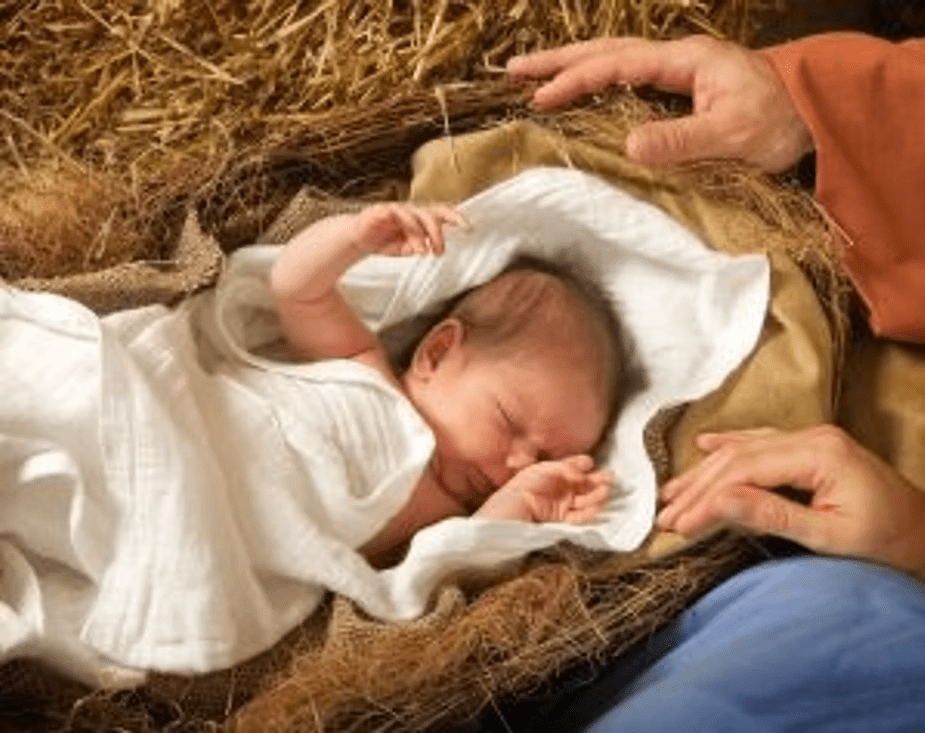
Aaaahhh. I think he looks just like you!

Verse five then begins by stating (as shown above): “because our message of the gospel came to you not in word only.” The Greek word translated as “message” is “euangelion,” which means, “The good news of the coming of the Messiah, the gospel,” but implies “the human transmitter (an apostle).” This then explains the “hope in our Lord Jesus Christ.” An Apostle spreads this “hope” to others; but this “hope” did not come to the Saint simply by reading or hearing “words only.” Therefore, being an Apostles means more than telling people about Jesus as the Christ.

Hope that comes only from words means that which is hoped for is always beyond one’s reach.  We hope for things to materialize in this realm, when hope is only truly answered “in our Lord” being our Lord within.  A true Christian’s hope is to become Jesus Christ.

The second segment of verse five then states (as above): “but also in power and in the Holy Spirit and with full conviction.” This means that an Apostle gives others the keys to fulfilled “hope,” by explaining the intent of the “word” so that others can see the “power” those words contain. That power illuminates the presence of the Holy Spirit, in the writer of the words, in the Apostle explaining those words, and in the abilities within one being enlightened. Only from one being exposed to the light of truth can one personally feel the power within and realize the “full assurance” and “conviction” that the Word is indeed Holy.

Only from that personal relationship can one have “full confidence” in God and His Christ. This is how “hope” is “assured.”

Verse five concludes by stating (as above): “just as you know what kind of persons we proved to be among you for your sake.” This says that the personal experience then allows each new believer to “know” and “appreciate” that a Saint has come to him or her, in order for him or her to be enlightened personally. That personal connection to God is what leads one to choose to be “that kind of person” who likewise seeks others to enlighten. It is a light that opens one’s eyes to helping others, more than self.

Verse six begins by simply stating, “And you,” where the focus of the letter changes from the wonders that all Apostles and Saints feel, to specifically address the accomplishments of the Thessalonian Christians. Paul pointed out that, by stating that they “became imitators of us and of the Lord.” Paul, Silvanus, and Timothy had been welcomed by them in their travels, but that presence had the effect of passing on the Holy Spirit to all.

As “imitators,” the Thessalonians had become “followers,” in the way that Jesus meant when he said, “follow me.” The Greek word here is “mimētai,” which was only used by Paul in his letters and means, “imitators” or “followers,” but more properly: “the positive imitation that arises by admiring the pattern set by someone worthy of emulation.”  There was nothing artificial – no pretense – in their following holy men into sainthood.

This is an example of an imitator, who never is who he acts to be. This is a reflection of idol worship.

To clarify that this was a statement of the Thessalonians being “followers” in Christ, following a comma (not shown above) Paul then wrote, “and of the Lord.” This means all were “imitators” of Jesus Christ, just as were Paul, Silvanus, and Timothy.  By Paul stating “the Lord,” using the Greek word “Kyriou,” he meant it was understood that Jesus becomes “the Master” of one’s physical body (his kingdom), and that “Lord” is whose commands a “follower” or “subject” obeys.

When is read, “for in spite of persecution you received the word with joy inspired by the Holy Spirit,” this is split in two by a comma not brought into the translation above. By Paul separating this into a segment that stated the Thessalonians “had received the word amid much tribulation,” this says the Thessalonian Christians primarily were Jewish. They were then outcast by Jews who rejected the “word” that the Christ had come. Similarly, as had occurred in Jerusalem and Galilee, attempts had been made to harm them or force them to recant their beliefs. Still, they believed Jesus of Nazareth was the promised Messiah because of more than simply words having been spoken.

They maintained their faith in Jesus Christ because they “received the word.” The Thessalonians had “welcomed” and “accepted” the Good News, but they had also breathed in the Spirit that news brought.  Therefore, that receipt came “with the “joy” and “gladness of the Holy Spirit.”

Verse seven then continues the thought line on the Thessalonian Christians being imitators of Paul, Silvanus, and Timothy, through the joyful presence of the Holy Spirit and the Christ Mind, as they too have evangelized to others. Rather than just become “couch potato Christians” and stay at home, doing nothing, some “became examples” of Jesus Christ reborn, bringing forth “all the believers in Macedonia.” Some of them spread the Gospel “in Achaia,” which is stated separately via comma. Those two places represent distances traveled to the southwest and northeast, in mainland Greece, from Thessaly.
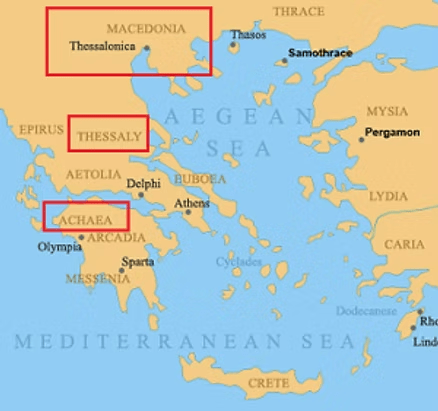
In verse eight, Paul stated his certainty (from personal experience) that the Christians of Thessaly were in no way limited to how far and to whom their “words” of Christ Jesus were announced, with joy motivating them to speak that truth wherever they traveled and wherever they lived. This means they were not limited to telling Jews only, in Macedonia and in Achaia. That meant it was unnecessary for Paul to list every place in the world where Greeks had access, as places where they might consider going. Just as Paul (et al) was driven by the Holy Spirit to evangelize, he and his travel companions knew the same motivation was present in the Christians of Thessaly.

In verse nine, Paul informed the Christians of Thessaly that he and his companions, in their travels, were meeting other Christians who had been affected by those Thessalonians. The Greek word that has been translated as “welcomed” (“eisodon”) actually translates as “reception,” implying an “entering” or “entrance into.” As such, these reports Paul (et al) were hearing were more than the Christians of Thessaly saying how happy they were to meet Paul and his traveling companions; but the same Spirit had entered them.

When Paul wrote, “and how you turned to God from idols,” this clarified how they had been filled with the Holy Spirit of the LORD. The Greek word “eidolon” means “idols,” but denotes an “image (for worship),” thus “false gods.” While the history of the Greeks is known to be polytheistic, as their mythology had them erecting many statues to the gods (including one to “the unknown god”), the “false gods” that the Jewish converts to Christianity had turned away from were the leaders who condemned Christianity (as a belief in the Messiah having come as Jesus of Nazareth). Evidence of this can be seen reflected in the story of Jesus and the young, wealthy ruler (Pharisee), who proved he served a material master.  The “idols” worshipped by many leading Jews were representative of things possessed (land, coins, clothing, and the rest), where those “idols” were proof to them of their God.

From grasping this connection to Judaism, which believed in the God of Moses (ancient history, thus perhaps a dead God – after their ancestors lost their land?), they served themselves as the special ones whom God rewards with things. All of the Greeks of paganism worshipped dead gods (stone monuments) out of fear, more than belief. They offered sacrifices out of ritual, with few expectations beyond the uncertainty of Mother Nature. Still, those pagan Greeks were not persecuted for “mailing in” their “faith card,” so they did not “turn to God from idols” because someone told them about Jesus dying, resurrecting, and ascending to heaven, before witnesses. The Jews had belief in such things in their history (Elijah for one), but they had reverted (once again, in a history of many times) to idolatry.

This is why Paul then wrote about that turn away from idols as being “to serve a living and true God.” The Greek text presents a comma (written or implied) between “God living ,  and true.” The separation is important, as “a living God” (“Theō zōnti”) placed focus on God being alive in the servant (or “slave, devotee, subject” – from “douleuein”). It is not a statement that God is Alive, but one that says one lives as God incarnate.

This is the story of Jesus of Nazareth, who walked the earth as the living presence of God. ALL subsequent Apostles and Saints are then reproductions of Jesus of Nazareth, as the Son of God still living on the earthly plane. Those who worship idols are as dead as the stone images they stand before, or as dead as the rabbis who cannot teach one to be filled with God’s Holy Spirit and make God be Alive on earth. Therefore, the separate statement, “and true,” means one is “genuine,” “real,” and literally “made of truth.”

The Greek word “alēthinō” means “true,” while “emphasizing the organic connection (authentic unity) between what is true and its source or origin.” Every time Jesus said “verily,” he said, “I only speak the truth.”  The truth is certain.  God becomes alive and present through those who speak His truth.

When Paul began to wind down this introductory page of his letter to the Christians of Thessaly, he continued by stating, “and to wait for his Son from heaven.” This has to be seen as adding meaning to the use of “to serve God living,” where “truth” is all important. By Paul adding the need “to wait for the Son of him of the heavens,” the reason one calls a “waiter” in a restaurant by that name, is the customer decides what the waiter will bring forth; and until that time an order is determined, it is the place of that servant “to await” that order. For Paul to say “to wait for his Son” or “await the Son,” this is confirmation that each true Christian is indeed a body of flesh that is the attendant of the Son, as the rebirth of Jesus Christ.

That presence in a human body is then not physical, but spiritual, being “from heaven” or “of the heavens,” which is the Holy Spirit.

This too is confirmed when Paul next wrote, “whom he raised from the dead.” Each and every true Christian is the one “to wait for his Son,” as the one (one of many) “whom God raised from the dead.” All human beings are born of death, as mortal creatures housing living souls. Death means reincarnation; whereas Life means the release of the soul to eternal life, without the restraints of mortal death.

Jesus of Nazareth was one “whom God raised from the dead,” but all true Christians are likewise raised from the dead by the rebirth of Jesus Christ within them. Therefore, Paul stated “Jesus” between two commas, standing alone as that statement of rebirth.

The presence of “Jesus” within a servant waiting on that Son is the only way one becomes “rescued from the wrath” that is mortal death, as repeating the life of a soul imprisoned in another body of flesh. Becoming a servant to the LORD means dying of self and being reborn with the Mind of Christ, which makes one like Paul, Silvanus, Timothy, and the Christians of Thessaly – those who await the Son sent to them from heaven, and go to others so they too can be “rescued from the wrath.”

The Greek word that has been translated as “rescues” is “rhyomenon.” The word actually says, “delivering.” The servant who makes deliveries is always seeking the one who will receive. Thus, salvation is more than the words one takes out to the world. It is about finding those who will be receiving them spiritually.

From this detailed interpretation of the 256 words Paul wrote here, in his first letter to the Thessalonians, one should come away with either a headache or the “wow effect.” There is so much contained in so few words that to listen to them be read aloud in a church requires amazing abilities of grasping meaning and retention of that meaning, for Paul to be understood fully. I have written over four thousand words in explanation of 256 written by Paul.

The same depth of meaning comes from the writings of Nostradamus; but then God purposefully had Nostradamus write in more confusing text than did he tell Paul.  Nostradamus clearly entitled his work The Prophecies, as a statement that the future was only knowable by God.  Something only knowable by God requires God to understand.  Paul also wrote of the future, with the confusion being in a letter addressed to people long gone.  To not see that fixed in the past state of 1 Thessalonians 1, one likewise needs God to see Paul wrote a prophecy of the future – now – always now.

The point here is that Paul was not simply rubber stamping a “thank you” letter to the Thessalonians. He wrote words that only one filled by the Holy Spirit could fully comprehend, after happily spending hours poring over each word written. Each of Paul’s letters should be seen as written to every true Christian who will ever read or listen to his words.

They are written to me and to you, because that is the power of God and His Word. If you read Paul and are thinking “Yada, yada, yada” (which is actually Hebrew, stating, “I know, I know, I know”), then you might want to look around and see if you spend more time worshiping things (idols) and much less time having fun letting the Holy Spirit enlighten you about Scripture. Hopefully, you read my words here and said, “YADA! YADA! YADA!, because you saw the same things, but felt you had no one to tell.

If that is the case, consider this interpretation of a letter of Paul my congratulations to you.  Thank you for being Christian.
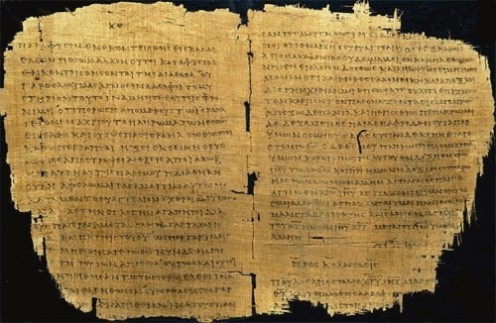
1 Thessalonians 2:1-8 – rue divinity does not require smoke and mirrors [Twenty-first Sunday after Pentecost]

You yourselves know, brothers and sisters, that our coming to you was not in vain, but though we had already suffered and been shamefully mistreated at Philippi, as you know, we had courage in our God to declare to you the gospel of God in spite of great opposition. For our appeal does not spring from deceit or impure motives or trickery, but just as we have been approved by God to be entrusted with the message of the gospel, even so we speak, not to please mortals, but to please God who tests our hearts. As you know and as God is our witness, we never came with words of flattery or with a pretext for greed; nor did we seek praise from mortals, whether from you or from others, though we might have made demands as apostles of Christ. But we were gentle among you, like a nurse tenderly caring for her own children. So deeply do we care for you that we are determined to share with you not only the gospel of God but also our own selves, because you have become very dear to us.

———————————————————————————————————-

This is the Epistle selection from the Episcopal Lectionary for Year A, Proper 25, the twenty-first Sunday after Pentecost. This will next be read aloud in church on Sunday, October 29, 2017. This is important as it sheds more light on the motives and actions of true Christians, in relationship with other true Christians.

In the past interpretations of Paul’s epistles, I have made reference to “segments” of his long-winded “sentences.” I use that terminology because of my having been enlightened in how to read the complex letters of Nostradamus, which are part of the posthumous publications of his work The Prophecies (Les Propheties). In that regard, I have stated the need to slow down one’s natural reading process, from normally quite fast, to very slow. This means breaking the text down into “segments” (the words between punctuation marks, either directly written or implied in some way), so those words can be more deeply inspected for meaning.

One “sentence” of Nostradamus has a lot of internal marks.

Because the letters of Nostradamus are so difficult to read, due to a very limited number of period marks (among other difficulties), I have found it easier for the readers of my Nostradamus publications to grasp the deeper meaning by breaking down pages of block text into segments, dictated by the presence of punctuation marks. This process allows the actual text to be more clearly presented, and it prevents the automatic processes, of a brain taught to read text fast, that make auto-corrects of inconsistencies in tense, number, and gender, so that we are trained to quickly paraphrase complexities of writing into understandable language.

While Nostradamus was commanded by God to write extremely complex epistles, Paul was meant to be understood, making the two prophets seem only similar in their penchant for long, run-on statements. However, as the source influence for both was God’s Holy Spirit, meaning both were writing in a holy language, with its own purposeful syntax applied, Paul’s epistles can be broken down into segments, in the same way that I have done previously with the text of Nostradamus’ letters.

The translation of 1 Thessalonians 2:1-8 listed above is the New International Version of the original Greek text. This is a valid translation, based on the syntax of normal Greek being applied to the syntax of normal American English, where certain syntactical liberties are naturally taken. When translated in this way, one reads what normal Paul wrote, in a letter sent to normal Thessalonians. However, we know neither Paul (and his apostle companions) nor the Thessalonians receiving this letter were normal; as they were all true Christians, each filled with the Holy Spirit.

In order to see the holiness of this epistle more clearly, I advise the readers here to open a separate window and read along in the Interlinear Bible presentation of 1 Thessalonians 2, which shows the Greek, a standard translation for each word, and the root word that is linked to that word’s usage and definitions, as indicated by Strong’s Concordance (and others). With that guide to assist you, please read now the above eight verses in segmented fashion, reflecting on each segment before leaping rapidly to the next.

(Literal Translation of Interlinear Bible – Viable Literal Translation from Strong’s)

1. You yourselves indeed know, – Your selves truly know,

brothers, – brethren in Christ,

the coming of us to you, – the entrance of ourselves to you,

that not in vain has been; – that [entrance] not pretentious was born;

2. but having previously suffered and having been mistreated, – except suffered previously and having been injured,

even as you know, – just as you know,

in Philippi, – in Philippi,

we had boldness in the God of us, – we spoke freely within the God of us,

to speak to you the gospel of God, – to talk with you the good news of God,

amid much conflict. – among many [who] struggle.

3. For [the] exhortation of us [was] not of error, – Indeed a calling of us not of delusion [or wandering, sin],

nor of impurity, – nor of uncleanness [impurity],

nor in trickery; – nor in deceit [or guile, treachery];

4. but just as we have been approved by God, – but according to the manner we have been tested by God,

to be entrusted with the gospel, – to be given faith in the good news,

so we speak; – in this manner we proclaim;

not as men pleasing, – not as humans approving,

but God, – on the other hand God,

the [One] examining the hearts of us. – he proving [or testing] the intentions of us.

5. Never indeed at any time with word of flattery were we [coming], – not for once a word used for advantage or gain,

even as you know, – just as you know,

nor with a pretext for greed – – not in an excuse for covetousness —

God [is] witness; – God a witness;

6. nor seeking from men glory, – not desiring from humans praise,

nor from you, – not from you,

nor from others, – not from others,

[though] having authority in [it] burden to be, – having the ability by weight [or burden] to be,

as Christ’s apostles. – as the Anointed One’s messengers.

7. But we were gentle in [the] midst of you, – However our birth an infant in the middle of you,

as if a nursing mother would cherish her own children. – like as if a nursing care-giver would foster her own children.

8. So yearning over you, – In this way desiring earnestly for you,

we were pleased to have imparted to you, – we well-pleased to have given shares to you,

not only the gospel of God, – not only the good news of God,

but also our own lives, – but also our own souls,

because beloved to us you have become. – because beloved by God to us you have been born.

I will just make a couple of comments, beyond stating the obvious: The above text is from holy men to holy men, conceived by God in apostles and received by apostles who were enlightened by God to its true purpose. That truth lasts forever, to all who read these holy words, in all times: past, present, and future. The epistles of Paul are in a Holy Bible, for that reason – they are holy documents; and it requires the assistance of God to fully understand the holiness of their words.

That said, look at how the Greek word “adelphoi” was written and then translated as “brothers and sisters” in the New International Version above. That one word in Greek means, “A brother, member of the same religious community, especially a fellow-Christian.” (Strong’s) It is translated a number of times in the New American Standard Bible to be: “believing husband (1), brethren (170), brethren* (13), brother (111), brother’s (8), brothers (40).” (NAS)

As a typical statement of male apostles writing to male apostles, at an historic time when female apostles were never addressed as the caretakers of a church, it then becomes a modern paraphrase to change the essence to “brothers and sisters,” due to the allowance of female priests these days. However, that is not grasping the deepest spiritual meaning of this particular one-word statement, surrounded by two commas.

The word “adelphoi” means both the writer(s) and the recipient(s) were related. As such, the epistles were intended to both males and females, with both sexes referred to as “brothers.” They were not physically related, which means the differences in sex organs are inconsequential in this address. The relationship was solely Spiritual. All were brothers because all had been reborn as the Son of God, Jesus Christ. To reduce this to “brothers and sisters” is to put women back into a subservient role to men, as if only men could be filled with God’s Holy Spirit. That is not the intent of this word’s spiritual intent.

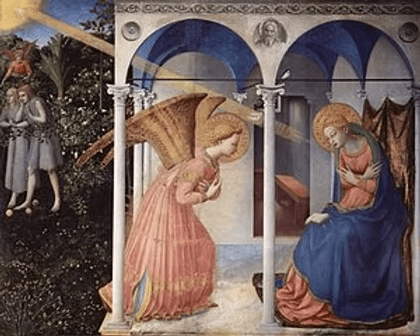
Mary has a halo in this work of art. Was it because she was holy? Or was it because the Son of God was within her womb? Think about that for a moment.

Second, the repeating of the segment that says “kathōs iodate,” translated as “just as you know,” says that Paul was not telling the Christians of Thessaly anything new. Because all were equally filled with the same Holy Spirit of God, the elements stated by Paul about the sufferings experienced and injuries caused, prior to becoming apostles of Christ, and the purpose their lives had taken on, after becoming apostles of Christ, were dawnings that all understood.

For this reason, Paul wrote that segment twice here (as influenced by the Mind of Christ to write) because the same statement is made to each reader, for as long as this epistle will be read. Understanding the steps of apostlehood is “even as you know.” If you are a fast reader, and everything Paul wrote seems to be “Greek to you,” then you know little of being an apostle of Christ (a true Christian). If you read Paul and believe this epistle was written to you, then the experiences recounted here as “just as you know.”

With that said, I will leave this letter to speak for itself, with the presentation I have shown an aid towards understanding. If anyone has questions or comments, then feel free to post them for all to see. I will answer any comment that specifically references the internal text of this posting.

1 Thessalonians 2:9-13 – Witnesses of Yahweh speak the truth of Jesus [Twenty-second Sunday after Pentecost]

You remember our labor and toil, brothers and sisters; we worked night and day, so that we might not burden any of you while we proclaimed to you the gospel of God. You are witnesses, and God also, how pure, upright, and blameless our conduct was toward you believers. As you know, we dealt with each one of you like a father with his children, urging and encouraging you and pleading that you lead a life worthy of God, who calls you into his own kingdom and glory.

We also constantly give thanks to God for this, that when you received the word of God that you heard from us, you accepted it not as a human word but as what it really is, God’s word, which is also at work in you believers.

——————————————————————————————————–

This is the Epistle selection from the Episcopal Lectionary for Year A, Proper 26, the twenty-second Sunday after Pentecost. This will next be read aloud in church on Sunday, November 5, 2017. This is important as it makes clear the work that is involved in being truly Christian.

To repeat what I posted previously about Paul’s letter to the Thessalonians, the statement above that says “brothers and sisters” is not what was written in this letter. The Greek word Paul wrote is “adelphoi,” which is the plural form of “adelphos” and says “brothers.” We can accept “brothers and sisters” in translation, because “brothers” was used in the epistles of Paul to denote “members of the same religious community, especially fellow-Christians.” (Strong’s) However, to translate it as both masculine and feminine Christians can become confusing, when one gets to the part where Paul wrote, “We dealt with each one of you like a father with his children.”

This is confusing because Paul treated the Christians of Thessaly “like a father.”  The deeper meaning in that statement says it was the Father’s love of Paul in him which Paul then modeled behavior from. God raised Paul to raise others like Paul, so all would have the same love of the Father within them, with all modeling their behavior after God the Father. This is why priests are addressed as “Father.”

This issue will be further addressed by Jesus in the Gospel reading that accompanies this epistle reading in 1 Thessalonians (Matthew 23:1-12). That was when Jesus made the remark that Pharisees and those of the Temple liked to be called “rabbi,” but they never taught by example. They were never the “Fathers” of the Jews, as those lowly people were raised as if they were orphans. So, when Paul said, “We dealt with each one of you like a father with his children,” all the “sisters” could be confused about what that means.

My wife is an Episcopalian priest. In seminary, she had a woman professor who was referred to as “Mother.” When my wife was ordained, the parishioners began calling her “Mother.”  In my mind, this is not a complimentary title.

Before I comment on that, let me also say that I have sat in some Episcopal churches and read along in the Prayer Book, for the Eucharist Rite II, Prayer C: “Lord God of our Fathers; God of Abraham, Isaac, and Jacob,” only to hear the priest (a male) say, “Lord God of our Fathers and Mothers; God of Abraham and Sarah, Isaac and Rebekah, and Jacob, Rachel and Leah.”

What?

I asked a different male priest, who did not make those additions for the wives of Patriarchs (Pater is Latin for Father), why some priests did and some did not. He said it was up to the priest; but it was a modern way of making unofficial changes to the Prayer Book, which took into consideration the role women play in the Church.

If that is why “adelphoi” is translated as “brothers and sisters,” then it misses the point of the Father as the teacher of His children, with Jesus Christ the Son of God, where ALL Christians are “brothers” [male and female He made them], as reborn Jesuses.  If that is why a female priest of the One God is called “Mother,” it misses the point of who is teaching, what is being taught, and how children know the difference between mommy and daddy.

It misses the point that ALL Christians are called to be “the brides of God” [male and female He calls them], with the consummation of that marriage bringing about the baby boy Jesus, with the Mind of Christ – who sits at the right hand of the Father, as the male heir to the throne – making a human being become One (a Trinity) in the flesh.

It misses the point that Christians are ALL “brothers,” because nobody speaks their sex organs as a servant of the LORD. The FATHER speaks, while Christians just open their pie holes and let the words come out.

Now, that said, let me inform whoever reads this that I had no father around when I grew up. I had a mother, and that was it. My mother did lots of things a father could do, such as go to work and leave me in someone else’s care, or go to work and leave me alone at home. Occasionally, my mother spanked me with a belt, but she never made me so afraid of punishment that I felt compelled to toe the line. In all actuality, I was allowed to do as I pleased, more and more the older I got.

My mother saw me as the “man of the house.” My mother loved me. My mother sacrificed for my benefit. My mother gave me as much as she could afford to give, and was sorry she could not give more. My friends with fathers AND mothers never had as much as I had; and as I grew older, I felt guilty for having too much … as a lower, middle-class male. (I call it middle-class because my mother bought a house to raise me in.)

From that personal historic background and experience, when I hear a priest of the LORD referred to as “Mother (fill in the blank),” it gives me the impression of one who is permissive, more than demanding.  It makes me think that “parent” is there to make all my boo boos feel better, more than tell me to get up when I fall … “Rub some dirt on it!”

Without the presence of a real father in my life (my father visited on some holidays – he was not dead, just very absent), I grew up male, but knowing very little about things boys with fathers are taught. As some model by which I could become an adult male, with eventually a wife and family and responsibilities of fatherhood, I looked to other fathers. Some were real fathers I spent time with, as a friend of their sons; and some were fictional characters on TV.

At no time did I ever learn any adult male skills from my mother. I watched other males and learned through observation.  Male teachers and gym coaches were the ones who told me how to become a man and do manly things; and I absorbed that knowledge like a sponge. Of course, my peers helped me learn too, by leading me down all the wrong paths of masculine ignorance.  Without a real father to guide me, I found trial and error was my best teacher.

In defense of my mom, she was always buying things that I was tasked to put together and she bought some tools that I could use in that effort. Indirectly, my mother taught me to read the directions first, not after you try to put something together wrong … over and over again … never thinking to read the print under the pictures.

The point that I have made in the past and still make today is this: A priest (or pastor, minister, reverend, padre, et al titles) is THE Father, via the Holy Spirit, regardless of one’s human gender. Paul said this when he wrote how he, Silvanus and Timothy had been acting like a father to his children, “urging and encouraging you and pleading that you lead a life worthy of God, who calls you into his own kingdom and glory.”

It was not those three men who were acting like fathers, because they called the Thessalonians “brothers.” They acted as “God” who was within them.  God is “who calls you into his own kingdom and glory.”

The modern Western rationale now is to find equality in the sexes (which is the same rationale that is applied to all efforts calling for equality).  This is little more than a philosophy of man that seeks (through the Big Brain) to lower those who have been artificially elevated, and to raise those who have been downtrodden. This is good when the ones pointing our all the mistakes in others comes from THE Father, and not some personal agenda.  That message, again, is the point made in the accompanying Gospel reading for Proper 26, where Jesus said, “All who exalt themselves will be humbled, and all who humble themselves will be exalted.”  He was referring to the usual suspects in Jerusalem (Pharisees, scribes, et al).

I am reminded now of the lyrics of a song written by Roland Orzabal (Tears For Fears video), about the humbling of Spain, due to its devotion to the philosophy of Salic Law and Patrilineal or Agnatic Succession, where only male heirs could wear the crown.  In two verses the song lyrics sing, “Did you know your father was an island Did you know your mother was the sea” and “Did you know all mothers come from heaven Did you know all fathers come from hell.”  The lack of a male heir in Spain was then symbolically stated as a lack of a fixed (island) and ruthless (hell) ruler, which led to the ultimate ruin of the Spanish monarchy.

The Spanish refused to make a Queen their supreme leader, as that would be recognizing Mother Spain as capable of being inspired by God THE Father.  A nation was not allowed to be ruled by changing emotions (the sea) or the nebulousness of spiritual faith (heaven) in the physical realm.

The Spanish did this (I presume) because the Pope had become their father figure, by whom Spain was raised.  The Vatican denied women the right to serve God as His priests, for Christians.  Therefore, Queens had no rights to serve God as His national rulers, over Christian lands.

That philosophy crumbled when a King of Spain sired no male heirs before dying.  The War of Spanish Succession ensued.  Because of that war, the Holy Roman Emperor, Charles IV, declared it would be legal for his daughter to become the Empress upon his death; a transition that was challenged by the War of Austrian Succession.  All the while, the English had managed to do fine with the succession of Queens, mixed with Kings.

I imagine it was the costs of wars over succession that led some to reflect on how priests of Rome could call themselves “Father,” when they were denied marriage, by edict, thus denied all capability of actually having children.  That system came tumbling down when brains began pondering, “Why can’t women be priests, if a queen can rule England?”

Still, men and women are different, or they would be called the same word (without gender application necessitating separate words). The same goes for fathers and mothers: They are different and not the same, because each was created for specific purpose, as compliments of the other.  The Commandment to honor your father and your mother recognized the equality of separate responsibilities.  Both sexes have equal value in the production of offspring and raising those children to serve a purpose.  However, anyone who exalts him or herself because of gender (this is called “Pride,” which is a Deadly Sin) is then destined to be humbled in the eyes of THE Father.

The Israelites went to Samuel and asked to be given a king, to be like other nations.  No man (and thus no woman) can ever be more than a human figurehead, because God told Samuel, “they have rejected me as their king.”  “All who exalt themselves will be humbled,” as only THE Father  leads His subjects to the true Promised Land.  Mother Earth is the ruler of the physical and material, and as harsh and/or as gentle as she can be, she can only offer ashes to ashes and dust to dust as the rewards for serving her.

This means to call oneself “Father,” simply because one is a male graduate of a seminary, ordained into a job for a religious order that brings that title of masculinity, because one is masculine, is wrong. Likewise, to call oneself “Mother,” simply because one is a female graduate of a seminary, ordained into a job for a religious order that brings that title of femininity, because one is feminine, is wrong. To deny women the right to be THE Father to a congregation is equally wrong.

It is wrong because everything religious is then reduced to the human level of gender identification, rather than being elevated Spiritually.  The trick question of the Sadducees put to Jesus, about who would be the rightful husband to the widow of seven brothers (where none produced a male heir), was answered by Jesus saying, “At the resurrection people will neither marry nor be given in marriage; they will be like the angels in heaven.”  That means the soul has no gender.  It is placed into flesh that may or may not be reproductive on earth.

Humans love attaching gender to angels. Gender is a human trait for reproduction. Angles are immortal and cannot reproduce.

The model of THE Father as being the one who sets the rules for a congregation to follow, and then fairly making sure those rules are followed – “urging and encouraging you and pleading that you lead a life worthy of God” – is God (Yahweh, the LORD). Moses did not make anything up from his own brain, such that a human male was written in stone as the only gender of humanity that could ever lead the Israelites. We know this because in the Book of Judges we are told of the Priestess Deborah, who God used to lead the Israelites back to leading lives “worthy of God.”

You might note that the Priestess Deborah was not referred to as “Mother Debbie.” She did not become a Judge of the Israelites because she knew how to raise children. Deborah was a prophet of the God of the Israelites, while also being recognized as being “a counselor, warrior, and the wife of Lapidoth.” As a wife, she presumably had babies, so that would mean she also was a mother; but her human roles, based on gender, had nothing to do with her saving the wayward from ruin. She was the physical embodiment of THE Father.

When Paul said God “calls you into his own kingdom and glory,” he did not mean a call for you to imagine your soul floating away to some magical place, where if unicorns do exist, then they run and play in heaven; and the ghost of Jesus is there to pick flowers with you, after Saint Peter allows your soul to enter that kingdom and glory, where God is the cloud that surround everyone. Paul said “God calls you.” His call is for you to be the physical embodiment of His own kingdom. Receiving that call means you become “the unspoken manifestation of God” (from the Greek word “doxa”).

To be my Brother as the Son reborn into flesh.

There is no sexual bias attached to this call “into his own kingdom and glory.” All are welcomed to open their hearts and become engaged to the LORD. Once married, your ego becomes completely subservient to the LORD. You are God’s committed wife (till death does your soul depart your flesh), so you stand to the rear as the LORD speaks out of your mouth. The LORD speaks as THE Father, just as He spoke through Jesus, as the Mind of Christ fills the newborn baby (reborn Christian) of that marriage.

In this arrangement, you are not alone. God takes on as many wives as He can afford (and He can afford every human being). You are summoned to marry God, and His proposal is that message brought by Apostles (male and female), and served as a father to his children.  Acceptance means you become “brothers” with all the other wives of the LORD. You all become like Paul and seek new Christians to raise, like a father does to his children. God calls you to be a Father, in the name of His Son, Jesus Christ.

In this way all Christians “accepted it [the words of proposal to marry God] not as a human word but as what it really is, God’s word.”  It does not matter what human form God takes, as it is not their gender uttering those words.  All words spoken by Saints come from THE Father.

1 Thessalonians 4:13-18 – The reincarnated dead without Anointment will gain another chance for redemption [Twenty-third Sunday after Pentecost]

We do not want you to be uninformed, brothers and sisters, about those who have died, so that you may not grieve as others do who have no hope. For since we believe that Jesus died and rose again, even so, through Jesus, God will bring with him those who have died. For this we declare to you by the word of the Lord, that we who are alive, who are left until the coming of the Lord, will by no means precede those who have died. For the Lord himself, with a cry of command, with the archangel’s call and with the sound of God’s trumpet, will descend from heaven, and the dead in Christ will rise first. Then we who are alive, who are left, will be caught up in the clouds together with them to meet the Lord in the air; and so we will be with the Lord forever. Therefore encourage one another with these words.

———————————————————————————————————-

This is the Epistle selection from the Episcopal Lectionary for Year A, Proper 27, the twenty-third Sunday after Pentecost. It will next be read aloud in church on Sunday, November 12, 2017. This is important as it addresses the issue of death and the soul’s return to God, as understood by an Apostle and Saint.

Again, as I have done previously with the words of Paul, so we are forced to read what is written slowly and ponder translations that are valid, not what has been presented for us, let me simply present the above block (seemingly) paragraph in segmented fashion. Simply read this as the lines of a psalm that is slowly sung and let your mind’s eye see the message being unfolded before you. Read this before I offer an interpretation.

You can read along with the Interlinear breakdown of Greek and English here, and see how the translation above (the New American Standard Bible version) is compatible to the translation below.

13. I do not want you to be ignorant,
brothers,
concerning those who have fallen to sleep [that of death],
that not you should be grieved,
like are the rest,
those not having hope (confidence, trust, expectation).
14. If indeed we believe that Jesus died and rose again,
so also [we believe in] God,
those having fallen to sleep [that of death] for the sake of Jesus,
will bring (guide, lead away, go, carry) with him (the same).
15. This [statement of promise] indeed we declare to you in word of [the] Lord,
that [declaration] we the living surviving (left behind, remaining),
towards the coming (arrival, advent, presence) of the Lord,
all not shall proceed those having fallen to sleep [that of death],
16. because himself the Lord with a loud command (arousing outcry, word of command),
with the voice of the ruler of angels (archangel),
and with trumpet of God.
Will descend from heaven (the atmosphere, the starry heavens, the sky),
and the dead (lifeless, mortal) in Christ will rise before (at the beginning, first, in the first   place).
17. Then we the living remaining (left behind, surviving),
together with them,
will be caught away in clouds for meeting of the Lord in air (air we breathe);
and so always with the Lord will be.
18. Therefore encourage one another with these words.

If you noticed the repeating word, “died,” good for you! The repetition makes this the theme of this reading selection. Certainly, by comparing the two versions of translation, you noticed the word “died” has been replaced with “fallen to sleep” on three occasions, with “died” being maintained the other time.

The use of “fallen to sleep” is used as a symbolic statement of “death.” That translation comes from the words “koimōmenōn” (1x) and “koimēthentas” (2x), which are rooted in the word “koimaó.” The word “koimaó” (which is a variation of “keimai” – “to be laid, lie”) means, “sleep, fall asleep, die,” implying, “I fall asleep, am asleep, sometimes of the sleep of death.”

This is not insignificant, as in John 11:11 we are told Jesus said. about the news of Lazarus being “sick,” “Our friend Lazarus has fallen asleep; but I go, so that I may awaken him out of sleep.”  In John 11:4, the element of “death” was addressed when Jesus said, “This sickness is not to end in death, but for the glory of God, so that the Son of God may be glorified by it.”  Jesus being glorified by one falling asleep is an important message to hold onto as you read here how Paul wrote of that topic.

Jesus used the same Greek word as Paul used, referring to “having fallen to sleep,” with the word “thanaton” (rooted in “thanatos “) clearly meaning “death.”  The word maintained in translation here, as “died,” is “apethanen.” Immediately, a completely different word is visible (other than variations of koimaó ) as having been translated exactly the same as if rooted in “falling asleep.” The word “apethanen” is a form of the word “apothnéskó,” which means, “to die,” implying a usage saying, “I am dying, am about to die, wither, decay.”

Because the New American Standard Bible translation has presented a translation of “died” four times, with no indication of differences in the Greek, the reader’s and/or listener’s mind believes the exact same meaning is the intent, creating mental imagery of dead people in coffins, and all the finality that comes from mortal death. It then is important to grasp that the one use of “apethanen” is used in verse 14, where Paul wrote, “If indeed we believe that Jesus died and rose again.”  That states the common belief that Jesus died.

While Jesus was the name attached to a body of flesh and blood (like those possessed by Paul and the Thessalonians who had received this epistle), that state of finality (mortal death) did not end Jesus’ life. Because Jesus rose again, Jesus still lives.  Jesus lives in the bodies of Apostles and Saints. Thus, the implication in that statement (lost in translation) is that death – to a Christian (Christ Jesus and those filled with the Christ Mind) – is like being laid down to rest on a temporary basis, just like one goes to bed, sleeps, and then rises again.

To read a long-winded sentence that says, “For since we believe that Jesus died and rose again, even so, through Jesus, God will bring with him those who have died,” it is easy to come away thinking, “I believe Jesus died and was resurrected, so that belief means God will take my soul when I die.” That is as common a mistake as is thinking, “Jesus died for my sins.”

If Jesus did not die (he rose again), then Jesus awaits to awaken you from the death that is guaranteed by your sins.  Because the man Jesus was released from his physical body, his Spirit can continually rise again in others that die of sinful egos.  The ego goes to sleep, so the Mind of Christ can live again.

Nothing Jesus said in the Gospels (especially the parables where people think like that and find out the sad truth) says that anyone can sin all they want, while going to Heaven is guaranteed by belief in Jesus. Paul (even if it seems like he is saying all you have to do is believe and go to heaven) is telling believers you have to be Jesus reborn to get that reward.  It becomes a matter of seeing what you want to see, and that seeing then becomes the basis for believing.

Look again at verse 14 broken down into four segments. The first states, “If indeed we believe that Jesus died and rose again.” This segment begins with the Greek word “Ei,” which is a conjunction that relates this segment to the previous statement, “those not having hope,” which is a statement about those who do not have “trust, confidence,” or any “expectation” in eternal life. Thus, this segment depends on “If” that is the case,” “for as much as” that is the case, or as a direct reference to “that” lack of “hope,” then Christians indeed believe in a temporary state of death, because Jesus rose again.

The second segment then states how that resurrection was possible. Only God could cause a dead Jesus to rise again with life. Therefore, to believe in that miracle of the Resurrection, so also God is believed. Jesus did not raise himself from a state of being dead for three days (72 hours). God raised His Son.

Those two beliefs are more than simply the result of someone being told to believe in the resurrection of Jesus and the power of God. Keeping in mind that Paul was filled with the Holy Spirit of God, and he was writing to Christians in Thessaly who were likewise filled with the Holy Spirit of God, everybody was on the same page when Paul wrote, “those having fallen to sleep for the sake of Jesus,” he meant those who died like Jesus did – filled with the Holy Spirit.

The Greek word “dia” has been translated as “for the sake of” here, but as “through” in the NASB translation. The word means, “through, on account of, because of,” implying “through, throughout, by the instrumentality of, by reason of,” and “for the sake of.” The word is a preposition that is often used as a prefix, such that its use indicates “successfully across” (to the other side). Therefore, Paul was stating that for death to not be without “hope” or “expectations,” then one has become one with Christ Jesus, so one’s soul simply goes to sleep, to be resurrected in Heaven, because of that Christ presence within oneself.

From that realization, the fourth segment is clearly stated, such that we know Christ Jesus “will lead away with him,” “the same” as Jesus Christ “died and rose again.” Even for those who have no “hope,” they too will be “guided through” the soul’s removal from their dead mortal flesh, in an experience that is spiritual and heavenly. However, the impression given above (by the NASB), “God will bring with him those who have died,” is not stated; but to infer that meaning, one then has to realize that God will only keep those who have died as His Son reborn, with the rest recycled back into the mortal realm (reincarnation).

Paul then said that this promise of eternal life in Christ is the “word of the Lord,” which means it comes from God the Father, but was spoken by Apostles as Christ the Son. That “word” is truth, and when Paul then said, “we the living left behind,” “the living” means all those filled with God’s Holy Spirit, so those born of mortal bodies – “born of death” – had been made “living,” because they were then “alive” in Christ. That is the meaning of “towards the presence of the Lord,” as Paul explaining “we the living.”

The last segment of verse 15 begins with a double negative, “no not” or “no lest” (“ou ”), with “ou” also capable of being an indication of “all” (rather than “no”). As such, this then acts as a statement to be read two ways.

First, it says that “those having fallen asleep” (without the “presence of the Lord”) “will not proceed” to Heaven, while equally saying second, “all [that do] not expect” death, when “those have fallen asleep,” (because of the “coming of the Lord”), they will be the ones to go to Heaven. The double negative is then a reflection that not everyone (“not all”) who says they believe in Jesus and God will be saying “yes” to the “presence of the Lord” (due to the work that commitment involves).  That failure to say “yes” means, “no” “not” going to Heaven.

Verse 16 is then Paul telling of that “presence of the Lord” or the “coming of the Lord.” The first segment fails to see the importance of each word, when we think it says “the Lord with a loud cry.” We need to slow down and see the words saying, “because himself the Lord with,” where “himself” is not the Lord, but the one “the Lord is with.”

We get caught up in the imagery of God being this nebulous, separate entity on a cloud somewhere in the sky, but “the coming of the Lord” and “not” having to be recycled at death is “because the Lord is with oneself.” When one experiences God within, then there is a “loud” and clear “word of command” one hears.  It is not some sound that is audible, as vibrations registered in decibels. It means that  Christians let loose the “word of the Lord, loudly.”

It is then the Apostle who takes on the “voice” of the “ruler of angels,” and it is the “angels” sent by God that bring the whispers of the Mind of Christ. The one filled with the Holy Spirit then becomes the one who “trumpets” their faith in “God.”

At that point, “God will descend from the spiritual heavens,” in the ether that is the breath of life those born “dead,” as “mortals.”  By God coming down from above, His entrance into one’s heart means that one “will rise for the first time in Christ.” With that presence within, one stops fearing death and begins living as the resurrection of Christ.

When Paul wrote, “Therefore encourage one another with these words,” the “words” were about who dies and goes to Heaven. Not everyone gets to go to that spiritually everlasting paradise. Only those who become Jesus Christ reborn get that reward. There are only rooms set aside in Heaven for those who gave up selfishly living their mortal lives, so Jesus could return again, as the judge of who is “living” and who is dead. (See 1 Peter 4:5 and 2 Timothy 4:1)

The Greek word “parakaleite” is translated here as “encourage.” It can also mean “to call to or for, to exhort,” implying “I send for, summon, invite; I beseech, entreat, beg; I exhort, admonish; I comfort, encourage, console.” Paul was sending this letter to drive home the point to the Thessalonian Christians that they need to preach that message. No only should those filled with the Holy Spirit know their deaths are little more than falling asleep, waking up in Heaven; but, more importantly, they need to “encourage” those who are “like the rest” of humanity, “those not having hope,” that becoming a reborn Jesus is the way of “hope.”

This letter, again, was written for all who will read it, through all times, in all places. If you think you have Heaven solved and all you have to do to get there is believe Jesus died and was raised again, it is like thinking your beauty will pass that final exam, the one that will graduate you from the first grade to a doctorate in some field that means early retirement and exclusive homes on a paradise beach. You have to sacrifice to get the things you want in life … put in a lot of work, more mental than physical. Why would you think that same principle would not apply for the attainment of a spiritual goal?

The biggest problem the world has today is thinking. Heads filled with Big Brains ache when they read the epistles of the Holy Bible. To alleviate that ache, brains turn Greek words into English (or any other language, I presume, including that understood by Greek people) that makes Scripture say what they want to hear be said.

Those brains take the word “brothers” and turn it into “brothers and sisters,” so the sex organs of mortals – those born to die – are accommodated. It is so hard to see how all male and female Christians – those reborn as Jesus Christ – are all “brothers,” due to all being reborn as Jesus, the Son of the Father.

Commentaries of this selection that can be found published online focus on the “comfort of Jesus coming” to those who “have died” and to those left grieving the dead. We like to think that faith in Jesus will bring that deliverance, after it is time for us to leave this materialistic place we so fondly call home.

If we are still living to see it, then we expect Jesus to come down on a cloud at the end of the world and Rapture us, so we can watch all the heathen be fried like ants under a magnifying lens.

“Ha, ha, ha, ha,” they can say then, “Told you so, suckers!”  “You should have believed!”

Otherwise, we think it is all a matter of “We believe.  We die.  We go to Heaven.”  Since all moms are Saints, we will be greeted by mom, and she will probably have a hot apple pie ready for our arrival!

If you wait until death to find Jesus coming, then expect to be popping out of your new momma sometime soon afterwards. God will review all the common mistakes that mortals make; and, then <poof> your soul is in a mortal body again!

And the recycle of life rises again.

Everyone needs to read all the parables Jesus told and put themselves in the setting as the “fool,” rather than seeing themselves as Jesus talking about fools. The parables all say, “Never put off for tomorrow what you can do today.” Tomorrow is too late, as tomorrow may never come.

The only way to rest in peace is to know mortal death just means going to sleep, because the soul has a place reserved in Heaven. Those reservations require one’s ego taking a long, deep slumber, so God can send His Son in to make one’s body walk for the Lord and one’s tongue talk for the Lord. Now is the time to secure that reservation, because there is no better time than the present.

1 Thessalonians 5:1-11 – Stay awake and sober for when the day of the Lord will come [Twenty-fourth Sunday after Pentecost]

Now concerning the times and the seasons, brothers and sisters, you do not need to have anything written to you. For you yourselves know very well that the day of the Lord will come like a thief in the night. When they say, “There is peace and security,” then sudden destruction will come upon them, as labor pains come upon a pregnant woman, and there will be no escape! But you, beloved, are not in darkness, for that day to surprise you like a thief; for you are all children of light and children of the day; we are not of the night or of darkness. So then let us not fall asleep as others do, but let us keep awake and be sober; for those who sleep sleep at night, and those who are drunk get drunk at night. But since we belong to the day, let us be sober, and put on the breastplate of faith and love, and for a helmet the hope of salvation. For God has destined us not for wrath but for obtaining salvation through our Lord Jesus Christ, who died for us, so that whether we are awake or asleep we may live with him. Therefore encourage one another and build up each other, as indeed you are doing.

——————————————————————————————————–

This is the Epistle selection from the Episcopal Lectionary for Year A, Proper 28, the twenty-fourth Sunday after Pentecost. This will next be read aloud in church on Sunday, November 19, 2017. It is important as it echoes the theme of being prepared for everlasting life, as was seen in the parables of the Ten Bridesmaids and the Rich Fool.

The selected reading from the fifth chapter of Paul’s first letter to the Christians of Thessaly begins with the capitalized Greek word “Peri,” followed by the conjunction “de.” This has been translated as, “Now concerning,” which is a reversal of the written words’ order, rather than literally translating, “Concerning now.” Certainly, this translation reflects translation via standard syntax; but standard syntax misses the subtle intent of capitalization, which places a need to focus some importance onto the word “Peri.”

The word “peri” means, “about, concerning,” and “around,” which “denotes place, cause or subject.” Its implied usage infers, “consideration where ‘all the bases are covered.’” As such, the important focus by the capitalization of this states, “Circumstances now” or “Conditions on top of.”

Because 1 Thessalonians 4:18 (reviewed in the Proper 27 lesson) ended chapter four with a plea to continue teaching the value of being in possession of the Holy Spirit, prior to death, chapter five is then referencing that plea and that message.  This beginning is then stating these are the “Conditions on top of” that prior statement. This next chapter is then adding focus on the “Circumstances now,” which were surrounding Apostles who were filled with the Holy Spirit. While that is also reflected in stating, “Now concerning,” there is something lacking in such an, “Oh, by the way” introduction.

This introduction then refers to “the times and the seasons,” which sounds reminiscent of the song found in Ecclesiastes 3:1-8, made popular by The Birds, with their song “Turn, Turn, Turn” (1965).

The two key words her are “chronōn” and “kairōn” (rooted in “chronos” and “kairos”), which can also state, “durations” and “opportunities.” This means the “Circumstances” that are “next” for those in their positions as Apostles is to look at how long (“times”) they have to serve the LORD, with their new purpose being to seek new believers to bring to Christ (the “opportunities”). Thus, this chapter places focus on that “time” and “purpose’ each Apostle has, relative to preaching the Gospel, and does not reflect an estimation of when one’s “time” is up.

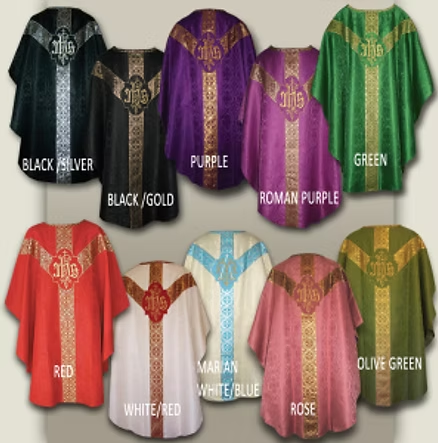
Because Paul then addressed the whole body of Christians in Thessaly as “brothers,” then “the times and the purposes” or “the durations and the opportunities” were those only held by bodies holding the risen Lord (Christ Jesus) within (meaning male and female Thessalonians were “brothers in Christ,” as Jesus reborn). That holy presence, coming with the Christ Mind, means there was “no need to have written” a checklist of “Apostle To-dos” or a schedule for what “times” one should go to church and what “seasons” does a Church recognize, denoted by when it is appropriate to wear robes of green, white, red, purple, black, pink (rose), gold and blue.

Above all, Paul (via the Holy Spirit) was not indicating the Christian Thessalonians thought someone should tell them when they would die and write that in a letter. The deeper meaning is the written Mosaic Laws are no longer external to them, for them to memorize and forcibly follow. The presence of God in their hearts has written His acceptable ways in their hearts.

The translation, “For you yourselves know very well that the day of the Lord will come like a thief in the night,” is shown to be three segments in the Greek text. The dividing points come after a statement that confirms the presence of the LORD within, such that is states, “Yourselves fully know that day of the LORD.” The love of God and His marriage to them, in their hearts, has become “that day of the Lord,” meaning there is no need to follow “cookbook” rules that will make “that day” be in the future. Thus, following a comma (written or implied) is the statement “as a thief in night.” This becomes read separately, as the day of the LORD being when they had their darkness of night was stolen from them.

The final segment of this verse concludes, “in this way comes.” That “manner” is then the “stealth” in which God transforms one from a mortal born of death (“the night”), to a soul with the promise of eternity that become “known” on “that day of the LORD.”

Of course, the double entendre (dual meaning) speaks of “night” as the “time” of death, which is not foretold “in writing.” The “day of the LORD” becomes the “light” of awareness when the soul meets face-to-face with God, who takes the soul “like a thief.’ The factor of “night” becomes representative of the “time” of death.

In verse 3, where the translation is “When they say, “There is peace and security,” the second segment (in quotation marks) is “Eirēnē kai asphaleia,” where the capitalization leads to those referenced (as “they”) saying, “Peace and security.”The presence of capitalization is important to recognize.

It is also worthwhile to know that “eirēnē” was used as an “invocation of peace [as] a common Jewish farewell, in the Hebraistic sense of the health (welfare) of an individual.” Capitalizing this word then infers someone pronouncing “I am healthy and well.” This becomes similar to the common thoughts of mortals, as stating, “I am so good that God has rewarded me physically, with good health.” The word “asphaleia” then adds to that proclamation of physical health the “reliability, firmness, and safety,” which (again) are thought to be from the good graces of YaHWeH.

For Paul to write that to Christians in Thessaly, who undoubtedly were a mix of former Jews and former Gentiles, such words were understood to be those commonly expressed. They were catchphrases, rather than deep beliefs. People of professed faith, who think they have been blessed by God (due to the comfort of their status and position) can then pretend to be a god with a catchy farewell.  This gives the impression: “As I have peace and security, I give you a pinch of that peace and security to keep as your own.”

The same can be said as happening to this day, especially when an Episcopal service comes to the point of “The Peace.” The priest motions everyone to rise, and says, “May the peace of the Lord be with you,” to which the congregations replies, “And also with you.” I expect we do it today because they did it yesterday.

Now, that is all well and fine, IF everyone knows what that means and means what that says.

Myself, not being a “cradle to grave” Episcopalian, I was not confirmed in the Episcopal Church until the ripe old age of fifty-something. After the ceremonial proceedings, the Bishop spoke with me privately, while the others were leaving the nave. He shook my hand and said, “May the peace of the Lord be with you.”

When I heard that, I was thinking, “Wow. That was so nice of the Bishop to say that … to wish me well.” So, I replied, “Thank you.”

As he was walking up the aisle to leave it struck me, “Idiot, that was an Episcopal catchphrase.” As soon as I realized my mistake, I hollered out to the Bishop, “And also with you!”

He didn’t look back; but he kinda waved his left hand to the side, letting me know he heard. Maybe he didn’t want me to see him trying not to laugh?

That becomes symbolic of what Paul was writing; as people think saying the right things is all they have to do to get to Heaven. However, Paul then wrote, “Then sudden destruction will come upon them, as labor pains come upon a pregnant woman, and there will be no escape!” This says that talking a good game is no replacement for sacrificing your Big Brain for the love of God and the Mind of Christ.

When that self-sacrifice is done, then” you do not need to have anything written to you” to memorize as a farewell.  A catchphrase is an automatic statement that comes without out deep thought and meaning.  “Peace and security” implies “I already have this, which only works when that is the truth.

To follow that up with, “sudden destruction will come” means “ruin, doom, destruction, and death” has just been wished upon oneself, simply from thinking one is prepared to enjoy life because God loves him or her, and not doing the will of the LORD. That meaning of “destruction” comes from the Greek word “olethros,” which also “emphasizes the consequent loss that goes with the complete “undoing.”’ One is thus undoing all of their pleasant thoughts of health and safety by boasting about you being well-to-do.  All the counting of one’s chickens before they have hatched will have been “undone” by having the gall to think God loves you so much that He is your slave.

Now, in the verse where it says, “as labor pains come upon a pregnant woman,” this too is spoken with dual meaning intended. First is the obvious, which is “labor pains” come suddenly, when a “pregnant woman” is due to give birth to a baby. Their onset becomes a ‘drop everything’ mentality, with going into rush mode an immediate response. For a lot of married couples who are pregnant, the parents-to-be practice for that time when action needs to be quick. When it is time to react swiftly, looking up something in a book or calling someone to ask what to do is not the best way to get moving.

Second, which is a deeper meaning, relates to my having said prior that all mortal human beings are called to be the brides of God. God wants to impregnate both males and females with His Holy Spirit; but God is not going to rape anyone that refuses to get engaged and become married to Him (in Spirit). Therefore, the metaphor means the “destruction” of death will come suddenly, because mortal human beings (males and females) became “pregnant” from their own rejections of God and Christ.

There is a vulgar saying that involves a word beginning with “F” and involves “yourself.” Consider that the secret second meaning here.

Still, the Greek words only imply a “pregnant woman,” which is the translation provided by the New American Standard Bible (NASB). The actual Greek text says, “ōdin en gastri echousē.” The closest that comes to “labor pains upon a pregnant woman” is as “the pain of childbirth to her [feminine “the”] in the belly holding.” The actual birth of a baby or child is implied, but not said.

A viable alternate translation can be, “the acute pain to her in the stomach having.” This then becomes a reference to a woman that has not become pregnant, as the sudden announcement from “her belly” that mensuration is about to begin sloughing and unused egg. As metaphor, males can know this “sudden pain in the gut” after eating some bad food.

The point is to not get caught up in looking for ways that, “This cannot be a worry for me,” as Paul was not trying to tell of pregnant women suddenly dying. The comparison is to how the state of “death comes so quickly” that “there can be no escape.”

In verse 4, Paul again refers to the recipients of his letter as “brothers.” The translation as “beloved” recognizes a familial relationship, in the same way that John wrote that Jesus loved Mary Magdalene, Martha, John, and Lazarus. The actual identification as “brothers” says Jesus had been reborn in each and all.  The new persona became their escape from the sudden throes of death.

Paul then stated Apostles (males and females) “were not in darkness.” That means they had been elevated from the level of mortal sinner (where darkness always exists) to righteous Saint, where the light of Christ was surrounding them.  This can be seen as the halos depicted above a Saint’s head in art.  This light was brought upon them by God’s Holy Spirit, so that God had snatched away (good translation of “katalabē”), “like a thief,” their souls from Satan.

The presence of this light that removes all possibility of darkness from the Christians of Thessaly is said above to be due to them being “children of light and children of the day.” The actual Greek states, “huioi phōtos” [comma] and “huioi hēmeras.” The word “huioi” is repeated, lending it an importance of identification. Those repeated word are rooted in the singular word “huios,” which properly means “sons.”  The Biblical implication of “huios” as “sons” means it can state (as understood use), “Anyone sharing the same nature as their Father.” (Helps Word Studies for “hyiós“) Certainly, “their Father” has to be understood as God, the LORD.

According to the Helps Word Studies explanation of the Biblical meaning, this word is expanded further by this definition: “For the believer, becoming a son of God begins with being reborn (adopted) by the heavenly Father – through Christ (the work of the eternal Son).” Therefore, while it can be assumed the Christians of Thessaly included men and women, husbands and wives, this use of “sons” clearly identifies them all as the “sons of light” and the “sons of day,” as those embodying the Mind of Christ, Jesus the Son.

By Paul stating “we are” (“esmen”), he was writing as one of those “sons of light,” “sons of day,” so he knew the same as the Christians of Thessaly, because they all were filled with the Mind of Christ as the same Son. Still, “we are” is actually led by the capitalized “Ouk,” meaning “Not.”

The importance of that negative says the voice in Paul’s mind spoke loudly, “Not are we of night nor of darkness.” Paul knew all the writers and addressees had escaped death and the dark night of the soul after death.  They had been saved by each being a reborn Jesus, who said, “I am the light of the world. Whoever follows me will never walk in darkness, but will have the light of life.” (John 8:12) “Follows” means be the next Jesus.

The translation of verse 6, “So then let us not fall asleep as others do,” can seem like Paul was giving a pep talk, urging them not to drift off and die, when they have “light” and “day” on their sides. In reality, the Greek text literally states, “So then not we should sleep like the rest.” The “conditional” form of “katheudó” implies that none will reach death and have a soul lost in darkness because they are “sons of light” and “sons of day.” This conditional form reminds us of verse 1, which said this chapter would address “Conditions on top of” (“Peri”) being tasked to spread the Gospel of Christ.  One condition is Apostles should not sleep like the rest.

Paul then stated the additional responsibilities Apostles have, which is stated where he wrote, “but let us keep awake and be sober.” The word translated as “awake” is “grégoreó,” which is the conditional form of the root word “grēgorōmen.” The proper translation states, “but we should be vigilant.” This is then followed by the word translated as “sober,” which has “néphó” as its root, from the conditional form written– “nēphōmen.” The completion of the statement is then “and we should be free of illusions,” where “not being delusional” is a viable substitute for “sober.” Again, Paul spoke in the conditional form, which maintains the theme set in the introduction of “Conditions on top of” preaching the word of God.

The translation that says, “for those who sleep sleep at night, and those who are drunk get drunk at night” is actually shown in the Greek text for verse 7 as having four segments, with a semi-colon splitting this verse in the middle. Those language ‘road signs’ say pause and reflect on each segment before proceeding to the next. The four segments literally translate as, “those indeed sleeping,” “by night sleep,” [semi-colon] “and those becoming drunk,” “by night get drunk.” Each segment has its own separate idea that needs to be grasped, before one can run and toss everything together in one quick breath of reading.

To begin with, “those indeed sleeping” recognizes the need for an Apostle to remain alert and free of illusions because (“gar” = “indeed,” => “cause”) the rest of humanity is “sleeping,” as mortals born of death. Only those who are alert and awake can rouse those asleep from their slumbering lives. The separate segment that says “by night sleep,” is a focus being placed on the absence of light that night brings. That, in turn, maintains how ‘dead’ humans of normal life sleepwalk towards a dark end. Following a longer pause for reflection on those statements (the intent of a semi-colon), the next segment then continues (“and”) by placing focus on this life of darkness assisting a sleepwalker because mortals born of death have “become drunk.”

This state of “intoxication” is not caused by drinking alcoholic beverages (as if drinking was the only sin of darkness, only done after nightfall).  Instead, it projects all the artificial “highs” and addictive “lows” that one gets from the excesses of the material plane. Excessive drinking can be representative of anything the world has to offer that places the user in an altered state of being, incapable of “seeing the light.” This is then supported in the final segment, “which states “by night get drunk.”

Because “drunk” represents the illusions of life (they used to say drunks saw hallucinations of pink elephants), “sober” is the opposite, where one is “free of illusions.” Paul then encouraged the Thessalonians (in the conditional) to remain “sober,” as those who are led by the light “of day.” That ability to remain focused on helping those who are still in darkness, is then stated as if an Apostle should dress like a ‘Christian soldier’, with a breastplate and helmet.

Halloween – Almost normal
All other days of the year – delusional

That ‘armor’ of protection is then a reference back to the Holy Spirit being the truth of “Peace and safety.” Because a “breastplate” covers the heart area, it becomes the armor of one’s “faith and love” of God. The “helmet,” as the crown of one’s “hope of salvation,” is then the “security” an Apostle receives from the Mind of Christ (with a helmet covering one’s Big Brain of ego).  As visual as the verbiage seems, this armor is invisible and comfortably worn by all Saints.

The translation of verse 9 above (NASB), “For God has destined us not for wrath but for obtaining salvation through our Lord Jesus Christ,” is again set without the pauses Paul indicated. There are four segments here, which literally say, “because not has destined us God to wrath,” followed by “but for obtaining salvation,” and then “through the Lord of us.” The final segment states “Jesus Christ,” which is the entity that true Christians become. “Jesus Christ” becomes the author of our “salvation,” when God changes one’s assignment from mortal born of death to a soul allowed everlasting life in light.

When the translation sums this identity of “Jesus Christ” as, “who died for us,” millions of Christians think: Because Jesus died and went to Heaven, anyone who believes that will also go to Heaven.  This is wrong, because that it an over-simplification of that which was written. The literal Greek says of “Jesus Christ” that he is “the [One] having died for us.”

The word translated as “for” is that word “peri” again, so “Jesus Christ having died” was conditional “(condition on top of”). Further, the singular number of the word “the” (implying “One,” as “the [One]”) is then followed by the plural pronoun “us.” The plural number says “Christ Jesus died so there could be many Jesus Christs.” As One (the singular), Jesus was limited to only being that guy from Nazareth, born in Bethlehem. However, by him “having died,” then “Jesus,” as the “Christ” “could be us.”

Verse 10 then continues in the conditional (not shown in the NASB translation) saying, “that [a reference back to the death of Jesus leading to Christ in us] whether we might watch or we might sleep.” This is saying that by having Christ be one with an Apostle (the same in all Apostles), then the human being that becomes the risen Lord has nothing to worry about in life (“we might be alert and watchful”) or our body’s eventual death (“we might fall into the sleep of death”). We do not have to worry because (the next segment says), “together with him we might live.” The conditional statements then speak of being filled with God’s Holy Spirit, bringing about that ‘living together’ arrangement.

Verse 11 then ends this selected reading with the Greek text showing three segments. The first says, “Therefore encourage each other.” This is what Paul’s letter is doing. It is a statement that Apostles and Saints “console, send for, invite, beg, admonish, and comfort” one another (from “parakaleó”). This is as opposed to Christians glad-handing for five minutes during “the Peace,” and then silently slinking off, never to call upon a fellow Christian otherwise (unless there is money to be made).

The next segment says, “and build up one another,” which says to add strength to the ones who may be older, or sicker, or (in those ancient times) put in jail for being Christian. To “build up one another” is like “encouraging one another,” as it means a compliment here and a handshake there, with going out of one’s way to recognize the works of faith in one other than oneself. It means sharing, because you want others to share with you.  This recommends a fulfillment of the command, “Do unto others as you would have them do unto you.”
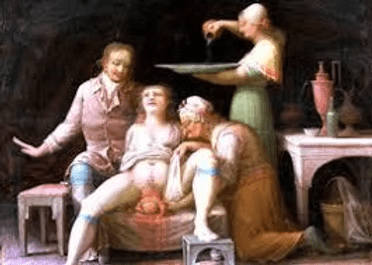
Finally, Paul ended with the assurance, “just as you are doing.” The Greek word “poieite” (“you are doing”) is the present infinitive of “poieó.” That is a verb stating “action.” It means “manufacturing, making, constructing, acting and causing.” It is an encouragement to “keep up the good works.” That says Paul knew their “works” and wanted them to know he knew.

This act of kindness, as a written ‘pat on the back’, is what being Christian is all about. If you cannot compliment another Christian for their good deeds, then perhaps some are actually standing in a tunnel of darkness, looking at the light at its end. Depending on how big and bright that light appears, some might still be afraid to step out into that light. Once one does, one will stand with other Saints and Apostles, turning back to the tunnel, so all can be reaching out to someone else who was also lost and afraid.

Come into the light, brother and sister.

1 Thessalonians 3:9-13 – The coming of our Lord Jesus with all his saints

How can we thank God enough for you in return for all the joy that we feel before our God because of you? Night and day we pray most earnestly that we may see you face to face and restore whatever is lacking in your faith.

Now may our God and Father himself and our Lord Jesus direct our way to you. And may the Lord make you increase and abound in love for one another and for all, just as we abound in love for you. And may he so strengthen your hearts in holiness that you may be blameless before our God and Father at the coming of our Lord Jesus with all his saints.

———————————————————————————————————-

It should be realized that chapter three of this epistle addresses Timothy’s visit to Thessalonica and his subsequent return, to rejoin Paul and Silas [possibly in Corinth]. There were a large number of Jews living in Thessalonica, which violently rejected the Gentile converts to Christianity, whom some Jews had accepted, themselves having also converted. Those who remained non-believers then persecuted their fellow Jews. Timothy had returned with a report on how well the Christian Thessalonians were maintaining their faith, against those external pressures. The first eight verses of this chapter [omitted from this reading] speak of Timothy’s report.

It is also important to grasp that Paul did not write epistles that were void of holy text. Everything that appears to be ‘news of the day’ is lasting in application, as long as true Christians walked the face of the earth. As such, Paul wrote letters of encouragement to those who were filled with God’s Holy Spirit, reborn as Jesus Christ. That was how a Gentile, with little-to-no knowledge of Jewish customs and history, could come to have faith in Jesus of Nazareth as the Messiah promised to the Jews. Paul’s letters were then to them yesterday and those today who struggle with maintaining that inner commitment to good, while the world constantly beats down on them with the challenges to resist sin and evil.

As with all of Paul’s letters [and the other Epistles of the Apostles], it is best read when broken down into segments, based on punctuation marks [real or imagined]. I have done this again here, while also incorporating the word “kai” as a symbolic word that lets the reader know to look at the words following its presence with an eye towards a pronounced statement. According to the possibilities of translation allowed by the Bible Hub Interlinear page for 1 Thessalonians 3, the following should be compared to the publicly read text above:

9. What for thanksgiving are we able together of God to give concerning you in return for all the joy that we rejoice because of you  ,
before the God of us  ,
10. night
kai day  ,
exceedingly imploring union companions to see your experiences face kai to supply the things lacking in the faith of you  ?
11. Himself now one God
kai Father of us  ,
kai one Lord of us Jesus  ,
may direct the way of us to you  .
12. you now  ,
the Lord may make to increase  ,
kai to abound circumstances in love toward one another  ,
kai toward all  ,
just as also we toward you  ,
13. toward people to establish yourselves one intensions  ,
blameless in holiness before the face one God kai father of us at this coming of the Lord of us Jesus  ,
after all those saints of him  .
amen  .

This reading begins with the capitalized Greek word “Tina,” which is a form of the root pronoun “tis,” meaning “who, which, what, why, how, or who.” Each often introduces a question, which is why verse ten ends in a question mark. The capitalization makes this more a restatement of the ending segment of verse eight.

There Paul wrote: “if you are standing firm in the Lord,” where the capitalized Greek word “Kyriō” is written to importantly refer to Jesus Christ. The Christ Spirit is the “Lord” of ourselves [“hymeis” as the plural “you, yourselves”], as high priest in individual kingdoms of God. This makes “Tina” be a reference to “Who,” and not a question intended in that word.

The Greek word “dynametha” is translated as “we are able.” This has simply been translated as “can we,” in the form of a question. The plural number [“we”] is then attached to the root word “dunamai,” which means, “I am powerful, I have (the) power,” and “I am able, I can.” While it is such a normal word in our English vocabulary, that ordinary use makes one overlook the significant difference that give one an abnormal “ability,” based on realizing “Who” brings that “power” to one. This “ability” is “Why” Apostles “give thanks” (from “eucharistian”). When one is filled with the Holy Spirit of God, reborn as His Son Jesus Christ [“standing firm in the Lord”], then all thanks be to God.

When God is within one’s soul, one is filled with the love of God. This is because one’s soul is “together with God” (from “ Theō”) or “one with God,” bringing that gift of God’s love. This is then “concerning you in return,” where it was one’s love of God that accepted His proposal of marriage. This brings forth “for all the joy” of that marriage union. One stands “before God,” such that the Greek word “emprosthen” implies “before the face of,” by wearing the face of God, having sacrificed one’s self-ego in submission to God’s Will.

The “night” of mortal life means the sins one had before receiving the “joy” of the Holy Spirit. This then turns significantly to the light of “day,” when the Christ Mind becomes the light of Jesus Christ. Whereas the Greek word “deomenoi” can translate as “praying,” accurately so, the word also means, “wanting, needing, and begging,” “extremely in behalf of” (from “hyperekperissou”) Paul, Silas and Timothy, for the Thessalonian Christians to find the same union with God and wear His face before Him also. They prayed to God to supply those Apostles with everything they needed to secure their true faith.

In verse eleven, the capitalized Greek word “Autos” begins, which is an emphatic statement of “Self.” Following the end of verse ten stating “faith of you,” in the plural number (from “hymōn”), the importance is now placed on each individual’s responsibility (as “Himself”) to be “one with God,” just as Paul and his companions had. When that union is assured, then all become brothers in Jesus Christ, such that God is “the Father of ours” [or “us”]. They are brother because there is “one Lord” that is common “with us” – “Jesus.” All of them are then under the “direction” of the Christ Mind.

Due to the report of Timothy to Paul and Silas, Paul then began verse twelve by saying, “you now.” That said that each of the Apostles had been transformed and Jesus Christ had been reborn in them, becoming the new “you” that they “now” had within them. As Jesus Christ in new human flesh, “the Lord may make to increase,” where the future conditional form of “pleonazó” is written (as “pleonasai”). As a church of true Christians in Thessalonica, their numbers would be expected to be “increased,” as each would spread the true of Scripture through the Holy Spirit. They would certainly evangelize naturally, but the conditional would be found in the resistance of others to follow the same path of loving God and sacrificing self to join with God.

Because others must fall in love with God to begin the process of becoming Apostles and true Christians, Jesus Christ in each would cause love to “abound” within the gatherings [“circumstances” or “conditions” of ‘followers” – all possible of “”] of the church. Because a church was exclusive to true Christians, and not a club to join or a synagogue where Jews were born with rights to attend, that meant all members were brothers [including women] in the name of Jesus Christ.  Through that spiritual relationship, they would all show “love toward one another.” This love would be the example for others to desire to know, as “love” would be visible and felt as a vibration sent “toward all.”

Paul then said the love they would project to others in Thessalonica would be the same as the love he and Silas and Timothy had shown them. It was a deep love that went beyond blood relationships or lifelong friendships. It was a true love of God that was expressed by their being Jesus Christ reborn, projecting the love of truth outward.

Paul then wrote in verse thirteen that ministry is “toward people to establish yourselves” as “one,” where all share the same “intentions.” The Greek words that say this are: “eis to stērixai hymōn tas kardias.” The translation read aloud in church translates those words to say, “may he so strengthen your hearts.” It can also say, “toward union to strengthen yourselves the inner selves.” The point, no matter how one flips the meanings around and viewed them in a Spiritual context, was Paul said that the ministry of Apostles is all about spreading the love of God to others.

As Apostles, all have been cleansed of sins, so all go out “blameless in holiness,” each wearing the face of God “before” those they encounter. The “hearts” of Apostles are sent out to connect with the “hearts” of others, so they too can become “blameless in holiness,” from having been shown the way to go “before the face of” God wearing His face, and no lesser gods. Worshiping lesser gods [self included among many others] is what brings one blame. Wearing the face of God puts one’s soul “in holiness,” making the new self “blameless” as Jesus Christ.

Paul then stated that by pronouncing [from “kai”] “father of us at this coming of the Lord of us Jesus.” This is the second time Paul wrote that in this chapter, with this segment not including “kai” between “father” and “Lord.” The Greek word “patros” is also not capitalized, which is important to see the difference.

The lower-case “father” is what an Apostle is, as an Apostle has been reborn as Jesus of Nazareth, in possession of the Christ Mind. Just as Jesus referred to his disciples as “little children,” he acted as the “father” of those seeking redemption. Jesus spoke the Word from the Father above, such that “God” was a human “father” in Spiritual ministry.

This concept is why a priest is referred to as “father,” because a priest [regardless of human gender] is guiding disciples to become Apostles, just as Jesus “fathered” his little children to grow into Saints. Therefore, it is that act as a rabbi [“teacher”] that makes one a “father of us at this coming of the Lord of us Jesus.” As Jesus Christ reborn, having God the Father within one’s heart, an Apostle touches a disciple spiritually, so he becomes the “father” of a new Jesus [“the Lord of us”].

Once that transformation has taken place [“after”], then “all those” disciples will be “saints,” because they will have been reborn “of him” – “Jesus.” With that, Paul wrote “amēn” (enclosed in brackets), which means “truly” or “so let it be.” The brackets make this statement be supplemental, apart from the dialogue of the text. It acts like an emphasis marker and a prayer of faith that concludes this chapter with a seal of approval.

As the Epistle reading selection for the first Sunday of Advent, beginning the Episcopal lectionary Year C, we find the purpose of ministry is established. That purpose is the spread of love for God and leading by examples, as Apostles in the name of Jesus Christ. It shows the great importance of experience being the requirement to show the children of God how to grow into Saints that bear fruit.

In the scholarly approach to the epistles of Paul, this letter is believed to be one of the first written by the Apostle, some estimating it penned around 50 A.D. Those who use intellectual dissection of ancient documents, who are not led by Spiritual insight, say Paul wrote to the Thessalonians (this first letter in particular) stating different perspectives than expressed in his later letters. The Wikipedia article on the “First Epistle to the Thessalonians” states: “It is perceived to be theologically incompatible with Paul’s other epistles.” However, as the breakdown into segments shows now [here], that assessment is ridiculous.

Chapter three is given relatively little attention, as it is summarized as Paul reporting that Timothy had safely returned from having visited the Thessalonians. As the breakdown into segments shows now [here], Paul wrote ageless words that have little to do with Timothy’s safety and good report on Christianity in Thessalonica. None of the Epistles are limited to simple exchanges of gratuities or pleasantries. They are God’s Word of timeless meaning.

When this Epistle selection is linked to the Gospel reading selection from Luke, where Jesus told of the signs of the End Times, the last line in Paul’s letter can be seen as apocalyptic in warning. The translation read aloud in church says, “And may he so strengthen your hearts in holiness that you may be blameless before our God and Father at the coming of our Lord Jesus with all his saints.” That suggestion becomes a parallel to Jesus’ words of being prepared for Jesus coming in a cloud.

The reference to “he” is not written, but it is assumed that “Jesus” is the “Lord” of all Christians. The question Paul raises in those truly devoted to God should be: Where did “all his saints” come from, if they are coming with Jesus in a cloud, at the End Times?

The answer comes from realizing what the words of Paul truly states. True Christians ARE Saints! They have been made holy by the presence of God and Christ within. They do not come from clouds, like in a Greek tragedy, saving the wicked from that which is due their souls.

Paul wrote to Saints in Thessalonica, encouraging them to forever remain true Christians, leading others to their same saintly status.

So let it be.

1 Thessalonians 3:9-13 – A fresh take

How can we thank God enough for you in return for all the joy that we feel before our God because of you? Night and day we pray most earnestly that we may see you face to face and restore whatever is lacking in your faith.

Now may our God and Father himself and our Lord Jesus direct our way to you. And may the Lord make you increase and abound in love for one another and for all, just as we abound in love for you. And may he so strengthen your hearts in holiness that you may be blameless before our God and Father father at the coming of our Lord Jesus with all his saints.

——————–

This is the Epistle selection that will be read aloud on the first Sunday of Advent, Year C, according to the lectionary for the Episcopal Church. It will follow a reading from Jeremiah’s thirty-third chapter, where the prophet wrote: “This is the name by which [a day surely coming] will be called: “Yahweh is our righteousness.” A selection from Psalm 25 will follow, where David sang, “Show me your ways, Yahweh, and teach me your paths.” All will accompany the Gospel reading from Luke, where Jesus told his disciples: “Truly I tell you, this generation will not pass away until all things have taken place. Heaven and earth will pass away, but my words will not pass away.”

I wrote deeply about these selected verses the last time they came up for reading in the lectionary cycle (2018) and I posted those views on my website at that time. That commentary can be read by clicking on this link. Because I broke these verses down into segments of literally translated English from the Hebrew I will not repeat that exercise. Most people calling themselves “Christian” are too lazy to take the time to listen or read such depth of explanation; so, Christianity is suffering in the same ways as were the Jews of the days when Jesus told of what was to come and Paul wrote these words that point to the requirements for correcting such a failed course. For that reason, I will simply add some observation that even the lazy can understand.

Let me first repeat a truth that I have state many times in the past, which is Scripture is written in a divine language, which is a language far greater than those who are fluent in Hebrew or Greek can fathom, without divine assistance. By the time that divine language has been drug through the gutter that is translation into English paraphrases, the beauty of its divinity means it still comes out smelling like a rose. Still, the rose scent is screaming, “Look closer! Show you love Yahweh and want Him to feed you the whole truth!”

Because I have already dissected these five verses into English segments, I want to pare this down further now, where I will only focus on the capitalized words. There are twelve in these verses (none in verse 10). A word in Greek Scripture that is capitalized must be read as being a word that has divine elevation; and, because one must read that word as divinely elevated in meaning, that word speaks loudest from Yahweh (the true author of the words capitalized). Those twelve words, in English, have been placed in bold text in the reading above that will be recited in Episcopal churches; but the ten words capitalized in Greek are as follows:

[verse 9]

1. Tina [“Τίνα”] – “Whom”

2. Theō [“Θεῷ”] – “God”

3. Theou [“Θεοῦ”] – “of God”

[verse 11]

4. Autos [“Αὐτὸς”] – “Self (emphatic); Same”

5. Theos [“Θεὸς”] – “God”

6. Patēr [“Πατὴρ”] – “Father”

7. Kyrios [“Κύριος”] – “Lord, Master, Guardian, Ruler, Owner”

8. Iēsous [“Ἰησοῦς”]

[verse 12]

9. Kyrios [“Κύριος”] – “Lord, Master, Guardian, Ruler, Owner”

[verse 13]

10. Theou [“Θεοῦ”] – “of God”

11. Kyriou [“Κυρίου”] – “of Lord, of Master, of Guardian, of Ruler, of Owner”

12. Iēsou [“Ἰησοῦ”] – “of Jesus”

If all these divinely elevated words were to be taken and placed in the same order, producing a most divinely elevated statement, it could say, “Whom God of God Self God Father Ruler Jesus Lord of God of Master of Jesus.” When one places a mark to denote the different verses these words are in, that would look like this: “Whom God of God – Self God Father Ruler Jesus – Lord – of God of Master of Jesus.” If the fact that verse ten is absent of any capitalized words by extra dashes, this statement would then look like this: “Whom God of God – – – Self God Father Ruler Jesus – Lord – of God of Master of Jesus.” This becomes quite revealing.

The Greek word “tina” (lower-case) is “accusative masculine/feminine singular of τίς (tís),” meaning “who?” [in the masculine/feminine]. It is an “interrogative pronoun” that means “who?” [again, in the masculine/feminine]; but it is related to “tis” [“τις, τι”], the “indefinite pronoun” meaning “a certain one, someone, anyone,” implying “any one, some one, a certain one or thing.” Thus, as a word needing to be divinely elevated (capitalized), one has to see this word as divinely pointing to one rising from a basis as “someone” to “one who” is possessed Spiritually by the presence of Yahweh. A lazy Christian could then be referred to as “who?” but a Saint would be a divinely elevated status made, as “Whom.”

When verse nine’s capitalized words form a segment that states, “Whom God of God,” this becomes a hidden statement of a “Yahweh elohim.” The Hebrew word “elohim” is routinely translated by translators that turn that plural number word into “God” (singular and capitalized). The reality of “elohim” is as one (an “el”) of the many, who are eternal souls in bodies of human flesh that have found love for Yahweh as the path to marrying Him, becoming one with His Spirit. This makes each one become a Yahweh elohim, a combined term written eleven times in Genesis 2, when the seventh day began and Yahweh made His first priestly Saint – “Whom” Christians call Adam. This means an “elohim” is “Whom God” has extended His hand onto the earth, possessing a soul that has become His Wife as one “of God.” This is because “Theou” is in the genitive case, which means: “A case that expresses possession or relation, equivalent to the English “of.”’

When the lack of capitalized words in verse ten is seen as a signal to understand the three found in verse nine, the lack acts as a signal of importance to follow [like the word “kai”], so the five capitalized words in verse eleven are important to see making another statement of divine elevation. Those five string to say, “Self God Father Ruler Jesus.” In that, the word “Autos” needs to be read as an emphatic pronoun, rather than enclitic, where the importance of “Self” is the point to be understood. A “self” must be seen as a “soul.” This means, coming from three words that tell of one being “Whom God of God” is divine language (in Greek) for “Yahweh elohim” (in Hebrew), the element of “Self,” of “Soul,” must be now realized as that which makes one divinely elevated. It has little to do with the body of flesh saying it believes in religious things; and, has everything to do with a soul being married to Yahweh, out of love and devotion.

Connecting to “Self” is “God Father Ruler Jesus.” This series of capitalized words says the “Self” is the “Same” as “God,” by having married one’s “Soul” with “God,” becoming an extension of “God” through His Spirit. This relationship is then as a Son to the “Father,” through Yahweh possessing the “Soul” with the “Same” “Soul” as His Son “Jesus.” It is this possession of one’s “Soul” by “God” that makes the resurrection of His Son become the “Lord” or “Governor” of one’s body of flesh. It makes one become the “Same” as “Jesus,” through rebirth. The name “Jesus” means “Yah[weh] Will Save,” so being in the name of “Jesus” earns a “Soul” [“Self”] Salvation.

The one word capitalized in verse twelve then speaks as an important word to grasp alone. That word is again “Kyrios,” which typically translates as “Lord,” but the repetition , along with the word have several valid translation into English, means all of the meanings need to be seen as a divinely elevated statement of what was stated in verse eleven. This is a word in Greek that parallels the English translation of the Hebrew word “Yahweh,” as that always comes out as “the Lord.” That means the importance here is an association to Yahweh, where “Jesus” is His heavenly presence [a “Soul”] that is resurrected in all of Yahweh’s wives [His elohim], so “Jesus” is the possessing “Soul” that becomes the “Lord” over a soul married to Yahweh, so “Jesus” is the “Lord” of that flesh, no longer being controlled by its host “Soul.” A “soul” (in the lower-case) is the “lord” over its flesh, but it makes so many mistakes [sins] that some demon spirit often possesses a “soul,” making that “soul” be a slave to the flesh. This is why “Lord” [as capitalized in Greek] must be understood, as it is not Yahweh directly. It is His Son.

This then leads to the last three capitalized words, which are all written in the genitive case, which the NRSV has translated as “our Lord” and “our God,” as a reverse possession, as if one owns Yahweh. The reality is Yahweh allows sinners to be the lords over their own flesh and sin all they want. Payment will then be due at death, when judgment comes. However, the truth is a “Soul” married to Yahweh becomes His possession, thus “of God.” It is a one-way commitment, as a wife has no say or equality. The Covenant of marriage are ALL commandments to do the Will of Yahweh, on no deal. Nothing is forced. All His wives submit themselves [a self is a soul] fully to Him, willingly, out of love.

The three capitalized words then say, “of God of Owner of Jesus.” One needs to see that as a statement of the Trinity, where being “of God” makes one the Son via His Spirit possessing one’s soul. Being the possession “of God” makes Him the Husband-Father-“of Owner,” who penetrates the wife, bringing forth the Son. That Son then takes on the name “of Jesus,” such that every wife of Yahweh gives birth to the Same Soul, so they all become in that name.

If one can see this coming from twelve divinely inspired words in five verses, then one knows the message Paul was conveying to the Christians of Thessaly. The same message applies today to all true Christians. I recommend reading what I wrote in 2018 and then comparing what I wrote then (with this concept not anywhere close to my mind then) to now and seeing if the message is anything more than the same, with extra details.

As a reading that accompanies a reading from Jeremiah, where the prophet said a time would come when a “branch” of Yahweh’s “Beloved” [the meaning of the name “David”] would “spring up” and that would be called “Yahweh our righteousness,” then see how these twelve words fit that theme. It is the same “up shoot” that will always be: marriage of a soul to Yahweh, Him bringing in the soul of His Son to possess His wives [every one the same], so ministry is always about Jesus – a name of Yahweh that “Will Save.”

As a reading for the first Sunday of Advent, when lost souls should be sensing an emptiness within their souls that needs to be filled with Yahweh’s love, this becomes the first step towards making Jesus become the possessor of one’s flesh, along with one’s soul, so Jesus becomes one’s Lord. This is the only way to gain eternal life with Yahweh. One has to become Yahweh’s Son reborn and let Jesus continue the ministry he is always sent to do in bodies of flesh.