We do not proclaim ourselves; we proclaim Jesus Christ as Lord and ourselves as your slaves for Jesus’ sake. For it is the God who said, “Let light shine out of darkness,” who has shone in our hearts to give the light of the knowledge of the glory of God in the face of Jesus Christ.
But we have this treasure in clay jars, so that it may be made clear that this extraordinary power belongs to God and does not come from us. We are afflicted in every way, but not crushed; perplexed, but not driven to despair; persecuted, but not forsaken; struck down, but not destroyed; always carrying in the body the death of Jesus, so that the life of Jesus may also be made visible in our bodies. For while we live, we are always being given up to death for Jesus’ sake, so that the life of Jesus may be made visible in our mortal flesh. So death is at work in us, but life in you.
——————————————————————————–
This is the Epistle selection from the Episcopal Lectionary for the Second Sunday after Pentecost, Year B 2018. The lessons of this Sunday are placed in a Proper Ordinary Time grouping, numbered Proper 4. This will next be read aloud by a reader on Sunday, June 3, 2018. It is important because Paul explained how the fragile state of a mortal body can only find shatterproof strength from within: by God’s presence in one’s heart, and by the rebirth of Jesus Christ be visible in our mortal flesh.
When Paul wrote, “We do not proclaim ourselves,” that is a statement that all Apostles (no matter how many “we” will be) have died of ego. One cannot stand before a group of people and pretend to have some mystical power that makes oneself capable of casting out damnation on others, by calling upon “the name of Jesus Christ.” When a person uses those words in public, one is proclaiming oneself as special. One then proclaims so others will think one is able to call upon God and Christ, so the divine serves that one.
Plenty “faith healers” have put on grand acts that have profited those special hands handsomely.
True Apostles (to whom Paul wrote) “do not proclaim the self.” If one “does not proclaim oneself,” then one has lost all claims to self. Therefore, Paul wrote, “We proclaim Jesus Christ as Lord and ourselves as your slaves for Jesus’ sake.”
To “proclaim Jesus Christ as Lord,” this says a Saint is in the name of Jesus Christ. A Saint takes on that persona by Divine Will, not personal choice. One serves God, just as His Son Jesus was totally subservient to the Father. It is the Father that gives the name to the Son, not the other way around.
As such, that identification that proclaims Jesus Christ as Lord has replaced the name of oneself, although that name of the self is still attached to the physical body. The identity one claims is Jesus Christ, and that entity is readily identified as the “Lord” to whom one’s self-ego has surrendered. That surrender of self then makes one a “slave for Jesus.”
The word translated as “sake” is the Greek word “dia.” That word means, “successfully across” or “thoroughly,” where the implication says Apostles have “crossed over” to being Jesus reborn. This must be understood as a statement of one’s ego stepping aside willingly, for “Jesus’ sake,” where the Christ Mind takes over. The Spirit of Jesus Christ then uses one’s body to do the biding of the Father, as did Jesus of Nazareth.
Modern Americans may balk at the concept of slavery, and even to the outdated models of wives being subservient to their husbands. Americans lash out harshly at the idea of slavery. However, the reality is all human beings are slaves, who serve many masters.
The soul is imprisoned in a “clay jar”body, one that can only be freed from that captivity through death. This means human beings are slaves to the world. Freedom, as a concept, is well and fine but not a reality. Freedom is an illusion.
Is one free to fly away from earth and go to heaven at will? Or, does gravity on earth and the lack of oxygen and life supporting elements in the void of space not enslave us? The laws of physics master over humanity. Needing a job to afford to buy things makes one a slave to necessities. Needing the comforts of others makes one a slave to relationships. We are never free, but we hate the idea of slavery.
When one becomes the slave of God, with the Christ Mind putting one to work, then the soul has been given the promise of true freedom, which comes by slavery to God’s Will, not human wants and desires.
Paul then wrote, “For it is the God who said, “Let light shine out of darkness,” who has shone in our hearts to give the light of the knowledge of the glory of God in the face of Jesus Christ.” That says Apostles have become married to God, whose love is then placed solidly in the hearts of His beloveds. Marriage is two joined as one, where God commands and His wife (a “clay jar” is always the one penetrated by the Spiritual) obeys. This is willing slavery to the power of God’s love.
The light of that love then permeates their being and radiates outward from within. It beacons to those who do not know this love of God, whose lives are still blind to this light of salvation. It is this inner presence that brings forth the “knowledge of the glory of God,” which is the Christ Mind. Therefore, Saints all become “the face of Jesus Christ” in Spirit.
The metaphor of being “clay jars,” where the Greek words “ostrakinoisskeuesin” may be better grasped as “earthen vessels,” says that human beings are no more than the matter that makes up a human body. The body is form that is fragile, just as are clay jars. It is a soul that is poured into our “vessels” that gives them life. Still, one understands that a soul “does not come from us,” as “this extraordinary power belongs to God.”
The “treasure” within our “clay jars” is our souls, which are God’s creations. A soul is God’s breath of life into an “earthen vessel.” Our souls are eternal forms, whereas human bodies are eternal as matter that cannot maintain a constant state. Bodies change, while the soul remains the same. A soul gives animation to material, where life allows for growth as well as deterioration. Unfortunately, the earth of one’s clay tends to soil its gift from God. Therefore, the soul needs cleansing, just as the body needs washing.
This then makes the “extraordinary power” that Paul wrote of become the presence of God’s Holy Spirit. This Holy Spirit is separate from the soul; and likewise, this Spirit also is not a power commanded by “earthen vessels” or “clay jars.” It is this power that protects the jar from being smashed by the forces of the world, which are the afflictions, perplexities, persecutions, and beatings that comes from a world that looks at a lowly “clay jar” and cannot see the presence of God within it.
The Holy Spirit does not mean escape from worldly punishment, but survival through it. Ordinary life, without the Holy Spirit, can result in the soul being reduced to sins, becoming worthy of punishment. Souls are thus recycled or banished from heaven, based on how well they reject sinful influences. The Holy Spirit is what brings eternal salvation to a soul.
It keeps one’s soul from being crushed under the weight of evil influences. It saves one from fears, sensed as the dangers of losing material things. It soothes the wounds to one’s soul, which come from the persecution and rejection of enemies, friends and family. The Holy Spirit keeps one’s soul standing strong, after harsh strikes that come from those who see the pious as weak targets to hit. When one becomes Jesus Christ reborn, one is always attracting the same satanic hatred that seeks to punish every human form the Christ Minds fills; but a holy soul, like the one possessed by Jesus, does not quit in the face of trouble.
This is how an Apostle wears the face of Jesus Christ, even though one’s human face still rides high atop the human form. We make the face of Jesus be known by acting like him, from sincere motivations as servants of God. Paul still wore the human face of Saul, but wore the face of Jesus Christ once he became Paul. As such, Paul wrote, “For while we live, we are always being given up to death for Jesus’ sake, so that the life of Jesus may be made visible in our mortal flesh.” This projects the death of one’s self-ego, to be exchanged for the ego of Jesus of Nazareth – the Christ Mind.
Once this alter-ego becomes one with an Apostle (a Saint), the soul has been cleansed by the Holy Spirit, with God’s love coursing through the body – the blood of Christ. From then on “we will always be given up to death,” and our souls will have it no other way. Our egos may return as simpletons, seen in bodies that drool and seem inept; but Apostles will always rise to righteous states when confronted with evil choices. The face of Jesus will take on all challengers.
As the Epistle reading selection for the Second Sunday after Pentecost, when one’s personal ministry for the Lord should have begun, the message given by Paul is clear. Ministry is not something a soul in an earthen vessel can achieve alone. It requires divine assistance. Ministry to the Lord requires the sacrifice of self and the love of God within.
To be a Saint is to enter ministry through a leap of faith, not a certificate of study. Of course, God will know the works one will have done, and His gifts of the Holy Spirit will use one’s education and experiences to one’s advantage. One’s special talents will be utilized accordingly. Still, before one can save the world, one must save one’s own soul through the sacrifice of self.
Hold on Abe. No need to do a physical death. We’ll handle the sacrifice Spiritually.
This is why Paul wrote, “So death is at work in us, but life in you.” A literal translation says that better, as “So death in us works,” where the Greek word “energeitai” is translated as “works.” That states “death” is figurative, not permanent. The “death” of one’s ego is what allows one to “accomplish” and be “operative” in ministry. One is free to do the “work” of God, when one is not slowed down by the fears and anxieties of one’s self-ego.
When one slaves from joy and delight, one is truly free. It is then those “works,” through “death,” that leads to eternal “life to you.” That reflects a ministry that comes to all who have died to be in the name of Jesus Christ.
Just as we have the same spirit of faith that is in accordance with scripture—“I believed, and so I spoke” —we also believe, and so we speak, because we know that the one who raised the Lord Jesus will raise us also with Jesus, and will bring us with you into his presence. Yes, everything is for your sake, so that grace, as it extends to more and more people, may increase thanksgiving, to the glory of God.
So we do not lose heart. Even though our outer nature is wasting away, our inner nature is being renewed day by day. For this slight momentary affliction is preparing us for an eternal weight of glory beyond all measure, because we look not at what can be seen but at what cannot be seen; for what can be seen is temporary, but what cannot be seen is eternal.
For we know that if the earthly tent we live in is destroyed, we have a building from God, a house not made with hands, eternal in the heavens.
——————————————————————————–
This is the Epistle selection from the Episcopal Lectionary for the Third Sunday after Pentecost, Year B 2018. In the numbering system that lists each Sunday in an ordinal fashion, this Sunday is referred to as Proper 5. It will next be read aloud in church by a reader on Sunday, June 10, 2018. It is important as Paul explained that the deterioration of the body is natural for all living beings, but death for Apostles of Christ will release a soul into a most holy, eternal dwelling.
When this selection begins by stating, “We have the same spirit of faith,” that should not be read as an “enthusiasm to believe.” The Greek word translated as “faith” is “pistis,” which can also translate as “belief, trust, confidence; fidelity, and faithfulness.” About “faith” (from “pistis”) Bible Hub HELPS Word-studies states: “[It] is always a gift from God, and never something that can be produced by people. In short, 4102/pistis (“faith”) for the believer is “God’s divine persuasion” – and therefore distinct from human belief (confidence), yet involving it.” Realizing that and then seeing how the word “pneuma” is used with “pistis,” as “spirit of faith,” this is stating that “spirit” comes from God.
The invisible gift that is designed to be re-gifted.
In regard to Paul making the assessment, “We have the same spirit,” knowing that “spirit” comes from God, this is the Holy Spirit, from which true faith comes. The presence of the Holy Spirit must then be within each and every Apostle, such that Paul can write to his brothers in Christ (men and women) knowing they possess the same Holy Spirit as does he, with all truly being Christian. They know the presence of Jesus Christ within them, which is the source of their “spirit of faith.” They do not simply “believe” in Jesus Christ, as they are all duplications of his spirit, being reborn as him.
The Scripture quoted by Paul: “I believed, and so I spoke,” comes from Psalm 116. The complete verse is 166:10, which says, “I believed, therefore spoken, “I am greatly afflicted.” In the NASB version of Psalm 116, posted by Bible Gateway, the song is given a title: “Thanksgiving for Deliverance from Death.” That title is seen as appropriate when one realizes all mortal human beings are born into temporary lives on earth, but the presence of the Holy Spirit comes from admission of personal “affliction” (sins), so one can cease living for self and begin speaking for God. The reward for that commitment, as David knew, is eternal life, thus “deliverance from death.”
Because Paul knew himself and the other Apostles in Corinth had so done this confession of being afflicted, he knew they had been saved from death by the Holy Spirit. He could then truthfully write, “we also believe, and so we speak.” The Christians of Corinth, led by Paul, had all sacrificed self-ego for the “spirit” of Jesus Christ. They all then spoke as ministers of Christ.
This is seen better when one reads, “Because we know that the one who raised the Lord Jesus will raise us also with Jesus.” The disciples of Jesus were with him when he ascended. Jesus was raised by the power of God. Jesus was alone, as a holy individual who ascended that day. Paul and the Christians of Corinth, however, were not on the Mount of Olives on the Sabbath of that occurrence. They only knew the hearsay of that event, before they were baptized by God’s Holy Spirit and God’s knowledge was available to them.
This means that the truth of Paul’s words, “we know that the one who raised the Lord Jesus” is in the promised return of Christ. Paul could make that true statement, just as Jesus’ disciples could also, because all Apostles know they have had the risen Lord Jesus with them. The Apostles of Jesus knew on Pentecost (the next day, when Jesus Christ returned). Paul and the other Saints had the same elevation of their souls, the day their lives were forevermore change by God sending them His Son too.
The Greek word translated as “with” is “sun” (written “syn”). We read that as “the one who raised the Lord Jesus will raise us also with Jesus, and will bring us with you into his presence.” This word’s translation cannot be allowed to give the impression that Jesus Christ is in Heaven, and good living will allow one to go and be with him and God. This is not the intent of that word’s use.
“Syn” (or “sun)” is not a simple preposition. In this regard, Bible Hub HELPS Word-studies states: “[It is] (a primitive preposition, having no known etymology) – properly, identified with, joined close-together in tight identification; with (= closely identified together).” The translations for this word include, “accompanied, accompany, along, associates, besides, companions, including, and together.” This says that Paul was not promising a similar raising, as the disciples witnessed Jesus “raised” into Heaven (the Ascension), but when Jesus Christ is the Lord of oneself, having been “raised” within. At that time, God will raise us also Jesus accompanied. Jesus will have become one with a Saint in his name, so that presence will bring us together in his presence.
The gift of God to the world is His Son, which is the total and complete source of faith. That gift was not for the glorification of Jesus of Nazareth alone, and Jesus promised his disciples they would do greater things than he. Thus, Jesus is the gift that keeps on giving for our benefit, so that grace (Greek “charis” = “a gift or blessing brought to man by Jesus Christ”) can be extended (Greek “pleonasasa” = “to super-abound, to make to abound, increasing, spreading, to be abundant) “through more and more people.”
This means that Paul said that there is no limit to how many times Jesus Christ can be reborn in human flesh, once a disciple (a student of Scripture) has proved him or herself to God as giving thanks, seeking to become an Apostle “to the glory of God.” It is through the ministry of Apostles / Saints that “more and more people, may increase thanksgiving, to the glory of God.” Jesus Christ touches “more and more people” by his being reborn into devoted disciples.
Isaiah 6:8
This connection to God comes through love, where one’s soul becomes married to Him. This marriage becomes the baptism of the Holy Spirit. Indeed, in Psalm 116, where David sang praises to the LORD, as recalled by Paul, David later sang, “I shall lift up the cup of salvation And call upon the name of the Lord.” (Psalm 116:13) David then continued by singing, “O Lord, surely I am Your servant, I am Your servant, the son of Your handmaid, You have loosed my bonds. To You I shall offer a sacrifice of thanksgiving, And call upon the name of the Lord.” (Psalm 116:15-16)
Those are wedding vows, expressed through love. David’s words sang of the obedience, subservience, and loving gratitude that comes from a devoted servant to his master. David, as a male, spoke of God as would a wife to her husband. Thus, through this holy matrimony, where a bond is made until death, one’s heart is given unto the LORD, in the same way as had David’s been given to God.
That love of God is why Paul wrote, “So we do not lose heart.” Those words do not express a plan or plot, as Paul suggesting how not to lose heart. It was a statement of known commitment, by an Apostle bride to his or her source of holy love. Paul said flatly, “We do not lose heart,” because we know the beauty and joy of a relationship with God.
Once we give our hearts totally and completely to God, that love will never cease. God will not forsake His wives (meaning souls in mortal bodies); and, likewise, a soul knowing the love of God will never do anything to lose that love. This is why all selfish ego concerns must be discarded, willfully, as one’s dowry given away at the altar. It is why human wives give away their father’s name and take on the name of their husband. Christians give up themselves out of love of God, and take on the name of Jesus as one Anointed by the Father.
Priest: Who gives this woman to be married to this man? Father of the bride: I do.
Paul then wrote, “Even though our outer nature is wasting away, our inner nature is being renewed day by day.” This is not simply a statement of one’s physical body growing older and weaker, which is the natural order of mortal beings. It also states how the attractions of worldly things – that which once defined our outer being – “is wasting away,” no longer having the lure or the glitter the material plane once had upon us. Instead, once we are filled with the Holy Spirit of God, reborn as His Son, Jesus Christ; so, the outer (material) world has less appeal, as “our inner nature is being renewed day by day,” giving us the strength to become oblivious to the lures of sin.
Those lures are then called by Paul, “slight momentary afflictions.” This says that the world is the illusion of time, where the past and the future are nothing more than a series of present moments. The weight of the past and the future is released by the presence of eternal life within, making feelings and memories of guilt and woe of what “coulda, woulda, shoulda” disappear with the cleansing of one’s soul by the Holy Spirit. We live forever more in the “lightness” of God in the present tense. None of the mental worries are retained, once the ego has been let go and allowed to die. The ravages of a mortal body (natural or from persecution) are fleeting, when the Christ Mind comforts one from the temporal plane.
Paul explained this state of sainthood as being, “Because we look not at what can be seen but at what cannot be seen; for what can be seen is temporary, but what cannot be seen is eternal.” The eyes in our heads are connected to our brains, which then interprets the vibrations of sight. Our bodies also sense vibrations that are detected by ears (sound), skin (touch), tongues (taste), and noses (smell), with all sensations registered differently by different people. The organs of the body cannot sense God or the spiritual, but our souls can feel this presence and gain a higher awareness than a brain can generate from earthly sensations.
Human scientists cannot invent a machine that can see a soul, although they can relate the energy within a human body with heat and light. That only goes to show how faith in the worldly will eventually die, whereas true faith from the Holy Spirit is eternal, beyond mortal death.
The final verse in this reading comes from the beginning of chapter five, where Paul expanded on this concept of the temporal and the eternal. He wrote, “For we know that if the earthly tent we live in is destroyed, we have a building from God, a house not made with hands, eternal in the heavens.” The use of the Greek word “skēnous,” which is translated as “tent,” must be seen as used to denote a higher state of human life. The implication of “tent” is as a “tabernacle,” where the only ones allowed within were priests of the One God (the Levites).
This means the soul has been anointed by God and is the only one allowed within the holy domain, as God sits upon the heart throne and must be guarded by the righteous. Thus, the destruction of such a holy tabernacle means the physical death of one of God’s servants. The Hindu people call death a transition, because the soul is eternal. However, “a house not made with hands, eternal in the heavens” cannot be reincarnation back into the material plane.
The mention by Paul that “we have a building from God, a house not made with hands” is synonymous with Jesus saying, “In My Father’s house are many dwelling places; if it were not so, I would have told you; for I go to prepare a place for you.” (John 14:2) When Paul then added how this house not made by hands is, “eternal in the heavens,” this confirms Jesus having said, “If I go and prepare a place for you, I will come again and receive you to Myself, that where I am, there you may be also.” The eternal dwelling place that has been prepared for us, after our tents have been destroyed, is Jesus Christ.
As the Son of Man (Adam), the Son of God was formed from dust and breathed into by God. Jesus Christ, as the returning soul of righteousness that was originally Adam, was not made by human hands. His Spirit is the temple of the LORD, build by His holy hand. When Jesus said, I am the alpha and the omega,” he said (in essence), “I am the eternal house you need to inhabit.” We live in that holy house when God lives within us, so it is as Jesus said, “Believe Me that I am in the Father and the Father is in Me.” (John 14:11a)
As the chosen Epistle reading for the third Sunday after Pentecost, when one’s personal ministry for God should be underway, we can see how the heart is the core element leading one in that direction. Paul was in ministry and his letters to the others he had led to be filled with the Holy Spirit were also in ministry for God, as Jesus Christ reborn. That rebirth can only come from a love between God and servant, where the “tent” is set up as a sanctuary for God upon a throne in one’s heart.
As an accompanying reading to the Gospel of Mark, where Jesus said, “Here are my mother and brothers,” the Corinthians were the relatives of Paul because all shared the same spiritual blood of Jesus Christ. The ministry of the Lord Jesus Christ cannot be a selfish claim, or a private and hidden state of piety, as it must be shared with others. Amid a world of madness that rejects all who claim to be righteous, expecting more and more proof through miracles, the ministers of the LORD who come through (“together with”) Jesus Christ need time to experience the present time together. The house Jesus and his disciples went into share food and rest, as an escape from the maddening crowd, was the symbolism of a tabernacle. There they shared their righteousness alone, apart from the world. That is the true symbolism of a church; and it is from that inner renewal of peace that one is prepared to face the non-believers of the world.
Therefore, we see the lesson of a support network in one’s ministry. When one is in the name of Christ, one is together with the Lord Jesus Christ; and that strength is sufficient to enter the outer world without fear of being enticed to sin. Still, one needs to bring others to the same state of security, and then one needs to reconnect to those of like mind (the Christ Mind) to partake of the spiritual food of Christ’s body (the Word) and the wine of his blood (the Holy Spirit). Paul’s letters to the Christians of Corinth show how all true Christians need this support.
We are always confident; even though we know that while we are at home in the body we are away from the Lord– for we walk by faith, not by sight. Yes, we do have confidence, and we would rather be away from the body and at home with the Lord. So whether we are at home or away, we make it our aim to please him. For all of us must appear before the judgment seat of Christ, so that each may receive recompense for what has been done in the body, whether good or evil.
Therefore, knowing the fear of the Lord, we try to persuade others; but we ourselves are well known to God, and I hope that we are also well known to your consciences. We are not commending ourselves to you again, but giving you an opportunity to boast about us, so that you may be able to answer those who boast in outward appearance and not in the heart. For if we are beside ourselves, it is for God; if we are in our right mind, it is for you. For the love of Christ urges us on, because we are convinced that one has died for all; therefore all have died. And he died for all, so that those who live might live no longer for themselves, but for him who died and was raised for them. From now on, therefore, we regard no one from a human point of view; even though we once knew Christ from a human point of view, we know him no longer in that way. So if anyone is in Christ, there is a new creation: everything old has passed away; see, everything has become new!
——————————————————————————–
This is the Epistle selection from Episcopal Lectionary for the Fourth Sunday after Pentecost, Year B 2018. In the numbering system that lists each Sunday in an ordinal fashion, this Sunday is referred to as Proper 6. This will next be read aloud in church by a reader on Sunday, June 17, 2018. This is important as Paul makes it clear that Apostles do not know Christ from a human perspective, but from a personal spiritual identification, which allows them to see false shepherds that boast outwardly, without truly knowing Christ.
Omitted from this reading is verse 5, which states, “Now He who prepared us for this very purpose is God, who gave to us the Spirit as a pledge.” The word translated as “pledge” is “arrabōna,” where “a pledge” is like “a down payment,” as is “earnest money.” It is given with the expectation of continued payments, for a continued benefit.
This then leads to Paul stating, “We are always confident,” where such confidence is based on having been given the Holy Spirit of God. The word read as “confident” is used in a context of “boldness” and “good courage” (from “tharreó”). This means God is seated in their hearts of His chosen ones, and it is from that source that “good courage” comes. It is not any form of intellectual “confidence” intended here.
The courage of a lion is heart-centered.
The translation above can seem quite confusing when one reads how Paul said, “we are at home in the body.” It forces one to ask, “How else can one feel about one’s life, other than ‘at home in one’s body’?”
The words actually written in verse 6 are telling of the present tense of being, which is relative to the presence of a soul (spirit) in a body (matter). The Greek word “Tharrountes” (a capitalized first word stating importance via capitalization) means, “Being confident,” more than “we are confident.” As a mate to this present state of being, the Greek word “endēmountes” means, “being at home.” This together (where two commas state the importance of knowing – “eidotes” – that link confidence made aware in a body), Paul is stating the Holy Spirit being at home in the body is where all that confidence comes from.
By Paul writing, “We are away from the Lord,” the meaning is human bodies are separate and apart from the spiritual realm. Still, the Lord is present through the Holy Spirit having become one with the soul that gives life to the body. Thus, “we walk by faith” (where “pisteōs” is another statement of “confidence”), “not by sight” (a sensory mode of the body in the physical realm).
When Paul then wrote, “we make it our aim to please him,” this cannot be seen as an intention of one’s brain, as the word “aim” might imply. That word of translation (“aim”) was not written. Paul simply stated that regardless of being – either in-body (soul baptized by the Holy Spirit) or out of body (soul freed to the heavenly realm, via prayer, meditation, or eventual soul release through death) – the presence of God within one means one’s willing subjection to the Lord. One lives to serve God. That represents a complete sacrifice of one’s self-ego, as a servant-slave to God. In that sense, the only “aim” is forever to please the Lord.
The translation that says, “For all of us must appear before the judgment seat of Christ” has to be read as furthering this statement of subjection to the Lord. The key word of this statement is actually set apart by commas, where “phanerōthēnai” is read as “must appear,” when it more accurately states, “be revealed.” Rather than a call “to appear” or “show up” as a volunteer, “all” who Paul wrote to (and himself and his own) had to go through a state of transparency before God. This means “all” of the sins brought forth by a soul in a human body “must be revealed” before God, as both confession and plea of repentance. This is one’s appearance “before the judgment seat” of the Lord.
When we read, “the judgment seat of Christ,” it must be realized that God is our ultimate judge. When “Christ” is added, we can grasp in our minds that Jesus Christ sits at the right hand of God and through him all who will be saved must go. However, God sits upon the throne and only those who sit at His right hand are allowed into Heaven; and that means all Apostles-Saints are judged as worthy of becoming the Christ, when before God’s judgment seat in a human state of existence.
This means that the forgiveness of all sins transforms a flawed mortal with a dirty soul into a reproduction of Jesus Christ. To become Christ, one must have all sins expunged by God’s judgment, which is the baptism of the Holy Spirit. This in turn makes the “judgment seat” be one’s heart, where God sits upon the throne of His devoted subject, who is to be reborn as His Son Jesus Christ. This then says that Paul, all the Christians of Corinth, and any other Apostles and Saints forevermore have been and will be the same in spiritual character through God’s judgment; and this is “so that each may receive recompense for what has been done in the body, whether good or evil.”
When Paul then states how Apostles and Saints know “fear of the Lord,” the Greek word “phobon” can translate as “fear, terror, alarm,” but also “reverence” and “respect.” The use of “fear” is more the “sense of awe” that comes from knowing the presence of God within and never wanting that presence to cease.
This means that Paul saying, “we try to persuade others” is not in any way an attempt to talk someone into believing in God and Jesus Christ (through some intellectual attempt to persuade), but instead the Greek word “peithomen” states the “urge” within one to answer any question that others might have about God and Christ, so they can likewise come to know the confidence of an Apostle-Saint, on their own terms. In no way does “fear of the Lord” mean that a disciple should coerce someone to believe in God and/or Christ, by such means as predicting God’s judgment for evil deeds done that may go unforgiven.
God gave Man (males and females they made them) the gift of free will, prior to God sending a Savior to save Man from the sins that will come freely. Man, therefore has the right to reject God, Christ, and good, as a decision made by the self. Fear, as an emotion that can become used to enslave mankind by Satan, will never be present in Apostles and Saints as what led them to serve the Lord. Once they have personally known God within, then a fear of losing that presence is a motivator to remain loyal to God. Fear of the Lord is no longer a fear of punishment by God, but a fear of losing Salvation that has been gained.
In that regard, Paul wrote, “we ourselves are well known to God, and I hope that we are also well known to your consciences,” as a reminder that none of the Christians in Corinth, who became Apostles after having meeting Paul and his fellow Apostles, were told to be Christian “or else.” Instead of reading “pephanerōmetha” as “ourselves well known” [“to God” is prior in a statement ending with a period and not part of this statement], Paul simply pointed out “we have made ourselves clear.” That “clarity” is then hoped “to have been made clear” in the “consciences” (or “moral judgments”) of those true Christians in Corinth. While Paul and partner(s) did not make a “hard sell” of what to believe, they made sure all the questions the Corinthians had were satisfactorily answered, so those who were seeking the truth could make their own moral decisions regarding God and Jesus.
By Paul writing, “We are not commending ourselves to you again, but giving you an opportunity to boast about us,” he was saying his letter was not intended to make a “follow-up sell,” because Paul knew one who becomes a Saint will not backslide … because of a “fear” of losing redemption and the presence of God within. Instead, his epistle would serve to enhance the faith of those converted, while giving those who are disciples needing more answers an opportunity to hear from Paul, knowing the truth he tells matches the truth told by the Corinthian Christians. The word stating “boasting” (written “kauchēmatos“)is then used in the context of giving glory to God as exultation to be shared joyfully.
This ability to point out how to recognize one who is truly filled with the Holy Spirit, where one is worthy of boasting about, then serves the purpose of separating the truth from the lies. Paul added, “So that you may be able to answer those who boast in outward appearance and not in the heart,” which was a statement of false shepherds as well as those who want to say they are filled with the Holy Spirit but have not yet made a total commitment to God. That totality of commitment is made in the heart, which is the love center of the body. It means only those who have indeed felt the presence of the Lord within them, through marriage to His Holy Spirit, as one’s baptism of the soul, can give a seeker ALL the answers one is seeking to find. Those who have not yet become married to God, as His faithful subjects through self-ego sacrifice, are then unworthy of boasting about, because they can only offer Scripture as the answers, when Scripture becomes the source of the questions.
When Paul then wrote, “For if we are beside ourselves, it is for God,” “beside ourselves” (from the Greek root “existémi”) implies “astonishment.” Still, it has the connotation of “being out of one’s mind, mad” and “removed from a standing position.” In the written text, following the comma after “besides ourselves,” is simply the word “Theō,” which says, “to God.” This means the “astonishment” that comes from the presence of God within one comes from having sacrificed one’s self-ego and then taking a position that is “removed from expressing self concerns.” One becomes “amazed” by the way God leads one to act in ways that were previously unnatural to self (soul in a body of flesh in a world of temptation), because God has one act as His Son, Jesus Christ, absolutely free of sin.
The translation that has Paul offering, “If we are in our right mind, it is for you,” the translation of “sōphronoumen” as “right mind” means, “sober-minded” and “exercising self-control” (as well as “of sound mind”). This, then, becomes an extension of being “removed from a standing [typical human] position,” when Apostles and Saints must exercise self-control” by their marriage to God and the submission of self that demands.
As such, by saying “it is for you,” the only purpose for an Apostle or Saint is to serve others as God’s chosen ones. The can never be any self-glory or self-aggrandizement coming from being God’s chosen people, as all honor and glory is God’s alone, for having sent His Son into the world to save others from their sins. Salvation means the sacrifice of self, in complete and total service to the Lord, for the benefit of others. As Paul was writing to other Apostles and Saints, the purpose of all his epistles were for that purpose; and that is how his letters still serve the Lord today and beyond.
Paul next supported this by stating, “For the love of Christ urges us on, because we are convinced that one has died for all; therefore all have died.” The first part of that says that sacrificing a love of self has brought about the love of God, which is a consummated love that bring the Christ Spirit into one’s being. There is no love lost for having made that sacrifice, because Christ becomes the presence of love that is all motivating. This presence is not an act that convinces one (as the Greek root word “krinó” is better translated as “a good judgment,” whereby the presence of Christ’s Spirit is based on the merit of self-sacrifice, due to love of God), but a foregone “conclusion.” That conclusion is that Jesus Christ died so his spirit could be freed to be duplicated in ALL Apostles and Saints. For that rebirth to occur, ALL who will receive a “love of Christ” must likewise die of self. This is not a physical death, but the cleansing of one’s soul by the baptism of the Holy Spirit. Christ, as the Son of God, cannot be reborn into any selfish (thus sin retaining) soul.
Paul then reinforced this point as he addressed the true Christians of Corinth by saying, “therefore all have died.” Saul died and became Paul. Jacob died and became Israel. Abram died and became Abraham. Every Apostle and Saint has equally been changed the same, sacrificing their birth name for that of Christ. Apostles of Christ all understand the truth in those words because they all know the love of Christ. With that they all know the urge to have Jesus Christ be reborn in others, so they serve God in that capacity. Because they have all died of self, they have no one else to serve, nor do they seek to serve anyone other than God.
To advance this universality of dying in self, Paul added, “And he died for all, so that those who live might live no longer for themselves, but for him who died and was raised for them.” This says that all mortals are sinful souls born into temporal bodies, where that flesh will die. Without the soul being cleansed by the Holy Spirit, every soul is born to die and repeat, through reincarnation. God sent His Son into this world for the purpose of giving life (from the Greek word “zōntes”) to that which had previously faced mortal death. Those “who live” will be given life through becoming Jesus Christ (“no longer themselves”). That requires the baptism of the soul by the Holy Spirit and the surrender of the self-ego as the death that allows Jesus Christ “to rise again” (from the use of the Greek word “egerthenti” – “having been raised again”).
This sense of death is then why Paul wrote, “From now on, therefore, we regard no one from a human point of view.” The word translated as “human” is “sarka,” which means “human nature,” but also “flesh” and “body,” alluding to one’s sense of “personality.” This is a confirmation of self-ego, where the body of flesh acts as the “point of view” for the spiritual soul. When the soul has been freed from the limitations of its temporal body, it no longer is “near-sighted” in “regard” (from the Greek word used, “oidamen”) to that body.
This foundation is why Paul then stated, “Even though we once knew Christ from a human point of view, we know him no longer in that way.” The “human point of view” is that Jesus of Nazareth walked the earth of ancient Israel, as a human being, a man born of a woman. Those who followed him then told how he was killed by being hung on a cross, and then buried in a tomb, from which he rose and walked again among his disciples, until he ascended into heaven.
That story of Jesus of Nazareth cannot garner true believers that the man was in fact the Christ, simply because of the same reasons human beings discount ancient stories of gods and heroes. We call such stories mythology; and even though good ideas, principles, and concepts can be gleaned from myth, it still does nothing to lead human beings today to a belief that is based on personal experience.
Imagery of some Olympians. prior to the I.O.C. putting them in athletic shorts.)
In the Episcopal Church’s Eucharistic Prayer A, the celebrant leads the congregation with the words, “Therefore we proclaim the mystery of faith,” to which all recite, “Christ has died. Christ is risen. Christ will come again.” This has to be recognized as a statement of faith that is past (“has died”), present (“is risen”), and future (“will come again”). By stating faith in the present tense, “IS risen,” the present says ALL who proclaim that “mystery of faith” ARE the risen Christ. It is not a reflection back to the good ole days when witnesses said they saw dead Jesus of Nazareth walking around, letting disciples feel his wounds, while he ate broiled fish. That would be a proclamation of belief of a past event, as “was raised.”
The Apostles of Jesus Christ, as him reborn in the present time, can then know that “Christ will come again,” as there is no end to that resurrection. As long as there are Saints with personal experience of “Christ being risen” around to answer all questions posed by seekers of the truth, Apostles and Saints are always present. To confess “we await his coming in glory” (Episcopalian Eucharistic Prayer B), as if one is stating a belief that Jesus never has returned (not even in the first Apostles, or Paul, or any other Epistle writer), while we believe he is promised to return … some day … at an unknown time in the distant future … maybe … that is a complete misunderstanding of the return of Jesus Christ. Christ returned at 9:00 AM the day after he Ascended (on Pentecost). He has remained on earth, through Apostles and Saints, ever since.
When one has this personal experience of Jesus Christ, while one’s soul still resided in human flesh, then one can never return to a time when the historical figure known as Jesus of Nazareth is how one knows he was Jesus Christ. This is how true faith is not a lesson in rote memorization and saying what others have told one to say. Belief can only come from personal experience; and once one has experienced the Holy Spirit and God’s presence within, then one truly knows the resurrection of Jesus Christ.
Paul then stated, “So if anyone is in Christ, there is a new creation.” The words “en Christō” are correctly translated to state “in Christ.” This is a clear statement of the condition (“If”) that “anyone” who is a human being with a soul is “with Christ,” then that one’s soul has been cleansed of sins. That soul then becomes “in Christ,” as a statement of sacrifice and salvation. The old self has then become transformed into a “new creation.”
The use of the Greek word “ktisis,” meaning “creation,” brings out the divinity of all “creation,” as God’s work. Therefore, one is “in Christ” only through the grace of God, and not by self-will; and “in Christ” is the same as “in the name of Jesus Christ,” where Jesus is the human name and Christ is the divine presence that joins the material to the Spiritual … the body to the blood of Christ.
This selection from Paul’s letter then ends by his writing, “Everything old has passed away; see, everything has become new!” The use here of “Everything” is a paraphrase, where the actual text simply says “old things have passed away.” The Greek word “archaia” can be better stated as “the original,” or “the primitive,” which has to be seen less in light of “things” and more as the “old self” that has passed away. This then leads to “the original” having “emerged anew” (the text written – “gegonen kaina”), where the same old soul has been given new life by God’s love.
As a selection presented on the fourth Sunday after Pentecost, when one’s personal ministry to the Lord should be underway, the beauty of Paul’s words go deep into what brings about true ministry. It is the depth of meaning that comes from his words that fill the hearts of Apostles and Saints with the joy of realization: “Yes! Yes! That IS the way it is!”
Such amazement and astonishment can only mean that Paul the human being did not originate these words, but his hand was moved to write the precise words that God called upon him to write. Only one who is equally filled with the insight and wisdom of the Holy Spirit can grasp that beauty and understand completely what his words state. A true seeker of truth will be called to investigate this depth. A true Apostle will be called to help others look to see this depth.
This selection states how ministry in Christ is for the benefit of others. It is to provide answers to natural questions, which are more than surface quotes of Scripture. For one to come to the personal decision to forever let one’s self-ego die, to be in the name of Jesus Christ, one has to have the truth be told that will guide them to that decision.
When one who does not have God in one’s heart tries to lure the innocent to an addiction that demands one listen to a false shepherd for guidance, then one will eventually find reason to disbelieve.
That too comes by personal experience. This means an Apostle and Saint will always have God in their hearts, so the truth can be told.
The truth might be told in words that are difficult to make sense of immediately … while standing in front of the speaker; but the truth becomes planted like a seed that grows and grows. Paul’s epistles are then like the mustard seeds of which Jesus spoke in the Gospel of Mark (which this reading accompanies). Paul wrote in spiritual wording, where only tiny particles seem to make sense. However, when planted in fertile ground, his words take root and spreads within one’s flesh, as personal awareness that proves true to the self. One then grows into a large tree, under whom others will find a home. A home that has a heart that welcomes questions.
As we work together with Christ, we urge you also not to accept the grace of God in vain. For he says,
“At an acceptable time I have listened to you, and on a day of salvation I have helped you.”
See, now is the acceptable time; see, now is the day of salvation! We are putting no obstacle in anyone’s way, so that no fault may be found with our ministry, but as servants of God we have commended ourselves in every way: through great endurance, in afflictions, hardships, calamities, beatings, imprisonments, riots, labors, sleepless nights, hunger; by purity, knowledge, patience, kindness, holiness of spirit, genuine love, truthful speech, and the power of God; with the weapons of righteousness for the right hand and for the left; in honor and dishonor, in ill repute and good repute. We are treated as impostors, and yet are true; as unknown, and yet are well known; as dying, and see– we are alive; as punished, and yet not killed; as sorrowful, yet always rejoicing; as poor, yet making many rich; as having nothing, and yet possessing everything.
We have spoken frankly to you Corinthians; our heart is wide open to you. There is no restriction in our affections, but only in yours. In return– I speak as to children– open wide your hearts also.
——————————————————————————–
This is the Epistle selection from the Episcopal Lectionary for the Fifth Sunday after Pentecost, Year B 2018. In the numbering system that lists each Sunday in an ordinal fashion, this Sunday is referred to as Proper 7. This will next be read aloud in church by a reader on Sunday, June 24, 2018. This is important because Paul stated salvation comes when one has been filled with the Holy Spirit of God, becoming one with Christ.
When Paul begins this sixth chapter of his second epistle to the Christians of Corinth by stating, “not to accept the grace of God in vain,” this is after he concluded chapter five by saying Christians were the “ambassadors of God, through Christ.” This means the word “kenon,” translated as “vain,” means not to be Christian in “empty, foolish, false, pretentious, and hollow” ways. That means Paul was telling the Christians of Corinth that they were not graced by the presence of God, through Christ, for self-promotional reasons. The word “kenon,” therefore, means not to be fruitless. An Apostle of Christ, as Jesus Christ reborn, is a continuation of the living vine, for the purpose of bringing forth new fruit for God, through Christ.
As a way of supporting that urgent message, Paul then quoted the prophet Isaiah, who said, “In the time of my favor I will answer you, and in the day of salvation I will help you.” (Isaiah 49:8, NIV) This different translation makes it more readily seen that “At an acceptable time” is when God finds one’s actions are “favorable” to Him. It should not be thought that this means when one is ready for God’s help, such that “at that acceptable time” all one needs to do is snap one’s fingers and God is there to serve, like some genie in a magic lamp. It is when God find favor in a servant, such as what makes one a prophet or saint. Thus, “I have listened to you” says one has said “favorable” things to the LORD in prayer.
The part of Isaiah’s prophetic verse that says, “on a day of salvation I have helped you,” then led Paul to proclaim, “now is the acceptable time” and “now is the day of salvation!” Both of those declarations were led by Paul saying, “idou” (form of “horaó”), or “Behold!” One cannot “see” the “time” or the “day of salvation,” but one has to be able to “discern” it and “perceive” it spiritually. One is capable of seeing in that manner when one has received the Christ Mind.
It is also to read “in a day” (“ū-ḇə-yō-wm”), where the article identifies “a day,” in the singular number. This singularity, as “a day” differs from “the day,” as that singularity implies only one day of all days. Because salvation is relevant at all times, not just some nebulous day somewhere in the future, “a day” represents many days when individuals are saved. That become “a day” when God has “helped you,” where the individuality becomes specific of all Christians, but more importantly to the individual “you,” the reader.
One must realize this “day of salvation” is that time when one switches from being a human with a soul carrying the guilt of sin through life to being an Apostle or Saint, whose soul has been cleansed by God’s Holy Spirit. This is how salvation occurs. It occurs “in a day” when life gains new meaning and not when one has reached the darkness of death (night). One cannot be saved without God’s breath of life (a soul) sacrificing the self (ego) for the Mind of Christ (Jesus Christ reborn). This can only be done during one’s human life, not after death.
This is then a reference to the seventh day of Creation, which God deemed holy and created the first priest to be sent to mankind, His Son of Man (Hebrew adam). The soul breathed into that bodily form was the same that would be within the Son of God (His only Son soul), Jesus Christ.
The seventh day of Creation was not followed by any other numbered says.
Because the first six days of Creation lasted the equivalent of billions of years (or more … however many human years science guestimates and more), the human sense of time means we are still in the seventh day of Creation at this moment. We are in the day that God sent religion to the world, which was quickly mutated into a multitude of false religions, which do nothing to lead one to a personal day of salvation. The seventh day represented the day religion was born into the world. However, only the One God (YWHW), the God of Abraham, Isaac, and Jacob, the Father of Jesus Christ, can offer mankind redemption. Salvation is then when one receives the Holy Spirit and transforms into the resurrection of Jesus Christ.
In respect to this arrival of one’s soul “in the day” made holy by God (not Sunday or some 24-hour period), one becomes the servant of God for the remainder of one’s life. This is not an easy road to travel without the presence of God and Christ. When Paul wrote, “We are putting no obstacle in anyone’s way, so that no fault may be found with our ministry,” a Saint does not ever try to block the sunlight of God from shining on His servants. The truth will always enlighten and enhance one’s commitment to God, with no Apostles ever casting shadows of doubt onto the faith of all.
The role of an Apostle, which has to be realized by all who have the reward of salvation, is then described by Paul. Here he wrote, “as servants of God we have commended ourselves in every way: through great endurance, in afflictions, hardships, calamities, beatings, imprisonments, riots, labors, sleepless nights, hunger; by purity, knowledge, patience, kindness, holiness of spirit, genuine love, truthful speech, and the power of God; with the weapons of righteousness for the right hand and for the left; in honor and dishonor, in ill repute and good repute.” All of these rays of light shone forth to the people of Creation, those still lurking in the sixth day without salvation, will be drawn to the goodness a Saint shows. Still, none of these accomplishments listed by Paul can be achieved by self-will or ego-driven desire to proclaim righteousness. One must be saved to display these characteristics of commitment, married to serve God.
For all that goodness shown, the world mostly rejects light exposing the sins of darkness. Thus, Paul wrote, “We are treated as impostors, and yet are true; as unknown, and yet are well known; as dying, and see– we are alive; as punished, and yet not killed; as sorrowful, yet always rejoicing; as poor, yet making many rich; as having nothing, and yet possessing everything.”
This level of persecution will break human will, making one grovel under the tortures and punishments of being righteous in an evil world. Being righteous is not for one to be rewarded with material comforts in this temporal life, but to receive everlasting life beyond this world. To reach that goal, again, shows the need for the Holy Spirit within one, so one can accept the punishment or escape, as God sees fit for one’s soul.
When we read that Paul wrote, “We have spoken frankly to you Corinthians; our heart is wide open to you,” this translation misses a double statement of “opening.” The literal Greek says, “The mouth of us has been opened to you, Corinthians; the heart of us has been expanded (or “opened wider”). This more clearly states that Paul and his companions did not visit Corinth and begin speaking from a big fleshy brain inside their skulls. The opening of the mouths, just as the opening of their hearts, means God spoke through them, sending God’s love from Saints to seekers. More than the power of words spoken by humans, the Corinthian Jews and Gentiles had their hearts and minds opened to receive holy words of explanation to questions posed.
When Paul then stated, “There is no restriction in our affections, but only in yours,” this says the individuals do not always feel the need to have their day of salvation and reject deep feelings unfamiliar. Some will not desire salvation because the lack expectation. Paul, as all Apostles of Christ, can only answer the questions of seekers. They can only open their hearts and emit the truth and love of God. It is then up to the individual as to whether or not they will receive that Spirit of Christ.
To conclude this selected reading, Paul wrote, “In return– I speak as to children– open wide your hearts also.” This says Paul spoke (“mouth opened”) as the Father. All humanity represents the children of God; but, like Cain, all have the right to be the prodigal son and go his or her own way. An Apostle does not condemn rejection, but instead leaves the door to one’s heart open, for when the world has driven a lost soul back, in search of the seventh day. A seeker needs to desire to be made holy by the presence of God within one, because that soul-changing experience will last forevermore.
As an epistle selection for the fifth Sunday after Pentecost, when one’s personal ministry should be underway, Paul offers us a view of how the day of salvation was “now” then and is “now” today. It will be the seventh day of Creation for all times now and onward. Those who fall in love with God and become His brides, will be those whose lamps are faithfully kept lit, even the darkest hour of night.
Paul and his companions in Christ urged the Corinthians just as all readers subsequent, “[that] you also not to accept the grace of God in vain.” There were Jews in Corinth who knew God promised a Messiah, through the prophets, but they were wary to accept one, due to a preponderance of humans claiming to be the Savior. Paul urged them not to believe in Jesus as the Messiah vainly, as a false pretense of lip service belief.
The same urgent message applies today, where the religion of Christianity is in vain when led by false shepherds. Christianity today has become a mirror image of Israel, who sought not to be a nation of priests, led by God, but a nation of self-motivated souls hungering for the freedom to be like the slaves they were when in Egypt. American Christians want to be a nation of human souls likewise free to be slaves to sin, under leaders to say what the people want to hear. America is not a nation of priest who serve God, whose king is the rebirth of Jesus Christ within.
Christianity leads the same false life whenever it is not completely a collection of Saints, all in the name of Jesus Christ. A Church is whenever two or more gather in his name, because whenever that gathering takes place he will be there. Christians do not need fancy buildings, intricate organizations, or political agendas to serve God as His Son. Jesus Christ makes one a Christian because he becomes one’s Savior on one’s personal day of salvation.
The lesson today says true Christians cannot offer the day of salvation to anyone. They could only do the work that proved to God the deepest sincerity from within one’s heart and mind, to want to know God personally. That level of commitment, as shown in the work of Jacob for his true love Rachel, must be repeated so that God will respond like Laban to us, seeing the seeker’s work is acceptable and worthy of being given one’s day of salvation. As such, all Apostles must do the continued work that becomes fruitful, and produces new growth. This is how one speaks to seekers as children, opening one’s mouth by an expanded heart so others can receive the nutrients of righteousness that spurs their own personal shoot of growth.
Ministry to the LORD is all about placing one’s being as an example of goodness before others. Goodness will attract those who are seeking to be good, just as it will cause those who reject goodness (evil ones) to attack and persecute. These acts of persecution are what frighten away seekers, so a Saint has to depend on God and Christ to open one’s mouth so the truth will expose the evildoers for what they are. Even evildoers can discern the truth and feel an open heart can melt their anger away. A “fence-sitter” looks to the righteous to win battles of logic against those who boast how wayward Christianity has become. One cannot have that effect by pointing a finger of condemnation back as an evildoer, because that is a reflection of evil in oneself.
In ministry it is important to find those who have also entered in the day of salvation, just as Paul wrote letters to fellow Christians in cities he had visited. A Church has to be a gathering of Saints to support one another. It cannot be a clandestine effort, where one believes no one in the world is filled with the Holy Spirit. A Christian is not a spy sent out by God. There is not reason to keep the truth secret. By entering into ministry, God will lead one to other Saints and make one find the external support one needs to continue in service to God. If one ministers to one’s family, then the Church is that unit of faith.
As you excel in everything– in faith, in speech, in knowledge, in utmost eagerness, and in our love for you– so we want you to excel also in this generous undertaking.
I do not say this as a command, but I am testing the genuineness of your love against the earnestness of others. For you know the generous act of our Lord Jesus Christ, that though he was rich, yet for your sakes he became poor, so that by his poverty you might become rich. And in this matter I am giving my advice: it is appropriate for you who began last year not only to do something but even to desire to do something– now finish doing it, so that your eagerness may be matched by completing it according to your means. For if the eagerness is there, the gift is acceptable according to what one has– not according to what one does not have. I do not mean that there should be relief for others and pressure on you, but it is a question of a fair balance between your present abundance and their need, so that their abundance may be for your need, in order that there may be a fair balance. As it is written,
“The one who had much did not have too much, and the one who had little did not have too little.”
——————————————————————————–
This is the Epistle selection from the Episcopal Lectionary for the Sixth Sunday after Pentecost, Year B 2018. In the numbering system that lists each Sunday in an ordinal fashion, this Sunday is referred to as Proper 8. This will next be read aloud in church by a reader on Sunday, July 1, 2018. It is important because Paul delves into the benefits of having received the Holy Spirit and become one with Jesus Christ.
In verse 7, the Greek word translated as “you excel” is “perisseuete.” The root verb, “perisseuó,” more readily states, “I exceed the ordinary (the necessary), abound, overflow; am left over,” which makes “excel” an acceptable substitute. However, “excel” can be read as a form of personal achievement, brought about by natural talents and a devotion to perfect one’s mastering of some desired action; but this personal achievement cannot be read into this word penned by Paul.
To read the intent as Paul stating to the Christians of Corinth as him stating, “You exceed the ordinary in everything,” the explanation is then the gifts that have been allowed them all by God. The level of “excellence” Paul knew the Corinthians displayed was the same as that coming from the talents that God gives to all His Apostles. Therefore, he could list them specifically as 1.) Faith; 2.) Speech; 3.) Knowledge; and 4.) Eagerness (as far as this translation allows one to see).
In the Greek written, the end of this list states, “and in the (ones) , from us to you , love , that also , in this the grace , you should abound.” The presence of marks of pause and reflection (commas) then makes it possible to add to the list: 5.) A brotherhood of Saints; 6.) God’s love; and 7.) The gift of the presence of Jesus Christ.
The Greek word written, “chariti” (like “charity”), means “grace, favor, kindness,” where its use in the New Testament implied such “grace” “as a gift or blessing brought to man by Jesus Christ, (b) favor, (c) gratitude, thanks, (d) a favor, kindness.” It is this “grace” or “favor” that binds one Apostle to all Apostles in the brotherhood of Jesus Christ, where all Apostles (males and females He made them) are reborn Sons of God. The unity that binds is God’slove, and this union is not from practice, desire, or aptitude that is achieved through personal will, as it is only possible as a gift of God. This list of Paul is, therefore, the rewards of one’s soul being married to God through the cleansing of the Holy Spirit, all of which is gained after the dowry of marriage has been paid in full –the sacrifice of one’s self will in obedience and submission to God’s Will.
The next verse does not state that Paul was “testing the genuineness of your love against the eagerness of others,” but instead Paul wrote from afar, with the personal experience of a true Christian. This means he admitted he was not commanding anything of the Corinthians, but simply stating some facts that become apparent through the Mind of Christ. This Mind knew the “eagerness” of all Apostles to please God. As such, Paul was stating how he knew this love of God within the Christians of Corinth would prove itself as genuine, through their acceptance of new disciples, just as Paul had accepted them. Less than a “testing” by Paul, the presence of Jesus Christ within the Corinthians would be “proving the genuineness of their love” to others.
Paul then stated, “You know indeed the grace of the Lord of us Jesus Christ,” which stated the Christians of Corinth, just like the Christian Paul and his Apostle companions, knew the presence of Jesus Christ was one with their beings, due to “the grace” (“charin”) Jesus Christ brought them as their personal “Lord.” That presence is sent upon all of God’s lovers in marriage, because God will accept no less than perfection in His brides (males and females He marries His brides). That presence of Jesus Christ as the Lord of an Apostle is “for the sake of them,” due to their human actions of devotion and commitment to God.
When we read the translation above that says, “That though [Jesus Christ] was rich, yet for your sakes he became poor,” the meaning is an Apostle, as a human being, is impoverished by sin. To cleanse a soul of sin, one must sacrifice the self-ego, which then leaves a human body with only a soul. The riches of the world have been turned aside, placing one into a vow of poverty. This is the dowry a human being must make in order to accept the proposal of marriage with God. Therefore, when one has become poor, then Jesus Christ comes from the richness of Heaven, entering the soul of the cleansed.
When Paul then finished this thought by writing, “so that by [Jesus Christ’s] poverty you might become rich,” this says that the coming of Jesus Christ within one’s being is so one can “become rich.” These riches are not measured in material means, but in Spiritual gifts: faith, speech, knowledge, eagerness, brotherhood, love, and the presence of Jesus Christ as one’s identity.
Still, Paul added his advice to the Corinthians, about this presence of Jesus Christ within, and how their vows of poverty could be “profitable for you” (“hyminsympherei”). The translation above – “for you who began last year not only to do something but even to desire to do something” – misses the point Paul made about “thelein,” which is a direct statement about the sacrifice made a year ago, which was that of personal “will, wish, desire, intend, and design.” Instead of Paul referencing the Corinthians’ “desire to do something,” as if he made a suggestion to rekindle their personal egos, but he instead advised they “now finish doing it.” The Greek word written, “epitelesate,” means Paul recommended the Corinthians “complete, accomplish, and/or perfect” their submission to God’s Will.
Paul then explained this “completion” by writing, “so even as there was readiness to the will [of God to submit to], so also the [readiness] to complete.” He then continued by saying, “if indeed the readiness is present, as if he might have acceptable, not as not he does not have.” The translation above says this as, “For if the eagerness is there, the gift is acceptable according to what one has– not according to what one does not have.” The meaning is to submit completely to the Will of God, without question and without any personal desire for more gifts of God, seemingly brought on by the eagerness to serve God, but in reality as a personal quest to be ranking higher among the men of God. A total commitment does not keep up with what other talents other Apostles possess. A total commitment to God releases all personal desires and accepts what God allows.
The translation above that states, “I do not mean that there should be relief for others and pressure on you,” the focus is on one feeling pains by not being able to help another, due to the limitations of God’s gifts bestowed. An Apostle is still feeling personal ego pains when they feel such pressure to perform as self, rather than as Jesus Christ reborn. The literal statement coming from the Greek words written by Paul say, “not indeed to others ease, but for you affliction; but of equality,” where “isotētos” means, “equality, equality of treatment, and fairness.” One still bearing the weight of self-ego is equal to the one who has yet to sacrifice his or hers, such that one is attracted to another for the purpose of seeing one’s shortcomings before God, more than being able to see one’s self as God on earth.
This makes the advice of Paul to the Corinthians to be a recommendation to further their commitment to God, rather than as a way to see the inequalities among the Apostles as a measurement of one’s piety before God. One must thank God for all His generosities and see His equal treatment of all His wives (males and females He takes human wives). Anything less than seeing this means more self-sacrifice is required.
This is the purpose behind Paul writing, as translated above, “it is a question of a fair balance between your present abundance and their need, so that their abundance may be for your need, in order that there may be a fair balance.” This is then based on “the present time” (“en tō nyn”) of the epistle’s writing, which is always the “time” of relevance, where one’s personal “abundance” from God, to meet the needs of others, is always relative to the needs of others being to a reflection of one’s own needs, where the equality exposed is in how one retains the sins of the world, rather than release them through completion of sacrifice.
The issue of equality is then found in Paul quoting from Exodus 16:18, stating, “The one who had much did not have too much, and the one who had little did not have too little.” This is relative to the gathering of manna that was sent by God and the instructions given to the Israelites by Moses. This quote by Paul is then reference to the surrounding story in Exodus 16, where we read:
———————————————————————–
“Moses said to them, “It is the bread the Lord has given you to eat. This is what the Lord has commanded: ‘Everyone is to gather as much as they need. Take an omer for each person you have in your tent.’”
The Israelites did as they were told; some gathered much, some little. And when they measured it by the omer, the one who gathered much did not have too much, and the one who gathered little did not have too little. Everyone had gathered just as much as they needed.
Then Moses said to them, “No one is to keep any of it until morning.”
However, some of them paid no attention to Moses; they kept part of it until morning, but it was full of maggots and began to smell. So Moses was angry with them.” (Exodus 16:15b-20)
———————————————————————-
This then becomes applicable to the talents and gifts of the Holy Spirit, as sent to God’s wives just as God sent manna to the Israelites.
Paul was recommending that the Apostles in Corinth see the value of being given the food of Jesus Christ, which is sent to be gathered in portions and measurements that equate to those who will be fed by it. All that comes through the Holy Spirit is to be used. None can be wasted. The only waste is found in those who still retain self-ego and seek more than needed.
As an epistle selection for the sixth Sunday after Pentecost, when one’s personal ministry for God should be underway, this tells one the talents one should already possess: faith that peaks from personal experience in Jesus Christ; the ability to speak in tongues and explain Scripture; the knowledge that comes from the Christ Mind; the eagerness to serve God as Jesus Christ; the need for a brotherhood of Saints in a true Church of Christ; the love of God that confesses one’s soul has been married to God via the Holy Spirit; and the grace of having become Jesus Christ reborn from above. Those characteristics define all ministers of God, which deems them Apostles and Saints.
Still, this message tells all who have submitted to the Will of God not to retain even the slightest sense of self-worth, as all value one has comes from God. It is not up to oneself to determine what one needs, in order to serve others. One serves God, not others; so God will send you what you need and no more. This means a new minister for God still needs to search one’s soul for how one can give more to serve God.
In a ministry for the LORD, one will attract those who one should feed. The nourishment God gives is the Word of Jesus Christ. The Scriptures then act as the body of Christ and is the manna from Heaven. One gathers what is needed daily, with the day before the Sabbath being the only time more than one’s day’s food is necessary to gather. A minister to the LORD feeds those sent to him or her the meaning of God’s Word, until they are matured and can gather their own manna from Heaven.
A minister sees equality in the sins of the world, not in the talents of the Holy Spirit. This means one cannot pass judgment on sinners, as one is also a sinner without being married to God. Therefore, all who profess to point out sinners in the name of Jesus Christ are those who have gathered too much, with their words full of maggot and stinking to high hell.
A minister for the LORD sees the sins of the world reflected upon his or herself. That sin is not to be condemned or one condemns one’s marriage to God and the rebirth of Jesus Christ. One forgives the sins of others by repentance before God and Christ. This makes ministry for the LORD the service of caring for other Apostles, so they do not mistakenly judge others wrongly.
I know a person in Christ who fourteen years ago was caught up to the third heaven—whether in the body or out of the body I do not know; God knows. And I know that such a person—whether in the body or out of the body I do not know; God knows— was caught up into Paradise and heard things that are not to be told, that no mortal is permitted to repeat. On behalf of such a one I will boast, but on my own behalf I will not boast, except of my weaknesses. But if I wish to boast, I will not be a fool, for I will be speaking the truth. But I refrain from it, so that no one may think better of me than what is seen in me or heard from me, even considering the exceptional character of the revelations. Therefore, to keep me from being too elated, a thorn was given me in the flesh, a messenger of Satan to torment me, to keep me from being too elated. Three times I appealed to the Lord about this, that it would leave me, but he said to me, “My grace is sufficient for you, for power is made perfect in weakness.” So, I will boast all the more gladly of my weaknesses, so that the power of Christ may dwell in me. Therefore I am content with weaknesses, insults, hardships, persecutions, and calamities for the sake of Christ; for whenever I am weak, then I am strong.
——————————————————————————–
This is an Epistle selection from the Episcopal Lectionary for the Seventh Sunday after Pentecost, Year B 2018. In the numbering system that lists each Sunday in an ordinal fashion, this Sunday is referred to as Proper 9. It will next be read aloud in a church by a reader, on Sunday July 8, 2018. This is important because it places focus on the weakness of the individual who is filled with the Holy Spirit, meaning the only strength one can boast of possessing is one’s ability to withstand the tests and temptations of Satan, which are painful tortures.
This reading skips over verse one, which sets the theme from which this reading flows. It states, “Boasting is necessary, though it is not profitable; but I will go on to visions and revelations of the Lord.” (NASB) However, the literal translation from the Greek says (noting spaces to highlight punctuation marks), “To boast , it should not be profitable to me . I will go on to visions and revelations of the Lord .”
Regardless of Paul’s denial of brag, the vital words in verse 1 are “optasias” (“visions”) and “apokalypseis” (“revelations”). Those words can also translate as “supernatural appearances” and “unveilings.” It should be understood that Paul was not introducing normal sights and discoveries that he had seen, during his travels, to the Christians of Corinth. He was turning his letter’s purpose into Spiritual things the Corinthians should then know.
When we read, “I know a person in Christ who fourteen years ago was caught up,” this unnamed “person in Christ” can possibly be identified by Paul’s epistle to the Galatians (believed to have been written 1.5-2 years prior to this letter). There he wrote, “Then after an interval of fourteen years I went up again to Jerusalem with Barnabas, taking Titus along also.” (Galatians 2:1) As the Book of Acts speaks in detail about Paul and Barnabas, during the early phase of Paul’s ministry, it makes more sense to see Barnabas as the one Paul was referring.
When Paul followed that knowledge of “a person in Christ” by stating, “And I know that such a person,” this is the identification of Paul. By reading slowly, in both cases Paul said “I know” (“oida“), which is a statement of personal knowledge. When Paul followed the first “I know” with “a man” (“anthrōpon“), he next followed “I know” with “tontoiouton anthrōpon,” which more accurately says, “I know this like the man.” As such, Paul and his partner in ministry both shared a similar experience, most likely at the same time.
The translations that says “caught up,” which appears twice (once as harpagenta and then as hērpagē) is rooted in the Greek verb harpazó, which means, “seized, snatched away.” This means Paul was not referring to some event where he and Barnabas went willingly into a situation that overwhelmed them. While they experienced times of trouble and persecution as Christians, some which became intense, this cannot be read as the meaning here. Paul had probably discussed old times prior, while in Corinth; so this reference is to an untold experience where he and his partner were “suddenly and decisively taken by an open display of force.”
One such experience could be the one written of in Acts 14:5, while the duo was in Iconium and “some Gentiles and Jews, together with their leaders, decided to make trouble for Paul and Barnabas and to stone them to death.” They escaped that plan by leaving town. However, it could have been while they were in Lystra, where Acts 14:19 states, “Some Jewish leaders from Antioch and Iconium came and turned the crowds against Paul. They hit him with stones and dragged him out of the city, thinking he was dead.”
This certainly tells how Paul and Barnabas were suddenly and decisively overcome by force, but importantly in a way that could have separated their souls from their bodies. Such an event probably would have been told prior; but Paul is now adding a new twist to the story by writing here (in remembrance), “whether in the body or out of the body I do not know; God knows.” If Paul did not know if he was in body or not, then he was near death.
The focus is now on a version of death that is referred to as an out-of-body experience (OBE). This is vivid memory that is retained, seemingly when the soul is free to leave the body at death. People reporting these events have told of visual experiences (“optasias”) that are vivid and realistic, yet their minds realize a transcendental departure had occurred that is closer to a dream state. This can then be seen as Paul confessing a period in his life that could have been like sleep, which matches those Gospel comparisons to death-followed-by-resurrection as sleeping. Paul then indicated one who was “in Christ” went to a place only the soul can visit, while out of its body. Paul called it “third heaven” (“tritououranou” – lower case).
The translations of the Greek text do not capitalize this place Paul and his companion were “snatched to,” but this reference has become magnified over the centuries as “Third Heaven.” This reference is then dovetailed into the second and third books of Enoch, the Talmud, the Qur’an, the Epic of Gilgamesh, and ancient Hindu texts that refer to “seven heavens.” All of this, as a “Christian” perspective, is then projected upon this one verse of Paul’s second letter to the Christians of Corinth, as supporting all the other references of faith.
This then leads one to recall the Divine Comedy and Dante’s trilogy that projected a satirical view of the Church’s support of a layering of Hell, Purgatory, and Heaven. In Dante’s mind, the lower levels of hell and purgatory were filled with popes and cardinals, as well as the governors that supported them. His spheres of Heaven were much like the Judaic Seven Heavens, where planets and celestial orbs each symbolized a tier (Third Heaven was influenced by Venus in both models). By Dante calling his heavenly realms “Paridiso” (Paradise), there is then a link to Paul’s statement, “was caught up into Paradise” (“Paradeison” – capitalized).
In the Wikipedia article entitled “Third Heaven,” (capitalized), the information posted refers to elements from the Second Book of Enoch, which alludes to a contrast between the third level of Heaven and Paradise. The article states, “Third Heaven is described as a location “between corruptibility and incorruptibility” containing the Tree of Life, “whereon the Lord rests, when he goes up into paradise.” [Reference: Chapter 8, Second Book of Enoch]
This goes on by adding, “In contrast with the common concept of Paradise, the Second Book of Enoch also describes a Third Heaven, “a very terrible place” with “all manner of tortures” in which merciless angels torment “those who dishonor God, who on earth practice sin against nature,” including sodomites, sorcerers, enchanters, witches, the proud, thieves, liars and those guilty of various other transgressions.” [Reference: Chapter 10, Second Book of Enoch]
This certainly paints a sinister picture of “third heaven,” which forces one to look closer at the Greek word “Paradeison,” which is translated as “Paradise.” The Greek word (capitalized) means, “Paradise, Grand enclosure, Garden, Pleasure-ground,” and the “Upper reaches of the heavens,” which is a view that saw outer space (as we know it) as the first heaven. “Paradeison” is even a reference to the Garden of Eden, as well as “that part of Hades which was thought by the later Jews to be the abode of the souls of the pious until the resurrection.” This last view of “Paradise” is then more comparable to the Purgatory of Dante, rather than the Judaic association of Seventh Heaven being where God is pure light.
7. Araboth (ערבות), The seventh Heaven where ofanim, the seraphim, and the hayyoth and the throne of the Lord are located. (Wikipedia article: Seven Heavens).
It does not make sense that Paul could write about out-of-body experiences for both he and a partner, such as Barnabas, especially if one went to the “third heaven” and the other to “Paradise.” While both could have been two places together, it makes more sense that they saw the same place differently, and reported their feelings to one another afterwards. Still, even more likely, Paul knew his partner was seeing the same as him, as both were “in Christ.” The two were “snatched away” into a near-death state, simultaneously, mesmerized by “visions and revelations” while in God’s total care.
When realizing “Paradeison” can be the same place as Dante’s “Paradise,” akin to the Judaic Sheol, that would make “third heaven” capable of being a dark place.
The tone of the remainder of this reading supports that assessment. The association to Eden and the word etymology visualizing a Garden brings to mind recall that the serpent caused so many problems for Adam and wife there. Therefore, it is not hard to see how misery can be a reality, while in a place whose illusion is of something wonderful.
In this regard, “third heaven” becomes a trick of Satan. Paul and partner were forcibly taken to “a terrible place” with “all manner of tortures.” First impression could have been the lure and illusion of something wonderful; but as the letter proceeds, there were pains that one would not expect a spiritual self to experience.
Getting this picture in mind makes it easier to understand how the “revelations” or the “unveilings” (stated in 2 Corinthians 12:1) that were discovered by Paul’s soul in Paradise were then stated as: “[I] heard things that are not to be told, that no mortal is permitted to repeat.” That implies Paul saw things they were astounding, but the voice of God explained the truth behind the “visions.”
It was at this point in the letter that Paul wrote, “On behalf of such a one I will boast, but on my own behalf I will not boast, except of my weaknesses.” This should be seen as the duality of one man – Paul – who was both alive in Spirit (a truth worthy of boasting about), while still in a body (his weakness) that was with him, or not – God knows.
Paul then wrote how filled with elation he was in this state of “visions and revelations.” Still, he wrote, “to keep me from being too elated, a thorn was given me in the flesh, a messenger of Satan to torment me, to keep me from being too elated.” That can be seen as the “pinch me to make sure I’m not dreaming” axiom. Feeling the pain meant Paul still was connected, in some way, to his body.
The “messenger of Satan” (“angelos Satana”) can also be read as “an angel of Satan” or “messenger of the Adversary.” As an “angelic adversary” (another translation possibility), one can see the thought that reads like The Revelation of John (Apokalypsis) – remembering verse 1 set the theme of “optasias” (“visions”) and “apokalypseis” (“revelations”). One can grasp how John also had a view of “third” and “heaven,” which is consistent with Paul’s revelation to the Corinthians.
In chapter 12 of The Revelation, John wrote, “And his tail swept away a third of the stars of heaven and threw them to the earth” (Revelations 12:4a). Common analysis by Christian scholars interprets that as a reference to “a third of the angels” or “a third of the heavens.” In The Watchers of Enoch, we know of a rebellion among the angels, where a portion, led by Lucifer, refused to serve Adam (Holy Man). The story of the serpent and Eve in Eden is then symbolic of that rebelliousness.
John’s Greek words written are, “triton tōn asterōn tou ouranou,” where Paul wrote, “tritououranou.” The “stars” are then synonymous with the “angels,” which are “the Watchers” of Enoch. The “angelos Satana” were the “third heaven” thrown into the earth, which occurred when Adam and wife were banished from Eden. This means “Paradise” was the “Enclosure” (translation possibility for “Paradeison“) that is the Earth and its limitations.
The “thorn” (“skolops”) Paul felt then brings about physical pain, as Paul wrote it “was given me in the flesh,” by the “angel of Satan.” This acts as a view of the future, similar to John’s chapter nine in The Revelation (9:10), where scorpions are said to come from within the earth and be attacking. John wrote there, “They have tails like scorpions, and stings,” where “scorpions” in Greek is “skorpiois.”
Because John wrote of a dismal end time, the comparative terminology found here in Paul’s words should be seen as prophetic. Paul had stated that God told him not to repeat what he saw. This instruction was not disobeyed because Paul, like John and all prophets of the future, write of visions and revelations symbolically. This can be seen as why Jesus taught in parables, rather than giving the world a clear view of the future. God-led metaphor is required to prophesy the future, and the language of God (spoken by all His Prophets) is not easily understood.
This use of “thorn in the flesh” is then Paul speaking metaphorically about the reality of his experience, which he had said “no mortal is permitted to repeat.” John’s use of thick metaphor is then his inability to clearly state the reality of an evil presence on earth – then as now. That is forbidden from being expressly stated. However, that evil presence is nonetheless real and within the depths of planet earth.
The feel of the thorn was so great and real to Paul (remembering that he could not state for sure if he was alive in physical body or alive only in Spirit), he wrote, “Three times I appealed to the Lord about this, that it would leave me, but he said to me, “My grace is sufficient for you, for power is made perfect in weakness.”
The number “three” is then stated in a word that means “three times” (“tris”). Three is a number that is always significant as it represents a statement of “initial completion.” Three is life, where soul (1) and body (1) are joined (1), with the union point representative of “three.” Three times three (3 x 3) is then a holy octave that is the Trinity – Father, Son, and Holy Spirit are joined as one. In this sense, Paul wrote of “three times” he “begged” or “appealed” (“parekalesa“) God for his spirit and flesh to “leave, withdraw from, or to go away from” (“apostē“) the “third heaven,” where the pains of sins were part of his flesh. By begging “three times,” Paul used a word that is all-inclusive of the “times” of eternity: past, present, and future. Paul could not leave his vision of the past, which led to the present state of Christianity, and then the pains shown into the future.
By God stating “His grace” (“charis”) was enough, the presence of the Christ Mind in Paul, making him the resurrection of Jesus Christ (“God’s grace”), was enabled by the weakness of Paul – his sacrifice of self. Therefore, it was the submissive ego of the old Saul that cried out for help, because the pain of his past sins was being felt.
That pain, coming from his mortal weakness, was what led him to love God and be surrounded by God’s Holy Spirit, as the rebirth of Jesus Christ. The pains inflicted by sin endure through all times; but Redemption, through sacrifice of self, is the cure beyond the flesh.
That realization is why Paul then wrote to the Christians of Corinth, “So, I will boast all the more gladly of my weaknesses, so that the power of Christ may dwell in me.” Without the grace of God, as the rebirth of Jesus Christ, the sins of Paul’s past would be forever mounting, with new pains in the present and assured pains in the future. The pains of an earthbound body cannot be escaped. The weakness of the flesh and the ability to be able to retain the pains that led to penitence then becomes the motivation to remain devoted and submissive to God’s Will.
Relief from pain is not the Spiritual answer, as relief represents capitulation to the tests sent by Satan’s angels. The answer is to show strength in the face of pain, which is why Paul wrote, “Therefore I am content with weaknesses, insults, hardships, persecutions, and calamities for the sake of Christ; for whenever I am weak, then I am strong.”
As an Epistle reading selection for the seventh Sunday after Pentecost, when one’s personal ministry to the LORD should be underway, the message of Paul is not to expect ministry to be an easy road to follow. In this day and age, the thorns ready for one’s flesh are closer to the intent of the ancient symbolism that was used by the prophets Paul and John. We have entered the the beginning of the End Times, in bodies that are always liable to be “snatched away.”
When one sees the element of pain and understands that worldly pains represent the punishments of sins, one cannot help but see the world has reached a state of global pain. This is not simply the standard anger between nations, the typical angers between religions, and the ordinary angers between races; but it is the anger now dividing nations, destroying religions, and blending the races.
We know these pains because of the visions of cable and network media. Television and the Social Media have snatched away our bodies and souls, so we feel the thorns of pain of others as if it is our own.
Please, o Box, show me my next anxiety and pain (after 5 minutes of commercials).
For example, the issue of abortion can bring news of violent protests and attacks. We see or hear of this problem, so we feel a pain that may not be relevant to some. Still, anger acts like an angel of Satan, making us feel like we should act violently because that specific sin exists in the world. The media becomes a demon that pierces the flesh with thorns, sending our fantasy selves into a “third heaven” realm of visions and revelations where we visit a world of hurt.
Ministry seems to some to be a spiritual necessity to stand before a congregation and preach against the evils of the world. The pulpit has long been filled by the fire and brimstone warnings that plant the seeds of fear in minds, so those fears will prevent sins from happening. In the same misguided view of ministry, political philosophy has taken hold on churches as a platform for social reforms, where guilt is planted in the minds of congregations, because somewhere in the world people suffer. Some preachers actively preach the overthrow of the evils that have become common within one’s society. However, that is what Paul wrote the Corinthians to advise against.
The role of a minister is to be an Apostle of Jesus Christ, the perfect manifestation of the Trinity on earth. The mission of an Apostle is to teach, both by words and works. This means a minister must be the resurrection of Jesus Christ on earth, for the purpose of leading the lost sheep to themselves become Jesus Christ. Unfortunately, so many love a Jesus on the cross, so the popular opinion is to “Crucify him!”
Instead, the Jews shouted, “Free Barabbas!” This was because the people would always rather be insurrectionists, than teachers. It is easier to lead others to slaughter, than to be held responsible for one’s own self-sacrifice for salvation.
The message that God sends a minister into the world with is stated here by Paul. A minister must recognize his or her own weaknesses. Asking God to make all the sins of the world go away will have the same response as God gave Paul: “My grace is sufficient for you, for power is made perfect in weakness.”
The world we live in today is the “third heaven” that is “a very terrible place.” It comes with “all manner of tortures” in which merciless angels torment “those who dishonor God, who on earth practice sin against nature.” The world has long been a Paradise Lost. A religious philosophy cannot change the world, simply because the philosophy of Christianity is the equivalent of the philosophy of Islam, Judaism, Hinduism, Buddhism, Socialism, and any and all -isms. They are ideals, not realities.
The reality is Christians (like all the others philosophical sects) turn on each other every hour of every day, just as “some Jews came from Antioch and Iconium” stoned Paul until they thought he was dead. The rabble-rousers of the world are the ones who are so bold as to stand in front of an audience and promote anger. This is not the role of a minister to the LORD. If the government is messed up today, it is a sign that the government has always been messed up, is still messed up, and will always be messed up.
Get over it. Don’t let the messenger of Satan thorn you to anger. Don’t fall for the illusion that you can change the world of hurt.
A minister must have a personal relationship with God, where God speaks through one’s own heart, to a brain that should have been surrendered already to the Will of God. If one is asking God “three times” as an appeal: “Please God, give me the power to make the world see the error of its ways, so it can stop its insanity and become a Paradise for your servants.” – Then, there is still that ego within that silently wants the elation of having brought the world peace … in your name, not Christ’s. You still want to boast of the strengths God has given to you.
This lesson of Paul is not to be tricked by the angels of Satan and become snatched away from serving God. If that happens, then one returns to serving self and the thorns of pain come flowing back. The Devil wins that battle when you boast more about what you think you should do, forgetting God’s presence is the only power necessary.
A minister admits, “I am weak. Thanks be to God for Him being my strength to withstand this world.”
A minister has to learn the lesson of Ezekiel and other holy prophets. They hear the voice of God ask the questions and they only say, “You know LORD.”
——————————————————————————
As a reading that is this dark and with a content that can go much deeper in meaning, I can assure the reader that no Episcopal priest will spend his or her 12 minutes of sermon time touching “third heaven” or “messengers of Satan.” Likewise, most avoid talking about The Revelations. In this regard I had much more that I could have written about this and how it applies to future prophecy. However, at this time I am tabling that plan to write more for now.
If I do make an addition, it will be on another blog; but I will announce it here.
Just as we have the same spirit of faith that is in accordance with scripture—“I believed, and so I spoke” —we also believe, and so we speak, because we know that the one who raised the Lord Jesus will raise us also with Jesus, and will bring us with you into his presence. Yes, everything is for your sake, so that grace, as it extends to more and more people, may increase thanksgiving, to the glory of God.
So we do not lose heart. Even though our outer nature is wasting away, our inner nature is being renewed day by day. For this slight momentary affliction is preparing us for an eternal weight of glory beyond all measure, because we look not at what can be seen but at what cannot be seen; for what can be seen is temporary, but what cannot be seen is eternal.
For we know that if the earthly tent we live in is destroyed, we have a building from God, a house not made with hands, eternal in the heavens.
——————–
This is the Epistle reading selection that will be read aloud on the second Sunday after Pentecost, Year B, according to the lectionary for the Episcopal Church. It will follow either a track 1 or a track 2 selection as an Old Testament and Psalm pairing. If track 1 is chosen, then a reading from 1 Samuel will be read, which says: “We are determined to have a king over us, so that we also may be like other nations, and that our king may govern us and go out before us and fight our battles.” That will be followed by a singing of Psalm 138, which says: “Though the Lord be high, he cares for the lowly; he perceives the haughty from afar.” If track 2 is chosen, the there will be read aloud verses from Genesis 3, which states: “[Yahweh] said, “Who told you that you were naked? Have you eaten from the tree of which I commanded you not to eat?” That will be followed by Psalm 130, which sings: “With him there is plenteous redemption, and he shall redeem Israel from all their sins.” All choices will accompany the Gospel reading from Mark, where Jesus said, “If a kingdom is divided against itself, that kingdom cannot stand. And if a house is divided against itself, that house will not be able to stand. And if Satan has risen up against himself and is divided, he cannot stand, but his end has come.”
In this reading of Paul’s second letter to the Christians of Corinth, he states some standard aspects of a soul’s marriage to Yahweh and the subsequent abilities that come to one being sent into ministry. While the above translation into English does make paraphrases and chooses weaker word choice in translations that hide the deeper message, the basic message can still be seen. It is important to realize that divine language comes from the Godhead, not from the brain of an Apostle. Thus, the words written by Paul are spoken by Yahweh; as that is the way of divine ministry.
In verse 13 is the use of the Greek word “auto,” which has been translated as “same.” This word means, “(1) self (emphatic) (2) he, she, it (used for the third person pronoun) (3) the same.” (Strong’s) Because the Greek word translated as “spirit” is in the lower case [“pneuma”], the lower case reflects the “breath” of life [“ruach” in Hebrew], which is a “soul,” but acceptable as “life.” This makes the use of “auto” also be reflecting how “self” is the life animating flesh, which is a “soul.” Thus, the first segment of words in verse 13 says, “Possessing now this soul breath [of life] of this of faith.”
In that, the first word is a capitalized “Echontes,” which is the present participle of “echo,” meaning “I have, hold, possess.” The capitalization raises the word “Having” to a divine level of intent, such that a holy “Possession” is in place within Paul’s “soul spirit.” It must be seen that without this “Possession” by Yahweh’s Spirit, the best Paul could attain [as a Jew] would be “belief. However, due to this capitalized word, the Greek word “pisteōs” is properly translated as “of faith.”
The second and third segments of words written then say: “kata to gegrammenon :Episteusa”. This literally says, “according to that having been written : I believed”. That “having been written” is certainly appropriate to translate, meaning the Hebrew texts of “scripture;” but Paul is stating here that he had been raised as a Jewish child, taught to read and memorize all “that having been written.” As a “soul spirit” that had not yet found Yahweh “Possessing” that “soul,” he “believed” what he was taught to believe. Thus, following a colon mark, Paul wrote the capitalized first person aorist version of “pisteōs,” which is properly translated as “believed.” The capitalization of that word then raises the first person – “I” – to that “spirit of ego” that possessed Paul’s soul [when Paul was named Saul].
When Paul then followed that statement of personal beliefs, based on his brain’s interpretation of “that having been written,” he stated (again in the first person): “I have spoken.” This must be seen as Paul acting as a reflection of all Jews who strongly “believe” the texts they have to guide them. They all believe the scriptures are indeed holy. Still, what Paul “spoke” then, as a Jew named Saul, was condemnation of Christians. They did not believe in the same way as did Saul. Therefore, speaking for “self”-interests does not speak for Yahweh. For that to happen, one’s “soul spirit” must be found through being Yahweh’s “Possession” – His wife.
Paul then wrote two segments of words using the word “kai.” The first begins with that indicator that importance should be found in his stating, “we believe.” The “we” states the unity of religion that becomes the same reason for “belief” [from the form of “pisteōs” that is now “pisteuomen”]. Here, again, “belief” is the translation, as all Jews make up a religion by birth alone, taught the same Hebrew texts. Thus, Paul wrote “dio kailaloumen,” where the importance of “speaking” about “belief” is the same result of one’s religion that is shared by all Jews.
In that, the uses of “kai” are then necessary to realize the same generality of “belief,” for all associated by the religion called Judaism, becomes importantly elevated to “faith,” when the commonality of all to whom Paul wrote were just like him. The importance is then “we possessing faith,” where in turn, they importantly “speak” what Yahweh leads them to “speak” in ministry. While a normal Jew might be compelled to say something in a synagogue, or tell his children it is important to memorize scriptures and psalms, it is on a higher plane that one teaches others how to come to possess faith, when they speak.
Verse 14 is then translated to say, “because we know that the one who raised the Lord Jesus will raise us also with Jesus.” This is actually two segments of words, where the first literally translates to state: “knowing that he having raised up this Lord Jesus.” There, two capitalized words are written back-to-back – “Kyrion Iēsoun”. The error of the translation comes from it presenting “Lord Jesus” as if that were one title for one man. That misleads.
The real intent of “Kyrion” is to relate back to the third person “he,” such that “he” is Yahweh and Yahweh is the “Lord” of all the Christian souls to whom Paul wrote [including himself]. The aspect of “having raised up” is not a reference to a man none of them had ever known personally, where there could never become anything more than “belief,” from a story that Jesus had been raised from death. That is because none of them knew that to be the truth, from personal experience. What they did know [from “eidotes” – “knowing”] is Yahweh [the “Lord”] had “raised up” within their soul-flesh the soul of “Jesus.” This says Paul and other true Christians were all “Jesus” reborn.
This is confirmed in the following segment of words, which begins with the word “kai.” That literally translates to say, “kai us together with will raise up Jesus kai will stand together with you.” In that, the Greek word “hēmas” is correctly translated as “us,” but here it must be realized the word is the plural number of “egó,” which states a collective of “I.” Because Paul used two “kais” in what becomes a combined segment, the second use is found preceding the reference to “you” [a plural, as “yourselves” or “you souls”]. This then makes it important to see “us” and “you” are combined, intended to be seen as the joint “Possession” of Yahweh’s Spirit. This means each of the Christians in Corinth was an “us,” which was a “self soul” merged with the “soul of Jesus.” It is then the “raised” soul of “Jesus” that will be “presented together with you.” This is then how one is able to “stand together with” all others who are sent into ministry for Yahweh, a collection of resurrected Jesuses.
Verse 15 is then translated to say, “everything is for your sake, so that grace, as it extends to more and more people, may increase thanksgiving, to the glory of God.” In that, the word translated as “for the sake of” [“dia”] is better translated as “on account of.” That subtle change allows one to see that the “Possession” by Yahweh is never forced upon any soul. A soul must submit to Yahweh in marriage, which means agreeing to the wedding vows [the Covenant] before saying, “I do.” Thus, all coming from that marriage becomes the result of one’s own decision of commitment.
The “increase thanksgiving” is then the growth that comes from “self souls” making that commitment to Yahweh; and, their obedience to go forth as His messengers [definition of an apostle] makes them be seen s His wives in marriage. That means “more and more people” were marrying their souls to Yahweh {becoming His “Possessions”], so more and more Jesuses were expanding the ministry the Yahweh had begun, by sending one man as the seed of ministry. All of that movement [called Christianity] was because Yahweh [“Theou”] had made His “glory” become the “honor” of saints in the world, in His name [Jesus = “Yah[weh] Will Save].
Verse 16 then begins with a statement that says, “On which account not we lose heart,” where the Greek word “enkakoumen” more accurately says, “ we become faint” or “we become weary” [“not” added separately]. This says importantly, via the capitalization of “Dio,” that “On which account” means a divine level of assistance that keeps one forever strong in service to Yahweh.
The translation that follows, saying “Even though our outer nature is wasting away,” is poorly stated. The literal shows the presence of the word “kai,” which follows an introduction that says “on the other hand if.” Because this strength is dependent on a soul’s decision to serve Yahweh totally and completely, the “if” restates this as a condition of commitment that must be first met. This condition is then stated as important by “kai,” with this following: “the exterior of us mankind is being brought to decay.” This states two things, which is based on the conditional.
First, “if” one has not committed one’s soul to marriage with Yahweh, then the outer body of flesh will cause to decay [or “corrupt”] the soul. When the death of the flesh comes, the soul will be returned to new flesh [reincarnation], where the outer body will again cause the same decay of soul [as the body of mankind leads to corruption]. Second, “if” one’s soul has been submitted to Yahweh, then the influence of the outer flesh will decay, until it no longer has any control over a brain. The inner self will then command the body to do all the work that Yahweh demands, which is the “if” of never getting weakened or faint in one’s ability to “stand” for Yahweh.
This is the meaning of the translation that says, “our inner nature is being renewed day by day.” Still, in that, the uses of “day by day” are actually written “hēmera kaihēmera,” where “day” is first stated, followed by emphasis being placed on seeing the importance of what “day” means. This says the “light” of truth will never turn to darkness. Darkness [symbolized by “night”] leads to doubts and fears. Those weaken one’s resolve and stamina. However, when committed to serving Yahweh, as seen through a marriage of “Possession,” then one’s life will never again be surrounded by darkness.
Verse 17 then says, “For this slight momentary affliction is preparing us for an eternal weight of glory beyond all measure.” This is written by Paul in two segments of words, with the first stating: “that indeed momentary of little burden of this tribulation of us.” This needs to be seen as the difficulties that will “immediately” [from “parautika”] present themselves, through the “persecutions” [from “thlipseōs”] that will come from other Jews. Because of the strength supplied by the Spirit of Yahweh, along with the soul of Jesus being merged with one’s normal soul, all such resistance will be “slight” or “lightness,” as “of little burden.” All that applied in the times of Paul can equally apply today, as “persecution” of the righteous never goes out of style.
The second segment of words in this verse then says, “according to superiority into surpassing excellence an eternal weight of glory is producing for us.” In that, the repletion of “hyperbolēn eis hyperbolēn” says the deep truth of “that having been written” becomes a much “superior” understanding than the ‘professional’ lawyers have ever known. This knowledge will be within one’s being, without any need to do anything more than allow the Mind of Christ to lead one’s understanding. This means the most ‘simple’ people can have knowledge that far exceeds that of the ‘professionals,” bringing about great resistance. This too never goes out of style. However, the ability to stand up to all resistance means the reward of eternal life in heaven is promised.
Verse 18 then begins by stating this, as “because we look not at what can be seen but at what cannot be seen.” Here, “what can be seen” is the physical writings of “that having been written.” The ‘professionals’ have seen the same marks on parchment that the scrolls contain, as have the commoner of a religion. This means all of “belief” comes from the same ability to see words and express belief that the words are holy. Still, the separation comes from thinking one knows what the words mean, when thinking is not the same as “knowing.” Because Yahweh is the author of all divine text [told to prophets who recorded His words], that which has purposefully been hidden from the wise and the intelligent is known by those who are “Possessed” by Yahweh and have true faith [proverbial “babes” or “children”].
The second segment of words in verse 18 then is translated to say: “ for what can be seen is temporary, but what cannot be seen is eternal.” This is actually two separate statements of truth, separated by a semi-colon. The first says, “these indeed being seen temporary,” where “temporary” becomes a reference to changing times – as “temporal.” This is true for all people of faith and belief, such that one of faith can be led by Yahweh to see the truth that is most applicable at the “moment.” At other times, the same words can add deeper insight that ties the previous with the later, as all being deep truth. On the other hand, those of simple “belief” [not souls married to Yahweh] will change the meaning of “that having been written” to suit their needs, as times change. This means they support their own corruptions by misusing divine text.
The second statement is then saying, “these now not being seen eternal.” This fully supports what I just wrote, as those of belief do not firmly stand by “that having been written” as truly divine, as coming from Yahweh. They tend to think the prophets were using their brains to write their opinions, when old brains are never as great as current brains. Present man [“now”] is always smarter than ancient man. One of true faith, however, is “not seeing” by physical terms, so the times never amend the text. The same text is eternally adjusting to the times, so it equally applies at all times. This is the beauty of the Mind of Christ, which is connected to the Godhead.
For some reason, the Episcopal Church has decided to add the first verse from the next chapter to this reading selection. While that verse is also truth, the change of chapter means a change of focus. Any transitional verbiage that connects the two must be found in the translation that says: “For we know that if the earthly tent we live in is destroyed, we have a building from God, a house not made with hands, eternal in the heavens.” In that, “the earthly tent” is the “tabernacle” that is a body of flesh. It has been “destroyed” by a commitment to Yahweh. One’s body no longer serves as the temple of self, because the Spirit of Yahweh within has made it the kingdom of God. Everything Paul wrote can be attributed to his soul having become “built by the hand of God.”
As the Epistle reading selection for the second Sunday after Pentecost, Paul is always a good source for telling what ministry for Yahweh requires. It demands faith, more than belief, with faith being the natural result of personal experience of Jesus being resurrected within one’s flesh, alongside one’s soul. Everything is based on one’s own decision, as one can serve self or one can serve Yahweh, but not both at the same time. Ministry means understanding the truth of “that having been written,” because memorization is only good for telling people what they want to hear, always changing with the times. So, religion becomes big business by doing that, because people pay a Church to save their souls, rather than marrying Yahweh. True ministry stands up to rejection, without fail. The reward that comes from withstanding persecution is eternal life with Yahweh. Failure means reincarnation.
We are always confident; even though we know that while we are at home in the body we are away from the Lord– for we walk by faith, not by sight. Yes, we do have confidence, and we would rather be away from the body and at home with the Lord. So whether we are at home or away, we make it our aim to please him. For all of us must appear before the judgment seat of Christ, so that each may receive recompense for what has been done in the body, whether good or evil.
[Therefore, knowing the fear of the Lord, we try to persuade others; but we ourselves are well known to God, and I hope that we are also well known to your consciences. We are not commending ourselves to you again, but giving you an opportunity to boast about us, so that you may be able to answer those who boast in outward appearance and not in the heart. For if we are beside ourselves, it is for God; if we are in our right mind, it is for you.] For the love of Christ urges us on, because we are convinced that one has died for all; therefore all have died. And he died for all, so that those who live might live no longer for themselves, but for him who died and was raised for them. From now on, therefore, we regard no one from a human point of view; even though we once knew Christ from a human point of view, we know him no longer in that way. So if anyone is in Christ, there is a new creation: everything old has passed away; see, everything has become new!
——————–
This is the Epistle reading that will be read aloud on the third Sunday after Pentecost [Proper 6], Year B, according to the lectionary for the Episcopal Church. This reading will follow either a track 1 or track 2 pairing of readings; such that if track 1 is chosen, a reading from 1 Samuel will say, “Samuel did not see Saul again until the day of his death, but Samuel grieved over Saul.” That reading will be paired with Psalm 20, which sings, “They collapse and fall down, but we will arise and stand upright.” If track 2 is chosen, then the Old Testament reading will come from Ezekiel, who wrote, “On the mountain height of Israel I will plant it, in order that it may produce boughs and bear fruit, and become a noble cedar.” That will be paired with Psalm 92, which sings, “They shall still bear fruit in old age; they shall be green and succulent.” All will accompany the Gospel reading from Mark, where Jesus said, “With what can we compare the kingdom of God, or what parable will we use for it? It is like a mustard seed, which, when sown upon the ground, is the smallest of all the seeds on earth; yet when it is sown it grows up and becomes the greatest of all shrubs, and puts forth large branches, so that the birds of the air can make nests in its shade.”
These selected verse begin by saying, “We are always confident; even though we know that while we are at home in the body we are away from the Lord– for we walk by faith, not by sight.” That is so much of a mouthful that it becomes difficult to follow what is said. It forces questions that are not answered, as the reader drones on, adding more to the complexity. What does “confident” mean? What does “at home in the body” mean? What does “away from the Lord” mean?
This confusion comes because Yahweh does not speak in ‘speed reading capable’ language. If the sole purpose of reading things aloud is to practice one’s public speaking skills, then a church is not the appropriate environment. If reading something as fast as possible is only to get a service over sooner, without any in-depth discussion [allowing hands to be raised with questions to ask], then there really is no point in reading anything in church. Just come in, wave some wands, pass out some human-deified material things [water, wafers, wine], adjourn and go home; and, then act like something good happened, when nothing happened to change anything from the way it was before.
What I just presented from the reading is ‘the first sentence’ that will be read by a reader. It is, in reality, two verses of text. Those two verses have pause marks, breaking them into five segments. Each word in those verses could become a sentence or more. Certainly, running on without pause makes it very difficult to understand any Epistle reading, Each verse needs to be understood, before one can go into the next verse. For that reason, here is what was stated in that first ‘sentence.’
Verse 6 begins with a capitalized “Tharrountes,” which divinely elevate the meaning to a Spiritual state of “Being” that brings about “Confidence, Courage, Happiness.” That first word states an Apostle is a soul married to Yahweh and thus in possession of an assurance that cannot be matched by a soul alone. It divinely indicates strength that surrounds one’s state of being, as a present participle level of “Confidence.”
A lion is a good symbol of strength and courage.
That one word leads to Paul saying that state of “Being” is not temporary, as it is “always andknowing” that state of being will always be. In that, a “kai” is written between “always” and “knowing,” signaling the importance of knowledge from personal experience, thus no doubts can diminish that state.
This then leads to a comma mark, indicating ‘take a breath of pause’ before going to the word “endēmountes,” which is another word in the present participle [“Being”]. That state is where “Confidence” is relative to “being at home” or “being in a place to live.” That “place” is then stated to be “in the body,” where “sōmati” can equally translate as “flesh.” From realizing the first word of this ‘sentence’ is capitalized, meaning a marriage with the Holy Spirit, one can then be aware that the Spirit has merged with one’s soul and is “known” to be“at home in the body of flesh.”
The third segment of words in verse 6 then begins with the word “ekdēmoumen,” which has been translated as “we are away.” The word means, “to be away from home, absent,” which shows the relationship to the home, which is one’s body of flesh. When this segment ends with the capitalized word “Kyriou,” one needs to see the divine elevation that comes from seeing that word as being the Spiritual “Lord” over one’s flesh. This represents a union of self [soul] and Spirit, where the self [soul] is “absent,” while still present, subservient to the presence of the “Lord.”
In the accompanying reading from Ezekiel [track 2 option], he wrote “adonay Yahweh,” where I explained the intent is to say the “lord” of Ezekiel was “Yahweh. That “lord” was God’s “Spirit,” so the same needs to be read here as “Lord.” When one’s soul is [present active indicative] “away from the Lord,” this needs to be seen as Paul indicating submission in marriage, as one’s soul has stepped aside, so Yahweh’s Spirit has becomes the “Lord” over one’s body of flesh.
While this can be read [equally right, which is the nature of divine language] to speak of the state of sin that humans always find themselves in, such that “to be away from the Lord,” while being “at home in the body,” says one is led by the desires of the flesh. That says one has turned away from the Lord and the soul has been sold into slavery, then possessed by the wants and desires of the body of flesh. The “flesh” becomes the “Lord” then. This way of reading says it is very easy to enslave oneself [self = soul] to a weakness, where no courage or confidence exists. In a world that panders to influencing souls to step away from self-controls that, in essence, makes Satan [or the Devil] become one’s “Lord” of the body. However, simply by seeing the first word of this three segment verse beginning with a capitalized word meaning a divine state of “Being” that brings “Confidence” and “Courage,” that says the present state is known from having married one’s soul to Yahweh. One has turned away from Satan, facing Yahweh.
Verse 7 then explains this transformation that comes from this Spiritual marriage, where the soul now lets Yahweh’s Spirit be the body’s “Lord.” Paul first wrote, “for we walk by faith,” where the literal Greek translates as “on account of faith indeed we walk.” Strong’s explains this usage of “walking” as meaning the way one conducts one’s life. HELPS Word-studies adds to the deeper meaning: “walk around, i.e. in a complete circuit (going “full circle”).” In that, one can see how a soul comes from Yahweh, as His “ruach” or “breath of spirit,” allowed to be free to do as one pleases; but after marriage to Yahweh’s Spirit, one then has returned to be with God.
Here, it is important to see the word “pisteōs” has been translated as “faith,” not simply “belief,” because the way one conducts one’s life – the true path one walks – always becomes a case of “do as I say, not as I do” contradiction, when the soul walks alone in the flesh. The translation of “faith” speaks of personal knowledge of Spiritual marriage and the presence of a higher “Lord” leading the direction in life one takes. Therefore, “we walk by faith” becomes a statement of the ministry true Apostles will always be found “walking.”
Verse 7 then adds a second segment of words that have been translated as “not by sight.” This element of “sight” must be seen as contrary to “faith,” as “seeing is believing,” while “faith” is trust in that which is physical unknown and unseen. A translation as “not by sight” is also what others see when one walks. That often becomes a failure to live up to beliefs, as what one sees cannot be expected to be the same as what one does.
In this, the Greek word “eidous” [translated as “sight”] truly means “appearance, fashion, shape, sight” (Strong’s Definition), and “visible form, shape, appearance, outward show, kind, species, class.” This makes it clearer to see that “faith” is not shown by what one wears: fancy robes, collars, crosses, high hats, fine suits, etc. This means one does not put on a display that becomes a statement of one’s “beliefs.” If one goes about in ministry feeling a need to announce by the clothes one wears, “Hey, look at me! I am holy and righteous!”
That becomes a projected false power that overcomes people, leading them to “believe” one wearing certain clothes is going to do all the work for them. Seen as having a special relationship with God says others should trust a priest knows what God wants lost souls to do. True “faith” walks the walk and talks the talk privately and without fanfare. This is because the power of ministry is a “Lord” that cannot be “seen” and one does not want to take credit for what that “Lord” does, while one has “stepped away” from the controls of one’s body of flesh.
By slowing down the reading process, incorporating a desire to understand divine text, rather than sit in a pew and dream about what one will do after the service is [predictably soon], one can see great depth arise from what is totally missed by the NRSV translation above. Two verses, broken into five segments of words, brings forth the value of divine insight.
All of the letters of Paul [and the other Apostles] are written in this way; and, all have greater depth of meaning than an English translation read aloud in a church can ever convey. All demand an accompanying explanation by one divinely married, like Paul [and the other Apostles]. The sole purpose of a priest is to provide that explanation, because a priest is like Paul just stated! The purpose of reading Scripture aloud [a practice adopted from the Jewish synagogue reading of the scrolls] is to discuss the meaning, so afterwards everyone “walks” as a priest in ministry – unseen as such to the eyes of others.
Verse 8 is translated above to state, “Yes, we do have confidence, and we would rather be away from the body and at home with the Lord,” which clearly repeats all that had been stated prior. This, however, is also begun by the capitalized word “Tharroumen,” which is the same root word as began verse 6, only now stated in the present active form. This capitalization becomes the same divinely elevated state of “Being” that says [collectively] “We are Confident” and “We are Courageous.”
What is missing from this translation is a second segment, introduced by the word “kai,” which places importance on one word, “eudokoumen,” which adds “kai we are pleased.” This is strongly stating that Paul knew all true Christians were “well-pleased, thought it good, were resolved” in that state of submission. That says their marriage was not forced upon them, but lovingly welcomed. Thus, by Paul saying, “we would rather be away from the body and at home with the Lord,” they had all found much preference from that submission to a divine “Lord.”
In verse 9, Paul is shown to have written: “So whether we are at home or away, we make it our aim to please him.” In reality, this misses another segment that begins with the world “kai.” That marker word is followed by “philotimoumetha,” which means “we love or seek after honor,” implying “ambition” or “self-motivation.” The root word implies [in usage], “I am zealous, strive eagerly, desire very strongly.” (Strong’s Usage) This strong drive to please, based on love intending to honor” their “Lord,” is not translated into the bland way the NRSV states this preference.
The “aim to please” [actually “well-pleasing”] is importantly based on this inner feeling the presence of the “Lord” brings; and, this presence is always present, whether it is giving commands or allowing the soul the freedom to retain and exercise some degree of control of the body it now coinhabits. The element of “pleasing” must be seen as sharing oneself through divine possession, like one would do “pleasing” things to make a guest feel welcome. It shows one is happy with the presence; and, one does not want that visitor to ever leave.
When verse 10 is then translated to say: “For all of us must appear before the judgment seat of Christ, so that each may receive recompense for what has been done in the body, whether good or evil,” this gives the erroneous impression that “Christ” is Yahweh. Most people professing to be Christian will read the word “Christ” and think it is the last name of Jesus; so, they will think Jesus Christ is the one who sits on a throne judging souls, not Yahweh. In reality, the Greek literally translates to state the following:
“these indeed all ourselves to be made known it is necessary before the face of that throne of judgment that of Anointed one , in order that might receive what had belonged to myself but had been lost each these because of that flesh , according to what done , whether good whether evil .”
While the NRSV translation can be seen as a simplified version of what was written, the truth is exposed that Paul was making a statement [led by the “Lord” within his flesh to write] that says the souls of true Christians [where “ourselves” – “us” – means “our souls”] have found a gift from divine possession; and, they go into ministry because of that found, which is the promise of Salvation [“walking not by sight”]. Only a saved soul can stand before Yahweh, who sits high on a throne of judgment, as a saved soul come wearing the face of His Son. Only a saved soul stands before Yahweh as Anointed, one of His “Christs.”
Paul and the other true Christians went [and still are expected to go] into ministry with that message: Marry Yahweh and become a “Christ” – an “Anointed one” by the Spirit – so the soul of Jesus is resurrected within one’s flesh, becoming one’s “Lord.” Otherwise, play your time in the flesh all you please, and then suffer the consequences of one’s life. All souls will be held responsible to their life’s past acts of good and evil. Only those souls who “leave their body to the Lord” will wear the face of a Christ and be allowed into heaven.
Write that down and put the note in your wallet or purse; and, then read it each day. Going to church, believing in Jesus Christ [as one name], and trying to limit how many times one secretly does evil, while praying for forgiveness each time, will not allow one’s soul to enter heaven after death of one’s flesh. That is selfishness; and, marriage to Yahweh means the work of selflessness, in return for washing away the past sins. The only way to be redeemed is to marry Yahweh and become His Son reborn, which means getting off the pew and entering ministry, without any of the fancy clothing. Live that or live again [and again] as ‘go back and start over’ reincarnated souls.
This reasoning for ministry is explained by Paul in the bracketed verses, which many see as “whew, optional, let’s strike those out, thank god.” I will forego explaining them here, simply because so many verses of an Epistle reading becomes a dissertation too long for casual Christians to ever finish reading. It would be good practice to look at the text here [BibleHub Interlinear] and do your own work trying to see the truth for oneself.
That then leaps us to verse 14, which says literally: “this indeed that of love of Anointed one held fast ourselves , having decided this , because one on behalf of all has died .” Here, the word ”agape” is written, which means “love which centers in moral preference.” (HELPS Word-studies) That means not “love” based on a human state of emotions or feelings. It is a statement of the love that joins Yahweh’s Spirit to a soul, which comes from a moral desire, not any tinglings felt by the flesh.
Such mutual “love” marries a soul to Yahweh, who in turn “Anoints one” [makes one a “Christ”] out of “love.” This anointment is not temporary, as it “holds fast” to all “souls” [from “selves”] Yahweh merges within. Again, this is not forced, as the “decision” to enter this divine union is totally upon the soul to choose. The “one” who “on behalf of all has died” is Jesus of Nazareth. His human life in the flesh previewed the way all saved soul-flesh should “conduct a life,” with Jesus’ death planned. Only from his soul’s release from one body of flesh could it then be free to be resurrected alongside those souls married to Yahweh. The presence of the divine Spirit brings about this birth within, so Jesus brings one the Anointment that he had in the flesh, returning into a new body of flesh, as the “Lord” one’s soul steps aside for.
Verse 15 then literally says, “kai for the sake of all he died , in order that those living , no more to themselves should live , on the other hand then behalf of themselves having died kai having been raised again .” As can be seen, there are two uses of the word “kai,” which marks importance that must be noted.
First, Paul emphasized the importance of understanding the reason Jesus died, “for the sake of all.” The reason was not so everyone thereafter could sin and still go to heaven. Such a lifestyle means one is not “living,” but instead animating dead matter, heading to the dead end road of life that says, “repeat and try again.” The soul of Jesus is what makes one a “Christ,” which is the only way to become truly “living.”
When Paul then followed that statement by adding, “no more to themselves should live,” this states it is up to the soul to decide to marry Yahweh and be reborn as His Son. As such, “no more should live” is stating one’s own death of control over one’s flesh – dying of one’s ego and self-will. That is when a soul steps away from control of the body and allows the soul of Jesus to become “Lord” of the flesh. This is then stating “”having died,” with the great importance [“kai“] being “having been reborn.”
Verse 16 then literally states, “Therefore ourselves away from that of now nothing regard by way of flesh . forasmuch as kai we have regarded according to flesh Anointed one , but now no longer come to know .” Here, the capitalized word “Hōste” brings divine elevation to the meaning of “Therefore.” That stated prior referred to the conditional [shoulda, woulda, coulda] of making a decision. Paul is now beginning with the heavenly decision for marriage to Yahweh having been made. “Therefore our souls” have stepped “away from” control of one’s body of flesh.
This brings about an eternal “present” or “now,” where “nothing by way of the flesh” has any control over the soul. This is not a state of death, as the soul still occupies the flesh; but the flesh no longer influences the soul. The reason is the souls have allowed their flesh to be controlled by the “Anointed one,” or the “Christ,” which is the soul of Jesus.
The last segment of words can be confusing, but when read slowly they clearly say, “the exception that comes from the now and present is our souls are no longer dominant [instead submissive]. This says our souls have come to know Yahweh up close and personal, through marriage; and, the resurrection of His Son’s soul in one is known to be one’s “Lord.”
Finally [for this reading selection], verse 17 literally translates to state: “therefore if a certain one in Christ , new creation . that original have past away ; behold! , has come into being new .” Again, Paul repeated the word “therefore,” this time without capitalization. It simply states a reflection on that “come to be known.” While the Greek word “tis” can translate as “somebody” or “anybody,” in New Testament writings it refers to “a certain one,” which implies one who is known. While “anyone” [all souls] are invited to become wives of Yahweh [be known by Him], few will make that decision. This means Paul’s use of “tis” speaks only of those “certain” in the name of Yahweh [His Sons].
These will all be “Anointed ones” by the hand of Yahweh. All will become “new,” as having all past deeds of sin wiped clean. That past will “create” a “new” self or soul. The exclamation to be seen [“behold!”] is Jesus Christ has come again in a “fresh” body of flesh.
In this selected Epistle reading to be read aloud on the third Sunday after Pentecost, when each true Christian should have begun a personal ministry as Christ reborn, the true meaning of what Paul wrote is rarely addressed. This says those preaching the sermons either do not care or they do not themselves understand, meaning they have false ministries as false shepherds or wolves in sheep’s clothing. The truth of this reading selection clearly states what has to happen for Salvation to be gained. The totality of ministry is getting that message out, so everyone who hears the message can commit to marriage of their souls to Yahweh. Each has to wear the face of Yahweh, as His Anointed. Each has to have the soul of Jesus resurrected within him or her – all Sons of man – who leads one’s path of righteousness, while the self-soul stands aside to that “Lord.”
As we work together with Christ, we urge you also not to accept the grace of God in vain. For he says,
“At an acceptable time I have listened to you,
and on a day of salvation I have helped you.”
See, now is the acceptable time; see, now is the day of salvation! We are putting no obstacle in anyone’s way, so that no fault may be found with our ministry, but as servants of God we have commended ourselves in every way: through great endurance, in afflictions, hardships, calamities, beatings, imprisonments, riots, labors, sleepless nights, hunger; by purity, knowledge, patience, kindness, holiness of spirit, genuine love, truthful speech, and the power of God; with the weapons of righteousness for the right hand and for the left; in honor and dishonor, in ill repute and good repute. We are treated as impostors, and yet are true; as unknown, and yet are well known; as dying, and see– we are alive; as punished, and yet not killed; as sorrowful, yet always rejoicing; as poor, yet making many rich; as having nothing, and yet possessing everything.
We have spoken frankly to you Corinthians; our heart is wide open to you. There is no restriction in our affections, but only in yours. In return– I speak as to children– open wide your hearts also.
——————–
This is the Epistle reading for the fourth Sunday after Pentecost, Year B, according to the lectionary for the Episcopal Church. It will follow one of the three optional choices for the Old Testament and Psalm readings, which are too numerous to quote from each here now. This reading will precede the accompanying Gospel selection for this Sunday, which comes from Mark and says, “When evening had come, Jesus said to his disciples, “Let us go across to the other side.”’
This reading begins innocuous enough by saying Paul wrote, “As we work together with Christ, we urge you also not to accept the grace of God in vain.” It gives the impression of a group of Paul buds “working together” in some modern Christian concept of “Christ” being the last name of Jesus, the only one who could ever be the “Christ.” It then goes on to seem to be Paul urging the Corinthians to believe firmly in “Christ,” because the “grace of God” that comes from simple belief that Jesus Christ died for the sins of every swinging dick in the world should not be taken lightly. Everything about that is false, beginning with Paul not once writing the word “Christos” or “Christ” in this verse.
The Greek of what Paul wrote to begin his sixth chapter to the true Christians of Corinth says, “Synergountes de kaiparakaloumen mē eis kenon tēn charin tou Theou dexasthai hymen.” This literally translates to say, “Working together now kaiwe invite not towards pretentious who favor that of God to accept yourselves.”
In that, the capitalization of “Synergountes” must be seen as spiritually elevating the meaning beyond the ordinary, to the extraordinary of the divine. This means Paul was not attempting to say he and anyone else was “working together,” like in a partnership, like a club or organization. Instead, the capitalization was Paul saying his soul was “Working together” with the Spirit of Yahweh, as a spiritual marriage that placed two spirits in one body of flesh. That experience of Paul was – and must be seen as always – a statement that ALL TRUE CHRISTians had entered into the same state of being, through holy matrimony – two “Working together” as one.
The presence of the marker word “kai” says this “now” state of being is importantly announcing “we invite,” with “we” being the dual soul-Spirit of one true Christian and the “we” of all true Christians alike. It was through ministry that Paul “proposed” to all of belief in Yahweh [“God”] to likewise marry their souls to His Spirit. It is in that invitation they all present – the marriage proposal of Yahweh to those who want to save their souls from judgment of sins – that it must be clear the invitation is not for the pretentious, who have no true beliefs in God and never plan on giving up control of their human bodies of flesh to a divine possession in Spiritual marriage.
In the words that say “favor that of God to accept yourselves,” the NRSV translation as “grace” is too easily taken as some birthright, where nothing needs be done to earn acceptance. The Jews most certainly had such beliefs, which was the pretention that being born a Jew meant all the favor of God was theirs – automatically. In that sense, “grace” just fell in their laps, free of costs.
Christians today fall into the same pretentious trap, as all they think needs to happen to be saved is say, “I believe in Jesus Christ and God; and, I have been baptized by water.” The invitation to divinely marry a soul to Yahweh’s Spirit does not invite such expectations of “favor.” Yahweh will “accept your souls” [a viable substitute in meaning for “yourselves”], but not accept your souls without a total commitment of marriage, which means the submission of “self-will” and “self-ego,” without exception. The marriage agreement is what Moses brought down from Mount Sinai [the Covenant]; and, the first thing in that vow says [paraphrasing a little], “Thou shalt not possess an ego.” Therefore, the condition of “Working together” means Yahweh says “Jump,” and one jumps without question.
It is at this point of understanding that Paul quoted Isaiah 49:8, where the first person singular “I” must be understood as Yahweh speaking. Verse eight begins with the Hebrew, “kōh ’ā·mar Yah-weh,” or “thus says Yahweh.” Paul then quoted what Yahweh said, as “At an acceptable time I have listened to you, and on a day of salvation I have helped you.”
In this, the Greek word “dektō” is written and translated as “acceptable.” The word bears the intent of meaning “what is received favorably (acceptable), describing what is welcomed because pleasing.” The Hebrew word written by Isaiah [“ratson”] means, “goodwill, favor, acceptance, will.” This says the “timing” that brings about Yahweh listening to a soul’s needs are not based on Yahweh granting material or spiritual “favors” to souls first. Instead, everything is based on the timing when a soul has brought upon itself [from actions] the “favor” of Yahweh listening. That day is when salvation comes; and, salvation is only available for the wives of Yahweh; so, the acceptable time is when a soul has submitted itself unto Yahweh in marriage.
When Paul exclaimed, “behold!” [twice], he was saying, “see that the acceptable time of favor” is when one’s soul has become married to Yahweh. He continued by saying, “see that salvation has been granted” through that holy matrimony. The “favor” or “grace” can be thought of as a wedding gift, at that point, akin to a band of gold that forever binds two “together.”
Continuing with the bastardization of Paul’s letter by the NRSV, they say Paul wrote, “We are putting no obstacle in anyone’s way, so that no fault may be found with our ministry.” This gives the impression that Paul and his pals in ministry were in no way trying to make anyone feel guilty for a life of sins. That version goes over very well in the “we forgive all sins in our church” degradation of Christianity to a social club [dues required]. In reality, Paul wrote in Greek: “Mēdemian en mēdeni diodontes proskopēn,hina mē mōmēthē hē diakonia.” This literally translates to say, “Nothing with no one giving a stumbling , in order that not should be slandering this ministry .”
In these two segments of words, where a comma between them separates the two and forces pause, so one can see two separate statements are made; the first begins with the capitalized word “Mēdemian,” which says “Nothing” on a divine level of meaning. To see this more clearly, notice that the third word is a repetition, in a lower-case spelling, as : “Nothing” and “no one” [or “nothing”]. The capitalized word states what one gives to Yahweh, which is “Nothing.” When a soul is “Not one” or “Not even one” that is “with” Yahweh, then “nothing giving” or “no one giving” [thus “no one receives in return”] is the result. There is “nothing” constituting a relationship that is “Working together.” It is then this lack of “giving” one’s soul to Yahweh [who receives “Nothing” of “favor”] that becomes a huge “stumbling block” in one’s path to redemption and salvation.
Following the comma mark, a new statement is made that is relative to that state of “Nothing” being exchanged as vows of marriage. It says “Nothing” relative to the Spirit of Yahweh, nor anything related to explaining Scripture, healing the sick, or casting out demons will be “given” by Yahweh to one undeserving, “in order that” the “ministry” of Apostles, which is a “service” unto God [not for self-embellishment]. This lack of Yahweh giving for “Nothing” is because to “pretend” to be a minister, claiming to be “in the name of Jesus Christ,” one would not be “slandering” Yahweh, but “slandering” one’s own soul. Thus, Yahweh will “find no fault” for the failures of soul to hear the proposal passed on by true priests in divine “ministry,” but woe be it to a liar’s soul that claims a relationship, when there is none. As far as salvation goes, those liars can expect “Nothing,” seen as “no one” in the eyes of Yahweh.
When verse four then states an exception, as “but as servants of God we have commended ourselves in every way, through great endurance, in afflictions, hardships, calamities,” this seems to be Paul trying to convince the recipients of his letter of all the positives of his ministry. Instead, the truth has Paul literally countering his statements about the failures of souls to marry Yahweh, adding the true expectations a wife of God can look forward to. This is stated as: “on the other hand , with all , we are standing together our souls when God’s ministers , with endurance much , with persecution , with necessity , with difficulty”.
This says when Yahweh is married to “all” who are His wives, then this common bond means “all” will be “with” His Spirit and sent out as His “servants” or “ministers.” The aspect of “standing together” then relates back to the capitalized “Working together,” where all are “upright” as righteous, thereby “all are standing together” in the same name of holiness [the name “Israel”]. It is not the flesh that makes this claim, as it can only be “souls” [from “ourselves”] married to Yahweh. It is those souls that have been transformed into “elohim” [David said “elohim in Israel”], as “God’s servants.”
The repetition of the Greek preposition “en” must then be read as “with,” where “all are standing together” as “with God.” As such, when “with God,” a ministry brings about the expectation of it coming “with much endurance,” as the marriage is forever, not temporary. One must then expect the proposal of marriage to others will bring about “persecution,” both by those resisting the message of marriage and those converting, commencing a time “with persecution.” This must be seen as a test of one’s “endurance.” That says the next expectation that comes from “persecution” is such acts come “with necessity,” so one learns to trust Yahweh’s Spirit in all times of trouble. Then, the next expectation says “difficulty” is why one must be married to Yahweh, because times of trouble demand one’s faith be strong. Faith can only be strong through the personal experience of marriage to Yahweh.
Verses five, six and seven then continue this list of expectations, where all still begin with “en,” meaning “with Yahweh,” because withstanding these elements cannot be done alone. To see the word translated as “in,” one must see that also as “in” the name of Yahweh, which is the soul-Spirit marriage. As Paul was writing to those souls who had become just like his soul – married to Yahweh – then, on a secondary level, “with” extends to the other true Christians, who are likewise “with God” and “in the Christ [Anointed by God]” state of being, as His Son Jesus reborn [resurrected “in” them all]. As such, each and every “minister” [“servant-slave”] of Yahweh is His wife [males and females alike], whether or not they ever come together to meet-and-greet and drink coffee and eat little cakes. Ministry to Yahweh is not about ‘going to church,’ as it is about being a traveling tabernacle of Yahweh.
The literal translation of verse five then says, “with wounds , with watchings , with disturbances , with troubles , with sleeplessness , with atoning”. The NRSV makes this list include: “beatings, imprisonments, riots, labors, sleepless nights, and hunger,” which sounds like Paul is dissuading the Corinthians from ever making the career decision to serve Yahweh. This list, as collected in a new verse [there never was a limit to how much Paul could write in one verse], says the expectations of verse four still apply, as one alone with Yahweh. This list is now pointing out the places a minister of Yahweh will be sent, leading a minister to find others to be “with.”
In that regard, these true Christians will encounter those who have been beaten and have wounds, who need healing. While they might also be beaten and receive wounds, that falls under the headings of verse three that were “persecution” and “difficulties.” Thus, they will know of or hear of true Christians being “imprisoned” or being “watched” or “guarded,” and their ministries will take them to assist them in their confinements. Like Paul, there might be times when they are imprisoned as well, which is when their ministry is there.
As for “riots” or “disturbances,” this will be the occasions when oppression of the Jews [as well as Christians] will have overlords, like the Romans, forcing them to comply with pagan rules. A minister of Yahweh will help bring peace and calm to such conditions. As for “labors” and “troubles,” this would be the people they care for being forced to do “works” of slavery. Ministers like Paul will offer them the peace of Yahweh as the strength they need to withstand that pressure.
The aspect of “sleepless nights” is a sign of worries and mental anguish that keep one awake. Still, the metaphor says “sleepless” means always being awake, in the light of day that comes from always being led to the light. By spreading the message of divine marriage to God, all who have worries will cease. Lastly, in this category, the element of “fasting” is for “atonement,” not to satiate “hunger.” The ministers of God will show the hungry how to feed of the manna from heaven and atone for past sins through holy matrimony.
Verse six, according to the NRSV, shows the continuation as: “by purity, knowledge, patience, kindness, holiness of spirit, genuine love”. All of these translations are accurate, but each must be understood to be accompanied by the word “en,” meaning “with.” The impression given by a weaker translation is that the acts done that withstand all the negatives of ministry allow one to call himself or herself all these qualities. The reality is no one can be pure, all-knowing, able to withstand “long-suffering,” or be truly kind, without being “with Yahweh.”
That is where the NRSV errs greatly in its translation, as they write “holiness of spirit,” when what Paul wrote [in Greek] is “en Pneumati Hagiō,” where two capitalized words state, “with Spirit Holy.” That states the marriage of a soul to Yahweh’s “Spirit,” such that the subsequent affect of that union says then one’s being will be made “Holy, Sacred, Set apart by God,” by His “Spirit” being present. That is being an “elohim in Israel” [as David termed it]; and, that is the only way any human being can ever “know love genuinely.”
This last element of “genuine love” makes verse six tell of a minister going into the world to propose marriage to Yahweh and likewise becoming His wife, which is a marriage based on “true love.” It is how one faces all the challenges of ministry happily, as one’s heart [meaning “inner man,” or “soul”] will be filled with joy. One cannot face the Goliath of the world without the inner peace of knowing Yahweh is “with” one; and, no matter how large and seemingly formidable an enemy might seem, it is always miniscule compared to Yahweh. One having “Holiness” on one’s side makes all the odds of failure go away.
Verse seven then is shown to state: “truthful speech, and the power of God; with the weapons of righteousness for the right hand and for the left.” In this, a better translation for “truthful speech” is more accurately stated as “with word of truth.” This must be seen as being that which is then restated as “with power of God,” such that no one will ever be able to convince themselves [their souls] to marry Yahweh and serve Him as His wife, without the Word that is Scripture. No minister of Yahweh is going to sow the seeds of opinion into the world and have them take root. Such words might bring in lots of donation dollars, mailed in by the shut-ins who love being told what they want to hear; but the “word of truth” means explaining Scripture so the truth of intent and meaning shines forth.
One who reads Scripture with a new set of eyes, having been taught how to read the truth for oneself, by a minister of Yahweh, will then see for himself or herself how to discern the truth, as deeper and deeper levels of truth are revealed to one personally – not simply told what to believe truth is there. This exposure of the “truth” is then known to be only possible from “the power of God,” because no human ever known to mankind can be smart enough to build in such truth alone. Exposing how to read Scripture becomes the “power of God” that makes one commit to marrying Yahweh divinely.
It is at this point in verse seven that a semi-colon is placed, which signals a separate statement is then begun, which has the same theme of the “power of God.” Here, this is now focusing on the “weapons of righteousness for the right hand kai left”. This shows the word “kai” between the word “right hand” and the word “left.” The separation says the two are not simply both hands on one body of flesh. The importance of “left” becomes why one needs “weapons of righteousness.”
The simple grasp that “righteousness” means “with approval from God,” with that meaning God lets one know what is “right.” The metaphor and symbolism of “left” is then “evil,” as the opposite of “right.” It is the truth of two trees in a garden, where one offered fruit that allowed one to know what was “good” and what was “evil.” That means what is “right,” so “left” reflects what is “wrong.” In Latin, the word “sinister” bears the meanings: “left , on the left hand; wrong, perverse; unfavorable, adverse.” Therefore, the ability to be “righteous” in a world that loves sin [the “left”] means one needs the “weapons” or “tools” that defeat evil. One uses those weapons as the “right hand” of Yahweh on earth.
Verse eight then lists some opposites that reflect the “right hand” and the “left.” The NRSV displays these as: “in honor and dishonor, in ill repute and good repute. We are treated as impostors, and yet are true”. Here in this verse, the continuing word “en” is replaced by “dia,” meaning “through” or “for the sake of,” to then be replaced by “hos,” meaning “as” or “like as.” Therefore, a literal translation shows Paul writing: “for the sake of honor kai disgrace , for the sake of using evil words kai praise ; as deceivers kai truthful”.
These opposites show the options a soul has, whether it has married Yahweh or not. As one of religious beliefs, a soul alone in a world with a body of flesh that is made from the same materials, is constantly pulled to decide: Do I follow the ways of what my religions says is right? or, Do I do what feels right, when I know it is wrong? This is the constant problem when one rejects Yahweh’s guidance, in order to keep one’s self-ego, thinking it is in control and knows what is best. Sometimes, a soul will do what is honorable, but then at other times a body will lead a soul to do something disgraceful. Sometimes a soul will spread gossip and tell lies about someone else; and, then turn around and tell the person talked about how well one appreciates that person’s life. Sometimes a soul will be deceitful to itself and others, while at other times the soul will know the truth of itself, because others will call out a lie when one has been exposed.
The problem with these opposite extremes is they all mean a soul has failed to only do good. The aspect of facing the truth becomes a time of epiphany, when one realizes its soul cannot go on like a yo-yo. This is then continued by Paul in another separate but relative verse, following another semi-colon. The NRSV, however, shows it as a new sentence that says, “We are treated as impostors, and yet are true; as unknown, and yet are well known; as dying, and see– we are alive; as punished, and yet not killed.” In reality, this is the literal translation of what was written: “like as being ignorant ,kai being perceptive ; like as dying ,kai behold! , we live ; like as being trained children ,kai not put to death”.
From being exposed to the “truth” of one’s wayward ways, to accept Yahweh’s proposal and marry with His “Spirit,” becoming steadfast in “righteousness” so one is “Sacred” on earth as God’s “right hand,” Paul then listed what that seems to be “like.” He did that in a series of opposites.
When Paul said being filled with the Spirit of Yahweh is “like being ignorant,” that says one’s brain has stopped leading one’s soul, such that everything one thought before was why one was spinning like a yo-yo, going up and going down, uncontrollably. Being ignorant is then the release of self-knowledge, so one can then receive the divine insights sent by Yahweh. This becomes the “perception” that exposes the truth that had been hidden before. To release one’s self-knowledge, one has to figuratively “die” of self-ego, which is “like as dying.” The aspect of a human body being a place of death for a soul [it is a corpse without a soul] says the illusion of life is animated flesh, when flesh is always destined to return to dust. Thus, when Paul said, “behold! We live,” this speaks of a soul having earned eternal life, beyond the time in the flesh [no reincarnation].
This then led Paul to write [in Greek], “paideuomenoi,” which the NRSV has translated as “punished.” The word’s root [“paideuó”] means, “to train children, to chasten, correct” (Strong’s Definition), while the intent says, “(a) I discipline, educate, train, (b) more severely: I chastise.” (Strong’s Usage) HELPS Word-studies says the proper intent says, “to train up a child, which includes punishment.” This exclusion of being trained to do good or right by punishment, as a training of children [not adults] means it is harder to see how “punishment” can lead to an opposite that says, “yet not killed.” The truth of what Paul wrote can be seen as a child of God being trained to only do good, so one’s soul will not be put to death when the body of flesh ceases to support a soul within it. Learning to do right leads to salvation; and, that means sins bring about the punishment of no eternal life. Only good escapes death; and, only good is possible through a soul’s marriage to Yahweh.
The NRSV then translates verse ten to state: “as sorrowful, yet always rejoicing; as poor, yet making many rich; as having nothing, and yet possessing everything.” In this, the verse transition denotes the changes known after marriage with Yahweh’s Spirit, having received the promise of eternal life. Here, the opposites are stated to be the remembrance of the causes of “sorrow” from past sins done, while also knowing the joy of having been forgiven for past deeds, with a commitment to forevermore do good. It was that past self that was “impoverished” spiritually, due to the debts of sins never being less than whatever profits one made in the material world. The promise of redemption says all past debts have been paid, because one’s soul has become rich from faith. That faith is so plentiful that it can and must be shared with other souls. This says that everything owned in the material world can never be taken into the spiritual world, so the selling of a soul for material gains leaves a soul with nothing [not even its own soul]. However, as Paul wrote “kaipanta katechontes,” meaning “kai everything possessing,” this states a divine “possession” by the “Spirit” of Yahweh, making one a “Saint.” That then makes “everything” under God one’s own, through marriage.
Verse eleven is then said to say, “We have spoken frankly to you Corinthians; our heart is wide open to you.” This is wrong, as the first word here is a capitalized “Τὸ,” which means “This,” which must be read as stated in a divinely elevated way. “This” reflects back on the statements in verse ten, which are the transformations that take place in all Apostles and Saints. When “This” is realized in that manner, as Paul saying, “This” is the only way to prevent the punishment of a soul after death, he then literally wrote, “mouth of our souls has spoken freely towards your souls , Corinthians ; this inner self of ours has been broadened”.
In that, the physical elements of “mouth” and “heart” have been raised spiritually, so the “mouth opened” is the voice of Yahweh coming forth. It comes from “souls” married to Yahweh, communicating with other “souls” that have been led to that same arrangement. That which has been “spoken” is the truth of Scripture and the proposal of marriage, agreeing to the Covenant.
The separation by commas and the capitalization of “Corinthians,” gives the impression [the separation is omitted from the NRSV translation] of a group of recipients of a letter in Corinth. The separation and capitalization makes this name have a divine elevation in meaning, more than a plural number of people in the place named Corinth. While there is nothing clearly stated as to what Corinth was named for [its meaning], the prefix, “kar-,” is said to mean “point,” or “peak.” [source]
Due to the position of the place being where the Isthmus of Corinth joins Peloponnese, that geographical aspect means the divine statement says a “Corinthian” is at the “Peak” or the lead “Point” for a collection of souls marrying Yahweh. This is then the model of a community of Christians, indicating there were many who were ‘converted” when Paul went there in his ministry.
That conjecture is then assisted by the following segment of words that refer to the “heart,” where “kardia” means “inner self” or “soul.” This says the ‘lifeblood’ of Christianity pumped through such places, where souls willingly accepted news of a marriage proposal made by Yahweh. This makes Corinth be symbolic of the “heart” of the Church that would truly be “Christian,” as all members were of a like mind – all the wives of Yahweh, all in divine ministry together.
Verse twelve then literally states, “not you are compressed by our souls ; you are made narrow on the other hand with these inner affections of your souls”. In a way, these opposite uses of the Greek word “stenochōreisthe” can be seen as the pumping rhythm of a heart muscle, where it compresses or contracts and then releases, pushing red blood out [arteries], as it draws blue blood in [veins]. Paul was saying their presence that touched those Christians with Yahweh’s love were not owed anything in return. However, once touched, those true Christians knew it was vital to continue ‘beating’ so Christianity thrived and grew. That growth would demand a free flow of Yahweh’s love for others to feel.
The final verse in this reading selection then has Paul writing: “that now the soul reward , like as to children say , loving growth kai your soul.” In this translation, the Greek words “autēn” and “hymeis” have been translated as “soul.” The word “autēn” is rooted in “autos,” which means “self, same.” The word “hymeis” is rooted in “su,” as the second person plural form of “you,” or “yourselves.” Wherever these words are written, the intent is to read a “self” as a soul. Thus, saving a “soul” is the “reward” or “recompense” of service [ministry] to Yahweh. Along that path after divine spiritual marriage, one is renewed, “like to children” being restored, who say what comes into their minds. It is a marriage based on “loving growth” to Yahweh, one’s Husband [regardless of human gender], and that is all important [“kai”] to one’s “soul” or “self.”
As the Epistle selection for the fourth Sunday after Pentecost, when ministry to Yahweh should be underway, this lesson from Paul speaks loudly of what it takes to become a minister and what one should expect afterwards. The whole New Testament, after the four Gospels, is about the “Acts of the Apostles,” such that touching souls to marry Yahweh is the mission one is sent out to do. Writing letters of fellowship and encouragement is continuing part of that ministry. This loudly screams, “BEING A PRIEST IS NOT SOME ALL HOLY JOB THAT KEEPS YOU FROM GOING TO SEE PEOPLE IN NEED, INCLUDING COMMUNICATING WITH ALL YOU HAVE CONVERTED!!!” The problem that exists these days is nobody is pumping the blood of Christianity. It has been hooked up to artificial pumps, meaning it is on life support.
As you excel in everything– in faith, in speech, in knowledge, in utmost eagerness, and in our love for you– so we want you to excel also in this generous undertaking.
I do not say this as a command, but I am testing the genuineness of your love against the earnestness of others. For you know the generous act of our Lord Jesus Christ, that though he was rich, yet for your sakes he became poor, so that by his poverty you might become rich. And in this matter I am giving my advice: it is appropriate for you who began last year not only to do something but even to desire to do something– now finish doing it, so that your eagerness may be matched by completing it according to your means. For if the eagerness is there, the gift is acceptable according to what one has– not according to what one does not have. I do not mean that there should be relief for others and pressure on you, but it is a question of a fair balance between your present abundance and their need, so that their abundance may be for your need, in order that there may be a fair balance. As it is written,
“The one who had much did not have too much, and the one who had little did not have too little.”
——————–
This is the Epistle selection to be read aloud on the sixth Sunday after Pentecost [Proper 8], Year B, according to the lectionary for the Episcopal Church. This evaluation was originally written and posted in 2018, with some small modifications made, so it is represented as still a viable interpretation of this reading. It is important because Paul delves into the benefits of having received the Holy Spirit and become one with Jesus Christ.
In verse 7, the Greek word translated as “you excel” is “perisseuete.” The root verb, “perisseuó,” more readily states, “I exceed the ordinary (the necessary), abound, overflow; am left over.” This makes “excel” an acceptable substitute. However, “excel” can be read as a form of personal achievement, brought about by natural talents and a devotion to perfect one’s mastering of some desired action; and, such personal achievement cannot be read into this word penned by Paul.
To read the intent as Paul stating to the Christians of Corinth as him stating, “You exceed the ordinary in everything,” the explanation is then the gifts that have been allowed them all by Yahweh. The level of “excellence” Paul knew the Corinthians displayed was the same as that coming from the talents that Yahweh gives to all His wives – souls married to Him, having received His Spirit. Therefore, he could list them specifically as 1.) Faith; 2.) Speech; 3.) Knowledge; and 4.) Eagerness (as far as this translation allows one to see).
In the Greek written, the end of this list states, “and in the (ones) , from us to you , love , that also , in this the grace , you should abound”. The presence of marks of pause and reflection (commas) then makes it possible to add to the list: 5.) A brotherhood of Saints; 6.) God’s love; and 7.) The gift of the presence of Jesus Christ.
The Greek word written, “chariti” (like “charity”), means “grace, favor, kindness,” where its use in the New Testament implied such “grace” “as a gift or blessing brought to man by Jesus Christ, (b) favor, (c) gratitude, thanks, (d) a favor, kindness.” It is this “grace” or “favor” that binds one Apostle to all Apostles in the brotherhood of Jesus Christ, where all Apostles (males and females He made them) are reborn Sons of God. The unity that binds is God’s love. This union is not from practice, desire, or aptitude that is achieved through personal will, as it is only possible as a gift of God. This list of Paul is, therefore, the rewards of one’s soul being married to God through the cleansing of the His Spirit, all of which is gained after the dowry of marriage has been paid in full –the sacrifice of one’s self will in obedience and submission to Yahweh’s Will.
This then says the verse begins by actually stating, “the exception just as upon all you exceed the ordinary.” This says a wife of Yahweh becomes extraordinary through marriage, having gone beyond the normal human existence that begins with true faith [“pistei”]. This word in Greek means “belief” in the ordinary, but “faith” in the extraordinary. The truth about “faith” – a stand-alone word statement – is it can only come from personal experience, whereas “belief” is acceptance of external conditions. Thus, the extraordinary is the presence of Yahweh’s Spirit within one’s being – merged with one’s soul – so one knows Yahweh personally; and, it is that direct relationship that brings about all the acts of “faith” that require Yahweh’s assistance.
The next verse does not state that Paul was “testing the genuineness of your love against the eagerness of others.” Instead, Paul wrote from afar, with the personal experience of a true Christian. This means he admitted he was not commanding anything of the Corinthians, but simply stating some facts that become apparent through the Mind of Christ. This Mind knew the “eagerness” of all Apostles to please God. As such, Paul was stating how he knew this love of God within the Christians of Corinth would prove itself as genuine, through their acceptance of new disciples, just as Paul had accepted them. Less than a “testing” by Paul, the presence of Jesus Christ within the Corinthians would be “proving the genuineness of their love” to others.
This verse (8) begins with a capitalized “Ou,” which elevates the meaning of “No” or “Not” to a divine level of meaning. This says marriage to Yahweh is “Not according to a command.” Paul knew what being a wife of Yahweh meant, as he wrote “I speak,” knowing his words were “Not” from “instruction” commanded by Yahweh. The speech of “others” was demonstrating the same “enthusiasm” Paul felt, so rather than being commanded to speak, all desired to speak. What they had come to know was beyond keeping to themselves. That led Paul to point out the “love” that draws a soul to marry Yahweh, as well as His love being returned. The “love of God” is not everchanging, like is human emotions. It is constant and never ceasing.
Paul then stated in verse nine, “You know indeed the grace of the Lord of us Jesus Christ,” which stated the Christians of Corinth, just like the Christian Paul and his Apostle companions, knew the presence of Jesus Christ was one with their beings. This knowledge was due to “the favor ” (“charin”) Jesus Christ brought them as their personal “Lord.” That presence is sent upon all of Yahweh’s lovers in marriage, because He will accept no less than perfection in His brides (males and females He marries His brides). That presence of Jesus Christ as the Lord of an Apostle is “for the sake of them,” due to their human actions of devotion and commitment to God.
Here, it is vital to see the capitalization of three words, in a series of four words. All capitalized words become divinely elevated in meaning. This means titles evaporate and become the truth that leads to the title or name. The capitalization of “Lord” must be seen separately from all other words, due to the capitalization of “Kyrie.” This takes the word that means “lord, master, or sir,” which points to someone external to oneself, and places the meaning of “Lord” to the Spirit of Yahweh that leads one’s personal life. When once a body of flesh ruled over a soul [brain-led], the “Lord” has become Yahweh’s Spirit.
This then leads one to see the name “Jesus,” which becomes the “name of Yahweh” that is the “Lord” of one’s being. The name “Jesus” is elevated in meaning to that which says “Yah[weh] Will Save.” This then says Yahweh will save one’s soul by resurrecting the soul of His Son Jesus within, merged with one’s own soul of life. While Jesus was accepted to have been “the Christ,” when a soul is married to Yahweh and received His Spirit in the name of “Jesus,” then that one has likewise become an “Anointed one,” as a new “Christ” reborn.
Between the capitalized word “Lord” and the capitalized word “Jesus” is the lower-case word “hēmōn,” which translates as “of us” or “our.” The contraction of “us” or “our” strips away the realization that “hēmōn” is a first person plural genitive form of “egó,” which is a statement of being. That means “us” and “our” is a reduction from stating “ourselves,” where the word “self” means a “soul. As such, the four words can and should be seen as Paul stating, the “Lord of our souls is Jesus as our Anointment.”
When we read the translation above that says, “That though [Jesus Christ] was rich, yet for your sakes he became poor,” the meaning is an Apostle, as a human being, is impoverished by sin. To cleanse a soul of sin, one must sacrifice the self-ego, which then leaves a human body with a soul that has an Advocate forever after present within, to enrich the person and keep it from returning to the poverty of a worldly domain. The illusion of riches from the world have been turned aside, placing one into a vow of material poverty, choosing Spiritual wealth. This is the dowry a human being must make in order to accept the proposal of marriage with God. Therefore, when one has become poor in worldly lusts, then one has become the resurrections of Jesus, as a Christ reborn of flesh. Therein comes the richness of the heavenly, entering the soul of the cleansed.
When Paul then finished this thought by writing, “so that by [Jesus Christ’s] poverty you might become rich,” this says that the resurrection of Jesus’ soul with one’s own soul makes one a Christ reborn. Jesus is the new “Lord” or King within one’s being [a nation or tabernacle], so one can “become rich.” These riches are not measured in material means, but in Spiritual gifts: faith, speech, knowledge, eagerness, brotherhood, love, and the presence of Jesus and the Christ as one’s new identity.
Still, Paul added his advice to the Corinthians, about this presence of Jesus and the Christ within, and how their vows of poverty could be “profitable for you” (“hymin sympherei”). The translation above – “for you who began last year not only to do something but even to desire to do something” – misses the point Paul made about “thelein.” That is a direct statement about the sacrifice made “a year ago,” which was that of personal “will, wish, desire, intend, and design.” Instead of Paul referencing the Corinthians’ “desire to do something,” as if he made a suggestion to rekindle their personal egos, he instead advised they “now finish doing it.” The Greek word written, “epitelesate,” means Paul recommended the Corinthians “complete, accomplish, and/or perfect” their submission to God’s Will.
Paul then explained this “completion” by writing, “so even as there was readiness to the will [of Yahweh to submit to], so also is the [readiness] to complete.” He then continued by saying, “if indeed the readiness is present, as if he might have acceptable, not as not he does not have.” The translation above says this as, “For if the eagerness is there, the gift is acceptable according to what one has– not according to what one does not have.”
The meaning is to submit completely to the Will of God, without question and without any personal desire for more gifts of God, seemingly brought on by the eagerness to serve God. In essence, this states a personal quest to be ranking higher among the men of God. A total commitment does not keep up with what other talents other Apostles possess. A total commitment to God releases all personal desires and accepts what God allows.
The translation above that states, “I do not mean that there should be relief for others and pressure on you,” the focus is on one feeling pains by not being able to help another, due to the limitations of Yahweh’s gifts bestowed. An Apostle is still feeling personal ego pains when they feel such pressure to perform as self, rather than as Jesus reborn. The literal statement coming from the Greek words written by Paul say, “not indeed to others ease, but for you affliction; but of equality,” where “isotētos” means, “equality, equality of treatment, and fairness.” One still bearing the weight of self-ego is equal to the one who has yet to sacrifice his or hers, such that one is attracted to another for the purpose of seeing one’s shortcomings before God, more than being able to see one’s self has become a hand of God on the earth.
This makes the advice of Paul to the Corinthians to be a recommendation to further their commitment to Yahweh, rather than as a way to see the inequalities among the Apostles as a measurement of one’s piety before Him. One must thank Yahweh for all His generosities and see His equal treatment of all His wives (males and females He takes human wives). Anything less than seeing this means more self-sacrifice is required.
This is the purpose behind Paul writing, as translated above, “it is a question of a fair balance between your present abundance and their need, so that their abundance may be for your need, in order that there may be a fair balance.” This is then based on “the present time” (“en tō nyn”) of the epistle’s writing, which is always the “time” of relevance, where one’s personal “abundance” from God, to meet the needs of others, is always relative to the needs of others being to a reflection of one’s own needs. As such, the equality exposed is in how one retains the sins of the world, rather than release them through completion of sacrifice.
The issue of equality is then found in Paul quoting from Exodus 16:18, stating, “The one who had much did not have too much, and the one who had little did not have too little.” This is relative to the gathering of manna that was sent by God and the instructions given to the Israelites by Moses. This quote by Paul is then reference to the surrounding story in Exodus 16, where we read:
“Moses said to them, “It is the bread the Lord has given you to eat. This is what the Lord has commanded: ‘Everyone is to gather as much as they need. Take an omer for each person you have in your tent.’”
“The Israelites did as they were told; some gathered much, some little. And when they measured it by the omer, the one who gathered much did not have too much, and the one who gathered little did not have too little. Everyone had gathered just as much as they needed.”
“Then Moses said to them, “No one is to keep any of it until morning.”
“However, some of them paid no attention to Moses; they kept part of it until morning, but it was full of maggots and began to smell. So Moses was angry with them.” (Exodus 16:15b-20)
This then becomes applicable to the talents and gifts of the Holy Spirit, as sent to God’s wives just as God sent manna to the Israelites. It also relates comparatively to the demands of the Passover, where the lamb was to be totally consumed, with nothing kept over in the morning. It says that which Yahweh gives is for His work being done, not up to the discretion of the recipient of His gifts. Thus, like the parable of the wicked servant who buried the talent given him, talents given by Yahweh are like manna from heaven so His wives are well-nourished and enabled to serve Him.
Paul was recommending that the Apostles in Corinth see the value of being given the food of Yahweh, through His High Priest Jesus, such that nothing being left over means Jesus will lead one to go all out for Yahweh. Just as manna was sent to be gathered in portions and measurements that equated to that needed by those who would be fed by it [one faithful servant was given five minas, another two], Yahweh [the Master] knows how much one needs each day. All that comes through the Spirit and is meant to be used. None can be wasted. The only waste is found in those who still retain self-ego and seek more than needed.
As an epistle selection for the sixth Sunday after Pentecost, when one’s personal ministry for God should be underway, this tells one the talents one should already possess. That must be faith that peaks from personal experience of marriage to Yahweh, feeling the presence of His Spirit and the resurrection of Jesus, making one be another Son of man – a new Christ. That must be the ability to speak in tongues and explain holy Scripture fluently. That must be the knowledge that comes from the Christ Mind, with the eagerness to serve God as Jesus reborn within one’s soul. That must make one realize a need for a brotherhood of Saints [all like the Corinthians, males and females transformed into Jesus, so all are brother in Christ – elohim] in a true Church of Christ; all are the resurrection of Jesus within. This reading says true Christians possess the love of God that confesses one’s soul has been married to God via the Spirit, made Sacred and Set apart by God as Holy. This part of Paul’s letter says the favor coming from having become Jesus reborn from above is for one to enter ministry and bring others to marry Yahweh, just as Jesus did countless times. Those characteristics define all ministers of God, which deems them Apostles and Saints.
Still, this message tells all who have submitted to the Will of God not to retain even the slightest sense of self-worth, as all value one has comes from God. It is not up to oneself to determine what one needs in order to serve others. One serves God, not others; so God will send you what you need and no more. This means a new minister for God still needs to search one’s soul for how one can give more to serve God.
In a ministry for the LORD, one will attract those who one should feed. The nourishment Yahweh gives is the Word of Scripture, explained by Jesus becoming one with one’s soul. The Scriptures then act as the body of Christ and is the manna from Heaven. One gathers what is needed daily, with the day before the Sabbath being the only time more than one’s day’s food is necessary to gather. A minister to Yahweh feeds those sent to him or her the meaning of His Word, until those others are matured and can gather their own manna from Heaven.
A minister sees equality in the sins of the world, not in the talents of the Holy Spirit. This means one cannot pass judgment on sinners, as one is also a sinner without being married to Yahweh. Therefore, all who profess to point out sinners in the name of Jesus are those who have gathered too much, with their words full of maggot and stinking to high hell.
A minister for Yahweh sees the sins of the world reflected upon his or herself. That sin is not to be condemned or one condemns one’s marriage to God and the rebirth of Jesus within. One forgives the sins of others by repentance before God and Christ. This makes ministry for Yahweh the service of caring for other Apostles, so they do not mistakenly judge others wrongly.


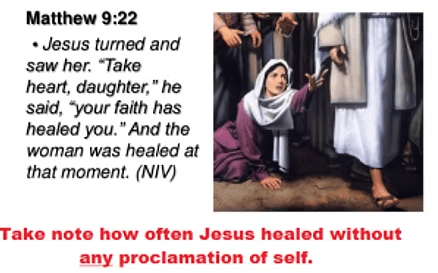


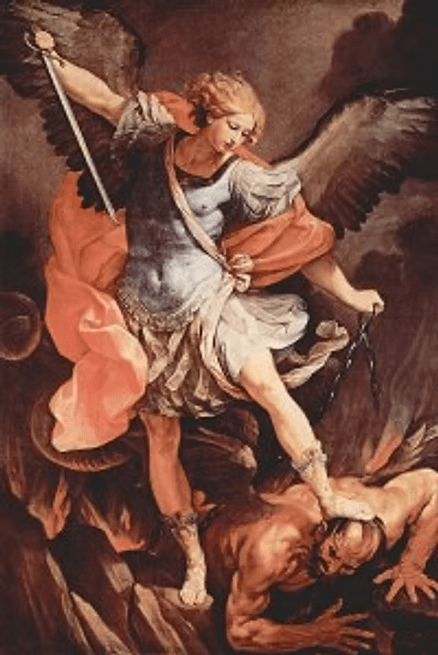
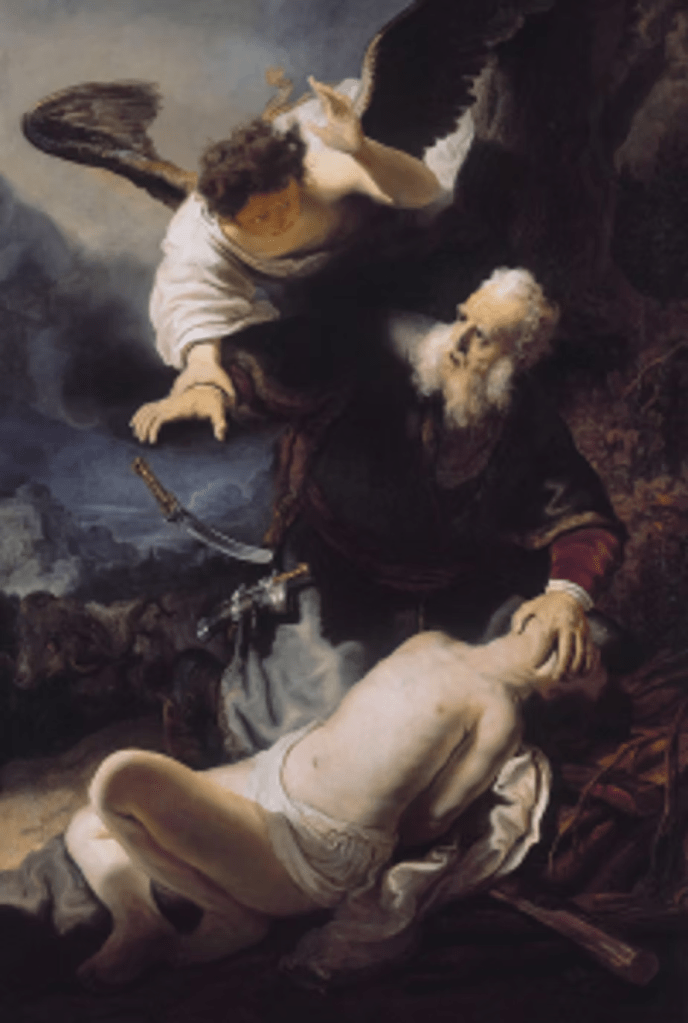




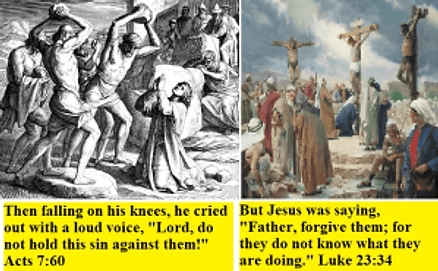




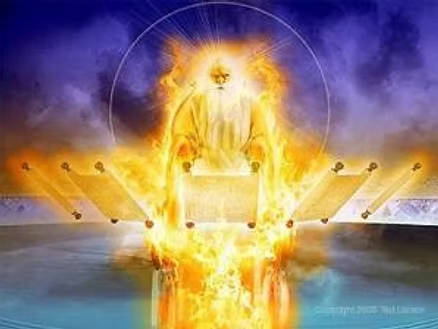


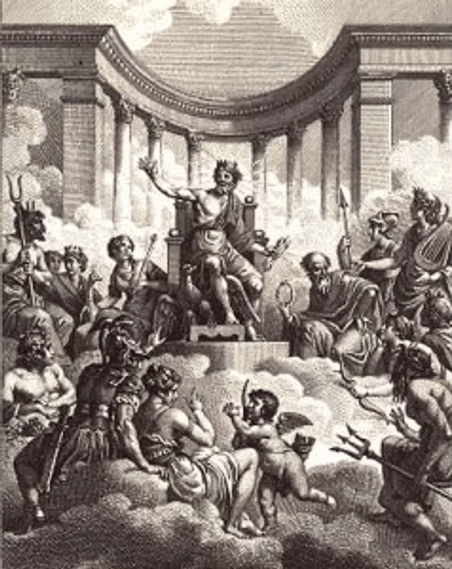





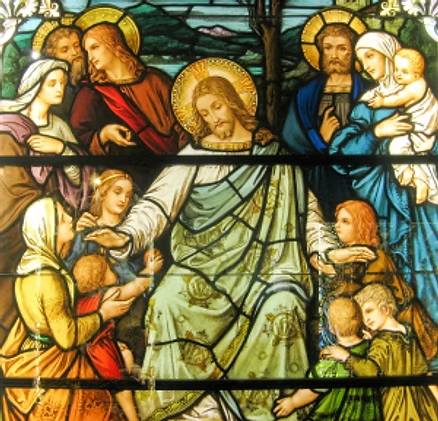




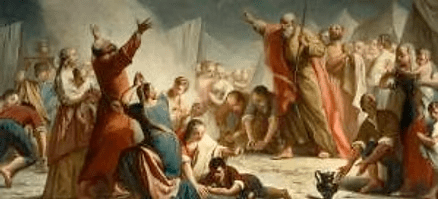



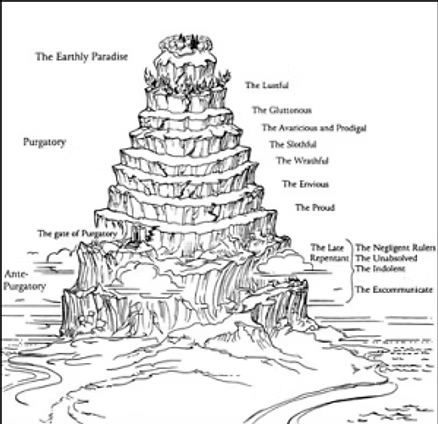














 Explaining the Readings