Category Archives: 2 Corinthians

2 Corinthians 12:2-10 – The messengers of Satan become thorns in one’s flesh

I know a person in Christ who fourteen years ago was caught up to the third heaven—whether in the body or out of the body I do not know; God knows. And I know that such a person—whether in the body or out of the body I do not know; God knows— was caught up into Paradise and heard things that are not to be told, that no mortal is permitted to repeat. On behalf of such a one I will boast, but on my own behalf I will not boast, except of my weaknesses. But if I wish to boast, I will not be a fool, for I will be speaking the truth. But I refrain from it, so that no one may think better of me than what is seen in me or heard from me, even considering the exceptional character of the revelations. Therefore, to keep me from being too elated, a thorn was given me in the flesh, a messenger of Satan to torment me, to keep me from being too elated. Three times I appealed to the Lord about this, that it would leave me, but he said to me, “My grace is sufficient for you, for power is made perfect in weakness.” So, I will boast all the more gladly of my weaknesses, so that the power of Christ may dwell in me. Therefore I am content with weaknesses, insults, hardships, persecutions, and calamities for the sake of Christ; for whenever I am weak, then I am strong.

——————–

This is the Epistle selection to be read aloud on the sixth Sunday after Pentecost [Proper 9], Year B, according to the lectionary for the Episcopal Church. This will follow either the Track 1 pair of readings from 2 Samuel 5 and Psalm 48, where David became King of Israel and occupied Jerusalem and then sang, “Trembling seized them there; they writhed like a woman in childbirth, like ships of the sea when the east wind shatters them.” If that pair is not selected, the Track 2 will offer a pairing from Ezekiel 2 and Psalm 123, where Yahweh called to Ezekiel to become His prophet and tell those lost how to be found; with David singing, “To you I lift up my eyes, to you enthroned in the heavens.” All readings will accompany the Gospel reading from Mark 6, where Jesus said, “Prophets are not without honor, except in their hometown, and among their own kin, and in their own house.”

I wrote deeply about this reading and posted a very informative analysis [which can be read on this website] in 2018. It reflects upon the language that is clearly speaking of an out of body experience [OBE]. I conject that the “person in Christ” along with Paul was Barnabas; and, the experience happened after they had been stoned by angry Jews and left in a heap, presumed dead. While in that state of being near dead, their souls left their bodies; although they would return to life, physically recover and continue their ministry.

I strongly urge all who are truly invested in their Christian education to read what I wrote in 2018 by searching this site for the name and number of this reading. Based on insights I have just recently had come to me, based on the other reading preceding this one – from Second Samuel and Ezekiel – I will now add to what I posted three years ago. Nothing written in 2018 is invalid because of these new findings; but I see no need to repeat those views that have already been stated, which are also most beneficial.

In the Greek that was written by Paul and translated as “was caught up to the third heaven” and “was caught up into Paradise” a form of the word “harpazó” is used each time. That word means “to seize, catch up, snatch away.” As such, “was caught up” denotes Paul and his fellow in Christ “were seized by force, in an open display of force.” [Strong’s Definition and HELPS Word-studies] This does not mean both displays of force came from the same source, especially since one was relative to “third heaven” and the other to “Paradise.”

The evidence of this comes when Paul clarified the first forcible taking as coming from “this such a thing as far as a third spirits.” Here, the words translated as “third heaven” are making a statement about the “third” of the angels [the “heavenly”] who rebelled against Yahweh and were cast down into the earth. The meaning must be seen as Paul saying it was human beings whose souls were under the influence of these demonic angels that forcibly attempted to stone Paul and Barnabas to death, for the things they were preaching in ministry. Therefore, evil influences forced both souls to leave their bodies of flesh.

When Paul then clarified the second “forcible snatching,” he wrote: “into this Paradise.” In that, the capitalized Greek word “Paradeison” is written, which elevates the meaning to a divine level of understanding that must be recognized. Thus, a word that simply means, “a park, a garden, a paradise,” or (from ancient Persian) “enclosure,” the capitalization makes this be a reference to the Garden of Eden.

In the same way that Paul and Barnabas had their souls forcibly separated from their bodies of flesh, stoned by instruments of Satan in the worldly realm, their souls were then forcibly sent to a place that is part of the worldly realm that has been prepared by Yahweh for pure [clean] souls still in possession of a body of flesh. Whereas neither Paul nor Barnabas were taken as bodies of flesh to this place [because those bodies lay stoned, bloodied and appearing dead], they saw each other’s soul as if still in possession of the bodies of flesh they each recognized as one another. Thus, Paul wrote [twice], “whether in the body or out of the body I do not know; God knows;” saying that because their bodies were so real in this vision that it was impossible to tell the difference between reality and an illusion.

When Paul then wrote he and Barnabas “heard things that are not to be told, that no mortal is permitted to repeat,” the use of “ēkousen arrēta rhemata” goes beyond “heard things that are not to be told.” The words actually translate to state, “heard [God’s voice as an] unspoken message.” That says the voice of Yahweh filled their souls with insight, beyond what a brain would limit one’s soul from hearing. It says the lesson of Adam and Even in the Garden of Eden likewise did not hear Yahweh speaking to them through audible means. They too “heard the unspoken.”

The next segment that follows this, as “ha ouk exon anthrōpō lalēsai,” then confirms this, because rather than saying “that no mortal is permitted to speak,” those words translate as saying, “which not possible a man [one of the human race, thus a soul in a body of flesh] to tell.” The reason “a man” is unable “to tell” what was “heard in unspoken message” is the brain is uncapable of recalling everything that can be exposed divinely to a soul. It is not so much ‘secret stuff’ said by Yahweh, as much as it is the limitations a body of flesh keeping it from processing that which is beyond conscious memory capabilities.

If Paul and Barnabas had been told secrets that could never be told to anyone else, then Paul would have been breaking some unstated pact with God by writing this to the true Christians of Corinth. For him to then write, “I will be speaking the truth,” that says everything his soul “heard [from God’s voice]” would only be the “truth.” As the “truth,” it would be foolish for Paul to know “truth” and then be told to keep it to himself. The purpose of ministry is to spread the “truth of Yahweh,” so others will hear “the truth” and be led to their own close personal relationship with Yahweh. By being the messenger of the truth, it would be wrong for others to desire a relationship with Paul, as if he were the source of the truth, when the source of all truth is Yahweh.

Paul then exposed that what he “heard in the unspoken message” was “kai these surpassing excellence of those unveilings.” This says the boiled down “truth” was not to be “elated,” not “surpassing excellence.” The truth of the Greek word written [“hyperairōmai”] said Paul was not to become “arrogant” or “self-important” from having so much revealed to his soul. It wasn’t that Paul could not tell anyone the truth he was told. Instead, it was Yahweh telling Paul not to get the ‘big head’ [I like to call this “Big Brain Syndrome”] and start running around like a pope, cardinal, bishop or Episcopal priest waving a wand over all sinners, saying ”You all get to go to heaven now. That’ll be $100.” Knowing what is true and then acting all high and mighty about it is not why Yahweh shares His truth.

All truth told to Paul was given to him for the purpose of exposing it, with the caveat being along with the truth comes the thorn in his flesh. The Paul who physically walked from town to town preaching the truth was the Paul would often be seen as coming himself as a “messenger of Satan.” This is like how the scribes told Jesus his healing and other miracles were due to Beelzebub possessing him. Certainly, Paul was not a “messenger of Satan,” because he had been told the truth and he wanted to please Yahweh by spreading the truth; and, he did just that. Still, some of the people who Paul told the truth to came out with stones and condemnations for having broken the law, so he would be arrested from time to time, if not stoned to death. Jesus knew this same affliction.

The reason this “thorn” was placed in the flesh of Paul was to keep Paul from ever turning into some flimsy excuse for a priest of Yahweh. To be a priest in the flesh meant to know rejection in the worldly domain, because being in the Garden of Eden meant being a soul separated from its body of flesh. If returning to the world of sin were to become some false expectation of Heaven on Earth, then there would never be any motivation to marry Yahweh, receive His Anointment as Sacred and Set apart as Holy, becoming a body of flesh where His Son Jesus could be resurrected. To be Jesus reborn, one had to always know the pain of the thorn that was being rejected as a prophet of Yahweh, because Satan’s messengers would always bring torment to the pious.

When verse eight says, “Three times I appealed to the Lord about this,” the Greek word “Kyrion” must be read as Paul recognizing the “Lord” of his body of flesh was Jesus. The general title of “Lord,” as a capitalized word, gives it the divine elevation as Jesus being the “Lord” of all Saints ever born into the flesh. The use here says Paul’s soul separating from his near death body allowed that soul to hear the voice of Yahweh, who was not his “Lord.” Yahweh was the Husband of Paul’s soul, thereby his “King.” Jesus was the physical “Lord” that Paul prayed to after returning to life; as pain was not a sensation felt by Paul’s soul in “Paradise.” After visiting Eden and hearing unspoken lessons of faith, Paul returned to life and ministry; and, it was after that return that he prayed to “Lord” Jesus for help.

The use of “tris,” as “three times,” is both a number of times Paul “begged,” but the symbolism of “three” must also be seen as a reflection of “a third,” where the fallen angels become the challenge facing all who have married their souls to Yahweh and been reborn as His Sons. The number “three times” says all times when the thorn of Satan’s messengers caused pain to pulse through Paul’s body, Paul begged Jesus to make it stop.
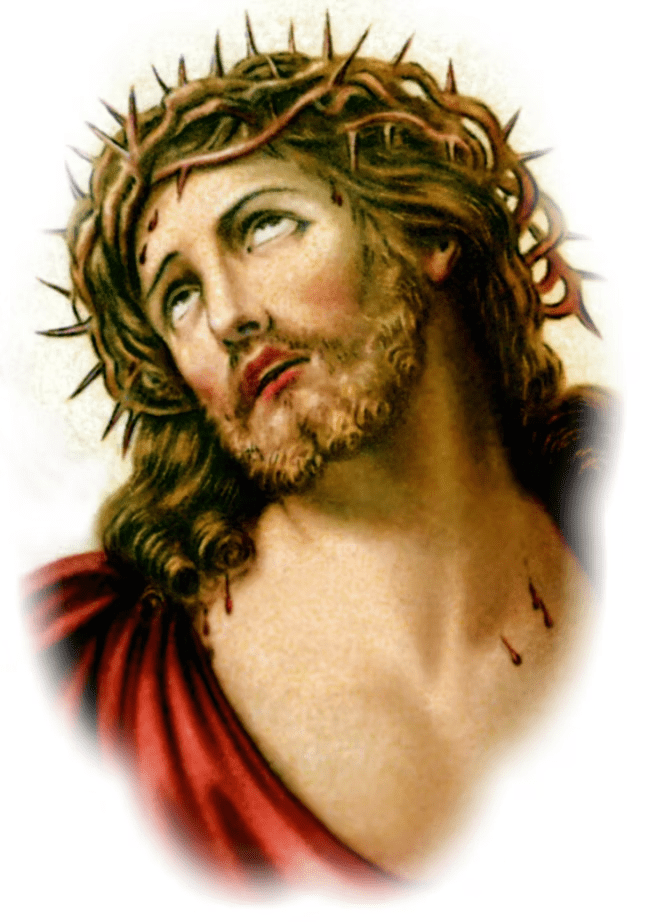
Dude, one thorn? Tell me when they put a crown of thorns on your head.

For Paul to then write that Jesus said to his prayers: “My grace is sufficient for you, for power is made perfect in weakness,” it must be remembered that Jesus only spoke what the Father commanded him to say. Thus, when a soul is in its body of flesh, in a conscious state of existence and divinely possessed by the Spirit merging Jesus’ soul with one’s own soul, prayers to Yahweh go through the Son. Thus, Yahweh answers through the Son, who resides within one’s flesh. This makes a closer inspection of the Greek of what Jesus said to Paul be worthwhile.

Rather than being the fourth word and in the lower-case [as the NRSV translation shows], the first word spoken to Paul is a capitalized “Arkei,” which divinely elevates the root word that means, “ to assist, suffice” (Strong’s Definition) and “I keep off, assist; I suffice; I am satisfied” (Strong’s Usage) to a meaning that divinely says “(It is) Enough.” This means Jesus told Paul is it “Enough for your soul to be given the favor of my presence” [from “Arkei soi hē charis mou”]. In that, “soi” must be translated as “yourself,” where the “self” part must be understood as the “soul” that was Paul’s in his flesh. Therefore, no matter what pain Paul’s body of flesh felt, it was “Enough” of “Sufficient” for him to know no harm had come to his soul, because Jesus was there with his flesh.

When the second segment of this reply by Jesus says, “for power is made perfect in weakness,” the literal Greek can be read as saying, “that indeed ability with suffering brings fulfillment.” This then led Paul to tell the Corinthians, “So, I will boast all the more gladly of my weaknesses, so that the power of Christ may dwell in me.”

There, the actual first word written is “Hēdista,” which is capitalized and therefore elevated to divine meaning that is missed by showing it as an inconsequential lower-case word that says, “more gladly.” The divine meaning says Jesus told Paul “suffering brings fulfillment.” That made Paul immediately realize the presence of Jesus within was “Most pleasing” and no thorns in his flesh could ever take away from that superlative of “gladness.” For that reason, Paul would “boast about his sufferings, so his flesh could remain covered [like a “tabernacle”] in the Anointment of Yahweh, as one reborn in the name of Jesus Christ.

This led Paul to then conclude this chapter by writing, “Therefore I am content with weaknesses, insults, hardships, persecutions, and calamities for the sake of Christ; for whenever I am weak, then I am strong.” In that, rather than contentment, Paul expressed his own “pleasure” or sense of “goodness” that came to him by way of “suffering, injuries, violence necessitated against him, persecutions and all distresses, which came because his body was representing one Anointed by Yahweh, as Jesus resurrected. Paul declared for however weak his flesh was, his soul [from “eimi” meaning his “existence”] was empowered with eternal life.

By seeing this message of Paul becoming clearly stated, it certainly becomes an appropriate companion reading fro the Gospel of Mark that has Jesus rejected by the Jews of the synagogue in Nazareth. The same rejection Paul faced, Jesus had faced long before. Still, this reading speaking of “the messenger of Satan” makes this be appropriate for the reading that had David move to Jerusalem, breaking the agreement that had been set between Abraham and the Jebusites.

The Jebusites must be seen as the keepers of the faith for Abraham’s descendants, so as long as Jerusalem remained theirs, Israel would be deemed holy land. David took that automatic blessing away, forcing the Israelites to forever marry their individual souls to Yahweh and be led as His wives, or suffer demonic possession that would reduce them to “the blind” and “the lame.” Those who stoned Paul and Barnabas, like those who rejected Jesus in Nazareth. In the same manner, the collapse of Judah witnessed by Ezekiel all came to be because after David sinned and died there was no longer a holy land to protect them.

As a reading selection on the sixth Sunday after Pentecost, when each and every soul should be married to Yahweh, been Anointed as His Son reborn, in divine possession by the soul of Jesus, a ministry like Paul’s should have begun and be ongoing. This reading says suffering is to be expected. Still, as long as one has met all the preconditions of Sainthood, then the presence of Jesus as one’s “Lord” will “Suffice” and the reward will be “Paradise.


2 Corinthians 3:12-4:2 – Preparing for the test in the wilderness

[12] Since, then, we have such a hope, we act with great boldness, [13] not like Moses, who put a veil over his face to keep the people of Israel from gazing at the end of the glory that was being set aside. [14] But their minds were hardened. Indeed, to this very day, when they hear the reading of the old covenant, that same veil is still there, since only in Christ is it set aside. [15] Indeed, to this very day whenever Moses is read, a veil lies over their minds; [16] but when one turns to the Lord, the veil is removed. [17] Now the Lord is the Spirit, and where the Spirit of the Lord is, there is freedom. [18] And all of us, with unveiled faces, seeing the glory of the Lord as though reflected in a mirror, are being transformed into the same image from one degree of glory to another; for this comes from the Lord, the Spirit.

[1] Therefore, since it is by God’s mercy that we are engaged in this ministry, we do not lose heart. [2] We have renounced the shameful things that one hides; we refuse to practice cunning or to falsify God’s word; but by the open statement of the truth we commend ourselves to the conscience of everyone in the sight of God.

——————–

This is the Epistle selection to be read aloud on the last Sunday after the Epiphany, Year C, according to the lectionary for the Episcopal Church. It will follow an Old Testament reading from Exodus, where is read: “When Moses had finished speaking with them, he put a veil on his face; but whenever Moses went in before Yahweh to speak with him, he would take the veil off, until he came out; and when he came out, and told the Israelites what he had been commanded, the Israelites would see the face of Moses, that the skin of his face was shining; and Moses would put the veil on his face again, until he went in to speak with him.” That will then be followed by a singing of Psalm 99, where David wrote: “Moses and Aaron among his priests, and Samuel among those who call upon his Name, they called upon Yahweh, and he answered them.” All will accompany the Gospel selection from Luke, where we read: “a cloud came and overshadowed them; and they were terrified as they entered the cloud. Then from the cloud came a voice that said, “This is my Son, my Chosen; listen to him!”’

This selection from Paul’s letters needs to be viewed in the light of it having been purposefully chosen to follow the Exodus 34 reading that tells of Moses’ face glowing after coming down from the mountain, bringing replacement tablets. This reading is only read on the last Sunday after the Epiphany, Year C. Moses broke the first tablets when he saw the sins of the people, who built a golden calf to worship. Aaron led the people to commit this grave sin, which led to three thousand losing their loves to Levites swinging swords. To see that Aaron was afraid to see Moses’ face glowing, along with the elders of the people, says Aaron was one who should have been executed for having allowed sin to be promoted. Therefore, it is my opinion that the events of Exodus 34 did not truly occur when Moses and Aaron (with Joshua) were leading the Israelites. The broken tablets are a prophecy of the future failures of the people and their leaders, with Aaron’s name merely being symbolic of a high priest in the Aaronic line. This opinion of mine is now being supported by the words spoken by Paul in his second letter to the Corinthians.

These selected verses are Paul speaking amid a section that was begun in verse seven, which BibleHub entitles “The Glory of the New Covenant.” The NRSV gives all of chapter three a heading that announces: “Ministers of the New Covenant.” In verses seven through eleven, Paul wrote to question how a ministry could succeed, if the people were afraid to look upon the face of Moses, which glowed from having spoken with Yahweh. Paul’s verse even surmised that the fear of the new commitment brought down by Moses prophesied a greater glory will come. That greater glory is the advent of Christianity.

In the above NRSV translation, I have supplied the verse numbers, in bold type, within brackets. This will aid in see where the interpretations that will follow come from. I will make some references to the NRSV translation, but my interpretations will be more heavily leaned on a literal translation of the Greek text into English, which exposes the NRSV as the producer of English paraphrases. Often, those paraphrases do a disservice to the divine text written.

In the NRSV translation of verse twelve, to see that stating “Since, then, we have such a hope, we act with great boldness” … well, that is bad paraphrase. The verse begins with the capitalized word “Echontes,” which is the Present Participle Plural form of “echó,” which means “to have, hold, possess.” When the capitalization is understood to be a purposefully written word that denotes divine elevation in meaning, the proper word in translation is “Possessing us.” That is Paul stating, as a prophet of Yahweh, that he and those to whom he wrote in Corinth were all known to be the divine “Possessions” of Yahweh, as His elohim. The whole of verse twelve then literally says, “Possessing us therefore of such a kind expectation , much confidence we make use of .” This becomes much more powerful a statement than some ‘ho-hum’ “Since we have hope, we act boldly.” Where did the “hope” come from?

Verse thirteen then uses the third of three references made by Paul in this section relative to the New Covenant, which point to “fading away.” The whole of the verse literally translates into English to say, “kai not just as Moses would place a veil upon this face of himself , advantageous for this not to gaze steadily these sons of Israel into this end of this fading away ,” This begins with the word “kai,” which means it is important to grasp how being in the “Possession” of Yahweh [Him “Possessing us”] is not to be seen [“kai ou“]. There, the word “not” becomes important to understand.

When the lesson of Exodus 34 is seen as Moses placing a veil upon his face, making that covering become advantageous for the fearful Israelites, so they would not have to look intently at the face of Yahweh worn by Moses, the point Paul made was this Scripture was not telling of the past [the times of Moses and Aaron], but the future. Hiding the face of Yahweh becomes a sign of the “end” times, when Judaism [“these sons of Israel”] were rapidly “fading away” from being anything even remotely considered “Possessions” of Yahweh. The “end” was then, when Paul was the resurrection of Jesus’ soul (along with the other true Christians like him), who feared making a commitment that placed their souls in the hands of Yahweh. Thus, Judaism was “fading away” in relevance to Yahweh, because the first set of marriage vows had been broken.

Verse fourteen also begins with a capitalized word – “Alla” – which becomes divinely elevated in meaning, so it becomes the “Exception” that comes from this “fade.” Here, Paul was not saying that Jesus is a reflection of the veil of Moses being removed. Instead, the Exodus 34 story tells of the future to come [leading to an “end” through “fade”] would be the symbolism of the Law wearing the “veil” of confusion. Without being able to understand the meaning of that written by Yahweh and given to Moses – which came to the Israelites by their own ability to discern, from making a divine marriage commitment and eating spiritual food daily – all that understanding would be lost when all explanations of meaning fell behind the “veil” of Yahweh’s “tongue” [his divine language that requires divine language fluency]. When Paul wrote, “within Christ it is removed,” this says each “Anointment” of a Saint [all reborn as Jesus, Anointed as Yahweh’s Son] comes with a ‘built-in’ understanding of all Scripture passed down to the Israelites (who had “faded” to being only Jews).

Paul then wrote in verse fifteen that the only “veil” then worn, which kept souls from being able to be led by Yahweh’s Spirit to discern the truth of Scripture, was the one that covered the “hearts” of the believers. Paul wrote this “exception” [“all’” not capitalized] was: “until this day , when shall be read Moses [Scripture] , a veil over this heart of themselves lies .” In that, the Greek word “kardian” translates as “heart,” but that usage is metaphor for “the mind, character, inner self, will, intention, center.” That soul-center being covered should be seen as the self-drive away from a Spiritual commitment that a soul is expected to make to Yahweh. The use of the plural form of “autōn” should be read as “themselves,” where the “self” is always denoting a “soul.” Thus, the “veil” that keeps the meaning of Scripture hidden from one’s understanding is self-limitations on commitment to Yahweh – a refusal to fall in love and submit one’s soul in divine marriage.

In verses sixteen, seventeen and eighteen are found five uses [in variations] of the word “Kyrios,” all basically meaning “Lord.” In addition to those are three uses [in variations] of “Pneuma,” all basically meaning “Spirit.” Before going into what Paul specifically wrote, it is important to grasp the difference that comes from an Old Testament naming [in Hebrew] of “Yahweh,” which is reduced in English translations to being “the Lord,” and a New Testament statement [in Greek] of “Kyrios,” and it subsequent translation as “[the] Lord.” The two are not the same.

In the Greek text that is based on “Kyrios,” this capitalized word denotes a word that is divinely elevated to a meaning that is much higher than the lower-case would denote. As such, a “Lord” or “Master” is Spiritual, not physical. A “lord” or “master” would denote a superior or slave owner. On the lower-case spelling level that is human, looking at spirits being present in the world, a “soul” is the “lord” and “master” of its flesh. By seeing that, a capitalized “Lord” then reflects the presence of a divinely elevated soul-spirit that becomes the new “Lord” over both one’s soul and its flesh; and, this “Lord” is named Jesus.

In the Hebrew naming of “Yahweh,” there is no way that Yahweh will ever become “the Lord” over a human being. Yahweh is the source of one’s soul, which is the gift of life, given at birth to be the “lord” over one’s flesh. Yahweh will marry a soul (living in a body of flesh) and then possess that soul-body as His; but He will not take over being His wife. Yahweh will not become the direct “Lord” over one human being. Instead, Yahweh will send His “Spirit” [Hebrew “ruach,” Greek “Pneuma”] to merge with the soul of a wife, which will lead that soul-body to compliance (willingly) to the marriage vows. Such a “Lord” is what Jesus called the “Advocate.” Thus, in Paul’s words one must read Jesus as the “Lord” and Yahweh as His “Spirit.”

Verse sixteen is then Paul making it clear that the “veil is taken away,” adding “at which time however if shall have turned toward the Lord.” This must be seen as the resurrection of Jesus’ soul within ones soul, which comes from a soul having fully submitted itself to Yahweh in divine marriage. The result of that marriage is the rebirth of His Son in the flesh [new flesh], which becomes the “Lord” over that flesh and its host soul. This is a divine possession [called “eudaimonia“]. This then means the presence of “Lord” Jesus makes one be “Anointed” by Yahweh [thus His “Christ”], because one has been reborn as the Son, who is always “the Christ.” Because Jesus becomes the Law written within the heart (or soul) of a believer, the presence of Jesus means all understanding of the Law [all divine Scripture] is immediate and forever. With that understanding, the “veil” of ignorance has been “taken away.”

Verse seventeen then begins with a capitalized “Ho,” which typically translates as “the,” in the lower-case, but it has greater divine elevation as a reference to “This,” which has just been stated. “This” is then reference to the removal of the “veil” that prevents understanding of the Law. “This” is then said to be “now Lord this Spirit,” where both “Lord” and “Spirit” [“Kyrios” and “Pneuma”] are capitalized and separately important in divine elevation. The “Lord” brings about the removal of the veil, with that presence having been generated by the “Spirit” of Yahweh. The “Spirit” brings about a new “existence” [from “estin” meaning “I am, exist”] that is able to see Spiritually, without a veil blocking one’s ability to discern spiritual matters.

Paul then furthered this about the “Lord this Spirit” by adding, “in what place now this Spirit of Lord , freedom .” In this, the order of “Pneuma” and “Kyrios” is reversed, with the genitive case used in Paul writing “Kyriou,” which states the “Spirit” possesses the power to bring about “this Lord,” because the “Spirit” is “of Lord.” The host soul in a body of flesh – a new wife in submission to Yahweh’s “Spirit” – is then “in what place” is “now” found “this Spirit,” who is the Father “of Lord” Jesus. The removal of the veil through divine marriage is then a “freedom” to understand spiritual matters.

In the last verse of chapter three, Paul wrote of the “face” as a “mirror” that becomes the “same image” that is the “glory” that made the “face” of Moses shine. In seven segments, Paul wrote the following:

“ourselves now the whole ,” – This needs to be seen as the totality of the New Testament, or the new tablets brought down to replace the marriage agreement that had been broken. This is the truth of Christianity, as “ourselves now the whole” says all are Anointed by Yahweh to see, reborn as Jesus, without a veil of ignorance. “having been unveiled in countenance ,” – This needs to be seen as the removal of the “face” of self, to be replaced by the “face” of Yahweh. This is the First Commandment that all wives of Yahweh must agree to, willingly and lovingly.

Wearing the “countenance” of Yahweh comes by being reborn as His Son. “this honor of Lord reflecting as in a mirror ,” – This needs to be seen as the Father being reflected in the Son, and vice versa. It says one wears the “face” of Yahweh by the presence of the Son [the “Lord” Jesus] projecting as the halo that surrounds one’s human “face.”

“this itself image are the transfigurations within ,” – This needs to be seen in the same way as Peter, James, and John witnessed Jesus, Moses, and Elijah [three for three, all saints or apostles], where they were themselves transfigured, which allowed them to hear the voice of Yahweh speaking to them [the “Spirit”], telling their souls to listen to Jesus [“the Lord”].

“away from renown into honor ,” – This needs to be seen as the movement that takes one away from glorifying that which is misunderstood [like seeing Jesus as the only Christ, who will come again some time in the distant future to save the world], into a state of being that receives all the honor and glory of being Jesus reborn, here now, as his soul has been reborn countless times, ever since Pentecost Sunday, when many souls received his soul and were renewed in honor.

“just as away from of Lord ,” – This needs to be seen as one’s soul being removed as one’s lord over the flesh, which in most cases is a straw boss that has sold itself and body into slavery to some demon spirit. As such, one must receive the “Spirit” and be reborn as “Lord” Jesus controlling oneself.

“of Spirit .” – This must be seen as everything being made possible through a soul marrying Yahweh, becoming divinely possessed “of Spirit.”

At this point, it is quite important to understand that chapter four is not a continuation of chapter three. Therefore, it is not adding further details about the removal of the veil of ignorance that keeps a selfish soul from understanding divine guidance through holy texts. Chapter four is taking a new thought direction, which requires acceptance that all stated prior has been properly discerned. Still, the capitalized first word of chapter four says “Because of,” followed by “this,” which can only refer backwards to that finishing chapter three.”

The first verse of chapter four then literally states, “Because of this , possessing this ministry here , just as we have been shown mercy , not we become weary .” This says that the strength of “ministry” or “service” [“diakonian”] to Yahweh comes from the divinely elevated “Possessing us” that was stated in chapter three, verse twelve. The “mercy” or “pity” shown saints [“ēleēthēmen”] is forgiveness of sin, which is only Yahweh’s to give. The continuation that is the road of righteousness, after having been cleansed by the baptism of the Spirit of Yahweh, comes from the resurrection of His Son Jesus [the “Lord”]. Therefore, no temptations will cause a soul married to Yahweh, having given birth to His Son again, will fall back into wayward ways.

Verse two then becomes Paul explaining some of the sins that will have been erased from one’s life. This is another “exception” that a soul has agreed to, in the divine marriage vows. The whole of verse two is two lengthy segments (the first divided into two parts), both ending by stating the possession of a soul, so it is “of God.” Those two segments (three parts) literally translate as this:

“except we have disowned these secrets those of shame , “ – This should be seen as there are no longer any hidden sins that Yahweh and Jesus will allow. Everything has been confessed and opened for inspection. Nothing can be retained from a past life that does not assist one in the present and future. “not conducting a life by cunning and not corrupting this word of this of God ,” – This means all allegiances to Satan (the serpent who is the most cunning of all the spiritual animals of Eden) will no longer cause one to sin; and, that means no longer twisting Scripture to suit one’s needs (as a sinner), because that will not longer be allowed.

To “corrupt the word of God” means to condemn one’s soul. “except this by disclosure of this of truth commending ourselves advantageous for every kind of consciousness of humanity before the face of this of God .” – This needs to be read as the use of the word “of God” [“Theou“] being afforded to oneself [a self is a soul] is the truth as stated by Jesus within, so one must commit to always speaking the truth of the word, regardless of the circumstances and surrounding environment. When an opportunity to present the truth comes, one must speak the truth without holding back.

These two verses of Paul’s fourth chapter (2 Corinthians) are then relative to the divine possession of a soul by Yahweh and the rebirth of His Son within one’s soul. This says the purpose of redemption is ministry; and, ministry is not found conducted in a church pew, where one has stocked it will pillows, shawls and tissues, planning on never going into the outside world, where “every kind of consciousness of humanity” is in need of having the truth be told.

As the Epistle selection to be read aloud on the last Sunday after the Epiphany, it is vital understand the New Covenant does not allow for veils to be worn, so a large number of followers can plead ignorance of Scripture as their justification to sin. One’s soul is expected to have married Yahweh Spiritually. One is expected to have had the soul of Jesus resurrected within one’s soul, becoming the Son of man reborn [menfolk and womenfolk]. One is expected to be totally “Possessed” by the “Spirit” of Yahweh and led by the “Lord” Jesus, as a Christ. The after the Epiphany time period is when one has had time to play with all the new gifts one’s soul has received at Christmas [when one became a Christ], so one has spent some time in practice ministry (internship) perfecting the use of those gifts. As with all such trial runs, the time for an exam always comes; and, once passing the temptations of the wilderness, one will completely sacrifice oneself as a servant to Yahweh, going wherever He leads. This is Paul writing words of encouragement to his New Covenant Christians, telling them to go forward without doubts.

2 Corinthians 5:16-21 – The test of Yahweh’s exchange program

From now on, we regard no one from a human point of view; even though we once knew Christ from a human point of view, we know him no longer in that way. If anyone is in Christ, there is a new creation: everything old has passed away; see, everything has become new! All this is from God, who reconciled us to himself through Christ, and has given us the ministry of reconciliation; that is, in Christ God was reconciling the world to himself, not counting their trespasses against them, and entrusting the message of reconciliation to us. So we are ambassadors for Christ, since God is making his appeal through us; we entreat you on behalf of Christ, be reconciled to God. For our sake he made him to be sin who knew no sin, so that in him we might become the righteousness of God.

——————–

This is the Epistle selection to be read aloud on the fourth Sunday in Lent, Year C, according to the lectionary for the Episcopal Church. It will follow an Old Testament reading from Joshua, where it is written: “Yahweh said to Joshua, “Today I have rolled away from you the disgrace of Egypt.” And so that place is called Gilgal to this day.” That will be followed by a singing of Psalm 32, where David wrote: “Happy are they to whom Yahweh imputes no guilt, and in whose spirit there is no guile!” All will accompany the Gospel selection from Luke, where Jesus told the parable of the man with two sons, saying: “When [the prodigal son] had spent everything, a severe famine took place throughout that country, and he began to be in need. So he went and hired himself out to one of the citizens of that country, who sent him to his fields to feed the pigs. He would gladly have filled himself with the pods that the pigs were eating; and no one gave him anything.”

In these six verses above, six times Paul wrote a form of “Christos,” which has been translated as “Christ. Five times Paul wrote a form of “Theos,” which has been translated as “God.” At no time did Paul the name “Jesus.” Not only did Paul not write “Jesus” in any of these six verses, he did not write that name anywhere in his fifth chapter, sent in his second letter to the true Christians of Corinth. This makes it very important to understand what Paul referred to when he wrote “Christ,” but not “Jesus.”

Every Sunday I watch a live telecast of a local Baptist minister’s Sunday sermon. Routinely he refers to “Christ,” when he clearly is referencing Jesus. He promotes belief in Jesus as THE Christ, so every time he says “Christ,” he uses that word as if it is a nickname for Jesus. It comes across as if “Jesus Christ” was the name given to Jesus when he was born … as his ‘last name.’ It is routine to hear people speak of waiting for Jesus to return at the end of the world – the End Times – and talk about a ‘rapture’ that people will experience when they are carried off to Heaven. All of this externalizes “Jesus” and “Christ,” so nobody is taught they can ever become Jesus reborn, or become a Christ. One elderly Episcopalian stared at about seven of us elderly in a Bible Studies class, asking (with an obvious attitude that expected all to be like him), “Nobody here thinking he or she is Jesus, right?”

We should all be taught to be Jesus reborn. We should all be taught we must become a Christ. We must all see Yahweh (call him God) as who made our souls and to whom our souls shall be indebted. To not be taught to seek to know Yahweh as His Son … as His Christ … is to led to find eternal damnation.

The Greek word “Christos” means “Anointed One; the Messiah, the Christ.” When written in the lower-case, as “christos,” it means a public display of physical anointment, where grease, oil, or water is poured or rubbed onto one’s forehead. It is like the physical display of baptism by water, where one is ceremoniously dunked in a pool of water, or (in a christening) when a priest pours water from a cup, dipped into a baptismal font (holding water blessed as holy by that priest) over an infant’s forehead. The Greek word “christos” has the exact same meaning as the Hebrew word “mashiaḥ” – “anointed.” David was “anointed” by Samuel; but Yahweh “Mashiah” David by an outpouring of His Spirit onto David’s soul. The capitalization of “Christos” says the act of “Anointment” is done Spiritually, and only by Yahweh.

Certainly, Yahweh sent His Son into the world to be born of flesh and live as “The Christ” incarnate. Jesus was not “God” incarnate, because he was the Son of God. Jesus was actually the soul of Adam – the only Son made by Yahweh – in whom Yahweh placed the “elohim” that is “The Christ.” Adam was the “Anointment” of flesh with a most divine soul – a Yahweh elohim. Jesus is then the Yahweh elohim of Adam (The Son of God) placed into the womb of a virgin girl (young woman), to become Adam reborn, with the Yahweh elohim given by Yahweh [His “Anointment”] as his Son being name “Yah[weh] Will Save. [the meaning of “Jesus”].

The plan was to have Jesus be the seed of the Christ that had to die, so the Christ soul could then be placed [Yahweh’s “Anointment”] into an ordinary soul; so, to be reborn as Jesus [his soul resurrected within one’s soul] means to be “Anointed” by Yahweh [marriage of one’s soul to Him] AND to be reborn as Jesus … meaning being reborn as “The Christ.” Therefore, when Paul makes six references to “Christ,” he is speaking of one’s soul having become where Yahweh’s Son has resurrected within one’s ordinary soul; and, that resurrection makes one the Christ, as Jesus reborn, as a new Son of God.

The name of the movement that resulted from Apostles [like Paul] being resurrections of Jesus, as a Christ, is the truth behind the word “Christianity.” That name or title means only those souls who have become “Anointed” by Yahweh, becoming those souls where the Son of Yahweh’s soul has been resurrected [making each become a Yahweh elohim], and where all are Jesus reborn, continuing his ministry under other names for their flesh, is the truth. Christianity is not a club to join, where one’s soul has not been “Anointed” by Yahweh, and one’s soul is not Jesus reborn. “Christianity” is a state of being – a lifestyle – not a meaningless association of based on common beliefs.

All of what I have just written can be found supported in what Paul wrote in these six verses. The point that needs to be understood is duality. Oneself is an ordinary soul giving animation to a body of flesh. An ordinary soul naturally becomes sinful, simply from living in a world that promotes sin. To gain eternal life, one has to be spiritually cleansed of sin; and, that can only come from gaining a second soul that cleanses.

That soul is the one placed by Yahweh into “Man” (we call him “Adam”], which is the “Yahweh elohim” found stated eleven times in Genesis 2, when Adam was made – the Son of Yahweh. An ordinary soul can only be Baptized by Yahweh’s Spirit, in order to be cleansed of sin; and, to ensure no new sins ever come upon one’s soul after Baptism, Yahweh sends the soul of His Son to join with one’s soul, so two are then one. The “Christ,” as Jesus reborn, becomes the Lord over one’s flesh forevermore.

Verse sixteen begins with a capitalized “Hōste,” which is a divinely elevated word that must be realized to connect to Yahweh in some way. The lower-case spelling has the word mean (mundanely) “therefore,” which seems benign in its meaning. It is read simply as a conjunction, connecting one verse to the next. However, as a capitalized word the truth behind the word “Hōste” needs to be known.

According to HELPS Word-studies: “hṓste (a conjunction, derived from 5613 /hōs, “as” and 5037 /, “both-and”) – wherefore (with the result that both . . . ), connecting cause to necessary effect which emphasizes the result (the combined, end-accomplishment). The result involved then is the combination of both elements in the correlation, underscoring the inevitable effect of the paired elements.” This explanation of “Hōste” is then saying that the result of a true Christian is a combination of both the ordinary (the before) and the divine (the after), which brings about the result of Jesus having been reborn in new flesh.

When that divinely elevated meaning is seen, the word that then follows is “hēmeis,” which seems to simply say “we.” When that spelling is the first-person plural possessive pronoun that means “of ourselves.” To see a capitalized “Hōste” as a Spiritual addition, where “both” is the result, a “self” must be seen as a “soul,” so “hēmeis” becomes a statement of divine possession that is “of our souls.” That then leads to the Greek word “apo,” which says “away from,” so that says one’s ordinary “soul” (“of ourselves”) has been removed or set aside, “away from” control of one’s flesh.

The words that then follow (“tou nyn”) say “of this at the present,” which says this duality of being was not what it once had been, when “of our souls” we had possession, as ordinary human beings. Thus, the “present” condition that Paul wrote of is not what one used to be. The change is then said to be such that “none perceive according to the flesh.” That says such perception was previously done by the physical senses: sight, sound, touch, taste and smell. However, the “Therefore” has taken their souls away from discerning things in that manner.

Following a comma mark, one word is written before Paul wrote the word “kai,” which is a marker word, denoting importance to follow that word’s use. The one word written says “if,” which becomes the conditional that says not all have been divinely changed. Thus, the importance to follow will address those who have met the conditions of being divinely changed.

The important condition met is then stated similarly as before: “we have perceived according to the flesh Christ.” This important states the difference between the ‘before’ and the ‘after’ as being the presence of Yahweh’s “Anointment” [“Christ”]. Whereas one’s soul used to “regard,” or “perceive,” or “is aware,” or “beholds” (all as forms of “eidó”) according to only senses of the flesh, those who met the conditions importantly then saw from a Spiritual perspective, which was a divinely elevated ability that overcame their normal senses.

This then led Paul to conclude verse sixteen by writing, “except at the present no more we perceive.’ Here, those who meet the condition of a “Christ” are “exceptions” to the ordinary. Those “on the other hand” are “presently” not as they used to be. The old way of being led by a soul to sense externally through the body of flesh is “no more.” The first-person plural form of “ginóskó,” which is a personal experience of knowing (an elevation of “eidó”) then says “of our souls” (“we”) do Paul and the Corinthians “come to know, recognize, perceive.” That new way of “perception” is divinely inspired, as a “Christ.”

Nothing stated in this verse sixteen, where Paul wrote “Christon,” has to do with an external Jesus. It is a personal experience of how Jesus felt, because one’s soul had become “Anointed” by Yahweh as the rebirth of His Son. Just as Jesus was The Christ, one has become the reproduction of him, as a Christ. The knowledge of Jesus was then duplicated in all who were possessed by Yahweh and granted access to the “Christ” mind.

Paul also began verse seventeen with the word “hōste,” but in the lower-case. This then transitions from the “result that both” is accepted to have met the condition of Spiritual possession, as a Christ. Paul then followed that with “if” again, saying that condition is only met in “certain ones” [from “tis”]. Whenever this word “tis” is used [in all its forms] in Greek Scripture, it refers to those known, not strangers. The meaning here then says the “result that both” meet the condition “if,” then those are “certain ones” who have entered “into,” and conversely been entered “into,” the condition that is “the Christ” [from “Christō”]. Those souls are known by Yahweh in marriage.

Following the pause marked by a comma mark, Paul continued by saying, “a new creation” or “a fresh creature.” This confirms that the old has passed away and “a new” self has been formed. Certainly, by knowing the “Christ” is Spiritual, as an “Anointment” by Yahweh, the “flesh” has not changed in any way. That which is “new” is Spiritual, thus the “creation” comes by the presence of Yahweh.

Following another comma mark, Paul wrote “those original passed away.” Here, again, there is confirmation of the ‘before’ and ‘after,’ where “those” souls [“ourselves”, as “we”] that had been prior to “at the present” time – the “original” of a normal soul-body entity – has become “rendered void, become vain, neglected, and/or disregarded.” The intent here is to say the “old” has become the “past,” and will never return. It has become like the “ancient” ways. This become metaphor for the death of the way one was; and, death then leads to rebirth – “the new creation.”

Following a semi-colon, Paul wrote one word to consider alone: “behold!” This means to place focus on that which has come anew. One needs to “look!” at the difference and see how the old and the new are so different. Thus, he follows that “behold!” by writing, “has been born new.” This is the rebirth that Jesus told Nicodemus about, saying, “No one can see the kingdom of God without being born anew,” where the word translated as “anew” equally translates as “from above.” That same implication must be seen here, as the word written by Paul assumes “not found exactly like this before,” with the connection to “Christ” (as capitalized) implying “from above.”

In verse eighteen, Paul then capitalized the article “Ta,” which becomes a statement of divinely elevated souls that are “These” or “Those” whose “old selves” had “passed away.” He said, “These now all from out of of this of God,” where the possessive case written in “tou Theou” becomes a statement of Spiritual possession “of this” who are “These now,” who are “all of God.” This means no such transformation from the old to the new would be possible without the possession “of God.” That possession says the “Christ” is His “Anointment,” which is poured out at the time a soul become possessed.

Paul then added, following a comma mark, “of this of having been exchanged our souls to his soul through of Christ.” Here, “ourselves” has been modified by me to say “our souls,” because it is the souls of oneself that are possessed by Yahweh. Where I have translated “of having been exchanged,” the traditional translation says “reconciled.” The “exchange” is from a soul given at birth, with the free will to do as that soul pleased, that freedom has be forfeited by one’s soul, sacrificed [“has passed away”] so Yahweh can regain possession of it. Where the translation says “Himself” [artificially capitalized by the translators to state the “self” of God], the “soul” of Yahweh is His elohim, which is Adam-Jesus [His Son]. Thus, the exchange is this: from one’s soul lording over its body of flesh, to the divine soul of Jesus becoming one’s Lord; and, that makes oneself become “of Christ,” where the soul of Jesus takes possession of one’s soul for Yahweh.

After that powerful statement is made, Paul then followed a comma mark with another use of the word “kai,” which denotes an important statement is to follow. That statement says, “of having been given of our souls this service of this of restoration to favor.” In this, the translation of “service” equally means “ministry,” which becomes the expectation of “active service” as a soul reborn as Jesus. His “ministry” is continued through a new soul having been sacrificed, in order to gain redemption. This says the translation “of restoration to favor” equally means “reconciliation,” where the sins of the past have been “reconciled” and washed away by Spiritual Baptism. Again, this expectation is due to an agreed possession, when one has submitted self-will unto the Will of the Father.

In verse nineteen, Paul states, “like that God existed within Christ order exchanging of his soul.” Once more, “himself” has been translated as “his soul,” which is Yahweh’s divine soul created in His Son Adam, the eternal “Yahweh elohim.” The comparison made – “like that God existed within Christ” – implies that Jesus was “the Christ,” in whom was the Father, just as was the Father in the Son. This says that “the Christ” is not limited to Jesus (thus his name is not mentioned). Instead, “God exists within the Christ,” so in whatever soul possessing flesh “that God exists,” that is where “within Christ exists.” That returns “order” or the “ordered system” that the “world” reflects upon human beings, so in “exchange” for a soul that cannot resist the “order” the “world” places on a soul, the “Christ of God reconciles order” to the way of the spiritual. This is what saves a soul.

Following a comma mark, Paul then wrote, “not reckoning of their souls those trespasses of those souls,” which speaks of the debt a soul owes for sins while animating flesh in the world. The use of “not” says Yahweh will “not” judge a soul based on past sins, when those souls have repented and been Spiritually exchanged.

Then, Paul ended verse nineteen by beginning the last segment of words with “kai,” which once more places importance on that stated next. Here he wrote, “having established within our souls this divine utterance of this of a restoration to favor.” This importantly says the “placement” of Yahweh’s “Christ” becomes “fixed” and “established,” so firmly instilled “within our souls” [from “ourselves” or “us”] that His “Word” becomes the erasure of all past sins. A soul’s newborn ability to hear Yahweh speak “within” keeps one from ever again seeking self-importance or independence from Yahweh.

Verse twenty then repeats the possession “of Christ” twice, while relating that possession to being “of God,” while repeating that as “to God.” It is a complex verse that fully sates: “For the sake of Christ then we are elders , like of this of God of encouraging on account of our souls , our souls beg on behalf of Christ : you be exchanged this to God .” This says one’s soul is not saved for one alone. One’s soul is “exchanged” before Judgment, so one’s soul has time to spend in ministry, preaching the truth of “reconciliation,” so other lost soul can likewise become “exchanged.” To be an “elder” or “ambassador” that others will follow, one must present the “Christ” in the same way Jesus did in his ministry. The projection “of Christ” is magnetic and lost souls will be drawn to it. Because all souls are “of God,” they innately know a need to return “to God.” The “Christ” is then the beacon of truth that is sent by Yahweh to the lost souls.

In verse twenty-one, Paul wrote: “this not having known sin , on behalf of our souls he made , in order that our souls might be born righteousness of God within his soul.” Here, again, pronouns in the plural are read as “ourselves,” with “selves” being equated to “souls.” This verse leans one heavily toward seeing Jesus as the intent, as he was born sin free, with the “Christ” soul, thereby able to resist all temptations to sin. Still, Jesus is the reincarnation of the soul of Adam, which was created by Yahweh for the purpose of saving souls from sin. Thus, “this not having known sin” can be read as “this” state of “exchange” is that which removes all past “sin,” so one comes to a state of being of “not knowing sin” anymore. This is Jesus repeated countless times in “reconciliation.” That soul whose name says “Yahweh Saves” was made for that purpose – Salvation. It is how “righteousness” returns into the world. It comes “of God,” as His possession of lost souls, into whom can be reborn “his soul” named Jesus – “the Christ.”

As an Epistle selection to be read aloud on the fourth Sunday in Lent, when the lesson of testing is ongoing, the lesson here is a test can only be passed by those souls that have been “exchanged.” An ordinary soul is incapable of passing the test of commitment to Yahweh. An ordinary soul must sacrifice self [be passing away], so it can be reborn anew. One must realize the test of commitment to Yahweh comes by being “Anointed” as His Son. To even begin to get to that point, one must stop thinking belief is enough. One needs to stop saying, “I believe,” while keeping an eye out for Jesus coming down from the sky. This lesson says one must become the “Christ,” as Jesus reborn. Then one must enter ministry as a servant of Yahweh – His Son.