Category Archives: 2 Samuel

2 Samuel 7:1-14a – Becoming a house of worship

When the king was settled in his house, and Yahweh had given him rest from all his enemies around him, the king said to the prophet Nathan, “See now, I am living in a house of cedar, but the ark ha-elohim stays in a tent.” Nathan said to the king, “Go, do all that you have in mind; for Yahweh is with you.”

But that same night the word of Yahweh came to Nathan: Go and tell my servant David: Thus says Yahweh: Are you the one to build me a house to live in? I have not lived in a house since the day I brought up the people of Israel from Egypt to this day, but I have been moving about in a tent and a tabernacle. Wherever I have moved about among all the people of Israel, did I ever speak a word with any of the tribal leaders of Israel, whom I commanded to shepherd my people Israel, saying, “Why have you not built me a house of cedar?” Now therefore thus you shall say to my servant David: Thus says Yahweh of hosts: I took you from the pasture, from following the sheep to be prince over my people Israel; and I have been with you wherever you went, and have cut off all your enemies from before you; and I will make for you a great name, like the name of the great ones of the earth. And I will appoint a place for my people Israel and will plant them, so that they may live in their own place, and be disturbed no more; and evildoers shall afflict them no more, as formerly, from the time that I appointed judges over my people Israel; and I will give you rest from all your enemies. Moreover Yahweh declares to you that Yahweh will make you a house. When your days are fulfilled and you lie down with your ancestors, I will raise up your offspring after you, who shall come forth from your body, and I will establish his kingdom. He shall build a house for my name, and I will establish the throne of his kingdom forever. I will be a father to him, and he shall be a son to me.

——————–

This is the Track 1 Old Testament option for reading aloud on the eighth Sunday after Pentecost [Proper 11], Year B, according to the lectionary for the Episcopal Church. If chosen, it will be accompanied by a partial singing of Psalm 89, where is written: “I will establish his line for ever and his throne as the days of heaven.” Those will precede an Epistle reading from Ephesians, where Paul wrote: “So he came and proclaimed peace to you who were far off and peace to those who were near; for through him both of us have access in one Spirit to the Father.” All will accompany the Gospel reading from Mark, where it is written, “[Jesus] saw a great crowd; and he had compassion for them, because they were like sheep without a shepherd; and he began to teach them many things.”

In the first verse, where the NRSV translation shows, “When the king was settled in his house,” the meaning of “house” should not be limited to a physical structure. The statement says the “house” was also that of his reign as king over a united Israel and Judah. The verb translated as “settled” can also be used to mean “sat enthroned” or even “married.” [NAS Exhaustive Concordance] This then says time had elapsed since David moved the Ark of the Covenant into the City of David; and, during this time “a house of cedar” had been constructed and furnished.

In these selected verses, the name “Yahweh” was written seven times, with all translated benignly by the NRSV to say “the Lord.” The name of the God of Moses is Yahweh; and, that specific name being uttered in writing says Yahweh was married to the writer and all characters to whom Yahweh communicated. The general meaning of a capitalized “Lord” says an eternal presence that inhabits a body of flesh and possesses the soul of that flesh. Satan is such a “Lord,” as well as all demonic possessions or evil spirits that would cause a soul to lead a life of sin. Rejecting Yahweh, by name, means one is inclined towards an evil spirit coming to the threshold of one’s soul, wanting to come in and be one’s “Lord.” David and Nathan were both possessed by their souls having married Yahweh, specifically; thus, that specific God is named. All true Christians should feel comfortable naming Yahweh as their Husband.

When we then read that “Yahweh had given [David] rest from all his enemies around him,” this says the conflicts that had faced Saul’s Israel had ceased. In 2 Samuel 6:17-25, after David was made King of Israel and Judah, he led an attack against Philistines who challenged his new reign over that expanse of a kingdom, defeating them. In verse 25 is written: “David did just as Yahweh had commanded him; and he struck down the Philistines from Geba all the way to Gezer.” In that, it must be understood that David was possessed by Yahweh, so that possession made him as powerful as he had been when he faced Goliath. With that possession, there was no need to call for the Ark to be brought out, where the Ark was a know place where Yahweh sat enthroned between two Cherubim. David being possessed by Yahweh [not some generic “Lord”] was the embodiment of the Ark; therefore, Israel was given “peace” [synonym of “rest”] when David became King of Israel and Judah.

With peace at hand and the Ark resting on Mount Zion in the place where David had prepared, David saw his new cedar house having been completed as a sign to make a permanent structure for the Ark to be properly housed. The motivation of this thinking must be realized as David being one with Yahweh, just as Yahweh was one with the Ark. If David deserved a cedar house for him to reside in, as a soul married to Yahweh, then so too should the Ark deserve the same, rather than a canvass Tabernacle. This should be seen as the logic of a human brain being used to think for God; and, David is now shown how human logic is flawed, when applied to Yahweh. When Nathan told David, “Go, do all that you have in mind; for Yahweh is with you,” that recognized David’s “soul” [“bil·ḇā·ḇə·ḵā” was written, meaning “in your heart,” with a “heart” meaning “inner man” or “soul”] was possessed by marriage to Yahweh. Therefore, David’s thought was assumed to be the Word of Yahweh telling David what to do, such as he took Jebus and moved the Ark [and probably ordered his own cedar house to be built too] because of that inner voice.

When we next read, “But that same night the word of Yahweh came to Nathan,” that says Nathan’s soul had likewise married Yahweh, so he was a true prophet. As a true prophet, Nathan’s only goal in life was to please Yahweh. Knowing David was also married to Yahweh, Nathan knew David was the same way in his desire to please their God. When Nathan told David, “Because your heart and soul are married to Yahweh, go where your heart tells you to go,” that was based on the same human state of being that David used to think logically, rather than pray to Yahweh for guidance. This exchange between Nathan and David says they conversed as would wives of Yahweh, discussing ways to please Him without being told what to do. This says a soul married to Yahweh still has the freedom to think independently, as Yahweh is not a micromanager of the lives of His souls possessed.

To sum up what Yahweh told Nathan, He spoke to the eternal soul of Nathan, which was not limited to only that current incarnation as the prophet of Israel. By Yahweh saying, “I have not lived in a house since the day I brought up the people of Israel from Egypt to this day,” that goes beyond the written texts of the Torah and speaks the truth that was known by Yahweh and the soul of Nathan. In the text, neither the Ark nor the Covenant existed when the children of Israel were led my Moses out of Egypt. There was a pillar of cloud that went before them by day, and stood behind them by night. The Tabernacle of canvass was requested for housing the Ark afterwards, so that became a tent of meeting between the soul of Moses and Yahweh. Anything permanent was both unnecessary and unwanted.

In the translation of the NRSV that says, “I have moved about among all the people of Israel,” the actual Hebrew states: “hiṯ·hal·laḵ·tî bə·ḵāl bə·nê yiś·rā·’êl.” That literally translates to say, “I have moved about with all the sons of Israel.” This says Yahweh was married with many souls of the Israelites, spread through all the tribes, possessing all the elders, as well as most of the others. This says the marriage vows were not only written in stone and kept in a special box, protected by elohim [ark ha-elohim], but also in the hearts of all who served Yahweh. Wherever those souls took their flesh, they also took Yahweh with them. That widespread marriage between the Israelite people and Yahweh had been broken many times over their history, but repaired through repentance. During those times of breakage, the presence of Yahweh married to the Ark meant their prayers would be heard and a judge would be sent to bring the hearts of the people back to Yahweh. However, when the elders chose to have a king, that was the last break allowed; and, David was the last ‘Mr. Fix-it’ that would ever be sent to the Israelites, meaning David was the messenger [an elohim Israel] sent to keep Yahweh readily available to all those souls under David.

The reason “sons of Israel” should not be generalized as “people of Israel” is it reduces the meaning in the same way that reducing “Yahweh” to “the Lord” does. The masculinity of “sons” [Hebrew “benê”] is stating the spiritual ‘gender,’ not human gender. While men certainly ruled the day back when in the wilderness, up till well after David’s reign came and went, all souls in human flesh are deemed neuter gender, with them taking on the essence of the flesh, which is feminine. Therefore, a “son of Israel” means a soul [neuter, of feminine flesh] married to Yahweh [masculine Spirit] has taken on the ‘masculinity’ of a “son,” regardless if in the feminine flesh of males or females.

The word “yiś·rā·’êl” must then be seen as a statement of this masculine Spiritual presence, such that the word means “He Retains God” or “God Is Upright.” This was what the soul of Jacob was told he could identify with, after his elohim wrestling match. All of the children of Jacob had to be taught to become children who were “Israel,” as “sons” [males and females, husbands and wives] whose souls were married to Yahweh. Thus, David was being reminded, through Nathan, that he had become a “Messiah” – an Anointed one of Yahweh – to shepherd the people to return to the sheepfold where all knew they needed to each be “sons” of Yahweh, “Israel” in being.

By realizing the importance of “yiś·rā·’êl,” as it is repeated five times in this reading selection, one can see Yahweh speaking to the soul of Nathan refers to the divine level of meaning, much more than the mundane name of a wayward people who had demanded they no longer be led by Yahweh, but by some human king. Thus, when Yahweh said this to Nathan: “I will appoint a place for my people Israel and will plant them, so that they may live in their own place, and be disturbed no more; and evildoers shall afflict them no more, as formerly, from the time that I appointed judges over my people Israel; and I will give you rest from all your enemies,” that speaks loudly of each soul under David – his flock of priests for Yahweh – would no longer be rescued by an Ark that sat in a cave, guarded by elohim, which meant the people thought they were free to break all their marriage vows and still claim to be “He Retains God.” Therefore, there would never be a time when Yahweh should ever again be seen as a god that was no longer needed, so He could be kept in a house or a fixed place.

At this point, Yahweh tells Nathan to say to David, “Moreover Yahweh declares to you that Yahweh will make you a house.” In that, the literal translation says more clearly, “you Yahweh , that house will make you Yahweh.” This says that David is where Yahweh resides, so the ‘House of David’ will become synonymous with a ‘house of servants’ who will be the “ark of elohim.” Each individual born into that house will then be like David, as all their souls will be individually married to Yahweh. Because the name David means “Beloved,” all of the ‘house of David’ will be wives of God.

When this understanding of “a house” is seen, where there was no promise made for God to physically allow a box for Him to be stowed away in, the following states, “When your days are fulfilled and you lie down with your ancestors, I will raise up your offspring after you, who shall come forth from your body, and I will establish his kingdom.” While the history of Israel makes this appear to be Yahweh prophesizing the coming of Solomon and his kingdom, that is not the deeper truth revealed to Nathan. The “offspring” [from “zar·‘ă·ḵā,” meaning “sowing”] are not any of the sons of David. They are the “sons of Israel” that will follow the spiritual ‘house of David,’ being all the prophets whose souls would marry Yahweh and become the voices of God speaking to all the wayward kings, queens, and false prophets that would come. These would all be like David, as physical bodies whose souls were led by Yahweh’s Spirit. This would be the true “kingdom” Yahweh intended, where all of His children would have Yahweh as their king, each individually.

Where the NRSV has translated, “He shall build a house for my name, and I will establish the throne of his kingdom forever,” this again is wrong to think Yahweh was so nearsighted that he would only look forward to Solomon, as Solomon would lead the union of Israel and Judah to the ruin of divorce. The Temple built took on the name of its builder, not Yahweh. This means the “house for my name” is “Jesus,” whose name means “Yah[weh] Will Save.” The soul of Jesus will become the king of a ‘house of Yahweh,” where each ‘house’ will be an Apostle-Saint. Those ‘kingdoms’ will last “forever,” through those souls having gained eternal life. That prophecy given to Nathan then extends throughout the duration of all Christianity, where “Christ” becomes a “house built for my name,” as a house of those Anointed by God as holy.

Again, Solomon was not the intent, although he was the heir to David’s physical throne. When this reading ends with Yahweh telling Nathan, “I will be a father to him, and he shall be a son to me,” this speaks of Jesus, but also all who will be reborn in his name, through the marriage of their souls to Yahweh. Here, again, is the element of “sons of Israel” being foretold to be continued through all who would be Anointed by Yahweh, as was David, as were the Prophets, as was Jesus, and were all the Apostles and Saints to this day. All are the “sons” of Yahweh, with Him the “Father” of all.

As the Old Testament optional reading for the eighth Sunday after Pentecost, when one’s personal ministry to Yahweh should be well underway, this speaks of one’s own body of flesh needing to become a “house” of Yahweh. That can only come from one’s soul marrying Yahweh and receiving His Spirit. It also says one must become Anointed, as a new Christ, which means the Spirit has allowed one’s soul to be possessed by the resurrected soul of Jesus. One becomes a “house in the name of Yahweh” by being reborn as His Son Jesus. Because Yahweh told Nathan to tell David He did not want, had never wanted, nor would ever want a fixed structure of materials made for him to be housed in, this not only rejected a house of cedar and a temple of stone, it also rejects a church, cathedral, and/or any house said to be a place of God. The only place where Yahweh resides is human flesh, where the soul within has solemnly married Yahweh.
2 Samuel 11:1-15 – Being tired of responsibility

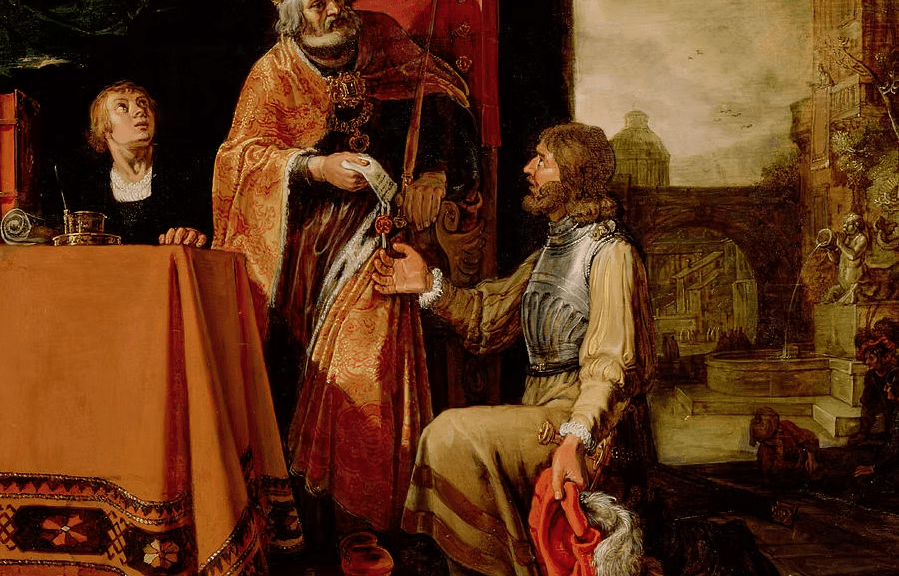
In the spring of the year, the time when kings go out to battle, David sent Joab with his officers and all Israel with him; they ravaged the Ammonites, and besieged Rabbah. But David remained at Jerusalem.

It happened, late one afternoon, when David rose from his couch and was walking about on the roof of the king’s house, that he saw from the roof a woman bathing; the woman was very beautiful. David sent someone to inquire about the woman. It was reported, “This is Bathsheba daughter of Eliam, the wife of Uriah the Hittite.” So David sent messengers to get her, and she came to him, and he lay with her. (Now she was purifying herself after her period.) Then she returned to her house. The woman conceived; and she sent and told David, “I am pregnant.”

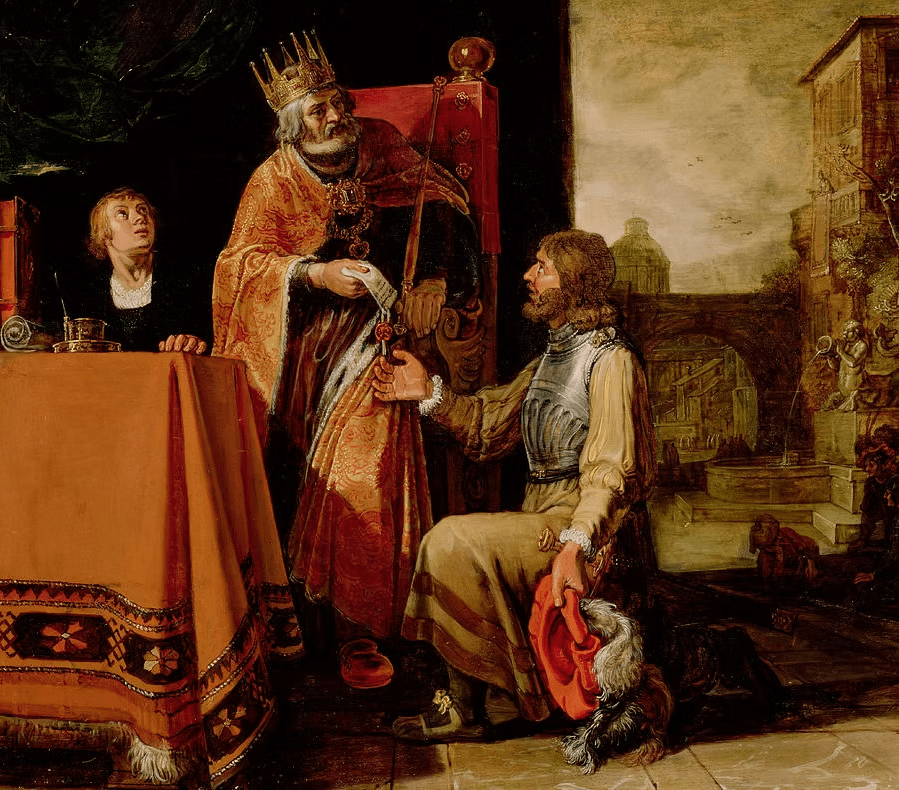
So David sent word to Joab, “Send me Uriah the Hittite.” And Joab sent Uriah to David. When Uriah came to him, David asked how Joab and the people fared, and how the war was going. Then David said to Uriah, “Go down to your house, and wash your feet.” Uriah went out of the king’s house, and there followed him a present from the king. But Uriah slept at the entrance of the king’s house with all the servants of his lord, and did not go down to his house. When they told David, “Uriah did not go down to his house,” David said to Uriah, “You have just come from a journey. Why did you not go down to your house?” Uriah said to David, “The ark and Israel and Judah remain in booths; and my lord Joab and the servants of my lord are camping in the open field; shall I then go to my house, to eat and to drink, and to lie with my wife? As you live, and as your soul lives, I will not do such a thing.” Then David said to Uriah, “Remain here today also, and tomorrow I will send you back.” So Uriah remained in Jerusalem that day. On the next day, David invited him to eat and drink in his presence and made him drunk; and in the evening he went out to lie on his couch with the servants of his lord, but he did not go down to his house.

In the morning David wrote a letter to Joab, and sent it by the hand of Uriah. In the letter he wrote, “Set Uriah in the forefront of the hardest fighting, and then draw back from him, so that he may be struck down and die.”

——————–

This is the Track 1 Old Testament option for reading on the ninth Sunday after Pentecost [Proper 12], Year B, according to the lectionary of the Episcopal Church. If chosen, this will be accompanied by a singing of Psalm 14, which says, “The fool has said in his heart, “[There are] no elohim.” All are corrupt and commit abominable acts; there is none who does any good.” That pair will be read before the Epistle reading from Ephesians, where Paul wrote, “I bow my knees before the Father, from whom every family in heaven and on earth takes its name.” All will precede the Gospel reading from John, where his accounts of the feeding of five thousand and Jesus walking on water took place.

I wrote about this and published my views in 2018. That commentary can be found by searching this site. I welcome all to read what I wrote then, as it still applies today. However, now I want to explore a different angle on this reading selection.

While reading this selection again, I was taken to a higher view of the sum of David’s reign, such that he had successfully ruled over the Israelite people as their king for thirty years. In those thirty years, he would have been King of Judah that entire time; but he would have been the King of Israel [and Judah] for twenty-two [and a half] years. These numbers make David become a reflection of Saul, who became king at age thirty, ruling for forty years. It says Saul probably was a king led by Yahweh (through Samuel) for ten years, before he acted against the will of God, then ruling corruptly for thirty years – an inverse of David’s reign.

From this perspective, David – as the foremost King of Israel in its history of kings – has to be seen as equally flawed as a replacement to Yahweh as the King of the Israelite people, thus bound to eventually fail. While all the kings of Israel and Judah would have some degree of devotion to Yahweh, as a version of David, all would equally have some degree of rebellion against Yahweh, as a version of Saul. Just as David wrote the Song of the Bow, where a “bow” reflects the trajectory of what goes up must then come down, the same fate of David is told in this story of his failure: How the mighty have fallen.

This means the literal story transforms into a metaphoric story, where the names of the characters brings forth hidden meaning that needs to be realized to see the depth of truth come forth. Here is a list of the personified words taken simply as names and identifications, without thought placed on the meaning behind the names [from Abarim Publications]:

David – Beloved

Joab – Yah Is Father, Whose Father Is Yah

Israel – He Retains God

Ammonites – A People, Kinsmen

Rabbah – Great

Jerusalem – In Awe Of Peace, Teaching Peace

Bathsheba – Daughter Of Seven, Daughter Of An Oath

Eliam – God Of The People, God Of Kinsmen

Uriah – Yah Of Light, Light Of Yah

Hittite – Terrors, Terrible

By knowing the meaning behind the names, verse one can be stated as: “In the spring of the year, the time when kings go out to battle, Beloved sent Whose Father Is Yah with his officers and all He Retains God with him; they ravaged the Kinsmen, and besieged Great. But Beloved remained at Teaching Peace. From this, I see it is easier to see that David, as a soul married to Yahweh [Beloved, Whose Father Is Yahweh] gave up on being a king. When “kings go out to battle,” David let Yahweh be the king overseeing “his officers.” As those who retained Yahweh [Israelites], they did battle with all their relatives who resisted marrying their souls to the One God, which meant besieging the physical property they worshiped as “Great.” As that was an ongoing and yearly rite for human beings and their worldly leaders, Beloved remained In Awe Of Peace, which is an inner placement of the Ark, where the Covenant is written on the walls of one’s soul. Thus, David came to the end of the line as a King over Israel and Judah, simply because his soul saw setting a human example of a holy ruler did the Israelites no good, in the long term.

With this abdication of rule seen as done because David felt in his heart and soul his role as king was over, he arose one morning and went out onto his rooftop, symbolizing he had reached the pinnacle of his life. From this position David was high above the ordinary scope held by the common people, meaning he was looking down as one with absolute authority, as a royal, in the same condescending way Michal had watched him dance and celebrate publicly as the Ark entered the city. He was aloof and saw the nakedness of a young woman who was ritually cleansing herself in the public bathhouse. At the age of sixty, David was not seeing nakedness as an experienced husband, with several wives and children born. He was seeing nakedness as did Adam and Eve see themselves as sexually appetizing, after they had opened their eyes to that which was good and bad. For the first time, David saw a young naked woman with lust in his heart; and, that newfound lust was made possible because he had surrendered his responsibility to lead the troops out in the spring.

Verse three can then be shown to say, “Beloved sent someone to inquire about the woman. It was reported, “This is Daughter Of An Oath daughter of God Of Kinsman, the wife of Yah Of Light the Terrible.” In this verse, the Hebrew word “baṯ-“ is repeated, which means “daughter.” Here, it becomes vital to grasp that all human beings [regardless of gender] are feminine essence, with a neuter soul animating it. This means all human beings the live are “daughters” of Yahweh; and, as “daughters” they are all proposed to by Yahweh, where a divine marriage proposal accepted makes all “daughters” become bridesmaids [human males and females alike]. That divine marriage would then demand acceptance to the Covenant with Yahweh as the wedding vows – an “oath.” This means David saw Bathsheba as the “idea” of a marriage vow [a daughter of an oath], which was also an “idea” David having become a “god of kinsmen,” who were all Israelites – and Bathsheba was an Israelite. Bathsheba then became a “woman” who was married in soul to Yahweh, through the “light” of David’s rule [being filled with Yahweh’s Spirit], but she represented a “terrible” place for David to go with his lusts, as to see her as a potential sexual partner meant breaking his vow against adultery.

When the Israelite elders went to Samuel and demanded they have a king, in order to be like other nations, Yahweh had Samuel make it perfectly clear to those elders what having a human king would mean. In a nutshell, it meant surrendering everything they held dear to the will of that ruler. Without specifically stating so, the king would be able to take any woman he wanted and keep her as his plaything. Similarly, Saul took David to keep from Jesse, although not for sexual purposes. This means David, like Saul, had the right as king to take whatever he wanted as his own. However, because David’s soul was married to Yahweh and his having sex with Bathsheba struck a loud chord within him, as breaking his vows of marriage, David reacted with guilt, in the same way Adam and Eve knew they had sinned, trying to hide their sin from Yahweh their Father.

When David began to consult Joab and have him bring Uriah to him, that was when David began to act like a repeat of Saul. Uriah, whose name means “Yah Of Light,” becomes a reflection of young David. Thus, it is possible to read verse six as saying, “So Beloved sent word to Yah Is Father, “Send me Yah Of Light the Terrible.” That acts as a prayer from David’s soul, asking Yahweh to show him how his younger self would counter such an act that broke the Covenant with Yahweh.

When David plotted to give Uriah liberty from the siege of Rabbah, suggesting that he take this valuable time back home to go lay with his wife, Uriah will not leave the palace of David. We then read Uriah telling David, “The ark and Israel and Judah remain in booths; and my lord Joab and the servants of my lord are camping in the open field; shall I then go to my house, to eat and to drink, and to lie with my wife? As you live, and as your soul lives, I will not do such a thing.”

That must be seen as the Light of Yah exposing to David the truth of commitment. The ark in its tent was the marriage David officiated by bringing it into his city where the purpose was Teaching Peace. The young men of Israel [those who retained God] and the young men of Judah [those who praised God] were likewise under tents of commitment to Yahweh, because David was their king. Joab [meaning a son of God] was also committed to serve Yahweh, as commanded by David. Thus, the light of truth requested by David, in prayer to Yahweh, was answered by Uriah saying, “as your soul lives, I will not do such a thing.” A “soul living” means one granted eternal life through marriage to Yahweh. Therefore, Uriah [as the reflection of young David and how he would react to the offer to take time off from your responsibilities and duties in service to Yahweh and go have sex with a woman] said, “A soul married to Yahweh will not break the marriage vows.”

In the same way that Saul heard from Samuel that he was no longer supported by Yahweh, with that being news Saul refused to hear, David reacted in the same way as had Saul. Rather than admit his sin to Uriah, David compounded his one sin by lying and then when Uriah would not go along with the lie David plotted for Uriah to be killed in battle. David was successful in killing himself, whereas all the efforts of Saul to kill him had failed. When Uriah would be murdered, as the final sin of David, David sealed his abdication as the king of Israel, because that sin marked all who would forevermore lead Israel and Judah as from the House of Cain, who would kill a brother rather than live forever in peace.

In this new insight I have been shown in this reading, I have also come to realize that a Hittite was who sold Abraham the property on which the cave [Machpelah] used as a tomb for Sarah. They were said to be allies of Abraham and scholars say they rose to be a very strong kingdom, which had collapsed by the time David became king. This connection to Abraham has the Hittites be linked to the Jebusites, who were allies of Israel: the Hittites supplied the material needs of the Israelite people [above ground]; the Jebusites supplied the spiritual needs of them [underground]. Thus, to name Uriah as a Hittite says he was an ally to David’s material needs.

Still, to state that Bathsheba was the “daughter or Eliam,” whose name means “el of the kinsman,” says she was a woman [“wife” equals “female, woman, wife”] that reflected the marriage of two peoples of elohim. This would mean Bathsheba and Uriah became two halves of one whole that brough the Hittites and the Jebusites together. Neither would be significant outside of Jerusalem, as both would only find prominence in that holy city taken by David as his capital. When the two are seen as one overall divine entity, with two faces, the pair become a trap set for David before he was anointed by Yahweh and made King of Israel and Judah.

The aspect of the Israelites going out to ravage the Ammonites, the history of the Ammonites is they were the descendants of Lot, through a son born to one of his daughters incestuously. As descendants of Lot, the nephew of Abraham, they were the “Kinsmen” of the “Israelites,” with their city of refuge being “Rabbah,” which means “Great.” Yahweh had given instructions for the Israelites not to disturb the Ammonites, but the tribes of Gad and Reuben took their land, with Rabbah remaining their stronghold there. This place is known today as Amman, Jordan. For the troops of David to go into battle against their own relatives, while David stayed at home and had a symbolic incestuous relationship with Bathsheba [so she “sent and told David, “I’m pregnant.”‘], says the refusal of Uriah to cover up David’s sin reflected how Uriah was not a descendant of Lot – a name meaning “Covering.”

In verse fourteen is written, “In the morning David wrote a letter to Joab, and sent it by the hand of Uriah,” which can be adjusted to state: “In the morning Beloved wrote a letter to Yah Is Father, and sent it by the hand of Light Of Yah.” This speaks of David’s soul taking the Covenant between his soul and Yahweh and placing it in the “hand” of Yahweh that David had been in his youth. We read about how David had Uriah murdered because the “letter” has been placed in the “hand of the light of truth” that is Second Samuel. Just as David arose from sleep, before he committed adultery, he arose from sleep and wrote a letter that would make him responsible for murder.

Because Jesus is seen as (and said to be) a branch of David, the same should be seen in Uriah. Uriah has been deemed a sacrificial lamb by a ruler of Jerusalem, whose innocent blood being spilled is all over his human hands. David now reflects the future of Jerusalem, where its leaders well into the future will routinely sacrifice the innocent for their own power and privilege. Uriah is therefore a model of Jesus, as both held in their hands a death sentence, which they both were divinely aware of and both bravely went forward to their deaths.

In this way, the passing of a letter to the prototype of his younger self and the Jesus still to come should be seen as the passing of the baton of the true kingship that comes from marriage of a soul to Yahweh from a human king of Israel and Judah to one who stood on a much higher realm as a soul totally committed to divine marriage, to the point of self-sacrifice for a higher cause.

The reading about the fall of King David must be seen as known by Yahweh to come, knowing it was inevitable and necessary, just as was the plague allowed to be set unjustly on Job and just as was the unjust killing of Jesus. When David was anointed, we read: “and came the Spirit of Yahweh upon David from that day and forward” [literal translation of 1 Samuel 16:13b], it was known that David would eventually sin. He had to sin to prove the failure of human kings will always occur. In this light, one must see how Adam and Eve were set up to fail, because without them knowing sin and the guilt that comes from having turned away from Yahweh, there could be no concept of true repentance and Yahweh’s forgiveness. Therefore, David was not eternally punished for his sins, as he was unaware that Yahweh knew what he would do, the same as Adam and Eve were that naive. David’s fall then becomes a lesson for all who would climb the mountain of power that comes from sacrifice to be an obedient servant, as when the eyes open and the power of Yahweh is seen at one’s command, then watch how fast it will all fall in upon oneself.

2 Samuel 11:26-12:13a – You are the sinner!

When the wife of Uriah heard that her husband was dead, she made lamentation for him. When the mourning was over, David sent and brought her to his house, and she became his wife, and bore him a son.

But the thing that David had done displeased Yahweh, and Yahweh sent Nathan to David. He came to him, and said to him, “There were two men in a certain city, the one rich and the other poor. The rich man had very many flocks and herds; but the poor man had nothing but one little ewe lamb, which he had bought. He brought it up, and it grew up with him and with his children; it used to eat of his meager fare, and drink from his cup, and lie in his bosom, and it was like a daughter to him. Now there came a traveler to the rich man, and he was loath to take one of his own flock or herd to prepare for the wayfarer who had come to him, but he took the poor man’s lamb, and prepared that for the guest who had come to him.” Then David’s anger was greatly kindled against the man. He said to Nathan, “As Yahweh lives, the man who has done this deserves to die; he shall restore the lamb fourfold, because he did this thing, and because he had no pity.”

Nathan said to David, “You are the man! Thus says Yahweh elohe of Israel: I anointed you king over Israel, and I rescued you from the hand of Saul; I gave you your master’s house, and your master’s wives into your bosom, and gave you the house of Israel and of Judah; and if that had been too little, I would have added as much more. Why have you despised the word of Yahweh, to do what is evil in his sight? You have struck down Uriah the Hittite with the sword, and have taken his wife to be your wife, and have killed him with the sword of the Ammonites. Now therefore the sword shall never depart from your house, for you have despised me, and have taken the wife of Uriah the Hittite to be your wife. Thus says Yahweh: I will raise up trouble against you from within your own house; and I will take your wives before your eyes, and give them to your neighbor, and he shall lie with your wives in the sight of this very sun. For you did it secretly; but I will do this thing before all Israel, and before the sun.” David said to Nathan, “I have sinned against Yahweh.”

——————–

This is the Track 1 Old Testament reading that can be chosen to be read aloud on the tenth Sunday after Pentecost [proper 13], Year B, according to the lectionary for the Episcopal Church. If chosen, it will be accompanied by a reading of Psalm 51, which sings, “Purge me from my sin, and I shall be pure; wash me, and I shall be clean indeed.” Those readings will precede an Epistle reading from Ephesians, where Paul wrote, “ lead a life worthy of the calling to which you have been called, with all humility and gentleness, with patience, bearing with one another in love.” All will accompany the Gospel reading from John, where Jesus told those who followed him after the miracle of feeding five thousand, “Very truly, I tell you, it was not Moses who gave you the bread from heaven, but it is my Father who gives you the true bread from heaven.”

I wrote and posted a lengthy commentary on this reading in 2018. I welcome everyone to read that by searching this site. What I wrote in 2018 still applies today. Rather than restate many elements previously said, I will take a different approach today.

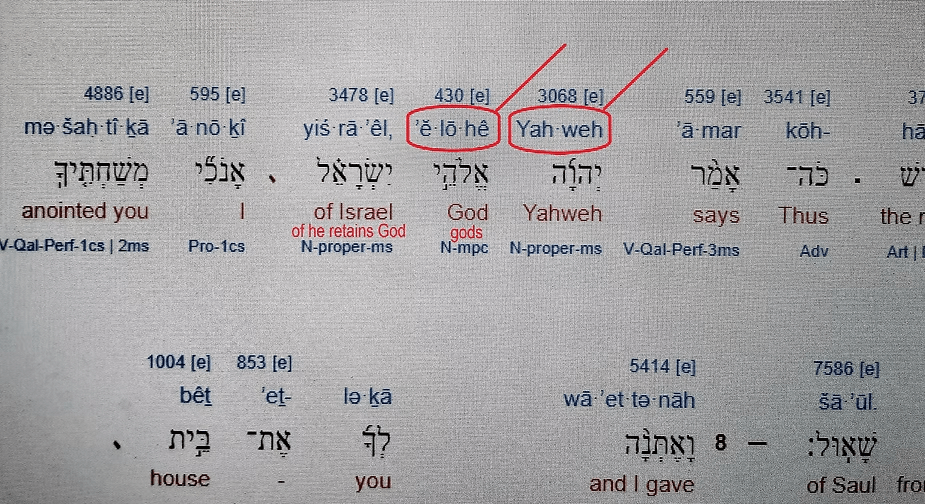
First of all, in 2018 I did not adjust the text to show what was actually written, which has been changed to accommodate English translations [and other languages, certainly]. In these selected verses, there are seven translations of “the Lord,” when “Yahweh” is written. One appears in the last verse of chapter eleven and the other six are in chapter twelve. In verse seven of chapter twelve is written “Yahweh elohe yisrael,” which has been translated as “the Lord God of Israel.” That translation has been modified to “Yahweh elohe of Israel,” because the word “elohe” is a clear Hebrew word that states “gods,” and to change it to “God” means two things: First, people who do not personally know Yahweh cannot discern how “gods” fits their agendas; and, second it says they also do not understand that “yisrael” is not a country, but a statement of “elohe,” where they all are souls that reflect “he retains God.” Therefore, in 2021 I return what was written to its rightful state, not for myself, but for your investigative reading.

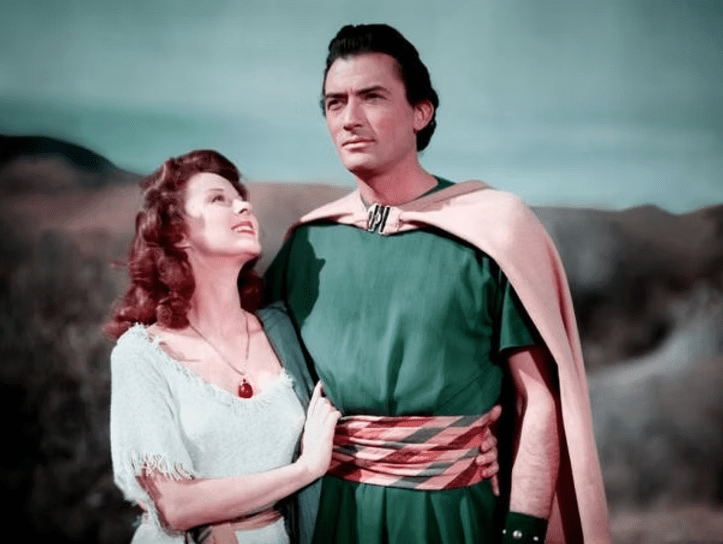
As far as all Scripture reading should be seen, to sit back in a pew with a large soda and a bucket of buttered popcorn, pretending this is some black and white movie staring Gregory Peck and Susan Heyward is wrong.

The point of Scriptural readings is THEY ALL reflect on the brain hiding between a pair of ears. If you want to see an old movie, then imagine the end of Reefer Madness, where some second-rate actor begins pointing at the camera, saying, “It could be you … or you … or you.” Regardless of human gender, this reading must be seen as a reflection on just how much EVERYONE is sinful David. No one is Nathan. No one is Uriah the Hittite. No one is Bathsheba. No one, most certainly, is Yahweh; so, all men and women who have ever had extramarital sex needs to hear Nathan speaking to you … and to you … and to you!

In these Old Testament readings, the characters speak with Yahweh, not some generic “Lord.” They call him by name, and He calls them by name. Nathan was a prophet who spoke with Yahweh; and, one can assume that when Yahweh poured out His Spirit onto David, that Spirit was not like the oil poured out by Samuel. Samuel’s oil went on David’s head and ran down his face and neck, as a physical anointing. Yahweh poured out His Spirit upon David’s soul, meaning David probably talked with Yahweh too. He certainly knew His name, as far as his Psalms are concerned.

Maybe it is time to realize the ‘parabola effect’ has taken Christianity from being one hundred percent elohe [or elohim], as the truth of each being reborn as Jesus, all being anointed in the same way as was David. In the beginning, there was a rapid spike upwards; but now, after centuries of having translators have call Yahweh just a “lord” and make the plural of “gods” created by Yahweh be just another name for Him, the tail end of Christianity has come. That is why Scripture is more important than ever, but the problem is it being little more than the blind leading the blind towards a great pit.

As far as the other addition I would like to make at this time, it is relative to the story Nathan told David, about the ewe lamb. This is why this reading is chosen to accompany a Gospel reading about Jesus talking about bread from his Father; and, it is why the alternative Track 2 Old Testament reading comes from Exodus, talking about the Israelites complaining to Moses about not having “fleshpots” in the wilderness, like they had back in Egypt. We do not read how Moses probably got fed up with the complaints and told them, “Well you worshipped lords back where they had fleshpots and now you worship Yahweh. Learn the name and get with the program, The way to a sinful life is easy. Just follow the footprints to the sea and then jump in.”

When the Israelites complained to Moses, like the Jewish pilgrims complained to Jesus, the people who run around calling Yahweh a “lord” are the same ones who never tell anyone the Israelites left Egypt with all their livestock. Given the vegetation in the wilderness was not as lush as it was in Egypt, the had a source of milk; and, from milk can be made cheese. If need be, they could sacrifice some lambs every Passover; so, they were not really starving from a lack of food. They were complaining because the rich Israelites – the one with most of the sheep, goats, and cattle – were tired of being expected to share with the poor Israelites, who had no animals one just one ewe lamb they bought from a rich Israelite.

Likewise, any pilgrim traveler far away from home would never think about traveling without some trail mix or jerky in their bags, because it gets costly feeding the family for two months on the road. This means all the people who reclined on the grass to be fed by Jesus and his apostles had their own food with them. They knew there were no marketplaces at the Jesus ‘open air synagogue,’ so many of them probably told the apostles, “Here, take some of mine to pass out.” That would easily explain how twelve extra baskets of leftovers was gathered, wouldn’t it?

The point of both those readings is not about being fed physical food. It is all about being fed spiritual food, because people in need of a reason to be ‘away from home’ need some positive news and uplifting motivational speeches to continue on. The people who followed Jesus to Capernaum were those who ate physical food, not those nourished by spiritual food. They were pretend people of faith, much like those who belittle Yahweh by calling him a lord. The Israelites in the wilderness with Moses were those complaining, “Listen Moses. We need a miracle every day. It has been a while since the last. We didn’t sign up to be contestants on Alone, so feed us some miracles of faith so we can keep following you and believing in Yahweh.”

By seeing that in the other reading choices for this Sunday, the rich man with “very many flocks and herds” is metaphor for a human being whose soul is void of Yahweh. Having the things that calculate as the measure of wealth is what all rich men and women bow down before and worship. That makes wealth their “Lord,” which is a “Lord” so commonplace that any specific name given to it [like “Mammon”] is still as dead as is the material things the rich think are the rewards due to a worshipper. This is where Christianity is failing today, especially in the United States of America, because so many Christians believe some “Lord” has made them wealthier than the rest of the world. Still, few want to give any of their wealth away to the poor, because they see the poor as not being as religious as they are.

When one sees the “very many flocks and herds” as a statement of plenitude, this should be seen as how many “Lords” there are that people worship. People worship their cushy jobs, where the do little work and reap millions of dollars. People worship fancy cars and mansions in exclusive gated communities. People worship the politicians that make it easier for them to steal from the poor and not get caught. If these people were to be asked who is God, few [if any] would say Yahweh.

That becomes the many verse the one, when it comes to the poor man who bought one ewe lamb and then raised it like a member of his family, loving it with his heart and soul. That is the individual relationship that every true Christian is expected to have with Yahweh – not Jesus – because Yahweh is what allows the poor to afford one ewe lamb. The one ewe lamb is then sacrificed, which makes it then reflect Jesus; and, it also becomes a reflection of Uriah, who was the one ewe lamb sent to his death unjustly. The difference must be seen as having many things or having just one source of love.

Nathan then told David a parable about “there came a traveler to the rich man” and he wasn’t about to spend any of his flocks and herds feeding some “wayfarer,” so “he took the poor man’s lamb and prepared that for the guest.” The wandering wayfarer [from “lā·’ō·rê·aḥ”] are the pilgrims reclining in the grass by the sea and the Israelites led out into the wilderness by Moses. For the rich man to not offer up one of his sacrificial animals for the guest says he had nothing of value to offer, even having as much as he had. While Moses and Jesus offered up themselves [as a ewe lamb] to feed the people, the Temple priests and their hired hands could not satisfy the needs of the people. The same lack of value is found in the Christian churches that close and bar the doors because of COVID19, as they would rather kill someone else than make an offering of one of their valuable [tithes paying] pewples.

Now, David still had the Spirit of Yahweh poured out upon his soul, which would stay with him forever; so, he was able to see how evil it was for a rich man to not sacrifice one of his own animals, instead stealing a poor man’s family member and slaughter it. David was allowed to fail by Yahweh, so no human king would ever be able to boast, “I was perfect all my life!” That means David saw the evil in his own actions, when Nathan cried you, “You are that rich man!”

This is where David becomes a reflection of Christians, as it is very easy for them to yell “Sin!” at someone else; but they are blind to their own failures to serve Yahweh. David’s anger at the sinner had to become his own acceptance of punishment, all while still realizing he had to go back to being the king and go back to working, when he thought he could retire early. David’s remaining decade would be the payments he had to make, so his soul could still be redeemed. Every prophecy of Yahweh through Nathan would come true. For all the spiritual feeding of the flocks David had done in fifty years came to naught; and, David had to take his licks, because a soul does not gain eternal life without hard work for Yahweh.

As the Track 1 optional reading for the tenth Sunday after Pentecost, when one’s own personal ministry for Yahweh should be well underway, the lesson now needs to be realizing selfishness will not gain one salvation. Selfishness is a sin that most people are blind to, as they see the world as ‘dog eat dog.’ Every act David did was legal for a king; but what is legal for a king is not the same as what one’s commitment vows to Yahweh say. The problem with saying, “I believe in the Ten Commandments” is belief is a flimsy excuse for breaking every law as one sees fit. If one does not know the commitment vows, then it is impossible to serve up that to a guest, who comes asking, “How do I get into heaven?”

2 Samuel 18:5-9, 15, 31-33 – A head caught between heaven and earth

The king, David, ordered Joab and Abishai and Ittai, saying, “Deal gently for my sake with the young man Absalom.” And all the people heard when the king gave orders to all the commanders concerning Absalom. So the army went out into the field against Israel; and the battle was fought in the forest of Ephraim. The men of Israel were defeated there by the servants of David, and the slaughter there was great on that day, twenty thousand men. The battle spread over the face of all the country; and the forest claimed more victims that day than the sword. Absalom happened to meet the servants of David.

Absalom was riding on his mule, and the mule went under the thick branches of a great oak. His head caught fast in the oak, and he was left hanging between heaven and earth, while the mule that was under him went on.

And ten young men, Joab’s armor-bearers, surrounded Absalom and struck him, and killed him.

Then the Cushite came; and the Cushite said, “Good tidings for my lord the king! For the Lord has vindicated you this day, delivering you from the power of all who rose up against you.” The king said to the Cushite, “Is it well with the young man Absalom?” The Cushite answered, “May the enemies of my lord the king, and all who rise up to do you harm, be like that young man.”

The king was deeply moved, and went up to the chamber over the gate, and wept; and as he went, he said, “O my son Absalom, my son, my son Absalom! Would I had died instead of you, O Absalom, my son, my son!”

——————–

This is the Track 1 Old Testament optional reading for the eleventh Sunday after Pentecost [Proper 14], Year B, according to the lectionary for the Episcopal Church. If chosen, this will be accompanied by a reading from Psalm 130, which sings, “Out of the depths have I called to you Yahweh; adonay hear my voice; let your ears consider well the voice of my supplication.” Those will be followed by the Epistle reading from Ephesians, where Paul wrote, “Be angry but do not sin; do not let the sun go down on your anger, and do not make room for the devil.” All will accompany the Gospel reading from John, where Jesus said, “No one can come to me unless drawn by the Father who sent me; and I will raise that person up on the last day. It is written in the prophets.”

I wrote about this and published my thoughts in 2018. That commentary can be found by searching this site. I offer background insight, which is valuable; but I see how my view of David and the division of Israel was not properly presented. I will offer new insights that have come to me recently, leaving the insights of 2018 as still valid. I welcome all readers to read what I offered for consumption three years ago.

Last Sunday Yahweh spoke through Nathan, who told David, “I will raise up trouble against you from within your own house; and I will take your wives before your eyes, and give them to your neighbor, and he shall lie with your wives in the sight of this very sun.” All of this would come to be through David’s third son, Absalom, whose mother was Maacah, the daughter of the King of Geshur.

This is the meaning of those names:

Absalom means “King of Peace.”

Maacah means “Oppression,” “Squeezed,” or “Crushed.”

Geshur means “Stronghold” or “Fortress.”

Talmai [the name of the father of Maacah, King of Geshur] means “Plowman” or “Furrowman”

There is some report of Jewish insight, which says David was cursed by taking a non-Jewish wife, when he married Maacah. They use symbolism that says one bad deed brings about another; and, they equate David’s plight to this marriage out of his ‘race-religion,’ which did not exist at that time [i.e.: that opinion is hogwash]. The marriage between David and Maacah must be seen as led by Yahweh, for a specific purpose. That purpose was broken when David sinned. Therefore, one punishment would be the loss of a wife, with her given to David’s neighbor.

Geshur means “Stronghold,” which was the place taken by David, named Jebus. The land that was called Geshur is that area east of the Sea of Galilee, which was where Jesus fed the five thousand spiritual food. The name of the king’s daughter being Maacah should be seen as a word meaning to crush grapes, in order to make wine. Her name should not be seen as a slave captured by David taking a conquest, as the Geshurites were like the Jebusites, as peoples never able to be overcome by the people of the Tribe of Manasseh. Thus, the King of Geshur gave his daughter to David to unite the Israelites to the Geshurites, it was a symbolic marriage between soul and Spirit, as the metaphor of David being an elohim of Yahweh. Maacah represented the blood of the Spirit mixed with the blood of David in their offspring. The third child of that marriage was named for David, as he was then a “King Of Peace.”

When Nathan spoke for Yahweh, saying, “I will take your wives,” the removal of Maacah becomes a divorce that ceased that divine union that made David a judge of Israel and Judah, reducing him to just a man. The trouble that befell his house would destroy all his children of that divine marriage.

In the story of Absalom, he declared that he should become the judge of Israel. That says David was the judge sent by Yahweh, who the people of Israel and Judah chose to be their king. As the judge of the people, the people followed the divinity of the judge. When David sinned and was punished by Yahweh, that divinity as the judge of Israel vanished. With that, so did the divine influence over the hearts and souls of the people. That led Absalom to begin natural human lusts for power and influence; and, that human drive won him the hearts and souls of both Israel and Judah. It was so strong that David was forced to abandon his kingdom.

David went back to where he lived, when Saul was trying to kill him. Absalom is then symbolic of a fallen king of Israel being resurrected. That failure would be the way of Israel and Judah, until both collapsed in ruin. David found his closest allies with him in Gath. It was Gath where David went and preached the divinity of Yahweh to the Philistines, so two hundred soldiers willingly converted to faith in Yahweh and allowed themselves to be circumcised. David took their foreskins to Saul, claiming his right to royalty, which came through his marriage to Michal [the promised benefit of the foreskins being delivered]. While David had followers who knew his soul was still filled with Yahweh’s Spirit, there were those who were allied to David because of hatred for Absalom.

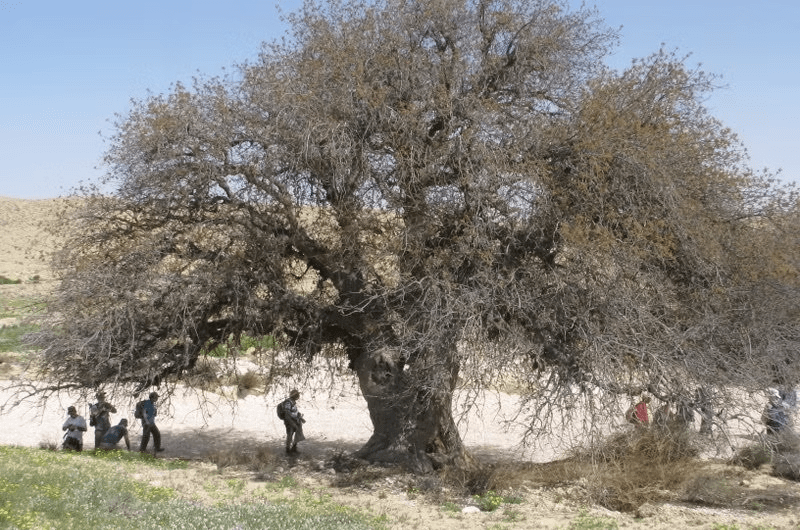
Because Yahweh was still spiritually with David, with David knowing his kingdom was doomed, Yahweh would not allow a return to a Saul-like ruler. The symbolism of Absalom being caught in the branches of “a tenebenth” tree [“hā·’ê·lāh,” or “elah”], which is not truly an “oak tree,” but more like a “turpentine tree.”

The metaphor from reading, “His head caught fast in the tenebenth, and he was left hanging between heaven and earth,” says the “branches” of Israel’s paths would not allow the “head” of a fool-sinner overrun one anointed by Samuel, married divinely to Yahweh. Absalom became “suspended between heaven and earth” as a pretender to the throne. His rise was not fully to the top; and, his fall was not fully to the bottom. Absalom becomes the Song of the Bow revisited, while being an example that all who live by the sword will die by the sword, in the sense that Yahweh said through Nathan that Uriah was killed by the “swords of Ammon,” so too would sword would cut David’s house. Absalom becomes a reflection of the “sword” of battle between enemies.

Th element of armor bearers being the ones depicted in this ‘cut and paste’ reading as the killers of Absalom needs to be seen as a reflection of David having been of the same age when he slew Goliath. This makes Absalom the reflection of the true line of David having become an ugly monster that then hung from the branches of the Promised Land. That turpentine tree becomes metaphor for the vast number of peoples, all who sought to destroy the invading Israelites, so Absalom became the giant that was the tree, whose head hanging was like the head of Goliath, where David’s stone sunk in. The young boys did not throw the three spears or javelins into the chest of Absalom; but they finished him off, much like the bodies of Saul and his son Jonathan [and another] were mutilated after death.

David gave a clear instruction about the defeat of Israel’s army under the lead of Absalom, saying: “Deal gently for my sake with the young man Absalom.” The reality of what David said [“lə·’aṭ-lî lan·na·‘ar lə·’aḇ·šā·lō·wm”] is this: “gentleness of me is in this young man Absalom.” That is David explaining the “Father of Peace” was built into the name of Absalom, as he was born of David when his soul-flesh was at peace with Yahweh and Israel and Judah were divinely led by David. This means what David said metaphorically was, “The gentleness of my soul rests on this young man Absalom.” That said, if Absalom dies, I die with him. It is a prophecy, more than a request to take it easy on Absalom.

The character that is Joab is enigmatic. He always seems to play ‘devil’s advocate,” as he is routinely shown to be behind evil acts, whether necessary or not. Joab is the nephew of David, the son of David’s sister. He would be condemned by David, when David lay on his deathbed, and executed by Solomon; so, he is not a hero figure in Israelite history. Still, Joab becomes a reflection of what Freud called the “Id” and Jung called the “Shadow.” In this way Joab becomes the character David would have been, had he not been married to Yahweh, submitting his soul to the Will of God. By David not condemning Joab much sooner, while having access to the Mind of Yahweh [with appointed prophets to advise him], this says David was no different than his predecessor Saul. By seeing that connection symbolically, Joab killing Absalom with javelins was an act condoned by David.

When David weeps and bemoans the death of Absalom, he is actually crying over his own death as the King of Israel. His plan was to have Absalom take his place, even though Absalom had committed similar crimes as had David. The sorrow David felt for a wicked son says David was no different than was Eli or Samuel, both holy men whose sons were nothing like them. David was not looking at his young son Solomon as his replacement, because he knew Solomon was the product of his wicked self. The death of Absalom was like the death of Jonathan in reverse, as Jonathan was the good son of an evil king.

Solomon would not be a great King of Israel, as the nation would split after his death. The whole element of sons and birthrights and inheritances must be seen as a flawed system, because the only system that leads a soul to eternal life is that when a soul is led to marry Yahweh and submit fully to His Will. All who do that cannot make any other soul do likewise; and, the more likely scenario is the codling of an offspring spoils that soul and drives it away from divine marriage. Thus, no human can ever become a king of anything other than failure.

As a reading for the eleventh Sunday after Pentecost, when one’s own personal ministry to Yahweh should be well underway, the lesson is to see how powerless one is to make things happen in the world. While victories can be planned and arranged, they will never come without some form of loss accompanying the gains. The loss of Absalom must be seen as the part of each self-soul, which is always seen as some form of reserve to self-ego and self-will. This is the symbolism of a Big Brain, as our heads always get tangled up in the branches. The hair of one’s head is then the flowing mane of a king lion – king of the jungle that is a deadly world. If we do not totally release our souls in submission to Yahweh, there will always be a chink in the armor that will be one’s downfall. Absalom reflected the Achilles heel of David, where he thought some gentle form of self could survive. David then reflects the wails over self-sacrifice.

2 Samuel 23:1-7 – One last song before death arrives

[1] These are the last words of David:

The oracle of David, son of Jesse,

the oracle of the man whom [-] exalted,

the anointed of elohe of Jacob,

the favorite of the Strong One of Israel:

[2] The spirit of Yahweh speaks through me,

his word is upon my tongue.

[3] elohe of Israel has spoken,

the Rock of Israel has said to me:

One who rules over people justly,

ruling in the fear elohim,

[4] is like the light of morning,

like the sun rising on a cloudless morning,

gleaming from the rain on the grassy land.

[5] Is not my house like this with el?

For he has made with me an everlasting covenant,

ordered in all things and secure.

Will he not cause to prosper

all my help and my desire?

[6] But the godless are all like thorns that are thrown away;

for they cannot be picked up with the hand;

[7] to touch them one uses an iron bar

or the shaft of a spear.

And they are entirely consumed in fire on the spot.

——————–

This is the Track 1 Old Testament selection that will be read aloud on the twenty-six Sunday after Pentecost [Proper 29], also called the Last Sunday after Pentecost or Christ the King Sunday, Year B, according to the lectionary for the Episcopal Church. If an individual church is set upon this path for Year B, then this reading will precede the singing of Psalm 132, which includes the verses: “Yahweh, remember David, and all the hardships he endured; How he swore an oath to Yahweh and vowed a vow to the Mighty One of Jacob.” That pair will be followed by a reading from Revelation, where John wrote, “To him who loves us and freed us from our sins by his blood, and made us to be a kingdom, priests serving his God and Father, to him be glory and dominion forever and ever. Amen” All will accompany the Gospel reading from John, where he wrote of Jesus saying to Pilate, “My kingdom is not from this world. If my kingdom were from this world, my followers would be fighting to keep me from being handed over to the Jews. But as it is, my kingdom is not from here.”

I wrote about this reading selection the last time it came up in the lectionary cycle (2018) and posted my views on my website at that time. That commentary can be read now by searching this site. In 2018, I was more accommodating to the NRSV translations than I now am. In the above translation you will note how I have placed in italic type the words “elohe, elohim, and el,” in addition to the removal of one translation of “God” that was not written [the brackets with a dash in between] and one translation of “Yahweh” as “the Lord.” Additionally, the Episcopal Church seems to flow through moods that sometimes think numbering verses is a good thing, while then shifting to think verse numbers are useless. They supply no verse numbers; so, I have placed them in bold text, between brackets.

I no longer allow such mistranslations and slackadasical presentations to stand, as they are misleading and need corrections. The points of change should demand explicit explanation, which is the only role a priest holds. Therefore, I advise against reading my views of 2018, even if they still support what I will now add, as I took a position that allowed errors to stand, with only minimal admonishment.

I have looked at the verses written [on the BibleHub Interlinear page] and the NRSV translations presented by the Episcopal Church. Let me say that all English translations of Scripture are paraphrases from the original texts [Hebrew and Greek], which are inclined to slant that which is written to fit a preconception. The preconception is the problem; and, I now see how poorly this English translation is. Therefore, I will present a literal translation that allows one to see more of the deep spiritual meaning that comes from these “last words of David.”

Verse one literally states: “and these words David last , said David son of Jesse , said the man raised up high , messiah elohe of Jacob , and delightful psalmist of Israel .” This verse is divided into five segments. Each segment must be seen as a separate statement of truth. First, these seven verses end with a pe [“פ”], the seventeenth letter of the Hebrew alphabet; but when used as a stand-alone mark, it means “to mark the end of a petuhah,” meaning the end of a section in a book or paragraph. All seven should be then seen as the “last words of David.”

Next, it identifies David as a human being, therefore a mortal. By stating his father was Jesse, a man who was born, lived, and died, David is likewise to follow suit, as having been born, lived, and then died, after stating his last words.

When the third segment then places focus on David having been a “man raised up high,” this says he was elevated spiritually, beyond the normal means of mere mortals. David was then a spiritual soul who was limited in a mortal body of flesh.

The fourth segment of words then explains this spiritual elevation. The Hebrew word written [transliterated] is “mə·šî·aḥ,” which is rooted in “mashiach,” which means “anointed.” That English translation is the equivalent of a “messiah,” which says David was both physically “anointed” by oil from a horn, by Samuel, and spiritually “anointed” by Yahweh, who poured His Spirit upon the soul of David, making him be “Anointed,” thereby a “Messiah.” This being followed by the Hebrew word elohe means David was Anointed by Yahweh, becoming one of Yahweh’s elohim, or extensions of Yahweh on earth. It is then that presence of Yahweh within David’s soul that “raised him up spiritual,” beyond that of a mere mortal man. This is then saying David was equally Anointed as an elohim, in the same way that Jacob was. This confirms the plural number of “elohe” as more than one, because both Jacob and David number two [with others not named included].

The fifth segment seems to be little more than adding to the obituary: “And David was a lovely harpist and songwriter, whose beautiful words we loved to hear.” That is wrong to think. This is furthering the divinity of David, as like that of Jacob, because David took delight in receiving insight from Yahweh, which came musically. His poetry and musical arrangement were received as one of Yahweh’s elohim. This can even include his abilities with musical instruments [more than the harp]. By then saying this is relative to the name “Israel,” the name meaning “He Who Retains Yahweh as one of His elohim” makes it clear that like Jacob, David was divinely raised by Yahweh’s Anointment, which allowed him to write prophecy in songs. This is then the last of those divinely inspired songs of David.

Verse two then literally sings, “spirit Yahweh spoke to me and his word was on my tongue .” These are said by David, through the use of “me” and “my.” The words “spirit Yahweh” [“rū·aḥ Yah·weh”] is a double-edged statement that cuts two ways. First, all souls are “spirit, breath, wind” of “Yahweh.” A soul is the eternal breath of Yahweh that animates all breathing lifeforms on earth [and anywhere else they may be]. This says David spoke these words as his body of flesh still had the life of a soul in it. Still, the second meaning is as the “Spirit Yahweh,” which is what “raised up” David, making his soul be an “elohe Yahweh,” like Jacob, with both becoming “Israel.” Seeing that second meaning as foremost, that was how David received the “utterances” of Yahweh, so those divine words became those spoken by David. The “language” [“lashon”] of David’s psalms [like this one] were the Word of Yahweh.

Verse three then literally sings, “uttered elohe of Israel spoke the rock of Israel , he who reigns over men righteous having dominion in fear elohim .” In this verse are two references to “elohim,” with the first being David saying the elohim of Yahweh speak as prophets, because they are Who Retain Yahweh in their souls [each an “Israel”]. They speak for Yahweh on earth to make themselves become the cornerstone for all who will likewise serve Yahweh, as His priests. This means the word “tsur,” meaning “rock,” made David (and Jacob) be like Jesus, where the “rock of Israel” is the presence of Yahweh’s Spirit within one’s soul. Once that “cornerstone” is set in place, one Who Retains Yahweh as one of His elohim is secured. The repetition of “Israel” means both an individual’s soul being married to Yahweh, as well as a nation of people, whose souls are all likewise married divinely.

The second segment of words then speaks of the presence of Yahweh’s Spirit within one’s soul as being that which rules the soul within hits body of flesh. Without that “King” over one’s being, one’s soul acts as the ruler, which is easily misled by wicked advisors, who lead a body of flesh to act in evil ways. The overriding presence of the “cornerstone” [the possession of the soul of Jesus] then leads one’s body of flesh to live in “righteous” ways. This inner “spirit Yahweh” is then so beloved that giving it free “reign” is desired. It becomes so loved that the only “fear” that an “elohim” knows is losing the presence within. Thus, the “fear” of Yahweh means not knowing Yahweh for eternity, which becomes one’s only “fear” after knowing Yahweh from divine union with one’s soul.

Verse four then sings literally, “and like the light of dawning rises the sun , morning without clouds , as brightness after rain the grass of the land .” In this verse there is the combination of sunlight, rain, grass, and earth. These are metaphoric statements of three basic elements that generate life on earth: air, water, and earth. The word “like” alerts us to this metaphor, where the combination of Yahweh [sun], His Spirit [clouds unseen], and souls in bodies of flesh [grass growing from the land] are the Trinity that becomes the spiritual food upon which others feed. The “grass of the land” is the wheat or grain crops, from which bread is made. The presence of Yahweh is known through the light of truth. All the confusions of Scripture disappear like the morning fog has lifted. That brightness is then shared with others, so fields of souls are grown for Yahweh’s use.

Verse five then literally sings in English, “that not so my house with el ; since a covenant everlasting he has made with me , arranged in all and secure for all my safety and all desire that not he will make sprout up .” In this verse there are two uses of the word “not.” This negative initially reflects back on the “grass of the land,” where “that not” being the source from which spiritual food comes means “not so my house with el.” In the singular use of “el,” which can be both one of Yahweh’s elohim and anything other than Yahweh worshiped as a false “god” – including self, a ruler of a nation or religion, things of the material realm, etc. – the use of “not” means marriage to Yahweh is optional, not a demanded slavery. The use of “house” can be as simple as one’s body being a temple unto Yahweh, or it can be a household of a family or town, while expanding to the nation of peoples who called themselves the children of Israel. This all depends on the choice one makes towards the Word of Yahweh, and how much light one sheds on Scripture and how much inspiration falls from heaven to make one’s inner mind grow.

That element of Scripture is then seen stated as “a covenant,” which is the foundation of Mosaic Law. This must be understood as a covenant of marriage to Yahweh, because anything less makes one become poor in terms of consuming spiritual food. That agreement between a soul (an eternal entity) and Yahweh becomes “everlasting; and, it is not some generic agreement that is between Yahweh and some large group. It is specifically an agreement between David [“me”] and Yahweh. In the final segment of words, the use of “all” [“kol”] is repeated three times. This is not only a reflection on the eternal length of the covenant, but it is the same for “all” who are to be like Jacob and David. It is an “arrangement” that is based on “desire,” which means love is the bond between two in marriage. The second use of “not” is now another statement that marriage is optional; but for that love to “not” bring a soul to seek Yahweh, from having been fed His spiritual food of Scripture, with enlightenment and growth in one’s heart, then what can be expected to “sprout up” will be weeds, not wholesome grains.

Verse six then literally signs in English, “but of worthlessness as thorns stray the whole ; because not with hands they are taken .” Here, the element of “sprout up” is confirmed to be weeds, rather than good grains, from which spiritual food can be threshed and milled. When “not” is the state of a soul’s covenant with Yahweh – unmarried, thus unsaved – those souls become thorns that mix in with the “grass of the land” and choke out all good growth. In the second segment of words, where “not” is again written, this is less about attempts to physically remove weeds and briars and more about a statement of those who are the evil mixed with the good.

They are “not” the “hands” of Yahweh, which are His elohim. Instead, they are elohim of lesser gods, the most destructive being Satan. This means the word “taken” [“laqach”] speaks as a soul “taken” in marriage. This is not a final or eternal marriage, per se, as it can mean “to be taken back,” which is redemption, which demands complete divorce from a lesser marriage to a lesser god [demonic possession]. For that to happen, those souls need to realize a need to reject their lesser subjection and use their own “hands” to win the favor of Yahweh. This is the sign of a seeker, as his or her “hands” are reaching out for salvation, knowing they have done wrong. Then, if they promise their souls to Yahweh, asking nothing but salvation in return, they can be “taken back.”

Verse seven then sings literally in English, “but man reaches must be full of iron on a shaft of a spear ; and with fire shall be burned burned in dwelling .” Here, the “reaches” must be seen as a continuation of the “hands” that have “not” been joined with Yahweh, becoming His hands on earth. For them to be redeemed, their “reaches must be full,” not some test of Yahweh or some halfway attempt to bargain with Yahweh, like one would bargain with Satan over a soul. This approach is either as warfare against the sacred or saints, where spearheads become a reflection of the cutting damage of thorns. If they reject Satan, those spears must be used to kill all desires for self or any other. The “iron on a shaft” of wood must be a spear through the heart of self-worth and self-ego, so one sacrifices self in order to fully submit to Yahweh. Again, seeing the double-edge capability of a “spear,” the same should be seen in the “fire,” where that is either the “burning” in hell a soul will reap after death; or, it can be the “burning” desire one’s freed heart and soul finds for Yahweh. The “dwelling,” as seen earlier in the “house of el,” is oneself. One’s soul will either burn in hell condemned, or one’s body of flesh will be burned, like the Phoenix, and reborn anew, better than ever before.

As a reading to be presented on the last Sunday after Pentecost, when one’s own personal ministry for Yahweh should already be well underway, the lesson is to realize death is unavoidable. David’s last words must speak to all who are living and seek salvation and eternal life, so one hears then saying, “You must marry your soul to Yahweh and serve Him as an elohim. There is no other way. Only with Yahweh’s help can one navigate the problems and troubles the world has to offer [even the lures of desire and easy temptations] and reach the point of death without regrets. David was a minister, leading many to be Israelites like him. This is a missing element in these wicked times. The world has become little green grass for spiritual food, having been overgrown with brambles and weeds. The last Sunday after Pentecost is when death needs to be felt in advance. It is a time to grow up or wither away.