While Apollos was in Corinth, Paul passed through the interior regions and came to Ephesus, where he found some disciples. He said to them, “Did you receive the Holy Spirit when you became believers?” They replied, “No, we have not even heard that there is a Holy Spirit.” Then he said, “Into what then were you baptized?” They answered, “Into John’s baptism.” Paul said, “John baptized with the baptism of repentance, telling the people to believe in the one who was to come after him, that is, in Jesus.” On hearing this, they were baptized in the name of the Lord Jesus. When Paul had laid his hands on them, the Holy Spirit came upon them, and they spoke in tongues and prophesied— altogether there were about twelve of them.
—————————————————————————————————–
This is the Epistle selection for the first Sunday after the Epiphany, Year B. It will next be read aloud in church on Sunday, January 7, 2018. It is important because it clearly restates that baptism by the Holy Spirit (not water) is what makes one truly Christian.
The first Sunday after the day recognized as the Epiphany (January 6) always deals with Jesus being baptized by John the baptizer (Matthew 3:13-17 Year A; Mark 1:4-11 Year B; and Luke 3:15-22 Year C) and the Holy Spirit descending like a dove on Jesus. Therefore, this reading from Acts 19 is selected to accompany the Gospel reading from Mark because it deals with Paul addressing this issue of baptism by the Holy Spirit.
This short reading should be printed out on business cards and made freely available for all church-goers, to take and hold in their wallets and purses, just so they will all know the difference between being a devoted believer and a committed servant of the LORD.
It is my estimation that the vast majority of those claiming to be Christians today are very much like those Paul encountered way back when in Ephesus. They admitted they were baptized by water, but those Ephesians had “not even heard that there is a Holy Spirit.” While people today have heard of the Holy Spirit, Christians nowadays are just as ignorant as were those Ephesians.
When I say “ignorant,” I mean they are “lacking education or knowledge” about what the Holy Spirit means. That learning experience can only come by knowing God.
It cannot be imitated physically: through song (uplifting feelings of joy due to the vibrations of vocal chords) or dance (near ecstatic loss of bodily control through wildly moving, so fast, for so long, that sweat pours out of bodily pores and the depletion of salt makes one’s head spin). One cannot make unintelligible sounds (clucking, clicking, or otherwise making noises with one’s tongue) and allow others to think one is speaking what the Holy Spirit tells one to speak. Neither can one pretend to interpret the nonsensical noises made by someone uttering wild guttural noises, as if the gift of interpretation has been allowed by the Holy Spirit.
That does happen. Unfortunately, all that proves is there are people who want badly to be filled with the Holy Spirit; but no one like Paul has ever wandered into their midst to pass it onto them. Jesus has not whispered to them, “Receive the Spirit.”
For the most part, Christians today are gross pretenders (never do anything beyond filling out a government form that asks them to check their religious affiliation) and those who do follow Christian tenets are like the tax collector Jews of old, who hid their guilt while deeply regretting the sins the world forced upon them. Modern day Christians tend to do “odd jobs” for their church and faith, such that they openly proclaim God and Christ, they regularly attend a church service, and they pray. All of that is a good step in the right direction; but it has not reached the ultimate goal.
Like the Christians in Ephesus, they lean heavily on their baptism by water as proof. In some way this event took place at a point in their lives (sprinkled as a baby or dunked in a baptismal pool as a youth or adult), and since they have spent some time listening to sermons, maybe attended a Bible study class a few times, and maybe have actually opened a Holy Bible and read a few passages from time to time (without being commanded to do so by a pastor, during a Bible-pounding sermon). Still, none of them have ever been touched by someone with the Holy Spirit within. None of them have become transformed to the point of touching others and passing on the Holy Spirit.
Christians gather in sects because they fear the rejection of others. Those who force their young to go door-to-door are actually welcoming persecution, in order to feel holy. Still, for the majority of Christians that display their righteousness openly, it is done within the safety of the group. Organizers might point evangelists to places to go for practicing their faith; but few open the eyes of their fellow church-goers with explanations of what Scripture means, while welcoming the opinions and questions of those they know and strangers.
Paul asked “certain disciples” of Ephesus – which implies someone had told them to believe in Jesus as the Christ – “Did you receive the Holy Spirit when you became believers?” That question is a translation paraphrase of the actual Greek, such that it is broken into two segments. The first poses a scenario statement, beginning with a capitalized “If.” Thus, Paul said, “If Holy Spirit did you receive” was a question relative to the truth of their claim to be Christian. The second segment implies “then” (without stating that word) before concluding simply with, “having believed?” That means the conditional requirement of belief is having received the Holy Spirit.
Belief without personal experience is simply saying what someone else told you to believe.
Try to project that faith into ordinary beliefs human beings have. There once was a time when scholarly people believed the earth was flat. Prior to that, ancient cultures seemed to have full faith that the earth was a globe suspended in space, with other spherical planets and stars; but for some reason scholars had a change of faith, which was probably based on fears and illogical conclusions based on observations. If one was to wander up to some 14th century peasants in Europe and ask, “Is the earth flat or round?” the answer probably would have been “Flat.”
“Did you float above the earth to see for yourselves to believe this?” would be a logical question to ask in return. Of course, their answer would be an honest one, “Well no. We were told that by scholars, so we believe what we are told to believe.”
The same can be said of the people Paul encountered. Someone had dunked them in a water source (probably a river), in the “name of Jesus Christ,” by someone who had enough charisma to believe he knew what he was saying and doing. As a Jew (splinter disciple of John the Baptist) washing other Jews and some Gentiles, it was probably the blind leading the blind, all with good intentions in mind. Thus, Paul informed them, “John baptized with the baptism of repentance, telling the people to believe in the one who was to come after him, that is, in Jesus.”
That means the Christian Jews and Gentiles of Ephesus were sincerely repentant of their sins. As “certain disciples,” they were trying to do everything they could to not have to be baptized with water again (living separate from the unclean as much as possible). Probably, that meant they spent a lot of time discussing the Scriptures (the New Testament had not been written at that time), which included the oral stories of Jesus Christ. However, without the Holy Spirit to direct their understanding of holy words and stories, they were left to scratch their heads and make some stuff up … that made sense to them.
Still, that “Big Brain” approach did not fill them with the Holy Spirit, even though there were probably some events where the Holy Spirit manifested itself in a member every once in a while (like when Peter and Nathaniel spoke of things about Jesus that was beyond their normal mental capabilities). It is how God tests faith and gives gifts of reward for working towards understanding His needs. That was why they were “certain disciples” and not already full-bore Apostles.
You could say that their efforts had not gone unnoticed by God, which is why Paul “found some disciples” (“certain” was written, which means the ones Paul found were not just anyone’s followers, but those of Jesus as Christ). By Paul being filled with the Holy Spirit, he was led by God to go where he was needed, to advance the disciples from wantabe Christians to true Saints.
This is why “they were baptized in the name of the Lord Jesus,” through Paul laying hands upon them. That does not mean Paul shouted, “In the name of the Lord Jesus,” as much as it means the baptism of those certain Ephesians gave them the right to become Jesus. They were reborn from ordinary Joes to Christ Jesus.
In that verse that is translated above to say, “Paul had laid his hands on them,” the literal Greek states, “And having placed upon them the [One] Paul the hands.” While that does translate to the physical act of touching, the physical touching by hands is not necessarily the mode of Spiritual transfer. There are some physical tricks that can be accomplished by transferring natural electrical energy from one person to another. Evangelists like Oral Roberts know how to “lay hands on people” and cause them to mimic miraculous changes. Unfortunately, those physical changes are only temporary.
The Greek word “cheiras” (as the plural for of “cheir”) does mean “hands,” but the “figurative” use means, “the instruments a person uses to accomplish their purpose (intention, plan).” Therefore, the same verse can say that the presence of the LORD within Paul was then “placed upon” the Ephesian Christians, which was “the [One]” same in “Paul.” Thus, the Christians of Ephesus became “the hands” of God, just as was Paul. A Spiritual transfer does not require physical touching, as it does not really require hands. God cannot be limited in that way.
Here is what makes “believers” that have simply been made aware of sins, washed clean by the waters (symbolic of emotions) of repentance, be different from “believers” who have had “the Holy Spirit come upon them.” One group does nothing towards passing the Holy Spirit onto others, because they cannot. They wish they could, but one cannot give to others what one does not have to give. The other group does so by “speaking in tongues and prophesying.” That means telling others the truth that has been missed. That is a “laying on of words” that can clearly be understood. This means no gibberish and no false understanding of Scripture.
In Acts 2, when the eleven were filled with the Holy Spirit and began speaking in foreign tongues (aka languages), their newfound talent was utterances that were understandable by those who were fluent in known languages – those native to Jewish pilgrims who were present in Jerusalem and outside the upstairs room the Apostles exited. The topic of their divine utterances was the meaning of Scripture – meaning that all Jews sought, but none knew. Because Scripture is written prophecy, they spoke meaning to those words. This was astounding because the Hebrew text that had been memorized had been read in an Aramaic syntax, which missed the language (tongue) of God that was underlying it all. The meaning of prophecy was explained because they could then see (with their Christ Mind’s eye) what was always there, but never seen before.
The greatest value of this reading, during the season when individuals should seek a personal Christian Epiphany, where there is a sudden appearance of divine understanding of the Word, is to realize that there is so much more in the words of the Holy Bible than initially meets the eye. The “Big Brain” actually forbids one from seeing through to the underlying truth. If one has received the Holy Spirit, and then having believed” in God, Christ, and the Holy Spirit, then what is one doing to bring others to that same enlightenment?
The element of baptism by the Holy Spirit is the epiphany of seeing for oneself the truth that has always been there, but invisible to the physical eyes. It is the dawning of God’s love in one’s heart giving birth to the Mind of Christ that allows one to stand back and watch one’s body become the reincarnation of Jesus Christ. That is a huge “aha moment,” which cannot be kept to oneself.
Being a Saint is very rewarding work, but it is not rewarded by simply getting wet (taking a public bath) and saying, “I’m sorry for not knowing how to stop sinning forever.” Being a Saint means a 24/7/365 commitment to God, where one goes to where God sends His servants. It means finding certain disciples of faith and asking them, “What makes you think baptism by water means you are Christian?”
Apostles of Christ are looking for those who will hear that question and have a true Epiphany.
Peter began to speak to Cornelius and the other Gentiles: “I truly understand that God shows no partiality, but in every nation anyone who fears him and does what is right is acceptable to him. You know the message he sent to the people of Israel, preaching peace by Jesus Christ–he is Lord of all. That message spread throughout Judea, beginning in Galilee after the baptism that John announced: how God anointed Jesus of Nazareth with the Holy Spirit and with power; how he went about doing good and healing all who were oppressed by the devil, for God was with him. We are witnesses to all that he did both in Judea and in Jerusalem. They put him to death by hanging him on a tree; but God raised him on the third day and allowed him to appear, not to all the people but to us who were chosen by God as witnesses, and who ate and drank with him after he rose from the dead. He commanded us to preach to the people and to testify that he is the one ordained by God as judge of the living and the dead. All the prophets testify about him that everyone who believes in him receives forgiveness of sins through his name.”
——————————————————————————–
This is the reading from the Episcopal Lectionary for Easter Sunday, Year B 2018. It will next be read aloud in a church by a reader, as an Easter replacement for either the Old Testament or Epistle reading, on Easter Sunday, April 1, 2018. It is important as it tells of the ministry that will comes after the resurrection of our Lord in an Apostle. Serving God would no longer be limited to one small sect of believers in the One God (Jews), as professed faith would no longer be the determining factor of devotion.
In this reading, Peter has been divinely called to meet with Cornelius, who was a Roman Centurion in Caesarea. Cornelius had also been divinely called to send men to Joppa to request Peter’s presence. Because of a spiritual dream, Peter went to meet with a Gentile who had found the God of the Jews worthy of praise.
When we read, “Peter began to speak,” the literal Greek says, “Having opened moreover Peter the [one] [his] mouth.” This should be seen as a statement of how Peter’s mouth was opened by the Holy Spirit, just as it was on the day of Pentecost. As such, Peter’s mouth – lips and tongue – was moving, but the Word of the Holy Spirit was coming out. Peter spoke, but he spoke from the same divine source that put Peter in the presence of Cornelius.
This means that when Peter’s mouth said, “anyone who fears [God] and does what is right is acceptable to [God],” that does not mean he set forth an expectation that God puts up with whatever anyone wants to do, as long as they do what is right. That leaves “what is right” up to one’s interpretation of “good” and “right.” It makes human definitions of what God expects become a question of acceptability. To get that implication makes the translation become misleading.
The Greek words actually written, “ergazomenos dikaiosynēn,” say “working righteousness,” rather than “does what is right.” This means that when one is working righteousness, then one is filled with the Holy Spirit, acting on God’s behalf. The qualifications have nothing to do with one’s Jewish heritage or lack thereof. Thus “acceptable” (“dektos”) means God has “received favorably” the heart and soul of one who prays devoutly for God’s guidance [as had Cornelius and Peter]. Such devotion in a person makes that person be “accepted” by God, and the Holy Spirit has been “accepted” by that person in return. That is how one acts from righteousness.
[Hint: This is why Easter has readings from the Acts of the Apostles.]
When Simon-Peter said, “He commanded us to preach to the people and to testify that [Jesus Christ] is the one ordained by God as judge of the living and the dead,” the element of “living” says “those who are alive via the Holy Spirit – as Jesus Christ reborn.” Jesus is only possible to come into the living; and Jesus coming into one can only result in that one gaining eternal life.
Because all who have received the breath of life at birth [from exiting a mother’s womb], all human beings have been given mortal life, which in turn (eventually) leads to an end in mortal death. Therefore, Peter said [via the Holy Spirit] that being reborn as Jesus Christ brings the judgment of life, while not receiving that Spirit keeps one locked into the mortal judgment of death. The rebirth of Jesus Christ within a servant to the LORD is wholly “ordained by God,” and not up to the human being to cast judgment otherwise. God, then, is the judge of who lives eternally (with Jesus Christ protecting that soul) and who is returned for reincarnation or soul punishment (without Jesus Christ protecting that soul).
When Peter ended this reading by stating, “Everyone who believes in him receives forgiveness of sins through his name,” one has to grasp that “through his name” ONLY comes by being reborn AS Jesus Christ. One can ONLY receive forgiveness of sins by belief that reaches a level of faith that is pleasing to God [acceptability]. For one’s love of God and faith in Jesus as the Messiah, one is sent the Holy Spirit by God, so one begins ACTING RIGHTEOUSLY … just as did Jesus of Nazareth [all his life].
As a reading that accompanies the Easter Resurrection lessons, one must see that the Resurrection of Jesus was for a promise of eternally offered redemption to those who follow in the footsteps of Jesus (as Jesus’ soul reborn in flesh, one with a saved soul). After Jesus Christ ascended to Heaven on the forty-ninth day [the seven Sundays of Easter], his Spirit [thus his name] returned in those who had shown faith and devotion. In return, they were granted eternal life over mortal death, because they chose to sacrifice themselves to the will of God. From Pentecost that year and until their deaths, the Apostles (Saints) acted from righteousness, doing what was acceptable to God.
Now the whole group of those who believed were of one heart and soul, and no one claimed private ownership of any possessions, but everything they owned was held in common. With great power the apostles gave their testimony to the resurrection of the Lord Jesus, and great grace was upon them all. There was not a needy person among them, for as many as owned lands or houses sold them and brought the proceeds of what was sold. They laid it at the apostles’ feet, and it was distributed to each as any had need.
——————————————————————————–
This is the Acts reading for the Second Sunday of Easter, Year B. It will next be read aloud by a reader on Sunday, April 8, 2018. During the seven Sundays of Easter, you will note that readings from the Acts of the Apostles replace those that would normally come from the Old Testament books. This reading, as all the others from the Book of Acts, is important because it shows that faith alone is not a guarantee to eternal life in Heaven. Works are required beyond faith; and here Christians are shown the importance of total commitment to those acts of faith.
The first part of verse 32, which is translated above to state, “Now the whole group of those who believed,” is an over-simplification of what was stated in the Greek. The Greek states, “Tou de plēthous tōn pisteusantōn.” Rather than saying “the whole group,” the implication is: “The [one] and the many the [one] having believed.”
This missing factor that identified each one of the many is how there is not some nebulous “group mentality” that generally guides belief. Instead, the fact is stated that each one (“Tou”) is replicated “many” times over into a “multitude” (“plēthous”), where all have become the same in their histories of “having believed.” This means the “congregation,” or the “assemblage” of believers, was not simply many lambs of ignorance who followed a few Apostle rams, doing as told. Thus, the “multitude having believed” must be firmly grasped as ALL “having believed” through personal experience causing that belief.
Belief comes from experience, such that one does not learn faith. One learns the foundations upon which faith is built … like the dogma of religion is learned. Knowledge then leads one to test the solidity and validity of those foundations learned. The experience of testing what teachers have taught becomes what one truly believes. Therefore, the “whole group of those who believed” had experienced the Resurrection of Jesus the Christ, which means all had gone far beyond being told the events of Easter Sunday. Their experience of “having believed” was more than having been taught that Jesus was dead and returned to life after three days dead.
When we then read how the group “were heart and soul one” (which is a segment of words separated by commas, so they stand alone as a statement that is relative to their belief), the Greek word “kardia” is translated as “heart.” “Heart” means more than a physical organ of the body. It implies “mind, character, inner self, will, intention, and center.” Further, when the Greek word “psychē” is translated simply as “soul,” one misses how that word has a greater depth of meaning. That meaning goes beyond: (a) “breath of life,” which is due to the presence in a body, or (b) “a human soul.” The word “psyche” also is a statement of “(c) the soul as the seat of affections and will, (d) the self, (e) a human person, or an individual.” By realizing those alternative implications, one can see how the unification of “heart and soul” is a statement of God’s presence within the spiritual self, beyond the emotional reactions that a body has in response to life events.
Heart and soul become one after the marriage of God within one’s heart (a soul in love with God), such that the self-ego of a free soul has willfully decided to surrender its control over the body it has possessed. The marriage of the heart to God brings the union of the spiritual divine, to be one with the spiritual life force that inhabits a physical body. That marriage is then consummated through the offspring produced – Jesus reborn – such that the brain’s intellect becomes supplanted by the Christ Mind. The human brain is still capable of thought; but from a chosen role of subservience, as an obedient servant [wife – regardless of human gender], the human brain only listens, learns, and obeys.
This is then reflective of the true presence of the Trinity, where Father is in union with the Son, through the Holy Spirit becoming one with the soul. Heart and soul are one. It was the state of being that Jesus of Nazareth lived; and it is the state of being all apostles have lived, are living, and will live in the future, because all apostles are Jesus Christ resurrected. Every time God becomes one with a soul in a human body, the Trinity is present. Regardless of human gender, humans will always become the Son.
This becomes a statement that Free Will creates the illusion of two beings, rather than one. God union with a soul means Free Will dissolves, so the inner and the outer become one. It replaces sole focus on the physical by adding knowledge from the spiritual. The world tricks humanity into maintaining a separation between science and philosophy, where this duality keeps Man from entertaining any reason for ever being God – as His wife unified as one through heart and soul. However, through the deepest level of true belief, the reality of One comes forth.
See this mirror image as the normal dividing of cells as life that leads to mortal death. The reverse becomes the joining of all into one again, as eternal life.
This has just become the definition of a “Church” of Christians. The “assemblage” of those of “same mind” (“psychē”) means all have the same relationship with God (“kardia”). In the truest sense, a Church is the assembly of all God’s wives, married to Him through a deeply committed love. While there may be some who are “engaged” to marry God, whose lamps are lit but they are still awaiting the Holy Spirit to descend and unite their heart and soul to God, no one in a true Church of Christ is a casual bystander. A true Church of Christ can have no members who are only seeking to profit from being associated with the true “multitude” of believers. All must have true faith from personal commitment and experience with God and Christ.
This is then stated to be the “ALL IN” true Church of Christians. There are zero denominations that divide and subdivide this Church, where membership is ranked by how much one donates or gives. Rank is based on length of service, such that children and young adults are always learning to find their experience of belief. Leadership is not based on how much outside knowledge one has gained, in abundance over others. Instead, leaders are those who seek to promote, maintain, and advance the presence of the Christ Mind in all believers. It is expressly defined as a Church where “no one claimed private ownership of any possessions, but everything they owned was held in common.”
I once asked the leader of a Episcopalian church’s Sunday lectionary class, “Whatever happened to that “All In” Church?” That leader was a wealthy lawyer, and a man who donated much of his time and money to that Episcopalian church. He was a mentor for others who regularly attended that church. Needless to say, he was a respected member of that church’s congregation. Yet, his response to my question was, “That didn’t work out too well.”
I do not see his answer as blasphemy. I see it as a reflection of just how little faith is present in the masses who claim to be Christian today. Christianity long ago ceased being about “the whole group of those who believed they were of one heart and soul.” Christianity stopped being about the resurrection of Jesus Christ and being about human things. It has degraded to a point now that leaders of Christian churches think being Jesus Christ doesn’t work out very well.
Christianity (be it Baptist, Catholic, Pentecostal, Anglican, or whatever names that genre can go by) has become a club of exclusivity, where wealth is the determining factor as to how much God loves His Christians. This club then elects leaders, based on the religious philosophies of the majority contributors of an individual church, parish, abbey or temple. A small group then becomes the dogma taught, with many in the United States regularly seeking to promote the welfare of everyone, everywhere, of every faith, while pointing fingers and speaking negatively about others supposedly Christians. A Church where everything is owned in common can never work very well in modern times, as my Episcopalian friend said.
If it wasn’t for the poor always being poor, touring popes would have no one paying to see them. Sadly, an Argentine socialist as pope merely reflects the failure of a Church to pass the torch of Apostlehood onto others, simply because it takes a true Apostle to do that.
The leaders of organizations calling their institutions “Christian” and “religious,” act as if they alone have been touched by God to speak for Jesus, while doing none of the other miraculous deeds (the Acts or the Works) of that historical figure. No one is led to becoming Christ reborn, thus all are kept prisoners of ignorance. Christians today are taught to idolize Jesus Christ, as a god equal to God, teaching that no man or woman can be a god like Jesus. Rather than millions of resurrected Jesus-Apostles, we worship cults of personality … human reproductions of gods to be worshipped like Jesus. American Christians love a holy man to follow, rather than being holy themselves.
This state, where heart and soul are clearly not of one mind, is a sign of denial. It is no different than seeing a mole on one’s skin change colors, signifying deeper issues of health that have been long ignored. That “mole” symbolizes a Church that has denied God its heart, thereby it has summarily rejected Christ over some lesser philosophy of man. Such a mole is a sign from God that death is surely coming … rather than eternal life.
Verse thirty-three begins with the separates segment that becomes a clear statement of those who claimed “all things are held commonly” (rather than proportionately accepted). The verse states, “And [with] power great.” That means all true Christians have the power of God available to them. God does not send Apostles [reproductions of the Jesus Spirit] to save the world by social changes in civil laws, where governments dictate the common sharing of taxed wealth. Instead, God saves Christians individually, through their personal sacrifices of faith. That commitment on an individual level is what leads God to give one the power to project his or her faith into the hearts and souls of others seeking salvation.
Every true Christianhasno needs go unmet. Thus, true Christians do not flock to churches because of need. They congregate as those of unified hearts and souls, those of one Mind, as those who are at peace as they labor to bring others to their same state. True Apostles do this work with not one iota of monetary or material needs (they do not sell religion for profit), which means they do not offer such gains to others. True Apostles do not live in mansions or castles, as those material things prevent the seekers from having access to an Apostle. Their needs are easily met because the Christ Spirit has reduced their worldly expectations to only that which is truly a necessity.
True Christians all have the full support of all other Apostles, as they are all together in heart and soul, as One Church serving God in the name of Jesus Christ. This means they have all been reborn as Jesus Christ, and not simply tacked that name on a board nailed to a building. Being reborn as Jesus Christ, each individually, is their great power … not some mysterious ability to solve poverty, persecution, or inequalities that are ever-present in a world influenced by evil.
By separating “And power great” from the following words that have been translated above to say, “the apostles gave their testimony to the resurrection of the Lord Jesus,” one is able to read those following words with a new perspective. First, it says all of the “assemblage” (i.e.: true Christians) are “Apostles” (“apostoloi”), which means they are “messengers, envoys, delegates,” or those “commissioned” by God, who is One within the hearts and souls of His believers. Second, one can see how those then “give testimony,” as messengers of faith. Still, a third awareness is how that testimony is not that Jesus died and came back to life. Their message is they have each become “the resurrection,” speaking as “the Lord Jesus Christ,” who has been reborn (come to life in human form again) in each of them.
One has to see the complete trust and confidence that comes from absolute faith. Someone who says he or she believes in something, but then never fully acts upon that foundation of trust, is either lying (never had faith) or is too fearful to totally commit (faith without acts). In my mind, most who claim to be Christians are claiming that belief through misguided sincerity. Christians today are exactly like the Jews of Judea and Galilee were, when Jesus walked the land. However, their failures to act as Apostles, being All In as this reading clearly states, are due to having never been presented with reason to believe, by having never encountered one who is clearly identified as the reborn Christ.
Only then can one fully understand how it was written: “There was not a needy person among them, for as many as owned lands or houses sold them and brought the proceeds of what was sold.” My Episcopalian friend who saw change as the natural decay to be expected over two thousand years of trying to believe without a true union of heart and soul with God means “what didn’t work out very well” was that Christianity now equates to everyone is needy.
Today, “believers” are blinded to a communal existence, where Christians live together and support one another totally, as a light that draws the needy to them. Rather than Christians offering the lesson that total commitment to God is the answer to all one’s needs, they now seek the right for personal possessions (inequalities of wealth), under governments that are expected to eliminate all the woes of the needy. Many churches raise funds for the purpose of sending a select few thousands of mile to help strangers, while leaving behind thousands of poor neighbors. It is a repeating of the blind leading the blind.
Brother can you spare a hundred bucks so I can buy lottery tickets for the Mega-Millions drawing?
Since land ownership is an ancient practice of humanity, where legal deeds have long been how one can rightfully claim a place to call home, it is important to grasp the depth of meaning that comes from verse thirty-four. In the Gospels, we know Joseph owned a home in Nazareth; but Joseph also had family who owned homes in Judea (such as the one Mary, Martha, and Lazarus lived in at Bethany, plus the one Cleopas had in Emmaus – all relatives of Joseph). The point of verse thirty-four is the consolidation of lands and houses, such that an Apostle was found “needing” the fellowship of other Apostles in Christ. Because the first Christians lived scattered, here and there, in pockets amid Jews who did not believe in Jesus as the Christ, they needed to sell in order to buy elsewhere, so all could live together. Therefore, the sales of lands and houses, with the profits “laid it at the apostles’ feet,” was for those proceeds to be “distributed to each as any had need” in this manner.
That would have meant the purchase of large tracts of land, where new homes could be erected for all the true Christians of one geographic area to settle in. This would be meager homes, where tools and supplies for farming would provide for them. This would also allow them to support evangelism to spread the Gospel, as well as welcome those seeking Christ into their midst. This is a “need” for a community of Christians, which was similar to the necessity of Jews to live separately from Gentiles.
This was the model that existed prior to someone getting the ideal that the spread of Christianity, through true Apostles, was bringing in so much wealth that someone had to rise to an elite status who would oversee all that wealth. Rather than focusing on securing lands and building houses for concentrations of Apostles, the focus would shift to building large buildings (like castles and cathedrals), while all the common Apostles lived on the lands surrounding those large building (like models of Jerusalem and its Temple). It then became necessary for some higher-ranking Apostles being needed to maintain the needs of the buildings.
The people worked to support one another, while the fortress surrounded the religious buildings, offering refuge at times of need.
From those changes popes and cardinals rose to prominence, as overlords of the bishops and the assembly of Apostles. After a few hundred years, the spread of true Apostles had slowed, with the new Church (as a model of the Temple) persecuting the true Apostles, even murdering them for challenging those changes that the new leaders imposed. This slow devolution has left us with too many denominations to count today, as protesters resisted decrees without divine explanation. Sadly, with few true Apostles left to spread the truth of total commitment to God, the hierarchies of churches gained full power and control, to tend the flocks under them merely for the wool they produce.
A church in ruins.
All of this is the natural overgrowth that occurs wherever buildings cease to be alive with owners who care for them. The Church of Christ was never about buying lands and building large monuments of stone, where people would fight over ownership and who got to be employed to maintain them. It was and will always be about the unification of one’s heart and soul to God, which brings about the complete willingness to serve God (a marriage to Him) as His Apostles, ALL in the name of Jesus Christ (as Jesus Christ resurrected).
With that known, one only “needs” access to a Holy Bible (with the Greek text and a Strong’s Concordance), a devotion to prayer, and a willingness to become a new bride of God (human gender is meaningless). If others are not leading you to total commitment in God, then open yourself up to guidance. Find the Word and pray for understanding. Find understanding and then give that to others. The Holy Spirit will defend you as you defend what it tells you to tell others. A big brain of limited intelligence becomes one with the Christ Mind and God’s knowledge. That is the lost Holy Grail, which disciples should seek. Then, the lost art of Apostlehood can be rekindled through the the same belief that led to the Acts of the Apostles.
That realization of “need” then relates this to the Second Sunday of Easter’s Gospel reading from John (John 20:19-31), where Jesus said to Thomas, “Blessed are those who have not seen and yet have come to believe.” A true Apostle is blessed by God with the ability to see the truth of Jesus as Christ, as a reproduction of Jesus Christ, such that belief does not come from placing one’s fingers in a freshly opened wound in our Savior’s body of flesh, but from having our Savior’s Spirit within our own bodies of flesh, where our opened wound is the loss of one’s ego and selfishness. That is the only way belief leads to total commitment and being All In.
Peter addressed the people, “You Israelites, why do you wonder at this, or why do you stare at us, as though by our own power or piety we had made him walk? The God of Abraham, the God of Isaac, and the God of Jacob, the God of our ancestors has glorified his servant Jesus, whom you handed over and rejected in the presence of Pilate, though he had decided to release him. But you rejected the Holy and Righteous One and asked to have a murderer given to you, and you killed the Author of life, whom God raised from the dead. To this we are witnesses. And by faith in his name, his name itself has made this man strong, whom you see and know; and the faith that is through Jesus has given him this perfect health in the presence of all of you.
“And now, friends, I know that you acted in ignorance, as did also your rulers. In this way God fulfilled what he had foretold through all the prophets, that his Messiah would suffer. Repent therefore, and turn to God so that your sins may be wiped out.”
——————————————————————————–
This is the reading selection from the Acts of the Apostles from the Episcopal Lectionary for the Third Sunday of Easter, Year B 2018. It will next be read aloud in church by a reader on Sunday, April 15, 2018. It is important as it is considered Peter’s second sermon given, following his sermon to the pilgrims in Jerusalem on the Day of Pentecost (the Fiftieth Day). Here, Peter called for the Israelites to recognize their sins against God and to repent so those sins can be erased.
In this excerpt from Acts 3, it is important to realize that Peter was preaching “at the so-called portico of Solomon,” after having healed a lame beggar who sat for years at the “Beautiful Gate of the temple.” (Acts 3:1-3)
Chapter three begins by stating “Peter and John were going up to the temple at the ninth hour, the hour of prayer.” The first thing to grasp from that setting is that one has to realize that John was John of Zebedee, and not John the Beloved (of the Gospel of John). The Apostles had begun to travel in pairs, with adult partners, which is why John is named as being with Peter. Children (underage males) were not specifically named in text and neither were common women, even if their names were known. John of Zebedee was an adult, one of the eleven filled with the Holy Spirit of Pentecost.
Second, because each day a Jew (Israelite) is required to pray in the morning, noon and evening, an official rite of “morning prayer” would be held in all synagogues, as well as in the Temple of Jerusalem, in the morning hour of nine o’clock of all days. Thus, this identification could be any day. However, as chapter two dealt with the Day of Pentecost (a Sunday) – THE Day of Shavuotin Jerusalem, the next morning (Monday) would represent the last official event on the schedule that began with the Passover, seven weeks prior. As such, morning prayer on that day would then officially send all pilgrims from foreign lands back home. Therefore, seeing this as the timing of Peter’s second sermon would mean he gathered a larger crowd of listeners, than he would on any typical day of morning prayer.
When verse eleven states, “While [the healed lame man] was clinging to Peter and John, all the people ran together to them at the so-called portico of Solomon, full of amazement,” one has to see this as happening after the morning prayer service was over, and after Peter, John and the healed lame man had left the priestly area and gone to the portico along the Temple wall. Thus, when verse twelve shows Paul state, “You Israelites, why do you wonder at this, or why do you stare at us,” the identification of “Israelites” means more than hometown Judeans were gathered there (a sign it was the end of a two-month pilgrimage).
When Peter continued in verse twelve to add, “as though by our own power or piety we had made him walk,” this relates back to verse six, where Peter said to the lame beggar, “I do not possess silver and gold, but what I do have I give to you: In the name of Jesus Christ the Nazarene—walk!” This makes verse twelve explanatory of “what I do have I give” and “In the name of Jesus Christ.” Thus, Peter told the Israelites it was not some special privilege that made Peter or John healers, it was the presence of Jesus Christ within them – as it truly was Jesus the Christ, Son of God, whose presence had made a man – lame from birth – walk.
When Peter then said, “by faith in his name, his name itself has made this man strong,” Peter said he had faith in God and faith that Jesus was His Son, has healed a cripple. As such, the faith held by Peter allowed God to act through his physical body, as the resurrection of Jesus Christ. Peter then pointed out that it was the same Jesus whom the Israelites had killed, who not only resurrected in wounded flesh (to which Peter witnessed), but Jesus Christ had then resurrected in Peter (and the other Apostles). These statements of Peter are then highlighting the CORE ELEMENTS of Christianity.
The power to heal and have one returned to perfect health, after a lifetime of being crippled by the circumstances that signal sin to others, this is the same power possible to all. In a worldly environment, sin surrounds EVERYONE in the same crippling manner. As mortals, humans are born with a life-long crippling condition that makes all beg for grace. However, to be able to stand and walk, after sin’s disability, this can only come by sincere repentance, increased faith, and a willingness to sacrifice self needs for the needs of others.
The lame beggar represents more than just one person in Jerusalem whose sins were clearly marked by his inability to use his legs (thus not allowed to fulfill his commitments to prayer with the other Jews). The lame beggar was then a reflection of ALL the Israelites who had just condemned Jesus to death. Still, the lame beggar is a reflection of ALL Christians today, who reject not allowing Jesus to Resurrect in them. The rejection of God in one’s heart and denial of Jesus Christ to baptize one’s soul with the Holy Spirit means it is easy to walk past the poor and downtrodden, tossing a coin of guilt on the ground, rather than stop and heal another.
Let’s look at what Peter said to those who were “amazed” at a lame beggar having been healed. He said, “the God of our ancestors has glorified his servant Jesus, whom you handed over and rejected in the presence of Pilate, though he had decided to release him. But you rejected the Holy and Righteous One and asked to have a murderer given to you, and you killed the Author of life, whom God raised from the dead.” Peter came down heavy on those Israelites, because he spoke the truth. They chose to free Barabbas, and let Jesus be murdered.
By seeing the lame beggar as ourselves, we are then able to see how all the fortunate Israelites (not lame from birth) become a model for so many fortunate Americans and Westerners. While many give credit to God and Christ for their fortune and good standing in their Church, is it not true that many Christians have also chosen to release a murderer, over “the Holy and Righteous One”?
Christians struggle with the mere concept of being Jesus Christ, as they see Jesus the Icon, an idol of worship. That makes Jesus a statue or household idol, which is always kept far from one’s soul. That distant relationship leaves one vulnerable to the influences of sin. Therefore, anyone who has not become the Resurrection of Jesus Christ has chosen to release Satan, the one who murders souls. As Peter said it was their ignorance and that of their rulers who killed Jesus (a must to fulfill prophecy), the same judgment can be used today. Rejecting Jesus Christ his rightful Resurrection in a disciple is also an act of ignorance, which can only be overcome through sincere repentance that calls upon God for Spiritual guidance.
As a reading from the Acts of the Apostles during the Easter season – the equivalent of the Jewish Shavuot, the Festival of Weeks, and the celebration of Moses delivering the Law to the Israelites, as well as a celebration of the harvesting of the first fruits of the land – Easter as a Christian event symbolizes the Resurrection of Christ. More than Moses bringing down the Law, Jesus Christ is offering to bring down the Holy Spirit of righteousness to the faithful.
This period of time beyond Easter Sunday and until the Fiftieth Day (called Pentecost Sunday by Christians) is symbolic of how Christ must find Apostles in whom he can Resurrect again … and again. Therefore, the lesson here, which links with the Easter lesson from Luke 24, when Jesus appeared before his disciples and their companions, is to be “witnesses of these things” (Luke 24:48) that foretold of the Messiah in Scripture. One can only be such a witness through the presence of the Holy Spirit and the knowledge of God that comes from the Christ Mind. To witness Christ, one must become Christ reborn.
The rulers, elders, and scribes assembled in Jerusalem, with Annas the high priest, Caiaphas, John, and Alexander, and all who were of the high-priestly family. When they had made the prisoners stand in their midst, they inquired, “By what power or by what name did you do this?” Then Peter, filled with the Holy Spirit, said to them, “Rulers of the people and elders, if we are questioned today because of a good deed done to someone who was sick and are asked how this man has been healed, let it be known to all of you, and to all the people of Israel, that this man is standing before you in good health by the name of Jesus Christ of Nazareth, whom you crucified, whom God raised from the dead. This Jesus is
“the stone that was rejected by you, the builders; it has become the cornerstone.’
There is salvation in no one else, for there is no other name under heaven given among mortals by which we must be saved.”
——————————————————————————–
This is the Acts selection from the Episcopal Lectionary for the Fourth Sunday of Easter, Year B 2018. It will next be read aloud in a church by a reader on Sunday, April 22, 2018. This is important as it identifies a hierarchy of devotees to religious practices and dogma, which can equally be applied to all organizations, branches and sects in the Judeo-Christian category, with only Jesus Christ being the bearer of salvation.
In this reading, Peter and John had been arrested for having healed the lame beggar at the gate of the Temple, bringing him walking into the morning prayer service with them. Following that service, Peter gave a sermon to the pilgrims still in Jerusalem, along the breezeway known as Solomon’s Portico (or Porch). The crowd must have discussed that miracle healing for hours, talking with them and the healed man, as the arrest occurred late in the afternoon, in the evening of day. Because of the lateness of the arrest, Peter and John were placed in the temple jail overnight, with them appearing before the Sanhedrin the next morning. That is the setting leading to this reading scene.
Standing before the high-priestly family.
Whenever Christians today read or hear read aloud the stories of the Holy Bible, it should not be done as if looking back from a perspective that seems superior. By knowing the story and its ending, such separation in time makes one feel that he or she identifies solely with the “heroes” of the story, and never the “goats”. This is what I mean when I refer to the Big Brain Syndrome, as Christians tend to identify totally with Peter and John (the Apostles) in this reading, and never as “the rulers, elders, and scribes assembled in Jerusalem, with Annas the high priest, Caiaphas, John, and Alexander, and all who were of the high-priestly family.” The purpose of all Biblical readings is to see oneself in that darkness, before one can ever begin to shine with the light of a Saint.
In this reading, the basic characters are: the falsely accused; the accuser judges; and the onlookers (including court employees). The onlookers are invisible, as they have nothing to add to the scene; but we know justice requires a general audience. That invisibility is a sign of the public’s weakness, as commoners are not wealthy or influential enough to be in the class defined as “rulers, elders, and scribes,” much less be born into the “high-priestly family.”
The onlookers have no control over who is accused and who accuses. The judges then were those who are allowable extensions of the Roman Empire, set in place to control the population without military force. The Jews were policed by the laws of Moses, with the rule of Rome a distant second. This means the equality that connects all of the characters of this scene is religion, which makes all devoted to the One God. Thus the court is one of religious law.
Christians are likewise divided today, where (relatively speaking) only an elite few rule the hierarchies of the multitude of churches naming Jesus Christ as their Lord. Popes, Cardinals, Bishops, preachers, pastors, ministers and priests are all parts of the “high-priestly family” that is Christianity. Some Christians proclaim to be Prophets, which sets them apart from the ordinary and the elite, just as Peter and John were set apart. The laws of our nation have superseded Church laws, so people claiming to be Apostles are rarely arrested and tried by congregations. Today, as in ancient times, most people who want to believe in the One God are still the bewildered onlookers who obediently follow those who would be their leaders, with politicians often given honorary “high-priestly” status.
How many resurrections of Jesus Christ are in this picture?
The rarity these days are the Apostles who heal lame beggars, while rulers and onlookers alike all know they themselves are that lame beggar … just too afraid to let that side of themselves be shown. More often than not, the ones proclaiming to work miracles are later found to be disgraced, like the Jim Joneses, the David Koreshes, and the Jimmy Swaggerts of the world. These “Prophets” proclaim to be divine leaders, making them be like the “rulers, elders, and scribes,” rather than be like Peter, who proclaimed, “this man is standing before you in good health by the name of Jesus Christ of Nazareth.” The missing element these days is we have no Apostles who heal and give full credit to Jesus Christ, pointing out how the man (like the one named Peter) had nothing to do with the miracle.
This means that when these verses from the Book of Acts are read, the same can be said of today’s churches claiming to be “in the name of Jesus Christ.” Jesus Christ cannot be resurrected in a building, any more than he cannot be resurrected in a tree, or an automobile, or even in a wafer taken from a box of purposefully manufactured religious wafers, placed nicely on a silver platter. Jesus Christ can only be resurrected in Apostles, like Peter and John of Zebedee … human devotees.
Unfortunately, since no modern churches have the ability to proclaim ALL ITS MEMBERS are the resurrection of Jesus Christ … as TRUE CHRISTIANS … then what we call Christianity is little more than cults of personality. The personalities are popes, cardinals, bishops, preachers, pastors, ministers, and priests. In other words, modern churches are also led by “rulers, elders, and scribes assembled” who judge against anyone who should dare to do as Peter did in Jerusalem, outside the temple.
What is the difference in having the man named Jesus, of Nazareth in Galilee, sentenced to death, as Peter said the rulers of the Temple of Jerusalem had done, and having the Spirit of Jesus Christ sentenced to death by not teaching how the whole point of Christianity is to die of self ego and be resurrected by the Holy Spirit as the Christ returned?
There is no difference. One denies the Messiah has indeed come. The other denies the Christ that has come can come again … many times over.
I accuse you of being ironclad in denial.
Just as Peter recalled Psalm 118:22 (“The stone the builders rejected has become the cornerstone”), the cornerstone of Christianity can be none other than Jesus Christ of Nazareth. Jesus was rejected by the “rulers, elders, and scribes,” along with “Annas the high priest, Caiaphas, John, and Alexander, and all who were of the high-priestly family.” There was no denying that Jesus had lived. Everyone in Jerusalem knew that, as his execution was still fresh on their minds. Everyone in Jerusalem knew Jesus of Nazareth had done some miraculous things, prior to his death, much like Peter did, by healing a lame beggar at the Beautiful Gate. Peter stood there in front of his accusers and said Jesus Christ had healed the lame beggar, because Jesus Christ was back IN PETER.
Do you think all history would have changed if Annas and Caiaphas had listened to Peter and then proclaimed as their judgment, “Okay guys, Peter is right. God has sent our Messiah. All hail Jesus as the Christ!”?
If the Sanhedrin had reached that end, it would have been written into Law – “Jesus is God’s promised Messiah.” However, if the Sanhedrin had endorsed belief of a prophesied Messiah by lip-service acceptance, agreeing to say Jesus of Nazareth was then and forevermore to be the Christ of the Jews, would the spread of Christianity have still moved across the world?
Probably not. There would be no Christians in that case, as God would have proved He was happy with just Jews and scattered Israelites (even though it is hard to tell them apart from Jews) honoring Him. All Jews would be for Jesus. Of course, Judaism might be the religion of choice today … had the Sanhedrin just got on board way back when … and if God made Jews the rulers of the world’s governments afterwards. Belief in Jesus might be commanded by Law, which would have made Judaic judges be very important in that alternate universe.
The reality is, however, that the spread of Christianity is more than professed belief. It is more than a command to believe like everyone else, without good explanation. Christianity has to involve Jews and Gentiles, but it has to be founded on a relationship of love. The religion grew exponentially from each and every true Christian having been reborn as Jesus Christ of Nazareth, possessing the Mind of Christ and having the power of God to perform miracles … in the name of Jesus Christ. Christianity was spread by Apostles, to wherever they traveled.
That growth was severely stunted by a bunch of “rulers, elders, scribes, and high-priestly families” trying to hoard God and Christ for themselves, beginning around the time the Roman Emperor figured out it would be better to be the Roman Pope. A Sanhedrin-like hierarchy that used its influence as force then left the onlookers silently following those leaders. Churches began splitting at the seams over what was happening long ago. New sects and branches began sprouting like weeds in the Garden of Eden, with no gardener around to pull them out and throw them into the fire.
Therefore, we stand today as disciples of the One God who are still waiting for Jesus Christ to come back and bring Heaven to earth. That wait is no different than the Jews, who are still looking for his first arrival.
When Peter said, “There is salvation in no one else, for there is no other name under heaven given among mortals by which we must be saved,” he said (in effect), “You better be already in the name of Jesus Christ when mean Jesus comes down from the clouds, à la The Revelation of John, because that returning spirit will be spitting a double-edged sword of justice from his mouth.
Only by becoming Jesus Christ in a mortal body (resurrected or reborn) can one’s soul find salvation, “as no other name under heaven given among mortals” earns an exemption to eternal damnation. Titles are names, so what Peter said (as the words of Jesus Christ through an Apostle) includes such titles as: pope, cardinal, bishop, preacher, pastor, minister or priest. None of those names will be able to produce the miracle of soul salvation, by edict, sermon, proclamation, or televised prayer services. No titles can wave a wand, cast water from a sprinkler, or feed one a cracker, washed down with a sip of fruit juice, and claim their position of piety has saved one from evil. Jesus Christ is not controlled, like electricity, made to jump out on command, because one holds a “high-priestly” title. Therefore, the Rapture can only apply to Saints on earth, yet to ascend to Heaven, and not those mortals who are full of fear, having done nothing to earn salvation … having never asked God to send him or her His Son to become one with him or her.
Peter and John stayed in a jail cell overnight and were paraded before all the big brains the next day, simply because the presence of Jesus Christ within them flowed out to one in need, healing him in the name of Jesus Christ. For breaking the status quo, where there was an order of family or chain of command that had not duly been recognized, some display of hierarchy had to be made as punishment. The question asked by the judges to Peter (“By what power or by what name did you do this?”) expected the accused to produce some certificate of authorization for working miracles, just like a vendor would need a license to sell wares. If Peter lied, the truth would be known, so he would have just committed a more serious crime. If Peter had admitted he had no authority to heal lame beggars, then there would be reason to find Peter and John guilty of breaking the law, for having caused a social disturbance. However, Peter gave them a name … the name of the one the Sanhedrin had condemned to death … Jesus the Messiah had risen in Peter and John! Jesus Christ of Nazareth gave them the authority!
Jesus Christ again stood before his murderers, but now in duplicates. Not only was Jesus Christ in Peter and John, but Jesus Christ had been resurrected in the lame beggar, who then stood alongside Peter and John, before the Sanhedrin. The lame beggar knew the presence of the Holy Spirit within him was what allowed him to walk for the first time in his life. Where there were two in the name of Jesus Christ, then there were three; and the judges knew the power of that name and feared the consequences (just as they did before killing Jesus). The silent majority watched and waited to see how the judges would act.
As a lesson from the book that teaches us that Apostles Act from their faith, having become resurrections of Jesus Christ, thereby following the theme of the Easter season, this falls in line with the Gospel reading from John, about the good shepherd. Lost, like a sheep in this story, the lame beggar becomes the one who has been given a new outlook on life. Jesus, the good shepherd, reached out to a lost sheep who knew his name and the lame beggar responded to his master’s call.
As Christians who have long been led by “rulers, elders, and scribes” that tell us Jesus sits with the Father in Heaven, only to come again at the end of the world to smite all the evil ones, we have been told there will be no miracles in our lives. We are to believe what we are told to believe, or be judged as boat rockers and dissidents. Those who feel there must be more to religion than that, they sit outside the mainstream, begging for assistance, only to get little in return. We, today, act like lame beggars with our hands out, with no expectations of ever being able to stand on our own two feet and walk … with no hopes of ever being able to help others to walk too.
Easter is when our Lord rises in us to transform us from cripples into Apostles. We must then stand before all judges to proclaim Jesus Christ is a name possible for all believers. We cannot make that proclamation from hearsay. It can only be made by Jesus Christ within us, making our mouths speak his words.
An angel of the Lord said to Philip, “Get up and go toward the south to the road that goes down from Jerusalem to Gaza.” (This is a wilderness road.) So he got up and went. Now there was an Ethiopian eunuch, a court official of the Candace, queen of the Ethiopians, in charge of her entire treasury. He had come to Jerusalem to worship and was returning home; seated in his chariot, he was reading the prophet Isaiah. Then the Spirit said to Philip, “Go over to this chariot and join it.” So Philip ran up to it and heard him reading the prophet Isaiah. He asked, “Do you understand what you are reading?” He replied, “How can I, unless someone guides me?” And he invited Philip to get in and sit beside him. Now the passage of the scripture that he was reading was this:
“Like a sheep he was led to the slaughter, and like a lamb silent before its shearer, so he does not open his mouth.
In his humiliation justice was denied him. Who can describe his generation? For his life is taken away from the earth.”
The eunuch asked Philip, “About whom, may I ask you, does the prophet say this, about himself or about someone else?” Then Philip began to speak, and starting with this scripture, he proclaimed to him the good news about Jesus. As they were going along the road, they came to some water; and the eunuch said, “Look, here is water! What is to prevent me from being baptized?” He commanded the chariot to stop, and both of them, Philip and the eunuch, went down into the water, and Philip baptized him. When they came up out of the water, the Spirit of the Lord snatched Philip away; the eunuch saw him no more, and went on his way rejoicing. But Philip found himself at Azotus, and as he was passing through the region, he proclaimed the good news to all the towns until he came to Caesarea.
——————————————————————————-
This is the Acts selection for the Easter season, coming from the Episcopal Lectionary for the Fifth Sunday of Easter, Year B 2018. It will next be read aloud in church by a reader on Sunday, April 29, 2018. It is important because it tells of an Apostle following in the path of Jesus (fulfilling his “Follow me” instruction), as Philip was led into his own wilderness experience. The Ethiopian eunuch then epitomizes the mission of Apostles as reaching out to Gentiles and not being limited to Jews.
This selection begins by stating, “An angel of the Lord said to Philip, “Get up and go toward the south to the road that goes down from Jerusalem to Gaza.” (This is a wilderness road.) So he got up and went.”
It is easy to assume that Philip was the disciple from Bethsaida who chose to follow Jesus, as reported in the Gospel of John (John 1:43-48). That Philip was one of the eleven who were filled with the Holy Spirit on Pentecost Sunday (the first day of the week), who was equal to Simon-Peter and John of Zebedee, and other Apostles who were prepared for ministry during the forty days Jesus spent teaching them, prior to his Ascension and the subsequent Fiftieth day. This means a holy call to the wilderness would not be required of Saint Philip; however, there is another Philip to consider.
In chapter six of the Acts of the Apostles, we are told of the need to choose “good men” from among the Hellenistic Jews and Hebrew descendants, who would attend to the needs of the widows that were being overlooked. Two of the seven named “good men” were Stephen and Philip. Although Stephen was said to be “a man full of faith and of the Holy Spirit,” the others were growing in their faith, so the Apostles could continue to devote themselves “to prayer and to the ministry of the word.” (All from Acts 6:1-7)
It would make perfect sense to see the Philip named in chapter 8 of Acts as referencing this newly ordained priest named Philip. Therefore, when “an angel of the Lord said to Philip … go toward the south … to Gaza (on a wilderness road),” it was another Philip’s divine call to have the metal of his goodness tested.
When the reader is presented the translation, “So he got up and went,” it produces an image of Philip getting up off the sofa of his home and taking off, in order to do as told. That misses the point of Philip having just encountered “an angel of the Lord,” and it is a poor translation. This is reminiscent of Peter standing up on the day of Pentecost, where Acts 2:14 says he “raised his voice,” giving the connotation of Peter speaking loudly. The deep meaning says Peter’s voice was “lifted up” (“epēren“) spiritually.
The text shows pause (by comma or implied) in the words, “kai anastas , eporeuthē.” That pause says there was space between Philip “having been risen up” (“anastas”) and his “going on a journey” (“eporeuthē”) for the Lord. Because he was told to “Rise up” (“Anastēthi”) by the angel, that meant more than “stand up from a seated position,” as it spoke volumes as a command to become “Elevated” or “Raised” in Spirit. By seeing this language in this way, one can then see Philip was called to a test of his “Raised” Spirit, just as all Saints are called by God and Christ to prove themselves.
When the translation then transitions to say, “Now there was an Ethiopian eunuch,” importance is lost in the absence of pause, where the actual text says, “kai idou,anēr Aithiops,” or “and behold , a man an Ethiopian.” By understanding a pause, so one fully grasps “Behold,” one can then realize this is a one-word statement that can also translate as “Discern, Perceive” or “Experience.” That focus allows one to see how the information presented in Holy text says Philip went to be tested and “Experience” that test, before meeting a man who was an Ethiopian. Such a translation as “Now there was” [instead of “Behold”] can then be realized as a stand alone statement that Philip had been in the wilderness being tested for close to forty days. Then he came upon [following the pause of a comma] “a man an Ethiopian,” after Philip’s testing had prepared him to impact a traveler in the wilderness.
In the Greek text, the “Ethiopian man” is identified as that, with commas offsetting the additional information that he was a “eunuch.” That was another stand alone statement, which was then followed by an explanation, such that his impotency was relative to the man being “a court official [a potentate or ruler] of the Candace.” That information is offering insight into the Ethiopian man’s character, more than some unnecessary words being written.
When the translation says, “theCandace,” that says a person’s name was not being stated, but a proper title. That title is more properly spelled as “Kandake,” which states how the “Ethiopian man” worked as an emissary of a Nubian or Kushite “Great woman,” who was then identified as a “queen of Ethiopians.” By use of the Greek word “dynastēs” [“a ruler, potentate, member of the court”] with control of “all her treasure,” this “man an Ethiopian” might well have been “a eunuch” (“eunouchos”) by choice (rather than by forced castration), choosing to “abstain from marital sex,” due to knowing the treasury could not be entrusted to one not having complete control of a rational (business only) mind.
Kush was where Sudan is now.
The southern edge of Kush came close to where modern Ethiopia is, with Meroë the place of the Kandake.
With that background established, it is important to catch that this man was important because he was “in charge of her entire treasury.” The history of the Kingdom of Kush (as a nation led by powerful women), it is believed Kush had been conquered by the Roman Empire (around 100 BC), and by the time of Nero’s rule (after Jesus’ crucifixion), Kush had become a “client state.” That would have made Kush like the Herodian kingdom, which included Judea and Galilee and other regions.
The Herodian “client states.”
Rather than jump to a conclusion that this Ethiopian man was in some way Judaic, it would be better to see him as a traveler to Jerusalem so he could do business with the Romans there. The modern Ethiopian connection to Judaism was still hundreds of years its onset, although this man might have descended from the Makeda of Ethiopia (Queen of Sheba). For the Ethiopian man to have a scroll of Hebrew text, from a land that did not commonly read, that says he was of royal status and thus educated; however, he did not understand the meaning of the text, which would indicate that scripture was being read for the first time.
The “passage from scripture” that he was reading aloud was from Isaiah 53:7b-8b. The verse-plus that leads into those two verses quoted in Acts says, “All of us like sheep have gone astray, each of us has turned to his own way; but the LORD has caused the iniquity of us all to fall on Him. He was oppressed and afflicted, yet he did not open his mouth.” (Isaiah 53:6-7a, NASB) The last segment of the total three-verse selection (Isaiah 53:6-8, NASB) adds, “For the transgression of my people he was punished.” Because all of that was not read aloud, the Ethiopian man was touched by words that made sense personally to him, as he knew the silent sacrifice, humiliation and justice denied him, even though he was “of the court of the Kandake.”
This view then takes one back to the statement (separated by commas, so it stands alone as important) that the “man an Ethiopian” was a “eunuch.” This becomes the sacrifice that had been made by the Ethiopian ruler, whom Philip met. The removal of his lusts and desires of the flesh – by whatever means necessary – ensured his subservience to “the Kandake,” so the valuables of the kingdom would be in safe hands. This says that it was because the Ethiopian man was a eunuch that he understood the scripture of Isaiah as his own self-allowed humiliation for the better good. The Ethiopian man had given up his life (as it normally would have been otherwise) on earth, in the same way the writer of the scroll had prophesied the Messiah of God would.
Now, twice we read the word “chariot” (from “harmatos” and “harmati”) and can get the impression of a warrior’s vehicle, as depicted in the old movie Ben Hur.
The word can equally translate as “vehicle,” and the image one should get is more like a “stagecoach,” where the Ethiopian man rode comfortably inside a horse-drawn carriage, driven by attendants. Inside this “vehicle” is space for a scroll to be unrolled and read, without getting in the way of any other passengers.
The reading of scripture can then be seen as a standard pastime of long-distance travelers, where one goes to the airport newsstand and buys a book to read before a flight. Probably, this scroll was just one of the choices he had to read during a long ride back to Egypt, before taking a boat to Kush (going south along the Nile). The Book of Isaiah might have been one of several that seemed interesting. Perhaps one of the high priests in the Temple of Jerusalem had an extra scroll for sale in the book store there?
We then read, “Then the Spirit said to Philip, “Go over to this chariot and join it.” So Philip ran up to it and heard him reading the prophet Isaiah.” The word “Spirit” is capitalized, as “Pneuma,” which can also translate as “Wind” or “Breath,” meaning it was a divine “Whisper” within the mind of Philip. This can be seen as the Mind of Christ that spoke to Philip as he was in the wilderness; and it not only told him to approach the vehicle and enter it. As Philip was running to reach the carriage, the Mind of Christ was telling him what was being read inside, by the Ethiopian man. Thus, more than Philip asking the man inside the carriage if he understood the meaning of what he was reading, it was the knowledge of Jesus Christ that was pouring from Philip’s lips, to one known to be thirsting for insight.
It is important to see how the Ethiopian man asked Philip about the meaning of the scripture he was reading, rather than expect “someone to guide” his knowledge. For Philip to ask, “Do you understand what you are reading?” was like the thoughts the Ethiopian man was having. Because he could not possibly understand without guidance, his response was to ask, “About whom, may I ask you, does the prophet say this, about himself or about someone else?”
His asking becomes an example of “Ask and you will receive.” Because the Ethiopian man felt a personal connection to the scripture he was reading, even though he did not understand it, he wanted to know more. The scripture was touching him to cause him to want to know more. His asking was then like a prayer, with Philip’s appearance being the answer to that prayer.
In this reading selection, the Ethiopian man is called “the eunuch” four times, after having first been identified as “a eunuch.” He was not identified as a man, or as an Ethiopian, or as a potentate, ruler, or court official. The fact that this man traveled in a vehicle of luxury, with a driver and attendants he commanded, as a man of power who controlled the entire treasury of a nation means little in this story. At the core of this man’s identity was the fact that he was a man who voluntarily abstained from marriage, such that he was not led by his innate drives to procreate, regardless of whether or not he had been willingly castrated to physically prevent that or if he somehow used extreme powers of will to quell all dangerous emotions that might overcome him.
The aspect of the Ethiopian man and Philip (driver, et al) coming upon a body of water on the wilderness road to Gaza means they came upon a wadi where rain had collected. The knowledge Philip had imparted a thirsting man led them to water for cleansing. The baptism Philip performed was symbolic with physical water, but because the Holy Spirit was upon him at that time, the Holy Spirit also came upon the Ethiopian man, cleansing his soul.
A human being whose emotions had been sacrificed to serve a queen were suddenly overwhelming, as he “went on his way rejoicing” knowing he now willingly served the Father and the Son. Philip, however, did much as Jesus was known to occasionally do, which was suddenly disappear. When we read that “Philip found himself at Azotus,” his wilderness journey might well have led him physically there, instead of along the road the Ethiopian man’s carriage took. Thus, when Philip reappear in Azotus, it was after he had spiritually left his body, so the Lord could show him the power of the Holy Spirit to find seekers, wherever that may be. This is the element of synchronicity.
As I have stated previously, reading scripture should have the effect of placing the reader in the scenes depicted, where the one of least value is who the reader must identify with first. One must ask oneself, “How do I have the same flaws of character?”
In this reading, it becomes too easy to identify with Philip, as if one is a truly devout disciple of Christ, who is married to God in one’s heart, so one can hear “an angel of the Lord” speak. Few are able to make that claim, as such people would be explaining scripture to the world of Gentiles (and Jews) who read it, but do not know how to understand, “unless someone guides me.” On the contrary, most Christians shun study of the Holy Bible, leaving that “head trip” to the professionals.
This means the vast majority of readers ARE “The eunuch.” That symbolism can bring with it elements of being intelligent, yet pagan controllers of wealth. It can mean one spends more time at work than with family – always on the road for another dollar bill. It can strongly suggest that one is most sacrificing of the emotions of the world, because one is more driven to acquire the things offered by the earth. However, the biggest element of being a eunuch is to see oneself as barren, thus unable to reproduce baby Jesus within. It is the absence of sperm or egg, where being fruitful and multiplying … for the purpose of supplanting one’s religious values into those personally brought forth into this world … has been lost.
From the Game of Thrones comes a prototypical eunuch, who may parallel the heart of the Ethiopian man met by Philip.
The lesson of this reading, which is presented during the Easter season of personal Resurrection of Jesus Christ in Apostles, is to rejoice in knowing that one’s ill-advised life decisions have not kept one from redemption and everlasting life. Just as children brought into the world maintain a lineage of physical genetics, spreading the Gospel of the Holy Spirit maintains the lineage of Jesus Christ, allowing one’s soul to become one with God as a truly Spiritual being. Just as Philip was a good man who was chosen to serve, he was then then called by the angel of the Lord to be proved by fire. Philip responded and was made a reproduction of Jesus Christ, so that body could then pass that Spirit onto a Ethiopian man, who felt a need for redemption and a new life purpose.
Because a eunuch acts as a statement of a lack of desire to join with a partner, for the purpose of sexual release, that is rejecting the basic notion of joining oneself with another self, so a child can result. It represents the epitome of selfishness. This lack of physical emotions (either forced upon or willingly chosen) makes one’s heart cold and hardened.
That symbolism is then one’s inability to love God with all one’s heart, either because one feels forced to doubt (from flimsy explanations or “in your face” examples) or one willingly chooses not to believe in the unseen (from peer pressures and philosophical teachings). Being a eunuch is then what keeps one from understanding Scripture, because one’s own personal troubles keep one from seeing the truth that has already been rejected. Without a personal wilderness experience that tests you as potentially being the weak link to God, the purpose in waiting for redemption is seemingly never worthwhile. One cuts off any chance of knowing God, choosing impotency over fruitfulness, from big brains that are blind to the truth.
When the Mind of Christ led Philip to join with the Ethiopian man, that Mind knew the Gentile had just read a passage that opened a wound, causing the heart to pump extra blood of emotion. The eunuch saw himself in the sacrifice of Jesus, as prophesied by Isaiah. Such and opening sent the Holy Spirit to the man, in the form of Philip, so the Ethiopian eunuch could feel the Scripture totally being about him. That truth came to him when he became one with Jesus Christ. His sterility would be undone by being reborn as Jesus Christ – his guide to Scripture meaning within – so he could then have new children in Christ, just as Philip could then claim a relationship with the Ethiopian man. They were then brothers in Christ.
When we then read that Philip immediately was no longer seen by the eunuch, but “the Spirit of the Lord snatched Philip away,” so he “found himself at Azotus,” this is the life purpose of a Saint. Paul wrote frequently about the dependencies adult human being have with sexual relationships. It is how some say that men are led more by their little brain than their big brain, which means sexual drives make many human beings forget about spiritual purpose when physical emotions control their bodies.
When one is led by sexual appetite, one can break any number of religious rules. Doing that too often makes one less able to sense the error of those ways, so that people defend themselves with excuses that prevent their hearts from receiving the Holy Spirit – opening up their hearts for God with love. A Saint is ready to receive God and Christ, when one has made the sacrifice to become a eunuch, where the castration is not the removal of sexual organs, but the removal of an ego that can be misled by sexual urges.
That is what Paul wrote of. It is how Jesus said, “These [strangers] are my mother and brothers,” because family is less about physical bloodlines, and all about being a productive “living vine” of Christ. Thus, being called to proclaim the good news in all the towns means one is always going home to family, wherever one goes in ministry and evangelism. Those we are led to by the Holy Spirit will be those who we will be related to, through being Jesus Christ.
———————————————————————————————————
Note: The cover art depicts The Hanged Man Tarot card, specifically from the Mythic Tarot deck. The character from Greek mythology that is used to depict the “willing sacrifice for a higher good” symbolism of The Hanged Man is Prometheus, who gave fire to humanity against the orders of Zeus. In the spirit of the Easter season, it would be worthwhile to read about Prometheus, whose name in Greek means “Foresight.” Since the Resurrection of Jesus Christ within a Saint requires a willing sacrifice be done first, reading this mythology can help enlighten one as to the impact the reading from Isaiah had on the Ethiopian eunuch.
While Peter was still speaking, the Holy Spirit fell upon all who heard the word. The circumcised believers who had come with Peter were astounded that the gift of the Holy Spirit had been poured out even on the Gentiles, for they heard them speaking in tongues and extolling God. Then Peter said, “Can anyone withhold the water for baptizing these people who have received the Holy Spirit just as we have?” So he ordered them to be baptized in the name of Jesus Christ. Then they invited him to stay for several days.
——————————————————————————–
This is the Acts reading from the Episcopal Lectionary for the Sixth Sunday of Easter, Year B 2018. It will next be read aloud in church by a reader on Sunday, May 6, 2018. It is important because it tells how the Holy Spirit is for all human beings who seek the truth and hear the word of God speaking to them, individually. As non-Jews hearing the word and receiving the Holy Spirit, this means bloodlines that share no DNA with the tribes of Israel, as those not direct descendants of Abraham, Isaac and Jacob, and those not educated in Mosaic Law, Gentiles have the capacity to be reborn as Jesus, the Christ promised to the Jews.
Certainly, the key element in this reading that makes one worthy of being awarded the Holy Spirit is, “the Holy Spirit fell upon all who heard the word.”
It descended like a dove.
The limiting caveat is the Holy Spirit is not something everyone receives. It is not guaranteed to devoted Jews who profess to adhere to Mosaic laws; and it is not guaranteed to all Gentiles who gather around a true Christian who speaks.
As a reading presented on the Sixth Sunday of the Easter season, the key theme of the Epistle and Gospel reading is clearly “God’s love.” We see that here when we read, “The Holy Spirit had been poured out even on the Gentiles, for they heard them speaking in tongues and extolling God.” The Gentiles – Romans who worshiped pagan gods – who were filled with the Holy Spirit were highly praising [the One] God, which is a sign of the love that overcame them – a love from God.
When Peter asked, “Can anyone withhold the water for baptizing these people who have received the Holy Spirit just as we have?” the focus was on how rules, dogma, laws, or edicts that state a right to symbolically wash a body clean of sin, plays no role in true baptism. When we learn that Peter “ordered [the Gentiles of Cornelius] to be baptized in the name of Jesus Christ,” they had already been baptized by the Holy Spirit, filled with God’s love, and reborn as Jesus Christ. This states that baptism by water can ONLY truly be done after the presence of God has transformed [or Transfigured] one of faith, by His presence in one’s heart.
It is natural for Christians today to want to claim this presence; but after centuries of training by the various denominations of Christianity the majority opinion has been reduced to a belief that baptism by water (done first, as early as infancy) is the call for the Holy Spirit to come to one. We believe ministers, priests, pastors, preachers and educated church leaders are the “Jesus Christ tamers,” who command Jesus to surround a congregation, by invoking that name (“in the name of Jesus come!”). Unfortunately, this reading from Peter’s acts as an Apostle says the truth is quite different.
Prior to these verses from Acts chapter 10, Peter and fellow Apostles spoke to Cornelius and fellow Gentile soldiers. Peter said the following:
“We are witnesses of everything he did in the country of the Jews and in Jerusalem. They killed him by hanging him on a cross, but God raised him from the dead on the third day and caused him to be seen. He was not seen by all the people, but by witnesses whom God had already chosen—by us who ate and drank with him after he rose from the dead. He commanded us to preach to the people and to testify that he is the one whom God appointed as judge of the living and the dead. All the prophets testify about him that everyone who believes in him receives forgiveness of sins through his name.” (Acts 10:39-43)
Significantly embedded in that text is the truth that states, “[Jesus, the risen Lord] was not seen by all the people, but by witnesses whom God had already chosen.” That says that after Jesus has resurrected from death, he appeared to the ones who had been prepared to see him. This is why he appeared in unrecognizable form to Mary Magdalene, to Cleopas and his wife Mary, and to the disciples beside the Sea of Galilee (an event that was actually a dream). It was after Jesus spoke to those disciples that they knew who it was speaking “the word” to them. Because they had been prepared, as “witnesses whom God had already chosen” (during three years of Jesus’ ministry and lessons), they saw Jesus in the flesh and received the Spirit.
This same selectivity that is relative to who can know God’s presence is nearby and to know Jesus is the Messiah can be seen when John told of Jesus predicting his death as the Passover Festival neared. There John wrote, “[Jesus said,] “Father, glorify your name!” Then a voice came from heaven, “I have glorified it, and will glorify it again.” The crowd that was there and heard it said it had thundered; others said an angel had spoken to him.” (John 12:28-29) The point of that is it says not everyone heard the voice of God speak. It was only heard by those who had opened their hearts to God, with faith in Jesus as His Son.
This inability of some to hear the voice of God is still in effect today. It is reminiscent of the event that was witnessed by an estimated crowd that ranges between 30,000 and 100,000 people. It occurred in Fatima, Portugal on October 13, 1917, as the sixth (and final) Marian apparition before three shepherd children (all on the 13th of the months from May and October). The children had prophesied that a miracle would take place on that final date, attracting a much larger crowd than prior. The “voice of God” can be read then as visual words (a picture is worth a thousand words), rather than spoken words. (source: Wikipedia)
The three shepherds of Fatima.
The voice of God for that event is called the “Miracle of the Sun.” According to the Wikipedia article about that event: “Newspapers published testimony from reporters and other people who claimed to have witnessed extraordinary solar activity, such as the sun appearing to “dance” or zig-zag in the sky, careen towards the earth, or emit multicolored light and radiant colors. According to these reports, the event lasted approximately ten minutes.”
This event was officially recognized by the Roman Catholic Church in 1930. However, there are critics of this recognition, such as reported by Wikipedia:
“According to theologian Lisa J. Schwebel, claims of the miracle present a number of difficulties. Schwebel states, “not only did not all those present not see the phenomenon, but also there are considerable inconsistencies among witnesses as to what they did see“. Schwebel also observes that there is no authentic photo of the solar phenomena claimed, “despite the presence of hundreds of reporters and photographers at the field.”
That is basically restating what Peter said about people not being able to see the risen Lord, as he spent time teaching the disciples for forty days before his Ascension. In John’s Gospel, where his words say, “The crowd that was there and heard it said it had thundered; others said an angel had spoken to him,” become a precise parallel to the criticism of “inconsistencies” that occurred in witnesses to the Miracle of the Sun. It is what should be expected, because not everyone is prepared by God to hear His Word.
In addition to the prophesied miracle that some witnesses claimed took place, no one in the crowd of onlookers said he or she saw the Virgin Mary. The three children knelt at the same spot they had been told to kneel each month (by an angel), with the crowd gathered each time seeing their gazes fixed upward, as if there was something above and before them. No one in the crowds gathered ever witnessed anything other than three children kneeling and gazing upward. However, after each visitation of the Virgin Mary, the accounts given by the children was how all three children had vividly seen the Blessed Mother, but only two could hear her speaking to them.
This too fits what John and Peter said, as the voice of God is relative to how well prepared one is to hear that word. The boy shepherd was said by the Virgin to need to do more repentance, which was why he could not hear. Still, he was uplifted by the visions he was allowed.
The proof of someone hearing the divinity of apostolic words being spoken is then found in Peter’s statement that the Gentiles began “speaking in tongues and extolling God.” That statement in Acts is actually divided into two separate segments (denoted by a comma), such that the word “and” has caused translators to omit the comma.
The Greek states, “lalountōnglōssais , kai megalynontōn ton Theon,” with a literal alternate translation saying, “proclaiming with languages , and enlarging (or increasing, or magnifying) the God.” This translation then allows one to stop being mesmerized by a concept that is misinterpreted by man – “speaking in tongues” – so that “languages” is more appropriate when the “voice of God” and “speaking the word” is the motivation for this reaction. Rather than them “extolling God,” the separation allows one to see how it was “the God” within them that was “increasing” their ability to speak the word, which the Gentiles suddenly were doing.
This means that the miracle of hearing God’s voice, from listening to the voice of God through Peter (an Apostle-Saint of Jesus Christ), those Greco-Roman-Gentiles began speaking fluent Hebrew and Aramaic, rather than Greek or Latin. As they spoke in those “languages,” they not only quoted from the Torah, Psalms and Prophets (a task they had no training in), but they expanded on the word of Scripture. Peter saying they “magnified” the “languages” of Holy text says the Gentiles began divinely explaining how those words prophesied Jesus Christ. They “spoke the word” just as Peter had been speaking.
This means the proof of having the Holy Spirit “fall upon” one is the God-given ability to explain and defend the books of the Holy Bible, without prior explanation or defense being taught one.
Arthur being knighted by Merlin
That proof was clearly visible to Peter and his companion Apostles, as there was only one way such automatic utterances could come to be. God had sent His Holy Spirit to the Gentiles, transforming their souls to a purely righteous state (i.e.: Saints). That then moved Peter to mark the event with the element of water, where they were not so much “baptized” as we Christians understand that today, but “christened” with water.
The purpose of that naming (the definition now applied to the word “christening”) was to officially proclaim those Gentiles were in the name of Jesus Christ. That is the truest form of one’s right to profess Christianity; and it is the root of the word “christen,” such that one is given a Christian name: Jesus. Therefore, the ritualistic pouring of water (or a river dunking) was done after the soul had reached a state of righteousness, through a Spiritual rebirth.
When we then read, “Then they invited him to stay for several days,” this is vital to grasp. That statement is not a simple element thrown in at the end. It is actually what links this reading to two others that have crystal clear themes of love.
The whole of Acts 10 is about God preparing Peter to accept non-Jews in his ministry (through a vision). This reading’s event occurred soon after Cornelius sent men to request a visit from Peter, asking Peter to go to Caesarea Philippi. Because of a vision Peter had experienced prior, he traveled with Roman soldiers and entered a Gentile home, which was a forbidden act of Jews. Cornelius (a centurion) and his closest soldiers were good human beings and had treated Jews with kindness and fairness. He had heard some Jews speak if Peter, who was then in Joppa, so he sent for him.
Still, neither Peter nor Cornelius expected what happened in this part of Acts 10 to happen; however, when it did, Peter was moved to recognize Cornelius and his men as brothers in Christ. Because they were then of the same “church” (those who gathered “in the name of Jesus Christ”), staying together “for several days” was then an important act of acceptance, out of love for one another, their love of God, and the love of the Holy Spirit.
As a Easter lesson, it is this aspect of God’s love that instantly came over two groups of strangers that fits into a theme of the Sixth Sunday of Easter, Year B 2018. The Easter lessons are all about a personal Resurrection of Jesus Christ needed in each of us. This Resurrection is only possible when one willingly surrenders oneself to God, dying of ego so one can be reborn as a soul cleansed by the presence of God and the Mind of Christ (which allows one to know everything about Scripture, so a Saint can “speak the word of God” fluently). Thus, from this reading we are to see ourselves as Gentiles who have been prepared for God’s presence, which “falls upon” us by our acts of goodness and fairness towards those who serve the One God faithfully.
Still, being prepared through acts of human love does not fully make one a true Christian. This reading says we need to strive for more. We need to know the love of God.
The Resurrection of Jesus Christ in us can be seen reflected in this story from Acts. Cornelius did good, but he went beyond by sending for Peter. As a Gentile, he wanted to know more. He wanted someone to convince him to convert to Judaism, rather than remain a polytheistic Roman. He reached out to find the truth. God saw that, so He prepared Peter to be His servant who would offer the truth to Cornelius.
We must become opened to receive God. We must pray that the truth will open our eyes and minds. When the bearer of truth comes, we need to listen to the word and let the Holy Spirit fall upon us, so we see the meaning. We must seek to see the truth where others have not seen it. We must desire to know the truth where others have only heard its sound. We must surrender ourselves so our brain is freed to know the truth of the Mind of Christ. When one experiences that knowledge, it is because one has been truly baptized by the Holy Spirit, with one’s soul cleansed by the presence of God, with one then in the name of Jesus Christ.
When that state of existence has been reached, one knows love. One then can recognize all others who have the same state of love surrounding them. Once one knows that love, one enjoys spending a few days with others of the same Godly heart and the same Christian mind. It is like a newfound reunion, where joy abounds.
In those days Peter stood up among the believers (together the crowd numbered about one hundred twenty persons) and said, “Friends, the scripture had to be fulfilled, which the Holy Spirit through David foretold concerning Judas, who became a guide for those who arrested Jesus– for he was numbered among us and was allotted his share in this ministry. So one of the men who have accompanied us during all the time that the Lord Jesus went in and out among us, beginning from the baptism of John until the day when he was taken up from us– one of these must become a witness with us to his resurrection.” So they proposed two, Joseph called Barsabbas, who was also known as Justus, and Matthias. Then they prayed and said, “Lord, you know everyone’s heart. Show us which one of these two you have chosen to take the place in this ministry and apostleship from which Judas turned aside to go to his own place.” And they cast lots for them, and the lot fell on Matthias; and he was added to the eleven apostles.
——————————————————————————–
This is the reading selection from the Episcopal Lectionary, from the Acts of the Apostles, for the Seventh Sunday of Easter, Year B 2018. It will next be read aloud in church by a reader on Sunday, May 13, 2018. This reading is important as it addresses the replacement of Judas Iscariot among the Apostles of Christ.
In this selected passage, it is worthwhile to look at the first verse (Acts 1:15), based on the Greek and pause points (punctuation). The Greek states, “Kai en tais hēmerais tautais , anastas Petros en mesō tōn adelphōn , eipen , ēn te echlos onomatōn epi to auto , hōsei hekaton eikosi ,” which is broken into five segments, not two (where one segment is set apart by rounded brackets – parenthesis). This means the literal English translation states, “And in the days these , having stood up Peter in midst of the brothers , said , was moreover number of names the same , about a hundred twenty ,” which is more profound than the translation read aloud in church.
In the first segment’s statement, the plural pronoun “these” refers back to the verses prior, where the disciples had watched Jesus ascend into Heaven from the Mount of Olives and then returned to the upstairs room. There they rejoined the larger group of followers of Jesus, who were his family and friends, including “Mary the mother of Jesus, and … his brothers.” (Acts 1:14) This took place on the Sabbath, which was the “Sixth Shabbat” after Jesus was found risen (Easter Sunday). It was the Seventh Sabbath, counting his Resurrection on a Sabbath and his Ascension also on a Sabbath. Thus “the days” had numbered 41 since Jesus appeared to his disciples – in resurrected body. It was also the 49th of “the days” in the Counting of the Omer. That means “these” can be seen as a plural pronoun referencing the times since the relationship between Jesus and his followers had forever changed.
In the second segment, which names Peter, it is vital to see how the word “anastas” (a variation of the verb “anistémi” – as “having stood up”) is a name in Greek, as “Anastas,” that means “Resurrection.” This should not be overlooked, as the use of this word is intended for the reader to realize how Peter did more than just stand up from a seated position and begin to talk to a room full of people. It says that Peter became elevated by the Holy Spirit while among the others who followed Jesus.
Notice how priests stand to present a sermon?
This uplifting of Peter can then be seen as the Resurrection of Jesus within him. Whereas Jesus had previously been “in the middle” of “these” people who were in the upstairs room, as their leader and the “center” of their attention and devotion, Peter then took that position. It is then also vital to grasp that this was on the Sabbath, and the day before Pentecost (the “Fiftieth Day”), when the Holy Spirit came upon all of the disciples. Peter then spoke as a rabbi, before his synagogue family.
The separation of the Greek word “eipen” (the past tense of “legó”), which translates as “said,” is then placing important emphasis on the act of speaking that Peter commenced doing. This acts then as a precursor to the writing in chapter 2, when on the day of Pentecost we read, “Then Peter stood up with the Eleven, raised his voice and addressed the crowd.” (Acts 2:14) The same elevation of Peter’s spirit took place then, so that he spoke the Word of God (as “uplifted voice”), rather than simply standing up and yelling at a crowd of people. While it can also be assumed his voice was loudly heard, the greatest importance is intended to be on the message that came forth. Thus, the segregation of this one word in chapter 1 places the same focus on the Word being “said” by Peter.
When a separate segment of words translates to say, “Was moreover number of names the same,” this raises the intent of “auto,” being at the end of a “number of names,” to a higher level. The translation of “te” as “moreover” can be misleading, as it makes this segment clearer when translated as “both.” This then is saying that “both” Peter and the “number” (or “crowd” of “people in common,” from “ochlos”) of those he stood in the middle of were “the same” in “having stood up,” where (again) that means they had all become resurrected in spirit. It says they understood what Peter “said,” because all of them then shared the “same name,” as their “names” had become one (“the same”) with Christ.
That is significant to grasp, because in this scene Peter acts like a priest in a church, amid a congregation. Because he spoke, it is easy for modern Christians to see Peter as special or more filled with the Holy Spirit than the others. However, that is not the case and should not be taken as such, then or now.
Because “the number of names was the same,” Peter “said” what everyone else would have “said,” as it was also “said” within “them” (alternate translation of “auto”). Those to who Peter spoke were just like Peter, “both” (“auto”) human and divine, because Jesus Christ had entered “them.” Regardless of what “names” their parents had given them, they were all resurrections of Jesus Christ. That is why those (or “these”) Jews were also Christians (“both” and “the same”). Therefore, none of them were lost intellectually as Peter spoke; and none left the upstairs room saying, “I had no clue what Peter was talking about.”
Not on the same mental wavelength?
When the final segment of verse 15 says, “about a hundred twenty,” this can be misleading too. It can seem as if the number was not clear, as an estimate, where the number could be more or less. That is not the way to read the meaning of the Greek word “hōsei.”
The “number of names” totaled exactly one hundred twenty – no more, no less. This means the word “hōsei” is better translated as “like” or “as it were.” This then makes the word become a direct link to the previous segment, where being “the same” is then being “alike.” As such, it conveys the message: “the number of names [of those] like” Jesus Christ was “one hundred twenty.”
This number is then a factor of ten, which yields twelve. According to Wikipedia, under the heading “Tithe,” Mosaic Law established ten percent as the amount of one’s produce reaped at harvest, which is owed to the Levites (who owned no land and grew nothing to harvest. Thus, the Israelites were required to supply their priests with the bounty of the land (the Counting of the Omer is a ritual associated with that first harvest).
The article states: “The first tithe is giving of one tenth of agricultural produce (after the giving of the standard terumah) to the Levite (or Aaronic priests).”
Since Jesus was of Levitical descent and himself a Temple of the LORD, he too would set aside ten percent of his fruit harvested, as that dedicated to doing God’s work. This would now be reflected in those numbering one hundred twenty, who served God through Jesus. That would have been a number fixed during Jesus’ ministry – after he had gathered together his own. He chose twelve disciples as a ten percent tithing to God. Therefore, the speech given by Peter, which was well understood by the others, was saying that Jesus Christ required ten percent of his followers to become dedicated leaders of his Church. Without Judas, that number was unfulfilled and in need of replenishment.
In addition, this made the selection of twelve also be symbolic as the “elders” of the Twelve Tribes of Israel, where each leader was like the father (patriarch) of a family (women and children), while being brothers to the other elders. Because Judas Iscariot had been selected to represent one group of Jesus’ disciples, he acted as the father to that group of followers (a priestly term). Judas’ death meant it was necessary to elevate a new follower of devotion into his vacated slot.
While not stated (just as Matthias and Joseph called Barsabbas, known as Justus were unheard of prior, and never mentioned directly again in Scripture), it may be that those two names were selected from those who were of the “family group” headed by Judas Iscariot. The meaning of the name Joseph implies an “Addition,” where “Barsabba” is not of Hebrew origin, believed to mean “Son of War.” Because Justus means “Just,” it implies a Roman name, which could be stating that Judas Iscariot recruited a former Roman soldier (a Jew) to follow Jesus. As for Matthias, his name meaning is “Gift of Yah[weh],” which could indicate one who was a financial contributor the Jesus’ needs. If so, Matthais would have been introduced to Judas because he was the holder of the money for the family of Jesus. That could mean that Judas Iscariot, in all sincerity, opened Matthias to becoming a devotee to Jesus, in the group fathered by Judas. This analysis makes these lone appearances of the names here have hidden meaning be exposed, which adds to the depth of the meaning that is otherwise missed.
By seeing the death of Judas as a need to promote one of his own recruits to the position of respect that Judas once had (as one of the twelve), that makes the words of Peter speak the truth. When he said that Judas was, “one of the men who [had] accompanied us during all the time that the Lord Jesus went in and out among us, beginning from the baptism of John until the day when he was taken up from us,” Peter pronounced that Judas was a good disciple until he fell from grace. Even then, he fell from grace with purpose, as a necessary sacrificial lamb, one who fulfilled the prophecies of David (in psalms). Therefore, the selection of Matthias (by casting lots) would then mean that the guilt of one evil disciple would not transfer to others (guilt by association), as the devotion to Jesus, by those who had liked Judas and come to Jesus because of him, had not wavered by Judas’ betrayal of Jesus.
To further this possibility, one should look to the Psalms quoted by Peter (omitted from this reading). The first quote comes from Psalm 69, verse 25, where David wrote, “May their place be deserted; let there be no one to dwell in their tents.” That says the traitor Judas had no blood family that followed Jesus. Thus, there was no one who would stand by Judas, in support of his betrayal. While it would have been natural (possibly even a requirement) that the disciples of Jesus would have previously fulfilled their roles as married fathers (respectful Jews in the eyes of God), it was not a requirement that the families of the disciples also follow Jesus. For example, James and John of Zebedee left their father behind, so those two would be replaced by hired hands. This means Judas had led other people to follow Jesus, not his own blood relatives.
As such, Psalm 109, verses 8 through 10 states:
May his days be few; may another take his place of leadership.
May his children be fatherless and his wife a widow.
May his children be wandering beggars; may they be driven from their ruined homes.
That says Judas’ time as a disciple was limited, but another would rise from his ashes to take his place. Instead of a blood relative, it would be a spiritual brother who was devoted to Jesus, one who was in the church of his followers, due to Judas. The implication (in my view) is that Matthias and Justus were nominated by the family group that was in Christ because of Judas Iscariot. That group chose two men from among their group of ten people, with those choices then approved by the whole church (all 120). After that process was concluded, the two chosen “cast lots,” which could mean they chose from straws cut to various lengths [or maybe they tossed smoothed stones at a wall]. The one who pulled the straw of the desired length [or tossed the stone closest to the wall] was then selected the leader of a family group, as the twelfth disciple. While Matthias was chosen, Justus would have remained a devoted disciple.
This is how the selection of any church leader should be, from vestry members to bishops to popes. The selection process demands that the whole body be: A.) Capable of being chosen as a representative for a family group; B.) Filled with the Holy Spirit, as a true resurrection of Jesus Christ; and C.) Led by the Mind of Christ, thus in access of full knowledge of God’s Word. If all in the Church meet these requirements, then all votes to place a member at the table of twelve should be unanimous.
As a lesson set forth in the final week of the Easter season, the grasping of a personal need to have the Resurrection of Jesus Christ be within is realizing one’s need to “stand up within the midst” of oneself. In one’s own heart one must be Anastas, a name meaning Resurrection. One must be reborn of “brother” Jesus, whether one is a male or a female human being.. One needs to be added to the long list that is the “number of names” that have all shared “the same” Holy Spirit as Jesus Anointed in those reborn.
It is important to see how oneself must speak in the name of Jesus Christ, led by the Holy Spirit to speak of Scripture powerfully, so others can feel drawn to know the same truth. A Christian is then defined as a “friend” in a church of family, where all are “allotted [each] his [and her] share in this ministry” of God’s Word. To stand up and speak is to be true to Jesus Christ; but to sit silently (or to speak against Scripture, literally and figuratively) is to betray the Lord, as did Judas Iscariot.
It is a valid point to see Gentile converts to Christianity (Americans who are not Jewish by birth) as the family gathered by Judas, led to the truth by the truth. Regardless of the flaws within he who initially showed that light of truth to others, true Christians are devoted to God, not His servants. The stigma of being Christian comes when one has been told there is nothing more to do, once one professes belief that Jesus was the Son of God. People who preach that message are only looking for their own thirty pieces of silver, betraying God and Christ by misleading souls.
The Temple leaders knew their payment to Judas was blood money, once he threw it back at them. The money was cursed to them, so they used it to purchase Potter’s Field, where the earth was red clay. That name has become synonymous with graveyard for paupers and wayward souls.
Mass graves with no last rites?
One who follows the lead of a Judas then find his same end, which leaves one standing on the “field of blood,” like the one where Judas was destroyed. The omitted verses in the middle of this reading has Peter telling the story of that tragedy, which comes when one cannot stand and speak the Word:
“With the payment he received for his wickedness, Judas bought a field; there he fell headlong, his body burst open and all his intestines spilled out. Everyone in Jerusalem heard about this, so they called that field in their language Akeldama, that is, Field of Blood.” (Acts 1:18-19).
The Easter message is to be filled with the blood of Christ. One needs to be Resurrected in his name for that relationship to commence. The sacrifice of ego, for a higher self, brings that about, while the sacrifice of servitude to God brings about the weakness of Judas.
When the day of Pentecost had come, the disciples were all together in one place. And suddenly from heaven there came a sound like the rush of a violent wind, and it filled the entire house where they were sitting. Divided tongues, as of fire, appeared among them, and a tongue rested on each of them. All of them were filled with the Holy Spirit and began to speak in other languages, as the Spirit gave them ability.
Now there were devout Jews from every nation under heaven living in Jerusalem. And at this sound the crowd gathered and was bewildered, because each one heard them speaking in the native language of each. Amazed and astonished, they asked, “Are not all these who are speaking Galileans? And how is it that we hear, each of us, in our own native language? Parthians, Medes, Elamites, and residents of Mesopotamia, Judea and Cappadocia, Pontus and Asia, Phrygia and Pamphylia, Egypt and the parts of Libya belonging to Cyrene, and visitors from Rome, both Jews and proselytes, Cretans and Arabs– in our own languages we hear them speaking about God’s deeds of power.” All were amazed and perplexed, saying to one another, “What does this mean?” But others sneered and said, “They are filled with new wine.”
But Peter, standing with the eleven, raised his voice and addressed them, “Men of Judea and all who live in Jerusalem, let this be known to you, and listen to what I say. Indeed, these are not drunk, as you suppose, for it is only nine o’clock in the morning. No, this is what was spoken through the prophet Joel:
`In the last days it will be, God declares,
that I will pour out my Spirit upon all flesh,
and your sons and your daughters shall prophesy,
and your young men shall see visions,
and your old men shall dream dreams.
Even upon my slaves, both men and women,
in those days I will pour out my Spirit;
and they shall prophesy.
And I will show portents in the heaven above
and signs on the earth below,
blood, and fire, and smoky mist.
The sun shall be turned to darkness
and the moon to blood,
before the coming of the Lord’s great and glorious day.
Then everyone who calls on the name of the Lord shall be saved.’ ”
——————————————————————————–
This is the fairly fixed reading that can be chosen as either the Old Testament selection or the Epistle selection for Pentecost Sunday, Year B 2018. The full reading is optional in Year A and Year C, making it a fixture reading for Pentecost Sunday. Either way it may be selected, it would next be read aloud in church by a reader on Sunday, May 20, 2018. It is important as it tells of the disciples’ transformation into Apostles and Saints, when the Holy Spirit flowed strongly through each of them on the first day of the week that was Pentecost (the Fiftieth Day), marking the Festival of Weeks (Shavuot). It is important because it tells how the Saints of Christ do not speak of their own accord, but by the Will of God. The truth spoken by an Apostle is then fulfilled by the prophecy made by Joel, where that prophecy needs closer examination.
I was raised (from nursery cradle to fifteen) in an Assemblies of God church. That denomination is under the general umbrella of Christianity that is called “Pentecostal.” I was into my fifties when I learned that “Pentecost” is Greek, meaning “Fiftieth Day.” My assumption prior to that (as I do not recall ever having “Pentecostal” defined to me) was that “Pentecost” meant “speaking in tongues,” as that was a tenet of the Pentecostal branches of Christianity.
Now, I see my assumption (from being told “Pentecostal” means the belief in “speaking in tongues”) was somewhat of an oxymoron. It must be, since one of the tongues not spoken appears, quite obviously, to be Greek. Otherwise, that branch of Christianity would be better named if there was no inference to being “Fiftieth Day related,” from “Pentecost-al.” A more suitable name would be “Glossaipyros-al” (from the Greek “glōssai“and “pyros“), meaning “Tongues of fire related.”
The very first verse in this reading states, “When the day of Pentecost had come.” That demands one understand what the “day of Pentecost” is, as its mere mention states it was a significant day. It demands that one know the Israelites were commanded to forever observe three holy days with feasts (festivals). The three are: Pesach (Passover), Shavuot (Weeks [a.k.a. Pentecost]), and Sukkot (Booths). Each festival attaches a number of days of recognition to each of those specified days.
The Hebrew word “Shavuot” means “Weeks,” such that there were seven full weeks that took place after the Israelites escaped Pharaoh, until Moses came down with the sacred tablets. Forty of those days were spent encamped at the base of Mount Horeb, while Moses was on the mount with God. The Covenant was then made on the fiftieth day (7X7=49, 49+1=50), after Moses came down with the sacred Tablets.
The festival that denoted the end of that counting of weeks was probably named Pentecost because of Greek rule over Jerusalem (following the Persians, prior to the Romans), as a translation of the statement of “fifty days” in Leviticus 23:16. If not, the Greek came after the Apostles spread into Greece and began writing Gospels and Epistles, where that became the translation for the Aramaic that spoke of the Feast of Fifty Days. Regardless of the etymology of “Pentecost,” there was nothing at all that would have predicted to Peter or the other eleven, “Pentecost is tomorrow, so get ready to start speaking in tongues guys.”
Realizing that, when we next read, “the disciples were all together in one place,” the only certainty of where that “place” was located was in Jerusalem, as stated in verse five (“eis Ierousalēm katoikountes” – “in Jerusalem dwelling”). We can assume that the specific place where they were all together was the same “upper room,” where they had shared the Passover Seder meal with Jesus.
This assumption comes from Acts 1:13, where the disciples had returned after the ascension of Jesus Christ. We read there, (“eisēlthon eis to hyperōon”) “they had entered into the upper room,” which is a statement of the same “upper room” prior. Due to the influx of pilgrims seeking rooms in and around Jerusalem, for Jesus (after his resurrection) to remain in the Essenes Quarter with his disciples for forty days (most likely in unrecognizable form), the room could be retained and he could teach his disciples the meaning of the future that was coming. As his Ascension was on a Sabbath, on the hill with olive trees (Mount Olivet) just outside the Essenes Gate, the disciples were within the limits on their walking distance (a Sabbath’s day walk – which is roughly a half-mile outside the city walls). That evidence implies the disciples went back in the same “house” (from Greek “oikon” in verse two) they had remained in for forty-nine days, then preparing for the Temple ceremony for Shavuot.
When we read, “Now there were devout Jews from every nation under heaven living in Jerusalem” (literally translated as, “in Jerusalem dwelling”), this is a statement of the importance of Shavuot. As a commanded event that was fifty days later than the Passover events (an eight day festival), those pilgrims in Jerusalem were not coming from the airport, having just flown into town. The distances stated by the naming of places the pilgrims had come from says they all came for the Passover and stayed some place near Jerusalem for about two months. After that stay, they could return home.
Fourteen places are named, but with twelve Apostles it is probable that a couple of nations shared a common language.
That distance means a traveler would have secured a place to stay (a “dwelling”) while near Jerusalem for two months. This could be “living” with relatives who still lived there, or it could mean staying in inns, or it could mean staying in “travel parks,” where groups of travelers all pitched tents and roped off donkeys and camels, within a reasonable distance from Jerusalem.
Keep in mind that Jesus fed a multitude of five thousand adult males (meaning perhaps a total of as many as eleven thousand, including men, women, and children). Those were largely pilgrims who were preparing for the Passover Festival (John 6:4 – “The Jewish Passover Festival was near.”). Matthew wrote of Jesus feeding the same five thousand (Matthew 14:13-21), but then wrote of Jesus later feeding four thousand (Matthew 15:29-39). The implication is the timing of the second miracle was prior to the Pentecost Festival. That means those “living in Jerusalem” were many, all of whom had been there since prior to the Passover; and this swell of people there took place every year (maybe not with the exact same people), because it was a commanded observance.
It is worthwhile to note that the ritual observances demanded by God, through Moses, as stated in the Torah (Exodus, Leviticus, Deuteronomy, and Numbers), were not maintained over the centuries. Once the Kingdom of Israel divided, the people were not led to understand the reasoning behind their Covenant, such that the fall of Israel and Judah was seen as rooted in this noncompliance. There was not always a Temple with priests to offer sacrifices, and some see the efforts begun while in captivity in Babylon was an attempt by the captive Jews to relearning what rituals had been forgotten. Because the Law had been forgotten, the exilic Jews (the Levitical priestly descendants) saw adherence to the Law as all important; and that included observing the commanded festivals.
In the reverse view, after the destruction of the Second Temple and the scattering of the Israelite people around the world (mirroring the spread of Christianity), there has again come a disconnect by Jews and Christians, relative to understanding the reasoning behind the Covenant and the new Covenant with Jesus Christ. Jews go through the motions of rituals without realizing the Messiah has come; and Christians have no grasp of the rituals that bring them into a Covenant with God. Everyone has changed the rules to fit their personal needs, rather than feeling the purpose of God demanding ritual feasts forever be maintained by ALL His chosen priests (thus a “New Covenant” that has been added to THE Covenant).
This lost sense of knowing why God wanted His people to observe the Passover and then fifty days later a festival of farmers taking their marked (with reeds) first fruits (grains) of harvest to the Temple for blessing, amid throngs of cheering Jews was the background setting to the story of Acts 2:1-21 (and 22-41). The people from all the nations listed were milling about during the morning of Pentecost, waiting for someone to finish a prayer and a rite, announcing the close of festivities so everyone could go home … finally.
Their devotion had led them there, seeking more; but so many Jews were looking for some greater reward, more than simply being God’s chosen people. They prayed for something to happen that would make their devotion be more than routine obligation. The scene of Acts 2 opens with that ripeness for receiving the Spirit. Rather than grains and fruits (and cheese blintzes) being the reward of the First Fruits, the pilgrims themselves were about to be blessed as a good harvest.
Knowing this setting, all of the streets in Jerusalem would have been packed. All the pilgrims would have flowed in through every gate, as their customary way of ceremoniously renewing their vows to serve Yahweh. Then, suddenly, “Came a sound like the rush of a violent wind.”
Imagine how people interviewed on the news after a trailer park has been destroyed by a tornado say, “It sounded like a freight train coming.” If they had freight trains back in ancient days, then maybe we would read here, “Came the sound like a freight train.” Not only did the ancients not have freight trains, but they had no machines that made loud noises that would be similar to any man-made noise. It must have sounded like a tornado, but those weather events are rare in the Middle East, including Israel. Such a loud noise was totally unexpected, because even rain is scarce in the area during May and June each year (the time between Passover and Pentecost).
Still, this was so loud it filled the entire house and the noise spread outside. It was so noticeable that it made the people in the streets stop and take notice. They all looked at the house where the disciples of Jesus were staying.
“What in the name of God could that loud noise be?” the pilgrims all asked.
Then, once they had stopped in their path, they looked hard and listened intently. They heard many men speaking loudly in many foreign languages (the real meaning of “speaking in tongues”); and everyone in the street heard some strange man speaking his own native language.
Then the men inside the house came outside. Some might have gone into the street, while some might have gone out on a rooftop-terrace. Once the men were seen – still speaking fluently in many different languages – they looked like Galileans. That means they looked somewhat foreign to the big city, as they probably were not in refined dress, not looking dapper. They might have had on funny hats or had their hair wild and un-braided. Whatever the case, they certainly were seen as not being men of the world and high culture.
Still, that source of sound coming from the least of Jews was not reason for the pilgrims to return to the din of street movement. We read that the pilgrims were all “Amazed and astonished.”
It is most important to realize that these foreign visitors to Jerusalem were not “amazed and astonished” because they heard rubes from Galilee saying things like, “Hello. Can you tell me where the hotel is? This is beautiful weather we are having, do you not agree?” as if they were automatically filled with the ability to speak a conversational language learned from Babble, Rosetta Stone, or The Idiot’s Guide to Mastering Foreign Languages.
The new Apostles were not babbling incoherently, using distinguishable languages recognized by the pilgrim Jews. They were preaching the meaning of Scripture (Torah, Psalms, and Prophets), which were lessons heard for the first time, leading the pilgrims to be “amazed and astonished.” The fact that each pilgrim heard those lessons in his native tongue means there was no language barrier to overcome – no struggles with Hebrew, no need for translation, no idioms, sayings, or slang terms to overcome – as the multinational visitors heard clearly what no rabbi or high priest had ever told them before.
And that was coming from Galileans!
When we read how some said, “In our own languages we hear them speaking about God’s deeds of power,” that speaks of the power of God flowing from the mouths of His servants, explaining the hidden meaning that had never been exposed. That is why they “all were amazed.” Still, they were also “perplexed.”
That state of wonder (amazement), followed by confusion and doubt (perplexity) means their hearts and minds had opened a crack, towards belief in the Apostles; but then their natural brain-driven reaction was to slam shut a protective shell of disbelief over the chance of human vulnerability. Something wasn’t right! They had to slam a harness around those hearts and minds.
We read how they began “saying to one another, ‘What does this mean?’”
Their brains began whirring, thinking about how Galilean fishermen, small town lawyers, former tax collectors, and general riff-raff Jews could be bedazzling and filling those international globetrotters with sudden wonder, speaking the truth so clearly … in foreign languages?
Then we read, “But others sneered and said, ‘They are filled with new wine.’”
This has to be seen as an explanation offered from the crowd, about how simple Jews could be speaking such deep levels of interpretation of Scripture. Being “filled with new wine” meant there were known past examples of how a drunken state could remove inhibitions in the brain, allowing people to utter thoughts freely, with surprising insight. The intent of such an explanation would be akin to thinking they might be speaking good ideas now, but wait until the influence of alcohol wears off and they return to being bumpkins, not remembering what they said while drunk.
Still, to have someone shout out, “They are filled with new wine” is the Holy Spirit already circulating around the crowd, influencing them to receive the messages spoken by Apostles.
Just fifty days earlier, Jesus had offered a prayer of thanks over the third ceremonious cup of Seder wine (the Redemption Cup), saying, “Drink from this, all of you. This is my blood of the covenant, which is poured out for many for the forgiveness of sins.” (Matthew 26:27-28) When Jesus then added, “I tell you, I will not drink from this fruit of the vine from now on until that day when I drink it new with you in my Father’s kingdom,” Jesus spoke prophecy that was then coming true. It was that day.Jesus Christ had been reborn within his disciples, so they spoke as if “drunk with the new wine” of the Holy Spirit and Jesus was there with them … in the kingdom of Sainthood.
In this regard, Peter did not deny that he and his eleven brothers in Christ were drunk. Instead, he said, “Indeed, these are not drunk, as you suppose.” They were drunk, but in a way that was not imagined by the pilgrims. They were drunk with the holy blood of Jesus Christ, through HOLY SPIRITS.
New wine (Greek “Gleukous”) is also called sweet wine, which is unfermented grape juice. It is a non-alcoholic beverage in that case, which might have been consumed by the disciples for breakfast. It would be a drink for the whole family to consume, and for adults to drink at any other time, when drinking spirits would be inappropriate. However, new wine can ferment unexpectedly and become alcoholic, causing one to drink it and unexpectedly get drunk. This is why Peter explained, “not … these are drunkards” (“methyousin”), where the denial was they were “not … intoxicated by wine.”
This was then spoken to the crowd by Peter, with the translation reading: “Peter, standing with the eleven, raised his voice and addressed them.” The better translation says, “Peter with the eleven , lifted up the voice of him , and spoke forth to them.” This says more than Peter just began speaking in a loud voice, as the loud sound that attracted the crowd had come from the wind-like roar of the Apostles speaking loudly in foreign languages.
The Greek word “epēren,” which is translated as “raised” or “lifted up,” should be seen on a deeper level. Peter and all the other Apostles were speaking loud enough to be clearly heard at some distance, but more importantly their voices were “exalted,” having been “raised” spiritually, as their words were “lifted up” divinely. This means that they all spoke from the Holy Spirit. With “raised voice” Peter and the other eleven were having the Spirit of the LORD poured out through them. Thus Peter used the example of prophecy, coming from Joel 2:28-32.
It is so important to see how Peter was not simply explaining intellectually, using words that explained what he and the other Apostles were doing. Peter was not speaking from his brain when he implied that he and the gang were fulfilling the prophecy of Joel. That would not be “with raised voice,” but human words of reason.
Instead, Peter quoted Joel because the Father spoke those words for him to recite. It was not rote memorization being accessed within his country-bumpkin brain that Peter (et al) was speaking. Everything Peter and the eleven spoke came from the Mind of Christ, brought upon them by the Holy Spirit, which included the quote from the Prophet Joel.
When Joel was led by the Holy Spirit to write, “In the last days it will be, God declares,” it must be realized that the Greek word “eschatais” (from the root word “eschatos”) means “last, at the last, till the end, and finally.” This is the root word for the theological word “eschatology,” which places focus on “the end of the world or of humankind.” As such, some can read Joel and project what he prophesied is still to come, at that fearsome, grizzly end of the world that always seems just around the corner of present time.
However, as Peter was quoting then, well into the future of Joel’s prophecy, as Peter spoke it was the last days, and God was declaring through ordinary folk.
God then spoke the words of Joel, through Peter: “I will pour out my Spirit upon all flesh, and your sons and your daughters shall prophesy, and your young men shall see visions, and your old men shall dream dreams. Even upon my slaves, both men and women, in those days I will pour out my Spirit; and they shall prophesy.”
Peter and the other eleven Apostles were sons prophesying. They were seeing the truth of Scripture – the visions of Joseph, Solomon, and Daniel, the dreams of Ezekiel and Isaiah, and the slaves that were Ruth and Ester and Amos and Joel. The prophecies of old stories had been fulfilled in the man known as Jesus of Nazareth. The Old Testament’s prophecies were at last revealed. They were exposed as clearly as the light of the day time hours makes seeing possible.
When God then proclaimed through Peter, “And I will show portents in the heaven above and signs on the earth below, blood, and fire, and smoky mist. The sun shall be turned to darkness and the moon to blood, before the coming of the Lord’s great and glorious day,” had not all that just recently been witnessed by those pilgrim who had been in and around Jerusalem, since the Passover Festival that began seven Sabbaths prior?
Had not Jesus produced “portends,” which means “miracles” and “wonders” for the Jews (and others) to witness?
Had the people not questioned if he had been sent from heaven as the Messiah?
Had Jesus not made clear that he had been sent only to the “blood” that was the remnant of the Israelites known as the Jews?
Had Jesus not set a fire under the Jews that both followed him and saw him as a threat?
Did Jesus not appear to be the human equivalent to the daytime pillar of smoke that guided the Israelites through the wilderness of the Sinai?
Was not Jesus the proclaimed Son of Man, as the representation of the sun – the light of truth; and had that light not been darkened by his crucifixion? Did the sky not go dark in the middle of the day for three hours, as Jesus of Nazareth hung on a cross dying? Did the ever waxing and waning moon – symbolic of emotions overrunning one’s personality – not stand before Pilate, screaming, “Crucify him” to bloodcurdling levels?
Peter reciting Joel’s line, “Before the coming of the Lord’s great and glorious day,” was God’s way of announcing, “Today is the Lord’s great and glorious day!” God was announcing the return of His Son, Jesus Christ, returned the day after his ascension in all of his followers.
For all who look for the End of the World, as far as Christian theology is concerned, it was delayed coming by the presence of Saints in the name of Jesus Christ on that day of Pentecost. It continues to be averted as long as Jesus Christ exists in the world, via Saints filled with God’s Holy Spirit.
As far as this reading selection goes, Peter ended the prophecy of Joel by God pouring out of his mouth, “Then everyone who calls on the name of the Lord shall be saved.” On a city of Jerusalem street that was filled mostly with Jews, but Roman converts (proselytes) and Arabs as well, the use of the word “everyone” (Greek “pas”) must be seen as the first sign that Saints were called to serve “all,” as messengers of Salvation.
Peter himself did not know he should welcome Gentiles until later; but in the reading that continues (but not read aloud today), we learn that three thousand souls were baptized by the Holy Spirit that Pentecost. Three thousand souls were then added to the number of Saints in the name of Jesus Christ. Those three thousand would return to their nations and begin a worldwide spread of Christianity. While not stated, all of the fourteen named nations of peoples had converts that day, all filled with the Holy Spirit, each calling upon the name Yahweh, as Jesus Christ reborn.
As the one reading in the Christian liturgy that is consistently read on Pentecost Sunday, it is vital to have one’s eyes opened to the realization that none of the twelve men speaking in foreign languages that day had any lessons or experiences in learning those languages prior. Likewise, Ezekiel had no prior experience prophesying to dried bones; but he did as God commanded. Thus, speaking in tongues, as a miracle of foreign languages, is not the lesson presented in Acts 2. Neither is the end of the world the lesson to be taken from Joel 2, as if babbling fools can point to some future date as when Jesus will return with vengeance. The lesson is God speaking universally so all can hear and understand.
There is absolutely no one who is going to have his or her soul baptized by the Holy Spirit and be saved, given eternal life, because they hear someone speaking nonsense, uttering noises that no one can understand. Salvation does not come by learning to fake speaking in foreign tongues or pretending to know what gibberish means. The brain plays no role in salvation, as it can only hinder that goal.
The miracle of Pentecost was speaking from the Spirit of truth, which Jesus prophesied in the Gospel reading from John 15-16.
The lesson of Pentecost is twofold. One, it is to hear the truth of the texts of the Holy Bible and understand them. Understanding comes from the Holy Spirit, not a book read, a course taken, or someone else’s interpretation that one is incapable of personally owning and defending. Two, it is the beginning of the end times of the old you. The selfish days of ignorance are over – ended forever.
Pentecost represents the end times of the release from bondage, when the Covenant with God is agreed on. It is when time spent learning has reached the point of teaching, such that one can only sit in a pew for so long, before realizing the Lord’s great and glorious day has dawned within oneself. Then it is time to go preach – prophesy to the breath – so that other can have the same chance for a personal experience with Salvation.
The lesson of Joel’s prophecy is not limited to the fulfillment that occurred the day after Jesus ascended into heaven. The experiences of Peter and brothers in Christ was the beginning of this prophecy’s fulfillment. It is fulfilled every time a disciple makes this transition. All of the trials and tribulations from one’s own denial of God, Christ, and the Holy Spirit within oneself points to a new last days, as the end of a sinner’s ways and the beginning of a Saint’s service to God, as Jesus Christ reborn.
In this way Peter was speaking to the readers who would eternally be called to God’s Word. Just as Joel wrote of all the coming sons and daughters of God, the spirit will always be poured out upon desiring flesh. Just as Peter passed along the flow of the Spirit of truth, so do all God’s Saints.
The Third Sunday of Easter, like all Sundays inside the confines of Episcopalian churches in America, finds a Psalm of David read aloud. Usually the congregation reads aloud, either by half or alternating whole verses, although some fancy churches will have a chanter sing the Psalm (which means “song”). The production made over the Psalm is unlike the production made over the other readings, where only one person reads aloud (not singing aloud) and all the rest just listen.
Think back to when you were in elementary school. Think back to your high school and college days. No teachers sang any lessons to the class. While some classes would read something from a book out loud, going from desk to desk, that was more to practice being bold enough to talk to a group, more than an exercise in learning what a book said by having people read only a portion aloud. If anyone else is like me, then you will agree that it is hard to focus on what is said by someone else out loud, when I am trying to keep track of when I will have to read aloud. Thus, no matter how powerful a Psalm of David is, it is only an exercise in “togetherness” – “See, we all read aloud together. Aren’t we special?”
The problem with this approach is no priest will then walk into the aisle, announce a reading from a Gospel, read that aloud, and then rise above the masses at a podium saying, “I want to talk to you today about that Psalm we read.” Nope. Never happens. However, it should today.
In the Gospel reading from Luke is read the story of Jesus appearing in unrecognizable form as Cleopas and wife (“two of Jesus’ disciples”) walked to their home in Emmaus. That reading comes up Wednesday of Easter Week, Easter evening in Year C, and here on the Third Sunday of the Easter season, Year A. So, regular church attendees regularly hear a sermon about that story from Luke’s Gospel. The repetition might force a priest to put a new slant on an old topic, so his or her words don’t conjure up feelings of déjà vu.
In the Easter season there is always a reading from the Book of the Acts of the Apostles, and today we read about Peter speaking with a raised voice and how three thousand Jewish pilgrims would “save themselves from that corrupt generation” by being baptized in the name of Jesus Christ that day … instantly. That is another reading that comes up multiple times during the Easter season. Certainly, a sermon or two will have been focused on that story, so you remember that reading.
This year (A), during the Easter season, is the only time we read from 1 Peter. So, if you did not listen carefully today, there is a good chance you will have forgotten all about what Peter wrote in his first epistle. It is fairly short and says things that can easily be incorporated into any sermon, simply because the epistles tend to state the “catch phrases” that most adult Christians know. Today Peter wrote, “live in reverent fear,” “you were ransomed,” “with the precious blood of Christ,” “your faith and hope are set on God,” and “you have genuine mutual love.”
The Epistles do not get much deep attention in the Episcopal Church, simply because Episcopalians have short attention spans and a priest is limited to twelve minute sermons. Those two traits are not conducive of deep understanding of anything; so it is best to just stick with the catch phrases found in the letters and maybe give the Apostle a quote credit (or not).
Parts of Psalm 116 are read on three different Sundays over the three-year cycle, and on two other week days. It is read on Maundy Thursday – the foot washing service few people attend – so its words might ring a bell, but probably not. Because we need to realize that David was led by God to write songs of praise and lament, his words are recorded to speak to us in the same way God led the other writers of Scripture to record God’s conversations as though directed to each of us, individually.
The people who organized the lectionary were also led by God to choose readings that link everything together, so divine purpose is in play here today and every Sunday. The readings are not randomly picked, and they are not based on what a priest wants to talk about. Certainly, they are not the product of some people in a smoke-filled room saying, “Okay what snippet do we have next to add here and there?” By having that understanding – that everything read today is part of a whole with purpose – we are able to read the words of Psalm 116 and know they deeply relate with the words written by Peter and Luke.
Knowing that the divine purpose is to teach, not to attempt to twist words into some self-serving political message or current event words of encouragement, a sermon has to be a model of the Acts reading, where “Peter, standing with the eleven, raised his voice and addressed the crowd.”
Were his words uplifted by the Holy Spirit; or did he scream like a maniac to get everyone’s attention?
The Greek word translated as “raised” is “epēren,” a form of “epairó,” meaning “to lift up” are “to exalt.” Rather than “raised his voice” giving the impression of twelve Apostles screaming at the tops of their lungs, so three thousand Jewish pilgrims were scared into signing a petition to join the new Church of Jesus Christ, it is more sacred to read “with lifted voice.” That way, it is easier for us to understand the Apostles spoke divinely. Therefore, their words “testified with many other arguments and exhorted them.”
That means God was speaking through the mouths of the Apostles, who not long before were still nervous about public anything. Surely, before the Holy Spirit hit them, they were not longing to have some rabbi to tell them, “Today class we will read Psalm 116 out loud, with each disciple reading one verse. Andrew, why don’t you start us off.” God then spoke through the Apostles just as God had spoken through the mouth of Jesus. We must agree that it was God coming out of Peter that encouraged seekers to be filled with the love of God in their hearts.
Therefore, the first verse read from Psalm 116 sings out with the same exalted voice of God. There, David began by stating, “I love the Lord, because he has heard the voice of my supplication, because he has inclined his ear to me whenever I called upon him.”
Three thousand pilgrims in Jerusalem “welcomed [Peter’s] message [and] were baptized” because they were Jews seeking a closer relationship with their God.
David then sang, “The cords of death entangled me; the grip of the grave took hold of me; I came to grief and sorrow. Then I called upon the Name of the Lord: “O Lord, I pray you, save my life.”
Peter told those whose ears heard his words, “Repent … so that your sins may be forgiven … saying, “Save yourselves from this corrupt generation.”
The Greek actually written (“geneas tēs skolias tautēs”) says, “generation the perverse this,” where geneas means “race, family, and birth.” One cannot presume Peter was only talking about those who just watched the Romans crucify Jesus, but all who think they are added to the family that calls Yahweh their God – at all times between then and today. Thus, as Christians today, WE live in the perversion that has been allowed to be born around us – the generation of perverseness or a degenerate state. It exists now, just like it existed prior to Jesus, when David cried out in fear.
Every Jew in Jerusalem who heard Peter (and the other eleven Apostles) felt the cords of death – MORTALITY – strangling them, not knowing how to ensure God would not punish them because they all had unforgiven sins. They, like us and like David, called upon the name of the Lord to be saved.
You have to see yourself in that light of failure, or you do not call upon the name of the Lord for salvation. If you are okay with your life of sin and say, “Its okay. I’m good,” then you certainly are not getting God’s attention, whether you want it or not. God does not compete with lesser gods – like oneself – so you are free to be part of the definition of a “corrupt generation.” After all, we are each the center of our own universe, which goes whichever way we direct our universe to go.
Seekers, on the other hand, feel guilt and want to stop living lives that cannot cease wallowing in lusts and self-pity. Like the hated tax collector Jesus saw, seekers silently beat their chests and bemoan there is no way to stop. Sure, the money is great, but it all makes me feel dirty inside.
If only sin wasn’t so damn rewarding. Then, like the Pharisee Jesus saw, one can be led to thank God for material things. That’s when one prays, “How shall I repay the Lord for all the good things he has done for me? I will lift up the cup of salvation and call upon the Name of the Lord.”
Everyone here today has many reasons to thank the Lord, more than for a good career, a nice house, or a fancy car. God does more for you than give you the latest gadgets of technology to play with. God has given you health, or children, or a sense of redemption. Whatever your personal rewards, God gave them to you without you having to do anything in return. Many Christians just take God for granted, like they deserve all that is good, simply because their parents let a priest drip some holy water on their little foreheads. Not to mention them not complaining too loudly after being forced to learn all those Bible stories in children’s church.
Typical Christians today are just like the typical Jews of Jesus’ days – wallowing in self-gratifying sins with the pretense of being special because they were descended of the people chosen by God. One corrupt and perverse generation after another. The world is a place where perversion is easily handed out, asking nothing in return. Christians do not even know what “the cup of salvation” is.
In the Episcopalian Church, where the Eucharist flows like welfare checks to the poor, freely given at the rail, asking nothing in return, it is easy to think the cup of salvation is the chalice that comes before one, with the altar server saying, “The blood of Christ the cup of salvation.” That is not what David had in mind when he wrote those words.
THE cup of salvation is the second cup of wine poured out at the Jewish Seder meal. That IS called “the cup of salvation,” which is poured out to commemorate the freedom from bondage in Egypt. Whether David’s Israel practiced the Passover exactly the same as do Jews today is immaterial. The “cup of salvation” was the marriage of the children of Israel to God. A cup of wine is then symbolically drank to commemorate that eternal bond. It is like a toast to the covenant, where marriage is a covenant. One MUST marry with God, meaning He is the husband and everyone else is the wife.
With that understood, David then sang, “I will fulfill my vows to the Lord in the presence of all his people.”
The “vows” are the Laws Moses brought down to the Israelites. Everyone had to announce their agreement to the covenant, in order to enter into a bond of commitment. The wife submits to the will of the husband and the husband guarantees the wife will always be protected. A marriage is therefore a public event of celebration.
Still, when David then sang, “Precious in the sight of the Lord is the death of his servants,” one needs to see how marriage means the death of the old self. Commitment demands sacrifice. In order to receive salvation, one must die of one’s old ways. God does not take delight in the physical deaths of human beings, simply because death is nothing more than a stage of life. Death is like the old 45-rpm records played on a phonograph – when the needle hits the space at the end, it rose and waited for it to be placed back down on that record again. The soul is like the etched meaning in the grooves of the record, which is why it was made.
In the Hebrew of David’s Psalm 116, the word translated above as “servants” is “lahasidaw,” which is a statement from the root word “chasid,” meaning “kind, pious.” The statement better says, “of his saints” or “of his godly ones.” That means the death of God’s “servants” is the end of their life of sins, committed to fulfill a purpose of holy priesthood. In a marriage ceremony, rather than drinking wine to celebrate a new partnership or union, a desired death is then like how the Jews symbolically break a glass wrapped in a napkin when a couple gets married. The death of the old can never cut the marriage asunder. The fragility of a sinful life is shattered, so it can no longer ruin a soul.
Marriage to God must be recognized as what that commitment truly means. David sang, “O Lord, I am your servant; I am your servant and the child of your handmaid; you have freed me from my bonds.”
Here, the repetition of “servant” is accurate, from the Hebrew “abdika,” from the root “ebed,” meaning “servant, slave.” To rise from the lowest of the low, which the state of being a “child of a maidservant” indicates, means one must feel deeply indebted to God for that favor granted. The only thing one so low can ever be expected to repay is one’s complete devotion. Devotion to God means serving His every need as His priest.
David then sang, “I will offer you the sacrifice of thanksgiving and call upon the Name of the Lord.” This does not say that “thanksgiving” is a “sacrifice,” as if one begrudgingly has to suffer through repayment with lip-service, like: “Oh okay. Thank you God.” THE sacrifice is the death of your self-ego, which you do in the most sincere “thanksgiving” to God. No words are necessary, as God knows each and every heart of His wives (i.e.: saints). Still, when David sang, “call upon the name of the Lord,” that is equally not some “catch phrase” that is meaningless. That needs complete understanding.
The literal Hebrew there says, “ubesim Yahweh eqra,” which means “upon the name Yahweh will proclaim.” This is where one grasps that the wife in a marriage takes on the name of the husband. Regardless of modern perversions of the human institution of marriage, “in the name of” means, “I am now known as.” To take “upon the name of Yahweh” one has become married to God, becoming a saint in His service, so one can “call” or “proclaim” just like we read Peter spoke “with raised voice.”
This is important stuff, becuase just as David used “the name of” so too did Peter. In Acts Peter said to the pilgrims, “Repent, and be baptized every one of you in the name of Jesus Christ so that your sins may be forgiven; and you will receive the gift of the Holy Spirit.” That says one IS JESUS reborn. God is the one who forgives sins through the “cup of salvation,” thus when one has married God then one’s sins are forgiven and one receives the wedding gift of God’s Holy Spirit. The Holy Spirit is what baptizes one so one becomes Jesus resurrected in the flesh.
In Peter’s epistle he wrote, “with the precious blood of Christ,” [the sacrificial lamb] “you have come to trust in God, who raised him from the dead and gave him glory” [as THE WIFE OF GOD]. Peter then added, “You have purified your souls by your obedience to the truth so that you have genuine mutual love, love one another deeply from the heart.” That is a statement about marriage and commitment.
From that, Peter was led to write, “You have been born anew, not of perishable but of imperishable seed, through the living and enduring word of God.” To be “born anew,” one must first experience death, where David wrote, “Precious in the sight of the Lord is the death of his saints.” Marriage to God means the death of the sinner and the rebirth of the Saint in the name of Jesus Christ.
David then sang again the words, “I will fulfill my vows to the Lord in the presence of all his people,” but this is not the same as the marriage vows first taken. Those vows are taken publicly; but the life of a Saint is not for one’s personal enjoyment.
A Saint lives to BE the resurrection of Jesus on earth, as God incarnate. This is not so one can boast, “Look at me! I am married to God!” Instead, one becomes like “the child of [God’s] handmaiden,” a servant to the Word of God. A slave whose only role is to offer the cup of salvation to seekers of the truth. The vows of marriage to God are the realities of being a priest of God, using the gifts of the Holy Spirit in the midst of the public eye.
That is then the meaning in David’s last verse, where he sang, “In the courts of the Lord’s house, in the midst of you, O Jerusalem. Hallelujah!” That says the Saint, as the reborn Jesus Christ, is the house of God. God resides within one’s heart center.
Jesus is the High Priest who rules over one’s brain, as the Christ Mind. Every area of life one comes into becomes the courts where divine judgment will keep one from wandering into the worldly traps of sin. When David wrote “in the midst of you,” he was not focusing on a place on the earth, but his being one with God. It has the same meaning as Jesus saying, “I am in the Father as the Father is in me.” The word “Jerusalem” then bears the eternal meaning of “foundation of peace.” Jesus Christ is the perfect cornerstone from which the foundation of eternal peace in heaven is built.
By seeing this coming from Psalm 116, it is easy to set one’s eyes on the affect an unrecognizable Jesus had on two disciples who had known him all his life. Cleopas looked at his wife, Mary, and said, “Were not our hearts burning within us while he was talking to us on the road, while he was opening the scriptures to us?” Those two were just like the three thousand who listened to Peter offer “arguments” as explanations of Scripture. They all received an invitation of marriage to God, carried by God’s messenger Saints, and they all happily said, “Yes!”
On this Third Sunday of the Easter season, when the counting of fifty days marks when Moses came down with the marriage proposal of God to his Israelite brides AND also when Jesus returned from heaven and wrote the marriage Covenant on the hearts of those who said “Yes,” it is time to make your choice about God’s proposal to you.
Do you say, “I love the Lord, because he has heard the voice of my supplication, because he has inclined his ear to me whenever I called upon him”? Do you love God because he feels like your sugar daddy, giving you everything you want?
Or, do you say, “The cords of death entangled me; the grip of the grave took hold of me; I came to grief and sorrow,” so you pray to God for forgiveness of your sins?
David sang a song about your life. You just need to understand what the lyrics mean. Ignoring them will do you no good.
A serious proposal has been made. It is up to you to determine your outcome.




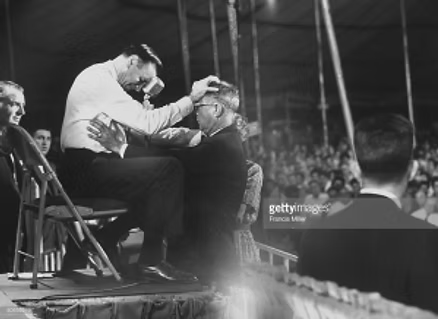


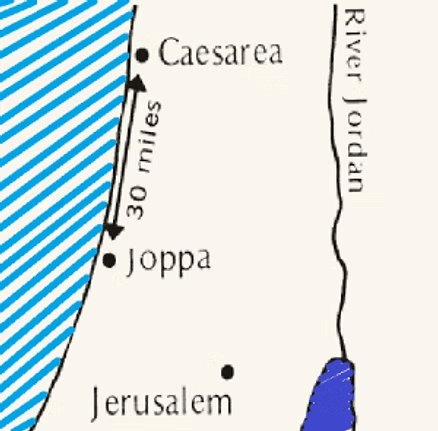
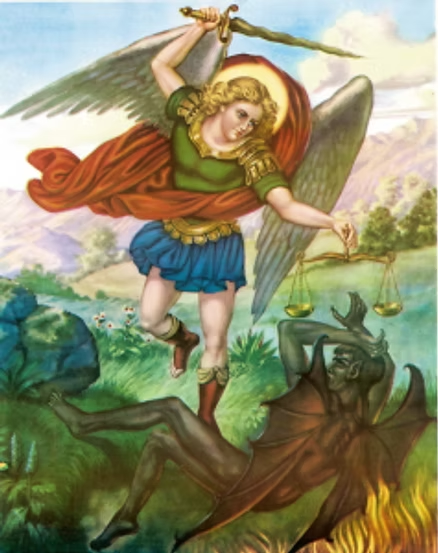
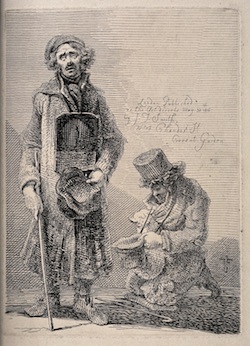

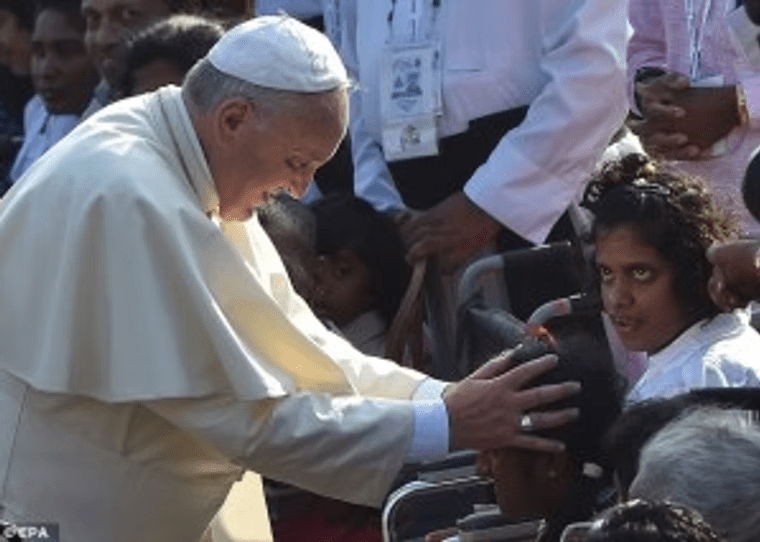


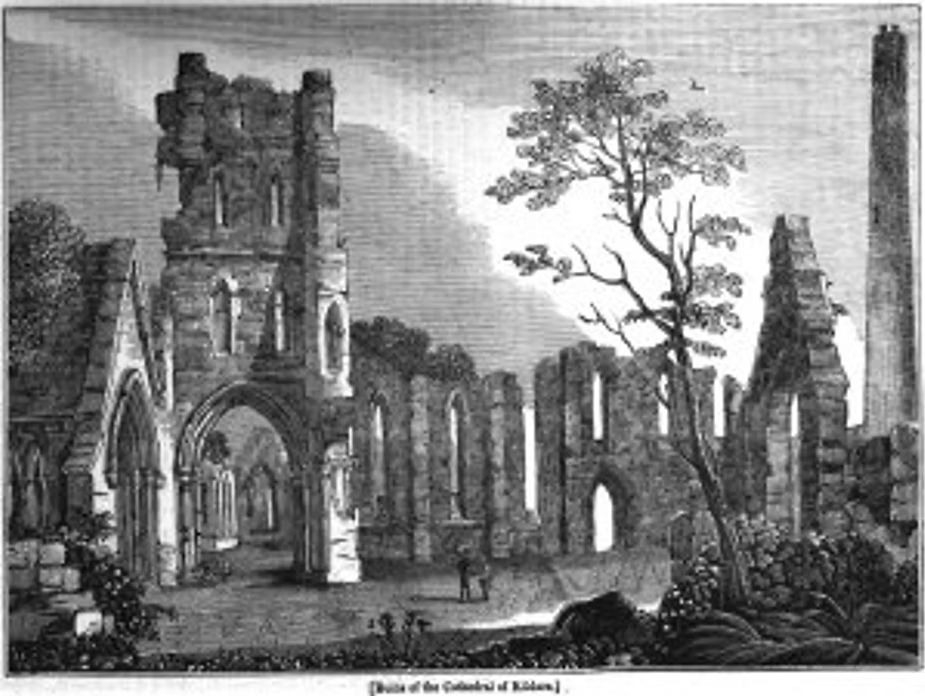

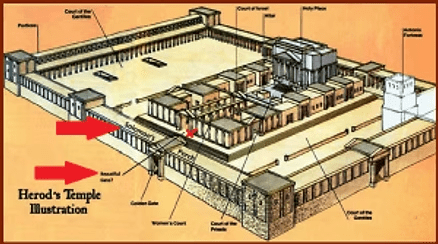
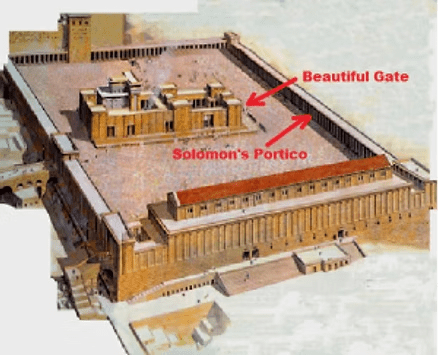
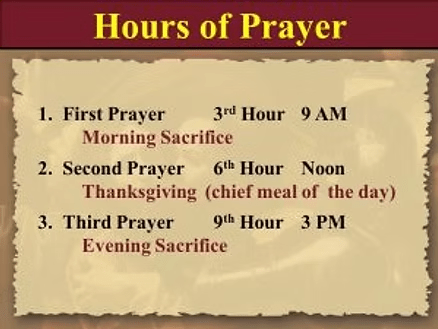
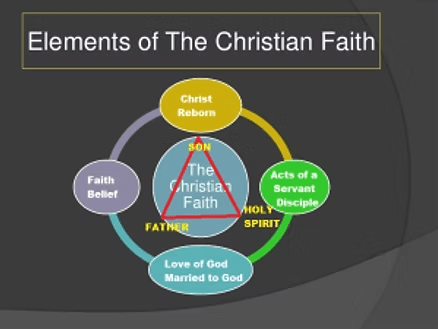
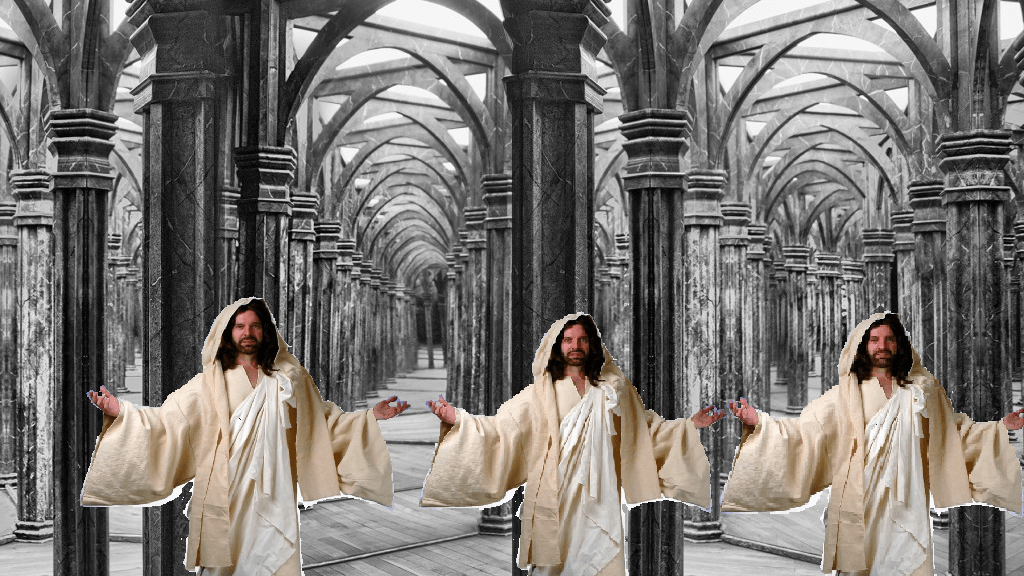



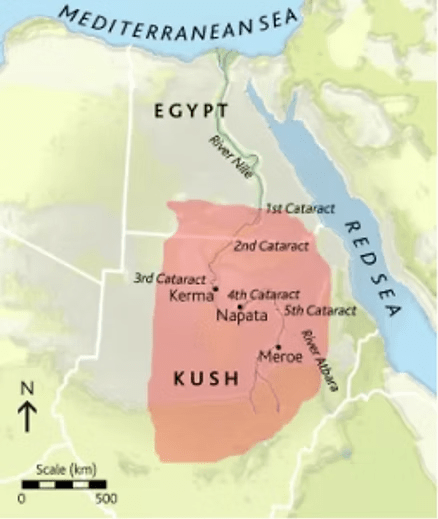
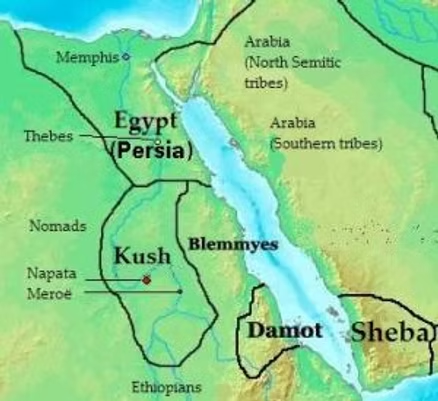
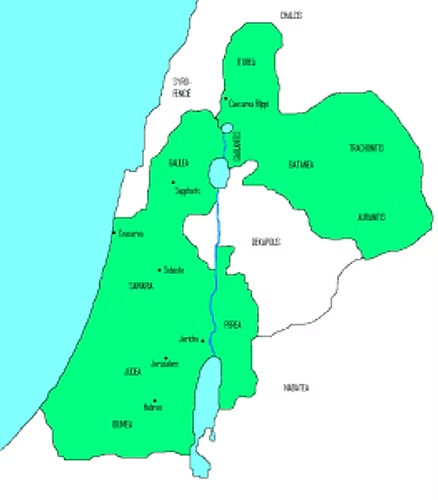

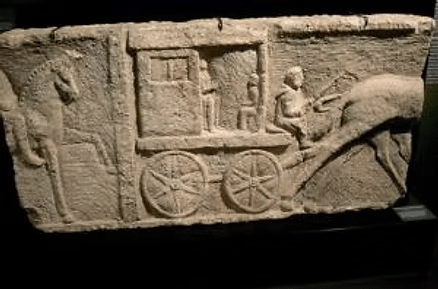
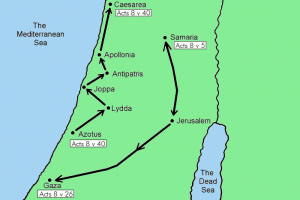


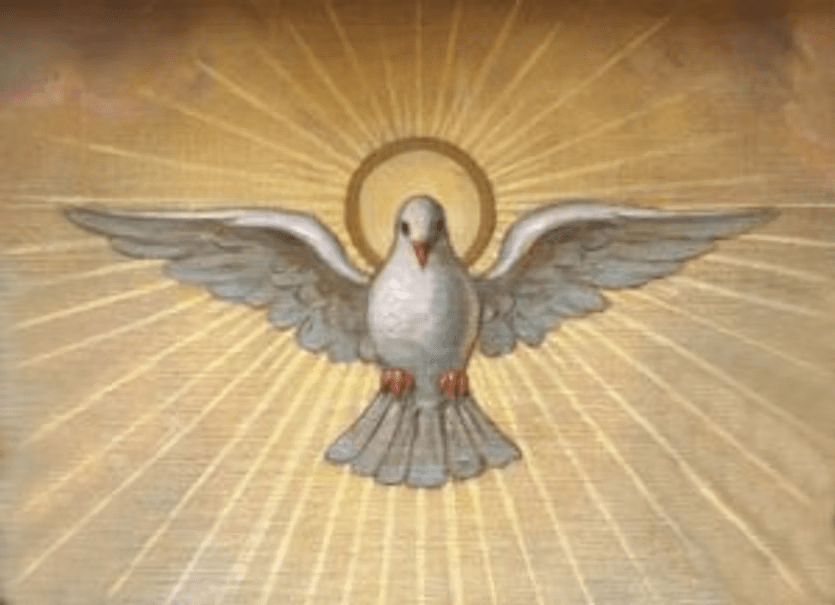







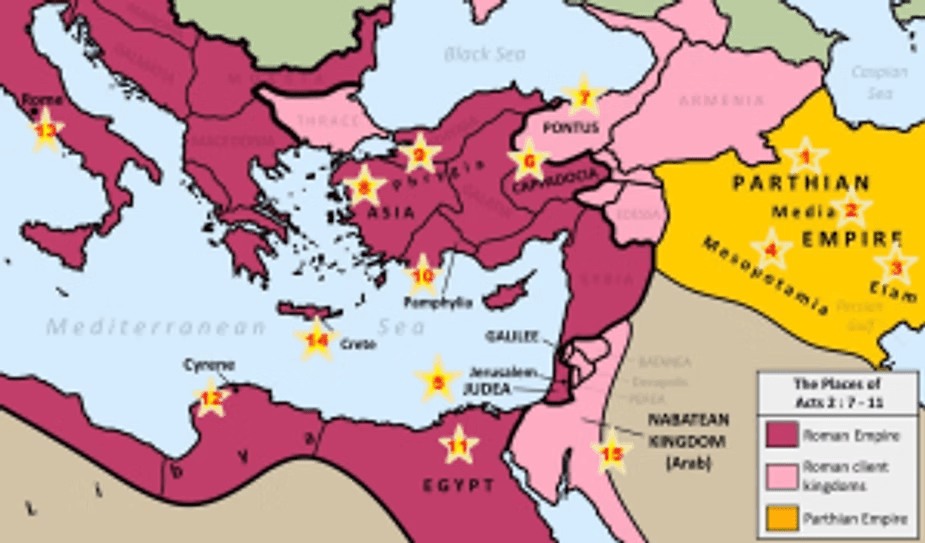







 Explaining the Readings