In the Episcopal Lectionary for the Fourth Sunday of Easter includes this reading from the Acts of the Apostles:
She then said scholars had investigated the concept of early Christians selling all their belongings and determined that was only a brief moment in history, which they concluded ended because that didn’t work out very well. It seems there are more people who are going to the Church of the Unknown Scholars and bowing down in belief, praying, “Thank you almighty scholars for keeping me from having to be a poor man or woman.”
Again, I paraphrase, but that is close to what was really said.
Let me clear this reading up.
I have taken the Episcopal Lectionary preparation of this reading and broken it down by verse above. Here is the reality of what was written [scroll down to verse 42, if following via the link], and take note how the Episcopal Church has taken liberties in translation – they paraphrased.
They were now steadfastly continuing in the teaching of the apostles, and in fellowship, the breaking of the bread, and the prayers.
There was coming then upon every soul awe, many and both wonders and signs through the apostles were taking place.
All now having believed were together the same and having all things in common;
and the possessions and the goods they were selling and were dividing them to all, as anyone need had.
Every day and steadfastly continuing with one accord in the temple, breaking then at each house bread, they were partaking of food with gladness and sincerity of heart,
praising God and having favor with all the people. And the Lord kept adding those who would be saved every day to their number.
To me, this is crystal clear and there is nothing written here that is not the absolute truth. The only way its message can be misconstrued is:
for one to not be one of “the apostles,”
not be one whose “soul [found] awe,”
not being “together the same” as are all apostles the same resurrection of Jesus Christ [thus true Christians],
not sharing “to all” other apostles “as anyone has need,”
not being the Lord’s “bread” sent to share the meaning of Scripture with others gladly and sincerely,
and not “praising God” for having allowed them all to be His apostles.
In short, not being an apostle makes it impossible to fully comprehend this reading.
The priest whose sermon I listened to said, “I kept coming back to the reading from Acts.” She said that knowing this is generally called Good Shepherd Sunday by the Church and the Acts reading is the only selection this day that does not directly state sheep or shepherd in it. That lack means “apostles” are the shepherds, as Jesus the Good Shepherd resurrected. Then the priest said, “There is very little written that explains these verses.” Simply by having to look up what someone else thought means she had no divine insight, which clearly says she is not an apostle, not a resurrected Jesus, and not a true Christian.
She dwelled on verses 44 and 45, which the Episcopal Church paraphrased as “All who believed were together and had all things in common; they would sell their possessions and goods and distribute the proceeds to all, as any had need.” That is the mantra chanted by Socialists who have invaded the Western churches like a coronavirus, choking the life breath out of those who still call themselves Christians. Socialists love to make Jesus be a slave to their cause, so (in the brains of Socialists) apostles must match that message of giving everything for the common good [as long as good meets their political needs].
The priest then got bent out of shape in her anger that anyone would try to use guns to enter the statehouse in Michigan [not a state she was preaching in] and protest the “stay at home” orders there. She spit venom at those who would not wear masks and gloves, while she wore neither. She ridiculed one person interviewed at a beach somewhere “partying,” who said, “If I get coronavirus then I get it, but I’m not going to live my life in fear of it.” She then explained that the “stay at home” was not out of fear, but out of Jesus’ love for the common good [as determined by politicians, with advisors in all professions].
Then, in case anyone questioned her piety, she gave praise to all types of “essential workers,” which is a Socialist call to “be like loyal patriots comrades!” propaganda.
The verses written by Luke [the Acts author, some scholars believe] are only placing focus on the Acts of the Apostles, not the acts of the political factions of Jerusalem (the Pharisees, the Sadducees, the scribes, the High Priest and his buddy priests), nor the acts of the Roman overlords, or the acts of the common Jews, which included all their lame, sick, diseased, and birth defected. It is only placing focus on “the apostles.”
Now, the Episcopal priest did a good job of pointing out that verse 42 is referring to “the three thousand” who instantly became apostles on Pentecost, due to the voice of God flowing from the Apostles’ lips and landing in the new apostles’ hearts. That day there probably were a thousand or so who were not transformed into apostles. Luke is not focusing on them either.
The three thousand were ALL pilgrims who spoke foreign languages naturally, meaning they lived elsewhere. After Pentecost was over, they would ALL go home. None of them would become BFF of Peter or the other eleven. But “They were now steadfastly continuing in the teaching,” which was the “teaching” of the Christ Mind, sent only to apostles by God via the Holy Spirit.
The “fellowship” that “the apostles” had was not to each other – although that is the essence of a separate group of Jews who had suddenly seen the truth of their promised Messiah by them becoming Jesus reborn – as the word means “a partnership.” Each pilgrim filled with the Holy Spirit became interrelated by that Spirit, as Brothers (and Sisters), all in the name of Jesus Christ; but they would each go his and her separate ways after the festival was over. This is the true meaning of being Christian, because “the apostles” were all the marriage partners of Yahweh, who gave birth to His Son within them ALL.
The “breaking bread” means three thousand Jews of ignorance became freshly risen loaves of the bread of Heaven, to be served to those seeking spiritual nourishment (not those who believed, “No thanks. I’m good with the way things are.”) The element of “prayer” to an apostle is their ability to communicate with God, both talking to Him and hearing His guidance.
It is through that two-way line of communication with God that “upon every soul came awe.” The Greek word “psychē” means “soul,” as opposed to the physical human flesh of a person. The Greek word “phobos” means “awe,” as “reverence and respect,” but it also means “fear, terror, alarm, or the object or cause of fear.” By talking to God directly, personally, each soul KNEW that God was real and ALL-KNOWING and ALL-SEEING and ALL-POWERFUL. Every soul of an apostle became well aware that being unfaithful to their new Husband meant no chance of eternal life; but they all also felt the supreme comfort in knowing that service only to Yahweh meant His eternal protection of their souls from harm – no self-inflicted destruction.
Now the Episcopalian priest was blinded to the words that state “many and both wonders and signs through the apostles were taking place.” She did not mention them at all. That can be excused, because this is where the Greek reads choppily, which means it must be read slowly. The Greek words “polla te terata” can say “many both wonders,” which is difficult to grasp. The same words can equally say, “much (or often) also marvels.” That fully supports a “soul in awe” and should be how one reads those words.
The commonality of the Greek word “te” being translated as “both” can then be read as the truth that each apostles was “both” a soul of life breath, joined by the soul of Jesus, where “both” were amazed by the Word received by them from God the Father. The “wonders” can then be seen as an apostle doing all the amazing things that Paul listed – the gifts of the Holy Spirit.
That aspect of apostlehood is better stated in the Greek word that follows, “sēmeia,” which means “signs, miracles, indications, and distinguishing marks.” One is able to tell who a true apostle is by the works one does, which are divinely manifested – not researched from books written by others, so one without opinions can share the opinion of another as one’s own. A true apostle stands and speaks the Word without thinking first. A hired hand prepares a sermon from researching what others have written prior.
When verse 42 says, “All now having believed were together the same and having all things in common,” that has to be understood fully. The Greek word “pisteuontes” means “having believed,” but should be understood as meaning “having faith in,” where faith is better grasped as true belief, more than hearsay belief. It is then because the apostles all are demonstrating the “signs” of “having faith in” God that they are “together,” in the sense that all apostles are doing the same miracle works. They are not physically together doing those works, but “together” with God, so they are all doing “the same” good works. Thus, “having all things in common” is not a reference to possessions commonly available to all apostles, but “altogether they shared the same” God-given abilities. That is a viable translation of “hapanta koina” – “altogether shared.”
When one gets down to verse 43 and the statement “and the possessions and the goods they were selling and were dividing them to all, as anyone need had,” the Greek word “ktēmata” as to be recognized as meaning “possessions,” but this is more a reference to land holdings or “property” owned than all the things surrounding one at home. Those are summed up in the Greek word “hyparxeis,” which means “goods, substance, property, possessions” as well as “subsistence, existence, property.” The key word of translation is then the Greek verb “epipraskon,” which says “they were selling.” However, therein lies the mistake everyone makes, unless guided by the Holy Spirit to understand.
The root Greek word for “epipraskon” is “pipraskó,” which means “ I sell; pass: I am a slave to, am devoted to.” The way this word should be read is then as “ridding.” The apostles were “ridding themselves of dependencies to property and goods.” To think that only means “to sell,” then one has done nothing but exchange one thing of slavery (possessions and goods) for another (love of money).
It is then important to realize that Jesus had told a young Pharisee (I believe he was Nicodemus), “Follow the Law, sell everything you own and give to the poor, then follow me.” The Pharisee could not understand that and neither could the Episcopal priest whose sermon I listened to. If one is led by the Christ Mind, one sees the idiocy of taking one’s slavery to money and making some other poor bastard take it away from you. The mistake is to think taking from the rich and giving to the poor solves anything, when the reality is it simply makes the rich poor and the poor rich, same situation reversed. Thus, verse 43 says, “the properties, the goods of the apostles they ceased being slave to, so they stopped being possessive and judging others by what they had or did not have and divided what they had so OTHER APOSTLES could have their needs OF MINISTRY met.” [Again, I paraphrase intuitively.]
The Episcopal priest made a point of jumping ahead in Acts to the story of Ananias and Sapphira (Acts 5), saying they tried to hold back a little of their money from land sold and “that did not work out well for them.” It did not work out well because those two were not truly filled with the Holy Spirit and not true apostles. They were WANTABES and they “gave up the ghost” (their soul of life breath) from trying to lie and pretend they were. The measure of an apostle is not about hard currency, or lack thereof. Peter told them that God never made any demands on them to sell anything. God knows not everyone is made of the cloth from which true Christians are made. Everyone can be if they truly desire God and seek Him out; but, ask ole Karl Marx how well that works out … in reality, not utopia. I’m sure his soul knows by now.
When verse 46 states, “Every day and steadfastly continuing with one accord in the temple,” the Greek word translated as “one accord” is “homothymadon.” That word means “with one mind.” That “one mind” is the Christ Mind. The “temple” is not Herod’s Temple, but the one we all know: the body is the “temple” of the soul.” When the verse continues to state, “breaking then at each house bread,” that means the three thousand apostles each took the Christ Mind home with them, to their families. There, they could have the same affect on loved ones as Peter and the eleven had on them. They are steadfastly continuing the teaching by breaking and scattering, going to three thousand different houses of worship – the truest meaning of a “church” (“ekklēsia“). In each house the “bread” of Heaven was served to nourish souls, not bellies. When the verse ends by stating, “they were partaking of food with gladness and sincerity of heart,” the Greek word translated as “food” is “trophēs,” which also means “nourishment or maintenance”.
When verse 47 begins is says, “praising God.” The apostles and their families had found gladness and sincerity in their hearts that filled them with greater awe, so they gave praise to the source of that, which was Yahweh. Without that presence WITHIN ONE’S SOUL-BEING one cannot truly give God praise. Praise is not uttered words, but actions that speak louder than words.
When verse 47 continues to state, “having favor with all the people,” the word translated as “favor” (“charin“) actually means “grace, as a gift or blessing brought to man by Jesus Christ.” (Strong’s) That means wherever a true apostle walked the “people” (mostly Jews in the beginning) could feel the presence of God’s grace. The apostles projected the kindness of Christianity that does not condemn people for going to the beach or carrying guns legally. Kindness teaches the truth without bending or twisting it to suit one’s agenda. Thus, we read “the Lord kept adding those who would be saved every day to their number.”
Unfortunately, that happy ending is not so much the case today.
Christianity has grown cataracts over its eyes. Christians are blind to the fact that they have transformed into the Jews that killed Jesus, believing they are God’s chosen people because they believe Jesus was His Son [i.e.: the Messiah – from a Hebrew word (“māšîaḥ“) meaning “savior”]. Christians who do not live lives that prove they are Jesus reborn are then only comparable to Israelites who professed belief in God and did not live up to the promises of the Covenant.
Still, Christians are blind to the fact that they are just like the pagan Greeks, who Paul spoke to in this reading from Acts. Christians are proud of a heritage that believes all human beings have a place in their Christian world, with all their gods welcomed. Christians today, like the Greeks Paul knew, build “objects of worship” and altars to everything believed to be ‘all-powerful’.
Read this Acts 17:22-31 so you will be ‘up to date’. It saves space here and it proves if you really want to study Christianity, not just pretend to be ‘Christian’.
I can only speak for American Christians, as one living with and witnessing those who call themselves Christian, as they bow down before the altar of Jesus Christ. American Christian leaders (priests, ministers, pastors, and preachers) all say, “Jesus is God and God is Jesus. We know God by knowing Jesus.” In reality they know neither.
We do not read Acts 17:22-31 during the Easter season so Christians can glorify themselves as pure and holy people, who imaginarily stand behind Paul as he speaks to the Athenians of the Areopagus. In reality it is to us American Christians (and all others like us, including Jews) that Paul spoke. All Scripture is read aloud in churches for the same purpose: To address the reader and listener, not some long dead figure of an ancient text. It is intended to be read to the ones who still sit and stand in churches, because they are those who know no other way to be.
Lost sheep need to be found; and, then they need to be led to the path that definitely takes them to God.
An American Christian church is an “object of worship,” just as Paul identified in Athens. I can only imagine all Christian churches around the world are the same. People calling themselves devout Christians go to these churches and leave tokens of their worship – usually some form of monetary donation to that building, where the altar they kneel before is housed. If those people actually KNEW God or Jesus, they would be like Paul. Paul “looked carefully at the objects of [their] worship” and found a Christian church (as an example of ALL that exist) being an altar “To an unknown god.”
To know God is to be one with God. To see God in cartoons, or to ‘feel’ God in nature, or to believe God from reading about Him in holy texts is not the same.
The problem with Christianity today is it cannot see how long ago Christianity stopped being a movement of Apostles [i.e.: SAINTS] and regressed to being split between Jewish synagogues that continued to practice Jewish ritual, while amending the scrolls to be pointing to historical Jesus, and pagan gatherings that celebrate all the natural phenomena of our planet (gods) and loosely connect that to the ‘god’ Jesus. Christians cannot see themselves as being the same as the Greeks that Paul walked among.
American Christians and Jews-for-Jesus see Jesus Christ as a promise to come, just as he was promised to come before he came. They cannot fathom how Paul was indeed Jesus Christ walking among the Greeks, reborn as such by God, via the Holy Spirit. American Christians cannot fathom how they should also be like Paul, another Jesus Christ reborn into the world, in order to truly call themselves “Christian.”
For too many centuries the Church of Rome spread its empirical arms around the world, in the same manner as did the Roman Empire. The only difference was the ‘Holy’ Roman Empire followed its swordsmen with cross-bearers, who wore white robes and dangled chains and crosses of gold around their necks. They claimed to be ‘spreading the Gospel’ to the world, where the ‘Gospel’ was the “Good News” about the Messiah having come.
A comedy group I loved to listen to during my teens was The Firesign Theatre. One skit they did was about the colonization of the Americas, by the Spanish. They acted as if two of them where a Conquistador that met a Native American; and, the two had the following conversation (paraphrased from clouded memory):
Conquistador (holding up a gold cross): Got any of this?
Native American: A cross? The quartering of the universe into positive and negative principles?
Conquistador: No! What the cross is made of – GOLD! Got any?
As funny as they made history seem, it was not funny. Just to make sure the devil wasn’t keeping any gold from the Spaniards, they used their swords and raped their holy treasures for the King and Queen of Spain. They did that “in the name of Christ.” They called themselves “Christians,” but they were no such thing.
Paul never set an example of forceful conversion of anyone to a religion. Paul never sought to get wealthy from evangelism. Paul did not go to Greece and speak to polytheists about adding the name “Jesus’ to a shrine or “object of worship.” Paul spoke to the Greeks as Jesus Christ reborn, telling them about the One God – Yahweh – who “does not live in shrines made by human hands, nor is he served by human hands, as though he needed anything.”
Does that not clearly state, “God does not dwell in houses?” God dwells in people, like Adam, Noah, Abraham, Moses, David, and Jesus (to name a few). Remember last Sunday, when priests mistakenly said, “Don’t do anything. Jesus went to reserve us a room in the Father’s Hotel Heaven.” Every church or cathedral on earth was “made by human hands.”
How many Christian churches promote being like Paul? How many ministers ask their congregations, “Why are you still here? Go! Save the world like Paul!” How many denominations of Christianity promote teaching the world the ‘Gospel’ of God, where that bears the meaning Paul stated (quoting the Greek poet Aratus): “In him we live and move and have our being”?
None that I have seen.
Christianity in the United States of America, based simply on the history of the United States, has a record so atrocious that comedy groups have made fun of the lust for cash shown by Christian churches and leaders for many decades. Once the sword of totalitarian control was laid down, the louder the laughs of mockery became. Now, the sword has been picked up by those laughing and it is raised and held over the head of American Christianity, by those who hate the oppression that people calling themselves ‘Christian’ have caused to others. American Christianity is like all empires who rule by the sword, becoming just as Jesus told Peter: “Put your sword back into its place; for all those who take up the sword shall perish by the sword.” (Matthew 26:52, NASB)
The Execution of Louis XVI in the Place de la Revolution on 21 January 1793.
What goes around comes around.
The sword of death to true Christianity fell when royalty was beheaded in the names of Independence, Revolution, and Freedom. Killing the Church of Rome meant the sprouting (like mushrooms) of Republics, with Constitutions and mandated separation of Church and State. The sword’s edge ushered in the Mind of Satan, where all ‘citizens’ and ‘comrades’ began to bow down and pray to Philosophies touting Democracy, Equality, Liberty and Justice for all, under the guise of Enlightenment, Reason, and Science.
A brain is a terrible path to righteousness.
All the old was tossed, with new statues and monuments being erected to show Humanity as a god.
Think about all the ‘temples’ of worship American Christians now build and go to pray. Here are just a few the Greeks would be proud of:
While there has not yet been a monument built in its honor, one of two options are certainly in the works for the following:
Paul saw the efforts of the Greeks as somewhat commendable, about as commendable as are the prayers to God from those lost and desperate. When he wrote: “[God] allotted the times of [our ancestor’s] existence and the boundaries of the places where they would live, so that they would search for God and perhaps grope for him and find him—though indeed he is not far from each one of us,” that can go down as “Give them an A for effort. Still, it is really little more than like the saying goes, “Even a blind squirrel finds a nut once in a while.”
God hears the prayers and knows every heart. He answers prayers so people will learn to have faith and stop being afraid of everything the world has that proves dangerous. Faith requires trust and trust demands knowledge. Still, God the Father knows that babies need to fall so they will learn to walk on their own. But for all God’s help, why do Americans remove their altar to their “Unknown God.”
Rather than remove the non-Christians, its easier to remove the God.
Paul used logic, which the Greeks knew well, when he reasoned, “Since we are God’s offspring, we ought not to think that the deity is like gold, or silver, or stone, an image formed by the art and imagination of mortals.” American Christianity is all about the things of humanity. God’s grace is imagined to be reflected in the wealth, power, and influence one has. After all, don’t nations become successful empires by killing, raping, and pillaging in the name of God, with His approval to keep the spoils of war?
The war against evil begins to be successful when these who leaped into the sheepfold, wearing lamb’s wool, are exposed and banished. Still, the sheep love a good song and dance.
The lesson of this reading from Acts is at the end, when Paul said, “While God has overlooked the times of human ignorance, now he commands all people everywhere to repent, because he has fixed a day on which he will have the world judged in righteousness.”
The times of human ignorance is why God sent His Son into the world. Human brains are inherently incapable of leading human beings down a path of righteousness. They naturally ignore the inner call to do good, when the outer lure to not do good is so tantalizingly tangible. Human brains become adept at trickery and deceit.
Continuous trips and falls, wallowing in the filth of a sinful earth, requires one be cleaned for any chance of being Heaven-bound can appear. The fixed day in EVERYONE’S LIFE when the righteousness of a human being will be judged is their deathday (the opposite of one’s birthday). Without a brain that is capable of making oneself righteous, God sent His Son to be His gate to Heaven.
That is evident when Paul said repentance and judgement as worthy of Heaven would come “by a man whom he has appointed, and of this he has given assurance to all by raising him from the dead.” This appears to say one thing, when one is using a human brain.
It appears to say (to all the really smart human beings of the eighteenth, nineteenth, twentieth and twenty-first centuries, when human beings somehow think they grew a better brain than all the human beings prior) that Paul was evangelizing the Gospel, telling a group of Greeks, “Hey guys, Jesus was raised from death by God, so we can all go to Heaven now!”
Episcopalians all jumped up and said, “Praise be to God!”
The reality of what Paul said is this:
“because he set a day in which he is about to judge the world in righteousness ,“
“by a man whom he appointed ,“
“a guarantee provided to all ,“
“having raised self out of subject to death .“
The first point states that every mortal will die, at which point every soul will be judged by God, in respect of how righteous that soul led its body of flesh to act. [Important Note: You are reading this from the book that tells of the ACTS of the APOSTLES.]
The second point is multifaceted. This is due to the use of the Greek word “andri.” Typically this translates to say “a man,” which makes a brain leap up and down, exclaiming, “He’s talking about Jesus!” That alone is too limiting for God talk, and God was talking through Paul, just as God spoke through Jesus.
The word “andri” can also be more generic, as a statement of “a male.” Yes, Jesus was a male and a man, but when Paul was evangelizing, Paul used to be Saul, when Saul encountered the Spirit that was Jesus Christ. Jesus was no longer on earth as “a man,” but Christianity was well underway, through others reborn as Jesus Christ. This means “a male” as the translation points to a gender statement about “the Son.” That is opposed to “a woman” or “a female,” as “a daughter.”
Still further, the Greek word “andri” can mean “a husband.” This is a usage that flies well over the heads of American Christians and needs to be understood deeper.
By sounding out the English words that come from the Greek statement “en andri hō hōrisen ,” one can see these words separated by marks of pause [commas] force one to contemplate how God is going to judge the world in righteousness. This will come “by [with, in, on, at, among] a man [a male, a husband] he appointed [he designated, he determined, he separated, he marked off by boundaries]”. This becomes truth on multiple levels.
God will judge “by a man he appointed,” who was the Son of Man, Jesus of Nazareth. However, that “man” is no longer in the world as “a man.”
God will judge “in a male he designated,” who is the Son of God reborn “in” a human being. Because the Son of God [and even GOD Himself] is a masculine entity [earthlings are feminine entities, regardless of human gender], then when God judges souls they best be “in the Son [male form]” AND that “male” will then be “he marked off by boundaries,” meaning one who only lives within the boundary of righteousness.
God will judge when he is “with” a human being that has submitted his or her self-ego and self-will to that of “the husband” that is God. As one who becomes the wife of God (human gender is meaningless when speaking in spiritual terms of soul and God), then “he [God] separates” the life breath soul from having any control over the body of flesh it once owned.
I recommend the reader play with these words more, as more can come from them. Keep in mind that God talk is not limited to human brain capabilities of translation (following normal syntax). Just know that judgment leads to this element of being reborn as the Son of God, which then means point three is “a guarantee” of eternal life.
The soul having been saved from the judgment of damnation [return as another baby born of a woman in a sinful world, to repeat the same grade of life and the same challenges: to stop being selfish and stop thinking you do not have to do anything to go to Heaven] means being reborn as Jesus Christ [his Holy Spirit in your flesh along with your submissive soul] makes him truly the Savior. He saves you by not letting you destroy yourself anymore.
When point three says, “provided to all,” this is why Paul [a Jew of Roman citizenship] was preaching to pagan Greeks. It is why Paul’s story is retold to pagan American Christians and everyone else who has ears that want to hear.
The fourth point, after one has seen that Paul was not speaking about believing Jesus was raised from the dead, means it is YOU who is one of “all” who can be saved. YOU are certainly going to die, so YOUR appointed time of judgment will come. However, by removing yourself out of control of your body of flesh, allowing God to Father His Son in you, you become “raised from death” – your own end in this world. Your soul will be saved by letting Jesus Christ become YOU.
To rephrase that, YOU must die of self, prior to your mortal death that is appointed. To earn salvation (just like anything) means work must be done. God the Husband expects His wives to serve Him as Saints. For a flawed mortal to meet that requirement, the Son of God has to be reborn within each wife (again, do not let that word trick a human brain, as souls have no human gender, only human bodies that sense sexual urges.
Now, let me assure you that there will be no ministers preaching what I have written. Why would they?
If you believe this and become reborn as Jesus Christ, then you certainly will not be a ‘paying customer’ in some local church. If you do that, then you will be out like was Paul, telling everyone “You are going the wrong way.”
Priests, pastors, ministers, and preachers are one of two things, if he or she is not being like Paul [or any and all Saints]. First and at best, they are hired hands.
As adults, think of your employment. Being a hired hand does not mean doing a bad job. Most people want to do the best job they can, but as the saying goes: Don’t rock the boat. One learns his or her job and does it to the best of one’s capability … until a better offer comes along or you do so good they give you a promotion. A church is an employer and the hired hands are limited to what they can do and how. Some ministers can feel chained to a contract with a church, not allowed to mingle with the “great unwashed.”
I mean, just look at the American Christian churches today. They have all cowered down to fear of a virus, because a.) paying customers might die and stop paying, or b.) the government might arrest a priest for opening a church and fine the organization that owns the church and employs the priest.
Like Jesus said, “When [the hired hand] sees the wolf [or viral threat of death] coming, he [or she] abandons the sheep [or parishioners averaging age 70 or older] and runs away.”
This is what the meaning of Acts 17:22-31 is. Everyone has an appointed judgment day in the future. The question is: Do you want to die of self and suffer the birth pains of being reborn as Jesus Christ? [Hint: Read this for insight about what that means.]
Or, Do you want to wait it out and hope it is all make believe: You want to hope there is no God. [Look: Something like this, but change the chant.]
This reading is the selection to be read on the Seventh Sunday of Easter. It will next be read aloud in catholic-based churches on Sunday, May 24, 2020.
This reading from the first chapter of Acts begins at verse six. Prior to that, Theophilus (a.k.a Luke) wrote of Jesus staying with the disciples for forty days, proving he was alive, not dead or a ghost, using the Greek word “zōnta,” which is the present active participle masculine nominative plural for of “zaó.” While Jesus appeared suddenly, without opening the door to the upper room on Pentecost evening and allowed Thomas to place his fingers in the nail wounds, proving it was him and he was alive, breathing air and eating broiled fish, the forty days with his disciples does not mean Jesus did tricks for his disciples to prove to him he was alive.
The use of “living” is opposed to “being dead,” which is what a soul trapped in a mortal body of flesh is. It is a guarantee that the body will die, releasing the soul to a recycling back to the realm of dead matter, not being able to become “alive” in God’s kingdom. Thus, Jesus spent forty days “and spoke about the kingdom of God,” with “and” being the Greek word “kai” that signals “speaking about the kingdom of God” is most important.
Because Jesus proved “life” could come to a body of flesh that had died, it certainly could join with a body still functioning. As such, Theophilus wrote that Jesus gave “instructions through the Holy Spirit.” This means that the Holy Spirit was within Jesus, giving him life that meant he could not die (even in a body that had died); but more importantly, Jesus spent forty days teaching his chosen disciples how to live as condemned mortals so God would give them the same everlasting life within bodies of dead matter, via the Holy Spirit.
In verses four and five, Luke wrote: “On one occasion, while he was eating with them, he gave them this command: “Do not leave Jerusalem, but wait for the gift my Father promised, which you have heard me speak about. For John baptized with water, but in a few days you will be baptized with the Holy Spirit.” That instruction was not stated to have been given at a specific time, but the Greek word “synalizomenos” is translated as if stating “while he was eating with them.” A better translations means, “being assembled together.” This means the instruction was given once, at a time when all were together (and that might have been during the time of a meal). It says the whole group was in Jerusalem, which was where the Pentecost festival would take place; but, Jesus gave no indication when baptism by the Holy Spirit would take place.
Here, it is important to recall how Matthew ended his Gospel, where he wrote a synopsis of the time Jesus spent with the disciples after his resurrection. Matthew wrote, “[Jesus said to them]: Therefore go and make disciples of all nations, baptizing them in the name of the Father and of the Son and of the Holy Spirit, and teaching them to obey everything I have commanded you. And surely I am with you always, to the very end of the age.” (Matthew 28:19-20) This is important, based on this reading in Acts.
Also important to remember is the beginning of Matthew’s twenty-fourth chapter, which recalled the day when Jesus told them about the eventual destruction of Herod’s Temple. This event happened the week prior to the Passover Festival, after Jesus had found no inspectors as to his worthiness to be deemed an unflawed Paschal lamb. Jesus and his disciples went to the Mount of Olives, when Matthew wrote this conversation took place:
“Jesus left the temple and was walking away when his disciples came up to him to call his attention to its buildings. “Do you see all these things?” he asked. “Truly I tell you, not one stone here will be left on another; every one will be thrown down.” (Matthew 24:1-2)
“As Jesus was sitting on the Mount of Olives, the disciples came to him privately. “Tell us,” they said, “when will this happen, and what will be the sign of your coming and of the end of the age?” (Matthew 24:1-3)
In Matthew 28:20 and in Matthew 24:3 is the use of terminology that is “the end of the age.” The Greek word “aiōnos” is translated as “age,” but this is a term that can simply mean “a space of time.” (Strong’s definition) The way most people read that and understand it is as “a cycle (of time), especially of the present age as contrasted with the future age, and of one of a series of ages stretching to infinity.” An “age” is actually an astronomical reference, which equates to roughly 2,200 years, based on a wobble in the earth’s axial rotation, which slightly changes the zodiac backdrop on the first day of spring. A complete rotation takes roughly 36,000 years, or twelve ages.
It is important to know that in the minds of the disciples of Jesus, their questions, “when will this happen: your coming and the end of the age?” is not relative to anything more than one about a “space in time” that simple minds could grasp. To the disciples, “the end of the age” meant the end of Judaism ruling the lives of the children of Israel. To them, that end would be symbolized by the destruction of their magnificent building of worship in Jerusalem. Therefore, when Matthew concluded his last chapter in his Gospel with Jesus giving his disciples comforting words, “I am with you always, to the very end of the age,” it was a statement of the disciples being chosen to begin Christianity (in the truest sense).
Now, in this (in verse 9), we are told two things: 1.) “Jesus was lifted up,” from the one-word statement “epērthē”; and, 2.) “a cloud hid him from the eyes of them” [a literal translation]. It is important to grasp that Christians recognize this as the Ascension, whereby the word “ascension” is defined generally as “the act of rising to an important position or a higher level.”
This event took place in two stages, the first of which simply says that Jesus became elevated. To better see what happened, one can jump forward in the Book of the Acts of the Apostles, to chapter two and see how Theopilus wrote, “Then Peter stood up with the Eleven, raised his voice and addressed the crowd.” There the word written is “epēren,” which comes from the same root infinitive verb “epairó,” meaning “to raise, lift up.” Certainly, when reading chapter two, most Christians think Peter yelled or made his voice louder, by raising it. Instead, Peter’s voice was “raised,” in the same sense that “Jesus was raised” before his disciples.
Then, once Jesus was lifted up Spiritually [not going in any direction marked by human compasses], his form then “was hidden from their eyes by a cloud.” Here, the Greek word “nephelē” is read in the same way the one-word statement “epērthē” is, as literal, rather that spiritually. This means our brains are trained to hear the word “cloud” and automatically think of a cloud in the sky, just like we read Peter’s voice was raised and think that means he talked loudly. The deeper way of understanding this second phase is as meaning “Jesus disappeared from their view as if a cloud surrounded him.” This means “a cloud” is a way of saying “a fog” or “a mist that prevented vision.”
To grasp this best, return to the day the Passover had ended and Jesus suddenly appeared in the room where the disciples hid, behind a locked door. John wrote, “ēlthen ho Iēsous,” which says “came he Jesus.” John did not write that Jesus slowly appeared from a cloud, as if he drifted down or walked through a wall like a ghost. Jesus was not there, but then Jesus was there. This means Jesus was in the upper room, where he “came” or “arrived” or “appeared,” based on viable translations of the Greek. It means his body of flesh had been “hid from the eyes of them,” just like his body of flesh then was again “hid from their eyes.” This means the “cloud” is not material or worldly (like molecules of water vapor, as form in the sky) but ethereal, as in Spiritual.
This becomes exactly how Jesus explained [as read last week in John 14], “The world cannot accept him [the Spirit of truth], because it neither sees him nor knows him. But you know him, for he lives with you and will be in you.” (John 14:17) It is no different than when a strange pilgrim walked with Mary and Cleopas to Emmaus, or when Mary Magdalene saw Jesus and though he was a gardener. Jesus was there both times, but unseen and unrecognized. Thus, the world (of those still without God’s help) “neither sees him nor knows him.” Knowledge of Jesus as the Christ means “he lives with you and (from “kai”) will be in you.”
By grasping that Jesus did not float away into the sky as the disciples watched [like we believe Elijah left and Elisha watched], we then can understand how “suddenly two men in white robes stood by them.” This can now be seen as “two men in white robes” were already there, but the eyes of the disciples could not see them either.
This is no different than when Peter, James, and John [the brothers of Zebedee] saw Jesus standing with two ghostly white figures, somehow known to be Moses and Elijah. (Matthew 17:3) It is also just like when the shepherds in the field had a frightening appearance before them. We are told, “Suddenly a great company of the heavenly host appeared with the angel, praising God.” (Luke 2:13) That angel and the host of heaven just “appeared to them.”
This, in my mind, makes realizing that this event took place on the forty-ninth day after the Passover counting of the omer began. The count begins on 16 Nisan, so forty-nine days after would make the known date be 5 Sivan. The Festival of Weeks is called Shavuot in Hebrew, and (according to Wikipedia) Shavuotis always going to be “between May 15 and June 14.” During that time span (astrologically speaking) is when (yearly) the sun’s placement in the sign Gemini (between May 20 and June 20, generally). The stars that make up that constellation are part of “the host of heaven.” That zodiac sign represents two men: Castor and Pollux.
Two men in white robes appeared just as Jesus had disappeared; but they came suddenly “while [Jesus] was going and [the disciples] were gazing up toward heaven.” The translation of the Greek word “atenizontes” as “gazing,” when the word also means “looking intently” or “directing [their eyes] steadily” “into the heaven” (from the Greek word “ouranos”) says the disciples were “star gazing.”
The Magi were stargazers and the Jews knew astrology as a tool of divining Yahweh.
While giving the impression that Jesus disappeared as he slowly rose in the sky in a cloud, verse [10] comes after Jesus disappeared from view, with it introduced by a capitalized “Kai,” showing the importance of this statement that literally says, “as intently looking they were into the visible stars as his departure made.” One can get the impression that some use of astrology might have been employed by the disciples, in an attempt to figure out the “signs” and get an idea when Jesus might reappear.
It should be recalled that in Luke’s Gospel, relative to the Sunday morning after Passover ended, the women went to the tomb when Jesus was buried. When they arrived and found the tomb opened and no corpse in it, Luke wrote, “While [the women] were wondering about this, suddenly two men in clothes that gleamed like lightning stood beside them.”
That certainly gives the impression of angels, which could also describe Castor and Pollux (had it been them), but the words spoken to the women, “Why do you look for the living among the dead?” are similar to those spoken to the disciples, “Why do you stand here looking into the sky?” The symbolism of Gemini is “dualism,” where one was mortal and one was immortal. It then makes sense that they would present their questions in a dualistic manner: Why look for life in death?; and, Why look to the sky when on earth?
By seeing this appearance of angels in this way, the two men in white robes said (in a question), “Jesus never left, so don’t waste your time trying to figure out where he can be seen.” The two men in white then said, “This Jesus, who has been taken up from you into heaven, will come in the same way as you saw him go into heaven.” That needs to be broken down for best understanding.
There are three segments of words stated. The first places focus on “this Jesus.” Without any other words to interfere with one’s though processes, the angels were actually saying “We speak for this Jesus.” After having asked why they look up in the sky for answers as to when Jesus will return,” they said “this is how easily Jesus can return.” “This Jesus” who you look for is here now, just unseen.
The next segment of words, following the name “Jesus,” says separately, “the one having been taken up from you into the spiritual heaven,” which can mean Jesus was in Spiritual form, where “having been taken up”(from the Greek “analēmphtheis”) is not a statement about being elevated, as was “epērthē.” The effectual meaning is Jesus did not command himself to disappear, he was “picked up” or “carried off” by God the ruler of “heaven.”
Still, relative to the myth of the Gemini twins, the death of Castor so saddening Pollux that he begged Zeus to intervene, such that both were immortalized in the stars together. They both were “carried off” and placed in the “heaven.”
They are holding hands!
This means the angels spoke of this disappearance as an act of God, which is beyond the comprehension of mortal human beings.
The third segment of words then says, “thus will come back in the same way you have seen [Jesus] go into heaven.” Again, that says what Jesus had said before he left: “Wait for the gift my Father promised, which you have heard me speak about. For John baptized with water, but not after many days you will be baptized with the Holy Spirit.” The angels said it was not up to Jesus when he would return. God took him from their view and God would place him back when the time was right.
When this reading from Acts ends by saying, “All these [male disciples] were constantly devoting themselves to prayer, together with certain women, including Mary the mother of Jesus, as well as his brothers,” the important thing to grasp is not only men and not only lead disciples would be “baptized with the Holy Spirit.” All who are “constantly devoting themselves to prayer” and obeying the Laws [maintaining only “a sabbath day’s journey” on a Shabbat and staying in Jerusalem as told] would receive the Holy Spirit from God and be reborn as His Son.
This is the reading that takes the natural place in the lectionary of an Old Testament reading. It should be noted that it is during the Easter season that the Acts of the Apostles are read as a substitute for the Old Testament readings, because the Old Testament reading support the prophecies of Jesus to come, as stated in the Gospels and Epistles. The Acts are read because the Easter seasons (A, B, and C) are when disciples should be preparing themselves to be filled with the Holy Spirit and be reborn as Jesus Christ. Christianity depends on this renewal of the good fruit of the vine. Easter represents when all the prophecies of Jesus’ coming have been reached, with the next step being new ministries of Jesus, as his “witnesses in Jerusalem, in all Judea and Samaria, and to the ends of the earth.”
Most Christians shutter when someone speaks of astrology. They fear a tool when they should only fear God, love Him with all their hearts, souls, and minds. They cannot fathom that God set the stars to guide men by and is therefore the “inventor” of astrology. As a tool, its use is where danger can come, with that use is in the hands of people who fear living only to serve God. Evil users seek some external ‘inside skinny’ rather than letting God speak to them within.
The concept of the “elohim” leads some Christians to hate all who see many gods as having to have been created by God, or they would not exist. Castor and Pollux are not myth when we understand their essence as well as we understand the essence of such words as “love” and “faith.” The fallen angels are the “elohim” who take delight in leading mankind away from God, rather than to Him. The angels dressed in white robes are the “elohim” that are messengers of God, who answer our prayers. The mere mention of Castor and Pollux, from pagan mythologies, seem to those not “baptized with the Holy Spirit” as an evil statement, while they welcome the concept of angels in white robes. Why cannot the two be the same, at least in principle?
All arguments against acceptance of Scripture as meaningful, with logical supporting evidence, while pandering some mambo jambo [gibberish] of meaningless catch phrases, where explanations of meaning leave one asking for explanations of the explanations, only serves the purpose of keeping disciples ignorant and wanting. The point of the Easter season is to have new disciples stand up [be raised spiritually] and let God flow through them as He did on Pentecost. Any priest, pastor, minister or preacher who gives a two-bit sermon about Pollyanna needs to be confronted with their lack of Apostlehood, for not spreading the Holy Spirit so others can rise and become ministers of the Word.
Please, if you have a church that you go to and this reading is not addressed properly, print this out and schedule a conference with that leader and ask him or her to explain to you where this analysis is wrong. Let the leaders know that they have become as meaningless as Pharisees, Sadducees, and scribes, who are blind as bats as to the meaning of God’s Word when Jesus lived. The same conditions have returned, with mortal men and women pretending to be Saints. This needs to end.
I was raised in a religion that is “Pentecostal.” I stopped going to the church of my mother at the age of fifteen, not having a clue what “Pentecostal” meant. I did know that my religion believed in “speaking in tongues,” and I had been trained (minimally) to become tongue-tied to the point of making unintelligible noises, which was viewed by “elders” as “speaking in tongues.” I still had no idea that “Pentecostal” and “speaking in tongues” were related.
Given that background, I became an Episcopalian after the age of fifty, due to that being the church of my wife. For the majority of my time being Episcopalian, and especially after I began writing “sermons” based on my interpretations of the lectionary, I assumed Pentecost Sunday was the beginning of the season that has every Sunday between it and Advent listed as “after Pentecost.” It was only recently (when publishing the book Easter Sermons) that I realized Pentecost Sunday is the last Sunday of the Easter season. That shows how little I know, I guess.
It does make sense, now that I have learned that nuisance, because Pentecost is really neither Easter nor Ordinary (the name of the long season “after Pentecost”). It can be seen as a gate in a wall, as the dividing line between student and professional, apprentice and master, or disciple and rabbi. The seven Sundays of the Easter season are also separate from the wall with a gate that is Easter Sunday. Easter Sunday is neither Lent nor Easter, as Easter Sunday represents a passed entrance exam or accepted application for the seven-week School of Jesus. In order to get into that program of study, one has to first die of self-ego and be told by Jesus to “Come out!” Without the ego getting in the way, one is able to learn what Jesus teaches his disciples.
In the past Fourth Sunday of Easter (only in Year A) was read from John’s tenth chapter, of Jesus saying, “I am the gate; whoever enters through me will be saved. They will come in and go out, and find pasture.” (John 10:9) Pentecost Sunday is the gate Jesus was talking about. To go beyond Pentecost (into the “after Pentecost” season of “Ordinary Time”) one has to have graduated from the forty-day basic training course for egoless plebes, becoming Jesus resurrected via the Holy Spirit – the story of Acts 2:1-21.
The point I want to make about Pentecost Sunday being a gateway to being ordained as a priest of Yahweh [even if “Ordinary” also speaks of a “numbered order” of weeks], is the field changes on Pentecost Sunday.
Ordinary time means time for green to come out. It is like time to lead the sheep to green pastures.
Unlike the field of readings chosen for each of the Sundays of Easter (and before), Pentecost Sunday comes with options, called “Tracks.” Not only does Acts replace the Old Testament selection for the seven weeks prior, as a mandatory reading during the Easter season, but it remains mandatory on Pentecost, with a caveat. It can dislodge an Old Testament reading (option 1) or it can dislodge an Epistle reading (Option 2). This means Pentecost has the possibility of four readings (plus a Psalm), rather than three. [Plus the Gospel reading.]
Once the gateway is passed and one enters the Ordinary season (numbered Sundays “after Pentecost” when priests are ordained into ministry), then the choices become paired: Track 1, being an Old Testament reading with an accompanying Psalm; or, Track 2, another Old Testament reading with its accompanying Psalm. Of this choice option, the Episcopal Lectionary states the following:
“During the long green season after Pentecost, there are two tracks (or strands) each week for Old Testament readings. Within each track, there is a Psalm chosen to accompany the particular lesson. The Revised Common Lectionary allows us to make use of either of these tracks, but once a track has been selected, it should be followed through to the end of the Pentecost season, rather than jumping back and forth between the two strands. The first track of Old Testament readings (“Track 1”) follows major stories and themes, read mostly continuously from week to week. In Year A we begin with Genesis, in Year B we hear some of the great monarchy narratives, and in Year C we read from the later prophets. A second track of readings (“Track 2”) follows the Roman Catholic tradition of thematically pairing the Old Testament reading with the Gospel reading, often typologically—a sort of foretelling of Jesus Christ’s life and ministry, if you will. This second track is almost identical to our previous Book of Common Prayer lectionary. Within each track there may be additional readings, complementary to the standard reading; these may be used with the standard reading, or in place of it.
(Credit to The Rev Dr. J. Barrington Bates and his bold font)”
This is another thing I have only recently learned. I still have so much to learn. However, in my past days of writing notes and sermons for a three-year lectionary cycle, I chose “all of the above” and made notes on everything, as well as including everything in the sermons I would write.
As far as I am concerned, if the shoe fits wear it. If Scripture fits a theme, why not read something that adheres to the theme. When Track 1 and 2 are only chosen to appear as optional selections on only one Sunday out of a three-year cycle, tell me when one reading will ever be read and/or discussed, if it is always the one not chosen? I say read them all. Preach about them all.
But then, there is the mindset I heard of from one parishioner in my wife’s church who confided in me, “I used to be a different religion, but Sunday was an all-day thing to them. Three hour services of singing and sermons AND then they wanted to do lunch on the grounds until three in the afternoon.” Then he told me why he was Episcopalian: “When I heard a twelve-minute sermon and gone by noon, I said this is the religion for me!”
Now that man was being honest and there can be no blaming him for being the only one with this reason to prefer the Episcopal Church as his Sunday affiliation. I know many who will go to the early church service on Sunday, simply because there is no music or songs sung, so the service (including sermon) is usually no more than forty minutes long. Since I do not sing well or read music, making it worse for me to try and sing along to songs I have never heard before, I will occasionally go to the early service also. However, as far as twelve-minute sermons go, some sermons I have heard are so bad (political or fluff) that twelve minutes is too long.
One of the Facebook memes I saw today said, “God is in our hearts, not a building. We are the church, so there is no need to rush back to a building before it is safe.”
The problem with that is this: No. You are not a church. A “church” is whenever two or three are gathered in the name of Jesus Christ.
If God was in your hearts, then you would be reborn in the name of His Son. Because you do not say, “and Christ is reborn within us,” then you are barren as a lover of God, like a mistress, not a wife. The churches of 2020 are barren because the thought processes of the leaders say, “Our egos are gods to us and we will not submit our self-importance to anyone unseen.”
Today, I watched a bishop of a “Church” speak on a Facebook live video, where he explained “The Holy Eucharist cannot be done by anyone other than a priest, because a priest has the power to consecrate the bread and wine.” That speaks of self-importance, as if a diploma and a job in a “Church” makes one able to make anything “sacred.”
As leaders, you are nothing more than hired hand watching [lording] over flocks. The flocks are do-nothing Episcopalians that cheer “likes” and “hearts” as a bishop talks about why priests [supposed to be Saints] are afraid of catching the COVID19 virus, when Jesus Christ only fears God. That means there is no church other than that which is the collection of buildings called “churches” that are owned by businesses, which pays people called priests to run those businesses.
Each true Christian is a temple unto the Lord and a nation under His Son the King. Thus, there is no need to rush back to a building, to hear crappy twelve-minute orations be given by hired hands wearing masks.
As for the readings for Pentecost Sunday, in addition to the choice between an Old Testament reading (Numbers 11:24-30) or an Epistle reading (1 Corinthians 12:3b-13), there are two Gospel readings to choose from. Both come from John’s Gospel, where one can be either John 20:19-23 (I assume Track 1?) or John 7:37-39 (Track 2?). In my mind, all should be preached, but therein lies the problem.
Episcopalians do not have time for readings or sermons. They come to sing songs and then eat a wafer and wash it down with a sip of wine. They then feel elevated in physical emotion to run out and sin for six days (almost seven full), before they are ready to repeat that special feeling once again. The answer is simple.
The answer comes from Acts 2. Peter and the other eleven (and other followers of Jesus) were in the upper room in the Essene quarter of Jerusalem. They were not in an ‘official synagogue’ (as far as we know), so they certainly were not in any recognized Episcopal church. Because the twelve all stood and spoke while filled with the Holy Spirit, they were all in the name of Jesus Christ, so they were a church [twelve plus satisfies the two or more minimum requirement]. The people who the twelve preached to were pilgrims of many different languages, who heard Galilean rubes [not graduates of some seminary] preach fluently in their languages, so they heard the messages loud and clear … without singing songs and without the promise of wafers and wine passed out later. That means the reading says: Do away with the Churches.
Churches only keep paying customers paying hired hands, since none of the attendees of a Church ever stand up and go out with “raised voice” and preach the truth so others can likewise be “raised” or “lifted up.” The ones in the pews do not want to be the wives of God. They don’t want to be the mothers of Jesus reborn. And they don’t want to be filled with the Holy Spirit and take on the responsibility of serving God with all their hearts, all their souls, and all their minds – led by the Jesus Christ Mind. Churches don’t have the time to discuss the Word, which is the foundation of their beliefs. The cornerstone of the Word has been rejected by the builders of those churches, because taking the time to discuss the Word fully will make the paying sheep jump the fence and run away.
Baah, baah, baah.
Overlooked in the Acts 2 reading, which tells of the most important Pentecost in history (the only Pentecost known to Christian churches), is the sermon given. The sermon is this:
“Men of Judea and all who live in Jerusalem, let this be known to you, and listen to what I say. Indeed, these are not drunk, as you suppose, for it is only nine o’clock in the morning. No, this is what was spoken through the prophet Joel:
`In the last days it will be, God declares, that I will pour out my Spirit upon all flesh, and your sons and your daughters shall prophesy, and your young men shall see visions, and your old men shall dream dreams. Even upon my slaves, both men and women, in those days I will pour out my Spirit; and they shall prophesy. And I will show portents in the heaven above and signs on the earth below, blood, and fire, and smoky mist. The sun shall be turned to darkness and the moon to blood, before the coming of the Lord’s great and glorious day. Then everyone who calls on the name of the Lord shall be saved.’ “
The sermon was not simply a reading from the Prophet Joel, Joel 2:28-32, but an explanation.
In verse 28, Joel’s words begin by stating, “And it will come to pass afterwards” or literally, “It will come to pass following thus.” Peter said, “And [from a capitalized “Kai”] it will be in the last days.”
For Jews who had memorized Joel and discussed his prophecy, the concept of the unknown made it impossible to know when “come to pass afterwards” would be. Peter said it means now! “In the last days of the Counting of the Omer, God says it will be.” Pentecost was the Fiftieth and last day of those “days” counted.
How did Peter then prove that was the meaning? He and the other eleven, along with the women and children followers of Jesus who were also ablaze with tongues afire by the Holy Spirit, they were the proof. Peter must have made a sweeping gesture with his arms, saying symbolically “Look here at these!” He would have done that as his mouth said, “I will pour out the Spirit of me upon all flesh; and will prophesy your sons; and your daughters; and your young men will have visions; and your elders will dream dreams.”
That was not simply Peter reciting from memory a quote from Joel, but a statement that all ears who heard his spiritually raised voice took to heart. God’s Holy Spirit had been poured out upon the flesh of Galileans who should know nothing of value; but the twelve had all become Sons of God. That was not only the menfolk but the women as well – the daughters were also Sons of God. They all stood prophesying to the truth of Joel.
Those who listened that were young Jewish males; their eyes began to see the meaning of Joel’s prophecy being fulfilled right before their very eyes. All the elders suddenly had their dreams of living to see this day “come to pass” were able to see their role as God’s servants become their dream of their future.
As Peter continued, he said, “ and even upon my [male] servants; and upon my handmaidens; in the [light of] days those I will pour out my Spirit; and they will prophesy.”
That was an allusion to the “slaves” forced to bend to the whims of the Temple elite, who kept everyone in the dark with fear of their legal judgments and banishments. They became useless once the truth was known by those to whom God’s Holy Spirit rested upon. The greatest need in a lost religion was truth; and the truth had long been missing from the former inhabitants of Israel. The truth was then made possible by the most common of Jewish pilgrims. The truth set the slaves free.
Peter then continued to quote Joel, saying, “ and I will grant marvels by the spiritual heavens once beyond one’s reach [heavens above]; and signs upon the inhabitants of regions less [God’s touch]; blood and fire and vapors of smoke.”
The pilgrims had all come to Jerusalem for ritual bloodletting – the slaughter of sacrificial animals – who would then be set upon altars of fire, producing the aroma of smoke. However, those signs would be marking the least among them, as God would be giving the gifts of the Holy Spirit to His new priests.
Of those priests Peter continued what Joel had written, saying, “This sunlight will be turned to darkness; and that moon phase into bloodshed; formerly or coming day of the Lord, the great and manifest.”
That spoke loudly this message to the crowd of pilgrims: “The temple elite’s day in the sun has ended. They no longer worship Yahweh but the goddess of the earth and all its riches. They will only cling to heritage, as a bloodline of God. All of their worship of former prophets of God coming to save them with a Messiah, that day has come. That day is today and it is great. The Messiah has been produced in us via the Holy spirit.
As the crowd was praising Yahweh as Peter spoke and they understood, Peter quoted one last line from Joel’s prophecy: “ and it shall be, everyone who chooses to call upon the name of the Lord will be saved.”
The promise is made to ALL who will marry God and be reborn as His Son, taking on the name of holiness – Jesus Christ.
Tell me, “When did you last time you heard a sermon like that in an Episcopal church?” While not read today (it was mentioned in the Acts reading of the Third Sunday of Easter), we know that “about three thousand were added to their number [Saints or Apostles] that day” of Shavuot [a.k.a. Pentecost]. (Acts 2:41) Just from reciting a variation of a prophetic reading (Scripture), three thousand (there about) were moved to spend the rest of their lives being led by the Holy Spirit of Jesus Christ!
Why does that not happen today?
Of course, it would be easy to say that these days a sermon like that wouldn’t work out so well, given how high and mighty Christians are these days. Some might even insinuate that Christians already have the Holy Spirit in them and the world has already been saved, so Joel’s prophecy is history, come and gone, finito, or cōnsummātum if you like Latin (from John 19:30 – “It is finished”). Well, that makes now “the last days” of Christianity. Perhaps ….
We think again. I am sure that Episcopal priests will see the “last days” as an eerie warning about the COVID19 scare, making us tremble as we listen to their twelve-minute (or less) Facebook presentations. Certainly, they will use every misdirection ploy in their “Homiletics” playbook to avoid anyone getting the expectation that he, she, or it is a son, daughter, young man, elder, male slave or handmaiden who is supposed to be saved by calling upon the name of the Lord. After all, a priest has been given special powers by some educational institution to “call for Jesus” and have him enter the “host,” so all the flock will get their bellies tickled for another week (or less, depending on how often the “sacraments” are served).
I call upon you Jesus Christ … I command you to GET in that box of wafers and bottle of wine … NOW!!!
How often have you heard a sermon that even talked about Peter being in the name of the Lord, along with all the other Epistle writers. I heard a church “elder” ask during Bible Studies one Sunday morning, “Nobody here believes they are Jesus, do they?”
That old timer had been to plenty of Sunday sermons and he is living proof that he had not been told the true meaning of Pentecost Sunday.
Tell me, “When was the last time any priest, minister, pastor or preacher inspired you with words that made you receive the Holy Spirit and accept a lifetime’s commitment to serve God as His wife, giving birth to His Son, so you knew the Lord was in you and you in the Lord, inspired to immediately go into ministry?”
It was probably the last time you heard a priest say, “Damn the Tracks! Today we are going to forego the music and pageantry and discuss the meaning of six readings (including the Psalm)!”
You and I both know when that was.
As I have reached a limit, as far as what simple minds and people with short attention spans can accommodate from a “blog,” I will post this as is. I will then add the “Part II” part of the sermon, where I address all of the readings chosen for Pentecost Sunday, Year A, 2020.
Thus, there will be Parts II, III, IV, and V for your enjoyment.
While Apollos was in Corinth, Paul passed through the interior regions and came to Ephesus, where he found some disciples. He said to them, “Did you receive the Holy Spirit when you became believers?” They replied, “No, we have not even heard that there is a Holy Spirit.” Then he said, “Into what then were you baptized?” They answered, “Into John’s baptism.” Paul said, “John baptized with the baptism of repentance, telling the people to believe in the one who was to come after him, that is, in Jesus.” On hearing this, they were baptized in the name of the Lord Jesus. When Paul had laid his hands on them, the Holy Spirit came upon them, and they spoke in tongues and prophesied— altogether there were about twelve of them.
———-
Re-phrased, maybe this will ring a bell:
And a true Christian [Saint] asked, “Did you receive the Holy Spirit when you became believers?”
Those who call themselves Christians (of many different denominations) replied, “No, we have never been told there is a Holy Spirit that can be received or how to do that.”
Then the true Christian [Saint] said, “Into what then were you baptized? I ask simply because it is impossible to be a true Christian without receiving the Christ Spirit.”
They all answered, “Into a water baptism performed by someone wearing a robe that looked official.” [Some meaning they were received sprinkles on their foreheads as an infant, while others meant they had been dunked in an industrial-sized baptismal pool, with a heating element to make the water comfy.]
The true Christian [Saint] said, “Preachers, priests, pastors, and ministers of organizations that pay them to be employees of theirs baptize with water, in the pretense that water washes dirty bodies clean; and, that becomes symbolic of a baptism of repentance. Although an infant is pure and has never sinned, and most children under the age of twelve have committed no serious sins [nothing like filthy adults!], the symbolism of baptism tells people to believe in the one has to come after the preacher, priest, pastor or minister, that is, when one is reborn in the name of Jesus, as the Christ.”
———-
Where the story falls apart today is when it has to be re-phrased to state:
On hearing this from a true Saint of God, one who was reborn truly in the name of Jesus Christ and thus the physical embodiment of the resurrected Jesus, people calling themselves Christians were baptized in the name of the Lord Jesus.
When a true Saint lays his or her hands on such people professing to love God with all their hearts, all their minds, and all their souls, then the Holy Spirit will come upon them also; and, those newly risen reproductions of the Son of God (regardless of their human genders) will speak in the divine language of Scripture and explain what it means freely, as true preachers, priests, pastors and ministers of the true Church of Christ.
———-
Unfortunately, that does not happen. Certainly not in churches, especially when the Holy Spirit [contrary to what Oral Roberts would have one believe] is not transferred by people laying their hands on a radio, television, or computer monitor … where many church services are held in the Coronavirus era. A Saint does not actually have to lay hands on one, as much as a Saint has to demonstrate how being Jesus reborn is not only possible, but a requirement, as stated in Scripture.
Sadly, as of today’s true count, the whole number of true Saints in the world, who have the power to lay hands on fakers and make the Holy Spirit available to them is “altogether there about twelve of them.” No change it appears, in two thousand years [although the reality is the number went way up high, before guillotines and the love of gods like science, politics and philosophy made the number become rarer than bigfoot and UFO sightings.
And, on top of that, when one of the twelve opens his or her mouth to someone calling himself or herself a Christian, Christians these days act like Romans and Temple Jews, as they start preparing a cross onto which they will crucify Jesus once again, forever trying to reduce the number to eleven, calling a true Saint a Judas Iscariot.
And that is the moral of this story never yielding a new, true Christian today, like ot did so long ago.
Peter began to speak to Cornelius and the other Gentiles: “I truly understand that God shows no partiality, but in every nation anyone who fears him and does what is right is acceptable to him. You know the message he sent to the people of Israel, preaching peace by Jesus Christ–he is Lord of all. That message spread throughout Judea, beginning in Galilee after the baptism that John announced: how God anointed Jesus of Nazareth with the Holy Spirit and with power; how he went about doing good and healing all who were oppressed by the devil, for God was with him. We are witnesses to all that he did both in Judea and in Jerusalem. They put him to death by hanging him on a tree; but God raised him on the third day and allowed him to appear, not to all the people but to us who were chosen by God as witnesses, and who ate and drank with him after he rose from the dead. He commanded us to preach to the people and to testify that he is the one ordained by God as judge of the living and the dead. All the prophets testify about him that everyone who believes in him receives forgiveness of sins through his name.”
——————–
This is the mandatory selection from the Acts of the Apostles that will be read aloud on Easter Sunday, Year B principal service, according to the lectionary for the Episcopal Church. It will either be the First Lesson, removing Isaiah 25:6-9 from the schedule, or it will be the New Testament reading, eliminating 1 Corinthians 15:1-11 from the schedule. In any case, this reading will be accompanied by a reading from Psalm 118, which sings, “The Lord is my strength and my song, and he has become my salvation.” Depending on the selection process, this reading will precede a Gospel reading (either from John 20:1-18 or Mark 16, 1-8), which speaks of Jesus being found not in his tomb by women who came early on the first day of the week with spices.
Acts chapter 10 tells of a divine vision Peter had, where God showed him Gentiles were no longer forbidden from belief in Yahweh. This led to Peter being called to meet with a Roman Centurion, named Cornelius, who was a Gentile. The first thirty-three verses tell this story, none of which are ever scheduled to be read aloud in Episcopalian churches. This reading becomes the soliloquy of Peter speaking to the Gentiles at Cornelius’ home, telling of his association with Jesus, who was killed but resurrected. This translation reads as if Peter was bragging about having personally witnessed all the power of glory of Jesus, “in Judea and in Jerusalem.”
There is a concept in Christianity known as “witnessing.” From the website for a Roman Catholic Diocese is this definition of a Christian “witness”:
“As followers of the Lord Jesus, we are called to serve as “witnesses” to our faith. To be a witness to Christ is to demonstrate by our words, actions and attitude the sacred mystery that we have “seen”, heard and believe in our hearts about the Lord who has forgiven us of our sins and offered us eternal life. In contrast to the world, Christian witness is to be offered 24 hours a day, 365 days a year.” [Diocese of Bridgeport (CT.)]
In this reading selection, Peter is quoted as saying “witnesses” twice. While there are other places in the Epistles where Christians point to references such as this being a characteristic all Christians must display, some pointing to these specific verses in support of that concept, the “definition” above makes it clear that “witnessing” is not about seeing Jesus, but about experiencing Yahweh personally. That makes “witnessing” be as relevant today as it was when Peter spoke with Cornelius. It also makes it clear that “witnessing” is not a power of brain, because a brain only thinks about certain things [consciously] when queued to thought. That “24 hours a day, 365 days a year” part of the definition above says “witnessing” is more subconscious than conscious, as it is impossible to stop. That becomes a statement that the soul has married to Yahweh and the body acts in righteous ways, without any need to use forethought.
In this soliloquy, it is the translation into English that misleads those who hear them read aloud or read these words silently alone. Even those fluent in Greek cannot see the whole truth of this conversation. This is because these words of Peter, like those of Paul, John, James, and all prophets who wrote divinely, were spoken in a divine language. Divine language requires divine assistance to understand, therefore translate properly.
This can be seen stated in Acts 2, on Pentecost morning, when all the Apostles began “speaking in tongues.” Rather than them beginning to make unintelligible noises [as some ‘Pentecostal’ churches promote], they all began to explain the lesson of the prophet Joel. Not only did they speak that in Hebrew, but in all the foreign languages, for the benefit of foreign pilgrims. What the Apostles spoke was a depth of understanding that came from being able to understand Joel wrote in the divine language of Yahweh. The Apostles suddenly began to understand Scripture and suddenly began to explains Scripture in new ways it had never been explained before [thus the thought that they must be drunk on new wine].
That receipt of God’s Holy Spirit within Peter and the others [including three thousand who heard the word and also became saved souls] meant he began [like all the others] to speak in divine ways that normal translation misses. From then on Peter spoke in ways that demanded someone explain the Word he spoke in new ways. This is a concept held by ‘Pentecostal’ religions, where someone “speaking in tongues” requires someone to translate what has been spoken “in tongues.” However, rather that one being forced to make up meanings for gibberish spoken, a Saint is required to understand what an Apostle wrote.
This can be seen where the translation above [NRSV] begins with Peter saying, “I truly understand that God shows no partiality.” In reality, Luke [the believed writer of Acts] wrote: “Ep’ alētheias katalambanomai hoti ouk estin prosōpolēmptēs ho Theos,” which literally translates to state: “Above truth I comprehend because not being one who shows face this God.” This shows the words of Peter were spoken in divine language, which is impossible to state in other language translations correctly, unless the translator is led by the same Holy Spirit and enabled to understand divine language of Yahweh [speak in tongues].
From what is written, the capitalization of “Ep’” [an abbreviation of “Epi”] means a divinely elevated translation must be seen. Rather than simply being read as the preposition “of,” it becomes “Above,” where the capitalization makes that direction be heavenly. This is then the source of “truth,” such that Peter was not bragging about “truly understanding,” but his divine [“Above”] source of “truth” being how he then had an ability to “comprehend,” relative to that which he did not understand before.
He then said that limit is placed “not” on “one who shows [his or her own] face” [from “prosōpolēmptēs” means “one who is an accepter of a face”], meaning Peter was once known as Simon, which was a flawed human face. As Peter [meaning {Rock”], he became “one who shows a face” that is God’s.” This means that instead of Peter seeming to say, “God loves everyone,” Peter said a Saint stops being himself or herself and puts on the face of Yahweh, so the truth will be revealed [otherwise the full truth remains hidden].
This has to be seen as what Peter was saying to Cornelius, who was Roman. As someone from Rome, it makes sense that Peter would say, “in every nation anyone who fears him and does what is right is acceptable to him.” That means Peter was speaking the Word, as Yahweh speaking through him, saying, “The same sacrifice of self, to wear the face of God, applies in all places.” In no way did Peter imply that he spoke with the authority to determine who was a Saint, because Peter was just one servant of Yahweh.
The translation then has Peter say to Cornelius and the other Gentiles, “You know the message he sent to the people of Israel, preaching peace by Jesus Christ–he is Lord of all.” That translation implies that the Romans were present in Jerusalem when Jesus was executed, but then leaps to an expectation that they knew all about the truth of who Jesus was. While the Scripture gives some impression that Roman guards and leaders made remarks when weird things happened when Jesus was crucified, Peter’s initial rejection to meeting with Gentiles [not read today] says he would not have known anything about what “they” [as “You”] knew. He did not care to know what Gentiles knew. This becomes cleared up with a better translation of what is written here.
Luke wrote that Peter said, “ton logon honapesteilen tois huiois Israēl,euangelizomenos,eirēnēn dia Iēsou Christou—houtos estin pantōn Kyrios.” This literally translates to state: “this word which he sent with them sons Israel , proclaiming the good message , wholeness through Jesus Anointed One — this being in all Master.”
As can be seen, what Peter said [only understood by divine assistance] is greatly different than some simple history of Jesus, which [at that time] was not that widely known. The power comes from hearing Peter tell Cornelius, “before now this state of righteousness that is acceptable to Yahweh has only been received in those sons of Israelite descent , we are the sons who proclaim the truth of God’s messages through prophets , we give wholeness to the written word that have only partially been grasped and this ability come through us having been reborn as Jesus so we too have become the Christ — this state of being we all possess means Yahweh is the Lord over our souls.”
When Peter then is shown to have said to Cornelius, “That message spread throughout Judea, beginning in Galilee after the baptism that John announced,” this is where the importance of “You” is written. This series of words begins with the capitalized Greek word “Hymeis,” which becomes Peter recognizing Cornelius and the other Gentiles were likewise given a taste of the Holy Spirit, leading them to summon Peter as one truly filled. Thus, the following word, “oidate” says they were able to “appreciate” the message [as “declarations” or the spread of talk] of righteousness that had spread throughout the lands there controlled by Romans.
Included in what the Romans had heard, from having open ears to the common talk, was: “how God anointed Jesus of Nazareth with the Holy Spirit and with power; how he went about doing good and healing all who were oppressed by the devil, for God was with him.”
In that, the central focus becomes written: “echrisenauton ho Theos Pneumati Hagiō.” This says, “this anointment of him this God Spirit Holy.” This places more importance on Jesus being a man made special by God [where “anointed” reflects the “Christ”], through [as John had said: someone would come not baptizing with water, but by …] the Important divine Spirit of Yahweh, married to the soul of Jesus. That focus says that the union of Spirit made Jesus Holy, as God incarnate in human flesh. This then leads to the word “kai,” which announces importance to come, where that importance is then stated “power.” The “power” of Jesus was all due to God’s Holy Spirit” being upon Jesus.
It was that empowerment of the Holy Spirit that allowed Jesus to do good and healing all, while also being the one who ordered his disciples into internship, doing the same. The power was not limited to Jesus, because the power came from Yahweh … from “Above.” The power was to counter the “oppression of the devil,” where “diabolou” is better understood as a soul that has been trapped in the lures of the world [not heaven].
While that is a concept that most Christians today will freely profess faith in: Jesus being anointed by God and given His Holy Spirit; the point of Peter saying that was Peter too [and all other Apostles – Saints] was anointed in the same manner. Peter was not telling Cornelius and his Gentile soldiers who wanted to receive Yahweh’s Holy Spirit and become righteous, with saved souls, “Man, you should have been there. You could have touched Jesus and got some of that on you.” Instead, Peter explained why he told them about how special Jesus was, by saying “We are witnesses to all that he did both in Judea and in Jerusalem.”
Here is the first of the two uses of “witnesses” [“martyres,” from which “martyrs” comes]. The word translates as “eye-witnesses,” which can only attest to “witnessing” God anoint with Spirit Holy when the same state of being has come upon Peter and others like him, all like Jesus reborn. No one can speak the “truth” [verse 34] and say, “We were there watching Jesus be made Holy.” Thus, the reason why “martyres” has become the English word “martyr” [meaning “a person who is killed because of their religious or other beliefs”] is because Peter [and all likewise filled with Yahweh’s Holy Spirit] had died of self-ego and self-will, sacrificing one’s soul-flesh to God, so they could become Sons of man [not a human gender distinction].
To make this point, Peter is then shown to have told Cornelius, “They put him to death by hanging him on a tree; but God raised him on the third day and allowed him to appear.” This talk of death and resurrection is then Peter explaining that he, just like Jesus of Nazareth, had to sacrifice his soul to Yahweh, so he could be reborn as His Son, also in a body of flesh that was human.
In this, Peter called the instrument of death “a tree” [from the Greek “xylou”], which is different than the “stauros” or “upright stake” Jesus told his disciples they had to raise, in order to follow him. The difference says an upright stake means righteousness, where an instrument of death is made of dead matter – a tree killed and honed.
When Peter said “God raised him on the third day,” the slower way to receive divine meaning from that is to see the value of the number “three” alone. This says Jesus was raised “upon the third,” which means death is equated to the number two. Two becomes the body and the soul united, which can also be stated as a son [souls have only masculine gender] with God’s breath of life. To then become “on the third” [from “en tē tritē”] means to have then received the “third” element that brings a “raised” state of being, becoming righteous and eternally saved. That “third” addition is the Holy Spirit [or the “Spirit” that makes one “Holy” or “Sacred” – a Saint]. With that elevation to divine status, all becomes the light of “day,” as darkness has forevermore been overcome.
When Peter said that Jesus was resurrected and allowed to appear, the surface meaning is he came to the disciples, so they knew he was raised. However, the deeper, divine meaning is after Jesus ascended, after which he was then allowed to appear in the bodies of his disciples. That transformation was possible because they too had died and the third state of being had been received. It was then the Apostles saw the same light of day as Jesus reborn. The surface meaning becomes little more than a tidbit of ‘inside skinny’ told by Peter to Cornelius, making it be rather meaningless to him; but, as a statement about Peter coming to Cornelius as the resurrection of Jesus within his flesh, Jesus was then appearing before Cornelius [looking like Peter]. That becomes powerful, when read with divine assistance.
Then, Peter is shown to say to Cornelius, “not to all the people but to us who were chosen by God as witnesses.” That says what I just presented. Jesus did not simply appear to everyone in the world, nor to all Jews, nor to just disciples trembling with fear because Jesus had died. The resurrection of Jesus was only to appear in those who submitted their souls to Yahweh, who had then become reborn as His Christ, Sons of man, Jesus newly appearing. Again, the use of “witnesses” says Peter was speaking from personally knowing the presence of the Holy Spirit and the life of righteousness known by Jesus from birth.
Next, the NRSV translation has Peter telling Cornelius, “[it was us] who ate and drank with him after he rose from the dead.” That once again sounds like Peter telling Cornelius he got to do some things nobody else can ever do, after Jesus left the world. Instead, those “chosen by God” have to be seen as given the divine blessing that says, “to us who did eat with” [from “hemin hoitines synephagomen”], where there is no mention of Jesus. The disciples who became Apostles dined on holy texts and singing psalms of prayer and lament, all while praying to Yahweh to lead them.
The holy texts became the spiritual food upon which they fed, which suddenly made deeper sense, once filled with God’s Holy Spirit. Thus, it was that outpouring of divine understanding that became [following the use of “kai”] importantly: “drink with him after this rising him out from dead.” That says they became the blood of Yahweh’s Christ, which allowed them all to become “him” [Jesus], them “rising” to that state of being “after drinking with Yahweh.” It was then their own deaths of self that made room in their soul-body duality for the third Holy Spirit.
The translation then has Peter telling Cornelius and his soldiers, “He commanded us to preach to the people and to testify that he is the one ordained by God as judge of the living and the dead.” Here, a confused Christian today hears the third person pronoun “he” and immediately thinks that Jesus appeared in the upper room and began telling the disciples what they needed to do, after they ate some fish and drank some leftover Passover wine together. That is wrong to think, because “he” is Yahweh, the one whose Word they consumed and who Holy Spirit filled their bloodstreams.
Just as Yahweh commanded Jesus of Nazareth [born of a woman in Bethlehem] to “preach to the people and to testify” that Yahweh was his Father, being the Son of man, it was Yahweh’s Holy Spirit that told Peter and his fellow Saints to do the same. Once they had become Jesus reborn, they would then testify to that fact, having become that themselves. All of this is “ordained by God,” who is the “Judge” [where the capitalized word “Kritēs” is written].
Here, the Greek written by Luke needs to be more closely inspected. From realizing Peter was speaking of the power of God to ordain and certainly “Judge” [not “judge”], the words written become: “zōntōn kai nekrōn.” The presence of “kai” between those words surrounding it means Yahweh is the “Judge of the living” [from “Theou Kritēs zōntōn“]. Without going beyond that point, that says Judgment by Yahweh is based only on those souls who have gained eternal life, therefore “of living.” That judgment comes when one is ordained as a righteous soul married to the Holy Spirit, becoming the rebirth of Jesus in the flesh. Judgement Day for that soul is one “living” eternally, before physical “death” comes upon one’s flesh [and it will come].
That certainty is then emphasized by the word “kai,” such that “death” requires no judgment from Yahweh. Simply by being born mortal, one’s flesh will die, meaning a soul not saved [true Judgment] will return to another body of flesh [a baby born], bound to repeat that cycle of death endless [or when one becomes ordained by Yahweh as “living”]. The use of “kai” makes it important to realize that “death” becomes one’s own soul bringing that judgment upon itself.
This reading then ends with Peter telling Cornelius and Gentile soldiers, “All the prophets testify about him that everyone who believes in him receives forgiveness of sins through his name.” While it is true that Jesus is the model for all who are ordained by Yahweh to lead righteous lives and preach the good message of Salvation [the meaning of “Jesus” is “Yahweh Saves”], all the prophets wrote of Yahweh. It is belief of Yahweh, as God Almighty [not Jesus], that brings true “forgiveness of sins.” Jesus is the model of one who has never sinned, so once God has made a soul’s past sins be erased, then one becomes the resurrection of Jesus. The “name” Jesus is then that of Yahweh, such that being “in the name of Jesus Christ” means having married Yahweh and taken His name in marriage, Anointed with the Holy Spirit so all past sins are forgiven, allowing for one’s flesh to become the new home of Jesus resurrected.
As a mandatory reading selection for Easter Sunday, the first of eight mandatory readings from the Acts of the Apostles, the importance of this reading comes from not seeing it as Peter telling Cornelius all about how well he knew Jesus of Nazareth and followed him all around. Seeing that weak meaning means Cornelius would end up being just like a modern Christian, doing little more than saying he believed Peter, never actually becoming Jesus reborn. We have to read this selection as if we are Cornelius and Peter is himself the resurrection of Jesus [as an Anointed One] telling us how to save our souls from death.
During the Easter Season [which ends on Pentecost Sunday] the symbolism is fifty days [seven Sundays and then one more makes fifty]. This makes Easter synonymous with the Jewish Counting of the Omer. An omer is a dry measure, which are amounts of green fruits – the First Fruits of the year – that would be placed in the Temple of Jerusalem before the Passover feast. A daily count would be made, beginning on the second day of the festival of the Unleavened Bread [16 Nisan], so on the Fiftieth Day [Pentecost] those fruits would be deemed ready to eat. The ripening element of Easter [which is hidden from Christian eyes] is the time a disciple is prepared to become an Apostle. Thus, readings from the Acts of the Apostles [and not some book called the Acts of Jesus – aka the Gospels] is the need for a seeker of truth to find the need to surrender his or her soul to Yahweh and become ordained to enter ministry AS JESUS REBORN. One must be a true “witness” by having died of self-ego, putting on the face of Yahweh, so one personally knows what being Jesus means.
This is why this reading selection was purposely chosen to be mandatory, because it is written in divine language that one needs to be trained how to read it, so the truth shines through. This reading should be seen as leading to the unwritten book that proclaimed The Acts of Cornelius and his Gentile companions who became true Christians, because they heard, believed, and were transformed by the Acts of Apostle Peter. There should be seen a need for someone to write the book of the Acts of [You – Fill in the name].
Now the whole group of those who believed were of one heart and soul, and no one claimed private ownership of any possessions, but everything they owned was held in common. With great power the apostles gave their testimony to the resurrection of the Lord Jesus, and great grace was upon them all. There was not a needy person among them, for as many as owned lands or houses sold them and brought the proceeds of what was sold. They laid it at the apostles’ feet, and it was distributed to each as any had need.
——————–
This is the First Lesson reading selection for the second Sunday of Easter, Year B, according to the lectionary for the Episcopal Church. It is the mandatory reading from the Book of the Acts of the Apostles and it is only read as the First Lesson because there is no alternative Old Testament choice available for this Sunday. As such, this reading is not optional as the New Testament reading, with only a reading from the first Epistle of John taking that position. There, John wrote, “we declare to you what we have seen and heard so that you also may have fellowship with us.” In between is a reading from Psalm 133, which sings, “Oh, how good and pleasant it is, when brethren live together in unity!” This then accompanies the only Gospel selection, which comes from John’s twentieth chapter, saying, “Jesus did many other signs in the presence of his disciples.”
It is necessary for me to now point out that my presumption of the Easter season being to introduction of Tracks 1 and 2, although I noted that is a function the Episcopal Church designates for the Ordinary period after Pentecost, I presumed wrongly. In my check of multiple reading choices during the Easter season, I only checked Easter Sunday and Pentecost Sunday, the two bookends to the season. While both of those Sundays do offer reading choices [without a known system as to what choices must or can be made], none of the ‘interior’ Sundays have that flexibility. Each of the six Sundays, from the second to the seventh, have only four designated readings [First Lesson – the Acts reading, Psalm, Epistle, and Gospel] and no alternates. The Epistle is called that, not “New Testament.” I apologize for my presumptions made erroneously. While I am an Episcopalian [someone who has papers in that regard … somewhere], I do not write here as someone who acts in an official capacity for that church. I never have. I do, however, see the value of having a set lectionary to follow, as where I can go to discern Biblical reading selections methodically. I just have to also discern the meaning of that schedule, from time to time.
In this reading choice, it is worthwhile to see the typical headings that lead these verses [Acts 4:32-37, wholly], as a translator’s summary of the meaning of these verses. The BibleHub Interlinear shows them as headed “Sharing among Believers.” The New Revised Standard Version (NRSV) shows a heading that announces, “The Believers Share Their Possessions,” which is the same heading used by the New International Version (NIV). This makes these verses explain what I call the “All-In Church” model; and, this concept needs to be very closely analyzed to be understood. For that reason [and the fact that this is only four verses to analyze deeply], I will present the Greek text and a literal translation in English that will change what the NRSV shows above. The changes will be significant.
Please be advised, this is a lengthy explanation of a mere four verses. The surface meaning, as translated by the NRSV above, seems fairly easy to analyze. Easy analysis leads to easily misconstrued beliefs and a weakness in defense of those beliefs, from what amounts to a ‘children’s church mentality’ about Scripture. Many professional clerics [they are paid to do what they do] have absolutely no greater knowledge than this, as teaching the truth about Scripture is not done in seminaries. The purpose of this lesson is to expose the underlying truth, which the simple translations always miss. To do this, divine systems of language are consistently applied. Therefore, defense of the truth from logical analysis will always overcome all challengers. This commentary then reads like a graduate level Bible Studies course [of which there are no such animals to be found, other than here].
Verse 32:
“Tou de plēthous tōn pisteusantōn ēn kardia kaipsyche mia kaioude heis te tōn hyparchontōn auto , elegen idiom einai,all’ ēn autoia panta koina.”
In this one verse, before any translations are presented, it is important to see where the word “kai” appears [in my presentation of bold text]. There are two. It is also important to see where the punctuation marks are placed [in my presentation of extra spacing and bold type], as these segments of words need to be seen as separate statements. There are two in the middle and a period at the end. As such, verse 32 breaks down into three segments of words, all making separate statements, with the first segment of words being broken at two internal places by the word “kai.” That word always signals importance that needs to be found following that marker word. As a marker word, it need not be translated. In that regard, the first segment of words breaks down into three parts, in five sections. I will now present translations based on that sectioning.
“Of this now assemblage of them having faith were mind “
In this segment of words, the first word is capitalized, which must not be seen as a function of Greek syntax, but of divine syntax. In that, all capitalized words have a higher meaning intended to be seen, with higher meaning of a divine quality. The word capitalized is “Tou,” which is not translated into English by the NRSV, making the word seem to be a meaningless waste of ink on parchment. In divine text, all words have meaning and purpose.
The word is the genitive singular form of “ho,” which generally translates as “of the” or simply “of.” Because the first word is possessive [genitive] it must be seen as reflecting back on that previous stated, where verse 31 says [NRSV], “After they prayed, the place where they were meeting was shaken. And they were all filled with the Holy Spirit and spoke the word of God boldly.” Therefore, this first word speaks “Of this,” which is the possession of God’s Holy Spirit and the same ability the Apostles had on Pentecost, which is they all “spoke the word of God boldly.” “Tou” says the presence of Yahweh is the divine state “Of.”
With the first word seen as a divine statement of transformation, the word following sates “now.” That timing is relative to a present state of existence that denotes a changed state “Of” being. That timing is then applicable “Of” “an assemblage,” more commonly referred to as a crowd, group, great number or a multitude. Because the scene has not changed away from the place where Peter and John had returned from being held by the leaders of the Temple, this “assemblage” must be seen as a “gathering” of followers of Jesus, of whom Peter and John [of Zebedee] were related. The use of “pléthos,” rather than “the twelve,” means a much larger number of followers of Jesus are included.
Another possessive article, this one in the plural number, is translated by the NRSV as “of those,” but the word relates to those who were gathered together in that “assemblage,” therefore not anyone else. This makes the word be better translated as “of them,” where the genitive is again stating the possessive case. This then connects to the present [active] participle in the recent past tense [aorist], which says “they” had [in verse 31] been transformed by “having faith.” It is important to get used to the depth “faith” brings into Scripture, as it means more than simply stating, “those who believed.”
The root Greek word, “pisteuó,” means “I believe, have faith in, trust in” or “I am entrusted with,” such that when the Holy Spirit of Yahweh is within them all, this becomes the truth of faith having been received. When one recalls verse 31 said they “spoke the word of God,” the meaning of that says they knew the truth of Scripture, which others did not know, because divine text demands a divine presence to understand. Therefore, the difference between “belief” and “faith” is knowing what is true, from personal experience.
While it is not easily seen, such that the word “were” is a past tense statement of being, as the third person plural of “I exist” [“eimi”], it becomes most important to see this word as strongly reflecting the individual presence of the Holy Spirit. As such, in the recent past everyone in the “group” was a believer in Jesus, but still needed more to have them reach a state of faith. That recent event of the near past came through the Holy Spirit entering them [they were shaken], so they all became Jesus reborn in their core “beings.” This is most important to be seen in the use of “were.”
This state of being which they “were” then in is connected to the Greek word “kardia,” which most commonly translates as “heart.” The NRSV translates this as “one heart,” where the use of “one” can only be a reflection back on the individuality of “were,” as “heart” cannot be seen in a physical sense. There was no “one heart” that all had life from. Because “one heart” is difficult for many people to grasp [“What does one heart mean?”], it is important to realize the word “kardia’ also was used to denote: mind, character, inner self, will, intention, center. (Strong’s Usage) The word is never used in Scripture as a statement of a physical organ that pumps blood, so it is best to read it as stating “our “desire-decisions” that establish who we really are.” (HELPS Word-studies) This then becomes a statement that all of the new [and old] Apostles were alike in “character, mind, and intention,” because each of their “inner selves” had become married to Yahweh.
“kai soul one “
In the NRSV translation, the words “one heart and soul” roll off the tongue like a poet speaking metaphorically about love, or something similar. In their liberty taken, to remove the word “one” from after “soul” and place it before “heart,” the meaning then becomes one combination of “heart and soul.” That is like a vanilla swirl ice-cream cone [it seems]. The presence of the word “kai” [besides being fixed solidly in its place in a ‘sentence’] announces great importance that needs to be seen. Immediately after speaking of “heart” or an “inner self,” the word “kai” now equates [“and” as a joiner of equivalents] “inner self” with one’s “soul.” That importantly states an “inner self” is indeed the eternal life source within the flesh.
When that importance of one’s “soul” is seen, knowing that every individual in the gathered “assemblage” has a “soul” and an “inner self,” the number “one” becomes applicable only to the “soul.” The “inner self” [or figurative “heart”] is one’s identity in a body of flesh. The “soul” and the flesh become “one” entity that lasts a lifetime, but in that sense the “inner self” is more akin to having the “breath” of life, given to all newborns at birth. The addition of “one” [“kai psychē mia“], which is relative to the “soul” [not simply the “breath”] is God. That is stated in verse 31 as “they were filled all of this Holy Spirit.” Therefore, the important meaning of “one,” relative to “soul,” is a “soul” [in each “one” filled] became “one” with Yahweh, through a divine marriage with Him and their individual “souls.”
“kai not one certain of them they possessed same ,”
In case anybody is questioning this meaning, the NRSV has miraculously created a comma mark in translation, which is not present in the Greek text. They place the comma before the word “and” [a poor usage of grammar], as if there is now a new statement being put forth, rather than a continuation of the central theme of the verse. That transition then allows them to put forth the concept that states: “and no one claimed private ownership of any possessions.” This is clearly not what was written.
By recognizing the presence of “kai” as a marker that forces the reader to look for an important addition that clarified the concept of the “soul” being “one” with Yahweh, the following “kai” announces the importance that “one” is “not” something that can be seen or observed. By seeing “not” as an important statement all by itself, the word states “one” is “not one,” which means the “soul” has been made “one” by the addition of another “one,” which is so powerful that the new “one” makes the old “one not” be the impetus of one’s “inner self.” The new “one” that comes from the old “one not” being in control means submission through marriage to the “one certain,” who is God Almighty.
The Greek word “ti” is a form of the root “tis,” which often appears in the Gospels as a statement of “a certain person.” That designation means the person is known, due to being of the same Jewish blood. The word “tis” is said to mean “any one, some one, a certain one or thing.” (Strong’s Usage) The NRSV has translated this [weakly] as “any,” which misleads one to think the “soul” of “one” is “not anything,” which then leads down the rabbit hole of private possessions and things owned. When read correctly as a statement of “one certain,” as “one known” who is “not one” that anyone can point to with certainty, saying “That is the Holy Spirit of God!” “one certain” is a statement that “one’s soul be certain it is one with Yahweh.” The important realization is that what was is no longer, because a new “one” has emerged.
Here the plural possessive form of “the” is used, which translated best as “of them.” All of the “ones” filled with the Holy Spirit in the “assemblage” that “now” freely speaks the word of God is “of them possessed.” The root word here [“huparchó”] means “I begin, am, exist, am in possession” (Strong’s Usage), which relates it to the word “eimi,” which means “I am, I exist.” This the speaks loudly of the new “one” that is not the old “one,” because they have all individually “begun anew,” by having been divinely “in possession” of a “certain one.”
The word “hyparchontōn,” in the NRSV’s desire to make this reading all about things, has been translated not as the present active participle genitive plural the word is, but instead as “possessions.” The translator then attaches this presence to the past tense, as having “claimed private ownership,” which is nowhere to be found stated. None of this translation is worthy of remembering, as the truth states, “of them being possessions” [a genitive statement].
When this is known to be relative to “inner selves” and “souls,” where “one” becomes “not one” but one with a “certain one” unseen [Yahweh’s Holy Spirit], this states a divine possession has taken place. It is a divine possession that is individually applied to everyone of those in the “assemblage.” It is another ‘mass divine possession’ that parallels the nearly three thousand Jewish pilgrims in Jerusalem on Pentecost who likewise were divinely transformed. Here, I recommend everyone read this Wikipedia article Eudaemon, rather than write more here about this element of divine possession.
The last word written in this segment is “autō,” which implies the masculine “him,” but needs to be read as “same.” The root word “autos” bears the definitions: “(1) self (emphatic) (2) he, she, it (used for the third person pronoun) (3) the same.” Here, again, is a return to the “inner self” stated before the first use of “kai,” relative to “karia” or “heart.” The meaning must be seen as all of the individuals were “the same” in the changes each “self” experienced.
“except were they same the whole common .”
In this segment, which is separated by a comma mark, making it become like a new sentence, the first word is “alla.” That is a statement of an exception becoming the focus. As a word that can be seen as stating “otherwise, on the other hand, but” (Strong’s Definition), this follows the prior statement that ended by stating they were “all the same,” where the similarity was in the “self” they possessed as Yahweh’s brides [an asexual spiritual statement]. This becomes both a condition that is the exception to that, while also being an addition to that condition.
This says then “except were,” where again is the word “ēn,” the same statement of being or existence last used before the word “kardia.” In the past tense, as “were,” the addition “on the contrary” now clarifies how a change had come over them all, such that before they “were inner self” souls, so all were individuals that were only “the same” in them being souls controlled by bodies of flesh. The “exception” now, as it “were,” is all are “the same,” as “they [are the] same.”
The word “autois” is written in the masculine dative plural, where the meaning as “(1) self (emphatic) (2) he, she, it (used for the third person pronoun) (3) the same” becoming the indirect of that past state of being [“were”]. As such, that says there was nothing obviously changed “to them” as “them same,” other than becoming a collective of “them same,” as a “whole” or “all” together as “them same” as “one assemblage” where no one differed spiritually.
The last two words of this verse – “panta koina” – separately state “all common.” The reading of things into “all” is misleading. The totality is relative to the “apostles” and nothing else. This then becomes a statement that the similarity of each “self” is they “all” shared “the same” marriage of a “soul” to Yahweh. The one thing [if one is hellbent on looking to drag things into the interpretation] “all” shared” in “common” was their individual marriages to Yahweh, as each filled with the Holy Spirit, all able to speak the word of God. The thing they all shared in common was they were “all” Saints.
Verse 33:
“kai dymanei megalē,apedidoun to martyrion hoi apostoloi«tou Kyriou Iēsou»⇔«tēs anastaseōs»;charis te megalē ēn epi pantas autous.”
Here, I want everyone to look very closely at what is written and see the appearance of marks that do not translate. These marks are rooted in mathematics, from which philosophy and logic reside. They become unread ‘asides’ that must be realized. They are double angle marks [left and right] and a left right arrow. I highly recommend looking these up independently and getting a hang of what they mean.
“kai power great ,“
Here, the word “kai” begins a new verse, after following a period mark. Because it is written in the lower case and not capitalized, this supports what I said initially about the capitalization of “Tou.” Divine language does not capitalize word without them needing divine elevation. The word “kai” begins this verse by marking the need to see importance in “power great.” There is nothing that says anyone was “with power great, as the word “dynamei” is itself a statement about that which was commonly shared among the apostles. That “power great” is God, whose “power” is so “great” that nothing on earth can match that.
“were giving this proof them messengers”
This segment is translated as part of a paraphrase that says, “the apostles gave their testimony.” The first word in the segment places the focus on the act of “giving,” where the imperfect tense becomes a statement of the recent past moving into the present. This usage can be seen as bearing a dual meaning, where the past being is “were” and the present act of “giving” is both the disciples being given the gift of the Holy Spirit, which having been given then cause them to keep “giving” the same to others. The use of the word “to” then says “this” they “were giving” is “this” having been given them by a “power great.” What they “were giving” was then “the proof” of a “power great,” which made “them” become willing “messengers” of the word of God they spoke. That ability is [as Paul declared] a talent, which can only come to “them” by the “power great” that is the Holy Spirit.
“« of this Lord Jesus » ⇔ « of this resurrection » ; “
This series of marks and words is all part of the previous segment, but must be realized as untranslatable, such that the NRSV run-on mistranslation shows, “the apostles gave their testimony to the resurrection of the Lord Jesus,” shown to be one statement [added to “with power great”]. These marks are indicators of much information that needs to be realized. Individually, the double angle marks, left and right, become statements of greater than and lesser than statements. When combined to surround a segment of words [one left and one right], they act as angles that set certain words apart. The doubling acts as its own ‘capitalization’ that means a divine essence needs to be applied to that greater and that lesser. In between, where a left right arrow is found, this is a mathematical statement that says: If this then that; or conversely, If not this then not that. All of this needs to be grasped as Luke placing marks instead of words, as indications necessary to understand for this verse to make perfect sense.
As the first mark meaning a lesser than signal, the double left angle following “messengers” [“apostoloi”] says the “messengers” are not as great as is one “of this Lord Jesus.” The divine implication says they were “of this Lord Jesus,” as his “messengers.” When “of this Lord Jesus” is seen within double angle marks, the “messengers” are themselves conveyors of this presence, while not being able to outwardly show “of this Lord Jesus.”
The word “tou” is again a statement of “of this,” where the first capitalized word of verse 32 made that relative to possession of the Holy Spirit and an ability to speak the word of God. As such, “of this” means that presence of the Holy Spirit [“of this”] is what makes one a “messenger” or “apostle,” because within “one not one” is the “Lord” unseen, which makes all “messengers of this Yahweh” become the resurrection of Jesus. Thus, when the left right arrow points from this distinction, the initial assumption must be: “If of this Lord Jesus” is true, then the following angled off statement, “of this resurrection” is also true. The state of being a representation of “this resurrection” is then a lesser than state of actually being the return of Jesus of Nazareth into the world. Still, “of this resurrection” becomes the increase [greater than double angles] that is known widely as Christianity.
favor both great were on all them .
By seeing the great than double angles pointing to the semi-colon mark, it is still possible to see the state of having become the resurrection of Jesus is a ‘favor” bestowed upon “one.” The root word “charis” is defined as “grace” or “kindness,” but relative to “the resurrection” within “one” this is a weak translation, simply because it is so vague it is hard for people to grasp the deeper meaning. The usage is shown as: “(a) grace, as a gift or blessing brought to man by Jesus Christ, (b) favor, (c) gratitude, thanks, (d) a favor, kindness.” (Strong’s Definition and Usage) The aspect of “a blessing brought to man by Jesus Christ” still demands that one recognize such a presence is not by the soul of Jesus floating around, holding a magic wand, which he touches people here and there with. That fantasy is wrong, as there is no external Jesus spirit waiting for some soul in a body of flesh to command that spirit to bring one’s wishes into fulfillment. Jesus reborn is the reality of a soul merging with God’s Holy Spirit, meaning “Jesus” can only be found in flesh devoted to God. Yahweh is the one granting all “favor,” such that the “power great” that becomes “of this Lord Jesus” – “of this resurrection” comes solely from God.
This is where the word “te” must be understood to mean “both” or “and both,” where the word places focus on a duality present. This is the “one not one” being explained and the “soul” of one being joined with the Holy Spirit of God, so the presence of “both” becomes the “grace” of Yahweh bestowed. That brings about the repeat of the word “great” [“megalē”], which is the “power” that is a soul being “both” a human body of flesh and a Son of man, reborn as Jesus. The name “Jesus” means “Yahweh Saves,” so when a “messenger” of Yahweh is married to His Holy Spirit, that wife’s “Lord” is the Holy Spirit of God, named “Jesus.”
Here, again is written the word “ēn,” which has been used twice before, as “were,” a statement of the being in the past tense, plural number. This is another statement of changes coming upon those who devote their souls to Yahweh, to become His wives, so those past tense beings have been made new as both the old “one” with the new “one,” bringing about the rebirth of Jesus. It is this state of new being that is “on all them.
Verse 34:
“Oude gar endeēs tis ēn en autois;hosoi gar ktētores chorion ē oikiōn hypērchon pōlountes,epheron tas timas tōn pipraskomenōn,”
“Neither for poor certain were among them ;“
Here, the first word is capitalized and that word that must be seen as bearing elevation of meaning to a divine level. As the first word of a new verse, this needs to then be reflected back on that stated just before. There, the last segment of words placed focus on “favor great on all of them, so now “Neither” brings about the aspect of none being the recipient of greater favor that another. The aspect of “not” also becomes elevated, such that the “not” preceded by a “kai” is reflected in this “Not” here. “Not” becomes a statement of divine presence that now keeps “one” from expressing its old behaviors.
From that grasping of a capitalized “Oude,” that leads to “for need,” where the word “endeēs” can also denote a state of “destitution.” This implies the state prior was one where the soul [the “inner self”] was impoverished by not being married to Yahweh. By having married their souls through union with His Holy Spirit, “Neither” would ever want to give up that state of being “for” the “poverty” of a “soul” that does “not” possess salvation and eternal life. The importance of a divine “Not” now says no “one” married to Yahweh will ever be “in need.”
Next, we encounter the word “tis,” which I mentioned is used to denote “a certain” entity known. This then takes the aspect of being “poor” or “needy” and relates it to that “certain” state existing before marriage to Yahweh, when they “were” [that word “ēn” again] “poor” souls. This explains “need” as the necessity of Yahweh for a soul to be saved from death [its repetition through reincarnation]. All “Not one” with God, “Not one” whose “Lord is Jesus” within is thereby a “poor” soul.
This then leads to the words “en autois,” where the directional preposition, “in,” is another reference to their “inner self” [“kardia”]. This ending as a reflection on “them” and what “were in them,” becomes the motivation held by all, never to go back to being “destitute” spiritually again.
“as much as for owners of properties or dwelling exchanging has possessed , “
The first word in this segment makes a comparative statement, “as much as” or “how much, how great, how many” or “as much.” When this is related to the previous segment talking about how little one wants to return to an impoverished soul state, this segment directs the focus to a comparison. As souls possessing bodies of flesh, the point now is made to being “owners of property.” The specific comparisons are made to “pieces of land” and “dwellings,” which would include anything from parcels of land to portions of fields, and extra homes or even inns for rentals. The aspect of “being in possession of” these material things did not mean they had to be sold, but ownership allowed one the freedom for “selling, exchanging, or bartering” that which one possessed.
When one realizes that the souls where the room was shaken and they immediately were filled with the Holy Spirit and began to speak the word of God, those souls who own bodies, those bodies of flesh have been given away in marriage. Those bodies of the “apostles” or “messengers” have become “the possessions” of Yahweh. As the one who holds the deeds and titles, the “properties” of Yahweh are his to use as He sees fit. Here, it becomes vital to see oneself as a commodity of righteousness, renovated by God, to be ‘put on the market’ to do God’s Will.
“were publicly making known this prices of them of this sold , “
The Greek word “epheron” is translated by the NRSV as “brought.” The spelling is the imperfect active indicative, so the past tense application is better translated as an act of doing, as “were bringing.” The root word “pheró” means “I carry, bear, bring; I conduct, lead; perhaps: I make publicly known.” (Strong’s Usage) In the focus of this segment going towards “prices,” coming from having the ability to sell themselves [like material commodities], the meaning implies these “apostles” or “messengers “bore” a responsibility of making anything sold be known within the “assemblage.” Still, this becomes a focus on material things and not the truth of spiritual matters.
When one’s eyes open to the reality this segment of words does not say property has been sold and the price land or houses were sold for need to be exposed, it amazingly says the “price” of one’s soul is that body’s remaining lifetime being devoted to serving Yahweh. The “price” of salvation is complete submission, which is the truth of a marriage that is holy matrimony. When the spirituality of this state of being is realized first, one can then be lowered back into the material realm and see everything on earth is rated by its value. Everything has a “price.” Thus, as servants of the Lord, His messengers can sell themselves as laborers, earning a wage that needs to be let known.
Because the world demands ownership and values, it is impossible to exist in that earthly realm without having material needs. When one suddenly becomes married to Yahweh, completely submissive to His Will, God knows the world comes with prices that must be paid. As a wife of Yahweh, those needs will be met divinely. For an “assemblage” to suddenly find themselves in a total commitment state, God will be the one who leads their minds to organize the realities of life on earth: who owns land, who grows crops, who has houses, who needs to be laborers, etc., etc., etc. Thus, the divinity of that stated in this segment says, “Ask and you shall receive.” Make the world’s price known and Yahweh will meet one’s needs.
The word “timas” [plural form of “timé”] means “accord honor, pay respect,” or “properly, perceived value; worth (literally, “price”) especially as perceived honor.” (HELPS Word-studies) When this segment of words is seen as separate from that before it [comma usage], a statement saying “were bringing them respect” or “were publicly making known them honor,” then the tone shifts away from a comparison of self-ownership to material ownership and what rights one holds as an owner, to a statement of what a union of one’s soul to God’s Holy Spirit “brought to them in perceived value.”
When that flow of words is realized, the Greek word “pipraskomenōn” needs to be seen as coming from the root “pipraskó,” so it not only means “I sell,” but also means in a passive sense, “I am a slave to, am devoted to.” (Strong’s Usage) While the element of “sold” can be seen, it must be applied to spiritual matters, not the selling of lands and houses. That “sold” becomes the “souls” of other Jews and Gentiles that had been “sold” into slavery to the world. To demonstrate their “worth” as the wives of Yahweh, the meaning of this segment says they “were bringing this value of” receipt of the Holy Spirit to “them” who had been “sold” into slavery.
Verse 35:
“kai etithoun para tous podas tōn apostolōn;diedideto de hekastō kathoti an tis chreian eichen.”
“kai were establishing in the presence of those feet of them messengers ; “
Again one finds a verse beginning with a lower-case “kai,” showing importance is about to unfold that should be recognized. As a separate segment of words in a new verse, the focus is in addition to those who “were bringing value to those sold,” who then “were establishing” in “those sold” changes that made others become “side by side” or “alongside” those who had married Yahweh. Here, the root word “tithémi” says, “I put, place, lay, set, fix, establish,” such that the simple act of “laying” has to be seen in spiritual terms. This says it is better to use a word that denotes reparations, as a form of repentance, which those sold “were fixing” in themselves.
The element of “posas” meaning “feet” can then be seen as metaphor, rather than physical body parts. According to the idiom “to lay at the feet” that means, “To make or hold someone responsible for something.” (The Free Dictionary by Farlex) By seeing that meaning, the purpose of “apostles” [or “messengers”] going into ministry was to help those sold, into slavery to a world of sin, be “fixing” themselves so they can join with the “assemblage” and stand “side by side” as true Christians. However, all responsibility for that transformation “lay at the feet” of those hearing the truth of the Word spoken by God’s wives.
“redistributed now to each in proportion to as certain need had .”
In this final segment of words, the first word is “diedideto,” which is rooted in the word “diadidómi,” meaning “I offer here and there, distribute, divide, hand over.” As the Imperfect Passive Indicative 3rd Person Singular, this word is said to translate as “distribution was made,” although some align the word to “redistribution.” When one’s eyes have become set to see “things,” where “prices” equate to monies, it is easy to think of “redistribution” as the way money flows from the hands of those earning it and into the hands of those needing a handout. However, the purpose of these verses is not in the physical sense but the spiritual; so, any “distribution made” or “redistribution” has to do with the Holy Spirit, sent by Yahweh.
This makes the focus of “redistribution” be more in line with redemption than a question asking, “How much do you need to tide you over for the month?” Since “each” individual “soul” has differing sins of the past to atone for, redemption is then made by Yahweh “in proportion to” that confessed sincerely, “as certain” known deeds of failure, serving self not God.
——————–
Certainly, there are two ways to read these verses and both are true, with the way the NRSV shows this stated in human terms, not spiritual commitments. This says the element of money never ceased being a necessity in a human world, where everything has a price and everything costs something, rather than being free for the taking. Still, it is not this flawed existence that Yahweh began through sending His Son to the world. Christianity is the story told in Acts, which needs to be seen clearly during this season of Easter.
It is important to see how the ministry of Jesus demanded others provide for him, as well as for all of his followers and lead disciples. We are told multiple time that Judas Iscariot was the keeper of the purse, which made him the equivalent to a CFO in some church organization today. As evil as Judas was made out to be, by freely taking from the purse for personal gains, he held that position because then (as now) nothing is free.
When the rich young ruler asked Jesus how he could get to heaven, it is a misconception to hear Jesus tell him to sell everything he owns and give it to the poor, then become a disciple of mine. Jesus did not have a ministry that had no material values; so, he could never tell anyone to “sell everything and give it away.” If one is rich and another is poor, to transfer one’s wealth to the other maintains the same system of inequality. Jesus never preached that, because that would indicate owning possessions was evil. Why would Jesus tell anyone to give evil away to those who have none? He didn’t say that.
The material essence of this lesson says all true Apostles cannot be limited by needing to work for pay, when God has blessed them with the ability to speak His Word fluently. God awarded His Apostles with those gifts or talents for the purpose of ministry. To have one’s needs be met in ministry does not mean turning religion into a cash cow. That is a reflection of why God sent Jesus to Judaism … to fix that which had gone totally wrong. Therefore, for those who must go out into ministry [as did Jesus, as did Paul and others], they need financial supporters; but that support cannot be seen as one buying favor from Yahweh, by giving to the poor “messengers.” God’s Judgment is on souls, not how much one leaves behind in bank accounts. Whatever way God leads one to serve Him – investor, backer, minister – all must be wholly committed to Yahweh, as His wives.
As I discerned these four verses as I wrote this, my mind returned to thoughts of the Cathars, who were Gnostic Christians who suddenly appeared in southern France in the twelfth century. They were all known as “Good men” [“bon hommes”], with “Cathar” derived from the word “katharsis,” meaning “pure” or “purged.” They did not name themselves, as others did so by witnessing their commitment to serving Yahweh. They were known as hard workers, who were weavers by trade. They had a system of making and producing things, which were of such high quality that people bought them. Over the century the Cathars thrived in France, southern France was an economic paradise – business was booming. After the Roman Catholic Church had almost all Cathar people executed for not converting to Roman Catholicism, southern France became and has remained ever since economically poor. I have been led to recall that history because it is foolish to read these verses and only think true Christians would sell everything and become evangelists begging for handouts. God expects hard work in this world, with few frills; but the rewards after this life are great.
In this Easter season, when mandatory readings from the Acts of the Apostles are read, the reasoning needs to be remembered as this: The lessons are teaching us to become ministers of the Word. These readings become Jesus spending time teaching us to take his place, after he ascends. The lessons in the Book of Acts cannot be found to be about how wonderful Jesus was [boohoo he’s gone]. Instead, he must be seen as news worthy of rejoicing, because Jesus is still here, in his apostles.
Peter addressed the people, “You Israelites, why do you wonder at this, or why do you stare at us, as though by our own power or piety we had made him walk? The God of Abraham, the God of Isaac, and the God of Jacob, the God of our ancestors has glorified his servant Jesus, whom you handed over and rejected in the presence of Pilate, though he had decided to release him. But you rejected the Holy and Righteous One and asked to have a murderer given to you, and you killed the Author of life, whom God raised from the dead. To this we are witnesses. And by faith in his name, his name itself has made this man strong, whom you see and know; and the faith that is through Jesus has given him this perfect health in the presence of all of you.
“And now, friends, I know that you acted in ignorance, as did also your rulers. In this way God fulfilled what he had foretold through all the prophets, that his Messiah would suffer. Repent therefore, and turn to God so that your sins may be wiped out.”
——————–
This is the mandatory reading from the Acts of the Apostles for the third Sunday of Easter, Year B, according to the lectionary of the Episcopal Church. It will precede Psalm 4, which will sing out the verse that says, “Know that the Lord does wonders for the faithful; when I call upon the Lord, he will hear me.” A reading from First John will then follow, which says, “Beloved, we are God’s children now; what we will be has not yet been revealed.” Finally, the reading will accompany a Gospel reading from Luke, where Jesus said, “Touch me and see; for a ghost does not have flesh and bones as you see that I have.”
In this reading selection, the story told prior had Peter and John (of Zebedee) going to the temple for the morning prayer, where they came to a lame-from-birth beggar had been set upon a mat at the gate outside. The beggar asked them for alms. When Peter told him he had no silver or gold to give, but in the name of Jesus Christ of Nazareth he commanded the man to walk; He did. And then he leaped and praised Yahweh. This led to a gathering around Peter, John and the healed man, at Solomon’s porch [or Colonnade]. This is the setting for this reading, although verse 11 is omitted here.
That omitted verse begins with the capitalized Greek word “Kratountos.” It should be realized that all capitalized words (and names) bear divine meaning, which is greater than a simple base meaning. The simple base meanings are those found in translation, which distract one’s brain and keep one from seeing the truth that is clearly visible to the seeker of truth.
The root Greek word from which that written comes is “krateó,” which means “to be strong, rule” (Strong’s definition), but is applied in usage as: “I am strong, mighty, hence: I rule, am master, prevail; I obtain, take hold of; I hold, hold fast.” (Strong’s Usage) The intent of the word is to “to place under one’s grasp (seize hold of, put under control).” (HELPS Word-studies) With all that known, the NRSV simple translation has this word say, “he clung,” while the word written is actually the present active participle genitive singular masculine, meaning the past tense [“While he clung”] is wrong. This word is better translated as “[is] Taking hold of.”
The third person aspect added [as “he clung”] then paints a picture of a man that was walking, leaping and praising God, who had been born lame, but is now suddenly clinging to Peter [or John, or both] out of fear of a crowd running towards them. What is stated in the Greek of Luke is this: “Kratountos de autou ton Petron kaiton Iōannēn,” where the word “kai” makes the important statement that says John was equally “Taken hold of.” In that, the word “autou” is translated as “he,” when the word primarily says “self” or “same.” To make that be the healed man, that would make the verse state, “Taking hold of now himself that [or who, which] Peter kai that [or who, which] John.”
While the simple surface translation can imply the healed man clung to Peter and John, the divine realization says the Holy Spirit of Yahweh had “Taken hold of now himself [the healed man] which Peter and which John.” The repetition of “which” [“ton“] then says the “same” state of “self” applied to all three that had been “Taken hold of.”
To add to that level of divinity, the names of Peter and John also transform to make divine statements, so the truth of verse 11 is it begins by saying, “Taking hold of the same that Stone and that Yahweh Has Been Gracious,” where “Peter” means “Stone” and “John” means “Yahweh Has Been Gracious” or “Yahweh Is Gracious.” This divine statement says the lame man had become as strong and as devout as would be any Apostle reborn in the name of Jesus Christ.
With this concept grasped, it is them important to see how verse 12 begins with the Greek words [not translated above], “idōn de ,ho Petros,” which announces, “having seen now , this Peter.” The NRSV does place this in their translation, as “When Peter saw it,” but this element of “seeing” has been omitted from this reading.
What Peter “had seen” at that point in time [“now”] was the presence of Jesus Christ in three men, who just moments prior had been Jesus only as Peter and John. This also needs to be understood, going into an interpretation of what Peter then said, keeping in mind that Jesus gave Simon a name that meant Stone; a statement that Jesus knew Simon would become the Cornerstone of Christianity, as Jesus reborn.
Another element left out of the above NRSV translation is Peter addressing “Andres,” which is the plural number of the Greek word “anér,” meaning “a male human being; a man, husband.” This one word is set apart by comma marks, such that the capitalization makes this a divine declaration of God addressing “Men.” The elevation points out all Jewish males would be “Husbands,” which not only implied they had wives, but also they had produced offspring in their image. In the same way, Yahweh had His elohim make mankind in their image. The power of one word is then the innate creativity that allows “Men” to act like gods. This address can now be seen as the truth being voiced, which placed those surrounding Peter, John, and a newly healed man as mere “Men,” those mortals of the earth, thereby pointing out their failures as gods.
This then leads to the capitalized naming of those “Men” as being “Israelites.” Here, the divine elevation acts as a statement of when Peter and John were going to the temple at 9:00 AM for prayer. Both Peter and John lived in Galilee, with both owning houses where their families lived, near to the sea. The use of “Israelites” as an address says there were more than Jews of Judea gathered at the temple for morning prayer. Since chapter 3 is beyond the Day of Pentecost, one can now assume a leap forward in time has taken place, such that the festival of Sukkot becomes the next commanded reason for pilgrims [“Israelites”] to be those gathered around.[1] Thus, the meaning behind the naming of “Israelites” is “He Retains God” or “God Is Upright.” [Abarim Publications] Thus, Peter addressed the “Men” who have the divine responsibility of bringing forth children into the world, while then raising those children to “Retain God” by forever obeying His Commandments [such as pilgrimage to Jerusalem].
It is then from those divine words being expressed that Peter asked the crowd, “Why do you wonder at this?” What they had witnessed, having all seen a lame beggar asking for alms who then was seen walking and leaping, while praising God as the power that allowed that miracle to his being, was evidence of the Creativity of Yahweh. What they all saw is something all Israelites should expect to see, based on faith in their God.
Peter then asked the crowd of pilgrims, “Why do you stare at us, as though by our own power or piety we had made him walk?” That says Peter knew those pilgrims were looking closely at each of the three, in disbelief, rather than belief. They were known by Peter to be trying to figure out what trick had been pulled on them. Probably, some travelers had given alms to the lame beggar, who now walked and leaped. Most likely, those who gave then wanted what they gave back, thinking the “power” or the “godliness” was little more than smoke and mirrors.
<Poof>and he walked!
In verse 13, Luke wrote a string of capitalized names, which roll off the tongue and disappear, without any thought whatsoever given as to what Peter meant, when he said, “Ho Theos Abraam,kai[ho theos] Isaak,kai[ho theos] Iakōb”. Here, the first word is capitalized, such that “Ho” becomes the divine explanation of “This,” which is the divine miracle of the man born lame being healed. This then names Yahweh as “Theos,” where the capitalization means the One God. This then leads to the capitalization of “Ἀβραὰμ,” which states “of Abram.” The divinity of the genitive case [showing possession] is not then the simplicity of saying Yahweh was “the God” that Abram believed existed, because it states strongly that Abram was “of God,” in the same way the lame man had become “of God,” just like Abram.
This then leads to two segments of words, marked off by commas, which are then followed by the word “kai,” stating two equally powerful examples of who was “of God.” In that, the words “of god” are written in the lower case, with both sets bracketed, meaning they are words implied, rather than outwardly stated. This, the word “kai” importantly implies the same capitalization is the intent of words not spoken. The first becomes importantly “Isaac,” a name that is divinely stating “Laughter,” as that which comes from the joy of praise for the Lord [which the healed man displayed]. The second then importantly states “Jacob,” a name that is divinely stating “He Who Closely Follows” or “Supplanter.” In that name, it was the twin aspect of Jacob’s birth that caused his father to give him that name [which would later become Israel], meaning the healed man had become twin spirits – a soul merged with Yahweh’s Holy Spirit.
By Peter naming Abram, Isaac, and Jacob – three names that roll off the tongue with little thought more than history – he told “Men” who claimed to be “Israelites” the healed man was in touch with Yahweh [“God”], in the same was as “Abram” [a name meaning “Exalted Father”], having become Yahweh’s Son [Jesus reborn], with great “Laughter” and knowledge that his weakness (by birth) had become “Supplanted” by the Holy Spirit.
When Peter said to those pilgrims gathered around, “the God of our ancestors,” he was telling them all that they too should have been reborn as Sons of man, so the healed man would be nothing unusual to behold. It would be like, “Oh look, another one has become one with God.” Ho hum. Move along, nothing new to see here.
It is then that Peter said, “[the God of our ancestors] has glorified his servant Jesus,” which is a two-part statement that says, “has glorified his servant , Jesus.” By the separation, as two statements, Peter said the healed man had been healed by [the God of our ancestors], in evidence by Him having “bestowed his servant” or “honored his servant,” such that the healed man had become a new servant of Yahweh.
In this, the Greek text of Luke has capitalized the word “Paida,” which becomes a divine elevation of the word “Servant.” This means the lame man, like Peter and John, had become a “Son of Yahweh,” having married his soul to His Holy Spirit, completely subjecting to God’s Will through marriage. This is, of course, the plan all children of Yahweh should follow, as that marriage brings about the name for that new wife – “Jesus,” the name that states divinely, “Yahweh Will Save” or “Yahweh Saves.” That says ALL who become “Servants of God” become in the name of “Jesus.”
When Peter is then shown to say, “whom you handed over and rejected in the presence of Pilate,” this refers back to the previous Passover week [five months earlier]. Still, here it is worthwhile to note that Peter stated “betrayed” [“paredōkate”] first, following that with a “kai,” placing important emphasis on the acts that “disowned” [“ērnēsasthe”] the Jews from Yahweh. When all Israelites are called upon to “Serve” Yahweh as His Priests, that commitment was betrayed and the right to call themselves the “children of God” was ended through their own acts that brought about their being “disowned.” That disconnect came “in the presence of Pilate,” a name that means, “Freedman.” {Abarim Publications] By turning on the Son of man, all Jews became servants of a “Freedman,” making them free to serve whoever they wished.
It was Pilate who had determined that Jesus should be the one freed, as he found no crimes worthy of punishment. That state is then said by Peter to be when the Jews “rejected the Holy and Righteous One,” which presents the capitalized Greek words “Hagion kaiDikaion ērnēsasthe.” While the simple surface translation leads one to read those words as only being an assessment of Jesus of Nazareth, as the Holy and the Righteous [one] denied,” the reality of the deeper meaning says those shouting to save Barabbas had rejected themselves ever becoming “Holy” [one with Yahweh in marriage] or “Just” [alternative translation to “Righteous”], where all actions one does after marriage to Yahweh becomes “Equal” to His Will.
When Luke then said Peter told the pilgrims they “asked to have a murderer given to you,” that becomes their own choice of justice that made them all to become individually “a murderer.” It was Yahweh who “granted” [or “gave”] them their wish, allowing His Son to die at their hands, as known.
When Peter then said, “you killed the Author of life,” Luke wrote the capitalized Greek word “Archēgon.” According to Strong’s, the root word “archégos” means “founder, leader,” with its usage expanding to be “originator, author, founder, prince, leader.” The capitalization then forces one to look at the Greek word “zōēs,” where “life” becomes a statement of eternal life. To have “killed life” [from “zōēs apekteinate”] means the decision to choose to be a “murderer” made each one become, individually, the “Author” of one’s own demise. To choose death over life means to reject Yahweh and marriage through His Holy Spirit.
When Peter is then shown to state, “whom God raised from the dead,” this makes the reader think only of Jesus of Nazareth, who physically died and came back to life. However, the reality of what Peter said to the Jews and pilgrims was the state of death is what all human beings are born into, as mortal beings. The healed man was in a state of death as a born lame man, forced to beg, after someone moved him into a position to do so. He was given “life” by Yahweh, such that his being “raised up” [“ēgeiren”] to a walking and leaping state of being also meant he had been “raised up” Spiritually, given eternal “life” by becoming a “Servant” of Yahweh – one of His wives.
The NRSV then separates as a new sentence, showing Peter saying, “To this we are witnesses.” The reality is the Greek text shows a comma mark, making a continuation of the statement about “this God has raised up out from dead,” thought to simply be Jesus of Nazareth. By seeing this as a continuation of the prior thought, as a segment of words the point is really saying, “which we witnesses are.” The truth of that statement is Peter was then referring to the healed man and John as “we,” where the state of being “dead” was not only Jesus of Nazareth, but themselves. They all became “witnesses” of being “raised up” from death by having been reborn as Jesus Christ. They were sacrificed [“martyrs” of “witness”] to Yahweh as His wives, having then given rebirth to His Son, who they all knew to be alive within their bodies of flesh.
Peter then turns what seems to have been a dissertation about his personal condemnation on the Jews, for having killed Jesus, who Peter and John personally saw alive after burial, to statements about the healed man. Peter is shown to say: “And by faith in his name, his name itself has made this man strong, whom you see and know; and the faith that is through Jesus has given him this perfect health in the presence of all of you.” This series of thoughts begins with the capitalized word “Kai,” making all of this important to look more closely at, in order to see major importance being stated.
The capitalized “Kai” follows Peter having said “we are witnesses,” which must be realized as him including the healed man in “we.” Knowing that inclusion, he is reflected in the importance that is having faith [from “pistei”], which is a divine level of experience that goes beyond simple belief. Being a “witness” is thereby a personal experience that comes when one is “in the name of him,” where the Greek word translating as “name” [“onomatos”] means, “in the authority, cause, fame, character, and/or reputation” that goes by the “name” Jesus [meaning “Yahweh Saves”].
When people wag their tongues and utter the words “faith healer,” they are diluting the meaning of true “faith.” Faith does not mean healing, but “strength” that comes only from the presence of Yahweh’s Holy Spirit within. That presence brings about His Son’s Spirit, so all so filled become Jesus reborn; and, the name of Jesus gives one strength. In that case, the man who had been lame became in “perfect health,” which is translated from the Greek word “holoklērian.”
The word “holoklērian” actually means “soundness, completeness,” (Strong’s Definition) which implies a “wholeness” and “unimpaired health. (HELPS Word-studies) While the man was healed in this instance (like others who had been healed by Jesus), “faith” is the completeness of a woman joining with her Husband, so that together they become One Spirit. When Jesus said, “you faith has healed you,” those so healed had become one with Yahweh. Regardless of one’s flesh surrounding its soul, it is the “unimpaired health” of a soul that grants a soul eternal life, no matter how diseased the body of one possessing true faith is. [See the story of Job.]
Luke then tells of Peter saying, “And now, friends, I know that you acted in ignorance, as did also your rulers.” In this, we again find it begun by a capitalized “Kai,” showing divine importance was then being stated by Peter. The word translated as “friends” is “adelphoi,” which says “brothers.” As this follows Peter telling about the healed man demonstrating his amazing new health before those watching, he was then declaring the healed man to be a “brother” to him and John. This was not because he was a male, but because they all were related by “name.” They were all reborn as Jesus, all Sons of man.
It is from this presence of the Christ Mind that Peter knew the hearts and minds of those pilgrims, knowing their actions were based on their lack of awareness [“ignorance” or “agnoian”]. Peter knew as Jesus reborn, with God’s Mind at his disposal, allowing him to tell their actions were directed by their “rulers” [“archontes”], who were the Sanhedrin. Because they acted “as” their leaders willed, their leaders were equally lacking any knowledge of value. Ignorant leaders beget ignorant followers.
From this statement of ignorance, Peter then said, “In this way God fulfilled what he had foretold through all the prophets, that his Messiah would suffer.” In this, the translation of “Messiah” must be realized as written “this Christ” [“ton Christon“], where the simple meaning implies there can only be one “Messiah.” In reality, both capitalized words [Messiah and Christ] mean the same, where the divine importance becomes Yahweh’s “Anointed One.” This says that not only would Jesus of Nazareth be the “Anointed One,” but all who would become the wives of Yahweh were likewise prophesied by the prophets, just as Jesus prophesied to his disciples that they too would suffer “in his name.” Thus, because the lame-at-birth man had suffered as a dead man [a mortal], who never lost his faith [again, see Job], he was “raised up” just like the prophets said Jesus would be.
In the last verse of this reading, Peter told the Jews, “Repent therefore, and turn to God so that your sins may be wiped out.” Here, the placement of a “kai” before the Greek word “epistrepsate” places importance on “turning.” The root word “epistrephó” means “to turn, to return.” (Strong’s Definition) That one word [led by “kia”] places great importance on understanding a command “to return,” with the aorist active imperative [second person] says, “you personally have returned” as the result of serious repentance. Once one has returned to Yahweh, as a wife [breath of life, ruach] joined with His Holy Spirit [Pneuma], then one becomes the return of Jesus. When that promised return occurs [not at the end of time], one will find all one’s past sins will have been erased, through devoted submission to the Will of God.
As the mandatory Acts reading during the third Sunday of Easter, it is most important to grasp the depth of meaning that comes through understanding the divine language of Apostles. The purpose of the Easter season is to become Jesus reborn in one’s flesh, not to talk about how great Jesus was, without physically knowing Jesus. Where Peter spoke as a firsthand witness to seeing Jesus alive after death – physically as a separate body of flesh, not his own – one must be able to see how Peter never expected Christianity to grow through simple belief in things he said, as a first hand witness. No one can ACT like Jesus, without having become Jesus reborn. That can only come from true faith, not simply from being told to believe in someone you have never known personally, within one’s being.
The lesson of Easter is practicing righteousness. One has to stop seeing Peter as some amazing guy who listened to what Jesus said and then went out acting like Jesus. No pretender can heal anyone born lame and give them the power to be strong and walk with renewed physical health. Thus, the Easter season is not about pretending to be Peter. Instead, the Easter season is about realizing without Jesus within one’s being, one is like the lame beggar that needs healing. Healing can only come from true faith. Thus, the Easter season is when one must find that and realize it means becoming a Servant of Yahweh [not self-serving].
[1] Because the time is stated in verse 3:1 as taking place “at the ninth hour,” the statement in Acts 2:15, which had Peter reply to complaints that the Apostles were drunk on new wine, saying, “for it is only nine o’clock in the morning” [NRSV], the two events are separate. However, it is possible this took place the next morning, while Peter and John were still in Jerusalem; but Pentecost is a get out of town time for pilgrims who have been away from home for two months. There would be little reason for them to hang around.
The rulers, elders, and scribes assembled in Jerusalem, with Annas the high priest, Caiaphas, John, and Alexander, and all who were of the high-priestly family. When they had made the prisoners stand in their midst, they inquired, “By what power or by what name did you do this?” Then Peter, filled with the Holy Spirit, said to them, “Rulers of the people and elders, if we are questioned today because of a good deed done to someone who was sick and are asked how this man has been healed, let it be known to all of you, and to all the people of Israel, that this man is standing before you in good health by the name of Jesus Christ of Nazareth, whom you crucified, whom God raised from the dead. This Jesus is
`the stone that was rejected by you, the builders;
it has become the cornerstone.’
There is salvation in no one else, for there is no other name under heaven given among mortals by which we must be saved.”
——————–
This is the mandatory reading from the Acts of the Apostles for the fourth Sunday of Easter, Year B, according to the lectionary for the Episcopal Church. It will be read aloud before Psalm 23 is sung, which is the familiar verses begun “The Lord is my shepherd; I shall not be in want.” That will be followed by a reading from John’s First Epistle, where he wrote, “He laid down his life for us– and we ought to lay down our lives for one another” The readings will conclude with a lesson from John’s Gospel, which recalls Jesus saying, “I am the good shepherd. The good shepherd lays down his life for the sheep.” Due to these readings, this Sunday is commonly termed “Good Shepherd Sunday.”
After last Sunday’s reading from Acts 3, where Peter addressed pilgrims [he called them “Israelites”] at Solomon’s colonnade, due to a lame beggar having been healed, Acts 4 addresses the arrest and holding of Peter and John overnight, so they could appear before the Great Sanhedrin [a meeting of 71, more than the 23 of the Lesser Sanhedrin]. The listing of the specific heads of that assembly indicates the Great Sanhedrin was a normal gathering in Jerusalem, which met daily in Jerusalem.
According the Wikipedia article entitled “Sanhedrin,” the following is stated:
“In the Second Temple period, the Great Sanhedrin met in the Temple in Jerusalem, in a building called the Hall of Hewn Stones. The Great Sanhedrin convened every day except festivals and the sabbath day (Shabbat).”
Notice the red rectangle, denoting where the Chamber of Hewn Stone was. Think of that as being the “cornerstone” of the Temple, as the “secret place” set aside for “Rulers.”
It needs to be readily assumed that the presence of Peter and John in Jerusalem was not because they had taken up residence there. Because they had been in Jerusalem on Pentecost, the feast of Weeks [Shavuot] is only one day, on a Sunday [the first day of the week]. Being Galileans with families, they would have gone back to their homes, from where they would have begun ministries as resurrections of Jesus, each designated as Yahweh’s Anointed ones [Christs, therefore the root of the movement called “Christianity”].
This assumption says they had returned to Jerusalem for another festival. That can be assumed because Acts 4:4 says, “But many of those who heard the word believed; and they numbered about five thousand.” That number came after the healing of the lame man as Peter and John were going to the temple for morning prayer, when those presents were pilgrims [Israelites, not Jews], who would have also come for a festival. The festival that would have happened next, after Pentecost [Shavuot], would have been Sukkot or the festival of Booths [Tabernacles]. That festival ends with the Eighth Day, following a week-long festival.
Because the Sanhedrin did not convene during a festival, they would have re-gathered on the day after the Eighth Day. During an eight day festival, it is possible that Peter and John healed the lame man on an early day of the festival, most likely not a Sabbath, with the remainder of the festival leading to news of the healing spreading, such that Peter and John were sought out over a day or two afterwards, during which the number of “about five thousand” would have equally been touched by the Holy spirit, as was the lame man. Because Peter and John were known Galileans and expected to leave town after the Eighth Day, they would have been arrested and held overnight, until the normal gathering of the Sanhedrin convened. It should not be seen like that powerful group of Jews feared Peter or John, as the news of their ministries was not like that of Jesus, which was well-known prior.
Evidence for this conclusion can be found in the capitalization of the Greek word “Egeneto,” which is the 3rd person singular aorist middle indicative form of the root “gínomai,” meaning “to take place” [as an event]. This important word says simply, “as normally scheduled” or “as usual,” meaning it was not a special calling of important leaders of Jerusalem together for the intent purpose of addressing complaints that two men were talking publicly about the dead having been raised. The importance on a divine level of awareness, however, says that Yahweh knew this group would gather after the festival was over and He wanted to take advantage of this scheduled meeting, in order for Him to say a few things to those running Judaism. Those words would be spoken by His Son, the man those leaders had killed, whose soul was then resurrected in Peter (and John). That means God had His servants be detained for the purpose of using this event that was known to come, when “It came to pass.”
Not read today is the background that explains why Peter began speaking what we read. In verses 1 and 2 is stated, “the priests, the captain of the temple, and the Sadducees came to [Peter and John], much annoyed because they were teaching the people and proclaiming that in Jesus there is the resurrection of the dead.” [NRSV] From that, one can imagine some clerk read aloud the charges brought against Peter and John, which would have been the first time most of those V.I.P.s had heard why they [Peter and John] were there [just like a judge in any courtroom today]. That led them to hear the charges and then ask, “ By what power or by what name did you do this?”
The Greek written by Luke uses the terms “dynamei” and “onomati,” which have been translated above as “power” and “name.” The intent of their question must be understood as then asking (according to viable alternate translations), “By what ability to perform or by what authority [such as a license approved by Pilate to speak publicly] did you this [listed charges]?”
Here, it is worthwhile to recall how Jesus was asked the same type of question, after he overturned the vendors’ tables in his first trip to Jerusalem as a rabbi in ministry. Then they asked, “What sign can you show us for doing this?” (John 2:18) There, the word translated as “sign” can mean a signed document or a “marque,” such that the same standard line of questioning is a mandatory first thing to ask anybody showing up in court. [“You have been charged with (fill in the blank.) How do you plead?]
In Luke’s account of this event unfolding, he wrote, “Then Peter, filled with the Holy Spirit” [NRSV], which is accurately translated in the aorist passive participle of “pimpláō,” “having been filled with Spirit Holy.” That demands some more clarification.
While “filled with the Holy Spirit” bears the same meaning, this paraphrase becomes weaker than that actually written. A weak translation can make it appear that Peter was just a guy that was wondering why he was in court, when out of the blue [ala like Pentecost morning] another blast of the Holy Spirit made him then [a capitalized word stated prior, albeit separated by a comma mark from the following statement] “filled with the Holy Spirit.” What needs to be realized is “having been filled” dates back in the past to Pentecost (actually before), such that once “filled” always “filled.”
He was “filled with the Spirit,” such that the capitalized word “Pneumatos” states what Peter “had been filled with.” That capitalization gives that single word divine elevation as the “Spirit” of Yahweh. Jesus “breathed upon his disciples and said “receive the Spirit.” That was when their souls married Yahweh and became joined with His Spirit. It is unnecessary to say “God is Holy,” because Yahweh is the source of all on earth who can possibly be “Holy.” Therefore, “having been filled with the Spirit” of Yahweh, the prior Easter Sunday evening, Peter had been “Holy” as Jesus reborn into ministry for some time, at that point. He became “Holy” because of that prior filling, not something immediate or sporadic.
When this precondition is established, one should then see the first word out of Peter’s “Holy” mouth, after asked a simple question by the Sanhedrin [in their brains], was “Archontes” or “Rulers.” Here, the capitalization takes the meaning of what Peter said to a much higher level than the Sanhedrin hearing Peter verbally acknowledge that each one of them was “a commander with authority (influence) over people in a particular jurisdiction.” (HELPS Word-studies) That word [“Rulers”] is Yahweh pointing out to those who supposedly held the pretense before all Jews, as being the ones closest to Yahweh and thereby His designated authorities for Him on earth. This becomes Jesus speaking through Peter’s mouth, calling them the “kings” so wished for by the Israelites, demanded of Samuel, and their “Promised Land” had reduced Israel to a bunch of straw bosses inside a temple that acted as their puppet city state.
[This can equally be seen as metaphor for someone standing before a Roman Pope, with seventy Cardinals surrounding him, where a true Christian (Jesus reborn into flesh) can equally allow God can have a little chat with the Great Pretenders of religion.]
Jesus had been called to answer to a similar gathering of authorities (the Jews), after he had been seen healing a lame man by the pool of Bethesda on a Sabbath. (John 5) Then Jesus told them, “I do not receive honor from men; I know you, that you do not have the love of God in you.” (John 5:41-42) Most probably, some of those men who heard Jesus speak were there that day when Peter then said, “if we are questioned today because of a good deed done to someone who was sick and are asked how this man has been healed, let it be known to all of you, and to all the people of Israel, that this man is standing before you in good health by the name of Jesus Christ of Nazareth, whom you crucified, whom God raised from the dead.” (Acts 4:9-10) Those who heard Jesus speak like that prior must have felt a gulp in their throats as they heard Peter say those words.
The Pharisees of Jerusalem had questioned the man born blind and his parents “because of a good deed done to someone who was sick.” That man answered the people who saw he was healed, saying “The man called Jesus made mud, spread it on my eyes, and said to me, ‘Go to Siloam and wash.’ Then I went and washed and received my sight.”’ (John 9:11) The Jews questioned his parents, but John wrote, “His parents said this because they were afraid of the Jews; for the Jews had already agreed that anyone who confessed he [Jesus] to be the Christ would be put out of the synagogue.” (John 9:22) Thus, when Peter said, “this man is standing before you in good health by the name of Jesus Christ of Nazareth, whom you crucified, whom God raised from the dead,” it was Peter saying, “The truth and proof of what I say is here now, “standing before you in good health,” because I am in “the name of Jesus Christ of Nazareth.” In case some of you forgot, you “crucified” him to “dead,” but look and see it is me again, “whom God raised.”
In verse 3 of this chapter there is nothing indicating that anyone other than Peter and John were detained. If he was not present before this gathering, as one of those “made the prisoners stand in their midst,” then the only one Peter could be referring to would be himself. The lack of the healed man’s presence would mean Peter was “this man – standing before you in good health by the name of Jesus Christ of Nazareth.” If the healed man was also there, as a Jew presumably living in Jerusalem and voluntarily appearing, no one was stopping Peter and saying, “Let the healed man speak as to who healed him.” In either case, all standing “in their midst” were those “having been filled by the Spirit,” so all were “Holy,” just like Peter, all healed by God, all reborn as Jesus Christ.
Peter then quoted a verse from Psalm 118 [the Easter Sunday Psalm], which every member of the Sanhedrin would have instantly known to be verse 22, which says:
“the stone that was rejected by you, the builders; it has become the cornerstone.”
While Peter added that “this Jesus” was the one of whom David sang, the members of the Sanhedrin would have been completing that song’s lyrics in their heads, which say:
“This is the Lord’s doing, and it is marvelous in our eyes.
On this day the Lord has acted; we will rejoice and be glad in it.” (Psalm 118:23-24)
[That perfectly relives the moment the lame man first stood and leaped, while praising Yahweh and walking around … healed. It was a miracle beheld by many witnesses. The lame man proclaimed Yahweh had acted, while rejoicing loudly. However, it remains a sealed document, as to what detailed the Sanhedrin knew, which accompanied the charges of speaking of the dead risen.]
That song of praise, which all the Sanhedrin had memorized, sang out prior to the verse recalled by Peter, praising how Yahweh [the actual name translated as “Lord”] would provide His people “a gate of righteousness,” through which “the righteous may enter.” (Psalm 118:19-20) That “gate” would be “this Jesus,” but the members of the Sanhedrin had “rejected that stone,” because it was rounded and not “cornered.”
There, the word translated as “cornerstone” is actually “gōnias,” which means, “an angle, a corner,” while metaphorically meaning “a secret place.” What God spoke, through Jesus in Peter’s flesh said this: “The stone rejected by you, the builders of this fancy temple where you pretend to be rulers and kings; it has become your head stone.” In that, “kephalēn gōnias” is written by Luke, which translates as “head corner[stone]”.
[That becomes metaphor for a tombstone that reads: Here lies the Rulers of death. God told them to wake up, but they still wanted to sleep.]
When this reading ends with Jesus saying (as Peter), “There is salvation in no one else, for there is no other name under heaven given among mortals by which we must be saved,” that too needs closer inspection. This verse begins with a capitalized “Kai,” which makes it divinely important to realize, especially what the first segment of words state. The first segment of words written literally translate into English as: “Kai not exists with another no one that salvation.” This importantly states that the only way to find a soul saved is the same way Peter, John and the healed man (et al) found it: through being themselves the resurrections of Jesus Christ of Nazareth.
The meaning of the segment of words that is translated by the NRSV saying, “for there is no other name under heaven given among mortals by which we must be saved” is this: being reborn as Jesus brings one that name. The name “Jesus” means “Yahweh Will Save.” Mother Mary was told to give that name to God’s Son by Gabriel, the second she became immaculately impregnated. The only way to become “in that name” is to marry Yahweh – a soul merged with His Spirit [one then made “Holy”] – so that when one finds one’s flesh “having been filled” with God’s presence, then one has become God’s Son reborn, another Anointed one named Jesus.
As the mandatory Acts reading for the fourth Sunday of Easter, during the season when one should be preparing to act like Peter and stand in the midst of accusers and let Jesus speak through one’s flesh, it is important to realize that this reading does not speak directly of being a good shepherd. On a Sunday called “Good Shepherd” one must see that role is not passive or delegated to others. The Rulers were not god, nor shepherds. They were nothing more than hired hands, with many false shepherds.
Jesus is the only Good Shepherd, such that Peter stood and talked as the Good Shepherd resurrected. Jesus did not speak through Peter to defend Peter being ‘blamed’ for healing a lame man and then giving credit to a ghost raised from death. Peter spoke as Jesus addressing the lost sheep that were those making up the Sanhedrin. They saw themselves as the passive delegators of Mosaic Law, as self-proclaimed gifts by God to the Jews and diaspora, who then had the authority to judge souls for Yahweh. Peter stood to tell them they were lost and in need of salvation. Peter spoke as Jesus speaking for Yahweh, telling them the only one who saves souls, the only name that can save you all, you killed and buried. Still, you can repent and likewise be saved.
It is in this way that the Easter season has to be seen as when one stops being a predator that feeds on the lambs of God and starts being one who stands up against such egotists. The role as shepherd has to be seen as one of the lowest rungs on the Jewish ladder of success, having the least degree of power, wealth, and influence. A shepherd is not concerned with self, or a shepherd would find some other line of work. Jesus said, “A good shepherd will lay down his life for the flock,” unlike a hired hand. Laying down one’s life is all about the Easter season. It is when one’s life has been sacrificed to Yahweh and from that ceremonial death of self, one has been saved, in the name of Jesus Christ.
An angel of the Lord said to Philip, “Get up and go toward the south to the road that goes down from Jerusalem to Gaza.” (This is a wilderness road.) So he got up and went. Now there was an Ethiopian eunuch, a court official of the Candace, queen of the Ethiopians, in charge of her entire treasury. He had come to Jerusalem to worship and was returning home; seated in his chariot, he was reading the prophet Isaiah. Then the Spirit said to Philip, “Go over to this chariot and join it.” So Philip ran up to it and heard him reading the prophet Isaiah. He asked, “Do you understand what you are reading?” He replied, “How can I, unless someone guides me?” And he invited Philip to get in and sit beside him. Now the passage of the scripture that he was reading was this:
“Like a sheep he was led to the slaughter,
and like a lamb silent before its shearer,
so he does not open his mouth.
In his humiliation justice was denied him.
Who can describe his generation?
For his life is taken away from the earth.”
The eunuch asked Philip, “About whom, may I ask you, does the prophet say this, about himself or about someone else?” Then Philip began to speak, and starting with this scripture, he proclaimed to him the good news about Jesus. As they were going along the road, they came to some water; and the eunuch said, “Look, here is water! What is to prevent me from being baptized?” He commanded the chariot to stop, and both of them, Philip and the eunuch, went down into the water, and Philip baptized him. When they came up out of the water, the Spirit of the Lord snatched Philip away; the eunuch saw him no more, and went on his way rejoicing. But Philip found himself at Azotus, and as he was passing through the region, he proclaimed the good news to all the towns until he came to Caesarea.
——————–
This is the mandatory reading from the Acts of the Apostles that will be read aloud on the fifth Sunday of Easter, Year B, according to the lectionary schedule of the Episcopal Church. It will precede the singing a portion of Psalm 22, which includes the verse that says, “The poor shall eat and be satisfied, and those who seek the Lord shall praise him: “May your heart live for ever!”’ That song will be followed by a reading from the first Epistle of John, which says, “God is love, and those who abide in love abide in God, and God abides in them.” Lastly, this Sunday will feature a reading from John’s Gospel, where Jesus said, “I am the vine, you are the branches.”
The first word of verse 26 is capitalized. The word is “Angelos” and it means “[an] Angel.” This is how it has been translated, only the NRSV [and others] ignore the capitalization that makes this word have divine importance. The same word can also translate as “Messenger,” and that is how it should be grasped, in order to deeply understand this reading selection.
In the verses that lead up to this selection [which are not read aloud], Philip had gone to Samaria where he encountered a magician named Simon. Simon was misleading the Samaritans, while Philip was baptizing them with the Holy Spirit. Philip sent for Peter and John to come; and, after they arrived Simon offered silver coins to them, in order to be taught the magic of the Holy Spirit. He was told by Peter to repent; then, Peter and John went back to Jerusalem, while Philip continued ministering in Samaria. That tells of some acts of Apostles, which then leads to the word “Angelos.”
The Greek word “apostolos,” which is translated into English as “apostle,” actually bears the meaning as “a messenger, one sent on a mission.” This means an Apostle [when capitalized to a divine state of meaning] is an “Angel,” where that does not mean ghostlike or invisible spirit, but a “Messenger” of Yahweh in the flesh. This is how verse 26 should be seen beginning, as it becomes a divine statement about Philip having spiritually transformed into one of God’s “Angels” [a.k.a. an Apostle].
The Greek text that has been translated as stating, “An angel of the Lord said to Philip” is this: “Angelos de Kyriou elalēsen pros Philippon.” Those words literally translate as, “Messenger now of the Lord spoke with this Philip.” In this segment of words there are three that are capitalized, such that all are elevated to a divine level of meaning. Having already discussed “Angelos,” the word “Kyriou” is a godly state of “Master, Sir, or Lord,” where the genitive says the “Messenger” is “of Master,” where “Lord” is both Yahweh and His Son risen spiritually, Jesus. The word “Philippon” is a name meaning “Horse loving,” which was the name given to one of Jesus’ disciples – “this Philip.” To simply translate “Philip,” the word would have been written “Philippos,” such that “Philippon” is indicating “this one named Philip.”
The capitalization leads one to look at the “Horse Loving” aspect of the name, where there is a military aspect that relates to a cavalry [He Who Leans On His Military Complex]. With it doubtful that Philip ever owned a horse or had any military experience, that essence of his name can be seen as why Philip was chosen to be the “Messenger” for this event. Due to a cavalry being a speedy movement of troops, albeit much smaller than an army, it is that element of speed that can be seen as the divine elevation intended here. Philip was chosen for this task because he was more prepared spiritually to respond quickly to a need.
The one verb connecting the three capitalized words together is “elalēsen,” the aorist active indicative 3rd person singular form of “laleó,” meaning “he-she-it talked, spoke, or said.” The two other words, “de” and “pros,” state first a timing that is “now” (“de”), which is relative to both when Philip had become a “Messenger” and when he received the Word “of God” (“Lord”). Second, the word “pros” is directional, as “to, towards, with,” but the word properly means, “motion towards to “interface with” (literally, moving toward a goal or destination).” (HELPS Word-studies) Thus, the segment becomes a statement that says: Philip is now a Messenger of the Lord; and, now of the Lord spoke with this Philip. That says as an “Angel of the Lord, Philip now spoke with the Master.” That becomes a major statement that says Philip is like Jesus [“the Lord”], who spoke what the Father had him say and routinely talked with Yahweh.
This needs to be seen as a divine relationship established between Yahweh and Philip, where Philip has become the ‘wife’ of God and is “now” one of His “elohim.” By seeing that union “with this Philip,” not separate from the Holy Spirit, there is no need for Yahweh to send in “an Angel” to bring a message, because Philip speaks freely with Yahweh. More evidence to this arrangement comes in the following two one-word segments, which state “legōn,Anastēthi,” which translates as “commanding , Appear”.
These two words have been translated simply by the NRSV, as “Get up,” where the quotation mark is the only indication Luke wrote the word “legōn.” The word stems from “legó,” which Strong’s defines thusly: “(denoting speech in progress), (a) I say, speak; I mean, mention, tell, (b) I call, name, especially in the passive, (c) I tell, command.” When the word “Kyriou” is understood to be one’s “Master,” the active present participle of a “Lord” makes more sense translated [not ignored] as stating, “commanding.” When one is a divine “Messenger of the Lord,” one waits to be given orders to deliver a message. The Calvary stand ready to move on command.
The word “Anastēthi” is capitalized, giving it divine importance. Simply translated, the word is written in the aorist active imperative, 2nd person singular, as a command saying, “arise, raise up, or set up.” The simple translation implies one is resting, even sleeping, such that the imperative is to quickly get moving and stop lollygagging around. However, when capitalized to a divine level of meaning, this is Yahweh telling a soul to elevate spiritually, to a non-human state of being. In other words, Yahweh commanded Philip to transcendentally leave his body of flesh.
Because this state of being needs to be seen here, in this reading, it helps to recall the visions of strangers on Easter Sunday. The young man seen “enthroned at the right hand,” who was “robed in dazzling white,” that imagery was of an angel. He gave a message to the women who arrived at the opened tomb. Later, Mary Magdalene saw a man whom she thought was the gardener, but was recognized by voice to be Jesus who told her she could not embrace him. I explained the reason was he was not solid, as he was a projection, like an angel with a message he gave to her. Finally, Cleopas and his wife Mary had walked with a stranger who fed them messages of meaning they did not realize; but when they invited him to stay with them for diner, he prayed and they recognized his voice as Jesus, then he disappeared. The one they invited into their home was likewise a transcendental image of Jesus’ soul, with that image appearing at the same time the risen Jesus first appeared to his disciples, showing how two can be in more than one place at the same time; and, that is the same scenario established by Philip being commanded to “Arise.”
All of the logistics are implying that Philip got out of bed, packed a bag and began a journey to the south, to the desert road leading from Jerusalem to Gaza. From Samaria (the town in the region of Samaria, also called Sebaste) to Jerusalem is 42 miles. From Jerusalem to Gaza is 50 miles. From Gaza to Azotus is roughly 24 miles, due north. If Philip was a trained traveler (by foot), it would take him two days to somehow find an Ethiopian eunuch on a chariot, none of which is explained. The logistics are stated simply to let the reader know where the soul of Philip was sent, as a “Messenger of the Lord,” because Yahweh knew a seeker was ripe for conversion through the Holy Spirit.
When we are told the eunuch was in Jerusalem to worship, he should be seen as a Jew, where the reason for him traveling all the way to Jerusalem to worship would be a commanded festival. Most likely, he had traveled to Jerusalem for the Passover and remained there until Pentecost, or even Sukkot. Most likely, he was one who lived so far away from Jerusalem that he made a once in a lifetime pilgrimage there; so, he then began a lengthy trip back. He must be seen in the light of those pilgrims who Peter and the eleven spoke to on Pentecost Sunday, who were seekers of the truth. They were transformed spiritually that morning, by hearing the truth spoken. This man’s heart was opened to receive the Spirit; so, he just needed one filled with the Spirit to come to him.
When the NRSV translates the Greek to show it saying, “Now there was an Ethiopian eunuch, a court official of the Candace, queen of the Ethiopians, in charge of her entire treasury,” this gives the impression that this man was a high-ranking official of royal standing. This is not what was stated in the Greek text.
Luke wrote, “anēr Aithiops,eunouchos,dynastēs Kandakēs basilissēs Aithiopōn,hos ēn epi pasēs tēs gazes autēs,hos elēlythei proskynēsōn eis Ierousalēm.” This is five segments of words, which literally translate to say the following:
“man Ethiopian ,”
“eunuch ,”
“ruler Candace queen of the Ethiopians ,”
“who existed on the basis of every kind of treasury of her ,”
“who had gone to be worshiping in Jerusalem .”
This states first the lowliness of this man, as he was simply an Ethiopian. His lowliness makes a one-word statement that highlights his being a castrated male, which was ordinarily done to slaves or servants, especially those males who worked in service around females of a royal family. He could have been a warrior who was wounded in the groin, making him unable to sire children; but the implication is he was a servant. He was a servant in the house of Candace the Queen of Ethiopia, where it was her who had the sole power over her wealth (as “ruler”), not some lower man. The comma separating “eunuch” from “ruler” or “potentate” makes that word be a statement about Candace the Queen.
The following segment then states that everything that financed this trip to Jerusalem was at the expense of the queen. That becomes a statement of her generosity, while also being a statement that the man was a devoted servant to her. This makes the man similar to the Old Testament figure Esther. The man’s devotion to the queen, while also being devoted to his religion, made it possible for this man to earn a free round-trip visit to Jerusalem, all expenses paid by the Queen of Ethiopia.
To further exhibit the devotion this man had, as he rode in a “chariot,” which should not be seen as some Ben Hur battle chariot, but as a state carriage, with four wheels, drawn by a team of horses, much like a stage coach. As he was going on a long trip home, like anyone knowing there is a lengthy trip ahead, so that would be an opportune time to catch up on some reading, this man had a supply of scrolls of holy texts to read. It might have been based on an order from the queen, commanding him to return to Ethiopia with divine texts for her to read. In this regard, it is important to know that Ethiopian Jews [a.k.a. Beta Israel] did not begin until 325 C.E., so this story in Acts can be seen as told because Philip sowed this seed for Yahweh.
The NRSV translation above says, matter of factly, “he was reading the prophet Isaiah.” The Greek text introduces that with the word “kai,” which means it is important to know what “he was reading.” By knowing it was a scroll of “the prophet Isaiah,” that says it is important to know he was reading prophecy and (as will be evident later) he was reading a prophecy specific to Jesus.
Verse 29 then begins with the capitalized word “Eipen,” which brings divine elevation to that “Commanded.” In the lower case spelling, the word means “answer, bid, bring word, command” (Strong’s Usage), but capitalized returns us to the use of “legōn” as a one-word statement, where a “Master” would give orders to a servant. Here, that “Commanded” is “now this Spirit,” where the capitalized “Pneuma” is written. The “Command” of the “Spirit” is to “Philip” (the Calvary to the rescue).
This needs to be realized as Philip “has been raised” spiritually [importantly stated in verse 27, as “kai anastas,” or “having raised up”], so the “Command now this Spirit that Philip,” says Philip is in the state of being that is the “Spirit.” He is not truly in the flesh at this time “now” [from “de”]. He is riding the ‘horse’ of Yahweh, faster than any war horse could ever gallop.
The “Command” then makes a capitalized one-word statement, which is “Proselthe,” meaning “Approach” or “Go [or Come] near.” The capitalization means this “Command” is to make the “Spirit” “Available” to one Yahweh knows is seeking enlightenment. Thus, that one word is a “Call to Come,” which is made from the chariot; so, the one word is followed by the word “kai,” showing the importance of “uniting the soul of Philip [“glue yourself”] thereupon this chariot.” That must be seen as Yahweh telling the soul of Philip to appear by the chariot in the same way that the stranger came up to Cleopas and Mary and became united with them [and the other examples stated prior].
Verse 30 then begins with the capitalized word “Prosdramōn,” which adds divine essence to the illusion that says, “Having run up.” Knowing that a carriage rolling on a road, drawn by horses, is noisy; and, the physical act of running makes one breathe heavy, while hearing the sound of one’s own feet hitting the ground adds to the noise. Knowing what one reading inside a chariot would be difficult to hear outside, given the physical elements written.
To add to the confusion of “hearing him reading the prophet Isaiah,” the only way to hear that would be for the eunuch to be reading aloud; but why would he be doing that becomes the question. By seeing the “Spirit” of “Philip Approaching and uniting” with the “chariot,” the word “Having run up” is a divine statement about the quickness that Philip’s soul joined with the Ethiopian eunuch’s brain and knew his thoughts. The word is actually the aorist active participle 2nd person, so it importantly states Philip “Ran there.” The divine element added is how quickly Philip reached his destination.
It is at this point that one must visualize the Spirit of Philip being joined with the Ethiopian eunuch, such that the voice of Philip is heard in the eunuch’s mind as he reads to himself. The eunuch is reading words in Hebrew that he understands, but cannot decipher what message he is supposed to get from reading them. When Philip asks him, “Do you understand what you are reading?” that question is not suddenly coming from a stranger that was out for a jog in the wilderness and hopped into the chariot uninvited. That question is posed to the seeker by Yahweh, through the Holy Spirit taking the form of Philip’s soul. The eunuch is moved to ask himself that question [it seems to him], such that he responds to himself, “How can I, unless someone guides me?” This must be seen as the same response every seeker, in every age, has to Scripture, as the words can be easily understood, but the truth of the meaning demands guidance from a higher source.
This is when the Spirit of Philip appears as a rabbi – as Jesus appearing in the form of Philip – who just happened to be walking the road the chariot was traveling on. One can imagine that the body of Philip appeared ahead of the chariot, as a rabbi traveling alone. The eunuch would have been alerted by the driver of the chariot, so the eunuch would have looked out the window to see. Seeing a rabbi, identified by his tallit and kittle (robes), the eunuch would order the coach to stop. He could have even said to Philip, “You know, I was just asking myself a question about Scripture, and who better to ask than a rabbi? Glad you happened along!”
That is when an external figure appears and is invited to get in the chariot and sit beside the eunuch, to explain the meaning of Isaiah to him. The verses that Spirit was asked about were prophetic of Jesus. Just as Cleopas and Mary were sad because of what happened during Passover week in Jerusalem and as difficult as it was for them to understand why everything happened, the Spirit of Jesus appeared [looking like a stranger] who enlightened them to so much. They saw things they had not noticed and they had read Scripture all their lives. Still, they had not connected what they had read to what had happened. Perhaps, Cleopas and Mary had Isaiah pointed out to them by Jesus, just as the Ethiopian eunuch just read.
Skipping forward, explaining only that the eunuch was enlightened into the truth of prophecy leading one to realize the necessity of being reborn as Jesus, through marriage to Yahweh and merging one’s soul with the Holy Spirit, that divine baptism was explained by the Spirit possessing Philip’s soul. That teaching led the eunuch to exclaim, “Behold water! What keeps me from being baptized?”
Since the Gospels had not yet been published, there were no scrolls in the chariot that told of John the Baptist saying, “I baptize with water, but they will be one who will come after me that will baptize with the Holy Spirit.” Baptism by the Holy Spirit had to have been something told to the eunuch by Philip’s Spirit. However, the element of “water” [“hydōr”] must always be read metaphorically as inner emotions, which ebb and flow like physical water does. The Jews routinely used water for ritual cleansing purposes, so water was a figurative way to remove sins from one’s flesh. Therefore, the eunuch should be seen as exclaiming, “Behold [me, for I am] emotional!”
The element of physical water in the desert [verse 26 made a point of writing a complete sentence at the end that said, “hautē estin erēmos” – “this is desert,” relative to the road to Gaza] cannot be possible. The Scripture from Isaiah spoke of a sacrificial lamb, whose spiritual existence [“zōē” – “life”] was removed from the earth. Philip had explained that was Jesus, who sacrificed so others could be filled with his “spiritual existence.” Thus, the eunuch exclaimed that he was ready to sacrifice his life to Yahweh. His question was then, “What prevents me from being filled with the Holy Spirit?”
Verse 37 is not translated by the NRSV, with the reason being the entire verse is placed in beginning and ending brackets. That bracketed verse is then explained by a footnote that says:
“Other ancient authorities add all or most of verse 37, And Philip said, “If you believe with all your heart, you may.” And he replied, “I believe that Jesus Christ is the Son of God.”
By reading that missing verse, one can understand that the eunuch told Philip that he indeed did believe wholeheartedly that “Jesus Christ is the Son of God.” The error in that NRSV translation of someone else’s translation is that the word “son” is not capitalized [as “huion”]. That means the soul of Philip explained that he was like the eunuch, who believed in Jesus, by saying, “I believe this son [Philip] who is of God to be this Jesus Anointed one.” In the same words, it becomes a confession that says, “I believe this son [the eunuch] who is of God [a lover in marriage to Yahweh] to exist who Yahweh Saves [the meaning of the name “Jesus”] a new Anointed one.” In that, the missed element is the capitalization of “Pisteuō,” which become divinely elevated from simple “belief,” to deep faith.
The same opportunity exists today. The element of self-sacrifice must be desired, as a love of God that is total – all one’s heart, mind, and soul. It is a prerequisite that takes one beyond simple belief in Jesus Christ and takes one’s soul to a divine union where one knows Yahweh as both Husband and Father. That level of pure faith is demanded for Philip to say to you, “Okay. Let’s stop this bus and get you married to Yahweh!”
Again, the verses that speak of coming to the water and baptism and coming up out of the water must be read as metaphor. When the translation says, “When they came up out of the water,” the Greek word “anebēsan” has been translated simply as “they came up.” The word needs to be read as “they ascended,” just like all New Testament inferences to rising, awakening, standing up, et al. Such uses have divine meanings attached to them. Thus, “when they ascended,” then “Spirit of the Lord carried away this Philip.” The eunuch then kept going, rejoicing, which was like the healed born-lame man did, when he “stood up.”
At that point, Philip is said to be “found in Azotus,” which is twenty-five miles north of Gaza, but nothing was stated about Philip and the eunuch having reached Gaza. From the desert road, between Jerusalem and Gaza, the shortest distance (maybe only ten miles) would be to fly there direct, over mountains, where there were no roads. However, when one is in the Spirit, then one does not have to abide by physical laws. So, when Philip was “passing through” and when he was “proclaiming the Gospel to all the towns up to Caesarea,” his physical body was probably still back in Samaria, doing the same. Physically, Philip never left Sebaste.
As the mandatory Acts reading during the Easter season, it is important to tie this story to those told before, as only the names change, while the song remains the same. The Holy Spirit of Yahweh, married with the souls of those who love Him completely, become reborn as His Son, all doing the same things Jesus did, as Jesus merged with different souls. Here, this shows that being transcendentally elevated, while in the Holy Spirit, can bring about the salvation of others that seek to know God. The gifts of the Holy Sprit are clearly associated with understanding what Scripture says. Few have a clue what this reading says, on a deep, Spiritual level, so fewer will be led like the Ethiopian eunuch was.
The Easter season is a time or preparing for ministry, by ACTING as Jesus, also an Anointed one of Yahweh. This reading began by declaring Philip to be an “Angel” or a “Messenger of the Lord.” The Acts of Apostles mean carrying the message of Yahweh to the world, which is the truth told by Jesus. To practice knowing the truth, one has to be married to Yahweh and reborn as the Son. That demands faith.

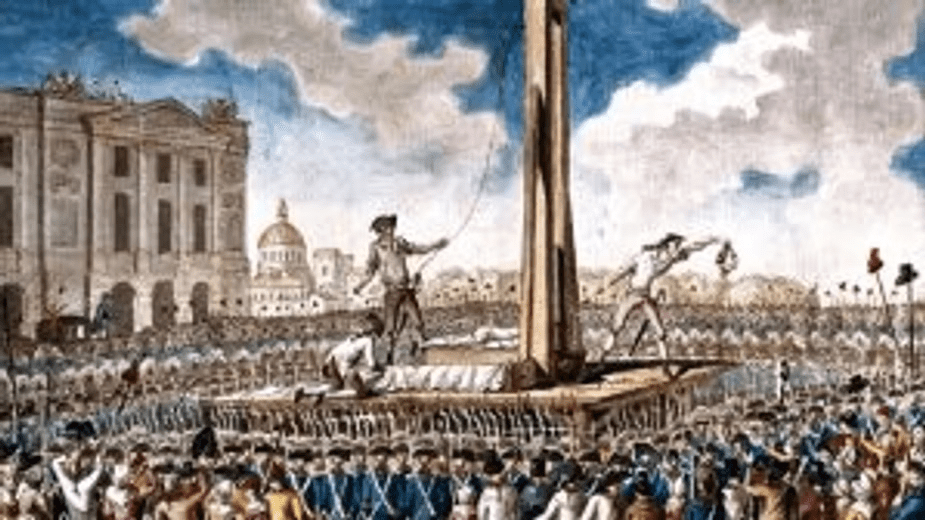
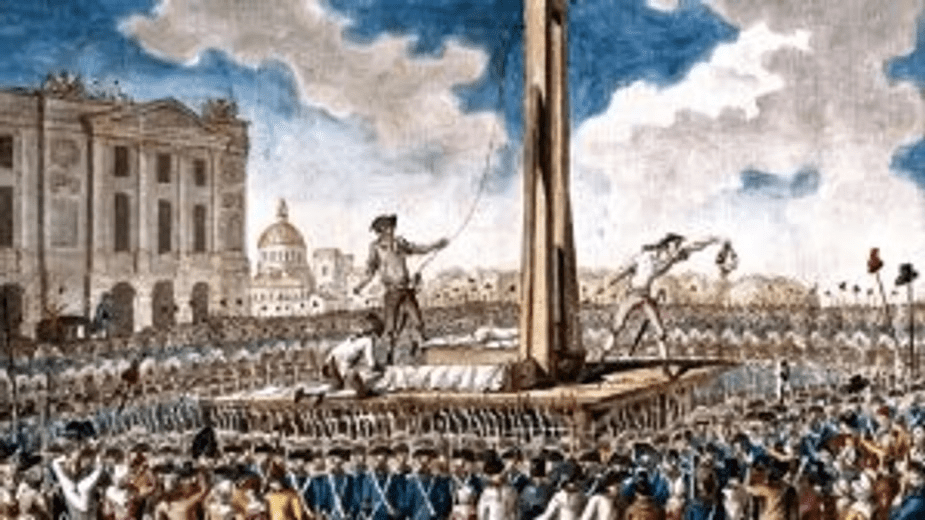





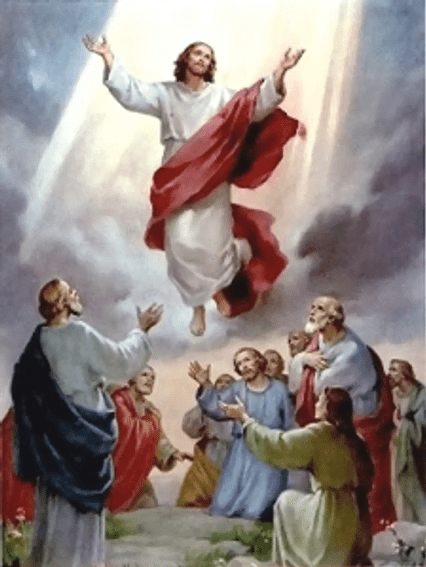
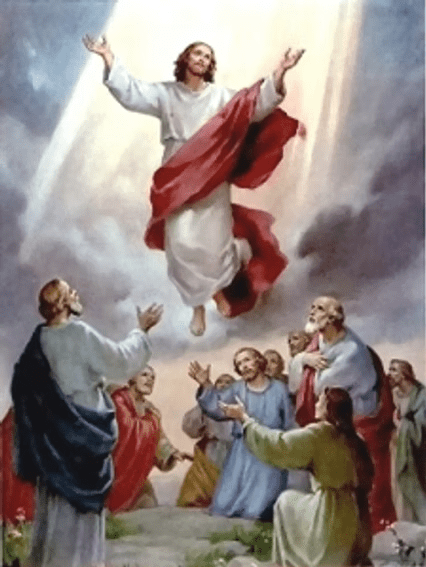

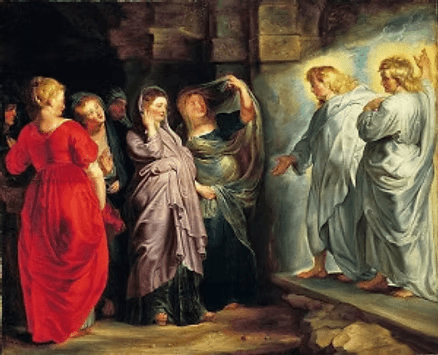





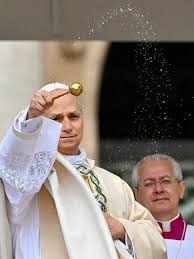

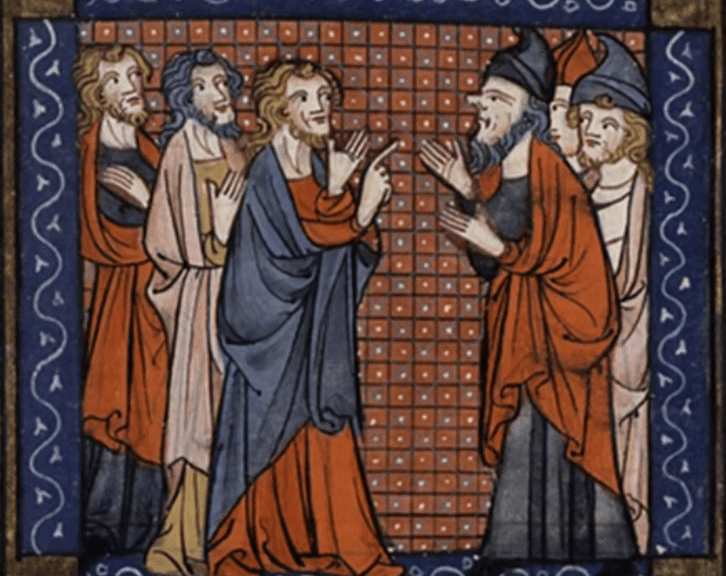
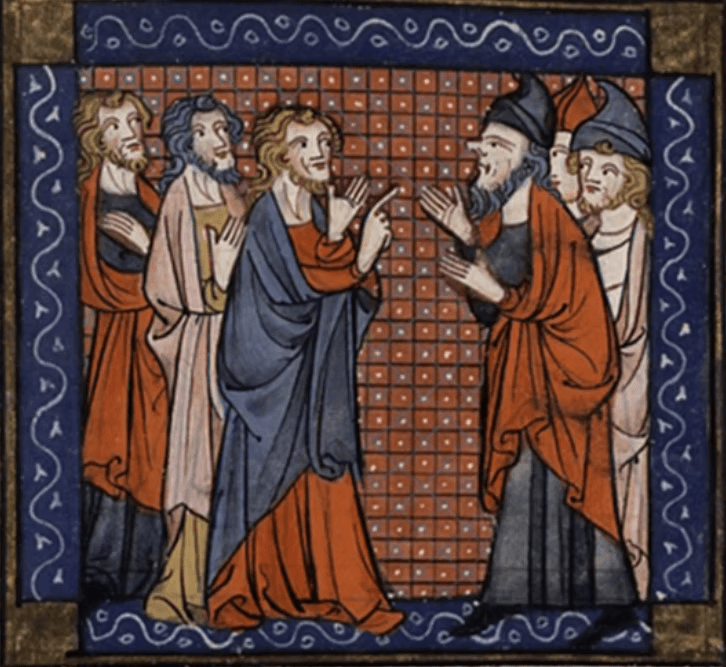
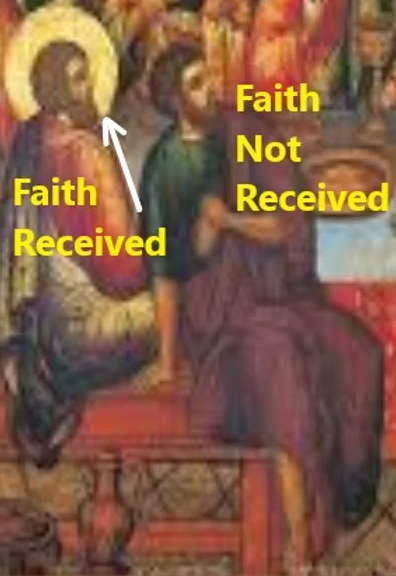
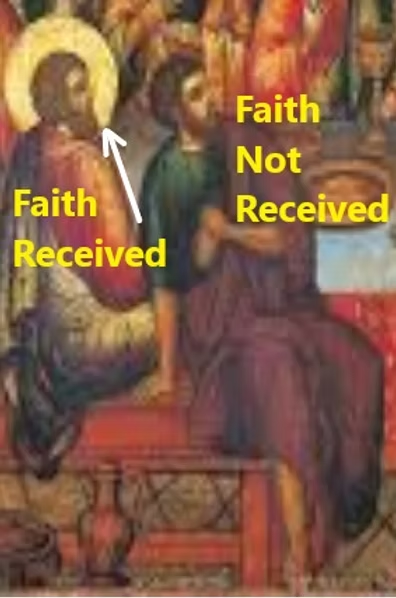
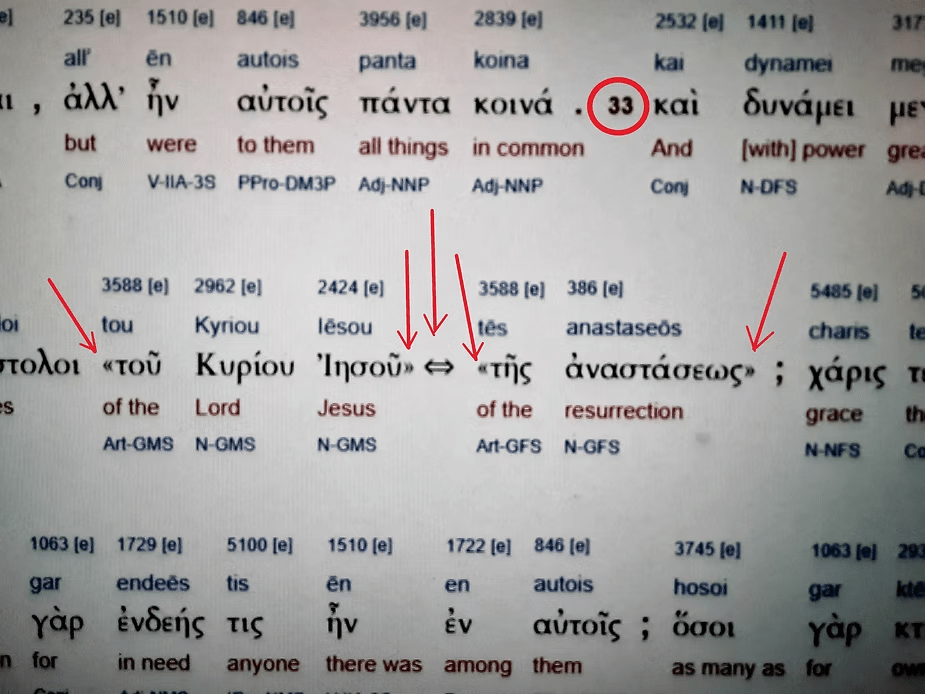


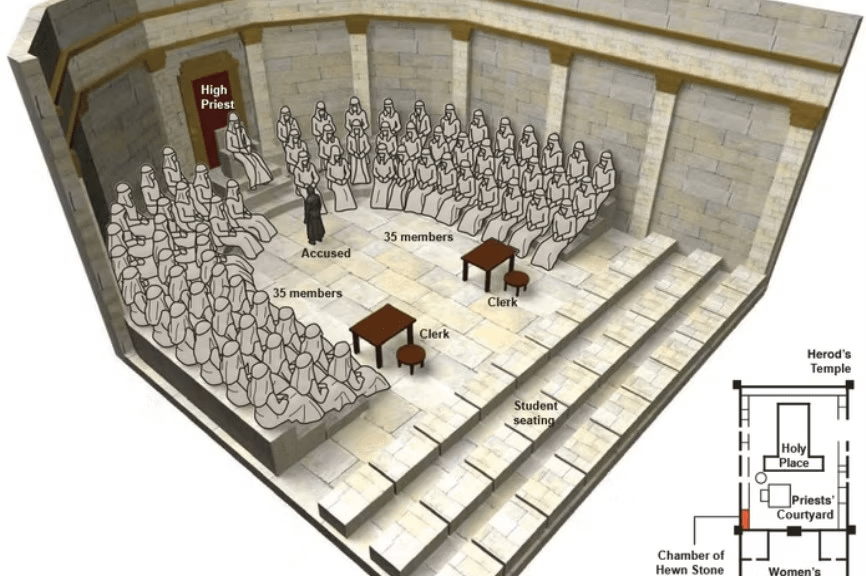
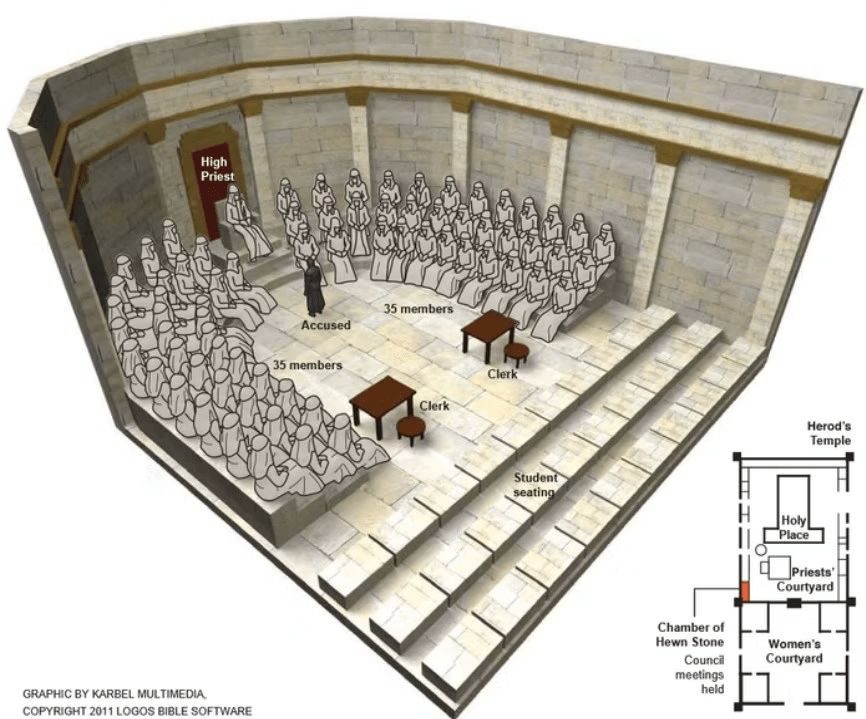
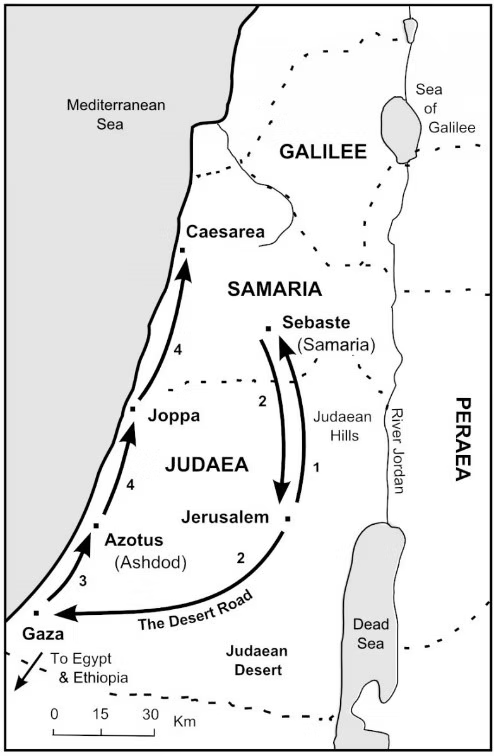
 Explaining the Readings