Category Archives: Exodus

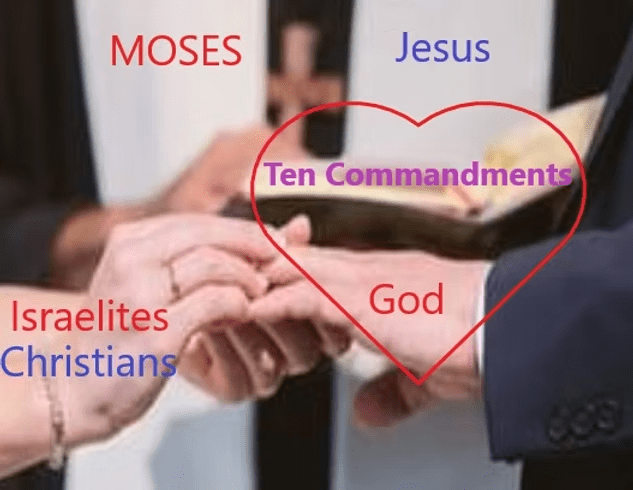
Exodus 20:1-17 – The vows that marry souls to Yahweh

Then God spoke all these words:

I am the Lord your God, who brought you out of the land of Egypt, out of the house of slavery; you shall have no other gods before me.

You shall not make for yourself an idol, whether in the form of anything that is in heaven above, or that is on the earth beneath, or that is in the water under the earth. You shall not bow down to them or worship them; for I the Lord your God am a jealous God, punishing children for the iniquity of parents, to the third and the fourth generation of those who reject me, but showing steadfast love to the thousandth generation of those who love me and keep my commandments.

You shall not make wrongful use of the name of the Lord your God, for the Lord will not acquit anyone who misuses his name.

Remember the sabbath day, and keep it holy. For six days you shall labour and do all your work. But the seventh day is a sabbath to the Lord your God; you shall not do any work—you, your son or your daughter, your male or female slave, your livestock, or the alien resident in your towns. For in six days the Lord made heaven and earth, the sea, and all that is in them, but rested the seventh day; therefore the Lord blessed the sabbath day and consecrated it.

Honor your father and your mother, so that your days may be long in the land that the Lord your God is giving you.

You shall not murder.

You shall not commit adultery.

You shall not steal.

You shall not bear false witness against your neighbor.

You shall not covet your neighbor’s house; you shall not covet your neighbor’s wife, or male or female slave, or ox, or donkey, or anything that belongs to your neighbor.

——————–

This is the Old Testament selection for the third Sunday in Lent, Year B, according to the lectionary established by the Episcopal Church. It precedes Psalm 19, which contains the verse that says: “The statutes of the Lord are just and rejoice the heart; the commandment of the Lord is clear and gives light to the eyes..” It also accompanies the Epistle from Paul’s first letter to the Christians of Corinth, which speaks of the “wisdom of God.” It also is united with the Gospel reading from John, where Jesus overthrew the vendors’ tables and said he would rebuilt the temple in three days. Several parts of this reading are also the Old Testament selection for Proper 22-A.

I have done a thorough interpretation of the eighteenth Sunday after Pentecost [2017], which was the Proper 22, Year A choice. It is posted here under the title “The Ten Commandments.” found by a search of this blog. Because that reading selection for Proper 22-A omits verses 5-6 and 10-11, I will focus more closely on the words of those verses here; but please read the other interpretation for a whole view and a more standard view of this special covenant.

As a reading selection for the ordination season after Pentecost, the focus is solely placed on the laws that one should have written on one’s heart, as a standard way of life for one being ordained into ministry for God. The verses omitted are then more focused on the Law being an external document of an agreement between God and the Israelites, which was brokered to them by Moses. Thus, as a reading selection for the third Sunday in Lent, Year B, one should see this as a natural continuation of the theme of covenants between God and holy men: Noah; Abram; and, Moses.

In this reading selection, verse 1 is very easy to skip over and leave alone. To read, “Then God spoke all these words,” it is assumed to be an accurate translation that leads everyone to listen and hear God speaking to Moses. However, in this translation is the scholastic error of ignorance that takes the plural form of “el” [a lower-g “god”], which is “elohim” [the lower-g “gods”], and translates it as the upper-g “God.” That is not what begins this reading.

The Hebrew of verse 1 begins with two words that are separated from the remaining five words [plus the letter samekh, which denotes the end of the verse]. Those two words are [placed from left to right, not as the right to left as is Hebrew]: “וַיְדַבֵּ֣ר אֱלֹהִ֔ים” [“way·ḏab·bêr ’ĕ·lō·hîm”]. Those two words have been translated as if saying, “Then God spoke,” when they say “and will speak gods.” This is an important beginning to grasp.

The Hebrew word “וַיְדַבֵּ֣ר” is conjugated by the website Pealim.com as being “Part of speech: verb – PI’EL – to speak, to talk.” The site continues by stating: “ו־ + יְדַבֵּר = yedaber,” which is the “Future tense, 3rd person, masculine, singular,” which says, “and he / it will speak.” That future tense is obliterated by a translation that becomes “Then God spoke.” The future tense is key to understanding how “elohim” clearly states “gods.”

The scholastic religious view of Christianity says idiots wrote the books that become the library of books considered to be sacred, thus “Holy.” Only an idiot would scribble out extra letters, in order to change “el” (the singular number) into “elohim” (the plural number), and mean the singular number. Rather than think divine authors were idiots, it makes much more sense to me to consider the scholastic religious brains as those who are the idiots. The word “elohim” clearly states “gods,” so it is up to the scholar to understand why “gods” was written.

The mistake of this scholastic view, where they have invented some imaginary “E writer” of Old Testaments texts [“E” for “elohim,” but not “el”] is because Genesis 1 contains many references to “elohim” [none to Yahweh], as they who made this and they who made that, during the first six days of Creation. The scholars see all that as the writings of an idiot, as they translate every use of “elohim” as “God” [which makes them the idiots].

The first three words of Genesis 1 are “בְּרֵאשִׁ֖ית בָּרָ֣א אֱלֹהִ֑ים” [read from right to left, as Hebrew], which presented left to right are transliterated as “bə·rê·šîṯ bā·rā ’ĕ·lō·hîm,” with a semi-colon mark following “elohim,” meaning those three words make a separate statement that begins the who chapter. Those three words state, “In the beginning created gods.” When separated from the following text, that becomes a statement that the first stage in Creation was the creation of lesser gods. That implies, by absence, that YHWH was the creator of lower-g gods; and, it says God let His gods do the work of His Creation, meaning they all worked according to God’s design.

That should not be hard to imagine. After all, God [YHWH] is omnipotent and able to make lesser gods. Simply by realizing that “elohim” fits the model of everything immortal, such as angels and Satan, as well as souls giving life to clay, one should easily be able to see “elohim” doing the word of Creation, just like one can imagine seven dwarfs working in a diamond mine.

In that same vein of intellect, one should see Exodus 20 beginning by having God [YHWH] speak what His “gods will speak.” The implication is God talking to gods, in a covenant that means the “gods” must come to terms with what Yahweh says; so, like a parent speaking to one’s children, to ensure they agree with what they are being told, the parent does not simply say the words to them. The parent says “now you say what I said.” Thus, as a covenant for the future, the “gods will speak” in agreement says the “elohim” must not be silent. They all must speak the words, “I do.” That is simple to understand; so, now one needs to understand how the Israelites are “elohim” all of a sudden.

The answer to that question is the realization that a soul is eternal and (like God) never dies. In understanding that, one must admit that life in a body of dirt (called “flesh”) comes from the breath of life given by God at birth. That breath is like a little bit of God being sent into clay, to make it animated with life. The work of life is then done by a itty bitty bit of God, thus a “god.” By grasping that fairly simple concept (something very difficult for atheists to do), one should be able to see that Exodus 20 begins by saying God will set out a covenant for all the souls of Israelites to agree with. What God spoke to Moses, those “elohim will speak” back to God, as their way of confirming they know what they are expected to do, in order to be claimed as the children of God, His chosen people.

Verse 2 then begins by making this line of thought official, as it says, “’ā·nō·ḵî Yah·weh ’ĕ·lō·he·ḵā,” (again with a separation mark – a comma), so verse 2 begins by saying, “I am Yahweh your god.” The word “’ĕ·lō·he·ḵā” is a pronominal second person singular [either masculine or feminine, depending on the imaginary vowel choice] form of “elohim,” so it says “I YHWH possess your souls, making me your god of life source.”

It is from that realization that verse 2 then says, “who brought you out of the land of Egypt, out of the house of slavery.” This becomes a two-part statement about what God has done to regain the souls [“elohim”] that had become lost. First, they had gone into the land of Ham, called “mizraim,” which is translated as meaning Egypt. Both Canaan and Mizraim were sons of Ham, who were cursed by Noah for getting him drunk on wine and leaving him naked and uncovered in his tent, where Ham saw his nakedness. Noah’s curse then fell upon the children of Ham. The children of Jacob had lived in Canaan as cursed [their father had stolen the birthright of his brother Esau] and then moved to Egypt, where they remained cursed, as the descendants of Israel. Therefore, the first statement by Yahweh says their souls had been redeemed from that curse.

The second part then speaks of those souls having been removed from “the house of slavery.” The “house” is again a reference to the “dwelling place” that was named Egypt. As descendants of Mizarim, the people of the Nile had become examples of the world of power, wealth and influence, such that system of Pharaohs and their religious acceptance of polytheism had enslaved the Israelites, forcing them to accept their system of religion or be shunned as second class citizens. Rather than being free to have the equal rights of normal Egyptians, the Israelites had become slaves to the overseers of the land. Still, for a soul within a body of flesh, it was easy to accept the demands to recognize multiple gods [“elohim”] and be given less punishment as an outcast. By following Moses out of Egypt, the Israelite souls had bee freed from slavery to polytheism and the worldly sacrifices demanded upon a soul.

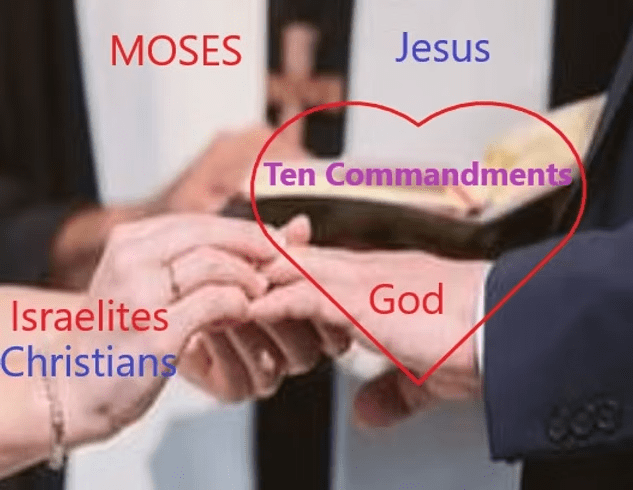
The totality of verse 2 then is God expecting His breaths of life, breathed into those who were the descendants of Abraham, to agree that to be His souls again, redeemed of a curse [to regain the promise of Shem’s line, through Isaac, upon Jacob – the Supplanter] and removed from the world of evil influences. For that offer of salvation, those souls then had to agree to God’s terms thus coming. Egypt must be seen as the limitations placed on a soul, which become those of a body of flesh. Leaving Egypt was the Israelites’ engagement to God, leaving all past lovers behind; reaching the wilderness at Mount Sinai was when they came to the altar of marriage. Therefore, Moses leading them into the wilderness [remember this is the season of Lent] meant those souls were God’s only concern, not the flesh they brought with them.

According to the NRSV translation that is used by the Episcopal Church, verse 2 ends with a semi-colon, with verse 3 following as if a separate statement that is a continuation of verse 2’s idea of God giving freedom to the Israelites. While that is not entirely wrong, verse 2 ends with a period mark, making verse 3 become a free and separate statement that stands alone, although relative to everything stated prior in this chapter of Exodus. Other versions show this the way it was written: the NIV, the KJV, and the NASB for three.

Regardless of the presentation, all versions translate the Hebrew that follows verse 2 as saying, “You shall have no other gods before me.” I have written in-depth on how this is not a translation that states the truth of what is written in the Hebrew text. My interpretation entitled “The Ten Commandments” explains this more detail than I plan to offer here. Rather than repeat that depth, it is still important to again address what the meaning is; simply because the proper translation relates to last week’s [the second Sunday in Lent] Old Testament readings, when God told Abram, “walk before me and be blameless.” (Genesis 17:1c)

The word in that statement by God relates to a similar usage in Exodus 20:3, where “panim,” is written. In Genesis the word appears as “lə·p̄ā·nay” and here in Exodus as “‘al-pā·nā·ya.” Both uses have been translated as “before me,” such that Exodus 20:3 says “no other gods before me.” The word, according to Strong’s, means “face,” as a masculine noun. Only when one mutates it into an adverb does it bear the intent of stating location, implying “before” and also “behind.” As a noun, the word states a “face” – literally of man; a “face” – of relationship with; and, “face” – as when repeated as “face to face.” (Brown-Driver-Briggs)

By presenting a translation here that says “you shall have no other gods before me,” the implication of the adverb is not location, but order. It implies there are multiple “gods,” when the use of “elohim” in verse 1 was changed to state “God,” as a denial that there could ever be any “gods” other than the one “God” Yahweh. Still, “before me” gives the strong impression that Yahweh told Moses to pass it along, “You can have other gods, just none of them seen as more important than me.” That concept, when transferred to the Genesis reading of the exchange between God and Abram, says God approved Abram to “walk before God,” as if God was just tagging along, making Abram be a little-g “god before God.” That is not the way to translate the uses of “panim.”

When one grasps that God began this listing of Commandments by saying, “And spoke gods,” where one must see “gods” as the souls of the Israelites, the Commandments are setting the rules by which a soul will be freed from a curse upon their lineage [by Noah] and the captivity of their bodies of flesh, where urges lean them to sin while cast into the world of many “gods.” This says the Commandments are all about what a body of flesh must accomplish [righteousness] before its soul can stand “before” God and be judged. At that time, the sins of the flesh will become the “face” of one’s worship of other “gods” – those of the world and that of self-ego – which will mean rejection by Yahweh. Only when a soul appears before God wearing the “face of God” [“face of me”] will one be seen as without sin [“blameless”]. Therefore, verse 3 is a stand-alone statement that must be read as saying, “You shall wear the face of no other gods before me.” [Or, “You shall only wear my face before me.”]

This is imperative to hold firmly in one’s mind, as this become the first Commandment; and, that makes this instruction by God (through Moses) be the answer given by Jesus, when the Pharisees attempted to trick Jesus by asking his, “Teacher, which is the greatest commandment in the Law?”

When Jesus responded by saying, “Love the Lord your God with all your heart and with all your soul and with all your mind.’ This is the first and greatest commandment,” (Matthew 22:34-40) that says the only way one can give God absolute love – of heart, soul, and mind – is to be totally committed to wearing the “face of God” as one’s own, having submitted to God in marriage (soul to Holy Spirit), out of a mutual love that is all-encompassing. One cannot tie the first Commandment [which Jesus named in his response to the Pharisees] to absolute love. Simply by seeing the first Commandment as meaning all one’s love – cubed – one can see that means wearing the face of God wholly. If one’s love is shared among many “gods,” although the One God is given over 50% of one’s heart, soul, and mind, then one has broken the first Commandment.

Simply from understanding verse 3 as being the first Commandment that says a soul (an “el” of YHWH) must submit to Yahweh, totally, can one then read verse 4 as a separate Commandment that [as Jesus said] “hangs” from that sacrifice of self-face. As such, reading “You shall not make for yourself an idol, whether in the form of anything that is in heaven above, or that is on the earth beneath, or that is in the water under the earth” with a fresh set of eyes allows one to see this Commandment as how the faces of other gods cannot be worn. From the literal translation of the Hebrew written, verse 4 states (in stages):

“Not you shall make yourself an idol” , [with God’s face worn this cannot happen]

“or any likeness who in heaven rises” , [with God’s face worn one does not appear as Jesus]

“of that on the earth underneath” , [with God’s face worn one one does not appear as Satan]

“of that with the water underneath the earth” . [God’s face is worn as an emotional halo]

The second Commandment is not a demand not to make graven images of some household god, which will be placed on the mantle over the fireplace or the dashboard of one’s car. It is a series of what one’s face must not become, as the flesh covering one’s soul. One cannot think of oneself as some idol of worship [self-worship especially, but not a reflection of someone else, such as a political leader seen as one’s “god”]. One certainly cannot think of oneself as having attained deification, in pretense that one is like a god from heaven, who is expected to make others bow down before oneself. All of this becomes the pretense of being a little-g god of the earth, made of flesh and bones, all of which are mortal and bound to die. Finally, the physical water under the earth become metaphor for the emotions one has within one’s flesh, which becomes the motivation for one’s idolization of self or others.

When one sees how water is the element of Creation that reflects the emotions all humans are made to contain, the water becomes the love of which Jesus spoke. If one’s love is for self or other human beings, including the things offered up in a world of sin as the rewards offered by little-g “gods” – wealth, power, influence – then one’s emotions are not totally for Yahweh.

This then brings us to verses 5 and 6, which are omitted from the Proper 22-A reading, making them important to understand during the season of Lent. According to the NRSV above, they state:

“You shall not bow down to them or worship them; for I the Lord your God am a jealous God, punishing children for the iniquity of parents, to the third and the fourth generation of those who reject me, but showing steadfast love to the thousandth generation of those who love me and keep my commandments.”

It should be rather easy to see how these two verses are erased from the reading during Pentecost, because that reflects a time when the laws are written on the hearts of an Apostle [one Ordained into ministry], meaning that total love of God, in heart, soul and mind, makes these warnings unnecessary. However, when God was speaking through Moses to the souls of the Israelites, they were just beginning to learn what it would take to reach that ultimate goal of ministry, when each would become a true priest of Yahweh.

Again returning to what Jesus told the Pharisees, verse 6 stating “those who love me and keep my commandments” is a statement that prophesies the future time when total love of God will bring about God’s presence in their hearts, where the Law will be written as God in their hearts, with Jesus being reborn as the Christ Mind that will lead their minds, and the Holy Spirit being the divine presence of God that will show love in one’s soul. By God saying, those who will show “steadfast love” will have gained eternal life, that means God’s love will be repaid a thousand time over [infinity].

Conversely, when verse 5 says, “you shall not bow down to them or worship them,” the pronoun “them” [“לָהֶ֖ם֮”] means oneself and any other human or deity [all dead]. To “bow down” means to lower one’s “face” to the ground, so one refuses to wear the “face of God.” Bowing down to them means wearing those other faces as one’s polytheism, so one worships many gods, more often than or in the exclusion of wearing Yahweh’s face. Therefore, when verse 5 says, “those who reject me,” the Hebrew written [“lə·śō·nə·’āy,” from “sane”] says “those who hate me,” meaning the only excuse for refusing to wear only God’s face after marriage to Him says love is not present, but hate. By grasping how “hate” is a flow of emotions [water] that is the opposite of “love,” there can only be two ways a soul can reflect the powers of the flesh over it: “hate” of God, thus love of self; or, “love” of God, meaning hate of self [and the sins self brings].

This meaning that one must reject self, rather than God, then flows into the next Commandment, which says [from the literal Hebrew translation into English], “not you shall take the name Yahweh your god with emptiness.” Here, the words “Yah·weh ’ĕ·lō·he·ḵā” are repeated, as they were presented in verse 2. When the Commandment says not to take the name Yahweh, the use of “your god” seen as meaning “your soul,” says one cannot claim to be married to Yahweh and then produce zero evidence of having taken that name as “your god” in marriage. This does not means uttering the “name God” wrongly, in a way that Muslims will want to kill anyone who draws a picture of Mohammed or Allah, or how the Jews do not even spell the whole word, using “G_d.” The name of Yahweh is a statement of marriage, where a soul is no longer married to its body of flesh, led by lusts and carnal desires, having instead married a soul to the Holy Spirit of Yahweh, taking His holy name as their own, thereby wearing His face as theirs.

When one reads “in the name of Jesus Christ,” this is not speaking of Jesus as the Christ, or as if his last name is Christ. It means one has married God, so one’s soul is merged with His Holy Spirit, taking on the name of God, which is the Christ – His Anointment of one. That marriage then gives rise to the Son of God within one’s flesh, so one becomes [regardless of human gender] Jesus reborn. All of this means wearing the face of God, in His name.

The ultimatum that God “will not acquit anyone who misuses his name,” where the word translated as “acquit” is better stated as “will hold guiltless,” becomes a repeat of what God told Abram. When he said “walk wearing my face and be blameless,” He was saying the soul of Abram has proved to walk in the name of God and was thus without sin. However, to say one is a Christian, when one does not wear the face of God – one has not been reborn as Jesus, as the Christ resurrected anew – then one is taking that name vainly. That is not what God wants; and, God will not excuse those who sin while claiming to wear God’s face.

Verses 8 and 9 then tells the “elohim” to remember the “Sabbath day,” which is in fact the day we still live in today, just as it was the “Sabbath day” when Moses took the Israelites into the wilderness. The “Sabbath day” is not one twenty-four hour period [either Saturday or Sunday], but the time when God made religion come to earth in the form of His Son, the one we call Adam. After six “days” of Creation – over billions of years – Yahweh made a man to bear a soul that was married to Him. Thus, Genesis 2 says, “God blessed the seventh day and hallowed it, because on it God rested from all the work that he had done in creation.” There, the two references to “God” actually are written as “elohim.”

When Genesis 2 is translated so it states the truth, it becomes a statement saying, “The “elohim” blessed the seventh day and hallowed it, because on it the “elohim” rested from all the work that they had done in creation.” That becomes a reflection of Exodus 20 being God speaking to His “elohim,” about what they needed to say in agreement. Thus, the souls of the Israelites were those descended from the “elohim” God created to do the work of Creation. Those souls would have to become married to Yahweh so they would fully comprehend that the “Sabbath day” begins when one’s soul says, “I do” and the “Sabbath day” does not ever end after that.

As such, verse 9 states, “six days you shall labor and do all your work.” That becomes a reflection of that work done, as the descendants of Jacob, enslaved in a foreign land, resisting the influences of evil. The work of those souls had brought them to the altar of marriage to God, as bridesmaids who had kept their lamps full of oil, even in the darkest hours when their lights of faith in God still shined brightly. It was that commitment of love that brought them to the wilderness, to the wedding vows Moses was passing onto them, from God, their bridegroom.
The omitted verses 10 and 11 [omitted from the Proper 22-A reading] are then presented by the NRSV as stating: “But the seventh day is a sabbath to the Lord your God; you shall not do any work—you, your son or your daughter, your male or female slave, your livestock, or the alien resident in your towns. For in six days the Lord made heaven and earth, the sea, and all that is in them, but rested the seventh day; therefore the Lord blessed the sabbath day and consecrated it.”

While this can be seen in support of what I have stated, it is best to look at this according to the BibleHub Interlinear’s literal English translation, complete with the breaks that are based on the placement of punctuation marks. That then shows the following:

10

“but day seventh Sabbath Yahweh your “elohim

“not you shall make any occupation” ,

“you” ,

“nor your son” ,

“nor your daughter” ,

“nor your servants” ,

“nor your handmaids” ,

“nor your livestock” ,

“nor any traveler who within your gate”

11

“for six days did Yahweh the heavens and the earth” ,

“the sea” ,

“and all which they and rested the day seventh” .

“so blessed Yahweh the day Sabbath” ,

“and set it apart sacred” .

Verse 10 has to be read as stating the exception of the Sabbath, as the seventh day.” The first six days were done by the “elohim,” as directed by God. Each of the “gods” had its own specific role to play – its assigned “work” to do or an “occupation.” In that regard, the “elohim” were given the freedom to create for God. However, after the Creation was finished, the powers of the “gods” ceased. This means the Sabbath [which takes place in Genesis 2] was when the “elohim” rested and Yahweh took over. Therefore, none of the “elohim” would be allowed to be recognized as special: not any of the forms listed in verse 10.

This means that verse 11 is stating within the confines of the material realm the only “things” that can be found anything of value are souls within flesh, but only those “blessed by Yahweh.” Being so “blessed” means an “el” has been set apart from the material world – the earth [flesh] and the water [blood] has transformed, making one “sacred” – married to Yahweh via the “Holy” Spirit. Therefore, the marriage between Yahweh and the souls of the Israelites would set them apart, having been blessed through holy matrimony.

With the omitted verses now understood, as necessary additions to the Covenant between God and the Israelites, which state their marriage vows being established, the remaining six verses in this reading selection states what becoming “blessed and set apart as holy” will bring in their lives. That becomes a group of individuals, all equally placed together, thus a list of commitments as wives in common – all married to Yahweh – stating how they would relate with one another, all being wives of God living separately from the civil world, where sin proliferates.

Being filled with God’s Holy Spirit would mean their souls would cause their flesh:

· To honor their father and mother, as souls descended from Abraham with the promise that walking with the face of God will keep them sin free and blameless upon the death of the flesh.

· Not to murder the flesh of another in their midst, whose soul had also been blessed and set apart as holy.

· Not to commit adultery, which would be a reflection in the flesh of one’s soul seeking to cheat on God, causing another soul in the flesh to do the same.

· Not to steal, which would be a lust for material things, when the reward of a blessed soul is greater than anything ever made in the material world.

· Not bear false witness against one’s neighbor, where the element of lying can never arise when one’s face is that of God, and one’s neighbor is a reflection of oneself, as all the souls within the Israelite family would have been married to Yahweh, all becoming Yahweh elohim.

· Not covet anything or anybody related to one’s neighbors, again because everything they possess is the same as one possesses – the love of Yahweh and the blessing of righteousness.

These Commandments are then not external demands [at that time nothing was written on parchment – only stone tablets etched by the finger of God], as much as they were shared vows of marriage, all willingly made out of love. When the elohim had been merged with God’s Holy Spirit, making them all become Holy Spirits within flesh, the Covenant would be written upon their hearts and everything stated as “you shall not” will not be by willful force, but by loving desire, as a soul consecrated.

As a Lenten reading, one should see the self-sacrifice of commitment, made between a soul and God. This is a test in the wilderness that becomes a life without sin, led by the sanctity of God presence within, which is for much more than forty days. It shows the period of Lent as being synonymous with the institution of marriage, where holy matrimony between two partners is sworn to be “until death do us part.” All who are married as human beings joined together know the tests of commitment are known beforehand to include the good with the bad: better or worse; richer or poorer; and, sickness and health. Therefore, Lent must be seen as the first day of forever, and not a honeymoon before divorce.
Exodus 16:2-4,9-15 – Manna from heaven

The whole congregation of the Israelites complained against Moses and Aaron in the wilderness. The Israelites said to them, “If only we had died by the hand of Yahweh in the land of Egypt, when we sat by the fleshpots and ate our fill of bread; for you have brought us out into this wilderness to kill this whole assembly with hunger.”

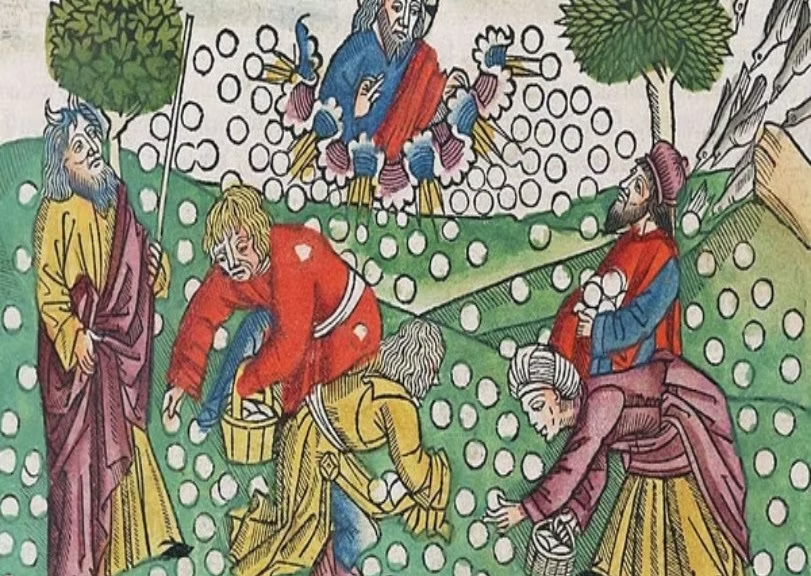
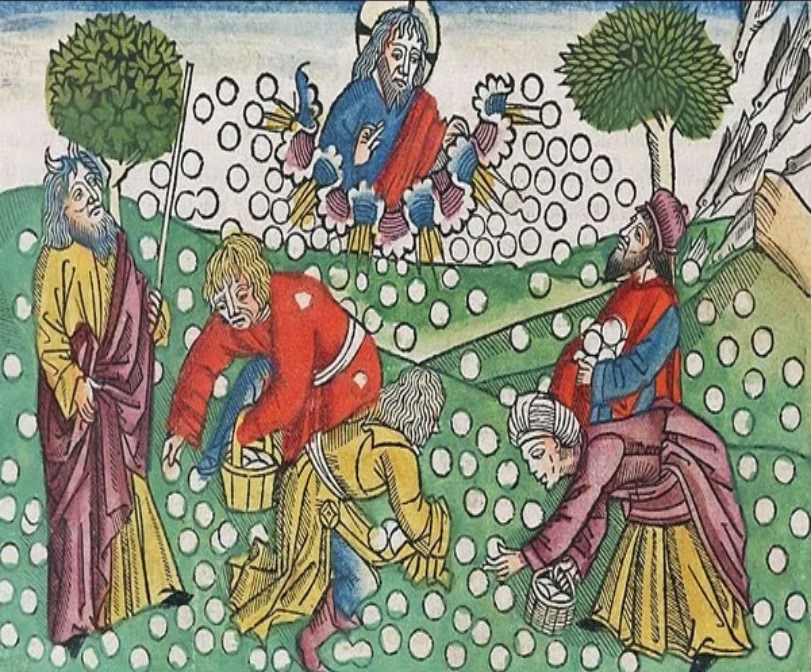
Then Yahweh said to Moses, “I am going to rain bread from heaven for you, and each day the people shall go out and gather enough for that day. In that way I will test them, whether they will follow my instruction or not.

Then Moses said to Aaron, “Say to the whole congregation of the Israelites, ‘Draw near to Yahweh, for he has heard your complaining.’“ And as Aaron spoke to the whole congregation of the Israelites, they looked toward the wilderness, and the glory of Yahweh appeared in the cloud. Yahweh spoke to Moses and said, “I have heard the complaining of the Israelites; say to them, ‘At twilight you shall eat meat, and in the morning you shall have your fill of bread; then you shall know that I am Yahweh elohekem.’“

In the evening quails came up and covered the camp; and in the morning there was a layer of dew around the camp. When the layer of dew lifted, there on the surface of the wilderness was a fine flaky substance, as fine as frost on the ground. When the Israelites saw it, they said to one another, “What is it?” For they did not know what it was. Moses said to them, “It is the bread that Yahweh has given you to eat.”

——————–

This is the Track 2 Old Testament option for the tenth Sunday after Pentecost [Proper 13], Year B, according to the lectionary for the Episcopal Church. If chosen, it will be paired with a reading from Psalm 78, which sings, “He rained down manna upon them to eat and gave them grain from heaven.” Those will precede the Epistle reading from Ephesians, where Paul wrote, “There is one body and one Spirit, just as you were called to the one hope of your calling, one Lord, one faith, one baptism, one God and Father of all, who is above all and through all and in all.” All will accompany a Gospel reading from John, where Jesus told the people who followed him there, “Very truly, I tell you, you are looking for me, not because you saw signs, but because you ate your fill of the loaves. Do not work for the food that perishes, but for the food that endures for eternal life, which the Son of Man will give you.”

I wrote an update of this reading and posted it publicly on my website in 2020. I welcome all who are interested in reading that commentary by searching this site. I had previously written about this and published in 2017 [including all verses 2-15], which also can be read by searching this site. I welcome all to read what I have written prior on this Exodus story about the manna and quail, as nothing has changed that keeps that meaning seen from still being applicable today. Now, I will offer a slight angle on this reading that is designed to make it an easier reflection on the Track 1 Old Testament choice [Nathan tells David, “You are that man!”] and the Gospel where Jesus is encountered in Capernaum after having fed the multitude free food.

An adjustment that I am now doing is relative to my refusal to continue the naming of Yahweh as “the Lord.” In that effort, I have place [in bold type] the name “Yahweh” in the places it was written, but changed by some translation company to “the Lord.” Just so everyone is clear that the Israelites have a word that translates as “lord” [“adon” in the singular, “adonay” in the plural], there are absolutely zero uses of that word anywhere in Exodus chapter sixteen. Also, I have come to the realization that the plural number of “god” [in the Hebrew “elohim”] must not be altered to the singular and then be given capitalization status, as “God.” There are many “gods” that have been created by Yahweh, which can be a universal law [non-human], an angel [non-human], and a Saint [a human soul united with Yahweh’s Spirit]. Moses, David, and Jesus are just three examples of Yahweh elohim, and Yahweh has the power to create as many elohim as He sees fit. Since the translators of Scripture into English most certainly are not elohim, they make mistakes like calling Yahweh a lord and changing “gods” into “God.”

To hear the Israelites complain, “If only we had died by the hand of Yahweh in the land of Egypt,” that is a major statement against having the protection of Yahweh guarding their souls. It says, “If only we had not sacrificed an unblemished yearling lamb, cooked it and ate it, after marking our doorways with that lamb’s blood.” If says, “If only Yahweh had come into our houses and struck dead the firstborn, like happened to Pharaoh and all others who did not follow Moses’ instructions.” That is like hearing a famished Esau say to his brother Jacob, “Birthright!? What birthright? I wants stew now!” In other words, it is something only a child or a fool would say.

When Nathan told David the parable about a rich man and a poor man, the rich man with many flocks and herds is like Egypt, where fleshpots and bread a plenty was always readily available … as long as there was no famine or war that would interrupt that image of what was once before. The metaphor of a poor man is like the Israelites out in the wilderness, with nothing of value that would make him stand out above the crowd. That then makes the metaphor of the little ewe lamb be these men Moses and Aaron and this God named Yahweh, which was not just something representing immense value, but family. The little ewe lamb meant abounding love, both to and from the poor man’s family and the lamb. The complaints made to Moses and Aaron say the Israelite people were still of a mindset that saw themselves as rich men and women, who deserved all their wealth reflected in their many flocks and herds, while also having the birthright to snatch away someone else’s God as their own too. The complaints of the Israelites said they were selfish; and, being selfish is not the way to have one’s soul assured of salvation.

Now, the people who followed Jesus from the synagogue by the sea, where they reclined in the grass and ate their fill of fish and bread [like the rich did, way back in Egypt], they had followed Jesus simply because he meant free food for pilgrims from out of town. They were not poor, as they had traveled long and far to go to Judea for the Passover, so they had enough money to take along food for the trip. Finding Jesus was only a way to keep their many flocks and herds and snatch this ewe lamb as their own, to save cash while feeding their bellies. In that way, they were just like the Israelites complaining to Moses and Aaron, with one exception. That exception is the pilgrim following Jesus were not babies. They were full-grown adults.

The Israelites were like the glint in the Father’s eye, forty years before they would be formed into a fetus in the womb called Israel. That baby would be born when it was cast out into the world when the water burst and the uterus that was Israel and Judah squirted out a new religion for the world to come to know. Because of that difference in age, Yahweh treated the complaining Israelites like would a Father and His screaming baby, who was always either hungry, thirsty, or so messy it needed to be cleaned. Babies are totally incapable of caring for themselves, so parents have to do everything. By the time the pilgrims followed Jesus and began acting like babies, Jesus told them acting like babies no longer cuts it.

The gifts of manna and quail [the quail being a onetime feast] was the equivalent of setting baby in a high chair and letting it splash around in pablum and Cheerios. Because all the Israelites were adults and quite capable of eating goat stew, with cheese and water, the baby in them was their souls. The manna and quail was soul food, designed to pacify the baby, so the ugly adult did not take control and complain unnecessarily.

The manna was akin to spiritual food, before Moses completed writing his five books called the Torah. The manna stopped raining like bread from heaven when Moses left them at the Jordan River with five scrolls he wrote. After that, the spiritual food of the Israelites came from memorizing those words. By the time David was sent as the man with a little ewe lamb, showing all the Israelites they needed to be just like him for the meaning of all those memorized words to come forth. When David changed back into a rich man with many flocks and herds, Uriah became the poor man with one ewe lamb; and, David then sacrificed that as a symbolic act that the Israelites had a soul that knew Yahweh, but to realize salvation would come after their birth and stumbles into adulthood. Jesus then came to touch those souls, waking them up from their slumbers that had allowed the memorization of Scripture to make them rich men with many flocks and herds, but none understood as requiring self-sacrifice.

When David loudly said to Nathan after hearing the parable about his sins, “As Yahweh lives, the man who has done this deserves to die,” he was proclaiming the answer to understanding self-sacrifice. That self-sacrifice would mean trouble being raised in David’s own house. The embryo Israel would be born with a pure soul, in a body of sinful flesh. It would be born from failure and raised with the troubles of a world that offered no safe harbor. It had been blessed by being given manna from heaven; but it had been cursed by thinking that gift – which it could not understand – made it special in Yahweh’s eyes. To learn self-sacrifice, Israel would have to live up to its name by becoming elohim. It would have to stop being the crying infant only concerned with “me, me, me!” It had die, so it could be reborn and rise again as “He Retains God” [the meaning of “Israel”].

As a reading option for the tenth Sunday after Pentecost, when one’s own personal ministry to Yahweh should be well underway, the lesson to be found is learning that Egypt and its fleshpots with plenty of bread reflects where civilization demands the sacrifice of a soul for material things. By having the angel of death pass onto one’s soul, “Welcome to Egypt! Land of a seventy year existence [beyond childhood].” The problem is an eternity of reincarnation, coming back time and time again as some loser, scattered to the four corners of the earth, never finding a place to call home. Get used to worshiping Mammon in this life and find abject poverty and enslaving abuses for several lifetimes after. The only release from that cycle is getting in touch with that pure soul, before it is sold on the free market one more time. There has to come a time when the soul stands up against the flesh and stops selfishly selling out for an illusion that is here today and then gone in a flash.

The only way to have the soul stand up is spiritual food. Spiritual food comes from the divine Scripture that is found in the Holy Bible. It is written in codes that your eyes can read, but not quite understand. To begin to understand, one needs to gather the manna daily – not just once or twice a year [Easter and maybe Christmas]. One needs to consume a day’s worth before trying to eat the who book all at once. Yahweh will be watching, as Scripture is a test, to tell “whether you will follow His instruction or not.” The longer you follow the gathering instruction, the more spiritual food will begin to feed you soul and return it to strength, allowing it to stand up against the flesh. Spiritual food gives the soul the desire to marry Yahweh [not some nameless lord, as the world has too many of those to list]; and, marriage to Yahweh makes one’s soul in union with His Spirit become one of His elohim.

Ministry is worthless when placed in the hands of the selfish, whose only soul cared for is one’s own. The selfish prance about in clothes that make them appear higher and mightier than everyone else, all the while they are abusing those who are poor, with only a pure soul to hold onto. A bad shepherd is one who never leads a flock to green pastures of spiritual food, beside still waters, because that thief has no interests whatsoever in tending one flock. There is money to be made in having many flocks to steal from and many herds to point at as perfections of creation, as unclean as them may be in reality.

The world is so full of bad ministers that is why Yahweh had Moses lead the Israelites away from where sin pulses freely and loudly. It is impossible for a bad shepherd to tell anyone the meaning of manna from heaven, because he or she [add in its these days] has never been taught any meaning beyond Sunday School and children’s church, when the point of manna being said to mean “what is it?” says a minister explains what it is. When false shepherds begin to make up stuff, they begin taking the little ewe lamb of some published author and pretending that baby lamb is their own to serve up for dinner. One has to come to Yahweh to know the meaning of His bread from heaven.

Exodus 34:29-35 – Wearing the face of Yahweh

Moses came down from Mount Sinai. As he came down from the mountain with the two tablets of the covenant in his hand, Moses did not know that the skin of his face shone because he had been talking with God. When Aaron and all the Israelites saw Moses, the skin of his face was shining, and they were afraid to come near him. But Moses called to them; and Aaron and all the leaders of the congregation returned to him, and Moses spoke with them. Afterward all the Israelites came near, and he gave them in commandment all that Yahweh had spoken with him on Mount Sinai. When Moses had finished speaking with them, he put a veil on his face; but whenever Moses went in before Yahweh to speak with him, he would take the veil off, until he came out; and when he came out, and told the Israelites what he had been commanded, the Israelites would see the face of Moses, that the skin of his face was shining; and Moses would put the veil on his face again, until he went in to speak with him.

——————–

This is the Old Testament selection that will be read aloud on the last Sunday after the Epiphany, Year C, according to the lectionary for the Episcopal Church. It will precede a singing of Psalm 99, where David wrote, “Yahweh is King; let the people tremble; he is enthroned upon the cherubim; let the earth shake.” That pair will be followed by a reading from Paul’s second letter to the Corinthian Christians, where he wrote: “We have such a hope, we act with great boldness, not like Moses, who put a veil over his face to keep the people of Israel from gazing at the end of the glory that was being set aside.” All will accompany the Gospel reading from Luke, which is generally called “the Transfiguration.” There Luke wrote, “Peter said to Jesus, “Master, it is good for us to be here; let us make three dwellings, one for you, one for Moses, and one for Elijah”–not knowing what he said. While he was saying this, a cloud came and overshadowed them; and they were terrified as they entered the cloud.”

In these selected verses read aloud today, it is important to realize that chapter thirty-four of Exodus begins with the story that tells of Yahweh commanding Moses to come back up the mountain and the tablets which he broke will be replaced. This is ten chapters after we are told that Moses spent forty days on the mountain (Exodus 24:18), which is information that follows Moses reading from the “book of the covenant” (Exodus 24:7) to the elders, with everything agreed to by holy sacrifices on an altar fire. The following chapter then tells the details of the Covenant, which pertained to the Tabernacle, an Ark for the Covenant, and the priests who would maintain the Tabernacle. Then there is a magical jump to Moses being back on the mountain, when he sees the waywardness of the Israelites and he brakes the tablets after coming down from the mountain (Exodus 32:15-19).

One has to see this as a prophecy of the coming of Jesus and the New Covenant, rather than a historical repeating of an event that happened already. The breaking of the tablets must be seen as the actions of the Israelite people, who later acted in ways that broke their agreement with Yahweh. The return of Moses to the mountain needs to then be seen as Moses dying and going to heaven.

Because Moses was a Yahweh elohim, he was essentially the soul of Adam resurrected within his soul that was named Moses. The soul of Adam is, of course, the one we call Jesus. This means this reading (when understood in this light) is a perfect match for the Gospel reading that tells of the Transfiguration, when Jesus’ soul appeared with the souls of Moses and Elijah, as a gathering of the souls who were all reborn Adams, with Jesus himself being the second set of tablets written by Yahweh on the mountain. The Holy mountain is wherever Yahweh is; so, Mount Sinai and Mount Hermon (the “high mountain” that overlooks the Syrian plain) were physical locations that were Spiritually identical.

To drive this point home, the three yearly feasts that the Israelites (thus all afterwards that would be equally considered to be “children of God” … including Jews and Christians) were commanded to recognize includes the times of the Passover escape from Egyptian bondage, the feast of harvesting the first fruits, and the feast of harvest at the end of the growing season. In that, the Passover is a set date each year, with the feast of the first fruits gathered being fifty days after Passover [15 Nisan]. That number of days is based on symbolizing the ten days it took the Israelites to reach Mount Sinai and then forty days with Moses on the mountain, when he came down with the Law on the fiftieth day. There is no Yahweh-commanded recognition of a second coming down of Moses, with a second set of tablets. There is no New festivals commanded by God to remember, although the Jews have added a few on their own. Still, a second set of stone tablets would seem like a good one to commemorate; and, there is no such date set aside each year to recognize [the festival of the Golden Calf?]. This means this second set of Holy Tablets has to be relative to the coming down of Moses as Jesus.

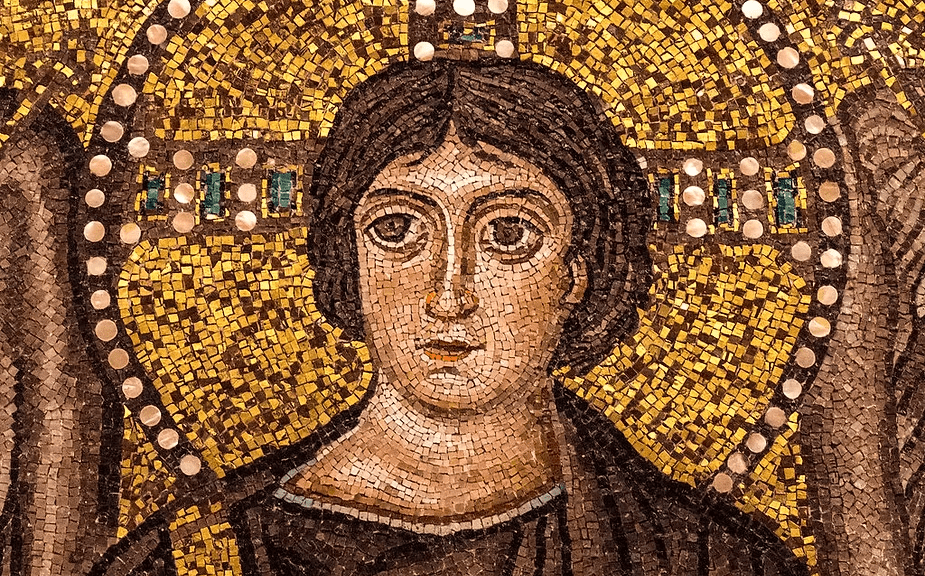
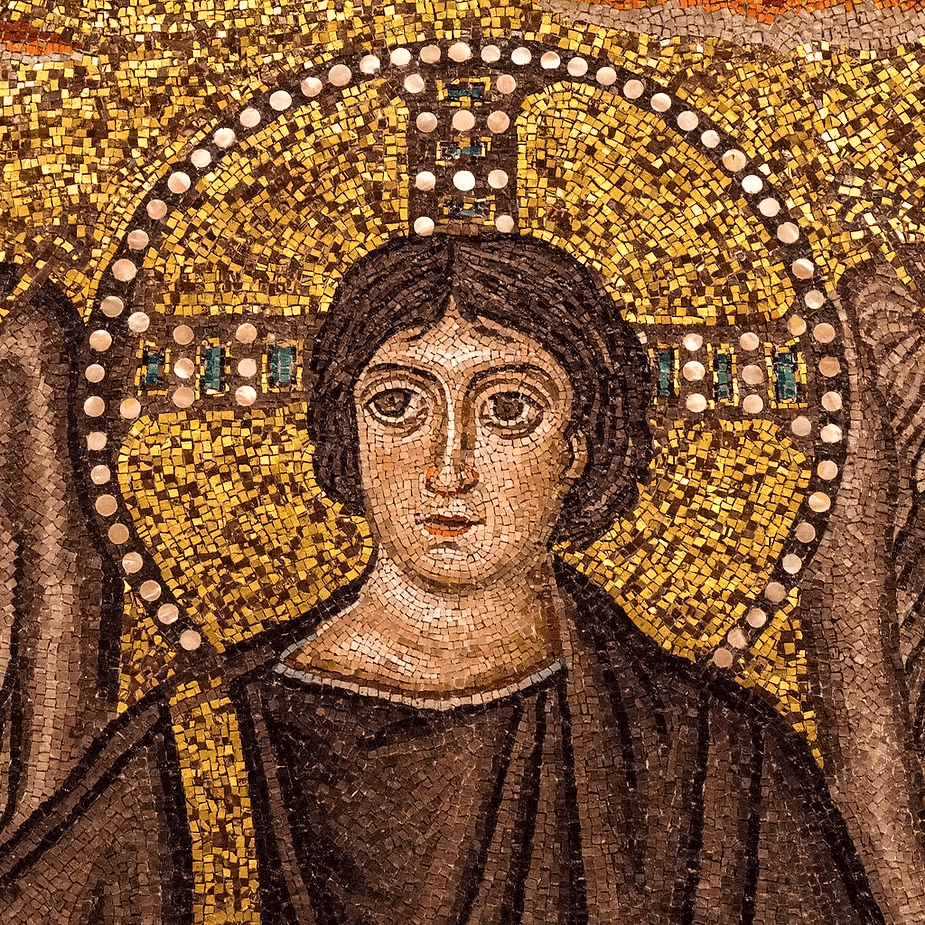
When this concept has been grasped, one can then see this glow on the face of Moses was not something that he is shown to have displayed prior. The “skin of his face shone” needs to be seen as a halo, in a similar way one is depicted around the heads of saints in early Christian artwork. It is this “shining” that denotes the presence of the Adam soul (now called Jesus, meaning “Yahweh Saves”), that is the Doubly Fruitful presence of the Yahweh elohim soul. A natural soul in a body of flesh produces an aura that surrounds itself; but a divine possession by the Son of Yahweh radiates more greatly, as a halo.

We read verse thirty saying [NRSV]: “When Aaron and all the Israelites saw Moses, the skin of his face was shining, and they were afraid to come near him.” Here, one should realize Aaron held the position of High Priest of the Tabernacle; but, in this second version of Moses bringing down new tablets, it was Aaron who coordinated the collection of gold (jewelry), when worry about Moses being gone so long led the rabble to control the leader to be filled with fear. The gold collected was then melted down and formed into the idol of a golden calf. That means Aaron is metaphor in this second telling for the later human beings who would be put in Aaronic positions of leadership, leading the Israelites away from Yahweh, towards the worship of Baals. So, when Aaron became just like all the other Israelites who saw Moses as shining like Yahweh in their presence, it was their fear that becomes synonymous with the rejection of Jesus when he was in the midst of the elders and high priests of Jerusalem.

[Aside: When Exodus 32 tells of Moses breaking the tablets, there then was an order given to the “sons of Levi” to take swords and kill those who caused the idol to be erected. We are told three thousand were executed for this, with Aaron called shameful for not controlling those actors. It would make sense that Aaron would be among the first executed; but his not being one of those killed says this is a prophecy of future kings, whose fates would be determined by Yahweh after their natural deaths.]

In the verses that speak of the “face” of Moses, it becomes worthwhile to go back to Exodus 20, where the “Ten Commandments” are stated. In these selected verses the Hebrew words “pā·nāw” and “pə·nê” are written six times (four times and two times, respectively). All are rooted in the Hebrew word “paneh,” which mean “face.” Still, this exact same word – “pā·nāw” – is found used in Exodus 34:6, where the NRSV translations shows, “Yahweh passed before him,” where the word that means “face” is translated as “him,” a reference to Moses [from “al-pā·nāw” saying “before him”]. This is where the First Commandment needs to be shown in the Hebrew, as: “lō yih·yeh- lə·ḵā ’ĕ·lō·hîm ’ă·ḥê·rîm al-pā·nā·ya.” The NRSV translates this as saying, “you shall have no other gods before me.” The reality is this says, “not shall have you elohim others before my face.” The Hebrew word “pā·nā·ya” is a construct of “paneh,” just as are “pā·nāw” and “pə·nê.”

In addition to these clearly translated words that say “face,” verse 34 is shown by the NRSV to say: “but whenever Moses went in before the Lord to speak with him.” Here, the Hebrew shows: “ū·ḇə·ḇō mō·šeh lip̄·nê Yah-weh lə·ḏab·bêr ’it·tōw,” where “lip̄·nê” is yet another construct of “paneh,” now translated as “before.” The Hebrew literally translates to state, “but whenever came into Moses the face of Yahweh to speak to him”. This says that Yahweh was not holding shop on top of Mount Sinai, but within Moses, because Moses was one of Yahweh’s elohim. Whenever Moses spoke to Yahweh, Moses wore “the face” of Yahweh “before” Yahweh.

When this is realized, all uses of “face” – from the root “paneh” – should be read in Hebrew Scripture as relative to this Commandment. The “face” a soul that is married to Yahweh wears must be the “face” of Yahweh. That “face” is then the projection made by a Yahweh elohim, where an elohim can be any other gods – self included (because a soul is a ‘minor’ elohim), but most dangerously is the “face” worn by a soul possessed by a demon elohim. Thus, when Moses spoke to Yahweh, he did so wearing Yahweh’s “face upon” his [when “al-pā·nāw” says “upon face.”].

Because this element of “face” needs to be seen as that worn by all saints-apostles reborn as Jesus, each soul resurrected in his name, each soul designated a Christ by Yahweh, this becomes fulfilling the first of the marriage vows that are represented in the Covenant. Because Moses only went up Mount Sinai one time and only came down with the Law one time, this facial glow of Moses must be seen as Jesus promising that the Law would be written on the hearts [i.e.: souls] of those who followed him [became him resurrected within their souls]. One becomes a walking, talking Moses reincarnated [a true Lawyer] when Jesus is within one’s soul; so, the shine is wearing the “face” of Yahweh. The “veil” is then no one seeing all that presence visibly. The “veil” is then all Saints and Apostles looking like normal people; but remove the “veil” and one finds the truth of Yahweh’s Spirit within.

The element of a “veil” needs to be seen as a symbol of a bride. As such, Moses’ soul was married to Yahweh. The glow on a face can also be seen as the beauty of his divine pregnancy, carrying the soul of Adam within his ‘womb.’ This makes a “veil” be the covering that says to others, “I am taken.” Some believe the tradition of a bride wearing a veil was to hide herself away from demon spirits, to keep evil from interfering with the happiness of divine marriage. The fact that Moses wore a veil can then be seen as a statement of the femininity of all souls in human flesh (regardless of human gender). All are then brides-to-be, in waiting for their most holy Husband. The use of veils in human marriage ceremonies, where the bride is the one wearing the veil, to be removed after the wedding is official, says all who are truly engaged to Yahweh will wear a symbol that says, “I am Yahweh’s bride.”

In the symbolism of the tent of meeting [“mishkān”], this needs to be seen as the body of flesh, where the body is a soul’s “covering, place of dwelling, residence.” When Moses would enter into this place, so the veil could be removed, the symbolism that must be understood today is a state of reverence for Yahweh. This can come about as visions or dreams, when one is alone with one’s thoughts. This means one has designated one’s body as a temple unto Yahweh, making one’s body become “Holy ground.” More than some external building, the “tent of meeting” is when one enters a state of prayer … an opening of the heart and mind to Yahweh … at which time the veil of human flesh is dropped and it becomes a soul speaking with the Father Spirit, as the Son reborn.

In the Gospel reading connected to this reading, on the last Sunday after the Epiphany, Peter, James and John witnessed the glowing presence of Moses, Elijah and Jesus, prompting Peter to ask if he should pitch a tent for the guests. There, he spoke from fear, just as did the Israelites who saw the skin of Moses’ face shining. The three witnessing that says they too were in a divine state being, one that connected their souls to Yahweh. Thus, when Peter spoke, Yahweh spoke back … loudly and clearly. For Yahweh to say, “This is my Son, my Chosen; listen to him!” that says Peter, James, and John were all chosen by Yahweh to become His servants. They were instructed to listen to their inner voice, who was known to be the soul of Adam, as Jesus reborn. So, in effect, each had become themselves tabernacles – tents of meeting – in whom all would have the ability to speak with Yahweh, through being the Son Jesus reborn.

As the Old Testament reading choice for the last Sunday after the Epiphany, in the Year C, this says Moses was the model for all the Israelites to follow, in the same way Jesus was the model for all Christians to follow. The point is to become Jesus, not keep him external to oneself out of fear that seeing Yahweh will mean one’s death. It is true that all who look upon Yahweh must die; but that death is the sacrifice of oneself (submission of one’s soul) to forever serve Yahweh. To serve Yahweh, one must die of self so one’s “face” of ego does not attempt to “face” Yahweh. That cannot happen. That would mean the marriage of a soul to Yahweh will cease and the soul will experience death when the body dies. One has to figuratively die (permanently of self-importance) and shine the brightness that is Yahweh’s truth – the light of Christ to lead the world to salvation. That shining light has to come from within one’s soul, so that becomes the halo of a Saint.

Exodus 3:1-15 – The test of listening to a burning bush

Moses was keeping the flock of his father-in-law Jethro, the priest of Midian; he led his flock beyond the wilderness, and came to Horeb, the mountain ha-elohim. There the angel of Yahweh appeared to him in a flame of fire out of a bush; he looked, and the bush was blazing, yet it was not consumed. Then Moses said, “I must turn aside and look at this great sight, and see why the bush is not burned up.” When Yahweh saw that he had turned aside to see, elohim called to him out of the bush, “Moses, Moses!” And he said, “Here I am.” Then he said, “Come no closer! Remove the sandals from your feet, for the place on which you are standing is holy ground.” He said further, “I am elohe of your father, elohe of Abraham, elohe of Isaac, welohe of Jacob.” And Moses hid his face, for he was afraid to look at ha-elohim.

Then Yahweh said, “I have observed the misery of my people who are in Egypt; I have heard their cry on account of their taskmasters. Indeed, I know their sufferings, and I have come down to deliver them from the Egyptians Egypt, and to bring them up out of that land to a good and broad land, a land flowing with milk and honey, to the country of the Canaanites, the Hittites, the Amorites, the Perizzites, the Hivites, and the Jebusites. The cry of the Israelites has now come to me; I have also seen how the Egyptians oppress them. So come, I will send you to Pharaoh to bring my people, the Israelites, out of Egypt.” But Moses said ha-elohim, “Who am I that I should go to Pharaoh, and bring the Israelites sons of Israel out of Egypt?” He said, “I will be with you; and this shall be the sign for you that it is I who sent you: when you have brought the people out of Egypt, you shall worship ha-elohim on this mountain.”

But Moses said ha-elohim, “If I come to the Israelites and say to them, ‘elohe of your ancestors has sent me to you,’ and they ask me, ‘What is his name?’ what shall I say to them?” elohim said to Moses, “I am who I am.” He said further, “Thus you shall say to the Israelites sons of Israel, ‘I am has sent me to you.’” elohim also said to Moses, “Thus you shall say to the Israelites sons of Israel, ‘Yahweh elohe of your ancestors, elohe of Abraham, elohe of Isaac, welohe of Jacob, has sent me to you’:

This is my name forever, and this my title for all generations.”

——————–

This is the Old Testament selection to be read aloud on the third Sunday in Lent, Year C, according to the lectionary for the Episcopal Church. It will precede a singing of verses from Psalm 63, where David wrote: “Therefore I have gazed upon you in your holy place, that I might behold your power and your glory.” That pair will be followed by a reading from Paul’s letter to the true Christians of Corinth, where he wrote: “Our ancestors were all under the cloud, and all passed through the sea, and all were baptized into Moses in the cloud and in the sea, and all ate the same spiritual food, and all drank the same spiritual drink.” All will accompany a reading from Luke’s Gospel, where he wrote of how Jesus “asked them, ‘Do you think that because these Galileans suffered in this way they were worse sinners than all other Galileans? No, I tell you; but unless you repent, you will all perish as they did.’”

You will notice the changes I have made in the above text. Four times the NRSV had translated “Yahweh” as “the Lord.” Because that is not what was written, I have restored the proper name of Yahweh [in bold type] that Moses had be memorized and then written. You will also take note of the seventeen restorations I have made in italics. All relate to variations of the word “elohim,” which is plural in number, implying “gods” [in the lower-case]. In all places the NRSV has taken the liberty to make this a singular number, capitalized “God,” which is wrong. It is vital that one see there is a difference between “the Lord” and “God,” simply because that is two different words being focused upon. Likewise, there is a significant difference in Yahweh and elohim, which must be grasped to see the truth of this lesson rising to the surface.

According to the BibleHub Interlinear that shows the Hebrew words, their transliterations into an alphabet recognized, and an English translation of the transliteration, that source also provides a link to the root word [in Strong’s], where multiple translation variations can be found. Also, underneath each English translation is a coded statement about the word written in Hebrew. Relative to that reference, the transliterations that I have restored in italics above shows this [my translations in quotation marks]:

elohim – noun masculine plural = “gods”

elohe – noun masculine plural construct = “the gods”

welohe – conjunction + noun masculine plural construct = “and gods”

ha-elohim – article + noun masculine plural = “this gods”

In this text from Exodus 3 are three uses of “elohim,” with no modifications. There are five places that “ha-elohim” is written. There are seven places where “elohe” is written as that construct; and, there are two times that “welohe” is found. As shown in this list above, all are plural number masculine nouns. However, none of those uses should be thought of as “gods.”

The “elohim” are introduced in Genesis 1, where thirty-two times Moses orated [memorized and then later transcribed] the word “elohim,” which is to be understood as “the gods” that Yahweh created … first thing: “In the beginning created elohim.” There is absolutely no references to Yahweh in Genesis 1, which means Genesis 1:1a must be assumed that it was Yahweh who “in the beginning created gods.” Those “gods” [the “elohim“] would then carry out Yahweh’s plans for The Creation.

The ”elohim” that were many [plural] and who carried out Yahweh’s Creation are then named singularly – as “elohim” stated with Yahweh absent – when Yahweh then put the singular “elohim” to rest, after six phases of The Creation. The seventh phase was deemed holy by “Yahweh,” whose name appears eleven times in Genesis 2. In each of the times Yahweh is written in Genesis 2 it is followed by the word “elohim.” This word has the same implication as “gods,” but when that word follows “Yahweh,” as “Yahweh elohim,” the implication is those “gods” that are then married to Yahweh, as His elohim. All elohim are the creations of Yahweh, but not all elohim are married to Yahweh within human flesh. Yahweh controls them all; but some elohim willingly and lovingly serve Yahweh as His elohim, His angels who are the guardians of His priests.

Genesis 2 tells of the creation of Adam, who is the true Son of Yahweh, the only Son, made by His hand. The “elohim,” which is a plural number word, says the soul of Adam was angelic, where Adam was made in flesh made from the earth, with a multiplicity that could be many “gods” in one body. To understand this, think of Adam as being Adam in the flesh, while being presented different animals to name; and, in that naming one of the elohim of Adam entered the soul of the animal, instantly knowing everything about that animal. Thus, Adam’s extended elohim asked the animal, “What would you like to be named, and the animal soul responded to that elohim of Adam and Adam knew, because of his still present elohim. This is a spiritual multiplicity that ordinary souls do not have, which means Adam would be sent to earth as the Son of Yahweh to spread the lineage of Yahweh elohim among mankind.

By seeing this as the intent and purpose of all forms of “elohim,” one should then look at the series of Hebrew words that are given proper name status. All capitalization of Hebrew into English comes with applied capital letters, as those translating the Hebraic text see a word as a name; and, it is a name. Still, the lower-case states the meaning behind the name every time that word-name is used in divine text. Even the name Yahweh is not capitalized in Hebrew, because Hebrew has no way of designating capital letters, versus lower-case letters. Thus, the letters “yod – he – waw – he” [“י ה ו ה” where Hebrew writes from right to left] are transliterated (with vowels inserted) to sound out as “yah-weh” [or auf Deutsch “je-ho-vah” – where j = y and a w = v] but that ‘word-name’ means, “He Who Causes That-Which-Is To Be & He Who Causes That-Which-Can’t-Be To Fall.”

In such a long reading selection, as is fifteen verses, this story unfolds with many Hebrew words read as proper names, without any contemplation given to the meaning behind the names. Everything in Biblical Scripture is divine, so nothing is without deeper meaning. All of these ‘names’ written need to be understood; and, when one is looking closely at these ‘names,’ one then finds the word “elohe” directly connected to the names Abraham, Isaac, and Jacob, while also directly linking to non-names: “your father” [implying Amram, but not stated] and “their fathers.” That then says “elohe” are “sons of Yahweh,” which is supported in the correction made above [following strikethroughs] where is written “sons of Israel.”

All of this means it is important to have a list of the names and the meaning behind the names. They are as follows [most referenced from Abarim Publications]:

Moses = “Child – Rescued From Drowning In Water; Extracted; Loan; Hidden; Covered”

Jethro = “Excellent; His Excellence; His Remnant”

Midian = “Strife; Place Of Judgement”

Horeb = “Arid; Dryness”

Abraham = “Their Protection; Their Shield”

Isaac = “Laughter; He Will Laugh”

Jacob = “He Who Closely Follows; Supplanter”

Egypt = “Temple of Ptah; Married To Tragedy”

Canaanite = “Land Of Purple People”

Hittite = “Terrors; Terrible”

Ammonite = “Great People”

Perizzite = “Non-urbanite; Wildling; Rural”

Hivite = “Tent Villagers”

Jebusite = “Of The Trodden Underfoot; The Down Tramplers”

Israel = “He Retains God; God Is Upright”

With all of this at one’s disposal, this reading can speedily be seen to show the following:

In verse one, we find Moses (Extracted, Hidden) has found safety in a land outside of Egypt. He is working for his father-in-law Jethro (His Remnant), who is a priest of Midian (a son of Abraham that is known for Strife), as a shepherd. This element of being one who tends to a flock cannot be overlooked. It is a projection of Moses being the shepherd over the flock of Israelites for the next forty years. In the translation that says “wilderness,” the Hebrew word “midbar” is used and refers to “uninhabited land,” which is in the land of Midian, where modern Saudi Arabia touched the northern edge of the Red Sea.

In the last two segments of verse one is written “and came to mountain ha-elohim , Horeb (Dryness).” Certainly, this literally indicates Moses coming upon a mountain, where Jethro’s “flock” had gone to graze. The region of Median is indeed arid, so that would be an indication that the mountain (which could also be a hill) was one the locals called it “Horeb,” because it was dry. Still, there actually is no separation between “ha-elohim” and “hore-bah,” with that ‘name’ shown to be in the third person feminine singular. So the “mountain of elohim” can be seen as a statement of a wife of Yahweh. In this, one must see that Yahweh is the spiritual Father of His elohim Son, with the Mother of Adam being the Earth, from whom Yahweh took dust to form His Son. So, the “mountain herself” is one of the elohim created by Yahweh in The Creation.

In verse two we are immediately told, “and appeared a messenger Yahweh.” In that, the Hebrew word “malak” means “a messenger,” but Yahweh’s “messengers” are “angels;” so, that is a viable translation that must be seen. This becomes a transition from a “mountain of elohim” to an “angel of elohim.” The aspect of “Dryness” (Horeb) can now be seen as the presence of Moses bringing the moisture that made “her mountain” produce an “elohim.” This is then explained as “an angel appearing a flame of fire in the midst of a bush.” In that, “the bush” must be seen as the fruit of “her mountain,” where some conject the Hebrew word “seneh” could be a blackberry shrub,” or some other “bramble bush” that produces fruit. The fruit of this “bush” is “an angel” that is so bright it “appears” to be “a flame.” However, because it is “an angel” it is not physical fire, but Spiritual presence.


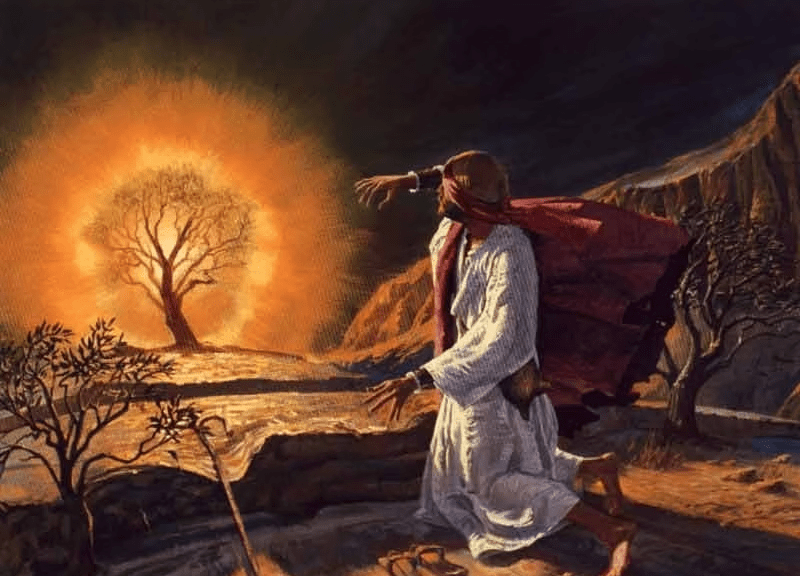
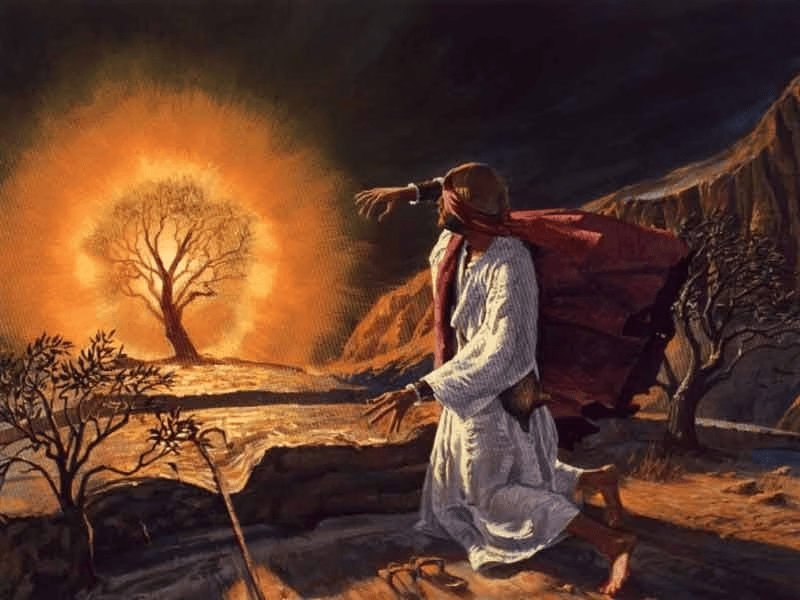
This depiction is wrong, as shepherds do not tend their flocks at night; so, the background should be depicting daylight.

Because we now have read “ha-elohim” twice, the “appearance,” which says Moses was able “to see and angelic elohim,” this becomes a statement that Moses has transfigured, in the same way as did Peter, James and John, when they went on “a mountain” with Jesus. They too had an ability “to see” the “angels” that were Moses and Elijah. This must now be realized when the remainder of this reading unfolds, as it is not ordinary Moses talking with Yahweh elohim. He has become a Yahweh elohim. When we then are told that Moses looked and saw what he thought was physical fire not destroying the bush, this says he was beginning to realize this was a spiritual manifestation.

In verse three, it begins by stating, “and said Moses.” Unless Moses was talking to the flock, he was speaking to the “angel of elohim,” which had appeared to him. To then say, “I will turn aside now to see great here ; for what reason not does burn this bush .” This must be recognized as two statements being made, with the second statement not being a question about why the bush is not burning. It says Moses understands that the reason the bush is not burning is it is a spiritual presence, not material … not physical fire. That is then what makes Moses say it is ”great.” That then says that the Hebrew words translating as “I will turn aside now” [“’ā·su·rāh- nā”] is not a statement of Moses changing direction, as if walking towards the bush. Instead, the word means Moses told the angel that he willingly would enter into the spiritual realm; and, he would do that because he knew the “angel of elohim” was most holy.

In verse four begins by saying, “when he saw Yahweh,” which is the first time that Moses became face-to-face with Yahweh and spoke with Him. For this to happen – to “see Yahweh” – one has to die, because “no one can look upon Yahweh and live.” Thus, the soul of Moses had left his body of flesh, in order to have this direct spiritual meeting. The way this has described a flame of fire in a bush says this bright glowing light is what would transfer onto Moses’ soul; so, when his soul returned to his body of flesh the holiness of Yahweh’s penetrating light would shine through his flesh, as a halo. This leaving of his physical body is now confirmed by repeating “he turned aside to look.” That says Yahweh made it possible for the soul of Moses to leave his body; and, Moses voluntarily went towards Yahweh.

From this naming of Yahweh, we then read that Moses was called by “elohim” in the “midst of the bush,” saying (twice), “Moses!” (“Extracted”) “Moses!” (“Child Rescued”). When Moses heard the voice of Yahweh speaking his name, two things should be seen. First, Moses ceased being part of the physical surrounding. Instead of a “flame of fire in a bush,” Moses has become an “elohim amid that which gives birth to angels of elohim.” Having become one of Yahweh’s “elohim,” Moses could hear Yahweh speaking to him. Rather than hear Yahweh speak his name – as a name is unimportant in the spiritual realm – hearing Yahweh declare a new soul has been “Extracted!” and a “Child Rescued,” that led Moses to respond. This is then the second point of importance to realize. For Moses to say (in Hebrew) “hin·nê·nî,” this better translates as “behold!” where Moses saw that truth spoken from Yahweh. While that Hebrew word is similar to the one written by Isaiah, in his spiritual dream where the question was asked, “Who do we send?” there is no focus place on the first person “I” in the spiritual realm of Yahweh. Thus, Moses said “See!” the truth of what Yahweh spoke [the truth of a name] and replied, “Behold!” because the truth was amazing to Moses.

In verse five, Yahweh did not say Moses was walking about and needed to stop. Yahweh said Moses did “not draw near to this place,” as “this place” or “here” [“hă·lōm”] is not physical, but spiritual. Yahweh next said “clear away your sandals,” where the implication to “take off” or “remove” footwear is symbolic, as Moses’ soul had no need for any clothing at all. The words are intended to say that Moses was no longer in a realm that required “sandals” to move about. The spiritual realm had taken Moses’ soul “clear away,” in the same sense he willingly “turned aside.” The focus placed on “your sandals” is then a statement about the spiritual “footwear” of Moses being “above” [from “mê·‘al”] the terrestrial. The necessity of “your feet” [“raḡ·le·ḵā”] has been “cleared away,” as ordinary human souls stand at the “feet” of Yahweh; but Moses has been divinely elevated “above” that state of being; adding, “for this place” only.

When verse five then has Moses hearing (as an “elohim”) Yahweh say, “where you stand over , land-holy is .” This becomes relative to Genesis 2, as “land-holy” is Eden. Eden is where divine souls (elohim) can exist in bodies of flesh. Moses was elevated out of his body of flesh, but his body of flesh was still present and living, in the sense that Moses felt his body of flesh still within his soul. Yahweh was telling Moses that his “elohim” addition to his soul had taken him above and beyond ordinary “land,” taking his being to a “land-holy” (or Holy Land), which is Eden. While Adam and Eve lived in Eden (as Yahweh elohim) they could hear the footsteps of Yahweh and hear His voice. They could see Yahweh in the same way Moses was now able to see Him, hear Him and talk to Him.

In verse six we see that Yahweh begins to teach Moses about all who are His “elohim.” When He first says, “I elohe your father,” this is not Yahweh saying that Amram (the father of Moses and Aaron) was one of Yahweh’s “elohim,” even if Amram was such a divinely elevated soul. This first segment of words is stating that Yahweh (“I”) am “your father,” who made Moses’ soul one of His “elohim.” This first segment is the truth about all souls that can call Yahweh “my Father.” Thus, with that understood, the same relationship existed between Yahweh and “Abraham, Isaac, and Jacob.” Yahweh was the Father of each of those souls, when they became His “elohim.”

When verse six then tells us, “for hid Moses his face for fear , to look into of elohim .” that says Moses immediately knew he could not wear the face of a mere mortal upon his face and look upon Yahweh. Moses was still some time away from receiving the Law he would take down to the children of Israel to agree with, as their vows of divine marriage to Yahweh; but the first Law says, “Thou shall wear no other face before the face of Yahweh.” The “fear” Moses felt was that of being ejected from this divine experience; so, he feared standing for his own self-ego in such a great presence. This means Moses lowered his face in submission to the power of Yahweh; and, he could then “look into” Yahweh’s face, as one “of His elohim.” That says being one of Yahweh’s elohim means subjection of self-will, in service to Yahweh.

Verses seven, eight and nine are then Yahweh telling Moses the background story of the Israelite people in Egypt. In verse nine, and again in verse ten, Yahweh does not call those children “Israelites,” but instead “sons of Israel.” The key terms used by Yahweh – “to deliver them” [from “lə·haṣ·ṣî·lōw”] “and bring them up” [from “ū·lə·ha·‘ă·lō·ṯōw”] “to earth flowing with milk and honey” [from “el-’e·reṣ zā·ḇaṯ ḥā·lāḇ ū·ḏə·ḇāš”] – together say that Yahweh is choosing Moses to be the ‘midwife’ who would “deliver” the baby ready to be born from the womb of Egypt (Married To Tragedy]. Those “sons of Who Retained God,” who developed in the womb from one Yahweh elohim that taught all of his children to worship One God as above all others, had reached a point in fetal development that birth pangs were signaling it was time for their birth. And, in that regard, the infant would need another Yahweh elohim to lead them to the teat that would fatten them, where other peoples would still be allowed to remain and dwell. Canaan would be the nursemaid of baby Israel.

In verses ten through twelve, the scenario of “pharaoh” comes up. This needs to be read metaphorically as the soul of Egypt, where Egypt has been like a surrogate mother of Yahweh’s child. As has been the case in reported surrogate mother situations, once they carry a fetus in their womb the birth makes the baby be an extension of the mother; so, the mother does not want to part with the child. This is why Moses asked what legal grounds did he have in his favor, when the children of Israel had become an extension of the surrogate mother. If she were tp be unwilling to give up her newborn without a legal battle, how would Moses handle that resistance?

This is where the name “Egypt” takes on the meaning of “Temple of Ptah,” where “Ptah” was a deity with similarities to Yahweh (a creator god, patron to the development of crafts). The “sons of Israel” were placed in a surrogate mother’s womb, in order to develop into priests who serve only one God, not the polytheism natural to Egyptians. Thus, the ‘DNA’ of the “sons of Israel” was the legal grounds for the mother (Egypt) to release the baby to the rightful parent (Yahweh). Egypt had no gods that could make that claim of parentage. Moses would then be the “elohim” of Yahweh that would develop their ‘craft’ of priesthood further.

When verse thirteen begins by stating, “and said Moses into of elohim,” that needs to be seen as Moses now speaking as an extension of Yahweh, having received the soul of His Son, where Moses is also one “Who Retains Yahweh as one of His elohim” (Israel’s deeper meaning). This speech then led Moses to say, “behold!,” followed by the identification of “I” [from “’ā·nō·ḵî”]. Because Moses had hidden his ”face in fear,” the use of “I” cannot be read as if Moses suddenly raised his “face” and spoke of self (“I”). This is Yahweh speaking through the Son, so Moses spoke as one of the “elohim,” realizing he had also “come to the sons of Israel to tell them” he was an “elohim” who was divinely raised in soul, just like “the fathers” of the children of Israel in Egypt, with Moses “sent to them” as the same spirituality that made their fathers be “sons of Israel.”

In what appears to be two questions posed to Yahweh by Moses, this is actually two statements made by Yahweh to Moses. The first says, “and they will say to you what his name,” with the second statement being, “anything I shall say to them.” Again, the first-person construct in “I shall say” [from “’ō·mar”] says Yahweh will do all the talking. This is the model that will be found in Jesus, where he repeatedly said he spoke for the Father, because the Father was in him. This is Yahweh telling Moses not to worry about any questions posed to him, especially those posed by pharaoh, as to what God an “elohim” speaks for.

When verse fourteen begins, “and said elohim into Moses,” this is again Yahweh speaking through the divine soul that has possessed Moses, letting Moses’ soul know who is now his Father, the Father of all “elohim.” Here is where Yahweh says “I am” [from “’eh·yeh”]. The root Hebrew word here – “hayah” – means, “to fall out, come to pass, become, be,” which becomes an “I” statement about “Being.” That is “who” [from “asher”] is the possessor of Moses’ soul. Thus, Yahweh repeated “I am” again, which says there really is no name that can possibly be applied to Yahweh, because names are meaning applied to souls in shapes of angels or bodies of flesh [which resemble the elohim].

In this regard, the name “Yahweh” – or “YHWH” – is said to be “it incomprehensible” [from Judges 13:18, using “wə·hū-p̄e·li,” which can say “it wonderful” also]. By telling Moses Yahweh is simply a way to denote Him specifically, that ‘name’ is a statement of a presence that “IS.” It is a sensation that exceeds physical limitations, such that there are no words that truly can express what the divine “Being” is like, in human terms [even “God” or “Lord” fails to properly name Yahweh]. It is only a presence that can be felt by a soul [well beyond the sensations of a body of flesh], such that it is the truth of Spiritual “Love,” which cannot possibly be found equating to human “love.”

By Moses’ soul being told this, one needs to realize that there were no descendants of Jacob in Egypt, who had been taught by their forefather certain rites and rituals that were passed down from Yahweh to all His “elohim,” who Moses would go to and say, “I come to free you guys” and they would ask him, “Who sent you?” Moses would show up as God incarnate – like Jesus was seen – and he would let Yahweh do all the talking for him, which spoke loudest in miracles done. The children of Jacob – the “sons of Israel” – were in no way divinely elevated to ask any questions, or even know what answers should be given. Their approval – like a baby who is about to be born – had no bearing on the matter of their exit from the womb. Moses would appear as a divine ‘midwife’ to deliver that child, which meant taking it from the birthing table and then leading it to the big teat in Canaan, where it would suckle for several hundred years.

Moses would then be the “elohim” that would prepare the “sons of Israel” to become that themselves. They had been conceived by “Israel,” who was a “Son” of Yahweh, as a Yahweh elohim. The people were then normal “sons,” or “children,” who came from a divine lineage that was not genetically inherited (being a lineage of souls married to Yahweh – elohim). This is why Moses would become their teacher to sacrifice their souls to Yahweh, in the same way the human lineage went from Abraham to Isaac to Jacob. Those three had sons that were not inheritors of a divine elevation of soul [Ishmael, Esau, and the sons who sold Joseph into slavery and did other grave sins). Thus, Yahweh would be their Spiritual teacher, with Moses their “elohim” babysitter-teacher.

As a very deep reading selected to be read on the third Sunday in Lent, the theme of sacrifice in the wilderness must be seen as the test of service. Moses was filled with the Spirit of Yahweh that made him become a most divine elohim, one who saw Yahweh while in a transfigured state of being. Moses is quite parallel to Jesus in many ways, as the same Spirit-soul was in possession of Moses’ soul. The test of Moses would take him the rest of his life taking that test, which was the last forty years (a little more) of his life. Therefore, to see Lent as some temporary commitment to Yahweh is wrong. One needs to be in the presence of Yahweh forever, if one’s soul truly seeks salvation. The test is always about eternity; and, that means accepting all tasks that come from the Father. One must always reply, “Behold!” so Yahweh knows your soul welcomes the test.

Exodus 32:7-14 – The prophecy of Moses reviewing modern Jewish sinners

[7] Yahweh said to Moses, “Go down at once! Your people, whom you brought up out of the land of Egypt, [8] have acted perversely; they have been quick to turn aside from the way that I commanded them; they have cast for themselves an image of a calf, and have worshiped it and sacrificed to it, and said, `These are eloheka, O Israel, who brought you up out of the land of Egypt!'” [9] Yahweh said to Moses, “I have seen this people, how stiff-necked they are. [10] Now let me alone, so that my wrath may burn hot against them and I may consume them; and of you I will make a great nation.”

[11] But Moses implored Yahweh elohaw, and said, “Yahweh, why does your wrath burn hot against your people, whom you brought out of the land of Egypt with great power and with a mighty hand? [12] Why should the Egyptians say, `It was with evil intent that he brought them out to kill them in the mountains, and to consume them from the face of the earth’? Turn from your fierce wrath; change your mind and do not bring disaster on your people. [13] Remember Abraham, Isaac, and Israel, your servants, how you swore to them by your own self, saying to them, `I will multiply your descendants like the stars of heaven, and all this land that I have promised I will give to your descendants, and they shall inherit it forever.'” [14] And the Lord changed his mind about the disaster that he planned to bring on his people. פ

——————–

The first thing that must be realized from these verses is they come from a prophetic vision Moses was shown by Yahweh. Moses went up Mount Sinai, stayed forty days and came down with the Covenant, which the people all agreed to. That was the ancient history told in Exodus 19, with the Ten Commandments listed in Exodus 20. There was no second trip up the mountain, broken tablets, or a golden calf. All that is foretelling of a future break from Yahweh. It is from that perspective that these verses must be read.

In these verses we read how Moses argued with Yahweh about destroying the people. That matches the prophetic story of Abraham arguing with Yahweh about there being some number of good people in Sodom; so, that evil city should not be destroyed. Saints like Moses and Abraham never argued with Yahweh. A soul married to Yahweh does everything Yahweh commands. Like Ezekiel when asked about dry bones living, they all respond, “Yahweh, you know.” That means nobody can think greater than Yahweh. It is a moot point.

In verse seven, where we read, “Yahweh said to Moses,” this must be understood to be non-verbal, as in no way physical speech involving mouths, lips and tongues. It is a statement of Yahweh communicating to the soul that had been Moses, on earth, at one time. It is no different than reading the Yahweh brought word to Jeremiah. It is not physical speech, but spiritual awakening of a soul by Yahweh.

For Yahweh to then say, “go down,” this makes one imagine Moses is atop Mount Sinai, when the soul of Moses is most divinely elevated into the spiritual real, no longer a part of the material. The command from Yahweh then says, “go descend,” which means to return spiritually to the worldly plane of existence.

The reason for Yahweh to send the soul of Moses back to the earth is to witness how “have corrupted your people , whom you brought out of the land of Egypt .” In that, the words translated as “land of Egypt” must be read as “the flesh married to tragedy,” which is metaphor for “earth-land” and the meaning behind the name “Egypt.” This says that the “corruption of the people long before led by Moses to marry their souls and flesh to Yahweh” is they no longer honor that spiritual union. The ”corruption” says the souls of their children’s children have returned to being “married to tragedy.”

When verse eight says “they have turned aside quickly out of the way which I commanded them,” this says they have broken their marriage vows to Yahweh, “turning Him aside” so they can have adulterous affairs, all while still claiming to possess Yahweh’s name in marriage. Yahweh’s “commands” are the Covenant, unto which all souls had to wholly agree to, out of love and willing submission to Yahweh’s care.

Yahweh then informed the soul of Moses that the “corruption” of the “people” was demonstrated in the symbolism of having “made themselves” gods, who can change their religious practices (righteous ways) to suit their needs, not Yahweh’s commands. The act that signified them “making themselves” gods was a “calf molded.” This must be seen as a return to pagan god worship, where the precession of the signs of the zodiac reflect the nature of godly worship on earth. Prior to the age of Yahweh (Aries, the Ram) was the age of Taurus, the Bull. The “calf” reflects the ancient worship of Ba’al, who was served by many lesser gods. Egypt was a land of polytheism, where worship of the Bull was an example of that. The sign of Taurus (an earth sign) is then a clue that Ba’al worship was for material gains. The age of Aries would signify a single God (Yahweh) of worship, whose leadership would protect the flock.

With this being a prophetic vision of a distant future, far away from the physical time of Moses on earth, the “molding of a calf” is then a projection into the future that rejects the one God philosophy, as well as that of the age of Pisces, which is the time when Jesus would lead souls to connect to the spiritual world while still in the flesh, by being resurrections of his soul. The Second Commandment that says, “Thus shall not make of yourselves any idol,” this says the “molded calf” was a projection of self-image, as a god. It should also be grasped that “a calf” is not a representation of a male yearling lamb that is blemish free, which each family was commanded to sacrifice and spread its blood over the doorframe.

When Yahweh then told Moses, “the people worshipped it and sacrificed to it and said these your gods”. This says the “people worshipped” themselves as their own self-gods. The Hebrew word “eloheka” is a second-person plural masculine singular construct, where “elohim” is not the soul of Yahweh’s Son resurrected within each (that would be the lamb, not a calf), but each soul (an eternal spirit) seeing itself as a “god” (el), collectives as “your gods” (“eloheka”). To “worship” self and make “sacrifices” to an “idol of self” says the “people” had changed from a commitment to Yahweh (self-sacrifice unto Him) and moved to deify themselves as “gods” in His place.

In the whole story (not read today), the people supposedly became worried that Moses had not returned in forty days. The projection of this fear into a prophesied future says the failed Israelites – the Jewish remnants that had been overrun, scattered and enslaved to foreign powers – had lost faith that any promises made by Yahweh were recognized by anyone else in the world. The formation of a golden calf is then the Jews claiming to be gods on earth, due to Moses leading them to a Promised Land. That Promised Land, however, had been taken away from the Jews by greater powers then they possessed (the Ottoman Empire and Arab influence). They then “molded a calf to worship and sacrifice unto” so they became known as the bankers-jewelers-moneychangers of the world. This known history says they saw Moses (and Yahweh) had forsaken them; so, they took measures into their own hands and made themselves gods for the world to reckon with, out of financial necessities. The golden calf is the influence the Jews wield today, as a vast minority that controls the vast majority by having become the gods of wealth, power and influence. This is the corruption that should be seen in this story in Exodus 32.

After verse eight has the “people worshiping and sacrificing to gods,” Yahweh tells Moses that was the “corruption” of “Israel,” which Moses had “brought out of the flesh married to tragedy” (“out of the land of Egypt”). This places focus on the meaning behind the name “Israel” (“yiś·rā·’êl”), which is “Who Retains the el of Yahweh” within his or her being. This is the “el” of the “elohim” that is the soul of the Son of Yahweh – Adam-Jesus. It is not the “eloheka” of self-worship, as those “elohim” are the fallen angels who were cast within the earth, as punishment for tormenting humanity. A third of those “elohim” were those listed thirty-two times in Genesis 1, as the “elohim” created by Yahweh to do the work of His Creation. In Genesis 2, we read the story of a “Yahweh elohim” thirteen times, which is the “elohim” made by Yahweh to be placed within humans to save their souls.

In verse none, Yahweh again speak spiritually to the soul of Moses. Here, Yahweh says, “I have seen the people here , and indeed people stiff-necked it .” In this translation, the Hebrew construct “haz·zeh” (from “zeh”) means “this, here.” As “here,” this projects Yahweh speaking to the soul of Moses about a change of place, from there to “here,” whit “here” a change to “corruption.” The next key word is the combined words “stiff-necked” (from “qə·šêh-‘ō·rep̄”), where “qasheh” means “hard, severe” and “oreph” means “back of the neck, neck.” To place these two words together as one, which has “stiff-necked” defined as “haughty or stubborn behavior,” this misses the point of intention. The “hard” or “severe” element of the “back of the neck” is the strong muscles a ram has, connecting the shoulders to the skull. Those “hard-necked” muscles protect the ram from fatal injury when butting heads with other rams during mating season. The intent of what Yahweh said to the soul of Moses is less about how “haughty” the Jews act from self-worship (although that is true) and more about them thinking they can butt heads with Yahweh, when the Covenant calls for them to be gentle lambs, because physical strength is meaningless in the long term of eternal life.

In verse ten is evidence that this is a prophetic dream that Yahweh led the soul of Moses to perceive, when his soul “descended” to a future time on the material plane. We see that when Yahweh told the soul of Moses, “let alone remain me , so that may burn anger my wrath against them and I may consume them ; and I will make of you people great .” This implies that Yahweh needed to tell Moses to “leave off” trying to stem His “burning anger” that Yahweh said what He would do. For Yahweh to say, “I am going to do this,” then to not do that would make Yahweh a liar. There is no reason for Yahweh to tell Moses what He is going to do. All He needed to say spiritual in reality is, “Watch this.” The truth of “burn my wrath against them and consume them” speaks of the souls of the “people.” That “wrath” will come to all sinners on each’s own personal Judgment Day. Those souls will be consumed by Yahweh, like a fish consumes her young fish, before spitting them back out when it is safe for them. When Yahweh says “let alone remain me,” this is a statement of Judgment being a ‘one-on-one spiritual encounter, as Judgment between each corrupted sinner and Yahweh. When the semi-colon leads to a refreshing statement that says, “I will make of your people great,” this says reincarnation – after a stern chat in Judgment – will indeed have a transformative impression of some souls [but not all, by far]. Those who “will be made great” will be those who followed the guidance of Moses and submitted their souls to marriage to Yahweh, cleansing by His Spirit and the resurrection of His Son’s soul in virgin souls. That is the truth (and always is the truth) of Israel.

In verse eleven we find Moses appearing to “plead with Yahweh,” when that is actually not the intent of the words written. When the truth comes forth, verse eleven is making a statement that the opinion of Moses has changed, making it the people arguing for their corruption as just. The literal English translation can actually state, “and weakened Moses , the face Yahweh his elohim , and said , why Yahweh does burn hot your wrath against your people , whom you have brought out of the flesh of marriage to tragedy , with power great and a hand mighty ?” In this, the Hebrew word “challah” has been translated as “pleaded,” when it means “to be weak or sick.” This becomes a major statement that the perfect soul of Moses cannot become “weak,” meaning it is the people associated with his ancient actions that have become “sick,” while using the name Moses as their ticket to heaven.

Next, the Hebrew construct “’eṯ-pə·nê” has been translated as simply “with,” when it means “the face.” This is the First Commandment being stated, as all the wife-souls of Yahweh can wear no other “face” before them in His presence than His. Thus, it is the “face of Yahweh” that has become “weak” or “sike,” which is relative to Moses. In that name, the meaning behind it can mean “hidden” or “covered,” which says the “face of Yahweh” has become “covered,” which has resulted in the people being “weak” in their commitment to Yahweh, as taught to their ancestors by Moses. This “covering” hides another “elohim” as the “face” they argue their case against Yahweh wearing. They imply in their argument that the “mighty hand” of Yahweh – his agent Moses – made the people who they have become (much later in time).

Verse twelve then has the people continue to argue their point, saying “why will speak of marriage to tragedy and say , from evil he brought them out to kill them in the mountains , and consume them above the face of the flesh ; and return with anger and console yourself from this evil of your people .” Here, the insult is saying Yahweh would “kill” (from “harag”) anything. First of all, Yahweh breathed life into dead matter, when each eternal soul was placed into a body of flesh. Because a soul is eternal, it cannot be killed. Because flesh is death waiting to return to death (when a soul can no longer be retained for the impression of life), that dead cannot be killed. To repeat “Egypt,” while referring to a future “marriage to tragedy,” the question is the illogical, “If you saved us from evil ways before, why not save us from our return to evil ways now?” The Hebrew word “ūḇ” (from “shub”) means “to turn back, return,” which is the threat of reincarnation for souls committing evil in the name of Yahweh (and Moses). Yahweh never needs “to console himself” from any Judgment decisions He makes on a soul, as all are just and appropriately fit the crimes committed.

In verse thirteen, the illogical argument tells an omniscient and omnipotent Yahweh to ‘remember Abraham Isaac and Israel (not Jacob).” The names mean “Their Protection” (“Abraham”), “Laughter” (“Isaac”), and “Who Retains the el of Yahweh” [the soul of Adam-Jesus], which in essence intends to “remind” Yahweh of the lineage that is “their protection” from death, allowing them to “laugh” at the threat of Judgment, because their ancestors were married to Yahweh (not tragedy), thereby granting all of their descendants the freedom to do evil and bad deeds, if they so choose. The illogic of this argument is they do not understand that the numerous “stars of heaven and all the land” means those souls who burn bright with the light of truth coming from the Son within their souls, where the Spirit has made that possible and “all the flesh” that meets that description are the true descendants of Abraham, Isaac, and Jacob, all as “Israel.” That is spiritual descendance, not bloodline from sinners.

When verse fourteen is then seen to read, “so consoled himself Yahweh from the evil , which he said he would do to his people .” This cannot be seen as the truth being clearly stated. It says Yahweh knows the material realm, where breaths of life are imprisoned in bodies of dead flesh temporarily, with the majority of that time on earth being urged to sin against Yahweh by Satan and his underlings, is the only place where sin, evil and bad ways can exist. None of that is allowed in the spiritual realm, where Yahweh and His Son are one with the souls of saints that have been saved. The “consolation” is the continued influence of those saints, who all minister in the name of the Son. They would be the prophet that would repeat the wrath of Yahweh is coming … if evil ways are not turned aside and souls bow down in subservience – lovingly – to Yahweh. After all, the “people” of Yahweh are not those souls who argued against Yahweh for their right to sin. Yahweh’s “people” are those soul reborn in the flesh as His Son, in His name.