Category Archives: Ezekiel

Ezekiel 34:11-16, 20-24 – Gathering lost sheep [Christ the King Sunday]

Thus says the Lord God: I myself will search for my sheep, and will seek them out. As shepherds seek out their flocks when they are among their scattered sheep, so I will seek out my sheep. I will rescue them from all the places to which they have been scattered on a day of clouds and thick darkness. I will bring them out from the peoples and gather them from the countries, and will bring them into their own land; and I will feed them on the mountains of Israel, by the watercourses, and in all the inhabited parts of the land. I will feed them with good pasture, and the mountain heights of Israel shall be their pasture; there they shall lie down in good grazing land, and they shall feed on rich pasture on the mountains of Israel. I myself will be the shepherd of my sheep, and I will make them lie down, says the Lord God. I will seek the lost, and I will bring back the strayed, and I will bind up the injured, and I will strengthen the weak, but the fat and the strong I will destroy. I will feed them with justice.

Omitted: [17 “As for you, My flock, thus says the Lord God, ‘Behold, I will judge between one sheep and another, between the rams and the male goats. 18 Is it too slight a thing for you that you should feed in the good pasture, that you must tread down with your feet the rest of your pastures? Or that you should drink of the clear waters, that you must foul the rest with your feet? 19 As for My flock, they must eat what you tread down with your feet and drink what you foul with your feet!’” ]

Therefore, thus says the Lord God to them: I myself will judge between the fat sheep and the lean sheep. Because you pushed with flank and shoulder, and butted at all the weak animals with your horns until you scattered them far and wide, I will save my flock, and they shall no longer be ravaged; and I will judge between sheep and sheep.

I will set up over them one shepherd, my servant David, and he shall feed them: he shall feed them and be their shepherd. And I, the Lord, will be their God, and my servant David shall be prince among them; I, the Lord, have spoken.

———————————————————————————————————

This is the Old Testament selection from the Episcopal Lectionary for Year A, Proper 29, the last Sunday of Pentecost. It will next be read aloud in church on Sunday, November 26, 2017. As the last Sunday of Pentecost, it is recognized as Christ the King Sunday. Verses 17 through 19 are omitted from the service reading, but I have been included in the presentation above because they add depth to understanding fat sheep. This is important as it prophesies the coming of Jesus the Messiah, after God will gather the scattered sheep (Israelites and Jews) from their lost places (Babylon and beyond), for him to Shepherd.

This reading’s lead-in (verses 1-10, which are not read aloud) has the title “Prophecy against the Shepherds of Israel,” as the title that appears on the Bible Gateway website, specifically for the New American Standard Bible translation. For the verses shown above, the title changes to “The Restoration of Israel.” The omitted verses lean more towards the main title, rather than about God restoring the chaos caused by bad shepherds. Still, in the beginning and at the start of these verses, Ezekiel is continuing what he stated in verse 1: “The word of the Lord came to me,” which is a clear statement of God speaking through a Prophet.

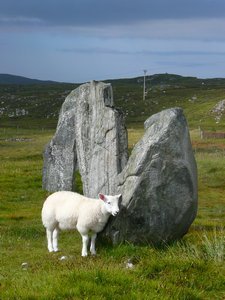
After reading these verses of God searching for his lost sheep, I recalled an episode of the reality TV show “Alaska: The Last Frontier.” Two of the ranchers had to go to find cattle that had become lost after freezing weather had come in, and a larger storm was to follow that one. The cattle were in danger being on frozen tundra, unable to forge swollen and freezing rivers.

Here is a video clip.

This video is just a portion of what the episode covers; but where someone says the cows get scared and hide under a cedar tree, it becomes clear that the cattle kind of like their new stomping grounds. They would rather hide in fear, than come out and say, “Here we are.  So glad you found us!”

The scattered cattle have to be rounded up and headed back to their respective ranches, or they would happily stay where they were … lost … until a predator killed them for dinner or winter kept them from finding any food. Either way, the out of place cattle would end up dead. The point of my bringing up these cattle is they can then become a parallel for the sheep in this reading, as cattle and sheep are both dumb animals that have a hard time knowing what’s good for them … and what’s evil.  So they need a herder.

Imagining that the scattered sheep in the scenario spoken of by Ezekiel, for God, are like those lost cattle on a cable show, it becomes easier to see how the scattered sheep probably were not baa-ing for saving. After “the days of clouds and thick darkness,” they probably did the best they could and grazed wherever they could.  For a lost grazer, anywhere can be called home.
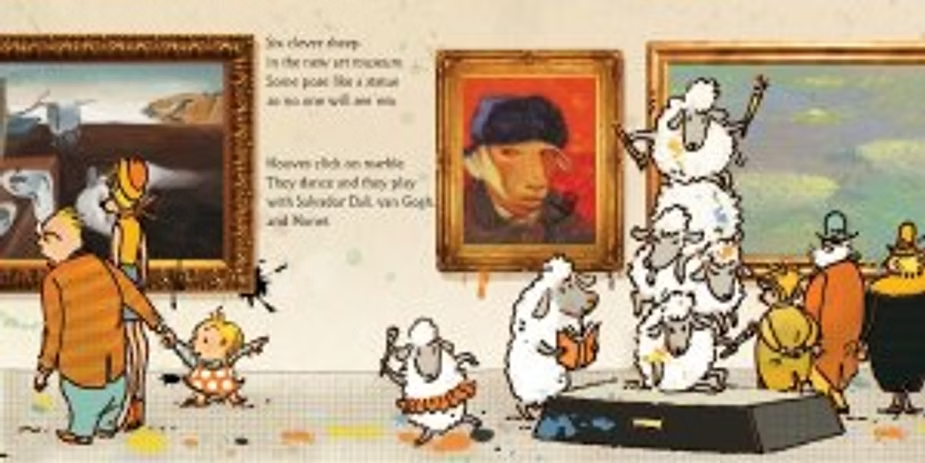
Sometimes it is hard to tell the sheep from the sheep. They blend in so well.

So, when God spoke and said, “I will bring them out from the peoples and gather them from the countries,” the lost sheep were probably allowing foreign “people” to be their shepherds, and they had gotten used to the vegetation of foreign “countries.” They acquired a taste for strange people and places.  However, God had a plan for them: find them; bring them back to the fold; and have them be led by His “servant David,” which means Jesus (of the Bethlehem heritage).

Reading this prophecy of Ezekiel made me think of the Parable of the Prodigal Son, which is not the Gospel reading that will accompany this Old Testament reading. (I know because I checked.) The Gospel of Proper 29 is Matthew 25:31-46 and it is a perfect fit for a reading with the title that says it is “against shepherds.” It ties into the Christ the King theme, but has Christ separating the sheep to his right and the goats to his left.  While Ezekiel 34 feeds that theme, Luke 15:11-32 (the parable of the prodigal son) deals with the aspect of foreign people and foreign countries.

That parable deals with the prodigal son becoming lost, with the end of the story being the celebration of the lost being found – “But we had to celebrate and rejoice, for this brother of yours was dead and has begun to live, and was lost and has been found.” (Luke 15:32) As this reading from Ezekiel is about finding lost sheep, it projects God as if He were planning on going out and selectively choosing which sheep to be found. In an anthropomorphic story, it appears that God lost a little of his All-Knowing Mind and All-Seeing Eye.

In the parable of the prodigal son, the father allows his son to become lost and does nothing to go find him. The father does not send spies to keep up on his son’s whereabouts.  It is through that lens of seeing the Father allowing the lost to be lost that this Ezekiel reading becomes more powerful.  The assumption that God would hunt for lost sheep should be inverted, such that God will make it possible for the sheep to find Him.

In the translation above, including the omitted verses and all coming from the New American Standard Bible version, the word repeated the most times (in variations of usage) is “feed.” It appears six times in the NASB translation, while the actual Hebrew text shows seven times (in verses 11-24).  The translation above, “they must eat,” is the missing time. This repetition is significant, especially when “fat” (2x) and “lean” (1x) are allusions to how much the lost sheep have been fed. This focus on food (which implies grass, upon which sheep graze) becomes an overall statement about how God will search for His lost sheep.

Rather than God Himself taking physical form and hunting for lost livestock (“I myself will search for my sheep, and will seek them out”), the lost will be found by the Word of God.  That is the food that will remain present among the sheep, no matter where they roam. God first sent manna as the food for the Spirit of the Israelites.  They forever remembered being found by God in the breaking of bread at Passover.  When Jesus said, “eat this [bread] in remembrance of me,” the meaning is the food that leads one back to God.

Ezekiel was one of those who would serve God and seek the lost sheep, to return them to the foal. Still, the feed of Israel is the Holy Scriptures, orally recited from memory, as well as written onto scrolls and kept safely secured. That history of promise and all the Laws of the Covenant, with all the songs of praise and prophecies of doom (the “clouds and thick darkness”), that IS the “rich pasture on the mountains of Israel” from which the lost sheep can always feed.

Because God said through Ezekiel that “I myself will judge between the fat sheep and the lean sheep” and “I will judge between sheep and sheep,” one can assume that all of the lost sheep reclaimed will have been fed by God. Some will be fed more than others, with some fed on pure pasture and clean water, while others are left ‘the crumbs off that tableland’. The omitted verses (17-19) state how some of the sheep will walk all over the grass the others graze from and then drink from clean waters, before muddying the streams by walking through that water. This states the quality of the feed (the graze) the lost sheep will have available to them, with the rams taking the best and leaving the other sheep the rest.

In the parable of the prodigal son, it was food that brought him back home. Sure, he had taken his inheritance and squandered it in a foreign country; but he was willing to hire himself out to one individual of that country (probably another lost sheep), rather than consider going home and be seen as a loser. In the midst of a famine that befell that land, the prodigal son fed the scraps from his foreign master’s table to the swine, while he was starved. It was then the memory of the plentiful food that was given to the lowest of his father’s hired hands and the livestock that motivated the lost son to go home.

In the Ezekiel reading, we hear God saying: “I will seek the lost, and I will bring back the strayed, and I will bind up the injured, and I will strengthen the weak, but the fat and the strong I will destroy. I will feed them with justice.” In the parable of the prodigal son, we find of the son’s decision to admit his sins and beg to taken back as a hired hand, led to the father seeing his return.  The son had found his way back home, to the father’s delight.

We read, “while he was still a long way off, his father saw him and felt compassion for him, and ran and embraced him and kissed him.” (Luke 15:20) This says that repentance will be the that which will find, bring back, mend, and strengthen the lost. Those who repent will be those who were lost but then were found. Their repentance will have come from the feed of Scripture, which promises justice.

It is important to see this connection between being fed the Word of God. This Word is ignored by those of foreign countries, who worship other gods and have no concept of resurrection and a lost soul’s return to be with God the Father. Thus, it is the sheep metaphor that represents those of Judaic-Christian heritage and tradition. The sheep are those who graze upon the Word of God. However, there are those among the sheep that dilute the words of God, for the purpose of getting themselves fat, while the other sheep get lean.

The fat sheep are then the bad  (or false) shepherds, who were those who lost the Promised Land and then came back to Jerusalem as the Pharisees, Sadducees, scribes and Temple priests. They offered sacrificed to God as the high and mighty (the fat and the strong), while keeping for themselves the best parts (the good pastures) and leaving the others the guilt (tread upon pastures). They amended the laws (the clear waters) to suit their needs, while forcing (pushed with flank and shoulder, and butted) the rest to comply.
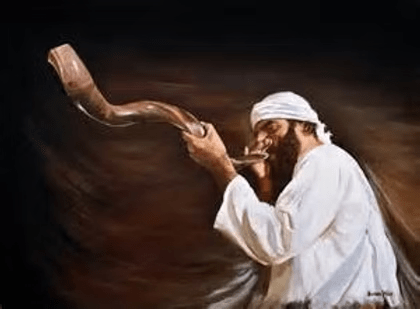
When God said, “I will save my flock, and they shall no longer be ravaged; and I will judge between sheep and sheep;” adding, “I will set up over them one shepherd, my servant David, and he shall feed them: he shall feed them and be their shepherd,” this means more than God sending Jesus (a descendant of the House of David, through Jesse) to Jerusalem. Jesus was one in a line of Holy Prophets who kept the food of Scripture pure, and the spirit of the Word clean.  However, Jesus Christ sired a line of Apostles in his name.

This means the judgment between “sheep and sheep” is determined by whose soul appears at the doorsteps of Heaven. Are they the souls of sheep who were shepherded there by the Mind of Christ? Or, are they the souls of those shepherded by the brains of men, who did nothing to lead another sheep’s soul home to God?  Were they sheep who had fun being with foreign people and the ways of foreign countries?  Or, were they afraid of their absence from the LORD, hiding under trees, before they were found by an Apostle and herded to holy use?

In the parable of the prodigal son, the son proclaimed, “Father, I have sinned against heaven and in your sight; I am no longer worthy to be called your son.” To have “sinned against heaven” means a confession for having allowed the flesh between the earholes (the Big Brain) to guide him selfishly. He had wanted his inheritance in advance, which he then squandered.  He understood that he had done nothing to deserve a return home to Heaven, to be again with the father as his son.

The prodigal son had intended on asking his father if he would take him as a hired hand; but because the father went to meet the son, before he could make that request, the father embraced the son with love. That symbolism is God entering into the heart of the wayward son in a union that was the desire of the wayward son. Once that presence was in the heart, the father ordered his slaves, “Quickly bring out the best robe and put it on him, and put a ring on his hand and sandals on his feet.” (Luke 15:22)
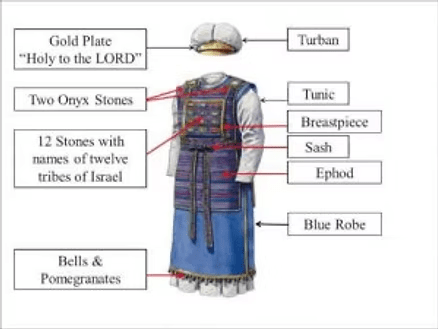
That “best robe” was the wedding gown of marriage. We have read of it in other parables.  The ensuing celebration and feast was the marriage banquet of the sheep to the Father, as an Apostle, as a Saint. It was that holy union that made the return to Heaven possible, as the judgment of the Father was to recognize a sheep that had been led back home by its having the Good Shepherd within.

This is how one should read the last verse, where it says “I will judge between sheep and sheep.” As those who profess to be Christians, we are all sheep on this earth. In order to gain entrance into the Spiritual realm of the Father, we have to determine what kind of sheep we are: Are we the sheep who serve God, through the Holy Spirit and the Mind of Christ, being led by the Good Shepherd? Or, are we the sheep who serve self, who trample underfoot the Word and weaken the spirit of faith in others, being led by Satan?

It is possible to read all Scripture in a vacuum and reach a full understanding of what this reading from Ezekiel means. When we link its meaning to other Scripture, that understanding compounds greatly.

It is the presence of God in one’s heart that seeks understanding – one wants not to be lost. It is the Christ Mind that whispers to seek the same message of one passage to be mirrored in many others. The truth of meaning is how one ceases doubting and finds faith. It takes repentance to seek to be found and worthy of becoming a hired hand for God.

This will become clearer when one reads the accompanying Gospel: Matthew 25:31-46.  That one has the title “Judgement.”
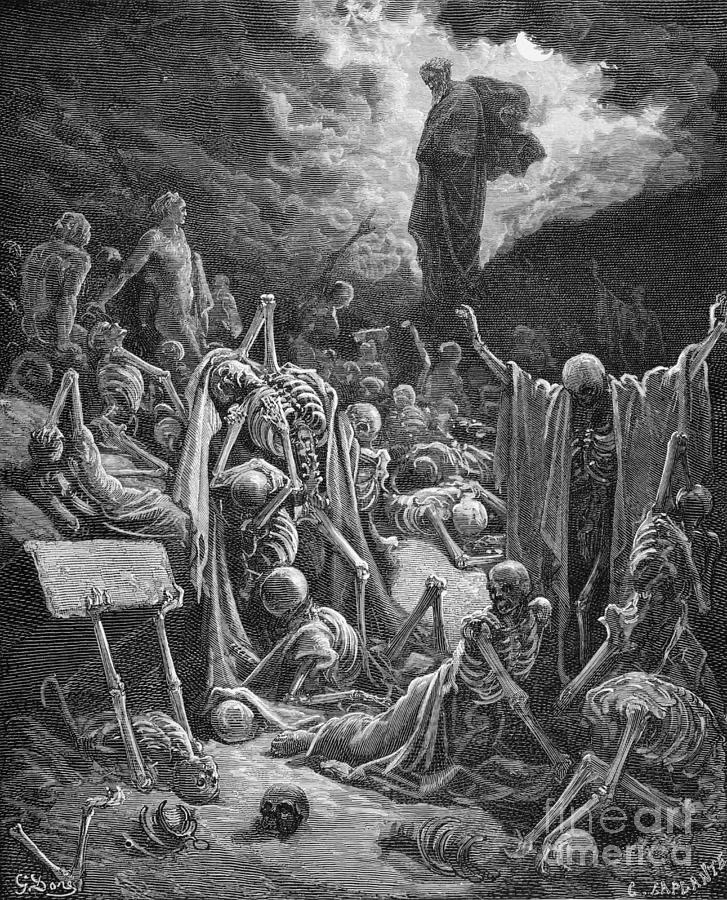
Ezekiel 37:1-14 – Can these bones live?

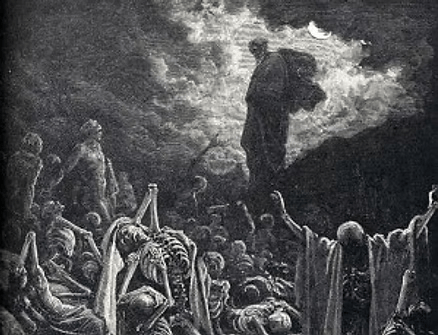
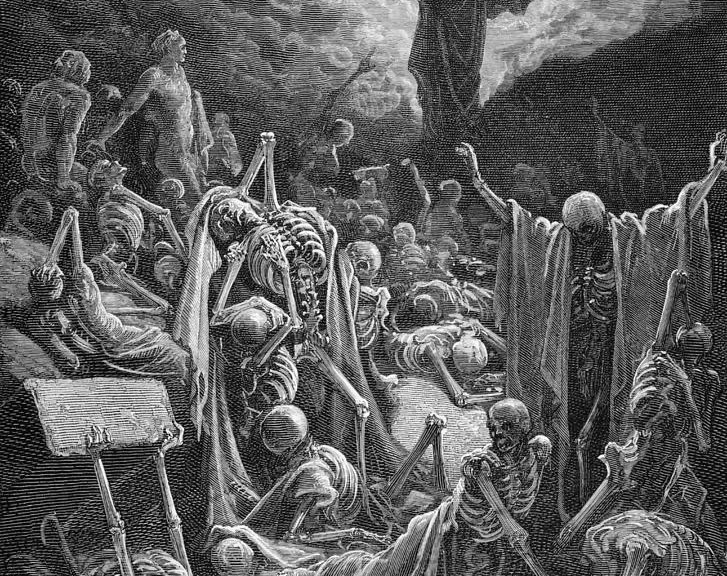
The hand of the Lord came upon me, and he brought me out by the spirit of the Lord and set me down in the middle of a valley; it was full of bones. He led me all around them; there were very many lying in the valley, and they were very dry. He said to me, “Mortal, can these bones live?” I answered, “O Lord God, you know.” Then he said to me, “Prophesy to these bones, and say to them: O dry bones, hear the word of the Lord. Thus says the Lord God to these bones: I will cause breath to enter you, and you shall live. I will lay sinews on you, and will cause flesh to come upon you, and cover you with skin, and put breath in you, and you shall live; and you shall know that I am the Lord.”

So I prophesied as I had been commanded; and as I prophesied, suddenly there was a noise, a rattling, and the bones came together, bone to its bone. I looked, and there were sinews on them, and flesh had come upon them, and skin had covered them; but there was no breath in them. Then he said to me, “Prophesy to the breath, prophesy, mortal, and say to the breath: Thus says the Lord God: Come from the four winds, O breath, and breathe upon these slain, that they may live.” I prophesied as he commanded me, and the breath came into them, and they lived, and stood on their feet, a vast multitude.

Then he said to me, “Mortal, these bones are the whole house of Israel. They say, ‘Our bones are dried up, and our hope is lost; we are cut off completely.’ Therefore prophesy, and say to them, Thus says the Lord God: I am going to open your graves, and bring you up from your graves, O my people; and I will bring you back to the land of Israel. And you shall know that I am the Lord, when I open your graves, and bring you up from your graves, O my people. I will put my spirit within you, and you shall live, and I will place you on your own soil; then you shall know that I, the Lord, have spoken and will act,” says the Lord.

——————————————————————————–

This is the optional Old Testament selection from the Episcopal Lectionary for Pentecost Sunday, Year B 2018. Act 2:1-21 may replace it.  It will next be read aloud (if chosen by the priest) in church by a reader on Sunday, May 20, 2018. It is important as it is the words of the prophet Ezekiel telling how dried lost souls could be reborn to new lives. The glory of God to renew humans born of death, offering them eternal life, is the symbolism of this prophecy.  It foretells how the Holy Spirit would fill the disciples of Christ on Pentecost (also on a Sunday), marking them for eternal salvation.

I published a “bus stop sermon” that placed focus on this reading, the last time it came up in rotation.  That was on May 24, 2015. It was a sermon relative to all the readings of Pentecost Sunday, Year B, with references to Ezekiel’s vision of dried bones made then that are still applicable today. If you want a longer commentary to read, I recommend clicking here [no longer available]. For now, I plan to be shorter, offering only slightly new views that have come to me about this reading.

I don’t think there are too many serious Christians that are unfamiliar with this reading from Ezekiel. It is a favorite of mine, because it offers a classic example of how a prophet answers a question coming from God: “You know LORD.”  As Sergeant Schultz used to say on Hogan’s Heroes, “I know nothing.”  Why try to match one’s tiny brain to the Mind of God?

In a world of simpleton heroes, I cannot see a Nazi POW guard as fitting that bill.

A good Saint has no answers other than the ones God gives him or her.  Apostles are closer to being simpletons than scholars; but having access to the Godhead and being able to fully understand what God shows them (in dreams and visions) makes them be more like savants … without any credentials from prestigious institutions.  After all, when one’s ego has been sacrificed, one’s human brain ceases trying to figure anything out.

That is what faith is all about, be that divinely inspired or blindly misguided.  The brain is useless either way, as one will always counter faith with thoughts of doubt.

In this reading, God told Ezekiel, “Mortal, these bones are the whole house of Israel.”

As a prophet of Judah, driven into exile in Babylon, Ezekiel was shown the future by God. Dried bones filled a valley before Ezekiel, which reflected the past. The Israelites – both Israel and Judah – had lost everything promised to them by God, through Moses, by breaking their commitment to the Covenant. The dried bones symbolized the death that had befallen the priests of the One God.  They received the Promised Land and only their dried bones were left to cash that windfall in.

The whole of the house of Israel was meant to be multitudes of servants to YHWH.  All had failed, save the few prophets God kept sending to warn those priests who worshipped kings and queens … those who worshipped the gods of worldly things.

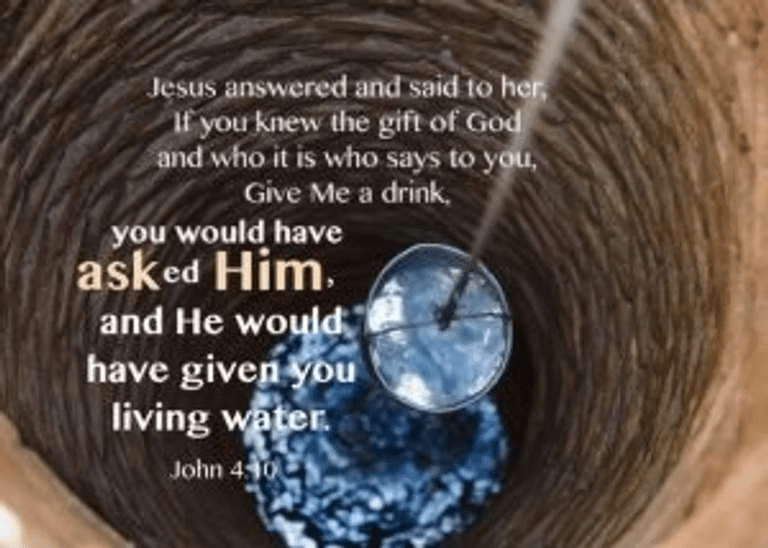
A well in the ground draws physical water out, which is a necessity for keeping sinews, flesh and skin moist. It only last a while. Then you need to draw more.

The underlying message in this vision shown to Ezekiel appears loud and clear when viewed through the lens of the Pentecost Gospel message of the “Advocate” that will be sent.  That presence will be the “Spirit of truth.”  It is clearer when viewed through the Acts 2 reading of the Holy Spirit rushing upon the disciples, giving them the abilities of that Spirit of truth. It is refined in our eyes by the words of Paul to the Roman Jews (an optional reading that will be omitted if Ezekiel is chosen) that says “the Spirit helps us in our weakness.”  The “breath” God told Ezekiel to prophesy about is all of the above, as it told of the Holy Spirit being the life for the dead.

“The Holy Spirit is coming,” said Ezekiel (paraphrasing).  It came as Jesus of Nazareth.  It has remained ever since in his Apostles in Christ.

A truth is that Man is born to die. This is why mankind is called mortal … from Old French “mort – al,” meaning “characterized by death.” Being born of death mean a soul is constantly in need of new bones, new sinews, and new flesh with new skin, so it can find comfort in a new home. Being born of death always leaves behind dried bones, after the softer tissues have returned to dust. It is the breath of the Holy Spirit that God that brings eternal life to dried bones.

Ezekiel must be seen as alive, amid a scene of death.  As such, Ezekiel was filled with the Holy Spirit. He had been in that valley of death before his exile from Jerusalem by Nebuchadnezzar.  He personally knew the breath of life that comes from complete servitude to God.

God told Ezekiel, “I will cause breath to enter you, and you shall live.” Ezekiel was the living proof of that promise of eternal life from divine breath.  Thus, as a prophet of the LORD, God told Ezekiel, “Prophesy to these bones, and say to them: O dry bones, hear the word of the Lord. Thus says the Lord God to these bones: I will cause breath to enter you, and you shall live.”

Prophecy is better when spoken with conviction, not the probability of prediction.  Ezekiel knew the breath of God.

The reincarnation of souls into new bones, new sinews, and new flesh with new skin was why God told the prophet Ezekiel, “Prophesy to the breath, prophesy, mortal, and say to the breath: Thus says the Lord God: Come from the four winds, O breath, and breathe upon these slain, that they may live.”

Dirty (worldly) souls cannot go to the spiritual realm for eternity.  They go temporarily, for judgment and processing for a return to the earthly plane.  They need a new physical body then; but, more importantly, they need someone holy to shine a light on the way to eternal life when they are born anew and grow amidst the influence of sin.

Man needs prophecy.  God sends prophets to meet that need.

The lesson is simple. There are two types of souls: Those blinded by the illusions of a worldly existence; and those baptized by the Holy Spirit. There are two types of mortals: Those living in darkness, destined to death (and repeat); and those living in the light of the Holy Spirit, destined to eternal life.

God gives tarnished souls the gift of the breath of life in new human forms. It is the spirit of mortal life that comes with a baby’s first breath, replacing the amniotic fluids of the embryonic environment of the mother’s womb, whose maternal waters fill the lungs of an embryo that awaits its own soul and its own life. The breath of life in a newborn is the rebirth of an ageless soul into the worldly plane; but it is only a temporary permit. It begins another journey to find the God of life and be born again through the breath of the Holy Spirit.

With each new life a mortal must choose. Do I live for me? Or, do I live for God?

This lesson of Ezekiel is it prophesied the coming of Jesus the Messiah. Ezekiel was shown a vision when new bodies would be offered eternal life. He had a dream of what was to come. Ezekiel was a Saint because he did what God told, without asking questions. God blessed his servant with eternal life, through the Holy Spirit.  He lived a prophecy that could be fulfilled in others; but all have to make a decision that allows them to receive the Spirit.

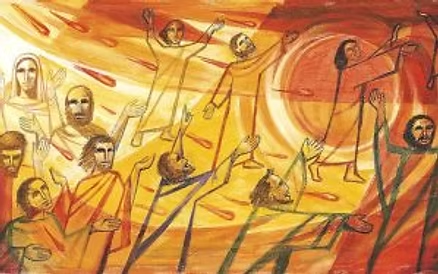
The lesson is the same one that Christians know of Pentecost.  Just as the Holy Spirit came like a rush of wind into their bodies, dividing their tongues with inspired abilities, it was God saying to Ezekiel, “Come from the four winds, O breath, and breathe upon these slain, that they may live.”  The difference is living for death to come and living so others may live.

In his vision, Ezekiel then stood as the Messiah, filled with the Christ Mind. He saw the return of the exilic Jews to Jerusalem – to the valleys surrounding that place, where their dried bones had been left. Lost souls were shown to return to the site of their graves and their lost lives, seeking to regain those worldly possessions.

Those lost souls would fill their rejoined bones, their new sinews, and their new flesh and new skin. Jesus would be sent to breathe the Holy Spirit upon those returning Israelites.  Jesus of Nazareth would give those dead men walking another chance at redemption and salvation. Jesus would come saying, “Follow the LORD and find eternal life. Follow me and receive the Spirit.”

The new bodies would fulfill Ezekiel’s prophecy – ‘“I will place you on your own soil; then you shall know that I, the Lord, have spoken and will act,’ says the LORD.”

The Israelites would stand again on the soil that was once Israel and Judah, in a rebuilt Jerusalem, with a new Temple. Like the mortals reborn, so too was the land they once enjoyed.  However, that body of land was inhabited by a Roman spirit, so the Jews were like a possessive spirit cohabiting Galilee and Judea.

Jesus came telling the Jews, “The kingdom of the LORD has come near.” The kingdom of God is not on this soil.  Jesus was Christ the king in a heavenly realm.  He was designated to rule within the minds of God’s priests.  That state of Roman domination made dried spirits seek a warrior Messiah, not a humble rabbi.  The moral of their decision can be seen in the new State of Israel today:  The land is just as godless today, as the world is Satan’s domain.

Some showed interest in Jesus of Nazareth. Some felt threatened by him. Some followed him and received the Spirit. Some refused and became dried bones once again.

The question remains: Do I live for me? Or, do I live for God?

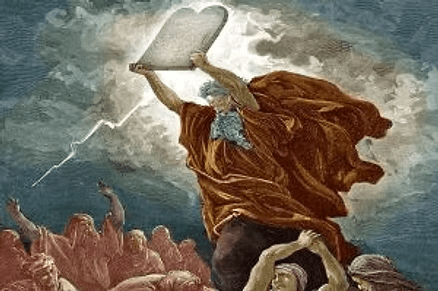
The Day of Pentecost means (from the Greek) “The Fiftieth Day.” That number of days is how long it took the freed Israelites to leave Egypt and receive the Holy Covenant. God breathed His Holy Spirit onto stone tablets; and He sent the Law to mortal beings through His servant Moses (an Ezekiel-Jesus Messianic prototype). The mortals of death that were slaves of the Pharaoh were given the promise of salvation through that breath of life that was-is-will always be The Law.  The Israelites gave an oath of agreement.

They failed to live up to their end of the bargain.  They lost the gift of land … their seminary to become mentally trained priests that would serve only the One God.  God saw that failure, which he showed to Ezekiel.  Still, God would give the Israelites another Covenant, with a higher reward than soil and dirt.  The same offer is given to all who believe in Jesus Christ, because through receipt of God’s breath of life one has proof of Jesus Christ as Jesus Christ.  The ability to live the Law comes without needing to think about anything.

God says, “Act,” then you act.  You know nothing better than following His instructions.  You live for God’s instructions.

The Easter season has ended.  It stretched over the last seven Sundays.  That span of time is meant to reflect the freedom of Jesus of Nazareth, bound by the original sin born in his soul [Adam].  He was born to serve the LORD, from his inception.  He was given over as the sacrificial lamb of Salvation; and he was returned to be with God forty-nine days later.  Pentecost is the day Jesus Christ returned to serve the LORD in Saints.

Jesus was arrested on a Sabbath, he rose from death on a Sabbath, and he spent five Sabbaths breathing the Holy Spirit into the Saints that he would leave behind (as Him). Seven Sabbaths are forty-nine days. On the Fiftieth Day, as Israelite pilgrims gathered to celebrate their receipt of the broken Covenant, the Messiah of God returned twelve-fold, offering a New Covenant, which was the breath of obedience within … not memorized from writings and oral lessons without.

This means Pentecost is personal. It is when one signs his or her mortal life away in service to the One God, gaining in return the eternal life that comes from becoming the Messiah reborn. The Day of Pentecost signals when one stops living for self and starts living for God, as His Son Jesus Christ. No one is forced to make the decision to live for God. However, be forewarned that living for self will lead to some dried bones being left behind, at the end of another selfish time on earth.

Ezekiel 17:22-24 – A sprig from the lofty top

[The presentation shown on the Episcopal Lectionary site has this selection produced in song verse format. I have reduced that to prose, while maintaining their translation.]

Thus says the Lord God, “I myself will take a sprig from the lofty top of the cedar; I will set it out; I will break off a tender one from the topmost of its young twigs; I myself will plant it on a high and lofty mountain. On the mountain height of Israel I will plant it, in order that it may produce boughs and bear fruit, and become a noble cedar. Under it every kind of bird will live; in the shade of its branches will nest winged creatures of every kind. All the trees of the field shall know that I am the Lord. I bring low the high tree, I make high the low tree; I dry up the green tree and make the dry tree flourish. I the Lord have spoken; I will accomplish it.”

——————————————————————————-

This is an optional Old Testament selection from the Episcopal Lectionary for the Fourth Sunday after Pentecost, Year B 2018. In the numbering system that lists each Sunday in an ordinal fashion, this Sunday is referred to as Proper 6. If chosen, it will next be read aloud in church by a reader on Sunday, June 17, 2018. It is important as a narrowed excerpt from Ezekiel as it shows the metaphor present in the accompanying Gospel reading selection from Mark, where servants of God are compared to plants of the earth and their benefit to the lands where they are found.

This portion of Ezekiel 17 represents the final three verses that in total was a chapter where God spoke to His prophet about the fall of Judah and Jerusalem. The king of Babylon captured Jerusalem and disposed the Judean king, appointing a younger sibling (Zedekiah) to be king, after he signed an agreement to serve Babylon. That young king then went against that agreement, causing Jerusalem to be recaptured by Babylonian soldiers; and that was when Solomon’s Temple was destroyed.

God pointed out to Ezekiel how He had a prior “agreement” with the Israelites (which included the tribes of Judah and Benjamin). Therefore, these last three verses are “riddle” and “parable” [instructions from God to Ezekiel in verse 2] that tell about the reseeding of the land with those who will not have a Covenant of stone, but the Law written on their hearts.

The process of transplanting a cutting of a plant becomes similar to the prophecy found in Isaiah 11:1, which states, “Then a shoot will spring from the stem of Jesse, And a branch from his roots will bear fruit.” The same forecast of a replacement of God’s “chosen people” is made in both Ezekiel’s and Isaiah’s examples of horticultural metaphor. This would not mean a return from exile of the people from Judah, in captivity in Babylon, although their transplanted tree would grow in Babylon and then grow again in what used to be Judah. However, the prophecy is foretelling of Jesus and those who would follow him as Christians.

This parallels the story in Mark’s Gospel, where Jesus spoke of growth stages of grains and that of a mustard seed.  The similarity of this metaphor spoken by God to Ezekiel, where we read, “Under it every kind of bird will live; in the shade of its branches will nest winged creatures of every kind,” is practically identical to Jesus telling how the mighty mustard tree protects birds.

Mustard tree.
Cedar tree of Lebanon.

I have a cedar tree in my backyard and it is the home for many different birds and squirrels and rabbit have been seen running under its branches for safety also. Still, the points made by Ezekiel and Jesus are about one specific “tree,” one that “All the trees of the field shall know that I am the Lord.”

This means that when God told Ezekiel, “On the mountain height of Israel I will plant it, in order that it may produce boughs and bear fruit, and become a noble cedar,” that “tree” would be the true “religion” – “philosophy” – in a world of many religions and philosophies – that IS Christianity.  Still, “religion” or “philosophy” belittles the truth that is “noble” in that “tree.”

This means one must be able to remove the glasses of mortal being that sees the imagery of this “riddle” and “parable” as plants and birds, and put on the glasses of prophecy. Mortals see bird of many kinds as though all are living equally well under the branches of all large, protective trees. While that may be true in mundane life, it misses the spiritual point made by God stating, “In the shade of its branches will nest winged creatures of every kind.”

Those “winged creatures” are angels of the LORD, which means the “tree of Christianity” will be filled with those who totally serve God, as eternal souls saved. No other “tree’ in the filed can truthfully make that claim.

Under the shade of holy branches.

Certainly, in a world of religions, they all make their claims of superiority. Sheer numbers of believers can catapult Christianity, Islam and Hinduism to the top, in that regard. In a world of many different philosophies, where each becomes the guiding principles of a nation (the DNA of countries), the world’s most numerous adherents of central philosophical beliefs (and the laws thereby generated) can indicate the most popular are Democratic Republics, Communist-Socialist Regimes, and Totalitarian Dictatorships. However, the truth of the United States’ declaration that demands a separation of Church and State is that “religion” acts as the ideal, while “government” becomes the reality.

That reality is that nations bow down before themselves, as self-serving egos that scream, “My philosophy is better than yours.”  Never  do governments bow down before the LORD, much less to the gods they profess allegiance to.

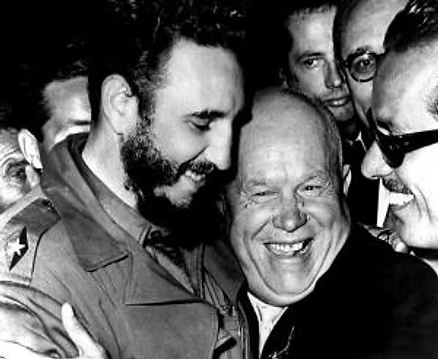
Comrades in arms at a U.N. get-together.

In the hidden “backstory” of Ezekiel 17, we read the ugliness of governments and their attempts to align with other governments, in pacts and treaties that seem mighty and strong. The adage, “The best laid plans of mice and men often go awry” is summed up now as, “I bring low the high tree, I make high the low tree; I dry up the green tree and make the dry tree flourish.”

The “high” trees that exist in the world now are the United States of America, Russia, and China. Others that seek equal status with those are Great Britain, France, Germany, Israel, Iran and others with nuclear capabilities. None of them consider themselves “high” because their total strength is based on their belief and devotion to the One God, but to the lesser god named “Nuclear weaponry.” All are exactly like the rebellious Judeans that God recalled to Ezekiel, who placed all their bets on the sharpness of their spears and the promised support of others who were paid to be in league with them.

Those plans went awry, as is the greatest flaw in humanity.  Alas, it is said, “Those who fail to learn from the mistakes of history are doomed to repeat them.”  And, the world does love reruns.

My two-lettered brother by another mother.

As history always will repeat (similarly) and one plus one will always equal two, the failures of Israel (a nation under one king), as also the failure of Israel and Judah (two nations under two kings), and also the failure of the resuscitated puppet that pretended to return to life – Hebraic Judea and Jerusalem of the Second Temple – those failures project the failures of the United States of America and the re-instituted State of Israel.  Any nation that proposed to have God on its side, but then acts as if there were no God that Saves, is doomed to fall by the hand of the godless.

It is a lesson that keeps on teaching.

That failure does not mean the “low” trees of other religions and governments will rise to the heights of being God’s newly chosen people. Instead, the meaning of “I make high the low tree” and “make the dry tree flourish” projects on individuals, those who refuse to follow the paths set for them by their government.  Governments will always come and go; but there will always remain those who love God so much they barely realize one dominating tyrant has been replaced by another.  Like seeds waiting for the right environment in which to begin new growth, they lay “low” until God commands them.

When this individual aspect is seen, the sprig from the “lofty top of the cedar,” which will be planted “on a high and lofty mountain,” that of “the mountain height of Israel,” IS Jesus of Nazareth.  God planted His Christ child to be the “low tree made high,” when disciples became true Christians – Apostles. Those Saints are the ones who has been truly filled with the Holy Spirit of God and reborn as Jesus Christ.

Each individual Apostle – Saint is then reborn in the name of Jesus Christ so he or she “may produce boughs and bear fruit, and become a noble cedar.” “In the shade of its branches will nest winged creatures of every kind,” which can now be realized as being the talents of the Holy Spirit – the powers of God given to His Son and his fruit.

Under the Tree of God an angel gets her wings.

As an optional selection from the Old Testament for the fourth Sunday after Pentecost, when one’s individual ministry for the LORD should be underway, Ezekiel offers the metaphor of song, as the projection of what one should become in service to God. When one sees the Covenant with God as a written legal document, Satan will send in the lawyers that will offer leeway interpretations about what sins are allowable and what sins are clearly forbidden. When one listens to outside influences, then one will become as uncertain of one’s commitment to God, as have all governments whose people call themselves “Christian.” Christianity is not a club one joins and pays membership dues to a specific institution.
Christianity is ministry to God, in the name of Jesus Christ.

Even as I write these words, I can see many sheep of the political left, those who hate fellow Americans because they feel their neighbors have sinned by allowing the evil creature that is Donald Trump into the White House. Evil creatures are those who are perfect to serve in the capacity of President of a False Prophet nation.  America fits the billing as a “high tree” of self-value that will be made into a “low tree” when one’s individual Judgment Day comes.

The end of the world is when a mortal dies and one’s soul faces judgment for its mortal sins. Hating one’s neighbors (regardless of one’s political persuasion) is not only a sin, as it is a bold statement that says, “I am not in the name of Jesus Christ, because I cannot love my neighbor as myself.”

Paid for by those who sponsors of death of Christianity. A little truth goes a long way towards covering a lie.

In the days of Paul and the other Apostles, ministry was to go out and tell all the scattered remnants of Israel (the Northern Kingdom and the original nation under David) that the Messiah had come. “Jesus was-is the Christ,” they all went out to tell.  God did not promise a Savior to all the other nations of the world.   Instead, God ended that Old agreement with the ancestors of the Jews.

He did not promise a Savior for the nation that was Israel (the Northern Kingdom and the original nation under David). God promised a Savior for the original premise that led to His choosing human beings [all as flawed as the next] to serve Him as His slaves … His ministers … His teachers of self-sufficiency through Jesus Christ.

The spread of Christianity occurred because of ministers going out into the world producing the same miracles as did Jesus of Nazareth, in Judea and Galilee (and beyond).  That spread was deterred when “religion” became a tool of militaristic institutions that sought to control nations by their influence.  That spread ceased when heathens were massacred in “the name of Jesus Christ,” and conversion or death were the options.

Today, especially in this world so devoted to the Internet and technology, there is no need to go out into the world “preaching the Gospel.” First of all, few have any real capability to “preach the truth of the Gospel,” as the world has become overrun with mimickers and false prophets that memorize a few tidbits of Gospel Scripture and sell it to the highest bidder.

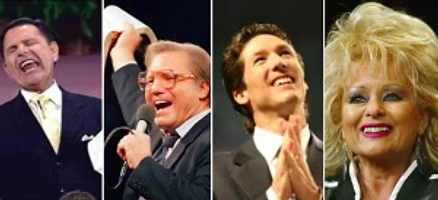
“Money is evil. Give me your money and I will protect you from evil.”

Second, our nation presently has a pastor-missionary under arrest in Turkey, who has been charged with being a spy for the United States of America. The reality of that situation (regardless of the guilt or innocence of that specific “pastor-missionary”) is the United States government (and its evil agencies of intelligence) has used the aspect of “ministry” as a way to get into hard places and subvert foreign regimes.  It becomes reasonable to think that a Christian evangelizing in a Muslim nation is there for the purpose of subversion.

Canadian couple imprisoned in China for spying. Every time something like this happens, it spears the word “Christian” with the stench of government.

Ministry is no longer about telling a world that already has an opinion about what “Christianity” is (real or imagined), as ministry today is about an individual being filled with the Holy spirit and living accordingly. Heal yourself before trying to heal anyone else!

Ministry today is having the world come to an Apostle – Saint, asking, “Why are you smiling in a world of misery?”

Ministry is not about the theatrics of “evangelism” or the solemnity of “ritual.” Ministry is about marriage to God, so His Son can be reborn into a willing sacrifice of self-ego. Ministry does not require a “sheepskin” from a seminary.  It does not require a building that has stained-glass windows, spires, bells, and pews.  Ministry is not an organizational position, as it is an individual commitment to God.

Because Christianity is not one’s decision, but God’s decision based on His knowing the heart of an individual, the growth required for a “sprig” to grow into a “noble cedar” can take decades or minutes. For it to take place quickly, one should expect a traumatic event, such as a near-death-experience, where the limitations of linear time have been overcome by an out of body experience and the future beyond mortal life has been seen.  For it to take decades, this should be understood: A ministry cannot wait long before it is squandered and lost.

Remember, if Israel could fail, so can all moral human beings. Saying one “believes” is as worthless as a signed contract, when a lawyer is always there, willing to tell one how to opt out of a commitment, without lasting repercussions. “Belief” cannot be agreed upon as promise.  Belief can only come from personal experience.  Being Jesus Christ is the only way one can truly believe in him.

The point Ezekiel made was that each servant to the LORD must be the “lofty top of the cedar.”  That means being in direct connection to God, with no “go-betweens.” This is where those in ministry are set into the world by God, so others can find their light. In a dark place, a light can shine a great distance without ever moving.

Ezekiel 2:1-5 – Knowing a prophet has been among them

The Lord said to me: O mortal, stand up on your feet, and I will speak with you. And when he spoke to me, a spirit entered into me and set me on my feet; and I heard him speaking to me. He said to me, Mortal, I am sending you to the people of Israel, to a nation of rebels who have rebelled against me; they and their ancestors have transgressed against me to this very day. The descendants are impudent and stubborn. I am sending you to them, and you shall say to them, “Thus says the Lord God.” Whether they hear or refuse to hear (for they are a rebellious house), they shall know that there has been a prophet among them.

——————————————————————————–

This is an optional Old Testament selection from the Episcopal Lectionary for the Seventh Sunday after Pentecost, Year B 2018. In the numbering system that lists each Sunday in an ordinal fashion, this Sunday is referred to as Proper 9. If chosen, it will next be read aloud in a church by a reader, on Sunday July 8, 2018. It is important because it states the truth that a prophet of God is His creation, through His Holy Spirit.

This short five-verse reading option from Ezekiel is fairly straightforward in the translation above, stating that God filled Ezekiel with His Holy Spirit. Once filled with the wisdom of God, Ezekiel was sent to prophesy before the wayward Judeans, before their exile to Babylon and after.

Ezekiel was called Buzzi (beyond being the the son of Buzzi), “because he was despised by the Jews.” (Ezekiel: Wikipedia article footnote: Radak – R. David Kimkhi – in his commentary on Ezekiel 1:3, based on Targum Yerushalmi). The name “Ezekiel” means, “God Strengthens” or “Strengthened By God.” He was of the priestly lineage (Kohen: “a member of the priestly class, having certain rights and duties in the synagogue.”), believed to have been descended from Joshua. The words Ezekiel spoke to the children of Judah, as read in the Book of Ezekiel (regardless of who wrote them onto scrolls of parchment), proves God’s statement, “Whether they hear or refuse to hear (for they are a rebellious house), they shall know that there has been a prophet among them.”

As for a few observations of the actual Hebrew text and the translations English-speaking Christians recognize, whenever Ezekiel is said to hear God speak to him, with a reference to “O mortal,” the reality is Ezekiel wrote, “ben-adam” – “son of man. The translation as a “mortal” human being is relevant to being one of “mankind.” As a male human being, all male human beings are “sons of man.” This means the address is to the physicality of being human, which all human males are.

In the way that Jesus of Nazareth addressed himself as “Son of Man” (such as in Matthew 18:11, but many others) where the capitalization is an application of translation and not what was written (“huios tou anthrōpou” or “υἱός τοῦ ἀνθρώπου”), the assumption that comes from the capitalization is that Jesus addressed himself as the Son of God, in the form of Man. Beyond that, one can assume Jesus (as the Christ Spirit) was the Son of God, whose soul was that of Adam – the Son of God. However, both Ezekiel and Jesus were stating they were both males of mankind, which is ordinary, normal, and typical – not special.

Le Fils de L’Homme (Son of Man) – Magritte

While Jesus was divinely conceived, always to be holy, he was to be born of a woman.  That made him a son of man.  Likewise, Ezekiel was a son of man born into a holy lineage, predestined to become a prophet.  The specialization and uniqueness then comes when ordinary men are transformed by the presence of God’s Holy Spirit; or as Ezekiel wrote: “A spirit entered into me.”

This realization means it is ordinary, normal and typical to read the Holy Bible (or have it read to one) and see Ezekiel like one sees Jesus – as special, as those blessed by God for holiness. It is this failure to see how Ezekiel and Jesus were just like all other men (and women) of the earth. They became special by welcoming the God into their hearts, so they could hear His voice through the Mind of Christ. They became special because of their sacrifice of self (God did not say, “O Ezekiel”) so the Holy Spirit could enter into them. They became special because they heard the voice of God speaking directly to each, such that each responded to what God said (“speaking” = “’ā·mar” = “commanding, advising, designating, and giving an order”).

Normal mortals are like Cain was when his sacrifice to the LORD was not shown favor. Normal human beings often get angry and let their faces become downcast (from Genesis 4:6-7), where “face downcast” or “countenance fallen” is derived from “nā·p̄ə·lūp̄ā·ne·ḵā”.

Those words of Hebrew literally translate to state “lie down before,” where one’s emotional outbursts when things do not go one’s way are like a child throwing a tantrum, lying on the floor and screaming. If children do this ordinarily, normally and typically, so too do mere sons of mankind, no different than Cain did. This is how one should see the statement here by Ezekiel, that God “set me on my feet.”

In the first two verses of this reading selection, we read how God told Ezekiel, “stand up on your feet” (verse 1) and then how God’s Holy Spirit “set me on my feet.” The same word, “amad,” is the root used in the translations “stand” and “set.” It is then important to see how “standing” is the opposite of “lying before,” such that a righteous prophet of the LORD must “rise up” from the ordinary, the normal and the typical and become “upright” before God. Because Ezekiel did this while he was a mere “son of man,” a simple “mortal, then so too can all human beings do the same. However, that requires a willingness to hear the LORD speaking AND it means releasing oneself from the rebelliousness, impudence, and stubbornness that makes life seem so much easier to transgress than to comply with what the LORD says.

In the heritage of Ezekiel, where he was descended from Joshua, who was a true servant of the LORD, as an assistant to Moses and subsequent leader of the Israelites. Joshua also was a prophet of Yahweh, just as was Ezekiel and Jesus. This unique stature was not among mere mortals, as much as it was among the children of God. All gods have their priests and prophets, in the same way that all nations have their kings and presidents, and all humankind has its teachers and guides. Ezekiel, as Joshua and Jesus, stood up among Israelites, Judeans and Jews, because it was those, chosen by God to serve only Him as His priests, who refused to be extraordinary, because they wanted to be ordinary, normal, and typical – like the people of other nations.

The humble bow down before the righteous.

Ezekiel, as Joshua before and Jesus afterwards, was a prophet that told the warning spoken by the LORD to His chosen priests. The Book of Ezekiel was not lessons of righteousness spoken to the whole of mankind, as it was the Word of God to those who had fallen into the gutter before their LORD. The lessons of the Gospel were likewise not to stories of Jesus being sent to save all the sons of man. He came to warn the Jews that they had also fallen into the gutter before their God. The message was to “Arise! If you want to be a priest of Mine, then you best become like Ezekiel, Joshua and Jesus; or you will become mere sons (and daughters) of man and lose the right for eternal life.”

As an optional reading selection chosen for presentation on the seventh Sunday after Pentecost, in the season of Church time when ministers (prophets) to the LORD should be well along the paths God has sent them to travel, the basic lesson here is to stand tall among mere men and women. A ministry then means being a pillar of strength in a cesspool of worldly beings. One is called by God to rise from that muck and be a standard-bearer of righteousness, so the rebellious, the transgressors, and the impudent can see that hope of salvation remains alive.

The English word “transgression” is defined as, “An act that goes against a law, rule, or code of conduct; an offense.” (Google Dictionary) Seeing this as a legal term, where the Law of Moses came from God to the Israelites, as the Covenant between their service as God’s priests, with the agreed rewards as God’s chosen people being eternal salvation, the prophets of the LORD have always only been sent to warn those who profess belief in the One God, and not anyone else. This means a transgressor is anyone who has sworn allegiance to Yahweh (Jews and Christians), expecting the reward of Heaven for simply believing in that God, but who have laid down with the non-believers, going against the Laws of Moses, the rules of Jesus of Nazareth, and the code of conduct that makes one truly a priest to the One God. Such acts by other sons and daughters of humanity do not constitute breaking those laws and covenants, because they serve the gods of the world – the gods of money, sexual stimulation, war, artificial means of transcendence, and any other worship of the physical, rather than the Spiritual.

This reading then focuses less on being sent into the world to right all the wrongs, as God told Ezekiel, “Whether they hear or refuse to hear (for they are a rebellious house), they shall know that there has been a prophet among them.” This says one who refuses to hear will still know that a prophet of Yahweh has come into the world simply because he or she stands among those who wallow in emotional instability. If one wants to hear what a prophet has to say, then that one will rise to ask questions, like, “What has the LORD said to you?”

This means a ministry today is no different than ministry was for Joshua or Ezekiel, as they had to rise above the level of being sons of man, mere mortals, so they could hear God speak. A minister has put oneself in a position so that the Spirit can enter one’s being and strengthen one’s upright position. Once standing, a minister can hear the voice of God speaking words that explain the meaning of Scripture. A minister then radiates the joy of that enlightenment, so the others of mankind can know that God has come near.

When we read in Ezekiel today, we can apply ancient words to today’s reality. We can see how this Scripture can state: “[God] said to me, [son of man], I am sending you to the people of [faith in the One God], to a [religion] of rebels who have rebelled against me; they and their ancestors have transgressed against me to this very day.” What was truth then is still truth today. Jews who have rejected Jesus as their promised Christ are doing nothing more than pretending to obey the Law are transgressors to this day. Christians who have entered the churches as political activists and apologists for sins against the Law are transgressors to this day.

The Hebrew word “pasha,” which translates as “transgressed” and “rebelled,” also infers “to break away (from just authority).” This means the plethora of denominations and sects of Judaism and Christianity, evolving over the millennia, are by definition “transgressors” of the true purpose of one’s original faith in God. Thus, ministers are sent by God for the purpose of replacing the lost with those found, as beacons that others can see.

This makes a minister be an example of the truth, so those who have fallen, like God came and spoke directly to Cain.  God speaks through His prophets indirectly, so they speak as symbols.  Thus, a minister can make it known that it is possible to do what is right by example, rather than words. The sight of a risen prophet shows the world it is possible to rule over sin, rather than have sin rule over a mere mortal.

#sonofman #Matthew1811 #Ezekiel215 #omortal #Genesis467

Ezekiel 37:1-14 & Romans 8:6-11: A Flesh versus Spirit Theme on the Fifth Sunday in Lent (Year A)

Romans 8:6-11

To set the mind on the flesh is death, but to set the mind on the Spirit is life and peace. For this reason the mind that is set on the flesh is hostile to God; it does not submit to God’s law– indeed it cannot, and those who are in the flesh cannot please God.

But you are not in the flesh; you are in the Spirit, since the Spirit of God dwells in you. Anyone who does not have the Spirit of Christ does not belong to him. But if Christ is in you, though the body is dead because of sin, the Spirit is life because of righteousness. If the Spirit of him who raised Jesus from the dead dwells in you, he who raised Christ from the dead will give life to your mortal bodies also through his Spirit that dwells in you.

—–

The above reading from Paul’s letter to the true Christians of Rome will next be read aloud in a church on March 29, 2020, the Fifth Sunday in Lent.  This is a perfect match to the Old Testament reading from Ezekiel (Ezekiel 37:1-14), where God talked to the prophet in a dream about life returning to dry bones.  The same theme is presented here by Paul when the reading begins with him saying, “To set the mind on the flesh is death, but to set the mind on the Spirit is life and peace.”

Yeah buddy! I feel so alive, as long as I am protected from a deadly virus.

Simply from that contrast, from “flesh is death” and “Spirit is life,” one should be able to see how God asked Ezekiel if dry bones (“flesh is death”) could live again (“Spirit is life”).  That transformation was only possible by “prophesying to dry bones.”  Alas, that is where all the dry bones sitting in pews and the dry bones talking to them (certainly not prophesying) fail to grasp the meaning of “prophesying.”

Part of the problem is basic.  Prophecy is “an inspired utterance of a prophet” (Webster’s #1 definition).  A prophet is “one who utters divinely inspired revelations: such as (a) often capitalized the writer of one of the prophetic books of the Bible.” (again Webster’s,#1 definition plus (a)).  Ezekiel was a Prophet (often capitalized).  We all get that, but we tend to miss that Paul was a Prophet, as was John (who will be read telling about the raising of Lazarus to life, from dead bones).  The tendency is to read everything in the New Testament as simply being stories that confirmed the prophecies of the OT Prophets had come true.  Yea!  We believe those Prophets!  However, the problem comes from not reading Paul and John as Prophets that are prophesying to us, today (as well as the OT Prophets have relevance today).

That failure leads to dry bones going nowhere but to another death, fulfilling only the part of Paul’s prophecy that says, “To set the mind on the flesh is death.”  The answer Ezekiel would give to God today, relative to our generation (plus or minus a hundred years) is, “Well God, they no longer appear to have ears that hear any prophesying, nor do they have eyes that see it written, nor do they have tongues that speak any prophesying.  All their sinews have become like dead flesh.”

If our dry bones of lifeless sinews really wanted to find eternal life, then we would see Paul as a Prophet (often capitalized) and realize a Prophet is not some man in a robe and collar who knows some things but a man like Ezekiel who professes to know nothing (“You know Lord” [meaning “I know nothing.”])  If we saw Paul in that light, knowing that Paul used to be Saul, who was a worthless human being, but he gave up his evil ways to be totally led by the Will of God, reborn as His Son, then we would know that Paul is nothing more than a man who let God speak through his words.  The words are not really Paul’s but GOD’s.  If we saw Paul in that light, then we would be more careful about saying Paul said things Paul (as the voice of GOD) did not say.

This has to do with translations.  As hard as it is to believe, none of our heroes from the first century A.D. spoke English.   While a movie about Paul could have him played by an English thespian, so we can be soothed by his accent into thinking Paul spoke our language, the stark reality is Paul wrote in Greek.  In addition, Paul (as GOD’s Prophet) wrote in a divine written language that is prophecy (it contains messages from God to us and everyone before and after us) AND that divine language requires another Prophet of GOD to not only understand it BUT to then go about prophesying the truth of GOD to dry bones, so they might “set their minds on the Spirit that is life.”

One easy way to know that the New International Version of Paul’s letter to the true Christians of Rome is incorrect comes from comparing the translation to the Greek text.  In the above translation (the one read aloud in church by a reader and also printed in a pewple’s bulletin) one find the word “Spirit” written seven times.  Every one of those times the word is capitalized.  Unfortunately, because Paul did not write a capital P each time he wrote (as GOD’s Prophet) variations of “pneuma,” the one who is supposed to be prophesying to dry bones is doing little more than speaking with a dry tongue, reading with dry eyes, and hearing with dry ears.  We don’t know what the difference is between little-p “pneumati” and big-P “Pneuma“; and we do not care to look at it, pray for guidance for understanding it, nor be patient to listen to why there is difference, like a devoted Ezekiel would do. 

Brother Paul is like Nostradamus in his writings, and we all know how much we hate the thought of Nostradamus being a Prophet of GOD. 

Nostradamus wrote in Old French, but modern masters of English can spin that French any way they want.

I have posted 5,000 word articles here about some of Paul’s meanings in his letters, just as I used to write quite lengthy articles about what four lines of Nostradamus poetry means.  Paul is so difficult to understand fully, he has his own cult of scholars that pour over his letters day in and day out.  Paul, like Nostradamus, wrote “sentences” that take up half a page, even though they are broken repeatedly into small segments of words and even verse changes.  To sit in a pew and listen to some man or woman read a section of Paul’s letter (usually in the most horrific monotone or nasally, whiny voice humanly possible) is to listen to fingernails scratching on a chalk board.  Paul is meant to be read slowly and with meditation; otherwise, it is too much too soon, impossible for a normal brain to capture.

Here is how the above NIV (English) translation should be seen in Greek:

6

to gar phronēma tēs sarkos thanatos  ;          [the (one) for mind of the flesh (is) death  ; ]

to de phronēma tou pneumatos ,           [the (one) now mind of the spirit , ]

zōē           [life]

kai  eirēnē  ,          [(symbol of importance to follow)  peace  ]

7

dioti to phronēma tēs sarkos echthra eis Theon  ;          [because the mind of the flesh is hostility towards God  ]

tō gar nomō tou Theou ouch hypotassetai            [the (one) for law those of God not it is subject  ]

oude gar dynatai            [nor even for can it (be)  ]

8

hoi de en sarki ontes            [those now in flesh being  , ]

Theō aresai ou dynantai            [God to please not are able  ]

9

Hymeis de ouk este en sarki            [You now not are in the flesh  ]

alla en pneumati           [but in spirit ]

eiper Pneuma Theou oikei en hymin            [if so (the) Spirit of God dwells in you  ]

ei de tis Pneuma Christou ouk echei  ,          [if now someone Spirit of Christ not has  ]

houtos ouk estinautou           [he not is of him  ]

10

ei de Christos en hymin  ,          [if now Christ in you  ]

to men sōma nekron dia hamartian            [the (one) truly body dead on account of sin  ]

to de pneuma zōē dia dikaiosynēn            [the (one) now spirit life on account of righteousness  ]

11

ei de to Pneuma tou egeirantos ton Iēsoun ek           [if now the (one) Spirit those having raised up the (one) Jesus                                                                     nekrōn oikei en hymin  ,  out from dead dwells in you  ]

ho egeiras ek nekrōn ⇔ Christon Iēsoun zōopoiēsei     [the (one) having raised out of (the) dead Jesus Christ will give life

kaita thnēta sōmata hymōn ,          [(symbol that something important follows) to the mortal bodies of you  ]

dia tou enoikountos autou Pneumatos en hymin  .          [on account of those dwelling his Spirit in you  ]

—–

Now, I know this about Episcopalians:

1.) Most do not want long sermons.

2.) Most do not like Bible Studies.

3.) Most are way too old to be told it is time to change how they live now.

In short, they are the epitome of dry bones with their minds set in the flesh.  That means they are okay with sinning for most of seven days a week, as long as they can say, “I’m sorry and I humbly repent,” and then expect a priest to give them a holy wafer and some holy wine.  “All is forgiven!!!  I’ll see ya next week on Sunday morning.”

For that reason, I will not fully address what Paul said here.  I will simply go over the difference between little-p “pneuma” and Big-P “Pneuma.”

To understand this lesson, one needs to re-ponder the reading from Ezekiel.  

God first told Ezekiel, “Prophesy to these bones, and say to them: O dry bones, hear the word of the Lord. Thus says the Lord God to these bones: I will cause breath to enter you, and you shall live. I will lay sinews on you, and will cause flesh to come upon you, and cover you with skin, and put breath in you, and you shall live; and you shall know that I am the Lord.”

In that first instruction, God used the term “breath” (twice).

The Hebrew word translated into English as “breath” is “ruach” (“rū·aḥ“). That same word also means “spirit” or “wind.” Thus, when Ezekiel prophesied to dry bones, “the bones came together, bone to bone” and “tendons and flesh appeared on them and skin covered them, but there was no breath in them.” This has to be seen as the “breath of life” being the little-p “pneuma” (or a variation of that word), such that dry bones reflect death from a lack of mortal existence, but dry bones with sinews, flesh and skin are what most people confuse with life (little-l), which is different from the true breath of Life eternal.

[Hebrew does not have capital letters, but we love to play with that language to suit our needs. The Jews do too. So, a little-r rauch might imply a Big-R Rauch; but, if God asks, just say, “You know. I know nothing.”]

With all that said, little-p pneuma means an eternal soul (which never dies), but when connecting dry bones together is only going to return to dry bones, human life after human life.

When God then told Ezekiel, “Prophesy to the breath; prophesy, son of man, and say to it, ‘This is what the Sovereign Lord says: Come, breath, from the four winds and breathe into these slain, that they may live,” this was God telling an Apostle (“son of man” or “ben adam“) to go into the pulpit and preach the truth of eternal life so that pewples have a great epiphany and stop sinning forevermore. [No more need to recite the Confession of Sin.]

This is what Paul said when he switched from little-p pneuma to Big-P Pneuma. Notice how the Pneuma is connected with other capitalized words, such as “God” (“Theou“), “Christ” (“Christou“), or “Jesus” (“Iēsoun“)? The first two state “Spirit of God” and “Spirit of Christ.” The two words are linked together as one. This is different that saying “the soul of Larry” or the “life of Sally.” The third use is then the joining of God’s Holy Spirit (which comes with the Christ Mind) and a human being (like Larry and Sally). However, that presence then makes “Jesus” be raised in one’s own dry bones, so one begins walking and talking like the Spirit of Jesus reborn. The fourth Big-P word, Pneumatos, states that as being in a “mortal body” where the “Spirit” dwells.

This is the prophesying of the “breath of Life.” It is the fulfillment of what God told Ezekiel (about the remnants of Israel), ” I will put my Spirit in you and you will live.” Paul said of this, “if now the (one) Spirit those having raised up the (one) Jesus out from dead dwells in you” (NIV = “If the Spirit of him who raised Jesus from the dead dwells in you”). When Jesus dwells in one, then one is reborn as Jesus and no longer sins. That says it is impossible to stop sinning in a fleshy, mortal body, in a world that loves sin, without help from the Spirit of God and the Spirit of Christ, which brings about the rebirth of the Jesus Spirit that guides one’s soul away from sin … eternally.

Relative to the “leftright arrow” found in verse 11 (omitted in the NIV translation), this is a symbol used that states “logical equivalence.” It means: Proposition follows from proposition and vice versa. When Paul wrote “the (one) having raised out of (the) dead Jesus Christ will give life” the logical equivalence is: raised out of death is Jesus reborn with the Christ Mind, just as Jesus reborn with the Christ Mind is being raised out of death. When one is , then one is . When one is raised out of death (flesh is death), then one is alive in the name of Jesus Christ (the Spirit is life). And, vice versa.

When one’s eyes have been opened to see this, then one can look back on the dream of Ezekiel (chapter 37) and see that Ezekiel was not just some ancient Prophet that God was playing games with, relative to dry bones. When you read, “The hand of the Lord was on me, and he brought me out by the Spirit of the Lord and set me in the middle of a valley; it was full of bones,” then you should see that ALL of those dry bones are your past lives, when you held dearly to a “mind of the flesh” that was “hostility towards God,” when you did not feel it necessary to live up to the laws of God. Mortal life after mortal life you relished the flesh of death, leaning on the crutch of an inability to please God. Mortal life after mortal life you found death again and again. Rather than being reborn to eternal life, you re-died to eternal loss of all that seemed to be gains (the illusions sin causes … like making flesh is death seem to be living flesh).

As the season of Lent winds down, when the agony of sacrificing something menial is almost over and a return to that one sin seems permissible again, it is important to have the dream of Ezekiel. When God asks you, “Mortal, can your dry bones ever find eternal life?” what will your excuse be this time?

Or, will you say, “O Lord God, you know, because the evidence shows I know nothing of value.”

Ezekiel 33:7-11 – How can we live with sin?

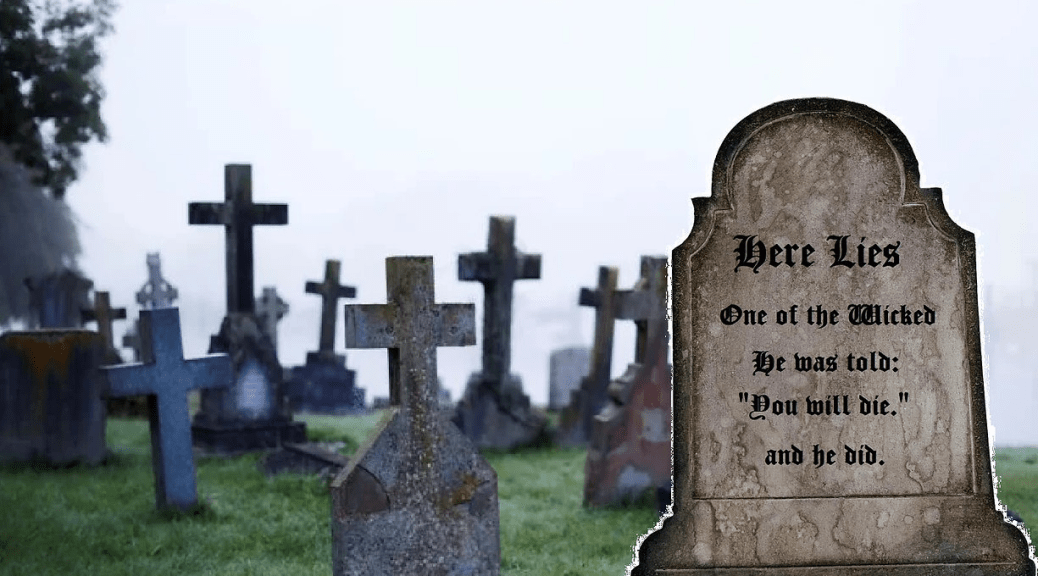
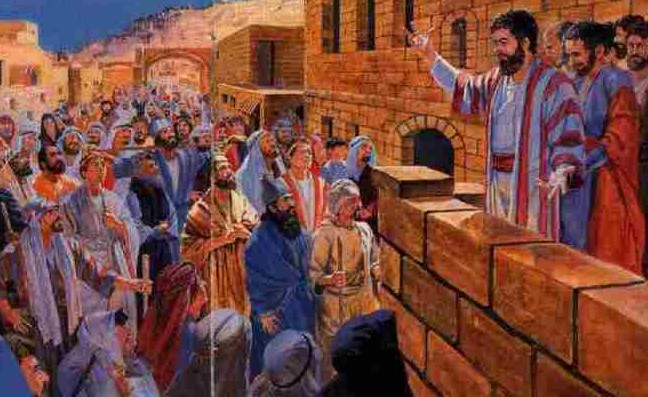
You, mortal, I have made a sentinel for the house of Israel; whenever you hear a word from my mouth, you shall give them warning from me. If I say to the wicked, “O wicked ones, you shall surely die,” and you do not speak to warn the wicked to turn from their ways, the wicked shall die in their iniquity, but their blood I will require at your hand. But if you warn the wicked to turn from their ways, and they do not turn from their ways, the wicked shall die in their iniquity, but you will have saved your life.

Now you, mortal, say to the house of Israel, Thus you have said: “Our transgressions and our sins weigh upon us, and we waste away because of them; how then can we live?” Say to them, As I live, says the Lord God, I have no pleasure in the death of the wicked, but that the wicked turn from their ways and live; turn back, turn back from your evil ways; for why will you die, O house of Israel?

——————–

This is an important reading that might not be one many people are familiar with.  It comes up in the Episcopal Lectionary schedule every third year (Year A), on the fourteenth or fifteenth Sunday after Pentecost (always Proper 18), but it falls under the “Track 2” designation, so it might always be overlooked.  I want to focus primarily on what this reading says on a deeper level, while then tying it together with the other readings commonly accompanying it.  Pull up a chair and grab a refreshing drink and learn what God has spoken through the prophets for your benefit.

“You, mortal” is written “wə·’at·tāh – ben-’ā·ḏām,” which pulls from the words “attah, ben, and adam.”  This means “You, mortal” actually is an address that begins by saying “and you are” (or “and you’re”).  The Hebrew root, “אַתָּה,” can be either masculine or feminine, singular or plural.  Because of that flexibility coming from Yahweh, He was speaking to the male named Ezekiel, while also talking in eternity to all of “you,” who “are” the “son of man.”

You might recall how often Jesus referred to himself as the “Son of man,” with the Greek written being “Huios tou anthrōpou.” (Matthew 12:8 used as an example.)  Wikipedia reports on this as such: “The expression “the Son of man” occurs 81 times in the Greek text of the four Canonical gospels, and is used only in the sayings of Jesus. The Hebrew expression “son of man” (בן–אדם i.e. ben-‘adam) also appears in the Torah over a hundred times.”  They then add that another thirty-two times it is written in the plural, with “sons of man,” with that seen as a reference to “human beings.”  Another way of stating that would be “mortals.”  However, that is summed up in the plural form of “anthrōpou” (“anthrōpos,” as found used in Hebrews 13:6).

Hebrew does not used capital letters, as does Greek, so one needs to realize that the presentations of “Huios tou anthrōpou,” as a reference made by Jesus about himself, were capitalized by Apostles who wrote with a higher understanding of what they heard, when they were mere disciples of Jesus of Nazareth.  The vocalization of the word “son” has no means possible to convey capitalization to the one hearing the word.  That is, unless the mind recalling a word spoken is inspired through divine memory, where the spoken word is realized to be a statement about one’s relationship to God (Yahweh).  This means the Gospel writers were well aware, through the Christ Mind that possessed their brains, that Jesus was indeed the “Son” of Yahweh, while having been sent into this world as “a mortal” or “man” – “human being.” Capitalization in Greek denotes a word that must be discerned as having a higher level of meaning, relative to the divine.

In Ezekiel’s case, where Hebrew has no indication of capitalization, the mere fact that Yahweh was speaking to him, addressing his as “ben-adam,” says that Ezekiel, like Jesus, was a “Son of man.”  Ezekiel wrote his book as the equivalent of an Apostle, which means all the Apostles were like Ezekiel when they wrote their Gospels and Epistles.  It means they were all like Jesus (including Ezekiel), because all were the “Sons” of God (Yahweh) and elevated above mere human being status (mortals).

That is why the disciples of Jesus told him the people (and most likely themselves too) thought he was one of the prophets (after naming John the Baptizer, Elijah, and Jeremiah).  Normal people cannot hear the voice of God speaking to them.  Prophets do.  Thus, Ezekiel, as a recognized prophet, was like Jesus, who was also one who heard the voice of God speaking to him.  Yahweh then placed His Holy Spirit into Simon Peter, causing him to speak the word of God (beyond the capabilities of his own brain), saying, “Sy ei ho Christos  ,  ho Huios tou Theou tou zōntos  .” – “You are the Christ [Messiah]  ,  the Son of God of the living  .

When Simon Peter blurted those words out of his mouth, he was known by Yahweh to become an Apostle later.  His heart was known to be devoted to both Him and to His Son.  Simon Peter was thus receptive to the Holy Spirit and therefore easily moved to speak the Word of God.  This is then how one should read this lesson from Ezekiel, because Yahweh told him AND ALL LIKE SERVANTS FOREVERMORE: “whenever you hear a word from my mouth, you shall give them warning from me.” 

The translation that states “warning” is accurate, but reading that is misleading, in particular to those who feel they know God, thus they do not think they need His warnings.  The Hebrew written is “wə·hiz·har·tā,” which pulls from the root verb “zahar.”  The literal translation says “and illuminate” or “and enlighten,” as the root word means “to be light or shining.”  This then converts to a “warning” that one is walking in darkness, and darkness is metaphor for sin, which lurks everywhere in the realm of death.  Human beings, as mortals – a word that means death, as those born to die – walk in darkness as “sons of man” [not a statement about human gender].  Therefore, God (Yahweh) sends His Prophets to shine light to the world, which comes as a “warning” to stop sinning or suffer the known outcome of being mortal.

We know this is what the light of truth, spoken through God’s prophets, is meant to cease, because Ezekiel wrote multiple times in this reading the word (eight in the above translation) “rasha” and “resha” (as “lā·rā·šā,” “hā·rā·šā” and “rā·šā,” as well as “mê·riš·‘ōw“), meaning “wicked” and “wickedness.”  The Hebrew word “rasha” means “wicked, criminal,” where “criminal” must be understood as meaning one who breaks the Laws of Moses.  Still, Strong’s lists NASB Translations of this word as being: “evil (1), evil man (1), evil men (1), guilty (3), man (1), offender (1), ungodly (1), wicked (228), wicked man (21), wicked men (2), wicked one (1), wicked ones (3).”  This makes the purpose of God’s prophets (including Jesus) be to warn mere mortals not to sin against God.

The crux of this reading says: If you hear the voice of God telling you to shine light onto sinners, so they will see their sinful acts and change, then you will save your own soul from the condemnations of the sinful – whether or not the sinful change, from heeding the message brought by God’s messenger (a Greek word identifies such as “aggelos” or “angeloi“).  If you hear the voice of God telling you what to tell sinners, but you do not give them God’s message, then the sins of the sinful become the responsibility of the failed prophet.  Therefore, the warning that must be shared is to the prophet, warning him or her not to hide the light of God’s truth (divine illumination) under the cover of secrecy or personal privacy.

This is then a reading paired with Jesus giving the instruction to his disciples: “If another member of the church sins against you, go and point out the fault when the two of you are alone.”  That lesson is compounded by a failed prophet refusing to listen to another prophet of the Lord, such that an escalation of talks follow – a small group of prophets, followed by the whole congregation (all of whom are prophets).  All of this direct consultation must then be seen as God verifying what was heard by a failed prophet within his head (or her head) restated by external voices of God, all telling the failed prophet the same thing.  The process eliminates any confusion one might claim as justification for sinning.  Everyone involved must then be Apostles that hear the voice of God, meaning a church of Jesus Christ does not involve novice students or adoring fans. [They are the ones Apostles preach to.]

This brings up the need to clarify “If another member of the church sins against you.”  This translation comes from Matthew 18:15, but the word “ekklésia,” meaning “church,” does not appear in this reading until verse seventeen, when the congregation is called up to speak.  What is written is this: “Ean de hamartēsē <eis se> ho adelphos sou,” which literally states, “If indeed now does wrong *among you* this brother yours.” 

An observant reader will have noticed the use of two “angle brackets” that surround “eis se.”  According to the Wikipedia article entitled “angle bracket,” when used in “terminology,” the definition is this: “〈 〉, used to enclose the name of the domain in which a concept and a term is used.” 

This sets apart the “domain” as being this statement by Jesus [recalled by Matthew], where the “concept” of “church” is presented in the “term” “among you.”  Because the concept is relative to the translation of “eis se,” the first thing to do is fully understand “eis.”  The translation (NRSV) is “against,” setting the term as “against you,” making this “term” important to grasp.  I have translated this as “among you.” 

The Greek word “eis” is said by Strong’s to aptly translate as “to or into (indicating the point reached or entered, of place, time, purpose, result)” [its definition], with it also meaning “into, in, unto, to, upon, towards, for, among” [its usage].  HELPS Word-studies adds this about “eis“: “properly, into (unto) – literally, “motion into which” implying penetration (“unto,” “union”) to a particular purpose or result.” 

Seeing how the translation of “against you” implies one’s sins “penetrate you” this is hard to discern.  Translated differently (according to legitimate options), the use of “among you” gives a strong impression of a wolf (sinner) having penetrated the sheepfold (a church).  This says “you” reflects the one first coming to that awareness. [Certainly, led by the Holy Spirit to uncover the sins and the sinner.]

Still, there is another element of this untranslatable set of symbols that must be considered.  In Scripture, where all words written are those spoken by God to His devoted servants (Ezekiel, Jesus, and now Matthew), it becomes a bold move to see groups of words and read them as if they only have one meaning.  A perfect example is “Son of man.”  Christians see those three words and immediately think “Jesus,” without realizing the importance of “Son,” the value of “this” (the article between Son and man), and how all readers are named generally in the one word “man.”  This means that the angle brackets surrounding two words draw one’s attention away from two separate marks, one of which is a “less than” symbol, with the other being a “greater than” symbol.  This needs to be taken into account.

Seeing this, the word “eis” becomes “<eis,” where the symbol is pointing out a “lesser than” state that is relative to all the aforementioned translation possibilities for “eis.”  Here, it becomes important to realize verse fifteen began with a capitalized “If” (a “big If”), which places a scenario of possibility to the statement.  The “domain” is then one of choice, which is relative to the “concept” of true  Christianity, which had not yet begun when Jesus was giving this instruction.  At the time Jesus spoke these words, Judas sat and listened.  Judas was a specific “you” in the group of disciples, such that he was “among” the others, but no one (other than Jesus) knew he was “against” what Jesus offered.  Judas then becomes an example of one of the group who proves to be “less than” the rest.  This needs to be read into the whole of the term “among you.”

In this translation I have placed two asterisks, rather than angle brackets, because each word needs to be individually understood, before the whole can leave an impression.  The next Greek word, translated as “you,” needs to be understood similarly as was “<eis.”  The Greek transliteration written here is “se,” which is the second person singular accusative form of “.”  In this word written is another of the marks that are untranslatable.  This mark is “>,” which is a “greater than” symbol.  The actual word written is then “σέ›” and that has to be seen as meaning Jesus speaking as God to a collective of disciples, each of whom were second person singular “you,” with the greater than symbol indicating each of their souls will have then become married to the Holy Spirit (a greater than indication).  Relative to the concept of a “church,” each disciple  (including Judas) was then warned by Jesus speaking the word of God, as they would become true prophets of Yahweh, not run-of-the-mill disciples.  Any “failures among you saints” (“<eis se>”) must be addressed.

By realizing that small nuisance (one that requires close inspection of the written text, not just a translation), one can then see how the use of “brother” becomes a statement of that “greater than” state of being.  The word “adelphos” becomes more than just a group of guys (male versions of “anthrōpou“), but they all (males and females who would become part of the true “ekklésia“) are elevated as “brothers” in the name of Jesus Christ, as “Sons of God” [Huioi tou Theou], with “Huioi” translatable as “Children.”  The lower-case assumes this elevation to a capitalized meaning, simply because of that little-bitty “greater than” symbol.

Simply by realizing what Jesus said, based on the divinely inspired writing of Saint Matthew, one can see how this Gospel reading becomes a mirror of that written by Ezekiel.  Jesus spoke instructions that say what God told Ezekiel.  If one has been filled with God’s Holy Spirit, then one hears the voice of God within one’s soul.  If one claims to be filled with the Holy Spirit and is indeed able to hear the voice of God within one’s mind, but then does not speak the warning to those in darkness: “O wicked ones, you shall surely die,” then that failure needs to be addressed accordingly.

This become the truth of the phrase, “A chain is only as strong as its weakest link.”  The chain is formed by all who are prophets of the Lord, each who is a link between Him and human beings.  Christianity is the chain, where the only links that comprise it are those who are linked together in the name of Jesus Christ.  That is not a chain link forged by one saying, “I believe in the concept that Jesus is the Christ.”  A true link that joins into God’s chain is one who is reborn  as Jesus, so all links share the strength of God as Sons of man (regardless of human gender).  Anyone claiming to be a true Christian, who either cannot hear the voice of God (a liar) or will not share the voice of God (a failure) are then the weak links that break the chain; and this is why that weakness must be eliminated, not allowed to continue.

The reading from Ezekiel is often in competition with a reading from Exodus (Exodus 12:1-14), which tells of the commanded ritual of the Passover, including how the blood of lambs had to be spread over the doorposts of the homes of the Israelites.  That compliance would prevent their deaths, when the Lord told Moses: “I will pass through the land of Egypt that night, and I will strike down every firstborn in the land of Egypt, both human beings and animals; on all the gods of Egypt I will execute judgments: I am the Lord.”

God spoke a warning that was heard by Moses.  Moses was then a prophet of Yahweh, who spoke the warning to the Israelites as instructed, saving his life as well as all the Israelites who listened and obeyed.  Moses was then like Ezekiel and Jesus, as a Son of man.

Also paired with the Ezekiel reading is the psalm of David (Psalm 119) that begins by singing, “Teach me, O Lord, the way of your statutes, and I shall keep it to the end.”  It ends with the verse: “Behold, I long for your commandments; in your righteousness preserve my life.”  David wrote his song lyrics by listening to the voice of the Lord within his heart, pouring it out through his harp as he sang.  He taught the Israelites to sing the psalms and love them just as he did.  As such, the words of God were learned by all of Israel and loved.  Thus, we see David was another Son of God, in the form of mortal flesh.

Finally, Paul’s letter to the Romans is read, where we read, “It is now the moment for you to wake from sleep. For salvation is nearer to us now than when we became believers; the night is far gone, the day is near. Let us then lay aside the works of darkness and put on the armor of light; let us live honorably as in the day, not in reveling and drunkenness, not in debauchery and licentiousness, not in quarreling and jealousy. Instead, put on the Lord Jesus Christ, and make no provision for the flesh, to gratify its desires.”  Paul wrote to saints in the name of Jesus Christ, telling that “church” not to let any weak links remain.  He listed how a weak link looks back to the past ways of the world, not to the future ways God had blessed them with – shown the light of truth, which must be shared.

Paul was led by the voice of Yahweh to tell those who could also hear the voice of God speaking to them, to shine the light of truth that says, “Do not stop.  Do not let your attention be distracted by the lures of the world.  Do not become a weak link in the chain of Christianity.”  Thus, Paul was also a Son of God, as Jesus Christ reborn into the flesh of a man, united with his soul.

There is beauty in these words that come from God through various servants.  Those who need to listen to prophets speaking the truth, in order to believe and become transformed, rely on the words of human beings whose holiness is invisible, keeping saints from looking any different than anyone else.  The people living in darkness are all who hear the voice of Satan in a world that pretends to offer delights – as Paul wrote, “provisions for the flesh, to gratify its desires.” 

They are the ones who need to be shown the light of warning (“hiz·har·tā” stated by Ezekiel), so they can put on the armor of light (“hopla tou phōtos” stated by Paul) and find eternal life be felt in the strength given by God, His Holy Spirit, and the Christ Mind of Jesus.  As a seeker of truth, finding it spoken means it is possible for them to transform into new chain links of Christianity.  The failure of them not hearing the truth spoken then falls upon the heads of those who claim to offer the truth of God, but do not have that ability (liars).

God told Ezekiel that the seekers of redemption will say to the prophet, “Our transgressions and our sins weigh upon us, and we waste away because of them; how then can we live?”  Yahweh then told Ezekiel to tell Israel, “Say to them, As I live, says the Lord God, I have no pleasure in the death of the wicked, but that the wicked turn from their ways and live; turn back, turn back from your evil ways.” 

Jesus told his disciples to address failed prophets in the same way, because “whatever you bind on earth will be bound in heaven, and whatever you loose on earth will be loosed in heaven.”  There, to bind means to set the rules straight and to loose means to break or destroy.  An Apostle’s work, as a servant of Yahweh, is to make sure the links in the chain of Christianity are strong, otherwise removed.

Knowing this means it is hard to find one claiming to be Christian that sets any rules as hard and fixed.  There are few these days that will try to destroy those who sin, while they are putting gifts of offering into felt-lined trays.  Instead of telling a gathering assembled, “God will pass through this land and anyone whose body of flesh has not been painted with the blood of Jesus Christ will lose his or her life.”  Rather than tell an audience that does not want to hear the truth, “O wicked ones, you shall surely die,” or “If you do not long to keep God’s commandments, then your life will not be preserved through the righteousness of the Lord,” the people will stand and cheer that failed leader, that liar. 

Without one filled with the Holy Spirit saying to those believing they are Christians, “Let us lay aside the works of darkness and put on the armor of light, so we can no longer be reveling in drunkenness, in debauchery and licentiousness, and no longer be quarreling over petty jealousy,” the people will never change their ways.

It then becomes the responsibility of the serious disciple of Jesus to realize this shortcoming in their leaders.  They need to address their priests and pastors as Jesus said to do.  The reason is as God told Ezekiel: “If you do not speak to warn the wicked to turn from their ways, the wicked shall die in their iniquity, but their blood I will require at your hand.” 

Save a minister by telling him or her to stop preaching politics and racism, because the world is going to Hell because of liars and failed prophets, too selfish to risk losing a paying customer.

Can I hear an amen?

Ezekiel 37:1-14 – Prophesying to the soul

The hand of the Lord came upon me, and he brought me out by the spirit of the Lord and set me down in the middle of a valley; it was full of bones. He led me all around them; there were very many lying in the valley, and they were very dry. He said to me, “Mortal, can these bones live?” I answered, “O Lord God, you know.” Then he said to me, “Prophesy to these bones, and say to them: O dry bones, hear the word of the Lord. Thus says the Lord God to these bones: I will cause breath to enter you, and you shall live. I will lay sinews on you, and will cause flesh to come upon you, and cover you with skin, and put breath in you, and you shall live; and you shall know that I am the Lord.”

So I prophesied as I had been commanded; and as I prophesied, suddenly there was a noise, a rattling, and the bones came together, bone to its bone. I looked, and there were sinews on them, and flesh had come upon them, and skin had covered them; but there was no breath in them. Then he said to me, “Prophesy to the breath, prophesy, mortal, and say to the breath: Thus says the Lord God: Come from the four winds, O breath, and breathe upon these slain, that they may live.” I prophesied as he commanded me, and the breath came into them, and they lived, and stood on their feet, a vast multitude.

Then he said to me, “Mortal, these bones are the whole house of Israel. They say, ‘Our bones are dried up, and our hope is lost; we are cut off completely.’ Therefore prophesy, and say to them, Thus says the Lord God: I am going to open your graves, and bring you up from your graves, O my people; and I will bring you back to the land of Israel. And you shall know that I am the Lord, when I open your graves, and bring you up from your graves, O my people. I will put my spirit within you, and you shall live, and I will place you on your own soil; then you shall know that I, the Lord, have spoken and will act,” says the Lord.

——————–

This is the Alternate First Lesson for Pentecost Sunday, Year B, according to the lectionary for the Episcopal Church. This reading will be read aloud if the mandatory reading from Acts 2 is chosen to fill the New Testament position. This will then precede a selection from Psalm 104, which sings, “You hide your face, and they are terrified; you take away their breath, and they die and return to their dust.” That will precede the Acts reading, which states: “All of them were filled with the Holy Spirit and began to speak in other languages, as the Spirit gave them ability.” All will be read before the Gospel selection from John, where Jesus said, “And when he comes, he will prove the world wrong about sin and righteousness and judgment.”

In 2018 I posted a commentary about this reading from Ezekiel. As the reading has not changed, what I wrote then still applies today. Please feel invited to read that posting by searching this site. As with all divine Scripture, there is new insight that comes each time one pondered what is written through prayer and exploration led by divine guidance. Desiring to ponder Scripture comes from the love of God; whereas, love of self makes one easily bored and causes a soul to struggle with paying any attention to the Word of God.

This is a very powerful reading, one that fits well with the Acts reading’s quotations from Joel and David, told by Peter to the crowd of pilgrims. No doubt, that is why this reading has been chosen by the elders who were married to Yahweh and led to devise a system of readings [the lectionary]. However, I want to direct that power now towards the Easter theme that I have been shown, which makes it be a season of preparation for ministry.

Knowing one’s soul has married Yahweh and His Son Jesus now lives within, the Easter “weeks” reflect a time when it is necessary to let the resurrection of Jesus within [the Christ Mind] lead one to find understanding in Scripture, as his willing disciple. Jesus lives, resurrected in new flesh, teacher and student as one.

This is this same state of being that Ezekiel reported, when he wrote: “hā·yə·ṯāh ‘ā·lay yaḏ-Yah·weh way·yō·w·ṣi·’ê·nî ḇə·rū·aḥ Yah·weh.” This is one segment of words that the NRSV has broken in two and added to the following segment. That misleads, as it is not what was written. Each segment must be understood, separate from the following segment[s], before putting them together contextually. The Hebrew written literally translates to say, “became upon me hand-of-Yahweh and brought me out in the spirit of Yahweh.” That needs closer inspection.

The first word is rooted in the Hebrew word “hayah,” which means “to fall out, come to pass, become, be.” The past tense then says Ezekiel “fell out, came to pass, became,” or “existed” [as a statement of “being”]. One must not imagine a scene where Ezekiel was just sitting comfortably in a chair, when up “came” Yahweh. Ezekiel is saying – clearly – that he became the right hand of God. Yahweh did not reach out a physical “hand,” as if a ‘come with me little fella’ invitation was made. Ezekiel knew Yahweh possessed him [from the combination of “yaḏ-Yah·weh” – “hand of Yahweh”], which was a “spiritual” possession [from “ḇə·rū·aḥ” – “in the spirit”], as Ezekiel being married to Yahweh, as His wife.

Certainly, Ezekiel had a vision or a dream, just like Joel prophesied, which Peter explained to the Jewish pilgrims. Still, Ezekiel [like Joel, and all prophets filled with Yahweh’s Spirit, as His ‘right-hand men’] wrote his book from a lucid state of being, while at the same time writing his book as the “hand of Yahweh,” so every word was divinely chosen. That means Ezekiel [and Joel, et al] was just like Peter, the other eleven, and the rest of the one hundred twenty that chose Matthias to replace Judas. They all knew Yahweh was their Master, with them his servants [“hands of Yahweh”], with them all knowing they had been Anointed ones [Christs, just as Ezekiel and all the prophets had so been anointed by the Spirit], so they all knew they were reborn versions of Jesus [Christ was not his last name]. Peter was telling all the visitors in Jerusalem, “Just like Joel wrote, so too are we prophesying.”

Yahweh led Ezekiel to write [NRSV translation]: “He said to me, “Mortal, can these bones live?” I answered, “O Lord God, you know.” This states the Master-servant / Husband-wife / Teacher-student relationship that was established in Ezekiel, as there was no ‘equality’ present. A big problem allowed to manifest today is anyone and everyone are allowed to question authority, even when unprepared to run one’s own life successfully. When Yahweh asked a question, Ezekiel answered as one committed to being led, not one trying to play smart.

When all the social issues of today are raised, it is Yahweh asking, “Can these bones live?” The same question is valid, because it speaks to the death of eternal souls wasting away in mortal bodies of flesh. Every minute of every hour or every day of every year of every period of history, the ‘socially correct’ call is to sin. “After all, we’re dead already, why not die a little more?” is the ignoramus question that asks everyone to join in the debauchery of a sinful world. Yahweh always asks those who serve Him the rhetorical question, “Can these morons of death save their souls?”

Rather than give the answer of commitment to Yahweh, as his “hand” on earth [as Ezekiel did], most everyone who leads a congregation in Christian churches today feel the need to play god [little-g], and say, “I think God would say …” or “I think Jesus would say …,” when the answer is right before them: “O Lord God, you know.” [“I know nothing but what you tell me to know.”]

If one does not speak what Yahweh says to speak, then Yahweh does not care what dead, dry bones think. Thinking for themselves [as little-g gods] is what turned them into dry bones. The question is [as always], “Can these bones live?”

Yahweh then led Ezekiel to write: “Then he said to me, “Prophesy to these bones, and say to them: O dry bones, hear the word of the Lord. Thus says the Lord God to these bones: I will cause breath to enter you, and you shall live. I will lay sinews on you, and will cause flesh to come upon you, and cover you with skin, and put breath in you.”’

That says, “prophesy” [“hin·nā·ḇê,” from “naba”], which means let Yahweh speak through His “hand.” It does not say, “orate an opinion, because like assholes everybody has one.” To even begin to “prophesy,” one has to “hear the word of Yahweh.” That means not thinking what one presumes God would say, but opening one’s mouth and letting Yahweh speak. As His words come out, one “hears the word of Yahweh” at the same time others listening “hear the word of Yahweh.” If anyone stands before a congregation of Christians and does not prophesy, from having heard the word of Yahweh, then that person is either a hired hand [who cares not for the sheep] or a false shepherd [who wants the sheep sacrificed to his or her will].

What Yahweh told Ezekiel then says “say to them: hear the word of Yahweh“ [the NRSV is too embarrassed to call Yahweh by His name, so they cower and whimper “the Lord”]. Every human body has a “lord,” which is its soul. That soul will lord over a body of flesh until the body of flesh takes control of the brain and makes the soul its servant. That makes the flesh become “lord” over a soul. Satan can be called a “lord” in that case. Therefore, one must know the truth that says, “the word of Yahweh” is “prophecy.”

The “prophecy” Ezekiel preached was this: “you shall live – you shall know that I Yahweh.” While that assumes “I am,” the “I” is the ego of self, which is a soul. When one lives, then one’s soul has earned eternal life … no longer the mortals made of dry bones. At that point, one’s soul is married to Yahweh, becoming His possession. That transforms “I” into “I Am,” which means knowing Yahweh. When Moses was told “I Am Who I Am,” that says, “If you are Me, then I Am you.” This marriage brings the promise of eternal life, which perks up the ears of all dry bones bound to die. By listening to “prophecy” they were given “breath,” which was an eternal “soul” that returned the essence of life to that still bound to die.

We then read that Ezekiel did as Yahweh told him and the bones began to develop bodies of flesh. This is where one needs to realize that dry bones reflect every mortal creature on earth. The bones symbolize that death one is born to experience, through mortality of flesh and bones. To use “prophecy” to those born dead – mortals just waiting until death turns them back into bones and dust – means to give the dead of the world the religion that was born of Moses, given to the descendants of Abraham, Isaac, and Jacob.

This says that every pilgrim who stood within earshot of Peter and the other one hundred nineteen on Pentecost morning were walking and talking dry bones with flesh around them. The “breath” of life had returned, through reincarnation. Same souls returning with new bodies of sinews, flesh, and skin. They were still bound to die; but they, at least, had their souls back [to some degree], so the renewed sous can then lead their bags of bones to comply [somewhat] with Yahweh’s Commandments.

Then Yahweh said to Ezekiel, where he wrote: “Then he said to me, “Prophesy to the breath, prophesy, son of man, and say to the breath: Thus says adonay Yahweh: Come from the four winds, O breath, and breathe upon these slain, that they may live.”’

That says Yahweh told Ezekiel to speak not to bodies of flesh, but to the “breath” [“ruach”] within them. That became the “lord” of Ezekiel’s soul speaking – “Yahweh” [from “adonay Yahweh”] – so the “prophecy” spoken by Ezekiel reverberated spiritually to the souls of dry bones. When Yahweh told Ezekiel to write of the “four winds,” that matches the “sounds” of the “Spirit” that came “from heaven and filled all” who were together in the upper room with Peter. This “wind” times “four” [symbolic of a foundation] becomes receipt of the “Holy Spirit” upon a soul, so it is one with Yahweh – Yahweh is that soul’s “lord” [“adonay Yahweh”].

This is why Yahweh then led Ezekiel to write: “Then he said to me, “Mortal, these bones are the whole house of Israel. They say, ‘Our bones are dried up, and our hope is lost; we are cut off completely.’ Therefore prophesy, and say to them, Thus says the Lord God: I am going to open your graves, and bring you up from your graves, O my people; and I will bring you back to the land of Israel. And you shall know that I am the Lord, when I open your graves, and bring you up from your graves, O my people. I will put my spirit within you, and you shall live, and I will place you on your own soil; then you shall know that I, the Lord, have spoken and will act,” says the Lord.”

That says the resurrection of Yahweh within one’s soul earns a soul the reward of eternal life, beyond the grave. It is the promise made to all who have regained possession of their souls, so their souls no longer serve Satan and lead a body of flesh to ruin. Being religious leaves one needing true “prophecy” spoken to those reincarnated “souls,” not political agendas that are as temporal as yesterday’s newspaper [speaking in the age of the Internet]. It says the only way for anyone religious [the “house of Israel” whose “hope is lost,” being “cut off completely” from both sin and salvation – “damned if you do, damned if you don’t”] to feel the joy of Salvation and the release of bondage to a world of sin is to marry Yahweh and become [like Ezekiel wrote Yahweh called him – “son of man”] Jesus reborn.

The escape from the tomb of death can only come after one has married Yahweh, so the tombstone that keeps one returning as dry bones, life after life [reincarnation], is to make Jesus the rounded stone that can be rolled away after one’s death. That exit allows the soul to return to be one with Yahweh, never again to be dry bones. That was the way Ezekiel knew the presence of Yahweh within him, as he was reborn in the name of Yahweh, earning the name that means “Yah[weh] Saves” [“Jesus”].

Likewise, all the one hundred twenty souls gathered together after the soul of Jesus had escaped the tomb of death. The soul of Jesus came and was “breathed” into them; and, they “received the Spirit.” As such, ALL stood as flesh and bones that were their souls joined with that of Jesus. ALL stood as Jesus resurrected. His wounds were in their flesh. They all knew their state of death had been released by that “lord Yahweh” within their souls.

As a reading selection that is possible to be heard read aloud on the fifth Sunday in Lent [Year A], this lesson might not be read aloud on Pentecost, if the Acts 2 reading is chosen over it. Still, the power held in this reading from Ezekiel fits perfectly into the preparation for ministry that one reborn as Jesus, another Christ of Yahweh, must enter. Ezekiel was married to Yahweh, so when Yahweh called upon His “hand,” His “hand” immediately responded. Ezekiel accepted the Will of Yahweh as his will, which he happily accepted as the wife of Yahweh [a submissive soul earning eternal life]. One cannot enter ministry unless one has become an equal to Ezekiel, an equal to Peter and the other one hundred nineteen. All are equal because their souls have merged with the soul that Saves – Jesus.

The parallel of the Pentecost reading from Acts 2 is Peter and the rest “prophesied to the breath,” which was the souls of the pilgrim Jews. They were the lost house of Israel, just as today the house of Jesus [Christianity] has become just as lost, with no hope, cut off from everything without being damned. Those souls are seeking redemption and are therefore looking for someone – anyone – who can share the truth of Scripture with them. Thus, Ezekiel was told by Yahweh to “prophesy to the word of Yahweh,” in the same way the “Spirit” of Yahweh landed upon His hands [120 of them], so they also “prophesied” [explaining Joel and David]. The seekers heard the truth and were redeemed [almost 3,000]. That is what ministry for Yahweh is all about.

It is important that one see how Jesus walked for three years in ministry, taking the “word of Yahweh” with him wherever he went. It was seekers that came to Jesus. It was always their faith that healed them. It was always their faith that made them whole. It was always their faith that transformed them into true Christians, after they encountered the truth of Jesus. All of those events should be seen as Jesus “prophesying to the word of Yahweh,” as a soul speaking to the soul of a seeker, where audible words were never spoken, like they were spoken by Peter and the others. Jesus spoke to them spiritually – soul to soul – so they were transformed spiritually [a perfect example is the Samaritan woman at the well].

Because the Day of Pentecost is the official graduation day, when the Easter season is left behind and ministry is to begin now and last forever, it is good to know that the practice of forty days with Jesus [him being one with one’s soul] is to spiritually communicate with Yahweh, Jesus, and others. Explaining Scripture can be moving, but as John wrote about the time the disciples spent learning to be Jesus reborn, “Jesus did many other things as well. If every one of them were written down, I suppose that even the whole world would not have room for the books that would be written.” The hope of ministry is to be there and to voice religion; but the truth of ministry is to let Jesus speak spiritually through one’s acts, so the seekers can be filled. Sitting in a church office or sitting in a church pew does little towards making Jesus available for seekers.

Ezekiel 17:22-24 – Being the cedar tree

Thus says the Lord God [adonay Yahweh]:

I myself will take a sprig

from the lofty top of a cedar;

I will set it out.

I will break off a tender one

from the topmost of its young twigs;

I myself will plant it

on a high and lofty mountain.

On the mountain height of Israel

I will plant it,

in order that it may produce boughs and bear fruit,

and become a noble cedar.

Under it every kind of bird will live;

in the shade of its branches will nest

winged creatures of every kind.

All the trees of the field shall know

that I am the Lord.

I bring low the high tree,

I make high the low tree;

I dry up the green tree

and make the dry tree flourish.

I the Lord have spoken;

I will accomplish it.

——————–

This is the track 2 Old Testament option that could be read aloud on the third Sunday after Pentecost, Year B, according to the lectionary for the Episcopal Church. If chosen, it will be paired with Psalm 92, which sings: “The righteous shall flourish like a palm tree, and shall spread abroad like a cedar of Lebanon. Those who are planted in the house of the Lord shall flourish in the courts of our God.” They will be followed by an Epistle reading from Second Corinthians, where Paul wrote: “For all of us must appear before the judgment seat of Christ, so that each may receive recompense for what has been done in the body, whether good or evil.” The Gospel reading will then be read from Mark, where it is written: “It is like a mustard seed, which, when sown upon the ground, is the smallest of all the seeds on earth; yet when it is sown it grows up and becomes the greatest of all shrubs, and puts forth large branches, so that the birds of the air can make nests in its shade.”

In this reading selection, the Hebrew of these three verses includes the word “Yahweh,” written three times. In verse 22 is written “adonay Yahweh,”[1] which is translated as “the Lord God.” The two other places [verse 24] where “Yahweh” is written, the NRSV has translated it as “Lord.” The question to the ‘think tank’ translators is this: Which is it: “God” or “Lord,” when both “Yahweh” and “adonay” are two different words translated as “Lord,” yet when “Yahweh” is translated as both “God” and “Lord”?

To translate “adonay Yahweh” as “Lord God” is an error that believes God [Yahweh] tells His prophets to write about “two-word entities.” They do that with “Jesus Christ” [or “Christ Jesus”] and the “Holy Spirit” [or “Spirit Holy”]. That is thinking [always a deadly thing to do] Yahweh needs an additional title added to His name, when simply “Yahweh” says everything needed to be said. Saying Yahweh is a “Lord” is unnecessary redundancy. The same applies to a capitalized [a Greek capability] “Pneuma,” where that cannot come from anyone other than Yahweh, due to the capitalization. If it is accepted to be Spirit that comes from Yahweh, then it is accepted to be “Holy.” The same error applies to “Christ Jesus,” as it gives the impression that “Christ” was the last name of “Jesus,” so both words must be said together. That as if Mr. Christ” [Yahweh the Father?] will be offended if His name is not mentioned.

All of this is the absurdity of English translations, which are all designed to lessen the power of Yahweh [that is the name of a Jewish God], to make authors of divine books be opinion writers. Their translations of this nature remove all thought from simple-speakers-of-English’s minds, as to individual responsibility to serve Yahweh as Jesus reborn. No one is taught that Yahweh has the power to make anyone a “Christ,” because all power to Anoint Spiritually can only come from Yahweh.

This means that every time the two words appear in Old Testament Scripture, saying “adonay Yahweh,” “adonay” refers to the “lord” over the prophet’s soul-body. That follows the marriage of that soul to Yahweh’s Spirit. This means “adonay Yahweh” is reference here to Ezekiel, whose “lord” over his body of flesh was “Yahweh.” As such, every word written by Ezekiel came from Yahweh, his lord. Yahweh is only lord to those souls He has married and are His wives. Calling Yahweh “Lord” does little to make Him become one’s “lord.”

By seeing that, when Ezekiel wrote, “kōh ’ā·mar ’ă·ḏō·nāy Yah·weh” [“thus says lord Yahweh”], Ezekiel was announcing, “I now write as the voice of Yahweh, because He instructs the following words.” The following words become metaphor from Yahweh, with four references to Yahweh being “I” [“’ā·nî”].

In verse 22, the metaphor is placed on “a cedar tree.” This becomes symbolism that should be realized. According to a search of the Internet [Google], using the terms “symbolism of cedar trees,” the following was posted on the website Garden Guides:

“The branches of the cedar tree are wide and grow almost parallel to the ground, making the tree appear to be constructed of successively higher floors made of greenery. In the late 19th century, author John Worcester compared the structure of the cedar tree to the process of attaining successively higher natural and spiritual knowledge, writing, “The spiritual tree also must extend its branches, put forth leaves, and mature its fruit on successively interior planes of the mind.” Worcester further elaborated that the scent of cedar wood indicated the pleasure people find from discovering knowledge and truth.”

This becomes a perfect view of the growth pattern of the branches of a cedar tree. It makes the “highest branches” [“miṣ·ṣam·me·reṯ”] reflect upon those who had reached closest to Yahweh. This then becomes a statement of those who were like Ezekiel, as “adonay Yahweh.” It also is spoken through a prophet of Israel, even though his time as a prophet was served in the southern kingdom, Judah [including captivity in Babylon].

The name “Israel” is a reflection as the “highest branches,” as that is the name taken by Jacob, after his soul married Yahweh. His new name – the name “Israel” – means the soul of Jacob had become “God Is Upright” and “He Retains God.” [Abarim Publications] Thus, the “highest branches of a cedar tree” means those branches of one tree who have married the Spirit of Yahweh, being extensions of Yahweh, still on the physical plane.

As for the “cedar tree” [“hā·’e·rez”], that refers to the children of Israel, led to become a growth of Yahweh on earth, unlike any other “trees” of government or religion. Here, the “cedar tree” is said to symbolize “strength and eternity.” Still, as Ezekiel was a prophet of the mighty tree that was felled, it had once been Israel, but split by lightning and formed into Israel and Judah. That surviving “cedar tree” was then felled by the Babylonians.

This makes this become a prophecy of what Isaiah wrote about as well: “A shoot shall come out from the stump of Jesse, and a branch shall grow out of his roots.” The “stump of Jesse” was the “cedar tree” that had been Israel under David, such that from his being “the highest branches” [everything went downhill from then], the metaphor of the “tender sprig” [“yō·nə·qō·w·ṯāw raḵ”] would be Jesus, whose DNA was implanted in the womb of Mary.

When verse 23 sings, “On the mountain height of Israel I will plant it, in order that it may produce boughs and bear fruit,” here the name meaning of “Israel” [“yiś·rā·’êl”] must be understood. Because Ezekiel was a prophet of Judah, taken in the exile to Babylon, the meaning behind the name is the intent of Yahweh speaking. It has absolutely nothing to do with Yahweh promising to bring back to life a nation that failed, because it worshiped human kings, not Yahweh. Therefore, “the height of Israel” is the meaning that says, “God Strives” [Strong’s] or “He Retains God” – “God Is Upright” [Abarim Publications]. This speaks of all who would be like Ezekiel, married to Yahweh, so the “lord” of their souls would be His Spirit. The “fruit” [“p̄e·rî”] would be Jesus, which would give rise to the great new “cedar tree” called Christianity [still representative of “Israel” – not a nation run by humans, but individual soul married to God].

When verse 23 continues, singing “Under it every kind of bird will live; in the shade of its branches will nest winged creatures of every kind,” the metaphor of “birds” and “winged creatures” is that of angels. In Hebrew, the word “malak” is translated as “angel,” found written in Old Testament scripture a hundred ten times. The word actually means “messenger,” which [along with “ambassador” and “envoys”], so the same spelling shows up in Biblical translation a hundred three other times, with different translations than “angel.” This then leads one to see “apostles” [from the Greek “apostolos”] as having the same essence as “malak,” meaning “a messenger, envoy, delegate, one commissioned by another to represent him in some way, especially a man sent out by Jesus Christ Himself to preach the Gospel; an apostle.” (Strong’s usage)

When one realizes that the meaning of “Israel” implies a divine marriage between soul and Spirit, so one has become “Holy, Sacred, Set apart by God” [the meaning of “Hagion”], it is this union that makes one’s “lord” [“adonay”] be “Yahweh.” Another Old Testament way of making this union be stated is “elohim,” such that Genesis 2 – once the seventh day came and it was deemed “holy” [we live today still in the seventh day] – one finds “Yahweh elohim” written eleven times. An “elohim” of “Yahweh” is then a “god” [“el”] on earth, exactly as is an “adonay Yahweh.” Thus, “elohim” are “winged creatures” [a modification of “kāl- kā·nāp̄,” which literally states “all-winged”] or “birds” [“ṣip·pō·wr”], under the protection of the new “cedar tree” – Jesus [a name meaning “Yah[weh] Will Save].

In verse 24 Ezekiel wrote, “All the trees of the field shall know that I am [Yahweh].” When one realizes the “cedar tree” is the religion of the true priests of Yahweh [His wives in marriage], then “all the trees of the field” become every religion or denomination of a religion that believes in lesser gods. This includes all Christians who refuse to call upon the name Yahweh, preferring to generally state someone unknown [by name]. That lack of personal relationship is what lowers that religion to “all others of the field,” which make up the total scope of religion on earth. This is the difference in the “elohim” of those who worshiped Ba’al and the “elohim” who was himself one, Elijah. Those failed to light an altar fire through prayer alone were the “trees” of religion that had no direct contact to a true Spirit.

This relates to Yahweh saying through Ezekiel’s hand, “I bring low the high tree, I make high the low tree.” One needs to keep in mind here, how the “highest branches” of “Israel” now become the lowest tier of the tree. As such, the roots of the tree are the hidden union with Yahweh, where the Spirit is one with the soul of the tree, so the lowest branches were those of David’s reign, after the Saul branch was pruned and thrown into the fire. Saul was non-productive, producing no fruit. Conversely, the higher branches would be furthest from the roots and therefore less connected to the Spirit, although the highest. The higher branches are too young to produce fruit, but their “tender twigs” contain the code for becoming the Son of man. The wives of Yahweh are the soul produced by the tree of Israel [those in whom “God Is Upright”], not the other trees in the forest.

When the verse then sings, “I dry up the green tree and make the dry tree flourish,” this must be seen as precursor metaphor for Ezekiel’s dream of Yahweh taking his soul to a valley filled with dry bones. [Ezekiel 37] The statement “I dry up the green tree” speaks of the death of mortal existence in a body of flesh. The dead matter that is flesh is only made “green” [from “lāḥ” or “lach,” which actually means “moist, fresh, new”] when the “breath” [ruach] of life brings sinews, muscles and skin around the dryness of dead matter [bones]. This means reincarnation; and, it is the promise of mortality. That says the dream Ezekiel spoke of reincarnation, where now Yahweh says souls come back as “new trees,” after having been “trees” before. However, to make the “dry tree flourish” that means the promise of everlasting life. That was the lesson of Yahweh telling Ezekiel to prophesy to the breath, beyond prophesying to the dry bones.

The final segments of this song say, “I Yahweh have spoken and done.” This should not be read as some brag about the powers of Yahweh. Such truth needs no boasting come forth … from Yahweh. This then means “I Yahweh have spoken” is what we read having been written by Ezekiel. Yahweh speaks through the prophets; so, Ezekiel equates [minimally] to all who wrote divine text of Holy Scripture. Yahweh has spoken the truth every time. His Word becomes the physical roots from which a “cedar tree” grows. No religion claiming Yahweh as the “lord” of the souls who run an organization can use any other text. Even when those souls claim Yahweh is named “Allah” or “the Lord,” they cannot claim that “Yahweh has spoken” through themselves. Therefore, they are not the “cedar tree.” The “cedar tree” is only Jesus resurrected with a soul married to Yahweh and Yahweh alone.

The word translated as “and done” [or “I will accomplish it”] – “wə·‘ā·śî·ṯî” – says the proof is not to see prophecy fulfilled, as that is a lack of faith. The souls who grow from the “cedar tree” of eternal strength will marry Yahweh because they know what has been “done.” That knowledge can only come from personal experience of Yahweh, which means the soul [roots] have merged with the Spirit of Yahweh and the truth courses through one’s flesh. This faith of “done” is the truth of the “blood of Jesus,” whose soul allows one’s mind to know the truth of Yahweh and lead one into His service.

As an optional Old Testament selection to be read aloud on the third Sunday after Pentecost, one should readily see how the verbiage of Ezekiel becomes a match for the metaphor of Mark, where Jesus spoke of seeds growing and bearing fruit. It is vital, if this reading is chosen, to see Israel as a Spirit merged with a soul, creating one in whom “God Is Upright.” One needs to see how the “low” will be made high, not the other way around. Those who think [the deadly curse of mankind] they are high and mighty enough to stop calling Yahweh by His name will find their souls appearing on His doorstep, after their “green tree has been made dry,” only to hear YAHWEH say, “You did not know me, so I do not know you.”

——————–
[1] There are no capital letters in Hebrew. The word written is “יְהוִ֔ה.” Myself and BibleHub [and others, I assume] capitalize the transliteration as “Yahweh,” in the same way that proper names are capitalized. The intent implies capitalization, when in reality there is none. So, “adonay” translates as “lord.”

Ezekiel 2:1-5 – Taking a message of Yahweh to those who ruin souls

He said to me: O mortal, stand up on your feet, and I will speak with you. And when he spoke to me, a spirit entered into me and set me on my feet; and I heard him speaking to me. He said to me, Mortal, I am sending you to the people of Israel, to a nation of rebels who have rebelled against me; they and their ancestors have transgressed against me to this very day. The descendants are impudent and stubborn. I am sending you to them, and you shall say to them, “Thus says the adonay Yahweh.” Whether they hear or refuse to hear (for they are a rebellious house), they shall know that there has been a prophet among them.

——————–

This is the Track 2 optional Old Testament reading choice for the sixth Sunday after Pentecost [Proper 9], Year B, according to the lectionary for the Episcopal Church. If chosen, then the accompanying “Response” will come from Psalm 123, where David sang, “Have mercy upon us, Yahweh, have mercy, for we have had more than enough of contempt, Too much of the scorn of the indolent rich, and of the derision of the proud.” Both will precede the Epistle reading from Paul’s second letter to the Christians of Corinth, where he wrote: “Three times I appealed to the Lord about this, that it would leave me, but he said to me, “My grace is sufficient for you, for power is made perfect in weakness.” All will accompany a reading from Mark’s Gospel, where it is written: “[Jesus] called the twelve and began to send them out two by two, and gave them authority over the unclean spirits.”

I wrote about this reading and posted my opinions in 2018, the last time this optional reading came up in the lectionary schedule. It is available on this website. The value then still applies today, so I welcome all to read that post. However, in my contemplations of the Track 1 option from Second Samuel, when David became king over both Judah and Israel after Saul was killed and no heirs of his still lived, those new insights I found coming to me have shed new light on the true reason this reading being an optional choice that mirrors that reading; and, that is the direction I will now take with this selection from Ezekiel.

First, let me state that I have made adjustments to the reading above, so the truth of what Ezekiel wrote is no longer covered up by erroneous translations. The first verse says nothing about who the third person speaker is, although it certainly be assumed [correctly so] to be Yahweh, the Husband of Ezekiel’s soul. Rather than inject that direct name, I have replaced the third person as “He said.” In verse four, Ezekiel wrote “adonay Yahweh,” which has been incorrectly translated as “Lord God.” That translation misses the point of Yahweh speaking to Ezekiel, because Ezekiel was one of Yahweh’s “elohim” [“gods” via Spirit possession]. The plural of ‘elohim” [of the singular “el”] is matched by the plural “adonay” [of the singular “adon”], where the “lord” of Ezekiel was the Spirit of Yahweh. Thus, “lords of Yahweh” is the true intent, not “Lord God;” so, I have returned the Hebrew text, rather than allow the error to stand.

In my ‘epiphany’ from discerning the meaning of the Second Samuel reading [2 Samuel 5:1-10], it became apparent that David moved his capital from Hebron to Jerusalem for one specific purpose and one purpose only. The omission of three vital verses makes this purpose more impossible to see, since the inclusion of those verses makes it possible, but still very difficult. It forces one to understand why the Jebusites had not been defeated in battle, after nearly a thousand years of occupation in the Promised Land of Canaan. The reason David moved to the ‘stronghold’ of their position was to replace them as the overseers’ of Israel. David would force all the Israelites to become the equivalent of the Jebusites, as all needed to marry their souls to Yahweh forevermore or become the blind and the lame incapable of retaining that land.

When David died, he had sinned and broken the Covenant with Yahweh. The child of his adulterous relationship with Bathsheba would become his lone heir to take over his kingdom. Solomon would lead Israel and Judah to become idolaters of material wealth and accepting of foreign philosophies, beginning the end promised by David making Jerusalem the capital of the union between Judah and Israel. After Solomon died, the two again split into separate nations. By the time Ezekiel was a prophet whose soul had married to Yahweh, the nation of Israel had already been scattered to the four corners of the earth and Judah had fallen, with only Jerusalem and the Temple of Solomon still fighting against the Babylonians. This is when Yahweh spoke to Ezekiel in this reading.

In verse one, where Yahweh tells Ezekiel, “O mortal, stand up on your feet, and I will speak with you,” the truth of what is written says this: “to me son of man stand on your feet , and I will speak to you”. In that, the Hebrew written says, “ben-’ā·ḏām,” which has been translated as “o mortal.” In reality, Yahweh is making a statement about the soul of Ezekiel being related – “to me” [“’ê·lāy”] – not only as a wife but also as a “son of Adam.”

This should be understood as a statement of divine priesthood, where Adam was the first divine priest of Yahweh sent to earth, such that the soul of Adam was resurrected within Ezekiel’s soul. Jesus was likewise a “son of Adam,” as THE SOUL OF ADAM resurrected in a divinely impregnated child that grew into the “man” Jesus. Ezekiel was a soul in a body of flesh [a “man” – “adam“] that had submitted to Yahweh in holy matrimony, where the presence of Yahweh’s Spirit then allowed the soul of Adam to be joined with the soul of Ezekiel, making Ezekiel an “elohim,” whose “lord” [“adonay”] was Adam.

When we read the command to “stand up on your feet,” it is easy to get the impression that Ezekiel was asleep and dreaming. While that quite probably could be the case, the deeper meaning says the “feet” of Ezekiel was his body of human flesh. As such, “stand” [“‘ă·mōḏ”] means “make a stand” or to be “attentive,” as “a servant.” Therefore, the element of “I will speak to you” says the “attentive servant” [Yahweh’s wife Ezekiel] will take the “stance” that will be whatever Yahweh has His “servant say,” which is what prophets do.

In verse two we then read, “And when he spoke to me, a spirit entered into me and set me on my feet; and I heard him speaking to me.” The word “ruach” is translated as “spirit,” and that must be realized as the divinely possessing Spirit of Yahweh. The Hebrew text begins this verse with “wat·tā·ḇō ḇî rū·aḥ,” which says, “he entered me spiritually.” It was that entrance that was the marriage of Ezekiel’s soul [also “ruach”] with the Holy Spirit. It was this Spirit that “spoke inwardly” to Ezekiel. Thus, it was the soul of Ezekiel that “heard him speaking to me,” after his body of flesh had become “upright in the name of Yahweh.”

At the end of verse two is a “פ” or “pe,” the seventeenth letter of the Hebrew alphabet. This marks the end of a “petuhah,” which akin to marking the end of a paragraph. As such, the first two verses are stating the marriage of Ezekiel’s soul to Yahweh, which made him become a true prophet, beyond the experience of visions he had, described in his first chapter. Chapter one begins by stating Ezekiel was thirty years old when he first had visions. Now, at the beginning of his second chapter, Ezekiel is telling of the marriage of Ezekiel’s soul to Yahweh, after receiving the communications of Yahweh first as a marriage proposal. The “pe” marks that holy union had been accomplished.

Verse three then begins in the same was as does verse one, where Ezekiel wrote, “he said to me son of Adam,” again identifying him as being separated from those he was born of. Ezekiel was the son of a “kohen” or one born into the Aaronic priestly line. It is such priests who Yahweh then told Ezekiel, “I am sending you to the sons of Israel.” Rather than saying the “people of Judah,” when Ezekiel was a Judean and the nation named Israel had long before been overrun by the Assyrians, one should realize that Yahweh was speaking to the soul of Ezekiel as a “son of Adam.” Because of Judah having been lost, with Jerusalem under siege, Ezekiel was needed to be a messenger to the priests of Aaron – the Levite lineage that had brought down the Kingdom of Judah through mismanagement. Ezekiel was chosen because those “sons of Israel” had failed.

This failure is then stated as being because the Judeans [and Israelites] had come “to [be] a nation rebellious that has rebelled against me they and their fathers have transgressed against me to this very day.” That defines Judah as being representative of all Israel, where the name “Israel” means “He Retains God” or “God Is Upright.”

When David destroyed the bronze covenant between Abraham and the Jebusites [the keepers of the gate to Heaven and the Tree of (Eternal) Life], it was up to each individual to become “He (who) Retains God” and “God Is Upright (within one).” Ezekiel had become an example of what that meant when he stood on his feet filled with Yahweh’s Spirit.

After David sinned and died, then the Aaronic priests had totally failed to rebel against bad kings, instead, they were found supporting bad kings against Yahweh. That says they followed in the footsteps of “their fathers,” those who chose to have kings to lead them (to be like other nations of Gentiles). Rather than rebel against those who sought that rebellious spirit, the Temple priests chose to support the elders and leaders who ruled against the Covenant that married their flesh to Yahweh. David was Yahweh’s Anointed King of Israel, who removed the ‘middleman’ Jebusites. Those “elohim” would no longer act as Yahweh’s liaisons, by possessing the Aaronic priestly line and maintaining contact with Yahweh indirectly.

Verse four then begins by explaining, “for sons severe faces and strong souls”. The translation that says “The descendants are impudent and stubborn” is too weak to clearly express what Yahweh told Ezekiel. The Aaronic priestly line – the Cohens – had become the “sons” of rebellion against Yahweh, who not only did not wear the “face” of Yahweh as His priests, they also made Yahweh appear to be a “hard” and “severe” god that made life miserable for them. In addition to that “face” of self worn falsely, they declared themselves [where a “self” is a “soul”] as having the power of God behind them, because they were His “children” and had been given Canaan as theirs. Thus, that strong self-ego was the destructive power created by their own minds that acted like Yahweh against them.

Verse four then concludes with Yahweh telling Ezekiel, “I am sending you to them , and you say thus to them as the voice of Yahweh’s lords by marriage [“adonay Yahweh”].” That to be said to the priests of Judah as what Yahweh had just said, about their destruction being self-caused. Ezekiel was to make it clear to them that everything going wrong was due to them playing gods on earth and not wearing the “face” of Yahweh as one of His priests must.

Verse five then says, “and they , whether they listen , or whether they refuse , for they a house rebellious will know , that a prophet has been among them”. This rather clearly says that Ezekiel will speak to them and their souls will know Yahweh has spoken to them through one of His prophets. That presence of Yahweh would have been felt surrounding Ezekiel, so they would listen to what he says. While listening, they still would refuse to act on what they heard said.

Because they have become a house that is rebellious, they would continue to act in rebellious ways that were against Yahweh [and therefore against the message of Ezekiel]. They would not be able to remove this knowledge from their souls, when their souls would go before Yahweh in judgment. They would then remember everything Ezekiel had said to them, as their personal sins accepted before would become known to be why their own souls would be condemned.

As an alternate reading option for the story of David making Jerusalem the capital of the union between Israel and Judah, which would temporarily bring all under the name Israel, the whole was still under a human king. The ‘defeat’ of the Jebusites was really Yahweh commanding David to negate the ‘middleman’ arrangement, where an external earthly presence [albeit divine] held the responsibility for the souls of Yahweh’s chosen people, this reading from Ezekiel tells how everyone must “stand on their own two feet,” responsible for one’s own soul. Each would then be required to have his or her soul be individually married to Yahweh.

The message sent to the “sons of Israel” is the same message sent today to the churches of Christianity and their “sons of Israel.” In that demand, “Israel” means each true Christian is now held responsible by truly being able to claim of oneself: “He Retains God” and “God Is Upright.” The message is the same, if anyone teaches Yahweh is a hard and stubborn God, who hates to let human beings have their way, then he or she will be punished severely when their Judgment Day arrives.

The same result is always expected from those who have nothing to gain from relinquishing power as a priest of God. When none of them actually wear the face of Yahweh to lead others to do the same, the only power they will ever know is temporal and worldly. They will hear themselves being called out by the prophets, but they will never do as told. They will stay the course of false shepherding, leading more and more away from marriage to Yahweh, helping all nations to rebel against Him.

As a reading on the sixth Sunday after Pentecost, when one’s own personal ministry should be just like that of Ezekiel, the message is short and sweet. Listen to the voice of Yahweh telling your soul it must marry Him and receive His Spirit. Then it will be time to stand on your feet and walk the path of righteousness of a ministry that follows. Anything less is failure and will be judged as such.