Category Archives: Galatians

Galatians 3:23-25; 4:4-7 – How to inherit eternal life

Now before faith came, we were imprisoned and guarded under the law until faith would be revealed. Therefore the law was our disciplinarian until Christ came, so that we might be justified by faith. But now that faith has come, we are no longer subject to a disciplinarian.

But when the fullness of time had come, God sent his Son, born of a woman, born under the law, in order to redeem those who were under the law, so that we might receive adoption as children. And because you are children, God has sent the Spirit of his Son into our hearts, crying, “Abba! Father!” So you are no longer a slave but a child, and if a child then also an heir, through God.

——————–

This is the Epistle reading selection to be read aloud on the first Sunday after Christmas, Year C, according to the lectionary for the Episcopal Church. It will follow an Old Testament reading from Isaiah, where the prophet wrote, “and you shall be called by a new name that the mouth of Yahweh will give.” That reading will be followed by a singing of Psalm 147, where David wrote: “For he has strengthened the bars of your gates; he has blessed your children within you. He has established peace on your borders; he satisfies you with the finest wheat.” All will accompany the Gospel reading from John, where the saint wrote: “To all who received him, who believed in his name, he gave power to become children of God, who were born, not of blood or of the will of the flesh or of the will of man, but of God.”

This reading can be called ‘cherry picking,’ because only a clump of words from one chapter (a branch of the ‘Galatians tree’) is placed in a basket with a clump from another one. In this case, the two selected sets of verses mesh well together, as one sets up the other, while the other explains the first. Still, to read the above translation into English, it is easy for a pew-sitter to hear orated: “blah blah law blah blah faith blah blah Jesus, God, Father.” Every Epistle reading is written in a divine language that is designed to put the lazy to sleep; so, only the true Christians will lean forward and say, “Wait a minute. Did I just hear what I think I heard? I need to look at this closer.”

The above translation is a paraphrase, based on a translation service having no clue how to read divine texts. Because the Bibles printed in English are the only versions all mono-linguistic American Christians have ever heard read aloud to them (most do not own Bibles, thus they rarely read it themselves), they go to church and leave church thinking all the Biblical figures spoke English, believing Jesus of Nazareth’s whole name was Jesus Christ. American Episcopalians avoid pre-church Bible Studies classes in droves, attending church to politely let all the reading and singing be over with, attending only there for the ten-minute priest confirmation that sins are okay, because everything is forgiven by Jesus. For that affirmation they drop a twenty in the basket, eat a wafer and sip some wine. Then they go on their lives as they had before, with nothing changed.

Because these seven verses come from two chapters, it is important to realize what is said in each chapter, before connecting the two together. In my effort to discern what is written, I have to read the Greek text in segments, based on marks of punctuation. Each segment of words makes an important statement that must be discerned separately. In that endeavor, I have looked up each word to carefully place English translations that are not only viable, but also closer to the truth of the form in which the Greek words are written.

In the following, I will list the segments by verse in the Greek, to be followed by my English translations. I recommend the reader here to compare the NRSV translations above with what I have translated. The point is to see if the reader can discern what Paul intended, writing by divine inspiration. If Paul were writing as just a man who knew Greek, he would have written under the name Saul; and, he would not have changed from his opinion that Saul had [kill the Christian Jews]. In this regard, the first word is capitalized, which translates as “Before,” and that word should be read as a divinely elevated reference to a Spiritual transformation that Paul knew, as Saul. The capitalization acts as a “Before” and after series of verses.

23

Pro tou de elthein tēn pistin ,

hypo nomon ephrouroumetha ,

synkleiomenoi eis tēn mellousan pistin apokalyphthēnai ,

24

hōste ho nomos paidagōgos hēmōn geogonen ,

eis Christon ,

hina ek pisteōs dikaiōthōmen .

25

elthousēs de tēs pisteōs ,

ouketi hypo paidagōgon semen .

—–

23

Before of what now came this trust ,

under custom we are held prisoner ,

having been enclosed together towards this future belief to be disclosed ,

24

so that this law guide of us has become a new state of being ,

union Anointed one ,

in order that from out of faith we might be acquitted .

25

of having come now of this faith ,

no more under a tutor we exist this .

———-

[skipping over the final four verses of chapter three and the first three verses of chapter four]

———-

4

Hote de ēlthen to plērōma tou chronou ,

exapesteilen ho Theos ton Huion autou ,

genomenon ek gynaikos ,

genomenon hypo nomon ,

5

hina tous hypo nomon exagorasē ,

hina tēn huiothesian apolabōmen .

6

Hoti de este huioi ,

exapesteilen ho Theos to Pneuma tou Huiou autou eis tas kardias hēmōn ,

krazon ,

Abba ,

ho Patēr !

7

hōste ouketi ei doulos ,

alla huios ;

ei de huios ,

kai klēronomos dia Theou .

—–

4

When now it had come this that which fills of this of opportune time ,

sent forth this God this Son of him ,

having become out from within of wife ,

having come into being under an influence compelling action ,

5

so that those under an influence compelling action he might rescue from loss ,

in order that this adoption we might have received

6

That now you exist sons ,

sent forth this God this Spirit of this Son of him in union these inner selves of us souls ,

urgently screaming ,

Abba ,

this Father !

7

so then no more you exist a slave ,

except a son ;

forasmuch as now a son ,

kai heir on account of of God .

———-

To interpret what Paul stated in these specific verses, look first at 3:23, which fully says, “Before of what now came this trust , under custom we are held prisoner , having been enclosed together towards this future belief to be disclosed ,” In this, the Greek word “pistin” is stated twice, translated first as “trust” and second as “belief.” This should be seen as a theme for all three verses selected, as another form of this word is found in the next two verses (3:24 and 3:25), with “pisteōs” found written once in each verse. In both of those uses the translation is shown as “faith.” All are valid translations for the root word “pistis,” which can mean “faith, belief, trust, confidence; fidelity, faithfulness.” (Strong’s Usage)

Because verse 23 begins with the capitalized word that means “Before,” with that being specific to Paul’s life prior to taking on that name, he considered himself a devout Jew, to the point that he placed great “trust” is that religion being the best of all on earth. Paul was an example, by projection, of the Jews who had Jesus crucified, such that he was zealous in hunting down and punishing all Jews who believed Jesus was the ‘King of the Jews.’ It was not “faith” that led Saul to act that way, as it was “trust” in what he had been told to “believe.”

In the second segment, I have translated the word that can also say “law” as “custom.” Because Saul (et al) misunderstood the Law of Moses, making up interpretations to suit their needs, as the exclusive religion of Yahweh, they had made those misinterpretations become their “custom” to follow. Because they did not have any way of fully explaining the flaws in their misunderstandings, they and all Jews were “held prisoner” by those misconceptions. Nobody could live up to the “do as I say, not as I do’ reasoning.

The third segment of words is then Paul concluding this element of “trust” in Judaism, where all Jews were “prisoners” of a flawed way of life, that he said all Jews were “together” in being steadfast “believers,” who “trusted” that somewhere down the line – when the Messiah came – everything they “believed” to be true would be “disclosed,” so the truth would finally be known.

Verse 3:24 then fully says, “so that this law guide of us has become a new state of being , union Anointed one , in order that from out of faith we might be acquitted .” In the one capitalized word in this verse (“Christos”), the Greek word for the Hebrew “Messiah” is written. This says the Jews then were like Christians today, in the fact that Paul had explained their “trust” was all dependent on a “future” when all their ”beliefs” would be “discovered” to be a judgment that says, “You did the right thing by not doing anything right.”

Just as the Jews were (forever) waiting for the promised Messiah to come and save them from having lost lands, having sinned, having become impoverished souls, becoming people projecting evils through illnesses, and everything else wrong with them, the Christians today are absolutely no different. People like Saul then are just as pedestalized as heroes today. If a modern Pilate were to offer up Jesus (resurrected in new flesh that looked nothing like the character Christians hang on their wall-crosses at home) and a modern version of the ”notorious prisoner” (remember Paul writing about being prisoners?) Barabbas, modern Christians would also scream out, “Crucify the one saying he is Jesus reborn!!!”

With that understood, verse 3:24 begins by saying “the law” was only a “guide” or “trainer” (with a whip and chair), because (after all) wild lions will be wild lions. The expectation was for “a new state of being” to come … not from everyone personally changing and becoming new beings, but from a “new being” – the Messiah – coming to be that enforcer of the Law. This was the expectation of an external one – a KING – who would solve all the problems the Jews had. Thus, the second segment of words sets apart as important – “upon Messiah.”

Now, in the second segment I have taken the word translating as “upon” or “into” and used the essence of its meaning, as stated by HELPS Word-studies. They write: “eis (a preposition) – properly, into (unto) – literally, “motion into which” implying penetration (“unto,” “union“) to a particular purpose or result.” [I added the bold type and underline.] This segment is then Paul (not Saul) speaking from personal experience of “the Messiah” having come, because Paul had become “Anointed,” from being “in union” with Yahweh’s promise having been delivered.

Rather than stand around not following the Law, without one person in the flesh to be one’s “guide” or “trainer” in what to do, when, and maybe tell why, that person (named Jesus of Nazareth) had already come. By the time Paul was writing this letter (and Paul never met the man Jesus), he had “become a new state of being,” because he himself had come “in union” with the soul of Jesus, making Paul be “Anointed” by Yahweh, so his soul and flesh could become a reborn Jesus. Rather than have a “trust” in “customs” that left one dirty with the stench of sins, receiving the presence of Yahweh and His Son within his being meant Paul’s soul was “acquitted” of all past sins, with a complete personal experience of “the Christ” elevating “belief” to true “faith.”

Seeing that, Paul then wrote verse 3:25, which can be read fully as: “of having come now of this faith , no more under a tutor we exist this .” The first segment of words is Paul now saying that this change, coming about by the Anointment by Yahweh (“Theos,” as only “God” can “Anoint” – humans “anoint” with physical oil) is how the truth of “faith” comes to be. In the second segment he returns to the “trainer, guide, tutor” analogy of what an external set of documents (scrolls or a Holy Bible) can be expected to do to one’s soul. The use of “esmen,” which is the plural statement of “eimi” – meaning “I am,” as “we are” – should be seen as Paul making a statement about ALL who are like Paul (Christs in union) “are” that “new being” that the “Law” made them expect to come. They were no longer “under a tutor,” as they had each and all been reborn as the trainer, guide, tutor – Jesus reborn into new bodies that were Anointed by Yahweh.

These three verses must be read as Paul telling Christians today (through an eternal letter written to Galatians then) that there is no written law or custom that can ever make a soul in a body of flesh be good and do everything exactly as the Law allows. That is a false understanding of what Yahweh sent Moses down from the mountain with. It is like reading a book that is entitled “How to be married,” and after reading that book coming away with the misconception that reading a book about marriage makes one married. It does not because it cannot. The promise of “the Messiah” (in Greek “the Christ”) is all about when one’s soul falls in love with Yahweh and actually becomes “in union” with Him, so one becomes “the Messiah.” These three verses say, “What you thought you knew was wrong; but when you realize the truth, then you will be what you expect to come in somebody else.”

In the leap forward to verse 4:4 we can now read that fully as saying: “When now it had come this that which fills of this of opportune time , sent forth this God this Son of him , having become out from within of wife , having come into being under an influence compelling action ,” These four segments are taking the statements about true “faith,” relative to the “Law” as a “trainer” and making this be clearer as one becoming “in union the Christ” as relative to one having received “the Son” into one’s soul, so one and “the Son” are “in union” in the same body of flesh. In these four verses, words will be found repeating about that “sent forth” from “God,” through His “Spirit,” involving “the Son” a “wife” (thus mother) and “the Father.” All of this must be read as statements of marriage and the purpose of such being to “bring forth” a child.

In the first segment of words in verse four, focus needs to be placed on “comes this which fills,” where the Greek word “plērōma” means, “(a) a fill, fullness; full complement; supply, patch, supplement, (b) fullness, filling, fulfillment, completion.” (Strong’s Usage) This not only says a “time” of “filling” but also “an opportune time” when “fullness” (compared to emptiness or only being partially “filled”) has “come.” The capitalization of “Hote” must be read as divinely elevated to a statement of a timing that is not one’s choosing, but “When” Yahweh deems one is ready. The “filling” is then of His “Spirit.”

With that being understood, the second segment then progresses this state of “completeness” “in union” as “a Christ” of Yahweh, to the realization that the purpose of marriage is to bring forth a child, most importantly a “Son.” When the Greek word “autou” is seen to mean “of him,” the root word “autos” means “(1) self (emphatic) (2) he, she, it (used for the third person pronoun) (3) the same.” (Strong’s Definition) This says that one’s soul has been “filled” so one’s “self” (a “self” equates to a “soul”) is “the same” as Yahweh, which means “the Son the same” becomes oneself. Rather than thinking this is a separate person that is sent to stand beside, in front of, or anywhere external to oneself is then missing the point of oneself being “filled” by “God” so one becomes “the Son” reborn, as “the same” soul of Jesus reborn into one’s own soul. That makes one also (“the same, the self”) Jesus, “the Son.”

Now, the third segment of words is translated by the NRSV as saying, “born of a woman,” which makes ears stand up and think, “That’s Mary!” They then automatically leap to the conclusion that “the Son” coming “from God” is the one we all know as “Jesus.” That is not what Paul wrote, as nowhere is the name Jesus of Nazareth to be found, as that was what the Jews called “the Son” born in Bethlehem, roughly forty years or so earlier (since dead, risen, and ascended). When one looks at what Paul wrote and sees it as, “having become out from within of wife,” well – by golly gee! – the one to whom “God” sent forth a “Son” was the soul of the Saint (all like Paul), who married Yahweh (soul to Spirit “in union”), making that soul become His “wife” (the Greek word “gynaikos” means “wife”), which is then the mother of “the Son” created by “God.” This says one’s soul is a “wife,” which by definition says a spouse for the purpose of bearing children. The truth of marriage is propagation, not to have sex and legally be able to get one’s jollies out.

When one realizes Paul was not just throwing out superfluous stuff, as everything he wrote came from his Christ Mind, as the Word of Yahweh spoken to him by Jesus “the Son,” to understand how Paul was a reflection of all who will be “a wife” and mother from divine marriage to Yahweh, this makes sense of Jesus telling his disciples, while inside a house with Mary and his siblings outside, unable to enter the house because of the crowd, “Here is my mother” and “Here are my brothers.” Each disciple would be reborn in the name of Jesus after he returned on Pentecost Sunday, making each a “wife” of Yahweh; and, also the mother of “the Son” sent back by “God.”

The fourth segment of words in verse four is translated by the NRSV as saying, “born under the law,” but that creates confusion that causes one to seek where all this is said scripturally. The word translated as “law” is “nomon,” which means “usage, custom, law.” Still, the intent of “law” can be defined as being “an influence compelling action.” When one is then said to be “under” such a “compelling influence,” this becomes how Jesus said Yahweh would write the law on the walls of one’s heart (where “heart” means “soul,” or “inner self”). Thus, Paul did not say that Jesus would return in the flesh again, according to what is said in the “law.” He said “the law” will come when one is “under the influence that compels one to act” according to the Will of Yahweh, as commanded by “the Son.” The Book of Acts can then be seen as those done by Saints who had come “under the law,” as Jesuses reborn.

This then led Paul to write verse 4:5, which can be fully seen as saying, “so that those under an influence compelling action he might rescue from loss , in order that this adoption we might have received .” Here, the same word “nomon” is repeated, where the same “influence compelling action” means the failure to comply with the written “law.” That is what leads a soul to become lost in judgment – either total condemnation (the outer darkness) or punishment (reincarnation). The “loss” that offers one’s soul the opportunity to be “rescued” (it is a conditional [subjunctive] “might”] is the presence of an “influence” – “the Son of God” – that is no longer external (in scrolls or a Holy Bible), but internal, “in union” with one’s soul.

In the second segment of words, the focus lands on “adoption” (“huiothesian”), which means “the Son of God” is a separate soul that has been created by Yahweh [call him Adam if you want], whose sole purpose has always be to “save” [call it “rescue”] souls. This is why the angel Gabriel told Mary, “You will name him Jesus,” which is a name that means “Yahweh Will Save.” Because that soul of salvation is separate, when it is “sent forth by God” into the soul of His “wife” [call that divine intercourse to make a baby], the soul of the “wife” and its body of flesh on the earthly plane must be “Anointed.” This makes a soul in the flesh become a “brother” to every other soul likewise married to Yahweh and “Anointed,” with each being a new resurrection of Jesus, making each be “the Son” resurrected within a “wife” of Yahweh, making Yahweh be both the Husband and the Father. Because His “Son” is in new flesh, that flesh becomes “a Christ” reborn, and the soul-body is “adopted” as another “Son of God.”

Paul then wrote verse 4:6, which can be fully read as stating, “That now you exist sons , sent forth this God this Spirit of this Son of him in union these inner selves of us souls , urgently screaming , Abba , this Father !” In this, the Greek word “este” is a repeat of the previous plural form “esmen,” used in verse 3:25. The intent is the same, only now in the singular number, where the second person (“you”) is used to denote one’s new “existence” (“you are”). That singularity is then applied globally to the many, so that all like Paul “are sons” [“adopted”]. This must not be seen as exclusive of females, as all humanity (males and females alike) are deemed “wives.” This means souls in flesh take on a feminine essence; but when a soul is married to Yahweh and receives His “Son,” all souls that are “wives” also become “sons,” as Jesus reborn into the souls of males and females alike.

The second segment of words then explains this as a distinction “sent forth” by Yahweh, which comes through His “Spirit.” The “Spirit” is when one is “Anointed” (“a Christ”) meaning it is not the last name of Jesus, but instead a description of one being “in the name of Yahweh.” When that marriage produces “this Son of him in union with these inner selves of us souls,” then one is “in the name of Jesus,” because that means “Yahweh Saves.” That is when both names can be combined, as “of Jesus,” and “of Christ,” or vice versa.

It is this presence of Jesus – “the Son of him” (remembering “of him” means “of self, of same”) – then one’s soul rejoices loudly, “urgently screaming” (a viable translation of “krazon”) what “the Son” tells one to say. This is the truth of the Gospel or “Good news.” It is too good to keep in and not scream out urgently, so others can hear. It is this voice that leads one to speak that then identifies Yahweh as “Abba,” the Aramaic word for the following words written, “this Father.” This is spoken because “the Son” is within one’s soul AND one’s soul has been “adopted” by Yahweh as His “son.” The exclamation point confirms the translation “urgently screams.”

This then led Paul to write verse 4:7, which can now be read fully as: “so then no more you exist a slave , except a son ; forasmuch as now a son , kai heir on account of of God .” Once again we find a word that is rooted in “I am” (“eimi”), which needs to be seen as “one being” (“you are”) “in union” with Yahweh (the Big “I AM”). The transformation is relative to being “a slave” to the world, of which one’s body of flesh is inclined to join and to which it will return upon one’s death. By becoming Jesus reborn, the lures of the material realm no longer draw one away from the ways of righteousness, which is the true meaning of the “Law,” and being a ”wife” of Yahweh. Diving “union” with Yahweh brings His “Spirit” that is cleansing righteousness, along with His “Son” Jesus within, being one’s brother who becomes one’s “guide” in righteousness. This is because one has become an “exception” to the “custom” that “death and taxes are the only certainties of life.” As “a son” divinely married and reborn in “adoption,” one is “except” the norm and the typical.

Following a semi-colon mark, separating the first two segment’s statement with a new relative but different statement, Paul said this change in one’s being, as holding the importance of “now a son,” brings on the great importance of inheritance. Here, the only use of the word “kai” is found in these selected verses. The word’s placement, at the beginning of the last segment of words in verse seven, says being an ”heir” is very significant. When the young, rich man asked Jesus, “What must I do to inherit eternal life,” the answer is more than simply being Jewish. It is more than being proficient in what the “Law” says (being able to quote English mistranslations and speak the gibberish of making people think you have a clue what Scripture means). It is more than having more things than one needs, simply to say one is wealthy because God or Jesus made me rich … because I am so good. Paul said, “To be an “heir,” one has to serve “God” (Yahweh).” One must be a “Son” of Yahweh to be on the “inheritance” list. Yahweh will read from that list on one’s Judgment Day. The Greek word “dia” means “through, on account of, because of,” which is a word that makes it clear that there can be no “inheriting eternal life” without doing as this selection of seven verses from Paul’s letter to the Galatians say. One can only find salvation through marriage to Yahweh (“Theos”) and giving birth to His “Son.” That is why this is selected for the first Sunday after Christmas.

Galatians 3:23-29 – Being told to wear the robe of righteousness now

[23] Now before faith came, we were imprisoned and guarded under the law until faith would be revealed. [24] Therefore the law was our disciplinarian until Christ came, so that we might be justified by faith. [25] But now that faith has come, we are no longer subject to a disciplinarian, for in Christ Jesus [26] you are all children of God through faith. [27] As many of you as were baptized into Christ have clothed yourselves with Christ. [28] There is no longer Jew or Greek, there is no longer slave or free, there is no longer male and female; for all of you are one in Christ Jesus. [29] And if you belong to Christ, then you are Abraham’s offspring, heirs according to the promise.

——————–

This is the Epistle selection that will be read aloud on the second Sunday after Pentecost (Proper 7), Year C, according to the lectionary for the Episcopal Church. On this day there are two potential Old Testament possibilities, one from First King and the other from Isaiah. The First Kings reading says, “Ahab told Jezebel all that Elijah had done, and how he had killed all the prophets with the sword. Then Jezebel sent a messenger to Elijah, saying, “So may the gods do to me, and more also, if I do not make your life like the life of one of them by this time tomorrow.”’ If it is chosen, then both Psalm 42 and Psalm 43 will be sung, both of which say, “Put your trust in lelohim; for I will yet give thanks to him, who is the help of my countenance, and welohay.” If the Isaiah reading is chosen, it will state, “See, it is written before me: I will not keep silent, but I will repay; I will indeed repay into their laps their iniquities and their ancestors’ iniquities together.” If this is read, then a singing of Psalm 22 will follow, which has the lyrics: “My praise is of him in the great assembly; I will perform my vows in the presence of those who worship him.” All readings will accompany the Gospel selection from Luke, which states: “Jesus and his disciples arrived at the country of the Gerasenes, which is opposite Galilee. As he stepped out on land, a man of the city who had demons met him.”

I wrote about the first three verses in this selection, as they are part of readings set aside for Christmas (the first Sunday after, each Year). Galatians 3:23-25 are read along with those from chapter four, verses four to seven. That commentary was offered in Year C, just this past December. It can be read (if so desired) by following this link: How to inherit eternal life. For today’s observations, I will address these verses as they apply to one’s entrance into ministry, after having been reborn as Jesus. Christmas is when that rebirth is still too new to minister to others. After Pentecost, one has been fully prepared for such works of faith.

In the translation services websites, they enjoy helping the readers, by placing fabricated headings over sections of text. For the NRSV (the said translator for the Episcopal Church’s versions read aloud), verses nineteen through twenty-nine are headed as “The Purpose of the Law.” My translation tool – BibleHub Interlinear – has the same heading before verse nineteen, but after verse twenty-five they add another header that says, “Sons through Faith in Christ.” When one sees that minute detail to assisting the reader in theme shifts, one can see how the Episcopal Church would recite verses twenty-three through twenty-five in their mixed Galatians presentation read aloud on Christmas (the Sunday after service). That was taking the verses focusing on the Law and placing those with verses in chapter four that related to that theme. The NRSV not placing another header says they see being “Sons through Faith in Christ” as being part of “The Purpose of the Law.” They see Paul’s intent was to say that, as Paul placed no headers in his letters. This says the Law’s purpose is to lead one to becoming a Christ, through Faith; and, that forethought should guide one through discernment of these seven verses [which I have numbered above, in bold type, between brackets].

Verse twenty-three is written in three segments, marked by commas. It begins with the segment that states (in Greek), “Pro tou de elthien tēn pistin,” which literally translates to say, “Earlier of this now came this faith”. In that, the first word is capitalized, meaning a divine elevation to a level of Yahweh must be read into a word that normally says (in the lower-case), “(a) of place: before, in front of, (b) of time: before, earlier than.” [Strong’s] Because the reference here is the previous importance of the Law, the divine elevation must be seen as relating to the time “Before faith came” into the true Christians of Galatia.

The words “tou de” state a possessive case [the Genitive of “tou”], where “Earlier” those true Christians were “of this” which was robotic or compliant to the Law, as it possessed them. That lasted until “now” (“de”), when Paul referenced the change that “came” and possessed them “now,” which was that possession that led them all to know “this faith.”

The Greek word “pistin” (a feminine form of “pistis”) means “faith, faithfulness,” also implying in usage: “belief, trust, confidence; and fidelity.” [Strong’s] In that, the word “belief” must be seen as a weaker form of “faith,” such that the Law was taught to those true Christians in Galatia, “Before faith came” to them. They would have believed the Law was true; but they would have been told to believe that to be truth. All the while, no teachers of the Law could fully explain the meaning of the words of the Law, so “faith” could not “come” to them “Earlier.” The usage of “faith” (“pistin”) must be understood to be a significant change that came upon each individual soul in a body of flesh that had “Before” been told to believe in the Law, but “now faith had come,” transforming them from Jews into true Christians. This must be understood as the theme of these seven verses that Paul wrote.

In the second segment of verse twenty-three, Paul wrote (in Greek), “hypo nomon ephrouroumetha,” which literally translates to say, “under the law we were held guarded.” In that, the root verb “phroureó” means “to guard, keep,” implying “under military guard or watch.” [Strong’s] This is Paul stating what the “Before” time was like, as it was a “Do as the Law says, not what us teachers of the Law are seen to do” test of faith. That is because the guards or watchers were free to do as they wished, because they were merely employees of the Law’s containment principles. Those contained by the Law cannot complain about their watchers routinely breaking the Laws that form the prison in which they are hired hands. Because those were told to do as the Law says, each Jew was locked up by their own self-containment, knowing they were being watched at all times. Thus, they too became their watchers, too afraid to call out their teachers, due to having never had the Law explained to them; and, they did not want to be judged as lawbreakers because they questioned the authorities.

In the third segment of verse twenty-three, Paul wrote (in Greek), “synkleiomenoi eis tēn mellousan pistin apokalyphthēnai”. This translates literally to say, “being enclosed into this being intent faith to be brought to light”. In this, the two word expressed in the present participle [“being enclosed” and “being intent”] are stating Paul’s focus on the “now” that has “come” to the true Christians of Galatia. By “being enclosed” by the Law, even without teachers that could explain the meaning of the Law, their souls were “being intent” of the Law, by their self-controls. Thus, their patience without understanding, based on beliefs unexplained, was that “being intent” behind the sudden ability to have “faith.” That “faith” was a personal experience, unlike “Before,” where their souls had been “brought the light” of truth. By being able to see “the light” with their own inner eyes – a soul state of vision – their state of compliant beliefs were transfigured into full-born “faith.”

Verse twenty-four then had Paul again separate a thought into three segments. The first segment states (in Greek), “hōste ho nomos paidagōgos hēmōn gegonen”. In simple terms, this literally says, “so then this law a tutor of us it has come into being”. On a deeper level of translation, the word “hēmōn” is read as “ourselves” (third-person plural possessive pronoun), where one understands that a “self” equates to a “soul,. This means “a tutor” is (on a deeper level) “of our souls,” where Paul had a soul the same as those other true Christians in Galatia; but only those “souls” had been “tutored” to find the “law” as the root of true “faith.”

Then, the word “gegonen” can more deeply be seen as translating as a form of “ginomai,” which means “born,” more than “become” or “come into being.” Thus, the deeper translation of this segment has Paul saying, “so then this law a tutor of our souls it [faith] is born.”

By seeing that initial segment of verse twenty-four as saying that, the second segment then is two words (in Greek): “eis Christon”. That literally states, “into Christ”. This word “Christon” is capitalized, giving it a divine level of meaning, relative to Yahweh, where the lower-case spelling (“christon”) means “anoint with olive oil.” (HELPS Word-studies) Certainly, the implication is as another name for Jesus; but that misses the point of the truth. True “faith” does not come simply because Jesus said something, which was written in Scripture by Apostles. Reading that and being taught to believe that is an externalization that is being “enclosed by the law” and “guarded” as to whether or not one does as Jesus said do. The “Christon” is a placement of the “Advocate” that Jesus promised his Father would sent to the disciples, which would be “the Spirit of truth.” The “Spirit” is the divine Baptism of Yahweh, where it is poured out upon one’s soul, cleansing that soul, making it become “a Christ.” Thus, this second segment is Paul clarifying that “our souls are born … into” this stated of sacredness that is “the Christ.” The “Christ” is then related to one’s new “birth.”

In the third segment in verse twenty-four, Paul wrote (in Greek), “hina ek pisteōs dikaiōthōmen”, which literally translates into English saying, “in order that from out of faith we might be shown to be righteous.” This is relating to the “Before” and after that transfigures one’s soul from beliefs to “faith.” By translating “hina” as saying, “in order that,” this says there is “order” in this transformation. It is not magic. It is systematic, based on having attempted to live up to the Law, because one believes it is true, regardless of how little one has been taught that confirms that truth externally.

This then says “faith” comes “from out of” that which had “Prior” been a foundation laid. The “intent” of the Law is to live a righteous lifestyle; but belief makes total adherence to that high level of being impossible. A true state of “righteousness” must be “shown” to each one individually; and, the element that makes one “be shown to be righteous” begins with the cleansing of Spiritual Baptism, making one’s soul become a virgin womb that is “the Christ” state of being.

In verse twenty-five, Paul wrote two segments, the first of which says (in Greek), “elthousēs de tēs pisteōs”, where Paul rephrased this “light of faith” that will “be born” as that “having come now this faith”. This relates back to the beginning of verse twenty-three, where Paul wrote, “Earlier of this now came this faith.” Paul now repeats that beliefs have passed away, replaced by the experience that brings true “faith.”

This then leads to the second segment saying (in Greek), “ouketi hypo paidagōgon esmen,” which literally translates into English saying, “no longer under a tutor we are.” Here, Paul is also repeating his prior statement that the Law true Christians knew had been “under the law guarded and enclosed.” There, Scripture (misunderstood as it was) was their “tutor.” This does not say that such divine writings are no longer important. Instead, when one realizes “esmen” is the first-person plural form of “eimi,” meaning “I am, exist,” Paul is stating that true Christians (those “born” as “a Christ”) are those (plural) who “exist under tutor,” as ministers of the truth of the light. By “becoming a Christ,” true Christians are transfigured into “those who shine the light of truth” to other souls being held “enclosed by the Law.” They “no longer” seek outside “tutoring,” as they “exist” as the future writers of Scripture, having been led to see the truth as a Christ.

It is at this point that BibleHub Interlinear places its heading that says, “Sons through Faith in Christ.” After having discerned the prior three verses, we have an understanding of the depth of meaning that is “Faith in Christ.” This has absolutely nothing to do with naming Jesus as some external source of belief, called “faith. For them to say “in Christ” means “faith” is only truly possible when one’s soul has been possessed by Yahweh and is, thus, “in Christ.” The expectation set by this header (as all headers simply repeat verbiage from within the text) is “sons” is about to become part of this focus.

In verse twenty-six, Paul wrote one statement, without separating the focus. In his Greek, he wrote, “Pantes gar huioi Theou este dia tēs pisteōs ChristōIēsou.” This literally states, “All indeed sons of God you exist on account of of this of faith to Christ to Jesus.” Here, four capitalized words are found, with each divinely elevated in meaning, so all reflect the presence of Yahweh in their meanings.

The first capitalized word is “Pantes,” which is a masculine plural form of “pas,” meaning (in the lower-case) “all, every,” implying in usage, “the whole, every kind of.” [Strong’s] The masculine gender says this word denotes a spiritual presence, as opposed to the feminine of a soul trapped in a body of flesh alone. The masculine indicates the additional presence of Yahweh’s Spirit within one’s soul. As such, “All” is an indication of “them” who are “Christs,” who have had “faith born within them.”

The word “gar” then states this to “indeed” be the case, as another way of saying “truthfully.” This then has Paul say those who are “Christs” are “indeed sons of God,” where the Genitive case (“of God”) states soul possession [the masculine additive to a feminine state, transforming that into the masculine “All”]. The use of “este,” which is a second-person plural form of “eimi,” thus like the prior use of “esmen,” is another statement of a new “existence,” due to being “of God.” This new “existence” is “on account of” this divine possession, as that which has made a soul capable “of this of faith.”

Paul then said that was directly related to the possession “of God,” because that possession is what made “All” be allowed “to Christ.” In that, the Dative case needs to be read as the direction that God sends His wife-soul first, after His Spirit joins with souls submitted to Him, with that Spirit being the outpouring that becomes a Baptism of “Anointment” (the meaning of “Christ). It is then following this state that takes one’s soul “to Christ” that that same soul gives birth “to Jesus.” This inner resurrection can only be after having had one’s soul be made into a virgin womb, into which Yahweh places the soul of His Son “Jesus.”

In verse twenty-seven, Paul wrote two segments, where each places focus on “Christ,” not “Jesus.” In the first of those segments, Paul wrote (in Greek), “hosoi gar eis Christon ebaptisthēte,” which literally states in English, “how many indeed into Christ you were submerged”. In that, Paul is confirming that the “Christ” is the Spiritual Baptism that led John to say, “I baptize you with water, but there will come another that will Baptize souls with Spirit, making those become Sacred.” In this, the word “hosoi” is a word meaning “how many,” while implying “all” [NASB shows 9 uses as such] or “all … who” [NASB shows 5 uses as such], with that being confirmation of the prior use of “Pantes.” Again Paul says, “all who indeed” have entered “into” this divine state of “Anointment” (a “Christ”) have become “submerged” or “immersed” in the outpouring of Yahweh’s Spirit. This is a cleansing of all past sins … forever, unlike a bath by water in a river or stream, which washes off dirt temporarily.

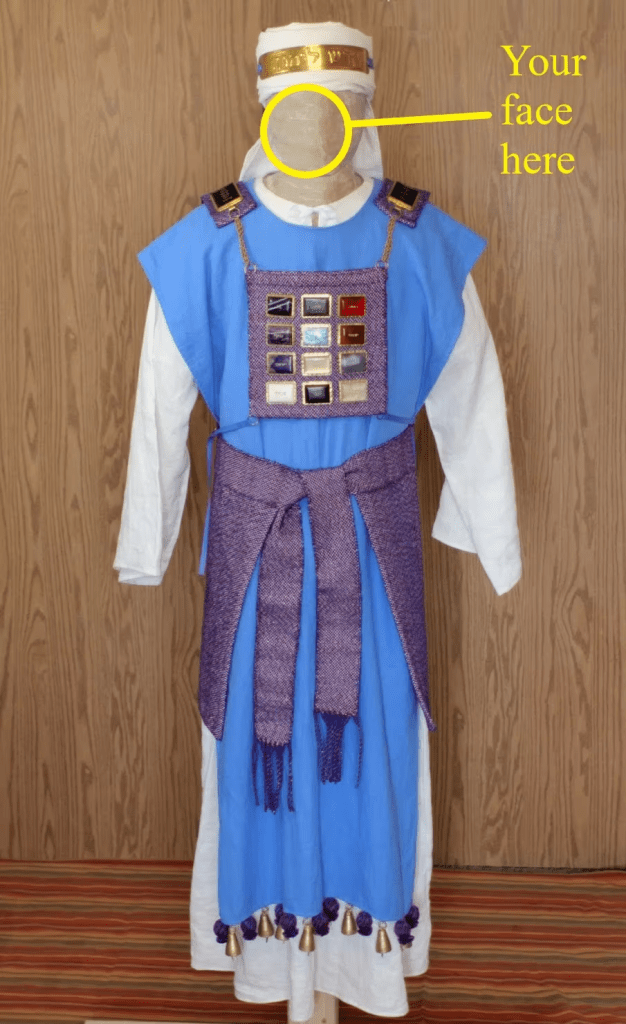
The second segment of verse twenty-seven then has Paul state (in Greek), “Christon enedysasthe”, which literally says, “Christ you have been clothed.” This is metaphor that has been seen recently in the Revelation of John, where the elder soul-angel [the soul of Jesus he spoke with] told John’s soul, “Blessed [metaphor for Saints] those washing those robes of them in order that will exist this privilege of their souls upon this of tree of life”. The “robes” are the “Christ” outpouring of “Baptism” that one wears – permanently – which makes it possible for the soul of Jesus to enter into one’s soul.

Jesus does not come into filth. The filth of one trying to follow the Law, without external guidance, will attract Yahweh’s love, which begins a divine courtship that tests how well one’s soul is willing to listen to an inner voice and do as told. That compliance becomes the grounds upon which a marriage proposal is put forth, where the Covenant (the Law) is the vows one’s soul commits fully to. Once married, Yahweh’s Spirit will cleanse the soul of all past transgressions, making one’s soul be pure and able to conceive the soul of Yahweh’s Son. For that resurrection of Jesus to enter into one’s soul, one must be “clothed in the Christ.”

In verse twenty-eight, Paul wrote four statements, each separated from the others by semi-colons. The first statement then has Paul writing (in Greek), “ouk eni Ioudaios oude Hellēn”. This simply says, “not can be Jew nor Greek”. In the capitalization of “Jew” and “Greek,” the words must be seen as divinely elevated to a level of Yahweh that goes to the meaning behind the name. Simply put, a “Jew” is one who “Praises” Yahweh, which is the One God. The word “Greek” implies “Gentile,” in the sense that the “Greeks” epitomized polytheistic beliefs, where many gods [Greek mythology] were worshiped. The Greek word “eni” means “is in, has place, can be,” implying in usage “there is in, is present,” but the word is rooted in “eneimi,” meaning “to be in, within,” or “I am in, within.” Thus, Paul is setting the expectation that none (“not”) of the “All” (“Pantes”) will be members of a race or sect of religious people. Such distinction would reflect on worshipers who externalized one god or many gods, based on philosophical guesses at to what their gods expect.

In the second statement, Paul wrote (in Greek), “ouk eni doulos oude eleutheros,” which translates literally into English saying, “not can be slave or free”. Here, the comparison to the prior statement has “slave” and “free” be relative to “Jew” and “Greek.” This says that one’s soul is “not” limited to being a “slave” to a dogma, such as are the philosophical guesses coming from an unexplained Law. That becomes external rules that “enslave” one to the beliefs of others. Likewise, the wide variety of gods does not give a soul the “freedom” to pick and chose which god or gods one will worship today, different from other days.

In the third statement, Paul wrote (in Greek), “ouk eni arsen kai thēly,” which includes a use of the word “kai.” Knowing that this is a marker word that needs no translation, as it simply signifies where importance is to be found in that written after that mark, one can see this statement translate literally into English saying, “not can be male [importantly] female”. Here, the mark of importance forces one to look at the deeper meaning of “female.”

Certainly, Paul was not writing to true Christians in Galatia (who consisted of souls in both male and female bodies of flesh) saying a “Christ” cannot be a cleaned “male or female.” Such an exclusion would mean no human beings on earth could ever be a “Christ.” Instead, it says the “male-dominated” societies of both “Jews” and “Greeks” – believers in One God or many gods – would no longer hold water. Only those Spiritually possessed by Yahweh will be able to claim a masculine essence, which is the truth of the Father, His Sons, and those who are “brothers” of Jesus. The Spiritual essence of a “Christ” is only “male.”

This then forces one to see that “not” being a “Christ” makes one a “female,” which is the essence an eternal soul has, when trapped in the femininity of a body of flesh. “All” souls in human beings are “female,” therefore “All” souls are potentially bride material for Yahweh. If one is more concerned with worship of a sex organ [souls have no need to reproduce], then one will “not” find one’s soul being “born” as a “Christ.” A host soul in a body of flesh (regardless of the gender of that body) is always “female” (the importance denoted by “kai“), as only the soul of Jesus resurrected within that soul brings on the spiritual essence of being “male.”

In the fourth statement of verse twenty-eight, Paul wrote (in Greek), “pantes gar hymeis heis este en Christō Iēsou.” Here, the literal English translation says, “all indeed your souls you exist within to Christ to Jesus.” This (obviously) is most important to grasp, simply because of the two capitalized names being present: “to Christ” and “to Jesus.”

Here, the repeated use of “pantes” (in the lower-case) refers to everyone of all kinds of people in the world, as their religious mores and rules are all manmade, not the truth of the light of Yahweh. It says everyone is a slave to the truth, once made a “Christ,” while everyone is “free” from the prison that religious dogma causes. Everyone saved by the Christ is “free” from the failures of sin, which imprison a soul into reincarnation and always moving from one ‘guardhouse’ to another, life after life.

When “hymeis” is read as the second-person plural form of “you,” as “yourselves,” here (again) is a “self” read as a “soul.” It is “your souls” that are transformed, so “you exist within,” and not externally led. A soul is “within” and that takes one “to a Christ” state of purification, as “Anointed” by Yahweh, through divine union-marriage.

This then leads a soul “to Jesus,” where no one can ever externalize “Jesus” and be saved [the name “Jesus” means “Yahweh Saves”]. One has to be the resurrection of “Jesus’s” soul, so one’s soul becomes “Jesus” reborn. Jesus is “THE Christ” made by the hand of God in Eden [the “Yahweh elohim” that we love to call ‘Adam’], who can only “return” in a soul-body that has been prepared for his return by the Father.

Before going to the last verse of this reading, it is good to take time to see the truth of Christianity as being more than some externalized belief in Jesus Christ. Christianity is not a club that can be joined, where the only cost of admission is saying the words, “I believe in Jesus Christ.” That does not make one be truly Christian. To be truly Christian, one must have one’s soul be Baptized by the Spirit of Yahweh, which means being made Sacred and-or Saintly, as a “Christ.” If one is not a Saint, who has been reborn in the name of Jesus, then one is a fake Christian. One is in the same prison created by the Law, where all the questions that ask, “What did Jesus mean when he said this?” are never answered by those who are fake Christians. To be a Christ means to have the soul of Jesus returned to the material plane, as each and every soul-wife of Yahweh, who has been prepared for the return of Jesus by a divine marriage of a soul to Yahweh’s Spirit, made a Saint.

With that said, Paul then wrote three segments in verse twenty-nine. The first segment has him writing (in Greek), “ei de hymeis Christou,” which literally translates into English saying, “if now your souls of Christ.” In this, the Genitive case of “Christou” states the “if” conditional is the possession “of Christ,” where that possessed is “your souls” (from “hymeis” being the second person plural of “yourselves”). The “if” makes it clear that no soul will ever be forced into a state of self-sacrifice to Yahweh; so, no soul will ever be “a Christ” without such self-sacrifice. That becomes a desire to understand the Law, such that the inability of external teachers to tell one the truth of “faith” must motivate oneself (one’s soul) to seek the truth within. The “if” asks oneself, “Do you hear Yahweh leading you to commit in divine marriage?” Only each individual soul in a body of flesh can answer that question. There are no ‘mass marriages,’ like those who follow gurus from the east are known to fake.

In the second segment, Paul then wrote (in Greek), “ara tou Abraam sperma este,” which literally translates into English saying, “then of this of Abram seed you exist”. In that, “then” becomes a statement that says the “if” condition has been met. The way to determine this is “then” by knowing one’s soul is possessed “of this,” which is the “Christ” presence.

The Genitive case attached to “Abraam” can be seen as one’s having become of the spiritual lineage “of Abram,” but the capitalization yields a higher meaning as that from which the name comes. The name “Abram” means “Exalted Father” [from “ab rum,” or “father elevated”], such that Paul wrote, “then of this [Christ] of Yahweh [the Exalted Father] seed you exist,” where the “seed” of Yahweh is His Son “Jesus.” This is then Paul saying the proof of one being a “Christ” is being “Jesus” reborn. As “Jesus” reborn, the “seed” of the “Exalted Father” once again walks the face of the earth, as Yahweh intended, when he made Adam-Jesus.

The truth relative to the lineage “of Abram” is there never is a bloodline – a physical passing – that results in a soul being saved. No soul is born saved. No soul is returned to the material plane as Jesus. Yahweh hand-made Adam; and, then Yahweh hand-planted the seed of that Yahweh elohim into a Virgin Mary (most likely the reincarnated soul of the female we call Eve). Thus, the spiritual lineage that is “of Abram” reflects on all souls that do as Abram did and self-sacrifice in service to Yahweh. Such a lineage “of Abram” skips over many generations and the only firm relationship that anchors all souls is that to Yahweh, all having been reborn as His Son Jesus.

In the last segment of this reading, Paul then wrote (in Greek), “kat’ epangelian klēronomoi,” which literally translates into English saying, “according to promise heirs.” The “promise” is that which is the meaning of the name “Jesus,” which says “Yahweh Saves.” The “promise” is Salvation to all souls who receive the “seed” of “Jesus” and enter ministry in his name. The “heir” makes one become a “brother” of all others who are reborn as Jesus; so, as equal “sons of Gods” (written in verse twenty-six), all are “heirs” of eternal life.

This is the truth of Christianity; and, those true Christians in Galatia knew that Paul was writing to them to tell them what they already knew (as each was a “Christ,” each reborn as “Jesus” in ministry). They knew their soul sacrifices to Yahweh were done not for self, but to make more become “heirs” to the “promise.” Still, all any Apostle can do is make Jesus be available to answer truthfully the questions of seekers. The rest is left up to their own souls to decide if total commitment is what they want to do.

As an Epistle reading for the second Sunday after Pentecost, when one should be beginning to walk the path of righteousness and take the truth to those seeking to know the truth, it is vital to take the time to understand these words I have written explaining the truth of Paul’s letter to the Galatians. The fake Christians will lead you into the prison of guilt, which says, “Do as we tell you to believe, not as we practice in our lives (that are sinful).” No one can lead a soul to heaven. Heaven is within, not some place in outer space. Jesus has returned many times over; so, there is no waiting until the end times to see fake Jesus fly down on a cloud, all angry-eyed and sword wielding. This Epistle reading says everything one needs to know, in order to commit one’s soul to Yahweh.

Galatians 5:1,13-25 – Christianity 101

[1] For freedom Christ has set us free. Stand firm, therefore, and do not submit again to a yoke of slavery.

—–

[13] For you were called to freedom, brothers and sisters; only do not use your freedom as an opportunity for self-indulgence, but through love become slaves to one another. [14] For the whole law is summed up in a single commandment, “You shall love your neighbor as yourself.” [15] If, however, you bite and devour one another, take care that you are not consumed by one another.

[16] Live by the Spirit, I say, and do not gratify the desires of the flesh. [17] For what the flesh desires is opposed to the Spirit, and what the Spirit desires is opposed to the flesh; for these are opposed to each other, to prevent you from doing what you want. [18] But if you are led by the Spirit, you are not subject to the law. [19] Now the works of the flesh are obvious: fornication, impurity, licentiousness, [20] idolatry, sorcery, enmities, strife, jealousy, anger, quarrels, dissensions, factions, [21] envy, drunkenness, carousing, and things like these. I am warning you, as I warned you before: those who do such things will not inherit the kingdom of God.

[22] By contrast, the fruit of the Spirit is love, joy, peace, patience, kindness, generosity, faithfulness, [23] gentleness, and self-control. There is no law against such things. [24] And those who belong to Christ Jesus have crucified the flesh with its passions and desires. [25] If we live by the Spirit, let us also be guided by the Spirit.

——————–

This is the Epistle selection to be read aloud on the third Sunday after Pentecost (Proper 8), Year C, according to the lectionary for the Episcopal Church. It will follow either the Track 1 or Track 2 pairings of Old Testament and Psalm readings. If an individual church is on the Track 1 path, then they will hear read aloud from Second Kings, “Then Elijah said to [Elisha], “Stay here; for the Lord has sent me to the Jordan.” But he said, “As Yahweh lives, and as you yourself live, I will not leave you.”’ That will be followed by Psalm 77, which sings: “The clouds poured out water; the skies thundered; your arrows flashed to and fro”. If an individual church is on the Track 2 path, then the Old Testament selection will include this: “Yahweh said to Elijah, “Go, return on your way to the wilderness of Damascus; when you arrive, you shall anoint Hazael as king over Aram. Also you shall anoint Jehu son of Nimshi as king over Israel; and you shall anoint Elisha son of Shaphat of Abel-meholah as prophet in your place.” Following that will be sung Psalm 16, which says, “Protect me el, for I take refuge in you.” All readings chosen will accompany the Gospel selection from Luke, where is read: “When the days drew near for Jesus to be taken up, he set his face to go to Jerusalem.”

[Forewarning]

This is a L O N G commentary. It is a long reading selection that needs to be fully grasped. All casual Twitter expectations [140 character limit] will quickly be found not present here. This commentary will bore you to death. Run along. Go somewhere else. Shoo fly!

—–

These selected verses from Galatians will only be read on the Proper 8 Sunday, in the Year C. As it omits verses two through twelve, those words will never be read aloud in any Episcopal Church, as part of a Sunday service. They are important to realize; but the responsibility to read them is placed on all those who deem themselves to be “Christians.” A Church is nothing more than a sampler platter of opinions and Scriptural readings (mostly in selected parts), which should lead one to ask questions as to the meanings. Sermons are little more than personal experiences of a priest told (when not political propaganda preached to a choir of governmental believers), which can never be fully understood by anyone else. The role of a priest is to teach, not self-aggrandize (assuming a priest knows the meaning to preach). Christianity is a way of life (not a club joined); and, Scripture is the insight that must be learned, for that way of life to be realized. One must be taught how to personally find the truth of that way; not be told how much fun a priest’s life is. Therefore, the entire Holy Bible is meant to be discerned, more than read; and, all discernment demands a higher teacher – the Spiritual presence of Yahweh elohim.

Verse one of this selection is part of the reading because it sets the theme of this chapter in Paul’s letter to the true Christians he left behind in Galatia. That theme is set upon “freedom.” This topic makes this reading be one that can easily be twisted and contorted to fit personal agendas that bow down before the altar of “freedom,” as the philosophy of man that grew like a mushroom in the eighteenth century. It can become a motivator for patriotic sermons that worship a false concept … the god Freedom … one Paul knew nothing of. The Romans still occupied much of the world Paul knew; and, Jews owned no land to claim to be ‘free’ on. Simply because of the laws of physics, no one on earth is ‘free’ to effortlessly fly through the air, simply by thought powers. Everyone is enslaved by gravity, while on earth. Therefore, this human concept needs to be thrown out and understood not to be what Paul meant; and, when that realization has been made, then true discernment can begin.

Because verse one sets the theme of this chapter, it must be read as Paul wrote it, not as some translation service paraphrases it. The Greek written by Paul is this:

Tē eleutheria , hēmas Christos ēleutherōsen ; stēkete , oun , kai mē palin zygō douleias enechesthe .

My English translation of this is:

“This to freedom , our souls Christ it has set free ; you stand firm , therefore , kai not further to a heavy burden of slavery your souls are ensnared .

In this, the first word is a capitalized article, which takes on a divine elevation to the Spiritual level as “This.” Such a first word can only be divinely elevated as a word reminding one of that which has previously been written, while also being the focus upon which further insight is shared. The ending part of chapter four places focus on Hagar and Sarah, where Hagar was referred to by Paul as a “slave women” (from “paidiské,” meaning “a young girl, maidservant,” implying in usage “a female slave, maidservant, maid, young girl.”). The final verse in chapter four states (in literal English): “therefore, brothers, not we are of slave woman children [Christians are not the descendants of Ishmael], but of this of not under restraint.” Therefore, “This” must be seen as Paul expounding on this concept of “not under restraint.”

The second word in verse one is “eleutheria,” which is the Dative form of the word that says, “to liberty, freedom,” with a strong intent to imply “a state of freedom from slavery.” Thus, Paul begins a new chapter with the expectations of the readers of his letter to know he had previously reviewed Scriptural history [from Genesis] that spoke of Sarah’s inability to become pregnant (as Sarai), which allowed Hagar to be a princess gift to Abram (from the pharaoh of Egypt), who bore him the son Ishmael. The implication of this word written in a new chapter (rather than be continued in chapter four) says the story of Ishmael’s descendants was of those of slavery, while the descendants of Abraham and Isaac were given the ‘freedom’ to be Yahweh’s children. Not being outcast (for sins committed) means ‘freedom’ is relative to the teachings of selected Patriarchs (holy ones only).

This one word, “to freedom,” is now Paul addressing the children descended from Jesus, whereas those born of Jacob are to be seen as being cast away, in the same way as were Hagar and Ishmael. This makes “This” take on that divine elevation of Yahweh, as the path “to freedom” is the future becoming a reflection of the past, where the two sons of Abram (from two mothers) reflects on the duality of a soul alone and a soul married to Yahweh’s Spirit. The truth of “freedom” is then relative to this Spiritual relationship with Yahweh.

Following a comma mark, separating the first two words from the third, Paul wrote “hēmas.” This is commonly a possessive pronoun that is translated (in simpleton English) as “us,” the first-person plural form of “egó” (“I”). Because Paul wrote divinely inspired letters, it is easy to get lost in the mundane of English translations and forget all about how every word written comes through his hand onto paper from the Godhead (the Christ Mind). As such, every word written has a deeper meaning. The simple “us” can be rewritten as “ourselves,” with the “selves” part then seen as Yahweh pointing His focus on “us” Spiritually, which refers to “our souls.” The “souls” Paul wrote to were those in a relationship with Yahweh, which allowed them to find “freedom.” To see this translation then leading to “Christ he has set free,” this clearly says the chapter five direction of Christian “freedom” is based on a relationship with “Christ.”

It is the word “Christos” that so many struggle with understanding. The capitalization makes it appear to be a name. It so often is associated with the name “Jesus” that it becomes an automatic reflex to refer to “Jesus” by his ‘last name’ – “Christ.” The Greek capitalization simply alerts the divinely assisted reader to realize this is a signal to read divine elevation to the word “christos,” which (in the lower-case) means “anoint with olive oil.”

I will repeat one more time: David was a “christos” when Samuel poured oil from a horn on his head. David was made a “Christos” when Yahweh poured out His Spirit on David’s soul. The two are quite different; and, at no time can a “Christos” of Yahweh be limited to only being Jesus. David proves this point. Yahweh is limitless; but to be a “Christos,” one has to be those born into His family [like Isaac] and not cast away [like Ishmael]. Abraham and Sarah were each a “Christos.” Hagar was not. Therefore, Paul was not saying any souls [“ourselves” or “us”] had been set free by Jesus, because Jesus was also a “Christos.All who are reborn as him must likewise be a “Christos.”

By understanding this basic tenet of true “Christianity,” it is Yahweh setting souls free, when His Spirit makes one become a “Christos.” When Yahweh took clay and dust in Eden and formed it into the shape of “man” [“adam”], He then breathed Himself (as a Yahweh elohim) into that form, to become its soul. This means Adam (as “Jesus” – “Yahweh Saves”) was the first “Christos” made by Yahweh.

Yahweh has the power to make every soul in human flesh a “Christos,” if they all fall in love with Him, get His proposal of marriage, and then say, “Yes,” to all of the laws in the Covenant. Paul and those true Christians in Galatia had made that commitment to Yahweh; and therefore, Yahweh had made each and all [“our souls”] be “set free” from the “slavery” of a body of flesh.

Following that most basic statement by Paul, in his theme for chapter five, he separated that thought from that following (with a semi-colon), such that a new but related statement follows. That begins simply by stating, “you stand firm.” The metaphor of “to stand” means to get up off the ground and “stand.” That becomes a statement of a soul being divinely elevated, not a body of flesh; although, a body of flesh will also rise, along with its soul. This “upright” position can then be seen as the onset of the ways of righteousness, which become “firmly” entrenched in one’s soul. That “firmness” can be attributed to the resurrected soul of Jesus within one’s soul. The divine presence of Jesus – in a Christ, like his body was – leads that soul-body to “stand” and be “firm” in one’s way of righteousness.

Following a comma mark, Paul then wrote the single word that translates as “therefore” or “then” (from “oun”). That one-word statement becomes focus on a sequence of events, which is the transfiguration from human sinner to upright saint. As one word, Paul said Christians are changed. What is “there” now is not what was “there before.”

To follow that statement of change, Paul wrote a comma, followed by the word “kai.” The word “kai” does not say “and.” It is a marker word that signals importance to follow. That alert then has Paul saying the change in “their souls” was important because “not further to a heavy burden of slavery your souls are ensnared.” Here, the use of the word translating as “of slavery,” in the Genitive case, says “slavery” was not human, but spiritual. The soul was possessed by the material realm, where living up to the Covenant was impossible for a soul alone in a body of flesh to accomplish. The possession (“of slavery”) means their souls (“themselves” or “us,” including Paul’s) were each possessed by lesser spirits than Yahweh’s elohim. Therefore, the change, which would make one “stand firm” was the soul having committed to Yahweh in marriage, which means those souls doing so would be freed from ever having to come back into bodies of flesh – reincarnation.

This is the theme that the rest of the verses flow from. This must be understood. It must be seen that Paul has made absolutely zero references to “Jesus” at this point [He states that name twice in chapter five, only once in the verses read aloud on this Sunday]. This means everything that follows pertains to Yahweh having become the Husband of every soul that can truly claim to be “Christian.” The word “Christ” must be seen commonly to mean: 1.) a soul-wife of Yahweh; 2.) a soul cleansed in Holy Baptism by Yahweh’s Spirit; and, 3.) a soul that will give birth to the resurrection of the Yahweh elohim that is Adam-Jesus, such that one’s wifely soul will become the Virgin mother of the Son of Yahweh.

In verse thirteen, Paul began it with a capitalized “Hymeis,” which is the second-person version of the first-person (in lower-case) version used in verse one [“hēmas”]. Here, again, the second-person of “egó” is “su” (“you”), with the plural number turning that (in languages other than English) into a clear statement of “yourselves.” Again, anywhere in Scripture a “self” is found the focus, the spiritual essence is placed on a “soul.” This, verse thirteen is referring to the true Christians in Galatia (to whom Paul wrote), but all readers after publication means Paul wrote this lasting letter to “you” (English plural), meaning “your souls.”

Paul then wrote, “indeed on the basis of to freedom your souls were called,” the verb translated as “called” can equally say “invited” or “summoned,” but a less used translation says “named.” One is “called” by one’s name, thus what Paul wrote can be less about answering a “call” from Yahweh, and more about Paul saying all true Christians “indeed upon to freedom your souls were named.” That says, if one is to be promised eternal life beyond death of the physical body, then one’s soul will have married Yahweh and taken on His “Name” in union – like all wives do … taking their husband’s “name” in marriage. As such, a soul is “called” to marry Yahweh.

When one sees how ALL souls trapped in bodies of human flesh, enslaved in the material realm, are potentially wives to Yahweh, then one sees that all souls in bodies of flesh are feminine in essence. They are ‘girlie-girls,’ whether they have male sex organs or female sex organs. Souls cannot reproduce, in the same way that angels [“elohim”] do not need to propagate their ‘species.’ Only bodies of flesh need to reproduce, to make room for newly returned failed souls – the lesson of reincarnation is: You do not go to heaven filthy dirty from sins.

Souls, on the other hand are eternal, thus of masculine essence; but being put into a body of flesh is like multiplying a positive by a negative. The result is a negative, which is feminine. Therefore, both bodies of flesh that are male and female are souls that are wives-to-be.

When baby Jesus is resurrected within one’s soul, that trumps the soul-body femininity, making a saint have the masculine essence of Jesus. Every true Christian is Jesus reborn, thus of masculine essence. This overrides the limitation of being males and females in bodies of flesh. Thus, ALL souls resurrected as Jesus (after having become a Christ in divine marriage to Yahweh’s Spirit) become Jesus reborn; and, Jesus is masculine. So, ALL souls reborn as Jesus are “brothers.”

Yahweh has no Spiritual “daughters.” Mankind means being His daughters. Eve was not a daughter of Yahweh. She was Adam reproduced into a female form. Adam and Eve were thus “brothers” in Christ, both made by the hand of Yahweh. Neither came out of a woman’s womb; but the Earth was their Mother (offering up Her clay).

Realizing this, one will notice that Paul wrote “adelphoi” as a one-word statement. When it follows him stating “your souls” taking on the “name” of Yahweh, that “brotherly name” is Jesus. The “name” “Jesus” means “Yah Saves.” Being “Saved” by “Yahweh” means “your souls” have been “given freedom” from the slavery of the material world.

It is the modern Episcopal Church that had added “and sisters.” The only reason for an organization to pander to women is it is going out of business and wants to keep as many still attending their churches (all those rich widows) to feel welcomed, while not feeling a need to be a female in flesh (sterile as that body of flesh is after menopause) “called’ to be reborn as Jesus. Any religious organization that wants to keep its flock from achieving eternal life is one of the problems of the material world, certainly not one of the solutions. If I were a woman and I were still going to an Episcopal Church, whenever I heard someone read aloud “brothers and sisters” (when not written in Scripture), I would “stand firm” and yell out, “Brothers!” But, that is me; and, most rational women would prefer to talk to her female or gay priest privately; and, tell it or her, “My money ceases, unless you read the text of Scripture as written.”

Paul kind of said that, after a semi-colon is placed after “brothers.” There he began a new thought, one relative to the first statement. In that Paul said, “alone not this freedom for an opportunity to this flesh.” In that, the use of “monon” is translated as “alone,” where the primary translation is “merely.” As “alone” (an implied in usage validity), this says “brothers” implies “your souls” are no longer single swingers, like they were before. The words together, saying “alone not,” says (by inference) more than one soul is yours; and, that is a big change. That says Jesus has been resurrected within one’s soul (in all the plural number of Christians), which is “not this freedom,” meaning the rebirth of Jesus becomes one’s soul’s new slave master.

The “freedom” is not some ethereal philosophy – some kumbaya bull-crap. In the same way that the children led by Moses were freed from slavery to Egypt, to then become re-enslaved to Yahweh, through Moses, there is no freedom in the world. The meaning of “freedom” can only be known through death of the physical, when the soul is released. Here, Paul wrote that being all “brothers” (both men and women in flesh) Spiritually means souls still in bodies of flesh (live, by being raised in the dead) find: “not freedom as opportunity of the flesh.” This says “freedom” does not set one free to sin and sin some more. No siree! It means more slavery, as a minister to Yahweh – Jesus reborn; so, no more sinning is allowed.

To finish verse thirteen, Paul followed a period mark with a new statement about what is “not to this flesh.” There, he wrote “on the other hand because of of this of love,” where the Genitive case stating “of this” and “of love” are Paul saying “your souls” have been possessed spiritually, “of love.” The “love” of Yahweh is indescribable, according to human flesh definitions of “love.” This “love” means the presence of the Son of Yahweh. It is that “love” that makes one “stand firm” and walk righteously. That presence is because of divine marriage between a soul and Yahweh, where “love” is always the bond that binds two together. The child of Yahweh is His “love.” Jesus is the “love” Paul knew (and also did the true Christians of Galatia).

Verse fourteen then says, “this indeed law within to one to utterance it is completed within to this”. This says the “love” means saying “I do” to the Covenant; but after that commitment, the inner “love” is what makes every “law be completed.” That constant fulfillment is because of the presence of Yahweh’s “love” – Jesus. In that, twice is written “en,” which means “within” one’s body of flesh – “in” the soul. Jesus is “within” one’s soul, as that is where his soul is resurrected. That is the “love” that makes one walk the earth as Jesus reborn. It lasts until one’s soul is released to join the Father, having served Him as the Son.

Following a colon mark, Paul clarified this as a reference to the two words that ended verse thirteen: “you be a slave to one another.” Here, Paul began this statement with a capitalized “Agapēseis.” This is a second-person singular, future indicative form of “agapaó,” meaning “to love.” This is Paul speaking individually to each true Christian [not anyone of lesser status], where the divine elevation of “You will love” says “you will be where love resurrects.” That makes “You” be Jesus reborn; so, “You will love” says the “love” of Jesus will lead “You.”

To make that clearer, Paul then wrote: “this near of your soul even as your soul.” That clarity comes when one does not translate this to say, “You will love your neighbor as yourself,” when that only leads scholars to ask, “Who is my neighbor?” The same words written say, “You will love this near of your soul even as your soul;” and, that says Jesus is one with one’s soul, so his “love” is “near” within. It is so “near” that the soul of Jesus is “even as your soul [yourself],” due to his possessing it as one’s Yahweh elohim.

When one understands this “new commandment” [“Entolēn kainēn,” from John 13:34] Jesus spoke these word to Pharisees that tried to trick Jesus into heresy. This new understanding, where “neighbors” means one’s own soul living ‘next door’ to the soul of Jesus [a Spiritual ‘duplex’ within one body of flesh], can no longer be used by Churches, in attempt to condone every sin on planet earth … “because that’s what Jesus said to do.” A “neighbor” is not another human being. It is the soul of Jesus in a true Christian’s soul, one so “near” the other that they are one and the same.

The “love” is Jesus and only his resurrected soul, created by the hand of Yahweh. Only being reborn as Jesus can one go about the world as a state of love, while never once condoning sin of any kind. One in ministry in the name of Jesus speaks the truth to seekers, so their hearts will fall in human and spiritual love with Yahweh and marry Him. If that happens, the “love” of Jesus will be one’s own “neighbor.” Thus, one loves Jesus [the soul “near”] as oneself, because one’s soul has become where the soul of Jesus has resurrected. This “love” is what raised the dead to life.

In verse fifteen, Paul wrote this: “if now your souls one another you harm seriously kai squander , you perceive , not under of one another you could be destroyed .” This says nothing about one person mistreating another person. The Greek word “allēlous” is written in the Accusative Masculine Plural, with the root word meaning “one another.” The plural form means one must “refer back to a plural subject, so one is expressing an action done in two directions.” [Wiktionary] This means this word refers to “your souls” having two directions to go: be one with the soul of Jesus [love “one another” – him and you] or reject being one with Jesus and be two separates [love self, hate Jesus]. This is then Paul saying that “if” (a conditional that is up to the individual’s decision) one “perceives” one’s ways of life are “seriously harming” one’s soul, where it importantly feels like a good thing is being “squandered,” then one must take “a look” and “see” where oneself is ”now.” “If” one’s soul is “not” joined with the soul of Jesus, then one’s soul is in danger of being “destroyed.”

In these two verses, it is important to realize that Paul was not one of the disciples that followed Jesus in his ministry in the flesh. While it is possible (if not probable) that Paul heard Peter [he stayed with him in Jerusalem for fifteen days] or some other Apostle [he met with James also] tell him this “last commandment,” that Apostle would have been able to discern the truth of that order at that time, because all Apostles are Jesus reborn. The soul of Jesus raised within Paul’s soul means Jesus could have told Paul the same command, without Paul ever needing to hear it from someone else. The truth of Christianity says hearsay or gossip is not how soul are saved.

In my main resource for the Greek and Hebrew texts (BibleHub Interlinear), before verse sixteen is a header that they insert. It says, “Living by the Spirit,” and that heads the remaining verses in chapter five. In the NRSV presentation, verse sixteen is headed as “The Works of the Flesh.” Before verse twenty-two, they add a header that says, “The Fruit of the Spirit.” All such headers are derived from the verbiage in the text; and, this says the theme of “freedom from slavery” is now turning towards a focus that is relative to the Spirit of Yahweh (the cleanser of a Christ) and what acts those possessed by the Spirit will find themselves doing.

In verse sixteen, Paul began with a capitalized “Legō,” which normally translates as the first-person, “I say.” Because the word is capitalized, it takes on a divinely elevated meaning, where Jesus told his disciples, “I speak for the Father, because the Father is in me.” The same source of “speaking” must be seen here, where Jesus speaks for the Father through his Father’s wife-souls. This means Paul (as Jesus reborn) is the “I,” and his epistles are the words that he “spoke.” Therefore, “I speak” is divinely elevated in meaning when one realizes the “I” is as the Son. Because Paul followed “I speak” with the conjunction “now” (“de”), this says Paul (as Saul) did not always speak divinely. He thought his words as Saul were important and powerful; but he learned he was nothing of any merit, as Saul.

Following a comma mark of separation, Paul then wrote a capitalized “Pneumati,” which is of course divinely elevated as the “Spirit” of Yahweh. In the Dative case, Paul referred “to Spirit you conduct your lives” (from “peripateite”). [Notice how Paul wrote nothing that described “the Spirit” in any way, such as “holy” or “saintly”.] This says Paul knew the true Christians of Galatia also knew “I speak now, to Spirit (who) conducts (my) life.” This says what Paul next wrote would be understood as a direction towards Yahweh’s “Spirit,” when he next wrote, “kai longing of flesh not lest you should complete .

In that, Paul admitted that having a body of flesh in the material world meant it would naturally be inclined to “desire” worldly things. Those come across the brain as impulses to act. While that is a natural way of being for humans, the importance stated here says that natural state of being is “not lest you should complete.” To “not lest” act on natural desires and impulses means one must be supernaturally controlled. Thus, to “complete” those impulses by acting on impulse is “not lest” carried out, because of the “Spirit.” It controls the flesh.

In verse seventeen, Paul explained that the “desires” of the “flesh” are “contrary” to the “Spirit.” Paul added then how the “Spirit” is “contrary to the flesh;” so, the two are opposites and not aligned in purpose. Following a semi-colon, beginning a new, but relative statement, Paul returned to the “one another” of verses thirteen and fifteen, writing, “these indeed to one another it is opposed.” This says the ‘flesh” seeks to satisfy the material part of human duality, while the “Spirit” is only interested in the soul’s salvation; and, salvation means resisting the lures of the world. Only the “Spirit” can make that resistance possible. Paul said the “Spirit” makes it so you do “not wish desires of the flesh be done.”

In verse eighteen, Paul then added another “if” scenario, which says, “if now to Spirit you are led , not you exist under law .” Because the Greek word “nomon” is not capitalized, this does not refer to Mosaic Law. The lower-case spelling makes this more in line with “customs” or “local laws” and “rules.” Gentiles “exist under such laws,” but true Christians “exist under” the “Spirit,” which is the same as Yahweh writing the Law on the walls of one’s heart (where “heart” means “inner man” or soul). Thus, “being led by the Spirit” is how one maintains the marriage vows of the Covenant.

In verses nineteen through twenty-one, Paul wrote a list of acts that are motivated by “desires of the flesh.” He began verse nineteen with the capitalized “Phanera,” which is a divinely elevated word that translates as “Manifest.” The word also means “visible,” while implying in usage: “apparent, clear, and clearly.” The divine elevation says the “Manifestation” of the things then listed can be the sins of the ”flesh” that forbit a soul from salvation. The list is: “sexual immorality; uncleanliness; wantonness; [20] idolatry; enchantment; hostility; contention; jealousy; outbursts of passion [anger]; ambitions; divisions; separating opinions; [21] grudges [envies]; drunkenness; festive reveling; kai anything else that falls into these categories. [I paraphrase the last part.] Still, any of these sins of the “flesh” means the “kingdom of God not it will inherit.” So, this list says only the “Spirit” can keep these natural desires and urges from taking control over one’s soul.

Where the NRSV places it header that says, “The Fruit of the Spirit,” verses twenty-two and twenty-three state what comes to a soul in its flesh when the “Spirit” is in control. These are: “love; joy; peace; patience; kindness; goodness; faithfulness; [23] gentleness; and, self-control.” Paul then said there are no laws made by man that make these “fruits of the Spirit” illegal.

Everything listed by Paul has much deeper meaning that can be applied to understanding what each means. For example, I have written recently about “peace” being better stated as “wholeness.” I advise all serious disciples of Christianity to delve into each root Greek word and do your own investigative work. It will be quite rewarding.

In verse twenty-four is the only time the name “Jesus” is written in these selected verses. In that, Paul wrote: “These now of this of Christ of Jesus , this flesh it had destroyed [crucified] together with to these to emotions kai to these to desires .” This says the last listed (the divinely elevated “These” being the fruit of the Spirit) were due to divine possessions. From the Spirit one is possessed “of Christ” and that brings about one’s soul being possessed “of Jesus. Those prior mentions – “this of flesh” – are the sinful worldly “emotions” that led the Temple elite to “destroy” any possibility their souls had for becoming “of Christ” and reborn “of Jesus.” It was their “desires” of selfishness [add that to the list of sins] that “destroyed” their chances of eternal salvation.

In verse twenty-five, Paul wrote: “If we live to Spirit , to Spirit kai our souls should walk .” In this, the conditional begun leads to an expected result. The meaning of “walk” is taking the path of righteousness. A soul alone in a body of flesh cannot “walk” this path, as it will become distracted and led astray.

As the Epistle reading for the third Sunday after Pentecost, it should be clear that the road of ministry one should have just begun can only be lasting when one has been made free from worldly influences. That demands becoming a “Christ,” which means divine marriage between one’s soul and Yahweh. His poured out Baptism is His “Spirit.” That paves the way for one to be a soul where the soul of Jesus can resurrect. To “love” spiritually means to be Jesus reborn. One must “love” that “near” “neighbor as one’s own soul.” Only when one is filled with the “love” of Yahweh (His Son) can anyone else in the world become a neighbor, as a “brother in Christ” (males and females the same). One in ministry should promote all humanity is feminine, thus all are expected to become the wives of Yahweh and the mothers of Jesus reborn.

Galatians 6:(1-6)7-16 – True Christianity reads Scripture spiritually, not physically

[My friends, if anyone is detected in a transgression, you who have received the Spirit should restore such a one in a spirit of gentleness. Take care that you yourselves are not tempted. Bear one another’s burdens, and in this way you will fulfill the law of Christ. For if those who are nothing think they are something, they deceive themselves. All must test their own work; then that work, rather than their neighbor’s work, will become a cause for pride. For all must carry their own loads.

Those who are taught the word must share in all good things with their teacher.]

Do not be deceived; God is not mocked, for you reap whatever you sow. If you sow to your own flesh, you will reap corruption from the flesh; but if you sow to the Spirit, you will reap eternal life from the Spirit. So let us not grow weary in doing what is right, for we will reap at harvest-time, if we do not give up. So then, whenever we have an opportunity, let us work for the good of all, and especially for those of the family of faith.

See what large letters I make when I am writing in my own hand! It is those who want to make a good showing in the flesh that try to compel you to be circumcised– only that they may not be persecuted for the cross of Christ. Even the circumcised do not themselves obey the law, but they want you to be circumcised so that they may boast about your flesh. May I never boast of anything except the cross of our Lord Jesus Christ, by which the world has been crucified to me, and I to the world. For neither circumcision nor uncircumcision is anything; but a new creation is everything! As for those who will follow this rule– peace be upon them, and mercy, and upon the Israel of God.

——————–

This is the Epistle selection to be read aloud on the fourth Sunday after Pentecost (Proper 9), Year C, according to the lectionary for the Episcopal Church. It will follow either a Track 1 or Track 2 path of Old Testament and Psalm readings, depending on the course set for an individual church for this Year C. The Track 1 course will present a reading from Second Kings, where is read: “When Elisha the man of God heard that the king of Israel had torn his clothes, he sent a message to the king, “Why have you torn your clothes? Let him come to me, that he may learn that there is a prophet in Israel.”’ That will be followed by a singing of Psalm 30, where David sang, “While I felt secure, I said, “I shall never be disturbed. You, Yahweh, with your favor, made me as strong as the mountains.”’ The Track 2 Old Testament reading will come from Isaiah 66, where Yahweh said through the prophet, “I will extend prosperity to her like a river, and the wealth of the nations like an overflowing stream.” The next reading will come from Psalm 66, where David sang: “Come now and see the works of elohim, how wonderful he is in his doing toward all people.” Whichever path is taken, all will accompany the Gospel selection from Luke, where Jesus sent out the seventy in intern ministry, saying “Do not move about from house to house. Whenever you enter a town and its people welcome you, eat what is set before you; cure the sick who are there, and say to them, `The kingdom of God has come near to you.’ But whenever you enter a town and they do not welcome you, go out into its streets and say, `Even the dust of your town that clings to our feet, we wipe off in protest against you. Yet know this: the kingdom of God has come near.’”

To begin with, the NRSV (Anglicized) presents the translation that says “my friends,” but footnotes that, admitting in footnote that “brothers” is the actual translation. The NRSV (Updated Edition) shows this as “brothers and sisters,” with no footnote. Paul did not write to his ‘friends’ in Galatia. While he wrote a letter that was meant to be read by men and women alike – ALL TRUE CHRISTIANS – he did not write a letter to any ‘sisters’ in Christ. There is no such thing spiritually. Paul addressed ALL souls that had married Yahweh Spiritually, so their souls had become Anointed (each one [man and woman] was made a Christ), so His Son Jesus could be resurrected within those souls. Because Jesus is a masculine spirit, all who are reborn as him are spiritually related as “brothers” – only. All souls alone in bodies of flesh (men and women alike) are thus ‘sisters’ of flesh (of the world, sex organs inconsequential), their neutered souls having not yet married into the masculine realm of Yahweh. Please learn that. It is essential. Scripture’s focus is on the spiritual and cares nothing about the sensory organs that bring flesh pleasure and pain.

In the first verse, Paul is not suggesting that anyone who has “received the Spirit” will ever again find himself or herself as being “detected in a transgression.” The wording and punctuation of the Greek makes it clear that those who are “detected in a transgression” are disciples among those Saints in Galatia, to whom they were teaching. As Jesus reborn, each would have become a ‘church’ with a following of disciples – seekers of truth – who would be led to commit their souls to Yahweh in divine union on their own, of their own choice. Thus, Paul was writing to those “Lords” and “Masters” of true Christianity [true priests of Yahweh – Saints], as Jesus reborn, to treat wayward disciples with “gentleness.” This means not driving them away by projecting a strong sense of guilt and shame upon them, like the elite of Jerusalem were fond of doing.

When we read of Paul saying, “Take care that you yourselves are not tempted,” this gives the impression that one reborn as Jesus, promised eternal life after having all past debts of sins erased, would become “tempted” by seeing a disciple breaking a commandment or doing a wrong. What Paul wrote says that the motivation for approaching a student from a gentle direction should be based on one’s own past history of such an approach [most likely used by Paul towards them]. The Greek written says, “considering your soul [yourself] , not kai your soul [you] you could be tested”. This says the way one approaches a sinner should be no different than oneself was approached, when one was a sinner. The “test” of Sainthood is not how little one sins, but how much sinners feel the light of truth being projected within one’s soul, so one’s own soul is the one who makes that soul feel guilt and shame. When one causes one’s own soul to feel sorry for having sinned, that soul will need a Saint to comfort them (with a hug, so to speak), rather than a slap on the face and someone yelling, “Sinner!”

In verse two, when Paul wrote of “bear one another’s burdens,” that actually begins with a capitalized “Allēlōn,” written in the Genitive case (possessive), saying “Of Each Other.” That importantly states how the sins that possess one soul are the same sins that possess all souls, once one’s body of flesh has grown old enough to be lured by the sins of the flesh. These are then “Of One Another’s.” It is this realization – that all souls are alone in his or her flesh are sinners, incapable of not sinning without divine assistance – then Paul wrote, “kai you will fulfill this law of this of Christ.” That says the only way to stop sinning is to be possessed as “brothers,” each possessed by the resurrection of the soul of Jesus, from having married one’s soul to Yahweh, having received His Spiritual Anointment – as His “Christ.” In this, “of Christ” (Genitive – possessive) is not Paul stating ‘the last name of Jesus.’

When verse three is show to state: “For if those who are nothing think they are something,” this take the Greek word “tis” and translates it as “something.” That word actually translates as “a certain one,” which is regularly used in Scripture to identify a Jew or, more specifically, a Jew known by name. The element of “certainty” leans heavily on a relationship having been established. It must not be read as a “thing” that leads one to see elements of the material realm, which become focuses on “a certain one” of the flesh. Instead, it is a statement about “a certain soul.” Thus, the statement by Paul warns those who “think you are know to exist as a certain one (thought to be marked for salvation by Yahweh). If that is not the truth, then one deceives one’s soul [“himself,” where souls are spiritual, thus masculine essence without a body of flesh].

In verse four, where the NRSV translates, “All must test their own work,” Paul actually said, “this now the work of one’s soul it tests [or “approves”] everyone.” That says the “proof” of being “a certain one” of Yahweh comes by the acts one does, because one’s soul has been raised from the dead of the flesh [matter without soul – feminine] by the resurrection of Jesus’ soul within one’s host soul. The soul alone in its flesh is no longer alone, as the soul of Jesus has been impregnated into the wife-soul, with that holiness coming via the Father-Husband [the “Christ” Anointment]. As Jesus reborn, one does the deeds his soul guides one’s body of flesh to do [as a Saint]; and, that marks one’s soul as being “a certain one.”

To place emphasis on this presence of Jesus’ soul within one’s soul, Paul then added in verse four: “kai at that time into his soul [“himself”] only , this boast he will possess , kai not into this a second.” Whereas the NRSV translates this as saying, “then that work, rather than their neighbor’s work, will become a cause for pride.” That translation is misleading and wrong. Paul was not talking about judging a “neighbor’s work,” but the work led by a soul being possessed divinely by Jesus’ soul, which has ‘come near” “into” one’s soul [divine possession]. The proof is one’s soul allowing the soul of Jesus to lead one’s body of flesh [his soul become one’s Lord] away from sins, thereby making one’s own soul become “the second” of two in one, which does “not boast” anymore of any controls one once had over its flesh [when a soul alone].

Verse five then says, “every one indeed this his own [soul’s] burden [to resist sins] he will bear.” This says the soul of Jesus – which possesses all who become related as “brothers” – will be the one responsible for one’s host soul staying sin free and gaining eternal life, after one’s soul is released in death. This is the “test” of whether or not one’s soul can claim to be “a certain one.” If it cannot do the deeds of Jesus reborn, then one “deceives one’s own soul.”

In verse six, which the Episcopal Church makes the last of its ‘optional reading’ verses in this selection, Paul began with a capitalized “Koinōneitō,” meaning “He to possess a Share.” The capitalization divinely elevates the meaning of this word from the NRSV focus on “must share,” as if Biblical words to be used for setting the groundwork to slap guilt upon paying customers, with the yearly pledge campaign pleas. This must be read as a statement that says Yahweh sends His Son into the souls of sinners not only to save them, but for them to “Share” that Spirit with others. In “Sharing,” there is noting of value held by the host soul, who had allowed his or her body of sinful flesh to corrupt it. A “self-soul” can only “share” sin with others. It is the resurrected soul of Jesus that comes to utilize one’s submissive soul-body in ministry, where the Spirit of Jesus is made available for others to “Share.”

This then leads to the whole of verse six saying, “He has the Share now this instructing this word , to this to teaching , within to all to good”. This plainly states (when realizing the meaning of “Share”) that the soul of Jesus becomes the Lord over a wife-soul of Yahweh, leading its flesh into ministry. The soul of Jesus comes knowing the full meaning of Scripture and for the purpose of “teaching” that meaning to others, so they will Share in the knowledge of truth. By knowing the truth, others can see the divinity of Scripture and find faith taking them beyond belief in the divine, leading their actions to do the “good” that pleases Yahweh. When one does “good,” then Yahweh will respond in kind.

To omit this important element of this portion of Paul’s letter [the ‘optional verses’], so one does not realize the “Sharing” element of which Paul wrote as importantly pointing to the soul of Jesus being reborn in different flesh of many, becoming the “Teachers” of truth to seekers – the purpose of religious disciples, therefore the intent of churches – that not spoken aloud leads to verse seven having watered down meaning. When the NRSV translates this to say, “Do not be deceived; God is not mocked, for you reap whatever you sow,” that misses the point of focus having been set on the Teachers [Saints in the name of Jesus Christ – the only true ministers of Christianity], as opposed to any Joe Schmo (or Sally Schmo) that wanders in to preach or hear a sermon.

The truth of what Paul wrote says, “not you be led astray ; God not he is sneered at.” That says teachers (priests pretending to be the interpreters of Scripture … for a price) can only “mislead” or “lead the flock astray.” That is the only possibility if one’s soul-flesh teaching has not become Jesus reborn. Without Jesus “Teaching,” the result can only be souls in flesh making up things about Scripture that meets some personal or organizational agenda. When Paul said, “God not he is sneered at,” that says to all who pretend to preach the “word” falsely (without the guide of Jesus as one’s “Share”) are “mocking God.” They do so by belittling Scripture, while making themselves pretend to be God and/or Jesus, as souls that do not speak the truth. They do not possess the divine possession of the Jesus soul, because their souls are married to their bodies of flesh, not Yahweh.

This makes the ending portion of verse seven be the promise of either eternal salvation or (minimally) reincarnation back into another body of flesh. Those options are based on how one shares the word of God. For Paul to literally write (English translation), “what indeed if he should sow a human , this kai he will reap.” The conditional (“if”) then leads to a subjunctive that states where “he should sow.” That is meeting the conditional as one who does sow. One who does sow is a priest, minister, pastor, or teacher of a Christian religious denomination. Only those who are filled with Yahweh’s Spirit, with His Son as such a person’s Lord, “should sow,” because they “will sow” the truth and “reap” saved souls. Anything less will “sow” the weeds of profiteering in the name of Jesus (which mocks God and His Word); so, they will then “reap” the wrath of Yahweh, which will come in Judgment, born of those souls who “turn their noses up” to God, playing god.

That truth is summed up in verse eight, where Paul wrote: “because this sowing into flesh of his soul , from of this of flesh he will reap destruction . this now sowing into this Spirit , from of this of Spirit will reap life eternal .” This is Paul saying that teaching untruthful meanings of Scripture, so seeking souls will be led away from Yahweh, rather than to Him, will lead to those souls’ destructions. Only teaching from an inner Spirit presence, can this Spirit then possess others; so, those lost souls are led to marry their souls to Yahweh. That is the meaning of a divine “Sharing.” And, that will be the presence of Jesus within, which is a name meaning “Yahweh Saves.”

Verse nine then begins with a capitalized “To,” which is an article translated as “This.” The divine elevation of capitalization then points directly back to the teacher “of Spirit” that leads to “eternal life.” That is the focus of Paul then writing, “This now good acting , not we should grow weary ; to time indeed one’s own , we will reap not growing weary .” This is an important element that is overlooked in these modern times of ‘retirement,’ when religious leaders grow old and gray and leave their jobs as priests, to enjoy all the money they have stored away, having sold their souls for material gains, while pretending to care about the souls of others. Paul wrote that a true Jesus reborn will never grow tired [like ninety year old blind John, who was still prophesying while a prisoner in Patmos] and will still be “doing good deeds” until death [“one’s own time”]. The last few popes of Rome have made it possible for there to be plenty of wealth for them to enjoy, by letting someone else play pope for some number of years … before his (or maybe her some day?) retirement to a palatial estate and lots of worldly servants.

Verse ten then begins with a capitalized “Ara,” which means “Therefore.” This becomes a divinely elevated statement about that lack of weariness being shown in a true priest of Yahweh, one’s soul-flesh that has been reborn as His Son Jesus in ministry. This then acts like a conditional written in this verse, which says, “if no Spiritual weariness, then.” Here, Paul wrote, “Therefore then , even as opportunity we possess , we should work (to accomplish) this good advantageous for all , most of all now advantageous for those to know (intimately) of this of faith .” This says ministry is an “opportunity” that is “advantageous for everyone” involved with the Spirit. The experiences of ministry “especially” bring about deep personal “intimate knowledge” that takes one beyond simple beliefs, to the truth that is one’s possession “of faith.”

In verse eleven, Paul is reminding the true Christians in Galatia that his words require a divine assistant to understand them. That says Paul wrote his “letters” (“grammasin”) with the same inner voice of Jesus leading his words. As they all come from Yahweh – the Godhead – not Paul liking to write letters that make him seem important, there is “great” depth of meaning, the surface words become impossible for a soul alone in its flesh to decipher. This verse does not end with an exclamation point, as if Paul was knowing his letters were many chapters long; so, he was not saying, “thinking of you. Have a nice day. Paul.” He did not write, “See what large letters I make when I am writing in my own hand!” Instead, he wrote, “you Perceived to how great to your souls [“you” or “yourselves”] I have written to this to my own soul [“mine” or “myself”] hand.” That needs deciphering.

The first word is a capitalized “Idete,” which is written in the second-person plural Aorist, so it says, “you Perceived.” The divine elevation of capitalization makes this word selection bear the meaning of vision greater than that “seen” by normal eyes. It says that Paul knew the Galatians to whom he wrote took the time to contemplate his words written, in “discernment” and “attendance,” where a divine assistant helped them “Perceive” the deeper truth that Paul intended, having likewise written with divine assistance. Thus, a six-chapter letter might seem long, but when so many words and verses follow the syntax of a divine language, this letter unfolds significantly, as “how great” it is, where “how large” becomes “how deep.” That depth is intended for the “souls” of the readers, then and forever after.

When Paul said “I have written to this,” the “this” (in the Dative case) is the prior references to the Spirit and teaching made in this chapter. To then write, “I have written … to my own soul hand,” this says the “hand” of Yahweh within his soul – Jesus – uses Paul’s “hand” to write, as Paul is a “hand” of the Son. Everything comes from his soul, which means the spiritual content of the words written are like a soul is in its body of flesh – invisible but present. It is this “great depth” that makes the letters of Paul be most profound and demanding those filled with the Spirit to discern them, because ordinary eyes go blind to that hidden meaning.

Verse twelve then begins with a capitalized “Hosoi,” which is a possessive pronoun that is similar to the adjective “Idete,” being the plural form of “hosos,” stating “how much” or “how many” as a correlative pronoun. In the divine elevation of this, Paul is pointing to “How Many” of those true Christians in Galatians were converted Gentiles. Many, like Timothy (from Lystra in Galatia), were born of Jewish mothers, who had intermixed and had Greek [Gentile] husbands. They had been raised to understand the Law as written, but had never been officially designated to be Jews, having never attended a Jewish synagogue. Paul was a minister to those seekers who received the message he brought to them, as one whose soul was possessed by a resurrected Jesus. The elevation in meaning of this word is then placing focus on the tremendous Spiritual growth in Christianity, which could then discern the truth of a divine text, not only Hebrew Scripture but also letters in Greek, all written by Saints (old and new).

The capitalization of “Hosoi” is then directing the importance of “How many” in relationship to the number of Jews, who considered themselves to be God’s chosen people, excluding all others from that self-perceived special designation. This then led Paul to write about the identification of a Jew (males) by the marking of their flesh through “circumcision.” As had been the history written in the Old Testament, where converts were to be adult males who willing chose to have their flesh marks through the cutting of foreskins, the Jews of Paul’s day still saw this as a statement of commitment to Yahweh. As such, Paul wrote, “alone in order that to this to upright stake of this of Anointment [“Christ”] (of Jesus) not they might be pursuing the prize .” This says that the common view of Jews [inspired by the leaders of the Temple in Jerusalem] said “circumcision” was the “only” way for a male Gentile to prove he was committed to the One God of that religion.

There, there child. It is best to get this done while you are so young.

The capitalization of “Hosoi” points out “How many” Jews commonly held that belief. Where the NRSV translates, “that they may not be persecuted for the cross of Christ,” the Genitive form stating “of Jesus” is written in parentheses [thus read as an ‘aside’ that is optional translation, meaning the name “Jesus” is omitted from the NRSV text. The Greek word “staurō” [in the Dative case] is translated as “cross,” pretending that adult male “circumcision” acts as an individual convert’s willingness to be placed on a Roman “cross,” when the word aptly translates as (in the Dative case) “to upright stake.” The implication, as written by Paul (from having once adhered to this view) says “circumcision” was the “only” way that proved one was committed to Yahweh, such that the cutting of adult flesh became like an act “of anointment” (a lower-case “christou”) that was not an outpouring of Yahweh’s Spirit, but more in line with a pouring of oil on a forehead by a Jewish official. The parentheses surround “of Jesus” is then Paul saying that because Jesus was “circumcised,” so too must all who wish to identify with his having his flesh cut (when officially named). Without such equal cutting of flesh, no Gentile male “might be pursuing the prize,” where the subjunctive form of “diókó” implies the presence of a marked penis can lead to the possibility of “persecution,” where Jewish males could be identified by a strip search. Therefore, to achieve the “prize” of being a true Jew, Paul was pointing out the flaw of such demands being made on marking a male’s flesh, rather than marking the soul within the flesh.

In verse thirteen, Paul countered this concept of “circumcision” being a transformation “to an upright stake” that displays “anointment” as a servant to Yahweh by saying, “not indeed those being circumcised themselves [implicating their souls, more than their bodies of flesh] law guard”. That says all those Jews who had their flesh cut on the eighth day of life were prime examples of those who had Mosaic Law forced upon their brains to memorize (in addition to the myriad of laws, customs and mores of a Roman overseer that was empirical), they routinely failed to live up to those laws. Still, (as Paul wrote), “they will yourselves (again an implication of souls in bodies of mutilated flesh) to possess cut flesh [circumcision]” as adult males. Paul said the only benefit of this painful sacrifice was to be able “to boast” that, “I am a male converted to Judaism, because I had my foreskin trimmed by a knife!”

In verse fourteen, Paul began with the capitalized word “Emoi,” which is the Dative case for the possessive personal pronoun that states “egó,” as saying, “to Myself.” Here, Paul was “circumcised” on the eighth day, therefore being a Jewish male prior to becoming an adult; but that had absolutely nothing to do with his soul’s conversion to Yahweh, when his soul spiritual heard the soul of Jesus ask him, “Why do you persecute me, Saul?” There was no physical strip search that exposed Saul’s penis, as if a Roman soldier were arresting Saul, because he was a Jew. Saul was the one being accused of persecution, which means his flesh having been cut, marking him as a Jew, became the reason he was stricken from his feet and made to go blind. The persecution of those who followed Jesus [true Christians reborn in his name] was because Saul saw the physical marking as a commitment to God corrupted his soul, leading his body of flesh to torture law-abiding Jews who has their souls converted to Christianity.

When Saul changed his name to Paul, that signified how “Small” the physical flesh of Saul was found to be. That new name signified to those who knew the name’s meaning to be far from any “boasting.” Instead, Paul wrote, “forasmuch as not within to this to an upright stake of this of Lord of ourselves (again, an implication of the collective of souls married to Yahweh and reborn as His Son Jesus) of Jesus of Christ.” This says Saul and even newly converted Paul had “not” yet received the Spirit of the “Christ” Anointment that married his soul to Yahweh [in no way linked to his cut flesh], where the resurrection “within” his soul “of Jesus” became “an upright stake” that uplifted the downfallen soul of Saul, as the new possessing soul “of Lord” over that soul-flesh that was Saul. Paul wrote this in his letter to those in Galatia whose souls had experienced the same divine marriage and resurrection of Jesus “within,” so all those souls (of ourselves) knew this divine possession of which Paul wrote. All of them knew the sins of their flesh in their pasts were nothing to “boast” about. Everything good was that sent “within” by Yahweh’s blessing (the “Christ” Anointment).

Paul then added that it was that “upright stake within” Saul’s soul that became the death of his old “self” (soul), where the presence of the soul “of Jesus within,” born of the divine marriage initiated by the possession “of Christ” that Baptized his sinful past clean, which “crucified to himself [repeating “emoi,” in the lower-case] to “the world” that worshiped the flesh [especially the Jews with cut flesh]. It also was the death of Saul, relative to his being part of that “world” that was the false religion he once serve wholeheartedly.

In verse fifteen, Paul says “circumcision” or “not being circumcised” has anything to do with being a true Christian (“of Christ”). He said “it is a new creation.” In that, the Greek word “ktisis” is used and means, “creation (the act or the product).” [Strong’s definition] From HELPS Word-studies, the root word “ktísis” implies “creation (creature) which is founded from nothing.” The acts of cutting flesh takes something physical and changes it to a new form; but to marriage of a soul to Yahweh and the resurrection of a second soul within the host soul means noting physical or visible is detectable. Thus, Paul confirms that his changes “within,” where his soul was given a new “Lord,” with that “of Jesus,” brought about by the “Anointment “of Yahweh” (possessed by His outpouring of invisible Spirit – “nothing”) is the truth of “a new creation.”

Verse sixteen (the last verse in this reading selection) is then a prayer to all who understand this that Paul has written. The prayer begins with a capitalized “Kai,” which means the prayer is most important to grasp. Here, again, he wrote the word “hosoi” (in the lower-case), which repeats “how many” make up the true gatherings of Christians. His prayer then says, “to this standard to this will follow [the rule].” This becomes a statement that explains the meaning of Jesus telling his disciples to “follow me.” The meaning is to be ruled by his soul as one’s “Lord.”

Paul then prayed that “peace” will then be “upon their souls” (of those submitting their souls to Yahweh in divine marriage), where the Greek word “eirēnē” is the same word spoken by Jesus, when he said “Peace be with you,” when appearing in the locked room “within” his disciples. The deeper meaning of “peace” is “wholeness [HELPS Word-studies], where a soul alone in a body of flesh is made whole by returning the soul to Yahweh, cleansed of all past wrongdoings. That Baptism is then confirmed when Paul prayed “kai eleos,” which highlights the importance of “mercy.” The truth of “mercy” given by Yahweh is it is only given to those souls that have become “loyal to God’s covenant” [HELPS Word-studies], which comes from having received His Spirit in marriage [made a “Christ”] and given rebirth to His Son, who is the “Lord” that maintains that “loyalty to God’s covenant.”

Finally, Paul wrote the word “kai” to again make another important statement, which says, “upon this Israel of this of God.” Here, the truth of the name “Israel” must be recalled, as it means “He Who Retains Yahweh as one of His elohim.” The presence of the soul of Jesus within the soul of a Saint means that second – divine – soul is the presence of the Yahweh elohim that is the soul of Adam-Jesus. This possession (Genitive case) use “of God” [“Theou”] says one’s soul has been transformed from nothing into the Son of Yahweh … the same Son created in Eden. Yahweh created that divine soul of a Savior to be “Shared” with those seeking to be redeemed.

As an Epistle reading selection for the fourth Sunday after Pentecost, when one’s personal ministry (as Jesus reborn) should be underway, Paul makes it clear that this cannot be done by self-will. There can be no ego left alive within one’s body of flesh, if one is to be a minister of Yahweh. This is echoed in the Gospel reading accompanying this reading, where Jesus sent out the seventy on pairs. As Paul said, one’s soul must be crucified to the world, and one’s soul crucified from the world, meaning the death of self, so one’s soul can become Jesus resurrected. Pretenders will only mislead, giving the impression that physical changes (like circumcision) is all that one needs to be saved. One must not be misled by such lies.