Category Archives: Genesis

Genesis 3:8-15 – Naked and afraid because of Big Brains

They heard the sound of the Lord God walking in the garden at the time of the evening breeze, and the man and his wife hid themselves from the presence of the Lord God among the trees of the garden. But the Lord God called to the man, and said to him, “Where are you?” He said, “I heard the sound of you in the garden, and I was afraid, because I was naked; and I hid myself.” He said, “Who told you that you were naked? Have you eaten from the tree of which I commanded you not to eat?” The man said, “The woman whom you gave to be with me, she gave me fruit from the tree, and I ate.” Then the Lord God said to the woman, “What is this that you have done?” The woman said, “The serpent tricked me, and I ate.”

The Lord God said to the serpent, “Because you have done this, cursed are you among all animals and among all wild creatures; upon your belly you shall go, and dust you shall eat all the days of your life.

I will put enmity between you and the woman, and between your offspring and hers; he will strike your head, and you will strike his heel.”

——————————————————————————–

This is one of two optional Old Testament reading selections from the Episcopal Lectionary for the Third Sunday after Pentecost, Year B 2018. In the numbering system that lists each Sunday in an ordinal fashion, this Sunday is referred to as Proper 5. If chosen, this selection will next be read aloud in church by a reader on Sunday, June 10, 2018. It is important as it tells of God knowing all our sins, just as He knew that one of His holy children in Eden.  That judgment means banishment from Heaven for sin is unavoidable, such that complete absolution while on earth is the only way for a soul to return to be with God.  That absolution can only come through Jesus Christ.

———-

Preface: This short reading is known by most, but understood by few.  The first four chapters of Genesis are easy to read, but just as easy to misunderstand.  This sliver of Genesis 3 selected for the third Sunday after Pentecost requires one know all of Genesis 3.  To fully understand this reading also requires one know Genesis 1, 2, and 4.  For that reason, this interpretation will expand beyond these eight verses.  That expansion will require extra words of explanation.  Be forewarned.

———-

This selection from Genesis can be said to focus on the judgment placed upon both those who sin and the one who promotes sin. Here, we know “the man and his wife” (“hā·’ā·ḏām hā·’iš·šāh”) admitted to having sinned. They immediately blamed the serpent (“han·nā·ḥāš”) as the influence for their sin. Then, we read of God’s judgment against “the serpent,” which includes words linking “the serpent” to “the wife.” as a dual judgment. The punishment of “the man” comes after these words, which are not read today.

This story in Genesis 3 is commonly called The Fall from Grace. That title implies failure, due to “Adam and Eve” having committed the Original Sin, leading to their banishment from Eden. Because this story is set up somewhat like a fairy tale (allegory), where snakes talk and God walks in the garden in the cool of the evening, it is easy for our minds to capture the images as being similar to known life events. We project human qualities onto divine creatures (anthropomorphism), but that view blinds us from the truth told in this story.  For instance, we focus more on “Adam and Eve” being evicted from Heaven, but then lose sight of the snake also being cast out.

When we read this story from a human perspective, we see God as human, which He is not. Our personal experiences tell us how surprised we are when we find out someone has sinned. We can get the impression that God turns a blind eye from His creations, from time to time. Thus, we see God as being surprised in this story. However, God is All-Knowing and All-Seeing, so God is in on everything.
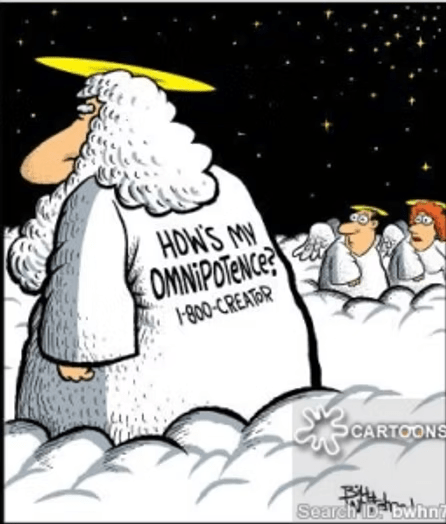
He has omniscience as well.

By realizing that given, one has to understand that God made Man as a heavenly being, giving “Adam” (a personalized name for the Son of God, from “hā·’ā·ḏām” – “the man”) immortality. Although God made Adam from clay or dust, he was an immortal entity – like an angel – which means “Adam” had absolutely no reason, nor innate drive to procreate. When God cast a deep sleep over Adam and took a rib to make “Adam’s” wife, it was for the purpose of sending “Adam” and wife to the earth God had created, where males and females in the image of the gods had been in existence since the sixth “day” of Creation (millions of years, if not more). Therefore, it was God’s plan to seed the earth with the first priest of the One God, who could “hear the voice of the LORD of gods” (“way·yiš·mə·‘ū ’êṯ qō·wl Yah-weh ’ĕ·lō·hîm”).

God knew there was a time when “the man and the wife” would be sent to earth to procreate.  God knew the whole story before it happened.  Still, the males and females of earth (sixth day creations that were being fruitful and multiplying, which was deemed good) did not know God.  Mortal human beings did not know right from wrong.  God planned to send them teachers.

When we read “Adam” explain to God (his Father), “I heard the sound of you in the garden, and I was afraid, because I was naked; and I hid myself,” the word “erom” (“naked”) meant Adam was aware of his body for the first time. Because “the wife” (“ishshah”) also hid, she too was aware of her body, which meant the fear (“I was afraid” – “wā·’î·rā”) was from also knowing arousal from becoming aware of each other’s nakedness.  They had always been unclothed and had never found reason to think (a mental exercise) that state of being was unusual.

That awareness of their physicality was something never known before by “the man and wife” BUT their fear was based on their realization how unnatural it was for immortal beings to become sexually aroused, when immortal beings have no need to procreate. Indeed, in the Spiritual realm none of the elohim (a plural number word meaning “gods”) or angels could produce other elohim or angels, as only God has the power to create new life. Therefore, “Adam” and wife were souls created by God, which were then placed in physical bodies for the purpose of procreating on earth, outside of Eden.

When the allegory is seen in this story, “Adam and Eve” were like children who had reached puberty. They changed into mature beings, no longer able to return to an innocence of youth. That change was by design; but as immortal beings, there can be no age of mortals applied to how long they had lived together. One can even assume that they were made in the same state of maturity, as growth and normal earthbound bodily needs would be unnecessary.  The only change that occurred was an awakening of physical attractions, for the purpose of procreation.  Because fruit is the offspring of a tree, they ate of the fruit that opened their minds to physicality, in a spiritual environment.

Simply because the man and the wife were made to beget new priests in a world of human animals, they were known by God to reach a point in their development where they could no longer live in a Spiritual realm, where procreation was impossible. Because both were made to reproduce, they had to be placed into the realm what that act was possible.  The timing of that event would be when they first experienced arousal for one another.

In this story the serpent plays the role of influencer. When one is immature, nakedness is not seen as anything more than normal. Eden is then the eternal realm where there is no need for maturation, as one is made whole. The mind is therefore immature, in the sense it is pure innocence. One knows all that God allows one to know and that is all one wants to know. The changes of maturity, for physical bodies designed to grow and reproduce, occur within the being, in the brain and chemistry. The serpent then represents the voice within that has one become fixated (lustful) on the physical, once the brain has awakened and this physical state of maturity has been reached.

This makes the tree that bore the forbidden fruit, which was in the “midst of the garden,” be representative of sexual organs. When God said, “You shall surely die” if that fruit was eaten, death was the change from immortal life to mortal life, where death presents a need for procreation. As the “fruit of the tree of knowledge of good and evil,” this was the genetic programming that was placed in “the man” when God made him.  As “Adam” was made on the seventh day, the day deemed holy, “the man” was made to be holy, as a replication of THE Father.  “The man” himself was designed to be “a father,” one who taught his children about THE Father.

This is why “the wife” is identified as such (“ishshah “), where “wife” denotes the sexual partner of a husband. Together, they would need to have children, who they would teach to recognize the difference between good and evil. The good would be their connection to God, who would counsel them in how to act. In a world that only knew the natural urges of genetics, with no knowledge of good [God] nor evil [the craftiness of the serpent], “the man and the wife” (the woman who shared the genetics of “the man,” from his X-chromosome “rib”) would be the first priests sent into the earth.
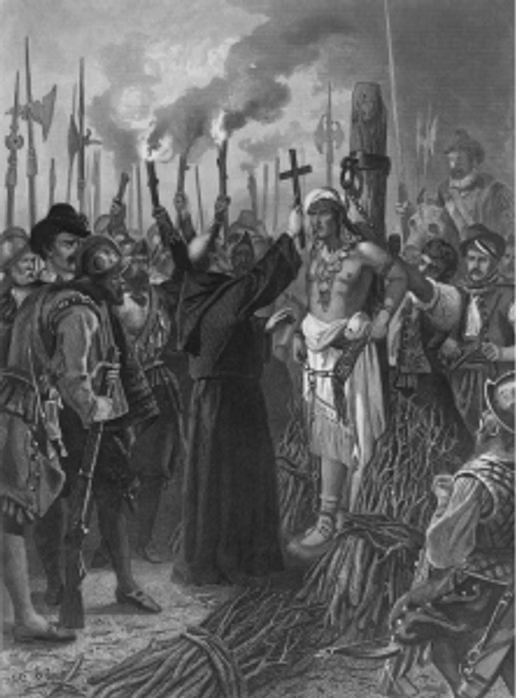
Rather than entering the “new world” with an army and being “in your face” about religion, Adam and Eve chose the “lead by example” method of ministry.

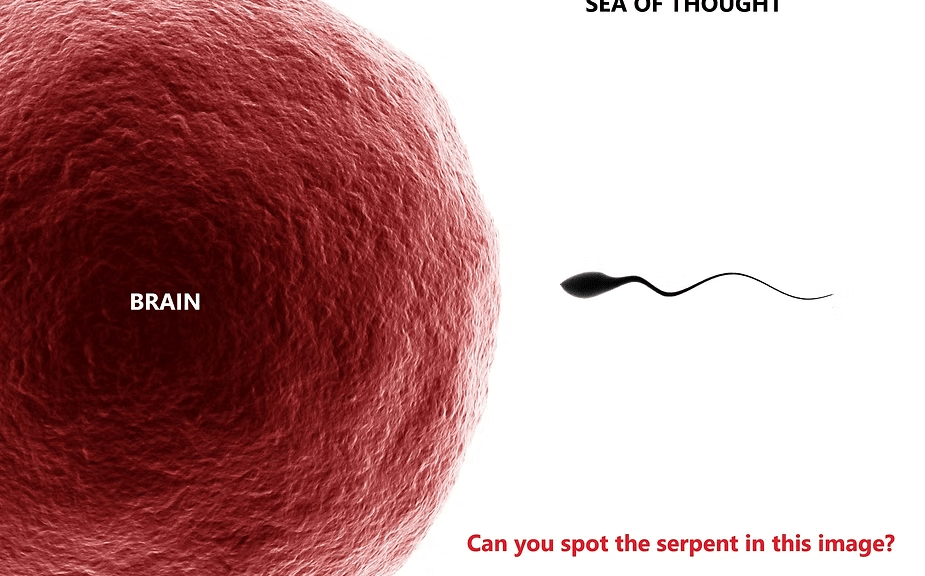
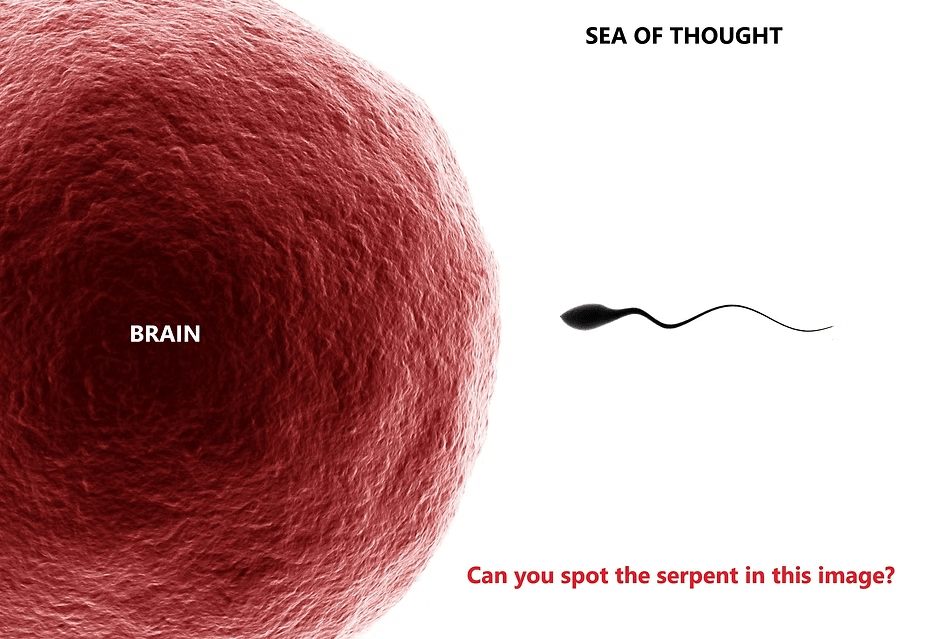
It then becomes important to realize that “the man and the wife” could not enter a world that knew no value judgments of any kind, without them being accompanied by “the serpent.” That character is described as, “more crafty than any beast of the field.” (Genesis 3:1) Without knowing the Hebrew words that translation comes from, “more crafty” or “more subtle” is a statement of the serpent possessing a big brain, which is always something that gets in one’s way of humans trying to find their way back to God.

The Hebrew, “ā·rūm mik·kāl ḥay·yaṯ haś·śā·ḏeh,” which has been translated as “more crafty than any beast of the field,” can literally state: “sensible man (arum) [of] all (kol) age [of man] (chay) soil (sadeh).” This can then be read as a statement of an entity that appeared to be more like “the man and the wife,” rather than one of the beasts named by “the man” [“Adam”].

While this character is clearly identified as a “snake” or “serpent,” the anthropomorphic language causes one to see a talking snake confusing “the wife,” rather than someone who looked like “the man.” His sensibility would be mistaken for honesty to a naïve woman, thinking this being knew what he was talking about. This makes the serpent more representative of the parallel character who tried to tempt Jesus in the wilderness (Satan). He came looking trustworthy and helpful, not frightening and scary.  As “Lucifer,” whose name means “light-bearer,” the one who tricked “the wife” was shedding light onto why God forbid “the man and the wife” the fruit of one tree.  That would be the false light that will forever be offered by the fallen angel.

For anyone who has ever seen a snake, many are known for hiding under rocks and in crevices. Many have coloring that allows them to blend into their surroundings, which means the snake was the influence for “the man and the wife” after they had eaten the fruit, when they were afraid and hid from God. Before the pair encountered the snake, it is doubtful the two had ever experienced fear or any thought that they could be hidden from God’s all-seeing eyes. Thus, because the snake is punished along with “the man and the wife,” all three were hiding in the garden when God called for them.  Only the serpent was not afraid.  He was staying with his prey.

Again, the questions that followed are not to be read as if God was blind to what had happened. “Where are you? Who told you that you were naked? And Have you eaten from the tree of which I commanded you not to eat?” cannot be read as God not knowing all of the answers to those questions, before he asked them. Those questions are rhetorical, as God knew precisely where they were, that they were attempting to hide, that the snake tricked “the wife,” and that the pair had eaten from the forbidden tree’s fruit. God’s call and questioning was to solicit truthful responses from “the man.” “The man” responded to his Father, immediately offering the whole truth to God, because God had made him so he would tell only the truth.

The man and the wife admitted they had gone against God’s rule. The serpent was not questioned, which means God knew the truth had been told by the wife and the man. This is then when God issued His judgment upon all three. While this reading does not cover the judgment set upon the wife or the man directly, it does include those against the serpent that include the serpent’s relationship to the wife (commonly translated as “women”). It is this judgment that is difficult to understand.

We first read: “The Lord God said to the serpent, “Because you have done this, cursed are you among all animals and among all wild creatures.” This is a quick and easy translation that accurately states the words written. However, the addition of “among all animals and among all wild creatures” makes it easy to lose the impact of the serpent being “cursed.”

If the serpent is an animal, what is the curse of being curse by other animals?  This means the additional words add depth to the simple statement, “cursed are you.” To read the additional words, where “animals” or “beasts” are stated (“beasts” is the same word shown above that actually means “age [of man]”), this implies that “animals” and “beasts” are also cursed. That is not the case.

In Genesis 2:18-20, we read how “the man” [Adam] was given all the “animals” of the ground and the air, when “the man” named them all. This naming can be seen as a link between the mind of “the man” and the “animals,” such that the names were based on meaningful communication between the two. In other words, Adam talked to the animals and determined what they should be named (a truly anthropomorphic scenario). By understanding that communication between “the man” and the “animals,” the serpent was cursed “among all animals” by not being able to use his big brain to seduce those creatures to do his will. Despite being the “more crafty” of all the animals, his craftiness (or sensibility or shrewdness) could not have an effect on the lower creatures of earth, whose lives were totally programmed by God’s nature.

When we then read how the serpent is judged to “upon your belly you shall go, and dust you shall eat all the days of your life,” the confusion comes from realizing a snake or serpent always slithers on the ground.  It leads many to wonder, was the serpent complete with arms and legs in Eden? Did those arms and legs fly away from him when God punished the serpent?

The punishment can be clearly seen when one realizes “the serpent” was a nickname for a sly devil. Since he was called a “snake,” he would be sent to earth to metaphorically live like a snake.

Snake Plisskin. A character from a bad movie.

However, the description stated as punishment makes the future of the serpent to be more like a worm; and again this is the wrong way to read this metaphor.

The Hebrew word “gachon” (from “gə·ḥō·nə·ḵā”) means “belly” or “abdomen,” but the word becomes synonymous with “stomach” and “uterus” or “womb.” Since the serpent was a male entity, and since the sin committed by “the man and the wife” were from eating fruit, then the punishment was for the serpent to forevermore be driven by his internal urges that seek to devour. The metaphor of “belly” is then being a lowlife, as it travels the lay of the land, which takes it into gutters, hiding under rocks, and seeking the darkness of caves. When “belly” is readily read as the “stomach,” then it becomes a natural subsequent punishment for God to address what the serpent will “eat.”

The Hebrew word translated as “dust” (“aphar,” from “wə·‘ā·p̄ār”) has to be seen than more than “dirt, ground, and earth.” The same word, “aphar,” is found in Genesis 2:7 (“The Lord God formed man of dust of the earth.”) God told “the man” at the end of Genesis 3 (verse 19), “For you are dust, and to dust you shall return.”  The focus placed on “earth” means “the man” was a soul in flesh, as both material and spiritual eternally.  However, the serpent was just sentenced to forever being an eternal spirit that can only exist on earth.

This association of “dust” should then be read as a reference to mankind in general. As mortals are born to die (and repeat) it will be mankind that the serpent will feed on (as “dust”). In Genesis 1:27, we read, “Male and female elohim created them,” which were “hā·’ā·ḏām” as “mankind.” If the males and females on the physical plane are to be tricked by the serpent, as were “the man and the wife” in Eden, then the “belly” becomes the purpose of a “uterus” and “a wife,” which is to bear new children that God will breathe life into.

The redemption of “the man and the wife” will come more from their producing a holy lineage that will warn humanity against the temptations of the serpent, by teaching mankind how to know the difference between good and evil. However, once new members of mankind are born, the serpent will be attracted to them as innocent and pure, to tempt them to sin.  The serpent’s role will be to ensure that an earthbound cycle of souls born into flesh will remain intact.

It is then the last verse of this reading, where God passed judgment upon the serpent, relative to his tricking “the wife” with his craftiness. Genesis 3:15 seems clearly translated as, “I will put enmity between you and the woman, and between your offspring and hers; he will strike your head, and you will strike his heel.” However, this is the most enigmatic statements found in this story and it needs to be grasped properly.

Genesis 3:15 divides into four segments. When read together, one can get an image of a snake eating its tail, which is an icon for the “Ouroboros”.
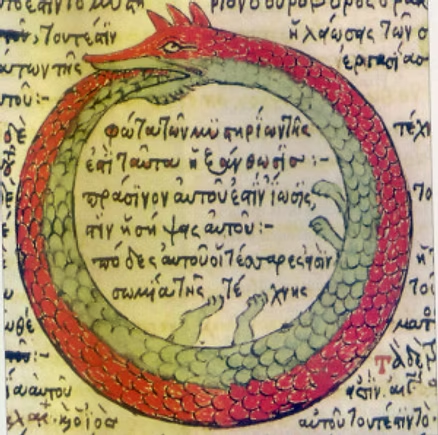
While this symbol is said to represent, “the perpetual cyclic renewal of life and infinity, the concept of eternity and the eternal return, and represents the cycle of life, death and rebirth, leading to immortality,” (Crystalinks.com) that imagery is secondary to the importance of the individual segments stated in Genesis 3:15.

In the first two segments, a variation of the word “bayin” is found written four times, two times in each segment. The word “bayin” means “between,” but also “above, among, forehead, midst, within, and the interval of.” The first segment is God linking the serpent to “the wife,” such that God said to the serpent, “And enmity I will put in the interval of within the wife.” The second segment then says separately, “In the interval of your children in the interval of her offspring.” Because of the repetition of “bayin” (as “bê·nə·ḵā, uben, uben, and uben”) in these two segments, both can be seen as the “hatred” and “personal hostility” that will be “between” the serpent and “the wife” is relative to “descendants.”

Here, it has to be grasped that the serpent is “cursed” by retaining his eternal state of being, where the heavenly creatures (like angels and elohim) have no sex organs because reproduction was unnecessary, thus impossible. God had created “the man and the wife” for the purpose of having worldly children, so they had been built to procreate, only never in the realm of the divine. This means the “offspring” of the serpent can only be those born of “the wife.”  It will be her offspring that will be led to do evil things, having been taught by “the wife,” becoming children knowing the difference “between” God and the “perpetual cyclic renewal of life” into the material plane, not a return to heaven (Eden).

The “enmity” that God will place “within the wife” is less a “personal hatred” in her (as that would be an emotion of evil, not good), but a knowledge of the “hatred” that the serpent has for those who seek to do only good. That will be taught to the children of “the wife,” so they will know to resist the temptations of one who hates them.

The “interval of her offspring” can immediately be seen in the difference in Spirit found “between” Cain and Abel. It can be seen in the 1 Samuel lessons of devoted priests to God not having sons who follow in their holy ways. It can even be seen in the repeated reports of difficulties with conception (barrenness) found in the wives of holy men, such as Abram (his wife Sarai), Manoah (father of Samson), Jacob (his wife Rachel), and Zacharias (his wife Elizabeth). The books of the Holy Bible follow the intervals of those who were taught to know of the hatred held by the serpent for their souls. Because we proclaim Jesus was born of a woman, this can be seen as “of the interval” when “the wife” produced holy offspring.

When God judged the serpent to forever be of the earth, that meant the spirit of the serpent would always locked into that realm. When God then spoke of the association of “the wife” to the serpent, once both were banished from the Spiritual realm of Eden, God was stating that the receptive spirit of females was indeed “of the earth.” Therefore, the joining of the serpent’s judgment with “the wife” is less a punishment of her and more a statement of the physical state that would become the prison for an immortal creature.

While there is no need for procreation in Heaven, procreativity is essential on the earth. Because “the man” was “dust” (physical matter) breathed into by God (the breath of life entering flesh as a spiritual soul), the body of “the man” is essentially feminine, in the sense that it received that breath of life. The sex of all human life is inconsequential in the spiritual realm, making every body of flesh be feminine and every soul be masculine in essence (of the Father). It is in this way that humans refer to God as the Father and the Earth as the Mother of all life, where all that has life needs both mother and father.

In the metaphysic study that is astrology, there is a negative “charge” assigned to the Moon and Venus, such that both orbs are called “feminine.” Conversely, the Sun and Mars are given a positive association, such that both are called masculine. As every human has all astrological planets present within their birth charts, all human beings have both masculine and feminine traits, which is normal. The psychologist Carl Jung called this the anima and the animus. Still, human beings grow into their innate sexuality (the majority do not resist this design), so boys grow up with attractions to masculine acts and girls grow up with attractions to feminine acts (regardless of the excessive weight now put onto cultural conditioning).

This becomes a modern female’s attraction to make-up and clothing, jewelry and homes, as well as family and children. Things become necessary for comfort and security, which the feminine mind is driven towards. This is how the serpent and the wife are both linked, as the serpent will use things to lure the offspring of the wife to make the same mistake the wife made in Eden. Certainly, males have their attraction to things, where sex is a temptation hard to resist; but all the delights of the world are lures to an innate drive of a feminine “body of flesh.”

In the final two segments, which plays on the intervals of good and evil in the offspring of “the wife,” we read, “He will strike your head, and you will strike his heel.” A more literal translation says, “This will bruise head, and you will bruise heel,” where the words of God are aimed at judgment to “the serpent.” When read this later way, the judgment ceases being a “him-her” scenario, or an action-reaction proposition, and becomes fully focused on “the serpent.” It states the results that can be expected, during the intervals of offspring choosing good and offspring choosing evil.

This now becomes a prophecy that says this interval will produce periods when the crafty big brain (“head”) of the snake will be rebuked by the good priests who will hear God’s voice and do good. Conversely, it says the influence of the serpent’s craftiness and temptations will bruise the thought processes of those taught to know better, leading them to sinful acts.  It also says that those who the serpent will influence to choose to do evil will be the dregs (“rear, last, or end”) of the lineage (something Jesus called “dead branches”).  However, those who will be holy, such as Jesus in the wilderness, they will strike at the serpent and tell them to get to the rear.  Together, this says the serpent has no powers to force a human being to do evil, so all power to walk away from the influence of evil is held by the offspring of “the man and the wife.”

As this whole series of events was totally planned by God, one has to see the powerless state of the serpent on earth is his inability to make matter move physically.  The only power of the serpent is intellectual, as a devil that sits on one’s shoulder whispering sinful things.

The presence of Satan on earth is as necessary as was the serpent in Eden.  The serpent initiated the order for “the man and the wife” to go to earth and begin a holy lineage of priests, who would teach mankind, with the Son of God being allowed to return as Jesus Christ.  On earth, Satan is necessary for those who seek to return to God to defeat.  The serpent becomes the test of sincerity for repentance.  To enter Heaven, one must totally resist evil; and that can only be done by completely devoting one’s soul to God, and letting ego die so eternal life may come through the union of God and “the wife” (Christians of all sexes), bringing about the rebirth of the Son, Jesus Christ.  To defeat Satan, one must be Jesus Christ reborn.

As a reading option from the Old Testament for the third Sunday after Pentecost, when one’s personal ministry should be underway, the focus placed here is on the extreme restrictions placed on what souls can be allowed back into Eden and again walk in the garden with God. One cannot allow oneself to fall prey to the tricks of the serpent; and one must communicate that warning to all who seek eternal life.

We have all fallen from grace because we all know the difference between good and evil; but we can all find redemption through God’s love in our hearts and the Christ Mind bruising the big brain of the serpent. We must minister to the “heel,” as that is where the dust of sin gathers in the world, such that Apostles must wash each other’s sins clean. That is done by fellowship, where ministry picks each soul up from the ground, so evil’s influence cannot rise against the righteous. Ministry supports others in Christ, in addition to spreading the Word to those who seek redemption.

As a choice to accompany the Gospel reading from Mark, where the people clamored outside the home Jesus and his disciples had sought solitude in, where Jesus said his family was those who believed as he believed, this relates to the offspring of good. You cannot stand outside and call upon Jesus, as did his mother and brothers. They called from fear, not from faith. If they had faith, they would have been with Jesus when he entered the house. Thus, it was the serpent that called for Jesus to come out, just as the serpent tricked “the wife” to become like God in knowledge.

The focus of this reading is the expressed judgment of God placed on the serpent.  As the offspring of “Adam,” as Christians, we are the target of the serpent’s enmity.  It is a sly grasp that his evil words of influence entwine us in.  Sometimes we cannot see the forest from the trees.  We think we are doing only good, when we should question just how blind we have become.  When ministry is only in our minds and not a reality, we need to realize we are hiding because of our nakedness.  We have sinned but don’t want to admit it.  We have sinned by hiding from God.

In a world of serpent-like influences, we need to ask God to help and be prepared to suffer His judgment as repentance.
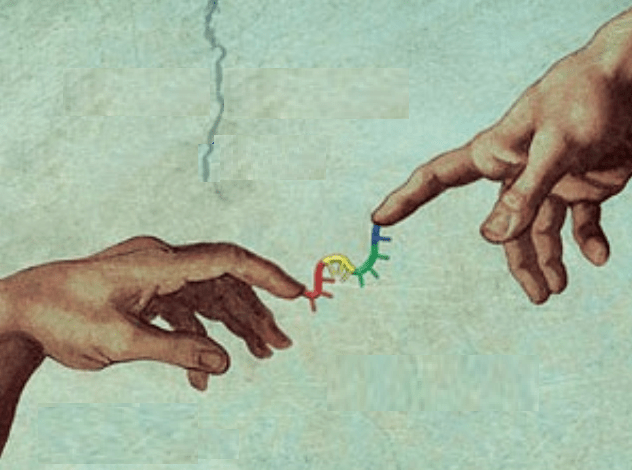
Genesis 2:18-24 – The genetics of divinity

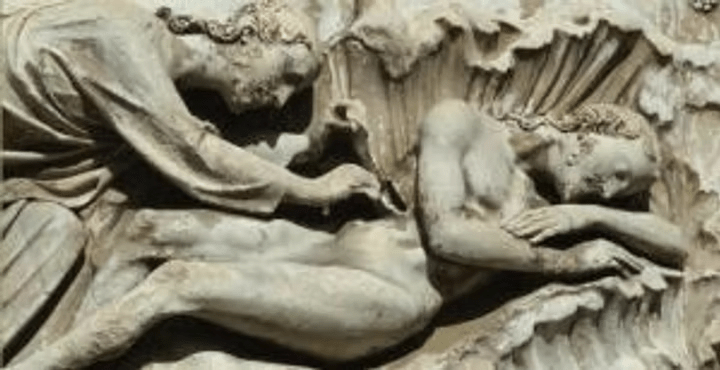
The Lord God said, “It is not good that the man should be alone; I will make him a helper as his partner.” So out of the ground the Lord God formed every animal of the field and every bird of the air, and brought them to the man to see what he would call them; and whatever the man called every living creature, that was its name. The man gave names to all cattle, and to the birds of the air, and to every animal of the field; but for the man there was not found a helper as his partner. So the Lord God caused a deep sleep to fall upon the man, and he slept; then he took one of his ribs and closed up its place with flesh. And the rib that the Lord God had taken from the man he made into a woman and brought her to the man. Then the man said,

“This at last is bone of my bones
and flesh of my flesh;

this one shall be called Woman,
for out of Man this one was taken.”

Therefore a man leaves his father and his mother and clings to his wife, and they become one flesh.

———————————————————————————————————-

This is an optional Old Testament selection from the Episcopal Lectionary for the Twentieth Sunday after Pentecost, Year B 2018. In the numbering system that lists each Sunday in an ordinal fashion, this Sunday is referred to as Proper 22. If chosen, it will next be read aloud in an Episcopal church by a reader on Sunday October 7, 2018. It is important because it tells of the DNA that makes a man differ from a woman. It is the x-factor of the sex chromosome. That is Adam’s rib.

God would not really need a scapel.

I have written about this at other times, on other sites. One has to see through the metaphor to understand that Holy Scripture perfectly understood modern concepts, well before man crawled out of a cave and started thinking it knew some stuff. The discovery of genetics and the inner workings of living creatures is like kindergarten coloring exercises to God.

The painting of a picture, by Moses and the oral dictation of the Creation, is in simple terms that projects a much deeper meaning. The rib “taken from the man,” such that God “made into a woman” is the X chromosome, of the gene said to be the sex gene. A man has a sex gene that is “x, y,” while a woman has a sex gene that is “x, x.”

This makes the Y chromosome the factor that determines “maleness.” The absence of a Y chromosome is then the non-factor that determines “femaleness.” Therefore, in the story told in Genesis, God split Adam’s DNA and then duplicated the X chromosome, splicing them together to make Adam’s “x, y” sex gene be implanted in the flesh that would be the wife, having an “x, x” sex gene.

This is then the most obvious meaning of “Adam’s rib.” I doubt anyone can argue the validity of that metaphor. Modern biological science has made this awareness be possible. So much so that it is now plain and simple. However, what is harder to see is the special aspect of Adam and wife, as they were not common human beings that were rooting in the mud of the earth, barely higher than the animals they hid from and hunted.

Adam was the Son of God. He was formed by the hand of God from earthly materials (including the DNA formed by God’s hand) and was a god. Adam, at the time of this reading, was immortal. He was like a Greek hero, as the union of God and physical flesh. God (through the elohim, or “gods”) had already created males and females in their likeness.

They were hairy, barely erect creatures that used to be called cavemen and cavewomen. They had been given dominion over the animals. Therefore, all creatures created by God also had DNA, which was specific to their breed of animal (“breed” being the natural reproductive mixing of DNA materials); and, those lesser creatures all had much shorter lifespans, as souls temporarily existing on the earthly plane as life breathing creatures (humans included).

This divine state of being in Adam is then told in his being the one who would name “every living creature.” While we read, “The Lord God formed every animal of the field and every bird of the air, and brought them to the man to see what he would call them,” the unwritten is that, in Genesis 1:24-28, male and female humans were an unwritten included part of “every living creature.”

Genesis 1:24-28 states:

“And God said, “Let the land produce living creatures according to their kinds: the livestock, the creatures that move along the ground, and the wild animals, each according to its kind.” And it was so. God made the wild animals according to their kinds, the livestock according to their kinds, and all the creatures that move along the ground according to their kinds. And God saw that it was good.

Then God said, “Let us make mankind in our image, in our likeness, so that they may rule over the fish in the sea and the birds in the sky, over the livestock and all the wild animals, and over all the creatures that move along the ground.”

So God created mankind in his own image, in the image of God he created them; male and female he created them. God blessed them and said to them, “Be fruitful and increase in number; fill the earth and subdue it. Rule over the fish in the sea and the birds in the sky and over every living creature that moves on the ground.”

Therefore, Adam (Man) named the males and females in the image of the gods (elohim) after himself: man. They are Man’s kind (mankind), unlike all the other animals (including all the primates).

Cute, but certainly not the same.

All of the air breathing animals, which included the tiniest (microscopic) creatures and the greatest that lived under the deep waters, had DNA. Adam (Man) was capable of seeing all of their genetics due to his being divine. One cannot miss the metaphor of this story and project a visual image of all the animals coming and sitting before Adam (Man) to be named. Adam (Man) had Spiritual powers of knowledge, coming from God the Father, which allowed Adam (Man) to classify living creatures much like they are categorized today, but long after this first zoological ordering.

Seeing this divine state of Adam (Man) means God was seeing the need for this divine male to have a divine female partner. Adam could have seen a pleasing female cavewoman that was to his liking and had sexual relations with that hairy female, but he did not. Adam (Man) saw animals as creatures that immortals should not mate with, although this was a common habit of the gods (elohim), who were busy creating monstrosities that would cause God to flood the earth to erase them.

Adam (Man), however, needed a divine woman as his partner; thus there was a purposeful need to replicate the X chromosome of God’s Son.

It is vastly important that one realize there are two types of males at this point in Genesis. There are the common animals of the human species, and there was one holy Man. God created His Son on the seventh day, which was deemed holy [we live today, still, in the seventh day of Creation, and the presence of religion denotes that]. Common men and women were created on the sixth day. Adam (Man) is thus a design by God to send a Holy Man to earth (from the divine earth between the worldly plane and the heavenly plane – Eden) as the first Priest seeded into a world that had become most wicked, being enslaved human beings under the dominion of some evil gods (elohim).

Those human creatures did not know their deeds were sins, because there were no rules yet established. Adam (Man) was God’s plan to bring religion to the world.

This then means Adam (Man) was not capable of reproduction, as he was a body of flesh with immortal status. He was like all angels that are all male (sorry ladies, no girl angels), with all having come from God – the ultimate Y chromosome. The x-factor of Adam (Man) was the flesh that surrounded his Y soul.

As the Son of God, Adam had to have a mate prepared for him, who was exactly like Adam (Man), in the sense of being immortal and totally pure. This means that Adam and Eve [sic] were immature children of God in the Garden of Eden [sic]. It was not until they had sinned that they became capable of intercourse [realized their nakedness] and made mortal. Intercourse became a necessity once the two had been stripped of their immortality.

The creation of Adam’s wife (“wife” is a word that means the bearer of a child) was the foresight of an All-Knowing God.  The meaning of God saying, “It is not good that the man should be alone,” is that Adam (Man) would be banished from the heaven that was Eden.  Immortality would be lost, necessitating the survival of a holy species.  Once banished, Adam would need a holy female with whom to mate.  The wife was so Adam (Man) would reproduce and generate holy children, as the first descendants that would spread the priesthood around the world, to common human beings.

The Y-factor would dominate in Abel and Seth.  It would be Seth’s bloodline would become the holy lineage leading to Jesus and his Apostles (including those Saints to this day). The X-factor would be found dominating Cain, whose bloodline would become the religion of Satan, as all false religions that mankind had ever devised, designed to mislead human beings away from God.

As an optional Old Testament selection for the twentieth Sunday after Pentecost, when one’s own personal ministry for the LORD should be underway – one should be of the lineage of Adam (Man) and reborn as Jesus Christ – the message here is to realize the holiness of Saints is not limited to just one sex of mankind. We are all born with some distinction that is based on the sex gene in our DNA, but we have the power to choose to serve the Lord and let His Holy Spirit join with our souls, causing genetic changes within our beings that are undetectable by the eyes of science.

When the baptism by the Holy Spirit occurs, we are changed from being X-factor led human beings, where our souls cling to the worldly as most important. The presence of God raises our being to a Y-factor, as the Son of God. It does not matter what the little x and little y says, as to whether one is a male or a female, when we then cease being a common version of animal man and become a Holy Son of God.

This is how a metaphoric story of Adam having his rib removed to make woman becomes relative to each and every human being of religious beliefs, as the X,Y of Jesus Christ has to be split (now that Jesus had died in the physical – symbolic of going into a deep sleep) and joined with one’s soul. We have to be recreated from the body of Jesus Christ, as the wife of God. Christians have to first be made of Holy DNA, as the X,X wives of God (who is Y only, infinitely splitable), just as Eve was made to be the wife of Adam.

Once we reenter the heavenly realm of Eden, we mate with God and give birth to His Son within us, as Jesus Christ resurrected. We become X,Y as was Adam (man) and Jesus of Nazareth. We are returned immortality (eternal Salvation), through being led back to purity. We have lost all sense of age and deterioration by being returned to being the children of God.

[Added Note: Think about this and then draw a parallel to why Jesus would send his ‘trainee’ disciples into intern ministry, as well as his Apostles after he had risen from death, in pairs. That word states the same duality of Adam (Man), as he was Created on the holy day to be both of the Father (Yahweh – Y) and mother earth (X), while also being the duality of “Yahweh elohim” (stated eleven times in Genesis 2), where Adam (Man) was both Spirit (Yahweh – Y) and souls (gods giving life to inanimate matter). The elohim are then the Lord soul from Yahweh (the god Adam-Jesus) joined with the host soul of life (a god of its flesh). This means duality in spirit is necessary for one to extend beyond human life (a soul alone in flesh), to eternal life (a soul saved by the presence of the Son), as a pair of souls in one body of flesh. Thus, when Yahweh said, “It is not good that the man should be alone,” the same principle pertains to Apostles. One could see Peter (Y) and John of Zebedee (X) being a pair, where one spoke and the other supported that spoken. The same with Paul (Y) and Timothy (X). Thus, a “church” (ekklasia) is when “two or more are gathered in the name of Jesus.” One Y Apostle, plus one X Apostle, plus one resurrected soul of Jesus in each. That means a “church” is each one, as a Yahweh elohim. The name “Jesus” means “YAH Saves,” which is why Yahweh created Adam (Man) on the holy day. Yahweh planned to send that soul created into the souls of wild animal men and women, saving their souls by placing the Y of Jesus into the X of lost souls.]

#Genesis12428 #Genesis21824

Sixth Sunday after Pentecost – Reaching the point of decision

Please read these verses that come from the readings offered for today. A sermon will follow.

Genesis 25:23-26

And the Lord said to her,
“Two nations are in your womb,
and two peoples born of you shall be divided;
the one shall be stronger than the other,
the elder shall serve the younger.”
When her time to give birth was at hand, there were twins in her womb. 25 The first came out red, all his body like a hairy mantle; so they named him Esau. 26 Afterward his brother came out, with his hand gripping Esau’s heel; so he was named Jacob.

Psalm 119:107-110

107 I am deeply troubled; *
preserve my life, O Lord, according to your word.
108 Accept, O Lord, the willing tribute of my lips, *
and teach me your judgments.
109 My life is always in my hand, *
yet I do not forget your law.
110 The wicked have set a trap for me, *
but I have not strayed from your commandments.

Isaiah 55:11; 13

so shall my word be that goes out from my mouth;
it shall not return to me empty,
but it shall accomplish that which I purpose,
and succeed in the thing for which I sent it.

Instead of the thorn shall come up the cypress;
instead of the brier shall come up the myrtle;
and it shall be to the Lord for a memorial,
for an everlasting sign that shall not be cut off.

Psalm 65:2-4

2 To you that hear prayer shall all flesh come, *
because of their transgressions.
3 Our sins are stronger than we are, *
but you will blot them out.
4 Happy are they whom you choose
and draw to your courts to dwell there! *
they will be satisfied by the beauty of your house,
by the holiness of your temple.

Romans 8:5-8

For those who live according to the flesh set their minds on the things of the flesh, but those who live according to the Spirit set their minds on the things of the Spirit. To set the mind on the flesh is death, but to set the mind on the Spirit is life and peace. For this reason the mind that is set on the flesh is hostile to God; it does not submit to God’s law– indeed it cannot, and those who are in the flesh cannot please God.

Matthew 13:20-22

As for what was sown on rocky ground, this is the one who hears the word and immediately receives it with joy; yet such a person has no root, but endures only for a while, and when trouble or persecution arises on account of the word, that person immediately falls away. As for what was sown among thorns, this is the one who hears the word, but the cares of the world and the lure of wealth choke the word, and it yields nothing.

——————–

These are excerpts from the possible readings for the Sixth Sunday after Pentecost (Proper 10, Year A), which will be read aloud in Episcopal churches (those not out of business due to fear of viral disease) and/or broadcast via streaming video (live or recorded) displayed on Facebook (one of the elohim of Aquarian technology) on Sunday, July 12, 2020.

These excerpts are parsed from the whole, rather than present the whole. I cut and paste here to keep wandering minds from being confused by the surrounding verbiage, thus easily confused by the ramblings of a hired hand with a political agenda. If you read the words closely, you might be able to pick up the theme of duality, where “duality” means “an instance of opposition or contrast between two concepts or two aspects of something.” (Google #2)

This should become quite evident in the Genesis reading, as God told Rebekah she would deliver twins. The two fought within her womb, causing her great concern.

Psalm 119 sings of the troubles within the righteous, based on the opposition posed by the wicked, who set traps.

Isaiah sang of the differences present in the world (the duality), all which serves a purpose. He states the duality of a thorn and a cypress and a brier and a myrtle.

Psalm 65 sings of the human duality that is sinner and Saint, where the difference is based on who chooses to “hear prayer.”

Paul wrote to the Christians of Rome, telling them of two types of human beings: those who “set their minds on the things of the flesh” and those who “set their minds on the things of the Spirit.”

Finally, Jesus explained his Parable of the Sower (to his disciples who asked for explanation – found from the missing verses in the reading), such that the seeds will always produce growths that are by design, but dependent on their environment. The duality is (basically) that of a failed purpose and a successful purpose.

The duality of these readings is reflected in the news of America today.

There is fear of a pandemic getting bigger! Oh my!

There is the Caucasian mayor of New York City standing with militant Negroes painting “Black Lives Matter” on a main thoroughfare, in front of a building named after President Donald Trump.

There is the media portraying the demands to defund the police as if that were some kind of logical idea.

There are the Communist Chinese persecuting the Chinese of Hong Kong, while addle-minded (and morally corrupt) Joe Biden is propped up like a stuffed puppet, whose strings are pulled by his keepers making him condemn Donald Trump (like a pot calling a kettle black).

Donald Trump is commuting the sentence of Roger Stone, with Nancy Pelosi introducing a bill to limit presidential powers of pardon (although not a hindsighted bill that would send heinous criminals pardoned by Bill Clinton and Barack Obama back to prison).

Meanwhile, the land is being scorched by oppressive heat and humidity, making wearing a mask in public sweaty, if not life threatening.

The list of terrible news goes on and on and on.

There will never be an end to the terrible news.

It is a purposeful trap played by the media (the duality of left and right wings flapping against one another in the womb of civil war).

It is the illusion of evil that attempts to replace cypress trees with thorns and drown out all ears that hear the voice of God within their minds, designed to turn human brains towards matters of the flesh.

Black lives are souls in colored flesh, are they not? What color exists in the ethereal realm?

Rather than be true priests of Yahweh and speak as divine Apostles – the Saints of true Christianity – hired hands, false shepherds and community organizers with clerical collars around their necks do not teach “stay the course – keep your minds in the Spirit.”

They cannot teach that which they do not know.

One in the pews, who likewise does not know the Holy Spirit within, cannot possibly realize a hired hand, false shepherd, or social justifier is poisoning their minds with propaganda. The blind have no way of knowing who else is blind, but pretending to see.

When I watch the news of the day for five minutes (given that the first four minutes are always commercials – which draw a different rise of ire within me), I cannot believe the world is allowing such things. I boil with hatred.

I turn off the television and go to the computer and log onto Facebook. I am rewarded by meme after meme of worthless clutter, with it being just like the news. I boil with the ineptitude of ‘friends’ thinking an evil world can be kept at bay by inane sayings, stupid jokes, and items of horrific news not shown on the television.

It is enough to cause such deep anger within that one wants to go into the streets shooting anything that moves.

[Calm down. Slow deep breaths. Count to ten.]

To hell with some priest promoting a new protest march on the police department, planning to walk arm-in-arm with the poor Negroes (from another part of town) whose hearts are filled with such deep hatred of Caucasians that they lust for someone – anyone – to set them off as they protest, so they can capture the raw emotion of violence on a smart phone video, which they can then post on social media to further inflame souls.

I don’t need a priest to further my anger that sin has taken over the world, aiding and abetting it by becoming priests.

When Jesus preached a sermon in parable that told of seed planted in good soil, that good soil is the Holy Spirit.

Our souls are the seeds.

Nothing material, physical, or fleshy human – or even American national, including any and all political philosophies coming from the physics of human brains – is the intent of Jesus’ words.

Good seed is ONLY THAT GROWN IN HOLY SOIL – as Saints reborn as Jesus Christ.

From the words of Isaiah, who wrote a song about the ones who will become good seed, the purpose of evil is to tempt.

God knows evil is in the world. God sent His Son Adam to be the first priest to open hearts and minds to the dawning of knowledge of good and evil. To preach about that knowledge, Adam had to experience that evil is as forceful as a suggestionan ideaa whisper that asks, “Why don’t you go ahead and do it?”

Our souls are born into bodies of flesh that are bound to die. That element of death is our ultimate fear in this world. We fear death when we should only fear God – or losing God’s alliance, by turning away from God. With God within one, death becomes a joyful event.

God knows the world loves to bring death to scattered seeds – before they have any chance of doing anything good. That is the metaphor of birds eating them as soon as they are scattered. The symbolism is souls being reincarnated into a repeating of lost life in the death of flesh.

God knows souls are placed in races and in places that offer little in the way of guidance towards the light of Christ. That is the metaphor of rocky ground. Those souls planted might rejoice when they see the light; but that joy is short-lived, before reality throws a soul back into the darkness of the world.

God knows souls will be sown into fertile places, where Satan will be free to sow his seeds of evil alongside. That is the metaphor of the thorns [the duality of Isaiah’s cypress].

Does that not smell like the ‘freedom of Democracy’ and the governments of Republics?

No ‘slaves’ are sent out into the fields to pull the weeds up, which are there to choke the life Spirit out of good seeds, turning fertile ground into Satan’s paradise.

If a ‘slave’ was to do that, then the good would be destroyed with the bad. That is the meaning of the Parable of the Weeds. God told the “slaves’ “Let them all grow until the harvest [End Time], when a sorting will take place. Meanwhile, get the fire pit started.”

Does the news in the media not tempt one to go yank the hell out of the weeds, while stomping all over the innocent lambs that live in those neighborhoods – all the big cities run by fools that promote selective anarchy (only evil has the right to be unfettered by laws)?

The good soil that a seed is planted in is Jesus Christ.

Jesus was a human being, born of the earth. Adam was formed of dust, given the soul of Spiritual life that would reincarnate from the womb of the Virgin Mary. The Son of God is the Son of Adam. An Apostle is adopted into that Soul-Spirit state of being, as the fertile soil that again holds Jesus Christ.

The good soil today is a Saint that teaches other seeds of souls: “Turn off your televisions and computers. Look away from the evil in the world and look to God and Christ within. Be reborn as Jesus Christ!”

Alas, where is the good soil today?

The fertile soil of America is full of weeds, all of which are preaching insanity, trying to choke out the good of the United States of America and replace it with the evil of a philosophy that is whispering, “Why don’t you go ahead and do it?”

Jesus showed us how powerful evil is when he told Satan, “Get behind me!”

Jesus showed us how the demon named Legion begged not to be sent away from the flesh, crying out, “Send us into pigs!” Jesus gave those demons who possessed one man that freedom; but, then the pigs ran off a cliff and drowned.

Evil has no power other than the power you allow it to have over your soul and flesh.

Fallen angels still have to do the will of souls trapped in dust and clay. God ordered it. However, God did not tell them they could not tempt; and, that temptation serves a purpose in God’s overall plan.

Those who hear prayer will become stronger than the winds of suggestion. They will be able to resist temptation.

When David sang:

“Happy are they whom you choose
and draw to your courts to dwell there! *
they will be satisfied by the beauty of your house,
by the holiness of your temple.

Each individual is a house of the Lord. Each Saint becomes a temple for Jesus Christ.

The Israelites were taken away from the world (Egypt) and taught to live together as one separate people, not mixed and not promoted as equal to the evil of the world.

When David was pure of heart and had the Christ Mind, so too did the people of Israel. Evil always surrounded them. Evil always challenged them. It was God who always led His righteous to stand and defeat evil.

Still, defeating evil will never make evil be eliminated from the world. Evil will always be a test of righteousness.

When David was still a boy, he volunteered to go to battle against Goliath. His courage was God within. With God’s help he slew the evil beast and brought the fear of Yahweh into the hearts of people who had been led by evil.

The Israelites were a nation where evil was always trying to be weeds of growth within their land. The weeds were destroyed, pulled from their midst, just as a good gardener will keep weeds controlled. The Israelites did not attempt to eradicate evil from the whole world, as they left the weeds of evil to grow in the places where the Israelites did not live.

The Jews today still try to live in cloistered places, to keep non-Jewish thoughts from infiltrating their safety zones. That becomes the model of salvation for America today.

The fork in the road is upon us. America either becomes an evil nation, at which point the good seed will be destroyed or choked out for the most part by the weeds of evil. Or, America will be led by someone pure of heart and mind [like a Saintly David reincarnation], who will expel the evil from all power of influence in the nation. Evil will beg to be cast into pigs again.

Whichever way it goes, the path to the future will be drenched in blood.

Ashes to ashes, dust to dust. Human blood spilled is only more of the world returned to the world. The soul cannot be killed; but, a soul can either be recycled back to the world in a new body of flesh, or it can rejoice in being placed in an exclusive neighborhood where only good souls exist – Heaven.

To reach that destination, one must first be planted in the good soil of Jesus Christ, becoming a Saint.

Genesis 50:15-21 – Forgiving relatives with kindness

Realizing that their father was dead, Joseph’s brothers said, “What if Joseph still bears a grudge against us and pays us back in full for all the wrong that we did to him?” So they approached Joseph, saying, “Your father gave this instruction before he died, ‘Say to Joseph: I beg you, forgive the crime of your brothers and the wrong they did in harming you.’ Now therefore please forgive the crime of the servants of the God of your father.” Joseph wept when they spoke to him. Then his brothers also wept, fell down before him, and said, “We are here as your slaves.” But Joseph said to them, “Do not be afraid! Am I in the place of God? Even though you intended to do harm to me, God intended it for good, in order to preserve a numerous people, as he is doing today. So have no fear; I myself will provide for you and your little ones.” In this way he reassured them, speaking kindly to them.

——————–

Here is another reading that may never see the light of day in a church that follows the Episcopal Lectionary.  This is like lower than Track 2, as it is the third option for the Old Testament reading, as Track 2-b, in the schedule used.  The only time this reading is offered is the Proper 19 Sunday, in the Year A.  Good luck hearing this one in a church that only offers one service-sermon per Sunday.  The best chance might be in a major cathedral, where they have so many services each Sunday that somebody might get stuck with the chore of ignoring this reading being read aloud by some lay reader; since it is common practice for Episcopal priests to only find some slim way to sew modern politics into the Gospel reading, ignoring everything else read aloud.

[This is as if God spoke, but no one in the Episcopal Church was able to hear Him say, “Remember, you tell no one what I tell you, then you take on the responsibility of everyone’s sins, simply by not telling them what I tell you.”]

This potential reading goes along with the Gospel reading from Matthew (Matthew 18:21-35) that tells, “Peter came and said to Jesus, “Lord, if another member of the church sins against me, how often should I forgive? As many as seven times?”

The answer to that question by Peter is stated by Joseph, who said, “Do not be afraid! Am I in the place of God? Even though you intended to do harm to me, God intended it for good, in order to preserve a numerous people, as he is doing today.”

Relative to that good answer given, Jesus told Peter, “Not seven times, but, I tell you, seventy-seven times.”

In that answer (which is in two parts, separated by a comma mark), Jesus said “Not” (a capitalized “Οὐ”), which spoke loudly to Peter asking (like Joseph asked, “Am I in the place of God?”), “Who do you think you are that you can forgive shit?”  After all, Jesus had just told the disciples it was their righteous duty to confront sinners among themselves – one-on-one; three-on-one; and then if need be many-on-one.

The metaphysical answer Jesus added (relative to “seventy times seven,” which converts to seven times eleven) is beyond the comprehension of any Episcopal priest alive today.  None of them know that eleven is a master number in numerology, which becomes a statement of being elevated from a two (1+1=2, where one is a soul separate from God; but 11 is a soul joined with God’s Holy Spirit).  The number seven is then the symbolism of perfection, which can only come from God.  Thus, Jesus said the same thing as did Joseph.

In order to get this perspective clearly, look at the parable Jesus told.  A king had a slave that owed him more money than any slave could ever come by naturally back then: “[A slave] who owed [a king] ten thousand talents was brought to [the king]; and, as [the debtor slave] could not pay, his lord ordered him to be sold, together with his wife and children and all his possessions, and payment to be made.”  That becomes the legal way people forgive – by making a debtor pay in some way.

Jesus then told what happens when someone thinks he or she can forgive another’s sins or debts against God [through the one owed]: “out of pity for [the debtor slave], the lord of that slave released him and forgave him the debt.” 

So, what happened then?  The asshole who had faked being sincere, crying crocodile tears, goes laughing about and finds a slave that owes him for something, demanding payment.  But, when that slave begs for forgiveness, the asshole slave has him thrown in prison.  That, again, was the legal way people forgave.

When some other debtor slaves saw that and knew the asshole had been forgiven his debt (a much greater number), they went and tattled to the king.  The king then summoned the asshole back before him, where he told him, “You wicked slave! I forgave you all that debt because you pleaded with me. Should you not have had mercy on your fellow slave, as I had mercy on you?”  With that, the asshole-wicked slave was “handed over to be tortured until he would pay his entire debt.”

Then Jesus said, “My heavenly Father will also do to every one of you, if you do not forgive your brother or sister from your heart.” 

God was the king in the parable and we are His slaves, all owning Him a debt we cannot pay (as sinners in a sinful world).  All we can do is beg God to forgive us of our debts [trespasses] – individually, not us begging for someone else to be forgiven for sins – and then forgiveness can come from God through us [individually] to others, but only when all brothers and sisters are related, due to God being in each of his or her hearts, all reborn as Jesus Christ.  

That, my friends, is the “seventy seven” answer.

Knowing that, look closer at the reading from Genesis 50.  We read that Jacob [aka Israel] is dead.  All the sack of shit brothers of Joseph know what they did to him.  To protect their sorry asses, they went to Joseph and made up some bullshit lie.  Jacob would have told his sons to beg God for forgiveness, because he would not have wanted wicked sons to go unpunished.  They all put on the same act the wicked slave did who begged the king to forgive his ten thousand talent debt.  That figure (which is like Elon Musk owing more money that his Tesla stock is worth) becomes relative to the sins of having sold a brother into slavery.

Think about that.  Jesus had just told his disciples to confront a brother among themselves who sinned against one (or more).  You don’t forgive that shit!  You don’t have any power on earth to forgive sinners from sinning.  Like Joseph said, “Am I in the place of God?”

When Joseph’s brothers prostrated themselves before their younger brother and wept tears, it was all an act.  When Joseph wept, it was from the pity coming from the king within him (God), felt for beggars that were full of sin.  Joseph assured his sinful brothers that he would care for them and their families, even though the law said he could torture them and all their wives and children by sending them all to prison, as slaves for their debts.

That is the lesson for the Fifteenth Sunday after Pentecost, year 2020, Proper 19 Year A.  It says, “Forgiveness [like Vengeance] is mine sayeth the Lord.”  The people who are in the name of Jesus Christ, as seventy-seven-souls [aka Saints] with God in their hearts, prove their piety by allowing themselves to let go of all sins against them, leaving all forgiveness up to God.  The lesson is like Jesus said, “Love one another as I have loved you” [meaning the love between Apostles and Saints, Brothers and Sisters all reborn as Jesus Christ].

Here is the funny aside about these lessons that becomes like the slaves seeing the wicked asshole slave exacting punishment on the slave that owed him debt.  It is all the wicked priests of the Episcopal Church that think they are owed something by Donald J. Trump.  They demand he repay his debt by expecting him to quit, leave office, die, or volunteer to go to prison, all just to make Democrats, Socialist, Communists, and Episcopal priests happy.  They preach about sending him to debtors prison, promoting the election of feeble-minded Joe ‘Lifer Politician’ Biden as president, so his keepers can run roughshod over everyone they hate.  They have no forgiveness within their beings, other than to forgive all who destroy and kill in the name of “protest,” pretending the police are the problem.

Who are they thinking they are? God?!?!  Donald J. Trump, like every other swinging-dick or swinging-tits politician in America has a debt with God that can never be repaid in this world.  Jesus knows who is seventy-seven and who is short one soul for having sold it to Satan.

I expect politics (as always) will be the slant on these readings, as a November election looms on the horizon.  Episcopalian priest are thinking like the brothers of Joseph, thinking they better make up a good lie that can cover their sorry asses if (God forbid!) Trump gets re-elected.  Whoever gets elected simply means nothing changes – the world is where sin thrives and always is allowed to run amok.  Meanwhile, priests sell their brothers who don’t think like them into slavery, but only after trying to kill them first [only finding out the mice-and-men reality of failure].  Just like the brothers of Joseph found the old ‘drown him in a cistern’ ploy didn’t work, neither does the ‘turn Scripture into hate’ tactic.  Everyone is blind to the fact that only sinners play politics, so everyone is a slave around here owing somebody.

The lying brothers and sisters pretending to be prostrate before Jesus, so all their sins can be forgiven, are secretly chuckling at how easy it is to be forgiven in this world.  They laugh at the goodhearted nature of Jesus, all the while plotting their next theft of another ten thousand talents, in a world that always rewards sinners.  But, they always forget that God the King has many little eyes watching everything, who will come tattle to Him.  So, liars beware the debt of sin!

When Joseph “reassured [his sinful brothers], speaking kindly to them,” God was chuckling inside Joseph’s mind, body, and soul.  God was telling Joseph, “Give them all the rope they want, because they will hang themselves with it [similar to the death of Judas] when payment for sins comes due.”

Go ahead and hate and act like it isn’t a debt mounting; but it is. 

Genesis 1:1-5 – In the beginning?

In the beginning when God [elohim] created the heavens and the earth, the earth was a formless void and darkness covered the face of the deep, while a wind from God [elohim] swept over the face of the waters. Then God [elohim] said, “Let there be light”; and there was light. And God [elohim] saw that the light was good; and God [elohim] separated the light from the darkness. God [elohim] called the light Day, and the darkness he called Night. And there was evening and there was morning, the first day.

———-

First of all, Genesis 1 lists the word elohim 32 times. It lists elohim four more times in the first verses of Genesis 2, before Genesis 2 states Yahweh elohim eleven times. This says Moses knew the difference between the pluran number elohim (“gods”) and the singular Yahweh, who created Man (adam) with a soul (el) and Yahweh Spirit (El), making Yahweh elohim. Thus, Genesis 1:1 says (via inference) Yahweh created “in the beginning gods” … to do His work of Creation in the physical.

The problem everyone has with this series of verses (and everything that follows them) is too much focus is placed on looking backwards in time, to some event that only half of educated adults these days (or less) believe happened the way this event is stated to have happened. After all, Moses told someone, “Memorize this and pass it along. Later we’ll plan to write it all down, when we find a place that has an office supply store selling papyrus, ink and quills.”

The doubters all say: “Moses was not there! How did he know anything?”

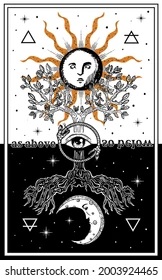
There is a saying that goes: As above, so below.

Memorize that. Write it down later and keep it in your purse or wallet.

That is the axiom for studies of the celestial bodies, as being metaphor for life on earth. Astrology was an art created by Yahweh, which Enoch was led to discover (Enoch did not die, like a Melchizedek). Still, the deeper truth is the voice of Yahweh (from above) manifests in saints in the physical realm (the below).

The reason Moses told Israelites what to memorize is this: everything he told them was a reflection of themselves. That makes everything he told them be a reflection of you and me. Of course, very few of them then, just like very few of us today, know how to see ourselves reflected in Scripture.

Can you see yourself as “a formless void,” with “darkness” covering your face?

As above, so below. As on paper, so inside your mind. As on the surface, so within unseen. As is visible human, so it invisible soul.

You are a creation that had a beginning when yo momma and yo daddy played adults together, before you were born. In that dark, moist void was millions of tiny sperms targeting one egg, as formless as you were at that time. Then it was God who allowed one particular sperm to penetrate the one egg and that became the moment: “Let there be light.”

And “there was light.” It was the first spark of union, one of many that would follow.

God called your formation “Good.” It was good because you had not yet learned how to fail God. You had not yet grown a brain, which would give you the power to extinguish your light and kill your goodness.

God put you into a sac that separated you from everything else that surrounded you. God then called your environment “Day,” and that outside the womb “Night.” God created you to be a light that would shine His truth upon the world. The world is where darkness abounds. That outside of your womb is in need to light shining upon it.

“Day” is where life exists, the wake state of being. “Night” is where death exists, the sleep state that reflects the absence of God. The place where there is an absence of God is where Satan reigns. Satan rules over the “Night.”

The “evening” of your first day of your creation was when one cell had been formed that would become you. The “morning” represents that one cell knowing (without a brain) it had been formed by the hand of God, for a purpose.

Now, it is easier to go history hunting and join a think tank that can maybe agree when your parents first did the dirty deed that would become you … the miserable wretch that you have become today. Many will argue the details, but there you sit. You are the evidence that it did happen, regardless of when the first step was taken. You cannot deny you had a big bang; but was there something before the big bang?

Was there you before there was you?

Questions, questions, and more questions.

All the answers can be known, if you remember what I taught you:

As above, so below.

Does “Reincarnation” ring any bells?

Maybe creation has been going on for an eternity!!!

Somebody turn on a light, for God’s sake!

———

Genesis 9:8-17 – The covenant of no more great floods

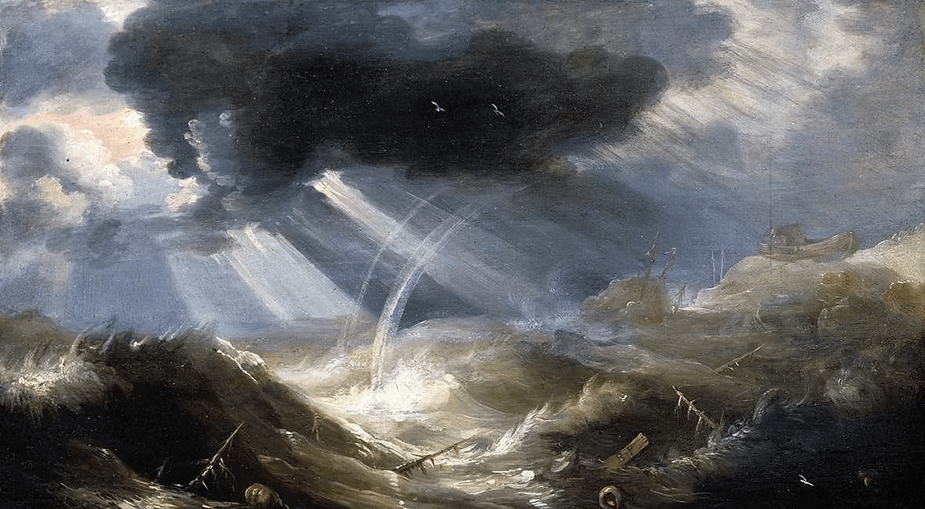
God said to Noah and to his sons with him, “As for me, I am establishing my covenant with you and your descendants after you, and with every living creature that is with you, the birds, the domestic animals, and every animal of the earth with you, as many as came out of the ark. I establish my covenant with you, that never again shall all flesh be cut off by the waters of a flood, and never again shall there be a flood to destroy the earth.” God said, “This is the sign of the covenant that I make between me and you and every living creature that is with you, for all future generations: I have set my bow in the clouds, and it shall be a sign of the covenant between me and the earth. When I bring clouds over the earth and the bow is seen in the clouds, I will remember my covenant that is between me and you and every living creature of all flesh; and the waters shall never again become a flood to destroy all flesh. When the bow is in the clouds, I will see it and remember the everlasting covenant between God and every living creature of all flesh that is on the earth.” God said to Noah, “This is the sign of the covenant that I have established between me and all flesh that is on the earth.”

——————–

In this reading it is important to understand that “the covenant that I make between me and you and every living creature that is with you, for all future generations” means every creature that has God’s breath of life within them – Man and animal. It is easy to think this is a covenant between God and Noah [thus Man only] to never again destroy humanity by a great flood [a universal inundation by water], but it includes “every living creature” that coexists on earth with Man. It says nothing about granting eternal life to all that breathe air upon the earth, as mortality was still in place [including fish that breathe in water, unaffected by floods, with their own lives naturally limited in scope]. Therefore, it is important to see the value of such a covenant that a great flood would not be repeated as a form of sacrifice separating a soul from its flesh.

Sacrifice must be seen as the issue of a covenant. God willed this sacrifice. It was not voluntary. Still, in light of Cain and Abel being priests who made sacrifices of other living things, where fire was the transformative symbolism of death that pleased God [or didn’t, as far as plants being burned], those sacrifices were individual and yearly. The Great Flood was global and all-encompassing, brought about by the relationship between God the Father and Mother Earth, the two essences that were joined in all life forms possessing souls.

The key to this reading is the promise of a rainbow, such that God told Noah, “I have set my bow in the clouds, and it shall be a sign of the covenant between me and the earth.” The promise to Noah and the animals of the land and air is one between God and the earth. God promised to never again cause the earth to become submerged, as a way for flesh to be destroyed.

Here, the symbolism of flesh equals the essence of earth. The symbolism of water is emotional outpouring, in a physical sense. Water is the union of hydrogen (2 atoms) and oxygen (1 atom) – earth and ether, symbolizing body and spirit. God had become upset by the way His elohim corrupted the earth, causing monsters and giants to arise from the interbreeding of lesser gods with female human beings, which acted harshly as demigods towards the creatures God had commanded His gods to create: the living creatures that culminated with male and female Man.

This means the symbolism of the rainbow in the clouds must be seen as the life breath (souls) rising from those killed in the inundation, ascending from the earth, along with the evaporating molecules of water. The clouds were the same as the smoke from burning altars, but this was caused by God, thus reflected as evaporation being pierced by the light of God’s sun. The rainbow is then symbolic of sacrifice that is pleasing to God.

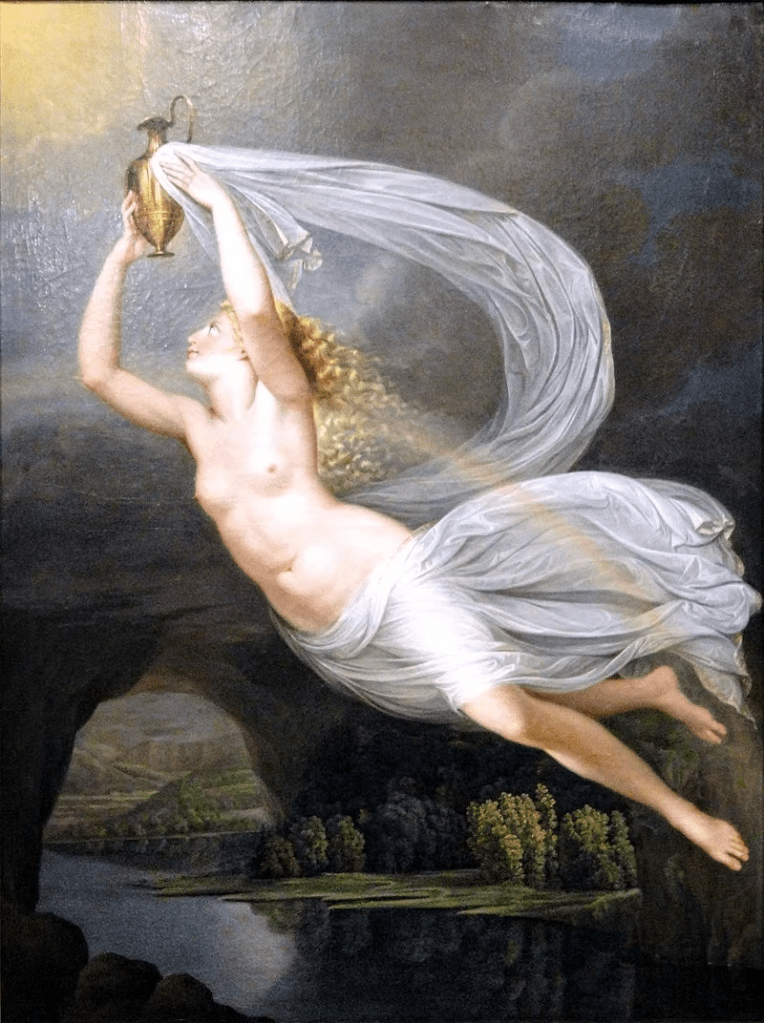
Relative to the Greek mythological goddess name Iris, who was the personification of the rainbow; she was a messenger of the elohim (gods).

According to Hesiod, she had the duty to carry a vessel of water from the River Styx [the river of the underworld] whenever a god had made a solemn oath. That water would be used [drank] if the god lied, rendering him or her unconscious for a year. [Source: Encyclopedia Britannica] Thus, from this mythology it can be seen that the beauty of a rainbow is a distraction, when the deeper meaning is it is both a symbol of death and a promise. The souls separated from their flesh in the Great Flood included many born of lesser gods, which had forced the earth to cover the world with floods to appease God the Father. Those demigods were forced into an oath of submission to YHWH, when born of fallen angels [a great lie].

When one sees this reading being paired with those for the first Sunday in Lent, in the Year B, the element of sacrifice must also be seen as the test of one’s commitment to serve God eternally. The reading ends with Jesus immediately being driven into the wilderness for forty days and nights [the same duration of the Great Flood]. However, more than the test of an oath by the waters of death brought by Iris [the temptation of Satan], the deeper meaning comes from the creation of something pleasing to God – the formation in the sky that is the bow from earth to heaven.

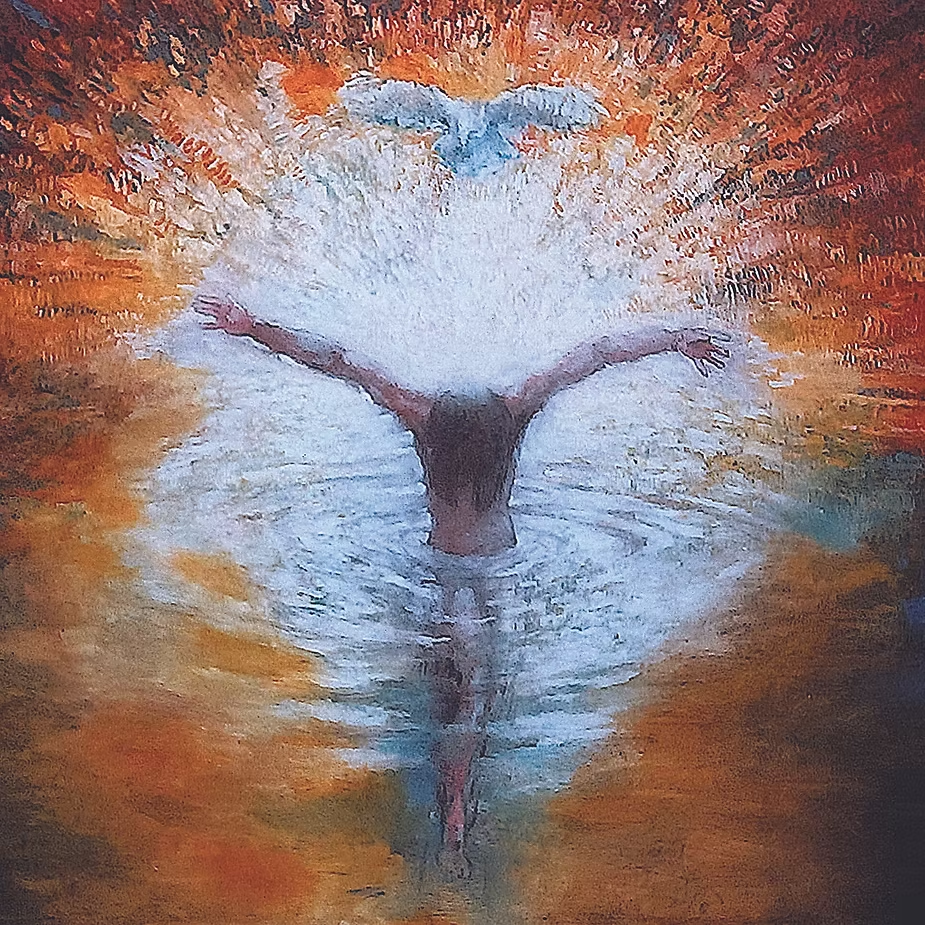
In the accompanying Gospel selection from Mark is written, “as he was coming up out of the water, he saw the heavens torn apart and the Spirit descending like a dove.” This can be seen as metaphor for the symbolism of Iris, the goddess of the earth – Iris the rainbow nymph. The words used to state “coming out of the water” [“euthys anabainōn ek tou hydatos”] are less about Jesus remaining in water and standing up [a statement of his flesh] and much more about “immediately ascending from the water” [a statement of his soul]. The soul of Jesus became a sacrifice from symbolic death [baptism] that immediately released his soul to God. The soul of Jesus became the stuff of rainbows.

The presence of Jesus in water, along with John, places focus on the Greek word “ebaptisthē,” where the word states Jesus was “submerged” or “dipped underwater.” His presence in water deep enough to be submerged in becomes metaphor for the Great Flood, when many souls were separated from their flesh. The presence of water also stands out as the element used in ritual cleansing by Jews. Sins were viewed as dirt upon the flesh that needed to be bathed away. The souls of Jews, however, still felt the presence of their sins, which led to John bringing forth baptism by water, to be symbolic of death of the old [the filthy from sins], so that soul [it an eternal elohim] has died of flesh with the promise never to sin again. The joy of baptism by water brought with it an oath to serve God with a renewed soul, which was the symbolism of a promise made at a time when overwhelmed with emotions [the rainbow’s appearance]. Baptism by John was then fulfilling God’s promise that destroying flood waters would never again separate a soul from its flesh [saying all animals that breathe air have souls], as true death; it was more symbolic death by dunking, creating a soul in need to realize a need to promise self-service to God, which must then be fulfilled.

It is here that one must realize that Noah, his family, and the selection of animals-in-pairs had all been spared the death of the Great Flood. While the rest of the earth was destroyed by water, with their souls rising from the flood waters creating a rainbow of future promise for the earth [having been rid of evil], the family of those who had already made oaths to serve God, symbolically dying of self-ego in advance of mortal death, which they fulfilled was a parallel in selectivity that must be seen in the Jews. They were a race of people descended from Noah, through Abraham, Isaac, and Jacob. John the Baptizer was a Jew, as was Jesus, both in this lineage of selected children of God. However, the promises of all those lines of Man, who were offered the covenant of forgiveness, through an oath to God in exchange for eternal life [a Covenant made with Moses], time and again they had failed on their oaths and were forced to drink from the River Styx and suffer death [symbolic sleep]. Thus, ritual washing away of sins had fallen to the state of misery that led people to form a line to the River Jordan for a more spiritually symbolic cleansing.

Jesus would enter those waters with John, which should be seen as a parallel to Peter writing “a few, that is, eight persons, were saved through water.” Just as Noah and his sons and family [with animals] were not souls in flesh that had failed in their oaths to God, so too were John and Jesus. While the Jews lining the shores of the Jordan were admitting their souls had failed to serve God wholly, both the souls of John and Jesus ascended at that time. As John baptized Jesus with water, Jesus baptized John with the Holy Spirit. So, the dove of God’s promise fell upon them both, like a peaceful symbol of land having been found amid the flood waters [an allusion to the dove bringing back a twig as a sign land had surfaced from the depths].

The impact of this selection from Genesis is that the first covenant between God and a line of selected children had been set. Previously, the Patriarchs, from Adam to Lamech, had lived among a sinful world that grew more and more sinful every year. The monsters of sin had to be sacrificed so the normal Man [male and female they were made] could be led by the priests that would be descended from the Patriarchs, without fear of monsters and giants seeming as powerful as the gods. The promise of God was that no more floods would come to destroy evil in the world. That promise meant Noah would serve God by beginning a lineage of priests who would henceforth lead mankind to the One God, in order for Man to find eternal life, each as an elohim [the storyline of the Holy Bible after the flood]. This means the rainbow was set as the symbol of God that death could truly become an oath of commitment that a soul would keep. However, the only way to keep that promise was by becoming one of the lineage of God, as more than a child of God.

Committing to the promise would evermore mean having one’s soul ascend to being a Son of God [male and female He makes them].

Genesis 17:1-7, 15-16 – A covenant to walk in love forevermore

When Abram was ninety-nine years old, the Lord appeared to Abram, and said to him, “I am God Almighty; walk before me, and be blameless. And I will make my covenant between me and you, and will make you exceedingly numerous.” Then Abram fell on his face; and God said to him, “As for me, this is my covenant with you: You shall be the ancestor of a multitude of nations. No longer shall your name be Abram, but your name shall be Abraham; for I have made you the ancestor of a multitude of nations. I will make you exceedingly fruitful; and I will make nations of you, and kings shall come from you. I will establish my covenant between me and you, and your offspring after you throughout their generations, for an everlasting covenant, to be God to you and to your offspring after you.

God said to Abraham, “As for Sarai your wife, you shall not call her Sarai, but Sarah shall be her name. I will bless her, and moreover I will give you a son by her. I will bless her, and she shall give rise to nations; kings of peoples shall come from her.”

——————–

This is the Old Testament reading selection for the second Sunday in Lent, Year B, according to the Episcopal Church’s lectionary. It precedes a reading from Pauls’ letter to the Romans, in which he uses the story of Abraham as being relative to Jesus Christ and faith. It also is read before Psalm 22, where David sang, “My soul shall live for him; my descendants shall serve him; they shall be known as the Lord’s for ever,” which reflects the faith of Abraham, Paul, and Jesus. Finally, this history of Judaic lineage precedes the Gospel reading from Mark, when Jesus foretold his death, leading to him warning his followers to pick up their crosses of faith, or forget about inheriting anything heavenly.

This reading begins by making a point of stating the age of Abram. For us today, ninety-nine would be well beyond normal expectations for life in the flesh. Knowing that Abraham lived to be one hundred seventy-five years, at ninety-nine he had lived 56% of his life. In today’s standards of living eighty years, 56% would equate to the age of forty-five. For a male American today to not have children by the age of forty-five, most would have little desire to go through the challenge of raising a baby and caring for it until one’s retirement years. But, that reflects the selfish nature of these times, when there are few males who have children when they are one hundred and fewer who live to be one hundred seventy-five.

The telling of Abram’s age serves two purposes. The first is it says Abram was not a descendant of ordinary blood. Being a descendant of Noah (from Shem), who lived to be nine hundred fifty (Shem lived to be five hundred), the age of Abram says he was born of holy blood. Abrams’ father, Terah, lived to be two hundred five years. (Genesis 11:32) Still, the second purpose lets the attentive reader realize that it had been twenty-four years since Abram left Haran, as commanded by God when Abram was seventy-five. (Genesis 12:4) That says Abram had clearly been devoted to God, along with Sarai, for quite some time, dating back to when they married while living in Ur [perhaps sixty years earlier]. Thus, it is important to realize those years of service to God that led to this conversation about to take place.

The translation presented by the New Revised Standard Version [NRSV] above, has God tell Abram, “I am God Almighty; walk before me, and be blameless.” This comes after we read, “the Lord appeared to Abram.” Both of these statements should be taken as absolute truth, but they need to be understood in terms of Abram being a long-time servant of God.

From jumping ahead in the Holy Bible and knowing all about Moses, we have an understanding that God told Moses that no one can look upon the Lord and live. That knowledge needs to be brought back to this reading, so we can clearly see the truth of what is written [it was all dictated by Moses, many years after the fact, from divine visions of pertinent history]. Sleep is metaphor for death, meaning dreams are visions in a dead state of being. When in a dead state of being, one can have a “face-to-face” meeting with God.

Moses would enter the tent of meeting and once in that chamber he probably went into a deep sleep state, when he then had God appear before him. In this same way, Abram had “the Lord appear to him” in a dream. It should be realized [from having read his story in Genesis] that this was not the first time God spoke with Abram; so, it is important to see Abram was a prophet of the Lord who regularly had God appear before him and give him instructions.

From there the statement to Abram was made, but it cannot be read like an introduction that tells Abram, “I am God Almighty.” The two were already well acquainted. That means the Hebrew needs to be closely inspected.

The Hebrew written [realizing Hebrew has no capital letters] is as follows:

’ă·nî-’êl šad·day” – “I god of the land” ,

hiṯ·hal·lêḵ lə·p̄ā·nay weh·yêh ṯā·mîm” – “walk with face and be blameless” .

There is no need for God to announce His greatness. As God [Yahweh] speaking to Abram, His name needs no embellishment. Thus, God spoke of “el,” which is a “god” [in the singular number], that is “shadday” or a god of the world, land, fields. This is then a statement not about God – Yahweh – but about Abram. It says “You are Me incarnate in the flesh. As Me, You are a “god of the earth.”

In the second part, the word “walk” [from “halak”] becomes a statement of how far Abram has “come,” while also a statement of how far he will “go,” because he has become the vehicle of “god on earth.” Wherever Abram “walks,” so too does God.

Next is a word that clearly says “face,” but one that is regularly translated as “before me.” There can be no human being ever who walks before God, as “before” becomes a statement of greater than, or a leader of God, making God be seen as a follower. The root Hebrew word, “panim [sing.] or paneh [plur.],” means “face or faces.” This word becomes key in understanding the first Commandment given to Moses.

There, the Hebrew states: “lō yih·yeh-lə·ḵā ’ĕ·lō·hîm ’ă·ḥê·rîm ‘al-pā·nā·ya,” with the last word again a form of “panim.” The standard translation says, “You shall have no other gods before me,” but the literal translation says, “not you shall have gods other [as your] face [before my face].” The first Commandment says no one can come before God [in a meeting or an appearance] as self. To be received by God you must wear the face of God, as only one who has been possessed by Godcan enjoy the presence of God. Without oneself wearing the face of God, one is thinking one’s ego is a god [an elohim]. Thus, here in Genesis, God told Abram in a dream, “As Me in You on earth, you walk with My face, which makes You walk without sin.”

See the masks of Mardi Gras as symbolizing the face of self-pleasure worn for the last time, before the face of self comes off on Ash Wednesday and the face of God is then worn forevermore.

This becomes a significant statement that Abram had long before sacrificed any and all forms of self-ego, so he only wore the face of God as he went through life. When we read that Moses’ face would glow greatly after meeting with God, the Israelites made him wear a veil to cover the face of God, or else they feared they would die from looking at God. Certainly Jesus wore the face of God in the same regular way as did Abram, which was evidenced every time Jesus said, “I do not speak for me, but for the Father.” That means wearing the face of God is a requirement to “walk blamelessly,” or live a life of righteousness.

This quote by God then leads to him telling Abram of a promise He was making to him. A promise made by God is thus a covenant. Still, a covenant with God implies an agreement being made between God and the one to who God makes a covenant, such that the one receiving God’s good will will continue to be the face of God on earth. [One’s face still looks like one’s face, as God is invisible; but one’s face has a glow of holiness surrounding it – a halo.]

Simply by understanding that God does not make Covenants with just anybody, such that Abram had long proved his metal to God [think about that in Lenten terms], God was giving to Abram the one thing he knew Abram wanted, but never asked for [begging for self is selfish]. In addition, God was giving to Sarai the one thing she had long wanted, but could never reward her husband with – a son. Sarai was also a long devoted servant of God, but she had never made demands of God to make her pregnant. She did not blame God for her being barren, thus she too was “blameless.” All of this must be seen as God caring for those who serve Him unconditionally.

As a purposeful selection for the second Sunday in Lent, this story of a covenant between God and Abram [and by extension Sarai] is told one week after a purposeful selection that told of the covenant between God and Noah. This trend forces one to realize that humans having been long dedicated to serving God [Noah five hundred years; Abram ninety-nine years] do not go unrewarded. The stories of Noah and Abram [largely unwritten in the Holy Bible] say these men were upright and righteous, which means they listened to the voice of God telling them what to do. As they did what God told them to do, God supported them in those tasks. Both Noah and Abram are then projections of how we should listen for God’s lead, act upon having gained a good conscience, and thank God for leading us, rather than demand God do more to please us.

The symbolism of the Lenten experience – forty days of self-sacrifice – is not about recognizing the time Jesus spent in the wilderness of Judea and it is not about us being asked to give up one indulgence – one recognizable sin of selfishness – because Lent is a marker in one’s personal life, relative to when one ceased wearing the face of self-ego and began wearing the face of God. Once one puts on the face of God there is no end to that subservience. Thus, the lesson of this reading is hearing the voice of God say to you – from within – “I am the god of the land. Walk on holy ground forever wearing the face of God and being blameless for only doing what God has led you to do.”

All of the seasons of the liturgical year are set up the same way. None of them are expectations to remember the life of Jesus and force one to believe Jesus did this and Jesus did that. Jesus is the model for all who seek to serve God. Serving God cannot be done alone. Serving God demands one become married to God, through the receipt of His Holy Spirit, it then becoming meshed irrevocably with one’s soul.

  • Advent is when an individual servant of God remembers when he or she first felt the need to serve.
  • Christmas is when one first felt the birth pangs of a new being within.
  • The Epiphany is when one realized Jesus Christ has been born within and one is no longer wearing the face of selfishness.
  • Lent is about one’s test of commitment to God.
  • Easter is about the death of all past connections to sin and the resurrection within one’s soul to the state of Apostle-Saint, when one no longer keeps God a secret experience.
  • Pentecost is when one truly walks in the name of Jesus Christ, as a minister or priest that tells the world God wants to marry them too.

Thus, the seasons call believers to become the faithful, through coming to know God and Jesus Christ personally – not through stories told us about someone else’s life.

Genesis 3:8-15 – The serpent and its tricks still working after all the years

They heard the sound of the Lord God walking in the garden at the time of the evening breeze, and the man and his wife hid themselves from the presence of the Lord God among the trees of the garden. But the Lord God called to the man, and said to him, “Where are you?” He said, “I heard the sound of you in the garden, and I was afraid, because I was naked; and I hid myself.” He said, “Who told you that you were naked? Have you eaten from the tree of which I commanded you not to eat?” The man said, “The woman whom you gave to be with me, she gave me fruit from the tree, and I ate.” Then the Lord God said to the woman, “What is this that you have done?” The woman said, “The serpent tricked me, and I ate.” The Lord God said to the serpent,

“Because you have done this,

cursed are you among all animals

and among all wild creatures;

upon your belly you shall go,

and dust you shall eat

all the days of your life.

I will put enmity between you and the woman,

and between your offspring and hers;

he will strike your head,

and you will strike his heel.”

——————–

This is the ‘track 2’ optional Old Testament selection to be read aloud on the second Sunday after Pentecost (Proper 5), Year B, according to the lectionary for the Episcopal Church. If chosen, it will precede the singing of Psalm 130, where a lyric is: “If you, Lord, were to note what is done amiss, O Lord, who could stand?” Those readings will then introduce the Epistle selection from second Corinthians, where Paul wrote: “So we do not lose heart. Even though our outer nature is wasting away, our inner nature is being renewed day by day.” All will accompany the Gospel reading from Mark, where Jesus said, “Truly I tell you, people will be forgiven for their sins and whatever blasphemies they utter; but whoever blasphemes against the Holy Spirit can never have forgiveness, but is guilty of an eternal sin.”

It should be noted that this Sunday is the only place in the lectionary schedule of readings where either the 1 Samuel choice or this from Genesis 3 will ever be read. Since there will be no time when both will be read on the same day, there is a chance that favoritism can lead a priest to choose one over the other, meaning the one not chosen may never be read aloud in certain churches. The lectionary creation of track 1 and track 2 options, which combine Old Testament and Psalms together as pairs, should be followed for an entire Ordinary after Pentecost season, meaning if track 2 is chosen on this second Sunday, then track 2 must be the choice every Sunday when an option is presented.

I have found that the way to view Genesis chapters two and three is as recognizing the metaphor of the divine, when it is presented in a worldly setting. The symbolism is heaven on earth, where the scenes of Adam and Eve and a serpent are more than the limitations of most ancient individuals. They are projections of all human beings ever after, who are heaven and earth together, as souls in bodies of flesh.

Moses was not capable of knowing anything about what happened in the history of Yahweh, before he was born and matured to have a brain that could have studied such history. Moses was a soul in a body of flesh who had married Yahweh and become divinely knowledgeable of this history; and, as the wife of Yahweh, his soul was shown what later became the stories of the Torah that predate the historical record of the Israelites who were led by Moses. Thus, all that was shown Moses is the truth; but that truth can be seen as projecting a spiritual presence in the worldly realm, in ways that reflect normal human existence [anthropomorphism].

This means that “man” [“hā·’ā·ḏām”] was not the first male human being, as those were created by the “elohim” on day six. The “man” Christians love to call ‘Adam’ was made on the seventh day – the day Yahweh designated as “holy.” Since there have been no other ‘days’ written of in the Scriptures of Moses, the world is still in the ‘seventh day’ today. Since scientists have ‘proven’ the world was created over billions of years ago [calculated as complete circuits of the sun around planet earth], the first ‘six days’ means a ‘day’ is a very long time. Nothing close to a very long time has passed since it became the “seventh day,” which God blessed as holy. Therefore, “man” called ‘Adam’ was the first ‘Holy man,’ whose presence on earth would begin knowledge of the spiritual realm being present on earth.

In this story, we also read about “the woman” [“hā·’iš·šāh”], who Christian brains love to call ‘Eve.’ The Hebrew word that tells of her is “ishshah,” which means “woman, wife, female.” (Strong’s) It must be understood that “ishshah” was also made by the hand of Yahweh, where the element of a “rib” [“tsela”] is relative to the sex chromosome of “man,” which is “XY.” One of those ‘ribs’ was duplicated, as “XX,” so “man” was recreated as “woman.” Both “man” and “woman” were exactly the same, except one had a penis and one had a vagina. When they were created and when they lived happily in Eden, they were born immature, therefore children of neuter gender. This means “man” and “woman” were incapable of reproducing; and, as divine creations of Yahweh, placed in a surreal setting that was heaven on earth, there was no need for immortal creations from the hand of Yahweh to need to reproduce.

This brings us to chapter three, where the “serpent” [“nachash”] tricks “woman.” In Genesis 3:1 [not read aloud today] is written: “Now the serpent was more cunning,” from “wə·han·nā·ḥāš hā·yāh ‘ā·rūm.” In that, the Hebrew verb “hayah” is translated as “was,” but this must be seen as a statement of “being” that in relative to those ancient times. The “serpent’s” state of being “was” how the “serpent” had “fallen out, came to pass, became, be.” (Strong’s) Thus, the “serpent” had also been made by the hand of Yahweh and given traits that made it “be crafty, shrewd, sensible” [from “arum”]. This should be recognized as the gift of intelligence or higher brain cognitive abilities. This then set the “serpent” on a higher level of intelligence “than any beast of the field.”

That designation is stated in the Hebrew of Moses as “mik·kōl ḥay·yaṯ haś·śā·ḏeh,” where the roots – “kol chay sadeh” – say, “all alive on earth” [more than “any beast of the field”]. This includes all the animals “man” had named; and, it included all the human beings that ran around earth like cavemen and cavewomen, along with “holy man” and “holy woman” counted in that number. The “serpent” was more cunning than them all.

Because “man” had learned to name animals and had learned to know what not to eat from the garden, even having the intellectual ability to teach “woman” the same rules, the ability to think is not what the “serpent” possessed. Yahweh gave the “serpent” the ability to influence thoughts in “mankind” [an acceptable translation for “adam”]. This is because “cunning” means “showing skill in achieving one’s ends by deceit or evasion.” When the most of this kind of intelligence, there would have been no one capable of knowing the “serpent” fibbed all the time.

Added to that statement that says the “serpent was more cunning than all living on earth,” the segment that follows says, “that had made Yahweh elohim.” In this is found one of the nine references to “Yah-weh” made in Genesis 3, with all nine adding “elohim” to His name. In Genesis 1, there were no references whatsoever to “Yah-weh,” but thirty-two references to “elohim,” all of which have been translated to teach readers of the Christian English Bibles – “God” created everything – because “elohim” [“gods”] has been written as “God.” Thus, when finding “Yahweh elohim” written in Genesis 3, the same translators have to still refer to “elohim” as “God,” making “Yahweh” translate as “Lord,” or “the Lord God” [“Yahweh elohim”]. If that was the truth, then why wasn’t the first day of Creation also “holy”?

The answer is “Yahweh” means “Yahweh,” the “Only One God” and “elohim” are the “gods” created by Yahweh to make things for Him, at His command. This makes “elohim” be “all alive on earth,” simply because “alive” means having a soul. Therefore, all “elohim” are “spirits” [including souls] that can be called little-g “gods,” simply because they are eternal sources of life that animates bodies of flesh on earth. That says “all beasts of the land” have souls; but only “man” and “woman” [the “Day six” and “Day seven” varieties] have brains that think better than “all the others” [except the “serpent”]. That is why the “gods” [at the unwritten command of Yahweh] gave “man” [“male and female they made them”] dominion over everything on earth; and, it is why Yahweh allowed “holy man” to name all the animals [including the “serpent”].

It is so important to realize this, as the “serpent” did not just crawl out of a hole in the ground and create itself. It was made by the hand of God, as a spirit of life that was given the talent of influence.

In an Education for Ministry course I enrolled in [the only one – the first – which presented the Old Testament], when we discussed the ‘fall from grace’ I made the basic observation: “God knew Adam and Eve would sin.” A woman [raised Roman Catholic, converted to Episcopalianism] screamed out, “How could God know that!?!?” I responded, “Because God is omniscient.”

This is how the presentation of the story of ‘Adam and Eve’ is told in human terms, where it seems Yahweh is just like our parents, who have no clue about all the dirty little secrets us children hide from them. Thus, that woman read the story of Genesis 3 with the basic mind of a child, as if she were “holy woman” being tricked by the big, bad snake in the grass. If Genesis 3 were a Disney movie and she was in the theater it was being shown, she probably would shout at the screen, “Don’t listen to him Eve!” The theatrics overtake the truth.

It must be with this insight that one sees “woman.” She was destined to be influenced by the “serpent;” and, Yahweh knew this would lead “man” to follow suit, as he and “woman” were of the same physical make-up (other than the different sex organs that they had). In this, verse 8 says, “in the garden at the time of the evening breeze.” This has come from the Hebrew that states, “bag·gān lə·rū·aḥ hay·yō·wm,” which has roots in “gan ruach yom,” or “enclosure spirit day.”

While this gives an idyllic image of some giant walking, so the sound of giant footsteps are heard as evening has come, the truth written says the “spirit contained within” [not “evening of day in the garden”]. Both “man” and “woman” – those made on the “seventh day” – “heard” Yahweh’s vibrations in their souls [the “ruach” of “breath”]. There is nothing stated that says “evening” has come. One should imagine that there is never any darkness in the “garden of Eden, as that is where “Yahweh’s souls” [“Yahweh elohim”] live. If anything, the timing would be the dawning of judgment that was about to come.

When the translation of verse 8 states, “the man and his wife hid themselves,” this is false and misleading. The Hebrew states “hā·’ā·ḏām wə·’iš·tōw,” where it is still “man and woman,” where they must be seen as still children, albeit those having reached the equivalent stage of puberty. The translation of “woman” as “wife” implies that “man” and “woman” were married in a sexual way, where propagation was the reason. Neither of the two had any idea about sexual intercourse or the need to make babies, as at that time they were still living souls in the place that reflected heaven on earth. Therefore, they were still immortal creature – without any age attached to immortality – although the time had come when both physical bodies had matured to the point of having their eyes opened to the arousal that comes from realizing another’s nakedness. That is what caused them to cover themselves; but, both were still virgins.

In verse 11, Yahweh asked two questions, which are interrelated. The first is, “Who told you that you were naked?” That says the immediate response to “man’s” claim that he and “woman” were hiding, because they were” naked” [“erom”] was the first indication that anything physically had changed in their bodies. More than “woman” starting to display breasts, the “man” would have a quite obvious erection that would need to be covered. This realization would have been absolutely unique, if neither “man” nor “woman” had ever seen the animals of Eden go into heat or mate [heavenly beasts would also have no need to reproduce]. To realize they were having sexual urges that needed to be masked or covered says nothing in the “garden” [“enclosure”] needed to reproduce, as all were “elohim” or the souls reflective of physical creatures on earth, outside of that “enclosure.”

This means the immediate follow-up question: “Have you eaten from the tree of which I commanded you not to eat?” made the first question rhetorical, as Yahweh knew the answer to both questions, having planned for this event to occur. This brings up the bigger issue that is relative to Genesis 2, which is the “two trees in the center of the garden.” The first of those was the “tree of life” [“wə·‘êṣ ha·ḥay·yîm” – from “ets chay”]; and, the second was the “tree of knowledge of good and evil” [“wə·‘êṣ had·da·‘a ṭō·wḇ wā·rā‘” – from “ets daath towb ra’”]. This duality must be realized as the tree of soul [life] and the tree of flesh [intellect and pleasure]. Because “man” and “woman” covered themselves from self-awareness [knowledge] and therefore knew they had broken a rule [sin of pleasure], they had naturally transitioned both of themselves from immortal spirits to human forms with souls. They ate from the tree of common “mankind,” turning away from spiritual “man” and spiritual “woman.”

When Genesis 2:17 has Yahweh giving instructions to “man” that said, “but you must not eat from the tree of the knowledge of good and evil, for when you eat from it you will certainly die,” the certainty of death was not instant. Because “man” and “woman” were immortal creations of the seventh ‘day’ and not normal cave dwellers that routinely reproduced, like normal animals on earth, Yahweh promised them that they would never face mortality, unless they chose to break the one law that forever kept them immortal. Once that law was broken, there could be no turning back and undoing a wrong. Forgiveness of that sin was impossible.

This “sin” is then the rule that applies to all human beings, for all times, saying: “You must not worship the physical realm or your soul will forever find mortality its redemption [reincarnation].” It is solidly reflected in the First Commandment that says, “You shall not wear the face of anyone other than Yahweh’s face” [including your own face]. It says no sinners can ever be allowed to enter into heaven.

This is why Jesus told Nicodemus [last Sunday’s Gospel reading]: “No one has ascended into heaven except the one who descended from heaven, the Son of Man.” the “man” who was God’s only begotten “Son” was here on the verge of Yahweh’s judgment that would have him “descend from heaven.” Nine hundred thirty solar years later, the divine soul of ‘Adam’ would ascend to heaven, having never forgotten the lessons of the Father, teaching his sons to be priests of Yahweh. His soul paid the price of ignorance, never sinning again; and, that soul was returned to assist Yahweh’s development of religion multiple times, including an incarnation named Jesus.

The death of “man” would then come after he had been banished from Eden – after nine hundred thirty years (a sign of having been made by the hand of Yahweh Himself). Seeing that time span as beginning when ‘Adam’ was a mature creature, estimated to be around the earthly equivalent of eighteen years of age, one can estimate that one-fifth of his flesh’s development occurred while technically still immortal. That means the body of ‘Adam’ existed for 232 earth years, while he was in Eden. It took that much time [time does not exist in the spiritual realm] just to reach an physical stage of development that made reproduction able. ‘Eve,’ on the other hand, was made after Yahweh had made ‘man,” so if she was the equivalent of thirteen when banished, she would have only existed in Eden for a little more than 167 earth years. This is where the “serpent” comes in, as the influencer of “woman,” not “man.”

While both ‘Adam” and ‘Eve’ were going through natural biological changes, due to the fact that Yahweh had made them male and female for the purpose of mating, that coupling could not take place in the immortal realm. The “serpent” was therefore programmed [so to speak] by Yahweh to monitor that biological development and influence them when biological maturity was reached. Whereas, it would have been inevitable that both “man” and “woman” had interactions with the “serpent” over the time that all were placed in the enclosure together [“man” would have named it “serpent”], there could have been times when the “serpent” assessed “man’s” sexual development and coaxed him to touch himself in certain places. While “man” had most likely experienced temptations to experience self-pleasure, there would never have been any breakdown of his commitment to go against the one Law that could not be broken. Pleasing the body [the tree of knowledge of pleasure and pain] would never become more important than pleasing Yahweh [the tree of Spirit]. That would not be the case when it came to ‘woman’s” maturation; and this relates back to the “X-factor” of ‘Adam’s rib.’

The “Y-factor” of a sex gene reflects the tree of life. This is why all that is heavenly spiritual is masculine in essence, made by the hand of the Father – Yahweh. The “X-factor” of a sex gene then reflects the tree of knowledge of good and evil, as it becomes the femininity of all that is material in nature [the ‘stuff’ of the universe]. Thus, because ‘Adam’ had the “Y-factor” in his being, he was the Son of Yahweh; but, because he too had the “X-factor” rib in his genetic make-up, he was the Son of man, where mankind is all born of flesh in the material realm. ‘Eve,’ being an all-feminine form of “man,” was made only for satisfying the reproductive needs of the Son of man. Therefore, it would be that inbred weakness that allowed a seed of thought to penetrate her resistance to outside influences and be the first to break the Law.

Everything must be seen in the light of “elohim” having created the universe, not Yahweh directly. Human beings had been made and given dominion over all that lived on the earth; but they were made in the image of the “elohim.” Yahweh has no form, as He is only masculine Spirit. Yahweh made “man,” and then “woman from “man,” in the image of the “elohim” created and commanded by Yahweh. Because Yahweh knew worldly human beings [all alive temporarily, as souls giving life to dry bones] knew nothing of the demands of returning their breaths [souls] to the heavenly realm [salvation, versus reincarnation]. They needed to be taught about Yahweh and the Law [the First Commandment]. That means a “holy man” and a “holy woman” would have to be sent into the world, knowing firsthand the demands of Yahweh.

In essence, Yahweh created Satan, when He made the “serpent” the “craftiest.” The “serpent” is an eternal spirit, who is now the trickster of all humanity. When Satan tempted Jesus in the wilderness, the two spirits spoke to one another as if they had a history together. Satan was not an angel, just as the leviathan and the seraph, both of which are spiritual “serpents” that are neither physical entities nor angels. While Yahweh gave this eternal spirit the gift of influence and set it free in Eden, He did so with the sole purpose of it evolving into a spirit that would misuse a divine gift and lead His children to turn their backs on immortality, choosing the selfishness of the mortal realm. Thus, Yahweh knew he must forever banish that influencer to only be allowed to prey on souls in bodies of flesh the material realm, as a spirit that would unite with those souls, influencing their flesh as his own.

Still, this presence in the material realm, as a spirit, could be commanded by Yahweh to serve His need, above all others. As such, Yahweh condemned the “serpent” to never escape the physical universe, never again to return to the heavenly realm. The angels of Yahweh [there are levels, from cherub to archangels] are able to visit the souls who have been possessed by the divine Spirit [the “serpent” commanded to do Yahweh’s bidding]. The angels take the holy messages from above.

When Yahweh commanded that the “serpent” would forever [“all his days”] be “on his belly,” this is less about the loss of arms or legs and more about being placed in a position of subservience. It is a posturing that must feel the ground of the material realm, with all its being. It was symbolic of Cain’s “countenance falling,” where his focus was then placed upon the world, not on pleasing Yahweh in heaven. Because the “serpent” would always be laying “on his belly,” all eyes looking downward could be influenced by him. As such, Yahweh told Cain: “Sin crouches at your doorway.” The aspect of “eating dust’ is then the condemnation that the only flesh the evil “serpent” could “consume” would be that of souls turned away from Yahweh, whose flesh would always return to the “dust” of dry bones.

When verse 15 is translated to state: “I will put enmity between you and the woman, and between your offspring and hers; he will strike your head, and you will strike his heel,” this is returning one’s brain to the story that is metaphor, not reality. The aspect of “woman,” as read in “I will put enmity between you and the woman,” needs to be seen in the “XX” genetics of the physical realm. Instead of “woman,” the “hostility placed” [“put enmity”] will be between human beings [the femininity of soul-body life forms] and an evil influencing spirit that cohabitates [demonic possession] with weak souls. This hostility will be born into multiple personalities that are the “offspring” or “seeds” of thought that will prohibit souls from returning to the heavenly realm [until divinely cast out].

The aspect of “striking” [from “shuph,” meaning “bruise, overwhelm”] means the influence will be to take control of a brain [“head”], while resistance to that possession will mean a human being taught [by religion] to stomp on evil’s head [with a “heel”]. It means “knowledge of good and evil” is necessary for that duality to happen. Therefore, “man” and “woman” born of Yahweh were necessary to teach the world about Yahweh; but the “serpent” was further sent to become a necessary influencer that mislead souls. To know Yahweh, one must first know sin, so badly that one sincerely cries out for His help. This is necessary, so only those souls who became “Y-factor” Sons [not human gender specific] are allowed to return to Eden.

As a track 2 reading option for the second Sunday after Pentecost, when personal ministry should be underway, the deep metaphor of this lesson is doubtful to ever be truthfully taught. Few realize the murderer Cain would be the first minister of the “serpent” Satan. Cain would beget a lineage that would become the opposite of that created by Adam, through Jesus, onto all present-day Apostles. Cain’s lineage can be seen sprouting up in Ishmael and Esau [among others], who claim to worship the same God [another name than Yahweh]. Churches that are led by community organizers and social reformers, condemning their souls by falsely claiming to be “in the name of Jesus Christ,” are leading pewples to ruin, like the Pied Piper of Hamlin stole away with the children of the people.

One must be led to see the truth that Genesis 3 tells. One must see this necessary evil as all being part of Yahweh’s plan. Our souls are His property, but it is that pesky tree of knowledge of good and evil that we need to stop bowing down before. No Church is ever going to lead a soul to heaven. All Churches lay on their bellies and will always remain the dust of the material realm, because a Church is only a brick and mortar building. All souls bowing down before such a belly place are led by the religion[s] created by Cain, the offspring of the ‘serpent.”

Genesis 2:18-24 – Bone of my bones and flesh of my flesh

Yahweh elohim said, “It is not good that the man should be alone; I will make him a helper as his partner.” So out of the ground Yahweh elohim formed every animal of the field and every bird of the air, and brought them to the man to see what he would call them; and whatever the man called every living creature, that was its name. The man gave names to all cattle, and to the birds of the air, and to every animal of the field; but for the man there was not found a helper as his partner. So Yahweh elohim caused a deep sleep to fall upon the man, and he slept; then he took one of his ribs and closed up its place with flesh. And the rib that Yahweh elohim had taken from the man he made into a woman and brought her to the man. Then the man said,

“This at last is bone of my bones and flesh of my flesh; this one shall be called Woman, for out of Man this one was taken.”

Therefore a man leaves his father and his mother and clings to his wife, and they become one flesh.

——————–

This is the Track 2 Old Testament reading that will be read aloud if a church is following the Track 2 path during Year B. It will be read on the nineteenth Sunday after Pentecost [Proper 22], according to the lectionary for the Episcopal Church. If read aloud, it will be paired with a singing of Psalm 8, which includes the verse praising, “You have set up a stronghold against your adversaries, to quell the enemy and the avenger.” Those will precede the Epistle reading from Hebrews, where Paul wrote, “It was fitting that God, for whom and through whom all things exist, in bringing many children to glory, should make the pioneer of their salvation perfect through sufferings.” All will accompany the Gospel reading from Mark, where is written: “Some Pharisees came, and to test Jesus they asked, “Is it lawful for a man to divorce his wife?”’

In 2018, the last time this reading came up in the lectionary cycle, I wrote my observations and posted them on my website. I placed focus on the genetics of ‘Adam’s rib,’ which is the remarkable truth that is to be found in this reading. Therefore, I firmly stand behind what I wrote three years ago, as I feel it is necessary to see that truth come forth. I invite all readers to search this site and read what I wrote then, as it still applies today. Again, I welcome comments, questions, suggestions and corrections. However, at this time I will take a different angel approach to this reading, as it is an anchor for all the readings on this Sunday.

In the above translation I have amended the text to show the specific combination of words written (four times) that are “Yahweh elohim.” In all of these places, the NRSV [like all translators] states this simply as “the Lord God,” as if saying “the Lord” was not enough for Moses (the author), feeling the need to specify, “Oh, you know the God Lord, not just any old Lord.” That ridiculousness [putting words into the mouth of a Son of man (Moses)], when translators would not know Yahweh if He spoke to them in a dream, denies the obvious truth that says “el” translates as the singular “god” [not capitalized] and “elohim” translates as the plural “gods” [again, not capitalized].

In Genesis 1 Moses recited for rote memorizers to eventually put down on scroll parchment the word “elohim” thirty-two times. Not once did Moses [who was told by God, “Tell them I Am That I Am … or Yahweh for short.”] have the memorizers memorize the name “Yahweh.” Genesis 1:1 begins by stating, “In the beginning created elohim.” That infers creation was all possible only by Yahweh, so the first step in that process was the creation of “elohim” or little-g gods. Call them angels or call them the laws of physics, all of them are eternal beings and none of them possessed material bodies, as that was the point of the Creation: from the Spiritual came the material.

Now, the people who try to build ladders to stand on, which makes them feel higher than Yahweh [call them science worshipers], they like the idea that Genesis 2:1-3 was written by some guy they call “E” [short for the “Elohim writer”]. They theorize that “E” wrote Genesis 1 and then began to write Genesis 2, but somebody yelled out “Break time!” so E ran off, never finishing Genesis 2. The Big Brains figured out that E left a piece of scroll mostly unused, so this “J” guy [the Germans pronounce a “Y” like a “J”, so this is who they presume is the “Yahweh writer,” or “Yahwehist”] comes in and finishes Genesis 2, where he writes “Yahweh elohim” (in that exact same order) eleven times. So, rather than be devoted to Yahweh and asking Him to guide their understanding of this change, the eggheads say, “E wrote Genesis 1, which includes Genesis 2:1-3 as the end of Genesis 1; and, J wrote Genesis 2:4 through Genesis 4.

By seeing the word “elohim” as clearly meaning the “gods” created by Yahweh, to create the physical realm (by His design), it is then a simple adjustment in the minds of divinely led readers, to see the seventh day [a day we still live in today] as being when “Yahweh elohim” were “gods” possessed by Yahweh Himself. Two, in particular [Man and wife], would be angels placed within bodies of flesh, formed by the hand of God. This is then the creation of the first Saint, the one we love to call “Adam,” and the first “Saint” [the French would denote gender as “Sainte”], the one we love to call “Eve.” By being “saints” they were “Yahweh elohim,” while all the human beings [male and female, made by the elohim on day six] were not elohim and did not have a clue who Yahweh was. So, Yahweh created “Yahweh elohim” for the purpose of sending them to earth as the first priests of Yahweh [ergo teachers of religion].

In these verses, when it seems as if “Yahweh elohim is more like Yahweh talking to Himself [the Lord God], this should be read in multiple ways. First, in the Creation of the first “six days” [eons of time uncalculatable otherwise], when “elohim” means all kinds of spiritual, unseen presences directing things [aka “matter”] to form. These same “spirits” were the heavenly host who stayed closest to Yahweh, as “Yahweh elohim.” Second, “Yahweh elohim” can be seen as the soul that was to be placed into the body that would be a divine “man.” Because a soul is only a creation of Yahweh, those creatures created on “day six” by the elohim, using Yahweh’s design, were all life souls that came from Yahweh, but because they were not directly formed from earth by Yahweh, they were simply life forms – souls in bodies of flesh – unable to hear the voice of Yahweh. This means the soul of Adam was a “Yahweh elohim” before it was placed into an earthly form. Third, once the soul of Adam was in his body of flesh, he became a “Yahweh elohim” that had form. In a body, Adam was able to communicate with Yahweh directly.

At this time, when in Eden (the garden or enclosure), Adam (man) was like a demigod, rather than a pure human being, meaning he did not age fast, although he did age, because he was formed from the earth. Just like a “day” of Creation is an unfathomable number of years in earth time, the forming of Adam in Eden cannot be seen as being fixed, according to the conception of time human beings accept. Thus, from his infancy, Adam was able to communicate with Yahweh, as an elohim in the flesh, which could have placed Adam in this protective environment for quite some time, relative to the geological and archeological assessments of the earth’s age.

In this selected reading, the Hebrew word “ezer” is written, which means “helper.” This is after we read Adam was “alone.” The Hebrew word translated as “alone” is “bad” [transliterated “lə·ḇad·dōw”], but the word better states “separated” or “apart.” This should be understood as Adam being created in something akin to a bubble, where he existed in the flesh on the earth, but not part of all the other things existing in the flesh on the earth. Think of this like Hollywood loves to present ‘haunted houses,’ where ghosts live in the same place, but in different states of being that keep one from knowing the other is there.

This means a “helper” should be seen as a necessary aid for all souls, such that in all life forms on earth none can exists in solitary. This becomes the way lifeforms congregate in numbers of their own species, such that all souls in the flesh are social creatures. The reason there is “safety in numbers” is because many provide help that otherwise would be absent. Therefore, Yahweh created ‘special’ animals (not necessarily the creatures that existed on the earth – like giant fish, lizards and fowl called dinosaurs) that could see Adam and Adam could see and touch them. That social interaction was then a help to Adam.

The aspect of Adam being able to name animals is a statement that divine communication existed. As this occurred well before the Greek and Roman Empires arose and the languages of Greek and Latin were created, such that this is less a statement about phylum and genus being determined, this takes one down to the individual relationship level, where each and every creature [“every animal of the field and every bird of the air”] had a personal relationship with Adam. I imagine language in this rudimentary era means human beings grunted like animals, with their grunts understood; so, language was more telepathic than oral. More than a lion being called a “lion,” the meaning here is something like: “Adam called that lion Rusty,” because Adam asked the lion what its name was and was told, “I like the name Rusty, because my fur is red.” The animals all had souls that could communicate divinely.

This is where it must be realized that Adam and all the animals were divine creatures, not simply those animals created on days five and six. The creations on days five and six (including the fish of the sea) all needed to breathe, eat and drink to live, mate to propagate their species, and age from birth to death. Those creatures created by Yahweh elohim on the seventh day, in the garden of Eden, were of divine nature in form, thus none of them needed to kill or be killed, none needed to breathe, or eat food and drink, and mating and aging were unnecessary. The fruit from the two trees in the center of the garden must be seen as spiritual food, not physical food. To eat only the fruit from the tree of life means there was no necessity to breathe air. Life was the presence of Yahweh within them all, making all creations of day seven in Eden be Yahweh elohim. They were essentially angels placed in physical bodies of flesh.

When we read [NRSV], “but for the man there was not found a helper as his partner,” the Hebrew translated as “helper as his partner” is (transliterated) “‘ê·zer kə·neḡ·dōw” [from “ezer neged”], which actually says, “helper opposite to.” This says Adam [a male form, albeit sterile, like a child] not only had no other forms of flesh holding a divine soul that were human, but he had no other souls in human form that were his opposite [a female form, albeit sterile, like a child]. This is where the DNA genetics is important to catch.

Yahweh certainly had the ability to whip up some more earth (like He did making the divine animals of Eden) and make a female version of Adam. Because Yahweh did not do that, each of the creations He personally crafted as Yahweh elohim had a most specific genetic code. For Yahweh to make a female like Adam would be the difference between the elohim creating Neanderthals and Cro-Magnons – similar, but different. Each creation had a specific DNA sequence, so as each were made, “male and female elohim made them.” Each species was made as opposites, so each could mate and propagate on the earth. Yahweh, of course, played a role in the formation of babies and the breathing in of souls, in all species.

When we read, “Yahweh elohim caused a deep sleep to fall upon the man, and he slept,” sleep must be seen as metaphor for death. Since a soul cannot die, being an eternal being – an elohim – death means the separation of the soul from the physical form. Just as Lazarus was “only sleeping,” Jesus knew Yahweh had placed the soul of Lazarus outside his body of flesh, with the plan being to restore that flesh to life, by returning the elohim to it. In this case with Adam, his soul was taken away so Yahweh could duplicate his DNA code in a second body of earth, with the difference being instead of an XY sex chromosome, the opposite form would be made XX. When two opposite forms of flesh were complete, the soul of Adam was returned to his male form, while the soul of Eve was breathed into the female form.

Again, because Adam had no opposite prior, there was no need for him to be making babies in Eden. One can assume that Adam was created in the bubble of an womb, which would have been with the Yahweh elohim that is Mother Earth. As such, baby Adam would take an unknown amount of heavenly time to grow and develop to something like a ten-year old child. Eve would have been made the same, again using the divine egg of Mother Earth and her Yahweh elohim womb. This would mean Eve was given to Adam in the same way a son would be allowed to hold his new baby sister, having come from the same parents. The ‘age difference’ would be planned as appropriate for a male to have a younger wife. Still, Adam and Eve were more like identical twins at different stages of development, more like brother and sister than husband and wife.

When we then read of Adam saying, “This at last is bone of my bones and flesh of my flesh; this one shall be called Woman, for out of Man this one was taken,” this is him being presented a new ‘animal’ to name, just as he had been presented other creatures of the air and ground. By saying, “This at last is bone of my bones and flesh of my flesh,” Adam recognized Eve was his opposite, of the same species, not an animal and not a different type of man. Because the only difference was in sexual orientation, he said, “this one shall be called Woman, for out of Man this one was taken.” In that, the Hebrew needs to be realized, as the word meaning “man” as a sexual statement is “ish,” and the Hebrew word for “female, woman, wife” is “ishshah.” In other words, Adam named Eve “the opposite of me.”

This then leads to the concluding verse that says [NRSV], “Therefore a man leaves his father and his mother and clings to his wife, and they become one flesh.” Jesus will bring this out in the Gospel reading from Mark, when talking to Pharisees about divorce. This is seen as a statement of marriage; but Adam was not old enough to realize what the purpose of marriage was. The translation of “ishshah” as wife, when in Adam’s mind he was saying “female,” means Adam knew that he (“man” – “ish”) and Eve (his sister, “ishshah”) came from a “father” and a “mother,” which means a child has both – without a clue what makes a “father” be that and a “mother” be that as well. To Adam [the equivalent of a ten-year old boy], Yahweh and Earth were Yahweh elohim; and, those two kept bringing him new creations to name. Now, they had brought him a female form of himself, so the two opposites made one whole, both of the same flesh.

If one jumps ahead in the banishment portion of this story (Genesis 3), one sees how the punishment of sin would mean all the realities of men and women living as mortals on the earth, with all the pains of childbirth and parenthood completely unknown to both Adam and Eve. Thus, the “cleaving, clinging, or joining” [from “wə·ḏā·ḇaq,” rooted in “debaq”] actually means “keeping close” as the same species, with the exact DNA chromosome count. The divine element that comes from this [because Adam was a Yahweh elohim] says Adam was paired with another Yahweh elohim like himself, both him and Eve having come from the merger of Yahweh and Earth, as divine, which is better than being simply human. This needs to be seen as why Jesus responded to the Pharisees that divorce was adultery, in the same way that rejecting a soul’s marriage to Yahweh was sinful. One needs to marry one’s soul to Yahweh, in the same way that the DNA of a sperm merges with the DNA of an egg – all split and rejoined by the Hand of Yahweh – so the union of the two can never be separated or torn asunder.

As the Track 2 Old Testament reading for the nineteenth Sunday after Pentecost, when one’s own personal ministry for Yahweh should already be well underway, the lesson here is divine marriage to Yahweh. One is called to be the wife of Yahweh so one’s soul is made into a Yahweh elohim. Because Eve had been created and handed into Adam’s arms, he proclaimed that both men and women could become Yahweh elohim, as souls born from the father and the mother that were Yahweh and elohim. Both could be one in the flesh. Ministry is all about this divine marriage. The message to preach is the truth of divine marriage, which is the truth of marriage as a Sacrament. Marriage of this divine nature cannot be given to anyone else. It is up to each soul to bow down before Yahweh and receive His Spirit. Then, ministry is spreading the truth so others will seek to do likewise. Only in that way can a Saint pass on the sacredness of divine marriage.

Genesis 45:3-11, 15: The test of brotherhood

oseph said to his brothers, “I am Joseph. Is my father still alive?” But his brothers could not answer him, so dismayed were they at his presence.

Then Joseph said to his brothers, “Come closer to me.” And they came closer. He said, “I am your brother, Joseph, whom you sold into Egypt. And now do not be distressed, or angry with yourselves, because you sold me here; for elohim sent me before you to preserve life. For the famine has been in the land these two years; and there are five more years in which there will be neither plowing nor harvest. elohim sent me before you to preserve for you a remnant on earth, and to keep alive for you many survivors. So it was not you who sent me here, but ha-elohim; he has made me a father to Pharaoh, and lord of all his house and ruler over all the land of Egypt. Hurry and go up to my father and say to him, ‘Thus says your son Joseph, elohim has made me lord of all Egypt; come down to me, do not delay. You shall settle in the land of Goshen, and you shall be near me, you and your children and your children’s children, as well as your flocks, your herds, and all that you have. I will provide for you there–since there are five more years of famine to come–so that you and your household, and all that you have, will not come to poverty.'”

And he kissed all his brothers and wept upon them; and after that his brothers talked with him.

——————–

This is the Old Testament selection to be read aloud on the seventh Sunday after the Epiphany, Year C, according to the lectionary for the Episcopal Church. It will precede a singing of selected verses from Psalm 37, where David wrote: “Refrain from anger, leave rage alone; do not fret yourself; it leads only to evil.” That pair will then be followed by the Epistle selection from First Corinthians, where Paul wrote, “What is sown is perishable, what is raised is imperishable. It is sown in dishonor, it is raised in glory. It is sown in weakness, it is raised in power. It is sown a physical body, it is raised a spiritual body.” All will accompany the Gospel reading from Luke, where it is written: “If you love those who love you, what credit is that to you? For even sinners love those who love them.”

In this selection of verses, four times the NRSV translated a form of “elohim” as “God.” In all of the forty-fifth chapter of Genesis those are the only four such references. In this, it highlights the fact that the name Yahweh was not yet known, as that name was told to Moses at the burning bush. While it has to be grasped that Jacob was taught his ‘religious beliefs’ by his father Isaac, with his taught to him by Abraham, those Patriarchs knew the voice of Yahweh, but not by name. The Hebrew word “elohim” is clearly the plural form of “el,” which states “gods.” To say someone wrote the word for “gods,” while meaning the singular is a lie and is man playing a god [be that man a Jewish rabbinical scholar or a master of the Hebrew language], so to say “gods” means “God” is flat out wrong.

The ”elohim” must be understood as being the “angels” created by Yahweh to serve Him on earth. Some of those “elohim” refuse to help mankind, whom they made in their likeness for Yahweh [day six of the Creation]. That means there are fallen “elohim” and there are guardian “elohim,” which watch over souls in human flesh. In this regard, one needs to know the history of Joseph.

Joseph was born in Genesis 30. Jacob wrestled with his demon “elohim” [or “el”] in Genesis 32. It was at that time that Jacob became a Yahweh elohim, because that was when he received the title “Israel.” That presence in Jacob did not pass on to his children. In Genesis 37 we are told of Joseph’s dreams, which he told his family. Joseph was then seventeen years old; and, we are told he was Jacob’s favorite son. That led his brothers to sell him into slavery, after an attempt to kill him failed. Here, one must realize that Joseph is not wrestling with his demon, because he has received the guardianship of Yahweh’s elohim, knowing the heart and soul of Joseph, so Joseph becomes an extension of Yahweh to a son of Jacob’s [Israel’s]. So, Joseph sees visions as a prophet, which are brought to him via “elohim.” Thus, Joseph was taught by his father Jacob [then a Yahweh elohim as Israel] about the “gods” that watch over souls in flesh on earth.

This makes the important elements to grasp from this reading be the concepts of “brothers” and “father,” as being relative to “elohim.” This story, other than being something that becomes ‘ho-hum history’ to souls in human flesh walking the earth in the year 2022, be pointless. One has to ask oneself, “Why does this history lesson matter to me?”

Brothers by another mother.

The name “Joseph” means “Increaser” or “May He Add.” This means that is the importance that has to come from this lesson, because the name Joseph is stated five times. The verses skipped over in today’s selection [12-14] all state the name Benjamin; so, that name is avoided in the meaning of this lesson. None of the other brothers of Joseph are named. Only “Joseph” becomes important to grasp. This means the story is about “brothers” being “increased” to the level of being that state of “Israel” that was the “father” [Israel, elevated from Jacob] needs to be caught. This means the “addition” to the “brothers” is the presence of guardianship by the “elohim.”

This reading then makes Joseph be metaphor for Jesus. Sinful brothers have had a ‘come to Jesus meeting.’ Their sins are known; and, they feel deep, inner guilt.

When the reason the brothers have come to Joseph is realized to be famine, which is said to be still “five more years of famine to come,” that can only be something a prophet can forecast accurately, because he is led by the “elohim.” Ordinary humans cannot be fully accurate in predicting the weather the next day, much less five years from today. By seeing this as more than a story telling one to believe in something that happened a long time ago, to people modern Christians have no real relationship with (physically, via blood), the higher element of famine needs to be seen on a spiritual level. More than a scarcity of physical food, Biblical famine means souls are starved and very thin.

The “father” [Jacob] of the “brothers” [the twelve sons, with Joseph and Benjamin] has had no effect on anyone else’s spiritual transformation, meaning he only led Joseph to seek spiritual nourishment from his own encounter with “elohim.” This means that Joseph is more of a spiritual influence on his family, in the same way Mary’s husband Joseph was not how the soul of Jesus became an “elohim.” Each soul must be starved or famished spiritually to seek the help of Yahweh [which comes in the name of Jesus]; and, this is the deeper implication of this story: the lost souls were led by desperation to find their redemption, and through realizing their guilts they were saved.

As an Old Testament reading for the seventh Sunday after the Epiphany, the point to see here is the theme that runs through all the selections for this day. It is we who … all of us … are from sinful pasts, so we all have been blessed by Yahweh when our souls have become His elohim on earth. The “brothers” of Joseph were the past that had to be and then it had to be released, so the past no longer had any holds on the present and future. The future always holds spiritual famine; and, the only way to be saved from spiritual death is change. A soul must move to “Goshen,” where an inundation of Spirit makes one’s soul fertile and well-nourished. The “brothers” of Joseph reflect the brotherhood of mankind, where that which connects us all is sin. The call to stand before Jesus is then a call to become divinely elevated “brothers,” where a soul has wrestled with its demons and freed itself to be possessed by Yahweh and His Son Jesus. This theme needs to be seen as the test or one’s merit as a potential bride to Yahweh, when one can be guarded by an inner elohim.