Category Archives: Isaiah

Isaiah 66:10-14 – The possession of ministry

[1a] Thus says Yahweh:

[10] “Rejoice with Jerusalem, and be glad for her,

all you who love her;

rejoice with her in joy,

all you who mourn over her–

[11] that you may nurse and be satisfied

from her consoling breast;

that you may drink deeply with delight

from her glorious bosom. ס

[12] For thus says Yahweh:

I will extend prosperity to her like a river,

and the wealth of the nations like an overflowing stream;

and you shall nurse and be carried on her arm,

and dandled on her knees.

[13] As a mother comforts her child,

so I will comfort you;

you shall be comforted in Jerusalem.

[14] You shall see, and your heart shall rejoice;

your bodies shall flourish like the grass;

and it shall be known that the hand of Yahweh is with his servants,

and his indignation is against his enemies.”

——————–

This is the Track 2 Old Testament selection to be read aloud, if a church is on this course, on the fourth Sunday after Pentecost (Proper 9), Year C, according to the lectionary for the Episcopal Church. If this is the course a church has chosen, this selection will precede a singing of some verses from Psalm 66, where David wrote: “All the earth bows down before you, sings to you, sings out your Name.” That pair will be followed by the Epistle selection from Galatians, where Paul wrote, “Do not be deceived; God is not mocked, for you reap whatever you sow. If you sow to your own flesh, you will reap corruption from the flesh; but if you sow to the Spirit, you will reap eternal life from the Spirit.” All will accompany the Gospel selection from Luke, where Jesus instructed his sending out of seventy interns, by saying “See, I am sending you out like lambs into the midst of wolves. Carry no purse, no bag, no sandals; and greet no one on the road. Whatever house you enter, first say, `Peace to this house!’”

You will note how I have applied verse numbers (in bold type, within brackets) above. The words that say, “Thus says Yahweh” (not “the Lord”), come from the beginning of verse one. It is not written into verse ten. The Episcopal Church has applied that to verse ten, because everything in Isaiah 66 is the words of Yahweh flowing through His servant Isaiah. As such, every verse could be prefaced by the same: “Thus says Yahweh.”
Listen people, I knew less than you knew about what Joel meant … just forty days ago.

In verses ten and thirteen, Yahweh spoke of “Jerusalem,” as “yə·rū·šā·lim.” While there is certainly a city by that name, all names have meaning that becomes the reason a name is given. The word “Jerusalem” [Hebrew has no capital letters] means “Teaching Peace.” Strong’s suggests “foundation of peace,” where no capitalization is applied. In this, one has to realize that Yahweh was not writing anything down on paper. Yahweh spoke to the soul of Isaiah, meaning the physical body of Isaiah became the hand of Yahweh on the earth. Still, Yahweh is not concerned for the dead matter of the worldly plane. He is concerned about the souls who have become married to His Spirit and those souls seeking to do the same. Thus, Yahweh was not speaking about a physical place named “Jerusalem.” He spoke about the “Teaching of Peace” or the laying of the “Foundation of Peace,” which will bring lost soul to marry Him. For divine marriage to take place, one must first be “Taught the Peace” such divine union brings.

In the use of the three feminine pronouns that follow, each as “her” – “ḇāh;” “’it·tāh;” and, “‘ā·le·hā” – as “for her,” “with her,” and “above her” – the feminine must be realized as a soul in a body of flesh. Yahweh is the Father, thus all the spiritual realm is masculine (including angels, spirits, and released souls), while all souls trapped in bodies of flesh take on the femininity (or negativity) of matter or earth. This use of “her” says all mankind is born (regardless of gender) to be wives of Yahweh, meaning all souls in the flesh reflect a “her.” When “Teaching Peace” is not a place in the world, but a Yahweh elohim placed into a wife of Yahweh, then it is sent in “Teaching Peace” “for her,” “with her,” and “above her.” This brings “gladness,” “love,” and “joy.” To “mourn above her” means the death of the flesh as the feminine lord over a soul. That death has allowed the Son of Yahweh to enter, “Teaching Peace.” This means “Peace” is the ways of righteousness “Taught” by Jesus resurrected within one’s soul, while still within the ”flesh” of “her.”

In the element that sings, “all you who love her” (from “kāl-’ō·hă·ḇe·hā”), the root of “love” (“aheb”) must be seen as the Yahweh elohim that is Adam, whose soul was the “love” of Yahweh placed into a physical form. When Adam died, after nine hundred thirty years trapped in the worldly plane, his soul of “love” was released to be reincarnated as many important and most holy Patriarchs of Old Testament history. The soul of “love” was created by the hand of Yahweh for the purpose of being resurrected in the souls of lost sheep, in order to save those souls from the death that is reincarnation into a world of matter. This plan of salvation says Yahweh saves through His Son; and, the name “Jesus” means “Yahweh Saves,” so Adam was created to become Jesus. It is that soul of Yahweh’s “love” that “Teaches Peace” to souls, which is a “love” that cannot be defined by the emotion called ‘love,’ which emanates from human flesh.

Following the segment of verse ten that ends by singing, “all you who mourn above her” (from “kāl-ham·miṯ·’ab·bə·lîm ‘ā·le·hā ”), David began verse eleven by adding to that “mourning” of self-sacrifice, “the intent you will nurse and be satiated , to the breast of her consolations”. This says the “purpose” of Yahweh’s “love” is to supply His newborn with its own inner source (“breast” or “bosom”) of spiritual nourishment, which is the “consolations” of the loss of self to a greater reward. The soul in a body of flesh died as one, so it could be reborn as two united as one, where the mother of the Son is the inverse of a physical world mother-child relationship, where the Son becomes the “breast” on which the mother-soul suckles.

When this verse continues by singing, “purpose you will drain out and be delighted with the fulness of her abundance.” This sings about the inner Yahweh elohim of Adam-Jesus being an endless source of insight. When reading Scripture or when faced with a worldly situation, the child can always feel for the engorged “breast” of knowledge and “drain out” that applicable for present circumstances. This will cause great “delight” at how quickly one sees the truth come forth, bringing the “fullness of the abundance” Scripture contains. Because that is maintained in a physical form, Scripture becomes a “her,” which requires Yahweh’s Son to explain. This takes the mundane meaning from reading text and raises it “above,” to a higher level of meaning.

At the end of verse eleven David placed a samekh (“ס”), which marks the end of a series of verses. The two previous uses of a samekh were at the end of verses four and nine [not read today]. This sign can be seen as marking a transition point in the psalm.

In verse twelve, the transition begins by singing “for thus,” where “thus” refers to this never-ending abundance of knowledge that is present. To reflect on that, a vertical bar is placed (“׀”), which acts as a sign of pause or momentary rest. The transition point then calls for a repeating of the author of these words, as Isaiah wrote, “says Yahweh behold! extending to her as a stream peace and like a torrent overflowing abundance people then you will feed”. Here, this reflects back [“for thus”] on the “fullness” of the “abundance” that has been made available for the newborn self – two united as one. This is now Yahweh saying that this great “overflowing abundance,” which fluidly “flows” like sustenance from a mother’s “bosom,” but more than one soul can use. This means the “purpose” and “intent” of such “abundance” is for the “people” to be “fed” the knowledge of Yahweh’s elohim within. This then sings of ministry.

The remainder of verse twelve (following a semi-colon mark) then sings, “above beside you will be lifted and over knees you will be smeared”. This says Yahweh’s Son within will raise one’s soul to his level of Spirit, so as a master or lord of seekers (“the people”) one’s soul will stand “beside” the souls of others, so they too will be elevated in Spirit. This should be seen as relative to the accompanying Gospel reading, where seventy interns were sent to “the people” as extensions of Jesus in themselves, to lift up others in his name. Thus, “over knees” says one take a “knee” in submission to Yahweh’s Son, and becomes “besmeared” with his Anointment into ministry. One has an “abundant” supply of divine insight to share with seekers among “the people.”

Verse thirteen then sings, “as man whom his mother she will repent him ; so I you will be sorry and from Teaching Peace you will be consoled.” Here, it is important to grasp the constructs that combine the masculine with the feminine, such that this is Yahweh speaking through Isaiah about the “him” of His Son, who has been resurrected within “her” – of either human gender – as “his mother.” A soul must repent for past transgression to Yahweh and, through divine union, be cleansed by His Spirit. That makes one’s soul become a purified ‘Virgin’ womb, in which Yahweh will seed His Son. Once resurrected, so the soul is reborn as the Son, the “mother” will “repent” and “be sorry” for all sense of selfishness. Thus, the “mother will repent in him.” That becomes the “suckling” from this inner presence (in the “bosom”) that is an “overflowing abundance” that is meant for “Teaching Peace” to one’s soul, so it can go into ministry “Teaching Peace,” as the Son reborn. This means ministry is the way “you will be consoled” for past sins to always remain past sins.

Verse fourteen then sings, “and when those have seen this and he will exult your heart , and all yourselves to the new growth she will sprout ; and she will know her hand Yahweh with his servants , and he will be indignant to those his enemies.” Here, Yahweh is singing about the sense of spirituality that will fill a soul, especially once one has entered ministry as the Son reborn and has seen the miracles that inner presence shares with those seeking help. The “heart” is one’s soul – “inner man, mind.” In the plural construct of “yourselves” (“wə·‘aṣ·mō·w·ṯê·ḵem”), the second-person masculine plural of “estem” (meaning “bone, substance, self”) says the presence of the Yahweh elohim has made the feminine “her soul in its flesh” become one that is masculine, like all who are so possessed by “elohim.” This needs to be seen as how “yourselves” – which come in bodies of flesh that are both male and female – are all ‘brother’ [no sisters allowed in the spiritual world]. This relationship comes from all souls being masculine as the Son reborn.

This can then be seen as relative to a “new growth,” which is as common as “grass” in the world. In that, “grass” takes on the equivalency of good ‘wheat,’ which is opposed to the bad ‘weeds.’ This “sprouts” because Yahweh has planted His seed in one’s fertile ground [the flesh], for the purpose of growing the spiritual food that will feed the people.

Again, the feminine gender reflects a soul born into a body of flesh receiving the “knowledge” of the Spirit, which becomes so clearly present that beliefs are transfigured into true faith. This is because ministry will have proved to one’s soul that one’s soul acts as the “hand” of “Yahweh,” because “Yahweh” has extended His “hand” – His Son – into one’s soul, within one’s flesh. This makes one a “servant” to Yahweh and the Son, just as the Son is always a “servant” to the Father. When the final segment says, “he will be indignant to those his enemies,” this projects the evil spirits that constantly attempt to possess souls alone in the flesh. Once the Son has been resurrected in a host soul, then all demon and unclean spirits will be told to turn away from one divinely possessed and do as all “elohim” are commanded – to serve Yahweh.

As the Track 2 Old Testament reading for churches that have chosen that course of lessons, it should be clear that this is perfect for reading during the Ordinary after Pentecost season has begun. Each soul sent into ministry is a servant of Yahweh, obedient to the voice of His Son. The marriage vows that make that possession possible deny a soul the option to ever again serve self.
Isaiah 1:1, 10-20 – Sacrifices to Yahweh that please Him

[1] The vision of Isaiah son of Amoz, which he saw concerning Judah and Jerusalem in the days of Uzziah, Jotham, Ahaz, and Hezekiah, kings of Judah.

—–

[10] Hear the word of Yahweh, you rulers of Sodom!

Listen to the teaching of elohenu, you people of Gomorrah!

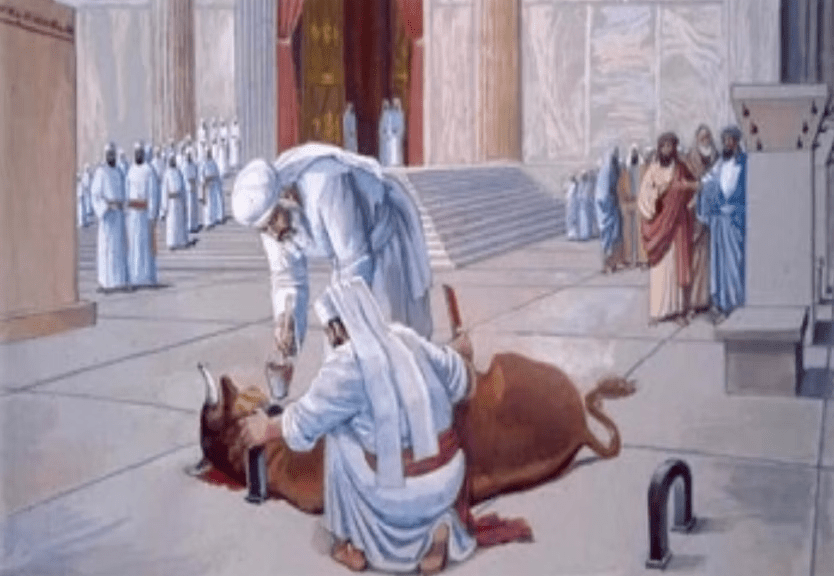
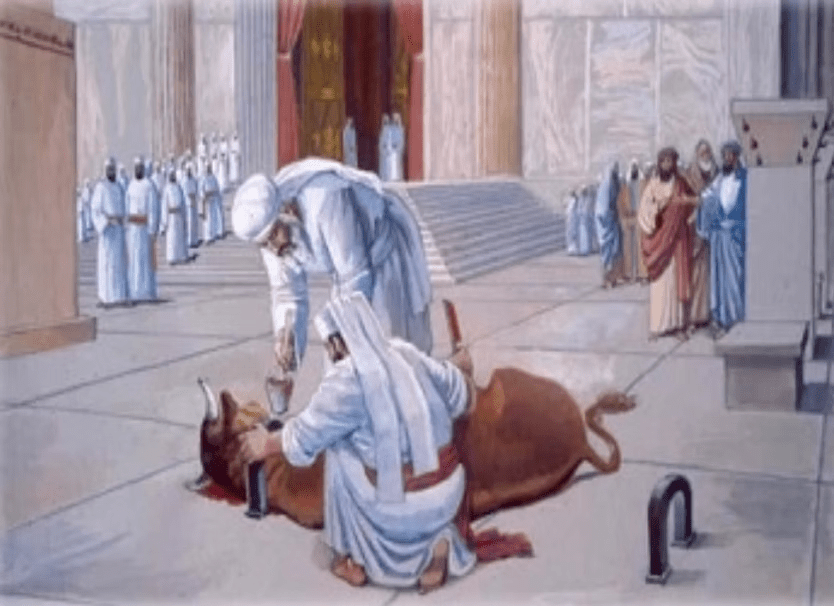
[11] What to me is the multitude of your sacrifices? says Yahweh;

I have had enough of burnt offerings of rams and the fat of fed beasts;

I do not delight in the blood of bulls, or of lambs, or of goats.

[12] When you come to appear before me, who asked this from your hand?

Trample my courts no more;

[13] bringing offerings is futile; incense is an abomination to me. New moon and sabbath and calling of convocation–I cannot endure solemn assemblies with iniquity.

[14] Your new moons and your appointed festivals my soul hates;

they have become a burden to me, I am weary of bearing them.

[15] When you stretch out your hands, I will hide my eyes from you;

even though you make many prayers, I will not listen; your hands are full of blood.

[16] Wash yourselves; make yourselves clean; remove the evil of your doings from before my eyes; cease to do evil,

[17] learn to do good; seek justice, rescue the oppressed, defend the orphan, plead for the widow. ס

[18] Come now, let us argue it out, says Yahweh: though your sins are like scarlet, they shall be like snow; though they are red like crimson, they shall become like wool.

[19] If you are willing and obedient, you shall eat the good of the land;

[20] but if you refuse and rebel, you shall be devoured by the sword; for the mouth of Yahweh has spoken. ס

——————–

Over recent weeks the Track 1 Old Testament reading selection has been from books of the Prophets. We read how Amos was shown by “adonay Yahweh” a plumbline and a basket of summer fruit. We then read how “Yahweh first spoke through Hosea,” telling him to save one sinner in the Northern Kingdom and then Yahweh sung how He would never destroy those who became “Ephraim” – “Doubly Fruitful.” Now we read “the vision of Isaiah,” where he proclaimed, “Hear the word of Yahweh” and “listen to the teaching of elohenu.” All of this follows the Pentecost Sunday theme of the Prophet Joel having written: “And afterward, I will pour out my Spirit on all people. Your sons and daughters will prophesy, your old men will dream dreams, your young men will see visions.” These books of the Prophets are all fulfillments of Joel, as well as forevermore, as through the Saints of Christianity.

The names listed in verse one need to be understood, relative to the meaning behind those names.

Isaiah – “Yah Is Salvation, Salvation Of The Lord”

Amoz – “Strong”

Judah – “Praised, Let Him Be Praised”

Jerusalem – “In Awe Of Peace, Teaching Peace”

Uzziah – “Power Of Yah, Yah Is Strong, Yah Is My Strength”

Jotham – “Yah Is Perfect, Yah Is Complete”

Ahaz – “He Has Grasped, Possessor”

Hezekiah – “Yah Strengthens”

When the meaning behind the names is seen as the deeper intent to realize, then verse one says, “the vision of Salvation Of Yahweh son of Strong , which he beheld , concerning Let Him Be Praised and Teaching Peace ; in the days of Yah[weh] Is My Strength Yah[weh] Is Complete He Has Grasped (as His possession) Yah[weh] Strengthens kings Praised.” While this first verse is included with verses ten through twenty, showing a span of time that Isaiah was shown visions as a prophet of Yahweh, the meaning of the names of kings during his time served says the Southern Kingdom was better led by souls devoted to serving Yahweh, than was the leaders of the Northern Kingdom. During this timespan the Assyrians would overrun the Northern Kingdom, with the beginning of a siege of Judah and Jerusalem commencing. More than a verse of history, the deeper meaning sings of the Strength to withstand all outer influences comes from Yahweh being in possession of one’s soul within.

When this preamble is seen as the setup for Isaiah’s service as a Prophet of Yahweh, the verses chosen to be read aloud by the Episcopal Church focus on what is commonly mistaken as what one does to show a commitment to Yahweh. The BibleHub Interlinear lists these verses as “Meaningless Offerings.” The NRSV lists everything beyond verse one as “The Wickedness of Judah,” while the NIV says this chapter (sans verse one) is “A Rebellious Nation.” While the specificity of Isaiah being a prophet who spoke the Word of Yahweh to the Southern Kingdom’s leaders, these verses extend beyond Judah, including everyone who has since called himself or herself Christian. The metaphor speaks louder as a statement about what Yahweh expects from souls who commit to Him in marriage; and, none of that involves anything burnt on altars, prepared by false priests.

In verse ten, where Isaiah spoke as Yahweh, saying “you rulers of Sodom,” it must be understood that the city of Sodom is believed to have been on the eastern side of the Jordan River. While archeologists do not know where the five cities of the plain were, they project them to be either to the north of the Dead Sea (east of Jericho) or to the south, where the Dead Sea meets a plain (called the Valley of Siddim). When one realizes that the prophecy of the destruction of Sodom is less about a place on the earth and more about the meaning behind that name, the result is Isaiah pointing out “rulers of flaming” or “rulers of those burnt.” One way to read “Sodom” has it translate as “Their Assembly,” where that bears the meaning of those leaders who manipulate the people for their own profits.

Likewise, the name meaning for “Gomorrah” is: “Tyrannical Dealings, Throes,” with another translation (Hebrew has no vowels, so variations come from pronunciations adding different vowels) is “People Of Fear.” Following the first statement in verse ten that says, “you rulers of those burnt” is a companion statement that says, “listen to the law of our elohim people of fear” or “people with tyrannical dealings.” This says the inner elohim the people will be led to marry are those spirits of the world, not Yahweh. The Laws passed down by Moses will no longer be “heard,” as the “rulers of their assembly” will be given new laws, based on lesser gods to hear and merge with spiritually. This makes “those burnt” will figuratively be the sacrifices of the people in the name of other gods.

The use of Sodom and Gomorrah by Isaiah many years after Moses told the story of Abraham arguing with Yahweh over the destruction, followed by the story of Lot and his family escaping that destruction, says those places reflect eternal lands of sin that will always be leading the people to din and destruction of their souls. This is why verse eleven says Yahweh finds no pleasure in the sacrifice of beasts to Him. He asks, “Why to me?” implying other gods would enjoy animal sacrifices; but Yahweh is only interested in the soul sacrificing its own body of flesh (a symbolic burning on the altar), so that soul can be saved.

In verse twelve, when Yahweh asks, “when you come to appear before me who has required this from your hand to trample my enclosure?” This does not mean the Temple in Jerusalem is the “enclosure” or “the court” of Yahweh. All the activity in the Temple is for self-advancement, not for Yahweh’s benefit. When a soul leaves its body of flesh at death, then it “appears before Yahweh.” It appears for Judgment. The sacrifice of animals will have done nothing to save a soul; but it will be record that will trample upon one’s soul in judgment.

In verse thirteen, Yahweh says through Isaiah that the commanded observances each year are not to celebrate souls in flesh having been given special privilege over other human beings on earth. All of the ritual of the inner Temple (by high priests) are symbolic of self-sacrifice. The incense is the release of one’s soul in marriage to Yahweh – the smoke and scent being a transitional state brought on by fire. The flesh is then given totally in service to Yahweh, as one of His priests renewed. The new moon reflects that first one following the Vernal Equinox, which begins the first month of the ecclesiastical year (Nisan). The new moon reflects the darkness of not serving Yahweh. The Sabbath is not one day a week, but the eternity that began after Creation was completed. We live today in the Sabbath; and, it is expected to be kept holy forever, not just an hour one day a week. The “assemblies” must be the people all being taught the truth of the rituals, where they gather to recognize how each has become Yahweh’s servant.

Verse fourteen repeats Yahweh’s dissatisfaction with the beginning of a new cycle that focuses more on the festivities of a feast, than the festivities of having becoming Yahweh’s priests. Verse fifteen then says the prayers offered by those who have no spiritual relationship with Yahweh will not be heard. This implies that their prayers are for selfish concerns, not for guidance and repentance. They ask for profits in the material world, when such prayers should be sent to other gods. While there are no other gods that can replay to such prayers, Yahweh will not hear them because (like the error of Cain sacrificing plants to an earth goddess, not Yahweh) they are misdirected. They are not truly sent to Him; so, He will not hear them.

In verse sixteen, the command to “wash yourselves make yourselves clean” is the way to have their prayers heard by Yahweh. They are filthy dirty from sins; so, they must first repent those sins, in recognition that they have wronged Yahweh. From a position of true repentance, a soul will then submit to doing that which pleases Yahweh – obeying His Commandments. This (in time, when a serious commitment has been made) will then bring about an engagement to be divinely wed to the Husband, which will bring about His Spirit of Baptism. This is what will cleanses their souls and make their prayers be directed to Yahweh, so He will hear and respond to them. By becoming married to Yahweh, His Son’s soul will join with those of His wife-souls and lead them away from sinful deeds. Thus, those Baptized souls will no longer do evil.

Verse seventeen ends with a samekh (“ס”), which is a signal mark of closure in a series of verses. This means Yahweh saying, “learn to do good resort to judgment go straight the ruthless” is an end of this series that says stop doing things for the wrong reasons. The only way to realize the meaning of Yahweh’s commandments is to be one with Him. To be washed clean means to become His wife-servants and change one’s evil ways. This divine union will then have one act as His priests, serving the High Priest that is His Son’s soul within one’s soul, so those not yet able to call Yahweh “Father” will be led to do so. To “plead for the widow” has nothing to do with helping poor old ladies who had no material inheritance after the death of a human husband. All souls that marry Yahweh will become “widows” to the world they once served, as that ‘husband’ will have died and left their souls nothing.

Verse eighteen then begins a new live of thought, which is based on a soul having become saved from its past sins of the flesh. When Yahweh said through Isaiah, “come now and let us decide together,” this states a divine merger has taken place. All decisions to act will be based on Yahweh’s guidance, through His Son’s voice within, so all will know this guidance is best. By being “together on decisions,” the soul knows the mind of Christ, which reveals the knowledge of Yahweh. The colors “scarlet” and “crimson” are the reflections of sin that stain a pure white state of sinlessness. When Yahweh says one’s “scarlet” sins will be transformed into the ”crimson” die that makes wool fabric “red,” this is the presence of the ‘blood of Jesus’ – the Son of Yahweh – which reflects not on sins to come, but the sins that have been forgiven.

In verse nineteen stated the servitude of being a priest of Yahweh. This demands “obedience” and the submission of self-will to the Will of Yahweh. To then “eat the good of the land,” the “land” becomes metaphor for the flesh. To “eat” becomes synonymous with “feeding” those souls seeking spiritual nourishment. As a priest of Yahweh, one does not slaughter farm animals and cook them on an altar, for all to eat, drink, and be merry. One offers the “good of the flesh” – those who serve Yahweh as living up to the name “Israel” – the spiritual food they desire.

Verse twenty is then another that ends with a samekh, meaning these three verses are completed and a new line of thought will follow. Here, Yahweh sums up through Isaiah how the choice is up to each individual soul. There is nothing twisting anyone’s arm, making them be forced to marry their souls to Yahweh. The right to refuse a marriage proposal is one’s right. However, if one chooses to turn one’s back to Yahweh, then one will face the harsh realities of a cruel world, which involves hatred by other peoples, who see the audacity of those who call themselves the children of God, when those people can see the weaknesses of a godforsaken peoples. They will then come with the sword and defeat those, proving they have no god that will protect their evil ways. This can be counted on as being true, because Yahweh has spoken them through His prophet Isaiah.

It should be realized that the list of kings (when read that way) in verse one says the vast majority of time they ruled as servants of Yahweh. The exception is Ahaz, who was known to be an evil ruler. Still, these verses read between ten and twenty should not be seen as a condemnation of the kingdom of Judah while Isaiah was a prophet of Yahweh. This speaks more of the times prior to Isaiah, which led Yahweh to show him visions. This should also be seen as eternally applicable to all nations, at all times, who pretend to serve Yahweh, when they instead worship lesser gods and misunderstand the commanded feasts of recognition.

It should also be recognized that the concept of synagogues, where holy scrolls were kept and routinely read from each Sabbath did not happen until well after Isaiah began prophesying. It would be sixty years after the death of Hezekiah, when Josiah became King of Judah, that a renovation project took place at the Temple of Solomon; and, it was in that process that holy scrolls were found. Those scrolls had long been hidden from the people, bringing great sadness to King Josiah. That began process that made sure the people knew the Law, which has been pushed underground, due to the sinful ways before Isaiah, which venerated lesser gods and made compliance to One God less warranted. This should be seen in today’s version of Christianity, where the true word [Hebrew and Greek texts of Scripture] have been locked away, placed into obscurity, where English paraphrases become synonymous with the veneration of lesser gods.

Isaiah 5:1-7 – When a good vineyard goes bad

[1] Let me sing for my beloved my love-song concerning his vineyard:

My beloved had a vineyard on a very fertile hill.

[2] He dug it and cleared it of stones, and planted it with choice vines;

he built a watchtower in the midst of it, and hewed out a wine vat in it;

he expected it to yield grapes, but it yielded wild grapes.

[3] And now, inhabitants of Jerusalem and people of Judah,

judge between me and my vineyard.

[4] What more was there to do for my vineyard that I have not done in it?

When I expected it to yield grapes, why did it yield wild grapes?

[5] And now I will tell you what I will do to my vineyard.

I will remove its hedge, and it shall be devoured;

I will break down its wall, and it shall be trampled down.

[6] I will make it a waste; it shall not be pruned or hoed, and it shall be overgrown with briers and thorns;

I will also command the clouds that they rain no rain upon it.

[7] For the vineyard of Yahweh of hosts is the house of Israel,

and the people of Judah are his pleasant planting;

he expected justice, but saw bloodshed;

righteousness, but heard a cry! ס

——————–

In verse one there are three words that translated as “beloved” – “lî·ḏî·ḏî” (written twice) and “dō·w·ḏî.” Not only does this make this son about the “beloved” of Yahweh, these verses are a song dedicated to the “beloved” and his “vineyard.” One must understand that the “beloved” of Yahweh is His Son, Adam-Jesus. The Yahweh elohim that is the soul of Adam-Jesus is the love of Yahweh. For any soul born into human flesh to know the love of God, that soul has to become merged with the Yahweh elohim that is Adam-Jesus, becoming the Son of Yahweh reborn.

Because Jesus had not yet been born (although the name will always mean “Yah Saves” or “Yah Will Save”) and because Jerusalem, Judah and Israel are named, the focus of line one should be on the Saint whose soul was married to Yahweh, becoming the embodiment of Adam-Jesus. That historic figure is David, a name that means “Beloved.” Thus, Adam-Jesus was resurrected in the flesh that was Anointed by the Spirit of Yahweh; and, David led the people to live up to the names that mean “Teaching Peace” (“Jerusalem”), “Let Him Be Praised,” and “Who Retains Yahweh elohim.” The vineyard was then the “fruitfulness” of common people being led to marry their souls to Yahweh, becoming His Son reborn, as a nation of Saints.

In verse two, the key term to focus on is the “tower built in the middle of the vineyard.” The “choice vines” are the children of Israel, led to the Promised Land by Moses. The “tower” is then the greatest leader in Israel’s history – David. David was the only king chosen by Yahweh that would prepare the “vineyard” to bring forth choice fruit. When we then read “it brought forth wild grapes,” this says the kings that would follow David would lead the people’s souls away from marriage to Yahweh. They would serve human kings and foreign queens, with foreign priests, not Yahweh. None of the people would become the Son of Yahweh resurrected within their souls.

Verse three is then Yahweh singing through Isaiah’s pen, asking politely for the “inhabitants of Jerusalem” and “the men of Judah” to “judge between me and my vineyard.” Here, the meaning behind the names refers to those leading the Temple in Jerusalem as “those dwelling for Teaching Peace.” It then includes the “kings the Let Him Be Praised,” who follow the guidance of prophets, such as Isaiah. Yahweh even said “please” (“”), in “prayer,” as His way of asking them to choose to be His good fruit – raised by His Son – or wild grapes – raised by worldly demon spirits.

Verse four only asks one question, even though the NRSV breaks the verse into two. It is Yahweh asking through his prophet Isaiah, “What more could have been done in the preparation of this divine vineyard, expecting only good fruit to come but yielding instead wild grapes?” This asks why a Beloved king was given to the people – at the people’s request – who taught even soul in flesh how to marry his and her soul to Yahweh and be the good fruit of Yahweh’s Son resurrected, why then would the children of those Saints not also be raised to be Saints? The answer can only be to send lightning bolts from heaven to strike dead all the corrupt kings and heathen queens and false priests, to put the fear of God in all the people to comply and be a good grape. However, that would defeat the purpose of good fruit.

Verse five instead offers the solution to tear everything down and start all over again. Rather than lightning bolts to destroy the kings, queens and false priests, the people too must be included in this redo. The people have been raised to be wild grapes; so, they cannot possibly change and become good fruit be fear and force. This has to be seen as the foreseen coming destruction of Judah and Jerusalem by the Babylonians. They would be the contractors who would burn down the hedges and break down the walls, so the people could be trampled (into wild grape wine?).

Verse six then says the destruction of the vineyard will not include a renewal project, where more choice vines are brought in to replace the uprooted choice vines that became overrun by fallen stakes in the ground, so they cross-bred with wild vines growing on the ground. Instead, Yahweh will let the destroyed vineyard become a place where briars and thorns grow prominently. Then, Yahweh will command the clouds to give forth no rain. The vineyard will be turned into a barren wilderness.

Verse seven then sings that there will never be a vineyard of Yahweh that accepts less than good fruit. When this is seen as metaphor for souls that are rewarded with eternal life in the Spiritual realm of Yahweh, then those who still bears the sins of ‘wild grapes’ will not be allowed in. The “vineyard of Yahweh of the spiritual souls of heaven enter into the house of those Who Retain Yahweh elohim.” Only those who have been reborn as the Son of Yahweh can earn eternal life. The “men of Judah” – or the “priests reborn in the name of Jesus who Let Yahweh Be Praised” – are those who gain entrance into the eternal realm of salvation because they “plant” the seeds of “righteousness” on the barren land, where lost sheep roam in need of spiritual food and living waters. Those souls who gain entrance into the spiritual realm are those who first seek all who “cry out for help,” as they go to them as Jesus – Yahweh’s Savior.

Isaiah 58:9b-14 – Understanding the Sabbath and taking delight in it

If you remove the yoke from among you, the pointing of the finger, the speaking of evil,

[10] if you offer your food to the hungry

and satisfy the needs of the afflicted,

then your light shall rise in the darkness

and your gloom be like the noonday.

[11] Yahweh will guide you continually,

and satisfy your needs in parched places, and make your bones strong;

and you shall be like a watered garden, like a spring of water,

whose waters never fail.

[12] Your ancient ruins shall be rebuilt;

you shall raise up the foundations of many generations;

you shall be called the repairer of the breach,

the restorer of streets to live in.

[13] If you refrain from trampling the sabbath,

from pursuing your own interests on my holy day;

if you call the sabbath a delight

and the holy day of Yahweh honorable;

if you honor it, not going your own ways,

serving your own interests, or pursuing your own affairs;

[14] then you shall take delight in Yahweh,

and I will make you ride upon the heights of the earth;

I will feed you with the heritage of your ancestor Jacob,

for the mouth of Yahweh has spoken. ס

——————–

In verse nine, which is only the second half of the whole verse that is chosen for reading, the key term missed in translation is “from your midst,” which is the construct translation of “mit·tō·wḵ·ḵā” (from “tavek”). The NRSV translation of “among you” avoids this verse being Yahweh answering the call – pleas for help – from those in pain and suffering, telling them, “if you take away from your midst the yoke,” where the “yoke” denotes spiritual servitude to Yahweh, as his wife-soul. If you reject divine union with the Spirit of Yahweh, then you suffer. You “point fingers” at everyone but yourself as the cause of your woes. Without the “yoke” that is the soul of Yahweh’s Son (Adam-Jesus) controlling one’s actions [led to righteousness] as one’s Lord [an “adonay” of Yahweh], then pain and suffering can always be seen as self-inflicted.

Verse ten does not suggest that feeding the hungry with physical food wins any brownie points. Isaiah wrote, “and you extend to the hungry your soul,” where “the hungry” are seeking spiritual nourishment. This is why they would be crying out in pain, from suffering malnutrition of their souls, not they bellies. This is why Isaiah then was led to write about the “darkness” of despair that comes from being faced away from Yahweh and the “light” that comes when one extends the soul of Adam-Jesus from within one’s soul to within the soul of another. This is the truth of ministry in the name (either of Yahweh or Jesus) of a Messiah (or a Christ).

Verse eleven says Yahweh “will guide you” in this ministry. His presence within one’s soul never ends. All “droughts” of spiritual sustenance will be overflowing with His Spirit. Your body (or “bones”) and “soul” will be joined with His Spirit, which gives one strength and be like a well-cared for “garden.” The Spirit makes one like a “spring” of everlasting “waters,” like Jesus spoke of to the Samaritan woman at a well.

When we read in verse twelve: “Your ancient ruins shall be rebuilt; you shall raise up the foundations of many generations,” that mistranslation again takes one’s mind and directs it to the physical, as if Yahweh wanted to replant the vineyard he said he would let go to waste (in last Sunday’s readings). This must be read in spiritual terms, as Yahweh speaking to the saved soul He would send into ministry. They would be washed clean of all past sins – “shall built from among you waste places” – so all that one had destroyed of self will be rebuilt as the Son of Yahweh reborn. These Saints will become the “foundations” upon which true salvation of souls comes [Jesus would fulfill this prophecy]. The “repairer of the breach” refers to the wall shown Amos, where the plumb line showed the wall of Mosaic Law was collapsing because of the neglect of the leaders. To read of “the restorer of streets to live in,” this speaks spiritually of the “return to a path” of righteousness that is the true meaning of being an Israelite. This becomes a way of life, not a religion to memorize and quote, while never living up to anything quoted.

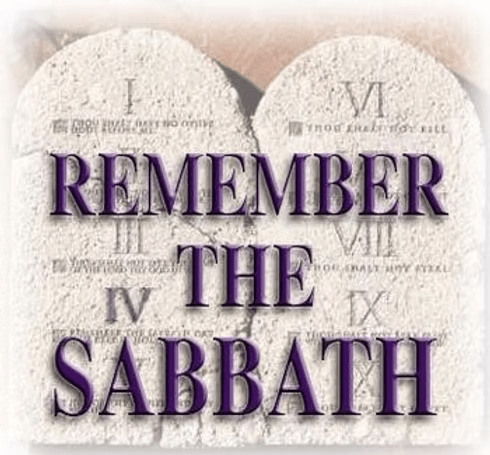
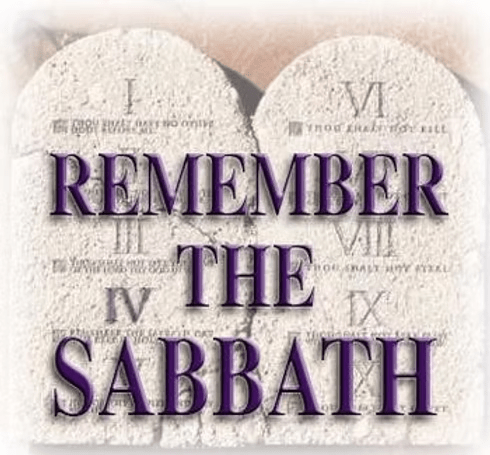
In verse thirteen, twice Isaiah wrote of the “Sabbath” (“miš·šab·bāṯ” and “laš·šab·bāṯ”). The literal translation says, “if you turn away from the sabbath your foot , making your pleasure on day my sacredness and proclaim the sabbath a delight , the sacred Yahweh burdensome , and will bear him not doing your own ways , not finding your own delight nor speaking words .” From this, it becomes important to realize that the first six days of Creation lasted hundreds of millions of years; so, when Yahweh declared the Creation finished and told the “elohim” to cease what they had been doing in Yahweh’s name, the “sabbath” began only a few thousands of years ago. That means (relatively speaking) the Sabbath is every day, forever more. To be so restrictive to think Yahweh meant take one day out of every seven and deem that Yahweh’s “sacred day” is the problem. The Jews attempt to honor the twenty-four hours, but Christians love the god golf and limit the honoring of Yahweh to a couple of hours each week (if that). The “sabbath” is every day; so, to not serve Yahweh in seeing every day as His “delight” for one’s own soul and see the “sabbath” as when one must stop doing one’s own “delights” or “pleasures” on a day deemed the “sabbath” (Friday, Saturday, or Sunday, depending on the religions that serve man, not Yahweh) is not good in Yahweh’s ‘eyes.’

When one can grasp that Yahweh was not telling future readers of these verses of Isaiah that He would be tickled pink if Jews would spend a whole twenty-four hours every seven days holding off on doing their own “pleasures” and whipping themselves into obedience with the Law, instead expecting all to sacrifice their own self-pleasures and self-delights to take sheer delight in Yahweh’s lifestyle (that of a Saint), the verse fourteen makes much more sense. Here, Yahweh says when one’s soul “takes delight in Yahweh,” then one’s soul has divinely wed Yahweh. When He then says, “I will cause you to ride on the earth,” where the metaphor is the white horse Jesus will come within one’s soul, as one’s Lord over the flesh (metaphor of “earth”), this says Yahweh will send His Son’s soul to make you take great “delight” in that presence, because Jesus is the love of Yahweh. It is Jesus who will “feed” one’s soul with spiritual food. The Word of Yahweh will then be placed in one’s “mouth,” as the soul of Adam-Jesus will speak the truth for others to hear. The “heritage of Jacob” – a name meaning “Supplanter” – means Jesus will supplant one’s own soul-flesh, becoming the Lord that will lead one to be named “Israel” and be a minister for Yahweh as His prophet.