Category Archives: James

James 1:17-27 – The listeners and doers of God’s Will

Every generous act of giving, with every perfect gift, is from above, coming down from the Father of lights, with whom there is no variation or shadow due to change. In fulfillment of his own purpose he gave us birth by the word of truth, so that we would become a kind of first fruits of his creatures.

You must understand this, my beloved: let everyone be quick to listen, slow to speak, slow to anger; for your anger does not produce God’s righteousness. Therefore rid yourselves of all sordidness and rank growth of wickedness, and welcome with meekness the implanted word that has the power to save your souls.

But be doers of the word, and not merely hearers who deceive themselves. For if any are hearers of the word and not doers, they are like those who look at themselves in a mirror; for they look at themselves and, on going away, immediately forget what they were like. But those who look into the perfect law, the law of liberty, and persevere, being not hearers who forget but doers who act-they will be blessed in their doing.

If any think they are religious, and do not bridle their tongues but deceive their hearts, their religion is worthless. Religion that is pure and undefiled before God, the Father, is this: to care for orphans and widows in their distress, and to keep oneself unstained by the world.

———————————————————————————————————-

This is the Epistle selection from the Episcopal Lectionary for the Fifteenth Sunday after Pentecost, Year B 2018. In the numbering system that lists each Sunday in an ordinal fashion, this Sunday is referred to as Proper 17. It will next be read aloud in an Episcopal church by a reader on Sunday September 2, 2018. It is important because James, the brother of Jesus and a Saint, told how one must be the kingdom of Christ, fully devoted to serving God the Father.

James wrote in the same manner as did Paul. This is because Saints do not write to display their ability with language, but because God leads them to send a letter. Thus, all Saints speak the language of God, which appears to the eyes of a novice to be ordinary language. Novices translating the texts of Saints into words means most miss the depth each letter contains.

Here is a breakdown of this segment of James’ first chapter, based on the literal words written, the implied punctuation, and the translations of the Bible Hub Interlinear presentation [or viable substitutes]:

17 “every act of giving good  ,  One needs to realize that the acts of giving are those of God to each of His beloved. It is God’s gifts [those of the Holy Spirit] that make one’s soul cleansed of sin, thus good. When one preaches that giving by human beings makes one good, as “every act of giving is good,” that only holds truth when everyone has something good to give. That error makes it seem as if one is bad, when one is impoverished. It also raises the question, “How much good giving will God expect from me?” When the giving is left up to God, then the good given that is given to others is the Holy Spirit; but only God can give that. An Apostle-Saint can only announce, “The kingdom of God has come near,” and let the seekers also marry God and be given His gifts of goodness.

“and every gift perfect  ,  Perfection is a characteristic of God. Humans are all flawed [sinners] until washed clean through Spiritual baptism. Then, a Saint becomes a reflection of the perfection of God, whose gifts come from that perfection [not manmade money or donated material goods].

“from above is  , Above is Heaven, the Spiritual realm of God. “Above” is one’s elevated spiritual presence, when one is raised up, above the plane of physical wants and desires.

“coming down from the Father the [one] of lights  ,  Again, we are raised up when God comes to the earthly plane in an Apostle-Saint. That is when one is reborn as Jesus Christ, who shines the light of truth within one.

“with whom not there is variation  ,  There is only one Jesus Christ – one model of righteousness in whom Saints are formed – so that Holy Spirit is resurrected in countless numbers of souls that find their love of God and become one with God.

“or shifting shadow  .  The Greek word “aposkiasma” means “a faint image or copy of.” This means there is no version of Jesus Christ that retains any control over a life of sin – a dark edge, where living in the shadows is partially allowed by God. In other words, one is not holy one minute and then doing dirty deeds the next, only to expect God’s forgiveness. That is the god of self still being served.

18 “having desired  ,  The Greek word “boulētheis” is a statement of “intent, desire, and wish,” which reflects a mutual desire between a disciple of Jesus Christ and His Father. One has come to realize the message of Jesus, through Scripture and deep reflections on the word of the Gospels, so one’s heart opens with desire for the LORD.

“he brought forth us by word of truth  ,  The rebirth of Jesus Christ is one’s ability to speak the same truth as did Jesus.

“for those to be us first fruits certain man  ,  The “certain man” is Jesus of Nazareth, the Son of Man, who is the true vine – the vine of truth – from which the first fruits were James, Peter, and Paul, who were those first to be bodies in which Jesus was resurrected.
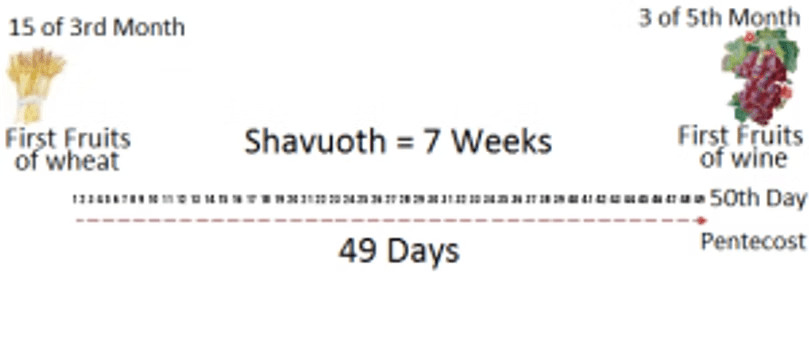
The first fruits are symbolized in the Passover to Pentecost festivals commanded by God.

“the one of his created  ,  Each Apostle-Saint is a reproduction of Jesus of Nazareth, in possession of the Christ Mind. All are the creations of God the Father, making all the Sons of God (regardless of human gender), as multiple Jesuses have been reborn as Anointed souls.

19 “so that  ,  “That” is the rebirth of the Christ Spirit.

“brothers ourselves beloved  ,  All are “brothers” (regardless of human gender) because all are of the same Father, and all are resurrections of the same Son. The totality of this replication of the Trinity in multiple human life forms is the wholeness of love, to and from God.

“let also every man swift in order this to hear  ,  Whereas the onset of love for God comes through meditative, prayerful thought, listening to God’s whispers as to the meaning of His Word, the filling of a Saint with the Holy Spirit and the Christ Mind means one is given an instantaneous knowledge [wisdom] and understanding. A Saint immediately hears and knows the truth, because the brain has been bypassed by the Christ Mind.

“slow in order this to speak  ,  When God speaks, one listens. One does not question what God says. One ponders anything that seems to go against all human teachings of religion. One absorbs an ownership of truth by proving the truth through tests of logic. To be a teacher, one has to first be taught; but when an Apostle opens his or her mouth, it is Jesus Christ that speaks.

“slow to anger  ;  Anger is a response to evil; but anger is controlled by God’s influence. Anger promotes prayer, more than it promotes the ‘Old Testament style sword’ that destroys the wicked. Prayer can bring God’s punishment, which is more lasting than any physical wounds can bring. “Slow to anger” means the development of patience.

20 “anger indeed of man  ,  Anger stems more often from the influences of evil, where the selfish desires of a soul are often not the results gained. Anger is then against one’s failures, but Satan will project those failures of self onto others, suggesting acts that harm one’s soul.

“righteousness of God not produces  ,  When one is open to the influences of Satan, there can be no acts of righteousness as the result. One has turned away from God, instead serving evil.

21 “therefore  ,  The Greek word “dio” means “wherefore,” derived from “diá, “across to the other side.” This one-word statement then places focus on the opposite of God’s influence, which is Satan’s.
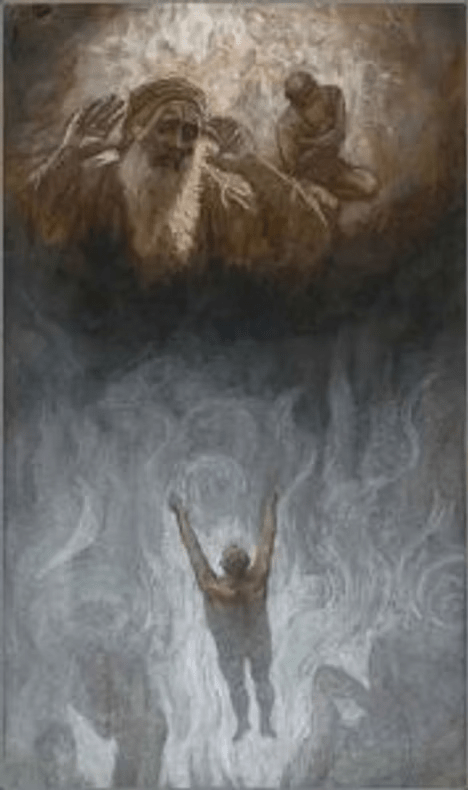
Lazarus looking upon the rich man in the opposite realm.

“having put aside all filthiness and abounding of wickedness  ,  When one turns away from the temptations of evil and the material plane’s traps, one’s soul has ceased being filthy by sins and addicted to the pleasures of selfishness.

“in humility receive the inborn word  ,  The Greek word “prautés” means “mildness, gentleness, and humility,” but emphasizes a divine origin in “meekness (“gentle strength”) which expresses power with reserve and gentleness.” This is the surrender of self-ego and the sacrifice of a Big Brain, so all the noise of an evil world ceases and God’s Word can be heard.

“which has ability to save the souls of you  .  Being able to hear the voice of God within is vital for one’s soul being saved.

22 “be moreover performers of [the] word  ,  The Greek word “poiētai” means “doers, performers, and those who carry out.” [It can also identify a “poet.”] This is the theme of James, where faith without acts [deeds] is dead. (James 2:14-26) He is setting that theme up here. One’s actions should not be self-motivated or influenced by Satan’s whispers, but based on Scripture’s lessons, interpreted by the Christ Mind.

“and not listeners only  ,  One who listens to the voice of Jesus and does nothing more is a Judas Iscariot.

“deceiving yourselves  .”  Judas was a disciple of Jesus of Nazareth as a traitor. Still, Judas was deceiving himself by not realizing Jesus knew he would betray him.

23 “because if any man a listener of [the] word is  ,  Anyone who is allowed to hear the voice of God’s wisdom is expected to act on that knowledge.

“and not a performer  ,  If one does not do the deeds spoken by God, one is like a wife who cheats on her husband. One who does not listen and obey is adulterous with self-ego love.

“this man is like one looking at face which natural of him in a mirror  .  This element of “face” (from the Greek word “prosōpon,” also meaning “countenance”) is the First Commandment stated by God to Moses: “Not you shall have to you gods other upon the face of.” (Exodus 20:3) We recognize this as “Thou shall have no other gods before me,” losing grasp of the Hebrew word “pā·nā·ya,” which states “face of.” A “mirror” is then a reflection of one’s face worn (one’s “countenance”) before God, such that the only “face” God wants a wife of His to wear before Him is His face, demonstrating that wife (male and female He makes them) is completely subservient to God [not self or some other lesser god].

24 “he has looked indeed himself and has gone away  ,  When one wears one’s self-face before God, it is the same as having turned one’s “face” away from God. That person has then gone away from God, towards whatever influence that person chooses to follow.

“and immediately has forgotten like what he was  ,  One whose back is turned to God immediately forgets what the presence of God is like, as God is no longer there to guide that traitor.

25 “all however having looked intently at law perfect  ,  Each individual who hears the voice of God within is able to deeply realize the perfection of God’s Law. From an inner wisdom illuminating one to the truth found in Scripture, the eyes can then see the perfection that each word contains. This is because all authors of holy text are writing from the perfection of God’s inner voice.

“that which of freedom  ,  The Passover and the Exodus are the stories of the children of Israel being freed from the bondage of Egypt. From that freedom Moses gave them the Laws of God. One has to understand that Egypt reflects the control of the earthly plane, rather than the will of one Pharaoh who disliked foreigners in his nation. Freedom that comes from the perfection of God’s Laws is freedom from the trap of the same ole same ole that is reincarnation of a soul that is snared by sin. To gain that freedom from bondage, one must listen to the voice of God, see the perfection, and then act according to that Word.

Freedom is the release from the repetition of a cycle of death.

“and having continued in  ,  The freedom of bondage requires one continuously be led by God’s Will. When one allows oneself to be married to God, via His Holy Spirit, one then continues to be free of death and mortal pains. If, however, one continues to listen to the inner voice, but act in worldly ways, then one has lost the freedom of eternal life with God.

“not a listener forgetful having been  ,  When one hears the inner voice speaking and takes heed, such that one’s soul does not fail to take notice (from the Greek word “epilésmoné”) of God’s guidance and direction, one is preparing to act upon that which is heard.

“but a performer of work    One then does the deeds of the LORD and sets aside the desires of the flesh. One does holy deeds, led by holy wisdom.

“this one blessed in the work of him will be  .  Those who act to carry out God’s wishes are then blessed with happiness and good fortune (from the Greek word “makarios”), such that the favors of God show on one’s face (“countenance”). Others who see that Mosaic glow will be envious, such that seekers will come to one to inquire how they can also be happy and fortunate.

26 “if anyone seems religious to be  ,  The Greek word “thrēskeia” means “ritual worship, religious, devout, and/or following ritual acts.” One appears to be religious by simply wearing the clothing of religious clerics. Some, such as Jesus witnessed the Pharisees doing, will make a point of being seen “acting” religious, rather than being religious. The Greek word “dokei” is rooted in the word “dogma,” where beliefs are ritualized and ceremoniously displayed. This means “seems to be religious” is the difference between “belief” and “faith,” where making a show of one’s beliefs is a form of works, deeds, and acts that appear religious. This is seen Biblically in the priests of Baal, who seemed to be religious, causing the Israelites to follow their leads. Those priests differed from the prophets of God, who demonstrated faith, which appeared to be rebelliousness instead of religious. Jews going to the synagogue on Saturday and Christians going to church on Sunday “seems to be religious.”

… and so many more.

“not bridling tongue of himself  ,  The Greek word “chalinagōgōn” means “to curb, restrain, sway and bridle.” To bridle one’s own tongue, one needs to cease letting one’s Big Brain speak for oneself, if one is to truly be religious. Knowing that Jesus never once spoke about any presidents of the United States of America (he cared little for Roman politics, so he cared none for those of our Western societies), any priest, preacher, minister, or pastor who stands at a podium and tells a congregation how to think, in terms of politics, is “not bridling his or her own tongue,” putting on the airs of being religious by wearing robes and tippets, but serving the priest of self will and political sway.

“but deceiving heart of himself  ,  The way one speaks [remember “slow to speak”?] tells where one’s heart lies. A “heart of himself” is being in love with self-ego and leaving no room in one’s heart for God. Without one’s heart married to Yahweh, one speaks for self, which is deceiving those who listen to the words of someone “seeming to be religious,” but is actually doing the deeds of a wolf in sheep’s clothing. In one’s deceptions, one is also deceiving oneself, believing it is the clothes that makes the man (or woman).

“of this one worthless the religion  .  Acting religious, while speaking words of self for others to follow is worthless (from the Greek word “mataios”). This is because the words of self-ego are: “vain, unreal, ineffectual, unproductive; practically: godless.” Without God’s word being spoken, one ceases to be following the ritual of servitude to the One God, thus one is absent of religion.

27 “religion pure and undefiled before the [one] God and Father this is  :  The only religious ways are those directed by Yahweh. One acts as God commands, which is the deeds, acts, and works of purity. A religious person is undefiled by the world of selfishness and greed.

All Saints allow Jesus his continuation of prayer.

“to visit orphans and widows in tribulation of them  ;  The Greek word “thlipsis” means “tribulation, persecution, distress, affliction.” The purpose of an Apostle-Saint is to go to where there is need and where others are seeking true religion. More than looking for children who have no parents, the Greek word “orphanos” means to go to the “Fatherless” and make God’s presence be known [“The kingdom of God has come near.”]. The widows are then those whose human husbands [or marriage to lesser gods] have died, offering them the hand of Yahweh in marriage. Religious seems to be going to visit orphanages and old folks homes; but true religion is making God be known, so all who seek His help can know the only thing that keeps one alone is one’s self-will and the freedom to be stubborn.

“unstained oneself to keep from the world  .  The Greek word “aspilos” means “undefiled, pure, spotless, and morally unblemished.” This is the characteristics of one who is truly religious, who worships the One God through submission to His Will. One cannot be “unstained” in a world that is an influence to sin, without the presence of God within and letting His Will be done through His servant.

As the Epistle selection for the fifteenth Sunday after Pentecost, when one’s own ministry to the LORD should be underway – one is a listener and a doer of God’s Will – the message here is to stop acting religious and demonstrate one’s complete devotion to God above.

American Christians are the most giving peoples on the planet, as far as donations of money to every known possible charity under the sun; but how many of them are giving others the gift of the Holy Spirit and entrance into the brotherhood (regardless of one’s human gender) of those reborn as Jesus Christ?

The message of James is the same as the message found in all of the Epistles, written by all the Saints: Each individual must become resurrections of Jesus Christ. Anything less that that is either fear of commitment to God or pretense.

James 2:1-10, [11-13], 14-17 – The works of faith

My brothers and sisters, do you with your acts of favoritism really believe in our glorious Lord Jesus Christ? For if a person with gold rings and in fine clothes comes into your assembly, and if a poor person in dirty clothes also comes in, and if you take notice of the one wearing the fine clothes and say, “Have a seat here, please,” while to the one who is poor you say, “Stand there,” or, “Sit at my feet,” have you not made distinctions among yourselves, and become judges with evil thoughts? Listen, my beloved brothers and sisters. Has not God chosen the poor in the world to be rich in faith and to be heirs of the kingdom that he has promised to those who love him? But you have dishonored the poor. Is it not the rich who oppress you? Is it not they who drag you into court? Is it not they who blaspheme the excellent name that was invoked over you?

You do well if you really fulfill the royal law according to the scripture, “You shall love your neighbor as yourself.” But if you show partiality, you commit sin and are convicted by the law as transgressors. For whoever keeps the whole law but fails in one point has become accountable for all of it.[ For the one who said, “You shall not commit adultery,” also said, “You shall not murder.” Now if you do not commit adultery but if you murder, you have become a transgressor of the law. So speak and so act as those who are to be judged by the law of liberty. For judgment will be without mercy to anyone who has shown no mercy; mercy triumphs over judgment.]

What good is it, my brothers and sisters, if you say you have faith but do not have works? Can faith save you? If a brother or sister is naked and lacks daily food, and one of you says to them, “Go in peace; keep warm and eat your fill,” and yet you do not supply their bodily needs, what is the good of that? So faith by itself, if it has no works, is dead.

———————————————————————————————————-

This is the Epistle selection from the Episcopal Lectionary for the Sixteenth Sunday after Pentecost, Year B 2018. In the numbering system that lists each Sunday in an ordinal fashion, this Sunday is referred to as Proper 18. It will next be read aloud in an Episcopal church by a reader on Sunday September 9, 2018. It is important because James brings into focus one’s acts must be sincerely motivated (coming from God’s influence), or one is not truly being faithful. It is not simply acts based on belief that reward a soul, but those acts based on true faith, when there is no expectation of worldly reward.

In verse one, the Greek written and translated as “My brothers and sisters,” is “Adelphoi mou.” The capitalization does not place focus on James, as “My.” Instead, it places focus on “Brothers,” stating the importance that ALL Apostles are related because ALL have been reborn as Jesus Christ. They ALL, like James, have the same Holy Spirit, such that  what is “mine” is also theirs.

While this does allow for ALL human beings of both human genders (males and females), to alter the text [the paraphrase of translation] because of modern pressures to bring equality to women, weakens the strength that comes from two words intended by God to convey “Brothers” as a powerful message that James wrote to Saints [then and now]. ALL to whom James wrote (including ALL who read these words today and forevermore) were Spiritual “Brothers” in Christ … not simply “brothers and sisters” of a church or synagogue … not simply men and women of religious philosophies.

It should also be recognized that the Greek word “mou” is the personal pronoun for “I,” in the possessive case. The Greek word “ego” is the first person pronoun from which “mou” stems. This should be understood as God stating through James that the “Brothers” aspect, as multiple beings in Jesus Christ’s name, is due to the common sacrifice of their self-egos (egoism), in order to become the Sons of God (regardless of human gender), returned to the earthly plane as Apostles and Saints.  The “I” shared by ALL Saints and Apostles is Jesus the Anointed one within them each.

The first verse also does not act as a question, as shown above.  James was not questioning the acts of anyone reborn as Jesus Christ.  Instead, James stated, “not with partiality hold the faith of us Jesus Christ the [one] of glory.”

The Greek word “prosōpolēmpsiais” does translate as “favoritism” and “partiality,” but a question makes it appear that James is asking Saints if they show favor towards others.  James did not imply that.  The statement says that Saints-Apostles of Christ have no “personal favoritism” that determines their level of commitment to God.  The statement is than meant to be read as recognizing no Apostle’s faith is based on selfish ego reasoning.

James was stating that Saints and Apostles “hold the faith” because they personally know Jesus Christ.  It is his Spirit that has become “the [one]” that is their “renown” [from the Greek word “doxēs”].  Such “fame” does not come from the name of any Apostle, as none of the Saints were famous prior to their deaths.  The one of their renown is the one whose name they are given – Jesus Christ.  Saints and Apostles have a totally committed grasp on “the unspoken manifestation of God” [from “doxa”] that grants them the favor of God, as His Son reborn.

Verses two through four are stating the conditional that was standard to a Jew in a synagogue, where one was expected to react to the wealthy as having been blessed by God.  The poor, on the other hand were not to be seen in that light. The Greek word “epiblepsēte” says what one “should” do, as what “might” be expected by assumptions. The Greek word “eipēte” is then stating what a Jew “should say, as the “answers” that are expected to be given that are not based on spiritual guidance but protocol.

James then questioned that hypothetical approach, where one differs towards to the rich and the poor (“diakrthēte” as “made distinctions”).  Such choosing who to welcome and who to spurn was then posing the question to such professed holy men and women, “Have you not become judges with evil thoughts?”

Was this good or bad, Abe?

Again, James referred to “brothers mine,” then adding that this relationship is through “love” (“agapētoi” as “beloved”), which is divinely manifested. This second address follows the capitalized word “Akousate,” which means “Listen.” That capitalization denotes a higher level of hearing, which goes beyond the physical limitations of human ears.  To “Listen” means one is different from ordinary peoples, as identified by the prophets [David, Jeremiah, Isaiah, and Jesus] who wrote, “They have ears, but cannot hear.”  When one is reborn as Jesus Christ, the sacrifice of self-ego makes one wholly observant to the voice of God, through the Christ Mind; so listening to that holy voice is how one answers the question posed.

In the answer one’s heart listens to, we see how James wrote the Greek word equivalent to that word in Hebrew, used by Solomon in Proverb 22:1 (an accompanying optional reading), where “God has chosen” is stated. James wrote, “Theos exelexato,” which was a “choice” known by ALL Saints and Apostles; because “God has chosen” them to serve Him and because they had “chosen” to sacrifice self-ego and love God.  It is a “choice” that must be made by two in marriage, to be together as one.

The aspect of “the poor” relating to God’s chosen is then stating how one becomes materially poor in a close relationship with God.  Being Spiritually wealthy, having all past sins absolved and being given the gifts of the Holy Spirit, while promised eternal happiness in heaven, is the trade for giving up all desires for worldly things.  Knowing “the poor” is who “God has chosen” led James to then ask his fellow Saints, “Was than not what he [God] promised to those loving him [God] … to be heirs of His Kingdom?”

James then drove home this point by asking, “Is it not the rich who oppress you? Is it not they who drag you into court? Is it not they who blaspheme the excellent name that was invoked over you?” All of those questions are stating that an Apostle-Saint is seen by the rich as being poor, such that outward material poverty cannot project the inner riches of the Holy Spirit. The grace of God is invisible to those whose sensory organs only work in the physical plane.

In today’s world, human beings filled with God’s love and his glory of the Holy Spirit does not show through.  One does not walk down the street looking holy.  Christians do not run up to a Saint-Apostle, like autograph hounds seeing an entertainment star or sports hero.  Fans of Jesus Christ do not wildly exclaim, “Jesus! Can I take a selfie with you?!?!” This is because Saints always look like the poor, which makes the rich always want to take advantage of them and the common poor push them out of the way, as they scramble to follow the rich.

Those questions about the rich taking advantage of the poor then led James to remind his fellow Saints that were in the name of Jesus Christ, “You do well if you really fulfill the royal law according to the scripture, “You shall love your neighbor as yourself.”’ For Christians, this Scripture is immediately thought to be the words of Jesus, but James had never read anything that we know as the New Testament or the Gospels.

James and all of his brothers in Christ (males and females) knew this was a reference to Leviticus 19:9-18, where it is written, as spoken by Moses: “You shall not take vengeance or bear a grudge against the sons of your own people, but you shall love your neighbor as yourself.” (Leviticus 19:18)  Moses had led the Israelites into a desolate place, separating them from the distractions of other peoples and the rulers of other nations.  God wanted them to know the value of depending on others whose lives were likewise set amid the same harsh and barren surroundings.

In all the namby pamby preaching of political pastors, who see the world’s poor as being who Jesus was speaking of when he said “love your neighbors,” using this Biblical quote as a poison arrow by which their political opponents can be shot to death, the words spoken by Jesus are from the same God that spoke them through Moses. The intent never changes with the political climates of a world always filled with heathen nations, none of which have sworn an oath to Yahweh elohim – the LORD of all gods. Therefore, James was also telling Jewish Christians (James was not sent to spread the Word to Gentiles) that maintaining this love of fellow Jews was doing good (from “kalōs poieite”).

The message of James applies to Christians.  Apostles of Christ, to whom his letter was written, were Jews that had been filled with the Holy Spirit.  They were Christians in the truest sense; not only from having accepted Jesus of Nazareth as their Messiah, but from knowing Jesus Christ by being reborn as him. ALL Christians are this, as brothers in Christ, so ALL Christians are “neighbors” (from “plēsion”) because they live “near” to one another spiritually.

This closeness is less about spatial proximity, as in one small location of land (a neighborhood), but more about being “neighbors” in the closeness Christians experience with the One God.  This makes a “neighbor” a “friend,” which is different from an enemy and different from family.  Thus, Moses was not telling the children of Israel to welcome all caravans of peoples with the love that is to be held by Saints and Apostles for one another, but to love those who were likewise poor in a wilderness setting [poor, but in relationship with God].

The same command goes to Christians, meaning one should not project hatred onto those of other religious beliefs.  One knows the world is filled with different peoples, nations, and philosophies.  To each his own.  One does well to see the lack of love in others – to oneself and to one’s God – as reason to thank God for the love between those whose lives are equally blessed by God’s love.

This difference is then stated by James as: “But if you show partiality, you commit sin and are convicted by the law as transgressors.” This says that those who do not know the love of Yahweh are sinners, just as were ALL the Saints and Apostles before they committed to the One God of other gods. To pretend love of those who defame Yahweh (by not loving Him) is to sin and become selfish (in love of self and the self’s desire to please any and every one, except God and their fellow Saints and Apostles). One loves one’s enemies by allowing one’s enemies to hate them and to persecute them, acting as the rich of the world.

Willingly accepting an enemy’s beliefs as one’s own is cheating on God or divorce.  An enemy’s beliefs being forced upon one is like rape.  Because one appears materially poor, through sacrifice of self, one opens oneself up to abuse.  In this way, one loves an enemy by accepting one has hatred in one’s heart, staying far away from that hater.  One does not provoke anger in others purposefully.  Partiality then shows an inner weakness and lack of faith, which project as selfish acts.  As such, one’s true faith is demonstrated more in the face of war, than in times of peace.

James then went deeper into this vein of thought provided to him by God’s Holy Spirit. He wrote, “For whoever keeps the whole law but fails in one point has become accountable for all of it.” In reference to the specific law he had stated earlier, to love one’s neighbors as oneself, James compared this commandment to two laws that are deemed to be of the Ten Commandments (Do not murder and Do not commit adultery). That comparison makes this commandment of loving a neighbor be seen as an equal, as ALL the commandments spoken by Moses are to be maintained. To break any of God’s Laws – which differentiates His children [priests] from the other peoples of other nations – means to turn away from God [divorce].

To turn away from God is to return to sin and a life that worships self.  When one has denied self, this is not an issue.  However, when one starts picking and choosing which laws are okay to bend and break, one is kneeling at the altar of ego, not Yahweh.

When James wrote, “So speak and so act as those who are to be judged by the law of liberty,” he pointed out that one’s actions speak for one’s commitment to God. Words only get in the way, when written on paper scrolls or rotely memorized.  When one is a wife of God and walking behind His lead, one acts from the heart, not the head.  The way one acts then determines the letter of the law.

Pled guilty to covering up child sexual abuse.

Whereas some might get all excited about an American concept of “liberty,” the meaning of “to be judged by the law of liberty” means God allows each human being the “freedom” (from “eleutheria”) to choose what laws one will obey and follow. That choice is then how one’s soul will be judged when one’s life on planet earth ceases to be in the body of flesh presently surrounding one’s soul. It means one has the liberty to worship God or not worship God. However, if one chooses to serve God, and God has chosen one to serve Him, one is NOT free to pick and choose which commandments one will follow, as Saints and Apostles fully understand the ‘All or Nothing’ rule.

This is confirmed by James stating, “For judgment will be without mercy to anyone who has shown no mercy; mercy triumphs over judgment.” Since the word “mercy” is presented three times in translation, it demands one understand what “mercy” means.

The word “eleos” is translatable as “mercy, pity, and compassion.” This is not a word that should be interpreted as forgiveness, such as some allowance of sin that is based on a human’s discretion. For any human to determine what broken laws can be wiped clean, that would be selfish, would it not?

The word “eleos,” according to HELP Word-studies, properly conveys “mercy as it is defined by loyalty to God’s covenant.” Certainly, this is based on its usage in holy documents.  By showing “no mercy,” then one is showing no ability to be “covenant loyal.” Therefore, a Saint-Apostle acts as God wills, through His Son’s Spirit controlling one’s self body, so covenant-love becomes the Triumph of judgment – one acts in accordance with God’s laws and God judges one with Spiritual wealth and eternal life.

This then leads to James asking the question that this reading is known for, and why it is chosen to preach: “What good is it if you say you have faith but do not have works?” In reality, this question is better stated (based on the literal written text) as, “What is the gain [or profit] if one says their faith is displayed in their works but those works do not?” This question fully addresses the issue of not showing the deeds that completely observe the commandments of God, through Moses.

Another word for “faith” (Greek “pistis”) is “fidelity.”  That translation better shows how an Apostle-Saint is married to God, through love that promises total commitment and devotion. One’s “fidelity” is not the day-to-day words that repeat, “I love you,” as much as it is the daily acts of faithfulness. Marriage vows to God are His Commandments being fully agreed upon, with “faith” then being acts of observance; those completely matching one’s actions. Therefore, James is putting forth the question that cannot be answered in any way other than, “Faith without works is dead.”

“Till death do us part” applies to divorce too.

The word “dead” (from “nekra“) means the soul is condemned (as always when not committed to God) to experience the mortal end of a bodily existence.  It means, rather than a soul forever going to some place like Sheol or Purgatory, it is sentenced to be reincarnated into another body of flesh that has a worldly “shelf life” that is temporary.  All the wealth of possessions one slaved to amass are gone, with one’s soul having to start over.  It means the judgment of not living up to the commandments of God [one’s Free Will allowance] is losing the fantasy of going to heaven when one dies.

James wrote, “If a brother or sister is naked and lacks daily food, and one of you says to them, “Go in peace; keep warm and eat your fill,” and yet you do not supply their bodily needs, what is the good of that?”

Here, he actually wrote “adelphos ē adelphē,” which includes both “brothers and sisters.”  The inclusion of “sisters” means James knew “Adelphoi” [the “Brothers” this reading began with] was both human genders, filled with the Spirit of Jesus Christ. Because of the masculinity of God the Father and His Son Jesus, the presence of that Holy Spirit must be stated as “Brothers.”

This then points to those still without the loss of self-ego being told, “We are just like you, but God supplies our daily needs.” Those words spoken are empty if one is not seeing those who are poor, seeking God to choose them, need help with God passing onto them the Holy Spirit. A true Saint-Apostle must then reach out and act, as commanded by God, so His Son can touch more seekers of faith.  This is how three thousand Jews were filled by the words of twelve disciples-turned-Apostles on that Pentecost day.

As the Epistle selection for the sixteenth Sunday after Pentecost, when one’s personal ministry for the LORD should be underway – one is doing the deeds of faith – the message here is to see oneself in others. Knowing that oneself was also poor in spirit, while capable of feeding and clothing oneself without asking for help, it was when one sacrificed self-ego that then one became spiritually “naked and hungry.” One’s marriage to God is not dependent of any other human being’s influence, which puts one totally at the mercy [remember “covenantal-love”] of God, both to and from. One must have faith that God will act from an equal committed stance, fulfilling His vows to a new wife [a.k.a. a new addition to the Brothers in Christ family].

A relationship built on complete trust.

This is how the works and deeds of faith manifest in the world. The wives of God are all Christians, as His priests ministering to His needs. ALL are family, of the spiritual blood of Jesus Christ. ALL are neighbors in faith. God then leads His new wives to seek and find His other wives, who will also be led to receive them.

Together they act as one church, such that ALL support one another’s needs in a communal setting, not unlike that which surrounded Jesus of Nazareth and his family and followers. The naked are clothed in the robes of righteousness, made for them by those who wear the same clothing. The hungry have their spiritual needs reinforced by those who also have been enlightened to the meaning of God’s Word. That fellowship of support means each can say, “Go in peace; keep warm and eat your fill.”

The problem that has befallen the churches of Christianity today is they feel a call to help the needy, as the works of faith. Because that does little more than put all churches on the list of “donation sources” (i.e.: charities) held by those who are addicted to sin, when none of the perpetual “needy” ever seriously consider a newfound life that is totally committed to God, the deeds of the churches are not the deeds of God. They are not acts of faith, meaning their results are dead.

It becomes a situation where sinners are welcomed with the love of neighbors, when it is regularly understood that the sinners are there to test one’s commitment to God’s commandments. God does not marry into Saints and Apostles that take on the name of His Son for the purpose of becoming priests that enable sinners to propagate.  Charities help themselves more often than they help the needy: when not paying huge salaries to organizers, the donors are claiming their “gifts” as non-taxable.  One cannot be given heaven, when one has already received worldly currency for helping the poor.

The communal setting of neighborhoods is lost. The total commitment to God, as an “all in” commitment that had all Apostles sell their possessions and give the profits to the poor – THE COMMUNAL NEIGHBORHOOD – so all Saints could go into the world as poor men with nothing material to offer, has been long lost. The “Church” has become the rich man with handout available. The poor go to there to get crumbs, not Spiritual uplifting. The “Church” is very comfortable passing out crumbs, while amassing large holdings of possessions and wealth.

And a crumb for you ….

A minister to the LORD has become like an endangered species. The “mating call” that goes out for other ministers to respond, now draws silence in return.  The urge to share the love of God with another, so a true church can be formed simply by two or more coming together in the name of Jesus Christ, has morphed into club memberships with contact lists.  Rare is a call answered with a howl back that says, “I am here! I love you brother of mine!”

Still, the world is where God sends His Saints and Apostles, and they never travel alone; not as long as Father, Son and Holy Spirit are in them.

James 3:1-12 – Unbridled teachers of truth

Not many of you should become teachers, my brothers and sisters, for you know that we who teach will be judged with greater strictness. For all of us make many mistakes. Anyone who makes no mistakes in speaking is perfect, able to keep the whole body in check with a bridle. If we put bits into the mouths of horses to make them obey us, we guide their whole bodies. Or look at ships: though they are so large that it takes strong winds to drive them, yet they are guided by a very small rudder wherever the will of the pilot directs. So also the tongue is a small member, yet it boasts of great exploits.

How great a forest is set ablaze by a small fire! And the tongue is a fire. The tongue is placed among our members as a world of iniquity; it stains the whole body, sets on fire the cycle of nature, and is itself set on fire by hell. For every species of beast and bird, of reptile and sea creature, can be tamed and has been tamed by the human species, but no one can tame the tongue– a restless evil, full of deadly poison. With it we bless the Lord and Father, and with it we curse those who are made in the likeness of God. From the same mouth come blessing and cursing. My brothers and sisters, this ought not to be so. Does a spring pour forth from the same opening both fresh and brackish water? Can a fig tree, my brothers and sisters, yield olives, or a grapevine figs? No more can salt water yield fresh.

———————————————————————————————————-

This is the Epistle selection from the Episcopal Lectionary for the Seventeenth Sunday after Pentecost, Year B 2018. In the numbering system that lists each Sunday in an ordinal fashion, this Sunday is referred to as Proper 19. It will next be read aloud in an Episcopal church by a reader on Sunday September 16, 2018. It is important because James told how Christianity spread rapidly through Apostles being sent out as teachers, with God-given tongues of fire.

Twice in the verses of this selected reading, James wrote “adelphoi,” which means “brothers.” There are 145 occurrences of this usage in all the New Testament. While it is easy to stick one’s Big Brained head in the sand and deny “brothers” actually means “brothers,” and that must be understood, the modern tendency is to screw the Holy Spirit inspired writers of those books and act as god almighty (lower case purposefully written, to denote the smallness of this) and bless all womankind by changing the text to say, “brothers and sisters.”  That is missing the purpose of “brothers” being written.

The purpose is for an Apostle to address ALL OTHER APOSTLES as the sons of God (therefore, “brothers” in the name of Jesus Christ). This, undoubtedly included women, and the female Apostles back in the days of James knew that. Therefore, changing holy text for political correctness today speaks loudly as saying, “There are no longer any Apostles, so it is best not to piss off the women here, since that is where all the church’s donations come from.”

Re-painting the Last Supper to meet new standards of acceptance.

That is not a good place to be!

Please write that down somewhere and memorize it. “Brothers” is like me saying “married to God” and Christians are “the wives of God.” That has absolutely nothing to do with human sexuality, so one’s genitalia are inconsequential. A wife to God becomes completely subservient to the husband’s commands. James meant no harm to the female of Judaism and they who were truly Christian (reborn as Jesus Christ – a male Spirit) took no offense.  I imagine some version of political correctness existed in 30 A.D., but James was not writing to meet their needs.
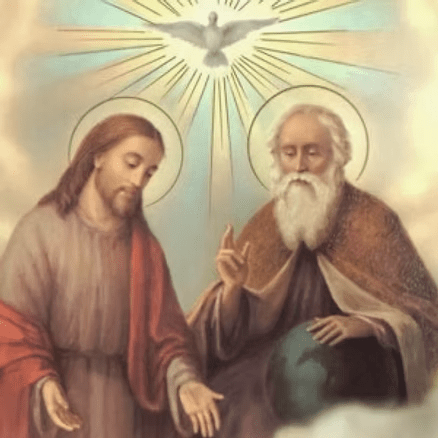
This is the message James began this reading with: “Not many of you should become teachers, for you know that we who teach will be judged with greater strictness.” It implies that Apostles would rather not be a male and refer to other males as the wives of God, just like they would shy away from calling women Christians “brothers.” It becomes like the chorus of a Dave Matthews song: So much to say.

Actually, the literal translation of verse one says, “Not often teachers become  ,  brothers ourselves  ,  knowing what greater judgment we will receive  .” This is not a statement by James that Apostles “should not become teachers,” based on the “condemnations that will come,” as lawsuits and sentences, but quite the opposite. Apostles must teach, so there is no choice in the matter. Few, however, would be recognized as official “rabbis” by the Jewish communities. Instead of expectations of wearing special robes and being invited to speak in beautiful synagogues, Apostles would be called to teach wherever God would open their mouths, because a seeker of truth was near.

When James then clarified this by stating, “For all of us make many mistakes,” it means that that it is impossible for God to err, and His Son will never speak anything but the truth. What James was pointing out was the imperfection that is the human form of an Apostle, which makes all of them come from a background of mistakes (i.e.: sinners). God does not marry wives and expect them to become Him reborn. God does not fill the mouths of His wives that bear His Son in another human body at all times. Apostles will return to being normal human beings when they are not teaching for the Father, which lets them all know just how blessed they are to be married to God. His “greater judgment” will keep the mistakes minimal and the ones that sneak in from time to time will be forgiven through penitence.

Still, God and Christ are perfect.  They come to help those who make mistakes.

James then used the analogy of a bridle in a horse’s mouth, which says that God does not control the human brains and force humans to do anything against their will.

So, if everyone agrees, this will be the bridle that will guide you.

As such, true Christians are not made to preach God’s Word as beasts of burden. True Christians are not tamed by God, having been caught unwillingly, corralled in schools of teaching, and then saddled with the burden of riding children around in circles all day long, before being given a bale of hay to munch on.

Apostles want God to lead their lives.  They find great joy arises within them when they experience God flowing through their being, speaking the words of Jesus Christ through their lips.  Apostles have never been trained in the meanings of Scripture they speak, yet they take delight in completely understanding everything coming out of their mouths.

Likewise, James used the analogy of a ship, which are mechanical devices built by man to serve commercial needs. The larger a ship is the more commerce it allows.  All ships have relatively small rudders, which are controlled by just one man. Apostles are not built and used as vehicles of transport that are to be piloted by God. As to size, human beings can deliver the messages of God in small packages, so the size of the Christian (or the human gender) is unimportant. The pilot of a Christian is greater than the size of the Christian, as God is immeasurable. The rudder being steered is Jesus Christ.  Combined, they act to guide where the ship goes.  Still, the ship itself is made for a worldly existence and steered by the wrong pilot can sink on unseen rocks.

Oooops.

When James wrote, “the tongue is a fire,” which has to be recognized as the story in Acts of the first Apostles having the Holy Spirit descend upon them. They began to speak automatically, in foreign languages they had never been taught. The words that came out of their mouths were then spread to listening pilgrims in Jerusalem.  Just as suddenly, three thousand believers became Apostles set afire with the Holy Spirit. They were like a forest “set ablaze by a small fire” of twelve.

The “fire” is the truth of the Word, from which comes the light and warmth that Scripture contains. The Holy Bible, as was the Torah then, is a forest of words that the Holy Spirit can set ablaze in the teacher each Apostles holds within – Jesus Christ.  Anyone can navigate the words on a page, but it takes an higher power to ignite one to speak in tongues of fire.

The translation that reads, “The tongue is placed among our members as a world of iniquity” is wrong and confusing. Verse six literally begins by stating: “And the tongue afire  ,  the world that is unrighteous  .” That says the Holy Spirit speaks the truth to the unrighteous so they can hear the truth be told. The verse then continues to state: “The tongue is set among the members of us  ,  people defiling all the body  ,  and setting on fire the course this of lineage  ,  and set on fire by what is hell  .

Whoever can give a blessing to mass murder must daily live in a fiery hell of existence.

This series of segments says (paraphrasing): Apostles are given tongues of fire to go forth into a world that is filled with iniquities, one not knowing the truth of the Word. Apostles of God who go forth and speak the truth are set among other Apostles who support those ministries. Together, they open the eyes of those who are defiling their bodies and thus their souls, offering them the cleansing of the Holy Spirit’s baptism by spiritual fire. Apostles speak the truth so the course of their souls can be changed from sinner to Saint, becoming part of the “brothers” of Jesus Christ. The alternative is to remain in the fiery hell their souls are already amidst.

When James wrote, “no one can tame the tongue– a restless evil, full of deadly poison,” the implication is that the “tongue” is the body part that inner spirits love to gain control over. This is confirming what Jesus told the Pharisees, who complained about his disciples not following the laws of handwashing. When Jesus said, “What goes into someone’s mouth does not defile them, but what comes out of their mouth, that is what defiles them” (Matthew 15:11) the “tongue” is the member that speaks for what controls one’s soul.  Inner demons use the tongue to be defiled by deadly poison.

James is then saying that God comes from the “tongues” set afire in His Apostles, acting as a counter to the “restless evil” that controls the unrighteous. The “deadly poison” they spew is the death sentence they have set upon their own souls.  That poison is from self-ego, doing self-harm, more than the damage they could possibly do to anyone else already mortally dead. The “tongues” of Apostles is then the remedy that offers them the cure for their poison.

This opposition of tongues speaking for inner controlling forces is then stated by James as: “With it we bless the Lord and Father, and with it we curse those who are made in the likeness of God. From the same mouth come blessing and cursing.”

This makes better sense when one realizes the pause (a comma) after “and we curse those [men],” where the translation omits the word “men” or “others” (from “anthrōpous“).   As such, the focus is on the “men” cursed, as  “those” who are unrighteous, led by “a restless evil.” Following that pause, “those” cursed are the ones “who are made in the likeness of God,” as false shepherds. Their “resemblances” (from “homoiōsin“) of holiness are the robes they wear that advertise them as holy teachers; but their tongues say otherwise. Therefore, it is from those mouths that comes forth both blessings and curses.

James then addressed his fellow “brothers,” saying this split personality ought not to be. It confuses those who are seeking the truth, when the message they teach is: “Do as I say, not as I do.”

Such contradiction was then stated as comparisons of impossibility, when James wrote, “Does a spring pour forth from the same opening both fresh and brackish water? Can a fig tree, yield olives, or a grapevine figs?”  The obvious answer says, “No more can salt water yield fresh.”

It must be grasped that James was not saying Apostles speak in such contradictory terms; as the message is how to tell those who speak the truth of God and those who speak as if in possession of intellectual prowess.  The focus was placed on those who are bad teachers.

As the Epistle selection for the seventeenth Sunday after Pentecost, when one’s own personal ministry for the LORD should be underway – one’s tongue is on fire with the truth of God – the message here is how to measure the impact of teachers (rabbis, pastors, priests, ministers, and preachers). True teachers have tongues of fire that ignite the passion of the Holy Spirit in those who hear them speak. True teachers spread a forest fire of faith that can only be stopped by a lack of seekers of truth. Others are those who speak out of both sides of their mouths, blessing those who sin and condemning those who do not like those blessings.

The spread of Christianity has turned from a forest fire of faith to sporadic burning embers here and there.

Gone are the days when twelve men could stand before a flood of religious pilgrims and speak the truth in such a way that many lives were instantly changed. The seekers of truth have changed into cults of personality worship. We give our blessings to politicians that then go condemn whole swaths of citizenry, those innocent beings that do not swear allegiance to the same philosophies.  The tendency now is to want the laws changed and to demand freedom be given … to allow the masses to determine what should be held near and dear. Today there is a restless evil that prevails.

Rather than be bridled by the Laws of Moses, our government has set many free to roam as wild horses, while jamming the bridle of government laws into the mouths of those broken and tamed.  Many are made the beasts of burden to laws that call the minority’s rights superior to the majority’s reasoning, based on religion having been the way of the land.

Rather than be a ship built for a specific purpose and given pre-planned routes of transportation, we have surgically removed the rudder of Christianity from Western nations.  Now, what was expected has become chaos.  The laws of nations cause many to circle aimlessly and carelessly steer on to collision courses, with no pilots capable of steering the ship to safety.

We now bless iniquity and curse goodness.  What was known is questionable.  What was up is now down.  What was elemental has become complicated.

Video of song Elemental

This Epistle focuses on teaching, accompanying two Old Testament readings that tell of the goddess of wisdom and marriage to the Lord God as the influences that teach the teachers. Apostles choose the later, while all others choose the former. This leads into a Gospel lesson from Mark, where Jesus taught of the responsibility of following in his footsteps. James, the brother of Jesus, who was reborn as Jesus Christ, becoming a brother to all Apostles, knew firsthand the difference between acting holy and being righteous. His words still speak loudly today.

We all are born human, thus we all make mistakes. No one is going to bridle us with laws that will transform the flawed into perfection. Still, we know that God is perfection. It is then up to each individual to give of themselves to God, requesting that He become one with him or her, so that God’s perfection can be a fire renewed on the earthly plane.

The perfection that comes from a tongue of fire is Jesus Christ. God will not force His Son upon anyone. To be an Apostle of Christ, one must desire God first and foremost in one’s life.

James 3:13-4:3, 7-8a – Submit yourselves to God

Who is wise and understanding among you? Show by your good life that your works are done with gentleness born of wisdom. But if you have bitter envy and selfish ambition in your hearts, do not be boastful and false to the truth. Such wisdom does not come down from above, but is earthly, unspiritual, devilish. For where there is envy and selfish ambition, there will also be disorder and wickedness of every kind. But the wisdom from above is first pure, then peaceable, gentle, willing to yield, full of mercy and good fruits, without a trace of partiality or hypocrisy. And a harvest of righteousness is sown in peace for those who make peace.

Those conflicts and disputes among you, where do they come from? Do they not come from your cravings that are at war within you? You want something and do not have it; so you commit murder. And you covet something and cannot obtain it; so you engage in disputes and conflicts. You do not have, because you do not ask. You ask and do not receive, because you ask wrongly, in order to spend what you get on your pleasures.

Submit yourselves therefore to God. Resist the devil, and he will flee from you. Draw near to God, and he will draw near to you.

———————————————————————————————————-

This is the Epistle selection from the Episcopal Lectionary for the Eighteenth Sunday after Pentecost, Year B 2018. In the numbering system that lists each Sunday in an ordinal fashion, this Sunday is referred to as Proper 20. It will next be read aloud in an Episcopal church by a reader on Sunday September 23, 2018. It is important because James wrote of wisdom being divinely born, but also manifesting in “unspiritual” and “devilish” ways. In the change of chapters, James then wrote that the solution of selfish disputes calls for the sacrifice of the self-ego, to be replaced by the submission to God (i.e.: marriage to God).

In verse thirteen, where the translation above states, “Show by your good life that your works are done,” the literal translation shows a separate segment that states: “let him show out of the good conduct the works of him.” This means the acts of one “demonstrate” (from “deiknumi”) one’s “honorable behavior” or “noble manner of life (from “kalēs anastrophēs”). It implies people will display bad character.  The difference is the source of goodness.

When the literal translation from the Greek shows “him” repeated, this is a word for presented in the third person masculine, as a singular personal pronoun.  The dual references to the third person, as “him,” can be mistaken as the same person who acts “good” as being generated by “himself.”  This misses the duality of two that are combined as one.  As such, the implication is exposing two elements of the same one: the one exhibiting such “good life” (“him”) and Him as God within, the inspiration of those righteous acts.

When God is read into that segment, then “gentleness born of wisdom” is from a divine source. This is then contrary to the next verse, where “jealousy” (“bitter envy”) with a “bitter” spirit is the outward acts of inner distress. To have “selfish ambitions” (from “eritheian”) is James way of saying the absence of God within is due to the self-ego pushing Him away, preferring to worship one’s Big Brain. That dependency on intelligence then hardens the heart – the love center. Without the heart leading the mind, one becomes prone to “boast and lie against the truth” (“be boastful and false to the truth”).

The Big Brain is thus the god of self and generates a weaker form of “wisdom,” which “does not come down from above,” as it is not from God. This is the feminine goddess “Wisdom,” which Solomon referenced, such that the femininity is a reflection of the “earthly” (from “epigeios”).

Wisdom is ruled by elohim.
Aliens are assumed to have godlike powers of intelligence, by fools who think the Mind of God can fit into a bony box filled with gray matter.

Because it is of the earth (like science, dependent on observable data) it is “unspiritual” (from “psychikē”).  That root word implies “animal, natural, and sensuous,” as anything “of the earth,” not of the spiritual heaven.  This then leads to a conclusion that earthly wisdom is “devilish.”  However, the word translated as that is “daimoniōdēs,” which implies an “evil spirit.” That translation requires deeper insight.

The Greek word “daimónion” comes from Ancient Greek, meaning most basically “spirit.” This “spirit” can then be said to be divine, as miraculous and extraordinary manifestations on earth. This is rooted in the Greek word “daímōn,” which can mean anything from “a god or goddess, a guardian spirit, or a departed soul.” Their importance is only found in the worldly plane.

The etymology has it rooted in “daíomai,” which means “divide.” As such, Satan is a god that has divided from God (Yahweh) and has been cast into the earth (a goddess’ realm – the feminine), where Satan became an influence for evil, attempting to steal souls that have divided from God (life breath spirit – soul). In a sense, the division is symbolic of divorce, such that Lucifer cheated on his Husband, was caught and banished.  Thus, in humans, an “earthly spirit” is one led by the soul, which is more inclined to be misled by Satan’s evil influences (i.e.: loving sin), acting “devilish.”

From this insight, the translation of “devilish” means being under the influence that keeps one divided from God.  It is designed to lead one away from the reunification of a soul with God.  It is the influences of the world that trick one into turning away from a commitment to one, desiring to try as many delights as possible.

James then repeated the traits of an evil spirit as possessing “envy and selfish ambition,” such that following the thoughts of a brain will one’s life be scattered and ever-changing, lacking order. The Greek word written by James is “akatastasia,” where “disorder” means: “disturbance, upheaval, revolution, almost anarchy, first in the political, and thence in the moral sphere.” It implies a difficulty standing up for what is right, because everything has become unsettled, confused, and in tumult. All this comes from depending on a Big Brain to lead one properly, when the result is always to be deeper into the complexities of a sinful existence.

What have I done this time?!?!

The only escape from this madness is then God, by coming to rely on His “wisdom from above” (where “the from above” comes from “anōthen,” meaning “anew”). This implies being reborn, where the old self dies and God’s divine ego replaces the old. This new wisdom then comes from the Holy Spirit as Jesus Christ being resurrected in a human form.  With this new presence comes the Christ Mind, which leads the human brain to understand all acts that are motivated by the heart first.

To say this new self “is first pure” means one has to first and foremost be cleansed of all past sins that the soul has accumulated, through lives on the earthly realm. This cleansing becomes a baptism by the Holy Spirit, when means the soul has been immersed into a state of spiritual purity. This union with God’s Holy Spirit is then the marriage of one’s soul with God. It is a cleansing brought on by love, meaning the deep desires of one’s heart; the brain have submitted to the Will of God and having no say in this subjection and submersion.

To then have James write, “then peaceable,” this is like when John the Baptist lifted Jesus from the waters of the Jordan and (as Luke wrote) “the Holy Spirit descended in bodily form like a dove upon Him, and a voice came from heaven which said, “You are My beloved Son; in You I am well pleased.”’ (Luke 3:22)

The dove is symbolic of peace, and this is stated in the Greek word “eirēnikē.” That word says “peaceable,” but implies: “God’s gift of wholeness which results from knowing (discerning) the Lord’s will and obeying it.” [HELPS Word-studies]  This says “peace” is the state of one’s being, after marriage to God.

The descriptive terms then written by James, translated as “gentle, willing to yield, full of mercy and good fruits, without a trace of partiality or hypocrisy,” are the new way one is led to act, after being renewed by God. This is the resurrection of Jesus Christ within one’s being.  One being reborn as Jesus Christ then duplicates the lifestyle of Jesus of Nazareth, effortlessly, willingly, and delightfully.  It is not self-willed, but a natural way of being.

These ways, if deemed good by a Big Brain, would be impossible to maintain through self-will. God has to be in love with one’s soul, make it pure for His presence, and then the union of God and soul in a human form will reproduce the Son of God. Only Jesus Christ being reborn into one’s flesh can one achieve a righteous life, as stated by James; as James then stated this as, “A harvest of righteousness is sown in peace for those who make peace.”

The end of chapter three then means a freedom to start new thoughts of divine wisdom, prompting James to question those who are not in a divine state of peace in his fourth chapter. He asked, “Those conflicts and disputes among you, where do they come from? Do they not come from your cravings that are at war within you?”

It should be realized that “you” is less a focus on the collective or a group of people (Jews, to whom James ministered), and more designed to be personal, to all who would read this letter.

The Greek word “hymin” is a form of “su,” which is the second person singular personal pronoun, “you.” The use of “hymōn” twice then repeats this as “of you,” with the word “epithymeite” then pointing out the second person singular form of “to desire, covet, lust, and to set the heart upon.” It is “you” who leads oneself to sin, not anyone else.

The personal pronoun in the singular number says James is now speaking directly to “you” (the reader), asking, What are the causes of your inner disputes?” and “Why are you always at war with the call to find inner peace?”

All of the sins of the world are committed because of these inner conflicts and disputes. The most egregious sins are committed because one does not want to give up self-control and the love of intellect and the sweet nothing it seems to bring. Such selfishness, demonstrated in self-destructive acts, is why James then pointed out the obvious: “You do not have, because you do not ask. You ask and do not receive, because you ask wrongly, in order to spend what you get on your pleasures.”

This cycle of always doing the wrong things and being self-defeating can be summed up by the idiom: “Fool me one, shame of you. Fool me twice, shame on me.” Of course, for every number greater than two times fooled, the same shame still falls on “me,” the one fooled. But, then, some struggle remembering this phrase.

Geo. W. Bush Shame video

After skipping over several verses in this epistle reading, the answer to being fooled is then stated by James as, “Submit yourselves therefore to God.” In that, the plural number of “yourselves” is explained as applicable to all individuals whose self-ego has wrought the weight of pain and suffering on the soul. The answer to all who feel the guilt of worldly sins is to “subject themselves to God.”

The same Greek word written (“Hypotagēte”) means to make a major life change (due to the word being capitalized), from selfishness to submissiveness. Such a change means the death of the ego and the marriage of one’s soul to God.  This demands one take a completely submissive stance, as His wife (where human gender is meaningless).

To “resist the devil” is then a reference back to chapter three, when James wrote that earthly wisdom made one “devilish.” This is then an instruction that subjection to the Lord will mean to take a stance against the influence of worldly sins. In this, one should realize that James is not the source of this instruction, as he has surrendered his self-ego to be married to God.  James, like all other Apostles, is speaking as the voice of God, Jesus Christ. As such, becoming submissive to God’s influence will make it assured that Satan will be resisted.

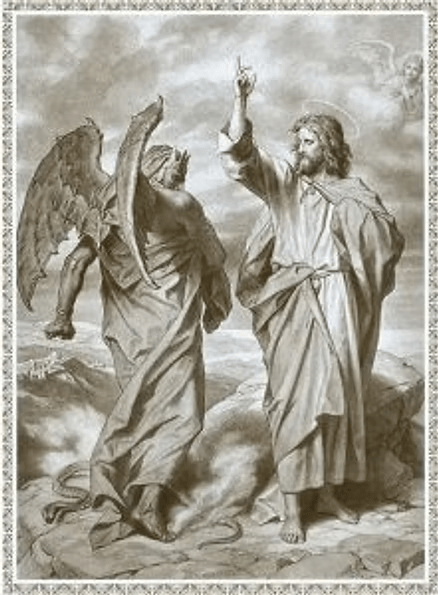
This means that James writing, “He will flee from you,” means “He” is the influence of the “evil demon” Satan. It is then just as Jesus commanded Satan, who tempted him, saying “Away from me, Satan!” From that command we then read, “Then the devil left [Jesus], and angels came and attended him.” (Matthew 4:10-11)

When Jesus Christ has been resurrected in one whose soul is married to God, then the urges to do wicked deeds will vanish.

It is then vital to understand the meaning of James writing, “Draw near to God, and he will draw near to you.” The repetition of the Greek word “eggizó” (as “engisate” and “engiei”) doubles the meaning of “extreme closeness, immediate imminence” [HELPS Word-studies], as “to join.” This is a way of stating to become one with God. It means marriage to God is recommended; but because God is the Most Holy Spirit, God does not join directly with human flesh.  So, God will not say “I do” on a physical altar.

God breathes the life of a soul into flesh, which is a soul spirit. That breath is the dividing of God into Him and you.  The marriage that draws near to God, and vice versa, is God’s Holy Spirit becoming one with one’s soul. It is the rejoining of a soul to its source.

This is the first step to a soul rejoining God in Heaven, after the death of physical flesh. Marriage to God means eternal life in Heaven, without the filthiness and guilt of a material body imprisoning a soul divided from God, which is repetition through reincarnation.

As the Epistle selection for the eighteenth Sunday after Pentecost, when one’s personal ministry for the LORD should be underway – one has found wisdom from above through one’s soul being reunited with God – the message here is to stop being fooled by earthly wisdom. Confusion, doubt, guilt and all the self-defeating sins of lust, greed, adultery and murder are erased when the heart is set on fire for Yahweh.

This Epistle reading selection is presented along with other readings that are calling one’s soul to the spiritual altar.  As I looked for pictures that would be symbolic of the title “Submit yourselves to God,” I came upon diagram produced by church organizations that used a series of umbrellas to show this message.  The largest umbrella was either depicted to be “God” or “Jesus Christ.”  Under it were two smaller umbrellas, depicting a “Husband” and a “Wife.”

The message of marriage that is assumed from reading the books of the Holy Bible is human, not Spiritual.  The leaders of churches, synagogues, mosques, and temples around the world, common in all religions, see females as commanded to be subservient to their male husbands.  While this human arrangement is resisted in modern Western societies, it is a reflection of the animal kingdom, which is “devilish.”  Not all animals on earth (humans included) adhere to the principles of marriage being a family, where husband, wife, and children all live happily together.

Just as all animals are naturally led to procreate and raise their young in variations of the family theme, humans also have variations that can be deemed “natural,” even though they differ from the norm.  This is not the point of marriage that comes from the words of Scripture.  God does not demand any life form on earth to submit to His Will.  God allows His breath to be divisions of Himself onto a plane where life forms were free to live according to self.

When animals express self, it is a natural program of survival.  Animals do not possess Big Brains that plot evil deeds.  Still, being predator and being prey is the natural order of that game of life.  Humans, however, do not have the same excuse as lower animals, because God gave them a large piece of flesh that reasons, while finding pleasures sought unnaturally.

To see a human rite of reason become the lone expression of most holy matrimony, where Man gets to pretend itself as god, while the feminine half of the species has to play the role of submissive animal, this is wrong.  It completely misses the point of one’s soul being rejoined with God, on a voluntary basis.  Males and females are expected to choose a marriage to God, in order to be freed from the prison in which their souls have been cast – the human form.  Humans are in the likeness of God because they have all been divided from God.  God is the pure Spirit.  Humans are the impure form.

For church organization to preach a need for good marriage values as the salvation of mankind, where a husband and wife together under God will live happily ever after is missing the most important point.  The institution of human marriage is in shambles because it has been corrupted by Satan.  The youth of today are turning away from traditional marriages and turning to alternative ways of co-existence and co-habitation, with children seen as an unwanted burden upon the world.

The human institution of marriage (as an official Sacrament of a Church is a relatively modern concept) is good, when it is a mutually willing commitment. It is good when it mirrors the oneness of two individual committed to God.  This sacred act is not always upheld, which makes it human, divided from God.  The answer is not to preach the wrongness of marriage born on the physical plane, where God gave souls a vacation from submission to only doing right.  Instead, it is important to preach the reminder: This is only a vacation.  Remember you are expected to go back to Heaven.  Renew your vows to God soon.

What Americans would think of taking a honeymoon in France and not make sure the Passport was in order?

Who says everyone can use a camera?

The eighteenth Sunday after Pentecost is when some wisdom came down from above and some wise men chose “marriage to God” lessons for priests in the name of Jesus Christ to explain to those still under training as disciples.  The heart needs to be softened and the brain needs to be lowered.  God is always offering His hand in marriage; but He will only join with those who prove a desire for Him.  A minister for the LORD will have accepted that proposal, so Jesus Christ can preach, “Let the little children come to me, and do not hinder them, for the kingdom of heaven belongs to such as these.”

That means marriage to God.  Rather than a lustful heart and a ritzy honeymoon, marriage means the love of a child for the Father, in the purest way.

James 5:13-20 – The benefits of prayer

Are any among you suffering? They should pray. Are any cheerful? They should sing songs of praise. Are any among you sick? They should call for the elders of the church and have them pray over them, anointing them with oil in the name of the Lord. The prayer of faith will save the sick, and the Lord will raise them up; and anyone who has committed sins will be forgiven. Therefore confess your sins to one another, and pray for one another, so that you may be healed. The prayer of the righteous is powerful and effective. Elijah was a human being like us, and he prayed fervently that it might not rain, and for three years and six months it did not rain on the earth. Then he prayed again, and the heaven gave rain and the earth yielded its harvest.

My brothers and sisters, if anyone among you wanders from the truth and is brought back by another, you should know that whoever brings back a sinner from wandering will save the sinner’s soul from death and will cover a multitude of sins.

———————————————————————————————————-

This is the Epistle selection from the Episcopal Lectionary for the Nineteenth Sunday after Pentecost, Year B 2018. In the numbering system that lists each Sunday in an ordinal fashion, this Sunday is referred to as Proper 21. It will next be read aloud in an Episcopal church by a reader on Sunday September 30, 2018. It is important because James presents the power of prayer as being magnified within the family of God, when those of the same relationship in the name of Jesus Christ unite to work wonders.

In the first verse above (James 5:13) the Greek word “kakopatheó” is written. This is translated as simply “suffering.” The full meaning is “suffering evil,” “enduring affliction,” where the combined root words come from “pain” [pathos] “of a malicious disposition” [kakós]. Thus, instead of falling off a bicycle and breaking an arm (suffering), the word implies “experiencing painful hardship (suffering) that seems to be a “setback” but really isn’t.” [HELPS Word-studies]

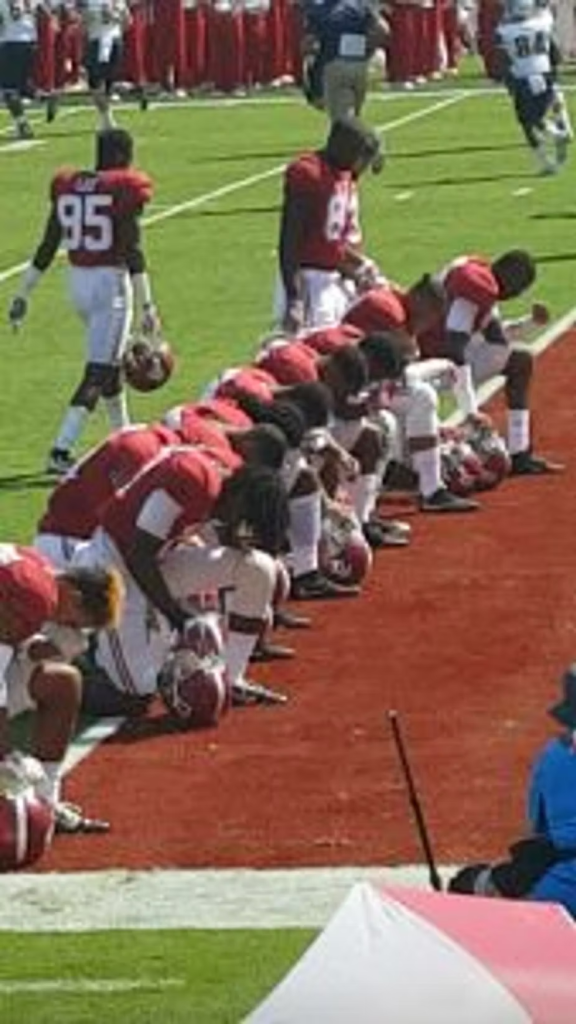
Please let us destroy the other team for the glory of a pro ball contract. Amen

Seen in that light, James was saying that “prayer” was the answer to setbacks that are the result of evil deeds. While prayer can help ease one’s pain from wounds, scrapes and bruises, medical treatment is God’s gift to mankind, knowledge allowed to be used as physical treatments for physical maladies. The mental damage of sins, worries, guilt, and the pressures of life’s hardships, however, makes prayer be the prescribed remedy.

It is also important to read the words, “any among you,” knowing that James was not writing a letter blankly to all humanity. His congregation was Jewish, in particular those who accepted Jesus as their Messiah. They did not accept James as their holy leader, meaning as a subsequence they accepted Jesus within themselves, like James had. Instead, they accepted Jesus Christ into their souls, due to James evangelizing to them, so all were reborn as Jesus Christ, servants of the Lord. This is, therefore, to whom James referred prayer, as all humanity regularly suffers from evil afflictions; but whereas common Jews did not know how to pray properly, those who were in the name of Jesus Christ were being reminded of the power of prayer that was available to them.

Likewise, when James repeated the Greek word “tis,” which means “anyone, someone, or some people,” the word pointed to “certain ones.” As a question to “certain ones,” stated as “Are you cheerful?” that question, like the first question, was directed at those who were filled with the Holy Spirit.

As a question following the suggestion for prayer at times of mental anguish, when prayers are answered and the sufferings of evil are removed, the natural state is cheerfulness. For those whose prayers have been answered, “They should sing songs of praise.” This, of course, is not a generic song from a hymnal of praises, but a specific song from one’s heart, praising God for having answered one’s specific prayer.

The hymnal holder has been replaced by arm rests with cup holders. Now you just follow the bouncing ball on the big screen.

This then leads to the question, “Are any among you sick?” where, again, the use of “tis” implies Jews in the name of Jesus Christ. The question says that sickness is a common affliction that occurs in all human bodies. Some viruses and infections can have the effect of removing the soul from the body, simply to separate a soul cleansed of sin from a mortal body in the process of breakdown. This separation can keep the human brain from thinking thoughts of prayer, because the soul is disconnected from the pains of a sickness.

In these cases, the elders (those “certain ones” who lead “certain ones” in gatherings) should be called to pray for the one needing prayer. This is a case where a “church” (“ekklēsias”) was understood to be “an assembly” (gathering) of members, who are all in the name of Jesus Christ.

That is stating the family relationship that comes from all Christians being reborn as the Son of the Father, so they have all taken on the name of Christ as Christians. This is then stated in verse 14 where it says, “anointing them with oil in the name of the Lord.”

While that is a viable translation, the scope of meaning that comes from the literal Greek makes this more powerful when it says, “giving shares of penetrating comfort to impart healing [aleipsantes] themselves [auton] with the indwelling of the Holy Spirit [elaiō] manifesting the character [onomati] of the Lord.” This becomes a viable translation of the intent, based on the words chosen.

If you needed surgery, you would not like to find out a bunch of actors were pretending to be your doctors; so if you need prayer, it always helps to have real priests of God surrounding you, not actors.

This healing is then done by those empowered by the Holy Spirit of God, using prayer as their personal call for divine assistance.  This is holy work done by the “elders” (“presbyterous”), who have been reborn as Jesus Christ longer and spread the Holy Spirit to more others more often, thus teaching those taught and healing those who cannot use the Holy Spirit to heal their own bodies. Family does not simply smear oil on the foreheads of Christians and pray a generic prayer book prayer for a soul to return to a healed body.

That would be a prayer of belief, where a book told one what to say and what to believe. That is what an institution or organization does. James, however, said that elders offer a “prayer of faith” (“pisteōs”), which is a prayer “received from God, and never generated by us.” A prayer of belief offers “confidence,” which is from a human perspective – the self-brain. That is, therefore, generated by the one believing in prayer, without true faith. A prayer of faith is a prayer from one who has Jesus Christ speaking through him or her, as an extension of God in an Apostle.

This is why James then added, “A prayer of faith will save the one ailing.” Again, when one is sick and incapacitated, unable to offer prayer, it becomes the one(s) who send collective prayer from the Christ Mind to the Holy Spirit of the sick Apostle. That intercession calls upon God for salvation. James then said, “The Lord will raise them up.”

The Greek word “egerei” is used, which is the future active form of “egeiró,” translated as “will raise up.” It is then important to know that the word is implying strongly (and can be directly translated as) “will wake us.” This is where one needs to realize that the implication of James asking, “Are any among you sick?” the meaning was, “Are any of you dying?”

The word translated as “sick” is “astheneó,” which (if not used to denote one being morally ill, which an Apostle would not be) means in a state of feebleness and weakness. Therefore, “save” and “raise up” have a meaning that intercessory prayers by the elders are to request the Lord to receive the soul of an Apostle in Heaven; but if the soul has more use on the earthly plane, the Lord can reconnect the soul to the body and awaken the body and soul back to life … and back to health.

This aspect says the elders gather (as Apostles in the name of Jesus Christ) and offer prayers that would request God forgive any sins the sick person might have committed prior to his or her illness, because that person might have become unable to plead for forgives personally. This is why James added, “Anyone who has committed sins will be forgiven.”

It is important to realize that James did not give a blanket “Get out of Sins Free card” by those words. They are written about one having fallen gravely ill and in need of fellow Apostles to intercede for that soul and body.

When the translation above has James saying, “Confess your sins to one another,” the Greek written better translates as, “Confess therefore yourselves the sins,” where the Greek word “allēlois” is the dative plural form of “allélón.”  That says confession can only bring forgiveness from God. Therefore, all Apostles should admit their sins freely to God. This means James was foremost giving the instruction to keep one’s personal sins at a minimum; but when one does sin, the confession (among all Apostles, each other, one another, themselves) must be to the LORD.

Certainly, it is the presence of the Christ Spirit within one that reminds one of sin, so the shame of guilt should be to confess before Jesus Christ, who is merged with one’s soul.  So, that petition is set before God for forgiveness by the Christ Spirit as sincere. To then admit one’s sins to other Apostles should only be to admit the flaws of the human condition and praise the forgiveness that God has shown.  Confession to others can only be done by those (giving and receiving) who model the life of Christ, which became the life those have lived in return for God’s forgiveness of sins.

What? Again?

The confessional in a private booth, between one who is not an Apostle and a priest who is, cannot have penitence given by that Apostle. Such confession should bring forth a recommendation that the sinner establish a life that pleases God; as that is the true path to forgiveness. Confession to a priest who is not filled with the Holy Spirit means sinners will not be led toward a life devoted to God.

When James then said to “pray for one another,” this is of course what Apostles do within the gathering of Saints.  That is the purpose of a Church (not a building). Still, when the series of segments began with a confession of sins “yourselves” before the Lord, that confession is now being said to be through prayer. Prayer is one taking to God.

Each Apostle is advised to pray often. Since Saints are more often apart than together, confession of sins and daily prayer are developing the Father-Son relationship each needs.  This daily communication is part of the training process for an Apostle, as through prayer one develops an ability to see, hear, and touch the answers that come from God as subtle signs and whispers of insight.

When James then added, “so that you may be healed,” the Greek word “iathēte” is a statement about prayer as a routine maintenance for the body. It is a word stated in the conditional voice, where the result is not guaranteed; one understands that.  It asks God to protect one from physical disease and spiritual misdirection.  God will respond as is necessary for God’s Will to be done.

An Apostle-Saint is a soul sought by Satan, so lures and traps (stumbling blocks) are to be expected, as well as avoided. Prayer enlightens one to steer clear of such pitfalls. Routine prayer is then done to beg for forgiveness for having fallen into one of Satan’s traps and to learn to spot a trap before any damage is done. This two-way communication with God keeps one healthy and able to help lead others to the same healthy relationship with God, reborn as Jesus Christ.

James then made the statement, “The prayer of the righteous is powerful and effective.” The literal translation shows this as, “Much prevails [the] prayer of a righteous [man] being made effective.” There is more to this than might initially meet the eye.

The Greek word “ischyei” comes from “ischuó,” which states an “ability” that is “strong” and “powerful.” The point being made by James is that “prayer” having been fully developed in one becomes the “power” of the “righteous.” Hand-in-hand, “prayer” is the “power” that makes one “righteous.”

The word “energoumenē” is then a form that focuses on the “work” that is associated with “righteousness.” This is (in the present participle of “work”) “being made” in those “righteous,” coming from God.  This is the building of one’s relationship with God, such that it strengthens and becomes more powerful over time.  The more one acts for God, the more one is “being made effectively” into what deems one “righteous.” Those acts done are led by the influence of God, through the Christ Mind, so one willfully follows. Everything is “powered” by “prayer.”

James then gave the example of Elijah, when he wrote, “Elijah was a human being like us, and he prayed fervently that it might not rain, and for three years and six months it did not rain on the earth.” This begins with a statement that Elijah was not born righteous. He was just like all the Jewish Apostles that James knew, being a man of flesh and blood, alive with a soul breathed from God.

Elijah became righteous because he heard the voice of God and listened.  Following that guidance, Elijah  developed a powerful ability to call upon the Lord through prayer.  That powerful ability effectively made Elijah the most highly revered prophet in Israelite history.

James further explained how Elijah “prayed fervently that it might not rain, and for three years and six months it did not rain on the earth.” Elijah did not cause it not to rain. God answered the prayers of Elijah, which extended over three years and six months.  Each day Elijah was praying daily to God.

The word translated as “fervently” comes from “proseuché,” which means “a place for prayer.” Since this was prior to buildings of prayer (synagogues) in Israel, Elijah was himself the place of prayer to God. Therefore he prayed to God daily, more than once a day, wherever he went.  Elijah had developed the Father-Son relationship that a prophet must have.

That is the power of prayer. It links God to the servant, making the servant as powerful as God sees His servant needs to be. It should be realized that the Father is the Master and the Son is the willing slave.  This does not imply an abusive relationship, but a necessary one between a Teacher and an Apostle.  The student must prove an ability to demonstrate what has been taught.  Therefore, God saw the righteousness of Elijah’s prayer for drought, and He granted the wish.

The land of Israel had become overrun with wickedness. When we then read that “Then [Elijah] prayed again, and the heaven gave rain and the earth yielded its harvest,” this says the land had seen the error of its wicked ways and turned back to God. The prayers of Elijah were joined with those of others who had been denying God their devotion. Therefore, when we read, “the earth yielded its harvest,” this was more than vegetables growing from the land. The people of Israel had repented and returned to praying to God.

The Festival of Sukkot is a God-commanded observance of the earth’s harvest – in plants and children of God.

That ending brought by Elijah is then turned by James towards his audience. As male Jews who he addressed, He called them “Brothers of mine,” which is a statement of all Apostles being “Brothers” in the (masculine) name of Jesus Christ, the (masculine) Sons of God. All Jewish females then, those who had been filled with the Holy Spirit and made Apostles, were also included in this address as “Brothers.” James said to them all, “If anyone among you wanders from the truth and is brought back by another, you should know that whoever brings back a sinner from wandering will save the sinner’s soul from death and will cover a multitude of sins.”

That means that just like Elijah brought back all the sinners of Israel by prayer to God, then the same expectations are in themselves, set by God for them. As the embodiment of the resurrected Son of God, each of them had the same powers of prayer as did Elijah. All were as righteous in their paths as was Elijah. All the Apostles were sent forth into Israel (then Judea and Galilee, et al.) to “bring back sinners from wandering,” just as they were once wandering sinners, saved by accepting Jesus Christ as the Messiah within their soul.

Each of the Apostles had been brought back from the death of their self-egos and the potential of losing their souls to hell.  They were saved because God forgave them all their sins. They were then expected to be like Elijah and pray to God for the great powers that will lead sinners to penitence.  The same expectations exist today.

As the Epistle selection for the nineteenth Sunday after Pentecost, when one’s personal ministry for the LORD should be underway – one has found the value of daily prayer as a way to care for others – the message here is to talk to God as part of developing a life of righteousness. One has to see God as the Father, which is a close personal relationship between the child (Son) and its parent, more than seeing God as the Creator of all and distant through His greatness and invisibility.

It should be realized that James was the brother of Jesus, as the son from Joseph the carpenter’s loins. James was a follower of Jesus, as a family member, but he was not a disciple who saw Jesus as a teacher. The disciples asked Jesus to teach them how to pray, which is an indication that prayer was not taught by the rabbis in the synagogues. Despite being taught the Israelites were the children of God’s choosing, they were not told how to see God as a loving progenitor.

This is why Jesus immediately told his disciples to pray by first identifying the Lord as “Father” (Luke 11) or “Our Father in heaven” (Matthew 6). Today, there is the repetition of a set grouping of words called “The Lord’s Prayer.” This is not what Jesus told his disciples to recite. Rotely repeating the words of Jesus aloud in church is missing the point of Jesus teaching his disciples, using the words recited, that prayer is a son asking his Father for that which is needed.

A Son asks the Father for insight each and every day (daily bread). He asks for forgiveness of his sins done and to release his angers in his heart for other sinners. He asks his Father to keep him from being swayed by the temptations of evil. In this reading from James’ letter, he followed that model without repeating the words of The Lord’s Prayer.

This says that the Jewish Apostles to whom James wrote understood the intent of Jesus’ teaching his disciples how to pray. As those filled with the Holy Spirit and reborn as God’s Son, they all felt in their souls a close personal relationship with God, as each of them was the Son of the Father. This is not the case of Christians in pews, if they do not feel the same closeness with God.  Many fail to contact Him daily, so many fail to live righteous lives.

Jesus did not recite “The Lord’s Prayer,” as he was simply giving instructions as to what sons should ask of their Holy Father [not a pope]. After speaking those famous words, few are taught to remember how Jesus then told his disciples the explanation behind those words.  Jesus said:

Ask and it will be given to you; seek and you will find; knock and the door will be opened to you. For everyone who asks receives; the one who seeks finds; and to the one who knocks, the door will be opened.”

Jesus continued: “Which of you fathers, if your son asks for a fish, will give him a snake instead? Or if he asks for an egg, will give him a scorpion? If you then, though you are evil, know how to give good gifts to your children, how much more will your Father in heaven give the Holy Spirit to those who ask him!”” (Luke 11:9-13)

Jesus explained that the way to pray was to speak to God as one’s Father in heaven.

More importantly than an instruction to “say after me,” Jesus told his disciples to pray to God for help – help for strength amid weakness, help for others in need – because the Father listens and will not refuse His Sons. However, if the only prayer one knows how to say is “The Lord’s Prayer,” God listens and then says, “Yada, yada, yada. But what do you want specifically. TALK TO ME!”

[“Yada” is the Hebrew word meaning, “I know.”]

Seeing this relationship – this entrance into the family of God, as His Sons (regardless of human gender) – is where one needs to realize prayer is not for selfish needs. Parents will know how their children quickly learn the word “gimme.” They incessantly repeat that word – “gimme, gimme, gimme, gimme, gimme …” – without really wanting anything specific. They scream for self-satisfactions, which are rewarded whenever parents actually give the child what it screams for, just to make it stop begging.

Humans are like our own children, as we love to see what we can get for nothing.  Humans are also like our own parents, as we love to make our kids happy, even if it means doing without personally.  This is how we can call God the Father, because God (like dad, more than mom) knows how to turn a deaf ear to the brains of selfishness.  Instead, God listens to hear what our hearts desire.

This is why one has to die of self-ego, in order to become married to God the Husband (to all human gender wives) and begat His Son in each – Jesus Christ resurrected.  We have to become one of the family.  We have been adopted as believers in Jesus as the Christ.  We come into the family as the children of God.

The rebirth of God’s Son means a serious growth development in the child, where the asking is not for selfish demands, but petitions for a better world. Prayers submitted through the Christ Mind are for healing purposes and church gathering support.  They are not self-serving, but to gain God’s health in the body of Christ – the whole (Church) and the individual (an Apostle-Saint).

True prayer, such as James wrote of in his fifth chapter, is for those who have matured in Christ. It asks God to give an Apostle the strength and stamina to become a reflection of the Father to the little children on earth.

James 1:17-27 – Taking a long, hard look in the mirror

Every generous act of giving, with every perfect gift, is from above, coming down from the Father of lights, with whom there is no variation or shadow due to change. In fulfillment of his own purpose he gave us birth by the word of truth, so that we would become a kind of first fruits of his creatures.

You must understand this, my beloved: let everyone be quick to listen, slow to speak, slow to anger; for your anger does not produce God’s righteousness. Therefore rid yourselves of all sordidness and rank growth of wickedness, and welcome with meekness the implanted word that has the power to save your souls.

But be doers of the word, and not merely hearers who deceive themselves. For if any are hearers of the word and not doers, they are like those who look at themselves in a mirror; for they look at themselves and, on going away, immediately forget what they were like. But those who look into the perfect law, the law of liberty, and persevere, being not hearers who forget but doers who act-they will be blessed in their doing.

If any think they are religious, and do not bridle their tongues but deceive their hearts, their religion is worthless. Religion that is pure and undefiled before God, the Father, is this: to care for orphans and widows in their distress, and to keep oneself unstained by the world.

——————–

This is the Epistle selection to be read aloud on the fourteenth Sunday after Pentecost [Proper 17], Year B, according to the lectionary for the Episcopal Church. It will be preceded by one of two pairs of Old Testament and Psalm readings, the first of which is a love song of Solomon, which metaphorically sings about a soul’s adoration of Yahweh. The other option is from Deuteronomy, when Moses addressed the people about watching how they acted, as those chosen by Yahweh as His brides. All will accompany a Gospel selection from Mark, where some Pharisees challenged Jesus about his disciples eating grain without washing their hands, at which point Jesus quoted the prophet Isaiah, telling them, “This people honors me with their lips, but their hearts are far from me; in vain do they worship me, teaching human precepts as doctrines.”

I wrote deeply about this reading selection, delving into the meanings of the words written by James, because all of the Epistles are written in the divine language of Yahweh. None of the letters offer the opinion of one soul, as all are souls that are Yahweh elohim, acting as His messengers, speaking what Yahweh tells them to write, and what specific language to write. The depth of that explanation is difficult for many to easily grasp [matching last Sunday’s Gospel message, when the followers of Jesus said, “This teaching is difficult; who can accept it?”]. While I fully stand behind what I wrote in 2018 (the last time this reading selection came up in the lectionary cycle), and I welcome all to examine what I wrote then, I will now take a different view [a whole-view perspective], based on this Epistle being chosen to accompany the other readings for this Sunday. Please read the 2018 commentary by searching this site.

Due to the Old Testament readings being a love song written by Solomon and Moses reminding the Israelites to always [a statement about eternal souls, not temporal bodies of flesh] remember the laws of Yahweh, the truth of both talks about the necessity of a soul to marry Yahweh. The bride adores the bridegroom, just as the soul finds deep love for the One God. The people of Israel were called so because each of their souls reflected “He [Who] Retains God.” A soul retains Yahweh by holy matrimony, so the Spirit possesses the soul, as Husband and wife.

This is always the truth of the Epistles, no matter who the auteur de jour is, which says each was a soul married to Yahweh, so each wrote what their Holy Husband directed them (lovingly) to write. One must understand that his having taken a position of complete subservience was what drove James to write this letter. It was his soul being filled with the Spirit of Yahweh that led his hands to write the truth in words.

In verse seventeen, the “gift” [“dōrēma”] is the presence of the Spirit. It is that presence that brings the light of truth, to which no “shadow” [“aposkiasma”] can be cast. Verse eighteen then confirms this as the “word of truth” [“logo alētheias”], where James and the other Saints were the “first fruits” [“aparchēn”] of common souls being married to Yahweh, for the purpose of letting other common souls know the marriage proposal was extended to them too.

When James wrote the key to “righteousness” [“dikaiosynēn”] means the ability to control one’s “anger” [“orgēn”], the only way that control becomes humanly possible is from divine powers within one’s soul. The body of flesh is connected to the sensory perceptions of the emotions, so “anger” is an automatic emotional response. The only way one tempers the urges of the flesh is from being divinely possessed. That possession is what Jesus called “the Advocate,” which is the Spirit of truth that makes it possible for his soul to then be joined with one’s soul. This emotional control system cannot be taught [like escaping life through Zen meditation]. It only comes from being reborn as Jesus, with his soul overriding one’s brain.

When James wrote, “Therefore rid yourselves of all sordidness and rank growth of wickedness, and welcome with meekness the implanted word that has the power to save your souls,” that is like Moses telling the Israelites, “Don’t forget all the laws I taught you.” That becomes more easily said and much harder to do. The only way to “rid yourselves” [“apothemenoi”] of anything is to stop being controlled by one’s own soul [the meaning of a “self”]. To eliminate that control over one’s body of flesh, one either has to physically die [and leave the body completely] or metaphorically die of self-ego [and step aside to a greater power of possession]. That can only come from submitting one’s soul to Yahweh and letting Yahweh impregnate one’s soul with that of His Son. That divine possession does indeed “rid yourselves” of all weaknesses that follow emotional outbursts.

James then wrote, “If any are hearers of the word and not doers, they are like those who look at themselves in a mirror; for they look at themselves and, on going away, immediately forget what they were like.” This was directed to Jews, none of whom knew what the deeper meaning “of the word” [“logou”] was, much less know how to always do what the word said do; and, that is still a perfect fit capture of Christians today. It is easy to “hear the word” and do nothing, especially when priests these days are saying, “Do nothing, because Jesus loves you the way your sinful behind is.”

When you look into the mirror, do you see yourself as a king [self-worship], or do you see your soul wearing the face of God, through submission of your self to His Will?

Recognizing one as a sinner is the meaning of “those who look at themselves in a mirror; for they look at themselves.” Again, a “self” is a “soul,” so sinners know their souls cannot abide by any laws written down in a book and preached about by sinners who disguise themselves [that soul word again] as pious. Thus, when all the looking at one’s soul is over [lasting about as long as an Episcopal service lasts], they walk out the door and “immediately forget what they were like.”

Can you say, “Nothing changes”?

James made that statement [divinely inspired] because change is the only way to look at your soul and not forget about your soul being too weak to stop sinning.

That change is hinted at when James then wrote, “those who look into the perfect law, the law of liberty, and persevere, being not hearers who forget but doers who act – they will be blessed in their doing.” The use of “perfect law” [or “law perfect,” from “nomon teleion”] reflects back on verse seventeen’s use of “gift perfect” [“dōrēma teleion”], where the only one “perfect” is Yahweh. The “perfect law” is that written on the walls of one’s heart [a “heart” equals a “soul”], which can only come from divine marriage. When Yahweh’s Spirit moves into one’s flesh, he nails a copy of the wedding vows inside one’s heart, so one never forgets the promises of love. One never forgets because the Spirit is the loving overseer of one’s flesh.

The major focus of this reading selection comes when James then wrote, “If any think they are religious, and do not bridle their tongues but deceive their hearts, their religion is worthless.” That not only defined the waywardness of Judaism two thousand years ago, but it hits the nail on the head as to the theft of true Christianity by the Roman Emperor, who then made himself a pope. The ordinances and dogma of “religions” [“thrēskeia”] becomes an external distraction from the inner Spirit. For all whose souls have yet to marry Yahweh it is this distraction that becomes competition against the holy matrimony one’s soul is proposed to come to. It is the false teachings of the “religious” [“thrēskos”] that makes those teachings “worthless” [“mataios”]. The meaning of “mataios” is “vain, unreal, ineffectual, unproductive, and useless,” but more importantly “godless.” Without one’s soul married to Yahweh, there can be no true acts that are deemed “religious.”

As the Epistle reading selected to be read aloud on the fourteenth Sunday after Pentecost, when one’s own personal ministry to Yahweh should already be well underway, the lesson here is to realize where one’s soul is. One needs to take a long, hard look inside, where the mirror of truth exposes the state of one’s soul within. The lesson is to ask oneself [one’s soul], “Am I a church-goer simply because some sinful priest tells me Jesus loves me, even though I am too sinful to ever get to heaven; but the priest never tells me to change and never tells me how to change”?

The season of Pentecost is ALL ABOUT MINISTRY and ministry can only come from a soul marrying Yahweh and becoming the flesh into which is resurrected Jesus, causing the Son of man to be reborn. It has always been the right of a soul to choose whether or not it will be a sinner or a saint. To stand alone in a world, which is the only place where sin can freely exist, means one will be influenced to be a sinner. One is powerless to stop the wiles of Satan, when one stands alone. When there are no longer any priests who are perfectly religious, then the people will be led to become sinners. The purpose of this reading today is to realize the system is the flaw and take matters into one’s own hands. Open your heart and receive the Spirit of marriage to Yahweh. Become His Son again in the flesh. Go forth and preach the perfect truth, so others will be led by that light.

James 2:1-10, [11-13], 14-17 – Understanding the difference between belief and faith

My brothers and sisters Adelphoi mou, do you with your acts of favoritism really believe in our glorious Lord Jesus Christ? For if a person with gold rings and in fine clothes comes into your assembly, and if a poor person in dirty clothes also comes in, and if you take notice of the one wearing the fine clothes and say, “Have a seat here, please,” while to the one who is poor you say, “Stand there,” or, “Sit at my feet,” have you not made distinctions among yourselves, and become judges with evil thoughts? Listen, my beloved brothers and sisters adelphoi mou agapētoi. Has not God chosen the poor in the world to be rich in faith and to be heirs of the kingdom that he has promised to those who love him? But you have dishonored the poor. Is it not the rich who oppress you? Is it not they who drag you into court? Is it not they who blaspheme the excellent name that was invoked over you?

You do well if you really fulfill the royal law according to the scripture, “You shall love your neighbor as yourself.” But if you show partiality, you commit sin and are convicted by the law as transgressors. For whoever keeps the whole law but fails in one point has become accountable for all of it. [ For the one who said, “You shall not commit adultery,” also said, “You shall not murder.” Now if you do not commit adultery but if you murder, you have become a transgressor of the law. So speak and so act as those who are to be judged by the law of liberty. For judgment will be without mercy to anyone who has shown no mercy; mercy triumphs over judgment.]

What good is it, my brothers and sisters adelphoi mou, if you say you have faith but do not have works? Can faith save you? If a brother or sister is naked and lacks daily food, and one of you says to them, “Go in peace; keep warm and eat your fill,” and yet you do not supply their bodily needs, what is the good of that? So faith by itself, if it has no works, is dead.

——————–

This is the Epistle selection to be read aloud on the fifteenth Sunday after Pentecost [Proper 18], Year B, according to the lectionary for the Episcopal Church. It will be preceded by one of two pairs of Old Testament and Psalm readings, called Tracks 1 and 2. Track 1 places focus on a proverb of Solomon, which credits Yahweh for the creation of both rich and poor. Its Psalm sings praises to Yahweh as coming from those pure of heart. Track 2 places focus on a song of Isaiah, where he sang of fears being replaced by living waters, when a soul weds Yahweh. The Psalm sings of the benefits that come from servitude to Yahweh. All will accompany a Gospel reading from Mark, when Jesus went to Gentile lands and healed a girl with an unclean spirit and made a deaf man hear.

I wrote about this reading and published my views the last time this reading came up in the lectionary cycle, in 2018. That commentary can be read by searching this site. Those observations still apply, so I welcome all to read it and offer comments and suggestions, questions and corrections. For this analysis, I will only focus on a few elements. Please feel free to compare the two.

In my 2018 commentary, I addressed the issue of the NRSV [and the Episcopal Church] having transformed the words written by James – “Adelphoi mou” – into “My brothers and sisters.” The words written clearly translate into “Brothers mine,” or “Brothers of me.” There is absolutely nothing written that says “and sisters.” I want to advance what I wrote in 2018, because I believe this needs to be divinely understood as being Yahweh moving James’ hand to write, not James being gender-phobic.

Last Sunday the Gospel reading from Mark pointed out how Jesus called out the Pharisees and scribes, who came to him complaining that Jesus’ disciples were eating without first washing their hands, as being “hypocrites.” They had made up a general doctrine that was based on the Mosaic laws that were intended solely for the Levitical presence within the Tabernacle. Therefore, Jesus called them “hypocrites,” and then quoted Isaiah to them. The focus of that quote says the failure of a religion is always based on big-headed leaders doing lip-service to Yahweh, while changing the laws to suit their own needs. That practice is now on display by “hypocrites” changing “Brothers mine” into “My brothers and sisters.”

F.Y.I.: “hypocrite” means, “1 : a person who puts on a false appearance of virtue or religion. 2 : a person who acts in contradiction to his or her stated beliefs or feelings.” [Google search]

James was writing to the first ‘Jews for Jesus’ or the first true Christians, all who were born and raised Jews. James was not writing a letter to Gentiles who had been transformed by their souls marrying Yahweh and being filled with His Spirit, then giving birth to the resurrected soul of Jesus, therefore all becoming Yahweh’s Anointed one [i.e.: each a Christ]. While it was true that the society of Jews at that time was one that addressed the menfolk publicly, it was not exclusive of the wives and daughters (even the children). Peter made a point of writing (on occasion) of “sisters,” but only when that difference in human gender needed to be addressed. James, in like manner, was not excluding anyone because of their human sex organs not being that of an adult Jewish male. Reading the Epistles with a brain that seeks human precepts on doctrine will make physicality take precedence over spirituality; and, that should be avoided.

I have consistently, for some time now, explained that souls in bodies of flesh need to marry Yahweh and become His brides. In that way, males and females alike are feminine essence as a neuter soul taking on the gender of the material realm, which is feminine. The feminine receives spirit, as seen in a baby receiving the breath of life at birth. As such, spirit is masculine essence that penetrates the feminine flesh. Yahweh being the Father, as the Creator of all that is spirit and matter, must be seen as the epitome of masculine essence. All human souls are called to submit to Him in divine marriage, as brides-to-be (neuter gender souls in feminine bodies of flesh that are either male or female by physical sex). Just as men wed virgin women, so there is a husband and wife (mother-to-be) resulting, so too does Yahweh seek souls to penetrate and bring forth His Son [no daughters allowed].

This means that a soul in a body of flesh [both genders] is the wife that becomes penetrated by the Husband. It is a rebirth of the soul, similar to the change of state that comes from the breath of life entering flesh at physical birth. This marriage becomes how one can call Yahweh one’s Father [just as a baby has identity with its biological father]. Yahweh is the Father who (through the penetration of His Spirit with a soul) impregnates a soul with a twin soul – that of Jesus. This becomes the rebirth of Jesus, as the resurrection of his soul with the soul of a wife to Yahweh [born (again) from above]. This rebirth makes a wife become Jesus reborn – ALL OF THEM! Therefore, all who are true Christians [reborn Jesuses] are then “Brothers” [not “brothers and sisters], because Yahweh is masculine, as is also the divine soul of His Son Jesus.

The capitalization of “Adelphoi” must be read as an important statement about “Brotherhood.” Capitalization in divine Scripture [New Testament, as Hebrew has no capital letters] means a divine level of meaning must be applied. The divine level of meaning read into “Brothers” is all are the children of God [male Sons in Spirit reborn], so all are related to the same Father. Because Jesus is the Son of man, all human souls who have become reborn as Jesus are also Sons of man [not daughters of man]. Because it is the soul of a wife of Yahweh [in the bodies of males and females they come] joined with the resurrected soul of Jesus [only the masculinity of Yahweh, as His Son] the result is a soul that is no longer neuter gender, but masculine [regardless of what sex organs a body of flesh possesses]. Because Yahweh is ‘God enough’ to do this to many souls in the flesh, and Jesus is ‘soul enough’ to be resurrected wherever the Father says “Go,” the result is who James wrote to.


Therefore, the capitalized word “Brothers” is a statement about divine relationship, when all souls, regardless of their human genders, are reborn as “Brothers” in that Spiritual family. All are the Christ of Yahweh [a soul Anointed by Yahweh’s Spirit] , because they have been deemed worthy bridesmaids, whereby the gift of the Spirit is a Holy Baptism that removes ALL past sins, due to a bridesmaid PROVING a commitment to serve the Husband through deeds of loving submission, for eternity (something only souls can claim). That Spiritual Cleansing by Spirit makes the wife-soul’s flesh transfigure from a dump heap of sin to a Temple in need of a High Priest (and Jesus said, “My kingdom is not of this world.”) This means the resurrection of Jesus’ soul with their soul is to enter purified, sacred, and hallowed ‘ground’ to become the Lord that maintains that forgiveness of sin, by never again allowing that wife-soul to become swayed by the temptations of the flesh. That Anointment (in Greek) means a new presence of “Christ” in the flesh is “Jesus” (a name meaning “YAH Saves”), which is to be “in His name” (of divine union), as the Son reborn from above; and, that is the truth of the name “Christianity.” To truly be Christian means to be one who has Jesus as his or her Lord, where the wife-soul speaks not for the self, but as the Son, who speaks for the Father. Pretenders to this truth are false shepherds.

People who have no personal experience with the presence of Yahweh’s Spirit, because their souls have not done the required testing of their sincerity for such a divine union, think of Scripture in human terms. The changes that always take place in society are then reasons for religious leaders to amend the Word to suit societal norms and acceptances. Priest who do not want to offend the women of their parishes (women are the ones who give the most cash and are more inclined to name churches in their wills) have led to this change in English translations. Therefore, those who recite “brothers and sisters” are standing before their congregations in the same way some Pharisees and scribes stood before Jesus, telling him their “human precepts of doctrine,” which honors themselves, only giving Yahweh lip-service.

Three times in these selected verses James wrote “adelphoi mou.,” In two subsequent presentations it is presented in the lower case spelling. The same interpretation of “brothers” should be seen. This then brings focus to the word for “brothers” three times being immediately followed by the word “mine” or “my.” The Greek possessive pronoun “mou” is rooted in the word “egṓ,” which translates in the first person as “I.” Because a marriage of a soul to Yahweh means one must surrender one’s “ego” or identification as “I,” the “ego” (or the “soul”) becomes possessed by Yahweh. The twin soul of Jesus becomes the replacement “ego,” so each “I” is as him, as the Son of man. This is the genitive case being used, where all “Brothers” are like James, having all given their “egos” or “selves” [mou” can mean “ourselves”] to Yahweh, lowering their faces of “ego,” raising up the face of Yahweh as the face they wear to the world [that face Spiritually looks like Jesus]. This face is equally worn by men and women, whose neuter gender souls have become merged with the masculine Spirit of Yahweh and His Son. In that way, James stated they were “Brothers” by all sharing the common sacrifice of “self” [a “self” is a “soul”] to Yahweh, becoming His possessions, so all are “in His name.” [That is a statement of marriage, where the feminine takes on the name of the masculine in that union.] That name is “Jesus,” which means “Yah[weh] Saves.”

I have added these clarifying remarks because Christianity has been reduced to an image, an icon, or an idol of its origins, which has come because of people pretending to know some things, when they know nothing of value. Yahweh knows all about souls being incarnated in bodies of flesh that demand different sex organs, so the species can be regenerated in the material realm. Yahweh breathes souls into dead matter, allowing dead matter to be animated with a form of life, until that dead matter is no longer able to sustain a residence for a soul. Therefore, Yahweh knows there are males and females that serve Him; but Yahweh led a true Apostle to write “Brothers” for a reason that must be truthfully discerned. However, some panderers of human precepts of doctrine have felt the need to correct Yahweh.

Relative to this awareness is last Sunday’s reading from James, in his first chapter, where he wrote, “If any think they are religious, and do not bridle their tongues but deceive their hearts, their religion is worthless.” Certainly, James was addressing the Jews who had persecuted Jesus to death, as the religion they had been born into was that which had become so degraded centuries earlier that Yahweh sent prophet after prophet, to both the Northern and Southern kingdoms, to tell them they had made so many changes in the meaning of Mosaic Law that they had reduced their religion to a state of worthlessness. Still, because James was writing what Yahweh instructed him to write [as His wife-soul in marriage], the Mind of Yahweh is all-knowing and was then well aware of the degradation that would come to the religion called Christianity. Yahweh knew then what would become now (and beyond). Just like the religion of the nations headed to ruin, and their brothers and sisters who were returned Jews also headed to ruin, the road to ruin is one paved with the worthlessness of human precepts of doctrine that do little more than give Yahweh lip service. Therefore, as the path Christianity is on now is the same path of old, it is surely headed to ruin as well.

When a soul’s call is to marry Yahweh – the simplicity of Moses and the simplicity of Jesus – that call has been reduced by human ideas that reject complete commitment. It welcomes precepts that avoid using the proper name “Yahweh,” preferring to call Yahweh some generic “lord.” Such generic use could just as easily be applied to Satan. Because Satan requires nothing more than a soul to say, “Okay,” rather than “I do,” a soul marrying Satan brings worthlessness. It cannot even teach its members the name of their God, who calls their souls to marry Him: Yahweh. Yahweh is not some demon called “drug addiction,” or “homosexuality,” or “gang murderer.”

[Note: YHWH is what was told Moses, when Moses asked, “Who do I say sent me?” It means, “I AM WHO I AM.” This means Moses was told, “Whoever asks what Authority brings you? You say, “I AM” the Authority as “I AM WHO” you are “WHO” moves his lips as “I AM” speaking. What Jesus repeated about his speaking for the Father, because the Father was in him, is the equivalent of Jesus answering “Who are you?” by saying, “I AM WHO I AM.”]

When “Brothers ourselves” gets reduced to “my brothers and sisters” [a lie, if James was not writing to biological family members], Christianity has no way of being Sons of man [in men and women as married souls of Yahweh], as Jesus reborn. When “Jesus Christ” is seen as some fictional character in heaven, sitting on a throne next to God (with “Christ” being his last name), there is no way the truth of Christianity can ever resurrect. When the Spirit of Yahweh is not seen as the most important addition to one’s soul, as His Spirit that makes one walk a path of righteousness – BE HOLY – calling it instead a “Holy Spirit,” which is like God and Son [a group of ‘three manly mans’], then that Spirit can never be one with one’s soul. Ruin is then neigh.

In verse ten, James is shown [NRSV] to write, “For whoever keeps the whole law but fails in one point has become accountable for all of it.” Sin creates the ‘weakest link’ that leads to infidelity. That is a statement that says, when one’s soul has submitted totally and completely to Yahweh, it is then Yahweh’s Spirit that controls the body of flesh; and, that means the Law is written on one’s heart [soul], so that body of flesh never ventures beyond the directions of Yahweh. Every example James gave of the Jews obviously being self-led sinners says they have absolutely no right to preach good and evil to anyone else. The same conditions exist today. Being a homosexual is a sin. Sinners cannot be saints, because their souls are married to Satan. Those who pander to homosexuals (because they tend to make a lot of money) are likewise sinners. The churches have become dens of sin. No leaders are filled with Yahweh’s Spirit; so, no leaders are leading others to be souls married to Yahweh and stop sinning forevermore. They cannot do that! They don’t know how to teach that.



When a soul is married to Yahweh, one only eats the fruit of the Tree of Life. The knowledge of good and evil comes from the Mind of Christ; but oneself cannot eat that forbidden fruit.

This whole reading comes down to a question of “faith.” There is no “faith” without personal experience. One can believe in Yahweh all day long; but until one’s soul has been penetrated by Yahweh’s Spirit – AND MADE HOLY – one is just talking one’s opinion about what one heard another say. Belief is hearsay. Marriage with Yahweh’s Spirit is faith; and, faith does not come because one is pretty and rich, as if Yahweh wants some of what one has. Marriage, penetration, the rebirth of Yahweh’s Son is not so one can brag about how wonderful one is [“If Jesus was here today, he would agree with my opinion.”]. A soul becomes one with Yahweh [FOREVER] because one is going to be a minister (priest) for Yahweh, which means WORKS. Thus, James wrote [NRSV], “So faith by itself, if it has no works, is dead.”

The aspect of death means a soul has been born into a body of flesh, which is dead. Matter has no life in it, whatsoever, beyond the eternal life a soul brings to dead matter. What James said is a soul that is in dead matter, without the presence of Yahweh’s Spirit [and thereby His Son] is then one only spouting ideas and opinions of belief [“pisits”]. Pistis without Yahweh’s union with one’s soul is simply the breath of life in matter that will die, releasing that breath to return into more dead matter [reincarnation]. The presence of Yahweh’s Spirit leads a soul’s body of flesh to acts (or works) of “faith” [“pistis”]. That means a soul alone in dead matter can have no more than “belief.” So, when that dead matter falls away from that soul, then that soul gets reincarnated [or worse … eternal damnation]. Faith, on the other hand, means salvation for a soul when it is released from its dead flesh.

[Note: When John’s fourteenth chapter tells how Jesus said to his disciples, “I will ask the Father, and he will give you another advocate to help you and be with you forever” (John 14:16, NIV), this does not mean the soul of Jesus would float up to a cloud throne in Heaven, where he would plead, “Daddy, please let my disciples come here.” It is a promise that those souls released by their dead flesh will stand alongside the soul of Jesus before the throne, where Jesus’ presence with that soul eternally will ask “the Father,” I AM WHO I AM have come with your wife-soul to join You with us forever.

When Jesus then said, “the Advocate, the Holy Spirit, whom the Father will send in my name, will teach you all things and will remind you of everything I have said to you” (John 14:26, NIV), this says Jesus will speak for a wife-soul brother, as the Lord (paraclete as a “close beside intercessor” Advocate) sent by “the Father” via “the Spirit to Sacred” (from Pneuma to Hagion – a Cleansed Temple, forgiven of past mistakes), in my name (“Jesus,” meaning “Yahweh Saves” souls from its flesh); so, everything done (the “works” of faith) by a minister in the name of Jesus Spiritually, as a Christ reborn from above, will be I AM WHO I AM speaking through the mouth of a Saint that looks nothing like picture book Jesus (maybe in a female body of flesh!). That becomes the works of faith that speak just as the disciples heard Jesus say, “I speak for the Father who is in me.”]

As the Epistle selection to be read aloud on the fifteenth Sunday after Pentecost, when one’s own personal ministry to Yahweh should already be well underway, the lesson is clear: Stop thinking you know some things, when the only thing known of importance is the presence of Yahweh’s Spirit after divine marriage. All opinions of belief cease at that time. One enters ministry as the hand of God on the earth, which is not meant to teach right from wrong. Knowledge of good and evil is the fruit of death and banishment from heaven. The only point of ministry is to teach others to give their souls to Yahweh and then let Yahweh lead their lives righteously.

James 3:1-12 – Being a teacher of faith

Not many of you should become teachers, my brothers and sisters, for you know that we who teach will be judged with greater strictness. For all of us make many mistakes. Anyone who makes no mistakes in speaking is perfect, able to keep the whole body in check with a bridle. If we put bits into the mouths of horses to make them obey us, we guide their whole bodies. Or look at ships: though they are so large that it takes strong winds to drive them, yet they are guided by a very small rudder wherever the will of the pilot directs. So also the tongue is a small member, yet it boasts of great exploits.

How great a forest is set ablaze by a small fire! And the tongue is a fire. The tongue is placed among our members as a world of iniquity; it stains the whole body, sets on fire the cycle of nature, and is itself set on fire by hell. For every species of beast and bird, of reptile and sea creature, can be tamed and has been tamed by the human species, but no one can tame the tongue– a restless evil, full of deadly poison. With it we bless the Lord and Father, and with it we curse those who are made in the likeness of God. From the same mouth come blessing and cursing. My brothers and sisters, this ought not to be so. Does a spring pour forth from the same opening both fresh and brackish water? Can a fig tree, my brothers and sisters, yield olives, or a grapevine figs? No more can salt water yield fresh.

——————–

This is the Epistle reading selection to be read aloud on the sixteenth Sunday after Pentecost [Proper 19], Year B, according to the lectionary for the Episcopal Church. This will be preceded by a variety of readings, based on Track 1 and Track 2 pairings of Old Testament and Psalms, based on the track preselected by a church for Year B. If track 1 is to be read, it will place focus on Proverbs 7, where Solomon wrote, “I also will laugh at your calamity; I will mock when panic strikes you.” If Track 2 is the path for that church year, then the focus will be placed on Isaiah, who wrote, “I did not hide my face from insult and spitting.” All will accompany the Gospel selection from Mark, where Jesus asked his disciples, “But who do you say that I am?”

I wrote about this reading the last time it came up in the lectionary cycle, in 2018. It can be read by searching this site. I offered some opinions then that are still valid today; so, I welcome all to read those views and compare them to the additional views I now offer. Because Scripture can mean many things, all true, I want to focus on some truths that I did not shine light on three years ago.

In 2018, I placed focus on the need to look deeper into the translations that have become English paraphrases that mislead. That is always a problem that needs to be addressed, as Scripture is divine language that is freer to express than the English language allows. Still, with my observations of 2018 addressing that need, I want to focus solely now on the content of James’ words. In that, “Not many of you should become teachers” is the theme throughout this selection. His adding, “From the same mouth come blessing and cursing,” which “ought not to be so,” is then relative to Jewish “teachers,” not everyone in the world. I will now speak about what that means (in my humble opinion).

The Greek word written by James that has been translated as “teachers” is “didaskaloi.” In the singular, “didaskalos” means, “an instructor” (Strong’s Definition), implying “a teacher, or master” (Strong’s Usage). According to HELPS Word-studies, this is written:

didáskalos (a masculine noun derived from 1321 /didáskō, “to teach”) – a teacher, an instructor acknowledged for their mastery in their field of learning; in Scripture, a Bible teacher, competent in theology.”

From this, James – a devout Jew, whose ministry was directed wholly on Jews rather than Gentiles – wrote the Greek equivalent to what Jews today (and to some degree then) call some “rabbi.” Therefore, the point of his adding what “ought not to be so” is not focused on normal speech, from normal teaching, but that of being a “master” of the meaning of Scripture.

In the Wikipedia article entitled “Rabbi,” which is worth reading, they say the term “rabbi” was not used prior to the first century CE. The original intent was rooted in “raising” the children to be “great” in mastery of the tenets of servitude to Yahweh. This meant the teaching of the children was relative to the role of the “father.” This should be seen as why priests of Catholicism take on the name “Father,” as it is not a statement of equality to Yahweh [THE FATHER], but a statement of “teacher of children.” * [ see footnote] Thus, the title “rabbi” took on that same meaning; and, because the title was still new when James wrote his Epistle, he used the word “teacher” to refer to those who were entrusted to teach Mosaic Law to the children of Israel.

This understanding then allows one to see that James wrote, “we who teach will be judged with greater strictness” as a statement about the judgment of Yahweh. Thus, when James wrote, “all of us make many mistakes,” those “mistakes” [the Greek “ptaiomen” was written, meaning “stumbles”] are references to the sins and transgressions of the “teachers,” who were saying one thing, but doing another. James was not referring to simply “mistakes” that come from reading a law of Moses and teaching it meant one thing, when it would later be found out popular opinion changed and said it meant another. The mistakes of “teachers,” as “fathers” setting the examples of the Law for their children to follow, were relative to being an adulterer or murderer (for examples), while teaching, “Do not do that.” Teaching demands practicing what one preaches – leading by example.

This means that control of how one acts, more than the control of what one says, is the purpose behind James using the parallels of a bridle on a horse-mule and a rudder on a boat. In both cases, the animal and boat become metaphor for the way one proceeds in life. One is either aimless or aimed. As far as all the talk goes, a farmer will perfectly plan how to plough a field or make a quick long-distant journey, just as a sea captain will set a course from one port to another, planning to take the shortest route possible. Those plans are parallel to “teaching” the Word of Yahweh, as rote memorization of Mosaic Laws; but the problem is always the reality of what happens once one sets out to do that which has been planned. Life becomes the horse-mule and the boat, which is completely ignorant of any planning. Life goes where it wants, unless it is controlled. Those controls are then why a bridle and a rudder become absolutely necessary – not optional attachments.

By understanding this, James was saying the controls that must be added to a human being – in particular a Jew who claims to have belief in Yahweh, the One God of Israel – is divine possession by Yahweh. That can only come from one’s love of Yahweh leading a soul to do the works that attract a divine proposal for marriage, until one has proved its soul worthy to be a bride and be called into the most holy of all matrimony. In that word – “matrimony” – the root means a bride is called to become a mother, which makes all bridesmaids of Yahweh be feminine [Yahweh is the Father, thus masculine], who receive His Spirit and give birth to the Son, which means the resurrection of Jesus’ soul within one’s being [i.e.: soul]. James was the brother of Jesus, sharing the same mother; but James was not a strong supporter of Jesus during his ministry. It was after Jesus died and resurrected and stayed with his disciples for forty days that James fell in love with Yahweh, married Him, and then became Jesus reborn into his flesh. James added Jesus to his ‘vehicle,’ meaning James ceased being aimless, as Jesus then directed him according to God’s plans.

When James had his divine bridle-rudder installed within his soul, he knew the truth behind his words: “the tongue is a small member, yet it boasts of great exploits.” The Greek word “glossa” not only translates as “tongue,” but also as “a language, a nation (usually distinguished by their speech).” (Strong’s Usage) Because all Jews allowed into the synagogues could speak [the mutes were outcast as sinners], they all had bridles-rudders self-installed that led their course of action. James ceased letting his “tongue” be about what James was led by the world to do. Instead, James became led by the Spirit of Jesus to be righteous AND to speak magnificently about all the Spirit of Jesus had led him to understand and do. Others, unfortunately, bragged about how much money they made from teaching, while having nothing to show for their words other than material things.

When James was then led to write, “the tongue is a fire,” that spoke of how great the effects of what one says [about one’s beliefs, or religion] can have on others [of the same beliefs, or religion]. A few good words can enflame the heart of another and make he or she burn with desire to please Yahweh. On the other hand, a few bad words can act as the go-ahead to sin and have no worry about the consequences. For those who cannot teach the truth that leads others to marry their souls to Yahweh, James wrote: “For every species of beast and bird, of reptile and sea creature, can be tamed and has been tamed by the human species, but no one can tame the tongue– a restless evil, full of deadly poison.” That says no human being can lead others to Yahweh, if that one’s soul has never been in love with Him and brought forth His Son in their own flesh. The Law being written on scrolls cannot make man nor beast do anything that isn’t natural; and, man is naturally inclined to sin. Thus, to have the tongue of a teacher [a “father”], one needs to have been taught to teach first; and, a teacher [“father’] sets a fire that can often be more destructive than beneficial.

It was about the failures demonstrated by those who were the elite of Jerusalem – the Pharisees, Sadducees, scribes, and high priests – that caused James to write: “From the same mouth come blessing and cursing.” They were the epitome of the axiom: “Do what I say, not what I do.” Those who forgave those of stature [for a sizable donation to the cause], but condemned those who did the same sins, but could not afford to buy the judges, they were the ones who spoke out of two sides of the same mouth. The native Americans called that “speaking with a forked tongue.”

When James used the metaphor of “fresh and brackish water,” fig trees yielding olives and grapevines bearing figs, he was saying a human being is a soul alone in a body of flesh that can only do what the world leads the body of flesh to do. The only way to stop doing wrong and do right is to submit one’s soul to Yahweh in marriage, which means the sacrifice of self-will and self-ego, so one’s soul-flesh is no longer influenced by worldly things. The well of only fresh water is the eternal water of Jesus in one’s soul. The presence of Jesus forbids any brackish water from ever entering the well, which springs from the mouth. The rebirth of Jesus means one can only bear the fruit of the truth of Yahweh, the Father.

As a reading selected to be read aloud on the sixteenth Sunday after Pentecost, when one’s own ministry to Yahweh should already be well underway, the lesson is clearly to stop being rudderless or stop being led by natural, knee-jerk reactions. It is impossible to be righteous without Yahweh’s Spirit within one’s being. It is impossible to do the acts of faith without having been reborn in the name of Jesus, as the Christ resurrected. It is impossible to pretend to “teach the children” how to marry their souls to Yahweh, when one’s soul has never known that love.

James had been a believer of Yahweh, as a devout Jew; but he was one who saw Jesus with disdain. One needs to see oneself as James, before he became Jesus reborn. James was speaking in this selection about knowing himself, before his soul married Yahweh and Jesus became resurrected with his soul. He had been a teacher with a poor education. That means all the brackish water and all the condemnation that had flown from his mouth hole before James became Jesus, is no different that the ‘garbage in, garbage out’ teachings of all Christian readers of his Epistle. The lesson is to set the hearts of others on fire for Yahweh, not to burn in hell for spreading the fire of lies. To do that, one has to have one’s own heart be set on fire by Yahweh.

———-

* With the advent of women’s lib in Christian ministry, there should be not change in this aspect of “fathering,” relative to Scripture. The traditional role of “father” is as disciplinarian, such that strict adherence to that taught must be maintained. “Mothering” is not the equal to that, as a mother kisses booboos and makes them well, forgiving lots of crap until pushed to the limits, saying, “Wait until your father gets home.” A “mother” is the opposite of a “father,” as the generality of women is to be emotional, such that being strict is not their forte.
Female priests are proving to be too emotionally weak to make principles be strongly enforced. They act as if hugging the world will make all sins go away. It will not. Men and women should teach the same principles, thus human gender should not be a “teacher of children religious studies.”

I am not in favor of female priests being called “Mother,” as sexual gender is not a value that should receive attention. From what I have heard about the nuns in parochial schools, they used rulers under the axiom: spare the rod, spoil the child. That is a teacher that is “fatherly.” Since Roman Catholic male priests have been found (too many times) not acting “fatherly,” as far as being a “teacher of children,” they should be stripped of the title of “father.” All who cannot teach (the point of what James is writing in this selection) need to go by Mr., Ms., or Hired Hand, like any other regular school teacher.

James 3:13-4:3, 7-8a – The wisdom from heaven

Who is wise and understanding among you? Show by your good life that your works are done with gentleness born of wisdom. But if you have bitter envy and selfish ambition in your hearts, do not be boastful and false to the truth. Such wisdom does not come down from above, but is earthly, unspiritual, devilish. For where there is envy and selfish ambition, there will also be disorder and wickedness of every kind. But the wisdom from above is first pure, then peaceable, gentle, willing to yield, full of mercy and good fruits, without a trace of partiality or hypocrisy. And a harvest of righteousness is sown in peace for those who make peace.

Those conflicts and disputes among you, where do they come from? Do they not come from your cravings that are at war within you? You want something and do not have it; so you commit murder. And you covet something and cannot obtain it; so you engage in disputes and conflicts. You do not have, because you do not ask. You ask and do not receive, because you ask wrongly, in order to spend what you get on your pleasures.

Submit yourselves therefore to God. Resist the devil, and he will flee from you. Draw near to God, and he will draw near to you.

——————–

This is the Epistle reading selection for the seventeenth Sunday after Pentecost [Proper 20], Year B, according to the lectionary for the Episcopal Church. It will follow a pair of Old Testament selections, with an accompanying song, based on a church’s path during Year B, either Track 1 or Track 2. If Track 1 is the path, then a reading from Proverbs 31 will be read aloud, which says, “The heart of [a capable wife’s] husband trusts in her, and he will have no lack of gain.” That will be paired with either Psalm 1 or Wisdom 1 -2. Psalm 1 sings, “Therefore the wicked shall not stand upright when judgment comes, nor the sinner in the council of the righteous.” The Wisdom says, “Let us lie in wait for the righteous man, because he is inconvenient to us and opposes our actions; he reproaches us for sins against the law, and accuses us of sins against our training.” If Track 2 is the path, then the Old Testament reading will come from Jeremiah, who said, “And I did not know it was against me that they devised schemes, saying, “Let us destroy the tree with its fruit, let us cut him off from the land of the living, so that his name will no longer be remembered!” All will accompany the Gospel reading from Mark, where Jesus said, “The Son of Man is to be betrayed into human hands, and they will kill him, and three days after being killed, he will rise again.”

I wrote about this reading and published my views the last time it came up in the lectionary cycle, in 2018. That commentary can be read by searching this site. I welcome everyone to read my observations from three years ago, as they are still valid today. However, at this time I will take a different approach and discern James more in a perspective of the other readings that this is read with. Feel free to compare the two articles and offer comments and suggestion, ask questions or point out where corrections need to be made.

In the first question posed here by James – “Who is wise and understanding among you?” – it becomes important to realize that Proverbs 31:10-31 is headed [NRSV] “Ode to A Capable Wife.” That “wife” is his metaphor for the goddess “wisdom,” whom Solomon saw are his divine wife, as if he were a god. That means all the wonders of a human female-woman-wife is not what ‘Mr. Loverboy’ ever looked for. Solomon had seven hundred wives and three hundred concubines, meaning [one can deduce] he never met a human being that could be a wife capable enough for ole Solly to be committed to for long. Thus, every ‘woman’ he wrote poetry or wisdom about was his inner self, which was his lust for being the smartest guy around. So, Solomon would have raised his hand, if he heard James ask this question.

The reason we need to disregard everything Solomon wrote, in particular everything he wrote to make his brain appear to be the biggest the world had ever known, is Solomon would have egotistically read what James wrote incorrectly, just like every average Joe does. In the Greek text of James, it literally translates into English as asking, “Who wise kai
understanding in yourself ?” In that, the word “Tis” is capitalized, which means the word must be elevated to a divine level of meaning, higher than the simple definitions: “who?, which?, what?, why?”

This means the question can be shortened to asking, “Who in your soul?” That means “Who, What, Which” is all a statement of Yahweh’s presence “in yourself,” which means one with one’s soul. Therefore, seeing that means realizing James is asking a rhetorical question to other Saints of Christianity, because Yahweh is their true source of “wisdom and most important [from “kai”] “skillful, experienced, knowing” [the true definitions of “epistémón”]. Solomon saw his personal intelligence as a goddess that belonged solely to him; but James saw the knowledge of the movement that was Christianity as all souls married to Yahweh sharing all the knowledge they needed.

James then followed his question with: “Show by your good life that your works are done with gentleness born of wisdom.” This can literally translate into English as saying, “let him show out of this good conduct these works of same self.” In that, a “self” equals a “soul,” and “same” refers to the marriage of a soul to Yahweh, so the “soul” then acts the “same” as He would have done. When “wisdom” is then that “born” from this divine marriage, the feminine “wife” is then all souls who receive the Spirit of Yahweh. This is then the truth of “a capable wife,” as it is not something determined by Solomon – a human in control of his soul – but by Yahweh. Thus, everything Solomon said about some imaginary “woman, female, wife” [“ishshah”] must be applied to all souls [those of both men and women] who welcome Yahweh into them; and, therein lies the truth of His wisdom, not the smarts of a big brain.

In verse fourteen, James addressed the lady friend of Solomon and his lust for intelligence, by writing [NRSV], “But if you have bitter envy and selfish ambition in your hearts, do not be boastful and false to the truth. Such wisdom does not come down from above, but is earthly, unspiritual, devilish.” This is what I have been led to see of Solomon. It was not Yahweh who offered him a gift for burning incense and making blood sacrifices in holy places, because the impish young king was not approved to enter such places and do such things, not being a priest [which being king does not make]. When Yahweh asked Solomon what punishment he deserved, Solomon requested, “Fruit from the tree of knowledge of good and evil, please; and, more than anyone ever before.” At that point Yahweh told Satan, “He’s all yours.” That made Solomon demonically possessed, probably with him not given the wisdom to realize that.

In verse sixteen, James wrote the Greek word “anōthen,” which means: “from above, from heaven,” and the NRSV translates the verse as: “But the wisdom from above is first pure, then peaceable, gentle, willing to yield, full of mercy and good fruits, without a trace of partiality or hypocrisy.” The implication from that says “wisdom” can come “from below” or “not from heaven,” which must be realized as worldly knowledge. Worldly knowledge is taught in public school and ‘pay-to-play’ colleges and universities. This includes [and this must be seen as the whole point of James’ views, as he was not a ‘secular’ kind of guy] the schools of wisdom that produce priestly-dressed fellows, those who would advise kings in religious matters. Think of James being there to say this verse [had he been there] when Jesus marveled at how Nicodemus taught religious wisdom, while not understanding spiritual matters. Just because someone wears robes on Sunday does not mean they have “wisdom from above.”

Verse seventeen, which is the last verse in chapter three, sums up who has wisdom from heaven,” when he pointed out “fruit.” James specifically said this “fruit” came from a tree or vine that produced “righteousness,” not dogma. When James repeated the word “eiréné” twice, meaning “peace,” he was not speaking like an old hippie from the sixties [which is how many Episcopal priests present the word, as a catchphrase]. The word “peace” should be read as the seeds of righteousness that must be sown, not promoted beforehand, as the acts of an Apostle who truly “walks in peace.” One sows peace without pointing out: “Hey are you watching me? I’m walking in peace. You should try it.”

At this point, the reading jumps into chapter four, going through the first three verses, before skipping on to verse seven, and the first part of verse eight. The BibleHub Interlinear heading for chapter four is “Warning against Pride.” The NRSV header says, “Friendship with the World.” Obviously, the “wisdom” talk is no longer the theme; but, that can still carry over, since Solomon certainly took pride in his main ‘squeeze,’ wifey Wisdom. He was friendly throwing her name about as often as he could find a pen and paper.

The focus of chapter four initially is on arguing and bickering, which has to be James pointing this out in rabbinical circles, especially those who wanted to debate the theology of Jesus being the long awaited “Mashiach.” Everything the ruling elite of Jerusalem did was break every law in the Holy Book of Moses, when they put their big brains together and determined killing Jesus was the way to go. Some, obviously, could argue that they had to break the laws, if Jesus was the one, even if they could not defend doing what they did in that regard. After all, Jesus said he must die; and only the Apostles knew that means his death freed his soul to be resurrected in countless others.

James said the bickering was within each. That would relate back to them saying “Peace, brother” a lot, but never finding true “peace.” Even the Jews who were on the fence, wanting to believe Jesus was the promised Messiah, they were struggling with how to tell and be told what to do. This becomes the problem of still being strongly attached to their love affair with a big brain [like Solomon]. Verse three has James telling them, “You ask and do not receive, because you ask wrongly, in order to spend what you get on your pleasures.” This has to be seen as the ongoing failure of Christianity, especially today; so, this needs to be explained.

For as long as I can remember, being raised in a Christian denomination at the young age that had me watched in a nursery crib in my mother’s church, prayer has been a promotional tool used by religions. Certainly, there is a power of prayer; but James is saying prayers are not answered. He says they are not answered because “you ask wrongly.”

In my mother’s church, the pews had printed forms in slots, along with a pencil, which was titled “Prayer Request.” I imagine, some people might have actually filled out one of those forms and turned it in some place. After that, members of the church would gather in the “prayer room” and pray for the people requesting prayers. I was not old enough to submit a prayer request; but my adult mind tells me there is a chance that is a door-opener to getting names and phone numbers, in order to get new members and new sources of income. That equates to “your pleasures,” more than it does any good knowing what people want prayers for.

My mother’s life was saved by some person who answered the Oral Roberts Prayer Hotline, when she called for prayer when she was having congestive heart failure. The person kept her on the line and called 9-1-1 and reported a medical emergency at my mother’s address. On a Facebook group, Episcopalians regularly ask for prayers, because of one’s illness or tragic accident, dangerous operation or medical procedure, even for someone about to die. It comforts people to think others are helping them pray.

As an Episcopalian, I found they have little use for Bibles in racks on pews; but they make sure many Prayer Books are available. They have prayers pre-written for many possible reasons. The Jews also have many prayers they memorize and recite ritually; so, it is quite possible solicitation of prayers and having ‘canned’ prayers have made prayer requests be like taking a Xanex. However, having books of prayers ready for those who are not souls married to Yahweh seems to be putting the cart before the horse.

Because the focus on prayer is so strong in religions, with Judaism and Christianity not the only ones, this takes one back to the wisdom not from heaven point made by James, in chapter three. The “disputes and quarrels” that can be applied to dogma and ritual, as intellectual approaches to prayer, says it was almost a foregone conclusion that a prayer was not expected to be answered, as it was coming from an intellectual perspective, where prayer was an expectation of duty. To think prayer is demanded of faith, in order for God to see one was making an effort to memorize all the songs and prayers, that is faulty reasoning, as if prayer was done so God could deem who was a ‘good Jew.’ The same can be applied to Christians.

To think God led some to write prayers and put them in books, so all the intellectual work was done ahead of time, saving the dimwits from having to think up words to pray, seems Solomonesque, in my mind. That formalized form of prayer can then be seen as at the root of Jesus’ disciples asking Jesus to teach them to pray. As Jews, having been taught to recite prayers for everything under the sun, their question could then be seen as less about, “What is prayer and how should we go about it?” Instead, it was more like asking, “Does praying help us in any way?”

When Jesus gave his disciples [not the whole wide world] and example of how each soul married to Yahweh should talk to him, beginning by calling Him “Father” [an individual statement applied to twelve disciples (maybe some more followers) means Jesus would say “our,” as a way of specifically speaking to that one group that was more than one], Jesus was not suggesting to them, “Hey guys! You know how you always memorized prayers and that work led you to ask, “How do I pray, so Yahweh hears me?” Well, memorize this one too!”

In that bit of teaching (which seems to be totally overlooked), Jesus said this:

“And whenever you pray, do not be like the hypocrites; for they love to stand and pray in the synagogues and at the street corners, so that they may be seen by others. Truly I tell you, they have received their reward. But whenever you pray, go into your room and shut the door and pray to your Father who is in secret; and your Father who sees in secret will reward you. When you are praying, do not heap up empty phrases as the Gentiles do; for they think that they will be heard because of their many words. Do not be like them, for your Father knows what you need before you ask him.” (Matthew 6:5-8)

Every one of those rules is broken by anyone standing in a church (or synagogue), reciting a prayer from memory or one published in a book. It makes understanding the meaning of “hypocrite,” which is: “a person who puts on a false appearance of virtue or religion.” [Merriam-Webster] In Luke 11, Jesus told them to use less verses like those he said [similar to Matthew], but then he told about a scenario where someone asked them for something. Prayer should be like that example, when a friend comes asking for help ‘after hours.’ Jesus pointed out someone asking for free bread because of a surprise happening – another friend came visiting when the man was not prepared for a visit. Illnesses and accidents, surgeries and deaths come unexpectedly, when one is not prepared to handle it. At those times of need, Jesus said, “Ask and you will receive.” The point is this: Jesus did not tell his disciples to fill out a wish list and give the list to a friend, expecting to have the friend buy them everything they want, without ever having to do squat.

When Jesus said to call Yahweh “Father,” that is a special relationship that everyone in the world cannot truthfully say. It means a love relationship must be developed. The capitalization of “Father” raises it to a divine level of meaning, where Yahweh becomes one’s “Teacher.” This says the disciples were to Jesus the way Jesus was to Yahweh. All were in the same family of love. Jesus was not telling the members of the Sanhedrin to call Yahweh “Father,” because Jesus would have then promoted them lying, knowing their hearts were far from loving Yahweh. Thus, their souls were far from joining Yahweh’s personal family, which means a soul marrying Him and receiving His Spirit.

Next, when Jesus said Yahweh will know your prayer before your brain can even formulate it into a question [“Ask and you will receive”], look at how often people [Gentiles and Jews] came to Jesus out of faith, from having unspoken a prayer for healing. Jesus told them many times, “Go, your faith has healed you.” Their prayers were answered because they did something, based on faith. Without true faith, one’s soul has no personal experience with Yahweh [most don’t even know His name], so “You ask and you do not receive.”

This is where it is good to recall James writing, “Faith without works is dead.” When that is applied to prayer, it says prayers are normal conversations between a soul and Yahweh. Yahweh knows what one needs before one asks; so, the faith that does what Yahweh says to do, without questioning, means prayers will be answered without having to ask. One knows what others need, so one acts towards meeting those needs. When asked for bread late at night, after the doors are closed and locked, that means do the work required to give the bread asked for. One must have faith that Yahweh sent a prayer to you, for you to answer.

To minimally meet the “friend” status, one has to do something to impress Yahweh first. So, when one goes knocking on Yahweh’s door after it has been closed for the night, asking for some bread to serve someone who came visiting unexpectedly, He at least knows who the heck that one soul is. Being a “friend” of Yahweh means being one of His family. Going and sitting on a church pew and reciting some prayers out of a book is not establishing that kind of close, personal relationship Yahweh wants from His “friends.”

As an optional reading selection to be read aloud on the seventeenth Sunday after Pentecost, when one’s own personal ministry for Yahweh should already be well underway, the lesson of James is to stop thinking you own God, so all you have to do to get to heaven is minimal dogma and ritual stuff: give to a church; go a couple of times a year; own a Bible and a Prayer Book; join some Facebook group for Christians; and put a decal on your car window. All of that might be headed in the right direction, but it is still headed down a path of wisdom that is not from heaven. Being a Christian that has a single soul, not married to Yahweh, possessed by His Spirit, is like being a twelve-year old sister of an older sister who is: a.) married; and, b.) pregnant with her second baby. One can watch that all day long and believe it is real; but until one goes through the same, one has absolutely no faith in one being married and one being a mother. Ministry is not about seeing someone else do it and thinking that’s the way it works.

James 5:13-20 – Praying for a miracle

Are any among you suffering? They should pray. Are any cheerful? They should sing songs of praise. Are any among you sick? They should call for the elders of the church and have them pray over them, anointing them with oil in the name of the Lord. The prayer of faith will save the sick, and the Lord will raise them up; and anyone who has committed sins will be forgiven. Therefore confess your sins to one another, and pray for one another, so that you may be healed. The prayer of the righteous is powerful and effective. Elijah was a human being like us, and he prayed fervently that it might not rain, and for three years and six months it did not rain on the earth. Then he prayed again, and the heaven gave rain and the earth yielded its harvest.

My brothers and sisters, if anyone among you wanders from the truth and is brought back by another, you should know that whoever brings back a sinner from wandering will save the sinner’s soul from death and will cover a multitude of sins.

——————–

This is the Epistle reading to be read aloud on the eighteenth Sunday after Pentecost [Proper 21], Year B, according to the lectionary for the Episcopal Church. It will follow either a Track 1 or Track 2 pair of readings, depending on the church’s schedule. Track 1 will present Esther 7 and her making a wish for her king to save her cousin-father figure, Mordechai, whom Haman planned to execute for being a Jew. The Track 2 offering will feature Moses and Yahweh becoming angry at the constant grumblings of the Israelites, causing Yahweh to fill the elders with His Spirit, so they prophesied. The accompanying Psalms sing of the protection Yahweh brings His wives [“elohim”] and the rewards that come from divine marriage of a soul to His Spirit. All will accompany the Gospel reading from Mark, when disciples reported a stranger casting out demon spirits in the name of Jesus; so, Jesus told them, “If your hand causes you to stumble, cut it off; it is better for you to enter life maimed than to have two hands and to go to hell, to the unquenchable fire.”

I wrote about this selection the last time it came up in the lectionary cycle [2018] and posted it on my website then. That commentary can be read by searching this site. In my observations then, I focused on the terminology of the Greek text and explained James’ focus on prayer. I stand behind my views expressed in 2018 and I welcome all to read that article and compare it to what I will add here today. I will try not to rewrite that already said, as I plan to address this reading selection from a position that links it with the other readings of the same Sunday.

When this Epistle selection is seen as relative to the readings from Esther and Numbers, the element of “prayer” presented by James must be seen. Even the Gospel reading from Mark must be seen as the prayer written of by James as being present. Those readings need to be reviewed now, in order to see how James wrote words about divine prayer, which manifest in the other readings.

In the Esther reading, one must assume that Mordechai and Esther were not typical Jews, but those whose faith in Yahweh made their souls be married to Him. They were his “elohim,” as both a male human being (Mordechai) and a female (Esther). In essence, when King Ahasuerus asked Esther what he could give her, she offered her prayer. She said, “Let my life be given me—that is my petition—and the lives of my people—that is my request.” Her prayer was answered. That was not because she was a Jew and that was not because she was a queen. Her prayer was her love of Yahweh and those who also loved Yahweh; so, she had not given deep thought about what she wanted, as much as she cared for the freedom of all Jews to worship Yahweh.

In the Numbers reading, we read how the Israelites selfishly prayed, “If only we had meat to eat! We remember the fish we used to eat in Egypt for nothing, the cucumbers, the melons, the leeks, the onions, and the garlic; but now our strength is dried up, and there is nothing at all but this manna to look at.” Yahweh heard those prayers and was angered. Moses heard weeping from every tent, which made Yahweh angrier and Moses displeased. The answer to the prayers of the people was not to bring them all the foods of Egypt, but instead to bring the Holy Spirit upon them. After all, they were not on a forty-year camping trip that never ended in order to get what they wanted. The Israelites were learning to give up all the worldly pleasure of the past and find the love of Yahweh that would unite His Spirit to their souls. That is the lesson of the wrong kind of prayers being sent forth by Yahweh’s children, where the answers to those prayers is a ‘Come to Jesus” experience.

In the Gospel reading from Mark, where disciples came complaining to Jesus that someone was casting out demon spirits in the name of Jesus, when he was not one of Jesus’ disciples [who had been given the soul-spirit of Jesus for intern ministry], Jesus told them whoever is not against us is for us. Obviously (in my mind), the person seen by the disciples had been previously in contact with Jesus, where that contact was the answer of his prayers. That says prayers are a matter of faith (more than belief), such that faith is a statement about one’s soul having married Yahweh. Prayer is then an instrument to be used by the wives of Yahweh, who are empowered to be Christs in the world.

With these connections to prayer seen, then when James asked, “Are any among you suffering?” the question is about persecution because of one’s faith. Ministry means being sent as Jesus out to do the works of faith; but Jesus knew rejection would be a typical result. The answer James offered is to talk to Yahweh.

When James then followed his first question with another that asked, “Are any cheerful?” this speaks of the presence of Yahweh’s Spirit with one’s soul and the resurrection of His Son in one’s flesh, which is an amazing reason for rejoicing. James then said to sing songs of praise. This can be the Psalms of David that Jews typically memorized [like ‘Ole Time Religion’ favorites], but David was moved by the presence of Yahweh’s Spirit, so David made songs that Yahweh spoke through him. Thus, James was saying prayer is being able to be the voice of Yahweh, for all to hear.

In my 2018 analysis, I pointed out the meaning of the Greek that says “sick.” I do not need to restate that now. However, James advising that the “sick” should “call for the elders of the church and have them pray over them, anointing them with oil in the name of the Lord.” That needs more understanding.

People called “charismatics” have long existed. They were around before Jesus was born. There is much that can be said about the powers of enthusiasm and positive thinking. There are courses that can be taken [at a price], where one can train oneself to be ‘the best you can be.’ That works until is doesn’t. These days there are no “elders of the church” who can “anoint” anyone with anything more than “oil.” No oil purchased from a store will make one be “in the name of the Lord.” There are plenty of people [some even well-intentioned] that like the idea they can “anoint in the name of the Lord,” but when James said have them “pray over them,” this means the “oil” is spiritual, not physical, coming from prayer.

Recently, I saw an Internet posting about a man named Rife, who theorized cancerous tumors emitted electromagnetic frequencies, which could be determined and a counter frequency applied [called “radionics”] that would kill the microbes and viruses, thus curing one of disease. He invented what is called a “Rife machine,” which his application said had a high cure rate, with no dangerous side effects. Unfortunately, tests since have not been able to duplicate his success rates, causing the machine to be deemed a hoax by the American Medical Association. People have continued to show faith in his ‘science’ and died due to rejecting normal cancer treatments, leading to lawsuits against those selling the Rife machines as legitimate treatment.

The point I want to make about this is people told they are going to die [the reality of the Greek word meaning “sick”] will do anything to stay alive as long as possible, with many seeking ‘miracle’ cures. Faith healing is something that falls into the category of a Rife machine, in the sense that it becomes fear of death that is known to exist in all human beings, so there are those who take advantage of those willing to pay anything to stay alive. Medicine can find no reason to verify prayer as having more positive effect than a Rife machine. Still, the industry that makes trillions of dollars treating disease, knowing treatment (without cure) keeps business booming, has no interest in furthering the concepts from which the Rife machine was born [he ran out of money and went bankrupt, going to his deathbed stating his belief that radionics would indeed cure cancers], because there is no money to be made from real miracle cures. Thus, there are few supporting James’ suggestion that prayer by elders of a church is something those with terminal disease should consider seriously.

Prayer must be realized to be only of true value when it is a communication between a soul married to Yahweh. Jesus said Yahweh will know one’s needs, before one can formulate the words to express that need in prayer. What James is saying in verse fourteen should be heard as the truth of last rites. While this seems to be some institutional work of clergy [the same with “Confession”], if the clergy is not a soul truly married to Yahweh and if the soul in a body of flesh about to die has not been a Saint [marriage to Yahweh brings this state of being to be], then it is much ado about nothing. James is referring only to those souls that have become Yahweh’s wives and given rebirth to His Son. To have Jesus be “an elder of one’s church” [of true Christians], then death does not necessarily mean the end. One can be resurrected, like Jesus raised Lazarus, because bringing in Jesus for last rites can mean resurrection [if Yahweh needs one to serve Him some more in the flesh]. That becomes a true miracle, which can only come when prayer is more than some tossed around word.

James wrote, “The prayer of the righteous is powerful and effective.” The key word there is “righteous.” That word is impossible to realize by a soul unmarried to Yahweh. That state of being can only come by Jesus being resurrected within one’s soul-flesh, so one’s soul submits to the Will of God and His Son then directs one’s flesh so it rejects all influences to sin. Being “righteous” can only come when Jesus has been truly reborn into the flesh. Thus, prayer is “powerful and effective” when it is Jesus doing one’s praying. This can be done by all who seek that power and effectiveness; but only when one’s self-ego has been lowered, in submission to Yahweh, when a soul unites with His Spirit. That death of one’s ego allows for the new ego – that of Jesus – to possess one’s body of flesh and lead it down a path of righteousness.

Lately, I have monitored a Facebook group page, where Episcopalians routinely pander to others in that group for prayer. They are free to ask others to pray for those sick [mentally and physically] and dying. In between asking for prayer assistance, they ask questions that condemn any and all who do not think the way they think, belittling anyone of true faith that sees the Episcopal Church as effective as a Rife machine in bringing souls to marry Yahweh. This means that prayer, as the Apostles wrote about it, is wholly misunderstood and really does not want the truth to be discovered. That reason is also, “There is no money in it.” Churches would all go out of business if the people seeking truth from Yahweh to lead their lives were taught that prayer means marrying one’s soul to Yahweh and submitting one’s flesh to being Jesus resurrected. Then, after eternal life has been gained, there can never be any worry about what happens to mortal flesh [it all dies eventually].

In the last verses [19 & 20], James wrote, “If anyone among you wanders from the truth and is brought back by another, you should know that whoever brings back a sinner from wandering will save the sinner’s soul from death and will cover a multitude of sins.” This focus begins with finding the truth, with the truth being the knowledge that comes from a soul’s marriage to Yahweh. The world is mostly lost and far from the truth, especially when it comes to understanding the meaning of “prayer.” The roots of “sinning” are based on a self [“self” equals a “soul”] being alone in its decisions regarding its flesh. Self-worship forbids one from marrying Yahweh. A soul must sacrifice self and submit to the Will of Yahweh. Being brought back from wandering means being reborn as Jesus. That resurrection means death is meaningless, when one’s soul has been assured eternal life. Sins will forever cease when one has become the Christ reborn.

As an Epistle reading to be read aloud on the eighteenth Sunday after Pentecost, when one’s own personal ministry for Yahweh should already be well underway, the lesson is to understand “prayer” as one being able to hear the voice of God, and thereby tell God how one feels. Ministry cannot bring back any lost sheep, when oneself is just as lost. Ministry should not promote “prayer” as some Rife machine that usually does not work, but “Man, when it works, Wow!” One must know “prayer.’ Then one must become the answers of other’s prayers, so one has been sent by Yahweh, as Jesus reborn, to make contact with the seekers of faith.