Category Archives: John

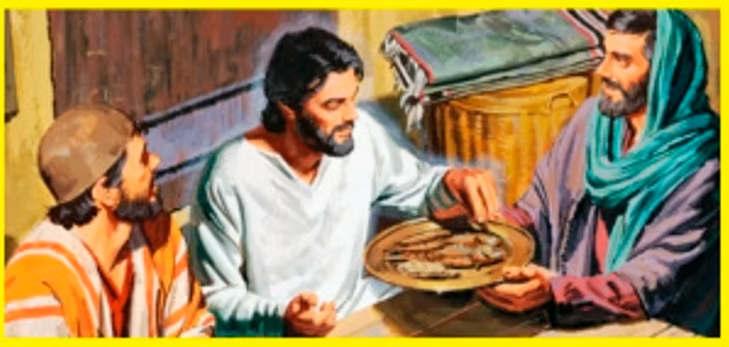
John 1:29-42 – John the Baptist announces Jesus as the Lamb of God [Second Sunday after the Epiphany]

The following is a reading from the Episcopal Lectionary for the Second Sunday after the Epiphany.

John 1:29-42

“John [the Baptizer] saw Jesus coming toward him and declared, “Here is the Lamb of God who takes away the sin of the world! This is he of whom I said, ‘After me comes a man who ranks ahead of me because he was before me.’ I myself did not know him; but I came baptizing with water for this reason, that he might be revealed to Israel.” And John testified, “I saw the Spirit descending from heaven like a dove, and it remained on him. I myself did not know him, but the one who sent me to baptize with water said to me, ‘He on whom you see the Spirit descend and remain is the one who baptizes with the Holy Spirit.’ And I myself have seen and have testified that this is the Son of God.”

The next day John again was standing with two of his disciples, and as he watched Jesus walk by, he exclaimed, “Look, here is the Lamb of God!” The two disciples heard him say this, and they followed Jesus. When Jesus turned and saw them following, he said to them, “What are you looking for?” They said to him, “Rabbi” (which translated means Teacher), “where are you staying?” He said to them, “Come and see.” They came and saw where he was staying, and they remained with him that day. It was about four o’clock in the afternoon. One of the two who heard John speak and followed him was Andrew, Simon Peter’s brother. He first found his brother Simon and said to him, “We have found the Messiah” (which is translated Anointed). He brought Simon to Jesus, who looked at him and said, “You are Simon son of John. You are to be called Cephas” (which is translated Peter).”

________________________________________________________

Here are some things to consider about this reading:

When John the Baptist said, “I myself did not know him,” there should be an understanding that John was the cousin of Jesus. They were 6 months apart in age, so prior to John the Baptist dressing in animal skins and eating locusts and honey in the wilderness, John and Jesus played together as children at family gatherings. John knew Jesus, but John did not know Jesus as the Messiah.

In this first chapter of John’s Gospel there is no indication that John the Baptist baptized Jesus at all. We only know what he told the Pharisees who came to ask him why he baptized with water (or anything for that matter), if he was not the Messiah (Christ). John then said there was one who was greater than he, whom he had seen the Holy Spirit set upon. The next day he identified Jesus as the Lamb of God. This means John was symbolically baptizing with water at Bethany beyond the Jordan the day before. It is in Matthew (chapter 3) that we read that John baptized Jesus, with this being the same day that John announced Jesus as the Lamb of God, the next day after John addressed the Pharisees.

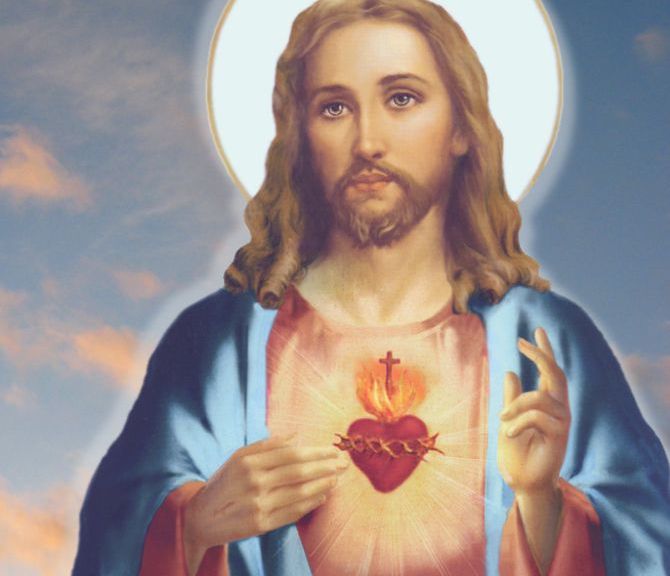
When John the Baptist said, “I saw the Spirit descending from heaven like a dove, and it remained on him,” where “him” was the relative known to John as Jesus of Nazareth, son of Joseph the carpenter, the key word to realize is “remained.” The Greek word written by John the Apostle is “emeinen,” which is a form of the verb “menó,” meaning “to stay, abide, remain, await, continue, endure, and live.” As such, the Holy Spirit was perceived to be as a light shining down from the sky like the fluttering of wings, as one can see in a dove landing. For this light of holiness to “remain” on the one known as Jesus, it states that Jesus had an aura or halo surrounding him, one which would not leave his being. It lived with him, as Jesus and the Holy Spirit were forever to be one.

To grasp this difference, from Jesus the boy grown into a man, the relative of John the Baptizer, remember how many amazing feats (while naturally explained) are perceived by witnesses (including those receiving sudden powers that amaze) as from a higher power. These instances do come upon people, in many places at many times, but they do not remain as a sudden power eternally possessed by those who were seen to perform amazing feats. Those can be interpreted as the presence of the Holy Spirit for a temporary use; so once that purpose is fulfilled, the ability to claim the Holy Spirit’s presence is lost.   Certainly, that one-time presence will cause those who have that experience to seek it permanently.  This is why John made the proclamation the next day when he saw Jesus walk past: “Look, here is the Lamb of God!” The Holy Spirit could still be perceived by John in Jesus.

Now, this view of Jesus being filled with the Holy Spirit is fairly easy for Christians to grasp. That which is less graspable is the concept that Jesus was not constantly filled with the Holy Spirit, such that his cousin could not perceive the halo of the Holy Spirit constantly surrounding him prior to his coming to the Jordan River. While conceived to fill holy and saintly missions in life, and although Jesus was constantly pious and in communication with God, he was like all children – not quite ready for “prime time,” with lessons still to be learned. What may be most difficult to grasp is how Jesus had to do the work of God first, proving his love, devotion and commitment to God as his Father. He was ready to be permanently rewarded for his devotion when John baptized him in the Jordan River that day.

This means it is worthwhile to understand why John would then say, “And I myself have seen and have testified that this is the Son of God.” The Greek word “Huios” (which is capitalized) means, “Son,” also means (according to Strong’s) “hyiós – properly, a son (by birth or adoption); (figuratively) anyone sharing the same nature as their Father. For the believer, becoming a son of God begins with being reborn (adopted) by the heavenly Father – through Christ (the work of the eternal Son).” This means John is identifying Jesus as “one sharing the same nature” of God, because the Holy Spirit of God has remained in Jesus.

Only from this constant presence of God within one’s being – as it was with Jesus – can one “baptize with the Holy Spirit.” John baptized with physical water, but God baptized Jesus with the presence of Himself, meaning His Holy Spirit then became a permanent extension of God on the earthly plane – for the purpose of touching others and cleansing them of their sins. Because God baptized Jesus with His presence, Jesus could then pass this presence on to others – seen in the miracles attributed to Jesus.  Still, since only God can baptize with His Spirit, it was God’s miracles projected through the Son Jesus.

From this calling of Jesus the Son of God after his baptism, to the next day referring to Jesus as the “Lamb of God,” there is a purpose in this change. The Greek word “Amnos” (also capitalized) means “Lamb,” but infers “a lamb (as a type of innocence, and with sacrificial connotation)).” The point of this reference is to state (emphatically via capitalization) that being identified as a “Sacrifice to God” is how one becomes the “Son of God.” Jesus “Sacrificed” his self-ego so that the Holy Spirit of God could be one with him, with the halo’s shine projecting this holy presence of God.  This was a statement that Jesus was no longer a mere human being, but a most holy priest of God.  John was a mere human being (albeit a pious one), who could only symbolically cleanse Jews of their sins with water. Had Jesus maintained his own self-ego, he would be another John the baptizer with water. However, after becoming a “Sacrifice to God,” God could baptize others with His Holy Spirit, through his being that Sacrificial Lamb.

Because John announced that God spoke to him, saying, “He on whom you see the Spirit descend and remain is the one who baptizes with the Holy Spirit” (which was Jesus), two of John’s disciples began to follow the “Sacrificial Lamb of God.” When Jesus turned and saw those disciples walking behind him along the road, his asking, “What do you seek?” (or “What are you looking for?”), they responded by saying the words, “where you abide.” Modern translations have applied a question mark to those words, largely due to the word “where” implying a question; but the reply can be also read as the disciples saying they sought the same Holy Spirit within them as that which abode in Jesus.  They sought to be “where you stay” holy, or “where the Holy Spirit remains.”

Here, it is vital to grasp that the answer the disciples gave proposed the Greek word “meneis,” which is a form of the same word we discussed earlier, when the Holy Spirit descended like a dove and remained or abode with Jesus. That word spoken by John was “emeinen,” with both words rooted in the same “menó.” This means the disciples were not looking to follow Jesus to find out where he lived in Galilee, but they were looking for a “Rabbi” or “Teacher,” who would teach them how to forever receive the Holy Spirit and have it live within them, just as John said it was living within Jesus.

In response to the disciples, we read how Jesus simply said, “Come and see.” This has been used in modern times as an advertising ploy (especially for seminaries, using an exclamation point) as a command to witness the beauty of a place, as if Jesus living in Nazareth was so phenomenal that the disciples had to see for themselves how beautiful a home he had. Certainly, that is not the point of what Jesus said, which means the point of what the disciples asked (as to why they would then follow Jesus and not John the Baptist) had nothing to do with a town, region, or building of the world. They wanted to know how the halo remained with Jesus, so Jesus invited them to “Come and see” for themselves what the presence of the Holy Spirit was like.

The Greek word “Erchesthe” (again capitalized) written by John means, “Come,” but it also implies an arrival, an entering, an expectation, and/or a growth that follows the act of “Coming.” It is not so much a command or order to “Follow me,” as much as it is a promise for what will happen if the work of a Sacrificial Lamb is repeated. Then, one will experience the answer to their question.

To this regard, John wrote the future tense form of the word “horaó” – “opsesthe” – which is stating that more than physical sight will be the result of walking in the footsteps of Jesus. The word horáō implies: “to properly, see, often with metaphorical meaning: “to see with the mind” (i.e. spiritually see), i.e. perceive (with inward spiritual perception).” [Strong’s word 3708.]  This means that Jesus basically said, “If you arrive to the state of the Holy Spirit upon you, then you will have the insight of the Mind of Christ … just like I have.”

Following this exchange and the deeper meaning it conveys, we then read John write, “They came and saw where he was staying, and they remained with him that day. It was about four o’clock in the afternoon.” This, like those just prior, is a literal statement of specific time, relative to the event that occurred two thousand years ago. Knowing that the disciples walked to Nazareth with Jesus and staying overnight, before leaving him around four in the afternoon does little to expand one’s faith in God. This is because the literal limits the word of God and blinds those who have little faith from seeing the depth of truth that literal words present.

The most literal translation of John 1:39b (according to Bible Hub’s Interlinear projection of the Greek in two forms, and the word-by-word translation into English) says:

“They went so and saw where he abides and with him they stayed the day that the hour it was about tenth.”

Beyond a literal statement of Jesus and a couple of disciples (who actually lived in Galilee) walking back to the region in which they all lived, and telling what happened over a two-day period, this statement becomes a jump into the future that was known to John. It is even prophetic, in the sense that all disciples who have ever “arrived and seen where Jesus remained” have been equally filled with God’s Holy Spirit and given the Mind of Christ. This says that Andrew and Simon Peter would indeed be filled with the Holy Spirit and would also see with the Mind of Christ, once they would have that holiness of God remain with them on a future specific day. (We know this day as the Pentecost.)

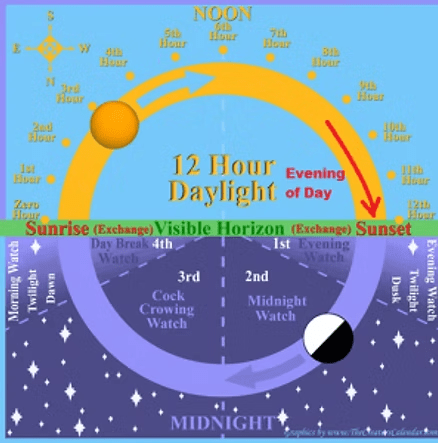
The “ten o’clock hour” is called by the Jews “the fourth hour” (fourth hour past 6:00 AM). Because John wrote “about the tenth,” this can be an allusion to Acts 2, when Peter proclaimed to the pilgrims that the disciples were not drunk, because it is only “the third hour” (9:00 AM). Further, because John wrote the Greek word “dekatē,” which infers “the tenth part” (rather than 10:00 AM), which implies “the first part,” which becomes a general indication of a morning hour (24/10=2.4 hours after sunrise, or 8:25 AM). Therefore, “about the tenth” would truly be a statement if the specific time were 9:45 AM or 8:25 AM, as both would match Acts 2 with John 1:39b.

This becomes an important indication of when the Holy Spirit descends onto His chosen servants, who are chosen due to proven devotion. It does not occur at night time, but during the day. To say that the tenth hour is the time of day, the indication is when the sun is high in the sky, when light abounds. More than a simple statement of when the disciples left Jesus in his home in Nazareth (a true statement as well), the Word of God is certainly not limited to a simple understanding.

Finally, when Simon Peter is called by Andrew (his brother) and told that they had found the Messiah in Jesus of Nazareth, Simon Peter went to see Jesus. This says that Andrew lived in Galilee and Peter had not traveled to Bethany beyond the Jordan, as a disciple of John the Baptist. His brother had, and Andrew had heard John the Baptist make his proclamation of Jesus being filled with the Holy Spirit, as well as calling him the Lamb of God. Andrew has been one who likewise saw the presence (aura) surrounding Jesus, so he told this to his brother with conviction. Still, Simon Peter had to see this presence for himself.

When Jesus made his announcement that Simon would be called Peter (Cephas, meaning Rock), he addressed Simon as the “son of John” (in Greek, “ huios Iōannou”). Some have made this read as “Jonah,” which is another form of the name John. As Simon Peter was probably older than both Jesus and John the Baptist, it would be an impossibility that Simon Peter was an actual “son” of the Baptist. However, the use of “son” does not point to Jesus knowing who the father of Simon was, as if the Holy Spirit led him to know Jonah was Simon’s father.

The use of “huios” is to be understood more as an “attendant” of John, which makes a disciple be the “attendant” of a leader or teacher. This means Jesus identified Simon as one who was devoted to John the Baptist, as was Andrew and a second disciple (probably Phillip). This becomes the model for all subsequent Christian churches, where a rabbi is replaced with a father-figure priest, with all underlings referred to as “my son.” It becomes a statement of a Father-son, Teacher-student relationship, more than the physical lineage of Simon to the father who sired him.

It should be noted that Jesus did not refer to his disciples as his sons, while he regularly referred to himself as the Son of the Father. In John 13:33, Jesus referred to his disciples as “little children,” which was a term of endearment; but the implication is no one should be devoted to serving a human father, as a son. Instead, we are to all become sons of God, through the Holy Spirit rewarding a servant with the Mind of Christ (which can only come through realizing Jesus Christ offers us the way to “Come and see”).

Let me add one point that I see as the most mistaken part of this reading, which comes from John the Baptist saying, “Here is the Lamb of God who takes away the sin of the world!”  So many people wrongly believe that because Jesus was born and because Jesus was holy his mere presence in the world meant the washing of all believers of their sins.  This is wrong and not what John said.

John pointed out “Here is the Sacrificial Lamb,” which is a model for all who wish to be disciples that will likewise be replicas of Jesus, having the Holy Spirit lite upon theme and remain.  When John then said it is “God who takes away the sins of the world,” this tells how one (like Jesus) turns away from being an ego-driven sinner, in a world that is pure sin waiting to happen (any volunteers?).  It says that Jesus made the sacrifice to serve God, just as an innocent Lamb allows its blood to be spilled for the benefit of others.  It is the presence of God in such Lambs that washes away sins in a real way.  The Blood of Christ must be painted upon each doorway to each faithful human’s soul, so that the Sacrificial Lamb’s act will make the angel of [mortal] death pass over and spare that firstborn, Son of God.  That is the baptism of the Holy Spirit, which comes from God and IS God living within one of His servants … like Jesus and all his Apostles and Saints.  The statement then says: “You (and only You) are responsible for washing Your worldly sins away, which is possible through the sacrifice of your self-ego, a devotion to God, and a dedication to innocence and purity.

Having a bobble-head Jesus on the dashboard of your car does nothing towards forgiving your sins.

#Jesusgainsfirstdisciples #John12942 #sonofJonah #SimonwillbecalledPeter #HolySpiritlikeadove #sonofJohn #LambofGod #takesawaythesinsoftheworld #SonofGod #whereareyoustaying

John 1:6-8, 19-28 – What’s in a name? [Third Sunday of Advent]

There was a man sent from God, whose name was John. He came as a witness to testify to the light, so that all might believe through him. He himself was not the light, but he came to testify to the light.

This is the testimony given by John when the Jews sent priests and Levites from Jerusalem to ask him, “Who are you?” He confessed and did not deny it, but confessed, “I am not the Messiah.” And they asked him, “What then? Are you Elijah?” He said, “I am not.” “Are you the prophet?” He answered, “No.” Then they said to him, “Who are you? Let us have an answer for those who sent us. What do you say about yourself?” He said, “I am the voice of one crying out in the wilderness, ‘Make straight the way of the Lord,’” as the prophet Isaiah said. Now they had been sent from the Pharisees. They asked him, “Why then are you baptizing if you are neither the Messiah, nor Elijah, nor the prophet?” John answered them, “I baptize with water. Among you stands one whom you do not know, the one who is coming after me; I am not worthy to untie the thong of his sandal.” This took place in Bethany across the Jordan where John was baptizing.

—————————————————————————————————–

This is the Gospel reading for the third Sunday of Advent, Year B 2017. Again, the focus turns to John the Baptizer coming, who was questioned as to his qualifications for baptizing Jews. He told them, as Isaiah had prophesied, “I am the voice of one crying out in the wilderness, ‘Make straight the way of the Lord.”’

As the reader will notice, there are omissions from the text of John’s Gospel, such that we begin reading at verse 6, then skip over verses 9 through 18, before picking back up at verse 19. The simple reason is John was not completely zeroed in on John the baptizer, as focus shifted from Jesus (as the Word and the Light), to John, to Jesus, and to John again. In my mind, this raises a question about verses 6 through 8.

First of all, the theological scholars (some at least) seem to think the Gospel of John was written by the disciple-Apostle John of Zebedee. I strongly disagree with that conclusion, simply because the perspective of John of Zebedee would have mirrored that of Matthew and Mark, which it does not. The Gospel of John has “insider information” that was not written of by the two disciples of Jesus, plus it places a different perspective on events the disciples recorded, and it leaves out events remembered by the two. John, obviously (if looking closely), was not a disciple but a family member of Jesus. Therefore, he calls himself “the one whom Jesus loved.”

Second, the Greek name Ioannes is used to name no less than six Johns: John the Baptist, John of Zebedee, John of Patmos, the father of Simon-Peter (Simon BarjonaMatthew 16:17), a Levite of high-priestly descent (Acts 4:6), and a man also known as Mark (Acts 12:12) [ref.]. The name meaning “Yahweh is Gracious” says parents commonly gave that name to their children, simply from seeing a son as a gift from God.

Sometimes a good name needs to go to more than one person.

Still, if John of Zebedee is not the author of the Gospel of John, then the writer here becomes either a new John or one of the other Johns. Because John the baptizer did not live to write a book, and because the father of Simon-Peter and the two men named in Acts are highly unlikely to have written of close-encounters as memories of Jesus, the only likely John would be that of John of Patmos. I believe this is the case.  Those two are the same person, at different ages.

Third, this issue over who wrote the Gospel of John is due to it being an “anonymous” author, meaning the title is not explained in a ‘foreword’ or preface. In fact, none of the four Gospels have explicitly named authors, with all possibly written by an unnamed person of letters, through divine recital, with the person reciting the accounts of Jesus being first-hand eyewitnesses. Unlike the epistles, where the author is usually identified at the beginning of the letter, the four Gospels do not follow that practice of self-naming. However, seeing how the Gospel of John is so differently approached than the other three Gospels, verses 6 through 8 of John’s Gospel may actually serve the purpose of naming the author, rather than naming John the baptizer twice.

It should be understood that the power of Scripture is it all comes from the Mind of God. Thus, it is beyond the comprehension of mankind’s simple brains (in comparison to the Godhead). As such, nothing written can be said to be fixed by one concrete meaning, as derived through the application of syntax – the rule of language devised by mankind, different from language to language. This means the use of “John” in John 1:6 can mean both: naming the author as John; while rightfully implying John who would be a voice crying out in the wilderness. After all, both were witnesses that would testify to the light of Christ.

In verse 6, the Greek (with punctuation) makes the statement, “Came a man having been sent [as a messenger] from God,” followed by “name the same John” (where the Greek word “autō” can emphasize “self,” be the personal pronoun “he, she, it,” or imply “the same.” Since John’s Gospel referred to himself in the third person and never directly named himself, by reading the Greek as saying the “messenger sent by God” was “the same” as another named “John,” the author has just indirectly named himself. Still, all writers of book deemed Holy are written by “messengers sent by God.” John the baptizer was a “messemger sent by God” to proclaim the coming of “one who would come after him,” making his soul be that of the “messenger sent by God” that was Elijah, reborn in new flesh, the same as Jesus was a “messenger sent by God” to be announced by John the baptizer. The divine soul raised in all “messengers sent by God” is that of Adam – the Yahweh elohim made for that purpose on Day seven. So, “Yahweh is Gracious” (the meaning of the name “John”) in all “messengers He sends.”

Because the omitted verses (9 through 18) follow John’s statement that “John” was “a witness to testify to the light, so that all might believe through him,” going into some details of the divinity of Jesus as the Christ, one must realize that Jesus and John the baptizer were both lights that disciples were attracted to. As relatives of blood, they knew of one another through family affairs, such that both held the love of a brother for each other. Still, one does not glimpse a picture of Jesus ever being a follower of John the baptizer, such that John knew Jesus as the light.  The reader of the New Testament books do not get a feel for a close, adult relationship between the two, with both born with purpose that drove them on separate paths for God.

The Gospel of John is itself a testimony of that light of Christ.  John the Beloved, as a writer of a Gospel, was most devoted to being a witness “that all might believe through Jesus.” On the other hand, when John the baptizer was imprisoned, he sent word to Jesus saying, “Are you the one who is to come?” (Luke 7:20; Matthew 11:3)” implying his belief was wavering.  With the Baptist’s death, there was nothing more John could do to bring believers to Jesus.

Once this selection focuses on the clear verbiage that is of John the baptizer, we see how the “priests and Levites of Jerusalem” came to question John’s authority. John confessed and did not contradict anything said prior, which means he owned up to being one baptizing people, but denied being the Christ. They then asked if he was Elijah, to which he said, “No.” They asked if he was a prophet, inferring one who presumably had prophesied the coming of the Messiah, to which John said, “No.” This confused the priests and Levites, so they asked who John was, to which he paraphrased Isaiah 40:3-4.

That response led the Temple employees to run back to Jerusalem and tell the Pharisees (the Lawyers) what evidence they had collected on John. So the Pharisees returned to Bethany, on the other side of the Jordan, and asked John in whose name did he wash Jews of their sins.  If he was neither the Messiah, Elijah, nor a prophet, then who sent him?

John then told them that there was to be one after him who was greater than he. The implication was the true Messiah.  Of course, he meant Jesus (as far as our Big Brains of hindsight tell us), but because Jesus had yet to enter his ministry, John might not have known exactly who that greater one would be. This would mean John simply spoke from the power of the Holy Spirit, much as did Simon-Peter, when he blurted out that Jesus was the Son of God, the Messiah.

The element of interest in this dual exchange of authority is that it parallels 2 Kings 1:9-12, where twice an evil king sent “a captain of fifty with his fifty” to ask Elijah to come down from a hill. Each time the captain said, “O man of God, the king says, ‘Come down.’” Each time Elijah replied, “If I am a man of God, let fire come down from heaven and consume you and your fifty.” Since Elijah was a man of God, each time “fire came down from heaven and consumed him and his fifty.”

Fire can wash away sins as well. However, baptism by fire requires a special permit.

This becomes an unspoken parallel of Elijah and John the baptizer, which means that John the “man” of God did not know Elijah, Isaiah, or even the Messiah. He just knew he was John, just as Elijah knew nothing of his reincarnations. Confessing and not denying is one thing, but please do not try to put words in the mouths of God’s servants.

Questioning the authority of righteousness is not something any human mortal can claim, as that “of God” part cannot be proved.  Let God speak for Himself.  Thus, when one starts thinking “I am somebody!” then one rapidly finds out “You are nobody special.” That reality makes one realize just how unworthy that one is.  So unworthy that one cannot even stoop to untie the thong of the sandal of the Most Holy.

As an Advent lesson, where Advent prepares those who think they are special in this world, suggesting through Scripture the need to reassess who is most important in the grand scheme of things, we all should be confessing and not denying that it is God.  God is the reason for the season … always.

In this Western culture of commercialized America, where out-buying and out-spending for December 25th seems to be an expression of self love (more than love of God or Jesus Christ), modern children are taught the value of things more than the value of God in one’s heart.  We praise that a little baby that was born in Bethlehem long ago … not in the place you now sit reading this.

There is no reason to say Jesus is the light, if one has no light of awareness about spiritual matters within oneself. The element of gifting in December is only about God wanting to give Christ to His servants. That can happen anytime, but the Church wants to drive that point home as a Christmas message (hopefully).

The cost of that gift is complete self-sacrifice to God. No credit cards allowed.  No lay-away plans or easy pay installments. Just do whatever God says do, when God says do it.  In return for that devotion and submission, little baby Jesus will be born in you, so you become the Son of God (regardless of your human gender).

That is truly the gift that keeps on giving.

Post Script: I wrote this in 2017. In 2018 a dawning came to me. By late 2019 I published a book entitled The Star of Bethlehem: The Timing of the Life of Jesus. In that book I detail how the books of Matthew and Luke make it clear that Jesus was born on the eve of Shavuot, on 5 Sivan (a Shabbat). I was led by Yahweh to discern the precise date of birth and time of birth, to go along with the place of birth (Bethlehem) and cast a most remarkable astrological chart that is most holy to see.

In 2020, as I was interpreting an Advent 4 reading from Luke 1, as I read the passages that connected the story of Gabriel coming to Mary – those of Gabriel going to Zechariah, telling him his old wife was pregnant (with John the baptizer) – I realized I missed a most important bit of evidence, one that cemented everything I had published in my book. That revelation is this:

Elizabeth became pregnant in the first month (ecclesiatical) in the Hebrew calendar, or Nissan. Most likely, because Zechariah was doing his duty in the Temple, that duty was related to the yearly Passover activities. When one sees that as Nissan 15 (or so), then when Gabriel went to Mary and told her Elizabeth was six months pregnant (when Mary became pregnant), that would be somewhere in the middle of the sixth ecclestiacal month of the Hebrew calendar, which is Elul. Elul, just so happens to be closely aligned with the time when the sun is in the zodiac sign Virgo – Latin for “the Virgin.”

When you do the math, adding nine months to Nissan leads to the ecclestical month Tivet, which is between December 1 and January 2. This then equates roughly to the Winter Solstice (Roman calendar December 21-22). This says John the baptizer was born when Christians recognize Christmas. Adding nine months to Elul leads to Sivan.

Just thought I would let you know that the Advent focus on John the baptizer has some hidden meaning, which had never seen before. Only just recently did that dawn on me (2023).

John 1:1-18 – The Birth of the Word [First Sunday after Christmas]

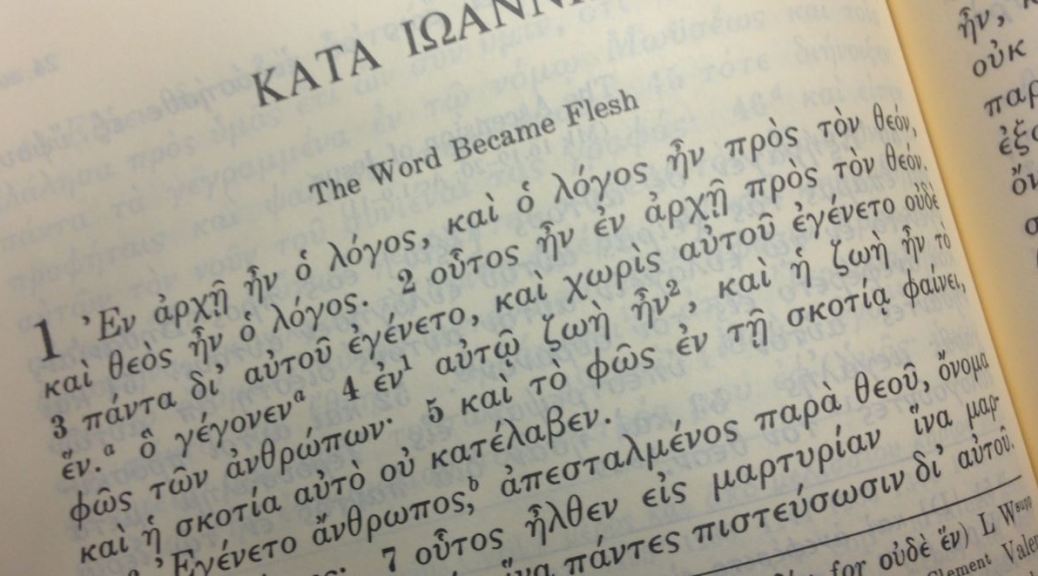
In the beginning was the Word, and the Word was with God, and the Word was God. He was in the beginning with God. All things came into being through him, and without him not one thing came into being. What has come into being in him was life, and the life was the light of all people. The light shines in the darkness, and the darkness did not overcome it.

There was a man sent from God, whose name was John. He came as a witness to testify to the light, so that all might believe through him. He himself was not the light, but he came to testify to the light. The true light, which enlightens everyone, was coming into the world.

He was in the world, and the world came into being through him; yet the world did not know him. He came to what was his own, and his own people did not accept him. But to all who received him, who believed in his name, he gave power to become children of God, who were born, not of blood or of the will of the flesh or of the will of man, but of God.

And the Word became flesh and lived among us, and we have seen his glory, the glory as of a father’s only son, full of grace and truth. (John testified to him and cried out, “This was he of whom I said, ‘He who comes after me ranks ahead of me because he was before me.’”) From his fullness we have all received, grace upon grace. The law indeed was given through Moses; grace and truth came through Jesus Christ. No one has ever seen God. It is God the only Son, who is close to the Father’s heart, who has made him known.

—————————————————————————————————–

This is the Gospel selection for the First (and Only) Sunday after Christmas, Year B 2017. In will next be read aloud in church by a priest on Sunday, December 31, 2017. It is important because John applies the symbolism of Logos to Jesus Christ.

As the lone Sunday of Christmas, between Advent and Epiphany, this Gospel reading represents Christmas – a summation of the twelve days thereof: the Gifts of God to the world. In this regard, it should be noted that John 1:1-14 is the third selection (Christmas III) as the Gospel reading for Christmas Day (or Christmas Eve) services; so it is recognized by the Church as relative to the birth of Christ. This makes it parallel the Luke 2 options (Christmas I and Christmas II, as variations of verses 1-20: the Shepherds and the Angels). Because Matthew 2:1-12 (the wise men and Herod) is read as an Epiphany lesson (all years), realizing that story occurred after the nativity of Jesus, this reading from John 1 has to be seen as a witness to the birth of Jesus, like that of the shepherds’ visit to the manger. This can be seen in the statement of verse 14: “And the Word became flesh and lived among us, and we have seen his glory.”

Still, the importance of the birth of Jesus in Bethlehem is not why we traditionally read the Luke 2 reading; and it is not the reason we read this rather enigmatic reading from John 1 in the Christmas season. Think about it. Who else in history is known for having done something historically significant on the day of their birth, such that part of the world wants to focus on the infancy of that great person, more than the great person’s achievements? No one, Jesus included, as that representation of God being born in human form was not realized until the ministry of Jesus began, followed by his persecution to death, his resurrection, ascension and return. The birth of baby Jesus marks the historic significance of the adult Jesus.

Big Brain Note: If we did not know the end of the story beforehand, the beginning of the story would have no meaning.

In the third Sunday of Advent, the Gospel reading was also from the first chapter of John. In that reading part of this reading is duplicated: “There was a man sent from God, whose name was John. He came as a witness to testify to the light, so that all might believe through him. He himself was not the light, but he came to testify to the light.” Those words come from verses 6, 7, and 8. Because the author names “John” there, verses 19-28 are read with those on Advent 3, which are clearly about John the Baptizer.

This reading is not about John the Baptizer, thus (as I proposed in my article for Advent 3) the naming of “John” here is important as being the conditions foretold by John the Baptizer about the Messiah. The separation by parentheses is to denote an example given by the Baptist, as to how to recognize the Messiah. The name “John” has meaning above and beyond the limits of one John, as the meaning behind that name can be seen as directing one to see Jesus Christ as “Yah(weh) Is Gracious) through His Son. John the author does not use that specific identification (“Jesus Christ”) until verse 17 (next to last in this reading), when he wrote, “grace and truth came through Jesus Christ.”

By seeing this reading as a reference to the Christ (the Messiah promised to the Jews) and his birth in human form, John 1:1-18 becomes an esoteric comparison to the literal story told in Luke 2. The visitation of the angel and the heavenly host is comparable to John writing about the “Word” as the heavenly “light” to be in the “life” of “people.”

The shepherds then became “witnesses to testify to the light.” When they reached the newborn, “the Word became flesh and lived among us.” Both Gospel author wrote of Jesus coming into the world, only differently. Still, the continued importance of the “birth of Christ” is when Christ is born anew in Christians. That is how the Word of God continues to be “sent by God.”

This makes “Logos” important to understand. That repeated word of importance appears three times in verse 1, and a fourth time in verse 14. Like the name “Iōannēs” (which is any Biblical entity named “John” or all named to signify “Yah Is Gracious”), the capitalized word “Logos” cannot be limited to only one translation: “Word.” This is because “logos” can also translate as “ground, plea, opinion, expectation, word, speech, account, reason, proportion, discourse, and plan.” As such, verse 1 can be seen as intending the reader grasp this depth of scope, rather than simply repeat the ambiguity of “Word.” One example would be: “In the beginning was the Expectation, and the Reason was with God, and the Plan was God.”

Certainly, Jesus was part of God’s original Idea, from the beginning to his presence on earth, and throughout his many returns in Saints and Apostles. Without the man Jesus as our guide to God, humanity remains lost. Still, Jesus did not come to promote himself over God. It is wrong to read John’s first verse and mentally translate “the Word” as Jesus Christ, because the physical reality that became Jesus Christ was “a Thought” of God. Just as God’s Plan was to bring Jesus Christ to mankind, His Reason was to transform a world of believers into duplications of His Son, all born with the same Expectation through the Christ Mind.

God cannot be limited to only producing one Jesus Christ, although the one Jesus Christ can never be replaced.

Christians (by title) are replications of Christ, which is the Mind connected to God the Father. When one’s heart has married God, then the offspring is a new “Jesus,” via the same Christ Mind, with the link between Spiritual and physical being the Holy Spirit. Jesus represents the joining of the Father to the Son, via the Holy Spirit – as a Trinity on earth.  Therefore all Saints are Apostles and Prophets of the LORD, in total commitment to serving God … just as Jesus was conceived to be and born to make that service possible in others.

This means the birth of Jesus Christ is not a one-time scene on earth, away in a manger in Bethlehem. The Christmas story is retold year after year because it represents the rebirth of Jesus Christ in Christians … true Christians who have become Saintly and righteous … in the name of Jesus Christ.

Just as the Angel appeared before shepherds to announce the Messiah had come, the shepherds became the first Saints by experiencing baby Jesus before them. They were filled with the joy of the Holy Spirit. Likewise, John is appearing before us in writing, telling us of the heavenly grace that has come into the world. It is now up to each reader to decide to run and see the baby.

Christians do that by searching the words of the Holy Bible, looking for the “hidden manger” that holds the Messiah of the world. If one acts to seek the light and the life, the grace and the truth, then the whispers of God’s heavenly messengers will lead you to open your heart and receive the Spirit of the LORD. One must love God with all his or her heart and all his or her mind to become married to Him. Total subservience bring the promise of great reward.  Then the truth will be so wonderful that one can never go back to serving self. One is reborn then as a new Jesus Christ.

I recommend a deeper view of John 1:1-18. The translation above is conversational English, not Spiritual Greek. I have offered some insights here; but be advised my words expand 300+ words of God into 3,300+ words of explanation. Even at that depth, much is still missed. Each reader must be able to see beyond what John wrote, and beyond what I have written. One needs the insight of the Christ Mind to grasp the wholeness of meaning.

Then one must have a strong desire to share that meaning with others … leading newcomers to their own personal experience.

John 1:43-51 – Disciples are the fruit of Christ [Second Sunday after the Epiphany]

Jesus decided to go to Galilee. He found Philip and said to him, “Follow me.” Now Philip was from Bethsaida, the city of Andrew and Peter. Philip found Nathanael and said to him, “We have found him about whom Moses in the law and also the prophets wrote, Jesus son of Joseph from Nazareth.” Nathanael said to him, “Can anything good come out of Nazareth?” Philip said to him, “Come and see.” When Jesus saw Nathanael coming toward him, he said of him, “Here is truly an Israelite in whom there is no deceit!” Nathanael asked him, “Where did you get to know me?” Jesus answered, “I saw you under the fig tree before Philip called you.” Nathanael replied, “Rabbi, you are the Son of God! You are the King of Israel!” Jesus answered, “Do you believe because I told you that I saw you under the fig tree? You will see greater things than these.” And he said to him, “Very truly, I tell you, you will see heaven opened and the angels of God ascending and descending upon the Son of Man.”

—————————————————————————————————-

This is the Gospel selection for the second Sunday after the Epiphany, Year B. It will next be read aloud in church by a priest on Sunday, January 14, 2018. It is important as it offers a different view (than that of Matthew and Mark) of Jesus finding his first disciples.

As an Epiphany reading, the intent is to promote a personal understanding that the rebirth of Jesus within a believer (the Christmas story retold) means everything about that new Christian is known by God and Christ. We become the messenger that was Philip, who goes to spread the Gospel to those we know and love.  For Andrew it was his brother Simon (to be called Peter by Jesus).  For Philip it was his friend Bartholomew (to be named as Nathanael by John).

A personal Epiphany continues when one then understands why John’s naming Nathanael is a sign of one’s own pending name change, which follows the birth of baby Jesus within us on Christmas.   The name Nathanael is rooted in Hebrew, meaning “Gift of God.”  Because the other Gospel writers named him Bartholomew, his being called “Gift of God” indicates a spiritual renaming.  Jesus knew Bartholomew was such a gift.


Born Albino Luciani, he became Pope John Paul I. He was the last true pope.

In the election of Cardinals to the position of pope, it has been routine to take on a name befitting of that position.  The official names a pope assumes is called a regnal name or reign name.  The designation as regal means the popes are the embodiments of Christ the King.  While all Apostles and Saints are the embodiment of Jesus Christ (and not all popes), the same principle applies to the disciples of Jesus, who had dual names.

A new disciple of Christ, who has been approached by Jesus (as was Nathanael) will have this encounter spiritually.  Jesus will near because the testimony of a brother or friend has made one willing to know more. Once a disciple has met Jesus, Jesus tells the new self he has been born anew into, “I saw you [as fallen fruit] before [you were] called.”  This indicates a predisposition to become righteous; and this is how ordained priests are questioned about how they were called to the priesthood.

As none of the disciples of Jesus were schooled beyond their Jewish fathers and rabbis, anyone who is called by God will respond without any thoughts of entering seminary school.  The inner voice will lead one in God’s service appropriately.  As such, Jesus then tells the individual (in whispers coming from the Christ Mind), “You will see greater things than [you have seen in your past]. Very truly, I tell you, you will see heaven opened and the angels of God ascending and descending upon the Son of Man.”

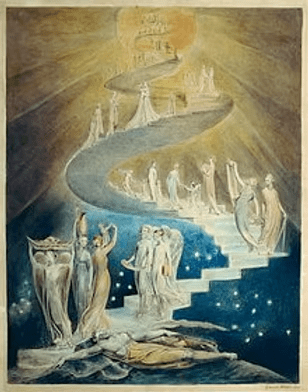
That is the promise of the Holy Spirit coming upon a disciple who has become married to God.  Just as the archangel Michael came to the Virgin Mother and prophesied the coming of the most holy, the Son of God, Apostles-to-be are given the same promise.  The same stairway to heaven that was seen by Jacob will become a Saint’s reality, through one’s newfound abilities to communicate with God.

While the Christmas story is of the new birth of Christ within a believer, the Advent stories are of the growth of that infant Spirit to delivery. Epiphany is when the joy sent to one’s personal world drives one to do the necessary work of a committed disciple of Jesus.  One follows the teachings of Jesus and discerns the deeper meaning of those lessons.  One begins to live a righteous lifestyle.

When that happens (the meaning of “Advent” is “Arrival, Coming” or “Happens”) a Saint will have secured a place in heaven, as the Holy Spirit will bring down instructions to follow and an Apostle will send up prayers for the deliverance of others (the angels of God ascending and descending). All this Happening will be because one has become pregnant with the Son of Man, preparing to give birth to another Jesus Christ in the world.

The personal Epiphany in this lesson is Jesus being seen as saying to each and every individual who reads this Scripture or hears it read aloud, “Follow me.” Two thousand years after the physical coming and going of the man that was Jesus of Nazareth, born of a virgin in Bethlehem, it is impossible to walk in the footsteps along the path taken by Jesus the Messiah, as could Philip, Andrew, Peter, Nathanael and John the Beloved (all the followers of Jesus). “Follow me” means to be the Christ incarnate when Jesus returns as you.

To become Jesus Christ reborn, one has to be “an Israelite in whom there is no deceit.” That means a one is a chosen priest who serves only the One God, with no pretense or false agendas. A Saint then becomes the embodiment of a new kingdom ruled by Son of God, the King of Israel.

Seeing Nathanael (a Hebrew name meaning a Gift of God) like the fruit of the fig tree, the fig tree multiplies through its fruit.  One fig makes a tasty snack; but a fig tree feeds many.  A grove of fig trees feeds many more.  One could try to name every fig that comes from one fig tree, but they would still all be figs.

In the same way, you can name every Apostle who comes as the fruit of God’s everlasting vine (or tree) Nathanael, but within that body would still be the reborn Christ … the DNA of righteousness.  Just as fig seeds duplicate fig trees, God reproduces His Son through all of His holy wives.  All Apostles were virgins to God, before the miracle birth they would experience.  Bartholomew was one in the long lineage that is true Christianity.  The call is to “Follow” as Nathanael … another Gift of God.

John 2:13-22 – Destroying the old temple for one new

The Passover of the Jews was near, and Jesus went up to Jerusalem. In the temple he found people selling cattle, sheep, and doves, and the money changers seated at their tables. Making a whip of cords, he drove all of them out of the temple, both the sheep and the cattle. He also poured out the coins of the money changers and overturned their tables. He told those who were selling the doves, “Take these things out of here! Stop making my Father’s house a marketplace!” His disciples remembered that it was written, “Zeal for your house will consume me.” The Jews then said to him, “What sign can you show us for doing this?” Jesus answered them, “Destroy this temple, and in three days I will raise it up.” The Jews then said, “This temple has been under construction for forty-six years, and will you raise it up in three days?” But he was speaking of the temple of his body. After he was raised from the dead, his disciples remembered that he had said this; and they believed the scripture and the word that Jesus had spoken.

—————————————————————————————–

This is the Gospel selection from the Episcopal Lectionary for the third Sunday in Lent, Year B. It will next be read aloud in church by a priest on Sunday, March 4, 2018. It is important as it is the first account of Jesus displaying anger at the disrespect that had befallen the Second Temple of Jerusalem, which was constructed originally (by Solomon, then rebuilt) to be THE house of God on earth.

In Matthew 21:12-13, Mark 11:15-19, and Luke 19:45-48, less detailed accounts of Jesus becoming upset with the presences of vendors at the Temple are found. Matthew told how Jesus drove out “all those who were buying and selling in the temple, and overturned the tables of the money changers and the seats of those who were selling doves.” Matthew, Mark, and Luke all then quote Jesus as saying, “It is written, ‘My house shall be called a house of prayer’; but you are making it a robbers’ den.” However similar that events seems, it is not the same as the one recounted by John.

I make that statement because I once sat at an Episcopalian Bible study meeting when a retired Methodist minister made the statement that John’s Gospel was the only one of the four Gospels that does not maintain the same order of events in the life of Jesus. I disagree wholeheartedly.  However, if that is some concept that has risen to explain John as a renegade or rebel, due to some (perhaps) thinking John had a scatterbrained memory, which affected the order of his Gospel of Jesus’ life and ministry, the facts do not support such a claim.

This reading is in John’s second chapter, which follows the wedding at Cana event (John 2:1-11). John’s first chapter ended with Jesus gathering Philip and Nathanael as disciples, to go along with Andrew and Simon (called Peter). John was the only Gospel writer not to tell of Jesus spending forty days of fasting in the wilderness, like the other three writers do. However, John said the same as the others, when he wrote, “After [the wedding at Cana Jesus] went down to Capernaum, He and His mother and His brothers and His disciples; and they stayed there a few days” (John 2:12), which spoke of Jesus moving from Nazareth to Capernaum.  The other Gospels have the chronology of events; they simply recorded a second time that Jesus was witnessed being upset over vendors on the Temple steps.

It was in Capernaum that Jesus then called Andrew and Simon from their fishing boat and then called James and his brother John of Zebedee from their father’s boat, leaving him to fish the sea with hired hands. John did not write of this calling (an indication that John was not the same person as the brother of James, not a son of Zebedee); but his statement that Jesus, his mother, brothers and disciples only stayed in Capernaum a few days, that says the calling of disciples from Capernaum was to prepare them to go en masse to Jerusalem, for the Passover Festival.

I have had Bible study leaders instruct the participants that the Passover week’s pilgrimage to Jerusalem was not a yearly requirement of Jews. After the scattering of the tribes of Israel, following the fall of Israel and Judah, the “Jews” who were moved great distances from Jerusalem were only required to make a pilgrimage once a lifetime. The presumption is that Jews who relocated in Galilee after their freedom from Babylon were likewise freed of any obligation to go to the Temple in Jerusalem each year, because it took several days to walk there.

In my mind, this an American Christianization of ancient Judaism, where it becomes important to see the holy people surrounding Jesus as akin to Americans that forego church attendance, if there is some vacation planned [like multi-yearly pilgrimages to fun resorts, where one’s religion gets left at home].  I have watched priests rush to finish a service because it is NFL Sunday, and a local team’s game is soon to begin.  The sad thing I have realized is that American Christians tend to justify their lack of a desire to study their religious texts as if God had blessed them with a birthright as babies, and children’s church taught them everything they need to know personally.  Beyond that, priests and ministers are hired by the adult Christians, with the expectation they will know the details.

If that was the original plan, I wonder why Jesus did not call the hired hands from Zebedee’s boat?

In regard to this lack of religious knowledge, consider this: When one reads in the Gospel of Luke, “Now [Jesus’] parents went to Jerusalem every year at the Feast of the Passover” (Luke 2:41), we are told this as an indication of the piety of Mary, Joseph, Jesus, his brothers. They went every year. Because it was written, “Speak to the Israelites and say to them: ‘These are my appointed festivals, the appointed festivals of the LORD, which you are to proclaim as sacred assemblies” (Leviticus 23:2), devout Jews made a point of attending EVERY FESTIVAL … religiously. Knowing that, if any were to “Come and see” and “follow Jesus,” they were expected to plan their lives around obedience to God’s commandment to the Israelites, through Moses, which called for “sacred assemblies” in the appropriate places, to recognize “the appointed festivals.”

That understood, one can grasp just how swollen Jerusalem would become during those times of festival. In the Christmas story, where Joseph and Mary could not find a room at an inn, it was not due to census registration demands creating floods of people into Bethlehem. The inns were filled with paying guests because it was at a festival time, with pilgrims everywhere. Mary and Joseph went to Bethlehem while they had a place to stay near Jerusalem for festival.  This means that everyone in the Jesus entourage would have to be housed while away from home.  That is a logistical reality.

Because the ministry of Jesus was just getting off the ground then, it makes perfect sense that prior arrangements had not been made for Andrew, Simon-Peter, James of Zebedee and his brother John, nor Philip and Nathanael. While Jesus, his mother, and his brothers had relatives with whom they would stay, who had homes near Jerusalem, the others would be free to find their place to housed. Thus, that first Passover of Jesus’ ministry placed himself and John (the Gospel writer, not of Zebedee) at the Temple together, while the six disciples were securing places to stay.  Thus, none of them wrote about this event.

In the turning over of the vendor’s tables recalled by Matthew, Mark, and Luke, that was after Jesus’ entrance into Jerusalem on a donkey with her colt, when the pilgrims lined his path with palm branches and cried our “Hosanna, the King of the Jews.” For that festival event, an upstairs room had been secured for the Passover week, although there is indication the disciples were invited to visit where Jesus stayed, as they traveled together each day prior to the Passover Seder meal (the Last Supper), in and out of Jerusalem. John did not write of those days when Jesus was surrounded by his disciples, like he did when it was only him and Jesus entering the Temple of Jerusalem, when Jesus cleansed the Temple the first time.

The New American Standard Bible (NASB) heads this reading selection from John as “Frist Passover – Cleansing the Temple,” which indicates there is scholastic recognition for multiple events of this nature. John stated in his sixth chapter, fourth verse, “Now the Passover, the feast of the Jews, was near.” This was when Jesus fed the five thousand at the Sea of Galilee. By the time John began his seventh chapter, writing in the second verse, “Now the feast of the Jews, the Feast of Booths, was near,” that end of summer festival means John wrote nothing specific of Jesus having gone to Jerusalem for the second Passover of his ministry.

None of the other Gospels speak specifically of any Passover Festival, other than the last, which would be more of an indication that Jesus went to the Temple at other times without witnesses, when he could have made similar attacks on the selling of wares on the steps. One would think Jesus regularly confronted such things, rather than only occasionally making “photo ops” appearances.

What should be caught from the verse that states, “He told those who were selling the doves, “Take these things out of here! Stop making my Father’s house a marketplace!” is that Luke 2:22 & 24 state, “And when the days for their purification according to the law of Moses were completed, they brought Him up to Jerusalem to present Him to the Lord … and to offer a sacrifice according to what was said in the Law of the Lord, “A pair of turtledoves or two young pigeons.”

Because the sacrifice of animals was stated in Law (Exodus and Leviticus) as a necessary rite of purification, the people were required to take animals to the Temple priests for the sacrificial rites (not go to the Temple priests and hand them payment for sacrificial animals). The sale of doves was for the poor, but that really meant the poor travelers, who brought no animals with them from home, as home was too far away.

This means Jesus was not angered at the sale of animals for sacrifice. He was angered at the presence of those sellers within the Temple grounds. That presence within sacred boundaries was an indication that the Jews had become less devoted to the Laws and appreciated the marketplace meeting their needs of the commoners.  Common Jews suffered from forgetfulness, so they entered the Temple ground without the animals required.  Rather than their forgetfulness of Law causing them to lose their place in line, during busy Temple times, the Temple leaders allowed the marketplace to come into a place of convenience.

This anger should be seen as also being applicable to Christians and their churches, where I have read of megachurches are similarly desecrated places.  The equivalent can be seen as a ring of concession stands (coffee and pastries sales before service, then paninis after) around an auditorium, which has replaced a traditional nave and separate parish hall. Are not live bands on a stage (not an altar), with follow-the-bouncing-ball big screens (not hymnals), prompting people sitting in stadium seats with cup holders (rather than pews with prayer books) to sing along with dancing choirs, with the preacher reading sermon notes from a smart phone, pacing back and forth while a spotlight follows and lighting technicians change the coloring on stage to set the mood … all putting a “marketplace” in one’s face?

Is that circus atmosphere not selling entertainment as religion, in the same way cattle and sheep were sold back in the day?

Would you think passing a tray for money, rather than giving out free bread and dried fish from a basket, would anger Jesus today?

John writing, “His disciples remembered that it was written, “Zeal for your house will consume me,” says either John or Jesus told this story to the disciples afterwards, causing them to remember Psalm 69, verse 9, which says, “for zeal for your house consumes me, and the insults of those who insult you fall on me.” The acts of Jesus made them recall a song of lament, over shame felt by those who proclaimed faith falsely.

They had all walked right by the same vendors, doing nothing to force the vendors and wares sellers out to where they belonged. The disciples remember that quote from guilt.  Instead of marveling at the acts of Jesus, their hearts felt shame and regret for having done nothing themselves; and that is the kind of believers Satan loves.

John then said “his disciples remembered that he had said this … after he was raised from the dead.”  They remembered because Jesus had been raised from them, who had been dead of eternal life.  They remembered because the Spirit of the man who was there was within them … as them.

When John wrote that the Jews asked Jesus, “What sign can you show us for doing this?” they referred to his acts of disrespect for the merchants, their wares and the money they collected. They wanted to know how Jesus would miraculously (a viable replacement for “sign” in translation) replace a legal demand that devoted Jews had to present animals to priests, since most were pilgrims who did not come prepared to keep sacrificial animals with them outside the Temple grounds, until needed inside.

The double entendre is the Greek word for “sign,” “sēmeion,” also means “mark or token,” which is a form of payment for the sacrifices. Since this was Jesus’ first Passover as a priest of his Father, he was new to the “Jews” who ran Jerusalem. One could have seen the question they posed as rhetorical or tongue in cheek, half laughing at some young rabbi trying to make a name for himself.  Without knowing Jesus, they saw him as trying to change a very set world, which the Temple leaders were quite comfortable with; and that (in their mind) would require a miracle worker.

When Jesus told them, “Destroy this temple, and in three days I will raise it up,” he was in effect saying the brains of the Second Temple (its leaders, who allowed merchants on the steps) were destroying it. By referring to his personal destruction as being the final straw on that camel’s back, such that after being dead for three days a real temple that housed the LORD would be raised in its place, Jesus was saying the only Temple to the LORD is a human body. That would be the resurrected Jesus, but it would also be every Apostle who would be prepared to also be the resurrection of Jesus Christ within them.

As a personal Lenten lesson, as a test of one’s faith, everyone represents the brain trust that had let the Second Temple of Jerusalem become a marketplace for unscrupulous people, in need of being whipped by a cord and overturned. Because John pointed out that Jesus was talking about his body being the new Temple raised, the same can be inverted onto the destroyers of the Temple of Jerusalem, as the destroyers of their own souls, which were housed in cesspools of carelessness and sin.

If one is unprepared to pass the test of faith, then one will ask, “What miracle can you show me for doing this?” It seems easy to be told not to sin; but a serious seeker of Christ wants to be told how not to sin. Most are comfortable with continual sin being absolved by a Temple leader spilling the blood of an innocent animal (aka: priest, minister, pastor, or preacher).

The answer is the same that Jesus gave, as being reborn as Jesus Christ is the only way to survive forty days in the wilderness. One has to happily serve God as His Son to make it that long. The hard part is dying and being dead of ego for three days, so that one’s corrupted carcass can be cleansed, just as Jesus cleansed the Temple in anger. One cannot build a new self before the old self is destroyed.

The test of that readiness can then be seen in how one accepts the current state of buildings called churches and the organizations that run them. In this day and age (mostly out of desperation for survival or the lusts for the profitability of religion), churches have become political arms of the subversives who see the blindly religious as lambs fleeced for value or those who follow their leaders as voter blocs that can be led to worship political figures. The test is then the way one answers the question: How do you display your anger that a church has been or is being destroyed by the will of men and women?

The accompanying Old Testament reading comes from Exodus 20:1-17, which is also the reading for the Proper 22 [Pentecost Ordinary Time], in Year A. It is the first Ten Commandments that God sent Moses down for the Israelites to agree to follow. For any test in the wilderness to be personally passed, those laws (and all others) must be written in one’s heart. A deep love of God and subservience to Him brings that, through the marriage of God and a human as One.  Jesus Christ becomes the love child reborn.

This is a must to achieve, because love of God is not the same as love of Church.  Modern-day churches make Jesus appear as the eraser of Laws, not the enforcer. One must have evolved through the Holy Spirit to live a life centered within the Laws, out of desire, not command.  That devotion survives all tests.

In the accompanying Epistle reading that comes from 1 Corinthians 1:18-25, Paul quoted Isaiah, saying, “The message about the cross is foolishness to those who are perishing, but to us who are being saved it is the power of God. For it is written, “I will destroy the wisdom of the wise, and the discernment of the discerning I will thwart.” That quote comes from Isaiah 29:14. One has to see the parallel of that quote and the “wise” [brain trust] that knows organizational and profitable things, but is incapable of discerning the truth of the words that tell of Jesus being destroyed by a cross, dead for three days.

There are no “signs” or “miracles” or “tokens” that can save a Church from a willful destruction, as the only “miracle” comes when one becomes a reborn Jesus Christ. To pass a personal wilderness test, one has to be resurrected, not perishing, as denial through personal will power (the intelligence of a brain) will fail miserably.

One has to be able to see the anger that Jesus holds for anyone who claims to be the house of the LORD, when one is doing little more than marketing oneself as marked for heaven. One has to be turned upside down and see all of one’s beloved money cast onto the ground, with the voice of God telling one to “get your sacrificial trinkets out of here!”

If one has not felt that fear of God within one’s head, then one is not prepared to pass a personal test of Lent.

John 3:14-21 – Avoiding snakes for eternal life

Jesus said, “Just as Moses lifted up the serpent in the wilderness, so must the Son of Man be lifted up, that whoever believes in him may have eternal life.

“For God so loved the world that he gave his only Son, so that everyone who believes in him may not perish but may have eternal life.

“Indeed, God did not send the Son into the world to condemn the world, but in order that the world might be saved through him. Those who believe in him are not condemned; but those who do not believe are condemned already, because they have not believed in the name of the only Son of God. And this is the judgment, that the light has come into the world, and people loved darkness rather than light because their deeds were evil. For all who do evil hate the light and do not come to the light, so that their deeds may not be exposed. But those who do what is true come to the light, so that it may be clearly seen that their deeds have been done in God.”

———————————————————————————————-

This is the Gospel selection from the Episcopal Lectionary for the fourth Sunday in Lent, Year B. It will next be read aloud in church by a priest on Sunday, February 11, 2018. This is important as it includes the well-known verse in John 3:16 (“For God so loved the world …”), but this reading has greater impact from the explanation Jesus gave about what the words in that verse mean.

Leading in to that famous verse, Jesus made the comparison to eternal salvation and the serpent lifted up by Moses in the wilderness. The Greeks called this symbol the Rod of Asclepius, which is associated with Asclepius the god of medicine.

Moses did not follow a Greek god, so this representation goes beyond recognition of Asclepius.

To understand the background story of Moses lifting up a serpent on a staff, the Israelites (the backsliders and complainers) were dying from poisonous snake bites. The one’s who were watching those deaths were worried it would happen to them, as punishment for sins. So, the elders asked Moses to talk to God and come up with a solution that would save them from that plight. The “bronze snake on a staff” symbolizes the capturing of a snake and milking its venom, in effect the value of using evil for good.   That act is what we know today as the necessary step for antivenin that comes from the snake’s venom being milked from it. Therefore, the Israelites would be saved from the punishment of snakebite for sins by drinking serpent antivenin.

Of course, the metaphor of the serpent has to be seen as the influence of evil, going back to Adam and Eve in the heavenly realm of Eden. Adam and Eve were immortals then, as it was the bite of the snake’s suggestions that injected the poison of sin that caused Eve to bite the forbidden fruit and get Adam to do likewise. They were all three banished from eternal life in heaven, with God, sent as immortal souls in the land of death. However, because Adam was required to be sacrificed to save mankind, he was the first seeding of the Son of Man (the Fall from Grace) on Earth, so that soul could be “lifted up” as Jesus Christ.

If one takes a few moments of serious thought into that Fall from Grace, which (according to Biblical timeline calculators) is the cornerstone of the 6,000-year theory of the beginning of man, those numbers alone say that the soul of Adam was punished to 4,000 years of death and reincarnation (until Jesus was lifted up at the Ascension), simply because he ate a bite of fruit from a forbidden tree in Eden.

Consider in these few moments how your sins compare to Adam’s. Are they not more from adult cunning, than from childish disobedience?  Are they not more numerous than one, too many to count?  To think that God will allow just any old soul back into Heaven, simply from agreeing with the thought that Jesus is the “auto-save button” for all past, present, and future sins – forever washed clean by blind faith – makes as much sense as believing snake antivenin saves everyone from poisonous snake bites, without any need to swallow that medicinal liquid and have it course through one’s veins.

This means the depth of meaning in the translation “whoever believes in him may have eternal life,” says “belief” without action on that believed yields the promise of eternal soul-life in an eternally mortal body – birth, life, death, repeat eternally. However, “belief” through the rebirth of Jesus Christ, through the Holy Spirit, means acting to save one’s soul from eternal reincarnations, by living the way that is believed.

Seeing that duality in the ways that “eternal life” goes, the Israelites who were bitten by poisonous snakes in the wilderness died in body, but their eternal souls came back in the world as reincarnated souls in new bodies of flesh. An old soul in a new body must begin again one’s quest to find God and then stay away from snakes.  The symbolism of Moses supplying the Israelites with an antivenin to avoid that recycling is parallel to what Jesus offers.

Physical fluids ingested (antivenin) was a blessed gift of salvation from God, through Moses.  Physical medicine saved one soul in one body of flesh, so that body and soul could serve the LORD properly. Likewise, Jesus offers a God-given gift of Salvation for one’s soul, when the Spirit of Christ becomes infused into one body, thus enabling one to deny the desires of the flesh (snake bites).  One gift is physical, while the other gift is Spiritual.

The Spiritual gift from God comes from love – “For God so loved the world” – where one’s heart is given to the LORD, so in return “He gave His only Son” for that love. To “believe” is best when one knows belief through direct contact with the Mind of Christ, as a reborn Jesus. That path of belief means one’s soul will not perish on Earth when its fleshy host body returns to dust.

This means that when Jesus said, “Indeed, God did not send the Son into the world to condemn the world, but in order that the world might be saved through him,” the use of the conditional form of “to be” (as “might be”) makes that lack of condemnation optional, or dependent on the right choice being made. God did not love the world of sin so much that He was willing to let his boy Jesus die, so eternal sinners could be saved.

Man’s best friend … but not on man’s carpet before being washed clean! You think God accepts less?

That confirmation comes when Jesus then followed that up with the statement, “Those who do not believe are condemned already (thus already born to perish continually), because they have not believed in the name of the only Son of God.” Again, “not believed in the name of Jesus Christ” means a human has not become a reborn Jesus Christ (as an Apostle – Saint), so “belief” from personal experience is impossible.

When Jesus then spoke of the light and darkness, one has to recall John writing, “In Him was life, and the life was the Light of men. The Light shines in the darkness, and the darkness did not comprehend it.” (John 1:4-5) These statements about Logos, where “the Word was God,” says “the Light of men” is God, with Jesus being the manifestation of “the Light” of God on Earth.

This then is seen where John recalled Jesus saying (to Nicodemus, who came after 6:00 PM to where Jesus and John were staying, following Jesus’ first Passover in his ministry), “And this is the judgment, that the light has come into the world, and people loved darkness rather than light because their deeds were evil. For all who do evil hate the light and do not come to the light, so that their deeds may not be exposed. But those who do what is true come to the light, so that it may be clearly seen that their deeds have been done in God.” Jesus said “the light has come into the world” as a statement of God’s presence; but the world is a place ruled by darkness, which rejects God (and thus it rejected Jesus of Nazareth, born of a woman in Bethlehem).

When Jesus told Nicodemus, “People loved darkness rather than light because their deeds were evil,” this was how many of the Israelites with Moses in the wilderness, with no outside influences of other people or other nations to tempt them, still loved the darkness rather than the light. They sinned among each other and were bitten by deadly snakes for their punishment. Those bites probably occurred under the cover of darkness came (after 6:00 PM), when their lusts overcame them and they thought they could go out unseen. Unfortunately, the snakes were less likely to be spotted in the darkness, and the light of God knew everything they did.

This makes Nicodemus a snake by comparison, as he went at evening to tempt Jesus to serve the evil of the Temple. The Pharisees and other Temple leaders of the Law, were the ones who bit the common Jews with their ignorance, killing their belief in God’s promise.  The Jews pleaded with people like Nicodemus for a cure to their maladies, to no avail.  However, Jesus was raised up as antivenin to the poison Nicodemus represented, as God’s promise delivered.

When Jesus told Nicodemus, “Those who do what is true come to the light, so that it may be clearly seen that their deeds have been done in God,” this was after Jesus had told Nicodemus, “Truly, truly, I say to you, unless one is born again he cannot see the kingdom of God.” For one to “come to the light,” so that “their deeds have been done in God,” the requirement is to be born again to the light.

At that early stage of Jesus’ ministry, still a distance from his execution, his resurrection and his ascension, the only ones born again to the light, in God, were the great Patriarchs – the Holy lineage – reincarnated from Adam, the first seed of those who talked with God, who had seen God, as His Son, in His Kingdom. Therefore, Jesus was not the first to be born again to the light in God; he was the God-sent snake that would kill the evil of a building in Jerusalem, and who would then be raised up as the antivenin that would be “so that everyone who believes in him may not perish but may have eternal life.”

As a personal Lenten lesson, where one is tested in one’s complete devotion to God, through Christ, one must see oneself in the wilderness amid the snakes of sinful ways. One who is prepared for the test has learned that darkness serves no purpose but to ruin. Thus one has turned to the light, where one’s love of God in one’s heart blinds one’s eyes from the temptation of the world. The light of the Christ Mind exposes the dangerous influences the world offers, silencing their calls from the shadows.

Jesus Christ within becomes the name one takes on, as one is raised on the staff that reminds others of the dangers of sin.

This Lenten lesson tells one the wilderness is a land of One, where it is always day. Any dangers are clearly exposed; with the test being how one reacts. To pass the test, one’s deeds must be led by God, just as were those of Jesus Christ.

John 12:20-33 – Is this Greek to you?

Now among those who went up to worship at the festival were some Greeks. They came to Philip, who was from Bethsaida in Galilee, and said to him, “Sir, we wish to see Jesus.” Philip went and told Andrew; then Andrew and Philip went and told Jesus. Jesus answered them, “The hour has come for the Son of Man to be glorified. Very truly, I tell you, unless a grain of wheat falls into the earth and dies, it remains just a single grain; but if it dies, it bears much fruit. Those who love their life lose it, and those who hate their life in this world will keep it for eternal life. Whoever serves me must follow me, and where I am, there will my servant be also. Whoever serves me, the Father will honor.

“Now my soul is troubled. And what should I say—‘Father, save me from this hour’? No, it is for this reason that I have come to this hour. Father, glorify your name.” Then a voice came from heaven, “I have glorified it, and I will glorify it again.” The crowd standing there heard it and said that it was thunder. Others said, “An angel has spoken to him.” Jesus answered, “This voice has come for your sake, not for mine. Now is the judgment of this world; now the ruler of this world will be driven out. And I, when I am lifted up from the earth, will draw all people to myself.” He said this to indicate the kind of death he was to die.

——————————————————————————–

This is the Gospel selection from the Episcopal Lectionary for the fifth Sunday in Lent, Year B. It will next be read aloud in church by a priest on Sunday, March 18, 2018. It is important because Jesus says the time has come to be glorified, with a voice from heaven then coming to say that glorification will be repeated.

In verse 20, which is translated above to state, “Now among those who went up to worship at the festival were some Greeks,” this is actually three segments of words, separated by two commas. The first literally translates to state, “There were moreover Greeks certain.” The second says, “among those coming up that they might worship,” and the last segment says, “at the feast.” By reading this as three progressive identifications of the “Greeks,” one knows they were not technically “Jews,” as they were not descended from the fallen Judah. Their ancestors had been scattered from the fallen Israel, so they were cousins of the Jews.

By association to Moses, the scattered into Greek lands became Jews.

The Greek word “tines” means “a certain one or thing,” which identifies the “Greeks” as a sect of the broad scope of “Greeks,” who were generally Gentiles. That sect of “certain Greeks” is then shown to be pilgrims coming to Jerusalem (when Jesus had just rode in on a donkey colt for his final Passover feast), which means they honored the command of God to maintain the traditions of Moses, which were performed by the priests in Herod’s Temple. We can then safely assume the Greeks who had come to worship at the Passover feast had done so because they were descended from a Northern tribe of Israel. Therefore, they were not tourists, or Gentiles who sought an audience with Jesus.

One can even question how these certain Greeks knew the name “Jesus,” as it could be that John made their request to Philip seem like they knew, when it was John who specifically identified him.  By John writing the word “Lord” or “Master,” that could be his way of stating that the Greeks requested a meeting with the one they saw enter Jerusalem to much fanfare.  Their request came following John writing about the one who just had the crowd cheering, “Hosanna! Blessed is the one who comes in the name of the Lord, even the King of Israel.”

The Greek word “Kyrie” (which means “Lord, Master, Sir, or the Lord”) was written by John as capitalized and separated as a one-word statement, showing a state of importance the word can hold, individually.  That meaning then goes beyond the disciple who was probably the last in a string of disciples behind Jesus – Philip. Thus, the question those “certain Greeks” posed to Philip could have actually been because they tapped Philip’s shoulder to get his attention, and the pointed ahead.  As they pointed, and as John witnessed, the Greeks said, “your Lord,” before saying, “may we see him?”  That interpretation makes more sense than does a stranger Greek addressing a Galilean as “Sir.”

Philip then shows his lack of leadership within the disciple’s ranks.  Not only probably last in line, he also showed his low ranking by not being able to answer the Greeks without asking Andrew, his closest friend. John (who was not technically a disciple of Jesus, as he was his family … the beloved), was a youth and probably closer in age to Philip and Andrew, which would explain their lack of life experience as being why they were trailing the field and why John was tagging along with them.

John was remembering this event as an underling, not a leader. John’s Gospel is the only one that quotes Philip and Andrew (the younger brother of Simon-Peter) and shows how much they leaned on Jesus for fatherly guidance, through their questions posed.  This means the one John named as Philip’s friend (Nathanael) was likewise a young adult, who knew his rightful place in the back of the pecking order for those who followed Jesus.

When verse 23 says, “Jesus answered them,” the Greeks had accompanied Philip, Andrew and John to where Jesus was, introducing the Greeks to him. This means Jesus was talking to the Greeks, who were not just a quaint pair or small group, but a “crowd” of “them,” who had most likely traveled in numbers from Greece to Jerusalem, for safety reasons.  Together, they had seen the adoration of Jesus as the Messiah, who had raised Lazarus from his death tomb just a week earlier, prompting that celebration. Therefore, Jesus’ answer to them was in response to the question, “Are you the Messiah we have been promised? We must know if we should follow and bring more soldiers.” (Or something along that line.)

In this reading, we get a feel of Jesus speaking a soliloquy, as there is no response to those words. Other than John’s aside, from looking back from a time long afterwards and knowing the meaning of what Jesus said, there is nothing read that “certain Greeks” in a “crowd” said. They did question Jesus, which led him to make further statements (John 12:34-36); but none of that pertains to this message Jesus spoke, of which John wrote, “He said this to indicate the kind of death he was to die.”

John did not mean that Jesus had just told of his coming crucifixion as the “kind of death he was to die.” That was a death that was not permanent because, “when I am lifted up from the earth, [I] will draw all people to myself,” means Jesus foresaw his continuing in Apostles and Saints. That statement, made to “certain Greeks,” who were descended Israelites and honored Mosaic Law and God-commanded festivals, they were still not Jews, per se. They would be the people sought by the Apostles, in particular Paul and his evangelical companions, who had long been assimilated into the Gentile Greco-Roman cultures and philosophies. It would be those Greeks who would “draw all people to Jesus,” in the first expanse of Christianity.

“To die or not to die. That is the question.”

This means that when Jesus said, “The hour has come for the Son of Man to be glorified,” he was not speaking in the sense that he knew the coming ten days[1] would lead to his arrest, hearings before authorities, trial and sentence, abuse and execution, followed by burial in a tomb, and his resurrection. The intent was the return of Christ on Pentecost (a Sunday), after his Ascension on a Sabbath. This means “the hour” when the Son of Man would be “glorified” would be when disciples would be transformed into Jesus Christ reborn … still two months away.

The root word that is translated as “to be glorified” is “doxazó.” HELP Word-studies says about this word’s intent: “Cognate: 1392 doksázō (from 1391 /dóksa, “glory”) – glorify; properly, to ascribe weight by recognizing real substance (value). See 1391 (doksa). “Glorifying (1392 /doksázō) God” means valuing Him for who He really is. For example, “giving (ascribing) glory to God” personally acknowledges God in His true character (essence).” [My underscore in bold.]

Thus, Jesus said the time had come for him to become the true value by which God had sent him as the Son of Man, and not the Son of God (as emperors made that claim). That “glorification” can only come from his death and rebirth in those who believe and follow afterwards as Jesus reborn.

This is why Jesus then said, “Very truly, I tell you, unless a grain of wheat falls into the earth and dies, it remains just a single grain; but if it dies, it bears much fruit.” Certainly, Jesus was the seed of the tree of salvation, which had to die for that tree to grow; but a fruitless tree cannot have value, nor can it be glorified. The fruit of glorification, and the reason Jesus came to die in human form, was to have others in human form give rise to that tree of salvation. For that to happen, others must also die and be reborn. Others must also reflect the glorification of Jesus Christ as his fruit.

This issue of others also dying is explained when Jesus said, “Those who love their life lose it, and those who hate their life in this world will keep it for eternal life. Whoever serves me must follow me, and where I am, there will my servant be also. Whoever serves me, the Father will honor.” If one loves a worldly life, then death will be their reward, as death will give them what they love again – reincarnation.  However, if one loves the life God gave them, as the giver of eternal life, then one will love God deeply in one’s hearts, which will cause one’s human lusts and ego to die, as had been the life of Jesus of Nazareth.

Such as that will follow Jesus as Jesus reborn. They will become servants of Jesus Christ, as they will serve the LORD just as Jesus had served the needs of the Father. As the Son reborn, the Father will honor all new Apostles and Saints as His Son (regardless of one’s human gender). However, all those who will love self more than God, they will keep a life of death for eternity, which means reincarnation time and again into the realm of Satan (potentially the illusion of paradise, as long as Earth can continue to support pleasant life).

Jesus then said, “Now my soul is troubled. And what should I say—‘Father, save me from this hour’? No, it is for this reason that I have come to this hour. Father, glorify your name.” This is the natural fear of death that comes to all who have been given the breath of life by God (all worldly life forms have the breath of a soul in them). Still, if one knows that death is a release of miserable recycling, by one’s soul being enabled by Jesus Christ to resist evil temptations, then one does not beg God to save one’s human life. Instead, one prays to God for Him to make one’s true value become realized, as a soul returning home to God.

That is the purpose of God sending His Son into the world: To return wayward souls home. However, each soul must choose that path, just as did the “prodigal son” in the parable told by Jesus.

John then wrote, “Then a voice came from heaven, “I have glorified it, and I will glorify it again.”’ This means John heard the voice, as he had great love of Jesus and God in his heart. When God said, “I will glorify it again,” this must be seen as the glorification of Jesus Christ in an Apostle – Saint. God said, in effect, every time His Son is reborn in a human being, His Son will again be glorified. That glorification will include the glorification of the one sacrificing his or her human life for a life serving Jesus Christ.

John then wrote, “The crowd standing there heard it and said that it was thunder. Others said, “An angel has spoken to him.” Jesus answered, “This voice has come for your sake, not for mine. Now is the judgment of this world; now the ruler of this world will be driven out.” By understanding that “the crowd” included many Greeks of Israelite descent, “thunder” was the power of God that was sensed surrounding Jesus the Nazarene. For them to think angels had spoken to Jesus means they had belief that God was watching over his soul. However, as Jesus pointed out, the voice of God (in whatever mode of reception detected) was not directed to Jesus, but to those who find faith that Jesus is eternally the Son of God and the one to emanate.  If the sins of the world are to be resisted and defeated, God must be known to speak to those who have Jesus Christ within.

As a personal Lenten lesson, where one is being tested in the wilderness, one has to first see oneself as a “certain Greek,” one who is not a Jew, but closer to a Gentile through assimilation with the ways of many nations. One has to find enlightenment through insight that exposes the errors of human philosophies of mind, which entrap the soul and keep one led away from complete faith, through deep love of God. One has to be asked the question, “Who do you serve?” as a test.  If the answer is not God, then the wilderness test will fail.

Second, one has to see oneself as Philip, the least of the followers of Jesus.  One must see oneself as one who has no rights to make decisions and has no power to tell Jesus what one’s will shall be. One has to be happy in that role and share one’s thoughts with others, like Andrew, Nathanael, and John, who are relatives or close friends, those who also follow Jesus like oneself. If one denies knowing Jesus, asks non-followers their opinions, or ignores the requests of strangers to get to know one’s Lord, then the test in the wilderness will fail.

Third, knowing one must sacrifice the ego and its accompanying Big Brain, one will know that fear will come.  This will be a normal stage in one’s spiritual transformation. Still, if one is more afraid of dying, so that one will pray to God to save one’s life, then one is not deeply in love with God, enough to desire to be with Him eternally. One cannot enter the wilderness to be tested if one loves life in this world, afraid to lose it, because the test of faith will fail.

Fourth, if one has never heard the voice of God speaking, in any form – audible or visual – then one has denied Jesus Christ, for fear of being outed as his disciple. One cannot hide the light of truth under a bushel barrel and expect to pass the wilderness test. An inability to hear God, means one has no ability to talk with God, so the test will fail.

Finally, if one cannot see the meaning of Jesus saying “the hour has come to be glorified by the Father,” then one has not yet reached one’s own hour to be glorified. If one cannot see the intent of God saying, “I will glorify it again” as meaning God’s willingness to glorify one and all who die and are reborn as His Son, Jesus Christ, then one has not yet reached one’s own hour to be glorified. Without the glorification of God marking one as possessing Spiritual value that others can be drawn to, then one’s test in the wilderness will fail.

It is most important to understand that failure is not an end in itself. Failure is commonplace and normal. Failure is widespread across the earth. The wilderness is littered with the dried bones of those who have failed God in the past. Still, just as a first grader with a learning disability is not denied second chances to learn, so too will God not give up on those who fail a wilderness test. One has to see a willingness to be deeply tested as the first step towards glorification. And, thus, the saying, “A journey of a thousand miles begins with a single step.”

A marriage to God is arranged first. It is arranged through the baptism of water.  Still, one’s heart must open like a flower in full bloom for that marriage to be consummated and the rebirth of the Son of Man to result. Only as Jesus Christ can one pass the wilderness test.  So, it is most worthwhile to keep trying, rather than give up.

Keep in mind that this fifth Sunday in Lent will be followed by the Sunday known as Palm Sunday, which ends the Lenten period. At that time, one will be expected to mount the donkey colt and parade into town as the next sacrificial Lamb.  That celebration marks a successful graduation from wilderness testing.

———————————

[1] Jesus rode into Jerusalem on Sunday, the first day of the week.  He then commuted daily from Bethany to the Temple to preach, Monday, Tuesday, Wednesday and Thursday (four days  the Lamb was inspected).  Friday was the day of preparation for a Sabbath Passover, which began at 6:00 PM.  He was arrested in early morning (predawn) of the Sabbath (Saturday).  He was seen by the Sanhedrin on Sunday, by Pilate on Monday, sent to Herod Antipas on Tuesday and back to Pilate Tuesday afternoon, when the option of freeing a criminal (by custom) allowed him to be tried before a mob.  He was convicted, flogged and mocked on Tuesday evening, and crucified on Wednesday morning, dead by 3:00 PM.  His dead body hung on the cross Thursday and on Friday the request by Nicodemus and Joseph of Arimathea allowed the spear test of death occur, when he was taken down and prepared for burial.  Friday he was entombed and he arose at 3:00 PM in that tomb on the Sabbath.  He would be discovered risen early on Sunday.  Therefore, Jesus spoke to certain Greeks on Sunday about a death and raising that would occur in ten days time.

John 20:1-18 – Jesus appears as the gardener

Early on the first day of the week, while it was still dark, Mary Magdalene came to the tomb and saw that the stone had been removed from the tomb. So she ran and went to Simon Peter and the other disciple, the one whom Jesus loved, and said to them, “They have taken the Lord out of the tomb, and we do not know where they have laid him.” Then Peter and the other disciple set out and went toward the tomb. The two were running together, but the other disciple outran Peter and reached the tomb first. He bent down to look in and saw the linen wrappings lying there, but he did not go in. Then Simon Peter came, following him, and went into the tomb. He saw the linen wrappings lying there, and the cloth that had been on Jesus’ head, not lying with the linen wrappings but rolled up in a place by itself. Then the other disciple, who reached the tomb first, also went in, and he saw and believed; for as yet they did not understand the scripture, that he must rise from the dead. Then the disciples returned to their homes.

But Mary stood weeping outside the tomb. As she wept, she bent over to look into the tomb; and she saw two angels in white, sitting where the body of Jesus had been lying, one at the head and the other at the feet. They said to her, “Woman, why are you weeping?” She said to them, “They have taken away my Lord, and I do not know where they have laid him.” When she had said this, she turned around and saw Jesus standing there, but she did not know that it was Jesus. Jesus said to her, “Woman, why are you weeping? Whom are you looking for?” Supposing him to be the gardener, she said to him, “Sir, if you have carried him away, tell me where you have laid him, and I will take him away.” Jesus said to her, “Mary!” She turned and said to him in Hebrew, “Rabbouni!” (which means Teacher). Jesus said to her, “Do not hold on to me, because I have not yet ascended to the Father. But go to my brothers and say to them, ‘I am ascending to my Father and your Father, to my God and your God.’” Mary Magdalene went and announced to the disciples, “I have seen the Lord”; and she told them that he had said these things to her.

——————–

This is one of the two Gospel selection possible to be read aloud on Easter Sunday, Year B principal service, according to the lectionary for the Episcopal Church.  While the Track 1 and Track 2 options that become vogue during the Ordinary season after Pentecost, one might presume that choosing the mandatory Acts 10 reading as the choice over the Old Testament reading from Isaiah 25 would lean one towards a Gospel reading from Mark.  This reading from John seems like it would be chosen if the mandatory Acts selection were to override the Epistle reading from 1 Corinthians 15.  Whichever the case [knowing Episcopalians never have the time to excessively read Scripture, preach about its meaning briefly, and then allow a full-pledged discussion that would lead anyone towards faith in Yahweh], something on the schedule will not be read and something will.  When one realizes this reading from John is an option in every year of the Episcopal lectionary cycle [A, B, and C], it has a chance to be read every year.  The option of Mark 15, however, is now or never.  The days when someone Episcopalian asked, “Want to study more from the Bible?” and anybody said, “Yes” are long gone.

The appearance of this reading from John gives the impression it tells two stories, one of Peter and another disciple and another of Mary Magdalene.  In reality it tells of three parts, where the first part is only verse 1.  That first verse is John’s assessment of the eight verses that are read in Mark 16:1-8 [the alternate Gospel choice].  Matthew and Luke also wrote about this event, with both adding details that adds to the depth of Jesus being found risen.  Still, the scope of Mark, Matthew and Luke does not go beyond John 20:1-10.  This makes the part of John’s story about Mary Magdalene seeing Jesus unique and above and beyond what the others tell.

In the NRSV translation, verse 1 begins by stating, “Early on the first day of the week.”  While this is heard and quickly understood as being Sunday, there is unseen significance in John writing this.  The Jews were limited in how far they could travel outside the city on the Sabbath.  The end of John 19 tells of Jesus being prepared for burial and then placed in the bomb of Joseph Arimathea, with that taking place on “the day of preparation,” which means Friday, the day before the Sabbath.  This means Jesus was placed in the tomb before 6:00 PM, when the Sabbath technically began, so everyone could go to a place to observe the Sabbath.  There they would be restricted as to how far they could walk, until 6:00 AM on Sunday, meaning thirty-six hours have passed since Jesus was placed in that tomb.

In actuality, the literal translation of the Greek John wrote says, “This next one of the sabbath.”  In that, the word “” is capitalized, which means more than that being the first word of a new chapter.  Capitalization shows importance, such that divine meaning shines on those words capitalized.  The word written is the feminine dative article, which normally states “the.”  However, as “This” (an acceptable alternate translation), the capitalization says John is writing divinely, so “This” alerts the reader the Word of Yahweh according to John is continuing here.  That is then followed by the word “de,” which is often not translated, but means “next, on top of this, or moreover.”  Therefore, the first two words are importantly announcing the next divine occurrence in the story of Jesus.

The word “mia” means “one.”  In Hebrew, “the first day” is written “yom echad.”  That really only says “day one.”  By John writing “mia” it has been assumed that “day” was implied.  While that assumption can be correct, it is not the only way to read the number “one,” following the importance of “This” which follows as “next” in the story of Jesus.  The number “one” becomes a new “one” of importance, which follows an older “one” of importance.

To then find the Greek word “tōn” written, which is the genitive plural form of the article “the,” this becomes translated as “of the.”  As a case stating possession, “one” is “of” that which then follows.  Still, rather than use the generality of “the,” it is again worthwhile to translate “tōn” as “of this.”  This leads one to see “one” as the “next This of” value.

This is where the word “sabbatōn” is written, which translates as “sabbath.”  Because the Greek is not capitalized, the assumption is “seventh” refers to the number of days in a “week,” so the translators see John stating “on the first day of the week.”  Again, while that assumption can be seen as correct, it again becomes too limiting, especially when this series of words began with a capitalize “This,” signaling the reader to see what “This” is.  What this word means, in the lower-case spelling, is a new sabbath [seventh day, a day made holy by God] is being determined from this event.  Therefore, John wrote divinely, “This next one of the sabbath,” meaning Sunday will become the new Sabbath, because of the events about to unfold.

The NRSV translation then shows written, “while it was still dark, Mary Magdalene came to the tomb.”  This is a paraphrase of what was actually written.  The Greek literally states, “Mary the Magdalene comes early  dark still it being  to the tomb”.  By paraphrasing this, it appears that John’s sole focus was on one woman, “Mary Magdalene.”  This is translated from the Greek written: “Maria hē Magdalēnē.”  In that, two capitalized words [names] are written, with capitalization a signal of divine importance, such that two statements of divine importance are states as “Mary” and “Magdalene.”  When the Greek “ἡ” is seen as the feminine normative article [as “the”], it too can be translated as saying “this.”  By realizing that, the capitalization of “Maria” is stating the woman’s name “Mary” is importantly stated, without any further clarification as to which or how many going by the name “Mary” are now the focus of John.  When that possibility of multiple people being named, all being “Mary,” John is not excluding Mary the mother of Jesus, nor Mary Salome.  It includes Mary Magdalene, simply as “Maria,” because she too was a “Mary.”  It is then from that name that John attached the feminine normative article “ἡ,” which then separated from three women name Mary, as “this Magdalene.”

The word “comes” [from “erchetai”] is stated in the third person singular present, meaning John’s focus is now only on the one Mary, who was differentiated from the others of the same name as “Magdalene.”  That names means “Of The Tower,” which should now draw closer attention, as a capitalized name of divine meaning [as it should every time it is written].  In this, the name should not be seen simply as some weakly understood name of a place from where Mary came, as the names of places demand knowing the root meaning of that naming.  Thus, John is singling out Mary Magdalene because she reflected a “tower” among the followers of Jesus.

The symbolism of a tower is confinement, in the sense “Magdalene” needs to be seen as a divine statement of one [in this case, feminine] who has submitted self-ego unto a higher power, but feels trapped by that commitment.  Instead of the name being an indication of one filled with the Holy Spirit and having become a wife to Yahweh, it reflects one who has been submitted [sacrificed by others] to a commitment in marriage, for holy purposes, but not wholly of one’s own choice.  For those who have pondered the idea that there was a relationship between Jesus and Mary Magdalene, seeing this name of distinction in this light makes it easy to see such a relationship would have been arranged and Mary was not completely fulfilled by her submission to Jesus, or to an Essene religious belief system, because she was placed in a “tower” of responsibility [at a young age], never allowed the complete freedom to know life as a woman.

It is then from this grasp of the name “Magdalene” that John wrote she “comes early.”  This is where the Greek word “prōi,” rather than as the first word shown in the paraphrase.  The Greek implies a timeframe that is “early in the morning” or “at dawn.”  Again, while this clearly leads one to assume John was referring to “early on the first day of the week, while it was still dark,” that single understanding misses the importance of two names being presented.  A deeper meaning surfaces, from seeing “Magdalene” as not only relative to one Mary, but to all three named Mary.  They were similarly placed in “towers” of commitment at a young age [see the story of Gabriel and Mary at sixteen], where that “early in life” commitment was what led them to go prepare the body of Jesus for moving to the family tomb [see the story of Lazarus].

Following a comma mark, separating the word stating “early in the morning,” John wrote “dark still it being” [“skotias eti ousēs”].  Set apart by comma marks, those three words can be seen as standing alone in meaning, “spiritual darkness even now exists,” where John was making a statement about those in the “tower” of religious devotion still being unfulfilled.  This can be better seen when one realizes “at dawn” [the meaning of “prōi”] is when light of the sun has reached the horizon.  While “darkness” means the sun has not fully risen, the Jewish clock begins the “morning hour” at 6:00 AM.  This timing is relative to sunrise, as well as denoting when the Sabbath officially ended and the first day began.  Thus, women would be less likely to walk in darkness, and more as soon as sunrise made a trip of commitment safe in morning light.

When John then wrote the next segment of words that say, “to the tomb” [“eis to mnēmeion”], here the dual meaning says women named Mary went to the tomb where Jesus’ body had been laid the prior Friday, while also being a statement about the commitment made by the three women servants.  They were prepared to go to their tombs in the darkness they were surround by, in the “Tower.”    

It is at this point, following a comma mark, that John wrote the word “kai,” which signals the reader to pay close attention to the following segment of words.  Here, John wrote [literally translated]: “she sees the stone having been removed from the tomb.”  Once again, there can be found dual meaning coming from these words, which the use of “kai” says to look for.  More than simply seeing ahead to the garden where the tomb is, and more than seeing the round stone used to seal the tomb has been rolled away, the deeper meaning speaks spiritually.  As such, the sight become spiritual perception, which is the future of Mary [each of the three] perceived to lead to her [their] death[s] is because Jesus was the “cornerstone” thought to be the escape from the “Tower.”  Instead, the darkness of captivity in a mortal body committed to serve Yahweh blindly is thinking Jesus’ death ends that idea.

The happy ending to this first verse of John is then by “seeing the stone” of Jesus “having been removed from the tomb.”  That becomes an important prophecy [the use of “kai”] that foretells all has not been lost, as thought.  Simply by seeing the tomb’s doorway opened becomes the promise that all is not lost.  While the three Marys did not know this, this says their hearts began beating faster.

I have purposefully delved deeper into this first verse of John’s reading because it is important to see how this one verse more closely aligns with that which Mark wrote [as well as Matthew and Luke].  One needs to realize that this story [by all four Gospel writers] was written well after the event of Jesus being found not in the tomb.  I will now more quickly address the rest of this reading.

Verse 2 then tells, “So she came running to Simon Peter and the other disciple, the one Jesus loved, and said, “They have taken the Lord out of the tomb, and we don’t know where they have put him!”  At this point after realizing John did not exclude anyone named “Mary” from having the same vision of the tomb of Joseph Arimathea being opened, the immediate reaction would not be someone robbed the tomb, and certainly not that Jesus had risen like promised, but that the tomb was indeed a loaner.  The women had left early to get there to prepare the body for moving.  Seeing it opened would have immediately made the women thin, “Oh my!  The people coming to remove Jesus’ body have already beat us here and taken the body!”  It is from that panic that the two older women would have said to the younger Mary, “Run and get help!”

It is also worth thinking about where the women had walked from and Mary was now running back to.  It is not written where anyone stayed, beyond the known upper room in the Essene Quarter of Jerusalem.  It is unlikely that the upper room would become a place of residence for all of Jesus’ followers, as everyone had their families in or near Jerusalem for the Passover feast and the festival of the Unleavened Bread, which began on Friday and ended the day before, on the Sabbath [when Jesus was actually risen, after 72 hours of death].  I have a theory about this place.

Because Joseph of Arimathea was a secret disciple of Jesus, secret because he [like Nicodemus] was a member of the Sanhedrin, he had a place of residence just outside the wall of Jerusalem, not far from where the garden was that he had a tomb newly hewn.  Not only did Joseph allow the body of Jesus be placed in his tomb, but Joseph allowed the family of Jesus to stay at his place, knowing that would make it easier on the family to move Jesus’ body to Bethany on Sunday [the first day of the week].  This would also be where Peter stayed, which would deem him a cousin of Jesus, therefore family.

When John wrote, “the other disciple, the one Jesus loved,” the translation of “the other disciple” [from “ton allon mathētēn”] is misleading.  The person being identified is John himself, not naming himself directly, because at that time John was not an adult male.  He was a child.  He was family, based on his writing, “the one who Jesus loved,” just as was Mary Magdalene.  This means the better translation of those three words is as, “this different pupil.”  The one Jesus loved was taught by Jesus as his son, meaning Mary was his mother.  This arrangement means Jesus was married to Mary, thus the symbolism of “Magdalene” meaning “Of The Tower.”

One should see how John had been at the execution of his father and stayed to watch the whole event with his mother and grandmother [among other women and some uncles].  Peter went and hid, along with the other disciples, making his denials more meaningful, when seen as a relative who denied being one of Jesus’ followers.  John wrote about those denials, because Peter stayed with his nephew, who needed to see what was happening to his father.  In Mark’s Gospel [the author of Peter’s story], John was identified on the night of Jesus’ arrest as “A young man, wearing nothing but a linen garment, was following Jesus. When they seized him, he fled naked, leaving his garment behind.” (Mark 14:51-52)  Rather than “a young man” the text says, “a certain youth,” which was young John.

This says that Peter had taken up the responsibility of being the father figure of John, staying with the family at that time of need, knowing it was safe at the home of Joseph.  This means that Mary Magdalene ran as a woman in her late twenties or early thirties, as well as a woman of that age could run in dress-like clothing.  She first told “Simon Peter” and then she told her son John, telling both “They have taken the Lord out of the tomb, and we don’t know where they have put him!”

This was heard by both Peter and John as a call to immediately respond, which they did.  John then wrote, “So Peter and the other disciple started for the tomb. Both were running, but the other disciple outran Peter and reached the tomb first. He bent over and looked in at the strips of linen lying there but did not go in.” (John 20:3-5)  Here, it becomes clear that John is more agile than Peter and able to run faster, taking shortcuts that an adult male could not take.  Still, after beating Peter to the tomb and finding it open, like his mother had said, he waited for Peter.  That is a clear sign that John was a child and not privileged to make adult decisions.  Even after John said Peter entered the tomb, John did not enter until authorized by Peter.  Peter, as an adult, wanted to make sure nothing foul had been done to the body of Jesus, which would have been traumatizing for his son to see his father’s body in that way.

When John wrote, “Simon Peter came along behind him and went straight into the tomb. He saw the strips of linen lying there, as well as the cloth that had been wrapped around Jesus’ head. The cloth was still lying in its place, separate from the linen,” (John 20:6-7) this speaks of the shroud placed around the body of Jesus the previous Friday evening [of day]. 

In John’s nineteenth chapter, he wrote that Joseph of Arimathea “was accompanied by Nicodemus, the man who earlier had visited Jesus at night. Nicodemus brought a mixture of myrrh and aloes, about seventy-five pounds.”  While nothing is written that says the whole amount of embalming ointments and fragrant wood lotions were used; but one would think the face covering and shroud would have reeked of dead body mixed with sweet perfumes.  The rolled up face cloth and the shroud would have had to have a scent to them, but nothing is written about that detail.

I believe that so much was taken by Nicodemus because the Temple elite feared some zealot [they called the Essenes that a lot] would come and try to steal the body of Jesus and say he rose from death, but then ran away.  Matthew wrote of the guards placed around the tomb to make sure that did not happen.  Thus, one can assume that Nicodemus carried with him so much strong dead body perfumes, not so much to anoint Jesus’ body with sweet smells, but to get some of that identifying scent on any would-be body thief.  Still, because John did not write about a strong odor [nor anyone else], it becomes safe to assume that God [His angels] made sure there was no smell of death or perfume present.

In verse 10 the NRSV shows, “Then the disciples went back to where they were staying.”  There is more to this than is shown.  The literal Greek states, “Returned therefore back with themselves these disciples.”  While this can be read as John simply saying, “Peter and John returned to where they were staying,” that misses the importance of the capitalization of “Apēlthon,” which means, “Returned, Arrived, or Followed,” where the divine elevation says Jesus not being found in his tomb, with the linens folded and rolled means “Jesus has risen.”  He is “therefore back with these disciples,” just like old times between “themselves.”

It is at this point that the duality of verse 10 means both, in the sense that Mary Magdalene has returned to the tomb.  Peter goes back to find the other disciples and tell them what he found.  John, seeing his mother is there, stays with her, especially since she is crying and peering into the tomb.  Just like a child not being able to make decisions left for men to make, neither could Mary Magdalene simply walk inside a tomb she did not own.  By John staying, he could write about what took place next as a firsthand eyewitness.  Had he returned with Peter, he would be telling something Mary told to him alone [a sign of a mother speaking to a son].  Here also, one is able to see how the other Mary women had never left.  They had remained, most likely in prayer, arising to join Mary Magdalene when she returned and after Peter had left.   This makes Luke’s account [mother Mary’s story] of “two men in clothes that gleamed like lightning stood beside them.”  This is no different than John writing that “saw two angels in white, seated where Jesus’ body had been, one at the head and the other at the foot.” (Luke 24:4)

While the other Mary women would have seen the same “two angels,” it makes sense that the other two Marys left after being told, “Why do you look for the living among the dead? He is not here; he has risen! Remember how he told you, while he was still with you in Galilee: ‘The Son of Man must be delivered over to the hands of sinners, be crucified and on the third day be raised again.” (Luke 24:5-7)  It would have been the dawning that Jesus said he would rise after three days that sent those two off to tell the others what they remembered.  That would have left Mary Magdalene and John alone at the empty tomb.

Still distraught because she does not know where the body of her husband is, even if he has risen, this is when a figure comes to Mary and asks her why she is still crying.  Here, John wrote, “Thinking he was the gardener, she said, “Sir, if you have carried him away, tell me where you have put him, and I will get him.”  This needs to be heard with ears that understand she too heard Jesus say he would die and be raised after three days, but Jesus never said what state of life raised that would be.  She probably thought Jesus was barely alive, in need of medical attention, having seen all the damages done to his body the past week.  To see someone obviously not in need of medical attention made Mary see Jesus as someone else.

When John wrote, “Thinking he was the gardener,” he began that series of words with the single capitalized word “Ekeinē,” which says, “She.”  As the feminine normative singular of “That one,” the proper substitute is “She.”  Following the question asked, “Whom do you seek?” the divine elevation as the female companion of Jesus, “She” being “That one” who should be seeking her husband be the “Wife.”  The importance of that one word statement [between a question mark and a comma mark] becomes why “She” began “thinking [Jesus] is the gardener.”  This becomes a connection between Jesus and Mary as that same connection between Adam and Eve, where Adam was the gardener of Eden.  In this case, “thinking” [from “dokousa”] becomes a spiritual flashback, of Freudian proportions.

John then wrote, “Jesus said to her, “Mary.”’  In that, “Mariam” is written, unlike the “Maria” of verse 1.  For an unrecognized figure to speak the name of Mary, perhaps in a close personal ‘pet name’ way, it was the voice that Mary recognized.  It might have even been the cemetery gardener in whom the soul of Jesus had entered and spoke, or it might have been an apparition [like the two angels or men dressed in gleaming white] that was Adam.  Either way, the voice of Jesus was heard speaking lovingly to Mary, as there was no shouting her name, as if a call for her attention.

When Mary recognized her name spoken by Jesus, she called him “Rabbouni,” which John clarified meant “Teacher.”  Both words are capitalized, giving them both divine essence.  Both “Rabbouni” and “Didaskale” mean the same as “Master” or “Teacher,” while “Rabbouni” can mean “Rabbi,” as a clerical title.  This response can mean that Mary was also a “disciple” or “pupil” of Jesus, but the divine meaning says the mind of Mary was flashing back to her soul’s time in Eden, where Adam loving called he “woman” or “wife” and she always responded, “My Master.”  That means Mary responded as the wife of Jesus.  Still, the highest meaning of that says the soul of Mary was remembering the Son of God, from whose DNA ribs she had been made, making the body of Jesus be her “Master” copy.

This understanding then leads one to read John write, “Jesus said, “Do not hold on to me, for I have not yet ascended to the Father. Go instead to my brothers and tell them, ‘I am ascending to my Father and your Father, to my God and your God.’”  Here, the Greek importantly states, “Me mou haptou,” where the capitalization of “Me” places divine relevance of “Not.”  To follow that with “me,” which is a statement of “being,” Jesus is importantly telling Mary that he is “Not Adam,” thus he is “Not” her biological twin standing before her, as that “Master.”  Neither is the one standing before Mary Jesus, as the voice is “Not me” in that body.  This makes the use of “haptou” go beyond a command not to touch, such that the word means “perceive.”  This means Jesus appeared as something akin to a hologram or a ghost, which could only be perceived, bit not touched.

John actually wrote that Jesus told Mary, “not yet for I have ascended to the Father,” which says the body of Jesus is “not yet” back,” with his spiritual appearance being “I have ascended to the Father.”  There is nothing that Mary could do to keep Jesus from doing what God would have Jesus do, so there is nothing about physical touching Jesus that would keep him from ascending to the Father [see Thomas sticking his fingers in the wounds of Jesus to grasp that point].  It had no sexual connotations, as if Mary wanted to kiss and hug someone who sounded like Jesus, but looked like a gardener.  The translation of “touch” is better left alone, going with “to grasp with the senses, apprehend, perceive.” (Wiktionary)

In this set of instructions given to Mary, where the capitalized “Patera” [“Father”] is found written three times [repetition is important] and “Theon” [“God”] is written twice, says Mary was the perfect wife for Jesus, as her soul was that of Eve [not her actual name, if she had an actual name].  Thus, the uses of Father and God apply to the Father of both Adam and Eve, who were both born as immortals, having to sin to become mortal and be sent to teach the world about Yahweh – “God.”

In that set of instruction is the use of “brothers,” which should not be read as the sons of Mother Mary, sons of Joseph.  Here, the use of “adelphous” means all of those disciples who would become Apostles.  In that transformation, they too would become Sons of the Father, whose God would be their God too.  For that to happen, they would all need to be rebirths of Jesus, all as Yahweh’s Anointed Ones, so as Sons Yahweh would be their Father and as Jesus they would all become “brothers of me” [“adelphous mou”].

With all that understood as taking place in the cemetery where Joseph of Arimathea had a tomb, John wrote, “Mary Magdalene went and announced to the disciples, “I have seen the Lord”; and she told them that he had said these things to her.”  In that, Mary spoke the capitalized words “Heōraka” and “Kyrion.”  By seeing capitalization brings about a divine meaning, higher than normal spoken language conveys, she said, “I have perceived this Master.”  She did not say she saw Jesus, as his body was still missing.  Therefore Mary uttered a prophecy of what would happen on Pentecost, saying “I have perceived Jesus as the Lord over all of us here.”  Just as Eve saw Adam as her Master copy, such that she was in Adam and Adam was in her, the same future awaited the disciples, where Jesus would be in them and they would be in Jesus.

As a Gospel selection for Easter Sunday, the depth of this interpretation shows why there should be no restriction of one or two Gospel rendition of the first Easter Sunday, but a desire by all who are true Christians to make it clear to all seeking to be come true Christians how Yahweh speaks through His prophets … like Matthew, Mark, Luke, and John et al.  Rather than cut out one reading, to accommodate a mandatory Acts reading, true Christians should have the desire to take all the readings into their homes and pray to God for inspiration to see the truth and more firmly have true faith.

Easter Sunday Gospel Choices – Our Lord is Risen Indeed

Matthew 28:1-10 (This is the early service reading)

John 20:1-18 (This is an option for the principal service reading)

or

Mark 16:1-8 (This is an option for the principal service reading)

Luke 24:13-49 (This is the evening service reading)

——————————————————————————–

These are the readings that come from the four Gospels, all telling of the Sunday event Christians recognize as “Easter.” The same readings revolve over the three year cycle of the Episcopal Lectionary, Years A, B, and C. The order presented here is for Year B, 2018. These variations on the same theme [Luke’s reading is tailored for an evening service, focusing on that Sunday’s afternoon, rather than the morning’s discovery] will next be read aloud in a church by a priest on Easter Sunday, April 1, 2018. Certainly, all are important as they tell of the miracle of Jesus’ Resurrection from death, as witnessed by those close to Jesus of Nazareth. That return to life fulfilled the promise Jesus had made, which also fulfilled the prophecies of the Old Testament.

In two of these readings (Luke and John), the resurrection of Jesus is referred to as “the first day of the week.” In the other two, the day is identified as “after the sabbath” (Matthew) or “when the Sabbath was over” (Mark), with Matthew adding that it was “the first day of the week.” None of them identified that day as “Sunday,” as the Hebrew equivalent is “yom rishon” (“first day”).

Here is a blank calendar, typically used in English-speaking countries.  One can see how Sunday has been affixed into the position that reflects it as the first day of the week, making Saturday the seventh day (the Sabbath):

While Americans commonly call the combination of Saturday and Sunday a “weekend,” such that Monday feels like the first day of the week, that feeling likewise projects upon Sunday as the end of a week.  One can get a feel that Sunday is the seventh day, thus the Christian sabbath day. However, please note that concept is pagan, as it goes against how God told Moses to order the days, which corresponds with the seven days of Creation.

God never ordered anyone, other than the Israelites, to establish a calendar that denotes a Sabbath day as holy. Thus, if anyone wants to make a “week” longer than seven days, or start a “week” on any day one chooses, while calling a day by any name other than a number, that is one’s freedom … as a pagan. No one is commanded to have a calendar for each year, nor have any special dates marked for remembrance.  Still, it seems other civilized peoples (other than the Israelites) realized marking time was important.

They say Stonehenge is a pagan calendar that marked the movements of celestial bodies, such that “Sun day” is related to that orb of life-giving light, with “Moon day” the same recognition on another day [Monday].  Saturday is devoted to recognition for Saturn, whose pagan characteristics are like those of the Old Testament Yahweh.  Because there are seven astronomical orbs of lights (luminaries and planets), each was given a day of recognition, thus a seven-day week evolved.  Still, with that known, non-pagans (including Christians) will always recognize the seventh day as holy (the Sabbath); and Sunday, likewise, will always be the first day of the week.

By grasping that Jesus was realized risen on the first day of the week, one can realize the New Creation of God’s Covenant with human beings springing to life at that time. The first day of the week means rest is over and there is new work that needs to be done. God’s Covenant with Moses, which does nothing to change His Covenants with Noah and/or Abraham, is not an “Old Testament,” as if “old” translates as “outdated” and “undone.” Instead, the New Covenant is the expansion from the First Testament, as a New Amendment. The new requires more than birthright, as Gentiles are now permitted to play a role in God’s plan (Thanks be to God, from us Gentiles of America) for all mankind to serve God. That new amendment to serve God comes through Jesus Christ, who was first known as the Christ on a Sunday … the first day of the week.

In that vein of thought, serving God through Jesus Christ is demonstrated to be more than simply believing Jesus rose after being dead for three days. In John’s account, Mary Magdalene stood at the open tomb weeping, when the risen Jesus asked her why she was crying. Mary is said not to recognize the man she loved dearly, “supposing him to be the gardener.” That needs to be reflected upon.

If you have ever driven to a cemetery to pay your respects to a deceased loved one, you will notice there is a small staff that manages the grounds, cutting the grass, placing artificial flowers at gravestones, and making sure weeds and leaves are cleared away. One such groundskeeper could be termed a “gardener.” John wrote the word “kēpouros,” which translates as “gardener or garden-keeper,” which by itself implies this tomb site was lush and green; but a tomb carved into rock is not typically surrounded by such flourishing plant life. Supposing the intent of Mary, as told to John (who had already left the scene with Peter), was more than a simple mention of a man thought to be the groundskeeper.  One then needs to see that “Freudian slip,” associated with that failure to see Jesus as Jesus, as a purposeful statement of Jesus appearing as someone else … someone Jesus is like.

Pop Quiz question: Who is the most famous gardener in all the Holy Bible? You have one minute to think about your answer.

<Pause for one minute>

Time’s up. The answer is Adam. [You knew that!]

That reference is then a statement that Jesus had the same soul as the one God breathed into his Son; but the physical Jesus did not look like the physical Adam, from who’s physical DNA Jesus was descended, many times modified over the ages.[1]  That means that Jesus’ claim to be the Son of Man (where the Hebrew word “adam” means “man”) was based on him repeatedly saying, my soul has reincarnated several times since it fell to Earth in the form of Adam, the Son of God. Adam lived in the Garden of Eden, and because of his skills for tending to natural things, Adam was told to till the earth after his fall from Heaven (hint: there are more weeds on earth, than in Heaven).

So, regardless of the double entendre, where Mary literally though Jesus was a groundskeeper, John wrote “gardener” from being in possession of the Mind of Christ, writing the Word of God. As a “gardener,” Jesus was seen in the form of the first Son of God.  That means there are no mistakes and nothing written anywhere in Scripture that cannot become more that it first appears, as “kēpouros” [“gardener”] expands to become further explanation towards understanding the holiness of John’s text.

Of course, Jesus appearing as a gardener was not the only time he appeared in some other form. The optional reading for an evening Easter service comes from Luke, where those particular verses are typically called “The Road to Emmaus.” There, Luke wrote, “Jesus himself came near [to two of the disciples] and went with them, but their eyes were kept from recognizing him.”

The two disciples were not of the eleven principal disciples of Jesus, but followers of Jesus. The Greek written by Luke actually does not refer to “disciples,” but to “two of them.” When one is later named as being Cleopas, who is believed to have been the brother of Joseph, the husband of Mary, the human “father” of Jesus, this would make Cleopas the uncle of Jesus. Because John referred to “Mary of Clopas,” as one of the three Mary’s who stood at the cross of Jesus, this is believed to make her the wife (possibly daughter) of Cleopas. This would then identify the “two of them” as being relatives who knew Jesus very well, “but their eyes were kept from recognizing him.”

A couple of things need to be grasped about the seven miles to Emmaus (sixty furlongs). First, that was too far to walk on a Sabbath, due to the restrictions on how far one can walk on the day of rest. Cleopas and Mary had been in Jerusalem for the final prayer service of the eight-day Passover festival [a morning prayer, which on that particular ending day was done on a Sabbath morning], meaning they probably stayed in the upstairs room that had been secured for Jesus and his disciples until Sunday morning. While ordinary years would have allowed them to travel back and forth from home, during the week-long event, the arrest, trial, torture and execution of Jesus, followed by his temporary burial in the tomb of Joseph of Arimathea, would have kept them in Jerusalem all of the eight days. Now, with the Passover over, as well as the Sabbath, it was time for them to go home; but as they walked, they were “and talking with each other about all these things that had happened.”

Second, the road to Emmaus was the same road that cut through Jerusalem, with the eastern direction called the Jericho road, with Emmaus being due west.

Cleopas and Mary would not have been the only ones walking this road, as many pilgrims from the west would have traveled the same road. The Roman road would have ended at the Mediterranean Sea, with a road leading to Joppa being a branch off that road headed more northerly. Joppa would have been a place for European pilgrims to find sea passage back home. Still, foreign travelers in Judea for the Passover would have planned to stay until Shavuot [Festival of Weeks, beginning at Pentecost], so the further away from Jerusalem pilgrims walked, the easier it would have been to find rooms for a two-month stay.  Thus, walking and talking with strangers would have been common, if not preferred, simply to find safety in numbers.

Jesus, appearing as some pilgrim headed home after the Passover, came upon Cleopas and Mary as they were discussing the past week and how it played out for their nephew. Jesus acted like he did not know who they were talking about, which led them to explain more. However, that led Jesus to tell his family members, “Oh, how foolish you are, and how slow of heart to believe all that the prophets have declared! Was it not necessary that the Messiah should suffer these things and then enter into his glory?”

Jesus knew he had foretold all that would happen, exactly as it went down, but he was speaking to deaf ears, blind eyes and closed minds. Cleopas and Mary had been there and heard those prophecies, but (like all the other disciples and followers of Jesus) they were slow to take his words to heart, the place in devoted humans where God resides. Thus, no one believed the truth of Jesus’ words, because they preferred to ignore the truth and believe what they wanted to believe (a common flaw in the faithful to this day).

We then read that after Jesus called his relatives “foolish,” “then, beginning with Moses and all the prophets, [Jesus] interpreted to them the things about himself in all the scriptures.” Seven miles they walked as Jesus talked the truth. All the while, the hearts of Cleopas and Mary were burning within them, as Jesus was “opening the scriptures” to them.

When Luke wrote the word “diēnoigen” (translated as “he was opening”), the root word means: Properly: “opening the ears and the eyes, such as to restore hearing and sight. Tropically: “to open the sense of the Scriptures, explain them; to open the mind of one, i. e. cause him to understand a thing; and to open one’s soul, i. e. to rouse in one the faculty of understanding or the desire of learning.”[2] (Thayer’s Greek Lexicon)  Therefore, Jesus (as a stranger to his aunt and uncle) spoke to them as one filled with the Holy Spirit and the gift of interpreting prophecy.  ALL who possess that holy talent speak in the name of Jesus Christ, whether they look like “picture book Jesus” or not.

When Cleopas and Mary came to the place where their home was off the main road, they did not want to leave this stranger who had opened their eyes and hearts so widely.  From desire to know more, they invited unrecognizable Jesus to stay at their place overnight. We then read, “When he was at the table with them, he took bread, blessed and broke it, and gave it to them. Then their eyes were opened, and they recognized him.”

They recognized Jesus because Cleopas and Mary had been present at the Passover Seder meal ten evenings prior, when Jesus presided over the ritual dinner.  They had watched Jesus do the exact same thing then, as he had just done at their dining table.  They had not seen the power of those words then; but with their hearts alive with fire and passion for the the truth of God’s Word, they vividly flashed back to that Passover Seder message forgotten.

This is where bread has to be seen as symbolic of the written Scriptures, which Jesus had just enlightened Cleopas and Mary about: Moses and all the prophets wrote the texts that all Jews were fed from. That bread is unleavened, in the sense that Scripture is written in basic ingredients.  Those words do not give rise, as leavened, until consumed and swollen to full meaning by the “yeast” of the Holy Spirit.  Thus, that bread is blessed by God, as Holy Words, and those Holy Words are broken into books, chapters, verses and individual words – ALL of which have divine meaning the blind eye cannot see.

The man Cleopas and Mary had just walked seven miles with had just made them vividly recall that Passover Seder with Jesus, who was then known to be the Christ.  Before, he was just Mary’s special son, Jesus, a charismatic with a penchant for preaching and a knack for working miracles.  However, for the first time Jesus had opened the minds of his close relatives to Spiritual knowledge, which came by his breaking of the bread of Scripture and presenting it to them to digest.

Luke then wrote, “he vanished from their sight,” where the Greek word “aphantos” means, “disappearing, invisible, hidden.” This was not the first time that Jesus had eluded people, as John wrote about Jesus escaping the hands of his haters in his seventh and tenth chapters. This ability to become invisible or to disappear or to become hidden beyond view is a power from the divine.

This disappearance can be explained as a hallucination shared by Cleopas and Mary, where they actually did walk with a strange pilgrim, but the Holy Spirit made it appear that stranger was talking to them. The hallucination could have then come into their home, due to their heightened belief, while the actual strange pilgrim kept walking on the road to the west. Jesus disappeared simply because he was not in that Emmaus home as a strange pilgrim.  Jesus was there in Spirit, one that was invited by Cleopas and Mary to stay with them.  That presence symbolizes how all whose hearts burn to serve God must welcome God into their hearts.

It is this hallucinatory state that makes this account on the road to Emmaus become parallel to Mary Magdalene speaking with a gardener.  Mary never saw the gardener as Jesus in the flesh.  She heard his words and recognized it was Jesus, in the same way that Cleopas and Mary did.  The hallucinatory state reflects how each disciple of Jesus must seek him first.  Then, when Jesus appears in unrecognizable form to answer our call, a true Christian will recognize the presence of Jesus Christ, by understanding the messenger sent in his name.

Then, Luke tells of Cleopas and Mary hurrying back to Jerusalem and the upstairs room. It was still light outside, but technically night time, close to 8:00 PM by the time they were back in the upstairs room. Thomas, who had been out procuring dinner for the disciples and their companions when Jesus first appeared among them, was back then (he brought back some fish for them to broil). One could imagine the door was locked, due to the fear of the Temple being proud of murdering innocent Jews; but suddenly there was Jesus again standing among them.
Then, as the time earlier, Jesus appeared in a recognizable form, complete with body wounds from having been flogged, crucified and speared. One would imagine Jesus was fully dressed, just as the gardener and the travelling pilgrim would have been, even though the burial preparation would not have clothed Jesus’ body in anything more than shroud, face linen, and prayer shawl (provided by family). This means Jesus wore heavenly clothing, despite appearing earthly natural. One would imagine Jesus opened his robe for Thomas to feel his spear wound.

Before anyone starts to think that Jesus was a hologram or beamed to earth by God, look at how Jesus said he was not a ghost.

Jesus was real, in the flesh, the same flesh that had been prepared for burial the past Friday. He asked for food, which he ate before them so they could see how real he was. He was real when he stood before Mary Magdalene. He was real when he walked with Cleopas and Mary; and he was real standing among his followers in the upstairs room in Jerusalem. However, the most important element of that reality is discerned from Jesus saying (according to Luke), “Thus it is written, that the Messiah is to suffer and to rise from the dead on the third day, and that repentance and forgiveness of sins is to be proclaimed in his name to all nations, beginning from Jerusalem. You are witnesses of these things. And see, I am sending upon you what my Father promised; so stay here in the city until you have been clothed with power from on high.”

The reality of Jesus was the fulfillment of the prophecies that foretold his coming, death, and resurrection. The imaginary of prophecy had become real. While Jesus told the pairs of eyes standing with him at that time, “You are witnesses of these things” … “You are witnesses to this realization of divine prophecy” … Jesus would not be able to produce any new human witnesses to him in the flesh … a real Jesus … after he would Ascend to Heaven. Therefore, when Jesus then said, “See, I am sending upon you what my Father promised” … the Holy Spirit … Jesus meant the Father promised a Messiah that would last an eternity (see Micah 5:2).  Therefore, Jesus would last a lot longer than 33 years, as he has not ever left, through the reality of the Holy Spirit.  That was why Jesus then instructed his followers to stay in Jerusalem “until they had been clothed with power from on high.”

Now, while I allow that last statement of Jesus sink in a little, let me point out that Jesus appearing to his followers in the upstairs room took place in the evening on technical Sunday; but because the Hebrew calendar recognizes that to be the evening of the next day, Jesus gave that command on a Monday. Monday would represent the ninth day in the Counting of the Omer. That means Jesus stayed with his followers and taught them for forty days – from Tuesday, the tenth day of that counting, until the Sabbath, the forty-ninth day.

This means Jesus Ascended on the Sabbath, but returned via the Holy Spirit on Pentecost, the fiftieth day of that count … another Sunday. This means the disciples spoke as Jesus had spoken, because the Holy Spirit clothed those followers with the power of Jesus Christ, from on high, on that day.

The missing day – Monday – is referred to in John’s Gospel, which was a dream rather than reality. The dream of John had the disciples fishing unsuccessfully on the Sea of Galilee, when Jesus had just told them all to stay in Jerusalem. The dream is confirmed to be that when one realizes that Capernaum was over 100 miles from Jerusalem (ref.), and it would have taken about five days to walk that far.

The symbolism of John’s dream can then be applied to the disciples’ state of mind, which was they were in shock. They had just watched Jesus be tried, tortured, crucified, buried, and then stand before them eating broiled fish, pointing out his still fresh wounds.  They had shook with fear that the Temple Jews would look to kill them next, with Lazarus already on their preferred hit list.  All that happened on Sunday had then left them dazed and confused.  Monday was then a day to take a deep breath and calm down, as basic training for receiving the Holy Spirit would begin the following day.

Still, with all of the readings that are representative of the proof that Jesus resurrected … proof that no Christian living today can swear to, no one can prove to another that resurrection.  No one today can say, “I have seen the risen Lord stand before me in a real human body.” All the witnesses of real Jesus have passed from this world; and that is the deepest meaning of Easter Sunday. Jesus has risen in unrecognizable forms, through the Holy Spirit.

While we all are still eight Sundays from celebrating Christian Pentecost (a wholly symbolic recognition of the Holy Spirit), Jesus suddenly appeared and disappeared on the first day of the week to foretell his coming within true Christians. A true Christian can only be defined as one who has been clothed within as Jesus, with all the power the Christ Mind bestows, from on high.

A true Christian, like Jesus, dies of self and is risen as Jesus Christ. A true Christian is dead to self-serving, as being Jesus Christ demands serving God, through going to help others in Spiritual need. Disciples of Jesus tremble in fear at the ghost of Jesus expecting them to leave the safety and security of a locked door to an upstairs room; but a true Christian hears Jesus say, “Why are you frightened, and why do doubts arise in your hearts?” Jesus reborn within one means “Peace if with me,” and when one can say that, then Jesus is walking the earth once again in unrecognizable form.

The Lord is risen indeed, when the Lord is alive in a true Christian. That is why Easter is much more than one man coming back to life after death. If that were the case, then Lazarus rising from death was an equally important event … one that no church recognizes on the level of Easter.

“Lazarus come out!” must speak to you. You must become Lazarus in order to become Jesus Christ reborn.

While one can say, “Jesus was the magician who was so special he commanded Lazarus to “Come out!” then who was it who commanded Jesus to do the same? The answer is not the power of the Son of Man but the power of God. God gave life back to Lazarus and God gave life back to Jesus. Therefore, Easter stands as the miracle of Moses crossing the Israelites through the Red Sea on dry ground, because God is the one with the power to part physical from spiritual, wet from dry, captivity from freedom … to separate mortal death from life everlasting.

Not much is written about Lazarus after he rose from death. John wrote that he and Jesus had a dinner in their honor on the evening of technical Sunday, prior to Jesus entering Jerusalem on a donkey colt for his final Passover festival. The Eastern Orthodox Church believes that Lazarus fled Judea to Cyprus, where “he was appointed by Paul and Barnabas as the first bishop of Kition (present-day Larnaka).” (Wikipedia)

The Western Church believes in the lore of the small town Saintes-Maries-de-la-Mer [Saints-Mary-of-the-Sea], on the Mediterranean coast of France.  There Lazarus arrived, along with three Mary’s (Mary Magdalene, Mary Salome, and Mary of Cleopas).

Wax figures depicting the event in a museum of Provence history.

Lazarus is said to have gone to Marseilles [nearby to the east], where he converted many local pagans to Christianity, being called the Bishop of Marseilles. (Wikipedia, same as above) Supposedly, Lazarus lived for thirty years after he was raised from the dead, never smiling because of having seen the misery of souls in Hades, while he was dead.

Lazarus and Jesus can be seen as a duality, with one human and one divine. Lazarus rose and continued living as a divinely changed man. Jesus rose, taught his disciples for forty days, Ascended, then returned as the divinity that led Lazarus to become like Jesus. Likewise, Jesus returned to be the divinity of Peter and the other ten lead disciples, plus all those companions who witnessed Jesus standing risen among them (Lazarus probably was one also there). Jesus was reborn in 3,000 pilgrims to whom the Apostles opened the Scriptures (in foreign tongues). This makes Easter become a duality with Pentecost, where Easter is human devotion and Pentecost is divine practice (faith and works).

Jesus is the model by which ALL Christians are formed. Humans must conform to that model to receive the Holy Spirit and become divine.  Divinity comes by the love of God [burning hearts married to the LORD] and the birth of Christ in one’s mind. Moses built the model upon which Israel [and Judah] was formed, building human forms of devotion to the One God. Jesus was the duality to Moses, who built the model upon which the devoted received new life from the One God. Thus, one must be devoted to the One God first [the First Covenant] before one can evolve into a human that truly serves the LORD through Christ [the New Covenant].

Easter is the dawning [the Sunrise] of that necessary change.

One has to stop fearing one’s own death of self and give one’s heart and soul over to God’s Will. Easter is then the rebirth of one’s devotion, where one does not pray to an unseen, unfelt, and unknown God, but instead one feels burning in one’s heart, with love of the power of God, which one has seen and heard through opened Scriptures. Easter is then the desire to learn more, from the knowledge of God that comes from the presence of Jesus Christ teaching one the hidden truth that God’s Word holds. Easter is then the absorption of God’s knowledge for the purpose of spilling that knowledge out unto others of devotion [Pentecost Day].

This is how Easter is more than Jesus rising from death. Jesus has to be risen within all Christians for Jesus Christ to be alive in this world today. It is through true Christians that Jesus walks the road of life still, explaining the Scriptures to those who are saddened because they think Jesus is dead and there will not be another Jesus until the end of the world. Jesus is alive today though his gardeners, those who plant the seeds of insight into those who love Jesus, but previously had only wanted to dress, perfume, and decorate his body of death [hold the cross of crucifixion high, rather than the + of life in the Trinity: Father, You, Holy Spirit].

Easter is thus like Spring, when the death of Winter is replaced by the Rebirth the ever-living Vine, budding so that new fruit will come.

——————————————————————————

[1] In case anyone doubts this, I recommend reading Luke’s chapter 3.  The last verse state:, “The son of Enosh, the son of Seth, the son of Adam, the son of God” (Luke 3:38).

[2] Some might note – IF one’s heart is burning – that I write these “articles” in the same sense of “opening the Scriptures” for understanding, as well as to remove the plugs and blinders that have impeded one’s own ability to discern these things.

John 20:19-31 – Receive the Holy Spirit

When it was evening on that day, the first day of the week, and the doors of the house where the disciples had met were locked for fear of the Jews, Jesus came and stood among them and said, “Peace be with you.” After he said this, he showed them his hands and his side. Then the disciples rejoiced when they saw the Lord. Jesus said to them again, “Peace be with you. As the Father has sent me, so I send you.” When he had said this, he breathed on them and said to them, “Receive the Holy Spirit. If you forgive the sins of any, they are forgiven them; if you retain the sins of any, they are retained.”

But Thomas (who was called the Twin), one of the twelve, was not with them when Jesus came. So the other disciples told him, “We have seen the Lord.” But he said to them, “Unless I see the mark of the nails in his hands, and put my finger in the mark of the nails and my hand in his side, I will not believe.”

A week later his disciples were again in the house, and Thomas was with them. Although the doors were shut, Jesus came and stood among them and said, “Peace be with you.” Then he said to Thomas, “Put your finger here and see my hands. Reach out your hand and put it in my side. Do not doubt but believe.” Thomas answered him, “My Lord and my God!” Jesus said to him, “Have you believed because you have seen me? Blessed are those who have not seen and yet have come to believe.”

Now Jesus did many other signs in the presence of his disciples, which are not written in this book. But these are written so that you may come to believe that Jesus is the Messiah, the Son of God, and that through believing you may have life in his name.

——————————————————————————–

This is the Gospel reading from the Episcopal lectionary for the Second Sunday of Easter, Year B 2018. It will next be read aloud in church by a priest on Sunday, April 8, 2018. It is important as it sets forth the premise that personal contact with the physical body of a living Jesus cannot and will not be the measure from which true belief comes.

The statement of timing that begins this reading has to be understood in Jewish terminology, not the terminology of Gentiles. As such, when John wrote, “When it was evening on that day, the first day of the week,” that says it was after three or four p.m. but before six o’clock [when day became night and Sunday became Monday]. Because John clarified “evening” while confirming it was indeed “the first day of the week,” meaning to Westerners “Sunday,” it had not yet passed from Sunday to Monday.  The following day would technically begin after six o’clock p.m.

Confirmation of this is found in Thayer’s Greek Lexicon, where “opsias” is defined as: “evening: i. e. from our three to six o’clock p. m.”  This was different from the Evening Watch, which began at six o’clock p.m. and lasted until nine at night.  By understanding this timing factor, one can see that Thomas was not present with the other disciples because it was “evening” of day, and not the Evening Watch of night.

Since the upstairs room was like a rental room [an inn-like place], thus not a full home, there would have been no disciple-owned supplies that would be permanently kept there, such as food or cooking materials.  Probably, there would have been no means by which a fire could be controlled for cooking, as in a fireplace. As dinner would be normally consumed at “evening” in a home, the upstairs room presented a need for food to be secured elsewhere.  Sending one or two out to obtain food for dinner would have been preferred, rather than everyone going out into the public seeking something like a restaurant.

This can be assumed because the disciples feared risking being seen and identified as associates of the “criminal” recently executed – Jesus.  It would be best if one of them went out and secured food for the rest, so the majority could stay safely behind a locked door. By seeing this background scenario, one can then safely assume that Thomas was the one selected to get food for the group, which was why he was absent when Jesus first appeared there.  Thomas might have gone with a companion who was not “one of the twelve.”

[Please … feel free to comment if this seems unbelievable to you.]

Another thing to grasp is Luke wrote that Cleopas and Mary had invited the stranger that was Jesus into their home in Emmaus, saying, “Stay with us, for it is getting toward evening, and the day is now nearly over.” (Luke 24:29)  There, Luke wrote the Greek word “hesperan,” which means basically the same as John’s use of “opsias.” This, when seen as the same timing of the first day (as Luke said it was still the first day of the week that was not yet over), Jesus was appearing as a stranger, blessing and breaking bread in Emmaus at about the same time he appeared to his disciples (sans Thomas) in the upstairs room. The two groups saw Jesus at two different places at the same time.

[Please … feel free to comment if this seems unbelievable to you.]

This timing link continues, as Luke wrote, “They [Cleopas and Mary] got up that very hour and returned to Jerusalem, and found gathered together the eleven and those who were with them.” (Luke 24:33) With Emmaus seven miles from Jerusalem (sixty furlongs), and assuming the aunt and uncle of Jesus were easily in their fifties, it would have taken them about 30 minutes to enter the one of the gates of Jerusalem (which would have restricted access once night time came).  Once in Jerusalem, it might have taken them another five or ten minutes to reach the upstairs room.  Realizing a total of about 40 minutes had passed since “they got up that very hour and returned to Jerusalem,” one can see the time they traveled was the same time Thomas was not in the upstairs room, when Jesus first appeared there.. Cleopas and Mary entered that room after or at about the same time that Thomas had returned with broiled fish for dinner.  They came to tell their news, only to be told the news of their having seen Jesus alive too. The disciples excitedly said for all the returning disciples, “The Lord has really risen and has appeared to Simon(-Peter).” (Luke 24:34)

This means that at or about the same time that Jesus “took the bread and blessed it, and breaking it, He began giving it to [Cleopas and Mary in Emmaus]” (Luke 24:30), right before “he vanished from their sight” (Luke 24:31), Jesus just as suddenly “came and stood among [the disciples and their companions] and said, “Peace be with you.”’(John 20:19) Both events took place around 4:00 PM, with Jesus appearing in the upstairs room before Cleopas and Marry arrived, while Tomas was out.

We know that because Luke tells of Jesus appearing and asking for food (Luke 24:42-43), which was after Cleopas, Mary, and Thomas were all present. By John telling of Thomas being out at “evening of the first day of the week,” Jesus first appeared in the upstairs room well before Cleopas and Mary could have gotten back to Jerusalem, and as Thomas was out procuring food for dinner. This means the risen Jesus appeared in his mortally wounded body and appeared as a stranger, suddenly disappeared and then appeared without having a door opened for him (twice), and instantaneously travelling seven miles, all in one evening … within an hour’s time.

Where John is said to write, “A week later his disciples were again in the house, and Thomas was with them,” this again needs to be read from a Jewish perspective. What the Greek actually shows is “Kai meth’ hēmeras oktō palin ēsan esō hoi mathētai autou , kai Thōmas met’ autōn.” That literally translates to say, “And after days eight again were inside the disciples of him, and Thomas was with them.” This is not a statement of eight days further into the future, where one can translate “days eight” as meaning “a week later.”  That translation is quite misleading.

Instead, the “days” are a reference to the numbered “days” in the Counting of the Omer. The Sabbath (when Jesus actually rose from death – at 3:00 p.m.) represented “day seven” or “seven days,” which made “the first day of the week” be the eighth day in the countdown to fifty days (Pentecost means “Fiftieth day”). The Passover festival in Jerusalem always lasted eight days, with that particular year being the eight days from Shabbat to Shabbat.  The Counting of the Omer officially begins on the second day of the festival, which that year was Sunday.  Therefore, Sunday was “day eight” or “eight days” in a greater count to fifty.

This means the statement by John actually means, “Later that same day the disciples were again in the house [with the upstairs room], and Thomas was with them.” The use of “again” infers more information about that day, when time was dwindling away towards the next day, but was still “day eight.” This means Jesus appeared between three or four o’clock p.m. in two places, and then came back again to a bigger crowd, when his “disciples [were] together again.”  That use of “together again” means those who were not there during his prior visit – Cleopas, Mary, and Thomas – remembering how Luke referred to Cleopas and Mary as “disciples” of Jesus. At the second appearance, Jesus knew that food had arrived, via Thomas, so he asks if they have any. He is then given a piece of broiled fish, which he ate in front of them.

“Jesus, I bought this at the market around the corner.” “Thank you Thomas.”

With that timing established (as the same two to three hour period on Easter Sunday), look at what Jesus said to the disciples. Both times that he suddenly appeared inside the upstairs room, Jesus said, “Peace be with you.” Certainly, this has since become a phrase of greeting in the Episcopal Church, with the auto-response trained to be, “And also with you.” The Big Brain of hindsight can almost wonder why those fool disciples did not greet Jesus in return, the way an Episcopalian would. That, of course, misses the point of what Jesus said.

The Greek words that John wrote down twice, saying what Jesus told the disciples, was “Eirēnē hymin.” While that can be read as a greeting (demanding a response of greeting), it is instead a command. The literal translation that makes this clearer is, “Calm yourselves,” where “Peace” is meant to demand an “Undisturbed mind.”

The reason Jesus would make this command was the disciples and companions were already afraid the Temple police would arrest them and turn them over to the Romans for crucifixion.  As such, they were on edge; and this was denoted by the information of how the door to the room being locked. THEN, Jesus suddenly appeared with them, without a knock on the door or anyone opening it for him. Thus, the natural response to that sudden appearance would have been the terror of seeing a ghost appear.  So Jesus’ command had the divine effect of calming those fearful minds.

This was no different that when the angel of the LORD appeared to the shepherds on the evening Jesus was born. Luke said they were “terribly afraid,” but the angel said to them a command: “Fear not.” The same fear came upon Zacharias when Gabriel appeared before him, and again a command was given to not be afraid.  In all Biblical cases where fear of angels comes, commands have the divine effect of instantly calming that fear.  This is the power of the divine, where words have the ability to affect others mentally and physically, where understanding the words commanding “no fear” then acts to cause the brain to affect the body, placing it automatically in a relaxed state.

Jesus often displayed this power of “immediate suggestion” whenever he commanded one to “Go. Your faith has made you well.” Thus, when Jesus said “Peace be with you,” that was in no way meaningless words of greeting being spoken.  It says the minds of the disciples were instantly made “undisturbed.”

Once everyone was placed into a state of calm being, Jesus then gave them an instruction for the disciples to follow, saying, “As the Father has sent me, so I send you.” In this instruction, “Peace of the LORD” is a required state of Christianity. It is not a recommendation that one be “at ease,” like a military order, but a demand that their human brains (the root of the self-ego and the seat of all doubts and fears) step aside. The “control rooms” of their bodies [their minds] would no longer be allowed to sway with the winds of human emotion.  To serve God, through Christ, one cannot hold onto human fears.

This was the way of life that Jesus had known since birth (“As the Father has sent me”), and this would be the new way for each of the disciples (“so I send you”). That condition had nothing to do with the brain being allowed to ponder, “Do I want to serve the Father in this way?” Their brains had all previously led them to follow Jesus (self-will), such that their new commitment had brought them to the point of an ultimate sacrifice – each would die of self and be replaced by the Christ Mind. Just as they did not have to worry about how not to fear, they would not have to worry about how to suddenly begin acting righteous.

When one next reads, “[Jesus] breathed on them and said to them, “Receive the Holy Spirit,” this was like God giving the breath of life to newborn babies. The breath of life is the entrance of a soul into a human form. When Jesus “breathed on them,” God sent eternal salvation onto their God-given souls, through His Son. Just as Jesus gave a command to be calm, he then gave a command to be reborn in soul.

This is then what John the Baptizer meant when he said, “I baptize you with water, but he will baptize you with the Holy Spirit.” (Mark 1:8) John dunked bodies underwater to symbolically clean the sins from their physical lives, as repentance. The guilty came to John for outer cleaning, seeking to be washed clean of their sins.  Jesus “breathed on them” the cleansing of sins from their souls, as his saying, “Receive the Holy Spirit” meant to have their souls repent and be forever dunked into eternal righteousness, when sin cannot exist.  The disciples had likewise come to Jesus for that purpose, knowing what John the Baptist had said, but without understanding what that meant.

This is why Jesus next told the disciples and their companions, “If you forgive the sins of any, they are forgiven them; if you retain the sins of any, they are retained.” This weak translation gives the impression that any human being can possess the power of forgiveness. However, that is not the best translation of “aphēte” and “apheōntai” in this statement.

The root word, “aphiémi,” means “I send away, I release, I let go, and I permit to depart.” For it to mean “I forgive,” one has to see that use meaning, “I give over,” as a statement that the ONLY ONE a human being can “forgive” – is self.  The word “any” does not mean “others,” as one has no control over anyone but “self.”  One can only release (“forgive”) a desire for “any sins” or “retain” a desire for “any sins.” Thus, that command by Jesus does not mean sins have been approved as allowable, but cleaned away from repentance; but rather it means oneself has given away further association with sin.  Therefore, Jesus said, “If you send away the temptation of any sins, [then] those sins are forever gone away. [However], if you retain desires for any sins, [then] those sins will remain on you.”

To “Receive the Holy Spirit,” one must choose to repent the sins of one’s soul.

To clean his uniform, Superman would fly into earth’s sun. Since the soul is eternal, it is symbolized by Superman. As the cleaner of souls, Jesus is represented by the Sun.

The elements of John’s Gospel that deal with the absence and presence of Thomas (which is not noted in Luke’s Gospel) can be seen as a less than public display between Jesus and Thomas. John was witness because of his relationship to Jesus and his fondness of Thomas. While Thomas might have made a public display of sadness and anger over having been sent out to provide for the group, missing the first appearance of Jesus in the upstairs room, it was probably more discreet when Jesus spoke directly to Thomas. Matthew and Mark wrote vaguely of “some who doubted,” which would confirm Thomas having loudly said, “Unless I see the mark of the nails in his hands, and put my finger in the mark of the nails and my hand in his side, I will not believe.” Luke mentioned how Jesus “showed them His hands and His feet,” but did not mention anyone touching them, nor did he write of Jesus showing his spear wound.  However, when John remembered Jesus saying to Thomas, “Put your finger here and see my hands. Reach out your hand and put it in my side. Do not doubt but believe,” that would have been a private conversation, to which John was witness.

Seeing that exchange in that way makes the removal of doubts be less about public displays of emotion and more about the personal relationship each disciple of Christ must develop. For the others, having seen Jesus twice was proof enough to believe; but for Thomas, Jesus wanted his words to come true, so he offered his wounds for physical touch. Keep in mind how Jesus told Mary (while appearing as “the gardener”), “Do not touch me, as I have not yet ascended to the Father,” where hugs and kisses was deemed emotional clinging to the material; but Thomas was allowed an emotionally detached inspection, which later led to an emotional reaction – “My Lord and my God!”

Still, when Jesus said, “Have you believed because you have seen me? Blessed are those who have not seen and yet have come to believe,” he was not speaking solely to Thomas. That message was to everyone present. Therefore, it is a message directed towards every Christian at all times, as a personal question of one’s true belief.

Your faith cannot be dependent on physical senses. Seeing spiritually is believing.

This returns one to the statement Jesus made during his first appearance in the upstairs room, before Cleopas, Mary, and Thomas were there. When Jesus said, “As the Father has sent me, so I send you,” that was not a statement that implied, “Just as the Father has sent me for you to see, so I send you to tell others what you have seen.” All who would become Apostles were also “sent by the Father,” just as Jesus of Nazareth, born of a woman in Bethlehem had been sent – with a soul breathed into a human form. However, just as that Jesus had “received the Holy Spirit” from birth – as the Messiah – so too would “receive that same Spirit of Holiness” –becoming the Messiah reborn.

This is how the word written by John that is translated as “seen” means more than that.  The Greek word “heōrakas” is a form of the root word “horaó , which also means, “experience, perceive, discern, and beware.”  What Jesus asked his disciples, and thus all Christians, goes beyond the function of one’s eyesight and physical vision.  It goes to faith that is based on “experience, perception, discernment and caution” against misreading what the physical senses are limited to “see.”  It was a statement that goes to what the higher mind of God knows, where faith climbs to that level, allowing belief to come from personal enlightenment.

This means the power of the lesson from the Second Sunday of Easter (the 14th day in the Counting of the Fifty days) is to realize a personal need to sacrifice a human ego for the Christ Mind. Like Jesus died and was reborn as the Christ, seen as the Holy Ghost among his believers, so too do the disciples need to kill off their desires of sin so that the Christ Spirit can be reborn in true Christians. One cannot be led astray by fears and doubts, as all non-believers say, “I will not believe unless I see.”

Belief cannot come by the will power of a human brain. Belief cannot be deduced by human reason. One can only believe by personal experience of Jesus Christ being alive within one’s soul, instantaneously bringing one “Inner Peace.” The acts of the Apostles require that level of faith first, through the repentance of all sins and baptism of the Holy Spirit of Christ.