Jesus said, “I am the good shepherd. The good shepherd lays down his life for the sheep. The hired hand, who is not the shepherd and does not own the sheep, sees the wolf coming and leaves the sheep and runs away—and the wolf snatches them and scatters them. The hired hand runs away because a hired hand does not care for the sheep. I am the good shepherd. I know my own and my own know me, just as the Father knows me and I know the Father. And I lay down my life for the sheep. I have other sheep that do not belong to this fold. I must bring them also, and they will listen to my voice. So there will be one flock, one shepherd. For this reason the Father loves me, because I lay down my life in order to take it up again. No one takes it from me, but I lay it down of my own accord. I have power to lay it down, and I have power to take it up again. I have received this command from my Father.”
——————————————————————————-
This is the Gospel selection from the Episcopal Lectionary for the Fourth Sunday of Easter, Year B 2018. It will next be read aloud in church by a priest on Sunday, April 22, 2018. It is important as it tells of Jesus being the good shepherd, with all pretenders being hired hands. In this message, Jesus spoke of the power to lay down a life in order to take it up again, which becomes a prophecy of the Good Shepherd’s resurrection in Apostles.
The tenth chapter of John’s Gospel begins with Jesus telling the preceding parts of this well-known metaphor of the Good Shepherd. Prior to this reading, Jesus had explained how sheep recognize the voice of their shepherd, with the sheep’s shepherds calling the sheep from the gate of the sheepfold. False shepherds hop the fence or wall of the sheepfold, with the intent of stealing them. The sheepfold is implied to be a place of safe keeping, such that Jesus said he was the gate through which the sheep (flocks of all true shepherds) enter. As an entrance point into a place of safekeeping, the whole sheepfold represents salvation; and as the gate, salvation can only come through Jesus.
In this part of the reading, John quoted Jesus as saying, “I am the good shepherd,” where Jesus then went on to explain that a good shepherd will be willing to die to protect his flock. Jesus pointed out the difference between a true shepherd – one who leads his or her flock of sheep to the sheep fold as evening draws near – and a good shepherd. That difference can be seen as WHY one is a shepherd in the first place.
There are sheep; but sheep will become wild (led by dominant male rams) if unattended by humans. As valuable possessions, for milk products (goats = sheep), wool, and meat, they can be domesticated (led by shepherds). Domestication, through ownership, requires constant care: letting them out to graze, rounding them up for nightfall, milking them, sacrificing them for food, and shearing their wool. That work makes one earn payment for their care. This means domesticated sheep need to be watched by shepherds, to protect one’s investment flock from wild predators, such as wolves.
This means shepherds can be hired to fill that position as “hired hands,” if the owner profits enough from his flock. Such a paid employee is not one who typically cares more about the well being of the flock, than oneself’s well-being. Shepherd work is a lowly position, such that a rancher usually assigns his younger children to watch his flock. When one’s children are grown, however, it will force a rancher to hire other young children to do that work.
When faced with the danger of a predator, where the predator could easily turn on a child shepherd that is paid to watch a flock owned by someone else, such a threat will always force one into a point of decision: Do I risk harm protecting someone else’s sheep? Or, do I sacrifice someone else’s sheep for my own safety? A “hired hand” will always choose to save oneself, at the expense of the safety of the sheep.
When Jesus then said, “I know my own and my own know me, just as the Father knows me and I know the Father,” this touches on the element of family that produces a good shepherd. Just as shepherds were typically the young sons that tended the flocks owned by their fathers, they knew the responsibilities of their job included laying down their lives in protection of their extended family. Just as their father would lay down his life protecting his children, the children would honor their fathers by doing the same for the livestock own by their fathers. This means a “hired hand” also knew the responsibilities of a son (or daughter) to their father; but when wolves were threatening someone else’s flock, the offering up of one’s life for someone else’s family became the deeper issue that caused a paid outside employee to turn away.
By seeing that issue of family, one can better grasp how Jesus then said, “I have other sheep that do not belong to this fold. I must bring them also, and they will listen to my voice.” Jesus was saying that all sheep not having a shepherd that is totally committed to protecting the flocks of another family, Jesus will be the one who will take on that responsibility of laying down his life to protect them. Of course, “other sheep that do not belong to this fold” (the one of which Jesus then tended) was relative to father Moses (ie.: the Jews sheepfold). The “other sheep” are then Gentile sheep.
When Jesus said, “I must bring them also, and they will listen to my voice,” he was prophesying the spread of Christianity, where the voice of Jesus would flow from the mouths of Good Shepherds that were Apostles in the name of Jesus Christ. Those sheep would hear the voice of the family of God the Father, sounded by His Son the Good Shepherd.
When Jesus then said, “For this reason the Father loves me, because I lay down my life in order to take it up again,” that can be seen as a prophecy of Jesus saying he would be killed by the predators that were attacking the flocks of Judaism. Jesus was the Good Shepherd tending to that scattered group of sheep, where the Roman wolves had been left to devour the ones left unprotected by the “hired hands” that were the Sanhedrin.
Those elitist “rulers, elders, scribes, and all who were of high-priestly descent” in Jerusalem (from the accompanying Acts 4:5-6 reading) were not related to the Father. They were only in their positions for the money, fame and glory, not the sacrifice of lives protecting lowly sheep. The Sanhedrin, Pharisees, and Sadducees did “not care for the sheep” of Israel. It would be their negligence that would cause Jesus of Nazareth to be thrown to the wolves, losing his life, “in order to take it up again” in apostles who would go out seeking all the lost flocks of the Father (which included Jewish flocks, Samaritan flocks, scattered Israelite flocks, and Gentile flocks).
When Jesus said, “The Father loves me, because I lay down my life,” he was repeating what he had said to the Sanhedrin representative Nicodemus, as Jesus had begun his ministry. John wrote how Jesus said, “For God so loved the world, that He gave His only begotten Son, that whoever believes in Him shall not perish, but have eternal life.” That sacrificed Son (spoken to Nicodemus) is now called the Good Shepherd (spoken to Jews of the Temple). The rescue of Jesus, so those who believed in him would not die, would be to to collect the lost sheep for eternal life. They would be raised up again as the lambs of God, each reborn as the Good Shepherd.
Look at this picture as one’s sacrificed ego becoming as meek as the lamb, while one’s human form covers the Christ risen within.
When John then wrote how Jesus said, “No one takes it from me, but I lay it down of my own accord,” this was his choice, which was taken completely from a love for his Father as a willing sacrifice for a higher good. It is the lesson learned from the Father’s love of the Son. It is how the Good Shepherd sees the flock as his willing responsibility, because of the love shared between the Father and the Son. This is how all Apostles must first be adopted by the Father, through marriage that makes one’s heart become the seat of the LORD.
This means the Sanhedrin “hired hands” and the Roman “wolves” were known to exist, but they would not be given the ability to control “good” through fear. The loveof God surrounds one like a sheepfold, with Jesus the gate. Jesus knew neither the Sanhedrin nor the Romans held any lasting power. They knew better than try to jump the fence or wall and be caught stealing (a Commandment). Therefore, Jesus would knowingly walk into the trap set by those who did not care for anyone and lay down his life. He would make that sacrifice as a “witness” to the power of God. The Greek word for “witness” is “martus,” the root for “martyr,” as “martys.”
This is why Jesus then said, “I have power to lay it down, and I have power to take it up again. I have received this command from my Father.” This is the power of Resurrection, which was the “spiritual matter” Jesus tried to tell Nicodemus about, only Nicodemus’ big brain blocked him from grasping the concept of rebirth (a common flaw of thinking to this day). Jesus proved he had been given the power to lay down his own life and take it up again with his Resurrection from death. However, “the command from [the] Father” extended well beyond the limits of one man’s life on earth, as Jesus would lay down his life so it could be reborn in all those who believed, who laid down their egos to be raised up as the Son, again and again and again.
This is clearly the Easter lesson that is to be grasped by Christians on the Fourth Sunday of Easter. Everything John recalled said by Jesus has to be seen in personal terms, where this reading is intended to make those listening to hear themselves being called, “Wolf!” Christians are to ask themselves, “Why do I attack, scatter, and devour Christians who are lost and cannot defend their religion?” “Why do I attack anyone and use Jesus Christ as my excuse?”
Are you of one denomination or branch of Christianity that possesses the “Us vs. Them” mentality, where no other flocks are worthy of God’s protection? Do you see your denomination superior to others? Do you seek to kill first and ask questions later, because you see eternal salvation as a war against flawed dogmatic philosophies (blind to the flaws you believe), where only the righteous will survive?
Then you need to ask yourselves, “Why do I run away, when I see wolves attacking the innocent?”
Why are you not a “hired hand” of Christianity, if you cannot truthfully look towards heaven and swear to God, “I am you Son, here to do Your work!”?
The Easter lesson of the Good Shepherd is more than the simpleton belief that Jesus died so we could all run and play in fields of green pastures and lie down beside crystal clear, cool, still waters, having all our needs met. We must stop seeing ourselves as little lambs of innocence, when the reality is we always get in trouble (sin, sin, sin), so Jesus is always running to our rescue.
As long as we walk the face of the earth, we are always walking through the valley of the shadow of death, because the earth is where evil calls home. Satan lords over the earthly domain; and he lures human beings with things that call them away from the flock, to where innocent sheep can be ripped to shreds and torn apart, limb from limb. Because the laws of nature explain that as “survival of the fittest,” we think nothing of another weak sheep lost. Still, we fear that end is always a heartbeat away from being our demise.
This means the lesson of the Good Shepherd is we each must be free of fearing evil. We must know, “I fear no evil; for Jesus is with me.” We must be able to claim: “Jesus restoreth my soul: he leadeth me in the paths of righteousness for his name’s sake.” Christians become the “namesakes” of Jesus Christ when they have been Resurrected as him.
Only then, as Jesus reborn, can we see ourselves as protectors of the flocks. Only as Apostles, seeking to protect lost sheep, can Christians see a reflection of the good this story tells in themselves.
Jesus said to his disciples, “I am the true vine, and my Father is the vinegrower. He removes every branch in me that bears no fruit. Every branch that bears fruit he prunes to make it bear more fruit. You have already been cleansed by the word that I have spoken to you. Abide in me as I abide in you. Just as the branch cannot bear fruit by itself unless it abides in the vine, neither can you unless you abide in me. I am the vine, you are the branches. Those who abide in me and I in them bear much fruit, because apart from me you can do nothing. Whoever does not abide in me is thrown away like a branch and withers; such branches are gathered, thrown into the fire, and burned. If you abide in me, and my words abide in you, ask for whatever you wish, and it will be done for you. My Father is glorified by this, that you bear much fruit and become my disciples.”
——————————————————————————-
This is the Gospel selection from the Episcopal Lectionary for the Fifth Sunday of Easter, Year B 2018. It will next be read aloud in church by a priest on Sunday, April 29, 2018. This is important as Jesus taught that his disciples must become part of the true vine, required to bear fruit into the world. The symbolism of the vine fits his command to “lift up your stakes and follow me,” as the “cross” that IS oneself is that which raises the vine off the ground and allows the good fruit to come forth.
To grasp the context of this reading, one has to understand that John alone wrote of Jesus teaching the disciples this lesson, which took place during the evening of the Passover Seder meal (commonly called “The Last Supper”). While Matthew and Peter (the writer of Peter’s account of the Gospel is Mark) were present at these lessons given by Jesus, they were busy getting drunk on wine that is part of the Seder ritual (a standard objective into the night). John, on the other hand, was paying attention to what Jesus had to say.
This is how Jesus could make a reference about “going to my Father’s house to prepare a room for you,” only to have Thomas say, “We do not know where you are going, so how can we know the way?” (John 14:1-5) Thomas was getting drunk, so he was not thinking clearly. So, Thomas would not recall these lessons. John, however, was a child, so not freely welcomed to drink. Therefore, he stayed alert and listened to Jesus speaking, which was recalled in chapters 14, 15, 16, and 17. This reading then focuses on the second phase of Jesus’ Passover teachings, after the group had left the upstairs room (John 14:31).
In this reading, Jesus said, “I am the true vine,” where the Greek word “ampelos” more specifically means “grapevine.” This statement generates mental imagery, especially in those who have never grown grapes as produce, nor possessed a vineyard, where it is easy to mistake a grapevine as being like power lines and telephone lines along the roadside – seeming to go on endlessly. This concept that lacks a farmer’s mentality leads one away from the power of Jesus’ statement.
To say he is the “vine” is similar to Jesus saying he is the gate to the sheepfold. Both are self-contained, with limits, where the parameters or boundaries are of optimum value when those limits are full of purpose: a grapevine is full of grapes; and a sheepfold is full of sheep. This view of a “vine” being one (thus the “true vine,” implying others exist that are false), one can see how a vineyard is many grapevines together. Here is a diagram of one grapevine and a picture of a vineyard of grapevines in winter:
This imagery can then be used to see how the books of the Holy Bible tell of the previous harvests of good fruit, from Adam to Noah, from Abraham to Moses, and from David to the Prophets, with all being from the seed of God and the true vine of His Sons. In this reading from John’s Gospel, Jesus told his disciples how Jesus of Nazareth, the promised Messiah, was the true vine of God. He was speaking to the flowers that would soon bud into the branches that would produce his good fruit, the product of the Father. By understanding this terminology properly, everything Jesus told his disciples becomes crystal clear metaphor.
John remembered Jesus saying, “[The Father] removes every branch in me that bears no fruit. Every branch that bears fruit he prunes to make it bear more fruit.” This is routine maintenance of a grapevine that bears good fruit. As such, at the time Jesus said this Judas Iscariot was absent, having gone to betray Jesus. He was a branch that would never bear any fruit in the name of Jesus Christ. Judas would never submit his ego to God and become Jesus Christ reborn. He was pruned the day Judas hung himself from guilt. Still, the branches that would bear the fruit of Jesus of Nazareth – the Apostles – they would all lose their lives so more Apostles could be produced. They were pruned for the good of the true vine.
Here is a branch that was pruned so the vine could bear more fruit.
When Jesus then said, “You have already been cleansed by the word that I have spoken to you,” the word “katharoi” was used and translated as “cleansed,” and the word “logon” translated as “word.” This states in two segments, “Already you are pure [or clean]” and “by reason of the word that I have spoken to you.” The element of cleanliness loses focus on the metaphor of vineyard cultivation. The root meaning of “katharos” is “purity,” such that the example of grafting a shoot system (scion) to rootstock (the “true vine”), then the shoot will develop buds based on the root system. This means the “word” is the command of the true vine to regenerate cleanly from the rootstock, not from the root system the shoots were pruned, for the purpose of grafting. Thus, this verse told of Jesus informing his disciples their grafts had taken hold and they were then prepared for producing good fruit in the coming new season.
From common stock to disciples attached to the true vine to branches one with the true vine (Apostles).
“Abide in me as I abide in you” is then a statement that the eleven (and John) were no longer separate, but had become one (each individually) with Jesus. While all the disciples had mortal mothers and fathers, such that the DNA of those mortals was what made them reproductions in the likeness of their parents, they had become spiritually grafted to Jesus, whose Spiritual DNA was from the Father. Because of that linkage, the souls of the disciples were one with the soul of the Son of God, such that the Spirit of Jesus Christ was then within each of them.
Jesus then moved beyond this oneness to explain, “Just as the branch cannot bear fruit by itself unless it abides in the vine, neither can you unless you abide in me. I am the vine, you are the branches.” A branch (scion) that has been cut off from its root system is incapable of bearing fruit by itself. Once it is grafted onto good rootstock, the flow of growth is then passed onto the attached shoot (branch). The ability to bear fruit comes from the root. Since Jesus is the true vine (i.e.: rootstock for Apostles), his disciples were the newly budding branches, which were budding with the holiness of the Father, through the Son. Therefore, Jesus said, “I am the vine, you are the branches,” where each was grafted individually to the true vine.
It is important to grasp the implication of his next two statements. John wrote that Jesus said, “Those who abide in me and I in them bear much fruit, because apart from me you can do nothing. Whoever does not abide in me is thrown away like a branch and withers; such branches are gathered, thrown into the fire, and burned.” Rather than a statement of warning or threat, this was a statement of truth and fact. It goes beyond those who were gathered around Jesus, and well beyond the implication of Judas Iscariot being a discarded, as a withered branch.
These statements of Jesus say that the “true vine” is the only path to heaven and eternal life. Not only were the Jews not abiding in Jesus [as Jesus would soon be arrested by the Jews], neither were the Romans – who had their own religion that worshiped pagan gods. This truth says (without saying overtly) that no religion (as religion was known at that time) abode in Jesus, such that Islam (to come later, after Mohammed), Hinduism, Zoroastrianism, Buddhism, Taoism (or Daoism), Shintoism, etc., etc., and all forms of pagan worshipers all around the globe (monotheistic or polytheistic) are rootstock of death, not eternal life.
Because a religion is defined as “belief in and worship of a superhuman controlling power,” there is no “faith” that defines the process of a grapevine. Just as Jesus was the “true vine of the Father,” there was no philosophy held by Jesus that defined what Jesus believed. Jesus taught in parables that require one experience the meaning, rather than learn a set of rules to follow. Because all ‘religions” fall into the error of belief in dogma, rather than being extensions (as reproductions) of the true vine, no “religion” seeks to become one with God. As such, no “religion” abides in Jesus, who IS the true vine of God, the Father – the ONE GOD. Therefore, for Jesus to say, “Those who abide in me and I in them bear much fruit,” the whole world was, is, and is destined to be scions of false vines – the philosophical thoughts that act as “religion.” The misled and misguided branches of philosophies will have to sever their shoots from their rootstock and seek to be grafted onto the Apostles … in order to become extensions of the oneness of true vine.
This broad stoke view of what Jesus said to his disciples should then be seen as John remembering a lesson for all who will sit and learn the lessons of Jesus Christ. The vast majority of proclaimed Christians around the world today are far from being branches that are producing the fruit of the true vine. The creation of branches within the “family tree” called “Christianity” (a religion), which veer wildly in many different directions, is not indicative of a grapevine producing fruit that carries the seeds of Sainthood. Instead, the millions who call themselves Christians seem to be at war with each other, more than simply being one with God’s love. It is more like the branches from the true vine have been pruned from truth and grafted onto false vine rootstock, making the present state reflect “Christianity” as weakened varieties of Jesus grapes, with none of them capable of producing good fruit.
Does this shape resemble the grapevine T-cross?
In this regard, I recommend the reader here look up the term “Cathars” and get a grasp of the original concept of true Christian. Much of their history has purposefully been destroyed, due to the hatred held by the leaders of the Roman Catholic Church against the Cathar people. Their name (as a group of people) was not theirs, as if they chose that name to be new branch of Christians. The name comes from the Greek word seen earlier – “katharoi” – which means “pure.”
Others, those who called themselves Christians, came to know these people (who primarily lived in Southwest France between 1,000 and 1230 A.D.) as those who were “pure” in their devotion to God. They acted as those who were reborn as Jesus Christ, possessing profound knowledge of the word spoken by Jesus. The Roman Catholic Church exercised their first act of genocide to kill the Cathar people, because they would not convert to Roman Catholicism. To justify the first of several crusades known as Inquisitions, the Church called the Cathar people heretics, accusing them of being dualists and Gnostics, whose ways of life were not consistent with those philosophies held dear by the Vatican. In reality (in my opinion), the Cathar people were those who had “already been cleansed by the word that” Jesus had spoken, because they were true vine reproductions of Jesus Christ and knew the deeper meanings of Scripture, unlike typical Catholics.
Look up the Albigensian Crusade (aka Cathar Crusade).
From this awakening, which says true Christians should have more in common with Judaic teachings, where the communal commitment the Cathar people had to one another was similar to that of Jews living separately from Gentiles, the Cathar people were together as a Church of reproductions of Jesus Christ, as those reborn of his Spirit. Jews, on the other hand, represented those branches growing from the vine of Moses, only to have grown wildly along the ground of the Promised Land, losing the “purity” of the “true vine” that Moses offered the Israelites through Law. Western Christians have likewise become wild grapes, through the ground clutter of philosophies that place more emphasis on the equality of inferior vines and branches, rather than seeking to maintain the “cleanliness of the word of Christ.” American Christians today live among multicultural people they barely know, where governments force them to accept principals that are contrary to the teachings of Jesus Christ. Unlike the Cathars, American Christians readily convert to the will of empires, with few willing to die for the way of the true vine.
This destruction of the true vine model can be seen in the statement of Jesus to his disciples, which said, “If you abide in me, and my words abide in you, ask for whatever you wish, and it will be done for you.” The promise that “whatever you wish will be done for you” meant – that night in Jerusalem, following Jesus’ last Seder meal – “whatever miracles you need to be able to perform in my name” – as the good fruit of the true vine – “you will have the power of God the Father available to you.” Modern Christians have mutated this statement into a weakened promise that makes Jesus Christ out to be some magic genie in a lamp, where you make a wish for wealth and it will be granted. All wishes today are selfishly based, with no one trying to heal any of the ills of the world, one Gentile convert at a time. All of this failure is due to no one abiding in Jesus Christ and he in one as Jesus Christ, Without that state of being reached first, all wishes can ONLY BE selfish, thus never granted by the One God.
In the last verse of this reading, John wrote, “My Father is glorified by this, that you bear much fruit and become my disciples.” The literal Greek makes this easier to understand, in terms of having one’s wish come true. The first segment says, “In this is glorified the Father of me.” That clearly says that “In this” abiding in the true vine, so the true vine becomes one’s Spirit leading one’s soul, then God the Father has made all desires for Oneness with God come true. By saying, “the Father is glorified,” where “edoxasthē” (from “doxazó“) is translated as “is glorified,” the reward of that wanted can only come from the sacrifice of self-ego, in “honor” and “praise” of the One God having entered one’s heart (and soul). When Jesus said, “the Father of me,” the intent is for a disciple to feel the power of the LORD within, such that one has to seek to become a rebirth “of me,” via “the Father.” Therefore, all desires cease to be of selfish motivations, only being wishes to serve the LORD’s needs, where “the Father is glorified” by the obedience of His servant.
The second segment can then be read literally as, “that fruit much you should bear.” This means that a branch extending from the true vine will produce grapes filled with the word of the Lord Christ. The succulence of full grapes from the true vineis then due to the holy water that has coursed through the xylem of that vine. From root system to branch to fruit, everything is filled with the word of God.It becomes a repeating of holy water poured out as in the miracle of Cana, which tasted as the finest wine that is usually served first. By keeping in mind how this “living water” that tasted like fine wine was taken from “purification” jugs, one can then see how the wedding guests had been cleansed by the word Jesus had spoken (to fill the jars with water).
The miracle of the purification water tasting like good fruit goes well beyond the physical. It signifies the fermentation of the soul. This means the disciples will produce more disciples, all who will become Apostles. This miracle is opposed to the norm seen in the various denominations of churches gathering. like guests coming to celebrate a would-be marriage. The norm can only expect a tithing pew sitter, who knows nothing that glorifies the Father, to show success by recruiting another tithing pew sitter, who also will know nothing of the Father.
The reason is a tithing pew sitter is a selfish ego and not one possessed by God’s love, reborn as His Son, Jesus Christ – the true glorification of the Father. Today’s churches can be said by the master of the banquet to be typical, as the best wine of Jesus in his Apostles was served first, until the world was drunk and unable to notice that poor wine is now pouring freely. Today’s Christians mistake their drunken state as being the fine wine from good fruit that glorifies the Father, when so much more is expected.
Finally, the last segment says, “and you shall be disciples of me,” where the glorification of the Father comes from “disciples of Jesus Christ.” This does not mean those who ONLY learn of Jesus Christ as pupils are true disciples. It means those whose hearts are afire with learning the power of Scripture, so their minds are filled with the knowledge of God – the Christ Mind – are those who thirst for truth. The purpose of learning is not to forever claim student status, but to graduate and become the teacher. The teacher (rabbi) was and is Jesus, who enlightens his disciples with a desire to become the Christ Resurrected. This is the call to all who seek the promise of eternal salvation, as that reward demands commitment to learn (deeply) and to apply that “education” freely, so others who are seekers of truth can find it alive in other human beings.
As a Gospel reading during the Easter season, a season when all lessons are calling disciples of Jesus to become the Resurrection of the Christ, we must grasp the concept of the grapevine and the branches that come from the “true vine.” In Scripture is the crucial point in time, when Jesus turned to his disciples and said, “If anyone wishes to come after me, he must deny himself, and take up his cross and follow me.” (Matthew 16:24) That command needs to be understood in terms of this reading and the dressing of grapevines.
First, the word translated as “wishes” is the Greek “thelei.” The same root Greek word, “theló,” was written here in John’s Gospel, meaning “wish, will, desire, intend, and design.” The intent of the word is therefore not to offer one a “wish” fulfilled, but to ask one if he or she “seeks” God, as their “desire, will, intent, design, or wish.” This means Jesus told his disciples on the evening of the Passover Seder, “whatever your heart desires, it will be fulfilled.” The result may or may not be God and the Christ Mind – thus the wisdom of “be careful what you wish for, as you just might get it.” When Jesus told his disciple to choose their path, he said, “If you desire to become me, then you must sacrifice your ego [deny oneself] and accept my righteous goals.”
Second, when Jesus told his disciples the path to “follow him” required one “take up his cross,” there are two grapevine elements contained in those words. First, the Greek word “aratō” means, “take away,” but it also means “raise” and “lift up.” It implies “hoisting,” as well as “carrying” and “bearing.” This becomes a demand for the strengthening of a grapevine, where years of growth and the crafting of the vines along a cross-wire create a T-cross that is capable of bearing weight. In terms of Scripture being the word spoken by the Christ Mind, like a tendril of a vine, one should always be close to Scripture and ever-reaching to see its deeper meaning. That reflects a design to reach the optimum height, so the shoot strives to be uplifted and amplified in strength. A vine does not reach high due to a philosophy or written plan. It does so naturally, so it can not only produce branches, but also so it can grow to support the fruit produced. In spiritual terms, being “raised” means to go beyond self (“deny self”) and “[be-]come” Jesus Christ “after” him. This “uplifting” is in soul Spirit, where Christ abides in one and one abides in Christ.
In reference to the Roman Catholic Church and their genocide of the Cathar people, one can see how this can be reduced to a level of symbolic focus. The Church reveres the crucifix and loves to nail the body of dead Jesus to dead wood – not a living vine. The original symbol of Christianity was the fish, which is associated with the astrological sign Pisces. Pisces represents self-sacrifice for a Spiritual reward. Therefore, to read Matthew 16:24 as if Jesus were telling his disciples to foresee his crucifixion as his end and the disciple’s time to follow on without him, that avoids the point of self-sacrifice (which may or may not be death by crucifixion) for a higher soul self (as Jesus reborn).
See how dead driftwood has been fashioned into a symbol that screams “dead branch”?
See the difference in imagery when we have become grafted onto a living cross within?
The second element in “take up his cross” is the word that translates as “cross,” which is “stauron.” It has been the teachings of the Roman Catholic Church that has taken this Greek word and absorbed its meaning into the dead timbers of a crucifix, as though the word solely means the pain and suffering of Jesus of Nazareth. The reality is “stauros” means “stake in the ground that forms a T.” The stake hold the cross-wire, which symbolizes the inner strength the Holy Spirit offers. A crucifix forms a T, but many other T formations existed long before anyone figured out how to nail human beings to two dead tree trunks hewn and nailed together, in the shape of a cross. People cultivated grapevines into the shape of a T-cross well before the Romans saw that shape was strong enough to bear heavy weights. Thus, Jesus was telling his disciples to form a strong shape, just as he had shown through his strength in supporting his disciples and the Jews who sought him.
In this fifth Sunday in Easter, in the year 2018, this message to become branches of the true vine, as the fruit of the Father’s vineyard, goes along with the reading from Acts, where Philip produced good fruit in the Ethiopian eunuch. He did that be being tested in the wilderness, led by an angel of the Lord, where his strength was proved to bear the weight of Sainthood. It also accompanies the Epistle reading from 1 John, which defines God as love. The fruit of the Father’s true vine is the love of Christ, which is only found in true Saints – the fruit of the true vine.
The Easter call is to heed the word of Jesus and become “clean” and “pure.” One must be washed clean of past sins, in order to be given the reward of eternal salvation. To desire that reward, one must be a living branch of the true vine and produce good fruit. To be a living branch, one must be resurrected as Jesus Christ, so he abides in one, as one abides in him.
The purpose of Jesus dying on a cross was to show his disciples how death is not a permanent state of being, as a soul can never die. The soul will graft itself to another root system and be reborn according to that root-stock. Therefore, the purpose of the seven Sundays in the Easter season is to drive home the point that it is not enough to let Jesus die and be Resurrected, then Ascended. Christians miss the point of the price they too must pay. If they do not follow that same path to salvation, by being reborn as the fruit of Jesus Christ, they will lose as fruitless branches thrown into the fire.
Jesus said to his disciples, “As the Father has loved me, so I have loved you; abide in my love. If you keep my commandments, you will abide in my love, just as I have kept my Father’s commandments and abide in his love. I have said these things to you so that my joy may be in you, and that your joy may be complete.
“This is my commandment, that you love one another as I have loved you. No one has greater love than this, to lay down one’s life for one’s friends. You are my friends if you do what I command you. I do not call you servants any longer, because the servant does not know what the master is doing; but I have called you friends, because I have made known to you everything that I have heard from my Father. You did not choose me but I chose you. And I appointed you to go and bear fruit, fruit that will last, so that the Father will give you whatever you ask him in my name. I am giving you these commands so that you may love one another.”
——————————————————————————-
This is the Gospel selection from the Episcopal Lectionary for the Sixth Sunday of Easter, Year B 2018. It will next be read aloud in a church by a priest on Sunday, May 6, 2018. It is important because it tells of Jesus instructing his disciple to love one another, just as he has loved them. It is more important when one understands exactly what that commandment to love one another means.
———————————————————-
Preface Note: I believe this is a vital lesson that all Christians should be able to know and defend. For that reason, I have expanded the scope of this interpretation to include other Scripture in support of this lesson. As such, this writing is longer than usual, in order to make this reading fully understandable.
———————————————————–
It is worthwhile realizing that this reading from John is the second time where Jesus told his disciples to love one another. The first time is also found in the Gospel of John, two chapters earlier. There one reads:
“A new command I give you: Love one another. As I have loved you, so you must love one another. By this everyone will know that you are my disciples, if you love one another.” (John 13:34-35)
Both times that John recalled this instruction being given were on the same day – the the evening of the Passover Seder meal (15 Nisan). The first time was soon after the ritual dinner, not long after Judas left to betray Jesus. Jesus knew Judas was going to do that as he said, “What you are about to do, do quickly.” (John 13:27)
That timing makes it worthwhile to know that Jesus did not say to Judas, “Before you leave to betray me, I have a new commandment you need to hear first. It is: Love one another as I have loved you. Okay Judas, what you are about to do, do it quickly.”
Leaving friends behind.
Because that conversation did not take place, nor get recorded as a lesson of love, the omission acts to show how Jesus gave this commandment to a select group of followers – his disciples. By waiting for a traitor to leave, Jesus did not say that commandment as a lesson for the whole world to follow. Although that would be the ideal, just as would Heaven being on Earth would be ideal, the whole world would have to be followers of Jesus Christ; but because that cannot be, one cannot read that ideal as the intended message in this lesson.
Recently, I encountered a man who had solved the whole world’s problems, based on misunderstanding this teaching of Jesus. He had written a short story that used this flawed logic: Because Jesus said his disciples must love one another, then all the world’s problems are rooted in the failure of Christians to follow that order.
This man was less concerned with helping anyone but himself (through sales of his short story), because his ultimate motivation was to throw blame on Christians for not living up to the lessons of Jesus Christ, through the sacrifice of their beliefs to the beliefs of others. He surmised that all the mental problems in the world were due to Christians not forgiving sinners, as though love means not judging anyone. He rationalized that Christians are to blame for pushing guilt onto the guilty, making sinners become psychotic due to a lack of love and acceptance of sins. This man concludes (I presume) that Jesus taught forgiveness as the only expression of love.
The sad thing is this man does not stand alone in using this passage from John 15 as a stick to beat Christians into submission to a world of sin. His view is how so many misunderstand this lesson (especially atheists). People misunderstand this command given for several reasons, but foremost is the difficulty that people have understanding God’s love. The theme for the Sixth Sunday of Easter is God’s love, but the mistake comes from thinking Jesus gave a command relative to human “love.”
Before discussing today’s Gospel lesson, it should be noted that Jesus gave other commandments about love. Unless those commands are understood as still in effect, making this reading’s order be additional, one cannot properly grasp the meaning here.
First, Jesus presented this lesson about loving your enemies:
“You have heard that it was said, ‘Love your neighbor and hate your enemy.’ But I tell you, love your enemies and pray for those who persecute you, that you may be children of your Father in heaven. He causes his sun to rise on the evil and the good, and sends rain on the righteous and the unrighteous. If you love those who love you, what reward will you get? Are not even the tax collectors doing that? And if you greet only your own people, what are you doing more than others? Do not even pagans do that? Be perfect, therefore, as your heavenly Father is perfect.” (Matthew 5:43-48, but similarly in Luke 6:27-36)
It looks harmless.
That passage directly instructs one to love an enemy, but it refers to love of a neighbor also. Jesus directly addressed that love later in his ministry. Jesus was asked what the greatest of the Commandments was, to which he said:
“‘Love the Lord your God with all your heart and with all your soul and with all your mind. This is the first and greatest commandment. And the second is like it: ‘Love your neighbor as yourself.’ All the Law and the Prophets hang on these two commandments.” (Matthew 22:37-40, but similarly in Mark 12:30-31)
When we read in John 13:34, “A new commandment I give you,” the Greek word “kainēn” means “fresh, new, unused, and novel.” That indicates Jesus was not offering a replacement or superseding command. In the same way, the New Testament is an additional Covenant with God, through Jesus Christ. It does nothing to change or eliminate the importance of the Old Testament.
It is as Jesus said: “Do not think that I have come to abolish the Law or the Prophets; I have not come to abolish them but to fulfill them.” (Matthew 5:17) Therefore, Jesus did not make any changes to his previous statements about loving enemies and neighbors. He added another element to the love commands.
When the totality of these commandments to love is grasped, it is easy to see how Jesus recognized there were natural divisions in the world. For Jews, their “enemy” was any and all who sought to take their focus off Yahweh and their Covenant with Him (i.e.: Gentiles). For the disciples, collectively the family and followers of Jesus, they lived among Jews (by Law), many of whom not only broke the laws of Moses but also displayed anger and resentment towards the disciples and Jesus (i.e.: the Temple elite). This means the love that needed to be found between those closest to Jesus (one another) was different than the same love that needed to be found for enemies and neighbors.
When Jesus told those listening to his sermon on the mount, “You have heard it told, ‘Love your neighbor and hate your enemy,’” he was addressing the rulers of Judaism teaching the law based on human principles, not divine guidance. They taught a misleading principle, because they understood the Law only on human levels, not Spiritual .
Because there are enemies, it is human nature to hate those who are opposed to you. Likewise, it is human nature to love those who agree with you. Because Mosaic Law speaks more about guarding from falling under the influence of people who worship other gods, demanding the Israelites submit to complete obedience to the Law of Yahweh, all who are of those distracting influences are deemed enemies.
Because Yahweh promised land to His Israelite people (those who agreed to His Commandments), the people who resided on that land prior (and subsequently) all worshipped other gods. Those indigenous peoples saw the Israelites as their enemies, because they took their land from them. The result was a mixture of races and beliefs, where all who resided on opposing sides were then both neighbors to one another (the Israelites), while also enemies because they opposed one another (all the other inhabitants of Canaan – Israel).
Enemies confront one another.
When this view is established, one can see that neighbors are those who profess belief in the One God (the Jews and scattered Israelites collectively). Enemies are then all Gentiles. The commands to love all who profess belief in the same God and also love all who believe in other gods becomes a love that is above and beyond human “love,” because human “love” must be defined by “hate.” Human emotions are like coins that must have two sides. For every emotion, there is an equal and opposite counter-emotion.
The wheel of human emotions.
The way that God’s love allows one the capacity for an uplifting ability, to rise above all human differences, is done by reaching a state of love that is heart-centered and within oneself. The world’s petty differences become inconsequential because one has found the truth of being chosen by God; and that means loving all others who have not reached that state of bliss. By allowing those who focus on differences to do as they choose, without interference, one is loving others of all kinds.
The love then shown to both neighbors and enemies is a willingness to “Do unto others as you would have them do unto you.” (Matthew 7:12, Luke 6:31) This is not a recommendation to surrender one’s beliefs to another, but an understanding that others are like oneself. Just as one does not want to be told to surrender one’s beliefs, one should not ask others to surrender their beliefs. That mutual respect requires a higher level of love to accomplish.
This love is not self-willed, as an attempt to gain neighbors or eliminate enemies. As a human being in the world, human beings will always be divided and at odds with one another. Wars and fights will always be waged. As such, God did not send Jesus into the world to bring about human peace and “love.”
Jesus said, “Do not suppose that I have come to bring peace to the earth. I did not come to bring peace, but a sword.” (Matthew 10:34) All Christians know that the presence of Jesus caused the ruling elite of Judaism to become the enemy of Jesus. They plotted to kill Jesus; and they recruited Judas from his followers, while convincing the Roman governor to sentence Jesus to death. Thus, Jesus did not teach love as the way to transform the earth into such a wonderful place that no one would ever strive to be good enough to go to Heaven.
From this understanding, one can then see how Jesus is speaking to a select subset of those who profess belief in the One God (Yahweh) – “his disciples.” It is also vital to always keep in mind how Jesus spoke from a human being perspective, having been born of a woman, so he knew his personality was separate from the Father’s. Still, everything Jesus said that is recorded in the Gospels of the Holy Bible was not his brain calculating, but the Mind of Christ that led him to speak.
We know this because Jesus said, “The Son can do nothing by himself; he can do only what he sees his Father doing, because whatever the Father does the Son also does.” (John 5:19) Further, Jesus also said, “I did not speak on my own, but the Father who sent me commanded me to say all that I have spoken.” (John 12:49)
Who said that?
This means that the commandments about love come from God, as requirements that will set one apart from normal human beings through the elevation to Christ status (sainthood). As such, “his disciples” were students on the path to righteousness. That distinction makes “his disciples” unlike those who simply believed in the same God (neighbors) and those who believed in other gods (enemies).
In today’s aftermath of the spread of Christianity, “his disciples” are those who believe in the One God and take steps towards understanding the words Jesus spoke as the means to reach the elevated state of being truly Christian. Now, those who are merely professed Christians and never go beyond learning children’s Bible stories are the neighbors. Now, those who formulate ways to destroy Christianity through belief in lesser gods (philosophies and other worldly idols), some who may even mimic the One God (as false shepherds), they are the enemies.
The command is then to love in three different ways, as love expressed toward three different groups of human beings. This means one must not be blind to the fact that there are indeed enemies, neighbors, and family in the world. This means that the love of God will be expressed differently, accordingly, through those who have received God’s love.
In the reading today from John, we begin by hearing Jesus tell his disciples, “As the Father has loved me, so I have loved you.” That has to be seen as a love of family, where the disciples were the children of Jesus. All the others who followed his ministry and supported it were family members – as brothers, sisters, including his mother. The Gospel stories paint pictures of how Jesus acted differently, yet still from love, to his family, to his neighbors, and to his enemies.
First, his family sought to learn from Jesus. To receive that knowledge, they became subservient to his needs. They carried tents, fetched lunch, prepared meals, and anointed his head and feet with oil. That says a love of family is total commitment to one another.
In this regard, after the crowds would leave Jesus, having heard Jesus speak in profound, yet unclear and uncertain language (as in a parable or a question answered by words that required the listener to truly answer), the disciples were just as confounded as were neighbors and enemies. They would ask Jesus to explain his words; and, Jesus would explain to them. The difference, therefore, in family and friends from neighbors and enemies is the family of Jesus sought to know more.
The neighbors and enemies could sense that was where Jesus was going with his words and that was where they did not want to go. They did not ask questions for fear of being exposed as unknowing or ignorant. When they did ask questions, it was to trap Jesus and expose him as a false leader; but Jesus always turned the tables on them, so they fell into their own traps. Thus, Jesus loved his family and friends by guiding them closer to where they were ultimately intended to go.
Seeing an advisor on registration day is advisable.
As for the neighbors, this primarily meant the Jews. Jesus said he was only sent to the Jews (“the lost sheep of Israel”), which by extension included his disciples. In the great commission, Jesus ordered them, “Do not go among the Gentiles or enter any town of the Samaritans. Go rather to the lost sheep of Israel.” (Matthew 10:5-6) This identifies the Jews as the neighbors who were to be loved. Still, Jesus encountered the outcast neighbors, who typical Jews saw as enemies and worthy of hatred.
In the story of Jesus encountering the Samaritan woman at a well, the woman said to Jesus, “You are a Jew and I am a Samaritan woman. How can you ask me for a drink?” (John 4:9) In the story of Jesus encountering a Canaanite woman, Jesus said to his disciples (who urged Jesus to send the woman away), “I was sent only to the lost sheep of Israel.” (Matthew 15:26) A leper was essentially a Jew that was forced to be outcast because skin lesions were seen as signs of sin; and, contact with a sinner was forbidden by Jewish law. Jesus touched a leper, saying, “I am willing (to make you). Be clean.” (Matthew 8:3) Jesus then encountered a Centurion (a Roman officer who had Jewish slaves), who told Jesus one of his slaves was deathly ill. Again, Jesus would have been forbidden by Jewish law to visit the home of a Gentile, but he asked the Centurion, “Shall I come and heal him?” (Matthew 8:7) All of these examples (and the many more) show the love of Jesus to neighbors, as those who came to Jesus because they believed he was holy.
Because they sought him out, as those who lived in the neighborhood (so to speak) but were not approved Jews, those neighbors were given the same treatment as if they were family and friends. They were lost sheep that heard the voice of their shepherd and came to Jesus willingly, without him seeking them out (against Jewish law). Therefore, the unwritten message of neighbors is it represents all those who live together but in segregated into groups, because of cultural demands, kept from intermingling by protocols.
Jesus loved those neighbors by not rejecting them at face value.
Some neighbors do not believe in cutting grass.
As for the enemies that surrounded Jesus, one has to look at the examples where Jews were angered by something said by Jesus. In Nazareth, we read how all the Jews in the synagogue there, “were furious when they heard [Jesus speak]. They got up, drove him out of the town, and took him to the brow of the hill on which the town was built, in order to throw him off the cliff.” (Luke 4:28-29) While speaking to the Jews on the steps of the Temple, he told them the truth would set them free, which led to them denying they were enslaved. Jesus then spoke of the Father, to which the Jews claimed Abraham as their parentage. This inability to hear the truth in Jesus’ words angered them so, “At this, they picked up stones to stone him.” (John 8:59) During the Feast of the Dedication (now called Hanukkah), we read how the Jews gathered around Jesus and asked when he would clearly say he was the Messiah. He explained to them how they had heard that but did not believe, due to them not being his lost sheep. We then read, “Again his Jewish opponents picked up stones to stone him.”
Those were all the enemies of Jesus, yet Jesus loved them by telling them the truth, even though the truth hurt. Jesus did not capitulate to their demands to accept illegitimate reasoning, as if “love” meant not causing a stir.
It is also important to see some of the acts of Jesus that were also motivated by the love of God are often misunderstood as if an expression of pent up human emotions. For example, when we read, “In the temple courts he found people selling cattle, sheep and doves, and others sitting at tables exchanging money,” we then see the response Jesus had was, “So he made a whip out of cords, and drove all from the temple courts, both sheep and cattle; he scattered the coins of the money changers and overturned their tables.” (John 2:14-15) Later in his ministry, we see how, “When Jesus entered the temple courts, he began to drive out those who were selling.” (Luke 19:45 and similar in Matthew and Mark)
As Jesus was commuting between Jerusalem and Bethany during the pre-Passover week, we read, “Seeing a fig tree by the road, he went up to it but found nothing on it except leaves. Then he said to it, “May you never bear fruit again!” Immediately the tree withered.” This is given a title “Jesus Curses a Fig Tree.” (Matthew 21:19)
It is very easy to miss how Jesus acted appropriately in each instance, because his actions were backed by Scripture, as God’s love being that of a Father (not a mother). His physical acts were vivid and shocking lessons, but they were all backed up by divine words. By those actions, Jesus taught lessons to his family and friends, and also to neighbors and enemies who witnessed them. Jesus demonstrated love as an act in defense of one’s beliefs.
You’ll thank me later, although that is beyond your grasp now.
With that in-depth interpretation of love being much more than human “love,” where one comes from God in one’s heart, with the other coming from self-will that is ever-changing, one can then fully grasp the true intent of Jesus having a heart-felt chat with his students, on the eve of their graduation to Sainthood. This is not a conversation that equally applies to anyone who has not proved a committed relationship with God, through a love bond with His Son. This means understanding these words requires the presence of the Holy Spirit, as the disciples who were told this command did not write about it. (John was not a disciple, as he was family.)
Thus, students of Jesus to this day will have these words fall upon drunken ears, only to forget them when the fear and panic – generated by a world that is filled with dangerous enemies – grabs hold of their hearts and fills them with doubt. (“Oh you of little faith, why did you doubt?” – Matthew 14:31; and, “You of little faith, why are you so afraid?” – Matthew 8:26)
When Jesus told his disciples, “abide in my love,” he had just said his love was that of the Father, so the disciples were commanded to be in the same state. The Greek word “menó” (root of “meinate”) not only translates as “abide,” but also as “await” or “wait for my love.” That must be taken as Jesus telling anyone who desires to be a Saint, like Jesus, how he or she must wait until he or she becomes Jesus reborn.
Because the Father spoke through Jesus, the Son, Jesus saying, “If you keep my commandments, you will abide in my love, just as I have kept my Father’s commandments and abide in his love,” is saying all who have God’s love in their hearts will always obey God’s Will. This means each disciple will never again disobey the Father out of selfish will. That is the sacrifice of self that is awaited, which brings forth the Mind of Christ, so one is a new Jesus.
When Jesus then said, “I have said these things to you so that my joy may be in you, and that your joy may be complete,” the friends and family of Jesus had been seeking the “joy” and “gladness” that comes from “rejoicing” (all derivatives of the Greek word “chara”) that the promised Messiah had been delivered. In modern terms, Christians have the same desire in the promise of Jesus returning. The Jews all said they believed in the Prophets who promised the coming of a Savior, in the same way that Christians believe in the interpretations of Scripture that predict a Rapture and Second Coming. The Jews are still waiting for their Christ, while Christians who do not become Saints are still waiting for the End Times.
The “joy made in” a true disciples is “complete” when the return of Jesus Christ is now, in oneself. As such, the Greek word “plērōthē,” which means “may be complete,” also represents the conditional form of “might be filled.” This “fulfillment” depends on whether or not one opens oneself up to receive the Holy Spirit, which first requires one accept a marriage to God, becoming subservient to His love.
Understanding that self-sacrifice is the conditional demand makes it easier to see how Jesus saying, “This is my commandment, that you love one another as I have loved you. No one has greater love than this, to lay down one’s life for one’s friends.” That says how the ability to possess God’s love demands one sacrifice one’s ego (the Greek word “egó” is the first-person pronoun “I,” emphatically stated as “I am.”). It means that the reward of that sacrifice is love, which is much greater than human “love.”
That sacrifice makes one capable of understanding the divine love that had been established between themselves and Jesus, as the Father being in touch with them through the Son. Thus, as Saints, they would have the love of family and friends between others of the same person (all begat from YHWH – “I Am That I Am” – as the Son reborn). They could then promote the same love in multiplicity to other seekers, so more would become the children of Jesus Christ.
While it is easy to hear Jesus speak of laying down his life for his friends, through the Big Brain Syndrome of knowing the end of the story from the beginning, we can jump to the conclusion that meant Jesus would soon die on a wooden cross. Unfortunately, such a conclusion is wrong. Jesus did not die on a cross so “philōn” (“friends”) could be saved, because that would deny all neighbors and enemies the same opportunity for Salvation.
If that were the case, then call back all the missionaries who travel the world trying to preach the Gospel to heathen enemies.
The meaning of what Jesus said has to be applied to Jesus’ life, not his death. His life began at his birth, which means Jesus willingly sacrificed his human life before his soul was breathed into the human body that was born of a woman. Jesus laid down his life as a mere mortal, so he could become the Son of God, the Messiah.
By his making that sacrifice – laying down his life prior to birth – Jesus could live to create family and friends who would be saved by God’s love through that living body of Christ. Therefore, the conditional demands one exude God’s love amid the lives of neighbors and enemies, so that one will attract the seekers who desire to be close to one of righteousness.
When Jesus said, “You are my friends if you do what I command you,” this is the conditional proposition. If one reads the New Testament of the Holy Bible – the Gospels and the Epistles – and hears Jesus speaking to oneself, then one is a friend of God and Christ. That friendship is then conditional on obedience, which is by definition, “submissive behavior.” (see Collins English Dictionary definition 2)
That then defines a disciple as a slave or servant, such that a student must follow the lead of the teacher in order to obtain a passing grade and the ultimate goal – graduation to teacher status. When one has progressed to teacher status, one has become part of the family of teachers, who then teach their own begotten student friends. When one becomes a teacher of the Word of God, then one has become reborn as Jesus Christ.
In this line of thought that projects a student-teacher relationship that is intended to make the students self-sufficient as teachers, one can see the purpose of Jesus saying, “I do not call you servants any longer, because the servant does not know what the master is doing; but I have called you friends, because I have made known to you everything that I have heard from my Father.” The sacrifice of self that yields obedience, or servitude to the master’s orders, is itself a relationship that calls for love that does not accept failure as passing.
The students are the friends of the master because the master’s desire is for the students to learn the correct way. That level of love for friends means dressing the student down who has failed a test and praising the student who has successfully grasped a lesson. Jesus did this to Peter when Peter tried to rebuke Jesus, when Jesus told Peter, “Get behind me Satan.” (Matthew 16:23) Still, Jesus praised Peter when Peter answered Jesus’ question, “Who do you say I am?” (Matthew 16:15) The praise was because Peter’s answer, “You are the Messiah, the Son of the living God” (Matthew 16:16) was divinely inspired and not memorized (or hearsay). Therefore, Jesus the master told Peter the student, “Blessed are you, Simon son of Jonah, for this was not revealed to you by flesh and blood, but by my Father in heaven.” (Matthew 16:17)
When Jesus said, “You did not choose me but I chose you,” this is a statement of family. It is the relationship a parent has with a child, such that the saying goes, “You can choose your friends, but not your family.” Jesus then became the father of his disciples, telling them, “Follow me” individually, as his children.
That was a selection process based on divine insight, which says (in a way) that the souls who fill the bodies of our children are divinely chosen, by God, with purpose. Nothing happens by chance.
Students do not choose a course of study because they idolize a certain teacher. They choose a course of study because they desire to know that discipline. The disciples of Jesus chose to know righteousness, through one identified as the Christ. They never expected to become Jesus. Therefore, Jesus said it is up to the student to choose to achieve a goal that is higher than the teacher; and, for that reason Jesus chose his disciples because of their hearts having already opened to learn to love God – the ultimate goal.
Realizing that, when Jesus said next, “I appointed you to go and bear fruit, fruit that will last, so that the Father will give you whatever you ask him in my name,” Jesus affirmed he had chosen the eleven because they too would become teachers. They were buds that would blossom and grow into fruit, filled with seeds that would continue as the spread of Christianity. As soon to be fruit from the true vine, the Apostles would become the offspring, true duplications of the Christ fruit.
By seeing this and by realizing that Jesus spoke these words to his disciples after Judas had left to betray him, Judas was like the fig tree that had born no fruit, which became cursed and died. This statement says a true Christian is appointed to also teach disciples, so they too become Jesus Christ reborn. Only by having been so resurrected can one ask God in the name of Jesus Christ for anything that will bear favorable results. Therefore, to be chosen is to be resurrected as Jesus Christ.
With the ending statement being, “I am giving you these commands so that you may love one another,” one must grasp that Jesus was not sitting in the dark of night on the Mount of Olives, speaking to a multitude of doubting Jews and enemies. Jesus, again speaking for the Father, spoke of God’s love being the DNA that joined them all together as brothers, who within fifty days would be reborn as Jesus Christ via the Holy Spirit. This means the command “to love one another” is an order to form a church – a graduate school of brotherhood and sisterhood, where only true Christians can support one another on a human level, as family. In a Church family, every member has bonded to God as His Son reborn. (“For where two or three gather in my name, there am I with them.” – Matthew 18:20)
See this view of Church as a teachers’ breakroom or a faculty lounge, as a place to go when there are no classes of students for the masters to teach. As a teacher of God’s love, one is still “on the clock,” but occasionally in need of re-energizing. The command to love one another is then a command to give support to those in the same “line of work.” The Church is how Christiansmaintain connection with all who are in the name of Jesus Christ. That is then a new command to amend the teachings of the synagogue.
A Church should be modeled after the rules set forth by Moses, where there are three “break times” a year – Passover, Shavuot, and Sukkot – with a call for Christians to share their love with their neighbors and enemies on every Shabbat. The natural abuse that would then be inflicted on those Christians, by neighbors and enemies, would require them to help each other’s wounds in healing.
Lend a hand.
Jesus wept and felt human emotions, because he was human. He was unable to carry his instrument of destruction to his execution, because he was human. He was able to take all the abuse because of God’s love within him, overriding his human feelings. As Jesus hung dying on the cross, he looked down and saw the true members of his Church … his family and friends.
To all the subsequent graduates of Jesus’ teaching, it was knowing their sacrifices would be worthwhile, for a great reward to come. The addition of new student believers, those who sought to know more about the promised Messiah having been delivered, would add to the joy of completeness felt in all having been Jesus Christ reborn. Those new masters would always find support in the others just like them … their family and friends.
As a lesson in the Easter season, it should be easier to see how one fits into this command to love one another. One has to have served one’s time learning the foundations of one’s religion. One has to desire to know God and from that desire seek the teacher that is the Holy Bible and those who can explain its deeper meaning.
Then one has to die of self-will and be reborn of God’s Will, with His love in one’s heart and the Christ Mind exposing all the truth that divine Word holds. All the commandments become second nature and not forced. One lives a life or righteousness for the purpose of attracting more seekers to oneself.
One understands how loving enemies is done by allowing others to hate you, without adding fuel to that hatred. One understands how loving a neighbor is done by living at peace with others who share the same belief in the One God, although others may not share the same devotion to God’s Will. Finally, one understands how loving one another as Jesus loved friends and family means to support others who have also been reborn as Jesus Christ. One is devoted to that end so that the fruit produced will come from enemies and neighbors, led to seek God by the master’s light shining from within a servant of the Lord.
Jesus prayed for his disciples, “I have made your name known to those whom you gave me from the world. They were yours, and you gave them to me, and they have kept your word. Now they know that everything you have given me is from you; for the words that you gave to me I have given to them, and they have received them and know in truth that I came from you; and they have believed that you sent me. I am asking on their behalf; I am not asking on behalf of the world, but on behalf of those whom you gave me, because they are yours. All mine are yours, and yours are mine; and I have been glorified in them. And now I am no longer in the world, but they are in the world, and I am coming to you. Holy Father, protect them in your name that you have given me, so that they may be one, as we are one. While I was with them, I protected them in your name that you have given me. I guarded them, and not one of them was lost except the one destined to be lost, so that the scripture might be fulfilled. But now I am coming to you, and I speak these things in the world so that they may have my joy made complete in themselves. I have given them your word, and the world has hated them because they do not belong to the world, just as I do not belong to the world. I am not asking you to take them out of the world, but I ask you to protect them from the evil one. They do not belong to the world, just as I do not belong to the world. Sanctify them in the truth; your word is truth. As you have sent me into the world, so I have sent them into the world. And for their sakes I sanctify myself, so that they also may be sanctified in truth.”
——————————————————————————–
This is the Gospel reading selection from the Episcopal Lectionary for the Seventh Sunday of Easter, Year B 2018. It will next be read aloud in church by a priest on Sunday, May 13, 2018. This is important as it is a prayer submitted to the Father, by the Son, for his children to be accepted as his fruit of the vine. This not only applied to the disciples close to Jesus of Nazareth, who would become Saints as Apostles, but to all who would be born of the true vine afterwards.
Let me first state that this reading led me to write a companion piece that details the last hours of Jesus’ ministry, prior to his arrest. This prayer that sometimes has the title applied, “Jesus Prayed for His Disciples,” is not stated by John as to where it occurred, although it was after Jesus led his followers out from the upper room, after the Passover Seder meal and ritual was completed. This prayer took place on a hill that had olive trees on it, just outside the Essenes Gate of Jerusalem.
The above graphic has been modified (by me) to show how the known general area of the Upper Room and the easiest exit point from the city of Jerusalem. The graphic is part of an article on Jerusalem’s Essenes Gate, written by Bargil Pixner and published by Century One Foundation. With little question about the Upper Room being in the Essenes Quarter, and with the Essenes known to be a sect of devout Jews (along with the Pharisees and Sadducees), it is easy to see how some believe that Jesus was a member of that sect. The only point I wish to make here, relative to the place where Jesus prayed for his disciples, is Luke, Matthew, and Mark all agree that Jesus left the upstairs room and went to the Mount of Olives (more literally a “hill of Olives”).
This prayer for his disciples was amid prayers for his glorification and for all believers (all of John 17). Following this, John wrote that Jesus took his disciples to the garden across the Sidron Valley, which was Gethsemane. This would indicate that John’s account of Jesus praying preceded the prayers of pain and agony that Jesus was witnessed to have prayed in the garden at Gethsemane (by the other three Gospel writers). To get an in-depth perspective of the flow of movement, after the disciples were led away from the Upper Room, please read my account of The last four or five hours that preceded the betrayal and arrest of Jesus of Nazareth if you want to know more about this topic.
Let me also add that John wrote of conversations Jesus had with his disciples, prior to John recording the prayers of Jesus. From the perspective of the map above, get a mind’s eye view of Jesus and his male followers (including John) leaving the Upper Room and meandering their way through the Essenes Quarter, before exiting at the Essenes Gate. Because it is not clearly stated, it becomes natural to see the disciples carrying a jug of wine with them (the Seder tradition to drink until you pass out) and drinking as Jesus talked to them (drinking being why they did not recall to write about those lessons). As the Seder ritual would have been celebrated in the same way, throughout all of Jerusalem, it would seem logical that Jesus and his followers met and shared wine with other Essene Jews who were likewise outside on a spring evening. After an hour or so milling about, Jesus and John excused themselves to go among the olive trees on the hill that overlooked the Hinnom Valley, so Jesus could offer the prayers John of which John wrote.
It is important to realize that the entirety of chapter 17 in John’s Gospel tells of Jesus praying. Verses six through nineteen are of Jesus praying for his disciples. The verses prior are for Jesus to be glorified by God, and the verses following are of Jesus praying for all believers. The fact that John dedicated an entire chapter to the prayers of Jesus, whereas the other Gospel writers make mention of Jesus praying on a lesser degree, sets John apart from the other Gospel writers … in more ways than one. I address that in the other article.
In the same way, John wrote chapter 14, which told of lessons given to the disciples that no other Gospel writer wrote of. It was in that chapter that Jesus said there were many rooms in the Father’s house, and he was going there to reserve one for them. Philip said (basically), “You never told us where your father lived.” That was a sign of drunkenness. At the end of chapter 14, John indicated Jesus said to the disciples, “Come now, let us leave,” (John 14:31d) which meant they either left the Upper Room then, or they left the Essenes Quarter, going outside the Wall of Jerusalem.
Once outside, John wrote chapters 15 and 16 that was Jesus telling his disciples that their future was bright, with nothing to worry about. Still, because none of the others recorded those pep talks in the other Gospels, the disciples were struggling to think clearly, plus the later it got the sleepier they became. Outside the Essenes Gate, Jesus could have broken away from the group with ease, leaving them to talk amongst themselves and also relieve themselves of their wine at the sewage channel just off the path.
Here, in chapter 17, John recalled prayers said by Jesus, with none here duplicated in another Gospel. This omission should not be seen as if John was making things up or remembering things out of sequence. Rather, John has to be seen as the one follower that was not drunk. He was not drunk because he was not an adult. He followed Jesus as a close family relation, who carefully listened to everything Jesus said. John was excited to be walking with the adults, as part of the Seder late evening experience, while the disciples were falling asleep from drunkenness (or still drinking Seder wine).
In this scope of John’s chapter 17, looking only at his prayer for his disciples, the character that was John is totally removed. The reader has become the one overhearing this prayer, as if one has become John. We are allowed to be close to Jesus at an intimate time of prayer with God. The reader of this prayer should consider him or herself one of “his disciples,” for whom Jesus prayed, while also seeing oneself as a child of Jesus that thirsts for the knowledge of God that comes from Jesus.
With that in mind, it is important to grasp the first verse. When Jesus said, “I have made your name known to those whom you gave me from the world,” this does not mean Jesus told a group of heathens who the One God is. When Jesus then stated, “They were yours, and you gave them to me, and they have kept your word,” he clarified that his disciples were ALL Jews (Israelites in good standing), who sought to serve the LORD faithfully, and they had adhered to the laws set forth by Moses.
The disciples were ALL looking for the promised Messiah to serve the LORD through, as the followers of God’s Christ. God had led Jesus to find those men of devotion. Therefore, the “name” that was God’s “name known” IS the Messiah of God – the Christ. As the Messiah, Jesus proclaimed the title Son of Man and that was made known to his disciples. Jesus was the Sonof the Father, thus the Son of God, a name made known. All that Jesus made known to his disciples was through words and deeds – lessons and miracles – assignments given and real encounters witnessed.
At that point in time, as Jesus knew his time of ministry was concluded and he would soon be taken from his disciples, Jesus told God, “Now they know that everything you have given me is from you.” Jesus had repeatedly said that he did not speak for Jesus of Nazareth, but for the Father. The ego of Jesus had been subjected to the Will of God. Jesus had explained that the Father was in him, just as his human body was the seat of the LORD. The disciples had been told that everything from the Son comes from the Father. This was confirmed by Jesus praying, “For the words that you gave to me I have given to them, and they have received them and know in truth that I came from you; and they have believed that you sent me.”
When Jesus next said, “I am asking on their behalf,” this is the true power of prayer – for specific others. Jesus said he was not praying for the whole world to find benefit from God’s Son sending forth a prayer on such a broad scope. Jesus clearly stated that his prayer was for the disciples “whom God gave Jesus,” because they too were God’s, as the children of Jesus. For Christians today, a prayer of this nature is the cement that bonds the parts of the Church of Christ to that one cornerstone that is Jesus Christ. A child of Jesus Christ’s – as a Son or Daughter of the One God – should pray specifically for others who are also in the name of Jesus Christ.
Selfishness prays for those the ego deems politically correct, just as the Pharisee proudly prayed aloud in the Temple – “Thank you God for making me me and not that loser over there!” Think about how that applies to priest who pray for the equal rights of everyone in the world – those other than Christians, Christians who need someone praying for them, whose “equal rights” are ignored. When in the name of Jesus Christ one’s prayers are specifically directed, for specific purposes that fit the Will of God, not the philosophical brains of mankind.
To be able to see the future implications of this prayer (where we today are the focus), Jesus then told God, “All mine are yours, and yours are mine; and I have been glorified in them.” That statement goes far beyond eleven drunken disciples who were most probably sitting on the ground or leaning against the Wall of Jerusalem, arguing about who was more important to Jesus or dozing off from being tired. The Holy Spirit had not yet come upon those who were to be of Jesus, as he was of God. Still, those buds of fruit on the most holy vine (what John remembered Jesus saying in John 15:1-8) would become the glorification of Jesus Christ … as him born again, again and again, to this day onward.
Jesus had told his disciples about the seed (a kernel of wheat) that must die so that its fruit could come forth (John 12:24). Now he confessed to his Father, “I am no longer in the world, but they are in the world, and I am coming to you.” That was an admission that the words given to Jesus, by the Father, were soon to be fulfilled. There was no further ministry on earth for Jesus to command, in the human form that was his body. The disciples would fill that need in the future.
Rather than the world missing one Jesus of Nazareth, there would soon be many Christs following him. This is as Jesus said, “Holy Father, protect them in your name that you have given me, so that they may be one, as we are one.” That protection would be their duplication – the Resurrection – of Apostles in the name Christ. Just as Jesus of Nazareth had been in the name of Christ, the name given to him by God, so too would God give the Saints of Jesus Christ the same oneness. Their souls would be filled with God’s Holy Spirit and their brains with the Mind of Christ, and true Christians would spread across the face of the world.
Jesus then prayed, “While I was with them, I protected them in your name that you have given me. I guarded them, and not one of them was lost except the one destined to be lost, so that the scripture might be fulfilled.” That says that Jesus in the flesh, as the Son of God incarnate among men, was the protection of the Christ for the disciples and followers of Jesus of Nazareth. That presence guarded the children of Anointment, as would wild beasts protect her young from external threats. Protection comes from love.
Jesus had just earlier said (after they had left the Upper Room) that there was no greater love than could be shown for a friend, such that he would lay down his life for his friends (John 15:13). That was his commitment to protecting his followers. Jesus would then continue to provide his protection through the love of God and the transformation of disciples into Apostles, all surrounded by the Spirit of Anointment.
The one he had lost was Judas, who was necessary to lose; and the betrayal by Judas was prophesied (Psalm 41:9). Jesus would repeat this statement made in prayer – that the prophets might be fulfilled – upon his arrest that would come. Recorded by Matthew and Mark … Jesus said, “This has all taken place that the writings of the prophets might be fulfilled.” (Matthew 26:56a)
Jesus then said, “Now I am coming to you, and I speak these things in the world so that they may have my joy made complete in themselves.” This conforms that Jesus is asking the Father to enter the hearts of those who wanted so hard to please God, but had never had someone to show them the way to God’s love. The words “my joy made complete in themselves” means Jesus Christ will be the reborn as a result of the disciples’ marriage to God.
Just as Jesus was married to God, with God’s love filling his heart, Jesus was assured eternal life. God’s gift of complete Salvation was the joy of Christ in the disciples’ souls. That was the promise made to the disciples of Jesus, where not long before he told them, “In My Father’s house are many dwelling places; if it were not so, I would have told you; for I go to prepare a place for you. If I go and prepare a place for you, I will come again and receive you to myself, that where I am, there you may be also.” (John 14:2-3) The promise made, in words in this world, was to be rewarded in Heaven.
When Jesus said, “I have given them your word, and the world has hated them because they do not belong to the world, just as I do not belong to the world,” he was making reference to the training ministry the disciples had been sent out to experience. The “great commission” was an exercise of one’s commitment, to go and tell other Jews (Israelites), “The kingdom of God has come near.” (Matthew 10:7) That meant the disciples were bearing the presence of the Holy Spirit in a world of faithless doubt. Those who proclaimed to know the word and be close to God were hated by those who were stubbornly lost. That natural response was due to a Saint belonging in Heaven, not on earth. It was why Jesus was rejected and soon would be killed (with the Apostles all to face the same fate).
Jesus knew that his disciples would have similar futures. Therefore, he prayed, “I am not asking you to take them out of the world, but I ask you to protect them from the evil one.” That meant there would be no Greek tragedy theatrics, where a angel of god would rush in and save a hero from a terrible end. Likewise, Jesus would not be swept away by his Father, to prevent the Son from crucifixion. That escape would mean no resurrection could be possible, with Heaven not a greater reward than life on earth. The only thing Jesus sought for his disciples (Judas excluded) was for none of them to fall to the temptations of Satan. That test would come in their futures, and God would answer this prayer by having the disciples all become graduates to Sainthood.
When Jesus said, “They do not belong to the world, just as I do not belong to the world,” the reason is their hearts and souls had been purified and glorified by God. They all belonged in Heaven, through eternal salvation. Their souls had been baptized by the Holy Spirit that was Jesus the Anointed one. They were in the world to bring others to that same state of not belonging in the world. One stops belonging to Satan, when one starts belonging to God, as Jesus reborn.
To belong in Heaven is to be pure of soul, with no tarnishing of sin remaining. Jesus prayed to God, “Sanctify them in the truth; your word is truth.” The truth is the Word of God, which is only partially spoken in the Holy Bible. The truth goes beyond the words that can be written, spoken, or thought by human brains. The truth comes from the Godhead, accessed by the Mind of Christ. To reach that state where the truth is available to one, one has to be completely pure. The only human being to have such perfection is Jesus of Nazareth, because he was the Messiah. Thus, all subsequent servants of the LORD must have their souls purified by the Resurrection of Jesus Christ within those souls. It means only souls in the name of Jesus Christ go to Heaven to be with God.
Jesus then ended his prayer for his disciples by saying, “As you have sent me into the world, so I have sent them into the world. And for their sakes I sanctify myself, so that they also may be sanctified in truth.” This states that the model of perfection will forevermore be that of Jesus Christ, whose life would be written of in a New Testament. All true Christians are to become just like Jesus of Nazareth, in the sense that they abide by the Will of God (His Law).
It is impossible to reach that level of perfection when one fails to sacrifice self and ego in a marriage to the LORD that calls for absolute subservience. Anything other than that would equate to “too many chiefs and not any Indians.” This prays that all subsequent disciples of Jesus Christ will understand the soul’s need to be baptized by the Holy Spirit, which brings about sanctification. Sanctification does not mean “a pretty good dude,” “a fine statesman,” or “a big benefactor to a religious organization.” It means obedience to God’s Will … totally and completely.
As one can see, this prayer is in no way spoken by a troubled spirit. There was no worry in Jesus when he prayed to the Father to bless those who would be reborn as Jesus Christ. John wrote this in a sequence of events that preceded Jesus leading the disciples to Gethsemane, the garden across the Kidron Valley. It fits the other Gospels that say Jesus took the disciples to the Mount of Olives, outside the Upper Room.
Jesus would not have made this prayer be overheard by his disciples, as some grandiose public gesture. John witnessed a private moment of prayer. Jesus’ prayer for his disciples was said in solitude, with only one young boy close enough to hear his words. Unlike this calm and serenity, the prayers coming from Jesus as Gethsemane were troubled and agonizing, for Jesus to be given the strength to withstand his mortal end. John did not record any troubling prayers from that garden, as he was not close enough to Jesus then to overhear any (unlike John of Zebedee).
As a Gospel reading in the Easter season, when the call is to have Jesus resurrected within oneself, one needs to see oneself as who Jesus was praying for. The call of his prayer asks for you to find God as your protector, such that your heart will open to His love, giving birth to the Christ Spirit within. Without being resurrected as Jesus Christ, one is not sanctified, thus one is still unworthy of Heaven. The call is to become righteous, so one no longer belongs in this world for selfish reasons. The call is to go forth and announce to the world that the kingdom of God has come near … in you.
As the final Sunday in the Easter season, the next step is to be filled with the Holy Spirit. That personal event becomes one’s own Pentecost. Pentecost is the ordination of a priest that serves the One God as Jesus Christ. Pentecost signals when one’s ministry begins in earnest, just as Moses came down with the Laws that forevermore must be maintained. Jesus has prayed to God for you. May you be ready to heed the calls.
Jesus said to his disciples, “When the Advocate comes, whom I will send to you from the Father, the Spirit of truth who comes from the Father, he will testify on my behalf. You also are to testify because you have been with me from the beginning.
“I did not say these things to you from the beginning, because I was with you. But now I am going to him who sent me; yet none of you asks me, ‘Where are you going?’ But because I have said these things to you, sorrow has filled your hearts. Nevertheless I tell you the truth: it is to your advantage that I go away, for if I do not go away, the Advocate will not come to you; but if I go, I will send him to you. And when he comes, he will prove the world wrong about sin and righteousness and judgment: about sin, because they do not believe in me; about righteousness, because I am going to the Father and you will see me no longer; about judgment, because the ruler of this world has been condemned.
“I still have many things to say to you, but you cannot bear them now. When the Spirit of truth comes, he will guide you into all the truth; for he will not speak on his own, but will speak whatever he hears, and he will declare to you the things that are to come. He will glorify me, because he will take what is mine and declare it to you. All that the Father has is mine. For this reason I said that he will take what is mine and declare it to you.
——————————————————————————–
This is the Gospel selection from the Episcopal Lectionary for Pentecost Sunday, Year B 2018. It will next be read aloud in church by a priest on Sunday, May 20, 2018. This is important as it tells how Jesus perfectly prophesied the coming of the Holy Spirit into his devoted disciples, telling them how they would become the extensions of Jesus Christ in this world.
When reading John’s chapters fifteen, sixteen, and seventeen, it is always important to realize that Jesus was addressing his adult male disciples (which included Peter and Matthew). Jesus was addressing them about important matters that were soon to come into their lives, after Jesus had left them; but none of these conversations were recorded by either Mark (Peter’s story) or Matthew. The reason is that their minds were clouded by Seder wine; and as it was late into the night watch, they were too weary to properly focus on what Jesus was saying. John, on the other hand, had nothing impairing his abilities to concentrate on his master’s every word, because John was too young to drink alcoholic beverages. Thus, we read those chapters from John’s Gospel because they are lessons intended for the disciples that would later in history … hundreds and thousands of years later.
All of the flesh and blood disciples of Jesus of Nazareth would come to realize (if not remember) the lessons of that Passover night, recorded by John. They are true words spoken, recalled by John as “the Spirit of truth.” None of the disciples would counter anything written by John, as what John recorded came true. That Spirit is then the Holy Spirit that was prophesied by Jesus to come.
We read in the next-to-last verse of John’s chapter sixteen of the coming of “the Advocate.” In Greek the word written is “Paraklētos,” which is capitalized and may be recognized by some as the Christian term “Paraclete.” That term is sometimes used to name the Holy Spirit. The word being capitalized in Greek gives it a sense of importance, such as a proper name allows. Still, the word means, “(a) an advocate, intercessor, (b) a consoler, comforter, helper.” The Greeks used it as inferring a need for legal assistance. However, the root etymology, from “para-“ and “klē-,” shows the formation of the word intended to say, “a call to the side of” or “to summon support.”
This means Jesus was using this title as a statement that the Holy Spirit was “Invoked by call.” The word’s use implies a special need, such that a Paraclete would not a natural phenomenon that would come to support everyone. Still, as Advocate, where the implication is an external assistant (like a lawyer at trial) allows for the name to become tarnished … as “Devil’s Advocate” … making that choice of translation be somewhat misleading.
While the second segment of words that follow “When the Advocate comes” can indeed translate to say, “whom I will send to you from the Father,” I want you to place on your “Amphibological glasses” on and read that next segments slightly askew. The word “amphibological” means “double meaning,” which is a ploy in language, most often an intent to mislead, such that “amphibological” is a term used in Logic to point to a flaw of reasoning. However, when the Spirit of truth is the language of God, intended “amphibological” language is by design a prompt to see the multiplicity that divine words contain.
The Greek text reads, “hon egō pempsō hymin para tou Patros.” That literally can state, “that ego will send to you from the Father.” There is a double meaning stated here, which is intended, but overlooked. It is overlooked because “egō” is Greek that is properly translated as “I,” being a standard reference to Jesus, in quote. Still, missing the Jungian concept of “ego” as God’s intent, as God speaking through Jesus and John, relates to missing the intent that the “I” of Jesus would become the “ego” of the disciples. It states doubly how the disciples will speak as Jesus, becoming his “egō.”
This statement, when read this way, says “When my ego is sent from the Father,” so it is “when I am sent from the Father,” then “I am the Advocate” called to support you. It might take a couple to times looking at the Greek in English translation to see this appear. However, it is vital to understand that Jesus Christ is the legal assistant called to one’s side, which is not external but internal.
Rather than see the Holy Spirit as an individual and separate entity, the word “hon” is better when not read as “whom,” but as the Nominative relative pronoun “that.” Not only does that translation make “egō” be read as a new definition of “Paraklētos” (“that” just stated), but it eliminates all the masculine pronouns that will follow in translation (where “whom” leads to “he”). All those uses of “he” as an identification of the “Paraclete” are better understood when read as “that” presence.
This means the “ego” sent from the Father then will be the same “ego” as that which filled Jesus of Nazareth, through the Holy Spirit. The ‘ego” of Jesus of Nazareth (the “I” of Jesus) had been subverted so Jesus only spoke for the Father (not self). Thus, the “ego” in Jesus was the Christ Mind. Without the Christ Mind, we are all just egos running hither and yon, going nowhere without a gifted guide leading us. The Christ Mind is then the “summoned support” that the Father sends to all His Saints.
This new “ego” “sent from the Father” is then further identified as “the Spirit of truth,” where the capitalized “Pneuma” can also translate as “Breath.”
On a day in the liturgy when the disciples were filled with the Holy Spirit, it came upon them “like the rush of a violent wind.” Another term that can represent “Pneuma” is “Wind,” where the capitalization shows a higher level of consideration that goes beyond the physical movement that is sensed as “wind.” When Acts says this “Wind” had a “sound like a violent rush,” it was the “sound” of the “Breath” that took total control of the disciples, changing them into Saints. That was indeed the “Breath of truth” that Jesus foretold would come to his disciples.
Again, the use of “he” is misleading when one is assuming “the Advocate” is a male entity sent by Jesus from the Father. The Greek word “ekeînos” actually means “that one” or “that thing,” such that in the first person Nominative it means “that,” as reference to something just stated. As such, reading how “that” comes from “the Father,” this is sent by the male Spirit known as God. God is not the presence of a “he,” but an extension of God – “that thing.” As the “ego” of Jesus Christ being “that thing sent from the Father,” this is how all Christians become the Sons of God, regardless of one’s human gender. Thus, “that” male “ego” of Jesus Christ “will testify on [Jesus’] behalf.” This is then stating Jesus will be reborn in a disciple, whose own “ego” has been sacrificed to the Father. The testimony that will come is from the “Spirit of truth” says there will be a duplication of “that” held by Jesus of Nazareth.
The final segments that make up verse 27 say (literally, in English from the Greek), “and you moreover bear witness , because from the beginning with me you are.” The separation, by comma pause, forces one to see this saying more than, “You also are to testify because you have been with me from the beginning.”
The power comes from seeing Jesus prophesying to his disciples how they would “bear witness” to this presence of a new “ego” that “will be sent from the Father,” which is the Christ Mind, the same Mind that Jesus Christ possessed. It does not come from Jesus, but from God, to those who will testify for God, as did Jesus of Nazareth. The Apostles would testify to that through their Epistles, and through their ministries. This then means that once a new Saint has seen the light of a new “beginning with Jesus” has started, it will be like one has always been in that state. That new” beginning with” Jesus will forevermore define who they are, as their being will no longer be who they were.
That foundation, coming from the last two verses of John’s chapter fifteen must be grasped as a state of being that is understood, prior to the lessons taught to the disciples [you the reader] in chapter sixteen. The change from one chapter to the next must be realized as purposeful, meaning John did not run out of blank page to write on, so he started a new page and numbered it “16.” A chapter break is more significant than a break for pause (comma, semi-colon, colon, double-dash, etc.) and a break concluding a string of thoughts (a period mark).
This break should be seen as movement of the group, after they left the upper room. Chapter fourteen ended with John saying Jesus told them, “Come now, let us leave.” That more than likely meant to leave the upstairs room, to the streets of the Essenes Quarter of Jerusalem, where they mixed and mingled with other Jews doing the same as they did [a tradition of the Seder]. In that setting, Jesus spoke the lessons of chapter fifteen to his disciples, who were too drunk to remember. Therefore, it is likely that the lessons of chapter sixteen took place as the group left the city and exited to the Mount of Olives (which was really a hill with olive trees, overlooking the Hinnom Valley). Outside the Essenes Gate these lessons could have been told, prior to Jesus and John going off alone, when Jesus prayed (John 17).
The beginning of John’s chapter sixteen is a warning given by Jesus, about the coming deaths that all the disciples would face. They would come in the face of persecution and rejection, the same that Jesus had faced. As Jesus ended this prophecy, he used language that is similar to that which ended chapter fifteen, saying, “I did not say these things to you from the beginning, because I was with you.” The intent was Jesus had not forewarned his followers of extreme persecution, because he would be the focus of what the disciples would witness. His intent was his physical presence would protect them; but that physical presence was about to come to an end. However, the words, “to you from the beginning not I spoke” (from Greek “eipon” meaning “to speak, say”) are now used to continue the thought, “from the beginning with me you are.”
When Jesus then told his disciples, “Now I go to the [one] having sent me,” that was a statement that Jesus of Nazareth had been sent the Holy Spirit, which comes from the Father. The Holy Spirit is all that is allowed in heaven, as it is “that thing” surrounding God. Thus, Jesus’ soul was baptized by the Holy Spirit and given eternal life with the Father. Jesus’ “ego” was subservient to the Spirit of truth, which came from God; so Jesus could go to the Father because his soul had been cleansed by the Holy Spirit.
When Jesus then added to his statement about leaving, “And none of you ask me, Where are you going?” this means his disciples knew that Jesus had foretold his death was coming, in a most horrible manner. Still, the reason none of them asked where Jesus was going is none of the disciples had any understanding of heaven and eternal life. They all assumed (as the Pharisees had taught) all souls went to Sheol (a form of Hades – the underworld) – good and bad; or they believed a soul died when the physical body died (as taught by the Sadducees) – there was no eternal afterlife.
Fools! When we die we will go to the great lounge in the underworld, where we will rule like kings.
Not long before, Jesus had said, “If you had known me, you would have known my Father also; from now on you know Him, and have seen Him.” A drunken Philip replied, “Lord, show us the Father and that will be enough for us.” That response says the only concept of being that was held by the disciples was the here and now. With Jesus telling them he was going to die, there was no reason to ask where his body would be buried. They would see his tomb and know, “Here lies Jesus of Nazareth.” With that as their expectation, none of them asked “Where are you going Jesus?”
It was that prophesied death that Jesus said “sorrow has filled your hearts.” The use of “heart” goes beyond the metaphor of one’s emotional center being weighed down with feelings of remorse and pain (“sorrow”). Instead, Jesus was pointing out how the blood being pumped through their physical bodies, by the physical organ that regulated life in human beings, was infused with “grief” and “affliction.” Rather than the “Spirit of truth” running through them, they had the spirit of uncertainty and doubt. The disciples did not know where Jesus was going, nor care to ask where, because they had not yet drank from the cup of eternal life. That would come and be when their sorrow would be replaced by the happiness and joy that comes from a marriage to the One God. Then, the Holy Spirit would course throughout them.
That happiness would be relative to the presence of the Advocate Jesus had told his disciples about, not long before. By saying, “I tell you the truth,” Jesus repeated how the Spirit of truth was in him, as it would be to come in them. Jesus then said truthfully, “It is to your advantage that I go away, for if I do not go away, the Advocate will not come to you; but if I go, I will send him to you.” Here, Jesus did not repeat the first person singular “egō,” but a form of the verb “pempó” that implied that, as “I will send.”
The verb can also mean, “I will transmit, I will permit to go, and I will put forth.” When the masculine pronoun “him” is not read as the translation of “auton,” this promise projects “the same” or “self,” with the Advocate only capable of coming from God. This means Jesus saying, “If I die” (from Greek “poreuthō”), then “I will permit same (or self) with you.” This does not mean Jesus will give God an order to send one Holy Spirit to one disciple, but the freeing of the Christ Spirit from Jesus would allow that Spirit of truth to be multiplied many times over. Each new Saint would then replicate the Christ Mind of Jesus of Nazareth, replacing an old ego.
Verse 8, again, does not make a specific reference to a male (“he”) that “comes,” but rather states, “Having come.” This is the present participle state that continues the past into the present. Because Jesus was the embodiment of the Holy Spirit and Christ Mind, that Spirit of truth was not awaited, as it had already come. “Having come,” it will never leave again.
A translation that implies “when” makes the future of “coming” conditional, such that there is no certainty as to the circumstances being met for a “coming.” However, “having come,” “that” presence “will convict the world concerning sin.” This was the truth being stated that was the ministry of Jesus of Nazareth, where the Gospels tell how Jesus pointed out the guilt and exposed the sin of those who acted blameless and sin free (the elites of Judaism).
Beyond defining “sin,” Jesus said the Christ Mind would make clear the meaning of “righteousness” and “judgment,” where each are separate phases a soul confronts when on the material plane. Jesus then explained these by saying, “about sin, because they do not believe in me; about righteousness, because I am going to the Father and you will see me no longer; about judgment, because the ruler of this world has been condemned.”
As to “sin” being exposed as the rejection of Jesus, this is certainly a reflection on the ruling Jews, stretching from the Temple’s Sanhedrin, the Sadducees and Pharisees, to the rabbis of synagogues throughout Galilee and Judea. However, to limit “sin” to only those few who did not have faith, trust, or belief on Jesus as the Messiah is wrong. The scope of “sin” is placed on the whole world, a world that would deny Jesus as the Son of God and the “ego” necessary for resisting all “sin.”
The word “peri” is translated as “about,” such that it precedes each of the three categories Jesus said would be exposed. The translation as “about” is weak, as the word also means “concerning.” “Concerning” is a word that evokes the element of “concern” that should be realized. The word “peri” is often used with its intent being to denote “conditions” and “circumstances” that allow something to be seen in a certain light. As such, “sin” is conditional to the intent behind an act, more than the act itself.
This is how the act of killing a human being is not the same as an act of murder, simply because a life was taken. Both acts can be deemed a “sin,” but killing might be justified (based on the circumstances and conditions), whereas murder is always against a Law of God – a “sin.” Therefore, the word “peri” is not a casual word that casts a blanket of generality over “sin, righteousness, and judgment.” It establishes a perimeter of circumstance concerning those distinctions.
This means “concerning righteousness” is conditional on one’s acceptance of Jesus Christ, as he has prophesied he (as “the Advocate”) was coming to his disciples. In the sense of Judaism, Jesus saw that dogmatic religion was the external measure of sinfulness and righteousness, based on how well one observed the Laws of Moses. This is what set the Temple leaders on a level of self-perceived righteousness, simply because they had the power to project sin upon others, while overlooking their own flaws and moral shortcomings.
Jesus said, “I tell you that this man [publican], rather than the other [Pharisee], went home justified before God. For all those who exalt themselves will be humbled, and those who humble themselves will be exalted.”
As a rejection of Jesus was done by trying to pin the “sins” of blasphemy (by implying he was the Messiah) and being a law-breaker (by healing on the Sabbath), it was the “sin” of their lies (plotting to murder Jesus of Nazareth) that took their image of “righteousness” and exposed it for what it was. The Spirit of truth showed those leaders as false prophets and bad shepherds, incapable of righteousness. They rejected the Spirit of truth.
Still, it is too easy to just project the title of sinner on the Jews, as the Gentile Romans probably had no qualms about killing someone who had beliefs that differed from theirs. Just like the Temple schemers, the Romans loved to use the pretense of law as justifications for their many acts of sin. Many of the Roman Empire’s acts were sins in the eyes of the LORD, regardless of how legal they were proclaimed, or holy unto their pagan (dead) gods.
This same state of “sin” projects on Americans today, as its multi-cultural mix has pagan Gentiles, Jews, and those professing Christianity as their religion all rejecting Jesus as the Christ. The laws of the land are based on a lack of consistent internal moral values. The point of what Jesus said to his disciples is that “righteousness” can only be found in those who accept the Holy Spirit – the Advocate Christ Mind – and become reborn as Jesus Christ. Therefore, the “legal assistance” needed is a mindset that always, automatically, follows God’s Law, without question.
Seeing this in that light, the perspective of “judgment” falls as a product of one’s designation as either sinner or Saint. Jesus said “judgment” was exposed “because the ruler of this world has been condemned.” That “ruler” is Satan, but the placement of human beings into positions of rule always (over time) leads the development of sinful little mini-devils, the sons and daughters of Lucifer.
In many examples of rulers (Nero, Caligula, Attila the Hun, Napoleon, Hitler, Stalin, Mao, Saddam Hussein, Gadhafi, Putin, Kim Jong Un, Pol Pot, et al etc., on and on, past-present-future), the soul having been sold into eternal damnation produces tyrants of despicable character. The rejection of Jesus as the Son of God within one’s being means taking a position of influence (for personal gain) as a good idea.
When is a job promotion not self-promotion? Didn’t Hitler start out as a failed corporal in the military who had washed out of art school?
The warning then becomes the test of one’s ability to rule over others AND still obey the Will of God, speaking from the Spirit of truth, while others plot your demise. Judgment then becomes the reward of righteousness, where heaven is for Jesus Christ and those reborn as him and hell is for those who serve Evil, with those in between getting recycled back into the worldly process again (reincarnation).
When we next read of Jesus saying to his disciples, “I still have many things to say to you, but you cannot bear them now,” this goes well beyond their mental capacities being lessened by their drunken and tired states. This statement is mirrored in John’s verse in his final chapter (John 21:25), which says, “Jesus did many other things as well. If every one of them were written down, I suppose that even the whole world would not have room for the books that would be written.”
That says the tiny brains that human beings place so much value in are incapable of knowing the Mind of God. The disciples then are like everyone breathing air today, in the sense that it is impossible for someone who has rejected becoming Jesus Christ reborn to know anything more than a brain has been finely tuned to recall (maybe 4.7% of its capacity?). To know the Spirit of truth, one must be in possession of a brain that hides in a recessed corner of one’s being [ego hideout], listening to one’s own mouth speaking righteousness that one’s own brain did not think up … all the while knowing, “That’s Jesus speaking! And I understand his words fully!”
This is what Jesus meant when he said, “When the Spirit of truth comes, that will guide you into all the truth; for you will not speak on your own, but [the Spirit] will speak whatever that hears, and that will declare to you the things that are to come.” This is the meaning of Ezekiel being told by God, “prophesy to the Breath.” It is what Paul wrote to the Roman Jews speaking of, when he wrote, “God, who searches the heart, knows what is the mind of the Spirit, because the Spirit intercedes for the saints according to the will of God.” Paul was a Saint who never personally knew Jesus of Nazareth; but Jesus foresaw Saints walking the earth in his name. Jesus prophesied the coming of Saints like Paul and like his disciples – then and now.
Jesus then said, “That (rather than “He”) will glorify me, because that (rather than “he”) will take what is mine and declare it to you.” Again, the Holy Spirit is God, who is the complete essence of masculinity and maleness, but Jesus did not speak of the Holy Spirit an entity, but an arm of the LORD. The Spirit of truth is a oneness with God that envelops a human and its soul.
This means God touched His Son with His arm, making Jesus of Nazareth righteous. The soul of the Son of Man was baptized by the Holy Spirit and Jesus became God incarnate on the earth plane. God has the power to be incarnated in ALL humanity, but ALL humanity would have to want it, seek it, and prove that desire. In the same way that touch from God is what “glorified” Jesus, as he was “honored” through God, God was “bestowing” His powers into human flesh. That presence was then prophesied as coming upon the disciples of Jesus [you the reader], who would then “take what was his” (the name Jesus Christ) and “declare it to you.” A Saint is then one in the name of Jesus Christ.
The tradition of marriage is a wife takes on the name of the husband. Marriage to God means one takes on the name Christ.
Jesus then concluded this part of his lesson to his disciples by saying, “All that the Father has is mine. For this reason I said that he will take what is mine and declare it to you.” This states the union of human being with God being reborn, just as it was the state of Jesus of Nazareth. The two would become inseparable, as one. The unity that binds the ether of God to the matter of flesh is the soul washed clean of sin, which occurs when one is baptized by the Holy Spirit.
As Jesus of Nazareth was a Saint, so too will all who were to be reborn as him, after his holy soul was released to return in others. A Saint is therefore the reality of the Trinity, as Father, Son and Holy Spirit in one being. All Saints will have the same powers made available to them, so that sin will be defeated, righteousness will be gained, and one’s judgment will be life everlasting. One just has to become Jesus Christ reborn.
As the Gospel reading for Pentecost Sunday, the message is to receive the Holy Spirit and serve the LORD as did Jesus of Nazareth. The Day of Pentecost marks the ordination of saintly priests into the world, just as Peter stood on Pentecost with the other eleven Saints and they all spoke the Spirit of truth. They prophesied to the Breath, which overcame them like a sudden rush of sound coming from their tongues.
The call is to see oneself as having been in a drunken stupor so far in life, so that Jesus has always seemed to be speaking these things to others. We sit and listen, but we never hear Scripture as a message to be personally focused. One has not heard the Spirit of truth speaking as a motivation for oneself to act – to receive the Spirit and become Jesus Christ reborn. the reason is sorrow has filled one’s hearts. Sorrow is the affliction of thinking, “I’m not worthy.”
While not read in the selected verses today, the greatest fear is knowing the warning of death that awaits disciples who commit to God. Persecution is the fear of thinking, “What will others say, if I suddenly start acting righteous and more holy?” That fear is typical. It comes from the whispers of Satan, who rules this domain and wants all human beings to remain dried bones, with no holy blood flowing through their veins.
Pentecost is the day when Moses brought down the Law from Mount Sinai. It meant fifty days had passed since the Israelites left Egypt, having that much time to see the miracles God had surrounded and protected His people with. Just as the Israelites were not forced to commit to the Covenant then (quite a few idol worshipers were driven out and killed), there is no hard and fast rule that says, “You must be a Saint.” Just know that refusal means out-casting oneself.
It isn’t even a decision that one can make without God. Eternal salvation is a reward of complete commitment to God.
The comparison I see is that Pentecost is graduation day. Time has gone by and effort has been put forth to reach that point of transition. One goes from being a student to being a worker. Of course, going back to school for more degrees might keep one from actually applying a degree in the real world and actually earning a living; but what happens when all the student debt comes due and one has no way of paying back all the loans?
We all have to “grow up” sometime.
This Gospel reading is like a professor telling a class of graduates, who are all too drunk from celebrating to really pay attention, what their futures will be like. Just like the disciples, who were ready to lay down and go to sleep, forgetting the purpose of staying vigilant was to “watch and pray you do not fall into temptation,” the world has a way of casting a spell over the best intentions and making open eyes close. Work is always the next step, no matter which way one goes. That is why the Gospels lead to “The Acts of the Apostles.
The lesson today will be remember later. It might take years of hard work and experience to realize the lesson, but realize it one will. Realization comes by either recalling what saved one’s life, or by regretting not following good advice given long before. This lesson will be heard.
There was a Pharisee named Nicodemus, a leader of the Jews. He came to Jesus by night and said to him, “Rabbi, we know that you are a teacher who has come from God; for no one can do these signs that you do apart from the presence of God.” Jesus answered him, “Very truly, I tell you, no one can see the kingdom of God without being born from above.” Nicodemus said to him, “How can anyone be born after having grown old? Can one enter a second time into the mother’s womb and be born?” Jesus answered, “Very truly, I tell you, no one can enter the kingdom of God without being born of water and Spirit. What is born of the flesh is flesh, and what is born of the Spirit is spirit. Do not be astonished that I said to you, ‘You must be born from above.’ The wind blows where it chooses, and you hear the sound of it, but you do not know where it comes from or where it goes. So it is with everyone who is born of the Spirit.” Nicodemus said to him, “How can these things be?” Jesus answered him, “Are you a teacher of Israel, and yet you do not understand these things?
“Very truly, I tell you, we speak of what we know and testify to what we have seen; yet you do not receive our testimony. If I have told you about earthly things and you do not believe, how can you believe if I tell you about heavenly things? No one has ascended into heaven except the one who descended from heaven, the Son of Man. And just as Moses lifted up the serpent in the wilderness, so must the Son of Man be lifted up, that whoever believes in him may have eternal life.
“For God so loved the world that he gave his only Son, so that everyone who believes in him may not perish but may have eternal life.
“Indeed, God did not send the Son into the world to condemn the world, but in order that the world might be saved through him.”
——————————————————————————–
This is the Gospel selection from the Episcopal Lectionary for the First Sunday after Pentecost, Year B 2018. This Sunday is also known as Trinity Sunday. This selection will next be read aloud in church by a priest on Sunday, May 27, 2018. This is important because Jesus explained the requirement of being reborn from above, having been baptized by the “water” of the Holy Spirit.
In this reading, the setting should be realized. It is not stated specifically, but it can be deduced from clues in the text. John’s second chapter ended by John writing how Jesus had just spent the first Passover Festival of his ministry in Jerusalem. Jesus had made a scene by overturning the vendors’ tables; and when he was questioned about what authority he had to do such a thing, Jesus said, if the Temple were to be destroyed, he could raise it again in three days.
During that week, Jesus then displayed signs that drew believers to him; and it was those acts that made Jesus stand out as a new rabbi with an an ability to get attention; and that was what drew “a leader of the Jews” to visit Jesus.
Where Nicodemus encountered Jesus is not clearly stated. Due to the high ranking that Nicodemus held, it can be assumed that this meeting was private, rather than public. As it occurred at night, and Nicodemus came to Jesus, it makes sense that the encounter took place at a house or lodge. Since Jesus lived in Galilee, the assumption can be that the visit would be in or near Jerusalem, since the Passover had just ended and Nicodemus was a leader of the Jews because of his Temple connections.
An additional background element worth noting is that Jesus’ first Passover Festival as a rabbi did not have the accompaniment of twelve disciples. John wrote in his first chapter that Andrew, Simon-Peter, Phillip and Nathanael had followed Jesus. Matthew and Mark tell how James and John of Zebedee had been added as disciples. Still, none of the other Gospel writers tell of this first episode of Jesus overturning the vendors’ tables, which implies their presence in Jerusalem for that Passover Festival was less organized, or Jesus had instructed those six to maintain a distance from him. This makes John’s presence stand out.
The lack of other disciples being mentioned in Jesus’ first Passover Festival, or other mentioning his acts then, becomes evidence that John was not a disciple of Jesus. We can see this by grasping the big picture that joins all the Gospels. John witnessed Jesus’ first disciples after John the Baptizer had baptized Jesus, but John did not name himself as a disciple. John made no mention of James or another John, nor a relationship with a man named Zebedee. John wrote of the wedding at Cana, saying the disciples of Jesus attended with him, which sets John apart from that designation. Now, we see how no other Gospels tell this story of Nicodemus, with John being the only one to name Nicodemus. By John writing of this encounter that Jesus had with Nicodemus, when no others did, that shows Nicodemus avoided being seen meeting with Jesus, and adult, male disciples could be called legally as witnesses, should Jesus prove to be an inciter of rebelliousness. For John to be a witness says John was not an adult, thus no threat as a voice that could be heard.
It is important to note that John wrote how an important Pharisee named Nicodemus “came to Jesus by night.” This implies several things that can go unseen. Seeing the unseen requires putting oneself in the Gospel story, seeing the story unfold as a natural event, rather than a supernatural, fantasy-like imagination. This story did not happen in a vacuum, as it is in chronological sequence with the surrounding text written by John. It happened in real life, where seeing oneself as a first century Jew, not a twenty-first century Big Brain, allows the unwritten reality become visible.
• First, this encounter between Nicodemus and Jesus happened after the Passover Festival (an eight-day event) had ended. We know this timing because John’s second chapter ended with that event, stating “Now while he was in Jerusalem at the Passover Festival, many people saw the signs he was performing and believed in his name.” (John 2:23) The chronology then follows with this event, putting Nicodemus in a meeting with Jesus. This says Jesus was still in or near Jerusalem.
• Second, as a Galilean living in Capernaum (Matthew 4:13), Jesus would have been lodged somewhere near Jerusalem for the Passover week. One could assume he stayed with Mary Magdalene, her sister Martha, and her brother Lazarus, who lived in a house in Bethany. Bethany is only fifteen furlongs (“less than two miles”) from Jerusalem (John 11:18).
• Third, because Nicodemus would not have known where Jesus would have been staying, as an unknown person prior and especially as just one man among so many Pilgrims in Jerusalem that would remain close until Pentecost. Jesus’ attraction was as a new “Rabbi” teaching at Jerusalem’s Temple, one who caused the Temple leaders to want to know more about him. Therefore, this means Nicodemus was assigned to follow Jesus to his place of lodging, after the Passover week was over.
• Fourth, for a Pharisee to travel at “night,” such travel could be dangerous; but the Greek word “nyktos” does not necessarily mean darkness, such as after sunset. The Hebrew clock refers to “night” as the hours between 6:00 PM and 6:00 AM. The sun is still giving light to the earth at 6:00 PM in the spring. The Passover Festival (always between 15 Nissan and 21 Nissan), is sometime between mid-April and mid-May, depending on the year, with spring occurring on March 20-21. The days last longer than the nights, once spring arrives. This means Nicodemus followed Jesus while it was early evening (technical “night”) and sunlight was still out.
• Fifth, to have a “ruler of the Jews” to “come to Jesus,” the motivation was not personal, but business related. The eyes of all Jewish leaders would have been on this newcomer, because Jesus was attracting large crowds and displaying signs of divine powers. One can then assume that Nicodemus was sent to visit Jesus, in a private rather than public place, for the purpose of recruiting Jesus (so to speak) to the philosophical ideology of the Pharisees and other “rulers of the Jews.”
• Sixth, Nicodemus came “by night,” which means he followed Jesus and John “by night,” which says such late travel had reason. Rather than say Nicodemus was sneaking around under the cover of darkness, like a thief, one should assume a leader of the Jews would not risk anyone identifying him in that scenario. It makes more sense to see how Nicodemus walked with other Jews along a well-traveled road, as a typical exit from the holy city to lodging places. This exodus being normal at night says it meant the last day of the Passover Festival was on a Shabbat, such that travelling 2 miles would have been forbidden by Jewish law on that day. Therefore, Jesus and John departed Jerusalem for the 2 mile walk to Bethany around 6:05 PM, when it technically began Sunday, the first day of the week. This means that Nicodemus followed Jesus and John as if routinely traveling, to see where they were going.
• Finally, John was inside this setting, meaning he was staying in the same place as Jesus. The disciples would have separate places to go, each having made his own lodging arrangements. With Jesus going to Bethany to lodge, this says John was a relative of Jesus. This would then imply that Mary, Martha and Lazarus were also relatives of Jesus, with none of them deemed disciples. John had traveled with Jesus prior to the start of his ministry and witnessed the selection of four of Jesus’ disciples because he was related to Jesus and traveling with Jesus naturally. This means John saw Jesus as his teacher (“Rabbi”), just as did Mary Magdalene and the others in Bethany did, but not because John and the others sought to follow the Messiah. John referred to himself and the other relatives as “the one who Jesus loved.” This was because Jesus hugged and kissed his family as a personal way of displaying familial love. That was different from the teacher-student relationship that Jesus had with his disciples and other followers.
By having this sense of the surroundings and timing of a visit by an important Pharisee, one can completely understand why Nicodemus said, “Rabbi, we know that you are a teacher who has come from God; for no one can do these signs that you do apart from the presence of God.” That greeting meant Jesus’ first Passover Festival was complete and it impressed those who watched his every move.
To understand how Jesus heard those words, it is important to know John had written prior (in Chapter 2), “Jesus would not entrust himself to [the many people who believed in Jesus he had encountered in Jerusalem], for he knew all people. He did not need any testimony about mankind, for he knew what was in each person.” (John 2:24-25) This says Jesus had leaders and pilgrims who had expressed recognition of his powers over the eight days of the festival, but he was not letting any of that go to his head.
Now, a chosen delegate of the Sanhedrin had again praised Jesus as sent by God. Rather than Jesus answering, “Why thank you,” to Nicodemus, we should intuit that Jesus “knew what was in” Nicodemus, knowing his words of praise were empty and void of true meaning. Because Jesus knew Nicodemus was himself not from God and only knew tricks that amazed common Jews with supposed acts approved by God, as if presented with “the presence of God,” Jesus pointed out a truth that he knew.
Jesus said in reply, “Very truly, I tell you, no one can see the kingdom of God without being born from above.” That meant Jesus had just told Nicodemus, “You wouldn’t recognize true righteousness if God stood directly before your eyes, in human form.”
To see the kingdom of God means to see spiritually, which cannot be done with physical eyesight. To see spiritually means letting one’s brain-fed ego melt away, so a divine Mind leads one’s vision. That means being reborn via the Holy Spirit. That becomes the only way one can truthfully say one knows Jesus had been sent by God, regardless of what words and feats he had been witnessed saying and doing. That divinity also allows one to see clear through the facades of those who pretended to be holy; and Nicodemus was reeking of the worldly success that comes from selling religion for personal gain. There was not any righteousness in Nicodemus.
When we then read how “Nicodemus said to [Jesus], “How can anyone be born after having grown old? Can one enter a second time into the mother’s womb and be born?” this is a classic example of how people still today reject this concept of needing to be “born from above.”
Nicodemus’ response shows how people read the literal word (or a foreign language translation of the original text) and latch hold of one preconception of meaning, totally disregarding any other sense of meaning. Nicodemus heard the word that translates as “being born” (from the root Greek word “gennaó”) and then could only understand that word as meaning, “enter a second time into the mother’s womb.”
This is a classic example of Big Brain Syndrome. It is how so many English-speaking Christians only know of the English translations read aloud in church or read in a personal Holy Bible owned. Few realize the multiple varieties of translations and the differences, other than the “ye” and “thou” of King James’ English is now “you” (singular) and “you” (plural). God forbid anyone suggest, “You know, the Greek (or Hebrew) can also say something else.” The Big Brain screams, “The why didn’t the Biblical writer say that?!?!”
In my mind, Nicodemus was an intellectual, who studied Mosaic Law and knew it backwards and forwards. For all he thought he knew, he knew nothing of true value. He only knew enough to refuse to know more. Thus, he was trying to show his intellect to Jesus, not to prove how smart he was, but to belittle the intellect of Jesus.
It was this high view of himself that had made Nicodemus a wealthy Pharisee and leader of the Jews. Here was this Jesus fellow, a newcomer (and obviously not upper crust, having come from Galilee), spouting off about being “born from above,” which Nicodemus thought meant being born of the upper class. Once one is born into a lower class (the one of one’s parents), one could not be rebirthed by one’s mother into a higher class of Jews.
In this intellectual way that Nicodemus knew, I see him as a parallel character to Judas Iscariot. From the discovery of the Gospel of Judas, we learn that he was also an intellectual, one who debated religion and philosophy with Jesus.
Nicodemus, like Judas, was more interested in picking Jesus’ brain than actually listening to what Jesus had to say. This attraction to the Big Brain might actually be a clue about the contact Judas had with the Sanhedrin, when he finally decided to betray Jesus. His liaison may well have been Nicodemus, although that is not stated as fact.
In order to see how Nicodemus responded to Jesus by hearing on a fixated level, unable to comprehend what Jesus said, look at how modern Christians show the same errors of reason. Pentecostals read that the disciples became capable of “speaking in tongues” on the Day of Pentecost, so they think “Pentecost” means “speaking in tongues.” Still, on a much grander scale, Christians read and state belief in John the Baptist saying, “I baptize with water, but one will come after me who will baptize with the Holy Spirit.” They read those words and translate spiritual matters in physical terms.
So many Christians think water is the only way that baptism (a word that literally means, “dunking under water”) can only be with physical water, so holy baptism must mean by a priest, using blessed water. John the Baptizer was a holy priest, even though he was not a Temple priest AND he said baptism by physical water only offered a temporary cleansing of sins. Physical water cannot offer eternal cleansing. This is precisely how Nicodemus heard what Jesus said, when he spoke of being “born with water and Spirit,” so Nicodemus needs to be seen as a reflection of all modern Christians who think they know some stuff, when the need to shut up and listen to what Jesus says.
This is why Jesus then responded to Nicodemus by saying, “Very truly, I tell you, no one can enter the kingdom of God without being born of water and Spirit. What is born of the flesh is flesh, and what is born of the Spirit is spirit. Do not be astonished that I said to you, ‘You must be born from above.’” Let’s break that down slowly.
1. “Very truly, I tell you, no one can enter the kingdom of God without being born of water and Spirit” is a statement of truth. It means Jesus spoke from the Father, not from a human brain. 2. The Greek states this in reverse order, with a comma separating it, as: “if not anyone is born of water and Spirit , not is he able to enter into the kingdom of God.” This use of “water” means being emotionally moved to seek God in one’s life. Water is one of the four basic elements of life, esoterically speaking, where the fluidity of water is reflective of the changing state of emotions.
Because love is an emotion, the use by Jesus here is saying one cannot enter heaven without the love of God within one’s heart. This means marriage to God, and becoming a bride to God. The power of “water” cleansing one’s soul means one’s self-ego must be emotionally scrubbed from one’s being, making one cleansed by the water of emotion that makes one subservience to God’s Will. 3. The conjunction “and” (“kai”) means “in addition to” water, the soul must be “born again” through the Holy “Spirit.” Because the “water” of emotions is a sensation of the soul within the human flesh, it is physically connected. That physicality must then be enhanced by divine spirituality. 4. The soul can only be cleansed by the presence of God touching it, which comes ethereally via the Holy Spirit. Once that soul change occurs, one is no longer banished from entering the kingdom of heaven. Thus, Jesus just told Nicodemus what soul salvation required. 5. When Jesus then said, “What is born of the flesh is flesh,” the use of “flesh” (Greek “sarx”) means “materially” or “born of this world.” This is a statement that a soul born into a body of flesh is made one with the material and physical, not the spiritual. It also means that washing a body of flesh with physical water has no lasting effect, as the flesh will always get dirty again. That implication is that a soul born into flesh cannot keep its flesh from sinning, because of the flesh keeps being influenced by the physical world. As the body goes, so too does the soul go. 6. By saying, “what is born of the Spirit is spirit,” it is important to know how the literal Greek contains a comma, stating, “that having been born of the Spirit (capitalized “Πνεύματος”) , is spirit (lower case “πνεῦμά”).” Because the soul is the “spirit” (lower case), it is then the “spirit” of the “flesh” that is transformed by “having been born of the Spirit” (capitalized). This presence (birth or rebirth transformation) of the Holy Spirit then enters the soul being (Greek word “estin” as “is”), so one’s soul spirit is one with the Holy Spirit. 7. Jesus then mocked Nicodemus by saying, “Do not be astonished” (from the Greek word “thaumasēs”), as Jesus knew the soul of Nicodemus and knew Nicodemus was mocking his use of “born from above.” Jesus repeated, “You must be born from above,” where “Dei” is an addition that is capitalized, thus emphasizing “It is necessary, inevitable, duty, and proper” to be “born from above,” as there is no other way to see the kingdom of God.
With those statements understood, Jesus then said, “The wind blows where it chooses, and you hear the sound of it, but you do not know where it comes from or where it goes. So it is with everyone who is born of the Spirit.”
Here it is very important to grasp how “wind” comes from the exact same word (“pneuma”) that was used in the previous segment of words that are translated as “spirit is.” “Wind” is the same as “breath.” Both “wind” and “spirit” are the same, as is “breath” and “spirit.” This means both words state an unseen forces of movement. This means that some will read this and think of the physical movement of air molecules, where the rotation of the earth and the formation of clouds (weather patterns) are based on prevailing “winds” that circulate around the globe. In computer models today, we can track and predict where the “wind blows,” to some degree of accuracy, but this is not what Jesus meant by using those terms.
The Greek word “pnei” is translated as “blows,” but can just as equally say “breathes.” The Greek notion of the Four Winds (North, South, East, and West) was they were controlled by the gods, as entities that could not be foreseen.
As the “breath” of God that controls climate, the implication was humans can only know God has acted (by “sounds”), but humans cannot know those acts before hand nor explain sudden happenings as evidence of God. Therefore, the confusion ears like those possessed by Nicodemus hear, “the wind blows,” while the intent of Jesus was to say “the spirit breathes.” One is intellect, while the other is faith.
This statement by Jesus can then be read on two levels, one where the soul spirit is led by the enticements of the world, so that it is said, “a rolling stone gathers no moss.” Nicodemus would have thought he was impervious to such winds of change, as he was firmly attached to the Law. However, Nicodemus was moved by the winds of thought that would overcome the Sanhedrin, so the sounds they made were secret, so no one knew where their new laws came from. It was the common Jews who were always rolling, gathering no understanding of Scripture “moss.”
Jesus, as the opposite of Nicodemus and the other rulers of the Jews, was also unable to control where the Father would send him. That was the meaning of “So it is with everyone who is born of the Spirit.” The inner voice of the Holy Spirit made sounds that no one else could hear, much less see where they were coming from. Jesus spoke from the Spirit when he encountered Nicodemus at his door, when he began speaking of being “born from above.”
When John recorded that Nicodemus questioned Jesus, asking, “How can these things be?” Jesus asked Nicodemus, “Are you a teacher of Israel, and yet you do not understand these things?”
We can laugh today at how Jesus turned the table on Nicodemus, but those laughs are a sign of having Big Brain Syndrome. People today slap Jesus on the back and think, “You go guy. Let him know how little he knows,” when Christians today are just as ignorant. Being Christian means one’s soul spirit is Spirit led. We should all be “teachers of Israel,” but are we?
Can you sit down with someone and explain the Holy Spirit convincingly, without knowing this Spirit personally? Can you explain what it means to be reborn, in ways that others can feel the truth in your words?
In this regard, Jesus then said to Nicodemus, “Very truly, I tell you, we speak of what we know and testify to what we have seen; yet you do not receive our testimony.”
Here, Jesus spoke in the first person singular when he said, “I say to you” (“legōsoi”), and then he switched to the plural “we,” saying, “we know we speak,” and “we have seen, we bear witness to,” leading to his saying, “the witness of us.” This is not Jesus speaking for the many like him in the world, or of he and his six disciples to-date, or even of himself and young John. Instead, Jesus was speaking for himself (“I”), who was “spirit” joined with “Spirit,” such that “we” meant Jesus and God, in union through the Holy Spirit. “US” is then the Trinity – Father, Son, and Holy Ghost – together in one.
When one is “born from above,” then one is joined with “higher” associates, speaking from divine wisdom. Keep in mind how this lesson is taught on “Trinity Sunday.”
Jesus then continued to berate Nicodemus, saying, “If I have told you about earthly things and you do not believe, how can you believe if I tell you about heavenly things?”
The earthly comparison to “wind blows” could not be grasped by Nicodemus, as his brain was only geared to know what he had been taught to know, by his keepers in the Temple, who refused to hear any words that were outside the limits of the box they lived within (the Law, which made them rich and powerful). Nicodemus would not allow himself to see “born from above” as anything other than “born from a mother,” as leopards cannot change their spots. “Above,” to Nicodemus, meant wealth, power, influence, prestige, reputation, all of which was inherited from one’s parents. Nicodemus had nothing to gain and everything to lose by allowing himself to see “born from above” as being one with God, baptized by the Holy Spirit.
Nicodemus could not risk losing what he had worked so hard to gain. Religion was a practice for him to use to his benefit. If he personally knew the plurality of which Jesus spoke, he would have to cease being who he was. Is this not the way things are today, for so many who use the church as a data base for financial networking? Are Christians experiencing “we” as one with Jesus Christ? Or, are Christians an “I” ego, who believes a Jesus bumper sticker that blesses them with wealth and power?
When Jesus said, “No one has ascended into heaven except the one who descended from heaven, the Son of Man,” this was not heard by Nicodemus as Jesus referring to himself as “born from above.” Keep in mind that Jesus was just beginning his ministry and was still just under three years away from his Ascension. The Big Brain causes Christians to jump to that conclusion, knowing the end of the story while re-reading from the beginning.
Nicodemus did not hear those words that spoke of “ascended to heaven” by ears that knew Enoch ascended to heaven (“And God took Enoch” – Genesis 5:24) and how Nicodemus left the door open during the Seder meal for the possible return of Elijah, who ascended to heaven (“and Elijah went up by a whirlwind into heaven” – 2 Kings 2:11). Nicodemus was not calculating in his brain how Jesus meant Jesus was the Son of God.
Nicodemus heard Jesus say (literally from the Greek), “No one has gone up into heaven , if not the one out of heaven having come down , the son of mankind , who is in heaven.” This made Nicodemus think several things:
1. The Pharisees believed there was a Sheol, which was where all souls went and hung out until the end of the world (with a couple of exceptions that were ignored). The souls of Jews could be redeemed by the Messiah at that time, who was prophesied to come. The Sadducees did not believe in heaven, hell, or Sheol, as they saw death as the end of everything that was relative to a soul. 2. God made Adam (Hebrew meaning “Man”) in heaven, as Adam and Eve could hear and know God as no mortal human can. God breathed life into clay (or dust), which was the truth of being “born from above.” Adam was a we, because he was one with God, in the Eden of earth, where God, Son, and the Holy Spirit dwelled together. 3. Adam was the Son of God who was made man, believed to be the father of all mankind. Nicodemus heard Jesus speak of this holy patriarch, who had no mother from which he was born. 4. When Jesus said Adam was “who is in heaven,” that was news to Nicodemus. Genesis 5:5 says, “So all the days that Adam lived were nine hundred and thirty years, and he died.” There was no statement of where Adam’s soul went after death.
Still, Jesus made a point that made philosophical sense to a man of intellect. Why would God not allow His Son back into heaven?
While Nicodemus was pondering that brain-teaser, Jesus then said, “And just as Moses lifted up the serpent in the wilderness, so must the Son of Man be lifted up, that whoever believes in him may have eternal life.”
That was a reference to Numbers 21:9, which says, “And Moses made a bronze serpent and set it on the standard; and it came about, that if a serpent bit any man, when he looked to the bronze serpent, he lived.”
Nicodemus did not realize that Jesus spoke in metaphor, where he was the model of righteousness (raised on a standard, not a cross), as the metal (bronze) of one’s soul having overcome the sins of a mortal being (poisonous snake bites), who would save countless souls from reincarnation or damnation. However, Nicodemus understood that the symbolism of having been bitten by a deadly poisonous snake and only having a bronze snake on a pole to look at for life, he might have had a twinkle of insight that one has to die of snake venom to be reborn as a truly righteous Israelite.
Since “everlasting life” was either Sheol or heaven, Nicodemus had to see the wilderness experience of his ancestors as symbolic of their being reborn, from slavery to freedom as God’s chosen people. Did he not think Judaism had been reborn from the ashes of Judah and the exile in Babylon? Did he not think Jews were given an everlasting life?
This reading selection then proceeds to the often quoted verse that is John 3:16. Jesus said to Nicodemus, “For God so loved the world that he gave his only Son, so that everyone who believes in him may not perish but may have eternal life.”
The context of this statement has to be seen hand-in-hand with the statements about Adam (the “Son of mankind”) and Moses (“the uplifted serpent of eternal salvation”). The plurality of we and us means “God’s only Son” is not limited to only one man. Jesus told that to Nicodemus, who thought only in terms of “I,” his ego, his being, his intellect and his power and wealth. To Nicodemus, Adam and Moses were long gone, idly standing in some imaginary place he had been taught to believe in – Sheol. How is that different than those today who think God sent the world Jesus, who died long ago and is some entity that is not only separate from us, but so special that we could never be so bold as think we could be reborn as the Son of Man?
The last verse in this reading is then, “Indeed, God did not send the Son into the world to condemn the world, but in order that the world might be saved through him.”
This is a most important statement about Adam, the original priest for the One God. Adam is known for having committed (along with Eve) the original sin. He and Eve were banished from the Garden of Eden (Heaven on Earth); but that was God’s plan. An all-knowing God could not have been so upset with His Son having sinned (unbeknownst to God), so that God would condemn Adam’s soul spirit to an eternity of roaming the world. No. God knew Adam would sin, so God would intentionally send him to Earth to begin religion that taught belief in God.
That says Adam was not the first Man, but the first priestly man. That was God’s plan for the world, out of love. It means that Adam would beget a lineage of holy men (the history of the Holy Bible), leading to Adam’s soul returning in Jesus. That planned reincarnation would be “in order that the world might be saved through him.”
As the Gospel reading lesson for the First Sunday after Pentecost, when the Apostles of Christ are to symbolically take the first steps in ministry, it illuminates the aspect of an Apostle being Ordained by God to preach. This freestyle approach, which does not come with diplomas, certifications, or documents of authorization, will cause the establishment hierarchy to follow such a priest and seek to employ him or her as a profitable asset to suit their needs, not God’s. They will always come to challenge and test one’s mettle; but they will come with complimentary words, such as, “We know that you are a teacher who has come from God.” The establishment challenges all who might rock their boats of piety, exposing them as being only memorizers of words and practitioners of manipulation, profiting from the ignorant remaining forever lost. Today’s lesson is to question the “rulers of the religious” as to who sent him or her into the world as a teacher of spiritual matters.
The First Sunday after Pentecost is identified as Trinity Sunday for a reason. Ministry in the name of Jesus Christ cannot begin without each and every Apostle having his or her soul cleansed by the Holy Spirit. That can only come after one has proved a love of Scriptural study and serious faith in prayer. The reward of such devoted commitment, where God knows one’s most secret, heartfelt motivations, is God’s love entering one’s being. Once baptized by God’s Holy Spirit, one rises from those waters seeing the dove of Christ settling upon one’s Mind. We too hear (regardless of human gender), “This is my Son in whom I am well pleased.” At that time, one has been reborn as the Son of Man, Jesus Christ.
A priest for the One God can only be a walking, talking reflection of true righteousness, as the Trinity that was Jesus of Nazareth … that was Moses leading the Israelites … that was Adam before and after his time in Eden. A priest for the One God must beborn from above.
Jesus went to the other side of the Sea of Galilee, also called the Sea of Tiberias. A large crowd kept following him, because they saw the signs that he was doing for the sick. Jesus went up the mountain and sat down there with his disciples. Now the Passover, the festival of the Jews, was near. When he looked up and saw a large crowd coming toward him, Jesus said to Philip, “Where are we to buy bread for these people to eat?” He said this to test him, for he himself knew what he was going to do. Philip answered him, “Six months’ wages would not buy enough bread for each of them to get a little.” One of his disciples, Andrew, Simon Peter’s brother, said to him, “There is a boy here who has five barley loaves and two fish. But what are they among so many people?” Jesus said, “Make the people sit down.” Now there was a great deal of grass in the place; so they sat down, about five thousand in all. Then Jesus took the loaves, and when he had given thanks, he distributed them to those who were seated; so also the fish, as much as they wanted. When they were satisfied, he told his disciples, “Gather up the fragments left over, so that nothing may be lost.” So they gathered them up, and from the fragments of the five barley loaves, left by those who had eaten, they filled twelve baskets. When the people saw the sign that he had done, they began to say, “This is indeed the prophet who is to come into the world.”
When Jesus realized that they were about to come and take him by force to make him king, he withdrew again to the mountain by himself.
When evening came, his disciples went down to the sea, got into a boat, and started across the sea to Capernaum. It was now dark, and Jesus had not yet come to them. The sea became rough because a strong wind was blowing. When they had rowed about three or four miles, they saw Jesus walking on the sea and coming near the boat, and they were terrified. But he said to them, “It is I; do not be afraid.” Then they wanted to take him into the boat, and immediately the boat reached the land toward which they were going.
——————————————————————————–
This is the Gospel selection from the Episcopal Lectionary for the Tenth Sunday after Pentecost, Year B 2018. In the numbering system that lists each Sunday in an ordinal fashion, this Sunday is referred to as Proper 12. It will next be read aloud in an Episcopal church by a priest on Sunday July 29, 2018. It is important because John gives a unique view of the miracles surrounding Jesus feeding the multitude and his walking on the sea.
It is important to know that the feeding of the five thousand is one of only ten events in Jesus’ life that are told by all four Gospel writers. (article) It is the only specific event of Jesus’ ministry all witnessed, prior to his entrance into Jerusalem for his final Passover Festival and the last two weeks of his life. Because each of the four Gospel writers reflect different personal views of the same event, based on relationships with Jesus (as educational teacher and blood relation), this four-sided view creates a solid three-dimensional realization of how this event actually occurred. As each Gospel view is the truth that is told, all differences must then be adjusted to fit the truth, without anything being discounted or changed.
In John’s words we read “Jesus went up the mountain” and “he withdrew again to the mountain by himself.” In both places John wrote the Greek word “oros,” which translates as “mountain,” but also as “hill.” As John also stated, “Jesus went to the other side of the Sea of Galilee,” it is important to realize that the Sea of Galilee is “the lowest freshwater lake on Earth and the second-lowest lake in the world,” due to it being 686 feet below sea level. (Wikipedia) This means that the hills surrounding the bowl in which the sea is formed seem like mountains, when viewed from the sea shore. As all the towns of the Sea of Galilee are basically along the shoreline of the water, the mountains that Jesus went to are those overlooking all the activity of civilization.
This means that by John saying, “Jesus went up the mountain” in verse three, that “mountain” was not necessarily the same “hill” as he stated in verse fifteen. Since the entirety of the Sea of Galilee is overlooked by a rim of hills, going once and “again” to “the mountain” simply means to escape the hubbub of the places where humanity swarms.
Seeing that freedom of motion, John’s Gospel fits snugly into the puzzle that had Jesus go from Capernaum to Bethsaida, as told in Luke’s Gospel. It was then that “Jesus went up the mountain and sat down there with his disciples.” Jesus and his followers, including Mother Mary (the voice of Luke), sought solitude there first, before going to the deserted plain of Bethsaida. They changed locations because, “A large crowd kept following him, because they saw the signs that he was doing for the sick.” They followed him from Capernaum to the mountain above Bethsaida. The crowd was large because, “the Passover, the festival of the Jews, was near,” and new pilgrims were arriving all over Galilee and Judea every day, as the Passover Festival approached.
When we read, “When he looked up and saw a large crowd coming toward him,” this is best read literally, according to the Greek text. By seeing how Jesus, “Having lifted up then the eyes of the (one) Jesus,” the comma’s indication of pause tells of a separation in time having occurred, before reading “and having seen that a great crowd is coming to him.” Those segments of words are telling of two phases of the same event.
First, “having lifted up” means Jesus was raised by the Holy Spirit, so his “eyes” were filled with the Christ Mind. That affirms how Mark wrote (as the voice of Simon-Peter) of Jesus arriving by boat to the dock at the Bethsaida Valley, seeing the lost sheep of Israel in need of a shepherd, so Jesus taught them in a “lifted up mind” way. Second, after having preached to the multitude, Jesus realized the crowd was receiving the Holy Spirit from his lessons. This was due to “having seen that a great crowd was coming to him,” as disciples whose hearts were welcoming the presence of the Holy Spirit within them.
Then John wrote of the following exchanges: “Jesus said to Philip, “Where are we to buy bread for these people to eat?” He said this to test him, for he himself knew what he was going to do. Philip answered him, “Six months’ wages would not buy enough bread for each of them to get a little.” One of his disciples, Andrew, Simon Peter’s brother, said to him, “There is a boy here who has five barley loaves and two fish. But what are they among so many people?”
John named the disciples Philip, Andrew, and Simon-Peter, which means John was present and close enough to hear these exchanges and see those disciples, but not once did Jesus turn and directly ask John the Gospel writer to do anything. John did not once name himself in this narrative (such as, “then Jesus asked the one he loved”). Instead, John heard everything as “a boy who was holding onto five barley loaves and two fish.” He wasn’t a vendor (certainly), so he had to be one of the picnic party.
This means John was “a boy” (actually “a little boy,” as “paidarion” implies). It means John was not a disciple, but a relative accompanying Jesus; and, it means John was carrying the lunch intended to feed those who went by boat to the docks on the plain, where the crowd ran to meet them. Importantly, it strongly implies that John was the son of Jesus of Nazareth, which explains why the voice of John is so different than the other Gospel writers, and why John wrote of personal and private parts of Jesus’ ministry no one else did.
After Jesus told the disciples to get all of the people in the crowd to sit down on the grass of the dry, fertile flood plain, he told that it was “Jesus” who “took the loaves, and when he had given thanks, he distributed them to those who were seated; so also the fish, as much as they wanted.” This says that Jesus personally gave the loaves and fish to five thousand men (said Luke, implying more in all, with any family they had with them not counted). Matthew, Mark, and Luke all say that Jesus gave the bread and the fish to the disciples, to then be handed out. However, this means one should grasp the truth in John’s account.
In the other three Gospels, Jesus had sent out the twelve in ministry, prior to this event. They had just returned to report back to Jesus all the things they had done, in teaching and healing. Upon their return, they heard the news of John the Baptist’s beheading. Jesus then took them to the mountain of Bethsaida to relax from their travels and mourn the passing of John. Young John the Gospel writer was not present to witness that assignment in ministry or the return from ministry or the knowledge of John the Baptist being killed. However, now with the whole gang by the sea, John saw the disciples acting in the name of Jesus, so they went forth in ministry as an extension of Jesus. They then taught the Jews of Galilee as Jesus.
The disciples healed the sick, in their commissioned travels, as Jesus. Thus, they then handed out loaves of barley bread and salted fish as Jesus. In that way, John saw the truth of this miracle story, as the twelve disciples (whose names he knew) became Jesus before a young boy’s eyes, as they fed the five thousand.
This brings one to the gathering of the leftovers, which John said filled “twelve baskets.” All four of the Gospel writers tell of “twelve baskets of fragments (or broken pieces) gathered.” In each of the accounts, that lone use of “baskets” is stated. While it is easy to assume that the boy holding onto five barley loaves and two fish had them in one basket, where did “twelve baskets” come from?
The only possibility that makes any sense is that the baskets were on the fishing boat they arrived in, as those that the fish would be placed in after being hauled up in a net. The baskets of catch would then be how the fish would get from ship to shore. To collect the leftovers, Jesus would have sent for twelve empty baskets from the boat, giving one to each disciple.
Seeing how the “baskets” were those used by fishermen, the “twelve baskets” were the twelve disciples, who were the prophesied “fishers of men” that Jesus promised. As fishermen of freshwater fish, they knew all the ropes and tricks of that trade; but as far as teaching and healing, each of those “fishers of men” had to become the extension of Jesus. Therefore, the disciples (who would become Apostles, sans Judas Iscariot) became the “baskets” that would gather the broken pieces and fragments of those who also sacrificed themselves (like fish willingly caught in nets to feed mankind), in order to also be transformed into Jesus.
This means that when John wrote, “When the people saw the sign that he had done, they began to say, “This is indeed the prophet who is to come into the world.”’ The five thousand (plus) knew that Jesus was the Messiah. The people had “come to Jesus” just as Jesus sensed after preaching to the crowd.
The “sign” they needed for complete conversion was spiritual food (like manna and quail). That was fed to them as soul cleansing nourishment, appearing as a morsel of barley bread and a tad of salted fish; but it was much more than the physical. It was just as Jesus had instructed his disciples when they embarked in ministry, “Tell them the kingdom of God has come near.” The blessed and broken loaves and fish became that kingdom of God consumed.
This means it is worthwhile to see the symbolism of the numbers involved: five loaves; and two fish.
We last discussed the number five in the account in 1 Samuel, where David gathered five smooth stones from the wadi. Then, I mentioned the flatness of smooth stones represented two sides, such that five is the number of laws on each stone table brought down by Moses. The duality of each stone (top and bottom) meant the stone that hit Goliath in the forehead was the Law of Moses, which was the agreement that joined the Israelites and God as one. The laws of the One God slays the Gentile in one and kills all pagan gods lurking in one’s big brain. That same analogy can be used here; but there is a broader meaning that is associated with the number five.
The number five has an ancient connection with love and marriage. In astrology, the fifth house is symbolic of children, which come from relationships of love. The five books of the Torah reflect the Covenant with the Israelites, such that the Commandments were the marriage agreement between two parties in love. As such, each tablet of the Law stated five demands that must be met. As five loaves of bread, which is another way of stating the manna of God, this is then the food for thought that the Torah represents. To consume that food is to show love for God.
Two fish is the representation of the astrological sign Pisces.
Much can be found on the Internet that explains the nature of people born under the sun sign of Pisces, but the sign itself symbolizes the traits of “selfless, spiritual and very focused on their inner journey.” (ref.) It is the natural sign of the twelfth house [remember “twelve baskets” for “twelve disciples”?], which represents the area of life that is unconscious, where compassion flows freely and spirituality is more natural than physicality. Pisces is traditionally ruled by Jupiter (the ‘big G’ god of the solar system and the zodiac), which also rules over the sign Sagittarius. Both signs ruled by Jupiter focus (in part) on religion, with Sagittarius leaning towards dogma and Pisces being all about faith, dreams, and inner intuitions. In the accompanying interpretation of Paul’s ‘prayer’ for the Ephesians, I wrote about the Age of Pisces, which has been the past two thousand years that Christianity has grown, with the original symbol being the fish.
When this is realized, along with the love and marriage factor of five, where the Law becomes written on the hearts of brides and submission to God’s Will is all about the self-sacrifice associated with Jesus and the sign Pisces, Jesus handing out the spiritual food (the manna and quail) that were loaves of bread and salted fish, as Jesus appearing in the form of disciples in his name, the ‘R.O.I.’ (return on that investment of food) was the creation of five thousand (again that number five, now multiplied a thousand fold, divided into groups of fifty, as five times ten) Apostles, who would all do as Jesus’ disciples had done, being ministers of the Word taught to them by Jesus.
The hearts of those pilgrims had become married to God, doing as Jesus promised his disciples they would do after he was gone: “Very truly I tell you, whoever believes in me will do the works I have been doing, and they will do even greater things than these, because I am going to the Father.” (John 14:12) A pinch of bread and fish returning a handful represents “greater things than these.”
That is the symbolism of twelve fish baskets of broken pieces being gathered, after only one small lunch basket of bread and fish had been passed out. It was as if Jesus recited to each of the five thousand pilgrims just one small piece of Scripture; and then, when through, he asked, “What does that mean to you now?”
Rather than have devoted Jews recite a psalm or a verse they had memorized, they told Jesus all the wonders they had realized from those tiny morsels. They gave back to Jesus more than he had given them. They did so because Jesus gave them a burning heart that opened to God and His Holy Spirit, enlightening their brains with the Mind of Christ.
It was this spiritual uplifting that Jesus fed the pilgrims, where the disciples appeared as twelve representations of Jesus, which is a parallel scene to the Sunday Pentecost story in Acts, when the disciples were touched by the Holy Spirit and made able to speak in tongues of fire. They went outside and began passing out spiritual food to more pilgrims who were standing around outside, in the street and square of the Essenes Quarter.
One can assume that not all the pilgrims sitting in groups of fifty in the grass of the Bethsaida plain spoke the same language, meaning the unspoken amazement of Pentecost (three years later) was duplicated then. The disciples, appearing as Jesus, had to speak fluently in foreign languages as they passed out the loaves and fish. They were speaking with voices spiritually elevated both times; but, in this story of John’s, they quietly spoke in tongues, rather than shout out loudly with raised voices.
This is why John wrote, “When Jesus realized that they were about to come and take him by force to make him king, he withdrew again to the mountain by himself.” No one would make someone a king, just from letting one eat his lunch for free. They were aroused by finding the Messiah was with them … the kingdom of God had indeed come near. It was in them!
I have heard of hypnotists that do stage acts getting volunteers from the audience, who then then place a suggestion in their minds to do something crazy as soon as the “magic word” is said.
No one would try to elect a hypnotist as the leader of a country, simply because he or she was good at tricks. An atheist could argue that Jesus never fed five thousand people (and families) with such a small amount of physical food. That is as impossible as is walking on water. According to John, the disciple Philip agreed with that conclusion. Still, what Jesus did was not an illusion or trick, because everyone present was satisfied they had eaten real food AND had much more than the total amount to begin with left over. That miracle led the crowd to want to sing “Hosanna” and pave the road to Jerusalem with palm branches too early. That is why Jesus disappeared up the mountain alone.
In Matthew and Mark, the Greek word “euthys” is written, which is translated commonly as “immediately. It is used to state that “as soon as” the five thousand had been fed, the disciples departed by boat, leaving Jesus and (minimally) John behind. Both wrote, “Immediately Jesus made his disciples get into the boat and go on ahead of him to Bethsaida, while he dismissed the crowd.” They both then say that Jesus went up the mountain to pray.
John, as one left behind with Jesus, said the disciples left at “evening” time (“opsia”), which implies after 6:00 PM, thus night time. Night means after 6:00 PM, and in April there was most likely still some light available for the disciples to set sail and so the crowd could safely walk back to the towns they came from. This means it took some time for five thousand to be fed spiritually, as Jesus had first taught them (I assume) around noon, before organizing the feeding event.
Because John wrote the Greek word “katebēsan,” meaning “went down” or “descended,” this implies the disciples went up the mountain with Jesus, but allowed him the seclusion to pray alone. The immediacy of them getting in the boat then came when Jesus returned to the disciples and gave them instructions to sail to Capernaum.
One could assume that decision was so Jesus and John could walk the route the pilgrims had taken, to ensure that none of them got lost and needed help. That would be the decision of the Good Shepherd that Jesus was; and it would support Mark’s writing how Jesus saw the crowd as if, “they were like sheep without a shepherd.”
John then wrote how the disciples had struggled against the wind and stormy water, having rowed “twenty five or thirty furlongs,” which calculates to more than three miles, but less than four. From a perspective that overlooked the water, with the boat lit up with lanterns at night, the slow progress and distance could be estimated from shore, whereas on board the boat all attention of rowing and navigating would make such distance impossible to determine in the dark of night. The map below shows that the widest part of the Sea of Galilee is 8 miles, with fragments of that distance also shown.
The cool air flows eastward and falls into the valleys of the hills, running across the warm, moist water-level environment, especially at night. This flow of air makes the Sea of Galilee known for violent storms.
Because Matthew and Mark say they saw Jesus when it was “the fourth watch” (translated as “shortly before dawn”), they had struggled with the boat on the water until after 3:00 AM, when the Dawn Watch of night begins. At that time of night, the warm air at the sea level, meeting the cool winds off the Mediterranean Sea, causes a downdraft from the west, blowing against the boats rowing from the east, over shallow waters that become quickly agitated. The result would be hours of rowing forward (without a sail being useful), while being blown backwards, as the choppy waters would push the boat on an angle to the north.
When we then read, “they saw Jesus walking on the sea and coming near the boat,” the ability to spot Jesus and identify him in the dark says the disciples were close enough to see his features. The Greek word “epi” is written by all the Gospel writers who told of Jesus walking on water, where that word has been commonly translated as “on” or “upon.” However, this preposition is not as fixed to only one translation, as English creates multiple prepositions for all directional values. The word “epi” bears this scope of intent, where its use includes: “2. used of vicinity, i. e. of the place at, near, hard by, which.” (Thayer’s Greek Lexicon, Strong’s NT 1909)
This means John could have intended to state that the disciples (who were struggling against strong winds on a rough sea) “saw Jesus walking,” because Jesus was “at the sea” (in the vicinity of, but on the land surrounding the water). The presence of “and” in the statement actually follows a comma, which makes that segment of seeing Jesus be separate from (when “and” indicates an additional, yet subsequent step) the segment that says, “near the boat coming” (where “engys” means “near, close, nearer”).
This means that after the disciples saw Jesus walking, because the boat was near enough to identify Jesus (who was walking on land or a pier), Jesus then appeared to be coming nearer to the boat, because the boat was coming nearer to Jesus – blown by the wind and moved by the force of the waves.
John then simply stated “they [the disciples] were frightened.” That statement does not mean John could see fear expressed by the disciples; instead, it means he knew this fact by hearing their screams of fear. In Matthew and Mark, they state, ‘“It’s a ghost,” they said, and cried out in fear” (Matthew 14:26b) and “they thought he was a ghost. They cried out,” (Mark 6:49b)
Because the disciples saw Jesus appear as a ghost, but John could not see that reasoning for fear (instead, he must have assumed the weather was causing their fright), this says that John was following behind Jesus (on land or pier), with Jesus illuminated by a torch or lantern that he carried in the darkness, to light his path. Thus, it was a source of light that made Jesus appear to the disciples, who were themselves on the water, as a ghost. Their perspective from the water, based on fear in a storm in the dark, would make the boat’s going closer to shore seem like Jesus (walking on shore or a pier) was walking on the water.
The element of Matthew and Mark seeing Jesus appear as a ghost, while physically explainable, is a powerful symbolic statement. They saw the form of Jesus as spiritually approaching them, as the Holy Ghost. Their fear meant they had yet to be filled with the soul-Spirit of Christ. John, on the other hand, did not see Jesus as a Spirit, as he was with Jesus all along, totally devoted to his father’s guidance.
When they all say Jesus got in the boat and they were immediately at the shore, this says the boat had been blown and rocked to the shore or a pier. Jesus got in the boat to cast off the ropes to John, so the boat could then tied off safely. It was then that everyone got off the boat. The harbor where they saw Jesus was either the one it Bethsaida or the one in Capernaum.
It certainly would have taken Jesus and John less than six hours to walk there from the plain of the Bethsaida Valley. They might have reached that destination well before the disciples made it to land, catching a few winks as they waited. Matthew and Mark gave credit to Jesus for stopping the winds, but John wrote nothing about this. Therefore, when Mark wrote, “[The disciples] had not understood about the loaves; their hearts were hardened,” this was why they had fears.
The presence of Jesus made all their fears go away, which made the wind no longer being a problem seem as if Jesus had ceased the storm. Because their hearts had not been opened by the feeding of the five thousand, Mark then was admitting what John said about Jesus being who fed the pilgrims, as the spiritual extension on the faces of the disciples. While the five thousand men were moved to spiritual transformation, the disciples’ hard hearts had blinded them from that.
As such, they lacked the true faith the pilgrims had gained, which then was reflected in their inability to row a boat across shallow waters without Jesus being with them. The disciples had placed all the blame on acts of nature being against them, rather than open their hearts and let God into their souls. With God’s presence within them, the winds would have been in their favor, not against them.
As the Gospel selection for the tenth Sunday after Pentecost, when one’s personal ministry should be underway, the lesson here is to receive the Spirit by doing more than assist Jesus, so he does all the spiritual work and you just hand out Sunday leaflets, bowls of charity soup, or let someone enter onto the Interstate without making it seem like a theft of space is occurring. A minister of the LORD realizes that Jesus has promised that an Apostle-Saint can do greater feats than he did, as long as you can hear Jesus speaking to you, saying from within, “It is I; do not be afraid.”
A minister of the LORD knows he or she IS the boat that is equipped to fish for the souls of human beings. When powered solely by physical human strengths, such as the self-ego rowing and a cunning brain tossing out the net, nature alone is a greater power. The fishermen catch no fish and then cry like babes when the going gets rough. This is the true meaning behind the ‘bark of St. Peter’, as he, like all Apostles-Saints, are boats fishing for men’s souls (men = both sexes), with divine guidance … not personal will.
Without the presence of God to command the winds and seas, without the Holy Spirit providing the nets and riggings, and without the Son of Man to carry the souls of the fish caught to the market in fish baskets, in order to pay off the mortgage on the boat, the boat will eventually succumb to the waves of nature and sink to the bottom, with all lost to the world. A minister of the LORD draws in an owner (a soul) that will make the boat sail-worthy, so it will attract this holy crew.
Both of these stories told by John involve movements by a fishing vessel. We fail to see how each harbor the boat docked was where it cast out the nets, fishing for souls. The symbolism of the five loaves and two fish is then that of a minister giving a taste of the lessons found in the Holy Bible, just enough to whet the appetite of the seeker. The collection of the broken pieces is the element of two-way communication, which is the questioning: What did you get out of that sampling? What ingredients did you taste? What is missing?
If the seeker is delighted with that offering, he or she will pour forth views and suggestions that go well beyond that told.
The Judaic religion has its rabbis, who are the teachers of the meaning of the Torah. They offer regular classes that are held in synagogues and schools, and they perform customary rituals as well as give private counselling to the assembly of Jews they serve. The duties of a Christian priest or minister are modeled in kind, with ordination of a priest or minister requiring a formal education in the tenets of denominational dogma (with most generally the same). Still, few synagogues or churches pack in five thousand people who want to be inspired with deep knowledge about what they believe in Scripture (even on the most Holy Days); and fewer still seek out deeper education through Bible Studies and special seminars or instructions.
One would wonder if a true Christian, him or herself a resurrection of Jesus Christ, would be rejected for speaking boldly about the meaning of Scripture, without any seminary professor, ordained clergy, or bestselling religious book author able to verify the sources and proofs of what that true Christian said. I imagine he or she would be rudely treated, as was Jesus in Nazareth, causing him to prophesy, “No prophet is accepted in his (or her) hometown.” (Luke 4:24)
It becomes doubtful that Jesus could reappear, looking just like so many people think he will, and be seen as anything other than some dirty hippie-homeless beggar. That is, unless he could prove he could walk on water and easily turn a loaf bread into a holy feast. Without credential from a respected university, he probably would be asked to leave and not come back.
A minister of the LORD is led by a higher mind to speak the truth of the Word, without any plan to do so. Jesus responded to questions with parables and questions in return, which forced those who did not like his message to think about their initial position and find the flaws in their own arguments. After all, faith does not come from being told to believe, but from a personal epiphany about the truth. Therefore, Jesus did not get into Scripture-quote knife fights; but he also did not step down to those whose flaws were keeping the Jews from becoming priests for Yahweh (without an official degree).
A minister of the LORD does not try to force personal opinion onto others, claiming “Jesus meant to do this” or “Jesus said this to Jews, so I’m sure Jesus wants Christians to say that to every Gentile being in the world.” Jesus never ran for any office. He actually denied that his kingdom was of this world; and he never hung up any “Re-elect Caiaphas as high priest” posters around Jerusalem (nor “Free Barabbas” ones either).
To reduce any religion to the gutter state of politics is to turn that religion away from the face of God, which brings about the fears the disciples had when they tried to row against the wind and rough seas, while holding onto hardened hearts for God above. Trying to tell others what Jesus would do, without becoming Jesus reborn, is never going to attract any crowd that will want to elevate that orator to kingly status.
A minister of the Lord sees how the three-dimensional view of John’s story of Jesus feeding the five thousand, such that his recalling: “Jesus said, “Make the people sit down.” Now there was a great deal of grass in the place; so they sat down, about five thousand in all,” was said implying (as the other Gospel writers wrote) the pilgrims sat in one hundred groups of fifty. That means (on average) each disciple appeared to pass out bread and fish to either eight or nine groups (8.33). As John saw that scene, all one hundred groups were met by Jesus and all five thousand returned more than they were given.
That scenario means that each group of fifty men (plus families and one disciple) was a gathering of two or more who were in the name of Jesus Christ. It does not matter who those fifty people were before they ran for five miles to meet Jesus as he landed at the harbor of Kfar Aaqeb (see map of harbors). When John saw Jesus pass out the manna and quail of God (“Jesus took the loaves, and when he had given thanks, he distributed them to those who were seated”), all who received the Spirit became Jesus Christ looking at Jesus Christ in the bodily shape of a disciple. All became a collective of fifty churches on the grass, with Jesus Christ coming to preach a sermon in each church, speaking words that opened all their hearts to receive the Christ Mind.
This is what ministry of the LORD is. If that talent can be found grading research papers in any seminary, then that is like having a finely sculpted and equipped fishing boat in the back yard, getting dry rot. One has to set sail, without fear of rejection or persecution, if one wants to be a fisher of souls.
The next day, when the people who remained after the feeding of the five thousand saw that neither Jesus nor his disciples were there, they themselves got into the boats and went to Capernaum looking for Jesus.
When they found him on the other side of the sea, they said to him, “Rabbi, when did you come here?” Jesus answered them, “Very truly, I tell you, you are looking for me, not because you saw signs, but because you ate your fill of the loaves. Do not work for the food that perishes, but for the food that endures for eternal life, which the Son of Man will give you. For it is on him that God the Father has set his seal.” Then they said to him, “What must we do to perform the works of God?” Jesus answered them, “This is the work of God, that you believe in him whom he has sent.” So they said to him, “What sign are you going to give us then, so that we may see it and believe you? What work are you performing? Our ancestors ate the manna in the wilderness; as it is written, ‘He gave them bread from heaven to eat.’” Then Jesus said to them, “Very truly, I tell you, it was not Moses who gave you the bread from heaven, but it is my Father who gives you the true bread from heaven. For the bread of God is that which comes down from heaven and gives life to the world.” They said to him, “Sir, give us this bread always.”
Jesus said to them, “I am the bread of life. Whoever comes to me will never be hungry, and whoever believes in me will never be thirsty.”
——————————————————————————–
This is the Gospel selection from the Episcopal Lectionary for the Eleventh Sunday after Pentecost, Year B 2018. In the numbering system that lists each Sunday in an ordinal fashion, this Sunday is referred to as Proper 13. It will next be read aloud in an Episcopal church by a priest on Sunday August 5, 2018. It is important because Jesus scolds the pilgrims for being idol worshipers, rather than being him.
In this translation above, we read, “The next day, when the people who remained after the feeding of the five thousand saw that neither Jesus nor his disciples were there,” this is an incorrect paraphrase that acts to misdirect the reader from what was really stated. The Interlinear Bible for John 6:24 shows:
“when therefore saw the crowd that Jesus not is there , nor the disciples of him , they entered themselves into the boats , and came to Capernaum , seeking the [one] Jesus .”
From the real words written (maintaining the ordering and segmenting of them), one can see that “The next day” is an addition that was stated in verse 22, for the purpose of separating this reading selection and letting the reader know when this story is focused, relative to the event of feeding five thousand. Verse 24 does not state this setting, as it should be understood from the overall context. However, following that setting, the grouping of “neither Jesus nor his disciples” as one collective view of scope makes it appear that those pilgrims still in the area were looking for some theater troupe, whose act had moved to another town.
By seeing the segments as written and knowing that the punctuation of the Interlinear shows where one should pause and absorb a segment of words, before attempting to join other segments into one’s understanding process, reading, “therefore saw the crowd that Jesus not is there” has significant impact. That is a statement that a fraction of the five thousand awoke and found “Jesus is not there” in them. Then, seeing that meaning be revealed, “nor the disciples of him” can be read differently (using the same words written) as, “not the disciples of him.” The focus is not placed on some of the five thousand men, who had not been reborn as Jesus Christ, so they were not his disciples sent out into the world.
There were still some who took part in the miracle of spiritual food being dispensed that had not been transformed into Apostles. Again, referring to the word written in the unread verse 22, the word translated as “crowd” is the Greek word “ochlos.” That word does mean “crowd,” which bears the most common meaning that says, “A large number of persons gathered together; a throng.” When one sees that translation in context with “the feeding of the five thousand,” one is misled to envision the vast majority of that number getting “into the boats.”
The number can be seen as much fewer when the word “ochlos” can simply mean “the common people,” which is an acceptable definition coming from the word “crowd.” Thus, “the people who remained” were “the common people,” those whose “perception” of the world was “not [that of] a disciple of Jesus,” because “Jesus was not there” within them (… like he was there in the disciples who handed out bread and fish).
Simply by being able to focus one’s sight on that absence of Jesus Christ in a handful of those who were reborn as him by the Holy Spirit, from being fed spiritual food, one is not confused by the question and answer that follows. The question: “Rabbi, when did you come here?” is actually a statement that says, “Because we have not been reborn as you, not knowing where the external Jesus is at all times, we have come to see another one of your miracle shows.” Jesus’ answer then addresses their lack of faith, while seeing their belief as reason to want to be near to Jesus, but not make the sacrifices necessary to be Jesus reborn.
Jesus saying, “Very truly, I tell you, you are looking for me, not because you saw signs, but because you ate your fill of the loaves. Do not work for the food that perishes, but for the food that endures for eternal life, which the Son of Man will give you,” says he understood not everyone would receive the Spirit. Those folk were too much into their intellect, and too little into opening their hearts.
They loved the sermon Jesus gave to the five thousand. They wanted to hear more. They had eaten their fill of physical bread; but even though the hearts and minds of most of the five thousand immediately opened wide to the divinity that just a small morsel contained, these common people missed that boat. All of the pilgrims that came to Judah and Galilee for the coming Passover obligation were looking for their Messiah. Most of the five thousand (plus family that were women and children) found that Jesus was the Christ that became them. The miracle of five loaves and two fish was unknown to them, thus signs did not transform them into the earliest Christians. Most of the five thousand had become the Son of Man, still feeding on the “food that endures for eternal life.” A small “crowd” of them (maybe those served by Judas Iscariot … or one-twelfth of them [5000/12=417]) wanted Jesus to repeat what he had done the day before.
Before any more analysis can be presented on this reading, I want you to think about the prophecy of this exchange between those Jews-Israelites and Jesus. They wanted to come sit on the grass on a regular basis and listen to Jesus teach some encouraging things about Scripture. Then, they wanted to be given some tiny morsel of physical food, which would last them until the next time visiting Jesus.
Can you not see this foretelling of the lackadaisical state of Judaism and Christianity, where no one is ever filled with the Holy Spirit, thus transformed into an active minister of the LORD as Jesus Christ reborn? Both Christians and Jews just sit there and enjoy the signs of pageantry that expresses to their brains, “Aren’t I special?” However, they keep their hearts closed to God and their minds heavily guarding the almighty self-ego and all the physical ‘bread’ that common spirit brings.
Back again?
It becomes important to grasp that most of the pilgrims who received the spiritual food that was passed out by disciples, who were themselves the projections of Jesus Christ [the essence of a true Apostle-Priest-Saint], were not jumping on boats and setting sail to Capernaum. They were out passing on what Jesus had given to them, even if that meant they were just as poorly received as was Jesus. It was the rejects that kept following Jesus around, where “rejects” is defined as: “Those who reject becoming Jesus Christ, via marriage to the One God – the Father – and baptized of sin by the Holy Spirit.”
With that said, look how those rejects then questioned Jesus, asking: “What must we do to perform the works of God?” This question, which was asked in the conditional voice – “that we might perform” – is on the level of intellect. It is like those who want to know the conditions of this “new agreement” Jesus was proposing, when the Jews and Israelites had spent a lot of time memorizing (intellectualizing) the Covenant made between God and Moses. This question wanted to know how many more external, written rules were necessary to confess belief in, in order to be able to say they were doing the works of God. After all, were not Jews doing the works of God just by being Jews?
Let that concept settle into the reader’s mind now.
Ask oneself if Christians are not similarly asking Jesus for the steps to righteousness. Is it not enough to be doing the works of God simply by going to church, paying tithes, donating to charities, voting for political candidates that say they believe in God, and doing (of course) the Ten Commandments … for the most part?
Can you see how this question implies asking, “If I score a 75% on the Christian test, then that means I go to heaven, right?” How would you feel if you hired a lawyer with those credentials? Or, a doctor that graduated last in his or her class?
Jesus responded to that question by saying, “This is the work of God, that you believe in him whom he has sent.”
That brings up the “belief” word, which is misleading. It is like when the young rich Pharisee (probably Nicodemus) went to Jesus and asked how he could be assured of going to heaven. Jesus said, “Well there is the Law,” to which the rich man said, “Every day I uphold the Law!” Then Jesus said, “Okay. Now sell what you have, give it to the poor, and become me.” “Belief” means more than just following some steps written on a piece of paper (that is always locked away in a box).
The Greek word that is translated as “believe” is “pisteuó.” In the response by Jesus, John wrote “pisteuēte,” which stated the conditional, “you should believe.” Still, the word has more meaning when translated as, “you should have faith,” such that faith implies a stronger level of “belief,” just as one being assured of going to heaven requires a stronger path in obedience to God than those stated in Law. That faith is only possible when it come from being “in whom [God] has sent.” That means faith is becoming Jesus Christ reborn, because that is the only way to do the work of God.
Maybe Jesus was on a pier and Peter could not see that in the dark, filled with fear?
[Reminder: Every time the disciples cried out in fear, they believed in Jesus; but Jesus would say, “Oh you of little faith.”]
The rejects (obviously) did not understand what Jesus just said to them, which is the same reaction most Christians have when they read this selection as well. They heard the words, but they flew way over their heads … because Jesus was not there in them. So, in an argumentative spirit they said, “What sign are you going to give us then, so that we may see it and believe you? What work are you performing? Our ancestors ate the manna in the wilderness; as it is written, ‘He gave them bread from heaven to eat.’”
The word translated as “sign” is “sēmeion,” which also means, “miracle, indication, mark, and token.” These rejects asked for a sign worthy of belief, after the great majority of the five thousand were given the “mark of Christ” when they were fed spiritual food. Those immediately acted from the faith of personal experience with the Holy Spirit and God, just as Jesus of Nazareth was then doing in Capernaum.
Still, by seeing the feeding of a multitude with five loaves and two fish as a miracle, there were some common people who believed that was a magic trick. Because it could have been good theatrics, they needed to get more than an “all you can eat” buffet of physical bread. After all, Moses did work a miracle of God that lasted forty years in the wilderness … which none of them witnessed personally, but they believed. Jesus, a relative unknown, needed to do a verifiable miracle before their eyes, or those common rejects were not about to stay his fans much longer.
Jesus responded to their challenge by saying, “Very truly, I tell you, it was not Moses who gave you the bread from heaven, but it is my Father who gives you the true bread from heaven. For the bread of God is that which comes down from heaven and gives life to the world.”
Jesus straightened out the facts of the Exodus story of the manna, saying God rained bread from heaven, such that Moses only told the Israelites what to expect from God. Still, the manna was spiritual food, which afforded the Israelites life in a wilderness that had little life to offer human beings. Still, when Jesus said, “It is my Father who gives you the true bread from heaven,” Jesus just restated, “The work of God” is “life to the world,” and, that when “you believe in him whom [my Father] has sent,” then you become “the true bread of heaven” that never stops feeding the soul. Eternity is a greater feat than forty years.
*Cue the sounds of a flock of ducks flying overhead, because the rejects heard “bread” and could only think in physical terms.*
I don’t get it.
They said to Jesus, “Sir, give us this bread always.”’
They were still expecting everything to be handed to them, without any work of God performed. Just like some Masoretic scholars believe about God’s gift of manna – that some Israelites lazily laid on the ground outside their tent and caught the manna as it drifted down to earth from heaven – they wanted Jesus to make it rain bread. They said this to Jesus as if the only way he could prove he was sent from their God, was to hand out free bread for the rest of their lives, like God did when they complained to Moses. They wanted to be given that gift then, on the spot.
Tongue in cheek, perhaps. I think they expected Jesus to actually deliver on that demand, about as much as hurricane disaster victims actually expects FEMA to give out $100 Walmart gift cards forever.
First come, first served. Only 500 available.
Since Jesus was fully able to read the hearts and brains of the reject doubters, being always filled with the Holy Spirit and the Mind of Christ, he made this statement: “I am the bread of life.”’ Jesus affirmed that he was the manna sent from God, but this time the “bread” was “of life,” not simply for staying alive in a wilderness. Life meant staying awake and vigilant, as an escape of mortal death and the reincarnation that follows a soul’s sleep state. It meant the hands, lips, teeth, esophagus, stomach, and intestines had nothing to do with consumption of Jesus bread. Only the heart could take in God’s gift of love.
When Jesus said, “Whoever comes to me will never be hungry, and whoever believes in me will never be thirsty,” the same problem with having a low expectation of the meaning stated in “come to me” and “belief in me” is why Christians go to church on Sundays, but would never ever dare to tell someone, “I think I am Jesus Christ reborn.” Humans are always hungry and thirsty; but souls hunger for hope and salvation and thirst for redemption and promise. As such, “come to me” means being reborn as Jesus Christ, so one can perform the same miracles of faith that are only possible in Jesus Christ.
As the Gospel selection for the eleventh Sunday after Pentecost, when one’s personal ministry for the LORD should be underway – filled with the bread of life – the message is to face up to the rejection of doubters. Just as the young rich Pharisee walked away from Jesus when told, “Oh, there is much more than external rules to learn. You have to become the resurrection of Jesus Christ, which means self-sacrifice and works!” … many do not want to hear that message because they know they are too weak to do that.
A minister of the LORD knows the sacrifices demanded. The vast majority of those who are cleansed by the Holy Spirit and adopted by the Father as His Son (regardless of human gender), reached the bottom, in one way or another, and cried out for God’s help. Hope becomes the beginning of a spiritual rise from that depth, with hope the inspiration that comes as the spiritual food one needs to find life in service to God. A minister to the LORD knows this path to salvation and is ready to assist one who seeks to find the value of that service’s reward of heaven and eternal life.
Paul wrote about hope and said anyone who hopes for what one already knows, then that is not true hope. People know worldly riches and goals, whether or not they have achieved them. True hope is desiring that which cannot be seen in this world. The common people who could not see themselves as Jesus, who followed Jesus to Capernaum, they could not understand that proof of Jesus being the bread of life is impossible in a worldly state. Only within one’s heart and mind can one prove that to oneself. Only from one’s soul can one know this truth. Therefore, no minister of the LORD can prove what only faith can prove … not simply belief.
If one studies the Gospels just a little, one finds that Jesus answered more questions with other questions, rather than state concrete answers that can be judged as true or false, based on the powers of observation and physical measurements. When one hears Jesus ask a question, in response to a personal question, the Holy Spirit is whispering guidance. Those who test that guidance find their own answers, and that personal experience changes belief into faith that is personally proved. A minister of the LORD can treat seekers as disciples, and give more explanation, just as Jesus privately told his devoted students. Still, it is ultimately up to the student to prove to him or herself what it is the teacher is teaching.
When the pilgrim rejects said to Jesus, ‘Sir, give us this bread always,” this is like kneeling by one’s bed as a child and praying, “Lord, please let me be a doctor when I grow up.” (Or lawyer, or professional actor, or movie star, or some wealthy professional.)
God does answer those prayers. He says one must learn that science, craft, or art until one has ownership of it (mastered it completely). The problems come when people who pray for such dreams are not willing to listen to advice and do what it takes.
Some advice now: It is easier to get what you want in the physical world than it is to get what you want spiritually … if you do everything alone and without help. Some people are actually self-made millionaires (breaking many laws along that journey). However, no one has ever reached heaven by selfish means.
Jesus said, “I am the bread of life. Whoever comes to me will never be hungry, and whoever believes in me will never be thirsty.”
Then the Jews began to complain about him because he said, “I am the bread that came down from heaven.” They were saying, “Is not this Jesus, the son of Joseph, whose father and mother we know? How can he now say, ‘I have come down from heaven’?” Jesus answered them, “Do not complain among yourselves. No one can come to me unless drawn by the Father who sent me; and I will raise that person up on the last day. It is written in the prophets, ‘And they shall all be taught by God.’ Everyone who has heard and learned from the Father comes to me. Not that anyone has seen the Father except the one who is from God; he has seen the Father. Very truly, I tell you, whoever believes has eternal life. I am the bread of life. Your ancestors ate the manna in the wilderness, and they died. This is the bread that comes down from heaven, so that one may eat of it and not die. I am the living bread that came down from heaven. Whoever eats of this bread will live forever; and the bread that I will give for the life of the world is my flesh.”
——————————————————————————–
This is the Gospel selection from the Episcopal Lectionary for the Twelfth Sunday after Pentecost, Year B 2018. In the numbering system that lists each Sunday in an ordinal fashion, this Sunday is referred to as Proper 14. It will next be read aloud in an Episcopal church by a priest on Sunday August 12, 2018. It is important because Jesus speaks of “living bread,” adding to the living water that means one “will never be thirsty.” It is vital to understand the “bread” meaning in this selection.
I posted an article that explained how to understand John’s chapter six (March 6, 2015). An atheist can read the exchanges between the pilgrims in Capernaum, who were part of the five thousand fed miraculously by Jesus and his disciples, and claim Jesus preached cannibalism. That was not the case at all; and, I stand by those opinions of three years ago. But now the cycle again turns to Jesus saying, “I am the bread of life” and “I am the living bread that came down from heaven.”
The frightening part that some people shudder to even think about is the meaning that comes from Jesus having said, “Whoever eats of this bread will live forever; and the bread that I will give for the life of the world is my flesh.”
Rather than becoming confident in what this means, well enough to explain it to others and alleviate their fears and uncertainties, many Christians choose to walk away from the difficult passages and return their heads to the warm sands of ignorance.
Hopefully, everyone who reads John’s chapter six in his Gospel realizes that Jesus stood before the Jews as a human being, made of flesh, bones, organs, and blood. Since he was not a loaf of bread and knowing that he was not a glass of water either, one has to realize that Jesus spoke metaphorically.
In the Gospel reading selection for the eleventh Sunday after Pentecost (the past Sunday), Jesus encountered those Jews who were not filled with the Holy Spirit in the gathering on the flood plain of Bethsaida. Jesus told them they sought food that perishes, when they should be seeking “food that endures for eternal life,” which Jesus offered. For many of the five thousand (with women and children adding to that figure), they were fed the Holy Spirit by Jesus. Those did not follow Jesus to Capernaum, seeking more “signs” involving physical bread and dried fish.
When Jesus said, “I am the bread that came down from heaven,” the Jews imagined manna falling like rain from the sky. The Greek word written by John, “ouranos,” can be interpreted as “the visible heavens: the atmosphere, the sky,” and even “the starry heavens,” but Jesus meant “the spiritual heavens.” A “spiritual” anything is invisible and not of the “physical” world. Thus, while manna was a physical manifestation of tiny flakes of “what is it?” (the meaning of the Hebrew word “manna”), which formed somehow in the atmosphere in the wilderness of the Sinai, Jesus was not that kind of bread.
God had “been there, done that” and was not repeating the bread falling from the sky. Instead of “manna” what God sent was “umee-zoh” – “who is this?” The Jews confronting Jesus in Capernaum were asking that under their breath.
The English word “bread” has these acceptable definitions (among others) listed for it: “Food in general, regarded as necessary for sustaining life; and, something that nourishes; sustenance.” (American Heritage Dictionary of the English Language) This means the metaphor has to be applied in these ways, such that Jesus is necessary for sustaining life, as one who nourishes. “Nourish” means Jesus is necessary for life and growth, as one who fosters the development of those who “eat of this bread” he represents.
When Jesus said, “I am the bread that came down from heaven,” this supported his having said, “Whoever comes to me will never be hungry, and whoever believes in me will never be thirsty.” The word “never” (Greek “ou”) means that hunger and thirst will not be a problem for anyone nourished by the bread Jesus represents. A physical body demands food and water for life to be sustained. However, a soul, which is eternal, never requires anything physical to continue its immortal designation.
Neither government officials nor minister can hand out the bread of life freely. It is God’s to give through Jesus.
The middle of this selection has Jesus making reference to the Father. This clarified that he had come down from the spiritual heaven of God, not the physical atmosphere: like rain, a meteorite, or manna. It is worthwhile to note that the Jews asked, “Is not this Jesus, the son of Joseph, whose father and mother we know?” That is opposed to the insult of Jesus preaching in Nazareth, where he was referred to as “the son of Mary,” his mother (in Matthew 13:55 and Mark 6:3), not dignifying him as the son of Joseph (although Luke 4:22 referred to him in that manner). That reference in Capernaum led Jesus to explain his having been sent by God, while stating indirectly that Joseph was not his biological father. His reference to “the Father” was heard in human terms, not heavenly ones.
Jesus referred to “the Father” four times, saying “by God” one other time, as he told the Jews: “No one can come to me unless drawn by the Father who sent me; and I will raise that person up on the last day. It is written in the prophets, ‘And they shall all be taught by God.’ Everyone who has heard and learned from the Father comes to me. Not that anyone has seen the Father except the one who is from God; he has seen the Father.”
This is important to follow.
First, the translation, “No one can come to me unless drawn by the Father,” is not quite that simple. It is a series of segments that say: “No one is able to come to me,” followed by “if not the Father,” followed by “the [one] having sent me,” followed by “draws him.” The use of the Greek word “helkysē,” which translates as “draws,” means, “to draw by inward power, lead, impel.” [HELPS Word-studies] Rather than “to come to me,” the Greek can translate to say “to enter with me.”
This means “if not the Father” says only those who can call God “the Father,” like Jesus, are those who will also be Jesus, in union “with” him. The Greek word “pempsas,” which is translated as “having sent,” can also say “permitting to go,” where “the Father” determines who will be “with” Jesus, as His Son reborn (able to call God “the Father” too). All of this combines to state that the only ones who can become Jesus are those whose inner spirit leads them to be like Jesus.
By being able to see how Jesus meant that with his statement, look how the conclusion makes more sense. Jesus added, “I will raise that person up on the last day.” By stating the first person future conditional form of the verb “anistémi,” “I will raise up” says Jesus will elevate another, by “standing with” that one. This is a spiritual elevation that is allowed by “the Father” in heaven. At that time, one will experience their “last day” as an ego driven, selfish soul, where darkness abounds, as the light of “day” will forever shine for those servants of the LORD, who are then “in the name of Jesus Christ.”
With halo = raised up.
Jesus then said, “It is written in the prophets, ‘And they shall all be taught by God.’” This is quoting from Isaiah 54, where the prophet wrote:
“All your children will be taught by Yahweh, and great will be their peace.”
“In righteousness you will be established: Tyranny will be far from you; you will have nothing to fear. Terror will be far removed; it will not come near you.”
“If anyone does attack you, it will not be my doing; whoever attacks you will surrender to you.” [Isaiah 54:13-15]
Isaiah told of the future glory of Zion, which has to be seen as heaven. When Jesus said “they shall be taught by God,” this is the Christ Mind that comes to all who are reborn as Jesus Christ. When one is “entered with” Jesus, and “raised up” spiritually by a soul cleansed of sin, one is then “taught” the will of Yahweh. Everything known by God is available to His servants, just as it was available to Jesus of Nazareth, coming at the time of need. This is the spiritual depth of meaning [the wine] that must accompany the bread of Scripture.
Realizing that source of teaching is the Christ Mind, one can then see how Jesus saying, “Everyone who has heard and learned from the Father comes to me,” means one has become one “with” Jesus. One hears the insight of holy wisdom. One learns the meaning of the Word, from God’s whispers of thought. It is repeating the previous statement, confirming this state of hearing and knowing means one has “entered with” Jesus.
This segment of statements about “the Father,” said by Jesus to the Jews, concludes with his saying: “Not that anyone has seen the Father except the one who is from God; he has seen the Father.” This is a statement that is again segmented, with the first segment stating, “Not that the Father has seen anyone,” which means “no one has seen the Father,” but also broadens to say “the Father” only has one Son [Adam], which is “the one who is from God.” As such, the Greek word “heōraken” [“has seen”] actually refers to a spiritual “knowing,” and God has only “known” one that has “seen the Father,” again in the “knowing” sense.
When Jesus then seemingly changed course abruptly, saying, “Very truly, I tell you, whoever believes has eternal life,” this is relative to seeing God. The saying goes, “Seeing is believing,” but another saying is “The hand is quicker than the eye.” The Greek word “pisteuōn” translates as “believing,” but is best read as “having faith in.” There is a significant difference between belief and faith, such that Jesus regularly asked his disciples, “Oh you of little faith, why did you doubt?”
Doubts come from “seeing,” but faith-based belief comes from “knowing,” which is the depth of commitment that comes from personal experience, not second-hand rumor. Therefore, “faith” leads to becoming Jesus reborn, which is the promise of eternal life.
When Jesus repeated, “I am the bread of life,” and then said to the Jews, “Your ancestors ate the manna in the wilderness, and they died. This is the bread that comes down from heaven, so that one may eat of it and not die,” this demands one understand the manna from heaven.
Manna had physical qualities that were like Jesus in the flesh; but once the physical was gone (when the manna stopped falling, when the Israelites entered the Promised Land; and, when Jesus was executed by crucifixion) the spiritual qualities must take over. Manna had no lasting effect, in eternal terms. Jesus offered everlasting life, avoiding the shortfall of death.
I have written in these posting from time to time about the symbolism of Jesus at his last Seder meal (the Last Supper). The unleavened bread and the four cups of wine are ritual symbols for all Israelite descendants: of freedom from bondage [bound to a temporal world] and the spiritual uplifting that transforms a normal human being into a priest of Yahweh [intoxicated by the Holy Spirit – the reason alcoholic drinks are called “spirits”]. The Jews to whom Jesus spoke [including the disciples who would later partake of Jesus’ last Seder meal] could not see beyond the memorization of ritual that thanked God for making them a separate people – special people in God’s eye, as a race linked by blood that He created.
Christians today have reverted to this same repetition of symbolism, using Jesus as their gift of specialty and favor. Unfortunately, most Christians do not feel the first Covenant, which demanded three periods of recognition each year, for eternity, which the Israelites (Jews) honor, is required of Gentile converts. Without knowing the presentation of matzo and wine are a fixed part of the ritual Jesus followed (as a devout Jew), the Christian substitutions of wafers and wine [or grape juice] are being offered metaphorically as Jesus’ body and blood, without realizing the deeper meaning. One purposefully comes before the other, as a natural progression towards eternal salvation; but Christians believe Jesus has been called down from heaven to become one with the wafer that goes on their tongue, washed down by a sip of wine [fermented or not].
The bread symbolizing the body of Christ is the same as the manna that fell from the sky was that fed the Israelites spiritually. The wine symbolizing the blood of Christ is the same as the living water from the rock that kept the Israelite alive, as they interbred into a race of holy priests. The bread (the body of Christ) is then the holy writings (the Law, the psalms, and the prophets) that foretold of the coming Christ. The wine (the blood of Christ) is then the continuation of the Christ (the legacy of lineage), as those who are the fruits of the living vine.
In a recent posting about the manna falling to the Israelites, I mentioned that this spiritual bread (in physical form) was not to keep the bodies of flesh alive. The Israelites took with them livestock and probably grew crops from the water Moses struck from the rock with his staff. The manna fed their will to serve God for forty years – three generations of the children of Israel’s growth as priests serving the One God.
Think about those forty years spent in the wilderness. Those words of timing slide right over one’s head without the slightest realization of how long that time is. What was one to do in a wilderness environment, beyond gathering manna, caring for the children born, caring for the beasts of burden, the preparation of food to eat, the washing and mending clothes, the milking goats and cattle, and all the mundane things of a normal life? There were no I-phones; there was no Internet, no television, no sports, no concerts, no movie theaters, and no places to go and spend one’s idle time. What does one do over forty years to pass the time and make wilderness living gratifying and rewarding?
There were no radios to tap out with when the Israelites were in the wilderness.
The Sabbath was a day of rest – ALL DAY LONG – but that did not mean walking to a synagogue for a couple of hours of dutiful attendance, with others of the same religious practices. There was time spent praying to Yahweh. In their spare time the Israelites learned the Laws passed down to them by Moses. They memorized the history of the world, up to that point (Genesis). That activity was their entertainment, as they looked forward to living up to their commitment to God. The manna from heaven nourished their desire to do that. Likewise, Jesus, as the bread of life, has to have the same effect on Christians.
When Jesus said, “Your ancestors ate the manna in the wilderness, and they died,” this is another use of symbolism, where “they died” is not meant in physical terms. All mortals die. Mortals do not live for a thousand years; so, it was natural for ancient ancestors to have died in the flesh. Therefore, their only having eaten manna in the wilderness, but not in the Promised Land, says the land of Canaan, which became Israel (and its split into Israel and Judah), could not guarantee eternal life.
Once in the land that had been given to them, and because they stopped being spiritually motivated to keep alive the traditional Word, the Israelites died of commitment to the Father. The Israelites broke their covenant with God by finding sustenance only from the land. The Law as their bread from heaven became only a physical document (scrolls) and not their motivation to find union with God, so the Law never could pump through their bodies spiritually. The land became the bread of Israel, of which they ate under kings that were not Yahweh. That bread was unable to sustain an inner desire to serve Yahweh, so the land, the Israelites, and their covenant with the One God died.
The same error is found in every place on earth where country or nation is seen as of the utmost importance. The laws of all nations, regardless of what holy documents they may or may not be based upon, are nothing more than the bread that leads to mortal death. The leaders of all nations are merely human beings, incapable of offering eternal life, simply because humans are mortal and all things coming from humans are short-lived. Just as human beings are born to die, so too are nations, as neither the lands nor its kings can lead human beings to serve God. That can only be done individually, spiritually, between a soul and the Father.
When Jesus then said, “I am the living bread that came down from heaven. Whoever eats of this bread will live forever,” he restated “I am the bread of life” a third time. This means Jesus is the incarnation of God on earth. “Whoever eats of this bread” actually states the conditional, in a segment that reads: “if anyone shall have eaten of this the [one] bread.”
This means Jesus is only for those who “consume the divine provisions” that Jesus brings from God. Those divine provisions have been recorded in the Gospels and the Epistles of the Saints. Those divine provisions point out how the Torah, the Psalms, and the Prophets spoke the Word of God prophesying Jesus, who came as the truth answered. To have faith in the truth that is Jesus Christ, one has to eat those holy words and digest them into one’s spiritual being.
The promise of eternal life is then assured by Jesus stating, “The bread that I will give for the life of the world is my flesh.” The physical being that was Jesus was the fulfillment of Scripture; but that fulfillment did not end when Jesus died, was buried, resurrected, and/or ascended. The promise means that once Jesus was sent as the bread of life, Jesus would forever more be resurrected in the flesh of his followers. They would be followers because they would be reborn as Jesus returning into the world, as a Holy Soul united with a cleansed soul in human flesh.
To see “the bread” in light of “my flesh” one has to see these as surface elements. A body without life is a corpse; but a body freshly dead will give the appearance of flesh that is only sleeping.
That look can make one think life still inhabits the body, when it in fact does not. This is symbolic of unleavened bread. There are only the basic ingredients used, which makes bread that is flat. Without the life of yeast within bread’s crust, giving rise to much more desirable bread, unleavened bread simply keeps one alive from day to day. This is the difference between the manna and the bread of life.
Jesus must be mixed within the ingredients of one’s being, so his Spirit gives rise to a human being that is more than a mortal born to die. Jesus must be consumed within one’s being, so his presence can elevate one to eternal life. Just as one cannot tear apart a loaf of fresh hot bread and point to the yeast that gave it rise, one cannot tear apart a Saint and point to Jesus within. Still, Jesus is present in all Saints because they have become one with Jesus Christ in the flesh.
As a Gospel selection for the twelfth Sunday after Pentecost, when one’s personal ministry for Yahweh should be underway, the message is to reproduce the bread of heaven so Christ can feed the seekers called by God today. One needs to be filled with the “yeast” that is the Holy Spirit, being reborn as the Son of God.
The “bread of heaven” is the insight found in Scripture. Feeding the truth of Scripture to the hungry nourishes them in a spiritual manner. The “bread comes down from heaven” because the deep meaning to the Word comes from the whispers of God. The “bread of life” is the elevated way an Apostle follows in the holy footsteps of Jesus, led by the Mind of Christ. Those who consume the meaning then spread that way of living to those seeking to know God and Christ, giving them the opportunity to be blessed with eternal life.
A minister of Yahweh knows the difference in the symbolism of bread in ritual practices, designed to remind one of God’s sending of priests into the world. Whereas the Israelites died when the manna ceased, God sent His Son as the spiritual food that gives rise to the matzo of the Seder meal. Christians, Jews, and Gentiles are all unleavened until they receive the Holy Spirit and are reborn as Jesus Christ. Once they become the flesh of the Son of man, the blood of Christ fills their bodies. Thus, a minister of the LORD teaches we remember Jesus as the bread of life by finding delight in the breaking of the afikoman and we remember his Holy Spirit – as the Christ – when his blood has become one with ours.
Jesus said, “I am the living bread that came down from heaven. Whoever eats of this bread will live forever; and the bread that I will give for the life of the world is my flesh.”
The Jews then disputed among themselves, saying, “How can this man give us his flesh to eat?” So Jesus said to them, “Very truly, I tell you, unless you eat the flesh of the Son of Man and drink his blood, you have no life in you. Those who eat my flesh and drink my blood have eternal life, and I will raise them up on the last day; for my flesh is true food and my blood is true drink. Those who eat my flesh and drink my blood abide in me, and I in them. Just as the living Father sent me, and I live because of the Father, so whoever eats me will live because of me. This is the bread that came down from heaven, not like that which your ancestors ate, and they died. But the one who eats this bread will live forever.”
———————————————————————————————————-
This is the Gospel selection from the Episcopal Lectionary for the Thirteenth Sunday after Pentecost, Year B 2018. In the numbering system that lists each Sunday in an ordinal fashion, this Sunday is referred to as Proper 15. It will next be read aloud in an Episcopal church by a priest on Sunday August 19, 2018. It is important because one sees Jesus speaking metaphorically about his flesh and blood, which makes it impossible to associate this reading to the physical wafers and wine served at Communion. The body and blood of Jesus are wholly spiritual and in no way intended to be construed as material.
This reading is a continuation of the Proper 14 Gospel reading selection, with verse 51 appearing in both readings – ending last Sunday’s and beginning this Sunday’s. In my interpretation for August 12, 2018, I touched on Jesus being the yeast that gives rise to bread. That living body has to be consumed into the mixture that forms the dough, or one can only produce unleavened bread. This concept needs to be expanded here.
When Jesus said, “Very truly, I tell you, unless you eat the flesh of the Son of Man and drink his blood, you have no life in you,” he spoke the truth symbolically. The Jews speaking to Jesus (and the majority of Jews returned to Judea and Galilee) were unleavened bread. They had no spiritual rise in them, which separated them from any other peoples on earth. God had Moses instruct the Israelites to make unleavened bread the night of the Passover, and then remember that hurried escape from death each year for eternity, because they were to become priests of the LORD, spiritually elevated above all others. The Passover Seder ritual symbolized that they were chosen as souls without life, which God would add to them later. The Jews were totally without the rise of righteousness, by the time God sent His Son as the example of bread (body with yeast) that was risen and full. To eat of Jesus’ body was to add the rise that meant eternal life in them.
This metaphor continues to work when Jesus said, “drink [the Son of Man’s] blood.” Wine is fermented grape juice, where wild yeast on a grape’s skin has to be crushed so it can react with natural sugars, converting that into alcohol.
Jesus would raise the third ceremonial cup of wine at his final Seder meal and say, “This is my blood of the covenant, which is poured out for many for the forgiveness of sins.” (Matthew 26:28) So, “drink my blood” is no different than “drink my wine.”
The ceremonial cups of wine at a Seder meal (4) represent a progression of spirits being added into the bloodstream, adding to the individuality of the Israelite history lessons that are symbolized by the matzo. All is a symbolic way to give thanks to God for saving them, through forgiveness and instilling them with holy blood (spiritual, not physical).
Still, one has to understand that “blood” is the fluid of life, which if lost means the threat of death. To put the blood of Jesus Christ within one’s body (only as a spiritual presence) means there is no danger of the soul perishing. That presence that is within – consumed through devotion to God – is what brings eternal life to the soul-body, as Jesus Christ reborn.
When Jesus said, “Those who eat my flesh and drink my blood have eternal life, and I will raise them up on the last day,” the confusion comes from “anastēsō auton tē eschatē hēmera” being translated to say “I will raise them up on the last day.” First of all, “Those” and “them” [the third person plural number] was not stated. Instead, Jesus said, “the [one]” (“ho”) and “him” (“auton”), which is a clearer indication of an individual’s actions towards “eating” and “drinking” Jesus. While the collective is a multiplication of the total number times “one,” without the “one” [as zero] there is no “them.”
Second, when one notices the important aspect of the individual’s responsibility, then one can see how “eschatēhēmera” (“last day”) can only be applied to a grand “end times” when the collective is read. This nebulosity then allows one to project a coming of Christ into a distant future, which may or may not be relevant to the individual’s commitment to God and Christ. However, when one sees the focus on “the [one]” and “him,” then “last day” is reflective of one’s own “end time,” which is assured, from being mortal. The “last day” is always relevant to one’s assured “end time.”
The word “eschatē” actually can translate as, “last, at the last, finally, till the end.” The word “hēmera” can bear the meanings, “day, always, daily, time, year, or daybreak.” When those translation options show the statement as, “I will raise them up till the end daily,” or as “I will raise them up finally daybreak,” the focus turns away from some distant time in the future and points to when one actually “eats the flesh and drinks the blood of Christ.” At that point in one’s life, one is then “raised up” spiritually forever more. The “end” of one’s darkness [sin] comes from the “daybreak” God brings to one, through His Son being resurrected again in flesh and blood, shining light where there was the absence of light.
When Jesus said, “for my flesh is true food and my blood is true drink,” the word “alēthēs” is repeated, meaning “true.” The Bible Hub Interlinear translation shows the word translated in all-caps, as “TRUE.” The basic word can mean, “unconcealed, true, true in fact, worthy of credit, or truthful.”
As a Christian, one knows that Jesus frequently began his statements with the words, “Verily,” or “Truly I say.” By saying his flesh and blood was the truth he meant the TRUTH of God was all that was capable of being said by one who has sacrificed self-ego in service to God. Therefore, all who (individually) eat his flesh and drink his blood will become the resurrection of that TRUTH – a voice of God incarnate. Not only would those “partaking” of Jesus speak the TRUTH, but they could hear it as well [understanding].
As such, Jesus said, “Those who eat my flesh and drink my blood abide in me, and I in them.” This says, “The one who eats and drinks lives in me (the reborn Jesus Christ) and I in him” (“autō” as singular, the one), such that two spirits are in the same body of flesh and blood. One spirit is the one’s soul (cleansed by a Holy Baptism) and one is the Spirit of Jesus Christ, resurrected through the Holy Spirit of God. This says eating the flesh and drinking the blood of the Son of Man makes one unified with the Trinity, as one in three, the same as was Jesus of Nazareth.
Jesus then said, “Just as the living Father sent me, and I live because of the Father, so whoever eats me will live because of me.” The repeated word here is “zōn,” meaning “living, live, alive, or life.”
It is important to see the similarity in Jesus saying, “Just as the living Father” and David (and other prophets of God) regularly having said, “As God lives.” Those are statements of TRUTH spoken by souls that had been purified by God, so God could be one with them, residing in their hearts and leading their minds. Jesus then can be heard saying, “As surely as God sent me and because God is within me, then whoever consumes me also becomes one with God, forever saved.”
By returning to simply referencing the act of eating the flesh of Jesus, where that flesh is again the bread of life from heaven, Jesus differentiated the holy manna from what he represented. Jesus said, “This is the bread that came down from heaven, not like that which your ancestors ate, and they died.”
As I wrote in the interpretation for Proper 14, the “ancestors” of the Jews (the Israelites led into the wilderness by Moses) did not “die” because the manna did not “raise them up” spiritually. They did not “die” because they were mortal human beings of antiquity, such that all human beings face death.
The death experienced by those “ancestors” means Israel fell and collapsed in ruin because they stopped being raised spiritually. They needed to incorporate that holy bread into a race of priests that were the fruit of a holy vine, whose skins were emoting the natural yeast of God’s love. Physical deaths would have caused the breakdown of the natural sugars of their faith, fermenting their blood (lineage) with the elevation of eternal life for their souls. Because that did not happen due to the manna alone, and only served while in the wilderness of the Sinai, could not make the Israelites a multitude of Jesus Christs.
The manna fell before there was the blood of faith [the Son of God] to guide each individual Israelite. Without the blood of faith sustaining each and every one of those who were delivered into the Promised Land they continually stopped worshiping the One God, Yahweh, backsliding into a near-death state. Was it not for judges leading them (externally) to return to the right ways of God, they would have perished completely, before becoming a nation of people. Still, it was the lack of individual faith that led them to desire a king. When David led them towards individual responsibility to God, his sins released all the Israelites to do as they wished (not as God commanded). By the time the Jews stood before Jesus in Capernaum, all the glory of a state of Israel was dead.
It must be understood that without Jesus Christ having been sent into the world by the living God, there was no blood to add to the manna. The bread of the Torah, the Psalms, and the Prophets was all destined to point to the coming of that blood of life, which would be fulfilled by the Messiah of the Jews. It had been the manna that kept the embers of faith still alive at that time. However, Jesus was the bread of life that put new meaning into the words that had been memorized, but never fully understood; and, that flesh being eaten would give rise to a fresh desire to know more, which was the wine of God’s love filling one with desire to serve Him.
As this reading selection ends by Jesus stating the exception to mortal death, he said, “But the one who eats this bread will live forever.” It has to be understood that a body of flesh and physical blood cannot live forever. The body breaks down.
Jesus said to his sleeping disciples at Gethsemane, “The spirit is willing, but the flesh is weak.” (Matthew 26:41) In that same vein of thought, one can see how the spirit is eternal, but the physical body is not designed for everlasting life.
This is evidence for reincarnation, where the eternal soul passes from one temporal body of flesh to another, one life continued multiple times. Each new body of flesh brings about a blank slate of life, which has a soul start over, again and again, with the ultimate purpose being twofold: 1. Do not lose your God-given soul to Satan; and, 2. Gain eternal life with God, finally seeing the end of worldly incarnations and forever experiencing God’s presence as the eternal light of day (“eschatē hēmera”). To reach that gradation day, when one has been raised up to heaven, means all the work of righteousness has been done; and, that means one has eaten the flesh and drank the blood of Jesus Christ, reborn as him.
As the Gospel selection for the thirteenth Sunday after Pentecost, when one’s ministry for the LORD should be underway – one has eaten the flesh and drank the blood of Jesus – the message is to be transformed. One has to stop seeing the world through the eyes of a selfish sinner and see the light of truth.
Because this Gospel reading is scheduled with two other readings that address wisdom as a double-edged sword that can be all brain and little heart or all heart with the Christ Mind, one needs to see the Jews who followed Jesus to Capernaum as those who always represent mankind that is led by Big Brains and not in love with God. The majority of those who had been fed the spiritual food on the plain of Bethsaida (eating the bread and the fish and drinking in the faith of Jesus) – the miracle of Jesus feeding the five thousand (plus) – they had gone out into the world as Apostles. In Capernaum, Jesus was confronted by the twelve percent that followed Jesus there (those served by Judas Iscariot), as those who missed the opportunity others had received.
Those Jews were only looking for a material advantage, not a spiritually uplifting epiphany. Their hearts were closed to God, so this language spoken by Jesus (eat my flesh and drink my blood) could not sink into their Big Brains as metaphor. They were puzzled by the thought of “eating his flesh and drinking his blood.” Their intellectual dependency meant they were those of little faith, full of doubt and denial, never able to understand the Word of God in that ego-driven state of being.
All Scripture read today, two thousand years after the fact and nearly that long since the first writings about Jesus surfaced, is easy to discern, simply because so many have put both Big Brains and heartfelt wisdom into interpreting Scripture. Christians always need to be wary of thinking, “I know where Jesus is going with this, because I have heard it read before.” The trap is to start thinking that you are one of Jesus’ disciples standing behind Jesus as he says “eat my flesh and drink my blood,” saying under your breath, “How stupid can these guys be?”
The trap is to not see oneself as just as dumbfounded at these words of Jesus as were those Jews to whom Jesus spoke. Many Christians fear discussing any Scripture outside of a Sunday school classroom. Few have any depth of knowledge, much less spiritual insight that comes from God, which is based on a continual thirst for the meaning of Scripture. A typical Christian today puts up with religious education, in the right environment, having learned religion and politics are topics not discussed in mixed company. In reality, their lack of consuming Jesus on a daily basis means they have become like the Israelites after they entered the Promised Land … “Oh, manna? No thanks, I used to eat that when I was little, but now I’m all grown up, so I don’t need that anymore.”
Christians who “eat the flesh and drink the blood of Christ” daily are called Apostles and Saints; and they love doing that because of the emotional reward it gives them. They are given spiritual insights, one after another, each of which acts as yet another epiphany experience for them. It is the living bread come to life and the living waters gushing forth within. It is a feeling that makes one want to share it with others.
No one teaches epiphany experiences in seminaries or theological institutions, and few pastors lead small groups of devotees to spiritual awakenings in Sunday schools. The brief sermons that many men and women of the cloth offer up have little to do with the inspirational message of the readings, instead seeming to be lectures that boast of one’s educational acumen or pander as political advocacy. This means Christians today are just as dazed and confused by Scripture as were the Jews in Capernaum. Atheists who read Jesus’ words cry out like them, saying, “Jesus advocated cannibalism!”
What Christians can ably defend Jesus’ words?
A minister of the LORD has no answers prepared for anyone who questions the meaning of Scripture. Most likely, Jesus was not putting the finishing touches on a sermon about eating his flesh and drinking his blood when the Jews came up to Jesus, asking, “Where did you go?” Jesus simply opened his mouth and the words of God flowed out. Words from God are often so difficult to catch hold of the whole meaning the first time heard that they have to be repeated (as Jesus did). This challenges the one who hears the words to find the TRUTH, rather than reject it without reflection.
The whole time Jesus was speaking the TRUTH that came through him from God, Jesus delighted in knowing full-well what all those words meant. It tickled his heart to say them, especially knowing how they were like water on a duck’s back to the Jews listening. This is how God sends His Apostles out into the world – unprepared to speak the TRUTH, but speak the TRUTH they do. That is the difference between believing (the flesh of Jesus) and faith (the blood of Jesus).



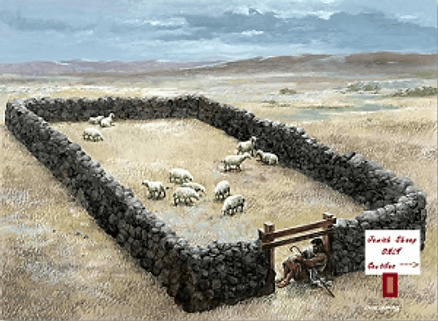
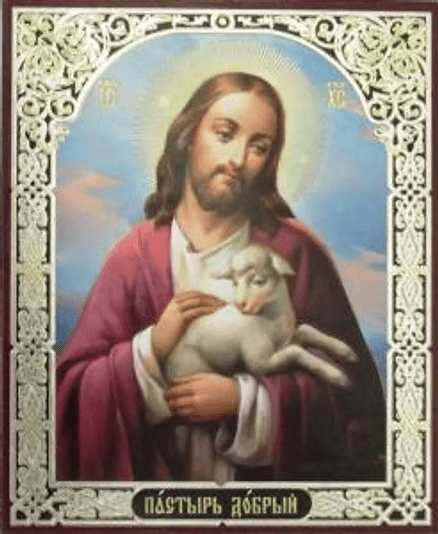


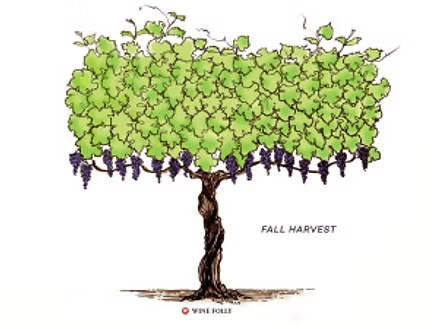

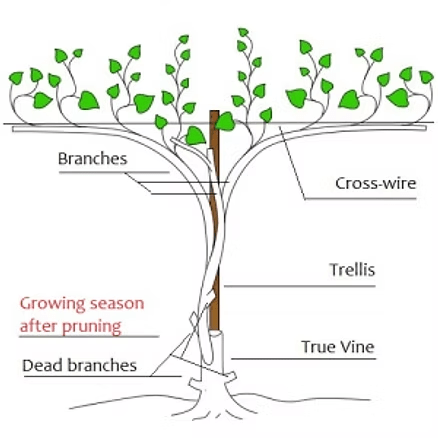


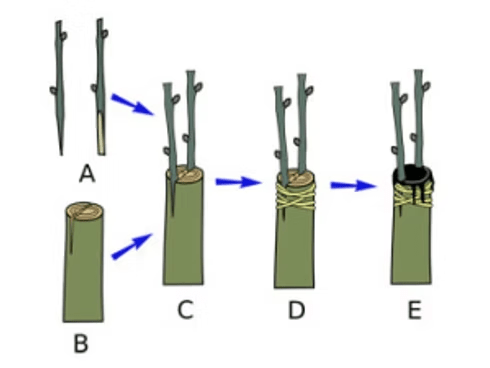
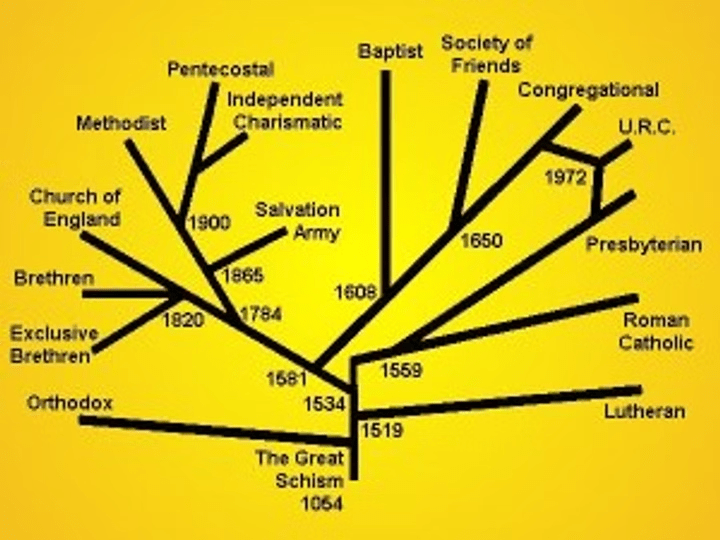

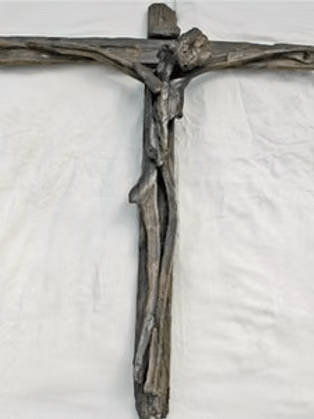

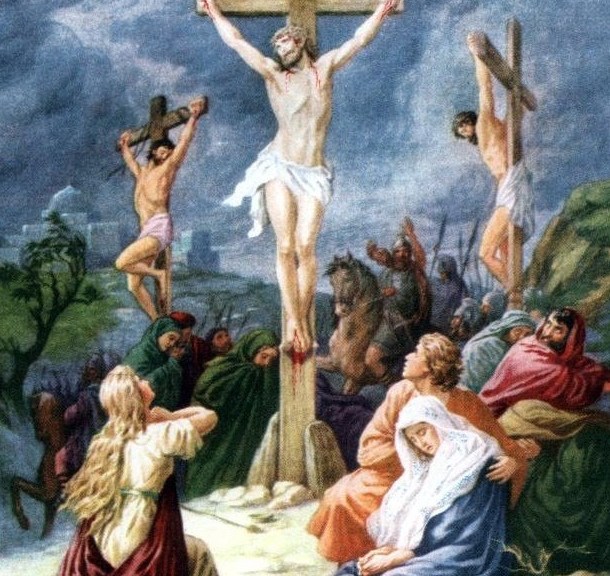
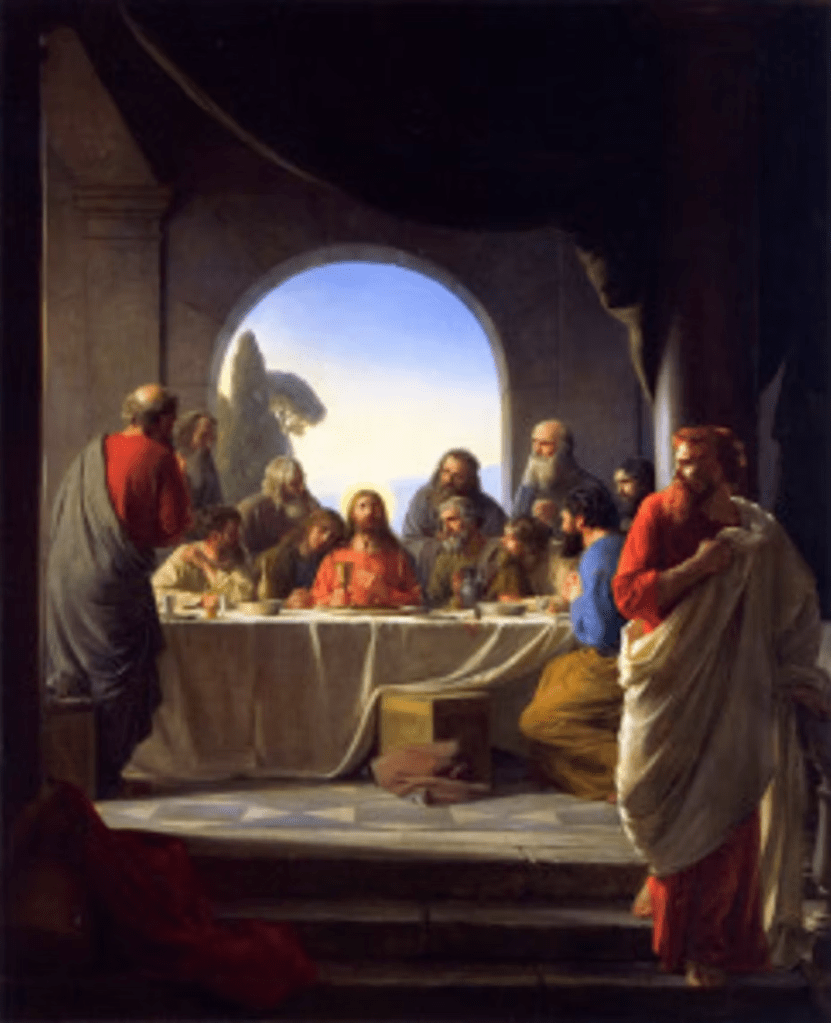








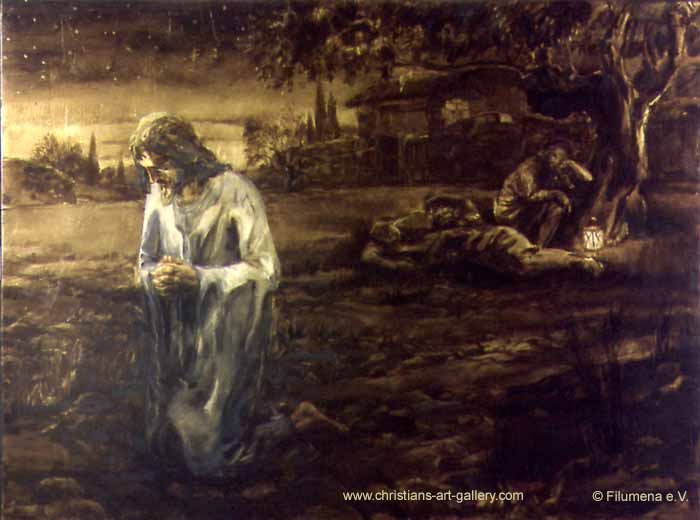
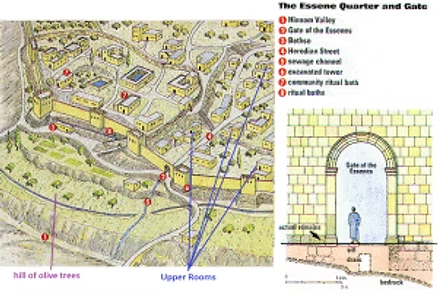




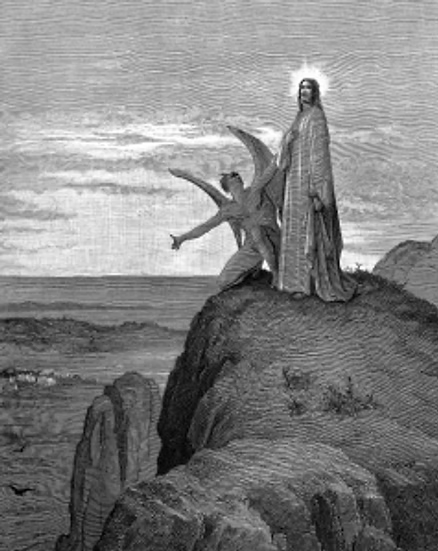




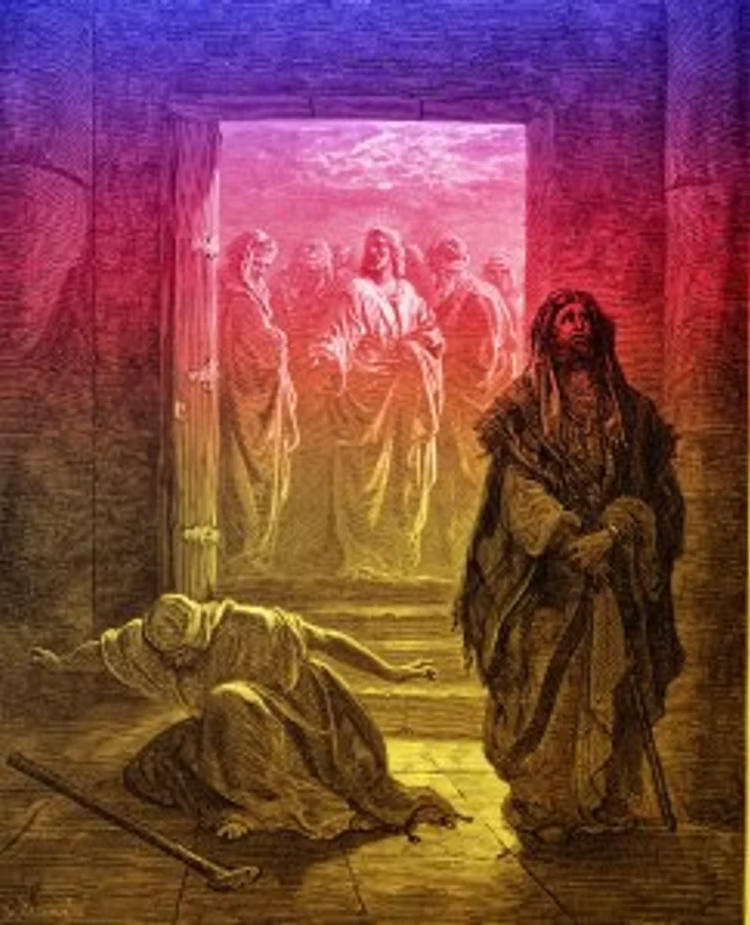



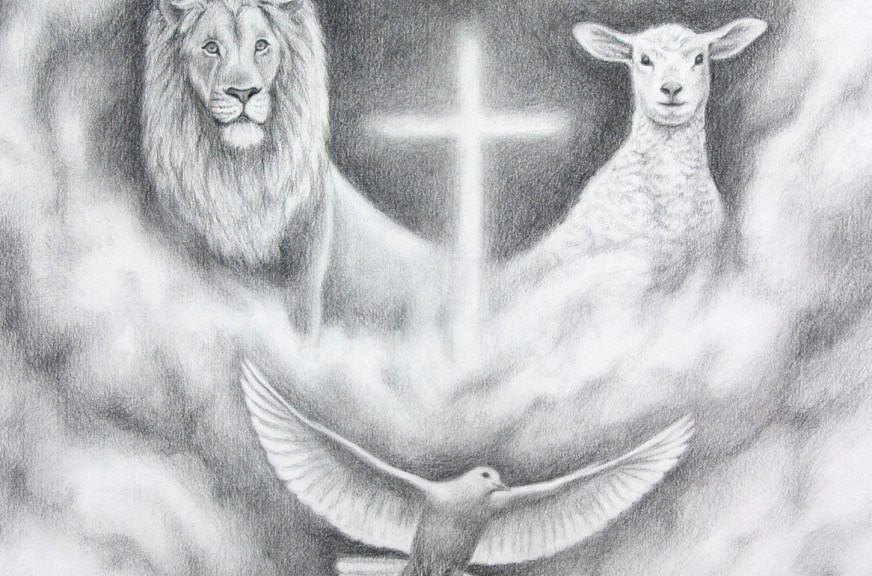
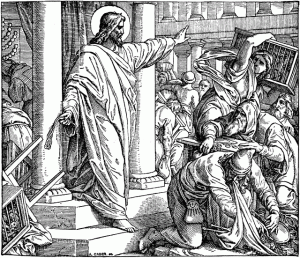


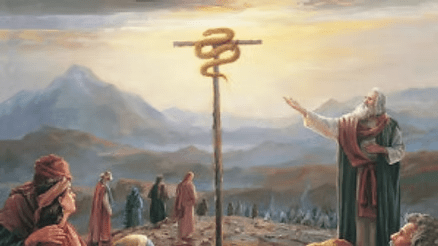



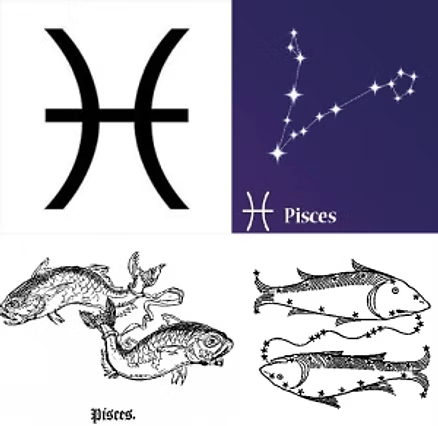


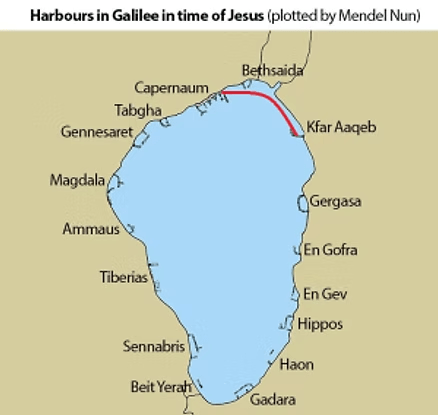



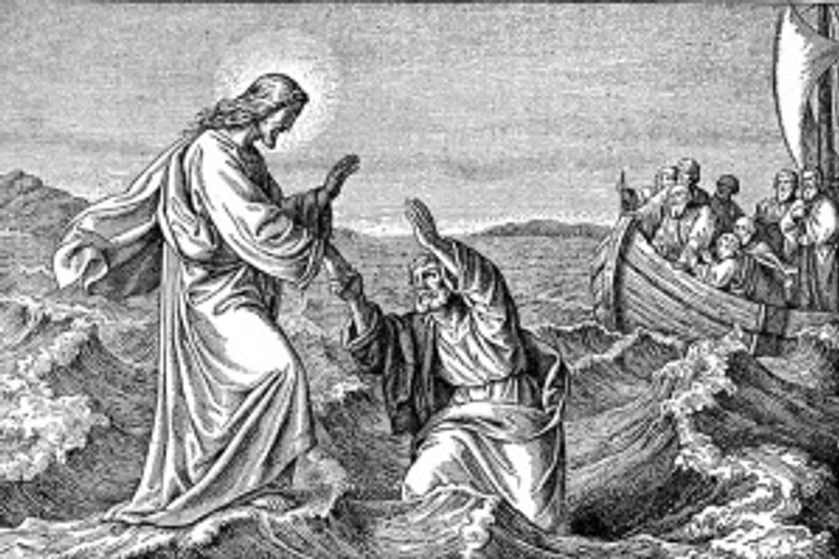












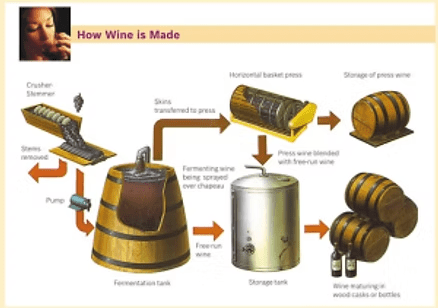


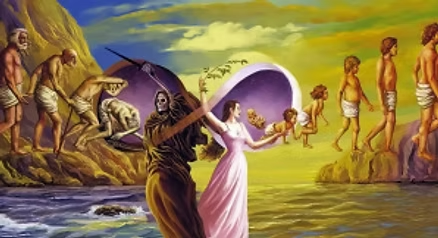

 Explaining the Readings