Jesus went to the other side of the Sea of Galilee, also called the Sea of Tiberias. A large crowd kept following him, because they saw the signs that he was doing for the sick. Jesus went up the mountain and sat down there with his disciples. Now the Passover, the festival of the Jews, was near. When he looked up and saw a large crowd coming toward him, Jesus said to Philip, “Where are we to buy bread for these people to eat?” He said this to test him, for he himself knew what he was going to do. Philip answered him, “Six months’ wages would not buy enough bread for each of them to get a little.” One of his disciples, Andrew, Simon Peter’s brother, said to him, “There is a boy here who has five barley loaves and two fish. But what are they among so many people?” Jesus said, “Make the people sit down.” Now there was a great deal of grass in the place; so they sat down, about five thousand in all. Then Jesus took the loaves, and when he had given thanks, he distributed them to those who were seated; so also the fish, as much as they wanted. When they were satisfied, he told his disciples, “Gather up the fragments left over, so that nothing may be lost.” So they gathered them up, and from the fragments of the five barley loaves, left by those who had eaten, they filled twelve baskets. When the people saw the sign that he had done, they began to say, “This is indeed the prophet who is to come into the world.”
When Jesus realized that they were about to come and take him by force to make him king, he withdrew again to the mountain by himself.
When evening came, his disciples went down to the sea, got into a boat, and started across the sea to Capernaum. It was now dark, and Jesus had not yet come to them. The sea became rough because a strong wind was blowing. When they had rowed about three or four miles, they saw Jesus walking on the sea and coming near the boat, and they were terrified. But he said to them, “It is I; do not be afraid.” Then they wanted to take him into the boat, and immediately the boat reached the land toward which they were going.
——————–
This is the Gospel reading selection to be read aloud by a priest on the ninth Sunday after Pentecost [Proper 12], Year B, according to the lectionary for the Episcopal Church. It will accompany one of the two Tracks that pair Old Testament readings with Psalms, the first of which being the sins of David bringing about his fall. The other is from Second Kings, which tells of first fruits miraculously feeding a hundred of the prophets of Elisha. Both Psalms fit those two themes generally. Before this reading, a selection from Paul’s letter to the Ephesians will be read, where Paul said, “you may have the power to comprehend.”
I have published a commentary about this reading selection, written back in 2018. It has maps and diagrams and pictures that help explain the logistics involved. I invite all to read that posting, as the insight I offered then is still valid now. The article can be accessed by searching this site. At this time, I will only offer a few additional observations.
First of all, the specific numbers presented highlight the numbers “five” [“pente”] and “two” [“dyo”], both of which are multiplied as “five thousand” [“pentakischilioi”] and “Two hundred” [“Diakosiōn”], as a hundred fold and a thousand fold. “Six months’ wages” is actually “Two hundred denarii,” with “Diakosiōn” [“two hundred”] capitalized.
Five is representative of the Torah. It must be realized that the “synagogue” Jesus had created by the “Sea of Tiberias” was specifically chosen because it could seat many more people than could a building made of mud and stone. This means the “crowd” that numbered “five thousand” had come from the four corners of the world because of their belief in the Torah. The primary offering – spiritual food for soul thought, their manna from heaven – came from the scrolls of the “five” books of Moses.
The use of the number “two,” as always, represents a duality. As a duality of the Scriptural readings in Jewish synagogues, the prophets must be seen as those who were divinely possessed by Yahweh, so no longer was one soul maintaining a body of flesh, but the soul was joined with the Spirit of Yahweh, such that “two” was their identity. With “two” reflecting a soul possessed, the “two” fish reflected Jesus and his newly ordained apostles, having just returned from their internships [in pairs], as those who would administer this spiritual feeding that took place. The use of “Two hundred denarii,” where “Two hundred” is capitalized, shows a divine level of meaning placed on that number, denoting the value set on the souls of those waiting to be fed was beyond calculation in material terms.
When Jesus asked the question, “Where are we to buy bread for these people to eat?” this must be seen as him seeing a parallel of that setting by the sea and Moses having led the Israelite multitude into the wilderness. Neither place was conducive to marketplaces being nearby. John knew Jesus asked that question as a “test” of Philip’s soul, as a Jew who was raised to know the complaints of the Israelites for food [and water]. This says Philip failed the test of his soul having married Yahweh, because he did not answer as did Ezekiel, saying, “You know, Yahweh will provide.” This makes the question Jesus asked, which John implied he knew what Jesus was thinking [perhaps from his adult soul looking back with all the answers], be a test of how so many will be fed, when the only answer can be, “God will provide.”
When we find Jesus giving the instruction: “Make the people sit down” [NRSV], the Greek text actually says “Poiēsate tous anthrōpous anapesein,” where two aspects here need to be realized. First, the word “Poiēsate” is capitalized, which makes “you make,” or “you accomplish” be raised to a divine level of meaning, where the second person plural form of “make” or “accomplish” becomes an instruction from Yahweh [through Jesus’ mouth] that told the apostles to “shepherd His flock.” The second aspect has to do with the word “anapesein” meaning “recline,” rather than “sit.” This not only plays into earlier information stated, “Now the Passover, the festival of the Jews, was near,” where “reclining” before eating was symbolic of royalty; and, during the Passover Seder meals [there are two each year], the Jews recline as a symbolic act of being royalty as Yahweh’s chosen children. This instruction to “Make those people recline” is then an inference to the apostles symbolically representing the ritual Seder meal that would be served to them. Still, there is another aspect relative to “reclining.”
The third element of Scripture routinely found in a Jewish synagogue is the singing of Psalms. Because the instruction must be seen as given to the apostles to become shepherds of a flock, the preceding verse has John giving the information [that seems benign and unimportant] that says, “Now there was a great deal of grass in the place; so they [reclined], about five thousand in all.” [NRSV] The element of “grass” then makes this a reenactment of Psalm 23:2, which sings, “He makes me lie down in green pastures, he leads me beside quiet waters.” By having stated the grass was beside the Sea of Tiberius, that instruction must be seen as the act of Yahweh as the Good Shepherd leading His flock, just as David had been led.
The element of “giving thanks” is for Yahweh having provided the Torah and the Prophets for the ‘open air’ synagogue he had been led to create, as a place where the Ark of the Covenant was free to rise as a pillar of cloud before the multitude. When John wrote, “he distributed to those reclining,” the third person singular says the soul of Jesus led each of his twelve apostles as they fed the flocks with the spiritual food that was the Torah and the Prophets, all while their imaginations saw those lessons taught to them were the consumption of physical bread and fish. This then leads to the leftovers that were gathered.
The number “twelve” needs to be seen as the number of tribes of Israelites. When Moses told the elders [those leading the twelve tribes] to instruct the people how to gather manna, they were told not to take more than their families could consume in one day. The exception was gathering two days’ worth on Friday, before the rest of the Sabbath. Excess would turn to mush filled with maggots. Thus, more manna fell than was needed, so the twelve baskets of leftovers says there was always more spiritual food than any of the tribes could handle in one day. This gathering of twelve full baskets of leftovers says there will always be more than anyone’s soul can digest in one day, with plenty left over to look forward to. That is a statement about the greatness of Yahweh’s Word.
In verse fifteen there is the idea that implies the crowd was about to “seize [Jesus] to make him king.” This must be read as Jesus knowing the souls of the people had just been fed spiritual food, more than they could eat in one sitting. They ate their fill for one day. That statement says Jesus knew they would all become Christians in due time. Verse fourteen leads to this, literally translating to say, “These therefore people [chosen] , having perceived what he had caused [within their souls] , miracle [fed them spiritually] , were saying because , This one being [soul] truly this prophet who is coming into the world.” That needs to be slowly broken down to understand the deeper meaning.
First, the Greek word “Hoi” begins this, which divinely elevates “These” to mean the group just fed were “Those” of Yahweh, as His chosen people. As pilgrims from out of town, having traveled to Galilee in preparation for the Passover, they were devout Israelites, who were seeking to repent for their wayward ways and become truly the people of God. In the feeding, they realized what had just happened, because their souls had been enlightened. They had been caused to be filled, both physically and spiritually. This was known by them to be a miracle. It was that miracle they realized that caused them to say, “This one” was Jesus foretold. The capitalization of “Houtos” divinely elevated “This one” to be the promised Messiah. The element of “truly this prophet” means the acts performed by the twelve apostles, as instructed by Jesus, was all the inspiration of Yahweh. Therefore, those fed spiritual food knew Jesus was the one that the Israelite peoples had long been awaiting.
By them realizing Jesus had touched them all through the extensions that were his apostles, the crowd was not going to run and grab Jesus and attempt to make him a king. The word that translates as “to seize” [“harpazein”] should be seen as the same term Paul used in his second letter to the true Christians of Corinth, when he wrote about both he and Barnabas being “snatched away,” where twice was used words rooted in “harpazein” [“harpagenta” and “hērpagē”]. In both of those uses, Paul spoke of their souls being taken from their bodies. This must be seen as the root meaning of what Jesus said, as he had no fear at all that his body would be “seized.” He knew that those fed spiritually would become reborn as Jesus, when their souls would be “seized” by his soul and they would be reborn as Jesus resurrected, with that soul the king of their bodies of flesh.
In the commentary I posted in 2018, I made it clear that this writing states John was the “boy” who was holding the basket that contained the lunch for Jesus and the twelve [plus others of family there]. I want to add now that proof to this is found when verse nine begins by stating, “Being a little boy here” [“Estin paidarion hōde”]. That segment of words identifies John, as he was the author. The capitalization of “Estin” becomes a divinely elevated statement of “Being,” with that “Being” then identified as “a little boy.” The divinely led “Being” was John, who then was “a little boy,” not yet an adult. The aspect that “here” means “in that setting,” for “a little boy” to be “here,” at the top of a mountain where Jesus met with his “disciples,” says John would only be there if he was related to Jesus. For him to be “a little boy” who knew what Jesus was thinking, Jesus was his father and Jesus had explained afterwards why he did what he did, teaching his son as a father would.
As for the element of Jesus walking on the water, I refer to what I wrote in 2018. I firmly believe John writing about this is the proof that John was not on the boat, being the son of Jesus, as both walked back to Capernaum in the dark, most likely using a lantern that illuminated Jesus. Because of the lateness stated by other Gospel writers, the possibility arises that it could have been a dream that John realized spiritually, later in life. The importance that needs to be grasped from the fear experienced by the apostles, when the seas got rough, is it shows a difference between them having already been given the opportunity to see what “seizing Jesus and making him king” over their soul-bodies and those fed spiritual food by them, as Jesus within their souls. The paradox then acts as a prophecy of the fear the apostles would have after Jesus had physically left them, when they hid from everyone, rather than delight that their time had finally come.
As the Gospel selection to be read aloud on the ninth Sunday after Pentecost, when one’s own personal ministry for Yahweh should be well underway, the lesson of this reading says to look forward to when one’s soul will be married to Yahweh, do not fear the turbulence that will come when that day comes. The miracles of feeding five thousand and Jesus walking above the rough waters must be seen as totally attainable by oneself, not something only Jesus could do. To think no more miracles can happen, because Jesus is sitting on a throne in heaven, next to Yahweh, is to have a defeatist attitude that fears letting Yahweh possess one’s soul and bring about the resurrection of His Son’s soul within another’s.
The next day, when the people who remained after the feeding of the five thousand saw that neither Jesus nor his disciples were there, they themselves got into the boats and went to Capernaum looking for Jesus.
When they found him on the other side of the sea, they said to him, “Rabbi, when did you come here?” Jesus answered them, “Very truly, I tell you, you are looking for me, not because you saw signs, but because you ate your fill of the loaves. Do not work for the food that perishes, but for the food that endures for eternal life, which the Son of Man will give you. For it is on him that God the Father has set his seal.” Then they said to him, “What must we do to perform the works of God?” Jesus answered them, “This is the work of God, that you believe in him whom he has sent.” So they said to him, “What sign are you going to give us then, so that we may see it and believe you? What work are you performing? Our ancestors ate the manna in the wilderness; as it is written, ‘He gave them bread from heaven to eat.’” Then Jesus said to them, “Very truly, I tell you, it was not Moses who gave you the bread from heaven, but it is my Father who gives you the true bread from heaven. For the bread of God is that which comes down from heaven and gives life to the world.” They said to him, “Sir, give us this bread always.”
Jesus said to them, “I am the bread of life. Whoever comes to me will never be hungry, and whoever believes in me will never be thirsty.”
——————–
This is the Gospel reading to be read aloud by a priest on the tenth Sunday after Pentecost [Proper 13], Year B, according to the lectionary for the Episcopal Church. This will be preceded by one of the two pairs of Old Testament and Psalms optional for this Sunday. Track 1 places focus on Nathan telling David that Yahweh will hold him responsible for his sins, with Psalm 51 a song of lament, singing: “Wash me through and through from my wickedness and cleanse me from my sin.” Track 2 places focus on the complaints of hunger by the Israelites to Moses and Aaron, leading Yahweh to begin the feeding program that would be manna from heaven. Psalm 78 sings out, “He let it fall in the midst of their camp and round about their dwellings.” The Epistle reading from Ephesians will be read before this Gospel selection, where Paul wrote, “He who descended is the same one who ascended far above all the heavens, so that he might fill all things.”
I wrote about this reading and published a commentary on my website in 2018. That article can be read by searching this site. I welcome all to read those views, as the same still applies today. Because I explained the bulk of what this reading selection says, I will now only offer a few observations from different angles.
One thing that became a sudden insight to me just the other day, something I had never thought of before is relative to the feeding of the five thousand. While this reading deals with the day after that feeding, my thought has bearing on this following of people to find Jesus in Capernaum. In my past thoughts on this miracle, I saw Jesus instructing his twelve apostles not only to have the five thousand recline in the grass but also having the twelve separate the five thousand into twelve sections, which would make for about four hundred sixteen each. Each apostle was then given a portion of the five loaves and two fish to distribute to the section assigned to him. Before, I saw the miracle being each of the twelve being possessed with the Spirit of Jesus, so each filled their section with the same Spirit, as spiritual food more than physical food.
Recently, I have seen the abundance of twelve baskets of leftover bread as having a logical explanation, no longer requiring that miracle needing one to believe something magical occurred, beyond the realm of nature, where atheists refuse to believe it is possible for bread to spontaneously be created, turning five loaves in one basket into twelve baskets full of bread pieces. The logic says the five thousand brought their own physical food with them, as they were traveling pilgrims that were prepared to feed themselves. As the apostles preached to the twelve sections of people, the people shared in common what they had, so everyone was filled with physical food, with much left over. In that process, the five thousand were more importantly filled with the spiritual food that was the real reason they came to find Jesus. While fed spiritually by apostles ‘in the name of Jesus,’ they knew Jesus would be the soul who would be “seized” in their soul’s marriage to Yahweh, knowing divinely that Jesus would become the “king” of their bodies of flesh – each an individual realm for his reign.
The thought that now comes strongly upon me is this: The model of the twelve sections of four hundred sixteen people then became the prototype of twelve modern churches, with each apostle acting as the priest or pastor leading a flock of that many sheep. The small portions of the five loaves and two fish is now seen by my imagination as the first offerings of symbolic physical food, which in Episcopal churches [all the universal catholic branches] that constitutes a wafer or cracker. The twelve baskets of leftover bread pieces is then akin to the offerings collected by the apostles; but these first examples of Christian churches do not set the precedence of begging the people for money and they do not pass out free wine. This modern concept of Christian churches, which set expectations that the people should show up expecting a free wafer, with the addition of a sip of wine, all paid for by the congregation’s hefty donations, is the reason John’s chapter six takes an ugly bend with these verses today [and the ones that follow – about “eating my flesh and drinking my blood”]. The roots of a failed “Church” are shown in this reading and the others to follow.
In my 2018 observations on this chapter of John’s, I saw the aspect of Judas Iscariot being one of the twelve as why not all of the five thousand would be spiritually satisfied and no longer seek after Jesus in the flesh, content to await his coming spiritually. Those who listened to a sermon on the Torah and the Prophets [a portion of the five loaves and two fish] were just as dissatisfied as were the normal Jews who attended a synagogue, always being fed meaningless banter. While everyone in that sectional flock shared the food they had, the offering of spiritual food by Judas was quickly turned to nothing. Those would be the ones who followed Jesus, to whom Jesus said, “Very truly, I tell you, you are looking for me, not because you saw signs, but because you ate your fill of the loaves. Do not work for the food that perishes, but for the food that endures for eternal life, which the Son of Man will give you.”
When one realizes the vast majority of the five thousand did indeed receive the miracle of the Spirit, as distributed to them by the apostles ‘in the name of Jesus,’ the vast majority of them would have left spiritually satiated, themselves [a “self” equals a “soul”] finally fulfilled through attendance in a synagogue [‘open air’ as it was]. They would have left the grassy flood plain of the sea, most likely gone to spread their newfound joy with others [the reality of Christianity]. Those who would have been fed the standard lack of spirituality all the rabbis of Galilee had, would have hung around, not realizing others had their souls touched by Yahweh, through His pastors of His flock. Those fed nothing of value by Judas, proclaiming to be taught by the Master Jesus, were found wanting more, after the food from yesterday became the waste of tomorrow.
Between the Gospel reading from John on the ninth Sunday after Pentecost and today’s tenth Sunday offering are two missing verses. John 6:22-23 are left out, seemingly as not fitting the storyline of either. Therefore, the Episcopal Church has omitted them as superfluous and unnecessary.
I see them as now being necessary to be read. Those two verses say [NRSV]:
“The next day the crowd that had stayed on the other side of the sea saw that there had been only one boat there. They also saw that Jesus had not got into the boat with his disciples, but that his disciples had gone away alone. Then some boats from Tiberias came near the place where they had eaten the bread after the Lord had given thanks.” (John 6:22-23)
First of all, this says not everyone had stayed the night where they had been fed the evening before. When the translation says, “the crowd that had stayed on the other side of the sea,” that indicates only a portion, while still numerous enough to be “a crowd” [“ochlos”]. When the translation then says, “They also saw that Jesus had not got into the boat with his disciples, but that his disciples had gone away alone,” this explains why they hung around. Whereas the vast majority had been touched by the Spirit of Jesus, passed on from one truly ‘in his name,’ the ones who had Judas preach to them were without that touch; so they waited to see the one that came to see … not some impostor.
In verse twenty-three, the NRSV has translated, “after the Lord had given thanks.” This is actually a separate segment of words in the Greek text [the last of three segments in verse twenty-three], where a comma mark introduces: “eucharistēsantos tou Kryiou,” which literally translates to say, “having been thankful for God’s good grace of this of Lord.” That sounds like a prayer was said; and, the Jews prayer after a meal, rather than before. The genitive case of “tou” and “Kryiou” says the reason for “having given thanks” [in prayer] means “of this” – the feeding of “bread” – was food provided for by God – “of the Lord.” The capitalization of “Kyriou” must be seen as a reference to Yahweh, as to whom “thanks were given,” more than John referring to Jesus. Still, to the ones waiting to see Jesus, the feeding of the “bread” occurred in his ‘open air’ synagogue; so, they also “gave thanks” to Jesus as an instrument of Yahweh – the “Lord.”
What needs to be seen from the word “eucharistēsantos” is the root Greek word is “eucharisteó,” from which comes the Christian term “eucharist” [“eucharistia”]. Everything about that word means “giving thanks” or “thanksgiving,” and this is especially read by Christians as being related to the Passover Seder meal, at which time Jesus said the ritual Jewish prayer before the breaking of the bread [which is never eaten], called the HaMotzi – meaning “blessing over the bread.” Therefore, a standard Jewish prayer of thanksgiving had been said, which gave thanks to Yahweh for physical bread consumed, with that having happened the evening before boats arrived at the pier near where a crowd of people remained gathered.
When this use of “eucharistēsantos” is seen as a commonly recited Jewish prayer over having eaten bread [or anything of substance], then the truth of verses twenty-four and twenty-five say these Jews were “seeking this Jesus” [“zētountes ton Iēsoun”], saying to him when they found him, “Rabbi , when here have you come ?” [From “Rhabbi , pote hōde gegonas?”] This identification of Jesus as “My teacher,” the meaning of “Rabbi,” has to be seen as an important statement [capitalized words are always divinely elevated in meaning] that told Jesus, “Here come the bunch that listened to Judas.” Because Judas had left them wanting [like all other rabbis they had ever listened preach], they wanted Jesus, meaning understanding the capitalization of “Rhabbi” important to grasp.
According to HELPS Word-studies, “Rabbi” literally means, ‘My great one; my honorable sir,” such that “my” acts as a statement of possession. Whereas the ordinary usage implies a personal preference to one teacher, as “the teacher of me,” the capitalization raises this meaning to become a statement that says those who sought Jesus and found him felt in their souls that Jesus owed them something. For having shared their bread with others, expecting to get something uplifting in return from coming to Jesus’ ‘open air’ synagogue, they had left their ‘bread’ in the ‘offering’ basket, only getting a nibble of holy bread [a wafer] and a hint of fish. Because they saw Judas as the hired hand of Jesus, they felt that they had bought the right to call Jesus “My Rabbi.”
This needs to be seen as where the current state of Christianity is today. It goes to church [or watches church on some media], makes a financial offering [or mails in pledges and tithes], listens to a hired hand pretend to be Jesus reborn, and then eats a wafer and sips some wine, prays some canned prayers and goes home spiritually empty. The reason Christians go to church is to feel like Jesus is theirs, bought and paid for; but the result is always disappointing. This should be seen as why people searched for Jesus in Capernaum. Unlike the vast majority who had been fed spiritual food by true apostles, those who get the shaft from pretenders keep seeking some value in return for their money and support.
Simply by understanding the divine elevation of “Rhabbi” as a powerful statement of the failure of a religion to serve the needs of the flock [as the Jewish temple-synagogue system had, just as like the Christian church-denomination system does now], it is easy to see that was what Jesus responded to, rather than the question, “when did you come here?”
It is because Jesus was called “My Rabbi” he said, “Very truly, I tell you, you are looking for me, not because you saw signs, but because you ate your fill of the loaves.” In that, the segment of words that says, “not because you saw signs” can be Jesus knowing what they did not see. He told them “because you saw signs,” means “sēmeia” means both “miracles” and “tokens.” Whereas the vast majority went away talking about the miracles they witnessed, all this group fed by Judas saw was some token objects: tiny shreds of bread and some crumbled fish. Whereas the vast majority praised they finally understood the meaning of some Scripture, all the group that listened to Judas heard was the ‘same ole same ole nothings’ they always hear preached. Thus, Jesus knew by them calling him [who none had ever heard preach before] “My Rabbi,” it was because they had “not seen miracles.”
By Jesus then saying, “because you ate your fill of the loaves,” he was saying he knew they all shared commonly what bread they had brought with others, so all were filled physically with food. That was a cost to them, which they willingly paid; but for that price of admission they expected to see the show, the same one the vast majority saw. Judas had shown them nothing they had not seen many, many times before. That failure to live up to the price of feeding neighbors their own bread meant Jesus owed them. He could then be called “My Rabbi.”
With that, I will leave it up to the reader to ponder how the ensuing conversation between Jesus and the crowd unfolds. Again, this chapter of John is heading towards an ugly end, where the Jews will think Jesus is promoting cannibalism. This means, unlike the vast majority who had left spiritually satisfied who left and did not follow Jesus angrily, the ones who sought Jesus because they felt he owed them something is an attitude of birthright. They were Jews in pilgrimage, which says they followed the rules of Mosaic Law [as best they knew how to] and they expected to go to heaven, because they were the select group known to be God’s chosen people. Therefore, the conversation between Jesus and those who feel they deserve rabbis like Jesus to bless them and tell them they are going to heaven needs to be seen from a Christian perspective, where Christians assume much the same.
Again, I offered insight into the whole reading in my prior posting. Feel free to read that as the rest of this reading is pondered. Pay close attention to the “works of God” and think about those who say “belief” is all that is needed, with “works” left for others. Think how so many Christians poopoo James’ statement that “belief without works is dead,” because so many misunderstand “pistis” by thinking “belief” is the same as “faith.” Belief without works is dead faith. Calling oneself a Jew or a Christian is having a “belief.” However, calling oneself either without doing the “works of God” means a soul bound to reincarnate after the flesh is dead.
As the Gospel reading chosen to be read on the tenth Sunday after Pentecost, when one’s personal ministry for Yahweh should be well underway, the tendency is to see the crowd as doing a good thing. They all just wanted to follow Jesus, in the same way the vast majority of people calling themselves Christians today want to say they are always looking for Jesus. The lesson is to see oneself as one of those who did not sail away on the filled with the Holy Spirit boat, as not being one of those whose souls were engaged to Yahweh, knowing by doing good works their souls would be joined with the soul of Jesus – their king and lord. Todays lesson is seeing how often one calls Jesus “My Rabbi,” as if Jesus was some fictional character in a book, who is never one with one’s soul. The lesson is to realize one is not seeing any miracles surrounding one’s life.
A ministry for Yahweh begins by being able to know that name. A ministry must realize through one’s soul marrying Yahweh that the name “Jesus” means “Yahweh Saves,” so to be “in the name of God” one is “Jesus” reborn. One cannot stand like a Judas Iscariot, making up things one heard in Sunday School when six years old and then acting like a preacher, crying crocodile tears for emotional theatrics. One must be Jesus resurrected in one’s flesh, so the miracles of spiritual feeding never ceases. Wherever one goes as Jesus reborn, the miracles keep on satisfying the crowds. Anything less always leaves them wanting more and looking for where the truth can be found.
Jesus said, “I am the bread of life. Whoever comes to me will never be hungry, and whoever believes in me will never be thirsty.”
Then the Jews began to complain about him because he said, “I am the bread that came down from heaven.” They were saying, “Is not this Jesus, the son of Joseph, whose father and mother we know? How can he now say, ‘I have come down from heaven’?” Jesus answered them, “Do not complain among yourselves. No one can come to me unless drawn by the Father who sent me; and I will raise that person up on the last day. It is written in the prophets, ‘And they shall all be taught by God.’ Everyone who has heard and learned from the Father comes to me. Not that anyone has seen the Father except the one who is from God; he has seen the Father. Very truly, I tell you, whoever believes has eternal life. I am the bread of life. Your ancestors ate the manna in the wilderness, and they died. This is the bread that comes down from heaven, so that one may eat of it and not die. I am the living bread that came down from heaven. Whoever eats of this bread will live forever; and the bread that I will give for the life of the world is my flesh.”
——————–
This is the Gospel reading that will be read aloud by a priest on the eleventh Sunday after Pentecost [Proper 14], Year B, according to the lectionary for the Episcopal Church. It will follow either a Track 1 or Track 2 pairing of Old Testament and Psalm readings. Track 1 places focus on the death of David’s son Absalom, while Track 2 tells of Elijah falling asleep under a broom tree. The sons that accompany them are lamentations and praises, accordingly. All will be presented with a reading from Ephesians, where Paul wrote, “Therefore be imitators of God, as beloved children, and live in love, as Christ loved us and gave himself up for us, a fragrant offering and sacrifice to God.”
I wrote about this reading and published it in 2018, when it last came up in the lectionary cycle. That commentary can be read by searching this site. I welcome all to read that posting, as it is still valid today. However, I will add comments now that direct the focus of this reading towards the thread that connects all the readings grouped with it on this Sunday after Pentecost.
Before I go in that direction, as an act designed to see the importance of the capitalized words written by John in Greek, I found more evidence of the divinity of Scripture, which is remarkable. I did this two Sundays back, with the Paul letter to the Ephesians. Simply by reading the capitalized words, a supporting statement appeared that guided the other text to a point of focus. The same thing appears in the capitalized Greek words in this selection (verses 41-51). Here is the list of the capitalized words and their translations into English:
“Ouch” – “Not” – the Jews against Jesus as heavenly
“Iōsēph” – “Joseph” A name meaning “Increaser” or “May He Add”
“Ek” – “From, From out of” – A question of where
“Apekrithē” – “Answered” “Replied, Took up the conversation” – Jesus responding
“Iēsous” – “Jesus”
“Mē” – “not” to grumble, said Jesus
“Patēr” – “Father”
“Kai” – importance to follow
“Theou” – “of God”
“Patera” – “of Father”
“Theou” – “of God”
“Patera” – “of Father”
“Amēn” – “Truly”
When these words are stated as a divine statement of Yahweh, who was guiding the mind and the pen of John, it becomes an intentional use of capitalization, which John could never have planned from a simple human brain. It shows the source as divine. Here is the statement made by these words (in their order of appearance in these eleven verses):
“Were Grumbling Jews – I Not Joseph From – Answered Jesus – Not Father – * – of God of Father – of God of Father.”
Where I have placed an asterisk ( * ), this is where the capitalized word “Kai” would be found. Rather than a word translated as “And,” the word is a marker of importance that must be grasped to follow. When this word is capitalized, it brings about greater importance, of a divine level of meaning. The words that follow “Kai” need to then be seen as most important in this series of capitalized words, such that they should be found as a strong statement about what “Not Father” means. That following statement says this:
“they will exist all taught of God,” which leads to the following capitalized word “of God.”
This then places great importance on “all” who “will be” [a statement of future being] “taught.” That important focus explains who can truly claim Yahweh as the “Father.” The grumbling Jews all saw themselves as the children of God, but because none of them had ever be “taught” how to be a Son of Yahweh and live righteously, none of them could make that claim. Thus, their focus on Joseph says their fathers were all human, not spiritually taught to teach their children to likewise be taught. The importance of this is then Jesus saying the Jews were lost and could only be found by becoming true children of Yahweh.
Seeing this arise from the capitalized words is not what I planned to write, although this adds support to the commentary I am about to present. The theme that runs through all the readings on this Sunday is one of children of the Father. In the Second Samuel reading, Absalom is the son of David, his human father. Paul wrote in the beginning of his fifth chapter to the Ephesians, “be imitators of God, as beloved children,” where the word translated as “imitator” is better translated as “emulator.” John wrote of Jesus saying, “No one can come to me unless drawn by the Father who sent me; and I will raise that person up on the last day. It is written in the prophets.”
It is more difficult to see this Father-Son relationship in the short optional reading from First Kings; but it is there. When we read of the “angel of Yahweh” [not written “the Lord”], it is the voice of Yahweh that says, “Get up and eat.” This is the soul of Elijah being taught by Yahweh. It is the truth of what Jesus said to the Jews.
When that is seen, the bread given to Elijah for him to eat is then the spiritual food that made him the Son of Yahweh. It is the bread that feeds one’s soul the goodness of Yahweh that grants one eternal life. It is how Jesus said, “Your ancestors ate the manna in the wilderness, and they died,” because manna is spiritual food for a day.” Daily consumption leads to the death of the body, when the soul separates. When manna is seen as Scripture, the bread given by the angel of Yahweh to Elijah is the bread that transforms one into the Son, with Yahweh the Father. Jesus was that angel speaking to the disgruntled Jews. He was telling them, “Arise and eat.”
In the two Old Testament readings the heavy thread that connects them both is that of a tree. The oak branches that caught Absalom [a name that means “Father Of Peace”], one must see the history of Israel. The shade of the broom tree that covered Elijah must be seen as the prophets and judges of Israel, with the oak tree for the kings and tribal patriarchs. That element is now stated by John when he addressed the “Jews,” which was a capitalized word. They had become the stump of Jesse, as there no longer was any tree their history could be written in. Jesus was the new shoot from which the “Jews” who were not disgruntled could become the new branches, all as saints. Jesus represented the mustard seed from which would grow the largest tree in the garden.
As the Gospel selection for the eleventh Sunday after Pentecost, when one’s own personal ministry to Yahweh should already be well underway, the lesson here is to listen to Jesus when he says, “No one can come to me unless drawn by the Father who sent me.”
Today’s Christians see Jesus as a co-equal to Yahweh, like the new name for God. So often Christians say, “You have to believe in Jesus,” when in reality one has to believe in Yahweh [not some generic Lord or God]. One has to believe Yahweh has offered believers His hand in marriage; but, to take hold of that hand, one must submit oneself fully and completely to Yahweh, as His wife. Without that marriage of one’s soul to Yahweh’s Spirit, there can be no belief in Jesus, because Jesus is not external to anyone. Jesus is the product of one’s marriage to Yahweh.
Jesus is the Son of man, as the soul-spirit of repentant Adam, the only Son of Yahweh. The name “Jesus” means “Yah[weh] Will Save.” The only way to receive eternal life is through becoming the Son resurrected within one’s soul-flesh being. Studying Scripture and being led to see its meaning does not make one Jesus reborn. One has to reach that broom tree and beg Yahweh to let one’s self die, so one can be reborn as the Son. The bread one must eat is Jesus. One must consume the life-giving Spirit of Jesus to gain eternal life. The only way to be able to call Yahweh the Father is by eating the bread of life and them emulating the Son in the flesh again.
Ministry with being Jesus is being a child, playing church. Absalom was the son-king of a holy man who had sinned against Yahweh. As the son of a man, Absalom was as great a sinner as was his father. Absalom was conceived when his Father Was At Peace with Yahweh, but being born of a holy man does not make one a holy man. Each soul is separate; each soul is the property of Yahweh. No soul can return to the Father without consuming the bread of life and being reborn as His Son. Anything short of that is pretense and self-worship.
Jesus said, “I am the living bread that came down from heaven. Whoever eats of this bread will live forever; and the bread that I will give for the life of the world is my flesh.”
The Jews then disputed among themselves, saying, “How can this man give us his flesh to eat?” So Jesus said to them, “Very truly, I tell you, unless you eat the flesh of the Son of Man and drink his blood, you have no life in you. Those who eat my flesh and drink my blood have eternal life, and I will raise them up on the last day; for my flesh is true food and my blood is true drink. Those who eat my flesh and drink my blood abide in me, and I in them. Just as the living Father sent me, and I live because of the Father, so whoever eats me will live because of me. This is the bread that came down from heaven, not like that which your ancestors ate, and they died. But the one who eats this bread will live forever.”
——————–
This is the Gospel selection to be read aloud on the twelfth Sunday after Pentecost [Proper 15], Year B, according to the lectionary for the Episcopal Church. It will follow one of two possible sets of Old Testament and Psalm readings, with Track 1 placing focus on the death of David and the ascension to the throne by Solomon and his gaining of wisdom. The Track 2 option places focus on a Proverb of Solomon, which sings praises to wisdom. All will be read along with the Epistle from Paul’s letter to the Ephesians, where he wrote, “Be careful then how you live, not as unwise people but as wise, making the most of the time, because the days are evil.”
I wrote my opinions on this reading and published them on my website in 2018, the last time this reading came up in the lectionary cycle. I welcome all to read that commentary by searching this site. My views at that time are basically the same as they are now, so the opinions I expressed then are still valid today. However, I have been led to deeper insights from Scripture since then, which means I can offer some new views that are worthwhile, which I will post now.
I want to first state that the vast majority of readers of this Scripture – the overwhelming percentage of those who call themselves ‘Christians” today – will be exactly like the crowd gathered around Jesus were then. This continuing series that places focus on the aftermath of the feeding of five thousand, where those who looked for and found Jesus came to him for all the wrong reasons. They were shortchanged by having been served a sermon and some tidbits of food by Judas Iscariot. They people were mostly pilgrim travelers, who had ample supplies of bread and drink with them, which they freely gave so their section of the five thousand [one-twelfth] could be fully fed, with leftover scraps of bread. While the majority went away fulfilled by the Spirit, passed onto them by the other eleven apostles, it was this group which was disgruntled and wanted Jesus to give them what they deserved. They then become the model for all the riff-raff denominations of the corruption of Christianity into an organized religion, led by wolves and administered by worthless hired hands who preach like did Judas. The people are always lacking and seeking more for the money they give. Therefore, it is vital for everyone to see himself or herself as those who ridicule Jesus in this reading; because that is you.
When Jesus said [NRSV], “the bread that I will give for the life of the world is my flesh,” the Jews then and Christians today read or hear those words spoken and think of Jesus as a separate, external being. They see Jesus as a body of flesh, which is not what was meant by what he said. The Greek written by John divides his words into two segments, which become one statement followed by another. The NRSV makes it all one paraphrased statement. The Greek is literally translated as follows:
“kai this bread next which I will give , this flesh of me being on behalf of this of the world life .”
In that, the first segment is introduced by the word “kai,” which is a marker word that denotes importance needing to be seen in the words that follow [up to the comma mark]. When that importance directly points to “this bread,” that relates back to what Jesus said: “I am the living bread that came down from heaven.” This means forget all about the concept of physical bread and see the importance of Jesus saying, “kai this life from heaven which I will give.” That is the importance of a life that does not already exist within those who will receive this gift of life.
Keep in mind here how the majority of those fed by the sea did not follow Jesus. It was only those fed crap by Judas. The others had received this life which Jesus gave through his apostles; and, they went out into the world filled with the gift of eternal life for their souls. That gift received meant they went into ministry AS JESUS REBORN. Receiving this life gift is not because one is the prettiest or the smartest. It is because a soul has married Yahweh and become his committed servant. Committed servants do not show up some place Sunday after Sunday looking for physical food and drink, only to go home and do nothing for anyone other than themselves. The people who followed Jesus are exactly like those who never were given life from heaven.
Following the comma mark, Jesus then added, “this flesh of me,” where the genitive case applied to “egó” says “of me.” That is misinterpreted as if Jesus was talking about “his flesh,” when in reality “his flesh” is whoever’s flesh becomes “of Jesus” [“of me”]. That makes his “flesh” be the one receiving the gift of life from heaven, because that flesh has become “of Jesus,” as his place of possession. That is then one who enters into holy ministry, as Jesus reborn; and, those were the ones who did not follow Jesus to Capernaum and hound him because a bad priest had fed them crap.
The problem so-called Christianity has today, is the vast majority of Christians see Jesus as some external deity, who sits on a throne in heaven [“wherever that is … surely not within me” – they say] and there can only be the one Jesus. Even when the Gospels tell of Jesus appearing in different bodies of flesh and the Apostles suddenly becoming filled with the Spirit and speaking in tongues, nobody seems to realize the Apostles all became reborn as Jesus. Nobody realizes Paul and all the first true Christian [who began a life-transforming movement, not a religion] were all exactly as Jesus says in this reading: They ate the flesh and drank the blood of the bread of life. Their flesh became Jesus resurrected.
Christians today, those who regularly go to a church each week [the number is getting less each week, especially now that COVID19 has become the excuse du jour], do little-to-nothing to help others. They think they are the poor lost sheep that Jesus will come find, no matter how filthy with the sins of the world’s ‘mud holes’ as they are. As long as they go to church [little more], Jesus will take them to heaven, because somebody told them to believe, “Jesus died so you can sin.” They firmly believe Jesus will come down and drive them in a holy Uber car to heaven, then open the door and escort them to their fancy suite in the Father’s house. They think they are owed that service, because they believe without ever being shown any proof, nor demanding the proof be shown to them.
In the use of “egó” [“I”], which is restated in “mou” [“of me”] and with “autou” [“of him”], all are reflections of “being” [along with three uses of “estin,” or “is”]. Jesus was not stating his “ego” when he said “I” or variations on that theme of “self.” They have to be read as one’s own “self-ego,” which must die in submission to a divine marriage to Yahweh, so that one’s own “ego” is replaced by that of Jesus. The Jesus “egó” occurs when one hs been reborn as Jesus, whose “ego” then controls one’s brain, as one’s flesh and blood is the body of Jesus resurrected.
In the Greek of John is written, “ean mē phagēte tēn sarka tou Huiou tou anthrōpou,kai piēte autou to haima,ouk echete zōēn en heautois.” This literally translates to state, “if not you shall have consumed it body of which of Son of this of man ,kai shall have drunk of self this blood , not you possess life in your souls .” The placement of “kai” must be seen as marking the important segment here, which says, “shall have drunk of self this blood.” Rather than seeing “blood” as metaphor for wine, as some physical liquid poured into a cup and swallowed by mouth, one needs to read “blood” metaphorically as a statement of relationship or lineage. The element of drinking should then be seen as metaphor for baptism, where there is no physical water involved, but the pouring out of Yahweh’s Spirit into one’s soul. It must be seen as Jesus saying one’s relationship with Yahweh must have taken place, so one’s soul [“autou” as the genitive case of “self” – “of self”] has submitted to Yahweh in marriage. That makes one’s “blood” related to a most holy line of saints.
In this Sunday’s readings – the twelfth Sunday after Pentecost – one must recall last Sunday’s bread and water that an angel of Yahweh placed by the head of Elijah. That was not physical bread and water. It was symbolic of the life brought down from heaven, which was Jesus. Elijah died of self, with his soul leaving his body of flesh. Once dead, he was touched by Jesus’ soul, where Elijah was told to eat. His soul consumed the body of Jesus, so the two were one. The jar of water was the relationship where the blood of Elijah’s body of flesh mingled as that of two souls in relationship. When Elijah lay back down, his newly joined soul reentered his body of flesh, and the second touch was Jesus telling Elijah to continue to consume the body of the Son of man, so he would gain eternal life [symbolic of forty days].
As a Gospel selection for the twelfth Sunday after Pentecost, when one’s personal ministry for Yahweh should already be well underway, the lesson here is to be Jesus reborn. There can be no life offered to anyone by a false shepherd or hired hand, because one has not consumed the body of Jesus and become another that is the Son of man [regardless of human gender]. When there is no life to offer the world, one has denied marriage to Yahweh and forbidden divine intercourse make one give birth to the Son of Yahweh in one’s flesh. The only way others can be served by one’s ministry is for oneself [a self always means a soul] dying, so the angel of Yahweh can bring the bread from heaven [Jesus] and set it by one’s “ego” [a “head”] and tell one’s soul to “eat.” When one “eats” Jesus [the spiritual bread] then one’s flesh becomes where Jesus resurrects. If one cannot grasp that truth, then one is just following Jesus around, making things worse for one’s soul.
Jesus said, “Those who eat my flesh and drink my blood abide in me, and I in them. Just as the living Father sent me, and I live because of the Father, so whoever eats me will live because of me. This is the bread that came down from heaven, not like that which your ancestors ate, and they died. But the one who eats this bread will live forever.” He said these things while he was teaching in the synagogue at Capernaum.
When many of his disciples heard it, they said, “This teaching is difficult; who can accept it?” But Jesus, being aware that his disciples were complaining about it, said to them, “Does this offend you? Then what if you were to see the Son of Man ascending to where he was before? It is the spirit that gives life; the flesh is useless. The words that I have spoken to you are spirit and life. But among you there are some who do not believe.” For Jesus knew from the first who were the ones that did not believe, and who was the one that would betray him. And he said, “For this reason I have told you that no one can come to me unless it is granted by the Father.”
Because of this many of his disciples turned back and no longer went about with him. So Jesus asked the twelve, “Do you also wish to go away?” Simon Peter answered him, “Lord, to whom can we go? You have the words of eternal life. We have come to believe and know that you are the Holy One of God.”
——————–
This is the Gospel selection to be read aloud by a priest on the thirteenth Sunday after Pentecost [Proper 16], Year B, according to the lectionary for the Episcopal Church. This reading will be preceded by one of two pairs of Old Testament and Psalm readings, where the reading from First Kings tells of Solomon dedicating his temple in Jerusalem. The alternate reading comes from Joshua, when the Tabernacle was established in Shechem and all the Israelite leaders were told to choose what elohim they would serve afterwards. Joshua said he would be a Yahweh elohim and the rest of the leaders said they would do the same. The Psalms are songs of praise to the dwelling place of Yahweh and the protection the righteous have. The Epistle reading that will accompany them all comes from Ephesians, when Paul told the true Christians of Ephesus to wear the full armor of God.
The last time this reading came up in the lectionary cycle (2018), I wrote my comments and published them on my website. That article can be viewed by searching this site. I stand behind what I wrote then and I welcome all to read that commentary and compare that to this production of additional views. Because the text has not changed, the same things I saw three years ago are pertinent today.
In my observations of 2018, I made it clear that when the Jews in the synagogue in Capernaum heard Jesus talking about eating his flesh and drinking his blood, their saying, “This teaching is difficult; who can accept it?” was a sign that they were not inspired by the Spirit of Yahweh to understand divine language. Thus, Jesus said, “The words that I have spoken to you are spirit and life,” as an affirmation of that his words of the Father were indeed divine language.
For the past twenty years I have been learning to speak divine language. I was led to understand it by first realizing Nostradamus was a modern prophet of Yahweh, whose work The Prophecies [Les Propheties] was in fact divine language. No one has been able to read Nostradamus and make sense of it, because to understand divine language one has to be assisted by the divine. I did not solve how to make sense of what Nostradamus wrote. I was divinely guided to see the truth; and, just as the followers of Jesus to the synagogue in Capernaum said, “This teaching is difficult; who can accept it?” the Christians I have encountered over the past fifteen years have said the same thing to me [as they pick up the stones of destruction, preparing to smash my head for thinking such things].
By spending several years of my life being totally devoted to following the voice of Yahweh as He led me further and further towards understanding divine language, I produced a book I entitled “The Systems of Nostradamus: Instructions for Making Sense of The Prophecies.” I was led to write a book that lists the syntax of divine language, which could be applied to what Nostradamus wrote. But then, I began going to an Episcopal Church and reading the selected readings they printed on a handout, listening to the public reading of those Scriptural verses; and, my mind was opened to understanding those words, because I had been led to understand Nostradamus.
The same methods for understanding Nostradamus made understanding Holy Scripture clear. I read and understood, to the point of investigating insights and asking questions about meaning. However, no priest I ever heard give a sermon presented the truth of the meaning I saw, meaning no priests I ever heard had a clue about understanding divine language.
Christians today have been led away from a personal commitment to Yahweh [they do not even know the name of their God, taught to call Him “Lord”], because of being fed spiritual food by the likes of Judas Iscariot reincarnated in Christian vestments. The priests I have heard have been little more than hired hands. When I have attended Bible Studies led by priests and church deacons, I have had Bible Studies suddenly go on hiatus and teachers tell me to stop raising question that no one can answer [other than scholars making hypotheses]. Because of this false teaching model, Christians gleefully memorize Bible quotes that are English mistranslations, when few can explain what their memorizations mean [they sure do sound pretty, however].
Because I did an acceptable job explaining this message in this reading, back in 2018, I will not beat that bush any further today. What I will do is give a syntactical explanation of what John wrote, about what Jesus said. It should be noted that John wrote his Gospel many years after the fact; but faith says John did not write from memory, as he wrote by divine guidance, which he willingly followed. Thus, every stroke of John’s pen [in Greek] must be seen as divinely chosen by Yahweh and given to John to write, because each specific word bears the meaning Yahweh intended. At no point did John offer opinions that were not divinely led. At no point did he stray from the truth.
In verse 56, the Greek text written [transliterated] is this: “Ho trōgōn mou tēn sarka kaipinōn mou to haima,en emoi menei , kagō en autō.” This verse has been translated into English by the NRSV [New Revised Standard Version] to say, “Those who eat my flesh and drink my blood abide in me, and I in them.”
The standard translation of the Greek into English must be realized as being according to the rules of language [syntax], such that the differences in Greek and English are resolved, so the intent stated in Greek is transposed into a statement of the same intent in English. This result becomes a paraphrase, which should be seen as a step away from the truth. Realizing there is problem with this means one then comes with the task of grasping how Jesus most likely was not speaking Greek, as he was most probably speaking Aramaic. John heard and understood the Aramaic, but did not write his Gospel [as did none of the New Testament writers] in Aramaic.
This makes Greek be a language chosen by Yahweh, both because John was fluent in that language and John understood the intent behind Yahweh selecting exact replacement words in Greek, which would divinely reflect what was said in Aramaic. Anyone who does not have faith that Scripture is the Word of Yahweh [call Him “God” if you want], written by a devoted vehicle [a servant in ministry], needs not read here any further, because such people will always say, “This teaching is difficult; who can accept it?”
In that regard, I once made a comment in a lectionary class, one that was reading the account of Pentecost Sunday, from Acts 2. At that time I said the English translation of “raised,” where Peter stood and with a “raised voice” spoke, that English translation should not be understood simply as meaning, “Peter yelled out to the crowd.” I said the word written in Greek means he spoke in an “uplifted” manner, better meaning that Peter spoke divinely [perhaps even while yelling]. After I made that [in my opinion basic] clarification, one woman blurted out angrily, “Then why doesn’t it say that?!?!” – as if the English translation saying “raised voice” could not be understood any way other than “Peter shouted.” I mention this as one example [of others], where it is much easier for Christians [those calling themselves that] to say, “This teaching is difficult; who can accept it?”
As for the Greek written by John that I have posted above, a literal translation can state, “He partaking of a meal of me this body kai imbibing of me this blood , in me waits ,kai ego in soul .” In this there are four words that place focus on the ego, where “mou” is the genitive or possessive statement of “egṓ,” such that “of me” is a possession relative to “I.” The Greek word “emoi” is the Dative singular form of “egṓ,” such that “me” is again a statement about “I.” Finally, the contracted words “kai and egṓ” create “kagō,” where the use of “kai” is always a marker word denoting importance to follow, with that importance then being placed directly on the state of being that is “I.” That repetition must not be seen so much as the ego of Jesus being stated; but instead, the repetition of “I” must be seen as Yahweh speaking through the Son to all who would forevermore read the words of John and realize “I” becomes a statement of each individual who is resurrected as the Son.
Relative to “trōgōn” being “partaking of a meal,” rather than “eating” [or “eater”], this has to be seen in the context of Jesus having set this up by saying, “I am the bread of life,” followed by his saying, “I am the bread that came down from heaven.” This says Jesus is not a man, as much as Jesus is a soul that has been sent by Yahweh in the form of a man. While Jesus appears to be a man of flesh and blood, he had just told those in a Jewish synagogue that the reality was he stood before them as bread from heaven, which offers life. That makes Jesus be spiritual food; and, spiritual food is as unseen as are words spoken and Greek written with deeper than surface meanings.
The scary word that is so hard to take is “flesh.” Hearing Jesus say “eat my flesh” turns one’s mind away from the truth. The Greek word written by John, “sarka,” can mean “flesh, body, human nature, materiality; kindred.” (Strong’s Usage) According to HELPS Word-studies, the word implies “of human origin or empowerment,” such that the “body” of Jesus, which came down from heaven, was the Spirit of Yahweh within his being [his “I”]. The “body” of Jesus that we know comes from the four written accounts of his life on earth, which is what needs to be “consumed,” in order for one to even begin to think “I am a Christian.”
In the first series of words in verse 56 is the presence of the word “kai,” which [again] marks importance that follows. That marker word follows the use of “body” [“sarka”], which means the consumption of the body of Christ is the preliminary step towards the greater transformation which is [marked by “kai”] “imbibing this blood.” Here, the use of “imbibe” brings about the essence of the definition that is “to absorb or assimilate (ideas or knowledge).” [Google, Oxford Languages] Following the consumption of a body of knowledge, to absorb that knowledge into one’s own self being [a reborn “I”] means to have the same flow of “life” as did Jesus. When “life” equates to the presence of a “soul” in a body of flesh, then to have absorbed the “bread of life” means one has had one’s soul joined by the soul of Jesus. This equates to a divine possession.
The acceptance of that meaning means the “blood” of Jesus is one’s own “blood,” which becomes grounds for claiming a relationship, through divine lineage. The assimilation of the “blood of Jesus” means one has also become the Son of Yahweh, in the flesh of a human. It is the foundation block of true Christianity, where all who truthfully make that claim have become resurrections of the soul of Jesus, so each has married their souls to Yahweh, so He has brought about that divine rebirth. This becomes the truth of “in me waits [or abides]
, kai I upon soul.”
The element of followers of Jesus no longer being able to follow him, is seen through John writing, “Jesus knew from the first who were the ones that did not believe” and “many of his disciples turned back and no longer went about with him.” This prophesied people like that woman who angrily challenged a simple explanation of language as something her belief system cannot survive. By being told, “You must be in Jesus and Jesus one with you,” the fair weather Christians will leave in droves. They have all been promised the moon for doing nothing, with all sins washed away by the rhetoric of hired hands. They have been told, “Jesus died for your sins,” which refuses to explain that Jesus died in the flesh to release his soul to join with yours; so now, the addition has to say [but isn’t preached], “You have to die of self ego and be reborn as Jesus, because of your sins.”
The aspect of Jesus saying, “no one can come to me unless it is granted by the Father” means the first step to receiving the bread from heaven to consume is for one’s soul to accept the marriage proposal from Yahweh [you need to learn His name in order to marry His Spirit] and become a bride of Yahweh. If one’s soul does not marry Yahweh, one cannot “eat the flesh of Jesus and drink his blood,” becoming his brother in Christ [regardless of human gender]. The problem so many denominations of Christianity have is they sweep aside Yahweh, going straight to the Son, seeing Jesus as an equal to God, which forbids them from ever gaining eternal life. The marriage vows [the Covenant, or Commandments] are between the soul and Yahweh. One has to commit to serving Yahweh eternally, before the idea of Jesus comes. There are no shortcuts here.
In regards to the truth that was said by the followers of Jesus being, “This teaching is difficult; who can accept it?” there is nothing about Holy Scripture [All Testaments] that can be understood by 2-hour a week believers. Before there was any written texts to memorize, the children of Yahweh – the true Israelites, who all “Retained God” – were taken away from the glare of the big city, into the wilderness, where for forty years they lived being children of Yahweh. Anyone who does not have the time to look up the Hebrew and Greek texts and figure out the depth of meaning the words written contain, that soul does not want to submit to Yahweh and be His wife. Scripture is meant to be hard to interpret, because the only ones who can accept it are those brides whose lamps never run out of oil.
As the Gospel reading selection to be read aloud by a priest on the thirteenth Sunday after Pentecost, when one’s own personal ministry to Yahweh should already be well underway, the lesson is clear. Either you are a pretender or you are a contender. Pretenders run away from the hard work. They want everything handed to them on a silver platter. The souls who are willing to submit to the Will of God and do all the servitude He demands – willingly, out of love and devotion – they will find all the work that servitude demands will become a joy to behold. Ministry can only be truth when a soul has married Yahweh and then consumed His spiritual bread, which means being His Jesus reborn.
Pilate entered the headquarters again, summoned Jesus, and asked him, “Are you the King of the Jews?” Jesus answered, “Do you ask this on your own, or did others tell you about me?” Pilate replied, “I am not a Jew, am I? Your own nation and the chief priests have handed you over to me. What have you done?” Jesus answered, “My kingdom is not from this world. If my kingdom were from this world, my followers would be fighting to keep me from being handed over to the Jews. But as it is, my kingdom is not from here.” Pilate asked him, “So you are a king?” Jesus answered, “You say that I am a king. For this I was born, and for this I came into the world, to testify to the truth. Everyone who belongs to the truth listens to my voice.”
——————–
This is the Gospel selection that will be read aloud by a priest on the twenty-sixth Sunday after Pentecost, also called the Last Sunday or Christ the King Sunday [Proper 29], Year B, according to the lectionary for the Episcopal Church. It will follow one of two prescribed pairs of readings, either Track 1 or Track 2, which will be either the last song of David [2 Samuel 23] or the vision of Daniel shown four beasts being tried by Yahweh [called the Ancient of Days]. Those Old Testament readings will be accompanied by Psalms 132 and 93, which sing (respectively): “If your children keep my covenant and my testimonies that I shall teach them, their children will sit upon your throne for evermore;” and, “Ever since the world began, your throne has been established; you are from everlasting.” One of those two sets (depending on the pre-established path set for an individual church) will precede a reading from John’s Revelation, where is written, “I am the Alpha and the Omega,” says the Lord God, who is and who was and who is to come, the Almighty.”
I wrote about this reading the last time it came up in the lectionary cycle (2018) and those views can be read by clicking on this link. At this time, I will present different views than presented then. All views are valid, as Scripture is meant to have deep and evolving meaning; so, new insights will probably come three years from now.
The whole-view of this needs to be seen, in order to realize how John witnessed this conversation between Jesus and Pilate. The four Gospels are two sets of two perspectives. One perspective is that of immediate family (Luke and John) and the other is that of extended family (Mark and Matthew). Luke tells the account of Mother Mary, while John tells the story of the son of Jesus. Mark tells the perspective of Simon Peter, a cousin of Jesus, while Matthew tells the story of a sinner saved by Jesus, who became a disciple. In this whole-view, the extended family ran and hid out of fear when Jesus was being tried. Their absence distorts the real timeline of these events. Mother Mary was present with John when Jesus was before Pilate; but only Mary was allowed to witness Jesus before Herod Antipas. The disciples could then filter into a crowd setting, when Jesus was offered to the crowd, when it was to be him or Barabbas to be set free. Because John was able to hear the conversation between Jesus and the Roman governor of Judea, he was able to get close, while Mary (being a woman) was denied close access.
The reason John was allowed to write of this, when none of the other Gospel writers did, is it presents Jesus as a king. When asked if he was the “King of the Jews,” Jesus did not deny he was a king. His seeming avoidance to the question says the question was a false premise, simply because it used the term “Jews.” By saying, “My kingdom is not from this world,” Jesus was saying he could not be deemed a “king” in the sense that other human beings could claim that title. While he had been sent only to tell the lost Israelites the truth of the promised Messiah, his “kingdom” was not physical, but spiritual. It would be the soul of Jesus that would have dominion over other souls, individually and collectively, as their claim to flesh would be included in his domain.
For John to hear Pilate respond to Jesus’ use of the word “kingdom” and then clarify, “So you are a king?,” when John heard Jesus say, “For this I was born,” that was not stated as if Jesus had achieved kingship. The proof was clear; as Jesus’ thirty-something years on the earth had earning him no powers as an earthly king. The truth of what Jesus said to Pilate is this: Jesus was born to be executed as a sacrificial lamb.
The soul of Jesus “was born” when Yahweh took one of His purest elohim and joined it with the soul of Adam, making Adam be the birth of a Yahweh elohim. This is then said by Jesus to be “to testify to the truth,” which is personal knowledge of Yahweh in divine marriage. Yahweh is truth; so, all souls that are married to Yahweh are then His possessions, where each soul “belongs to the truth.” Those will then be the souls in which Jesus will be raised within as king [thus people today call him “Lord”], with his physical domain being within those spiritual kingdoms that are those souls-in-flesh who “listen to his voice.”
This reading is then closely aligned with the last song of David, who sang “The spirit of Yahweh speaks through me, his word is upon my tongue.” The “spirit of Yahweh” said David’s soul was married to Yahweh. Yahweh’s Spirit had been poured out upon David’s soul, which was a marriage that lasts forevermore. When David then sang, “his word is upon my tongue,” that is like John writing, “In the beginning was the Word, and the Word was with God, and the Word was God.” David spoke the word, because his soul had become the subject of Jesus – although that divine possession did not have that name at that time.
The reading from Daniel is a vision of the subjection of the elohim who refused to comply with Yahweh’s command to serve human souls. After the fallen angels [those who followed the beast of fire] were destroyed and subdued, the six days of Creation were finished. Then came the seventh day, when Yahweh made the soul of Jesus in the flesh we know as Adam. That plan for the seventh day was when the books were opened and religion would be found contained in Scripture. That means the spiritual element of Jesus is conveyed through the writers of the books opened, which then becomes one with the words they were divinely inspired to write. Jesus is the king whose kingdom is discernment of that truth contained in the word.
When John was divinely inspired to write in Revelation: “To him who loves us and freed us from our sins by his blood, and made us to be a kingdom, priests serving his God and Father, to him be glory and dominion forever and ever,” this refers to the marriage of a soul to Yahweh and the birth of Jesus the king within one’s being. The element of “love” denotes the bond that brings marriage to Yahweh. A soul is then “freed” from the worldly plane, where sins are the enslavement of souls to the four beasts. The blood is that of one’s sacrifice to Yahweh, like Jesus, like the paschal lamb, so one’s bodily flesh becomes infused with the spirit of Jesus. That is the resurrection of Jesus soul with one’s own soul – Jesus reborn as king over a soul in the flesh. That presence within makes Jesus be the high priest, with one’s soul being a priest that serves Father and Son. That union is everlasting life.
As a selection to be read aloud on the last Sunday after Pentecost, when one’s own ministry for Yahweh should already be well underway, the lesson here is to realize what Jesus said to Pilate. One needs to be a seeker of truth. That means one should yearn to learn to love Yahweh with all one’s heart, mind, soul and strength, so He will see one’s love for Him and propose marriage to one’s soul. With that divine union, a soul will merge with His Spirit. That becomes the source of truth. It means reading Scripture and being allowed to see the deeper meaning that is hidden from normal eyes. That then brings forth the resurrection of the soul of Jesus, as the king over one’s soul that has willingly entered into subjection to the truth. The Son is reborn back into flesh so the truth can be heard by other seekers of the truth, in apostleship. That is the point of ministry. Rather than play a role that kills Jesus, receive the Spirit and become Jesus reborn.
In the beginning was the Word, and the Word was with God, and the Word was God. He was in the beginning with God. All things came into being through him, and without him not one thing came into being. What has come into being in him was life, and the life was the light of all people. The light shines in the darkness, and the darkness did not overcome it.
There was a man sent from God, whose name was John. He came as a witness to testify to the light, so that all might believe through him. He himself was not the light, but he came to testify to the light. The true light, which enlightens everyone, was coming into the world.
He was in the world, and the world came into being through him; yet the world did not know him. He came to what was his own, and his own people did not accept him. But to all who received him, who believed in his name, he gave power to become children of God, who were born, not of blood or of the will of the flesh or of the will of man, but of God.
And the Word became flesh and lived among us, and we have seen his glory, the glory as of a father’s only son, full of grace and truth. (John testified to him and cried out, “This was he of whom I said, ‘He who comes after me ranks ahead of me because he was before me.'”) From his fullness we have all received, grace upon grace. The law indeed was given through Moses; grace and truth came through Jesus Christ. No one has ever seen God. It is God the only Son, who is close to the Father’s heart, who has made him known.
——————–
This is the Gospel reading that will be read aloud by a priest on the first Sunday after Christmas, Year C, according to the lectionary for the Episcopal Church. It will follow an Old Testament reading from Isaiah, where the prophet sang, “as a bridegroom decks himself with a garland, and as a bride adorns herself with her jewels. For as the earth brings forth its shoots, and as a garden causes what is sown in it to spring up.” Following that will be a singing of Psalm 147, where David wrote: “[Yahweh] heals the brokenhearted and binds up their wounds. He counts the number of the stars and calls them all by their names.” Those two will be followed by a reading from Paul’s letter to the Galatians, where the saint wrote to true Christians saying, “Because you are children, God has sent the Spirit of his Son into our hearts, crying, “Abba! Father!”’ All of those readings will accompany this reading from John.
In November 2017, I posted two commentaries about this reading. I updated the second in January 2021. The first is entitled “The Birth of the Word,” and the second is entitled “Deeper View.” Feel free to examine either of those articles (or both) by searching this site. I can assure you that the depth of interpretation I placed in both of those commentaries show just how must is said in these eighteen verses. Every word is divinely inspired by Yahweh, who knows everything about the “Word” and how that relates to both “John” and Jesus. Because I have already written about this reading, in length, I will now focus on aspects that were not as clear to me four years ago.
Because it has only recently dawned on me that the date of December 25th is more relative to the actual birthdate of John the Baptist, than to Jesus, I want to focus my interpretations now on John (the Gospel writer) speaking about John the Baptist. Because nothing is written that clearly states the named “John” to be a relative of Jesus, with nothing specifically naming Jesus, it is important to look at what John wrote as being the inspirations of Yahweh.
First of all, the writing of a capitalized “Logos” three times, surrounding a twice named “God” (as “Theon” and “Theos”), this cannot simply be grasped as John calling Jesus “the Word.” Because “the Word” was from the beginning and “was with” and “was God,” this speaks loudly (through capitalization) that Yahweh speaks through souls born into human flesh, which began when Yahweh created the first of His elohim to do His works of the Creation. In that, I explained that “Logos” means more than speaking, as it also means “Plan.” Therefore, the “Plan” has always been (from “the beginning”) Yahweh commands and His angels obey.
The implication that John was referring to Jesus when he wrote “Logos” can be seen as true, but by writing “Logos” he left Jesus as the name that is the “Word” of “God” that says “Yahweh Will Save.” In that sense, the “Word” is present in every soul that speaks as an extension of Yahweh on the earth. Thus Jesus was Adam, Noah, Abraham, Moses, Elijah, and others, while not going by that specific name. This means Yahweh Will Save through “the Word” coming into all who will completely serve Him.
For John to then differentiate from “the Word,” by saying “There came a man having been sent from God , name to him John”, this says the many souls who have served Yahweh in the past, all having received “the Word” into their being are granted eternal life. In that eternity of service to Yahweh, those souls will be reissued (so to speak) as reincarnated souls in human flesh, with the divinity of “the Word” still one with those souls. This says the soul possessing the body of flesh that would be named “John” was an angel (also called one of the elohim of Yahweh) reborn in flesh to again serve Yahweh. The name “John” (as “Iōannēs”) means, “Yah Is Gracious” or “Yah Has Been Gracious.” Because the author of this Gospel is also named “John,” the same can be said of both souls. This says the graciousness of Yahweh that has been placed upon both souls named “John” is they both equally possessed “the Word” of Him.
When John wrote that John was “a witness,” from the Greek word “martyrian,” this must not be read as John’s only role was to see Jesus and then tap him on the shoulder, saying, “You’re the guy!” The meaning of “witness” says John was “the Word,” as one who knew that divine closeness – as ONE with Yahweh – in the same way Jesus would come. While both Jesus and John were divinely conceived (it is doubtful Elizabeth was impregnated by Zechariah, with him knowing that deed hadn’t happened, causing him to laugh at Gabriel) and holy as fetuses, John knew Jesus was the soul that had been ALWAYS “the Word.” John’s soul had at one time been in a body of flesh that was a sinner; but once he submitted to marrying his soul to Yahweh, Yahweh then sent into his soul the soul of “the Word,” which forevermore saved that soul. John is then the “witness” for all souls like his (at one time prior), who will allow eternal life changes to enter their souls.
When John then said John the Baptist would be a “witness concerning the light” [“martyrēsē peri tou phōtos”], the “light” must be realized as the opposite of darkness, such that “light” is eternal life, while darkness is the repetitiveness of death, which for a soul means reincarnations. John was then a soul with personal knowledge of salvation, whose knowledge of eternal life was not ‘book read’ but a soul that retained salvation, sent back into the realm of darkness as a messenger of Yahweh about salvation. John would be known as one who immersed other souls with the inundation of “the Word” that made other souls aware of the need to cease sinning, forevermore. That cleansing by awareness would prepare other souls to ‘step into the light of truth’ and marry their own souls to Yahweh.
When Gospel John wrote that “the Word was made flesh and dwelled among us,” this is more a lasting truth than his writing hind-sightedly about Jesus (or John the Baptist), as this is simply more truth about Yahweh having created “the Word in the beginning.” All prophets, apostles and saint, at all times, are “the Word made flesh.” It “dwells among us” as us – one with our being, one with each soul. Jesus was the soul made to be “the Word” for all souls that would take the step of commitment and marry Yahweh. At that point of divine union, all those souls will behold the glory of “the Word” in oneself, with each knowing the truth of having been reborn as “the only begotten of the Father.” Each soul filled with “the Word” will become “the Son” reborn.
When John wrote that John the Baptist would cry out, “This was he of whom I said, ‘He who comes after me ranks ahead of me because he was before me.’” A better translation is, “This existed of whom I am speaking, ‘This behind me coming , has precedence over me , because before me it existed.’” In that, John is saying his soul has become merged with the soul of “the Word,” which overcomes the soul of John, who had once been a sinner. The precedence that “the Word” has over John’s soul is due to John’s soul being in complete submission to Yahweh, allowing his soul to be led by “the Word.” The reason is John’s soul has become led by the soul Yahweh created for the purpose of saving souls [which is named “Jesus”].
John the Gospel writer was enlightened in the same way as was John the Baptist. Both Johns were souls that had been reborn with “the Word,” which allowed them to be born as souls previously saved, reincarnated to be messengers of Yahweh, speaking “the Word.” This needs to be seen as the reason behind these words being chosen as the Gospel reading for the first Sunday after Christmas. The birth of John the Baptist is more aligned with what modern Christians know as “Christmas,” which comes on December 25th. John the Baptist would have been born in the tenth month (December means “the Tenth month”), as Elizabeth became pregnant in the first month (Nisan), so the tenth month in the Hebrew calendar is Tevet.
The Hebrew month Kislev is the ninth month, which is the equivalent of the time between November and December. It is much like the astrological sign Sagittarius (approximately November 23 and December 21). With Zechariah told by Gabriel his barren wife was pregnant six months before he told Mary she was pregnant with Jesus, a nine-month pregnancy for Elizabeth would have ended in early Kislev, which is the equivalent of the astrological sign Capricorn (about December 21 to January 21). This makes the Winter Solstice (usually December 21 or 22) and the timing of Christmas (December 25) be symbolically chosen to reflect the darkness of a soul (one who is a sinner) needing to be cleansed (John the Baptizer), so a soul is prepared to receive the light of “the Word,” which is when the soul of Jesus is resurrected within a former sinner’s soul, married to Yahweh on Christmas Day, and made pregnant with his soul to come.
This is the meaning of this Gospel reading. John was saying each soul that is to be saved must first become like John the Baptist and repent one’s past life of waywardness. The first Sunday of Christmas is then when one wakes up from one’s ‘wedding night’ feeling the glow of Gabriel saying, “You’re pregnant with a child that will be named Jesus.” That means to begin preparations for bringing a new self into the world, one whose ways are now righteous, with sinning the ways of the past cut free. This means the gift giving of Christmas is all one’s past sins being washed clean.
On the third day there was a wedding in Cana of Galilee, and the mother of Jesus was there. Jesus and his disciples had also been invited to the wedding. When the wine gave out, the mother of Jesus said to him, “They have no wine.” And Jesus said to her, “Woman, what concern is that to you and to me? My hour has not yet come.” His mother said to the servants, “Do whatever he tells you.” Now standing there were six stone water jars for the Jewish rites of purification, each holding twenty or thirty gallons. Jesus said to them, “Fill the jars with water.” And they filled them up to the brim. He said to them, “Now draw some out, and take it to the chief steward.” So they took it. When the steward tasted the water that had become wine, and did not know where it came from (though the servants who had drawn the water knew), the steward called the bridegroom and said to him, “Everyone serves the good wine first, and then the inferior wine after the guests have become drunk. But you have kept the good wine until now.” Jesus did this, the first of his signs, in Cana of Galilee, and revealed his glory; and his disciples believed in him.
——————–
This is the Gospel reading to be read aloud by a priest on the second Sunday after the Epiphany, Year C, according to the lectionary for the Episcopal Church. It will follow an Old Testament reading from Isaiah, where the prophet wrote: “but you shall be called My Delight Is in Her, and your land Married; for Yahweh delights in you, and your land shall be married.” That will precede a singing from Psalm 36, where David wrote: “Your love, Yahweh, reaches to the heavens, and your faithfulness to the clouds.” Those will be followed by the Epistle reading from Paul’s first letter to the Corinthians, where the Saint wrote: “To each is given the manifestation of the Spirit for the common good.”
In 2016, I wrote a sermon entitled “The Miracle of New Wine in Cana.” That can be searched on this site under “John 2:1-11.” It was less specific than an in-depth commentary of mine; but it was derived from having ‘done my homework.’ The homework I did (I found out) was never published on my website. For that reason, I am now posting this that was written in late January 2016. I saved the file as “Turning water into wine.” Enjoy!
Regardless what you think you know about this miracle of “Jesus changing water into wine,” look at it with a fresh set of eyes. See what is really written once you slow down and realize that reading Scripture is not a speed-reading contest.
1. On the third day a wedding took place at Cana in Galilee. Jesus’ mother was there,
“Kai te hemera te trite gamos egeneto en Kana tes Galilaias kai en he meter tou Iesou ekei .”
“And on the day third a wedding took place in Cana of Galilee and the mother of Jesus was there.”
The third day of the week is our Tuesday. Interestingly, the website “Interfaith Family,” under an article posted: “Timing and Location of a Jewish Wedding” says, “In traditional Jewish communities, Tuesday is considered an auspicious day to hold a wedding because it is a day that a portion of the Torah is not chanted in the synagogue.”[1] An article posted on the website “My Jewish Learning” adds to this thought the explanation, saying, “This was so because, concerning the account of the third day of creation, the phrase “… and God saw that it was good” (Genesis 1:10,12) appears twice. Therefore, Tuesday is a doubly good day for a wedding.”[2]
The day that is third could be the third day of a month. Because this wedding is followed by verse 12 stating, “After this he went down to Capernaum with his mother and brothers and his disciples. There they stayed for a few days,” with verse 13 telling of Jesus overturning the vendor tables at the Temple, during the Passover week, one could assume the third day was 3 Nissan or 10 Nissan, since the Passover begins on 15 Nissan. According to the website “Chabad.org,” the second best time to schedule a wedding is in the first 15 days of a month, due to Jewish months being based on the moon’s phases. The article, “Approved Dates for a Wedding,” states that Rosh Chodesh is a good choice. They state, “First fifteen days of the Jewish (lunar) month: The moon is a metaphor for the Jewish nation, and the days of the month when the moon is waxing are auspicious days for a Jewish couple to be married.”
Because I have calculated Jesus was born in the Hebrew year 3652, with him beginning his ministry when he was 33, about to turn 34, so that would make the year 3686 important. The Hebrew year 3686 has 3 Nissan occur on a Tuesday (the third day of the week). Jewish tradition forbids any weddings during the week of Passover (8 days), the Counting of the Omer (49 days) and Shavuot (2 days) … as well as during the feast days of Sukkot (2 days), any Shabbat, and other days considered holy.
You should note that verse one tells that the mother of Jesus was in Cana of Galilee, set aside from the next verse that tells about Jesus and his disciples also being invited. This is an indication that Mary and Jesus came separately, as Jesus was living in Capernaum and Mary was presumably living in Nazareth. The separation also indicates Mary was at the wedding prior to Jesus, as an invitee but also assisting in the arrangements. She probably was not the coordinator, but she was keeping up with what was going on behind the scenes. This would be how she was aware they were out of wine; and, being an assistant to the wedding would indicate Mary was a relative who was lending a helping hand (as a woman, possibly on the groom’s side of the family).
From the website “My Jewish Learning,” in an article entitled “Wedding Rituals for Parents,” is written, “When it came to making arrangements for the wedding itself, much of the work continued to fall on the parents, in particular the bride’s mother. Since it was usual for the bride’s parents to pay for the wedding, they often took charge of planning the occasion according to their taste and budget. The young couple might be consulted for their opinions (certainly more the bride than the groom), but it was more often the parents who had the final word.”[3] This means Mary might have been at the wedding earlier than Jesus because it was the marriage of her son with Joseph, known as James. Because verse 12 tells of Mary, Jesus, his disciples and hisbrothers leaving Cana to spend a few days in Capernaum, one can assume the brothers of Jesus accompanied their mother to Cana, getting there early to also help and even playing a role as “best men.” The omission of Joseph informs the reader that Joseph (who was significantly older than Mary) has passed away.
Because we know that the wedding reception will run out of wine, there is the possibility of a Levirate marriage, which is defined as: “A type of marriage in which the brother of a deceased man is obliged to marry his brother’s widow, and the widow is obliged to marry her deceased husband’s brother.” This type of wedding was more common in ancient days and ordered in Deuteronomy. It was a way of strengthening a clan’s landholdings, which were inherited by the widow, by not allowing the widow to leave the family and let a husband from another clan get the rights to benefit from a new wife’s inheritance. It would make sense that less excitement would be put into planning and coordinating the ceremony, due to it being a procedural marriage. That could lead to not enough “spirits” being on hand; and it could help explain why Jesus was less than willing to volunteer to keep the after-party going. Such a wedding would set up the deeper reading into this miracle story as being symbolic of the lifeless-spiritless Jews of that day and age trying to retain possessions as a clan, rather than fulfill their agreement to be servants of the LORD.
2 and Jesus and his disciples had also been invited to the wedding.
“eklethe de kai ho Iesous , kai hoi mathetai autou , eis ton gamon .”
“was invited moreover also the Jesus, and the disciples of him, to the wedding.”
The presence of three comma marks in the Greek text means there is a separation between Jesus and his disciples going to the wedding. All were invited, but it would seem that the disciples of Jesus were his guests, more than having been invited by the marriage couple directly. The separation by comma can also mean the disciples were not yet accompanying Jesus in his travels, because it was not yet his “hour.” Thus, the separation leads one to think they all went to the wedding, from different places, as though all were told the directions to that place.
Since this is prior to Jesus beginning his ministry, we know that he has six disciples at that time. Four come from the accounts of Matthew and Mark: Simon-Peter and his brother Andrew, plus the brothers James and John of Zebedee. The naming of Philip and Nathanael, in John’s Gospel, makes the total reach six, prior to the wedding in Cana. While we know Jesus was living in Capernaum, the first six disciples were living in Bethsaida (both cities on the northern shores of the Sea of Galilee), so it is logical to see Jesus leaving before the others, with them joining him there later.
3 When the wine was gone, Jesus’ mother said to him, “They have no more wine.”
“kai hysteresantos oinou , legei he meter tou lesou pros auton , Oinon ouk echousin .”
“and having been deficient of wine , says the mother the Jesus towards him , “Wine not they have.”
The Greek word “hysteresantos” says that a state is noted that a situation is “at the end.” This ending is then due to a lacking, a falling behind, a coming up short, depletion, and a state of dissatisfaction where the result leaves one wanting. The intent is to state the failure to reach a goal and missing out on what is vital. While this leads to that state being “of wine” (that made from grapes), one must notice the presence of a comma mark, which separates that state where a wedding is about to come to an end prematurely, due to a lack of fermented grape juice.
A separate statement is begun after that statement of fact, which shows a failure to meet a goal. This statement focuses on Mary speaking to Jesus. It is not so much a command she is making to Jesus, but her mentioning the obvious. She saw there was no more wine and she spoke that news to her son. The mark of comma that follows can then be read as a direct quote (which it is); but the capitalization of “Wine” becomes significant. More than the simplicity of beginning a new sentence with a capital letter, the capitalization shows a greater importance being placed on that one word, “Wine.”
As a metaphor, more than a simple focus on an alcoholic beverage, “Wine” is a statement of religious Spirit. When Mary told Jesus, “They have no Wine,” this statement has no primary importance as a direction to Jesus, as what he should do. Certainly, Mary was not expecting Jesus to blink his eyes (like Samantha and Tabitha on Bewitched) and create fermented grape juice, as if that was the normal way the family procured beverages they had run out of. The surface meaning is a simple statement of fact, probably with a sad face, rather than some maniacal look, as if saying with her eyes, “Quick! Go buy some more wine! They have run out!”
On a deeper level of meaning (which EVERYTHING in the Holy Bible is intended to state), Mary was sad that Judaism had reached a point of failure. It lacked true Spirit. It was more about saving money (thus not enough wine planned) and going through the motions of keeping everything in the family, without sharing their God with the world. In that sense, Mary’s sadness was projecting a suggestion that – perhaps – because Jesus was born to renew that Spirit of devotion within the people – maybe – there was something he could do then, to renew the Wine that was run dry.
4 “Woman, why do you involve me?” Jesus replied. “My hour has not yet come.”
“kai legei aute o Iesous , Ti emoi kai soi , gynai ? oupu hekei he hora mou .”
“and says to her the Jesus , What to me with to you , my lady ? not yet is come the hour of me.”
The Greek word “gynai” means, “a woman, wife, my lady.” It can also be translated as “bride.”[4] In the first translation options, “my lady” would make the most sense, because a simple statement by Jesus’s mother would give him no rational reason to snap back at her, referring to his mother as “a woman.” Still, when the option of “bride” is seen, his response makes perfect sense as a dual question, “What is this to me or to you? Are you the wife of the groom, the bride, whose family should have prepared better?” When the conjunction “kai” is seen to also mean, “namely, also, and even,” the question reads better as, “What does no wine mean to me? Even to you? Bride?” Still, the interrogative pronoun “Tai” (capitalized) is better translated as “Who.” So, the real question is, “Who is the bride to me or you?”
Bringing the aspect of the “bride” into the storyline becomes metaphor for everything associated with the Jewish marriage process. It brings in the oft used parables that would come later about the ten virgins and the bridegroom, the bridegroom and the wedding guests, and a king who prepared a wedding banquet for his son (the bridegroom). The metaphor is for a marriage between God (the bridegroom) and the Israelites (the bride). As such, Jesus asked his mother how she had nothing to do with the lack of Spirit (“Wine”) as the “bride-wife-lady” of God (remembering that Mary was the mother of Jesus, while God was the Father.” The symbolism is that Jesus heard his mother’s lament that Judaism was without the true devotion as a wife of God, by asking, “Who is this you lament? To me born to you, the bride of God?” In essence, Jesus was the “bride” of God also.
In the Jewish tradition the marriage ceremony was less about two people in love and more about the contract between a husband and wife. Arranged marriages were standard. Jewish wives were never forced to have sex with their husbands, although they enjoyed full benefit of all that her husband had. Jewish wives retained ownership of everything she possessed prior to the marriage. A Jewish male was deemed unfit for rabbinical duty while single, which made marriage a mandatory obligation (between 16 and 24). A husband could have multiple wives (not common but allowed in instances), whereas the wife could only have one husband. This meant the wife was the part of the property of the husband, but the wife benefited from the protective partnership of a marriage.[5] That fairly well sums up the arrangement the Israelites had with God; and in the wedding in Cana the Spirit of commitment was missing.
Thus, when Jesus continued to say, “not yet is come the hour of me,” the intent was that his limited time to achieve a goal had not yet begun, nor ended. Jesus was fully committed to God, and he had just finished spending forty days being tested in the wilderness, after having been baptized by the Holy Spirit, by God. He was, therefore, full of the Spirit and in no way depleted, dissatisfied, or short of faith.
5 His mother said to the servants, “Do whatever he tells you.”
“legei he meter autou tois diakonois , Ho ti an lege hymin , poiesate .”
“says the mother of him to the servants , whatever certain thing he might say to you , accomplish .”
The Greek word “diakonois” means [plural number] “servants,” but also, “waiters, all who provide a service, and administrators.” In a Christian setting, it can mean “ministers” or “deacons,” while universally it is used to denote the servants to a king. Unless Mary was the mother of the bride and the coordinator of this event that had run out of wine, speaking direct orders to the waiters (doubtful), and only if she went to multiple people in charge of the waiters at the wedding, instructing them in how to save the wedding reception (also doubtful), Mary was speaking to the disciples of Jesus (who possibly were there to lend a hand).
When a disciple is seen as a “pupil, a learner, a follower” and “one who embraces and assists in spreading the teachings of another,” then such a “servant” is an “ad-minister” or “deacon” to a head master priest. The disciples served Jesus as part of their learning from him. It would be right for Mary to give instructions to them, as the heirs to the new religious Spirit that would inspire servants to the LORD, especially after Jesus told her he was quite filled with the “Wine” of faith. Therefore, Mary’s instructions are like a teacher’s aide, telling the teacher’s students, “Whatever thing he might say to you … do it without question.”
On a higher level, relative to the Church that would come totally through the servants of Christ, where the Blessed Virgin is venerated and held in the highest regard, verse five should be talking to you. The Mother of Jesus the Christ, who was filled with the Holy Spirit, married to God and a devoted follower of Jesus Christ as her King, is telling all who forever will read her words and likewise be filled with the Spirit of understanding, they will follow her instruction. Whatever is said by Jesus, in the records of the Gospels, you must do this. The Greek word “poiesate” follows a comma of separation, so it stands alone to say, “Act,” and after Jesus was ascended, the first Apostles did just that. The Book of the Acts of the Apostles tells of the evangelism and ministry of Jesus reproduced. The letters of the Apostles tell others how to stay true to the Holy Spirit and become Saints, through their actions and support of other disciples.
6 Nearby stood six stone water jars, the kind used by the Jews for ceremonial washing, each holding from twenty to thirty gallons.
“esan de ekei lithinai , hydriai hex , kata ton katharismon ton Ioudaion , keimenai , chorousal ana metretas dyo e treis .”
“were therefore in that place made of stone , water pots six , according to the purification of the Jews , standing , having room each a measure of 8.75 gallons two or three .”
This verse contains four separation commas, which are typically overlooked in the reconstruction for translation. When the comma mark is seen as an indication of separate focus, which then links to another separate focus, the words that can translate as “were therefore in that place made of stone” is a statement about the presence of a large stone bathing tub. One would presume the stone tub had a valve that could be opened to drain the water out of it after use. It would be an outdoor tub, not far from the well, surrounded by curtains or a wall. Without pipes and running water technology available, the stone tub would then require vases by which to bring water and fill it. The vases would be made with potter’s clay, making them lighter than stone and easier to carry with a full load of water from a nearby well. Instead of simply soaking in water, the vases might be poured over the bather.
With the comma mark separating the word “made of stone” and the statement “water pots six,” the separation then turns the focus to why there would be six pots for gathering water. The number six was seen as a number of perfection, because God made His Creation in six days. Bathing for six days was then the standard ritual cleansing a woman would go through after her period. A seventh bath would not require a ritual container, such that when Naaman was told to bathe seven times in the Jordan, to cleanse himself of leprosy, the last bath was to deem him holy, after six days of purification.
The measure stated is “metretas,” which is a measure of 8.75 gallons. The numbers “two or three” then act as multiplications of that measure, as estimates of total measure. Each jar was estimated to hold between 17.5 and 26.25 gallons of water. Rounded to 22 gallons per jar, the total gallons of water put into the jars would be 132 gallons. A U. S. liquid gallon of water weighs 8.34 pounds, meaning each jar would weigh 183 pounds. This would require two servants to carry a full jar from the nearest well (water source) to the place they were staged. For six water pots that size, one would expect twelve servants to carry them. Twelve servants is the size of Jesus’s “round table” disciples, although he only had six disciples at the time of the wedding in Cana (Simon-Peter, Andrew, Nathanael, Philip, James and John of Zebedee)
7 Jesus said to the servants, “Fill the jars with water”; so they filled them to the brim.
“legei autois ho Iesous , Gemisate tas hydrias . kai egemisan autas heos ano .”
“says to those the Jesus , “Fill the jars with water. and they filled them unto brim .”
The assumption here is that Jesus speaks to the servants (“diakonois”) that Mary instructed, but John did not write that word here. It is possible to read “legei autois ho Iesous” as Jesus speaking “to those of like mind,” to “those of Jesus.” In this sense, Jesus is speaking to his disciples. This would mean that Mary spoke to those she saw as servants or administrators of her son’s ministry, while also leaving open the possibility that the disciples were invited to the wedding as waiters. Either way, we see that John omitted the servant identification and simply says, “Jesus said to his.”
When Jesus instructs his disciples to “Fill the jars with water,” one needs to see that the jars are clearly purification jars, which all Jews would readily identify. The disciples Peter and Andrew were certainly former disciples of John the Baptist, who became disciples of Jesus after John identified Jesus as “the Lamb of God” and “the one” he spoke of (“Look, the Lamb of God, who takes away the sin of the world! This is the one I meant when I said, ‘A man who comes after me has surpassed me because he was before me.” John 1:29-30). John baptized the Jews with water AS A PURIFICATION, in the waters of the Jordan River, where Naaman was cured of his physical reflection of sin. Thus, this instruction to Jesus’s disciples bears much more meaning that the same instruction to some stranger waiters.
The next separate statement is the response of the disciples, where they filled the water pots full, up to the top. The word of interest here is “ano,” which not only means “to the brim,” but equally “above, heaven, things above, upwards, up to the top, and the heavenly region.” This becomes more significant than the simple filling of water pots, because it says the servants knew they were beginning a spiritual cleansing process, knowing that the water would completely (“up to the top”) be touched from “above,” by the “heavenly” Father. This means the disciples (regardless of whether or not they knew the wedding party was out of spirits) went to get water for a holy cleansing.
8 Then he told them, “Now draw some out and take it to the master of the banquet.” They did so,
“kai legei autois , Antlesate nyn kai pherete to architriklino . oi de enenkan .”
“and says to them , “Draw out now and carry to the master of the feast. and they carried.”
Again, the first separate portion of this verse is similar to that beginning verse 7, without directly naming Jesus. The conjunction “kai” (“and”) connects the two verses, so the same speaker is Jesus. What is missed is the hint that Jesus speaks as the one from above, who speaks to his disciples as having the earthly authority of God. The instruction comes in two parts, one before the other. The first step is to “draw out now,” where “to draw” means to pour out some of the water that fills the six water pots. If the water pots were not ornate, being tall and having narrow necks, then they would have large openings at the brim. Such an opening would allow for a pitcher or ewer to be dipped into the water, in order to draw some out. That is the purest meaning of “Draw out,” rather than to pour, as it often means to lower a bucket into a well and then draw the bucket back to the top. Still, this could mean that (without touching the water or the water pots) Jesus was commanding the water (due to the importance of a capitalized word) to have properties that “Draw out” sin from within a person, rather than to have the normal properties of washing surface dirt off the top of a body.
The word “nun” is used in commands and appeals, as meaning “at this instance.” While it does mean “now” or “at present,” such that the instruction was to immediately do as Jesus said, the word also bring light to how Jesus previously said his hour had not yet come. “Now” is a statement of time, which indicates that hour is “now at hand.” Therefore, a miracle of Jesus was then “Drawn out” of him, by the powers of heaven.
The second step then is for a portion of this holy water to be taken to the master of the feast. The word “pherete” means more than to simply walk something around, but “to conduct, to lead, and to make publicly known,” such that what was importantly drawn out is immediately brought to the attention of the man who is in charge of the wedding reception and the wining and dining going on. Still, one has to see the symbolic “master of ceremonies,” when the ceremony is a ritual purification by the Holy Spirit, is God. God is the one that Jesus instructed his disciples to make publicly known, as God had been “Drawn out at that time,” being in the water from heaven. That presence would be publicly known through the human being (Jew) acting as the headwaiter.
The last separate part of this verse then acts to continue the instruction to let God be known, as the act of carrying that announcement. God was publicly known through the act of taking a cup of drawn holy water to be tasted. The symbolism of this part is the chalice bearer in a Christian Eucharistic service. God is in the cup (wine mixed with holy water), which is then served to the faithful. The headwaiter is then symbolic of a rabbi (for Jews), who knows good wine from poor wine; but as one who has already been identified as “out of spirit,” Jewish teachers lacked the ability to carry the holy water to their needy members. It was the teachers that needed to be revitalized, so they could carry that spirit onward.
9 and the master of the banquet tasted the water that had been turned into wine. He did not realize where it had come from, though the servants who had drawn the water knew. Then he called the bridegroom aside
“hos de egeusato ho architriklinos , to hydor onion gegenemenon , kai ouk edi pothen estin , hoi de diakonoi edeisan hoi enlekotes to hyddor , phonei ton nymphion ho architriklinos ,”
“when moreover had tasted the master of the feast , the water wine having become , and not knew from where it was , the moreover servants knew the having drawn the water , calls the bridegroom the master of the feast ,”
The first separate statement is one of time, being “when” the cup of holy water has been passed (where “de” can mean “moreover” or “on the other hand”) the “taste” by the headwaiter becomes the “experience of the master of ceremonies.” The time when the transfer from the bearer to the needy takes place, one is able to taste the holiness of God. This is the primary focus of this statement, more than the simple tasting of water by a wedding master of the feast.
The second separate statement, following the first comma mark in this verse, says, “the water wine having become.” The statement makes it clear that it was water that was tasted by the headwaiter, yet it was water that contained the master of purification – God. Because what was in the cup was water, the taste is then that of “wine.” The flavor of wine is due to it being the fermented fruit of the vine (in most cases grapevines), where the addition of yeast (the leavening agent) acts to create the by-product known as alcohol. Alcohol quickly enters the bloodstream and makes one feel different. Thus, alcohol is considered a “spirit” because of this effect on a human being after consumption of alcoholic beverages. Therefore, this statement is less about water becoming wine, and more about the effect of water being like that of wine.
This leads to another comma mark and the third separate statement in verse 9. To ensure that the water is not mistaken for literal wine (red-colored, with sediment, smell, etc.), John wrote that this was “not” the case. The conjunction “kai” says, “and not,” where “kai” can translate as “namely,” meaning that to call the water wine was “not” correct. It was “water,” but they did not know what source made the water seem like spirits. They did not “know” because there were no physical signs of wine. The properties of the water were spiritual, which is a statement that John the Baptist had said, “I purify you with water, but the one after me will purify you with the Holy Spirit.” One cannot see the source of that Spirit, but it makes one feel high, like alcoholic beverages do.
At this point, John repeats the term “diakonoi,” so the ones of Jesus are identified as the servants who followed Jesus’ instructions. Following a comma mark of separation, John returned to the passing of the cup (“on the other hand”), back to the ones who carried the cup to the headwaiter. It was the taster who felt the effects of wine from the water. Here, John said the “servants” knew what they had dipped the cup into, which was not wine but water from the well, filled into water pots.
This then leads to the last comma mark and the separate statement that calls for the bridegroom to have a conversation with the master of the feast. While that is the reality of the wedding that was witnessed by John and the disciples, the symbolic statement completes the statement of the servants knowing where the water came from AND knowing that Jesus (the bridegroom) had called up God (the master of the purification ceremony). That was the holy source of the water taking on a wine taste-experience, which was felt by the master of the feast.
10 and said, “Everyone brings out the choice wine first and then the cheaper wine after the guests have had too much to drink; but you have saved the best till now.”
“kai legei auto , Pas anthropos proton ton kalon oinon tithesin , kai hotan methysthosin , ton elasso ; sy teterekas ton kalon oinon heos arti .”
“and says to him , “Every man first the good wine sets on , and when they might have drunk freely , the inferior ; you have kept the good wine until now .”
This verse begins with the simple statement that indicates what was said by the master of the feast to the bridegroom (“says to him”), but this conversation is to be seen as inspired by having tasted-experienced God in holy water. As such, the master of the feast is like a rabbi that had been out of Spirit, but after tasting-experiencing God in holy water – INTERNALLY- he has been transformed into the bridegroom. He has become married to God, no longer dry of emotional joy for God, but filled with the baptism of the Holy Spirit. This is the context by which the conversation should be read.
The capitalized first word is “Pas,” which means, “Every, All, The Whole, and Each Part of,” where the important focus begins with the universality of God to humanity and humanity’s need for God. As such, All mankind is to be the recipient of this experience of God, in a married relationship with the Lord unseen. Still, when we read what is first in this relationship, it is God that is the “good wine.” As for the Jewish people, who call themselves God’s chosen, they have been “set on” God through a Covenant that demands goodness from the people. High on the feeling of God having chosen them, the Jews have served God faithfully, as good fruit of His vine, fermented with “good Spirit.”
Unfortunately, they could not “set on good wine” forever, because they had not truly been cleansed by the Spirit within. This means that everyone can spend moments of time high on the Lord … when times are good; but when times sour, people often stop serving that “good wine” of devotion to God.
The comma of separation then states simply, “and when having drunk freely” or “and when intoxicated with wine,” where the abundance of God’s gifts have been abused. Instead of consuming the good wine of God for the purposes of becoming good wine that is shared with others (intended for “All”), the Jews had become intoxicated with their holiness, to the point of forgetting they were in a committed relationship with God. They became full of themselves as holy, without doing what they agreed to do. They became so drunk with the blessings of God that they lost everything.
This is stated in the next separate segment where we see how that drunken state led them to consume “the inferior” wines. More than physical wines, this means the acceptance of kings and queens who worshiped baals and lesser gods. They fell upon the hardship of doing nothing to stop the replacement of holy prophets and priests with those who served Lucifer and Satan. The “inferior” state of Judaism (the religion of Israel and Judah) led to them losing their land, having run completely out of “good wine.” The party was over, because they had no more wine.
This then leads to the final separate statement in verse 10, following a semi-colon, where the praise recognized is “You have kept the good wine until now.” This is a repeating of the timing of “now, at the present, and this instant.” The word translated as “have kept” (“tetērēkas”) also means, “have guarded, maintained, persevered, and watched over,” which reflects the continued acts of ritual ceremony the returned from exile Jews were maintaining, in hopes of renewing their Covenant with God. Because they had run out of wine and had no true Spirit left, God could see their efforts, such that “from the stump of Jesse would come a new branch.” That stump would be where the “good wine” would be stored, to be brought out by Jesus, when his time had come. It was that “now” time then.
11 What Jesus did here in Cana of Galilee was the first of the signs through which he revealed his glory; and his disciples believed in him.
“Tauten epoiesen archen ton semeion , ho Iesous en Kana tes Galilaias , kai ephanerosen ten doxan autou ; kai episteusan eis auton hoi mathetai autou .”
“This did beginning of the signs , the Jesus in Cana the of Galilee , and revealed the glory of him ; and believed on him the disciples of him .”
Verse 11 begins with the capitalized first word “Tauten,” which means “This,” which is reference to “You have kept the good wine until now.” The translation as “This” then becomes analogous to the best wine God has kept until then, which is the Holy Spirit offered by Jesus. Therefore, “Tauten” is the pronoun meaning, “He,” who is God through the Christ, as the Son. The “hour” of Jesus had begun then, with the sign that was the best wine being still to come. The sign was the first where Jesus baptized with the Holy Spirit, served as a cup of water that was experienced like fine wine.
It was a “sign” of the power of Jesus, as the Christ, which first took place in Cana of Galilee. It was a sign that took place at a wedding, a ceremony of union between two lovers. It was a sign that the union had been a loveless relationship, with all Spirit between the two run dry. The sign was the replenishment of God’s love in the Jews of Cana.
It was the first sign that was revealed publicly the relationship Jesus had with God. It was only witnessed by a select few; but those who knew could see the glory of God shining through Jesus. This one act made the disciples of John the Baptist, who had shown their faith to follow Jesus and see, be convinced he was indeed the one who had baptized with the Holy Spirit, returning the wine of Spirit to the Jews.
This miracle is less than a magician’s trick, where sleight of hand can swap a cup of water with a cup of wine. The disciple-servants never saw anything but water, just as believers in God can never see Him. The miracle that caused the disciples of Jesus to believe in him was they saw the results the water had on a taster, after Jesus had called forth the Father to bless that water. The water was consumed, so it had an internal effect, rather than an external one. Seeing, in the case of the disciples, was reason to believe; but the miracle the witnessed had nothing to do with physical wine being obtained so the same drunken state of Judaism could be maintained. Their eyes experienced a Spiritual renewal of a commitment to God.
As the Gospel reading selection for the second Sunday after the Epiphany, it should be realized that this miracle has little to do with wine. The wedding party ran out of alcoholic beverages. At no point did Jesus say, “The water is now fine wine.” The water became living waters, which brings on the ‘high’ that is the Spirit of Yahweh. Thus, the overall symbolism of a “wedding banquet” is it is a soul’s marriage to Yahweh being celebrated. The wives are all souls in human bodies of flesh that submit themselves to Yahweh. The fact that Jesus is present (but it was not yet his time) says people believe in his deity; but he has not yet become one with their souls. When he put water into purification jugs, this was symbolic of the spiritual baptism that Jesus brings. Thus, his first miracle is the Epiphany of his presence in one’s soul.
Six days before the Passover Jesus came to Bethany, the home of Lazarus, whom he had raised from the dead. There they gave a dinner for him. Martha served, and Lazarus was one of those at the table with him. Mary took a pound of costly perfume made of pure nard, anointed Jesus’ feet, and wiped them with her hair. The house was filled with the fragrance of the perfume. But Judas Iscariot, one of his disciples (the one who was about to betray him), said, “Why was this perfume not sold for three hundred denarii and the money given to the poor?” (He said this not because he cared about the poor, but because he was a thief; he kept the common purse and used to steal what was put into it.) Jesus said, “Leave her alone. She bought it so that she might keep it for the day of my burial. You always have the poor with you, but you do not always have me.”
——————–
This is the Gospel selection that will be read aloud by a priest on the fifth Sunday in Lent, Year C, according to the lectionary for the Episcopal Church. It will follow an Old Testament reading from Isaiah, where the prophet spoke as Yahweh, saying “Do not remember the former things, or consider the things of old. I am about to do a new thing; now it springs forth, do you not perceive it?” That will be followed by a singing of Psalm 162, where David wrote: “Those who sowed with tears will reap with songs of joy.” The Epistle selection from Paul’s letter to the Philippians will then come next, where he wrote: “I want to know Christ and the power of his resurrection and the sharing of his sufferings by becoming like him in his death, if somehow I may attain the resurrection from the dead.”
In verse one’s first words we have a statement of timing that is important. “Six days before the Passover” not only states the date as being 9 Nisan (with the Passover beginning on 15 Nisan), it says this event took place on Sunday, the first day of the week. Because the Passover would begin at 6:00 P.M. on 14 Nisan (which technically begins 15 Nisan), that “day” known to be a Friday then backs up to the previous Sunday. This can then be dovetailed into the timing that was of Jesus being told (in the region known as Beyond the Jordan) that Lazarus was ill; and, that timing says when Lazarus died, was buried and was then raised by Jesus.
Lazarus fell ill on a Shabbat, which was 1 Nisan (the Hebrew Ecclesiastical New Year’s Day). By Sunday morning early (2 Nisan), two (including John) were sent to where Jesus was camped with his disciples. Taking a donkey and a mule, in order to travel as fast as possible, the two reached Jesus on Sunday evening, giving him the news. When Jesus told everyone “Lazarus is only sleeping,” that says Lazarus had died on Sunday afternoon, after the two left to tell Jesus. The two stayed the night with Jesus and then returned to Bethany, getting back Monday evening (3 Nisan), when they learned Lazarus had died. That says no blame would be placed on Jesus for not immediately leaving for Bethany. When John 11:6b states, “after having heard that Lazarus was ill, [Jesus] stayed two days longer in the place where he was,” that says Jesus stayed Beyond the Jordan Monday and Tuesday, until leaving Wednesday afternoon (5 Nisan). Jesus then stayed the night in Jericho, in the house of Zacchaeus, leaving for Bethany on Thursday morning (6 Nisan). Jesus then arrived in Bethany Thursday afternoon. Lazarus, having died on Sunday afternoon, had been dead for four days (Sunday afternoon to Thursday afternoon). The sealing of his tomb would have been on Wednesday afternoon (5 Nisan), after a wake of three days. Thus, Lazarus’ body would have been sealed in the tomb for one day, before Jesus arrived; and, Jesus raised Lazarus on that Thursday afternoon, after he had been “dead and stinking for four days.” The diner in his honor was then prepared for on Friday (7 Nisan), with nothing done on the Sabbath (8 Nisan). The diner was on Sunday, six days before the Passover, on 9 Nisan.
It is important to realize that none of Jesus’ disciples witnessed Lazarus being raised from the dead. In the return from Jericho, the entourage stopped first at Bethphage, where they established a camp (if not finding buildings to lodge in there). Jesus left his disciples at Bethphage, as he went into Bethany. Because Jesus had said “Lazarus is only sleeping,” there was no danger sensed by the disciples and no urgency to accompany Jesus to his home, shared with Mary, Martha, Lazarus and John. This means Judas Iscariot was unaware of Jesus doing anything more than heal a sick Lazarus, which he had done many other times, rather routinely. Therefore, Judas Iscariot does not acknowledge that Jesus had done any out of the ordinary miracles, even though the talk said, “Jesus raised Lazarus from being dead.”
Because John felt need to write an aside that says Judas was “the one who was about to betray him,” it is the nature of spies and traitors to act unaware, while carefully observing the scene and listening to all valuable information. The talk of why this dinner party (luncheon) would be held on the first day of the week, prepared for on Friday, the day after Jesus raised Lazarus from death, the Sabbath was for giving thanks to Yahweh for the miracle. Sunday was for giving thanks to Jesus. Still, Judas Iscariot would only tell his keepers – those of the Sanhedrin – that “the people were saying Jesus raised his brother-in-law Lazarus from death.” Lazarus would receive that information without letting on that he was interested in that valuable (money in his pocket) news. Instead, Judas Iscariot made a point of being concerned for the poor, which would be to keep all from thinking he was a spy.
The meanings behind the names of the people and places also need to be known.
Bethany means “House Of Answer, Business, Affliction, Singing”.
Martha means “Mistress, Myrrh”.
Lazarus mean “God Has Helped, My God Is Helper”.
Jesus means “Yah[weh] Will Save, Yah[weh] Saves”.
Mary means “Beloved [from Egyptian], Obstinacy, Myrrh”.
Judas means “Praised, Let Him Be Praised”.
Iscariot means “Cities”.
From these meanings behind the names, verse one says the salvation of Yahweh had come to the house of answer, where there was singing for God having helped the affliction of death be lifted.
In that house was the business run by a mistress, whose sister was obstinacy and whose brother was the help of God. All were employed as servants, because life was bitter [myrrh] anywhere else.
The one who praised the salvation of Yahweh, as a son of the cities, was intelligent and crafty, thus he was trusted with the business’ money.
When Judas complained that the strong fragrance of “a pound of costly perfume made of pure nard,” he felt called upon to speak out, as the ‘accountant’ of the ‘business’ that was the ministry of Jesus [salvation]. Certainly, the aside offered by John says, had the nard been sold for “three hundred denarii,” the money would have been placed into the coffer managed by Judas Iscariot. Once in his possession, he would have pilfered much of that for himself, with very little going to the “poor.” In this way, Judas Iscariot should be seen as how every so-called “charitable organization” is today: They take money under the pretense of helping the poor, when they are more concerned with helping those who manage the money (salaries and perks for the executives), with them paid first and the poor second.
The ” house was filled with the fragrance of the perfume.” That says the place of business smelled strongly of death. Death is the stench of failure, when a soul it snatched away from its body of flesh and judged by Yahweh. The sweet smell of strong perfume is then metaphor for a soul having been saved from judgment. Jesus was the reason for all their salvations, thus the man being honored with a diner.
The complaint of Judas Iscariot could have been argued by Jesus (and Martha and Mary) that the expense of the pound of nard was because Lazarus had died; and, because he had been dead for three days before his tomb was sealed, the nard was a necessary expense, to mask the stench of his dead flesh, while his body was watched continuously by shemira (both males and females – shomers and shomerets). Because Jesus addressed the fact that “You always have the poor with you, but you do not always have me,” he was saying to Judas that Judas’ soul would always be spiritually “poor.” Jesus knew what Judas was plotting, in league with the Temple elite; so, he said to Judas (in coded words) how he knew that Judas would soon be in need of his own nard. Without Jesus, the soul of Judas Iscariot would not be saved.
When Jesus said to Judas, “Leave her alone,” this is begun with a capitalized “Aphes,” where the root word “aphiémi” means “to send away, leave alone, permit.” The capitalization must make this word be read with a divinely elevated meaning. Because John did not record Judas making mention of Mary, or the act of smearing nard on the feet of Jesus with her hair, the word being directed at Judas says Jesus knew Judas would be “Left alone.” A divine elevation of meaning says “Left alone” is speaking spiritually, when Judgment would come to all mortals. The following word “autēn,” which is the third-person feminine form of the possessive pronoun translated as “her,” the focus should be coming from reading the word as “her soul” (the core meaning of “herself,” where a “self” is a “soul”), with both Judas and Mary having souls in “the same” sense that both were alive in bodies of flesh. This makes what Jesus said next, following John marking a separation by comma, need to be understood more deeply – as that depth explains why Judas’ soul would be “Left alone.”
The Greek text next written by John literally can translate as saying, “in order that upon this day of this preparation for burial of my soul she may keep the same”. By adjusting one’s eyes to see these words speaking of Mary’s “preparation for burial,” not Jesus’, it was her act with hair, feet, and nard, that Judas was not doing. He was complaining about not having the money that bought the nard; as he was doing nothing that placed his head at the feet of Jesus. Therefore, his soul would be “Left alone” when he died. Mary, on the other hand, served Jesus (like her brother and sister – Martha and Lazarus); so, Mary’s soul would be joined with the soul of Jesus [as an Apostle] before her physical death. As such, she would keep the salvation that comes with being so divinely joined [from having married her soul to Yahweh] and the presence of Jesus’ soul [after his known death to come] coming within hers.
The truth of this meaning can be found told later, as the time when Mary went (with the other women) to anoint the body of Jesus with oils on ‘Easter’ morning. Then, Jesus was already risen and there was no body to anoint. Jesus would have known that future; so, his address was not about Mary using her nard in preparation for his burial (Nicodemus and Joseph of Arimathea took much more nard and perfumes with them to do that). It was about the soul of Judas Iscariot known to be “Left alone,” due to his lack of service to Yahweh (stealing from the ‘business’ and not caring about the boss or his employees, much less “the poor”).
In this account of John telling how Mary Magdalene (his mother) wiped strongly fragrant nard on Jesus’ feet, rubbing it in with her hair, this act is highly symbolic of submission. She would have been kneeling before her husband, in order to have both her hands and her hair be lowered to his feet. Assuming a stool was used to elevate Jesus’ feet, her placing the nard on his feet with her hands and then using her hands to use her hair as a soft brush, to rub the grease or oil all around his feet, the act clearly says Mary was submitting to Jesus as her master (more than as a wife to a husband). In a diner event given in honor of Jesus, because Mary had come to Jesus sobbing deeply over the loss of her brother (when Jesus finally arrived from Beyond the Jordan), this act done by her says she had fully placed herself at his feet as his complete servant. She did it willingly, out of love, and as well as out of thanks; and, she was requesting forgiveness for her not having known Jesus would save her brother from his illness.
Because both Mark and Matthew wrote of this event, as a diner held at Simon the leper’s house in Bethany, they did not say the diner was because Jesus had raised Lazarus from death. Neither Matthew nor Mark identified Mary, both calling her “a woman.” That is based on it having been inappropriate for women and children to be named in written texts (if not directly in relationship with one). Luke, who recorded the personal accounts of Mother Mary, did not write about this event; so, Mother Mary did not attend this diner. Instead, she led Luke to write of another event where another woman did similar with the feet of Jesus. That anointment was in the home of a Pharisee, whom was named also as “Simon.” This means Mary the mother attended another diner with her son, earlier in his ministry. The woman Mary Magdalene would have been known by Simon the leper, as both possessed houses in Bethany. Simon the leper (healed by Jesus, so he could return to be a Pharisee in good standing with the Temple) also knew Mary Magdalen was the wife of Jesus. The woman who is in the story told by Luke is said to have also wiped her tears in with perfume, which came from an alabaster jar. She placed all upon Jesus’ feet, with her hands and hair; and, Simon implied to Jesus that the woman was a prostitute.
This is how some have conjected that Mary Magdalene was a prostitute; but the events are not the same and the women are not the same. Most likely, the woman in Luke’s Gospel was the woman who was about to be stoned to death for adultery, who Jesus saved by telling the men, “Let the one of you who is without sin cast the first stone.” That event took place in Jerusalem in Jesus’ first year of ministry; so, she could have afterwards become a follower of Jesus, and begged Simon the leper (another who talked of having been saved by Jesus) for a position as a servant in his house. Again, her acts with tears, oil, hands and hair were in submission to Jesus, for his having done more than save her from certain death. She submitted to his soul by falling before him, at his feet.
As a Gospel reading selection to be read aloud on the fifth Sunday in Lent, when the season is a test of self-commitment to Yahweh, having been reborn as His Son, the lesson taught here tells of the different ends souls face. To not submit oneself to Yahweh in marriage and become the place where Jesus’ soul is resurrected means one is like Judas Iscariot and more concerned with material gains than salvation of one’s soul. To lower oneself into a position of submission and do the works of servitude means to become like Mary Magdalene did and have one’s soul saved. The questions one needs to answer are, “Do you seek to be Left alone at Judgment? Or, do you want to be found joined with the soul of Jesus at that time?”
Early on the first day of the week, while it was still dark, Mary Magdalene came to the tomb and saw that the stone had been removed from the tomb. So she ran and went to Simon Peter and the other disciple, the one whom Jesus loved, and said to them, “They have taken the Lord out of the tomb, and we do not know where they have laid him.” Then Peter and the other disciple set out and went toward the tomb. The two were running together, but the other disciple outran Peter and reached the tomb first. He bent down to look in and saw the linen wrappings lying there, but he did not go in. Then Simon Peter came, following him, and went into the tomb. He saw the linen wrappings lying there, and the cloth that had been on Jesus’ head, not lying with the linen wrappings but rolled up in a place by itself. Then the other disciple, who reached the tomb first, also went in, and he saw and believed; for as yet they did not understand the scripture, that he must rise from the dead. Then the disciples returned to their homes.
But Mary stood weeping outside the tomb. As she wept, she bent over to look into the tomb; and she saw two angels in white, sitting where the body of Jesus had been lying, one at the head and the other at the feet. They said to her, “Woman, why are you weeping?” She said to them, “They have taken away my Lord, and I do not know where they have laid him.” When she had said this, she turned around and saw Jesus standing there, but she did not know that it was Jesus. Jesus said to her, “Woman, why are you weeping? Whom are you looking for?” Supposing him to be the gardener, she said to him, “Sir, if you have carried him away, tell me where you have laid him, and I will take him away.” Jesus said to her, “Mary!” She turned and said to him in Hebrew, “Rabbouni!” (which means Teacher). Jesus said to her, “Do not hold on to me, because I have not yet ascended to the Father. But go to my brothers and say to them, `I am ascending to my Father and your Father, to my God and your God.'” Mary Magdalene went and announced to the disciples, “I have seen the Lord”; and she told them that he had said these things to her.
——————–
This is the Gospel selection that can be chosen for reading aloud by a priest on the Easter Day primary service. It is possible to be read every Easter Day in all three liturgical years (A, B, and C). This will follow a “First Lesson” that might be from Isaiah 65, where the prophet wrote: “The wolf and the lamb shall feed together, the lion shall eat straw like the ox; but the serpent– its food shall be dust!” If not that reading, then Acts 10 will take its place, where it is written that Peter told the Roman centurion Cornelius: “We are witnesses to all that he did both in Judea and in Jerusalem.” If Acts 10 is read as the “First Lesson,” then a reading from Paul’s first letter to the Corinthians will be read next, where it is written: “For since death came through a human being, the resurrection of the dead has also come through a human being; for as all die in Adam, so all will be made alive in Christ.” All will be accompanied by a singing of Psalm 118, where one verse says, “Open for me the gates of righteousness; I will enter them; I will offer thanks to Yahweh.”
I posted this commentary in 2021 entitled: An Easter Gospel like never been read before. That can be searched here. It is a deep commentary about what can be revealed in this reading from John. I advise readers seeking the truth to read that at this time. I will not repeat that which has already been written; and, eighteen verses of Scripture is much to discern. Instead, at this time, I will only offer some insight that needs to be firmly grasped from this reading that will only be read during Easter. One needs to realize that Easter is about one’s own soul being raised, not that of Jesus.
The first thing I want to make clear is the body of Jesus has ascended. This is stated when Mary Magdalene told Peter and John, “They have taken the Lord out of the tomb, and we do not know where they have laid him.” His body is gone.
Then John reached the tomb and “He bent down to look in and saw the linen wrappings lying there.” The “linen wrappings had been wrapped around the corpse; but they were “lying there” on the floor of the tomb. The body was gone.
Then, Peter arrived and entered the tomb, when he “saw the linen wrappings lying there, and the cloth that had been on Jesus’ head, not lying with the linen wrappings but rolled up in a place by itself.” He saw cloths, but no body. The body was gone.
When Mary Magdalene is said to have returned, “she saw two angels in white, sitting where the body of Jesus had been lying, one at the head and the other at the feet.” She then saw Jesus not looking like the Jesus she knew very well. She thought Jesus was the gardener – a statement of Jesus looking like Adam, from the Garden of Eden. That was the same soul in a different appearance; but the body of Jesus was gone.
To that point, Jesus told Mary not to try and grasp him, because he was “not yet ascended to the Father” … which means the soul of Jesus appeared as an apparition on the earthly plane, but that appearing to be a body was not a physical body. The physical body was gone. That physical body had been “raised from death.” Only the soul of Jesus lingered; and, that soul took on multiple appearances.
The second thing I want to point out is this reading shows the effect of finding out the body of Jesus is out of the tomb had on three close followers of Jesus. While other women are named in the Luke reading that is optional to replace this reading on Easter Day, the point needs to be seen that Easter Day is about a personal experience of a spiritual change within oneself. When we read that John, “saw and believed; for as yet they did not understand the scripture, that he must rise from the dead,” the lesson is belief (a.k.a faith coming from personal experience). While John and Peter did not experience Jesus, they recalled a personal experience, where Jesus told them this would happen.
Mary saw two angels, where “angels” are spiritual entities that are not physical. The number “two” must always be read in Scripture as a duality in self – where “two angels” become Mary witnessing the “two spirits” that then possessed her being: her soul and the soul of Jesus – together as one. That then leads to us reading, “she turned around and saw Jesus standing there, but she did not know that it was Jesus.” She experienced Jesus in her own soul for the first time and did not recognize his soul as hers. Jesus’ soul had remained to enter the souls of his closest followers; and, Mary Magdalene was one. Thus, the “two angels” were the souls of Mary meeting the soul of Jesus within. This is the truth of “resurrection,” where Mary was dead before that moment; but then when she saw the invisible truth, she was herself “raised from the dead.”
Going beyond what is written here in John, I want to point out the lack of sensation that speaks loudly by not being mentioned. When Jesus was placed in the tomb, his body had been prepared for burial by Joseph and Nicodemus. The women who arrived early in the morning (before the dawning of the light of truth) had gone to see where the tomb was, so they could return on the first day of the week to prepare the body for movement from Joseph’s loaner tomb to another tomb (not stated where that would be). They brought with them “spices that they had prepared” (Luke 24:1).
John had written that Nicodemus carried “a mixture of myrrh and aloes, weighing about a hundred pounds.” While this does not say “nard,” which is a most potent and strongly fragrant oil, the impression is smell is absent from the story of the tomb being empty. The wrappings and fine linen cloth and face cloth most certainly would have been soaked in perfumes, with the stench of death completely missing from all Easter sunrise scenes. It can be presumed that Nicodemus was sent by the Sanhedrin to soak the body of Jesus with strong perfumes, so a trail of scent could be followed (certainly by using bloodhound-like dogs), if someone broke the seal of the tomb and stole his body. The Sanhedrin employed soldiers to watch the tomb for that purpose (again, not told in this Easter Day reading).
Still, the recording of wrappings and linen (with face cloth) being witnessed, there is no mention whatsoever of either the sweet smell of perfumed death or a progressive state of death (in a warm climate), where the stench of death would exceed predatory perfuming, requiring follow-up spices to be prepared. This says the physical body of Jesus was like that of known Saints (males and females) whose bodies never decayed after death, with them smelling like roses (hundreds of years after death, when the bodies were exhumed for moving).
This sensual absence says even the physical odors of Jesus’ body were raised to the spiritual realm, leaving nothing behind that was part of physical Jesus (including his tallit and personal clothing he was buried in). Those wrappings and clothes left behind were meant for their rightful owner to repossess. This says there is nothing about one’s own physical body that needs to be coveted. One’s own physical body must take the place of Jesus’ body, as the one dead; so, his soul can be raised in one’s own soul and body.
The purpose of reading about Easter is not to prove that the man named Jesus really did die and resurrect. We read about the emptiness of his tomb because nobody reading any of this Gospel Scripture will ever be able to pay for a vacation to Israel and go on a tour of Jesus’ tomb and walk in and take photos to show all friends and family, “I was there!” There is no body of Jesus in the world anymore. It vanished on the Sabbath, the seventh day of the week. Each individual who is a close follower of Jesus, as family and friends of Yahweh, his Father, is called to experience the emptiness of that tomb becauseour bodies of flesh are being called to die and be raised as Jesus.
Anyone who thinks he or she can prove Jesus is risen by reading Scripture of Easter Day is missing the point of needing to have one’s own soul be raised from a body that will surely die; and, that raising can only come by being the soul in which the soul of Jesus is resurrected. Jesus continues to live, raised from his dead body and placed in the soul-body of one who loves Yahweh with all one’s heart, soul, and mind. Easter is about oneself being raised from the dead, so one’s soul can ascend to the promise of eternal life with Yahweh’s Spirit.









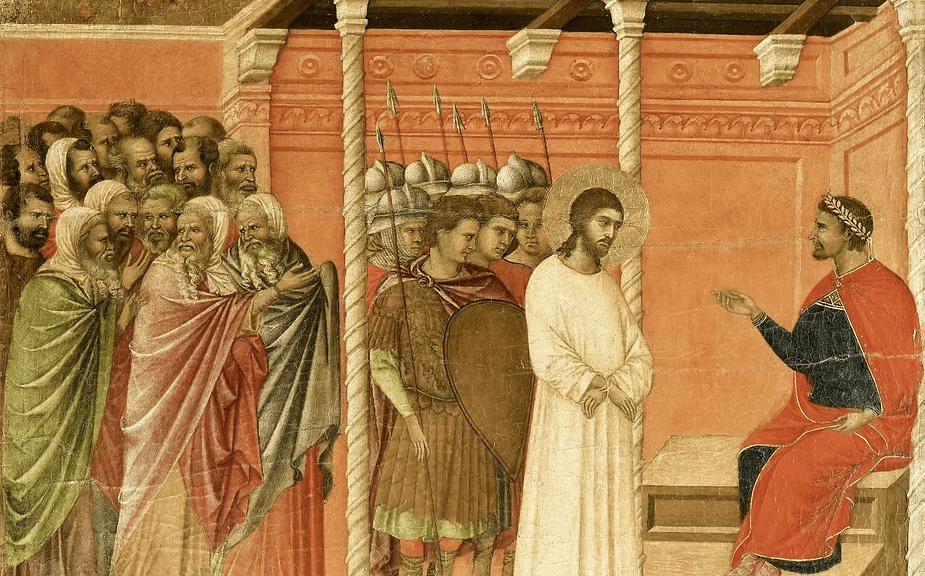
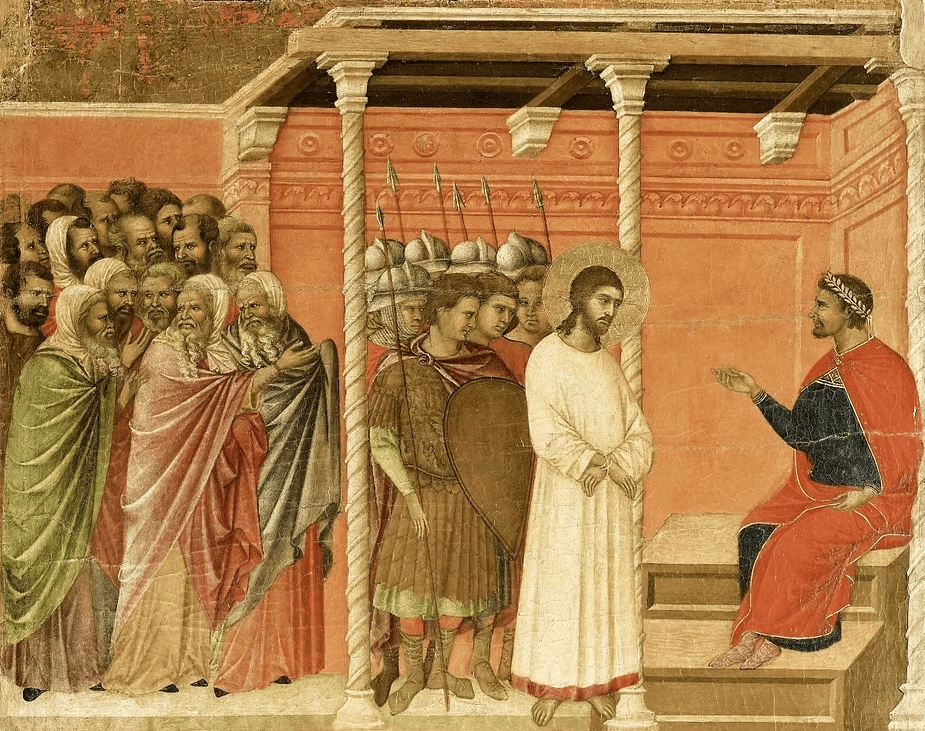





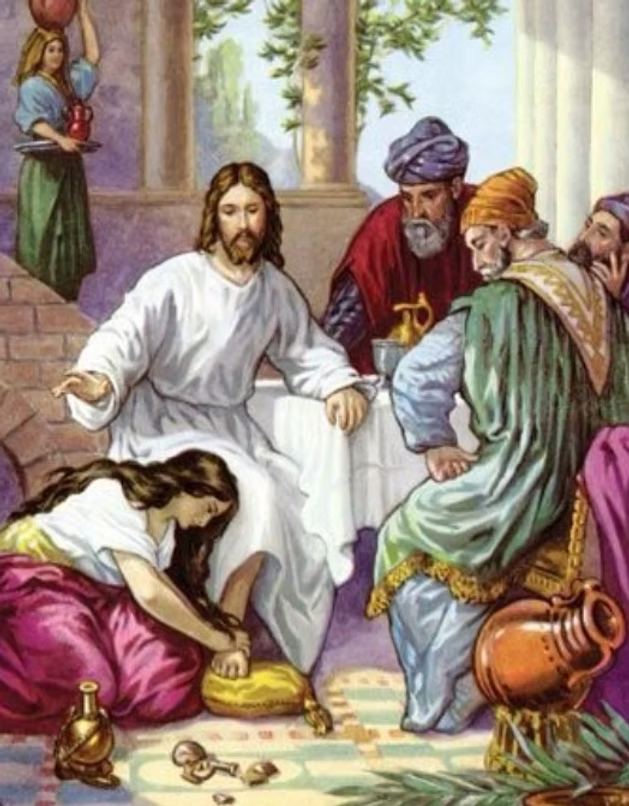
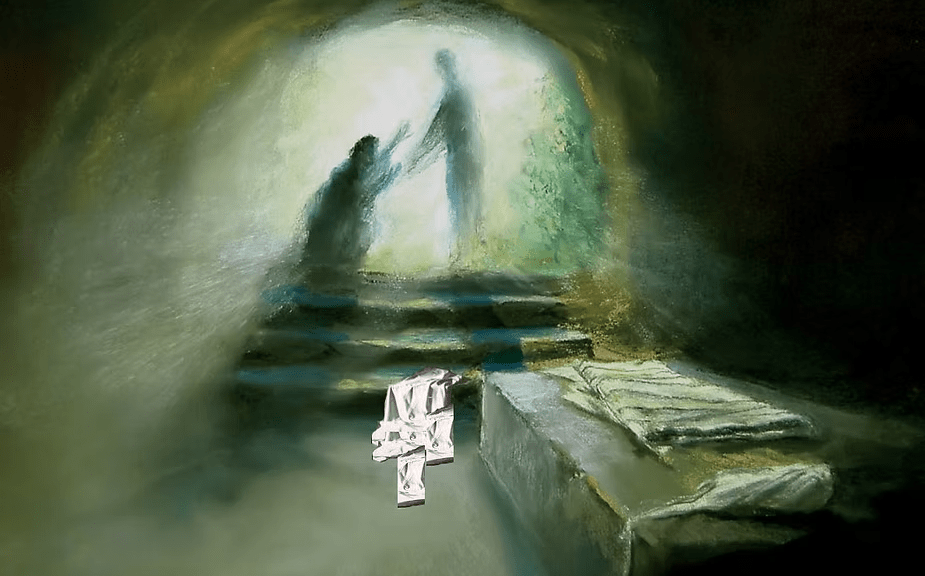
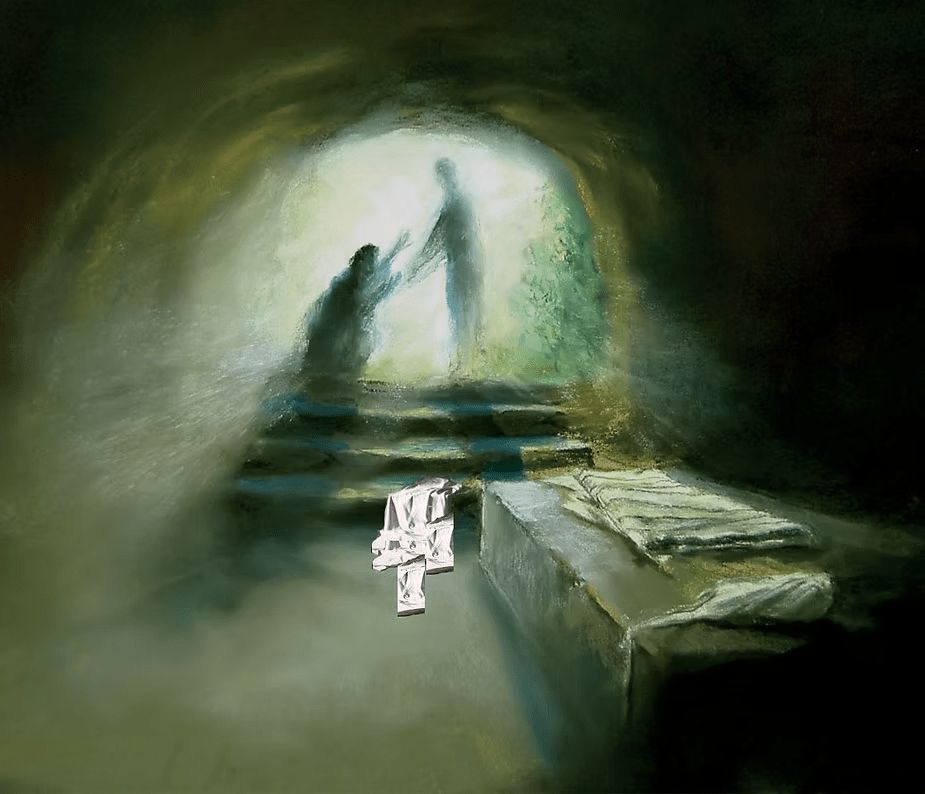
 Explaining the Readings