A man came from Baal-shalishah, bringing food from the first fruits to the man of God: twenty loaves of barley and fresh ears of grain in his sack. Elisha said, “Give it to the people and let them eat.” But his servant said, “How can I set this before a hundred people?” So he repeated, “Give it to the people and let them eat, for thus says the Lord, ‘They shall eat and have some left.’” He set it before them, they ate, and had some left, according to the word of the Lord.
——————————————————————————–
This is an optional Old Testament selection from the Episcopal Lectionary for the Tenth Sunday after Pentecost, Year B 2018. In the numbering system that lists each Sunday in an ordinal fashion, this Sunday is referred to as Proper 12. It will next be read aloud in an Episcopal church by a reader on Sunday July 29, 2018. It is important because it acts as a prophecy of Jesus feeding the multitudes, while being metaphor for the Word of God.
In this short reading, one who is not Jewish or a student of Scripture will not understand that “the first fruits to the man of God” is a yearly ritual. It stems from Moses telling the Israelites that God would feed them with manna – the bread from heaven. Here are some verses from the Book of Exodus that relate to this ritual:
Exodus 16:18 – “And when they measured it by the omer, the one who gathered much did not have too much, and the one who gathered little did not have too little. Everyone had gathered just as much as they needed.”
Exodus 16:22 – “On the sixth day, they gathered twice as much—two omers for each person—and the leaders of the community came and reported this to Moses.
Exodus 16:33 – “So Moses said to Aaron, “Take a jar and put an omer of manna in it. Then place it before the Lord to be kept for the generations to come.”
Exodus 16:36 – “(An omer is one-tenth of an ephah.) An “ephah” = “an ancient Hebrew dry measure equivalent to a bushel (35 liters).”
This means the “man from Baal-shalishah bringing … twenty loaves of barley and fresh ears of grain in his sack,” where the Hebrew word “le·ḥem” is translated as “loaves,” but could equally mean “twenty bundles of barley flour” (from which bread is made). Seeing the contents of the man’s “sack” (where “bə·ṣiq·lō·nōw” can mean “in the husk,” with “sack” an uncertain translation) as being little more than the basic delivery of a bushel of barley and wheat grains, which was enough flour to 20 loaves of bread. A bushel (or ephah) means the man brought about 35,000 grams of unmilled barley and wheat, which was then an omer in dry measure.
In the ritual that was lost and then recreated in captivity, the delivery of the omer of first fruits was placed in the Temple of Jerusalem, put under the care of a high priest. It has been noted by those of Jewish scholastic minds that Elisha was a prophet of Israel (the Northern Kingdom) and not a high priest of the temple in Gilgal (the equivalent of Jerusalem in Judah). As such, those scholars argue that delivery of first fruits to the prophet Elisha was improper.
It should also be realized that during this time, in the region surrounding Gilgal, there was a famine. When we read the man question, “How can I set this before a hundred people?” the “hundred people” are the priests of the temple and not ordinary citizens. This leads scholars to believe that the man coming from Baal-shalishah [1] brought an omer of first fruits to the company of prophets in Israel, who were led by Elisha. The scholars believe the man would not have delivered his sack to prophets in Gilgal, instead of to the temple and the high priest there.
This confusion can be eliminated by seeing how proper ritual was observed and the first fruits were taken to the temple, as was commanded. Then after fifty days of having being placed before God, then the blessed flours, dried fruits and grains were to be consumed by the people of Israel. This means a man was sent with a share for the company of prophets (100), as an emissary of the temple in Gilgal.
This would explain Elisha saying, “Give it to the people and let them eat,” because that was the ritual and the recognition of Shavuot(known by Christians as Pentecost) – held yearly on 6 Sivan. That represents the fiftieth day after the Israelites were freed from Egypt (the day after the Passover – Pesach), when Moses came down with the tablets (the count beginning 16 Nissan). As seen in Exodus 16:33, this practice was to be continued in ritual, which would have the gathered early harvest placed before the Lord in the temple.
Exodus 16:18 says each family of Israelites were allotted an omer of manna (collected by the father), with some questioning if this meant one omer per family tent, or multiple omers that matched the number of people living in the tent. Exodus 16:22 says twice that number was allowed on the sixth day, which could be baked or boiled and left overnight for the Shabbat, without spoiling.
One can assume that each family then began to gather one omer of their first fruits of the fields in the Promised Land, taking that to the temple priest. As long as it sat before God, who resided between the cherubim of the Ark, then it was blessed and would not spoil. Therefore, many omers of grain would be ritually held in the temple until it was fed to the people in the Festival of Weeks (Shavuot), as blessed food for the Sabbath (spiritual food).
We then read that the servant of Elisha asked, “How can I set (twenty loaves of barley and fresh ears of grain) before a hundred people?” Elisha said, “Give it to the people and let them eat, for thus says the Lord, ‘They shall eat and have some left.’”
You might want to consider self-serve and multiple tables.
This was not a direct quote from God in Exodus; but, as a prophet, God might have told Elisha to quote Him then. Still, it could well be a paraphrase of God telling Moses to tell the Israelites to collect twice the manna on Friday, for food on the Sabbath as well (manna did not fall on Saturdays). That might be a sign that the man delivered the food (during a famine) on a Friday, implying there would be food left for the Day of Rest.
Regardless of the reality that had to have surrounded the telling of this event, when we read, “He set it before them, they ate, and had some left, according to the word of the Lord,” a miracle occurred. It is the miracle of manna – that any other day of the week, if left overnight for the next day, would be filled with maggots and stink – that is relative to the miracle of little food becoming plentiful food during a famine. Certainly, this miracle of Elisha and the first fruits is then prophetic of Jesus feeding the five thousand, such that the words of the Lord, spoken by Elisha resonated in the words spoken by Jesus.
This connection to Jesus feeding the five thousand is than why this reading is optional for this Sunday, because the Gospel reading is John’s version of that miracle (all four Gospels share perspectives on this miracle of Jesus). In my interpretation of the Gospel reading from Mark 6, for the ninth Sunday after Pentecost, I made a point of showing how that selection skipped over this miracle, focusing only on the gathering of the lost flocks of Israel that sought out Jesus. In my writing, I mentioned how the twelves baskets filled with leftovers was more than physical bread and meat left on fish bones that the disciples gathered. This is because the bread of the first fruits, like manna and like five loaves and two fish, is spiritually sustaining.
This means the reading about Elisha points to the root meaning of manna being the bread from heaven, which is spiritual food. Manna met physical needs, but its presence went above and beyond the limitations of physical food. According to Judaic scholars, Gentiles could never get a firm grasp on manna, even though they saw it (which assumes the Israelites passed travelers while wandering). Supposedly, it would slip out of their hands. That indicates that manna was only sent by God for his chosen people.
The scholars of the Torah also say that the manna fell closer to the tents of the true believers who followed Moses, while those filled with more doubts had to walk a distance to gather their omers of manna. That says the first fruits are not all capable of miraculous results. It depends on who is passing them out and what the circumstances are.
Some scholars also say that some Israelites worked hard to gather the manna for their families, while others lazily lay on the ground and caught the manna as if slowly drifted to earth. This says that those who are working to get fulfillment from spiritual food can feel a sense of self-achievement when their work is done. Still, those who let God bring the spiritual food to them, without trying to give self free reign, can be seen as following the axiom: Work smarter, not harder.
All of this scholastic insight then becomes symbolic of the bread of heaven being the more than physical food. The manna was the compliment to the waters that came from the rock that was struck by the staff of Moses. More than keeping the Israelites alive as mortals, their souls were being raised by the Word of God (later to be put in writing by Moses) and the Holy Spirit of living waters. The first fruits, those blessed by God’s presence, then become symbolic of the people who serve God, like Elisha and his company of prophets.
This symbolism can be summed up by the proverb, “Give a man a fish and you feed him for a day. Teach a man to fish and you feed him for a lifetime.”
A medieval Sephardic Jewish philosopher who became one of the most prolific and influential Torah scholars of the Middle Ages. (Wikipedia)
God gave Moses the Law, but merely memorizing those words have less effect of good, than living a life by those rules. The fiftieth day (Pentecost in Greek; Shavuot in Hebrew) represents the feast of celebrating the Law and the Covenant with God being available to the Israelites. The six days of gathering a daily amount of food, where collecting more than one day’s worth was fruitless, was transformed when the days changed from physical to spiritual – from weekdays to the holy day. That is when the daily food becomes able to feed for a lifetime. Therefore, the symbolism of Elisha’s faith, and that of Jesus, was the Word of God feeding the devoted so that they produced manna within themselves, which was then left for the future.
The ritual of land owners taking the first fruits of their harvests and placing those harvests in the temple for God’s blessing, so they would be released back to the people after fifty days, was to recreate the blessing that was manna from heaven. The days of working to gather daily bread was then celebrated by the presence of God’s Law and one’s excited agreement to serve God faithfully for the rest of one’s life. The physical limitations that befell a ritual act of remembrance – when the high priests had sons that were priests in name only; when the tabernacle replaced by a brick and mortar temple; and when the Ark of the Covenant became the lost Holy Grail – the past then reflected the return of weekdays.
The loss of the time when God’s priests lived lives that reflected the day God blessed and deemed holy … when they were the first fruits God said, “Give them to the people and let them consume” … then that was how little the ritual of Passover and the Counting of the Omer until Pentecost (Shavuot) meant in the times of Elisha and in the times of Jesus. Other than the holy ones – “the men of God” – everyone else had reverted to living day-to-day, memorizing rules, seeing no meaning to Scripture easily within one’s grasp, while searching far and wide to find any meaning only led to too much confusion to put solid faith into. Elisha and Jesus both found people incapable of living up to the writings they said their ancestors had agreed to forever live by.
The miracle is not that Elisha had faith, as he knew what God had said. Likewise, the miracle was not that Jesus had faith that five loaves and two fish could feed a multitude. The miracles were that one hundred prophets saw the true meaning of the first fruits. The five thousand had their hearts opened, more than their stomachs, so they became the first fruits that would be sent to the Temple in Jerusalem for the Passover that was nearing. The miracle of both stories is the birth of faith, as the normal had transformed into the holy. Friday had changed into the Sabbath, for a lifetime to come; and that transformation came with plenty of food for spiritual thought left to be shared.
The first fruits of thought all begin with the tiniest of seeds, which then grows mightily.
As an optional Old Testament selection for the tenth Sunday after Pentecost, when one’s personal ministry should be underway, the lesson is to go beyond the limitations of physical needs (as a stomach’s desire for food reflects) and let God into one’s heart for the soul’s eternal blessing. The lesson says to listen to God’s Word and then proclaim it with faith and confidence. The lesson is to be one of the one hundred who received the Word from Elisha and then give that Word so others could be filled.
The first fruits symbolize both the work involved in the gathering of the fruits of one’s labors and the blessing of that harvest by God. That becomes the promise of plenty in a time of famine, where work today will have miraculous rewards later. A minister of the LORD looks beyond the limitations of the present, simply by letting God fill one’s heart. One becomes the first fruits that will feed the famished who are in need and deserving their share.
In today’s world, where so many are struggling to get from one day to the next, a minister to the LORD offers living waters and spiritual food to nourish those seeking more than the simple Word offers. A minister becomes the servant who set the twenty loaves of barley and fresh ears of grain before the hundred, so they could eat blessed food – manna from heaven. How much of that spiritual food is left afterwards then depends on those who are gathering the manna for the members of their family tent.
[1] Nobody is certain what Baal-shalishah means, but many jump to the conclusion that it means a place in either Israel or Palestine, with those admittedly guesses. The etymology of the Hebrew says the “name” listed means “Lord” or “Master” (“Ba’al”) of “three” (“shalosh”). This means the element of a Trinity is in play, such that “the man” was “from” the “Master of the third” phase, concerning the ritual of the first fruits. This means Elisha met a man sent from the Master of First Fruits dispersion, whose title meant he oversaw who received the gathered and blessed by God (first and second steps of the first fruits) on Shavuot – when Father, Son, and Holy Spirit were joined collectively and individually as one.
I bow my knees before the Father, from whom every family in heaven and on earth takes its name. I pray that, according to the riches of his glory, he may grant that you may be strengthened in your inner being with power through his Spirit, and that Christ may dwell in your hearts through faith, as you are being rooted and grounded in love. I pray that you may have the power to comprehend, with all the saints, what is the breadth and length and height and depth, and to know the love of Christ that surpasses knowledge, so that you may be filled with all the fullness of God.
Now to him who by the power at work within us is able to accomplish abundantly far more than all we can ask or imagine, to him be glory in the church and in Christ Jesus to all generations, forever and ever. Amen.
——————————————————————————–
This is the Epistle selection from the Episcopal Lectionary for the Tenth Sunday after Pentecost, Year B 2018. In the numbering system that lists each Sunday in an ordinal fashion, this Sunday is referred to as Proper 12. It will next be read aloud in an Episcopal church by a reader on Sunday July 29, 2018. It is important because Paul prays that the “church” (“ekklēsia”) will be an assembly of Apostles reborn as Jesus Christ, based on each possessing the character traits that he stated in this part of his letter.
I have to ask this question first: If, sitting on a church pew, you heard read aloud, “I bow my knees before the Father, from whom every family in heaven and on earth takes its name,” then what would you think that meant to you?
Certainly, everyone sitting in a church on Sunday is a member of a “family on earth,” but what about Muslims kneeling on a mat in a mosque elsewhere? One would assume they too are of “every family on earth,” as well as Indians lighting candles in Hindu shrines. Even the members of the Communist Parties in Russia and China, who reject the concept of “the Father” as God (and all other gods and religions), instead indoctrinating their children to see the State as god, are they not part of “every family on earth”?
Consider that a rhetorical question, as the answer is obvious; even though the ideal is to make all human being believe in God the Father of Jesus Christ, the reality is otherwise. Only Christians – those in the purest sense – are the ones of whom Paul wrote, because the key words in that statement by Paul are “takes its name.” Actually, there is only one Greek word, “onomazetai,” which translates as “is named” or “calls upon the name.” That name is then relative to “the Father,” but not the name of God, Yahweh, or any other name God is recognized by (in Hebrew, Greek, or English, et al).
The name“from whom every family in heaven and on earth takes its name” is Jesus Christ. It is that name from which only Christians can claim; and that is because only true Christians are reborn as Jesus Christ. It is that change of name (from Billy or Sue) that qualifies them to go to heaven (sin-free), unlike the rest of the people in the world. That name then denotes a special “family, lineage, ancestry, and/or tribe” (from “patria”) that comes from being related to the same Father above.
This answer becomes clear when one realizes that the reading selection, as presented by the Episcopal Lectionary for the readers to read aloud, omits an aside penned by Paul. It is the last half of verse 14 (the first verse in this reading), which could be seen as verse 14b. There, stated within marks of parenthesis, Paul wrote, “tou kryiou hēmōn Iēsou christou”. That qualifying and amplifying phrase says, “the [one] master of our Jesus anointed one.” The implication of that says, “the Lord of our Jesus Christ,” with capitalization applied that was not written.
If that phrase, separated as an insertion of commonly known fact that is a digression from the theme of that stated (definition of parentheses usage), it acts like an aside whisper. It then adds the obvious to the reading, such that there is no confusion as to Paul’s focus. When included in the public reading, one hears read aloud: “I bow my knees before the Father, the one master of our Jesus anointed one, from whom every family in heaven and on earth takes its name.” With that included, no one would venture beyond an understanding that Jesus Christ is the name of the heavenly family on earth.
With that understood, one then has to remove the thought of Paul uttering a written prayer for the Ephesians. The separation of a fact that states the plural of “our” (“hēmōn”), where that plural is rooted in the singular word “egó ,” meaning the self, must mean it was understood by Paul that he and the Christians of Ephesus were likewise individually under the mastery of the Father, reborn as Jesus in name. All of them were already equally distinguished as the anointed ones of God, as His Sons; so, there was no need for Paul to pray for that transformation. Therefore, stating the obvious would be digressing from the discourse of all having already been formed as a family of God, in the name of Jesus Christ; ergo the parentheses.
Because Paul wrote, “I bow my knees before the Father,” he created the image in a modern Christian’s mind of a stance of prayer. That leads to the translation that states, “I pray that,” but Paul did not write those words. He did not indicate in any way that a prayer was unfolding. While he ended this chapter with the word, “Amēn,” that is a statement that says, “So let it be” (as the truth having been said), it is the modern brain that associates that word as the indication that a prayer has just ended. However, rather than getting on his knees to pray for the Ephesians (who were already in the name of Jesus Christ), Paul was stating the obvious, that all in the name of Jesus bow before the Father as a servant of God (as were the Ephesian Christians), in thanks for having been made a holy family member, as brothers of Jesus of Nazareth, sharing in his presence within one’s soul.
This means all the truth that is then told by Paul (his use of “Amen”) is not a wish for things to come, but a statement of the character traits possessed by all who were then (as always) in the name of Jesus Christ. Those character traits are then blurred by the evaporation of punctuation guidance and the reduction of holy text into English paraphrases.
Maybe he was paraphrasing in a lost tribal language?
This again calls for a segment of an Epistle to be broken down into the literal, word-for-word translations of the Greek text, so each separate segment of words can be seen for their full impact of meaning.
Simply for one to follow along with the reading as presented above, the English paraphrase should be matched to the Interlinear segments stating the truth. I will mark the paraphrase with quotation marks. The Greek text will then follow, denoted by bold text. After one is able to seek the differences stand out, I will then present a simple interpretation of the characteristics Paul stated already existed, both in himself and the Ephesians to whom he wrote.
“I pray that, according to the riches of his glory, he may grant that” – that he might give you according to the riches of the glory of him , : The Greek word “dō” is presented in the third person conditional, as “he might give, may offer, could put, or might place.” That reflects upon the plural form of “I or self” stated prior (“hēmōn” as “our). This means “he” is the presence of the Spirit of Jesus Christ in an Apostle-Saint.
This is not conditional as to a prayer being answered, but the condition of the talents of the one accepted by the Father as the resurrection of His Son. Paul wrote of those offering being the “gifts of the Holy Spirit,” of which all Apostle-Saints have minimally one, with some having multiple holy gifts. All come “according to the riches of the glory of Jesus Christ,” as all those gifts of God were held by Jesus of Nazareth.
“you may be strengthened in your inner being with power through his Spirit,” – to be strengthened by the Spirit of him , in the inner man ; : The paraphrase translation continues the conditional voice here incorrectly, as the comma’s separation follows with the Greek word “krataiōthēnai,” which states the infinitive form of the verb “krataioó,” meaning “to be strengthened, confirmed, passed, or made strong.” This is an assurance that all talents that might come are “to be,” as an elevation of powers that come from “the Spirit of Jesus Christ.” This is not to manifest as visible evidence that one has become Jesus Christ, for others to marvel over, as the strength of Jesus Christ reborn means the presence of his Holy Spirit having cleansed one’s soul of sins. This means the soul is “the inner man” (where “man” or “anthrōpon” means “one of the human race”).
“and that Christ may dwell in your hearts through faith, as you are” – to dwell the [one] Christ , through the faith , in the hearts of you , : Again, it is an error to translate the conditional, as the Greek word “katoikēsai” is the infinitive form of the verb “katoikeó,” means “to dwell, to settle in, to establish in (permanently), and to inhabit,” such that the Christ Spirit takes up permanent residence within one’s soul. The presence comes when one “bows the knees before the Father” and the self then projects that the soul has submitted to sacrifice, to be the anointed one [Christ] named Jesus.
This presence of “the Christ” is then separately stated as the true meaning of “faith,” which is well beyond a mental concept that is called “belief.” The personal experience of “the Christ” within, means one has gone far beyond “belief” [like that held by children in Santa Claus] and come to know the truth that guides one’s life. Whereas belief is centered in one’s brain, where doubts can erode belief [such as finding presents hidden under a bed or in a closet], such as previously unknown facts challenge what one has been taught to believe, faith is centered in one’s heart.
The Greek word “kardiais” means more than a physical organ of the body, as it implies “mind, character, inner self, will, intention, and center.” This is a love of God, as seen in the bending of one’s knees, where one’s self has submitted to serve God through marriage, where the soul and God become one, while together in a living human body. That union brings about the knowledge of God, which is the Christ Mind. Therefore, faith is not brain-centered, but this centering of God in you, as you (as self) have been reborn as the Son of God (both human genders).
“being rooted and grounded in love.” – in love being rooted and being founded , : In the two Greek word written, “errizōmenoi” and “tethemeliōmenoi,” the perfect past participle form is stated in both words, first as “being rooted, being planted, being fixed firmly, and being established” and second as “being founded, grounded, firmly established, and laid with the foundation.” The word for “love” (Greek “agapē”) then relates one’s marriage to God, such that His love has made one “become rooted and become grounded” in His “benevolence, good will, and esteem.”
When one’s being has been affixed to this eternal source of love, then it is that giving of one’s self, as an act of love for God in return, that reciprocal heart-felt desire keeps one’s loving eyes always on God, while God’s love becomes the motivation of one’s actions. This is then a natural state that comes from the heart and not the brain, so one does not go about calculating how to show the love of God to others. One simply acts as God commands, due to one’s love for God.
“I pray that you may have the power to comprehend, with all the saints,” – that you may be fully able to comprehend with all the saints , : The Greek conjunction “hina,” as “that, in order that, or so that,” is a direct reflection back on that just stated, which in this case is the presence of God being what roots and founds one in love. That state of love allows one the fullness of a condition of ability “to understand.”
The Greek word “katalabesthai” then states the present state brought on as the full ability “to seize tight hold of, arrest, catch, capture, appropriate” that which brings one the knowledge of God, in heightened abilities of “perception and comprehension.” Again, this is the state of love that each and every Apostle-Saint can expect, so one is not desirous of knowledge that one does not naturally possess – such as wishing to have the smarts of “the Saints” – because one is “with all the saints,” as one made “holy, sacred, and set apart by (or for) God” – the meaning of the Greek word “hagiois.”
The reason the conditional form is used (“exischysēte” says, “you might be fully able, or you may have strength (for a difficult task)” is that this ability to understand, coming from the Christ Mind, is conditional on need. One who is “with all the saints” does not go about telling people, “I know this or I know that.” It is conditional of one seeking to know, who encounters an Apostle-Saint. Such a meeting is divinely led, such that a need to speak from the Mind of God enables an Apostle-Saint to do so.
Also note that in this segment of Greek text, nothing was stated that says Paul “prayed” for the Ephesians. The inclusion of the words “I pray” is an erroneous addition of paraphrase.
“what is the breadth and length and height and depth,” – what [is] the breadth , and length , and height , and depth , : This is defining the scope of a saint’s knowledge, where the Word of God that is Scripture expands what is written in all directions. The “breadth” then applies to all possible meanings of each word written (in this letter and in all Scripture), so questions will naturally arise when one limits one’s understanding to a narrow field of view.
The “length” is especially seen here and in all of Paul’s letters, as normal humans have trained brains that regulate the attention span of statements in written text to brevity and in direct focus. This is how the “length” of Paul’s ‘sentences’ become regularly shortened through paraphrase, even though this normal view of sentence structure misses how sentences of thought can be made through individual words and short segments of words.
The “height” is then the understanding the source of the Word as above the brain capacity of mere mortals, as all Holy Scripture comes from the Mind of God, through Saints. It is an error to reason to think that Paul was using his own brain to write his epistles. Every word of every book in the Holy Bible (original text and language) comes from the Mind of God.
How to build a baptismal pool?
Finally, the “depth” is relating the source of meaning found in words as being multi-faceted, such that multiple meanings can be the intent and purpose of a set of fixed words. That meaning is then based on the conditions of need, such that one verse of Scripture can be helpful to one meaning one thing, but then appear most helpful in a totally new way later, based on changing conditions in one’s life. The word’s use here also states the “depth” of one’s soul, where the Holy Spirit means the mundane of past history has equal application at all times, in all places, relative to all people. This means the depth of Paul’s words in the mid first century carries as if his letter were written to all true Christians today.
“and to know the love of Christ that surpasses knowledge,” – to know moreover experiences , surpassing other knowledge , love of the [one] Christ , : This says a complete scope of knowledge is the understanding of Saints. The Greek article “tēn,” which is the neuter form of “the,” but due to the presence of a comma after this word, it then acts as “the cause or interests, the purposes, of God,” such as “what the possessed had done and experienced” (Thayer’s Greek Lexicon for Strong’s NT 3588). According to “the breadth and length and height and depth,” the word “the” can be seen as going beyond a simple statement (“to know moreover (the)” and “know by experience,” through God. This elevates one’s ability “to know” to being with the Mind of Christ and “experiencing” the intent of the chosen word by being transported spiritually to see past events and grasp the reality surrounding past times. To experience the past is to feel the power of that emotion in the present, by reliving what is written.
This is how the Holy Spirit allows a Saint to be “surpassing other knowledge,” where again we find a form of the article “the” stated (“tēs”). Instead of reading “surpassing (the) knowledge,” one can see how: “The article is prefixed to substantives expanded and more precisely defined by modifiers,” such that its use indicates “when adjectives are added to substantives, either the adjective is placed between the article and the substantive, as – other examples.” (Thayer’s Greek Lexicon for Strong’s NT 3588). Reading the article as a defining word, rather than omit its use because of the language differences between normal Greek and English, is going beyond the ordinary to the extraordinary. Standard knowledge is surpassed by extraordinary spiritual insight.
Finally comes the segment that again omits the article “the,” such that the translation says “love of Christ.” Here, the inclusion as “the (one) Christ” misses the individuality of only one Christ, which is Jesus Christ. In this segment, the Greek word “Christou” is capitalized, as the title that was bestowed only on one man. Previously, in the lower case spelling above, it is intuited that the name of the Father’s family was from Jesus Christ; but the name is actually only Jesus, such that the one who becomes Jesus reborn is thus the “anointed one” – Jesus “the Christ” resurrected.
Still, the addition here of “the (one)” makes it possible to see “the love of the (one),” who is then the servant in love with God, who in return has received the love of God, as “Christ” reborn. Each of these three segments then act to state the understanding that comes to all Saints, while making that point in words that have been neglected as coming from God – three forms of “the.” Each use projects the divine intent and purpose (in all directions) of all words written in Scripture, which is missed by those not being in the name of Jesus Christ.
“so that you may be filled with all the fullness of God.” – that you might be filled unto all the fullness under God . : Again, the use of “that” reflects back to the “love of the (one),” which brings “the Christ”. It is because “you” have been “filled” with the Christ Mind for the condition of serving God as needed. This is available “unto all” Saints, but not for personal gain. It is a gift of God, to be wisdom dispensed “unto all” who seek that knowledge.
This receipt of the Christ Mind by Saints, for the purpose of imparting the gift of Spiritual wisdom unto those who God also wants as His brides, then becomes the “fullness, the full complement, the fulfillment, and the completion” of the Covenant that places one’s soul “under God.” Whereas the Israelites accepted the Law, through Moses, they could not reach the fulfillment of that agreement to serve the LORD their God, because their brains were used more than their hearts. When the Law is written on one’s heart by the finger of God, then one has made a full commitment to God, where the New Covenant then reflects the completion of one’s soul returning to God, as Jesus Christ.
Here, again, the word “under” is an expansion of the article “the,” as the Greek word “tou” is written. The NASB options for “tō” (neuter form of “the”) shows one use of this as “under,” in accepted translation. This is such that when the article is accompanied with the noun “Theos” it is a word “spoken of the only and true God,” reflecting “under the word” of God. That use identifies an Apostle-Saint as a subject to “the (one) God.”
Jeremiah knew happiness under the yoke of God.
“Now to him who by the power at work within us is able to accomplish abundantly far more than all we can ask or imagine,” – To the [one] moreover being able above all things to do exceedingly above that we ask or think , according to the power the working in us ; : The capitalized Greek article “Tō” is now reflecting upon the importance of “The (one)” who was just stated prior as “God” (“Theou”). This then is saying those who are individually “The (one)” filled with God’s presence are “Those” who are “being able” to do “all things” that are “moreover” impossible to people not so filled. The powers allowed to human beings by God as “above all things” possible to mere mortals. Coming from God, they are powers from “above.”
The deeds of the Holy Spirit, from God, sent to those reborn as His Son, are “exceedingly above” anything capable of being produced by a human brain and self-will. God’s Mind leads His faithful servants above and beyond what a Saint could ever “ask or think,” because a servant does not control the Master. The way a Saint “questions” and “ponders” is relative to the meaning of Scripture, and only for one’s own abilities to understand, so one can better serve others and their questions and thoughts. Still, all that comes from human thoughts and questions is relative to “the power” of the Christ Mind, and dependent on if that wisdom is “working in us.”
“to him be glory in the church and in Christ Jesus to all generations, forever and ever. Amen.” – to him [be] the glory in the church and in Christ Jesus , to all the generations of the age of the ages . Amen . : When we read “to him be glory,” the Greek word “autō” means, “self, as used (in all persons, genders, numbers) to distinguish a person or thing from or contrast it with another, or to give him (it) emphatic prominence.” (Thayer’s Greek Lexicon for Strong’s NT 846). This means “him” is “the same” as the one filled by God’s love and the cleansing of soul by the Holy Spirit, bringing about the rebirth of Jesus Christ. The pronoun “him” is then relative to “the Father,” “Jesus Christ” and “the (one) filled” by the Holy Spirit.
As such, it means “To the Trinity the glory,” where the Greek word “doxa” states, “honor, renown; glory, an especially divine quality, the unspoken manifestation of God, and splendor.” Thus, the Trinity is present in each individual who collectively become a multitude of Apostles and Saints. Thus, “the assemblage and congregation” that is “the collective body” of true Christians is the true meaning of a “church.”
The addition (“kai” as “and”) that identifies a “church” (“ekklēsia”) is then furthering the concept of “church,” by adding that all are “in Christ,” such that all have become “Jesus” reborn. This was not a one-time deal, such that Apostles and Saints only existed long ago, but an eternal requisite for all times. It stretches from the first Apostle-Saint to “all the generations of the age.” The appearance of organized ‘Churches’ (Roman Catholic, regional Orthodoxies, and all variations of organized Protesters) has nothing to do with eliminating the necessity that all members of the true church of Jesus Christ are the embodiments of holy Jesus resurrected, who act based on the experience of faith, confident in their assurance of eternal life.
The Greek word “geneas” is translated as “generations,” but the word intends one understand it meaning as “race and family.” This word brings this reading full circle, as it relates to “patria,” in verse 15. A “church” is relative to the “family” that “takes its name” as “Jesus,” becoming themselves the “anointed ones.” While “age of the ages” is read as a fancy way of stating eternity, it is vital to know that an “age” (“aiōnos”) is “a cycle (of time)” or “a time span,” which can be determined (generally) through the “Axial precession (precession of the equinoxes).”
An “age” is then when a new sign of the zodiac appears aligned with the equator on the first day of spring (when the world is born anew). The astrological sign is recognized as perpetually being Aries, but due to the earth’s slow axial wobble, the current sign is Pisces (about 29 degrees away from 0-degree Aries) , heading to a change that has become commonly known as the Age of Aquarius. It is not a coincidence that Jesus of Nazareth ushered in the Age of Pisces, where the first sign of Christianity was the fish (<><). As each “age” is roughly 2,100-2,200 years long, the “age of the ages” is now reaching it end, not to return for (roughly) another twenty-three thousand years. This reflects the end of that “age” of Jesus Christ, which increases the urgency for humanity to gain faith through submission to God now.
The eternal view of “age of the ages” must then be seen as one’s soul having been saved. The age of Pisces is then related to the symbolic meanings of the astrological sign, where faith and self-sacrifice are important elements. To find eternal reward, then one must make worldly sacrifices of body, so the Soul can be cleansed. One must be willing to submit one’s being to God, so one can be reborn as the one who symbolized the age of the ages. As Jesus told his disciples, expected to be persecuted in my name.
The word “Amen” then cannot be seen as Paul praying for things to occur, because things had already occurred and all subsequent changes were wholly the decisions of the seekers, then and now. Therefore, Paul wrote to the Ephesians a separate statement that reminded them: “So let it be.” The “church” is when two or more meet in the name of Jesus, for in that assembly can be found Jesus Christ.
As an Epistle selection for the tenth Sunday after Pentecost, when one’s personal ministry to the LORD should be underway, the message here is one of the spirituality of family. A minister of the LORD is born of the Father, as a brother to Jesus of Nazareth, who is reborn in an Apostle-Saint as the resurrection of the anointed one – the Christ. This adoption into the Holy lineage, brought on by the Trinity, makes one part of the living vine of Christ, where one must become a living branch that produces good fruit.
Paul’s encounter with the Jews and Gentiles of Ephesus produced the good fruit of true Christians there. Paul did not pray for them to find Jesus after he left. Paul, like the Ephesians, were all walking, talking, and ministering resurrections of Jesus Christ. That made them all brothers (and some were female forms of the Son of God), thus an assembly on earth in the name of Jesus Christ, as a true Church. While Paul traveled the world where Jews (Israelites) had been scattered, accepting seeker Gentiles who sought the truth of good news, the Ephesians stayed put and deepened the faith of those in Ephesus. They raised their families to also become Apostles and Saints.
Today, Paul still travels with his message sent to the Christians of Ephesus, as his written words are still in search of true Christians who will be joyful with the breadth, length, height and width in the meaning they contain. A minister of the LORD should ensure that Paul’s intent is not overlooked or misunderstood. The truth is above all things expected and exceedingly above what one would ask or think. A minister of the LORD’s purpose is to stimulate deeper questions and higher thoughts, leading workhorses to living waters that they want to drink.
The signs of modern times are clearly warning that the religions of the world (including the philosophies of politics) are leading the people away from self-sacrifice for God (servants who tend to the living vine) and towards dangerous allegiances with leaders and cults (the Baal worship and golden calves). The age of the ages is slowly closing. A minister of the LORD knows this urgency, but lets the Christ Mind lead him or her to make the path to salvation be truly known.
Jesus went to the other side of the Sea of Galilee, also called the Sea of Tiberias. A large crowd kept following him, because they saw the signs that he was doing for the sick. Jesus went up the mountain and sat down there with his disciples. Now the Passover, the festival of the Jews, was near. When he looked up and saw a large crowd coming toward him, Jesus said to Philip, “Where are we to buy bread for these people to eat?” He said this to test him, for he himself knew what he was going to do. Philip answered him, “Six months’ wages would not buy enough bread for each of them to get a little.” One of his disciples, Andrew, Simon Peter’s brother, said to him, “There is a boy here who has five barley loaves and two fish. But what are they among so many people?” Jesus said, “Make the people sit down.” Now there was a great deal of grass in the place; so they sat down, about five thousand in all. Then Jesus took the loaves, and when he had given thanks, he distributed them to those who were seated; so also the fish, as much as they wanted. When they were satisfied, he told his disciples, “Gather up the fragments left over, so that nothing may be lost.” So they gathered them up, and from the fragments of the five barley loaves, left by those who had eaten, they filled twelve baskets. When the people saw the sign that he had done, they began to say, “This is indeed the prophet who is to come into the world.”
When Jesus realized that they were about to come and take him by force to make him king, he withdrew again to the mountain by himself.
When evening came, his disciples went down to the sea, got into a boat, and started across the sea to Capernaum. It was now dark, and Jesus had not yet come to them. The sea became rough because a strong wind was blowing. When they had rowed about three or four miles, they saw Jesus walking on the sea and coming near the boat, and they were terrified. But he said to them, “It is I; do not be afraid.” Then they wanted to take him into the boat, and immediately the boat reached the land toward which they were going.
——————————————————————————–
This is the Gospel selection from the Episcopal Lectionary for the Tenth Sunday after Pentecost, Year B 2018. In the numbering system that lists each Sunday in an ordinal fashion, this Sunday is referred to as Proper 12. It will next be read aloud in an Episcopal church by a priest on Sunday July 29, 2018. It is important because John gives a unique view of the miracles surrounding Jesus feeding the multitude and his walking on the sea.
It is important to know that the feeding of the five thousand is one of only ten events in Jesus’ life that are told by all four Gospel writers. (article) It is the only specific event of Jesus’ ministry all witnessed, prior to his entrance into Jerusalem for his final Passover Festival and the last two weeks of his life. Because each of the four Gospel writers reflect different personal views of the same event, based on relationships with Jesus (as educational teacher and blood relation), this four-sided view creates a solid three-dimensional realization of how this event actually occurred. As each Gospel view is the truth that is told, all differences must then be adjusted to fit the truth, without anything being discounted or changed.
In John’s words we read “Jesus went up the mountain” and “he withdrew again to the mountain by himself.” In both places John wrote the Greek word “oros,” which translates as “mountain,” but also as “hill.” As John also stated, “Jesus went to the other side of the Sea of Galilee,” it is important to realize that the Sea of Galilee is “the lowest freshwater lake on Earth and the second-lowest lake in the world,” due to it being 686 feet below sea level. (Wikipedia) This means that the hills surrounding the bowl in which the sea is formed seem like mountains, when viewed from the sea shore. As all the towns of the Sea of Galilee are basically along the shoreline of the water, the mountains that Jesus went to are those overlooking all the activity of civilization.
This means that by John saying, “Jesus went up the mountain” in verse three, that “mountain” was not necessarily the same “hill” as he stated in verse fifteen. Since the entirety of the Sea of Galilee is overlooked by a rim of hills, going once and “again” to “the mountain” simply means to escape the hubbub of the places where humanity swarms.
Seeing that freedom of motion, John’s Gospel fits snugly into the puzzle that had Jesus go from Capernaum to Bethsaida, as told in Luke’s Gospel. It was then that “Jesus went up the mountain and sat down there with his disciples.” Jesus and his followers, including Mother Mary (the voice of Luke), sought solitude there first, before going to the deserted plain of Bethsaida. They changed locations because, “A large crowd kept following him, because they saw the signs that he was doing for the sick.” They followed him from Capernaum to the mountain above Bethsaida. The crowd was large because, “the Passover, the festival of the Jews, was near,” and new pilgrims were arriving all over Galilee and Judea every day, as the Passover Festival approached.
When we read, “When he looked up and saw a large crowd coming toward him,” this is best read literally, according to the Greek text. By seeing how Jesus, “Having lifted up then the eyes of the (one) Jesus,” the comma’s indication of pause tells of a separation in time having occurred, before reading “and having seen that a great crowd is coming to him.” Those segments of words are telling of two phases of the same event.
First, “having lifted up” means Jesus was raised by the Holy Spirit, so his “eyes” were filled with the Christ Mind. That affirms how Mark wrote (as the voice of Simon-Peter) of Jesus arriving by boat to the dock at the Bethsaida Valley, seeing the lost sheep of Israel in need of a shepherd, so Jesus taught them in a “lifted up mind” way. Second, after having preached to the multitude, Jesus realized the crowd was receiving the Holy Spirit from his lessons. This was due to “having seen that a great crowd was coming to him,” as disciples whose hearts were welcoming the presence of the Holy Spirit within them.
Then John wrote of the following exchanges: “Jesus said to Philip, “Where are we to buy bread for these people to eat?” He said this to test him, for he himself knew what he was going to do. Philip answered him, “Six months’ wages would not buy enough bread for each of them to get a little.” One of his disciples, Andrew, Simon Peter’s brother, said to him, “There is a boy here who has five barley loaves and two fish. But what are they among so many people?”
John named the disciples Philip, Andrew, and Simon-Peter, which means John was present and close enough to hear these exchanges and see those disciples, but not once did Jesus turn and directly ask John the Gospel writer to do anything. John did not once name himself in this narrative (such as, “then Jesus asked the one he loved”). Instead, John heard everything as “a boy who was holding onto five barley loaves and two fish.” He wasn’t a vendor (certainly), so he had to be one of the picnic party.
This means John was “a boy” (actually “a little boy,” as “paidarion” implies). It means John was not a disciple, but a relative accompanying Jesus; and, it means John was carrying the lunch intended to feed those who went by boat to the docks on the plain, where the crowd ran to meet them. Importantly, it strongly implies that John was the son of Jesus of Nazareth, which explains why the voice of John is so different than the other Gospel writers, and why John wrote of personal and private parts of Jesus’ ministry no one else did.
After Jesus told the disciples to get all of the people in the crowd to sit down on the grass of the dry, fertile flood plain, he told that it was “Jesus” who “took the loaves, and when he had given thanks, he distributed them to those who were seated; so also the fish, as much as they wanted.” This says that Jesus personally gave the loaves and fish to five thousand men (said Luke, implying more in all, with any family they had with them not counted). Matthew, Mark, and Luke all say that Jesus gave the bread and the fish to the disciples, to then be handed out. However, this means one should grasp the truth in John’s account.
In the other three Gospels, Jesus had sent out the twelve in ministry, prior to this event. They had just returned to report back to Jesus all the things they had done, in teaching and healing. Upon their return, they heard the news of John the Baptist’s beheading. Jesus then took them to the mountain of Bethsaida to relax from their travels and mourn the passing of John. Young John the Gospel writer was not present to witness that assignment in ministry or the return from ministry or the knowledge of John the Baptist being killed. However, now with the whole gang by the sea, John saw the disciples acting in the name of Jesus, so they went forth in ministry as an extension of Jesus. They then taught the Jews of Galilee as Jesus.
The disciples healed the sick, in their commissioned travels, as Jesus. Thus, they then handed out loaves of barley bread and salted fish as Jesus. In that way, John saw the truth of this miracle story, as the twelve disciples (whose names he knew) became Jesus before a young boy’s eyes, as they fed the five thousand.
This brings one to the gathering of the leftovers, which John said filled “twelve baskets.” All four of the Gospel writers tell of “twelve baskets of fragments (or broken pieces) gathered.” In each of the accounts, that lone use of “baskets” is stated. While it is easy to assume that the boy holding onto five barley loaves and two fish had them in one basket, where did “twelve baskets” come from?
The only possibility that makes any sense is that the baskets were on the fishing boat they arrived in, as those that the fish would be placed in after being hauled up in a net. The baskets of catch would then be how the fish would get from ship to shore. To collect the leftovers, Jesus would have sent for twelve empty baskets from the boat, giving one to each disciple.
Seeing how the “baskets” were those used by fishermen, the “twelve baskets” were the twelve disciples, who were the prophesied “fishers of men” that Jesus promised. As fishermen of freshwater fish, they knew all the ropes and tricks of that trade; but as far as teaching and healing, each of those “fishers of men” had to become the extension of Jesus. Therefore, the disciples (who would become Apostles, sans Judas Iscariot) became the “baskets” that would gather the broken pieces and fragments of those who also sacrificed themselves (like fish willingly caught in nets to feed mankind), in order to also be transformed into Jesus.
This means that when John wrote, “When the people saw the sign that he had done, they began to say, “This is indeed the prophet who is to come into the world.”’ The five thousand (plus) knew that Jesus was the Messiah. The people had “come to Jesus” just as Jesus sensed after preaching to the crowd.
The “sign” they needed for complete conversion was spiritual food (like manna and quail). That was fed to them as soul cleansing nourishment, appearing as a morsel of barley bread and a tad of salted fish; but it was much more than the physical. It was just as Jesus had instructed his disciples when they embarked in ministry, “Tell them the kingdom of God has come near.” The blessed and broken loaves and fish became that kingdom of God consumed.
This means it is worthwhile to see the symbolism of the numbers involved: five loaves; and two fish.
We last discussed the number five in the account in 1 Samuel, where David gathered five smooth stones from the wadi. Then, I mentioned the flatness of smooth stones represented two sides, such that five is the number of laws on each stone table brought down by Moses. The duality of each stone (top and bottom) meant the stone that hit Goliath in the forehead was the Law of Moses, which was the agreement that joined the Israelites and God as one. The laws of the One God slays the Gentile in one and kills all pagan gods lurking in one’s big brain. That same analogy can be used here; but there is a broader meaning that is associated with the number five.
The number five has an ancient connection with love and marriage. In astrology, the fifth house is symbolic of children, which come from relationships of love. The five books of the Torah reflect the Covenant with the Israelites, such that the Commandments were the marriage agreement between two parties in love. As such, each tablet of the Law stated five demands that must be met. As five loaves of bread, which is another way of stating the manna of God, this is then the food for thought that the Torah represents. To consume that food is to show love for God.
Two fish is the representation of the astrological sign Pisces.
Much can be found on the Internet that explains the nature of people born under the sun sign of Pisces, but the sign itself symbolizes the traits of “selfless, spiritual and very focused on their inner journey.” (ref.) It is the natural sign of the twelfth house [remember “twelve baskets” for “twelve disciples”?], which represents the area of life that is unconscious, where compassion flows freely and spirituality is more natural than physicality. Pisces is traditionally ruled by Jupiter (the ‘big G’ god of the solar system and the zodiac), which also rules over the sign Sagittarius. Both signs ruled by Jupiter focus (in part) on religion, with Sagittarius leaning towards dogma and Pisces being all about faith, dreams, and inner intuitions. In the accompanying interpretation of Paul’s ‘prayer’ for the Ephesians, I wrote about the Age of Pisces, which has been the past two thousand years that Christianity has grown, with the original symbol being the fish.
When this is realized, along with the love and marriage factor of five, where the Law becomes written on the hearts of brides and submission to God’s Will is all about the self-sacrifice associated with Jesus and the sign Pisces, Jesus handing out the spiritual food (the manna and quail) that were loaves of bread and salted fish, as Jesus appearing in the form of disciples in his name, the ‘R.O.I.’ (return on that investment of food) was the creation of five thousand (again that number five, now multiplied a thousand fold, divided into groups of fifty, as five times ten) Apostles, who would all do as Jesus’ disciples had done, being ministers of the Word taught to them by Jesus.
The hearts of those pilgrims had become married to God, doing as Jesus promised his disciples they would do after he was gone: “Very truly I tell you, whoever believes in me will do the works I have been doing, and they will do even greater things than these, because I am going to the Father.” (John 14:12) A pinch of bread and fish returning a handful represents “greater things than these.”
That is the symbolism of twelve fish baskets of broken pieces being gathered, after only one small lunch basket of bread and fish had been passed out. It was as if Jesus recited to each of the five thousand pilgrims just one small piece of Scripture; and then, when through, he asked, “What does that mean to you now?”
Rather than have devoted Jews recite a psalm or a verse they had memorized, they told Jesus all the wonders they had realized from those tiny morsels. They gave back to Jesus more than he had given them. They did so because Jesus gave them a burning heart that opened to God and His Holy Spirit, enlightening their brains with the Mind of Christ.
It was this spiritual uplifting that Jesus fed the pilgrims, where the disciples appeared as twelve representations of Jesus, which is a parallel scene to the Sunday Pentecost story in Acts, when the disciples were touched by the Holy Spirit and made able to speak in tongues of fire. They went outside and began passing out spiritual food to more pilgrims who were standing around outside, in the street and square of the Essenes Quarter.
One can assume that not all the pilgrims sitting in groups of fifty in the grass of the Bethsaida plain spoke the same language, meaning the unspoken amazement of Pentecost (three years later) was duplicated then. The disciples, appearing as Jesus, had to speak fluently in foreign languages as they passed out the loaves and fish. They were speaking with voices spiritually elevated both times; but, in this story of John’s, they quietly spoke in tongues, rather than shout out loudly with raised voices.
This is why John wrote, “When Jesus realized that they were about to come and take him by force to make him king, he withdrew again to the mountain by himself.” No one would make someone a king, just from letting one eat his lunch for free. They were aroused by finding the Messiah was with them … the kingdom of God had indeed come near. It was in them!
I have heard of hypnotists that do stage acts getting volunteers from the audience, who then then place a suggestion in their minds to do something crazy as soon as the “magic word” is said.
No one would try to elect a hypnotist as the leader of a country, simply because he or she was good at tricks. An atheist could argue that Jesus never fed five thousand people (and families) with such a small amount of physical food. That is as impossible as is walking on water. According to John, the disciple Philip agreed with that conclusion. Still, what Jesus did was not an illusion or trick, because everyone present was satisfied they had eaten real food AND had much more than the total amount to begin with left over. That miracle led the crowd to want to sing “Hosanna” and pave the road to Jerusalem with palm branches too early. That is why Jesus disappeared up the mountain alone.
In Matthew and Mark, the Greek word “euthys” is written, which is translated commonly as “immediately. It is used to state that “as soon as” the five thousand had been fed, the disciples departed by boat, leaving Jesus and (minimally) John behind. Both wrote, “Immediately Jesus made his disciples get into the boat and go on ahead of him to Bethsaida, while he dismissed the crowd.” They both then say that Jesus went up the mountain to pray.
John, as one left behind with Jesus, said the disciples left at “evening” time (“opsia”), which implies after 6:00 PM, thus night time. Night means after 6:00 PM, and in April there was most likely still some light available for the disciples to set sail and so the crowd could safely walk back to the towns they came from. This means it took some time for five thousand to be fed spiritually, as Jesus had first taught them (I assume) around noon, before organizing the feeding event.
Because John wrote the Greek word “katebēsan,” meaning “went down” or “descended,” this implies the disciples went up the mountain with Jesus, but allowed him the seclusion to pray alone. The immediacy of them getting in the boat then came when Jesus returned to the disciples and gave them instructions to sail to Capernaum.
One could assume that decision was so Jesus and John could walk the route the pilgrims had taken, to ensure that none of them got lost and needed help. That would be the decision of the Good Shepherd that Jesus was; and it would support Mark’s writing how Jesus saw the crowd as if, “they were like sheep without a shepherd.”
John then wrote how the disciples had struggled against the wind and stormy water, having rowed “twenty five or thirty furlongs,” which calculates to more than three miles, but less than four. From a perspective that overlooked the water, with the boat lit up with lanterns at night, the slow progress and distance could be estimated from shore, whereas on board the boat all attention of rowing and navigating would make such distance impossible to determine in the dark of night. The map below shows that the widest part of the Sea of Galilee is 8 miles, with fragments of that distance also shown.
The cool air flows eastward and falls into the valleys of the hills, running across the warm, moist water-level environment, especially at night. This flow of air makes the Sea of Galilee known for violent storms.
Because Matthew and Mark say they saw Jesus when it was “the fourth watch” (translated as “shortly before dawn”), they had struggled with the boat on the water until after 3:00 AM, when the Dawn Watch of night begins. At that time of night, the warm air at the sea level, meeting the cool winds off the Mediterranean Sea, causes a downdraft from the west, blowing against the boats rowing from the east, over shallow waters that become quickly agitated. The result would be hours of rowing forward (without a sail being useful), while being blown backwards, as the choppy waters would push the boat on an angle to the north.
When we then read, “they saw Jesus walking on the sea and coming near the boat,” the ability to spot Jesus and identify him in the dark says the disciples were close enough to see his features. The Greek word “epi” is written by all the Gospel writers who told of Jesus walking on water, where that word has been commonly translated as “on” or “upon.” However, this preposition is not as fixed to only one translation, as English creates multiple prepositions for all directional values. The word “epi” bears this scope of intent, where its use includes: “2. used of vicinity, i. e. of the place at, near, hard by, which.” (Thayer’s Greek Lexicon, Strong’s NT 1909)
This means John could have intended to state that the disciples (who were struggling against strong winds on a rough sea) “saw Jesus walking,” because Jesus was “at the sea” (in the vicinity of, but on the land surrounding the water). The presence of “and” in the statement actually follows a comma, which makes that segment of seeing Jesus be separate from (when “and” indicates an additional, yet subsequent step) the segment that says, “near the boat coming” (where “engys” means “near, close, nearer”).
This means that after the disciples saw Jesus walking, because the boat was near enough to identify Jesus (who was walking on land or a pier), Jesus then appeared to be coming nearer to the boat, because the boat was coming nearer to Jesus – blown by the wind and moved by the force of the waves.
John then simply stated “they [the disciples] were frightened.” That statement does not mean John could see fear expressed by the disciples; instead, it means he knew this fact by hearing their screams of fear. In Matthew and Mark, they state, ‘“It’s a ghost,” they said, and cried out in fear” (Matthew 14:26b) and “they thought he was a ghost. They cried out,” (Mark 6:49b)
Because the disciples saw Jesus appear as a ghost, but John could not see that reasoning for fear (instead, he must have assumed the weather was causing their fright), this says that John was following behind Jesus (on land or pier), with Jesus illuminated by a torch or lantern that he carried in the darkness, to light his path. Thus, it was a source of light that made Jesus appear to the disciples, who were themselves on the water, as a ghost. Their perspective from the water, based on fear in a storm in the dark, would make the boat’s going closer to shore seem like Jesus (walking on shore or a pier) was walking on the water.
The element of Matthew and Mark seeing Jesus appear as a ghost, while physically explainable, is a powerful symbolic statement. They saw the form of Jesus as spiritually approaching them, as the Holy Ghost. Their fear meant they had yet to be filled with the soul-Spirit of Christ. John, on the other hand, did not see Jesus as a Spirit, as he was with Jesus all along, totally devoted to his father’s guidance.
When they all say Jesus got in the boat and they were immediately at the shore, this says the boat had been blown and rocked to the shore or a pier. Jesus got in the boat to cast off the ropes to John, so the boat could then tied off safely. It was then that everyone got off the boat. The harbor where they saw Jesus was either the one it Bethsaida or the one in Capernaum.
It certainly would have taken Jesus and John less than six hours to walk there from the plain of the Bethsaida Valley. They might have reached that destination well before the disciples made it to land, catching a few winks as they waited. Matthew and Mark gave credit to Jesus for stopping the winds, but John wrote nothing about this. Therefore, when Mark wrote, “[The disciples] had not understood about the loaves; their hearts were hardened,” this was why they had fears.
The presence of Jesus made all their fears go away, which made the wind no longer being a problem seem as if Jesus had ceased the storm. Because their hearts had not been opened by the feeding of the five thousand, Mark then was admitting what John said about Jesus being who fed the pilgrims, as the spiritual extension on the faces of the disciples. While the five thousand men were moved to spiritual transformation, the disciples’ hard hearts had blinded them from that.
As such, they lacked the true faith the pilgrims had gained, which then was reflected in their inability to row a boat across shallow waters without Jesus being with them. The disciples had placed all the blame on acts of nature being against them, rather than open their hearts and let God into their souls. With God’s presence within them, the winds would have been in their favor, not against them.
As the Gospel selection for the tenth Sunday after Pentecost, when one’s personal ministry should be underway, the lesson here is to receive the Spirit by doing more than assist Jesus, so he does all the spiritual work and you just hand out Sunday leaflets, bowls of charity soup, or let someone enter onto the Interstate without making it seem like a theft of space is occurring. A minister of the LORD realizes that Jesus has promised that an Apostle-Saint can do greater feats than he did, as long as you can hear Jesus speaking to you, saying from within, “It is I; do not be afraid.”
A minister of the LORD knows he or she IS the boat that is equipped to fish for the souls of human beings. When powered solely by physical human strengths, such as the self-ego rowing and a cunning brain tossing out the net, nature alone is a greater power. The fishermen catch no fish and then cry like babes when the going gets rough. This is the true meaning behind the ‘bark of St. Peter’, as he, like all Apostles-Saints, are boats fishing for men’s souls (men = both sexes), with divine guidance … not personal will.
Without the presence of God to command the winds and seas, without the Holy Spirit providing the nets and riggings, and without the Son of Man to carry the souls of the fish caught to the market in fish baskets, in order to pay off the mortgage on the boat, the boat will eventually succumb to the waves of nature and sink to the bottom, with all lost to the world. A minister of the LORD draws in an owner (a soul) that will make the boat sail-worthy, so it will attract this holy crew.
Both of these stories told by John involve movements by a fishing vessel. We fail to see how each harbor the boat docked was where it cast out the nets, fishing for souls. The symbolism of the five loaves and two fish is then that of a minister giving a taste of the lessons found in the Holy Bible, just enough to whet the appetite of the seeker. The collection of the broken pieces is the element of two-way communication, which is the questioning: What did you get out of that sampling? What ingredients did you taste? What is missing?
If the seeker is delighted with that offering, he or she will pour forth views and suggestions that go well beyond that told.
The Judaic religion has its rabbis, who are the teachers of the meaning of the Torah. They offer regular classes that are held in synagogues and schools, and they perform customary rituals as well as give private counselling to the assembly of Jews they serve. The duties of a Christian priest or minister are modeled in kind, with ordination of a priest or minister requiring a formal education in the tenets of denominational dogma (with most generally the same). Still, few synagogues or churches pack in five thousand people who want to be inspired with deep knowledge about what they believe in Scripture (even on the most Holy Days); and fewer still seek out deeper education through Bible Studies and special seminars or instructions.
One would wonder if a true Christian, him or herself a resurrection of Jesus Christ, would be rejected for speaking boldly about the meaning of Scripture, without any seminary professor, ordained clergy, or bestselling religious book author able to verify the sources and proofs of what that true Christian said. I imagine he or she would be rudely treated, as was Jesus in Nazareth, causing him to prophesy, “No prophet is accepted in his (or her) hometown.” (Luke 4:24)
It becomes doubtful that Jesus could reappear, looking just like so many people think he will, and be seen as anything other than some dirty hippie-homeless beggar. That is, unless he could prove he could walk on water and easily turn a loaf bread into a holy feast. Without credential from a respected university, he probably would be asked to leave and not come back.
A minister of the LORD is led by a higher mind to speak the truth of the Word, without any plan to do so. Jesus responded to questions with parables and questions in return, which forced those who did not like his message to think about their initial position and find the flaws in their own arguments. After all, faith does not come from being told to believe, but from a personal epiphany about the truth. Therefore, Jesus did not get into Scripture-quote knife fights; but he also did not step down to those whose flaws were keeping the Jews from becoming priests for Yahweh (without an official degree).
A minister of the LORD does not try to force personal opinion onto others, claiming “Jesus meant to do this” or “Jesus said this to Jews, so I’m sure Jesus wants Christians to say that to every Gentile being in the world.” Jesus never ran for any office. He actually denied that his kingdom was of this world; and he never hung up any “Re-elect Caiaphas as high priest” posters around Jerusalem (nor “Free Barabbas” ones either).
To reduce any religion to the gutter state of politics is to turn that religion away from the face of God, which brings about the fears the disciples had when they tried to row against the wind and rough seas, while holding onto hardened hearts for God above. Trying to tell others what Jesus would do, without becoming Jesus reborn, is never going to attract any crowd that will want to elevate that orator to kingly status.
A minister of the Lord sees how the three-dimensional view of John’s story of Jesus feeding the five thousand, such that his recalling: “Jesus said, “Make the people sit down.” Now there was a great deal of grass in the place; so they sat down, about five thousand in all,” was said implying (as the other Gospel writers wrote) the pilgrims sat in one hundred groups of fifty. That means (on average) each disciple appeared to pass out bread and fish to either eight or nine groups (8.33). As John saw that scene, all one hundred groups were met by Jesus and all five thousand returned more than they were given.
That scenario means that each group of fifty men (plus families and one disciple) was a gathering of two or more who were in the name of Jesus Christ. It does not matter who those fifty people were before they ran for five miles to meet Jesus as he landed at the harbor of Kfar Aaqeb (see map of harbors). When John saw Jesus pass out the manna and quail of God (“Jesus took the loaves, and when he had given thanks, he distributed them to those who were seated”), all who received the Spirit became Jesus Christ looking at Jesus Christ in the bodily shape of a disciple. All became a collective of fifty churches on the grass, with Jesus Christ coming to preach a sermon in each church, speaking words that opened all their hearts to receive the Christ Mind.
This is what ministry of the LORD is. If that talent can be found grading research papers in any seminary, then that is like having a finely sculpted and equipped fishing boat in the back yard, getting dry rot. One has to set sail, without fear of rejection or persecution, if one wants to be a fisher of souls.
When the wife of Uriah heard that her husband was dead, she made lamentation for him. When the mourning was over, David sent and brought her to his house, and she became his wife, and bore him a son.
But the thing that David had done displeased the Lord, and the Lord sent Nathan to David. He came to him, and said to him, “There were two men in a certain city, the one rich and the other poor. The rich man had very many flocks and herds; but the poor man had nothing but one little ewe lamb, which he had bought. He brought it up, and it grew up with him and with his children; it used to eat of his meager fare, and drink from his cup, and lie in his bosom, and it was like a daughter to him. Now there came a traveler to the rich man, and he was loath to take one of his own flock or herd to prepare for the wayfarer who had come to him, but he took the poor man’s lamb, and prepared that for the guest who had come to him.” Then David’s anger was greatly kindled against the man. He said to Nathan, “As the Lord lives, the man who has done this deserves to die; he shall restore the lamb fourfold, because he did this thing, and because he had no pity.”
Nathan said to David, “You are the man! Thus says the Lord, the God of Israel: I anointed you king over Israel, and I rescued you from the hand of Saul; I gave you your master’s house, and your master’s wives into your bosom, and gave you the house of Israel and of Judah; and if that had been too little, I would have added as much more. Why have you despised the word of the Lord, to do what is evil in his sight? You have struck down Uriah the Hittite with the sword, and have taken his wife to be your wife, and have killed him with the sword of the Ammonites. Now therefore the sword shall never depart from your house, for you have despised me, and have taken the wife of Uriah the Hittite to be your wife. Thus says the Lord: I will raise up trouble against you from within your own house; and I will take your wives before your eyes, and give them to your neighbor, and he shall lie with your wives in the sight of this very sun. For you did it secretly; but I will do this thing before all Israel, and before the sun.” David said to Nathan, “I have sinned against the Lord.”
——————————————————————————–
This is an optional Old Testament selection from the Episcopal Lectionary for the Eleventh Sunday after Pentecost, Year B 2018. In the numbering system that lists each Sunday in an ordinal fashion, this Sunday is referred to as Proper 13. It will next be read aloud in an Episcopal church by a reader on Sunday August 5, 2018. It is important because this tells more than of the punishment of sin, but of the self-imposed punishment of turning away from God after having been given all the blessings of God. This is the difference between sinning while believing there is God, and sinning after having come to know God personally.
In the tenth Sunday after Pentecost’s optional Old Testament interpretation (last week) that dealt with the sins of David, I delved into this reading. It should be evident that the two are difficult to separate. It is important to see that David, as king, had no laws of Israel that he could break, when Israel had chosen to have a king to be like other nations. David, because he had been anointed by God, through Samuel, was the Law. In that sense, Bathsheba is freed of sin because she was obeying the orders of the king. Uriah was then a willing sacrifice unto the king’s desires.
This links to that, meaning the whole sin sequence becomes a human reflection of how the Israelites were in a committed relationship with God, who was essentially their true King and husband. The purity of David, as the reflection of God incarnate, made him appear divine, which made it possible for him to teach the nation of Israel to know that everyone should do only as God commands. Such loving devotion meant the result would always be that one’s soul is cleansed free of sins against God. However, in this conclusion to that story, David becomes an example to the children of Israel as one who chose to serve a human king, rather than serve only God above.
The moral of the story is that souls become responsible for their sins that break the Law. David was like Adam, before each experienced their original sins. They disobeyed and were punished. They tried to hide their sins, but were caught as cheaters. Both cheated themselves by thinking they could do whatever they desired to do, without seeking God’s advice before their leaps of selfishness.
It is vital that Christians realize how the Israelites set themselves up for failure when they told Samuel to give them a human king. Saul was a sinner king and his selfishness destroyed his reign. David fell from grace, like Saul, because he reduced himself from divine king to a human king that broke his marriage vows to God. This story then tells of an an unholy divorce from the One King, one which forced the Israelites to be remarried to a human being with human flaws.
The Covenant with the Israelites was a marriage contract with God that made every one of them (adult men and wives) His brides. That commitment was to live as priests for Yahweh. When your husband is God Almighty, you do not want to file for divorce, simply because any other husband (used in a submissive sense, as whatever gods men and women choose to follow … like presidents, political parties, moolah, etc.) is a huge step down in class.
Marriage to God, ever since a guy named Jesus of Nazareth came along (the Christ or the Messiah of the Jews), has meant an exercise of the brain, such that one learned the Laws that pertained to that Holy Matrimony. God was the Father, David was the mother, and the Israelites were the children that were to be raised as holy before God. The Law was kept in a box, but also written on the heart of Mother David. With the Holy Mother running the household of Israel, the Law of David was one thing the Israelites feared to break. They listened to their Mother and did what David said, because none of them ever wanted to hear mom say, “Just wait until your Father comes home!”
Because the Israelite children would lose respect for the Mother and no longer fear the Father, they would suffer greatly by the divorce that hit that marriage. David’s failures in this story are why a written contract that is external to a couple can never again be the definition of “marriage to God.” It was then, beginning with this reading of God’s punishment set upon David (ergo Israel), no longer enough to simply say the words, “I do.” All trust was erased that a Law kept in a box, and no longer in their king’s heart, would be given anything more than lip-service.
Jesus would come to teach the scattered children of Israel how one must become one with God, in a holy union where He is in one’s heart, not elsewhere. That love center is where His name is then written, “I Am that I Am” (YHWH). A child of God must become an extension of God, through complete submission to God’s Will, so that the Iof God become the Iof God’s human wife (males and females). Two egos must merge into one, where one is dominant (the Husband) and one is submissive (the wife). That marriage of soul-to-body IS the defining factor for Holy Matrimony. Therefore, there is nothing sacred about a verbal commitment, as actions speak louder than words.
Nothing lasting can come from the pageantry of a marriage between two humans (as was the celebrated marriage between David and the Israelites). David was made their king and all was well; but then David lost his desire to do the same ole same ole – go do battle in the spring, like all kings did. He had a ‘mid-life crisis’ and let his eyes wander. While no one stood in holy robes, holding a holy book, saying the words, “Till death do you part,” the marriage of David as King to the Israelites was supposed to have that forever commitment, with a fairy tale ending.
It did not. The condition was then “Till divorce do you part.” The “death” was not only to the relationship between God and ex-wife David, but the destruction of the children of Israel. They needed to fear the Father to maintain the Law. Unfortunately, the disgrace that fell upon their Mother David meant all the threats about a belt in the Father’s closet were lies; because none of the children had the intimacy of a relationship with God as Husband, only that believing God was the Father.
The reality of divorce means the sanctimony of human marriage is suspect, at best. Marriage between human is supposed to reflect an individual’s marriage to God above. We like to think that means we are all born of the Father because we have a soul. Unfortunately, David had a soul, just as Adam had a soul, and souls are more easily influenced by the whispers of Satan, than those of God. Souls love to stroke egos, more than be self-sacrificing. Souls love to play the field and be promiscuous.
This becomes a problem for all the church denominations of Christianity, as marriage (that between two human beings) is considered one of the sacraments (i.e.: “A rite believed to be a means of or visible form of grace.”). Unfortunately, that logic fails to be confirmed when David and Bathsheba became husband and wife (“she became his wife”). This failure is realized in the text of the story; but the translation above, of the last verse in chapter eleven (2 Samuel 11:27b), has conveniently disappeared.
That ending omitted says: “But what David had done [including marry Bathsheba] was evil in the sight of Yahweh.” Feel free to look it up and see for yourself.
An evil union (reasons stated by Nathan to David above) cannot be blessed by a priest of Yahweh (God the Father of all Christians and Jews). Nathan flat out called David’s theft of Bathsheba a sin and he told David that God promised there would be nothing blessed in Israel, because of that unholy union. David admitted to Nathan (and thus confessed before his priest – another sacrament), “I have sinned against the Lord.”
Again, there has been all faith lost in human words of promise. When one proves a lie was spoken when the words “I do” were uttered, thy then should anyone believe a confession that admits one is a liar?
It is important to take notice how Nathan did not bless David’s confession. Nathan did not wrap motherly arms around David, to make his boo boo feel better. God spoke through Nathan; and God was not telling Nathan to tell David how much David’s words of sorrow to God were heard and approved, so everything would all be okay. Nathan could talk to God as a prophet, because he too was married to God and knew better than to think that relationship gave him the right to start acting like God on earth. Nathan was not pretending to speak for God; and God had no blessing for David in this matter. No matter what words David said (unwritten and otherwise) would save Israel from an unholy end, albeit and end that would come centuries later.
As unholy as David’s “marriage” was to Bathsheba, he was indeed married to her and she was officially David’s wife, once she moved into David’s house. This is how people today see marriage. Jews, Gentiles, and Christian alike see “marriage” as moving in together. However, the reality and sole defining act by Bathsheba that proved she was married to David was that she “bore him a son.” That is the root meaning of “husband and wife.” Two adults [of the opposite sex] come together to make babies. Anything less than that is two children ‘playing house’ together [regardless of their neuter genders as children].
This birth of a son, although it would only live seven days (unread here), was the confirmation of the marriage. Bathsheba mourned the death of her husband Uriah first, and then she shacked up with David before the baby was born. That togetherness made it look like sex before marriage was made right. Shotgun weddings are descended from the same logic. Lustful sex out of wedlock brings about a socially forced bonding, as father and mother, which are the titles given to parents of babies. Those title changes are the epitome of being married.
That means understanding what marriage truly is. Understanding that word, in my humble but strongly held opinion, yields the deep, underlying purpose for this reading on the eleventh Sunday after Pentecost. Marriage is not about someone proclaiming two people can go happily out into the world, free to have sex before God, because that flimsy definition leads people towards understanding a physical act of procreation as marriage, not the raising of children that must follow. It transforms “marriage” into a lessened meaning, where approval is given (blessing “marriage” as saintly) to a sin – that of worshiping the god of pleasure and delight.
A Hollywood image of happiness in sterility.
Man, as an animal, will always procreate because of natural urges. Some animals mate as set pairs for life, but some animals mate with any available mate, or with the one who wins one of those battles of spring. Often, the animal mothers are left to raise the young alone or with the help of other ‘single moms’, other females and their young male and female children. Only a few crazy people in California would bring in a priest to bless an animal mating union, which means animals generally do not have a “rite of marriage” that “blesses” their unions. Therefore, all animals (including man) are “married” by their offspring – when the DNA of two parents are forever joined as one in the child (or in case of multiple births – children).
When Jesus encountered the Pharisees that wanted to trick Jesus into saying a man’s right to divorce his human wife was wrong (Matthew 19:1-14), Jesus said:
“Haven’t you read,” he replied, “that at the beginning the Creator ‘made them male and female,’ and said, ‘For this reason a man will leave his father and mother and be united to his wife, and the two will become one flesh’? So they are no longer two, but one flesh. Therefore what God has joined together, let no one separate.”
This statement dates back to the beginning of mankind (male and female He made them), when male and female human beings were harry animal-like creatures (caveman and cavewoman). Back then, they paired off to mate, without any religion existing. There were no priests or ministers to make any pairing official or legal tender. However, by stating, “A man will leave his father and mother and be united to his wife, and the two will become one flesh,” the “one flesh” is a baby.” Certainly, two newlyweds will try their hardest to stay cleaved together for as long as possible, but unlike the lore about the soft-rock star Sting, men and women spend much more time apart than joined.
The “wife” is the mother of that baby. This means God Created males and females to become fathers and mothers, committed (a bond beginning with a live birth of a child) to raise their child(ren) until adulthood.
When Jesus said, “What God has joined together, let no one separate,” this is not God gently guiding a male and a female into a sexual act, patting them on the rear ends with a smile of His blessing. God does not work towards leading males and females to have sex. God made creatures so they would do that instinctively. Sex happens regardless. However, once a male’s semen is swimming around a female’s egg, then God goes to work joining those two together.
That means God goes to work making all the necessary changes occur that develop an embryo into a fetus. God’s handiwork in a woman’s womb is what readies a new mass of functioning flesh for receiving a soul. That flesh takes possession of a life soul with its first breath after birth. Thus, “let no one separate” applies to anyone who would unnaturally abort a child in the womb or kill one after birth, before it can reach adulthood.
Keep in mind how Jesus only came for the Jews. Jesus did not come to condemn any Gentile society that wants to kill its children. Jesus never came to tell the Romans how to live as priests to Yahweh. Jesus, as the Son of God, knew there was a world led by Satan to sin; but God sent His Son to make sure some true priests of the One God were available for all the lost souls on the planet. Obviously, as Jesus listened to Pharisees not have any understanding of marriage, much less divorce, Jesus was not sent by God to change the illegitimate children of Israel into those that would become true priest of God, married to Him as His wives, knowing the love of God and fearing life without the Father always present.
Simply by being able to grasp how two adult human beings are married in the sight of God, by getting pregnant and preparing to raise that child together … until it becomes a responsible adult … makes it possible to see that marriage can only be Holy Matrimony when the union is between the Spiritual and the physical. God develops babies (as this is not some natural result of a living being’s will, absent of God), just as God develops His priests (as this is not some natural result of a living student’s will, absent of God).
When Jesus told the Pharisees, “Let the little children come to me, and do not hinder them, for the kingdom of heaven belongs to such as these,” that means that parents should teach their children the religious values that are based on the lessons of the Holy Bible. That assumes the parent are both married to God. Such a holy marriage raises holy children, which leads the adult children to leave their parents and cleave with the Word of God that promises them a Messiah. Once they find Jesus and are reborn as the Christ, they will have gained the kingdom of heaven. Then, that formula is to be repeated, over and over.
This is what was lost by David’s sins, which led to a “shoot from the stump of Jesse” being Jesus Christ. Holy Matrimony can no longer be obtained by finding God through an external Law. One has to seek to become the child of God that is Jesus Christ reborn; and that comes by the union of a bride of the earth (physical males and females as unfertilized eggs) with the divine ‘semen’ of the Father’s Word being joined. The consummation of that marriage yields another example of the Trinity being born.
In my interpretation of 2 Samuel 11 for the tenth Sunday after Pentecost, I mentioned that David had never sinned until he saw Bathsheba naked, after he did not go out with the soldiers in spring to do battle. David was a virgin wife of God, given to the LORD at birth by Jesse. The baby God and David birthed was Israel – all of the Israelites – and together that pair of parents ( Spiritual joined with physical) would raise their child to be a holy nation of priests serving Yahweh. Then, when David sinned, he became a wife who had cheated on the husband by having sex with another human being – a mere mortal. The words of Nathan then need to be read as a divorce decree.
Sayeth the LORD, the husband of David:
“I anointed you king over Israel, and I rescued you from the hand of Saul; I gave you your master’s house, and your master’s wives into your bosom, and gave you the house of Israel and of Judah; and if that had been too little, I would have added as much more. Why have you despised the word of the Lord, to do what is evil in his sight?”
Does that not sound like a husband scorned by his wife? It states the grounds for divorce. David cheated. He coveted. He forced Bathsheba into adultery. He had Uriah unjustly killed, and made it look like an enemy could be blamed. What God spoke through Nathan was like a husband who came home to find out his wife had slept with a neighbor, after getting drunk in a bar, then driving wildly through a school zone, killing multiple people in the process. Not only was her infidelity an issue, she was going to prison, leaving the children without a mother to raise them!
Still, it was not poor little ole Bathsheba who lured David into sin. It was David choosing to please David, without one iota of thought to his husband above – God. Excuse me ladies out there, but it is a wife’s duty to be submissive to the husband, just as it is the husband’s duty to provide for his wives. Commitment works both ways and David had never wanted in his entire life. [Keep in mind that human males and females are to become the wives of the LORD, so human gender does not remove the element of submission to God. Humans of the world should reflect this arrangement if an earthly marriage is to be blessed.]
“The LORD is my shepherd. I shall not want. He maketh me to lie down in green pastures. He leadeth me beside still waters. He restoreth my soul. He leadeth me in the paths of righteousness for his name’s sake. Ye though I walk through the shadow of death, I shall fear no enemy, for thou art with me; thy rod and thy staff they comfort me. Thou preparest a table before me in the presence of mine enemies: thou anointest my head with oil; my cup runneth over. Surely goodness and mercy shall follow me all the days of my life: and I will dwell in the house of the Lord for ever.” (Psalm 23, KJV)
David wrote that song. It came from his heart for his LORD and Master. It is a love song that admits, “What more could a religious guy want from a heavenly husband?” It is a love song all should sing to God.
Now we read that David had sinned egregiously. God told Nathan to write down in the divorce decree what David gets to take with him in the split.
[Also, notice how Nathan – a true prophet – handled this divorce. No lawyer was called in. It would later be something the lawyer types in the temple would administer; so much so that now the law demands one have a lawyer to get divorced. No one directly quotes God these days.]
The LORD said, “I will raise up trouble against you from within your own house; and I will take your wives before your eyes, and give them to your neighbor, and he shall lie with your wives in the sight of this very sun. For you did it secretly; but I will do this thing before all Israel, and before the sun.”
So much for God being the influence David needed to raise the baby that had been a stubborn people ever since Moses was married to God. The Israelites would slowly forget about the Father, who they saw shine on the face of their true King. Now, after the divorce, David became just another king … like those of other nations. The children began to run wild without the threat of the Father’s belt.
Still, like a good ex-husband, the child support checks arrived in the mail, as Solomon would turn Israel into one of the wealthiest nations in the known world. But, without Solomon being a good wife to God (he did love his human wives and concubines), the children would squabble so much over their inheritance that they would rip the nation in two, letting just about anyone lord over their lives (and ruin their religious devotion to Yahweh).
That end was stated in Nathan’s parable to David, where Israel was the poor man with nothing but a little ewe lamb to his name. That stands for the Israelites and the Law, which is impossible to understand without God; but the Law was warm and fuzzy and sounded sweet to the ears, so much that a bond of love made the poor feel like they had something special. Then, that Law was broken by the rich man (David), who had everything (as king). Without just cause, the rich man killed and cooked the Law (the little ewe lamb) and served it up to some guest. The guest was Bathsheba, but she represented any foreign nation (Gentile pagans with worship to lesser gods) that could dance a sexy dance and whisper sweet nothing into a king’s ear. Bathsheba would become Jezebel, who would see Israel’s Law (the little ewe lamb) as the distraction that kept a nation from being rich.
David killed the Law, just like Moses slammed down the holy tablets when he saw the Israelites had built an idol to Ba’al and were appeasing that guest. God purged the wayward Israelites from those who would be redeemed. Moses got a second chance set of tablets. David and Israel were the last straw on that camel’s back.
David’s divorce from God meant there would be no more kings of Israel acting as His wives. Only a living vine of prophets would keep the poor man and his little ewe lamb alive in Spirit, until God would send His next virgin bride to Jerusalem, named Jesus of Nazareth. God and Jesus would marry and beget the child known as Christianity, named after the union that is the Father, the Son, and the Holy Spirit, christened Jesus Christ. Those who fall in love with God and marry, so His Law is then written on the hearts of individuals, can give life again to the poor man and his little ewe lamb, watched over by the Good Shepherd.
As an optional reading selection for the eleventh Sunday after Pentecost, when one’s personal ministry to the LORD should be underway – married to God and dutifully bringing up the children to Jesus Christ – the lesson is the fidelity demanded in Holy Matrimony. The message of this story, as told the Sunday prior, was responsibility, which is not much different than the “faithfulness to obligations, duties, or observances,” which defines “fidelity. Still, the intent now is on the commitment to intimacy, for the purpose of yielding Jesus Christ resurrected, and tending forever to that most holy child.
A minister to the LORD is able to see the truth of marriage, because the ‘other nation’ view, the Big Brain thought of Gentiles who have no love of God, is to tear down the idol that false shepherds have created – the sacrament of the love between a man and a woman. That is not holy matrimony, even if it tries to mirror it. Legal marriage is not holy, when it is making sex between two human beings the lesson taught to children.
A minister knows sexual desires have been around since the beginning of time, and when sex is called love (an emotion of sudden urge), then all forms of that kind of “love” destroy the truth of love. Perverse forms of “love” began long, long ago, soon after the first male and female ever mated. They say prostitution is the world’s oldest profession. In the words of God to Nathan, what mankind considers “love” often displeases the Lord and is evil in his sight.
That does not men God wants anyone to stop doing perverse physical acts, or cease justifying them in the name of “love”. It means those who do evil acts do not have God’s blessing. Man (males and females) is as free to do whatever man (males and females) wants to do to man (males and females), in any combination(s) thereof; and, man (males and females) is free to have it all forms of “love” be glorified by pagan priests (those serving gods like Ba’al) or have none be glorified, using the logic that sex is what animals naturally do. What man (males and females) does without God is evidence of a lost soul, one destined to forever wander the face of the earth, with no chance of eternal redemption.
Worldly ways must feel guilt. Guilt must lead to repentance. Repentance must lead to a marriage to God, leaving the world and all its lures behind. Without ministers of the LORD to help that recovery, man will only find snakes in the grass whispering bad ideas.
It is without a doubt that a minister of the LORD knows – as Jesus Christ reborn and as a bride of the Father (males and females) – that God’s hand-guides a baby’s development in the womb. The ancients used to smash unwanted babies (usually females) on the rocks below a cliff, using the excuse that the unwed mother (or very young couple) was too poor to afford a child. Female babies are still killed in some countries today, using the poverty angle as the justice. In America, women march in protest about men writing laws that take away their rights to abort a baby, regardless of the reasoning. They march without caring that the majority of women aborting babies are of minority races.
A woman’s rights assumes a leadership role within a “marriage,” or the lack of willingness to submit to anyone in union. If they deny a man’s rights, where is the equality sought? Sexual freedom begat “the pill,” which does not do away with the need for abortion, because poor people can’t always afford medications that prevent pregnancy. With all that to consider, there have been times in modern history when ethnic cleansing became medical sterilization that was forced upon certain classes of people. Jesus spoke of forced eunuchs way back then; but now the popularity of same-sex couples is like waving a wand over a group of people and convincing them they want to be sterilized … without any need for force.
The institution that has been called “marriage” is unpopular with children today. Many come from split homes, many forced to know multiple parents that want to be called mom or dad. Children detest their being torn asunder in this way, knowing they only have one father and one mother. There is nothing setting a good example for marriage, much less having children. Children raised in broken homes are less likely to want to share the personal pain they know with a child of their own, especially when the economy is weak, the family unit is weaker, and religious values are at their weakest in history. No one trusts that commitment is permanent anymore. It is just a meaningless word used without deep thought.
Jesus spoke of these issues when he talked to the Pharisees about divorce. A minister of the LORD can see that the world of man is free to act like animals, so the only thing one can do is stay committed to what one’s heavenly husband says to do. Commitment is an individual relationship with God, where one’s rights are what God says, without argument and without complain. Commitment founded in God’s love is forever lasting. Therefore, bring the child in you to Jesus Christ and give that child the opportunity to gain the kingdom of heaven.
The lesson of David is then the virgin state one is given by God, when one sacrifices one’s own Big Brain and lets the selfishness of ego turn to total submission to the Holy Husband’s commands. An Apostle-Saint is like David in that sense, as David, prior to his sins surrounding his lustful sex with Bathsheba, was like Jesus – pure as the driven snow. Thus, David shows what happens to a wife that cheats on her Holy Husband. It is an emptiness that is greater than that felt by Judas Iscariot, when he too realized, “I have sinned against the Lord.” It is a return to the agony of a sinful existence, prior to finding the love of God and a heartfelt desire for redemption.
David still had God by his side after divorce, because he was a ‘first-time offender’, much like the parable Jesus told, of the father who still loved his prodigal son. Unfortunately, to have lived as a sinner first, then found God and became Jesus Christ, only to have God throw one out in divorce, the Law is clear. Moses wrote that you can never be taken back.
That divorce by God means all the subsequent “husbands” (lower-g god worship) make it impossible to go back to the LORD. Moses wrote, as the laws of divorce, those which the Pharisees tried to trick Jesus on, “then her former husband who sent her away is not allowed to take her again to be his wife, since she has been defiled; for that is an abomination before the Lord, and you shall not bring sin on the land which the Lord your God gives you as an inheritance.” (Deuteronomy 24:4)
Food for thought.
A minister of the LORD knows that, lives it willingly out of love of God, and raises any children that have been sent to Jesus Christ for teaching to follow the same written Law. All one can do is follow the Father’s commands and not fear. Even in today’s world, where the children are as wild as were those leading Israel and Judah to ruin, a minister to the LORD stands tall amid persecution … and smiles.
The truth whispered by God is much more pleasurable and lasting that human sex can ever be.
The whole congregation of the Israelites complained against Moses and Aaron in the wilderness. The Israelites said to them, “If only we had died by the hand of the Lord in the land of Egypt, when we sat by the fleshpots and ate our fill of bread; for you have brought us out into this wilderness to kill this whole assembly with hunger.”
Then the Lord said to Moses, “I am going to rain bread from heaven for you, and each day the people shall go out and gather enough for that day. In that way I will test them, whether they will follow my instruction or not.
Then Moses said to Aaron, “Say to the whole congregation of the Israelites, ‘Draw near to the Lord, for he has heard your complaining.’“ And as Aaron spoke to the whole congregation of the Israelites, they looked toward the wilderness, and the glory of the Lord appeared in the cloud. The Lord spoke to Moses and said, “I have heard the complaining of the Israelites; say to them, ‘At twilight you shall eat meat, and in the morning you shall have your fill of bread; then you shall know that I am the Lord your God.’“
In the evening quails came up and covered the camp; and in the morning there was a layer of dew around the camp. When the layer of dew lifted, there on the surface of the wilderness was a fine flaky substance, as fine as frost on the ground. When the Israelites saw it, they said to one another, “What is it?” For they did not know what it was. Moses said to them, “It is the bread that the Lord has given you to eat.”
——————————————————————————–
This is an optional Old Testament selection from the Episcopal Lectionary for the Eleventh Sunday after Pentecost, Year B 2018. In the numbering system that lists each Sunday in an ordinal fashion, this Sunday is referred to as Proper 13. It will next be read aloud in an Episcopal church by a reader on Sunday August 5, 2018. It is important because it tells how God will sustain His people in a world (an environment) that is barren of God’s guidance.
In the interpretations that I presented for the tenth Sunday after Pentecost, where Elisha and his company of prophets ate from the first fruits and Jesus fed the multitude, I referenced this reading from Exodus, where God fed the Israelites with manna. My same conclusion that “spiritual food” is unlimited in how many it can feed, with manna being “spiritual food” still applies here. Forty years of living on the same foodstuff, day and night, would seem tiresome and boring; but the spiritual aspect of food from heaven makes manna become the inner drive to thrive on minimal external needs. Therefore, this reading selection tells how spiritual food feeds the mind, so the soul opens and God is able to reside in one’s heart. This view is above and beyond what the filling of a stomach with physical bread and meat can do.
As a stand-alone reading selection, which is without linkage to all subsequent history, I believe it is important to grasp how the exit of the Israelites from Egypt mirrors their initial entrance there, some two hundred fifteen years prior (430 since their entrance into Canaan). Their sojourn began from hunger and is now beginning a new phase in their journey with the threat of death from lack of food. A widespread seven-year famine was in its second year when Jacob took his family from the hills of Gilead to Egypt, where his son Joseph had advised Pharaoh to stockpile grain in years of plenty, and in preparation for a foreseen drought and famine coming.
Egypt then offered the illusion of being a land of plenty; but had it not been for God, working through His servant Joseph, Egypt would have been suffering equally from lack of food. We read here today of that Egyptian mirage of plenty was making a return to slavery seem like a good idea. However, God would again bring nourishment to the children of Israel.
If the Israelites were a group of educated adults then, possessing excellent memories, they would easily recall what had recently happened to them. Most recently, they had visited an oasis named Elim, where they had fresh spring water and a variety of fruits from palm trees (“seventy palm trees” means a variety of fruit offerings). Prior to that, the sea had opened and closed, so the Israelites could safely cross, while angry Egyptian soldiers would no longer be chasing them. Prior to that, an angel of death had not cause the first born males in any of their families to die, which was when they were last close by a “flesh pot” in Egypt. Prior to that, there had been a series of plagues that befell Egypt, which meant not many people sat around flesh pots and had bread that wasn’t swarmed by flies, amid the stench of death from rotting fish and frogs. Don’t forget, also, the locust had come destructively on Egypt, making good meal for bread difficult to find. So, the grumbling Israelites were not speaking as adults in this reading, ones that remembered God was leading them in a pillar of smoke.
This shows that human beings, at heart, are all complainers, bellyachers, crybabies, and whiners when things do not go their way.
The Israelites were chosen by God, because of an agreement made with Abraham; but they were called “children” because they were just like babies taking their first screaming breath into a new world. Babies do not have brains that function like adults, so they cannot understand languages, nor can they talk. All the miracles they lived through were like shadows passing before a baby’s still developing eyes.
When it is feeding time, a baby cries to let its keepers know it is hungry. A baby can only know selfishness, because without that instinctual demand for attention a baby’s life is at risk. Therefore, this story is setting up Moses, Aaron and God as if they were all first-time parents and the Israelites were their baby needing food.
Seeing the Israelites as an infant that was born after Moses pulled them through the birth canal that was the parting of the Red (or reed) Sea, their entire history can be seen (on a grand symbolic scale) as the growth of a child, from infant to teens, to young adulthood. By seeing them in this light, one is able to see that every human being on earth is just as flawed as the Israelites were then; such that the Jews as a people reflect the young son that squandered his inheritance, obtained in advance. Christianity then represents the prodigal son’s return to the Father, all grown up and ready to receive the Holy Spirit.
By having this broader view of what the stories coming from the books of the Holy Bible, one is then more enabled to see those stories become personally relative. Rather than think the Old and New Testaments are showing two peoples and two sides of God, it is best to see God as the Father that had two sons. God is the constant that never changes; but His sons reflect the duality of humanity on earth, where some stay selfish babies all their lives, and others sacrifice everything to serve the Father.
We all come into this world as babies that only know that crying states a personal need and expectation, and every time those needs and expectations are met, we all learn to perfect the arts of complaining and selfishness. The more one’s cries bear fruit, the more one learns to fake crying when all else fails. Still, when hunger is the reason for complaint, it does not matter where it comes from.
The bread of all nations is fleeting. This is because satiated hunger only means the next day brings another need for more bread. While just beginning their trek into the wilderness, the worry was all those future days ahead was being addressed. We know from hindsight that need would stretch forty years. This means the manna from heaven (and quail on occasion) would last as long as the Israelites accepted God as the Father.
In my interpretation of Jesus feeding the five thousand, along with Elisha and his company of one hundred prophets making an omer of first fruits easily feed everyone, I compared it to the manna in the wilderness. One would think that Moses and the Israelites came across many travelers over their forty year trek, simply because of trade routes. I wrote before about hos Jewish scholars said manna would slip from the hands of Gentiles, because it was not food that could be consumed by other peoples. One would think that opinion comes from the ancient texts indicating the Israelites encountered nomadic tribesmen and attempted to trade manna for more exotic foods, only to have the Gentiles unable to gather it.
Such a possibility, given forty years of wandering, shows how manna was not for anyone. The bread of other nations, made from grains that grow abundantly in fertile regions of the Middle East, was limited in the way it only met physical wants and needs. This says the Israelites were not in need for bread of that kind, as normal bread could do nothing to satisfy spiritual needs. Therefore, God was not feeding the Israelites quail and manna as food for physical sustenance. He would not have freed them from Egypt without physical food being covered.
One thing that seems contradictory in the Exodus story, which I have touched on in previous writings, is the Israelites took livestock with them. Goats can give milk and goat milk can yield cheese. Certainly livestock, especially chickens, could provide meat and eggs. Thus, the physical needs of the Israelites were not in danger at this point in their journey.
This means the grumbling is less about being starved for food and wishing they were back in Egypt and more about them crying out for another feeding of inspiration and desire to be alone in the wilderness, with Moses and Aaron leading them. Again, they were crying like babies; but their cries came from their souls, not their stomachs.
The Israelites (according to verse 8 – unread in this selection) were not actually complaining about Moses and Aaron, even though Moses and Aaron heard all the complaints in a personal sense. God told Moses that the grumbling was not against them, but against Him. Simply by that statement, one can see that the complaints were about not having any way of knowing God was there and leading them. God set Moses straight, by telling him the Israelites were calling out to God, while standing before a guy with one mighty staff.
Its not you! I just need to get this off my chest!
The grumbling of the Israelites is not exclusive to them (or their later descendants, the Jews). This is exactly how Christians complain against God, when they are forced into being responsible for their souls, being told they have to act on faith. The bellyaching meant they were so starved of the nutrients that feed faith (learning what the words of the Holy Bible truly mean) that they were too weak to do anything but grumble. While it is always a human being that is put into a position of authority, where Moses and Aaron were like prophet and high priest, just like the denominations of Christianity place priests, ministers, and pastors so they are available to the followers of God, the people always beat their chests in anguish when they hunger for spiritual knowledge and no one is giving it to them. They complain to human beings, but they blame God for not hearing their cries.
God answers those cries with spiritual food, not packages of surplus cheese or peanut butter mailed by governments (or stamps that can be redeemed for food, alcohol, and/or tobacco). Still, when figurative babies are the ones crying for spiritual direction, one needs to see manna as baby food falling from the sky. It is tasty, spiritually fulfilling, and stores easily for a day or two. This means manna is easy to swallow and easy to digest food that keeps the baby content and cooing for forty years, when the time for solid food would come around.
The quail were not a daily fare, which makes their appearance at twilight symbolize that time when the sun has dropped below the horizon, but there is still light. This timing is that link between day and night, or the symbolic link between life and death. All that is physical has life due to the presence of the soul, and death from the absence thereof. Thus, the quail were food for the soul (according to several metaphysical sites I explored); and in that line of thought, there are those who say quails symbolize spiritual needs for the soul. Because quails stay close together, protecting one another by their closeness, the element of family is also a symbolic aspect of quails. Therefore, God sent a migrating flock of quails to fill the souls of the children of Israel, to protect the oneness of their soul, through the solitude in the wilderness that would stretch over forty years.
When God was talking to Moses, He said, “I am going to rain bread from heaven for you, and each day the people shall go out and gather enough for that day. In that way I will test them, whether they will follow my instruction or not.” This says that God does test his servants, in the same way that parents test their children.
All good Fathers and mothers test their children to see if they follow instructions. It is irresponsible for a parent not to prepare their children to know why they have been told to do certain things, after they have proven they have listened and obeyed, because they have complete trust in their parents. The growth of a child is in steps and stages; and parents learn to test a child to go beyond one point of growth to the next. Therefore, God tested the children of Israel to prepare them for the next phase of their saga.
Finally, the word “manna” is not a noun, but a question. It says, “What?!?!” According to the etymology of “manna” (from “man”), it is written: “Most probably [it means] ‘What is it?’ the question being intended as a popular etymology of מָן ‘manna,’ based upon the late Aramaic word meaning What?” (Brown – Driver – Briggs)
This means the food that appeared covering the ground each morning (after the dew lifted) was not something the Israelites had ever seen before, as they had no word for it. That says the “fine flaky substance, as fine as frost on the ground” was not of this world. It was of heavenly origin, although with physical properties. It fell like the rain falls to the earth, which has the effect of springing the earth to life. As such, God rained life sustaining essence onto the Israelites.
As the optional Old Testament selection for the eleventh Sunday after Pentecost, when one’s personal ministry for the LORD should be underway – willingly being tested by God – the message should be seen as the infancy required to reach the full state of Apostle. The Israelites were descended from Abraham, Isaac and Jacob, but none of them had ever talked to God. The had as much chance of becoming a priest for Yahweh as any Egyptian (any and all Gentiles), without Moses and Aaron knowing God personally and being instructed so they could teach them how to grow into priests.
As far as I have had others in the Episcopal Church explain to me (laypeople and priests), the Sacrament of the Eucharist means to them that physical wafers are transformed into spiritual food (like manna). This is done by a prayer that calls the Holy Spirit of Jesus Christ down to earth (where he falls like rain) onto the wafers that a priest then places on a member’s palm or tongue. Swallowing the wafer is then consuming the Christ Spirit.
Because some of this “host” (a word from Latin, hostia, meaning the sacrificial lamb) is left over until the next service, the leftovers are then placed in a “tabernacle” that is locked. I have been told that the reason one bows before entering a pew is because Jesus is inside the tabernacle, on leftover wafers, which are near the altar. We do not bow to a cross of stained glass window, but to Jesus in the box.
Such little-known tidbits of information are expected to be taught the children of the Episcopal Church, where “cradle-to-grave Episcopalians” might know these details; but anyone converting to the Anglican Church from some other religion (or having no religious schooling prior) is left out in the cold. People do wonder why things are said or done, but newcomers are afraid of rejection if they ask questions. Of course, answering questions can put others on the spot, so silence is a theme when in a church.
While there are certainly classes one can take to get brushed up on all the ins and outs of any denomination of Christianity, no expectations are set and few ask questions. All of this is like God testing His children, to see if they have learned the rules and how well they follow them once known. God wants people to know all the whos, whats, whens, wheres, whys, and hows. Those who know should welcome (if not go offering) those seeking to know.
When one sees manna as the Pablum (trademark name, but from the Latin word pabulum meaning “foodstuff”) of spiritual nourishment, manna is designed for those not yet in possession of teeth and mature digestive systems. Just as children are to be taught what they must believe, just as they must also be taught why belief is more than listening to someone telling them to believe. Children need to how to become one of faith, by learning who they must become reborn in soul. This means learning when they can know everything they have ever been told is the truth … the Gospel.
Being an adult eating a wafer of spiritual food one day a week is like a baby (still) that is starving for spiritual nourishment.
That realization then leads to the question that asks, “Why are such “Christians” not complaining in the wilderness of their lives, because whoever led them to be at retirement age and still eating spiritual baby crackers in pews, “brought [them] out into [their] wilderness to kill [the] whole assembly [of Christianity] with hunger.” When all an adult knows is the details of Bible stories taught in Sunday School, that adult is severely malnourished spiritually.
A minister of the LORD must have the real spiritual food that is needed to feed the congregations. It too comes from heaven, as the insight of the Christ Mind, brought by the Holy Spirit. The real food is the meaning of the Holy Bible. The Holy Bible, as translated and as naturally read by those fluent in Hebrew, Greek, and Latin is nothing more than words that scream out, “What!?!? What is that to me? What does it mean?”
The Word of God is manna.
Beginning with Jesus and continued through every Apostle that has been reborn as Jesus Christ, the Word of God has been explained so it becomes real food – the TRUTH OF GOD. Ever since Jesus began preaching this holy wisdom, people have been so touched by that knowledge that they have begun doing the same. A minister of the LORD carries on this holy lineage, as brothers and sisters of the Son of God the Father. All have given God’s instructions to seekers, and the seekers who passed the test that demands His servants follow His instructions to a T, they have been rewarded with redemption and eternal salvation.
The story of the children of Israel says they were a stubborn lot, often refusing to follow instructions. Many have failed the test and failed God. Ministers of the LORD are like teachers who want all their students to pass all their tests. By speaking God’s TRUTH, the students have the spiritual nourishment to put in the time and effort to learn. A minister of the LORD plants the seeds that grow into a desire to learn and a love of personal discovery.
I therefore, the prisoner in the Lord, beg you to lead a life worthy of the calling to which you have been called, with all humility and gentleness, with patience, bearing with one another in love, making every effort to maintain the unity of the Spirit in the bond of peace. There is one body and one Spirit, just as you were called to the one hope of your calling, one Lord, one faith, one baptism, one God and Father of all, who is above all and through all and in all. But each of us was given grace according to the measure of Christ’s gift. Therefore it is said,
“When he ascended on high he made captivity itself a captive; he gave gifts to his people.”
(When it says, “He ascended,” what does it mean but that he had also descended into the lower parts of the earth? He who descended is the same one who ascended far above all the heavens, so that he might fill all things.) The gifts he gave were that some would be apostles, some prophets, some evangelists, some pastors and teachers, to equip the saints for the work of ministry, for building up the body of Christ, until all of us come to the unity of the faith and of the knowledge of the Son of God, to maturity, to the measure of the full stature of Christ. We must no longer be children, tossed to and fro and blown about by every wind of doctrine, by people’s trickery, by their craftiness in deceitful scheming. But speaking the truth in love, we must grow up in every way into him who is the head, into Christ, from whom the whole body, joined and knit together by every ligament with which it is equipped, as each part is working properly, promotes the body’s growth in building itself up in love.
——————————————————————————–
This is the Epistle selection from the Episcopal Lectionary for the Eleventh Sunday after Pentecost, Year B 2018. In the numbering system that lists each Sunday in an ordinal fashion, this Sunday is referred to as Proper 13. It will next be read aloud in an Episcopal church by a reader on Sunday August 5, 2018. It is important because Paul (once again) clearly stated one’s complete sacrifice to God allows one to be reborn as Jesus Christ.
To cherry-pick a few words written by Paul to analyze (rather than turn 316 words of Paul into a short book on the meaning of these sixteen verses), the word translated as “prisoner” is “desmios.” This word certainly says “prisoner,” but equally says, “one bound, one in bonds, and one captive,” where “prisoner” can imply judgment and/or force to make one go where one would not choose freely to go – a prison. However, this prison is “in [the] Lord,” where “Kyriō” means “one who has control of, as the master,” which makes “the Lord” like a prison warden.
That is not the case at all, as Paul (and the Christians of Ephesus) were servants (not prisoners) to “the sovereign, prince, or chief” – the Lord. While one can assume “the Lord” means Jesus Christ, the reality is God is the ultimate LORD. When one is in the Lord, then one is one with God and Christ. When that oneness is seen as being “bound in,” as “captive within,” one is under the control of God, which then emanates as one being “in Jesus Christ,” as Jesus of Nazareth reborn.
Jesus Christ is captive in my flesh. I will not set him free because he came to me!
This is the meaning of Paul writing, “There is one body and one Spirit.” It is important to grasp each individual’s captivity in this way. Each Apostle is captivated by love of God and God’s love in return, through oneness. Paul wrote to other individuals who were just as one with God and Christ, so “one body and one Spirit” equally means a church or assembly, where all members of that body are the individual resurrections of the Son of God. However, to jump to that meaning without realizing the individual must be one body and one Spirit first, one is putting the cart before the horse and there is no equation to a church body of ordinary people who all agree they believe Jesus (one body) was one who was the Son of God (one Spirit).
When Paul wrote, “Just as you were called to the one hope of your calling, one Lord, one faith, one baptism, one God and Father of all,” this has nothing to do with some external ritual that fell under Roman Church discretion, three hundred years later. Each individual has become captive by one Lord of their physical bodies and spiritual souls – Jesus Christ. Each individual has personal experience of what oneness with Jesus Christ is, so belief (external words written or spoken) has transformed to faith – the knowledge of the Christ Mind. Each individual has had his or her soul washed clean of all past sins by the Holy Spirit – not bathed by water. Finally, each individual has to be adopted by God above as His Son, the resurrection of Jesus Christ, so God then truly becomes one’s Father – the Father of all like individuals who have each been adopted in the same way.
When Paul then wrote, “Each of us was given grace according to the measure of Christ’s gift,” one cannot envision Jesus Christ being some external Spirit standing like a woman on All Hallows Eve, passing out free candy to those stopping by.
The Greek word “charis” is translated as “grace” so often that few know what that means. The word means “favor, gratitude, and thanks,” which comes from God above, the LORD. As thanks for one’s sacrifice of self-ego (each individual’s), God gives the gifts of the Holy Spirit, which are duplications of those talents possessed (also gifted by God) by Jesus of Nazareth. Therefore, all gifts are facets of Jesus’ powers on earth, which Paul measured as seven in total.
When Paul wrote (as a quote), “When he ascended on high he made captivity itself a captive,” the Greek words “ēchmalōteusen aichmalōsian” are better stated as, “he held captive a multitude of captives.” Again, this element of captivity is the oneness of the Holy Spirit of Jesus Christ with a multitude of individuals who have become changed into Jesus of Nazareth reborn. Jesus of Nazareth was himself captive to God’s Holy Spirit, which made him the most holy Son of God; but it was his death (the rising of his soul spirit to heaven) that created the possibility for many others to become the same most holy Son of God on earth.
To grasp Paul’s writing, “he had also descended into the lower parts of the earth,” this is not solely meaning Jesus’s Holy Spirit went to Sheol and looked at all the souls who had died, freeing them to go to heaven. God IS the Father of all souls, so God decides who comes to heaven, who gets recycled back into a new human body, and who gets eternally banished from ever returning to heaven. This means Paul said Jesus of Nazareth was dead as a human being, after three days of death. However, that death was with purpose, so Jesus Christ could descend upon the sinners of the world who were living (dead as mortals destined to die and be reincarnated) and cleanse their souls for eternal life with the Father.
When Paul then wrote, “The gifts he gave were that some would be apostles, some prophets, some evangelists, some pastors and teachers, to equip the saints for the work of ministry, for building up the body of Christ, until all of us come to the unity of the faith and of the knowledge of the Son of God, to maturity, to the measure of the full stature of Christ,” this long series states God’s gifts to those reborn as His Son. Take note that the Greek word “hagiōn” (translated as “saints”) is a basic identification of Christians, as all apostles, prophets, evangelists, pastors and teachers are ministers as Saints – those “set apart by God as holy and sacred.” The gifts of God’s Christ are not given to special people who will lead the ignorant masses, but only to Saints, for the purpose of creating more Saints.
This means that no Christians are without these gifts of God that build up “the body of Christ” (individually and collectively) in faith and knowledge, as that held by Jesus of Nazareth, the Son of God. It means that all Christians are required to be Saints, worthy of heavenly gifts. So, one cannot call oneself Christian if one is not a Saint, without belittling what a true Christian is.
When Paul then wrote, “We must no longer be children, tossed to and fro and blown about by every wind of doctrine, by people’s trickery, by their craftiness in deceitful scheming,” this means maturity is the measure of “the full stature of Christ.” This means growing up spiritually, which usually takes (minimally) decades of belief and study. However, maturity means no longer requiring someone external to oneself to tell him or her what to do and what to believe.
In this regard, I recommend reading the accompanying Proper 13 interpretation that I published, about the optional Old Testament reading from Exodus, where manna is spiritual baby food. Growing up means taking responsibility for one’s own spiritual soul, requiring faith and knowledge that can only come through being reborn as Jesus Christ. Without that sacrifice, one is blown by the wind of Big Brain philosophies, which are never going to reward the masses with anything more than misery, and are always going to reward the cheaters and deceivers with worldly gains and the eternal frustrations of death.
Finally, when Paul wrote, “Speaking the truth in love, we must grow up in every way into him who is the head, into Christ, from whom the whole body, joined and knit together by every ligament with which it is equipped, as each part is working properly, promotes the body’s growth in building itself up in love,” this states one’s commitment to God. One must fall in love with God and show God one’s willingness to be fully submitted to His Will, where one becomes one with God through a marriage in one’s heart (in love).
The consummation of that marriage replaces the Big Brain of self motivations with the Mind of Christ. The immersion of one’s soul with the Holy Spirit then allows all parts of one’s body to become outlets for the gifts of Christ – his touch, his voice, and his presence. This build-up in the individual then spreads to others, who then also experience individual growth in their bodies, with the whole body (assembly or congregation) also growing as one.
As the Epistle selection for the eleventh Sunday after Pentecost, when one’s personal ministry to the LORD should be underway – an individual reborn as Jesus Christ in support of a collective of individuals likewise reborn – the message is being captivated by God’s love. A minister of the LORD projects the thrill and joy of being led by the Mind of Christ to know the experience of Jesus Christ reborn. This projection becomes the aura depicted in paintings around the heads of Saints; and that is not to signify personal achievement, but the radiant attractiveness surrounding one from the Holy Spirit, that acts as a magnet to others.
The natural way this began, when the disciples were filled with the Holy Spirit on Pentecost (on the first day of the week – Sunday), twelve Apostolic priests held twelve church services at once in the same place, with each in a different language and with each telling the truth of the Word that Jews from many nations had heard before, but never known. They believed the words of Scripture; but they had never had faith overwhelm them, because of the stories in the Torah only seemed historical. Hearing the Word of truth converted three thousand Jews into true Christians, because the spirituality of truth hit their hearts. This, then, is the true power of a sermon preached.
So, you know by telling the truth you are helping God?
Paul continued this preaching of the Good News – the Euaggelion– the Announcement of the Truth. Paul then wrote to those whom he converted to Christianity, to further speak the wisdom of the Holy Spirit to those likewise filled with the Holy Spirit. All the Apostles, explained the Prophets, as Prophets. They were Evangelists because they sought out Jews and scattered Israelites who might not yet have heard that the Messiah had come. It was the truth of the Word that turned those believers into practitioners of faith, as Jesus Christ reborn. All then became pastors of flocks and teachers of their families and neighbors, with none ever going to a school to be taught classes in sermon writing and oration. None ever interviewed for a position as official priest of Yahweh.
Then, relatively suddenly, that way of Christ’s voice, touch, and presence became silenced by an empirical Church. The collapsed Roman Empire, led by Constantine, saw profit to be made from forcing religious belief on pagans that followed lesser gods. Regardless of the thought processes involved, they were doctrinal, from Big Brains, and not from the Christ Mind. The system God created (which works perfectly still) was scrapped for the organizational expertise of Rome.
The weathering that change, from reborn Jesus Saints coming from low-level devotees to systemic practices spoken in Latin by men in big hats, reverted back to beliefs, away from true faith. Over the next fifteen hundred years, that wind of philosophy has left the flag of Christianity torn and tattered, “tossed to and fro and blown about by every wind of doctrine, by people’s trickery, by their craftiness in deceitful scheming.” Simply by foretelling that future, Paul was gifted the talent of prophecy, proved when the words he wrote came true.
In these dangerous times, when people sit in pews, separated by an aisle that puts the goats to the left and sheep to the right, the Word of God is read aloud and then a political oration takes place. The brevity of an Episcopal “sermon” is the only goodness served up now days, often only pretending to be the Gospel. The ministers of the LORD are given fewer and fewer flocks to pastor, leaving them without an easy ability to replenish the Christian population.
With fewer Apostles and Saints in the world, the more dangerous the world becomes. The leaders of the world (those currently in power and the ones subverting those in power, so they can scratch and claw on top) are less the cause of the destruction of Christianity, than they are the result of it. The people who idly sit by and allow this devolution to happen are who own the lion’s share of responsibility in this demise. Still, all is not lost as long as God keeps the torch of truth alive.
God wants His children back from waywardness. Jesus Christ wants the truth be told. Saints risk persecution so God and Christ are pleased, through their willful obedience. The only thing missing is seekers of the truth. The world can be saved when they get on board.
The next day, when the people who remained after the feeding of the five thousand saw that neither Jesus nor his disciples were there, they themselves got into the boats and went to Capernaum looking for Jesus.
When they found him on the other side of the sea, they said to him, “Rabbi, when did you come here?” Jesus answered them, “Very truly, I tell you, you are looking for me, not because you saw signs, but because you ate your fill of the loaves. Do not work for the food that perishes, but for the food that endures for eternal life, which the Son of Man will give you. For it is on him that God the Father has set his seal.” Then they said to him, “What must we do to perform the works of God?” Jesus answered them, “This is the work of God, that you believe in him whom he has sent.” So they said to him, “What sign are you going to give us then, so that we may see it and believe you? What work are you performing? Our ancestors ate the manna in the wilderness; as it is written, ‘He gave them bread from heaven to eat.’” Then Jesus said to them, “Very truly, I tell you, it was not Moses who gave you the bread from heaven, but it is my Father who gives you the true bread from heaven. For the bread of God is that which comes down from heaven and gives life to the world.” They said to him, “Sir, give us this bread always.”
Jesus said to them, “I am the bread of life. Whoever comes to me will never be hungry, and whoever believes in me will never be thirsty.”
——————————————————————————–
This is the Gospel selection from the Episcopal Lectionary for the Eleventh Sunday after Pentecost, Year B 2018. In the numbering system that lists each Sunday in an ordinal fashion, this Sunday is referred to as Proper 13. It will next be read aloud in an Episcopal church by a priest on Sunday August 5, 2018. It is important because Jesus scolds the pilgrims for being idol worshipers, rather than being him.
In this translation above, we read, “The next day, when the people who remained after the feeding of the five thousand saw that neither Jesus nor his disciples were there,” this is an incorrect paraphrase that acts to misdirect the reader from what was really stated. The Interlinear Bible for John 6:24 shows:
“when therefore saw the crowd that Jesus not is there , nor the disciples of him , they entered themselves into the boats , and came to Capernaum , seeking the [one] Jesus .”
From the real words written (maintaining the ordering and segmenting of them), one can see that “The next day” is an addition that was stated in verse 22, for the purpose of separating this reading selection and letting the reader know when this story is focused, relative to the event of feeding five thousand. Verse 24 does not state this setting, as it should be understood from the overall context. However, following that setting, the grouping of “neither Jesus nor his disciples” as one collective view of scope makes it appear that those pilgrims still in the area were looking for some theater troupe, whose act had moved to another town.
By seeing the segments as written and knowing that the punctuation of the Interlinear shows where one should pause and absorb a segment of words, before attempting to join other segments into one’s understanding process, reading, “therefore saw the crowd that Jesus not is there” has significant impact. That is a statement that a fraction of the five thousand awoke and found “Jesus is not there” in them. Then, seeing that meaning be revealed, “nor the disciples of him” can be read differently (using the same words written) as, “not the disciples of him.” The focus is not placed on some of the five thousand men, who had not been reborn as Jesus Christ, so they were not his disciples sent out into the world.
There were still some who took part in the miracle of spiritual food being dispensed that had not been transformed into Apostles. Again, referring to the word written in the unread verse 22, the word translated as “crowd” is the Greek word “ochlos.” That word does mean “crowd,” which bears the most common meaning that says, “A large number of persons gathered together; a throng.” When one sees that translation in context with “the feeding of the five thousand,” one is misled to envision the vast majority of that number getting “into the boats.”
The number can be seen as much fewer when the word “ochlos” can simply mean “the common people,” which is an acceptable definition coming from the word “crowd.” Thus, “the people who remained” were “the common people,” those whose “perception” of the world was “not [that of] a disciple of Jesus,” because “Jesus was not there” within them (… like he was there in the disciples who handed out bread and fish).
Simply by being able to focus one’s sight on that absence of Jesus Christ in a handful of those who were reborn as him by the Holy Spirit, from being fed spiritual food, one is not confused by the question and answer that follows. The question: “Rabbi, when did you come here?” is actually a statement that says, “Because we have not been reborn as you, not knowing where the external Jesus is at all times, we have come to see another one of your miracle shows.” Jesus’ answer then addresses their lack of faith, while seeing their belief as reason to want to be near to Jesus, but not make the sacrifices necessary to be Jesus reborn.
Jesus saying, “Very truly, I tell you, you are looking for me, not because you saw signs, but because you ate your fill of the loaves. Do not work for the food that perishes, but for the food that endures for eternal life, which the Son of Man will give you,” says he understood not everyone would receive the Spirit. Those folk were too much into their intellect, and too little into opening their hearts.
They loved the sermon Jesus gave to the five thousand. They wanted to hear more. They had eaten their fill of physical bread; but even though the hearts and minds of most of the five thousand immediately opened wide to the divinity that just a small morsel contained, these common people missed that boat. All of the pilgrims that came to Judah and Galilee for the coming Passover obligation were looking for their Messiah. Most of the five thousand (plus family that were women and children) found that Jesus was the Christ that became them. The miracle of five loaves and two fish was unknown to them, thus signs did not transform them into the earliest Christians. Most of the five thousand had become the Son of Man, still feeding on the “food that endures for eternal life.” A small “crowd” of them (maybe those served by Judas Iscariot … or one-twelfth of them [5000/12=417]) wanted Jesus to repeat what he had done the day before.
Before any more analysis can be presented on this reading, I want you to think about the prophecy of this exchange between those Jews-Israelites and Jesus. They wanted to come sit on the grass on a regular basis and listen to Jesus teach some encouraging things about Scripture. Then, they wanted to be given some tiny morsel of physical food, which would last them until the next time visiting Jesus.
Can you not see this foretelling of the lackadaisical state of Judaism and Christianity, where no one is ever filled with the Holy Spirit, thus transformed into an active minister of the LORD as Jesus Christ reborn? Both Christians and Jews just sit there and enjoy the signs of pageantry that expresses to their brains, “Aren’t I special?” However, they keep their hearts closed to God and their minds heavily guarding the almighty self-ego and all the physical ‘bread’ that common spirit brings.
Back again?
It becomes important to grasp that most of the pilgrims who received the spiritual food that was passed out by disciples, who were themselves the projections of Jesus Christ [the essence of a true Apostle-Priest-Saint], were not jumping on boats and setting sail to Capernaum. They were out passing on what Jesus had given to them, even if that meant they were just as poorly received as was Jesus. It was the rejects that kept following Jesus around, where “rejects” is defined as: “Those who reject becoming Jesus Christ, via marriage to the One God – the Father – and baptized of sin by the Holy Spirit.”
With that said, look how those rejects then questioned Jesus, asking: “What must we do to perform the works of God?” This question, which was asked in the conditional voice – “that we might perform” – is on the level of intellect. It is like those who want to know the conditions of this “new agreement” Jesus was proposing, when the Jews and Israelites had spent a lot of time memorizing (intellectualizing) the Covenant made between God and Moses. This question wanted to know how many more external, written rules were necessary to confess belief in, in order to be able to say they were doing the works of God. After all, were not Jews doing the works of God just by being Jews?
Let that concept settle into the reader’s mind now.
Ask oneself if Christians are not similarly asking Jesus for the steps to righteousness. Is it not enough to be doing the works of God simply by going to church, paying tithes, donating to charities, voting for political candidates that say they believe in God, and doing (of course) the Ten Commandments … for the most part?
Can you see how this question implies asking, “If I score a 75% on the Christian test, then that means I go to heaven, right?” How would you feel if you hired a lawyer with those credentials? Or, a doctor that graduated last in his or her class?
Jesus responded to that question by saying, “This is the work of God, that you believe in him whom he has sent.”
That brings up the “belief” word, which is misleading. It is like when the young rich Pharisee (probably Nicodemus) went to Jesus and asked how he could be assured of going to heaven. Jesus said, “Well there is the Law,” to which the rich man said, “Every day I uphold the Law!” Then Jesus said, “Okay. Now sell what you have, give it to the poor, and become me.” “Belief” means more than just following some steps written on a piece of paper (that is always locked away in a box).
The Greek word that is translated as “believe” is “pisteuó.” In the response by Jesus, John wrote “pisteuēte,” which stated the conditional, “you should believe.” Still, the word has more meaning when translated as, “you should have faith,” such that faith implies a stronger level of “belief,” just as one being assured of going to heaven requires a stronger path in obedience to God than those stated in Law. That faith is only possible when it come from being “in whom [God] has sent.” That means faith is becoming Jesus Christ reborn, because that is the only way to do the work of God.
Maybe Jesus was on a pier and Peter could not see that in the dark, filled with fear?
[Reminder: Every time the disciples cried out in fear, they believed in Jesus; but Jesus would say, “Oh you of little faith.”]
The rejects (obviously) did not understand what Jesus just said to them, which is the same reaction most Christians have when they read this selection as well. They heard the words, but they flew way over their heads … because Jesus was not there in them. So, in an argumentative spirit they said, “What sign are you going to give us then, so that we may see it and believe you? What work are you performing? Our ancestors ate the manna in the wilderness; as it is written, ‘He gave them bread from heaven to eat.’”
The word translated as “sign” is “sēmeion,” which also means, “miracle, indication, mark, and token.” These rejects asked for a sign worthy of belief, after the great majority of the five thousand were given the “mark of Christ” when they were fed spiritual food. Those immediately acted from the faith of personal experience with the Holy Spirit and God, just as Jesus of Nazareth was then doing in Capernaum.
Still, by seeing the feeding of a multitude with five loaves and two fish as a miracle, there were some common people who believed that was a magic trick. Because it could have been good theatrics, they needed to get more than an “all you can eat” buffet of physical bread. After all, Moses did work a miracle of God that lasted forty years in the wilderness … which none of them witnessed personally, but they believed. Jesus, a relative unknown, needed to do a verifiable miracle before their eyes, or those common rejects were not about to stay his fans much longer.
Jesus responded to their challenge by saying, “Very truly, I tell you, it was not Moses who gave you the bread from heaven, but it is my Father who gives you the true bread from heaven. For the bread of God is that which comes down from heaven and gives life to the world.”
Jesus straightened out the facts of the Exodus story of the manna, saying God rained bread from heaven, such that Moses only told the Israelites what to expect from God. Still, the manna was spiritual food, which afforded the Israelites life in a wilderness that had little life to offer human beings. Still, when Jesus said, “It is my Father who gives you the true bread from heaven,” Jesus just restated, “The work of God” is “life to the world,” and, that when “you believe in him whom [my Father] has sent,” then you become “the true bread of heaven” that never stops feeding the soul. Eternity is a greater feat than forty years.
*Cue the sounds of a flock of ducks flying overhead, because the rejects heard “bread” and could only think in physical terms.*
I don’t get it.
They said to Jesus, “Sir, give us this bread always.”’
They were still expecting everything to be handed to them, without any work of God performed. Just like some Masoretic scholars believe about God’s gift of manna – that some Israelites lazily laid on the ground outside their tent and caught the manna as it drifted down to earth from heaven – they wanted Jesus to make it rain bread. They said this to Jesus as if the only way he could prove he was sent from their God, was to hand out free bread for the rest of their lives, like God did when they complained to Moses. They wanted to be given that gift then, on the spot.
Tongue in cheek, perhaps. I think they expected Jesus to actually deliver on that demand, about as much as hurricane disaster victims actually expects FEMA to give out $100 Walmart gift cards forever.
First come, first served. Only 500 available.
Since Jesus was fully able to read the hearts and brains of the reject doubters, being always filled with the Holy Spirit and the Mind of Christ, he made this statement: “I am the bread of life.”’ Jesus affirmed that he was the manna sent from God, but this time the “bread” was “of life,” not simply for staying alive in a wilderness. Life meant staying awake and vigilant, as an escape of mortal death and the reincarnation that follows a soul’s sleep state. It meant the hands, lips, teeth, esophagus, stomach, and intestines had nothing to do with consumption of Jesus bread. Only the heart could take in God’s gift of love.
When Jesus said, “Whoever comes to me will never be hungry, and whoever believes in me will never be thirsty,” the same problem with having a low expectation of the meaning stated in “come to me” and “belief in me” is why Christians go to church on Sundays, but would never ever dare to tell someone, “I think I am Jesus Christ reborn.” Humans are always hungry and thirsty; but souls hunger for hope and salvation and thirst for redemption and promise. As such, “come to me” means being reborn as Jesus Christ, so one can perform the same miracles of faith that are only possible in Jesus Christ.
As the Gospel selection for the eleventh Sunday after Pentecost, when one’s personal ministry for the LORD should be underway – filled with the bread of life – the message is to face up to the rejection of doubters. Just as the young rich Pharisee walked away from Jesus when told, “Oh, there is much more than external rules to learn. You have to become the resurrection of Jesus Christ, which means self-sacrifice and works!” … many do not want to hear that message because they know they are too weak to do that.
A minister of the LORD knows the sacrifices demanded. The vast majority of those who are cleansed by the Holy Spirit and adopted by the Father as His Son (regardless of human gender), reached the bottom, in one way or another, and cried out for God’s help. Hope becomes the beginning of a spiritual rise from that depth, with hope the inspiration that comes as the spiritual food one needs to find life in service to God. A minister to the LORD knows this path to salvation and is ready to assist one who seeks to find the value of that service’s reward of heaven and eternal life.
Paul wrote about hope and said anyone who hopes for what one already knows, then that is not true hope. People know worldly riches and goals, whether or not they have achieved them. True hope is desiring that which cannot be seen in this world. The common people who could not see themselves as Jesus, who followed Jesus to Capernaum, they could not understand that proof of Jesus being the bread of life is impossible in a worldly state. Only within one’s heart and mind can one prove that to oneself. Only from one’s soul can one know this truth. Therefore, no minister of the LORD can prove what only faith can prove … not simply belief.
If one studies the Gospels just a little, one finds that Jesus answered more questions with other questions, rather than state concrete answers that can be judged as true or false, based on the powers of observation and physical measurements. When one hears Jesus ask a question, in response to a personal question, the Holy Spirit is whispering guidance. Those who test that guidance find their own answers, and that personal experience changes belief into faith that is personally proved. A minister of the LORD can treat seekers as disciples, and give more explanation, just as Jesus privately told his devoted students. Still, it is ultimately up to the student to prove to him or herself what it is the teacher is teaching.
When the pilgrim rejects said to Jesus, ‘Sir, give us this bread always,” this is like kneeling by one’s bed as a child and praying, “Lord, please let me be a doctor when I grow up.” (Or lawyer, or professional actor, or movie star, or some wealthy professional.)
God does answer those prayers. He says one must learn that science, craft, or art until one has ownership of it (mastered it completely). The problems come when people who pray for such dreams are not willing to listen to advice and do what it takes.
Some advice now: It is easier to get what you want in the physical world than it is to get what you want spiritually … if you do everything alone and without help. Some people are actually self-made millionaires (breaking many laws along that journey). However, no one has ever reached heaven by selfish means.
The king, David, ordered Joab and Abishai and Ittai, saying, “Deal gently for my sake with the young man Absalom.” And all the people heard when the king gave orders to all the commanders concerning Absalom. So the army went out into the field against Israel; and the battle was fought in the forest of Ephraim. The men of Israel were defeated there by the servants of David, and the slaughter there was great on that day, twenty thousand men. The battle spread over the face of all the country; and the forest claimed more victims that day than the sword. Absalom happened to meet the servants of David.
Absalom was riding on his mule, and the mule went under the thick branches of a great oak. His head caught fast in the oak, and he was left hanging between heaven and earth, while the mule that was under him went on.
And ten young men, Joab’s armor-bearers, surrounded Absalom and struck him, and killed him.
Then the Cushite came; and the Cushite said, “Good tidings for my lord the king! For the Lord has vindicated you this day, delivering you from the power of all who rose up against you.” The king said to the Cushite, “Is it well with the young man Absalom?” The Cushite answered, “May the enemies of my lord the king, and all who rise up to do you harm, be like that young man.”
The king was deeply moved, and went up to the chamber over the gate, and wept; and as he went, he said, “O my son Absalom, my son, my son Absalom! Would I had died instead of you, O Absalom, my son, my son!”
——————————————————————————–
This is an optional Old Testament selection from the Episcopal Lectionary for the Twelfth Sunday after Pentecost, Year B 2018. In the numbering system that lists each Sunday in an ordinal fashion, this Sunday is referred to as Proper 14. It will next be read aloud in an Episcopal church by a reader on Sunday August 12, 2018. It is important because it tells that the hardest fights ever fought are against loved ones, but the fights supported by God must be fought.
One should notice this reading selection is missing some verses. In the first verse, where is read, “The king, David, ordered Joab and Abishai and Ittai,” these are the allies of David, with Joab and Abishai being brothers that were nephews of David. Ittai was a Gittite (a Philistine from Gath) who remained loyal to David. These men led what can be considered to be the “elite guard” of the king, as military leaders who were committed to following David’s orders into battle.
The verse that states, “And ten young men, Joab’s armor-bearers, surrounded Absalom and struck him, and killed him,” is out of context. This is read, while omitting the previous verses that say Joab found Absalom hanging by his hair in an oak tree limb. Joab was accompanied by ten boys (under the age of twelve). The conjunction “And” says it follows as an additional statement. It says ten young boys killed Absalom after Joab threw three javelins into Absalom’s chest (or his heart area).
Ten boys did not kill a defenseless Absalom by themselves. Rather than have Absalom bleed to death, Joab ordered his armor bearers to finish Absalom off. This is important information omitted, as David had personally told Joab, “Deal gently for my sake with the young man Absalom.”
When the reader is introduced to “the Cushite,” it should be realized that a Cushite is from the Kingdom of Kush, in Africa, south of Egypt. It is generally known today as Ethiopia, but more accurately called Nubia then. The one who delivered the message of Absalom’s death to David was one selected by Joab, presumably because of his ability to run fast. Still, the presence of a Gittite and a Cushite in the numbers of “servants” that supported David and defended him and Jerusalem, should not be seen as slaves taken by David in foreign wars.
Ittai had been exiled by his people, but he was welcomed by David. David told him to leave him and return to his land, because defending David would be most dangerous. Ittai refused to leave David and this should be recognized as a Gentile who had become accepted as a follower of Yahweh. He is like Uriah (who David had killed in battle so he could take his wife), who was a Hittite, or from the area now known as Turkey-Syria. By Uriah marrying an Israelite woman, he had been cleared for that through conversion.
The same can be said of the Cushite, because he addressed David as “my lord the king” twice. After Saul tried to fall on his sword and die before the Philistines would torture him, an Amalekite (an Arabian) came and helped Saul by killing him. When the Amalekite went to tell David, much in the same way as did the Cushite about Absalom’s death, David ordered the Amalekite killed for having admitted he killed Saul (because Saul begged him to do so). David, still pure as a servant to God, ordered the Amalekite killed for having killed a king anointed by God. The Amalekite was a “Gentile” who was an enemy of those who served Yahweh.
When the Cushite praised the death of Absalom, David did not judge him like he had the Amalekite years earlier. It was not because David had grown old and soft. It was because the Cushite had converted to belief in the One God. He was not an enemy, but a servant to God, one who saw David as anointed by Yahweh. That Cushite can be seen as a precursor of Solomon’s relationship with the Queen of Sheba (southern Arabia) and the presence of Judaism in Ethiopia.
This acceptance of others by David shows the holiness of God in him. When Saul was trying to kill David, David was given refuge in Gath, the town where Goliath was from. The king of Gath gave David wives and the town Ziklag, out of respect for David being without sin and one with his God. While the Philistines respected David as a powerful man of God, their respect did not lead them to convert to David’s God. However, one can assume that every foreign wife taken by David, and every Israelite under David who did likewise, made sure their spouse became a convert to the Laws of Moses and all the ritual demands.
This says Gentiles were not denied acceptance into Israel. Only those who challenged the right of the Israelites to worship Yahweh as the true One God were fiercely rejected as enemies.
The slow decline of faith, following David’s sins, would be due to the acceptance of people of other beliefs, while forcing out the priests of Yahweh. Not warring against those who worshiped lesser gods brought about the destruction of the Northern and Southern kingdoms, with the exile of the Judeans to Babylon. The exilic Jews determined it was this foreign influence that was the cause of all their problems (refusing to admit not being led by a holy king made each Israelite personally responsible), so the return to Jerusalem brought a stronger adherence to separation from those of other religions.
That new dogma meant it was to be forbidden for Jews to have any contact with Gentiles (which included the remnants of the Northern Kingdom – the Samaritans). Further, any Jew who had a physical deformity or illness was branded a sinner to be rejected. None of this was the truth of David’s Israel.
This reading reflects that future, as it was the beginning of the fulfillment of God’s punishment set upon David, which He said through Nathan, “Out of your own household I am going to bring calamity on you. Before your very eyes I will take your wives and give them to one who is close to you, and he will sleep with your wives in broad daylight. You did it in secret, but I will do this thing in broad daylight before all Israel.’” (2 Samuel 12:11-12) Thus, the problem that befell David’s Israel was not from outsiders, as much as it was from in-fighting.
We read the lament of David as told: “The king was deeply moved, and went up to the chamber over the gate, and wept; and as he went, he said, “O my son Absalom, my son, my son Absalom! Would I had died instead of you, O Absalom, my son, my son!” The Israelites would become known for their lamentations. The Jews have continued them over the centuries since, because they are still being punished for David’s sins. They are punished because they cannot see their fault.
Just as the returning Jews thought (a power of a brain reasoning) they could show repentance to the LORD by rejecting the voices of evil, even seeing their sick as being punished by God, the Israel led by Absalom thought it was ridding itself of an admitted sinner in David. None of them (especially Absalom) saw their own sins as a reflection of themselves upon their king, making them responsible too.
David knew his fault and accepted full blame; and the LORD stayed with David. Still, the house that David built would never be the same. The Israelites never realized how rejecting God as their King (each individual as a responsible priest) meant they had failed to show responsibility (individually and collectively) through complete devotion to David (or his heir by natural death, anointed by a prophet of the LORD).
The flaw of Israel can be seen to stand out in the verse that says, “The men of Israel were defeated there by the servants of David.” The Hebrew word “am” is used to denote the “men” or “folk, nation, people, or followers.” That word speaks loudly as stating the Israel of Absalom (their elected judge) was made up of ordinary citizens – not priests of Yahweh . However, the word “ebed” is used to denote the “servants” or “slaves, subjects, or attendants” of David, such that David (as the anointed king of God) was defended by those who served God, through David.
The Swiss Guard supposedly protects the pope in the same manner, but one has to wonder how fast they would run when attacked.
It was this devotion by all who called David “my lord the king” that had made the nation of Israel great. A servant of God, who serves Him as his (or her) King, is elevated above the common folk status of follower. The responsibility of a subject is unconditional surrender of oneself to His (or Her) Highness (a statement of God’s presence in one). Submission is then for the best of the whole. The oneness with God rewards all equally. However, to follow a human king who has no favor from the LORD God, as shown in this story’s “slaughter of twenty thousand men,” leads common folk and so-called kings to flee for their lives through the forest that is one’s inner self.
To see Absalom caught in a low branch of a mighty oak tree, his long hair wrapped around limbs and leaves – unable to pull himself free – is a sight that should be seen as if he was being held by the arm of justice (the Law?), suspended before the judgment that was surely pending. Being “between heaven and between earth,” Absalom awaited his fate.
While it can be assumed his hair was caught in the branch (which would have been long, because Israelite men only cut their hair once a year – due it becoming too heavy when too long), the Hebrew word written says “head” (“rosh”). This means it was the Big Brain of Absalom that put him in this predicament of judgment – for having declared himself to be a judge of Israel, one that was not sent by God to save the Israelites.
The branch also symbolizes that any would-be kings of Israel that would follow David – those not one with God (like David was, repentant sinner that he had become) would mean a dead branch – branch of death – was their prophecy. Israel was meant to reflect “One nation under one king,” where the union of God with all is within IS the oneness a nation under God. The split between Absalom and David, between Israel and her king, is symbolic of the doubt within oneself, as to one’s relationship to God. Splitting Israel into two separate nations was then a magnification of this split.
The over-arching theme seen in this battle between David and his own flesh and blood is it is a perfect example of how Jesus said, “If a kingdom is divided against itself, that kingdom cannot stand. If a house is divided against itself, that house cannot stand.” (Mark 3:24-25) Jesus said this in response to the Pharisees who said Jesus was possessed by Beelzebub, making him able to cast out demons. Jesus asked them, “How can Satan drive out Satan?” (Mark 3:23) before telling them about divisions within a nation or house.
Absalom was what Jesus saw in the Pharisees. He, like them, would attack the one human being on earth that was one with God. David’s sin had been made public; but he repented to save his marriage to a nation. Jesus was attacked by the teachers of the Jews, finding fault with a Jew without sin.
As an Old Testament reading option for the twelfth Sunday after Pentecost, when one’s personal ministry for the LORD should be underway – not hanging by one’s head awaiting Judgment Day – the message is to unite, rather than divide. An “in-house” rebellion must be quelled, like a cancer must be purged, so one body can become whole again. Thus, the servants of God, who are Jesus Christ reborn, must stand and fight those calling themselves Christians, who are attempting to divide that Sacred Branch unjustly.
The story of David and his son Absalom is one that should be known. I recommend serious Christians research this more for themselves, to find the details of that story. I suggest looking at the parallels to modern life. Still, it is also good to know that the name, “Absalom,” given by David to his third son, means “The Father Of Peace” or “My Father Is Peace.”
11 May 1939, London, England, UK –On the eve of war the contentious objectors protested.
That name represented the internal peace that the nation Israel experienced under David, when David was pure. David intended Israel be at peace with the LORD, as a strong and healthy body of God’s priest on earth. David also named Solomon, such that the word “shalem” and “shalom” are his wish for Israel, reflected in his son. Not only was “peace of the father” the wish (“shalom“) but so too was for Israel to be “unbroken” and “whole” (“shalem”).
Absalom broke that inner peace by revenge; but David did not address the sin that led to the revenge or the sin in response properly. Absalom broke that inner peach that oneness brings by splitting Israel and turning the common people against their holy father and king. David’s desire for peace and the favor of a father to a son spoiled Absalom, causing Absalom to lose respect for David.
It is, thus, a story that says, “Give them an inch and they will take a mile.”
The whole world of Christianity lives surrounded by enemies, just as David’s Israel had enemies on all sides of it. The whole time Saul was king (one who lost the favor of God), the Israelites warred with their neighbors, most notably the Philistines. The same need to do battle with the enemies of Israel lasted through David’s reign, but the victories were plentiful and at little cost. That was because God was with David and Israel saw David as God’s anointed king.
America was once proud of promoting itself as a Christian nation that preferred peace to war. In the twentieth century, America twice entered foreign wars and experienced the glory of being victorious. Americans gave credit to God and Christ. However, since Korea and Vietnam, America has struggled with wars, much like Saul’s struggles, and the peace at home has been derisive.
Those military struggles have gone hand-in-hand with the weakening of Judeo-Christian values that a once victorious nation now feels shame in the population at home. The peace at home has spoiled the child, so the child has grown insolent and disrespectful. America has welcomed foreigners into its land, but it has not expected any conversions to its religious beliefs.
America has given rise to many presidents that have sought peace, even in the face of sinful acts against its values, preferring not to go to war. They have given inch after inch to appease foreigners. The more this fear of facing a necessary battle grows, the enemies are emboldened and the more audacious will be the acts against America and its Christian allies. I point out the increased murders of police officers and the shooting being committed in public places as only two such examples; but the West faces many threats and breakdowns.
The evidence shows that the enemy has entered the lands of Christianity and that enemy is preparing to do the insults that Absalom did against David. It is less a threat from foreigners, than it is a threat from the common folk who feel the urges to accept foreign influences, while rejecting the oneness that was once a devotion to the One God and His Son Jesus Christ. The biggest enemy is the disease that has befallen Christianity. It can no longer lead strongly, just as David became weak from sins. The threat is from Christians that are misled.
The point of this reading is it told of an inner battle then, which means there is another such battle upcoming, as an unavoidable showdown that will settle a feud that has been brewing for some time. It will be another bloodbath in the “forest of Ephraim,” whatever place that may be symbolic of in America and/or the Christian world. It will not involve the overt enemies of Christianity – the wolves that love to feast on sheep – but between the various factions of Christianity, where bad shepherds have set themselves up as judges.
When a family member hurts and refuses to get help, do you let them choose to die slowly and painfully? Or do you go to war to save a family member, knowing pain is unavoidable?
David and his servants of God won that battle fought on this day in the Scripture reading; but the question now has become, “Who does God support; and who is truly a servant to the One God?”
The answer to these questions is that God supports all who have placed His holy throne in their hearts. For God to be the King of a human being – His servant or subject – one has taken on the power of Jesus Christ. This means becoming the equivalent of an army that was David and his servants. Today, that must be a collection of Apostles-Saints, who are the servants of Christ the King, who is One with God. That army is a Church in its truest sense.
Those who follow Absalom are the divisions of organized Christianity that split it in two. The many barren and low-hanging branches of Christianity represent the Twelve Tribes of Israel that united behind David’s son, Absalom. They try to claim the right to judge Christianity-America-Western civilization as if government worship [Socialism or worse] is the path to heaven. The battle that is brewing will determine the future of all religions on earth.
In this reading, the element of Joab, one of David’s “generals,” having actually killed Absalom – casting three darts through his heart – has been skipped over. Instead, we read, “And ten young men, Joab’s armor-bearers, surrounded Absalom and struck him, and killed him.”
It is important now to know that an “armor-bearer” is a “lad’s” job, meaning a young male that is not yet an adult (between the ages of ten and twelve). This makes Joab a teacher of children, just as a lioness has to teach young lions how to kill the prey. This verse is then set apart to show the importance of adults teaching lessons and instilling values in their children. Teaching the values of the adults is so the children will grow to carry those lessons on. Therefore, the children of Christianity must be taught by their adult leaders how to defeat an enemy within, so the children can do the same when they grow up.
The enemy within Christians today is doubt. Those who believe but doubt those beliefs have little faith. It is doubt that reduces one from a subject of God to common folk that follows anyone showing strength as a leader. It was doubt that filled David after Nathan told him God’s punishments for his sins. It is doubt that has leaders today screaming, “I know what Jesus said to do! Don’t you?”
This reading of Absalom’s death shows the abject sorrow David felt for losing his own flesh and blood. David, as the King of Israel, anointed by God, should have taught his son the ways of righteousness, so such sorrow would have been avoided. David, instead, had been reduced to the same fate as Eli and as Samuel, such that as holy as those prophets were, the failures of their children to follow in their footsteps shows that holiness does not easily pass down to one’s children. Young lions raised in captivity never know how to kill prey, so they starve if someone does not feed them. This is then the deepest meaning of “spare the rod, spoil the child.”
The actual source of that lesson says, “He who withholds his rod hates his son, But he who loves him disciplines him diligently.” (Proverbs 13:24, NASB) The word translated as “rod” is “shebet,” more aptly means “staff,” such as the prod a shepherd uses to keep his flock in line. This means a “rod” is not used primarily as a device for corporal punishment, but as a sign or signal that must be followed. Rather than an implement for punishment, it is a necessary tool that is used often, to keep the sheep from getting lost. The absence of such direction (where an occasional slap on the butt is required to get one’s attention) translates as “hate.” Use of direction is a sign of “love.” It is what determines if one a good shepherd or one leading lambs to the slaughter.
This is how a battle should be waged to save Christianity from internal division and eventual collapse. True Christians must stand up against those who are like Absalom was to David. The fight is not for the pleasure of defeating evil, but as a sign for the future direction that Christianity will take. Until that fight is fought, Christianity hangs suspended between heaven and between earth.
Elijah went a day’s journey into the wilderness, and came and sat down under a solitary broom tree. He asked that he might die: “It is enough; now, O Lord, take away my life, for I am no better than my ancestors.” Then he lay down under the broom tree and fell asleep. Suddenly an angel touched him and said to him, “Get up and eat.” He looked, and there at his head was a cake baked on hot stones, and a jar of water. He ate and drank, and lay down again. The angel of the Lord came a second time, touched him, and said, “Get up and eat, otherwise the journey will be too much for you.” He got up, and ate and drank; then he went in the strength of that food forty days and forty nights to Horeb the mount of God.
——————————————————————————–
This is an optional Old Testament selection from the Episcopal Lectionary for the Twelfth Sunday after Pentecost, Year B 2018. In the numbering system that lists each Sunday in an ordinal fashion, this Sunday is referred to as Proper 14. If chosen, it will next be read aloud in an Episcopal church by a reader on Sunday August 12, 2018. It is important because it tells of the power of spiritual food that comes from sacrifice for God.
This selection seems odd, when viewed in the context of the chapters surrounding it. It reminds me of the vision Abraham had of Lot in Sodom and Gomorrah, where angels visited Lot’s family and the native people there were so evil that God had the cities destroyed. I say that because both that story from Genesis does not match the mundane story told of Abraham rescuing Lot from the kings of the five cities on the plain. This story in 1 Kings 19 also seems to be dream sequence, rather than actual events, simply because the before and after do not match.
I say this because 1 King 18 tells of Elijah’s ‘sacrificial calf cook off’ against 450 priests of Ba’al. Jezebel’s prophets lost both the challenge to have their god light their altar wood and their lives. Even after letting the Baal priests have a head-start, while dousing his wood and sacrificial animal with water, Elijah won. Yahweh lit his altar’s fire.
After the contest was over, Elijah had all 450 prophets of Ba’al killed in the Kishon Valley (1 Kings 18:40). Ahab witnessed this and the people of Israel’s response , who saw Elijah’s fire be lit by God. We read, “they fell prostrate and cried, “Yahweh—he elohim! Yahweh—he elohim!” (1 Kings 18:39)
They said, “Yahweh hū elohim,” not “Ba’al.” The people, including Ahab, recognized the God of Israel was the only supreme deity. They recognized Elijah as a prophet of that Almighty God. Thus, they would be fools to go against that God and His prophet.
Additionally, prior to that contest, Elijah had met with Obadiah, who had hidden one hundred prophets of Israel in two caves (fifty prophets in each cave), and there was nothing that says either Ahab or Jezebel knew where those prophets were. In 1 Kings 19, prior to these verses read above, Ahab told Jezebel that her prophets had been killed and she threatened to have Elijah killed that day. While nothing said she planned to kill or had killed in response all the prophets of Israel, in 19:10, Elijah told God he was the only prophet left, which could only be true if he was seeing the future in a dream.
It is also important to see the symbolism of sleep and death, which coincides with Elijah’s statement to God, “It is enough; now, O Lord, take away my life, for I am no better than my ancestors.”
Thanatos The Greek poet Hesiod established in his Theogony that Thánatos is a son of Nyx (Night) and Erebos (Darkness) and twin of Hypnos (Sleep).
Following that surrender of his self, Elijah then went to sleep. The angel’s presence, twice, can then be seen as similar to the angels that were present in the tomb of Jesus. This possibility of a death dream sequence makes Elijah’s seeming ascension without death become more like the ascension of Jesus, following his death and resurrection, aided by angels.
The bread and water provided by the angel is like Jesus being attended by angels while he was in the wilderness, after he encountered Satan. The angels also fed Jesus the spiritual food that allowed him to last forty days and nights in the wilderness. This is then the same as the manna and water from the rock that nourished the Israelites spiritually during forty years of wandering
This means this chapter is Elijah’s talk with God after his symbolic death, but before his taking Elisha to be his replacement. He could have actually died and been reborn by the angel’s touch, replenished by the food and water from heaven. This transformation also acts to explain the unnamed prophet of 1 Kings 20, who asked other prophets to strike him with a sword, as a resurrected Elijah would be appearing as someone other than himself, just as Jesus did when he resurrected.
The forty days and forty nights spent in the wilderness without food or drink is then a parallel to Moses on Mount Horeb, as well as Jesus in the wilderness prior to beginning his ministry. It then is parallel to the Transfiguration of Jesus on the high mountain, when Peter, James and John (of Zebedee) saw Jesus talking with Moses and Elijah. These comparisons make Moses, Elijah and Jesus like souls as they all submitted fully to the will of God. They are then the models of whom all followers should become, where sleep and death are symbolic of one’s sacrifice of self-ego.
When we read that Elijah ended one day in the wilderness by sitting “under a solitary broom tree,” we need to realize the timing of night, when sleep normally takes place. If the temperatures turned cooler at night, it is possible that this tree supplied wood to burn for warmth. If so, it is good to know that a broom tree is also a juniper tree, as the Hebrew word “rō·ṯem” implies.
According to the symbolic nature of a juniper tree is its wood is not good for fast burning, but for slow burning and the release of aromatic scents. According to one site, the smoke of juniper wood, “was used for the ritual purification of temples. The smoke was said to aid clairvoyance, and continued to be burned for purification and to stimulate contact with the Otherworld.” This aspect can then be seen as why Elijah “asked that he might die.”
As a dream sequence, more than an actual event, the wilderness represents Elijah embarking on a journey where he has had all the prophets of Jezebel killed and is aware of her threat to have him killed in response. Rather than risk death at the hands of an evil queen, the symbolism is Elijah praying for the LORD to take his soul, regardless of what physical punishment Jezebel can cause. The response of that prayer is the presence of a guardian angel sent by God to nourish one with spiritual food and living water, thus enabling one to withstand any persecution that may arise.
As an alternate reading selection for the twelfth Sunday after Pentecost, when one’s personal ministry for the LORD should be underway – one is on a journey into uncharted waters, no longer following the desires of personal ego – the message of Elijah is willing sacrifice. It is up to each individual to ask God that he or she might die of self-importance, so an angel of the LORD can be sent to assist one on one’s journey. That angel can be understood as being God’s Holy Spirit.
Again, it is most important when reading Scripture not to get caught up in the antiquity and seeing no comparison in a modern world. While our mind’s eye might see a desertscape in southern Judah, in a place so barren that only one prickly shrub is around, this wilderness is no different than a life in the world today that is void of true commitment to Yahweh – the LORD elohim (God of gods). One has to be willing to place oneself in the sandals of Elijah and feel the fear of living in a place that scorns prophets of the One God. One has to be able to see the solitary broom tree as one’s own soul amid a barren setting, where survival is impossible alone. One needs God’s help; and the first step towards that grace is realizing a big brain cannot lead a soul to eternal happiness.
The setting in which one finds Elijah is void of any external source of support. This says that no matter how many people, institutions, or holy places one puts trust and value in, when death comes and one’s soul is separated from one’s flesh, there will be only God and His reckoning of one’s soul. One will become accountable for all of one’s misgivings in a life. However, if one seeks this redemption prior to one’s physical death, one can die of self and then be resurrected to serve God’s needs in the world of flesh.
A minister of the LORD has made this sacrifice and knows the value that the presence of God within brings. One becomes a presence among those who have yet to show their trust in God, much less give up their self-importance for the unseen and intangible. Much of this can be a ministry of spreading the truth of Scripture in a way that makes it both profoundly believable and personally enlightening. Anyone who teaches, ministers, preaches, and prophesies can only make a doorway become available for a seeker to open and enter. That threshold is the wilderness and entering into service of the LORD requires one sit under that broom tree and request God to accept one’s soul as His servant.
Putting away falsehood, let all of us speak the truth to our neighbors, for we are members of one another. Be angry but do not sin; do not let the sun go down on your anger, and do not make room for the devil. Thieves must give up stealing; rather let them labor and work honestly with their own hands, so as to have something to share with the needy. Let no evil talk come out of your mouths, but only what is useful for building up, as there is need, so that your words may give grace to those who hear. And do not grieve the Holy Spirit of God, with which you were marked with a seal for the day of redemption. Put away from you all bitterness and wrath and anger and wrangling and slander, together with all malice, and be kind to one another, tenderhearted, forgiving one another, as God in Christ has forgiven you. Therefore be imitators of God, as beloved children, and live in love, as Christ loved us and gave himself up for us, a fragrant offering and sacrifice to God.
——————————————————————————–
This is the Epistle selection from the Episcopal Lectionary for the Twelfth Sunday after Pentecost, Year B 2018. In the numbering system that lists each Sunday in an ordinal fashion, this Sunday is referred to as Proper 14. It will next be read aloud in an Episcopal church by a reader on Sunday August 12, 2018. It is important because Paul talks of the works of Sainthood, which can only be produced by sacrificing self, in servitude to God.
Once again, reading an English translation of a letter written by Paul leads to some superfluous platitudes that are easier said than lived up to. Of course, Paul did not write such banal statements. Reading Paul and understanding what he wrote requires one be led by the Holy Spirit’s wisdom. This is because the Holy Spirit’s wisdom led Paul to write his words. Therefore, one must learn to read Scripture (based on the writing of the Apostles) word by word, segment by segment, verse by verse, and chapter by chapter – starting small, before gobbling everything up at once.
Certainly good can be obtained by the translation into English above, which will be read aloud in Episcopalian churches. Not lying and telling the truth is a good way to live. Living a life where one is kind, tenderhearted, and forgiving is an ideal the world should strive towards. The problem comes when one addresses the issue of anger, which is a natural emotion that humans must encounter, because (like a volcano) trying to hold in built-up pressures will lead to explosive flows.
By seeing this reading as Paul saying such eruptions are forbidden is wrong; and this is because we must always be angry at the works of Satan. This reading addresses that and it is more clearly seen when one examines the literal Greek text, following the rules of slow digestion of the Word.
Below I offer a valid literal translation of the Greek written by Paul, verse by verse, segmented by the punctuation marks (real or inferred), based on the Interlinear translation of Ephesians 4 and 5, published by Bible Hub. It is best to practice reading these words slowly, looking at the broad scope of translations available. From that breadth, deeper meaning is found, aided by reflection, contemplation, and prayer. Practicing this until it becomes second nature shows God one is sincere about one’s faith.
Doing this for oneself can open up more meaning than can be told by someone else. Most Christians have a relationship with a pastor, minister, or priest, who is an external crutch that allows one to lean on the teachings of another (or others), without feeling a need to know more than the teacher. Self study of Scripture is how a personal relationship with God gets established, by demonstrating a desire to know the truth, more than simply being told what to believe … in the blind.
Before one begins to digest Paul’s reading selection that follows, it is important to know that twenty-four verses of chapter four are skipped over. Those verses establish the context of the whole chapter. This reading selection then sets one into the middle of a conversation (between God and you, as much as between Paul and the Christians of Ephesus), where the prior context is absent. This can be done with Scripture, for narrow focus intent. Still, this reading then bleeds over into the first two verses of chapter five, which is the lead-in to another thought set. It can be applied in this way (two chapter’s verses as one) because the truth told can apply at all times.
The purpose is to see why that is done in this reading selection now. To find this purpose, one needs to be cognizant of what Paul wrote. Then, just as the Holy Spirit led Church leaders to choose readings that link in theme, one is enabled to grasp a deeper understanding of the lessons of the prophets.
[Note how the new “sentences” chosen do not start with capitalized Greek letters, other than the first verse (4:25), yet important words are capitalized. Capitalization has been added to the translation above as a paraphrase, to fit one’s language customs.]
Chapter 4
25 Therefore having put off the [one] falsehood ,
let speak truth each one with the neighbor of him ,
because we are one another members .
Notes: Leading into this first segment, Paul had written about turning away from one’s old ways of living and being corrupted. That was the “old man” of self that was replaced by one following a way of “righteousness and the holiness of truth, … according to God.” Since God is the one of truth, Satan is then the one of falsehood, such that an Apostle repeats as Jesus did, telling Satan, “Away from me, Satan!” (Matthew 4:10) To “put off the [one] of falsehood,” one has ordered evil influences to get out of that way of “righteousness and the holiness of truth.”
With the influence of corruption out of the way, one can then hear the voice of God speaking the truth. This truth comes from Scripture, more than simple truths that are less helpful to neighbors. A “neighbor” can be a friend, but the use of “plēsion” is more to denote anyone who has yet to come and believe in Jesus as the Christ. For Jews, they would live among other Jews, but many would deny Jesus as their promised Messiah. The truth would help their eyes be opened to that realization. For Gentiles, their neighbors could be a mixture of Jews, Gentiles, and Christians, with Christians falling into the “friend” category and the others being their “neighbors” who seek the truth, but have not yet found it.
When Paul then stated “we are one another members,” the Greek word “melē” is referencing only Christians. Christians are the ones who have found the truth, for the purpose of spreading it around. Spreading it to one’s neighbors makes one come to live in a place where the neighbors are friends of the same religious values. Christians are members in the body of Christ, which means they are the limbs (branches) of the living vine, as extensions of Jesus Christ (reborn). As a vine for Christ, the fruit is the neighbor that buds into a new limb, as the fruit of that vine. This makes the truth become the common blood that flows within those branches.
26 be angry ,
also not sin ;
the sun not let set on the basis of the [one] anger of you ,
Notes: Following a series of words that ended by placing focus on Christians being the “members” (“limbs, organs”), those forming the body of the living vine, where ALL are rooted in the resurrection of Jesus Christ, Paul wrote the one-word statement “orgizesthe.” That says, “be angry” or “be provoking” and “be irritating.” This is a direct statement that Christians have an obligation to “be angry.”
HELP Word-studies says of the root word (“orgízō”): “be angry, as expressing a “fixed anger” (settled opposition)” and “to show settled-opposition,” which “is positive when inspired by God – and always negative when arising from the flesh.” “Sinful (unnecessary) anger” focuses on punishing the offender rather than the moral content of the offense.”
This is how one can read of Jesus commanding Satan to get behind him, his turning over the vendors tables, his calling Peter Satan, and his commanding a fruitless fig tree to wither and die. A true Christian must not compromise to evil, as one’s natural emotional outlet for anger is in opposition to that which opposes God. The Old Testament is a series of stories that tell of anger of the prophets against the opposition to God’s people. When those stories began telling of kings of Israel and Judah accepting prophets of lesser gods, they lost their lands and their Covenant.
To “be angry” but then “also not sin” is accomplished by the angels sent by God’s Holy Spirit to control one’s actions based on anger. The Greek word that translates as “sin” is “hamartanete,” which means “having no share in.” This equates to oneself being apart from all acts that are motivated by the influences of evil. One’s acts out of anger, like those of Jesus, are justified by God. God-led acts are not something to confess as human frailty, as if one is unable to control one’s actions caused by strong emotions. When one has totally sacrificed self so one can serve God, one’s actions are not based on the sins that arise from the flesh.
This is then confirmed by the use of “hēlios,” where “the sun” also represents “sunlight.” Jesus said, “”I am the light of the world. Whoever follows me will never walk in darkness, but will have the light of life.” (John 8:12) This means that Jesus is like the Sun, which always shines and never sets. It is the actions of the Earth that make it appear as if there is day and night, light and darkness. However, when one is reborn as Jesus Christ, a part of the living vine, with truth flowing through one’s being, no acts of anger can be deemed sins, because the light of Christ is always lit within, causing an act of anger to have a positive effect on those who see that light from their perspective in darkness.
[Note: The Greek god Helios is related to Apollos. It was Apollo’s chariot that pulled the sun around the earth, giving light to the world. Apollo was also the god of truth, whose oracle at Delphi could only tell the truth to questions posed. This mythological symbolism was embodied in Jesus Christ.]
27 not give opportunity to the devil .
Notes: Here we find confirmation that “the [one] falsehood” is Satan, who acts as “diabolō” – “the devil” – when given the opportunity to cast darkness around a mortal soul. The Greek word “diabolō” properly means, “a slanderer; a false accuser; unjustly criticizing to hurt (malign) and condemn to sever a relationship.” When this is realized in the context of speaking the truth to one’s neighbors, being in the light of Christ prevents words from flowing that will turn a neighbor away from the truth and towards the falsehoods of Satan.
28 the [one] stealing no longer let him steal ;
rather now let him toil ,
working with one’s own hands things good ,
that he might have to share whoever need having .
Notes: By seeing the element of Satan being opportunistic when one is not protected by God’s Holy Spirit and reborn to speak the truth of Jesus Christ, the act of stealing is less important as a condemnation of a human in need stealing things that assuage personal wants, desires, and needs. The most severe act of theft is Satan stealing one’s soul through the influences that bedevil the unprotected.
This first segment of verse twenty-eight ends with a semi-colon, which separates this statement against stealing from the one that encourages working for one’s gains. While the two are in the same vein of thought, the anger of a Christian expressed to a neighbor, one who has been caught stealing, becomes a valuable lesson that the neighbor needed to hear. More than a simple statement that payment for crimes will always come due, it places focus on the awakening of one’s soul spirit to the lures of Satan. It is instilling valuable lessons that plant the seeds of moral thoughts that are necessary to control evil urges.
Once moral standards are planted, not only must Satan work harder to steal a soul, but one must work harder to save a soul. In that regard, the Greek word “kopiatō” (“let him toil”) is used, which implies “exhausting labor” and “weariness.” Such hard work leads an unprotected soul to see self as not strong enough to keep Satan at bay, such that one is led through hard labors to cry out for God’s help.
The Greek word “ergazomenos” means “working,” but becomes a continuation of the “exhausting labor” mentioned prior, by now expressing an “acquisition by labor.” This is then a statement about how God watches to see how one will react to the influences of evil and the punishments meted when caught. One’s works of faith earn more rewards of protection by God, whereas one’s lack of good works brings eventual punishments.
This is how anger can be applied according to the sins of the flesh, where punishments received influence sinful acts of revenge and malice. However, through exhausting works by one’s own hands towards things done that are good, then one can find a doorway open in one’s heart for God’s love to enter.
The segment of words that says, “that he might have to share whoever need having,” is then less about two or more people sharing things with those in need, as it is more a statement of God presence in a new Apostle. This goes back to a true Christian expressing anger towards a neighbor that came as words of truth that shared the blessings of the Father to the Son, to one in need of hearing that message. Giving a thief what a thief wants will do nothing towards getting a thief to toil to do good things on his or her own, with his or her own hands. However, a slap of reason given by an Apostle, on the cheek of a misguided neighbor, is sharing one’s desire to save the wayward and to motivate the wayward to seek God for having one’s true needs met.
29 every kind of word unwholesome [corrupt] out of the mouth of you ,
not let go forth ,
except ,
if any good ,
for edification of the need that it might give grace to those hearing .
Notes: The Greek word “sapros” is translated as “unwholesome,” but also means “corrupt, rotten, useless, and depraved.” The first segment is a statement that mortal human beings do utter such words, often in anger. It is important to realize that such words do less towards harming anyone to whom such words are aimed, as the deeper harm is to oneself. Those who then utter such language are those who are in need of God’s help; and they are whom the anger of Apostles should be directed, in attempts to share the benefit of God through good works.
The Greek word written by Paul, “ekporeuesthō,” means “let go forth,” or properly, “go out from, emphasizing the outcome (end-impact) of going through a particular process or passage – i.e. the influence on the person (or thing) which comes forth.” [HELPS Word-studies] When the negative “mé” (“not, lest”) is added, the segment says one cannot “cast out, speak, flow out, burst forth, or spread abroad” anything that will prove oneself unwholesome and drive one who is unwholesome away from the light of truth. One must not speak in corrupt terms to be good, and one cannot lead the wayward to the truth with words that deprave. This is then a statement about the presence or absence of the Holy Spirit, as to what words flow from the mouths of people.
This then leads to a one-word statement, written as “alla.” This conjunction means “but,” but it bears more meaning and insight when translated as “except, nevertheless, on the contrary, on the other hand, and/or otherwise.” As one word of importance, Paul was stating that an Apostle cannot be typical of mortal human beings. One must set the example as an exception, one who is contrary to the ordinary, and one acts otherwise than the usual. One must let wholesome words go forth.
This exception must be so any good influence possible is shared with the one in need. The words spoken sternly to neighbors are for the purpose of building character in others, with one’s own character the goodness that supports the words spoken. This is how one passes on the Holy Spirit to those seeking the way to God, as a seeker will hear the truth and realize that; but any lies will lead a seeker to look elsewhere. This is the conditional “that it might give grace,” such that one builds with the materials supplied, as exemplified by houses built on sand foundations, versus houses built on rock foundations. (Matthew 7:24-27)
This is a stone the builder love. The ones rejected are round, meaning they can be removed so a soul can escape the tomb. Yahweh’s temple is mobile, not fixed.
30 and not grieve the [one] Spirit the [one] Holy the [one] of God ,
by whom you were sealed for [the] day of redemption .
Notes: The Greek word “lypeite” translates as “grieve,” but the meaning is best understood as “find pain.” HELPS Word-studies states its usage to mean: “to experience deep, emotional pain (sadness), i.e. severe sorrow (grief),” while also representative of a state that “very intense and hence even used of the pain of childbirth.” This last usage allows one to see how pain and grief from the Holy Spirit of God is the birthing pains that come from the change from worldly (in the womb of the earth) to a soul Spirit that has been washed clean of sin. This is the yielding of the old ways to the new ones that are Holy and righteous. It is the necessary pangs of being reborn as the Son of God, Jesus Christ, regardless of one’s human gender.
In our modern society, we celebrate the physical birth of our children with parties and cakes with candles alit on top, asking for the fire to be blown out to get a wish fulfilled. Those parties turn to recognitions of age and the eventual breakdown of the physical body. The years pass by and turn from happiness to grief. Few mark the days when one’s soul was redeemed, largely because one day cannot express fully the joy of being filled with the Holy Spirit. It is almost like what Nicodemus asked Jesus – “How can someone be born when they are old?” Nicodemus asked. “Surely they cannot enter a second time into their mother’s womb to be born!” (John 3:4) – as the womb of the world has been replaced by the womb of God, when a soul is “sealed for redemption.” Being reborn as Jesus Christ means being in that womb until one dies, when the soul is released (born again) into the heavenly kingdom. That is truly a happy birthday to you.
31 every kind of bitterness ,
and anger ,
and wrath ,
and clamor ,
and slander ,
let be removed from you ,
along with all malice .
Notes: These segments can be read as the elements of self that must be released for redemption to be sealed. In a reverse view, these can be seen as the pains used against one by Satan, where neighbors who are not seekers begin to see one who is changing with eyes of persecution. One must let go of the devil’s urges to act from bitterness, anger, wrath, clamor, slander, and malice. Likewise, one must forgive those who use those sins against one. When the acts that accompany these mental and emotional states of being have been released from oneself, so one’s ego is no longer calling the shots, God’s Holy Spirit may use one in any and all ways to oppose Satan and those who serve him. An Apostle cannot read this instruction from Paul and assume it is good to capitulate to evil, as enemies give rise to these human reactions and the enemy of the righteous is the sinful. Therefore, when the sinful threaten the members of the body of the living vine, coming to use force against the innocent, it may be God’s Will that leads one to Holy War in response.
32 be moreover to one another kind ,
tender-hearted ,
forgiving each other ,
as also the [one] God in Christ forgave you .
Notes: This series of segments addresses how Apostles should deal with one another, as opposed to those who are neighbors and enemies. These are who Jesus said to love one another, just as he loved his disciples. The element of forgiveness should not be seen as a proclamation that it is okay to continue to sin, after one has had his or her soul cleansed of sins by the Holy Spirit of God, making one pure enough to be reborn as Jesus Christ. Forgiveness is for past sins (the same ones forgiven by God), prior to becoming an Apostle, who then never sins again – due to the sacrifice of self ego and that brain being replaced by the Christ Mind. That means prior enemies, neighbors, and friends can have past histories of conflict that become forgiven once all are born of the same Spirit.
Chapter 5
1 be therefore imitators those of God ,
as children beloved ,
Notes: The transition to a new chapter means a likewise transition to a new line of thought. One must be careful when reading backwards and not paying attention to the road signs, such as a new chapter, book, testament, where all changes have intent and purpose. Still, from the talk of members of the living vine sharing the fluid of truth that is Jesus Christ, it is that truth that one imitates.
The Greek word “mimētai” means both imitator and follower, such that it is the root word for the English “mimic.” Still, this is the truth of Jesus saying, “Whoever wants to be my disciple must deny themselves and take up their cross daily and follow me.” (Luke 9:23) Jesus never intended anyone to pretend to be him, as his statement says all of his disciples are expected to become Jesus in a lineage that will follow his time on earth. In order to achieve that rebirth-resurrection, one’s stake that supports the living vine must be raised, so the fruit does not attract vermin and weeds. An “imitator of God” is one who is exactly like Jesus of Nazareth was – completely subservient to the Father – such that Jesus Christ reborn into Apostles multiplies the presence of God that is incarnated without limits on earth.
2 and walk in love ,
even as also the [one] Christ loved us ,
and gave up himself for us ,
an offering and sacrifice the [one] to God ,
into an aroma of a sweet smell .
Notes: The first step towards being filled with the Holy Spirit (when one’s soul is cleansed of sins) is to give one’s heart to God. One has to desire being married to God, such that the union of one’s soul with God means willingly seeking total subservience, as a wife to a husband. This brings the love of God about one’s being, so one “walks in love.” To “walk in love” is to be completely thrilled at the awareness God gives to his wives.
This union in relationship with God then brings about the birth of the Christ Mind in one. As the resurrection of Jesus Christ, one becomes in touch with the love between the Father and the Son, such that Christ loves all who follow in his steps, sacrificing so his Spirit can be resurrected on the material plane. That sacrifice in an Apostle is no different than the sacrifice of Jesus of Nazareth, who had to die so his Spirit could be resurrected countless times in his devotees. All have sacrificed so God’s Will can be done on earth.
The last segment uses the Greek word “euōdias,” which translates as “of a sweet smell.” According to HELPS Word-studies, the figurative meaning is: “our efficiency in which the power of Christ himself is at work is well-pleasing to God.” It means that one does what is pleasing to God; and this is a comparison to the beauty and fragrance of a rose.
As the Epistle selection for the twelfth Sunday after Pentecost – when one’s ministry for the LORD should be underway – the message is to be emotional for God. This is like the letter sent by Jesus, through John of Patmos, to the church of Laodicea, which said, “I know your deeds, that you are neither cold nor hot. I wish you were either one or the other! So, because you are lukewarm—neither hot nor cold—I am about to spit you out of my mouth.” (Revelation 3:15-16) Love for God means anger for those who fail to honor God.
Certainly, when protected by God and given the Great Commission of being Jesus Christ reborn, one wants to please God in any and all ways. A minister of the LORD delights in being shown the truth and seeks those who desire to learn the truth.
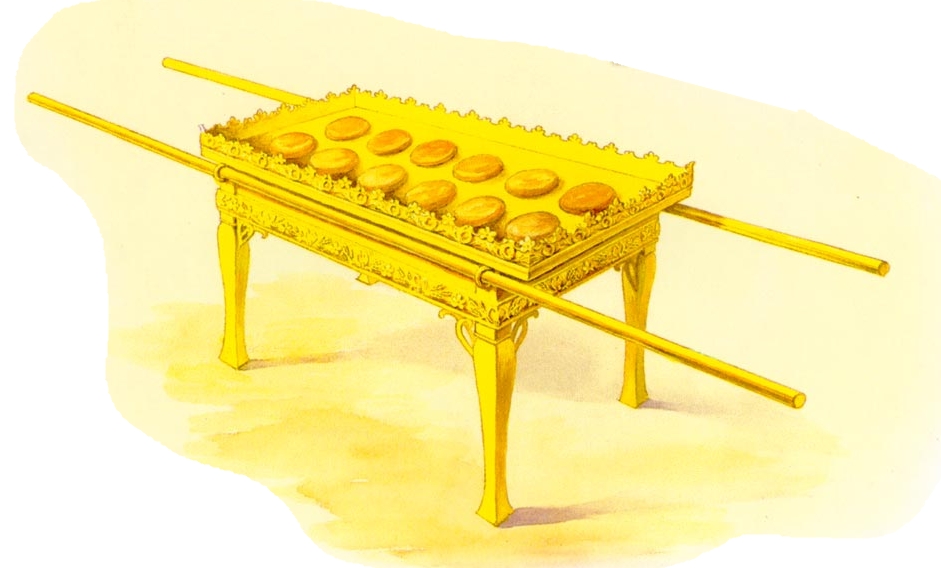
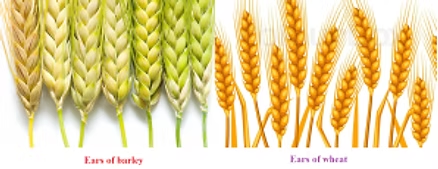








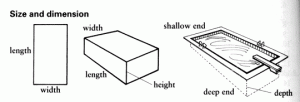

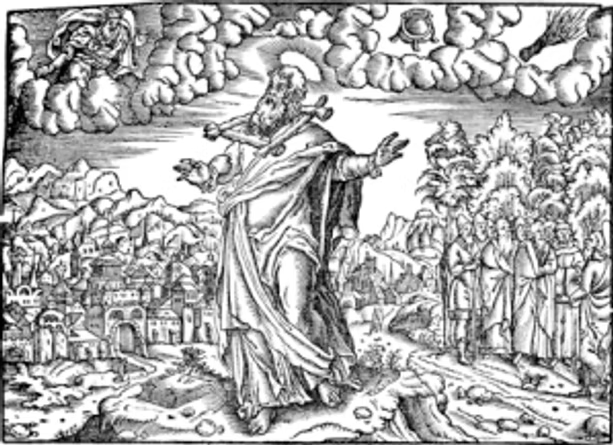




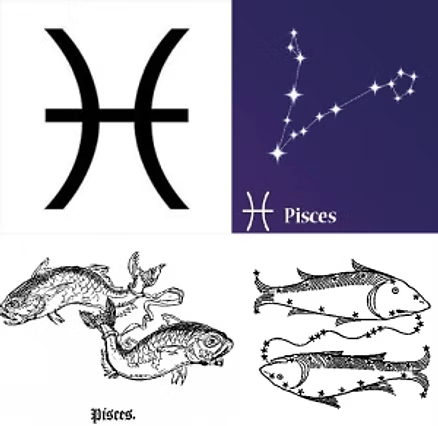


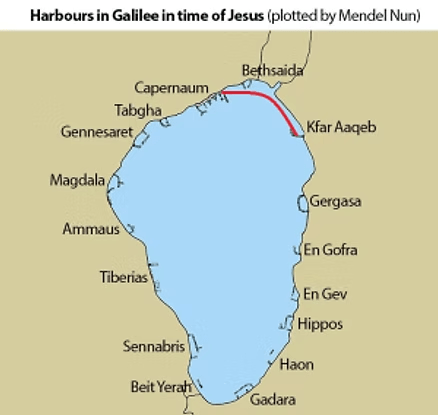



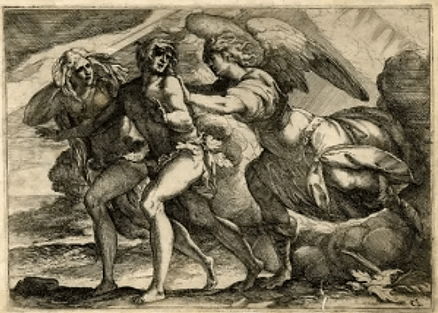









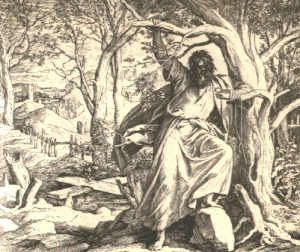















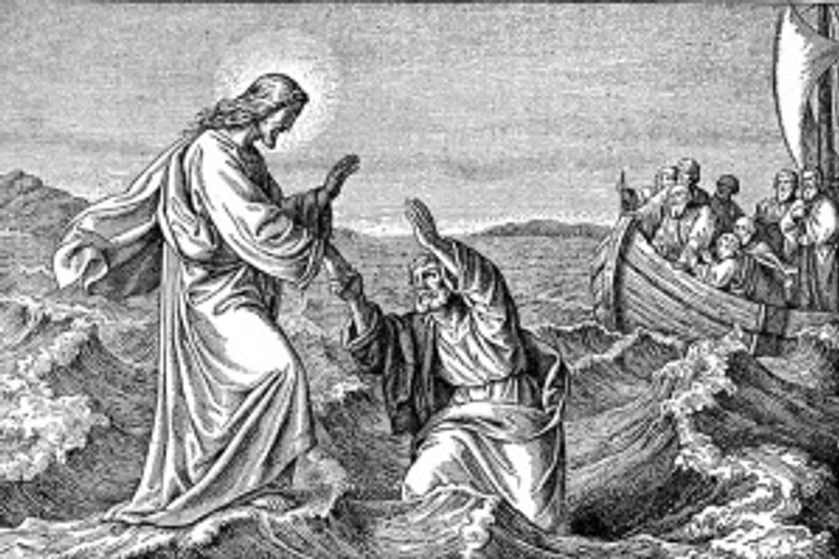



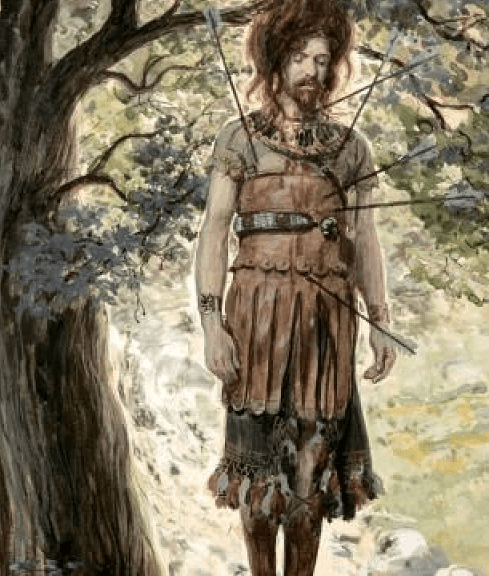
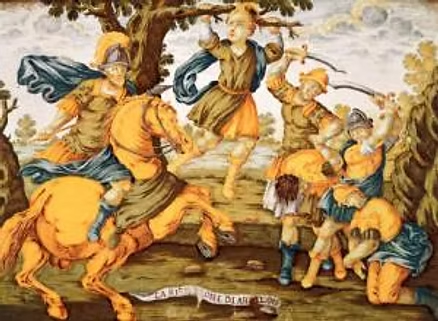





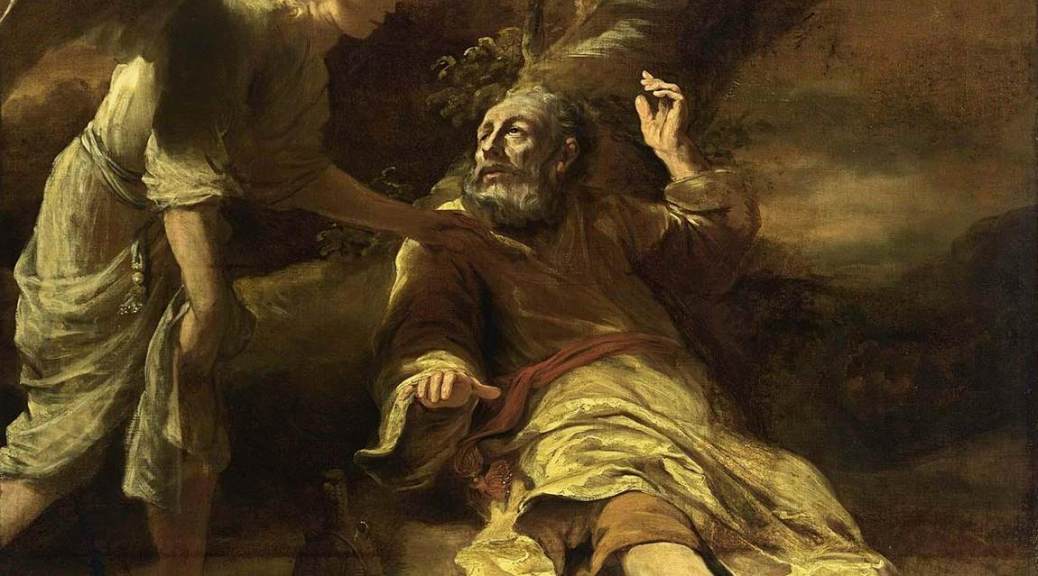
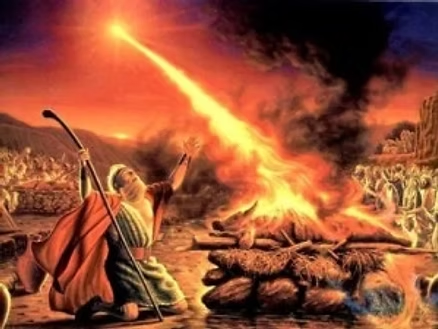


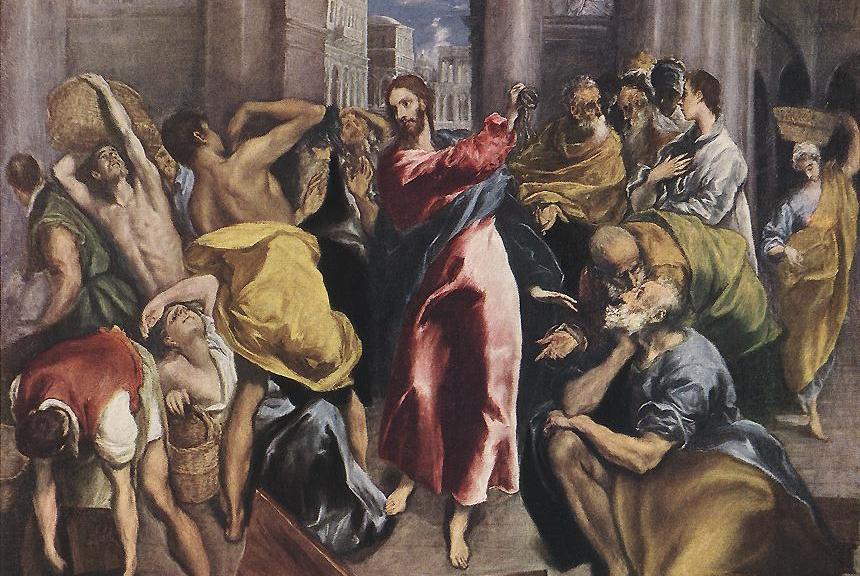
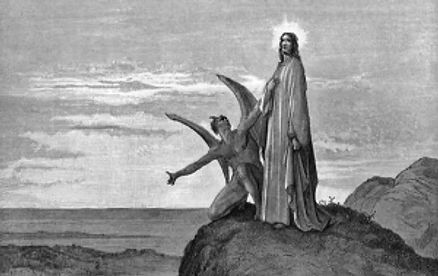

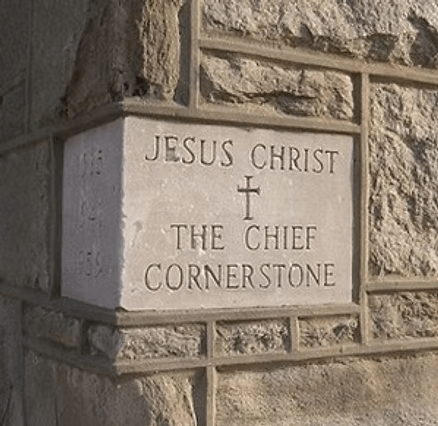

 Explaining the Readings