Category Archives: Language

Deuteronomy 4:1-2, 6-9 – What are we teaching our children?

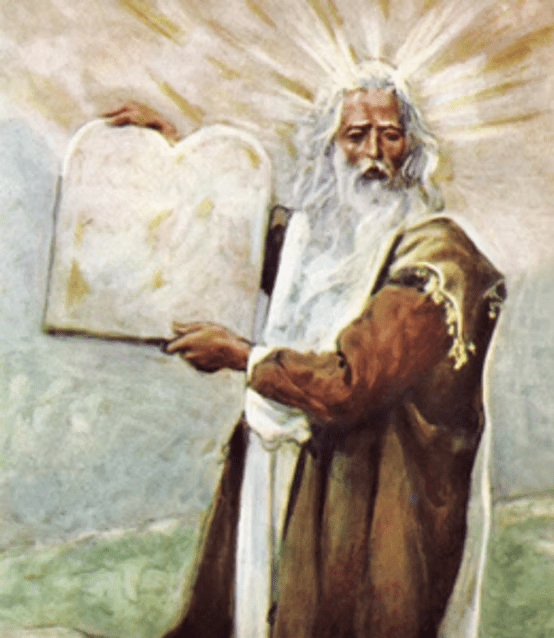
Moses said: So now, Israel, give heed to the statutes and ordinances that I am teaching you to observe, so that you may live to enter and occupy the land that the Lord, the God of your ancestors, is giving you. You must neither add anything to what I command you nor take away anything from it, but keep the commandments of the Lord your God with which I am charging you.

You must observe them diligently, for this will show your wisdom and discernment to the peoples, who, when they hear all these statutes, will say, “Surely this great nation is a wise and discerning people!” For what other great nation has a god so near to it as the Lord our God is whenever we call to him? And what other great nation has statutes and ordinances as just as this entire law that I am setting before you today?

But take care and watch yourselves closely, so as neither to forget the things that your eyes have seen nor to let them slip from your mind all the days of your life; make them known to your children and your children’s children.

———————————————————————————————————-

This is an optional Old Testament selection from the Episcopal Lectionary for the Fifteenth Sunday after Pentecost, Year B 2018. In the numbering system that lists each Sunday in an ordinal fashion, this Sunday is referred to as Proper 17. If chosen, it will next be read aloud in an Episcopal church by a reader on Sunday September 2, 2018. It is important because Moses made sure the Israelites knew their Promised Land was contingent on the people following the laws set before them by God. Those laws were their direct link to God, which made them wise enough to maintain the laws, with God’s help.

Repeated in these verses are the words that state “great nation” (derived from the root words “goygadol”). The implication of “you,” “yourselves,” and “your” means the collective sum of the people that learn to follow the statutes and ordinances passed down by God through Moses are what makes a nation great. A nation is not a system of law that is great. Greatness can only come from the people – all individuals being as of one mind – being living examples of the statutes and ordinances that distinguishes them as a nation. Greatness is possible because God is the one mind of all.

Singapore thinks it is pretty great; but their god has different laws, right?

Of course, the history of the nation that became Israel, after the Israelites were delivered into the land God promised them (in return for them observing His laws diligently), was they repeatedly forgot to live by the laws of Moses. They needed judges to rescue them and lead them temporarily; and they relied on prophets to be their liaison to God. Then they decided they would do very little, as far as following the laws, because they would leave it up to a king to start a continuous line of judges, whose commands would speak for God, to them, like Moses had, and like the judges and prophets had.

That application of righteousness onto a surrogate did not work out very well.

By blindly putting their souls in the hands of human beings, no one was maintaining the laws of God then and other nations began seeing the land of Israel and Judah as land they wanted to take. Without God watching over His diligently righteous priests that served Him by living by His Law, the Israelites and Jews were scattered like chaff in the wind. Their land and their nations were lost.

This history lesson means that there is absolutely no (zero, nada) nations on earth that shine “the wisdom and discernment” of diligent servants of God, to the people of other nations. There is no (zero, nada) one that will say about any nation of earth, “Surely this great nation is a wise and discerning people!” Because of that lack, when Israel and Judah DIED as nations, there was no longer a land deal offered by God (Yahweh, the LORD) to any of the other nations or their peoples.

Looking to start a great nation here?

For some politician-businessman like Donald Trump, who campaigned for President of the United States of America with the slogan “Make America Great Again,” this plays into the beliefs that America is a “great nation.” Rather that seemingly endless natural resources and vast areas of productive lands of all types, the peoples of America have seen themselves as if it were a “great nation [that] has a god so near to it as the Lord our God” (“Yahweh elohenu”). Eisenhower’s officers and representatives thought that strongly enough to put “In God We Trust” on the money of that great nation.  However, that belief is nothing more than political hype, because the United States of America is not a land governed by the statutes and ordinances of a theocracy, much less a land of people that give heed to the teachings of Moses.

The United States of America calls itself a “republic,” which means there is no official “king” (monarchy) that tells the peoples of America what statutes and ordinances must be followed … or else. Without a royal lineage, where children rise to assume the seat of power, when an old monarch passes away, a republic offers a system where the peoples vote for their leaders, officers and representatives.

China has a republic too.

America then incorporates a democratic voting system; all the peoples (meeting certain criteria) get to vote, so (theoretically) the government does what the people say. This means if the law of such a nation is based on the Laws of Moses (kinda), the peoples get to pick and choose how much of each law is applicable to the peoples. In other words, Americans routinely add and subtract from God’s Law, so it has been totally reduced to just another nation status.

The re-creation of a nation called Israel, which is generally a theocracy and also a democracy, still does not re-create the great nation the children of Israel were called to be – through service as priests of Yahweh.  This reproduction today is far from being great again, meaning the peoples still make the same additions and subtractions to God’s Law. While some Palestinians and Christians have limited voting rights is modern Israel, the ruling body of Israel (the Knesset) is determined by limitations put on areas of the land, with restrictions as to who can run and who can vote.  This is so there is no chance of the Jewish religion being overturned as the core of their democratic theocracy. Therefore, Israel is also on the other nation status list, as it has governmental laws that have nothing to do with God’s Law.

The fact that there has been no nation on earth that has been like the children of Israel, a group of peoples whom Moses freed from bondage to one of the “other nations” of the world and taught the Laws of their Covenant with Yahweh, does not mean that all hope is lost. God sent Jesus as the Savior of Israel, but not the great nation of peoples on one land. Jesus came to renew the Spirit that was set upon Jacob, when he was renamed a word that means “God Strives” or “God Persists” (“Israel“).  It is a name that is passed down to all his children, which is applicable to all who raise up the Covenant between the LORD, as those who persist for God so God persists through them.

Jesus is the king of this kingdom that is not a nation set upon land, but a kingdom made up of individual subjects that maintain all the statutes and ordinances of God’s Law. Jesus said he did not come to change anything about that Law, as was God’s command. Jesus brought with him a new Covenant, where God would reside within each subject’s hearts. There, upon the walls of one love of God, would be written the Laws of God … not in the lobes of human brains, where the convolutions tend to bend the words of the Laws, and the gray matter makes some disappear and others mysteriously appear.

With the Laws of God written in one’s heart, one acts according to those laws from a love of God. Each individual of this nature is oneself a great nation, whom others will exclaim, “Surely this person is wise and discerning, and as righteous as a Saint.”  Jesus Christ is the shared King of all such spiritual nations.

In my writings here, from time to time, I have mentioned the peoples of the Eleventh to the Thirteenth Centuries, called “Cathars,” a name given to them by those who came to know them. The name stems from the Greek word “katharoi,” meaning “Pure ones.” The Cathar peoples primarily flourished in the southern region of France known as Occitania. They had no leader or ruler and they claimed no land as theirs. They lived peacefully amongst peoples who were both French and Roman Catholics. They were true Christians, although the Church branded them Gnostics and heretics. They were asked to convert to Roman Catholicism and swear an oath to the pope. When they refused, a genocidal crusade was mounted that basically erased the Cathar people from the world’s consciousness (see Albigensian Crusade). However, to this day the region of Languedoc and Midi-Pyrénées, and especially the town of Carcassonne is considered “Cathar Country.”

This is an example of what God originally intended when He told Moses to instill the Laws within the Israelite peoples. God promised them land so that seed could have a womb in which to develop. God knew it was impossible for human beings to maintain holy statutes and ordinances alone, without divine guidance.  It was known in advance that separating themselves from those peoples of other nations, while also welcoming the peoples of other nations to come see how great Israel’s peoples were –  as a great nation, made up wholly of righteous priests to Yahweh – was impossible to not be influenced by those outsiders.

The original nation of Israel was like posting a speed limit on a road and then giving peoples vehicles that can easily exceed those limits. It is like putting cookies in a jar on a table and telling a toddler not to eat any, before walking away and leaving the toddler to contemplate that law.  It is easier to break a law if it seems too strict … and nobody is looking.

When one is a true Christian, then one wants to live amongst others of like mind and like heart. That makes a great nation of Christians a true church, where all members have been reborn as Jesus Christ, filled with God’s Holy Spirit. This is how Jews tried to live in other nations (separate but equal), ever since they were dispersed from Israel and Judah. God wants His priests where they will be needed, amongst the Gentiles who need to witness righteous peoples first hand.

True Christians will influence those who seek to know the truth, while gathering together as the family of God to praise Him. This reading is then pertinent to today’s Christian world, as it says a child of God will “take care and watch [them]selves closely, so as neither to forget the things that [their] eyes have seen nor to let them slip from [their] mind all the days of [their lives]; [and they will] make them known to [their] children and [their] children’s children.”

As an optional Old Testament reading for the fifteenth Sunday after Pentecost, when one’s personal ministry for the LORD should be underway – one is adhering to the Laws of God that have been written on their heart’s walls – the message is to know that it is impossible to fulfill this promise without complete submission to God’s Will. The only way a “great nation” is fully committed to God is to be a Saint – ruled by the Spiritual King of one’s soul, Jesus Christ.

It is a huge mistake to read the Old Testament and ignore it, by writing it off as “just another example of how the Jews failed God.” Those failures are just as readily reflections of peoples today that think they are great because of God’s blessing them with greatness. Americans who boast of being a great nation under God need to slip that to a lower case “g” and see how they are bragging on being just another nation sworn to Mammon or Baal.

Our Supreme Court – a branch of governmental law – cannot even allow replicas of the Ten Commandments to be erected on public land (land stolen from Native Americans, by force, accompanied by lies and broken agreements), because we welcome citizens from ever religious theocracy in the world to come and subvert our legal system. We honor the killing of babies in the womb as a woman’s right; but then we deny the execution of those convicted of the most heinous crimes, because criminals have rights. Few in government will agree that babies in the womb or the ones suffering from heinous crimes committed against them have rights. We pretend to stand behind Mosaic Law, but then we add new laws that are contrary to it and amend old law to fit modern acceptances.

God, being the All-Knowing God that He is, knew when the peoples were doing the things that would be written into the book called Deuteronomy that they would fail miserable. He knows the fake religion that America and other nations claim to honor has nothing to do with the Laws He gave to Moses to install. God knew when John wrote the Book of Revelations (The Apocalypse) that the world would splinter into seven types of churches, none of which would be maintaining all the Law, with all needing to make some corrections or suffer the loss of eternal life.

I sure would not want to have God look at me and say, “I know your deeds, that you are neither cold nor hot. I wish you were either one or the other! So, because you are lukewarm—neither hot nor cold—I am about to spit you out of my mouth. You say, ‘I am rich; I have acquired wealth and do not need a thing.’ But you do not realize that you are wretched, pitiful, poor, blind and naked. I counsel you to buy from me gold refined in the fire, so you can become rich; and white clothes to wear, so you can cover your shameful nakedness; and salve to put on your eyes, so you can see.” (Revelations 3:15-18)

That sounds an awful lot like America’s form of religious lukewarmness to me.

James 1:17-27 – The listeners and doers of God’s Will

Every generous act of giving, with every perfect gift, is from above, coming down from the Father of lights, with whom there is no variation or shadow due to change. In fulfillment of his own purpose he gave us birth by the word of truth, so that we would become a kind of first fruits of his creatures.

You must understand this, my beloved: let everyone be quick to listen, slow to speak, slow to anger; for your anger does not produce God’s righteousness. Therefore rid yourselves of all sordidness and rank growth of wickedness, and welcome with meekness the implanted word that has the power to save your souls.

But be doers of the word, and not merely hearers who deceive themselves. For if any are hearers of the word and not doers, they are like those who look at themselves in a mirror; for they look at themselves and, on going away, immediately forget what they were like. But those who look into the perfect law, the law of liberty, and persevere, being not hearers who forget but doers who act-they will be blessed in their doing.

If any think they are religious, and do not bridle their tongues but deceive their hearts, their religion is worthless. Religion that is pure and undefiled before God, the Father, is this: to care for orphans and widows in their distress, and to keep oneself unstained by the world.

———————————————————————————————————-

This is the Epistle selection from the Episcopal Lectionary for the Fifteenth Sunday after Pentecost, Year B 2018. In the numbering system that lists each Sunday in an ordinal fashion, this Sunday is referred to as Proper 17. It will next be read aloud in an Episcopal church by a reader on Sunday September 2, 2018. It is important because James, the brother of Jesus and a Saint, told how one must be the kingdom of Christ, fully devoted to serving God the Father.

James wrote in the same manner as did Paul. This is because Saints do not write to display their ability with language, but because God leads them to send a letter. Thus, all Saints speak the language of God, which appears to the eyes of a novice to be ordinary language. Novices translating the texts of Saints into words means most miss the depth each letter contains.

Here is a breakdown of this segment of James’ first chapter, based on the literal words written, the implied punctuation, and the translations of the Bible Hub Interlinear presentation [or viable substitutes]:

17 “every act of giving good  ,  One needs to realize that the acts of giving are those of God to each of His beloved. It is God’s gifts [those of the Holy Spirit] that make one’s soul cleansed of sin, thus good. When one preaches that giving by human beings makes one good, as “every act of giving is good,” that only holds truth when everyone has something good to give. That error makes it seem as if one is bad, when one is impoverished. It also raises the question, “How much good giving will God expect from me?” When the giving is left up to God, then the good given that is given to others is the Holy Spirit; but only God can give that. An Apostle-Saint can only announce, “The kingdom of God has come near,” and let the seekers also marry God and be given His gifts of goodness.

“and every gift perfect  ,  Perfection is a characteristic of God. Humans are all flawed [sinners] until washed clean through Spiritual baptism. Then, a Saint becomes a reflection of the perfection of God, whose gifts come from that perfection [not manmade money or donated material goods].

“from above is  , Above is Heaven, the Spiritual realm of God. “Above” is one’s elevated spiritual presence, when one is raised up, above the plane of physical wants and desires.

“coming down from the Father the [one] of lights  ,  Again, we are raised up when God comes to the earthly plane in an Apostle-Saint. That is when one is reborn as Jesus Christ, who shines the light of truth within one.

“with whom not there is variation  ,  There is only one Jesus Christ – one model of righteousness in whom Saints are formed – so that Holy Spirit is resurrected in countless numbers of souls that find their love of God and become one with God.

“or shifting shadow  .  The Greek word “aposkiasma” means “a faint image or copy of.” This means there is no version of Jesus Christ that retains any control over a life of sin – a dark edge, where living in the shadows is partially allowed by God. In other words, one is not holy one minute and then doing dirty deeds the next, only to expect God’s forgiveness. That is the god of self still being served.

18 “having desired  ,  The Greek word “boulētheis” is a statement of “intent, desire, and wish,” which reflects a mutual desire between a disciple of Jesus Christ and His Father. One has come to realize the message of Jesus, through Scripture and deep reflections on the word of the Gospels, so one’s heart opens with desire for the LORD.

“he brought forth us by word of truth  ,  The rebirth of Jesus Christ is one’s ability to speak the same truth as did Jesus.

“for those to be us first fruits certain man  ,  The “certain man” is Jesus of Nazareth, the Son of Man, who is the true vine – the vine of truth – from which the first fruits were James, Peter, and Paul, who were those first to be bodies in which Jesus was resurrected.

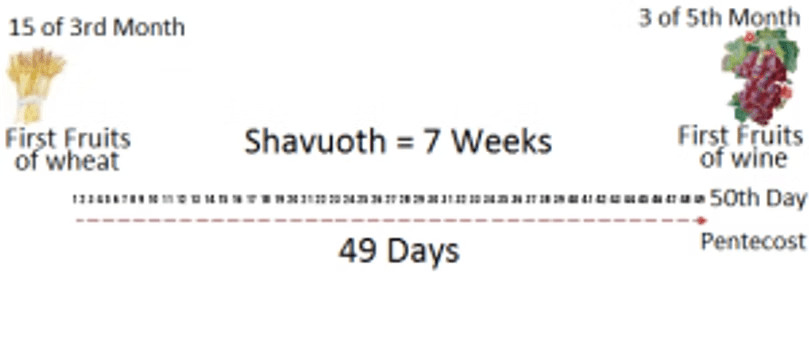
The first fruits are symbolized in the Passover to Pentecost festivals commanded by God.

“the one of his created  ,  Each Apostle-Saint is a reproduction of Jesus of Nazareth, in possession of the Christ Mind. All are the creations of God the Father, making all the Sons of God (regardless of human gender), as multiple Jesuses have been reborn as Anointed souls.

19 “so that  ,  “That” is the rebirth of the Christ Spirit.

“brothers ourselves beloved  ,  All are “brothers” (regardless of human gender) because all are of the same Father, and all are resurrections of the same Son. The totality of this replication of the Trinity in multiple human life forms is the wholeness of love, to and from God.

“let also every man swift in order this to hear  ,  Whereas the onset of love for God comes through meditative, prayerful thought, listening to God’s whispers as to the meaning of His Word, the filling of a Saint with the Holy Spirit and the Christ Mind means one is given an instantaneous knowledge [wisdom] and understanding. A Saint immediately hears and knows the truth, because the brain has been bypassed by the Christ Mind.

“slow in order this to speak  ,  When God speaks, one listens. One does not question what God says. One ponders anything that seems to go against all human teachings of religion. One absorbs an ownership of truth by proving the truth through tests of logic. To be a teacher, one has to first be taught; but when an Apostle opens his or her mouth, it is Jesus Christ that speaks.

“slow to anger  ;  Anger is a response to evil; but anger is controlled by God’s influence. Anger promotes prayer, more than it promotes the ‘Old Testament style sword’ that destroys the wicked. Prayer can bring God’s punishment, which is more lasting than any physical wounds can bring. “Slow to anger” means the development of patience.

20 “anger indeed of man  ,  Anger stems more often from the influences of evil, where the selfish desires of a soul are often not the results gained. Anger is then against one’s failures, but Satan will project those failures of self onto others, suggesting acts that harm one’s soul.

“righteousness of God not produces  ,  When one is open to the influences of Satan, there can be no acts of righteousness as the result. One has turned away from God, instead serving evil.

21 “therefore  ,  The Greek word “dio” means “wherefore,” derived from “diá, “across to the other side.” This one-word statement then places focus on the opposite of God’s influence, which is Satan’s.

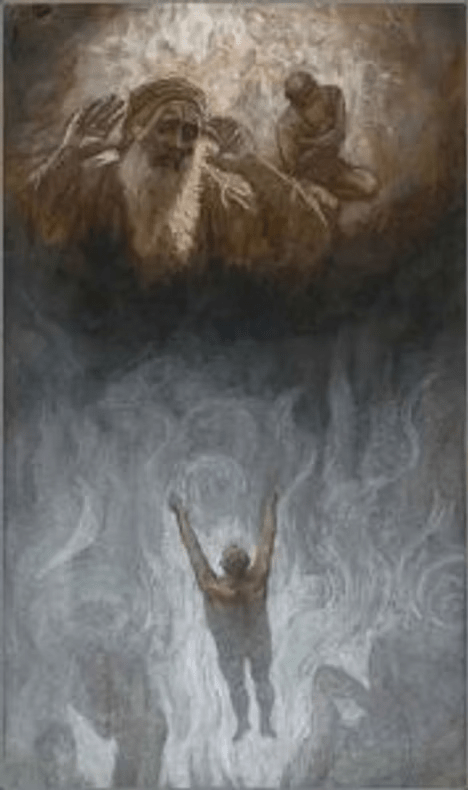
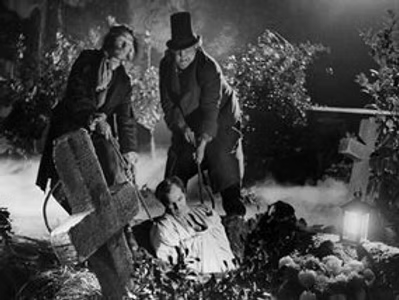
Lazarus looking upon the rich man in the opposite realm.

“having put aside all filthiness and abounding of wickedness  ,  When one turns away from the temptations of evil and the material plane’s traps, one’s soul has ceased being filthy by sins and addicted to the pleasures of selfishness.

“in humility receive the inborn word  ,  The Greek word “prautés” means “mildness, gentleness, and humility,” but emphasizes a divine origin in “meekness (“gentle strength”) which expresses power with reserve and gentleness.” This is the surrender of self-ego and the sacrifice of a Big Brain, so all the noise of an evil world ceases and God’s Word can be heard.

“which has ability to save the souls of you  .  Being able to hear the voice of God within is vital for one’s soul being saved.

22 “be moreover performers of [the] word  ,  The Greek word “poiētai” means “doers, performers, and those who carry out.” [It can also identify a “poet.”] This is the theme of James, where faith without acts [deeds] is dead. (James 2:14-26) He is setting that theme up here. One’s actions should not be self-motivated or influenced by Satan’s whispers, but based on Scripture’s lessons, interpreted by the Christ Mind.

“and not listeners only  ,  One who listens to the voice of Jesus and does nothing more is a Judas Iscariot.

“deceiving yourselves  .”  Judas was a disciple of Jesus of Nazareth as a traitor. Still, Judas was deceiving himself by not realizing Jesus knew he would betray him.

23 “because if any man a listener of [the] word is  ,  Anyone who is allowed to hear the voice of God’s wisdom is expected to act on that knowledge.

“and not a performer  ,  If one does not do the deeds spoken by God, one is like a wife who cheats on her husband. One who does not listen and obey is adulterous with self-ego love.

“this man is like one looking at face which natural of him in a mirror  .  This element of “face” (from the Greek word “prosōpon,” also meaning “countenance”) is the First Commandment stated by God to Moses: “Not you shall have to you gods other upon the face of.” (Exodus 20:3) We recognize this as “Thou shall have no other gods before me,” losing grasp of the Hebrew word “pā·nā·ya,” which states “face of.” A “mirror” is then a reflection of one’s face worn (one’s “countenance”) before God, such that the only “face” God wants a wife of His to wear before Him is His face, demonstrating that wife (male and female He makes them) is completely subservient to God [not self or some other lesser god].

24 “he has looked indeed himself and has gone away  ,  When one wears one’s self-face before God, it is the same as having turned one’s “face” away from God. That person has then gone away from God, towards whatever influence that person chooses to follow.

“and immediately has forgotten like what he was  ,  One whose back is turned to God immediately forgets what the presence of God is like, as God is no longer there to guide that traitor.

25 “all however having looked intently at law perfect  ,  Each individual who hears the voice of God within is able to deeply realize the perfection of God’s Law. From an inner wisdom illuminating one to the truth found in Scripture, the eyes can then see the perfection that each word contains. This is because all authors of holy text are writing from the perfection of God’s inner voice.

“that which of freedom  ,  The Passover and the Exodus are the stories of the children of Israel being freed from the bondage of Egypt. From that freedom Moses gave them the Laws of God. One has to understand that Egypt reflects the control of the earthly plane, rather than the will of one Pharaoh who disliked foreigners in his nation. Freedom that comes from the perfection of God’s Laws is freedom from the trap of the same ole same ole that is reincarnation of a soul that is snared by sin. To gain that freedom from bondage, one must listen to the voice of God, see the perfection, and then act according to that Word.

Freedom is the release from the repetition of a cycle of death.

“and having continued in  ,  The freedom of bondage requires one continuously be led by God’s Will. When one allows oneself to be married to God, via His Holy Spirit, one then continues to be free of death and mortal pains. If, however, one continues to listen to the inner voice, but act in worldly ways, then one has lost the freedom of eternal life with God.

“not a listener forgetful having been  ,  When one hears the inner voice speaking and takes heed, such that one’s soul does not fail to take notice (from the Greek word “epilésmoné”) of God’s guidance and direction, one is preparing to act upon that which is heard.

“but a performer of work    One then does the deeds of the LORD and sets aside the desires of the flesh. One does holy deeds, led by holy wisdom.

“this one blessed in the work of him will be  .  Those who act to carry out God’s wishes are then blessed with happiness and good fortune (from the Greek word “makarios”), such that the favors of God show on one’s face (“countenance”). Others who see that Mosaic glow will be envious, such that seekers will come to one to inquire how they can also be happy and fortunate.

26 “if anyone seems religious to be  ,  The Greek word “thrēskeia” means “ritual worship, religious, devout, and/or following ritual acts.” One appears to be religious by simply wearing the clothing of religious clerics. Some, such as Jesus witnessed the Pharisees doing, will make a point of being seen “acting” religious, rather than being religious. The Greek word “dokei” is rooted in the word “dogma,” where beliefs are ritualized and ceremoniously displayed. This means “seems to be religious” is the difference between “belief” and “faith,” where making a show of one’s beliefs is a form of works, deeds, and acts that appear religious. This is seen Biblically in the priests of Baal, who seemed to be religious, causing the Israelites to follow their leads. Those priests differed from the prophets of God, who demonstrated faith, which appeared to be rebelliousness instead of religious. Jews going to the synagogue on Saturday and Christians going to church on Sunday “seems to be religious.”

… and so many more.

“not bridling tongue of himself  ,  The Greek word “chalinagōgōn” means “to curb, restrain, sway and bridle.” To bridle one’s own tongue, one needs to cease letting one’s Big Brain speak for oneself, if one is to truly be religious. Knowing that Jesus never once spoke about any presidents of the United States of America (he cared little for Roman politics, so he cared none for those of our Western societies), any priest, preacher, minister, or pastor who stands at a podium and tells a congregation how to think, in terms of politics, is “not bridling his or her own tongue,” putting on the airs of being religious by wearing robes and tippets, but serving the priest of self will and political sway.

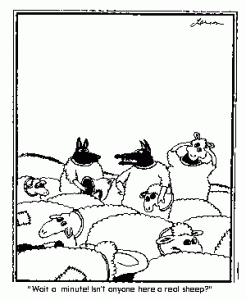
“but deceiving heart of himself  ,  The way one speaks [remember “slow to speak”?] tells where one’s heart lies. A “heart of himself” is being in love with self-ego and leaving no room in one’s heart for God. Without one’s heart married to Yahweh, one speaks for self, which is deceiving those who listen to the words of someone “seeming to be religious,” but is actually doing the deeds of a wolf in sheep’s clothing. In one’s deceptions, one is also deceiving oneself, believing it is the clothes that makes the man (or woman).

“of this one worthless the religion  .  Acting religious, while speaking words of self for others to follow is worthless (from the Greek word “mataios”). This is because the words of self-ego are: “vain, unreal, ineffectual, unproductive; practically: godless.” Without God’s word being spoken, one ceases to be following the ritual of servitude to the One God, thus one is absent of religion.

27 “religion pure and undefiled before the [one] God and Father this is  :  The only religious ways are those directed by Yahweh. One acts as God commands, which is the deeds, acts, and works of purity. A religious person is undefiled by the world of selfishness and greed.

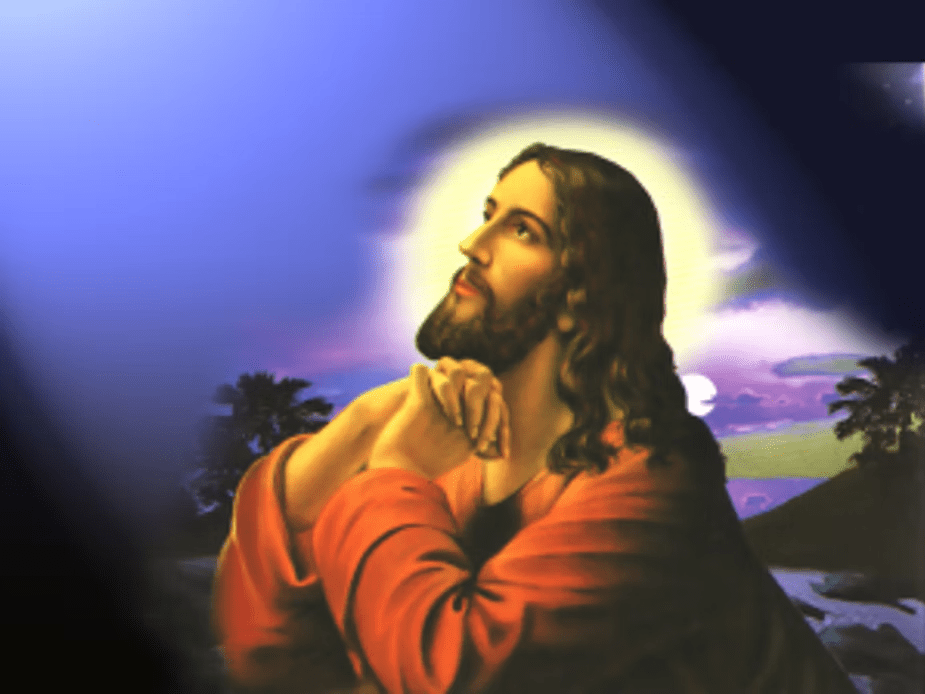
All Saints allow Jesus his continuation of prayer.

“to visit orphans and widows in tribulation of them  ;  The Greek word “thlipsis” means “tribulation, persecution, distress, affliction.” The purpose of an Apostle-Saint is to go to where there is need and where others are seeking true religion. More than looking for children who have no parents, the Greek word “orphanos” means to go to the “Fatherless” and make God’s presence be known [“The kingdom of God has come near.”]. The widows are then those whose human husbands [or marriage to lesser gods] have died, offering them the hand of Yahweh in marriage. Religious seems to be going to visit orphanages and old folks homes; but true religion is making God be known, so all who seek His help can know the only thing that keeps one alone is one’s self-will and the freedom to be stubborn.

“unstained oneself to keep from the world  .  The Greek word “aspilos” means “undefiled, pure, spotless, and morally unblemished.” This is the characteristics of one who is truly religious, who worships the One God through submission to His Will. One cannot be “unstained” in a world that is an influence to sin, without the presence of God within and letting His Will be done through His servant.

As the Epistle selection for the fifteenth Sunday after Pentecost, when one’s own ministry to the LORD should be underway – one is a listener and a doer of God’s Will – the message here is to stop acting religious and demonstrate one’s complete devotion to God above.

American Christians are the most giving peoples on the planet, as far as donations of money to every known possible charity under the sun; but how many of them are giving others the gift of the Holy Spirit and entrance into the brotherhood (regardless of one’s human gender) of those reborn as Jesus Christ?

The message of James is the same as the message found in all of the Epistles, written by all the Saints: Each individual must become resurrections of Jesus Christ. Anything less that that is either fear of commitment to God or pretense.

Mark 7:1-8, 14-15, 21-23 – The dirty work of God’s servants

When the Pharisees and some of the scribes who had come from Jerusalem gathered around him, they noticed that some of his disciples were eating with defiled hands, that is, without washing them. (For the Pharisees, and all the Jews, do not eat unless they thoroughly wash their hands, thus observing the tradition of the elders; and they do not eat anything from the market unless they wash it; and there are also many other traditions that they observe, the washing of cups, pots, and bronze kettles.) So the Pharisees and the scribes asked him, “Why do your disciples not live according to the tradition of the elders, but eat with defiled hands?” He said to them, “Isaiah prophesied rightly about you hypocrites, as it is written,

‘This people honors me with their lips,
but their hearts are far from me;
in vain do they worship me,
teaching human precepts as doctrines.’

You abandon the commandment of God and hold to human tradition.”

Then he called the crowd again and said to them, “Listen to me, all of you, and understand: there is nothing outside a person that by going in can defile, but the things that come out are what defile.” For it is from within, from the human heart, that evil intentions come: fornication, theft, murder, adultery, avarice, wickedness, deceit, licentiousness, envy, slander, pride, folly. All these evil things come from within, and they defile a person.”

———————————————————————————————————-

This is the Gospel selection from the Episcopal Lectionary for the Fifteenth Sunday after Pentecost, Year B 2018. In the numbering system that lists each Sunday in an ordinal fashion, this Sunday is referred to as Proper 17. It will next be read aloud in an Episcopal church by a priest on Sunday September 2, 2018. It is important because Jesus quoted Isaiah, saying the pretentiousness of religious appearance, shown by upholding traditions as holy doctrines without sincerity, is not pleasing to God.

As Christians in today’s environment of social acceptance of just about everything imaginable, it is easy to be caught up in a love of Jesus, which blinds many from seeing themselves represented in the Pharisees of this reading. The Pharisees seem to reflect the failures of our government to maintain the standards of Christian morals, where Christians see themselves as the disciples following Jesus and trying to be devout; but those damn elected representatives and appointed judges always find something to complain about, always striking down the things Christians do as not applicable to the minorities that are not Christian. However, the focus of this reading is on Christians being self-serving, like the Pharisees, in their ways that have misinterpreted Scripture.

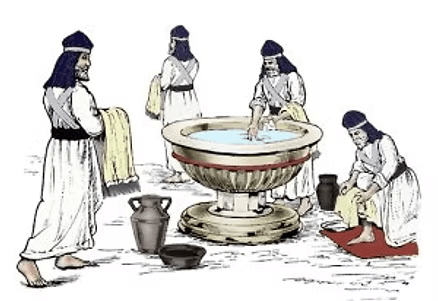
Instead of seeing the disciples as sinners that Jesus forgave, due to physical urges that had them cook food in unwashed pots and then prepare and eat food without washing their hands thoroughly, one should see Jesus never once spoke against the ritual act of handwashing. The Pharisees were speaking of the Law that applied especially to the priests of the tabernacle, which is written:

“Then the Lord said to Moses, “Make a bronze basin, with its bronze stand, for washing. Place it between the tent of meeting and the altar, and put water in it. Aaron and his sons are to wash their hands and feet with water from it. Whenever they enter the tent of meeting, they shall wash with water so that they will not die. Also, when they approach the altar to minister by presenting a food offering to the Lord, they shall wash their hands and feet so that they will not die. This is to be a lasting ordinance for Aaron and his descendants for the generations to come.” (Exodus 30:17-21)

Since the Jews were descended of the people of Judah, of which the Levites served as priests in Solomon’s Temple, Jesus was recognized as a teacher (a rabboni) of God’s commandments to all who would be priests of God. The Pharisees were less concerned about the disciples of Jesus not acting priestly, than they were in pointing out to Jesus how unpriestly his teachings were, as demonstrated by his disciples.

This led to Jesus quoting from Isaiah (Isaiah 29:13), where it was clear that ritual observed without an emotional connection – a desire that makes the ritualistic act meaningful to the person enacting it – is vanity [i.e.: worthless as far as Yahweh is concerned].  This is the intent of Jesus saying, “You abandon the commandment of God and hold to human tradition.”

The Pharisees were pointing out what they thought were sins in others [i.e.: the sin police], while there was no heartfelt understanding of the reason handwashing was commanded to be maintain by God.

Now, the Episcopal Lectionary website lists a break in the verses read, but where they say the final section of the reading is verses 21-23, the Bible Hub Interlinear website shows “there is nothing outside a person that by going in can defile” as their paraphrase translation of verse 18.  Perhaps there are different editions of Mark, or perhaps they are parsing and pasting so freely that skipping over bits and pieces gets confusing.  This translation, by whatever verse, is misleading.

Simply by reading that translation as a statement made by Jesus, one could reject that statement as false. Certainly, if someone picked up a rat that was infested with fleas that carried the bubonic plague virus (something external to one), and if one of those fleas were to bite the one picking it up, then something outside that person could defile him or her with the Black Plague. To the Jews, diseases were recognized as signs of sin, thus defiling.  This means “nothing outside … can defile” is wrong.  However, Jesus did not say that.

The problem is attaching the negative word “not” (“ou”) to the word that says “everything” (“pan”) and then changing “not everything” to “nothing.” Jesus actually said and intended his words to reflect: “Not everything from outside entering within a man can defile him.” [This also a paraphrase, as verse 18 has three segments, with the last two being combined to make this over simplification be the statement.]

Jesus was then talking about not washing pots and pans or food before making a meal and then eating it with unwashed hands. A lunch meal, also, is not sacrificial food prepared at the altar by a priest of the temple. Therefore, Jesus was pointing out the “compare apples to apples” argument, where comparing apples to oranges is flawed from the beginning.

Just wipe your hands in the prairie grass before eating [or pants].  For cowpokes it is optional.

Jesus actually posed that statement to the Pharisees and scribes as a question, meaning he turned the tables on them by questioning how they could think they were so priestly and not understand that. The second part of his statement is also presented as a question, where “not” is repeated, as “[Dirty hands, pots, and food is] not able to defile.” It was said as, “You do not know that, right?”

In this way, the questions asked to Jesus about his disciples were answered by more questions.  This was a common tactic of Jesus, as a rabbi teaching those who thought they knew it all. This is similar to how Jesus asked Nicodemus, “You are a teacher of Israel and you do not know these things?” (John 3:10)

When we read the translation above that has Jesus state, “but the things that come out are what defile,” this is actually verse 20, according to the Bible Hub Interlinear. This verse is also broken into three segments, such that the first places focus on “moreover,” which is like saying, “And another important thing to know.”

The second segment then places importance on the results: “that which comes out of a human being.”  The results are the actions, works and deeds a human being gives rise to. The focus is on the fact that one’s actions are not easily written off as being the product of one’s environment, as due to cause and effect, based on what one eats, absorbs, or lives amidst. Human beings generate acts that are not wholly uncontrollable and predictable.  The unseen variable is God’s protection.

The final segment shows the importance of understanding that it is the man (any human being) that is responsible for acts that defile. This last segment reads literally as, “that defiles the man.” However, the word “that” directly points back to the second segment’s focus on what comes out of a human being.  So, those acts that “defile” are owned by the one performing those acts.

Jesus then clarified outward acts that defile, by stating, “For it is from within, from the human heart, that evil intentions come: fornication, theft, murder, adultery, avarice, wickedness, deceit, licentiousness, envy, slander, pride, folly. All these evil things come from within, and they defile a person.”

By saying, “from the human heart,” this means acts that defile are not those that the brain leads, which can be classified as instinctual. A hungry person that is starving is not led by emotions to eat, just as a wild predator does not hunt and kill out of malice of heart. Therefore, each of the twelve acts that come out of humans that are defiling are based on the heart leading the brain to act in evil ways.  This says that it is the heart link that determines what acts are sinful and what acts that appear sinful are simply natural.

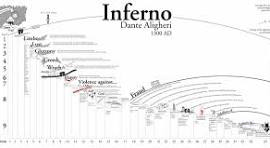
More than seven deadly sins is Dante’s many steps down into Hell. Jesus just named twelve.

As the Gospel selection for the fifteenth Sunday after Pentecost, when one’s personal ministry to the LORD should be underway – one is acting naturally, based on a profoundly deep love of God in one’s heart – the message here is to focus one one’s inner being, rather than point fingers at others. The failures of the Pharisees and scribes of Jerusalem’s temple was they were all brain for God’s Laws, with no heartfelt understanding. Thus, the message is to know one’s own heart.

When Christians today hear these words read aloud in church by a priest, who holds high the ceremonial book of Gospel readings, a human tradition is unfolding before their eyes. I remember my first times going into a church where standing, sitting, and kneeling was so confusing to a newcomer that I was always doing the opposite of what the regular congregation was doing.

My Pentecostal upbringing had taught me to silently allow someone in the congregation to stand suddenly and make loud noises, with arms raised, and then sit down. Others would quietly say, “Praise the Lord.” I witnesses newcomers break out into laughter when they experienced what I had been raised to accept as normal.

All of this is human tradition, none of which Jesus of Nazareth had ever encountered.

The fractured denominations of Christianity, where each differs from the rest due to some degree of Scriptural interpretation or another, they all point fingers at one another [whether or not that is the intent] in ways that are parallel to the Pharisees calling out Jesus for having not disciplined his disciples. This is how one should see this reading. One must be prompted to look within one’s heart to understand why it is one sits in a pew in a church, listening to Scripture being read and sermons being preached.

One must ask oneself, “Am I just honoring God with my lips and not my heart, because I come to church in vain, loving the presentation of ritual and tradition as doctrine, more than loving God through ministry that gets my hands dirty in self-sacrifice?”

The question Christians must ask themselves individually is, “Have I become a Pharisee?”

From the twelve branches of sin named by Jesus, look at how many we can see reflected in the Pharisees and scribes, simply from their displayed ignorance of the truth of God’s Laws. While the dirtiness of external contact is readily grasped – as the physical acts of sin – see if you can realize the spiritual acts that are most harmful to a soul.

The translation of “fornication” comes from the Greek word “porneiai,” which can equally state “idolatry” and “sexual immorality.” As priests of the LORD, who should have been married to God in their hearts, did the Pharisees not cheat on God by idolizing Moses? Do Christians not do the same with Jesus, wearing crosses around their necks and bowing to figurines of Jesus hanging on a cross?

When the act of “theft” is considered, it is easy to think in terms of stealing food to eat. In terms of the Pharisees and scribes, they stole the wealth of the Jews, taking it as their own. Still, was their greater theft not the fact that they used their positions of leadership to mislead those who followed them, taking them away from service to God? Do Christian churches not mislead in the same ways, keeping members as lost sheep, rather than souls freed by the Holy Spirit?

All throughout the ministry of Jesus of Nazareth the Pharisees and scribes plotted to “murder” Jesus, while using the Law and accusations of heresy as justification. While killing a threat to the flock can be determined a justifiable act, just as killing a sacrificial animal before the altar was necessary in ancient Israel, “murder” is the intentional, unjustified slaughter of innocence. Have Roman Catholic priests not murdered the children that represented the future life blood of that institution, driving them away unjustly? Is not the simple question, “Why are millennials leaving the Church?” a sign of Christianity being murdered by the purposeful lack of true faith shown by Christians?

In human terms, “adultery” is “Consensual sexual intercourse between a married person and a person other than the spouse.” [American Heritage® Dictionary of the English Language, Fifth Edition]. On spiritual terms, is this not seen in how the Pharisees loved their wealth, possessions, and their powers of influence, as having spiritually made “love” to the god Mammon, who appeared in any form that whispered ‘sweet nothings’ into their mental ears, telling them how important self was? Likewise, are Western Christians not so involved with material quests that they lie down with whatever sin promises to make their cell phone payments, their cable-satellite TV payments, the fancy car payments, and their lavish home mortgage payments? Does the Church not still offer forgiveness of “adultery” through indulgences?

The sin of “avarice”, from the Greek word “pleonexiai,” means “covetous desires,” while being a statement of “aggressiveness and a desire for advantages.” Did the Pharisees and scribes not covet the attraction that the newcomer Jesus was having with the Jews? Was his popularity not taking away from them what they believed was theirs to possess? Do Christians today not believe that Jesus wants them to have as much as their credits cards will allow, as if a pastor driving the newest Cadillac is a sign of how powerful their God is?

The Greek word “ponēriai” translates as “wickedness,” also meaning “iniquities.” This means one is led to grossly immoral acts, which are unjust and harmful. This is an outward manifestation of one’s lack of righteousness. Religions that serve lesser gods, especially the churches of Satan, where everything practiced is the opposite of that taught by God, while reflecting the same rituals of Roman Catholicism, are wickedness. Was the Temple of Jerusalem not a wicked reproduction of Solomon’s Temple, which God had never sought to be built to house Him? Can this same error of reasoning, where money is praised in the form of lavish building of worship, not be deemed a form of wickedness that is reproduced by many denominations of Christianity?

The aspect of “deceit” surrounded all of the encounters between Jesus and the Pharisees. After Jesus rejected the advances of Nicodemus, most of them pretended to be attempting to counsel Jesus, so he would be a better rabbi.  The reality was they were attempting to catch him committing an offense punishable by their laws. Still, their souls were deceiving themselves, leading them away from eternal salvation. They attempted to deceive God as to whom they pretended devotion; all the while God knew their hearts and their devotion to self. Do not the Christian churches deceive themselves, when the passing on of the Holy Spirit is their task, but they have no ability (or intention) to fulfill that task?

The Greek word “aselgeia” is translated as “licentiousness,” which is an excessive sense of freedom to act as one desires, also known as “wantonness.” While the word is used to denote lewd behavior, especially of a sexual and lustful nature, can you see how the Pharisees and scribes took great pleasures in their sense of self-righteousness? Has Christianity not produced its own version of these self-serving flashy pastors, whose presence in the finest clothes and imported colognes sends out signals to those who will faint in their presence? Have not the robes of some Roman Catholic clerics [too many] not been used at the expense of those who trusted them?

The “envy” of the Pharisees is similar to their covetousness of the popularity Jesus had with the people. Still, they were often befuddled by how Jesus turned the tables on their plots and ploys. Jesus had a way of understanding people, in addition to knowing all the laws and Scripture verses the Pharisees and scribes had memorized.  That talent in Jesus meant the Pharisees and scribes were envious of the quickness of the Christ Mind that Jesus had. Are not Christians today following the leader, memorizing (as best they can) what someone wrote or said about the meaning of God’s Word, wishing they had the ability to understand like ‘the professionals’? Does that envy not have the same effect that seeks to “kill the messenger,” when a prophet speaks in ‘out of the box’ ways?

The word “slander” has legal ramifications, which means the Pharisees knew well what could be deemed “abusive or scurrilous language, blasphemy.” They listened to what Jesus said intently, waiting for words that were slanderous to the Laws of Moses. Still, were the Pharisees not guilty of slander by speaking out against Jesus, who was the messenger of God, as a prophet? Is it not blasphemy for a professed Christian to speak for Jesus Christ [“Jesus would say _______”], when he or she has not been reborn as Jesus Christ [so Jesus speaks through he or she as “I say ________]?

The element of “pride” is found in the confidence the Pharisees and scribes felt in their self-anointed superiority as the ‘wise men’ of Judea and Galilee. It was the pride that had them speak out against Jesus and his disciples, because had they instead been humble, they would have said nothing. The pride in the minds of those leaders saw the meek as easily controlled and dominated. A prideful mind is too busy seeking self-glorification to ever allow God to be the one to whom all praise and glory is due. Do Christian nations and peoples not display the same sense of superiority to the world, missing the point of being God’s lowly servants?

The Greek word “aphrosynē” is translated as “folly,” but it is better understood as “foolishness.” The word is described as, “senselessness, i.e. (euphemistically) egotism; (morally) recklessness.” This is the “foolishness” that has one thinking any mortal human being is a god, worthy of worship. The Pharisees and scribes were fools to reject Jesus, closing their minds to God’s messenger, who was sent to tell them, “You are going the wrong way.” Fools never listen to good advice until it is too late. How many Christians today are being “foolish” with their souls, when the messages read aloud in churches each Sunday are telling them to stop worshiping at the altar of egotism and sacrifice self for a higher goal?

It should be clear that all of these sins are intertwined as the ‘rope’ of Satan. Allowing one strand to wrap around one’s neck means all the others will be there as well. In the Tarot there is a Major Arcana card that is called “The Devil,” which depicts human beings (a male and a female) bound by the chains that seemingly hold one captive to sin.

Those chains, however, are not tight, meaning freedom is simply a matter of removing the chains and walking away. People’s hearts love sin more than God.  The power to lift those chains off one’s shoulders is possible when one receives God in one’s heart.  When that happens within, then the outer actions that burst forth are to leave sin and Satan behind, freed by the love of God.

In this reading from Mark, the disciples can be seen as innocent children, happily doing what comes natural to God’s children. Jesus oversees them as their earthly Father, who teaches them values and then lets them be themselves with a heart that is engaged to God. “Children” means a sense of innocence that has not yet let the traps of the world overwhelm them. Thus, their sins are not soul condemning, as much as life lessons and personal experiences that should not be repeated.

Becoming an Apostle or Saint, reborn as Jesus Christ brings about that innocence of childhood. When one acts because God is in one’s heart, one’s brain is not calculating the value of one’s actions – if any good or if any evil will result. One acts as God wills, without a worry in the world.

When one is doing the work of God, one is not judgmental of self or others. However, if someone wants to pick a fight with one of God’s servants, one will speak as did Jesus, so the truth will be known.

Proverbs 22:1-2, 8-9, 22-23 – Materially poor but Spiritually rich

A good name is to be chosen rather than great riches,

and favour is better than silver or gold.

The rich and the poor have this in common:

the Lord is the maker of them all.

——-

Whoever sows injustice will reap calamity,

and the rod of anger will fail.

Those who are generous are blessed,

for they share their bread with the poor.

——-

Do not rob the poor because they are poor,

or crush the afflicted at the gate;

for the Lord pleads their cause

and despoils of life those who despoil them.

———————————————————————————————————-

This is an optional Old Testament selection from the Episcopal Lectionary for the Sixteenth Sunday after Pentecost, Year B 2018. In the numbering system that lists each Sunday in an ordinal fashion, this Sunday is referred to as Proper 18. If chosen, it will next be read aloud in an Episcopal church by a reader on Sunday September 9, 2018. It is important because Solomon’s wise mind was prophesying those who would become Apostles and Saints, through Jesus Christ.

The Hebrew Interlinear version of this proverb shows a mark of pause (a comma) in verse one. The Hebrew literally states:  rather to be chosen   a [good] name    riches   ,   than great    rather than silver    and gold    favor    loving .”

This can translate into conversational English as, “One should rather have a good reputation and the riches that comes with a good name  ,  rather than be great based on the favor bought with silver and gold .” That is somewhat in alignment with the translation above, but here is a caveat to consider:

God leads wise minds to write what God wants, in the order of wording God KNOWS will be viable in all languages, simply by keeping the words that came from God in God’s order. Each word is then God’s word and each word has purpose that needs to be pondered.

That premise should always be considered when pondering every Holy Scripture. However, verse one’s first word is a classic example of how this works.

The Hebrew word “niḇ·ḥār” translates as “rather to be chosen” (from “bachar”). Before one attaches this word to the following implication of a “[good] name,” the question becomes, “Who chooses who?” The answer is that one should rather be God’s chosen, than to not choose to let God choose one.

The good “name” that comes from being chosen by Yahweh is “Israelite.” One has the good name of Israel, meaning “God Strives,” as well as one “Strives for God.” One expert on Hebrew believes “Is-ra-el” means “He Will Be Prince With God.”

Jesus has a seat saved within all his Apostle-Saints.

This is a viable translation when one sees how each Israelite was supposed to be a priest married to God. That failed until Jesus Christ became that earthly Prince With God, offering himself up so his Apostles could have his [good] name, as Jesus Christ reborn. Therefore, the prophecy of Solomon was (paraphrasing): “It is better to be chosen by God to be reborn as Jesus Christ and reap the riches of the heavenly realm, than to have greatness on earth be chosen to be measured in precious metals.”

When one sees Solomon writing a proverb about Jesus Christ, channeling God (and not even knowing it wasn’t a song modeled after his great fortune), then all the rest falls into place nicely. One has to be chosen by God and that means a proposal of marriage. One has to then choose God by accepting His proposal, with love in one’s heart. That truly makes one a priest for God, such that one acts as the Son of God, speaking for the Father, with no concerns about oneself. One then becomes the resurrection of Jesus Christ.

This is seen in verse eight with the word “‘Av·lah,” which translates as “injustice,” but also “iniquity” and “unrighteousness.” Following the Hebrew word “zō·rê·a‘,” translated as “He who sows,” but equally stating, “He who plants seeds, give birth, or yields.”   That word is stating that one has not given birth to the presence of the Christ Spirit within (righteousness), instead giving birth to the opposite. The motivation is then to serve self and not God. The product of unrighteousness is the “calamity” or “sorrow,” as self will always come up short. This is due to the “rod” (also translatable as a shepherd’s “staff”) will turn self-failures against others, to no avail.  A bad shepherd will have that staff be the cause of his or her soul’s failure.

The opposite is then one who chooses God and becomes righteous. Rather than seeking to be selfish and demanding of others to give, one who is filled with the Christ Spirit will give and be “generous.” When verse nine states, “share their bread with the poor,” the aspect of “bread” (from “lechem”) is less about sharing morsels of physical bread [remembering the lesson of Jesus feeding the five thousand], but sharing the gifts of the Holy Spirit with those lacking it.

When one recalls the “riches” that come from choosing to serve God, and His having chosen one as His wife, one is not given plenty of extra foodstuffs to share. Certainly, sharing bread is a good deed, but sharing the Holy Spirit turns one from being impoverished spiritually to being another one chosen by God.

This act of sharing the Holy Spirit is furthered in verses twenty-two and twenty-three. When it says “not to rob the poor because they are poor,” it is saying not to keep God’s gift of the Holy Spirit for oneself. God gives it to one to share, so there is plenty to go around. The poor are those seeking to be filled, so to not serve God and give the riches that God has given one to give away, one would then be robbing the poor. Since an Apostle-Saint is oneself poor (without the Holy Spirit of God), to not pass on that gift would mean robbing oneself, returning one to an impoverished state of being.

The world is not through with this one.

When verse twenty-two says to not “crush the afflicted at the gate,” this is the story of poor Lazarus and the rich man (Luke 16:19-31). Jesus told that parable to the Pharisees because their responsibility (as priests and rabbis to Yahweh) was to feed the souls of the poor and the afflicted. Instead, they locked them out and let them die, wanting just the crumbs of bread that fell from the rich men’s tables.

When one shares with the poor and the afflicted, one goes to the one who have been outcast as a healing agent of God. All who God sends an Apostle to (to help) will be helped by God, not the messenger of God.

This is stated when verse twenty-three says, “Yahweh [the Lord] will fight [plead, strive] for their cause [of affliction].” If one has brought an affliction upon oneself, then God will bless that person with an epiphany. He or she can receive the Holy Spirit from realizing their faults and showing sincere penitence before God. Whether or not the affliction is removed [poverty will not be remedied by God giving gold and silver], one will learn to not let the affliction be an affliction upon their soul. Healing comes through salvation given by the Lord.

This is stated in verse twenty-three actually stating, “and plunder them those who plunder the soul of.” The Hebrew word “nephesh” means “soul.” The word translated as “plunder or despoils” is “qaba ,” is actually another form of an act “to rob.”  When a “soul” is “robbed,” the only one who can “plunder” a soul is oneself, led by selfish egotism. This repeating of “despoils” twice (“ve·ka·Va’‘et-koe·’ei·Hem) then presents this robbing in two ways.

The body is not the self. The self is the soul within the body.

First, by opening one’s heart to Yahweh, one has to plunder one’s own self-ego [death before resurrection].  No one external to self can harm or remove one’s soul, even if the physical body is placed in jeopardy. This despoiling of soul-self means, second, that God can plunder the evils that have misled one’s soul. Evil influences act in the opposite way as do the holy influences of God.  Removing self eliminates the evil influences, so God is willing to give His world to all His wives, but His wives must pay the dowry of sacrifice first.

As an Old Testament selection for the sixteenth Sunday after Pentecost, when one’s own personal ministry for the LORD should be underway – one has chosen to serve God and take on the good name of Christ – the message is to help the poor. To grasp that in the deepest levels of understanding, one has to admit one is poor, as this will help recognizing another who is poor. To be poor, one has to sell everything one possesses and give to the poor, so one can follow in the footsteps of Jesus Christ.

The greatest failure Christianity faces is found in its pride as a charitable institution. Americans boast of being the most giving nation on earth. Unfortunately, donations of money do little more than make the organizations of Mammon rich; taking advantage of poor Christians that are trying to share their bread with the world, while they struggle with that never-ending load to bear. In addition to giving money to the poor, churches pull out the violin of sorrow and remind their congregations of their financial needs.

A true Christians [defined by what Jesus said to the rich, young Pharisee (Luke 18:18-21;  Matthew 19:16-30Mark 10:17-31)] has no things of value, because clinging to earthly possessions is a selfish endeavor. When one gives everything away, one is worldly poor. Of course, God does not plan on making one worthless, as God’s Spiritual riches includes what one needs to get by … and still have a loaf of bread to share with someone who seeks to come ask, “I know you are as poor as me, but how do you always have a smile and time to share with people?”

Being chosen by God means one has chosen to take a leap of faith. God never fails to provide a safety net to those who take that leap to serve Him.

Isaiah 35:4-7a – Springs of water in thirsty ground

Say to those who are of a fearful heart,

‘Be strong, do not fear!

Here is your God.

He will come with vengeance,

with terrible recompense.

He will come and save you.’

Then the eyes of the blind shall be opened,

and the ears of the deaf unstopped;

then the lame shall leap like a deer,

and the tongue of the speechless sing for joy.

For waters shall break forth in the wilderness,

and streams in the desert;

the burning sand shall become a pool,

and the thirsty ground springs of water;

———————————————————————————————————-

This is an optional Old Testament selection from the Episcopal Lectionary for the Sixteenth Sunday after Pentecost, Year B 2018. In the numbering system that lists each Sunday in an ordinal fashion, this Sunday is referred to as Proper 18. If chosen, it will next be read aloud in an Episcopal church by a reader on Sunday September 9, 2018. It is important because Isaiah prophesied that God is the only way to turn one’s life around, from mortal born of death to soul freed to everlasting life.

Verse four, as translated above, makes God seem to come like a white knight in shining armor. Humans then can be imagined as fair damsels held captive in towers by the black knight, screaming in fear, “Somebody save me!” Such an image is misleading and this is because the translation fails to accurately make the wording clear.  This is because “elohim” [the Hebrew word that states “gods,” in the lower case and in the plural number] is incorrectly shown as “God.”

The Bible Hub Interlinear translation of Isaiah 35:4 states [with my adjustments]: “Say to those fearful hearted 、 not 、 do fear behold 、 your gods with vengeance 、 will come with recompense — gods this will come and save you .”

In this “’eloheichem” says, “your gods” [my bold] and “elohim hu” says “gods this,” where “hu” can be “this” or “he.” The repetition is complimentary, as each is different from the other, as a parallel balance of opposites.  By stating  “your gods” [the gods of self], this is the source of one’s fears.  One then moves to the opposite of “you” to “he,” where all gods are subservient to Him [“gods he”]. When one then realizes that the word “hu” can additionally translate as “one,” this then can estate how multiple “gods” serve “one” God.

It was at the elohim retirement party that Lucifer got all huffy and took his posse of evil spirits to Hell.

The opposition is then between “you” and God, where “your gods” do not recognize “He” is the Lord of all gods.

It is important to realize the tendency is for human being to become lost because they serve multiple “gods” (“elohim”), rather than Yahweh elohim – the Lord of all gods. These “gods” do not need to be given proper names, such as Venus, Mars, Zeus, or Poseidon, as man kneels before the altars of philosophy, politics, and selfish greed, without even realizing any temple present.  Fear is the motivation for those “gods of yours.”

The commandment of Deuteronomy 6:13 says [amended to show “gods”], “Fear the LORD your gods, serve him only and take your oaths in his name.”

There it is written “Yahweh ‘eloheicha,” as “Lord of your gods.” That says (in effect) “Lord of all gods of you.” This then commands all the Israelites to have no fear of any gods; only fear the Lord.”  That law recognizes all human beings serve the lords of the material plane, but none of God children are to worship them, much less fear them.  That means turning one’s back to God and being on one’s own.

By understanding that starting point that deems one of true faith, as a true priest of Yahweh, it is easy to see how Isaiah was writing about a wayward people that served many “gods” that brought them great “fear.” Instead of the peace and serenity of Yahweh in the hearts of those of Judah, the Southern Kingdom, they had bowed down to all kinds of gods (Baal’s minions that enslave a soul), which filled their hearts with evil doubts. It was to them that Isaiah said (as one with Yahweh in his heart and without fear), “Be made secure,” as opposed to holding onto the weakness they had allowed themselves to become enslaved to.

The separation of the word “al-,” where there is a long pause before this joins to “tirau’nakam” (“do fear behold”), says “no!” first. Not only does Isaiah say, “Hang in there,” as an implication that help is on the way, he stomps his foot down heavily, saying, “Not” is fear allowed to the children of God of lesser gods.

He was telling them to “Say “no” to fear!”

The pause then allows one to linger longer on “beholding fear.” That becomes like screaming, “SPIDER!” to a woman, when there is a spider on the floor. Seeing one puts a sudden, fresh fear of awareness into their soul, so they stop failing to realize the fear that has become so normal it has become embedded in one’s being. Being made aware of a spider’s presence lets one imagine how close one was to being bitten.

Isaiah was saying, “LOOK at the fear you have gripping you!” It is a call to “WAKE UP!”

After that jolt, Isaiah said, “Your gods have control of you with vengeance.” The spider is threatening to bite, after it finishes spinning its web.  It will not be easy on one, as it comes to kill.  It brings a violent end that must be understood.

Still, in the sense that one must fight fire with fire, the same statement then says, “You must use vengeance to rid yourself of your gods.” If the spider comes to kill, you need to kill it first.

Because it is you your gods have possessed and it is you who must evict them from your being.  This means the wakeup call is saying to stop being you … at least the you that you have become. This means Isaiah said to kill the self-ego that brings forth so many neuroses and fears, which are manifest from trying to bring you everything you want.  Those gods come when one is finding out that the self is not a god of anything but generating fears.

This is why verse four continues, to state, “will come with recompense.” This means there will be compensation due to your gods.  Amends must be made for damages caused.  The Hebrew word “gemul” translates clearly as “recompense,” but implies this means “deeds” will be necessary to remove fears.  It states that one will be held responsible for taking the steps that will “benefit” oneself.

This means one must begin doing what is necessary to stop oneself from serving other gods and stop all the self-doubt. One has to show God that one actually wants to change for the better. Once those deeds prove to God one is sincere, then the “Lord of gods will come to save you.”

Pay what you owe and be thankful you saw the truth from the light of day.

Verse four is then the most important of this reading. By understanding one’s need to act first, before God will gallop in and take you out of the tower of imprisonment, salvation awaits one’s deeds. In that imaginary scene, rather than waiting helplessly for God to rescue oneself, it means one’s acts will have oneself standing outside the tower, waiting for a lift from God.

Still, by taking those steps to remove the self that fears other gods, one’s eyes and ears will be opened. All crippling fears will be removed, so one throws away the crutches of excuse for doing nothing. One’s silence is removed and one begins singing praises to Yahweh, as well as preach God’s insight to those seeking the truth.  These verses tell of more opposites coming, due to the Christ Mind and the Holy Spirit

The water metaphors then mean that one will be filled with the love of God, as His wife.  One has to love God for Him to return with His love.  Water is the fluid element that is like life blood, flowing from the heart to all the parts of the body.  The symbolism is that all the dryness of sin will be removed [Spiritual Baptism].  Streams will bring forth fertility, making one the fruit in an oasis.  Pools will be like wells of living water, for oneself and other to share.  The springs are the gush of love for God that had been so missed, when fears made one thirst for salvation.

As an optional Old Testament reading selection for the sixteenth Sunday after Pentecost, when one’s ministry for the LORD should be underway – one has no fear of lesser gods in one’s soul – the message here is to prove you want to save yourself, so God can give you His helping hand. So often it is easier to play Nell in a Dudley Do-right cartoon, and just lay tied by ropes on the railroad tracks.

As Flip Wilson used to say – “The devil made me do it! – it is easier to blame all our shortcomings on Satan, and praise God for all our rescues, when we actually do very little to get ourselves out of danger’s way.  Nell’s ropes are of her own doing (in this analogy).

If one’s life is a series of crises, one after another, then there is very little one is doing to elicit God’s help. If God is indeed helping some poor soul, rescuing one from Satan’s grasp, then it is for the purpose of God using that one to teach others not to fear. God wants to use His wives like he used Isaiah. He does not want to litter the world with helpless failures, because they will inevitably blame God for their own mistakes. The saying, “Misery loves company,” was built on the moans and complaints of those who are too in love with fears to ever seek change.

A prophet like Isaiah, who was talking to exilic Jews or those soon to be taken to Babylon, was acting for God by telling them all was not lost. They certainly had lost their way and were being punished for not fearing only Yahweh, but they could retain their souls. One prophet (or a hundred prophets of God) was not going to undo centuries of waywardness. Still, God preserved the words He spoke through His prophet, so we could benefit from them today; just as those in captivity would eventually benefit when their freedom finally came.

In today’s world where the television news has mastered the art of fear mongering, and few Americans are not addicted to hearing the latest fears of the day, the world makes it easy to promote fear.

One cannot help but be heavily influenced to fear the gods of politics, religion, race, poverty, and material gains (et al). Isaiah and the other writers of Scripture stand in our lives as God’s prophets, who are speaking directly to us.  They all are telling the same message, given by God, so this reading today is still valid.

The fears Isaiah warned us about are masked and shrouded by bad translations and weak attempts to address an everlasting need to be faithful to God.  We are the blind, the deaf, the lame, and the mute. We struggle mightily to do what we need to do to save ourselves, much less help save anyone else.

Without good shepherds to guide us (Saints), we become emotionally dry towards God; although we might have a moist tear to shed for Jesus to come save us … again. The call this week is the same as every week – deny self, love God, be eternally cleaned of sin by the Holy Spirit, and go out into the world as a resurrection of Jesus Christ.

The only thing that stops anybody from being a Saint is fear.

Can you remember when you were a small child, set on a place that seemed to be way up high; being told by a loved one, “Jump! I’ll catch you”?

Did you hesitate then?  Or, did you have enough faith to gleefully leap?

James 2:1-10, [11-13], 14-17 – The works of faith

My brothers and sisters, do you with your acts of favoritism really believe in our glorious Lord Jesus Christ? For if a person with gold rings and in fine clothes comes into your assembly, and if a poor person in dirty clothes also comes in, and if you take notice of the one wearing the fine clothes and say, “Have a seat here, please,” while to the one who is poor you say, “Stand there,” or, “Sit at my feet,” have you not made distinctions among yourselves, and become judges with evil thoughts? Listen, my beloved brothers and sisters. Has not God chosen the poor in the world to be rich in faith and to be heirs of the kingdom that he has promised to those who love him? But you have dishonored the poor. Is it not the rich who oppress you? Is it not they who drag you into court? Is it not they who blaspheme the excellent name that was invoked over you?

You do well if you really fulfill the royal law according to the scripture, “You shall love your neighbor as yourself.” But if you show partiality, you commit sin and are convicted by the law as transgressors. For whoever keeps the whole law but fails in one point has become accountable for all of it.[ For the one who said, “You shall not commit adultery,” also said, “You shall not murder.” Now if you do not commit adultery but if you murder, you have become a transgressor of the law. So speak and so act as those who are to be judged by the law of liberty. For judgment will be without mercy to anyone who has shown no mercy; mercy triumphs over judgment.]

What good is it, my brothers and sisters, if you say you have faith but do not have works? Can faith save you? If a brother or sister is naked and lacks daily food, and one of you says to them, “Go in peace; keep warm and eat your fill,” and yet you do not supply their bodily needs, what is the good of that? So faith by itself, if it has no works, is dead.

———————————————————————————————————-

This is the Epistle selection from the Episcopal Lectionary for the Sixteenth Sunday after Pentecost, Year B 2018. In the numbering system that lists each Sunday in an ordinal fashion, this Sunday is referred to as Proper 18. It will next be read aloud in an Episcopal church by a reader on Sunday September 9, 2018. It is important because James brings into focus one’s acts must be sincerely motivated (coming from God’s influence), or one is not truly being faithful. It is not simply acts based on belief that reward a soul, but those acts based on true faith, when there is no expectation of worldly reward.

In verse one, the Greek written and translated as “My brothers and sisters,” is “Adelphoi mou.” The capitalization does not place focus on James, as “My.” Instead, it places focus on “Brothers,” stating the importance that ALL Apostles are related because ALL have been reborn as Jesus Christ. They ALL, like James, have the same Holy Spirit, such that  what is “mine” is also theirs.

While this does allow for ALL human beings of both human genders (males and females), to alter the text [the paraphrase of translation] because of modern pressures to bring equality to women, weakens the strength that comes from two words intended by God to convey “Brothers” as a powerful message that James wrote to Saints [then and now]. ALL to whom James wrote (including ALL who read these words today and forevermore) were Spiritual “Brothers” in Christ … not simply “brothers and sisters” of a church or synagogue … not simply men and women of religious philosophies.

It should also be recognized that the Greek word “mou” is the personal pronoun for “I,” in the possessive case. The Greek word “ego” is the first person pronoun from which “mou” stems. This should be understood as God stating through James that the “Brothers” aspect, as multiple beings in Jesus Christ’s name, is due to the common sacrifice of their self-egos (egoism), in order to become the Sons of God (regardless of human gender), returned to the earthly plane as Apostles and Saints.  The “I” shared by ALL Saints and Apostles is Jesus the Anointed one within them each.

The first verse also does not act as a question, as shown above.  James was not questioning the acts of anyone reborn as Jesus Christ.  Instead, James stated, “not with partiality hold the faith of us Jesus Christ the [one] of glory.”

The Greek word “prosōpolēmpsiais” does translate as “favoritism” and “partiality,” but a question makes it appear that James is asking Saints if they show favor towards others.  James did not imply that.  The statement says that Saints-Apostles of Christ have no “personal favoritism” that determines their level of commitment to God.  The statement is than meant to be read as recognizing no Apostle’s faith is based on selfish ego reasoning.

James was stating that Saints and Apostles “hold the faith” because they personally know Jesus Christ.  It is his Spirit that has become “the [one]” that is their “renown” [from the Greek word “doxēs”].  Such “fame” does not come from the name of any Apostle, as none of the Saints were famous prior to their deaths.  The one of their renown is the one whose name they are given – Jesus Christ.  Saints and Apostles have a totally committed grasp on “the unspoken manifestation of God” [from “doxa”] that grants them the favor of God, as His Son reborn.

Verses two through four are stating the conditional that was standard to a Jew in a synagogue, where one was expected to react to the wealthy as having been blessed by God.  The poor, on the other hand were not to be seen in that light. The Greek word “epiblepsēte” says what one “should” do, as what “might” be expected by assumptions. The Greek word “eipēte” is then stating what a Jew “should say, as the “answers” that are expected to be given that are not based on spiritual guidance but protocol.

James then questioned that hypothetical approach, where one differs towards to the rich and the poor (“diakrthēte” as “made distinctions”).  Such choosing who to welcome and who to spurn was then posing the question to such professed holy men and women, “Have you not become judges with evil thoughts?”

Was this good or bad, Abe?

Again, James referred to “brothers mine,” then adding that this relationship is through “love” (“agapētoi” as “beloved”), which is divinely manifested. This second address follows the capitalized word “Akousate,” which means “Listen.” That capitalization denotes a higher level of hearing, which goes beyond the physical limitations of human ears.  To “Listen” means one is different from ordinary peoples, as identified by the prophets [David, Jeremiah, Isaiah, and Jesus] who wrote, “They have ears, but cannot hear.”  When one is reborn as Jesus Christ, the sacrifice of self-ego makes one wholly observant to the voice of God, through the Christ Mind; so listening to that holy voice is how one answers the question posed.

In the answer one’s heart listens to, we see how James wrote the Greek word equivalent to that word in Hebrew, used by Solomon in Proverb 22:1 (an accompanying optional reading), where “God has chosen” is stated. James wrote, “Theos exelexato,” which was a “choice” known by ALL Saints and Apostles; because “God has chosen” them to serve Him and because they had “chosen” to sacrifice self-ego and love God.  It is a “choice” that must be made by two in marriage, to be together as one.

The aspect of “the poor” relating to God’s chosen is then stating how one becomes materially poor in a close relationship with God.  Being Spiritually wealthy, having all past sins absolved and being given the gifts of the Holy Spirit, while promised eternal happiness in heaven, is the trade for giving up all desires for worldly things.  Knowing “the poor” is who “God has chosen” led James to then ask his fellow Saints, “Was than not what he [God] promised to those loving him [God] … to be heirs of His Kingdom?”

James then drove home this point by asking, “Is it not the rich who oppress you? Is it not they who drag you into court? Is it not they who blaspheme the excellent name that was invoked over you?” All of those questions are stating that an Apostle-Saint is seen by the rich as being poor, such that outward material poverty cannot project the inner riches of the Holy Spirit. The grace of God is invisible to those whose sensory organs only work in the physical plane.

In today’s world, human beings filled with God’s love and his glory of the Holy Spirit does not show through.  One does not walk down the street looking holy.  Christians do not run up to a Saint-Apostle, like autograph hounds seeing an entertainment star or sports hero.  Fans of Jesus Christ do not wildly exclaim, “Jesus! Can I take a selfie with you?!?!” This is because Saints always look like the poor, which makes the rich always want to take advantage of them and the common poor push them out of the way, as they scramble to follow the rich.

Those questions about the rich taking advantage of the poor then led James to remind his fellow Saints that were in the name of Jesus Christ, “You do well if you really fulfill the royal law according to the scripture, “You shall love your neighbor as yourself.”’ For Christians, this Scripture is immediately thought to be the words of Jesus, but James had never read anything that we know as the New Testament or the Gospels.

James and all of his brothers in Christ (males and females) knew this was a reference to Leviticus 19:9-18, where it is written, as spoken by Moses: “You shall not take vengeance or bear a grudge against the sons of your own people, but you shall love your neighbor as yourself.” (Leviticus 19:18)  Moses had led the Israelites into a desolate place, separating them from the distractions of other peoples and the rulers of other nations.  God wanted them to know the value of depending on others whose lives were likewise set amid the same harsh and barren surroundings.

In all the namby pamby preaching of political pastors, who see the world’s poor as being who Jesus was speaking of when he said “love your neighbors,” using this Biblical quote as a poison arrow by which their political opponents can be shot to death, the words spoken by Jesus are from the same God that spoke them through Moses. The intent never changes with the political climates of a world always filled with heathen nations, none of which have sworn an oath to Yahweh elohim – the LORD of all gods. Therefore, James was also telling Jewish Christians (James was not sent to spread the Word to Gentiles) that maintaining this love of fellow Jews was doing good (from “kalōs poieite”).

The message of James applies to Christians.  Apostles of Christ, to whom his letter was written, were Jews that had been filled with the Holy Spirit.  They were Christians in the truest sense; not only from having accepted Jesus of Nazareth as their Messiah, but from knowing Jesus Christ by being reborn as him. ALL Christians are this, as brothers in Christ, so ALL Christians are “neighbors” (from “plēsion”) because they live “near” to one another spiritually.

This closeness is less about spatial proximity, as in one small location of land (a neighborhood), but more about being “neighbors” in the closeness Christians experience with the One God.  This makes a “neighbor” a “friend,” which is different from an enemy and different from family.  Thus, Moses was not telling the children of Israel to welcome all caravans of peoples with the love that is to be held by Saints and Apostles for one another, but to love those who were likewise poor in a wilderness setting [poor, but in relationship with God].

The same command goes to Christians, meaning one should not project hatred onto those of other religious beliefs.  One knows the world is filled with different peoples, nations, and philosophies.  To each his own.  One does well to see the lack of love in others – to oneself and to one’s God – as reason to thank God for the love between those whose lives are equally blessed by God’s love.

This difference is then stated by James as: “But if you show partiality, you commit sin and are convicted by the law as transgressors.” This says that those who do not know the love of Yahweh are sinners, just as were ALL the Saints and Apostles before they committed to the One God of other gods. To pretend love of those who defame Yahweh (by not loving Him) is to sin and become selfish (in love of self and the self’s desire to please any and every one, except God and their fellow Saints and Apostles). One loves one’s enemies by allowing one’s enemies to hate them and to persecute them, acting as the rich of the world.

Willingly accepting an enemy’s beliefs as one’s own is cheating on God or divorce.  An enemy’s beliefs being forced upon one is like rape.  Because one appears materially poor, through sacrifice of self, one opens oneself up to abuse.  In this way, one loves an enemy by accepting one has hatred in one’s heart, staying far away from that hater.  One does not provoke anger in others purposefully.  Partiality then shows an inner weakness and lack of faith, which project as selfish acts.  As such, one’s true faith is demonstrated more in the face of war, than in times of peace.

James then went deeper into this vein of thought provided to him by God’s Holy Spirit. He wrote, “For whoever keeps the whole law but fails in one point has become accountable for all of it.” In reference to the specific law he had stated earlier, to love one’s neighbors as oneself, James compared this commandment to two laws that are deemed to be of the Ten Commandments (Do not murder and Do not commit adultery). That comparison makes this commandment of loving a neighbor be seen as an equal, as ALL the commandments spoken by Moses are to be maintained. To break any of God’s Laws – which differentiates His children [priests] from the other peoples of other nations – means to turn away from God [divorce].

To turn away from God is to return to sin and a life that worships self.  When one has denied self, this is not an issue.  However, when one starts picking and choosing which laws are okay to bend and break, one is kneeling at the altar of ego, not Yahweh.

When James wrote, “So speak and so act as those who are to be judged by the law of liberty,” he pointed out that one’s actions speak for one’s commitment to God. Words only get in the way, when written on paper scrolls or rotely memorized.  When one is a wife of God and walking behind His lead, one acts from the heart, not the head.  The way one acts then determines the letter of the law.

Pled guilty to covering up child sexual abuse.

Whereas some might get all excited about an American concept of “liberty,” the meaning of “to be judged by the law of liberty” means God allows each human being the “freedom” (from “eleutheria”) to choose what laws one will obey and follow. That choice is then how one’s soul will be judged when one’s life on planet earth ceases to be in the body of flesh presently surrounding one’s soul. It means one has the liberty to worship God or not worship God. However, if one chooses to serve God, and God has chosen one to serve Him, one is NOT free to pick and choose which commandments one will follow, as Saints and Apostles fully understand the ‘All or Nothing’ rule.

This is confirmed by James stating, “For judgment will be without mercy to anyone who has shown no mercy; mercy triumphs over judgment.” Since the word “mercy” is presented three times in translation, it demands one understand what “mercy” means.

The word “eleos” is translatable as “mercy, pity, and compassion.” This is not a word that should be interpreted as forgiveness, such as some allowance of sin that is based on a human’s discretion. For any human to determine what broken laws can be wiped clean, that would be selfish, would it not?

The word “eleos,” according to HELP Word-studies, properly conveys “mercy as it is defined by loyalty to God’s covenant.” Certainly, this is based on its usage in holy documents.  By showing “no mercy,” then one is showing no ability to be “covenant loyal.” Therefore, a Saint-Apostle acts as God wills, through His Son’s Spirit controlling one’s self body, so covenant-love becomes the Triumph of judgment – one acts in accordance with God’s laws and God judges one with Spiritual wealth and eternal life.

This then leads to James asking the question that this reading is known for, and why it is chosen to preach: “What good is it if you say you have faith but do not have works?” In reality, this question is better stated (based on the literal written text) as, “What is the gain [or profit] if one says their faith is displayed in their works but those works do not?” This question fully addresses the issue of not showing the deeds that completely observe the commandments of God, through Moses.

Another word for “faith” (Greek “pistis”) is “fidelity.”  That translation better shows how an Apostle-Saint is married to God, through love that promises total commitment and devotion. One’s “fidelity” is not the day-to-day words that repeat, “I love you,” as much as it is the daily acts of faithfulness. Marriage vows to God are His Commandments being fully agreed upon, with “faith” then being acts of observance; those completely matching one’s actions. Therefore, James is putting forth the question that cannot be answered in any way other than, “Faith without works is dead.”

“Till death do us part” applies to divorce too.

The word “dead” (from “nekra“) means the soul is condemned (as always when not committed to God) to experience the mortal end of a bodily existence.  It means, rather than a soul forever going to some place like Sheol or Purgatory, it is sentenced to be reincarnated into another body of flesh that has a worldly “shelf life” that is temporary.  All the wealth of possessions one slaved to amass are gone, with one’s soul having to start over.  It means the judgment of not living up to the commandments of God [one’s Free Will allowance] is losing the fantasy of going to heaven when one dies.

James wrote, “If a brother or sister is naked and lacks daily food, and one of you says to them, “Go in peace; keep warm and eat your fill,” and yet you do not supply their bodily needs, what is the good of that?”

Here, he actually wrote “adelphos ē adelphē,” which includes both “brothers and sisters.”  The inclusion of “sisters” means James knew “Adelphoi” [the “Brothers” this reading began with] was both human genders, filled with the Spirit of Jesus Christ. Because of the masculinity of God the Father and His Son Jesus, the presence of that Holy Spirit must be stated as “Brothers.”

This then points to those still without the loss of self-ego being told, “We are just like you, but God supplies our daily needs.” Those words spoken are empty if one is not seeing those who are poor, seeking God to choose them, need help with God passing onto them the Holy Spirit. A true Saint-Apostle must then reach out and act, as commanded by God, so His Son can touch more seekers of faith.  This is how three thousand Jews were filled by the words of twelve disciples-turned-Apostles on that Pentecost day.

As the Epistle selection for the sixteenth Sunday after Pentecost, when one’s personal ministry for the LORD should be underway – one is doing the deeds of faith – the message here is to see oneself in others. Knowing that oneself was also poor in spirit, while capable of feeding and clothing oneself without asking for help, it was when one sacrificed self-ego that then one became spiritually “naked and hungry.” One’s marriage to God is not dependent of any other human being’s influence, which puts one totally at the mercy [remember “covenantal-love”] of God, both to and from. One must have faith that God will act from an equal committed stance, fulfilling His vows to a new wife [a.k.a. a new addition to the Brothers in Christ family].

A relationship built on complete trust.

This is how the works and deeds of faith manifest in the world. The wives of God are all Christians, as His priests ministering to His needs. ALL are family, of the spiritual blood of Jesus Christ. ALL are neighbors in faith. God then leads His new wives to seek and find His other wives, who will also be led to receive them.

Together they act as one church, such that ALL support one another’s needs in a communal setting, not unlike that which surrounded Jesus of Nazareth and his family and followers. The naked are clothed in the robes of righteousness, made for them by those who wear the same clothing. The hungry have their spiritual needs reinforced by those who also have been enlightened to the meaning of God’s Word. That fellowship of support means each can say, “Go in peace; keep warm and eat your fill.”

The problem that has befallen the churches of Christianity today is they feel a call to help the needy, as the works of faith. Because that does little more than put all churches on the list of “donation sources” (i.e.: charities) held by those who are addicted to sin, when none of the perpetual “needy” ever seriously consider a newfound life that is totally committed to God, the deeds of the churches are not the deeds of God. They are not acts of faith, meaning their results are dead.

It becomes a situation where sinners are welcomed with the love of neighbors, when it is regularly understood that the sinners are there to test one’s commitment to God’s commandments. God does not marry into Saints and Apostles that take on the name of His Son for the purpose of becoming priests that enable sinners to propagate.  Charities help themselves more often than they help the needy: when not paying huge salaries to organizers, the donors are claiming their “gifts” as non-taxable.  One cannot be given heaven, when one has already received worldly currency for helping the poor.

The communal setting of neighborhoods is lost. The total commitment to God, as an “all in” commitment that had all Apostles sell their possessions and give the profits to the poor – THE COMMUNAL NEIGHBORHOOD – so all Saints could go into the world as poor men with nothing material to offer, has been long lost. The “Church” has become the rich man with handout available. The poor go to there to get crumbs, not Spiritual uplifting. The “Church” is very comfortable passing out crumbs, while amassing large holdings of possessions and wealth.

And a crumb for you ….

A minister to the LORD has become like an endangered species. The “mating call” that goes out for other ministers to respond, now draws silence in return.  The urge to share the love of God with another, so a true church can be formed simply by two or more coming together in the name of Jesus Christ, has morphed into club memberships with contact lists.  Rare is a call answered with a howl back that says, “I am here! I love you brother of mine!”

Still, the world is where God sends His Saints and Apostles, and they never travel alone; not as long as Father, Son and Holy Spirit are in them.

Mark 7:24-37 – Preaching the truth in the outer reaches

Jesus set out and went away to the region of Tyre. He entered a house and did not want anyone to know he was there. Yet he could not escape notice, but a woman whose little daughter had an unclean spirit immediately heard about him, and she came and bowed down at his feet. Now the woman was a Gentile, of Syrophoenician origin. She begged him to cast the demon out of her daughter. He said to her, “Let the children be fed first, for it is not fair to take the children’s food and throw it to the dogs.” But she answered him, “Sir, even the dogs under the table eat the children’s crumbs.” Then he said to her, “For saying that, you may go—the demon has left your daughter.” So she went home, found the child lying on the bed, and the demon gone.

Then he returned from the region of Tyre, and went by way of Sidon towards the Sea of Galilee, in the region of the Decapolis. They brought to him a deaf man who had an impediment in his speech; and they begged him to lay his hand on him. He took him aside in private, away from the crowd, and put his fingers into his ears, and he spat and touched his tongue. Then looking up to heaven, he sighed and said to him, “Ephphatha,” that is, “Be opened.” And immediately his ears were opened, his tongue was released, and he spoke plainly. Then Jesus ordered them to tell no one; but the more he ordered them, the more zealously they proclaimed it. They were astounded beyond measure, saying, “He has done everything well; he even makes the deaf to hear and the mute to speak.”

———————————————————————————————————-

This is the Gospel selection from the Episcopal Lectionary for the Sixteenth Sunday after Pentecost, Year B 2018. In the numbering system that lists each Sunday in an ordinal fashion, this Sunday is referred to as Proper 18. It will next be read aloud in an Episcopal church by a priest on Sunday September 9, 2018. It is important because it shows how Jesus was sought out by both Gentiles and Jews, by seekers praying for help hearing news of Jesus having come near to them. Going to Jesus is symbolic of acting on one’s faith.

The city Tyre was in Phoenicia (the “region” now called Lebanon), as was Sidon. There were Israelites settled in the areas Jesus went, because both were cities of the Tribe of Archer. The path towards Decapolis was in land once part of the Tribe of Naphtali. This map shows the original allotment of lands to the twelve tribes and after Roman occupation.

With this reading beginning at verse 24, in the middle of Mark’s seventh chapter, there is a liberty of paraphrase taken that has us hear recited, “Jesus set out and went away.” The actual Greek of Mark (Simon-Peter’s story teller) states, “From there also having risen up  he went away”. The change keeps one from asking, “Where was there, from which he went away?”

The answer is Jerusalem, which is where Jesus went for the second (maybe third) Passover of his ministry, the first accompanied by disciples. This reference is not casual statement of transition, as it is worthy of analysis.

In Mark’s sixth chapter, Jesus fed the five thousand pilgrims that had begun flooding the areas surrounding Jerusalem, in preparation for the Passover-to-Shavuot observances. It would have been typical for the pilgrims to stay through the two months that surrounded two events that spanned fifty days. That means Jesus would have had plenty of Jews to minister to in Jerusalem or back in Galilee, but he left and went far north, “into the region of Tyre (and Sidon).” [“and Sidon” is an aside that is left out of the translation above.]

The reason is then stated as “From there,” which was Jerusalem in Judea. Over a week’s time (written by Mark in 7:1-23), Jesus had “raised up” those he encountered there. The word “also” (from “de”) means not only in Jerusalem, but also prior in Galilee, in Nazareth, in Bethsaida, in Capernaum, and in Gennesaret (Mark 6). The Greek word “anistémi” (“having raised up”) not only states Jesus “got up from lying down,” but it more importantly implies that he “caused to be born” and “gave rise” to others.

The important purpose of this to be written [knowing Mark was a man of minimal words] says then that Jesus caused those who had been destined to face mortal death to be reborn in spirit and be given new life. That was the good Jesus did. Still, he also raised the ire of the ruling class of Jerusalem, who were beginning to be quite displeased with the following Jesus was amassing.

When Jesus had begun his ministry the year before, Nicodemus had followed Jesus out of town, probably to the home of Mary, Martha and Lazarus [of which John wrote], seeking to recruit Jesus into affiliation with that ruling body (the Sanhedrin). Jesus had refused then; now he was accusing the Pharisees and scribes of being defiled, due to the actions that come from within them. Therefore, Jesus went to Tyre because he had done the works of faith in Galilee and Judea AND he had caused the Pharisees and scribes to increase their clandestine efforts to spy on Jesus, hoping to catch him breaking a law.

Jesus went to a region where Israelites lived, but the rulers of Jerusalem had little reach. Because this region (then Syro-Phoenicia) was not far from Nazareth, one could assume that Jesus had relatives that lived there, or someone he knew from an encounter in Jerusalem (who was staying there the fifty days) and had written him a letter that allowed him and his disciples to stay in his home. This would explain why Mark then wrote, “[Jesus] entered a house and did not want anyone to know he was there.”

Since the Greek word “oikian” means “house, household, or dwelling,” that would be different from an inn or campsite for travelers and imply Jesus was welcomed there in some way. Further, the use of “ēthelen” says that Jesus “wished, wanted, desired, intended or designed” to stay in Tyre anonymously.

We can still see you.

When we read, “he could not escape notice,” the better translation says, “he was not able to be concealed (or hidden),” where “lathein” states, “hidden, concealed, or escape notice.” While his “intent” would have been to not raise attention to himself, as the Son of God, sent to the Jews to announce “the kingdom of God has come near,” Jesus could not hide that purpose. God demands His Apostles go out and minister to the seekers.

When we then read, “a woman whose little daughter had an unclean spirit immediately heard about him,” this is because the attraction Jesus generated in Galilee and Judea was immediately attractive to the Jews of Tyre. Without any prior fanfare having those people laying palm branches on the street for Jesus’ entrance, he came in ‘under the radar’ but then quickly was healing the sick and opening the hearts of those who had been neglected all their lives, led by rabbis who knew nothing more than the words of the Torah, not the deeper meaning. This common ability of Jesus to attract crowds of followers is how the Syrophoenician woman (a Gentile) knew that a man of God was in town.

When we then read, “she came and bowed down at his feet” and “she begged him to cast the demon out of her daughter,” take a moment and capture this scene in your mind. The woman displayed subservience to a higher power and pleaded her wish before that power. The woman prayed to Jesus for help. The word “ērōta” means, “she asked, she made a request, and she prayed.” The word implies “she questioned,” which is like petitioning her Lord (from bowed subservience) through prayer.

Assuming her petition to Jesus was, “Lord, please help me by removing the demon that has possessed my little daughter,” it can be confusing to read that Jesus responded by stating, “Let the children be fed first, for it is not fair to take the children’s food and throw it to the dogs.” Often, the responses Jesus gave have this ability to seem like he did not hear what was said to him clearly. However, as always, the response by Jesus means we should ponder what he said; like so often our prayers to God are answered, just not in the way we wanted the answer to be manifest.

There was a “little daughter” that was the object of the mother’s prayer. By Jesus saying “children” (from “tekna”), it would seem that Jesus is answering her pray, saying (in effect), “Children should not be possessed by demons,” acknowledging the woman has a legitimate request. However, the word “teknon” is a statement that references the “descendants” of Israel, as the “children” of God. We are told that the woman, due to being of the Syrophoenician “race or origin,” is classified as a “dog,” with her “little daughter” considered to be a “little dog or puppy” (one of the “kynariois”).

This makes this statement by Jesus be comparable to the one he made, recorded by Matthew, “Do not give what is holy to dogs, and do not throw your pearls before swine, or they will trample them under their feet, and turn and tear you to pieces.” (Matthew 7:6, NASB) The Greek word used then was “kysin,” which was not a cute house dog but a “scavenging canine.” The implication was as “a spiritual predator who feeds off others.” Still, cute puppies filled with demon spirits will grow into these dangerous dogs, of which Jesus referred. Therefore, seeing this comparison means Jesus responded to the Gentile woman’s prayer, in effect stating that the One God, Yahweh, answers prayers petitioned by His faithful, before He grants the wishes of those who do not truly believe in Him.

When the woman heard Jesus’ statement, she immediately caught the true meaning and realized that her gods were what classified her (and her child) as those who did nothing that demanded her lineage (pedigree?) be devoted to laws of righteousness. Without defending her heritage, the woman said back to Jesus, “Sir, even the dogs under the table eat the children’s crumbs.”

The word translated as “Sir” is “Kyrie,” which is better translated as “Lord.” Still in a posture of subservience, the woman replied to Jesus as her “Master.” When she then said, “even the dogs under the table,” she acknowledged her lineage demanded she not worship other gods than those he ancestors worshiped. She accepted that that blood meant she and her kind were “under the table” of the Supreme God, not worthy of being seated at the table as God’s children. Still, she held no animosity towards the God of the Israelites, as she saw their commitment to Yahweh as worthy of being a model to live by. Therefore, she had heard of a Jew healer being served on the table of the Israelites and she went like a little puppy to beg for crumbs the children of Israel might pass down.

When Jesus heard this Gentile woman response, knowing in her heart she was speaking from a sincere emotional longing to know the God of Israel, but was forbidden, he was pleased with her words. Jesus knew the woman feared her daughter might become a scavenging canine in the unforgiving world of her people, who knew no true God. This caused Jesus to say, as the authority sent to earth by Yahweh, “For saying that, you may go—the demon has left your daughter.”

In that statement, the literal Greek has the word “hypage” separated between commas [according to the Bible Hub Interlinear presentation]. This is translated above as “you may go,” but the root word (“hupagó”) is more a statement of passing, as “you may go away, you may be gone, you may depart, and you may die.” Because the woman had spoken “the word” (“logon”), meaning “the thoughts of the Father through the Spirit,” more than simple uttering human words, this woman’s self-ego had been allowed to “go away,” making her an Apostle of the LORD, taking with her the Holy Spirit that made her as devoted to Yahweh as Jesus – a reborn Christ.

By Jesus saying, “the demon has left your daughter,” he was announcing that God had answered her prayer. The demon had left her daughter through her faith in the God of Israel and so the mother could pass the Holy Spirit onto her “little daughter,” raising her family from being scavengers of righteousness, to being those who set the table of God for others to be served.

We then read, “So she went home, found the child lying on the bed, and the demon gone,” the word “lying” is translated from “beblēmenon.” That stems from “balló,” which means the woman found her daughter had been “thrown or cast” onto her “bed or mat,” from the force of the demon having left her.

It implies that the “little daughter” has been wild and uncontrollable, due to the demonic possession, but the mother’s newfound faith and righteous state of her soul had caused the demon to itself become sick, rushing out of the girl from its own fears. Due to all the restlessness caused by the demon, the girl would have been relieved and remained in a state of peaceful rest on her sickbed. The symbolism here is that the daughter had also died of self-ego, giving her the faith of her mother and the protective presence of God’s Holy Spirit.

This encounter with the Syrophoenician woman then transitions to Jesus leaving Tyre. The translation above states, “Then he returned from the region of Tyre, and went by way of Sidon towards the Sea of Galilee, in the region of the Decapolis.” While that is stating the time had come for Jesus to head south to his home in Capernaum, staying to the east of the Jordan River, where the Jerusalem influence was weak, his going further north, to Sidon, is left to the imagination. However, the literal language offers more insight.

Verse 31 states, “And again having departed from the region of Tyre  ,  he came through Sidon  ,  to the sea the (one) of Galilee through the midst of the region of Decapolis  .” In that first segment, the word “exelthōn,” translated as “having departed,” can also state, “having come out.” This is a parallel word to that stated prior – “apelthousa” – where verse 30 said the woman (in essence) “had departed” from Jesus, to go home. The immediate implication is that Jesus had made himself known as a healer (“having come out”), as demonstrated in the demons having been “cast out” of the “little daughter.” All of this took place in “the region” that was Syro-Phoenicia, the same region of Sidon. This means “again” (from the Greek “palin”) is a word stating a “further” act of healing that would result from the first.

When Jesus encountered the Samaritan woman at the well (John 4:1-42), the offering of the Holy Spirit (living waters that never need to be refilled) was so soul enriching that the woman asked Jesus (and his disciples) to spend more time with her whole town of Samaritans.

The same result should be seen in the Syrophoenician woman, whose news of her daughter having been healed spread to her kin in the same region, where a deaf and speech impeded Syrophoenician man lived in Sidon. This aspect of Gentiles being healed by Jesus is why “Jesus ordered them to tell no one,” because he was sent first for the children of Israel. The overall plan was to spread the Holy Spirit to all who would seek to serve God (including Gentiles), but that spread was to take off later. Still, the joy of the Holy Spirit flowing through God’s new Apostles was impossible to keep silent about.

This is how one should see that the Tribe of Archer blended into the Phoenician culture, which made many be religious but not completely devout to the Laws of Moses. The Samaritans knew of the Messiah promised to the Israelites, which means there were similar quasi-Israelites in the region now called Lebanon. This spread of God’s children into places that the Temple Jews saw as traitorous to Mosaic Law and Yahweh made them outcast publicly, but they still felt closeness to Yahweh, while bearing the guilt of their forefathers’ decisions. Jesus was drawn by God to Tyre, just as he was drawn to hold a conversation with a Samaritan woman at a well, because God knew the hearts of all seekers and where to send His Son to touch those hearts with His blessings.

This means that Jesus’ plan to return to Galilee would mean a slight detour to the north, to visit a man who, like the woman whose little daughter was possessed by a demon, prayed to the God of Israel for healing. Most likely, the Syrophoenician woman knew where this man lived, such that she led (or she had someone else lead) Jesus to him, accompanied by others she knew.

It is important to grasp the symbolism of a deaf Gentile, one who was also unable to clearly speak, due to his deafness. The metaphor is the man was unable to be led by religious mores or laws that were spoken to him. Had he been Jewish, or had access to reading Jewish holy texts (doubtful, due to his physical ‘sins’), he might have spoken the truth in ways that made no sense to those who had learned what to say Scripture meant. Because the man was not affected by what he could be told, he was not defiled by misinterpretations. The ones who led Jesus to this man probably knew he had something valuable to offer others, but the communication breakdown between him and others needed to be healed. Therefore, just as the woman was made a Saint set into a Gentile world, a woman was unable to speak freely to all; not like a man could.

We read, “[Jesus] took [the deaf man with a speaking impediment] aside in private, away from the crowd.” The crowd represented not only the noise of those who wanted to get a close view of Jesus’ work, but more the presence of “common people” (from “ochlou”). Even in complete silence (the world of the deaf man), there was psychic noise that was present; not all of which would have been positive thoughts. The privacy was so Jesus could hear the thoughts of the deaf man and he could hear those of Jesus. This would be why Jesus “put his fingers into [the deaf man’s] ears.” That touch was not because others had asked Jesus “to lay hands on him,” but because Jesus had to connect with the man through physical means first, before any spiritual change could occur.

When we read that Jesus then “spat,” the meaning should be understood as, “To express contempt or animosity, especially by ejecting matter from the mouth.” [American Heritage® Dictionary of the English Language, Fifth Edition.] Jesus was hearing the demon that was blocking a man of God from hearing and being heard. As a result of Jesus’ communication with the man, he reacted with disapproval for that demon. His disapproval then “spat” the demon out of the man’s brain.

After Jesus had removed that demon, with his fingers still physically touching the deaf man’s ears, we read, “touched his tongue.” This is a separated segment that literally states, “he touched the tongue of him,” where “hēpsato” is less a physical touch, but more figuratively, as “touching someone (something) in a way that alters (changes, modifies) them, i.e. “impact-touching.” [HELPS Word-Studies] The power of removing a demon blockage then deeply touched the man, so he could hear. The first words he heard spoken were when Jesus looked up to heaven, sighed and said, “Ephphatha,” that is, “Be opened.”

Symbol of a heart opening.

We then read that “immediately his ears were opened, his tongue was released, and he spoke plainly.” The word translated as “plainly” is “orthós,” which properly says “rightly.” It is a statement of the man speaking “correctly” and “without deviation.” We should read this and understand that Jesus was not healing people as some parlor trick, just to show people he could heal the sick and cause the lame to walk. Instead, the man began interpreting Scripture “correctly,” in the privacy of Jesus and himself. The man was freed from a demon that did not want the truth be told. Jesus then spiritually touched that man so he could go out and preach the Word of God for all to hear. He began speaking in the same way as would the Apostles on Pentecost day, after the Holy Spirit touched their tongues like as of fire.

After Jesus and the healed man rejoined the crowd, we read, “Then Jesus ordered them to tell no one; but the more he ordered them, the more zealously they proclaimed it. They were astounded beyond measure, saying, “He has done everything well; he even makes the deaf to hear and the mute to speak.” The segment that literally states, “more abundantly they were proclaiming,” this is due to the spread of the Holy Spirit being like fire set upon dried wood. The spread, once started, would burn as long as there were new seekers to add fuel to that fire. In the same way that the healed man began speaking “correctly,” he was verifying Jesus, as when the people said, “Well he has done everything,” the Greek word “Kalós” also means “Correctly and Rightly,” so they both spoke from the same source of Truth. The capitalization states the importance of being “Honorable, Commendable, Nobel and Rightly” in all things that a servant to God does.

As the Gospel lesson for the sixteenth Sunday after Pentecost, when one’s own personal ministry for the LORD should be underway – one has been freed of demons that keep one from serving God – the message here is to living in the border region that searches for scraps of righteousness in one’s life and serve the LORD with all one’s heart. This means being able to see an affliction in oneself and know the only way to change for good is through serious prayer and begging.

For Christians in America, who are vastly Gentiles with a wee bit of knowledge of the Laws of Moses, this reading should resonate loudly. American Christians are like the Syrophoenician woman, who lived in the region that was primarily pagan, with strong ties to a pagan culture. While America does not build altars to the multiple gods of Baal, many American Christians prostrate themselves before American Idol, NCAA sports teams, and the parties of political persuasion [et al the gods we say mean nothing, but yet there we go, once again kneeling before the gods of the common people].

In that regard, American Christians are the dogs under the table that live off the crumbs that fall from a Communion basket.  Wafers are passed down to the cute puppies of Jesus, by the children who sit at the table as priests, pastors, ministers, and preachers.  Why do American Christians enjoy being under the table, rather than sitting at it?

The call of this reading is “Ephphatha!” One must “Be opened!” and Receive the Holy Spirit. Otherwise, one is just groveling as a house dog of a church, until some traumatic event causes one to lose all beliefs and be outcast, forced to become a scavenging canine. Nothing holy is to be given to those dogs. However, if one can truly become a seeker and have God send a Saint into one’s region, one needs to be able to speak “the word” that can save one’s soul forever.

American Christians stand as those who wish to be raised up, but there is a demon spirit that blocks the brains of many, keeping them from clearly seeing the meaning of Scripture. That meaning has to be seen by each and every human being that ever expects to do the works of faith, and in return be blessed by God. All who sit and listen to sermons regularly presented on Sundays [or a few times a year], but then, ten minutes later, could not (and would not dare to) pass that meaning onto someone who was an outcast of a church is then equally a deaf person. That demon keeps one from clearly speaking the Mind of Christ and being an Apostle for the LORD.  It keeps one a dog begging for crumbs fed to the children, but crumbs can never satiate one’s hunger.

A minster for the LORD has to go out into the world abundantly proclaiming the truth of the Word. This should be done, even if someone representing a reborn Jesus Christ says, “You have not yet graduated from seminary, so keep your thoughts to yourself a little longer.” One needs to know Jesus Christ personally – AS JESUS CHRIST RESURRECTED – to experience the joy and elation that comes with personal experience, not simply some things learned about him. When that has filled one’s being, there is no holding one back.

Proverbs 1:20-33 – Wisdom cries out to fools

Wisdom cries out in the street;

in the squares she raises her voice.

At the busiest corner she cries out;

at the entrance of the city gates she speaks:

“How long, O simple ones, will you love being simple?

How long will scoffers delight in their scoffing

and fools hate knowledge?

Give heed to my reproof;

I will pour out my thoughts to you;

I will make my words known to you.

Because I have called and you refused,

have stretched out my hand and no one heeded,

and because you have ignored all my counsel

and would have none of my reproof,

I also will laugh at your calamity;

I will mock when panic strikes you,

when panic strikes you like a storm,

and your calamity comes like a whirlwind,

when distress and anguish come upon you.

Then they will call upon me, but I will not answer;

they will seek me diligently, but will not find me.

Because they hated knowledge

and did not choose the fear of the Lord,

would have none of my counsel,

and despised all my reproof,

therefore they shall eat the fruit of their way

and be sated with their own devices.

For waywardness kills the simple,

and the complacency of fools destroys them;

but those who listen to me will be secure

and will live at ease, without dread of disaster.”

———————————————————————————————————-

This is an optional Old Testament selection from the Episcopal Lectionary for the Seventeenth Sunday after Pentecost, Year B 2018. In the numbering system that lists each Sunday in an ordinal fashion, this Sunday is referred to as Proper 19. If chosen, it will next be read aloud in an Episcopal church by a reader on Sunday September 16, 2018. It is important because Solomon was led to write about the foolishness of human being, ignoring the call to serve God; then they call out when times of trouble have hit, having squandered their souls from that ignorance.

Here, again, is Solomon writing a song of praise to the LORD, referencing “Wisdom” as feminine. He wrote, “Wisdom cries out in the street; in the squares she raises her voice. At the busiest corner she cries out; at the entrance of the city gates she speaks.” This reference to Wisdom as a female means Wisdom is a goddess. She is one of the elohim, under Yahweh – Yahweh elohim – the Lord of the gods of Israel. Wisdom is then the manifestation of the voice of God through one of His messengers.

Wisdom is ruled by elohim.  This goddess of wisdom was named Athena.

It should be grasped that Solomon, as a child king, had God appear to him in a dream, asking, “What can I do for you?” Solomon asked for the ability to understand adult matters. In response to that request, God blessed Solomon with wisdom that was greater than any other human being had ever possessed, or would ever possess. This means the goddess of Wisdom was always made available to Solomon, such that he had the insight for this song from her; albeit the voice of God disguised as a goddess. This means Solomon could write this song in ways that can be interpreted as God speaking, while also reading the same words as the voice of intelligence calling to the ignorant to listen to those with Big Brains.

The translation of verse 20 misses the aspect presented by the literal, where it is written, “Wisdom outside – calls aloud in the open square – she raises her voice.” The Hebrew word “ba·ḥūṣ” (rooted in “chuts”) is then stating that “Wisdom” is an external influence, where one learns from one’s environment, as opposed to one being filled with “Wisdom” within, promoting God like a prophet. The translation above makes one be unsure of the source of this voice.

Children look for outer guidance and adults offer them wisdom.

When the questions are then raised, “How long, O simple ones, will you love being simple? How long will scoffers delight in their scoffing and fools hate knowledge?” there is a double-edged sword being raised. On the one edge cuts God, but on the other cuts the philosophies of man.

The latter is presented by the leaders of governments as their reasoning that offers to lead the ignorant masses, leaving them ignorant.  The few rise above the many who are left in love with their simple minds.  Wisdom cannot be special when everyone possesses it.

While the religious (Biblical readers) will see this song as Solomon and immediately think he was writing about God’s warning to the people, prompting them from his wisdom to be led by God’s will, the reality is they then fail to heed this message. The people are more often led, like lambs to the slaughter, by those possessing Big Brains, than inspired to seek God’s Wisdom.  The promotion of fear leads one astray.

The words translated as “simple ones” and “simple” (actuality “simplicity”) imply an “open-mindedness” that stems from the Hebrew word “pthiy,” which means “one.” This can be read as “oneself,” where one is “stupid” to think one knows enough to save “oneself.” As such, “Wisdom cries out,” asking “how long” before ‘oneself’ realizes a need for inner guidance that is greater than ‘one’ can give alone?”

The question is then, “Will ‘one’ choose God or ‘elohim’?”  The “open-mindedness” implied is “one” can be like a god with Wisdom’s influence, rather than having to allow God to be one’s source of Wisdom.

The Hebrew word that states “fools,” is “kesil.” That word means “stupid fellow, dullard, fool,” implying a “foolish man” and “stupid man.” This again can be taken two ways. One is as someone who does not listen to the reasoning of logic and fails to apply the powers of intellect. Most educated Christians would shudder at the thought of being called a “fool.”  The second option is to see stupidity as a positive, where innocence and purity are a desired absence of cunning and strategy.

I have regularly used metaphor to portray “fools” that have been characters in popular movies in this positive light.  I have done this because one dying of self-ego means willingly becoming “dumb” – “ Conspicuously unintelligent; stupid.”  This is then a willingness to sacrifice intellect for the blindness of faith that is obedient to God’s voice.  I have projected this image as “simpleton heroes.”

Forrest Gump, Navin R. Johnson, Chance the gardener, and even Karl Childers are all fictitious examples of “stupid men” that achieved higher goals, while being incapable of plotting their successes alone. Ezekiel, likewise, did not offer God his mental powers of thought when asked, “Can these dried bones live?”  He simply replied, “Lord, you know.”  That statement said he was too stupid to know the answer.  Therefore, “fools” should not be seen categorically as a shortfall.

The translation, “Give heed to my reproof,” is perhaps better read literally as, “Turn at my rebuke  ,  surely,” where the one-word statement that is the Hebrew word “hinneh” (“surely”) says, “behold!” This places emphasis on how one “gives heed” to the call of Wisdom, as it is by beholding that outer influence within, as the inspiration of God’s knowledge in one’s soul. Thus, Wisdom says, “I will pour out my thoughts to you; I will make my words known to you.”

The Hebrew word “rū·ḥî” is translated above as “thoughts,” but it means “my spirit,” or “my breath,” rooted in the word “ruach,” which means “spirit, wind, and breath.” It acts as “thoughts” when the voice is heard inside one’s brain, when the external influence has been welcomed to come into “one.”

This is just as Jesus said to his disciples (those “fools”), when he appeared in the upstairs room after his resurrection, saying, “Receive the Holy Spirit.” (John 20:22) John began that verse by stating, “He breathed on them” that command. Solomon’s wisdom now makes it possible to see that John meant the Mind of Christ had joined with the brains of his disciples, so he was leading their “thoughts” by the Holy Spirit of God.

This is where “I will make my words known to you” becomes prophetic of Jesus Christ, where “my words” (the possessive “debaray”) become more than believing that God was the source of “the words spoken through the prophets,” but those “words known” by being one with God.  This was the ability of Jesus to instantly know Scripture and point out the errors in the Pharisees. This knowledge comes from the Holy Spirit into Apostles, as the Christ Mind. Still, the Hebrew word “debaray” can state “my business,” in which case one is not filled with holy knowledge of “words,” but influenced to act selfishly. The “words” heard are not divine inspirations.

Can you handle the “charm of making” like Merlin could? Can you call the dragon with Wisdom?

When the song sings, “Because I have called and you refused, have stretched out my hand and no one heeded, and because you have ignored all my counsel and would have none of my reproof, I also will laugh at your calamity,” it becomes difficult to believe that Yahweh would take delight in such failures. Satan, on the other hand, would be an elohim who would. Instead of God being refused, unheeded and ignored, those who seek God and find His love are then laughed at by their persecutors. Their calamity is then due to their refusal to be swayed to be influenced by evil, which uses Wisdom as it means to success and power.

The verses that state, “I will mock when panic strikes you, when panic strikes you like a storm, and your calamity comes like a whirlwind, when distress and anguish come upon you,” the repeated word “p̄aḥ·də·ḵem” is found. Coming from the Hebrew root word “pachad,” it states the possessive use of “panic, terror, dread, and fear.” It says “your terror” or “your panic.”

Since it is told to the Israelites, “You shall fear the Lord your God and no other,” the “calamity that comes like a whirlwind” is the death of one’s ego, when one chooses to serve God and fear only Him. The Hebrew word “bə·’ê·ḏə·ḵem” can then change from “your calamity” to “your destruction,” where you is destroyed, making you free to marry with God. Then, the “distress and anguish” that “come upon you” is not from within, but without.

Wisdom is thus saying, all who choose to serve God rather than self (the Big Brain) will be mocked for having turned one’s back to the lures of the material realm.

Conversely, when one has not come to fear only God, these words project the influences that will lead one to seek Wisdom and worldly safety through knowledge and intellect. It will be the dullards who will be destroyed, because they cannot call upon their brains for help. They will be abused for their lack of education, being treated like wild animals whose fears lead them into traps. Thus, when the song continues by singing, “Then they will call upon me, but I will not answer; they will seek me diligently, but will not find me,” the “fools” will have no way to link to Wisdom. God will be their only salvation.

Singing, “Because they hated knowledge and did not choose the fear of the Lord, would have none of my counsel, and despised all my reproof, therefore they shall eat the fruit of their way and be sated with their own devices,” it is easier to see this as Solomon speaking for Yahweh, because “did not choose the fear of the Lord” uses “Yahweh.” In this view, sinners are without counsel, rebuked, and promised to suffer the consequences of their waywardness. Seeing the literal Hebrew, however, shows this in a different light.

Two segments make up the first statement: “Because they hated knowledge and did not choose the fear of the Lord.” It literally states, “Because that they hated knowledge  ,  and the fear of Yahweh not did choose.” The second separated segment literally can actually state that one “did not choose,” because of “the fear of Yahweh.” Following a separated segment that says, “Because that they hated knowledge,” the second segment is then seen to be not choosing knowledge, due to “fear of the Lord.” Therefore, this section of verses can be seen as Wisdom singing angrily at her rejection, due to the influence of God winning out.

This means, “would have none of my counsel” means ignoring common advice based on probability.  It says “despised all my reproof” means pointing out the errors of reasoning that many argue.  When Wisdom is not accepted wholly, as Jesus refused to bow under the pressure of the Pharisees, it is possible to “eat the fruit of that way” of righteousness.  Christians can “be sated with their own devices,” when those are the “principles” (from “moetsah “) come from God, rather than man.

The final verses then sing, “For waywardness kills the simple, and the complacency of fools destroys them; but those who listen to me will be secure and will live at ease, without dread of disaster.” The Hebrew word “mə·šū·ḇaṯ” can equally mean “turning away,” as an alternative to “waywardness.” When one then reads, “For turning away kills the simple,” this is both the death of one’s ego, to those who choose to serve God, as well as the continuance of mortal death to those who are “wayward” from God. The root word is “meshubah,” which states “faithlessness.” It predicts the outcome of one’s faith,” be it towards righteousness or wickedness.

The focus on “complacency,” stemming from the Hebrew “shalvah,” is actually the “ease, quietness, and time of tranquility” that “fools” experience when self is “destroyed.” That is a statement of God’s presence within them. However, when one becomes at “ease” with a “foolish” lifestyle, which sells a soul for momentary gains, that is then self-destructive. The result is a soul destroyed because it stupidly followed Wisdom.

The danger of Wisdom is it lures one into a mindset that seeks “those who listen to me,” thinking they “will be secure and will live at ease, without dread of disaster.” This is the trap that so many Christians today have fallen deep into, as they seek a lifestyle of comfort and material power, thinking God has made their lives “secure” and “at ease,” due to the profits of their brainy wiles.

When God speaks, he sounds like did Jesus when he said, “If you want to be perfect, go, sell what you have and give to the poor, and you will have treasure in heaven; and come, follow Me.” (Matthew 19:21) Failure to do this means one should face the “dread of disaster” that comes when one’s physical time on earth comes to an end … and all possessions are lost. The rich and famous listen to Big Brains, so they cannot fathom self-made disaster that helps others, at their expense. This is the trick of Wisdom.

As an optional Old Testament reading for the seventeenth Sunday after Pentecost, when one’s personal ministry for the LORD should be underway – one has been played the fool by the world – the message here is to see the danger of Wisdom. There is a fine thin line, one that cuts deep, which separate the powers of intellect from the All-Knowing Mind of Christ. If Holy Wisdom is sought, then one needs to destroy the biggest impediment to that: the love between the self and its brain.

Holy Wisdom reads the words of this song of wisdom written by Solomon and sees the dangers a Big Brain can cause. The human mind shuts the soul away in a heart that is kept from the voice of God.

The self is falsely empowered by higher education and study of philosophies that use logic and reason to find advantages over others and put those advantages to use for personal gains. Wisdom was an overpowering influence on Solomon, such that he lost his way, turned his back on God, and brought the onset of destruction to the land of his father.

The heart is where one falls in love with Yahweh and sees the flaws of a brain that rejects oneness with the Lord. Subservience can only be complete when one realizes a union with God demands the destruction of self, because a house divided against itself cannot stand. The heart trusts God and follows His lead, finding the power within to withstand any outer troubles. Wisdom is then a slave of God that comes to speak to others as the Mind of Christ, from within the simple and meek.

Wisdom, as an angel of Satan, cannot display perfection. It is the voice of catch phrases and double-speak that sounds good, but under closer inspection dissolves into nothing. Wisdom is the voice used by false prophets and bad shepherds. Her voice is used to mislead the ignorant masses, taking them away from a personal relationship with God, so the heart cannot be opened by Scripture.

In today’s world, where science has replaced religion as the belief system of the West, faith has been placed in the care of Wisdom. Technology can be seen as an elohim that many now bow down before. The simple masses listen to talk of life existing elsewhere in our universe and believe travel through space, to distant worlds, will soon be within the grasp of human intellect. Wisdom has become the god (elohim) of the Twentieth and Twenty-first centuries.

To test that statement, take one minute out of a busy day, while in a public place,  and look around you.  See how many people are engaged in one-to-one conversations and then how many are engaged with a cell phone in their hand. One shows the heart-mind connection, while the other shows the brain-heart enslavement.

Eventually, one has to have a conversation with another, if only to say, “I want the value meal, please.”

Jesus spoke of the signs at the end of the age (Matthew 24:3-14).  He began those words of true Wisdom by warning, “See that no one leads you astray.  For many will come in my name, saying, ‘I am the Christ,’ and they will lead many astray.”  Can Wisdom be one who comes falsely in the name of Christ, intent on leading believers astray?

The signs of the times are pointing toward Wisdom worship. This signals the beginnings of the Age of Aquarius, where the heart is disconnected, allowing the brain to rule freely. This follows the age of Pisces, when self-sacrifice and faith in an unseen presence ruled for two thousand years. The Age of Pisces was all about the emotions flowing from the heart.  Jesus and his Apostles wrote of the end of the age, and we are reaching that point now. The voices of the elohim are getting louder and more persistent than ever; many like what they are saying.

It is time to determine which way the sword of Wisdom cuts. Has it made us complacent fools that have become addicted to the illusions of the world? Or, has it awakened us to the faithlessness that is trying to destroy our souls?

Remembering how John prophesied Jesus coming on a white horse and “out of His mouth goes a sharp two-edged sword, that with it he should strike the nations” (Revelations 19:15a), is that not symbolic of how “I will make my words known to you”?  Will that sword of truth come from his mouth as words that defend the servants of the Father and cut to pieces those who have dared to speak falsely in his name?

Cannot Wisdom be both the path to salvation and the road to destruction?

Isaiah 50:4-9a – The Lord God and me

The Lord God has given me

the tongue of a teacher,

that I may know how to sustain

the weary with a word.

Morning by morning he wakens–

wakens my ear

to listen as those who are taught.

The Lord God has opened my ear,

and I was not rebellious,

I did not turn backward.

I gave my back to those who struck me,

and my cheeks to those who pulled out the beard;

I did not hide my face

from insult and spitting.

The Lord God helps me;

therefore I have not been disgraced;

therefore I have set my face like flint,

and I know that I shall not be put to shame;

he who vindicates me is near.

Who will contend with me?

Let us stand up together.

Who are my adversaries?

Let them confront me.

It is the Lord God who helps me;

who will declare me guilty?

———————————————————————————————————-

This is an optional Old Testament selection from the Episcopal Lectionary for the Seventeenth Sunday after Pentecost, Year B 2018. In the numbering system that lists each Sunday in an ordinal fashion, this Sunday is referred to as Proper 19. If chosen, it will next be read aloud in an Episcopal church by a reader on Sunday September 16, 2018. It is important because it is the voice of God coming from one of His prophets, projecting the strengths and talents that God gives to His devoted.

In contrast to the Proverbs 1:20-33 reading that is an alternative option to this reading in Isaiah, here it is clear that the giver is God, rather than a feminine power referred to repeatedly by feminine pronouns. Here, Isaiah wrote “adonay Yahweh” (variations thereof) four times in six verses, which says “the lord Lord” (translated as “The Lord God”).

The Hebrew word “adonay” is said to be an emphatic version of “adon,” which means “lord, master, owner, king” and even “husband.” It is used to denote a state of divinity, beyond that of humans. While the Hebrew alphabet has no distinction of upper and lower case, such that translating YHWH implies capitalization as “Yahweh,” the capitalized version, “Adonay” is read as an equivalent name for Yahweh. When combined (as Isaiah wrote) the implication is naming God (Yahweh) as the Supreme deity, which means it clarifies Yahweh elohim (God of gods) as the Lord of lords.

This means that Isaiah is speaking clearly of a masculine deity, one who is the greatest of all gods – God the Father. Solomon’s references to “Wisdom” as a “she” and “her” is placing the concept of human intelligence into the hands of a subordinate “god,” meaning “wisdom” is processed through the human brain from a source that is external to one. This means God is then representative of the elements of human life that teach, which can be formal (i.e.: rabbis and professors) or informal (i.e.: parents and peers).  Their teaching approach is motivated from the heart leading the brain.  Thus, true prophets have learned this method from God.


The dangers of “Wisdom” (the goddess, like Athena) come when one sees the self more godlike, due to being smarter than most of the rest of the human race. It is when humans worship “self-intellect.” “Wisdom” becomes like a protector god that makes humans into heroes, as told in Greek mythology.

This parallels the dangerous course of “mystery schools” of thought (i.e.: Freemasons and Rosicrucians), where the concept of God is relegated to a “Universal Mind,” from which the well-educated can tap into, profiting from the higher knowledge gained. This is then theStar Wars view of God as being the “Force,” into which good (Jedi knights) and evil (Darth Vader and the Dark Side) can access, making God be a slave to human mentality.

And they called him Lord Vader.

This is not what Isaiah wrote of here. Whereas Solomon (who had been given great wisdom as his own – a known characteristic of him) wrote of “Wisdom” belittling the foolish for not embracing “her call,” Isaiah wrote of what God had given him talents, which comes from Isaiah receiving His call. Isaiah wrote, “The Lord God has given me the tongue of a teacher,” which is the Wisdom of Yahweh coming from the mouth of His prophet. This presence must be seen as chosen by Isaiah, welcomed by God, and acknowledged as God speaking through His servant.

This is where reading “adonay” as emphasizing the marriage of God and Isaiah, where Yahweh is the husband and Isaiah the subservient wife. Unlike when one boasts of intelligence and calls it “Wisdom,” where self is proclaimed as having been blessed by God to have a Big Brain, Isaiah left no room for misinterpretation of his source of wisdom. He stated his “husband Yahweh” told him knowledge he had not known before.

By saying, “that I may know how to sustain the weary with a word,” God gave Isaiah the gift of prophecy to uplift others, not self. The message of a prophet is not believable because people recognize one for having always spoken wisely, but because one who had been seen as simple-minded suddenly speaking profoundly.

Isaiah was groomed to serve the Temple in Jerusalem as a priest, being from the royal house of Judah; but he saw himself as inadequate, saying in a dream, “Woe to me! I am ruined! For I am a man of unclean lips, and I live among a people of unclean lips, and my eyes have seen the King, the Lord Almighty.” (Isaiah 6:5) For all he had been taught, he knew nothing of value.  Thus, Isaiah volunteered to serve God as His messenger, becoming a prophet, and speaking so others would be led to God.

When Isaiah then wrote, “Morning by morning he wakens — wakens my ear to listen as those who are taught,” it should be realized that Isaiah was not awoken by the voice of God at seven o’clock in the morning. The Hebrew word repeated is “bab·bō·qer,” from the root “boqer,” meaning “morning, dawn, day, and daybreak.” This is metaphor for enlightenment, when the light of truth spoke to Isaiah, showing him the meaning of things previously unnoticed. “Morning” is then Isaiah opening his eyes to signs, as the voice of God’s whispers gave insight that common wisdom would miss and logic would struggle to defend.

This is followed by Isaiah writing, “The Lord God has opened my ear, and I was not rebellious, I did not turn backward.” Again, the use of “ozen,” meaning “ear,” is not about the physical sense of hearing. Isaiah is speaking as did other prophets, including Jesus, who said (in effect), “You have ears but you cannot hear.” Physical sound waves are captured by mature ears and translated by the brain into meaningful thoughts, based on one’s level of education and understanding of thoughts. The metaphorical “ear” is hearing spiritual insights “revealed,” so knowledge is gained without prior learning.

A lack of “rebelliousness” means without question. To question the Lord is to demand one’s brain be filled with explanations and reasoning. To not rebel is to accept silently, understanding that should any need for further explanation arise, then the responding truth will likewise come through holy “revelation.” To “not turn back” (from “achor” meaning “back, backward, away”) means to go forward with that which has been “taught,” as one possessing “the tongue of a teacher.”

Imagine that … a “teaching tongues” lesson during the Pentecost season.

This, again, is different than common intelligence, where the advent of the scientific method has seemingly called as the voice of Wisdom, leading human beings to believe in the powers of observation and calculable data. When “proof” is invisible, as is an inner voice that demands faith, more than belief, it is easier to see how “Wisdom laughs” at those who rebel against her formulas and statistics. In this regard, Isaiah wrote, “I gave my back to those who struck me, and my cheeks to those who pulled out the beard; I did not hide my face from insult and spitting.”

By understanding the times of Judah, when it faced capture and enslavement by the forces of Babylon, a prophet like Isaiah did not offer any tangible advice that could quell a foreign power. The Jews did not want to know how captivity could be a step towards redemption, when they still could not see how they did anything wrong. The punished Jews blamed God for their loss; which was the selfish voice of wisdom seeking to destroy the fools who would be prophesying repentance.

Isaiah offered his back to the whip, as would Jesus when the Jews turned on him, because a prophet can be seen like a stubborn donkey that will not move on the road of public opinion. He let them pull out the hairs of his beard, when holy men are given points by how long their beards are and how untrimmed the edges are. Isaiah let them show their rejection of his words as so that being bearded became a reflection of how Jews were not being those of God.  Isaiah having his beard yanked was because their rabbis did not have ears that could hear. As a prophet of the Lord, Isaiah wore the face of God, as did Moses, so it would be God the Jews cursed and spat upon, not having eyes that could see spiritually.

Isaiah wrote then, “The Lord God helps me; therefore I have not been disgraced.” Whereas Solomon wrote of “Wisdom” mocking and laughing at “fools” that reject bowing down before external knowledge, Isaiah wrote that Lord Yahweh comforts souls that commit to Him from such abuse. The language that attempts to belittle the simple ones into forced slavery, through condemnations and epitaphs, will have no effect on souls married to the true God. The husband Lord of a wife soul will ensure that only grace (not disgrace) will be.

This state of contentment means Isaiah could sing, “Therefore I have set my face like flint, and I know that I shall not be put to shame; he who vindicates me is near.” There will be no trembling of lips, as the face of God is worn with conviction.

It is a face as hard as granite rock that causes sparks to fly off it when struck by metal. It will not be lowered because no shame can be set upon it. As one with one’s soul, within one body, the self (“me”) then can see all questions of proof are vindicated by the Mind of God (the Christ Mind) that is “near.” The word translated as “near” is “qarob,” which also means “related.” That states the marital relationship to God.

When Isaiah then posed the question, “Who will contend with me?” the call is as a teacher to those who will heed the voice of God through a prophet. Whereas “Wisdom” would be making a call to stand off against one, like two gunslingers in the Wild West, Isaiah is asking, “Who will join me to plead for God?” Thus, he said, “Let us stand up together.”

Contrary to that question and statement, Isaiah then asked, “Who are my adversaries? Let them confront me.” This does not take the approach of Solomon and the goddess Wisdom, where the people were asked how long they would be simple and fools, rejecting the call of wealth and power that worldly knowledge offers. Instead, Isaiah spoke for God asking, “Who follows a greater one than Yahweh the Lord?”

In this regard, the translation of “adversaries” is misleading, as two words in Hebrew are stated: “ḇa‘almishpat.” This literally translates as “owners of judgment” or the “masters of justice.”

The new makers of law are those who serve Baal and pass mishpat.

It uses the lower-case “lord” that is the god many called Baal by name. Another viable translation of the Hebrew can transform the question so that it also asks,” Who are the married ones of destruction?” That is less to insult others, and more to offer a better marriage to Yahweh, the true lord of justice and the only owner of judgment.

When one sees that God was posing the questions through His obedient wife, it is easy to grasp how, “Let them confront me” is still not a threat, but an invitation for marriage. The word “yig·gaš” is translated as “let them confront,” when the root word that comes from is “nagash,” which is another form of the word “near.” It asks, “Who will come closer to me?” or “Who will stand with me?” It is then an invitation for a date with God and potentially the beginning of a lasting romance.

Following that proposal, Isaiah wrote, “It is the Lord God who helps me; who will declare me guilty?” For the fourth time in six verses Isaiah claims Yahweh is his husband and master, the one who is married to his soul and who leads him to seek the wayward and offer them a new hope. There are none among those who will accept the invitation of Yahweh and get to know him that will declare Isaiah as guilty of a sin.

Still, this translation of verse 9a is wrong, as no question is posed. The literal actually states: “Surely  ,  the lord God will help me  ,  who he will condemn me indeed  ,”.   A viable translation of this [a paraphrase] says, “It is assured [to all]  ,  God has helped me  who myself would be condemned as well [if not for the Lord God.].” Isaiah has then furthered the invitation to get to know God, through love in one’s heart, because loving God meaning Salvation.

As an optional Old Testament selection for the seventeenth Sunday after Pentecost, when one’s personal ministry for the LORD should be underway – one should be married to God and gladly facing abuse as His prophet – the message here is to understand the difference between intellectual religion and spiritual faith. It is much easier to take the time and make an effort to learn Scripture than it is to walk up to a “professional” and question his or her knowledge of religion. When one is not married to God, one will hide in the shadows (not shine in the “Mornings”), afraid to ask God’s questions and insulted when one’s personal wisdom is questioned.

While Christians can let the words of Isaiah flow over them as they sit in a church on Sunday and like the sounds of the English translations, few realize Isaiah is talking to them. Christians are those who have figuratively been led away into slavery in Babylon. Isaiah still stands as a prophet of the Lord God who is singing a song about how wonderful it is to be married to God, because He sends me out to sing praises to people like you.

This means it is the Christians now who whip the back of those who stop following the road designed to take believers away from God and stubbornly keep hee-hawing, “You’re going the wrong way.”

It is Christians, not Jews now, who are refusing to grow beards, as the new sign of holy men.  Catholic friars would also cut halos onto their scalps; today women can be priests and pastors, not needing a beard to be allowed to preach. Whenever looks are the way to tell righteousness, it is time to worry.  With the message trusted by simple souls, it is then Christians who insult anyone standing firm against liberalism (changing the laws to suit modern desires), only to be spat upon.

This is not an overnight transformation. It is not a change caused by the youth of the sixties free sex and drug experimentation culture clashing with the ‘fire and brimstone’ ‘old time religion’ that was prominent during the horse and buggy era. It is a change coming since Rome led Crusades against Jews and Arab infidels, while stripping the people of all knowledge of Mosaic Law and refusing translations of Scripture that were not Latin. Christianity was attacked then, just as Judah and Jerusalem were in the times of Isaiah; only the attackers were wearing robes and carrying crosses. Priests have long been taught how not to teach marriage to God [although nuns could marry Jesus].

Certainly, the Church of Rome began a rapid decline in the Twentieth Century, with the rottenness of its core became known, after being covered up for decades. Now there is talk of the Church’s “Holy Father” – supposedly an Apostle who is Jesus Christ reborn – resigning, due to being part of this cover-up. Still, there are cults calling themselves religions that call upon the name of Jesus Christ and branch after branch of Christian denominations that have transformed one true vine bearing good fruit into some wild growth of unkempt shrubbery with poisonous berries. Few can interpret Scripture, and fewer want to try, and even fewer have time to listen to interpretation, much less give thanks to anyone for doing so. Therefore, Isaiah is singing this set of verses to us today, just as his song was heard long ago.

Four times Isaiah refrained, “The Lord God helps me.” That does not say, “The Lord God helps you,” as a promise that believing in God will bring a comfortable living.  That was the “Wisdom” boat set sail by Solomon.  Still, it can mean “The Lord God helps you … if you become a me, like Isaiah.

Every problem the world has today, which has to be at least as many (if not more) than the Jews faced in a land that followed different mores and ate unclean meats on holy days, can be alleviated by one being married to God. A me is a wife of the Lord God (regardless of one’s human gender).  God helps His wives.

The Lord God lets me help you, as you … so He helps me be you. I have to be reborn in you.

Until you can honestly sing this song of Isaiah from a personal perspective, from being in love with God and knowing His presence – His near relationship as the Father to His Son Jesus Christ – then you will be a servant of “baal mishpat” – one awaiting the judgments of masters that excel in the worldly realm. If you want to find freedom from this earthly bondage, while still being in the chains of slavery, then you need to get out of that spiritual box you are hiding in and make a meaningful commitment.

No prior knowledge is required. Just a heart full of faith allows one to say, “Yes” to God’s proposal.

James 3:1-12 – Unbridled teachers of truth

Not many of you should become teachers, my brothers and sisters, for you know that we who teach will be judged with greater strictness. For all of us make many mistakes. Anyone who makes no mistakes in speaking is perfect, able to keep the whole body in check with a bridle. If we put bits into the mouths of horses to make them obey us, we guide their whole bodies. Or look at ships: though they are so large that it takes strong winds to drive them, yet they are guided by a very small rudder wherever the will of the pilot directs. So also the tongue is a small member, yet it boasts of great exploits.

How great a forest is set ablaze by a small fire! And the tongue is a fire. The tongue is placed among our members as a world of iniquity; it stains the whole body, sets on fire the cycle of nature, and is itself set on fire by hell. For every species of beast and bird, of reptile and sea creature, can be tamed and has been tamed by the human species, but no one can tame the tongue– a restless evil, full of deadly poison. With it we bless the Lord and Father, and with it we curse those who are made in the likeness of God. From the same mouth come blessing and cursing. My brothers and sisters, this ought not to be so. Does a spring pour forth from the same opening both fresh and brackish water? Can a fig tree, my brothers and sisters, yield olives, or a grapevine figs? No more can salt water yield fresh.

———————————————————————————————————-

This is the Epistle selection from the Episcopal Lectionary for the Seventeenth Sunday after Pentecost, Year B 2018. In the numbering system that lists each Sunday in an ordinal fashion, this Sunday is referred to as Proper 19. It will next be read aloud in an Episcopal church by a reader on Sunday September 16, 2018. It is important because James told how Christianity spread rapidly through Apostles being sent out as teachers, with God-given tongues of fire.

Twice in the verses of this selected reading, James wrote “adelphoi,” which means “brothers.” There are 145 occurrences of this usage in all the New Testament. While it is easy to stick one’s Big Brained head in the sand and deny “brothers” actually means “brothers,” and that must be understood, the modern tendency is to screw the Holy Spirit inspired writers of those books and act as god almighty (lower case purposefully written, to denote the smallness of this) and bless all womankind by changing the text to say, “brothers and sisters.”  That is missing the purpose of “brothers” being written.

The purpose is for an Apostle to address ALL OTHER APOSTLES as the sons of God (therefore, “brothers” in the name of Jesus Christ). This, undoubtedly included women, and the female Apostles back in the days of James knew that. Therefore, changing holy text for political correctness today speaks loudly as saying, “There are no longer any Apostles, so it is best not to piss off the women here, since that is where all the church’s donations come from.”

Re-painting the Last Supper to meet new standards of acceptance.

That is not a good place to be!

Please write that down somewhere and memorize it. “Brothers” is like me saying “married to God” and Christians are “the wives of God.” That has absolutely nothing to do with human sexuality, so one’s genitalia are inconsequential. A wife to God becomes completely subservient to the husband’s commands. James meant no harm to the female of Judaism and they who were truly Christian (reborn as Jesus Christ – a male Spirit) took no offense.  I imagine some version of political correctness existed in 30 A.D., but James was not writing to meet their needs.

This is the message James began this reading with: “Not many of you should become teachers, for you know that we who teach will be judged with greater strictness.” It implies that Apostles would rather not be a male and refer to other males as the wives of God, just like they would shy away from calling women Christians “brothers.” It becomes like the chorus of a Dave Matthews song: So much to say.

Actually, the literal translation of verse one says, “Not often teachers become  ,  brothers ourselves  ,  knowing what greater judgment we will receive  .” This is not a statement by James that Apostles “should not become teachers,” based on the “condemnations that will come,” as lawsuits and sentences, but quite the opposite. Apostles must teach, so there is no choice in the matter. Few, however, would be recognized as official “rabbis” by the Jewish communities. Instead of expectations of wearing special robes and being invited to speak in beautiful synagogues, Apostles would be called to teach wherever God would open their mouths, because a seeker of truth was near.

When James then clarified this by stating, “For all of us make many mistakes,” it means that that it is impossible for God to err, and His Son will never speak anything but the truth. What James was pointing out was the imperfection that is the human form of an Apostle, which makes all of them come from a background of mistakes (i.e.: sinners). God does not marry wives and expect them to become Him reborn. God does not fill the mouths of His wives that bear His Son in another human body at all times. Apostles will return to being normal human beings when they are not teaching for the Father, which lets them all know just how blessed they are to be married to God. His “greater judgment” will keep the mistakes minimal and the ones that sneak in from time to time will be forgiven through penitence.

Still, God and Christ are perfect.  They come to help those who make mistakes.

James then used the analogy of a bridle in a horse’s mouth, which says that God does not control the human brains and force humans to do anything against their will.

So, if everyone agrees, this will be the bridle that will guide you.

As such, true Christians are not made to preach God’s Word as beasts of burden. True Christians are not tamed by God, having been caught unwillingly, corralled in schools of teaching, and then saddled with the burden of riding children around in circles all day long, before being given a bale of hay to munch on.

Apostles want God to lead their lives.  They find great joy arises within them when they experience God flowing through their being, speaking the words of Jesus Christ through their lips.  Apostles have never been trained in the meanings of Scripture they speak, yet they take delight in completely understanding everything coming out of their mouths.

Likewise, James used the analogy of a ship, which are mechanical devices built by man to serve commercial needs. The larger a ship is the more commerce it allows.  All ships have relatively small rudders, which are controlled by just one man. Apostles are not built and used as vehicles of transport that are to be piloted by God. As to size, human beings can deliver the messages of God in small packages, so the size of the Christian (or the human gender) is unimportant. The pilot of a Christian is greater than the size of the Christian, as God is immeasurable. The rudder being steered is Jesus Christ.  Combined, they act to guide where the ship goes.  Still, the ship itself is made for a worldly existence and steered by the wrong pilot can sink on unseen rocks.

Oooops.

When James wrote, “the tongue is a fire,” which has to be recognized as the story in Acts of the first Apostles having the Holy Spirit descend upon them. They began to speak automatically, in foreign languages they had never been taught. The words that came out of their mouths were then spread to listening pilgrims in Jerusalem.  Just as suddenly, three thousand believers became Apostles set afire with the Holy Spirit. They were like a forest “set ablaze by a small fire” of twelve.

The “fire” is the truth of the Word, from which comes the light and warmth that Scripture contains. The Holy Bible, as was the Torah then, is a forest of words that the Holy Spirit can set ablaze in the teacher each Apostles holds within – Jesus Christ.  Anyone can navigate the words on a page, but it takes an higher power to ignite one to speak in tongues of fire.

The translation that reads, “The tongue is placed among our members as a world of iniquity” is wrong and confusing. Verse six literally begins by stating: “And the tongue afire  ,  the world that is unrighteous  .” That says the Holy Spirit speaks the truth to the unrighteous so they can hear the truth be told. The verse then continues to state: “The tongue is set among the members of us  ,  people defiling all the body  ,  and setting on fire the course this of lineage  ,  and set on fire by what is hell  .

Whoever can give a blessing to mass murder must daily live in a fiery hell of existence.

This series of segments says (paraphrasing): Apostles are given tongues of fire to go forth into a world that is filled with iniquities, one not knowing the truth of the Word. Apostles of God who go forth and speak the truth are set among other Apostles who support those ministries. Together, they open the eyes of those who are defiling their bodies and thus their souls, offering them the cleansing of the Holy Spirit’s baptism by spiritual fire. Apostles speak the truth so the course of their souls can be changed from sinner to Saint, becoming part of the “brothers” of Jesus Christ. The alternative is to remain in the fiery hell their souls are already amidst.

When James wrote, “no one can tame the tongue– a restless evil, full of deadly poison,” the implication is that the “tongue” is the body part that inner spirits love to gain control over. This is confirming what Jesus told the Pharisees, who complained about his disciples not following the laws of handwashing. When Jesus said, “What goes into someone’s mouth does not defile them, but what comes out of their mouth, that is what defiles them” (Matthew 15:11) the “tongue” is the member that speaks for what controls one’s soul.  Inner demons use the tongue to be defiled by deadly poison.

James is then saying that God comes from the “tongues” set afire in His Apostles, acting as a counter to the “restless evil” that controls the unrighteous. The “deadly poison” they spew is the death sentence they have set upon their own souls.  That poison is from self-ego, doing self-harm, more than the damage they could possibly do to anyone else already mortally dead. The “tongues” of Apostles is then the remedy that offers them the cure for their poison.

This opposition of tongues speaking for inner controlling forces is then stated by James as: “With it we bless the Lord and Father, and with it we curse those who are made in the likeness of God. From the same mouth come blessing and cursing.”

This makes better sense when one realizes the pause (a comma) after “and we curse those [men],” where the translation omits the word “men” or “others” (from “anthrōpous“).   As such, the focus is on the “men” cursed, as  “those” who are unrighteous, led by “a restless evil.” Following that pause, “those” cursed are the ones “who are made in the likeness of God,” as false shepherds. Their “resemblances” (from “homoiōsin“) of holiness are the robes they wear that advertise them as holy teachers; but their tongues say otherwise. Therefore, it is from those mouths that comes forth both blessings and curses.

James then addressed his fellow “brothers,” saying this split personality ought not to be. It confuses those who are seeking the truth, when the message they teach is: “Do as I say, not as I do.”

Such contradiction was then stated as comparisons of impossibility, when James wrote, “Does a spring pour forth from the same opening both fresh and brackish water? Can a fig tree, yield olives, or a grapevine figs?”  The obvious answer says, “No more can salt water yield fresh.”

It must be grasped that James was not saying Apostles speak in such contradictory terms; as the message is how to tell those who speak the truth of God and those who speak as if in possession of intellectual prowess.  The focus was placed on those who are bad teachers.

As the Epistle selection for the seventeenth Sunday after Pentecost, when one’s own personal ministry for the LORD should be underway – one’s tongue is on fire with the truth of God – the message here is how to measure the impact of teachers (rabbis, pastors, priests, ministers, and preachers). True teachers have tongues of fire that ignite the passion of the Holy Spirit in those who hear them speak. True teachers spread a forest fire of faith that can only be stopped by a lack of seekers of truth. Others are those who speak out of both sides of their mouths, blessing those who sin and condemning those who do not like those blessings.

The spread of Christianity has turned from a forest fire of faith to sporadic burning embers here and there.

Gone are the days when twelve men could stand before a flood of religious pilgrims and speak the truth in such a way that many lives were instantly changed. The seekers of truth have changed into cults of personality worship. We give our blessings to politicians that then go condemn whole swaths of citizenry, those innocent beings that do not swear allegiance to the same philosophies.  The tendency now is to want the laws changed and to demand freedom be given … to allow the masses to determine what should be held near and dear. Today there is a restless evil that prevails.

Rather than be bridled by the Laws of Moses, our government has set many free to roam as wild horses, while jamming the bridle of government laws into the mouths of those broken and tamed.  Many are made the beasts of burden to laws that call the minority’s rights superior to the majority’s reasoning, based on religion having been the way of the land.

Rather than be a ship built for a specific purpose and given pre-planned routes of transportation, we have surgically removed the rudder of Christianity from Western nations.  Now, what was expected has become chaos.  The laws of nations cause many to circle aimlessly and carelessly steer on to collision courses, with no pilots capable of steering the ship to safety.

We now bless iniquity and curse goodness.  What was known is questionable.  What was up is now down.  What was elemental has become complicated.

Video of song Elemental

This Epistle focuses on teaching, accompanying two Old Testament readings that tell of the goddess of wisdom and marriage to the Lord God as the influences that teach the teachers. Apostles choose the later, while all others choose the former. This leads into a Gospel lesson from Mark, where Jesus taught of the responsibility of following in his footsteps. James, the brother of Jesus, who was reborn as Jesus Christ, becoming a brother to all Apostles, knew firsthand the difference between acting holy and being righteous. His words still speak loudly today.

We all are born human, thus we all make mistakes. No one is going to bridle us with laws that will transform the flawed into perfection. Still, we know that God is perfection. It is then up to each individual to give of themselves to God, requesting that He become one with him or her, so that God’s perfection can be a fire renewed on the earthly plane.

The perfection that comes from a tongue of fire is Jesus Christ. God will not force His Son upon anyone. To be an Apostle of Christ, one must desire God first and foremost in one’s life.