[1] When you have come into the land that Yahweh eloheka is giving you as an inheritance to possess, and you possess it, and settle in it, [2] you shall take some of the first of all the fruit of the ground, which you harvest from the land that Yahweh eloheka is giving you, and you shall put it in a basket and go to the place that Yahweh eloheka will choose as a dwelling for his name. [3] You shall go to the priest who is in office at that time, and say to him, “Today I declare to Yahweh eloheka that I have come into the land that Yahweh swore to our ancestors to give us.” [4] When the priest takes the basket from your hand and sets it down before the altar of Yahweh eloheka, [5] you shall make this response before Yahweh eloheka: “A wandering Aramean was my ancestor; he went down into Egypt and lived there as an alien, few in number, and there he became a great nation, mighty and populous. [6] When the Egyptians treated us harshly and afflicted us, by imposing hard labor on us, [7] we cried to Yahweh eloheka of our ancestors; Yahweh heard our voice and saw our affliction, our toil, and our oppression. [8] Yahweh brought us out of Egypt with a mighty hand and an outstretched arm, with a terrifying display of power, and with signs and wonders; [9] and he brought us into this place and gave us this land, a land flowing with milk and honey. [10] So now I bring the first of the fruit of the ground that you Yahweh have given me.” You shall set it down before Yahweh eloheka and bow down before Yahweh eloheka. [11] Then you, together with the Levites and the aliens who reside among you, shall celebrate with all the bounty that Yahweh eloheka has given to you and to your house. ס
——————–
This is the Old Testament selection to be read aloud on the first Sunday in Lent, Year C, according to the lectionary for the Episcopal Church. It will precede a singing of verses from Psalm 91, which includes: “For he shall give his angels charge over you, to keep you in all your ways.” That pair will be followed by a reading from Romans, where Paul wrote: “The scripture says, “No one who believes in him will be put to shame.” For there is no distinction between Jew and Greek; the same Lord is Lord of all and is generous to all who call on him.” All will accompany the Gospel selection from Luke, where Jesus was tested in the wilderness. There we read, “[The devil said] to him, “If you are the Son of God, throw yourself down from here, for it is written, ‘He will command his angels concerning you, to protect you,'” leading Jesus to respond, saying “Do not put the Lord your God to the test.”
In the above translation, one will note that in nine places I have restored “Yahweh eloheka” where the NRSV has translated that as “the Lord your God.” That is not the meaning of “eloheka;” and, “your gods” would be more accurate, but the construct that adds “your” means the word “elohim” is being stated in the possessive case, where the “elohim” is possessed by Yahweh. By this being stated TEN times in eleven verses that repetition says it is very important to see the truth and ponder what that means. In addition, there are four single used of “Yahweh” that have been restored, with all namings of “Yahweh” being placed in bold text. Finally, these verse end with a samekh [the 15th letter of the Hebrew alphabet, shown above as “ס“], which is a signal that a section of writing has concluded. That symbol says these verses read aloud are separate from others that appear in this chapter of Deuteronomy.
You will also take note that I have inserted the verse numbers, in bold type, within brackets. This will make it easy for the reader to reference verses, as needed. I needed the numbers to edit so many uses of “Yahweh” and “eloheka.”
This reading selection needs to be seen as its surface meaning, which is rather clear: It states a commandment to recognize the first fruits of the land each year. The specific details to the procedures pertaining to this reading are found in Leviticus 23; and, this gathering of first fruits is related to the Passover festival recognition, leading up to the Festival of Weeks [Shavuot]. To read it as such means those Gentiles who would become today’s Christians find little importance coming out of this surface meaning, as it can then be seen as only pertaining to the Israelites [ergo Jews later]. There are no rules for gathering anything (other than money), to be deposited into church buildings, to be watched by priests, pastors, or ministers. That denigrates Yahweh to the level of some lesser god [the popular Mammon], seen as one who has no clue that all these plans would go to naught, because of lack of interest to come [Christians are the epitome of that lack of interest in first fruit gathering, to be set in holy places].
To see the grander value of this reading selection and to be able to connect it to the concept of Lent (a wholly Christian church theme, Catholic varieties), one must see the repetition of “Yahweh eloheka” as a designation as ALL forever who will be chosen by Yahweh to be His possessions. This means “eloheka” – meaning “your gods” or “those in whom Yahweh lives spiritually, as His angels in the flesh” – the “land” one is given is therefore one’s body of flesh. That eliminates all exclusivity that would make this pertain only to Jews who had (then lost, then stole back) a spot on the earth, as if God told only them to put first fruits there, as if this reading acts as a deed to physical property.Realizing that a body and soul earns the name “Israel” because that flesh’s soul will have wrestled with its worldly demons (ordinary “elohim”) and won, thereby becoming the possession of Yahweh – willingly becoming His spiritual wife – then this reading can apply to any who are truly Yahweh elohim, anywhere on the earth.
Here, it is important to realize that being one of the “Yahweh eloheka“(possessed by His Spirit) means having been reborn with the soul of the Son of Yahweh (called Adam, but reincarnated under the name Jesus – Yah[weh] Saves). Being Jesus reborn comes with the Anointment of Yahweh, which the Greeks call a “Christ” [the Hebrew says “Messiah”], so that pretty much removes all Jews who still reject external (historical) Jesus as part of the aforementioned “inheritance” (in verse 1). That means those Jews no longer need to play with trying to understanding what “first fruits” are. So, that rejection of the Son acts as a deal breaker for all the Spiritual divorcees of Yahweh having any claim to anything written in Deuteronomy.
When that aspect O “Yahweh eloheka” is seen, then the symbolism of the first fruits become more than the early figs, grapes, wheat, and olives picked and put into a basket (an omer size). The first fruits are the “elohim” of Yahweh. This becomes a reenactment of that which follows the first four verses. When the reenactment then requires one to tell where one came from, as the fruit of the Aramean who went into Egypt, that becomes the purpose reflected in fruits gathered.
The Aramean has to be seen as Jacob [a.k.a. the first Israel], who left the Syrian plains due to drought, taking his family (wives, sons, daughter … and livestock) with him. That time spent in Egypt then reflects the maturing of a people, who were then released from bondage. THAT must be seen symbolically as why this ritual of first fruits is commanded. Jacob going to Egypt is metaphor for planting a seed into a womb; and, when the time came for the new growth to come out of the womb, then the fruits of the Aramean were born into the world. They, in turn, were to be likewise planted into the womb of “a land flowing with milk and honey.” Thus, the ritual to do a reenactment every year is to repeat the symbolism of planting a seed and waiting for it to burst forth, producing good fruits. Therefore, by harvesting the first fruits of the land, placing them in a bushel basket and placing those in the ‘womb’ of the Tabernacle, there the high priest can care for the seed until ready to be put to good use. That careful womb watcher is Yahweh, because He watches over all His elohim.
This means that Yahweh never intended for His elohim to only be a place on the earth to call a people’s “inheritance to possess.” The greater “inheritance” is becoming a seed of Yahweh that will be His possession to be replanted into the world, so new fruit can always be coming forth. Just as Jacob’s seed was placed in Egypt, it was not expected to forever be replanted in Egypt. Just as it would be taken by Moses from Egypt to be planted in the land of Canaan, it would be expected to die of outer covering and grow forth, producing new seeds, which would be taken elsewhere to be planted anew. Thus, the ritual of taking first fruits to the place where the high priest would determine the next step becomes a fertility rite for Yahweh elohim.
When this is read on the first Sunday in Lent, one must realize Lent is a forty day period of sacrifice; but it is only sacrifice of the old, in preparation for the new that is to come. It is more a time of patience and waiting. The forty days must be seen as the time of waiting that Noah was in the Ark, waiting for the flood to subside and land could be found. Forty days is the time the Israelites had to wait at the foot of Mount Sinai (as the first fruits taken from Egypt, placed at the Tabernacle) for Moses to come down with the Law (making them the first fruits when they said, “I do” to the Covenant). Moses was the high priest of the Tabernacle and he was who deemed the plan for the first fruits (given to him by Yahweh). Forty days must also be seen as the time Jesus spent in the wilderness, waiting patiently, until being tested by Satan. This says Jesus was placed as the first fruit of the New Covenant, as the Tabernacle of Yahweh’s Spirit and the High Priest of what would become Christianity [with “Christ” meaning an Anointment by Yahweh as His elohim]. The same can then be said of Moses, as the first fruit of the First Covenant, who was the High Priest of what would become Judaism [the Law named for him]. Finally, after Jesus had risen – as the seed covering that died [his body of flesh], so his growth could be raised to produce fruits – his disciples were placed at his feet [the Tabernacle] for forty days. His soul is the High Priest that determines who will become him reborn as good fruit (as happened on Pentecost Sunday, back when).
The forty days is then a test of patience, rather than some ill-conceived sacrifice of something physical. It is a time to grow silently, within. It is a time to let the Spirit of Yahweh – His possessing flow within – nourish the soul and lead it to both establish a firm root (the body that is the Law), as well as reach towards the surface, so a new shoot can come forth (the blood of the Anointed by Yahweh – His Christs). It means Lent is like a time of pregnancy, where one knows a good growth is going on within, which must be born into the world. It cannot be kept in the womb forever. To serve its purpose, the baby (the fruit of the vine) must be born. However, the time of growth in the womb is when the mother (the high priest) determines what the fetus needs, in order to fulfill its purpose.
This means Lent must be celebrated, not mourned. To see the symbolism of the Catholic-style churches, when colors are chosen to mark a somber mood, makes it difficult for people to want to get pregnant or want to welcome the Spirit of Yahweh into their wombs. The only reason to be somber is if one mourns the loss of virginity, from having never had one’s soul penetrated by Yahweh’s Spirit. Sadness then marks the loss of immaturity, where fears of responsibility – that of motherhood and becoming good fruit – keep one crying over a past that will be no more. The only aspect of Lent that is negative are the labor pains, which come when Satan tempts a mother-to-be with taunts that say, “See! Your contractions could have been avoided if you had never gotten pregnant! Abort the fetus now and Yahweh will make you well again.” The test of patience will be rewarded by the newborn that comes in due time; and, all the pains that come with that growth breaking ground will be long forgotten, when Spiritual love replaces physical aches.
1 He who dwells in the shelter of the Most High, *
abides under the shadow of the Almighty.
2 He shall say to Yahweh, “You are my refuge and my stronghold, *
elohay in whom I put my trust.”
—–
9 Because you have made Yahweh your refuge, *
and the Most High your habitation,
10 There shall no evil happen to you, *
neither shall any plague come near your dwelling.
11 For he shall give his angels charge over you, *
to keep you in all your ways.
12 They shall bear you in their hands, *
lest you dash your foot against a stone.
13 You shall tread upon the lion and adder; *
you shall trample the young lion and the serpent under your feet.
14 Because he is bound to me in love, therefore will I deliver him; *
I will protect him, because he knows my Name.
15 He shall call upon me, and I will answer him; *
I am with him in trouble; I will rescue him and bring him to honor.
16 With long life will I satisfy him, *
and show him my salvation.
——————–
This is the Psalm to be read aloud in unison or sung by a cantor on the first Sunday in Lent, Year C, according to the lectionary for the Episcopal Church. It will follow an Old Testament reading from Deuteronomy 26, where Moses instructed the Israelites to harvest the first fruits, writing: “You shall set it down before Yahweh eloheka and bow down before Yahweh eloheka. Then you, together with the Levites and the aliens who reside among you, shall celebrate with all the bounty that Yahweh eloheka has given to you and to your house.” This pair will precede a reading from Paul’s letter to the Jews of Rome, where he wrote, “If you confess with your lips that Jesus is Lord and believe in your heart that God raised him from the dead, you will be saved.” All will accompany the Gospel reading from Luke, where is written: “Jesus, full of the Holy Spirit, returned from the Jordan and was led by the Spirit in the wilderness, where for forty days he was tempted by the devil.”
In these selected verses above, twice I have restored the proper name written by David, which is “Yahweh.” I have placed that name in bold type, to replace the standard (and incorrect) translation as “the Lord.” In addition, I have restored the Hebrew that is “elohay,” which has improperly (although, again a standard) been translated as “my God.” While the addition of “my” is correct, that becomes a construct of the plural form of “el,” which is “elohim.” Because “my” is stating the possessive case of “gods,” the truth of the word is it states “Yahweh” is the possessor of “gods,” which He calls “my gods.” The plural number of “gods” possessed by Yahweh becomes a reference to “Yahweh elohim” (found written eleven times in Genesis 2), where the “elohim” are souls in human flesh that are married to Yahweh – His possessions, His wives. For David to use the word as his possession, he can only claim to be one of the many like him, all of whom are Yahweh elohim; so, David can claim association to those others of the plural number, as his divine family [Christians call “my elohim” “brothers,” all in the name of Jesus, all a Christ].
As a psalm selected for (and pared down to fit) the theme in Lent, the omitted verses all place focus on evil and wickedness, singing of snares and arrows targeting winged creatures, with terrors in the night and darkness about. Those have been parsed away to keep a pleasant focus on the protection of Yahweh. Because this accompanies the Gospel reading in Luke, which tells of Jesus being tested by the devil in the wilderness, the removal of dark verbiage says Lent is not a time to worry or fret. It is a time to know one’s soul is protected by Yahweh, as one of His elohim.
The first verse is shown to sing [NRSV], “He who dwells in the shelter of the Most High, abides under the shadow of the Almighty.” In that, the use of the Hebrew word “elyown” is given capitalized status, as “Most High.” This is due to this word being accepted as a name of God; but this should be seen in the same line of thought that exposes “elohay,” where that word also has received capitalized status (as “God”). This is wrong, because Yahweh is more than a god. This is because Yahweh is the Creator of gods. Yahweh IS, while “elohim” are His creations, none of which elevate to His divine height and status. To call Yahweh “God” is to toss Him into a bucket with all the spiritual entities human beings have no concept of, including those “gods” that take great pride in misleading the souls of humans (like Satan in the wilderness tempting Jesus). Thus, the word “elyown” should be read as a confirmation that the “elohim” (of “elohay”) are Yahweh’s, because they are “gods” of a “higher” level of being (verses the devil, who is not an “elyown”).
The aspect of “dwelling” [from “yō·šêḇ”] must be seen in support of divine possession. There is nothing that can contain Yahweh, because Yahweh is the Creator of all things. The Hebrew word translated as “shelter” [“bə·sê·ṯer”] better means “a covering, hiding place, secrecy,” where that “dwelling” is an inner presence that is hidden from view. This then becomes relative to “the shadow” [“bə·ṣêl”], which says Yahweh is an inner light that cannot be seen, because it is within the place of “dwelling;” so, that inner light is blocked by the flesh without, which casts a “shadow” of that inner presence. See “the shadow” like people depict a “halo.” This concept is confirmed in the Hebrew use of “day,” which has been translated as “the Almighty,” but refers to “land” or “field.” This use places focus on how light makes things grow on the earth. One’s body of flesh (and soul within – another “shadow”) becomes “most high” [“elyown”] when Yahweh has taken possession.
Verse two then makes it clear that “Yahweh” is the one that elevates a soul-body, as David sang [NRSV], “He shall say to Yahweh, “You are my refuge and my stronghold, elohay in whom I put my trust.” This translation is incorrect, as it applies the third person (“he shall say”) when the first person is written in “’ō·mar,” which says, “I will say.” The desire to place the third person keeps Yahweh (the next word written) external, but the first person places Yahweh within, as the “shadow” that “dwells” as one with David. The presence of Yahweh within him means Yahweh speaks through David, as “I,” because Yahweh possesses David’s soul, with David an “elyown” who could then claim “elohay,” saying I am speaking because Yahweh has made me [“my”] one of His “angels in the flesh” [a way of understanding “elohim”].
There, David wrote the word “maḥ·sî,” which is the “shelter” that took the place of “secrecy” in verse one, but also means “refuge.” This means Yahweh within becomes a “secret refuge,” where one’s soul can feel strength. The translation of “ū·mə·ṣū·ḏā·ṯî” as “and my fortress” or “and my stronghold” gives the impression that oneself has strength without Yahweh entering, which is wrong. The root word means “net” or “prey,” which should be read as one’s soul-body having become caught in the “fortress” that is Yahweh. It is then from seeing this helplessness without Yahweh as leading to the word ‘elohay,” which says “my gods.” In that, “my” is repeated in construct, where possession is both a stronghold and that which makes one of Yahweh’s “gods.” All leads back to Yahweh being named, so it is Yahweh that says (of David), “my prey” and “my angel in the flesh.” To then conclude the verse repeating the first person, it is Yahweh who then says, “I will trust in him,” where “him” is David, so David will have the faith of Yahweh as his strength.
In the jump to verse nine, the use of “maḥ·sî” is repeated, where “my refuge” is now explaining “because you Yahweh.” Both verses use the same combination of words – “Yahweh maḥ·sî” – which confirms that Yahweh is David’s “shelter.” Here, it is worthwhile to realize that in all of Psalm 91 there are only two specific references to “Yahweh,” with both linked as being David’s “refuge.” Again, the possessive use of “my” makes this connect to “Yahweh,” so Yahweh is providing “shelter” to one He possesses; and, through that possession that David acknowledges, the addition of “my” says the presence is mutually welcomed. That is then seen confirmed in a repeat of “elyown,” which says that having Yahweh as a “refuge” makes David be one that has been divinely “elevated higher” by that inner presence that secretly covers his being. David called that “your dwelling place” or “your inhabitation,” which was his soul and body.
Verse ten must then be seen as highly relative to the concept Christians have of Lent … being the test of Satan in the wilderness. The NRSV puts this clearly by showing the English translation to state: “There shall no evil happen to you, neither shall any plague come near your dwelling.” In this, the construct “bə·’ā·ho·le·ḵā” [“your dwelling” or “your tent”] matches the word used to end verse nine: “mə·‘ō·w·ne·ḵā” [“your dwelling place”], The difference now is David singing that evil will not enter into a “sanctuary,” which is a “tabernacle.” This becomes David saying the test of the wilderness is secured, when one’s body of flesh (and soul within) has become a Tabernacle of Yahweh. The “tent” has been elevated to “most high” status as saying, “Yahweh resides here.”
When verse eleven is shown to sing [NRSV], “For he shall give his angels charge over you, to keep you in all your ways,” the use of “mal·’ā·ḵāw” (“his angels”) becomes another statement of Yahweh possessing “angels,” where the truth of “malak” says “ his messengers.” In Genesis 1 is written “’ĕ·lō·hîm” thirty-two times [all translated as “God”], which is the truth of “angels.” Angels are divine creations of Yahweh, with some [a third] of those “angels” having fallen. That fall took place after Yahweh created “Yahweh elohim” [eleven times written in Genesis 2] and commanded all angels [elohim] to serve mankind. In the Gospel reading from Luke, Jesus responded to “the devil” as one of those fallen angels, who (like all “angels” and “messengers” created by Yahweh) are sworn to serve Yahweh, telling that eternal spirit “Do not put the Lord your God to the test.” Thus, Jesus successfully completed his forty days in the wilderness; and, according to Matthew 4:11, “angels came kai were ministering to him.”
When verse twelve then is seen as a quote used by Satan to tempt Jesus – “They [the angels] shall bear you in their hands, lest you dash your foot against a stone” – this deflects focus from David having been made an “angel” or “messenger” of Yahweh, due to him being divinely possessed by Yahweh’s Spirit. Being one of the many “elyown” and “eloheka” that are Yahweh’s elohim, David was himself an “angel” that was like all possessed by Yahweh, so they all were “hands” of Yahweh on the earth. When “hands” is understood to be a statement about the servants of Yahweh, it is those “hands” that become “uplifted” by the presence of Yahweh [as “most high – “elyown”], so they do not “strike stones with their feet.” This needs further examination.
In Matthew’s telling of Jesus in the wilderness, Satan told him (basically), “If you are hungry, tell Yahweh to turn these stones into hot, steaming loaves of bread.” Jesus retorted, “One does not live by bread alone, but by every word that comes from the mouth of God.” From that, one should see “dashing your feet on stones” as metaphor for the “stone” tablets that are Mosaic Law. Those “stones demand a soul be “lifted up,” in order to go beyond the surface meaning; and, the words of the Law are “stones” until one transforms them into the spiritual food that they are, Realization of that comes through the mouth of a divine elohim, having been told the deeper meaning of the words in the Law. Thus, to misrepresent any of the Law is the meaning of “striking those stones with one’s feet.” Yahweh’s presence within one of His wives will prevent that from happening.
When the NRSV shows David singing in verse thirteen, “You shall tread upon the lion and adder; you shall trample the young lion and the serpent under your feet,” this needs to first be seen as what one will do with one’s “feet,” when possessed by Yahweh and being elevated to being one of his “angels” or “messengers.” In this, the “lion” needs to be seen as those who use the Law to strike fear in others. They become metaphor for the predators that cause people to run from Yahweh, rather than embrace Him as a spouse – a possessing Husband. To translate “adder” from “wā·p̄e·ṯen” [meaning “a venomous serpent”] means it is easy to overlook the connection of the “serpent” in Eden [outcast into the world, therefore fallen] as Satan, who is always the tempter in the wilderness. Thus “the lion and the adder [or cobra]” becomes metaphor for the attacks Jesus withstood from the devil, who used the Law [and this psalm] in a poisonous or venomous way to try and get Jesus to turn away from Yahweh. Those tests will be “trampled underfoot” by a soul-body being the possession of Yahweh and within His “refuge.”
In verse fourteen, the capitalization of “Name” by the NRSV needs to be seen as their recognition that this “Name” is that of “Yahweh.” The meaning of “šə·mî,” from “shem” [“name”], says the soul of David was married to Yahweh; and, in that marriage David took on the “name” of Yahweh, as His wife [a “Yahweh elohim”]. This is where the Hebrew word “yā·ḏa‘” takes on the ‘Biblical’ meaning of “to know.” To “know” another deeply means to penetrate or be penetrated by; and, this becomes Spiritual knowledge, which has been brought on by “love.” The meaning here, following the threats posed by Satan tempting Yahweh’s servant-wives, is the ability to “trample down” such threats comes from divine marriage, where the love of Yahweh [reciprocated] lifts one exceedingly “high,” so one can “escape” [be “delivered”] all dangers, by being “in the name of Yahweh” [which is “Israel”].
Verse fifteen then sings [NRSV], “He shall call upon me, and I will answer him; I am with him in trouble; I will rescue him and bring him to honor.” This begins with a soul married to Yahweh having an open line of communication, something ordinary human beings lack. Many will call upon Yahweh for help, but few who hear Him respond, knowing that as His voice within their brains. Not being married – soul to Spirit – means not being in His name keeps a clear message from being heard, over the din of Satan’s whispers. When one is able to hear the voice of Yahweh clearly, then one will be led to avoid “trouble,” while also being able to “rescue” others in distress, “honoring” the presence of Yahweh within by reaching out to those who are crying out for help, but unable to hear the voice of Yahweh. As such, David became the “voice” who spoke so others could likewise marry their soul to Yahweh.
When the last verse sings, “With long life will I satisfy him, and show him my salvation,” the word translated as “life” is “yā·mîm,” which means “days.” In that word the element of light becomes synonymous with “life.” Conversely, the word for “night” becomes synonymous with “death” and “darkness.” When the “days” are “long,” this becomes metaphor for “eternal life.” The light of truth forever shines within the soul of those married to Yahweh. By not “seeing” the absence of light, their souls are promised to always be able “to see” the truth that leads one’s path to “salvation.” When the last word is “salvation,” coming from the root word “yeshuah,” this becomes David singing praise to the name that says “Yahweh Saves” – “Jesus.”
As a psalm chosen to be sung on the first Sunday in Lent, there is nothing somber about this song of praise. This signals the confidence that a soul must willingly enter into the testing of commitment one has as a wife of Yahweh. If one enters Lent with some “woe is me” attitude … about something miniscule, such as giving up chocolate or alcohol for little more than a month … then one certainly is not married Spiritually to Yahweh. One totally misunderstands how Lent becomes a statement about one’s own soul being tested as a wife of Yahweh. When one is divinely in union with Yahweh, in His refuge, nothing can harm one. For Lent to be seen as a somber period of self-sacrifice, one is saddened by the loss of self-identity. That sadness alone has one tripping over the stones of Scripture and being ankle bitten by the poison whispered by that wily serpent. Lent then becomes a reflection of how to fail, rather than how to happily prepare to ‘ace a test’ one has studied for, well in advance.
[8b] “The word is near you, on your lips and in your heart” (that is, the word of faith that we proclaim); [9] because if you confess with your lips that Jesus is Lord and believe in your heart that God raised him from the dead, you will be saved. [10] For one believes with the heart and so is justified, and one confesses with the mouth and so is saved. [11] The scripture says, “No one who believes in him will be put to shame.” [12] For there is no distinction between Jew and Greek; the same Lord is Lord of all and is generous to all who call on him. [13] For, “Everyone who calls on the name of the Lord shall be saved.”
——————–
This is the Epistle selection to be read aloud on the first Sunday in Lent, Year C, according to the lectionary for the Episcopal Church. It will follow a reading from Deuteronomy, where Moses gave instructions to remember the gathering of the first fruits each year. There he wrote, “When the priest takes the basket from your hand and sets it down before the altar of Yahweh eloheka, you shall make this response before Yahweh eloheka:” … “Yahweh brought us out of Egypt with a mighty hand and an outstretched arm, with a terrifying display of power, and with signs and wonders; and he brought us into this place and gave us this land, a land flowing with milk and honey.” That will precede a singing of Psalm 91, where David wrote: “He shall say to Yahweh, “You are my refuge and my stronghold, eloheka in whom I put my trust.”’ All will accompany the Gospel reading from Luke, where Jesus was tested in the wilderness. There we read, “Jesus answered [the devil], “It is said, ‘Do not put the Lord your God to the test.'” When the devil had finished every test, he departed from him until an opportune time.”
This short selection for Paul’s letter to the Roman makes many Christians think salvation comes with no sever testing. It makes it seem like pretending to give up one little sinful pleasure for forty days each year will grant one an eternity of bliss in heaven, with God and Jesus. All of this is a misconstrued concept, where these verses written by Paul are translated so preachers can teach that false expectation. The fact that these verses are to be read aloud on the first Sunday in Lent says Paul wrote about what one needs to know, in order to pass that test with flying colors.
Missing from this reading is choice little tidbits that lead up to this selection, such as Paul writing in verse two, “I can testify that they have a zeal for God, but it is not enlightened.” [NRSV] That, certainly, referred to the Jews, especially those of the Temple in Jerusalem, to whom Paul (as Saul) had fallen into that “zeal for God,” which was a drive not inspired by divine wisdom [“epignōsin” means “knowledge, discernment”]. He then said that lack of true understanding what God had told them (through divine Scripture) was “being ignorant of the righteousness that comes from God, and seeking to establish their own, they have not submitted to God’s righteousness.” [verse 3, NRSV] That says that Scripture is written for the purpose of making people become “righteous,” not zealots. When Paul wrote “of God righteousness,” that means “ignorance” is removed by being led to understanding by God; and, that means being divinely possessed by God: a Yahweh elohim, reborn as Jesus. The state of “righteousness” cannot be achieved without that presence of God within one’s tiny brain. When people have not married their souls to Yahweh, they often will bend over backwards trying to make up for their lack of knowledge through overzealous acts of stupidity … in the name of God.
That lead-in needs to be known, before anyone can stand in a pulpit and toss out “Get to Heaven Free” cards. Those ignorant masses then wander into the wilderness, expecting to be passed quickly – like put into some suspended animation capsule in some sic-fi movie, awakened when the devil has already come and gone. The sad reality is: Thinking one is saved by belief that Jesus died for my sins is some slick Willie bamboozlement that leads to broken hearts and souls afire in damnation.
In verse four is a most important statement by Paul. The NRSV translates this as saying, “For Christ is the end of the law so that there may be righteousness for everyone who believes,” but that needs some adjustment in translation. The Greek text is as follows: “telos gar nomou Christos , eis dikaiosynēn panti tō pisteuonti .” That literally translates to state: “the principal purpose indeed of law Christ , into righteousness to all this having faith in .” That needs to be firmly understood.
The only capitalized word in that verse is “Christos,” which is a divinely elevated statement of “Anointment.” This means Yahweh is the one who “Anoints” a soul as His wife-servant [a Yahweh elohim]. The word “Christos” is not the last name of Jesus of Nazareth … although Jesus was certainly “the Christ,” “Anointed” by the Father. Thus, Paul said, “the principal purpose of law” is to be “Anointed” by Yahweh; and, that says the “principal purpose of law” cannot be accomplished, unless one has become a “Christ,” “Anointed” by the Father.
This then leads to the core word found in the six verses selected for reading on the first Sunday in Lent, which is “pisteōs,” which can be read as “faith, belief, trust, confidence; fidelity, faithfulness.” The primary meaning is as “faith,” which is an elevated form of “belief.” The two are not the same thing, as “faith” is from personal knowledge and “belief” is from no experience, other than being told what to believe. Thus, the “principal purpose of law” is to be “Anointed” by Yahweh, and then enter “into” a state of being where “righteousness” is a divinely led personal experience. Once there, “everything” one does is understood to be from “having faith” in the “law,” as guided within through personal “Anointment” by Yahweh.
Now, none of this is read today; but one should be expected to understand how Paul began this by stating, “The word is near you, on your lips and in your heart.” That comes with an aside [within parentheses], saying, “that is, the word of faith that we proclaim.” This needs to be understood, as well.
The NRSV places quotation marks around “The word is near you, on your lips and in your heart.” This is because that is written in Deuteronomy 30, as “Now, the word is very near to you; it is in your mouth and in your heart for you to observe.” (Deuteronomy 30:14, NRSV) In that verse from Moses, twelve times prior to verse fourteen is stated “Yahweh eloheka,” which means “Yahweh your gods” – meaning the elohim possessed by Yahweh. In verse eight, Moses told the Israelites, “and you will come back , and obey the voice Yahweh , and do all this his commandments which I command you today .” This becomes relative to verse fourteen saying, “for near you the word muchness ; in your mouth and in your heart that you may do it .” That demands one realize exactly what Paul wrote in Greek.
Paul capitalized the first word of this quote, by writing “Engys,´which means “Near.” This becomes a divinely elevated word only by realizing this “Nearness” comes from Yahweh’s presence within. When Paul then combined the two words “rhema estin,” which says, “spoken word is,” the meaning of “estin” [“I am, exist”] becomes the “existence” of the “spoken word,” which comes from that Spirit that is “Near.” That then places the “spoken word in your mouth and in your heart.” There, the Greek word “kardia” is metaphor for the “soul,” as the word means “mind, character, inner self, will, intention, center.” Thus, Paul was clarifying what Moses said, as that state of divine possession is what becomes the “principal purpose of law.” It is that inner presence that brings about the “Christ,” so understanding makes a soul have the law written upon its “heart and mind.”
That quote from Moses is a “law,” which then was stated by Paul as being “the word of faith that we proclaim.” That takes the word “pisteōs” and directly connects it to this divine state of “Near,” where “faith” is knowing the presence of Yahweh within, not reading words of law from a scroll (or Christian Bible translated into English). When Paul said “we proclaim” [“kēryssomen”], that means the “preaching” of the meaning of the “spoken word” … as it is meant to be known … is the proof that says one has become “Anointed” by Yahweh (a “Christ,” therefore one of many, who are likewise truly “Christians”). This means Paul identified true ministers and priests of Christianity as being those possessed by Yahweh; and, that was what separated them from the ignorant zealots who liked to wear fancy robes and high hats, while carrying ornate staffs in their hands … hoping no one would ever question their inability to understand Scripture as it was meant to be understood [proof one is not a Christ].
In verse nine, the mention of “Jesus” (a capitalized word), following the word “Christ” (a repeated capitalized word), the NRSV ignores the order of the words written and translates the verse as saying: “because if you confess with your lips that Jesus is Lord and believe in your heart that God raised him from the dead, you will be saved.” This is totally misleading and needs close inspection of the Greek.
Paul wrote, “homologēsēs,” which has been translated as “you confess.” While that can be a valid translation, it makes it appear that one needs to come clean and admit something. The truth of the word’s meaning is this: “to speak the same, to agree.” According to WORDS Help-studies, “homologéō (from 3674 /homoú, “together” and 3004 /légō, “speak to a conclusion”) – properly [means], to voice the same conclusion, i.e. agree (“confess”); to profess (confess) because in full agreement; to align with (endorse).” This says Paul was saying “if you speak the same” … which then says from your “mouth,” which has been “Anointed” by Yahweh … then “you speak the same as Jesus.” This is because the “Nearness” of Yahweh has brought forth within one’s soul the resurrection of His Son, who then takes the place of one’s soul (a lower-case “lord”), to become the divinely elevated “Lord” over one’s soul-body entity. Thus, a soul “Lorded” by “Jesus” will open its “mouth” and “speak the same” as would “Jesus.”
Now, I know there are so-called Christians who would shit themselves over the thought that anyone other than Jesus could ever be Jesus. However, Paul wrote that here in verse nine; and, he quoted Moses reminding the Israelites how they all “spoke the same” as Moses had taught them – to also be married in soul-Spirit to Yahweh, so He spoke through them. Paul was saying this is the way that proves being a Yahweh elohimAND it has always been this way. To be a “Christ” means to be reborn as “Jesus” and let his soul become one’s “Lord.” It is impossible to understand the law otherwise – always was, always is, and always will be.
In verse nine, Paul added that “faith” comes from Jesus being “in the heart of you,” which means one with one’s soul. He wrote, “Theos auton ēgeiren,” which says, “God the same raised,” where “the same” (which also can say “self,” with a “self” always being a “soul”) is the soul of Jesus being “raised.” Paul then added, “from out of dead,” but that needs to be understood as one of those double-edged swords that cuts two ways. It says Jesus’ “dead body” or “corpse” released his soul, so it could be “raised” in another soul-body of flesh. Still, one needs to grasp that being only a soul in a body of flesh means a soul is renting time in what will be a “corpse” one day; so, not being a soul married to Yahweh (giving rebirth to His Son) means one is a “dead” man walking (or woman). So, the resurrection of the soul of Jesus (“the same raised from out of dead”) means the gift of eternal life, given by that “Anointment” by the Father. That is how “one will be saved.” One is saved by Yahweh; and, the name “Jesus” means “Yah[weh] Will Save.”
Verse ten repeats that “having faith” is relative to the presence of “Jesus,” as one’s “Lord,” who must be in one’s “heart” – the “soul.” The name of “Jesus” means “Yah[weh] Will Save,” thus being reborn as “Jesus” in one’s soul means one’s soul “will be saved.” That presence leads a soul-body to live in “righteousness,” and the “spoken word” that comes from one’s “mouth” will be “spoken the same as” Jesus, which will be for the purpose of spreading the message of “salvation.” Thus, verse ten says being Jesus reborn is for the purpose of Yahweh Saving others, just as one has been saved.
Verse eleven then shows Paul quoting another verse of Scripture, as the NRSV states: “The scripture says, “No one who believes in him will be put to shame.” That “scripture” is Isaiah 45:17, which the NRSV translates as this (with my corrections in bold type): “But Israel is saved by Yahweh with everlasting salvation; you shall not be put to shame or confounded to all eternity.” In that, the name “Israel” must be understood as having the divine meaning (as a capitalized word) that identifies one “Who Retains Yahweh as one of His elohim.” The name “Israel” is then stating the “Near” relationship posed by Moses (clarified by Paul with capitalization), which is then the relationship of a soul with Yahweh that “saves with everlasting salvation.” This means “salvation” is the avoidance of “shame,” making Paul’s use of “pisteuōn” say, “no one having faith in him will be put to shame.” The words “having faith in him” are (in Greek): “pisteuōn ep’ autō,” pronounce “in him” so it should be understood as equally implying “upon self.” That, seeing a “self” as a “soul,” says being “Israel” makes one’s soul be “saved by Yahweh,” so one’s “faith” comes from being one with him, “the same.”
Simply by seeing how divine text presents words with so much expanse of meaning (none of which can be shrugged off as unimportant, because the syntax of some human language cannot possibly address all meaning of all words) that one must be joined with the Godhead, just to understand that which is written. It is not a simple matter of translation, as the Jews of Herod’s Temple (the scribes) were quite fluent in Hebrew, while not having one iota of divine insight that allowed their brains to see the truth. Compound that with some scholars (i.e.: scribes) that take Hebrew and Greek and paraphrase that into English; and, one can see how far away from the truth one is led, when walking as a soul alone in a body of flesh, unmarried Spiritually to Yahweh (the source of all the written Word).
In verse twelve, where Paul is shown to write, “For there is no distinction between Jew and Greek; the same Lord is Lord of all and is generous to all who call on him” [NRSV], that says all souls are the same, no matter what religious beliefs their fleshy brains have been taught to believe. Once a soul has been led to the truth of the word, “that spoken the same as Jesus,” then all souls will seek to marry Yahweh and become “Anointed” by His Spiritual presence (which comes with the rebirth of His Son Jesus within one’s soul). Whoever seeks this marriage and resurrection will then sacrifice one’s soul (as the lord over its body of flesh), so the soul of Jesus will become “the same Lord” that walked in the flesh, as Jesus of Nazareth, becoming “the Lord of all” souls who marry the Father, giving rebirth to the Son.
Verse thirteen then ends this selection as Paul saying, “For, “Everyone who calls on the name of the Lord shall be saved.” The general heading of a soul married to Yahweh’s Spirit is “Yahweh elohim.” The “name” given to all “Who Retain Yahweh as one of His elohim” is “Israel.” To be able to “call upon that name” means one’s soul has married Yahweh; but to “call upon the name” Jesus – which means “Yah[weh] Saves – those souls “shall be saved.” It requires having been made a “Christ” – “Anointed” by Yahweh’s Spirit and presence within – so one can then give birth to Jesus (his soul’s resurrection in one’s soul). When Jesus is reborn in one’s soul, the soul of Jesus becomes one’s “Lord.” That holy soul will lead one to live “righteously” – as a Saint – which means teaching the word spoken the same as Jesus, so others can be saved.
When this reading is fully understood, it must now be seen in the light of the first Sunday in Lent. The purpose of the law is to become Anointed, so one’s soul-flesh will continue the ministry of the Son, sent by the Father, so all can be saved. In order to begin that ministry, one must be tested in the wilderness. This test should be one looked forward to, not one feared or seen as too much self-sacrifice to make a soul happy. The test is to make sure one is qualified to preach the word as Jesus. Otherwise, one will stand before a bunch of people saying, “For a few bucks I will say whatever you want me to say,” because one has no true knowledge of Scripture.
After his baptism, Jesus, full of the Holy Spirit, returned from the Jordan and was led by the Spirit in the wilderness, where for forty days he was tempted by the devil. He ate nothing at all during those days, and when they were over, he was famished. The devil said to him, “If you are the Son of God, command this stone to become a loaf of bread.” Jesus answered him, “It is written, ‘One does not live by bread alone.'”
Then the devil led him up and showed him in an instant all the kingdoms of the world. And the devil said to him, “To you I will give their glory and all this authority; for it has been given over to me, and I give it to anyone I please. If you, then, will worship me, it will all be yours.” Jesus answered him, “It is written,
‘Worship the Lord your God, and serve only him.'”
Then the devil took him to Jerusalem, and placed him on the pinnacle of the temple, saying to him, “If you are the Son of God, throw yourself down from here, for it is written,
‘He will command his angels concerning you, to protect you,’ and ‘On their hands they will bear you up, so that you will not dash your foot against a stone.'”
Jesus answered him, “It is said, ‘Do not put the Lord your God to the test.'” When the devil had finished every test, he departed from him until an opportune time.
——————–
This is the Gospel selection that will be read aloud by a priest on the first Sunday in Lent, Year C, according to the lectionary for the Episcopal Church. This will be led by a reading from Deuteronomy 26, where Moses instructed the Israelites to remember the harvesting of the first fruits, writing: “So now I bring the first of the fruit of the ground that you, Yahweh, have given me.” You shall set it down before Yahweh eloheka and bow down before Yahweh eloheka.” A singing of Psalm 91 will follow, which includes the verse that sings: “Because he is bound to me in love, therefore will I deliver him; I will protect him, because he knows my Name.” That set will precede a reading from Paul’s letter to the Jewish-Christians of Rome, where he wrote: “One believes with the heart and so is justified, and one confesses with the mouth and so is saved.”
In the third Sunday after the Epiphany set of readings, the verses from Luke 4 that follow those selected for today were read. In my analysis then, I pointed out the neglect of the Church to state the transitional words that connected the beginning of Jesus’ ministry (followed by his rejection in Nazareth) to this period of temptation in the wilderness. Verse fourteen begins with Luke writing, “Kai hypestrepsen ho Iēsous en tē dynamei tou Pneumatos,” which begins with a capitalized “Kai,” denoting great importance to follow. The transition says it is of great importance to realize “[it] returned this Jesus within this power of the Spirit.” The importance of that statement of transition says it was the “Spirit” that “returned” to the man who was named “Jesus.” By seeing that written (and its great importance), then one can look at this reading selected for the first Sunday in Lent to tell of the departure of the “Spirit” from “Jesus,” to be tested.
When the reading today begins by stating, “After his baptism,” this is a creation of the Episcopal Church, where it is setting the scene by reminding the church-goers what was read from Luke 3:21-22, skipping over the genealogy of Jesus, which fills Luke 3:23-38. There is absolutely nothing stated in Luke’s fourth chapter that speaks of baptism. Simply by adding, “After his baptism,” one is led to believe the assumption that Jesus was baptized by John, when the only baptism of importance is that by Yahweh, through marriage with a soul in His Spirit. Only Yahweh can baptize anyone with Spirit; and, Jesus was born baptized with Spirit. Therefore, the Church admits its inability to read Luke 3:21-22 in a way that says the presence of John and Jesus (two souls born baptized by Spirit) led to the Spiritual baptism of those Jews who came to be cleansed, as seekers of Yahweh.
The Greek text of Luke’s first verse in chapter four needs to be carefully observed. It is as follows: “Iēsous de , plērēs Pneumatos Hagiou , hypestrepsen apo tou Iordanou kai ēgeto en tō Pneumati en tē erēmō .” Before translating that written, one needs to see where the punctuation marks are, as this divides this verse into three segments of words. The third segment is then subdivided by the use of “kai,” which denotes importance in that segment that needs to be realized. Each segment needs to be understood, before connecting that to each of the adjoining segments.
The first segment then states, “Jesus indeed now”. The capitalization of “Jesus” is easily overlooked as just a proper name. Every time it is written, one must see the divine elevation that means the meaning behind the name is being stated; and, that meaning says, “Yahweh Will Save.” More than connecting this statement made in the first segment to a time when Jesus joined John is some river (most likely the Jordan), it would be better to link this beginning to the John’s reading for the second Sunday after the Epiphany, where Jesus was in Cana for a wedding. At that time, Jesus told his mother, “My hour has not yet come.” Reading in Luke 4:1, “Jesus indeed now” says this is his time having come.
The second segment of words then says (separately), “full of Spirit of Sacred”. This rolls off the lips and over the ears easily enough; but the point is to understand what “full” means. Because the Church has purposefully suggested this is “After his baptism,” the assumption is like Jesus pulled up to the John the Baptist ‘filling station,’ rang the bell and told John, “Fill her up!” [Children born after the invention of ‘quickie marts’ will not understand this analogy.] That is not how “full” should be read.
The Greek word “plērēs” means “complete,” such that “full” means a totality, with that then being a statement of wholeness in Jesus that was “of Spirit.” This means one hundred percent of “Jesus” was “indeed now” absent of physical being, as “Jesus indeed now” was “all Spirit;” and, that total state “of Spirit” meant there was nothing present in, on, with, or about this “Spirit” that was not purely “of Sacredness, Holiness, and Saintliness.”
When one comes to the realization that Jesus has become ‘out of body,’ as wholly a soul that is filled with the “Spirit” of Yahweh, his Father, thereby made completely “Holy,” the next segment of words need to be seen as leading to an important aspect to take note of. Here, one finds the exact same word as comes later (in verse fourteen), where “[it] returned” follows a capitalized “Kai” and tells when this separated “Spirit” of “Jesus returned” to his flesh, when he would begin his official ministry. Here, in this usage in verse one, Luke is saying this “Spirit” made “totally Holy” “has returned away from of this Jordan kai [it] was led within this Spirit inside this desolate”. To fully grasp what Luke stated (as divinely inspired insight), this needs to be examined very closely.
We are talking about an out of body experience that took the soul of Jesus “away from” [from “apo“] his body of flesh. To realize this as being a forty day period of linear time, when it is impossible for any human body of flesh to go that long without eating food, this “testing-tempting-trying by the devil” has nothing to do with the physical strengths of a body of flesh. The story of Job was a test of a soul to stay strong, while the body was being unjustly punished. This test of Jesus must be seen as purely Spiritual; such that his body of flesh could continue to live ordinarily, doing mundane things, while his soul was being tested for readiness. To better see this, one needs to look at the capitalized word “Jordan,” followed by the use of “kai” that denotes importance to follow, which leads to the element translated as “wilderness” [“erēmō“].
The word that is the meaning behind the name “Jordan” says “Descender, Descending.” It comes from the verb “yarad,” which means “to descend.” While it is very easy to assume Jesus came from the Jordan River, where John was doing baptisms by water, that is not the divinely elevated purpose [the capitalization] for this word’s use. This makes the first half of this segment of words be pointing to the soul of Jesus having “returned away from” his flesh, such that his soul “Descended” into the realm of the devil. This means that both heaven and hell are not external places, but internal extensions of one’s soul. So, this “Descent” is relative to how we think that Jesus would “descend” into death for three days [after his execution], before he rose again. The forty day test was more of a figurative death of Jesus’ body as the Christ, so his soul could walk as the Christ in Satan’s realm, to prove his mettle.
The use of “kai” then announces the importance of realizing his soul “[it] was led within,” where “en” is a statement of this being an “internal” travel, “led by this Spirit” that was Yahweh married to his soul. This then says the Spiritual being that was the Christ within Jesus was taken “inside” (another translation of “en”) to where there is “barrenness, desolation, and waste,” the true meaning of “erēmō.” This is not a physical “wilderness,” but a visit into the inner realm of a soul that has “deserted” Yahweh and “abandoned” His help. When this is then linked to a lack of food for forty days, because this environment is purely spiritual the meaning is spiritual food – manna from heaven. In other words, Jesus spent forty days without any guidance from or direct communication with Yahweh; so, Jesus’ soul was left to defend itself from all temptations of a spiritual nature.
When verse two begins with the words “hēmeras tesserakonta,” the rules of English syntax say transform that into “forty days.” This becomes a measure of linear time, which is only relative to the material realm, not the spiritual. Since the spiritual real is only filled with eternal souls, there are no time measurements. This means the reality of the Greek written, which must maintain that divine ordering of words, says the English translation should be “days forty.” In that, “days” must be read as only when light is present. There is no ‘night’ in a “day.” So, “days” means the light of truth surrounded the soul-Spirit of Jesus at all time spent in the inner desolation that is the inner realm where souls are tempted. This means the number “forty” must be read symbolically.
The number “forty” is numerologically a “four,” when that if seen as 40 => 4 + 0 = 4. This relates to the basic meaning of a “four,” where “four” is symbolic of a “base” or “foundation,” upon which something is solidly built. Still, the numerological number “forty” relates to the product of “four” times ten, where “ten” reflects an elevated to a higher stage [in a base ten system]. This means “forty” is relative to a divinely elevated state of “foundation.” However, the test of a “forty” brings on the question: “Can this higher [divine] elevation be reduced back to a basic foundation [4]?
This means the soul of Jesus had prepared for the inner depths of testing – into the realm of the devil – by spending “days” absorbing the light of truth that is Yahweh’s presence. That presence elevate his basic soul-body to that of a Spiritual soul – a Yahweh elohim. Therefore, all the temptation of the devil that are listed afterwards are attempts by Satan to reduce Jesus to mere mortal soul status.
Rather than taking the soul-Spirit of Jesus to the top peak of a mountain, Satan took that within his realm – within the earth, like in a cave – where Satan was most “high.” This picture depicts Daniel in the lion’s den; but that can also reflect this test of Jesus’ soul.
In verse two is a second complete ‘sentence,’ beginning after a period mark; and, beginning with a capitalized use of “Kai.” Rather than this capitalization being read as standard syntactical rules of capitalization, this use of “Kai” must be read as a most important statement being made, which is a new statement that relates to “days forty being tempted under authority of the devil” [where ”hypo” means: “properly, under, often meaning “under authority” of someone working directly as a subordinate (under someone/something else). HELPS Word-studies]. The very important thing to know now is: “not he ate nothing in the days at that time which is spoken of , kai [those] of having been accomplished them , he was hungry .”
This most importantly says that the soul-Spirit of Jesus took nothing offered by Satan as ‘food for thought.’ It says that everything offered by Satan amounted to “nothing” of value, which means everything said was a trick or a lie. Here, the Greek word “diabolos” is translated as “the devil,” but the word’s true meaning is “slanderous, accusing falsely,” with it personified as “the Slanderer.” The soul-Spirit of Jesus depended solely on the spiritual food it had been fed during the “days” of preparation – having become ‘fattened’ with truth. It says Jesus retained his “forty” status, as his Spiritually elevated base was sound. Still, after such a steady test of truth, amid all the misdirection and lies used by Satan, Jesus was “earnestly desiring” [from “epeinasen“] a meal of spiritual food from the Father.
When it is seen that the timeframe of “days forty” has already been stated AND then we read that the soul-Spirit of Jesus was “hungry” for spiritual food from the Father, it is then that “the devil” knows of this desire. It is then that the temptations begin coming … as mutations of manna from heaven. This leads Satan to present a series of three temptations that challenge: 1.) the marriage agreement between the soul of Jesus and Yahweh; 2.) the possibility of a divine divorce; and 3.) pointing out the way humanity is always more prone to turn away from Yahweh, rather than towards Him. These proposals were stated as possibilities, where “if” conditions had to be met first.
Satan challenged the marriage commitment that the soul of Jesus had with Yahweh by speaking of “this stone,” when he said, “If you are the Son of God, command this stone to become a loaf of bread.” That begins with a ‘big If,’ written with a capitalized “Ei.” The divinely elevated conditional proposed then related to the soul-Spirit of Jesus being “hungry” for spiritual food that could only come from Yahweh. The “If” proposed that Jesus take the power away from Yahweh, as the “Son existing of this of God” [“Huios ei tou Theos”], who could then make his own “commandments” [“eipe”] on a new “stone” [“lithō”]. Satan suggested the soul-Spirit of Jesus had that power, as the “Son being of this.” Because his soul-Spirit was “of God,” Jesus could act as God. That was Satan making fun of the New Covenant, such that his proposal would tempt Jesus’ soul-Spirit to make his own ‘manna from heaven’ and feed himself the spiritual food he desired so greatly.
To that proposal, Jesus told Satan, “One does not live by bread alone.” [NRSV] This response then becomes the spiritual food Jesus’ soul-Spirit desired, as he quoted from Deuteronomy 8:3. There, Moses had written: “And he humbled you and let you hunger and fed you with manna, which you did not know, nor did your fathers know, that he might make you know that man does not live by bread alone, but man lives by every word that comes from the mouth of Yahweh.” [NRSV, with my adjustment in bold type]
In the actual words written by Luke, he included Jesus’ soul-Spirit adding, “but by every word of god,” with “theos” written in the lower-case AND those words placed in parentheses. The NRSV sees parentheses as an excuse to eliminate what Jesus said, thereby having no need to explain a lower-case “god.” The symbolic use of parentheses makes it deeper than simply being an ‘aside statement.’ The parentheses reflect an inner – soul related – statement, where the words spoken by Moses in Deuteronomy meant the source of words spoken by a lower-case “god” [a Yahweh elohim] is because Yahweh’s Spirit is within one’s soul.
In the Hebrew of Deuteronomy 8:3, the literal English (with one exception) translation of the last segment stated says, “shall live ha-adam that above wholly coming forth from the mouth Yahweh lives ha-adam.” In that, “ha-adam” is written twice and should be see as stating, “shall live the elevated soul of Adam [a Yahweh elohim] so all coming forth from the mouth is spoken by Yahweh, which gives eternal life to the soul of a human.” In this regard, the NRSV translates Jesus saying to Satan, “One does not …,” when the Greek written by Luke has him saying, “not on bread alone shall live this man.” There the operative word written is “anthrōpos,” which matches what is written in Deuteronomy [as “man” or “humanity”]. Seeing that, the lower-case spelling of “theos” is then confirmation that a “god” of Yahweh is one of His elohim. Jesus was confirming that he was the “Son of this of God.”
In verse five, the NRSV begins this by showing, “Then the devil led him up and showed him in an instant …”. In this, Luke again wrote language within parentheses, which has been partially omitted. That written within parentheses is the second segment of words, which literally translate into English as saying, “this slanderer into mountain high”. In that, the Greek word “diabolos” has been read and translated by the NRSV as “the devil.” Every place where “the devil” is the translation, one can substitute “the slanderer,” as everything he said to Jesus’ soul-Spirit slandered anything taking human form. The use of parentheses (again) says this segment of words is within – soul related – not like going to some physical location that was a “mountain high.” The parentheses then also reflect the imagery was within the earth, which would feel like spiritually entering a cave of lair.
In the omission of verse five is the terminology of “mountain high,” which has been depicted in religious art. The use of “eis,” rather than “en,” says to depict Jesus and Satan on top of a “high mountain” is not what was written by Luke. The word “eis” leans strongly to a translation of “into,” where HELPS Word-studies says: “eis (a preposition) – properly, into (unto) – literally, “motion into which” implying penetration (“unto,” “union”) to a particular purpose or result.” As such, Satan, as a fallen angel, was cast “into” the earth; and, a “mountain” is where Satan has prepared ‘lairs.’ Thus, the word “high,” which follows “into mountain,” says that the soul-Spirit of Jesus was taken into a place where Satan was “exalted” and most “high” [from “hypsēlon“].
In an instant, every place in the world where Satan ruled was underground. The surface was where humanity was little more than an animal to Satan. The whole world was the realm of Satan; and, underground was a symbol of the realm of the dead that he ruled over. The offer made to the soul-Spirit of Jesus was to divorce Yahweh and become married to Satan, where that soul would be united with a demonic Spirit. As a demon of Satan, the soul of Jesus would become a Son of his, who could help him reign over the dead – souls in lost bodies of flesh.
To that proposition [a lower-case “if”], Jesus is shown to have said, “Worship the Lord your God, and serve only him.” Here, again, is a quote from Moses, written in Deuteronomy. This comes from Deuteronomy 6:13, where the Hebrew text uses “Yahweh eloheka,” which must be realized as meaning the “gods possessed by Yahweh” or Yahweh elohim. Thus, the answer given says the soul-Spirit of Yahweh [a Yahweh elohim] had been commanded to “worship Yahweh [the Hebrew replacing “the Lord” of Greek], who is one’s Spirit Husband, making one His possession, as an elohim. In that marriage, a wife-servant only “serves Yahweh.”
The twist of Jesus’ soul-Spirit telling this to Satan is that Satan was an elohim of Yahweh [one of His angels], who was told by Yahweh to serve mankind. Satan refused to follow that order, which led to his being cast into the earth, to forever dwell there, never to see Yahweh again. As such, the soul-Spirit of Jesus was telling Satan, through the Law [spiritual food], “If you cannot live up to your commitment to your God, how can anyone ever expect you to live up to your promises?”
Evidence of this comes from a symbol used in the text of Luke, which does not translate into any English. The symbol is called a “left right arrow” [“⇔”], which is placed between the Greek words “Proskynēseis” and “Kyrion” [both capitalized words that must be read as having divinely elevated meanings]. The first word means “You will worship” or “You will do reverence to,” with “Kyrion” meaning “Lord” or “Master.” The “left right arrow” acts as a symbol of truth, where “worship” and “reverence” is equated to who is one’s true “Lord.”
Here, it also needs to be seen that a greater set of ‘double parentheses’ are written, marking off the whole of the segment of words to the right of the arrow. While a parentheses mark will denote a spiritual meaning, or one that is hidden within, not externalized, the double left and double right angle brackets become a whole statement of soul-Spirit in relationship with Yahweh. Thus, for the divinely elevated meaning of “You will worship” or “You will do obeisance to” (to be true) must equate to the whole statement that says, “Master this God of you.” The whole of “Master this God of you” says the ‘soul’ of Satan will show obeisance or worship through following all commands, as if self-ordered, with Yahweh as his “Lord.”
The left right arrow symbol says If one is a lie, then so too is the other. Written in this manner, Luke was pointing out [divinely led to this symbol] Satan only worshiped himself; so, he had no love of Yahweh that made Yahweh his “Lord.” As a liar, the soul-Spirit of Jesus threw that in Satan’s ‘face.’ The quoting of Deuteronomy 6:13 used “Yahweh eloheka,” which means a servant of Yahweh (one of His elohim), where Moses pointed out to the Israelites that all such ‘angels in the flesh’ will “fear” Yahweh and “take an oath” [the Commandments of divine marriage] to always “serve Him.” Satan broke the Covenant of the elohim, thereby divorcing Yahweh of his worship.
Because that reference was understood to say that Satan had been cast down out of his own sense of self-importance, Satan added another ‘big If’ scenario to the soul-Spirit of Jesus. That led Satan to project the human Jesus as the height of religion, symbolized by the Temple in Jerusalem (Judaism, yet Christianity by extension). Rather than take a physical Jesus to some spire high over the Temple [churches have spires, not the Temple of Jerusalem], asking him to trust the angels of Yahweh to catch him, by casting himself down, the entire situation is projecting to a future like the world of Christianity has become today. Jesus has become elevated to god-like status, as an equal to a God Christians refuse to name as Yahweh. To take that position would place Jesus’ soul on the same level as was Satan, when he was cast down. Thus, Satan proposed that Jesus know the same failures of mankind, which he saw as reason to reject a command by Yahweh, for the elohim He created to serve such animals with so easily tricked brains.
To confirm how such a proposal by Satan could be so thought provoking, Jesus today has been cast down by those who worship him as a replacement to God. He has been raised to the pentacle of Christianity, to the point that everyone knows his name, but delegate Yahweh to simple “Lord” status. The leaders of Christianity now openly promote demonic changes in the Law, saying, “IF Jesus were here, he would condone every sin known to mankind.” That was what Satan offered Jesus, as reason to turn away from Yahweh, like did Satan, because mankind is to stubborn to self-sacrifice and marry Yahweh. They will bow down and worship an icon, as long as they have free reign over the sins they love to commit. Thus, Satan knew the only angels that will swoop down and save that projection of Jesus were his fallen angels. That projection proposed to the soul-Spirit of Jesus was Satanic and evil.
To entice the soul-Spirit of Jesus to feed on Scripture as spiritual food to feed his spiritual hunger, Satan then quoted verses eleven and twelve of Psalm 91 [today’s Psalm], which says, “For he shall give his angels charge over you, to keep you in all your ways. They shall bear you in their hands, lest you dash your foot against a stone.” In that, Satan pretended that David was moved by Yahweh to say all sins will be made impossible by guardians sent to right all wrongs. The “stone” is the Covenant brought down by Moses. Satan used David’s words to entice the soul-Spirit of Jesus that he could do as he pleased, as long as angels held him up. Not swayed by those translations, which are misunderstanding the truth of what David sang, the response given to Satan was: “Do not put the Lord your God to the test.”
That quote comes (again) from Moses, in Deuteronomy 6:16. There it is written (literally translated), “not you shall test , this Yahweh elohekem; which you tried in Massah .” The name “Massah” [not truly capitalized in Hebrew] means “Test” or “Proving,” which comes from the root word used earlier – “nasah.” What Satan proposed was the same “test” of Yahweh by those who followed Moses; and, the answer to such “tests” is stated in Deuteronomy 6:12, saying: “you will anger Yahweh eloheka against you and destroy you from the face of the earth.” This answer, again, uses the combination of words “Yahweh eloheka,” such that it says one should realize the soul-Spirit of Jesus was not having a conversation with Satan in Greek [and certainly not bad English].
By that answer being given to Satan, Satan knew he was serving Yahweh as the Tempter. He had done that to job, with Yahweh’s consent [before he became cast down into the earth]. When the soul-Spirit of Jesus threw that threat of destruction upon Satan, Satan knew it was time to end the test and release the soul-Spirit of Jesus. That was when the soul-Spirit of Jesus “returned with the power of the Spirit,” ready to begin his ministry, his mettle proved.
When the last verse says, “When the devil had finished every test, he departed from him until an opportune time [NRSV], it is vital to know that Yahweh is not stupid. Yahweh is omniscient [All-Knowing], so Yahweh the Creator made the elohim, knowing a third would refuse to follow His command to serve mankind. In the story of Job, Satan was one of the angels [“sons of elohim“] who freely came before Yahweh and suggested he torment Job and prove how weak human beings are. It was Yahweh who created the serpent and made him the craftiest of all the animals, who tricked Eve [holy woman], who was then used to tempt Adam [holy man]. Thus, Yahweh made Satan to be His “devil’s advocate,” or His tester of souls, many of which will say, “I love God,” but need to be show just how much they still love themselves. Because Satan serves that purpose for Yahweh, he would be allowed to slink away, to come back another day.
This Gospel selection is obviously chosen for the first Sunday in Lent for the purpose of showing how there is no test that will fail, if one has married one’s soul to Yahweh and become His elohim. It shows that the period of having one’s mettle tested by Satan is an expectation, as the standard trial by fire that proves one’s capability. This is not a physical test of endurance, strength, or will, of a personal nature. One must leave one’s physical body to the side, while one’s soul-Spirit is given all the answers required. When one’s soul has been reborn as Jesus, then the experience one needs to pass the test is built-in. The soul-Spirit of Jesus has already been there, done that, so there is nothing for any other souls to worry about.
[1] The word of Yahweh came to Abram in a vision, “Do not be afraid, Abram, I am your shield; your reward shall be very great.” [2] But Abram said, “adonay Yahweh, what will you give me, for I continue childless, and the heir of my house is Eliezer of Damascus?” [3] And Abram said, “You have given me no offspring, and so a slave born in my house is to be my heir.” [4] But the word of Yahweh came to him, “This man shall not be your heir; no one but your very own issue shall be your heir.” [5] He brought him outside and said, “Look toward heaven and count the stars, if you are able to count them.” Then he said to him, “So shall your descendants be.” [6] And he believed Yahweh; and the Lord reckoned it to him as righteousness. [7] Then he said to him, “I am Yahweh who brought you from Ur of the Chaldeans, to give you this land to possess.” [8] But he said, “adonay Yahweh, how am I to know that I shall possess it?” [9] He said to him, “Bring me a heifer three years old, a female goat three years old, a ram three years old, a turtledove, and a young pigeon.” [10] He brought him all these and cut them in two, laying each half over against the other; but he did not cut the birds in two. [11] And when birds of prey came down on the carcasses, Abram drove them away. [12] As the sun was going down, a deep sleep fell upon Abram, and a deep and terrifying darkness descended upon him.
—–
[17] When the sun had gone down and it was dark, a smoking fire pot and a flaming torch passed between these pieces. [18] On that day Yahweh made a covenant with Abram, saying, “To your descendants I give this land, from the river of Egypt to the great river, the river Euphrates.”
——————–
This is the Old Testament selection to be read aloud on the second Sunday in Lent, Year C, according to the lectionary for the Episcopal Church. It will be followed by a singing of Psalm 27, where David wrote, “For in the day of trouble he shall keep me safe in his shelter; he shall hide me in the secrecy of his dwelling and set me high upon a rock.” The first pair will precede a reading from Philippians, where Paul wrote, “Join in imitating me, and observe those who live according to the example you have in us.” All will accompany the Gospel selection from Luke, where it is written: “Some Pharisees came and said to Jesus, ‘Get away from here, for Herod wants to kill you.”’
Verse one actually begins by stating, “’a·ḥar׀had·də·ḇā·rîm hā·’êl·leh,” where there is a vertical bar placed between the first and second words. The bar acts to separate the two, while also joining them together. The three transliterated words say, “the following part ׀ acts these.” This says that this visit from Yahweh in a vision comes “after” “those acts” told of in Genesis 14 [with “had·də·ḇā·rîm” rooted in “dabar,” meaning “acts told in words”], which was specifically of Abram’s blessing by Melchizedek, the High Priest / King of Salem, which took place after Abram rescued Lot from having been taken hostage by the four kings of the plains. This beginning is not to be taken as some, “ho-hum” meaningless dribble, optional to be discarded by churches [the NRSV shows in translation: “After these things”]. These word make it clear that Yahweh appeared before Abram in a vision because Abram had been blessed by Melchizedek.
When we read Yahweh saying, “Do not be afraid,” this needs to be related to this being the first time Yahweh appeared to Abram in a “vision.” Prior to this event being told, Yahweh had spoken to Abram, telling him to leave the land of his father. Abram married Sarai and together with Lot they went to Canaan, and then Egypt, before back to Negev [southern Israel]. All along the way Abram built altars and made sacrifices to the God whose voice he heard. Because Melchizedek is one of those mysterious human forms that is never known to have died, he should be seen as a most holy priest on earth, perhaps the one who guarded the gate to Eden. Thus, the word of Yahweh came within a vision, where it is quite possible Yahweh appeared as Melchizedek to Abram, in angelic form.
Here, it is important to see Abram as a descendant of Noah, through his son Shem. Noah, Shem and Abram lived at the same time for thirty-nine years. Noah lived for nine hundred fifty years, with Shem living six hundred years. Due to that length of time that Shem lived, he actually outlived Abram-Abraham. This longevity must be seen as being due to having a lineage that goes back to Adam, as having divinely made ‘DNA’ within their bodies of flesh. All of the altars built by Abram were taught to him by his holy relatives, as altars were for making sacrifices to Yahweh (even if they did not know a name for Him). Abram was taught to be a priest to the One God; and, by then there were priests to many gods spreading around the earth. Altars were only built by priests, not ordinary human beings. Ordinary human beings built fires and fire pits to cook in and to receive heat and warmth from; but ordinary human beings were not (and still are not) priests. Abram served the God of his father and grandfather (Shem). Thus, Melchizedek would have known who Abram was and who he served as a priest.
Back when the voice of Yahweh told Abram to leave Haran, he was promised to be blessed with greatness, which included being the name of a nation of people. He had taken Sarai as his wife, perhaps out of love, perhaps out of her having the same religious views, and perhaps because he thought the promise of being a great nation, name, and head of a family [all promised in Genesis 11] would require him to have a wife. Being human AND being a priest meant being fruitful and multiplying. The fulfilment of the promise to be blessed had come through Melchizedek. Still, when Abram again hears Yahweh telling him of greatness, in verse two above, he pleads, “What will you give me, for I continue childless?”
This says being married for around a decade, giving it his best effort, had born no children. This said to Yahweh says this was an issue for Abram, because as a priest he was not supposed to be childless. Still, at least ten years after first hearing the voice of Yahweh telling Abram to go where He sent him, Abram was of a true priestly lineage, whose own self-interests had been set aside. This is the truth of Abram addressing Yahweh as his God, acknowledging that Abram knew he was an “adonay,” with the responsibility being his to lead others to live righteously and recognize Yahweh as the supreme deity.
When Abram then told Yahweh that the “heir of his house would be Eliezer of Damascus,” the meaning of that written [the meaning behind what appears to be names] actually has Abram say this: “acquisition of my house is ‘the beginning of salvation’ [Damascus] ‘el of help’ [Eliezer].” This is the only use of the ‘name’ Eliezer in Genesis. For Abram to see what he was building for Yahweh [being ‘in His name’ as an el], his actions were only ‘the beginning of salvation‘ placed before ordinary human beings. The continuation of that plan for salvation would outlive Abram. As such, what Abram said is, “I need the el within my soul [recognizing himself as an “adonay”] to help me, if what I have dedicated my soul and life to do … for You … is to be left for anyone else to continue. As of now, all I have is possessions that will be taken at will.” Verse three then has Abram state this is because he is childless.
It is then in verse four that Yahweh tells Abram he will father a child, who will inherit all that is promised to Abram. At that point we read, “He brought him outside.” This should not be read literally, as if Yahweh was needing to have Abram walk outside his house to look up at the sky. The meaning should be seen as all taking place within a “vision,” such that Abram’s ‘sight’ had become totally Spiritual, not physical. Thus, the scene before Abram’s mind’s eye sudden became a “vision” of the stars in the universe. At that point, Yahweh told Abram his inability to number the stars was equal to how innumerable the descendants of Abram would be.
When we read, “And he believed Yahweh; and the Lord reckoned it to him as righteousness,” the addition of another “Yahweh” that is not there has been stricken out. The literal translation of verse six says, “and he believed Yahweh ; and he accounted it to him as righteousness .” In both transliterations that add the third person masculine singular, as “he” along with “him,” are referring to Abram [not Yahweh]. The element of “righteousness” cannot be a judgment of Yahweh, because Yahweh IS. Abram was “righteous” because his soul was married to Yahweh [an elohim that was an “adonay”]; and, because of his commitment to that divine union, Abram did as Yahweh commanded. That becomes the definition of “righteousness,” because when Yahweh says to do something, it is the right thing to do. Therefore, Abram believed Yahweh’s comparison to the countless stars being his yet to be born one offspring; and, Abram had faith in that legacy being due to Yahweh’s plan for “righteousness” to be numerous on the earth … like in the heavens.
Verse eight is then shows to say, “[Abram] said, “adonay Yahweh, how am I to know that I shall possess it?” This is not a question asking Yahweh to give Abram some sign to know when he will have more offspring than can be counted. It is Abram asking as a holy priest of Yahweh – a leader of others, as one of the “lords” of the earth possessed by Yahweh (His elohim) – how will he be the father of innumerable peoples, when he has not yet seen one son born in his name. Abram asked “how” because the unstated reason Abram had no children was Sarai was barren. Thus, the question was relative to how that obstacle would be overcome.
The listing of animals to be brought from Abram’s herds and possession led him to kill them, as a priest does in sacrifices to Yahweh. These carcasses were not immediately burned on an altar. They were left dead in the open, which attracted vultures (scavenger birds of prey), which Abram had to keep from consuming his sacrifices (desecrating them). The symbolism of Abram having to defend his sacrifices to Yahweh from scavengers says that the world has been made to clean up all dead, with no regard to what life once filled those dead bodies. Without progeny, Abram would be unable to fend for any sacrifices made to Yahweh when he too was dead. Thus, the sacrifice of bodies of flesh was a sign to Abram that his legacy would be those who sacrificed their bodies as nothing worthy of defending, because the descendants of Abram would know defending their souls was what would make the name of Abram great.
When one sees that Abram was an “adonay” to Yahweh – one of His holy priests – Abram was a wife to Yahweh … one of His possessions. Likewise, Sarai, as a wife to Abram, was one of his possessions, like those animals Yahweh told Abram to bring before Him. When Abram divided the animals in two (except the doves), the lack of a command to burn them on an altar reflected what it would be like if Abram died childless. Sarai would not be able to burn sacrifices; but she would try to shoo away predators as long as she could, if Abram were to give up his soul from his flesh.
When verse twelve then says, “As the sun was going down, a deep sleep fell upon Abram, and a deep and terrifying darkness descended upon him,” the metaphor here is death. Abram going into a deep sleep means his body died and his soul was taken by Yahweh to show him the future – the sign he wanted to see. Yahweh showed Abram “strangers,” who were the children of Israel in Egypt, having struggled for “four hundred years.” All of this is written in the omitted verses; but because this is Lent, this aspect of the separation of a soul from its body after death – shown the future – is not a test one is preparing for at this time.
When verse seventeen returns the reader’s focus to a time “When the sun had gone down and it was dark, a smoking fire pot and a flaming torch passed between these pieces,” this is the sacrifice of the flesh being burned. The darkness is a reflection of after Abram’s death; but now, rather than someone standing in Abram’s place defending the need to sacrifice animals, there are new priests to Yahweh, who will take Abram’s place and pass a torch between the altars upon which the carcasses have been placed. Through the progeny of Abram the holy priesthood will continue on. This vision of a burnt offering [no live animals were sacrificed in the making of this vision] would then seal this agreement made between Yahweh and Abram, deeming this a holy agreement. With no child yet born to him, Abram was assured that his future legacy was in good hands.
As a reading selected to be read aloud on the second Sunday in Lent, the Covenant made with Abram is the same made with each and every soul that marries Yahweh and becomes one of His elohim. The livestock sacrificed becomes one’s body of flesh. The cutting them in two is the duality of a soul and the flesh being separated. One has to be willing to sacrifice one’s flesh and leave it behind for the vultures to fight over what one has left behind. The true legacy of every soul is eternal life. Without that, there is nothing of value that one leaves behind. The countless lights symbolize the spread of the Spirit through one’s ministry. One’s ministry is the test of righteousness; and, that test is easily passed, when one’s soul is letting Yahweh lead it to where one needs to go.
1 Yahweh is my light and my salvation; whom then shall I fear? *
Yahweh is the strength of my life; of whom then shall I be afraid?
2 When evildoers came upon me to eat up my flesh, *
it was they, my foes and my adversaries, who stumbled and fell.
3 Though an army should encamp against me, *
yet my heart shall not be afraid;
4 [3] And though war should rise up against me, *
yet will I put my trust in him.
5 [4] One thing have I asked of Yahweh; one thing I seek; *
that I may dwell in the house of Yahweh all the days of my life;
6 [4] To behold the fair beauty of Yahweh *
and to seek him in his temple.
7 [5] For in the day of trouble he shall keep me safe in his shelter; *
he shall hide me in the secrecy of his dwelling and set me high upon a rock.
8 [6] Even now he lifts up my head *
above my enemies round about me.
9 [6] Therefore I will offer in his dwelling an oblation with sounds of great gladness; *
I will sing and make music to Yahweh.
10 [7] Hearken to my voice, Yahweh, when I call; *
have mercy on me and answer me.
11 [8] You speak in my heart and say, “Seek my face.” *
Your face, Yahweh, will I seek.
12 [9] Hide not your face from me, *
nor turn away your servant in displeasure.
13 [9] You have been my helper; cast me not away; *
do not forsake me, elohe of my salvation.
14 [10] Though my father and my mother forsake me, *
Yahweh will sustain me.
15 [11] Show me your way, Yahweh; *
lead me on a level path, because of my enemies.
16 [12] Deliver me not into the hand of my adversaries, *
for false witnesses have risen up against me, and also those who speak malice.
17 [13] What if I had not believed that I should see the goodness of Yahweh *
in the land of the living!
18 [14] O tarry and await Yahweh pleasure; be strong, and he shall comfort your heart; *
wait patiently for Yahweh.
——————–
This is the Psalm that will be read aloud in unison or sung by a cantor on the second Sunday in Lent, Year C, according to the lectionary for the Episcopal Church. It will follow a reading from Genesis, which tells of Yahweh’s covenant with Abram. There it is written: “Then he said to him, “I am Yahweh who brought you from Ur of the Chaldeans, to give you this land to possess.” That pair will be followed by a reading from Paul’s letter to the Christians of Philippi, where he wrote: “[Yahweh] will transform the body of our humiliation that it may be conformed to the body of his glory, by the power that also enables him to make all things subject to himself.” All will accompany the Gospel selection from Luke, where it is written that Jesus told some Pharisees, “Today, tomorrow, and the next day I must be on my way, because it is impossible for a prophet to be killed outside of Jerusalem.’ Jerusalem, Jerusalem, the city that kills the prophets and stones those who are sent to it!”
Please take note of the thirteen places in this song of praise to Yahweh that I had to restore His proper name, which was written by David, to replace a translation into English that demotes “Yahweh” to “the Lord, of the Lord, to the Lord, Lord, or O’ Lord” (differences that all come from the same “Yah·weh” [“יְהוָ֤ה”] being written). In the first Sunday in Lent Gospel reading we read of Jesus being tempted in the wilderness by “the devil” – a word that translates better as “the Slanderer” – and, Guess what? Satan is an eternal elohim, a creation of Yahweh, who is “the Lord” over way more souls than is “Yahweh.” Yahweh marries a soul of a seeker and then sends in the one divine soul He created to become “the Lord” over both one’s soul and one’s flesh. The name of that “Lord” is “Israel,” but Christians know “the Lord” as “Jesus.” Still, there are far more “lords” in the world than Satan and Jesus: money, sex, drugs, power, lusts, U-name-it. So, calling Yahweh “the Lord” means one’s soul is still ‘swinging single’ and headed the wrong way.
You should also note that this fourteen verse song has been modified by the Episcopal Church (not the NRSV) to become eighteen verses. It seems they tried to make all verses similar in length, rather than think David was in an ecstatic trance of divine inspiration and wrote precisely what Yahweh led him to write. He did that before this psalm was written on a scroll and taught to countless Israelites (and then Jews) … none of whom spoke any form of English. Because my Hebrew source goes by David’s numbering system, I have listed the true verse numbers in bold type, set within brackets. My interpretations will be based on the true numbering, not the modification of the Church.
It is safe to say that everything translated above is a paraphrase, which is allowed in the following of syntactical rules that change text from one language to another. Such rules are based on the subject-verb arrangement that would be normal in one language being different in another; so, allowances are made to adjust accordingly. Still, when some things written in divine text are difficult to grasp [this is what divine language is all about … to keep the riff-raff from seeing the truth], it has become common practice to make things up, fill in gaps with peonic ideas, and transform something most holy into mere dribble. For that reason, I will simply state a literal translation for the Hebrew text (which might differ greatly from the above NRSV-Episcopal Church presentation), so following the proper verse numbering will be the way to cross-check and ask, “How did they get that from this?”
Verse one literally states: “Yahweh ׀ my light and my salvation whom will I fear ; Yahweh the strength of my life , whom will I hold in awe .” In this, the Hebrew word “mim-mi” is translated as a word of question, as “who?” The literal punctuation is as I have shown, but the word “whom” is translated as David asking two questions. This misses the truth of that written, where the initial naming of “Yahweh” is followed by a vertical bar (“׀”), which separates that name as its own important statement.
Deuteronomy 6:13 is a reminder by Moses to the Israelites [and David was one of those … descended] that says, “and Yahweh eloheka you will fear and him serve ; and in his name will take oaths .” That says His “name” (in divine marriage to souls in human flesh) is “Israel.” So, being in His “name” means being a “Yahweh eloheka,” where “eloheka” is the possessive case [“your,” meaning those possessed by Yahweh] of “elohim.” That means all “Who Retain Yahweh as one of His elohim” [a.k.a “Israelites”] are all those who say, “Yahweh eloheka.” Thus, David was saying it was because of “Yahweh” that he “feared Him;” and, that fear was because it had been commanded, as to fear only Yahweh. There was then no question about who else David feared … no one.
Following a semi-colon mark (not a question mark), David then renamed “Yahweh,” saying “Yahweh” was the source of his “strength.” David knew it was Yahweh that defeated Goliath, outsmarted Saul, and defeated the Philistines repeatedly in battle. By using David and those who followed him and were likewise “Yahweh elohim,” all who could truthfully call themselves “Israel” were given divine “strength.” Following a comma mark, David repeated the word “mim-mi,” which said “Yahweh” (“whom”) was to be held in awe because of the amazing “strength” that He used through David and the Israelites. Because the Hebrew word “pachad “ can also mean “to dread, be in dread,” that then applies to Goliath, Saul, and the Philistines, “who dreaded” seeing David coming. That “dread” came upon them, as they felt David and all Israel were “who” always came with amazing “strength” that could not be defeated.
As the first verse of this song of praise, this needs to be sung in the light of the second Sunday in Lent, where this sings praise that only those who are notpossessed by Yahweh, as those who cannot pronounce themselves to be “eloheka,” will see a forty-day period of testing as somber and grief-inspiring. That alone says those poor souls fear being tested by Satan, because they fear him more than they fear a God they do not even know the name of. That says Lent is a period that brings out the devil worshipers, so they can bow down before him and say how sorry their souls are for having tried to pretend they could give up one sinful addiction for less than two months. Imagine how long eternity will seem to their souls.
Verse two then literally translates into English as saying, “when came upon me ׀ the evil to devour my flesh my distress and my enemies ; they stumbled and fell .” Here, again, is a vertical bar placed, coming after the words saying, “when came upon me.” This becomes a reflection to the naming of “Yahweh,” seen before the vertical bar in the first verse. As a parallel, it is “Yahweh” that came and “fell upon” David, “when” he was anointed by Yahweh’s “Spirit,” making him a “messiah” [“mashiaḥ” means “anointed”]. This then says that after David’s soul had been “anointed by Yahweh,” then his soul was prepared for whenever the test of the wilderness came – “to devour my flesh.” That testing comes as the “distress” of having “enemies,” who are easily defeated. It is “they [who] stumbled and fell.” Goliath had David cut off his head after he staggered and fell, with David keeping Goliath’s armor as a keepsake. This also speaks of how Lent should not be a time of “distress,” unless one is planning on “stumbling” and collapsing in terror.
Verse three then literally translates to say, “if they should bend down upon me a camp not will fear my heart if should stand against me battle ; hereby in it I have trust .” In this verse is written twice the Hebrew word “’im-,” which acts as a prefix that sets the conditional scenario of “if.” This can be seen as a ‘sneak attack,’ when to “bend down” gives the impression of soldiers crawling amid weeds to keep from being seen. The word translating as “camp” gives the impression of an army being gathered, in preparation for “war.” To then “stand against” is the confrontation that comes when two do “battle” in that “war.” When David sings he “has trust,” which can also be read as “confidence,” it is not in his own abilities, but those that come from being a soul married to Yahweh. This says the preparation for any test, at any time, makes one always ready to take on all challengers, without fear of defeat or loss. This is the faith one has as a Yahweh elohim.
Verse four then can be shown to state in English, “one ׀ I have asked of Yahweh that I will seek that I may dwell in the house of Yahweh all the days of my life ; to behold the delightfulness of Yahweh and to inquire in his temple .” In this verse, we again find a vertical bar that is placed after the first word – “one.” Following verse three ending with David singing about his “having trust,” we now see that “trust” is based on the “oneness” that is divine marriage, uniting a soul with Yahweh’s Spirit. The long series of words that follows the vertical bar is then the plea made by David’s soul to be “one” with Yahweh, where “asking” becomes the use of prayer in direct communication with the divine. That prayer is for David’s soul (thus his body as well) to be where Yahweh’s presence will find a home and “dwell” there, also as David “dwelling” one with the Spirit of anointment.
The words that say “all the days of my life” should be seen as expanding to say the soul of David “always” experienced the light of “day,” where this means the continual enlightenment of Yahweh’s truth. That then becomes the promise of eternal “life,” known by David to extend well beyond the physical animation of his flesh. Thus, following a semi-colon, David experienced personally the “pleasantness” of Yahweh’s presence, which transformed his soul-flesh into a “temple” of righteousness, where all questions would be answered. That relates to Lent as never fearing the unknown, because the unknown will bring all the answers, through prayer; and, prayer is a direct line of communication with Yahweh.
Verse five then literally states in English: “for he will treasure me ׀ in his lair in the day of evil he will conceal me in the hiding place of his tent ; upon a rock he will exalt me .” Once more a vertical bar is found, this time after David sings, “for he will treasure me.” The meaning of becoming a treasure should be understood as David’s soul being something of great value that was placed in a secure place: like one would put valuables in a chest, safe, or vault. With that seen, the statement that follows uses the metaphor of a “lair,” which becomes less a “hiding place,” but a statement that the security measure is Yahweh’s Spirit “hidden within” David. This relates back to the “one” stated in verse four. David is the visible “treasure,” while Yahweh is the “hidden” security. This inner warning system then becomes the light of “day,” which alerts David that “evil” is near. Rather than David being “concealed,” it is Yahweh’s Spirit that is “concealed” within David, as that unseen, “secretly” one with David’s soul-flesh – his “tabernacle” unto Yahweh. When David sang, “upon a rock,” which can also say “upon a cliff,” or “high” peak or pentacle, David became impenetrable by evil forces. As a test in the wilderness, David was set “up high,” where his soul was “exalted” and beyond the grasp of the devil.
The literal English translation of verse six is as such: “now will be exalted my head over my enemies surrounding me therefore I will slaughter in his tent sacrifices of joy ; I will sing and I will make heavenly music to , Yahweh .” This verse can be seen as relative to the reading selection from Genesis, where Abram asked how he would know his legacy continued after him (when he had no children), and Yahweh told him to bring in specific animals for sacrifice. The “sacrifices” that are “slaughtered in” one’s “tabernacle” are all self-related. The “sacrifice” of ego, self, and mental acumen is what “exalts” one’s “head” “over” that of one’s “enemies.” The enemies are those in league with Satan, who are kept low by only using their brains, when attacking others. When one has already “slaughtered” self on the altarof “sacrifice,” and done so “joyfully,” then no harm can ever come to such a servant of Yahweh. When one’s “head is over my enemies,” while they are busy thinking, one is “singing and making heavenly music to Yahweh.” That says “Yahweh” will then “slaughter one’s enemies,” so one has nothing to worry about.
The Yahweh elohim priestly angles; or, as their fans call them: YEPA.
Verse seven is then a short one, which literally translates into English saying, “hear Yahweh with my voice I proclaim ; and show favor to me and respond to me .” When I read this verse, I am reminded of a church member (a high-ranking member of the laity – a rich lawyer) who asked us students of a Bible study program, “What does the voice of God sound like? I have never heard it.” I told him, “God sounds like your voice, if you let His speak through you.” This is what David is saying here. He “hears the voice of Yahweh” and he then speaks what that “voice” says to him. His Psalms are the “voice” of Yahweh. David “proclaimed” that voice by recording these songs of praise for all to know – so others can “hear Yahweh with David’s voice.” When David then sang, “show me favor,” that begs English translation services and churches that like to change David’s lyrics and styles to “leave the divine word be.” “Show Yahweh favor.” To “respond” to what Yahweh said through David says to let Yahweh tell you what the words mean – “hear Yahweh” – and then be led to marry your soul to His Spirit.
Verse eight then sings in English, “for you ׀ speak my heart and seek my face ; your face Yahweh I will seek .” Once more we find a vertical bar, following the Hebrew word “leka,” which implies “for you,” with “lekh-lekha” meaning “go! for you.” This relates to the promise of eternal life, which cannot be based on one having realized the promise beforehand. To say “for you” means David acted solely on the promise of Yahweh, so all his actions were for Yahweh. Thus, following the vertical bar we read David singing of his soul seeking to replace the “face” of David with the “face” of “Yahweh.” To wear Yahweh’s “face” is to deny any other “face” that cannot ever be presented “before the face of Yahweh.” That states the First Commandment, where all the Covenant is a set of marriage vows that say, “I give my soul ‘for you’ Yahweh.” To “seek” the “face of Yahweh” means to do as He commands, at all times that He commands.
Verse nine then says, “not do conceal your face from me nor do incline in anger , your servant my assistance you have been ; not do leave me nor loose me , elohe of my deliverance .” In this verse there are four negatives stated [“not” or “nor”], which makes this seem like David is pleading Yahweh “not” to leave his soul. On the contrary, once joined in the most holy of matrimony there is “no” separating a soul from that commitment. This means “not” is a positive statement that says David does “not” worry about such things, as Yahweh “hiding his face” from him. David did “not” find his soul being “inclined to anger.” All of those “not” situations were based on David always remaining a “servant” of Yahweh [a subject in marriage]; so, in exchange for his servitude, the soul of David was “assisted” by the Spirit of that marriage. Thus, David did “not” have to worry about being divorced by Yahweh, so his soul would be “left” alone and “loose” of all commitments made to the Covenant.
Verse ten then continues with David singing (in English), “when my father and my mother leave me ; Yahweh will gather me .” This short verse is misconstrued when the Hebrew word “azab” is restricted to a translation that says “forsake.” This gives the impression of willful “abandonment,” which is not the point being made by David. When one reads the Scripture that is commonly associated with marriage vows, which comes from Genesis 2:24, the loss of a father and mother is stated as a natural event. The verse says: “Therefore shall a man leave his father and his mother, and shall cleave unto his wife: and they shall be one flesh.” This means David spoke of his soul being betrothed to Yahweh in marriage. Still, on a much deeper level of thought (realizing Genesis 2 told of two divine children being made by Yahweh in Eden), the “father” is the spiritual – a soul – and the “mother” is the earth, from which Yahweh elohim were formed. This then says to read this as, “when my soul and my body forsake me,” that refers to death, when the body returns to the earth and the soul returns to the Father (for Judgement). Thus, in all senses, when married to Yahweh the soul will become His forever, thereby “gathered” into His realm.
Verse eleven then sings, “instruct me Yahweh your manner and lead me in a path smooth ; on behalf of my enemies .” Following a statement of having been given away in marriage, a submissive wife needs to be “taught” or “instructed” in the “manner” that pleases the Husband. This is then David singing about his desire to please Yahweh. Through total submission to the Will of Yahweh, David’s soul openly was “led” to walk the “road” of righteousness. This is not the “way” of Yahweh, but the “way” of David, when one with Yahweh’s Spirit. Through that divine presence showing David what to do, that “travel” or “journey” is “smooth,” because David offered no resistance. This “way” of being is not to confront “enemies,” but on their “behalf.” By David leading by example, doing as “directed” by Yahweh, the “enemies” of David are not threatened by his actions; so, they are less likely to act from anger, brought on by David’s actions.
Verse twelve then has an English translation that sings, “not do give me to the emotion of my distresses ; for have risenas my witness , deceptionpuffing out deception .” This follows the line of thought that ended verse eleven, where David’s soul needed to stop the pendulum swing that is two enemies, each acting and reacting in tandem to one another. Here, David is admitting that enemies are caused by one’s own inability to control one’s own “emotions.” This means a soul not married to Yahweh becomes his or her own worst enemy, because all human beings swing wildly due to emotional changes within. Whenever one feels “distressed,” then one acts out of “emotions.”
When David sang, following a semi-colon, “for have risen as my witness,” that means the way one acts bears “witness” to whether or not one’s soul is married to Yahweh. The last segment of words then depicts the “puffed out” chest of a blow-hard, where self become the projection of strength, when it bears “false-witness” that says one has no strength at all. To act “violently” then becomes a statement that one seeks violence in return, because one is not strong enough to be a model of peaceful truth to others. That not only soothes their emotions, but it calms one’s nerves as well.
Verse thirteen then has David singing in English, “if not , I had confirmed that I would see the goodness of Yahweh in the land of the living .” This then speaks contrarily to the scenario proposed in the aforementioned inability to be emotionally stabilized by the presence of Yahweh. That “not” is now the condition “if not,” where two negatives become a positive [as “if not not” equals “if so”]. That then says that the condition of being married to Yahweh means one always acts in a manner that is righteous, so others can “see the goodness of Yahweh” coming forth, even if they do not realize the presence of Yahweh is the source of “goodness.” When David sang of “in the land of the living,” this is like verse four singing of the “days of my life,” such that “earth” is now metaphor for a body of flesh. The same focus on “my life” and “the living” becomes a statement about eternal “life,” which is the eternal soul within a body of flesh. Thus, “Yahweh in the land of the living” becomes a statement that the presence of “Yahweh” brings true “life” to dead matter, which is the “dust, clay, and ashes” that a body of flesh comes from and will return to. Yahweh is the source of all “life” in those who are truly “living.”
The final verse (fourteen) can then be literally translated into English as: “wait for , towards Yahweh grow strong and firm and he will encourage your heart ; and wait for , into Yahweh .” The repetition of the Hebrew word “qavah,” which is the infinitive verb meaning “to wait for,” the focus is on patience. Patience is a control on knee-jerk emotional outbursts. David speaks as if one’s soul is a plant [like a vine or planted wheat or a tree that bears fruit], such that one leans “towards” the source of life that is the light and the rain. The soul is then the “heart,” like the inner flow of nutrients flowing through a plant, making it grow to bring forth good fruit … in due time. One becomes “encouraged” by the inner sense of His presence, knowing it is leading to the production of lasting goodness. This comes when one’s soul has married Yahweh and gone “into His” Spirit, as His servant that bears good fruit.
As a Psalm to be openly sung on the second Sunday in Lent, this song sings loudly of the inner confidence that comes to a soul that is married to Yahweh. One does not enter into a testing period unprepared. David sang of the enemies that sneak up to confront one, waiting for a time when one is least prepared. To always be prepared, one needs to be singing songs of praise to the marriage of one’s soul to Yahweh, so no surprise attacks will ever take one off guard. To be tested – and all wives of Yahweh will be put to the test, more than once – the soul must welcome receiving a passing grade that says, “Eternal life has been earned.” Therefore, Lent should be a joyful time, when one plans on receiving that permission slip. However, if it is somber and full of grief, one marches to death with no help afforded to the selfishness that wraps the chains of failure around a lost soul.
[17] Brothers and sisters, join in imitating me, and observe those who live according to the example you have in us. [18] For many live as enemies of the cross of Christ; I have often told you of them, and now I tell you even with tears. [19] Their end is destruction; their god is the belly; and their glory is in their shame; their minds are set on earthly things. [20] But our citizenship is in heaven, and it is from there that we are expecting a Savior, the Lord Jesus Christ. [21] He will transform the body of our humiliation that it may be conformed to the body of his glory, by the power that also enables him to make all things subject to himself.
—–
[1] Therefore, my brothers and sisters, whom I love and long for, my joy and crown, stand firm in the Lord in this way, my beloved.
——————–
This is the Epistle selection to be read aloud on the second Sunday in Lent, Year C, according to the lectionary for the Episcopal Church. This will follow an Old Testament reading from Genesis 15, where it is written: “[Yahweh] said to [Abram], “Bring me a heifer three years old, a female goat three years old, a ram three years old, a turtledove, and a young pigeon.” That will be followed by a singing of Psalm 27, where David wrote: “Show me your way, Yahweh, lead me on a level path, because of my enemies. Deliver me not into the hand of my adversaries, for false witnesses have risen up against me, and also those who speak malice.” All readings will accompany one from Luke’s Gospel, where Jesus told the fearful, “How often have I desired to gather your children together as a hen gathers her brood under her wings, and you were not willing! See, your house is left to you. And I tell you, you will not see me until the time comes when you say, ‘Blessed is the one who comes in the name of the Lord.’”
I have inserted the verse numbers above, in order to clearly mark those transition points. I have also indicated where there is a change of chapters, as that is a significant transition point that must be realized. I also have stricken through the verbiage that panders to the modern concept of ‘women’s rights,’ where the churches of Christianity have seen the manufacture of unwritten text as a ‘better business practice,’ seeing how the old church ladies feel tickled when they suddenly [after decades of only hearing “brothers” be read aloud] hear power to the females! being given through the addition of “and sisters” to the aforementioned “brothers.”
Please, I will ask all menfolk to skip down a paragraph, as this paragraph is solely for women. Girls, you are too young; so, you can go play outside with the boys. This is only for those who seek to destroy humanity through philosophy that loves to rub human private parts. With only the church ladies left, listen to this and listen well: There is nothing about Holy Scripture that is about rubbing anything physical. Everything is divinely written by those souls who have married themselves to Yahweh, becoming in His name, which for Christians means being reborn as Jesus. The marriage of a soul to Yahweh brings on His Spirit, which floods all around one’s soul, being His Anointment, which in Greek is termed being a “Christ.” So, Scripture is about Yahweh elohim, who are all in the name of Yahweh – Israel – or in the name of Jesus; and … ladies … this includes you too. Because there is nothing written that places greater importance on a penis, thereby lesser importance on a vagina, the only thing that matters is a soul … and souls have no private parts. Angels have no need (thus no ability) to reproduce. So, whenever I speak of a soul marrying Yahweh and taking on His name, that means all the menfolk AND all the womenfolk too … because all are non-gendered souls … and those souls are ALL called “brides” and “wives” of Yahweh, with that having absolutely nothing to do with genitalia, of any kind. Menfolk and womenfolk alike have souls that are expected to marry Yahweh and give rebirth to His Son. Because Paul was so reborn, and he wrote to ALL souls in Philippi that likewise had been reborn as Jesus [and we all know that would include menfolk and womenfolk], he was not referring to their genitalia having been married to Yahweh, but their souls. Thus ALL were “brothers,” which included womenfolk. As long as that is clear, then we can all re-gather and read on like responsible CHRISTians.
Welcome back everyone, now on to the lesson Paul teaches us today. As the Baptists love to say: “Turn in your Bibles to ….” now, it is time to turn-in the translation above, as in put it to rest and do not read it. You cannot expect it to tell you the truth of that written. The ‘Epistles’ are all more greatly difficult to grasp, due to the divine verbiage all are written in. They do not focus on telling a story, which is the ease found in the four Gospels and Acts. They are explaining the truth, which can only be understood by those filled with the same Spirit that led the writers of the ‘Epistles’ to explain ‘in tongues.’ The sad thing Christianity faces is multiple denominations, based on how poorly false prophets interpret these letters. That is reflected in idiots finding reason to amend “brothers” to “brothers and sisters.” Rather than be led by the Spirit to understand “brothers,” they make stuff up, so they hear the ‘ka-ching’ in the offering plates.
The first verse does not place important focus on “brothers,” as the first word written by Paul is a capitalized “Symmimētai.” As such, that capitalization places divine importance in understanding what “Joint imitator” means. The same word can be translated as “Fellow imitator” or “Co-imitator.” That makes this one word be a focus on “Joint,” where that means: “shared, held, or made by two or more people, parties, or organizations together.” The word “imitator” is then defined as meaning, “a person who copies the behavior or actions of another.” When the two are put together as one word AND the divine elevation of meaning means to be Spiritually “Joined” together – two as one – the one being “imitated” is Jesus.
That defines “brothers.” Sisters imitate women, not Jesus; so, to be blind to how a woman can imitate Jesus is to not be Christian. It is being worldly, where bodies of flesh are all-important; and, Spirituality means nothing.
Paul was not addressing a ‘menfolk only’ group of Philippians, as he was addressing the known fact that Paul had left behind those who were souls married to Yahweh, in which the soul of Jesus had resurrected within those souls. So, (like Paul) all were “imitators” of Jesus, having all “Joined” together as one soul-body [in both human sexes], so all were “Joined imitators” of Jesus [in both human sexes], so ALL were “brothers” … as all being Jesus reborn.
Before Paul wrote the separated word “brothers” [from “adelphoi” being within comma marks], he followed “Symmimētai” with “mou ginesthe,” which translates as “of myself am born.” The Greek word “ginesthe” is the second-person plural form of “ginomai,” meaning “to come into being, to happen, to become,” implying in usage, “I come into being, am born, become, come about, happen.” This means Paul wrote this: “Joint imitators in possession like my soul [a “self” is a “soul”] yours are born.” The second-person plural goes beyond Paul writing about himself [his single soul], but to all the “yous” [males and females with souls] to whom he wrote in Philippi, as (like Paul) they too had been “born anew,” “Joint imitators” of Jesus, thereby ALL “brothers” in that name, referring to souls, not sex organs.
In a religious society (as were the Jews of old), a man marries a woman to make a family. All the modern perversions of ‘marriage’ were shunned back then. Thus, a man took a wife, so together they could bring forth children to raise to be good Jews. The educational process of the Torah and the other holy writings were taught at home, by the father primarily, but the mother was not some ‘left out of the loop’ meaningless body (a slave without any say). If a man found Paul and was seeking understanding of his religion, once he would be filled with the Spirit of divine marriage, he would certainly pass that on to his wife and children. To assume “brothers” means ‘and sisters’ is correct in ordinary terms, when both men and women went to a synagogue and came home empty-headed, from not having been taught how to understand Scripture and apply that knowledge to life. However, Paul was referring only to those who had found this Spirit, knowing possession by the Spirit cannot keep it from being spread to others.
This recognition, following the comma that set “adelphoi” apart from that written to follow, Paul then wrote the word “kai,” which is the marker word that denotes importance to follow. Then, following that marker word, Paul wrote “take heed those in this manner conducting their lives” [from “skopeite tous houtō peripatountas”]. The importance of that segment of words says it was most “obvious” to “those” in Philippi, because they “regarded attentively” how much “the manner in which they conducted their lives” had changed. The knew the truth of Paul’s written words; so, when he then added in the last segment of words in verse seventeen: “according to the manner in which your possession models that of us,” that said Paul knew how they had changed, because they had changed “in the same manner” as had Paul, Silas, and whoever else had traveled to Philippi with him in ministry.
In verse eighteen, Paul placed two long dashes within the text, which takes a simple statement and expands on the first part of the simple statement, before making the second part of the simple statement be made. The literal translation of his Greek into English is as follows:
“many indeed are conducting their lives — those who I often told you of, at this instant now kai weeping I mention — these hated ones of this of stake of this of Anointment ,“
In this, it is vital to grasp how the Greek word “Christos” is NOT the ‘last name of Jesus.’ I have translated it as “Anointment” to show the true intent of “Christ.” The word “christos,” spelled in the lower-case, means to be smeared with grease or oil, usually by some priest or other official, where being “anointed” is a public recognition of favor granted by an organization. The capitalization raises the word to a divine level of meaning, where it is Yahweh who “Anoints.” That becomes an outpouring of His Spirit upon a soul. The lower-case goes on physical skin (usually that of a forehead), whereas the upper-case is wholly Spiritual. While Jesus was a soul made by the hand of Yahweh [as Adam, the purposeful Yahweh elohim to save ordinary souls of human beings], Jesus was then “THE Christ,” intended to be resurrected within every soul finding its way back to Yahweh (via divine union). The soul of Jesus is resurrected [the “Joint imitators” club] in them ALL, so those are “Anointed” by Yahweh, thus a “Christ” … and that comes along with the rebirth of the Son named Jesus.
In this statement, where Paul wept as he wrote of the Saints (or Apostles) who were “conducting their lives” (or “walking”) as Jesus in ministry again, they were those of whom Jesus spoke. When he said to deny self (sacrifice your soul) and pick up your cross and follow me, Jesus said that before he was crucified; and, nobody he told that to imagined Jesus ever being nailed to a crucifix. They all imagined a “stake” [the true meaning of “stauros”] as those wooden crosses found in vineyards, which kept the grapevines up off the ground, so wild animals would not destroy the fruit of the vine. When Paul wrote “these hated ones of this of stake,” he spoke of the rejection of Apostles by Jews who rejected Jesus (as the Messiah, as having risen from death). Thus, in addition to the rejection of Christians by Jews, they were the “enemies” of Christians and rejecters of Yahweh’s “Anointment.”
Anchor those stakes to keep them raised.
This is then followed in verse nineteen, where Paul wrote: “of which this an end eternal ruin , of which this god this the inner man , kai this praise inside this shame of their souls , those these worldly thinkers .” Here, Paul was stating that all souls that reject divine marriage to Yahweh, refusing to become His “Anointed” ones, refusing to be reborn as His Son, their futures held “eternal ruin” and their “end.” When Paul then clarified that he was not talking about the death of their bodies of flesh as their “end,” but their souls – the confirmation of this is stated as a lower-case “theos” or a ‘little-g’ “god.” The reference to an “end” of “eternal ruin” was relative to their souls: hearts; inner man as a soul; even though the word “koilia” can also mean “abdomen, belly, or stomach. All of that physicality is internal and unseen; but it refers to that which makes things appear to be alive.
The importance that comes from self-worship [oneself seen as an “god,” thus eternally important] is what “shames their souls” [from “autōn” being the Genitive third-person plural for of “yourselves,” with a “self” equating to a “soul”]. To “shame” a soul means to bring upon it “disgrace,” which is a rejection by Yahweh. This “disgrace” is due to being ‘Big Brains,’ where religion has been reduced to some debatable form of philosophy; and “worldly thinkers” are the ones who think, “If I change “brothers” to be “brothers and sisters,” then more women will put the church in their wills, leaving it all to our philosophical organization!”
Verse twenty is then begun by the capitalized word “Hēmōn,” which is the Genitive first-person plural form of “Egó,” which means “I.” The capitalization take the many who claim “Self” as über alles to a divinely elevated statement that is “Self-sacrifice.” To modify many individual “I”s to “Us” says the collective has found a divine source that unifies all as one. That collective experience had led Paul to spread this concept to the true Christians of Philippi. The Genitive capitalization then states the possession of their egos by Yahweh, so He and His Son were collectively divinely elevated to be the Spirits that prevailed “Of us.” This becomes a counter to the lower-case spelling of “theos,” as Paul was saying they were all the possessions “of Yahweh.”
Paul then followed that initial capitalized word with four subsequent capitalized words, all of which support this understanding of “Hēmōn” as meaning all true Christians are “Of Yahweh.” The verse literally translates to state: “Of us indeed this commonwealth within heavens it is in possession , from out of which kai the Savior we are eagerly awaiting , the Lord this Jesus this Christ ,” Here, each soul unites as “brothers” in a relationship with the Father, through willingly subjecting oneself to being a possession in marriage, which then leads to a Spiritual possession by the Son. That is the truth of Christianity, where all true members are “Of Yahweh” through being “Joint imitators” in the same in divine union. As such, they all share “citizenship” or a “commonwealth” by being “Anointed” by Yahweh. The use of “heavens” must be read as the same Spiritual presence in many, so each “heavenly” possession becomes “heavens” of possession.
When Paul then wrote, “from out of which,” leading to another use of the word “kai,” he stated the importance of this divine possession was “Salvation.” That was the ‘birth’ of a “Savior,” who came “from out of” this divine union, “which” is “Of Yahweh.” To call that divine possession “the Savior,” one must remember that the name “Jesus” means “Yah[weh] Saves.” Thus, from the name of Jesus possessing one’s soul and flesh that makes his presence be the “Savior.” When Paul said this presence was who “we are eagerly awaiting,” this is less about some promise … like the anxiety experienced by a child on Christmas eve … and more about the ministry that comes. There, “awaiting” takes on the meaning of service. It is this eagerness that has the Savior make commands, which are eagerly awaited, so one can then act on those commands. One is eager to comply with those orders.
In the last segment of three capitalized words, all are divinely elevated to mean “the Savior” has become “the Lord” over one’s soul-body entity. Whereas the ordinary soul animating one’s flesh is the born “lord” over that flesh, that relationship changes over time. The flesh become the “master” that the soul then serves. That becomes the worldly trap that souls become stuck in, with escape seeming highly unlikely. When “the Savior” has come to rescue a soul from that slavery to the sinful ways of the flesh, it is “the Savior” that takes over as being one’s “Lord.” The name of that “Lord” is known as “Jesus,” which means “Yahweh Saves.” This Salvation is the plan of Yahweh, as “Jesus” is the resurrected soul of Adam, Yahweh’s only hand-made Son, who was created as a Yahweh elohim for the purpose of saving souls. That means Adam-Jesus was Anointed by Yahweh as His elohim, His Son, whose soul would then be “Anointed” upon other souls that would marry Yahweh and receive His Spirit, then becoming His Son reborn. As such, all who become “Jesus” resurrected will become “this Christ” that his soul enjoys.
The last verse of chapter three (verse twenty-one) then literally translates to say, “that will transfigure this body of this of spiritual abasement of us , conformed to this body of this of praise of itself , according to thisworking of this empowering oneself kai to put oneself into subjection to himself this all .” Here, Paul used the same word that described the “transfiguration” of Jesus before Peter, James and John, where it was not Jesus who “transfigured,” but his disciples. One must be divinely elevated from the standard entrapment of “spiritual abasement” or the “humiliation” coming from the guilt of sins, so one changes and “conforms” to a righteous way of living [“the manner one conducts his or her life”]. From submitting one’s soul to Yahweh and being reborn as His Son, then one will internally be “praising” this presence within, which brings “Salvation.” The “workings” of this presence is one’s ministry, as Paul and the Philippians were doing. All have the “power” of Yahweh, through His Son within them, so they were “enabled” to “transfigure” from simple sinner to Yahweh elohim [angels born into flesh], as adonay [teachers] of Yahweh. Everything demands total “subjection” to the Will of Yahweh, so one’s egos must be killed in self-sacrifice.
At this point, the call is to overlap this written at the end of chapter three, with the first verse of chapter four. The first word of this verse is a capitalized “Hōste,” which becomes a divinely elevated conjunction, as “So as to, So then, or Therefore.” That gives the impression that this word joins this verse to that verse ending chapter three. The divine elevation joins the final chapter of Paul’s letter to the Christians of Philippi to everything written prior (which includes that at the end of chapter three). Still, as a stand-alone word of divinely elevated importance, the word reflects Yahweh speaking through Paul’s writing, so this use as “Therefore” says there are “Consequences” that must be realized through Paul’s writings. This then leads to the rest of verse one, which is as follows:
“Therefore , brothers possessed like me , beloved kai greatly desired , delight kai that which surrounds possessing like me , in this manner persevere within the Lord , beloved .”
In this, twice Paul wrote the Genitive (possessive) form of “egó,” which is “mou.” Rather than translate this simply as “of me,” one needs to realize that which is “of Paul” is his soul being the possession of Yahweh. As such, Paul had subjected himself [a “self” is a “soul”] to Yahweh, in divine marriage. The “ego” of Saul died and Paul was the reborn Son, possessed by the soul of Jesus. That made Paul a “Christ,” when Jesus became his “Lord.” As such, “of me” is shown as “possessed like me,” which was the relationship that created “brothers” [which included both males and females in Philippi], who had done like Paul and become “possessions of Yahweh.”
Twice Paul also wrote the word “agapētoi,” with each presentation being set alone to discern. Every time the word “love” is brought up in the Epistles, it refers to divine “love.” As a “beloved,” one can read that as “betrothed,” where “love” is what brings about the promise of “marriage,” with the word “betrothed” then relating “love” with “truth.” Paul is saying that Yahweh’s “Love” will fill one’s soul with the truth that becomes like a rapture of divine ecstasy.
The two used of “kai” show the importance of understanding divine possession to be “greatly desired” [from “epipothētoi”], which says Yahweh “misses” one’s soul and seeks to woo it back to Him. That relates to being “beloved.” The second “kai” tells of the importance of “that which surrounds, “ which is the outpouring of Spirit coming from Yahweh, which is His Anointment of a soul. It envelops a soul, covering it, so that presence becomes one’s refuge and protection. That security becomes a “delight” to behold [from “chara,” also meaning “joy” and “gladness”]. The use of “persevere” [from “stēkete,” also meaning “stand firm”] says one’s soul is in a permanent marriage, which means eternal life is the promise of divine union, based on Love.
As the Epistle reading selection for the second Sunday in Lent, one should see how Paul warns of the test that comes from those who are the enemies of the stake that hold up the good fruit of the vine from vermin. Because a “stake” or “stauros” is an implement that needs to be maintained by the vineyard worker, it is imperative to make sure the “stake” is always kept upright, especially after rains moisten the soil and the growth of fruit makes the “stake” be top-heavy. If one does not do the work involved in keeping the “cross” upright [and Jesus said, “you must lift up your cross” or keep it raised and upright], then one will fail the temptations of the devil. Those who fail the test will find Judgement not what they hoped it would be, as eternal ruin is not a happy ending. The key to a successful Lent is total subjection in divine marriage [not one simple sin given up]; and, then letting one’s soul find Jesus’ soul has resurrected within one’s own soul, becoming one’s “Lord.” Jesus is Lord when one has become a “Christ” of Yahweh.
[31] Some Pharisees came and said to Jesus, “Get away from here, for Herod wants to kill you.” [32] He said to them, “Go and tell that fox for me, ‘Listen, I am casting out demons and performing cures today and tomorrow, and on the third day I finish my work. [33] Yet today, tomorrow, and the next day I must be on my way, because it is impossible for a prophet to be killed outside of Jerusalem.’ [34] Jerusalem, Jerusalem, the city that kills the prophets and stones those who are sent to it! How often have I desired to gather your children together as a hen gathers her brood under her wings, and you were not willing! [35] See, your house is left to you. And I tell you, you will not see me until the time comes when you say, ‘Blessed is the one who comes in the name of the Lord.'”
——————–
This is the Gospel selection to be read aloud by a priest on the second Sunday in Lent, Year C, according to the lectionary for the Episcopal Church. It will follow a reading from Genesis, where Yahweh made a covenant with Abram, where we read: “[Yahweh] brought [Abram] outside and said, “Look toward heaven and count the stars, if you are able to count them.” Then he said to him, “So shall your descendants be.” That will be followed by a singing of Psalm 27, where David wrote, “One thing have I asked of Yahweh; one thing I seek; that I may dwell in the house of Yahweh all the days of my life.” That pair will precede the Epistle selection from Philippians, where Paul wrote, “[The enemies of the cross’] end is destruction; their god is the belly; and their glory is in their shame; their minds are set on earthly things.”
You will notice where I have supplied the verse numbers, in bold type within brackets. In verse thirty-one, the impression is given that “Herod wants to kill” Jesus; and, “some Pharisees” approached Jesus to give him that warning. This actually is a poor translation that gives that impression. The whole story is not seen in this translation, when the truth of that written gives much more detail. Therefore, I will now show literal English translations for these five verses, so the truth will show how profound this reading becomes.
Verse thirty-one states: “Within it same this hour they came near certain ones Pharisees , telling to himself , [You have] Come out kaijourney from here , because Herod he designs you to abolish .” Here, the verse begins with the capitalized preposition “En,” which must now be read as a divinely elevated statement of “Inwardness,” as “Within.” When that divine elevation must be read as the presence of Yahweh’s Spirit “Within,” the following word [“autē”] needs to be seen as stating “the same” inward presence has come to “this hour,” which means “an hour” of prayer, when Jews were expected to offer daily prayers at fixed times of day. Because we know these verses speak of Jerusalem, this should be seen as a call to prayer at the Temple in Jerusalem, also known as “Herod’s” Temple. This then says many Jews who were led by the Spirit “came near” to worship together. When Luke wrote the word “tines,” which translates as “certain ones,” the use of “tis” should always be read as a known person, often used to denote a known Jew. When the first segment of words ends with the capitalized word “Pharisaioi,” or “Pharisees,” this capitalization goes beyond a proper name, identifying these as those “Within the same” as Jesus. Thus, as “certain ones” who were Pharisees,” the ones who “came near” to Jesus were followers of his, most probably secret followers, known more as “Pharisees” than those who followed Jesus.
It must be understood that Jesus was an Essene, as far as which sect he most readily identified with. When Jesus first began his ministry in Jerusalem, during the Passover, he caught the eye of “some Pharisees,” one of their leaders being Nicodemus. Nicodemus was a secret follower of Jesus, while remaining a high-ranking member of the Sanhedrin. When the second segment of words says, “telling to himself,” that says inside information was being shared verbally. While the same words can connect to the divinely elevated “Within,” Jesus would have had the power to know all secrets, as Yahweh saw fit. In such a case, Jesus simply being “near Pharisees” who had inside information then that information would have been known by Jesus, through a divine “telling to his soul.”
The next word is capitalized and it stands alone as an important statement. The word written by Luke is “Exelthe,” which is the second-person singular form of “exerchomai,” in the past tense, saying “[you have] Come out.” While the word can be seen as “Get out” or “Depart” that is not a divinely elevated way to read this word. The Aorist case says it is news that has taken place prior [“have come”], which is relative to Jesus [“you”]. As such, it is vital news that must be told to Jesus. That word stands alone following a comma mark and leading to the word “kai.” That says the importance of this news.
The Greek words that Luke then wrote, “poreuou enteuthen,” translate as “proceed from here” or “travel from here,” but the importance is in this stating the “journey” of Jesus’ ministry, which began in Jerusalem and will end in that same place. It is a return “from here” that will be when Jesus will “go,” which is metaphor for “die.” The news told to Jesus is a warning to him that Jerusalem is not safe for him.
This then leads to the specific of that being revealed, as the last segment of words says, “because Herod he designs you to abolish”. There, the capitalized word “Hērōdēs” is the masculine singular name of “Herod,” but the divinely elevated use in the singular points to the one temple erected in that name. This says Herod’s Temple is a danger to Jesus, where those who are allowed to rule that place are approved by “Herod” Antipas. That “Herod” needs to be understood.
Herod Antipas was the king who had John the Baptist imprisoned; and, then because his young step-daughter danced provocatively before him, asking for her mother’s wish to be granted, Herod ordered the beheading of John. Still, when Herod the Great’s kingdom was subdivided, Herod Antipas was given unimportant Galilee and the equally unimportant land beyond the Jordan (Perea) as where his authority was. His brother, Philip II (the Tetrarch), was also one of Herod’s children. Thus, the singularity of “Herod” is more to the father than to the sons. Jerusalem’s Temple was in Judea, which was under a Roman governor – Pilate. While Herod Antipas had a palace in Jerusalem, he had no authority there; and, there was some animosity between Herod Antipas and Pilate. Therefore, the use of “Herod” here must be read as meaning “the Herodians.”
The term “Herodian” means “a sect of Hellenistic Jews that was largely Pharisees, which acted as a public political party.” [pieced from Wikipedia] Thus, the capitalization is divinely elevated to say the “cause” that made “Herod’s” Temple dangerous to Jesus was the mindset of “Herod” the Great. He was a tyrant whose modus operandi was to rule the Jews like subjects in a kingdom, with all power given to rid anyone who impeded that sovereign right to rule. Herod Antipas was afraid of John and did not want to kill him; so, it is doubtful he knew much about some lone-wolf Jew from Nazareth. He certainly would not want to kill someone he did not know. This says it was his Herodian arm of power in the Temple that “Herod” Antipas trusted to keep the Jews under control.
When the Greek word “thelei” is seen as meaning “to will, wish,” with usage implying “desire, am willing, intend, and design,” to say “Herod desires” leans one towards an emotional lust. Because this recent news has been shared openly among the Pharisees, with “certain ones” not known to be followers of Jesus, it makes sense that this was a “design,” which expanded on a “will” or “intent” that became a more established plan or plot. When the Greek words “se apokteinai” are seen to be a direction to Jesus [“you”], so the threat was “to kill,” this becomes figurative language that says “to abolish” Jesus from being allowed to speak publicly in the Temple. Because “Herod” Antipas had arrested John the Baptist for speaking the truth [calling that slanderous], the same arrest of Jesus could take place, which would banish him in a prison, unable to see the light of day in Jerusalem ever again. That makes a figurative plan to “kill” Jesus be to silence him; but to actually stone Jesus to death would require strong evidence [he had a growing following the Herodians feared upsetting], so the plan might not yet mean using the Roman governor to do their killing for them.
Verse thirty-two then begins with a capitalized “Kai,” which is not only a marker of importance to follow, but this importance is divinely elevated to be great importance to take note of. The importance is found in what Jesus “said to their souls,” where “autois” means “themselves” [third-person plural], and a “self” is a “soul.” Thus, when Jesus said these words, they spoke to the souls of those hearing him.
Following a comma mark, Luke wrote the capitalized word “Poreuthentes,” which is the plural Aorist Participle form of “poreuomai”. That same root word was used in the second-person to Jesus, as “proceed [from here].” The capitalized word then says, “Having journeyed.” Jesus is responding to their suggestion that his “journey from” Jerusalem would keep him safe, after telling him “[you have] Come out.” Here, his divinely elevated response says Jesus had been sent by the Father, with the express intent and purpose to “Come out” in Jerusalem, so he will “Have died” there as well. Jesus began his journey for Yahweh, with the time and place delegated to him. That becomes a soul-level confession that says Jesus knew death from having been in human form many times prior [past lives], in all of Israel’s great leaders. That soul experience speaks confidently of what his “Having gone” will mean.
The comma mark that sets that one word alone for contemplation, then leads to Luke writing, “[you] tell that crafty person this,” where “this” is the divine meaning of “Having journeyed” and “Having died.” It is ridiculous to make it appear that Jesus would enter into some name calling reaction to being told to “Leave Jerusalem!, because Herod wants him dead. Jesus did not say, “You go tell this fox for me.” He referred to the “crafty person” [a generality of who plots to “abolish” him] as one needing to know the truth. The word “this” [from “tautē”] also directs forward, beyond the next comma mark, to the one word statement that says, “behold!” That says to tell those planners “to see for themselves” what Jesus “Having journeyed” means.
Jesus then listed some of that which had been “beheld” already. Luke wrote of Jesus saying, “I cast out evil spirits , kai healings I accomplish today kai tomorrow , kai which third I am accomplished .” In this, Jesus spoke not only of what he had done there, while back in Jerusalem, but of his overall ministry that began there. He had developed a following (which now included Pharisees) because he “cast out demons” in his “journeys.” In synagogues, along the sea, and in far away places he “healed” all kinds of ailments and deformities, caused by the “evil spirits he cast out” of them. The use of “kai” then denotes importance that needs to be seen in his saying, “healings I accomplish today.” This says the casting out of evil spirits was itself a “healing;” and, not only had Jesus done that since he began his ministry, he was still doing it “now.” The importance of “today” [from “sēmeron”] is Jesus saying “now” I am here in a journey that heals.
Following a comma mark is another use of “kai,” followed simply by the word “tomorrow.” The importance stated there says there is nothing said about “tomorrow” that involves Jesus. That implies absence, which implies his death. Still, “tomorrow” is the future, when Jesus the man will continue to heal, until Jesus the soul is resurrected in the souls of others, who will not be recognized as Jesus.
In the last segment of words in verse thirty-two, Luke again began this with the marker word “kai,” making this be three important things to know about the past, present and future … all involving Jesus. Relative to the importance of “tomorrow,” Jesus then added the importance that tomorrow brings, as “this third.” This use of the number three places a divine purpose on “tomorrow” – which is when “I am perfected” or “I am accomplished.” The “third” becomes relative to the “three” times in worldly existence [past, present, future”], with the “third” being the ‘missing link’ between “evil spirits” in and “evil spirits cast out.” The “third” is that which is added to the two that are soul and flesh. The soul of Jesus is the “third” addition that heals. In the use of the word “teleioumai,” which is the first-person singular form of “teleioó,” meaning “to bring to an end, to complete, perfect,” the first-person is important to grasp. This usages says the “accomplishment” of Jesus will be when another can say “I am Jesus reborn.” To be reborn as Jesus means a “third” addition to the basic two.
Verse thirty-three then literally states: “except it is necessary myself now kai tomorrow kai this possessing to journey ; because not is it possible a prophet to be destroyed without Jerusalem .” The first word of this verse is “plēn,” which states this is an “exception” to the perfection of Jesus being realized. In the use of “me,” which is the first-person singular of “egó,” the “I” that says “I am perfected” or “I am accomplished” must be seen as the present [“now” or “today”] “necessarily” being Jesus’ soul animating his own flesh. Jesus had to be able to say “myself,” because the “self” of Jesus was his “soul.” It had to be in the flesh known as Jesus first. Importantly [the use of “kai“], it would still be in Jesus “tomorrow,” but “tomorrow” will expand beyond the time when Jesus’ soul will remain in his flesh. It would be “tomorrow” that the Pharisees of the Sanhedrin had plotted to “destroy” Jesus, releasing his soul. Once that release was done “tomorrow,” then importantly would come the time when “this” soul “possessing” Jesus’ flesh would “next be possessing” other souls in other flesh. That would then be the perfection of Jesus in those who would become Christians.
Here is where Luke placed a semi-colon, which adds a new line of thought to a central theme of the resurrection of Jesus’ soul. This states the “cause” that makes Jerusalem be where Jesus “[has] Come out,” “[has] Journeyed,” “Having gone” and “Having died.” That is “because it is not possible” unless the body of Jesus is “destroyed,” releasing that soul from within. This is stating the seed metaphor, where for growth to take place “tomorrow,” if must “have died today.” Then, Jesus said “a prophet,” which is the fruit of that vine, needed to be planted in “Jerusalem.” That capitalization says the meaning behind the name needs to rise divinely to the surface; and, the name “Jerusalem” means “In Awe Of Peace” or “Teaching Peace.” There can be not true “prophet” that has not been “Taught Peace” from Yahweh.
To further this, verse thirty-four begins by repeating, “Jerusalem , Jerusalem ,” making three words be written in a row that all say the same thing. All are capitalized to a divine state of relevance, where the past, present and future are all reflections of the “Teaching of Peace.” That was done in the past by the soul of Jesus rising in the Torah, the Psalms, and the Prophets, all of which have existed, still exist, and will be the food that “Teaches Peace” always. That is not related to anywhere else in the world, other than “Jerusalem” – the capital of Judaism.
Teaching Peace means knowing peace. A book is like a prompt that demands deeper knowledge.
When Jesus then began speaking beyond this ‘trilogy’ of “Jerusalem,” his words literally state: “this abolishing those prophets , kai stoning those having been sent advantageous for itself , how many times I have designed to assemble these descendants of yourselves , that manner a hen these of herself brood under those wings , kai not you were designing .” In this, Jesus used two words that relate back to the “design” or “desire” that “Herod” had approved “to abolish” Jesus, while also using “apokteinousa” as a repeating of the plan “to kill” or “abolish” him. This becomes Yahweh speaking through the Son, telling what His “design” is with Jesus.
In the history of the children of Israel [where “Israel” is more than a name, but the meaning behind that word: Who Retains God”], Moses was the “prophet” who gave them the Law – the marriage agreement with Yahweh. Yahweh sent them judges, when the people could not maintain their commitment to Yahweh, seeking to please themselves without Him. They asked for a king and chose one weak of spirit. Yahweh Anointed a boy, David, to lead the people to act righteously; and, David gave the people songs of praise and lament to learn and live by. But, when Yahweh pulled the plug on a human king, everyone forgot their marriage vows again and turned to selfish sins. Prophet after prophet was sent by Yahweh to “Teach Peace,” but the people always had other “designs.” They “killed” the prophets by rejecting their warnings. They “stoned” the prophets by neglecting the Word of Yahweh, because they did not say what the people had been taught the marriage vows allowed. Rather than seeing the “prophets” explaining the Law in ways that made the Israelites become “advantageous for” the world, as priests of Yahweh, they made the Law suit their own needs, making it “advantageous for themselves.”
When Jesus said, “how many times I have designed,” he spoke as the Father within him. The “descendants of yourselves” had been the “children” led by Moses out of Egypt. They had been the “children assembled” because Yahweh had promised Abram to have countless priests in his lineage to continue his total commitment to Yahweh. Throughout the history of the Israelite people, they had been treated like a brood of chicks, who needed the angelic wings of a judge, a king, a prophet, or a savior hero to come and “gather them together under his or her wings” and save them from themselves. After all those attempts, another use of “kai” says importantly: That was never in the “designs” of failure to serve Yahweh over self.
That leads to verse thirty-five literally stating: “behold! , is permitted to yourselves this dwelling of yourselves . I speak now to yourselves , not lest you shall perceive myself until is present at which time you say , Blessed this coming within authority of Lord .” Here, Jesus is stating the concept of free will, such that Yahweh breathes a soul into a baby when it is born, with the divine conversation said between Yahweh and the soul before birth is: “I expect you to come back to me breath,” followed by “Yes Yahweh.” Then, once in a body of flesh the soul begins to enjoy having a self-identity. Yahweh allows all souls to do as they please; but Judgement always awaits the body of flesh dying.
In the two uses of possessive personal pronouns, when translated as “myself” and “yourselves” (three times), the “self” should always be seen as a “soul.” Thus, Jesus said, “I speak now to your souls,” which are permitted to “dwell” as a soul in a body of flesh, apart from Yahweh. The double negative [“not not” from “ou mē”] becomes a statement that not “seeing” Jesus within one’s soul is due to one not yet sacrificing the right for self-failure and giving birth to the soul of Jesus within their souls.
When the last segment begins with the capitalized “Eulogēmenos,” which is a divinely elevated statement about giving Yahweh “Praise,” which comes after divine marriage, when one is “Blessed” to have His Spirit poured out upon one’s self-sacrificing soul – becoming one with His Spirit. That time of “Praise” will be when one knows Jesus has resurrected, “coming within” one’s soul. That means the soul has finally sacrificed in marriage to Yahweh, which then leads it to bow down and give full “authority” to the soul of Jesus to become the “Lord” over one’s soul and flesh.
As a Gospel selection to be read on the second Sunday in Lent, this ending that tells of self-sacrifice is when one passes the test, posed by Yahweh at first breath. Jesus can be seen explaining how religions have been an external source of belief for a very long time; but the freedom a soul has to neglect the Law means guilt will lead it to devise schemes to make the guilt go away, rather than self-sacrificing and marrying Yahweh, so all agreements will be kept … lovingly. This lesson says it is easier to deny Jesus than to deny oneself. The testing of Lent is not about a minor limitation being placed upon one’s sins for a little over a month. That scheme becomes what some Pharisee told Jesus, when he heard their plan was to abolish him, once and for all. Jesus said that has already been tried … many times … and it will not work. It goes against Yahweh’s plan.
Moses was keeping the flock of his father-in-law Jethro, the priest of Midian; he led his flock beyond the wilderness, and came to Horeb, the mountain ha-elohim. There the angel of Yahweh appeared to him in a flame of fire out of a bush; he looked, and the bush was blazing, yet it was not consumed. Then Moses said, “I must turn aside and look at this great sight, and see why the bush is not burned up.” When Yahweh saw that he had turned aside to see, elohim called to him out of the bush, “Moses, Moses!” And he said, “Here I am.” Then he said, “Come no closer! Remove the sandals from your feet, for the place on which you are standing is holy ground.” He said further, “I am elohe of your father, elohe of Abraham, elohe of Isaac, welohe of Jacob.” And Moses hid his face, for he was afraid to look at ha-elohim.
Then Yahweh said, “I have observed the misery of my people who are in Egypt; I have heard their cry on account of their taskmasters. Indeed, I know their sufferings, and I have come down to deliver them from the Egyptians Egypt, and to bring them up out of that land to a good and broad land, a land flowing with milk and honey, to the country of the Canaanites, the Hittites, the Amorites, the Perizzites, the Hivites, and the Jebusites. The cry of the Israelites has now come to me; I have also seen how the Egyptians oppress them. So come, I will send you to Pharaoh to bring my people, the Israelites, out of Egypt.” But Moses said ha-elohim, “Who am I that I should go to Pharaoh, and bring the Israelites sons of Israel out of Egypt?” He said, “I will be with you; and this shall be the sign for you that it is I who sent you: when you have brought the people out of Egypt, you shall worship ha-elohim on this mountain.”
But Moses said ha-elohim, “If I come to the Israelites and say to them, ‘elohe of your ancestors has sent me to you,’ and they ask me, ‘What is his name?’ what shall I say to them?” elohim said to Moses, “I am who I am.” He said further, “Thus you shall say to the Israelites sons of Israel, ‘I am has sent me to you.’” elohim also said to Moses, “Thus you shall say to the Israelites sons of Israel, ‘Yahweh elohe of your ancestors, elohe of Abraham, elohe of Isaac, welohe of Jacob, has sent me to you’:
This is my name forever, and this my title for all generations.”
——————–
This is the Old Testament selection to be read aloud on the third Sunday in Lent, Year C, according to the lectionary for the Episcopal Church. It will precede a singing of verses from Psalm 63, where David wrote: “Therefore I have gazed upon you in your holy place, that I might behold your power and your glory.” That pair will be followed by a reading from Paul’s letter to the true Christians of Corinth, where he wrote: “Our ancestors were all under the cloud, and all passed through the sea, and all were baptized into Moses in the cloud and in the sea, and all ate the same spiritual food, and all drank the same spiritual drink.” All will accompany a reading from Luke’s Gospel, where he wrote of how Jesus “asked them, ‘Do you think that because these Galileans suffered in this way they were worse sinners than all other Galileans? No, I tell you; but unless you repent, you will all perish as they did.’”
You will notice the changes I have made in the above text. Four times the NRSV had translated “Yahweh” as “the Lord.” Because that is not what was written, I have restored the proper name of Yahweh [in bold type] that Moses had be memorized and then written. You will also take note of the seventeen restorations I have made in italics. All relate to variations of the word “elohim,” which is plural in number, implying “gods” [in the lower-case]. In all places the NRSV has taken the liberty to make this a singular number, capitalized “God,” which is wrong. It is vital that one see there is a difference between “the Lord” and “God,” simply because that is two different words being focused upon. Likewise, there is a significant difference in Yahweh and elohim, which must be grasped to see the truth of this lesson rising to the surface.
According to the BibleHub Interlinear that shows the Hebrew words, their transliterations into an alphabet recognized, and an English translation of the transliteration, that source also provides a link to the root word [in Strong’s], where multiple translation variations can be found. Also, underneath each English translation is a coded statement about the word written in Hebrew. Relative to that reference, the transliterations that I have restored in italics above shows this [my translations in quotation marks]:
elohim – noun masculine plural = “gods”
elohe – noun masculine plural construct = “the gods”
In this text from Exodus 3 are three uses of “elohim,” with no modifications. There are five places that “ha-elohim” is written. There are seven places where “elohe” is written as that construct; and, there are two times that “welohe” is found. As shown in this list above, all are plural number masculine nouns. However, none of those uses should be thought of as “gods.”
The “elohim” are introduced in Genesis 1, where thirty-two times Moses orated [memorized and then later transcribed] the word “elohim,” which is to be understood as “the gods” that Yahweh created … first thing: “In the beginning created elohim.” There is absolutely no references to Yahweh in Genesis 1, which means Genesis 1:1a must be assumed that it was Yahweh who “in the beginning created gods.” Those “gods” [the “elohim“] would then carry out Yahweh’s plans for The Creation.
The ”elohim” that were many [plural] and who carried out Yahweh’s Creation are then named singularly – as “elohim” stated with Yahweh absent – when Yahweh then put the singular “elohim” to rest, after six phases of The Creation. The seventh phase was deemed holy by “Yahweh,” whose name appears eleven times in Genesis 2. In each of the times Yahweh is written in Genesis 2 it is followed by the word “elohim.” This word has the same implication as “gods,” but when that word follows “Yahweh,” as “Yahweh elohim,” the implication is those “gods” that are then married to Yahweh, as His elohim. All elohim are the creations of Yahweh, but not all elohim are married to Yahweh within human flesh. Yahweh controls them all; but some elohim willingly and lovingly serve Yahweh as His elohim, His angels who are the guardians of His priests.
Genesis 2 tells of the creation of Adam, who is the true Son of Yahweh, the only Son, made by His hand. The “elohim,” which is a plural number word, says the soul of Adam was angelic, where Adam was made in flesh made from the earth, with a multiplicity that could be many “gods” in one body. To understand this, think of Adam as being Adam in the flesh, while being presented different animals to name; and, in that naming one of the elohim of Adam entered the soul of the animal, instantly knowing everything about that animal. Thus, Adam’s extended elohim asked the animal, “What would you like to be named, and the animal soul responded to that elohim of Adam and Adam knew, because of his still present elohim. This is a spiritual multiplicity that ordinary souls do not have, which means Adam would be sent to earth as the Son of Yahweh to spread the lineage of Yahweh elohim among mankind.
By seeing this as the intent and purpose of all forms of “elohim,” one should then look at the series of Hebrew words that are given proper name status. All capitalization of Hebrew into English comes with applied capital letters, as those translating the Hebraic text see a word as a name; and, it is a name. Still, the lower-case states the meaning behind the name every time that word-name is used in divine text. Even the name Yahweh is not capitalized in Hebrew, because Hebrew has no way of designating capital letters, versus lower-case letters. Thus, the letters “yod – he – waw – he” [“י ה ו ה” where Hebrew writes from right to left] are transliterated (with vowels inserted) to sound out as “yah-weh” [or auf Deutsch “je-ho-vah” – where j = y and a w = v] but that ‘word-name’ means, “He Who Causes That-Which-Is To Be & He Who Causes That-Which-Can’t-Be To Fall.”
In such a long reading selection, as is fifteen verses, this story unfolds with many Hebrew words read as proper names, without any contemplation given to the meaning behind the names. Everything in Biblical Scripture is divine, so nothing is without deeper meaning. All of these ‘names’ written need to be understood; and, when one is looking closely at these ‘names,’ one then finds the word “elohe” directly connected to the names Abraham, Isaac, and Jacob, while also directly linking to non-names: “your father” [implying Amram, but not stated] and “their fathers.” That then says “elohe” are “sons of Yahweh,” which is supported in the correction made above [following strikethroughs] where is written “sons of Israel.”
All of this means it is important to have a list of the names and the meaning behind the names. They are as follows [most referenced from Abarim Publications]:
Moses = “Child – Rescued From Drowning In Water; Extracted; Loan; Hidden; Covered”
Jethro = “Excellent; His Excellence; His Remnant”
Midian = “Strife; Place Of Judgement”
Horeb = “Arid; Dryness”
Abraham = “Their Protection; Their Shield”
Isaac = “Laughter; He Will Laugh”
Jacob = “He Who Closely Follows; Supplanter”
Egypt = “Temple of Ptah; Married To Tragedy”
Canaanite = “Land Of Purple People”
Hittite = “Terrors; Terrible”
Ammonite = “Great People”
Perizzite = “Non-urbanite; Wildling; Rural”
Hivite = “Tent Villagers”
Jebusite = “Of The Trodden Underfoot; The Down Tramplers”
Israel = “He Retains God; God Is Upright”
With all of this at one’s disposal, this reading can speedily be seen to show the following:
In verse one, we find Moses (Extracted, Hidden) has found safety in a land outside of Egypt. He is working for his father-in-law Jethro (His Remnant), who is a priest of Midian (a son of Abraham that is known for Strife), as a shepherd. This element of being one who tends to a flock cannot be overlooked. It is a projection of Moses being the shepherd over the flock of Israelites for the next forty years. In the translation that says “wilderness,” the Hebrew word “midbar” is used and refers to “uninhabited land,” which is in the land of Midian, where modern Saudi Arabia touched the northern edge of the Red Sea.
In the last two segments of verse one is written “and came to mountain ha-elohim, Horeb (Dryness).” Certainly, this literally indicates Moses coming upon a mountain, where Jethro’s “flock” had gone to graze. The region of Median is indeed arid, so that would be an indication that the mountain (which could also be a hill) was one the locals called it “Horeb,” because it was dry. Still, there actually is no separation between “ha-elohim” and “hore-bah,” with that ‘name’ shown to be in the third person feminine singular. So the “mountain of elohim” can be seen as a statement of a wife of Yahweh. In this, one must see that Yahweh is the spiritual Father of His elohim Son, with the Mother of Adam being the Earth, from whom Yahweh took dust to form His Son. So, the “mountain herself” is one of the elohim created by Yahweh in The Creation.
In verse two we are immediately told, “and appeared a messenger Yahweh.” In that, the Hebrew word “malak” means “a messenger,” but Yahweh’s “messengers” are “angels;” so, that is a viable translation that must be seen. This becomes a transition from a “mountain of elohim” to an “angel of elohim.” The aspect of “Dryness” (Horeb) can now be seen as the presence of Moses bringing the moisture that made “her mountain” produce an “elohim.” This is then explained as “an angel appearing a flame of fire in the midst of a bush.” In that, “the bush” must be seen as the fruit of “her mountain,” where some conject the Hebrew word “seneh” could be a blackberry shrub,” or some other “bramble bush” that produces fruit. The fruit of this “bush” is “an angel” that is so bright it “appears” to be “a flame.” However, because it is “an angel” it is not physical fire, but Spiritual presence.
This depiction is wrong, as shepherds do not tend their flocks at night; so, the background should be depicting daylight.
Because we now have read “ha-elohim” twice, the “appearance,” which says Moses was able “to see and angelic elohim,” this becomes a statement that Moses has transfigured, in the same way as did Peter, James and John, when they went on “a mountain” with Jesus. They too had an ability “to see” the “angels” that were Moses and Elijah. This must now be realized when the remainder of this reading unfolds, as it is not ordinary Moses talking with Yahweh elohim. He has become a Yahweh elohim. When we then are told that Moses looked and saw what he thought was physical fire not destroying the bush, this says he was beginning to realize this was a spiritual manifestation.
In verse three, it begins by stating, “and said Moses.” Unless Moses was talking to the flock, he was speaking to the “angel of elohim,” which had appeared to him. To then say, “I will turn aside now to see great here ; for what reason not does burn this bush .” This must be recognized as two statements being made, with the second statement not being a question about why the bush is not burning. It says Moses understands that the reason the bush is not burning is it is a spiritual presence, not material … not physical fire. That is then what makes Moses say it is ”great.” That then says that the Hebrew words translating as “I will turn aside now” [“’ā·su·rāh- nā”] is not a statement of Moses changing direction, as if walking towards the bush. Instead, the word means Moses told the angel that he willingly would enter into the spiritual realm; and, he would do that because he knew the “angel of elohim” was most holy.
In verse four begins by saying, “when he saw Yahweh,” which is the first time that Moses became face-to-face with Yahweh and spoke with Him. For this to happen – to “see Yahweh” – one has to die, because “no one can look upon Yahweh and live.” Thus, the soul of Moses had left his body of flesh, in order to have this direct spiritual meeting. The way this has described a flame of fire in a bush says this bright glowing light is what would transfer onto Moses’ soul; so, when his soul returned to his body of flesh the holiness of Yahweh’s penetrating light would shine through his flesh, as a halo. This leaving of his physical body is now confirmed by repeating “he turned aside to look.” That says Yahweh made it possible for the soul of Moses to leave his body; and, Moses voluntarily went towards Yahweh.
From this naming of Yahweh, we then read that Moses was called by “elohim” in the “midst of the bush,” saying (twice), “Moses!” (“Extracted”) “Moses!” (“Child Rescued”). When Moses heard the voice of Yahweh speaking his name, two things should be seen. First, Moses ceased being part of the physical surrounding. Instead of a “flame of fire in a bush,” Moses has become an “elohim amid that which gives birth to angels of elohim.” Having become one of Yahweh’s “elohim,” Moses could hear Yahweh speaking to him. Rather than hear Yahweh speak his name – as a name is unimportant in the spiritual realm – hearing Yahweh declare a new soul has been “Extracted!” and a “Child Rescued,” that led Moses to respond. This is then the second point of importance to realize. For Moses to say (in Hebrew) “hin·nê·nî,” this better translates as “behold!” where Moses saw that truth spoken from Yahweh. While that Hebrew word is similar to the one written by Isaiah, in his spiritual dream where the question was asked, “Who do we send?” there is no focus place on the first person “I” in the spiritual realm of Yahweh. Thus, Moses said “See!” the truth of what Yahweh spoke [the truth of a name] and replied, “Behold!” because the truth was amazing to Moses.
In verse five, Yahweh did not say Moses was walking about and needed to stop. Yahweh said Moses did “not draw near to this place,” as “this place” or “here” [“hă·lōm”] is not physical, but spiritual. Yahweh next said “clear away your sandals,” where the implication to “take off” or “remove” footwear is symbolic, as Moses’ soul had no need for any clothing at all. The words are intended to say that Moses was no longer in a realm that required “sandals” to move about. The spiritual realm had taken Moses’ soul “clear away,” in the same sense he willingly “turned aside.” The focus placed on “your sandals” is then a statement about the spiritual “footwear” of Moses being “above” [from “mê·‘al”] the terrestrial. The necessity of “your feet” [“raḡ·le·ḵā”] has been “cleared away,” as ordinary human souls stand at the “feet” of Yahweh; but Moses has been divinely elevated “above” that state of being; adding, “for this place” only.
When verse five then has Moses hearing (as an “elohim”) Yahweh say, “where you stand over , land-holy is .” This becomes relative to Genesis 2, as “land-holy” is Eden. Eden is where divine souls (elohim) can exist in bodies of flesh. Moses was elevated out of his body of flesh, but his body of flesh was still present and living, in the sense that Moses felt his body of flesh still within his soul. Yahweh was telling Moses that his “elohim” addition to his soul had taken him above and beyond ordinary “land,” taking his being to a “land-holy” (or Holy Land), which is Eden. While Adam and Eve lived in Eden (as Yahweh elohim) they could hear the footsteps of Yahweh and hear His voice. They could see Yahweh in the same way Moses was now able to see Him, hear Him and talk to Him.
In verse six we see that Yahweh begins to teach Moses about all who are His “elohim.” When He first says, “I elohe your father,” this is not Yahweh saying that Amram (the father of Moses and Aaron) was one of Yahweh’s “elohim,” even if Amram was such a divinely elevated soul. This first segment of words is stating that Yahweh (“I”) am “your father,” who made Moses’ soul one of His “elohim.” This first segment is the truth about all souls that can call Yahweh “my Father.” Thus, with that understood, the same relationship existed between Yahweh and “Abraham, Isaac, and Jacob.” Yahweh was the Father of each of those souls, when they became His “elohim.”
When verse six then tells us, “for hid Moses his face for fear , to look into of elohim.” that says Moses immediately knew he could not wear the face of a mere mortal upon his face and look upon Yahweh. Moses was still some time away from receiving the Law he would take down to the children of Israel to agree with, as their vows of divine marriage to Yahweh; but the first Law says, “Thou shall wear no other face before the face of Yahweh.” The “fear” Moses felt was that of being ejected from this divine experience; so, he feared standing for his own self-ego in such a great presence. This means Moses lowered his face in submission to the power of Yahweh; and, he could then “look into” Yahweh’s face, as one “of His elohim.” That says being one of Yahweh’s elohim means subjection of self-will, in service to Yahweh.
Verses seven, eight and nine are then Yahweh telling Moses the background story of the Israelite people in Egypt. In verse nine, and again in verse ten, Yahweh does not call those children “Israelites,” but instead “sons of Israel.” The key terms used by Yahweh – “to deliver them” [from “lə·haṣ·ṣî·lōw”] “and bring them up” [from “ū·lə·ha·‘ă·lō·ṯōw”] “to earth flowing with milk and honey” [from “el-’e·reṣ zā·ḇaṯ ḥā·lāḇ ū·ḏə·ḇāš”] – together say that Yahweh is choosing Moses to be the ‘midwife’ who would “deliver” the baby ready to be born from the womb of Egypt (Married To Tragedy]. Those “sons of Who Retained God,” who developed in the womb from one Yahweh elohim that taught all of his children to worship One God as above all others, had reached a point in fetal development that birth pangs were signaling it was time for their birth. And, in that regard, the infant would need another Yahweh elohim to lead them to the teat that would fatten them, where other peoples would still be allowed to remain and dwell. Canaan would be the nursemaid of baby Israel.
In verses ten through twelve, the scenario of “pharaoh” comes up. This needs to be read metaphorically as the soul of Egypt, where Egypt has been like a surrogate mother of Yahweh’s child. As has been the case in reported surrogate mother situations, once they carry a fetus in their womb the birth makes the baby be an extension of the mother; so, the mother does not want to part with the child. This is why Moses asked what legal grounds did he have in his favor, when the children of Israel had become an extension of the surrogate mother. If she were tp be unwilling to give up her newborn without a legal battle, how would Moses handle that resistance?
This is where the name “Egypt” takes on the meaning of “Temple of Ptah,” where “Ptah” was a deity with similarities to Yahweh (a creator god, patron to the development of crafts). The “sons of Israel” were placed in a surrogate mother’s womb, in order to develop into priests who serve only one God, not the polytheism natural to Egyptians. Thus, the ‘DNA’ of the “sons of Israel” was the legal grounds for the mother (Egypt) to release the baby to the rightful parent (Yahweh). Egypt had no gods that could make that claim of parentage. Moses would then be the “elohim” of Yahweh that would develop their ‘craft’ of priesthood further.
When verse thirteen begins by stating, “and said Moses into of elohim,” that needs to be seen as Moses now speaking as an extension of Yahweh, having received the soul of His Son, where Moses is also one “Who Retains Yahweh as one of His elohim” (Israel’s deeper meaning). This speech then led Moses to say, “behold!,” followed by the identification of “I” [from “’ā·nō·ḵî”]. Because Moses had hidden his ”face in fear,” the use of “I” cannot be read as if Moses suddenly raised his “face” and spoke of self (“I”). This is Yahweh speaking through the Son, so Moses spoke as one of the “elohim,” realizing he had also “come to the sons of Israel to tell them” he was an “elohim” who was divinely raised in soul, just like “the fathers” of the children of Israel in Egypt, with Moses “sent to them” as the same spirituality that made their fathers be “sons of Israel.”
In what appears to be two questions posed to Yahweh by Moses, this is actually two statements made by Yahweh to Moses. The first says, “and they will say to you what his name,” with the second statement being, “anything I shall say to them.” Again, the first-person construct in “I shall say” [from “’ō·mar”] says Yahweh will do all the talking. This is the model that will be found in Jesus, where he repeatedly said he spoke for the Father, because the Father was in him. This is Yahweh telling Moses not to worry about any questions posed to him, especially those posed by pharaoh, as to what God an “elohim” speaks for.
When verse fourteen begins, “and said elohim into Moses,” this is again Yahweh speaking through the divine soul that has possessed Moses, letting Moses’ soul know who is now his Father, the Father of all “elohim.” Here is where Yahweh says “I am” [from “’eh·yeh”]. The root Hebrew word here – “hayah” – means, “to fall out, come to pass, become, be,” which becomes an “I” statement about “Being.” That is “who” [from “asher”] is the possessor of Moses’ soul. Thus, Yahweh repeated “I am” again, which says there really is no name that can possibly be applied to Yahweh, because names are meaning applied to souls in shapes of angels or bodies of flesh [which resemble the elohim].
In this regard, the name “Yahweh” – or “YHWH” – is said to be “it incomprehensible” [from Judges 13:18, using “wə·hū-p̄e·li,” which can say “it wonderful” also]. By telling Moses Yahweh is simply a way to denote Him specifically, that ‘name’ is a statement of a presence that “IS.” It is a sensation that exceeds physical limitations, such that there are no words that truly can express what the divine “Being” is like, in human terms [even “God” or “Lord” fails to properly name Yahweh]. It is only a presence that can be felt by a soul [well beyond the sensations of a body of flesh], such that it is the truth of Spiritual “Love,” which cannot possibly be found equating to human “love.”
By Moses’ soul being told this, one needs to realize that there were no descendants of Jacob in Egypt, who had been taught by their forefather certain rites and rituals that were passed down from Yahweh to all His “elohim,” who Moses would go to and say, “I come to free you guys” and they would ask him, “Who sent you?” Moses would show up as God incarnate – like Jesus was seen – and he would let Yahweh do all the talking for him, which spoke loudest in miracles done. The children of Jacob – the “sons of Israel” – were in no way divinely elevated to ask any questions, or even know what answers should be given. Their approval – like a baby who is about to be born – had no bearing on the matter of their exit from the womb. Moses would appear as a divine ‘midwife’ to deliver that child, which meant taking it from the birthing table and then leading it to the big teat in Canaan, where it would suckle for several hundred years.
Moses would then be the “elohim” that would prepare the “sons of Israel” to become that themselves. They had been conceived by “Israel,” who was a “Son” of Yahweh, as a Yahweh elohim. The people were then normal “sons,” or “children,” who came from a divine lineage that was not genetically inherited (being a lineage of souls married to Yahweh – elohim). This is why Moses would become their teacher to sacrifice their souls to Yahweh, in the same way the human lineage went from Abraham to Isaac to Jacob. Those three had sons that were not inheritors of a divine elevation of soul [Ishmael, Esau, and the sons who sold Joseph into slavery and did other grave sins). Thus, Yahweh would be their Spiritual teacher, with Moses their “elohim” babysitter-teacher.
As a very deep reading selected to be read on the third Sunday in Lent, the theme of sacrifice in the wilderness must be seen as the test of service. Moses was filled with the Spirit of Yahweh that made him become a most divine elohim, one who saw Yahweh while in a transfigured state of being. Moses is quite parallel to Jesus in many ways, as the same Spirit-soul was in possession of Moses’ soul. The test of Moses would take him the rest of his life taking that test, which was the last forty years (a little more) of his life. Therefore, to see Lent as some temporary commitment to Yahweh is wrong. One needs to be in the presence of Yahweh forever, if one’s soul truly seeks salvation. The test is always about eternity; and, that means accepting all tasks that come from the Father. One must always reply, “Behold!” so Yahweh knows your soul welcomes the test.
as in a barren and dry land where there is no water.
2 Therefore I have gazed upon you in your holy place, *
that I might behold your power and your glory.
3 For your loving-kindness is better than life itself; *
my lips shall give you praise.
4 So will I bless you as long as I live *
and lift up my hands in your Name.
5 My soul is content, as with marrow and fatness, *
and my mouth praises you with joyful lips,
6 When I remember you upon my bed, *
and meditate on you in the night watches.
7 For you have been my helper, *
and under the shadow of your wings I will rejoice.
8 My soul clings to you; *
your right hand holds me fast.
——————–
This is the Psalm selection to be read aloud in unison or sung by a cantor on the third Sunday in Lent, Year C, according to the lectionary for the Episcopal Church. It will follow a reading from Exodus, which tells of Moses coming upon a burning bush. There we read, “Moses was keeping the flock of his father-in-law Jethro, the priest of Midian; he led his flock beyond the wilderness, and came to Horeb, the mountain of elohim. There the angel of Yahweh appeared to him in a flame of fire out of a bush.” That pair will precede a selection from Paul’s first letter to the Christians of Corinth, where he wrote: “I do not want you to be unaware, brothers, that our ancestors were all under the cloud, and all passed through the sea, and all were baptized into Moses in the cloud and in the sea, and all ate the same spiritual food, and all drank the same spiritual drink.” Adding, “Nevertheless, God was not pleased with most of them, and they were struck down in the wilderness.” All readings will accompany that from Luke’s Gospel, where Jesus told the parable that begins: “A man had a fig tree planted in his vineyard; and he came looking for fruit on it and found none. So he said to the gardener, ‘See here! For three years I have come looking for fruit on this fig tree, and still I find none. Cut it down! Why should it be wasting the soil?”
The introduction to this psalm, written into verse one (but not translated above) is this: “a psalm of David , when he was in the wilderness of Judah .” That speaks volumes why this psalm is selected to be sung during Lent. In that, the Hebrew roots – “midbar yehudah” – are read mundanely as “the wilderness of Judah,” but on a deeper level – the level that examines those roots more thoroughly – finds the same words can equally say “in mouth let him be praised.” As an accompaniment to the Exodus reading where Moses was tending his father-in-law’s flock in “the wilderness,” which can also mean “uninhabited land,” by seeing the true root of “midbar” we can see that Moses was “following of the mouth , and came to the mountain.” That says Moses was led by the bleating of sheep or goats in the distance, which led him to find “the mountain of elohim.” Therefore, from this realization, the test of Moses was to become the “mouth” of Yahweh; and, that demands one’s own voice become “desolate.”
In this song of praise by David, it is somewhat unique in that it not once names Yahweh. Instead, David wrote a form of “elohim” twice (one not sung today, in verse eleven), which is the plural number word that means “gods.” In addition, David wrote “eli,” which is a construct of the singular number of “el” [adding “my” to that], which proves there is a difference between the many “elohim” and the individual “el.” Verse one in this song (following the introductory verbiage) says, “elohim ׀ eli attah,” which says “elohim ׀ my el you”. In this, a vertical bar separates the word “elohim” from the word “eli”. Keeping in mind that the introduction has announced that David wrote this while “in the wilderness of Judah” (or as “in mouth let him be praised”), this should be seen as a test of David’s commitment to Yahweh, as David was one of His “elohim.” Following the vertical bar’s pause of separation, one then sees the many of “gods” is narrowed, specifically to the one that was in David, as “my el,” which made David an extension of Yahweh – “you.” This has to be seen as the truth presented, as David was in a solitary place, where his lone link to Yahweh was within his soul – the divine Son of Yahweh that was his “el.”
The rest of verse one then literally translates into English saying: “I will seek diligently for you it thirsts for you my soul , it faints for you my flesh ; in earth dryness and weary without waters .” This says that David had entered a place that isolated him from outward signs of Yahweh’s presence. While he could draw on personal experience from being in the wilderness of Judah where there were no sources of water, with little shade under a hot sun, this is a secondary view to take. Because David first said he “diligently sought Yahweh” and “his soul thirsted” for Yahweh, David was singing as all lost souls that have found their bodies of “flesh” (their “land” or “earth”) “faint” from a lack of spiritual nourishment. The spiritual “thirst” finds only “dryness” in return; and, that “dryness” makes one’s soul “weary without [spiritual] waters.” As such, David sang that the “test in the wilderness” is to find Yahweh offering the living “waters” that are within the “earth” of one’s “flesh,” within one’s “soul,” where Yahweh resides when one is an “el” of His.
This needs to be fully grasped and strongly held, especially when one recognizes the word “eli” is that said by Jesus as he was about to die on a Roman crucifix. The translation as “my God,” where “el” is given equal status as Yahweh [when Hebrew or Aramaic is spoken] is wrong. Jesus was not reciting Psalm 22:1 because he blamed Yahweh for his death on a cross. He sang the psalm verse because Jesus understood his “el” as “my el” was referencing how lost David felt, when his soul’s marriage to Yahweh was not able to satiate his hunger for inner spiritual food or quench his spiritual thirst. Neither David nor Jesus saw “eli” as their possessing Yahweh [“my” is the possessive case], because they both understood that Yahweh possessed their souls, through divine union that made them “elohim,” each an “el.”
The literal English translation of verse two says this: “thus in the sacredness I have sought you ; to behold your strength , and your abundance .” This then continues the search for the living “water” that David knew was deep within his soul. That is where “sacredness” lies [from “baq·qō·ḏeš” a transliteration of “qodesh”]. This says David could have gone to a private place in prayer (like sitting quietly in a lotus position), looking within his being, not using his eyes to search for Yahweh outside his being. The “strength” of one’s “el” is within one’s soul; and, to “behold” [from “ḥă·zî·ṯî·ḵā” transliterated from “chazah”] that presence of “abundant strength” is what one needs during states of “dryness.”
Verse three then literally states, “when agreeable your goodness that renews , my speech shall praise you .” Here, the use of the Hebrew “twob” should be read as “agreeable” (it usually says “good”), with this being a statement of the agreement to Yahweh’s Covenant (marriage vows). This is what unites Yahweh’s Spirit with a soul-flesh entity, making it become one of His “elohim.” With that known presence affirmed, David knew the inner “goodness” of Yahweh’s Spirit [from “ḥas·də·ḵā” transliterated from “checed”] will bring forth the living waters for “renewal” of “life,” making one’s soul come “alive” with Spirit. When the Hebrew transliteration “śə·p̄ā·ṯay” is read as “my lips” or “my speech,” this returns focus to verse one’s introduction, where “midbar yehudah” says “in mouth let him be praised.”
This then leads to verse four saying literally in English: “thus I will kneel to you as I have life ; in your name I will raise my hands .” Here, the combination of “I will kneel” and “in your name” state submission before in marriage, where David’s soul is committed in service to Yahweh. Through that divine union, David takes on “the name” of Yahweh. This is the same “name” given to the soul of Jacob, which is “Israel.” This holy matrimony has granted David’s soul eternal “life;” and, his service commitment is to “lift up” or “raise” all of those under the influence of David (as the King of Israel), so all the Israelites live up to that “name,” becoming David’s “hands” serving Yahweh.
Verse five then literally says, “like fat portions and abundance they are satisfied my appetite ; and with speech joyful , shall praise you my mouth .” In this, the ability within David to not only be uplifted himself, here he sings of the ability to raise up others as “hands” led to Yahweh by David as the “abundance of fat” that is sacrificed on the altar in the Tabernacle, with the cooked fat shared with the people afterwards. This then sings of the “souls” that have been fed spiritual food will also have had their spiritual “appetites” met. That satisfaction or satiation will bring forth songs of “praise” that are “joyful.” Here, again, the “mouth” is singing “praise.”
Verse six then literally translates into English as singing, “if I remember you above my bed ; in the watches I meditate on you .” This sings of David’s inspiration to write psalms in the middle of the night, when his soul would join with Yahweh while David’s body slept. The conditional Hebrew word “im” says this is what always happens during sleep, with a soul allowing a body to rest and allow physical maintenance to take place in the body. However, because David’s soul was married to Yahweh, his soul would be taught spiritual lessons, which would come to David in song and music. When he would be awakened by these melodies and the spiritual food coming to him in the lyrics of psalms, he would rise and play his harp, while writing down his words and notes. The “watches” are those four segments of the night, when sleep comes after the sun is down. His “meditation” was his dreams in song that would awaken him, bringing him spiritual vitality.
Verse seven then sings literally in English: “for you have been help mine ; therefore in the shadow of your wings I will rejoice .” This is David singing that Yahweh’s Spirit is his “assistance” in his writing psalms. It is David who gets the credit for writing the songs that come to him from Yahweh; but this verse begins by stating David is Yahweh’s “assistant” and “helper.” This is because Yahweh’s Spirit is unseen, therefore “a shadow” that is cast outwardly by the light of day, while being a statement of that hidden within. The body blocks the light of the sun from shining, so the shadow projects the true value of the flesh – it has no light of life. The “wings” are then metaphor for the angel that lies within David’s soul – that which is his “el” of Yahweh. It is that presence within that leads David to “rejoice” in his songs of praise.
The final verse of this selection for the third Sunday in Lent then literally translates to sing in English: “it keeps close my soul following you ; my soul attains your right hand .” Following a verse about the “shadow of your wings,” this is now stated as how a “shadow” follows closely the movements of the body, in the casting of light that creates a “shadow.” This sings of Yahweh being the light and David’s “soul following you” as His “shadow.” It is then from this willingness to do as commanded that David becomes an extension of Yahweh on the worldly plane, as His “right hand” doing as the light shines him to do.
As a Psalm chosen to be sung on the third Sunday in Lent, it clearly sings a theme of self-sacrifice and the testing that comes from a divine commitment to serve Yahweh. David had the Spirit of Yahweh poured out upon his soul when just a shepherd boy. He immediately was sent into the “mouth” that “lets him sing praise,” when David was sent by Jesse to meet his brothers, as they prepared to do battle with the Philistines, led by Goliath. The test of the period called Lent is finding out if one’s soul is a “wilderness” or a “mouth” of Yahweh. In the story from Luke 4, when Jesus was tested in the wilderness, the period of forty days passed by the time the second verse told that timeframe. It was the subsequent verses that had Jesus sing the praises of Yahweh within, as he countered the wiles of the devil. This song sings praises to that inner strength that comes abundantly, as the fat of self-sacrifice.






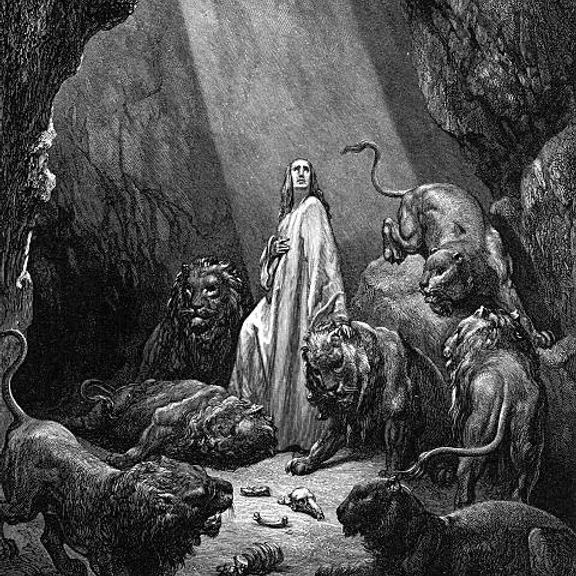
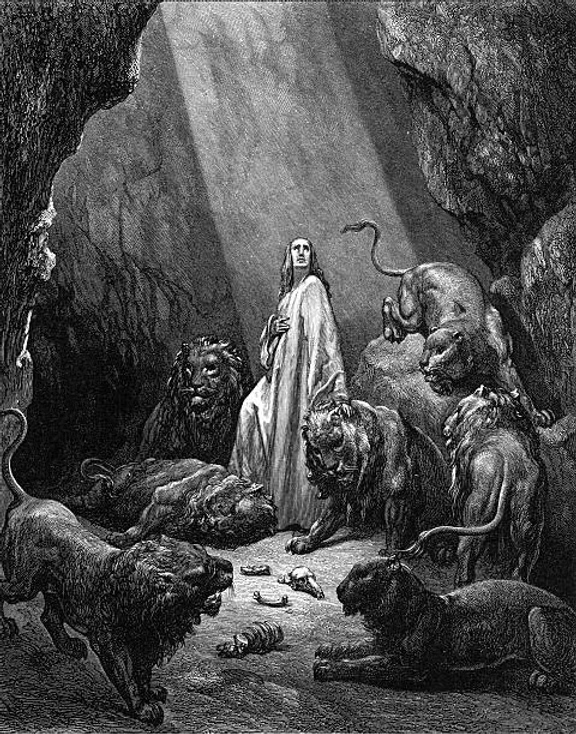
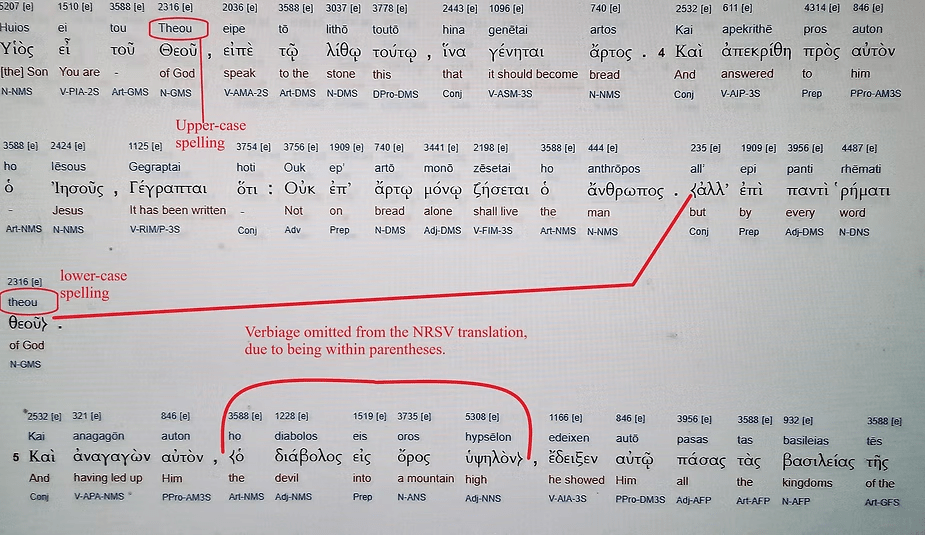
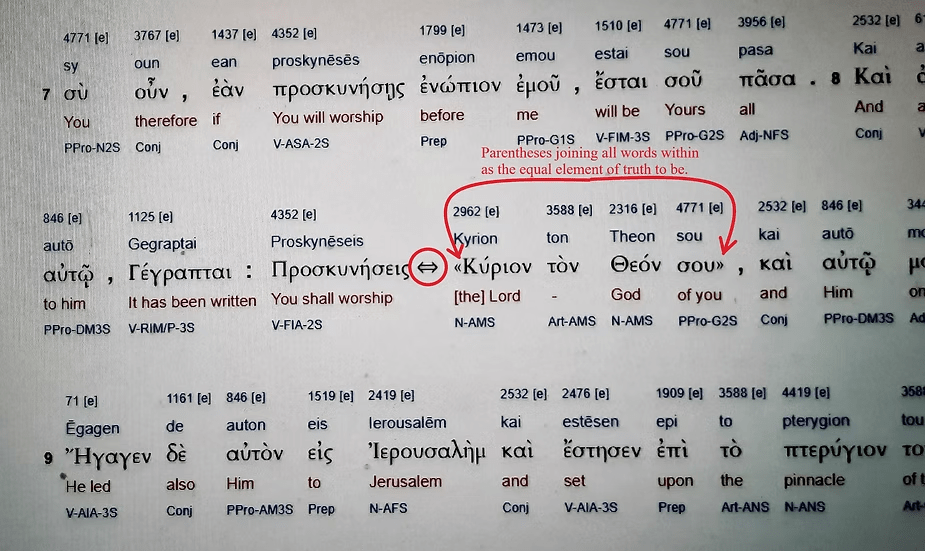


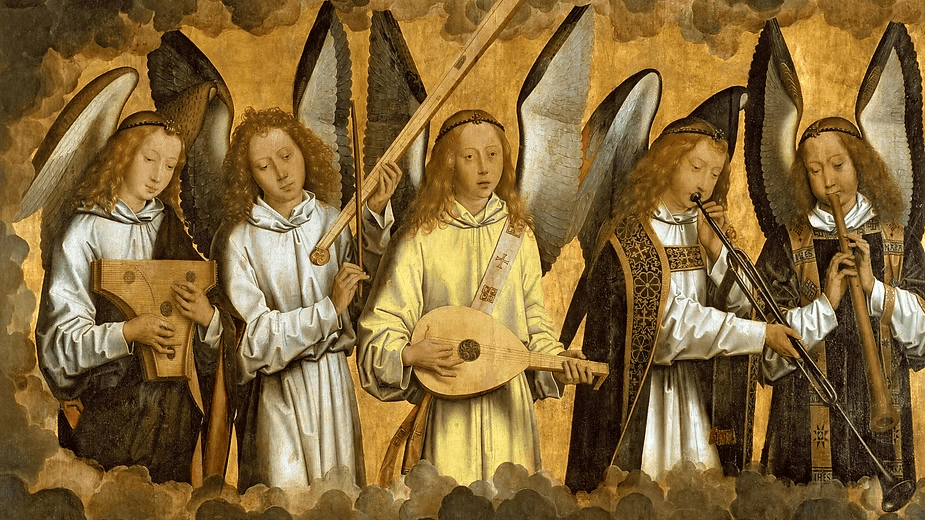




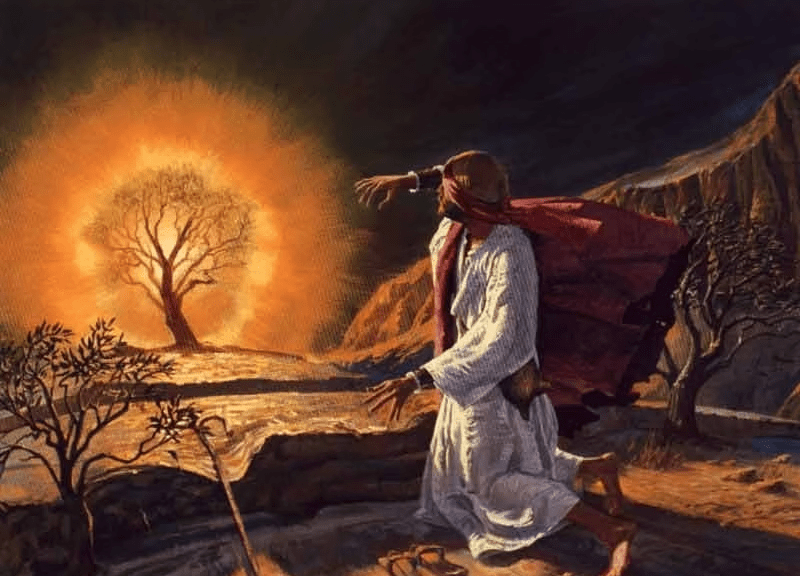
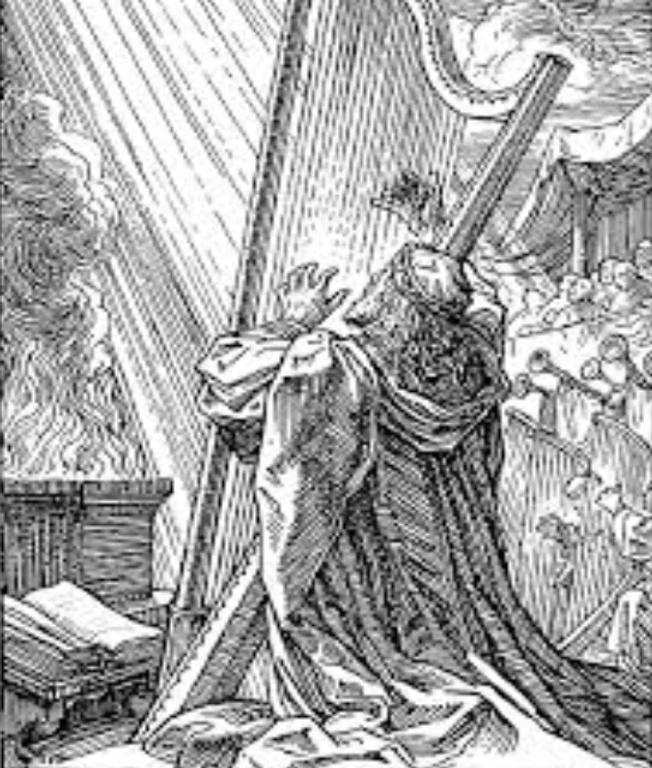
 Explaining the Readings