21 I will give thanks to you, for you answered me *
and have become my salvation.
22 The same stone which the builders rejected *
has become the chief cornerstone.
23 This is Yahweh doing, *
and it is marvelous in our eyes.
24 On this day Yahweh has acted; *
we will rejoice and be glad in it.
25 Hosannah, Yahweh, hosannah! *
Yahweh, send us now success.
26 Blessed is he who comes in the name of Yahweh; *
we bless you from the house of Yahweh.
27 el is Yahweh; he has shined upon us; *
form a procession with branches up to the horns of the altar.
28 “You are eli, and I will thank you; *
you are my elohay, and I will exalt you.”
29 Give thanks to Yahweh, for he is good; *
his mercy endures forever.
——————–
On March 31, 2021 I posted an interpretation of this Psalm, which is read each Palm Sunday, in Years A, B, and C. I recommend reading that analysis by following this link here. I am reposting this with adjustments in the NRSV text, which I was not making in my earlier commentary. You will note that there are ten places where David wrote the proper name “Yahweh,” only to have some modern English translation service change that proper name to a generic “Lord.” Also, in verse nineteen, the word written by David is “Yah,” which is an abbreviated form of “Yahweh.” I have restored that written by David in bold type.
In verse twenty-seven is a use of the Hebrew word “el,” which is misleading to translate it as a capitalized “God.” It and the two forms of “el” that are “eli” and “elohay” (both translated as “my God”) are misleading in the way they were translated; so, I have restored the Hebrew text [transliterations] in italics. I will explain my reasons for this soon.
This song of praise is closely associated with the entrance of Jesus into Jerusalem, prior to his final Passover festival there. The whole of the theatrics of that “triumphal entrance” is anything but. In Zechariah’s prophecy, where verse nine says, “your king is coming to you , righteous and having salvation he , lowly and riding on a donkey , and upon a colt foal of a donkey .” That prophecy, which Jesus fulfilled, says everyone who thinks Yahweh is going to send some human hero to become another temporal David reborn is a fool. The prophecy say celebrate the fact there will never be anyone other than Jesus. Thus, that needs to be understood in this song of David.
In verses nineteen and twenty, David wrote of “the gates of righteousness” and “the gate of Yahweh.” This needs to be merged with Zechariah’s prophecy of “the king is coming to you.” Prior to Zechariah writing that, he called to the “daughters of Zion [meaning Dryness]” and the “daughters of Jerusalem [meaning “Teaching Peace],” with “daughters” needing to be seen as every soul living in a body of flesh. A body of flesh is a “daughter,” who is then the bridesmaid of Yahweh. The ”gate” is then the marriage pathway to a soul, penetrated by the divine. The “king” is then the new Lord over one’s flesh, which is the “righteousness” of “Yahweh.” The symbolism of Jesus riding a donkey colt into Jerusalem, through the Dung Gate, says one is sacrificing one’s soul to a most divine possession. Nothing in the material world will catch one’s eye, as all heads are bowed in total submission to Yahweh, because salvation is one’s only prayer being answered in holy matrimony.
In the past several months (or so), I have come to an entirely new view of the meaning of verse twenty-two, which sings, “The same stone which the builders rejected has become the chief cornerstone.” When writing about the stone that sealed the tomb where Jesus’ body had been laid (the tomb of Joseph of Arimathea), it dawned on me how such a round stone was symbolic of how being reborn as Jesus places a movable stone, which allows a soul to escape a sealed in death, gaining eternal life. It makes no logical sense that any builder of merit would reject a solidly fashioned cube of stone as a cornerstone for a permanent building. However, they would reject a round stone all day long; and, that means one is not building materially (where mortals have no permanence), but spiritually.
The death one avoid by the round stone as one’s cornerstone is that of being a soul born into mortal flesh. Flesh is “mortal” because it will die. When the flesh dies, then the soul is released for Judgment. To be found sealed in a tomb with a squared stone sealing the entrance-exit, then death means coming back again into a body of flesh that is bound to die (repeated death). Only when one’s soul has been married to Yahweh and merged with the soul of His Son can one die of self, without physical dying. One becomes a changed person, as a Saint.
Verses twenty-three through twenty-six sing repeatedly (six times) about “Yahweh.” When we hear the song say, “This is Yahweh’s doing,” that is creating a Son that will be the stone rolled away after death, so one resurrects spiritual as Jesus did. We become Jesus because of Yahweh. This is divine marriage; so, when verse twenty-six sings, “Blessed is he who comes in the name of Yahweh,” the ”name of Yahweh” says one’s soul has taken on His name in marriage AND one has been born in the name of Jesus, as a Christ.
In verse twenty-seven, where David sang, “form a procession with branches up to the horns of the altar,” this sings of a wedding “procession.” The “horns of the altar” are features of the Temple (Tabernacle for David) altar of sacrifice. Thus, marriage to Yahweh means the sacrifice of one’s soul, so it no longer claims control over one’s born flesh. Self goes up in smoke, which is a delight to Yahweh.
When verses twenty-seven and twenty-eight then mention “el” and then “eli” and “elohay,” this sings of the ministry in the name of Jesus that comes. An “el” is an eternal presence, like an angel is. A soul is an eternal entity, but it is not an “el,” per se. An “el” is a spiritual possession within one’s soul-flesh. This can be a demonic spirit that possesses a soul, making it do evil deeds. However, when “el is Yahweh” is stated, that becomes a statement of a divine possession, by Yahweh’s Spirit. That then leads to David singing “my god” (“eli” and “elohay”), these come in quotation marks, as said to a soul by Yahweh. That means Yahweh has heard one’s cries of “thanks” and told those souls “You are mine, as Yahweh elohim.”
As a Psalm that will be sung outside a church, in a precession into a nave for the reading of so much scripture that none of it can be preached (in a twelve minute timeframe), that means the test of Lent is to do your own contemplation about what scripture means to your own soul. Everything in Scripture is valuable insight towards deep faith. Going to a church to have priests do nothing that teaches the meaning of the Word says the blind are leading the blind to a huge pit. One must have more than twelve minutes to devote to Yahweh a week; or, one must plan on repeating life all over again (if lucky).
This song of Isaiah is read on every Passion Sunday (a.k.a. Palm Sunday), in Years A, B, and C.
September 2018 can be searched here. This is what my observations were, when this reading was part of the Proper 19 readings, for the seventeenth Sunday after Pentecost lessons.
March 2021 can also be searched here. This was what I wrote when this was part of the Passion Sunday Year B service.
August 2021 also in here to be searched. This was when the same reading is presented on the sixteenth Sunday after Pentecost [Proper 19], during Year B.
In my last commentary, I adjusted the text to show “adonay,” “wadonay,” and “Yahweh.” I pointed out how that does not mean “the Lord God.” The word “adon” is the singular number Hebrew word that says “lord” (not capitalized), with the two variations of “adonay” being the plural version, clearly saying “lords.” To then pair that with the fools who translate Hebrew into paraphrased English (besides their changing a plural word into the singular and capitalizing that as a singular “Lord”), they all of a sudden stop translating “Yahweh” as “the Lord,” making Him be a “God.” Of course, they could explain that by saying, “Oh! Our paraphrase switched the order of the words written, so we translated “Yahweh” as “the Lord,” making “adonay” become “God.”’ Still, that ignores the plural number and their lie needing to be translated as “the Lord of lords.” That would actually be more in line with the true meaning of “adonay.”
In the time that has passed since August of 2021 (six months), I have come to realize more clearly that “adonay” is similar to the Hebrew word “elohim,” but with a slightly higher connotation. One of the “elohim” (an “el”) is an ‘angel in the flesh,’ which means a soul in a body of flesh has become married to Yahweh, with His Son’s soul (that of Adam-Jesus) resurrected within that soul hosting flesh, becoming divinely possessed. That divine possession is an “elohim” (one being an “el”). One has to reach that state of existence to become a Saint, one in the name of Jesus, as a Christ. That is the basic statement of divine possession. However, becoming one of the “adonay” (or “adonai,” as an “adon”) is the purpose for Yahweh divinely possessing a soul animating flesh; and, that is to teach.
In verse four, this aspect of teaching (as a Saint) is explained as Isaiah singing, “adonay Yahweh has given me the tongue of a teacher, that I may know how to sustain the weary with a word. Morning by morning he wakens — wakens my ear to listen as those who are taught.” This becomes why the disciples called Jesus their “Teacher, Master, or Lord.” In John 13:13 (when Jesus had washed the feet of his disciples at the Seder meal in the upper room), he said, “you call me This Teacher kai this Lord , kai honorably you say , I am indeed .” This is the truth spoken by Jesus, because his soul in his flesh was not only as a Yahweh elohim (the Son of Yahweh reborn – Adam’s soul returning as one whose name says, “Yah[weh] Saves”), but also as the epitome of an “adon” or “lord,” as a “teacher” of those who sought the truth of Yahweh. Isaiah was another soul in human flesh that was an “elohim,” who was sent out to others, for the purpose of being “a teacher” of Yahweh’s truth.
Verse four states that clearly.
In the rest of these verses, which I have commented on prior (multiple times), it is important to see that an “adonay Yahweh” is a divine “teacher” of truth, where he listens to that told to his possessing soul (Adam-Jesus) by Yahweh [as Jesus said, “For I myself have not spoken, but this having sent me Father the same, me a commandment gave what I should say kai what I should speak.” – (John 12:49)]. These verses from Isaiah 50 reflect that same obedience, as a soul divinely possessed by the Father – Yahweh. Thus, it is important to see how the persecution of others, who direct their anger at anyone who acts righteously, to force them to stop pretending to be ‘holier than thus,’ because they do not believe such righteousness is truly possible. It is not only possible; but Isaiah (and Jesus too) sang how he could withstand the punishment, because he knew his ego had already been sacrificed for a much higher cause. Isaiah (and Jesus too) knew that punishment resulting in death would only release an “elohim” soul to eternal life, having already died as a lord over one’s flesh.
As an Old Testament song sung inside a nave, prior to the reciting of about two chapters of Luke (in Year C), no priest will have the balls – nor any parishioners have the guts – to spend a whole day explaining and listening to explanations (verse by verse), about everything that has been read aloud on what is called “Passion Sunday.” That is a reflection that no one is an “elohim,” no one is a Saint, no one is an “adon” of Yahweh, and (certainly) no one is Jesus reborn, as a Christ. It says Christianity has been reduced to some form of entertainment that is all about the pageantry of show, with no one ever able to become a teacher like Isaiah or Jesus. The only thing anyone gets out of this day is a blade of palm branch … and that is then given back to the church, so they can form them into crosses that will be passed out at another time, before collecting those to be burned for ashes to be added to oil (used on Ash Wednesday – more pageantry).
Aside Note:
In case this is difficult to grasp, it really is not. A soul in a body of flesh is the “lord” (“adon“) of its flesh … the flesh into which Yahweh breathed a soul at birth. As a child that grows, the fleshy brain (the seat of one’s “lord” or “adon“) is taught many things: from the environment, from parents, from friends, and from school teachers. A fleshy brain absorbs knowledge like a sponge (with not all knowledge the truth). When puberty kicks in, the body of flesh (extensions of the fleshy brain) begins to scream out, “Hey! What about me!” The body of flesh slowly becomes the “lord” over the brain, so the brain begins to justify the desires of the body of flesh. This is regardless of what one has been taught to guard against. Then, it takes an innocent soul and enslaves it to follow the whims of the flesh, which is what religion says are sins. While sins are natural, some become addictions. External things of the world … like drugs, sex, money … become influences (gods or elohim) that take total control over a soul and its body of flesh, making it not only sin, but do heinous acts that are criminal. In the Bible are stories of those demonically possessed; and, such demonic possessions are the presence of an evil soul within one’s birth soul. This becomes the “lord” or “adon” one was naturally born with being enslaved by a Satanic or Devilish soul that joins with one’s soul; and, that demonic presence becomes one’s “Lord.” This capitalized “Lord” is why a true Christian does not want to refer to Yahweh as something so general and non-specific. To have evil demons cast out, one needs to seek Yahweh’s help. That leads to an encounter with a Saint, who is a normal soul possessed by Yahweh’s Spirit, reborn with Jesus as his “Lord.” That presence initiates the Spirit, sent by Yahweh’s Son’s soul to enter one’s natural soul, casting out all bad demons. That is Baptism by the Spirit, which cleanses a natural soul, in the marriage of a soul to the Yahweh Spirit. The presence of Jesus’ soul within one’s soul (a good possession of spirit – the resurrection of Jesus within) makes his soul become one’s “Lord” or “Adon.” Jesus rules as “Lord” over one’s natural soul and its flesh. Rule over the natural soul ensures that soul a return to be one with Yahweh, when it leaves its body of flesh. If you would like to read more on this subject, look up Eudaimonia. The root word there is “daímōn,” which is where the word “demon” comes. It actually refers to a “spirit,” which is like a “soul.” One needs to realize there are bad spirits and there are good spirits. The capitalized “Spirit” (“Pneuma“) is the best Spirit to be possessed by. It is the challenge of a soul’s presence in matter. The soul must find the way back to Yahweh. Matter becomes the tomb, as well as the “Lord” to overcome. The antonym is “Disdemona” (from Greek “δυσ + δαίμων), which means “ill-fated, unfortunate.” Any spirit that takes over a body of flesh, enslaving a natural soul to serve it, is a “Lord.” A natural soul cannot defeat any “Lord.” Thus, a soul must surrender itself to Yahweh in divine union, which means His Son Jesus (“Yahweh Saves”) is one’s “Lord,” who defeats all others “gods” or “elohim.”
[5] Let the same mind be in you that was in Christ Jesus,
[6] who, though he was in the form of God,
did not regard equality with God
[7] as something to be exploited,
but emptied himself,
taking the form of a slave,
being born in human likeness.
[8] And being found in human form,
he humbled himself
and became obedient to the point of death–
even death on a cross.
[9] Therefore God also highly exalted him
and gave him the name
that is above every name,
[10] so that at the name of Jesus
every knee should bend,
in heaven and on earth and under the earth,
[11] and every tongue should confess
that Jesus Christ is Lord,
to the glory of God the Father.
——————–
This is the Epistle selection to be read aloud, along with two thousand, five hundred sixty three other words of scripture (Old Testament, Psalm and Gospel), on the day called “Passion Sunday.” This Word Count total does not include the “Palm Sunday” readings done outside a nave (a Gospel and processionary Psalm), while holding palm spears. Due to the excessive amount of readings collected for one day [Moses warned the children of Yahweh not to collect more manna than could be consumed in one day [unless it was a Friday, when two days’ worth could be gathered], it will turn to maggots and mush, being all pomp and circumstance – a ‘photo op.’ However, it is entertaining and the people do love a show. They come out from under their rocks for Sundays when they do not have to listen to some sinner pretend to know a thing or two about righteousness (at least the clothes the righteous wear).
In March 2021 I posted a commentary on Philippians 2 that can be searched here. I will let that stand for what I still believe should be found in these verses. However, as divine Scripture is so marvelous that it always has a way of shining new truths unseen before, I will add a couple of nuggets of insight for this posting (maybe new, maybe not, as it is hard to remember thirty minutes ago, much less three years back in time).
Do I just go home after a service with no sermon and do nothing? Or, do I take some responsibility to do something on my own, as I go forward?
The first verse of this selection from Paul’s letter to the true Christians he helped usher into that state of being says what must be grasped firmly, in order to have a true clue about what Paul meant … in any of his letters sent to true Christians everywhere [those able to read his words]. The Greek words he wrote are these: “Touto phroneite en hymin ho kai en Christō Iēsou”. In that are three capitalized words; and, all capitalized word in divine Greek Scripture bear an elevated state of meaning, relative to Yahweh. Then, there is one use of the word “kai,” which is a marker word that does not get read as “and,” but as a direction to look for importance to follow.
The capitalized word “Touto” takes it to an elevated state that is beyond a simple “this.” It is a word that points back to that which had just been said (written in verse four, but unread here), which the NRSV shows saying: “Let each of you look not to your own interests, but to the interests of others.” That means “This” is referring to self-sacrifice, such that in a Spiritual marriage of one’s soul to Yahweh, it is not simply (“this”) for one’s benefit alone. It is, instead (“This”) to be “to the interest of others,” so “you have understanding, think, judge, observe, and care for” [the meaning of “phroneite”]. “This” is not something natural to a normal human being of the selfish world, which takes great delight in “looking to your own self-interests.” As such, “This” is divinely elevated to have come “within your souls this,” which is read from the Greek words “en hymin ho.” There, “hymin” is normally translated simply as “your,” as the possessive pronoun written in the second-person plural; but when “This” is relative to Yahweh’s presence, which only deals with souls, “your” becomes “yourselves,” with a “self” understood to be a “soul.” Therefore, “This” divine ability to not be selfish means “your souls” have achieved “this,” when Yahweh’s Spirit is “within” one [not far, far away, externally, seeing heaven as in outer space].
Following the use of “kai,” Paul then explained what “within” means [from “en”]. He said “This” leading to “this” [from “Touto” and “ho”] is “within” [“en”] because one’s soul has been “Anointed” by Yahweh’s Spirit [the truth of “Christō”]. “This” is a most divine presence that comes upon one’s soul after that soul has submitted to Yahweh in holy union. The presence of Yahweh – becoming a ”Christ” – means all the selfishness of a sinful world has been washed away from one’s soul, so one’s filthy ass soul has become squeaky clean. That means the onset of a “Christ” [Yahweh’s “Anointment”] clears the way for one’s weak ass soul to be joined with His Son’s soul – two souls in one body of flesh. Once “Jesus” is resurrected “within” one’s soul, then his divine soul takes the place of one’s weak ass soul [the lord over its flesh, until the flesh has a revolt of lusts and turns a soul into its earthly slave] into flesh led by a most holy “Lord” [as seen in verse eleven].
The rest of this selection from Paul’s letter (presented as a song of praise) says oneself – one’s soul – steps to the rear and lets Jesus take over. The meaning of the name “Jesus” is “Yahweh Saves.” Without Jesus becoming one’s “Lord” of the flesh, one will always be sinning, because one’s soul is so weak and powerless to tell the flesh, “No!” The flesh bows down to the soul of Jesus, just as demon spirits would flee the bodies they possessed, when Jesus came near (during his physical ministry one earth). When one has been reborn as Jesus, then one can have the same effect on others; as long as one realizes that has nothing to do with glorifying one’s sorry ass. “This” divine possession is only so Yahweh can send His Son into a body of flesh to minister to others again.
As a selected Epistle reading on Passion Sunday, when nothing will ever be said about these important verses on that day. Fortunately, these same verses (within Philippians 2:1-13) will be read on the Proper 21 Sunday, in the Year A. So, at least there is a chance someone might pontificate some social politics and condemn his or her soul by using the name “Jesus Christ” as why social politics is so important. That is more maggot mush; so, please do not eat that crap. It is vital that one’s soul understand what Paul wrote. He wrote the same things over and over again, all truth, all meant for your soul to realize. The realization comes from taking more than one Sunday every year in devotion to Yahweh and becoming His Son reborn (regardless of what sex organ your body of flesh has).
Side Note: I had an elderly gentleman in a church Bible Studies class once ask the question, “Certainly nobody here thinks he or she is Jesus, do they?” This elderly man was a regular contributor to that church; so, being Jesus was never to be (in his mind). Going “to heaven” was all about sending money in regularly to that church and having a spot claimed in a pew, with pillows and tissues marking that spot as one’s.
The truth of this path to Yahweh is it is wrong. Upon the Judgment that comes from death, when a soul stands naked, colorless, moneyless, and wearing the face of self, not Jesus as one’s spiritual Lord, the cold realization is just how wrong it is to think “Certainly nobody here can be Jesus.” This is because, before Yahweh, He will say, “Nice try. The answer to your question is this: Every soul to be saved must be Jesus reborn. Now, this next life I will take away all your money, so you cannot buy pillows and boxes of tissues; so, you will know you must come back as My Son reborn. Sound good to you?”
This is when all shivering souls respond, “You know, Yahweh.”
Take this and realize the truth:
“They will come with weeping; they will pray as I bring them back. I will lead them beside streams of water on a level path where they will not stumble, because I am Israel’s father, and Ephraim is my firstborn son.” (Jeremiah 31:9, NIV)
The name “Ephraim” means: “Two-fold Increase; Doubly Fruitful.”
Ephraim was a son of Joseph. He was a twin born with Manasseh, where Manasseh was born first. Ephraim was blessed by Joseph, not Manasseh, in the same way Jacob was the second-born twin with Esau, whom Isaac blessed. For Joseph to name his son “Doubly Fruitful,” he realized that when a second baby popped out of Asenath’s womb. Therefore, for Yahweh to speak through Jeremiah and say, “I am Israel’s father, and Two-fold Increase is my firstborn son, it means this:
Adam was the firstborn Son of Yahweh. Adam is the soul that was returned by Yahweh into the baby Gabriel announced to Mary, whom he told, “You shall name the baby Jesus. “Jesus” means “YAH Saves” or “YAH Will Save.” This says the soul of Adam (called Yahweh elohim in Genesis 2) is the firstborn of Yahweh, who is the father of Israel.
The name “Israel” means “He Retains God” or “God Is Upright.” “Israel” was the name bestowed upon Jacob, after his sorry ass wrestled with his sinner soul all night long, finally telling his sinner soul, “Get behind me Satan!” For winning that wrestling match, Jacob became “Israel,” as his “Doubly Fruitful” name – his Spiritual name – for having been reborn with the soul of Yahweh’s “firstborn son” – Adam.
To be “Two-fold Increase,” one’s sinner soul must be washed pure by the Anointment of Yahweh (made “Christos“), at which time one’s once sinner soul is joined by the soul of Adam, who now goes by the name “Jesus,” because “YAH Has Saved” a soul, as being given a Lord within, who will not allow a cleansed soul to every become dirty again. This means one lives righteously or “Upright As God.”
This is then divine possession, or a “guiding spirit of good,” called eudaimonia by the Greeks, which means the call of lost souls it to become Jesus resurrected within one’s flesh, as the Son of Yahweh reborn. Anything short of that is not a soul “Saved by YAH.” (Not “Jesus”).
Peter began to speak to Cornelius and the other Gentiles: “I truly understand that God shows no partiality, but in every nation anyone who fears him and does what is right is acceptable to him. You know the message he sent to the people of Israel, preaching peace by Jesus Christ–he is Lord of all. That message spread throughout Judea, beginning in Galilee after the baptism that John announced: how God anointed Jesus of Nazareth with the Holy Spirit and with power; how he went about doing good and healing all who were oppressed by the devil, for God was with him. We are witnesses to all that he did both in Judea and in Jerusalem. They put him to death by hanging him on a tree; but God raised him on the third day and allowed him to appear, not to all the people but to us who were chosen by God as witnesses, and who ate and drank with him after he rose from the dead. He commanded us to preach to the people and to testify that he is the one ordained by God as judge of the living and the dead. All the prophets testify about him that everyone who believes in him receives forgiveness of sins through his name.”
——————–
This is a reading selection that appears each year on Easter Day (Years A, B, and C). It can assume the Old Testament position (as a “First Lesson”), or it can take the Epistle position (as a “New Testament” classification). As this analysis is relative to Easter Day, Year C, the Old Testament selection would be from Isaiah 65:17-25, where one verse sings, “The wolf and the lamb shall feed together, the lion shall eat straw like the ox; but the serpent– its food shall be dust!” The Epistle (if not this reading from Acts 10) will come from 1 Corinthians 15:19-26, which includes a verse that says, “If for this life only we have hoped in Christ, we are of all people most to be pitied.” Both of these readings (where only one will be read) are unique to Easter Day, Year C. One of them will accompany a singing of Psalm 118 (which is another choice for all three years on Easter Day), which sings, “I will give thanks to you, for you answered me and have become my salvation.” All will be read along with a Gospel story of the day Jesus is found risen, coming either from John 20:1-18 (possible to be chosen for reading all three years) or Luke 24:1-12 (only possible on Easter Day, Year C).
In 2018, I published a short analysis of this reading. It can be found by clicking on this link. Just last year, I published a more in-depth analysis, which can be read by clicking on this link. I am sure either would be good reads for today, as nothing has changed in the text written, which will be read aloud on Easter Sunday. Today I will take a simpler approach.
There are ten verses in this mandatory Easter Day reading selection. In my observations posted in 2021, I delved into the Greek text and made explanations that brought out the depth of meaning that is missed by paraphrasing into English. When I go to such depth of explanation, it becomes difficult for a casual reader to follow what I write. Once confused, a casual reader will click off the article and go on his or her merry way. A casual reader of Scripture is going down the right path (versus not doing any deeper investigation at all); but that rejection becomes like Jesus is shown to have said when he observed a Pharisee and a Publican in the Temple, where the Pharisee praised God for making him wealthy and important, while the Publican beat his chest and silently prayed for God to forgive him … but he just did not know how to stop sinning. When Jesus said the Publican was closer to the kingdom of God, many Christians are taught: “Begging God for forgiveness is the way to go.” However, always begging God for forgiveness means always continuing to sin; and, realizing that makes that lesson actually be as if Jesus said, “Trying to investigate Scripture (but giving up in frustration) is the way to go … BUT the way to go ain’t there yet.”
When I first began to understand how to read divine scripture, it was not by reading the text of the Holy Bible. It was by reading the quatrains of Nostradamus, followed by then learning to read two letters he wrote that explained his poems. Nostradamus was a prophet, in the same mold as this reading points out both Peter and Cornelius were. There are no known writings by Cornelius, like there are by Peter; but if there were, more people would jump on the boat that would plan and plot to sink Cornelius as some shyster who was led by demon spirits to write. This would be true if writings by Cornelius were discovered today, after so many Christians had been raised to only recognize the ones they had been taught to know. It is always easier to reject the new, without doing anything to test the new for proof of truth.
The proof is not in the man or woman writing, but in the way he or she writes. Nostradamus (I was divinely led to realize) was just like Peter explained in this reading. Nostradamus was a soul married to Yahweh, who had been given Jesus’ soul to be resurrected within his soul. The Nostradamus I was led to know makes every so-called Christian I have met (since I first began speaking the name “Nostradamus”) reveal himself or herself to be a vile representation of demonic possession … far from being Anointed by Yahweh as His Son reborn (the truth of being “Christian”). Nostradamus was a Saint in that manner. He then wrote what Yahweh told the Son within Nostradamus to write; and, Nostradamus did that, not once worrying about what people would think about him in the Twenty-first Century.
Because I was led to understand the writings of Nostradamus, I found the same syntactic systems (divine syntax) apply to all holy writings. The problem I had when I tried to explain to people what Nostradamus meant in his writings was people were easily confused when I went word by word, explaining how improper paraphrases had to be changed to a divine meaning. All that explanation led me to always be interrupted, with the impatient listener commanding me: “Tell me the simple version.” The simple version always led to people then asking, “How did you get that from that?!?!” To return to explaining what each word meant people would be giving up in frustration and walking away. The same thing happens when I explain the Biblical writings.
Because I have already written about this reading, somewhat in-depth, I will now simply tell you what each verse means, in a paraphrased way that is based on the truth of what was actually written. You can ask, “How did I get that from that?” and then click on a link to the 2021 interpretation. Or, you can walk away, closer to the kingdom of heaven, but still with no cigar.
Verse thirty-four:
Peter did not speak as someone who was very intelligent; as one who had figured some things out. None of the Apostles-Saints spoke for themselves. All were reborn as Jesus (his soul resurrected within many souls of followers, each individually), so all spoke as Jesus had in the flesh, saying, “I speak for the Father, as the Father is within me and I within the Father.” Peter admitted that without this divine presence of Jesus within him, he would know nothing of value. Based on what Jesus allowed Peter to know (at that point) was God (Yahweh) does not show favor or disfavor to anyone, neither because they are born of a specific religion (Judaism or Christianity) nor not so blood worthy. Therefore, Peter had been divinely led to walk away from his Judaic beliefs and meet with a Roman (Gentile) centurion … welcoming that encounter in Cornelius’ home.
Verse thirty-five
Peter said that all over the world (where Judaism, thus Christianity had not yet spread) anyone who feared losing his or her own soul and did the works of faith were good. Doing good deeds, knowing a Supreme entity was watching one’s actions in life, then impressed Yahweh (whether they knew Him by name or not). Thus, all acts of righteousness received favor from Yahweh. This is the same as James wrote: “Faith without works is dead” – an invaluable lesson to those whose claim to God’ assumed favor is in human bloodline or having been told as a child they are saved. Salvation demands the works of faith.
Verse thirty-six
Here, Peter referred to “the sons of Israel.” Peter lived in Galilee, but received divine insight that led him to meet Cornelius, while Peter was in Joppa (now called Jaffa). Cornelius was in Caesarea, which was about fifty-seven kilometers north of Jaffa, with both on the Mediterranean coast. This means Peter was in Judea and Cornelius was in Samaria, neither of which was in “Israel.” This means “the sons of Israel” is a statement of Apostles and Saints, who were all brothers (men and women), from having all been reborn as Jesus (a masculine spirit-soul – the Son), thereby made to act righteously, becoming those “Who Retained God” (as Yahweh elohim – the soul of Jesus within them). The name “Israel” means “He Retains God” or “God Is Upright.” With that title given to all souls in flesh (“the sons of Israel”) – not meaning Jews – Peter said the presence of Yahweh’s Son (el – “God”) within led all to announce the Good News (the “Gospel”), which was the message that eternal “peace” comes by being reborn as “Jesus,” from Yahweh’s “Anointment (being a “Christ”). Eternal “peace” meant the assurance of Salvation for one’s soul, in exchange for that soul’s total submission to Yahweh’s Spirit and surrendering that soul’s control over his or her body of flesh, so Jesus could lead him or her to righteousness. With that transformation made, then Jesus becomes the “Lord” over each and every (all) Apostle-Saint. As “Lord,” Jesus was the new soul controlling one’s body of flesh, to make it act as Yahweh Willed.
Verse thirty-seven
Peter then spoke assuredly of what all like souls knew, knowing all souls possessed by Yahweh (in divine marriage to their souls) and His Son Jesus (through his soul being reborn within, as the Son born through His wife-souls) were the living proof of what had first been preached in Judea, having begun in Galilee, by John the Baptist. That preaching was, “I baptize you with water, but there will be one who comes after me that baptizes with a Spirit Holy.” The presence of the Spirit within, from a divine union between souls and Yahweh, then brought forth the most holy soul of Jesus, with that presence being the fulfillment of the promise of “baptism by the Spirit Holy.” John preached that message, because he knew the “one after” was already within his being, having Spiritually Baptized John’s soul. So, John spoke as a witness to this personal experience. Peter and Cornelius (and all the Saints at that time) were proof that what John said, as they too had come to be so Baptized Spiritually.
Verse thirty-eight
Here, Peter turns the focus on Jesus, which is a name that means “Yah[weh] Will Save” or “Yah[weh] Saves.” Jesus was one who Peter said clearly was baptized by God, not John. John was baptized by God, and led to prophesy in the same way Peter and Cornelius and all Saints do. They did so once their souls had been washed clean of sins by divine union with Yahweh. His Spirit makes all souls Yahweh divinely possesses become “Holy.” Jesus was born baptized by Yahweh’s Spirit, thus he was “Holy” at birth. That state of being allowed Jesus to have the “power” of that Spirit at his disposal, by the Will of the Father. That Will meant giving Jesus the power to dispel the illness cast over souls in bodies of flesh, which was demonic possession, where the soul of the devil had possessed many, making them spiritually ill. Jesus did not do any miracles alone, as some god on earth. Jesus did the Will of Yahweh, as His instrument of spiritual healing, placed in the flesh of a human being. A body of flesh possessed by the soul of Jesus (the Yahweh elohim created in Adam) is always (and only) the extension of Yahweh’s hand on earth.
Verse thirty-nine
Here, Peter made a most important statement about Apostles and Saints being “witnesses” to what Jesus did, does and will do. Peter was a disciple of Jesus of Nazareth and walked the same dusty roads that Jesus walked. It is most likely that Cornelius was the centurion who came to Jesus about a sick Jewish slave and then called Jesus righteous as his body hung dead on the cross. Still, none of that was “witnessing.” To be a “witness” one must have personal experience of Jesus doing miracles. Watching that be done by an external Jesus (when he lived in his own flesh) is the equivalent of hearsay witnessing; and, that is not what Peter meant. Peter was saying he and the other Apostle-Saints “witnessed” Jesus perform miracles through their own flesh (not as Jesus of Nazareth, but as Jesus reborn in flesh). Their souls watched over the soul of Jesus’ shoulder, as he performed miracles in their flesh, which they watched as “witnesses.” While Jesus did plenty of miracles when he was alive, Peter pointed out that Jesus was crucified to death; so, Peter was “witnessing” Jesus still doing miracles (beyond death), but in the flesh of others, in whom Jesus had been resurrected.
Verse forty
In this, Peter said the soul of Jesus was raised up, where “the third day” needs to be understood as meaning more than the linear timeframe of seventy-two hours having been dead. While that is a true timing element, the “third” must be seen as how the soul of Jesus was “raised up” and placed into other souls. When a soul is one, its body of flesh is two, then the presence of the soul of Jesus is a “third” presence. That “third” is the “Spirit,” connecting the Father (Yahweh) and the “Son” (a soul in flesh reborn). Therefore, that “third” reflects upon the Trinity, which means Divine Possession. The element of “day” is then the light of truth and the awake state of eternal salvation, where there is no night (the symbol of death) to worry about. Thus, when Peter said “God made him manifest to be born” (the deeper meaning of the Greek word “genesthai”), that is Peter telling that Jesus was raised up by God to be reborn in Apostles and Saints. His “appearance” was known only to those souls who “witnessed” this rebirth.
Verse forty-one
The element of selectivity is then stated in this verse, where Peter said Jesus did not “manifest” (as “reborn within”) to everyone. Jesus was “witnessed” only by those souls in flesh that had married Yahweh and come into union with His Spirit, thereby becoming clean of all past sins, allowing for that resurrection to take place in their souls-bodies. When Peter said those who were reborn as Jesus “had been chosen beforehand” (“prokecheirotonēmenois”) “by God,” one must remember Peter’s earlier statement about God not showing favor to anyone. When that truth is factored in, “having been chosen beforehand” becomes a statement of a prior ‘engagement’ with Yahweh. A marriage proposal is made to divinely unite one’s soul with Yahweh’s Spirit; but that ‘engagement’ demands the works of faith that prove one’s commitment. Commitment is relative to the marriage contract – the Covenant – which is non-negotiable. Thus, well prior to Jesus being reborn within a soul, that soul has to prove to Yahweh its total subjection, before the marriage vows can be exchanged and all one’s past debts are erased by one’s new Holy Husband (Yahweh). That makes the element of “choosing” be a two-way street, where Peter and Cornelius had chosen to serve Yahweh, before they could ever entertain the aspect of being reborn as the Son of Yahweh. Therefore, for Peter to talk about eating and drinking with Jesus, after he had risen from death, that means the soul of Jesus entered all of his followers, transforming them into him reborn; so, everything they did (including eating and drinking) they did with Jesus’s soul being one with theirs. Because all souls alone in their bodies of flesh are mortal, they then are born of death; so, having the soul of Jesus be resurrected within that state of death means their souls likewise have been raised from death.
Verse forty-two
Here, Peter said that the presence of Jesus within, having become the Lord of one’s soul and flesh, does not simply offer suggestions and recommendations, as would reading a book do. Jesus within their souls then has him command their soul-bodies he divinely possesses to proclaim this truth of salvation – the only truth of salvation – as personal witnesses (those qualified to testify to the truth). They are to tell others that Jesus exists within them, on behalf of Yahweh – His gift to humanity (not an individual soul-body) – so others will know death means judgment by God. Only those possessed by Jesus (married to Yahweh’s Spirit) will be deemed able to be “living,” as souls eternally saved. All others (souls unmarried to the Spirit and not reborn as Jesus) will be considered to be “dead.” To be “dead” means the best a soul can hope for (when death eventually does come) is reincarnation. That would be when a soul is given another eighty years (estimated animation in a body of flesh) to choose to serve Yahweh (not self).
Verse forty-three
When Peter said, “All the prophets testify about him,” this means more that Jesus was foretold in Jewish Scripture (the Law, the Psalms, and the Prophets). All of the known “prophets” were able to “testify about him” because their souls had likewise been filled with Yahweh’s Spirit AND those long dead “prophets” were likewise reborn as Jesus (a name meaning “Yahweh Saves”), well before anyone ever knew Jesus of Nazareth, a man of flesh and blood. They wrote of Jesus returning (prophecy) as Jesus’ soul in flesh, long before (a reoccurring return). Because of that being the definition of a “prophet,” Peter was led by Jesus’ soul within his to say all the Apostles-Saints (like Peter, Cornelius, and others) were also “prophets,” who could “testify” as personal “witnesses” to Jesus being within. They were shown the meaning of past Scripture, wrote present Scripture, and knew future “prophets” would understand the truth of prophecy, through the continued resurrection of Jesus’ soul in human flesh. All of this is possible by a soul being married to Yahweh (taking on His name – “Israel”) and giving rebirth to His Son (taking on the name of “Jesus” – “Yahweh Saves”), again resurrected in human flesh. This presence then becomes the truth of “faith,” which goes well beyond “belief,” because “belief” is something external convincing one of the truth; but “faith” is experiencing truth, knowing that to be.
This reading being mandatory for Easter Day, when the truth about the risen Lord means more than Jesus walking away from his tomb, alive after death, is because it speaks of the soul of Jesus being resurrected within other souls. That is the truth of Easter Day … when Jesus is resurrected in another soul with a body of flesh. This is then Peter knowing the truth of Jesus’ soul having been reborn into his flesh; but Peter had been seeing prior to this chapter how the soul of Jesus is a Tree of Life, thinking it was only for Jews. Yahweh led him through a vision to see that Tree of Life, in which the soul of Jesus flowed throughout, within and unseen, not only grew fruit that was Jewish. It produced good fruit wherever souls were married to His Spirit. Peter was led to see ‘Jews for Jesus’ was only one branch of righteousness. Cornelius proved to be another branch (one of Gentiles), equally part of that Tree of Life. These ten verses spoken by Peter are then his realization that all fruit coming from the Tree (call it the True Vine) of Life is all who are made possible by being fruit born of Jesus’ blood. All born for this Vine of Life was righteous fruit; and, that fruit was only produced for those seeking Life to consume, becoming new shoots on that Tree.
[17] I am about to create new heavens and a new earth;
the former things shall not be remembered or come to mind.
[18] But be glad and rejoice forever in what I am creating;
for I am about to create Jerusalem as a joy, and its people as a delight.
[19] I will rejoice in Jerusalem, and delight in my people;
no more shall the sound of weeping be heard in it, or the cry of distress.
[20] No more shall there be in it an infant that lives but a few days, or an old person who does not live out a lifetime;
for one who dies at a hundred years will be considered a youth, and one who falls short of a hundred will be considered accursed.
[21] They shall build houses and inhabit them; they shall plant vineyards and eat their fruit.
[22] They shall not build and another inhabit; they shall not plant and another eat;
for like the days of a tree shall the days of my people be, and my chosen shall long enjoy the work of their hands.
[23] They shall not labor in vain, or bear children for calamity;
for they shall be offspring blessed by Yahweh–and their descendants as well.
[24] Before they call I will answer, while they are yet speaking I will hear.
[25] The wolf and the lamb shall feed together, the lion shall eat straw like the ox; but the serpent– its food shall be dust!
They shall not hurt or destroy on all my holy mountain, says Yahweh. ס
——————–
This is the “First Lesson” that will be read aloud on Easter Day (primary service), if the mandatory Acts reading does not take its place. If chosen for reading, it will precede a singing of selected verses from Psalm 118, one of which says, “The right hand of Yahweh has triumphed! the right hand of Yahweh is exalted! the right hand of Yahweh has triumphed!” If chosen, then the Acts selection will take the “New Testament” slot, where it is written: “Peter began to speak to Cornelius and the other Gentiles: “I truly understand that God shows no partiality, but in every nation anyone who fears him and does what is right is acceptable to him.”’ At this point the Gospel reading will either come from John 20, where the prophet wrote: “Mary stood weeping outside the tomb. As she wept, she bent over to look into the tomb; and she saw two angels in white, sitting where the body of Jesus had been lying, one at the head and the other at the feet.” If the Gospel selection comes from Luke, then this verse will be read aloud: “The women were terrified and bowed their faces to the ground, but the [two angels appearing as men] said to them, “Why do you look for the living among the dead? He is not here, but has risen.”’
This reading from Isaiah is optional to be read on Easter Day, but it will be read every Year C, as part of the Proper 29 (Ordinary after Pentecost) service. To be a possible reading for Easter Day, the theme of resurrection must be realized. The first verse of this reading is the seventeenth of the whole song of Isaiah. The heading given to the first sixteen verses (by BibleHub Interlinear) is “Judgments and Promises.” The NRSV translation lists the first half of this son as being “The Righteousness of God’s Judgment.” Beginning in verse seventeen is a change of heading, such that BibleHub says the rest of the song is about “New Heavens and Earth,” with the NRSV calling this last section “The Glorious New Creation.” It is most important to see the failures of promises, leading to the judgment of Yahweh that led to Judah’s defeat and exile, became the promise of a new way. That new way must be seen as why this section of Isaiah’s song is read aloud on Easter Day.
In verse seventeen, the plural number applied to “heavens” (from “šā·ma·yim”) needs to be seen as the addition of Spirit to a soul. The word “heaven” must be realized to be the eternal essence of the spiritual, from which a soul comes (from Yahweh). A soul is placed into “earth,” which is the metaphor for a body of flesh. Thus “heaven and earth” are joined by a soul being breathed into a baby at birth. This means “new heavens” (“shamayim” is singular or plural, it seems) means the marriage of a soul to Yahweh’s Spirit, so there is a transformation in this new presence within. The “earth” becomes “new” by no longer being led by worldly influences (acts of sin), instead being influenced by the divine spiritual presence, led to be “righteous” in the material plane. Therefore, “the former things not remembered or brought back to mind” are those of sin. This promises a Baptism by Spirit, bringing about new flesh, which is a reflection on rebirth or resurrection.
In verse eighteen, it is vital to realize that “I am creating” says Yahweh is the source of the “New heavens and new earth.” In the same way that Yahweh creates children in the womb, giving them the breath of life in a soul at birth, that creation is mortal and bound to die of flesh, releasing the soul back into the spiritual realm. Because a history of sin forbids that soul from remaining in the spiritual realm, instead being recycled by Yahweh in another creation of flesh (“earth”), the judgment (based on promises broken) will be forgotten when a soul married Yahweh and is then cleansed of past sins. It is this cleansing that brings “rejoicing,” which lasts “forever,” because that divine union brings about a permanent bond this is eternal life.
Certainly, when Isaiah lived in ancient times, when Jerusalem was the last stronghold to fall to the Babylonians, seeing the return of that city as reason for “joy” makes a song of Isaiah difficult to see as appropriate to modern Christians, none of whom ever experience that ancient city. This is where the meaning behind the name must be realized. The word “Jerusalem” means “Teaching Peace.” Therefore, the “joy” that comes is from Yahweh’s Spirit “Teaching Peace” within one’s soul-body; so, the elation is one’s flesh becoming that city, so one’s soul forever lives in a setting that is “Teaching Peace.” Together, all revitalized souls in a new bodies cleansed of sin represent the “people” of Yahweh. His creations are called “Yahweh elohim,” which is like an angel in the flesh, or Jesus reborn on earth.
Verse nineteen continues this element of “Teaching Peace,” while saying, “no more shall the sound of weeping be heard in it, or the cry of distress.” When one has married one’s soul to Yahweh, then all prayers have become answered. The motivation for sincere prayer is having reached the depths of sorrow and despair. When the Spirit is “Teaching Peace” to one’s soul, then all tears will cease, replaced by the watery eyes of joy.
Verse twenty this element of mortality and immortality is shown as “an infant” and “an old person” (“zaqen” means “old,” but implies a man). To see the death of a baby as sad, while seeing someone living to be one hundred years of age as a sign of one having lived a good life is to deny “an infant” is without sin. To die as an “infant” means to gain eternal life. To live a hundred years with sins having never been washed clean by Yahweh’s Spirit means judgment based on sins, not years lived in a sinful body. When one has been given a “new soul” (to go along with one’s birth soul), so one is reborn like “an infant” – pure – then eternal life has been secured. A “hundred years becomes accursed,” simply because that is nothing compared to eternal salvation.
In verse twenty-one, the mention of “Jerusalem” as an earthly place leads one to read about building houses and planting vineyards as a sign of material wealth and prosperity. This should only be seen as metaphor for one’s body of flesh being rebuilt as a temple unto Yahweh. The vineyard is then metaphor for the good fruit one will produce in the name of “Israel” – a word meaning “Who Retains God.” When one realizes that Isaiah knew the resurrection of Jesus in his soul (he just did not call it by that name), then Jesus can be seen as the vine that is planted within one’s new temple, where the spread of that vine reflects upon the ministry one has for Yahweh.
Verse twenty-two then makes it seem that Isaiah was saying the future would not be like the past, when the people of Judah and Jerusalem had built places and planted crops that were taken from them (by the invading Babylonians). That view is missing the point of the new houses and the new vineyards being within the “new spirit union” (married ”heavens”) and the “new flesh” (cleansed “earth”) will never be taken away from one. Where one goes, so goes all that new. No one else will take over your soul or flesh; and, that means the Babylonians are a reflection of demonic spirits that possess all that one had built, casting one into spiritual exile. The metaphor of a tree is it lives and produces fruits that continue the spiritual lineage of righteousness. Rather than a Tree of Israel, which was struck by lightning and split into Israel and Judah, with those two then dying and being reduced to a stump, Isaiah is speaking as Yahweh telling of the Tree of Life. The work of the hands that eat of that fruit and maintain that production live forever, free of sin.
The tree of life that was the intent of the children led by Moses into the wilderness, to the frontier of the Promised Land, was meant to be the Spiritual union with Yahweh’s Spirit forever. Moses did not lead children to possess material things and values, which they would then pass onto their children as the disease of sin. Those whose souls were led to marry Yahweh and be reborn – each as His Son (the name we know now to be Jesus) – meant being a Tree of Life that brought forth young, who would be led to only eat from the Tree of Life (not the tree of sin that brings death and spiritual banishment). Thus, for one’s children to be “blessed by Yahweh,” that says they will be souls raised so they are led to also marry Yahweh and find eternal life. Like a tree that lives forever, the fruit that is forever brought forth is the good fruit of eternal life.
Verse twenty-forth then sings as Jesus taught his disciples about prayer. When one’s soul can call Yahweh “Father,” because one’s soul has become “new heavens” in “new earth,” then Yahweh knows what one wants to ask before one can formulate a prayer or question. Then, as one is in the act of prayer, Yahweh hears everything said. This is the joy of parenthood, which is how one raises one’s children to be led to divine marriage. As one grows in the “Anointment” of Yahweh, one grows to become like the Father, as the Son who is one with the Father. This is the same as the tree of life, where all is one.
Verse twenty-five then sings of the paradoxes that so many see as a prophecy of a future still not realized. Everything written in this verse is a reflection of the old having become the new. One was the wolf, which preyed on the innocents of the world; but when the wolf sacrifices itself to Yahweh, then it lays down its life in the same way as does the lamb. Both then feed on spiritual food. The same is reflected in the lion (a predator) surrendering it pride of self (the ‘king of the jungle’), becoming a beast of burden, serving Yahweh with patience and courage.
This is then why the “serpent” is cast off. In Genesis we are told the “serpent” was the “craftiest of all the animals.” This must be seen as the sins that come from a Big Brain, where self-awareness (eating from the fruit of the tree of knowledge of good and evil) leads to intellectual acumen that blocks a soul (enslaves a soul) to do the bidding of the flesh. Thus, a “serpent” will lead a soul to sin; and, sin always leads to death, which it a guarantee to always eat “dust” – as death means the mortality of ashes to ashes and dust to dust.
To become “new heavens in new earth” one must sacrifice self-ego. When that is put to death, then no brain will interfere with the heart and the soul. When one is “Taught Peace,” then no “hurt or destruction” will be promoted. One becomes “a mountain” of Yahweh, which is the highest holy ground possible on earth, closest to the heavens. Here, it is vital to realize that Yahweh is not “holy,” as Yahweh means “I AM.” When one’s soul can identify with Yahweh, because He Is one with one’s soul, then it is that presence within a soul and body that becomes the definition of “holy.” Just as “righteousness” and “goodness” are impossible without the presence of Yahweh, it is only by the presence of His Spirit that a soul can become “holy.”
As a “First Lesson” that comes from the Prophet Isaiah on Easter Day, one must see how this song sings of the resurrection of Jesus within one’s soul. This is not some future event, one that few really believe will ever happen. Jesus’ soul returned and was resurrected in twelve-plus, less than twenty-four hours after it Ascended on the Mount of Olives. His soul was then transferred to about three thousand other souls that day, simply because seekers of truth opened their hearts and received his Spirit into theirs. The spread of true Christianity is all about the Tree of Life having taken root and brought forth “new heavens in new earth,” where old bodies became like infants, reborn as Jesus, each touched by Yahweh as His Christs. This is why this song is sung on Easter Day. Listen to the words and feed on them in your souls.
1 Give thanks to Yahweh, for he is good; his mercy endures forever.
2 Let Israel now proclaim, “His mercy endures forever.”
———-
14 Yahweh is my strength and my song, and he has become my salvation.
15 There is a sound of exultation and victory in the tents of the righteous:
16 “The right hand of Yahweh has triumphed! the right hand of Yahweh is exalted! the right hand of Yahweh has triumphed!”
17 I shall not die, but live, and declare the works of Yahweh.
18 Yahweh has punished me sorely, but he did not hand me over to death.
19 Open for me the gates of righteousness; I will enter them; I will offer thanks to Yahweh.
20 “This is the gate of Yahweh; he who is righteous may enter.”
21 I will give thanks to you, for you answered me and have become my salvation.
22 The same stone which the builders rejected has become the chief cornerstone.
23 This is Yahweh doing, and it is marvelous in our eyes.
24 On this day Yahweh has acted; we will rejoice and be glad in it.
——————–
This is the Psalm selection for Easter Day, which is sung every Easter Sunday in Years A, B, and C. This posting is for it being sung during a Year C service. It will follow either the mandatory Acts 10 selection as the “First Lesson,” or a Year C possibility of Isaiah 65. Luke wrote in Acts, of Peter telling Cornelius, “God raised him on the third day and allowed him to appear, not to all the people but to us who were chosen by God as witnesses.” Isaiah wrote, “No more shall there be in it an infant that lives but a few days, or an old person who does not live out a lifetime; for one who dies at a hundred years will be considered a youth, and one who falls short of a hundred will be considered accursed.” If the Acts reading is the “First Lesson,” then the “New Testament” selection will come from Paul’s first letter to the Corinthians, where he wrote, “in fact Christ has been raised from the dead, the first fruits of those who have died.” All will precede a Gospel reading that tells of the women rising early and going to the tomb on the first day of the week. Every Year John’s version can be read, where he wrote: “Then Peter and the other disciple set out and went toward the tomb. The two were running together, but the other disciple outran Peter and reached the tomb first.” However, only in Year C can Luke’s version be the option. Luke wrote this: “Now it was Mary Magdalene, Joanna, Mary the mother of James, and the other women with them who told this to the apostles. But these words seemed to them an idle tale, and they did not believe them.”
In 2021 I wrote about this Easter Psalm and posted a commentary, which can be read by searching this site for the reading name and number. At that time, I did not correct the text as I have done above, showing the eleven times (in these thirteen verses) that “Yahweh” (the proper name that is necessary to learn) was translated as “the Lord.” I welcome all to read that commentary, as it addresses each verse adequately. At this time, I will only add a few comments that bear repeating.
Easter Day (or Easter Sunday) is not a remembrance of how great Yahweh is, so He miraculously raised His Son Jesus from death. Easter is not about Jesus being dead and then coming back to life. Jesus was the seed placed on the earth to die – meaning the outer shell of his flesh fell away from his soul – so that a most holy soul could be raised in new fruit of that most divine vine. Thus, the tomb reflects every Tom, Dick and Harriet that walks on two feet and thinks it is a god by doing so, because no matter how smart one thinks one is … one is going to die.
The tomb reflects the mortality of a soul animating a body of flesh, which without a soul is nothing but dead matter. There is no life in matter. There is only life in the breath of a soul. It is as dead as rock, with the only life in a rock being when workers cut the stone away, making a tomb. When the workers leave, the rock remains … dead to life. There is no eternal life without that soul joining with Yahweh’s Spirit. Therefore, Easter is symbolic of those who seek eternal life to find the divine soul of Jesus raised within his or her sentenced to die soul, held captive in a dead body of flesh – one’s tomb.
When that realization has dawned upon one’s brain, then one can see why these verses from David’s Psalm 118 are sang each Easter Day. There can be no resurrection of Jesus within anyone (not even Jesus could resurrect himself), if it were not for Yahweh (a proper name, whereby knowing that name says one’s soul is at least engaged to be married to Him). David knew that, because his soul was married to Yahweh when Yahweh poured out His Spirit upon David’s soul, soon after Samuel poured some oil on his head. The Spirit of Yahweh Baptized David’s soul with eternal life. So, while David would sin and die, his soul would be risen, because David was a wife of Yahweh, his servant on earth. Therefore, David knew to “give thanks to Yahweh,” because the mortality of death had been removed from his soul. Yahweh’s “mercy endures forever” in the eternity of a soul married to Him.
A soul cannot marry Jesus and give Yahweh the shaft. Jesus is the plan of Yahweh – has been since the beginning – to be the soul of His Son raised within all the wives He takes in marriage. David was a wife of Yahweh and served him as His Son resurrected on the earth. All the amazing things David did, he did because he was Jesus reborn, before the name Jesus (a Greek name) became vogue. The name (rooted in “Yeshua” or “Joshua”) means “Yah[weh] Will Save.” Save means a soul becomes transformed from mortality, through the Baptism that brings on immortality for a soul. To become Jesus resurrected, one’s soul must first marry Yahweh (not some generic “Lord” your brain refuses to name).
When David sang three times in verse sixteen about the “right hand,” it needs to be recalled how Jesus sits at the “right hand” of Yahweh. When Jesus is resurrected within one’s soul (after a divine union of a soul to Yahweh’s Spirit), then one’s soul-flesh becomes the “right hand” of Yahweh, as Jesus reborn. When oneself is not in divine union with Yahweh (therefore not Jesus reborn), then one is the “left hand,” which means your flesh leads your soul to the ways of the world. The world is made of dead matter; so, the path of the “left hand” is mortal death (if lucky, then reincarnation). The path of the “right hand” is eternal life.
In verses nineteen and twenty, David sang of the “gates of righteousness” and the “gate of Yahweh.” The “gates of righteousness” are 1.) a soul marrying Yahweh’s Spirit, becoming Baptized so the path of the “left hand” has gone away; and, 2) a soul married to Yahweh gives resurrected birth to His Son (Adam, now called Jesus), which keeps the cleansed soul clean, via acts of “righteousness.” This means the “gate of Yahweh” is Jesus, who told us (in John’s Gospel), “I am the gate. Whoever enters by me will be saved.”
David sang loudly in this song of “salvation.” He said, “I shall not die, but live, and declare the works of Yahweh,” which means a soul has been saved. To be saved means Yahweh has saved, which is the name “Jesus.” It is of this salvation that David sang, “The same stone which the builders rejected has become the chief cornerstone.” In my 2021 commentary, I spoke of the rejected “cornerstone” being the round stone that seals a tomb, but can be rolled away. This means the “builders” are those souls who built a life towards an expected death, with entombment. A squared edge block of rock cannot be removed, once one’s death tomb has been sealed. Therefore, Jesus shows a soul how salvation comes after death, when the seal on one’s death tomb is removed, so a soul can ascend to Yahweh and the Spiritual realm.
This round stone that rolls away after death must become the cornerstone of the life one builds. Instead of building a life in service to self; one must build a life in service to Yahweh. That makes one submit to His Will and agree to all the terms of divine marriage (the Covenant), so one can then receive the resurrected soul of Jesus in one’s own soul (breath of life in dead matter. When that happens, it then reflects upon one’s personal Easter Day. That day occurs well before one’s physical death; but when that physical death comes, having built in a rounded stone as one’s cornerstone, the seal of death is rolled away, so a soul can be raised from death.
Of this, David sang, “This is Yahweh doing, and it is marvelous in our eyes.” We cannot do this without Yahweh. There is no soul salvation without Yahweh. Therefore, He is due thanks for allowing one who had been built of sin, to then be rebuilt in the image of His Son. No one can pretend to be Jesus reborn. Yahweh does this; Yahweh alone.
When David ended this song by singing, “On this day Yahweh has acted; we will rejoice and be glad in it,” “this day” is a soul’s personal Easter Day. It is when Jesus’ soul has been resurrected within one’s bound-for-death soul. The gladness that comes from that new and everlasting personal experience cannot be faked. It is not something that is contagious. No one else can know the overwhelming swell of presence that is Yahweh’s Spirit within and surrounding one’s being. No soul can ever forget the special feeling of giving birth to Yahweh’s Son. No words can express one’s personal gain. All words spoken, so others can come to know this same presence, is the truth. That presence of gladness leads one to willingly, lovingly and gladly preach the true meaning of Scripture, so that all eyes will see the marvel of the truth themselves.
[19] If for this life only we have hoped in Christ, we are of all people most to be pitied.
[20] But in fact Christ has been raised from the dead, the first fruits of those who have died. [21] For since death came through a human being, the resurrection of the dead has also come through a human being; [22] for as all die in Adam, so all will be made alive in Christ. [23] But each in his own order: Christ the first fruits, then at his coming those who belong to Christ. [24] Then comes the end, when he hands over the kingdom to God the Father, after he has destroyed every ruler and every authority and power. [25] For he must reign until he has put all his enemies under his feet. [26] The last enemy to be destroyed is death.
——————–
This is the optional “New Testament” reading selection to be read aloud on Easter Day (primary service), should the mandatory Acts reading (Acts 10:34-43) take the place of the “First Lesson.” If that is the case, then the Acts reading will include how Peter told Cornelius, “They [the Jews of Jerusalem & Romans] put him [Jesus] to death by hanging him on a tree; but God raised him on the third day and allowed him to appear, not to all the people but to us who were chosen by God as witnesses.” That will be followed by a singing of part of Psalm 118, where David wrote, “Open for me the gates of righteousness; I will enter them; I will offer thanks to Yahweh. “This is the gate of Yahweh; he who is righteous may enter.” The Gospel reading to accompany all others will tell of the arrival at the tomb, early on Sunday, as told by either John (possible all Easter Days, all three Years) or Luke (only possible on Year C Easter Day). John wrote, “Supposing him to be the gardener, she said to him, “Sir, if you have carried him away, tell me where you have laid him, and I will take him away.” Jesus said to her, “Mary!”’ Luke wrote, “Peter got up and ran to the tomb; stooping and looking in, he saw the linen cloths by themselves; then he went home, amazed at what had happened.”
Verses nineteen and twenty were just recently read aloud – on the sixth Sunday after the Epiphany. The fifth, sixth, seventh, and eighth Sundays after the Epiphany, in Year C (some years never having so many Sundays after the Epiphany), all have the Epistle readings come from Paul’s fifteenth chapter of his epistle to the true Christians of Corinth. In that chapter Paul deeply addressed the issue of resurrection; but in doing so, Paul only twice mentioned the name Jesus. He wrote the name Adam three times, while writing “Christ” fifteen times (in fifty-eight verses). It is most important to realize Paul did not witness Jesus risen from a tomb in Jerusalem. His epiphany occurred on the road to Damascus; at which time Saul began to have the soul of Jesus resurrected within his soul, so he understood the truth of this resurrection others experienced (as told in the four Gospels). All knew (thus could write truthfully about) what “resurrection of the dead” truly meant.
Here, it is vital to realize the Greek word “christo” means “anointed one,” where the lack of capitalization means this is a human form of “anointment,” such as oil or water poured or smeared on a forehead or head. A lower-case “anointing” would likewise be a baptism by water, where one’s head is submerged in physical water. Such an “anointing” is significant in symbolic ways; and, that symbolism helps point a soul in a body of flesh towards Yahweh and Jesus. Still, to then capitalize this word (as Paul did), the meaning takes on a divine elevation in meaning, where the “Christ” is one’s soul being divinely “Anointed.” Such an “Anointed” state of being can only come from Yahweh (not a priest who serves Him). Instead of physical water, the “Anointing” is done by Yahweh’s Spirit (which makes one become “Holy” afterwards).
That which is also vital to understand is Paul not using the word “Christo” as a replacement word for “Jesus,” as if ‘Jesus Christ’ were one entity, incapable of being more. That is two divinely elevated words, each with its own divinely elevated meaning. Paul did not write “Christ” as a reference to Jesus, as he knew that specific word stated an “Anointment” by Yahweh; and, Yahweh can “Anoint” however many souls He sees fit to make a “Christ.” Paul was a “Christ,” who only met Jesus spiritually, after his death, resurrection and ascension had all taken place. Paul knew both the blessing of being “Anointed” by Yahweh and Paul knew the soul of Jesus personally, having been reborn in that name. While both “Christ” and “Jesus” do go hand-in-hand, one (the “Anointing”) most certainly comes before the other (the resurrection of “Jesus” within one’s soul), in the same way that marriage comes before parenthood.
Verse nineteen is shown separate from verses twenty through twenty-six for a reason. It is the last verse of eight verses (twelve through nineteen), where Paul wrote the “if” word six times. The “if” word is used to show the conditional, where something is only true “if” something else leads to that truth. It says one is dependent on the other. The pseudo-heading for those verses is “The Resurrection of the Dead” (both BibleHub Interlinear and NRSV). Verses twenty through thirty-four are called “The Order of Resurrection” (BibleHub Interlinear only). Thus, this selected reading – on Easter Day – states: “if” the meaning of “Christ” is seen by anyone as only being possible to be Jesus died, then got up and walked around again (ala Lazarus), so that view of resurrection is all one expects, then those of that mindset are to be “pitied.”
The exception stated in verse twenty (from a big “But” turning around the “if”) is seeing that which has “died” as not being Jesus, “But now” seeing the “first fruit” as that dead (picked from the limb green), so the “Christ” can raise them from that “death.” This means Jesus died in the flesh, so his soul could then be available to transform disciples into Apostles or Saints. For that transformation to take place, the disciples had to become sacrifices unto Yahweh, just as Jesus of Nazareth was. This makes Jesus be the seed that died (as a seed), so it could grow into a tree or vine that produces fruit. The “first fruits” are those who have been filled with the soul of the Jesus tree-vine (the ‘sap’ of Yahweh’s “Christ”), who are each filled within by the same seeds of Jesus reproduced.
In verse twenty-one, twice is repeated the word “anthrōpou.” That is the Genitive case form of “anthrópos,” which translates as “of man,” or generalized as “of humanity” (as “mankind, human race”). The NRSV does not show this possessive state, which is wrong. When Paul wrote, “seeing that indeed on account of of mankind death” (the first half of this verse), the thing that is “of mankind” that both eliminates “death” and results in “death” is the presence of a soul. A soul is eternal life that enters dead matter, simulating life to that death; but when that soul leaves a body of flesh, that body of flesh returns to being in a “death” state of existence. Without a soul a body of flesh is only a corpse … one that then turns to dust. Thus, in the second half of verse twenty-one, where Paul wrote: “kai on account of of mankind raising up of dead” (with “resurrection” substituted as “raising up”), that is important (use of “kai“) as a statement that souls remaining in their bodies of dead flesh are what is “raised from the dead.”
This says the a body of flesh is dead, only given the appearance of life by the presence of a soul. This then means that a soul alone will eternally be recycled into dead matter (reincarnation), unless it has been “raised up” to a higher state of being. A soul reaches that higher state of being through the “resurrection” of the soul of Jesus within that soul born into dead matter. The only way “resurrection” can occur is when a normal soul becomes “doubly fruitful” (the meaning of the name “Ephraim”), with the “resurrection” within it by the Son of Yahweh. That is when one ceases being a son “of mankind” and becomes a Son of Yahweh – a “Yahweh elohim” … a.k.a. “Israel.” The name “Jesus” is taken on, as a soul “Yahweh Has Saved.”
In verse twenty-two, where Paul wrote a capitalized “Adam” (“Ἀδὰμ”), that reference says the hand of Yahweh formed that body of flesh (from clay and dust), putting a most holy soul within that creation (Genesis 2 calls this a “Yahweh elohim,” where “elohim” is the term used 32 times in Genesis 1, translated each time as “God,” when the term implies an “angel” that Yahweh placed into flesh). Even with such a most holy soul within Adam … he died in the flesh. Sure, Adam lived nine hundred thirty years; but he still died. That is the point of Paul. The “resurrection” is not about living nine hundred thirty years on earth. It is about being “Anointed” by Yahweh with the Spirit (divine marriage of a soul back to Yahweh); and, that leads to the resurrection of Jesus (divine pregnancy) within a divinely married soul, leading to eternal life (Salvation).
This sequence of Spiritual events is then stated in verse twenty-three. The children’s song aptly applies here: “First comes love, then comes marriage; and, then comes Jesus in the baby carriage.” This is how BibleHub Interlinear placed the heading that says: “The Order of Resurrection.” The “first fruits” are those souls that marry Yahweh and receive His Spirit to surround their souls (in their flesh). This is the “Anointment” that makes one be deemed a “Christ” by Yahweh. That first step is the Baptism of the Spirit of Yahweh, which washes away all past sins and spiritual debts. That does not happen simply because one prays to God and asks to be saved. One must show one’s love of Yahweh (LEARN TO USE THAT NAME!), by putting more than an hour a week-month-year-or-lifetime into one’s desire to know the foundation of one’s religion – SCRIPTURE. Love means showing Yahweh you want Him to Save you; and Yahweh Saves mean you must give rebirth to His Son (the meaning of the name one takes on divinely). That order is the same in all Apostles-Saints. Your flesh (be it male or be it female) will be the new flesh in which Jesus continues his ministry for Yahweh. Jesus then returns in your flesh.
In verse twenty-four is Paul defining the “end times.” It is not at the end of the world. It is “this end” of one’s self-will, self-worth, and selfish state of being (a sinner, which is a soul controlled by one’s flesh). It is an individual’s end time (the capitalization of “Each,” in verse twenty-three). Jesus comes at the “end” of one’s resistance to salvation. Jesus comes after one loves Yahweh, one marries Yahweh, and one is reborn as Yahweh’s Son.
Verse twenty-four then states the conditions of this return of Jesus. The “kingdom of God” is entered through divine marriage, where one’s soul receives the Spirit of Baptism. The womb into which the soul of Jesus (the soul of Adam – Yahweh elohim) will be placed must be virginal, just like in young, innocent Mary. No filthy harlot’s soul will ever conceive holiness. It must be washed clean of all past trespasses and transgressions. Once cleaned by the Spirit, Yahweh (one’s Husband) then penetrates one’s soul and divinely places the soul of His Son. This makes Yahweh become not only one’s Holy Husband, but also one’s Father, because into one’s soul will be resurrected His Son. That resurrection means one’s soul had “annulled” all past relationships with demons, even relinquishing one’s soul having control over its own body of flesh. “All power and authority” over one’s soul-flesh becomes that of the soul of Jesus, which makes his soul the “Lord” over oneself. The presence of Jesus (with Yahweh’s Spirit cleansing one as His “Christ”) means one’s soul-flesh has become totally possessed by the divine.
Verse twenty-five then say all past addictions (all demons claiming rights to one’s soul) will be under divine “Subjection.” All demons will leave. The once weak soul will give way (submission) to Yahweh and Jesus (Father and Son). The once controlling body of flesh will place all past demonic relationships under its feet, stomping them into submission. All bad habits will be kicked.
Verse twenty-five then simply says: Everything of the world that once led a soul to “death” have themselves been “put to death.” Sin no longer has any power over the righteous. The only reason Satan sends demons to enslave a soul and flesh is to lead that soul away from Yahweh, taking it down a road of mortal “death.” Because “death” is the assured “end” of a breath of life placed into dead matter, what was of the world will return to the world; but what was of Yahweh will then return to Yahweh, Saved through one’s soul seeking Yahweh and His Son for Salvation.
This reading selection from Paul is selected for the purpose of it being read (if chosen) on Easter Day. That day is the foremost day when talk of “resurrection” is done. Paul’s words were led by the Spirit and by the hand of Jesus risen within his body of flesh (Paul’s Lord), to tell that “resurrection” is not of Jesus in the flesh. The “resurrection” only has meaning when the soul of Jesus has “resurrected” within one’s soul. There is an order that must be met for this to happen. When one thinks about it, the body of Jesus was never witnessed on Easter Day. The body of Jesus was taken away by angels, leaving the “appearance” (from Acts 10:40) of himself – which was within the followers in the upper room. They felt his wounds – saw his wounds – in themselves (not in the physical body of Jesus). The events of that Easter Day were Spiritual. They were of the soul of Jesus being prepared for their wombs, after they “received the Spirit” of divine marriage to Yahweh, being wombs cleans for his resurrection with in their souls (Pentecost Sunday).
Early on the first day of the week, while it was still dark, Mary Magdalene came to the tomb and saw that the stone had been removed from the tomb. So she ran and went to Simon Peter and the other disciple, the one whom Jesus loved, and said to them, “They have taken the Lord out of the tomb, and we do not know where they have laid him.” Then Peter and the other disciple set out and went toward the tomb. The two were running together, but the other disciple outran Peter and reached the tomb first. He bent down to look in and saw the linen wrappings lying there, but he did not go in. Then Simon Peter came, following him, and went into the tomb. He saw the linen wrappings lying there, and the cloth that had been on Jesus’ head, not lying with the linen wrappings but rolled up in a place by itself. Then the other disciple, who reached the tomb first, also went in, and he saw and believed; for as yet they did not understand the scripture, that he must rise from the dead. Then the disciples returned to their homes.
But Mary stood weeping outside the tomb. As she wept, she bent over to look into the tomb; and she saw two angels in white, sitting where the body of Jesus had been lying, one at the head and the other at the feet. They said to her, “Woman, why are you weeping?” She said to them, “They have taken away my Lord, and I do not know where they have laid him.” When she had said this, she turned around and saw Jesus standing there, but she did not know that it was Jesus. Jesus said to her, “Woman, why are you weeping? Whom are you looking for?” Supposing him to be the gardener, she said to him, “Sir, if you have carried him away, tell me where you have laid him, and I will take him away.” Jesus said to her, “Mary!” She turned and said to him in Hebrew, “Rabbouni!” (which means Teacher). Jesus said to her, “Do not hold on to me, because I have not yet ascended to the Father. But go to my brothers and say to them, `I am ascending to my Father and your Father, to my God and your God.'” Mary Magdalene went and announced to the disciples, “I have seen the Lord”; and she told them that he had said these things to her.
——————–
This is the Gospel selection that can be chosen for reading aloud by a priest on the Easter Day primary service. It is possible to be read every Easter Day in all three liturgical years (A, B, and C). This will follow a “First Lesson” that might be from Isaiah 65, where the prophet wrote: “The wolf and the lamb shall feed together, the lion shall eat straw like the ox; but the serpent– its food shall be dust!” If not that reading, then Acts 10 will take its place, where it is written that Peter told the Roman centurion Cornelius: “We are witnesses to all that he did both in Judea and in Jerusalem.” If Acts 10 is read as the “First Lesson,” then a reading from Paul’s first letter to the Corinthians will be read next, where it is written: “For since death came through a human being, the resurrection of the dead has also come through a human being; for as all die in Adam, so all will be made alive in Christ.” All will be accompanied by a singing of Psalm 118, where one verse says, “Open for me the gates of righteousness; I will enter them; I will offer thanks to Yahweh.”
I posted this commentary in 2021 entitled: An Easter Gospel like never been read before. That can be searched here. It is a deep commentary about what can be revealed in this reading from John. I advise readers seeking the truth to read that at this time. I will not repeat that which has already been written; and, eighteen verses of Scripture is much to discern. Instead, at this time, I will only offer some insight that needs to be firmly grasped from this reading that will only be read during Easter. One needs to realize that Easter is about one’s own soul being raised, not that of Jesus.
The first thing I want to make clear is the body of Jesus has ascended. This is stated when Mary Magdalene told Peter and John, “They have taken the Lord out of the tomb, and we do not know where they have laid him.” His body is gone.
Then John reached the tomb and “He bent down to look in and saw the linen wrappings lying there.” The “linen wrappings had been wrapped around the corpse; but they were “lying there” on the floor of the tomb. The body was gone.
Then, Peter arrived and entered the tomb, when he “saw the linen wrappings lying there, and the cloth that had been on Jesus’ head, not lying with the linen wrappings but rolled up in a place by itself.” He saw cloths, but no body. The body was gone.
When Mary Magdalene is said to have returned, “she saw two angels in white, sitting where the body of Jesus had been lying, one at the head and the other at the feet.” She then saw Jesus not looking like the Jesus she knew very well. She thought Jesus was the gardener – a statement of Jesus looking like Adam, from the Garden of Eden. That was the same soul in a different appearance; but the body of Jesus was gone.
To that point, Jesus told Mary not to try and grasp him, because he was “not yet ascended to the Father” … which means the soul of Jesus appeared as an apparition on the earthly plane, but that appearing to be a body was not a physical body. The physical body was gone. That physical body had been “raised from death.” Only the soul of Jesus lingered; and, that soul took on multiple appearances.
The second thing I want to point out is this reading shows the effect of finding out the body of Jesus is out of the tomb had on three close followers of Jesus. While other women are named in the Luke reading that is optional to replace this reading on Easter Day, the point needs to be seen that Easter Day is about a personal experience of a spiritual change within oneself. When we read that John, “saw and believed; for as yet they did not understand the scripture, that he must rise from the dead,” the lesson is belief (a.k.a faith coming from personal experience). While John and Peter did not experience Jesus, they recalled a personal experience, where Jesus told them this would happen.
Mary saw two angels, where “angels” are spiritual entities that are not physical. The number “two” must always be read in Scripture as a duality in self – where “two angels” become Mary witnessing the “two spirits” that then possessed her being: her soul and the soul of Jesus – together as one. That then leads to us reading, “she turned around and saw Jesus standing there, but she did not know that it was Jesus.” She experienced Jesus in her own soul for the first time and did not recognize his soul as hers. Jesus’ soul had remained to enter the souls of his closest followers; and, Mary Magdalene was one. Thus, the “two angels” were the souls of Mary meeting the soul of Jesus within. This is the truth of “resurrection,” where Mary was dead before that moment; but then when she saw the invisible truth, she was herself “raised from the dead.”
Going beyond what is written here in John, I want to point out the lack of sensation that speaks loudly by not being mentioned. When Jesus was placed in the tomb, his body had been prepared for burial by Joseph and Nicodemus. The women who arrived early in the morning (before the dawning of the light of truth) had gone to see where the tomb was, so they could return on the first day of the week to prepare the body for movement from Joseph’s loaner tomb to another tomb (not stated where that would be). They brought with them “spices that they had prepared” (Luke 24:1).
John had written that Nicodemus carried “a mixture of myrrh and aloes, weighing about a hundred pounds.” While this does not say “nard,” which is a most potent and strongly fragrant oil, the impression is smell is absent from the story of the tomb being empty. The wrappings and fine linen cloth and face cloth most certainly would have been soaked in perfumes, with the stench of death completely missing from all Easter sunrise scenes. It can be presumed that Nicodemus was sent by the Sanhedrin to soak the body of Jesus with strong perfumes, so a trail of scent could be followed (certainly by using bloodhound-like dogs), if someone broke the seal of the tomb and stole his body. The Sanhedrin employed soldiers to watch the tomb for that purpose (again, not told in this Easter Day reading).
Still, the recording of wrappings and linen (with face cloth) being witnessed, there is no mention whatsoever of either the sweet smell of perfumed death or a progressive state of death (in a warm climate), where the stench of death would exceed predatory perfuming, requiring follow-up spices to be prepared. This says the physical body of Jesus was like that of known Saints (males and females) whose bodies never decayed after death, with them smelling like roses (hundreds of years after death, when the bodies were exhumed for moving).
This sensual absence says even the physical odors of Jesus’ body were raised to the spiritual realm, leaving nothing behind that was part of physical Jesus (including his tallit and personal clothing he was buried in). Those wrappings and clothes left behind were meant for their rightful owner to repossess. This says there is nothing about one’s own physical body that needs to be coveted. One’s own physical body must take the place of Jesus’ body, as the one dead; so, his soul can be raised in one’s own soul and body.
The purpose of reading about Easter is not to prove that the man named Jesus really did die and resurrect. We read about the emptiness of his tomb because nobody reading any of this Gospel Scripture will ever be able to pay for a vacation to Israel and go on a tour of Jesus’ tomb and walk in and take photos to show all friends and family, “I was there!” There is no body of Jesus in the world anymore. It vanished on the Sabbath, the seventh day of the week. Each individual who is a close follower of Jesus, as family and friends of Yahweh, his Father, is called to experience the emptiness of that tomb becauseour bodies of flesh are being called to die and be raised as Jesus.
Anyone who thinks he or she can prove Jesus is risen by reading Scripture of Easter Day is missing the point of needing to have one’s own soul be raised from a body that will surely die; and, that raising can only come by being the soul in which the soul of Jesus is resurrected. Jesus continues to live, raised from his dead body and placed in the soul-body of one who loves Yahweh with all one’s heart, soul, and mind. Easter is about oneself being raised from the dead, so one’s soul can ascend to the promise of eternal life with Yahweh’s Spirit.
On the first day of the week, at early dawn, the women who had come with Jesus from Galilee came to the tomb, taking the spices that they had prepared. They found the stone rolled away from the tomb, but when they went in, they did not find the body. While they were perplexed about this, suddenly two men in dazzling clothes stood beside them. The women were terrified and bowed their faces to the ground, but the men said to them, “Why do you look for the living among the dead? He is not here, but has risen. Remember how he told you, while he was still in Galilee, that the Son of Man must be handed over to sinners, and be crucified, and on the third day rise again.” Then they remembered his words, and returning from the tomb, they told all this to the eleven and to all the rest. Now it was Mary Magdalene, Joanna, Mary the mother of James, and the other women with them who told this to the apostles. But these words seemed to them an idle tale, and they did not believe them. But Peter got up and ran to the tomb; stooping and looking in, he saw the linen cloths by themselves; then he went home, amazed at what had happened.
——————–
This is the optional Gospel reading that can be selected to be read aloud by a priest on Easter Day (primary service), during the Year C. If chosen, it will follow a mandatory reading from Acts 10, where Peter told the Roman centurion Cornelius, “They put him to death by hanging him on a tree; but God raised him on the third day and allowed him to appear, not to all the people but to us who were chosen by God as witnesses.” One of two readings will accompany that, with the first possible to be from Isaiah 65, where the prophet sang, “no more shall the sound of weeping be heard in [Jerusalem], or the cry of distress.” The other possibility comes from Paul’s first letter to the Corinthians, where he wrote: “Then comes the end, when he hands over the kingdom to God the Father, after he has destroyed every ruler and every authority and power.” Everything will be joined by the mandatory singing of Psalm 118, where David wrote, “Open for me the gates of righteousness; I will enter them; I will offer thanks to Yahweh. This is the gate of Yahweh; he who is righteous may enter.”
In the primary choice for the Gospel reading on Easter Day – John 20:1-18 – the focus is only on Mary Magdalene going to the tomb with spices; and, then she runs to tell Peter (and John), before returning herself to the tomb. That focus by John is on Mary as his mother, the wife of Jesus, with Jesus being John’s biological father. The difference now found in Luke, where the focus is on “the women who had come with Jesus from Galilee” is relative to a focus from the perspective of Mary the mother of Jesus. Mary Magdalene did not come from Galilee, as she came from Bethany, just outside Jerusalem. This difference does not mean that two separate trips were made by women to the tomb, as all came from a place they were all staying, which was close to the tomb. Thus, nobody travelled from Galilee or from Bethany, as all travelled from Joseph’s estate nearby, where all were welcomed to stay. Separate perspectives simply says separate groupings experienced the same event differently – with all true.
The preparation of spices would have been a group ritual for burial, in a warm environment that quickly made dead bodies smell of death. Tombs were cut into rock, and that means downward and outward, as a natural cellar that kept temperatures consistently cool. While not refrigerated, they slowed the process of flesh decay. Because Jesus had been placed in a local tomb – one never before used, commissioned by Joseph for his own burial … when that time of need came – Jesus’ corpse was to be removed on Sunday (after the Passover festival was over and the Sabbath had ended), to be transported to a family tomb. Because Luke places focus on the “women from Galilee,” this most likely says the body of Jesus was planned to be taken back to Nazareth, to a tomb near where Joseph (Mary’s husband) was laid. A trip to Galilee would take a couple of days; so, despite the amount of perfumes used when preparing Jesus for placement in Joseph of Arimathea’s tomb, the heavy use of perfumes would have been to maintain that ‘never been used before’ ‘new tomb’ smell. The spices prepared by the women would be most likely to drape around the corpse, to mask any odors that would begin, once the corpse was out of a cool environment; and, Sunday was the fourth day of death (like Lazarus), so they knew how bad the smell of death was (from past histories with relatives).
When we read that the women found the tomb already opened, this would not immediately be a sign for alarm. In Mark’s Gospel, Peter remembered the women talking about wondering who they would get to open the tomb for them, which was relative to the earliness of their departure to the tomb (pre-dawn). To find the tomb opened would have been an indication that someone (possibly Joseph) had ordered the tomb opened early, knowing the body would be prepared for removal and then removed. The women did not know of the rolling stone being sealed by Pilate, with a guard of soldiers put in place near it, to ensure nobody opened the tomb without permission. For the women to then find the tomb opened simply meant someone had prepared for the arrival of family and friends, who would prepare the body for removal from the tomb.
When Luke then wrote, “when they went in, they did not find the body” and “they were perplexed about this,” they were “perplexed” by the body not remaining in the tomb. The women tried to figure out where Jesus’ corpse would have been taken. This acts as proof that there was no plan to steal the body of Jesus, to make it seem he had risen and then took off running (presumably to go into hiding). Certainly, any such talk (especially by the rubes of Galilee, who were not the brightest bulbs on the tree) would have been commonly known by those who followed Jesus; and, nobody else would come up with an idea to steal a corpse in a warm environment. By Luke writing “they were perplexed” says no one expected the body to be removed – it had been seen dead as a doornail and wrapped without life – even if someone had been told to open the tomb before dawn. To remove it from a place of coolness made no sense to the women.
When Luke wrote (as the recorder of Mother Mary’s recollections), “suddenly two men in dazzling clothes stood beside them,” this needs to be compared to John (whose mother Mary Magdalen had told him), “But Mary stood weeping outside the tomb. As she wept, she bent over to look into the tomb; and she saw two angels in white, sitting where the body of Jesus had been lying, one at the head and the other at the feet.” (John 20:11-12) In John’s account, Mary Magdalene never entered the tomb, when the other women did enter. When the other women entered the tomb and cried out there was no body, Mary stayed outside tearful, like she had been when Jesus arrived after her brother Lazarus had been buried, showing her “weeping” was from being most close to a loved one that had departed. Hearing that Jesus’ body was gone then made her run back to Joseph’s compound, to alert Peter and John. Those two then took off running, while Mary caught her breath.
Meanwhile, the other women went into the tomb and saw two men dressed in “dazzling [white] clothes.” Later, after Peter left (and John stayed … seeing his mother returning), Mary came back and looked into the tomb. Mary Magdalene then saw what the other women (who had since returned to the compound) had found standing beside them (“two men in dazzling robes”). One was in the tomb (or at its entrance), with the other outside the tomb (Jesus), not initially seen. John called them “two angels,” whereas Luke recalled Mother Mary saying “two men.” The description of “dazzling clothes” says they had no wings; so, the description of “angels” also does not bear that implication. Therefore, “dazzling clothes” (“esthēti astraptousē” literally can say, “robes flashing as lightning”) means the brightness of white light projecting from their forms, made it seem like wings spreading behind them.
Luke then says, “The women were terrified and bowed their faces to the ground.” The word “emphobōn” translates as “terrified,” but the core verb means “filled with fear.” To then prostrate themselves from fear says the women knew they were in the presence of divinity. They could not look upon such a celestial glow and expect to stay alive. Thus, they were filled with a fear of God (Yahweh). This element of “fear” is found in all of the Gospels, whenever an “angel” appears before humans (those specially selected to appear before), with the angel (usually Gabriel) always saying, “Do not be afraid.”
The women, afraid, are shown to say nothing to these “two men.” To then have the women be speechless means Yahweh’s “messengers” (the meaning of “angelous,” along with “angels”) knew the hearts and minds of the women. Therefore, without the women posing a question (like Mary Magdalen did, from outside the tomb, without her laying face-down on the ground), the “two men” asked them, “Why do you look for the living among the dead? He is not here, but has risen.” This question makes a most important statement, as “the living” is the eternal life of a soul; but the truth of “the living” is a soul that has been divinely elevated by Yahweh’s Spirit to have no more need for a body of flesh (the meaning of “the dead”), because the Spirit has freed it from that ‘tomb.’
The metaphor says the women had gone to a graveyard (a ‘garden’ of tombs hewn into rock) seeking a soul that was the Son, which can never die. The question posed by the “angel” suggests the women should be seeking the soul of Jesus within their souls (living entities seeking eternal life), rather than hanging around a place of death (the metaphor of a soul alone in the tomb that is its own body). The question asked why they sought a dead body (the corpse of Jesus), when they already had dead bodies that their souls were animating until their own deaths. In other words, the question said seek to find the eternally living soul of Jesus within the tomb that is your own body of flesh (and that is not found in graveyards).
This question needs to bring to mind how Jesus confused the Sadducees, when they tried to trick Jesus about whose wife a woman would be, who died after having been without issue (having born a child), after having been married to seven brothers that all died. Jesus told them that Yahweh was “the God of the living, not of the dead.” An “angel” (or “messenger”) dressed in “dazzling robes,” causing one’s soul to immediately feel fear and bow one’s face before it, says the women knew a messenger of Yahweh stood before them. The number “two” always speaks of the duality of self; so, the “two” was the soul of a woman (multiplied to how ever many were there) becoming one with a “messenger” of Yahweh. This means the soul of Jesus was the “angel” who spoke to their souls (without any need to use audible words). Jesus was the Son of Yahweh, as a Yahweh elohim, so his question said, “You have found the one you seek; so, why keep looking here?” When the “two men” then said, “He is not here, but has risen,” the truth of that statement needs very close inspection.
The words written here are these: “ouk estin hōde , alla ēgerthē!” There, the word “estin” is the third-person singular form of the word “eimi,” which states, “I am, I exist.” Rather than show the simplicity of this word’s usage as “he is,” the reference is to a soul, as an “existence.” This then has the soul of Jesus (the “angel” with each of their souls) say, “not it exists here.” This is then followed by an exclamation that says, “but it exists risen!” That says the tomb reflects a place of the body, but the absence of a soul in that tomb-body says the Spirit has rolled away the physical holds on a soul to remain entombed in flesh (released from forever being a soul trapped in a cycle of reincarnation). So, instead of continued captivity of a soul to its tomb of flesh, the divinely raised soul-Spirit had escaped that worldly hold.
This is why Easter Day reading have nothing to do with the Son of Yahweh being (surprise!) “risen,” as his soul was born risen. The story of Easter is about the souls of those who go to a tomb of death and expecting to find death still containing their souls within. The “messengers” of Yahweh were saying, their souls would be just like this empty tomb – “risen” – because they served Yahweh and His Son Jesus. Yahweh did not send His Son to do a circus trick that says, “Na na na na na. Bet you can’t do this!” Yahweh sent His Son Jesus to tell all who have faith, “Do not exist in the tomb state of a soul in a body of death any longer! Be raised to eternal salvation!” That is the message that should be preached each Easter Day.
When Luke then wrote, “Remember how he told you, while he was still in Galilee, that the Son of Man must be handed over to sinners, and be crucified, and on the third day rise again,” this assumes the “angels” were just as able as were the Pharisees of Jerusalem and recognize a Galilean by the poor way they dressed … OR it says these “two men” knew their hearts and minds and made themselves (their souls) have this recall of what Jesus said, and where he said it. It says Jesus of Nazareth had been with them in Galilee; so, his soul having entered theirs meant a ‘mind meld’ of mental recall being shared with each connected to Jesus’ soul.
Because of that ‘mind meld,’ where no physical words were spoken, Luke then wrote: “Then they remembered his words, and returning from the tomb, they told all this to the eleven and to all the rest.”
With that end of their need to be present at a tomb, when they knew the body of Jesus had risen as them, the soul of Jesus had entered into their souls. The body of Jesus became the bodies of the “women” who so vigilantly stayed with Jesus’ body as it hung on a cross, then taken down and carried to be prepared for burial. The “women” had gone to the tomb with the body of Jesus (to know where to go on Sunday morning), so the raised “body” of Jesus had become one with their physical bodies. There was no purpose for them to be in a tomb as Jesus was “the living” promise that was then one with their souls. Their bodies were no longer tombs for an entrapped soul, because the body of Jesus had become their bodies, raising their souls so their body-tombs had the roll away stone that was Jesus (the cornerstone rejected by the builders of mortal death).
Here is where Mother Mary named the souls that had been “raised” by the presence of Jesus’ soul within, so each of their bodies of flesh were his soul’s new bodies – his body “risen”. They are named as “Mary Magdalene, Joanna, Mary the mother of James, and the other women.” Here, Mary Magdalene is named, so the connection to Galilee was no longer holding. “Mary the mother of James” is how Mother Mary named herself, as she knew she was not the true “mother” of Jesus, although she was the womb in which was placed an already ‘mothered’ soul. Mary was then acknowledging she was a surrogate who delivered the Son of Yahweh into the world (one of many incarnations that soul had made). The naming of “Joanna,” who is said to be “the wife of Chuza, the manager of Herod Antipas’ household estate” (ref.), she was one healed by Jesus, who became a devoted follower (one of the many like her, who were not named disciples). She was believed to be a woman of means (from Tiberias, on the Sea of Galilee), who helped fund Jesus’ ministry, out of love. Her name mentioned says the wife of Jesus, his biological family, his servants, and his extended family (“the other women”) had all stayed with Jesus throughout his times of trial, through deep, heartfelt love, which had then made their souls be one with his. Jesus’ new bodies of flesh were women and they came by many different names. This multiplicity IS the truth of Christianity: All true members are souls that have been raised from the dead, in bodies of flesh that have been reborn as Jesus.
When Luke then wrote the words that say, “told this to the apostles. But these words seemed to them an idle tale, and they did not believe them,” the use of “apostolous,” rather than “mathētōn,” says that being told the story of Jesus having been raised from the dead will never lead a soul to have faith, simply from having been told a story. A soul must see Yahweh, so two become one in divine marriage (soul plus Spirit), which cleanses one’s flesh so Jesus can make that his new body. Being told a story does not bring about this transfiguration. It is hearsay, which works until one is given the third degree questioning that screams in your face, “Were you there? Did you witness this event!”
In the same way honesty leads one to disbelief, where being questioned under oath (sworn to God to tell the truth, the whole truth, and nothing less) means admitting a lack of knowing Jesus is risen. Simply from being told a story by a trusted friend or family member can open one up to doubt; so, Christianity is not a matter of belief. Reading stories about Jesus – which took place roughly two thousand years ago – can never be more than “an idle tale.” This too needs close inspection.
Verse eleven states in Greek, “kai ephanēsan enōpion autōn hōsei lēros ta rhemata tauta , kai ēpistoun autais .” This begins with the word “kai,” which shows importance to follow; and, following an internal comma mark, another use of “kai” says another important statement is made in this verse. The first important statement says, “became clear before the face of themselves as it were silly talk these things spoken this”. This becomes a powerful statement that the souls (“themselves,” where “selves” equates to “souls”) of each of the women “clearly saw” the truth, from “two men” speaking to their hearts and minds. They had lowered their faces “before” the presence of Yahweh (his servant messengers), so when they rose (were “raised”) they each wore the “face” of Yahweh, although that divine “face” “appeared” as their own faces. When they “spoke” the truth to others not so divinely possessed, those “words” sounded like “folly” or “silly talk.” They began speaking “in tongues,” but not as Evangelicals like to think of that. Thus, the second statement of importance says, “the faithless were not the same,” so telling someone what to believe does not transfer to another as true faith.
This important lesson says, “One must bow one’s own soul down in submission to Yahweh. One must personally experience His presence and hear His Word spoken to one’s soul. Then one will be raised to wear the face of Yahweh before others; knowing the only way others will ‘come to Jesus’ is by doing the exact same thing themselves (where a “self” equates as a ‘soul”).”
When Luke then wrote, “Peter got up and ran to the tomb; stooping and looking in, he saw the linen cloths by themselves; then he went home, amazed at what had happened,” this confirms that one acting on what others say has wonderful results. Hearing is believing; but seeing brings true faith. That is why the fifth Gospel is the Acts of the Apostles.
Sitting in a church pew, crying tears into a hankie because poor Jesus died, but then was resurrected, is crying tears for oneself, who never goes to the tomb to realize the tomb is one’s own death coming assuredly. One never prostrates before Yahweh’s, as His servant, because one thinks (a curse of a fleshy brain) one is an equal to Jesus and God, simply by confessed belief. All one has to do is listen to a silly tale being read aloud in a church and then say, “Oh I believe that! Praise be to God! Get my heavenly mansion ready!” Doing that is chiseling away a nicely squared cornerstone, which will be locked into place at the doorway to one’s tomb, keeping one’s soul entombed in flesh (or the worldly realm) for as long as an eternal soul exists (forever).
Luke told us to “Go, read what John wrote … and Mark … and Matthew! They all tell of getting their disbelieving asses up and doing something!” The did that because hearing a good story told is not the same thing as proving the good in a story. Proving to oneself the truth is what leads one know the truth oneself. That is when Faith is born, which comes from a divine marriage and a possessing soul of Yahweh’s Son..
As the optional Gospel reading for Easter Day, only to be told in Year C, the same message as is found in all the stories of Easter Sunday morning is the same: to see Jesus has been raised in oneself. It does no good to only believe the story that Jesus was not in a tomb, when the stone was already rolled away when the women first arrived. That fact alone is reason to bring doubt into this wild story. Maybe the Romans stole the body, so nobody else could steal it? The point of all the Easter Day (primary service) readings is to see how those who cared for Jesus got up before sunrise, after having done the preparatory work beforehand, to go speak with “angel messengers of Yahweh.” Tell someone you spoke with an angel and see what their response is. The reason we read these stories of Faith is the same actions that bring about Faith must be continued. Belief alone is doubt buried in a tomb of death, not “the living within the dead.”
When the temple police had brought the apostles, they had them stand before the council. The high priest questioned them, saying, “We gave you strict orders not to teach in this name, yet here you have filled Jerusalem with your teaching and you are determined to bring this man’s blood on us.” But Peter and the apostles answered, “We must obey God rather than any human authority. The God of our ancestors raised up Jesus, whom you had killed by hanging him on a tree. God exalted him at his right hand as Leader and Savior that he might give repentance to Israel and forgiveness of sins. And we are witnesses to these things, and so is the Holy Spirit whom God has given to those who obey him.”
——————–
This is the mandatory selection from Acts that will be read aloud on the second Sunday of Easter, Year C, according to the lectionary for the Episcopal Church. It will be the “First Lesson,” meaning it will dislodge an Old Testament selection. It will be presented prior to either a singing of verses from Psalm 118 (an expansion of that sung on Easter Day), or a signing of Psalm 150. One verse added to Psalm 118 sings this: “Blessed is he who comes in the name Yahweh; we bless you from the house Yahweh.” Psalm 150 will include this verse: “Let everything that has breath praise Yahweh. Hallelujah!” Whichever one will be read in unison or sung by a cantor will precede a reading from Revelation, where John wrote, “To him who loves us and freed us from our sins by his blood, and made us to be a kingdom, priests serving his God and Father, to him be glory and dominion forever and ever. Amen.” All will accompany a Gospel reading from John, where he wrote: “When it was evening on that day, the first day of the week, and the doors of the house where the disciples had met were locked for fear of the Jews, Jesus came and stood among them and said, “Peace be with you.”
Because these selected verses are cut from the story that leads up to these verses, it being taken out of context means the Episcopal Church had made some things up to ‘bridge the gap,’ so to speak. There is absolutely nothing that identified “the temple police.” Verse twenty-six (not read aloud today) says (literally translated), “At that time [the apostles] having gone away , this temple captain together with these attendants [or underlings] was leading them [the apostles] , not with force [or violence] ; they were terrified indeed these people [or laity] lest they might get stoned .” Thus, the implication of armed “police” manhandling “the apostles” before the Sanhedrin should not be the image conveyed here. The apostles were not afraid; but those leading them were scared to death that any signs of force used against the apostles, displayed before common Jews who heard them preaching in the temple and loved hearing them preach would stone those men for being ungodly.
The story prior says a group of Sadducees on the Sanhedrin had heard the apostles preaching and ordered them to be arrested (privately and secretly) and then thrown into the same prison where Jesus had been held (at one time or another). While behind locked doors, with guards outside the cells, “an Angel” came and told the apostles to leave, which they did … unnoticed by anyone. The next daybreak, the apostles were back preaching where they had been before. The Sadducees ordered for the apostles to be brought before them, and the frightened captain and underlings went to the prison, opened the door, and found no one was there. It was a mystery, wrapped in an enigma and a riddle! Meanwhile, “a certain one” (which is code for one known, who would have been Joseph of Arimathea) went and told the Sadducees, “Hey guys, the ones you had arrested are preaching in the temple again; and, the people are loving it!” This set-up needs to be realized, in order to fully grasp the meaning of this reading.
Verse seventeen (not read aloud) says the reason the apostles were arrested was the Sadducees “were filled with jealousy,” where the word for “jealousy” also means they were very “zealous.” So, finding out the apostles had somehow gotten out of prison “perplexed” them. Knowing this, one should recall how several times the members of the Sanhedrin were so angered at something Jesus said that they tried to grab him and stone him. Every time he “escaped and walked away from their midst.” This says Jesus certainly could have escaped the same prison when he was arrested; but his time had come to release his soul, so his soul could be resurrected in his apostles. Thus, the apostles were acting as Jesus back again, multiplied; and, the rulers of Jerusalem’s temple had the same problem that they had before: Do something publicly against holy men makes you automatically become unholy men … and unholy men could not walk around town without threatening looks placed upon them.
In the above translation, a question posed by the “high priest” (Caiaphas) is changed into a statement, saying, “We gave you strict orders not to teach in this name.” In reality, this verse begins with a bracketed capitalized “Ou,” meaning “Not,” which is a divinely elevated statement that says the apostles did “Not” obey the Sanhedrin. That word is placed within brackets, so this “Not” situation was unstated, while divinely elevated to say privately, “because Yahweh willed against it, that order was “Not” upheld. It was “Not” just.
Following that ‘aside’ of divine meaning, the next word is also capitalized – “Parangelia” – meaning a divinely elevated “Command” or “Instruction.” This word means the Sanhedrin thought they were godlike in their issuance of a command; but Yahweh saw fit “to Command” otherwise, by sending one of His “underlings” (an Angel) to open the doors and tell the apostles, “The Father says to leave.” So, that “[Not] to Command” says Yahweh put the nix on anything the Sanhedrin had to say to His apostles.
The question then posed comes from the words that follow, saying, “we commanded to yourselves not to teach on the basis of this name here,” where the question is “Did you Not realize our order said stop mentioning that “name” we all hate to hear [Jesus]?” Those words clearly end with a “?” written, followed by a use of the word “kai,” showing the question was followed by the importance of “look here!” (from “idou,” meaning “behold!”).
The question was then rhetorical, so the focus (knowing they had given “Orders” to lock up the apostles, which did “Not” work as planned) made by Caiaphas was: “you have filled Jerusalem of this teaching of yourselves , kai you desire to bring upon on us this blood of this of human of here .” The NRSV translation does well in capturing how the point of Caiaphas’ address was to imply the charges against the apostles were for slander; when the truth was the blood of Jesus was indeed the Sanhedrin’s responsibility (Pilate was not about to crucify a hundred apostles, because some Sadducees were zealous). The proof of who was right at that time was the unspoken, “Okay, then explain how we got out of jail unnoticed, big guy.”
When we read, “But Peter and the apostles answered,” rather than think they all began clamoring in unison, so some teacher with a ruler would threaten to slap some knuckles if they all did not stop talking at once, the reality is ALL were Jesus resurrected within their souls, so they all thought the same answer, at the same time. Peter gets credit for being the one allowed to speak for the group; but Peter opened his mouth and Jesus did the speaking.
For Jesus to say, “We must obey God rather than any human authority,” that says they were all divinely led to do the Will of Yahweh. In the Greek text written, the word “Peitharchein,” is divinely elevated to say “Obeying.” That becomes a level that states complete submission of oneself (a “self” equates to a “soul”) as “necessary” in order to truly serve “God.” This capitalized word states all of the apostles were married to Yahweh (thus his divine wives in Spiritual union); and, no wife would ever be expected (back then at least) to go against the will of her Husband … no matter what the consequences would be. A wife of Yahweh had to be willing to pay any price, in order to possess such divine “Obedience.” As wives to Yahweh, each of the apostles had given birth to His Son Jesus (the only reason for marriage is to make babies). Thus, they all preached because His Son told them to preach. What they preached, Jesus told them the words to say, as he was directed by the Father.
Anyone else who was a Jew in Judea or Galilee (their realm of influence) would be expected to bow down before such “human authority,” as that held by the Sanhedrin; but then the Sanhedrin was not a collection of souls married to Yahweh, so they only pretended to be knowledgeable of Scripture. They were divinely clueless. The apostles, however, were Jesus reborn and under a Spiritual authority, which led them to preach the truth, to a most willing to receive audience.
Jesus then spoke through the mouth of Peter, adding the truth that said, “The God of our ancestors raised up Jesus, whom you had killed by hanging him on a tree.” In that, the word written and translated as “tree” is “xylou,” which means “wood.” While “wood” does come from “trees,” the implication must be realized as Jesus telling his murderers, “You hung me like a piece of meat (or fish) to eat (out to dry); and, you did that in the dead tree of your prized possession – the Promised Land (Judah, by last name), which you squandered through your ancestors’ divorce from Yahweh. Instead of Israel being a vineyard with clusters of good fruit hanging, as the result of your good actions, your vineyard is laid to waste. Your land has Roman overseers; and, none of you know squat about what Moses said to do.”
In verse thirty-one, the NRSV shows four capitalized words (all are internal words in the actual Greek): God, Leader, Savior, and Israel. The truth of that written has this verse literally saying, “himself this God Prince kai Savior he raised up to this right hand of himself , of this to give repentance to this to Israel kai dismissal of sins .” Here, the Greek word “Archēgon” can translate as “Leader” or “Founder,” but it is acceptable also as “Prince.” Perhaps, the best translation is as “Founder,” because it follows the word “Theos,” so two divinely elevated words together say “God” created the soul of Jesus, to be His “elohim” that will make all who possess that “elohim” (the soul of Jesus) be divinely elevated to that as a Son. When Yahweh is recognized as the “King” to whom all Christians and Jews profess to serve, to be truly reborn as His Son then makes one (regardless of human gender) a “Prince.” That divine presence within makes Jesus be the “Savior” of “God,” so the name “Jesus” means “Yahweh Saves.” The name “Israel” must then be seen as the name given to the divinely elevated soul of Jacob, where that name means “Who Retains God,” with the “el” of “Israel” meaning an “elohim,” which is a “Yahweh elohim” – the “Prince Savior.” Thus, Peter spoke as Jesus telling the Sanhedrin, “I am Saved, while you sinners will burn in eternity for killing the “Prince” of the “God” you profess to serve, while thinking “Israel” is some patch of dirt on earth. That dirt is who you really serve; and, to dirt you will return.”
When the last verse in this reading selection says, “And we are witnesses to these things, and so is the Holy Spirit whom God has given to those who obey him,” one needs to grasp what a “witness” is. The Greek word written is “martyres,” which must be seen as the root Greek word for the English word “martyr.” The definition of “martyr” is this:
“One who bears testimony to faith,” especially “one who willingly suffers death rather than surrender his or her religious faith,” specifically “one of the Christians who in former times were put to death because they would not renounce their beliefs.” (OnlineEtymology Dictionary)
This means being a “witness” is much more than saying, “I believe in Jesus Christ, because someone told me I get to go to heaven by believing that.” A priest once said in a sermon, “If those Jewish Christians being eaten by hungry lions in Roman arenas were allowing that to happen to them, it was because of more than belief. Belief would have been disavowed as soon as the first hungry lion began ripping a Jewish Christian to pieces.” This means they became “martyrs,” because their souls were true “witnesses” to the presence of Yahweh’s Spirit, having become possessed divinely by the soul of His Son Jesus. As such, every time a true Christian was unjustly persecuted to death, Jesus died again and again, many times over.
Where the NRSV translates “Holy Spirit,” appearing as one word, like “God Prince” or “Prince Savior,” the Greek text is actually this: “Pneuma to Hagion.” That literally says, “Spirit this Holy.” Because each capitalized word comes with its own divinely elevated meaning, “Spirit” is the greater soul than one’s normal “breath of life.” This says “Pneuma” means one’s soul has married Yahweh AND that Baptism by “Spirit” has allowed a normal soul to become “Doubly Fruitful” (the meaning of the name Ephraim), so the soul of Jesus has divinely possessed one’s soul (divine resurrection). It is then “this” that makes one’s human flesh (like that of Peter and the apostles) become “Holy.” While the Sanhedrin paraded around town in the fanciest robes and carried the most ornate staffs (perhaps a high hat too), they could only put on the airs of being holy. The capitalization says the presence of the “Spirit” brought “this” state of soul being about.
When Peter then said, “whom has given this,” the “this” between “Spirit” and “Holy” is now said to be a “gift of God.” However, it is only given to “those who exist in obedience to him;” and, that means whenever Jesus speaks, an apostle Acts.
It is important to see this mandatory Acts reading, which will only be read on the second Sunday of Easter (with all the missing context never read aloud in church) as Peter being a perfect example of what a true Christian is – one raised from death by receiving the Spirit of Yahweh in divine marriage and being reborn as Jesus. In today’s modern world, where all the church bodies are led by people in positions of “human authority” (popes, archbishops, cardinals, bishops, and tenured theological professors and their pet ordained priests), the expectation is to “teach the message approved by some gay-loving implant, set on destroying the churches.” They do this today in the same way Israel had fallen in ruin prior, splitting in two and then having pretend remnants come back to Jerusalem after exile. True Christians are those who stand before such rulers (all those rulers wearing something that says, “Look at me! I am holy, by god! See this collar!”) and find the jealousy that hates (zealously) anyone who acts like that dead guy Jesus. To them, Jesus is the deity they call down from heaven to bless their water, wine and crackers. Jesus does what they command; and, do not forget that God!
If someone claimed to be freed from prison by an angel, getting away without being judged as a criminal, he, she or it (trans-Christians?) would pee themselves before such “human authorities,” squealing like little piglets, “Look at me! I saw an angel! Aren’t I special!?” In these verses, nobody spoke about self. No invisible Angel was mentioned. They had all sacrificed self to serve Yahweh. They all had been reborn as Jesus to obey his every “Command.” To even take a position as one of those glorified employees listed above, means to admit, “I serve me. I serve a church organization. I serve some political agenda.” Nothing says, “I serve Yahweh,” because they would be out doing His Will; and, His Will is not likely wanting to make lambs be penned in pews, never told to go out in ministry and be reborn as Jesus. That would defeat the purpose of “God” making a “Prince” who importantly was created as the “Founder Savior.”
The Easter season is designed to make one’s soul be raised from the death that a simple breath in life, animating a body bound to die, is going to face one day. Yahweh might let that day be in a Roman arena, ripped apart by hungry lions. Death is an assured end to a mortal existence. Being afraid of death (cough – COVID19 – cough) means being a soul trying everything humanly possible to live as long as possible … in a body of dead dirt. Easter is a season designed by leaders no longer alive today, which is intended to say, “Do what Jesus said through Peter (and the other apostles) in this Acts reading.” Sitting in a pew for however many Sundays a year one sits in a pew is not Acting as Jesus. Jesus teaches. He does not take commands from lowlifes.
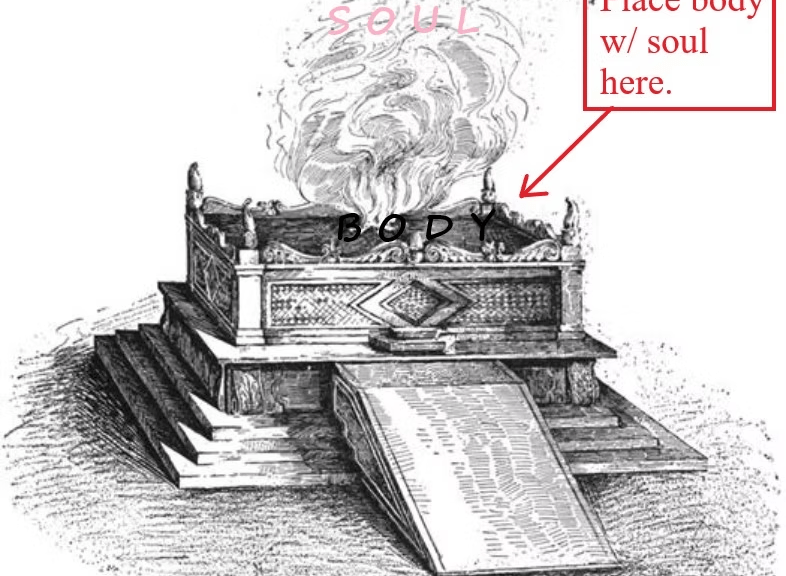
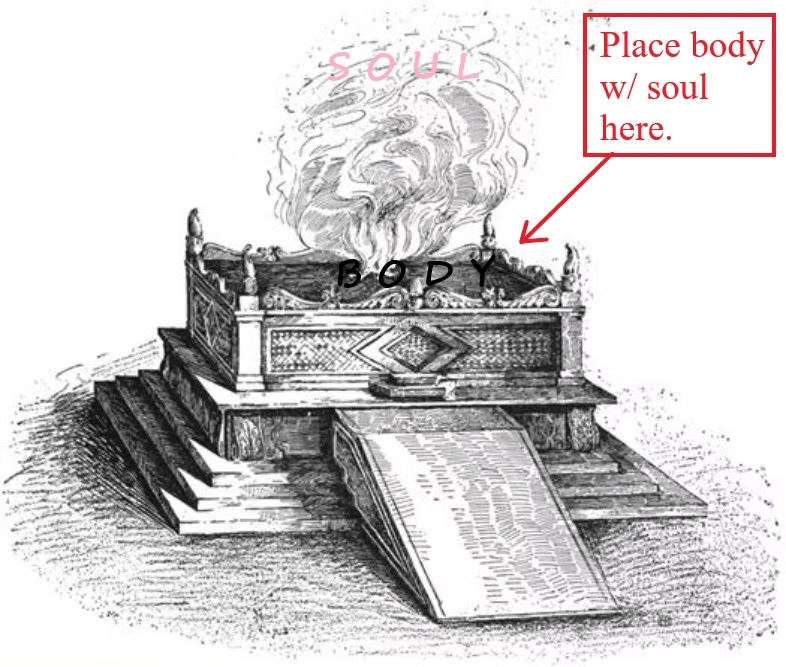


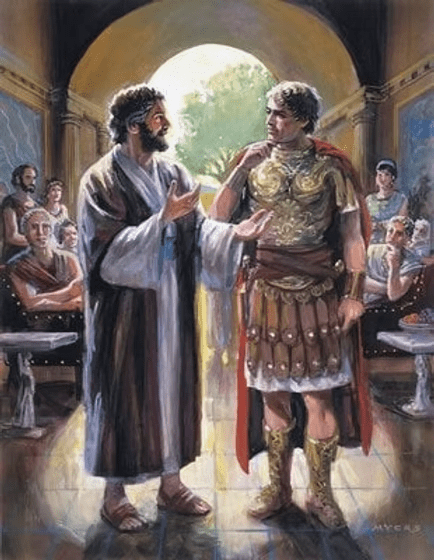
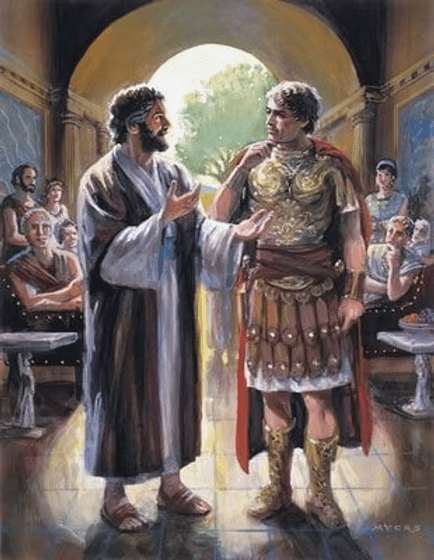


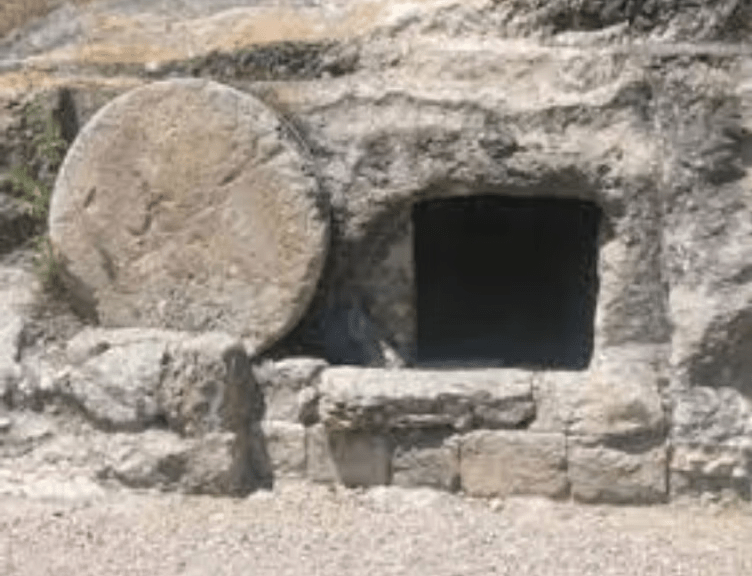


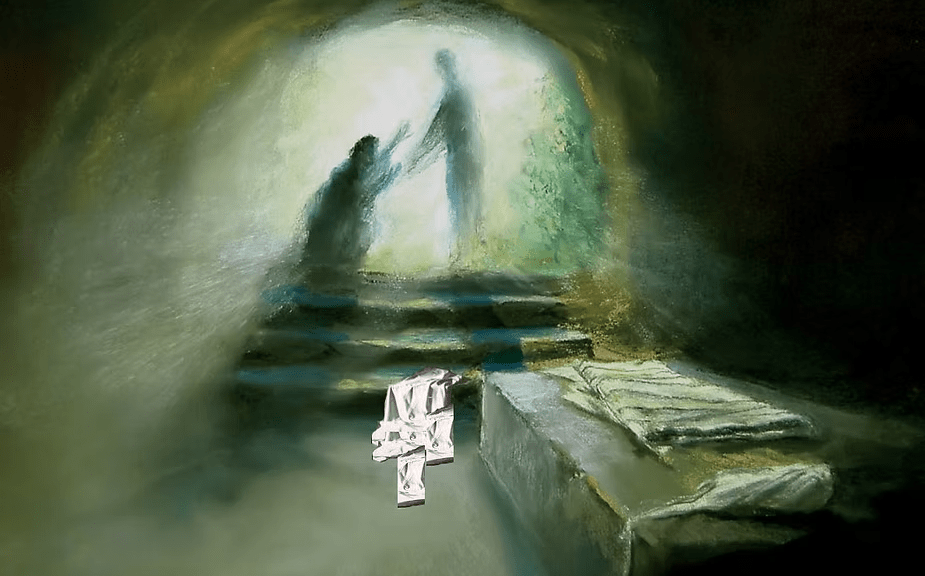
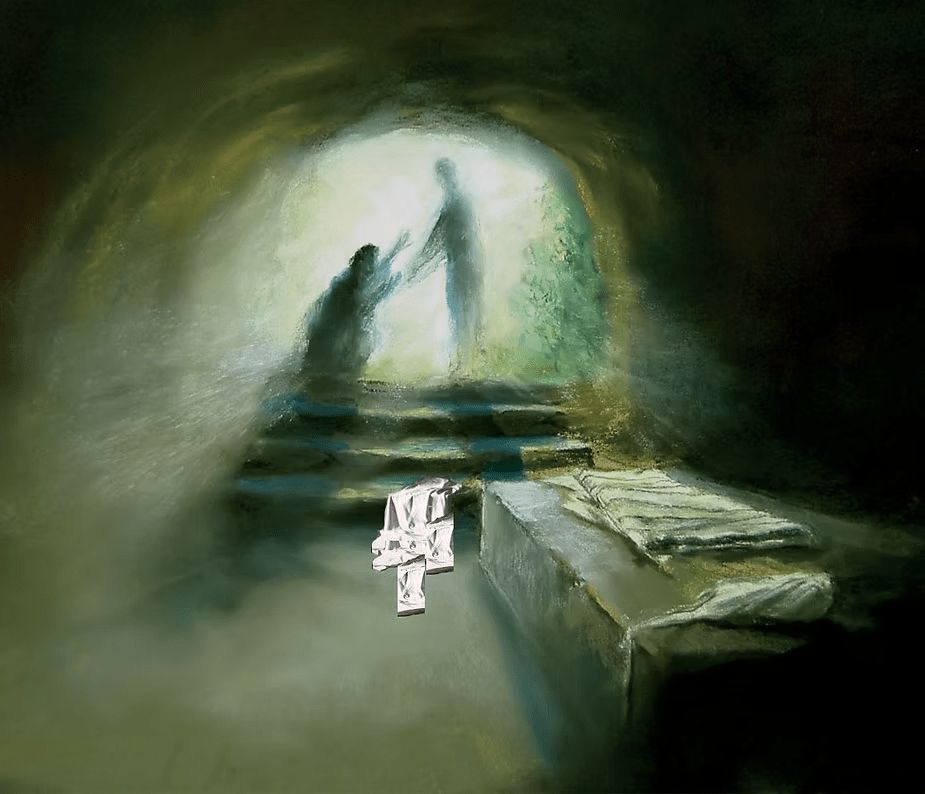
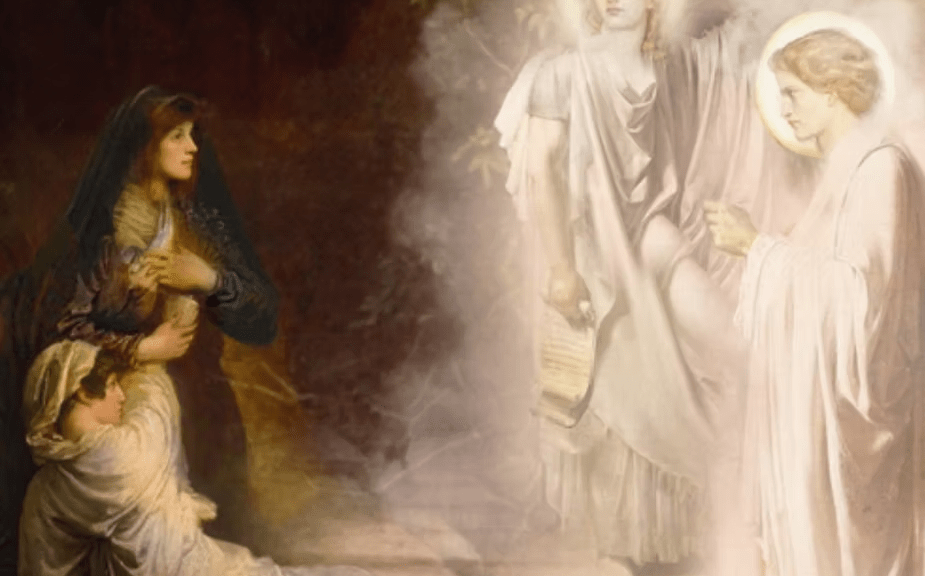
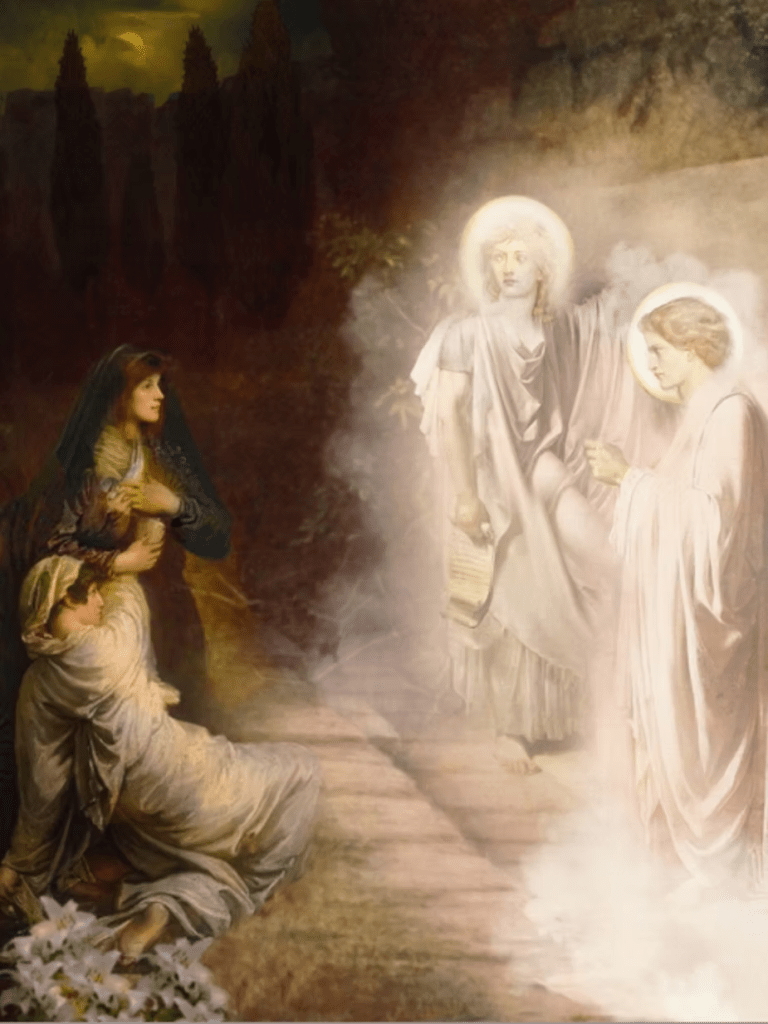


 Explaining the Readings