The word of Yahweh came to Abram in a vision, “Do not be afraid, Abram, I am your shield; your reward shall be very great.” But Abram said, “adonay Yahweh, what will you give me, for I continue childless, and the heir of my house is Eliezer of Damascus?” And Abram said, “You have given me no offspring, and so a slave born in my house is to be my heir.” But the word of Yahweh came to him, “This man shall not be your heir; no one but your very own issue shall be your heir.” He brought him outside and said, “Look toward heaven and count the stars, if you are able to count them.” Then he said to him, “So shall your descendants be.” And he believed the Yahweh; and the Lord he reckoned it to him as righteousness.
——————–
In verse one we find this Track 2 Old Testament reading selection to be similar to the Track 1 selection from Isaiah 1. In both we find that “came the word of Yahweh in a vision.” This does not mean that Abram was just standing around one day and suddenly he saw something and heard Yahweh speak. The meaning of “a vision” is like a dream. It most likely came at a time of prayer, while Abram was not aware of his outer surrounding, nor using his physical eyes to see. With his eyes closed, in a deep meditative state of being, “a vision” appeared within Abram’s soul and the vision was understood as if Yahweh were speaking in signs and symbols, rather than audible words.
To read Abram hearing Yahweh say, “do not fear” does not mean Abram had any fear at all. By this time in Abram’s life, he had seen visions and heard the Word of Yahweh too many times to count. Instead, the “vision” was one of great peace and calm – a “vision” that spoke of wholeness and completeness – where Abram had “no” any reason “to fear.” This says the “word of Yahweh” assured Abram that Yahweh was his “shield” and protector. The “reward” was an assurance of eternal life with Yahweh after his death, whenever that day came.
When we read, “but said Abram,” this should not be read like the prophecy Moses told in Genesis 18, where Yahweh’s word told of the destruction of Sodom and Gomorrah (where Lot and his family lived in the future version) and Abram began to negotiate with Yahweh. Instead, this is Abram speaking to Yahweh in prayer. Again, in a spiritual state of meditation, what Abram said would not have been audible to human ears. It is thought that Yahweh knew, before Abram formulated words in his mind.
What Abram “said” addressed “adonay Yahweh,” which must be understood for what it truly means. The Hebrew word “adonay” is the plural form of “adon,” which (in the singular) means “lord.” When this word is combine with the name Yahweh, the “adonay” are those divine spirits-souls-angels that possess or merge with one’s soul in the flesh, becoming the “lords” of all Yahweh’s wife-soul that become where His Son’s soul resurrects. This resurrection makes two souls be joined together as one, with only one soul allowed to make decisions that the flesh will follow. The possessing soul – Adam-Jesus – is then sent by Yahweh to become the Lord over a wife-soul’s flesh. Because it is divine, as the Son of God, it is identified as “adonay” of “Yahweh.” Therefore, Abram spoke to Yahweh through His Son’s possessing soul, making Adam-Jesus become the mediator of Yahweh.
When verse two appears to make Abram bellyache to Yahweh about having been promised eternal life, the reality is Abram is being selfless, by asking (in essence), “what good will eternal life do me, if I remain childness.” This is not Abram questioning Yahweh, but Abram questioning his inability to leave the legacy of eternal life for those who would follow him – as a son.
When Abram then said his only heir was Eliezer of Damascus, this is confusing because of attempting to read names, rather than the meaning behind the names. The word first expressed – “Damascus” – means “The Beginning Of Salvation.” To then add to that statement that identifies the promise from Yahweh to Abram for “great reward abundant,” the word “Eliezer” means “God Of Help, God Is Help.” This says that Abram said his only legacy for his life as a servant totally committed to Yahweh was as the first point towards eternal salvation that teaches lost soul that Yahweh will send their souls an “el” (from el-iezer), who will possess them as “my elohim” (the meaning of “eli”), who will “help” them find salvation. The only problem with that “heir” (from the Hebrew word “me·šeq,” meaning “possession”) is it ceased when Abram died and ascended into the eternal realm with Yahweh.
It was then, in verse three, that Abram mentioned his prayer – the reason Yahweh came to him in a vision, to give His Word – Abram said his efforts for Yahweh have not rewarded him physically with a “possession” or “acquisition” that would be a “son” to raise to be like Abram – devoted wholly to serving Yahweh. This became Abram’s prayer to Yahweh. He wanted to continue to serve Yahweh in the material realm, through a physical son of his loins.
The answer to Abram from Yahweh (through His Son’s soul being the Lord over Abram’s soul), Yahweh said the value of Abram as a Saint on the earth was not going to be limited to just his body of flesh. He said the soul of Abram would “possess” a “son,” whose soul would have the soul of Abram as his lord and master. This should be seen as was read in Hosea 1, when adonay Yahweh gave directions for the soul of Hosea to lead the soul of a sinner in the Northern Kingdom to change his ways and serve Yahweh totally. Abram would lead his son likewise, as each soul must make the decision to marry Yahweh and submit fully to His Will.
When we then read in verse five that Yahweh “brought Abram outside,” this is not a physical experience, but another phase of the “vision” that spoke to Abram. The Hebrew construct “ha·ḥū·ṣāh” translates as “outside,” but this should be understood in spiritual terms, where the vision is of those who are external souls in flesh to Abram. While Yahweh and His Son (“adonay Yahweh”) were internal to the soul of Abram, every other soul in a body of flesh was “outside” of that sphere of divine possession.
When we then read of Yahweh’s word saying to Abram, “look toward heaven , and count the stars”, this is Yahweh telling the soul of Abram to look at the spirituality of the “vision” presented him by Yahweh. To then tell Abram to “count the stars,” this must be seen as Yahweh telling Abram to count how many points of light – each the light of truth from divine possession by Yahweh and His Son’s soul – so there was no counting of physical stars in the night sky. The exercise was for Abram to count how many others like him were in this “vision” shown to him by Yahweh.
When Yahweh then said there were way too many to count, adding this “vision” was how many “offspring” would become sons of Abram, this was not a prophecy that Abram would have countless children. Rather than “offspring” being read as direct descendants of Abram physical body, the “stars” represented souls that would be totally committed to Yahweh, in the same manner Abram was. This would be due to Abram having one son, who would be raised to be just as committed spiritually to Yahweh as was his father; and, every Saint to come into the world afterwards would owe that divine union experience to Abram having been the first (after the Great Flood).
In verse six, where we read, “and he believed in Yahweh , and he thought to him righteousness”, the NRSV has inserted as second “the Lord” as the one having made those heirs due Abram, because Abram was “righteous.” There is no wording that states “Yahweh” or “adonay” in this verse. It is the third-person masculine singular that has led the NRSV to make this translation. The NRSV footnotes this translation and says the truth of the Hebrew is “he.” While it is obvious that the soul of Abram was in prayer with Yahweh and Yahweh was surely the source of Abram’s “righteousness,” the “he” should be seen as the answer to Abram’s prayer being his realization that Yahweh’s rule over his soul in the flesh, through Yahweh’s Son, Abram’s adonay, was having an effect that Abram was blind to. Abram had no concept of “righteousness” as that would be self-awareness. Instead, the “vision” of spiritual points of the light of truth were revelations to Abram that he was such as light source, from which countless others would be spawned. It was then Abram’s soul that concluded (via “thought”) that Abram’s legacy would be that – “righteousness.”
It is important to see this Track 2 Old Testament reading in the light of the Track 1 selection from Isaiah. Isais was one of those “stars” that had descended from Abram, because Isaiah was likewise made “righteous.” The people of Judah, some of whom might have some ancestral lineage that connects their bloodline to Abraham (especially the rulers) is meaningless. The “vision” shown Abram (like the one shown Isaiah) has nothing to do with the physical and the material. In the same way, Noah had three sons, but only one would become a shining light of truth (righteousness). In the same way, Eli and Samuel were prophets, who had sons that were raised to be priests of the tabernacle. Only Samuel fell into the category of “righteousness,” with their physical heirs as wayward as most people are. Thus, the point of this reading is to see being a Jew or being a Christian is nothing, if one’s soul has not married Yahweh and become His Son resurrected in one’s flesh. Only with that divine adonay Yahweh leading one to a state of “righteousness” can one be a descendant of Abram, as promised by Yahweh.
and beholds all the people in the world sons of Adam.
14 From where he sits enthroned he turns his gaze *
on all who dwell on the earth.
15 He fashions all the hearts of them *
and understands all their works.
16 There is no king that can be saved by a mighty army; *
a strong man is not delivered by his great strength.
17 The horse is a vain hope for deliverance; *
for all its strength it cannot save.
18 Behold, the eye of Yahweh is upon those who fear him, *
on those who wait upon his love,
19 To pluck their lives from death, *
and to feed them in time of famine.
20 Our soul waits for Yahweh; *
he is our help and our shield.
21 Indeed, our heart rejoices in him, *
for in his holy Name we put our trust.
22 Let your loving-kindness, Yahweh, be upon us, *
as we have put our trust in you.
——————–
In verse twelve, twice Hebrew words are written that can either translates as “nation” or “people.” Since the word “nation” is synonymous with a territory, land, or region of the earth, that makes “nation” (void of its “people”) be a lifeless entity. A lifeless entity has no soul and is dead; thus, nations change names and affiliations when new “people” occupy that place. Yahweh, as a non-material entity – THE deity of all gods, souls, spirits and angels – will only be involved with “people,” who have souls. This means “elohaw” is a plural number statement of the “Yahweh elohim” that are those souls who have married Him, being Anointed in Baptism by His Spirit. Thus, the reality of translation, where above it says, “to be his own” (“lə·na·ḥă·lāh lōw”) actually translated to say “to be his possession.” That speaks of a divine “possession” (as His “property, inheritance” – “nachalah”), which means divine marriage of their souls to Him, as Husband and wife-souls. This is what makes “people blessed” or “happy.” They have been divinely “possessed” by Yahweh elohim.
In verse thirteen, it is easy to get lost in the anthropomorphism of David’s writing, so we think of Yahweh as some guy down the road, who has a physical body like ours and eyes that peek out the window to see what is going on over at our place. The spirituality of this verse says: “from souls looks Yahweh”, where Yahweh is the Creator of all souls; so, Yahweh is extended into the material universe in bodies that are His, sent as His eyes in physical form. It is through all humanity that Yahweh “sees.” This is in “all” souls; but those who know that Yahweh is watching through them (as David knew), they are the “sons of Adam.” This places a name on the “Yahweh elohim” that possesses a wife-soul, through whom Yahweh “sees” and reveals the truth to be shown in ministry.
In verse fourteen, David sings, ”from an established place of his dwelling,” where that must be seen as not all life with souls, but only those who have invited Yahweh into their hearts and souls, to live with them forevermore. Yahweh gives life into inanimate matter, which is an extension of Him wherever life on earth exists; but Yahweh “dwells in an established place” where He has married a soul as His wife. It is from within those Saints that Yahweh “looks” for seekers of truth, which should be “all” souls that are “inhabiting” matter of the ‘earth,” which becomes the flesh of a soul’s body. The lost souls should all be seeking to be possessed by Yahweh elohim, so those who have received His Son’s soul are “looking” for those wanting to be saved.
In verse fifteen, David sings, “he forms unitedly their hearts,” which is not only a statement of “formation” through divine union, but more directed to say all “hearts, minds, inner men [souls]” are “united” by being of one Mind. That oneness comes from all being “united” with the soul of Yahweh’s only Son – Adam-Jesus. When a soul marries Yahweh, that soul is where the soul of Adam-Jesus is resurrected; so, two souls are together in one body of flesh. This is the meaning of the name Ephraim, which means “Doubly Fruitful.” The soul of Adam-Jesus then becomes the Lord over the host soul and its flesh, leading it down a path of righteousness, as a minister for others to find. This is then the meaning of David singing, “he discerns” and then “unto all their works” and deeds.
Relative to these ministers of Yahweh, verse sixteen sings, “nothing the king delivered by the multitude of an army ; one strong , not is saved by great strength .” This says that eternal salvation of a soul can only come from the guidance of one possessed by Yahweh elohim. No souls can be “saved by a king’s army.” None can be “saved” by one man’s “strength,” such as David stood as one to face Goliath. It was not the boy David that possessed “might” physical ability, as that was Goliath. David stood as one soul possessed by Yahweh, thus not afraid of Philistine kings or their champion. No one’s soul can be “saved by great strength,” which means oneself has no power to defeat death and gain eternal salvation. Therefore, all have to submit to Yahweh and admit “I am nothing without You.”
In verse seventeen, David sings of the “disappointment horse for salvation ; and by abundance its strength , not will it deliver .” The element of a “horse,” where the root word means “swallow, swift,” has to be seen as a greater advantage for military exercises, such that the cavalry was a “swift” element of attack and chariots were the advanced military machinery in David’s time. Still, the strength shown by a beast of swiftness will not allow one to outrun or fight off death. Judgment will still be awaiting.
In verse eighteen, David wrote, “behold! eye Yahweh into those who fear him.” This does not sing about Yahweh keeping an eye on sinners, because sinner fear everything in the material world (including demon spirits), when they should only fear Yahweh. This means those who fear Yahweh will received the “eye of Yahweh,” in order to see the truth in the world. Thus, David sang to conclude this verse: “into those who wait in his goodness.” Those who “fear Yahweh” and “wait” on His needs will receive the “goodness” or “kindness” that is His Son’s soul resurrected in their souls.
This inner presence is then explained poetically in verse nineteen, where David wrote, “to snatch away their soul from death.” As a soul is an eternal spirit, impossible to die, the only “death” is that of the flesh; but it is the flesh that desires and lusts for the offerings of the material world, enslaving a soul to covet such things. When that flesh dies, if a soul has not received the Son of Yahweh (“Jesus” means “Yah Saves”), then the “death” of the body of flesh brings Judgment that cannot allow an eternal soul to remain in the spiritual realm of Yahweh. This means “death” is the repeated incarceration of a soul in a body of matter that was dead before receiving a soul and will return to “death” eventually. In the “snatching away” or “deliverance from death,” the presence of Yahweh’s Spirit and His Son’s soul “will keep souls alive from famine.” There, “alive” means to remain an eternal spirit that is free from the constraints of the flesh – assured eternal life. The “famine” is an external lack of spiritual food being offered by false priests and unholy rulers. That “famine” is avoided because spiritual nourishment is supplied within, in such abundance that the Saint is seen out into ministry to feed those souls suffering from “famine.”
In verse twenty, David then sings of the wonders of salvation, where “our soul awaits Yahweh”. This says one’s soul has been promised eternal life beyond the death of the flesh. The word “wait” can also be understood as a word of servitude, where the time from receiving the promise of salvation, one’s soul in its body of flesh will “wait” on the needs of Yahweh. Thus, David then sang, “our help and our shield he.” This is the protection of a Saint, where to “help” Yahweh, a soul must have His “help.” This comes as a “shield” against the influences of evil that are prevalent in the world of ministry. This says the guarantee of salvation means the inner soul of Yahweh’s Son will be with our souls, deflecting all evil attempts to steal a soul away from Yahweh.
In verse twenty-one David sang, “for in him will rejoice our heart,” where the Hebrew word translated as “heart” means also “inner man [soul], mind, and will.” In verse fifteen David used the same root in construct, saying “he fashions their hearts,” but now he is saying one’s soul has already been shaped into that of a Saint, so it is the union of a soul with Yahweh and His Son’s soul that makes that be “our heart.” That source of “rejoicing” comes from the soul of Adam-Jesus leading one’s praise of Yahweh. This then led David to sing, “when in name his sacredness we have trusted.” The element of “in name” means marriage to Yahweh, so a host soul in a body of flesh takes on the “name” of His Son, with “Jesus” meaning “Yah Saves.” When one is “in the name” of Yahweh, as His Son reborn, then one is married to Yahweh and His wife-soul. All wives take on the “name” of their husbands; and, the same “name” change occurs in a divinely spiritual manner. The element of “trust” says one’s soul has found true faith, which comes from the personal experience of the Son of God being one with their souls.
In the last verse, David sings, “let be your goodness Yahweh upon us ; your who we wait in you.” This says one has become a Saint, with the “goodness” of His Son’s soul “upon us.” The relative pronoun “your” says one has become the possession of Yahweh, as His dutiful servant. That leads one to “wait in you.” This says a host soul has taken the ‘backseat’ position, while Yahweh’s Son’s soul guides us into ministry, in his name. By being “in you,” David is stating the truth that the Trinity exists in each saved soul, where three have become one, all together “within” Yahweh’s love.
[1] Now faith is the assurance of things hoped for, the conviction of things not seen. [2] Indeed, by faith our ancestors received approval. [3] By faith we understand that the worlds were prepared by the word of God, so that what is seen was made from things that are not visible.
—–
[8] By faith Abraham obeyed when he was called to set out for a place that he was to receive as an inheritance; and he set out, not knowing where he was going. [9] By faith he stayed for a time in the land he had been promised, as in a foreign land, living in tents, as did Isaac and Jacob, who were heirs with him of the same promise. [10] For he looked forward to the city that has foundations, whose architect and builder is God. [11] By faith he received power of procreation, even though he was too old– and Sarah herself was barren– because he considered him faithful who had promised. [12] Therefore from one person, and this one as good as dead, descendants were born, “as many as the stars of heaven and as the innumerable grains of sand by the seashore.”
[13] All of these died in faith without having received the promises, but from a distance they saw and greeted them. They confessed that they were strangers and foreigners on the earth, [14] for people who speak in this way make it clear that they are seeking a homeland. [15] If they had been thinking of the land that they had left behind, they would have had opportunity to return. [16] But as it is, they desire a better country, that is, a heavenly one. Therefore God is not ashamed to be called their God; indeed, he has prepared a city for them.
——————–
Verse 1: “it Being now faith of expectations support , of deeds proof not of them seeing .”
There is no statement about “things hoped for,” as “things” is a desire (from hope) for material possessions or aids. The capitalized “Being” (“Estin,” in the third-person) is a state of existence with Yahweh, as this is a word that must be seen as divinely elevated in meaning, to a level of Yahweh. Thus, “it Being” in one’s soul-body is “now” a state of true “faith” (beyond “belief”). This “faith” comes with one possessing (Genitive case “of”) “expectations,” rather than hopes. Hopes are based on having seen something before, but not often or routine. When the spirituality of “if Being” is a “faith” for spiritual matters, those come from an internal “support” or “assurances,” which never existed before (lower-case estin). Thus true “faith” comes with knowledge of “assurances” that promise “deeds” to come as “proof,” without having ever “seen” such “deeds” done before. Such “deeds” are miracles and prophesying the truth for others to hear, which does not come from a host soul in a body of flesh, but from “it Being now” within their soul-flesh, bringing one true “faith of expectations,” with the soul-body in full “support” of that inner presence, possessing the soul-body as its new Lord.
Verse 2: “within to this indeed they witnessed these elders .”
In divine Scripture, which is everything gathered together in the “Holy Bible” (and more), the Greek preposition “en” is read in the same way as the English word “in.” It is a directional preposition that is read so generically that it gets no deeper attention as to what else it could intent to state. Strong’s defines it as “in, on, at, by, with,” implying “among.” The English word is an equivalent in meaning; but HELPS Word studies explains this: “properly, in (inside, within); (figuratively) “in the realm (sphere) of,” as in the condition (state) in which something operates from the inside (within).” When one is reading divine Scripture and realizes everything must be leaned towards a spiritual meaning, the word “en” has to be read as meaning “within” or “inside” one’s flesh, where one’s soul resides.
When this verse is shown to begin in this manner, “within” is a statement about this “Being” that brings “faith” over belief and sets “expectations of deeds,” based on an unsee [spiritual] presence. This is now said to be “within” Paul and the true Christians to whom his epistles were written. Paul is then saying that this same inner presence has always been available to souls that marry Yahweh, who then provide a physical ‘womb’ in which His Son’s soul can be resurrected, as this is the same divine union “witnessed” by the “elders” of Israel. They knew this “Being” that brought “faith” by having all lived up to the lineage of Abram, as the “stars” that shone the light of truth, as Saints truly in the name “Israel” – “Who Retains Yahweh’s elohim.”
Verse 3: “to Faith we realize we are completed these ages to words of God , into this not from out of of causing to appear , this being discerned being born .”
This verse begins with the capitalized Greek word “Pistei,” which is the Dative feminine singular form of “pistis,” which was used in verse one, meaning “faith, faithfulness.” Here, the word is written in a divinely elevated state that says “Faith” is not possible in the physical realm, unless one’s soul has been taken “to Faith” by Yahweh. A soul in its flesh can be taught things to believe by teachers and masters, but without personal experience (from which ownership transfers mechanical beliefs into true faith) faith is impossible. When Paul wrote of “these ages to words of God,” the “words of God” are spiritual and impossible to be seen. The laws of the universe are possible to have faith in, simply because a soul in the flesh can be told to believe and then experience such things as gravity, light, and the microcosm-macrocosm comparisons, none of which is visible, but they are proved. They are “of God” (the Genitive case stating the possessive) and no human being can “cause to appear” these laws of the universe. They simply exist. The Greek verb “gegonenai” would typically be translated as “having come into being” or “having happened,” but the spiritual translation of “being born” states that faith does not simply “happen” or “come into being,” it is “born” when a soul married Yahweh and gives rebirth to His Son’s soul, who brings with him the All-knowing Christ Mind.
Now, these first three verses having nothing to do with directly naming Abram or Abraham. This means these three verses are more related to the Track 1 Old Testament reading selection from Isaiah, where Yahweh gave Isaiah a vision that spoke of what Yahweh did not find pleasing from those people calling themselves His priests. The sacrificing of animals and burning their flesh on an altar fire was based on the beliefs of practice, derived from written words misunderstood. Because the souls of those priests were not married to Yahweh, they could not discern the truth and have a personal experience that led them to the true faith of an Israelite. True faith would have led them to know that Yahweh was only pleased with the sacrifice of the souls of those priests to Him, so they would become His wife-souls and the mothers of His Son’s soul reborn. Instead, they practiced self-worth and self-preservation in the flesh, sacrificing beast in their place. That Old Testament story states the difference between beliefs in the name of God and true faith in the name of Yahweh and Adam-Jesus.
Verse 8: “to Faith calling , Abram he listened to have gone out into a place that he will be about to receive into an inheritance , kai he went out , not knowing where he goes .”
In this, the capitalized word “Pistei” is repeated, thereby having the same divinely elevated meaning that says Abram experienced Yahweh and knew faith, beyond beliefs. This led to a “calling,” where this word is known to be an unseen, unheard “call” to follow a spiritual lead. This becomes comparative to Paul writing in verse one, as a “test” or “proof” of that unseen. When one has personal experience of Yahweh, one spiritually hears His voice and sees his images of words in visions. It is these powerful words that call to a prophet and have him or her go as Yahweh commands.
In the second segment of words in this verse, the key term to grasp is “inheritance.” When one has come to the realization that divine Scripture is not about the material or physical, but instead about the spiritual, an “inheritance” can only be the promise of eternal life. Because Abram was a soul in the flesh married to Yahweh and His Spirit, he heard the word of Yahweh in his soul, so that “calling” found Abram “listening” and “obeying” (from total submission to Yahweh’s Will); so, Abram “went out into a place,” not because he was promised to possess this physical “place,” but Abram “went out” because he had already been promised “the place” of eternal life. With that promise already assured his soul, Abram’s “inheritance” meant nothing as some stretch of land on earth that he could pitch a tent and raise his livestock.
The comma mark leading to the word “kai” means great importance should be found in the fact stated, that Abram “went out.” This says his soul immediately did as Yahweh instructed; so, the prophecy of Abraham arguing with Yahweh about the destruction of Sodom and Gomorrah was not what such a devoted and committed wife-soul does. Abram did as he was told by Yahweh. Thus, the last segment says Abram went “not knowing where he goes,” which is a statement of true faith. Abram had no reason to question anything told to him by Yahweh. His faith had him pack up and leave.
Verse 9: “to Faith he dwelt as a stranger into land of this of promise , even as belonging to another , within to tabernacles having inhabited with Isaac [name meaning Laughter, He Will Laugh] kai Jacob [name meaning Supplanter] , of them joint participants of the promise of this of it the soul .”
Once again, Paul began a verse with the capitalized word “Pistei,” which is the same as that beginning verse eight and verse three, as well as a variation of the word “pistis” written in verse one. Here it is most vital to see the spirituality of this being stated by Paul, as he understood that Abram stood “as a stranger” (the translation of “parōkēsen” and the essential meaning of “sojourner”) in a place on the ”earth” that was filled with people whose souls were not married to Yahweh [the high priest of Salem, Melchizedek being an exception]. This means the “promise” is eternal salvation, not some plot of land. In the second segment, which states, “even as belonging to another,” this must also be read spiritually, where “belonging to another” is relative to an elohim, which is a spiritually possessing soul-spirit-demon-god-angel, which are imprisoned in the earthly realm as powers that are immaterial. This says every soul on earth is possessed either by Yahweh, other spirits, or to one’s own soul, which pretends to be a god over its own flesh.
In the third segment, that tiny word “en” appears again, with it translating into English as “within,” showing an internal soul presence. Rather than read “skēnais” as “to tents,” making it sound more physical in a wilderness environment, “to tabernacle” makes this be read as the body of flesh, which serves as the holy place surrounding a soul that has married Yahweh, who sits upon one’s soul, like the cherubim atop the Ark of the Covenant. This use makes this most holy union be only to souls that are like Abram (the promise made with Yahweh and Abram about the stars so numerous), which are then named as the direct descendants of Abram: Isaac and Jacob. In that, it must be noted that Esau was a favored son of Isaac, whose birthright was stolen by Jacob, causing Isaac to curse Esau while on his death bed. This history says only those souls that became like Abram – married to Yahweh spiritually – were those named as “co-inheritors” of eternal life. When “autēs” is not translated as “same,” but as “oneself” or “same self,” where a “self” is understood to be a “soul,” then the “promise” is not land to be passed on to favored elder male children (physical attributes), but the “promise” assured Abram, which was eternal life for his soul, after subjection to serve Yahweh absolutely.
Verse 10: “he will be expecting indeed this these foundation stones possessing inhabitants of a city , of whom builder kai creator this God .”
Here, verse on began by Paul speaking “of expectations support” or “of hopes assurance,” so now he is adding to that theme by saying Abram (and all souls who will be his descendants by their souls marrying Yahweh) will be “he expecting,” based on “to Being now faith.” When we read of “foundations” and a “city,” this becomes confusing because it forces a brain to focus on the material world, not the spiritual. Jesus is the “cornerstone,” which is how one should see a soul marrying Yahweh will then be set with the “foundation stone” that will allow one to be “called” by Yahweh to enter the ‘lion’s den,’ where a “city” is a place where those not married to Yahweh spread their influences that demand Jesus be one’s inner Lord. It is then this soul of Yahweh’s Son within one’s soul-flesh that is he “who” is the “builder” that cannot be swayed by the influences of evil. Importantly (from “kai”), Jesus [a name that means “Yah Saves”] is the Yahweh elohim made by the hand of Yahweh in Eden, as the “creator” of “this” Son “foundation stone” is “God.”
Verse 11: “to Faith kai , to her soul Sarah [a name meaning Princess] [ barren ], power into the laying down of that sown received , kai by the side of opportunity maturity , because faithful she was led this having promised .”
Once more Paul begins a verse with “Pistei,” showing a most divine elevation towards this focus of “Faith,” which can only come from Yahweh. This is followed immediately by the marker word for importance, which says “to Faith” is important if a soul is seeking eternal salvation. This use of “kai” then leading to a comma mark of separation and pause, then had Paul bring up focus on “Sarah,” whose name means “Princess.” Her name then implies the femininity of all souls, whether in male bodies of flesh or female, as feminine souls when divine union to Yahweh is concerned. All souls in the flesh are to be wives spiritually to Yahweh. When the “cornerstone foundation” has been laid in one’s soul, then all will become a “Princess” to the Prince of Peace. Where the NRSV took it upon themselves to translate the word Paul placed within brackets (“steira”), which is something often seen as optional text by translation services [see Luke’s version of the ’Lord’s Prayer’ for examples of such omissions], the use of brackets says “Sarah” was “barren,” in the sense that she could not conceive the Spirit of Yahweh on her own, or by any physical means involving Abram. Thus, her “Faith” came to “her soul” when she was “barren” of that spiritual presence.
When Paul wrote of “power into the laying down of that sown received,” this is Yahweh who made “Sarah” become as fruitful as Abram. The same words that can translate as “conception of seed” becomes too focused on the physical act of sex and pregnancy. This says that Yahweh had already entered Sarah, most likely not long after Abram took her as his wife, so the couple were both souls married to Yahweh, in support of one another as physical man and wife. There was no need for Sarah to become physically pregnant during those early days of their physical marriage (Abram left Haran at the age of seventy and was ninety-nine; so, they had been married at least thirty years). This means Yahweh kept Sarah from conceiving a child, because she was in need of “seasoned maturity” or the “opportunity” to “mature in Christ,” before becoming a physical mother. Her soul had proved its value to Yahweh and was promised eternal life, long before she became physically pregnant with Isaac.
Verse 12: “on which account kai away from of one it was born , kai this of having been made impotent , just as these stars of this of heaven to this to a great number , kai even as this sand this by the side of this edge of this of sea this innumerable .”
In this verse, it is important to see how the Greek word “dio” begins it and then immediately leads to a “kai,” marking importance to follow. Because the word “dio” means “wherefore, on which account, therefore,” as a statement word connecting that just said about “faith having been promised,” this verse is explaining the “promise” of eternal life. This importantly is then said to be “away from,” which says Sarah (nor Abram) had any negotiating powers to bring about any “promise” from Yahweh. The Genitive case “henos” says Sarah was possessed “of one,” where that “one” is Yahweh, through divine marriage with her soul. With that divine union based on Yahweh’s acceptance of Sarah as having proved (her “promise” to Yahweh) her complete submission to Him, she “was born” anew of Yahweh’s Spirit. Sarah’s only role was to do as Yahweh led her, which was to follow Abram as his wife. Nothing was bargained, relative to children; and, the only “promises” were complete servitude in exchange for a soul’s eternal life beyond death of the flesh.
With that important statement made, Paul then wrote a comma mark of separation, followed by another use of the word “kai,” showing another important statement to follow. The Greek word “nenekrōmenou” is written in the Genitive masculine singular, as a Perfect Participle, such that the masculine singular speaks of Sarah’s soul, as all of the spiritual world is masculine, when not trapped within a body of matter (the feminine essence). The root verb then says “this to put to death,” implying in usage “make as dead; render weak, impotent.” This word importantly speaks of a soul that has not married Yahweh and become saved. Upon the death of the flesh, those souls will be Judged as unworthy of the spiritual realm; and, they will be sent back into new flesh, having to start the process of pretend life all over again. It is that failure to see the need to marry Yahweh that becomes a state of “impotence, such that the new birth offered by Yahweh is far greater than giving birth to human children. As such, Sarah’s “impotence” became a statement by Yahweh, in one of His wife-souls, that says children are not the measure of a Saint’s success in the flesh. That ability to reproduce is seen in a soul touching another soul and leading another soul to marry Yahweh. Those are the true “children of Yahweh,” which are born of His servants.
After Paul made that statement, he then recalled the “stars” of the universe shown to Abram in a vision. When Paul wrote those “stars of this of heaven,” the use of “heaven” must be read metaphorically as the souls-spirits-angels-saints that are divine lights of truth, as Yahweh’s wife-souls. The true descendants of Abram and Sarah could not possibly touch so many souls physically; but the story of Abram and Sarah would live on forever and become the seed of thought that would become so many future Saints that would be “to this to a great number.”
With that story made from Genesis 15, Paul then wrote a comma mark of separation, followed by another use of “kai,” denoting another important statement that explains the “stars of heaven” statement. Here, Paul wrote it is important to see the “stars” in the night sky as limited in how many can be seen, due to the weather. In case some would say (scientists and astronomers) they have calculated how many stars exist, the comparison should be made to “grains of sand on the shore by the sea.” The sand extends beyond the water line, where an innumerable number of grains of sand also exist, out of sight from physical eyes. The point of this analogy is the descendants of Abram and Sarah were pairs of Saints, each of whose souls had married Yahweh, becoming His Son reborn (pairs of spiritual brothers, as Jesus resurrected), sent out into ministry as points of light for truth in the darkness and the foundation upon which many shall walk into the waters and know Yahweh. All of this says the “promise” is “born” of Yahweh, to prove one’s ability to reproduce Saints, where all are the same Son of Yahweh, spiritually possessing souls, not new flesh born with a failed soul.
Verse 13: “According to faith they died these all , not having received these promises , on the other hand from afar them having seen , kai having welcomed , kai having agreed because foreigners kai residing in a foreign place they exist upon this earth .”
Paul began this verse with a capitalized “Kata,” which in the lower-case simply means “down, against, according to,” implying (among other things) “throughout, day-by-day, and by way of.” HELPS Word-studies says this word means “properly, “down from, i.e. from a higher to a lower plane, with special reference to the terminus (end-point).” When this is seen as divinely elevated to a state equal to Yahweh, the aspect of the innumerable number of Saints modeled from Abram and Sarah, each a soul married to Yahweh, that divine union means has brought them each “faith,” from His spiritual realm; and, to receive that “faith” of ‘heaven,’ “all” had to “die” of self-ego and self-will, as a sacrifice placed upon a most divine altar.
When the second segment then says, “not having received these promises,” this means self-sacrifice must be a willing surrender of self to Yahweh, “not” because of a bargained “promise,” but because one knows the sins one has committed. Knowing one’s sins demand justice, those souls surrender to Yahweh for Judgment, well before their natural bodies of flesh die. They do this because of love of Yahweh, “not” because a Big Brain thinks this will come with the “promise” of eternal life. Still, the third segment says these souls sacrificing to Yahweh have read Scripture and from that they have glimpsed “from afar” this promise; although, “not” as a barrenness being removed, so one can have physical children. The “distance” of the perception coming from Scripture (due to poor paraphrases and a lack of understanding how to read divine texts) says true repentance is the primary reason souls submit fully to Yahweh and welcome His punishment, prior to physical death. That was written by Paul, preceded by the marker word of importance to realize – “kai.”
The last two segments also begin with the word “kai,” first showing the importance in realizing those souls “have agreed upon” the terms of surrender, which is always a willing compliance to the Law – the Covenant of divine marriage. To say they are “strangers” or “foreigners” says all souls have been sinners prior. To enter into a state of sainthood, where righteousness is the only way to live in the flesh, means a soul alone in its flesh can never make this lifestyle be realized. Only after divine union with the Spirit of Yahweh, having been made pure, as a virgin womb in which the soul of Yahweh’s Son can be conceived and born anew. When the last segment importantly says, “residing in a foreign place they exist upon this earth,” the plural number is less about the innumerable Saints descended from Abram and Sarah and more about the duality of the soul of Jesus having merged with the soul of a sacrificed human, so the tabernacle of the flesh has become a “foreign place” in a world of sin, where that “existence upon this earth” leads Saints into ministry, as Jesus “upon this flesh” once again.
Verse 14: “those indeed such as this are saying it to appear because one’s native place they are seeking after .”
Here, again, the plural number relates back to the joint Spirit of Yahweh and the soul of His Son with a soul committing totally to serve His, in exchange for all past sins being forgiven. It is “those” saved souls who “indeed” are “those saying it to appear,” in person. This is “because” it is the lost souls who repent their sins that Yahweh and His Son “are seeking after” to save them. The only way those souls can be saved is by the presence of the Spirit and the Son of Yahweh being within, so the soul in its flesh knows personally of that presence. For this Trinity to be established forever, a commitment of divine union must be made. That commitment comes with the promise of eternal life.
Verse 15: “kai if truly of that one they will be calling to mind away from of who they escaped , they will possess an opportunity to return .”
In this verse Paul led with the word “kai,” meaning this verse is important to grasp. It then follows to state the conditional, where “if” is a statement of choice. Yahweh does not refuse to accept a soul as His wife, as He invites all souls to make that choice. Making that choice then puts the ball in the court of the soul, who must realize their sins and “truly” repent. True repentance is not just lip-service, but honest and sincere efforts to show Yahweh how serious one’s soul is to committing to Him forever. This then leads to the Genitive case that states possession “of that one,” who is Yahweh, where the soul becomes His possession as a wife-soul. Those souls will then importantly be found “calling to mind” the soul of Jesus, turning “away from” their own soul’s rule over their body of flesh. In many cases, the “hold” of sin has made those souls become the possessions of Satan or a lesser demon spirit. By marrying Yahweh, those souls will have “escaped” that unwanted control.
In the last segment of words in this verse, Paul pointed out the double-edge sword that becomes relative to the conditional “if.” Should a soul choose not to commit to Yahweh, “they will possess an opportunity to return” to the state of sin they had attempted to “escape.” However, “if” a soul does “indeed” or “truly” choose to totally submit to Yahweh and His Will, then “they will possess an opportunity to return” to be one with Yahweh in the eternal realm, after the death of their physical bodies. The Greek word “eichon” (rooted in “echó”) means “to have, hold,” implying in usage “to possess.” This is then a statement of divine possession by Yahweh – holy matrimony – where His possession of their souls gives them the ability “to possess an opportunity to return” to Him.
Verse 16: “the present now of stronger they yearn for , this it exists , of heaven . on which account not it ashamed their souls this God , God to call upon of their souls ; he has prepared indeed to their souls a city .”
In this final verse of this reading selection, Paul’s use of “kreittonos” (rooted in “kreittón”) says the “now” is always relative to a weakness that leads a lost soul to seek Yahweh. The word means “better,” but implies in usage “stronger or more excellent.” HELPS Word-studies says its proper usage means “what is better because more fully developed, i.e. in reaching the needed dominion (mastery, dominance).” This is then one seeking the “strength” of Yahweh and His Son’s soul as Lord, because one “years for” the removal of guilt from sins that one cannot cease alone. The second segment is then Paul saying this “yearning” leads to the proof of commitment; and, that leads to a soul realizing “this (Spirit of Yahweh) it exists” within my soul. The “soul” is then clarified by Paul writing “of heaven,” where the Genitive case states the possession of divine marriage, which can only be spiritual (thus “of heaven”).
Following a period mark, a new statement explains why one is led to this new state of being. It is the “shame” of sins and knowing a soul will be condemned in Judgment for a failure to cease evil ways. They all know this “shame” inwardly, because all souls come from “this God,” and regardless of how hard their fleshy brains try to convince them to ignore their guilt, the “soul” knows it is responsible for ‘cleaning up its acts.’ This is how “God calls upon the souls” of all, with the ones saved heeding that call. Finally, when Paul wrote that Yahweh “has prepared indeed to their souls a city,” this cannot be read in terms of a mythical city in heaven of stones and streets of gold. The “city” prepared is that where the soul of Jesus will lead one, in order to save lost souls. A “city” is a place where iniquity thrives and many sinners dwell. A saved soul does not get the pleasure of resting on his or her laurels and do nothing but wait for death to free their souls to some mythical place in outer space. The “city prepared” is where the road of ministry leads a Saint.
It must be noted that this chapter of Paul’s letter written in Hebrew includes verses that tell of Noah, before these verses above tell about Abram and Sarah. It is good to know that Noah was a direct descendant of Adam, living 950 years, 600 before the flood and 350 afterwards. Noah was alive for the first 58 years of Abram’s life. Abram was a descendant of Shem and Jesus was a descendant of Abraham (according to Matthew’s genealogy). Both were descended from Adam. The point of the Genesis 15 reading is only souls married to Yahweh are those “stars” and “grains of sand” that count. All souls that do not marry Yahweh and become where the soul of Adam-Jesus resurrects will be the darkness between the points of light at night and the separateness that makes one grain of sand stand out from the others. It is vital to then read Paul’s reading not as a confirmation that Genesis 15 is true and Yahweh promised Abram countless descendant. It is important to realize one has to become one of those descendants; and, this cannot be a material goal.
Jesus said to his disciples, [32] “Do not be afraid, little flock, for it is your Father’s good pleasure to give you the kingdom. [33] Sell your possessions, and give alms. Make purses for yourselves that do not wear out, an unfailing treasure in heaven, where no thief comes near and no moth destroys. [34] For where your treasure is, there your heart will be also.
[35] “Be dressed for action and have your lamps lit; [36] be like those who are waiting for their master to return from the wedding banquet, so that they may open the door for him as soon as he comes and knocks. [37] Blessed are those slaves whom the master finds alert when he comes; truly I tell you, he will fasten his belt and have them sit down to eat, and he will come and serve them. [38] If he comes during the middle of the night, or near dawn, and finds them so, blessed are those slaves.
[39] “But know this: if the owner of the house had known at what hour the thief was coming, he would not have let his house be broken into. [40] You also must be ready, for the Son of Man is coming at an unexpected hour.”
——————–
In verse thirty-two, Luke begins by writing a capitalized “Mē,” which is a divinely elevated statement of “Not.” When this negative word is read on a Yahweh level of meaning, the word “Not” is a double-edged statement, relative to that stated next, which is “you fear.” These two words are separated from the rest of the verse, by Luke’s use of a comma mark; so, the “Not” is relative to that stated before, which is relative to the disciples “seeking the kingdom of him” – God. Thus, “Not” says if one has “Not” become a soul married to Yahweh, then “you fear.” Conversely, if one’s soul has become married to Yahweh, then “you fear Not,” because Yahweh protects your soul. This becomes a profound statement and not some suggestion that the disciples stop worrying about what will happen to their souls after death.
Missing in the translation, relative to the second segment of words, is the article “to,” which identifies “this little flock,” as opposed to any other “small” gathering of lost sheep. Following Jesus stating the lack of “fear” that will prevail in saved souls, “this small flock” of disciples is now being pointed out. Then Jesus said, “because he is well pleased this Father of your souls to place to your souls this kingdom.” There, the capitalized “Father” is a statement of relationship, which says not only have the souls of the disciples married Yahweh (engaged to be), they have been given Jesus as their brother soul, so all can identify Yahweh as “Father.” Those “Not” of His other “small flocks” cannot make such an identification. In the uses of “hymōn” and “hymin,” these pronouns that translate as “you” or yourselves” (in the plural) has to be seen as reference to “souls,” as a “self” is a “soul.” Yahweh, as the supreme deity of all is spiritual, not physical; so, he has no children in the flesh to call Him “Father.” The relationship is a soul to Yahweh’s Spirit.
In verse thirty-three, Luke began with the capitalized Greek word “Pōlēsate,” which is the second-person plural Aorist Imperative that has been translated by the NRSV as “Sell.” As a divinely elevated word that has to be read on the level of Yahweh’s spirituality, the true translation of this word must be read as “you Exchange,” because the lower-case definition of the infinitive root “póleó” is “to exchange or barter, to sell.” This one word is then Yahweh speaking through the Son, saying “all of you Exchange these possessions of your souls,” where this states the ownership of the body of flesh by its host soul has been “Exchanged” through divine marriage with Yahweh, so Yahweh is now the one in “possession” of “your souls.”
When that is understood, Luke then wrote the word “kai,” which is a marker word that denotes importance to follow. After having “Exchanged one’s soul for a divine possessor,” it is then important to “give” or “set in place” “charity,” in return for one’s soul having been “pitied” and shown “mercy.” This states an “Exchange” for past sins, leading one to “give charitably” as Yahweh deems necessary.
Following a semi-colon mark, which begins a new statement relative to this spiritual “Exchange,” Luke then wrote of Jesus saying to “make to your souls purses not growing old”. This has absolutely nothing to do with sewing together pieces of leather, to create a bag in which gold and silver coins can be held. It says Yahweh will “make to your souls,” as part of this divine “Exchange,” “purses,” where spiritual value will be held safely within one’s soul-body. One becomes a “purse” of truth, which does “not” ever become “old” news. The truth is always fresh and never worthless. The truth does not grow or decrease in value, based on a commodities market. The truth is always valuable and what lost souls are always seeking to find. This is then explained by Luke in the next segment, which says, “a storehouse of precious (truths) unfailing within to these to souls”.
Jesus was then recorded to add, about these valuable held within those souls that have “Exchanged” their own souls for the soul of Jesus to lead them with the light of truth, “where thief not does he come near.” This says a truth exposed cannot be stolen by a “thief,” as a truth coming out of the mouth of a liar and cheat will sound good at first, but upon questioning the “thief” will be incapable of following a truth with more truth. The “thieves” are then those false leaders that twisted the words of Scripture to suit their personal needs for profits, at the expense of the lost sheep (“small flocks”). Thus, a “thief” is compared to a “moth,” which is an insect that feeds off physical fabrics. The physical fabric of Yahweh is Scripture; so, the false shepherds are like those who feed off dead matter, not the living truth. They cannot “destroy” living souls that have been “Exchanged” with Yahweh, so the truth will have set them free from destruction by those who would steal from them.
In verse thirty-four, Jesus addressed “where indeed it exists this treasure (or storehouse for precious truths) of your souls”. This says the Spirit of Yahweh “exists” in possession “of your souls,” so this divine presence is “this treasure” held within the “purse” of oneself. This “treasure” is not only the truth of Scripture, it is the promise of eternal life beyond the death of the flesh. Thus, the “where” is “there,” where this presence “exists of your souls.” Jesus then identified “there” as importantly (use of “kai”) this heart of your souls will exist.” The Greek word “kardia” says “heart,” but also implies “mind, character, inner self, will, intention, center.” Therefore, “there” is a joint soul within one’s soul; so, the “treasure” is the soul of Jesus resurrected within one’s soul.
Luke then capitalized the first word of verse thirty-five, writing “Estōsan,” the third-person plural Active Imperative form of “eimi,” meaning “they Exist.” This is a divinely elevated word that makes a statement about those souls who have married Yahweh and now “Exist” as an extension of “I Am” – YHWH. Luke then followed that with the Genitive case (the possessive “of”) “hymōn,” which is a statement that says “they Exist of your souls,” making the divine elevation be of the spiritual, not the physical or material. This “Existence” then possesses those souls. Luke then added Jesus saying, “the loins girding,” where “loins” must be read as metaphor for the urges of the flesh, many of which are pleasure seeking and sexual immoralities. This presence that “Exists of your souls” is then “girding” or controlling one’s influences of the flesh.
Following a comma mark of separation, Luke wrote the word “kai,” denoting an emphasis of importance next placed that says, “these lamps burning”. Here, the “girding of the loins” takes away the underlying drive to satisfy the urges and desires of the flesh, importantly transforming those bodies of flesh into “lamps burning.” As a “lamp,” one must understand that the purpose of a “lamp” is to shine light into the darkness, so the light of truth will be shone brightly. When “these lamps” are understood to be those held by the bridesmaids of Yahweh, the word stating “burning” must be read as a “consumption by fire,” where the metaphor is a transformation form the yearnings of the flesh to a “burning” desire to please Yahweh and shine His light of truth. This “burning” is then the motivation for ministry in the name of His Son, Jesus.
Following a semi-colon mark at the end of verse thirty-five, Luke began verse thirty-six with the word “kai,” indicating it is important to see this separate but relative view that states one word: “your souls” (from “hymeis”). This says the inner “burning” to be “lamp” of Yahweh AND the urges of the flesh that must be controlled are all relative to the host soul. Without divine marriage to Yahweh, no soul is capable of maintaining a “burning” desire to sacrifice self and totally serve Yahweh.
This important aspect of “your souls” is then compared to a servant and his or her master. This simile is then stated as: “to men to expectations this master of their souls , when he shall unloose from out of of those of weddings , in order that having come kai of having gained admittance , at once they should have opened to his soul .” Here, the translation of “anthrōpois” should be read as “mankind” or “humanity,” so this includes all genders of man. All “humanity” needs to be seen as a bridesmaid, which is the femininity of a soul trapped in human flesh. As such, the ”expectations” for “this” marriage of souls to Yahweh is the surrender of their self-ego and self-will, willingly and lovingly seeking Yahweh to become the “master,” as their soul’s Husband. This is the “unloosing” of one’s self-will “from out of” control over one’s flesh. The element of “weddings” is the wife surrenders her family name, taking on the name of her husband. The same “expectations” are present in a divine union of soul and Spirit. This must be the case, “in order that” – the divine presence that is “burning” within – comes.
At that point, Luke inserted the word “kai,” showing the importance of that “having come” means the possession of one’s soul by Yahweh. The door being knocked on will have the door opened, but if one has not put on the clothes of “wedding,” as a sign of one’s sacrifice of self-ego, one will not be allowed entrance. Thus, “of having gained admittance” says a soul has prepared accordingly to become the bride of Yahweh and is allowed to receive Yahweh’s Spirit within one’s soul. When Luke then had Jesus say, “immediately they should have opened to his soul,” which is the resurrection of the Son of Yahweh’s soul (Adam-Jesus) within the soul of a wife to Yahweh. The “at once” says there is no time wasted celebrating the divine marriage, such that a “wedding” night would be when a husband would plant his seed, waiting to see if that seed took hold. The resurrection of Jesus comes “immediately” after the “wedding” vows – the Covenant – have been written on the walls of a soul.
In verse thirty-seven, Luke had Jesus saying, “those blessed these servants the ones there , who having come , this master he will find waking . truly I speak to your souls because he will gird kai he will lay down their souls , kai having passed by , he will serve their souls .” The word translating as “blessed” can also mean “to be envied” and “happy.” It should not be read as if “blessed” is some state of favor that makes a soul in the flesh better than any other human being on earth. It is a statement of personal value felt, which does not project outward upon anyone else. A “blessed” soul does not greet a lost soul by saying, “Hello. I am blessed by God.” This is because “those blessed” are the “servants” or “slaves” to Yahweh, going out to others as their “slaves,” attempting to lead them to salvation.
To further explain this “blessed” state of being, Jesus then said it is only because of Yahweh’s Spirit and the soul of His Son “having come.” The “happiness” is from becoming a willing servant to Yahweh and a personal Lord within. The Lord within (Jesus) will become the “master” of the “slave,” who will find a state of “awakening,” versus a state of sleep. An “awake” state means rising to the light of truth and being vigilant at all times.
Following a period mark, Jesus then began a new statement that spoke the truth, saying, “I speak to your souls because he will gird”. This refers to Yahweh “girding the loins” of physical desire to sin. Once that external influence is removed, then Jesus’ soul can “speak” the truth to “your souls.” With desires “girded,” it is important to realize that one’s soul has been “laid down” or “reclined,” which is the opposite of “awakening.” To “lay down souls,” a soul has to submit fully to Yahweh and do His bidding, as a wife submits to her Husband. This is the meaning of “dying” of self, which has to be the first step towards eternal salvation.
Following a comma mark of separation and Luke writing the word “kai,” we find Jesus saying “parelthōn,” which is a form of the verb meaning “to pass by,” implying in usage “to render void, become vain, neglect, and disregard.” Here, again, Jesus is clarifying the “souls to be laid down” by saying this is akin to the Passover, where the blood of the lamb (the soul of Jesus upon one’s doorframe – a host soul and its body) will spare a soul, which has “become vain” to attempt to regain self-control. Once Yahweh has seen this self-sacrifice and a soul becoming His servant, following the guidance of His Son’s soul, then Yahweh will become the servant “of their souls.”
In verse thirty-eight, Luke began with the word “kai,” denoting importance must be found in this verse. That importance is found in Jesus saying, “within to this to second”. This must be equated to the meaning of the name Ephraim, which means “Doubly Fruitful.” The term “second” has been assumed by the NRSV translators to mean the “second time” of night, which is midnight. This has nothing to do with a translation that sees the Greek word “en” and meaning “within,” where the proper intent of this word states “the condition (state) in which something operates from the inside (within).” (HELPS Word-studies) The meaning “within” is then reference to the soul, so “to this” is moved from one soul ruling a body of flesh “to a second,” which is the soul of Jesus resurrected. This is important to grasp.
Following this statement about “a second,” Luke wrote the contracted word “kan,” which combines the word “kai” with the word “ean,” stating “and if.” When the presence of “kai” is seen as a marker of importance, then this becomes an important state of the conditional, where Jesus said, “if within to this to third to guard he should come”. When the Greek word for “guard” (“phylakē”) is read as “watch,” one can mistake the need for a “watch” to be to “guard” the sleeping citizens of a city or walled town. When “third” is realized to be the Trinity stated ordinally, “the third” is the Spirit” of Yahweh, with Jesus and a host soul being the other two spirits combined as one. This is conditional, as not all souls are so divinely possessed by Yahweh’s Spirit and the soul of His Son, where “he comes” to protect one’s soul.
Luke then added another “kai” which adds importance to “him coming,” with Jesus saying, “he finds”. This becomes importance relative to a seeker soul, which submits fully to Yahweh, continuously contacting Him in prayer. A seeker soul knows his or her own guilt and the necessity to seriously petition Yahweh for help. When one sends out these signals, Yahweh will “find them,” as He will be keeping “watch” over all souls. Yahweh will hear those prayers, know the commitment offered and “find” those in need of help to rescue.
Jesus then ended this verse by saying, “blessed are these!” Here, again, is the word “makarioi,” meaning “blessed, happy, to be envied.” It was last written to begin verse thirty-seven; and, it does not mean a saved soul is special. It is expected that a soul seek Yahweh and return to His fold. In return, Yahweh seeks those lost souls that call out to him, as lost sheep would to their shepherd. Thus, it is the personal “happiness” that defines this state that is “blessed.” It means a lost soul has indeed been found.
In verse thirty-nine, Luke began with a capitalized “Touto,” which is a divinely elevated “This.” As such, Jesus was referring to that previously stated about being “blessed,” because Yahweh has married one’s soul and the soul of His Son has been resurrected within one’s soul. Jesus then added to “This,” “now you souls know”, which is a statement that one has gone beyond belief and thinking what is necessary for a soul’s salvation, to a state of clear “knowing” from faith.
Jesus then added after Luke placed a comma mark of separation, “because if he had perceived this master of a house to what hour this thief he is to come , ( he had been vigilant ) not it , (kai) he had allowed having broken through this dwelling of his soul .” You will note how two words are placed within parentheses, which means those words are spiritually read, as silent indications of intent. This states the conditional of “if,” where the opposite condition would be the ”guard” and “watch” of the Trinity – a “second” and a “third” along with the soul in its flesh. To use the excuse that one can ‘play with fire’ and not commit to marriage to Yahweh and being led away from sin to a life of righteous ministry, is to meet the condition of thinking one can predict the future, knowing when death will come and a soul will be judged by Yahweh. The scenario asks, “If you know when a thief will come to steal your soul [Satan], then one would “not” have left his ”dwelling” unguarded, while one slept in sin. That “not” means the soul will be stolen, because evil ways have long before “broken into one’s dwelling” (one’s soul and flesh), stealing “his soul.”
In the final verse of this reading selection, Luke began verse forty with another use of “kai,” denoting that following is important to grasp. There, Jesus said, “your souls you are born prepared ; because to this to hour not you have an opinion , this Son of this of mankind he comes .” Here, the analogy of one’s soul “dwelling” in its body of flesh cannot possibly stay “vigilant” and “watch” over his or her own safety twenty-four hours of every day. Sleep is a natural limitation on a body of flesh; so, it cannot stay awake forever. The soul can; but when the soul is alone to follow the lead of its flesh, it dies figuratively when the body sleeps, incapable of guarding itself from demonic theft. Thus, the important element to know, towards salvation of the soul, is “your souls are born prepared.” That means a soul is eternal, as from the spiritual realm of Yahweh, where all is representative of the light of day and being watchful. When a soul is placed in a body of flesh at birth, it comes from a vigilant state into a limited state that cannot “guard” the soul from thieves. Thus, a soul knows from birth the need to seek Yahweh’s help in this regard of the limitations of the flesh.
Following a semi-colon, Luke had Jesus begin a separate statement that is relative to the importance of knowing a “soul is born prepared” to receive Yahweh’s Spirit and His Son’s soul. This is then explained to be “because to this” limitation of the flesh, which could die or could begin to send urges to sin to the soul, attracting demon spirits to marry the soul, the brain (the source of all “opinion”) does “not know” the difference between right and wrong. It only knows self-satisfaction. Thereby, when death does come, the brain will never have figured out when there was a dire need to change and become vigilant through self-sacrifice to Yahweh.
Jesus then said “this,” which is a soul in its flesh inabilities to gain salvation naturally, without divine union, calls for the soul’s need to be reborn as the “Son” of Yahweh. This spiritual presence within one’s soul will then be the possession by Yahweh “of this of mankind.” When a soul has made the sacrifices that offer his or her soul to Yahweh fully and unconditionally, the “he comes.” This means Yahweh’s Spirit cleanses a soul of all past sins and then immediately is where the soul of Jesus is resurrected, becoming the Lord over one’s flesh. This allows the soul to “come” back to Yahweh’s holy realm after death, as Jesus will lead them in ministry the rest of their natural lives.
It is important to give Yahweh the credit for being the Creator of all lesser gods-spirits-souls-and angels. Yahweh created His Son Adam in the divine place named Eden (along with his wife we like to call Eve), for the express purpose to save every soul released by Yahweh, at physical birth into a body of flesh, because those souls have been prepared to return to His realm. Because there are countless soul released by Yahweh – including the soul of physical Jesus – ALL OF THEM can potentially become married to Yahweh and receive the soul of his Son Adam-Jesus. Jesus was born with this perfect soul merged with his human soul; and, Yahweh has the power and ability to fill many souls with the soul of Jesus, whether Jesus was living in the flesh or not. Jesus did not have to die for his disciples to have received the soul of Jesus to guide them (temporarily). This power of Yahweh must be understood.
[1] Let me sing for my beloved my love-song concerning his vineyard:
My beloved had a vineyard on a very fertile hill.
[2] He dug it and cleared it of stones, and planted it with choice vines;
he built a watchtower in the midst of it, and hewed out a wine vat in it;
he expected it to yield grapes, but it yielded wild grapes.
[3] And now, inhabitants of Jerusalem and people of Judah,
judge between me and my vineyard.
[4] What more was there to do for my vineyard that I have not done in it?
When I expected it to yield grapes, why did it yield wild grapes?
[5] And now I will tell you what I will do to my vineyard.
I will remove its hedge, and it shall be devoured;
I will break down its wall, and it shall be trampled down.
[6] I will make it a waste; it shall not be pruned or hoed, and it shall be overgrown with briers and thorns;
I will also command the clouds that they rain no rain upon it.
[7] For the vineyard of Yahweh of hosts is the house of Israel,
and the people of Judah are his pleasant planting;
he expected justice, but saw bloodshed;
righteousness, but heard a cry! ס
——————–
In verse one there are three words that translated as “beloved” – “lî·ḏî·ḏî” (written twice) and “dō·w·ḏî.” Not only does this make this son about the “beloved” of Yahweh, these verses are a song dedicated to the “beloved” and his “vineyard.” One must understand that the “beloved” of Yahweh is His Son, Adam-Jesus. The Yahweh elohim that is the soul of Adam-Jesus is the love of Yahweh. For any soul born into human flesh to know the love of God, that soul has to become merged with the Yahweh elohim that is Adam-Jesus, becoming the Son of Yahweh reborn.
Because Jesus had not yet been born (although the name will always mean “Yah Saves” or “Yah Will Save”) and because Jerusalem, Judah and Israel are named, the focus of line one should be on the Saint whose soul was married to Yahweh, becoming the embodiment of Adam-Jesus. That historic figure is David, a name that means “Beloved.” Thus, Adam-Jesus was resurrected in the flesh that was Anointed by the Spirit of Yahweh; and, David led the people to live up to the names that mean “Teaching Peace” (“Jerusalem”), “Let Him Be Praised,” and “Who Retains Yahweh elohim.” The vineyard was then the “fruitfulness” of common people being led to marry their souls to Yahweh, becoming His Son reborn, as a nation of Saints.
In verse two, the key term to focus on is the “tower built in the middle of the vineyard.” The “choice vines” are the children of Israel, led to the Promised Land by Moses. The “tower” is then the greatest leader in Israel’s history – David. David was the only king chosen by Yahweh that would prepare the “vineyard” to bring forth choice fruit. When we then read “it brought forth wild grapes,” this says the kings that would follow David would lead the people’s souls away from marriage to Yahweh. They would serve human kings and foreign queens, with foreign priests, not Yahweh. None of the people would become the Son of Yahweh resurrected within their souls.
Verse three is then Yahweh singing through Isaiah’s pen, asking politely for the “inhabitants of Jerusalem” and “the men of Judah” to “judge between me and my vineyard.” Here, the meaning behind the names refers to those leading the Temple in Jerusalem as “those dwelling for Teaching Peace.” It then includes the “kings the Let Him Be Praised,” who follow the guidance of prophets, such as Isaiah. Yahweh even said “please” (“nā”), in “prayer,” as His way of asking them to choose to be His good fruit – raised by His Son – or wild grapes – raised by worldly demon spirits.
Verse four only asks one question, even though the NRSV breaks the verse into two. It is Yahweh asking through his prophet Isaiah, “What more could have been done in the preparation of this divine vineyard, expecting only good fruit to come but yielding instead wild grapes?” This asks why a Beloved king was given to the people – at the people’s request – who taught even soul in flesh how to marry his and her soul to Yahweh and be the good fruit of Yahweh’s Son resurrected, why then would the children of those Saints not also be raised to be Saints? The answer can only be to send lightning bolts from heaven to strike dead all the corrupt kings and heathen queens and false priests, to put the fear of God in all the people to comply and be a good grape. However, that would defeat the purpose of good fruit.
Verse five instead offers the solution to tear everything down and start all over again. Rather than lightning bolts to destroy the kings, queens and false priests, the people too must be included in this redo. The people have been raised to be wild grapes; so, they cannot possibly change and become good fruit be fear and force. This has to be seen as the foreseen coming destruction of Judah and Jerusalem by the Babylonians. They would be the contractors who would burn down the hedges and break down the walls, so the people could be trampled (into wild grape wine?).
Verse six then says the destruction of the vineyard will not include a renewal project, where more choice vines are brought in to replace the uprooted choice vines that became overrun by fallen stakes in the ground, so they cross-bred with wild vines growing on the ground. Instead, Yahweh will let the destroyed vineyard become a place where briars and thorns grow prominently. Then, Yahweh will command the clouds to give forth no rain. The vineyard will be turned into a barren wilderness.
Verse seven then sings that there will never be a vineyard of Yahweh that accepts less than good fruit. When this is seen as metaphor for souls that are rewarded with eternal life in the Spiritual realm of Yahweh, then those who still bears the sins of ‘wild grapes’ will not be allowed in. The “vineyard of Yahweh of the spiritual souls of heaven enter into the house of those Who Retain Yahweh elohim.” Only those who have been reborn as the Son of Yahweh can earn eternal life. The “men of Judah” – or the “priests reborn in the name of Jesus who Let Yahweh Be Praised” – are those who gain entrance into the eternal realm of salvation because they “plant” the seeds of “righteousness” on the barren land, where lost sheep roam in need of spiritual food and living waters. Those souls who gain entrance into the spiritual realm are those who first seek all who “cry out for help,” as they go to them as Jesus – Yahweh’s Savior.
1 Hear, O Shepherd of Israel, leading Joseph like a flock; *
shine forth, you that are enthroned upon the cherubim.
2 In the presence of Ephraim, Benjamin, and Manasseh, *
stir up your strength and come to help us.
—–
8 You have brought a vine out of Egypt; *
you cast out the nations people and planted it.
9 You prepared the ground for it; *
it took root and filled the land.
10 The mountains were covered by its shadow *
and the towering cedar trees by its boughs.
11 You stretched out its tendrils to the Sea *
and its branches to the River.
12 Why have you broken down its wall, *
so that all who pass by pluck off its grapes?
13 The wild boar of the forest has ravaged it, *
and the beasts of the field have grazed upon it.
14 Turn now, elohim of hosts, look down from heaven; behold and tend this vine; *
[15] preserve what your right hand has planted.
15 [16] They burn it with fire like rubbish; *
at the rebuke of your countenance let them perish.
16 [17] Let your hand be upon the man of your right hand, *
the son of man you have made so strong for yourself.
17 [18] And so will we never turn away from you; *
give us life, that we may call upon your Name.
18 [19] Restore us, Yahweh elohim of hosts; *
show the light of your countenance, and we shall be saved.
——————–
Unread, but stated in verse one is David’s announcement this is a psalm of Asaph, which is Hebrew for a Gatherer. As a priest of Yahweh, purified by the Anointment of His Spirit and possessed by the resurrected soul of Yahweh’s Son – Adam-Jesus – David was the “Gatherer” of souls that would be taught to marry their souls to Yahweh also and become His Sons reborn. This makes David’ Psalm 80 be a statement of him being a tower in the midst of the vineyard, as Yahweh sang through Isaiah in the Track 1 Old Testament reading selection.
In verse one (that read aloud), David wrote “shepherd of Israel,” with a vertical bar following that, indicating a point of rest and reflection. When “Israel” is understood to mean “Who Retains el,” where “el” is the Yahweh elohim that is the Son of Yahweh’s soul resurrected within all who can truly claim the name “Israel,” then it is Adam-Jesus who is this “shepherd” – or the one who “pastures” Yahweh’s flock.
The name “Joseph” means “Increaser” or “May He Add,” which is an indication that the “shepherd” is the one gathering the people (the “flock”), so they can “hear” and “listen” to the teachings of the “gatherer.” This then will “increase” the flock, just as David transformed the nation that demanded a king and chose Saul into true representations of “Israel.” David, as the Son of Yahweh reborn, was the “shepherd of Israel,” who led by example and taught through his psalms the Spirit of Yahweh, which invited bridesmaids to offer their souls to Him.
When verse one ends by singing of “the cherubim shine forth,” this says the “Increaser” has placed the souls of the true Israelites atop the Ark of the Covenant, where those marriage vows are sealed within the walls of their hearts [inner men]. The presence of Yahweh is between those “Increased” Spiritually, so each becomes the “shepherd” reborn, to teach their children to marry their souls to Yahweh.
When verse two then begins by singing, “before Ephraim,” this too has a vertical bar after it, forcing the reader to pause and reflect on that meaning. The first Hebrew written – “lip̄·nê” – means “face,” as a construct of “panim.” This says that those who “shine forth” as the Sons of Yahweh will wear only the “face” of Yahweh “before” their own “face.” This states the first Commandment, which is locked within the walls of their souls. The name “Ephraim” then must be understood to mean “Doubly Fruitful,” where the duality states the presence of Adam-Jesus’ soul within each true Israelite’s soul. Two souls existing in one body of flesh represents a most divine possession, with the soul of Adam-Jesus becoming the Lord over each host soul and its flesh. This must be grasped in verse two.
The name “Benjamin” means “Son Of The Right Hand,” with Manasseh meaning “Forgetting, Evaporating.” This then makes verse two sing, “face twofold ׀ Son of the Right Hand Forgetting , it awakens your strength , and it comes to save us .” This says each true “Israel” has the soul of Adam-Jesus as its Lord, with the host soul “forgetting” or “evaporating” so that divine soul is welcomed as Lord. When the soul of Adam-Jesus is one’s Lord, then all the strength of Yahweh is at his command in one’s flesh. This was how David defeated Goliath, evaded Saul, and led a people to righteous ways for decades. Each soul became “awake” as vigilant and on guard against evil. These ways of righteousness will then “save our souls” eternally, with the name “Jesus” meaning “Yah Saves.”
Psalm 80 is the companion to Isaiah 1 because the selected verses read above sign of the same vineyard theme. When Yahweh inspired David to sing of “a vine out of Egypt” in verse eight, this is the same as Yahweh singing through Isaiah about “choice vines that would bear good fruit.” When David wrote, “you have brought , you have cast out the people and planted (the vineyard),” this is the same as Yahweh singing through Isaiah about “he dug it and cleared it of stones, and planted it with choice vines.”
The meaning of David singing in verse nine, “your prepared for it ; and caused it to take deep root”, is the promise made with Abram that his inheritors would be as countless as the stars. The “preparation” was the role model that was Abram, who would teach his son Isaac to marry his soul to Yahweh and be the resurrection of His Son Adam-Jesus. The root that was Isaac split when Esau was the firstborn male, who would be choked off from being a root that would weaken a “choice vine” and make ot less strong. Even the twin root that was Jacob had to be ‘struck by lightning,’ so it would do as Abram and Isaac, transforming to the root of Israel. This preparation would then require the son of Jacob (thought to have been killed by wild animals – Joseph) to spend the time like a tower in the vineyard that was in Egypt, developing the vine towards Yahweh’s demands of “choice.” It would then be the ‘children of Israel’ (not Jacob) that would be led by Moses to be supplanted in a prepared new land.
In verses ten and eleven, Yahweh inspired David to sing of the spread of the vines that bore good fruit, with them being spread to the sea to the river and as mighty as cedar tree branches. This is the people brought into Canaan by Joshua, who told them all to serve Yahweh like he was committed to do, or serve some lesser gods. The choice was to be a fallen vine that laid on the ground, or one that was raised by the cross of Adam-Jesus’ soul, which would serve Yahweh as His Son reborn.
Verses twelve and thirteen then are a vision shown to David, which was a mirror image of the times of Isaiah (and all times soul fail to serve Yahweh and become His Son resurrected Doubly Fruitful). Here, David sang of the hedges being trampled down and the wild boar consuming the fruit, in the same way that Yahweh sang through Isaiah: “I will remove its hedge, and it shall be devoured; I will break down its wall, and it shall be trampled down.” This state can be seen as existing when Saul proved to be a false king of the people and David the Beloved hero was hunted like a wild animal. David would not be caught, because he was protected divinely.
In verses fourteen and fifteen, David sang of a prayer for restoration, through repentance, where the “elohim of hosts would return” to the people’s hearts and souls. This would happen when David became the King of Israel, after Saul and his heir were dead. David would unit the kingdom and remove all the fallen stakes in the vineyard. However, David was mortal; and, all mortals are bound to die. This means it is up to the fruit of the vine to return the “elohim of hosts,” so the vine remains upright and bearing good fruit. The advent of Christianity, after Yahweh sent Jesus into the vineyard that had again become downtrodden and wasted, would be like a new tower built in the vineyard.
Verse sixteen sings of that returned state of destruction. That is parallel to Yahweh singing through Isaiah about letting the vineyard be destroyed and allowed to turn to briars and thorns, followed by a desert without rainfall.
Verse seventeen then is Yahweh inspiring David to foresee the coming of Jesus, who would Yahweh’s “hand upon the man of His right hand.” Not only would Jesus be this single “man,” but his death would release his soul to be reborn into each and ever “son of Adam” that would be a Saint in the name of Jesus. Again, the name “Jesus” means “Yah Saves.”
Verse eighteen then sings of a return of soul to marrying Yahweh, as that is the meaning of David singing, “and upon your name we will call.” One calls upon the “name” of Yahweh by taking on His “name” in marriage, as a wife-soul divinely wed. That divine union then leads to the immediate resurrection of His Son’s soul in his wife-soul, so Ephraim is reborn. One will then be led into ministry in “the name of Jesus,” as the Son of Yahweh reborn.
Verse nineteen then acts as a prayer of repentance, seeking “restoration,” so a lost soul can wear “the face of Yahweh elohim – the Adam-Jesus soul that reflects the face of God. With that divine soul within, a host soul then “shines” the light of truth that comes from one’s inner Lord. This “shine” can then be seen depicted in art as a halo over the head of a Saint.
[23] haelohe nearby, says Yahweh, and not elohe far off? [24] Who can hide in secret places so that I cannot see them? says Yahweh. Do I not fill heaven and earth? says Yahweh. [25] I have heard what the prophets have said who prophesy lies in my name, saying, “I have dreamed, I have dreamed!” [26] How long? Will the hearts of the prophets ever turn back– those who prophesy lies, and who prophesy the deceit of their own heart? [27] They plan to make my people forget my name by their dreams that they tell one another, just as their ancestors forgot my name for Baal. [28] Let the prophet who has a dream tell the dream, but let the one who has my word speak my word faithfully. What has straw in common with wheat? says Yahweh. [29] Is not my word like fire, says the Yahweh, and like a hammer that breaks a rock in pieces?
——————–
These seven verses are taken from the middle of Jeremiah’s chapter twenty-three. According to my main study source – BibleHub Interlinear – the first eight verses are headed “David’s Righteous Branch,” with verses nine through thirty-two headed “Lying Prophets.” These verse come under that heading; but, there are fifteen verse leading up to these seven, with three more following them. One verse that I would like to add to this commentary is verse seventeen.
The Hebrew written is this: “’ō·mə·rîm ’ā·mō·wr lim·na·’ă·ṣay , dib·ber Yah·weh , šā·lō·wm yih·yeh lā·ḵem ; wə·ḵōl hō·lêḵ biš·ri·rūṯ lib·bōw ’ā·mə·rū , lō-ṯā·ḇō·w ‘ă·lê·ḵem rā·‘āh .” This literally translates into English saying, “them saying say to those with contempt for me , has said Yahweh , peace you will have to you all ; and all walking according to the stubbornness of his own mind them saying , not will come upon you evil .”
In this, it should be noted that in Jeremiah 23 there are many times that Jeremiah wrote, “says Yahweh,” either as “nə·’um-Yah·weh” or “ā·mar Yah·weh.” This means Yahweh spoke through His prophet Jeremiah; but in this verse, where Jeremiah wrote “dib·ber Yah·weh,” he is referencing that said by ‘lying prophets and lying priests,” who (like the truthful Jeremiah) were expected to tell the people what Yahweh said. Here, Yahweh exposes those liars as “those (priests and prophets) saying (their divinely led inspirations) say to those (the people they lead) with contempt for me.” This means the liars do not believe in Yahweh, such that their seeing Yahweh as a worthless entity means they speak for Him, not believing He truly exists – because He never speaks to them, when they have told the people they are priests and prophets. Thus, the liars announce their lies as, “has said Yahweh.”
The lie that Yahweh here points out through Jeremiah is that which says the false priests and false prophets begins with the promise that says, “peace you will have to you all.” In that, “peace” (“shalom”) means “completeness, soundness, and welfare,” as the true meaning to “peace.” The meaning of “completeness” refers to the souls of those who are married to Yahweh and have become His Son reborn, so the “completeness and soundness” that comes to the souls is a return to be one with Yahweh – from whom they came. Birth into the worldly realm makes one incomplete or not whole, until those soul find the path that leads them to marry Yahweh and divinely unite with Him again. The lying priests and lying prophets do not understand that written in Scripture; so, they make things up to suit their needs.
The lesson the liars then preach is this: “No evil will come to you.” This is based solely on those of Judah, especially the leaders in Jerusalem, think they were born to eternal life, because their forefathers were true Israelites – those “Who Retained an inner Yahweh elohim.” This promise said all the people could do no wrong. The liars spoke that promise, with “all walking according to the stubbornness of his own mind.” That says their apparent sins could be excused as the right of God’s children to do as they please, as long as they confessed belief in God. Therein lies the lie that permeates all times, including in today’s branches of Christianity, where false priests take their lead from lying educators and lying organizational leaders, who all are “walking according to the stubbornness of their own minds.” To be led by a Big (lying) Brain and not a soul married to Yahweh, with Jesus as one’s Lord means there are a whole lot of people running around saying, “If Jesus were alive today, I am sure he would agree with my forgiveness of every sin under the sun, especially those I personally practice.”
There are nine use of the Hebrew letter samekh (“ס”), which appears singularly at the end of a run of verses. The seven verses selected for reading above begin after a “ס” and end with a “ס.” The final verses – thirty through forty – end with a samekh, meaning there are eight used to divide the first twenty-nine verses. A samekh is written at the end of a series of verses to denote the end of an important set of verses. These seven above are then the climax set of five sets of verses, with one verse (15) a subset, denoted by it ending with the letter peh (“פ”). Verse fifteen has Yahweh telling those like Jeremiah (true prophets and priests who stand because Yahweh raises them to speak for Him), the liars using His name will be “fed wormwood and made to drink the water of gall.” They are identified as “the prophets of Jerusalem” who “send forth profaneness (or pollution) into all the land.” The use of “פ” says shut up and do not say a word, as silence to ponder the meaning of “wormwood” and “water of gall” means they will be denied all spiritual food and everlasting waters.
In the seven verses, verse twenty-three begins by repeating use of “elohim,” in the form “elohe.” The word “elohim” alone must be seen as a statement of eternal spirits, gods, angels, and/or demons, as without an identification of Yahweh (as a “Yahweh elohim”) a soul equates to “elohe.” A soul is eternal and the natural lord over its body of flesh, from birth until death, unless possessed by another eternal deity made by Yahweh for the Creation.The literal translation says, “the elohe near at hand I says Yahweh ; and not elohe distant .” This then says the soul of the Son of Yahweh resurrected within a true prophet or true priest is then an extension of the hand of Yahweh in the flesh. Jeremiah was one such example. However, any soul that keeps the Son’s “elohe distant” or “far away” will be either self-important as a soul playing god or a soul possessed by a demon spirit (led by Satan). The implied question from these statements asks, who is speaking in the name of Yahweh? Is it a true prophet or true priest? Or, is it a liar?
Verse twenty-four is then accurately translated above, as it is Yahweh asking the same question Adam and Eve found out the answer to, after they had sinned in Eden. There can be no hiding from Yahweh, as there is no place where his is “secret.” The illusion of secrecy comes when one’s back has turned to Yahweh, so one can no longer see Him or feel His presence watching over one’s soul. The element of Yahweh asking, “do I not fill heaven and earth?” must be understood as metaphor for “soul” [“heaven”] and “flesh [“earth”]. Yahweh sent each and every “soul” (an eternal spirit, thus heavenly) into its body of flesh (prechosen as the “earth” a “soul” would fill); so, would He not know everything that would take place afterwards in the combination of that soul in its flesh?
In verse twenty-five Jeremiah wrote of Yahweh saying, “I have heard , what they have said the prophets who prophesy in my name lies saying , I dreamed I dreamed .” When we find the first-person construct repeated, where “I” says nothing about Yahweh, this says the liars are self-concerned. Whereas Jeremiah wrote so many times – in this chapter alone – “says Yahweh,” to say, “I have dreamed” or “I dreamed,” the “I” says Yahweh had nothing to do with their dreams. They saw figments of their imagination, while playing gods.
In verse twenty-six, Yahweh asked through Jeremiah, “how long will exist in the inner man (or mind, heart, will) of the prophets prophesying lies ?” In the use of “bə·lêḇ,” a construct of “leb,” the ‘heart-mind-inner man-will must be read as intending to ask about “how long will their souls exist?” As “prophets prophesying lies,” the damage done to their souls will be everlasting, with punishment due. Then, Yahweh repeated a construct of “leb,” asking, “and indeed the prophets of the treachery of their own hearts (souls) ?” This says these liars will bring about their own condemnations.
Verse twenty-seven is a very important statement that most assuredly applies to the liars that have permeated the various denominations of Christianity, since the Great Schism. The translation above puts it rather clear, as Yahweh saying through Jeremiah that the liars would: “plan to make my people forget my name by their dreams that they tell one another, just as their ancestors forgot my name for Baal.” The literal translation says, “those thinking , to make forget my people my name , by their dreams , that they will count everyone his neighbor ; which they forgot their fathers my name for Ba’al .” This needs an in-depth breakdown analysis.
First, the focus is placed on “thinking,” which is a product of the brain, not the soul led by Yahweh’s Spirit. Big Brain syndrome is a fatal disease to the soul. Then, Yahweh says those Big Brains will plot, “to make forgotten my people my name.” The misconception made by a Big Brain is “my people” are Jews (the remnant name for the captive people of Judah and Jerusalem). Yahweh’s “people” are those souls in human flesh (“people”) who have married Yahweh, receiving His Spirit and joined with the soul of His Son (Adam-Jesus). The “name” is “Yahweh,” not anything lesser (such as “the Lord”). In the same way that the lost Jews of Judah and Jerusalem would cease calling Yahweh by His “name,” allowing for foreign gods that all were demon philosophies under Satan, as generic “baals” (a word meaning “lord”), the liars of today’s churches memorize English translation that replace “Yahweh” with “the Lord” (a.k.a. “the Baal”). To know the ”name” of Yahweh, one has to be a soul married to Him, as His wife-soul, who takes on her Husband’s “name” in divine marriage. A fully devoted wife-soul never forgets the “name” Yahweh.
When Yahweh then say, “by their dreams,” here again is an imagination that comes from the death of mortal sleep. The liars have fanciful imaginations that “think” their bad translations speak the truth to them; so, they can manipulate those bad translations (remembering all the forms of “elohim” and “adonay” are all shown in English translations as an interchangeable “God,” equal to “the Lord”) to fit their hidden agendas. Unfortunately, Yahweh already said, “He can see you plotting and preparing your lies in your hidden secret places, because Yahweh sees all and everything.” Only fools “think” they can get by with lying in Yahweh’s “name,” with their only excuse being, “I do not believe there is a God. Only fools believe in God; so, let me get rich lying to fools who do believe in God and believe I can speak for God and Jesus.”
When Yahweh then say one of their lies will be to define “everyone to be counted as one’s neighbor,” just look at how many lying priests and church organization leaders have turned their buildings into gathering places for political indoctrination. Illegal immigration brings people of mixed faiths together, with priests today claiming all are God’s children. Those are lies, which are based on their wild imaginations. Not once has anyone truly talked with Yahweh and heard His instruct a true prophet to allow those who hate you and want to destroy your religious beliefs into your midst. You love an enemy by allowing that enemy to live afar from you. Absence makes the heart grow fonder; and, fonder means the release of hatred. Bringing oil and water together – two elements that do not mix – will only find conflict and eventual separation. The true meaning of a “neighbor” is one’s soul being joined with the soul of Yahweh’s Son, who is “elohe near at hand, not elohe far away.” The soul of Yahweh’s Son is the only “neighbor” a true prophet is told to always love as oneself.
When the last segment of verse twenty-eight says, “which they forgot their fathers my name for Ba’al,” this element of physical lineage rejects those who mistake the meaning of “my people” as being a bloodline of Jews. Physical “fathers” that long before rejected Yahweh and worshipped Baals (read 1 Kings 18:20-40, which tells of Elijah against the 450 priests of Baal allowed into the Northern Kingdom by Ahab and Jezebel). The destruction of Israel and Judah speaks loudly of the fruit produced by the “fathers” who “forgot” the “name” Yahweh, choosing to worship dead gods (gods of the dead). As far as the Jews of today are concerned, in a 2000 census questionnaire, less than 50% who identified as “Jewish” said they “believed in God.” Those descendants of those physical “fathers” still have “forgotten the name” Yahweh as their God. They prefer the baals of politics, media influence, and the philosophy that thinks money buys everyone as their idols of worship.
Verse twenty-eight is then Yahweh saying through Jeremiah, “the prophet who has a dream let him tell a dream , and who my word he has let him speak my word faithfully ; what is the chaff to the wheat ?” This becomes reminiscent to the girl possessed to tell the truth, as an oracle who could not control her insights that came to her by “elohe.” Because her possessing spirit was not conducive towards leading lost souls to marry Yahweh, Paul cast out that spirit, leading to a legal dispute with the profiteers and businessmen of Macedonia (worshippers of baals). This says there are “prophets” – a word that also translates as “a spokesman, speaker” – that are just as belief-worthy as financial forecasters, who ‘foresee’ certain stocks to be on the rise, in the future. Those are “dreams,” based on Big Brain “thinking,” which may or may not come true, with everyone knowing those “dreams” of the future are like weather forecasting – liable to change.
This places “dreams” under the category of “best laid plans of mice and men.” Buyer beware. On the other hand, a true prophet of Yahweh will speak the truth of Yahweh, as Yahweh instructed him or her to speak it. They do so “faithfully,” having no idea what the future hold. They only know what they are told to say. The comparison is the chaff is useless stuff that protects the truth from being destroyed as it develops. Once fully developed, the “wheat” becomes spiritual food the seeking souls must have to gain everlasting life. All the lies of pretend prophecies must be blow away with the wind.
In the last verse of this reading selection (ending with a samekh), Yahweh asked through Jeremiah, “is not like my word like a fire ?” This means for a true prophet, to hear the “word” of Yahweh causes a burning desire to speak that “word” so others can hear it. The “word” of Yahweh is not for personal gain, designed to be kept under covers. It is “like a fire” in the way it spreads the truth so the truth cannot be ignored. This then led to the follow-up comparison, “like a hammer breaks in pieces the rock”. The “rock” is metaphor for a “stronghold” or “fortress” that is a wall built of stone, designed to keep enemies out. The “hammer” is then the strength that cannot be kept from “breaking to pieces” that which resists the truth. Each verse of Scripture is then a single “hammer” that “breaks apart” the lies that misconstrue the truth of that verse. Yahweh is the source of the truth that a prophet exposes. That exposure comes blow after blow and breaks apart the wall that imprisons the soul of Yahweh’s lost sheep.
This reading must be seen as a Track 2 alternative to the Track 1 Old Testament reading from Isaiah, where Yahweh exposed His “vineyard” had become overrun with wild grape vines. Those bad fruit are the equivalent to the lying prophets and lying priests who forget Yahweh and worship Baals. The lesson in the Isaiah reading was Yahweh will not replant the vineyard. He will let the liars choke the life out of a nation of people, so they would never again be the ‘children of Israel.’ They will have fallen on the ground and become wild grape vines, no longer choice. The result was to let everything turn to thorns and briars, which will become a wasteland void of replenishing waters from Yahweh (living waters). This means the only way to become a true child of Yahweh is to marry one’s soul to His Spirit and become the resurrection within one’s soul of the soul of Yahweh’s Son. All true prophets will be Jesus reborn. All who will be the good fruit of the true vine will be true prophets, called Saints. One soul at a time will be saved in His name, with “Jesus” meaning “Yah Saves.”
1 elohim takes his stand in the council of heaven congregation el; *
he gives judgment in the midst of elohim:
2 “How long will you judge unjustly, *
and show favor to the wicked? selah
3 Save the weak and the orphan; *
defend the humble and needy;
4 Rescue the weak and the poor; *
deliver them from the power of the wicked.
5 They do not know, neither do they understand; they go about in darkness; *
all the foundations of the earth are shaken.
6 Now I say to you, ‘You are elohim, *
and all of you children sons of elyown;
7 Nevertheless, you shall die like mortals, *
and fall like any prince.'”
8 Arise, elohim, and rule the earth, *
for you shall take all nations for your own.
——————–
Not stated in this reading is the information stated first in verse one that says this is a “psalm of Asaph,” where the Hebrew word “asaph” means “gatherer.” In total, David wrote twelve psalms that were identified as “psalms of the gatherer.” Last Sunday, when Psalm 50 was sung, that is one of the twelve identified as a “psalm of the gatherer.” On this Sunday, the Track 1 accompanying Psalm 80 is another of those twelve. Now, as the companion psalm to the Track 2 Old Testament selection from Jeremiah 23, we read of another “psalm of the gatherer.” In the ordinary season after Pentecost, when souls should have become married to Yahweh’s Spirit, resurrecting the soul of His Son within each of their souls, the purpose now must be seen as ministry, where other lost souls are gathered, so they too can be saved by that divine union and commitment to Yahweh, as His Son reborn.
In verse one, the NRSV has translated “ba·‘ă·ḏaṯ-’êl” as saying, “council of heaven.” That misses the point of this being a “psalm of the gathered,” such that “council of heaven” conjures up visions of a bunch of high hat popes gathering in some Mediterranean Sea resort, in order to plan their trip to heaven. The literal translation says “in the congregation of el,” where the singular “el” is a statement of a collective of souls married to Yahweh, having received His Spirit, along with the resurrection of His “elohim” Son, so that “gathered” is a “congregation” of souls all devoted totally to one “god,” whose name is Yahweh.
Before David wrote of the “congregation of Yahweh elohim,” he began by singing, “elohim,” which is actually connected to the introduction that fully says, “a psalm of the gatherer elohim.” This says David was possessed by Yahweh, as His wife-soul, which had joined with the soul of Adam-Jesus, becoming his Lord. It was then through the presence of David’s Yahweh elohim soul that David acted as the minister who “gathered” the souls of the people who followed David. Just as Jesus told his disciples, “Follow me,” so too did David (as Jesus reborn) tell his disciples the same thing. The instruction was not to do what I command as king, but to marry your souls to Yahweh, in the same way that I have. Thus, the “gatherer elohim” had led the people to truly be a “congregation of el” – each a single soul married to Yahweh and reborn as His Son – which is the only way a nation of people can become sacred and set apart by Yahweh.
The ending words of verse one then says, “among elohim he judges.” This says that the “congregation of el,” where every one of the people could truly become named “Israel” – he and she “Who Retains el” as Yahweh’s wife-soul – had Yahweh “among” them, through His Son’s soul elohim, which became the Lord of each and every one, so Yahweh and Jesus “judged” their lives so they lived righteously.
This state of being is not a guarantee to last forever, simply because flesh can only live for so long, before it dies and releases a soul to the reward of eternal life. It is then up to those “gathered in congregations of el” to raise children – each who is given a soul of its own to rule its flesh – so those children’s souls also make the same decision as their parents, to marry Yahweh, receive His Spirit and be souls resurrected with the soul of Adam-Jesus to Lord them to righteousness. That caveat is then why verse two sings, “until when you will judge unjustly , and your faces to the wicked , show partiality .” This says the “congregation of el” will only be possessed by the divine “elohim” of Yahweh (His Son) after a divine union and commitment of total subjection to Yahweh. The souls of the children will invariably be led to be possessed by lesser “elohim,” who are not a “congregation of el.” Instead, those souls will “judge unjustly” towards Yahweh, choosing to marry their souls to Satan’s demons of sin. The Hebrew word “ū·p̄ə·nê” has been translated above (NRSV) as “show favorably,” when the word is rooted in “panim,” meaning “faces.” Those souls judging unjustly will show “faces” worn that serve lesser gods. Those lesser gods worship sinful things of the world, not spiritual commitments for eternal life.
When those children then rise to positions of power, after their Yahweh elohim possessed parents die in the flesh, then those corrupted souls will rule over the people as “gatherers” of those who allow sins, showing “partiality” to worldly ways. David ended this verse by singing, “selah,” which means “exalted” or “to lift up.” This says Yahweh has deemed this way as natural; and, that means one must know sins before one can truly subject to Yahweh from repentance and be saved from one’s unjust judgments and partiality to wickedness.
In verse three, it is easy to hear David sing, “defend the poor and the fatherless” or (NRSV) “save the weak and the orphaned,” but the words written actually mean “govern the needy and the fatherless.” When one has just heard a verse singing about wickedness and bad judgment, the aspect of “govern” has nothing to do with physical laws forcing one’s will on others. The “wicked” do that. This means “govern” is a statement of spiritual guidance to those soul that are spiritually “weak” and “poor.” Those souls are “fatherless” or “orphaned” from Yahweh – the Spiritual Father of His Sons reborn – and “needy” in the sense of being lost soul without eternal salvation gained. This is then a verse singing about the objective of ministry, born into souls who have the Son of Yahweh as their Lord. Thus, the ending words of this verse say, “to the afflicted and those in need do righteousness.” This means to be shining examples of those who had sinned and had then been saved, who were led to righteousness by a divine inner Lord.
Verse four sings of the responsibility of those saved souls, as David wrote: “they will escape the poor and needy ; from the hand of the wicked they will be delivered .” Here, their ministry and leading by examples, teaching the truth of Scripture, those who will have become spiritually “poor and needy” will have sought the truth and heard it from a minister in the name of Adam-Jesus, the Sons of Yahweh reborn. By receiving the truth and seeing the truth for themselves, those lost souls will be returned to the fold and become true Israelites – souls “Who Retain the el of Yahweh.”
In verse five, David sings of the inability for any lost soul to save itself from eternal condemnation. The literal translation sings, “not do they know,” with a vertical bar (“׀”) placed as a signal to stop and contemplate the brains ability to think of ways to save a self-soul. With that contemplation made, the rest of the verse sings, “not do they understand , in darkness they walk about ; they are shaken , all the foundations of the earth .” In this, the “foundations of the earth” should be read as metaphor for “all the leaders of the flesh,” who are the souls breathed out from Yahweh into every living creature. Those who rise to the top tier in civilization, as kings and queens, high priests and priests, who lead the masses, “they do not know” anything of value that will save a soul.
For as much as they have figured out how to cheat and steal from those who allow them power and influence, they cannot save their own souls, much less the souls of anyone else. They read Scripture, but “they do not understand” the truth it contains. This is because their Big Brains “walk about in the darkness” that is rejection of divine marriage to Yahweh, so His Son can come and lead them to true knowledge and a life of righteousness from that. This “darkness” is how they sense “they do not know” how to save their own souls, “nor do they understand” how to approach Yahweh with repentance. All of the “foundations” of a physical world cannot lead a brain to understanding the truth. Only true ministers reborn as Adam-Jesus can bring that divine knowledge forth.
In verse six, David sang about this source of divine knowledge, which he knew firsthand from the experience of having had Yahweh’s Spirit poured out upon his soul. David was inspired to write his psalms by this Spirit of truth within him. It spoke to him, singing “I speak elohim you many ; and sons of elyown all of you .” In this, David wrote “elohim,” which refers to the Yahweh elohim that is the soul of Yahweh’s handmade Son – Adam (a.k.a. Jesus – “Yah Saves”). The Hebrew word “elyown” is typically read as “Most High,” as a reference to Yahweh, as “God.” The reality (the truth) of “elyown” is the “highest” a soul in the flesh can achieve is to become merged (the resurrection within one’s soul) with the Son of Yahweh – receive the Spirit of a Yahweh elohim. The plural number of “elohim” (plural of “el”) then means Yahweh made His Son’s soul (the elohim of Adam-Jesus) to multiply and merge with the souls of many wife-souls that marry Yahweh and receive His Spirit (as did David). Those man then become the multiplicity of one Son of Yahweh, as the “sons of elyown.” All are “sons” because the spiritual realm is the masculinity of Yahweh – the Father – and His Son. Thus, males and females will have the “foundations of their flesh shaken,” realizing both sons and daughters of physical fathers and mothers all have souls born only of Yahweh. All the “children” of Yahweh as His sons reborn in their eternal souls.
Verse seven then sings the truth of the reason it is souls, not flesh, that is saved. David was inspired to sing, “surely like Adam you will die ; and like one of the princes you will fall .” This says that the “most high” – the “elyown” handmade by Yahweh, as His Yahweh elohim made to become the “highest” of two souls merged together in one body of flesh – a true Ephraim, being Doubly Fruitful – the physical fall of Adam (and Eve) from Eden was to become the same as those who possessed souls Yahweh’s Son would save. Adam (and Jesus like him) had to die in the flesh, even though both were born (or made by the hand of Yahweh) as eternal heroes – THE Saint soul. Thus, every soul who repents and sincerely does the work of Yahweh, rejecting the influences of the worldly domain, they will receive the Spirit upon their souls and their flesh will be reborn as the “prince” of Yahweh – His “elyown” resurrected in the flesh of a wife-soul. Even those “princes” must face death of their flesh, as did Adam and Jesus. Still, the presence of that “elyown” as e “elohim” within a human being, that soul-body will serve the remainder of his or her life as a Saint, taking the message of Yahweh’s truth out into the world, so lost seeker souls can be found.
As a psalm of the gatherer, this Psalm 82 ends with this lesson taught to those gathered to become as David was, not as one lost and rejecting marriage to Yahweh. David sings, “arise elohim govern the flesh ; for you will be taken as a possession to all of the people .” Here, the command says to “stand up” through the power of Yahweh’s “elohim” that has been poured out upon one’s soul, for the purpose of not only “governing” that single soul-flesh, but to “govern” all who need divine guidance to see the truth of Scripture for themselves. When the Hebrew word “nachal” (in transliterated construct as “ṯin·ḥal”) is translated as “inherit,” one misses the truth of the word meaning “to get or take as a possession.” This means to “inherit” the kingdom of God, a soul does not need to be born a Jew. Instead, a soul must become “possessed” by Yahweh, as His wife, who then is where His Son’s soul is resurrected. That “arising” within one’s soul becomes the “inheritance” that a Saint take to “the people,” so all seekers can get their share of the “inheritance” Yahweh promised to His “sons.”
[29] By faith the people passed through the Red Sea as if it were dry land, but when the Egyptians attempted to do so they were drowned. [30] By faith the walls of Jericho fell after they had been encircled for seven days. [31] By faith Rahab the prostitute did not perish with those who were disobedient, because she had received the spies in peace.
[32] And what more should I say? For time would fail me to tell of Gideon, Barak, Samson, Jephthah, of David and Samuel and the prophets—[33] who through faith conquered kingdoms, administered justice, obtained promises, shut the mouths of lions, [34] quenched raging fire, escaped the edge of the sword, won strength out of weakness, became mighty in war, put foreign armies to flight. [35] Women received their dead by resurrection. Others were tortured, refusing to accept release, in order to obtain a better resurrection. [36] Others suffered mocking and flogging, and even chains and imprisonment. [37] They were stoned to death, they were sawn in two, they were killed by the sword; they went about in skins of sheep and goats, destitute, persecuted, tormented—[38] of whom the world was not worthy. They wandered in deserts and mountains, and in caves and holes in the ground.
[39] Yet all these, though they were commended for their faith, did not receive what was promised, [40] since God had provided something better so that they would not, apart from us, be made perfect.
—–
[1] Therefore, since we are surrounded by so great a cloud of witnesses, let us also lay aside every weight and the sin that clings so closely, and let us run with perseverance the race that is set before us, [2] looking to Jesus the pioneer and perfecter of our faith, who for the sake of the joy that was set before him endured the cross, disregarding its shame, and has taken his seat at the right hand of the throne of God.
——————–
This past Sunday, the Epistle reading was from this same chapter in Paul’s letter written in Hebrew. The focus of his eleventh chapter is “Faith.” My main resource for the Greek and English possibilities in translation is BibleHub Interlinear. That site lists headings for the various verses, denoting where focus changes can be found. Verses one through three are headed “Faith is Being Sure.” Verses four through seven are headed “The Faith of Abel, Enoch, Noah.” Verse eight through nineteen are headed “The Faith of Abraham.” Verses twenty through twenty-two are headed “The Faith of Isaac, Jacob, Joseph.” The verses from twenty-three through thirty (the last two in today’s reading) are headed “The Faith of Moses.” The verses thirty-one through the end of the chapter – verse forty – are headed “The Faith of Many.” Simply from these headings, it must be grasped that “Faith” is only applied (by Paul here) to the Patriarchs, who led to Abraham and then those who can rightfully claim spiritual lineage to him; and, this includes the “Many” that BibleHub Interlinear says verses thirty-one through forty place focus on. The “Many” is not the same as “the masses,” in the same way that “faith” is not the same as belief.
In verses twenty-nine and thirty, Paul used the plural pronoun “they” to denote those of true “faith” that crossed the Red Sea. It was also those of true “faith” that caused the walls of Jericho to collapse. Neither of those events had anything to do with human beings having become super heroes because they had listened to Moses or Joshua give a power-sermon, designed the fill them with so much enthusiasm (based on belief in the storyteller) that they overachieved greatly. The focus says every human being that followed Moses and Joshua were themselves just like Moses and Joshua, as spiritual descendants of Abraham. Their “faith” was due to them having become married spiritually to Yahweh, received His Spirit, and were the resurrections of His Son’s soul as Lord over their souls, so their “faith” was based on the Yahweh elohim within their souls. When Paul said the Egyptians attempted to cross the Red Sea but died, it was because of their lack of “faith” in Yahweh, even though their eyes say wimpy Jacobites crossing safely and believed, “If they can do it, so can we.”
In verse thirty-one, Paul mentions a woman of Jericho who assisted the spies sent by Joshua. When Jericho fell, her house was marked by a red cord around her doorframe, in the same way the Israelites were spare Yahweh’s Passover of death to the firstborn. This says Rahab was marked by Yahweh as a soul that was His. Her “faith” was not based on fearing anyone. It was based on love of Yahweh and questioning the religion of those leading Jericho. She can then be said to be the first of the converts from pagan philosophies to those who were souls descended from the absolute “faith” of Abram-Abraham.
In verse thirty-two, Paul continued quickly, naming in succession “Gideon, Barak, Sampson, Jephthah, David, Samuel, and the prophets” as all being souls married to Yahweh (as Judges, the one true King of Israel, and those souls sent in their flesh to save the lost under bad leaders). Those names each had sacrificed their souls to do the will of Yahweh (study His Word), receive His Spirit, and give rebirth to His Son, the Lord of each’s soul-flesh. In between those named, Paul left out a vast number of people who lived in the lands entered by Joshua. Joshua brought with him only souls who were just like him in devotion to Yahweh; and, David would be the only king to have the same spiritual effect on the people he led.
Verses thirty-three and thirty-four speak of the victories that were known and credited to certain peoples; but all victories were due to Yahweh. The lesson of the Day of Midian” says Yahweh does not need the strongest, the best trained, or the meanest soldiers, and He certainly does not need many human souls (one was plenty several times) to defeat evil and its supporters. This says Yahweh could destroy evil at will; but the purpose of evil is to test the “faith” of those who serve Yahweh totally. Victory is more important to their eternal reward, than it is to a momentary battle won. Evil can only exist on the material plane. The true victory is to gain entrance into the eternal life realm with Yahweh.
Verse thirty-five is confusing when it is read as saying, “Women received their dead by resurrection.” The reference is not to “women” but to “wives,” as the meaning of “gynaikes” allows. When “wives” is read and understood to be the state of being that a soul born into a body of flesh is spiritually, all souls in the flesh are called upon to becomes the bridesmaids of Yahweh. All who pass the test of commitment will then become Yahweh’s “wives.” It is then those “wives” that Paul said, “they Received” (from a capitalized “Elabon”), which is the Anointment of Yahweh’s Spirit, which made those souls in the flesh (regardless of human gender) all become His “wives from out of of resurrection” (from “ex anastaseōs”), with the Genitive case stating divine possession in “of resurrection.” The possession is divine union between the Spirit and a soul, with “of resurrection” being the rebirth of Yahweh’s Son – Adam-Jesus within the wife-soul. This “resurrection” then allows Jesus to become Lord over their soul-flesh, such that their submission to Yahweh is in essence the “death of their souls” (from “nekrous autōn”). While “women” are included in this transformation, they are not exclusive as the “wives” of Yahweh,
When verse thirty-six begins by saying “others,” this is actually furthering the “resurrection” stated in verse thirty-five. The Greek word “heteroi” is the Nominative Masculine Plural form of “heteros,” meaning “other,” implying in usage “(a) of two: another, a second, (b) other, different, (c) one’s neighbor.” (Strong’s) This says the “resurrection” is then the divine soul of Yahweh’s Son – Adam-Jesus – being “resurrected” within a host soul, becoming one of two souls in the same body of flesh. The divine soul of Yahweh’s Son then becomes the Lord over that soul-flesh, which is the “resurrection” of the soul of Jesus in true Christians. When this is understood, the statements in verse thirty-six about “mockings, scourgings, trials, chains and imprisonment” were the “tortures” coming to the “wives” that were “of two.” This also says “one’s neighbor” that Jesus told his disciples to love like themselves was his soul, which he knew would possess them and become their spiritual Lord.
In verse thirty-seven, after Paul wrote of “stonings,” before he wrote of being “sawn in two,” he wrote in parentheses “epeirasthēsan,” meaning “they were tried,” with “tried” being the “proofing” and “testing” metal is put through, by fire. The root word “peirazó” means “to make proof of, to attempt, test, tempt,” where the implication means “to put to the test.” This word is not translated because Paul placed it within parentheses, which is a signal that says read this word spiritually, not physically. Thus, the “testing” was both applied by angry Jews and Roman to “test” the “faith” of Christians, while those “tests” listed by Paul were the “proof” that their “faith” was not led by a fleshy brain and its thoughts of reason, but by the ‘Ephraim’ that joined with their souls, making each be ‘Doubly Fruitful’ for Yahweh.
In verse thirty-eight, Paul wrote, “of whom not existed worthy this world,” which says those martyrs each died while possessed and protected by the soul of Jesus, the Son of Yahweh. He was the one deemed “not worthy this world,” so Jesus was persecuted to death over and over again, each time in a new body of flesh. Still, the soul of Jesus remains alive and well, found in those void of moisture and “wandering” as seekers. The soul of Jesus climbs the “mountains” and enters “caves,” seeking those whose soul is heading to a “hole in the earth” (a grave), unless they find a Saint in the name of Jesus to lead them to the altar of divine marriage.
When Paul then wrote in verse thirty-nine: “Kai these all , them having been commended on account of of this of faith , not did receive the promise .” This refers back to the beginning of chapter eleven and is the covenant made with Abram that promised his descendants would be as numerous as the countless stars of light. All who are the resurrection of the soul of Jesus are descended from Abram, who was the first of his kind – Saints totally submissive to Yahweh and His Will. When Paul wrote in verse forty that God had something greater planned for all souls descended from Abram, it was eternal life, not a bloodline maintained on the material realm.
Whenever a chapter of Scripture ends and a new chapter begins, the focus is transitional. The same focus is not repeated, just like a lesson in school is one leading to the next. As such, the focus on “faith” is mentioned briefly by Paul in his second verse that Jesus is the source of all true “faith.” True “faith” is knowing the truth; and, with Jesus’ soul resurrected within the soul of a wife of Yahweh, one’s personal experiences of Jesus is the truth of “faith.” Therefore, Paul began a new chapter writing of the true source of strength within a soul in its flesh, which allows it to surmount all obstacles and challenged. One does not boldly run full-bore into the mess that is the world, brainly knowing one has “faith.” One rides on the back of Jesus as he leads one down the path of righteousness; and, every experience of oneself as Jesus reborn is what becomes “faith” known.
Jesus said, [49] “I came to bring fire to the earth, and how I wish it were already kindled! [50] I have a baptism with which to be baptized, and what stress I am under until it is completed! [51] Do you think that I have come to bring peace to the earth? No, I tell you, but rather division! [52] From now on five in one household will be divided, three against two and two against three; [53] they will be divided: father against son and son against father, mother against daughter and daughter against mother, mother-in-law against her daughter-in-law and daughter-in-law against mother-in-law.”
[54] He also said to the crowds, “When you see a cloud rising in the west, you immediately say, `It is going to rain’; and so it happens. [55] And when you see the south wind blowing, you say, `There will be scorching heat’; and it happens. [56] You hypocrites! You know how to interpret the appearance of earth and sky, but why do you not know how to interpret the present time?”
——————–
It is important to get the context here, in order to understand who Jesus was talking to, before we read in verse 54 “He also said to the crowds.” Jesus was speaking to his disciple, after Peter asked him (in verse 41) to explain the parable he told to the crowd earlier – the Parable of the Rich Fool (the lesson of the prior Sunday, Proper 14 Year C).
In verse forty-nine, the first word written by Luke is a capitalized “Pyr,” which is a divinely elevated “Fire.” By reducing that to the lower case, the translation presented by the NRSV makes it seem that Jesus is going to strike a match and set something on “fire.” That is not the case. The word “pyr” is explained by HELPS Word-studies in this way: “In Scripture, fire is often used figuratively – like with the “fire of God” which transforms all it touches into light and likeness with itself.” Capitalization makes this most certainly be “fire of God,” as it applies to an assignment by Yahweh, given to His Son Jesus. Thus, the metaphor of “earth” is the ”flesh,” where the “fire of God” is the inner enlightenment of Yahweh’s truth, as found written in Scripture. When Jesus exclaimed, “how I wish it were already kindled,” this says Yahweh sent Jesus because of the lying leaders (false shepherds, hired hands, and souls possessed by lesser gods in leadership positions) were doing nothing to set the Jews on “Fire” with the truth of Yahweh.
When “Fire” is read in this light, verse fifty beginning with “baptism” is then furthering how Yahweh sent Jesus to kindle Spiritual “Fire.” It is through leading souls to desire in their hearts to marry Yahweh. Jesus is then the High Priest who would officiate that divine union of a soul to Yahweh’s Spirit. The Spirit is what pours out upon one’s soul, so the “baptism” Jesus brings is the “Christ” – a word meaning Spiritual “Anointment” [not the last name of Jesus] – and to make lost souls become a Christ requires a wife-soul of Yahweh become also united with the soul of His Son – Jesus.
Here, the NRSV has struggled with the Greek word “synechomai,” which is the first-person singular Present Indicative form of “sunechó,” where one usage [Passive] has it mean “I am afflicted with (sickness).” This has them have Jesus say he is “distressed,” as if he has “stress” waiting for all the Jews to wade in the water of the Jordan (or some other stream) and be dunked by Jesus (such tiring word!). However, the truth is (beyond Jesus was not “stressed” doing the work given him by Yahweh) the word also means in usage: “(a) I press together, close, (b) I press on every side, confine, (c) I hold fast, (d) I urge, impel.” (Strong’s Usage) This says the “baptism” brought by Jesus to ignite a “Fire” of desire for Yahweh, so he can officiate that wedding ceremony (the Christ Anointment), is then he can “press together” his soul with the wife-soul of Yahweh, becoming that soul’s Lord. Jesus will spiritually become one’s neighbor and will hold fast to their desires of the flesh, so they do not sin. Jesus will “impel” them to walk righteously and deny urges to sin.
When verse fifty-one is translated so it says, “Do you think that I have come to bring peace to the earth? No, I tell you, but rather division!” the question should be, “Wait a minute! Why is division necessarily a bad thing; and, why would it be opposite of peace?” The answer is the Greek word “eirēnēn” is translated as the ambiguous “peace,” when in truth it means “properly, wholeness, i.e. when all essential parts are joined together; peace (God’s gift of wholeness).” (HELPS Word-studies) When Jesus would enter the closed room and tell the souls of his disciples, “Peace” (a capitalized version), the meaning then was their souls finally had the “Wholeness” of Jesus’ soul in union with each of their souls. Thus, to “Think” (a capitalized “Dokeite”) says each soul in its body of flesh was already a union of self – brainy flesh controlling a wimpy sinner-soul – which was refusing to deny the Big Brain and sacrifice self to serve Yahweh, out of love and total devotion, such that Yahweh sent Jesus to “divide” that union that led to ruin and replace false loves with true love – Jesus is the love of Yahweh.
In verse fifty-two, one must ask, “What is the significance of five; and, why is five divisible only by three plus two?” As to “five” (“pente”), this is said by HELPS Word-studies: “used in Scripture with added symbolic meaning (“redemption by grace”).” They add in brackets: “[This is derived from the collocations (associations) that “five” has when used in reference to the Tabernacle, Temple, etc.]” It should be seen how the Greek word “pente” is the core word of Pentecost, which is ten times five, or fifty (numbered in days). The fifth day of Creation was when Yahweh’s elohim made the fish of the sea and the birds of the sky, before making man (male and female) on day six. The number “five” is then like the stepping stone to a higher state of being. The number reflects the symbolism of innocence, like that of a child. When the spirituality of the number “five” is seen as one’s absolute submission to the parent influence, this becomes a reflection of the ”house” (from “oikō” – one’s body or tabernacle) that is “within one” (“en heni”), but for the child to grow, it must be “divided” beyond the “one.”
This division comes with maturity. The playtime of the “five” (the green fruit that must ripen) must seek the Trinity Spiritually (“three”), in order to find the promise of eternal salvation. That eternal salvation come when a soul (“one”) is “divided” so another soul is added, making “two” souls connect to the Father, as the Trinity (“three”). This seems so natural but the reality is the soul (“one”) will often join with a lesser spirit or demon (“two”), so that unholy union then fights against submission to the Trinity (“three”). Which ever way a soul (“one”) is “divided,” it will have to go “against” its own soul, either in self-sacrifice to Yahweh or self-sacrifice to a worldly spiritual possession.
When you understand the numbers used in verse fifty-two, then you can see the examples of the “three” and “two” are all related to “father against son,” “mother against daughter,” and “mother-in-law against daughter-in-law” (and vice versa). These are all “divisions” that must occur within the “one” spiritually, as a form of maturity. Certainly, the first is easiest, when read as “Father-Son,” as Yahweh and Jesus; but there is nothing “against” those two together. The Greek word “epi,” which does translate as “against,” also translates as “on, upon,” implying in usage “to, on the basis of, and at.” According to HELPS Word-studies, “The precise nuance of 1909 (epí) is only determined by the context, and by the grammatical case following it – i.e. genitive, dative, or accusative case.” In each to the words following “epi” a Dative case word is written, meaning the transitions of the pairs of relatives is “upon to,” as a transition from “one” to another “one.” Everything is then the maturity of a human, from child to adult and from adult to child.
While it is easy to see the masculinity of “they will be divided father upon to son,” with the two next sets of growth focusing on the feminine, all three sets must be seen as feminine, as a soul trapped in a body of flesh – in the worldly-material realm – is ‘negative-receptive-feminine,’ thus always in a state of change (from birth to death). A soul, being a spirit that is eternal, coming from Yahweh and always returning to His (for Judgment as to where next), is masculine; but this masculinity is only when either removed from the flesh or joined with the masculine soul of Jesus (the Son). The “mother upon [this] to daughter kai daughter upon this to mother” is not about a female human being, but about all human beings, which are all souls trapped within bodies of flesh. The call for “division” is to mature into one who sacrifices self in order to produce a new self in the flesh. Therefore, the addition of “in-law” reflects upon the willingness to sacrifice self to another in marriage. The “mother-in-law” is the “daughter” soul married to Yahweh, who in turn gives ‘birth’ (the resurrection of) His Son. The wife-soul has found out the reason divine marriage is necessary, as it is to become the Son of Yahweh reborn into new flesh – every time in every committed wife-soul.
Before proceeding to verse fifty-four, where Jesus turns back to the crowd to speak, it is important to recall that Jesus did not say this out of the blue. He explained the parable of the Rich Fool, who put off being “divided” and matured, “Thinking” he could do more work that would profit more things, before he would say, “Okay. I am ready to marry Yahweh now.” Yahweh told him how stupid that idea was, because his death and Judgment was happening then. When Peter asked to clarify the meaning, Jesus said all this about sacrificing oneself to Yahweh and being a brand new, walking and talking Jesus – NOW! – rather than piddle-paddle around, wasting valuable time. Jesus was there to ignite the “Fire” of desire for Yahweh, so souls would bow down at the altar of marriage and surrender their souls to His, as His wives, mothers-to-be to Jesus’ soul.
When we then read verse fifty-four, it has Jesus again looking at the crowd, which means the crowd most likely heard what Jesus told his disciples; but it is doubtful that anyone understood anything Jesus was saying, to either group. The disciples were all engaged to be married to Yahweh, and Jesus was the High Priest who would officiate their Spiritual Anointment, with his soul duplicated in eleven of the twelve (plus other followers of his, mostly family). The crowd was not yet so committed; so, Jesus spoke to them about how well they could see the future. The crowd was just as ignorant about what would happen next, so they were foolishly wasting their lives in the flesh by taking care of themselves, doing nothing to sacrifice and become Yahweh’s bridesmaids.
This is why Jesus said they could read the signs of nature and be fairly close as to what nature would bring. When he said, “you can see a cloud coming from the Mediterranean Sea and expect it to rain … kai it rains,” this is missing the deeper meaning of a spiritual dark cloud “rising up” over their souls, like the leaders of Jerusalem were. Luke capitalized the word “Ombros,” which elevates it to a level of Yahweh meaning, where “rain” is much less than the “Violent Storm” that comes from standing under that “cloud” that darkens their souls. Still, just as one can predict the rain coming (when it looks like rain, smells like rain, and feels like rain), one can equally predict the Judgment coming from being blind from the signals coming from the “cloud rising up” from the Temple.
When Jesus then said (in verse fifty-five), “kai when a south wind is blowing , you say because , Heat it will exist , kai it comes into being .” Certainly, this too sounds like one being able to forecast the weather and know when to water the grass and wear cool clothes. However, the deeper truth is a “south wind” is the ‘hot air’ blown through the lips of false shepherds and hired hands. When you feel that foul breath stinking up the Temple and synagogues, then you know “Burning Heat” (from a capitalized “Kausōn”) means those sermons are leading a soul to the depths of Hell. Be assured that end can be expected when death releases a soul for Judgment, if nothing has been done to avoid that “hot air” influencing one’s soul in the flesh. The importance of “it comes into being” means a demon soul “is born” within the soul of a lost lamb, due to the thieves who steal sheep from Yahweh’s sheepfold.
In verse fifty-six, Luke began with the word “hypocrites,” which means the crowd was all Jews, who all believed they were privileged and special, as God’s chosen people. They were the definition of “hypocrites,” because they all said they were Yahweh’s children, when everything they did was contrary to how a “son, daughter, father, mother, or in-laws” that were truly “divided” into the maturity of divine marriage did. When Jesus referred to the “the flesh kai the sky,” this is metaphor for the body and the soul, Discernment of the truth … coming from literature the Jews memorized, but did not understand … can only come when the soul of Jesus has been born into each of them. That time was then, as Jesus stood there physically among them; but they were all still too busy to give up their souls to someone unseen and be reborn as someone who was already born (like Nicodemus unable to understand being born again).


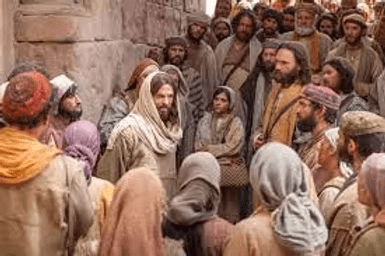
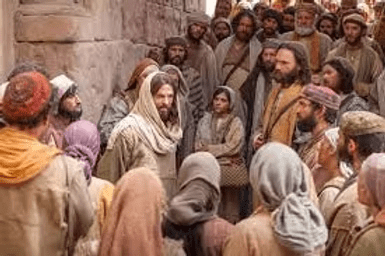
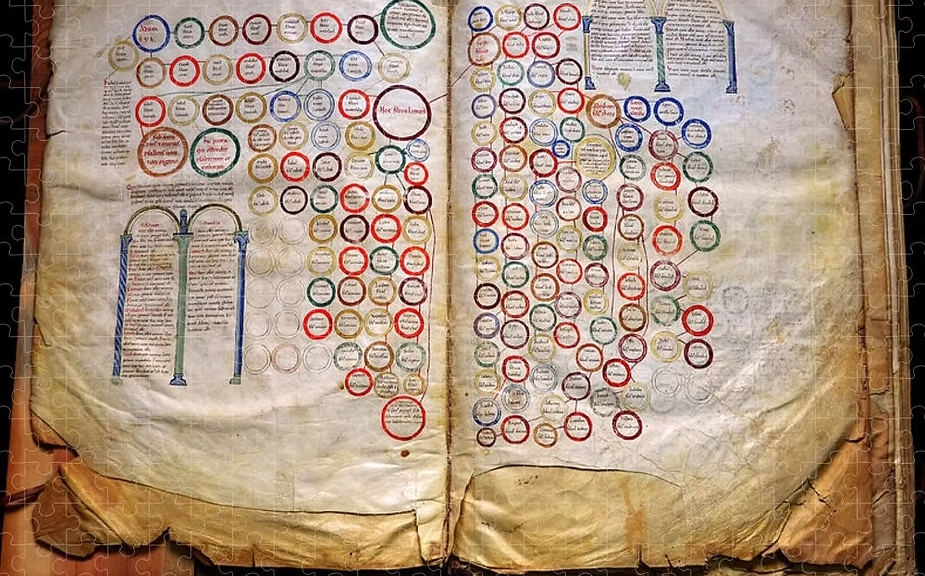
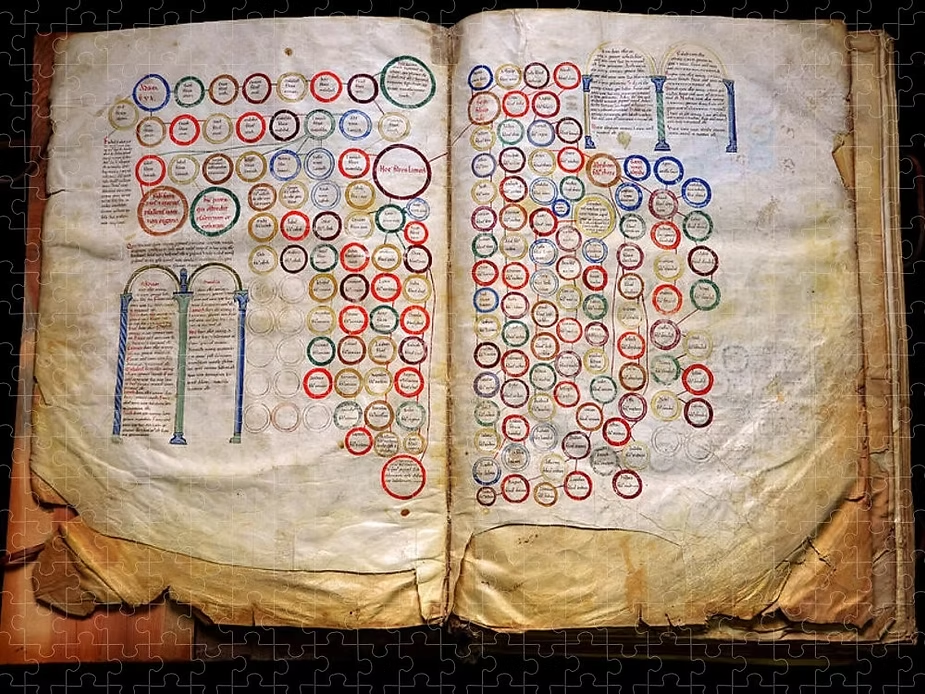
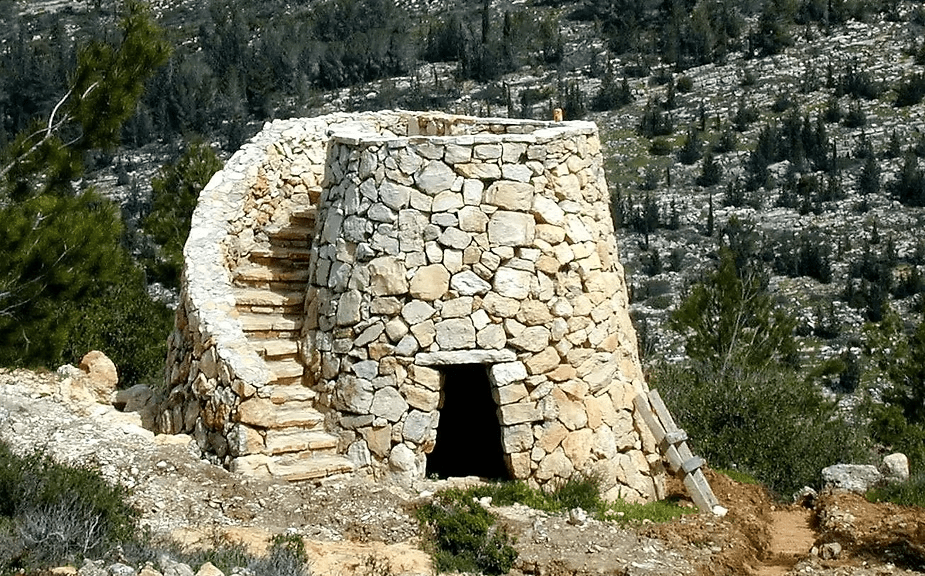




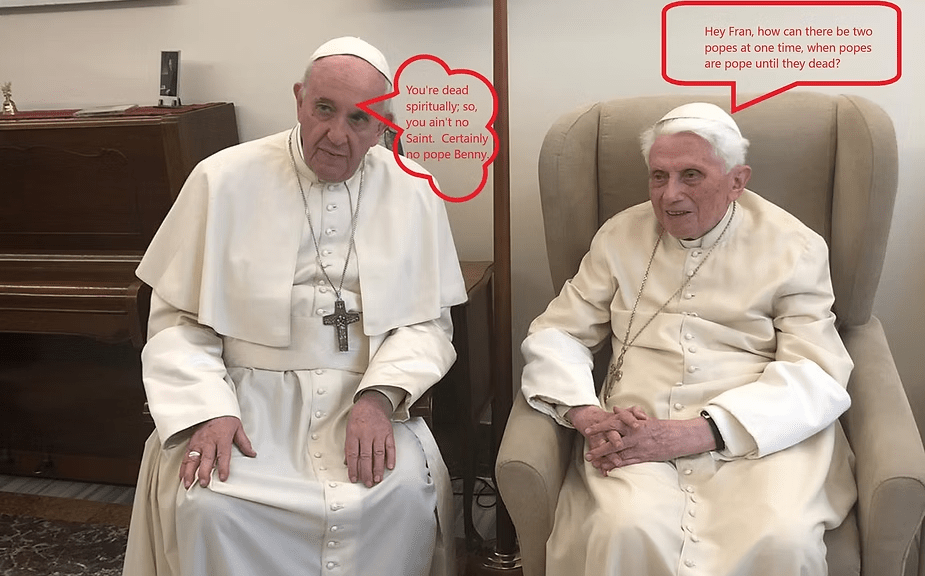


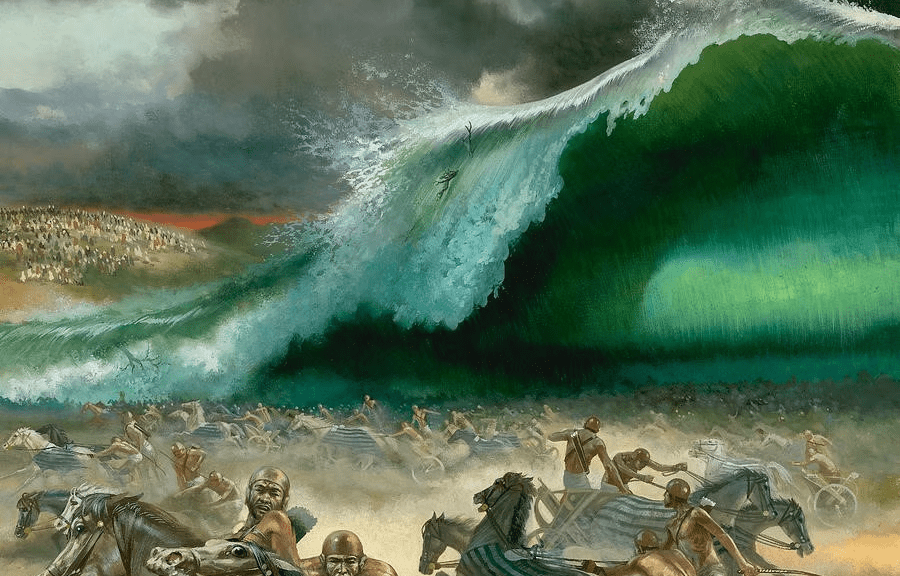
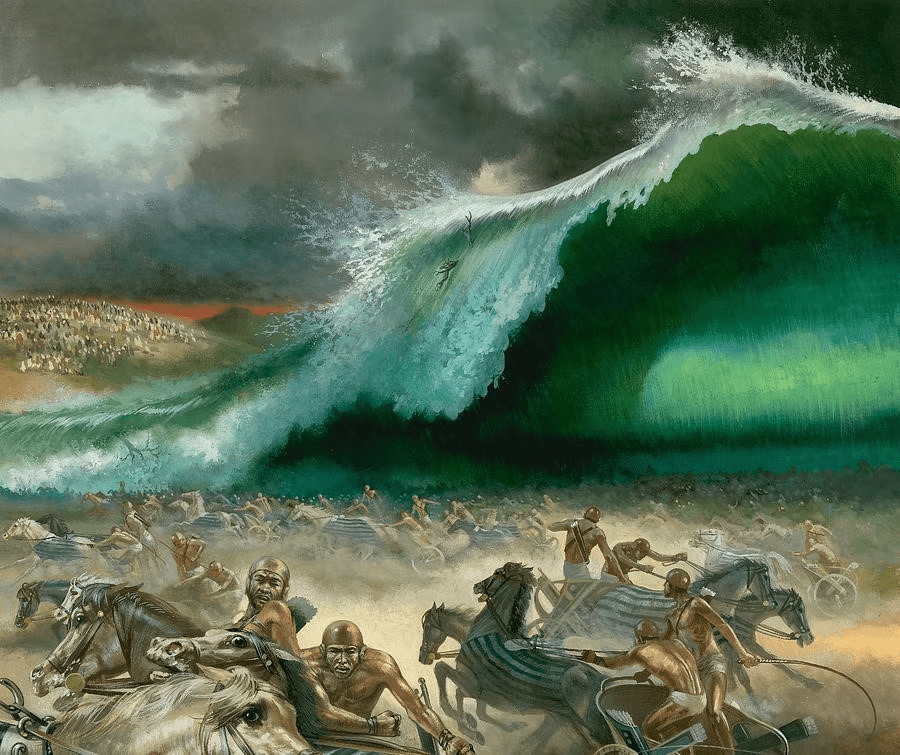

 Explaining the Readings