1 Hallelujah! Praise YAH! Happy are they who fear Yahweh *
and have great delight in his commandments!
2 Their descendants will be mighty in the land; *
the generation of the upright will be blessed.
3 Wealth and riches will be in their house, *
and their righteousness will last forever.
4 Light shines in the darkness for the upright; *
the righteous are merciful and full of compassion.
5 It is good for them to be generous in lending *
and to manage their affairs with justice.
6 For they will never be shaken; *
the righteous will be kept in everlasting remembrance.
7 They will not be afraid of any evil rumors; *
their heart is right; they put their trust in the Yahweh.
8 Their heart is established and will not shrink, *
until they see their desire upon their enemies.
9 They have given freely to the poor, *
and their righteousness stands fast for ever; they will hold up their head with honor.
10 The wicked will see it and be angry; they will gnash their teeth and pine away; *
the desires of the wicked will perish.
——————–
Verse one begins with the Hebrew words “hal·lū” and “yāh,” which translators of that language into English have created the word “hallelujah.” There is a perverse song (written by a Socialist Jew) named “Hallelujah,” with nary a mention of the true One God, named Yahweh. The Hebrew word “yah” (Hebrew has no capital letters) is defined as a “Proper Name,” and said to be the “name of the God of Israel.” (Strong’s) Well, the “name of the God of Israel” is Yahweh, which becomes abbreviated as “yah.” The Hebrew word “halal” means “to shine” (Strong’s), where “to shine” is a puzzling thing to say about “the God of Israel,” so they transform “to shine” into “praise.” In reality, David was divinely inspired to begin this song of praise by shouting out, “shine Yahweh.” The way one “shines Yahweh” is by being a soul married to His Spirit, so His Son’s soul (Adam-Jesus) has resurrected within one’s self-soul and that “shine” of “Yahweh” is a Saint who walks as Jesus reborn into flesh (even well before Jesus came and left in his flesh). To place emphasis on this shout of praise, David wrote a vertical bar after “yāh,” telling the singer to let that note ring long.
Where the translation in verse one sings “happy,” the Hebrew construct written is “’aš·rê” (from “esher”), meaning “happiness, blessedness.” (Strong’s) More often than not, this word is shown to mean “blessed,” which rings true loudly, after pausing to reflect on “shining Yahweh.” To “shine Yahweh” means one has become “blessed” by the presence of Yahweh’s Spirit and the resurrection of His Son’s soul. Certainly, that “blessed” state of being would lead to an accompanying state of “happiness,” but to say “happy are they who fear Yahweh” makes it seem possible to find “happiness” without the commitment of spiritual marriage of a soul to Yahweh.
Where it says “fear” of “Yahweh” is what leads to one’s soul being “blessed,” this means marriage to Yahweh is motivated by the command that one’s soul will “fear” only Yahweh. If one “fears” not having money or not being powerful or not having someone be attracted to one, then one will begin worshiping the demon spirits of the world, for “fear” of not being rich, influential, and sexually attractive. Those “fears” will turn one away from seeking Yahweh in divine union; so, one’s soul will not be “blessed,” meaning true “happiness” (from eternal life) will not be found.
When verse one ends by singing “delight in his commandments,” the “commandments” (construct of “mitsvah”) are the Covenant brought down the mountain by Moses. The Commandments are the terms of marriage that all individual souls must agree with. One Commandment is “Thou shall fear only Yahweh.” All other Commandments must be written on the walls of one’s heart (i.e.: soul), which is done by a wife-soul of Yahweh being joined (divine possession) by the soul of Adam-Jesus. That most holy soul leads one’s soul-body to obey ALL Commandments, without having to think about them. Thus, memorization of the Covenant is good practice and seen as attractive by Yahweh (so all Jews must memorize the Covenant as children), leading Him to propose Holy Matrimony to those souls proving sincerity and love. The “delight” is the when the wedding takes place and two are joined as one – the ‘all tingly with Spirit Baptism time.’
In verse two, the word translated as “land, earth” (“erets”) should be (always in Old Testament Scripture) read as “flesh.” This is because “flesh” is metaphorically made from dirt, dust and clay – all dead matter that become animated by the breath of life (an eternal soul) breathed into that worldly prison at birth. As such, verse two sings, “mighty in flesh will be his offspring ; dwelling in the upright will be blessed .” This is then a confirmation of the “blessed” state in verse one, now said to be from the presence of Yahweh’s Son (“the mighty”) returned to be “in flesh,” where Yahweh’s “offspring” are the multiplicity of Adam-Jesuses reborn “in flesh.” With the soul of Yahweh’s Son “dwelling in flesh,” then those wife-souls will be held “upright” in their actions (this “uprightness” is the truth to the meaning of “the cross of Jesus”), as the Son’s soul will stake their bodies of flesh “upright.” To then be righteous is to be “blessed.”
In verse three, this element of “righteousness” is stated, as coming from a “sufficiency of riches in this house.” Here, the “house” (like “earth”) is metaphor for the tabernacle that is one’s body of flesh. There will be no lack of sustenance (spiritual food and living waters) that a wife-soul (in male and female bodies of flesh) needs to feel “blessed.” This inner presence becomes the “riches” that extend eternally, not locked into only lasting in the material plane. A high priest’s soul within makes “this house” become the tabernacle that is the “house” of Yahweh. When David then sang, “this righteousness endures forever,” this says “righteousness” is only motivated through the spiritual presence of Yahweh’s eternal Son – His elohim Adam (a.k.a. Jesus). Only the spiritual can “endure forever,” which a soul is. However, trapped in a body of flesh makes a soul alone imprisoned to the death of the “earth.” Only the eternal soul of Adam-Jesus in possession of one’s wife-soul to Yahweh can free it from the realm of death, granting a soul eternal life through a return to be one with Yahweh.
Verse four sings that a soul alone exists in “darkness,” where an absence of “light” means no access to the truth of Yahweh’s Word. Divine possession by the Son’s soul brings in the “light” of truth, which begins to raise the fallen into an “upright” position, where good fruit can then be produced. This inner presence brings with his soul graciousness, compassion and righteous ways to live.
When verse five begins with the word meaning “good” (“towb”), one must remember how Jesus told the young, rich man who addressed Jesus as “good teacher,” “Only God is good.” The “goodness” of Yahweh is sewn into the fabric of His Son’s soul, so the presence of the Son makes the “good man” of Yahweh project His image. To worship the reflection is to turn away from Yahweh. The “good man” can never be “good” without Yahweh’s presence within. When David sang about this “good man deals graciously and joins,” this is the divine possession of his soul with a host soul, with the Son becoming the Lord of both host soul and its body of flesh. As the Lord of that soul-flesh, “he will guide the affairs with discretion,” which means as judged by Yahweh.
Verse six then sings of how marriage to Yahweh will be lasting, with no divorce ever desired. This sings that the union of a soul with Yahweh’s Spirit and the possession by His Son’s soul will never grow tiresome. It will always be sought. It will always be pleasing. A soul will never ‘retire’ from ministry or ‘take a leave of absence,’ in order to catch one’s breath. Only those who work too hard making up lies about their piety need such ‘time off.” Their souls never married Yahweh and they were never reborn as His Son; so, a true Saint is always looking for another assignment from Yahweh, in order to serve Him more and more.
In verse seven, one needs to recall the story of David when he was a boy and the entire army of Israel was trembling with fear. Even Sul, the king, was afraid to do battle with the giant, because they knew a loss would occur. This speaks loudly of the hearts of men who have not married Yahweh, received His cleansing Spirit and been reborn as His Son’s soul within their flesh. The element of “evil” can only exist in the world. It cannot join with the Spiritual realm of the divine. Saints are souls married to Yahweh and only fear losing that relationship. They are reborn as the Son in the flesh of the world for the purpose of confronting evil and defeating it, with no fears whatsoever that evil will triumph over the Son. To say they have the utmost “trust” in Yahweh’s protection says the truth of faith has come to them from personal experience of the Spirit and the Son. They do not enter battle having only read about the divine in books or told about beliefs to hold dear by others. They know the truth and have faith.
The strength of this faith comes from the presence of Yahweh’s Son’s soul “established in the heart” (i.e.: soul). The presence of Adam-Jesus within makes one a Saint in that name. The Son of Yahweh has the Mind of Christ (or Messiah), which is the Spirit of Yahweh making the Son the voice of Him. There is absolutely “no fear” of evil, as Yahweh knows all. The brains of the enemy will be known and revealed to the Son. This will lead the Son to command the flesh to act accordingly, to defeat the evil plots of one’s enemy.
Verse nine then sings about the ministry of Saints. They are “disbursed abroad,” so the do as Jesus commissioned his disciples, sent out in his name to spread the truth of Scripture. When we sing, “he has given to the poor,” this is not Jesus handing out promises to pay off the student loans of “the poor.” The meaning of “the poor” is all souls who are starved of spiritual food and living waters by false shepherds and hired hands, none of who have ever considered marrying their souls to Yahweh and becoming Saints in the name of His Son. Once a soul has been reborn as the Son, that “righteousness endures forever,” through the promise of eternal life after the dead body of flesh falls away. The “horns” that announce a soul’s return to be one with Yahweh will blare in “honor of an exalted” soul’s return.
Verse ten then sings of the opposite result, which will come from Judgement to all souls of the “wicked.” They will have happen to them as Jesus often said would happen to evil souls, where “the gnashing of teeth,” “grieving,” melting away” and “perishing” are all statements of the return of a soul into the physical realm – reincarnation. A soul has no “teeth to gnash,” so a return into an adult body that will find physical punishment for past sins the “gnashing of teeth” that denotes much anger (at self). The “grief” will be from recalling on Judgment day all the times that lost soul heard the truth of Yahweh spoken to him or her, but that soul refused to listen (often acting out with persecution of the innocent). The “melting away” will be the death of an old body of flesh, which might have secured large amounts of material possessions and great esteem as a ruler. However, all that will be lost in death, with Judgment meaning a return life in the flesh where the challenges of having too much will be replaced by the challenges of having too little. All challenges are agreed upon prior to reincarnation; so, the point of all challenges is to overcome them and submit to Yahweh in spiritual marriage. To “perish” then means to return, over and over again, into a body of flesh bound to die at some time, with the clock always ticking as a sign a soul must forego the entrapments of the material realm in order to be set free. The truth will set a soul free; but the truth can only come from personally joining with Yahweh – the source of all truth.
Let mutual love continue. Do not neglect to show hospitality to strangers, for by doing that some have entertained angels without knowing it. Remember those who are in prison, as though you were in prison with them; those who are being tortured, as though you yourselves were being tortured. Let marriage be held in honor by all, and let the marriage bed be kept undefiled; for God will judge fornicators and adulterers. Keep your lives free from the love of money, and be content with what you have; for he has said, “I will never leave you or forsake you.” So we can say with confidence,
“The Lord is my helper; I will not be afraid. What can anyone do to me?”
Remember your leaders, those who spoke the word of God to you; consider the outcome of their way of life, and imitate their faith. Jesus Christ is the same yesterday and today and forever.
Through him, then, let us continually offer a sacrifice of praise to God, that is, the fruit of lips that confess his name. Do not neglect to do good and to share what you have, for such sacrifices are pleasing to God.
——————–
In verse one (which is possibly the shortest verse written by Paul), the NASB translation is playing politics by turning “philaelphia” – a word most adults know means “brotherly love” – into “mutual love,” as if all the women in churches of some Christian denomination would leave en masse (taking their wads of donation monies with them) if “brotherly” was not changed to accommodate human beings within penises. According to HELPS Word-studies, “philadelphia” is: “(from 5384 /phílos, “loving friend” and 80 /adelphós, “a brother”) – properly, affection for the brethren (fellow-believers).” Notice how “adelphós” does not mean ‘sister,’ as that word is “adelphé.” Still, the translation as “brotherly love” needs to be seen as having a spiritual meaning, not a physical one.
As I have explained many times in the past, a soul trapped in a body of flesh is feminine in essence. Although the soul is eternal – having been breathed out by Yahweh into a body of ‘earth, dust and clay’ that is dead and will return to that state when the soul leaves it – the flesh (and all of the worldly realm) is feminine in nature. Dead flesh receive the soul to have a semblance of life; so, it is feminine in essence. All human beings are souls trapped in bodies of flesh, thus all are potential bridesmaids to Yahweh, as feminine to His masculine. When a soul divinely marries Yahweh, receives His purifying Baptismal Spirit, so a soul becomes a virgin womb into which Yahweh can plant the seed of His Son (Adam-Jesus), the resurrection of that Son within a host soul (in its flesh) becomes a reproduction of the Son of man (where “man” means “mankind,” which includes male and female bodies of flesh). When each and every saved soul is reborn as the Son of Yahweh (Adam-Jesus once more alive in the flesh), then each and every saved soul is masculine spiritually; and, the relationship they all (males and females alike) share is they are “brothers,” because they are all the Son of Yahweh. Yahweh becomes the Father of each and every saved soul.
Now, when the aspect of “love” (the “philos” element of “philadelphia”) is considered, this is the intent and purpose for Yahweh hand-making His Son. The Son is called “Yahweh elohim” in Genesis 2 (eleven times) and that Son was made to save lost souls (the name “Jesus” means “YAH Saves” or “YAH Will Save”). Yahweh made this Savior as His personal “love” for the souls breathed into bodies of flesh, so they could be returned to be one with Yahweh (when they leave their prison of flesh). This means Adam-Jesus – the Son of Yahweh – who is reborn in lost souls, saving them, makes them all “brothers” because of the “love” of Yahweh. The “love” of Yahweh is then the soul of Adam-Jesus, which can only be known when it is resurrected within one’s soul; as it is not the same as physical (emotional) human ‘love.’ Thus, for Paul to write “This brotherly love let it remain” (or “continue”) is a statement that says the possession of a soul by the Son of Yahweh’s soul means eternal life – forever “remaining.”
The translation of verse two is equally mistaken, where “hospitality to strangers” is another politicization that fits hidden agendas of false priests. Two words include “strangers” in their translation into English meanings. The first is “philoxenias,” which means “love of strangers” (written in the Genitive case, translating wholly as “of this of love of strangers”). The second (a balancing word) is “xenisantes,” which means “to receive as a guest,” while implying in usage “I entertain a stranger.” When the whole of verse two is seen as stating, “of this of love of strangers not you forget ; on account of of this indeed , it is hidden [or to escape notice] certain ones having entertained strangers divine messengers .” That is Paul reminding Saints like him “not to forget they were once strangers who found the love of Yahweh.” They were not chosen to be special pets of Yahweh, but to be sent as ‘divine messengers” – each filled with the “angel” of Yahweh’s Son – “to entertain other strangers.” It is “on account of this” – being eternally saved by “brotherly love” – that they will be reborn as the Son so others can equally be saved souls.
In verse three, Paul was not making some statement that hired hands and false shepherds should enter into the dens of inequity that manmade brick-and-mortar prisons housed the most heinous breakers of law known to mankind and attempt to rescue them by delivering lame orations of misunderstanding of divine texts. Paul wrote while in a dungeon in Rome, but he was not pandering for visitors to come show him some love. Paul’s soul will united with Yahweh’s “love” – the Son Jesus resurrected within his soul – so he was not reminding Saints their mission included prison ministries.
That places a wholly material realm meaning onto these spiritual words. Paul was reminding all true Saints that they had once been souls entrapped in the prison of their own flesh; and, Yahweh had freed them from all the self-imposed “mistreatment” they caused to their soul through past sins. Yahweh freed them through Spiritual marriage and the resurrection of His Son within their lost souls, so they were promised eternal life. A Saint is sent out into ministry (not into prisons – keeping in mind Jesus never visited John while he was imprisoned in Herod’s lockup), where the teaching of the truth of Scripture is the key that unlocks the prisons of the flesh: “and the truth shall set you free.”
In verse four, Paul’s references to “marriage” are not about the physicality of a woman being betrothed to a man. They are all about “a wedding within” (from “gamos en”) that unites “all” (“pasin”) souls that are freed (saved eternally). When Paul wrote of “the marriage bed” being “undefiled” (“koitē amiantos”), this is about the cleansing of all past sins, so a soul in its flesh – reborn as Jesus in the flesh – can live the remainder of its life on earth sin free. The “marriage bed” was recently seen in parable, when Jesus told of a friend coming at midnight asking for bread to feed a visitor. Jesus was the soul awoken by the knock (“and the door will be opened”), who was sleeping with Yahweh’s children in the marriage bed with his soul. This means the mention of “adultery” – a Commandment of the divine marriage vows – says a soul saved will no longer ‘sleep around’ with demon spirits that lead a soul in its flesh to sin.
Verse five then begins with the capitalized Greek word “Aphilargyros,” which is the Nominative Masculine Singular form of “aphilarguros,” meaning “without love of money.” The capitalization elevates this word to a divine level of meaning, where the “love of Yahweh” is a true Spiritual “love,” with “money” being metaphor for the worldly realm and all the material possessions it can offer (on a temporary basis). When Paul then continued to say this Spiritual state of “love” was “this manner of life,” he was saying the “brotherly love” that always “remains” is purely Spiritual, from a soul married to Yahweh’s Spirit and the union of a possessing Lord-soul is nothing that can be seen by human eyes. This inner presence always makes a Saint “being satisfied with the present,” which is always “remaining,” never fleeting.
In the second half of verse five, we get the impression that Paul heard Jesus give a quote, when in reality Paul never physically met Jesus. Since there were no book stores selling copies of the New Testament back then, this quote can only be attributed to the truth being told to Paul’s soul, after his soul married Yahweh and became one with the soul of Jesus. The rest of verse five literally translates into English saying, “his soul indeed it has said : not lest you I will give up , neither not lest you I will desert .” When this is attributed to Paul having first stated that his soul has been sent as a statement of Yahweh’s “love,” which always makes a wife-soul married to His Spirit feel His presence in the “present,” the gift of His Son’s soul is the promise of eternal life, which “will never cease being one with one’s soul and never leave a soul-wife of Yahweh once given.”
From this promise of eternal divine assistance, verse six then speaks of the true faith that comes to a soul imprisoned in flesh, from personal experience of the soul of Jesus having been reborn into one’s soul-flesh. It is an affirmation that begins with the capitalized Greek word “Hōste,”which means “Therefore.” When raised to a divine level of meaning, this word must be understood to properly mean: “(a conjunction, derived from 5613 /hōs, “as” and 5037 /té, “both-and”) – wherefore (with the result that both . . . ), connecting cause to necessary effect which emphasizes the result (the combined, end-accomplishment). The result involved then is the combination of both elements in the correlation, underscoring the inevitable effect of the paired elements.” (HELPS Word-studies)As a divine level of Yahweh means Spirituality has joined with a soul (with the second soul of His Son added), the “both and” makes “Therefore” be a divine statement of Spiritual union. Whereas a soul was once lost before, now it has been found forevermore.
The affirmation comes with the complete “confidence” that knows this presence is leading it away from past sins and onward to an eternal life of oneness with Yahweh, as His Son reborn. Thus, all Saints say: “Lord to my soul helper , [ kai ] not I will fear ; what will it do to my soul mankind ?” Here, the capitalization of “Kyrios” becomes a divinely elevated statement that the possessing soul of Jesus (the Son of Yahweh) – as two souls in one body of flesh – will be welcomed as the “Lord” over both the host soul and its flesh. As to Paul saying, “my soul helper,” this is not the soul of Jesus that is the “helper soul,” but the host soul being the “helper soul” to the “Lord” soul – Jesus. The brackets surround the Greek word “kai” means the importance that should be seen in this “Lord my soul helper” is it is unseen and within one’s physical body of flesh. It is then within one’s soul that safety and protection is strongly felt, leading all such souls to affirm, “I will not fear,” knowing this presence is with my soul. The question then asks, “What can mankind do to me?” where there is no persecution or punishment that will be more than a fleeting physical pain, to then be replaced with eternal bliss. There is no reason to fear suffering as a Saint sent out as a messenger of Yahweh, in the name of Jesus.
In verse seven, Paul begins with the capitalized Greek word “Mnēmoneuete,” which means “you Remember.” Following a verse of affirmation to the Spirit and to the Son (two-thirds of the Trinity within), the call to “Remember” is those false shepherds and hired hands who told lies, which were revealed when the soul led by Jesus can and exposed the truth of Scripture for the first time – “the word of God.” The comparison of the two – liars and Saints – is seen by “observing carefully this outcome of this of conduct [or “way of life”] and how each “imitates” [or “follows”] “this faith”. One way leads to the promotion and acceptance of sinful ways, where the leaders of the Temple and their aligned synagogue rabbis, promoted monetary profits at the expense of those seeking to hear the truth of “the word of God.” The other – the Saints – tell the truth and demonstrate how that truth motivates them to lead their lives righteously (with the help of Jesus as their Lord within).
Verse eight then begins with the two capitalized words “Iēsous Christos,” which comes off like a proper name, where Jesus is the Christian name and Christ is the surname. That is not the case, as each capitalized word must be read individually and separately as a divinely elevated meaning related to Yahweh, before the two can be joined together. The name “Jesus” means “Yahweh Saves” and the word “Christ” is the same as the Hebrew word “mashiach” (Hebrew has no capital letters), where both words mean “Anointed.” This, elevated to a divine level of meaning is a statement of Yahweh’s “Anointment,” where His Spirit is poured out upon a soul forever (as was David). Thus, the two words state that “Yahweh Saves” soul that have been “Anointed” by His Spirit. That “Christ” state is the Baptism by the Spirit that makes a soul “Saved by Yahweh” cleansed by all past sins. That virgin state of being makes a wife-soul then (like the Virgin Mary) prepared to receive the soul of His Son, which is sent to all souls “Saved by Yahweh.” Thus, “Jesus Christ” is a statement that says to be “Saved by Yahweh” a soul must be “Anointed” by His Spirit and prepared to become His Son’s place of resurrection – “Receive the Spirit.”
Paul then added that the receipt of this saving soul – which can only enter into one made a “Christ” – had come “yesterday” to all the Saints who would read Paul’s letter written in Hebrew, while he was in a Roman prison. Once a soul has been “Saved by Yahweh” and “Anointed” forever by His Spirit, then that salvation will exist “to the ages.”
In the leap forward to verse fifteen, it is most important to see Paul recommending to those souls not yet married to Yahweh to do like him and the other Saints created since Jesus walked the earth: “we should offer up as a sacrifice of praise because of all to this to God.” This is not a suggestion to throw some hotdogs on the grill and have a party celebrating God. Instead, it means “sacrificing” one’s “whole” self – soul and body – to Yahweh in divine marriage. A “sacrifice” means the total destruction of what once trapped an eternal soul within, such that the flesh has been willingly “offered up” to “this of God” to use as His. When Paul then wrote, “the fruit of the lips confessing this name of his soul,” that is the ministry in the name of Jesus that has his possessing soul lead a body of flesh out, to speak the truth to seekers.
Verse sixteen then says this sacrifice of self to allow the Son of Yahweh to again walk the earth in sin free flesh is what pleases God. When we read in the New Testament Gospels where God spoke and said, “in him I am well pleased,” this refers to those who made such sacrifices of self, because Jesus came to them as seekers and shared the truth to their souls. Yahweh “is pleased” with “all” souls who bow down before Him at the altar of divine marriage and sacrifice self. In return they take on the name of Yahweh (Israel) and they give rebirth to His Son, whose name they enter ministry “confessing” to be (in the name of Jesus).
On one occasion when Jesus was going to the house of a leader of the Pharisees to eat a meal on the sabbath, they were watching him closely.
When he noticed how the guests chose the places of honor, he told them a parable. “When you are invited by someone to a wedding banquet, do not sit down at the place of honor, in case someone more distinguished than you has been invited by your host; and the host who invited both of you may come and say to you, `Give this person your place,’ and then in disgrace you would start to take the lowest place. But when you are invited, go and sit down at the lowest place, so that when your host comes, he may say to you, `Friend, move up higher’; then you will be honored in the presence of all who sit at the table with you. For all who exalt themselves will be humbled, and those who humble themselves will be exalted.”
He said also to the one who had invited him, “When you give a luncheon or a dinner, do not invite your friends or your brothers or your relatives or rich neighbors, in case they may invite you in return, and you would be repaid. But when you give a banquet, invite the poor, the crippled, the lame, and the blind. And you will be blessed, because they cannot repay you, for you will be repaid at the resurrection of the righteous.”
——————–
Verse one is placed in this reading, while skipping over the following five verses. It is important to know that context, as it is directly pertinent to the information stated in verse one. The five omitted verses tell that “one of the rulers of the Pharisees” had invited a “certain man with dropsy” – a visible swelling in some part of the body, due to a build-up of fluids in the body – so “they were watching closely” Jesus, to see what he would do to this “known Jew” (the meaning of “certain one”). Upon seeing this “certain man,” Jesus asked the guests at the luncheon (“the lawyers kai Pharisees”), “Is it permitted by law to this to sabbath to cure or not ?” When they “were silent” and did not respond, Jesus then “healed his soul” (of the “certain one”) kai “set him free” from that demon spirit within that caused him to retain fluids. Jesus then asked the group, “Of Who of you with a son or an ox fall into a pit on the sabbath would not immediately pull him out ?” To that question they all had nothing they could say. It is then from that demonstration (which showed how poor the “ruler of the Pharisees,” the “lawyers kai Pharisees” were in claiming to serve Yahweh, when none did anything of value any day of the week … much less on the sabbath.
Without knowing the details of these five verses, which make is clear that all the “rulers” of the Temple in Jerusalem and the “Pharisees” who owed their wealth and position to making a profit off knowing nothing of value about the Law (as “lawyers”) says Jesus was then moved to tell a parable about that total incompetence in leadership for the Jews. This means what seems to be Jesus invited to dine where a table would be where seats of position were arranged made him watch the mad scramble to seat close to the head of the table and tell a story about waiting to sit, letting the host seat the guests. That has absolutely nothing to do with the deeper meaning that is in this parable, because everything was set to the environment of the present, but metaphor for being seated at Yahweh’s ‘table’ in the afterlife. Everyone who claimed to know the Law were speechless as to what Law says not to save your son, or even a possession like an ox, if it fell into a pit. While they knew nothing of value about the truth of Scripture, they all positioned themselves as if distinguished guests of Yahweh. Jesus pointed out they were the lowest of all invitees (Jews) and they should admit that lowliness, rather than have Yahweh Judge them as heretics defiling His Holy name.
When verse seven says Jesus then told a “parable,” the Greek word “parabolēn” comes from a root that is properly understood to be: “a teaching aid cast alongside the truth being taught. This casts additional light by using an arresting or familiar analogy, (which is often fictitious or metaphorical, but not necessarily).” (HELPS Word-studies) This means Jesus telling a story about a spiritual gathering, not a physical one, like that Jesus was attending. The spiritual aspect of this “parable” must be remembered to be a “teaching aid cast alongside of the truth being taught.” Jesus was not teaching how to line up at a luncheon and let the one inviting guests seat them one at a time, according to favorability. Jesus was teaching that everyone in that ruler of the Pharisees’ house acted like they were Yahweh’s favored guests in Jerusalem, when not one of them could heal a man with an illness, by being an outlet for Yahweh on earth.
In verse eight, Jesus spoke the equivalent to the Greek word “gamous,” which infers a “wedding feast.” This means the “parable” is not about the rich and powerful gathering to eat lunch on a sabbath, but about the table that is the earth plane being where Yahweh invites His chosen ones to partake of spiritual food (manna from heaven). This then says all those invited (the Jews were the remnant of the chosen ones brought to the Promised Land from Egypt, by Moses) were all bridesmaids awaiting the official union of their souls with the bridegroom – Yahweh’s Spirit. Those who would sit closest to the head of the table would be the Saints, such as Abraham, Isaac, Jacob, Moses, and Jesus – all the Saints who would officiate the union of wife-souls to Yahweh’s Spirit, with those bridesmaids still awaiting the time for divine marriage considered the least of those invited. This then says the ruler of the Pharisees and his lawyers were more like those bridesmaids whose lamps ran out of oil (the light of truth), at the time when the bridegroom came. They were deemed foolish and never joined with Yahweh as one. They become reflective of the goats that Yahweh and the souls of Jesus would say, “I do not know you,” as they will not be the sheep who sacrificed their worldly positions for the promise of eternal life in the spiritual realm, with Yahweh.
The ruler of the Pharisees and his invited guests (who watched Jesus closely) were those who would show up late at the wedding feast (another parable told by Jesus), not dressed for marriage to Yahweh. They would be kicked out of the wedding feast, in the way that Jesus said the one inviting guests (a proposal of divine marriage) would send out messengers announcing everyone is welcome; but the ones who show up for free food, with no intent of sacrificing their souls in marriage to Yahweh, would not be dressed for such a special occasion. The ruler of the Pharisees and his lawyer friends all had no intentions for marrying Yahweh and sacrificing their worldly gains. Thus, they would be cast out of any promise of eternal life.
As for the “ruler of the Pharisees” (who was just one of many), it makes sense that he would be Nicodemus. The “certain one” who suffered from dropsy would then most likely be Joseph of Arimathea, who when healed had his soul touched by Jesus, making him become wholly supportive of Jesus as the Son of Yahweh. Nicodemus and Joseph would have been secret disciples of Jesus, who were sent out as a pair with the other sixty-nine pairs. Most likely they did not risk being seen defending Jesus in any way, so they did not go tell anyone “the kingdom of God has come near.” The symbolism of a build up of fluids in Joseph means he felt the emotional ebb and flow of Jesus possessed by the Spirit of Yahweh, but he retained that within himself, afraid to let his faith be shown. When Jesus touched Joseph with his soul, freeing Joseph to fully express his love of God and his support of Jesus, not only did his dropsy go away, but he began to serve Yahweh as an extension of Jesus.
[1] The word that came to Jeremiah from Yahweh: [2] “Come, go down to the potter’s house, and there I will let you hear my words.” [3] So I went down to the potter’s house, and there he was working at his wheel. [4] The vessel he was making of clay was spoiled in the potter’s hand, and he reworked it into another vessel, as seemed good to him. פ
[5] Then the word of Yahweh came to me: [6] Can I not do with you, O house of Israel, just as this potter has done? says Yahweh. Just like the clay in the potter’s hand, so are you in my hand, O house of Israel. ס
[7] At one moment I may declare concerning a nation or a kingdom, that I will pluck up and break down and destroy it, [8] but if that nation, concerning which I have spoken, turns from its evil, I will change my mind about the disaster that I intended to bring on it. ס
[9] And at another moment I may declare concerning a nation or a kingdom that I will build and plant it, [10] but if it does evil in my sight, not listening to my voice, then I will change my mind about the good that I had intended to do to it. ס
[11] Now, therefore, say to the people of Judah and the inhabitants of Jerusalem: Thus says Yahweh: Look, I am a potter shaping evil against you and devising a plan against you. Turn now, all of you from your evil way, and amend your ways and your doings.
——————–
When verse one says (literally translated into English), “the word which came to pass to Jeremiah from Yahweh saying,” this cannot be seen as Jeremiah sitting in a chair in his house, when Yahweh all of a sudden showed up at the door and said, “Hey Jere, meet me down at the potter’s house. I want to tell you something there.” This “word that came to pass to Jeremiah from Yahweh” was spiritual, where Yahweh spoke to Jeremiah’s soul; so, when Jeremiah heard the voice of Yahweh “speaking” to his soul, he immediately listened. Because ordinary Tom, Dick, and Harriets cannot hear the voice of Yahweh speak to he or he … ever … this ability of Jeremiah says his soul was married to Yahweh. As a wife-soul, his soul was obediently alert to hear the call of Yahweh and immediately respond as His loving servant.
In verse two, there is a missing element, which is the first word spoken by Yahweh to Jeremiah, which says, “arise” (“qūm”). This, again, is not Yahweh telling Jeremiah to get up out of his seat, but it is a spiritual direction that says, “Let your soul lift away from your flesh, so I can show you metaphor that is in the material world. After that word “arise,” Yahweh then said, “and descend” (“wə·yā·raḏ·tā”) “to house of the potter.” The “house” is a statement of the realm of the world where life is found; and, “of the potter” is better translated as “of the fashioner” or “of the former” (“hay·yō·w·ṣêr,” rooted in “yatsar”). This is then much less about taking the soul of Jeremiah down the road a bit to where some man made vases for the locals to buy and use and much more about Yahweh taking the soul of Jeremiah well back in time, to when Creation was in progress by the elohim created by Yahweh (in Genesis 1) did the work of a “fashioner” or “former.”
In verse three, the English translation above misses an important signal found in the text. Where we read, “and there he was,” the Hebrew text has this text presented: “[ “wə·hin·nê·hū”] ( “wə·hin·nêh-”) ( “hū”)” . The repeated word – “wə·hin·nê·hū” – speaks spiritually, rather than physically. Thus, when verse three begins by saying, “and when I descended to the realm of the fashioner,” a semi-colon mark separates that by the above text, which repeats: “and there was he and there was he,” where the brackets speak spiritually of the elohim “fashioner” of mankind in Creation AND there was Yahweh overseeing that work.
Genesis 1 includes the same Hebrew word “והנהו” written here, translated as “and there was he.” In Genesis 1:31 (the last verse), that word is written and translated as meaning “and indeed it was,” followed by the Hebrew word “towb,” meaning “good.” Thus, here the translation can be: “and indeed it was and indeed it was he”. Without understanding why Jeremiah would place certain words between brackets and parentheses means translation services throw that out as if unimportant and not worth figuring out. The unstated (as asides) are inferences to the spiritual; so, the soul of Jeremiah was taken to the time of Creation, when saw mankind being “fashioned.”
When verse four begins by stating, “and was gone to ruin the vessel,” when understanding the soul of Jeremiah has been transported to a time when mankind was being “formed” by the hand of the elohim “fashioner,” the aspect of a “ruined vessel” must be seen as when the elohim began hideous experiments with humanity, with the creation of grotesque monsters and giants. As “vessels,” each was designed (by Yahweh) to receive a soul that would animate the “vessel” to life. Because Yahweh’s plan did not allow the elohim the freedom to make horrendous changes in mankind (male and female they made them), the Great Flood would become the event that would be when “again he made it into vessel another , as good it seemed to the fashioner to make .” This was when all the monsters had been destroyed or driven underground, so the mankind stemming from Noah (descendant of Adam – the Son of Yahweh) would be Yahweh’s design that would be “good to make”.
Thus, the first four verses speak of the design of Yahweh, whose instructions were passed on to the “fashioner” or the “former.” This element of the “potter” must be seen as parallel of Genesis 1, where the “fashioner” were the elohim that were created by Yahweh to “form” the material plane. The “former’s house” is then the Earth which spins around the Sun on a flat plane orbit, as a spinning “wheel.” When Yahweh allowed Jeremiah to see the “ruin” of that being “made of flesh” (metaphor for “clay”), it was “reworked” or “again made.” This becomes parallel to the Great Flood that destroyed all that had been “formed,” but went wrong in formation. The Great Flood was followed by Noah and Shem begetting the royal line of souls that would become the spiritual descendants of Abram.
The placement of a “peh” (“פ”) at then end of verse four signals this important section is “open.” This says the four-verse presentation of Creation of mankind, with it becoming “marred” while still in a wet “clay” state ends with that story, while opening the following verses to “close” that perspective. The ending of verses six, eight and ten with a samekh (“ס”) means the open series is then “closed,” with three closures presented, with all relating to the Great Flood’s cleansing of the “ruined,” to be replaced with a new “formation.”
Verse five then repeats verse one, with Jeremiah replacing his name with “to me” (“’ê·lay”). The promise of Yahweh speaking to Jeremiah is then fulfilled, after his soul has seen the power of Yahweh to command changes to His creations. Here, Yahweh poses a question that implies Yahweh’s command of the elohim He created makes Him be the premier “former” of “fashioner,” whose hands hold the spirits that are the elohim, so they can be reshaped and remade when He seen “ruin” in their “formation.” This becomes an unstated question about the power of Yahweh to cast down into the earth the fallen angels who rebelled against Yahweh’s command to serve mankind. When they instead decided to make monsters of animal-man (male and female they were crossbred with the elohim (or “gods”), their “potter’s clay” was redone and they were forbid from ever touching the spinning wheel physically again.
When this deep concept is seen in this text, Yahweh then commanded Jeremiah to go “the house of Israel” and explain to them (again) what that house means. The word “Israel” means those people (not a nation) “Who Retain the el of Yahweh” – His elohim that is the Son. For all souls who do not marry their souls to Yahweh, so their souls can be cleansed of imperfections and made virginal to receive the soul of the Son within their souls, then those rejects will be smashed down onto the wheel, no longer the “ruined” work it had become. With that ‘return to Go’ done, everything the failed “house of Israel” would have become will be finished. This command to Jeremiah to know the power in the hands of Yahweh ends with a closure mark, showing Yahweh can ‘Great Flood’ the wicked calling themselves “Israel” falsely, so the world will be swept clean of their “ruined formation.”
In verse seven, Yahweh said, “the moment I speak , concerning a people and concerning a sovereignty ; to root out and to break down to perish .” This says the manner in which Yahweh “speaks” to “a people” who claim “sovereignty” due to having been “fashioned” by the hand of Yahweh, but are not perfectly made by His design, those words will be heard in the dismantling of all who falsely make such claims in Yahweh’s name as the “immediate” destruction of the “ruined vessel” they truly were.
In verse eight, those who hear that word of Yahweh spoken in the signs that lead to “perishing” as ”a people” and as “a sovereign” gathering in Yahweh’s name, so the “people” change their wicked way and repent, then Yahweh will save them. To see Yahweh saying “I will relent from disaster” as a statement that says, “I will save them from their self-made disaster,” the implication is the “people” themselves cannot keep themselves from heading towards “disaster.” Therefore, only “Yahweh Will Save,” which is a promise that says “I will console their souls from disaster” by sending their soul the soul of My Son to join with their souls. This leads to another mark of “closure,” related to the Creation story told prior. Yahweh created “a people sovereign as the truth of Israel,” all of whom received His Spirit and were each the resurrection of His Son’s soul. That addition to the “clay” of those “vessels” is the only way to avert “disaster.” Thus, Yahweh created His Son on the seventh day – the day made holy – for the sole purpose of saving mankind from “disaster.”
In verse nine, Yahweh spoke of the “moment His word decides to build and plant a people of His sovereignty.” This is then followed by verse ten, where once again there are spiritual statements of unstated physical words (as seen in verse three). The translation above that says, “but if it does evil in my sight” misses the point of Jeremiah writing “wə·‘ā·śāh [ “hā·rā·‘āh” ] ( “hā·ra‘” )bə·‘ê·nay,” where the non-bracketed and non-parenthesized translates into English saying, “and if it makes in my eye”. This becomes the inspection of a “vessel” by the “fashioner,” to “see” if any imperfections are showing. The unstated spiritual word repeated implies that “made” is “evil” or “bad.” As an unstated spiritual implication, this says that which is “evil” is demonic spirit possession. Such demons possess a soul in its flesh (or ‘clay”), “making” it commit sins that are known by Yahweh. The acts committed are the signs of “ruin,” but the “evil” is spiritual, thus invisible to the naked “eye.”
When Yahweh then said “if a people formed in the image of Yahweh make it known they are imperfect,” then they will make that “evil” known by “disobeying His voice.” That says everyone of those “people” should be exactly like Jeremiah, such that each awaits the call from Yahweh and immediately responds, “Here I am” when called. When Jeremiah becomes the exception to that rule, then the people have given an unspoken sign that “evil” has possessed their souls. At that time, everything promised as “good” for “a people” will be taken away (“I will relent”). This then is where the third sign of “closure” is placed, referring back to the open series about the Creation plan and the cleaning of the wheel with the Great Flood.
Verse eleven is then the command given by Yahweh to Jeremiah, to “speak now to the men of Judah (a name that means “Praiser”) and to the souls dwelling in Jerusalem (a name meaning “Teaching Peace”)” and tell them, “behold Yahweh is fashioning their disaster and devising a plan against them”. If they want to avert their self-made destruction, then they must “return now man from evil ways and make good your ways and your doings”. That says the imperfection seen by the “eye” of Yahweh is telling Him to destroy and start over. The only way to avoid that destruction is to marry their individual souls to Yahweh and give rebirth to His Son in each of their souls. Of course, knowing the end of that story, they rejected the messenger and the message.
The moral of this story applies to everyone, at all times. Disaster is manmade and assured to all mortals. The ways of salvation are the perfect plan set forth by Yahweh, through Moses. The Commandments can only be remembered and lived when the Son of Yahweh’s soul has become one’s inner Lord, controlling the soul and its flesh (“clay”). To reject that design is to be reworked after destruction.
1 Yahweh, you have searched me out and known me; *
[2] you know my sitting down and my rising up; you discern my thoughts from afar.
2 [3] You trace my journeys and my resting-places *
and are acquainted with all my ways.
3 [4] Indeed, there is not a word on my lips, *
but you, Yahweh, know it altogether.
4 [5] You press upon me behind and before *
and lay your hand upon me.
5 [6] Such knowledge is too wonderful for me; *
it is so high that I cannot attain to it.
—–
12 [13] For you yourself created my inmost parts; *
you knit me together in my mother’s womb.
13 [14] I will thank you because I am marvelously made; *
your works are wonderful, and I my soul know it well.
14 [15] My body was not hidden from you, *
while I was being made in secret and woven in the depths of the earth.
15 [16] Your eyes beheld my limbs, yet unfinished in the womb; all of them were written in your book; *
they were fashioned day by day, when as yet there was none of them.
16 [17] How deep I find your thoughts, el! *
how great is the sum of them!
17 [18] If I were to count them, they would be more in number than the sand; *
to count them all, my life span would need to be like yours.
——————–
Notice how the Episcopal Church (not their source translation service) has combined verses one and two into what they call verse one. That change at the beginning then offsets the rest of the verses in the psalm; so, all have to be renumbered to match the truth that all other sources of Psalm 139 offer. I have added the appropriate verse numbers in bold type, within brackets. Additionally, I have restored “Yahweh” in two places, where the translation is a generic “the Lord.” In verse seventeen (Episcopal Church 16), the Hebrew text of David shows “el,” which I have restored, from the translation of “God.” All forms of “el” [singular] and “elohim” [plural] are references to an inner presence that is the Son of Yahweh, His “Yahweh elohim” of Genesis 2. To deny that inner presence is to make mankind seem capable of godlike abilities, where man can save itself from personal ruin, simply by expressing belief in a generic “Lord” and nebulous “God.”
In the true verse one, David wrote simply: “Yahweh you have searched me , and know .” This does not imply that David was so young that he was like a needle in a haystack, so Yahweh had to “search” for David. It says Yahweh “searched” David’s soul, prior to him being born, when David’s soul last knelt before Yahweh in Judgment. David was found pure, which means David’s soul (departed from flesh that went by some other name) had previously been a true representation of “Israel” [“Who Retains the el of Yahweh” in his soul] and his Lord had become the soul of Adam-Jesus, leading his soul to that Judgment as a pure soul. Thus, Yahweh “knew” David’s soul before it was born again; and, for a Saint to be born again, it is with Yahweh’s intent to serve Him again, in a new incarnation.
In verse two (the Episcopal Church’s 1b), when David sings that Yahweh “knows his dwelling and its rising,” this sings of the Spirit of Yahweh having been outpoured upon David’s soul forever. That cleaning Baptism made it possible for the soul of Yahweh’s perfect Son to “dwell” (or “sit down”) within his soul, making sure that David’s soul “rose” to divine heights, as a Saint in His name. When David sings, “you discern my purpose at a distance,” this does not say Yahweh is not one with David’s soul. Instead, the word translating as “at a distance” (of “far off”) – “mê·rā·ḥō·wq” – means “in space and time.” Yahweh discerned David’s purpose well before he was born and knew he would lead His chosen people to adhere to His Covenant properly – through divine union of their souls with His Spirit, so all were true to the name “Israel.”
In verse three, where David sings, “my path and my lying down you winnow ; and all my roads are in your service .” this sings of David’s soul being like seed planted into the earth. His “lying down” is Yahweh “scattering” David’s soul in various furrows into which Yahweh “fans” or “blows” David. When he continues, “all my roads are in your service,” this speaks prophetically of David’s failure, near the end of his life. That “road” would “serve” Yahweh, as Yahweh did not make David King of the Jews, because Yahweh was their King. David’s perfect success had to be known as totally due to Yahweh; so, his failure spoke loudly that all souls trapped in human flesh are flawed and cannot find a Judgment as pure, without Yahweh’s help. David’s failure was akin to the designed failure of Adam (and wife), because they had to leave Eden to become the first priests of Yahweh in the world.
In verse four, David sang that he was like Jesus, who regularly said he did not speak for himself, but for the Father. For David to sing, “for not a word on my tongue”, that sings that David did not manufacture words that came from his mouth for self-satisfaction. When he then added, “behold Yahweh you know the whole,” this sings of every word from David was the word of the Father, spoken through David’s mouth and lips.
In verse five, David’s singing, “behind and in front you have confined me” is about the dual souls that are the soul of David united with the soul of the Son of Yahweh (Adam-Jesus). When this state of being ‘doubly fruitful’ occurs, one must follow, while the other leads. David’s soul is the one “behind,” while Jesus’ soul is the one “in front of” David’s soul, leading it to righteousness. This then “confines” of “binds” David’s soul, so it will not be influenced by worldly demon spirits. With that “confinement” desired, not forced, David wrote, “and set upon me your hand”. This means that Yahweh’s Spirit and Jesus being the Lord soul of David’s soul and flesh made David become the physical “hand” of God on earth.
In verse six (the Episcopal Church verse five), David begins this verse with the repeated Hebrew word “pili,” with two constructs of that placed within brackets and parentheses, as: [ “pil·’î·yāh” ] ( “pə·lî·’āh” ) . The brackets and parentheses reflect unspoken words of spirituality, where “too wonderful too incomprehensible” are not truly words sung in this psalm. They are silent reflections of just how supernatural the “knowledge for me” or “knowledge coming from me” is. This sings of how impossible it is for any human being to possess the “knowledge” of Yahweh. As such, David then sang, “it is inaccessibly high,” stating not ever the greatest mind the planet would come to know [Solomon] could ever have the scope of “knowledge” that David would open his mouth and speak (without forethought). David then admitted, “cannot I attain” this intellect from a human flesh organ between the eyes and ears.
In the leap forward to verse thirteen (Episcopal Church verse twelve), David then sings, “for you formed my inward parts.” This can be seen as why this Psalm 139 is the companion song to the track one Old Testament reading selection from Jeremiah 18. In that reading, the word translated as “potter” actually means “fashioner” or “former.” Here, David sings of the “formation” of his “inner parts,” which is his “heart” and “soul” – spiritual in “form.” The Hebrew word translated as “inward parts” actually is the “kidney,” which is an organ of purification. Thus, the heart and soul are likewise purifying essence in the soul-flesh. When Yahweh “forms” a soul to be pure, then one has been Baptized by His Spirit and reborn as His Son as one’s Lord. Thus, when David sang this “formation” was continued “within his mother’s womb,” that says all of the physical features of David’s flesh (from Yahweh joining DNA from his mother and father purposefully) were designed by the hand of Yahweh. Yahweh guides the formation of every human being into which He breathes a soul giving life to the flesh He guided to be made in a mother’s womb.
In verse fourteen, where David wrote, “I will praise you upon for I am fearful,” the source of true “praise” is initiated by the soul of Adam-Jesus within. The soul-flesh follows that lead to “praise” Yahweh for His Salvation given. The element of “fearful” is following a Commandment written upon the walls of one’s soul – as the soul of Jesus being one’s Lord – which says, “fear only Yahweh.” The “fear” is knowing a personal relationship with the Spirit and the Son and then being afraid of losing that relationship as the wife-Son. This leads the soul-flesh to lovingly seek to please Yahweh, so the Son makes “marvelous works” come from the soul-flesh, as a Saint in the name of the Son. David’s “soul knew very well” that the source of those feats (all that David did and all that all Saints do) was Yahweh and His Spirit emanating from one’s soul.
Verse fifteen sings of “my hidden bones,” which is the framework that is the Son of Yahweh, made by His hand from dust and clay on the seventh day, the day He deemed holy. The aspect of “secret” is then the spiritual, as the ‘doubly fruitful’ soul that adjoined David’s soul … forever. In the use of the Hebrew construct “ruq·qam·tî,” which means “skillfully wrought” or “masterfully weaved,” this too related to the “fashioner” or “former” of Jeremiah 18. It says that David was made by the hand of Yahweh as perfection, which included the soul of His Son within “the lowest parts of the earth” or the dead matter that is void of life, until a soul animates it to life.
In verse sixteen, David sings, “my embryo saw with your eyes , and in your book the whole they will be writtenthe days you fashioned for me”. Here, again, is the word “fashion,” which is the same root word translated as “potter” (because “clay” is also written). This says the life of David is written into the future, which his unfolding life will confirm. When an “embryo sees with the eye of Yahweh,” it is reading the Commandments written on the walls of its heart and soul. It sees the expectations for that flesh which will receive a pure soul reincarnated. David knew his life would be in service of Yahweh, guided by his Lord Jesus; and, he had no qualms with facing any foe that was destined to cross his path of righteousness.
At the end of verse sixteen, David again repeated a word enclosed in brackets, followed by parentheses. This, again, is an unstated, silently experienced spiritual element that says, “[ “wə·lō” ] ( “wə·lōw” ) , means “when not when not”. With the last words saying aloud, “one of them,” the silent intent says the soul of David saw “fashioned” for him a life that was “not” like that or ordinary souls. Still, the repetition says that “when not” David’s soul would see the planned divine life written for him by Yahweh, his would “would not” be holy, as David would become as “one of them.” This states the planned life of David included his fall from grace, because that was a necessary evil to keep “one of them” to be seen as a god (a king over people), when only Yahweh is their King.
In verse seventeen we find the one time “el” is written (in this selection). David sings, “and to me how precious are your thoughts el”. This is not the same as Jeremiah (and other prophets hearing the voice of Yahweh coming to them), as Jeremiah named “Yahweh” as the source of that “word.” Since David has already stated (twice) the name “Yahweh,” his use of “el” speaks of his inner united soul – his Lord – which becomes “the thoughts” of Adam-Jesus that guided David’s actions as a Saint. David greatly appreciated that guidance from within; and, he then sings, “how great is the sum (of those thoughts).” The “sum of those thoughts” was the whole of Israel being led to be souls married to Yahweh, because David spoke the word of Yahweh, following the whispers of the Son merged with his soul.
In verse eighteen (the Episcopal Church’s verse seventeen), David sings, “I will relate them to the sand to be more in number”, which says the mind of David was interlinked to the Mind of Christ, where the Son of Yahweh was Lord. Every day, for every minute of every day, David’s brain heard the whispers of Jesus telling him insights from Yahweh. Those insights were more numerous than the grains of sand by a sea or river. David then sings “when I awaken,” which is his times getting up from sleep to write down a psalm inspired by Yahweh; but the greater meaning is the voice of Jesus, speaking for the Father, made the soul of David always be “alive” and “awake” as a soul saved. Thus, David sang, “I am still with you.” This says the voice of Jesus assures David that the love of Yahweh has not left him; so, he can still faithfully serve Yahweh as He sees fit.
Moses said to all Israel the words which the Lord commanded him, [15] “See, I have set before you today life and prosperity, death and adversity. [16] If you obey the commandments of Yahweh eloheka that I am commanding you today, by loving the Lord your God, walking in his ways, and observing his commandments, decrees, and ordinances, then you shall live and become numerous, and Yahweh eloheka will bless you in the land that you are entering to possess. [17] But if your heart turns away and you do not hear, but are led astray to bow down to other lelohim and serve them, [18] I declare to you today that you shall perish; you shall not live long in the land that you are crossing the Jordan to enter and possess. [19] I call heaven and earth to witness against you today that I have set before you life and death, blessings and curses. [20] Choose life so that you and your descendants may live, loving Yahweh eloheka, obeying him, and holding fast to him; for that means life to you and length of days, so that you may live in the land that Yahweh swore to give to your ancestors, to Abraham, to Isaac, and to Jacob. פ“
——————–
Back on Proper 10, Year C (the fifth Sunday after Pentecost), the track two Old Testament reading selection was from Deuteronomy 30:9-14, which leads up to these verses. The same background applies to these verses, as Moses was giving the true Israelites their last warnings, before allowing them to move into their ‘Promised Land.’ If you want to combine the two readings, for a greater perspective, the other commentary can be read by clicking on this link: Deuteronomy 30:9-14 – Final notes on reaching the ultimate Promised Land – eternal salvation.
In the whole of Deuteronomy 30, there are fourteen times Moses stated the combined Hebrew words “Yahweh eloheka,” which has been translated by the translation service as saying, “the Lord your God.” A total of eighteen times Moses referred to “Yahweh,” with four times that name stood alone. That alone says “Yahweh” was the supreme deity of everyone who (spiritually) listened to Moses give these final instructions. The Hebrew word “eloheka” is a second person masculine singular that is constructed in the masculine plural. This means the masculine singular is “your,” which speaks as an individual relationship for everyone Moses spoke to, with the masculine plural being the fact that “elohim” is the masculine plural form of “el” (the masculine singular. For Moses to repeatedly tell the true Israelites “Yahweh” is the source of “your elohim” (which is inward and joined with one’s (the singular individuality) soul, the “elohim” is the “Yahweh elohim” stated eleven times in Genesis 2 – Adam, the Son of Yahweh, hand-made to be the savior of souls many times over, in many at the same time (the masculine plural). Thus, “Yahweh eloheka” is central to understand this chapter and these selected verses.
In verse fifteen, the duality stated by Moses is spiritual history. When we read the truth of that written, it says, “see I have set your face today.” In that, the Hebrew construct word “lə·p̄ā·ne·ḵā,” where the root word is “panim,” meaning “face.” This says everyone listening (spiritually) to what Moses said then wore “the face” of Yahweh – the First Commandment being secured. When one has “set your face today,” the voice speaking spiritually is not Moses, but coming directly from Yahweh. All true Israelites (always) wear His “face” and no other.
The duality that comes next – “this life and this good ; and the death and the evil” – must be seen as the ability to see the true Promised Land, which is Eden (not some dusty, rocky, place near the Mediterranean Sea in the Middle East). In Eden, Yahweh placed both the “tree of life,” which was “good,” and the tree of knowledge of good and evil,” which reflected the one fruit never to eat, unless one’s soul wanted to be banished from that true Promised Land. To have a Big Brain leading one’s actions means to wear one’s own “face” or the “face” of some lesser god … such as worshipping at the altar of money-grubbing Mammon (all you Hollywood movie moguls whose souls have been sold to “death and evil”). Thus, Yahweh said through Moses, when your souls are individually married to Me and they individually have receive My Spirit, each resurrected as my Son Adam (the “Yahweh elohim”), then you can “see” Eden is where your souls are promised, with the same prohibitions in place – only eat the fruit of the tree of “life” and have eternal “life.” To becomes self-aware means ejection from your ‘Promised Land,’ to suffer are mortals, bound to “death” all filthy from “evil” sins.
In verse sixteen, where Yahweh said through Moses, “that I am commanding you today you all to love Yahweh eloheka to walk in his manner , and preserve his commandments and statutes and his judgments ; that you may remain alive and become great , and will kneel you to Yahweh eloheka.” In this, the aspect of “you all to love” (“lə·’a·hă·ḇāh”) and “to walk in his manner” (“lā·le·ḵeṯ biḏ·rā·ḵāw”) are both statements of submission through holy matrimony of the highest Spiritual kind. This says to “preserve his commandments and statutes and judgments” can only happen when one’s soul is one with Yahweh, subjected totally to His Will. With that divine union, then one will always know eternal life, which is the intent behind “remain alive.” A soul in a mortal body of flesh can only “remain alive” when the flesh can maintain a soul. When the flesh dies, for the soul to “remain alive,” it must be free of all sin; and, that can only be guided by the Son’s soul one with each host soul – the Lord Adam-Jesus. To then “become great” means to cease being poor of spirit by becoming one with Yahweh, His Spirit and His Son (the Trinity). That means each soul must then “kneel” before the Lord of its soul-body and serve the Son of man as his subject in the flesh – following the path of righteousness in ministry to lead others to the same path.
In verse seventeen, Moses spoke as Yahweh warning: “if he or she will turn away your heart so not do you hear ; and are drawn away , and worship gods other and serve them .” Here, it is important to realize that once a soul has received the Baptism of Yahweh’s Spirit, purifying a soul so it can resurrect His Son’s soul within that virgin womb, that state of being lasts forever, with the gift of eternal life gained. This means this warning relates to the ministry of those to whom Moses spoke, as their yet unborn sons and daughters would be the focus of this verse. The “if” condition is relative to those new bodies of flesh being born and receiving souls, which are not yet married to Yahweh and granted eternal life. In those cases, the parents and relatives should teach their children to take the path to divine union; but it is up to each individual soul to choose one’s path in the flesh. Therefore, there will be those who “will turn away” from marrying their souls to Yahweh, so their “hearts do not hear” the guidance of His Son within. They “will be drawn away” towards worldly pursuits “and worship other gods and serve them,” not Yahweh. This is the danger that always exists in the world and why Moses kept the children of Israel in the wilderness for forty years; so, two generations of new bodies of flesh would show this natural rebelliousness and the way Yahweh rejects those rebels from His midst, as Moses and Aaron would execute His Commandments to punish those not worthy of the name Israel.
In verse eighteen, Yahweh makes the promise through Moses: “I make clear to you today , that [mentioned before in verse seventeen] to perish you shall perish ; not you will be long days over the land , which you pass over the Jordan , to go in there to take possession of .” The element that repeats “perish” is a statement of mortality. The flesh housing a soul that is unclean, from a soul serving other gods, will die and the soul will then be judged to repeat life in the flesh (reincarnation), so death is a repeated experience (not eternal life). The element of “days” relates to the light of truth that comes from being led by the Son of Yahweh, from within one’s soul, as the Lord over its flesh. Those “days not you will be long over one’s flesh (the land)” says one will be unclean and unmarried to Yahweh. The element of “passover the Jordan,” this would be when they would cross the Jordan by Joshua and the passover feast would be recognized. The meaning of “pass over” is to escape death and receive eternal life. So, to “pass over the Jordan” without being covered with the blood of the lamb (the soul of Jesus as Lord over one’s soul-flesh), then entrance into the ‘Promised Land’ will have the world “take possession” of one’s soul, because one has chosen death over eternal life.
In verse nineteen there is another set of dualities stated: “heaven and earth life and death.” This is the duality of mankind, where each is the union of “heaven and earth” as the soul and its flesh. The soul is “life” and the flesh is “death.” This truth is stated by Yahweh as “against you,” meaning either “heaven” or “earth” either “life” or “death” will be the path one takes, with each soul responsible for its choice. The choice will then bring either a “blessing” or a cursing,” with that duality reflecting the “blessing” if a soul chooses marriage to Yahweh and eternal “life.” The “cursing” comes if one chooses to serve its “flesh” and seek the pleasures of the world. Yahweh then strongly recommends “choose life , that both may live you and your descendants .” Here, the aspect of children becomes totally dependent on their parents having chosen “life,” in order to teach them the correct path to take.
Verse twenty then takes this recommendation, because all who are listening to Yahweh through Moses are souls married to Yahweh and reborn as His Son. As such, the verse reads: “that [following the recommendation] you may love Yahweh eloheka, that you may obey his voice that you may cling to him ; for he your life and the length of your days , that you may dwell in the land that swore Yahweh to your fathers , Abraham Isaac and Jacob to give them .” here, again, the aspect of “love Yahweh your elohim” is a statement of divine marriage, where the objective of all marriage is to give birth to new life. That new life from “love of Yahweh” is “your inner elohim” or the soul of Jesus as your soul’s Lord. To “obey his voice” means to be guided by the whispers of Adam-Jesus within (the Christ Mind); and, “to cling to him” means to be ‘doubly fruitful’ from the soul of Adam-Jesus joining with one’s host soul (two in one body of flesh). With this Son of Yahweh one with one’s soul, this determines one’s soul to be saved and granted eternal life, so one is always led by the light of truth (so the sun is always shining as bright as day). To “dwell in the land that swore Yahweh to your fathers” means “to live as a soul in flesh” that has no influence over that soul. Abraham, Isaac, and Jacob all surrendered their self-importance to serve Yahweh fully. That commitment was soul based and spiritually connected. It was not a bloodline of physical properties. Thus, Yahweh says one who is truly able to be called “Israel” – “Who Retains the el of Yahweh” within – can truly be called a descendant of those named.
1 Happy are they who have not walked in the counsel of the wicked, *
nor lingered in the way of sinners, nor sat in the seats of the scornful!
2 Their delight is in the law of Yahweh, *
and they meditate on his law day and night.
3 They are like trees planted by streams of water, bearing fruit in due season, with leaves that do not wither; *
everything they do shall prosper.
4 It is not so with the wicked; *
they are like chaff which the wind blows away.
5 Therefore the wicked shall not stand upright when judgment comes, *
nor the sinner in the council of the righteous.
6 For Yahweh knows the way of the righteous, *
but the way of the wicked is doomed.
——————–
This is the accompanying Psalm to the Track 2 Old Testament reading selection from Deuteronomy 30. This Psalm 1 reading is found on six occasion in the lectionary cycle, with five of those Sunday services. I have written commentaries about this Psalm 1 lesson when it was part of the Epiphany 6C, earlier this year. I also posed a commentary when it was the reading selection on Easter 7B and Proper 20B. With this the chosen selection for the track 2 path on Proper 18C, only a commentary for it coming up for the Proper 25A Sunday is left. Because I have already posted a verse-by-verse breakdown of the meaning of what David was inspired to sing, I will leave that up to the serious student of Christianity to click on the above links and read what has already been written. I will make the assumption that only serious students of Christianity will read beyond this point, where I will only make comments about how this song of praise fits the warning made by Moses to the true Israelites, prior to them being deemed ready to cross into their ‘Promised Land’ (led by Joshua, following the death of Moses).
The title that my main source for the Hebrew text (BibleHub Interlinear) presents for this Psalm 1 is “The Two Paths.” The NRSV states that as “The Two Ways,” with the NASB stating those “two paths” as “The Righteous and the Wicked Contrasted.” This should be seen in the warning Moses gave to the true Israelites, as the “two ways” are always those taken by a soul in its body of flesh, which is either led by the soul of the Son of Yahweh [righteousness] or led by a soul unmarried to Yahweh [self-ego driven], which is often a soul possessed by a demon spirit.
In verse one, where David sings of the “happiness” that “comes to a soul inhabiting a body of flesh [a man or one of mankind] “ that “happiness cannot be fully realized unless it has the sorrow of a wicked life known, to which a comparison can be made. This means all human beings will know sin, such that being saved from a judgment for sins is a true “blessing” by Yahweh. That “blessing” can only be known through total self-sacrifice to Yahweh in divine marriage, with a test of that total devotion being the waiting period between spiritual engagement and the actual outpouring of Spirit that cleanses a soul of all past sins on the wedding day.
In the Deuteronomy reading, every soul of the true Israelites had proved their devotion to Yahweh and had become His wife-souls. Prior to that day when Moses gave them the warning about the future, that future foretold of a repeating of the past. Every soul that had been saved by divine marriage had previously rebelled against Moses, Aaron and Yahweh, knowing sinful ways and the sorrows that path brought them. Each soul had to individually submit willing to Yahweh – out of love – and spend their time in the wilderness proving their devotion. That proof was learning the lessons of Moses from their parents (who were saved souls), so they could grow in understanding what the Law meant. Thus, each saved soul had children who were like them and wayward, being in need of lessons that they could cling to when their sins brought upon them sorrows. The warnings of Moses was to teach their children as they had been taught, eat the manna from heaven (divine insight for Scriptural lessons), and learn to love Yahweh deeply and spiritually.
Everything then sung by David in Psalm 1 sings of knowledge and personal experience of righteousness and wickedness. One path is where everything a soul needs is provided; and, the other way is where all the material lusts of the world will lead to pains and sufferings. To “meditate on the Laws” of such goods and evils in both “day and night” means to see the truth of one’s Scriptural lessons in the light of truth, as well as in the darkness when Yahweh is absent from one’s soul.
The elements of David singing about the ways of the wicked are then the projection by Moses to the true Israelites that says, “If you enter into the ‘Promised Land’ and see that as being dead earth as your inheritance from Yahweh, then you will “wither” and bear no useful fruit. Your souls and those souls of your children will then be dry and without the everlasting waters that Yahweh provides to those wife-souls of His, who have His Son as the Lord over each of them. Without that inner soul watering, their souls will become like chaff that is as dead as the material realm – blown away as are ashes to ashes.
When David sang of the time when “judgment” will come, that is the path to the true Promised Land – the spiritual realm, one with Yahweh forever. To be judges as wicked – a soul unmarried to Yahweh and unborn as His Son – will be deemed a failure and sent back into the realm of dead matter, in order to try to find commitment to Yahweh in a new body of flesh (reincarnation). Those who sacrifice the lures of Satan and the offers to sell their souls for money, property, influence and power over others on earth, remaining strong in their commitment to the marriage vows (the Covenant), due to the inner strength given them by Jesus’ resurrection, they will be saved [“Jesus” means “YAH Saves”]. They will find eternal peace and happiness the truth of Yahweh’s Promise.
[1] Paul, a prisoner of Christ Jesus, and Timothy our brother, to Philemon our dear friend and co-worker, [2] to Apphia our sister, to Archippus our fellow soldier, and to the church in your house:
[3] Grace to you and peace from God our Father and the Lord Jesus Christ.
[4] When I remember you in my prayers, I always thank my God because [5] I hear of your love for all the saints and your faith toward the Lord Jesus. [6] I pray that the sharing of your faith may become effective when you perceive all the good that we may do for Christ. [7] I have indeed received much joy and encouragement from your love, because the hearts of the saints have been refreshed through you, my brother.
[8] For this reason, though I am bold enough in Christ to command you to do your duty, [9] yet I would rather appeal to you on the basis of love– and I, Paul, do this as an old man, and now also as a prisoner of Christ Jesus. [10] I am appealing to you for my child, Onesimus, whose father I have become during my imprisonment. [11] Formerly he was useless to you, but now he is indeed useful both to you and to me. [12] I am sending him, that is, my own heart, back to you. [13] I wanted to keep him with me, so that he might be of service to me in your place during my imprisonment for the gospel; [14] but I preferred to do nothing without your consent, in order that your good deed might be voluntary and not something forced. [15] Perhaps this is the reason he was separated from you for a while, so that you might have him back forever, [16] no longer as a slave but more than a slave, a beloved brother– especially to me but how much more to you, both in the flesh and in the Lord.
[17] So if you consider me your partner, welcome him as you would welcome me. [18] If he has wronged you in any way, or owes you anything, charge that to my account. [19] I, Paul, am writing this with my own hand: I will repay it. I say nothing about your owing me even your own self. [20] Yes, brother, let me have this benefit from you in the Lord! Refresh my heart in Christ. [21] Confident of your obedience, I am writing to you, knowing that you will do even more than I say.
——————–
Foreword: This is the only time anything from Philemon will be read aloud in an Episcopal Church. As I began writing my observations of this reading selection (based on a system of divine syntax that I have been led to understand), I was amazed (something that never ceases to happen when I apply this technique to divine texts – especially Paul’s letters). I found there is no Philemon, no Onesimus, and all uses of names (including “Paul”) is misleading and a distraction. From that amazing discovery (I was unfamiliar with Philemon from past commentaries I have produced) I did a little research and found this written by one of my resources – Abarim Publishing. They write, under the name meaning for Philemon:
“The name Philemon occurs only once in the Bible … here at Abarim Publications we find it doubtful that Paul would use his church-hosting friends’ real names in a time when Christianity was illegal … the letter of Paul to Philemon appears to be mostly about a runaway slave named Onesimus who wanted to come home, but that’s dubious. The idea that Paul would thus doubly incriminate an actual human individual Christian Onesimus, who apparently served Paul right there in prison (PHILEMON 1:10), is simply unthinkable.”
This fully supports what I came to discover, which led me to question, “What do Biblical scholars say about Philemon?” If a reader takes the time to read the entirety of this lengthy commentary, it will be shown that the above opinions of Abarim Publications is just worthy. This is not a letter to anyone specific. It is a letter from Yahweh, through Paul, to all souls who would submit to Him in divine union. For anyone hoping to be a true Christian, it is important to understand this reading selection.
—–
After searching for where the verse number breaks would be inserted (my addition), I see this is a sloppy paraphrase of the Greek text written. As is the case with all sloppy paraphrases of divine text, the above reading is confusing and lends little towards anyone receiving the light of truth from this Epistle selection. What has been my practice in the past, concerning sloppy paraphrases, has been to rewrite a literal English translation of what Paul wrote, adhering to the punctuation and truly capitalized words. Alas, with twenty-one verses to apply that technique to here, the result would be prohibitive, as my explanation text would be more than what the casual ‘Christian’ is willing to spend time with, in an attempt to discern the truth. They prefer the short and sweet commentaries of Tik Tok videos. So, I will only address some highlights of truth that are shining from this reading selection.
First, as the beginning of an epistle, there are plenty of names presented. These, of course, should be understood as referencing the people (a long time ago – all dead now) Paul knew – those alongside him and those left in a far away place. While that mundane meaning is true, it is not the spiritual intent behind Yahweh inspiring every word of every Pauline letter. The meaning behind the names must always be understood and factored into the text as the hidden message that needs to be seen. The names found here are these:
“Paul” = “Little, Small”
“Timothy” = “Honoring God, God Values”
“Philemon” = “He Who Shows Kindness, Mister Kiss.”
“Apphia” = “She Who Shields, Protected One”
“Archippus” = “Horse-ruler, Master Of Horses”
“Onesimus” = “Useful, Will Be Useful”
I recommend playing with the translations so the names disappear and the meaning behind the names is the purpose. Enjoy that exercise. Know that Yahweh will be watching your hearts and souls while you struggle with breaking out of the cocoon that ‘brick and mortar Christianity’ has spun around you. Struggle little butterflies. See the truth.
Now, in verse one Paul wrote, “desmios,” followed by the capitalized names “Christou Iēsou.” This is translated as if “Paul” identified himself as a “prisoned of Christ Jesus.” First of all, the word “desmios” means “binding, bound,” while implying in usage “one bound, a prisoner.” When one reads “prisoner of Christ Jesus,” one immediately thinks [a disease of the Big Brain] Paul has been arrested and is a “prisoner” of Rome, with the reason being he speaks about belief in Jesus Christ (his first and last names). That is not what is written. The author of this epistle announces (a capitalized “Paulos”) he is “Little,” where his self-ego is so “Small” it has no role in expressing what the man whose given name was Saul wants to say (using his Big Brain). Instead, this “Small” state of being is then explained as his soul being “bound.” The “binding” that extracts the self-ego from Paul is then the Genitive word “Christou,” which states that “binding” Paul is the spiritual “Anointment of” Yahweh. Rather than read “Christou” as the last name of Jesus, the word states “Of Christ,” which means “of Anointment,” where the capitalization is then a Spiritual Baptism from Yahweh that was poured out upon the soul of the man named Saul, forever cleansing his soul of past sins, transgressions and crimes against the Law.
That Baptism was that soul within Paul being of Anointment by Yahweh. That says Yahweh can make any number of souls in human flesh be His “Christs.” If one then wants to read that as the family name of Jesus, then Paul stated his soul was “bound” by marriage to Yahweh, which is then a statement of complete and total submission to Yahweh as His wife-soul. To maintain that virgin womb state from having become “of Christ,” Yahweh then planted the seed of His Son’s soul within the soul of Paul, where that presence made Paul be “of Jesus” (“Iēsou” is another of those Genitive or possessive Greek words), where the meaning behind the name “Jesus” is “YAH Saves.” The “binding” salvation of a “Little” soul was due to that soul being “Anointed” by the Spirit of Yahweh and then being a soul in which the soul of Yahweh’s Son (Adam, a.k.a. Jesus) could resurrect and become Lord over that soul-flesh, keeping it forever saved.
At this point, Paul wrote the Greek word “kai,” which denotes “importance to follow.” That importance is then written “Timotheos,” which is a capitalized word that denotes a divine elevation in meaning, close to Yahweh in its intent. The word appears as the name “Timothy,” which certainly refers to the companion Apostle by that name; but the deeper truth that is important to know is that being “of Jesus” importantly says, “Honoring God” by being His Son reborn.
Paul then wrote “this brother,” which becomes a statement that the masculine spiritual soul of Jesus is the presence that makes a soul become related to Yahweh in marriage. The soul of Jesus being united with the host soul with its flesh means two souls have joined as twin souls. This is the meaning of the name Ephraim, which means “Doubly Fruitful.” The soul of Jesus then becomes the “brother” of the host soul, regardless of what sex organs are part of the flesh animated by its soul. Thus, Paul was saying Jesus was his “brother,” with that divine spirit soul then becoming the Lord over his soul and flesh.
At this point, Paul wrote the Dative form of the capitalized word “Philēmoni,” which means “He Who Shows Kindness.” While this is most likely the name of the soul in flesh (a Saint like Paul) to whom Paul wrote this epistle, the deeper truth says being “this brother” that is “Jesus,” who comes to one’s soul that is “Honoring God” by allowing that presence, is then “to He Who Shows Kindness” (the Dative case). This is the then change that overcomes all Saints, once thy are “bound of Christ” and reborn “of Jesus.”
When Paul then wrote, “to this to beloved,” the use of “beloved” becomes a statement of divine marriage, which can only be based on “love.” In return for the submission of one’s soul to Yahweh – receiving His “Anointment” and Baptism – the resurrection “of Jesus” is the truth of Yahweh’s “love,” which is given to each of His “beloved” wife-souls. This statement then leads to Paul writing another “kai,” which signifies the importance of becoming “a fellow worker, helper, or associate.” The host soul, in its submission to Yahweh then receives His “love” that is His Son’s soul, where that divine soul becomes Lord over the soul-flesh, which makes the soul-flesh become “a fellow worker” in the name of Jesus, as a Christ. This state of being is that of a minister who goes into the world as Jesus reborn into new flesh (not what he looks like in the Bible picture books). The truth of “Christianity” is then everyone – male and female – have become “of Christ” (divine “Anointment”), with all in the name of Jesus as his or her Lord over the soul-flesh.
As you can seen just verse one created 854 words of explanative text [per Word Count]. To multiply that by twenty-one verses, the result would be 17,934 words of explanatory text. Ask yourself (your soul), “Do I really want to invest the time it would take to read that much explanation about something as trivial as Philemon 1:1-21?” The truth be told, your soul’s answer would be, “Not really. That’s too much work; and, Pastor Phil-in-the-blank says all I have to do is believe in the cross. Its much easier that way.”
In verse two, Paul wrote the word “kai” to begin and following a comma mark, so he importantly added focus “to the Protected One” (the meaning of “Apphia”) “to this sister” and “to Horse-ruler“ (the meaning of “Archippus”) “to this to fellow soldier of us.” While Philemon probably had a sister named Apphia and a brother or close friend named Archippus, that is meaningless and a waste of divine words spoken to Paul by Jesus, coming from Yahweh. All wife-souls are bridesmaids, so regardless of sex organs for reproducing in the flesh, a soul in a body of flesh (any gender) is feminine, thus a “sister.” This means the twin souls of the host soul united with Jesus makes the “Protected one” be the host soul, which is then a “sister” soul to Jesus. A “sister” needs to be a “Protected One” because Satan and his demon spirits seek to slither into receptive “sisters” (males and females they are made for spirit possession) and enslave them to the evils of the world. This then means importantly that a “Protected sister” then becomes like a “horse” trained by its “Master,” who is Jesus. In John’s imagery in his Apocalypse, where Jesus rode on a white “horse” with anger in his face, the soul of Jesus rides upon the backs of the saved souls that do his bidding, as the Will of the Father (to those Sons of man that are all “brothers” in Christ as Jesus reborn). Those who become the “Master’s horses” then become ministers in the name of Jesus, who are all “fellow soldiers.” This becomes a reference to Paul’s having written about the need to “put on the armor of Christ,” which is not physically wearing the clothing of “soldiers,” but an ever-present armoring of the “sister” soul with the righteousness of Jesus, commanded by Yahweh’s Law, so it becomes a “soldier” that wages war on evil and leads other lost souls to the same state of being as all those named by Paul.
When Paul then added a third “kai” to verse two, he wrote importantly about “to this according to house of your souls to a congregation (or assembly, or church). The importance that must be realized is Paul was not referring to a nice little red brick and white mortar “church” that Philemon was pastor of and the others helped him clean the pews and trim the hedges, while charging people who came a small overhead bill (to cover the costs of running a “church”). The importance is that a true “church” is wherever the flesh of one’s soul (its “house” or “dwelling”) gathers in the name of Jesus. Thus, for as many Saints as there are in the world that can truly say, “I have been reborn as Jesus, as Anointed by Yahweh in divine union,” those are the truth of a Christian “church,” with the truth of “Christianity” being “all souls are Saints,” with none pretenders. Saying, “I am in the name of Jesus” and not being so is the heresy of using the Lord’s name in vain. It is a self-condemning lie.
Verse two ends with a colon mark, which means verse three becomes an example or clarification of that said, relative to the importance of being “a house” that worships Yahweh, where His Son’s soul is the High Priest. Paul began by writing a capitalized “Charis,” which simply means “grace, kindness,” implying in usage “a favor, gratitude or thanks.” When the capitalization lets one know this meaning is divinely elevated to a level of Yahweh, the presence of His Son’s soul within one’s soul becomes the true marker of Yahweh’s love, which is unknown to all souls not divinely married to Yahweh. The presence of the “Christ” or Yahweh’s “Anointment” of Spirit is the Baptism of purification that makes it possible to His Son’s soul to coexist within flesh of the world. Only Saints can know this “Gift” of Yahweh’s love. Only Saints are individual “houses” where the soul of Jesus lives. Jesus lives in those “houses” every moment of every day; so, there is no need to set aside a couple of hours a week to pretend to be righteous. Thus, the soul of Jesus is this “Grace to your souls” given by Yahweh.
After that, Paul again wrote the word “kai,” denoting the importance of the “peace from God the Father of our souls.” In this, the Greek word “eirēnē” is written and translated as the generic “peace,” which comes out of the mouth with a smile; but is a word that nobody truly understands. The proper use of “eirēnē” means “wholeness” [HELPS Word-studies], from the root that says, “to join, tie together into a whole.” This says a soul alone in its body of flesh (unwed to Yahweh) is not at “peace,” thus un-whole. It is un-whole because it is missing the soul of Yahweh’s Son, which can only be received following divine union and the purification that comes from being “Anointed” (made a “Christ”) by Yahweh’s Spirit (“God”). To become “whole” and at spiritual “peace,” a soul must become a wife-soul of “God,” so the resurrection of His Son’s soul within one’s soul makes “God” become truly one’s “Father.” This relationship as “Father” is only because one’s soul has “joined with the soul of Jesus and become whole,” as the Son of man reborn. Thus, He is the “Father of our souls” also.
Paul then ended verse three by writing one more “kai,” which importantly denotes the “Father of our souls” comes because the soul of a Saint has given way to a new “Lord,” who possesses “our souls” (the Genitive case “Kyriou,” meaning “of Lord”). At this point, Paul reversed his earlier text written, which said “of Christ of Jesus,” to now say this “of Lord” is “of Jesus,” which says the old lord over one’s flesh was it natural born soul. That soul has given way to a new possessing Lord,” which is “of Jesus.” Here, again, the name means “YAH Saves.” This then is made possible because one’s soul has become “of Christ,” which once more means “of Anointment,” with the capitalization being the outpouring of Yahweh Spirit that Baptizes one’s soul and flesh of all past sins, making it capable of receiving Yahweh’s Son as one’s Savior.
As can now be seen, the first three verses of this epistle has very little to do with Paul namedropping and making himself sound most important (like a lot of Christian popes, cardinals, archbishop, bishops, and priests are known to do, by dressing in ‘holier than thou’ robes, wearing high hats and pretend shepherd crooks in hand). It is the truth of Yahweh stated, clear as day, when one knows how to see the light of truth and no longer be in the darkness of, “I don’t want to work hard and sacrifice my soul to anyone other than me, just so I can see the truth is different than what I hear in church.” There first three verse set up the theme of the whole epistle in the name of Philemon (He Who Shows Kindness” of Jesus resurrected within as one’s Lord). The name Philemon becomes much greater than one guy somewhere is Greece, back in ancient days. It is reflective of all Saints whose souls are possessed by Yahweh and His wife-souls and possessed by Jesus as the soul that is their Lord.
In verse four the translation above is reversed, which makes all readers think Paul was writing a letter to some guy named Philemon and he wanted to tell him he “thanked God” and remembered Philemon in his “prayers.” When what is written is let in the order of presentation, then what Paul wrote first says, “I am thankful to this to God of my soul at all times”. The capitalized Greek word “Eucharistō” (root of the English word “Eucharist”) is then a divinely elevated statement about the soul of Paul being “Thankful” that his “soul” has become exactly as he wrote in the first three verses. Paul first stated that his soul “Thanked God” for saving it and this “Thanks” was eternal – “at all times.” It was “Thanks” that was never ceasing. It was then, from this ever-present communication with God that Paul wrote, “mention of your souls causing on the basis of these of prayers of my soul.” That says Paul was divinely inspired to write this letter, as Yahweh wanted this text recorded. There is nothing causal and meaningless in this verse, which should lead a true soul of faith to find Paul pandering to someone, saying he was “Thankful” for Philemon and Paul was so ‘Christian’ that he kept Philemon in his “prayers.” That misses the entire intent for this letter. Yahweh directed it. It was not simply Paul being a nice guy.
Verse five then begins with the Greek word “akouōn,” which is the present participle form of the word stating “hearing.” When verse four is understood correctly, then “hearing” is not with physical ears – like that coming down the rumor mill – but with a spiritual soul being in communication with Yahweh. Paul “heard” the voice of Yahweh tell him that the soul of Philemon had the “love” of Yahweh that leads to divine union. Paul then wrote the word “kai,” stressing the importance that he had “faith,” which can only come from personal experience. Beliefs are hearing what to think, while “faith” is knowing what the truth is. As such, Philemon had become “possessed” (from “echeis”) by the soul of Yahweh’s Son; and, that soul had become the “Lord” over Philemon’s soul. This “Lord,” as is the case for all like Paul, whose souls married Yahweh, received His Spirit and were souls in which the soul of Jesus would resurrect and become their “Lord,” Philemon walked in the name of “Jesus.”
Following another use of “kai,” Paul pointed out the importance that this walking in the name of “Jesus” was the same inner direction of ministry Yahweh placed “towards all those saints.” Here, the Greek word “hagious” is written, which comes from “hagios,” meaning “sacred, holy,” implying in usage “set apart by God.” When this word is capitalized, it often connects to the word “Pneuma,” and is read as “Holy Spirit.” That, of course, is as wrong as thinking “Jesus Christ” is the first and last name of Jesus. The “Spirit” of Yahweh “Anoints” His wife-souls, cleansing them of all past transgressions, so they can then be made “sacred, holy and set apart by God.” This is then the nature of “all saints.” All saints have been deemed “holy” by Yahweh; and, only into those souls “set apart by God” can the soul of Jesus abide. This is important to grasp.
In verse six the word “pistis” is repeated, in the Genitive case as “pisteōs,” saying “of faith.” The possessive case says “faith” differs from “belief” (a lesser translation of the same word), due to a spiritual possession. Whereas verse five states one’ soul was led “towards this Lord Jesus” (“pros ton Kyrion Iēsoun”), Paul added in verse six, “fellowship of this of faith of your souls” (from “koinonia tēs pisteōs sou”). That says “all the saints” share in a “fellowship of this faith,” which means “all” are “set apart by God” as those who have become Baptized by Yahweh’s Spirit and then merged (a divine possession) with the soul of His Son, who then becomes one’s soul’s “Lord,” in the name of “Jesus” – a name meaning “YAH Saves.” The truth of “faith” is then the difference in knowing about Biblical Jesus and the personal experience of having been reborn in the name “Jesus.” The two are not the same, as true “faith” can only come from the self-sacrifice that allows this spiritual change to unfold.
Paul then added in verse six, following the statement of “faith” is a “fellowship of souls” married to Yahweh, writing: “produced as a result they will be born within to knowledge of all of good of this within our souls , unto Christ .” The repetition of “within” (“en”) is a statement of the soul level, where “faith” is “produced as a result of having been born” as “Jesus,” whose soul becomes one’s “Lord.” This brings the “Christ” Mind into one’s soul, which shares divine insight – holy “knowledge” – that (like in this letter) is invisible to the physical eyes, who search words from a Big Brain perspective (not spiritual “knowledge”). That “knowledge” brings forth “all that is good,” due to the divine possession of Yahweh’s Son (the Genitive case “pantos agathou tou” – “of all of good of your soul”). Everything allowing this presence is then stated as “unto Christ,” where the capitalized “Christon” is not the last name of Jesus, but a divinely elevated statement of Yahweh’s “Anointment” that Baptizes each wife-soul with His Spirit – making each become “Christ.”
Verse seven begins by Paul speaking of the “joy” (“charan”) that “possesses him” (“eschon”). This is “encouraging” his soul by the presence “to this to love of your soul” (“tē agape sou”), where this is not fully the “love” that marries a soul to Yahweh’s Spirit, but more the “love” that is His Son’s soul. This means true spiritual “joy” comes from experiencing the “love” of Yahweh that is His Son within one’s soul. This eternal presence continually is “encouraging more joy,” which emanates from one’s soul-flesh, as a minister in the name of Jesus. It is then this inner presence of Yahweh’s “love” that fills the “hearts” (and “souls”) “of the saints (where the Genitive case states this “love” as possessing one’s soul). The normal stress of a life without divine assistance leads to periods of remorse and lethargy; but this “encouraging love” that leads to ever present “joy” is “refreshing,” so one’s soul can rest in the peace that is the wholeness of Jesus within one’s soul. With that stated, Paul ended verse seven with the separate word “brother” (“adelphe”). This word states the spiritual presence that is the source of “joy,” which is masculine, as the Son of Yahweh. When joined to one’s host soul in its flesh, the twin soul of Jesus makes all souls be related to the Father, as a “brother” relative to Jesus. Human gender is meaningless when one’s soul is reborn in the name of Jesus, the inner Lord over one’s future actions.
In verse eight, Paul began with a capitalized “Dio,” which means “Therefore.” This is a divinely elevated word that states the spiritual changes from marriage to Yahweh have a past and a future, with “Therefore” relative to the becoming Jesus reborn and the eternal presence that brings. In this, Paul wrote that there is “much within [those] Anointed” by Yahweh (each a “Christ”), so much that there comes a “freedom of speech” or “boldness” in expression, due to this “possessing” soul (from “echōn”). This is then “to command your soul this (that is) proper.” Here, Paul says the Gospel is speaking the truth of Scripture, as divine text was written by those set apart by God as His prophets, requiring those in the future who are also set apart by God to understand the word and teach what it means. This speech is ”befitting” to the sample Scripture of the hour, as no one could ever possibly explain the whole truth of the Holy Bible. It is as John wrote to end his Gospel, there would not be enough books to record that explanatory text.
In verse nine, Paul then added, “because of this love (the soul of Jesus within) , more I encourage , such I exist , as Paul (Small) aged , at this instance now kai bound of Christ of Jesus .” This, in essence repeats that stated prior, as Paul wrote from experience, not from conjecture or hearsay. Paul “existed” as the “love” of Yahweh that is the Son. His joy from that inner possession became his “befitting” speech in this letter, to “encourage” other souls to know the same inner presence and divine possession from “love.” The name “Paul” can then be secondary to the capitalized statement that says the soul of “Paul” has “aged Little,” even though the flesh is nearing its later days on earth animated by a soul. At that moment, Paul importantly was (as he stated initially) “bound” eternally to Yahweh as a “Christ” (in His possession) and in the name of the Son “Jesus” (possessed by the soul that was his Lord).
In verse ten we find the name “Onēsimon,” or Onesimus, which means “Will Be Useful.” Here, it is important to carefully examine what Paul wrote. The literal English allowed has Paul wrote, “I Call for (or I Encourage) your soul concerning of this of my soul’s descendant , who I have brought forth within to those to bonds , Will Be Useful .” When one can realize Paul is writing from divine inspiration about spiritual needs (not any physical children that would have become as bastards, born of boredom in a Roman prison), the intent of “Philemon” is to say “Beloved” of Yahweh, which is generic for all souls Paul’s ministry in the name of Jesus led to marry Yahweh and be reborn as His Son. Thus, the soul of Paul (with Jesus its Lord) is doing as he said in verse nine – “more I encourage.” Now, the word “Parakalō” is a capitalized statement that is divinely elevated to become the voice of Jesus speaking “Encouragement” in this epistle. The element of a “child,” when read as “descendant” makes this “Encouragement” to be as souls in the lineage of Abram – one of those more numerous than the stars – as a ‘soul” of that heritage, fully submissive to Yahweh. It is then Jesus saying his soul has been “brought forth within the bonds” of the Christ Spirit cleansing Paul’s soul, with the whole purpose being so Paul “Will Be Useful” to Yahweh. As such, Paul is Onesimus, just as all saints are Onesimus as Jesus reborn.
In verse eleven, Paul (speaking as Jesus) said, “this once to your soul useless (or lacking utility) , at this instance now kai to your souls kai to my soul useful .” By hearing this be stated by Jesus (who only speaks for the Father), it says without Jesus possessing one’s soul, those souls are “lacking utility” or are “useless,” as far as salvation is concerned. When one is where Jesus’ soul has resurrected and become Lord over a soul-flesh, that is a “once” only event. Prior to that “one time” a soul is “useless,” by after it is eternally “at this instance now” – always the present, forever. The dual use of “kai” then shows this has importance to the soul willingly submitting to Yahweh to receive His “child” and the importance of that submission being to Yahweh, as another soul in a body of flesh has allowed His Son to return in the flesh to minster to the lost soul in saints. This is the “usefulness” of all to whom Paul wrote.
In verse twelve it seems that Paul is giving this letter to some bastard child, who he is sending back to wherever Philemon lives (unknown?), because raising a child in a dank, dark Roman prison is not good child-rearing. That is not what Paul wrote. In literal English translation, he wrote: “who I have sent back to your souls the same — this him existing these mine (or my soul’s) inward parts —“. This is not the voice of Paul speaking in the written word. It is Yahweh using the first-person, “I have sent.” The one “who he has sent” is the soul of Jesus, His Son. Thus, in whoever the soul of Jesus “exists,” “those” are the soul married to Yahweh, as His wife-souls. Yahweh possesses their “hearts” and Jesus possesses their “souls,” so Jesus was “sent back” to be reborn in the “inward parts” of souls being saved by Yahweh (the meaning of “Jesus”).
In verse thirteen, Yahweh then continued to speak in Paul’s written word, saying of the one He “sent back” to possess “inward parts,” “who I intended advantageous for myself to hold fast , in order that for the sake of your soul , to myself he should minister within to those chains of this of good news (or gospel).” This says it is Yahweh’s plan to create a savior of souls in His name, who will enter and become one with the souls of Yahweh’s wife-souls, so they will last forever (“hold fast”). This will benefit those souls that were useless or lost and seeking divine assistance for saving their souls. The purpose of Jesus reborn into flesh is to “minister from within,” by speaking through the “Christ” Mind to the brains of the flesh, giving it knowledge it otherwise could never possess. This says the saint in the name of Jesus will explain the truth of Scripture, so those lost souls will be able to see for themselves the truth, believing it from personal experience, not being told to believe, “Because I am a priest and I said so.”
In verse fourteen, Yahweh said through the words he whispered for Paul to write how Yahweh will not force souls to come to and submit to Him. Everything is up to the individual soul in its flesh. The first word is a capitalized “chiros,” which is a divinely elevated statement about “Separate from” Yahweh. This comes when a soul is breathed into its newborn flesh at birth. At that point the soul has complete control over how it will live in the material world. Thus, Paul wrote that it must be “of yours of decision,” where the Genitive case states the soul is given whole possession of its flesh, once born into the world. Paul then wrote, “nothing I willed to do , so that not as it were necessity , this good of your souls might exist , but according to free will .” This says Yahweh “will do nothing,” because it is “not a necessity” that submission of a soul to Yahweh be done. All souls are eternal, so refusal or denial of Yahweh’s proposal does not mean the destruction of an eternal soul. The soul that chooses not to minister for Yahweh will be judged on that soul’s debt of sins committed. Some souls might be good naturally (implying they have already merged with the soul of Jesus in a past life, therefore those souls freely come back into the world to further serve Yahweh as His Son). Still, everything is dependent on the “free will” of each individual soul.
In verse fifteen, Paul wrote (Yahweh still speaking), “quickly indeed because of this , he was put apart advantageous for limited time , so that eternally his soul you might possess (or be possessed by) .” This speaks of the time that Jesus was sent to the earth to minister to the people in a body divinely created for him (a reincarnated most holy soul placed into a virgin mother’s womb). This was “advantageous for” all who would learn from Jesus the man (Son of man), as the prototype for all who would thereafter minister in his name, “possessed by his soul.” For Jesus to be sent by Yahweh as his Yahweh elohim perfect soul, the one created on the seventh day in Eden, that body of flesh had to die in order to release that most holy soul to be joined to Yahweh’s wife-souls, meaning his time on earth in the flesh was intended to be “limited in time.”
Verse sixteen then continues this line of thought that verse fifteen ended with – eternal life. Yahweh spoke through the pen of Paul, saying “no longer like as enslaved , on the other hand above ownership rights , a brother beloved , most of all to myself , how great now more to your soul , kai within to flesh kai within to Lord .” This speaks loudly that the “advantage” offered soul by Yahweh sending His Son’s soul back in human flesh – to die so his soul could resurrect many times over in new flesh – was designed to eliminate lost souls being “enslaved” to the lusts of the flesh, which Satan uses to his advantage. Instead of demonic possession or worldly turmoil, divine possession – as a wife-soul of Yahweh, reborn as His Son – meant a much higher “owner,” who would not use souls as His “slaves,” but rather as “beloved brothers” to His Son. That would make all souls married to Yahweh, resurrected within their souls by the soul of Jesus, be Sons of man, with Yahweh each of theirs Father. Individual souls would become ”great now,” rather than “enslaved,” and importantly this greatness would be “within,” where the soul gives life “to flesh,” and importantly “within” their souls where the soul of Jesus would reign over each soul-flesh as “Lord.”
In verse seventeen, Paul wrote a capitalized “Ei,” which presents a bog “If” scenario, which confirms the earlier statement that no souls would be forced to marry Yahweh. Paul wrote (translated into literal English), “If then me you possess (from “echeis”) a companion (or partner, sharer) , you take from me his soul (from “auton”) like as me .” The capitalization of “Ei” is a divinely elevated condition of marriage between a soul and Yahweh’s Spirit. “If” the conditions are met to secure this “partnership” in divine union, then one’s soul becomes a “sharer” of Yahweh’s Spirit, as His wife-soul. That, in turn, opens one’s soul through divine Baptism, so one’s soul receives the soul of Yahweh’s Son, as the extension of Himself within His wife-soul, so as the Son reborn one’s soul becomes “like Yahweh” on earth.
Verse eighteen then begins with an ordinary “ei,” or a normal “if” of the material realm. Here Paul wrote, “if now a certain one he has acted wickedly your soul , or he owes , this to myself you charge .” This scenario says that “if” a wife-soul engaged to Yahweh has been in relationship with (a certain one known as Satan, or) one of many demon spirits known to mankind (Mammon being one), this relationship will be evident by a “soul in its flesh” having “acted wickedly.” This means sins of the past have created a debt that must be repaid (Satan expects a soul in return for material favors given) . That “debt” is then to be “charged to Yahweh’s account,” which means the “debt” owed Satan will be washed clean by an outpouring of Yahweh’s Spirit (on the wedding day), which will erase all past sins forever. Satan will be repaid in kind – nothing given of subsequence, in return for nothing of material value paid back – and Satan will have nothing to say about that past debt ever again.
In verse nineteen, Paul wrote the Greek word “egō” twice, which is the first-person “I.” He also appears to name himself, writing “Paulos” after the first “egō.” When one remembers the word “Paulos” is a capitalized word that means “Little” or “Small,” the divine elevation becomes a statement of Yahweh actually being the “I,” with “Little” being Paul’s input into this (and his other) “writings.” The verse then should be read as this: “I Little I wrote to this to mine to hand . I I will pay off ; so that not I might speak to your soul , because kai your soul to me you owe in addition .” Here, where the “I” is followed twice by a first-person form word – “I … I wrote” and “I … I will pay off” – is Yahweh speaking through Paul being His “hand” or instrument of “writing” His word. Yahweh would allow Paul some freedom to opine, but only a “Little.” This then says it is Yahweh who will erase all debts of wickedness. When that is understood, “I might speak” is Paul saying he is “not” able to ‘speak to your soul,” as that can only come from Yahweh – spiritually. This is then said to be “Because importantly each soul not only owes Satan for wickedness done in the past, but it also owes Yahweh more so. The debts of sins and transgressions must be erased by Yahweh, before a soul can begin to entertain ideas of salvation.
In verse twenty, Yahweh spoke through Paul, “Yes,” where a capitalized “Nai” is written. This one word is then divinely elevated to refer to those souls who say “Yes” to Yahweh’s proposal for marriage. It also speaks of the “Certainty” that will come from that divine union. Following a comma mark, Paul wrote “brother,” which foretells of the union of the soul of Jesus with the wife-soul of Yahweh. When the Son has become one with the soul-flesh married to his Father, the host soul becomes a “brother,” regardless of what gender the flesh might be. All souls are of masculine essence. With this relationship established, Yahweh then had Paul wrote, “I of your soul I have derived benefit within Lord . to give rest (as the completion of a project) of myself these hearts (or inward parts – souls) within Christ .” Here, Yahweh confirms that a wife-soul will receive the soul of His Son to become the Lord over that entity, maintaining a path of righteousness that says to the world, “I am married to Yahweh.” The “rest” comes from the wholeness that the soul of Jesus brings. A soul has returned to be one with Yahweh again. This can only be realized by those souls (inward parts) who have been cleansed by the most holy of Baptisms, the outpouring of Yahweh’s Spirit, making each of those wife-souls a “Christ” or “Anointed one.”
In verse twenty-one, Paul began with the capitalized Greek word “Pepoithōs,” which is the participle form of the verb that says “Being Persuaded” or “Having Confidence.” This is a divinely elevated statement that Yahweh knows the sincerity of those souls who submit to Him fully in marriage – self-sacrificing for the highest goal. He then writes, “to this to submissiveness of your soul , I write to your soul , knowing that kai above which I speak , you will act .” This says that a soul married to Yahweh has submitted to do His Will. This letter is then written in a way that those souls unwed to Yahweh cannot understand, as it requires the divine inspiration that can only come to one in union with the Christ Mind. When one “knows that” element of divine texts is ever-present, then one importantly realizes each word written has meaning that is “above” the mundane and ordinary. Form understanding the truth of what Yahweh spoke through His servant Paul (one of His wife-souls), then one will be able to do the “acts” of Apostles, in the name of Jesus.
[25] Now large crowds were traveling with Jesus; and he turned and said to them, [26] “Whoever comes to me and does not hate father and mother, wife and children, brothers and sisters, yes, and even life itself, cannot be my disciple. [27] Whoever does not carry the cross and follow me cannot be my disciple. [28] For which of you, intending to build a tower, does not first sit down and estimate the cost, to see whether he has enough to complete it? [29] Otherwise, when he has laid a foundation and is not able to finish, all who see it will begin to ridicule him, [30] saying, `This fellow began to build and was not able to finish.’ [31] Or what king, going out to wage war against another king, will not sit down first and consider whether he is able with ten thousand to oppose the one who comes against him with twenty thousand? [32] If he cannot, then, while the other is still far away, he sends a delegation and asks for the terms of peace. [33] So therefore, none of you can become my disciple if you do not give up all your possessions.”
——————–
This reading is one that is confusing to many. It is that way because this is a poor translation that does not represent the truth it contains. For that reason, I will literally translate the text written by Luke into English, using permissible words of translation. I will then explain that stated in each verse.
Verse 25: “they were Journeying Together (or they were Assembling) now to his soul multitudes many ; kai having changed direction [in their lives] , he brought word to their souls .”
The capitalized Greek word “Syneporeuonto” is the third-person plural Imperfect form of “sumporeuomai,” which is a divinely elevated statement of a spiritual nature, relative to Yahweh. The root word means “to journey together, to come together,” implying in usage “I journey together with; I come together, assemble.” The capitalized form then states “they were Coming Together” at the time of this event (“now”), more than following a man of fame and reputation, as “they were Assembling now to his soul.” This translation comes from the Greek word “autō” being the third-person Dative pronoun that ordinarily translates as “self” or “the same.” In cases where pronouns assume “self” in translation, a “self” must be read as a “soul.” So, the “many multitudes” who were “they” who “were spiritually “Journeying Together” were lost souls following a “soul” they could sense was most holy.
Following a semi-colon mark, which indicates a separate statement that is relative to this following, Luke wrote the word “kai,” which always denotes importance to follow. Here, that importance is knowing that the “many multitudes” that had come close to Jesus were impacted by his soul’s presence, more than physically witnessing a man speaking and doing the occasional miracles. It was their souls that Jesus knew “had changed direction” or “turned” from waywardness to religious obedience. It was then when Jesus knew they were ready to receive another lesson from the Father, Jesus spoke” the word of the Father, which would not make sense to their fleshy brains, but their souls could be led to understand through divine inspiration. In that, the Greek word “autous” is the third-person plural possessive pronoun that is “themselves,” therefore “their souls.”
Verse 26: “If a certain one (he or she) comes to my soul , kai not (he or she) hates (or loves less, detests) this father of himself , kai this mother , kai this wife , kai those children , kai those brothers , kia those sisters , still , both kai this breath of his or her soul , not (he or she) is empowered to exist of my soul disciple .”
This verse begins with a capitalized “Ei,” which basically is a big “IF.” It is a divinely elevated word that is on a spiritual level of mean, as Yahweh dwells in that realm. It becomes a conditional word that acts in agreement with the statement made by Yahweh in the accompanying Philemon reading, which says no souls are forced to marry Yahweh. The “If” then is Yahweh speaking through the Son, saying the choice for divine marriage (and the subsequent resurrection of His Son’s soul with a wife-soul) is up to each individual soul. Because there were “multitudes many” or “common Jews much” then following Jesus around (like some groupies going to every music star’s concerts), the “If” states there is nothing assured by physically walking the same roads as Jesus walked. The Greek word “tis” should always be read in the Gospels as indicating Jews, as they are “certain ones” thinking they are God’s chosen people, simply by birthright. Thus, the big “IF” is relative to those souls born into the flesh of Jewish bloodline, where the conditional scenario is not so simple as being born into the world as a special breed of mankind. While Jesus was sent by Yahweh only to tell the Jews of Yahweh’s marriage proposal, “many multitudes” would reject him outright and “much common Jews” would be too timid to fully commit to an unseen God, while standing a chance to lose all the material comforts gains by being Jewish. While wealth was had by many, the greatest material comfort that was harder to give away was family; and, that becomes the focus of what Jesus said the conditional “If” includes.
When the first segment of words says, “If a certain one comes to me,” the Greek word “me” is the first-person singular possessive pronoun, derived from “egó,” which is better stated as “mine.” When verse twenty-five is read where possessive pronouns imply “souls,” then “mine” implies “my soul.” This is not only a statement about the spiritual attraction that Jesus in the flesh had upon Jews – due to his most sacred soul animating his flesh – it also speaks of the future, after Jesus’ death and the release of his soul to join with other souls that have married Yahweh. The “If” scenario is now the condition that says the “multitudes many” that would become the bridesmaids awaiting their bridegroom, each told to maintain oil in their lamps, in order to remain vigilant (the parable of the Ten Virgins). Because those ten bridesmaids reflect the souls of both male and female human flesh(all humanity is souls imprisoned in the femininity of the worldly realm), they also reflect a totality of souls expecting to gain the inheritance of eternal life. The foolish bridesmaids were the Jews who saw this as a birthright of bloodline. The wise and vigilant bridesmaids saw maintaining the fuel for their lamps that produced the light of truth as the seriousness of their commitment to marry Yahweh. Thus, the big “If” is relative to that seriousness of commitment, where keeping oil in one’s lamp means doing without some of the comforts of Jewish life.
For a soul to “come to Jesus,” this is placing the cart before the horse. To “come to his soul” means a soul that has already married Yahweh. In the bridesmaids analogy, they were the ones who kept the oil in their lamps filled – they listened to divine insight and did as influenced. Thus, for the wise bridesmaids to hear the call of their bridegroom and leave to become married to Him, they had met the challenge set before them – to prove their commitment – while the foolish bridesmaids had done little to show Yahweh they had any true faith in marrying the unseen. This is now why Luke indicated Jesus’ soul spoke seven important aspects that must be checked off, in order to hear the call that the bridegroom has arrived (in the middle of darkness, when the foolish have fallen into sleep). The first use of “kai” then says “not hates the father of himself.” In this, Luke placed an asterisk at the end of “heautou,” which is the Genitive case form of the reflexive pronoun (in the third-person masculine singular), saying “of himself.” The asterisk then becomes a signal not to read “himself” as “his soul,” because the reference to “the father of himself” is physical, not spiritual; so, a soul should not be read into this use of “self.”
The Greek word “misei” clearly places focus on “hate,” which is a harsh word for most church-going Christians to hear coming from Jesus. The same word can also be stated as “love less” or “detest.” Still, the focus placed on “hate” must be seen as the difficulty souls imprisoned in human flesh have, due to the spiritual effects of Satan on their souls. Satan lures the souls away from a commitment to Yahweh by increasing physical urges through the flesh. It is this physicality that makes one’s “father” be a soul trapped in flesh’s claim to fame, depending on how well-respected a “father of himself” is in the community. In the days that Jesus walked the earth in ministry, the most well-respected Jews were the Pharisees, Sadducees, scribes, high priests, and the leaders of the assemblies in each Jewish settlement throughout Judea and Galilee. When those “fathers” (the word “patera” can also imply “ancestor, elder, senior”) are more on their knees worshiping wealth, power, and influence over other Jews than Yahweh; with none of those “fathers” able to understand the truth written into Scripture, no child of a human “father” can stand between its soul and the Father Yahweh. “If” that scenario occurs, then there will be no divine union between a Jewish soul and Yahweh. That failed condition means the only closeness those souls can find, as they “come to Jesus,” is physical. Without their souls being reborn by the soul of Jesus merging with theirs, they cannot be his “disciples.”
The importance of a “father” is then followed by the equal importance of “mother,” “wife,” “children,” “brothers” and “sisters,” all of whom are physical relationships that could serve Satan by becoming influences over a soul in the flesh. influencing a soul to reject a commitment to Yahweh, choosing instead physical relationships that satisfy the flesh, not the soul. In this rundown, it is not Jesus speaking only to males who were in the “multitudes many” that followed him, when he mentioned “wives,” while not saying ‘husbands.’ This not being stated makes all of these six physical relationships have connection to spiritual matters, which are contrasted with the divine or gods of the universe (the “elohim” of Creation).
This means the “father” is not simply one’s biological parent, but the potential of oneself (a male or a female) seeing it as the generator of legacy and inheritance. This pits one’s self-importance as a hindrance to the all-importance of Yahweh, the Father of all that possesses a soul. While the call is for a soul to be married to Yahweh and then receive a purifying cleansing by His Spirit, so one’s soul can become the “mother” of Jesus’ soul reborn into flesh, the “mother” that keeps a soul from marrying Yahweh is the Earth, who provides the dust, clay and dirt that is molded in a womb, so it can become animated by Yahweh’s breath of life at birth. To serve the offerings of the Earth “mother” is to “hate” self-sacrifice and a commitment to Yahweh. Because all human beings are feminine in essence, as imprisoned eternal soul in feminine bodies of flesh (both male and female), all are potential bridesmaids of Yahweh, so all are called to become his wives spiritually. This means Jesus referred to “a wife” (rather than also including ‘a husband’) because souls in the flesh will choose to deny Yahweh’s proposal and become “a wife” to a demon spirit and become possessed by a god that is unclean.
With the first three listed by Jesus being singular representations of one soul, the next three are written in the plural number, which reflects upon how one soul becomes submissive to multiple influences on the material realm. The first of these is “children.” Because one’s “children” are seen as productions of one’s flesh, as a “father,” “children” become a parent’s most valuable possession. The “children” will take over the business and work the farm, so the parents can enjoy retirement and enjoy the fruits of their labors. Here, it is important to realize that Jacob has “children,” most of whom sinned greatly. Eli lost his favor from Yahweh by choosing to protect his “children,” who had become priests who did wicked things in the sight of Yahweh. Even Samuel had “children” that were equally led to sin, thinking their bloodline to a prophet made them free to do as they wished. Thus, “children” are a strong influence upon the parents to sin, when it should be the parents that teach their “children” to marry their souls to Yahweh and be saved. Here, it is most important to realize that absolutely no human being – neither “father” nor “mother” – can generate a soul. Each soul is breathed out from Yahweh, into a body of flesh that is kept alive within the womb like a growth that is part of the mother’s flesh, living off her soul while developing. When each soul is seen as separate and fully from Yahweh, with only its mortal flesh the creation of cells from the mother (designed and crafted by the hand of Yahweh), each soul (once breathed into a separate body of flesh, is set upon its own course to find Yahweh and return to Him. Still, parents think (a Big Brain flaw) they are the creators of their “children,” making them more likely to sin and ruin their soul’s Judgment, in protection of “children” who must be taught to be self-sufficient by their parents.
When we read “brothers,” this is opposed to the marriage of all souls to Yahweh that makes each related as “mother,” while being a soul receiving the soul of Jesus that makes all become spiritual “brothers” (souls possessing bodies of flesh that are physically males and females alike). When the state of “brothers” is reduced to only those made of flesh, this is not simply siblings born of the same parents, but all males who become influential over a soul born into a male body of flesh. This rejects all souls that are born into female bodies of flesh, where only certain exceptions are allowed into one’s select group – a “wife” and a “mother.” When “sisters” is seen as a separate grouping of souls born into female bodies of flesh, the role is not the same. Due to the misinterpretation of the divine text of the Holy Bible, “sisters” reflect women that are submissive to those who are in the group “brothers.” This influence leads “sisters” to become “wives” and “mothers,” while always accepting domination by those souls born into male bodies of flesh. This makes “sisters” more inclined to see parables about bridesmaids referring to their submissive training, while “brothers” neglect submission and self-sacrifice, because that is ‘what girls do.’ Both of these groups must be rejected as the influence of Satan, as his ploy to steal souls from Yahweh.
It is after Jesus telling of “hatred of sisters” that Luke had him speak separately, “in addition” or “still” or “yet,” these “hates” of others is not all. Jesus said, “in addition , both,” where “both” precedes the seventh use of “kai.” The meaning of “both” says not only must your soul “hate” all those related to your soul, as all are prisoners in bodies of flesh, often serving Satan more than Yahweh, that one group of six must be paired with the most important group, which is one’s own soul. It is important to “hate this breath” that possesses “his own soul.” In this, the same Greek word “heautou” is written, but without the asterisk. That indicates a need to see “self” and translate that as “soul,” turning “of himself” into “his own soul” or “of his same soul.” To “hate” one’s own soul in the flesh means one understands that being imprisoned in the mortality that always leads to death is punishment, unless one’s soul has married Yahweh and returned to Him through the wholeness that the soul of Jesus brings to each soul.
The final segment of words in verse twenty-six then says, “not he has the power” or “not he is capable,” where a soul alone is powerless to save his or her own soul. If any soul sacrifices his or her own soul for either some relative of blood or a selfish state of exclusivity from having material gains, none of those soul is “able to exist of me,” where the Genitive Greek word “mou” is like the prior use of “me,” as the possessive pronoun that says, “of mine” or “of my own soul.” This possession is Jesus stating that each and every soul that follows him physically must reject all other physical and material distractions, in order to be empowered by the Spirit of Yahweh to receive the possessing soul of Jesus. Once the soul of Jesus has resurrected within a soul of a prisoner in human flesh, the soul of Jesus will become that soul’s Lord, with the submissive soul becoming the “disciple, student, pupil, learner” who the soul of Jesus will lead into ministry in his name.
Verse 27: “whoever not he or she takes up this upright stake of his own soul kai he comes behind of my soul , not is empowered to exist of my soul a disciple .”
Here, the traditional ‘Christian’ thought reads this as “pick up your cross” and thinks (that Big Brain again) of Jesus carrying his crucifix to Golgotha, as if being married to Yahweh and being reborn as His Son is hard work, which normal people choose not to do. The reality is the Greek written more readily states “take up,” which is a simple statement of elevation, from a lowered position. When a soul is involved, that “taken up” is one’s soul. When the soul is understood as that in need of raising, in order to be a disciple of Jesus and gain salvation (the name “Jesus” means “YAH Saves”), then it is not a crucifix being set up in a hole for one’s execution, but the inner presence of the soul of Jesus making one’s soul be “taken up” by his presence being “an upright stake.” An “upright stake” is what is seen in rows in a vineyard, keeping the grapevines from falling to the ground and turning into wild grapes. The presence of Jesus’ soul raising one’s soul to a divine level of existence – becoming capable of bearing good fruit – the host soul then takes a submissive position “behind the soul of Jesus,” as his soul leads as one’s Lord. If this does not happen, then a soul is “unable to be a disciple of Jesus’ soul.”
Verse 28: “Who indeed from out of of your soul , intending a tower to build , not at the beginning having sat down , calculates this expense , forasmuch as he possesses unto perfection ?”
Here, again, when the Greek second-person plural possessive pronoun “hymōn” is seen translatable into English as “yourselves,” then the element of “self” must be understood as a “soul.” Without a soul, the body of flesh is just dead matter, without any identification as a “self.” This means “from out of,” where the Genitive case “hymōn” states a possession “of your souls, this must be seen as an inner inspiration that each of the “multitudes many” felt, when they “assembled” around the physical Jesus. Because it was the soul of Jesus that spoke to the souls of those followers, it was that divine inspiration that would lead many to consider “building a tower,” such that the Tower of Babel was a human plan to reach heaven.
In the element of “intending a tower to build,” this must be understood as Jesus furthering his prior statement about “taking up this upright state of his soul.” The implication is everyone of those individuals in the “multitudes many” were laying on the ground, all covered with past sins. Just as the Jews who physically followed Jesus around were born to sin, they were no different than was Cain, when he laid on the ground, prompting Yahweh to tell him to “raise up” or be influenced by the serpent to do evil deeds.
In the same way, all who profess to be Christians today (at all times beyond the death and resurrection of Jesus’ soul) are just as debased and in need of hearing Yahweh speak through the Son, saying “rise up” or be taken into sin by Satan. Thus, all well-intentioned soul plan on doing as Jesus said; but those good intentions are like the ten bridesmaids, half of which were lazy lowlifes, unwilling to do what it took to rise up and maintain the light of truth as their elevated beacon. The Greek word “pyrgom” means “tower,” but also implies in usage a “fortified structure,” as a fortress has watch “towers.” In the same way, Jesus offers that preparedness of vigilance, where evil can be seen coming well before it arrives, so it can be defended against. The soul of Jesus being the “upright stake within one’s soul” then not only allows one to see dangers beforehand, the presence of Jesus becomes the “fortress” of strength that keeps evil from overtaking one’s soul.
As far as the “costs” of “raising this tower” are concerned, the saying in life aptly applies: Nothing is free. In order to become a soul married to Yahweh, it is not as simple as being a baby placed in a large bowl of water on a pedestal (a baptismal font) and sprinkled with some water (called holy by a soul unmarried to Yahweh), calling himself or herself a priest. There is the “expense” of taking time seriously studying Scripture. This is the waiting period the bridesmaids (remember, these are souls in both human genders, not just “sisters”) must maintain oil in their lamps. Their vigilance for when the bridegroom comes is due to them having “taken up this upright stake” and found love as their willingness to sacrifice everything for that divine union to take place. Self-sacrifice is the “cost” one’s soul must pay, in order to “raise this tower as planned.” It is not a question as to how much material wealth and possessions I will have left over, after this “tower” is completed. It is a question that asks, “Am I willing to put everything I own into this building project that will afford my soul salvation?” That is the question Jesus asked those who followed him, such that the Greek word written by Luke is “apartismon,” which means “completion, perfection.” The question then asks, “Does your soul seek the wholeness that will return it to being one with Yahweh?” That “wholeness” is then not only the “completion” of a planned “tower,” but the “perfection” that comes from having a spiritual “tower” that ascends into the spiritual realm.
Verse 29: “in order that not at what time of having laid of his soul a foundation (or cornerstone) , kai not of having strength to complete , all those experiencing they might have begun to his soul to ridicule ,”
In this verse, the Greek word “themelion” means “of or for a foundation,” implying in usage “a foundation stone.” This becomes the “cornerstone” that Jesus referred to the “cornerstone:” “Jesus saith unto them, Did ye never read in the scriptures, The stone which the builders rejected, The same was made the head of the corner; This was from the Lord, And it is marvelous in our eyes?” (American Standard Bible, Matthew 21:42, referencing Psalm 118:22) In this recall, the rejection of a “cornerstone” by the “builders” was due to the “cornerstone” not being squared on eight corners. The true “cornerstone” that Jesus represents is round, such as is the stone that seals a tomb, into which a body of flesh has returned to its natural death state. For a soul to access the “tower” to the spiritual realm, the round “cornerstone” can then be rolled away from the opening of the tomb, allowing the soul the freedom to exit the material realm. This round “foundation” must be seen as that needed, “at what time of having laid of his soul” into the tomb prepared for the flesh.
When the second segment of words is then begun by the word “kai,” this signals the importance that a soul alone does “not possess the strength” – it is “not empowered” and “not capable of” – rolling the “cornerstone” away, freeing the soul. This is another statement about the necessity of having married Yahweh and then have His Son’s soul be resurrected within one’s soul, which become the “tower” of strength required for this “completion” to take place. While the last segment gives the impression of other souls in bodies of flesh watching someone “lay the foundation for his soul” to resurrect to heaven,” it is not a statement of physical eyes being able to “see” this. Those who know the “experience” of having “begun to build the tower for their souls,” who failed, will be “mocking” all souls who try to be better than them, so their “ridicule” is from personal “experience” of likewise being too weak to “complete” this required self-sacrifice. Since no soul alone has the “ability” to bring the “completion” of salvation to their souls, all must surrender their selves to Yahweh, becoming His wife-souls, so Jesus can be sent as the “cornerstone” that has the “strength” to bring that goal to fruition.
Verse 30: “saying because , This this man he began to build up kai not he was empowered to complete fully .”
Here, Luke again writes of Jesus “saying” to the “multitudes many,” in the same way he wrote after those following him found their souls “having changed direction.” Now, Jesus is “saying the cause” for the “ridicule” or “mocking” that comes from souls who have personally “experienced” an “inability” to make a total commitment to Yahweh and “complete” the “cornerstone” within their souls that allows them to ascend to the spiritual realm. The “cause” is then a capitalized “Houtos,” which is a divinely elevated “This,” referring back to that stated in verse twenty-nine. The “cause” of “This” lack of strength to “complete” salvation is “this man,” who was the only Son of Yahweh – Adam (Hebrew for “Man”). Adam was not the first of mankind, but the one made by the hand of Yahweh on the seventh day (mankind, as males and females, was created on the sixth day), making Adam “begin” knowledge of Yahweh, which would descend from Eden to the ordinary world, where he would become the first priest of Yahweh, created to “build up” their souls, into a “tower” of vigilance and strength.
At that point in the text, Luke added the Greek word “kai,” which denotes importantly that Adam himself “was not empowered to fully complete” the salvation of humanity. Adam fell to the earth and “began” a most holy soul that would be released upon his mortal death, so it could return time and again in the patriarchs, prophets and saints that would “begin” a spiritual lineage in the name of Abram. This would then lead to Yahweh resending His Son into flesh that would be born of a virgin woman, which would be Jesus. Jesus, as the reincarnated soul of Adam, placed in a different body of flesh, would then “complete” the process towards soul salvation (the name of “Jesus” means “YAH Saves”), upon his death and the release of his soul for that purpose. Still, each individual soul has to willingly welcome Yahweh as the Husband, whose Spirit cleanses their soul as a virgin womb, whose flesh will again be utilized by the Lord Jesus within, in ministry in his name. When the “foundation” of one’s soul is this cornerstone, then a “full completion” has been established.
Verse 31: “Or what ruler , journeying to a second king to meet with for battle , by no means , having sat down , at the beginning he will deliberate if empowered he exists within ten thousand to meet to this with twenty thousand to be coming against his soul ?”
In this follow-up question, Jesus is making a statement that even “kings” will die and release their souls, able to take nothing of the worldly realm with them to Judgment. The last word of this verse – “auton” – is where the question is coming from Jesus’ soul to the souls of the “common people much,” where they are each the “king” of their own flesh, making “Himself” become “his soul.” The same scenario is stated, where even those soul with the highest ranks on earth have to weight the “cost” of going up “against another” of superior power. While the numbers ten thousand” and twenty thousand” are supposed to represent the numbers of soldiers each “king” commands, those numbers are meaningless spiritually, The implication is a soul alone reflects upon “ten thousand,” while a soul with an additional soul – the soul of Yahweh’s Son added to it – is not only twice more powerful, but “raised up with the upright stake” that is the All-powerful Yahweh, which is empowered to defeat death. It is this question that each soul must ask itself; so, each soul can come to the realization that only a fool (like the foolish bridesmaids who did nothing to stay vigilant for the coming bridegroom) would think of one’s soul as a god that can gain salvation alone.
Verse 32: “if now otherwise , still of his soul at a distance of existing , a delegation having sent , he questions these advantageous for wholeness .”
In this, Jesus is recognizing that his followers are common people, not souls with many possessions to lose. He also sees those whose “age” (“presbeian” means “age, seniority,” implying in usage “an embassy, delegation, eldership”) still sees one’s natural death as “far away” or “distant.” This makes decisions for saving one’s soul less necessary to “sit down” and “deliberate” such things as self-sacrifice for salvation now. It seems it can wait. Still, the presence of Jesus, whose soul is speaking loudly to their souls is “a delegation sent” from Yahweh to make a proposal for marriage. Yahweh sees the weaker ‘king’ and has pity for his or her foreseen loss; so, it is the stronger that sues for “peace,” where the Greek word “eirēnēn” properly means “to join, tie together into a whole” – as “wholeness.” [HELPS Word-studies] This influence of Jesus then raises these “questions” that Jesus posed to the souls of those who followed him to hear his message.
Verse 33: “In this way therefore all from out of of your souls who not he renounces to all to those of his soul to exist in possession , not he is empowered to exist of my soul a disciple .”
In this final verse, the first segment places focus on the self-sacrifice that has one be “from out of of you souls.” In that, the Genitive case, second-person plural possessive pronoun “hymōn” translates as “of your souls” (from “of yourselves”). This states the host soul has left control over its flesh to the “possessing soul” of Jesus. The same soul of Jesus will possess “all of those of his soul to exist” as him reborn. The above translation by the NRSV makes it seem that the main point is the surrender “of all your possession,” in order to be a “disciple” of Jesus. Yahweh is not desiring to profit from material gains, from His wives letting go of what they “possess.” The only thing of value they possess is their flesh, which is the bane of their existence, because the flesh leads a soul to approve transgressions.. Thus, the truth of the translation for the Greek word “hyparchousin” is “to exist in possession.” That says one’s soul is given away at the altar of divine marriage to Yahweh, so it becomes His “possession” once again. This is a return to the source; and, the resurrection of Jesus’ soul within a wife-soul ensures that soul stays in Yahweh’s “possession.”
[11] At that time it will be said to this people and to Jerusalem: A hot wind comes from me out of the bare heights in the desert toward my poor people, not to winnow or cleanse—[12] a wind too strong for that. Now it is I who speak in judgment against them.
—–
[22] “For my people are foolish, they do not know me; they are stupid children, they have no understanding. They are skilled in doing evil, but do not know how to do good.” [23] I looked on the earth, and lo, it was waste and void; and to the heavens, and they had no light. [24] I looked on the mountains, and lo, they were quaking, and all the hills moved to and fro. [25] I looked, and lo, there was no one at all, and all the birds of the air had fled. [26] I looked, and lo, the fruitful land was a desert, and all its cities were laid in ruins before Yahweh, before his fierce anger.
[27] For thus says Yahweh: The whole land shall be a desolation; yet I will not make a full end. [28] Because of this the earth shall mourn, and the heavens above grow black; for I have spoken, I have purposed; I have not relented nor will I turn back.
——————–
In verses eleven and twelve, the Hebrew word “rū·aḥ” (“ruach”) is repeated, which has been translated as “wind.” Such a translation is just if this were not Yahweh speaking to His sinful people. Because Yahweh is the supreme deity that is all Spiritual, then this word must be read on a spiritual level that speaks of the “souls” – “breaths” of life – that will be removed from these “daughter of my people” (from “bat-‘am·mî,” translated above as “my poor people”). This reference to “daughter” says Yahweh’s true people had left children that were bridesmaids-to-be (as a “daughter”), just as were their parents, who settled Canaan and called that land theirs by Yahweh’s desire. The gift of physical land was a wedding gift to the people whose souls were married to Yahweh. This is not the same (but comparable to) the gift of “breath” to the earth that forms a body of flesh. Each “daughter of Yahweh’s people” had been given a body of flesh at birth – first “breath” – when their souls were freely given as gifts by Yahweh into the material realm. To make a claim to physical land their ancestors – true Israelites – had, as wife-souls of Yahweh was a false claim. Thus, with their souls removed from their bodies (like those daughters of Yahweh’s people would be removed from “Jerusalem”), those “breaths” of life would come stand before Yahweh’s throne, where He would “speak judgments against” those souls. These verses were chosen to be read selectively, prior to the remaining verses: 22 to 28.
In verse twenty-two, words stating: “foolish” (“’ĕ·wîl”), “they have known” (“yā·ḏā·‘ū”), “silly” (“sə·ḵā·lîm”), “them discerning” (“nə·ḇō·w·nîm”), “the wise” (“ḥă·ḵā·mîm”), and “not they have known” (“lō yā·ḏā·‘ū”) all reflect upon human intellect. Human intellect – the Big Brain disease – never leads one to sacrifice self to Yahweh in divine spiritual marriage. Instead, it makes them “fools” who act “silly, trying to “discern” the most profitable path to travel, such that human “wisdom” only leads to acts of evil. They have no spiritual insight that allows “them to know” how good works are done.
In verse twenty-three, Yahweh said through Jeremiah, “I beheld the earth , and lo! without form and empty ; into heavens and no light .” While this makes it appear that Yahweh was the Creator of the universe, making Him be All-Knowledge and All-Powerful, the intent of this verse is to state the metaphor of humanity. The “earth” is the flesh” into which Yahweh breathes a soul, The flesh is incapable of setting its “form,” because it is “void” of life without a soul. All “earth-flesh” is dead, meaning all souls breathed into dead matter are imprisoned in a mortal state of existence, all flesh being bound to die. The metaphor of “light” is the awareness of the truth that allows human souls realize Yahweh is the escape from this prison that always ends in death (while a soul is eternal, coming from Yahweh). The “light” is then the soul of Yahweh’s Son being sent into lost souls that turn to Yahweh in divine marriage. The “light” can only come from Yahweh’s “Spirit” (the metaphor for “heaven”) making that resurrection possible. The “fools” of Jerusalem denied this, which is only capable of being known when one’s soul has married Yahweh. The Big Brain disease blocked the Jews from seeing by this “light.”
Verses twenty-three through twenty-six all begin with Yahweh saying, “I beheld.” Verse twenty-five ends with a samekh, which indicates closure of a thought or series of thoughts. Since verse twenty-one also ended with a samekh, a new series of thoughts was begun in verse twenty-two, ending in verse twenty-six. Four of these verses relate to what Yahweh “saw.” Verse twenty-four then speaks of the “mountains” that “trembled” and the “hills” that “moved back and forth.” Since the ”mountains” and “hills” are elements of the “earth,” they become metaphor for the humans who tower over others (the “hills”) as their kings. For as powerful as those rulers of the “earth” are,” Yahweh “beheld” them “trembling” in fear, when released from their “mountainous” bodies of flesh and stood as naked souls before Yahweh throne for Judgment. The “mountains trembled” because they were the rulers that forced the “hill” to move back and forth,” depending on the latest whims coming from the Big Brains possessed by the kings and their court of thinkers. The ”hills” were seen to always follow those whims of rule, none of which led them to commit their soul to Yahweh in marriage.
Verse twenty-five then speaks that Yahweh “beheld” that there was “no Adam” or “no man” that represented His Son in those “mountains” and “hills.” None of them had that “light” given to them “Spiritually.” When the Hebrew construct “‘ō·wp̄” is translated as “birds,” it misses the truth that “oph” means “flying creatures.” When the spirituality of this message is realized, the “flying creatures” reflect the “elohim” of Creation, or the “angels” that Yahweh has commanded to serve mankind. That service is only for souls married to Yahweh; so, a lack of wife-souls in Yahweh’s name, reborn as His Son, means all the “angels of spirituality have fled.”
Verse twenty-six then sings about Yahweh having “beheld!” the “fruitful land” that was the truth of “Israel” had become a “wilderness.” When “fruitful” means becoming a true “fruit” of the Spiritual vine, the ‘wilderness” says there were no souls in flesh reborn as Adam-Jesus, ministering to the needs of lost souls. This “wilderness” is then described as “all the cities having been broken down in the presence of Yahweh.” That translation misses the intent of “broken down” also meaning “pulled down” (“nathats”) and “in the presence of” actually says “their faces” (“mip·pə·nê”). This then says none of the gathering of people in “cities” (places of “excitement”) would find them wearing the “face of Yahweh,” as the First Commandment (the first vow of divine marriage) states. Without that “face” leading their souls, it having been “pulled down” by royal orders of kings, the places intended to be “fruitful” had fallen into a wasteland of wild grapes. This state of negligence caused “the face [of Yahweh] to show anger in His nostrils.” The ”breath” of life will “face” Judgment when separated from their precious “earth.”
Verse twenty-seven then simply says, “Thus says Yahweh: desolate will be all the earth ; and yet a full end I will not make .” Here, again, the word “earth” (“erets”) is metaphor for “flesh.” The “waste” or “desolation” of the “flesh” simply means that the “flesh” is made of death and bound to return to that state, when the “flesh” can no longer support a “breath” of life (a soul). To then find that the death of the “flesh” “will not make a full end” says the soul that was imprisoned in a body of “earth” still lives, as it is eternal, coming from Yahweh. To “not make a full end” means a soul that has erred and followed the flawed logic of a Big Brain will find it release from an “earthly” prison temporary. The result is reincarnation, where the Judgment of a wayward soul is to return into a body of “earth” and try again. Sadly, those souls who once filled the scope of “mountains” will return as a simple “hill” or plain.
Verse twenty-eight then says that Yahweh – the true King – has made a Law that will not be changed. Human kings use Big Brains to make adjustments to Law, to suit their needs. This gets their souls into a “mountain” of debt that must be paid. Yahweh will make no such adjustments to His Covenant for divine marriage. If a soul agrees to the terms and fully and willingly submits to serve Yahweh forever, He will erase their sins by the Baptism of His Spirit; and, then He will send in the soul of His Son to maintain compliance of that agreement, forever and ever.


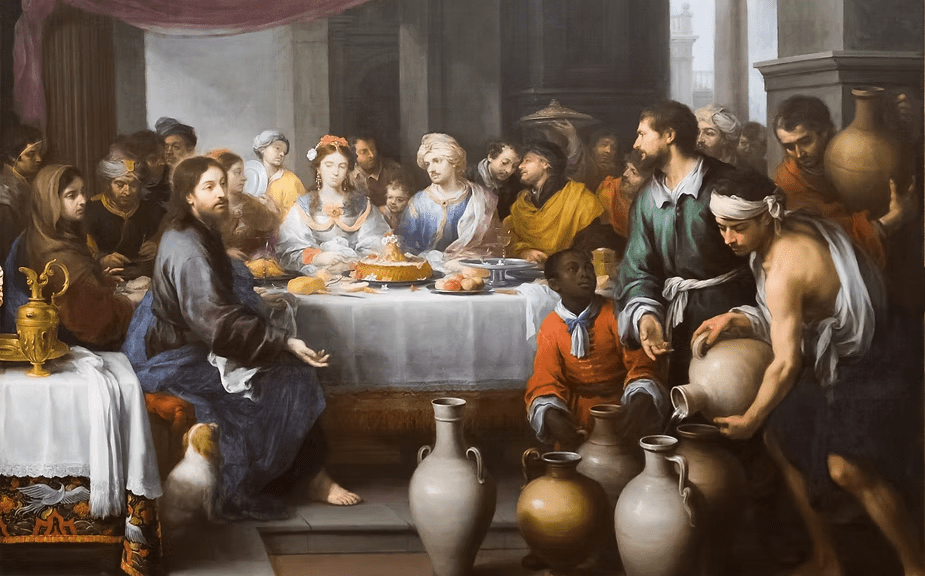
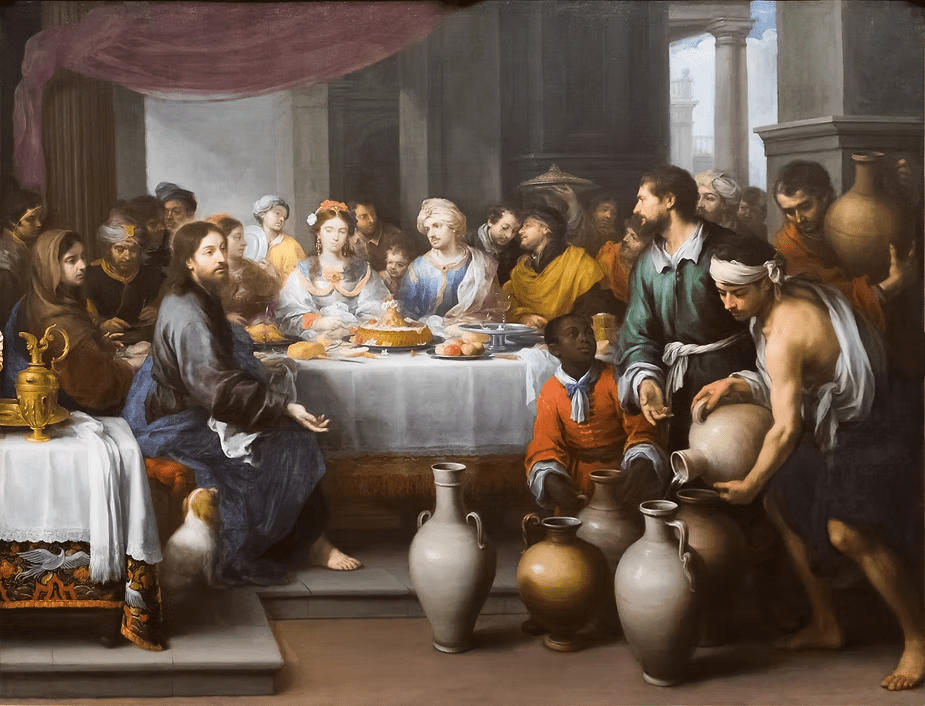


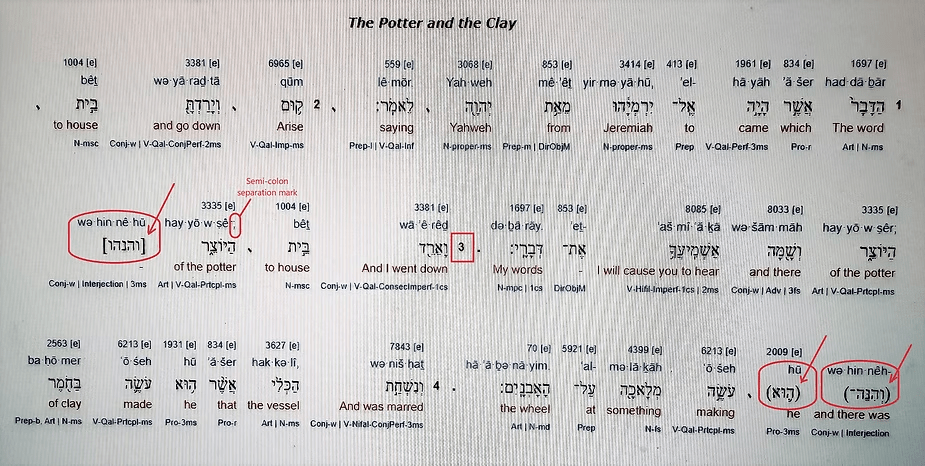


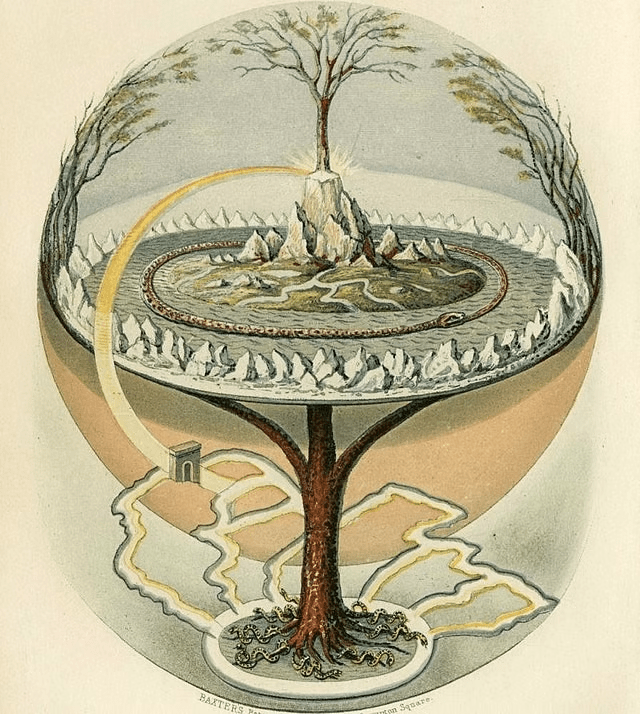


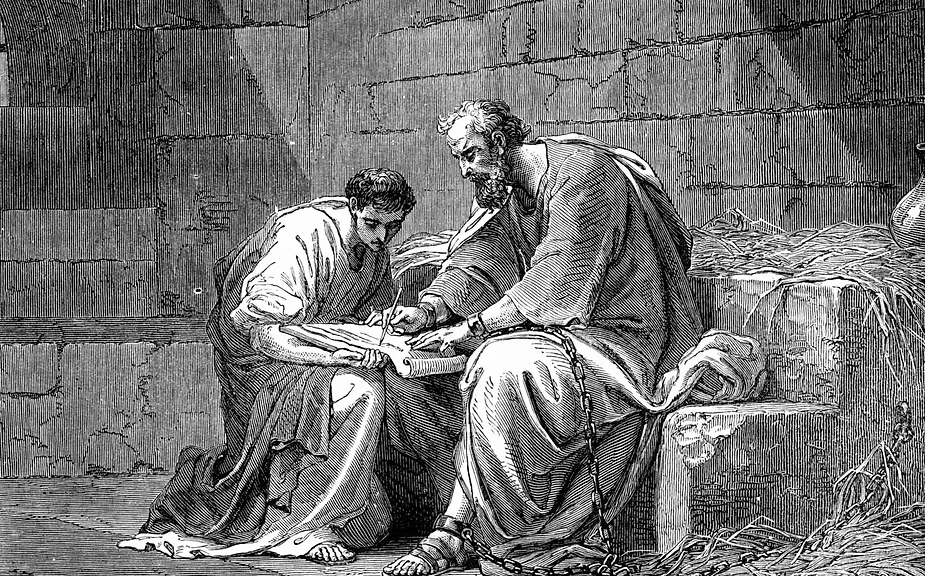
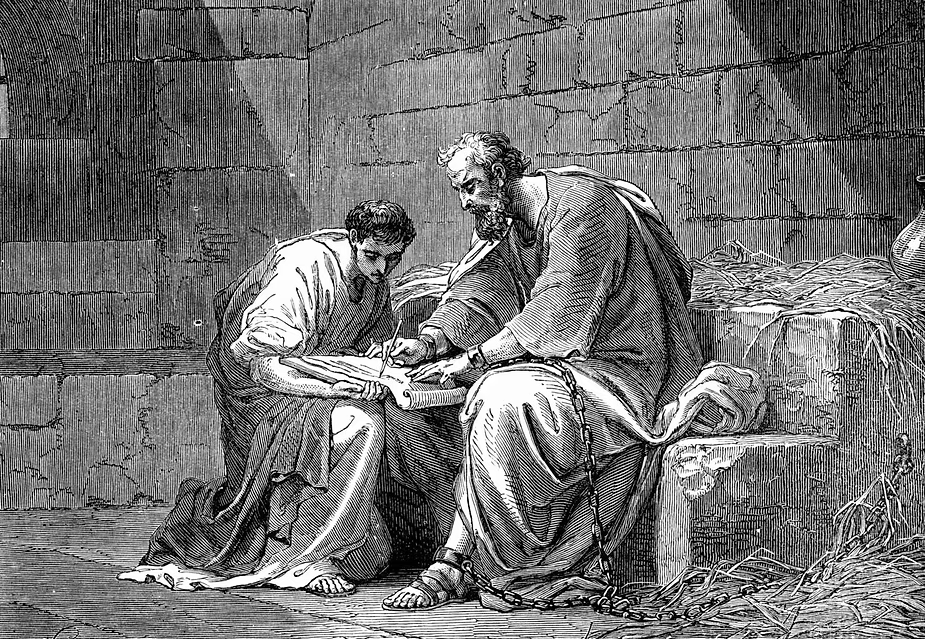


 Explaining the Readings