This reading is scheduled as Proper 25, Year C. The text is as follows:
Jesus told this parable to some who trusted in themselves that they were righteous and regarded others with contempt: “Two men went up to the temple to pray, one a Pharisee and the other a tax collector. The Pharisee, standing by himself, was praying thus, `God, I thank you that I am not like other people: thieves, rogues, adulterers, or even like this tax collector. I fast twice a week; I give a tenth of all my income.’ But the tax collector, standing far off, would not even look up to heaven, but was beating his breast and saying, `God, be merciful to me, a sinner!’ I tell you, this man went down to his home justified rather than the other; for all who exalt themselves will be humbled, but all who humble themselves will be exalted.”
———-
This passage from Luke is known generally as The Pharisee and the Publican. The Publican is also known as a “tax collector.” It is a story that everyone should know.
It seems to be hard to get the meaning of Jesus pointing this out “to some who trusted in themselves that they were righteous and regarded others with contempt.” I can’t tell you how many times a sermon is laser pointed towards the poor old tax collector and how “this man went home justified rather than the other.” The stress that is put on this parable falls on the humility angle.
Well, that misses the point of Jesus telling this to a select group. Guess what group that would be? It would be a group of Pharisees, or Sadducees, or even the priests of the Temple.
That is why the Pharisee is standing there saying how glad he is like he is and not like losers, like that tax collector over there. He is just like those in the group Jesus is telling a parable to.
The tax collector is no saint. He is filthy with sin and he knows it. He beats his chest with anguish over his inability to stop sinning. He is just like you and me, as long as you feel guilty for not always being the best you can be. We have a prayer in the book for us to read aloud each week, which says, “Forgive me God for I have sinned yet again. Still can’t get through a week without doing something wrong. Sorry.”
Sure, we who go to church and get on our knees and beg for forgiveness. Then we can go home justified, because we have humbled ourselves. BUT … to be justified and then go sin again is inexcusable. You cannot get to Heaven with sin all over you. So, we repeat the cycle, with nothing new ever happening.
Adam fell from grace for less sin than we do in a week’s time. What makes anyone think they can get to Heaven when they are not justified? Jesus did not come saying, “Look guys, try your best to do what I do, but if you makes some errors, no big whoop. It’s okay.” Jesus said you do not go to the Father’s house with the dirt of sin on you.
So, guess why the Pharisees are the focus of this parable? Give up?
The Pharisees are the ones that have the responsibility of placing the people like the Publican on the road to righteousness. Rather than stand around thanking God for their comfy lives, they should be teaching the sinners how not to sin, if only by being examples of Apostles and Saints, as Jesus models.
The Pharisee in the Temple, as far as any parable about a Pharisee goes, is symbolic of a rabbi or priest. He is in this parable because he represents a leader. He is the shepherd. The tax collector represents the flock.
Symbols are the meaning, not the reality of one Pharisee and one tax collector. Two represents the duality of a church. One is the head, one is the body. Can you see that depicted in the picture above?
Literally, one thinks Jesus is telling how a Pharisee was being loud so everyone can overhear him saying, “God, I thank you that I am not like other people: thieves, rogues, adulterers, or even like this tax collector. I fast twice a week; I give a tenth of all my income.” No! He is speaking so everyone can hear. The hear him because he is the leader speaking to them, their preacher, their trusted teacher.
Instead of being the good shepherd, he is calling out sinners as if he is not one, giving the impression that he is righteous. Simply by wearing a fancy robe or a shiny new suit and power tie, the one standing up before a congregation and talking out loud is assumed to be honest, pure, offering a helping hand.
Jesus is making this point because the whole problem the Israelites had, the reason why they lost the land God gave them, the reason they were under Roman domination in Jerusalem was the spiritual leaders of the Jews were not teaching the people HOW to WANT to live by the Law. Sure, they taught the Law, but they used that knowledge to throw it in the faces of the sheep that had no clue how to save themselves.
Jesus was in town to change things. He called the Pharisees out time and time again. He ate dinner with a tax collector, but that was not condoning sin, it was challenging the Pharisees. Jesus was not sent by God to justify sin. He was sent to teach people how to receive the spirit of the Law, and how to open their hearts to welcome the Holy Spirit. That wasn’t happening, so the people were always sinning, and always feeling guilty. Some took advantage of the guilty.
The reason this parable is so powerful and why it must be understood properly today is Christianity has become the dead vine that the Temple of Jerusalem was. Once upon a time in the land of Christianity the Apostles taught new Apostles. Saints bred new Saints. Then everything ground to a halt and it magically turned back into the Pharisee and the Publican in the church building.
Humility is good. However, humility is impossible to maintain by will power. A mantra like, “I will be Christian. I will be Christian. I will be Christian.” will not cut it. You have to receive the spirit of the Law. You have to be able to see the true meaning of the lessons. You have to teach others this and let others teach you more. Then, you have to let the Holy Spirit overwhelm you and take control over your actions.
———-
As an Episcopalian, whose wife was an Episcopalian priest, I was able to make contact with human beings in that Church organization that I ordinarily would have to make an appointment to see and have just cause for seeing one of those high-ranking officials. My wife followed many on her Facebook page and would read their views on the lessons of Scripture. After my wife passed to the other side, I monitored Facebook sermons posted, to see if everyone was on the ‘same page’ as I was. This was more important during the COVID19 year(s), when the government takeover of churches drove the faithful (should I asy faithless) away in droves. When this reading came up in the cycle (October 26, 2022), I read a sermon posted by a bishop on his webpage, which my wife was a follower of. His sermon was basically a ‘cut and paste,’ ‘same ol same ol’ of the humility lesson, which misses the deeper purpose for Jesus pointing this whole situation out to his disciples. Certainly, the poor old sinned Publican was the obvious scapegoat, but what about the Pharisee? What was he further away from salvation.
I was moved to sent this bishop an email about his sermon. I did not know him other than by title, He did not know me at all. I asked him if he had ever seen himself as the Pharisee, writing sermons as if he were closer to God, whille all the pewples were so sinful they were the ones who should practice humiity. I asked why all sermons focus on blaming the sheep for being lost, when it is the shepherd’s role to gather them and take them to shelter.
He actually responded to my email. He said (I paraphrase), “Everybody has their own way of reading Scripture.”
Hmmmm. And everybody needs to hear your opinion why?
The Gospel reading for October 2, 2016 (Twentieth Sunday after Pentecost, Proper 22) was from Luke (17:5-10). The reading stated:
“The apostles said to the Lord, “Increase our faith!” The Lord replied, “If you had faith the size of a mustard seed, you could say to this mulberry tree, `Be uprooted and planted in the sea,’ and it would obey you.
“Who among you would say to your slave who has just come in from plowing or tending sheep in the field, `Come here at once and take your place at the table’? Would you not rather say to him, `Prepare supper for me, put on your apron and serve me while I eat and drink; later you may eat and drink’? Do you thank the slave for doing what was commanded? So you also, when you have done all that you were ordered to do, say, `We are worthless slaves; we have done only what we ought to have done!’”
While many people hear or read the words “mustard seed” and think in terms of itty-bitty small, they confuse this reading with Matthew 13:33. There, Jesus was quoted as saying, “Though it [a mustard seed] is the smallest of all seeds, yet when it grows, it is the largest of garden plants and becomes a tree, so that the birds come and perch in its branches.” The mistaken thought comes from applying that growth of a physical seed into a large tree, as if Jesus implied that in the reading from Luke. Therefore, when people hear or read this reference to a mustard seed by Luke, people imagine a seed that needs to grow, in order to fulfill the statement, “You could say to this mulberry tree, `Be uprooted and planted in the sea,’ and it would obey you.”
That is wrong to think.
One cannot go to the garden store and buy a bag of faith seeds. In Luke’s verses, Jesus was stating that faith cannot be grown or increased in size. The use of mustard seeds is metaphoric, such that the reference is to say, “If you had but one iota of faith, you could work miracles.”
The disciples had told Jesus, “Increase our faith!”, which must be seen as a braggart saying, “I have faith, but I want more!” Jesus replied, in essence, “You have no faith. Not even one iota. Not even the amount that would match the minuscule size of a mustard seed.”
When Jesus said, “If you had faith the size of a mustard seed, you could say to this mulberry tree, `Be uprooted and planted in the sea,’ and it would obey you.’” then remember when Jesus saw a fig tree that did not produce fruit. Jesus said to the tree, “May you never bear fruit again!” (Matthew 21:19b) He was also remember to have said, “May no one ever eat fruit from you again,” by Mark’s Gospel (Mark 11:14b). Immediately, the tree withered before the disciples, prompting them to ask, “How did the fig tree wither so quickly?” (Matthew 21:20b)
Matthew then wrote, “Jesus replied, “Truly I tell you, if you have faith and do not doubt, not only can you do what was done to the fig tree, but also you can say to this mountain, ‘Go, throw yourself into the sea,’ and it will be done.’” That is the same thing as Jesus saying, “If you had faith the size of a mustard seed, you could say to this mulberry tree, `Be uprooted and planted in the sea,’ and it would obey you.” Therefore, “faith the size of a mustard seed” is equal to “faith without doubt.”
The disciples who followed Jesus had doubts, thus they had no true faith. All Jews who believed in the Law of Moses had doubts, because they sinned. Because the Jews had produced the fruit of maintaining an education system for religious principles, they were not ordered, “May no one ever eat fruit from you again,” such that Judaism would wither and die. Still, they had no real faith, simply from memorizing what they were told to memorize. Therefore, when Peter jumped out of the boat and attempted to walk on water, because he saw Jesus walking on water, he sank because he doubted, prompting Jesus to say, “Oh you of little faith, why did you doubt?” (Matthew 14:31b)
Jesus told his disciples, “You of little faith, why are you talking among yourselves about having no bread?” (Matthew 16:6) He further said to them, “You of little faith, why are you so afraid?” (Matthew 8:26) when they were on the Sea of Galilee and a storm came up, threatening to sink them. The point is clear: Jesus was one who did have a mustard seed’s worth of faith, such that he had faith in God with no doubt and no fear. The disciples, who called themselves the followers of Jesus – his disciples – they had zero faith, because they still doubted and feared, regardless of how many rules they followed.
As Christians today, we are no better than the disciples were then. We follow Jesus because we feel safe with him around. We think it will make Jesus happy if we do a few things that make it seem as if we have faith, to the point that we think we actually have faith. But, then we feel bad because we cannot heal the sick or cast out demons, so we demand of Jesus, “Increase our faith!”
We fail to see how Jesus did “Jesus-type” things when he only needed a mustard seed size amount of faith in God to do them. In actuality, faith with no doubt in God means a human with a soul is all God needs for God to work miracles through one of faith. If Jesus had demanded that God increase his faith, Jesus would have asked to be God. To ask to be God is to admit one is full of doubt and fear. To simply have faith, as small as one iota, that is all one needs to be God, as a servant through whom God works.
This is then the purpose of the story Jesus told the disciples, about a master and a slave. Jesus asked who among the disciples would treat a slave as an equal, if they were the slave’s master. A slave can never aspire to anything more than to meet a master’s expectations. Therefore, the disciples had asked Jesus to make them the equal of God, their master, when they were unworthy of taking a seat at that table of privilege. Jesus said, “When you have done all that you were ordered to do, say, `We are worthless slaves; we have done only what we ought to have done!’” That is an admission of service to God, which is true faith.
By understanding that seeking more faith is an admission of no faith, telling those whose faith is full of doubts and fears, “If you only have a mustard seed’s worth of faith, then planting it in good soil will make that faith grow as big as a tree that birds and squirrels can find a home in” is misleading. It leads those of “little faith” away from gaining “one iota of true faith.” To serve God as an Apostle, whose mind is led by Christ – full of faith without doubt – then the message should be to tell people to gain the fundamentals from which true faith comes.
The Greek word for “faith” is “pistis.” The word stems from “peithô” meaning, “persuade, be persuaded,” with “pistis” properly meaning, “persuasion (be persuaded, come to trust); faith.” One does not have faith in anything without knowledge of that thing first taught to one. Thus, knowledge of God is what faith in God comes from.
The knowledge of God the Jews had was the Law of Moses, the psalms of praise, and the warnings of the prophets. Still, that knowledge had brought forth only a few who had true faith (those who are referenced in the books we read in the Old Testament). Jesus was sent by God to make that prior knowledge reach maturity and fulfillment, so the stories of Jesus would elicit more who would come forth and have true faith. However, no one gets to sit at the table with the master as a reward for being a slave on earth, as Jesus was sent to show the world how to become a slave for God. All reward comes from attaining heaven, which is why the Kingdom of Jesus was never meant to be of this world; and we are asked to be reborn as Jesus the slave to God.
If you are a slave to God, then you spend 24/7 in contact with the Lord. You read Scripture and ponder its meaning daily, through prayer. You hear the whispers of Jesus telling you the answers you need for the enrichment of faith, as your mustard seed’s amount of faith that makes you Jesus reborn. You then go out and plow the fields and tend the sheep, by letting that awareness given to you be known by others seeking to find faith. Then, when that work is done, you prepare a meal for the Lord, which is the bread of your body and the wine of your blood, as a duplication of Jesus Christ. When God has been fed by your servitude, then you may find your needs met – salvation.
At no time are you able to maintain that iota of faith, if you go asking, “Please, sir, may I have some more?” That is when there are too many chiefs and not enough Indians.
In the sixth month the angel Gabriel was sent by God to a town in Galilee called Nazareth, to a virgin engaged to a man whose name was Joseph, of the house of David. The virgin’s name was Mary. And he came to her and said, “Greetings, favored one! The Lord is with you.” But she was much perplexed by his words and pondered what sort of greeting this might be. The angel said to her, “Do not be afraid, Mary, for you have found favor with God. And now, you will conceive in your womb and bear a son, and you will name him Jesus. He will be great, and will be called the Son of the Most High, and the Lord God will give to him the throne of his ancestor David. He will reign over the house of Jacob forever, and of his kingdom there will be no end.” Mary said to the angel, “How can this be, since I am a virgin?” The angel said to her, “The Holy Spirit will come upon you, and the power of the Most High will overshadow you; therefore the child to be born will be holy; he will be called Son of God. And now, your relative Elizabeth in her old age has also conceived a son; and this is the sixth month for her who was said to be barren. For nothing will be impossible with God.” Then Mary said, “Here am I, the servant of the Lord; let it be with me according to your word.” Then the angel departed from her.
——————————————————————————————————
This is the Gospel selection for the fourth Sunday of Advent, Year B. It will be read aloud in church by a priest on Christmas Eve, December 24, 2017. This reading strongly states that Christmas near the end of December (the twelfth month of a modern civil calendar) has absolutely nothing to do with the physical birth of baby Jesus. Therefore, December 25th is a date that the Church created, relative to when Christ is born anew in one of deep devotion to God, with belief that Jesus resurrected from the dead and ascended to God for the purpose of returning in those who strongly have faith.
When we read that the angel Gabriel came to Mary “in the sixth month,” this becomes a solid marker of when conception occurred. The “sixth month” is not June, as Americans know a calendar. The “sixth month” is the month Elul, in the Hebrew calendar. Elul occurs (depending on the year) somewhere between August and September. Simply from knowing when Mary conceived the child that would be named Jesus, we can add nine months and realize: 1.) The birth had nothing to do with December; and 2.) Nine months after the “sixth month” would make the birth occur in “the third month” – Sivan, which is roughly May or June.[1]
Because Mary rushed off to visit Elizabeth (Luke 1:39-45), whose pregnancy occurred when Gabriel appeared to the priest Zacharias, her husband (Luke 1:5-17), we can then assume Gabriel’s visit to Elizabeth took place in the twelfth month, or six months prior to Mary conceiving Jesus. In that case, Elizabeth began to carry the baby to be named John in the Hebrew month Adar (February or March).
The Hebrew calendar makes adjustments for “leap year, such that “A leap year occurs 7 times in the 19-year Metonic cycle.” (Ref.) Because Gabriel told Mary that Elizabeth was six months pregnant (“in the sixth month”) there was no thirteenth month in between. Thus, John would have been born in the ninth month [Kislev], which is roughly in November-December. This means Mary visited Elizabeth three months before John was born (between August and September), when the fetus was developed enough to “leap in the womb.”
Let me veer off course and address the timing of Christmas in late December. It is not a date to recognize Jesus-mass, simply because Jesus was born in the Hebrew month Sivan. We know that by Biblical record – here, in this reading. It is most important to grasp that Gabriel showing up to announce, “Now you are with child,” was not because he (an angel) made that decision. God knows all, from the beginning to the end, and He does not plan for His Son to be born randomly AND especially near the Winter solstice, when the sun is lowest on the horizon (Northern Hemisphere) and the light of day is shortest. Jesus was born as a gift from God, at the time when Moses brought down the First gift from God. [HINT: Pentecost is a most special day for God giving to the world … in Sivan.] December represents the dark night of the soul in mortals, when they plead earnestly for the LORD to save them. So, Christ-mass is when mortals awaken from their material slumber and “man up” [become Jesus reborn]. That said, I will now continue where I left off.
Now, much issue has been taken in respect of a virgin birth. Little argument seems to rise about Elizabeth – “in her old age” – having become pregnant, “who was said to be barren.” It was news to Zacharias, her husband, who said to Gabriel, “How will I know this for certain? For I am an old man and my wife is advanced in years.” (Luke 1:18) The implication of that protest (which would make Zacharias mute until John was born) was he and Elizabeth had not had sex recently enough to bring about her being pregnant in the normal way. As such, she too had a “miracle” child in her womb. The point is to stop overthinking how God can do anything to people long gone, because that makes one under-think what Scripture is trying to tell you about virgin births.
Adam was a virgin when God pulled Eve out of him.
As an Advent lesson, where all who seek the presence of the Holy Spirit of God are largely lost in that quest, it should be preached that those who sit in church pews (men and women), Sunday after Sunday, are exactly like Elizabeth and Mary. A “Christian” without the gifts of the Holy Spirit, having not yet given birth to their own personal Jesus (to replace their self-ego), is either old and barren or young and a virgin. [This has absolutely nothing to do with any human’s sex organs!] Each Christian-to-be (meaning one who is not yet pregnant with the Son of God inside) must be greeted by Gabriel, who says, “Greetings, favored one! The Lord is with you.” Gabriel must then also add, “You have found favor with God.”
The LORD is only with those He favors because His favorites are those who He has taken as His wives (regardless of human gender). You might even go as far as to say that God favors those more whose minds are not led by their sex organs – loving sex more than God. One is favored by God by opening one’s heart for the LORD, offering oneself in marriage to that righteous presence, and then being totally subservient to His Will.
You have to be favored before the “miracle” birth of Jesus will come. That miracle is due to the Holy Spirit of God. Thus, Gabriel told Mary, “The Holy Spirit will come upon you, and the power of the Most High will overshadow you; therefore the child to be born will be holy; he will be called Son of God.” This was the promise when the physical baby Jesus was born; but it is the same for all who will be reborn as Jesus. True Christians are deemed Holy (a Saint) as the Son of God (regardless of human gender).
This means Christ-mass is a personal birthday for a Christian celebrating Eucharist with the Trinity, where that Christian (male or female) is in one Father-Son-Holy Spirit. It is that date and time when an individual Christian is reborn as baby Jesus. It becomes the day to sing Happy Re-birthday to you! That can be any day of the year; but collectively all Christians celebrate together when the sun has reached its lowest point in the sky, in late December (civil calendar). Then, everyone knows the light will grow brighter and the days will grow longer over the coming months.
Just as the angel of the LORD told Mary, “you will name him Jesus” – a name that bears the meaning “Yah[weh] Will Save” – so too will all who are reborn by the Holy Spirit retain that name. The new name becomes a statement of one’s having been Saved by God. That is how Jesus Saves!
When Gabriel then told Mary, “He will be great, and will be called the Son of the Most High, and the Lord God will give to him the throne of his ancestor David. He will reign over the house of Jacob forever, and of his kingdom there will be no end,” this is defining the Christ – the Messiah. Just as Jesus told Pilate, “My kingdom is not of this world. If My kingdom were of this world, then My servants would be fighting so that I would not be handed over to the Jews; but as it is, My kingdom is not of this realm” (John 18:36), Jesus Christ sits at the right hand of God, but his kingdom extends to souls still in human forms on earth. It is the Kingdom of Christianity, where all subjects have been reborn in the name of Jesus, blessed with the Christ Mind, in a loving relationship with God.
The kingdom of Christ only has subjects who go out as lights to lead the world to also seek to be subjects of God and Christ. The ultimate lesson of the Advent season (especially on Christmas Eve) is to read the proposal of Gabriel as if the angel of the LORD were speaking to you. At that point, you have to become the virgin Mary and say, “Here am I, the servant of the Lord; let it be with me according to your word.”
—————————————
[1] The Roman calendar was similar to the Hebrew calendar as the year began in March (month 1) and ended in February (month 12). Those aligned with the Vernal Equinox and were lunar based. Spring begins with the Hebrew month Nissan, and Winter ends with the Hebrew month Adar. The months September (7th month), October (8th month), November (9th month) and December (10th month) are named based on their place in a year’s twelve divisions. These align with the Hebrew months Tishri (7), Cheshvan (8), Kislev (9), and Tevet (10).
These are the readings that come from the four Gospels, all telling of the Sunday event Christians recognize as “Easter.” The same readings revolve over the three year cycle of the Episcopal Lectionary, Years A, B, and C. The order presented here is for Year B, 2018. These variations on the same theme [Luke’s reading is tailored for an evening service, focusing on that Sunday’s afternoon, rather than the morning’s discovery] will next be read aloud in a church by a priest on Easter Sunday, April 1, 2018. Certainly, all are important as they tell of the miracle of Jesus’ Resurrection from death, as witnessed by those close to Jesus of Nazareth. That return to life fulfilled the promise Jesus had made, which also fulfilled the prophecies of the Old Testament.
In two of these readings (Luke and John), the resurrection of Jesus is referred to as “the first day of the week.” In the other two, the day is identified as “after the sabbath” (Matthew) or “when the Sabbath was over” (Mark), with Matthew adding that it was “the first day of the week.” None of them identified that day as “Sunday,” as the Hebrew equivalent is “yom rishon” (“first day”).
Here is a blank calendar, typically used in English-speaking countries. One can see how Sunday has been affixed into the position that reflects it as the first day of the week, making Saturday the seventh day (the Sabbath):
While Americans commonly call the combination of Saturday and Sunday a “weekend,” such that Monday feels like the first day of the week, that feeling likewise projects upon Sunday as the end of a week. One can get a feel that Sunday is the seventh day, thus the Christian sabbath day. However, please note that concept is pagan, as it goes against how God told Moses to order the days, which corresponds with the seven days of Creation.
God never ordered anyone, other than the Israelites, to establish a calendar that denotes a Sabbath day as holy. Thus, if anyone wants to make a “week” longer than seven days, or start a “week” on any day one chooses, while calling a day by any name other than a number, that is one’s freedom … as a pagan. No one is commanded to have a calendar for each year, nor have any special dates marked for remembrance. Still, it seems other civilized peoples (other than the Israelites) realized marking time was important.
They say Stonehenge is a pagan calendar that marked the movements of celestial bodies, such that “Sun day” is related to that orb of life-giving light, with “Moon day” the same recognition on another day [Monday]. Saturday is devoted to recognition for Saturn, whose pagan characteristics are like those of the Old Testament Yahweh. Because there are seven astronomical orbs of lights (luminaries and planets), each was given a day of recognition, thus a seven-day week evolved. Still, with that known, non-pagans (including Christians) will always recognize the seventh day as holy (the Sabbath); and Sunday, likewise, will always be the first day of the week.
By grasping that Jesus was realized risen on the first day of the week, one can realize the New Creation of God’s Covenant with human beings springing to life at that time. The first day of the week means rest is over and there is new work that needs to be done. God’s Covenant with Moses, which does nothing to change His Covenants with Noah and/or Abraham, is not an “Old Testament,” as if “old” translates as “outdated” and “undone.” Instead, the New Covenant is the expansion from the First Testament, as a New Amendment. The new requires more than birthright, as Gentiles are now permitted to play a role in God’s plan (Thanks be to God, from us Gentiles of America) for all mankind to serve God. That new amendment to serve God comes through Jesus Christ, who was first known as the Christ on a Sunday … the first day of the week.
In that vein of thought, serving God through Jesus Christ is demonstrated to be more than simply believing Jesus rose after being dead for three days. In John’s account, Mary Magdalene stood at the open tomb weeping, when the risen Jesus asked her why she was crying. Mary is said not to recognize the man she loved dearly, “supposing him to be the gardener.” That needs to be reflected upon.
If you have ever driven to a cemetery to pay your respects to a deceased loved one, you will notice there is a small staff that manages the grounds, cutting the grass, placing artificial flowers at gravestones, and making sure weeds and leaves are cleared away. One such groundskeeper could be termed a “gardener.” John wrote the word “kēpouros,” which translates as “gardener or garden-keeper,” which by itself implies this tomb site was lush and green; but a tomb carved into rock is not typically surrounded by such flourishing plant life. Supposing the intent of Mary, as told to John (who had already left the scene with Peter), was more than a simple mention of a man thought to be the groundskeeper. One then needs to see that “Freudian slip,” associated with that failure to see Jesus as Jesus, as a purposeful statement of Jesus appearing as someone else … someone Jesus is like.
Pop Quiz question: Who is the most famous gardener in all the Holy Bible? You have one minute to think about your answer.
<Pause for one minute>
Time’s up. The answer is Adam. [You knew that!]
That reference is then a statement that Jesus had the same soul as the one God breathed into his Son; but the physical Jesus did not look like the physical Adam, from who’s physical DNA Jesus was descended, many times modified over the ages.[1] That means that Jesus’ claim to be the Son of Man (where the Hebrew word “adam” means “man”) was based on him repeatedly saying, my soul has reincarnated several times since it fell to Earth in the form of Adam, the Son of God. Adam lived in the Garden of Eden, and because of his skills for tending to natural things, Adam was told to till the earth after his fall from Heaven (hint: there are more weeds on earth, than in Heaven).
So, regardless of the double entendre, where Mary literally though Jesus was a groundskeeper, John wrote “gardener” from being in possession of the Mind of Christ, writing the Word of God. As a “gardener,” Jesus was seen in the form of the first Son of God. That means there are no mistakes and nothing written anywhere in Scripture that cannot become more that it first appears, as “kēpouros” [“gardener”] expands to become further explanation towards understanding the holiness of John’s text.
Of course, Jesus appearing as a gardener was not the only time he appeared in some other form. The optional reading for an evening Easter service comes from Luke, where those particular verses are typically called “The Road to Emmaus.” There, Luke wrote, “Jesus himself came near [to two of the disciples] and went with them, but their eyes were kept from recognizing him.”
The two disciples were not of the eleven principal disciples of Jesus, but followers of Jesus. The Greek written by Luke actually does not refer to “disciples,” but to “two of them.” When one is later named as being Cleopas, who is believed to have been the brother of Joseph, the husband of Mary, the human “father” of Jesus, this would make Cleopas the uncle of Jesus. Because John referred to “Mary of Clopas,” as one of the three Mary’s who stood at the cross of Jesus, this is believed to make her the wife (possibly daughter) of Cleopas. This would then identify the “two of them” as being relatives who knew Jesus very well, “but their eyes were kept from recognizing him.”
A couple of things need to be grasped about the seven miles to Emmaus (sixty furlongs). First, that was too far to walk on a Sabbath, due to the restrictions on how far one can walk on the day of rest. Cleopas and Mary had been in Jerusalem for the final prayer service of the eight-day Passover festival [a morning prayer, which on that particular ending day was done on a Sabbath morning], meaning they probably stayed in the upstairs room that had been secured for Jesus and his disciples until Sunday morning. While ordinary years would have allowed them to travel back and forth from home, during the week-long event, the arrest, trial, torture and execution of Jesus, followed by his temporary burial in the tomb of Joseph of Arimathea, would have kept them in Jerusalem all of the eight days. Now, with the Passover over, as well as the Sabbath, it was time for them to go home; but as they walked, they were “and talking with each other about all these things that had happened.”
Second, the road to Emmaus was the same road that cut through Jerusalem, with the eastern direction called the Jericho road, with Emmaus being due west.
Cleopas and Mary would not have been the only ones walking this road, as many pilgrims from the west would have traveled the same road. The Roman road would have ended at the Mediterranean Sea, with a road leading to Joppa being a branch off that road headed more northerly. Joppa would have been a place for European pilgrims to find sea passage back home. Still, foreign travelers in Judea for the Passover would have planned to stay until Shavuot [Festival of Weeks, beginning at Pentecost], so the further away from Jerusalem pilgrims walked, the easier it would have been to find rooms for a two-month stay. Thus, walking and talking with strangers would have been common, if not preferred, simply to find safety in numbers.
Jesus, appearing as some pilgrim headed home after the Passover, came upon Cleopas and Mary as they were discussing the past week and how it played out for their nephew. Jesus acted like he did not know who they were talking about, which led them to explain more. However, that led Jesus to tell his family members, “Oh, how foolish you are, and how slow of heart to believe all that the prophets have declared! Was it not necessary that the Messiah should suffer these things and then enter into his glory?”
Jesus knew he had foretold all that would happen, exactly as it went down, but he was speaking to deaf ears, blind eyes and closed minds. Cleopas and Mary had been there and heard those prophecies, but (like all the other disciples and followers of Jesus) they were slow to take his words to heart, the place in devoted humans where God resides. Thus, no one believed the truth of Jesus’ words, because they preferred to ignore the truth and believe what they wanted to believe (a common flaw in the faithful to this day).
We then read that after Jesus called his relatives “foolish,” “then, beginning with Moses and all the prophets, [Jesus] interpreted to them the things about himself in all the scriptures.” Seven miles they walked as Jesus talked the truth. All the while, the hearts of Cleopas and Mary were burning within them, as Jesus was “opening the scriptures” to them.
When Luke wrote the word “diēnoigen” (translated as “he was opening”), the root word means: Properly: “opening the ears and the eyes, such as to restore hearing and sight. Tropically: “to open the sense of the Scriptures, explain them; to open the mind of one, i. e. cause him to understand a thing; and to open one’s soul, i. e. to rouse in one the faculty of understanding or the desire of learning.”[2] (Thayer’s Greek Lexicon) Therefore, Jesus (as a stranger to his aunt and uncle) spoke to them as one filled with the Holy Spirit and the gift of interpreting prophecy. ALL who possess that holy talent speak in the name of Jesus Christ, whether they look like “picture book Jesus” or not.
When Cleopas and Mary came to the place where their home was off the main road, they did not want to leave this stranger who had opened their eyes and hearts so widely. From desire to know more, they invited unrecognizable Jesus to stay at their place overnight. We then read, “When he was at the table with them, he took bread, blessed and broke it, and gave it to them. Then their eyes were opened, and they recognized him.”
They recognized Jesus because Cleopas and Mary had been present at the Passover Seder meal ten evenings prior, when Jesus presided over the ritual dinner. They had watched Jesus do the exact same thing then, as he had just done at their dining table. They had not seen the power of those words then; but with their hearts alive with fire and passion for the the truth of God’s Word, they vividly flashed back to that Passover Seder message forgotten.
This is where bread has to be seen as symbolic of the written Scriptures, which Jesus had just enlightened Cleopas and Mary about: Moses and all the prophets wrote the texts that all Jews were fed from. That bread is unleavened, in the sense that Scripture is written in basic ingredients. Those words do not give rise, as leavened, until consumed and swollen to full meaning by the “yeast” of the Holy Spirit. Thus, that bread is blessed by God, as Holy Words, and those Holy Words are broken into books, chapters, verses and individual words – ALL of which have divine meaning the blind eye cannot see.
The man Cleopas and Mary had just walked seven miles with had just made them vividly recall that Passover Seder with Jesus, who was then known to be the Christ. Before, he was just Mary’s special son, Jesus, a charismatic with a penchant for preaching and a knack for working miracles. However, for the first time Jesus had opened the minds of his close relatives to Spiritual knowledge, which came by his breaking of the bread of Scripture and presenting it to them to digest.
Luke then wrote, “he vanished from their sight,” where the Greek word “aphantos” means, “disappearing, invisible, hidden.” This was not the first time that Jesus had eluded people, as John wrote about Jesus escaping the hands of his haters in his seventh and tenth chapters. This ability to become invisible or to disappear or to become hidden beyond view is a power from the divine.
This disappearance can be explained as a hallucination shared by Cleopas and Mary, where they actually did walk with a strange pilgrim, but the Holy Spirit made it appear that stranger was talking to them. The hallucination could have then come into their home, due to their heightened belief, while the actual strange pilgrim kept walking on the road to the west. Jesus disappeared simply because he was not in that Emmaus home as a strange pilgrim. Jesus was there in Spirit, one that was invited by Cleopas and Mary to stay with them. That presence symbolizes how all whose hearts burn to serve God must welcome God into their hearts.
It is this hallucinatory state that makes this account on the road to Emmaus become parallel to Mary Magdalene speaking with a gardener. Mary never saw the gardener as Jesus in the flesh. She heard his words and recognized it was Jesus, in the same way that Cleopas and Mary did. The hallucinatory state reflects how each disciple of Jesus must seek him first. Then, when Jesus appears in unrecognizable form to answer our call, a true Christian will recognize the presence of Jesus Christ, by understanding the messenger sent in his name.
Then, Luke tells of Cleopas and Mary hurrying back to Jerusalem and the upstairs room. It was still light outside, but technically night time, close to 8:00 PM by the time they were back in the upstairs room. Thomas, who had been out procuring dinner for the disciples and their companions when Jesus first appeared among them, was back then (he brought back some fish for them to broil). One could imagine the door was locked, due to the fear of the Temple being proud of murdering innocent Jews; but suddenly there was Jesus again standing among them.
Then, as the time earlier, Jesus appeared in a recognizable form, complete with body wounds from having been flogged, crucified and speared. One would imagine Jesus was fully dressed, just as the gardener and the travelling pilgrim would have been, even though the burial preparation would not have clothed Jesus’ body in anything more than shroud, face linen, and prayer shawl (provided by family). This means Jesus wore heavenly clothing, despite appearing earthly natural. One would imagine Jesus opened his robe for Thomas to feel his spear wound.
Before anyone starts to think that Jesus was a hologram or beamed to earth by God, look at how Jesus said he was not a ghost.
Jesus was real, in the flesh, the same flesh that had been prepared for burial the past Friday. He asked for food, which he ate before them so they could see how real he was. He was real when he stood before Mary Magdalene. He was real when he walked with Cleopas and Mary; and he was real standing among his followers in the upstairs room in Jerusalem. However, the most important element of that reality is discerned from Jesus saying (according to Luke), “Thus it is written, that the Messiah is to suffer and to rise from the dead on the third day, and that repentance and forgiveness of sins is to be proclaimed in his name to all nations, beginning from Jerusalem. You are witnesses of these things. And see, I am sending upon you what my Father promised; so stay here in the city until you have been clothed with power from on high.”
The reality of Jesus was the fulfillment of the prophecies that foretold his coming, death, and resurrection. The imaginary of prophecy had become real. While Jesus told the pairs of eyes standing with him at that time, “You are witnesses of these things” … “You are witnesses to this realization of divine prophecy” … Jesus would not be able to produce any new human witnesses to him in the flesh … a real Jesus … after he would Ascend to Heaven. Therefore, when Jesus then said, “See, I am sending upon you what my Father promised” … the Holy Spirit … Jesus meant the Father promised a Messiah that would last an eternity (see Micah 5:2). Therefore, Jesus would last a lot longer than 33 years, as he has not ever left, through the realityof the Holy Spirit. That was why Jesus then instructed his followers to stay in Jerusalem “until they had been clothed with power from on high.”
Now, while I allow that last statement of Jesus sink in a little, let me point out that Jesus appearing to his followers in the upstairs room took place in the evening on technical Sunday; but because the Hebrew calendar recognizes that to be the evening of the next day, Jesus gave that command on a Monday. Monday would represent the ninth day in the Counting of the Omer. That means Jesus stayed with his followers and taught them for forty days – from Tuesday, the tenth day of that counting, until the Sabbath, the forty-ninth day.
This means Jesus Ascended on the Sabbath, but returned via the Holy Spirit on Pentecost, the fiftieth day of that count … another Sunday. This means the disciples spoke as Jesus had spoken, because the Holy Spirit clothed those followers with the power of Jesus Christ, from on high, on that day.
The missing day – Monday – is referred to in John’s Gospel, which was a dream rather than reality. The dream of John had the disciples fishing unsuccessfully on the Sea of Galilee, when Jesus had just told them all to stay in Jerusalem. The dream is confirmed to be that when one realizes that Capernaum was over 100 miles from Jerusalem (ref.), and it would have taken about five days to walk that far.
The symbolism of John’s dream can then be applied to the disciples’ state of mind, which was they were in shock. They had just watched Jesus be tried, tortured, crucified, buried, and then stand before them eating broiled fish, pointing out his still fresh wounds. They had shook with fear that the Temple Jews would look to kill them next, with Lazarus already on their preferred hit list. All that happened on Sunday had then left them dazed and confused. Monday was then a day to take a deep breath and calm down, as basic training for receiving the Holy Spirit would begin the following day.
Still, with all of the readings that are representative of the proof that Jesus resurrected … proof that no Christian living today can swear to, no one can prove to another that resurrection. No one today can say, “I have seen the risen Lord stand before me in a real human body.” All the witnesses of real Jesus have passed from this world; and that is the deepest meaning of Easter Sunday. Jesus has risen in unrecognizable forms, through the Holy Spirit.
While we all are still eight Sundays from celebrating Christian Pentecost (a wholly symbolic recognition of the Holy Spirit), Jesus suddenly appeared and disappeared on the first day of the week to foretell his coming within true Christians. A true Christian can only be defined as one who has been clothed within as Jesus, with all the power the Christ Mind bestows, from on high.
A true Christian, like Jesus, dies of self and is risen as Jesus Christ. A true Christian is dead to self-serving, as being Jesus Christ demands serving God, through going to help others in Spiritual need. Disciples of Jesus tremble in fear at the ghost of Jesus expecting them to leave the safety and security of a locked door to an upstairs room; but a true Christian hears Jesus say, “Why are you frightened, and why do doubts arise in your hearts?” Jesus reborn within one means “Peace if with me,” and when one can say that, then Jesus is walking the earth once again in unrecognizable form.
The Lord is risen indeed, when the Lord is alive in a true Christian. That is why Easter is much more than one man coming back to life after death. If that were the case, then Lazarus rising from death was an equally important event … one that no church recognizes on the level of Easter.
“Lazarus come out!” must speak to you. You must become Lazarus in order to become Jesus Christ reborn.
While one can say, “Jesus was the magician who was so special he commanded Lazarus to “Come out!” then who was it who commanded Jesus to do the same? The answer is not the power of the Son of Man but the power of God. God gave life back to Lazarus and God gave life back to Jesus. Therefore, Easter stands as the miracle of Moses crossing the Israelites through the Red Sea on dry ground, because God is the one with the power to part physical from spiritual, wet from dry, captivity from freedom … to separate mortal death from life everlasting.
Not much is written about Lazarus after he rose from death. John wrote that he and Jesus had a dinner in their honor on the evening of technical Sunday, prior to Jesus entering Jerusalem on a donkey colt for his final Passover festival. The Eastern Orthodox Church believes that Lazarus fled Judea to Cyprus, where “he was appointed by Paul and Barnabas as the first bishop of Kition (present-day Larnaka).” (Wikipedia)
The Western Church believes in the lore of the small town Saintes-Maries-de-la-Mer [Saints-Mary-of-the-Sea], on the Mediterranean coast of France. There Lazarus arrived, along with three Mary’s (Mary Magdalene, Mary Salome, and Mary of Cleopas).
Wax figures depicting the event in a museum of Provence history.
Lazarus is said to have gone to Marseilles [nearby to the east], where he converted many local pagans to Christianity, being called the Bishop of Marseilles. (Wikipedia, same as above) Supposedly, Lazarus lived for thirty years after he was raised from the dead, never smiling because of having seen the misery of souls in Hades, while he was dead.
Lazarus and Jesus can be seen as a duality, with one human and one divine. Lazarus rose and continued living as a divinely changed man. Jesus rose, taught his disciples for forty days, Ascended, then returned as the divinity that led Lazarus to become like Jesus. Likewise, Jesus returned to be the divinity of Peter and the other ten lead disciples, plus all those companions who witnessed Jesus standing risen among them (Lazarus probably was one also there). Jesus was reborn in 3,000 pilgrims to whom the Apostles opened the Scriptures (in foreign tongues). This makes Easter become a duality with Pentecost, where Easter is human devotion and Pentecost is divine practice (faith and works).
Jesus is the model by which ALL Christians are formed. Humans must conform to that model to receive the Holy Spirit and become divine. Divinity comes by the love of God [burning hearts married to the LORD] and the birth of Christ in one’s mind. Moses built the model upon which Israel [and Judah] was formed, building human forms of devotion to the One God. Jesus was the duality to Moses, who built the model upon which the devoted received new life from the One God. Thus, one must be devoted to the One God first [the First Covenant] before one can evolve into a human that truly serves the LORD through Christ [the New Covenant].
Easter is the dawning [the Sunrise] of that necessary change.
One has to stop fearing one’s own death of self and give one’s heart and soul over to God’s Will. Easter is then the rebirth of one’s devotion, where one does not pray to an unseen, unfelt, and unknown God, but instead one feels burning in one’s heart, with love of the power of God, which one has seen and heard through opened Scriptures. Easter is then the desire to learn more, from the knowledge of God that comes from the presence of Jesus Christ teaching one the hidden truth that God’s Word holds. Easter is then the absorption of God’s knowledge for the purpose of spilling that knowledge out unto others of devotion [Pentecost Day].
This is how Easter is more than Jesus rising from death. Jesus has to be risen within all Christians for Jesus Christ to be alive in this world today. It is through true Christians that Jesus walks the road of life still, explaining the Scriptures to those who are saddened because they think Jesus is dead and there will not be another Jesus until the end of the world. Jesus is alive today though his gardeners, those who plant the seeds of insight into those who love Jesus, but previously had only wanted to dress, perfume, and decorate his body of death [hold the cross of crucifixion high, rather than the + of life in the Trinity: Father, You, Holy Spirit].
Easter is thus like Spring, when the death of Winter is replaced by the Rebirth the ever-living Vine, budding so that new fruit will come.
——————————————————————————
[1] In case anyone doubts this, I recommend reading Luke’s chapter 3. The last verse state:, “The son of Enosh, the son of Seth, the son of Adam, the son of God” (Luke 3:38).
[2] Some might note – IF one’s heart is burning – that I write these “articles” in the same sense of “opening the Scriptures” for understanding, as well as to remove the plugs and blinders that have impeded one’s own ability to discern these things.
Jesus himself stood among the disciples and said to them, “Peace be with you.” They were startled and terrified, and thought that they were seeing a ghost. He said to them, “Why are you frightened, and why do doubts arise in your hearts? Look at my hands and my feet; see that it is I myself. Touch me and see; for a ghost does not have flesh and bones as you see that I have.” And when he had said this, he showed them his hands and his feet. While in their joy they were disbelieving and still wondering, he said to them, “Have you anything here to eat?” They gave him a piece of broiled fish, and he took it and ate in their presence.
Then he said to them, “These are my words that I spoke to you while I was still with you—that everything written about me in the law of Moses, the prophets, and the psalms must be fulfilled.” Then he opened their minds to understand the scriptures, and he said to them, “Thus it is written, that the Messiah is to suffer and to rise from the dead on the third day, and that repentance and forgiveness of sins is to be proclaimed in his name to all nations, beginning from Jerusalem. You are witnesses of these things.
——————————————————————————-
This is the Gospel selection from the Episcopal Lectionary for the Third Sunday of Easter, Year B 2018. It will next be read aloud in church by a priest on Sunday, April 15, 2018. This is important as it tells how Jesus appeared to his disciples in his recognizable body, as proof that death had not maintained its claim on him. More subtlety, Jesus told his disciples, then and now, how repentance and forgiveness of sins can only be proclaimed in his name, which means disciples must be baptized by the Holy Spirit, so proof comes through being a reproduction of the Messiah.
In this Easter season, I have already compared the information in this reading with the information that comes from the Gospel of John. I have pointed out how Jesus saying “Peace be with you” is more than a greeting, being rather a command to become centered in spirit and emotionally stable from being soul-centered. All of that analysis still applies; however, I want to project a new light upon this event that happened then and relate that to how Christians now (and for quite some time past) are in this pre-state of Christianity, being disciples who are scared, where that uneasy state is due to a separation from the Lord.
When one immediately reads, “Jesus himself stood among the disciples,” the circumstances established is that a separate body, known to be that of Jesus, physically stood with his disciples in the upstairs room in Jerusalem. This becomes a parallel comparison to the Churches of Christianity (all denominations, including Jewish Christian), where congregations come into buildings that are designated as safe houses dedicated to Jesus. That means the upstairs room in Jerusalem can be seen as synonymous with the focus on special buildings where assemblies of disciples can sit and remember Jesus, as if reproducing that event in Luke (and John) when “Jesus himself stood among the disciples.”
It would not take much imagination to think that if an Episcopal priest were to be calling Jesus to come put his Spirit into some wafers and wine at the altar (or communion table) and if then a full-bodied Jesus were to suddenly appear beside that priest, he or she, the chalice bearer, the organist, the choir, and the rest of the assembly in that church would be “startled and terrified, [thinking] they were seeing a ghost.” The reason is that Jesus would have just appeared from out of nothing.
You called? I am here.
Additional information for the setting in the upstairs room is that Jesus had (not long before this) appeared (incognito) to Mary Magdalene early that Sunday morning, had appeared (incognito) to two disciples on the road to Emmaus, and had appeared (as himself) already once prior to the disciples and their companions in the upstairs room (when Cleopas, Mary of Cleopas, and Thomas were not there). That scenario of prior appearances was more normal (incognito) than shocking; but his first appearance to the disciples (as himself) says terror comes as easily as someone jumping out and yelling, “Boo!”
That natural shock can then be related to my present day imaginary appearance, as an example of people just not comfortable with people suddenly appearing in such a surprising manner. Even though today’s Christian believe he did that before, long ago, there is no expectation of Jesus re-appearing before the end of the world. Therefore, if Jesus were to likewise appear today, and stand among of people who profess belief in the piety of that Son of Man, it would be natural for Jesus to ask the members of this imaginary church, “Why are you frightened, and why do doubts arise in your hearts?”
Jesus would most certainly ask the same questions if he appeared before any Christian congregation in that way in the year 2018. People would cry. People would scream. People would faint; and I imagine some would wet themselves, with a few children squealing with glee (if any still go to adult church services). Hopefully, God would block all cell phone use, so no pictures, texts, or tweets could act as proof for their claims of witness.
After all, in 2018 we have hologram technology, where many would think the priest planned some hoax to frighten everyone. Pictures can be doctored to make it appear Jesus was there (my insert as evidence). This means seeing is not belief worthy. Things are not always the way they appear. This means the truth of Jesus’ question about doubting hearts is valid, because it is the same in all doubters (such as Thomas the disciple). “No way I am believing that!”
If a pollster had been stationed outside this imaginary church on Sunday (or any other gathering day of the week), asking everyone entering, “Do you believe Jesus will appear here today, in full-body form, able to be poked and touched as proof he has resurrected?” The truthful answer would be “No!” No one would truthfully answer, “Yes” (save a few young children, perhaps, those who are known to have imaginary friends). Therefore, Christians today are just like the disciples were then, because without Jesus Christ alive and physically with them, they have doubts in their hearts.
Because Jesus asked his disciples to “Look at my hands and my feet” and then told them, “Touch me and see; for a ghost does not have flesh and bones as you see that I have,” he knew they did not trust their eyes. That means belief is not reliant on seeing.
The disciples had to experience the body of Jesus, which they did with touch. They felt his wounds, maybe even smelt his divine presence was surrounded by a sweet, flowery scent. Perhaps they could hear Jesus chewing the broiled fish he ate before them, hearing him swallowing. The combination of physical senses led them to come to a personal conclusion that Jesus was indeed alive and present with them, even after having been known dead, prepared for burial and entombed. Because the sights of that death seemed vivid and real, they doubted if they could trust their eyesight ever again. However, the realityof touching Jesus’ body increased their faith to a solid level of belief.
The comparison that must be made is that the level of belief increased once the disciples were able to become one with Jesus physically. Even though that oneness came from the sensations of his external body of flesh and bones, it is like how lovers feel they are one while entwined in a partner’s embrace. When two souls become so close, oneness is felt on a spiritual level … a soul level. The symbolism then extends beyond Jesus being a separate and distant being, such that this “hands on” level of belief came from Jesus being one with each of the disciples, collectively and individually.
This is how Peter (in the accompanying Acts reading for Easter Three) explained that he was in the name of Jesus Christ when the lame beggar was healed outside the temple. Peter, as a separate disciple who knew Jesus of Nazareth, admitted he had no powers of healing in the name of Simon bar Jonah (Simon the son of John) … his human birth name. Therefore, the Resurrection of Jesus Christ, as demonstrated by Peter, gains power from on high anytime the Holy Spirit of God has become ONE with flesh and bone … recreating the Father’s Son.
It is vital to see this union of one’s soul with the Holy Spirit, as that presence makes one capable of higher knowledge. When Luke then wrote, “Then [Jesus Christ] said to them, “These are my words that I spoke to you while I was still with you—that everything written about me in the law of Moses, the prophets, and the psalms must be fulfilled,” that statement by Jesus accompanied vivid remembrances that each disciple had personally experienced with Jesus. “These are my words that I spoke to you” goes beyond the collective, to the heart of each disciple’s relationship with Jesus. As Jesus spoke then, it was as if all of his disciples were reliving everything Jesus ever taught them, which they had heard but not grasped.
That was the same synopsis of what Jesus (as a stranger) had presented to Cleopas and Mary over a forty-minute walk along the road to Emmaus. That synopsis of everyone present having their lives with Jesus relived as he spoke can be grasped by realizing the commitment the disciples all had. Their initial commitment was to God, as His chosen people, as they believed the prophets foretold of a Messiah. Still, it was due to their devotion as Jews that led them to follow Jesus of Nazareth as the Messiah, more than them being less by Jesus claiming that. They were led to follow Jesus (become his disciples) more from higher knowledge guiding them, recognizing their faith. Their devotion to God led them to find Jesus (and vice versa).
This is where the religious practices of Jews have merit, as learning Scripture becomes the first basic step towards a union with the divine. The Israelite peoples raise their children to learn what it is they have been chosen by God to do: Serve Him by learning the laws of Moses, learning the prophecies of the prophets, and learning the wisdom of the psalms written by unified Israel’s two kings. This devotion to learning their religion continues into adulthood, so parents teach their children the same things, from generation to generation.
This level of rehearsed memory of Scripture makes the base knowledge of Christians pale in comparison. Finding more than ten percent of a congregation that has time for adult religious studies is unfounded. Most Christians would fail a serious test that would be based on the writings in the Old Testament (Laws of Moses, psalms, prophets) … miserably. Christian church services are not conducive for discussion about the deeper meaning of the readings presented, as one speaks and others listen (depending on whether or not they like the sermon). A thirst for learning has been replaced by an arrogance of not needing reason to learn more than children’s church lessons.
Comparatively, the disciples of Jesus (which included all their companions, his family and followers) represented a minuscule number of all the sects of Israelites. For all who studied the Scriptures of the Jews, only a tiny sliver had been in touch with Jesus of Nazareth – Jesus the promised Messiah prophesied. Just as Jesus spoke and reminded about thirty disciples, “I have spoken about this being written in Scripture,” that went over as well as asking someone from a Christian church as he or she was leaving church, “What three points of the sermon were significantly enlightening to you today?”
The vast majority would stammer and walk on, not remembering anything when asked. The same state of having short attention spans was present in Jesus’ disciples. It is human nature to let one’s mind drift during boring lectures. This means there is a sense of pleasure that comes from “basking in the glory of a religious talker,” such that the disciples of Jesus felt the power of his speech, even if they did not understand the depth of what he was saying.
This tendency to get in line behind someone who sounds wise means human beings commonly allow others to lead them. Jesus was not the only Messiah “game in town” in his day, as the people were so much looking for the prophecy of the Messiah to come true, many jumped up to claim the right to pull that sword out of the stone. Following someone else means “sheeple” will always follow charismatic leaders, in any time or age; thus the warnings about “false prophets” and “bad shepherds.”
This means the disciples of Jesus were converted to Christians in this meeting of the risen Lord. The conversion of Jews (which all the first disciples were) to Christianity meant they had to actually hear the words, remember the past, and long for the future’s responsibility. That level of commitment required being in touch with Jesus Christ as a basic requirement. The same requirement is in place today.
It doesn’t hurt when I poke you there?
For all who have spent time studying and memorizing Scripture, the number who experience total enlightenment as to the meaning of the words of Scripture is comparable to the number of disciples who personally knew and lived with Jesus of Nazareth. It was a very small percentage; but that is always a number that is relative to the depth of one’s devotion. The more one devotes time to learning God’s Word, the more one will gain from that effort. When one understands that a “church” is the gathering of two or more in the name of Jesus Christ , that gathering is so two can compare spiritual notes and support the holy presence of Christ within each other. This is the ultimate purpose of a church.
That state of knowledge did not exist in the synagogues or the Temple of Jerusalem. It began small and spread, when Apostles allowed many to be in touch with Jesus Christ. In Jesus’ day, the Jews were lost spiritually, in spite of their varying levels of devotion to discerning meaning; but many sought proof that the Messiah had come. The meaning of Jesus of Nazareth could not be seen by Jews who never knew Jesus personally; but being lost led many to beg for answers. This is why Luke writing, “Then he opened their minds to understand the scriptures” is so important to grasp. All the answers to their questions became known then.
Unless one’s mind is opened to understanding by the Holy Spirit (as written of in Acts 2, on the day of Pentecost), one has not become One with God (love and marriage through heart), bringing on the Christ Mind. The opening of human brains to the Christ Mind is the meaning of this verse. It is much more than a crack in the doorway of knowledge opening, as the Christ Mind allows all of God’s Knowledge to be at one’s disposal.
To fully “understand the scriptures,” one has to relive the writing of the scriptures. This means the “opening of the mind” is God’s ability to place a present day human brain in an ancient figure’s body of flesh and bones. For example, to know the meaning of David’s psalms is to become one with David’s mind. One must feel the flesh and bones of David, as if one has been reborn as David. This is the power of the Holy Spirit; and it was that power that Jesus knew his entire lifetime. That power was not born in a manger in Bethlehem and it did not die on a cross in Jerusalem. That power has always lived and will always live, through the Christ Mind in God-loving Apostles.
By having one’s mind opened to that understanding, one can then read Luke’s verses that state, “Thus it is written, that the Messiah is to suffer and to rise from the dead on the third day, and that repentance and forgiveness of sins is to be proclaimed in his name to all nations, beginning from Jerusalem. You are witnesses of these things,” and gain an entirely new perspective. Just as easily as one who is in possession of the Christ Mind knows the experience of writing prophecies that tell of the sufferings of the Christ, for the forgiveness of sins, one can then know the sufferings of Jesus Christ personally, when one is One with Christ, in the name of Jesus Christ.
This is how Jesus could say, “You are witnesses of these things,” because you have become all the divine personalities of Scripture. To know Adam is to know God. To know Noah is to know God. To know Abraham, Isaac, Jacob, Moses, Samuel, David and all the other holy Apostles is to know the love of God.One becomes Jesus of Nazareth reborn when one’s mind is opened to seeing through His eyes. One is Resurrected as Jesus Christ when one’s eyes see through an understanding brought on by the Christ Mind.
The spread of Christianity could never have expanded beyond the scope of Jews who knew the scriptures of the Israelites, had it not been for the ability of Gentiles to become the Israelites of Scripture, knowing the meaning of Scripture, by becoming Jesus Christ reborn, full of the knowledge of the Christ Mind. If anything can be called “a religious experience,” it is that. One does not come to a level of belief that one would sacrifice one’s life in a Roman arena, simply by being told about a man named Jesus, a Jew who lived in Nazareth of Galilee, who others witnessed dying and resurrecting, so they were confident that Jesus was the Savior that an Israelite God promised to send to his people.
Hearsay is rejected by rational minds. Proof is required for belief. No one can reach a reasonable, beyond all doubts level of belief by being told about Jesus or reading about him in a book. Belief in Jesus as the Messiah can only come from being One with Jesus Christ and having one’s mind opened by the Mind of Christ.
This knowledge is then understood by all Apostles of Christ as meaning they too will be called upon “to suffer and to rise from the dead.” Early Christians did suffer physical death (most of the first Apostles, who knew Jesus of Nazareth), so their “rise from the dead” was as Saints venerated by their followers. Saints are worthy of special recognition because they have proven to have been the embodiment of Jesus Christ. Still, the majority of true Christians are called upon to “suffer the death” of their devotion to self, where they prefer to be separate, worshipping in churches or synagogues, all the while being frightened and terrified of actually sacrificing themselves for the glory of God or His Son.
One has to die of self to become One with God and take on the Christ Mind. Only by that sacrifice can repentance be sincere and can one’s sins be forgiven by God. The sacrifice of self ego means one’s dependencies on selfish goals are self-forgiven … where “forgiven” means “forever given away,” never to be a distraction again.
From all of this, one needs to see how the Christ Mind has led whoever it has been who organizes the lectionary readings into groupings by season. Each Sunday readings and psalms are selected with deeper meaning, from a higher mind. Thus, as the Third Sunday of Easter Gospel lesson, amid a season that places focus on the Resurrection of our Lord Jesus Christ, we must take firm hold of this lesson. The Resurrection of Christ does the world no good if no one else is ever also Resurrected to become Jesus Christ … his Holy Spirit reborn in true Christians. To wait for Jesus to suddenly appear from a cloud, at the end of the world, means to prophesy the end of a world that never knew Jesus Christ.
While that meaning has been lost from plain view, like so many other meanings of Scripture have been lost, we must see ourselves as devoted followers of the man named Jesus. Until he suddenly appears in our flesh and bones, placing each one of us in touch with Jesus Christ, we are full of doubts, which leave us full of terror at what might be … all natural fears when separated from the divine.
Thus, we must calm our souls – “Peace be with you.” We must prove to ourselves individually that Jesus has risen – “Touch me and see; for a ghost does not have flesh and bones as you see that I have.” Then, we must let our brains be opened to the Christ Mind so we can understand this Scripture as a direct lesson for us to know personally.
Jesus said, “There will be signs in the sun, the moon, and the stars, and on the earth distress among nations confused by the roaring of the sea and the waves. People will faint from fear and foreboding of what is coming upon the world, for the powers of the heavens will be shaken. Then they will see ‘the Son of Man coming in a cloud’ with power and great glory. Now when these things begin to take place, stand up and raise your heads, because your redemption is drawing near.”
Then he told them a parable: “Look at the fig tree and all the trees; as soon as they sprout leaves you can see for yourselves and know that summer is already near. So also, when you see these things taking place, you know that the kingdom of God is near. Truly I tell you, this generation will not pass away until all things have taken place. Heaven and earth will pass away, but my words will not pass away.
“Be on guard so that your hearts are not weighed down with dissipation and drunkenness and the worries of this life, and that day catch you unexpectedly, like a trap. For it will come upon all who live on the face of the whole earth. Be alert at all times, praying that you may have the strength to escape all these things that will take place, and to stand before the Son of Man.”
———————————————————————————————————-
This is the Gospel reading selection from the Episcopal Lectionary for the first Sunday of Advent, Year C, 2018. It will next be read aloud in an Episcopal church by a priest on Sunday, December 2, 2018. It is important because it takes up the perception of Jesus telling of the end times, of the destruction of the Temple of Jerusalem, and adds the perception of Jesus coming in the clouds [a Revelation theme]. In reality, Jesus foretold of the Holy Spirit descending upon Apostles and the beginning of true Christianity.
Beginning this reading at verse twenty-five creates a vacuum of context, which is important for grasping the meaning. Verse twenty-four consists of four segments of words, all of which at then relative to the “signs” listed in verse twenty-five. Verse twenty-four states:
“and they will fall by edge of sword ,
and will be led captive into the nations ;
all while Jerusalem will be trodden down by gentiles ,
until when are completed (namely will be) opportunity gentiles .”
That repeated use of “gentiles” (from “ethnōn”) may lead one to see Romans being the ones using swords and taking people from Jerusalem captive, so the Temple will lay in utter ruins. However, the “gentiles” that Jesus was seeing in the future coming were Muslims.
Jerusalem and the Dome of the Rock
When that is understood, one is able to see through the apparent suggestion that celestial events (such as eclipses and full moons, along with shooting stars and comets) will be the portends of when Jesus is referring. To say, “There will be signs in the sun, the moon, and the stars” is so celestially generic, no one will know which solar eclipse, which full moon, or what comet will actually be “the signs” to look for. This is where knowing how to read according to segments is important, and how symbolism has to be applied, rather than literal meaning.
Verse twenty-five breaks down into five segments, with each needing to be analyzed according to a Godly “syntax,” not Greek syntax or English paraphrase, based on Greek syntax. For those who read the interpretation of John’s Revelation, read during the Last Sunday after Pentecost, where a short reading had seventeen uses of the Greek word “kai,” the same application of “kai” (ordinarily meaning “and”) as a symbol marking important information.
If you look back at the translation of segments I presented for verse twenty-four, you will see how two “lines” began by the word “and.” The word “and” is nothing more than a conjunction and is meaningless. When redundantly used, especially following comma marks, it becomes a distraction to “normal” language. It becomes like someone often saying, “uh,” in spoken language. It becomes unnecessary and a sign of illiteracy or poor language skills. Changing “kai” to a written word that is to be used as a symbol [like Nostradamus used ampersands], such that the symbol marks a pronounced statement to follow, shows Jesus spoke and Luke wrote in a holy language [speaking in the tongue of God].
Seeing that, a segmented verse twenty-five literally states:
“Kai there will be signs in sun , kai moon , kai stars ; kai upon the earth distress [or anxiety] of gentiles with perplexity [or doubt] , roaring [or rumor; report] of sea kai rolling surge [or swelling agitation; tempest] ,
In the letters and poetry of Nostradamus, he wrote of the sun and moon and stars often. He wrote French words that relate to “sun” in English over forty times. He had several words that relate to “moon” over thirty times. He only wrote “star” (“astre”) twice, but he made references to multiple astrological constellations of stars. As the theme of Nostradamus’ book – Les Propheties – is of a coming holy war, the symbolism of the sun was Christianity and the symbolism of the moon was Islam.
One needs to see how Jesus was also referring to the light of the sun as the religion bearing the name of Jesus Christ; and one needs to see the phases of the moon (especially the crescent moon) as reflected light that is found in darkness, which becomes the false religion of Mohammed.
In the translation that is read aloud in church, verse twenty-five says, “distress among nations.” The word translated as “nations” is the same word repeated twice in verse twenty-four, which translates as “gentiles” – “ethnōn.”
Even the New International Version translates these two verses with “Gentiles” repeated in verse twenty-four, but magically changed into “nations” in verse twenty-five. This lack of continuity keeps one from grasping “gentiles” as being Muslims. Still, that would be who would eventually – as is the state now – of Jerusalem having the Dome of the Rock (a Muslim mosque) on the very site that the Second Temple had once stood.
When one sees how the “signs in Christianity” [“sun”] have evolved of nearly two thousand years, that spread of light has shown signs of roaring brightly, and spreading around the globe, and over the past century dimming. Islam began after Christianity, thus the use of “moon” is listed subsequent to “sun.” It also has reflected the same growth and spread as Christianity. As such, both have had histories that mirror the stars of deep space, which ignite as stellar nebulae, glow at various brightness categories and magnitudes, then fade as red giants, before exploding as supernovas and then pulsing as neutron stars, white dwarfs or black holes.
Since all of that knowledge was unknown to ordinary human beings in Jesus’ time, the use of “stars” can also be an indication of when man would invent telescopes, then visually explore the phenomena of outer space, before learning to propel rockets beyond earth’s gravitational pull. Such a “sign” of the stars could be the entrance of the Age of Aquarius – a constellation of stars on the Vernal Equinox. That would indicate our present times as being when the “earth” would be “distressed,” due to gentiles without religion [the “doubts” of Communism] would become a most viable threat to both Christianity and Islam.
The aspect of water is then found in the word “sea” (from “thalassēs”), which becomes more than Jesus nebulously referring to either the “Sea” of Galilee or the Mediterranean “Sea.” In the theme presented by Nostradamus, a future invasion of Europe, across the Mediterranean from North Africa, is painted. That makes “rolling surge” become a tsunami of migrants that will spend decades filling Italy, France, Greece and other European “nations” [increasingly “gentile” nations], to become like the Trojan Horse within the walls of Europe, once a military invasion begins.
More than warships on a “sea,” the hatred of emotion [the water of a “sea”] will be the motivation for those attacks. The illegal immigration will be placing “perplexity” within a Christian safe-haven, for the purpose of creating “doubt” about how professed Christians should live up to the teachings of Jesus. The “gentiles” pouring in will have no religious heart [Communists] or hearts raging with hatred for Christians [Muslims].
When Jesus then said, “People will faint from fear and foreboding of what is coming upon the world, for the powers of the heavens will be shaken,” that foretells of the suddenness of warfare coming upon people who will have been so accepting of foreigners – at the expense of arguing against their own kind, who see the dangers of mixing religious races. Europe will not have the hatred to go to war and will quickly lower their arms and attempt to negotiate peace. Unfortunately, the “powers” of satellite communications will have been disrupted and the abilities to control one’s skies will be “shaken.”
In verse twenty-seven, Jesus said: “and [“kai”] then they will experience the Son one of man coming in a cloud.” The capitalization of “Huion” shows the importance that “Son” bears. This could be read [as it commonly is in the Gospels] as the “Son” of God [Jesus], who was born of a woman [“of man – not capitalized]. However, “huion” can also translate as a significant “descendant” that is “one of man,” which would then be “experienced” by It coming in a cloud – such as a vapor trail of an I.C.B.M. comes.
Because this is so far into the future, well after Jesus Christ returned to the “earth,” in the form of the Holy Spirit entering his disciples-transformed into-Apostles – all reborn as Jesus Christ, beginning Christianity – Jesus could not be talking to his disciples here about his return. The “Son of Man” is all human beings who are reborn as the “Son,” while in human form [“of man”]. Since that will have long occurred, for nearly two thousand years, then one needs to see how verse twenty-six ending by stating “the powers of the skies will be shaken,” such that shaking will be the alarm that that power is what is coming in the cloud.
When Jesus ended verse twenty-seven by stating, “with power and great glory,” the literal Greek splits that in two parts, separated by the word “kai.” It actually reads, “with power” (from the “dynameōs,” similar as “of powers” in verse 26) “renown often.” The last two words, “doxēs pollēs” are commonly translated as “glory great,” when applied to the “Son” of God; but when seen as a “power” of man, it is “renown” that is “often” proclaimed, and produced “many” times over.
In Nostradamus’ book, he wrote the word “great” [in several forms] over 450 times, with each time an indication of a “great” nation, as defined by nuclear weapons as its fame [“renown”].
Verse twenty-eight is then very important to understand, as Jesus told his disciples [including those souls seeking to be reborn of his Spirit today]:
“beginning then of these things to come to pass , raise yourself up kai lift up the rulers of you , because draws near the redemption of you .”
So many Christians see this as Jesus coming in a cloud and raising up the believers in a “Rapture,” where they will be spared all the pain and suffering the rest of the earth will experience. That perspective is a trap set by the language of God, as to who belief will be placed. False shepherds will preach this coming again in glory, when Jesus Christ has already come again, many times over, in the Saints that set the world on fire for Christianity. However, this twenty-eighth verse says for those who will be living in the Twenty-first century to see the signs of evil about that will be the beginning of the End Times of earth.
Jesus said NOW is the time to “raise yourself up,” in the Spiritual sense. To be “raised up” does not mean to stand up and be counted as a Christian that believes Jesus Christ is sitting on a heavenly throne, twiddling his thumbs as the world grows most heinous. By saying, “raise yourself up,” Jesus said to sacrifice your self-ego and submit fully to God. That will bring about the Christ Mind and the Jesus ego, which will elevate one to Saintly status.
The subset segment that begins with “kai” then says, “lift up the rulers of you,” where “kephalas” is misleading as “heads.” That translation makes it seems that individuals are asked to “lift up your heads,” which would be a sign of self-importance and arrogant pride, as if being raised by Jesus will be payment received for believing in Jesus as the Messiah. Unfortunately, belief falls well short of faith and one needs much better rulers [or “heads” of intellectual authority] than pastor Bob or minister Lemuel, who forgive all the shortcomings of their flocks … as long as those tithes keep going into the church bank account. One needs Father, Son, and Holy Spirit ruling one’s being … most especially when the nukes start falling.
In the last segment, the word “draws near” (from “engizei”) should not be read as if God is coming close to grant one redemption. Instead, the word should be read as “bringing near to you,” where it is the sole responsibility of each soul in a mortal body of flesh to do what God wants one to do, to “bring close the redemption” of one’s soul. That happens by “bringing near to one” God, through one’s love of God, as shown through total commitment to Him [marriage]. From that union, one then “brings near” the Holy Spirit and the Christ Mind. THAT is what causes “the redemption of you.”
The word “redemption” (from “apolytrōsis”) actually means, “release effected by payment of ransom.” One’s soul is held captive on the material plane by sins. The Holy Spirit joining with one’s soul cleanses the soul of all sins past, as true baptism. One cannot enter the heavenly kingdom of God without that cleansing done first. This is why Jesus said, prior to bringing redemption closer, “raise yourself up kai lift up the rulers of you.” One has to pay the price for having sinned, before one can be redeemed.
Realizing that, one can then grasp the parable Jesus told, where “parable” (from “parabolēn”) means a “comparison” to this time when “redemption draws near.” Jesus said, “Look at the fig tree and all the trees; as soon as they sprout leaves you can see for yourselves and know that summer is already near.” Spring is a time when certain expectations of trees occur, as leaves represent new life coming from the death of winter. New leaves then flower and begin the growth of fruit, which are ready to be picked in summer time. This same natural occurrence in trees is expected in those who say they are disciples of Jesus, as that sprouting of leaves brings the expectation of bearing fruit.
Jesus then told his disciples, “So also, when you see these things taking place, you know that the kingdom of God is near.” He said that to the men who had been sent into ministry at the great commission [a premonition of the coming of Christianity], as they were instructed to tell those who rejected their presence and the guidance of the Holy Spirit, “The kingdom of God has come near.” Anyone who has rejected the idea of self-sacrifice for God and Christ will know the signs of the End Times is their “last call” to fall in love with God, repent their sins, offer their soul completely to God, and submit fully to His Will … or their soul will be lost forever.
Jesus then drove home the truth of that statement, by adding: “Truly I tell you, this generation will not pass away until all things have taken place. Heaven and earth will pass away, but my words will not pass away.” It is then easy to be confused by the words “this generation” and think that means the generation in which the disciples were born. That would limit the future to within fifty years of future time; but the Greek word “genea” can be intended as more generic, as “race, family, or kind.” Therefore, Jesus went to the End Times of the Age of Pisces, which was when the death of a “family” in the name of Jesus Christ would succumb to the Age of Aquarius [Technology and Intelligence].
Christianity will survive until mankind will destroy the earth. While that destruction will forever change the atmosphere [heaven] and the surface of the world [earth], the words of Jesus will be just as valid then, as they were when he spoke them.
Because those words of Jesus will remain valid, Jesus then warned those in the future, “Be on guard so that your hearts are not weighed down with dissipation and drunkenness and the worries of this life, and that day catch you unexpectedly, like a trap.” His disciples could likewise follow that advice, as all mortal lives end with death, when the soul is released. A soul then, however, would recycle back to another body of flesh [reincarnation], to begin again the search for redemption; but when the world is on the verge of no longer being able to support physical life, then one will have fallen into the “trap” of thinking, “I still have time to serve self and sin, rather than commit fully to God too soon.”
When Jesus then added, “For it will come upon all who live on the face of the whole earth,” he said that there will no longer be a safe place where the sun will shine. A cloud will encircle the face of the earth. With no sunlight allowed to penetrate the clouds, all surface life will die. Christianity will likewise die at that time. As such, it is important to read the Greek word “prosōpon,” which translates as “face or surface,” as being the “countenance” of the world. Without the light of truth, none left alive will be able to wear the “face” of God, which shines brightly through all who would be reborn in the name of Jesus Christ. The End Times will come for all mortal beings, which means there can be no redemption possible at that time.
It is also important to grasp how Jesus saying “surface of the earth” does not exclude life from existing under the face, within the earth. This is where one should realize that the angels of Lucifer were cast within the earth and told to go where they could never “face” God again. All the talk of “ancient aliens” is truth, in the sense that Satan’s angels have long lived within the core of planet earth, still living there today. They welcome the destruction of the earth and the final fall of mankind. It is not coincidence that propaganda has begun to acclimate human beings to their possibly being supreme creatures, worthy of praise and glory, as their whispers have led to man’s ability to build the weapons of its demise.
Jesus then ended this reading selection by telling all who would serve him as disciples, “Be alert at all times, praying that you may have the strength to escape all these things that will take place, and to stand before the Son of Man.” It is important to see how Jesus repeated prior elements in the subset segment of words: “kai to stand before the Son the one of man.”
The Greek word “stathēnai” (rooted in “histémi”) translates as “to stand,” but should be read as “to make a stand,” so one resists evil with “steadfast readiness.” This “stance” can only come with the presence of the Holy Spirit giving one strength, not possible by self-will alone. Most importantly, this transformation must take place “before” (from “emprosthen”) the “Descendant of man” falls as a nuclear holocaust, as well as “before” one can be seen by God as His “Son” in a body “of man.”
As the Gospel reading selection for the first Sunday of Advent, where a new church cycle has begun, it is important to grasp how the last Sunday after Pentecost ended a cycle with lessons that speak of the End Time. While this can seem as a continuation of that theme, it is not. The End Times were the focus of the end of a cycle. Now they are the focus of the beginning of a cycle. The start of a new cycle is thus begun with the importance of what the new cycle is for. It is for not reaching a personal End Time having not prepared for personal redemption.
Anyone with a normal brain can see the hatred that is spewing from televisions and Internet “news” articles every day. The world is just like that big R.E.M. hit song, “Losing My Religion.” Everyone has to do what it takes to buy all the trinkets and gadgetry that are the worldly addictions that pull souls towards sin. The problem with sins if they are easy to enjoy and difficult to see the harm, which is the whispers of Satan saying, “What’s the harm of just a little nibble? You know God doesn’t want you to taste this because it will make you His equal … a god.”
Most Christians want to do good. Many are closer to becoming Jesus Christ reborn than they think. It becomes the point between sincere belief and complete faith that caused Peter to step out on water and sink like a rock. Jesus did not coddle Peter, saying, “There, there Simon. I guess that’s why I call you “the Rock.” Ha ha ha. Here, big guy, let me raise you up out of the water.” Nope. Jesus said, “Oh you of little faith, why did you doubt?”
Being near to the kingdom of heaven is headed in the right direction. However, it is not there yet. That is why the commissioned disciples went to the people – to teach them to welcome the Holy Spirit, by seeing the Holy Spirit in men that had been given the power of Jesus Christ. Those who did not want to sacrifice themselves to serve God rejected those who came in the name of Jesus Christ. Therefore, as close as they were to God’s kingdom [as Jews who believed in God] they were given back the dust of the earth they so dearly loved, as the disciple kicked the dust off their sandals, saying “The kingdom of God has come near.”
The End Times are like the quote from the Ancient Mariner: “Water, water everywhere, but not a drop to drink.” There are plenty of emotions that one feels in this world of pleasures and pains, but the water of the Holy Spirit is the only drop that will cure one’s thirst for sin. It is the blood of Christ that saves.
After his baptism, Jesus, full of the Holy Spirit, returned from the Jordan and was led by the Spirit in the wilderness, where for forty days he was tempted by the devil. He ate nothing at all during those days, and when they were over, he was famished. The devil said to him, “If you are the Son of God, command this stone to become a loaf of bread.” Jesus answered him, “It is written, ‘One does not live by bread alone.’”
Then the devil led him up and showed him in an instant all the kingdoms of the world. And the devil said to him, “To you I will give their glory and all this authority; for it has been given over to me, and I give it to anyone I please. If you, then, will worship me, it will all be yours.” Jesus answered him, “It is written,
‘Worship the Lord your God, and serve only him.’”
Then the devil took him to Jerusalem, and placed him on the pinnacle of the temple, saying to him, “If you are the Son of God, throw yourself down from here, for it is written,
‘He will command his angels concerning you, to protect you,’
and
‘On their hands they will bear you up, so that you will not dash your foot against a stone.’”
Jesus answered him, “It is said, ‘Do not put the Lord your God to the test.’” When the devil had finished every test, he departed from him until an opportune time.
———————————————————————————–
Christianity has no idea what the ‘Wilderness experience’ is about. It is not about forty days trying to use will-power to give up some worldly temptation: chocolate, swearing, sex, or anything like that.
The ‘Wilderness experience’ is about self-sacrifice, completely. It is about the death of the ego-driven will, to be reborn of the Mind of Christ. That self-sacrifice brings upon one the Will of God, which cannot be swayed by the illusions of the material world.
We read, “After his baptism, Jesus [was] full of the Holy Spirit.”
That baptism was the cleansing of his soul. The Holy Spirit is what led Jesus into the wilderness. That was not a place, such as the Judean Wilderness, but a state of being. Jesus was led to not be Jesus the man, born of a woman; but to become Jesus Christ, born of Divine Will.
“Forty days” is not a timeframe, such as between Ash Wednesday, March 6, 2019, at 9:00 AM and Palm Sunday, April 14, 2019, at 9:00 AM. Forty days is forty God days, which is forty thousand years, give or take a century. That means “forty days” is an eternity, which encompasses whatever remaining linear years of artificial “time” one has left in the flesh that is draped over one’s soul. “Forty days” is no different than the forty years Moses led the Israelites around in the Sinai wilderness. It was not about place of being; it is all about state of being.
Do you think Noah could jump off the ark and grab whatever delicacies the world had to offer, if he wanted, when it was pouring rain and flood was everywhere? His ‘wilderness’ was all about being willfully within the vessel God told him to build. Jesus was within his ark, which was the vessel of the Holy Spirit being one with his body. Jesus was afloat in the world, without contact to it.
A human being cannot survive forty linear days of ‘time’ without food.
When we read, “[Jesus] ate nothing at all during those days,” it means Jesus did not need worldly sustenance of any kind. The soul of Jesus was nourished completely by spiritual food. Spiritual food, like manna from heaven, is supplied by God, through His angels.
When we read, “and when [the linear lapse of time was] over, he was famished,” the Greek word “epeinasen” (translated as “he was famished”) is better read as “he was hungry.” By Jesus being “hungry,” he was ripe for being tested. Being asked to abstain from something when one is already satiated is no test. One must be hungry first and then told to abstain, if a true test is to be made.
The test of hunger means: One passes the “hunger” test by refusing to be tempted with earthly delights, because the Mind of Christ overrides a brain made of flesh. One fails the “hunger” test by accepting the temptations of Satan, because the gray matter inside a skull lusts for what it has been missing.
“Forty days without chocolate! Maybe forty minutes … maybe.” These are the thoughts of brains that have become addicted to substances. Brains cannot will abstinence when the body is addicted.
Jesus passed the tests because the Father’s Will had replaced that of the body of Jesus.
When Satan tempted Jesus to turn a stone into a loaf of bread, Christians who fail the tests of Lent (everyone?) fail to see the Greek word for “stone” (“lithō”) represents the “tablets of stone” (“luach ebenim”), or the Law of Moses, given by Yahweh to all His priests to adhere to totally. Turning the Law into something soft and deliciously satisfying, where pieces can be easily torn away from the rest and savored as one chews that which is not meant to please the flesh is what Satan recommended to Jesus.
Can you see how often Christians fail to observe the Law? Can you see how that “stone” has been transformed into whatever some false priest, misguided bishop, or antipope (retired or dual in rule) has tempted believers to accept?
“If the stone of the Law and the barrenness of one’s self-imposed ‘wilderness’ is too hard to swallow, try this substitute: (fill in the blank of addiction). It is oh so sweet and tasty. Rather than sacrificing, it is self-serving! Here, take a bite.”
When Jesus was shown by Satan “all the kingdoms of the world,” he was trying to bring his brain back to consciousness. He was trying to awaken Jesus from self-sacrifice, in a Spiritual place that required nothing worldly, and make him see the structures of worldly existence. Instead of the Mind of Christ transforming the body of Jesus into the Kingdom of God, Satan wanted Jesus to see the powers of nations and earthly kingdoms.
The temptation of Satan was to say, “To you I will give their glory and all this authority; for it has been given over to me, and I give it to anyone I please. If you, then, will worship me, it will all be yours.”
Have Christians ever heard a leader of their ‘church’ say, “Let us be political and side with this philosophy of man”? Has anyone ever judged others, based on their opposition to their ‘authority’ to speak for Jesus? Have priests marched in protests wearing the glory of holy robes? Are they not serving Satan’s will, rather than standing pat in Christ? By whose ‘authority’ do they speak, if not for oneself? Satan’s?
How often does Bishop Michael Curry tell Episcopalians, “’Worship the Lord your God, and serve only him”?
I hear him preaching the Gospel of John, Paul, George and Ringo, “All you need is love, love love. Love is all you need.” I see “worship the Lord” as being in that “wilderness experience’, where only Satan projects unattainable commitments as the authority given by the master trickster.
Is not love a will of self? Love of God and serving only Him means everyone else is out of eyesight and out of one’s brainwaves of thought. God’s love led Jesus to reject Satan … to love Satan by telling him, “Get out of my face!”
Finally, Satan tried to make Jesus see the future, when he would be placed high upon the pinnacle of religious buildings … not those sacrificing animals to Yahweh, but cathedrals of Christianity. Satan said to him, “If you are the Son of God, throw yourself down from here.”
Have not many a Christian cleric thrown Jesus down from atop brick and mortar shrines of worldly worship, saying to the people, “Jesus Christ lives among us of faith, so we welcome anyone, regardless of their sins. We have thrown Jesus down so we now speak for Jesus. Because we believe Jesus was the Son of God, our words will be held up by the hands of angels”?
How often are church leaders saying to the world, “It is said, ‘Do not put the Lord your God to the test”?
Not often, because the Christian churches of 2019 are all testing God by failing to be Jesus Christ reborn by the Holy Spirit.
A fancy building cannot be Jesus Christ. The fancier the building the more Satan has had Christians throw Jesus from the pinnacle of their faith.
The ‘wilderness’ is the relationship an individual develops with God. When God speaks to that individual, saying, “This is my Son. In him I am well pleased,” then (regardless of one’s human sex organ) one has been reborn as Jesus Christ (a most Holy male, of the masculine Father). One’s soul has been washed clean of all past sins – FOREVER.
One has then begun an eternity as a servant-slave-subject of God’s Will, with one’s self-ego purged … left behind.
One might remember that the Apostle Philip was also found in the wilderness, when he came upon an Ethiopian eunuch. John the Baptist had his wilderness experience also, prior to his ministry of washing Jews with river water and prior to his presence at the baptism of Jesus by the Holy Spirit. The wilderness experience is a must for salvation. It is what separates wantabe Christians from true Christians – those reborn as Jesus Christ.
A true church is a collection of those who have entered the wilderness and faced temptation; all have passed. Soon after Jesus died, resurrected and ascended, Jesus Christ returned in each of his disciples (sans Judas Iscariot) and the Christian Church was born of those committed souls, who would gather “in the name of Jesus Christ” together.
That selective gathering is no longer as it was. Today, human beings, with their egos still attached and their lusts still leading their hearts, gather in buildings, calling those structures holy. Those human beings are the ones who pretend to sacrifice for forty days, with only one sin being caged up temporarily.
“Don’t worry lust, you will be back out soon.”
Today, more people pay respect to Fat Tuesday than Ash Wednesday. The same trend goes for All-Hallowed’s Eve, rather than All-Hallowed’s Day. Christians love being pagan, more than they love being religious.
That, my friends, is the meaning of us reading in Luke:
“When the devil had finished every test, he departed from him until an opportune time.”
These are most opportune times for Satan to tempt the believers of God.
19 “There was a rich man who was dressed in purple and fine linen and lived in luxury every day. 20 At his gate was laid a beggar named Lazarus, covered with sores 21 and longing to eat what fell from the rich man’s table. Even the dogs came and licked his sores.
22 “The time came when the beggar died and the angels carried him to Abraham’s side. The rich man also died and was buried. 23 In Hades, where he was in torment, he looked up and saw Abraham far away, with Lazarus by his side. 24 So he called to him, ‘Father Abraham, have pity on me and send Lazarus to dip the tip of his finger in water and cool my tongue, because I am in agony in this fire.’
25 “But Abraham replied, ‘Son, remember that in your lifetime you received your good things, while Lazarus received bad things, but now he is comforted here and you are in agony. 26 And besides all this, between us and you a great chasm has been set in place, so that those who want to go from here to you cannot, nor can anyone cross over from there to us.’
27 “He answered, ‘Then I beg you, father, send Lazarus to my family, 28 for I have five brothers. Let him warn them, so that they will not also come to this place of torment.’
29 “Abraham replied, ‘They have Moses and the Prophets; let them listen to them.’
30 “‘No, father Abraham,’ he said, ‘but if someone from the dead goes to them, they will repent.’
31 “He said to him, ‘If they do not listen to Moses and the Prophets, they will not be convinced even if someone rises from the dead.’”
———————————————————
FOREWORD: This is a rather long explanation of a well-known Biblical story. It is a rather simple (seeming to be) story of a repeated lesson that warns the wealthy believers in Yahweh, while giving solace to the poor of faith. It is so seemingly simple to grasp that it is easy to ‘ho-hum’ it and just yawn. I was led to look at it deeper than I had before and was surprised to see what is sweetly hidden in the verbiage that makes this lesson told by Jesus take on a fresh appearance.
Recently, my writing on a book had me researching the mythology behind the names of the planets. What I learned about Pluto was very interesting, which is most befitting the discovery of that orb (since downgraded to a dwarf planet or planetoid). Pluto was discovered in 1930, with the element plutonium discovered in 1934, and produced and isolated in 1940, named as an honor to the discovery of a new planet. Pluto became the symbolic dawning of the nuclear age. The same Greek word from which “Pluto” comes is the same word from which comes “rich man” in this reading (and others of similar focus).
One important thing I found in this reading is relative to each of the characters being named, when it appears only Lazarus stands out. The name Lazarus is representative of a class of people, making the “rich man” also be representative of the same. Therefore, we are all today either one or the other. As such, I write this in-depth explanation for all who might want to know this. Still, it is less for the Christians that sit in pews and more for the ones who will stand before the pewples. My hope is they will give this lesson the proper attention it deserves.
————————————————————-
The Greek text of this lesson taught by Jesus, recounted by Mother Mary to the doctor Luke, begins with a statement about each of two men. Both are identified as “certain,” from the Greek word “tis.” This identifies each man as known individually, while identifying two who were associated with many like them. Their “certainty” is what bonds two of opposite status levels together in this story. As a lesson taught by Jesus to the Jews of Galilee, that use of “certain” then spoke of specific members from their religious group. Therefore, the two men identified in verses nineteen and twenty were not people of uncertain religious beliefs, as each adhered to the principles of Mosaic Law. Being Jewish was “certain” of both men.
The second man is identified as “certain,” with this further specified as “named Lazarus,” from the Greek words “onomati Lazaros.” The mistake that is made in reading those two words that way comes from thinking one man was named Lazarus, which eliminates other symbolic meaning. That not only ignores the meaning behind the name, but it disconnects all later students from relating to the characters of this story. Reading that there was a “man named Lazarus” into a teaching by Jesus leads all who read these words or hear them read aloud in a church and think, “Well this is about somebody long ago, “named Lazarus,” who I have no affinity with.” The mistake comes from not seeing oneself as “Lazarus.”
The truth that Jesus spoke to a Jewish audience bears deep meaning to all Christians also. Christians are supposed to be founded in the principles of Mosaic Law … at least those commonly termed “the Ten Commandments” … but are truly supposed to be seeking to be reborn as Jesus Christ. When one reading this lesson realizes that Jesus spoke in metaphor about Christians today (those who are supposed to be “in the name of Jesus Christ”), then understanding the meaning behind that name “Lazarus” is most important.
The name “Lazarus” (Greek spelling “Lazaros”) is “the Hellenized version of the Hebrew name אלעזר, Eleazar.” (Abarim Publications) The name is then like “El-azarus.” The Hebrew meaning of the root name is then “God Has Helped” or “Helped Of God.” (same Abarim Publications source)
The capitalization should then not be read as simply stating a proper name (a syntactical rule of the English language that misleads, taking one away from the importance of the meaning behind a name), but a significantly important word of meaning, which identifies more than one human being. “Lazarus” is intended to be one character of parable that reflects upon a whole class of faithful that are like “Lazarus.”
This means the capitalized word “Lazaros” is making two statements. First, it is stating the importance of the One God (El) in all who believe in Yahweh. Second, it is stating the importance of all who are “named” as “certain,” being relative to a specific religious set of beliefs commanded by El. That name is then a statement of all who see the value of the Laws of God, through Moses, as worthy of complete commitment and submission. Therefore, “Lazarus” is not naming one person but naming all Jews and Christians who “God Has Helped.”
When one has become comfortable overcoming that limitation of the word “Lazaros” and understand how the capitalization makes this lesson be pointed at every Jew and Christian who believes in Yahweh, the question should be, “Then why is Lazarus (one who God Has Helped) identified in the translation as a “beggar”?
It is important to read these verses (or have them read aloud in one’s presence) and question, “I feel like I have been helped by God, because I am a successful person; so why is one Helped Of God laid at a gate as a beggar?”
One needs to ponder, “If I am truly helped by the One God, how am I reflective of one who is covered in sores?”
The reasoning should be to find out who oneself identifies with in this teaching, as Jesus was not only speaking to a group of Jews in Galilee when he gave this lesson. The reasoning should be to see Jesus speaking to everyone who will read his words forevermore. The reasoning should be to understand what one has overlooked in the past, as a student called again to listen to a lesson with a more mature mind.
First of all, verse twenty begins by stating the Greek word “ptōchos,” a word that is not capitalized. English syntax calls for the first word in a sentence be capitalized, but Biblical Greek text is following divine syntactical rules. The word “ptōchos” translates as “poor, destitute, spiritually poor, either in a good sense (humble devout persons) or bad.” (Strong’s) The lack of capitalization says (silently) that poverty is not an important issue. The lack of material wealth is not an issue for any whom God Has Helped. As this story (eventually) tells of “Lazarus” going to Heaven, one should assume the identification is to one who is “a humble devout person,” whose “poor” status does not deter God from having his needs met, as a devoted servant. The result of one “Helped Of God” is one is “poor” due to a lack of material needs.
HELPS Word-studies states, relative to Jesus’ usage of “ptōchos,” the word’s usage acts as an assumption of a reduction in physical stature, which leaves one a beggar. They state: “ptōxós (from ptōssō, [meaning] “to crouch or cower like a beggar”) – properly [means], bent over; (figuratively) deeply destitute, completely lacking resources (earthly wealth) – i.e. helpless as a beggar. (ptōxós) relates to “the pauper rather than the mere peasant, the extreme opposite of the rich.”’
This word’s usage has led translators to paraphrase what Jesus said, making his words be twisted, creating a misleading visual by saying Lazarus “was laid a beggar.” In reality, those who belong to the class of people “God Has Helped” are “bent over” to Yahweh, subservient to His Will. They are “lacking earthly wealth” that simply keeps them from identifying with the materially “rich.” IF there are any sores visible on their bodies, the sores signify the admission of their sins, which places them prostrate before the gate of Heaven, begging for forgiveness from God.
Knowing this about the identification of one “God Has Helped” makes not seeing Lazarus as a beggar easier to fathom. The descriptive term that makes this lesson of Jesus more powerful says that the person identified as Lazarus was the “extreme opposite of [one who was deemed] rich.” [HELPS Word-studies] Seeing a lame beggar covered in sores as helpless, reduced to seeking crumbs (metaphor for alms for the poor) for survival, makes it quite difficult to grasp the evil of a “rich man.” It almost excuses being rich today, while caring little about how many poor people there are in the world, as if with the attitude, “They should pray to God more.”
Understanding that verse twenty is Jesus setting up a lesson where the one “Helped Of God” is the “extreme opposite of the rich” means looking closer at verse nineteen is important. The literal translation of that verse states, “A man now certain existed rich ,and he was clothed in purple and fine linen , making good cheer every day in splendor.” This verse has three segments of words, set off by the presence of comma marks. It is important not to erase this punctuation (whether it is imagined or real), as it keeps one from paraphrasing what was written. Paraphrase is a trick of human language, but it is the application of syntax not spoken by Jesus.
I have found that wherever the Greek word “kai” (typically translated as “and”) appears it should be read as a statement of importance to come (that which is stated next), rather than as simply stating “and.” English syntax frowns on placing “and” and a comma mark together, so when we see “,and” above this concept that “kai” is written-spoken as a mark of importance to come is supported. Strong’s Concordance states that “kai” is written in the New Testament 9079 times. That repetition should be viewed as more significant than simply being a sttutering use of “and,” like “oh yeah, add this.”
The comma mark separates like a conjunctive word (“and”), while the word “kai” acts as a signal of importance to follow. This non-translation of “kai” as a conjunction (which finds many are deleted from translation, due to redundancy) also means that where it is written “purple and fine linen” there are two statements made. By simply stating “and” (the trick of syntax again), the mind quickly computes “fine purple linen,” missing the importance of “purple.” The word translated as “fine linen” is a separately important description that follows the symbolism of the word translated as “purple.” The word “kai” says, “See the separate elements, “purple” followed by “fine linen.”
When one read verse twenty previously and found that “certain” was followed by “named Lazarus,” where “Lazaros” was less about the name of a specific person but an identification of all devout believers in the One God (and all to come), the parallel should be seen in verse nineteen. There, the word “certain” is followed by the Greek word “plousios,” which has been translated as “rich man.” This should be seen as a parallel ‘name’, just as is “Lazarus.”
The word “plousios” is defined as meaning, “rich, abounding in, wealthy; subst: a rich man.” (Strong’s) This says that the translation as “rich man” is a substitute for the true meaning. Realizing that means “plousios” is how this “certain man” is ‘named’, which separates him from all uncertain wealthy people, misses that he, like “Lazaros,” is named “Plousios,” without the importance of capitalization.
HELPS Word-studies adds to this understanding of usage as such: “ploúsios (an adjective, derived from 4149 /ploútos, “abundance”) – properly, fully resourced; rich (filled), by having God’s “muchness” – i.e. His abundance that comes from receiving His provisions (material and spiritual riches) through faith (4102 /pístis).” This is another way that seemingly justifies seeing value in the “rich man,” as his wealth is assumed to be due to his “faith.” That assumption allows one to wrongfully think, “rich duds on the outside correlates to a wealth of inner goodness.”
This later assumption of “God’s muchness,” which includes “material riches” must be seen as not fitting the set-up that is opposite the lack of material concerns sought by one “God Has Helped.” Yahweh, as the One God, does not help His believers become materially “rich,” making this lesson demand seeing that truth. Despite the mega-churches that have ‘slick Willy’ preachers in thousand dollar suits that only preach, “Jesus wants you to be rich,” that is a lie that does not match what this lesson by Jesus teaches.
It is better to remember what Jesus said to his disciples later in his ministry. Then he said, “Truly I tell you, it is hard for someone who is rich [“plousios“] to enter the kingdom of heaven. Again I tell you, it is easier for a camel to go through the eye of a needle than for someone who is rich [‘plousion‘] to enter the kingdom of God.” (Matthew 19:23-24) Jesus said that after he told a young man [one who owned lots of possessions] how to be assured of going to heaven. The young man walked away sadly, after being told following the Law was (of course) required, but the key to getting to heaven was this: “If you want to be perfect, go, sell your possessions and [“kai“] give to the poor [“ptōchois“] , and [“, kai] you will have treasure in heaven. Then [“kai” translated as a capitalized “Then”] come, follow me.” (Matthew 19:21)
It becomes important to see how the “certain man” of verse nineteen is then given the name of “plusious” (lower-case of insignificance), just as the “certain man” of verse twenty was “named Lazarus.” The lack of capitalization is then a statement of the lack of importance that Jesus gave to all believers who (exactly like the rich men of Jerusalem and Galilee when he taught) place wealth as a statement of their piety. This makes the substitute translation of “rich man” realize another substitute implication, as an identifying name – both for an individual and a group of Jews [and Christians].
The Romans named their god of the underworld Pluto, because Pluto was a form of “plusious.” Pluto’s etymology, according to the Wikipedia article “Pluto (mythology)” is: “Plūtō (genitive Plūtōnis) is the Latinized form of the Greek Plouton. Pluto’s Roman equivalent is Dis Pater, whose name is most often taken to mean “Rich Father” and is perhaps a direct translation of Plouton.” The Romans revered that lesser god as the god of abundance (and with abundance comes power and influence). The equivalent Greek god was named Hades, who was not revered in any way by the Greeks. However, the Romans saw the underworld as where the riches of the world came from, as mineral rich ores that were mined from under the earth’s surface.
By seeing this in verse nineteen, Jesus gave the rich man the extreme opposite name to “God Has Helped,” as being one specifically who the god of the underworld has helped. Verse nineteen can be read as naming an individual Jew named Pluto (or Shepha or Mamónas), if there is only one man named Lazarus. The two men, or those Jews and Christians who are just like one of those two men, claim to be believers in Yahweh, but the verse nineteen group prays to two gods, while those of the second group pray to One God.
This awareness means that it was abundance that enabled the “certain man” of verse nineteen to be “clothed with purple.” The Greek word “porphyran” is a color that represents “power or wealth.” (Strong’s) Purple is the color of the robes of kings, because they wield the power and wealth of nations of people, whose “certainty” is a nationality, more than religious beliefs. To wear that color was a statement of royal status. More importantly, it was a Self-assumed state of power and influence, as no Jews in Galilee or Judea were truly of royalty.
At the time that Jesus taught this lesson, the “certain” Jews of Jerusalem had the power and wealth of the Second Temple that allowed them to pretend to be royalty. The fall of Israel and Judah was due to having followed their human kings to ruin. The were no kings in Jerusalem after Herod the Great died, and Herod owed his royal dynasty to his Roman masters that placed him in power. As the Roman Emperor sought to pacify the Jews of Jerusalem, by letting them think they ran a city state within the province of Judea, that region was placed under a governor from Rome, after Herod the Great died. After their return from exile in Babylon, the ruling class Jews of the Temple had forgotten that God should be their King.
This means the use of “enedidysketo porphyrin” (“he was clothed in purple”) is a statement that one who claimed to be a Jew (today a Christian or believer in Jesus Christ) was “putting on airs.” He (and all like him) “was clothed in” the invisible robes of Self-importance, based solely on how much wealth one had amassed (at the expense of others). The extreme opposite view that fits this segment of words is “putting on the clothes of righteousness.” Righteous is not the view one should have, when reading what Jesus said identifying the one as “rich” (“pluto“).
Evidence in this regard comes from the Apocalypse of John, who wrote of righteous clothing in two verses. He wrote, “But you have a few people in Sardis who have not soiled their garments; and they will walk with me in white [not purple], for they are worthy.” (Revelations 3:4) John also wrote, “It was given to her to clothe herself in fine linen, bright and clean; for the fine linen is [metaphor for] the righteous acts of the saints.” (Revelations 19:8) Isaiah also wrote of righteous clothing (Isaiah 11:5; 59:17; 61:10; and 64:6), and Zechariah 3:4 also spoke of this. David wrote, “Let your priests be clothed with righteousness, And let your godly ones sing for joy” (Psalm 132:9). That was a statement that those of “certain” faith, who served in the Tabernacle. Those priests would wear the sacred garments of the servants of Yahweh, not the garments of kings.
The use of “kai” says that simply dying common clothing the color “purple” was not all the abundant ones did. They enhanced that signal of royalty greatly by adding that color to “fine linen,” which could have been “purple” or any other color when purchased. The Greek word used by Jesus is “bysson,” which [according to HELPS Word-studies] means, “fine linen, i.e. a very expensive (sought-after) form of linen – “a specific species of Egyptian flax or linen made from it that is very costly, delicate.” (J. Thayer).”
This means that in addition to putting on the clothes of self-glorification, rather than the clothes of righteousness, the people who were like this “certain man” always made sure people could tell their status by the clothes they wore, knowing their fabric was imported. This is like men and women today that wear expensive suits that clearly say, “I am powerful.” It reflects an inner drive that forces one to selfishly live up to the English saying: “You have to spend money to make money.” More money must be reinvested in self-appearances and airs.
The comma then leads to the final segment of words that add detail to this acting like royalty that separates oneself from the common class of people by dressing in finery, all because one is of a “certain” faith. The Greek states “euphrainomenos kath’ hēmeran lamprōs,” which literally translates as “making good cheer every day in splendor.” This says, basically, the abundance of one’s position of wealth has made them “feast” (“euphrainomenos “) twenty-four-seven (“kath’ hēmeran“) on the finest of everything (“lamprōs“).
This makes the sum of verse nineteen be about one’s opulence, which is a sign of one’s decadence caused by wealth. That means that if Yahweh has initially given one abundance, then it was as a test of faith. Jesus told the young rich Pharisee how to pass that test and be “perfect.” However, he walked away sad, reflecting how most rich Jews (and Christians today ) fail to deal with “abundance” properly. The projection of self-worth, while ignoring the “poor,” is an imperfect state of being that keeps one from heaven.
When one has a firm grasp of verse nineteen being about everyone of Judaic-Christian values (who believe in Jesus Christ’s lessons), it points to those who misjudge wealth as God’s blessing for them to rule the world. When one can see how “Lazaros” is a powerful statement of true Christians that have been filled with God’s Holy Spirit and been reborn as Jesus Christ (bearing his name as “God Has Helped”), then it is easy to see how verse twenty needs some translation adjustments, so that those who are the extreme opposites of the rich are not seen as crippled beggars.
Verse twenty’s Greek states two segments, separated by one comma mark: “ebeblēto pros ton pylōna autos , heilkōmenos.” That can literally say about “God Has Helped” that one of His faithful “was thrown to outsiders porch same , being full of sores.” This is because “ebeblēto” (from the root “balló“) means, “to throw, cast,” in a stronger sense than “laid” implies (somewhat) “with care” or “gently.” The Greek word “pylōna” refers to “a large gate; a gateway, porch, vestibule,” meaning something more significant than a private gate to a country villa on a dirt road. It implies an entrance to a palace, which fits the royal motif.
When “pylōna,” is realized to translate as “a large gate; a gateway, porch, vestibule,” then this word should be seen as representing Herod’s Temple – a fixture of Jerusalem. It then is a statement that this “certain poor man” of Jewish faith was denied access to the inner courts, deemed too poor to gather along with well-to-do Jews.
The Greek word “ton” simply translates as “the,” but NASB (New American Standard Bible) lists three times it translates as “outsiders,” and four times as “others.” The implication is then creating the imagery of one being “cast” or “thrown” outside the Temple proper, to the Court of the Gentiles, which was beyond the Beautiful Gate and near Solomon’s Porch.
Following the separation from a comma mark, the Greek word “heilkōmenos” states the one exception to this general banishment. If one was “covered in sores,” then one could gain access to the Court of Lepers, in the general area of the Women’s Court, not far from the Nicanor Gate. Still, it would be better to stand outside the temple with “outsiders,” even if the rich and powerful saw that association with Gentiles as sores covering one’s body.
When verse twenty-one begins by stating “kai,” this is again signaling a level of importance that is relative to “longing.” The Greek word “epithymōn” means “desiring,” usually in a negative sense of lustful wanting or longing; but it also means “setting one’s heart on,” where the heart is the seat of the soul. As one “named God Has Helped,” one can make the assumption that that soul’s heart is pure, in this case. Therefore, “to be fed” (from “chortasthēnai“) is less a reference to physical food, and more a statement of needing one’s heart be fed with spiritual food.
The Greek word “chortasthēnai” bears the meaning, “to be satisfied, filled,” where there is an emptiness that needs filling or satisfaction, but that does not necessarily mean in one’s belly. To desire such nourishment “to fall from the table of the rich man” is a statement of lack from the “rich man,” rather than plenty that is shared. Since no one places a “table” (“trapezēs“) in one’s ‘driveway’ by a “gate,” Lazarus was never able to see the “table” of the wealthy. That Greek word, when associated with money, implies a “money-changing or business” “table,” from which Lazarus was denied.
This means that those who pretend to be holy (based on abundance of wealth) and wear fancy clothes rather than priestly robes rarely (if ever) produce morsels of insight that nourish the souls of the faithful. Still, the sequence of words actually states (from the Greek), “from that falling from the table away from the table of the rich man,” where the Greek word “piptontōn” equally states, “falling under (as under condemnation)” and “falling prostrate.” This is then not waiting for food to fall from a dinner table, but “falling down” from having been outcast (“falling under” the decrees of royal priests) and praying to God (“falling prostrate”) outside the Temple gate.
The translation that has verse twenty-one concluding with the statement, “Even the dogs came and licked his sores,” needs refining. The new sentence is confusing, as the word for “dogs” (“kynes“) implies “scavenging canines,” who ran wild and were disdained by the citizens. For Lazarus to be portrayed as a lame beggar that was hungry for crumbs to keep him alive, one would assume a stray dog would likewise compete with him for any crumbs. To lick his wounds, after stealing his crumbs, would be like adding insult to injury. However, this segment of words is poorly translated.
Following a semi-colon mark (absent in the translation above) is the word of exception “alla.” That means “but” or “however,” such that there is a caveat being stated by Jesus, one that is relative to this “falling from the table of the wealthy.” After notice of an exception comes the Greek word “kai” again, which prepares one for an important statement to follow. That statement comes in three segments, which literally can say: “but kai outsiders dogs , coming , were licking clean this wounds the same.”
The exception is then pointing to the importance of “ta kynes,” or “the dogs.” It is the presence of “kai” that alerts the reader to look for meaning that is greater than a simple article (a, an, or the). In this regard, the word “ta” is another that typically translates as “the,” but the NASB lists the same translation options as “outsiders” or “others” (seen for the Greek word “ton“). This way of seeing that translation working here, where “ta” is identified as important, means that “outsiders” become the Gentiles that were also barred from the tables inside the Temple. This makes “dogs,” the literal translation of “kynes,” refer to the figurative translation of the word, so “dogs” is a statement (importantly) of the way the elite Jews viewed Gentiles.
The one-word statement next, following a comma mark, is “coming.” This is then relative to those who were not Jews, but came to the Temple just to stand outside. This would have been Samaritans and Greeks, or any of the scattered Israelites who had become mixed blood, while still believing in the God of their ancestors who were Israelites. It would be outside the Temple that teachers (like Jesus, and later his Apostles) would offer insight about Scripture. The Gentiles came for those morsels falling from the table, rather than hoping to get inside where nothing of importance was ever said. Thus, being among those who were seeking to find God, whether Jew or Gentile, all “were licking the wound” of banishment, exile, and rejection for past sins unforgiven. That is especially true for those of great faith, as not being able to join with those of “the same” stated religious beliefs (the “certain”) is hurtful.
The aspect of “covered in sores” and dogs licking “sores” is what makes it seem that some man named Lazarus was a leper and a poor beggar (perhaps lame too). In the times of Jesus, people like that would have been banned from holy spaces and blamed for their physical plights. “Sores” were seen as outward projections of imperfections stemming from one’s inner being, which were then deemed as evidence of sins.
The Greek root word “helkos” means “a wound, a sore, an ulcer,” often used to denote a “(festering) sore.” (Strong’s) Still, the one-word statement that assumes one person was “full of sores” can also allow for the assumption that one was treated like a leper, when the only ‘sores’ that covered his body were from the honest wear and tear a poor man of values earns from hard labors.
When invisible “sores” are angers that fester within one’s soul, due to unfair treatment at the hands of the rich and powerful (with no recourse other than suck it up and bear it), there is no doubt a faithful follower of Yahweh would be falling prostrate before God asking for forgiveness and strength to continue. Job was an upright man who suffered mightily from sores he did not deserve. Job fell prostrate before the Lord, as he blamed himself for not knowing what sins he did to bring about his plight. Never was Job found blaming God for his plight (although others advised him to do so).
It is very important to see this lesson of Jesus from the perspective of two who have been placed on God’s scales of judgment. God would judge both men (just as God judges all human beings), based on each individual’s faith as “certain men” who claimed to serve Yahweh. They would not be judged by how much wealth and abundance one had or who had physical maladies that others saw as evidence of sins. God’s judgment is based on souls that have no flesh to drape with finery and no flesh to ooze from sores.
This becomes quite evident after both have died. God’s judgment found the one who professed faith in Him (a “certain man”), but lived only to satisfy himself and deny others, as being worthy of entering an eternity of suffering. The one who served God (a “certain man”) and was identified as “God Has Helped” (“Lazarus”) was “carried away by the angels,” taken to the embrace of Abraham in the spiritual realm. The one who most pew-sitting Christians today would root for (as many see themselves in that man), would be the one to go to a burning place.
This is where one must understand that Jesus was not teaching about two imaginary individual characters. He was speaking instead with metaphor, of all who were identified as Jews, which has evolved today to the present state where it includes all who identify as Christians. Jesus told of the fate of everyone who claims to be devoted to Yahweh. His lesson says: Be rewarded in the material world by the joy of fleeting riches, and know the soul will suffer in the afterlife; or, be assured that the soul will be rewarded in the spiritual world by eternal bliss, after momentary suffering in a world that is careless.
This lesson is no different than when Jesus said, “No one can serve two masters. Either you will hate the one and love the other, or you will be devoted to the one and despise the other. You cannot serve both God and money.” (Matthew 6:24) The word for “money” is “mamónas,” which many have translated as the personified deity Mammon. The lower case can make that statement, as Mammon was a lesser god, not close to earning the distinction of personification, where capitalization states important. Still, so many worship “money” as their god, when that “love of money” means a hatred of Yahweh (regardless of what their tongues say).
[“For the love of money is a root of all kinds of evil. Some people, eager for money, have wandered from the faith and pierced themselves with many griefs.” (1 Timothy 6:10)]
It is again at this point of death that the ‘rich man’ is identified by the Greek word “plusios,” as Jesus said, “Died next kaithis plusios kai was buried.” The same words identify what appears to be an unnamed entity that bears the same name as everyone who serves the god of abundance, who the Romans called Pluto. It becomes important to read “plusios ” as one would read “mamónas,‘ where the lower case reflects the inferiority of the god they are named after. Thus, Jesus said, “Died next * this servant of abundance * was buried (i.e.: placed in the ground and covered with earth).”
This is then a powerful statement about the god of the underworld. Hades, according to the Greeks, hated those who attempted to escape the eternity of his unseen realm. Hades would find those who escaped to the surface and bring them back. The god of the Underworld is why it is so poetically stated, “ashes to ashes, dust to dust,” during funeral rites. The human body is said to now be worth one U.S. dollar, based on the breakdown of elements it contains. As little as that is worth in currency, you still cannot take anything you own with you when you die.
The Greek name of the god of the underworld is Hades, whose name means “the Unseen.” The Greeks paid as little attention as possible on this god, whom they loathed. Their ignorance, countered by the Roman’s adoration of Pluto as a god of abundance from within the earth (i.e.: iron, salt, gold, silver, copper, tin, etc.), left the name Hades relegated to being the name of the realm he ruled. The Underworld became synonymous with Hades.
[Although there is no Hebrew or Israelite mythology, the equivalent master of the Underworld would be the fallen angel that was cast within the Earth for going against God. There is the name Azazel, one of the fallen angels written of by Enoch, but Christians prefer the name Lucifer or Satan. Some Hebrews spoke of Beelzebub. They all share common threads with Hades and Pluto.]
By understanding this mythological ‘history’, then see how Jesus said one who worshipped Pluto in life died and was promptly placed back into the earth (interment underground, either in a tomb hewn into rock, or a six foot deep hole dug into soil), as the rightful property of his god. Jesus said next (in verse 23), “kai en tō hadē,” which very capably states, “kai in the realm of the one Hades.”
[Notice how “hadē” is written in the lower case, but loves to be capitalized in translation?]
Neither “plusios” nor “hadē” is given the respect of capitalization, because those ‘proper names’ are worthy of lower case identification (as lesser gods); but the lesson of Jesus here is: All who worship Pluto (the god of abundance, wealth, riches, and opulence) will find their souls going to Hell (Pluto’s realm), where their god Hades reigns. This is regardless of what came out of their mouths when in the flesh, which made them “certain” as believers in Yahweh.
When the one identified as Lazarus died, his body of flesh was not carried by angles to the bosom of Abraham. His flesh was returned to the earth (give unto Pluto what is Pluto’s). The burial of his flesh is inconsequential, as his flesh had no value to him, nor anyone God Has Helped. It was the soul of one whom God Has Helped that spiritual messengers lifted away. The implication is that Lazarus lived in the spiritual real while trapped in his body, having sacrificed his life in the flesh to serve God [like an Apostle or Saint]. This makes Lazarus like the Lazarus Jesus raised (his brother-in-law), who was then another soul living in the spiritual realm within a body of flesh that had been sacrificed to serve the Lord. When Jesus was resurrected, he too was a living Spirit in a dead and worthless body of flesh.
That identifies all who serve Yahweh in the flesh and suffer momentarily (twenty to sixty human years are like a split second in eternity) from the disrespect of the souls whose worship of Pluto (a.k.a. Mammon), who are treated as ‘second class’ or ‘lepers’ of society, as being “named Lazarus.” All who earn that name, especially those reborn in the name of Jesus Christ, are quite capable of withstanding the suffering of a material world, where the lures of riches no longer are appealing to them. They abstain from taking any more than is necessary to serve Yahweh with strength, meaning they refuse to sell their souls for temporary comfort.
[Joseph of Arimathea was a “rich man,” but he used his wealth to support God’s ministry in Jesus. He did not love money; he loved Yahweh. God rewarded him with money to use supporting God’s Apostles. Had he given all his wealth to those in the name of Jesus Christ, then God would know to trust him with renewed wealth, as an eternal flow of living waters flowing from the earth. This would be as opposed to the efforts required to dig riches from the Underworld.]
The soul of the “rich man” is immediately found unable to withstand an existence that has discomfort, to the point of torment. Fresh from a life in the flesh, where those like Lazarus saw his pretense of royalty and felt the finery of his imported clothing, that soul called out for his fellow “certain man” to serve him with a drop of water placed on the tip of his burning tongue. His soul was so used to living a life of decadence to the max, once removed from a physical body it screamed out for pity, when his former ears ignored the pleas for help that other living beings made to him daily. The karmic reward is shown as being that souls who worship lesser gods in the flesh will find no relief for their souls once removed from that flesh.
Finding that hard lesson too late, the soul that was the property of Hades begged that the one who God Has Helped show mercy on the wealthy brothers he left behind (who probably were even wealthier then, after their brother had died). He wanted Lazarus to go appear as a ghost to warn them of the fate that awaited them. However, Abraham said there would be no ghosts sent to those who serve the god of wealth and abundance; they have Moses and the prophets to guide them, because they profess to be “certain men.” Faith is based on a promise of future gains, not gains realized in the present. They would have to earn their way to the good place, as had “Lazarus.”
The lesson is one that speaks of everything one needs to serve the Lord. That need is Spiritual, not material. This is repeatedly written in the Holy texts. This lesson by Jesus is another in a long line of lessons that repeatedly say, “Love the Lord with all your heart, all you soul, and all your mind.” There is even a Charles Dickens novel that tells the rich to be warned against selfishness.
The problem now is, as it has always been, the souls who pray to “god” for wealth and get it will always make the mistake of thinking the “god” they prayed to was Yahweh. The sad reality is they are praying to Pluto; and Pluto will pay any price in material goods, knowing nothing material will ever be lost from this world. Hades is a hateful god that has claims on every soul in the flesh; and the only way to escape his realm is through Jesus Christ. Then one’s soul will be carried away to eternal bliss by angels.
The Third Sunday of Easter, like all Sundays inside the confines of Episcopalian churches in America, finds a Psalm of David read aloud. Usually the congregation reads aloud, either by half or alternating whole verses, although some fancy churches will have a chanter sing the Psalm (which means “song”). The production made over the Psalm is unlike the production made over the other readings, where only one person reads aloud (not singing aloud) and all the rest just listen.
Think back to when you were in elementary school. Think back to your high school and college days. No teachers sang any lessons to the class. While some classes would read something from a book out loud, going from desk to desk, that was more to practice being bold enough to talk to a group, more than an exercise in learning what a book said by having people read only a portion aloud. If anyone else is like me, then you will agree that it is hard to focus on what is said by someone else out loud, when I am trying to keep track of when I will have to read aloud. Thus, no matter how powerful a Psalm of David is, it is only an exercise in “togetherness” – “See, we all read aloud together. Aren’t we special?”
The problem with this approach is no priest will then walk into the aisle, announce a reading from a Gospel, read that aloud, and then rise above the masses at a podium saying, “I want to talk to you today about that Psalm we read.” Nope. Never happens. However, it should today.
In the Gospel reading from Luke is read the story of Jesus appearing in unrecognizable form as Cleopas and wife (“two of Jesus’ disciples”) walked to their home in Emmaus. That reading comes up Wednesday of Easter Week, Easter evening in Year C, and here on the Third Sunday of the Easter season, Year A. So, regular church attendees regularly hear a sermon about that story from Luke’s Gospel. The repetition might force a priest to put a new slant on an old topic, so his or her words don’t conjure up feelings of déjà vu.
In the Easter season there is always a reading from the Book of the Acts of the Apostles, and today we read about Peter speaking with a raised voice and how three thousand Jewish pilgrims would “save themselves from that corrupt generation” by being baptized in the name of Jesus Christ that day … instantly. That is another reading that comes up multiple times during the Easter season. Certainly, a sermon or two will have been focused on that story, so you remember that reading.
This year (A), during the Easter season, is the only time we read from 1 Peter. So, if you did not listen carefully today, there is a good chance you will have forgotten all about what Peter wrote in his first epistle. It is fairly short and says things that can easily be incorporated into any sermon, simply because the epistles tend to state the “catch phrases” that most adult Christians know. Today Peter wrote, “live in reverent fear,” “you were ransomed,” “with the precious blood of Christ,” “your faith and hope are set on God,” and “you have genuine mutual love.”
The Epistles do not get much deep attention in the Episcopal Church, simply because Episcopalians have short attention spans and a priest is limited to twelve minute sermons. Those two traits are not conducive of deep understanding of anything; so it is best to just stick with the catch phrases found in the letters and maybe give the Apostle a quote credit (or not).
Parts of Psalm 116 are read on three different Sundays over the three-year cycle, and on two other week days. It is read on Maundy Thursday – the foot washing service few people attend – so its words might ring a bell, but probably not. Because we need to realize that David was led by God to write songs of praise and lament, his words are recorded to speak to us in the same way God led the other writers of Scripture to record God’s conversations as though directed to each of us, individually.
The people who organized the lectionary were also led by God to choose readings that link everything together, so divine purpose is in play here today and every Sunday. The readings are not randomly picked, and they are not based on what a priest wants to talk about. Certainly, they are not the product of some people in a smoke-filled room saying, “Okay what snippet do we have next to add here and there?” By having that understanding – that everything read today is part of a whole with purpose – we are able to read the words of Psalm 116 and know they deeply relate with the words written by Peter and Luke.
Knowing that the divine purpose is to teach, not to attempt to twist words into some self-serving political message or current event words of encouragement, a sermon has to be a model of the Acts reading, where “Peter, standing with the eleven, raised his voice and addressed the crowd.”
Were his words uplifted by the Holy Spirit; or did he scream like a maniac to get everyone’s attention?
The Greek word translated as “raised” is “epēren,” a form of “epairó,” meaning “to lift up” are “to exalt.” Rather than “raised his voice” giving the impression of twelve Apostles screaming at the tops of their lungs, so three thousand Jewish pilgrims were scared into signing a petition to join the new Church of Jesus Christ, it is more sacred to read “with lifted voice.” That way, it is easier for us to understand the Apostles spoke divinely. Therefore, their words “testified with many other arguments and exhorted them.”
That means God was speaking through the mouths of the Apostles, who not long before were still nervous about public anything. Surely, before the Holy Spirit hit them, they were not longing to have some rabbi to tell them, “Today class we will read Psalm 116 out loud, with each disciple reading one verse. Andrew, why don’t you start us off.” God then spoke through the Apostles just as God had spoken through the mouth of Jesus. We must agree that it was God coming out of Peter that encouraged seekers to be filled with the love of God in their hearts.
Therefore, the first verse read from Psalm 116 sings out with the same exalted voice of God. There, David began by stating, “I love the Lord, because he has heard the voice of my supplication, because he has inclined his ear to me whenever I called upon him.”
Three thousand pilgrims in Jerusalem “welcomed [Peter’s] message [and] were baptized” because they were Jews seeking a closer relationship with their God.
David then sang, “The cords of death entangled me; the grip of the grave took hold of me; I came to grief and sorrow. Then I called upon the Name of the Lord: “O Lord, I pray you, save my life.”
Peter told those whose ears heard his words, “Repent … so that your sins may be forgiven … saying, “Save yourselves from this corrupt generation.”
The Greek actually written (“geneas tēs skolias tautēs”) says, “generation the perverse this,” where geneas means “race, family, and birth.” One cannot presume Peter was only talking about those who just watched the Romans crucify Jesus, but all who think they are added to the family that calls Yahweh their God – at all times between then and today. Thus, as Christians today, WE live in the perversion that has been allowed to be born around us – the generation of perverseness or a degenerate state. It exists now, just like it existed prior to Jesus, when David cried out in fear.
Every Jew in Jerusalem who heard Peter (and the other eleven Apostles) felt the cords of death – MORTALITY – strangling them, not knowing how to ensure God would not punish them because they all had unforgiven sins. They, like us and like David, called upon the name of the Lord to be saved.
You have to see yourself in that light of failure, or you do not call upon the name of the Lord for salvation. If you are okay with your life of sin and say, “Its okay. I’m good,” then you certainly are not getting God’s attention, whether you want it or not. God does not compete with lesser gods – like oneself – so you are free to be part of the definition of a “corrupt generation.” After all, we are each the center of our own universe, which goes whichever way we direct our universe to go.
Seekers, on the other hand, feel guilt and want to stop living lives that cannot cease wallowing in lusts and self-pity. Like the hated tax collector Jesus saw, seekers silently beat their chests and bemoan there is no way to stop. Sure, the money is great, but it all makes me feel dirty inside.
If only sin wasn’t so damn rewarding. Then, like the Pharisee Jesus saw, one can be led to thank God for material things. That’s when one prays, “How shall I repay the Lord for all the good things he has done for me? I will lift up the cup of salvation and call upon the Name of the Lord.”
Everyone here today has many reasons to thank the Lord, more than for a good career, a nice house, or a fancy car. God does more for you than give you the latest gadgets of technology to play with. God has given you health, or children, or a sense of redemption. Whatever your personal rewards, God gave them to you without you having to do anything in return. Many Christians just take God for granted, like they deserve all that is good, simply because their parents let a priest drip some holy water on their little foreheads. Not to mention them not complaining too loudly after being forced to learn all those Bible stories in children’s church.
Typical Christians today are just like the typical Jews of Jesus’ days – wallowing in self-gratifying sins with the pretense of being special because they were descended of the people chosen by God. One corrupt and perverse generation after another. The world is a place where perversion is easily handed out, asking nothing in return. Christians do not even know what “the cup of salvation” is.
In the Episcopalian Church, where the Eucharist flows like welfare checks to the poor, freely given at the rail, asking nothing in return, it is easy to think the cup of salvation is the chalice that comes before one, with the altar server saying, “The blood of Christ the cup of salvation.” That is not what David had in mind when he wrote those words.
THE cup of salvation is the second cup of wine poured out at the Jewish Seder meal. That IS called “the cup of salvation,” which is poured out to commemorate the freedom from bondage in Egypt. Whether David’s Israel practiced the Passover exactly the same as do Jews today is immaterial. The “cup of salvation” was the marriage of the children of Israel to God. A cup of wine is then symbolically drank to commemorate that eternal bond. It is like a toast to the covenant, where marriage is a covenant. One MUST marry with God, meaning He is the husband and everyone else is the wife.
With that understood, David then sang, “I will fulfill my vows to the Lord in the presence of all his people.”
The “vows” are the Laws Moses brought down to the Israelites. Everyone had to announce their agreement to the covenant, in order to enter into a bond of commitment. The wife submits to the will of the husband and the husband guarantees the wife will always be protected. A marriage is therefore a public event of celebration.
Still, when David then sang, “Precious in the sight of the Lord is the death of his servants,” one needs to see how marriage means the death of the old self. Commitment demands sacrifice. In order to receive salvation, one must die of one’s old ways. God does not take delight in the physical deaths of human beings, simply because death is nothing more than a stage of life. Death is like the old 45-rpm records played on a phonograph – when the needle hits the space at the end, it rose and waited for it to be placed back down on that record again. The soul is like the etched meaning in the grooves of the record, which is why it was made.
In the Hebrew of David’s Psalm 116, the word translated above as “servants” is “lahasidaw,” which is a statement from the root word “chasid,” meaning “kind, pious.” The statement better says, “of his saints” or “of his godly ones.” That means the death of God’s “servants” is the end of their life of sins, committed to fulfill a purpose of holy priesthood. In a marriage ceremony, rather than drinking wine to celebrate a new partnership or union, a desired death is then like how the Jews symbolically break a glass wrapped in a napkin when a couple gets married. The death of the old can never cut the marriage asunder. The fragility of a sinful life is shattered, so it can no longer ruin a soul.
Marriage to God must be recognized as what that commitment truly means. David sang, “O Lord, I am your servant; I am your servant and the child of your handmaid; you have freed me from my bonds.”
Here, the repetition of “servant” is accurate, from the Hebrew “abdika,” from the root “ebed,” meaning “servant, slave.” To rise from the lowest of the low, which the state of being a “child of a maidservant” indicates, means one must feel deeply indebted to God for that favor granted. The only thing one so low can ever be expected to repay is one’s complete devotion. Devotion to God means serving His every need as His priest.
David then sang, “I will offer you the sacrifice of thanksgiving and call upon the Name of the Lord.” This does not say that “thanksgiving” is a “sacrifice,” as if one begrudgingly has to suffer through repayment with lip-service, like: “Oh okay. Thank you God.” THE sacrifice is the death of your self-ego, which you do in the most sincere “thanksgiving” to God. No words are necessary, as God knows each and every heart of His wives (i.e.: saints). Still, when David sang, “call upon the name of the Lord,” that is equally not some “catch phrase” that is meaningless. That needs complete understanding.
The literal Hebrew there says, “ubesim Yahweh eqra,” which means “upon the name Yahweh will proclaim.” This is where one grasps that the wife in a marriage takes on the name of the husband. Regardless of modern perversions of the human institution of marriage, “in the name of” means, “I am now known as.” To take “upon the name of Yahweh” one has become married to God, becoming a saint in His service, so one can “call” or “proclaim” just like we read Peter spoke “with raised voice.”
This is important stuff, becuase just as David used “the name of” so too did Peter. In Acts Peter said to the pilgrims, “Repent, and be baptized every one of you in the name of Jesus Christ so that your sins may be forgiven; and you will receive the gift of the Holy Spirit.” That says one IS JESUS reborn. God is the one who forgives sins through the “cup of salvation,” thus when one has married God then one’s sins are forgiven and one receives the wedding gift of God’s Holy Spirit. The Holy Spirit is what baptizes one so one becomes Jesus resurrected in the flesh.
In Peter’s epistle he wrote, “with the precious blood of Christ,” [the sacrificial lamb] “you have come to trust in God, who raised him from the dead and gave him glory” [as THE WIFE OF GOD]. Peter then added, “You have purified your souls by your obedience to the truth so that you have genuine mutual love, love one another deeply from the heart.” That is a statement about marriage and commitment.
From that, Peter was led to write, “You have been born anew, not of perishable but of imperishable seed, through the living and enduring word of God.” To be “born anew,” one must first experience death, where David wrote, “Precious in the sight of the Lord is the death of his saints.” Marriage to God means the death of the sinner and the rebirth of the Saint in the name of Jesus Christ.
David then sang again the words, “I will fulfill my vows to the Lord in the presence of all his people,” but this is not the same as the marriage vows first taken. Those vows are taken publicly; but the life of a Saint is not for one’s personal enjoyment.
A Saint lives to BE the resurrection of Jesus on earth, as God incarnate. This is not so one can boast, “Look at me! I am married to God!” Instead, one becomes like “the child of [God’s] handmaiden,” a servant to the Word of God. A slave whose only role is to offer the cup of salvation to seekers of the truth. The vows of marriage to God are the realities of being a priest of God, using the gifts of the Holy Spirit in the midst of the public eye.
That is then the meaning in David’s last verse, where he sang, “In the courts of the Lord’s house, in the midst of you, O Jerusalem. Hallelujah!” That says the Saint, as the reborn Jesus Christ, is the house of God. God resides within one’s heart center.
Jesus is the High Priest who rules over one’s brain, as the Christ Mind. Every area of life one comes into becomes the courts where divine judgment will keep one from wandering into the worldly traps of sin. When David wrote “in the midst of you,” he was not focusing on a place on the earth, but his being one with God. It has the same meaning as Jesus saying, “I am in the Father as the Father is in me.” The word “Jerusalem” then bears the eternal meaning of “foundation of peace.” Jesus Christ is the perfect cornerstone from which the foundation of eternal peace in heaven is built.
By seeing this coming from Psalm 116, it is easy to set one’s eyes on the affect an unrecognizable Jesus had on two disciples who had known him all his life. Cleopas looked at his wife, Mary, and said, “Were not our hearts burning within us while he was talking to us on the road, while he was opening the scriptures to us?” Those two were just like the three thousand who listened to Peter offer “arguments” as explanations of Scripture. They all received an invitation of marriage to God, carried by God’s messenger Saints, and they all happily said, “Yes!”
On this Third Sunday of the Easter season, when the counting of fifty days marks when Moses came down with the marriage proposal of God to his Israelite brides AND also when Jesus returned from heaven and wrote the marriage Covenant on the hearts of those who said “Yes,” it is time to make your choice about God’s proposal to you.
Do you say, “I love the Lord, because he has heard the voice of my supplication, because he has inclined his ear to me whenever I called upon him”? Do you love God because he feels like your sugar daddy, giving you everything you want?
Or, do you say, “The cords of death entangled me; the grip of the grave took hold of me; I came to grief and sorrow,” so you pray to God for forgiveness of your sins?
David sang a song about your life. You just need to understand what the lyrics mean. Ignoring them will do you no good.
A serious proposal has been made. It is up to you to determine your outcome.
For anyone who cares, I feel it is most important to clarify a misunderstanding about the Gospel of Luke’s road to Emmaus account.
Here is a link to the Interlinear page for Luke 24, which lists the Greek text (in Greek and transliterated text [put in the alphabet letters Americans recognize]) along with an English translation. One can also look at the New International Version of the standard English translation that is read aloud by a priest in church, whenever Luke 24:13-35 is the chosen Gospel reading.
Again, IF ANYONE CARES, look at verses 13 to 35 and tell me EXACTLY how many times Luke wrote the word that can be translated as “disciples.” [Hint: this would be “mathētai” or “μαθηταὶ”.] CORRECT ANSWER: 0 – Zero – Nada – Not once.
The assumption [there is a joke that begins, “Do you know how to spell assume?”] is that the road to Emmaus story had two disciples as the main characters [in addition to Jesus]. There were no “disciples,” but there were TWO [“dyo“] who knew Jesus. Luke identifies this as “them” [“autōn“], “they” [“autoi“], and “one another” [“allēlous“]. In addition to those identifiers, he used the third person plural in other combined forms [for example, the word “ēngisan” means “they drew near”].
Now, in today’s Episcopalian homosexual-loving world, after church two gay men might go home together. BUT, this was back in the normal days of Jesus, when homosexuals still kept all that stuff hidden. What still happens today, which is what happened on the road to Emmaus, is a husband and wife go home together. This means the TWO were man and woman, not a couple of disciples. The male is identified by Luke as being “the one named Cleopas,” but he did not identify the wife for two reasons.
First, Cleopas spoke, which was the husband’s role in public. Second, because identifying women and children was not what they did in texts back then, if Mary had said anything, then it was not to be recorded – as inappropriate to quote a woman. The natural assumption back then was Cleopas walked with Mary of Cleopas, his wife.
[Aside: It is also important to grasp that Jews love fresh baked bread as much as us Americans do. They love it risen with yeast. God told Moses to have the Israelites clean out their houses of leavening and keep it that way for a week, in preparation for the angel of death’s pass over. The story of three walking the road to Emmaus takes place after the Passover Week was over. I can assure you that going without regular food and hot, freshly baked bread risen with yeast an extra day, after a week of nothing good to eat, is not what normal Jews want to do. While it is not written [and more is unwritten than written in Scripture], I can assure you that Cleopas and Mary would not want to impress a stranger (one who had greatly impressed them) with stale, week-old crackers. Mary stopped off at the stash of yeast away from the house on the way in and then baked some fresh bread, which was the invitation given to Jesus. When a meal had been prepared, they all then sat at the table. So, it was a fresh loaf of bread Jesus the pilgrim broke, which was appropriate for the freshy risen Jesus to do.
Also, when we read, “kai autos aphantos egeneto ap’ autōn,” those words are translated by the NIV to state: “and he disappeared from their sight.” This does not mean that a solid flesh body suddenly disappeared like a ghost. Just like when John wrote of Mary Magdalene’s encounter with Jesus, “Thinking he was the gardener,” all three saw real, flesh and blood human beings. Mary Magdalene saw the gardener of the cemetery and Cleopas and Mary saw a pilgrim Jew who was walking the same direction on a road that went well beyond Emmaus. Think about how many times you have seen a ghost and then ask yourself how many other people in the world have REALLY seen a ghost?
No one really believes in ghosts being visible, even if they exist. This means these sightings have to be of real people, which is a HUGE statement about others being one with the Holy Spirit of Jesus Christ. It is then examples of Christianity, of the first people who could claim they were in the name of Jesus Christ. Two people, not Jesus of Nazareth, became vehicles through which God spoke, making them become His Son reborn. That is vital to grasp.
The Greek written by Luke literally says, “and he vanished being seen away from them.” The word aphantos translates as “disappeared” and “vanished,” but that does not mean the real pilgrim, who had been divinely possessed by the Holy Spirit of Jesus, disappeared or mysteriously vanished. The eyes of Cleopas and wife Mary had been opened to see the Holy Spirit of Jesus was within a stranger; so, they knew Jesus spoke to them through another human being that looked nothing like Jesus of Nazareth. Once they were allowed to “see” that, after a stranger invited into their home broke the bread and sounded just like Jesus had at the Seder meal, the pilgrim then returned to being a pilgrim that had been touched by Jesus and God. Their vision of Jesus disappeared, not the pilgrim. Thus, before Cleopas and Mary got up and left to go back to Jerusalem, they told the pilgrim, “Stay as long as you want, but we just remembered something important we need to do in Jerusalem.”
By failing to make Scripture believable, it is easy to fake belief or outright say it is impossible to believe.
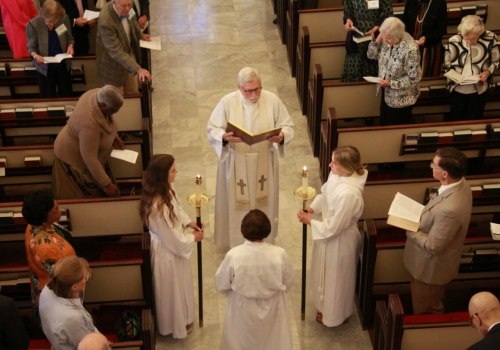
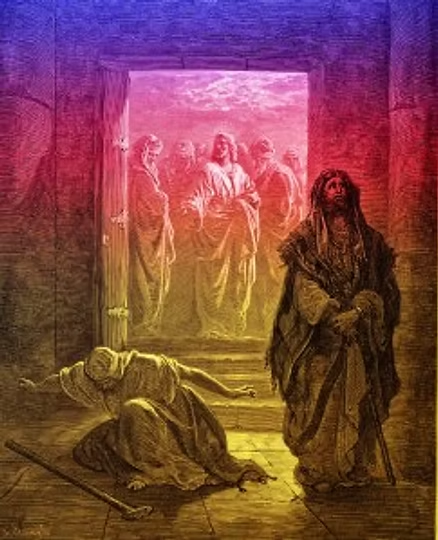


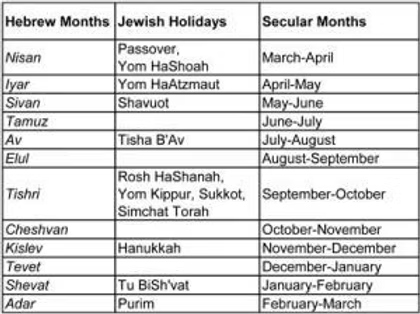
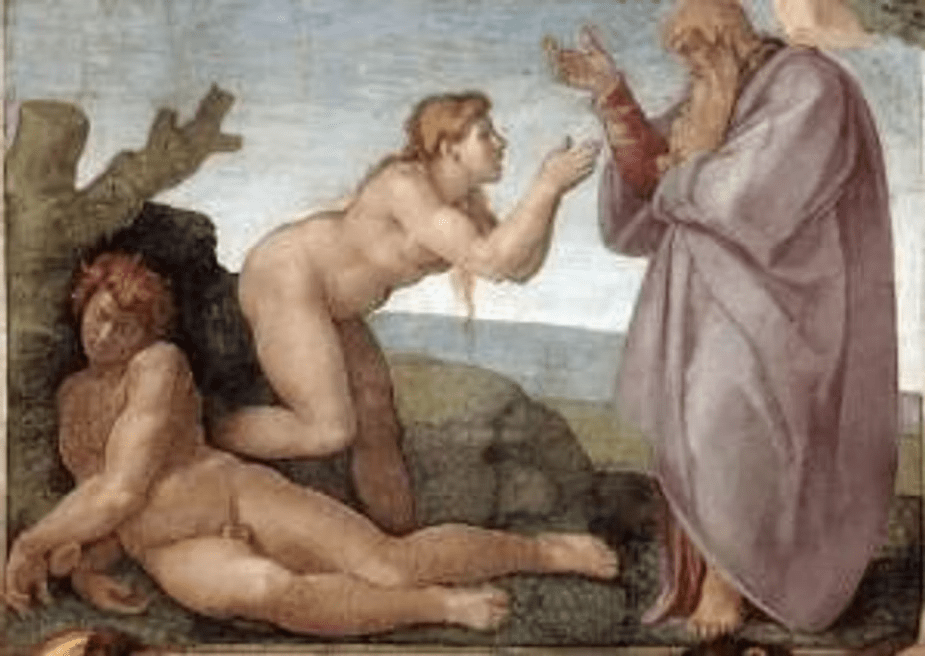
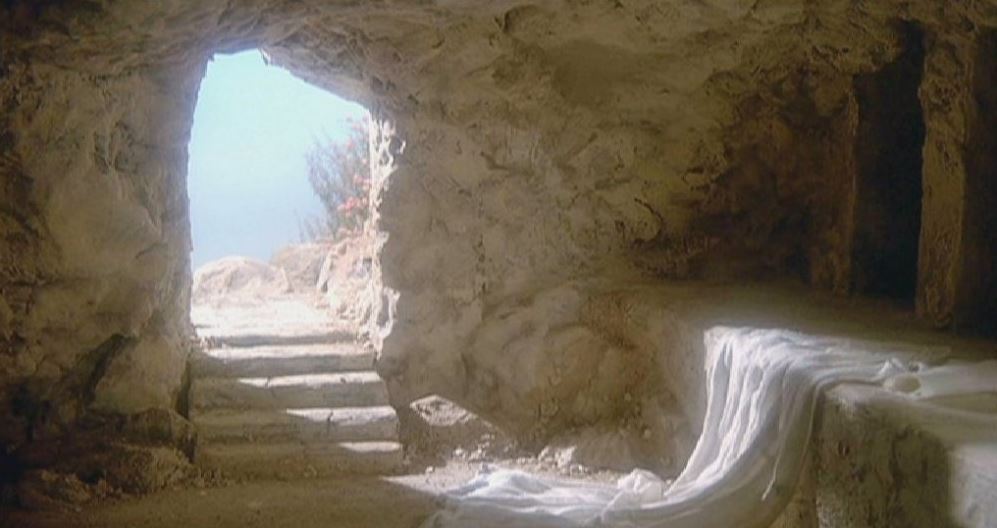

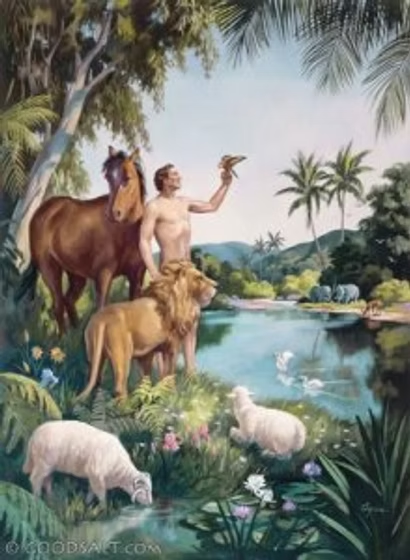
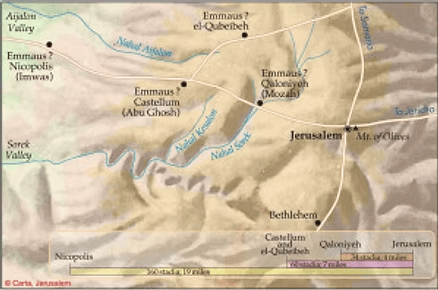
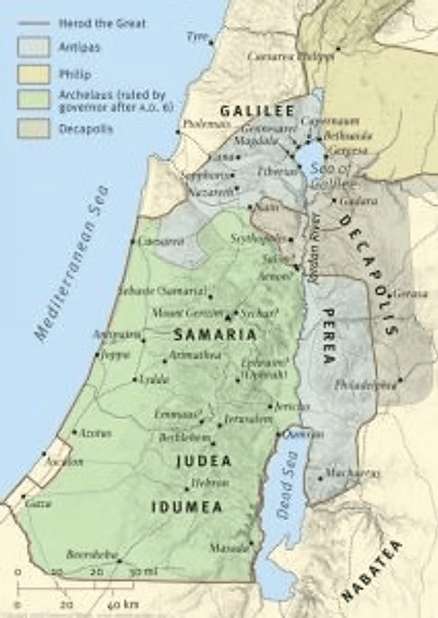


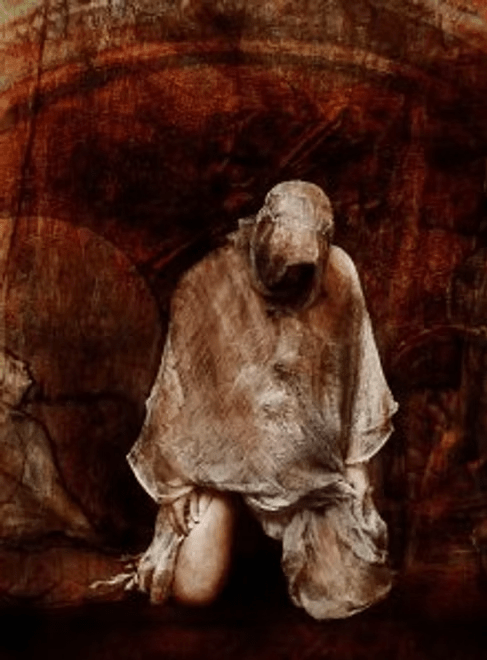
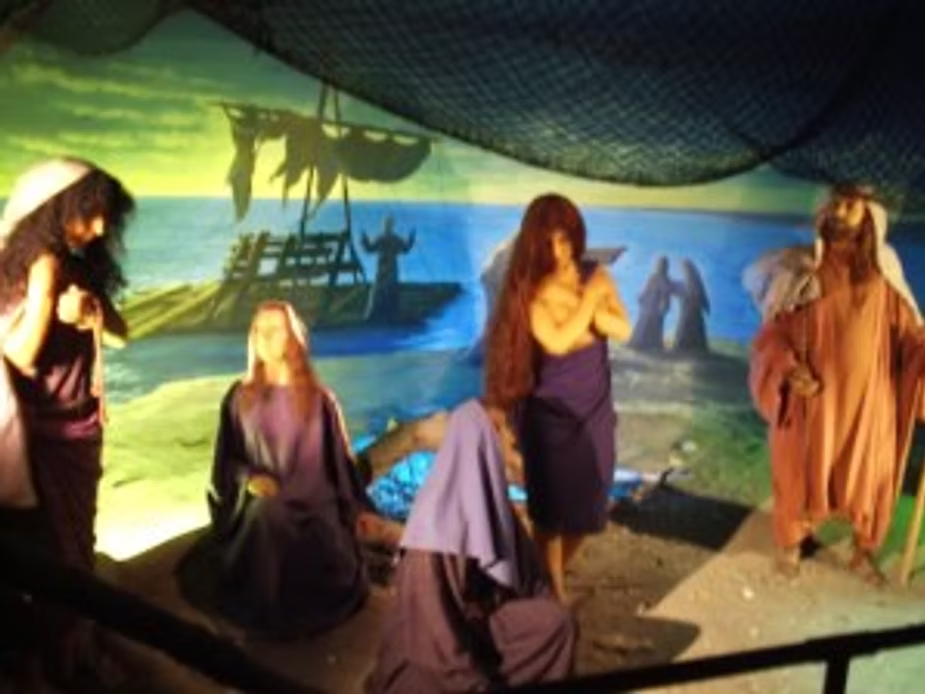


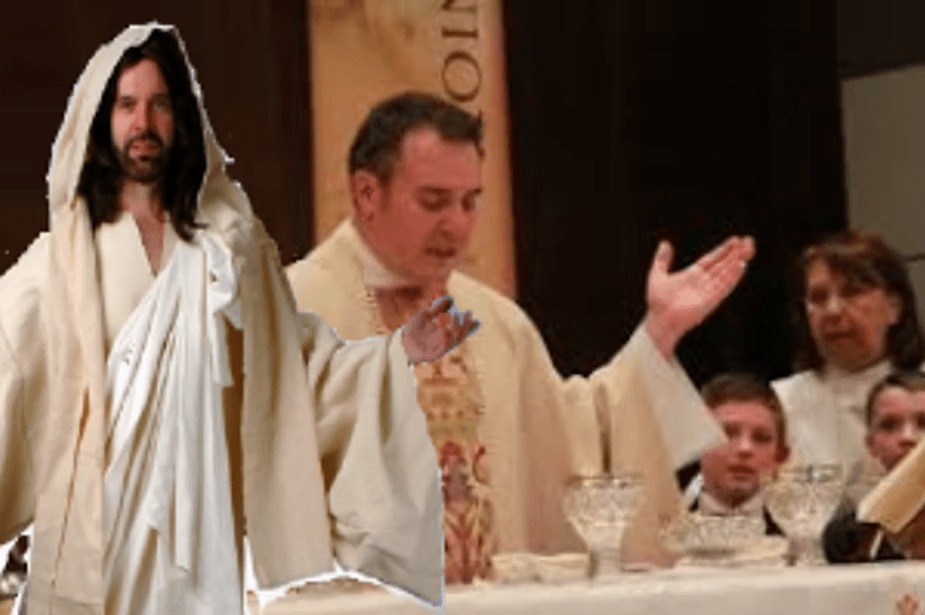


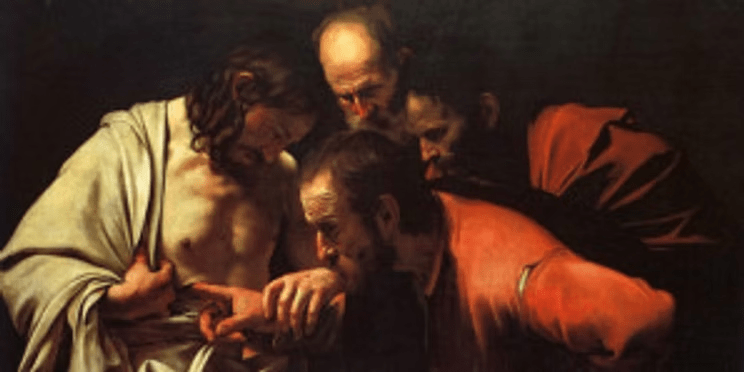

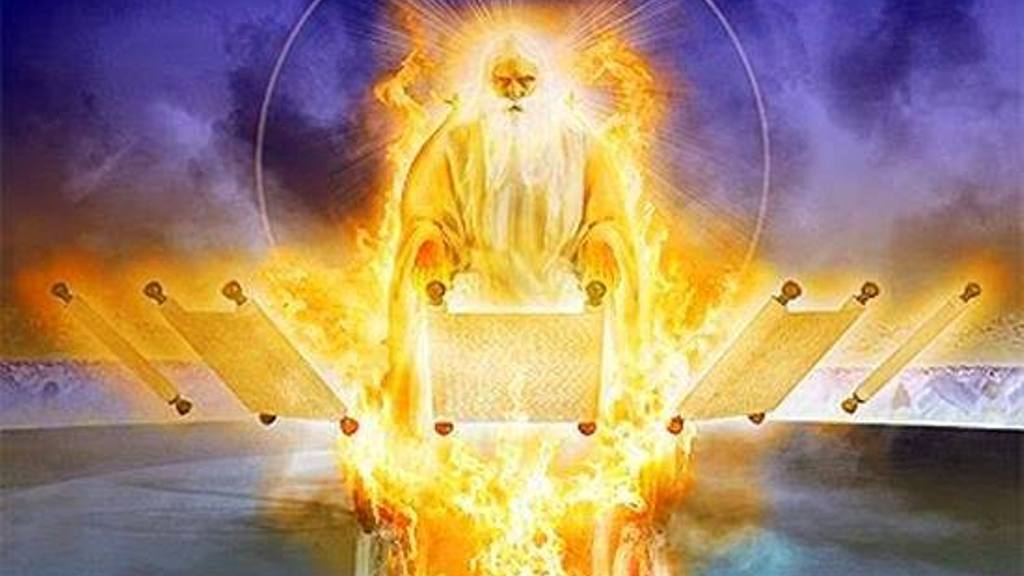



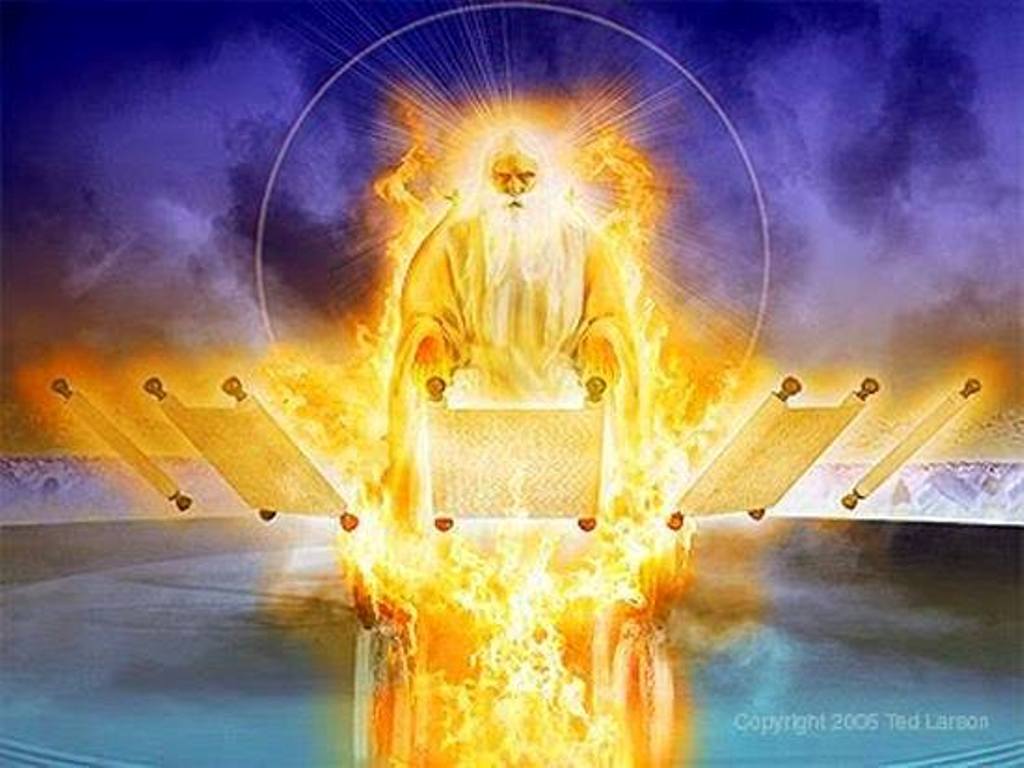



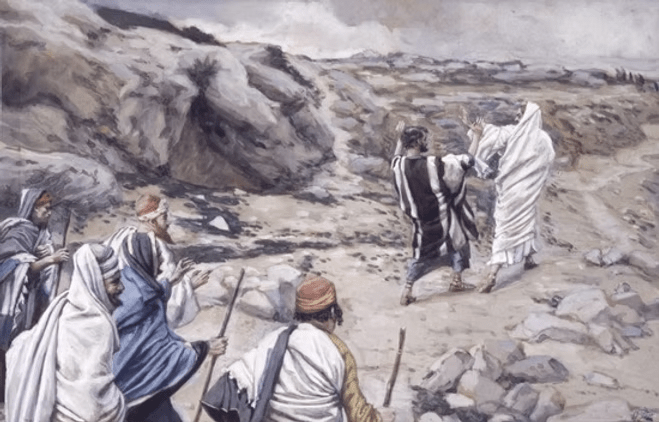
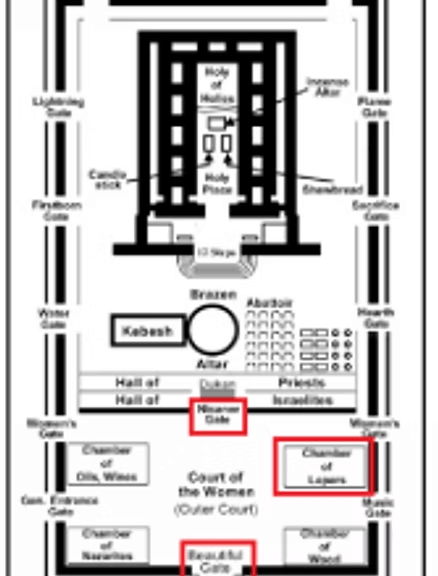







 Explaining the Readings