On the first day of the week, at early dawn, the women who had come with Jesus from Galilee came to the tomb, taking the spices that they had prepared. They found the stone rolled away from the tomb, but when they went in, they did not find the body. While they were perplexed about this, suddenly two men in dazzling clothes stood beside them. The women were terrified and bowed their faces to the ground, but the men said to them, “Why do you look for the living among the dead? He is not here, but has risen. Remember how he told you, while he was still in Galilee, that the Son of Man must be handed over to sinners, and be crucified, and on the third day rise again.” Then they remembered his words, and returning from the tomb, they told all this to the eleven and to all the rest. Now it was Mary Magdalene, Joanna, Mary the mother of James, and the other women with them who told this to the apostles. But these words seemed to them an idle tale, and they did not believe them. But Peter got up and ran to the tomb; stooping and looking in, he saw the linen cloths by themselves; then he went home, amazed at what had happened.
——————–
This is the optional Gospel reading that can be selected to be read aloud by a priest on Easter Day (primary service), during the Year C. If chosen, it will follow a mandatory reading from Acts 10, where Peter told the Roman centurion Cornelius, “They put him to death by hanging him on a tree; but God raised him on the third day and allowed him to appear, not to all the people but to us who were chosen by God as witnesses.” One of two readings will accompany that, with the first possible to be from Isaiah 65, where the prophet sang, “no more shall the sound of weeping be heard in [Jerusalem], or the cry of distress.” The other possibility comes from Paul’s first letter to the Corinthians, where he wrote: “Then comes the end, when he hands over the kingdom to God the Father, after he has destroyed every ruler and every authority and power.” Everything will be joined by the mandatory singing of Psalm 118, where David wrote, “Open for me the gates of righteousness; I will enter them; I will offer thanks to Yahweh. This is the gate of Yahweh; he who is righteous may enter.”
In the primary choice for the Gospel reading on Easter Day – John 20:1-18 – the focus is only on Mary Magdalene going to the tomb with spices; and, then she runs to tell Peter (and John), before returning herself to the tomb. That focus by John is on Mary as his mother, the wife of Jesus, with Jesus being John’s biological father. The difference now found in Luke, where the focus is on “the women who had come with Jesus from Galilee” is relative to a focus from the perspective of Mary the mother of Jesus. Mary Magdalene did not come from Galilee, as she came from Bethany, just outside Jerusalem. This difference does not mean that two separate trips were made by women to the tomb, as all came from a place they were all staying, which was close to the tomb. Thus, nobody travelled from Galilee or from Bethany, as all travelled from Joseph’s estate nearby, where all were welcomed to stay. Separate perspectives simply says separate groupings experienced the same event differently – with all true.
The preparation of spices would have been a group ritual for burial, in a warm environment that quickly made dead bodies smell of death. Tombs were cut into rock, and that means downward and outward, as a natural cellar that kept temperatures consistently cool. While not refrigerated, they slowed the process of flesh decay. Because Jesus had been placed in a local tomb – one never before used, commissioned by Joseph for his own burial … when that time of need came – Jesus’ corpse was to be removed on Sunday (after the Passover festival was over and the Sabbath had ended), to be transported to a family tomb. Because Luke places focus on the “women from Galilee,” this most likely says the body of Jesus was planned to be taken back to Nazareth, to a tomb near where Joseph (Mary’s husband) was laid. A trip to Galilee would take a couple of days; so, despite the amount of perfumes used when preparing Jesus for placement in Joseph of Arimathea’s tomb, the heavy use of perfumes would have been to maintain that ‘never been used before’ ‘new tomb’ smell. The spices prepared by the women would be most likely to drape around the corpse, to mask any odors that would begin, once the corpse was out of a cool environment; and, Sunday was the fourth day of death (like Lazarus), so they knew how bad the smell of death was (from past histories with relatives).
When we read that the women found the tomb already opened, this would not immediately be a sign for alarm. In Mark’s Gospel, Peter remembered the women talking about wondering who they would get to open the tomb for them, which was relative to the earliness of their departure to the tomb (pre-dawn). To find the tomb opened would have been an indication that someone (possibly Joseph) had ordered the tomb opened early, knowing the body would be prepared for removal and then removed. The women did not know of the rolling stone being sealed by Pilate, with a guard of soldiers put in place near it, to ensure nobody opened the tomb without permission. For the women to then find the tomb opened simply meant someone had prepared for the arrival of family and friends, who would prepare the body for removal from the tomb.
When Luke then wrote, “when they went in, they did not find the body” and “they were perplexed about this,” they were “perplexed” by the body not remaining in the tomb. The women tried to figure out where Jesus’ corpse would have been taken. This acts as proof that there was no plan to steal the body of Jesus, to make it seem he had risen and then took off running (presumably to go into hiding). Certainly, any such talk (especially by the rubes of Galilee, who were not the brightest bulbs on the tree) would have been commonly known by those who followed Jesus; and, nobody else would come up with an idea to steal a corpse in a warm environment. By Luke writing “they were perplexed” says no one expected the body to be removed – it had been seen dead as a doornail and wrapped without life – even if someone had been told to open the tomb before dawn. To remove it from a place of coolness made no sense to the women.
When Luke wrote (as the recorder of Mother Mary’s recollections), “suddenly two men in dazzling clothes stood beside them,” this needs to be compared to John (whose mother Mary Magdalen had told him), “But Mary stood weeping outside the tomb. As she wept, she bent over to look into the tomb; and she saw two angels in white, sitting where the body of Jesus had been lying, one at the head and the other at the feet.” (John 20:11-12) In John’s account, Mary Magdalene never entered the tomb, when the other women did enter. When the other women entered the tomb and cried out there was no body, Mary stayed outside tearful, like she had been when Jesus arrived after her brother Lazarus had been buried, showing her “weeping” was from being most close to a loved one that had departed. Hearing that Jesus’ body was gone then made her run back to Joseph’s compound, to alert Peter and John. Those two then took off running, while Mary caught her breath.
Meanwhile, the other women went into the tomb and saw two men dressed in “dazzling [white] clothes.” Later, after Peter left (and John stayed … seeing his mother returning), Mary came back and looked into the tomb. Mary Magdalene then saw what the other women (who had since returned to the compound) had found standing beside them (“two men in dazzling robes”). One was in the tomb (or at its entrance), with the other outside the tomb (Jesus), not initially seen. John called them “two angels,” whereas Luke recalled Mother Mary saying “two men.” The description of “dazzling clothes” says they had no wings; so, the description of “angels” also does not bear that implication. Therefore, “dazzling clothes” (“esthēti astraptousē” literally can say, “robes flashing as lightning”) means the brightness of white light projecting from their forms, made it seem like wings spreading behind them.
Luke then says, “The women were terrified and bowed their faces to the ground.” The word “emphobōn” translates as “terrified,” but the core verb means “filled with fear.” To then prostrate themselves from fear says the women knew they were in the presence of divinity. They could not look upon such a celestial glow and expect to stay alive. Thus, they were filled with a fear of God (Yahweh). This element of “fear” is found in all of the Gospels, whenever an “angel” appears before humans (those specially selected to appear before), with the angel (usually Gabriel) always saying, “Do not be afraid.”
The women, afraid, are shown to say nothing to these “two men.” To then have the women be speechless means Yahweh’s “messengers” (the meaning of “angelous,” along with “angels”) knew the hearts and minds of the women. Therefore, without the women posing a question (like Mary Magdalen did, from outside the tomb, without her laying face-down on the ground), the “two men” asked them, “Why do you look for the living among the dead? He is not here, but has risen.” This question makes a most important statement, as “the living” is the eternal life of a soul; but the truth of “the living” is a soul that has been divinely elevated by Yahweh’s Spirit to have no more need for a body of flesh (the meaning of “the dead”), because the Spirit has freed it from that ‘tomb.’
The metaphor says the women had gone to a graveyard (a ‘garden’ of tombs hewn into rock) seeking a soul that was the Son, which can never die. The question posed by the “angel” suggests the women should be seeking the soul of Jesus within their souls (living entities seeking eternal life), rather than hanging around a place of death (the metaphor of a soul alone in the tomb that is its own body). The question asked why they sought a dead body (the corpse of Jesus), when they already had dead bodies that their souls were animating until their own deaths. In other words, the question said seek to find the eternally living soul of Jesus within the tomb that is your own body of flesh (and that is not found in graveyards).
This question needs to bring to mind how Jesus confused the Sadducees, when they tried to trick Jesus about whose wife a woman would be, who died after having been without issue (having born a child), after having been married to seven brothers that all died. Jesus told them that Yahweh was “the God of the living, not of the dead.” An “angel” (or “messenger”) dressed in “dazzling robes,” causing one’s soul to immediately feel fear and bow one’s face before it, says the women knew a messenger of Yahweh stood before them. The number “two” always speaks of the duality of self; so, the “two” was the soul of a woman (multiplied to how ever many were there) becoming one with a “messenger” of Yahweh. This means the soul of Jesus was the “angel” who spoke to their souls (without any need to use audible words). Jesus was the Son of Yahweh, as a Yahweh elohim, so his question said, “You have found the one you seek; so, why keep looking here?” When the “two men” then said, “He is not here, but has risen,” the truth of that statement needs very close inspection.
The words written here are these: “ouk estin hōde , alla ēgerthē!” There, the word “estin” is the third-person singular form of the word “eimi,” which states, “I am, I exist.” Rather than show the simplicity of this word’s usage as “he is,” the reference is to a soul, as an “existence.” This then has the soul of Jesus (the “angel” with each of their souls) say, “not it exists here.” This is then followed by an exclamation that says, “but it exists risen!” That says the tomb reflects a place of the body, but the absence of a soul in that tomb-body says the Spirit has rolled away the physical holds on a soul to remain entombed in flesh (released from forever being a soul trapped in a cycle of reincarnation). So, instead of continued captivity of a soul to its tomb of flesh, the divinely raised soul-Spirit had escaped that worldly hold.
This is why Easter Day reading have nothing to do with the Son of Yahweh being (surprise!) “risen,” as his soul was born risen. The story of Easter is about the souls of those who go to a tomb of death and expecting to find death still containing their souls within. The “messengers” of Yahweh were saying, their souls would be just like this empty tomb – “risen” – because they served Yahweh and His Son Jesus. Yahweh did not send His Son to do a circus trick that says, “Na na na na na. Bet you can’t do this!” Yahweh sent His Son Jesus to tell all who have faith, “Do not exist in the tomb state of a soul in a body of death any longer! Be raised to eternal salvation!” That is the message that should be preached each Easter Day.
When Luke then wrote, “Remember how he told you, while he was still in Galilee, that the Son of Man must be handed over to sinners, and be crucified, and on the third day rise again,” this assumes the “angels” were just as able as were the Pharisees of Jerusalem and recognize a Galilean by the poor way they dressed … OR it says these “two men” knew their hearts and minds and made themselves (their souls) have this recall of what Jesus said, and where he said it. It says Jesus of Nazareth had been with them in Galilee; so, his soul having entered theirs meant a ‘mind meld’ of mental recall being shared with each connected to Jesus’ soul.
Because of that ‘mind meld,’ where no physical words were spoken, Luke then wrote: “Then they remembered his words, and returning from the tomb, they told all this to the eleven and to all the rest.”
With that end of their need to be present at a tomb, when they knew the body of Jesus had risen as them, the soul of Jesus had entered into their souls. The body of Jesus became the bodies of the “women” who so vigilantly stayed with Jesus’ body as it hung on a cross, then taken down and carried to be prepared for burial. The “women” had gone to the tomb with the body of Jesus (to know where to go on Sunday morning), so the raised “body” of Jesus had become one with their physical bodies. There was no purpose for them to be in a tomb as Jesus was “the living” promise that was then one with their souls. Their bodies were no longer tombs for an entrapped soul, because the body of Jesus had become their bodies, raising their souls so their body-tombs had the roll away stone that was Jesus (the cornerstone rejected by the builders of mortal death).
Here is where Mother Mary named the souls that had been “raised” by the presence of Jesus’ soul within, so each of their bodies of flesh were his soul’s new bodies – his body “risen”. They are named as “Mary Magdalene, Joanna, Mary the mother of James, and the other women.” Here, Mary Magdalene is named, so the connection to Galilee was no longer holding. “Mary the mother of James” is how Mother Mary named herself, as she knew she was not the true “mother” of Jesus, although she was the womb in which was placed an already ‘mothered’ soul. Mary was then acknowledging she was a surrogate who delivered the Son of Yahweh into the world (one of many incarnations that soul had made). The naming of “Joanna,” who is said to be “the wife of Chuza, the manager of Herod Antipas’ household estate” (ref.), she was one healed by Jesus, who became a devoted follower (one of the many like her, who were not named disciples). She was believed to be a woman of means (from Tiberias, on the Sea of Galilee), who helped fund Jesus’ ministry, out of love. Her name mentioned says the wife of Jesus, his biological family, his servants, and his extended family (“the other women”) had all stayed with Jesus throughout his times of trial, through deep, heartfelt love, which had then made their souls be one with his. Jesus’ new bodies of flesh were women and they came by many different names. This multiplicity IS the truth of Christianity: All true members are souls that have been raised from the dead, in bodies of flesh that have been reborn as Jesus.
When Luke then wrote the words that say, “told this to the apostles. But these words seemed to them an idle tale, and they did not believe them,” the use of “apostolous,” rather than “mathētōn,” says that being told the story of Jesus having been raised from the dead will never lead a soul to have faith, simply from having been told a story. A soul must see Yahweh, so two become one in divine marriage (soul plus Spirit), which cleanses one’s flesh so Jesus can make that his new body. Being told a story does not bring about this transfiguration. It is hearsay, which works until one is given the third degree questioning that screams in your face, “Were you there? Did you witness this event!”
In the same way honesty leads one to disbelief, where being questioned under oath (sworn to God to tell the truth, the whole truth, and nothing less) means admitting a lack of knowing Jesus is risen. Simply from being told a story by a trusted friend or family member can open one up to doubt; so, Christianity is not a matter of belief. Reading stories about Jesus – which took place roughly two thousand years ago – can never be more than “an idle tale.” This too needs close inspection.
Verse eleven states in Greek, “kai ephanēsan enōpion autōn hōsei lēros ta rhemata tauta , kai ēpistoun autais .” This begins with the word “kai,” which shows importance to follow; and, following an internal comma mark, another use of “kai” says another important statement is made in this verse. The first important statement says, “became clear before the face of themselves as it were silly talk these things spoken this”. This becomes a powerful statement that the souls (“themselves,” where “selves” equates to “souls”) of each of the women “clearly saw” the truth, from “two men” speaking to their hearts and minds. They had lowered their faces “before” the presence of Yahweh (his servant messengers), so when they rose (were “raised”) they each wore the “face” of Yahweh, although that divine “face” “appeared” as their own faces. When they “spoke” the truth to others not so divinely possessed, those “words” sounded like “folly” or “silly talk.” They began speaking “in tongues,” but not as Evangelicals like to think of that. Thus, the second statement of importance says, “the faithless were not the same,” so telling someone what to believe does not transfer to another as true faith.
This important lesson says, “One must bow one’s own soul down in submission to Yahweh. One must personally experience His presence and hear His Word spoken to one’s soul. Then one will be raised to wear the face of Yahweh before others; knowing the only way others will ‘come to Jesus’ is by doing the exact same thing themselves (where a “self” equates as a ‘soul”).”
When Luke then wrote, “Peter got up and ran to the tomb; stooping and looking in, he saw the linen cloths by themselves; then he went home, amazed at what had happened,” this confirms that one acting on what others say has wonderful results. Hearing is believing; but seeing brings true faith. That is why the fifth Gospel is the Acts of the Apostles.
Sitting in a church pew, crying tears into a hankie because poor Jesus died, but then was resurrected, is crying tears for oneself, who never goes to the tomb to realize the tomb is one’s own death coming assuredly. One never prostrates before Yahweh’s, as His servant, because one thinks (a curse of a fleshy brain) one is an equal to Jesus and God, simply by confessed belief. All one has to do is listen to a silly tale being read aloud in a church and then say, “Oh I believe that! Praise be to God! Get my heavenly mansion ready!” Doing that is chiseling away a nicely squared cornerstone, which will be locked into place at the doorway to one’s tomb, keeping one’s soul entombed in flesh (or the worldly realm) for as long as an eternal soul exists (forever).
Luke told us to “Go, read what John wrote … and Mark … and Matthew! They all tell of getting their disbelieving asses up and doing something!” The did that because hearing a good story told is not the same thing as proving the good in a story. Proving to oneself the truth is what leads one know the truth oneself. That is when Faith is born, which comes from a divine marriage and a possessing soul of Yahweh’s Son..
As the optional Gospel reading for Easter Day, only to be told in Year C, the same message as is found in all the stories of Easter Sunday morning is the same: to see Jesus has been raised in oneself. It does no good to only believe the story that Jesus was not in a tomb, when the stone was already rolled away when the women first arrived. That fact alone is reason to bring doubt into this wild story. Maybe the Romans stole the body, so nobody else could steal it? The point of all the Easter Day (primary service) readings is to see how those who cared for Jesus got up before sunrise, after having done the preparatory work beforehand, to go speak with “angel messengers of Yahweh.” Tell someone you spoke with an angel and see what their response is. The reason we read these stories of Faith is the same actions that bring about Faith must be continued. Belief alone is doubt buried in a tomb of death, not “the living within the dead.”
Jesus and his disciples arrived at the country of the Gerasenes, which is opposite Galilee. As he stepped out on land, a man of the city who had demons met him. For a long time he had worn no clothes, and he did not live in a house but in the tombs. When he saw Jesus, he fell down before him and shouted at the top of his voice, “What have you to do with me, Jesus, Son of the Most High God? I beg you, do not torment me” — for Jesus had commanded the unclean spirit to come out of the man. (For many times it had seized him; he was kept under guard and bound with chains and shackles, but he would break the bonds and be driven by the demon into the wilds.) Jesus then asked him, “What is your name?” He said, “Legion”; for many demons had entered him. They begged him not to order them to go back into the abyss.
Now there on the hillside a large herd of swine was feeding; and the demons begged Jesus to let them enter these. So he gave them permission. Then the demons came out of the man and entered the swine, and the herd rushed down the steep bank into the lake and was drowned.
When the swineherds saw what had happened, they ran off and told it in the city and in the country. Then people came out to see what had happened, and when they came to Jesus, they found the man from whom the demons had gone sitting at the feet of Jesus, clothed and in his right mind. And they were afraid. Those who had seen it told them how the one who had been possessed by demons had been healed. Then all the people of the surrounding country of the Gerasenes asked Jesus to leave them; for they were seized with great fear. So he got into the boat and returned. The man from whom the demons had gone begged that he might be with him; but Jesus sent him away, saying, “Return to your home, and declare how much God has done for you.” So he went away, proclaiming throughout the city how much Jesus had done for him.
——————–
This is the Gospel selection that will be read aloud by a priest on the second Sunday after Pentecost (Proper 7), Year C, according to the lectionary for the Episcopal Church. It will follow one of two possible Old Testament possibilities, either from First Kings 19 or Isaiah 65. Depending on the choice, three Psalms of David are possible to be read. If the reading comes from First Kings, the verse saying this will be read: “[Yahweh] said, “Go out and stand on the mountain before Yahweh, for Yahweh is about to pass by.”’ If that is read, then both Psalm 42 and Psalm 43 will be sung, where both sing this: “Put your trust in lelohim; for I will yet give thanks to him, who is the help of my countenance, and welohay.” If Isaiah 65 is chosen, then the people will hear: “As the wine is found in the cluster, and they say, “Do not destroy it, for there is a blessing in it,”’ That will be followed by a partial singing of Psalm 22, where one lyric says, “For he does not despise nor abhor the poor in their poverty; neither does he hide his face from them; but when they cry to him he hears them.” That will precede the Epistle from Paul’s message to the true Christians in Galatia, to whom he wrote: “As many of you as were baptized into Christ have clothed yourselves with Christ. There is no longer Jew or Greek, there is no longer slave or free, there is no longer male and female”.
In the chronology of this reading, it should be realized that the Gospels of Mark and Matthew also tell of this event in Jesus’ ministry, with all three Gospel writers writing about it taking place after the event of Jesus calming the sea, from a storm that suddenly came up. This should be seen as one event occurring not long before the other; so, the landing “at the country of the Gerasenes, which is opposite Galilee” must be seen as an emergency docking, rather than some happenchance event, where someone was happily sailing along, until someone said, “Hey! We’ve never been here before. Let’s stop and check it out!” When that approach is taken, one can see the hand of Yahweh moving His Son to this place, for the purpose of meeting “a man of the city who had demons.”
This map shows the region of the Decapolis, which was where ten cities east of the Jordan River were located. According to a Wikipedia article entitled “Gergesa,” there is no sure place recognized as “the country of the Gerasenes.” The article says, “Byzantine Christian monks venerated a site situated a few kilometres north of Hippos on the lake shore, as the location of the miracle. It is the only place fitting Matthew’s description, since it contains the only “steep bank” in the area descending all the way to the shore of the lake.” [Wikipedia] This makes “the city” (from “tēspoleōs”) be one of the ten cities in the Decapolis (Greek for “Ten Cities”), such that the only one of those close to the Sea of Galilee would be Hippos.
That location would be where the Romans had constructed a harbor (one of many on that sea), designed to accommodate fishing and water travel. When John called the Sea of Galilee Lake Tiberius, that was not simply because a Roman emperor built a city by that sea. The Romans were occupiers of that land, thus the citizens of the lands surrounding the sea-lake were taxed. Since fishing and water travel were done by profitable businesses, the Romans would tax those business owners; and, then the tax monies would be reinvested into making and maintaining functional harbors. This says after the storm, the boat-ship the disciples were in needed some repair work done; and, the harbor-marina at Hippos was closest to where the storm had blown them. The logistical reason for them landing there was the storm; but the spiritual reason they landed there was Jesus was needed by this possessed man … the one who met him.
The Wikipedia article tells of two other cities, both names beginning with the letter “G” – Gerasa and Gadara – saying “both were Gentile cities filled with citizens who were culturally more Greek than Semitic; this would account for the pigs in the biblical account.” The same can be said of Hippos, as the Decapolis was “a center of Hellenistic and Roman culture in a region which was otherwise populated by Jews, Nabataeans and Arameans. [Wikipedia article “Decapolis”] Still, the etymology of the word “Gergesenes” has it meaning “those who come from pilgrimage or fight.” [Wikipedia] This says the eastern side of the Sea of Galilee was where a majority of the people lived in the ten population centers, with the majority of those people being Gentile; but a Jewish population existed in a minority and those were deemed to be “Gergesenes.” They would have been pilgrims who stayed close to Jerusalem, but then had to fight for survival amid those who rejected their religious beliefs. The man who came to meet Jesus must be seen as one of these lost pilgrims, whose fight was against the demonic possession that had come upon him there.
When the NRSV casually translates this was a man “who had demons,” the Greek written is “echōn daimonia.” That stated the present participle of the verb “echó,” which means “to have, hold,” implying in usage “I possess.” (Strong’s) Thus, the truth of that written says, “possessing evil spirits.” More than the man “having demons,” as if he kept them in a cage that he dragged around, the written text says the soul of the man was “possessed” by “evil spirits.” This means the man’s soul – a Jew in a place without proper Jewish elders to help him – had prayed to Yahweh for help to come to him. His meeting Jesus says the soul of the man was told where to go, when, and why his going there was to meet his rescuer.
Now, in this modern world that suffers from Big Brain Syndrome, we accept that such a state that had overcome this man would be called “multiple personality disorder.” Modern scientists would reject any and all notions of “spirits” or “demons,” be them good or evil. They would write this man off as needing some form of drug that would make his brain less functional, thereby being less affected by the bad-wiring in his brain. On the other hand, the Roman Catholic Church still employs (and I presume trains) exorcists, who are deemed priests who can cast out demon spirits. The problem with that approach is it places more focus on casting out of demon spirits, without any pasturing specially designed to prevent such possessions, through seeking a divine possession [Yahweh]. Rather than ‘train’ Roman Catholics to be possessed by Yahweh’s Spirit, to then be reborn as Jesus as a new Christ in the world, the church knows it provides fertile ground for demonic possession. That makes exorcism the religious version of Prozac … a treatment, not a prevention.
When we read the NRSV translation that says, “For a long time he had worn no clothes, and he did not live in a house but in the tombs,” this seems to be nothing more than the symptoms of a crazy man. The reality is this says the man wore the spirits of the dead, rather than clothing [a robe or outer garment]. The weight of those dead souls {coming from “tombs”] surrounded his body so much that the thought of putting on a physical robe would be like wearing another spirit. To wear priestly garb upon such ‘filth’ would be to insult his faith.
The words saying “he did not live in a house” actually say [led by the word “kai”], “importantly within to a dwelling not to remain.” This actually states that all souls released from a corpse at death should ‘go into the light’ and receive Judgment from Yahweh. However, instead of leaving the material plane, the significance here is souls entered “within to a dwelling” that was a host soul-body of flesh. The ‘house’ is then someone whose soul was too weak to prevent a spiritual possession. When the result is known “not to remain,” that both says a soul in a body of flesh will also face its own death; and, when that host body dies, all possessing souls will again be released for Judgment. As such, they all are “not to remain;” but “not to abide-stay-remain” also says the body of flesh they possess was “not” one assigned to that soul when placed into the material realm. This says the lost souls were led to possess another body by greater spirits (elohim), who directed them away from their own Judgement; so, it is an “evil” act done by the elohim.
When we read the man fell down before Jesus, his host soul was the one who prayed for help to be sent to him. He prostrated himself before the Son of Yahweh. For us to then read [NRSV], “[he] shouted at the top of his voice, “What have you to do with me, Jesus, Son of the Most High God? I beg you, do not torment me,” that is not the man speaking. It is the main possessing demon voicing recognition of Yahweh coming to confront it. The man would have no possible way to know who Jesus was. The demon within would; and, “Jesus” would be used as a word that was divinely elevated to mean “Yah Saves.” Thus, the demon spirit knew the host soul was being saved by Yahweh, in the form of a man, thus a “Son.” Yahweh would be the deity “Most High,” above all elohim-angels-spirits and souls.
To then read: “for Jesus had commanded the unclean spirit to come out of the man. (For many times it had seized him; he was kept under guard and bound with chains and shackles, but he would break the bonds and be driven by the demon into the wilds.)” there is no evidence of an aside being made [no parentheses in the Greek text]. The NRSV (and others, I imagine) place the words of Luke in parentheses to show they are a jump back in time, explaining the man’s life prior to Jesus arriving.
The words placed within those marks should be seen as efforts having been made in the past to exorcize the man. This would mean the man had been treated by priests of some other religion [Greek or Roman], with all such attempts only angering the demon within his soul. Those attempts had caused the man to react so violently that he would have to be constrained by chains and shackles. For the demon spirit to give the man super powers, enabling him to physically be “breaking the bonds,” he would be a fantasy come true. Instead of seeing “breaking the bonds” as physical strength, it would make better sense to see this as the demon spirit ceasing to make the man violent, thus “tearing apart” the personalities “bonded” to his soul, which caused him to be placed in “chains and shackles” in the first place That return to a calm state would have him be released by those attempting to cure him; and, once free, the demon would drive the man wildly out into the desert.
We then read, “Jesus then asked [the demon spirit], “What is your name?” [It] said, “Legion”; for many demons had entered [the man possessed]. [Those evil spirits] begged [Jesus] not to order them to go back into the abyss.” This says “Legion” is a spirit like we have read in recent weeks, about Python and Leviathan. The capitalization elevates that name to a level of elohim, meaning Yahweh created it to be an angel. The meaning behind the name “Legion” is “Collective,” where the divine elevation of that capitalized word shows the “Collective” to be souls amassed under one leader. This makes “Legion” become a pseudonym for Lucifer or Azazel, who led fallen angels to rebel against Yahweh’s command that all elohim serve His Son Adam, and thereby common males and females of humanity.
The cry “not to order them to go back into the abyss” says Legion commanded many fallen elohim. Simply by such a strong presence in one host soul-body says this pilgrim who traveled to Jerusalem and remained nearby was a devout Jew, who became the target of Satan, once he entered into a country of Gentiles. That level of demonic possession says the man was a true servant of Yahweh; and, it was that history that led Jesus to come to his rescue [the reason the storm was sent to redirect the boat].
We then read: “Now there on the hillside a large herd of swine was feeding; and the demons begged Jesus to let them enter these. So he gave them permission. Then the demons came out of the man and entered the swine, and the herd rushed down the steep bank into the lake and was drowned.” The significance of this is a “herd of swine” would not have been owned by Jews. The symbolism is the demon spirits under Legion begged to be placed into living creatures that were owned by Gentiles.
When Jesus permitted those spirits to enter into the pigs, that says animals also have souls. Everything that breathes air [Yahweh’s presence allowing life to penetrate dead matter] has a soul. To enter a swine would then release that demon to repossess a Gentile, when the swine would be slaughtered for food. While Jesus granted the demons their wish, Yahweh then commanding the swine to run wildly down a steep hillside into the sea below. Those demons souls were then released by the deaths of the swine, so Yahweh could Judge them … meaning, “Back to the abyss you go.”
We then read: “When the swineherds saw what had happened, they ran off and told it in the city and in the country. Then people came out to see what had happened, and when they came to Jesus, they found the man from whom the demons had gone sitting at the feet of Jesus, clothed and in his right mind. And they were afraid.” Those who had seen this event unfold “then told the people coming from the town and country how the one who had been possessed by demons had been healed. Then all the people of the surrounding country of the Gerasenes asked Jesus to leave them; for they were seized with great fear.”
This should be seen in the same light of Paul (possessed and speaking as Jesus) commanding the spirit Python to leave the girl it possessed, in Philippi. When the girl was no longer a valuable possession to those Roman slaveowners, they went and told those of the marketplace. The swine herders had likewise just lost some valuable property (pigs), which would effect the profits of the pork sellers in Hippos and the surrounding country. They all knew of the madman that was possessed; and, when the story of the drown pigs was connected to the ridding of a possessed man by demon spirits, it would be easy for them to put one and one together, so they realized they too had been protected by the pigs drowning. That realization brought a cold shiver of fear to run up their spines, because their priests had tried to cure the possessed man, only to find that angered the demon Legion. They certainly did not want to treat Jesus like the Romans of Philippi treated Paul and Silas, as they feared they would be ordered to drown themselves in the same sea.
The final verses then say: “So [Jesus] got into the boat and returned. The man from whom the demons had gone begged that he might be with him; but Jesus sent him away, saying, “Return to your home, and declare how much God has done for you.” So he went away, proclaiming throughout the city how much Jesus had done for him.” This says the time taken for this event to unfold was equal to the time the harbor laborers and the disciples with boat experience could make the proper repairs to the boat they arrived on. To be asked to leave was no big deal to Jesus, as the only reason he had come (sent by his Father) was to heal the demon possessed man.
When the man asked to go with Jesus, it was not to escape any future demon possessions in the Decapolis region. It was a request to be a disciple of Jesus, like the others who followed Jesus in ministry. When we read “Jesus sent him away,” the Greek word written means “he was set free” (from “apelysen”). This “release” by Jesus says the man was “free” of demon or unclean spirits; but his soul had become possessed by Yahweh, from having encountered Jesus. Unlike the disciples, who were still being prepared to enter ministry, this man had received the Baptism of Yahweh’s Spirit and become reborn as the soul of Jesus possessing him, “freeing” his soul from ever being influenced by evil again. Thus, Jesus sent him into ministry, to his home and to “declare how much God has done for you.” This is the purpose of ministry, once one’s soul has been cleansed of all past sins (possessions by demons) and reborn as the Son of Yahweh.
As the Gospel reading that will be read aloud in a church by a priest on the second Sunday after Pentecost (Proper 7), at a time when one’s own personal ministry for Jesus has symbolically begun, it is vital to see the possessed man as oneself. Each of those who will enter ministry must know the depths of despair cased by one’s own demons. Only from a fear of Judgment motivate one to sincerely pray to Yahweh for salvation; so, our beliefs lead our souls to cry out to Yahweh for ending our way of being [possessed by waywardness]. We have to endure all the persecution that comes from Gentiles pretending to be closer to their gods than anyone else is. The sermons we hear are angering our inner soul, so it wants to break the bonds that attempt to pacify lost souls by exorcisms that are swallowed with a sip of water or wine. Salvation does not come from external cures. It can only come from the resurrection of Jesus’ soul, within each of our souls. We have to have our demons driven off a cliff, with our old possessed soul dying with them. We must be reborn anew, at which time we are sent by Jesus into ministry (in his name).
51] When the days drew near for Jesus to be taken up, he set his face to go to Jerusalem. [52] And he sent messengers ahead of him. On their way they entered a village of the Samaritans to make ready for him; [53] but they did not receive him, because his face was set toward Jerusalem. [54] When his disciples James and John saw it, they said, “Lord, do you want us to command fire to come down from heaven and consume them?” [55] But he turned and rebuked them. [missing text 56] Then they went on to another village.
[57] As they were going along the road, someone said to him, “I will follow you wherever you go.” [58] And Jesus said to him, “Foxes have holes, and birds of the air have nests; but the Son of Man has nowhere to lay his head.” [59] To another he said, “Follow me.” But he said, “Lord, first let me go and bury my father.” [60] But Jesus said to him, “Let the dead bury their own dead; but as for you, go and proclaim the kingdom of God.” [61] Another said, “I will follow you, Lord; but let me first say farewell to those at my home.” [62] Jesus said to him, “No one who puts a hand to the plow and looks back is fit for the kingdom of God.”
——————–
This is the Gospel selection that will be read aloud by a priest on the third Sunday after Pentecost, Year C, according to the lectionary for the Episcopal Church. It will culminate either a Track 1 or Track 2 course of readings, depending on the path an individual church takes for Year C. The Track1 path includes an Old Testament selection from Second Kings, followed by a singing of verses from Psalm 77. In the Old Testament reading is said, “When they had crossed, Elijah said to Elisha, “Tell me what I may do for you, before I am taken from you.” Elisha said, “Please let me inherit a double share of your spirit.”’ The Psalm then sings, “I will meditate on all your acts and ponder your mighty deeds.” The Track 2 path has selections from First Kings and Psalm 16. The Old Testament says, “So [Elijah] set out from there, and found Elisha son of Shaphat, who was plowing.” Psalm 16 includes the verse that sings, “Their libations of blood I will not offer, nor take the names of their gods upon my lips.” One pair from those four will precede the Epistle selection from Galatians. There, Paul wrote, “The fruit of the Spirit is love, joy, peace, patience, kindness, generosity, faithfulness, gentleness, and self-control. There is no law against such things.”
To make the meaning of this reading selection clearly known, I will now translate each verse literally, rather than place focus on the paraphrases of the NRSV [the Episcopal Church’s reading source]. To assist the student to see the differences presented by my translations, versus those of the NRSV, I have applied verse numbers to the above reading.
Verse fifty-one literally translates into English saying, “it was Born now within to this to fulfill these days of this of lifting up of his soul , kai his soul this face it firmly established of this to travel into Teaching Peace [Jerusalem] .”
This verse begins with a capitalized “Egeneto,” where the divine elevation to a spiritual level has the meaning be “It was born.” This word, in this specific form, appears over two hundred times in the New Testament. Rather than be read like a fairy tale, as “It came to pass,” when capitalized the third-person should be seen as Yahweh’s Spirit in Jesus, which was created by Yahweh for the purpose of saving souls. Thus, it is this “Birth” that was spread throughout the ministry of Jesus; and, this verse tells us of a new “Birth” of Spirit for others to witness in his ministry.
The NRSV makes this simply be “when the days drew near for Jesus to be taken up.” This account in Luke (Mother Mary’s memories shared), Jesus was still in the early “days” of his ministry. In Luke’s seventh chapter, John the Baptist was still alive, having sent messengers to ask Jesus if he was the one. In Luke’s ninth chapter, Jesus sent out the twelve in their internship ministry, with the feeding of the ’five thousand’ and the ‘transfiguration’ events told just prior to this one. This says Luke’s ninth chapter is a synopsis of three years reviewed at one time, as remembered by Mother Mary, rather than represent a chronological account of everything that happened between the events remembered in chapter nine. While Mary’s memories (divinely inspired) sped through Jesus’ ministry that she witnessed, the focus of this verse is less about the timing of “days,” and more about the coming end to the “light of inspiration” Jesus offered as a physical teacher in the world.
As such, the Greek written: “hēmeras tēs analēmpseōs autou” must be seen as heavily written in the Genitive case, where possession must be understood as the spiritual transfer of Jesus’ presence into others. This has the English say, “days of this of lifting up of himself” … where “himself” turns into a statement of “his soul.” This says “these days” of Jesus’ ministry were when he was seeding his own soul into the lost ‘sheep’ he found in ministry, which would mark them as souls in which his soul would fully resurrect, after his soul had been released in death – when “of lifting up of his soul” was complete. The external light of Jesus would become an internal light of Jesus, when his soul was “taken up” by another soul Jesus had marked as the Father’s.
Following the comma mark is written the word “kai.” Because a comma mark is a symbol that states “and,” the word “kai” must be realized as written letters that are never be read as that worthless word of conjunction. What can be stated in a mark needs not take up space in letters. The word “kai” is a marker word of importance to follow. That stated importantly here says, “his soul [himself] this face firmly established.” That means it is important to see “these days” of Jesus’ ministry had him wearing “the face” of his intent and purpose, having been a “soul” [self] made by the hand of Yahweh. This says Jesus wore the “face” of sainthood – call this pronouncement of a divine halo surrounding his head.
That being “firmly established” by Yahweh’s presence within his flesh, his purpose in ministry was “to travel” places where the scattered flock of Yahweh had been placed. The “face” Jesus took to those lost sheep would be recognized by those lost sheep who were Yahweh’s. They would come to his “face,” so Jesus could “Teach them Peace.” This is the meaning behind the name “Jerusalem;” and, that capitalized word should be seen as having greater value than the residual fact that Jesus was always headed [“facing”] towards Jerusalem, from his first day in ministry. Jesus was always going to be “Teaching Peace.”
Verse fifty two literally translates into English saying, “kai he sent angels before with face of his soul , kai having traveled , they came in to a village of Samaritans , even as to have made ready to his soul .”
This verse begins with the word “kai,” which means it is important to grasp the third-person aspect of who “sent angels” (“angelous”). The NRSV translation makes it seem as if Jesus barked out some orders to his disciples, so some were “sent” ahead as “messengers;” but that should make one wonder, “What was the message sent?” The third-person seen as Yahweh “sending” His Son is not the first time Yahweh has done that. His “sent angels before the face of his soul” says the ”soul” of Jesus had come prior, with a different human face – all wearing the same “face” of Yahweh, as did Jesus.
Following this statement of the “days” of Jesus in ministry, which was like that of Elijah and David prior, Jesus “traveled” so the “face” of Yahweh could be shared with others. At this time, we are told Jesus and his disciples “came into a village of Samaritans.” It should be noted that Samaria was a city and a region, which had been slap-dab in the middle of David’s Israel. It had been where Elijah ran, because Bethel was in Samaria the region. So, despite the Jews hating Samaritans (and vice versa), due to them having remained in Samaria, while mixing with Gentiles, there were still lost sheep of Yahweh’s flock there [the focus of the Good Samaritan parable]. As wherever Jesus traveled was “to make ready his soul” to transfer into and mark the souls of Yahweh’s flock, so too was it in this “village” the group entered.
In the divine elevation of the capitalized “Samaritans,” it is valuable to realize the meaning behind the word says those people were “Watch Keepers,” where they kept “Watch” for Yahweh. When that meaning is realized, the Samaritans should have run towards Jesus, seeing Yahweh had sent their Good Shepherd to find them. Because they would be found uninterested, even resentful of a group of Jews coming into their village, the “Watch Keepers” had fallen asleep on duty.
Verse fifty-three then literally translates into English saying, “kai not they received his soul , because this face of his soul it existed traveling to Teaching Peace [Jerusalem] .”
This verse also begins with the word “kai,” so it is important to grasp the meaning of those Samaritans “not they received his soul.” That says they refused to look upon the “face” of Yahweh that Jesus wore. That says they turned their backs to Jesus; so, his soul [himself] could find no seekers to receive the spiritual transfer that would mark them for salvation. The “because” is not explaining that somehow Samaritans knew Jesus was headed to Jerusalem, but explaining that the Samaritans (due to deep animosity for anyone robed as a Jew) refused to look upon “this face of his soul” [himself]. That “face” would have “Taught Peace” to the Samaritans, had they looked upon it; but they turned their backs to Yahweh.
Verse fifty-four then literally translates into English saying, “having Perceived now , these disciples He Who Closely Follows [James] kai YAH Has Been Gracious [John] they spoke , Master , wish you we should tell fire to have descended away from of this of spiritual heaven kai to destroy their souls ?”
This verse says it became obvious to the disciples that their presence as recognizable Jews was not only “seen,” but divinely inspired by Yahweh’s Spirit, so they “Perceived” this rejection of Jesus. In the naming of “James” and “John,” when the meaning behind those names is understood as taking on a divinely elevated meaning from the capitalization, all of the disciples can be seen as identified by those two names. Each one of them becomes “He Who Closely Follows” Jesus. The name “James” is similar to “Jacob,” also meaning “Supplanter,” where all the disciples would become Jesus reborn after Pentecost Day, “Closely Following” him, “Supplanting” his soul in theirs. As such, the Apostles would all then importantly know that “YAH Has Been Gracious” to their individual souls.
This way of reading these names says each one of the disciples had received a portion of Jesus’ soul in them already, alongside their souls, each having been marked as Yahweh’s flock. This inner connection is why each truly called Jesus his “Master” or “Lord.” The capitalization here divinely elevates that relationship to a spiritual (soul) level.
When the NRSV makes it seem as if James and John (the brothers of Zebedee, a.k.a. “sons of thunder”) had some power “to command fire to come down from heaven and consume” the rude Samaritans … that is ludicrous. The correct way to read their question is as them requesting Jesus’ permission to become ‘fire and brimstone preachers,’ asking Jesus if they should preach to message of eternal damnation to the Samaritans, for them turning their backs to the Son of man. They knew that their failure to listen to Jesus would lead their souls to a ruinous end.
Verse fifty-five then literally translates into English saying, “having Changed (direction) now , he censured to their souls . <kai he said , Not you perceive of what manner of spirit exist your souls >;
In this, the capitalized Greek word “Strapheis” is divinely elevated in meaning, so it means more than simply, “but he turned,” as the NRSV puts it. The root verb “strephó” means, “to turn, to change,” implying in usage “I turn, am converted, change, change my direction.” [Strong’s] The spiritual level of meaning becomes relative to the disciples rudely suggesting rejection of Jesus now will mean eternal damnation was assured in the future. Thus, the capitalized word places focus on times coming when that attitude is found “having Changed.” The disciple knew that “Change now,” so they knew why they had not rejected Jesus. This “Changed direction” is then Jesus ‘calming the storm’ that had arisen in his emotional disciples, where their reaction to rudeness was to become rude themselves. That “Turn” means their anger was quickly calmed and quieted.
Rather than think Jesus “rebuked them,” as that would be the ‘crying baby syndrome,’ where Jesus himself would have also become emotionally disturbed. Put one crying baby in a room with calm babies and the whole roomful of babies will soon also be crying. A better translation says “he censured;” but he did not do this vocally. We know this by the signal of an angle bracket before the word “kai.” The angle bracket denotes spiritual communication and the word “kai” denotes it is important to grasp what “Jesus said” without using his physical voice. In this, Jesus might have simply shook his head, “No,” while the soul of Jesus within his disciples spoke to them spiritually. Thus, no one spoke anything to the Samaritans; and, this is at the root of the command to love your enemies, because hatred is spread by adding condemnations to that fire. When people turn their backs in rejection, then they are saying to you, “Turn away from me.” You love them by understanding their silent statements; so, you do as they wish out of love.
It is at this point that there is missing text, which the NRSV saw no reason to translate words placed within angle brackets (< >). There are such angle brackets surrounding the remainder of this verse. The beginning of verse fifty-six also begins with much stated between angle brackets, with nothing of those words read aloud in any Episcopal church. This is like someone seeing divine text (Holy Scripture) as optional; and, then taking the lazy approach and turning his or her back to Yahweh’s servant Luke (as Mother Mary’s memory writer).
The angle brackets are seen as asides, thus translated as unnecessary to translate. In reality, they are equally important statements, just stated spiritually … not vocally. Just as Jesus gave a sign to his disciples not to throw fuel on the fire in the village, the importance was awhisper that their souls heard. Jesus said, “Not you perceive of what manner of spirit exist your souls.”
This follows verse fifty-four beginning by saying the disciples “Perceived” the rejection of the Samaritans. That “Perception” was not from any one Samaritan or group of Samaritans coming to them and telling them to leave. They “Perceived” their acts that ignored their presence. Thus, Jesus whispered to the souls of his disciples what they had not “perceived.” They saw the level of “spirit” in the “souls” of others and judged it as low. However, at the same time they were blind to the “spirit that existed in their own souls.” That whisper immediately was the “censure” placed on the disciples, because they all realized they were turning away from Yahweh in the same manner as were the Samaritans turning away from Jesus. Without saying a physical word, the disciples each “censured” themselves, after suggesting anger to be their response.
Verse fifty-six then literally translates into English saying, “< this indeed son of this of man not he has come breaths of life of humankind to destroy , on the other hand to save (rescue) >. kai they traveled towards a different (nearby) village .”
This verse continues this silent conversation between Jesus’s soul and the souls of his disciples. Jesus whispered to them that what the disciples were suggesting was like any “son of mankind,” where “son” is in the lower-case spelling, as ordinary and human. The Samaritans saw a group of “men,” all of whom wore the garb of priestly students of Judaism. As men of ‘the cloth,’ they were not expected to serve Yahweh by threatening the souls of others with condemnation (destruction by fire). Only Yahweh “breathes the life of humankind,” so only Yahweh will take away that “life,” when it is time. Because Jesus was training his intern priests – as “sons of man,” not as his soul resurrected within each of them – he told them (as their Lord and Master – Teacher) the role of a priest of Yahweh is to lead souls to salvation.
This silent message taught by Jesus to his disciples is “censured” from the lessons of Luke, by the NRSV (and others). By doing so, they act as little translation gods on earth, determining what Scripture is worth presenting to the lost lambs. By doing so, they serve only themselves (their own egos), while condemning others to hell (by their omissions). This act of “censure” says those who omit these words of Scripture (as well as explain why they are contained within angle brackets) are failing to heed the silent recommendation Jesus made to his disciples. It shows pulpit hired hands turn their backs to Yahweh and Jesus, just as did the Samaritans.
Verse fifty-seven then literally translates into English saying, “Kai of traveling of their souls within to this path , he said a certain one advantageous for his soul , I will Follow to you where if you might depart .”
Verse fifty-seven begins with a capitalized “Kai,” which means that which follows is most important to grasp. It can also signal an important change of focus in the text, as a new lesson to be learned. Here, the Genitive case that begins, “of traveling of their souls [themselves],” says this possession is then spiritual and “within” or “inside” (“en”) their souls. The disciples accompanied Jesus in his “traveling,” which was his ministry. As such, “to this path” is not a physical road or path they walked. It says “this path” was that of righteousness, which Jesus’ soul led their souls to follow. Importantly, after having learned a lesson in humility in the Samaritan village, as the group “traveled” in the possession of Jesus’ soul, the disciples felt a need to voice their commitment to Jesus.
In this verse is a repeated word that also will be found used in verse sixty-two. The word is “pros,” which the NRSV casually translates as “to,” connecting that to “auton,” as “to him.” Strong’s shows “pros” as meaning: “advantageous for, at (denotes local proximity), toward (denotes motion toward a place),” implying in usage: “to, towards, with.” HELPS Word-studies says it properly means, “motion towards to “interface with” (literally, moving toward a goal or destination).” In my mind, this makes a motion towards a goal (salvation) necessary to be read as “advantageous for” one’s soul, which is then stated in the verse, as “auton” – “himself,” becoming “his soul.”
The “advantage for a soul” is salvation. As such, “a certain one” (from “tis”) becomes a statement that one of the disciples is who “said” to Jesus, while “traveling,” “I will Follow to you where if you might depart.” Here, the “advantage for” a disciple would be to speak bravely about protecting Jesus, because (following the story in Luke of the Transfiguration, when Jesus told the disciples he would die) such a statement of personal commitment could earn ‘brownie points,’ relative to the pecking order that the disciples later began arguing about. This then makes the conditional scenario presented: “if you might depart” (with “depart” also possibly meaning “die”) a refusal to accept that death as a foretold certainty. The “if” statement is then said as an assurance to Jesus, saying, “if you die,” then this disciple would take over for him, as the leader of the school of disciples.
This means the probability of “a certain one” being Simon-Peter should be seen. The capitalization of “Akolouthēsō,” meaning “I will Follow” is divinely elevated to become a statement inspired by Yahweh. There are similar capitalized forms of this word also found in verses fifty-nine and sixty-one. This makes the three uses symbolic of the three times Jesus was shown (in John’s vision-dream) to ask Simon if he loved him. However, the series beginning here (in these selected verses) has Jesus being addressed by his disciples about his prior stern warning, “If you after me to come, then deny yourself, lift up the stake (cross) of your soul kai let him follow me.” [Luke 9:23]
As Peter was the one most often to be the one who spoke from divine inspirations, while not having a clue what he was saying, his thinking “follow” would be found true as “Follow,” after Jesus’ soul would be raised in Peter’s dead flesh on Pentecost (still some time away). This “certain one” was thinking he could become a Master of disciples, but the reality he would face before actually “Following Jesus” (as Jesus reborn) would mean Peter went through much weakness and denials. That says the commitment made boastfully would be realized after coming to terms with his own weaknesses of the flesh.
Verse fifty-eight then literally translates into English saying, “Kai said to his soul this Yahweh Will Save [Jesus] , Them crafty people (foxes) dens they possess , kai birds (those with wings) of this of heaven (spirituality) dwelling places ; this now Son of this of mankind not he possesses where this head he might make to yield .”
Here, the name of “Jesus” is written, which is the first of only two times the name is found in these selected verses. As a capitalized word, the name should be read as being divinely elevated as “Yahweh Will Save.” While “the certain one” spoke in human terms to Jesus, Jesus not only replied in human terms (the manner of divine Scripture says more than immediately caught), the use of “auton” says Jesus spoke to “his soul” with these words, as the extension of “Yahweh that Saves” souls. What the deeper meaning of this said must be grasped.
It appears that Jesus said some more funky stuff that sounds good, but nobody explains what it means. Here the funky comes off as “foxes” and “birds.” One lives in “holes,” while the other lives in “nests.” To hear that and then hear Jesus saying he has no place to lay his head totally misses the point of divine possession. That is the truth of what Jesus said to “a certain one,” who had just promised to be there for Jesus, if he “departed.”
The Greek word translated as “foxes” is “alōpekes.” The word implies “a crafty person,” where being “foxlike” is metaphor. When the English word “foxlike” shows characteristics that include “cunning, artful and sly,” it does not take much of a leap to see Jesus is talking about the serpent who craftily lured Eve to do what it suggested to do in Eden. This makes the “dens” (or “holes, burrows, and lairs) “they possess” (from “echousin”) be the souls of their prey. This metaphor from Jesus says demons have the souls of the wicked to call their homes.
The Greek word translated as “birds” is “peteina.” According to Strong’s, this word means “winged,” while implying in usage “birds, fowl.” When one sees “foxes” as Satan’s little helpers, then “winged” becomes the spiritual equivalents to demons, as “angels.” The Greek word “kataskēnōseis” is translated as “nests,” simply because the NRSV translated “winged” as “birds,” and “birds” live in nests. In reality, the word means “lodgings,” implying “dwelling places.” When “angels” is read as the metaphor, their “dwelling places” would also be souls. This is what the ancient world deemed to be “Desdemona,” which was benevolent possessions, by fortunate spirits. We last saw one of these (the classification means “ill-fated, unfortunate”) when a spirit [Legion] possessed the girl in Philippi, which Paul cast out. Still, Jesus said souls received spirit possessions by “elohim” [common angels], so they found homes in humans as well as the “foxes.”
When Jesus then said, “this now Son of this of mankind not he possesses where this head he might make to yield,” the key word is “now” (“de”). While the soul of Jesus was trapped in his own flesh, he was unable to fully possess another soul (like could demons and spirits). The meaning of “this head he might make to yield,” is to enter into the soul given a body of flesh at birth and influence the fleshy brain to follow the will of the Mind of Christ. The Greek word “klinē” is the third-person singular, subjunctive form of “klinó,” meaning “to cause to bend.” It can imply “rest, recline” (thus “lay”), but the better direction to take in reading this meaning as: “cause to give ground, make to yield.” This says a soul must willingly submit control of its body of flesh to a divine possession – the resurrection of Jesus’ soul – but that can only happen after his body of flesh released his divine soul to possess others.
When this verse is read as a response to the first “certain one” [Simon-Peter], who said bravely that he would “Follow” Jesus, that “certain one” still did not know what spirit possession meant. All of the disciples had witnessed Jesus cast out demons and they themselves had enough of Jesus’ soul in them to cast out unclean spirits; but (just like Christians walking the earth today) none of them understood that Jesus had to die, to release his soul, so his soul could enter into their souls fully and “bend their heads” to his ways. Thus, Jesus’ response was, “You have the symbolic proof before you, seen in the homes of foxes and birds, but you do not yet understand what I means when I say, “Follow me.”
Verse fifty-nine then literally translates into English saying, “he Said now advantageous for a second (person) , you Followme . this Now he responded < Lord > you Turned to me at the beginning ⇔ , to having departed , to have buried this father of me .”
Here is a two-way communication, with Jesus now stating to “a second” or “another” disciple, instructions that will be “advantageous for” him. That instruction says, “you Follow me.” That can even be seen as a prophecy, stating what will happen. When the second-person form of “Follow” is extended to see “your soul Follows me,” then this is more spiritual talk between a disciple and his inner lord.
The response needs to be seen as including the capitalized word “Kyrie” written within angle brackets, meaning it is a silently stated whisper. After hearing Jesus give him an instruction to “Follow me,” the recognition of “Lord” could be a bow forward, towards Jesus, as an act of submission before one’s recognized “Lord.” That explains the angle brackets around “Lord.” Still, this response is shown to include a ‘left right arrow,’ which is a symbol (impossible for the NRSV translation to show) that says truth exists, if that before is true, then that after is true. That response needs to be analyzed.
The first word (following “< Lord >”) is a capitalized “Epitrepson,” which is written in the second-person, attaching “you” to the root that means, “to turn to, entrust, to permit,” implying in usage “turn to, commit, entrust; allow, yield, permit.” [Strong’s] The divine elevation leads this response to be a mutual level of “Commitment” between Jesus and this second disciple, where the disciple recognized Jesus “Turned” to face him “at the beginning” of Jesus’ ministry. That then “Turned” the disciple from his past ways, to the path his soul set out upon, led by Jesus. The left right arrow then says the disciple was “Committed” to “Follow” Jesus from the “beginning,” until the end, when Jesus will be found “to (be) having departed.” This statement of truth is interesting and needs further analysis.
The angle brackets surrounding “Lord,” say this disciple would not directly call Jesus by that title. He signaled submission with a gesture. When the left right arrow is realized to also point out false statements, where if that before is false, then so too is that which follows, one needs to consider this disciple as being Judas Iscariot. By not calling Jesus his “Lord” or “Master,” Judas would have been “Turned” to Jesus for all the wrong reasons, from the very beginning. To have his level of “Commitment” truly verified, then Judas would have to still be “Turned” to Jesus when he died. That was not the case; meaning the comma of separation, leading to the statement “to having departed,” says Judas was the traitor that “Turned” in Jesus, “having (him be) departed.” Since Judas was not alive when Jesus died (having killed himself), the left right arrow becomes the test of the “Commitment” in this disciple that Jesus told, “you Follow me.”
This would then make Judas saying, “to have buried this father of me,” seem as if a disciple committed to Jesus to Follow him, but after he buried his father. That can now be seen as not being the intent. Instead, it is Judas admitting “to have buried this,” who was Jesus. To call Jesus “father,” in the lower-case spelling, says Jesus was seen by him as an “elder, ancestor, or senior,” not as the “Son of mankind.” It can even imply that Judas Iscariot (where “Iscariot” means “Man of the City”) was related to a leader on the Sanhedrin, who was then sent to follow Jesus as a disciple, in order to report back to them what they wanted to know. This places Judas Iscariot in a classification of zealots, similar to Saul (who would become Paul), as Judas would have Jesus “Turned to him in the beginning , to have die,” as a way of proving to the other disciples that Jesus was only a ‘son of man,’ not a god. Judas would then realize the errors of his intellect, when the presence of Jesus’ soul beside his would let him know how serious an error his soul had made.
Verse sixty then literally translates into English saying, “he Responded now to his soul , you Permit these dead ones to bury these of themselves dead ; you now , having departed , you proclaim this of kingdom of God .”
Here we find Jesus’ response to Judas (if it is indeed him that was the “second” disciple in these verses). Again, reading “autō” as “to himself,” which converts to “his soul,” we can see the truth of Jesus’ response to a known betrayer. The first word Jesus spoke is capitalized, as “Aphes.” This is divinely elevated, in the second-person, where the spiritual focus is on what “you Leave, Send away, or Permit,“ with that including “Permit to depart.” This leads to the “Permission” to allow “these dead ones to bury these of themselves dead.” This focus of the ‘dead” must be seen as a soul alone in a body of flesh, where all flesh is dead matter, which will eventually force the soul to “Leave” it. In this, Jesus certainly was not suggesting a disciple’s deceased father should be buried by some other dead father. All death is metaphor for the soul having not been assured eternal life. Therefore, Jesus’ answer makes perfect sense to have been made to Judas Iscariot, as he would sacrifice his opportunity for eternal life (he “Permitted dead” to himself), by following those who were equally “dead” in Jerusalem. They could “bury” each other.
Verse sixty-one then literally translates into English saying, “he Said now kai one different (a third) , I will Follow to you , Lord ; before now you permit me to take leave of to those among this house (dwelling) of me .”
Here, a third disciple joined in with committing to Follow Jesus, where the use of “kai” signals this is an important disciple. In this statement, the NRSV makes it appear this says, “but let me first say farewell to those at my home.” There is nothing written that says “but.” After a strong commitment that plainly identified Jesus as his “Lord,” he said, “before now you permit me to take leave of to those among this house of me.” The Greek words “próton de” translate to say, “before now,” not “but.” This then says this disciple had already been “permitted to take leave of” anyone else he had been committed to – “those of his house” or family.
In pondering who this important disciple would be [knowing John the Beloved was not a disciple and did not routinely travel with Jesus], the thought has come to me that it could be Thomas. The name “Thomas” means “Twin,” and this was not a common name given to children by Jews in ancient times [it is a modern favorite]. As such, like Jesus told Simon, “You are Peter” (or Cephas), the name “Thomas” could be a nickname given to Thomas by Jesus, implying he either looked like Jesus or knew what Jesus would say, before he said it [like Radar on M.A.S.H.]. The fact that Thomas was the brave one of the twelve on the evening of Pentecost Sunday, not being locked up with the other; and, because Thomas spoke that he would not believe until faith had overcome him (by personal experience), all that points to Thomas being an important disciple. If so, we now learn that Thomas had said all his goodbyes to family and friends when he first met Jesus, as he was committed forever.
Verse sixty-two then literally translates into English saying, “he Said now advantageous for his soul this YAH Will Save [Jesus] , None having placed upon this hand on the basis of plow , kai perceiving into these after , suitable he exists to this kingdom of this of God .”
In this response to the third disciple, Luke again said this attitude spoken was “advantageous for his soul” [himself]. The second naming of “Jesus” must again rise to the divine meaning that says “Yahweh Saves,” which indicates this disciple was committed to that salvation. When Jesus then said, “None,” as a capitalized “Oudeis,” the divine elevation of this word says there can be “Nothing” of oneself remaining in service to anyone other than Yahweh. There can be “No one” other than the One God. The statement of “Nothing” says All is the commitment.
The “hand” must then be seen as one’s soul becoming an extension of Yahweh on the earthly plane; and, that “hand” is as Jesus reborn. The “plow” is symbolic of the work of a servant, which becomes the entrance into ministry, in the name of Jesus. This reference to a “plow” then connects to the place Elisha was, when the mantle of Elijah was thrown over him. Just as Elijah said to Elisha’s request to say his goodbyes to his parents, the third disciple knew the work of ministry was a “plow” that could never be released. The work of the “plow” reaps salvation.
Jesus then next spoke words that Luke identified as important, where “perceiving into these after” is another prophecy of Jesus, knowing the result of his disciples’ commitment. This was then determined to be “suitable” for those souls truly committed to service for Yahweh. For those [not Judas Iscariot] “existing” as His Son, they would then be granted permission to enter the “kingdom of God,” after their souls leave their bodies of flesh.
As the Gospel selection for the third Sunday after Pentecost, when one’s personal ministry as Jesus reborn should have begun, one needs to see oneself as either a disciple of Jesus or a Samaritan, who turns away from him. One is either a follower or an enemy. When one chooses to be a follower, one is then asked to become Jesus, where “Following” means the complete sacrifice of one’s soul to Yahweh, so one’s soul become a Virgin womb in which the Son of Yahweh’s soul will be seeded. Because Judas Iscariot was a betrayer, one needs to be aware of the dangers such false commitment will play on one’s soul. If it was Jesus speaking to Judas Iscariot, as the second disciple, the same can be told to all like him: “you Permit these dead ones to bury these of themselves dead.” There are already way too many Judas Iscariots reborn into false ministry. It is time for those with serious commitments to step up.
The Lord appointed seventy others and sent them on ahead of him in pairs to every town and place where he himself intended to go. He said to them, “The harvest is plentiful, but the laborers are few; therefore ask the Lord of the harvest to send out laborers into his harvest. Go on your way. See, I am sending you out like lambs into the midst of wolves. Carry no purse, no bag, no sandals; and greet no one on the road. Whatever house you enter, first say, `Peace to this house!’ And if anyone is there who shares in peace, your peace will rest on that person; but if not, it will return to you. Remain in the same house, eating and drinking whatever they provide, for the laborer deserves to be paid. Do not move about from house to house. Whenever you enter a town and its people welcome you, eat what is set before you; cure the sick who are there, and say to them, `The kingdom of God has come near to you.’ But whenever you enter a town and they do not welcome you, go out into its streets and say, `Even the dust of your town that clings to our feet, we wipe off in protest against you. Yet know this: the kingdom of God has come near.’
“Whoever listens to you listens to me, and whoever rejects you rejects me, and whoever rejects me rejects the one who sent me.”
The seventy returned with joy, saying, “Lord, in your name even the demons submit to us!” He said to them, “I watched Satan fall from heaven like a flash of lightning. See, I have given you authority to tread on snakes and scorpions, and over all the power of the enemy; and nothing will hurt you. Nevertheless, do not rejoice at this, that the spirits submit to you, but rejoice that your names are written in heaven.”
——————–
In 2020 I posted a commentary that placed sole focus on the number of ministers Jesus sent out, according to Luke’s Gospel. That brief analysis can be found listed as: Luke 10:1 – Jesus sent out seventy in pairs. I wrote that because some some translations mistake the Greek word “dyo” as the number “two” being added to “seventy” (“hebdomēkonta”), which results in seventy-two. As such, some translation services [such as the NIV and even my resource – BibleHub Interlinear] say “Jesus sends out the seventy-two.” The fact is the Greek word “δύο” is surrounded by parentheses, making it be separate from “seventy.” That ‘whisper’ instead meaning the number “(two)” indicates the number of sets of ministers sent out, with the implication being to read the parentheses as an aside that indicates “seventy in pairs.” Please, feel free to read those observations I posted, as I will not put depth into that interpretation here (beyond what I have now written). The number sent out is “seventy,” and that number was in sets of “two,” as thirty-five pairs.
As shown above, the NRSV [amended by the Episcopal Church, as they too translate “seventy-two, while footnoting the number as being “seventy” by “Other ancient authorities”] says “The Lord appointed seventy.” This translation omits the true beginning that has Luke write a capitalized “Meta,” which the NRSV actually show verse one beginning by stating “After this the Lord appointed seventy-two*,” which is a misleading paraphrase. The literal English translation is as follows: “Among now these , lifted up and shown this Lord <kai> seconds seventy <two> kai they were sent away themselves [meaning “their souls”] each two <two> before face of himself [meaning “of his soul”] into every city [meaning to the “inhabitants of cities”] kai place that they were intended he himself [meaning “he his soul”] to come .” The two uses of “dyo” in parentheses, while “dyo” is also written as a direct statement, needs to be closely inspected, for deeper understanding.
First, the parentheses surrounding “two” needs to be seen as a statement of the number of souls within each of the “seventy.” This takes one to the Greek word written that has been translated [commonly] as “appointed” (“anedeixen”). That spelling of “anadeiknumi” [in the third person singular aorist indicative] says “they were lifted up and shown,” by “this Lord.” In that, the link must be made between the capitalized “Meta,” which is a divinely elevated statement that says “Among,” rather than “After,” such that “this Lord” is the divinely elevated soul of Jesus that has come “Among” those followers who numbered “seventy.” The capitalization of “Lord” (“Kyrios”) says each host soul in a body of flesh had surrendered that host soul’s ‘lordship’ over its own body of flesh, so Jesus’ soul became “this Lord” of each. This then carries over to the parentheses surround the first “dyo,” where each of the “seventy” has “two” souls in each body of flesh: a host soul in submission to a “Lord” soul. From this, the statement of “two” not surrounded by parentheses says the “seventy” were not sent out alone, but in pairs, while each was an inner “pair” of souls, with everyone led by “this Lord” soul that was that of Jesus. That is then more than a simple “appointment,” but the divine presence of Jesus’ soul with each, who were “Among” Jesus as disciples and followers, each of whom had been “lifted up and shown” the truth spiritually.
When verse one states, “before face of himself,” where the possessive case [Genitive, third person singular] of “autou” [meaning “of himself”], this must be related to the First Commandment, which says (commonly), “Thou shall have no other gods before me.” That weak translation misses the truth that says “me” is in actuality “my face.” This primary commandment says a soul in a body of flesh that is a true child of Yahweh must were the “face” of Yahweh “before” its own face, as wearing one’s own face is a statement that says, “I worship self “before” I worship Yahweh.” No one can be a true Israelite without full and complete submission of one’s self-ego and self-will, so one’s soul is submerged [baptized] by the Spirit of Yahweh in divine union. At that point one’s soul wears the “face” of Yahweh “before one’s own face.” In verse one, Luke is writing that each of the seventy souls had been joined spiritually with the soul of Jesus, so each wore his face [as the Son of Yahweh] before their own faces, as they were sent out as an internship that practiced being the soul of Jesus resurrected within the soul-flesh of new Saint.
When verse one ends by saying the seventy were sent where Jesus “himself” intended to go (“cities kai places”), those were where Jews were established. Jesus was sent (“himself”) only to the Jews. So, those who became extensions of “his soul” [“himself”] were sent out to prepare Jews to meet Jesus. As such, those “places” are said in verse two to be where the crops of Yahweh – His chosen children – were ‘planted.’ Thus, the “seventy” were sent into the fields to check on which crops were ripe, and which had become overcome by weeds. Where verse two says, “feel pressing need therefore of this of Lord of this of harvest,” the repeat use of “of Lord” says they were those extensions of the soul of Jesus, as the Son of the Father who planted the crops initially; and, only Yahweh, through the Son, can bring in the “harvest,” so souls left in the ground that is bodies of flesh [earth] can be returned to Yahweh. The “harvest” is no different than Jesus telling his first disciples, “I will make you fishers of men.” The “harvest” is relative to souls being returned to Yahweh, via his Son’s “work in the fields” [ministry], which includes not only the physical Jesus, but those extensions of his soul, sent out as Saints.
In verse three, Luke writes that Jesus told the “seventy,” “I send forth yourselves [as souls] like as lambs inside [or within] to between of wolves .” While this can seem like some generalization of innocence being sent into the teeth of predators, it is important to look closer at the verbiage written. The Greek combination of words, “arnas en,” says “lambs within,” where “lambs” or “sheep” must be related to the “cities kai places [Jesus] intended to come [or go].” Those were the “places” and “cities” of Jews, who claim to be the children of Yahweh. In terms of “sheep,” the Jews are the flock of Yahweh, with Jesus being the Good Shepherd who tends that flock. The “seventy” are then the “lambs” of Yahweh, where Jesus is each of their Good Shepherd “within” or “inside” their souls, acting as each one’s “Lord.” That means the Greek word “mesō,” as “to middle, to midst” also can be translated as stating “to between.” In that case, the “seventy” are only “lambs” being led to stand “between” those Jews in the “cities kai places [Jesus] intended to come.” As “lambs,” none of the “seventy” has any capability of doing more than “baah.” This becomes a statement of complete trust the souls of the “sheep” have, once the “face” of Jesus [as the Son of Yahweh] is “before” each of their ”lamb faces.” They are sent to encounter the Jews who have themselves [meaning their souls] become so lost as Yahweh’s flock that they act as “wolves,” meaning they freely break the laws, rules, customs and mores of Judaic Law; and, they prefer not to be told they are sinners by stranger Jews that wander in like lost sheep. They let their Pharisees, Sadducees and scribes tell them they are lost and wayward.
Because Jesus knew the Jews of Galilee and Judea were sinners, in verse four he instructed his “seventy” extensions of himself [his soul] what not to take with them. A “purse” or “money bag” (“ballantion”) becomes something noticed by potential robbers and thieves, which would attract the most wolf-like Jews to any who approached with a symbol of ‘Mammon’ – as money was an essential for one to have, in order to succeed in the pretense of ‘life’ or the death of a soul alone in its body of flesh that is promised to die. The absence of a “purse” also speaks of the faith one has, while traveling without money. It could be seen by other Jews as a sign of a traveler in need of assistance, seeing they have nothing with which to procure the necessities of human existence. The same then applies to their traveling without a “bag,” in which food and supplies would be carried. Without such a container, certain Jews would welcome a stranger into their homes for being given food and shelter. The lack of “sandals” is less about not having footwear, but being a sign of impoverishment, where one is unable to afford more than the meager clothes on their backs. Thus, these things not to carry, as well as not greeting strangers on the road [not in the “cities” or “places” of Jews] are designed to have each of the “seventy” be accepted as they “come,” with no distractions that would make Jews think, “He has enough to take care of himself.”
Verse five then is another than needs close inspection to discern the truth intended to be seen. It begins with a capitalized “Eis,” which means “Into,” where the proper use of this word indicates motion that implies “penetration.” [HELPS Word-studies] This divinely elevates the meaning of this word beyond a simple entrance into a house, such that the capitalization becomes a statement that the presence of two souls possessed by the soul of Jesus have not only entered into a family’s building. Moreover, the soul of Jesus has “penetrated” each of the souls of that “family,” so they have themselves [a “self” is a “soul”] have received the soul of Jesus within their souls, so Jesus has also become each of their soul-bodies’ “Lord.”
Thus, the whole of verse five states: “Into whomever now as you might enter dwelling , at the beginning command Wholeness to this family to this .” This uses a capitalized “Eirēnē,” which commonly translates as “Peace” and is the same word whispered by the soul of Jesus when he appeared in the locked room, amid his frightened disciples. While the word does translate as “Peace,” the proper usage implies “to join, tie together into a whole” [from “eirō”], such that “Wholeness” is the capitalized [thus divine] meaning. As “Wholeness,” the word means “when all essential parts are joined together;” and, this means when a soul alone in a body of flesh has been made “Whole” by joining with the soul of the Son of man, so that soul becomes one’s “Lord.” The comparison implies is this: In the same ease that one walks as an invited guest into a family’s house, so too does the soul of Jesus join with the soul of a seekers, who invites Yahweh to marry that soul [become a Christ] and give rebirth to His Son. It is not a forced entry, as it is welcomed.
Verse six then begins with the [lower-case] word “kai,” which announces the following statement is important to take note of. In this verse is found a left right arrow (⇔), which is a symbol that states “if that to the left is true, then that to the right is also true.” Conversely, if either is not true, then each connecting statements are false. The whole of verse six then says: “kai if in that place [a house-family] ⇔ he (or she) exists a son of wholeness , he (or she) will trust in on the basis of upon himself [as his soul – that of Jesus] this wholeness of yourselves [the same sharing of two souls in one body of flesh] ; if now otherwise , upon yourselves [back to your souls] he will return .” This says the truth of the first “if” scenario is the “family” opens the soul up and welcomes the same possessing soul of Yahweh’s Son in him or her. If that is the case, then both males and females [designations of flesh, not souls] will join with the soul of Jesus and become “a son of wholeness.” That means a soul alone in its body of flesh bears the femininity of the world of death; but when fused with the masculine essence of a divine soul within a host soul, the result is that soul becoming a “son,” where the “wholeness” [“peace”] brought into that soul supersedes any gender designation of the flesh. The second scenario is that of rejection of this divine presence; and, in those cases the soul of Jesus will not remain with an unwelcoming soul-flesh.
In verse seven, Jesus made the following statement that becomes relative to those souls of a “family-house” that welcome not only strange Jewish travelers into their homes, but also those souls who welcome the “Wholeness” of the soul of Jesus merged with their souls. Here Luke literally stated (in English): “within to himself (or herself, with a “self” equating to the “soul”) now to this to family abide , partaking of food kai drinking those alongside of of themselves [selves equal souls] ; deserving indeed this workman of this of recompense of himself [the soul of Jesus joined with their souls] . not depart from out of of house into dwelling .” This is a statement that needs close discernment.
The implication, as stated by the NRSV translation that says, “Remain in the same house, eating and drinking whatever they provide, for the laborer deserves to be paid. Do not move about from house to house,” that Jesus (in essence) said, “Go find a house to live in and never leave. Eat and drink what all they provide; and, do not look for any other good Jews to become parasites of.” That, of course, is the wrong way to read this.
Again, Scripture is primarily intended to be read on a spiritual level, which means the NRSV has translated these words of Luke on a physical level. The physical translation leads to confusing conclusions being drawn. The truth intended, being purely spiritual, says that once the “family” has received the “Wholeness” of Jesus, that presence will be left to “abide” or “remain” there. Their souls maintaining the soul of Jesus as their inner “Lord” will then consuming and digesting spiritual insight on a daily schedule, just as “eating kai drinking” are normal daily nourishment of the body of flesh. Their souls will be nourished by the soul of Jesus remaining with them. The “workman” is the minister sent into the fields to check on the Father’s crops that will be harvested. The “wages” are spiritual, not gold or silver coins. The “recompense” of having taken the soul of Jesus to “remain” with a “family” of Jews (“alongside of of their souls – the spiritual reward) is Salvation – for the minister and those ministered to. Thus, the element that seems to be Jesus instructing “not to go from house to house” has nothing to do with that. The “seventy” were sent only to go from house to house. What Jesus said is this: Once the Spirit of Yahweh resides in a house-family, it will not leave them. However, those houses-families that rejected the soul of Jesus (and his ministers), those who received the “Wholeness” will not be “sent forth” to go “house to house,” saving their neighbors.
Verse eight then begins with a capitalized “Kai,” which must be read as a most important statement to follow, where one should focus closely on finding a divinely elevated meaning contained in the words written. Here, the literal translation into English says, “Kai into whatever inhabited by people place [city] yourselves [souls] might enter , kai they welcome yourselves [your souls] , consume those placed before yourselves [your souls] .” Here, the generality of “whatever” (from “hēn”) says “everywhere” Jews will be found gathered into cloisters (cities or neighborhoods where only one religious affiliation is welcomed), the “seventy” being all Jews means they will not be rejected for being Gentiles. Still, when they by chance are to “enter,” it is to be importantly recognized that they are allowed to “enter” because of the “face before theirs” [Jesus’ soul], with that being the proverbial halo of a Saint that will be spiritual recognized by strangers. The use of “eat” or “consume” (from “esthiete”) should be read spiritually as the souls of seekers being seen as a hunger for spiritual food, which is part of the sharing the “seventy” are sent out to do. While physical food is also expected to be the meaning of strangers breaking bread together, the great importance must be seen as the “consuming” what questions those souls pose, so they can then be fed the truth as answers.
In verse nine, Luke began with a lower-case “kai,” denoting another important statement follows the most important statement in verse eight. Here he wrote (translated literally into English), “kai you heal those within to themselves [their souls] without strength , kai you command to themselves [to their souls] , He has Drawn near upon yourselves [your souls] this sovereignty of this of God .” While this seems to simply state the “seventy” were to ‘heal the sick’ [“heal those within to their souls without strength”], the reality is this act of “healing” is the transfer of the Spirit that is the touch of the soul of Jesus they carried within their souls. The ‘weakness’ that manifest as illnesses and plights was due to their alone and lost souls having been weakened by the influences of the world. Therefore, it was important for them “to command” those souls to receive the Spirit, then possessing the faith that healed themselves. This is totally due to the “royal power” of Jesus’ soul – the Son “of God” – having “Drawn near,” by merging with their souls. Nobody was “healed” by novice interns practicing being Saints. All healing was done by a soul marrying and being possessed “of God.”
Verse ten then is contrary to the statement of eight, where a “city inhabited by Jews” welcomed the traveling pairs numbering “seventy.” It then places focus on those that “kai not they welcome [or receive] yourselves [their souls]”. This then continues in verse eleven, where they are told to “go out into the streets and say, [verse eleven] “Kai this dust this having united to ourselves [our souls] from out of of this of inhabitants of a city of yourselves [of your souls] unto these feet , we wipe clean to yourselves [to your souls] ; nevertheless this yourselves [plural “you,” as “your souls”] to come to know , because he has drawn near this sovereignty of this of God .” Here, it is important to realize the use of “feet” (from “podas”)means ‘sandals’ cannot be implied. The “seventy” were told to wear no “sandals.” The use of “dust” (from “koniorton”) must not be misread as physical “dust” from the “streets” of a “city of Jews.” Instead, the “dust” must be understood to be the death of their physical bodies of flesh, which will return to “dust,” when their souls are released for Judgment. This makes the reference to “feet” be the place on a body of flesh where the filth of sin is ever-present. The announcement to be made in the streets then says, “We came to wipe clean your sins.” By rejecting this offer of soul Salvation, those souls will “nevertheless” have their souls “come to know” the error of their ways, where they rejected the soul of Jesus, brought to them in his ministers. To have the “royal power” or “sovereignty” of the Son “of God” come to prepare souls from Judgments of failure, those selfish souls will remember well how they rejected Salvation.
The verses skipped over paint a picture of the horrors of such rejection and failure to have their sins wiped clean. Certainly, modern churches do not want to scare away frightened customers and the cash they donate to gain the right to reject Jesus without submitting their souls into divine servitude. Omitting these verses keeps the lost flocks from asking, “How do we avoid a fate worse than Sodom?” Modern priests (being little more than hired hands that have likewise rejected “the kingdom of God from coming near,” within as one with their souls) cannot teach that which they have never learned. Few (if any still survive) of the “seventy” have been hired by the Episcopal Church, meaning the “cities” where Episcopalians gather in exclusive “places” [their churches] are those whose “feet” are filthy dirty with sins … each awaiting Judgment when death comes.
The summation of verses thirteen through fifteen are stated in verse sixteen, which the Church does allow to be read aloud. The truth of that verse literally translates as this: “This hearing of yourselves [of your souls] , of myself [the soul of Jesus] he (or she) listens ; kai this rejecting of yourselves [of your souls] , myself [Jesus’ soul resurrected within one’s soul] he (or she) rejects ; this now myself [the soul of Jesus resurrected within one’s soul] rejecting , he (or she) rejects this having sent myself [the soul of Jesus merged with “seventy” souls in submission to Yahweh] .” The capitalized “This” that is the first word (as “Ho”) must be seen as pointing back to the omitted verses about the horrors of Judgment. Jesus then spoke of the souls “hearing” that truth, so those souls that “listen” to the warning of Jesus will comply with his commands. Those who do not “listen,” whose souls “reject” the death of self-ego and self-will, in order to serve Yahweh as His Son reborn, so Salvation of their souls can be gained, they will have rejected the soul of Jesus as their “Lord,” so that will reflect in Judgment as a rejection of Yahweh Himself. That is never a good thing to do.
The remaining verses [seventeen through twenty] are the returning “seventy” proclaiming the wonders of their internship as Saints in the name of Jesus Christ. They were amazed with the lack of influence the world had upon their souls, within their bodies of flesh – all having submitted self-will, so the soul of Jesus became their “Lord.” With Jesus as their “Lord,” they saw how the “demons” – those evil spirits that attempt to possess lost souls and have them bow to the commands of their flesh – were powerless as tempters and lures into the traps of waywardness. Jesus spoke as his Father, saying, “I Experienced (from a capitalized “Etheōroun”) this Satan like as lightning from out of of this of spiritual heaven having fallen.” That statement was known by the physical Jesus, through his soul being merged with the Yahweh elohim that was Adam’s soul. Thereby, each of the “seventy” also “Experienced” this “fall of Satan,” who no longer had any powers of influence over their saved souls. When Jesus said they could “trample upon serpent kai scorpions , kai upon all the power of the enemy” … without “injury,” that says submission of a soul-body to Yahweh, being reborn as His Son, forever protects a soul from future sins, after having been Spiritually Baptized through divine marriage to Yahweh. Still, none of this is worthy of “rejoicing,” because it is not some power given to any soul in a body of flesh. The only “rejoicing” is for having been saved, which comes from willing submission of a self-soul to do the will of the Father, as the Son reborn. The true “rejoicing” is not for a self-soul having been saved, but from other lost soul being able to also submit to Yahweh, through willing ministry as the Son reborn.
As the Gospel selection for the fourth Sunday after Pentecost (Proper 9), when one’s own ministry to Yahweh should have begun, this is Jesus commissioning all souls in bodies of flesh to serve as him reborn, by becoming Saints in his name. There are no theological books that can be bought, so the pages can be memorized, which will send one out (as two souls joined in one body of flesh), traveling with a companion that is equally committed in marriage to Yahweh and a duplicate ‘twin soul’ as a Saint. Only through one’s soul seeking the truth, due to realizing the misery of a world that loves to enslave soul in flesh to sinful ways, that one will drop to one’s knees in submission to Yahweh. One’s soul must become a “lamb” of God and receive the Good Shepherd within that soul. At that point one (two) will be sent out amid the wolves of rejection and persecution, where no harm or injury will be suffered, with the soul of Jesus as one’s “Lord.”
Just then a lawyer stood up to test Jesus. “Teacher,” he said, “what must I do to inherit eternal life?” He said to him, “What is written in the law? What do you read there?” He answered, “You shall love the Lord your God with all your heart, and with all your soul, and with all your strength, and with all your mind; and your neighbor as yourself.” And he said to him, “You have given the right answer; do this, and you will live.”
But wanting to justify himself, he asked Jesus, “And who is my neighbor?” Jesus replied, “A man was going down from Jerusalem to Jericho, and fell into the hands of robbers, who stripped him, beat him, and went away, leaving him half dead. Now by chance a priest was going down that road; and when he saw him, he passed by on the other side. So likewise a Levite, when he came to the place and saw him, passed by on the other side. But a Samaritan while traveling came near him; and when he saw him, he was moved with pity. He went to him and bandaged his wounds, having poured oil and wine on them. Then he put him on his own animal, brought him to an inn, and took care of him. The next day he took out two denarii, gave them to the innkeeper, and said, `Take care of him; and when I come back, I will repay you whatever more you spend.’ Which of these three, do you think, was a neighbor to the man who fell into the hands of the robbers?” He said, “The one who showed him mercy.” Jesus said to him, “Go and do likewise.”
——————–
This reading found in Luke 10 is very similar to (if not the same) event told in Matthew 19, Mark 10, and even Luke 18. In Luke 18:18, the Greek text translates literally into English to say, “Kaiasked one certain himself ruler , Teacher good , what having done , life eternal will I inherit ?” Here, Luke 10:25 has Greek text that literally translates into English saying, “Kai behold , a certain lawyer stood up , testing himself , saying , Teacher , what having done , life eternal will I inherit ?”
As can readily be seen from this comparison of two events (as told in Luke’s Gospel), both indicate it was “a certain” [meaning one known to Jesus and others who followed him, therefore a known Jew] man of importance [either a “ruler” of the Temple and/or a lawyer of either the Pharisee or Sadducee sect], who referred to Jesus as “Teacher” [with that word capitalized both times] and asked Jesus the exact same question about “inheriting eternal life.” Because Luke relates the memories of Mother Mary, which were told to him as divine revelations of truth, I see how the same story could have been told twice, with the point of this exposure in Luke’s tenth chapter being less about chronology and more about the parable Jesus was led to tell. Neither of the other three recollections [each divinely inspired] tell of this.
When this view is seen, with the event actually taking place at a time when Jesus had gone to the region beyond the Jordan, to wait out the winter before returning to Jerusalem for the Passover [his final one personally attended], the value of his parable (in Mother Mary’s memories] meets the flow of thoughts recited in Luke’s chapter ten. Following the commission of seventy [only told in Luke], Jesus expressing “woe” upon those who reject the purpose of his sending out intern saints and the joyful return of those commissioned, Jesus offered a prayer of thanksgiving [as can be found a similar prayer in the accompanying reading from Colossians 1], before Mary recalled this parable of the “Good Samaritan.” This parable answers the question about “inheriting eternal life,” which presents the ‘red herring’ of a “neighbor,” which still today has people (supposedly of faith) who ask, “Who is my neighbor?” Those who ask that question are those to find woe, because they cannot give thanks for having found that “neighbor” within their own souls.
Whereas the two other similar statements of this event [Matthew and Mark] say “a certain one” came to Jesus [“heis” indicating an “individual”], Luke 18 is the only source that says “a certain ruler” or “a certain member of the assembly of elders” [from “archōn”]. Here, in Luke 10, we are told specifically that “a lawyer certain” [“nomikos,” indicating “one learned in the Law”], which would undoubtedly be a qualification for “a certain one,” who would be a member of the assembly of elders. To my mind, this “certain one” who fits both is Nicodemus, who John wrote was “a man of the Pharisees” [ “lawyers”], who was “a ruler of the Jews” [using “archōn,” meaning “a member of the assembly of elders”]. As a named follower (supposedly) of Jesus, his presence beyond the Jordan, to question Jesus, would not be seen as strange. However, it points out that his being unnamed becomes a signal that this “certain one” was not truly a follower of Jesus, as he was sent as a spy by the Sanhedrin, to whom he was an important part [being a young rich man].
Because Luke identifies this “certain … ruler” as “a lawyer,” Jesus here responds by asking this “certain man,” “Within the law what has been written ?” Adding, “How read you ?” This says the “ruler” [member of the assembly of elders] was recognized as one who claimed to know Mosaic Law. Similarly, in the other three versions of this event, in Matthew he wrote that Jesus responded, “keep the commandments,” while in both Mark and Luke (18) Jesus said, “these commandments you know”. Each of those responses implies that this “certain one” is knowledgeable of the Law, as more than a simple Jew. It implies this “one” take pride in his ability to understand the meaning. This is why Luke here places focus on that knowledge, by Jesus asking specifically, “Within the law what is written?” and “how do you read [the law]?”
In this first question posed by Jesus, the Greek word “En” is capitalized, such that the question goes well beyond a simple question asking “in the law what is written.” A lower-case “en” would be Jesus asking what the “certain lawyer” had memorized, from the surface Hebrew. The capitalization [which is not shown in the first word of the second question, “how” [from “pōs”] is then a divinely elevated word that must be read as Yahweh speaking through the Son, asking an official “lawyer” to answer, “how do you discern that written in the divine scrolls, so it has deeper meaning that the surface value?” The follow-up question, as to “how,” then asks, “by what spiritual assistance do you make these discernments of Scripture?”
Such a question should return one to the first meeting between Jesus and Nicodemus, when Jesus told this young rich member of the assembly of elders, “if not a certain one is born from above [anew] , not he is able to see this kingdom of this of God .” That lesson gives the answer to this question now posed, about “what having done , life eternal will I inherit”. In the first encounter with Nicodemus, Jesus asked Nicodemus, “You are the teacher of this of Israel , kai these things not know ?” Now, in Luke, were are asked to remember that and realize this “certain lawyer was testing Jesus [“himself”] as well as his own soul [“himself”] by asking Jesus what he needed to do to “see this kingdom of this of God”. The test was to see if Jesus would give the same answer as three years before, with a spy from the “assembly of elders” plotting to eliminate Jesus as a problem for them.
When the capitalized “En” is read as a divinely elevated word of meaning, one should then hear Jesus asking the “lawyer,” “how are you born from above [anew], so your mind can discern divine Scripture [the law] divinely?” Jesus knew [through the Father within his soul] that this “certain lawyer” still had not been resurrected Spiritually, simply because he was asking, “what having done , life eternal will I inherit ?” Had he “done” self-sacrificing in complete submission to Yahweh, then the “kingdom of this of God” would have exposed the truth of “the law” to him; so, he would have known the answer to his question, which is his complete repentance for “having done” nothing to teach the truth to other Jews prior to the total submission of his soul to Yahweh [making him become “a certain one’ known as His and of His Kingdom]. The truth of “being born from above [anew]” would be known that the self-identity of a man like Nicodemus would die figuratively, so in his soul could be raised [being born from above], becoming a once lost soul then in divine union with the Son of Yahweh – Adam-Jesus.
This must be understood when reading this selection from Luke 10. If one is reading without any concept of what “being born from above” means, then one is just as dumb of a stump as Nicodemus was [and all the assembly of elders were], according to divinely discerning the truth of “spiritual matters. When Jesus asked this “certain lawyer,” “how do you read the law to see its true intent,” the truth of that statement says, “If you keep the Law separate from you – not Within – then you can never read the truth of its words. To understand the truth, so your soul will gain eternal life, the Law must be etched upon the walls of your heart [and soul], so your brain is bypassed … because of an internal “neighbor”.”
This truth is stated by this “certain lawyer,” as being, “You shall Love Lord this God of you with of the whole of this of heart of yourself , kai within to all to this soul of yourself , kai within to complete to this to power of yourself , kai within to everything to this to mind of yourself kai This neighbor of yourself like as of yourself .”
This series of important [“kai” usage] statements is less about what is clearly written in the Torah and more about Jesus telling this “certain lawyer.” The fact that this “certain lawyer” spoke these words, in this way recorded by Luke, says his soul was controlled by the mind of Jesus to give the “correct” answer. Jesus would later speak those words before to a gathering of Pharisees, who asked him, “What is the most important law?” [Matthew 23], so the answer given by this “certain lawyer” was well beyond his brain’s ability to discern Scripture and give this detailed answer. This should be seen as the “certain lawyer” speaking as did Peter at times – well beyond his mental abilities. This says both spoke the truth, because the mind of Jesus [his spirit within their souls, temporarily whispering the truth to their brains] was influencing their spoken words.
The truth that of this answer given to “a certain lawyer,” which says, “You have to marry your soul to Yahweh and be “born anew” as the soul of Jesus within your soul. Then, that soul of Jesus will become one’s Lord and one then will know the love of God, through a most divine Baptism by His Spirit. Everything about one’s soul-body then will be sacrifice to Him, so He will become one’s Master, with one’s soul His servant.”
Clearly, if the “certain lawyer” knew this was written in Scripture, he would never have asked the question about inheriting eternal life.
In this, following the “kai” that follows “to mind of yourself [your soul]” is a capitalized “Ton,” which translates as “This.” The capitalization divinely elevates the meaning of “This,” so it is important [“kai”] to see as “to mind of your soul” as being “This neighbor,” where “This” is the one standing before the “certain lawyer” – Jesus. This long and involved statement about what one should be led by, from the law, comes from the “born from above” presence of the soul of Jesus – “This neighbor” standing in front of you. Because Jesus was “This,” not being the source of God’s love within the heart, soul, power and mind of this “certain lawyer,” that lack of “This” meant there was yet to be an “inheritance of eternal life” for his soul-flesh to bank on.
When Jesus heard the divinely inspired truth come from the mouth of this “certain lawyer,” Jesus then told him that was the “correct” answer, where the adverb “Correctly” is capitalized [“Orthōs”]. That word (in the lower-case) means “rightly” (Strong’s), with its “proper” usage being: “straight (without deviation); correctly (“rightly”) because conforming to the proper norm (standard).” Because this answer certainly had nothing to do with “conforming to the norm” of that taught by Jerusalem’s Temple teachers, the divinely elevated meaning says the “certain lawyer” answered “Correctly,” with divine assistance [Spiritual possession making him give the “right” answer”]. When Jesus then told the “certain lawyer,” “this do” (what he just said), adding importantly [“kai”], “you will live” – answering his question about “life eternal” – the “certain lawyer” had a lump appear in his throat. He had just spoken the words saying, “This neighbor of yourself,” meaning that must be the focus of everything Scripture says, guiding one to act accordingly. The problem was then that the “certain lawyer” did not know who his “neighbor” was; so, he asked Jesus, “Kai [major importance from a capitalized “kai”] “certain one exists of myself neighbor ?” He wanted to know who he needed to love with all his heart, soul, strength, and mind … so he could inherit life eternal.
To answer this question, Jesus told the parable known as “The Good Samaritan.” To go over the details of this metaphoric story, I recommend you buy my book “Explaining the Parables: From the Gospel of Luke.” I wrote about three parables and one aside relative to those, and the same conclusion still applies. Now, I will simply go over the highlights that should be seen.
First, the two men that avoided a beaten down and robbed Jew were priests of the Temple. One was a high-ranking official [a member of the assembly of elders] and the other was an assistant priest, who was not a Levite, as the Hasmonean Dynasty and the Herodians were forbidden from being Levites. They were therefore in a position of favor or debt owed to the high priest at the time of their assignments. The Samaritan is considered to be worse than a Gentile to one of the members of the assembly of elders in Jerusalem, while still possessing a ‘half-blood’ relationship to the religion that stems from the Torah. The point is not to be so much the literal naming of a “Samaritan,” as the divinely elevated meaning behind the ‘name’ “Samaritan” is “One of the Watch Keepers.” Thus, the “neighbor” is the “One Who Keeps Watch” over one’s soul-body and returns it to strength.
When the “certain lawyer” had said, “This neighbor,” where the written capitalized word “Ton” was a direct pointing to Jesus, “This neighbor” actually says, “This near, nearby,” from the meaning of “plēsion.” (Strong’s) We assume the word should translate as “neighbor,” because (like the bewildered “certain lawyer”), those who hear this parable cannot fathom what “This near” or “This nearby” means. Because the quest is for “life eternal,” a soul is all that can achieve that reward, IF [a ‘big if’] one’s soul has lived by the Law. Since it is an impossibility for a lone soul in a body of flesh to achieve that perfection, the soul must receive a Baptism of Spirit [to be made pure] and then have resurrected within the host soul (a sinner soul washed clean of past sins) the soul of Yahweh’s Son – the “Yahweh elohim” of Genesis 2, which is the soul of Adam, which was made by Yahweh to Save lost souls [where “Jesus” is a name meaning “YAH Saves”].
Adam’s soul was reincarnated in flesh, as Jesus, from the divine plan of Yahweh. To have a resurrected soul within one’s host soul, there are then twin souls together, as one. The soul of the Adam-Jesus Son becomes the Lord over one’s host soul and its flesh, so it never again returns to a sinful way of existence. This is when one becomes a Saint and serves Yahweh “in the name of Jesus – as a Christ” [one Anointed by Yahweh’s Spirit in divine marriage]. This is the “neighbor” that brings total submission to Yahweh and His “love” [the capitalized “Agapēseis” of verse 27], which is the presence of Jesus’ soul within. The soul of Adam-Jesus IS YAHWEH”S LOVE. The Commandment to “Love your neighbor as yourself” means to possess the LOVE of Yahweh (the soul of Adam-Jesus) WITHIN one’s soul, so the new LORD WITHIN is “This nearby neighbor” guiding YOUR SOUL (a soul is a self).
The problem so-called ‘Christianity’ faces today [growing bigger over the past many centuries] is the same problem faced by the ‘so-called’ Jews that thought they were God’s gift to humanity. The trick question posed by “a certain man” [Nicky] was to have Jesus say something to the effect that was contrary to “Being a Jew means eternal life is guaranteed, as long as you memorize the Law” … and make a ton of money by showing how salvation is based on net worth, measured in things.
Everyone goes around thinking they only have to be born into a religion, or be sprinkled with some water by a hired hand in a robe [or dunked in an industrial pool or country pond by someone with rolled up pants and sleeves] and ‘presto-chango’ – some duplication of the young rich member of some religion’s assembly of professionals is running around telling Jesus what to do, trying to test him as to the promises Yahweh made long ago.
Everyone is a Nicodemus, who thinks he or she can teach about spiritual matters, when none of them understand “being born from above [anew].” No one can fathom that his or her soul is destined for death-judgment-and reincarnation [or worse] because there is absolutely zero @inheritance@ of life eternal!!! Every soul in a body of pending death must @earn@ his or her way to that reward. To begin to do the work demanded [the Acts of the Apostles] to start down that path to Salvation, one must have a total understanding of who your personal neighbor is.
This is where all the liberal and conservative pastors and priests begin to act like he or she is some kind of god, where he or she can go around making promises, while also casting out some condemnations here and there. People want to read Jesus speaking of “love” – “Agapēseis” in this case – and go to town thinking [a syndrome of Big Brain Disease] that “love’ is that widely varying gamut of human emotions that make he, she, and/or it want to mate like wild monkeys, while getting angry at anyone who tells them he, she, and/or it is an idiot. The LOVE OF GOD is His Son, whom He personally handcrafted on the seventh day, as written in Genesis 2.
If one has not found self-sacrifice and self-identity submission [the figurative killing of one’s soul-flesh – use a crucifix if that works], so one’s soul can become A CHRIST – “Anointed” by Yahweh [that’s what the word means!!!] and then become the soul-womb of Yahweh’s newly wed (Spiritually) wife-soul and be where Yahweh has His Son’s soul resurrected [tell Yahweh how much you do not believe He can make more than one Jesus, if your soul is so brave!!!] IN YOUR OWN SUBMISSIVE SOUL. If that has not happened to YOUR SOUL SO THAT PERSONAL EXPERIECE BECOMES THE FOUNDATION OF YOUR FAITH, then you have absolutely no clue what GOD’S LOVE is.
Every companion reading to this one in Luke speaks of terms that modern Christians do not know, nor do they wish to learn. Those words are “Yahweh” – the name one’s soul must take in divine union – “elohim” – the life eternal that Yahweh placed in His Son Adam (same soul as Jesus) – “Christ” – the Spirit of Yahweh’s Baptism that erases all past sins – and “Lord” – the placement of Jesus soul in one’s soul [a wife of Yahweh], so the soul of Jesus becomes the “Lord” over one’s soul-flesh … as one’s NEIGHBOR within. One must be able to see how all readings set aside for this fifth Sunday after Pentecost [Proper 10] lead one to understand this lesson of “love one another with all your heart, soul, strength, and mind, as one must love that most divine soul so “nearby” it is one with you.**
Stop being some political activist that promotes seeing the whole wide world as like it is Mr. Roger’s Neighborhood. No one can save your soul but you; and, for you to begin to do that, you best fall in LOVE with Yahweh and become “in the name Jesus” – His Son reborn in you, as your Lord (your soul’s neighbor). When you stop playing little-g god, you can see how your trying to teach about spiritual matters, when not reborn from above [anew] is most futile.
As Jesus and his disciples went on their way, Jesus entered a certain village, where a woman named Martha welcomed him into her home. She had a sister named Mary, who sat at the Lord’s feet and listened to what he was saying. But Martha was distracted by her many tasks; so she came to him and asked, “Lord, do you not care that my sister has left me to do all the work by myself? Tell her then to help me.” But the Lord answered her, “Martha, Martha, you are worried and distracted by many things; there is need of only one thing. Mary has chosen the better part, which will not be taken away from her.”
——————–
This short reading from the end of Luke’s tenth chapter seems simple to understand: It is a story of Jesus going into the home of Martha, where she lived with her sister Mary. The imagery presented shows Martha busily working to provide a meal for the welcomed visitor, Jesus, while Mary does nothing but lay at the feet of Jesus. This should be seen as similar to the business Abraham went through when he was visited by three men at his tent. This makes Abraham be a parallel character to Martha. What is less clear is the presence of Mary inside the home makes her be parallel to Sarah, who Abraham left the three men to go tell to help him prepare a meal for their guests.
While that parallel connects two readings presented on one Sunday (if a church is on the Track 2 path), that misses the greater truth presented in both of the stories read aloud. Everything about Scripture – Old Testament and New Testament [Psalms and Prophets, et al] – comes from reading the divine text on a spiritual level of understanding, not a physical level. This means the three men, the tent, with an oak tree nearby, has little to do with the intent, even though the visual imagery makes the story memorable. The same physicality of this story misses the truth of the intent meant to be grasped.
Where we read translated, “As Jesus and his disciples went on their way,” the truth of the literal English translation has verse thirty-eight beginning with a capitalized “En.” In the lower-case spelling, this means “in,” but conveys an intent that says, “within,” meaning internal to the body of flesh, thereby meaning wherein lies the soul that gives life to the flesh. The capitalization of this word means to see the truth of Yahweh’s Spirit being “Within,” with the first segment’s words then saying, “Within now to this traveling their souls [themselves].” Thus, verse thirty-eight says Jesus and his travel companions [his students that called him “Teacher” or “Master”] were all filled with the Spirit of Yahweh “Within” their souls.
When we then read, “Jesus entered a certain village,” there actually is no naming of “Jesus” in any of these verses. While his name is stated three times in this tenth chapter [all in reference to the man named “Jesus” speaking], there is no such naming here. This is important when grasping the spiritual meaning, over the physical imagery. Instead, the Greek word “autos” is written, which ordinarily translates simply as “he,” but on a spiritual level of understanding becomes “himself,” with that reducing to “his soul,” because a “self” is the life that animates a body of flesh, as the “soul.” When we realize that it was “the soul of Jesus that entered into a village that was known (“certain”), this sets up the rest of this story to be understood on a spiritual level. More important than Jesus physically walking into a place [Bethany], where Jews lived [“certain village”], is the “soul of Yahweh’s Son “entering” where it was received.
With this understood, verse thirty-eight is then separated by a semicolon, where that symbolizes a separate statement following, which is relative to the prior statement. With the soul of Jesus having entered into Bethany, we then read [literally translated into English]: “a woman now certain named Martha received his soul [“him” or “himself”].” That must be seen as relative to receipt of “his soul” that “entered” the place where “Martha” lived. This must then be correlated to the first segment, begun by “En,” where Jesus traveled with those whose souls likewise “his soul had entered.” This means “Martha” is stated to be a disciple of Jesus, whose self-soul has submitted fully to do the will of Jesus. This must be seen as parallel to the way Abraham reacted when “three men” were “certain” to him, because they [the Trinity] had entered and become one with his soul.
Confusion comes when the NRSV presents that “Martha welcomed [Jesus] into her home.” The visual of “a home,” from “oikian” meaning “a house,” makes it easy to become distracted and taken away from the spiritual meaning, to the physical. The problem comes from realizing the NRSV translation service does not (and cannot logically in a program of translation) recognized parentheses or brackets, other than to omit such text found within those marks [which they do not understand]. Here, the words “( eis tēn okian )” are written between parentheses [or angle brackets]. That signals the meaning of “into this house” as intended to say “into this dwelling,” where it was Martha’s soul that “dwelled” within her flesh. The express purpose of the parentheses is to signal the reader to see this “entrance” as meaning “into Martha’s soul;” and, “Martha welcomed” this presence within.
There, the Greek word “hypedexato” is the third-person singular Aorist Indicative form of “hupodechomai,” which means “to receive under one’s roof, to receive as a guest,” while implying “I receive as a guest, entertain hospitably, welcome.” (Strong’s) According to HELPS Word-studies, the proper intent of the word is: “welcome under, i.e. to receive someone (something) as under their personal responsibility (note the hypo). This welcoming portrays what is received as under one’s personal care (to see to the needs, etc.).” When this ‘responsibility’ is less about making food for a guest, and more about doing what a “Master” soul says do, this says Martha submitted her self-will and self-identity unto Jesus.
It is at this point that it is important to realize that the name “Martha” is capitalized, so it is important to understand the meaning behind the name. The root language is said to be Chaldean, meaning “mistress.” The Hebrew root word (“marar”) is the same root to “Mariam” or “Mary,” which means “myrrh” or “bitter, strong.” It is best to read the divinely elevated meaning of “Martha” as meaning “Mistress,” which means: “a woman of power and authority, who owns a home which she runs;” while also bearing the archaic meaning “as a title prefixed to the name of a married or unmarried woman.” All of this should be considered in understanding the “woman named Martha.”
There are thirteen times in the New Testament that “Martha” is named. Five times are in Luke, with eight in John. Women being named during the times when the Gospels were written (of the times they recall) was not usually acceptable [nor naming children], so finding this as the first naming of “Martha” makes this important to understand her name. It implies she was not a married woman, which means she inherited the “house” and the property that went with it, which says she is the eldest of her siblings. She has self-perceived importance, such that marriage to a man might be for her putting men off with her attitude of power and control; but it can also say she had married, only to have her husband die and leave her his estate to manage (alongside her siblings). In any case, the name “Martha” must convey the self-importance that everyone today who calls himself or herself “Christian” must identify with. To “welcome the soul” of Jesus into one’s soul means complete submission to his will. To think of oneself as equally important with things to accomplish – even as a good Christian – denies allowing the soul of Jesus to direct one’s actions.
Following a period mark at the end of verse thirty-eight, verse thirty-nine begins a new and separate thought, with Luke beginning it with the word “kai” [first word of a ‘sentence’ written in lower-case]. This is a whole verse written in three segments, with two comma marks between the three. The literal English translation has this verse state: “kai to her he existed a sister named Mary , who kai having sat down beside at these feet of this of Lord [or Master] , it was hearing this word of his soul [or himself] .” Here, it can be easy to see this verse stating a relationship between Martha and Mary, but the beginning word being “kai” says to see the two as in relationship to Jesus, more than each other. This means, “to her he existed” says Jesus was also joined spiritually to another. This other is then identified as “a sister named Mary.”
In the naming of “Mary” [or “Mariam”], the capitalization acts in the same way as with “Martha,” where the meaning behind the name must be seen. Here, the Egyptian root [as “Miriam”] brings out the original meaning of “Beloved.” Here, one can see stated in the name a “love” relationship between Jesus and Mary, which is different from that between Jesus and Martha. It is then this soul that is named that will have prior been in relationship with Jesus, “having sat down beside” Jesus. While that physically states the two were married as “Beloveds,” the spiritual reading here simply says “Mary” had already “welcomed his soul” to be one with hers, prior to “her sister.” Still, at this time, to read “at these of this” says both sisters were spiritually joined to Jesus, as his disciples. This once again refers back to the capitalized “En” that begins this reading.
Following the first comma mark, the word “who” is presented, where the importance that follows is both sisters “having sat down beside” the soul of Jesus, so both of “these” equally referred to “his soul” as “Lord” and “Master.” This is how Jesus is named, as a capitalized “Lord,” which means the “sitting down beside his soul” meant each woman (like all his disciples) knew Jesus was their spiritual guide to eternal salvation. What Jesus told their souls to do, they did. This becomes the truth of “at these feet,” where all disciples of Jesus were to be the ones “traveling” to tell others what Jesus taught them. The aspect of “at these feet” can also indicate the disciples were insignificant, bowed down in submission to their “Lord,” but that is secondary, as all disciples willingly submitted to Yahweh first, in order to then “welcome his soul entry into theirs.”
This is where the last segment places focus on “Mary” “hearing this word of his soul,” which is why disciples lay their souls before their “Lord” and “Master.” To be taught the message to take to others, one must pay attention and listen. This becomes the set up to the issue developed between Martha and Jesus. It is the purpose of this reading.
Following the period mark at the end of verse thirty-nine, verse forty then presents six segments, as two separate but related series, divided by a semicolon. Leading to that semicolon Luke wrote [translated literally into English]: “this now Martha it [of she: her soul] was drawn away concerning much service [or ministry]”. This says that verse forty is taking two souls [Martha and Mary] that were devoted disciples of Jesus, who both called him “Lord” or “Master,” and saying “this now” (that spiritual relationship between each of the two sisters and Jesus) is different in Martha, because instead of placing her soul “at these feet” of Jesus and “listening” to his instructions, “her soul was drawn away” or “distracted” from taking that position. Here, again, the capitalization of “Martha” speaks of her as a “Mistress,” where her sense of self-importance and responsibility had her soul scattered and lost spiritually, “concerning much ministry.” In other words, she was not busy around the house [the physical view of this story], as much as she was trying to act as Jesus, before she was fully prepared to be Jesus reborn. That time was still in the future; and, in the mean time there was much left for their souls to be taught.
Following the semicolon, a separate but relative series of five segments string together to state the following [in literally translated English]: “having stood near now , her soul [or she] commanded , Lord [or Master] , not it concerns to your soul [or you, yourself] because this sister of my soul [or of me, of myself] only my soul [or me, myself] it has left behind [or she, her soul has left behind] to minister ? command therefore to her soul [or to her, to herself] in order that to my soul [or to me, to myself] her soul should help [or she, herself should assist] !” Here, it must be seen that the Aorist participle that states “having stood near” is in contrast to verse thirty-nine stating “having sat down beside.” While both souls in Martha and Mary “were sitting at the feet of Jesus,” as his disciples, Martha is “now standing near,” rather than “sitting at these feet.” She was like a female Peter, who was always trying to “stand near” Jesus, as his equal. While she “stood” with the lessons of Jesus having been deeply believed (as “near” his soul), her soul was being Jesus prematurely. Martha thought her soul was responsible for the soul of her sister – in the same way Peter thought he was similarly a leader of the other eleven lead disciples.
It was then this sense of self-importance that must be seen as the lesson of Zen meditation, where the teachers say, “When you think you have reached nirvana, you have not.” Jesus is called “Lord” or “Master,” but Martha is “commanding” the soul of Jesus what to do her bidding … in order to please her self-ego. Her soul questioned the “concerns” of the soul of Jesus, when she knew full well that the soul of Jesus was “concerned” about leading all lost wife-souls of Yahweh back to Him and to eternal Salvation. Martha thought her soul was the guide for the soul of Mary, as they both “dwelled” together, with Martha the elder “sister.” This is the same flaw Peter fell prey to routinely, which shows that he was seeing his years of experience on earth (his ‘seniority’) as something to brag about. To have the gall to question anything of Jesus’ soul was to be led by the influences of Satan.
When the last segment is shown to end in an exclamation point, denoting Martha strongly “commanding” Jesus to do her soul’s will – as one of equal “standing” … while in that physical “house” – says her soul has become lost in her own sense of self-pride, from self-importance. The lessons of Jesus’ soul instruct the opposite, which is to become the least, as the one who serves all first, with self of no value. By the soul of Marth “having stood near,” she reflects upon all modern leaders of Christianity, who put in the time to study Scripture (unlike the majority), but then they fall prey to thinking they are higher and mightier than the rest. To even act as a leader becomes a danger to one’s own soul, as the only “Lord” or “Master” is the soul of Jesus having been resurrected within one’s soul, so one’s own soul has died of self-worth and is in complete submission [“having sat down beside at these feet of his soul”] to that divine will. Like Ezekiel said when questioned by Yahweh about what his brain thought about dry bones returning to life, the only answer is, “Lord you know.” That says one’s own soul only knows what it is told to know, with nothing else relevant.
Verse forty-one then begins with a capitalized “Apokritheis,” which says “him Answering.” The capitalization not only makes it clear that the masculine singular is Jesus [the only male physically in a house], but it says Yahweh spoke in response to an exclamation demanding His Son do the will of a “servant soul,” recognizing that soul (like Peter) was overzealous. In terms of what the soul of Jesus told John in his Apocalypse, Martha was certainly not lukewarm; she was hot about making things happen towards the good. This divinely elevated word then should be read as the Father hearing through the Son, so one who still retained too much self-worth, as a Father kindly teaching His child what not to do.
The whole of verse forty-one then literally translates into English saying, “him Answering now , he commanded to her soul [or to her, to herself] this Lord [or Master] , Martha , Martha , your soul is distracted [or you, yourself is overanxious] kai your mind is agitated [or you are disturbed] concerning much ;” This is the Father not allowing a child to act ready to pretend to know everything. In divine “Response,” the soul of Martha was “commanded” to stop what her soul was doing immediately. This is the foot being firmly put down, letting her soul know clearly who is “this Lord” [or Master]. To repeat the name “Martha” says the two meanings behind the name must be seen, so the first calls her out as a “Mistress,” which is the female equivalent of a “Master.” This becomes a divine statement about her self-worth being called out. The second then goes to the Hebrew root, where “Marar” means “Bitter” or “Strong” [like the spice myrrh]. This says her soul’s acting as an equal to Yahweh and His Son is coming on too “Strong” and shows “Bitterness” from not getting one’s way.
When the soul of Jesus then importantly [use of “kai”] told her soul, “your mind is agitated concerning much,” this says she was thinking too much. While it is easy to see the physical, of Martha in her house busily trying to do many things all by herself, while her sister Mary is lounging lazily at the feet of Jesus and not helping Martha, the real lesson here is to see oneself in a modern world, where so much distracts one’s brain from doing what one’s soul knows it should do. We are all Martha, in the sense that a soul in the flesh is a female wife-to-be to Yahweh, as engaged to be divinely married. Because that wedding has not yet come [we are bridesmaids whose lamps must always be kept full of oil], Martha is a reflection for how often our souls start thinking that divine union has already come, making each one of us seem as if we have some right to command others to do our bidding … as a wife [Mistress] of God. The “service” or “ministry” Martha is pretending to be responsible for [in her house] reflects just how easy it is to act self-righteous, trying to foresee everything, when we can foresee nothing. To try and play God becomes “agitating to our minds,” because we are not God.
In verse forty-two, following a semicolon that separates this as a new statement, while informing the reader it is relative to this state of “agitation” Martha was experiencing, three segments are presented. The whole of this verse then translates literally into English saying, “of little now he exists need , than of one Mary indeed this good part she has chosen , whoever not it will be taken away from of her soul [or of her, of herself] .” In this, when the soul of Jesus explained to Martha, “of little now he exists need,” the Genitive case (possessive) that states “of little” says Martha and Mary has souls that “had sat down beside his soul,” which says not yet had either become “one” with the soul of Jesus. That state of oneness was not yet “a necessity,” as Yahweh had no “need” for many to be resurrected as His Son, while His Son was walking the face of the earth. Still, the example of Mary was the “need” to have all disciples be like “Mary,” whose soul was strongly drawn to the nearness of Jesus’ soul, so his teachings were “indeed this good part” her soul knew must be followed. When the soul of Jesus explained, “she has chosen,” this is the commitment a bride makes in an engagement to be married, such that one must “choose” to keep one’s lamp filled with the oil that allows the light of Yahweh’s “goodness” to shine forth. Mary was showing her lamp was full of oil, while Martha was showing how she was too busy with unnecessary things to remember to keep her lamp filled with the goodness Jesus taught her soul.
This makes the last segment be the lesson of the ten bridesmaids, where five would be left behind, having lamps that had run out of oil. This says there were those disciples [Judas Iscariot certainly one] that had sat down beside Jesus and then stood near, as if they were ready to replace Jesus as the leader of their souls. The words Jesus spoke that say, “whoever not it will be taken away from of her soul” explains not all disciples will gain eternal salvation. This becomes the parable of the sheep and goats, where both sheep and goats would be disciples of Jesus, just as were Martha and Mary and Judas and the other eleven. It will be in the time of Judgment that one will find out if self-importance has one’s soul deemed to be a goat, which will be cast into the outer darkness. The outer darkness can be seen as a lamp that produces no light, therefore out of the influence of Jesus.
As a Gospel reading selection for the sixth Sunday after Pentecost [Proper 11], the lesson is the same as that told in Amos [the basket of summer fruit] and that told in Genesis [Abraham meeting the Trinity]. This Gospel reading places focus on the duality of those who serve Jesus as his disciples. Some will be good fruit (not seedless) and some will do everything possible to make a divine guest know one’s love and devotion (rather than some acting prematurely as divine). This Gospel reading becomes a strong reflection placed upon modern Christians as being too self-righteous to truly serve Yahweh. It is so much easier to pretend to be Jesus, because one has read a thing or two that he said, than it is to be Jesus resurrected and allow Jesus to enter ministry again in the flesh (one’s own sacrificed into marriage to Yahweh). It says there are way too many “Mistresses” wearing robes and suits, where physical human beings feel the agitation to lead flocks, based on the written words of Jesus in the Gospels, rather than become Jesus reborn and live those words so others will be led to do the same.
[1] Jesus was praying in a certain place, and after he had finished, one of his disciples said to him, “Lord, teach us to pray, as John taught his disciples.” [2] He said to them, “When you pray, say:
Father, hallowed be your name.
Your kingdom come.
[3] Give us each day our daily bread.
[4] And forgive us our sins,
for we ourselves forgive everyone indebted to us.
And do not bring us to the time of trial.”
[5] And he said to them, “Suppose one of you has a friend, and you go to him at midnight and say to him, `Friend, lend me three loaves of bread; [6] for a friend of mine has arrived, and I have nothing to set before him.’ [7] And he answers from within, `Do not bother me; the door has already been locked, and my children are with me in bed; I cannot get up and give you anything.’ [8] I tell you, even though he will not get up and give him anything because he is his friend, at least because of his persistence he will get up and give him whatever he needs.
[9] “So I say to you, Ask, and it will be given you; search, and you will find; knock, and the door will be opened for you. [10] For everyone who asks receives, and everyone who searches finds, and for everyone who knocks, the door will be opened. [11] Is there anyone among you who, if your child asks for a fish, will give a snake instead of a fish? [12] Or if the child asks for an egg, will give a scorpion? [13] If you then, who are evil, know how to give good gifts to your children, how much more will the heavenly Father give the Holy Spirit to those who ask him!”
——————–
There are nineteen uses of “kai” in these selected verses, with sixty-four in the entire eleventh chapter. Every use of “kai” denotes importance to follow, with capitalized usage denoting a divinely elevated great importance. Of the nineteen here, five are capitalized. The NRSV does not understand this marker word; so, there is no way for them to translate this word as if Luke had some need to repeat the word “and,” like a poorly educated high school kid. That gives the impression that Luke was just ‘some guy’ who wrote about Jesus, without any divine inspiration whatsoever.
In addition to this inability to read the word “kai” from a true understanding of holy Scripture, the translation services do not know how to handle the presence of parentheses and brackets written in the text. To them, the use of parentheses ais seen as some insignificant aside; so, they simply omit that text from the translations they present. This is found to be the case in verses two and four, where three sets of parentheses mark off divine text – inspired by Yahweh, through the Son – such that none of that holy writing is show in the NRSV translation above. They threw it out with the dirty bath water that their translation programs are.
Because of this poor view of divine text, I have taken the time to number the verses above [in bold type set between brackets], so the readers of this analysis will be able to see where paraphrase and omission have modified the truth of that written by Luke. With the verses numbered for your convenience, I will now offer a literal translation of all that Luke wrote (according to my reference source – BibleHub Interlinear). It is advisable for the serious student, who seeks truly to have his or her soul eternally saved, to read this commentary with a notepad and pen, to make notes to yourself about all the misleading things you have been taught by lazy pastors, priest, and ministers, who get down on their knees and worship translation services, because all their faith is placed in an English Bible (not wanting to take the time to study the Greek and/or Hebrew).
In the following, you should take note that I have made all capitalized words written by Paul begin with a bold type first letter. Some words that translate a multiple English words will offer multiple bold type first letters. A capitalized word written by Luke indicates a divinely elevated meant should be applied to that translation. It should be understood that everything in these thirteen verses is relative to the request made to Jesus (by a known student-disciple-learner), for him to teach them all to pray as he prayed (and as John the Baptizer taught his disciples). Thus, that deemed to be ‘The Lord’s Prayer’ (a mistake to think of it in those terms) is much more than Jesus saying, “Memorize these words,” before he then began talking about asking for things, seeking stuff lost and knocking on doors to make opportunities happen. Everything is relative to Jesus teaching those who follow him how to talk with Yahweh. If one does not talk to Yahweh, then one will never be able to pray like Jesus.
Verse 1: “Kai it was born within to this existence his soul within to an opportunity to a known one offering prayer , as soon as he caused to cease , he brought word a certain one of them of learners of his soul advantageous for his soul , Lord , you teach our souls to offer prayer , just as kai John [a name meaning “YAH Is Gracious”] he taught those learners of his soul .”
Here, Luke wrote that it was of great importance to see Jesus in terms of his having been born of this world with a divine soul that had an open line of communication with Yahweh, as the Son being in direct contact with his Father. The Greek word “egeneto” is read benignly as saying “it came to pass” or “it happened,” but the word implies (in the third-person Aorist Indicative) “he was born” or “he came into being.” The Greek words “en” and “einai” must be seen as referencing the soul of Jesus, as “within” and “existing.”
In the segment of words that say, “as soon as he caused to cease,” this means Jesus was seen to be in a state of prayer, which he then ended. He made this as clear to the disciples as would someone in a group who was talking on a cell phone would immediately alert others that they should not interrupt that call. Just like someone pushing buttons on a cell phone and putting the cell phone in a pocket, alerting others that he or she was then free to talk to them, this is the meaning of “he caused to cease.” Jesus was not away from the disciples while he was in prayer with Yahweh.
In all pronoun usage in this reading selection, words reflecting “you” or “yourself,” in the singular and the plural number, must be read as Jesus not speaking to human ears, but speaking to their “souls,” where “you” or “him” is an indication of a living flesh, which is only alive due to the presence of a “soul.” Jesus “was born” to enter “within” the souls of those seeking divine marriage to Yahweh, bring to them “an opportunity to become a known one” who will be heard spiritually communicating with the Father. As such, the disciples did not watch Jesus go off into the wilderness or a mountain cliff to pray, causing the disciples to ask him how to find such a place for themselves to pray. Jesus was seen to be obviously in a state of divine communication, much like a Zen master would be seen in a lotus position, eyes closed, fingers in a particular position, thereby known to be in prayer – so “Do not disturb.”
The element of a “certain disciple” asking Jesus for the group to teach them as “John taught his disciples,” says this was most likely Peter (a certain one known), who had been a follower of John, prior to leaving to follow Jesus. This means John had held class about how to pray, which he learned; but Jesus had yet to do such training. He was asking Jesus to be like John; and, in that one needs to realize the name “John” means “YAH Is Gracious,” with the word “gracious” meaning “merciful” and “forgiving.” This says the “known disciples” was acknowledging all the disciples knew sins and needed to know how to ask Yahweh properly how to “forgive” their failures.
Verse 2: “He Answered now to their souls , Whenever your souls might offer prayer you say : Father , < of our souls , this within to these to spiritual presences [souls] > , he has made holy [he has sanctified] this name of your soul . It Comes this (physical) realm of your soul . < He has Born this will of your soul , just as within spiritual heaven , kai upon of this of earth [of the flesh] > .”
In this verse it is important to see the capitalization of “Eipen,” which in the third-person Aorist Indicative becomes a divinely elevated statement about Jesus’ response to the request for him to teach how to pray. “He” is then the words coming from the mouth of physical Jesus being those spoken by “Him” the Father, through the Son. This says Yahweh heard the question, as the one to whom Jesus had been talking; so, it was “He” who “Answered” for Jesus. The use of the Greek pronoun “autois,” which typically means “them,” must be read as “their souls,” as Yahweh only speaks to souls.
This same way of reading a pronoun is found in Luke writing “proseuchēsthe,” where the second-person plural subjunctive participle of “to pray” actually means, “your souls might offer prayer.” By reading this, one should see how Jesus gave his disciples instructions at this time (as told in Matthew 6:5-6) not to pray out loud, in public, like the hypocrite. You are seek privacy and speak secretly to Yahweh. When one is not uttering audible words, one is then speaking from one’s soul. For Jesus to be seen praying amid his disciples, he actually had entered the ‘room’ within himself (his soul) and spoke spiritually with his Father. Thus, the subjunctive of “Whenever your souls might offer prayer” says, “Whenever your souls have removed themselves from the material world to the spiritual world of one’s soul. This is then the divine elevation of the capitalized “Hotan,” meaning “When” or “Whenever.” There is no set time to pray, as to offer prayer to Yahweh musts be “Whenever” the need or desire arises.
The capitalized “Pater” must be seen as a divinely elevated meaning that goes beyond a biological “father,” to a statement about Yahweh. Here, Jesus is not instructing the whole world to refer to Yahweh as “Father.” The divine elevation in meaning takes the word “father” as meaning “a progenitor,” with the implication being “an ancestor, elder, or senior.” The word denotes a personal relationship to a “father,” whereby the one addressing a “father” would be a child of that lineage. Thus, the capitalization in an offering of prayer to “Father” means Yahweh has become related to one’s soul, with one’s soul having become His Son [there are no feminine souls-spirits-angels, thus no ‘daughters’].
Here is where the first set of parentheses are placed, with the text omitted that says, “of our souls , this within to these to spiritual presences.” This makes it clear that Yahweh can only be the “Father” “of our souls.” In that, the Genitive case (possessive) says “our souls” are possessed by Yahweh; and, it is that divine possession that makes one’s soul offer prayers to Him as His Son.” This is “within to these to heaven,” where the use of “ouranois” is translated as “our Father in heaven,” where the nebulosity causes one to ask, “Where is ‘heaven’?” comes up. The word can equally translate as “spiritual heavens,” with the “spiritual heavens within” one’s body of flesh is one’s soul. This means “heaven” is the “spiritual presence” within” that gives a body of flesh life. Thus, the omitted word segment says Yahweh is “our spiritual Father within,” as the possessor of “our souls.”
The next segment is not written within parentheses, but the NRSV translates this as “hallowed be your name.” That is very misleading and incorrectly translated. The truth written says, “he has made holy [he has sanctified] this name of your soul,” where it is a human concept that thinks it is man’s place to judge Yahweh – in any way – such that to say the “name” of the “Father” is “hallowed” (when His “name” Yahweh is not stated) is foolishness. That written says Yahweh – the “Father” in a relationship with one’s “soul” – “has made” a soul be “sanctified,” such that His “name” has become the “name” of one’s soul. To take on the “name” of Yahweh means to become His bride in marriage. That is then a divine union, which makes one be “set apart by God” as His own – a wife-soul.
Following a period mark, Luke then wrote the capitalized “Elthetō,” which is the third-person singular Aorist Imperative form of the word stating “to come.” This is then a divinely elevated meaning that says “He Comes,” or the divine marriage is “It Coming,” which makes one’s soul become “this kingdom” or “this (physical) realm” of the flesh, where Yahweh reigns supreme over “your soul.” This divine presence within “your soul” makes one’s physical body become the tabernacle in which the Ark of the Covenant resides in one’s inner chamber – one’s heart. This divine presence makes one’s ground (one’s flesh) become “holy.”
At this point, Luke wrote another segment of words enclosed within parentheses, denoting an inner, unseen presence that cannot be physically known. This is begun by the capitalized word “Genēthētō,” which is the third-person singular Aorist Imperative form of the word “ginomai,” seen written as “egeneto” in verse one. When the same meaning is seen now divinely elevated as a statement that says, “He has Born this will of your soul,” this says one’s soul “has been Reborn” as the Son of Yahweh, due to one’s personal “desire” or “will” to please Yahweh. The Genitive use of “sou” says one’s soul has become the possession of Yahweh, where He is “of your soul.” This is “like as within” one’s flesh, where one’s “soul” is the “spiritual presence” that reflects the heavenly.
When the last segment of words in this verse (still enclosed within parentheses) begins with the word “kai,” this denotes the importance that should be understood from Luke writing, “upon of this of earth.” The word “upon” means there is another soul added to one’s soul, which is placed “upon” the one already there. This then leads to two words stated in the Genitive case, which says that “upon” possessed “of this” soul it have come “upon.” Then, this is said to be “of earth,” where a soul is trapped within the world by being restricted to its “flesh.” This means a possession not only “of this” soul, but also possessing full control over its “flesh,” while that soul is “of the earth.”
Verse 3: “This bread of our souls this for the coming day you offer to our souls this according to day .”
The NRSV translates this verse as saying, “Give us this day our daily bread.” This makes it unclear if “daily bread” is physical food to stay alive or it is has any spiritual connotations. When the pronoun for “us” (“hēmōn”) is seen to be written in the Genitive case (possessive), where the first-person plural says “of ourselves,” or “of our souls,” the “bread” is then totally referencing spiritual needs being met by Yahweh. “This bread,” where “Ton” is capitalized to a divine level of meaning as “This” that is in possession “of this of earth,” says the Spirit of Yahweh is what feeds one’s soul. Rather than read “this daily,” but as “this for the coming day,” makes one place more direct focus on the meaning of “day.” This word is then repeated as “according to day,” where the physical meaning of “day” (either a twelve-hour period of light or a twenty-four-hour period of the earth’s rotation) is not the intent of this usage. The word “day” means the light of truth that comes from within one’s soul, as the “bread” of life that is eternal and always shining. It is a spiritual “day” that is coming and will remain always with those souls married to Yahweh.
Verse 4: “Kai you send away for our souls these sins of our souls , Kai he our souls we send away for all to obliged to our souls ; Kai not you carry in our souls into temptation (experiment, trial) . < on the other hand your souls rescue our souls away from of this of evil > .”
In this verse are three uses of a capitalized “Kai,” denoting great importance to grasp. At the end of the verse is the third set of parentheses, which is again not part of the NRSV translation. The first “Kai” introduces a focus on “you send away for our souls these sins of our souls.” This says Yahweh has baptized one’s soul clean of all past transgressions. In that, the Genitive case presentation that says “these sins of our souls” means “sin” is a possessing spirit that enters into a soul, making it become the slave to its flesh. When this is seen, the great importance is less about forgiveness of past “sins” and much more about Yahweh “sending away” that which has united with one’s soul, causing it to sin. That possessing demon spirit has then been cast out.
The second use of a capitalized “Kai” then denotes great importance should be found in the segment that says, “our souls we send away for all to obliged to our souls.” Here, the possessive pronoun in the third-person plural becomes a focus on “indeed he sends our souls away,” where “indeed” is stating the reason “for” the prior removal of an evil influencer in one’s soul. It is so Yahweh can use a Baptized soul [one “Anointed” by Yahweh, therefore a “Christ”] to “send away” into ministry. The great importance says Yahweh does not cast out demon spirits possession just anyone, just to prove He can. The purpose for that cleansing is to the ”send away” His Son into ministry. That ministry is “for all” souls, “to the indebted” like the one Baptized was, who is not “indebted” to Yahweh for his or here salvation. That ministry is then to find others who seek “to be obliged” also to Yahweh, just like the possession “to our souls.”
The third use of a capitalized “Kai” then denotes the great importance one must find in Luke writing, “not you carry in our souls into temptation (experiment, trial).” This says the purpose of ministry is to stop sinners from wanting to sin. To “carry in our souls” a demon spirit, one’s soul is tempted to “experiment” and “try” the laws that suggest “not” doing certain acts. Because one “sent away” in ministry “not carries in their souls” a tendency to fall for “’temptations, experiments and trials,” they demonstrate to those seeking to be freed from the addictions of sin that with Yahweh’s help, they too can resist those influences.
The omitted last segment, enclosed in parentheses,’ says ministers “sent away” will be of the opposite inward possession. The parentheses place focus on the unstated and unseen that takes place within one’s soul. Thus, those ministers are “on the other hand” “sent away” are so “your souls rescue” or “deliver” “our souls away from” the possessive demons “of this of evil.”
Verse 5: ”Kai he said advantageous for their souls , Known one from out of of your souls will possess a beloved , kai he will journey towards his soul of midnight kai he might have said to his soul , Beloved , you lent to my soul three loaves ,”
In this verse, it should be noted that the ‘Lord’s Prayer’ has been fully stated, with special need to grasp the enclosed statements, which are not so ‘whispered’ in Matthew’s rendition. Still, with that “teaching disciples how to offer prayer” to Yahweh done, this verse begins with another capitalized “Kai,” denoting that great importance must be found fro additional remarks made that are “advantageous for their souls.” What Jesus then said places focus on “A Certain On” or “A Known One,” where the capitalized “Tis” takes this beyond the material “known” disciples, to a divinely elevated level of meaning that is Jesus, who was “Known” to the disciples as the Son of God. This example that is based on the “teaching how to offer prayer” to Yahweh then demands that one see Jesus as the central figure in the scenario posed.
When this focus on the divine soul of Jesus is understood, he then said this “Known one” will possess his disciples, coming “from out of” himself to possess their souls. This means the Genitive case “of your souls” (from “hymōn”) “will possess” (from “hexei”) the disciples, with this union being based on love, where the Greek word “philon” means a “beloved” one. This aspect of “love” is relative to a soul’s marriage to Yahweh, “from out of” love, so it results in the rebirth of His Son’s soul in His “beloved” wives. Now, while this was not fully in play while Jesus was alive and walking in his own personal ministry for Yahweh, his soul (being divine) was still able to stand beside the souls of his disciples (as seen when he sent them away in intern ministry). Still, the prophetic aspect of this lesson taught to disciples remains in full effect, long beyond the times of Jesus and his disciples on earth.
The next segment of words in this verse is begun with the word “kai,” meaning it is important to grasp who these “beloved” ones are. In that, the third-person future presentation of “poreusetai” says “he or she will go” or “will travel,” where the third-person here are those souls seeking to marry Yahweh, who “will go” to find Jesus, in a “journey to his soul.” At the beginning of that search he or she will be possessed by blindness, where their souls are unable to see the light of day – the truth of Yahweh. This means they will be possessed “of midnight,” where the symbolism of “midnight” is complete darkness, with no light to lead them.
When they are led divinely to find where Jesus lives, they “might have said to his soul,” where the subjunctive case reflects a true seeker of truth will humble his or herself by admission of having no self-worth to speak of. The preface of this statement by the word “kai” says it is important to grasp this subjunctive state, where being led to find Jesus implies a lost soul has been offering prayers that beg to be found. The importance is what a lost soul “should have said” to put himself or herself on the doorstep of Jesus’ soul.
The next segment is one capitalized word “Phile,” which furthers the lower-case use earlier in this verse – “philon.” The capitalization is then a divinely elevated state of love, where the prayers offered to Yahweh have married a lost soul through divine Baptism, so the wife-soul has then been delivered to the doorstep of His Son for further assistance [the resurrection or awakening of Jesus soul, to become Reborn in that wife-soul]. The capitalization must be seen as the lost soul now has a relationship with Jesus, through the Father.
In the final segment of words in this verse, Luke was led to write how this relationship “of Love” has made it possible for the wife-soul of Yahweh to offer prayer of need, which will be heard by the soul of Jesus (as the Advocate). The prayer offered says, “you lent to my soul three loaves.” In this, the Aorist Imperative suggests a reminding of past “lending,” where the soul calling upon the soul of Jesus admits he is indebted to Jesus, for past spiritual feedings. The number “three” must always be seen as a signal to see the Trinity being expressed, where the wife-soul, Jesus, and the Father are the “three loaves” of spiritual “bread” being passed from one to the other. As far as the element of “lending” is involved, only Yahweh is the “lender,” with the one receiving the spiritual food expected to pass that one … a forever feeding of the multitude spiritually.
Verse 6: “seeing that a beloved of my soul he has arrived from out of of path towards my soul , kai not I possess that I will place beside to his soul .”
Here, Jesus is continuing this story that teaches his disciples about offering prayers, where Luke wrote the word “epeidē,” meaning “seeing that.” This means Jesus hearing the call of one of Yahweh’s wife-soul, who in the process of finding divine marriage to Yahweh his path to take, he or she had prior offered prayers in the name of Jesus as well. The proper use of “” then means, “aptly if indeed, which assumes the preceding is something factual – and emphatically what aptly (predictably) follows.” This says Jesus knows the one calling his name outside his door is truly a “Beloved,” as a soul married to Yahweh. This segment than sets focus on Jesus knowing who has been sent to be reborn as his soul.
Where Luke then wrote, “beloved of my soul it has arrived,” this speaks of the resurrection of Jesus’ soul within the soul of a “beloved.” That ‘rebirth’ is then a spiritual possession, as denoted by the Genitive case stating “of my soul.” To then write “it has come,” where an alternate translation can say “it has come beside me” (from “paregeneto” written in a third-person singular Aorist Indicative form), the imagery of two (one in a house and one outside, at the door) depicts the union of Jesus’ soul with the soul of a seeker, one who has become Yahweh’s “Beloved” in marriage. The lower-case spelling of “beloved” is then an indication of Jesus being the “love soul” sent by Yahweh into His wife-souls. The soul of His Son “has arrived.”
In the second segment of this verse, Luke led with a “kai,” denoting importance that should be grasped, relative to this divine merger of souls. Here, Luke was led to write Jesus saying, “nothing I possess that I will place beside to his soul.” This says that every soul sent to the doorway of Jesus will be wholly “possessed” by him; and, the first-person “I” will then become the identity of that “Beloved” wife-soul, as it “will be placed beside” the soul of Jesus, in a submissive support role. The Greek word “parathēsō” can equally translate as “I will set before,” where this is a statement of the soul of Jesus taking a position “before” that of the host wife-soul. As such, “before” can be seen as the spiritual ‘face’ that the host soul will then wear, where the ‘face’ of Jesus is a reflection of one’s soul wearing the ‘face’ of Yahweh. All wife-souls of Yahweh will then be reborn in the name of the Son, through the addition of the soul of Jesus with the host soul.
Verse 7: “And He from within answering he will say , Not to my soul labor you present ; already this door it has been shut , kai these children of my soul into this bed they exist ; not I have power having raised up from among the sleeping , to have offered to your soul .”
In verse seven we are presented the capitalized Greek word “Kakeinos,” which translates as “And He” or “And That One.” The word is a combination of the Greek words “Kai” and “Ekeinos,” yielding the translation that includes “And.” Because the word “Kai” (in the capitalized form) is not presented alone, the translation as “And” then acts as a divinely elevated union of souls, where Jesus’ soul becomes “He Added” to the host soul. The hidden aspect of “Kai” can still project a level of importance needed to be grasped in this word’s use. Because the perceived story being told to Jesus’ disciples leads one to see this verse as Jesus speaking, to read “He from within answering,” this is the way Jesus will speak through the “beloved souls” his soul has merged with.
In that said, Luke wrote a capitalized “Mē,” which means “Not.” As a divinely elevated word that presents the negative, Jesus’ soul says what “Not” will be spoken to a “beloved soul” coming offering prayers to his soul for help. Such a prayer offering will “Not to his soul you present labor.” The Greek word “kopous” translates as “laborious toil,” but can imply in usage “trouble.” I present this as “labor” because the arrival of a wife-soul – a “Beloved” – then signifies the resurrection of Jesus within that wife-soul, so that soul is reborn with the Son of God’s soul beside theirs. This rebirth is then stated by the soul of Jesus “Not a laborious toil for his soul to become what you present” in the host soul. The Greek word “pareche” can also translate as “you furnish,” with this also translatable as “you cause.” This then indicates the path taken that leads to the resurrection of Jesus’ soul within a host soul is a “laborious toil” for the host soul, where it was tested in its commitment to Yahweh first.
The use of “Not” then continues to be present in the rest of the segments in this verse, such that Jesus’ soul will “Not” see the pains and sufferings of a “Beloved” of the Father as inconsequential. Likewise, for Luke to be led to write “already this door it has been shut,” this is “Not” a limitation being stated, as to how many wife-souls of Yahweh will be allowed to be reborn as His Son. When one sees the symbolism of the Passover, where the “door was shut” after the threshold had been covered in the blood of the sacrificial lamb, a soul being spared the death of its flesh (promised eternal life) makes what the soul of Jesus saying be relative to this sealing of a soul’s commitment. The “door already being shut” becomes a statement that the soul has been passed over, by being sent to where the blood of the lamb will no longer be on a physical “door,” but within one’s soul, where the “door” is the gate to eternal life, through Jesus the lamb pumping through one’s heart.
That then leads to Luke presenting the word “kai,” which denotes importance needing to be grasped that is relative to being “children” of Yahweh. In this, Jesus said, “these children of my soul into this bed they exist.” The point of “these children” or “these little ones” means all souls that are in the “bed” of Jesus’ soul are those married to Yahweh. Here, the Greek word “koitēn” implies in usage “marriage bed.” As such, “these children of my soul with of my soul within this marriage bed” says all are the “children” sired by Yahweh. It also means, from the possessive repetitive “of my soul” says all the “children” or “little ones” of Yahweh are His Sons (regardless of human gender, because human gender is physical, not spiritual).
Following a semicolon mark, indicating a new but related statement about the “children” of Yahweh, Luke was led to write, “not I have power having raised up among the sleeping.” In this, the Greek word “anastas” presents the Aorist Participle, where “having raised up” or “having risen” also implies in usage “having raised up among (the) dead,” where the aspect of “rising” reflects a spiritual uplifting. I add the “dead” because of the impression given of Jesus being asleep in a house with his children in bed with him, where “sleep” is metaphor for “death.” When this is led by “not I have power” (or “not I am able”), the “I” is a statement about the soul of Jesus, such that he does “not” possess any ability to grant eternal life to any lost souls. In relation to the prior segment of words speaking about all in the “marriage bed” being “children,” they are all “children” of Yahweh, including the soul of Jesus. This says only Yahweh has the “power to raise up” a soul “among its dead body of flesh,” where it sleeps.
In the final two words of this verse (“dounai soi”), they state “to have offered to your soul,” such that to offer a prayer to Jesus cannot be answered by him directly. For a soul to seek salvation – and the name “Jesus” means “Yah[weh] Saves” – one must offer prayers to Yahweh, recognizing Him as the Father of one’s soul, making that soul be a Son of God, as a brother of Jesus – all “children” born of the “marriage bed” of Yahweh and souls. This means the soul of Jesus is a “gift” from Yahweh, due to one’s soul fully submitting to Him as His wife-soul. That “given” or “offered” for that commitment is to become a “child” or “little one” of Yahweh, the same as Jesus.
Verse 8: “I Say to your souls , forasmuch as kai not he will offer to his soul , on account of this to existence beloved of his soul , on account of indeed this shamelessness of his soul , having raised up he will offer to his soul of how much he has need of .”
Following a period mark that ended verse seven, Luke wrote a capitalized “Legō,” which is the first-person Present Indicative that says, “I say.” After verse seven has placed focus on all of Yahweh’s children being born of His “marriage bed,” with all in that “bed” of relationship with Jesus, the capitalization that divinely elevates this that is “Said” must not be seen as coming from Jesus. Because Jesus responds to a new “beloved” knocking on the door of relationship with Jesus, the lesson of prayers offered must now be seen as what “Jesus says to your souls.”
Following a comma mark of separation, Luke was led to write one tiny Greek word, prior to inserting the word “kai.” This manes “ei” stand alone as a one-word statement that bridges what “Jesus says to your souls” and the marker word of importance to grasp. The word “ei” means “forasmuch as” or “if,” making this signify that what “Jesus says to your souls” depends on it being a foregone fact that one’s soul has come to Jesus as the wife-soul of Yahweh; so, “Jesus speaks to your soul.”
The word “kai” then says it is important to grasp what Jesus will “not” do. Here, Luke wrote: “not he will offer to his soul,” where the Greek word “dōsei” states the third-person Future Indicative form that says, “he will give,” implying “he will offer, put or place.” When this has to be seen in the light of an instruction about offering prayers to the “Father,” one’s soul cannot expect Jesus to be the one responding to those prayers. This means the souls who have become the “beloveds” of Yahweh must offer prayers to Him directly, “not” to Jesus. This is an important part of this lesson.
The reason is then furthered by Luke being led to explain, “on account of this to existence beloved of his soul.” The Genitive case that states “beloved of your souls” is the possession of a wife that a Husband receives in marriage. This is not a state of ‘friendship,’ although the word “philon” says Yahweh and His wife-souls are “friendly.” The Greek words “dia to einai” translate to say, “on account of this existence,” where “einai” is the Present Infinitive for “I am, I exist.” A soul alone in its body of flesh has an “existence” that is on the path to death and Judgment; but a soul that has married Yahweh has changed course [sent on the path to Jesus], due to taking the steps towards pleasing Yahweh, proving to be His “beloved” that submits totally to His Will. For this reason (“because” or “on account of”), one’s soul does “not offer” prayers “to Jesus’ soul” for help. A “beloved” relationship with Yahweh came first, leading one’s soul to Jesus.
Following a comma mark of separation, Luke was led to add another reason stated by Jesus, which says “on account of indeed this shamelessness of his soul.” In that, the Greek word “anaideian” is the Accusative Feminine word that states “shamelessness” or “shameless persistence.” There is a tendency to reduce this to simply meaning “persistence,” but the Feminine must be read as relative to one’s soul, where ‘shame’ is the presence of sins and a debt due before Judgment. The state of “shamelessness” is a statement that Yahweh has Baptized a soul with His Spirit being poured out upon that soul, cleansing it of all past transgressions. That means Yahweh has erased all “reason” for a ‘shameful’ soul to be afraid of talking directly to Yahweh. This cleansing of a “beloved” wife-soul makes it a wife-soul’s right to talk directly to her Husband [all souls in the flesh are brides, thus feminine].
Following another comma mark of separation, Jesus then completed this instruction to his disciples’ souls, adding “having risen up he will offer to his soul of how much he needs.” Here, the metaphor of “having risen up” becoming “having awakened” plays into the storyline, where a “beloved” has arrived at “midnight,” when all are asleep. The metaphor of sleep is death, which all souls in the “marriage bed” of Yahweh have been reborn from death, “having been raised up.” This means that which has “raised up” all those “children of the marriage bed” is Jesus. It is his soul that has been “raised up” within each of the other wife-souls of Yahweh, meaning Jesus has “resurrected” within each of their souls. Yahweh made each become the ‘mothers’ of His resurrected Son; so, none of them would be expected to offer prayers to a brother. Jesus taught them to offer prayers to “our Father.”
Verse 9: “And I to your souls command , all ofyouask kai it will be given to your souls ; all of you seek kai you will find ; all of you knock (on a door)kaiit will be opened to your souls .”
Following the period mark that ended verse eight, Luke wrote a capitalized “Kagō,” which is similar to the capitalized “Kakeinos” that began verse seven. Both words are combined words that use a capitalized “Kai,” with the added word here being “egō,” meaning “I.” This means there is great importance that should be found from Jesus saying his soul has become the “Added I to your souls.” This becomes a most important concept to grasp, which is the “I” of Jesus having been merged “to your souls” – to those who married Yahweh and had Jesus resurrected within their souls. This then becomes Jesus as Lord over those wife-souls, as he “commands” them, from the first-person use of “legō” meaning “I say,” “I tell,” or “I command.” When the disciples wanted to be taught how to offer prayers to Yahweh, it was the “I” of Jesus “Added” to their souls that “told” them what they needed to know.
It is then in this verse that Jesus “commanded” all his disciples to “ask,” to “seek,” and to “knock.” Those three commands are each followed by the word “kai” and an important element to grasp, relative to those commands, with the three separated by semicolons, denoting each was an equal “command,” each with an importance to grasp.
The first command is to “all of you ask,” with the importance being “it will be offered to your souls.” In this, the Greek word “dothēsetai” is preferred to be translated as “it will be given,” but this leads one to expect to be given everything one “asks” for. That is not the case. The element of “ask” is to offer prayers, where prayers offered are not for things, as much as they are for understanding. While being “given” answers can be seen as the response from Yahweh to questions of knowledge, the better translation is an answer “offered” in return. This “offering” may take time to digest and make the true answer be revealed. Again, because the “asking” and the “offering” is “to your souls,” material things are less to be asked for in offering of prayer. Faith demands a wife-soul know all physical needs will be met. Thus, prayer is for spiritual needs.
The second command is to “all of you seek,” due to the second-person plural number being applied to this verb. Here, the questions “asked” are now explained as relative to the unknown. The meaning of Scripture is where all answers lie hidden; but it demands one “seek” that hidden meaning, so one’s faith becomes enhanced and growing. This is then Jesus saying offerings of prayer should be to “seek” the truth, when it is hidden from view. For Jesus to then promise, “your souls will find” or “all you will find,” says one’s prayers for understanding will be answered.
Relative to the command for “all of you knocking,” this is directly relative to the storyline of someone showing up at a ‘friends’ house at midnight. The symbolism of “midnight” is the darkness of night, when death seems to be surrounding one’s soul, rather than the light of truth. Here, the “knocking” is to awaken Jesus within, who is one’s brother, born in the marriage bed of Yahweh. Because one’s soul has been forever joined with the soul of Jesus, becoming one’s Lord, a saved soul is never alone and all darkness is only temporary. Thus, the importance to grasp here is the comfort of one’s divine spiritual brother will always be “opened to all” who call upon his name. This becomes a prayer offered to Yahweh to have His Son answer at a time of need.
Verse 10: “all indeed this asking receives ; kai this seeking he finds ; kai to this knocking (to gain entrance) , it will be opened .”
Following a period mark that ended verse nine, verse ten does not begin with a capitalized word, proving the last three capitalized words beginning verses is not due to grammatical rules. The first segment of words becomes a summation of the first command and important expectation, such that Jesus now says “all indeed this asking receives.” The word “pas” not only means that “all” souls who are married to Yahweh and offer prayers “asking” for spiritual guidance will “receive” the answer needed; it also means that “every kind of” question “asked” will “receive” the appropriate response.
Following a mirror semicolon to the one separating the commands stated in verse nine, Luke wrote the word “kai,” indicating an importance must be grasped from “this seeking he finds.” The importance must be seen as “this seeking” is relative to the “all” or “every kind of” search begun, following an answer having come from one “asking.” This says it is important to grasp how the answers will not come with instructions, making it be answers that should not be tested for truth. To be “this seeking” means to be one “receiving” answers and then making those answers become one with one’s soul, from testing. Only when one owns the answers as one’s own (rather than being able to say, “God told me to believe this”) can one have true faith that the answers “received” have been “found” valid and clear.
Following another mirror semicolon, another use of “kai” denotes it is important to grasp the meaning of “to this knocking,” where “to gain entrance” is the implied meaning of “knocking.” Where the story of Jesus that told of a ‘friend’ coming at midnight to “knock” on a neighbor’s door, asking for loaner loaves of bread must be seen as the truth of lost souls having been found, through divine union with Yahweh, the “knocking” must be seen as more important as a statement of ministry. After one has offered prayers for understanding Scripture and then received guidance to find the truth with one’s own eyes, so faith is firmly established, the next important step is to share that understanding with one’s neighbor or fellow seeker. This is then confirmed when a comma mark leads to the truth of “knocking (to gain entrance)” and reading “it will be opened.” This means one’s soul, which is a spiritual brother of Jesus, born of the marriage bed shared by one’s soul and Yahweh, the “opening” of ministry will be found. This means “knocking” is relative to one’s desire, from love of Yahweh and the faith of Jesus within, to become the neighbor to whom others will come at their time of darkness. They will come seeking spiritual food that explains the Trinity; and, like Jesus said, “one’s soul will “Not” deny those souls seeking salvation all the help they need.
Verse 11: “Who now from out of of your souls this father , he will request this son a fish , a serpent to his soul he will hand over ?”
Following a period mark ending verse ten, Luke began verse eleven with the capitalized word “Tina,” which alone asks a question that is: “Who?”, “Which?,” “What?, “ or “Why?” The capitalization must be seen as a divinely elevated pronoun, where “Who?” becomes relative to the statement “it will be opened.” This is then said to be a changed soul – “now Who from out of,” with the Genitive case “of your souls” (“hymōn”) states the divine possession by “Who now” comes “from out of” one’s soul. The statement “this father,” where “pater” is in the lower-case, is then a question asked that amounts to “Who” having become a Son of the Father, would then see a lost soul seeking help as not being in need of help, like that of a child to its “father.”
When Luke was then led to show Jesus posing the scenario of a lost soul “will request this son a fish,” the aspect of “request” means “to ask for.” This is then a statement about a lost soul offering prayers for help, where “this son” means a soul merged with the soul of Jesus and “knocking” on doors of seekers, in ministry. To then have such a lost soul ask for a “fish,” the metaphor is as Jesus told his first disciples (who were fishermen), “I will teach you to fish for men (or the souls of mankind).” Thus, “to ask for a fish” means to offer prayer to be saved by one merged with Jesus’ soul.
With a “fish” being seen as metaphor for salvation, the use of “serpent” can now easily be seen as metaphor for the wiles of the ‘serpent” in Eden, who was the influencer of evil doings. This means a true minister in the name of Jesus, as a servant of Yahweh seeking to save His lost sheep souls, where ‘in the name of Jesus’ means married to Yahweh as one to Save souls [“Jesus” = “Yah[weh] Saves”], such a soul would never become a trickster that would lead another soul away from Yahweh the Father.
Verse 12: ”or kai he will request an egg , will he hand over to his soul a scorpion ?”
When verse eleven is shown to end with a question mark [which is based on the first capitalized word], one can see how this punctuation is assumed and not written by Luke. The first word of this verse is the lower-case “ē,” which states an “or” scenario to the prior scenario of hearing one who is lost ask for salvation, then “Who?” would offer a “serpent” to lead that soul away from what it seeks? After Luke stated this “or” possibility, he wrote the word “kai,” indicating importance comes from grasping this scenario. Here, Jesus said a lost soul “will request an egg.” In that, one must see how the material value of “an egg” (from a fowl) is not the point of any of this lesson. The lesson is directed to souls, about souls; so, everything is spiritually directed. As such, “an egg” is says a lost soul [being alone in its flesh, therefore feminine] is offering up a prayer to Yahweh to use his or her soul as the “egg” in which the soul of Jesus will be placed. The “egg” is a statement of the value of a bridesmaid, as marriage is only for the purpose of bearing children. Thus, the importance of “he will request an egg” is it is a soul offering oneself to Yahweh, to be taken into His marriage bed and be reborn as His Son.
After that is understood, the question assumed in the second segment of words asks, “will he hand over to his soul a scorpion?” This says Yahweh will never have one of His wife-souls act as a merchant of death. The symbolism of “a scorpion” is it has a deadly stinger. As an arachnid that is known fro injecting venom into its victims, lead them to a painful death, the opposite symbolism of “an egg” must be seen as one of “birth.” Thus, Jesus offered the statement that Yahweh would never allow His wife-souls to do anything other than lead a lost soul to marriage to Yahweh, ensuring they do not fall prey to those souls who would cause them pains and agony, with death the end result
Verse 13: “if therefore your souls , evil possessing you , you perceive gifts good to offer to these children of your souls , to how many more this Father this from out of of spiritual heaven will offer Spirit Sacred (Set Apart by God) to those to asking him !”
Following another assumed question mark at the end of verse twelve, verse thirteen begins with another small word that projects a chance that not all souls will be offering prayers that will be heard by Yahweh, having turned their backs to Him and rejected divine union with His Spirit. This “if” scenario says, “therefore your souls” is stating there is a choice one’s soul must make, in order to become the virgin womb in which the soul of Jesus can resurrect, or be the soul stung by the influencers of evil, headed to a painful end. The Greek word “oun” can translate as “therefore,” but that combined word implies the past leads to the future. According to HELPS Word-studies, it means “accordingly” or “by extension,” where the dots connect.
The second segment of words then becomes the scenario of all souls that are lost. Jesus said, “evil possessing you,” where the Greek word “hyparchontes” means “to begin, to be ready or at hand, to be,” implying in translation “I begin, am, exist, am in possession.” When that which is “at hand” is “wicked” or “bad,” then one becomes a lost soul that “is ready” to seek divine assistance from Yahweh.
It is then this low state of being that the third segment of words say, “you perceive gifts good to offer to these children of your souls.” Here, “you perceive” means a soul “knows” the element of religion and Yahweh is an option to explore. One “remembers” the teachings of “gifts” given by Yahweh that bring “good” to formerly lost souls. Through ministry, those with the “gifts of goodness” then go out an “give” the truth to those seeking. Those receiving those “gifts” then become “the children of your souls,” where the Genitive case states they too will be possessed by Yahweh and reborn as His Son.
The final segment of words includes three capitalized words, with each of them divinely elevated to its own spiritual meaning that is related to Yahweh. The beginning of this final segment says, “how much more this Father who in spiritual heaven.” Once more, the use of “ouranou” is in the Genitive case, stating one’s soul has become “of spiritual heaven.” Because a soul is eternal, it is the “heaven” within one’s flesh, animating it to temporal life. When one’s soul has become “much more” because of “this Father,” that soul equates to the truth behind the word “of heaven.”
To then read, “this from out of of spiritual heaven” [a saved soul possessed by Yahweh] “he will give Spirit,” the capitalized “Pneuma” is a statement of divine Baptism that comes only to souls married to Yahweh. It is the marriage that come from the outpouring of Spirit upon one’s soul. This word “Spirit” must be read and understood as a divine relationship between a soul and Yahweh, which is permanent and everlasting. It is not an emotional uplifting to some state of bodily excitement. The “Spirit” is the raising of a soul trapped in a body of flesh that is influencing that soul to seek death and Judgment, where it awakens a soul to eternal life.
Following the word “Pneuma” is the capitalized word “Hagion,” which in the lower-case means “sacred, holy,” implying in usage, “set apart by (or for) God.” As a capitalized word it stands separate and equal as a word that is divinely elevated to a meaning that is related directly to Yahweh. There is no such thing as a “Holy Spirit,” just as “Christ” is not the last name of Jesus. The “Spirit” is the Baptism of a soul by Yahweh. It is then this Baptism that makes the soul in a body of flesh become “Set Apart for God.” Only a soul in a body of flesh can be made “Sacred.” A human being has no right to judge Yahweh, even if it is to see Him in human terms, as “Sacred, Holy, or Set Apart.” It is the presence of Yahweh’s “Spirit” that makes the receiver of that “Spirit” become “Sacred.” This stand-alone word then denotes a “Saint,” which is all souls of disciples who become reborn as Jesus.
Jesus then ended his lesson that teaches all his disciples (past, present, future) that “to those to offering prayers to him” can this be known. One has to begin this process by becoming attractive to Yahweh. That means taking religion seriously and doing more than listen to other read you Scripture and poorly explain what that means. One has to take responsibility for one’s soul and know it is headed down the wrong path – to a bad Judgment – if one is not a Saint and teaching the truth to others. Between point A and point Omega [Greek for Great O, meaning the completion of one’s soul with the soul of Jesus] is a lifetime of courtship. Simply praying to Yahweh to give your soul eternal life means it falls on deaf ears, BECAUSE you have turned you back to Yahweh and have sold your soul into a slavery to sin. You have to die of self-worth and start showing Yahweh you want to find faith, and faith can only come from seeing the truth with your own mind’s eye. To see that truth be exposed, one’s soul must begin begging for God to help open your eyes. Then, you have to do the work that proves to Yahweh you mean what you pray.
Someone in the crowd said to Jesus, “Teacher, tell my brother to divide the family inheritance with me.” But he said to him, “Friend, who set me to be a judge or arbitrator over you?” And he said to them, “Take care! Be on your guard against all kinds of greed; for one’s life does not consist in the abundance of possessions.” Then he told them a parable: “The land of a rich man produced abundantly. And he thought to himself, `What should I do, for I have no place to store my crops?’ Then he said, `I will do this: I will pull down my barns and build larger ones, and there I will store all my grain and my goods. And I will say to my soul, `Soul, you have ample goods laid up for many years; relax, eat, drink, be merry.’ But God said to him, `You fool! This very night your life is being demanded of you. And the things you have prepared, whose will they be?’ So it is with those who store up treasures for themselves but are not rich toward God.”
——————–
In this parable, the reader can become easily confused when trying to figure out why someone shouting from the crowd (like a crying baby who lost its toy to another baby) for Jesus to tell his “brother” to share. That seems to have little to do with a fictitious rich man buying up so much land he cannot store all the crops in the barns he owns; so, he plans to build bigger storage facilities. His plans call for him to end up “eating, drinking, and being merry” with great abundance; but then he is told by Yahweh his time on earth is up. The question (like so many mistranslations connecting parables of Jesus to the initiating factors) becomes, How does one relate with the other? Again, the translations miss how to read divine meaning, choosing to instead making mismatched paraphrases be pointless.
The first word of verse thirteen is “Eipen,” which in the lower-case means, “answer, bid, bring word, command.” (Strong’s) In the capitalized state, the word becomes elevated to a divine level of meaning, relative to Yahweh. This means that “Bringing of Word” is divinely inspired speech. When this then connects to “now a certain one from of this of crowd to his soul,” this says a Jew who had gathered around Jesus was “Commanded” by Yahweh to speak. He then addressed Jesus as “Teacher,” where the capitalization of “Didaskale” makes this Jew recognize Jesus as a “Master” of Mosaic Law and a “Teacher” of the truth contained in that Law.
After a comma mark following that address of Jesus, this Jew then is said to “speak,” where the lower-case Greek word “eipe” is written. This is then the voice of a common man (a Jew) requesting Jesus to “tell to this to brother of my soul to divide among of my soul this inheritance .” This seems to be a stranger asking Jesus to explain the Law governing “inheritance,” so Jesus will speak for Yahweh and say the Law is unfair and should be changed. However, this question should not be read in that way, when the possessive pronouns (me – myself, as “mou” and “emou”) are read so a “self” equates to a “soul” – as “brother of my soul” and “my soul this inheritance.”
This makes the statement not be about material wealth “divided” but about the marriage of a soul to Yahweh, where “this brother of my soul” is the possession “of my soul” by the soul of Adam-Jesus. This is then the man speaking about “this inheritance of my soul” that was his ‘ticket to heaven.’ This is then no different that the certain rich man who asked Jesus to tell him how he could “inherit eternal life.” This Jew was divinely inspired to ask Jesus to tell his possessing soul from Yahweh to split time with the host soul, letting that host soul make a few decisions from time to time; rather than his soul in his flesh always being told what to do, in order to gain eternal life.
In verse fourteen, Luke began with a capitalized “Ho,” which is a divinely elevated article, which should be translated as “This.” When “This” is relative to Yahweh raising a statement from a “certain Jew in the crowd,” “This” becomes relative to that stated. As Yahweh divinely inspired the request to change Law, Yahweh then speaks through His Son, as we read, “now he said to his soul.” The third-person masculine singular says this reply is spiritual communication, more than an audible reply. Jesus then addresses the person’s soul as “Anthrōpe,” a capitalized statement that “This said” is relative to all “Mankind.” This must be seen as a balance to the certain Jew referring to Jesus as “Master” or “Teacher.” This says the soul of Jesus speaks for the Father to “Mankind,” “Teaching” those souls trapped in human flesh the lessons that will free them to eternal life.
What Jesus then questioned all “Mankind” (forever), asking “who my soul set in order (or appointed) a ruler (or judge) or divider (or partitioner) upon your souls ?” This is then not Jesus belittling some stranger in the crowd who asked Jesus to tell his brother to divide the inheritance of his deceased father. Instead, it is Jesus asking all “Mankind” to tell him “who appointed a ruler or divider within all saved souls?” The “divider” is then the Lord over a wife-soul of Yahweh and its body of flesh.
To be asked to allow the host soul to have some leverage that would choose which sins to reject, while deciding which ones to allow, means a Jew claimed to serve Yahweh but was tired of not getting enough self-pleasure. This is then a question that is asked to all “Mankind,” as this question fits the scenario of Jesus saying one cannot serve two masters. This means two souls are present within saved souls, with one the soul of Adam-Jesus and the other the sinner soul that has been Baptized clean of sins by Yahweh’s Spirit. To ask to have some control over one’s flesh is to say, “I hate Yahweh for saving my soul, because I love sin.”
It is imperative to see this as Jesus’ response, because this duality of souls – one divine and the Lord, with the other the saved sinner – for one to begin to understand how the parable relates to an “inheritance” of one’s soul. This direction is then found in the first word Luke wrote that Jesus said next to the crowd. That capitalized word is “Horate,” which has been translated by the NRSV as “Take care!” but the lower-case spelling has this word mean “to see, perceive, attend to,” implying “look upon, experience, discern, and beware.” (Strong’s) The proper use of the word says, “to see with the mind,” (HELPS Word-studies) where the capitalization elevates this to a divine level that is Yahweh saying through Jesus, “Beware” or “See the truth.” As a word stated to their souls, this warns all of “Mankind” that a soul alone in its flesh cannot “See the truth” without divine assistance.
Following that capitalized word, Luke wrote the word “kai,” indicating this next stated by Jesus was important to grasp. He said, “guard your souls away from of whole of covetousness”. This says without Yahweh’s help, Satan will seek to steal “your souls away from” those seeking to maintain some control over their flesh. Instead of a “divided” control over the flesh, one will be possessed “of whole” and be led to serve a demon spirit set on making souls become lost “of covetousness” or “of a desire for more material things.”
Following a semi-colon mark, indicating a separate yet related statement was stated, expanding from this dangerous view that believes ‘equal rights over the flesh’ is a division that works out best for all, Luke told of Jesus saying: “because not within to this excess beyond that necessary to anyone , this life of one’s soul it exists from out of of those of them possessing to itself .” This says the soul born within a body of flesh is “not” capable of controlling oneself from desiring “this excess beyond that necessary.” This is why the Ten Commandments place so much focus on not coveting what someone else has, while one does not have that. The Ten Commandments (and all the rest) cannot be maintained by a soul alone in its flesh. Thus, Jesus warned that the eternal “life of one’s soul” becomes relative to that possessing soul that will marry a soul, “existing from out of” the world of demons. Without Yahweh possessing a soul as His wife, a soul will be taken by Satan, making “of those of them possessing” be going “to himself,” as “his soul” directs one. That direction is to sin; and, those sins will make the “life of one’s soul” be destined to Judgment and punishment.
This becomes the lesson of the “Teacher” to “Mankind.” A soul cannot be married to a controlling spirit and expect to have any control of its own life. In terms of the Laws of inheritance, the symbolism is the eldest boy or firstborn male will receive the wealth of his father, with that inheritance to then be managed so the others of the father do not squander what the father strived to manage. This becomes seen in the parable of the Prodigal Son, where such disaster was shown as inevitable. The Laws passed down by Moses were much less about a group of people (a family under the guidance of a father) becomes wealthy and prosperous, and much more about the inner values passed down by the father to all his children, which were designed to “Teach” each child to marry its soul to Yahweh and let the Spirit lead one to eternal life. To divide all the material spoils evenly would means no one saw those spoils came from righteous living, not greed and quests for more than one needed. All who called themselves Jews but were not true Israelites were evidence that dividing the spoils among the heirs prematurely led to disaster. Jesus spoke to crowds at such a disastrous time. The same disastrous times exist today still.
With this lesson told, Jesus then told the parable, which immediately placed focus on the capitalized word “Anthrōpou,” which is similar to his prior address of the one who posed a request – “Anthrōpe.” While Jesus addressed the request as being relative to all “Mankind,” this parable begins with the Genitive case (possessive), which translated as “Of Mankind.” The statement “Of” shows the soul “Of Mankind” is that ruler all “Mankind” is born with within one’s flesh. To then say this “Man” was “a certain one” means Jesus was speaking “Of Mankind” that was Jewish, therefore born into the family of Yahweh, where his father had taught him the Torah, Psalms and Prophets, as a way to become “rich” both materially and spiritually.
When Jesus then said this “Man’s” “riches” were due to him “bringing forth abundantly the fruits of the ground,” this needs to be seen in both material and spiritual ways. The “Man” was “rich” in both produce “of the ground,” but he was also “rich” in children “produced of the flesh.” Certainly, having many sons would assist him in “bringing forth more fruits of the ground.” The “Man” was the owner of both the ground he possessed and the children who labored that land for him. The ”Man” did not see any need to “divide” his wealth in any way. As long as his soul was possessed by Yahweh, he would not only teach his children how to make the ground productive for them, he was teaching them the values of preparing to sacrifice their souls to Yahweh after his death. Then, they would reap all the benefits of a divine inheritance.
Luke then began verse seventeen with the word “kai,” which denotes importance must be seen in what Jesus said next. Here, Jesus placed focus on the “Man” not focusing on his inner Lord, as he instead began to use his brain and think for himself. When Luke wrote the Greek word “dielogizeto,” which means “he will reason,” where the proper intent of this word’s use implies “go back-and-forth when evaluating, in a way that typically leads to a confused conclusion. The term implies one confused mind interacting with other confused minds, each further reinforcing the original confusion.” (HELPS Word-studies) This says the “Man” began to think for himself, rather than be led by Yahweh in the right direction, without need to think. With Yahweh’s guidance, the “Man” had all the knowledge he needed; but by “reasoning within to his soul,” this “Man” began taking his inheritance prematurely, dividing a share of control from Yahweh.
This use of his brain led the “man” to ask, “What shall I do,” where the first-person singular “I” is a statement of self-ego coming to the forefront of the “Man’s” brain. The capitalization of “Ti,” meaning “Who? What? Why?” is then a statement that the “Man” began to see his soul as a god, rather than being led by Yahweh to act. This means the “Man” did as the “certain man in the crowd” who told Jesus to “tell his brother to divide the inheritance.” The “Man” became “Who” he depended on for higher thought.To begin “reasoning” mean he was no longer led divinely to act (without forethought), causing him to have to figure out what to do by his own soul alone.
He then surmised, “because not I possess the place where I will bring together these fruits of my soul”. This is posed as a question the “Man” had to ponder, where “the fruits of his soul” were both his material wealth and his children’s souls. The “Man” worried that he did “not possess where he will bring together” both material wealth and spiritual development of his children, as their “teacher.” Without Yahweh leading his soul in both matters, the “Man” had taken it upon himself to play god.
In verse eighteen, the “Man” importantly (use of “kai”) said “This I will do,” where the Greek word “Touto” is capitalized, taking “This” to a divine level of meaning. By the first-person singular following, as a statement of self-ego being the future direction, “This” is importantly a statement of the “Man” playing god and deciding what course of action he will take. This says “This” is self-direction, no longer being controlled by Yahweh. “This” is self and “This” is “I,” which answered his prior question of “Who? What? and Why?”
Following a colon mark, acting as a marker of example of what the “Man will do,” Luke wrote of Jesus having him say, “I will destroy of my soul these places for storing kai greater I will build , kai I will bring together there all this grain kai these good ones in nature of my soul .” This says the “Man” planned “to destroy” or “tear down” or “cast down” Yahweh’s possession “of his soul,” where Yahweh’s knowledge was a wealth of stored guidance. Knowing the “Man” would “cast down” that divine resource, it would then be important to the “man” to “build himself to be greater” than Yahweh. Here, the Track 2 Old Testament reading selection from Ecclesiastes, where Solomon thought he could build himself greater than Yahweh, thorough marriage to the demon spirit Wisdom should be seen as part of the “Man’s” plan. This importantly would be where the “man” would be able to “bring together there all this gran,” where “grain” is the source of spiritual food. The failure was in seeing that physical grain cannot make spiritual food; so, the “Man” planned to feed the souls of his children the lesson that material wealth was what bought one’s way to heaven.
In verse nineteen we see this plan called for a “greater” spirit to align with, where the “Man” said, “I will speak of this soul of my soul,” where his then naming that “soul of my soul” as a capitalized “Psychē,” which is a divinely elevated “Soul.” Whereas Yahweh’s Spirit (the place where His Son’s “Soul” was resurrected after Baptism) had been this “Soul of the Man’s soul,” the replacement (which allowed the ”Man” to think “I” was allowed to him (the curse of Solomon and his worship of Wisdom) would let the “Man speak” and call the shots.
Here, the “Man” said to this possessing “Soul,” “you possess many good ones set into years many,” which said the “Man” knew demonic spirit possession had taken over the souls of “man good ones.” He knew this practice had not begun with his soul, but it had been going on a long time – “set into years many.” This was the state of misery that Jesus was sent to confront. This “Man” was not a singular problem, but a microcosm of the greater whole, where all of the Jewish religion had divorced Yahweh and married Mammon (or some other god of material gain).
The ”Man” then thought he could play like God, after the Creation was complete. He thought all he had to do was command his demon spirit ”Soul” to “take your rest.” The inheritance of a demon spirit would then allow the “Man” to divide time making decisions that concerned the soul and its flesh. Then, the “Man” figured out, with the demon spirit taking the ‘backseat,’ while the “Man” ran his life, his life would a series of events that would amount to “eat, drink, and be merry.” That was to ‘eat” upon all his fruits of the ground. He would “drink” of his flowing self-importance; and, he would “be merry” as a god that could do no wrong.
This is where the moral of the parable story come slapping the “man” in the face. For as much as his soul can reject Yahweh and for as much as a “Man’s” soul can become possessed by a lesser god – a demon of Satan’s worldly realm – the soul is always possessed by Yahweh. When death comes and the soul is released for Judgment, Jesus said the “Man” was called by “God” a “Fool.” When both “Theos” and “Aphrōn” are capitalized to a divine level of meaning, it is easy to see how “God” is a statement about Yahweh. The word “Aphrōn” is then a divinely elevated statement about how “without reason, foolish, senseless, and inconsiderate” the “Man” had been by playing god. He was not a god. Instead, he was a “Fool” that had lost all ability to “Reason” divinely; and, his soul was “Inconsiderate” not only of his soul, but of the souls of his children.
Jesus then told in the parable how Yahweh told the “Man,” “to this of this night,” which says it was “Foolishness” that rejected the light of truth (from Yahweh’s Spirit and His Son’s direction), choosing instead to be in the darkness of “night.” The symbolism of “night” is death, where a soul without oil in its lamp will be left behind when the time comes to be married to eternal life (the only true value). Yahweh then continued, saying “this soul of yourself it is asked back away from of your soul”. That says Yahweh always knows when the day of reckoning will come.
Yahweh then asked the soul of the “Man,” “who now made you ready – to whom it will exist ?” This says all souls come from Yahweh at birth, with each placed in a prison of flesh, where the only release from that prison will be Yahweh as their guide. The jailer (Satan) will try to mislead all souls towards trying to escape the pains of life, through selling their souls to him. The question the asked is akin to this: “Who did you serve? Any answer other tha “Yahweh” will result in a failed judgment placed upon that soul.
The final verse is then Jesus saying to the crowd, “In this manner this saving to his own soul , not in God abounding .” The capitalized “Houtōs,” which means “in this way, thus, so, in this manner,” becomes divinely elevated to be the moral of the story being stated. It says “In this way” of the rich “Man” trying to play god and divide spiritual inheritance – the guarantee of eternal life with Yahweh – as one sees just and fit is “In this manner” how one is deemed to be a “Fool.” Trying to “save one’s own soul” or “treasuring up for himself” is impossible. The only way to redeem one’s soul is importantly to “not” do as the “Man” asked Jesus or as the parable “Man” tried to “bring together for his soul.” Salvation only comes when one’s soul is “rich from God’s presence within.”
Jesus said to his disciples, [32] “Do not be afraid, little flock, for it is your Father’s good pleasure to give you the kingdom. [33] Sell your possessions, and give alms. Make purses for yourselves that do not wear out, an unfailing treasure in heaven, where no thief comes near and no moth destroys. [34] For where your treasure is, there your heart will be also.
[35] “Be dressed for action and have your lamps lit; [36] be like those who are waiting for their master to return from the wedding banquet, so that they may open the door for him as soon as he comes and knocks. [37] Blessed are those slaves whom the master finds alert when he comes; truly I tell you, he will fasten his belt and have them sit down to eat, and he will come and serve them. [38] If he comes during the middle of the night, or near dawn, and finds them so, blessed are those slaves.
[39] “But know this: if the owner of the house had known at what hour the thief was coming, he would not have let his house be broken into. [40] You also must be ready, for the Son of Man is coming at an unexpected hour.”
——————–
In verse thirty-two, Luke begins by writing a capitalized “Mē,” which is a divinely elevated statement of “Not.” When this negative word is read on a Yahweh level of meaning, the word “Not” is a double-edged statement, relative to that stated next, which is “you fear.” These two words are separated from the rest of the verse, by Luke’s use of a comma mark; so, the “Not” is relative to that stated before, which is relative to the disciples “seeking the kingdom of him” – God. Thus, “Not” says if one has “Not” become a soul married to Yahweh, then “you fear.” Conversely, if one’s soul has become married to Yahweh, then “you fear Not,” because Yahweh protects your soul. This becomes a profound statement and not some suggestion that the disciples stop worrying about what will happen to their souls after death.
Missing in the translation, relative to the second segment of words, is the article “to,” which identifies “this little flock,” as opposed to any other “small” gathering of lost sheep. Following Jesus stating the lack of “fear” that will prevail in saved souls, “this small flock” of disciples is now being pointed out. Then Jesus said, “because he is well pleased this Father of your souls to place to your souls this kingdom.” There, the capitalized “Father” is a statement of relationship, which says not only have the souls of the disciples married Yahweh (engaged to be), they have been given Jesus as their brother soul, so all can identify Yahweh as “Father.” Those “Not” of His other “small flocks” cannot make such an identification. In the uses of “hymōn” and “hymin,” these pronouns that translate as “you” or yourselves” (in the plural) has to be seen as reference to “souls,” as a “self” is a “soul.” Yahweh, as the supreme deity of all is spiritual, not physical; so, he has no children in the flesh to call Him “Father.” The relationship is a soul to Yahweh’s Spirit.
In verse thirty-three, Luke began with the capitalized Greek word “Pōlēsate,” which is the second-person plural Aorist Imperative that has been translated by the NRSV as “Sell.” As a divinely elevated word that has to be read on the level of Yahweh’s spirituality, the true translation of this word must be read as “you Exchange,” because the lower-case definition of the infinitive root “póleó” is “to exchange or barter, to sell.” This one word is then Yahweh speaking through the Son, saying “all of you Exchange these possessions of your souls,” where this states the ownership of the body of flesh by its host soul has been “Exchanged” through divine marriage with Yahweh, so Yahweh is now the one in “possession” of “your souls.”
When that is understood, Luke then wrote the word “kai,” which is a marker word that denotes importance to follow. After having “Exchanged one’s soul for a divine possessor,” it is then important to “give” or “set in place” “charity,” in return for one’s soul having been “pitied” and shown “mercy.” This states an “Exchange” for past sins, leading one to “give charitably” as Yahweh deems necessary.
Following a semi-colon mark, which begins a new statement relative to this spiritual “Exchange,” Luke then wrote of Jesus saying to “make to your souls purses not growing old”. This has absolutely nothing to do with sewing together pieces of leather, to create a bag in which gold and silver coins can be held. It says Yahweh will “make to your souls,” as part of this divine “Exchange,” “purses,” where spiritual value will be held safely within one’s soul-body. One becomes a “purse” of truth, which does “not” ever become “old” news. The truth is always fresh and never worthless. The truth does not grow or decrease in value, based on a commodities market. The truth is always valuable and what lost souls are always seeking to find. This is then explained by Luke in the next segment, which says, “a storehouse of precious (truths) unfailing within to these to souls”.
Jesus was then recorded to add, about these valuable held within those souls that have “Exchanged” their own souls for the soul of Jesus to lead them with the light of truth, “where thief not does he come near.” This says a truth exposed cannot be stolen by a “thief,” as a truth coming out of the mouth of a liar and cheat will sound good at first, but upon questioning the “thief” will be incapable of following a truth with more truth. The “thieves” are then those false leaders that twisted the words of Scripture to suit their personal needs for profits, at the expense of the lost sheep (“small flocks”). Thus, a “thief” is compared to a “moth,” which is an insect that feeds off physical fabrics. The physical fabric of Yahweh is Scripture; so, the false shepherds are like those who feed off dead matter, not the living truth. They cannot “destroy” living souls that have been “Exchanged” with Yahweh, so the truth will have set them free from destruction by those who would steal from them.
In verse thirty-four, Jesus addressed “where indeed it exists this treasure (or storehouse for precious truths) of your souls”. This says the Spirit of Yahweh “exists” in possession “of your souls,” so this divine presence is “this treasure” held within the “purse” of oneself. This “treasure” is not only the truth of Scripture, it is the promise of eternal life beyond the death of the flesh. Thus, the “where” is “there,” where this presence “exists of your souls.” Jesus then identified “there” as importantly (use of “kai”) this heart of your souls will exist.” The Greek word “kardia” says “heart,” but also implies “mind, character, inner self, will, intention, center.” Therefore, “there” is a joint soul within one’s soul; so, the “treasure” is the soul of Jesus resurrected within one’s soul.
Luke then capitalized the first word of verse thirty-five, writing “Estōsan,” the third-person plural Active Imperative form of “eimi,” meaning “they Exist.” This is a divinely elevated word that makes a statement about those souls who have married Yahweh and now “Exist” as an extension of “I Am” – YHWH. Luke then followed that with the Genitive case (the possessive “of”) “hymōn,” which is a statement that says “they Exist of your souls,” making the divine elevation be of the spiritual, not the physical or material. This “Existence” then possesses those souls. Luke then added Jesus saying, “the loins girding,” where “loins” must be read as metaphor for the urges of the flesh, many of which are pleasure seeking and sexual immoralities. This presence that “Exists of your souls” is then “girding” or controlling one’s influences of the flesh.
Following a comma mark of separation, Luke wrote the word “kai,” denoting an emphasis of importance next placed that says, “these lamps burning”. Here, the “girding of the loins” takes away the underlying drive to satisfy the urges and desires of the flesh, importantly transforming those bodies of flesh into “lamps burning.” As a “lamp,” one must understand that the purpose of a “lamp” is to shine light into the darkness, so the light of truth will be shone brightly. When “these lamps” are understood to be those held by the bridesmaids of Yahweh, the word stating “burning” must be read as a “consumption by fire,” where the metaphor is a transformation form the yearnings of the flesh to a “burning” desire to please Yahweh and shine His light of truth. This “burning” is then the motivation for ministry in the name of His Son, Jesus.
Following a semi-colon mark at the end of verse thirty-five, Luke began verse thirty-six with the word “kai,” indicating it is important to see this separate but relative view that states one word: “your souls” (from “hymeis”). This says the inner “burning” to be “lamp” of Yahweh AND the urges of the flesh that must be controlled are all relative to the host soul. Without divine marriage to Yahweh, no soul is capable of maintaining a “burning” desire to sacrifice self and totally serve Yahweh.
This important aspect of “your souls” is then compared to a servant and his or her master. This simile is then stated as: “to men to expectations this master of their souls , when he shall unloose from out of of those of weddings , in order that having come kai of having gained admittance , at once they should have opened to his soul .” Here, the translation of “anthrōpois” should be read as “mankind” or “humanity,” so this includes all genders of man. All “humanity” needs to be seen as a bridesmaid, which is the femininity of a soul trapped in human flesh. As such, the ”expectations” for “this” marriage of souls to Yahweh is the surrender of their self-ego and self-will, willingly and lovingly seeking Yahweh to become the “master,” as their soul’s Husband. This is the “unloosing” of one’s self-will “from out of” control over one’s flesh. The element of “weddings” is the wife surrenders her family name, taking on the name of her husband. The same “expectations” are present in a divine union of soul and Spirit. This must be the case, “in order that” – the divine presence that is “burning” within – comes.
At that point, Luke inserted the word “kai,” showing the importance of that “having come” means the possession of one’s soul by Yahweh. The door being knocked on will have the door opened, but if one has not put on the clothes of “wedding,” as a sign of one’s sacrifice of self-ego, one will not be allowed entrance. Thus, “of having gained admittance” says a soul has prepared accordingly to become the bride of Yahweh and is allowed to receive Yahweh’s Spirit within one’s soul. When Luke then had Jesus say, “immediately they should have opened to his soul,” which is the resurrection of the Son of Yahweh’s soul (Adam-Jesus) within the soul of a wife to Yahweh. The “at once” says there is no time wasted celebrating the divine marriage, such that a “wedding” night would be when a husband would plant his seed, waiting to see if that seed took hold. The resurrection of Jesus comes “immediately” after the “wedding” vows – the Covenant – have been written on the walls of a soul.
In verse thirty-seven, Luke had Jesus saying, “those blessed these servants the ones there , who having come , this master he will find waking . truly I speak to your souls because he will gird kai he will lay down their souls , kai having passed by , he will serve their souls .” The word translating as “blessed” can also mean “to be envied” and “happy.” It should not be read as if “blessed” is some state of favor that makes a soul in the flesh better than any other human being on earth. It is a statement of personal value felt, which does not project outward upon anyone else. A “blessed” soul does not greet a lost soul by saying, “Hello. I am blessed by God.” This is because “those blessed” are the “servants” or “slaves” to Yahweh, going out to others as their “slaves,” attempting to lead them to salvation.
To further explain this “blessed” state of being, Jesus then said it is only because of Yahweh’s Spirit and the soul of His Son “having come.” The “happiness” is from becoming a willing servant to Yahweh and a personal Lord within. The Lord within (Jesus) will become the “master” of the “slave,” who will find a state of “awakening,” versus a state of sleep. An “awake” state means rising to the light of truth and being vigilant at all times.
Following a period mark, Jesus then began a new statement that spoke the truth, saying, “I speak to your souls because he will gird”. This refers to Yahweh “girding the loins” of physical desire to sin. Once that external influence is removed, then Jesus’ soul can “speak” the truth to “your souls.” With desires “girded,” it is important to realize that one’s soul has been “laid down” or “reclined,” which is the opposite of “awakening.” To “lay down souls,” a soul has to submit fully to Yahweh and do His bidding, as a wife submits to her Husband. This is the meaning of “dying” of self, which has to be the first step towards eternal salvation.
Following a comma mark of separation and Luke writing the word “kai,” we find Jesus saying “parelthōn,” which is a form of the verb meaning “to pass by,” implying in usage “to render void, become vain, neglect, and disregard.” Here, again, Jesus is clarifying the “souls to be laid down” by saying this is akin to the Passover, where the blood of the lamb (the soul of Jesus upon one’s doorframe – a host soul and its body) will spare a soul, which has “become vain” to attempt to regain self-control. Once Yahweh has seen this self-sacrifice and a soul becoming His servant, following the guidance of His Son’s soul, then Yahweh will become the servant “of their souls.”
In verse thirty-eight, Luke began with the word “kai,” denoting importance must be found in this verse. That importance is found in Jesus saying, “within to this to second”. This must be equated to the meaning of the name Ephraim, which means “Doubly Fruitful.” The term “second” has been assumed by the NRSV translators to mean the “second time” of night, which is midnight. This has nothing to do with a translation that sees the Greek word “en” and meaning “within,” where the proper intent of this word states “the condition (state) in which something operates from the inside (within).” (HELPS Word-studies) The meaning “within” is then reference to the soul, so “to this” is moved from one soul ruling a body of flesh “to a second,” which is the soul of Jesus resurrected. This is important to grasp.
Following this statement about “a second,” Luke wrote the contracted word “kan,” which combines the word “kai” with the word “ean,” stating “and if.” When the presence of “kai” is seen as a marker of importance, then this becomes an important state of the conditional, where Jesus said, “if within to this to third to guard he should come”. When the Greek word for “guard” (“phylakē”) is read as “watch,” one can mistake the need for a “watch” to be to “guard” the sleeping citizens of a city or walled town. When “third” is realized to be the Trinity stated ordinally, “the third” is the Spirit” of Yahweh, with Jesus and a host soul being the other two spirits combined as one. This is conditional, as not all souls are so divinely possessed by Yahweh’s Spirit and the soul of His Son, where “he comes” to protect one’s soul.
Luke then added another “kai” which adds importance to “him coming,” with Jesus saying, “he finds”. This becomes importance relative to a seeker soul, which submits fully to Yahweh, continuously contacting Him in prayer. A seeker soul knows his or her own guilt and the necessity to seriously petition Yahweh for help. When one sends out these signals, Yahweh will “find them,” as He will be keeping “watch” over all souls. Yahweh will hear those prayers, know the commitment offered and “find” those in need of help to rescue.
Jesus then ended this verse by saying, “blessed are these!” Here, again, is the word “makarioi,” meaning “blessed, happy, to be envied.” It was last written to begin verse thirty-seven; and, it does not mean a saved soul is special. It is expected that a soul seek Yahweh and return to His fold. In return, Yahweh seeks those lost souls that call out to him, as lost sheep would to their shepherd. Thus, it is the personal “happiness” that defines this state that is “blessed.” It means a lost soul has indeed been found.
In verse thirty-nine, Luke began with a capitalized “Touto,” which is a divinely elevated “This.” As such, Jesus was referring to that previously stated about being “blessed,” because Yahweh has married one’s soul and the soul of His Son has been resurrected within one’s soul. Jesus then added to “This,” “now you souls know”, which is a statement that one has gone beyond belief and thinking what is necessary for a soul’s salvation, to a state of clear “knowing” from faith.
Jesus then added after Luke placed a comma mark of separation, “because if he had perceived this master of a house to what hour this thief he is to come , ( he had been vigilant ) not it , (kai) he had allowed having broken through this dwelling of his soul .” You will note how two words are placed within parentheses, which means those words are spiritually read, as silent indications of intent. This states the conditional of “if,” where the opposite condition would be the ”guard” and “watch” of the Trinity – a “second” and a “third” along with the soul in its flesh. To use the excuse that one can ‘play with fire’ and not commit to marriage to Yahweh and being led away from sin to a life of righteous ministry, is to meet the condition of thinking one can predict the future, knowing when death will come and a soul will be judged by Yahweh. The scenario asks, “If you know when a thief will come to steal your soul [Satan], then one would “not” have left his ”dwelling” unguarded, while one slept in sin. That “not” means the soul will be stolen, because evil ways have long before “broken into one’s dwelling” (one’s soul and flesh), stealing “his soul.”
In the final verse of this reading selection, Luke began verse forty with another use of “kai,” denoting that following is important to grasp. There, Jesus said, “your souls you are born prepared ; because to this to hour not you have an opinion , this Son of this of mankind he comes .” Here, the analogy of one’s soul “dwelling” in its body of flesh cannot possibly stay “vigilant” and “watch” over his or her own safety twenty-four hours of every day. Sleep is a natural limitation on a body of flesh; so, it cannot stay awake forever. The soul can; but when the soul is alone to follow the lead of its flesh, it dies figuratively when the body sleeps, incapable of guarding itself from demonic theft. Thus, the important element to know, towards salvation of the soul, is “your souls are born prepared.” That means a soul is eternal, as from the spiritual realm of Yahweh, where all is representative of the light of day and being watchful. When a soul is placed in a body of flesh at birth, it comes from a vigilant state into a limited state that cannot “guard” the soul from thieves. Thus, a soul knows from birth the need to seek Yahweh’s help in this regard of the limitations of the flesh.
Following a semi-colon, Luke had Jesus begin a separate statement that is relative to the importance of knowing a “soul is born prepared” to receive Yahweh’s Spirit and His Son’s soul. This is then explained to be “because to this” limitation of the flesh, which could die or could begin to send urges to sin to the soul, attracting demon spirits to marry the soul, the brain (the source of all “opinion”) does “not know” the difference between right and wrong. It only knows self-satisfaction. Thereby, when death does come, the brain will never have figured out when there was a dire need to change and become vigilant through self-sacrifice to Yahweh.
Jesus then said “this,” which is a soul in its flesh inabilities to gain salvation naturally, without divine union, calls for the soul’s need to be reborn as the “Son” of Yahweh. This spiritual presence within one’s soul will then be the possession by Yahweh “of this of mankind.” When a soul has made the sacrifices that offer his or her soul to Yahweh fully and unconditionally, the “he comes.” This means Yahweh’s Spirit cleanses a soul of all past sins and then immediately is where the soul of Jesus is resurrected, becoming the Lord over one’s flesh. This allows the soul to “come” back to Yahweh’s holy realm after death, as Jesus will lead them in ministry the rest of their natural lives.
It is important to give Yahweh the credit for being the Creator of all lesser gods-spirits-souls-and angels. Yahweh created His Son Adam in the divine place named Eden (along with his wife we like to call Eve), for the express purpose to save every soul released by Yahweh, at physical birth into a body of flesh, because those souls have been prepared to return to His realm. Because there are countless soul released by Yahweh – including the soul of physical Jesus – ALL OF THEM can potentially become married to Yahweh and receive the soul of his Son Adam-Jesus. Jesus was born with this perfect soul merged with his human soul; and, Yahweh has the power and ability to fill many souls with the soul of Jesus, whether Jesus was living in the flesh or not. Jesus did not have to die for his disciples to have received the soul of Jesus to guide them (temporarily). This power of Yahweh must be understood.
Jesus said, [49] “I came to bring fire to the earth, and how I wish it were already kindled! [50] I have a baptism with which to be baptized, and what stress I am under until it is completed! [51] Do you think that I have come to bring peace to the earth? No, I tell you, but rather division! [52] From now on five in one household will be divided, three against two and two against three; [53] they will be divided: father against son and son against father, mother against daughter and daughter against mother, mother-in-law against her daughter-in-law and daughter-in-law against mother-in-law.”
[54] He also said to the crowds, “When you see a cloud rising in the west, you immediately say, `It is going to rain’; and so it happens. [55] And when you see the south wind blowing, you say, `There will be scorching heat’; and it happens. [56] You hypocrites! You know how to interpret the appearance of earth and sky, but why do you not know how to interpret the present time?”
——————–
It is important to get the context here, in order to understand who Jesus was talking to, before we read in verse 54 “He also said to the crowds.” Jesus was speaking to his disciple, after Peter asked him (in verse 41) to explain the parable he told to the crowd earlier – the Parable of the Rich Fool (the lesson of the prior Sunday, Proper 14 Year C).
In verse forty-nine, the first word written by Luke is a capitalized “Pyr,” which is a divinely elevated “Fire.” By reducing that to the lower case, the translation presented by the NRSV makes it seem that Jesus is going to strike a match and set something on “fire.” That is not the case. The word “pyr” is explained by HELPS Word-studies in this way: “In Scripture, fire is often used figuratively – like with the “fire of God” which transforms all it touches into light and likeness with itself.” Capitalization makes this most certainly be “fire of God,” as it applies to an assignment by Yahweh, given to His Son Jesus. Thus, the metaphor of “earth” is the ”flesh,” where the “fire of God” is the inner enlightenment of Yahweh’s truth, as found written in Scripture. When Jesus exclaimed, “how I wish it were already kindled,” this says Yahweh sent Jesus because of the lying leaders (false shepherds, hired hands, and souls possessed by lesser gods in leadership positions) were doing nothing to set the Jews on “Fire” with the truth of Yahweh.
When “Fire” is read in this light, verse fifty beginning with “baptism” is then furthering how Yahweh sent Jesus to kindle Spiritual “Fire.” It is through leading souls to desire in their hearts to marry Yahweh. Jesus is then the High Priest who would officiate that divine union of a soul to Yahweh’s Spirit. The Spirit is what pours out upon one’s soul, so the “baptism” Jesus brings is the “Christ” – a word meaning Spiritual “Anointment” [not the last name of Jesus] – and to make lost souls become a Christ requires a wife-soul of Yahweh become also united with the soul of His Son – Jesus.
Here, the NRSV has struggled with the Greek word “synechomai,” which is the first-person singular Present Indicative form of “sunechó,” where one usage [Passive] has it mean “I am afflicted with (sickness).” This has them have Jesus say he is “distressed,” as if he has “stress” waiting for all the Jews to wade in the water of the Jordan (or some other stream) and be dunked by Jesus (such tiring word!). However, the truth is (beyond Jesus was not “stressed” doing the work given him by Yahweh) the word also means in usage: “(a) I press together, close, (b) I press on every side, confine, (c) I hold fast, (d) I urge, impel.” (Strong’s Usage) This says the “baptism” brought by Jesus to ignite a “Fire” of desire for Yahweh, so he can officiate that wedding ceremony (the Christ Anointment), is then he can “press together” his soul with the wife-soul of Yahweh, becoming that soul’s Lord. Jesus will spiritually become one’s neighbor and will hold fast to their desires of the flesh, so they do not sin. Jesus will “impel” them to walk righteously and deny urges to sin.
When verse fifty-one is translated so it says, “Do you think that I have come to bring peace to the earth? No, I tell you, but rather division!” the question should be, “Wait a minute! Why is division necessarily a bad thing; and, why would it be opposite of peace?” The answer is the Greek word “eirēnēn” is translated as the ambiguous “peace,” when in truth it means “properly, wholeness, i.e. when all essential parts are joined together; peace (God’s gift of wholeness).” (HELPS Word-studies) When Jesus would enter the closed room and tell the souls of his disciples, “Peace” (a capitalized version), the meaning then was their souls finally had the “Wholeness” of Jesus’ soul in union with each of their souls. Thus, to “Think” (a capitalized “Dokeite”) says each soul in its body of flesh was already a union of self – brainy flesh controlling a wimpy sinner-soul – which was refusing to deny the Big Brain and sacrifice self to serve Yahweh, out of love and total devotion, such that Yahweh sent Jesus to “divide” that union that led to ruin and replace false loves with true love – Jesus is the love of Yahweh.
In verse fifty-two, one must ask, “What is the significance of five; and, why is five divisible only by three plus two?” As to “five” (“pente”), this is said by HELPS Word-studies: “used in Scripture with added symbolic meaning (“redemption by grace”).” They add in brackets: “[This is derived from the collocations (associations) that “five” has when used in reference to the Tabernacle, Temple, etc.]” It should be seen how the Greek word “pente” is the core word of Pentecost, which is ten times five, or fifty (numbered in days). The fifth day of Creation was when Yahweh’s elohim made the fish of the sea and the birds of the sky, before making man (male and female) on day six. The number “five” is then like the stepping stone to a higher state of being. The number reflects the symbolism of innocence, like that of a child. When the spirituality of the number “five” is seen as one’s absolute submission to the parent influence, this becomes a reflection of the ”house” (from “oikō” – one’s body or tabernacle) that is “within one” (“en heni”), but for the child to grow, it must be “divided” beyond the “one.”
This division comes with maturity. The playtime of the “five” (the green fruit that must ripen) must seek the Trinity Spiritually (“three”), in order to find the promise of eternal salvation. That eternal salvation come when a soul (“one”) is “divided” so another soul is added, making “two” souls connect to the Father, as the Trinity (“three”). This seems so natural but the reality is the soul (“one”) will often join with a lesser spirit or demon (“two”), so that unholy union then fights against submission to the Trinity (“three”). Which ever way a soul (“one”) is “divided,” it will have to go “against” its own soul, either in self-sacrifice to Yahweh or self-sacrifice to a worldly spiritual possession.
When you understand the numbers used in verse fifty-two, then you can see the examples of the “three” and “two” are all related to “father against son,” “mother against daughter,” and “mother-in-law against daughter-in-law” (and vice versa). These are all “divisions” that must occur within the “one” spiritually, as a form of maturity. Certainly, the first is easiest, when read as “Father-Son,” as Yahweh and Jesus; but there is nothing “against” those two together. The Greek word “epi,” which does translate as “against,” also translates as “on, upon,” implying in usage “to, on the basis of, and at.” According to HELPS Word-studies, “The precise nuance of 1909 (epí) is only determined by the context, and by the grammatical case following it – i.e. genitive, dative, or accusative case.” In each to the words following “epi” a Dative case word is written, meaning the transitions of the pairs of relatives is “upon to,” as a transition from “one” to another “one.” Everything is then the maturity of a human, from child to adult and from adult to child.
While it is easy to see the masculinity of “they will be divided father upon to son,” with the two next sets of growth focusing on the feminine, all three sets must be seen as feminine, as a soul trapped in a body of flesh – in the worldly-material realm – is ‘negative-receptive-feminine,’ thus always in a state of change (from birth to death). A soul, being a spirit that is eternal, coming from Yahweh and always returning to His (for Judgment as to where next), is masculine; but this masculinity is only when either removed from the flesh or joined with the masculine soul of Jesus (the Son). The “mother upon [this] to daughter kai daughter upon this to mother” is not about a female human being, but about all human beings, which are all souls trapped within bodies of flesh. The call for “division” is to mature into one who sacrifices self in order to produce a new self in the flesh. Therefore, the addition of “in-law” reflects upon the willingness to sacrifice self to another in marriage. The “mother-in-law” is the “daughter” soul married to Yahweh, who in turn gives ‘birth’ (the resurrection of) His Son. The wife-soul has found out the reason divine marriage is necessary, as it is to become the Son of Yahweh reborn into new flesh – every time in every committed wife-soul.
Before proceeding to verse fifty-four, where Jesus turns back to the crowd to speak, it is important to recall that Jesus did not say this out of the blue. He explained the parable of the Rich Fool, who put off being “divided” and matured, “Thinking” he could do more work that would profit more things, before he would say, “Okay. I am ready to marry Yahweh now.” Yahweh told him how stupid that idea was, because his death and Judgment was happening then. When Peter asked to clarify the meaning, Jesus said all this about sacrificing oneself to Yahweh and being a brand new, walking and talking Jesus – NOW! – rather than piddle-paddle around, wasting valuable time. Jesus was there to ignite the “Fire” of desire for Yahweh, so souls would bow down at the altar of marriage and surrender their souls to His, as His wives, mothers-to-be to Jesus’ soul.
When we then read verse fifty-four, it has Jesus again looking at the crowd, which means the crowd most likely heard what Jesus told his disciples; but it is doubtful that anyone understood anything Jesus was saying, to either group. The disciples were all engaged to be married to Yahweh, and Jesus was the High Priest who would officiate their Spiritual Anointment, with his soul duplicated in eleven of the twelve (plus other followers of his, mostly family). The crowd was not yet so committed; so, Jesus spoke to them about how well they could see the future. The crowd was just as ignorant about what would happen next, so they were foolishly wasting their lives in the flesh by taking care of themselves, doing nothing to sacrifice and become Yahweh’s bridesmaids.
This is why Jesus said they could read the signs of nature and be fairly close as to what nature would bring. When he said, “you can see a cloud coming from the Mediterranean Sea and expect it to rain … kai it rains,” this is missing the deeper meaning of a spiritual dark cloud “rising up” over their souls, like the leaders of Jerusalem were. Luke capitalized the word “Ombros,” which elevates it to a level of Yahweh meaning, where “rain” is much less than the “Violent Storm” that comes from standing under that “cloud” that darkens their souls. Still, just as one can predict the rain coming (when it looks like rain, smells like rain, and feels like rain), one can equally predict the Judgment coming from being blind from the signals coming from the “cloud rising up” from the Temple.
When Jesus then said (in verse fifty-five), “kai when a south wind is blowing , you say because , Heat it will exist , kai it comes into being .” Certainly, this too sounds like one being able to forecast the weather and know when to water the grass and wear cool clothes. However, the deeper truth is a “south wind” is the ‘hot air’ blown through the lips of false shepherds and hired hands. When you feel that foul breath stinking up the Temple and synagogues, then you know “Burning Heat” (from a capitalized “Kausōn”) means those sermons are leading a soul to the depths of Hell. Be assured that end can be expected when death releases a soul for Judgment, if nothing has been done to avoid that “hot air” influencing one’s soul in the flesh. The importance of “it comes into being” means a demon soul “is born” within the soul of a lost lamb, due to the thieves who steal sheep from Yahweh’s sheepfold.
In verse fifty-six, Luke began with the word “hypocrites,” which means the crowd was all Jews, who all believed they were privileged and special, as God’s chosen people. They were the definition of “hypocrites,” because they all said they were Yahweh’s children, when everything they did was contrary to how a “son, daughter, father, mother, or in-laws” that were truly “divided” into the maturity of divine marriage did. When Jesus referred to the “the flesh kai the sky,” this is metaphor for the body and the soul, Discernment of the truth … coming from literature the Jews memorized, but did not understand … can only come when the soul of Jesus has been born into each of them. That time was then, as Jesus stood there physically among them; but they were all still too busy to give up their souls to someone unseen and be reborn as someone who was already born (like Nicodemus unable to understand being born again).
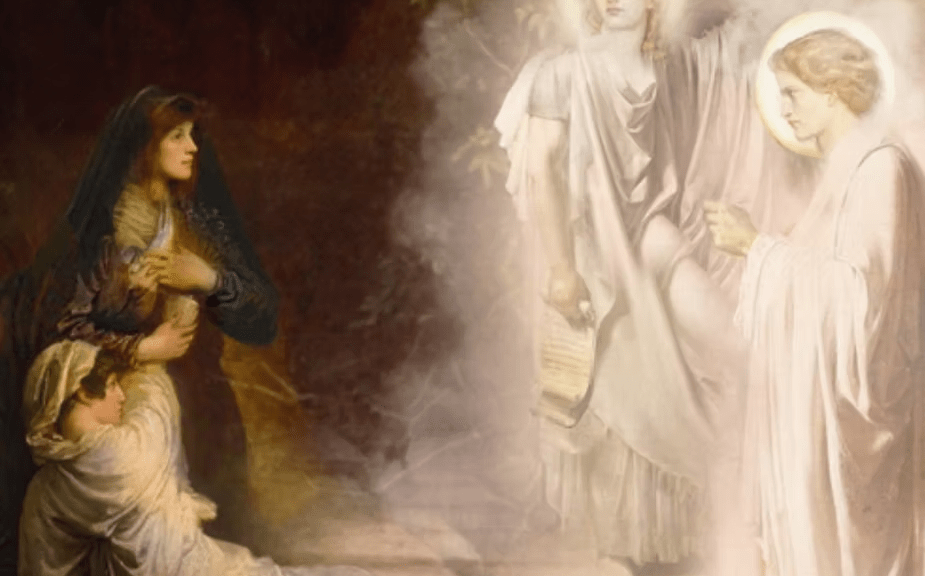
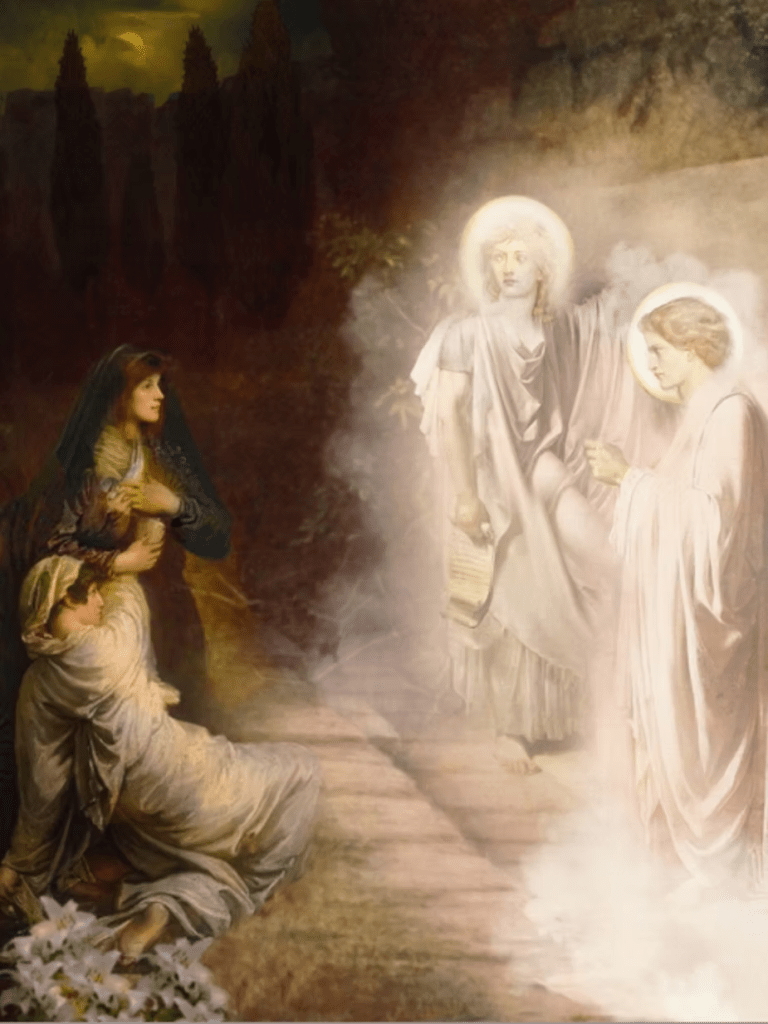
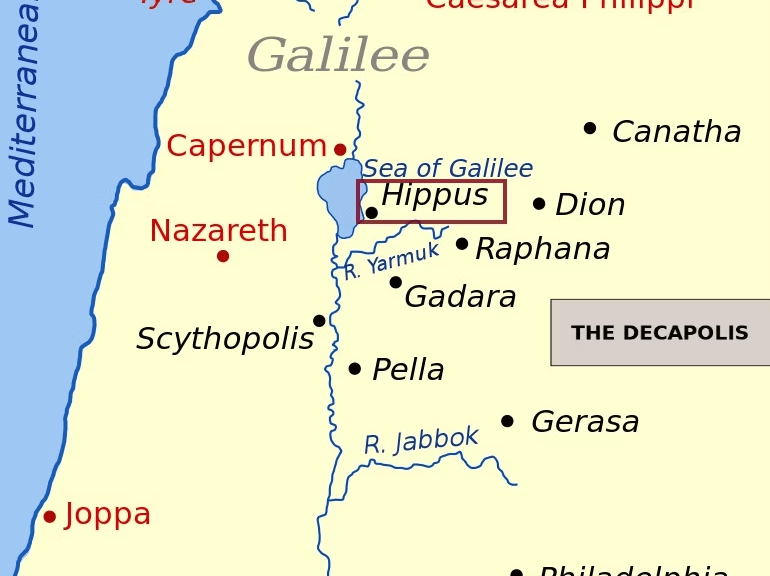
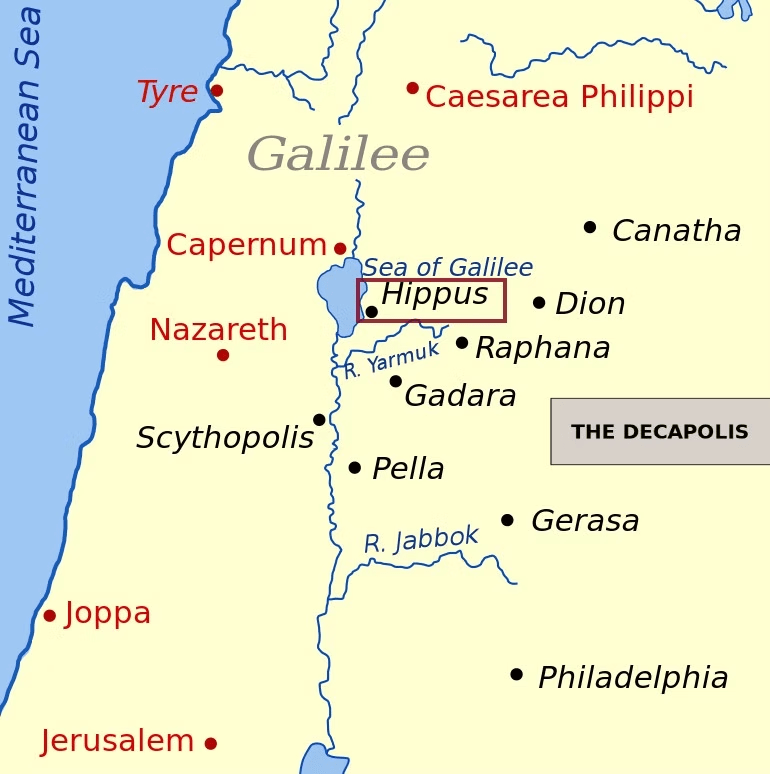


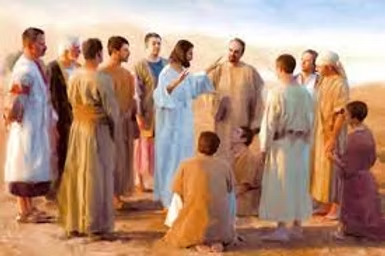
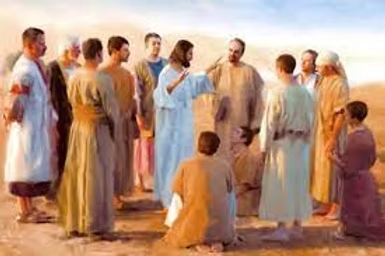
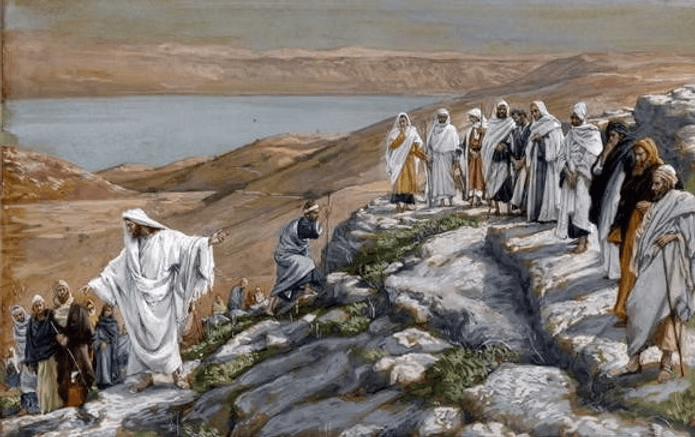
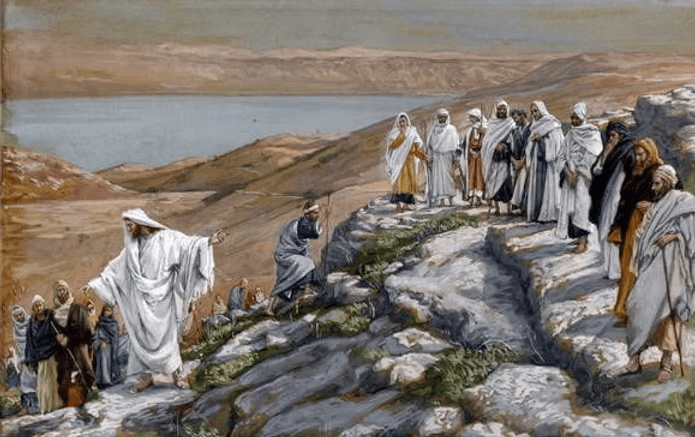
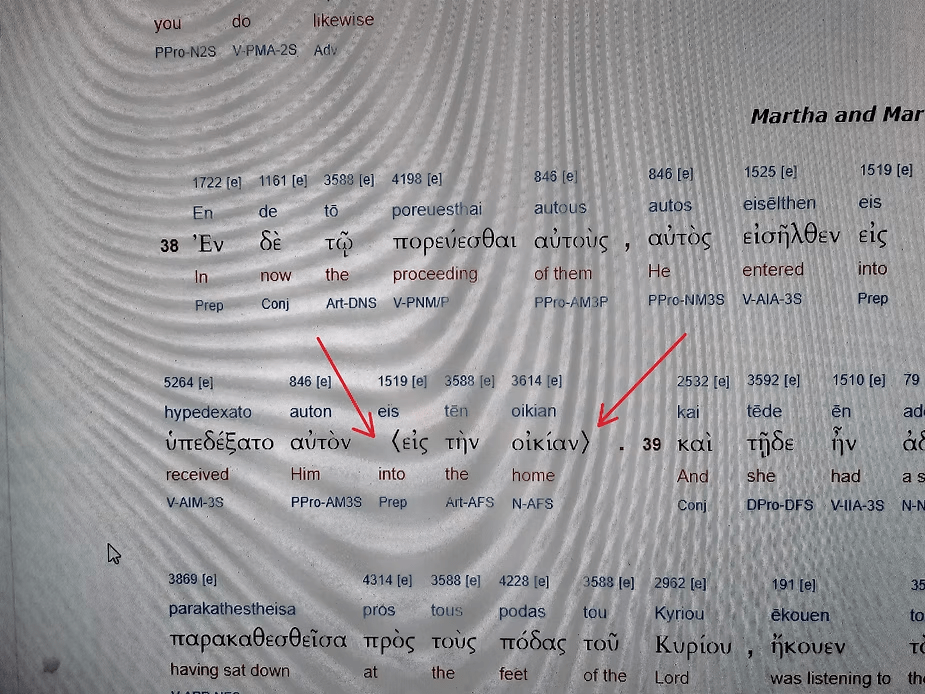






 Explaining the Readings