[10] Now Jesus was teaching in one of the synagogues on the sabbath. [11] And just then there appeared a woman with a spirit that had crippled her for eighteen years. She was bent over and was quite unable to stand up straight. [12] When Jesus saw her, he called her over and said, “Woman, you are set free from your ailment.” [13] When he laid his hands on her, immediately she stood up straight and began praising God. [14] But the leader of the synagogue, indignant because Jesus had cured on the sabbath, kept saying to the crowd, “There are six days on which work ought to be done; come on those days and be cured, and not on the sabbath day.” [15] But the Lord answered him and said, “You hypocrites! Does not each of you on the sabbath untie his ox or his donkey from the manger, and lead it away to give it water? [16] And ought not this woman, a daughter of Abraham whom Satan bound for eighteen long years, be set free from this bondage on the sabbath day?” [17] When he said this, all his opponents were put to shame; and the entire crowd was rejoicing at all the wonderful things that he was doing.
——————–
There are two important points that must be grasped from this reading. First, when we read “Jesus was teaching in one of the synagogues on the sabbath,” this does not mean that Jesus was the invited guest speaker in “one of the synagogues.” While Luke is the divine remembrances of Mother Mary and less restricted to a chronological order than the other three Gospels [she recalled experiences of Jesus that divinely came back to her memory, when loosely following the chronology of Jesus’ ministry], by this time in the life of Jesus he had been delegated to attendee, not asked to read any Scripture, nor explain anything. Jesus had created his own ‘synagogue’ [the ‘church’ of Jesus on the hillside by the sea, held on Sundays, after a Sabbath], where large gatherings came to hear Jesus explain the truth of the Word, which was not to be heard in any synagogue. So, “Jesus teaching in” actually says Jesus’ presence in any synagogue was to “teach” souls seeking salvation; and, the “woman with a spirit that had crippled her for eighteen years” was one such soul found, which Mother Mary recalled.
The second point of focus that must be grasped has to deal with the truth of the Sabbath. While this remembrance of Jesus’ mother recalled a time when she personally witnessed Jesus being attacked for healing on a Saturday – the seventh day of a week – and it is only told in Luke’s Gospel, there are other accounts of Jesus healing on a Sabbath, where the Pharisees and leaders of the Temple took great offense to this ‘work,’ which none of them could do on any of the other six days of a week. This means Jesus defines that Sabbath, which is not a definition accepted today, in the same way it was rejected when Jesus kicked up the dust of the earth as a living man in Judea and Galilee (et al).
In verse ten, the Greek of Luke states: “Ēn de didaskōn en mia tōn synagōgōn en tois sabbasin,” which literally translates to say, “He existed now teaching within one of this of assemblies within to these sabbaths.” When one takes a deep breath and lets one’s eyes relax to see the multiplicity of what this says (it can be read like the NRSV translates above, but…), it can equally say that Yahweh was now teaching within,” where the capitalization of “Ēn” (third-person singular Imperfect Indicative Active form of “eimi,” meaning “I am, exist”) raises this to a Yahweh level of meaning. Because Jesus said, “I speak for the Father because the Father is in me,” This says “Yahweh now was teaching.” The Greek word “en” means “within,” which becomes a statement that should be read as spiritual or soul-related, such that Yahweh does not stand on a podium and orate from a scroll. When this is seen, the “one” is less about the individuality of a building determined to be a “synagogue,” so it becomes “one” who is of the “gathered assembly” of souls in human flesh. Since Yahweh was teaching to souls within, one with a soul that gathered on a sabbath becomes the private “teaching” Jesus became the minister of his Father’s “teaching.”
When the verse ends by repeating “en,” and attaching that spirituality to “these sabbaths” (plural number), this becomes a statement that the “teaching” of “one of the assembled peoples” (plural number) was relative to the souls of all gathered being because “these” took the time to meet in one specific place one day a week. The day they always gathered was the “sabbaths.” This is important to grasp when the second focus of this lesson has leaders complaining about doing healing work on one of “these sabbaths.” It says the souls of Jews were greatly depleted of spiritual nourishment, because they only came to be fed (like the beasts they possessed on their farms) one day a week. The beasts need daily food to stay healthy; but the Jews ate, drank and were merry six days, while forcing themselves to fasting or ‘leftover cold cuts’ on Saturday. Beasts do not have brains that can conceive one day from any other. They only know, “Feed me daily;” and, that is important to see to understand this lesson.
In verse eleven, where we are told of a “woman” in the “gathered assembly” (the meaning of “sunagógé”), the Greek word written is in the lower case, as “gynē.” This is important to grasp when Jesus called out to her, where Luke capitalized the Greek word in verse twelve, as “Gynai.” This lower case word translates equally as “a woman,” with implication in usage being “wife, my lady.” The capitalization then is an indication of divine elevation in meaning, placing this word on the level of Yahweh. This means Jesus used one word, which (in Aramaic as well) has the same multiplicity of meaning, where Jewish ears heard (as Christian eyes read) “Woman,” when the reality is it says, “Wife.” At that instant, she was not simply a devotee to Yahweh, her time serving him as a “cripple,” where that demon “spirit” made he life miserable, but she never gave up her love and desire for Yahweh, that Jesus married her soul to Yahweh’s Spirit, calling her a divine “Wife.”
Here, it is vital to read the Greek of Luke that says in verse twelve, “idōn autēn , ho Iēsous prosephōnēsen kai eipen autē,” which literally can translate as saying: “having attended to now her soul , this Jesus he summoned kai he commanded to her soul”. Keeping in mind that the name “Jesus” means “YAH Saves” and Jesus spoke only what his Father told him to speak, it was the Son of Yahweh knowing the soul of this “woman” and all that she had withstood, without once blaming Yahweh for her misery. Thus, Yahweh summoned His Son “Jesus” to pronounce the marriage of that soul, which importantly exclaimed, “[you are My] Wife.” This then made the demon spirit that tormented her body of flesh for eighteen years immediately go away, leading the soul of the “Wife” to immediately begin “honoring” Yahweh with praise.
Now, the aspect of the leader of the “gathered assembly” saw Jesus “lay hands to her,” which was seen as some chiropractic spine snap manipulation by “hands,” which (then as it still is today) is an act of work that demands payment for services rendered. In reality, verse thirteen states this in Greek: “kai epethēken autē tas cheiras,” which can literally say, “importantly he gave in addition to her soul these hands”. The symbolism of “hands” is less about Jesus touching the woman physically, and more about Jesus presenting the marriage gift of “the instruments a person uses to accomplish their purpose (intention, plan).” (HELPS Word-studies figurative intent of “xeír,” the root for “cheiras”) The “addition” given was his soul – the Son of Yahweh [Adam-Jesus], which is a flexibility Yahweh has, as He created His Son as a Yahweh elohim to save many souls at once. With the soul of Jesus added to the soul of the “Wife”-soul of Yahweh, after Yahweh had made her soul a Christ through His divine Anointment of His Spirit, “those hands were placed upon her soul,” to forever reward her devotion and self-sacrifice as worthy of eternal life.
To then sum up the rest of this lesson, where the leader of the gathered assembly begins to accuse Jesus of doing work on the Sabbath, the point made by Jesus is made in verse fifteen, where Luke wrote in Greek, “Apekrithē de autō ho Kyrios kai epien , Hypokritai !” This translates literally in English to say, “He answered now to his soul this Lord kai he said , Hypocrites !” Here, the capitalized third-person singular Aorist Indicative form of “apokrinomai” is Yahweh speaking through the Son’s mouth. Yahweh spoke to the “leader of the gathered assembly,” who had spoken to Jesus as a representative of all the leaders of the Temple in Jerusalem, who decreed working on the Sabbath was heretical. For Yahweh’s voice to come out clearly to that one leader, calling him the front man for all like him – “Hypocrites” – that says the work done on the Sabbath by a priest of Yahweh should and must be HEALING the poor of spirit. To call Jesus out as bad, for doing what he should have routinely done (but never once did … any day of the week) says he had just bad-mouthed Yahweh … his Spiritual boss … who sent a messenger-spirit-angel into that specific “gathering of an assembly” not only to do the true work of Yahweh but also to slap the false pretense out of the face of a hired hand – false shepherd.
It is vital to see that the same ignorance goes on today in all forms of “gathered assemblies” that are souls seeking redemption for their demon-caused sins and salvation taught to them by their leaders. For “Six” days [a capitalized “Hex,” which is a divine elevation of the day man was created (males and females) and given dominion over all the other beasts of the sixth day. The capitalization of “Six” says mankind is nothing more than an animal with a Bigger Brain; and, that Big Brain allows it to be the manager of domesticated beasts. Therefore, when the normal Jews are seeking the same care that a domesticated livestock demands – seven days a week – the leaders of the gathered assemblies do no work Sunday through Friday; and, when the Sabbath rolls around, they do more nothing, because they think (a Big Brain failure) they cannot work on the Sabbath.
When this reading is understood by seeing the seventh day of Creation was when Yahweh demanded a day of rest be recognized, it is total ignorance to the fact that the first six days of creation had nothing to do with twenty-four hour periods of time in a seven-day week. The first six days to hundreds of billions of years to complete (as Carl Sagan would say: Beeeel-yuns). The seventh day (thus the Sabbath) has been every day since that pronouncement by Yahweh. Every day is the Sabbath. All souls are expected to serve Yahweh as His “Wife”-souls twenty-four-seven. It is a lifestyle, not a two hours one day a week where one feels forced to comply with ritual.
When Jesus said of the “woman,” should be seen as “a daughter of Abram,” that means her soul is one of those points of light in the darkness that is the lineage of Saints – those souls who serve Yahweh and do what He says do, no matter what aches and pains the body suffers. That “woman” is a reflection of every human being on earth, because all souls trapped in a body of flesh (where demons love to come in and lead souls away from Yahweh) are of feminine essence. All souls in the flesh are called to be “Wives” of Yahweh. To reach that blissful day of wedding (this woman had to suffer eighteen years), one keeps the oil of truth lighting one’s self-lamp; so, one is able to be enlightened to Yahweh’s presence and patience of devotion (a wifely duty) is proved. We are all called today to do the same as that “woman” did, until the time when Jesus comes spiritually (in the body of someone looking nothing like his color book pictures) to officiate that divine union, where “hands are placed upon one’s soul,” making them become reborn as Jesus, the Son of Yahweh.
On one occasion when Jesus was going to the house of a leader of the Pharisees to eat a meal on the sabbath, they were watching him closely.
When he noticed how the guests chose the places of honor, he told them a parable. “When you are invited by someone to a wedding banquet, do not sit down at the place of honor, in case someone more distinguished than you has been invited by your host; and the host who invited both of you may come and say to you, `Give this person your place,’ and then in disgrace you would start to take the lowest place. But when you are invited, go and sit down at the lowest place, so that when your host comes, he may say to you, `Friend, move up higher’; then you will be honored in the presence of all who sit at the table with you. For all who exalt themselves will be humbled, and those who humble themselves will be exalted.”
He said also to the one who had invited him, “When you give a luncheon or a dinner, do not invite your friends or your brothers or your relatives or rich neighbors, in case they may invite you in return, and you would be repaid. But when you give a banquet, invite the poor, the crippled, the lame, and the blind. And you will be blessed, because they cannot repay you, for you will be repaid at the resurrection of the righteous.”
——————–
Verse one is placed in this reading, while skipping over the following five verses. It is important to know that context, as it is directly pertinent to the information stated in verse one. The five omitted verses tell that “one of the rulers of the Pharisees” had invited a “certain man with dropsy” – a visible swelling in some part of the body, due to a build-up of fluids in the body – so “they were watching closely” Jesus, to see what he would do to this “known Jew” (the meaning of “certain one”). Upon seeing this “certain man,” Jesus asked the guests at the luncheon (“the lawyers kai Pharisees”), “Is it permitted by law to this to sabbath to cure or not ?” When they “were silent” and did not respond, Jesus then “healed his soul” (of the “certain one”) kai “set him free” from that demon spirit within that caused him to retain fluids. Jesus then asked the group, “Of Who of you with a son or an ox fall into a pit on the sabbath would not immediately pull him out ?” To that question they all had nothing they could say. It is then from that demonstration (which showed how poor the “ruler of the Pharisees,” the “lawyers kai Pharisees” were in claiming to serve Yahweh, when none did anything of value any day of the week … much less on the sabbath.
Without knowing the details of these five verses, which make is clear that all the “rulers” of the Temple in Jerusalem and the “Pharisees” who owed their wealth and position to making a profit off knowing nothing of value about the Law (as “lawyers”) says Jesus was then moved to tell a parable about that total incompetence in leadership for the Jews. This means what seems to be Jesus invited to dine where a table would be where seats of position were arranged made him watch the mad scramble to seat close to the head of the table and tell a story about waiting to sit, letting the host seat the guests. That has absolutely nothing to do with the deeper meaning that is in this parable, because everything was set to the environment of the present, but metaphor for being seated at Yahweh’s ‘table’ in the afterlife. Everyone who claimed to know the Law were speechless as to what Law says not to save your son, or even a possession like an ox, if it fell into a pit. While they knew nothing of value about the truth of Scripture, they all positioned themselves as if distinguished guests of Yahweh. Jesus pointed out they were the lowest of all invitees (Jews) and they should admit that lowliness, rather than have Yahweh Judge them as heretics defiling His Holy name.
When verse seven says Jesus then told a “parable,” the Greek word “parabolēn” comes from a root that is properly understood to be: “a teaching aid cast alongside the truth being taught. This casts additional light by using an arresting or familiar analogy, (which is often fictitious or metaphorical, but not necessarily).” (HELPS Word-studies) This means Jesus telling a story about a spiritual gathering, not a physical one, like that Jesus was attending. The spiritual aspect of this “parable” must be remembered to be a “teaching aid cast alongside of the truth being taught.” Jesus was not teaching how to line up at a luncheon and let the one inviting guests seat them one at a time, according to favorability. Jesus was teaching that everyone in that ruler of the Pharisees’ house acted like they were Yahweh’s favored guests in Jerusalem, when not one of them could heal a man with an illness, by being an outlet for Yahweh on earth.
In verse eight, Jesus spoke the equivalent to the Greek word “gamous,” which infers a “wedding feast.” This means the “parable” is not about the rich and powerful gathering to eat lunch on a sabbath, but about the table that is the earth plane being where Yahweh invites His chosen ones to partake of spiritual food (manna from heaven). This then says all those invited (the Jews were the remnant of the chosen ones brought to the Promised Land from Egypt, by Moses) were all bridesmaids awaiting the official union of their souls with the bridegroom – Yahweh’s Spirit. Those who would sit closest to the head of the table would be the Saints, such as Abraham, Isaac, Jacob, Moses, and Jesus – all the Saints who would officiate the union of wife-souls to Yahweh’s Spirit, with those bridesmaids still awaiting the time for divine marriage considered the least of those invited. This then says the ruler of the Pharisees and his lawyers were more like those bridesmaids whose lamps ran out of oil (the light of truth), at the time when the bridegroom came. They were deemed foolish and never joined with Yahweh as one. They become reflective of the goats that Yahweh and the souls of Jesus would say, “I do not know you,” as they will not be the sheep who sacrificed their worldly positions for the promise of eternal life in the spiritual realm, with Yahweh.
The ruler of the Pharisees and his invited guests (who watched Jesus closely) were those who would show up late at the wedding feast (another parable told by Jesus), not dressed for marriage to Yahweh. They would be kicked out of the wedding feast, in the way that Jesus said the one inviting guests (a proposal of divine marriage) would send out messengers announcing everyone is welcome; but the ones who show up for free food, with no intent of sacrificing their souls in marriage to Yahweh, would not be dressed for such a special occasion. The ruler of the Pharisees and his lawyer friends all had no intentions for marrying Yahweh and sacrificing their worldly gains. Thus, they would be cast out of any promise of eternal life.
As for the “ruler of the Pharisees” (who was just one of many), it makes sense that he would be Nicodemus. The “certain one” who suffered from dropsy would then most likely be Joseph of Arimathea, who when healed had his soul touched by Jesus, making him become wholly supportive of Jesus as the Son of Yahweh. Nicodemus and Joseph would have been secret disciples of Jesus, who were sent out as a pair with the other sixty-nine pairs. Most likely they did not risk being seen defending Jesus in any way, so they did not go tell anyone “the kingdom of God has come near.” The symbolism of a build up of fluids in Joseph means he felt the emotional ebb and flow of Jesus possessed by the Spirit of Yahweh, but he retained that within himself, afraid to let his faith be shown. When Jesus touched Joseph with his soul, freeing Joseph to fully express his love of God and his support of Jesus, not only did his dropsy go away, but he began to serve Yahweh as an extension of Jesus.
[25] Now large crowds were traveling with Jesus; and he turned and said to them, [26] “Whoever comes to me and does not hate father and mother, wife and children, brothers and sisters, yes, and even life itself, cannot be my disciple. [27] Whoever does not carry the cross and follow me cannot be my disciple. [28] For which of you, intending to build a tower, does not first sit down and estimate the cost, to see whether he has enough to complete it? [29] Otherwise, when he has laid a foundation and is not able to finish, all who see it will begin to ridicule him, [30] saying, `This fellow began to build and was not able to finish.’ [31] Or what king, going out to wage war against another king, will not sit down first and consider whether he is able with ten thousand to oppose the one who comes against him with twenty thousand? [32] If he cannot, then, while the other is still far away, he sends a delegation and asks for the terms of peace. [33] So therefore, none of you can become my disciple if you do not give up all your possessions.”
——————–
This reading is one that is confusing to many. It is that way because this is a poor translation that does not represent the truth it contains. For that reason, I will literally translate the text written by Luke into English, using permissible words of translation. I will then explain that stated in each verse.
Verse 25: “they were Journeying Together (or they were Assembling) now to his soul multitudes many ; kai having changed direction [in their lives] , he brought word to their souls .”
The capitalized Greek word “Syneporeuonto” is the third-person plural Imperfect form of “sumporeuomai,” which is a divinely elevated statement of a spiritual nature, relative to Yahweh. The root word means “to journey together, to come together,” implying in usage “I journey together with; I come together, assemble.” The capitalized form then states “they were Coming Together” at the time of this event (“now”), more than following a man of fame and reputation, as “they were Assembling now to his soul.” This translation comes from the Greek word “autō” being the third-person Dative pronoun that ordinarily translates as “self” or “the same.” In cases where pronouns assume “self” in translation, a “self” must be read as a “soul.” So, the “many multitudes” who were “they” who “were spiritually “Journeying Together” were lost souls following a “soul” they could sense was most holy.
Following a semi-colon mark, which indicates a separate statement that is relative to this following, Luke wrote the word “kai,” which always denotes importance to follow. Here, that importance is knowing that the “many multitudes” that had come close to Jesus were impacted by his soul’s presence, more than physically witnessing a man speaking and doing the occasional miracles. It was their souls that Jesus knew “had changed direction” or “turned” from waywardness to religious obedience. It was then when Jesus knew they were ready to receive another lesson from the Father, Jesus spoke” the word of the Father, which would not make sense to their fleshy brains, but their souls could be led to understand through divine inspiration. In that, the Greek word “autous” is the third-person plural possessive pronoun that is “themselves,” therefore “their souls.”
Verse 26: “If a certain one (he or she) comes to my soul , kai not (he or she) hates (or loves less, detests) this father of himself , kai this mother , kai this wife , kai those children , kai those brothers , kia those sisters , still , both kai this breath of his or her soul , not (he or she) is empowered to exist of my soul disciple .”
This verse begins with a capitalized “Ei,” which basically is a big “IF.” It is a divinely elevated word that is on a spiritual level of mean, as Yahweh dwells in that realm. It becomes a conditional word that acts in agreement with the statement made by Yahweh in the accompanying Philemon reading, which says no souls are forced to marry Yahweh. The “If” then is Yahweh speaking through the Son, saying the choice for divine marriage (and the subsequent resurrection of His Son’s soul with a wife-soul) is up to each individual soul. Because there were “multitudes many” or “common Jews much” then following Jesus around (like some groupies going to every music star’s concerts), the “If” states there is nothing assured by physically walking the same roads as Jesus walked. The Greek word “tis” should always be read in the Gospels as indicating Jews, as they are “certain ones” thinking they are God’s chosen people, simply by birthright. Thus, the big “IF” is relative to those souls born into the flesh of Jewish bloodline, where the conditional scenario is not so simple as being born into the world as a special breed of mankind. While Jesus was sent by Yahweh only to tell the Jews of Yahweh’s marriage proposal, “many multitudes” would reject him outright and “much common Jews” would be too timid to fully commit to an unseen God, while standing a chance to lose all the material comforts gains by being Jewish. While wealth was had by many, the greatest material comfort that was harder to give away was family; and, that becomes the focus of what Jesus said the conditional “If” includes.
When the first segment of words says, “If a certain one comes to me,” the Greek word “me” is the first-person singular possessive pronoun, derived from “egó,” which is better stated as “mine.” When verse twenty-five is read where possessive pronouns imply “souls,” then “mine” implies “my soul.” This is not only a statement about the spiritual attraction that Jesus in the flesh had upon Jews – due to his most sacred soul animating his flesh – it also speaks of the future, after Jesus’ death and the release of his soul to join with other souls that have married Yahweh. The “If” scenario is now the condition that says the “multitudes many” that would become the bridesmaids awaiting their bridegroom, each told to maintain oil in their lamps, in order to remain vigilant (the parable of the Ten Virgins). Because those ten bridesmaids reflect the souls of both male and female human flesh(all humanity is souls imprisoned in the femininity of the worldly realm), they also reflect a totality of souls expecting to gain the inheritance of eternal life. The foolish bridesmaids were the Jews who saw this as a birthright of bloodline. The wise and vigilant bridesmaids saw maintaining the fuel for their lamps that produced the light of truth as the seriousness of their commitment to marry Yahweh. Thus, the big “If” is relative to that seriousness of commitment, where keeping oil in one’s lamp means doing without some of the comforts of Jewish life.
For a soul to “come to Jesus,” this is placing the cart before the horse. To “come to his soul” means a soul that has already married Yahweh. In the bridesmaids analogy, they were the ones who kept the oil in their lamps filled – they listened to divine insight and did as influenced. Thus, for the wise bridesmaids to hear the call of their bridegroom and leave to become married to Him, they had met the challenge set before them – to prove their commitment – while the foolish bridesmaids had done little to show Yahweh they had any true faith in marrying the unseen. This is now why Luke indicated Jesus’ soul spoke seven important aspects that must be checked off, in order to hear the call that the bridegroom has arrived (in the middle of darkness, when the foolish have fallen into sleep). The first use of “kai” then says “not hates the father of himself.” In this, Luke placed an asterisk at the end of “heautou,” which is the Genitive case form of the reflexive pronoun (in the third-person masculine singular), saying “of himself.” The asterisk then becomes a signal not to read “himself” as “his soul,” because the reference to “the father of himself” is physical, not spiritual; so, a soul should not be read into this use of “self.”
The Greek word “misei” clearly places focus on “hate,” which is a harsh word for most church-going Christians to hear coming from Jesus. The same word can also be stated as “love less” or “detest.” Still, the focus placed on “hate” must be seen as the difficulty souls imprisoned in human flesh have, due to the spiritual effects of Satan on their souls. Satan lures the souls away from a commitment to Yahweh by increasing physical urges through the flesh. It is this physicality that makes one’s “father” be a soul trapped in flesh’s claim to fame, depending on how well-respected a “father of himself” is in the community. In the days that Jesus walked the earth in ministry, the most well-respected Jews were the Pharisees, Sadducees, scribes, high priests, and the leaders of the assemblies in each Jewish settlement throughout Judea and Galilee. When those “fathers” (the word “patera” can also imply “ancestor, elder, senior”) are more on their knees worshiping wealth, power, and influence over other Jews than Yahweh; with none of those “fathers” able to understand the truth written into Scripture, no child of a human “father” can stand between its soul and the Father Yahweh. “If” that scenario occurs, then there will be no divine union between a Jewish soul and Yahweh. That failed condition means the only closeness those souls can find, as they “come to Jesus,” is physical. Without their souls being reborn by the soul of Jesus merging with theirs, they cannot be his “disciples.”
The importance of a “father” is then followed by the equal importance of “mother,” “wife,” “children,” “brothers” and “sisters,” all of whom are physical relationships that could serve Satan by becoming influences over a soul in the flesh. influencing a soul to reject a commitment to Yahweh, choosing instead physical relationships that satisfy the flesh, not the soul. In this rundown, it is not Jesus speaking only to males who were in the “multitudes many” that followed him, when he mentioned “wives,” while not saying ‘husbands.’ This not being stated makes all of these six physical relationships have connection to spiritual matters, which are contrasted with the divine or gods of the universe (the “elohim” of Creation).
This means the “father” is not simply one’s biological parent, but the potential of oneself (a male or a female) seeing it as the generator of legacy and inheritance. This pits one’s self-importance as a hindrance to the all-importance of Yahweh, the Father of all that possesses a soul. While the call is for a soul to be married to Yahweh and then receive a purifying cleansing by His Spirit, so one’s soul can become the “mother” of Jesus’ soul reborn into flesh, the “mother” that keeps a soul from marrying Yahweh is the Earth, who provides the dust, clay and dirt that is molded in a womb, so it can become animated by Yahweh’s breath of life at birth. To serve the offerings of the Earth “mother” is to “hate” self-sacrifice and a commitment to Yahweh. Because all human beings are feminine in essence, as imprisoned eternal soul in feminine bodies of flesh (both male and female), all are potential bridesmaids of Yahweh, so all are called to become his wives spiritually. This means Jesus referred to “a wife” (rather than also including ‘a husband’) because souls in the flesh will choose to deny Yahweh’s proposal and become “a wife” to a demon spirit and become possessed by a god that is unclean.
With the first three listed by Jesus being singular representations of one soul, the next three are written in the plural number, which reflects upon how one soul becomes submissive to multiple influences on the material realm. The first of these is “children.” Because one’s “children” are seen as productions of one’s flesh, as a “father,” “children” become a parent’s most valuable possession. The “children” will take over the business and work the farm, so the parents can enjoy retirement and enjoy the fruits of their labors. Here, it is important to realize that Jacob has “children,” most of whom sinned greatly. Eli lost his favor from Yahweh by choosing to protect his “children,” who had become priests who did wicked things in the sight of Yahweh. Even Samuel had “children” that were equally led to sin, thinking their bloodline to a prophet made them free to do as they wished. Thus, “children” are a strong influence upon the parents to sin, when it should be the parents that teach their “children” to marry their souls to Yahweh and be saved. Here, it is most important to realize that absolutely no human being – neither “father” nor “mother” – can generate a soul. Each soul is breathed out from Yahweh, into a body of flesh that is kept alive within the womb like a growth that is part of the mother’s flesh, living off her soul while developing. When each soul is seen as separate and fully from Yahweh, with only its mortal flesh the creation of cells from the mother (designed and crafted by the hand of Yahweh), each soul (once breathed into a separate body of flesh, is set upon its own course to find Yahweh and return to Him. Still, parents think (a Big Brain flaw) they are the creators of their “children,” making them more likely to sin and ruin their soul’s Judgment, in protection of “children” who must be taught to be self-sufficient by their parents.
When we read “brothers,” this is opposed to the marriage of all souls to Yahweh that makes each related as “mother,” while being a soul receiving the soul of Jesus that makes all become spiritual “brothers” (souls possessing bodies of flesh that are physically males and females alike). When the state of “brothers” is reduced to only those made of flesh, this is not simply siblings born of the same parents, but all males who become influential over a soul born into a male body of flesh. This rejects all souls that are born into female bodies of flesh, where only certain exceptions are allowed into one’s select group – a “wife” and a “mother.” When “sisters” is seen as a separate grouping of souls born into female bodies of flesh, the role is not the same. Due to the misinterpretation of the divine text of the Holy Bible, “sisters” reflect women that are submissive to those who are in the group “brothers.” This influence leads “sisters” to become “wives” and “mothers,” while always accepting domination by those souls born into male bodies of flesh. This makes “sisters” more inclined to see parables about bridesmaids referring to their submissive training, while “brothers” neglect submission and self-sacrifice, because that is ‘what girls do.’ Both of these groups must be rejected as the influence of Satan, as his ploy to steal souls from Yahweh.
It is after Jesus telling of “hatred of sisters” that Luke had him speak separately, “in addition” or “still” or “yet,” these “hates” of others is not all. Jesus said, “in addition , both,” where “both” precedes the seventh use of “kai.” The meaning of “both” says not only must your soul “hate” all those related to your soul, as all are prisoners in bodies of flesh, often serving Satan more than Yahweh, that one group of six must be paired with the most important group, which is one’s own soul. It is important to “hate this breath” that possesses “his own soul.” In this, the same Greek word “heautou” is written, but without the asterisk. That indicates a need to see “self” and translate that as “soul,” turning “of himself” into “his own soul” or “of his same soul.” To “hate” one’s own soul in the flesh means one understands that being imprisoned in the mortality that always leads to death is punishment, unless one’s soul has married Yahweh and returned to Him through the wholeness that the soul of Jesus brings to each soul.
The final segment of words in verse twenty-six then says, “not he has the power” or “not he is capable,” where a soul alone is powerless to save his or her own soul. If any soul sacrifices his or her own soul for either some relative of blood or a selfish state of exclusivity from having material gains, none of those soul is “able to exist of me,” where the Genitive Greek word “mou” is like the prior use of “me,” as the possessive pronoun that says, “of mine” or “of my own soul.” This possession is Jesus stating that each and every soul that follows him physically must reject all other physical and material distractions, in order to be empowered by the Spirit of Yahweh to receive the possessing soul of Jesus. Once the soul of Jesus has resurrected within a soul of a prisoner in human flesh, the soul of Jesus will become that soul’s Lord, with the submissive soul becoming the “disciple, student, pupil, learner” who the soul of Jesus will lead into ministry in his name.
Verse 27: “whoever not he or she takes up this upright stake of his own soul kai he comes behind of my soul , not is empowered to exist of my soul a disciple .”
Here, the traditional ‘Christian’ thought reads this as “pick up your cross” and thinks (that Big Brain again) of Jesus carrying his crucifix to Golgotha, as if being married to Yahweh and being reborn as His Son is hard work, which normal people choose not to do. The reality is the Greek written more readily states “take up,” which is a simple statement of elevation, from a lowered position. When a soul is involved, that “taken up” is one’s soul. When the soul is understood as that in need of raising, in order to be a disciple of Jesus and gain salvation (the name “Jesus” means “YAH Saves”), then it is not a crucifix being set up in a hole for one’s execution, but the inner presence of the soul of Jesus making one’s soul be “taken up” by his presence being “an upright stake.” An “upright stake” is what is seen in rows in a vineyard, keeping the grapevines from falling to the ground and turning into wild grapes. The presence of Jesus’ soul raising one’s soul to a divine level of existence – becoming capable of bearing good fruit – the host soul then takes a submissive position “behind the soul of Jesus,” as his soul leads as one’s Lord. If this does not happen, then a soul is “unable to be a disciple of Jesus’ soul.”
Verse 28: “Who indeed from out of of your soul , intending a tower to build , not at the beginning having sat down , calculates this expense , forasmuch as he possesses unto perfection ?”
Here, again, when the Greek second-person plural possessive pronoun “hymōn” is seen translatable into English as “yourselves,” then the element of “self” must be understood as a “soul.” Without a soul, the body of flesh is just dead matter, without any identification as a “self.” This means “from out of,” where the Genitive case “hymōn” states a possession “of your souls, this must be seen as an inner inspiration that each of the “multitudes many” felt, when they “assembled” around the physical Jesus. Because it was the soul of Jesus that spoke to the souls of those followers, it was that divine inspiration that would lead many to consider “building a tower,” such that the Tower of Babel was a human plan to reach heaven.
In the element of “intending a tower to build,” this must be understood as Jesus furthering his prior statement about “taking up this upright state of his soul.” The implication is everyone of those individuals in the “multitudes many” were laying on the ground, all covered with past sins. Just as the Jews who physically followed Jesus around were born to sin, they were no different than was Cain, when he laid on the ground, prompting Yahweh to tell him to “raise up” or be influenced by the serpent to do evil deeds.
In the same way, all who profess to be Christians today (at all times beyond the death and resurrection of Jesus’ soul) are just as debased and in need of hearing Yahweh speak through the Son, saying “rise up” or be taken into sin by Satan. Thus, all well-intentioned soul plan on doing as Jesus said; but those good intentions are like the ten bridesmaids, half of which were lazy lowlifes, unwilling to do what it took to rise up and maintain the light of truth as their elevated beacon. The Greek word “pyrgom” means “tower,” but also implies in usage a “fortified structure,” as a fortress has watch “towers.” In the same way, Jesus offers that preparedness of vigilance, where evil can be seen coming well before it arrives, so it can be defended against. The soul of Jesus being the “upright stake within one’s soul” then not only allows one to see dangers beforehand, the presence of Jesus becomes the “fortress” of strength that keeps evil from overtaking one’s soul.
As far as the “costs” of “raising this tower” are concerned, the saying in life aptly applies: Nothing is free. In order to become a soul married to Yahweh, it is not as simple as being a baby placed in a large bowl of water on a pedestal (a baptismal font) and sprinkled with some water (called holy by a soul unmarried to Yahweh), calling himself or herself a priest. There is the “expense” of taking time seriously studying Scripture. This is the waiting period the bridesmaids (remember, these are souls in both human genders, not just “sisters”) must maintain oil in their lamps. Their vigilance for when the bridegroom comes is due to them having “taken up this upright stake” and found love as their willingness to sacrifice everything for that divine union to take place. Self-sacrifice is the “cost” one’s soul must pay, in order to “raise this tower as planned.” It is not a question as to how much material wealth and possessions I will have left over, after this “tower” is completed. It is a question that asks, “Am I willing to put everything I own into this building project that will afford my soul salvation?” That is the question Jesus asked those who followed him, such that the Greek word written by Luke is “apartismon,” which means “completion, perfection.” The question then asks, “Does your soul seek the wholeness that will return it to being one with Yahweh?” That “wholeness” is then not only the “completion” of a planned “tower,” but the “perfection” that comes from having a spiritual “tower” that ascends into the spiritual realm.
Verse 29: “in order that not at what time of having laid of his soul a foundation (or cornerstone) , kai not of having strength to complete , all those experiencing they might have begun to his soul to ridicule ,”
In this verse, the Greek word “themelion” means “of or for a foundation,” implying in usage “a foundation stone.” This becomes the “cornerstone” that Jesus referred to the “cornerstone:” “Jesus saith unto them, Did ye never read in the scriptures, The stone which the builders rejected, The same was made the head of the corner; This was from the Lord, And it is marvelous in our eyes?” (American Standard Bible, Matthew 21:42, referencing Psalm 118:22) In this recall, the rejection of a “cornerstone” by the “builders” was due to the “cornerstone” not being squared on eight corners. The true “cornerstone” that Jesus represents is round, such as is the stone that seals a tomb, into which a body of flesh has returned to its natural death state. For a soul to access the “tower” to the spiritual realm, the round “cornerstone” can then be rolled away from the opening of the tomb, allowing the soul the freedom to exit the material realm. This round “foundation” must be seen as that needed, “at what time of having laid of his soul” into the tomb prepared for the flesh.
When the second segment of words is then begun by the word “kai,” this signals the importance that a soul alone does “not possess the strength” – it is “not empowered” and “not capable of” – rolling the “cornerstone” away, freeing the soul. This is another statement about the necessity of having married Yahweh and then have His Son’s soul be resurrected within one’s soul, which become the “tower” of strength required for this “completion” to take place. While the last segment gives the impression of other souls in bodies of flesh watching someone “lay the foundation for his soul” to resurrect to heaven,” it is not a statement of physical eyes being able to “see” this. Those who know the “experience” of having “begun to build the tower for their souls,” who failed, will be “mocking” all souls who try to be better than them, so their “ridicule” is from personal “experience” of likewise being too weak to “complete” this required self-sacrifice. Since no soul alone has the “ability” to bring the “completion” of salvation to their souls, all must surrender their selves to Yahweh, becoming His wife-souls, so Jesus can be sent as the “cornerstone” that has the “strength” to bring that goal to fruition.
Verse 30: “saying because , This this man he began to build up kai not he was empowered to complete fully .”
Here, Luke again writes of Jesus “saying” to the “multitudes many,” in the same way he wrote after those following him found their souls “having changed direction.” Now, Jesus is “saying the cause” for the “ridicule” or “mocking” that comes from souls who have personally “experienced” an “inability” to make a total commitment to Yahweh and “complete” the “cornerstone” within their souls that allows them to ascend to the spiritual realm. The “cause” is then a capitalized “Houtos,” which is a divinely elevated “This,” referring back to that stated in verse twenty-nine. The “cause” of “This” lack of strength to “complete” salvation is “this man,” who was the only Son of Yahweh – Adam (Hebrew for “Man”). Adam was not the first of mankind, but the one made by the hand of Yahweh on the seventh day (mankind, as males and females, was created on the sixth day), making Adam “begin” knowledge of Yahweh, which would descend from Eden to the ordinary world, where he would become the first priest of Yahweh, created to “build up” their souls, into a “tower” of vigilance and strength.
At that point in the text, Luke added the Greek word “kai,” which denotes importantly that Adam himself “was not empowered to fully complete” the salvation of humanity. Adam fell to the earth and “began” a most holy soul that would be released upon his mortal death, so it could return time and again in the patriarchs, prophets and saints that would “begin” a spiritual lineage in the name of Abram. This would then lead to Yahweh resending His Son into flesh that would be born of a virgin woman, which would be Jesus. Jesus, as the reincarnated soul of Adam, placed in a different body of flesh, would then “complete” the process towards soul salvation (the name of “Jesus” means “YAH Saves”), upon his death and the release of his soul for that purpose. Still, each individual soul has to willingly welcome Yahweh as the Husband, whose Spirit cleanses their soul as a virgin womb, whose flesh will again be utilized by the Lord Jesus within, in ministry in his name. When the “foundation” of one’s soul is this cornerstone, then a “full completion” has been established.
Verse 31: “Or what ruler , journeying to a second king to meet with for battle , by no means , having sat down , at the beginning he will deliberate if empowered he exists within ten thousand to meet to this with twenty thousand to be coming against his soul ?”
In this follow-up question, Jesus is making a statement that even “kings” will die and release their souls, able to take nothing of the worldly realm with them to Judgment. The last word of this verse – “auton” – is where the question is coming from Jesus’ soul to the souls of the “common people much,” where they are each the “king” of their own flesh, making “Himself” become “his soul.” The same scenario is stated, where even those soul with the highest ranks on earth have to weight the “cost” of going up “against another” of superior power. While the numbers ten thousand” and twenty thousand” are supposed to represent the numbers of soldiers each “king” commands, those numbers are meaningless spiritually, The implication is a soul alone reflects upon “ten thousand,” while a soul with an additional soul – the soul of Yahweh’s Son added to it – is not only twice more powerful, but “raised up with the upright stake” that is the All-powerful Yahweh, which is empowered to defeat death. It is this question that each soul must ask itself; so, each soul can come to the realization that only a fool (like the foolish bridesmaids who did nothing to stay vigilant for the coming bridegroom) would think of one’s soul as a god that can gain salvation alone.
Verse 32: “if now otherwise , still of his soul at a distance of existing , a delegation having sent , he questions these advantageous for wholeness .”
In this, Jesus is recognizing that his followers are common people, not souls with many possessions to lose. He also sees those whose “age” (“presbeian” means “age, seniority,” implying in usage “an embassy, delegation, eldership”) still sees one’s natural death as “far away” or “distant.” This makes decisions for saving one’s soul less necessary to “sit down” and “deliberate” such things as self-sacrifice for salvation now. It seems it can wait. Still, the presence of Jesus, whose soul is speaking loudly to their souls is “a delegation sent” from Yahweh to make a proposal for marriage. Yahweh sees the weaker ‘king’ and has pity for his or her foreseen loss; so, it is the stronger that sues for “peace,” where the Greek word “eirēnēn” properly means “to join, tie together into a whole” – as “wholeness.” [HELPS Word-studies] This influence of Jesus then raises these “questions” that Jesus posed to the souls of those who followed him to hear his message.
Verse 33: “In this way therefore all from out of of your souls who not he renounces to all to those of his soul to exist in possession , not he is empowered to exist of my soul a disciple .”
In this final verse, the first segment places focus on the self-sacrifice that has one be “from out of of you souls.” In that, the Genitive case, second-person plural possessive pronoun “hymōn” translates as “of your souls” (from “of yourselves”). This states the host soul has left control over its flesh to the “possessing soul” of Jesus. The same soul of Jesus will possess “all of those of his soul to exist” as him reborn. The above translation by the NRSV makes it seem that the main point is the surrender “of all your possession,” in order to be a “disciple” of Jesus. Yahweh is not desiring to profit from material gains, from His wives letting go of what they “possess.” The only thing of value they possess is their flesh, which is the bane of their existence, because the flesh leads a soul to approve transgressions.. Thus, the truth of the translation for the Greek word “hyparchousin” is “to exist in possession.” That says one’s soul is given away at the altar of divine marriage to Yahweh, so it becomes His “possession” once again. This is a return to the source; and, the resurrection of Jesus’ soul within a wife-soul ensures that soul stays in Yahweh’s “possession.”
[1] All the tax collectors and sinners were coming near to listen to Jesus. [2] And the Pharisees and the scribes were grumbling and saying, “This fellow welcomes sinners and eats with them.”
[3] So he told them this parable: [4] “Which one of you, having a hundred sheep and losing one of them, does not leave the ninety-nine in the wilderness and go after the one that is lost until he finds it? [5] When he has found it, he lays it on his shoulders and rejoices. [6] And when he comes home, he calls together his friends and neighbors, saying to them, `Rejoice with me, for I have found my sheep that was lost.’ [7] Just so, I tell you, there will be more joy in heaven over one sinner who repents than over ninety-nine righteous persons who need no repentance.
[8] “Or what woman having ten silver coins, if she loses one of them, does not light a lamp, sweep the house, and search carefully until she finds it? [9] When she has found it, she calls together her friends and neighbors, saying, `Rejoice with me, for I have found the coin that I had lost.'[10] Just so, I tell you, there is joy in the presence of the angels of God over one sinner who repents.”
——————–
Now shown in translation (thus not interpretable) is verse one beginning with a capitalized “Ēsan,” which is the third-person plural, Imperfect Indicative form of the verb “eimi,” which means, “I am, exist.” The capitalization (as always) is an indication of a divinely elevated level of meaning, which is relative to Yahweh in the spiritual realm, must above any mundane meaning of the physical domain. The plural states all those named after (“tax collectors kai sinners”) had become spiritually elevated in their “existences,” leading them to “draw near” to Jesus, in order “to listen of his soul.” In that, the Genitive case masculine singular Greek word “autou” would ordinarily translate as “himself,” but a “self” should be understood as a “soul,” which matches the divinely elevated word “Ēsan” speaking about the souls “existing” in “tax collectors kai sinners.”
Verse two begins with Luke writing the Greek word “kai,” which should always be read as a signal for importance to be found following that marker word. Thus, importantly relative to the souls of sinners listening to the soul of Jesus, as seen physically in those gathering together so Jesus could speak audible words, this meeting witnessed cause “grumbling among themselves,” which was a “grumbling both” between the groups of Jews considered to be “Pharisees,” but importantly separate from that group was the source group who ‘fed’ the sects of Judaism the supposed meaning of the Word, which was “the scribes.” In “both” cases, each group individually “grumbled” about “He sinners receives kai he eats of their souls .”
In that complaint, the Greek word “synesthiei” says “he eats with,” but this should be understood as meaning “he takes food together with.” As a complaint voiced by “both” the “Pharisees kai the scribes,” the physical witnessing of bread being shared with those who were known by the Temple elite to have broken Laws (in their judgment), this must also be grasped as their physical eyes were not able to see the spiritual connection being made between Jesus and those souls who “listened to his soul.” On a divinely elevated spiritual level, the physical bread shared was symbolic for the spiritual food Jesus’ soul was feeding their souls. It was that spiritual nourishment that led them “to draw near” to Jesus, “to listen to his soul” feeding them the truth their souls sought.
What can be overlooked is how Jesus began to speak “in parables” to “the Pharisees kai the scribes,” not to the “tax collectors kai sinners.” This says the soul of Jesus could understand the “grumbling among themselves,” when most likely they made some attempts to hide their words of complaint, keeping them so only those in each sect could hear. Quite probably, the disdain of their “grumbling” showed in their faces, such that Jesus could see how obviously they thought of themselves as better than Jesus; and, that says neither of “the Pharisees,” not importantly “the scribes” were ever going to publicly sit down and physically eat with “sinners,” even though they each knew their personal wealth was built on the donations of ill-gotten taxes collected by souls who felt guilt for having cheated other Jews, for themselves to become wealthy. Thus, all the Jews who surrounded Jesus – “tax collectors kai sinners” and “the Pharisees kai the scribes” – were all filthy dirty with sins, in need of their souls being fed spiritual food.
What should be grasped from this “grumbling among the Pharisees kai the scribes,” about feeding the hungry, is they were the ones who wore the robes that indicated they were priestly and therefore responsible for feeding all Jews the spiritual food of the meaning of Scripture. If they could see “tax collectors” as “sinners,” then it was their responsibility for making sure those sinners were led to repentance and ceased being sinners. Because neither the “Pharisees” nor the “scribes” could see themselves as exactly like the “tax collectors,” as they equally took dirty money to hide under their priestly robes, neither truly wanted to stop sinners, because that would weaken their financial standing in the Judaic world. Still, the soul of Jesus saw “the Pharisees kai the scribes” as importantly “sinners,” just like the “tax collectors.” So, Jesus “spoke to them in parables,” just as he spoke to the other “sinners” that were lost souls.
When Jesus first told the parable of a man with one hundred sheep, where one of them was missing, the symbolism of “a hundred sheep” (“hekaton probata”) is one hundred percent of the Jewish people. Because they are all one flock possessed by Yahweh, then “What man” is answered metaphorically as Yahweh, whose Son if the soul of a Yahweh elohim placed into the flesh of a “man” – Adam-Jesus. Each of the totality of that flock possessed by Yahweh, is given over to His Son, to be the Good Shepherd of His flock. Because the true flock of Yahweh was last seen “in the open field” of Israel and Judah, when David was King and had yet to commit his sins, all of the flock was: a.) souls married to Yahweh; 2.) souls washed clean by Baptism by Yahweh’s Spirit; and, 3.) souls impregnated by Yahweh with the soul of His Son, who became the Lord of each, soul and body. Thus, if one got lost, it most likely was a child not yet committed in marriage to Yahweh; and, that is a soul that every sheep herd owner saw as value gone missing. All the sinners would see a lost lamb as profits flying out the window; so, all the filthy rich would not accept a one-percent loss of their wealth of ownership. They would each, just like Yahweh and His Son, see the importance of finding that which is lost and saving it (just from opposite reasons).
When we read that Jesus said a good shepherd would leave the other ninety-nine in the open field, this can seem like a dangerous thing to do. It could seem like herding kittens, where going after one leaves the rest to equally run off. The implication of “leaves the ninety nine in the open field” is a statement that those “ninety nine” are all left with the soul of the Son within the soul of each lamb, so those ninety-nine are left being watched over by their inner Lord. The one who is “lost” is one soul not yet saved by that inner presence. Here, the Greek word written – “apolesas” – means “one perishing” or “one facing destruction.” The implication is then the outskirts of the “open field” is a danger zone, wherein lies predators that would kill a lamb and feast off it. This imagery must then be applied to that where the “sinners” fed spiritual food by Jesus were being watched by the predators who were ‘the Pharisees kai the scribes,” as they were the wolves who feasted on the waywardness of “sinners.”
This means that when Jesus said about having found the lost lamb, it is then “placed upon the shoulders of his soul” (“autou” as “of himself, becoming “of his soul”). This is metaphor for the soul of Jesus (“autou”) joins with the soul of the lost lamb, where it is the head that is “placed upon the shoulders” in a body of flesh. This is the brain being replaced by the knowledge of Yahweh, through the Son, as two souls have merged as one, with the soul of Yahweh’s Son being the Lord that represents the strength of “shoulders.” This says the one who was not spiritually saved has been so.
The reason for “Rejoicing” (a capitalized “Syncharēte”) is then a sharing with the other members of Yahweh’s flock (“these beloveds kai these neighbors” of His flock), where the divine elevation is soul-related and spiritual celebration. The translation of “philous,” when read as “beloved,” rather than “friends,” becomes a statement that all who are called to “Rejoice” from a saved soul are those other saved souls, all of whom have married Yahweh and are His “beloveds.” The use of “geitonas” as “neighbors” is then the hidden truth that answers the question, “Who is my neighbor?” Those souls who have become Yahweh’s “beloveds” are then importantly those souls that have been merged with the soul of the Son, so two souls are “neighbors” in the same body of flesh. All those who are “neighbors” are those who have been reborn as Jesus; so, those called to “Rejoice” are those souls saved alike.
Jesus then explained that the “ninety nine” were “righteous ones” (“dikaiois”), therefore not a herd of unsaved sheep that could easily also become lost. Jesus said of them, they were “who no need possessed them of repentance.” The only way to become truly “righteous” is to be cleansed by the Spirit (made a Christ) and to have the soul of Jesus resurrect within one’s soul, becoming its Lord. As one’s Lord, no influence to stray into the dangers of sin will ever lead a saved soul to leave “the open field.”
When Jesus then offered a second parable for their consideration, this parable of the ten coins must not be seen as if Jesus said, “In case the shepherd analogy went over your heads, how about a parable about the god you all serve – Mammon – and his gifts of silver drachmas as valuable possessions to be maintained.” The one parable leads to the other, as a complete and matching set that go together. In the first, Jesus spoke of “a man” (“anthrōpos”) who possessed living sheep. In the second he spoke of “a woman” (“gynē”). Whereas the “man” was seen as the masculine Spirit of Yahweh, whose flock were those living creatures with souls married to Him and raised as His Son Jesus, the “woman” must be seen as all of those souls in human bodies of flesh, who offer themselves to Yahweh as His bridesmaids, and in whose souls is received the seed of Yahweh, which will become His Son reborn – as mothers giving birth to one’s own soul’s Lord, making that soul become a brother to the Son, related by Spirit to the Father. Thus, this parable places focus on the lost sheep that was found, who married Yahweh, received His Spirit, and became Jesus reborn in new flesh.
In this, the “drachmas possessing ten” (“drachmas echousa deka”) requires one understand why a coin of silver was called a “drachma.” The word means, “as much as one can hold in the hand,” (Strong’s) which becomes a hidden statement that equates to Paul’s writing about the gifts of the Spirit. Each “woman” – a soul trapped in a body of flesh – is given by Yahweh as a wedding gift “as much as one can hold in the hand,” with each wife-soul becoming a “hand” of Yahweh on earth (in flesh), in the name of Jesus, the Son of man. Therefore, to become a minister who has been given “ten” gifts – with “ten” symbolic of a higher level of life, as a Saint in the name of Jesus – the house in which on keeps those “ten” talents of ministry is the gathering place where two or more come – each in the name of Jesus, also as Saints – to celebrate having become saved and given eternal life. To lose one of those most divine gifts would lead to lighting a lamp of inspiration from prayer, sweeping the floor so every inch is examined, and carefully seeking until that which is lost has been found.
When one realizes that the “Pharisees, the scribes, the tax collectors” and all “sinners” are lost in the physical realm where “as much as they can grab with their hands” is how they approach life, Jesus was making a point as “a woman,” none of whom any of those men would think could ever possess such amounts of precious metal. This means the “ten coins” are then representative of those souls a minister of Yahweh, as Jesus reborn, will have brought into this world to also marry their souls to Yahweh and become His Son’s place of resurrection.
This makes the “house” be symbolic of a family of true Christians, who are all raised by the Lord Jesus in a saved parent to become like him, with the “house” a reflection of the broad scope of true Christianity (not the false religion in that name of modern times). The one lost “hand” of Yahweh is one who has not accepted the teachings of truth of Scripture, so one has become like a Judas Iscariot in the “house,” who needs to be found and turned around. The lighting of a lamp is the repeating of the truth in Scripture, where the true meaning of the words written can be understood from a spiritual perspective. The sweeping of the house means the testing of all within that ‘church’ as to what they have gained from the teaching of the truth in Scripture. The seeking is then the soul of Jesus within – one’s neighbor – entering the soul of all within that “house,” to make the one lost stand up and identify itself, so it can be found.
Here, again, the message given by Jesus is “the beloveds kai the neighbors” who are all true Christians are called together (an assembly of synagogue) to “Rejoice” in a lost soul being found and saved. When another “hand” of Yahweh is placed on earth to “hold as much as possible,” the ministry of Jesus has become “ten”-fold. When true ministers in the name of Jesus are multiplying, so they can all go seek “sinners” who want “to listen to the soul of Jesus speak” to their souls, then this exponential growth of Yahweh’s presence on earth is the bodies of the saved being “joy before the face of this of angels of this of God.” That says the soul of one saved experienced great “joy,” from being a soul merged with the soul of Jesus, so the host soul can follow behind it new Lord, who is the Yahweh elohim (where “angels” is a viable translation of elohim), sent to those soul in the possession of this Son, of God.
Jesus said to the disciples, “There was a rich man who had a manager, and charges were brought to him that this man was squandering his property. So he summoned him and said to him, `What is this that I hear about you? Give me an accounting of your management, because you cannot be my manager any longer.’ Then the manager said to himself, `What will I do, now that my master is taking the position away from me? I am not strong enough to dig, and I am ashamed to beg. I have decided what to do so that, when I am dismissed as manager, people may welcome me into their homes.’ So, summoning his master’s debtors one by one, he asked the first, `How much do you owe my master?’ He answered, `A hundred jugs of olive oil.’ He said to him, `Take your bill, sit down quickly, and make it fifty.’ Then he asked another, `And how much do you owe?’ He replied, `A hundred containers of wheat.’ He said to him, `Take your bill and make it eighty.’ And his master commended the dishonest manager because he had acted shrewdly; for the children of this age are more shrewd in dealing with their own generation than are the children of light. And I tell you, make friends for yourselves by means of dishonest wealth so that when it is gone, they may welcome you into the eternal homes.
“Whoever is faithful in a very little is faithful also in much; and whoever is dishonest in a very little is dishonest also in much. If then you have not been faithful with the dishonest wealth, who will entrust to you the true riches? And if you have not been faithful with what belongs to another, who will give you what is your own? No slave can serve two masters; for a slave will either hate the one and love the other, or be devoted to the one and despise the other. You cannot serve God and wealth.”
——————–
To best grasp the intent of Jesus telling this parable, one must see how Luke wrote the word “kai,” denoting importance that must be found is “advantageous for those disciples” (as “pros tous mathētas”). This parable is directed to those who followed Jesus, including more than the named twelve, as a story of his ministry. This means the individual highlighted in the parable is the “unrighteous manager” Judas Iscariot, who Jesus knew was the keeper of the purse for the ministry; and, that purse was losing funds due to mismanagement by a corrupt money handler. Still, while that immediate focus is calling Judas out amid his peers (without clearly being known), the implications go far beyond that one individual who cheated the group and all who gave to the ministry of Jesus, to every Christian organization existing from then until today (and beyond), as all have in their midst the same wolves in sheep’s clothing.
When Luke then wrote of a capitalized “Anthrōpos,” the capitalization elevates the meaning to a divine level equal to Yahweh, taking it well beyond the simplicity of “man, mankind, a human being or one of the human race.” As a capitalized “Man” the meaning is then the Son of Yahweh, where the Hebrew word “Adam” means “Man.” When Luke followed this with the words saying, “a certain one he existed” (from “tis ēn”), this not only implies the “Man” was of those considered to be the children of Yahweh (Jews), but it was a known “Man” that “existed” and known to be “rich.” Here, the word meaning “wealthy” must be seen as a “Man” in possession of that which Jews were known to seek; so, there was no shortage of ‘customers’ seeking the “Man’s” material offerings. This also means the “Man” was “rich” in friends who wanted to be close to such a “wealthy” person. Still, the deeper truth of “rich” is that the “Man” possessed the Spirit of Yahweh within his soul-flesh, which was the true product the “Man” offered that Jews sought – the truth of salvation and eternal life beyond death.
When Luke then wrote that the “Man” had a “manager,” the Greek word written (“oikonomon”) properly states “a manager of a household,” implying “a steward, guardian,” who was often a “freedman” that had once been a slave. While this makes one assume the “manager” was in some position as an accountant, Luke actually wrote (divinely inspired to read the truth): “kai he [the manager] had charges brought upon his soul according as squandering these possessions of his soul [of the Man]”. Here, the use of “possessions,” from “hyparchonta,”meaning “I begin, am, exist, am in possession,” this is less about things grown on a farm, because the source of the “Man’s wealth” is not stated. Here, the “possessions” is more intended to be read as a “freedman” being “possessed” by the “Man,” as a dutiful servant in his name, who “manages” the “wealth” of popularity the “Man” receives from Jews. The use of “kai” says it is important to realize the “manager” had ”squandered” the trust and responsibility given freely to him by the “Man.” As an asset to the “Man,” as one in his “possession,” the “manager” was expected to represent the “Man” on a high standard, as a “freedman,” but he instead failed to demonstrate his being so “possessed” by the “richness” of the “Man’s” Spirit.
Now, when we read that the “manager had charges brought against his soul (where “autō” equals “himself, with “self” representing a “soul”),” the assumption is some Jew came forward secretly and informed the “Man” that his “manager” was not representing him justly. When the capitalization of “Man” is seen to be the Son of Yahweh, the All-Knowing One God, then “the charges brought forth” is Jesus stating he knew Judas Iscariot was wrongfully representing Jesus, because the Father informed the Son through divine insight Jesus possessed. This means when the ”Man” “called” upon “the soul of the manager” (“his soul,” from “himself”) and asked, “What this I hear concerning you?” that heard was divinely stated, because Yahweh knew the soul of the “manager.” When nothing was said in response by the “manager,” his lack of defense becomes a statement that his soul could not lie in Judgment by Yahweh, spoken through the Son. Therefore, the responsibility held by the “manager” to represent Jesus was taken back, because his soul had proved unwilling to be “possessed” by the soul of Jesus, as an extension of the “wealth the Man possessed,” by the Spirit of the Father.
When we do hear the inner thoughts of the “manager” (from “Said then within his soul” – “Eipen de en heautō”), he said he was too weak to dig and too ashamed to beg.” In that, “to dig” means he was not strong enough spiritually to face the grave. Knowing he was not ready to die, he also said he was not about to “beg” for forgiveness. That means the “manager’s soul” was in denial of his due Judgment coming.
In verse four it is important to see the scheme devised by the outcast “manager.” The Greek written by Luke states: “dexōntai me eis tous oikous heautōn,” which translates into English as this: “they may welcome me into these dwelling of their souls”. To assume that the “manager” has been living at the “dwelling” of the “Man,” as the “manager” of his “wealth,” this in reality states the soul of the “manager” has been claiming to be filled with the Spirit of Yahweh, through the “richness” of Spirit the Father allowed to His Son. Once the soul of Jesus announces to the irresponsible “manager” that his soul no longer “dwelt” with Yahweh’s Spirit, the device crafted by the “manager” is to join his corrupted soul with those who were like he had been, their souls also “dwelling” with the Spirit of Yahweh, through the “wealth” of the “Man” they followed. This announces the “manager” as having been possessed by demon spirits, making him be cast out by Jesus from his midst. The plan was then to merge his demon soul with those who likewise were not as committed to serving Yahweh as they put on.
In verse five, Luke began with a capitalized “Kai,” which denotes great importance needs to be understood in his writing, “having called to his soul [the outcast manager] one each of these debtors of this of lord of his soul [each debtor]”, this is greatly important to grasp as a demon spirit visiting a soul that has sins that need to be paid. The “master” or “lord” is then the “Man” who is “rich” with the Spirit of the Father. Each sinner – as regularly described in the Gospels as tax collectors, Pharisees, Sadducees, scribes, high priests, lepers, blind, sick, frail, etc. – has come to the “Man” and received free offerings of the “wealth” of Spirit he has been given by the Father to give. As such, their debts of sin have been paid by the “Man,” as a ‘loaner’ Baptism of Spirit. Each will be expected to honor this debt of cleansing of worldly ailments when the “Man” has his soul released and it is then free to totally possess a debtor soul after that soul marries Yahweh, is made pure by the Spirit, and is then the virgin womb in which the soul of Jesus is then resurrected, so that soul-flesh can enter ministry for the Father, in the name of Jesus. This great importance must be understood in this part of the parable.
In verse five, Luke then has the outcast “manager” ask, “How much you owe to this master (or lord) of my soul ?” Here, the Greek word “Poson” is capitalized, elevating the meaning to a divine level that equals Yahweh. This means the question posed is relative to asking “How much” the first debtor’s soul was worth, as far as sins set aside until later, when spiritual payment would come due. To then say, “you owe to the master of my soul,” the question is then a challenge to have the demon spirit that was the “lord” over the outcast “manager’s” soul become the new spirit to whom the first debtor would owe later. This becomes relative to the conclusion, where Jesus spoke of being unable to serve two masters. The demon spirit that had overtaken the soul of Judas Iscariot, turning his soul away from Jesus (while he pretended to still serve him and Yahweh), was offering to do the same to a spiritual debtor whose past sins had been partially forgiven, pending the release of Jesus’ soul, at his physical death. This means the question asked here and in verse seven to the second debtor is relative to Satan asking, “How about I let you keep some sins, without asking you to pay for them in Judgment, if you will allow my lord to become your lord too?”
In the two debtors asked, thy responded seemingly in physical products that they had received freely, which they were expected to pay for in full later. The first is an amount of “oil,” which is understood to be “olive oil.” The second is an amount of “wheat” or “grain,” with both amounts much more than one person would consume himself. Here, the “olive oil” should be seen as the first debtor being given the ability to anoint others with the blessed “oil” of the “Man,” much as a priest or minister in a Christian church will routinely do, as a way of marking souls as promised to Yahweh in spiritual marriage. The second is then the spiritual food that was given by the “Man,” so the second debtor could feed the spiritually poor in the name of the Son. When the outcast “manager” offered to allow half of the “oil” to be wasted, where no souls would be marked as saved, while the other half would believe the “oil” marked them for salvation, keeping them devoted to the “Man” and the Father, the suggestion is for two “masters” to be in play: one blessing “oil,” with the other blessing nothing. As for the spiritual food, the offer to reduce the meaning of Scripture by twenty percent says half-truths would be offered to all, with only a portion served the partial truth being led to seek the missing truth. This has to be seen as the way churches that are led by false shepherds (like the Temple in Jerusalem), taught poorly by hired hands (like the rabbis in synagogues beholding to their master in Jerusalem) would result in a watered down version of religion, keeping souls from finding salvation, accepting the promise of half-truths as the path to righteousness.
In verse eight, after the “manager” has cheated the “Man” and his “debtors,” Luke wrote another capitalized “Kai” to denote more great importance needed to be found following. Here, Luke wrote that the “master praised, commended, or applauded” (from “epēnesen”) the “manager” for having become in the possession “of this of unrighteous,” where the Genitive case is stated in “tēs adikias,” implying the “manager” was “applauded” for acting “unjust” and “hurtful” against the “master” and his “debtors.” The “applause” was then stated to be “because wisely, prudently, and/or sensibly” his “acts” had been.
This is of great importance because it says the “manager” had “acted” secretly, rather than sit down with both the “Man” and his “debtors” to negotiate openly a discount in debts owed. While the “manager acted” privately, letting no one know he had been dismissed from his service as the “manager” of his “master’s wealth,” nothing his soul did, which involved the souls of others related to the “master” went by unknown. This says that Yahweh knows all sins, from all times; and, it says that all sins of all kinds are motivated by thoughts from a fleshy brain, which perceives one’s own soul as “wise, prudent, and sensible.”
The wisdom “applauded” by the “master” is then said to be “because these sons of this age to this more intelligent than these sons of this light into this generation this of their souls they exist.” In this, the repetition of “sons” (in the lower case) needs to be understood as a statement of souls (which are eternal and spirit, thus of masculine essence – as “sons”) that are born into bodies of flesh, where all are “descendants” of Yahweh’s breath of life. Those who are “sons of this age” is then a statement about the wisdom and intellect that the flesh projects into a fleshy brain, based on external worldly stimuli, to be discerned to fit the wants and needs of the enslaved soul within. On the other hand, the “sons of this light,” or “radiance” that was Jesus, as the Son of Yahweh in the form of a “man,” were souls that rejected the external influences of false “wisdom,” instead being led by the ”light” of truth within, coming from their soul being merged with the soul of this “man of wealth” from the Father. The “existence” that comes into “sons of this light” is a dual soul sent into them by Yahweh, which makes their past sins be washed clean, creating within their souls a debt that must be repaid in service to Yahweh, through the Son.
This is then followed by Luke beginning verse nine with another capitalized “Kai,” denoting great importance that needs to be in the next statement by the “master” to his former “manager.” Here, the “master” spoke as Yahweh, as “egō” is a statement about “I AM,” who then spoke “to your souls,” which were both those swayed by the “unrighteous manager” to reduce their expectations of debt repayment, willing to cheat the “man” who was the “master of the wealth” of eternal life. Yahweh then said, “to your souls you cause beloveds from out of wealth of this of unrighteousness.” In that, the Genitive case – “of wealth of this of unrighteousness” – is a statement of demonic spirit possession by the lesser (and worldly) god Mammon (as Luke wrote “mamōna” as a statement of “wealth”). The Greek word is actually derived from Aramaic, where it means “riches, money, possessions, property,” while implying “mammon.” This says their souls have sought “to trust” (implied by the word “mammon”) in “unrighteous possession” of worldly things, rather than seek to fully repay Yahweh for His Spirit making it possible for their souls to gain an everlasting reward.
Following a comma mark of separation, Luke then had Yahweh say to their souls, “so that whenever it comes to an end they may welcome your souls into these age-lone dwellings.” This is a strong statement that says when the flesh in which they put so much “trust” “fails” and “comes to an end,” then those released souls “might be welcomed” back into the world of “mammon,” where the “sons of the age” live according to the flesh, not the “light” of truth. This says reincarnation is what many Christians perceive as ‘Hell.’
Verse ten then begins with a capitalized “Ho,” which places a divinely elevated focus of “This,” which is the punishment of reincarnation that “unrighteous” souls must suffer, time and time (or age and age) again. As a condolence to this foreseen state of misery, where past sins never repaid are heaped higher and higher in a karmic debt that demands a soul seek to be “sons of this light.” As such, the world is always to be a place where “very little faith within” souls can be expected. However, importantly (from a “kai” written) each reincarnated soul has “within” it the capability to find “many faithful existing.” These are the ministers in the name of Jesus who will still be paying off their erasure of past debts, speaking the truth from the “light” within their souls. This will be the kindling of fire that can set the seekers of redemption into either those of “very little unrighteousness,” or importantly “very much unrighteousness existing,” continuing to condemn their souls to reincarnation into a world of hurt.
This then led Yahweh to ask the question of condition, “if therefore within to this belonging to another , faithful not your souls have been , thisyour souls who will give ⇔ to your souls ?”
This written includes a symbol that is not translated into meaning. It is a “left right arrow,” which says “if that to the left is true, then that to the right is true.” Conversely, “if that to the left is false, then that to the right will equally be false.” When Yahweh says, “within to this belonging to another,” that refers to submission of one’s soul to Yahweh in divine marriage. That cleanses one’s soul of past sins (from the Baptism by Spirit), which allows the soul of Jesus to resurrect as “this belonging to another.” Submission to Yahweh then submits to the soul of Jesus as the Lord over one’s soul and flesh. The “if” scenario then askes, “if this is not one’s soul’s act of “faithfulness,” then to “who does one give one’s soul?” If one choses a self-sacrifice to “unrighteousness,” then “your soul” will reincarnate once again. If one chooses self-sacrifice to the “righteousness” of Jesus, the Son of Yahweh, then “your soul” will gain eternal life.
The ”if” scenario is then a statement that says self-sacrifice can only be made to one, not to two. Thus, verse thirteen states the ‘moral of the parable story,’ where a soul “cannot serve two masters.” This becomes a “love-hate” relationship, where trying to serve two “masters” leads one to choose one over the other. This then says a soul becomes “devoted” – a statement of spiritual union, as “beloveds” – where one is welcomed within one’s soul, while the other is cast out and rejected. In the final statement, the translation of “money” misses the point of the Greek written, which is again “mamōna,” meaning “Mammon.” Whereas the “riches” of the world are quite easily seen through things of value, like “money,” the truth of the options of service has Yahweh state, “you cannot serve God kai Mammon.”
Jesus said, [19] “There was a rich man who was dressed in purple and fine linen and who feasted sumptuously every day. [20] And at his gate lay a poor man named Lazarus, covered with sores, [21] who longed to satisfy his hunger with what fell from the rich man’s table; even the dogs would come and lick his sores. [22] The poor man died and was carried away by the angels to be with Abraham. The rich man also died and was buried. [23] In Hades, where he was being tormented, he looked up and saw Abraham far away with Lazarus by his side. [24] He called out, `Father Abraham, have mercy on me, and send Lazarus to dip the tip of his finger in water and cool my tongue; for I am in agony in these flames.’ [25] But Abraham said, `Child, remember that during your lifetime you received your good things, and Lazarus in like manner evil things; but now he is comforted here, and you are in agony. [26] Besides all this, between you and us a great chasm has been fixed, so that those who might want to pass from here to you cannot do so, and no one can cross from there to us.’ [27] He said, `Then, father, I beg you to send him to my father’s house—[28] for I have five brothers– that he may warn them, so that they will not also come into this place of torment.’ [29] Abraham replied, `They have Moses and the prophets; they should listen to them.’ [30] He said, `No, father Abraham; but if someone goes to them from the dead, they will repent.’ [31] He said to him, `If they do not listen to Moses and the prophets, neither will they be convinced even if someone rises from the dead.'”
——————–
This reading selection is led by Jesus being asked by Pharisees ridiculing Jesus about his parable of the unrighteous steward. This led Jesus to speak of the law and the prophets, which comes up as the conclusion of this story. In verse seventeen (not read aloud from above), Jesus said, “it is easier for heaven and earth to fall away, than to have one stroke of a letter of the law be dropped.” After that, Jesus said, “Anyone who divorces his wife and marries another commits adultery, and whoever marries a woman divorced from her husband commits adultery,” which was a law ignored by many Jews. This is comparable to what Jesus said in Matthew 5:31-32.
I wrote about this parable in a book I published (Explaining the Parables: From the Gospel of Luke). In that work, I realized the translation above paints a poor picture of what Jesus intended to be seen. I invite readers to buy that book and see the depth that I revealed, as I will not rewrite the entirety of that interpretation here.
First, it is important to see that the Greek written by Luke begins verse nineteen with a capitalized “Anthrōpos,” where the capitalization elevates “A Man” to a level of Yahweh, where this “Man” is related to Yahweh. When this is followed by Luke writing, “de tis ēn,” which translates to say in English, “now certain he was,” this means “A Man” was a Jew, so he was taught the Torah, Psalms, and Prophets. It is then this knowledge of Yahweh and the Law that made this “Man wealthy” (from “plousios”). This becomes a statement that the “wealth” possessed by the “Man” was relative to his knowing about Yahweh and the Word sent by Yahweh to His people.
When Luke then wrote a comma mark of separation, followed by the Greek word “kai,” denoting importance that must be found next, relative to the “wealthy Man,” was the “Man” was “clothed in robes colored purple kai fine linens.” This is what says the “Man” took his “wealth” of religious knowledge and then sold it to Jews, as if he were royalty because he had memorized the Hebraic scrolls. From the profit as a ‘lawyer,’ the “Man” ruled over the Jews as if he were connected to some line of David or another king of Israel or Judah. Luke then added in the last segment of verse nine that the “Man” lived every day in the lap of luxury, always cheerful for being rich and respected as powerful, with no one making his life miserable.
Now, from seeing that this “Man” is not just some ordinary Joe rich guy (like a Roman or other nationality that makes a living as a vendor of wares people love to spend their money on), it is important to see verse ten setting up a description of the opposite of the “Man” who profited from Yahweh’s Word. Here, Luke wrote of “a poor man now certain,“ where there is no capitalization that relates this Jew’s “poverty” to the level of Yahweh. This says the “man poor” was a Jew, whose lack was not from worldly possessions, but from being unable to find the spiritual wealth he sought. Whereas Luke did not bother to name the “Man now wealthy,” he wrote this “poor man now certain” was “name Lazarus.” Here, the repetition of “now” (from “de”) is a statement that both the “wealth” of the “Man” and the “poverty” of the “man” were relative to a temporary slice of time, which was then the present. The present does not forecast the future; so, one who is “wealthy” may not always be so, neither can a “poor man” always be projected to be “poor.” Thus, the name “Lazarus” means “God Has Helped” or “God Is My Helper.” That is an indication that the spiritual poverty of the “poor man” that was a Jew would be supplied with spiritual food, whereas there was nothing naming the “Man wealthy” as having such help to count on in his future.
Now, when the English translation says “at his gate lay a poor man named Lazarus, covered with sores,” this implies that Lazarus was either lazy and unwilling to stand, or he was crippled and could not stand on his own. This is not what was written. The Greek text literally translates into English saying, “[Lazarus] was cast (or thrown) advantageous for this porch (or gateway, vestibule) of him [the “Man wealthy”]. This does not say that Lazarus lay at the gate of some mansion owned and lived in by the “Man wealthy,” but it says the “Man wealthy” wore his fancy robes and clothing in the Temple of Jerusalem, where the “poor man” was an outcast, one who had to remain outside the steps where the Pharisees orated. He had to wait with the great ‘unwashed’ Jews, on Solomon’s Portico. The reason for this casting out of the Temple was the “poor man” “was full of ulcers, sores, or wounds,” which to Jews was an indication the “poor man” was a sinner.
With verses nineteen and twenty developing two different Jews, one welcomed into the Temple and one outcast, verse twenty-one then ties the two together in a relationship. This verse is led by Luke writing a “kai,” indicating importance needs to be understood from what is written next. Here, Luke wrote (literally translated into English): “desiring to be fed from of these of their fallings away from of this of dining table”, this says the “poor man” Jew was not simply interested in what the Temple ‘lawyers’ said Scripture meant, he was “desiring” or “lusting after” spiritual food from Scripture. His expectation was to be “fed from” the lessons and sermons “of these” who were all “wealthy” from knowing the Law to afford “purple robes kai fine linens” to wear, as ornate and haughty rulers. Instead, the ‘crumbs’ that were “their fallings away” were not dropping that fell on the floor, but indications “of these” who sold knowledge of Scripture had “fallen under” the condemnations of Yahweh. The “dining table” where the truth of Scripture would be shared by saints and true men in sacred standing with Yahweh was empty, with no spiritual food upon it.
Following a semi-colon, which says a new statement is made, relative to the prior statement where those of the Temple were worthless, empty of spiritual knowledge about Scripture, Luke then wrote: “on the other hand kai these dogs , coming , they were licking these wounds of him (the poor man)”. This has nothing to do with physical canine animals; and, it has nothing to do with physical lesions of the flesh, such as sores would be. The use of “dogs” must be seen as all of the outcast Jews who were just like this “poor man,” who were also “coming” to the Temple for spiritual nourishment. The “wounds” were the heartfelt sorrows that the “poor man” felt from not getting the answers he sought from the truth of Scripture. To the “Man wealthy,” all the outcast Jews were “dogs,” which means they were sinners. He, nor any of the Temple rulers like him, saw in value in “dogs,” as they had no money that could be taken and kept for their own “rich” tastes in material things. This lead all the “dogs” that were Jews and even though outcast were still “coming” to hear the Word of Yahweh spoken, so they could be forgiven for their sins. They commiserated with the “poor man,” which led him to be divinely inspired to begin preaching the Word of Yahweh, which made the “poor man” who “God Has Helped” become a saint like Jesus.
In verse twenty-two, we have statements that both the “poor man” and the “Man wealthy” die. This parallels the statements on verses nineteen and twenty, about the two different lives these Jews led. With the “poor man” death, we find he “was carried away by angels” and then taken “into the bosom of Abraham.” Here, it is vital that one has a grasp of the meaning of the name “Abraham” – “Their Shield.” The Jews believe they are the children of God because of the covenant Yahweh made with Abraham, about all of his descendants being more numerous than the stars in the heavens. The truth of that lineage is it is spiritual, not a promise made to a bloodline. Only those souls who marry Yahweh and become His Son reborn – as had Abram – are those descendant that shine the light of truth in the vast darkness of those souls lost in their flesh. Thus, to be taken “into the bosom of Abraham” says the “poor man’s” soul was indeed one reborn as Jesus, thus a shining star of Abraham’s spiritual line. It is also a big clue for this conclusion that the soul of the “poor man” was “carried away by angels” – Yahweh’s elohim.
When we read of the “Man wealthy” dying, Luke wrote, “within to this Hades,” where “within (from “en”) means the soul of the “Man wealthy, and “Hades” means “Underworld,” which is where valuable ores are mined. While the source of the “Man wealthy’s” riches were precious metals (coins), to have his soul go to the “Underworld,” which was the “Land of the dead,” the connection between that mined from underground and their material value is they both remain in the realm of the earth, which is where mortals come to die. It was in this place of death that the “Man wealthy” was placed when buried – death to be mined for more death.
When the once “wealthy” man sees Lazarus with Abraham, he calls out to Abraham as if his is part of his lineage, when he is not. Lazarus never responds to the calls from the man’s soul in Hades. This says the soul gone to Hades is actually amid a sea of other lost souls awaiting their Judgment, but none of them can see the others. In the same way, Lazarus can neither see not hear the calls from the soul of the “Man” who was once materially “wealthy,” falsely profiting from the name of Yahweh (and Abraham). The refusal of Abraham to do anything to assist the wants of the soul suffering in Hell says the soul was no longer a “Man certain,” as his soul was no longer a Jew, no longer associated in any way to Yahweh, His Law, or His Word. The responses of Abraham say to the lost soul, “Yahweh does not know you.” The element of the Law and the prophets can save the soul’s five brothers (who his soul was no longer related with, because of his physical death) says the “Man wealthy” had everything he needed to warn his physical brothers, when he was a ‘lawyer,’ but he chose to do like everyone in his physical family, which was cheat the poor and steal the wealth of Yahweh as their own worldly gain. To have in the material world means to have not in the spiritual world.
The apostles said to the Lord, “Increase our faith!” The Lord replied, “If you had faith the size of a mustard seed, you could say to this mulberry tree, `Be uprooted and planted in the sea,’ and it would obey you.
“Who among you would say to your slave who has just come in from plowing or tending sheep in the field, `Come here at once and take your place at the table’? Would you not rather say to him, `Prepare supper for me, put on your apron and serve me while I eat and drink; later you may eat and drink’? Do you thank the slave for doing what was commanded? So you also, when you have done all that you were ordered to do, say, `We are worthless slaves; we have done only what we ought to have done!'”
——————–
In verse five, it is worthwhile to realize that in verse one Luke wrote (literal English translation), “He Said then to the disciples of him”. In that verse, the Greek word “Eipen” is capitalized, meaning (in the third-person) “he Commanded,” “he Brought Word,” of (simplified) “he Said,” where the capitalization elevated that word to a divine level of meaning, equating to the level of Yahweh, where Jesus “Commanded” Spiritually as a Master of Lord over his “students, disciples, learners. In verse five the verse begins with a capitalized “Kai,” which denotes importance to follow, which leads to the lower-case spelling of “eipan,” which bears the same translation as the word “Eipen,” but without the divine elevation in meaning. Then, that “importantly said” is to “those apostles” (“hoi apostoloi”), which is a word stating the “messengers” of Yahweh. This difference must be realized as a focus set upon only those who would carry the message of Jesus to the world (in his name), which did not include the “disciple” by the name of Judas Iscariot.
In verse five, the prior verses have Jesus warning his disciples that the stumbling blocks of life that cause a soul-flesh to sin are as bad as tying a millstone around one’s neck and jumping in the sea. That would most certainly cause death, which means the divine message being taught to his disciples was to not stumble, because stumbling meant walking a path that is unknown and dangerous. That path is wayward and the stumbling blocks are the influences of Satan to sin. To not stumble and fall (a death sentence for one soul, meaning reincarnation to try again with more dangers in one’s new path) means to be unmarried to Yahweh (He is not one’s Father then) and not possessed by the soul of His Son – Adam-Jesus.
This distinction made between disciples and “apostles” has to be seen in the capitalized word “Kyriō,” which is the dative singular noun that says, “to Lord” or “to Master.” Adding in the dative singular article “tō,” we find the “apostles” have become directed “to this to Lord.” That means the disciples were learning to get “to this” state of divine union, but the “apostles” had indeed come ‘to this,” where the soul of Jesus had joined with their souls, “to Lord” and “to Master” over them. The difference between a physical “lord” and a spiritual “Lord” is divine possession, coming first from a soul marrying Yahweh and being “Anointed” (be a “Christ”) by His Spirit. At that point of Baptismal cleansing of all past sins, then a soul transforms into a “messenger” of Yahweh, as His Son resurrected within new flesh. That means a soul-body has received a “Lord” to guide them as “messengers,” from having joined divinely with each of those wife-souls.
From this setup, we then hear the “apostles” demanding of their soul-flesh’s “Lord” or “Master” that Jesus was then, “Add to our souls faith !” The capitalized second-person singular Greek word “Prosthes” means “you to put to, add,” implying in usage “you place to” or “you do again,” is elevated to a divine level of meaning that equates with Yahweh. Thus, the “apostles” (“messengers”) were commanding Jesus to “Add” his soul to theirs, which is a demand for his divine possession of their soul-flesh. When the alternate meaning is read as, “you Do Again,” this is a divine statement of multiplicity that comes from a spiritual possession. One’s soul (of the “apostles”) is then joined with the soul of Jesus (“Added” to their souls), which IS the truth of his soul becoming the “Lord” over each of their souls. Jesus’ soul is no longer the “Master” of disciples, as the disciples have transformed spiritually to be the “messengers” of Yahweh. To carry His ”messages” to the world, each of their souls needs the soul of Jesus “Added” to theirs. Because verse five begins with a capitalized “Kai,” this demand is most important to those souls in bodies of flesh that are divine “messengers” of Yahweh; and, it is a necessary command that comes from Yahweh speaking through them.
In this command, the dative plural possessive pronoun “hēmin” is written, which typically translates as “to us.” This can equally translate as “to ourselves,” with the ‘selves” part of that pronoun restates as “soul,” as “our souls.” This transformation of a simple possessive pronoun makes this divine text of Luke be stating that the “souls” of the disciples is what changed, making them become “apostles,” or “messengers” of Yahweh. This is important to grasp, when the command ends with the word “pistin,” meaning the demand was to “Add” within “their souls faith” or “faithfulness.” This must then be seen as an admission of the souls in flesh that were disciples possessed no “faith,” although they were strong ‘believers’ in Jesus and Yahweh, as taught to them in their Jewish upbringing. However, to become the “messengers” of Yahweh, they knew the soul of Jesus within their souls (as “the Lord of their souls”) needed to instill within them “faith.” To understand this short reading, this spiritual growth and development of disciples into “apostles” needs to be seen as incomplete without the soul of Jesus as each “apostle’s Lord in their soul-flesh” becoming the source of the “faith” they never had possessed before.
In verse six, Luke began with a capitalized “Eipen,” which matches the spelling used to begin verse one. The same implication applies here, as this spelling stated a divinely elevated statement is coming; and, that divinity comes from Yahweh (through the Son), as a spiritual “Speaking” to souls, not human ears. This then leads to Luke adding, “now this Lord,” which says the inner voice of Yahweh is His Son’s soul having merged with the souls of “apostles” (not disciples). This is why Jesus said he did not speak for himself, but for the Father. This further explains that “this Lord” is not Jesus the man speaking to his followers, but a soul of Adam – the only Son of Yahweh, made by His hand – which is also the soul of Jesus. This says Jesus was also a soul born into a body of flesh, who was born with the soul of Adam already merged with his soul, whereas the disciples would know sin before they could become learners, led to become “messengers.” Only once in this entire chapter of Luke’s Gospel is the name “Jesus” written (when he healed ten lepers); so, the “Lord” over the soul of Jesus was the same spirit sent by Yahweh to join with his soul, as well as other – at the same time (that is well within the capabilities of Yahweh).
This then led the “Lord” within their souls to say, “If,” where the Greek word “Ei” is capitalized, thus raised to a divine level of meaning, equating with Yahweh. The word translates ordinarily as “forasmuch as, if, that,” mostly implying “if,” which becomes a divine scenario being stated about the souls of the disciples transformed into “apostles.” The big “IF” states that not all souls will be willing to submit totally to Yahweh in divine union, thereby becoming a souls resurrected with the soul of His Son, being reborn as Jesus in the flesh. This would explain to the souls of the “apostles” the reason why Judas Iscariot is still only a disciple. Still, the positive direction “If” takes is it identifies the power of “faith” that does come to “apostles, “ “If” they are to be the “messengers” of Yahweh.
When the “Lord” then “Said,” “your souls possess faith even as a seed of mustard,” this speaks of spiritual “possession,” not physical size as measured in such small things as “mustard seeds.” The Greek word “echete” is the second-person plural form of “echó,” meaning “to have, hold, possess.” The second-person is ordinarily implying “you,” but the plural number transforms this to “yourselves,” or “your souls.” This is important to grasp, as the “apostles” and the “Lord” are not physical entities (like are disciples and their Master), but spiritual, as the souls within their beings. The “possession” is then a spiritual “possession” by Yahweh, which is then compounded when the soul of His Son possesses a soul-body as its “Lord.” This makes the words “even as” state metaphor is the essence of “a seed of mustard.” This says a disciple (or any ordinary soul-body not married to Yahweh) does not possess even one iota of true “faith.” True “faith” can only come from Yahweh.
When this bif “If” is stated as the proof of one’s “faith,” the next series of words must then be seen as using more metaphor. It begins (following a comma mark of separation) with the second-person plural imperfect word “elegete,” meaning “your souls would have commanded.” This word is similar to “eipan,” used earlier in verse five, when the “commanded these apostles to this to Lord.” This now says, “instead of commanding the Lord to Add faith to your souls,” then “your souls would have commanded your soul to be to this to mulberry tree.” This demands one understand the symbolic meaning of a “mulberry tree.”
According to the website The Classroom, writer Samantha Belyeu wrote of the “Mulberry Tree Symbolism”:
“It has been the sign of nature, faith, growth and for some death. … Mulberries do not bud until all danger of frost is past, and so they symbolize calculated patience. When they do produce buds, it happens so quickly that it seems to occur overnight, displaying and thus symbolizing expediency and wisdom. For all these attributes, the ancient Greeks dedicated the plant to the goddess of wisdom, Athena (a.k.a. the Roman goddess Minerva).”
From this, it must be realized that the disciples had transformed into “apostles,” where their “last frost” of sin had passed. Their “calculated patience” was their time spent in the ‘School of Jesus,’ learning from his teachings. The “possession of one see of mustard worth of faith” is then the rapid transformation (“overnight” to a new dawning of light), where “wisdom” was now the result of them each “possessing faith.” This “faith” does not come from a goddess (as did Solomon’s trust in human wisdom), but from Yahweh, as governed by the “Lord” over each of their souls – Adam-Jesus. Therefore, the metaphor of “a mulberry tree” says “If you are a mulberry tree,” then your souls do not command the “Lord” to give “your souls faith,” as all souls married to Yahweh “possess faith” as each being “one seed” – “one iota” – of His Spiritual presence. A “messenger” of Yahweh does not “command this Lord” to do anything, as “this Lord commands” their soul-bodies to go into ministry.
Following a comma mark of separation, the “Lord” then “Commanded the apostles” “your soul must be uprooted,” which is a statement that sedentary lifestyles are a ting of the past. Here, again, the second-person singular must be converted to say “your soul,” rather than just “you” (a physical being). After Luke wrote the word “kai,” which denotes importance to follow, the importance of “being uprooted” is so “your soul must be planted.” This metaphor is relative to the theme of plants, such as a “mulberry tree,” but the symbolism is for “your soul to be set,” where the act of planting and setting is done by the ‘Gardener,’ which is Adam, who tended the Garden of Eden for Yahweh. When the place of this “planting” or “setting” is then seen as “the sea,” this too is metaphor, in the same way David wrote in his Psalms, where “the sea” is metaphor for the “sea” of souls that are lost in the physical world, in need of being led to the light of truth and a burning desire to marry Yahweh and receive His Son within. Thus, Luke had “the Lord” say “your soul must be planted within the sea,” where the Greek word “en” means a ministry that touches the hearts, minds, and souls of others (the part of us all that is “within”).
Following another comma mark of separation, Luke wrote another “kai,” which denotes more importance to follow. In this, “the Lord,” who was earlier “commanded” to “Add faith to their souls,” replied that “If their souls had one iota of faith [from Yahweh], then they would have instead “commanded their souls to enter ministry,” full of “faith.” Thus, their “uprooting” of their souls, so they could enter “within the sea” of lost souls seeking salvation, then (importantly) would have been a “command (that) would have been heard” by Yahweh. There would be no ‘obedience’ coming into play, beyond the obedience a wife-soul swears to Yahweh at the marriage altar. But, a wife-soul asking Yahweh, “send me to do your work among humanity” will find that request (prayer) “answered.”
It is very important to see this view of the reading selection, as verses five and six are the focal point of what Luke wrote next, in verses seven through ten. Everything hangs upon the exchanges that are “commands,” where the “apostles commanded to this to Lord,” which is the servant telling the “Master” what to do. The “Lord” then proposed the “If” scenario, which states a “Command” that would be listened to by Yahweh. The remaining verse then become an example of what was stated in verses five and six.
Verse seven begins with a capitalized “Tis,” which is an indefinite pronoun of the masculine singular. In the Greek of the New Testament, the masculine gender should be read as applying to souls, spirits, angels, and all that is of the spiritual realm. The feminine, likewise, denotes a human soul trapped in a body of flesh, as it is of the worldly realm. The word “tis” ordinarily asks a question, relative to “who, which, what, or why.” The capitalization here elevates the meaning to a level of Yahweh, so “Who?” becomes a confirmation word for the “If” who “have faith one seed of mustard.” Thus, verse seven begins by the “Lord” asking, “Who now from out of of your souls a servant possessing”. This question, like the “If” scenario, is asking those “apostles,” “Who of your souls now has come out from your soul-flesh as its self-master, becoming instead a servant of the Lord who possesses your souls?” The answer is all “apostles” are servants of Yahweh, led by the soul of His Son as their Lord.
Following a comma mark of separation, the Lord then gave examples of this servitude, saying “plowing or shepherding”. This is not to be taken as some ordinary jobs held by the disciples, or by the lowest of Jewish culture, where “a servant” or “slave” is sent to do menial tasks, such as working in the fields producing food or grazing sheep which are used for clothing and occasionally meat. The metaphor of these tasks is then relative to “a mulberry tree uprooted and planted in the sea” of lost souls that seek salvation. The act of “plowing” is then the hard work that loosens the earth (flesh), so it will be prepared to receive the “seeds of faith.” The job of “shepherding” is then the work involved in herding those souls that have been saved into Yahweh’s sheepfold, while seeking those who have become lost, so they will be found and returned to the fold. Both positions are necessary for “apostles” and this related to the “If you would have commanded” self-ministry (an act of faith), they Yahweh would have “listened” and responded favorably.
After these symbolic comparisons to the service provided by the “apostles,” “the Lord” then stated, “who to having entered from out of of this of field,” which says the souls of the “apostles” had “come in to this” service, “from out of this field,” which is a comparative metaphor for the “sea.” While “plowing or shepherding” are tasks done in the “fields” in a physical sense of the world, the spiritual element of souls had the “fields” be relative to the spiritual realm. Thus, the “Lord” said their transformation form disciple to “apostle” was a willing decision that each soul had made, regardless of what their social status had been prior, each soul left their ”field” of work and service to “enter into this field” of service to Yahweh, which included metaphorically “plowing or shepherding.”
Following another comma mark of separation, Luke shows “the Lord” telling the “apostles, “ “he will command to his soul,” with the Greek word “erei” being a third-person future word that continues the theme of “commands.” When the masculine singular possessive pronoun “autō” is seen not as the soul of the “apostle,” but the soul of Jesus – “the Lord” – who “will command to his souls” possessed. This needs to be firmly grasped, as to see the ‘poor, tired soul coming in from a hard day of “plowing or shepherding” and making demands’ is not the direction this reading selection is going.
With this understood, these two word are separated by a comma mark, leading the “Lord” to ask the souls he possesses, “Eutheōs parelthōn , anapese ?” The NRSV translation above has these three words shown as a question that asks, “Come here at once and take your place at the table?” which is confusing. The capitalized word “Eutheōs” is divinely elevated to a level of Yahweh that says, “At Once, Directly, Soon, Immediately.” When any of those are seen connecting to the prior statement that says, “who will command to his souls possessed,” this divine elevation must be seen as how “Recently” the souls of the “apostles” had transformed from disciple to servants of Yahweh. When the word “parelthōn” is then translated properly to “having passed by” or “having come to,” this (especially with the connection to a “pass over” being a spiritual transformation) their only “Soon having passed by,” so their time of service to Yahweh is not long. Thus, the last word of verse seven, the Greek word “aoulind,” is separated by a comma mark to show the true question being, “to fall back,” which is to return to the selfish state of being that keeps souls in flesh from committing to Yahweh through total and complete self-sacrifice to do His Will. This makes the question by “the Lord” to the “apostles” be, “Would you so soon return to being the ruler over your own soul and flesh, because you possess zero faith?”
After posing this question, verse eight begins with “the Lord” stating an exception, where the first segment of words says, “on the other hand not at all will he command his soul , you Prepare what I might have eaten”. Notice that this new ‘sentence’ following a question mark does not begin with a capitalized first word, proving that rule of normal syntax does not apply to divine texts. These two segments of words state “on the contrary” to “falling back” to a state of selfishness (where the Greek word “aoulind” can imply (when dining) a reclining position at a table, which is symbolic of belief (not faith) that one is royalty and is allowed to recline when eating. Certainly, after being a servant to Yahweh and doing the tasks of “plowing or shepherding” all day long, there are no promises made by Yahweh that being His servant comes with a palatial villa near Rome and hired slaves to do one’s bidding after a hard day at the office.
Thus, the way to read this “on the other hand” or the “exception” is to hear “the Lord” (the masculine singular of “eiri,” meaning “will he command”) giving an order to the soul of an “apostle” that is: “you Prepare what I might have eaten”. In that, the capitalized Greek word “Hetoimason” is the second-person singular aorist imperative form of “hetoimazó,” meaning “you make ready” or “you prepare.” As a divinely elevated word that rises to the level of Yahweh, this command from “the Lord” says to the “apostle, “you ready your soul to lead other souls to me, so I can eat their flesh away from controlling their souls and become their Lord also.” The ‘food’ of issue is not physical, as souls need no physical food to live, being eternal spirits. To be assured of eternal life beyond the death of the flesh, a soul must have married Yahweh and become possessed by His Son, who become “the Lord” over that wife-soul and its flesh, ensuring no sins of selfishness ever occur again.
Following a comma mark of separation, Luke then wrote the word “kai,” which denotes importance must be found in the one word that follows, before another comma mark: “perizōsamenos.” This is the masculine singular aorist participle of the word “perizónnumi,” meaning “to gird oneself.” This word can then be seen as implying “the Lord” saying importantly to a soul serving him, “having dressed in readiness,” as the NAS Exhaustive Concordance shows this word’s usage to state. By reading this important statement in this manner, it says the soul “has dressed in readiness” (the capitalized statement leading this verse: “Hetoimason”) by having put on the robes of righteousness provided by Yahweh’s Spirit of Baptism and the presence of His Son as “the Lord” governing one’s soul and flesh. Thus, an ”apostle” is marked by always “having been dressed in readiness” to serve more flesh to Yahweh, as the food of His Son.
Following the comma mark of separation, “the Lord” then tells the soul of the “apostles,” “you minister to my soul until I might eat kai I might drink”. This says the tasks of the “apostles” is “plowing or shepherding,” in the process of bringing souls in the flesh to find a love and devotion to Yahweh and marry Him, becoming where His Son’s soul resurrects and become their Lord. In this process the souls of the lost will do as John had Jesus explain in his sixth chapter, where Jesus was there for his flesh and blood to be eaten and drank. The presence of a “kai” denotes a greater importance coming from the “drinking” aspect, which is metaphor for being filled with the Spirit, preparing for the soul of Adam-Jesus to resurrect and become one with a soul and its flesh. This is the blood of an Anointed (a Christ) flowing through one’s body of flesh, as one with its host soul.
Following a semi-colon mark that denotes a separate statement relative to that just said follows. Here, Luke wrote another “kai,” denoting importance must be found in what “the Lord” said. Those words are: “in company with these your soul will eat kai you will drink your soul”. This becomes a statement that the soul of the “apostles” are each one with the soul of Adam-Jesus, as their “Lord.” This says that where they go to “minister” in his name (or where they go to “wait the table” in preparation of satisfying the needs “the Lord” has), then every time a lost soul is ministered to, in the name of Jesus, it will be “the Lord” eating the body and drinking the blood of a soul being saved, while each soul-body of an “apostle” will be “eating and drinking within their souls” also. This verse then ends with a question mark, which is “the Lord” asking, “Do you not also eat and drink with me?”
In verse nine, the confusion about this example of “faith” is compounded by thinking this is Jesus telling his disciples a parable about a field worker. When it is understood to be an example of “faith” in “apostles,” where “faith” in anything is impossible without direct personal knowledge and experience of that known to be true, the element of “faith” comes immediately once one’s soul-body is possessed by Yahweh in divine marriage and then possessed by the “apostle” being forever transformed by knowing the presence of Yahweh’s Son within one’s being. Thus, verse nine is “the Lord” asking the “apostles” about their having no need to command “Add to our souls faith,” by saying, “not he possesses favor to this to servant (or slave) because he acted these having been arranged ?” This asks, “is not your personal experience of these lost souls having been saved in your presence, in my name, a favor bestowed upon a servant of Yahweh that adds faith to your souls?”
Verse ten begins by “the Lord” saying, “in this way kai your souls,” which is a statement that says all “apostles” comes to be that “in the same way.” This is importantly not a favor of the flesh, but the grace of “faith” upon the soul of each “apostle.” Thus, “the Lord” then added, “whenever you might have acted all these having been arranged to your souls , you each speak because , Servants useless we exist”. These three segments string together to make the point that the “acts of the apostles” done were so “because” lost souls were in need of a saint in the name of “the Lord” to come answer their prayers to Yahweh. Everything spoken in those exchanges were words sent by Yahweh through His Son, into an “apostle’s” body and soul. Even Adam-Jesus is a “Servant” of Yahweh, just like all soul-bodies “the Lord” possesses, so each are in his name. Without being such “Slaves” or “Servants” of Yahweh, all are “useless existences” on earth. This means “useless” is a soul not redeemed and unmarried to Yahweh.
After a semi-colon mark denotes a new, relative statement is to be made, “the Lord” then said, “this we are indebted to do , we have acted .” In this, the “indebtedness” is one’s sins having been erased by the Baptism of Spirit, given as a wedding gift by Yahweh. While a gift of redemption, the repentance of all that has been removed must still be repaid in full. This makes a wife-soul become a “slave” possessed by His Son, who leads the souls of “apostles” into ministry in his name. That word assigned is then the “plowing or shepherding” each is commanded “to do.” To earn eternal salvation means all “apostles” perform the “acts” commanded by “the Lord.”


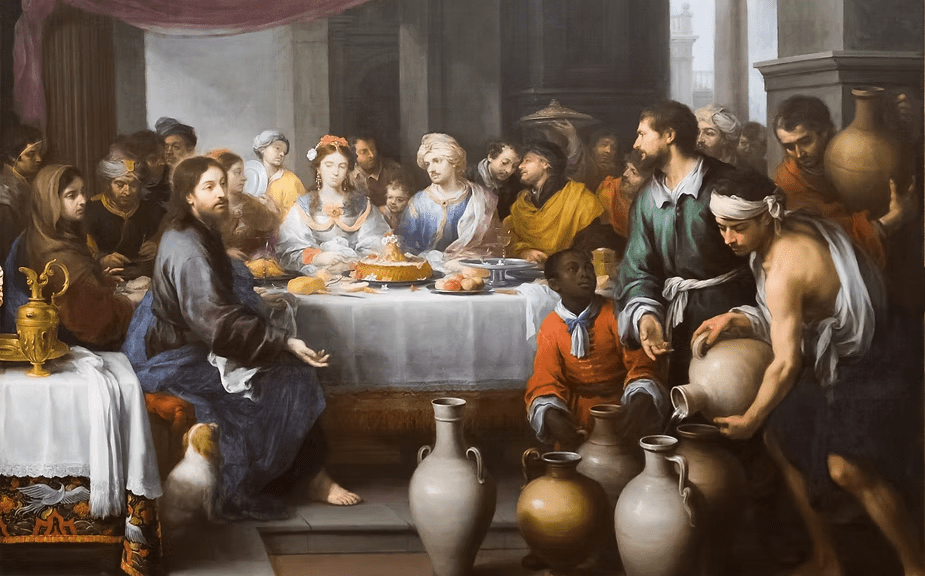
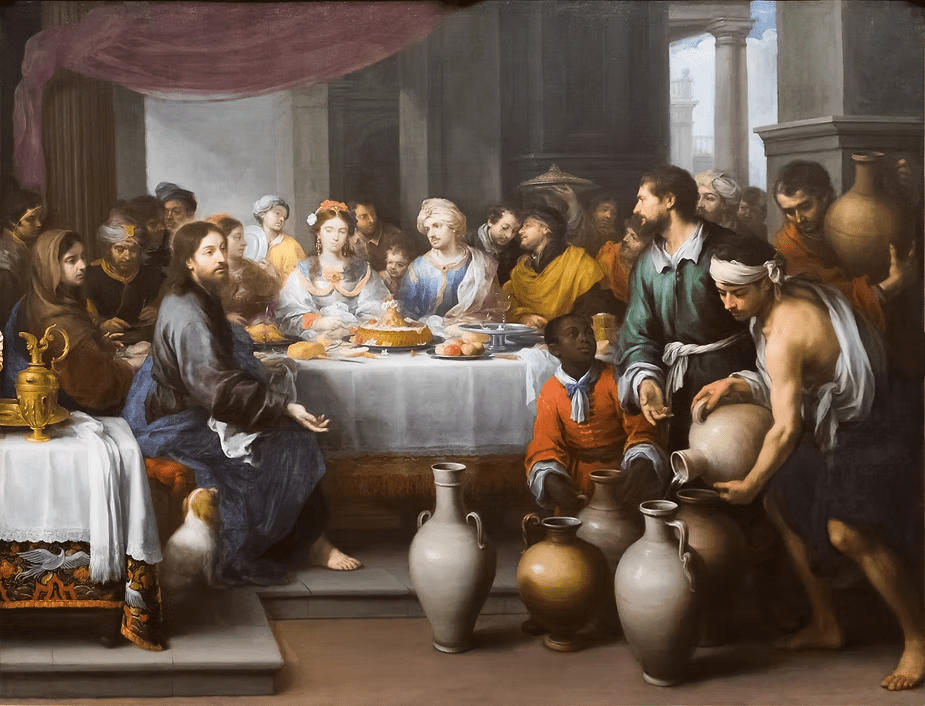

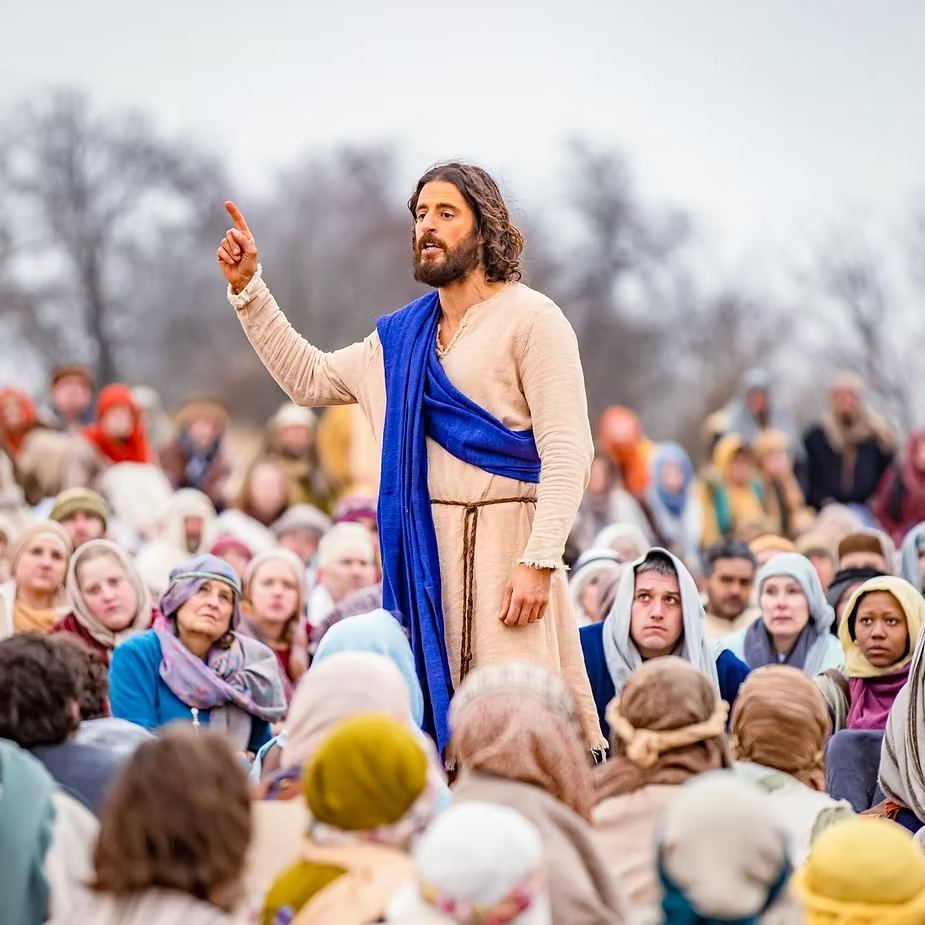

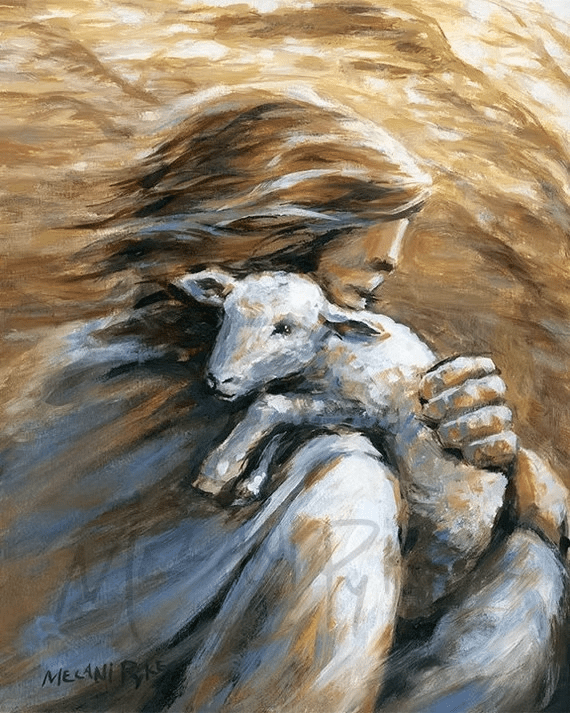


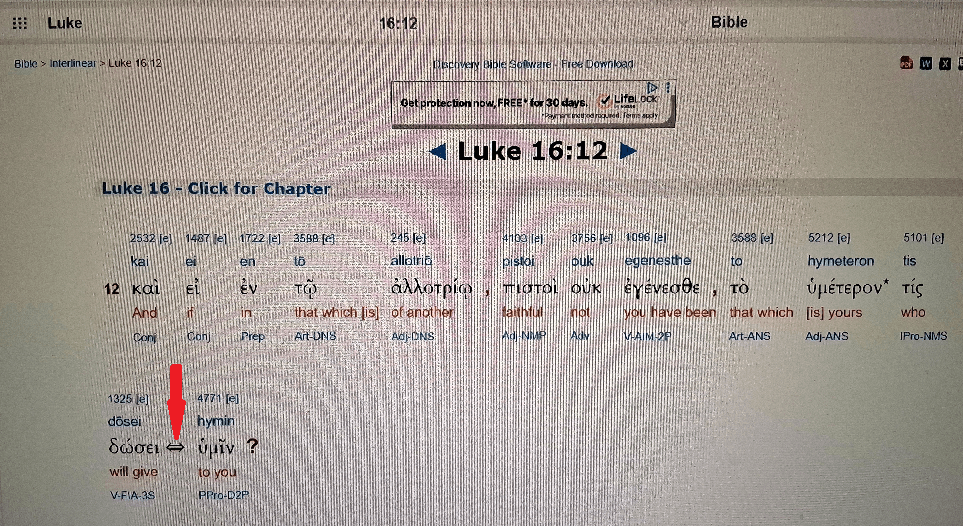

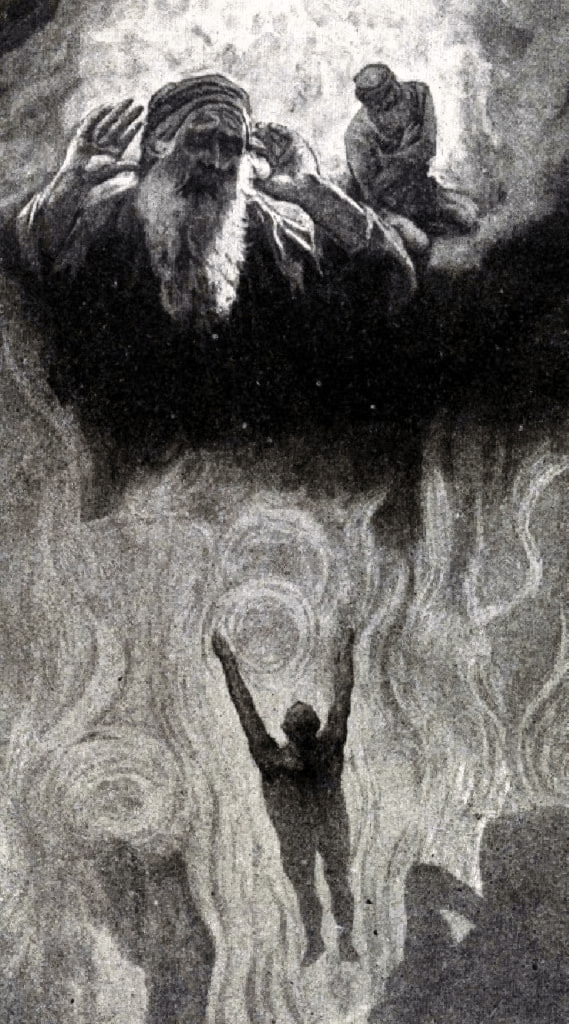
 Explaining the Readings