The Pharisees went and plotted to entrap Jesus in what he said. So they sent their disciples to him, along with the Herodians, saying, “Teacher, we know that you are sincere, and teach the way of God in accordance with truth, and show deference to no one; for you do not regard people with partiality. Tell us, then, what you think. Is it lawful to pay taxes to the emperor, or not?” But Jesus, aware of their malice, said, “Why are you putting me to the test, you hypocrites? Show me the coin used for the tax.” And they brought him a denarius. Then he said to them, “Whose head is this, and whose title?” They answered, “The emperor’s.” Then he said to them, “Give therefore to the emperor the things that are the emperor’s, and to God the things that are God’s.” When they heard this, they were amazed; and they left him and went away.
———————————————————————————————————-
This is the Gospel selection from the Episcopal Lectionary for Year A, Proper 24, the twentieth Sunday after Pentecost. It will next be read aloud by a priest on Sunday, October 22, 2017. It is important as Jesus saw through the trick of the Pharisees and told them worldly debt is owed to worldly rulers, but spiritual debt is owed to God.
When this reading is compared to the deeply metaphysical dream state of Moses speaking with God (Exodus 33) and Paul’s letter thanking the Thessalonians for helping spread the message of Christ (1 Thessalonians 1), a confrontation between Jesus and those planning to trap him in his teachings seems quite plain and simple. Certainly, many a priest will take this easy out and prepare a sermon about paying dues money, omitting the Moses and Paul connections.
After all, October is when those pledge cards are needed to be turned in and this Gospel reading is about sending in money. Right?
There are deeper issues involved in this reading, one of which is that few people today fully understand the financial responsibilities first century Jews bore. Another little grasped aspect is the different coins that were legal tender in the New Testament writings; and that ignorance makes it is easy to read this Gospel selection and think ALL coins bore the image of the emperor. That was not the case.
A Gospel reading every Sunday needs to relate that aspect of Jesus’ life with the lives Christians face in a modern world. Every reading must be applied in that manner, as if each person listening is personally involved in the story unfolding from the text. This leads one to question today, “How does this message apply to the American greenbacks (paper money or digital numbers) I own? How do I tithe, pay bills and taxes, help those in need, and still have enough for my family, including my retirement?”
To begin to address such monetary issues, here is a quick ancient history lesson first:
The coinage of Jesus’ day were either coined by the descendants of Herod the Great – shekels of silver mostly (but some of brass) – or those coined by the Romans, of which the denarius was one. The denarius and the assarius both had the Emperor’s image on them, but a lesser coin did not, as the Romans knew the Jews had complaints about graven images.
Still, the civil tax Rome demanded of all its subjects (including those in Judea and Galilee) had to be paid in denarius coins only. The Temple Tax, which was a financial burden on the Jews for the remodeling of Herod’s Temple, was to be paid in Tyrian Shekels, which were minted in Jerusalem. Those had the image of a plant on them.
The Tyrian Shekel was originally a Greek monetary unit (minted in Tyre), which was adopted by Herod the Great. Herod’s survivors (Archelaus, Antipas, Herod II, and Philip the Tetrarch) each eventually minted coins with their names, for circulation in the provinces they ruled for Rome.
The Herod family had Jewish roots, but little devotion or personal attention to tradition. They mostly did as Rome said, while honoring the Jewish people’s presence in a lost land, due to their willingness to accept foreign rule, as long as they could freely worship their God. Jerusalem had become something like Vatican City is to Italy, as special allowances were permitted within its walls. The Herodians were Jewish partisans of Herod Antipas, who had a palace in Jerusalem, although his area of official control was Galilee and the land beyond the Jordan.
With this brief background established, one can then read, “The Pharisees went and plotted to entrap Jesus in what he said. So they sent their disciples to him, along with the Herodians” and realize two important elements are stated in that. One is the Pharisees involvement and the other is the involvement of their underlings.
First, the Pharisees were those who got personal wealth from knowing the Law. They were the first of a LONG line of Jewish lawyers, which is a profession Jews still excel in today. They learned lawyers never make any money simply by knowing the law. Obedience to the law means no one needs a lawyer. Lawyers only make money when legal questions stir up unrest, which then demands a lawyer help straighten things out … legally. Therefore, the Pharisees hatched a plan to entrap Jesus so his words could be used legally against him.
Second, the lawyers can never be the ones seen stirring up legal messes, which would void their rights to be part of the legal proceeding that follow. This means it is important to see how they sent their followers, or the disciples of the Law, as those underlings were not fully versed in all the intricate details of the Law. They were learning the practice that later would be applied before the judicial body of the Temple.
The Herodians were those who favored the Temple Tax, knowing that the Roman Civil Tax (a poll tax) lessened the amount Herod’s Temple could assess on Jews. The Pharisees, who held vast amounts of Jewish wealth, were not exempt from the Roman taxes, so their disciples were sent to stir the hornet’s nest that was the tax burdens placed on the Jewish people. Then, as today and commonly throughout history, taxation rubs a sore spot on taxpayers.
To then read these law students said to Jesus, “Teacher, we know that you are sincere, and teach the way of God in accordance with truth, and show deference to no one; for you do not regard people with partiality,” this is standard classroom training of lawyers-to-be, where the pleasantries have little to do with proving Jesus was a Rabbi, was a sincere Law teacher, was trained to know the Law, and was unbiased in his application of the Law. Their smooth talk was a tactic of wooing the jury and courtroom watchers (the crowd surrounding Jesus on the Temple steps) with their complete lack of bias, as they set Jesus up for the kill question.
All that “buttering up” was designed to make a statement that Pharisees were fine and upstanding figures in Jewish society; and if Jesus wants to be speaking his mind on the Temple steps, then he needs to be a fair and balanced lawyer … like the Pharisees. His answer would be something like an unofficial bar exam.
In this regard, remember how three years earlier, following Jesus’ first Passover as a Rabbi on the Temple steps in Jerusalem, Nicodemus (probably the young, rich ruler unnamed later) came by night to recruit Jesus to the ranks of the Pharisees. The charisma they saw in Jesus would have been an excellent addition to their fund-raising abilities; so they wanted that fresh new face on their team. Jesus, however, rhetorically asked Nicodemus, “You call yourself a teacher of spiritual matters, when you do not know anything about spiritual matters?” That encounter meant that the Pharisees only stood for financial gain, through knowledge (a Big Brain power) of legal words.
The zinger question that was designed to be the trap Jesus was then, “Is it lawful to pay taxes to the emperor, or not?” To paraphrase that question a little, they could have said, “Did Moses say the children of God should send silver to the Roman Empire?”
The obvious answer was, “No.” Moses never knew about the Temple of Jerusalem, nor the Romans. However, law is purposefully written in black and white, so that everything in between the lines of written text becomes the gray matter that Big Brained lawyers love to argue.
The trap was to have Jesus speak wordsthat could then be used against him, as a Jew preaching rebellion against Roman taxation. A simple answer (the obvious answer) would have been enough to convict Jesus in a Roman court of law, as a seditionist. However, Jesus (led by the wisdom of the Holy Spirit and the Christ Mind) saw through the trap and went on the offensive.
Jesus asked, “Why are you putting me to the test, you hypocrites?” The operative word in that question was “hypocrites.”
The Greek word, “hypokritai,” actually means, “A stage-player,” as a “pretender.” The hypocrisy was those young lawyers-to-be knew the answer to their question, but pretended not to. They were “two-faced” in that regard. The use here, as a stand-alone statement in one word, says Jesus said they were those “whose profession does not match their practice.” They acted like they were seeking teaching (as disciples), when they were trying to get Jesus to perjure himself, as guilty of preaching revolution.
When Jesus then said, “Show me the coin used for the tax,” we are then told “they brought him a denarius.” By knowing that the denarius was the only currency accepted for payment of the Roman tax, which was required of all registered property owners and based on the value of that property, this explains why the Jews inside the Temple grounds would bring out that specific coin.
That says the Pharisees knew full well that an “income tax” on their wealth demanded they have a supply of denarii readily available; so they charged their Jewish clients in Roman coins or Tyrian Shekels, whichever they had on hand. Those silver coins would then be sold by weight (minas or talents) to Roman moneychangers, getting back only denarii when tax time was due.
The purpose of asking for an example of that coin then leads to a logical question in return (not asked), for the Pharisees disciples to answer: “What did Moses say the children of God owed in taxes to the Temple, so tax-exempt priests, scribes, and their legal advisers could have beautified office space there at the expense of the ordinary Jews, with no costs passed onto them?”
It was hypocritical to ask about the Law of Moses being applied to any worldly tax or material cost.
We then read that Jesus asked, after receiving a Roman denarius, “Whose head is this, and whose title?” That was not simply a question about who Tiberius was (or Augustus, if a coin that had been left over from the previous emperor’s minting). It was a jab at the rules of the very people who oversaw the Temple, and sent their disciples to ask an asinine question. The Temple of Jerusalem was deemed a sacred place that Romans needed to be very careful about how they acted when within those walls. If Romans had to tread lightly, the Jews were most certainly expected to be reverent there.
The first ruler of Judea, after Herod the Great’s death, was Herod Archelaus. He killed over 40 Jews who took down and chopped to pieces a golden eagle that had been placed over the Temple entrance. It had been ordered placed there by Herod the Great, just before his death. In response to that action by a mob of Jews, Archelaus ordered troops kill two Rabbis and 40 zealots. Their actions were because they saw that foreign image as blasphemous. Archelaus even cancelled Passover and dismissed a high priest, due to the sedition that arose over his actions.
Rome would remove this son of Herod the Great and send him into retirement exile in southern France. His replacement was a Roman governor (which Pontius Pilate was later to be one), who were ordered not to make the natives restless. Therefore, Jesus was pointing out that history of Jewish sedition in the past; and now here was a blasphemous coin with the graven image of a Roman ruler, on the same sacred grounds.
The simple answer given to Jesus was, “[Um. That is] The emperor’s [graven image].”
<cue the sound of crickets chirping>
The emperor? Of Rome? Wasn’t he the one who had standards with golden eagles on them? A graven image of a Roman emperor is on this coin … here?
No one was up in arms over that sacrilege. The Jews there that day were cool with the idea of Roman emperors.
So, what was the big deal about paying a tax to the Roman owner of their land?
When Jesus saw no outburst of unrest caused by the presence of an image of the ruler of the land previously possessed by Israelites (centuries prior), the unspoken answer to the question about the lawfulness of taxes paid to the empereur-du-jour of Rome was: “Moses did not receive any Laws from God about tributes made to kings, emperors, or any other kind of custodian of the physical world.”
God was not concerned with how many things one should have, or how much one should charge for legal advice. I doubt God would even send His blessing to modern Israel, even if that theft of land is said to be stolen in the name of God.
God’s only reason for choosing a groups of descendants of Abraham (a truly righteous dude), a lineage passed on through Isaac and Jacob, was to groom those descendants to serve only God. All the laws were then designed to slap the hands of any who tried to have more than God allowed, based on need alone.
The sole responsibility of God’s servants was (eventually, through Jesus of Nazareth and the Holy Spirit) to lead disciples away from a dependency on human rulers and to God as their only King. This, obviously, was why Jesus then told the crowd, “Give therefore to the emperor the things that are the emperor’s, and to God the things that are God’s.”
Within a week, Jesus would be dead, nailed to a tree by Roman hands. At the time of his death, an earthquake would split open the rock that entombed buried Saints, and the curtain that kept the Holy of Holies private, for God to live in that chamber, it was split in two, from top to bottom. A few decades later, the Roman tore down the Second Temple.
God has no use for material things. He left that building forever. Let the Romans have the property. Let the Jews pay them as their debt to the One God they serve.
The souls, on the other hand, no physical body can hold onto one for longer than a matter of decades. Ashes to ashes, dust to dust is all about paying the earth its due. The soul is forever the possession of God, whether it turns away from God for things, or faces God in servitude. Thus, the “amazing” effect Jesus had on legal beagles was his words resonated within them as if God Himself touched their hearts and they knew the truth had been spoken to them, saying “Give … to God the things that are God’s.”
As always, Christians today need to be more than disciples of Pharisees, who “left [Jesus] and went away.” The Big Brain of the Twenty-first century says, “You told them Jesus, ole boy! Hooray for us!” Unfortunately, anyone who sees him or herself as separate from Jesus can never speak as Jesus. God wants more who will be Jesus and speak words like Jesus spoke. Christ wants more who will be led like Jesus.
The problem is so many people ARE THE PHARISEES. People calling themselves “Christian” are little more than the disciples of the Pharisees, hypocritically pretending to do good things for God and Christ, while keeping things to themselves. People today want to keep as much precious metals as they can get their hands on, so they try to entrap Jesus’ words.
Christians look for Scriptural justifications for cheating on their income tax returns. Some so-called ministers [those in concrete buildings with neon lights on the outside and stadium seating on the inside, with cup holders on chair arms rather than places for prayer books on pew backs, and a stage with a dancing choir and a live band playing while clapping audiences follow-the-bouncing-ball big screen monitors is the scene, rather an altar, organ, and song books] they preach that what Jesus said means he wants to make you cash rich!
Even the priest who preaches a sermon that places guilt on the shoulders of a congregation to give one’s fair share to the church, rather than everyone in the congregation already being all in … that is a remodeling of the Second Temple, in the Twenty-first century. Tithing becomes a Temple Tax that never goes away. It places more value on material things than on an honored pledge of spiritual ministry. That was what was wrong then; and that is what is wrong still.
Every Christian should be amazed reading or hearing read, “Give therefore to the emperor the things that are the emperor’s, and to God the things that are God’s.” To paraphrase that: “Give therefore to the world the things that are of the world, and to God your whole heart and soul.”
When the Pharisees heard that Jesus had silenced the Sadducees, they gathered together, and one of them, a lawyer, asked him a question to test him. “Teacher, which commandment in the law is the greatest?” He said to him, “’You shall love the Lord your God with all your heart, and with all your soul, and with all your mind.’ This is the greatest and first commandment. And a second is like it: ‘You shall love your neighbor as yourself.’ On these two commandments hang all the law and the prophets.”
Now while the Pharisees were gathered together, Jesus asked them this question: “What do you think of the Messiah? Whose son is he?” They said to him, “The son of David.” He said to them, “How is it then that David by the Spirit calls him Lord, saying,
‘The Lord said to my Lord,
“Sit at my right hand, until I put your enemies under your feet”’?
If David thus calls him Lord, how can he be his son?” No one was able to give him an answer, nor from that day did anyone dare to ask him any more questions.
——————————————————————————————————
This is the Gospel selection from the Episcopal Lectionary for Year A, Proper 25, the twenty-first Sunday after Pentecost. It will next be read aloud in a church by a priest on Sunday, October 29, 2017. It is important because here Jesus stated the First Commandment as the most important, with loving your fellows that are also devoted to God the next greatest commandment, from which obedience to all other laws follows naturally.
As this reading begins, we read, “When the Pharisees heard that Jesus had silenced the Sadducees.” Matthew’s twenty-second chapter begins with Jesus telling the parable of the wedding banquet, followed by the test by the Pharisees as to whether or not Moses said paying tribute to Rome was legal. Prior to this reading was the approach by the Sadducees, who tested Jesus about seven sons marrying the same woman (repeatedly widowed without child), as to who would claim her as their wife in heaven, after all had died. All of these tests of Jesus are to be seen as the inspection of a sacrificial lamb for imperfections. Because Jesus continually sent his inspectors away humbled, each time he was found without blemish.
Again, these inspections are taking place in the Temple area, as the Jewish Holy Week of the Passover Festival is only days away from beginning. That commanded ritual required eight days of pious recognition of God having saved them, that year beginning at 6:00 PM on Friday – a Jewish Sabbath evening. Thus, four days of inspection becomes Monday through Thursday, with Jesus entering Jerusalem on a donkey and her colt on Sunday – the first day of the week. Sunday was then 9 Nissan, with Monday through Thursday being 10-13 Nissan, and Friday (the day of preparation for the Sabbath) being 14 Nissan. Passover always begins on 15 Nissan.
The multiple inspections of Jesus that were done each day is then a statement that the commandment given by God, through Moses, was important:
“Speak to all the congregation of Israel, saying, ‘On the tenth of this month they are each one to take a lamb for themselves, according to their fathers’ households, a lamb for each household.” (Exodus 12:3) “Y our lamb shall be an unblemished male a year old; you may take it from the sheep or from the goats. You shall keep it until the fourteenth day of the same month, then the whole assembly of the congregation of Israel is to kill it at twilight.” (Exodus 12:5-6) “This is a day you are to commemorate; for the generations to come you shall celebrate it as a festival to the LORD–a lasting ordinance.” (Exodus 12:14)
To put this in perspective, Jesus was not the only guy who had people running around calling him a prophet and possibly the Messiah. People thought the same about John the Baptizer (since killed). There were others as well. In a way of protecting the people from following a false shepherd, the Pharisees, Sadducees, and Temple priests (all the Big Brains of Jerusalem) had taken it upon themselves to inspect all potential Christs for blemishes. In that way, they played a valuable role, just as did the leaders of the Israelite families in Egypt, who could not allow a diseased sheep or goat to have its blood shed to save lives. This was in spite of them being blind to themselves needing to be inspected.
In this reading, the inspection is a question posed to Jesus, about which of the 613 laws of Moses is most important for a Jew to obey. We then read, “[Jesus] said to [the legal beagle inspecting], “’You shall love the Lord your God with all your heart, and with all your soul, and with all your mind.’ This is the greatest and first commandment.”
Before going beyond this point, it is important to grasp how well this statement by Jesus, about the First Commandment, fits that which was written.
The Hebrew of the First Commandment (Exodus 20:3) says: “לֹא יִהְיֶה לְךָ אֱלֹהִים אֲחֵרִים עַל פָּנָי,” as “lo yih’yeh le’kha e’lo’him a’hhey’rim al pa’nai,” literally translated as, “NOT he~will~EXIST to~you(ms) “Elohiym POWER~s” OTHER~s UPON FACE~s~me other “Elohiym Powers” will not exist (for) you upon my face.” (Source: Ancient Hebrew Research Center) This is usually translated for English-speaking Americans as: “You shall have no other gods before me.”
(Notice how the literal translation places focus on the word “panim,” which clearly states “face.”)
Knowing that the question to Jesus was posed by a “lawyer” (“nomikos”), which is not someone versed in Roman laws, but Mosaic Law (all 613 of them), such an authority would know Hebrew and the text stated above (“lo yih’yeh le’kha e’lo’him a’hhey’rim al pa’nai”). Thus, he would not have floating in his legal mind, “You shall have no other gods before me,” as an official inspector hoping to find an ugly blemish on Jesus. Therefore, when Jesus said, “You shall love the Lord your God with all your heart, and with all your soul, and with all your mind,” that lawyer was processing, “Does love of Yahweh, from your heart, soul, and mind, mean you do not wear the face of any other gods?”
When Jesus then went on to state, “And a second is like it: ‘You shall love your neighbor as yourself.’ On these two commandments hang all the law and the prophets” … there was that “love” word (“Agapēseis”) again. Who can argue with the “love” word, especially when Exodus 20:6 says, “but showing love to a thousand generations of those who love me and keep my commandments”?
Hmmmmm. “Group think!” the lawyer must have thought, as he motioned to the other Pharisees standing there … speechless.
“Let’s put our heads together guys. Was that a blemish?”
As they were talking amongst themselves, Jesus asked them a legal question:
“What do you think of the Messiah? Whose son is he?”
After having mentioning the prophets, whose prophecies were further amendments to the Law, coming from the LORD, they (Isaiah, Ezekiel, Jeremiah, Zechariah, and Amos, along with some Psalms of David) were the primary ones who foretold of a coming Savior. Still, as a concept of Judaism, rather than a prophecy etched in stone (as was Mosaic Law), the standard answer was that instantly known by the Jews of the Second Temple: “The Messiah was to be a future Jewish king from the Davidic line.”
From that standard teaching that the Pharisees had memorized, they probably said in unison, “The son of David,” as a knee-jerk reaction, uncontrollable when that nerve was struck. Undoubtedly, Jesus asked a question to which he knew what the answer would be, setting up his next follow-up question.
Jesus asked, “How is it then that David by the Spirit calls him Lord, saying, ‘The Lord said to my Lord, “Sit at my right hand, until I put your enemies under your feet”?”
He quoted to them Psalm 110:1, which begins by stating, “Of David a Psalm said.” Jesus used the words of David himself, which the Pharisees regularly belted out in song, while drawing special attention to themselves in the synagogues. So, they knew the words Jesus quoted.
They had just never really pondered what those words meant, until then, when Jesus used that as evidence that challenged their concept of a Messiah.
When David wrote, “Yah-weh la·ḏō·nî,” the “LORD of my lord,” this is similar to the repetitious use of “Yahweh elohim” in Genesis 2 – “LORD of lords” or “God of gods” – and the use of “ĕ·lō·hê hā·’ĕ·lō·hîm , wa·’ă·ḏō·nê hā·’ă·ḏō·nîm hā·’êl” in Deuteronomy 10:17 – “God of gods, the Lord, Lord God.” Because the First Commandment refers to “elohim” – as “god powers upon a face” or “gods before me” – the Pharisees had just stepped into a trap that had them putting a human face (a descendant of David) on the Anointed One – the Son of God.
When David sang, “The Lord said to my Lord,” the Pharisees understood that “The Lord” was God (Yahweh) and “my Lord” was the Messiah, who “sat at the right hand” of God, as God’s Son, the Lord of David. Therefore, it was impossible for the Messiah to be some human to be born as the Messiah, simply from bloodline and heritage. God, and thus His Son, was more than flesh and blood.
When Jesus then asked the Pharisees, “If David thus calls him Lord, how can he be his son?,” they just got real silent and walked away, too afraid to say anything else.
The funny thing is that was a trick question asked by Jesus; but the Pharisees were not filled with any Holy Spirit to answer. They could have said: “The Christ can be any human whom God chooses to be His Son. If the LORD is my Lord, as David said, then David was one in a long line of God’s chosen Messiahs.”
Adam was one. Abraham was one. Moses was one. Samuel was one. Elijah was one. Jesus was one, and so on. The presence of the Christ (Greek for “Messiah“) Mind means the the presence of the LORD within a human kingdom, making the LORD “my Lord.”
Therefore, the trick answer to the trick question becomes a statement of the two most important commandments:
“Anyone who loves God so much that he or she becomes the face of God on earth (a Messiah), and that face of God loves all others who wear the face of God on their faces, then the Messiah will always be a descendant of the Davidic lineage of Spirituality.”
Not many would know that answer then; but by the Fiftieth Day (6 Sivan), in remembrance of when Moses first delivered the Law to the Israelites, an ever growing number of Messiahs were then enabled to see this inference. The question now is: Are we like the Pharisees all over again (blind), or are we like the Apostles (enlightened)?
Jesus said to the crowds and to his disciples, “The scribes and the Pharisees sit on Moses’ seat; therefore, do whatever they teach you and follow it; but do not do as they do, for they do not practice what they teach. They tie up heavy burdens, hard to bear, and lay them on the shoulders of others; but they themselves are unwilling to lift a finger to move them. They do all their deeds to be seen by others; for they make their phylacteries broad and their fringes long. They love to have the place of honor at banquets and the best seats in the synagogues, and to be greeted with respect in the marketplaces, and to have people call them rabbi. But you are not to be called rabbi, for you have one teacher, and you are all students. And call no one your father on earth, for you have one Father– the one in heaven. Nor are you to be called instructors, for you have one instructor, the Messiah. The greatest among you will be your servant. All who exalt themselves will be humbled, and all who humble themselves will be exalted.”
———————————————————————————————————-
The is the Gospel selection from the Episcopal Lectionary for Year A, Proper 26, the twenty-second Sunday after Pentecost. It will next be read aloud by a priest in church on Sunday, November 5, 2017. It is important because Jesus pointed out how people who stand highly as religious leaders, in the eyes of human beings, will be humbled in the eyes of the LORD. This means the most exalted Spiritual teachers on earth will serve only God.
Verse two of this selection has Jesus telling his followers (both general listeners and valued assistants), “The scribes and the Pharisees sit on Moses’ seat.” This is the only specific reference to “Moses’ seat” in all the Holy Bible. Some take this statement as meaning there was some physical “seat, chair,” or “bench,” upon which Moses sat. Some say the Roman Catholic Church and the Pope now sits on that figurative “seat,” as the See of St. Peter.
Some might sell tickets in the Holy Land, for pilgrims to have their picture taken by the “seat of Moses.”
Found in Chorazin, which is just north of the Sea of Galilee … a place Moses never went.
To best understand this statement by Jesus, one has to grasp how “Moses’ seat” was a reference to the state of Judea then, where Jerusalem was a place that had been set aside for exilic Jews to play the game, “What if?”
“What if our ancestors had not lost our land?” they would say. Then they would surmise, “We would be returned to the days when Judges would be sent by God to save us.” It was the Judges of Israel, before the Twelve Tribes had a king, and before they had a powerful prophet of the LORD in Samuel, who every 80 years would snap the wayward children of Israel back from their pagan ways, getting them to remember their Covenant to be righteous in the eyes of the One God.
The Judges of Israel sat on “Moses’ seat,” just as Moses had judged the Israelites prior to their entrance into the Promised Land. Thus, “Moses’ seat” stands for “Tradition,” which is the claim the Vatican has made. The Pope and his entourage sit as Judges of Christians. Unfortunately, that makes Rome the epitome of what this Scripture says, where Jesus warned the Jews around him, “Do not do as they do, for they do not practice what they teach.”
This statement of “Moses’ seat” is best understood from careful examination of Exodus 18 (as all examination of Scripture should be … carefully done … as if one cares about the truth being revealed). Here is a link to that chapter, which the New International Version has entitled, “Jethro Visits Moses.”
Jethro was the father-in-law of Moses, the father of Zipporah, and a priest of Midian. In Exodus 18:13 we read, “The next day Moses took his seat to serve as judge for the people, and they stood around him from morning till evening.” (NIV) The actual Hebrew states, “way·yê·šeḇ mō·šeh liš·pōṭ,” rooted in “yashab Mosheh shaphat,” meaning “Sat Moses to judge.” The act of sitting implies a “seat, chair” or “bench,” but that specificity was not directly stated. Moses could have “sat” on the ground; but the implication of “sitting in judgment” implies an elevated position, like a mound that overlooked the people.
Today, furniture manufacturers sell “Judge’s chairs,” which have high backs, much like a king’s throne. In a courtroom setting, such a Judge’s chair would be set upon a raised floor (24”), higher than the people’s benches and the chairs of the jurors’ (set on a floor raised 12”). This could imply the “seat of Moses” was a high-back chair, which went wherever the Tabernacle went, along with some platform to set the chair on.
In Exodus 18, the wisdom of Jethro is imparted to Moses, after Jethro saw Moses being the Judge of the Israelites. In Exodus 18:17 we read, “Moses’ father-in-law [said], “What you are doing is not good.” Jethro saw that doing everything alone was too heavy of a burden to bear; so he recommended that Moses choose “good men” to do the majority of the judging, so that only the major problems came before Moses.
Moses listened to Jethro and did what he advised; so we read in Exodus 18:26: “They [the “good men” chosen by Moses] served as judges for the people at all times. The difficult cases they brought to Moses, but the simple ones they decided themselves.” Thus, the seat of Moses was only for matters that needed to be petitioned to the LORD. It would be more in line with America’s Supreme Court, rather than a lesser court.
For Jesus to say, “The scribes and the Pharisees sit on Moses’ seat” (in the plural number), the intent was to point out how the wisdom of Jethro was missing in the Temple of Jerusalem’s justice system. That system revolved around a series of changing High Priests, with Joseph Caiaphas the ruler of that roost at that time. His appointment was based on support from “the scribes and the Pharisees,” in the artificial environment that made the Second Temple (Herod’s Temple) be like Disneyland (a Magical Kingdom), in the midst of Roman empirical domination.
The logic of that system was, “We lost our land because of our failure to follow the Laws of Moses, therefore we will model Judaism after the times when Judges sat on the seat of Moses, until God sends us our next Savior Judge.” The idea of a Messiah (or a Christ) was thought to be a strong warrior-leader; but when the Roman Empire was the current champion whose title belt needed to be taken in a fight to the death, few scribes and Pharisees gave that prophecy any chance of ever happening. If you ask a Jew today about that prophecy, he or she will say they are still waiting. To wait 3,000 years for a prophecy to come true means one does not believe it will ever happen, but faith calls for polite patronizing.
This means those judges were sitting upon the seat of Moses, like Moses did prior to taking the advice of Jethro. The scribes and Pharisees eschewed such wisdom and shunned any thoughts about sharing the responsibilities of judgment, keeping that heavy burden all for themselves. After all, that system of Kings replacing Judges had failed miserably … to the Assyrians and the Babylonians. Thus, when Jesus said, “Do whatever they teach you and follow it; but do not do as they do, for they do not practice what they teach. They tie up heavy burdens, hard to bear, and lay them on the shoulders of others; but they themselves are unwilling to lift a finger to move them,” they had no problem with bearing a heavy burden, because they only had to pass judgments that benefited themselves, at the expense of others.
Because Jesus told the crowd and his disciples to do as they taught, he was saying they taught the Laws of Moses. All the descendants of the Israelites must follow those rules. As for not allowing those judges to be their personal role models, the actions of writers and lawyers would only lead the crowds, and disciples who followed their leads, to lives of corruption.
When Jesus said, “For they make their phylacteries broad,” I imagine most Christians are like me and hear a word like “phylacteries” and wonder, “Hmmm what the heck is that.” Then, the majority of Christians ignore that thought and keep on reading, never doing anything to learn what Jesus said and what that meant.
These are “phylacteries.”
They are defined as: “two small leather boxes worn during morning prayers by Orthodox and Conservative Jews after the age of 13 years and one day. Each box contains strips of parchment inscribed with verses from the Scriptures: Ex. 13.1–10; 13.11–16; Deut. 6.4–9; 11.13–21. One box is fastened to the forehead and the other to the left arm; they are intended to serve as a reminder of the constant presence of God and of the need to keep Him uppermost in one’s thoughts and deeds, thereby safeguarding the wearer against committing a sin. They are not worn on the Sabbath or holy days, since these days are in themselves a reminder of God. Phylacteries are also called tephillin.” (Columbia Electronic Encyclopedia, via The Free Dictionary by Farlex) The word is Greek for “safeguard,” just as is the meaning of the Hebrew word “tephillin.”
When Jesus said, “They make … their fringes long,” this is what that refers to:
By increasing the size of two symbols of devotion to God, which made it easier for everyone to notice, the scribes and Pharisees were skilled in the art of deception. They knew the power of suggestion. They understood that acting a part makes people believe you are the character whose role you are playing. And it technically wasn’t lying, if you never said you were what you led people to believe you were … erroneously.
The point made by Jesus saying the scribes and the Pharisees was that they were quite showy about their religious pedigree. They put on airs. The saying, “The clothes make the man” (Mark Twain, as a paraphrase of Shakespeare: “Apparel oft proclaims the man”) means that the way one looks is how others will think of that one.
In the words of Billy Crystal (pretending to be Fernando Lamas): “You dahling? You look mahvelous!”
If Jesus were to reappear as Jesus before the crowd and his Christian disciples today, he would be pointing out the same flaws still present in religious clothing.
Popes Archbishops Televangelists
Jesus said of the writers (scribes) and the lawyers (Pharisees), “They love to have the place of honor at banquets and the best seats in the synagogues, and to be greeted with respect in the marketplaces, and to have people call them rabbi.” Those translated words make it easy to see the special societal favors that were expected by high-ranking Jews in ancient times. However, do the same words not identify these modern personalities, who “teach” as idols?
Tricky Dick Hey hey hey The wheels on the bike go round and roun
Seeing how such glittering stars in politics, acting, and sports have risen to the top and fallen to the depths of their popularity, after their public images have been exposed as unworthy of worship, Jesus spoke the truth when he said, “Do not do as they do, for they do not practice what they teach.”
We look up to teachers (rabbis) that surround us, blindly trusting that they are there to help us. Then, time and again, the truth comes out that our idols were only helping themselves. They were taking advantage of common ignorance.
Jesus warned the crowd and his disciples, “You are not to be called rabbi, for you have one teacher, and you are all students.” Our only teacher is God, who sent us laws to live by, through Moses. The only thing that can be taught of true value is this: “Listen to the LORD.” The word of the LORD can be recited for us, but only fear of God will make one obey that word.
Then, Jesus went on. He added, “And call no one your father on earth, for you have one Father– the one in heaven.” This applies to the interpretation that I did on Paul’s first epistle to the Thessalonians, where he wrote, “We dealt with each one of you like a father with his children, urging and encouraging you and pleading that you lead a life worthy of God.” (1 Thessalonians 2:11-12) Paul was not a genetic parent to adults he met in his evangelism. Paul was filled with the Holy Spirit of the Father; therefore he taught the Thessalonians how to be Christian, as the Father in heaven told him.
For that reason, Jesus then said, “Nor are you to be called instructors, for you have one instructor, the Messiah.” The “Messiah” is the “Christ.” This means Paul was an instructor, just as Jesus was instructing the crowd and his disciples in Jerusalem. If you ponder that instruction carefully, then you will see that every Apostle becomes an instructor, just as did Paul, Silvanus, Timothy, and those of Thessaly, the same way Jesus became one – God sent His Holy Spirit to be One with the faithful, allowing all to become “the Messiah,” “the Christ.”
I have said it before, and I will repeat it once again now: You fall in love with GOD and accept His proposal for marriage (males AND females). The you consummate your love of GOD by doing acts of faith, until you give birth to a new you, which is the rebirth of Jesus Christ in your body. Just as Jesus was “Christ Jesus,” you become “Christ (fill in your name here),”
The birth of Jesus Christ as you means you cease trying to “have the place of honor at [awards] banquets and the best seats in the [houses of worship], and to be greeted with respect in the marketplaces [places of employment, where so many sell their souls routinely], and to have people call [you] role model [based on the materials you amass].” You stop serving self and begin (forevermore) serving Yahweh. Thus, Jesus said, “The greatest among you will be your servant.”
To be reborn as Jesus Christ means “the abundance” [“the greatest”] of “the Christ” will be in “yourselves,” as within “you” [meanings of the Greek word “hymōn”]. This presence will ensure “you” or “yourselves” [repetition of “hymōn”] of becoming a “servant” or “waiter” or “anyone who performs any service.” As a “servant” of “the Messiah,” you will do exactly as Jesus of Nazareth did, and repeatedly say, “I speak the truth, for the Father.”
This way of grasping verse 11 makes understanding verse 12 easier. “All who exalt themselves will be humbled, and all who humble themselves will be exalted,” says that you choose which path you take in life. Do you lie, cheat, steal, prostitute yourself and covet those who wear the finest clothes and get into the most exclusive nightclubs and restaurants? Or, do you thank God for what little you have, while praying for those who are destroying the fabric of our society? One way will raise you to the heights the world has to offer. The other will raise you to the heights heaven holds for those who serve the LORD.
Either way, you will be humbled. As the old Fram oil filter commercial said: “You can pay me now or you can pay me later.” One way or the other, you are going to pay for your life choices.
When you play this forward to modern times, then you understand what Jesus meant, when he said what to watch out for. Can you see holy looking men and women that are “tying up heavy burdens, hard to bear, and laying them on the shoulders of others [Christians raised to think the Laws were etched in stone]; but they themselves are unwilling to lift a finger to move them”?
Are political challengers not interpreting Scripture in ways that seek to destroy all links between Christianity and American laws, through the pollution of the representatives who sit on the seat of Washington D.C.? Jesus pointed out the writers of law (the scribes) and the enforcers of law (the Pharisees) were in no way holy, because they did not talk to God. When they used holy Law as their excuse for leadership, then they were repeating what Moses had brought down from the mount to the people. The long-standing fairy tale of the United States of America was it was founded as a nation of Christians (Protestants), who (collectively) did not want a King or a Pope sitting on the seat of Law in the New World.
Then non-Christians began elevating themselves into the government of the people, for the people to become as screwed as were the Jews of Judea and Galilee, when Jesus pointed out this is not preventable. It is the common way of the world. It is the way things will always deteriorate, degenerate, corrupt, and disintegrate, when led by self-serving men and women.
Moses spoke to God and then Moses passed on what God demanded to those who listened to Moses. The Judges of Israel who sat on that same seat of holy Law did the same thing. David did it with the help of Samuel. Elijah, Elisha and other Prophets helped other kings, with less and less compliance to what God demanded. Those holy people all spoke holy Law – the Word of the LORD – and then the people did what they wanted.
When Jesus said the scribes and the Pharisees were making up interpretations of holy Law, while quoting God’s Commandments, they were creating huge burdens for God-fearing Jews. By saying, ” they themselves are unwilling to lift a finger to move them,” the key word to understand is the Greek word “kinēsai,” which means “to move,” as “to set in motion, excite, stir up.” That says the written laws of Jerusalem, enforced by the lawyers of Jerusalem (the Disneyland police), never helped any typical Jews be inspired by explanations that said “God will reward you,” coming from anyone who said they sat on the “seat of Moses.” It was always demand more money and threaten punishment for sins.
Today, little has changed. Who can be “moved” by a government that is in gridlock because two parties hate one another? The members of Congress sit on the seat of legislative laws, which do little to “lift a finger” to cut taxes, guarantee health, welfare, and safety of the citizens; although they will pass benefit packages for themselves, none of which are commonly available for “regular folk.”
The Judicial Branch is petitioned by lawyers and law checkers, challenging any right to actually legally punish cities that break Federal laws, because local ordinances have been written that are contrary (approved by local voters). Lawsuits have forced judicial reason to justify removal of monuments that are representative of Judeo-Christian faith, justify a redefining of marriage (which went unchanged for millennia prior) to meet modern needs, and to justify the killing of babies while people scream for the preservation of the lives of heinous criminals. It has become a hate crime to defend America as a nation standing for Christianity, if that means trying to keep those who hate Christians out of America.
Jesus was not telling the crowd nor his disciples to rise up in rebellion and overthrow a world gone to the dogs. Nope. The world is the homeland of sin. It will always find a way to rewrite the laws that makes good stand out of the way of evil. Jesus was simply pointing out how you cannot be led by any human, no matter how big they smile, how fancy they dress, and how much of the world they promise can be yours. People always talk a good game; but then they play by the rules they make up as they go.
You can only do what God’s Law says; and that means looking within, not without. The only role model to follow is Jesus Christ, who fills one’s Mind, through the love of God.
If you listen to your heart, you know Jesus is talking to you when he said, “Do not do as they do, for they do not practice what they teach.” They are hypocrites, which means “actors” and “pretenders.”
Jesus said, “Then the kingdom of heaven will be like this. Ten bridesmaids took their lamps and went to meet the bridegroom. Five of them were foolish, and five were wise. When the foolish took their lamps, they took no oil with them; but the wise took flasks of oil with their lamps. As the bridegroom was delayed, all of them became drowsy and slept. But at midnight there was a shout, ‘Look! Here is the bridegroom! Come out to meet him.’ Then all those bridesmaids got up and trimmed their lamps. The foolish said to the wise, ‘Give us some of your oil, for our lamps are going out.’ But the wise replied, ‘No! there will not be enough for you and for us; you had better go to the dealers and buy some for yourselves.’ And while they went to buy it, the bridegroom came, and those who were ready went with him into the wedding banquet; and the door was shut. Later the other bridesmaids came also, saying, ‘Lord, lord, open to us.’ But he replied, ‘Truly I tell you, I do not know you.’ Keep awake therefore, for you know neither the day nor the hour.”
———————————————————————————————————-
This is the Gospel selection from the Episcopal Lectionary for Year A, Proper 27, the twenty-third Sunday after Pentecost. It will next be read aloud in church by a priest on Sunday, November 12, 2017. It is important because of the warning of preparedness, as told in the parable of the ten bridesmaids.
This parable seems quite straightforward, in the sense that it paints a clear picture of being prepared for when the bridegroom comes, which appears to be Jesus in allegory. Of course, nothing is Scripture is that simple, as there is deeper meaning always embedded in the specific verbiage used. Every word coming from Jesus, and remembered by Matthew, came from the All-Knowing Mind of God. Each word of Greek is perfectly chosen.
In fact, one can see such knowledge as allegorically mentioned in this parable, as the oil that the lamps burn for light. Light is metaphor for the truth. One assumes that some oil is already in the lamp, which had been lit in the evening. By there being ten different lamps, this becomes metaphor for ten different ways the same words written in Greek can be made available to “light” one’s way in translation. However, meditation that goes beyond the apparent and ponders the scope of meaning that is possible from the Greek, then that acts as an extra “flask of oil” from which the “light” of truth can shine.
This Gospel reading is presented on the same Sunday as the story I interpreted about Joshua, who in his last year of life told the leaders of the Twelve Tribes, “Choose to serve God, or choose to serve the gods of others.” It also goes along with the first letter Paul sent to the Christians of Thessaly, where he wrote words that were read in church as saying “died,” but in reality three times the word implying death was used, metaphorically saying, “having fallen asleep.”
Can you see how this parable strongly links to those themes, when the bridesmaids have fallen asleep, with half having extra oil, and half only having the oil that was already in their lamps? Can you see how “to become drowsy and sleep” is the same metaphor of death? Can you see Jesus telling a parable that warns to be prepared for that time of death, which all mortals cannot escape?
In the interpretation I wrote referring to 1 Thessalonians 4, I wrote how one only needs to look at the parables that Jesus told and place oneself in the story “as the fools,” rather than as Jesus – the one telling the story. I had not read this Gospel accompaniment at that time; but as I prepared to write this, I saw the word “fool” used. Exactly as I stated prior, one has to ponder, “How am I one of the five bridesmaids that were foolish?”
This brings us back to the point that I have made previously, where we are all called to marry the King (and become his Son), as was the allegory in the parable of the Wedding Banquet. That thought, humanly mistaking the proposal to be to marry Jesus, causes manly men to stand up and pronounce, “That is gay! No man can marry another man!” Meanwhile, all the female Christians (especially Roman Catholic nuns and nuns of other denominations) gleefully proclaim, “I am already wearing the ring of marriage to Jesus Christ!”
As I have said, sex organs play no role in spiritual matters. When Jesus told Nicodemus that being reborn did not mean finding some physical way to get back into the mother’s womb, he was heard saying, “Truly, truly, I say to you, unless one is born of water and the Spirit he cannot enter into the kingdom of God.” (John 3:5) Jesus was not talking about bridesmaids being exclusively females because sex organs are not “born of water and the Spirit.” That says “water” is symbolic of “love,” and “the Spirit” is the Holy “Spirit.”
Love of God brings the Holy Spirit, as the marriage of the Son to the human being of faith, devotion, and submission – the traits of God’s bridesmaids. That marriage of one’s heart with God – a Holy Union – in turn allows one entrance into the Kingdom of Heaven. That was what Jesus was talking about to Nicodemus – being reborn is what gains entrance into God’s Kingdom (Heaven). Therefore, the bridesmaids are symbolic of Christians that have sacrificed their self-egos, to be married to God.
In this way, anyone who thinks like Nicodemus and wonders how an old man can get back into his momma’s womb (via momma’s sex organ) is as “foolish” as a bridesmaid without extra oil for a lamp. Think of it as some male Christian saying he will marry God and have God’s baby Jesus Christ be born in him, but then that “fool” never gets the extra oil of Scriptural knowledge, to help him through the threshold of death, or “having fallen asleep” like Lazarus (the one Jesus loved) did.
When we read, “When the foolish took their lamps, they took no oil with them,” one can assume they took a lamp that had some oil already in it, so the lamp was able to shine a light for a few hours. All ten bridesmaids have lamps, so the similarity means all ten are led by the light of religion. That religion represents belief in the One God, YaHWeH, the LORD. So, they are either Jewish lamps or Christian lamps today, while Jesus was talking to Jews then.
Simply by having a lamp does nothing for anyone, so being Jewish or Christian in name only (by birth), with no knowledge of what that means as an adult, means one is not deeply committed to God. No holy light leads one’s path through life. One is (figuratively) still “playing the field,” and “keeping one’s options open.” One is a bachelor-bachelorette and not a bridesmaid (remembering that sex organs do not matter).
The oil that is already in the lamps should then be seen as one’s personal knowledge of what one’s religion says to believe. As such, all active Christians carry the knowledge that fuels the light that shines faith in God. Jews carry around lamps that are full of the oil that reflects memorizing 613 commandments, sent from God through Moses. In this way, the extra oil that five of the bridesmaids have with them is the oil of the New Testament, which fuels the light that shines faith in Jesus Christ, as the Son of God. The foolish bridesmaids do not carry that extra oil.
Still, the five foolish bridesmaids can be broken down into five different types of Christians and Jews. These can be compared to the seven churches, to which the Spirit of Jesus told John to write letters (in The Revelation). The Jews that reject Jesus as their Messiah, while remaining devout in their adherence to the laws of Moses, simply do not have that extra oil needed to get them beyond death, into Heaven. This was the reason Jesus preached in parables to such holy Jews in Jerusalem, to no avail. But, Christians who mirror those Jews in Jerusalem today, who maintain devotion to amassing fortunes and things, through a misguided belief that God blesses His believers with things, they are not being filled with God’s Holy Spirit; and that means a “foolish” waste of holy oil.
When the ten had waited so long they had “became drowsy and slept,” this then states symbolically that the “delay” leading to that point of rest was a lifetime of waiting “to meet the bridegroom.” The Greek word that is translated as “slept” is “ekatheudon.” That is rooted in the word “katheudó,” which Thayer’s Greek Lexicon states is used: euphemistically [as], “to be dead,” and metaphorically [as], “to yield to sloth and sin, and be indifferent to one’s salvation.”
This hints at the weights placed upon human beings, as mortals, such that the “drowsiness” is brought on not only by the deterioration of bodily parts, from age, but the weariness that comes from denying oneself the lures of the world (being faithful and true to the bridegroom), as well as succumbing to them (secretly cheating on one’s verbal commitment). It is a lifetime of temptation to worldly things that wears one out and makes one tired.
To then hear Jesus say, “At midnight there was a shout, ‘Look! Here is the bridegroom! Come out to meet him.’ Then all those bridesmaids got up and trimmed their lamps,” the symbolism of “midnight” has to be grasped. The actual Greek words written are “mesēs de nyktos,” which says, “the middle of the night.” That can be simplified as “midnight,” but a viable implication of “nyktos” (from “nux”) can be “midnight,” by itself. As such, the simplification makes one miss the point of the word “mesēs” (form of “mesos”), where “in the middle” becomes less a statement of time of day, and more a statement about being in transition, from life to the afterlife, when “in the middle” means the transition of death.
Seeing “the middle” from that perspective, then one can grasp how death is that period of darkness when an absence of light surrounds one’s soul. This is termed “spiritual dryness,” but St. John of the Cross, OCD, wrote a poem that has been called “The Dark Night of the Soul.” An article on that poem and its topic explains: “The term “dark night (of the soul)” in Roman Catholic spirituality describes a spiritual crisis in the journey toward union with God.” The same “crisis towards union” can be seen in this parable told by Jesus.
Jesus, the teller of this parable, said, “There was a shout, ‘Look! Here is the bridegroom! Come out to meet him,’” which can be read as Jesus Christ making that cry of alert. Seeing that as the voice of the Christ Mind exclaiming, “Good News!” is then confirmed when Jesus said at the end of this story, “Keep awake therefore, for you know neither the day nor the hour.” This is clearer when the Greek text is found to add, “in which the Son of man comes,” (“en hē ho huios tou anthrōpou erchetai“), words with translations omitted, as they have not been included in the NASB translation above.
This parable then projects the future, when Jesus told his followers, while on the other side of the Jordan, about the death experienced by Lazarus. Jesus said, “Our friend Lazarus has fallen asleep; but I go, so that I may awaken him out of sleep.” (John 11:11) That parallels this story that tells allegorically of vigilance. The Lazarus story ended when we read, “There was a shout,” as John wrote, “He cried out with a loud voice, “Lazarus, come forth.’” (John 11:43)
The slumbering bridesmaids were awakened by a shout to “Look!” or “Behold!” or “See with the Mind of Christ!” (which is the intent of “horaó”). In both stories, the command was to “Come out,” which is an invitation to leave the darkness of death, but also the darkness of mortality. That command is to enter the heavenly realm of eternal life.
In the statement, “Then all those bridesmaids got up and trimmed their lamps,” the Greek word “ekosmēsan” is translated as “trimmed.” It is the past tense of the word “kosmeó,” which means “to order, arrange,” implying “I put into order; I decorate, deck, adorn.” The word “trimmed” is then used like “trimming the Christmas tree,” and not like cutting a wick, or pulling the wick of a lamp out, so it can be re-lit. According to Thayer’s Greek Lexicon, this specific usage implies “to put in order,” as well as “to make ready” and “prepare” the lamp for the meeting of the bridegroom. This is where adorning the lamp ceremoniously would mean putting the extra oil into effect, as that was what would make meeting the bridegroom possible.
We know that is the case, because we read how Jesus then said, “The foolish said to the wise, ‘Give us some of your oil, for our lamps are going out.’” Because the “fools” said that, as a command to “Give,” this makes an important point of what makes a “fool” “foolish” and not “wise.” People expect to be given Heaven. They expect to be “placed, allowed, put, bestowed, granted, and permitted” (among other possibilities stemming from “Dote,” rooted in “didómi”), rather than having to do work themselves.
Can you hear St. James saying, “Faith without works is dead”? (James 2:14-26)
One can be given many things, but entrance into Heaven (the Kingdom of God) requires the work of the wise. This means being “wise” comes from being filled with the Holy Spirit, with all the “smarts” of the Christ Mind guiding one’s works. It is that presence of the Christ Mind’s “wisdom” that gives the five “wise bridesmaids” that “flask of oil.” That “oil” anoints them with the talents of the Holy Spirit, to prophesy and to understand prophecy, which is the fuel that “lights” their way to Heaven. It is the Holy Spirit that “adorns” the “lamp” of religion and simple faith.
Matthew 11:25 writes of Jesus saying, “I praise you, Father, Lord of heaven and earth, because you have hidden these things from the wise and learned, and revealed them to little children.” There, “sophōnkai synetōn” says “cleverness importantly intelligence” is the mistake of thinking a Big Brain will be all the ‘oil’ one’s lamp needs to stay awake until the bridegroom comes. God does not come to meet those fools. God does not propose to those who fall in love with convoluted masses of synapses that only serve mortal existence. God proposes to “little children” whose faith is not hindered by the limits a human organ presents one’s soul. Children are those who are neuter gender and not those who have not become limited to love that follows the lead of a sex organ.
In one commentary that I briefly skimmed over, the refusal of the five “wise bridesmaids” to “Give” lamp oil to the five “foolish” ones was seen as selfishness or petty bickering and jealousy. This is not the case at all.
To grasp that, I want you to think now of the story Jesus told about poor Lazarus, who in life sat at the gate of the rich man, begging for the crumbs off his table. In death, it was the rich man who begged Abraham’s Spirit to let Lazarus “Give” his tongue a touch of “cool water.” When Abraham refused, because the chasm between Heaven and Hell was too wide for Lazarus to cross, the rich man still wanted Lazarus to “Give” notice to his still living brothers, so they might change their ways (which were the ways of all rich humans).
In this parable, the five “wise bridesmaids” have to be seen exactly like poor Lazarus is seen, after death. None of them were able to “Give” what was not theirs to “Give.” It was not a matter of selfishness, but the lesson that requires one earn that which one is “Given.” Lazarus earned reward, while the rich man earned punishment.
The translation presented by the New American Standard Bible (NASB) has the “wise” saying, with an exclamation point, “No! there will not be enough for you and for us.” This is not what is written. The capitalized first word of this reply is “Mē¦pote” (root being “mépote”) which means “Lest.” It implies, “Lest at any time” and “Perhaps,” with the connotation of “Not” beginning their reply (without that being exclaimed).
The Greek written literally states the reply to a command to be “Given” the Holy Spirit, in the form of lamp oil. The written words say, “Not cannot no [a triple negative] it is assistance for us and you.” That does not say there is not enough to be shared. It says there is plenty to go around, but they “cannot” “Give” that which the “wisdom” allows them to know: “not is it assistance for me and you.” The statement of reply says, “No cannot [for] it is not to suffice for us and you.” The “wise bridesmaids” knew, through the Christ Mind, that each individual must work for the unlimited shares that God has to Give.
The completion of the “wise bridesmaids’” reply, “you had better go to the dealers and buy some for yourselves,” states this individual responsibility to secure the holy oil necessary, by which one can enter Heaven. The literal translation says this in two segments: “but go rather to those selling,” and then “buy for yourselves.”
When one is hearing an allegory told, it is natural to think in normal, human terms; so when one hears lamp oil needed (a commodity), then it is natural to go to a lamp oil “dealer” to purchase that. In this story, we visualize some stupid girls running in darkness, trying to get an oil shop to open up and sell them some lamp oil. However, the metaphor of “oil” is spiritual oil, or holy oil.
This means the “sellers” and “dealers” of holy oil are churches and synagogues. Therefore, the lack of work done by the “foolish” is being pointed out by those of “wisdom.” The ones who said they were “Giving” away “get to Heaven oil without working for it” I.O.U.’s are those who never “Gave” them the Holy Spirit’s “oil.” They could not give what they did not themselves have; or they refused to give what they selfishly thought they had – scholarly knowledge – not wanting ignorant commoners to be special like them. If you have the extra flask of oil and you are still alive, then you Give it away to those who seek it.
This, certainly, was a slap to the face of the Pharisees, Sadducees, scribes and Temple priests in Jerusalem, as Jesus was speaking allegorically in parable. That was because it pointed the finger of “wisdom” at the lack of spiritual competence in those religious leaders.
Nicodemus, identified by John as “a man of the Pharisees” and “a ruler of the Jews” (John 3:1), was asked by Jesus, “Are you the teacher of Israel and do not understand these things (the spiritual meaning of being reborn)?” (John 3:10) This made Nicodemus one of those getting rich off selling the “oil” of Mosaic Law; but he and his pals never had in stock (as a commodity to sell) “spiritual oil,” the kind that anoints one for entrance into the Kingdom of God.
Jesus demonstrated how selling in the Father’s house was unappreciated.
Because the Holy Bible is a Living document, that which was written in ancient times, of ancient people, still applies at all times, to all people. The eternal value of Scripture is as Paul wrote to the Hebrews of Rome: “For the word of God is living and active and sharper than any two-edged sword, and piercing as far as the division of soul and spirit, of both joints and marrow, and able to judge the thoughts and intentions of the heart” (Hebrew 4:12). Therefore, this slap at the leaders of Judaism in Jerusalem, by Jesus speaking in parable, is equally a slap at all religions professing belief in YaHWeH, the One God (the “lamps” of religion) that keep their flocks filled with costly physical “lamp oil” (like the vendors of the marketplace, selling shares of responsibility in the costs of buildings and programs), and do nothing that anoints the believers with the spiritual oil that prepares them to go beyond mortal death.
Those who are “wise” have become so by coming in touch with someone with the Holy Spirit. Jesus passed that onto his Apostles (who became Christ Jesus reborn), and they passed the Holy Spirit onto those they contacted (such as Paul and the Thessalonians). Apostles today have been led to Scripture, by those teaching programs of churches in the denominations of Christianity (readings, sermons, Bible studies, etc.); but the Holy Spirit does not come by trick or by human command.
Individuals have to show God their sincerity in wanting to become His bridesmaids-in-waiting, so that the extra flask of holy oil (the Holy Spirit) will be born within them. That rebirth of Christ Jesus in Apostles sends those Apostles out to “Give” that same opportunity to others. However, all who receive the Holy Spirit have to prove themselves as worthy, through the works of evangelism.
By the time one reaches that point of slumber, ready to meet the bridegroom they have worked so hard to please, there is no place a soul can go and “buy” or “purchase” the Holy Spirit. When Jesus said, “You cannot serve two masters. You cannot serve both God and money” (Luke 16:13), we see now how that means you cannot “purchase” a ticket to Heaven. You cannot reserve a room in the Father’s house with a credit card.
Seeing how the bridesmaids’ slumber is reference to death, after being told to go and “buy for yourselves,” the only place those five “foolish” souls could go was their own funerals.
Their souls would then hover over those grieving their passing, only to find prayers being recited over their physical corpses, as they were being lowered into the ground. Those souls then returned to the place of the wedding banquet, bringing with them the words spoken by priests, ministers, pastors, preachers, and rabbis, asking God to receive them.
Prayers are good. Prayers are helpful to the living. However, prayers for released souls are more for those left remaining in grief, than of any benefit for the dead. A prayer cannot trump the requirement of being in possession of the Holy Spirit.
Reading, “Later the other bridesmaids came also, saying, ‘Lord, lord, open to us.’ But he replied, ‘Truly I tell you, I do not know you,’” that says those “virgins” (actual meaning of the word “parthenoi,” which is translated as “bridesmaids”) had supposedly set themselves apart from other lords, as committed to marry the bridegroom (God). While they promised their hearts to God, and confessed to others that was where their hearts were, the truth exposed (“Amēn legō” – “Truly I say”) is that they never did as promised nor publicly proclaimed.
God did not know those souls intimately. They were still “virgins,” “bridesmaids” with no real, committed relationship with the Lord; AND remember – we are not talking females for marriage. ALL are “virgins” until God consummates a relationship by sending His wives-to-be His Son and His Holy Spirit. The allegory of that is there must be possessed an extra “flask of oil.” Without that to light the lamp to Heaven, God can truly say, “I have not known you (in the Biblical sense).”
You have to be reborn as Christ Jesus to gain entrance into Heaven.
Jesus then said, as the storyteller who spoke for the Father, “Keep awake therefore, for you know neither the day nor the hour.” “Keep awake” means do not die before you have become baby Jesus reborn in the flesh. Do not die before the Holy Spirit has used you as an Apostle, to bring other bridesmaids-in-waiting to the Lord.
Keep awake because you never know when death will make it too late to run to the church and get some Holy Spirit. You need to be prepared beforehand.
Jesus said, “It is as if a man, going on a journey, summoned his slaves and entrusted his property to them; to one he gave five talents, to another two, to another one, to each according to his ability. Then he went away. The one who had received the five talents went off at once and traded with them, and made five more talents. In the same way, the one who had the two talents made two more talents. But the one who had received the one talent went off and dug a hole in the ground and hid his master’s money. After a long time the master of those slaves came and settled accounts with them. Then the one who had received the five talents came forward, bringing five more talents, saying, ‘Master, you handed over to me five talents; see, I have made five more talents.’ His master said to him, ‘Well done, good and trustworthy slave; you have been trustworthy in a few things, I will put you in charge of many things; enter into the joy of your master.’ And the one with the two talents also came forward, saying, ‘Master, you handed over to me two talents; see, I have made two more talents.’ His master said to him, ‘Well done, good and trustworthy slave; you have been trustworthy in a few things, I will put you in charge of many things; enter into the joy of your master.’ Then the one who had received the one talent also came forward, saying, ‘Master, I knew that you were a harsh man, reaping where you did not sow, and gathering where you did not scatter seed; so I was afraid, and I went and hid your talent in the ground. Here you have what is yours.’ But his master replied, ‘You wicked and lazy slave! You knew, did you, that I reap where I did not sow, and gather where I did not scatter? Then you ought to have invested my money with the bankers, and on my return I would have received what was my own with interest. So take the talent from him, and give it to the one with the ten talents. For to all those who have, more will be given, and they will have an abundance; but from those who have nothing, even what they have will be taken away. As for this worthless slave, throw him into the outer darkness, where there will be weeping and gnashing of teeth.’”
——————————————————————————————————-
The is the Gospel reading selection from the Episcopal Lectionary for Year A, Proper 28, the twenty-fourth Sunday after Pentecost. It will next be read aloud by a priest in church on Sunday, November 15, 2017. It is important because it addresses being given the talents of the Holy Spirit and one’s use of those in God’s service, as told in the Parable of the Talents (or Minas).
In reference to this reading, it is one that I feel is most important to grasp. I have posted on WordPress about the meaning of the parable of the talents twice before. Once on two previous blogs I had.
They both address my feelings on this allegory told by Jesus; and the posting on Bus Stop Sermons addresses this Gospel reading being joined with the other readings on that Sunday – the prophetess Deborah and Paul’s encouragement for vigilance. That was in October 2014, when Proper 28 fell during “stewardship month,” so few sermons were preached on any of the readings, although “talents” was a lead-in to pointing out how much savings the congregation was sitting on, not giving all they could to the church.
It must be clearly understood that this reading has absolutely nothing to do with money, just as Jesus was not trying to preach to Jews how to build silos to store grains, nor was he teaching how to store lamp oil for future needs. The use of “talents” must be seen as the immensity of power that one receives when blessed by God’s (the Master’s) gifts of the Holy Spirit.
All that glisters is not gold. (The Merchant of Venice)
The Greek word “talanta” is plural number of the word “talanton,” which actually refers to a weight of silver or gold – roughly 75 pounds. This weight equates to about 6,000 silver denarii, but increases to 180,000 denarii (30x more) if the weight was in gold. There is nothing in the words of this parable that differentiates this weight of value as one or the other. Nowhere does the words “gold” or “silver” appear. This means a “talent” is meant to be understood as a general statement of value, which (as the money commercials for silver say) “Will never be worth nothing!” Still, a “talent” should be read generally as a precious commodity, one in which time usually yields increased value to fixed amounts held.
For this writing, I will try not to repeat what I have already posted; but because I strongly want to expound on a greatly ignored and misunderstood (or misrepresented) parable, I will add a few tidbits that I now see exposed.
(Isn’t it wonderful how re-reading Scripture always has something new to offer?)
First of all, we are presented a translation in verse 14 (the first verse of this reading), where we read: “Jesus said, “It is as if a man, going on a journey, summoned his slaves and entrusted his property to them.” The Greek text literally states, “Just like for a man going on a journey called their own servants” , “and delivered to them the possessing of him.”
As two segments, the implication of the masculine plural “tous” allows me to see this as a statement of God using man as His servants, so “man going on a journey” becomes not the Master, but the Apostle(s). The journey will be a commitment of servitude, and that service to the LORD will lead to their being called “slaves.”
By reading the segment that says, “delivered to them the possessing of him,” this makes clear (in Christian ideology terms) the possession of the Holy Spirit. Because these three men have promised to serve the Master, that allowed them the addition (“and”) “of him” within. The Master never left them as they journeyed; he was in their hearts and minds. That presence means the three became elevated in Spirit by the gifts of “talents.”
Second, when we see the talents have been dispersed unequally (five to one, two to another, and one to the third), we read: “to each according to his ability.” The impact of those words makes one think in terms of “how much the slaves can handle.” This is not the only way the word “dynamin” should be read.
For such a “servant” to have some level of proven “ability” with money, it begs the question: “If the slave was so able to wisely invest money, why is he a slave and not a rich man in the first place, with his own slaves?” This possibility becomes the most likely, after one sees the “man on a journey” is a volunteer for God, sacrificing self-serving goals for the Father. Therefore, all three men should be equally able.
I imagine three children of a father being given their allowance. To the nine- year-old the father hands a five dollar bill. To the seven-year-old he hands a two dollar bill; and to the four-year old he hands a one dollar bill. After the father walks away, I’m sure the conversation between young boys would be something like this:
“Hey!” said the seven-year-old, “How come you get five dollars and I just get two?”
“Its cause you’re just little!” replies the nine-year-old.
Meanwhile, the four-year-old looks at the one dollar bill and says, “I’m going to buy lots of candy with my money.”
None of them could spend any of their money, since the father left. Without any ability to do anything with pieces of paper, there would no way the boys could spend it (much less invest it).
This is why “according to his ability” means what each had done to get the allowance – through chores and responsibilities that had been previously demonstrated. It has more to do with what one has earned, than being a statement of how able one is to run a farm or a household with land.
In the scenario of three sons, the older boy would have done more work than the younger boys. They were given an allowance that was proportionate, based on age. Thus, the nine-year-old was able to do more work and it was that experience that made him wiser, thus more capable of earning more. The youngest would have done the least, and therefore would be the least experienced mentally and be less physically adept. His lack of age and maturity would make him incapable of knowing how to volunteer for extra work (for pay) and he would not know how to do any unlearned work (for any bonuses that might come with pay).
This comparison to children and those immature of minds and bodies does not work as a comparison to this parable, once one sees the reaction the Master has when the slave given one talent does not produce a yield. When we hear the Master say to the one given one talent, “You wicked and lazy slave!”, we are told all three were equal mentally and physically. There were no lowered expectations from this third slave.
That third slave is then addressed based on the mind-body equality of the other two. By being called “Wicked” (from “Ponēre“) this becomes a statement of personal thought and the brain’s control. By being called “lazy” (from “oknēre“), that becomes a statement of personal effort. The capitalization of “Wicked” and the lower-case spelling of “lazy” is a subtle way of saying, “Where the brain leads, the body follows.”
That man admitted he had been “afraid” (“phobētheis”) and his only action was based on fear. That act was “to hide” (“ekrypsa”) the talent given him. To admit to burying it in the “ground” (“gē”), he confessed to feeling more secure with worldly values, than the spiritual gift he had been given.
This view of the Master’s, based on the misuse of a talent, says that the three slaves were the equivalents of people saying they served God, with all their heart and all their mind.
The first slave is then the example of one who had studied the Laws, prayed for guidance in understanding, gave a fair share of his wealth to the poor, raised his family to be faithful, and shared his knowledge of faith with others of like mind, who sought answers.
The second slave also studies the Laws and prayed for guidance, but he had no money, so he had no family, and had no influence because of that.
The third slave simply memorized the Laws, well enough to become wealthy from it, but that was his only positive. Otherwise, he prayed loudly in public, so his prayers were answered by those listening on earth (not God); he invested his wealth in the Temple, so he became richer as a business associate; he married for pleasure, to a woman only pretentiously faithful; and he never had children (at least of faith, none who could not see through his façade).
This unspoken way of seeing the Jews of Jesus’ day makes the allegory of the parable have real dimensions that helps to explain the symbolism of the Master giving different amounts of wealth to his slaves. While this view is not to be taken as “the Gospel,” it shows how the works of the slaves merited the dispersal of talents. Since many of the parables and stories told by Jesus were intended to slap the faces of those “wicked and lazy slaves” that were the Pharisees, Sadducees, scribes and Temple priests, this would then be how to see the one slave who did nothing to take a talent and make it grow.
Understanding this parable in that light then makes it possible to direct that light on today’s Christians. There are those who do the works necessary to warrant multiple gifts of the Holy Spirit. There are those who do what they can in limited circumstances, which thereby limits how many gifts they can use, so nothing goes to waste (their ability). Those are the ones whom the Master says, “Well done!” (“Eu“)
Then, there are those who know Scripture, but for all the wrong reasons. They are the ones who are afraid of losing what they can gain in the world, simply by telling people how to find God. They could “witness for Christ,” but there is no money to be made from that sacrifice. Some might call this group the “wolves in sheep’s clothing.”
When the Master told that last slave, “You ought to have invested my money with the bankers, and on my return I would have received what was my own with interest,” this points the finger of guilt towards the ones who claim their success is proof that it had been given to them by God.
The beneficiary is “God.”
While those Christians may contribute to have beautiful churches to call their own, no church has ever saved one soul from damnation (as only people can). This means it would be better to give “one talent” of cash ($19.8k in going silver rates; $2.34 million if gold) to a local cab company, which would then instruct their drivers to wait outside the places of the night, with instructions to drive the guilty of sin (free of charge) to that man’s church. They the drunken bodies could be dumped on the church steps, so that maybe one in a million would actually go inside and pray to God for help. That one soul would then represent some R.O.I. as interest on the worth some man reaped from professing to believe in God. Instead, the analogy is that the wicked slave just paid bills for his or her church, which kept the lights and A/C on, the water bill paid, and a new roof in place every 20 years, while writing all that off on his income tax.
Finally, I would like to comment on the condemnation, where the Master gave the order, “Throw him into the outer darkness, where there will be weeping and gnashing of teeth.” This gives the impression that God has some “bouncer angels” that stand by His side, when He comes to visit the wicked and lazy. It gives the impression that God punishes people for evil deeds. That is wrong, simply because it takes the actions of a weak soul and makes God seem like a vengeful deity.
The word translated as “Throw” is “ekbalete,” which is fully shown as “throw out,” or “cast out,” or “banish.” It means “to drive out,” which makes this command not for someone else to administer, as it is done by the Master speaking. The slave immediately became an “outcast,” based on self actions (or inactions).
With this parable from the Gospel of Matthew being linked with the epistle of Paul, which spoke of sleeping at night and being in darkness, as opposed to true Apostles being “sons of light” and “sons of day,” the same use of metaphor is stated in this expulsion. All three slaves of the Master had the benefit of light and day, from which their talent(s) could grow and expand. However, because the one slave “hid” his talent “in the ground,” he covered that light up.
This is then an enactment of the English proverb, “to hide one’s light under a bushel.” That saying was rooted in Matthew 5:15, which states: “nor does anyone light a lamp and put it under a basket, but on the lampstand, and it gives light to all who are in the house.” Because the one slave was more in love with the darkness and drunkenness of the earthly realm, he was the one who sealed his own fate by his confession of his deed. He got what he preferred. He sought an external light (the meaning of “exoteron,” or “outer”), rather than one that shines within his or her own heart and mind. Unfortunately, that external illusion of light is the darkness of mortal death.
When God, as the Master said, “Where there will be weeping and grinding of teeth,” an alternative translation of “weeping” is “lamentation.”
No, say it ain’t so! Make this failed election go away!
As Jeremiah wrote of the cries and tears that came from the Jews who had lost their precious land to invaders, the “weeping” was known by God. It is the moans and cries of those who realized their mistakes too late. God had ‘been there, done that’ with the Jews and Israelites, who wept and gnashed greatly; so Jesus could safely project that was the way of all losers – speaking for the Father.
The “gnashing (or grinding) of teeth” is what people do when they are angry, in one or two ways. Either anger causes teeth to grind because one faces a complete loss of control, when one wants to do something other than what one is being forced to do; or the gnashing of teeth comes when one has no one to blame but oneself. <Cue picture of Homer Simpson saying “Doh!”>
Both scenarios equally applied in this man’s case. Therefore, the Master simply pointed out what people bring upon themselves, where the 20/20 of hindsight means lots of tears and eroded enamel are typical. It is that fuzzy line between prophecy and high probability.
The moral of the story is to put oneself into this man’s position, where God presents one with a talent to use wisely. Then, rather than taking the money and running (or digging a hole in the ground and burying it), one needs to prove to God you will not waste away a good thing. A talent is a heavy responsibility (75 pounds); but you have to bear that load well and say, “Thank you Sir. May I have another?”
Jesus said, “When the Son of Man comes in his glory, and all the angels with him, then he will sit on the throne of his glory. All the nations will be gathered before him, and he will separate people one from another as a shepherd separates the sheep from the goats, and he will put the sheep at his right hand and the goats at the left. Then the king will say to those at his right hand, ‘Come, you that are blessed by my Father, inherit the kingdom prepared for you from the foundation of the world; for I was hungry and you gave me food, I was thirsty and you gave me something to drink, I was a stranger and you welcomed me, I was naked and you gave me clothing, I was sick and you took care of me, I was in prison and you visited me.’ Then the righteous will answer him, ‘Lord, when was it that we saw you hungry and gave you food, or thirsty and gave you something to drink? And when was it that we saw you a stranger and welcomed you, or naked and gave you clothing? And when was it that we saw you sick or in prison and visited you?’ And the king will answer them, ‘Truly I tell you, just as you did it to one of the least of these who are members of my family, you did it to me.’ Then he will say to those at his left hand, ‘You that are accursed, depart from me into the eternal fire prepared for the devil and his angels; for I was hungry and you gave me no food, I was thirsty and you gave me nothing to drink, I was a stranger and you did not welcome me, naked and you did not give me clothing, sick and in prison and you did not visit me.’ Then they also will answer, ‘Lord, when was it that we saw you hungry or thirsty or a stranger or naked or sick or in prison, and did not take care of you?’ Then he will answer them, ‘Truly I tell you, just as you did not do it to one of the least of these, you did not do it to me.’ And these will go away into eternal punishment, but the righteous into eternal life.”
———————————————————————————————————-
The is the Gospel selection from the Episcopal Lectionary for Year A, Proper 29, the last Sunday after Pentecost, Christ the King Sunday. It will next be read aloud by a priest in church on Sunday, November 29, 2017. This is very important as it was Jesus telling of his return and the judgment that entails.
It is most important to see these words of Jesus, recalled by Saint Matthew, as being said during his time of inspection in Jerusalem, just prior to his last Passover Festival. The title that has been attached to these words (associated with some who lend titles) is “The Judgment” (some “The Final Judgment,” but others “The Sheep and the Goats”). This is when “the Son of Man comes in his glory, and all the angels with him, then he will sit on the throne of his glory.”
This tells about the kingdom of Christ Jesus. Jesus is Christ the King! However, this story, like all the parables immediately prior (over four days), are metaphor and allegorical.
While it is easy to see the anthropomorphic aspect of good humans being referred to as “sheep,” and bad humans being “goats,” all of which talk like humans, people claiming to believe this, as Christians, take these words are though Jesus was telling of some distant time, like at the end of the world. This is because the imagery produced by Saint John the Beloved at Patmos, in The Revelation, painted a similar picture of “the Son of Man comes in his glory, and all the angels with him.” (see Revelation 1:7) Some take those words as statements of what will happen in the future, while understanding everything else as figurative speech.
The concept of Christ the King goes back to the time in Israel when Samuel ruled as prophet (a most important Judge). When Samuel was old and his sons had proven not to be as holy as their father, the leaders of the people went to Samuel and asked him to tell God they wanted a king, “to be like other nations.” The reality prior to that request was that God was their King … always was, always would be. But, God gave them human kings that progressively got worse, until the idea that having one person rule all the rest, with an assortment of holy advisers (hopefully at least one who could talk to God directly), meant everything had been squandered. After centuries of failing to live up to their Commitment with God (their marriage), the union between the children of Israel (Earth) and God (Heaven) was over (divorced).
This means there is no land of Earth on which the Spirit of Jesus Christ can float down from Heaven and have a throne waiting for him to sit on. Regardless of ALL the propaganda: of Zionism and the restoration of Israel – the nation (on stolen soil) – where Jews can call their rightful home; of Christianity and all the prophecies to be fulfilled so they can see the Dome of the Rock razed, so a Third Temple can signal the End Times (and probably cause many to pee themselves from excitement); and the Rapture of the faithful to Heaven (will they lose their clothes in that process?) … it ain’t gonna happen that way.
That concept of Jesus returning like so many have fantasized is not what Jesus spoke of in this reading. Nothing in Scripture intends that futuristic view to be the hope of salvation.
The earth that is the Kingdom of Jesus Christ is a human body or a devoted believer, such as Peter and the ten other Apostles, Paul, and every true Christian who has ever been filled with the Holy Spirit of God and the Mind of Christ. That means Jesus Christ came down from the heavenly realm at nineish, the day after he Ascended, when on Pentecost (the “Fiftieth day”) “like a violent rushing wind” eleven guys in an upstairs room in Jerusalem all became Jesus: as Christ Peter, Christ Thomas, Christ John (of Zebedee), so on and so on.
What is all this waiting till the end of the world stuff then? Could it be doubt? Could it be ignorance?
Verse 31 is translated above to state, “When the Son of Man comes in his glory, and all the angels with him, then he will sit on the throne of his glory.” Here is what it really says: “When next comes the Son … the [One] to mankind in the unspoken manifestation of God the same , AND every kind of the [One] messengers of God with him, then he will set upon dominion inherent of him.” (text here)
This means “the Son of man” is not some title like “the Son of God.” The words “the Son” (“ho Huios“) imply “the Son of God.” The addition of “of man” (“anthrōpou“) means God sent His Son for the benefit “of man,” such that “the Son” was in a fleshy body that is required “of mankind.” However, “When next comes the Son of man,” is when the Son of God is reborn “of man,” in “the unspoken manifestation of God” (aka “glory”), which makes all those reborn “the same” as was the “man” named Jesus.
This means “all” or “every kind of” or “the whole” of those “of man” who are reborn as Jesus (“the [One]”), they then become instantly “messengers of God” (aka “angels”). This is because they are “with him.”
When one is “with him,” then one is not standing out in a field looking up in the sky, waiting to be “with him” on some distant day in an unknown future. One is either with Jesus, as Jesus reborn, or not.
This becomes the separated anthropomorphic creatures “of man,” which are “sheep” and “goats.”
Christ is the King of a true Christian, who individually is no longer a man or woman (aka “goat”) but a Saint (aka “sheep”). You could say Jesus is Christ the Herder of Sheep and Goats, in a Kingdom of Followers who tend to get lost … often … but that loses the appeal to Israelites, who love a king, to be like other nations. However, the only ‘country’ that Christ is King of is each one of man who subjects him or herself to that ruler (there is no tricameral system of checks and balances in those places, as Christ the King is a monarch).
Now, when the selection says, “All the nations will be gathered before him,” this is a statement similar to the First Commandment, which says, “Thou shall wear the face of no other gods (including your self face) before my face.” That means the only face that one who is married to God can ever wear is God’s face … like Moses wore. Obviously, a true Christian also becomes like Moses, as Jesus reborn. Since Elijah was part of the Transfiguration, then Elijah also was a model for true Christians.
So, now Jesus is saying, “and will be gathered before the face of him all the races” … “of man.” Once “gathered before him,” Jesus Christ can see clearly who is wearing the face of God (“sheep”) and who is not (“goats”). Seeing that face then becomes how Jesus separates Christians – true to his right hand, false to his left hand.
If one wants “nations” (rather than “races”) as the translation, then one is allowed to see how the spread of true Christianity (spread by true Christians, like Paul, Peter, James, et al) was not all nations at once. Over time, this influence spread around the Roman possessions that were Judea and Galilee – east, west, north and south. This spread, over time, caused the Western nations to adopt Christianity as their national religion, either Roman Catholicism or Orthodox Christianity.
In this view, the Christians of all the nations of the entire world will be gathered, from all continents. Certainly, some countries have significantly fewer Christians than do others. Its spread to Muslim nations and Hindu nations and tribal nations around the world has been met with varying degrees of resistance; but all the pagans (Gentiles) of the world will not be the ones judged by Christ the King. Only those who claim to serve the King will be separated, one from the other.
Think of this as the bringing in of the sheaves and the analogy of the threshing floor, where only the good grain is gathered, while all the weeds and fruitless plants are thrown into the fire and burned. After the burning of the rubbish, then the second step in this process becomes where the good grain is separated from the chaff.
The translation that says, “he will separate people one from another,” the word translated as “people” actually says “them,” but since “nations” or “races” can also state “people,” then “them” reflects back to those of whom “nations” and “races” consist. Because these “people” are those who call Jesus Christ “King,” only Christian “people” are found “before” him, or those “people” wearing the face of his “sheep” or his “goats” are allowed to come “before the face of him.”
Again, this is not an end of time event. It is an ongoing judgment that began when Jesus Christ returned in his disciples, who became Apostles. [Hint: Apostles are the sheep.]
It is important to note how the Nicene Creed states belief that Jesus Christ “is seated at the right hand of the Father.” Not only does that denote that Jesus of Nazareth (born in Bethlehem) was a “sheep,” but as “the Son” sent to be “of man,” he was also the Lamb of God … eventually the sacrificial Lamb, found without blemish. At the right hand of God, Christ Jesus became the Good Shepherd “of man,” who are the “sheep.” As a “sheep” the assumption is when one has become found. A “goat” is still doing its own thing.
Thus, the “people” are all lost, serving other kings in all the nations; but Christians are those lost “sheep” who have found the benefit of Christ Jesus, their Shepherd and their King. Still, while these beliefs and the position of seeing Jesus Christ as God’s “right hand man,” a vision clearly stated in Scripture, we do not clearly see who sits at God’s left hand.
The easy answer is Satan sits at the left hand of God; but one has to understand that Satan’s “throne” is not in Heaven, on the other side of God’s supreme seat, opposite to the one Jesus Christ sits on. Satan’s throne is within the depths of the Earth, which means an earthly realm as opposed to a heavenly one. As the unstated King of Earthlings (Prince of Darkness), all humanity naturally falls under that reign; but God denies Satan any ability to force mankind to do his bidding.
This means the throne of glory (“the unspoken manifestation of God”) upon which Christ sits is a Spiritual throne within the bodies (matter, earth) “of man.” Christ Jesus can only be seated within that earthly realm if a revolution of the “people” (a Spiritual rebirth) has made that possible. Those who claim to have dethroned Satan, so Christ Jesus can rule their lives on Earth, they are the ones “who were lost but now are found.”
Originally, there was God (Heaven), who then Created gods (Spiritual angels – elohim) and the earth (matter, the physical universe). In the Creation story, animal man and animal woman were formed on the sixth day; and they were given dominion over all the creatures and plants of Earth. At that time, all was good.
This was because animal man and animal woman only did natural acts, as instinctual of animals. When God told the gods to protect animal man and animal woman, there was a division of the elohim, as some gods submitted to compliance and and some (a third) offered resistance to God’s order. That was the Creation of the left hand, and thus the right hand of God.
The influence of both Good angels and Bad angels caused animal man and animal woman to cower in fear from all those unknown Spiritual entities. As animals, mankind had no knowledge in its little brains. That led God to create (on the Holy Day) Adam (Man) and his wife, as those who would become the seeds of religion on Earth, sent by God to teach animal man and animal woman the difference between right and wrong, knowledge of good and evil. Therefore, Adam became God’s first right hand man … as the first Son that would be sent “of man.”
By the time Adam had two sons, Cain and Abel, Satan influenced Cain to become the first teacher of false religion on Earth. He became the first “right hand man” of Satan, which inverts to the first to sit at the “left hand” of Adam’s (the Son’s) throne. Cain begat the goats of the world – those who profess belief in the One God (by whatever false name they call that God) – but goats are like wolves in sheep’s clothing. They serve Satan, while pretending to serve God. They are today false Christians, not true Christians.
Pan, a pagan god.
The bulk of this story told by Jesus is then about the blessing of the righteous and the cursing of the wicked. Both sheep and goats have no clue how they helped God or turned away from God. They are just dumb animals who have no knowledge of Spiritual matters. However, the righteous have allowed God into their hearts and the Christ Mind to lead their actions, while the wicked have turned a cold heart to God and their actions have been led by Big Brains (their own or the leaders to whom they bow down to in service).
If you have ever heard the phrase, “Ignorance of the Law is no excuse,” then you understand that it is never a good thing to depend on a Big Brain, if one is seeking Heaven as the Spiritual reward of one’s time on the earthly plane. The only way that one can totally comply with the Laws set forth by Moses, for all who will claim to serve only God, is to stop trying to think, “God will say this evil deed is okay, if I bend the rules this way to meet my needs.” It is impossible to keep a brain and serve God. You serve one or the other, never both. Only through the influence of God can one be in total compliance of the Law; but then that righteousness means one has no clue how that happened.
You cannot serve the LORD wearing any other face before Him than His. You wear the face of God only through love of God and Him sending the Holy Spirit to you, meaning the “righteous” are Saints. That distinction come by the rebirth of Christ Jesus – the “sheep at the right hand of Christ the King.”
Let me make this clear in modern terms. If you worship Apple (an appropriate name for the item of original sin?) and think, “An I-phone is to die for,” then have your I-phone and all its wonderful earthly rewards, and God will call that your eternal reward. Of course, I-phones only work on the earthly plane, and Spiritual angels don’t have pockets for them in Heaven.
Aliens can’t go to Heaven either.
Take that base example and apply it to every thing this world has to offer. If God sends an Apostle things, then it is for those things to be used in service of the LORD – as manna from Heaven to live on [remember not to take more than is daily necessary] or a gift of the Holy Spirit given to lead others to the LORD, through Christ.
The moral of this story can be seen in the account of the Ascension in the Book of Acts, when we read:
“And as they were gazing intently into the sky while He was going, behold, two men in white clothing stood beside them. They also said, “Men of Galilee, why do you stand looking into the sky? This Jesus, who has been taken up from you into heaven, will come in just the same way as you have watched Him go into heaven.’” (Acts 1:10-11)
Do not be looking to let God in your heart and Christ into your mind at the end of the world. That “Jesus, who has been taken up from you into heaven, will come in just the same way as you have watched Him go into heaven,” which in the case of those who “were gazing intently” then, that coming was the next morning. At this moment you sit before Christ the King, on the throne of you,as you have for every moment of your adult life – most of which has been spent grazing as a “goat.”
It is not the declaration of Christ the King that made one a “goat” or made another a “sheep.” It is the faces that tell Christ the King which side the individual has chosen. Christ the King has been found by all, but the faces they all wear tell the truth.
The question, as always, is: “Are you ready to be Judged this very second?” I mean this on the level of Holy Judgment, where only you and God know the true answer.
Keep in mind that all the world – those that are not calling themselves Christian – those “people” are happily following the little-g gods of the world: Socialism, Capitalism, Communism, Fascism, Islam, and all religions that teach the ways of Satan-Cain. Added to that count are Christians who give a little and expect a lot in return, when the god they kneel down before can be seen in a mirror placed before their face.
The world is the realm of death. Mortals are flesh and bones that are born of death. Death means an eternity of an eternal soul springing back to life an a new body. Life means eternally a soul with God. Heaven is only made up of righteous souls, which can be summed up as God, His Son, and the Good Angels. “His Son” is a multiplicity of souls.
God sent His Son to lead “people” to the light of truth; but Satan will do everything in his power to turn “people” away from the truth and lead them to the darkness of lies. All the while, dumb animal man and dumb animal woman will not have a clue which way he or she is headed. Their brains are just too small.
Christ the King knows the name of every one of his “sheep.” He only has to call out, “Jesus, come here!” and they all go to his right hand, bleating, “Yes sir.”
Jesus said, “Beware of practicing your piety before others in order to be seen by them; for then you have no reward from your Father in heaven.
“So whenever you give alms, do not sound a trumpet before you, as the hypocrites do in the synagogues and in the streets, so that they may be praised by others. Truly I tell you, they have received their reward. But when you give alms, do not let your left hand know what your right hand is doing, so that your alms may be done in secret; and your Father who sees in secret will reward you.
“And whenever you pray, do not be like the hypocrites; for they love to stand and pray in the synagogues and at the street corners, so that they may be seen by others. Truly I tell you, they have received their reward. But whenever you pray, go into your room and shut the door and pray to your Father who is in secret; and your Father who sees in secret will reward you.
“And whenever you fast, do not look dismal, like the hypocrites, for they disfigure their faces so as to show others that they are fasting. Truly I tell you, they have received their reward. But when you fast, put oil on your head and wash your face, so that your fasting may be seen not by others but by your Father who is in secret; and your Father who sees in secret will reward you.
“Do not store up for yourselves treasures on earth, where moth and rust consume and where thieves break in and steal; but store up for yourselves treasures in heaven, where neither moth nor rust consumes and where thieves do not break in and steal. For where your treasure is, there your heart will be also.”
——————————————————————————————————–
This is the Gospel selection from the Episcopal Lectionary for the Ash Wednesday service, Years A, B, and C. It will next be read aloud in church by a priest on Wednesday, February 14, 2018. This is important as a reminder for those entering forty days of personal wilderness testing and fasting for faith because it lists what Jesus had to say about acting Christian, versus putting on Christian airs.
Let me first address the aspect of associating the party-time known as Carnival, which comes to a jolly old end on Shrove Tuesday (aka “Fat Tuesday”), more popularly known by the French term Mardi Gras.
There is nothing in the Scriptures, especially not in the New Testament that instructs Christians or Jews to gorge themselves with either pancakes or sausage links before giving up something trivial for Lent. Nothing about what the media celebrates, like that New Orleans has based its reputation on, has anything whatsoever to do with the transition from a season where one’s personal Epiphany has brought one a step closer to serving the LORD full-time.
Before I met an Episcopalian woman and began to get to know the “catholic” version of Christianity, I had no idea, clue, or concept that Mardi Gras was in any way linked to religion, certainly not the Christian kind. I had never understood what Ash Wednesday was, nor do I remember ever seeing anyone walking around town with an rubbed-on cross of ash on his or her forehead, prior to my involvement with the Episcopalian Church.
When I was told the reasoning behind celebrations that included “King cakes,” parade floats with plastic beads to toss to onlookers, and bars overflowing with drunken people, it all seemed comparative to Halloween. That costumed ritual I had grown up with appeared to be like the Mardi Gras for All Saints Day. As a child, All Saints Day never crossed my mind; and I was still eating the candy collected the evening before. However, the longer I read Scripture and ponder the meanings that come to me (I don’t search libraries or scholars for anything other than confirmation of the ideas that come into my mind), the more I am able to see some sibilance or reason for an origin of respect for holidays like All Saints and Shrove Tuesday, then the more I am able to imagine how no one ever fully passed the meaning that I see onto others.
I deduce that when holy meaning is left solely to the brains of human beings to figure out, then all pure reason becomes lost and everything goes downhill (fast) after that. That is why I write. I want to share my insights, whatever worth they may have. So, bear with me as I offer them here, now.
In John’s Gospel, we read of Jesus at the wedding feast in Cana. There, he made well water taste like fine wine, even though it was well water ladled out of purification jugs. It was perceived to be better wine that that served before, but nowhere does it say Jesus made water become wine. John said the water became wine, but no one knew how that happened. Water became wine when it reached the headwaiter, but the servants knew it was water drawn from purification jugs.
I see that event as stating the actual fermented grape juice that was deemed “fine wine” had already been consumed, but Mother Mary was worried the guests expected more alcohol to keep their spirits high. Mary asked Jesus to do something, which became a spiritual transformation answer, rather than the physical change believed (something impossible, thus a miracle that cannot be reproduced).
Everyone at the wedding banquet was already one sheet to the wind, in celebration from drinking the best wine the bride’s father could afford. What Jesus did (or what God did for His Son) was pass the Holy Spirit onto well water, so the partiers got drunk on holy water. It tasted just as sweet as Manischewitz Concord grape wine and got everyone happy, without a hangover the next morning. Still, it was the wine of living water, not the juice of fermented grapes.
It has become clear to me over the past few years, which may not be clear to other Christian man folk, that God proposes marriage to those whose hearts are inclined towards Him. Women folk (at least historically) have been more open to submission through marriage, where that has become defined as living together (opposite sexes) with all legal rights to sex permitted. Historically, the purpose of marriage has been to produce babies (born of wedlock); and it is God’s intent to produce the birth of His Son in all His wives (male and female He marries them).
To all human beings, where the physical realm equates all matter (beings and things) to the feminine spirituality, a union with God (the masculine spirituality) will make His wives give rebirth to Jesus Christ (a holy male spirit). This is the “charge” assigned to the elements in astrology: earth and water = negative / feminine; fire and air = positive / masculine. The saying, “Opposites attract” is based in this polarity of charge, current, or proton versus electron numbers is the essence that is expressed in faith. Still, for a “spark” to occur, it is just like the child’s song that sings, “First comes love, then comes marriage.” The heart must open and receive (a feminine reaction) the Spirit (to an outward masculine action).
In other words, the revelry of a wedding feast is symbolic of the celebration of the bride (males and females who love God with all their hearts) and God. Everyone at that festive celebration will become drunk with Holy Spirit, rather than distilled spirits. That Biblical meaning (symbolic and sound) has been degraded and devalued over the centuries into the debauchery that is now a practice that revels in gluttonous and shameful (they wear masks to hide the shame during Mardi Gras) behavior.
As the ending touch for a personal Epiphany, ask yourself: Do I want to get high on the Holy Spirit? Or, do I want to get so down and dirty that I should stop calling myself “Christian” altogether and join a coven of witches and warlocks?
Only the individual’s heart can answer that truthfully.
This then takes us from the wanton selfishness of Carnival to the self-inflicted austerity of Lent. One has to realize that neither God nor Christ is looking for reluctant volunteers who think a bachelor party is best reward for opting for the path to eternal commitment (till death do two as one part). When the First Commandment is understood to say, “You shall not stand before God wearing any other god’s face than His,” it has to be understood that successful marriages only wear the face of One.
That prime Law states, “lō -yih·yeh lə·ḵā ’ĕ·lō·hîm ’ă·ḥê·rîm -‘al pā·nā·ya,” or “lo hayah leka elohim acherim al panaya,” or “פָּנָֽ֗יַ עַל־ אֲחֵרִ֖֜ים אֱלֹהִ֥֨ים לְךָ֛֩ יִהְיֶֽה־ לֹֽ֣א” (Hebrew read right to left). Those words literally translate to say, “not you shall have gods other before me the face of.” (Exodus 20:3) That means, IF one is married to God, that union can only wear the face of God.
The problem caused by not fully understanding the implication of “elohim” as meaning every soul is eternal, such that lower case “g” “gods” include all living, breathing souls that inhabit human life forms. Anyone who worships his or her own brain (the almighty self), meaning one who tries to maintain an ego within a marriage union is breaking the most fundamental Law. The Covenant requires one to obey the Law, or that Agreement become null and void. Thus, worshipping self keeps one from ever facing God in the afterlife.
To be a servant or slave to God means one best become a subservient WIFE to the LORD, where the only face one wears is that of the Husband … God. That most holy face is then reflected as a lineage to the Father, the face of Jesus Christ, who resembles God as the Son. Therefore, no human being with a soul can let that soul whisper to it, “Man (or Girl), an eternity of walking the good path! You better get your groove on tonight, before all that “I do” stuff starts tomorrow!” That is the lure of failure and sin.
If that “groove” is like lusting for a “Fat Tuesday,” then that will mean there is no need, rhyme, or reason for any form of sacrifice or penitence. Therefore, forget giving up chocolate for as close to forty days as your will power allows, because God requires more of a sacrifice than that.
This brings me to the Ash Wednesday history that is explained online. Supposedly, Lent is “all about Easter,” when Jesus was raised from the dead. That explanation fits the reason for seasons that I see, where Christmas is the birth of Jesus within a believer – one sees the light – which then leads to the personal Epiphany – the dawning of a need to change. However, if Lent is the “austerity” of penitence, where the ultimate goal is to have the risen Lord rise within another human being (as a new Apostle, a new Saint), then Lent cannot be about pleading for forgiveness.
Instead, Lent is a willing test of one’s commitment in a marriage to God. Forgiveness was written on that folded card in envelope, laid on the silver platter that held the engagement proposal one accepted. Lent is then about proving one’s love of God.
John’s Gospel is the only one that did not write about Jesus willingly leaving the comfort of a common life (albeit a life of devotion to God) and entering a wilderness that tested his faith and commitment to the LORD. Matthew, Mark, and Luke all say that it was the Holy Spirit that led Jesus to the wilderness, for the purpose of being tested by Satan. Lent then has the prerequisite of being Spiritually changed, making it nothing like a New Year’s resolution or promise to change.
The symbolism of ashes at the onset of the Lenten season is that of death (ashes to ashes, dust to dust), not about being forgiven for being bad boys and girls, who go to church on Sunday, but after having partied hard on Saturday night. Ashes on the forehead mark one as dead to this sinful world, BUT still living through the love of God and the Mind of Christ (the presence of the Holy Spirit). One is marked as having totally given up on living for self, and the “X” on the forehead says, “Big Brains stay far away!”
The Lord has risen indeed!
This means the season of Epiphany can be summed up by Jesus telling his Blessed Mother, “My hour has not yet come.” The new birth of Jesus within (Christmas) leads one to meditation and deep thought about what that inner birth means. It is about pondering what God is calling one to do. However, one cannot be forced to do what one is not prepared to do.
An invitation or proposal of marriage demands sincere understanding of what commitment means. The end of the Epiphany season is when one finds deep love of God as the celebration feast of that union. Celebration and drunkenness are not the same.
The test in the wilderness that follows is like taking a red hot ingot of iron alloy and pounding it into shape, so that a hardening takes place in a quench of oil. It is proving the metal, so a blacksmith knows it will not break under pressure. The proved metal can then be refined, honed, polished, and detailed into a splendid work of art that has purpose.
Lent is that test of one’s strength, which proves one is prepared to enter a ministry for God. One must be transformed from a rough, raw material [ your name here ], into the glory that is a reproduction of the Son of Man … Jesus the Nazarene … Christ [ your name here ].
Realizing that is the purpose of Epiphany and the purpose of Lent, look now at what Jesus was quoted by Matthew to say.
“Beware of practicing your piety.”
“Do not sound a trumpet before you.”
“Do not let your left hand know what your right hand is doing.”
“Whenever you pray, do not be like the hypocrites.”
“Whenever you fast, do not look dismal, like the hypocrites.”
“Do not store up for yourselves treasures on earth.”
If one enters into a stage of testing when everything about you or your or yourselves, then the union of fire and iron alloy will break, bend, of not be hardened in a quench of oil. The marriage will prove to be a sham, because the heart is more in love with you than God.
One does not have to give up chocolate to be God’s wife (males and females, remember), because God is not a Husband that sneaks behind one, looking for chocolate wrappers hidden away. “Your Father who is in secret” knows all your secrets. One has to be happily able to give up anything and everything that the world has to offer as lures that have won over the self before … prior to when one found Jesus and fell in love with God.
Lent is all about proving to God you can pass a test of strength, durability, and purpose … to become a tool of the LORD.
Thus, Satan stood with Jesus and tried to fill his brain with ideas that tempt the common human beings: living only on words chiseled into stone; seeing eternal life as present in reincarnation; and thinking worldly rewards are signs of God’s love. When Jesus told Satan, “Go, Satan! For it is written, ‘You shall worship the Lord your God, and serve Him only.’” The judge on Forged in Fire would say about Jesus:
“That, sir, will kill!”
Lent is about killing the self, so the risen Lord can take one’s place. It is about killing the influences of evil and rejoicing in the ways of the LORD. It is about commanding the unclean spirit to depart one’s body.
This means Ash Wednesday is one’s personal recognition that it has become your time. The time has come to stop thinking and start doing. Acts of change forge into one’s life. The symbol of death to worldly desires marks your forehead, whether or not someone rubs holy oil with last Palm Sunday’s leftover palm branch crosses, burnt to ashes.
Ash Wednesday is the “hump day” where the test that comes afterward is all downhill and easy, taking one towards the day of rest, the seventh day, when all is holy. It is easy, simply because one has been prepared for what is coming and one is looking forward to being able to display one’s resolve, to do all that it takes to be in the name of Jesus Christ. It is impossibly hard work alone, without the assistance of angels – the Holy Spirit; but all things are possible when one has submitted to God’s protection.
These are the readings that come from the four Gospels, all telling of the Sunday event Christians recognize as “Easter.” The same readings revolve over the three year cycle of the Episcopal Lectionary, Years A, B, and C. The order presented here is for Year B, 2018. These variations on the same theme [Luke’s reading is tailored for an evening service, focusing on that Sunday’s afternoon, rather than the morning’s discovery] will next be read aloud in a church by a priest on Easter Sunday, April 1, 2018. Certainly, all are important as they tell of the miracle of Jesus’ Resurrection from death, as witnessed by those close to Jesus of Nazareth. That return to life fulfilled the promise Jesus had made, which also fulfilled the prophecies of the Old Testament.
In two of these readings (Luke and John), the resurrection of Jesus is referred to as “the first day of the week.” In the other two, the day is identified as “after the sabbath” (Matthew) or “when the Sabbath was over” (Mark), with Matthew adding that it was “the first day of the week.” None of them identified that day as “Sunday,” as the Hebrew equivalent is “yom rishon” (“first day”).
Here is a blank calendar, typically used in English-speaking countries. One can see how Sunday has been affixed into the position that reflects it as the first day of the week, making Saturday the seventh day (the Sabbath):
While Americans commonly call the combination of Saturday and Sunday a “weekend,” such that Monday feels like the first day of the week, that feeling likewise projects upon Sunday as the end of a week. One can get a feel that Sunday is the seventh day, thus the Christian sabbath day. However, please note that concept is pagan, as it goes against how God told Moses to order the days, which corresponds with the seven days of Creation.
God never ordered anyone, other than the Israelites, to establish a calendar that denotes a Sabbath day as holy. Thus, if anyone wants to make a “week” longer than seven days, or start a “week” on any day one chooses, while calling a day by any name other than a number, that is one’s freedom … as a pagan. No one is commanded to have a calendar for each year, nor have any special dates marked for remembrance. Still, it seems other civilized peoples (other than the Israelites) realized marking time was important.
They say Stonehenge is a pagan calendar that marked the movements of celestial bodies, such that “Sun day” is related to that orb of life-giving light, with “Moon day” the same recognition on another day [Monday]. Saturday is devoted to recognition for Saturn, whose pagan characteristics are like those of the Old Testament Yahweh. Because there are seven astronomical orbs of lights (luminaries and planets), each was given a day of recognition, thus a seven-day week evolved. Still, with that known, non-pagans (including Christians) will always recognize the seventh day as holy (the Sabbath); and Sunday, likewise, will always be the first day of the week.
By grasping that Jesus was realized risen on the first day of the week, one can realize the New Creation of God’s Covenant with human beings springing to life at that time. The first day of the week means rest is over and there is new work that needs to be done. God’s Covenant with Moses, which does nothing to change His Covenants with Noah and/or Abraham, is not an “Old Testament,” as if “old” translates as “outdated” and “undone.” Instead, the New Covenant is the expansion from the First Testament, as a New Amendment. The new requires more than birthright, as Gentiles are now permitted to play a role in God’s plan (Thanks be to God, from us Gentiles of America) for all mankind to serve God. That new amendment to serve God comes through Jesus Christ, who was first known as the Christ on a Sunday … the first day of the week.
In that vein of thought, serving God through Jesus Christ is demonstrated to be more than simply believing Jesus rose after being dead for three days. In John’s account, Mary Magdalene stood at the open tomb weeping, when the risen Jesus asked her why she was crying. Mary is said not to recognize the man she loved dearly, “supposing him to be the gardener.” That needs to be reflected upon.
If you have ever driven to a cemetery to pay your respects to a deceased loved one, you will notice there is a small staff that manages the grounds, cutting the grass, placing artificial flowers at gravestones, and making sure weeds and leaves are cleared away. One such groundskeeper could be termed a “gardener.” John wrote the word “kēpouros,” which translates as “gardener or garden-keeper,” which by itself implies this tomb site was lush and green; but a tomb carved into rock is not typically surrounded by such flourishing plant life. Supposing the intent of Mary, as told to John (who had already left the scene with Peter), was more than a simple mention of a man thought to be the groundskeeper. One then needs to see that “Freudian slip,” associated with that failure to see Jesus as Jesus, as a purposeful statement of Jesus appearing as someone else … someone Jesus is like.
Pop Quiz question: Who is the most famous gardener in all the Holy Bible? You have one minute to think about your answer.
<Pause for one minute>
Time’s up. The answer is Adam. [You knew that!]
That reference is then a statement that Jesus had the same soul as the one God breathed into his Son; but the physical Jesus did not look like the physical Adam, from who’s physical DNA Jesus was descended, many times modified over the ages.[1] That means that Jesus’ claim to be the Son of Man (where the Hebrew word “adam” means “man”) was based on him repeatedly saying, my soul has reincarnated several times since it fell to Earth in the form of Adam, the Son of God. Adam lived in the Garden of Eden, and because of his skills for tending to natural things, Adam was told to till the earth after his fall from Heaven (hint: there are more weeds on earth, than in Heaven).
So, regardless of the double entendre, where Mary literally though Jesus was a groundskeeper, John wrote “gardener” from being in possession of the Mind of Christ, writing the Word of God. As a “gardener,” Jesus was seen in the form of the first Son of God. That means there are no mistakes and nothing written anywhere in Scripture that cannot become more that it first appears, as “kēpouros” [“gardener”] expands to become further explanation towards understanding the holiness of John’s text.
Of course, Jesus appearing as a gardener was not the only time he appeared in some other form. The optional reading for an evening Easter service comes from Luke, where those particular verses are typically called “The Road to Emmaus.” There, Luke wrote, “Jesus himself came near [to two of the disciples] and went with them, but their eyes were kept from recognizing him.”
The two disciples were not of the eleven principal disciples of Jesus, but followers of Jesus. The Greek written by Luke actually does not refer to “disciples,” but to “two of them.” When one is later named as being Cleopas, who is believed to have been the brother of Joseph, the husband of Mary, the human “father” of Jesus, this would make Cleopas the uncle of Jesus. Because John referred to “Mary of Clopas,” as one of the three Mary’s who stood at the cross of Jesus, this is believed to make her the wife (possibly daughter) of Cleopas. This would then identify the “two of them” as being relatives who knew Jesus very well, “but their eyes were kept from recognizing him.”
A couple of things need to be grasped about the seven miles to Emmaus (sixty furlongs). First, that was too far to walk on a Sabbath, due to the restrictions on how far one can walk on the day of rest. Cleopas and Mary had been in Jerusalem for the final prayer service of the eight-day Passover festival [a morning prayer, which on that particular ending day was done on a Sabbath morning], meaning they probably stayed in the upstairs room that had been secured for Jesus and his disciples until Sunday morning. While ordinary years would have allowed them to travel back and forth from home, during the week-long event, the arrest, trial, torture and execution of Jesus, followed by his temporary burial in the tomb of Joseph of Arimathea, would have kept them in Jerusalem all of the eight days. Now, with the Passover over, as well as the Sabbath, it was time for them to go home; but as they walked, they were “and talking with each other about all these things that had happened.”
Second, the road to Emmaus was the same road that cut through Jerusalem, with the eastern direction called the Jericho road, with Emmaus being due west.
Cleopas and Mary would not have been the only ones walking this road, as many pilgrims from the west would have traveled the same road. The Roman road would have ended at the Mediterranean Sea, with a road leading to Joppa being a branch off that road headed more northerly. Joppa would have been a place for European pilgrims to find sea passage back home. Still, foreign travelers in Judea for the Passover would have planned to stay until Shavuot [Festival of Weeks, beginning at Pentecost], so the further away from Jerusalem pilgrims walked, the easier it would have been to find rooms for a two-month stay. Thus, walking and talking with strangers would have been common, if not preferred, simply to find safety in numbers.
Jesus, appearing as some pilgrim headed home after the Passover, came upon Cleopas and Mary as they were discussing the past week and how it played out for their nephew. Jesus acted like he did not know who they were talking about, which led them to explain more. However, that led Jesus to tell his family members, “Oh, how foolish you are, and how slow of heart to believe all that the prophets have declared! Was it not necessary that the Messiah should suffer these things and then enter into his glory?”
Jesus knew he had foretold all that would happen, exactly as it went down, but he was speaking to deaf ears, blind eyes and closed minds. Cleopas and Mary had been there and heard those prophecies, but (like all the other disciples and followers of Jesus) they were slow to take his words to heart, the place in devoted humans where God resides. Thus, no one believed the truth of Jesus’ words, because they preferred to ignore the truth and believe what they wanted to believe (a common flaw in the faithful to this day).
We then read that after Jesus called his relatives “foolish,” “then, beginning with Moses and all the prophets, [Jesus] interpreted to them the things about himself in all the scriptures.” Seven miles they walked as Jesus talked the truth. All the while, the hearts of Cleopas and Mary were burning within them, as Jesus was “opening the scriptures” to them.
When Luke wrote the word “diēnoigen” (translated as “he was opening”), the root word means: Properly: “opening the ears and the eyes, such as to restore hearing and sight. Tropically: “to open the sense of the Scriptures, explain them; to open the mind of one, i. e. cause him to understand a thing; and to open one’s soul, i. e. to rouse in one the faculty of understanding or the desire of learning.”[2] (Thayer’s Greek Lexicon) Therefore, Jesus (as a stranger to his aunt and uncle) spoke to them as one filled with the Holy Spirit and the gift of interpreting prophecy. ALL who possess that holy talent speak in the name of Jesus Christ, whether they look like “picture book Jesus” or not.
When Cleopas and Mary came to the place where their home was off the main road, they did not want to leave this stranger who had opened their eyes and hearts so widely. From desire to know more, they invited unrecognizable Jesus to stay at their place overnight. We then read, “When he was at the table with them, he took bread, blessed and broke it, and gave it to them. Then their eyes were opened, and they recognized him.”
They recognized Jesus because Cleopas and Mary had been present at the Passover Seder meal ten evenings prior, when Jesus presided over the ritual dinner. They had watched Jesus do the exact same thing then, as he had just done at their dining table. They had not seen the power of those words then; but with their hearts alive with fire and passion for the the truth of God’s Word, they vividly flashed back to that Passover Seder message forgotten.
This is where bread has to be seen as symbolic of the written Scriptures, which Jesus had just enlightened Cleopas and Mary about: Moses and all the prophets wrote the texts that all Jews were fed from. That bread is unleavened, in the sense that Scripture is written in basic ingredients. Those words do not give rise, as leavened, until consumed and swollen to full meaning by the “yeast” of the Holy Spirit. Thus, that bread is blessed by God, as Holy Words, and those Holy Words are broken into books, chapters, verses and individual words – ALL of which have divine meaning the blind eye cannot see.
The man Cleopas and Mary had just walked seven miles with had just made them vividly recall that Passover Seder with Jesus, who was then known to be the Christ. Before, he was just Mary’s special son, Jesus, a charismatic with a penchant for preaching and a knack for working miracles. However, for the first time Jesus had opened the minds of his close relatives to Spiritual knowledge, which came by his breaking of the bread of Scripture and presenting it to them to digest.
Luke then wrote, “he vanished from their sight,” where the Greek word “aphantos” means, “disappearing, invisible, hidden.” This was not the first time that Jesus had eluded people, as John wrote about Jesus escaping the hands of his haters in his seventh and tenth chapters. This ability to become invisible or to disappear or to become hidden beyond view is a power from the divine.
This disappearance can be explained as a hallucination shared by Cleopas and Mary, where they actually did walk with a strange pilgrim, but the Holy Spirit made it appear that stranger was talking to them. The hallucination could have then come into their home, due to their heightened belief, while the actual strange pilgrim kept walking on the road to the west. Jesus disappeared simply because he was not in that Emmaus home as a strange pilgrim. Jesus was there in Spirit, one that was invited by Cleopas and Mary to stay with them. That presence symbolizes how all whose hearts burn to serve God must welcome God into their hearts.
It is this hallucinatory state that makes this account on the road to Emmaus become parallel to Mary Magdalene speaking with a gardener. Mary never saw the gardener as Jesus in the flesh. She heard his words and recognized it was Jesus, in the same way that Cleopas and Mary did. The hallucinatory state reflects how each disciple of Jesus must seek him first. Then, when Jesus appears in unrecognizable form to answer our call, a true Christian will recognize the presence of Jesus Christ, by understanding the messenger sent in his name.
Then, Luke tells of Cleopas and Mary hurrying back to Jerusalem and the upstairs room. It was still light outside, but technically night time, close to 8:00 PM by the time they were back in the upstairs room. Thomas, who had been out procuring dinner for the disciples and their companions when Jesus first appeared among them, was back then (he brought back some fish for them to broil). One could imagine the door was locked, due to the fear of the Temple being proud of murdering innocent Jews; but suddenly there was Jesus again standing among them.
Then, as the time earlier, Jesus appeared in a recognizable form, complete with body wounds from having been flogged, crucified and speared. One would imagine Jesus was fully dressed, just as the gardener and the travelling pilgrim would have been, even though the burial preparation would not have clothed Jesus’ body in anything more than shroud, face linen, and prayer shawl (provided by family). This means Jesus wore heavenly clothing, despite appearing earthly natural. One would imagine Jesus opened his robe for Thomas to feel his spear wound.
Before anyone starts to think that Jesus was a hologram or beamed to earth by God, look at how Jesus said he was not a ghost.
Jesus was real, in the flesh, the same flesh that had been prepared for burial the past Friday. He asked for food, which he ate before them so they could see how real he was. He was real when he stood before Mary Magdalene. He was real when he walked with Cleopas and Mary; and he was real standing among his followers in the upstairs room in Jerusalem. However, the most important element of that reality is discerned from Jesus saying (according to Luke), “Thus it is written, that the Messiah is to suffer and to rise from the dead on the third day, and that repentance and forgiveness of sins is to be proclaimed in his name to all nations, beginning from Jerusalem. You are witnesses of these things. And see, I am sending upon you what my Father promised; so stay here in the city until you have been clothed with power from on high.”
The reality of Jesus was the fulfillment of the prophecies that foretold his coming, death, and resurrection. The imaginary of prophecy had become real. While Jesus told the pairs of eyes standing with him at that time, “You are witnesses of these things” … “You are witnesses to this realization of divine prophecy” … Jesus would not be able to produce any new human witnesses to him in the flesh … a real Jesus … after he would Ascend to Heaven. Therefore, when Jesus then said, “See, I am sending upon you what my Father promised” … the Holy Spirit … Jesus meant the Father promised a Messiah that would last an eternity (see Micah 5:2). Therefore, Jesus would last a lot longer than 33 years, as he has not ever left, through the realityof the Holy Spirit. That was why Jesus then instructed his followers to stay in Jerusalem “until they had been clothed with power from on high.”
Now, while I allow that last statement of Jesus sink in a little, let me point out that Jesus appearing to his followers in the upstairs room took place in the evening on technical Sunday; but because the Hebrew calendar recognizes that to be the evening of the next day, Jesus gave that command on a Monday. Monday would represent the ninth day in the Counting of the Omer. That means Jesus stayed with his followers and taught them for forty days – from Tuesday, the tenth day of that counting, until the Sabbath, the forty-ninth day.
This means Jesus Ascended on the Sabbath, but returned via the Holy Spirit on Pentecost, the fiftieth day of that count … another Sunday. This means the disciples spoke as Jesus had spoken, because the Holy Spirit clothed those followers with the power of Jesus Christ, from on high, on that day.
The missing day – Monday – is referred to in John’s Gospel, which was a dream rather than reality. The dream of John had the disciples fishing unsuccessfully on the Sea of Galilee, when Jesus had just told them all to stay in Jerusalem. The dream is confirmed to be that when one realizes that Capernaum was over 100 miles from Jerusalem (ref.), and it would have taken about five days to walk that far.
The symbolism of John’s dream can then be applied to the disciples’ state of mind, which was they were in shock. They had just watched Jesus be tried, tortured, crucified, buried, and then stand before them eating broiled fish, pointing out his still fresh wounds. They had shook with fear that the Temple Jews would look to kill them next, with Lazarus already on their preferred hit list. All that happened on Sunday had then left them dazed and confused. Monday was then a day to take a deep breath and calm down, as basic training for receiving the Holy Spirit would begin the following day.
Still, with all of the readings that are representative of the proof that Jesus resurrected … proof that no Christian living today can swear to, no one can prove to another that resurrection. No one today can say, “I have seen the risen Lord stand before me in a real human body.” All the witnesses of real Jesus have passed from this world; and that is the deepest meaning of Easter Sunday. Jesus has risen in unrecognizable forms, through the Holy Spirit.
While we all are still eight Sundays from celebrating Christian Pentecost (a wholly symbolic recognition of the Holy Spirit), Jesus suddenly appeared and disappeared on the first day of the week to foretell his coming within true Christians. A true Christian can only be defined as one who has been clothed within as Jesus, with all the power the Christ Mind bestows, from on high.
A true Christian, like Jesus, dies of self and is risen as Jesus Christ. A true Christian is dead to self-serving, as being Jesus Christ demands serving God, through going to help others in Spiritual need. Disciples of Jesus tremble in fear at the ghost of Jesus expecting them to leave the safety and security of a locked door to an upstairs room; but a true Christian hears Jesus say, “Why are you frightened, and why do doubts arise in your hearts?” Jesus reborn within one means “Peace if with me,” and when one can say that, then Jesus is walking the earth once again in unrecognizable form.
The Lord is risen indeed, when the Lord is alive in a true Christian. That is why Easter is much more than one man coming back to life after death. If that were the case, then Lazarus rising from death was an equally important event … one that no church recognizes on the level of Easter.
“Lazarus come out!” must speak to you. You must become Lazarus in order to become Jesus Christ reborn.
While one can say, “Jesus was the magician who was so special he commanded Lazarus to “Come out!” then who was it who commanded Jesus to do the same? The answer is not the power of the Son of Man but the power of God. God gave life back to Lazarus and God gave life back to Jesus. Therefore, Easter stands as the miracle of Moses crossing the Israelites through the Red Sea on dry ground, because God is the one with the power to part physical from spiritual, wet from dry, captivity from freedom … to separate mortal death from life everlasting.
Not much is written about Lazarus after he rose from death. John wrote that he and Jesus had a dinner in their honor on the evening of technical Sunday, prior to Jesus entering Jerusalem on a donkey colt for his final Passover festival. The Eastern Orthodox Church believes that Lazarus fled Judea to Cyprus, where “he was appointed by Paul and Barnabas as the first bishop of Kition (present-day Larnaka).” (Wikipedia)
The Western Church believes in the lore of the small town Saintes-Maries-de-la-Mer [Saints-Mary-of-the-Sea], on the Mediterranean coast of France. There Lazarus arrived, along with three Mary’s (Mary Magdalene, Mary Salome, and Mary of Cleopas).
Wax figures depicting the event in a museum of Provence history.
Lazarus is said to have gone to Marseilles [nearby to the east], where he converted many local pagans to Christianity, being called the Bishop of Marseilles. (Wikipedia, same as above) Supposedly, Lazarus lived for thirty years after he was raised from the dead, never smiling because of having seen the misery of souls in Hades, while he was dead.
Lazarus and Jesus can be seen as a duality, with one human and one divine. Lazarus rose and continued living as a divinely changed man. Jesus rose, taught his disciples for forty days, Ascended, then returned as the divinity that led Lazarus to become like Jesus. Likewise, Jesus returned to be the divinity of Peter and the other ten lead disciples, plus all those companions who witnessed Jesus standing risen among them (Lazarus probably was one also there). Jesus was reborn in 3,000 pilgrims to whom the Apostles opened the Scriptures (in foreign tongues). This makes Easter become a duality with Pentecost, where Easter is human devotion and Pentecost is divine practice (faith and works).
Jesus is the model by which ALL Christians are formed. Humans must conform to that model to receive the Holy Spirit and become divine. Divinity comes by the love of God [burning hearts married to the LORD] and the birth of Christ in one’s mind. Moses built the model upon which Israel [and Judah] was formed, building human forms of devotion to the One God. Jesus was the duality to Moses, who built the model upon which the devoted received new life from the One God. Thus, one must be devoted to the One God first [the First Covenant] before one can evolve into a human that truly serves the LORD through Christ [the New Covenant].
Easter is the dawning [the Sunrise] of that necessary change.
One has to stop fearing one’s own death of self and give one’s heart and soul over to God’s Will. Easter is then the rebirth of one’s devotion, where one does not pray to an unseen, unfelt, and unknown God, but instead one feels burning in one’s heart, with love of the power of God, which one has seen and heard through opened Scriptures. Easter is then the desire to learn more, from the knowledge of God that comes from the presence of Jesus Christ teaching one the hidden truth that God’s Word holds. Easter is then the absorption of God’s knowledge for the purpose of spilling that knowledge out unto others of devotion [Pentecost Day].
This is how Easter is more than Jesus rising from death. Jesus has to be risen within all Christians for Jesus Christ to be alive in this world today. It is through true Christians that Jesus walks the road of life still, explaining the Scriptures to those who are saddened because they think Jesus is dead and there will not be another Jesus until the end of the world. Jesus is alive today though his gardeners, those who plant the seeds of insight into those who love Jesus, but previously had only wanted to dress, perfume, and decorate his body of death [hold the cross of crucifixion high, rather than the + of life in the Trinity: Father, You, Holy Spirit].
Easter is thus like Spring, when the death of Winter is replaced by the Rebirth the ever-living Vine, budding so that new fruit will come.
——————————————————————————
[1] In case anyone doubts this, I recommend reading Luke’s chapter 3. The last verse state:, “The son of Enosh, the son of Seth, the son of Adam, the son of God” (Luke 3:38).
[2] Some might note – IF one’s heart is burning – that I write these “articles” in the same sense of “opening the Scriptures” for understanding, as well as to remove the plugs and blinders that have impeded one’s own ability to discern these things.
19 “There was a rich man who was dressed in purple and fine linen and lived in luxury every day. 20 At his gate was laid a beggar named Lazarus, covered with sores 21 and longing to eat what fell from the rich man’s table. Even the dogs came and licked his sores.
22 “The time came when the beggar died and the angels carried him to Abraham’s side. The rich man also died and was buried. 23 In Hades, where he was in torment, he looked up and saw Abraham far away, with Lazarus by his side. 24 So he called to him, ‘Father Abraham, have pity on me and send Lazarus to dip the tip of his finger in water and cool my tongue, because I am in agony in this fire.’
25 “But Abraham replied, ‘Son, remember that in your lifetime you received your good things, while Lazarus received bad things, but now he is comforted here and you are in agony. 26 And besides all this, between us and you a great chasm has been set in place, so that those who want to go from here to you cannot, nor can anyone cross over from there to us.’
27 “He answered, ‘Then I beg you, father, send Lazarus to my family, 28 for I have five brothers. Let him warn them, so that they will not also come to this place of torment.’
29 “Abraham replied, ‘They have Moses and the Prophets; let them listen to them.’
30 “‘No, father Abraham,’ he said, ‘but if someone from the dead goes to them, they will repent.’
31 “He said to him, ‘If they do not listen to Moses and the Prophets, they will not be convinced even if someone rises from the dead.’”
———————————————————
FOREWORD: This is a rather long explanation of a well-known Biblical story. It is a rather simple (seeming to be) story of a repeated lesson that warns the wealthy believers in Yahweh, while giving solace to the poor of faith. It is so seemingly simple to grasp that it is easy to ‘ho-hum’ it and just yawn. I was led to look at it deeper than I had before and was surprised to see what is sweetly hidden in the verbiage that makes this lesson told by Jesus take on a fresh appearance.
Recently, my writing on a book had me researching the mythology behind the names of the planets. What I learned about Pluto was very interesting, which is most befitting the discovery of that orb (since downgraded to a dwarf planet or planetoid). Pluto was discovered in 1930, with the element plutonium discovered in 1934, and produced and isolated in 1940, named as an honor to the discovery of a new planet. Pluto became the symbolic dawning of the nuclear age. The same Greek word from which “Pluto” comes is the same word from which comes “rich man” in this reading (and others of similar focus).
One important thing I found in this reading is relative to each of the characters being named, when it appears only Lazarus stands out. The name Lazarus is representative of a class of people, making the “rich man” also be representative of the same. Therefore, we are all today either one or the other. As such, I write this in-depth explanation for all who might want to know this. Still, it is less for the Christians that sit in pews and more for the ones who will stand before the pewples. My hope is they will give this lesson the proper attention it deserves.
————————————————————-
The Greek text of this lesson taught by Jesus, recounted by Mother Mary to the doctor Luke, begins with a statement about each of two men. Both are identified as “certain,” from the Greek word “tis.” This identifies each man as known individually, while identifying two who were associated with many like them. Their “certainty” is what bonds two of opposite status levels together in this story. As a lesson taught by Jesus to the Jews of Galilee, that use of “certain” then spoke of specific members from their religious group. Therefore, the two men identified in verses nineteen and twenty were not people of uncertain religious beliefs, as each adhered to the principles of Mosaic Law. Being Jewish was “certain” of both men.
The second man is identified as “certain,” with this further specified as “named Lazarus,” from the Greek words “onomati Lazaros.” The mistake that is made in reading those two words that way comes from thinking one man was named Lazarus, which eliminates other symbolic meaning. That not only ignores the meaning behind the name, but it disconnects all later students from relating to the characters of this story. Reading that there was a “man named Lazarus” into a teaching by Jesus leads all who read these words or hear them read aloud in a church and think, “Well this is about somebody long ago, “named Lazarus,” who I have no affinity with.” The mistake comes from not seeing oneself as “Lazarus.”
The truth that Jesus spoke to a Jewish audience bears deep meaning to all Christians also. Christians are supposed to be founded in the principles of Mosaic Law … at least those commonly termed “the Ten Commandments” … but are truly supposed to be seeking to be reborn as Jesus Christ. When one reading this lesson realizes that Jesus spoke in metaphor about Christians today (those who are supposed to be “in the name of Jesus Christ”), then understanding the meaning behind that name “Lazarus” is most important.
The name “Lazarus” (Greek spelling “Lazaros”) is “the Hellenized version of the Hebrew name אלעזר, Eleazar.” (Abarim Publications) The name is then like “El-azarus.” The Hebrew meaning of the root name is then “God Has Helped” or “Helped Of God.” (same Abarim Publications source)
The capitalization should then not be read as simply stating a proper name (a syntactical rule of the English language that misleads, taking one away from the importance of the meaning behind a name), but a significantly important word of meaning, which identifies more than one human being. “Lazarus” is intended to be one character of parable that reflects upon a whole class of faithful that are like “Lazarus.”
This means the capitalized word “Lazaros” is making two statements. First, it is stating the importance of the One God (El) in all who believe in Yahweh. Second, it is stating the importance of all who are “named” as “certain,” being relative to a specific religious set of beliefs commanded by El. That name is then a statement of all who see the value of the Laws of God, through Moses, as worthy of complete commitment and submission. Therefore, “Lazarus” is not naming one person but naming all Jews and Christians who “God Has Helped.”
When one has become comfortable overcoming that limitation of the word “Lazaros” and understand how the capitalization makes this lesson be pointed at every Jew and Christian who believes in Yahweh, the question should be, “Then why is Lazarus (one who God Has Helped) identified in the translation as a “beggar”?
It is important to read these verses (or have them read aloud in one’s presence) and question, “I feel like I have been helped by God, because I am a successful person; so why is one Helped Of God laid at a gate as a beggar?”
One needs to ponder, “If I am truly helped by the One God, how am I reflective of one who is covered in sores?”
The reasoning should be to find out who oneself identifies with in this teaching, as Jesus was not only speaking to a group of Jews in Galilee when he gave this lesson. The reasoning should be to see Jesus speaking to everyone who will read his words forevermore. The reasoning should be to understand what one has overlooked in the past, as a student called again to listen to a lesson with a more mature mind.
First of all, verse twenty begins by stating the Greek word “ptōchos,” a word that is not capitalized. English syntax calls for the first word in a sentence be capitalized, but Biblical Greek text is following divine syntactical rules. The word “ptōchos” translates as “poor, destitute, spiritually poor, either in a good sense (humble devout persons) or bad.” (Strong’s) The lack of capitalization says (silently) that poverty is not an important issue. The lack of material wealth is not an issue for any whom God Has Helped. As this story (eventually) tells of “Lazarus” going to Heaven, one should assume the identification is to one who is “a humble devout person,” whose “poor” status does not deter God from having his needs met, as a devoted servant. The result of one “Helped Of God” is one is “poor” due to a lack of material needs.
HELPS Word-studies states, relative to Jesus’ usage of “ptōchos,” the word’s usage acts as an assumption of a reduction in physical stature, which leaves one a beggar. They state: “ptōxós (from ptōssō, [meaning] “to crouch or cower like a beggar”) – properly [means], bent over; (figuratively) deeply destitute, completely lacking resources (earthly wealth) – i.e. helpless as a beggar. (ptōxós) relates to “the pauper rather than the mere peasant, the extreme opposite of the rich.”’
This word’s usage has led translators to paraphrase what Jesus said, making his words be twisted, creating a misleading visual by saying Lazarus “was laid a beggar.” In reality, those who belong to the class of people “God Has Helped” are “bent over” to Yahweh, subservient to His Will. They are “lacking earthly wealth” that simply keeps them from identifying with the materially “rich.” IF there are any sores visible on their bodies, the sores signify the admission of their sins, which places them prostrate before the gate of Heaven, begging for forgiveness from God.
Knowing this about the identification of one “God Has Helped” makes not seeing Lazarus as a beggar easier to fathom. The descriptive term that makes this lesson of Jesus more powerful says that the person identified as Lazarus was the “extreme opposite of [one who was deemed] rich.” [HELPS Word-studies] Seeing a lame beggar covered in sores as helpless, reduced to seeking crumbs (metaphor for alms for the poor) for survival, makes it quite difficult to grasp the evil of a “rich man.” It almost excuses being rich today, while caring little about how many poor people there are in the world, as if with the attitude, “They should pray to God more.”
Understanding that verse twenty is Jesus setting up a lesson where the one “Helped Of God” is the “extreme opposite of the rich” means looking closer at verse nineteen is important. The literal translation of that verse states, “A man now certain existed rich ,and he was clothed in purple and fine linen , making good cheer every day in splendor.” This verse has three segments of words, set off by the presence of comma marks. It is important not to erase this punctuation (whether it is imagined or real), as it keeps one from paraphrasing what was written. Paraphrase is a trick of human language, but it is the application of syntax not spoken by Jesus.
I have found that wherever the Greek word “kai” (typically translated as “and”) appears it should be read as a statement of importance to come (that which is stated next), rather than as simply stating “and.” English syntax frowns on placing “and” and a comma mark together, so when we see “,and” above this concept that “kai” is written-spoken as a mark of importance to come is supported. Strong’s Concordance states that “kai” is written in the New Testament 9079 times. That repetition should be viewed as more significant than simply being a sttutering use of “and,” like “oh yeah, add this.”
The comma mark separates like a conjunctive word (“and”), while the word “kai” acts as a signal of importance to follow. This non-translation of “kai” as a conjunction (which finds many are deleted from translation, due to redundancy) also means that where it is written “purple and fine linen” there are two statements made. By simply stating “and” (the trick of syntax again), the mind quickly computes “fine purple linen,” missing the importance of “purple.” The word translated as “fine linen” is a separately important description that follows the symbolism of the word translated as “purple.” The word “kai” says, “See the separate elements, “purple” followed by “fine linen.”
When one read verse twenty previously and found that “certain” was followed by “named Lazarus,” where “Lazaros” was less about the name of a specific person but an identification of all devout believers in the One God (and all to come), the parallel should be seen in verse nineteen. There, the word “certain” is followed by the Greek word “plousios,” which has been translated as “rich man.” This should be seen as a parallel ‘name’, just as is “Lazarus.”
The word “plousios” is defined as meaning, “rich, abounding in, wealthy; subst: a rich man.” (Strong’s) This says that the translation as “rich man” is a substitute for the true meaning. Realizing that means “plousios” is how this “certain man” is ‘named’, which separates him from all uncertain wealthy people, misses that he, like “Lazaros,” is named “Plousios,” without the importance of capitalization.
HELPS Word-studies adds to this understanding of usage as such: “ploúsios (an adjective, derived from 4149 /ploútos, “abundance”) – properly, fully resourced; rich (filled), by having God’s “muchness” – i.e. His abundance that comes from receiving His provisions (material and spiritual riches) through faith (4102 /pístis).” This is another way that seemingly justifies seeing value in the “rich man,” as his wealth is assumed to be due to his “faith.” That assumption allows one to wrongfully think, “rich duds on the outside correlates to a wealth of inner goodness.”
This later assumption of “God’s muchness,” which includes “material riches” must be seen as not fitting the set-up that is opposite the lack of material concerns sought by one “God Has Helped.” Yahweh, as the One God, does not help His believers become materially “rich,” making this lesson demand seeing that truth. Despite the mega-churches that have ‘slick Willy’ preachers in thousand dollar suits that only preach, “Jesus wants you to be rich,” that is a lie that does not match what this lesson by Jesus teaches.
It is better to remember what Jesus said to his disciples later in his ministry. Then he said, “Truly I tell you, it is hard for someone who is rich [“plousios“] to enter the kingdom of heaven. Again I tell you, it is easier for a camel to go through the eye of a needle than for someone who is rich [‘plousion‘] to enter the kingdom of God.” (Matthew 19:23-24) Jesus said that after he told a young man [one who owned lots of possessions] how to be assured of going to heaven. The young man walked away sadly, after being told following the Law was (of course) required, but the key to getting to heaven was this: “If you want to be perfect, go, sell your possessions and [“kai“] give to the poor [“ptōchois“] , and [“, kai] you will have treasure in heaven. Then [“kai” translated as a capitalized “Then”] come, follow me.” (Matthew 19:21)
It becomes important to see how the “certain man” of verse nineteen is then given the name of “plusious” (lower-case of insignificance), just as the “certain man” of verse twenty was “named Lazarus.” The lack of capitalization is then a statement of the lack of importance that Jesus gave to all believers who (exactly like the rich men of Jerusalem and Galilee when he taught) place wealth as a statement of their piety. This makes the substitute translation of “rich man” realize another substitute implication, as an identifying name – both for an individual and a group of Jews [and Christians].
The Romans named their god of the underworld Pluto, because Pluto was a form of “plusious.” Pluto’s etymology, according to the Wikipedia article “Pluto (mythology)” is: “Plūtō (genitive Plūtōnis) is the Latinized form of the Greek Plouton. Pluto’s Roman equivalent is Dis Pater, whose name is most often taken to mean “Rich Father” and is perhaps a direct translation of Plouton.” The Romans revered that lesser god as the god of abundance (and with abundance comes power and influence). The equivalent Greek god was named Hades, who was not revered in any way by the Greeks. However, the Romans saw the underworld as where the riches of the world came from, as mineral rich ores that were mined from under the earth’s surface.
By seeing this in verse nineteen, Jesus gave the rich man the extreme opposite name to “God Has Helped,” as being one specifically who the god of the underworld has helped. Verse nineteen can be read as naming an individual Jew named Pluto (or Shepha or Mamónas), if there is only one man named Lazarus. The two men, or those Jews and Christians who are just like one of those two men, claim to be believers in Yahweh, but the verse nineteen group prays to two gods, while those of the second group pray to One God.
This awareness means that it was abundance that enabled the “certain man” of verse nineteen to be “clothed with purple.” The Greek word “porphyran” is a color that represents “power or wealth.” (Strong’s) Purple is the color of the robes of kings, because they wield the power and wealth of nations of people, whose “certainty” is a nationality, more than religious beliefs. To wear that color was a statement of royal status. More importantly, it was a Self-assumed state of power and influence, as no Jews in Galilee or Judea were truly of royalty.
At the time that Jesus taught this lesson, the “certain” Jews of Jerusalem had the power and wealth of the Second Temple that allowed them to pretend to be royalty. The fall of Israel and Judah was due to having followed their human kings to ruin. The were no kings in Jerusalem after Herod the Great died, and Herod owed his royal dynasty to his Roman masters that placed him in power. As the Roman Emperor sought to pacify the Jews of Jerusalem, by letting them think they ran a city state within the province of Judea, that region was placed under a governor from Rome, after Herod the Great died. After their return from exile in Babylon, the ruling class Jews of the Temple had forgotten that God should be their King.
This means the use of “enedidysketo porphyrin” (“he was clothed in purple”) is a statement that one who claimed to be a Jew (today a Christian or believer in Jesus Christ) was “putting on airs.” He (and all like him) “was clothed in” the invisible robes of Self-importance, based solely on how much wealth one had amassed (at the expense of others). The extreme opposite view that fits this segment of words is “putting on the clothes of righteousness.” Righteous is not the view one should have, when reading what Jesus said identifying the one as “rich” (“pluto“).
Evidence in this regard comes from the Apocalypse of John, who wrote of righteous clothing in two verses. He wrote, “But you have a few people in Sardis who have not soiled their garments; and they will walk with me in white [not purple], for they are worthy.” (Revelations 3:4) John also wrote, “It was given to her to clothe herself in fine linen, bright and clean; for the fine linen is [metaphor for] the righteous acts of the saints.” (Revelations 19:8) Isaiah also wrote of righteous clothing (Isaiah 11:5; 59:17; 61:10; and 64:6), and Zechariah 3:4 also spoke of this. David wrote, “Let your priests be clothed with righteousness, And let your godly ones sing for joy” (Psalm 132:9). That was a statement that those of “certain” faith, who served in the Tabernacle. Those priests would wear the sacred garments of the servants of Yahweh, not the garments of kings.
The use of “kai” says that simply dying common clothing the color “purple” was not all the abundant ones did. They enhanced that signal of royalty greatly by adding that color to “fine linen,” which could have been “purple” or any other color when purchased. The Greek word used by Jesus is “bysson,” which [according to HELPS Word-studies] means, “fine linen, i.e. a very expensive (sought-after) form of linen – “a specific species of Egyptian flax or linen made from it that is very costly, delicate.” (J. Thayer).”
This means that in addition to putting on the clothes of self-glorification, rather than the clothes of righteousness, the people who were like this “certain man” always made sure people could tell their status by the clothes they wore, knowing their fabric was imported. This is like men and women today that wear expensive suits that clearly say, “I am powerful.” It reflects an inner drive that forces one to selfishly live up to the English saying: “You have to spend money to make money.” More money must be reinvested in self-appearances and airs.
The comma then leads to the final segment of words that add detail to this acting like royalty that separates oneself from the common class of people by dressing in finery, all because one is of a “certain” faith. The Greek states “euphrainomenos kath’ hēmeran lamprōs,” which literally translates as “making good cheer every day in splendor.” This says, basically, the abundance of one’s position of wealth has made them “feast” (“euphrainomenos “) twenty-four-seven (“kath’ hēmeran“) on the finest of everything (“lamprōs“).
This makes the sum of verse nineteen be about one’s opulence, which is a sign of one’s decadence caused by wealth. That means that if Yahweh has initially given one abundance, then it was as a test of faith. Jesus told the young rich Pharisee how to pass that test and be “perfect.” However, he walked away sad, reflecting how most rich Jews (and Christians today ) fail to deal with “abundance” properly. The projection of self-worth, while ignoring the “poor,” is an imperfect state of being that keeps one from heaven.
When one has a firm grasp of verse nineteen being about everyone of Judaic-Christian values (who believe in Jesus Christ’s lessons), it points to those who misjudge wealth as God’s blessing for them to rule the world. When one can see how “Lazaros” is a powerful statement of true Christians that have been filled with God’s Holy Spirit and been reborn as Jesus Christ (bearing his name as “God Has Helped”), then it is easy to see how verse twenty needs some translation adjustments, so that those who are the extreme opposites of the rich are not seen as crippled beggars.
Verse twenty’s Greek states two segments, separated by one comma mark: “ebeblēto pros ton pylōna autos , heilkōmenos.” That can literally say about “God Has Helped” that one of His faithful “was thrown to outsiders porch same , being full of sores.” This is because “ebeblēto” (from the root “balló“) means, “to throw, cast,” in a stronger sense than “laid” implies (somewhat) “with care” or “gently.” The Greek word “pylōna” refers to “a large gate; a gateway, porch, vestibule,” meaning something more significant than a private gate to a country villa on a dirt road. It implies an entrance to a palace, which fits the royal motif.
When “pylōna,” is realized to translate as “a large gate; a gateway, porch, vestibule,” then this word should be seen as representing Herod’s Temple – a fixture of Jerusalem. It then is a statement that this “certain poor man” of Jewish faith was denied access to the inner courts, deemed too poor to gather along with well-to-do Jews.
The Greek word “ton” simply translates as “the,” but NASB (New American Standard Bible) lists three times it translates as “outsiders,” and four times as “others.” The implication is then creating the imagery of one being “cast” or “thrown” outside the Temple proper, to the Court of the Gentiles, which was beyond the Beautiful Gate and near Solomon’s Porch.
Following the separation from a comma mark, the Greek word “heilkōmenos” states the one exception to this general banishment. If one was “covered in sores,” then one could gain access to the Court of Lepers, in the general area of the Women’s Court, not far from the Nicanor Gate. Still, it would be better to stand outside the temple with “outsiders,” even if the rich and powerful saw that association with Gentiles as sores covering one’s body.
When verse twenty-one begins by stating “kai,” this is again signaling a level of importance that is relative to “longing.” The Greek word “epithymōn” means “desiring,” usually in a negative sense of lustful wanting or longing; but it also means “setting one’s heart on,” where the heart is the seat of the soul. As one “named God Has Helped,” one can make the assumption that that soul’s heart is pure, in this case. Therefore, “to be fed” (from “chortasthēnai“) is less a reference to physical food, and more a statement of needing one’s heart be fed with spiritual food.
The Greek word “chortasthēnai” bears the meaning, “to be satisfied, filled,” where there is an emptiness that needs filling or satisfaction, but that does not necessarily mean in one’s belly. To desire such nourishment “to fall from the table of the rich man” is a statement of lack from the “rich man,” rather than plenty that is shared. Since no one places a “table” (“trapezēs“) in one’s ‘driveway’ by a “gate,” Lazarus was never able to see the “table” of the wealthy. That Greek word, when associated with money, implies a “money-changing or business” “table,” from which Lazarus was denied.
This means that those who pretend to be holy (based on abundance of wealth) and wear fancy clothes rather than priestly robes rarely (if ever) produce morsels of insight that nourish the souls of the faithful. Still, the sequence of words actually states (from the Greek), “from that falling from the table away from the table of the rich man,” where the Greek word “piptontōn” equally states, “falling under (as under condemnation)” and “falling prostrate.” This is then not waiting for food to fall from a dinner table, but “falling down” from having been outcast (“falling under” the decrees of royal priests) and praying to God (“falling prostrate”) outside the Temple gate.
The translation that has verse twenty-one concluding with the statement, “Even the dogs came and licked his sores,” needs refining. The new sentence is confusing, as the word for “dogs” (“kynes“) implies “scavenging canines,” who ran wild and were disdained by the citizens. For Lazarus to be portrayed as a lame beggar that was hungry for crumbs to keep him alive, one would assume a stray dog would likewise compete with him for any crumbs. To lick his wounds, after stealing his crumbs, would be like adding insult to injury. However, this segment of words is poorly translated.
Following a semi-colon mark (absent in the translation above) is the word of exception “alla.” That means “but” or “however,” such that there is a caveat being stated by Jesus, one that is relative to this “falling from the table of the wealthy.” After notice of an exception comes the Greek word “kai” again, which prepares one for an important statement to follow. That statement comes in three segments, which literally can say: “but kai outsiders dogs , coming , were licking clean this wounds the same.”
The exception is then pointing to the importance of “ta kynes,” or “the dogs.” It is the presence of “kai” that alerts the reader to look for meaning that is greater than a simple article (a, an, or the). In this regard, the word “ta” is another that typically translates as “the,” but the NASB lists the same translation options as “outsiders” or “others” (seen for the Greek word “ton“). This way of seeing that translation working here, where “ta” is identified as important, means that “outsiders” become the Gentiles that were also barred from the tables inside the Temple. This makes “dogs,” the literal translation of “kynes,” refer to the figurative translation of the word, so “dogs” is a statement (importantly) of the way the elite Jews viewed Gentiles.
The one-word statement next, following a comma mark, is “coming.” This is then relative to those who were not Jews, but came to the Temple just to stand outside. This would have been Samaritans and Greeks, or any of the scattered Israelites who had become mixed blood, while still believing in the God of their ancestors who were Israelites. It would be outside the Temple that teachers (like Jesus, and later his Apostles) would offer insight about Scripture. The Gentiles came for those morsels falling from the table, rather than hoping to get inside where nothing of importance was ever said. Thus, being among those who were seeking to find God, whether Jew or Gentile, all “were licking the wound” of banishment, exile, and rejection for past sins unforgiven. That is especially true for those of great faith, as not being able to join with those of “the same” stated religious beliefs (the “certain”) is hurtful.
The aspect of “covered in sores” and dogs licking “sores” is what makes it seem that some man named Lazarus was a leper and a poor beggar (perhaps lame too). In the times of Jesus, people like that would have been banned from holy spaces and blamed for their physical plights. “Sores” were seen as outward projections of imperfections stemming from one’s inner being, which were then deemed as evidence of sins.
The Greek root word “helkos” means “a wound, a sore, an ulcer,” often used to denote a “(festering) sore.” (Strong’s) Still, the one-word statement that assumes one person was “full of sores” can also allow for the assumption that one was treated like a leper, when the only ‘sores’ that covered his body were from the honest wear and tear a poor man of values earns from hard labors.
When invisible “sores” are angers that fester within one’s soul, due to unfair treatment at the hands of the rich and powerful (with no recourse other than suck it up and bear it), there is no doubt a faithful follower of Yahweh would be falling prostrate before God asking for forgiveness and strength to continue. Job was an upright man who suffered mightily from sores he did not deserve. Job fell prostrate before the Lord, as he blamed himself for not knowing what sins he did to bring about his plight. Never was Job found blaming God for his plight (although others advised him to do so).
It is very important to see this lesson of Jesus from the perspective of two who have been placed on God’s scales of judgment. God would judge both men (just as God judges all human beings), based on each individual’s faith as “certain men” who claimed to serve Yahweh. They would not be judged by how much wealth and abundance one had or who had physical maladies that others saw as evidence of sins. God’s judgment is based on souls that have no flesh to drape with finery and no flesh to ooze from sores.
This becomes quite evident after both have died. God’s judgment found the one who professed faith in Him (a “certain man”), but lived only to satisfy himself and deny others, as being worthy of entering an eternity of suffering. The one who served God (a “certain man”) and was identified as “God Has Helped” (“Lazarus”) was “carried away by the angels,” taken to the embrace of Abraham in the spiritual realm. The one who most pew-sitting Christians today would root for (as many see themselves in that man), would be the one to go to a burning place.
This is where one must understand that Jesus was not teaching about two imaginary individual characters. He was speaking instead with metaphor, of all who were identified as Jews, which has evolved today to the present state where it includes all who identify as Christians. Jesus told of the fate of everyone who claims to be devoted to Yahweh. His lesson says: Be rewarded in the material world by the joy of fleeting riches, and know the soul will suffer in the afterlife; or, be assured that the soul will be rewarded in the spiritual world by eternal bliss, after momentary suffering in a world that is careless.
This lesson is no different than when Jesus said, “No one can serve two masters. Either you will hate the one and love the other, or you will be devoted to the one and despise the other. You cannot serve both God and money.” (Matthew 6:24) The word for “money” is “mamónas,” which many have translated as the personified deity Mammon. The lower case can make that statement, as Mammon was a lesser god, not close to earning the distinction of personification, where capitalization states important. Still, so many worship “money” as their god, when that “love of money” means a hatred of Yahweh (regardless of what their tongues say).
[“For the love of money is a root of all kinds of evil. Some people, eager for money, have wandered from the faith and pierced themselves with many griefs.” (1 Timothy 6:10)]
It is again at this point of death that the ‘rich man’ is identified by the Greek word “plusios,” as Jesus said, “Died next kaithis plusios kai was buried.” The same words identify what appears to be an unnamed entity that bears the same name as everyone who serves the god of abundance, who the Romans called Pluto. It becomes important to read “plusios ” as one would read “mamónas,‘ where the lower case reflects the inferiority of the god they are named after. Thus, Jesus said, “Died next * this servant of abundance * was buried (i.e.: placed in the ground and covered with earth).”
This is then a powerful statement about the god of the underworld. Hades, according to the Greeks, hated those who attempted to escape the eternity of his unseen realm. Hades would find those who escaped to the surface and bring them back. The god of the Underworld is why it is so poetically stated, “ashes to ashes, dust to dust,” during funeral rites. The human body is said to now be worth one U.S. dollar, based on the breakdown of elements it contains. As little as that is worth in currency, you still cannot take anything you own with you when you die.
The Greek name of the god of the underworld is Hades, whose name means “the Unseen.” The Greeks paid as little attention as possible on this god, whom they loathed. Their ignorance, countered by the Roman’s adoration of Pluto as a god of abundance from within the earth (i.e.: iron, salt, gold, silver, copper, tin, etc.), left the name Hades relegated to being the name of the realm he ruled. The Underworld became synonymous with Hades.
[Although there is no Hebrew or Israelite mythology, the equivalent master of the Underworld would be the fallen angel that was cast within the Earth for going against God. There is the name Azazel, one of the fallen angels written of by Enoch, but Christians prefer the name Lucifer or Satan. Some Hebrews spoke of Beelzebub. They all share common threads with Hades and Pluto.]
By understanding this mythological ‘history’, then see how Jesus said one who worshipped Pluto in life died and was promptly placed back into the earth (interment underground, either in a tomb hewn into rock, or a six foot deep hole dug into soil), as the rightful property of his god. Jesus said next (in verse 23), “kai en tō hadē,” which very capably states, “kai in the realm of the one Hades.”
[Notice how “hadē” is written in the lower case, but loves to be capitalized in translation?]
Neither “plusios” nor “hadē” is given the respect of capitalization, because those ‘proper names’ are worthy of lower case identification (as lesser gods); but the lesson of Jesus here is: All who worship Pluto (the god of abundance, wealth, riches, and opulence) will find their souls going to Hell (Pluto’s realm), where their god Hades reigns. This is regardless of what came out of their mouths when in the flesh, which made them “certain” as believers in Yahweh.
When the one identified as Lazarus died, his body of flesh was not carried by angles to the bosom of Abraham. His flesh was returned to the earth (give unto Pluto what is Pluto’s). The burial of his flesh is inconsequential, as his flesh had no value to him, nor anyone God Has Helped. It was the soul of one whom God Has Helped that spiritual messengers lifted away. The implication is that Lazarus lived in the spiritual real while trapped in his body, having sacrificed his life in the flesh to serve God [like an Apostle or Saint]. This makes Lazarus like the Lazarus Jesus raised (his brother-in-law), who was then another soul living in the spiritual realm within a body of flesh that had been sacrificed to serve the Lord. When Jesus was resurrected, he too was a living Spirit in a dead and worthless body of flesh.
That identifies all who serve Yahweh in the flesh and suffer momentarily (twenty to sixty human years are like a split second in eternity) from the disrespect of the souls whose worship of Pluto (a.k.a. Mammon), who are treated as ‘second class’ or ‘lepers’ of society, as being “named Lazarus.” All who earn that name, especially those reborn in the name of Jesus Christ, are quite capable of withstanding the suffering of a material world, where the lures of riches no longer are appealing to them. They abstain from taking any more than is necessary to serve Yahweh with strength, meaning they refuse to sell their souls for temporary comfort.
[Joseph of Arimathea was a “rich man,” but he used his wealth to support God’s ministry in Jesus. He did not love money; he loved Yahweh. God rewarded him with money to use supporting God’s Apostles. Had he given all his wealth to those in the name of Jesus Christ, then God would know to trust him with renewed wealth, as an eternal flow of living waters flowing from the earth. This would be as opposed to the efforts required to dig riches from the Underworld.]
The soul of the “rich man” is immediately found unable to withstand an existence that has discomfort, to the point of torment. Fresh from a life in the flesh, where those like Lazarus saw his pretense of royalty and felt the finery of his imported clothing, that soul called out for his fellow “certain man” to serve him with a drop of water placed on the tip of his burning tongue. His soul was so used to living a life of decadence to the max, once removed from a physical body it screamed out for pity, when his former ears ignored the pleas for help that other living beings made to him daily. The karmic reward is shown as being that souls who worship lesser gods in the flesh will find no relief for their souls once removed from that flesh.
Finding that hard lesson too late, the soul that was the property of Hades begged that the one who God Has Helped show mercy on the wealthy brothers he left behind (who probably were even wealthier then, after their brother had died). He wanted Lazarus to go appear as a ghost to warn them of the fate that awaited them. However, Abraham said there would be no ghosts sent to those who serve the god of wealth and abundance; they have Moses and the prophets to guide them, because they profess to be “certain men.” Faith is based on a promise of future gains, not gains realized in the present. They would have to earn their way to the good place, as had “Lazarus.”
The lesson is one that speaks of everything one needs to serve the Lord. That need is Spiritual, not material. This is repeatedly written in the Holy texts. This lesson by Jesus is another in a long line of lessons that repeatedly say, “Love the Lord with all your heart, all you soul, and all your mind.” There is even a Charles Dickens novel that tells the rich to be warned against selfishness.
The problem now is, as it has always been, the souls who pray to “god” for wealth and get it will always make the mistake of thinking the “god” they prayed to was Yahweh. The sad reality is they are praying to Pluto; and Pluto will pay any price in material goods, knowing nothing material will ever be lost from this world. Hades is a hateful god that has claims on every soul in the flesh; and the only way to escape his realm is through Jesus Christ. Then one’s soul will be carried away to eternal bliss by angels.
The Fifth Sunday after Pentecost includes a Gospel reading from the Book of Matthew. It will next be read aloud in the aisle of an Episcopalian church (and live-streamed on Facebook … audio quality uncertain) on July 5, 2020.
I will not be going to a local church because my last name does not match my time slot preference for going to church and I don’t want to sit amid all the fear that is going around these days (even with a mask on), because that stuff is contagious. So, I will instead play church at home and write my own sermon.
The Gospel reading (as translated by the New Revised Standard Version Bible, copyright 1989 by the Division of Christian Education of the National Council of the Church of Christ in the USA, and used by permission) is as follows:
Matthew 11:16-19, 25-30
Jesus said to the crowd, “To what will I compare this generation? It is like children sitting in the marketplaces and calling to one another,
‘We played the flute for you, and you did not dance; we wailed, and you did not mourn.’
For John came neither eating nor drinking, and they say, ‘He has a demon’; the Son of Man came eating and drinking, and they say, ‘Look, a glutton and a drunkard, a friend of tax collectors and sinners!’ Yet wisdom is vindicated by her deeds.”
At that time Jesus said, “I thank you, Father, Lord of heaven and earth, because you have hidden these things from the wise and the intelligent and have revealed them to infants; yes, Father, for such was your gracious will. All things have been handed over to me by my Father; and no one knows the Son except the Father, and no one knows the Father except the Son and anyone to whom the Son chooses to reveal him.
“Come to me, all you that are weary and are carrying heavy burdens, and I will give you rest. Take my yoke upon you, and learn from me; for I am gentle and humble in heart, and you will find rest for your souls. For my yoke is easy, and my burden is light.”
—————
Please excuse my lack of flowing robe and absent collar, as I come before you today in a t-shirt (probably with stains that cannot be washed clean) and pajama pants. I am but a common fellow, nothing special in the eyes of other human beings. There are so-called Christians who see me as worthy of contempt, because I never graduated from a seminary, have not been ordained by a diocese, and I have never been given one of those magic boxes of priesthood, from which all sermons must come. (My childish mind sees sermons coming out of the box, like cereal into a bowl; just add the latest news and stir).
My claim to priesthood dates back to shortly after September 11, 2001, when all hell broke loose. For some reason, God opened my eyes so I could see how to understand Nostradamus’ work entitled Les Propheties. Long story short, I have been seen ever since as evil, simply by trying to present Nostradamus as a ‘modern’ prophet of Jesus Christ.
This version now only available through Katrina Pearls Publishing.
The ones who love the name Nostradamus hate me because they hate the Church of Christianity (all versions). The ones who hate the name Nostradamus hate me because they refuse to accept anyone born after John of Patmos wrote Apokalypsis as being a prophet of Jesus Christ.
For me, it has been like the adage, “between a rock and a hard place.” Everyone loves to hate me, which is their right. I write it off as how Jesus said, “You will be hated by everyone because of me, but the one who stands firm to the end will be saved.” (Matthew 10:22) Standing firm means being wedged in tight, between a rock and a hard place.
The only reason I bring any of this up is Nostradamus quoted from this Gospel reading from Matthew today. While not as clear cut as some have thought, it is obvious to many before and after me that a quote from Matthew 11 was written in Nostradamus’ “Letter of Preface” in his book. According to Edgar Leoni’s translation into English, he said Nostradamus wrote this:
“Thou hast hidden these things from the wise and the prudent, that is, from the powerful and from kings, and hast revealed them to the small and the weak. And to the Prophets. By means of the Immortal God, and his good Angels, they received the spirit of prophecy, by which they see distant things and foresee future events.”
If you follow the link I provided, the quote is nine paragraphs down. However, I warn everyone not to believe the translation of Edgar Leoni, as everywhere he translated “and” Nostradamus wrote an ampersand [&]. Nostradamus only wrote the French word “Et” at the beginning about a dozen lines (out of 3800 lines); and, he began some ‘sentences’ [that which follows a period mark.] with a capitalized Et in his letters of explanation. The ampersand mark serves a higher purpose than translating simply as “and,” with a capitalized Et acting as a capitalized ampersand. [An ampersand denotes importance to follow. A capitalized Et says that line is most important to grasp.]
Everything about Les Propheties is purposeful, just as is everything written in Holy Scripture. In the Preface (also called the Letter to Cesar, Nostradamus’ infant son), Nostradamus would switch from his normal Old French and write in Latin. In the published editions of his earliest work, the font would also change, which made it clear, as if writing between the lines: “Hey people, this is Latin now.” Latin represented the language of the Holy Roman Church, at a time when the Church of Rome did not want people attempting to translate their Holy Language into some common language.
This says (symbolically) that when Nostradamus quoted from Holy Scripture, he wrote in what was accepted to be Holy Language. Edgar Leoni, in his all-English translation, had no way of letting his readers know that such a transition took place, as it became hidden text. Therefore, his readers were dependent on Edgar Leoni as being “wise and intelligent” about what Nostradamus wrote.
It really does not take being “wise and intelligent” to realize that Nostradamus knew (before publication of his first edition) Les Propheties was unwise and unintelligible, as far as giving the people what they wanted to hear. Prior to that book coming out, he had written and published Almanachs, which were yearly predictions that had been amazingly accurate, although written slightly metaphorical. They were written in cloaked verbiage, but aristocracy and commoner alike were “wise and intelligent” enough to make sense of what the implications were. Then, when Les Propheties came out, nobody could figure out what he meant with his poems.
That is precisely why he wrote in the Preface, “Thou hast hidden these things from the wise and the prudent, that is, from the powerful and from kings, and hast revealed them to the small and the weak. And to the Prophets. By means of the Immortal God, and his good Angels, they received the spirit of prophecy, by which they see distant things and foresee future events.” Just like he said – being smart and a graduate from a university is not the way to figure out future matters, when only the Immortal God knows such things.
He has spoken through the Prophets, whom He told, “Don’t make it clear. Bury the meaning a little deeper child.”
Now, it has long been my contention that Nostradamus simply wrote what the Holy Spirit of Jesus Christ dictated to him, as prophecy coming from God Almighty. Hence the title: The Prophecies. For Nostradamus to quote (paraphrase, actually, from Latin) something Jesus said, as to why his work was so difficult to interpret, his source (Jesus) needs to be understood. That means, it is imperative to understand why Jesus used his words in the first place. The wise and intelligent should know such things.
Not read today is the verse that says, “Jesus began to speak to the crowds about John [the Baptizer].” (Matthew 11:7b) Jesus called John a Prophet, who was God’s Messenger of God’s Messiah coming. (Matthew 11:9-10) Jesus then said:
“ From the days of John the Baptist until now the kingdom of heaven suffers violence, and violent men take it by force. For all the prophets and the Law prophesied until John.” (Matthew 11:12-13)
That is the lead in to Jesus asking, “To what will I compare this generation?”
Beware of sermons coming out of the box about that question. All generations of mankind are alike – before Jesus, during Jesus, and after Jesus. Jesus was not speaking about the violence of the world [as seen recently in the news – the additive of weak excuses used by hired ‘priests’], but the violence of the leaders of religions [like was the Temple of Jerusalem, like is the Vatican, like are all denominations of the religions deemed ‘Christian’]. Thus, “generations” (such as “Generation XYZ”) is not the focus here.
The Greek word “genea” means (among several things) “genealogy.” According to Thayer’s Greek Lexicon, the first definition of “genea” is: ” a begetting, birth, nativity.” That definition is why Jesus asked a rhetorical question, which he then answered by saying:
“It is like children sitting in the marketplaces and calling to one another”.
Children are always “this generation,” as “this newborn” or “this infant.” Children are never those causing violence. They are just forced to have to live and learn from it.
When you understand that Jesus did not give a shit about Black Lives Matter or the typical use of violent force that allows criminals to run amok, while slamming old people to the ground (figuratively) for not wearing masks in public, then you realize that Jesus was talking about the violent force that causes such common negligence, brought about by poor excuses for religious leaders. They are as constant – past, present, and future – just as is the other shit that floats downstream in the sewage of human history.
The children sing to one another, “We played the flute for you, and you did not dance; we sang a dirge, and you did not mourn.”
Think about that for a moment.
Every Sunday in a Catholic-Methodist-Anglican-Episcopalian church is recited a Psalm of David (this Sunday it is a choice between 45 or 145, plus a Song of Solomon option). They are all either songs of praise to get up and dance to, or a song of lament to sob miserably to. Yet, these days zero emotion flows from the crowd when the words of a Psalm are read in unison.
Unless a ‘high church’ has a commissioned cantor to sing it in Hebrew, the Psalms all sound like cattle mooing in the field.
David wrote his songs via divine inspiration, feeling a need to express how necessary Israel’s relationship was with Yahweh – success and failures, joy and sorrow – songs of praise, songs of lament.
When David wrote with divine inspiration, he wrote what God knew must always be. “Always” includes these miserable times we suffer through now. We should all sob loudly when David points out what happens to those who turn away from God.
Tell me when was the last time you felt the inner child be touched by the songs of David (and son) while sitting in a pew in a church. Please don’t lie.
Jesus then told the crowd that had been born into the world and set before him on that day (that generation, as well as today’s generation) that John the Baptizer [a true Prophet and Messenger] was said to have a demon, by Temple leaders. And Jesus? According to the Temple elite, Jesus was said to be a glutton and drunkard, who hung out with sinners.
Raise your hand if you have heard your priest ever suggest you should hang out with sinners – looters, rioters, protesters, arsonists, assaulters, murderers, abortionists, perverts, haters, et al – because that was what Jesus did.
Jesus never hung out with any of those types of people.
Whenever sinners came in contact with Jesus, they were forever changed. They sinned no more. A Christian must be Jesus reborn, so the same affect on sinners always takes place.
Jesus then followed that recount of slander by saying, “wisdom is vindicated by her deeds.”
Think about that for a moment.
The Greek word “sophia” translates as “wisdom,” but also as “insight, skill (human or divine), intelligence.” (Strong’s) It is rooted in the word that means “clarity” – saphēs, “clear.”
(HELPS Word-studies) This means the “clarity” of who John and Jesus were was beyond what the brains of the Temple could figure out. (AND that applies to all times – past, present, and future; so, today’s priests are yesterday’s priests* and yesterday’s Temple is today’s Church).
Clarity is then how one speaks clearly about that which is unclear. Wisdom is vindicated by the deeds of true knowledge, divine skill to interpret divine words, and intelligence that strikes a cord in one’s heart, not one’s brain.
Now the Episcopal Church Lectionary peeps skipped over verses 20-24, which the NASB gives the title: “The Unrepenting Cities.” That’s a good thing, given the news additive of late, of protests in Seattle, Los Angeles, New York City, Atlanta and Chicago. Jesus said of little-bitty Capernaum, “I say to you that it will be more tolerable for the land of Sodom in the day of judgment, than for you.” (Matthew 11:24)
Ouch! Makes me want to both dance and mourn, thinking about that future coming to unrepentant cities.
This brings us to the meat and potatoes of today’s Gospel reading, where Jesus said: “I thank you, Father, Lord of heaven and earth, because you have hidden these things from the wise and the intelligent and have revealed them to infants.” Leoni has Nostradamus change “infants” (Greek word “nēpiois,” also meaning “a simple-minded or immature person; unlearned, unenlightened; child”) into “the small and the weak.” Same difference, if you ask me.
Now what on earth would make Jesus come right out and begin thanking his Father for hiding things? Could it be that he was thankful that he was not one of those people walking around looking smart, possessing degrees and certificates of knowledge in legal matters, but dumb as stumps about Spiritual matters?
[Remember Nicodemus? He was a leader of the Temple elite and he though being reborn meant re-entering his mother’s womb! Dumbass!]
Could Jesus be thanking God that his being called names by the Temple police [today’s Church people] because that did nothing to demean him; but instead, it condemned their sorry asses by the very words they spoke?
It means that simple-minded true Christians know more about what Scripture says than do those who get paid a lot of money to talk and write about it. It means immature me, with no training in what Nostradamus wrote, can know more about its meaning than all the “wise and intelligent” people with scholastic diplomas – who speak French fluently [like all the Old French in Nostradamus’ day did]!
The reason such infants can have such great insight was then explained by Jesus by his saying: “Father, for such was your gracious will. All things have been handed over to me by my Father; and no one knows the Son except the Father, and no one knows the Father except the Son and anyone to whom the Son chooses to reveal him.”
That says that all the bad-mouthing about Jesus and John was the neon sign of warning [not a halo] hanging over the heads of idiots, those who wore fancy robes and hats and got paid a pretty penny for having ‘law degrees.’ In today’s world of ‘Christianity’ that translates as neon signs of warning [not halos] hanging over the heads of idiots who wear fancy robes and wear crosses of gold-plating, who get some pay with great benefits, to be community organizers, thinking that makes them ‘in the name of Jesus Christ.’ They are all part of that sum total Jesus thanked God about, who knew Jesus and who knew God: no one.
The only ones who know the Father are the ones the Son introduces them to, after they have been reborn children (a new generation) who can call the Father daddy, as the Son reborn.
Jesus then said, “Come to Me, all who are weary and heavy-laden, and I will give you rest.”
Beware of this also coming out of the sermon box and sprinkled with the moisture of social justification for sin. The “come to me” part means this is only applicable to those who really are in the name of Jesus Christ. That means pretenders do not count. They are part of the “no one.” [See above.]
The ones who are “weary and heavy-laden” are the ones who want to serve God as priests, but keep running into roadblock after roadblock [or rocks and hard places]. Those who sit comfortably in pews, who never get emotional when the Psalms are sung, they do not count as “weary and heavy-laden.” They, too, are part of the “no one.” [See above.]
The ones who are “weary and heavy-laden” are people like me, who have been shown by God that Nostradamus was a Prophet of Jesus Christ, who wrote a warning to all today’s unrepentant cities that Sodom and Gomorrah ain’t over yet, only to be outcast and spat upon. The same thing happens when I try to write about Scripture’s meaning, based on the same insight that came to me about how to read Nostradamus for understanding. Of course, any and all like me also qualify. I am not saying I am the only one; but, I sure feel like the last Northern White Rhino in the world (since my wife died).
When Jesus said, “Take my yoke upon you, and learn from me,” that means STOP LOOKING UP QUOTES FROM BONHOEFFER TO USE IN A SERMON! It says be reborn as Jesus Christ and let your Big Brain become like the brain of a simpleton, knowing nothing of value beyond what the Christ Mind reveals to you. Just let Jesus Christ do all your talking and you will never go wrong. As Jesus speaks through your mouth and you listen, then you learn from God the Father, through His Son.
When Jesus said, “for I am gentle and humble in heart,” this refers to those who are as “mild” as children and who are just as “lowly” in self-ego, always looking up to Jesus Christ for guidance. The first-person pronoun “I” means Jesus has been reborn into “infants” (newborns), whose old self-egos have died and been replaced by Jesus’ love and the Father’s protection. These are the “little ones” who play the flute and dance and sing dirges and mourn.
Jesus then added, “you will find rest for your souls.”
A soul is uneasy in a body of flesh that is always finding sin to wallow in, and then always feeling guilt afterwards (or worse – excitement about the opportunity for more sin to follow). Rest means a replenishing of eternal life with the cool, living waters of Jesus Christ being married to a soul. All souls will come back into new bodies of flesh, always facing yet another challenge to master in a new life, but always falling short … unless they realize the need to submit their souls to the Lord and be reborn as His Son. Rest is then the only escape from the wheel of the rat race in the cage of life on earth.
Finally, Jesus said, “For my yoke is easy, and my burden is light.”
That means marriage to God, reborn as His Christ, becomes a weightless spirit that encircles one’s being. It means there is nothing hard about doing the Lord’s work, because all you have to do is sit and write or stand and speak as Jesus Christ dictates. Sure, the pagans might get restless and crucify the Messenger; but, that only means a release of a soul married to God to Heaven. And, that death will only happen when it is God’s Will. He likes to help us servants escape undue persecution from time to time.
Just to make sure that everyone is on the same page of meaning, let me be clear. Holy Scripture was not written in English. Holy Scripture was not written in a way that ordinary human beings can grasp its full meaning, especially hidden from those who possess extraordinary brains [with HUGE Self-egos]. Whereas Zen meditation is meant to have one reach a state of nirvana; when one thinks one is there, then one is not. Likewise, if one believes what someone else said about what Holy Scripture means, as if that is what it means, then one is not filled with the Holy Spirit and has no opinion worth talking about. Being filled with the school library is being “wise and intelligent.” Unfortunately, people not filled with the Holy Spirit have no business talking about Holy Scripture. The ones with the biggest brains are the ones to stay away from the most.
I’m not telling anyone what to believe. Holy Scripture is what you make of it. I’m just trying to let others know that sitting on a pew won’t get anyone to heaven. If you want to get to heaven, then think about it like wanting to get to Hawaii. If you want to get to Hawaii, you better learn to swim real well, or you best buy a ticket on some mode of transportation, because doing nothing more than thinking (wishing or believing) won’t make that dream come true.
Footnotes
Yesterday’s “priests” were called Pharisees, Sadducees, Essenes, scribes, High Priest of the Temple, and rabbis. Today’s “priests” are called vicars, rectors, ministers, pastors, professors, bishops, cardinals, or popes. All titles are dependent on what philosophy their organization thinks is better than another’s.
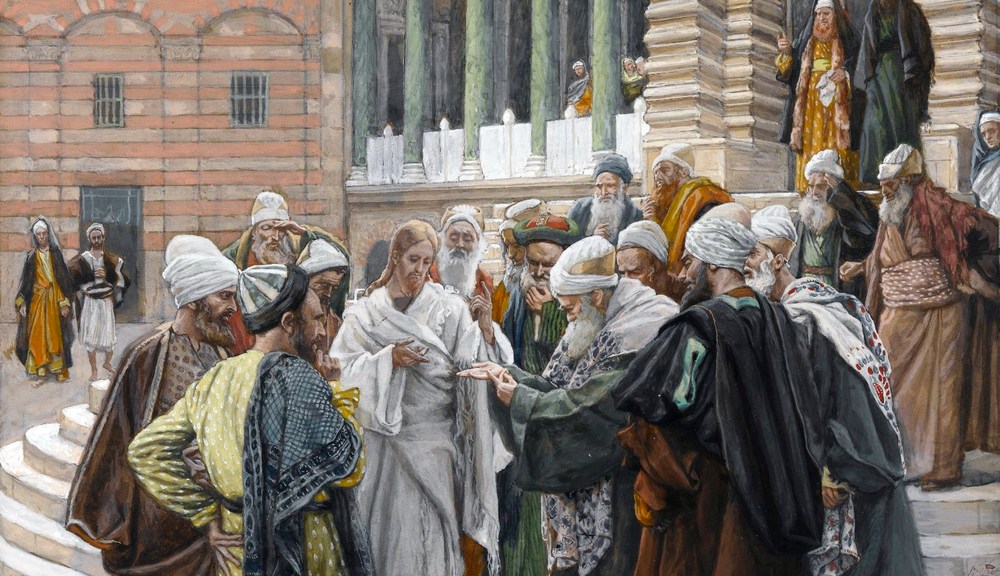

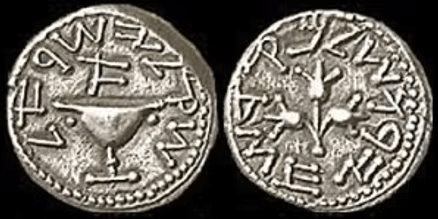


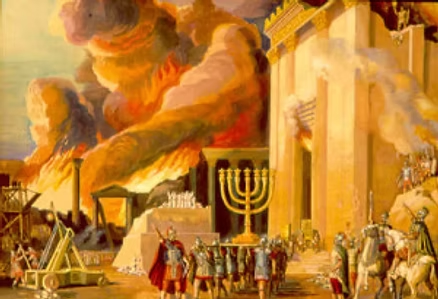
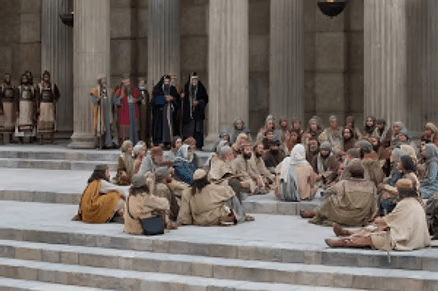




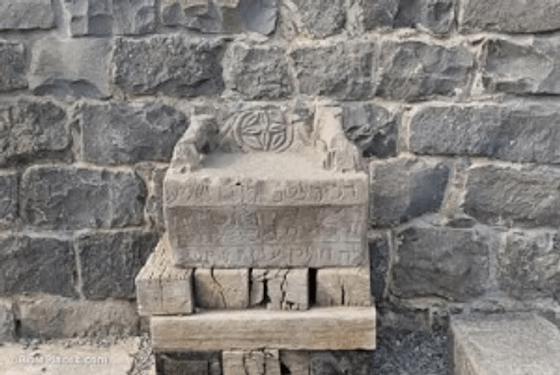
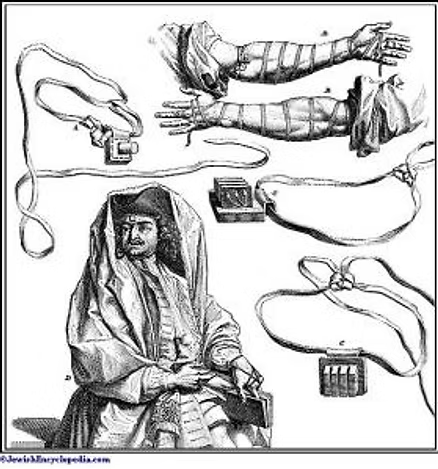


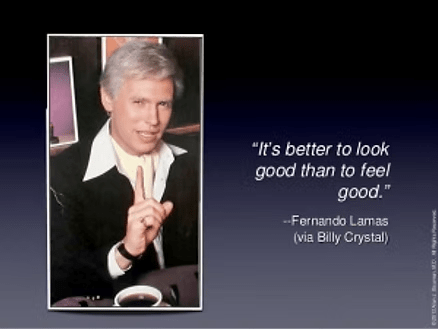
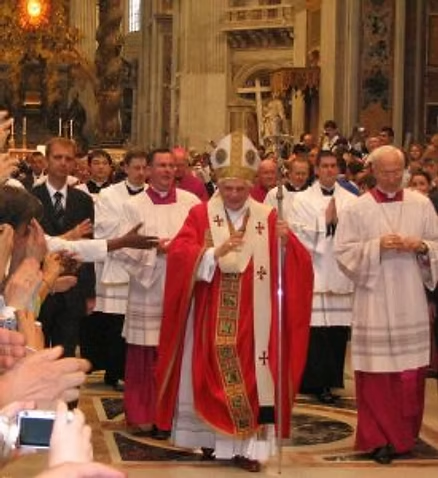
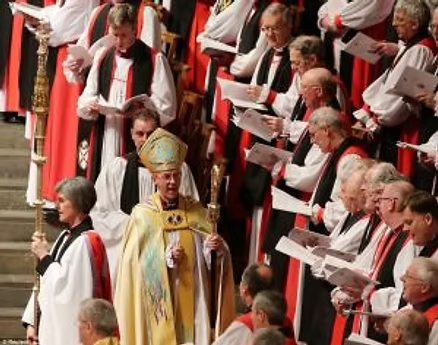






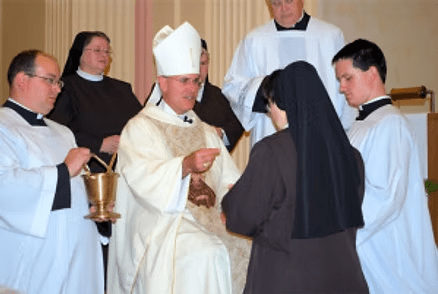



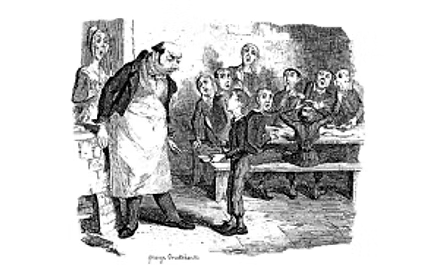
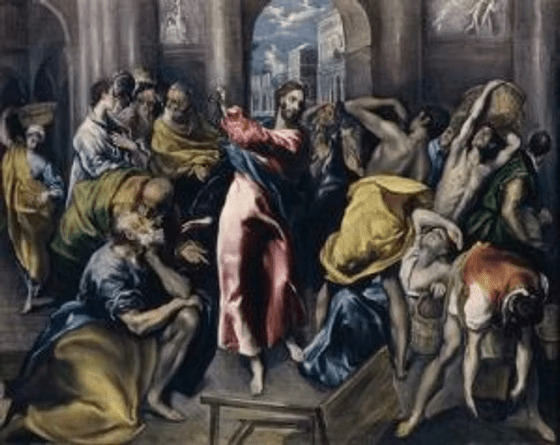













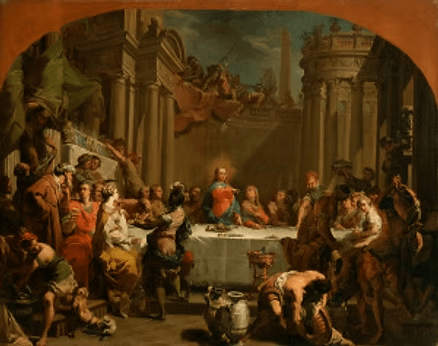




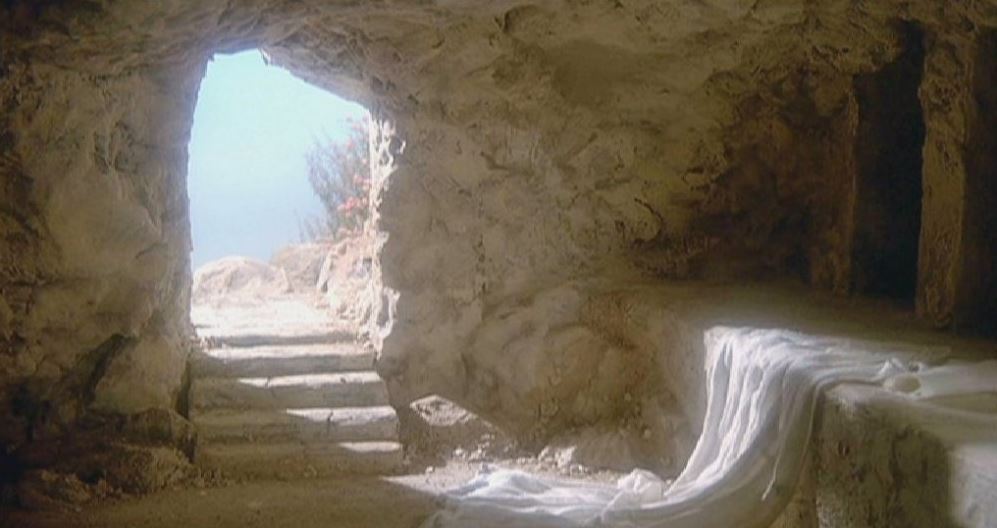

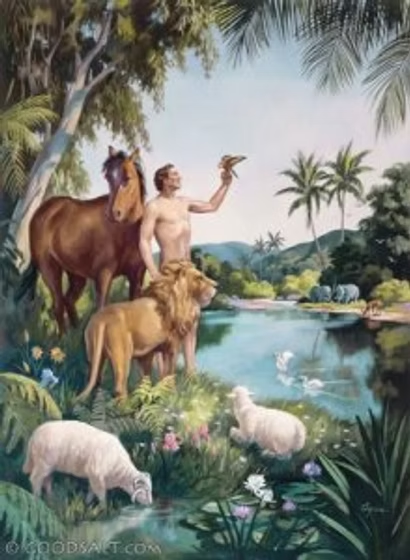
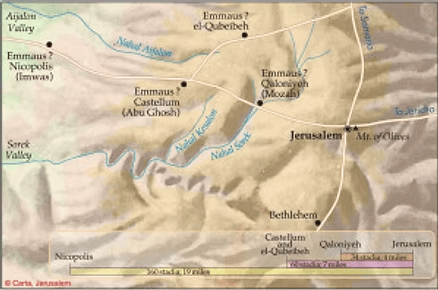
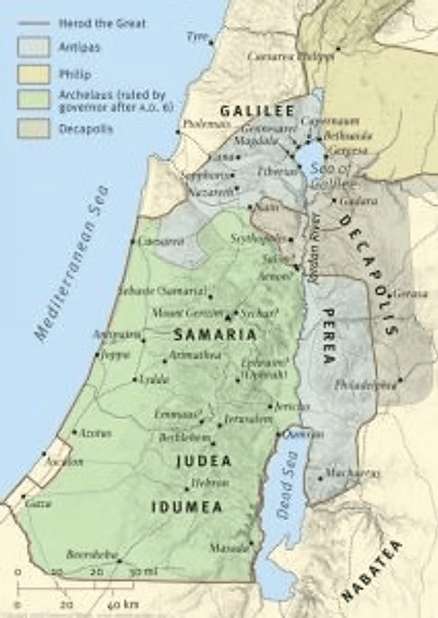







 Explaining the Readings