She has slaughtered her animals, she has mixed her wine,
she has also set her table.
She has sent out her servant-girls, she calls
from the highest places in the town,
“You that are simple, turn in here!”
To those without sense she says,
“Come, eat of my bread
and drink of the wine I have mixed.
Lay aside immaturity, and live,
and walk in the way of insight.”
———————————————————————————————————-
This is an optional Old Testament selection from the Episcopal Lectionary for the Thirteenth Sunday after Pentecost, Year B 2018. In the numbering system that lists each Sunday in an ordinal fashion, this Sunday is referred to as Proper 15. If chosen, it will next be read aloud in an Episcopal church by a reader on Sunday August 19, 2018. It is important because Solomon wrote of the wisdom he possessed and did not attribute it to the Father, but to a goddess.
In Greek mythology, the goddess Athena was recognized as the deity who reigned over wisdom. Her Roman equivalent was called Minerva, also a goddess. In ancient Egyptian mythology, perhaps the religion most known by the philosophical minds of the Israelites, Seshat (the counterpart of the god Thoth and his wife Ma’at) was the goddess of wisdom, knowledge and writing.
Because all of these mythological deities are feminine (except Thoth), wisdom should be grasped as a talent that comes from the Earth mother, such that it is a talent of the brain and the powers of physical observation.
In this proverb that is attributed to the writings of Solomon, based on his wisdom possessed, he gives strong support towards that conclusion of wisdom being a feminine characteristic. Solomon wrote of “her house,” “her pillars,” “her animals,” “her wine,” “her table” and “her servant-girls.” That proliferation of feminine pronoun use (in addition to “she” used four other times) says Solomon had discerned (a talent of wisdom) that Yahweh was not the voice of reason he heard in his head.
Solomon’s references to a “house” “hewn” with “seven pillars,” where sacrificed animals spilled their blood upon a “table,” is clearly a statement of a goddess, whose temple was worldly.
The “servant-girls” were then priestesses of that temple. To read that they would “call out from the highest places” means they served the deity of wisdom, who is available to those who submit to that divine power. The “highest places” were religious temples to gods foreign to Israel.
“You that are simple, turn in here,” says ordinary people do not possess wisdom. Solomon then proposed that the masses should follow the lead of those who serve the goddess of wisdom, as the judges blessed by the temple priests. The line that is translated to say, “To those without sense,” the Hebrew word “lêḇ” is used, which means “heart, mind, inner man, will, and understanding.” This is the word Solomon used when he asked God for a Big Brain, rather than prefer God’s presence within him.
Knowing that Solomon wrote his proverbs for the Israelites, who were sworn to serve God and remember the Passover via the ritual consumption of unleavened bread and cups of wine, it is not coincidence that Solomon wrote of “my bread” and “the wine I have mixed.” That physical food and drink would be filled with yeast, rising hot and fluffy and fermented to a highly intoxicating alcohol level. Solomon was telling his people to let him do all the work of rule, so they could turn their backs to God and enjoy the wealth and honor of Solomon’s realm. In that scenario, the people were no longer subjected to finding God individually, so their unleavened bodies could become elevated (raised up) to righteousness and their plain blood be infused with the Holy Spirit.
For Solomon to say, “Lay aside immaturity and live,” proposing that the ignorant should “walk in the way of insight,” he was telling the children of Israel to follow him, his ways, and his knowledge.
Rather than asking the Israelites to put their faith in God, he was promoting himself as God’s chosen king, with the insight of a god. Solomon (whether he figured it out or not) was returning Israel to the royal deity worship of Egypt. No longer were the people of Yahweh asked to be priests in individual relationships with the Lord and walk in the ways of righteousness. They were told to let wisdom light their paths.
As an alternative Old Testament selection for the thirteenth Sunday after Pentecost, when one’s personal ministry to the LORD should be underway – as a different angle on Solomon’s wisdom – the message here is the danger of worshiping individuals as gods. When one sees another human being as holier than oneself, one ceases trying to be holy, submitting oneself to that other human. Israelites did it for Solomon, saying, “No one can be wiser.” Likewise, Christians do it for Jesus, saying, “There can only be one Son of God.”
This is the trap of Satan, which was set before Jesus, offering him the world if he would submit to the will of evil. God set the world that Solomon had at his feet, to test his devotion to Him.
Power and wealth are intoxicating, as were the bread and wine of which Solomon wrote. The world is filled with simple folk, who have no sense for taking advantage of others. The mixed drink that comes from the slaughter of animals is the blood of the innocent spilled so that the elite can laugh at how easy it is to become rich off the ignorance of others. Those sacrificed are the people who bow down before those possessing Big Brains.
The aspect of “immaturity” is that of “foolishness,” where the Hebrew word “p̄ə·ṯā·yim” means “naivety.” It bears the same intent as does “foolish”: “Lacking or exhibiting a lack of good sense or judgment; silly.” (American Heritage Dictionary of the English Language)
This is the excuse of childhood ignorance, where simplicity is a natural state of learning from one’s mistakes. Those life lessons develop one’s maturity, and from life experience comes true wisdom. Solomon did not suffer the growth pains of normal people, as he laid aside his immaturity for a life led by reason, unclouded by childish emotions. Thus, his view of living was void of any possibility of eternal life.
A minister of the LORD has known the errors of thought and the failures that come from not having true insight. The only true source of wisdom comes from the Christ Mind, which demands a soul be blissfully ignorant to possess it. It is why prophets like Ezekiel answered questions from God by saying, “You know Lord.” A prophet never speaks for self as the Big Brain is never large enough to see all possibilities and answers at once … like God can.
A good name is to be chosen rather than great riches,
and favour is better than silver or gold.
The rich and the poor have this in common:
the Lord is the maker of them all.
——-
Whoever sows injustice will reap calamity,
and the rod of anger will fail.
Those who are generous are blessed,
for they share their bread with the poor.
——-
Do not rob the poor because they are poor,
or crush the afflicted at the gate;
for the Lord pleads their cause
and despoils of life those who despoil them.
———————————————————————————————————-
This is an optional Old Testament selection from the Episcopal Lectionary for the Sixteenth Sunday after Pentecost, Year B 2018. In the numbering system that lists each Sunday in an ordinal fashion, this Sunday is referred to as Proper 18. If chosen, it will next be read aloud in an Episcopal church by a reader on Sunday September 9, 2018. It is important because Solomon’s wise mind was prophesying those who would become Apostles and Saints, through Jesus Christ.
The Hebrew Interlinear version of this proverb shows a mark of pause (a comma) in verse one. The Hebrew literally states: rather to be chosen a [good] name riches , than great rather than silver and gold favor loving .”
This can translate into conversational English as, “One should rather have a good reputation and the riches that comes with a good name , rather than be great based on the favor bought with silver and gold .” That is somewhat in alignment with the translation above, but here is a caveat to consider:
God leads wise minds to write what God wants, in the order of wording God KNOWS will be viable in all languages, simply by keeping the words that came from God in God’s order. Each word is then God’s word and each word has purpose that needs to be pondered.
That premise should always be considered when pondering every Holy Scripture. However, verse one’s first word is a classic example of how this works.
The Hebrew word “niḇ·ḥār” translates as “rather to be chosen” (from “bachar”). Before one attaches this word to the following implication of a “[good] name,” the question becomes, “Who chooses who?” The answer is that one should rather be God’s chosen, than to not choose to let God choose one.
The good “name” that comes from being chosen by Yahweh is “Israelite.” One has the good name of Israel, meaning “God Strives,” as well as one “Strives for God.” One expert on Hebrew believes “Is-ra-el” means “He Will Be Prince With God.”
Jesus has a seat saved within all his Apostle-Saints.
This is a viable translation when one sees how each Israelite was supposed to be a priest married to God. That failed until Jesus Christ became that earthly Prince With God, offering himself up so his Apostles could have his [good] name, as Jesus Christ reborn. Therefore, the prophecy of Solomon was (paraphrasing): “It is better to be chosen by God to be reborn as Jesus Christ and reap the riches of the heavenly realm, than to have greatness on earth be chosen to be measured in precious metals.”
When one sees Solomon writing a proverb about Jesus Christ, channeling God (and not even knowing it wasn’t a song modeled after his great fortune), then all the rest falls into place nicely. One has to be chosen by God and that means a proposal of marriage. One has to then choose God by accepting His proposal, with love in one’s heart. That truly makes one a priest for God, such that one acts as the Son of God, speaking for the Father, with no concerns about oneself. One then becomes the resurrection of Jesus Christ.
This is seen in verse eight with the word “‘Av·lah,” which translates as “injustice,” but also “iniquity” and “unrighteousness.” Following the Hebrew word “zō·rê·a‘,” translated as “He who sows,” but equally stating, “He who plants seeds, give birth, or yields.” That word is stating that one has not given birth to the presence of the Christ Spirit within (righteousness), instead giving birth to the opposite. The motivation is then to serve self and not God. The product of unrighteousness is the “calamity” or “sorrow,” as self will always come up short. This is due to the “rod” (also translatable as a shepherd’s “staff”) will turn self-failures against others, to no avail. A bad shepherd will have that staff be the cause of his or her soul’s failure.
The opposite is then one who chooses God and becomes righteous. Rather than seeking to be selfish and demanding of others to give, one who is filled with the Christ Spirit will give and be “generous.” When verse nine states, “share their bread with the poor,” the aspect of “bread” (from “lechem”) is less about sharing morsels of physical bread [remembering the lesson of Jesus feeding the five thousand], but sharing the gifts of the Holy Spirit with those lacking it.
When one recalls the “riches” that come from choosing to serve God, and His having chosen one as His wife, one is not given plenty of extra foodstuffs to share. Certainly, sharing bread is a good deed, but sharing the Holy Spirit turns one from being impoverished spiritually to being another one chosen by God.
This act of sharing the Holy Spirit is furthered in verses twenty-two and twenty-three. When it says “not to rob the poor because they are poor,” it is saying not to keep God’s gift of the Holy Spirit for oneself. God gives it to one to share, so there is plenty to go around. The poor are those seeking to be filled, so to not serve God and give the riches that God has given one to give away, one would then be robbing the poor. Since an Apostle-Saint is oneself poor (without the Holy Spirit of God), to not pass on that gift would mean robbing oneself, returning one to an impoverished state of being.
The world is not through with this one.
When verse twenty-two says to not “crush the afflicted at the gate,” this is the story of poor Lazarus and the rich man (Luke 16:19-31). Jesus told that parable to the Pharisees because their responsibility (as priests and rabbis to Yahweh) was to feed the souls of the poor and the afflicted. Instead, they locked them out and let them die, wanting just the crumbs of bread that fell from the rich men’s tables.
When one shares with the poor and the afflicted, one goes to the one who have been outcast as a healing agent of God. All who God sends an Apostle to (to help) will be helped by God, not the messenger of God.
This is stated when verse twenty-three says, “Yahweh [the Lord] will fight [plead, strive] for their cause [of affliction].” If one has brought an affliction upon oneself, then God will bless that person with an epiphany. He or she can receive the Holy Spirit from realizing their faults and showing sincere penitence before God. Whether or not the affliction is removed [poverty will not be remedied by God giving gold and silver], one will learn to not let the affliction be an affliction upon their soul. Healing comes through salvation given by the Lord.
This is stated in verse twenty-three actually stating, “and plunder them those who plunder the soul of.” The Hebrew word “nephesh” means “soul.” The word translated as “plunder or despoils” is “qaba ,” is actually another form of an act “to rob.” When a “soul” is “robbed,” the only one who can “plunder” a soul is oneself, led by selfish egotism. This repeating of “despoils” twice (“ve·ka·Va’‘et-koe·’ei·Hem) then presents this robbing in two ways.
The body is not the self. The self is the soul within the body.
First, by opening one’s heart to Yahweh, one has to plunder one’s own self-ego [death before resurrection]. No one external to self can harm or remove one’s soul, even if the physical body is placed in jeopardy. This despoiling of soul-self means, second, that God can plunder the evils that have misled one’s soul. Evil influences act in the opposite way as do the holy influences of God. Removing self eliminates the evil influences, so God is willing to give His world to all His wives, but His wives must pay the dowry of sacrifice first.
As an Old Testament selection for the sixteenth Sunday after Pentecost, when one’s own personal ministry for the LORD should be underway – one has chosen to serve God and take on the good name of Christ – the message is to help the poor. To grasp that in the deepest levels of understanding, one has to admit one is poor, as this will help recognizing another who is poor. To be poor, one has to sell everything one possesses and give to the poor, so one can follow in the footsteps of Jesus Christ.
The greatest failure Christianity faces is found in its pride as a charitable institution. Americans boast of being the most giving nation on earth. Unfortunately, donations of money do little more than make the organizations of Mammon rich; taking advantage of poor Christians that are trying to share their bread with the world, while they struggle with that never-ending load to bear. In addition to giving money to the poor, churches pull out the violin of sorrow and remind their congregations of their financial needs.
A true Christians [defined by what Jesus said to the rich, young Pharisee (Luke 18:18-21; Matthew 19:16-30; Mark 10:17-31)] has no things of value, because clinging to earthly possessions is a selfish endeavor. When one gives everything away, one is worldly poor. Of course, God does not plan on making one worthless, as God’s Spiritual riches includes what one needs to get by … and still have a loaf of bread to share with someone who seeks to come ask, “I know you are as poor as me, but how do you always have a smile and time to share with people?”
Being chosen by God means one has chosen to take a leap of faith. God never fails to provide a safety net to those who take that leap to serve Him.
“How long, O simple ones, will you love being simple?
How long will scoffers delight in their scoffing
and fools hate knowledge?
Give heed to my reproof;
I will pour out my thoughts to you;
I will make my words known to you.
Because I have called and you refused,
have stretched out my hand and no one heeded,
and because you have ignored all my counsel
and would have none of my reproof,
I also will laugh at your calamity;
I will mock when panic strikes you,
when panic strikes you like a storm,
and your calamity comes like a whirlwind,
when distress and anguish come upon you.
Then they will call upon me, but I will not answer;
they will seek me diligently, but will not find me.
Because they hated knowledge
and did not choose the fear of the Lord,
would have none of my counsel,
and despised all my reproof,
therefore they shall eat the fruit of their way
and be sated with their own devices.
For waywardness kills the simple,
and the complacency of fools destroys them;
but those who listen to me will be secure
and will live at ease, without dread of disaster.”
———————————————————————————————————-
This is an optional Old Testament selection from the Episcopal Lectionary for the Seventeenth Sunday after Pentecost, Year B 2018. In the numbering system that lists each Sunday in an ordinal fashion, this Sunday is referred to as Proper 19. If chosen, it will next be read aloud in an Episcopal church by a reader on Sunday September 16, 2018. It is important because Solomon was led to write about the foolishness of human being, ignoring the call to serve God; then they call out when times of trouble have hit, having squandered their souls from that ignorance.
Here, again, is Solomon writing a song of praise to the LORD, referencing “Wisdom” as feminine. He wrote, “Wisdom cries out in the street; in the squares she raises her voice. At the busiest corner she cries out; at the entrance of the city gates she speaks.” This reference to Wisdom as a female means Wisdom is a goddess. She is one of the elohim, under Yahweh – Yahweh elohim – the Lord of the gods of Israel. Wisdom is then the manifestation of the voice of God through one of His messengers.
Wisdom is ruled by elohim. This goddess of wisdom was named Athena.
It should be grasped that Solomon, as a child king, had God appear to him in a dream, asking, “What can I do for you?” Solomon asked for the ability to understand adult matters. In response to that request, God blessed Solomon with wisdom that was greater than any other human being had ever possessed, or would ever possess. This means the goddess of Wisdom was always made available to Solomon, such that he had the insight for this song from her; albeit the voice of God disguised as a goddess. This means Solomon could write this song in ways that can be interpreted as God speaking, while also reading the same words as the voice of intelligence calling to the ignorant to listen to those with Big Brains.
The translation of verse 20 misses the aspect presented by the literal, where it is written, “Wisdom outside – calls aloud in the open square – she raises her voice.” The Hebrew word “ba·ḥūṣ” (rooted in “chuts”) is then stating that “Wisdom” is an external influence, where one learns from one’s environment, as opposed to one being filled with “Wisdom” within, promoting God like a prophet. The translation above makes one be unsure of the source of this voice.
Children look for outer guidance and adults offer them wisdom.
When the questions are then raised, “How long, O simple ones, will you love being simple? How long will scoffers delight in their scoffing and fools hate knowledge?” there is a double-edged sword being raised. On the one edge cuts God, but on the other cuts the philosophies of man.
The latter is presented by the leaders of governments as their reasoning that offers to lead the ignorant masses, leaving them ignorant. The few rise above the many who are left in love with their simple minds. Wisdom cannot be special when everyone possesses it.
While the religious (Biblical readers) will see this song as Solomon and immediately think he was writing about God’s warning to the people, prompting them from his wisdom to be led by God’s will, the reality is they then fail to heed this message. The people are more often led, like lambs to the slaughter, by those possessing Big Brains, than inspired to seek God’s Wisdom. The promotion of fear leads one astray.
The words translated as “simple ones” and “simple” (actuality “simplicity”) imply an “open-mindedness” that stems from the Hebrew word “pthiy,” which means “one.” This can be read as “oneself,” where one is “stupid” to think one knows enough to save “oneself.” As such, “Wisdom cries out,” asking “how long” before ‘oneself’ realizes a need for inner guidance that is greater than ‘one’ can give alone?”
The question is then, “Will ‘one’ choose God or ‘elohim’?” The “open-mindedness” implied is “one” can be like a god with Wisdom’s influence, rather than having to allow God to be one’s source of Wisdom.
The Hebrew word that states “fools,” is “kesil.” That word means “stupid fellow, dullard, fool,” implying a “foolish man” and “stupid man.” This again can be taken two ways. One is as someone who does not listen to the reasoning of logic and fails to apply the powers of intellect. Most educated Christians would shudder at the thought of being called a “fool.” The second option is to see stupidity as a positive, where innocence and purity are a desired absence of cunning and strategy.
I have regularly used metaphor to portray “fools” that have been characters in popular movies in this positive light. I have done this because one dying of self-ego means willingly becoming “dumb” – “ Conspicuously unintelligent; stupid.” This is then a willingness to sacrifice intellect for the blindness of faith that is obedient to God’s voice. I have projected this image as “simpleton heroes.”
Forrest Gump, Navin R. Johnson, Chance the gardener, and even Karl Childers are all fictitious examples of “stupid men” that achieved higher goals, while being incapable of plotting their successes alone. Ezekiel, likewise, did not offer God his mental powers of thought when asked, “Can these dried bones live?” He simply replied, “Lord, you know.” That statement said he was too stupid to know the answer. Therefore, “fools” should not be seen categorically as a shortfall.
The translation, “Give heed to my reproof,” is perhaps better read literally as, “Turn at my rebuke , surely,” where the one-word statement that is the Hebrew word “hinneh” (“surely”) says, “behold!” This places emphasis on how one “gives heed” to the call of Wisdom, as it is by beholding that outer influence within, as the inspiration of God’s knowledge in one’s soul. Thus, Wisdom says, “I will pour out my thoughts to you; I will make my words known to you.”
The Hebrew word “rū·ḥî” is translated above as “thoughts,” but it means “my spirit,” or “my breath,” rooted in the word “ruach,” which means “spirit, wind, and breath.” It acts as “thoughts” when the voice is heard inside one’s brain, when the external influence has been welcomed to come into “one.”
This is just as Jesus said to his disciples (those “fools”), when he appeared in the upstairs room after his resurrection, saying, “Receive the Holy Spirit.” (John 20:22) John began that verse by stating, “He breathed on them” that command. Solomon’s wisdom now makes it possible to see that John meant the Mind of Christ had joined with the brains of his disciples, so he was leading their “thoughts” by the Holy Spirit of God.
This is where “I will make my words known to you” becomes prophetic of Jesus Christ, where “my words” (the possessive “debaray”) become more than believing that God was the source of “the words spoken through the prophets,” but those “words known” by being one with God. This was the ability of Jesus to instantly know Scripture and point out the errors in the Pharisees. This knowledge comes from the Holy Spirit into Apostles, as the Christ Mind. Still, the Hebrew word “debaray” can state “my business,” in which case one is not filled with holy knowledge of “words,” but influenced to act selfishly. The “words” heard are not divine inspirations.
Can you handle the “charm of making” like Merlin could? Can you call the dragon with Wisdom?
When the song sings, “Because I have called and you refused, have stretched out my hand and no one heeded, and because you have ignored all my counsel and would have none of my reproof, I also will laugh at your calamity,” it becomes difficult to believe that Yahweh would take delight in such failures. Satan, on the other hand, would be an elohim who would. Instead of God being refused, unheeded and ignored, those who seek God and find His love are then laughed at by their persecutors. Their calamity is then due to their refusal to be swayed to be influenced by evil, which uses Wisdom as it means to success and power.
The verses that state, “I will mock when panic strikes you, when panic strikes you like a storm, and your calamity comes like a whirlwind, when distress and anguish come upon you,” the repeated word “p̄aḥ·də·ḵem” is found. Coming from the Hebrew root word “pachad,” it states the possessive use of “panic, terror, dread, and fear.” It says “your terror” or “your panic.”
Since it is told to the Israelites, “You shall fear the Lord your God and no other,” the “calamity that comes like a whirlwind” is the death of one’s ego, when one chooses to serve God and fear only Him. The Hebrew word “bə·’ê·ḏə·ḵem” can then change from “your calamity” to “your destruction,” where you is destroyed, making you free to marry with God. Then, the “distress and anguish” that “come upon you” is not from within, but without.
Wisdom is thus saying, all who choose to serve God rather than self (the Big Brain) will be mocked for having turned one’s back to the lures of the material realm.
Conversely, when one has not come to fear only God, these words project the influences that will lead one to seek Wisdom and worldly safety through knowledge and intellect. It will be the dullards who will be destroyed, because they cannot call upon their brains for help. They will be abused for their lack of education, being treated like wild animals whose fears lead them into traps. Thus, when the song continues by singing, “Then they will call upon me, but I will not answer; they will seek me diligently, but will not find me,” the “fools” will have no way to link to Wisdom. God will be their only salvation.
Singing, “Because they hated knowledge and did not choose the fear of the Lord, would have none of my counsel, and despised all my reproof, therefore they shall eat the fruit of their way and be sated with their own devices,” it is easier to see this as Solomon speaking for Yahweh, because “did not choose the fear of the Lord” uses “Yahweh.” In this view, sinners are without counsel, rebuked, and promised to suffer the consequences of their waywardness. Seeing the literal Hebrew, however, shows this in a different light.
Two segments make up the first statement: “Because they hated knowledge and did not choose the fear of the Lord.” It literally states, “Because that they hated knowledge , and the fear of Yahweh not did choose.” The second separated segment literally can actually state that one “did not choose,” because of “the fear of Yahweh.” Following a separated segment that says, “Because that they hated knowledge,” the second segment is then seen to be not choosing knowledge, due to “fear of the Lord.” Therefore, this section of verses can be seen as Wisdom singing angrily at her rejection, due to the influence of God winning out.
This means, “would have none of my counsel” means ignoring common advice based on probability. It says “despised all my reproof” means pointing out the errors of reasoning that many argue. When Wisdom is not accepted wholly, as Jesus refused to bow under the pressure of the Pharisees, it is possible to “eat the fruit of that way” of righteousness. Christians can “be sated with their own devices,” when those are the “principles” (from “moetsah “) come from God, rather than man.
The final verses then sing, “For waywardness kills the simple, and the complacency of fools destroys them; but those who listen to me will be secure and will live at ease, without dread of disaster.” The Hebrew word “mə·šū·ḇaṯ” can equally mean “turning away,” as an alternative to “waywardness.” When one then reads, “For turning away kills the simple,” this is both the death of one’s ego, to those who choose to serve God, as well as the continuance of mortal death to those who are “wayward” from God. The root word is “meshubah,” which states “faithlessness.” It predicts the outcome of one’s faith,” be it towards righteousness or wickedness.
The focus on “complacency,” stemming from the Hebrew “shalvah,” is actually the “ease, quietness, and time of tranquility” that “fools” experience when self is “destroyed.” That is a statement of God’s presence within them. However, when one becomes at “ease” with a “foolish” lifestyle, which sells a soul for momentary gains, that is then self-destructive. The result is a soul destroyed because it stupidly followed Wisdom.
The danger of Wisdom is it lures one into a mindset that seeks “those who listen to me,” thinking they “will be secure and will live at ease, without dread of disaster.” This is the trap that so many Christians today have fallen deep into, as they seek a lifestyle of comfort and material power, thinking God has made their lives “secure” and “at ease,” due to the profits of their brainy wiles.
When God speaks, he sounds like did Jesus when he said, “If you want to be perfect, go, sell what you have and give to the poor, and you will have treasure in heaven; and come, follow Me.” (Matthew 19:21) Failure to do this means one should face the “dread of disaster” that comes when one’s physical time on earth comes to an end … and all possessions are lost. The rich and famous listen to Big Brains, so they cannot fathom self-made disaster that helps others, at their expense. This is the trick of Wisdom.
As an optional Old Testament reading for the seventeenth Sunday after Pentecost, when one’s personal ministry for the LORD should be underway – one has been played the fool by the world – the message here is to see the danger of Wisdom. There is a fine thin line, one that cuts deep, which separate the powers of intellect from the All-Knowing Mind of Christ. If Holy Wisdom is sought, then one needs to destroy the biggest impediment to that: the love between the self and its brain.
Holy Wisdom reads the words of this song of wisdom written by Solomon and sees the dangers a Big Brain can cause. The human mind shuts the soul away in a heart that is kept from the voice of God.
The self is falsely empowered by higher education and study of philosophies that use logic and reason to find advantages over others and put those advantages to use for personal gains. Wisdom was an overpowering influence on Solomon, such that he lost his way, turned his back on God, and brought the onset of destruction to the land of his father.
The heart is where one falls in love with Yahweh and sees the flaws of a brain that rejects oneness with the Lord. Subservience can only be complete when one realizes a union with God demands the destruction of self, because a house divided against itself cannot stand. The heart trusts God and follows His lead, finding the power within to withstand any outer troubles. Wisdom is then a slave of God that comes to speak to others as the Mind of Christ, from within the simple and meek.
Wisdom, as an angel of Satan, cannot display perfection. It is the voice of catch phrases and double-speak that sounds good, but under closer inspection dissolves into nothing. Wisdom is the voice used by false prophets and bad shepherds. Her voice is used to mislead the ignorant masses, taking them away from a personal relationship with God, so the heart cannot be opened by Scripture.
In today’s world, where science has replaced religion as the belief system of the West, faith has been placed in the care of Wisdom. Technology can be seen as an elohim that many now bow down before. The simple masses listen to talk of life existing elsewhere in our universe and believe travel through space, to distant worlds, will soon be within the grasp of human intellect. Wisdom has become the god (elohim) of the Twentieth and Twenty-first centuries.
To test that statement, take one minute out of a busy day, while in a public place, and look around you. See how many people are engaged in one-to-one conversations and then how many are engaged with a cell phone in their hand. One shows the heart-mind connection, while the other shows the brain-heart enslavement.
Eventually, one has to have a conversation with another, if only to say, “I want the value meal, please.”
Jesus spoke of the signs at the end of the age (Matthew 24:3-14). He began those words of true Wisdom by warning, “See that no one leads you astray. For many will come in my name, saying, ‘I am the Christ,’ and they will lead many astray.” Can Wisdom be one who comes falsely in the name of Christ, intent on leading believers astray?
The signs of the times are pointing toward Wisdom worship. This signals the beginnings of the Age of Aquarius, where the heart is disconnected, allowing the brain to rule freely. This follows the age of Pisces, when self-sacrifice and faith in an unseen presence ruled for two thousand years. The Age of Pisces was all about the emotions flowing from the heart. Jesus and his Apostles wrote of the end of the age, and we are reaching that point now. The voices of the elohim are getting louder and more persistent than ever; many like what they are saying.
It is time to determine which way the sword of Wisdom cuts. Has it made us complacent fools that have become addicted to the illusions of the world? Or, has it awakened us to the faithlessness that is trying to destroy our souls?
Remembering how John prophesied Jesus coming on a white horse and “out of His mouth goes a sharp two-edged sword, that with it he should strike the nations” (Revelations 19:15a), is that not symbolic of how “I will make my words known to you”? Will that sword of truth come from his mouth as words that defend the servants of the Father and cut to pieces those who have dared to speak falsely in his name?
Cannot Wisdom be both the path to salvation and the road to destruction?
with the fruit of her hands she plants a vineyard.
She girds herself with strength,
and makes her arms strong.
She perceives that her merchandise is profitable.
Her lamp does not go out at night.
She puts her hands to the distaff,
and her hands hold the spindle.
She opens her hand to the poor,
and reaches out her hands to the needy.
She is not afraid for her household when it snows,
for all her household are clothed in crimson.
She makes herself coverings;
her clothing is fine linen and purple.
Her husband is known in the city gates,
taking his seat among the elders of the land.
She makes linen garments and sells them;
she supplies the merchant with sashes.
Strength and dignity are her clothing,
and she laughs at the time to come.
She opens her mouth with wisdom,
and the teaching of kindness is on her tongue.
She looks well to the ways of her household,
and does not eat the bread of idleness.
Her children rise up and call her happy;
her husband too, and he praises her:
“Many women have done excellently,
but you surpass them all.”
Charm is deceitful, and beauty is vain,
but a woman who fears the Lord is to be praised.
Give her a share in the fruit of her hands,
and let her works praise her in the city gates.
———————————————————————————————————-
This is an optional Old Testament selection from the Episcopal Lectionary for the Eighteenth Sunday after Pentecost, Year B 2018. In the numbering system that lists each Sunday in an ordinal fashion, this Sunday is referred to as Proper 20. If chosen, it will next be read aloud in an Episcopal church by a reader on Sunday September 23, 2018. It is important because it uses the feminine pronoun “she” and “her” as metaphor for devout human beings (of both genders) being in a committed relationship with God.
There are twenty-two verses in this selection from Proverbs. There are twenty-two letters in the Hebrew alphabet; each verse is marked by a separate letter, from aleph to tav. As such, this Proverb that has some versions of the Holy Bible identify it as “The Virtues of Noble Woman” or “The Wife of Noble Character” can be seen (somewhat) as the ‘A to Z’ of those virtuous character traits. Still, the letters bear the symbolism of their numerical numbering, from 1 to 22; and in Hebrew each number has its own symbolic meaning, which cannot be overlooked.
I welcome the reader to search the Internet for this symbolic meaning for oneself. Here is a link to one site that offers such opinion on this (Spiritual Meanings of the Hebrew Alphabet Letters). I will not be going into this aspect of this Proverb of Solomon; but it has to be recognized as present and that presence has intended meaning.
As to the summation that Solomon wrote about the qualities possessed by the perfect wife, it is easy to be misled, knowing the attraction that Solomon had to women. Having become known as having had seven hundred wives and princesses, plus three hundred concubines, one could then assume that this Proverb is based on Solomon having gotten to know many wives, concluding these are the best traits. Still, after getting to know one thousand ladies up close and personal, Solomon coming up with only twenty virtues of wives would seem to be based on the most repetitious traits he liked. However, that opinion of the noble character of a wife, or even of the concept of “woman” in general, is not the point of this writing.
One has to see that wise ole Solomon wrote this Proverb, even though he might have been smiling about all the women he knew while writing it, as a vehicle of Yahweh. The true source of this wisdom was from God, flowing through Solomon’s hands as he wrote. These words of Proverbs 31 have a divine origin, with a spiritual meaning intended to be found. There is nothing to be found in the Holy Bible that is mundane human opinion.
In the modern times, when human gender became a matter to protest publicly, there will certainly be women sitting in the pews who scoff at such male chauvinistic views as had Solomon. I doubt female priests will write lengthy sermons about this reading selection, unless driven by personal agendas that would misuse it to promote same-sex marriage between two women. Such views as promoted wives being subservient to their husbands, as is still prevalent in Muslim culture, is now seen in the West as having set womanhood back thousands of years. Still, that is the human opinion of divine writings misunderstood. The true meaning has to do with this writing being about the perfect servant to the Lord, where all the feminine pronoun usage points to Man (which includes woman).
I have written about this repeatedly, where those who want to achieve Heaven must submit to God and become His wife. This has absolutely nothing to do with human gender. No human being is going to know God through his or her sexual organs. God did not care what type of women floated Solomon’s boat; but He made it be known what a true servant of the Lord will do.
This translation is not completely accurate, throughout this long song; so I will not be spending thousands of words correcting those mistakes. To give one example, the translation of “jewels” comes from “mip·pə·nî·nîm,” which could be shown to state “rubies, corals, or pearls.” To read “jewels” then leaves it up to the women who look for their value in huge diamonds placed into fine gold engagement rings. From that speculation, a verse focused on “capability” (from “ḥa·yil,” also read as “virtue”) is reduced to a value that crawls along the material plane, missing the spirituality of this wisdom.
From one example, I am not about to correct all the errors of a translation that begins with a premise (a preconception) that Solomon was giving guys advice on how to find the right girl, and in the process putting the seed of thought into the minds of girls that a good wife dotes on her husband … for trinkets. Everything that leans in that direction is wrong.
I wonder which ones have the Holy Spirit talents in them? No shaking before opening!
This song must be read as God speaking to YOU, whoever YOU are – male, female, or child [neuter gender]. YOU have to know what God requires in His wives, regardless of what sex organs God gave you, and regardless of what other human beings make your sex organ tingle with delight. As such, YOU are “She” and “her.” YOU have to see that.
We call God the Father, despite how many women’s rights freaks try to twist that masculine principle into a misconception that promotes people should think, “God can also be a Mother.” That is false.
“God” means Masculine. “Goddess” means feminine. God is not a goddess, just as man is not a woman. There can still be equality in inequality. Equality is complimentary. As such, the Earth is the goddess who received God as her husband and gave birth to bags of dirt that were filled with souls. God, therefore, is the Father of life on Earth, with all life (as we know it) having Earth as its Mother.*
So it is written:
“I also said to myself, “As for humans, God tests them so that they may see that they are like the animals. Surely the fate of human beings is like that of the animals; the same fate awaits them both: As one dies, so dies the other. All have the same breath; humans have no advantage over animals. Everything is meaningless. All go to the same place; all come from dust, and to dust all return. Who knows if the human spirit rises upward and if the spirit of the animal goes down into the earth?’” (Ecclesiastes 3:18-21)
Nope. Just a bag of dust struck by lightning.
When one realizes how Jesus said, “So they are no longer two, but one flesh. Therefore what God has joined together, let no one separate,” (Matthew 19:6) this means the feminine of the Earth Mother is the flesh of a human body that has become one with God the Father via a soul of life being present in that flesh. It is the human equivalent of DNA, where a child is the combination of two parents that cannot be separated. Simply because of this reasoning, ALL human being bodies of flesh are feminine. Since that means we human beings are all ‘girls’ here, we are all potential “wives” to God.
That is all I have to say. I recommend each reader to go to the Bible Hub Interlinear website (here) and slowly read what was written, and investigate the full breadth of meaning each word contains. See if YOU can see yourself as meeting all these noble characteristics.
Take note that the second verse (the Beith letter verse) speaks of a husband’s heart having full trust in his wife. This is the love one has to have, in order to have a proposal of marriage made and be accepted. Love is the attraction that is essential. Therefore, the beith symbolism is: “The beginning of duality, with the One Creator bringing forth a created world.”
Two have cleaved together to make one, through love.
This is the result.
If one does not have a true love of God in one’s heart, one is not good wife material for Him. If YOU can feel this love, then take the time to see how the wisdom of Solomon used the next twenty verses to spell out what “She” (YOU) does for God.
With love, the work that comes from being in love with God becomes a joy. It is the works of an Apostle.
———-
* Footnote: God – Yahweh – did not create mankind – male and female in His image. God’s elohim created those ‘ordinary’ human beings. Therefore Yahweh is notthe Father of all humanity. Yahweh is the source of all souls. Yahweh is the one who orders souls to control bodies and join egg and sperm and split cells for growth of life-to-be. Souls are elohim. Yahweh is only the Father of holy human beings that are filled with the Holy Spirit of Yahweh and with each transformed from ‘ordinary’ human being into His Son reborn. Only Sons, again, as human gender is meaningless. Sons means the Spiritual association of gender, opposite the material association of gender. Call it positive-negative or external-internal, if you like – opposites. A man and a woman can each be reborn as Jesus Christ (a “Christian”), becoming “brothers and sisters” in the name of Jesus Christ – Sons of God.
She has slaughtered her animals, she has mixed her wine,
she has also set her table.
She has sent out her servant-girls, she calls
from the highest places in the town,
“You that are simple, turn in here!”
To those without sense she says,
“Come, eat of my bread
and drink of the wine I have mixed.
Lay aside immaturity, and live,
——————–
This is the optional Track 2 Old Testament reading that might be read aloud on the twelfth Sunday after Pentecost [Proper 15], Year B, according to the lectionary for the Episcopal Church. If chosen, it will be paired with a reading from Psalm 34, which sings, “Keep your tongue from evil-speaking and your lips from lying words. Turn from evil and do good; seek peace and pursue it.” These will then precede a reading from Ephesians, where Paul wrote, “Be careful then how you live, not as unwise people but as wise, making the most of the time, because the days are evil.” All will accompany the Gospel reading from John, where Jesus said, “Those who eat my flesh and drink my blood have eternal life, and I will raise them up on the last day; for my flesh is true food and my blood is true drink.”
In 2018, the last time this reading came up in the lectionary cycle, I wrote my opinion and published them on my website. That article can be viewed by searching this site. I stand behind those views now, as nothing has changed in the Scripture presented; and, I welcome all to read what I wrote then, as it applies to what I will add now.
It is clear from these six verses that the Hebrew was written in the feminine, such that seven words say “she” and six words say “her.” This obvious direction to the feminine gender must be seen as Solomon (a male) writing about the power of “wisdom,” which does not come from Yahweh (the supreme masculine Father). In this, the Hebrew word translated as “wisdom” – “ḥā·ḵə·mō·wṯ,” from “chokmoth” – means “wisdom, every wise woman,” where the word implies the feminine. This must be understood metaphorically.
Anyone who has regularly read my observations on Scripture will recall how I have regularly written about a soul’s marriage to Yahweh. I have come to the conclusion that all references to the feminine in Scripture are references to the soul trapped in the flesh, where the material world – the physical – is a reflection of the feminine state of being (or negative). Conversely, the spiritual realm, including all angels and immortals related to Yahweh are the masculine (or positive). It is in this way of seeing the material universe, as opposed to the ethereal, spiritual universe, where all matter is feminine and all spirit is masculine, that all humanity led to religion are feminine [regardless of human gender role], therefore potential bridesmaids of Yahweh. Thus, with that said (again), this song about “wisdom” has nothing to do with Yahweh and all to do with a marriage between a soul in human flesh and the goddess that is Mother Earth, which brings a feminine spirit into one’s being.
Another thing that I commonly point out, whenever Old Testament writings have been wrongly translated into English, is the Hebrew word “elohim” does not translate as “God” [the common error found]. It is the plural form of “el” [the singular, lower case “god”], this “gods.” An “elohim” is created by the marriage of a divine spirit, such that a soul placed in a body of flesh has a neuter essence [as do children], with the body of flesh having a feminine essence, simply from being a body of matter [clay, dust, elements of the earth]. Still, a soul-body that is feminine is not an “elohim,” as an “elohim” is created by the possession of that neuter gender soul by the masculine essence of Yahweh’s Spirit, such that a positive added to a neutral makes a positive. On the other hand, an “elohim” can likewise be possessed by an earthly spirit [including Mother Earth and Satan, an angel or elohim cast into the earth], where the neutral soul takes on the feminine spiritually. The presence of “wisdom” in this song sings about that possession of the feminine, of which Solomon was one.
In verse one, the Hebrew literally states, “the wise woman [Mother Earth] has built her house , she has hewn out her pillars seven .” The “house” [“bayith”] is the equivalent of Solomon stating an “elohim” having found a home in a living body of flesh – in this case Solomon. A spirit can only possess a soul, which is eternal life, as flesh without a soul is dead matter and cannot be animated by possession. The seven pillars hewn out can be seen as the chakras of Hinduism.
It should be noted that the practices of Hinduism are meditative, designed to bring spiritual powers of the physical universe [the feminine elohim] into oneself [a “self” always equates to a “soul”]. This means Hinduism is not a religion that worships gods [“elohim”], but a philosophy that the self [soul] can control or master these dead ‘energies,’ for selfish purposes. The mistake of thinking Hinduism is a religion that believes in gods comes from not realizing the only “gods” that are alive and conscious are those of the self [soul], which is then trained how to utilize unseen powers within one’s physical body. This is a philosophy that is common in other pseudo-religions, such as call their teachings some mastery of life. All believe in self as a god that can control natural powers of the universe, with all relegating Yahweh to a dead power of the material realm.
In the little known history of Jesus, during his teens and early twenties, he ventured into India and spent considerable time learning the practices of Hinduism. Jesus did not go to learn to master unseen, dead natural powers of the universe for personal benefit. Jesus was born with all of these powers available to him, because Jesus was divinely born of Yahweh. Jesus did not have to practice meditation for the purpose of learning how to reduce his state of being to become that akin to an antennae that received natural vibratory powers. Jesus prayed regularly and was in communication with Yahweh routinely; but Jesus never sought any powers for selfish reasons. While in India, Jesus displayed an easiness in possessing abilities that the Indians struggled mightily to master. The Hindus saw Jesus as a god, when he was a divinely possessed elohim of Yahweh – masculine and positive – the Son of Yahweh. When Jesus told the Hindu masters how much folly their practices were, Jesus was threatened with death, to the point that he had to leave.
Jesus understood that the story of Genesis, where Yahweh created His Son [we call him Adam], the realm where the spiritual joined with the physical was called Eden. Those two realms were joined by the presence of two trees: the tree of life and the tree of the knowledge of good and evil. The reason Adam was told never to eat the fruit of the tree of knowledge of good and evil was [as learned from breaking that rule] learning how to master life [the way Hindu try] means being banished from Eden (or Heaven). To submit one’s soul to the worship of the earthly powers, which are dead and are freely available to all souls trapped within bodies of dead flesh, means one’s soul cannot remain in a place where all dependency of life comes from sole worship of the tree of life. When one’s soul is fed only from that tree, then the natural powers that come from the tree of knowledge of good and evil are supplied by Yahweh, where the tree of life is His Spirit married with one’s soul. When married to Yahweh’s Spirit, one naturally benefits from the powers of the universe, without any need to eat that fruit of meditative practice.
After Adam and Eve were banished from Eden because they broke the one rule and had their chakra become sources of receptivity, those receptive centers also freely welcomed the influences of the serpent. The serpent was the wisest of the creatures created by Yahweh; so, when the serpent was cast into the earth to crawl, Satan took wisdom from the tree of knowledge of good and evil with him. When young Solomon wished to be able to discern good from evil, it was his openness to receive the influences of Satan (the serpent), rather than submit his soul to Yahweh and do penitence for sins [aka Adam and Eve], so their souls could again marry Yahweh and be returned to Eden after death in bodies of flesh.
By grasping all this insight from Scripture and apocryphal history, one can then read how verse two in this song of Satanic worship literally begins by saying, “she has slaughtered her meat and she has mixed her wine , also , she has furnished her table .” That “slaughtered and butchered” is one’s soul submitting its body of flesh as a sacrifice to the serpent, such that the feminine spirit of worldly desires has become mixed with one’s soul. This says one has become an “elohim” in possession of earthly powers, not heavenly ones. That makes “her table” be the material plane.
When verse three is shown to sing, “She has sent out her servant-girls, she calls from the highest places in the town,” the “servant-girls” [or “maidens”] are the natural powers of the material universe, which have become the fleshy parts of a body enhanced by Satan. The most prominent of these are the brain, the eyes, the hands, the tongue, and certainly the reproductive organs, all of which become the temporary objects that a soul has become enslaved by, from receiving them willingly. The Hebrew word translated as “places” is “gap·pê” [from “gaph”], which means “body, self, height, elevation.” (Strong’s) Thus, the self that has the highest abilities from these new slave girls will control more of one’s surroundings. Certainly, Solomon took great delight in possessing these powers as king.
Verse four then taunts anyone who does not sell his or her soul for the delights of self-power, singing “You that are simple, turn in here!” This calls all who do not deny Yahweh for the rewards of immediate gratifications an “those without sense.” The words that have been translated as “without sense” actually say, “lacking a soul,” from “ḥă·sar-lêḇ.” The word “leb” means “inner man, mind, will, heart,” where “chaser” means “needy, lacking, in want of.” This says young Solomon was in such need that he readily sold his soul to gain a big brain.
In verse four the shift in pronoun use turned to “him,” where the “simple” can also mean “open-minded” [from “pthiy”] are referred to in the masculine gender. Because a soul is a spirit, therefore eternal and from Yahweh, it is born of the masculine, but like children born of gender, that gender is not realized until puberty. Thus, the lure of Satan, parading as a “wise woman,” is selling souls that are “open-minded” (as was Eve), so “him turning,” because of “him lacking” the pretense of wisdom, will be tricked into “him hearing” what she whispers.
Verse five sounds so much like the serpent’s suggestion to Eve in the garden, as Solomon sang, ““Come, eat of my bread and drink of the wine I have mixed.” This reading is an optional view of Solomon’s wisdom; but both choices will be read as a companion to Jesus saying to eat his flesh and drink his blood. Those instructions must be seen as relevant in this song of Satanic worship. This verse is enticing ignorant Eve to take a bite of the apple and become a god. It is suggesting a soul walk in the ways of wickedness, while shown the illusion of piety.
Verse six literally translates to sing, “forsake foolishness and live , and advance , in the way of understanding .” The same word translated as “simple” is now called “foolishness.” The meaning is akin to Ezekiel’s vision of a valley of dry bones, when Yahweh asked his soul, “Mortal can these dry bones live.” Ezekiel responded as a “simpleton,” saying, “you know,” which says, “I know nothing.” The lie is the false presentation of “life” [as “wiḥ·yū,” from “chayah”] is only possible in the flesh, which is always bound to die. The solitary influence “to advance” [from “ashar” meaning “to go straight, go on, advance”], is more on a human level of existence, because advancement into heaven will certainly be denied. All of this comes from growing a big brain, which is an organ of impediment towards spiritual goals.
In First Kings, chapter three, verse nine, young Solomon asked the voice he heard in his dream to give him “lêḇ šō·mê·a” [from “leb shama”], which was requesting an ability “to hear” on a “mind” level. For asking that talent, Solomon was told he would receive “lêḇ ḥā·ḵām wə·nā·ḇō·wn” [from “leb chakam bin”], which is the promise of a “mind wise to discern.” The same use of “bî·nāh” or “bin” is the promise of verse six, such that “the way of understanding” is not a lesson of Yahweh, but the mind’s ability to do without that divine guide.
As an optional Old Testament reading for the twelfth Sunday after Pentecost, when one’s own personal ministry for Yahweh should already be well underway, the lesson here is not to fall for the lure of intelligence as the means to understanding. In my ministry over the past decade, I have used the examples of simpletons as how one submits one’s soul to Yahweh. Fictional characters, such as Forrest Gump, Chance the gardener, and Navin R. Johnson show the way to truly reap the benefits of divine marriage to Yahweh. Intelligence is all about self-aggrandizement, so one rises above others and leads them as would a king. Solomon was such a king; and the lesson of Israel’s kings is they were all total failures in the eyes of Yahweh.
A good name is to be chosen rather than great riches,
and favor is better than silver or gold.
The rich and the poor have this in common:
Yahweh is the maker of them all.
Whoever sows injustice will reap calamity,
and the rod of anger will fail.
Those who are generous are blessed,
for they share their bread with the poor.
Do not rob the poor because they are poor,
or crush the afflicted at the gate;
for Yahweh pleads their cause
and despoils of life those who despoil them.
——————–
This is the Track 1 optional Old Testament selection for the fifteenth Sunday after Pentecost [Proper 18], Year B, according to the lectionary for the Episcopal Church. If chosen, it will be paired with Psalm 125, which sings, “The scepter of the wicked shall not hold sway over the land allotted to the just, so that the just shall not put their hands to evil.” This set will be read before the Epistle selection from James, which asks, “What good is it, my brothers and sisters, if you say you have faith but do not have works?” All will accompany the Gospel reading from Mark, where Jesus said, “Let the children be fed first, for it is not fair to take the children’s food and throw it to the dogs.”
I wrote about this in 2018. I stand behind my views then, as they still apply well today. The commentary can be viewed by searching this site. I will not re-interpret these verses; but instead, I will add some additional thoughts about what I see now, which I did not see then.
Reading my posting, I see that I made several references to “Holy Spirit” and “Jesus Christ.” This Ordinary after Pentecost season (and before) I have become more strict in my translations from the Epistles, where those words readily appear. I now see the truth of each being two separate, capitalized words in Greek, meaning each word is vital to grasp separately. First of all, the “Spirit” (some form of “Pneuma”) is the extension of Yahweh into the material plane, when the word is capitalized. There is “spirit,” which is not only a “soul,” but other non-material presences that aid Yahweh’s plan, which makes the physical universe be the playground of eternal “spirits,” where they bring the pretense of life to dead matter.
When the “Spirit” of Yahweh enters into and possesses a soul (a presence that comes from willing commitment and divine marriage), then a soul-flesh entity will act in ways that are “Holy.” In short, it is not the “Spirit” that is “Holy,” but the soul’s flesh acting in ways that please Yahweh, allowed by the soul through divine marriage. The word that translates as “Holy” (Hagios”) means: “sacred (physically, pure, morally blameless or religious, ceremonially, consecrated):–(most) holy (one, thing), saint.” [Bible Tools] Therefore, the same words [“Spirit Holy” or “Pneuma Hagios“] can be read as “Spirit of a Saint.”
As for “Jesus Christ,” reading how often I said that it sounded as if I thought the ‘last name’ of “Jesus” was “Christ.” I no longer use those words together, in the same way I now call what I used to call the “Holy Spirit” the “Spirit of Yahweh.” By understanding “Jesus” and “Christ” are two separate, capitalized words, one can see “Jesus” in the same light as “Spirit.” Because one places focus on that name, one sees how the name means “Yah[weh] Will Save” or “Yah Saves.” I pointed out a similar translation in the article of 2018. However, one must realize the meaning of “Christ” is “Anointed one,” whereas “christo” means “anointed one.” Samuel “anointed” David with physical oil; but it was Yahweh who “Anointed” David with His Spirit, meaning one is physical and one is spiritual. Every Patriarch and Prophet, as well as every Saintly Apostle, is so because of having become an “Anointed one” of Yahweh. The resurrection of the soul of “Jesus,” who was THE Christ, automatically makes the soul-body be transformed into another “Christ.” How ever many souls represent the resurrected “Jesus” is how many “Christs” there are in the world. Therefore, I now see it as wrong to lump two capitalized words of Scripture together, as it gives the wrong impression.
I write this in a commentary about Proverbs 22 because I used those terms in a commentary about this reading in 2018. I wanted to clarify my new views. That does not negate anything I wrote in 2018, as the same essence of “Jesus” and “Spirit” were conveyed, in terms that most people still use, although slightly wrong. Another such wrong use if the written name “Yahweh” being lessened to a translation as “Lord.” While I am sure that the minds of Christians read “Lord” and think “God,” the reality is the Old Testament names the specific God of Israel. The Hebrew letters written are “יְהוָֽה,” which transliterate as “Yah-weh” [the capitalization is not the truth of an alphabet without capital letters, but an honor given to that name]. The problem that I now see in the misuse of “Lord” is anything can be a “lord” over one’s body of flesh. Demon spirits can possess a soul and turn it and its body of flesh into a slave to sin, where such a demonic possession [seen many times in the Gospels and Acts] needs to be cast out. Therefore, to one led by such a “Lord” as Satan, reading the generality of “Lord” can make Scripture seem accepting of such demonic possessions. This means using the proper name, as “Yahweh,” brings a soul closer to the truth that must be known. In the above text, I have restored the name Yahweh, where it was written in two places.
This Proverb is twenty-nine verses long. The Episcopal Church elders (of old) pared this length down to only six of those verses, in three sets of paired verses. This reading, of those specific verses, is only read on this Sunday in the lectionary cycle. In all, Proverbs will only be read eight times in the lectionary cycle, with only six times coming on a set Sunday. To me, this is a statement that the writings of Solomon are not to be leaned heavily on, in order to find one’s faith in Yahweh enhanced. It should be seen that Solomon was not a great priest of Yahweh, because his brain was so large. Still, the truth of Yahweh does shine forth in his writings, even if he was most likely unaware of that presence.
In verse one, it is more likely that Solomon was not writing wisdom about the “good name” of Yahweh. He was probably writing about having been born a prince, whose name he inherited as king. He was of the Davidic lineage and thus more than all the silver and gold that came with any firstborn male, born into a wealthy household of a father of substance and position, Solomon was allowed greater abilities to act, because he became king. By seeing that, verse two’s mention of “Yahweh” says both the “rich and poor” have their social status given to them by Yahweh. More than a statement of praise to the One God of Israel, that acknowledgement should be seen as Solomon saying God made the poor poor and the rich rich, therefore because Solomon was King of Israel, Yahweh had blessed him above all the “common” people.
It is from this first pair of verses that touts Yahweh as the “maker” [from “‘ō·śêh”] that we skip forward to a pair of verses that place focus on “he who sows inequity,” compared with one “who has a generous eye.” The impression given is that the evildoer will be beaten by the “rod” of Yahweh, as the “sorrow” or “shortcoming” [from “’ā·wen”]. Meanwhile, the one with a “giving” disposition will be “blessed” [“yə·ḇō·rāḵ”], such that giving bread to the poor brings a soul redemption. While there is certainly truth to the deeper meaning of these words written, they guide many to think that issuing punishment is only done by the wicked, causing many to idolize the axiom “spare the rod,” where they then think evil deeds can be balanced by good deeds, such as the wealthy giving a small portion of their wealth to others [“alms for the poor”], rather than give their souls completely to Yahweh. Again, in this set of verses, a focus is placed on the rich and the poor, where it appears Yahweh blesses His servants with wealth, so they can rise to govern the people and order the poor be cared for.
In the final pair of verses, the wisdom shared by Solomon says not to “rob” [“tiḡ·zāl”] or “crush” [“tə·ḏak·kê”] the poor, who can then be seen as “afflicted” ones. To the contrary, Solomon says “Yahweh will plead their cause.” This “contention” [from “yā·rîḇ” meaning “strive, contend”] is then projected as a “plundering” [from “qaba”], which says Yahweh is also a “robber,” who steals the souls of the ones who “rob” and “crush” the poor and afflicted. This gives the impression of Yahweh being the one who serves kings like Solomon, who makes the rich the protectors of the poor, by using Yahweh to do their bidding as kings. It projects Yahweh as some knight in service to a human ruler.
The truth that can rise to the top of these words from a large human brain means the “rich and poor” in Solomon’s eyes are reversed in Yahweh’s view. Spiritual wealth comes from souls submitted to Yahweh as His wives [male and female bodies of flesh]. To “rob” one who is materially poor, but spiritually rich, means to take advantage of one who serves Yahweh. It says the “affliction” such a soul-flesh entity has is a refusal to sell its soul for material gains. It is then those who are rich in Spirit that “contend” for “Yahweh,” as His Saints on earth. It is through their presence that those poor in Spirit, yet rich in material wealth, can have their demonically possessed souls be “plundered,” thereby leading them to see the light of truth, after casting out their worldly lusts.
In the years since 2018, I have grown less enjoyment from anything that has to do with Solomon. His wisdom is a reflection of the world’s worship of intelligence, masquerading as divine insight. The reliance on science, when yesterday’s wonders most often become tomorrow’s embarrassments, having to admit a failure of intellect (once again, and again), is worship of a false idol or dead god. I can see how little the lectionary focuses on Solomon; although it is important to see the seeds of evil having been planted into the son, as a necessary reduction of a kingly line for materialistic peoples who were no longer servants of Yahweh by marriage of their souls to His Spirit. One has to comb thoroughly through all the knots of his intellect to find the truth deeply embedded by Yahweh. It is like the work necessary to open an oyster, looking for slimy food, but finding a pearl. It is more work than I enjoy doing, for such little reward.
As an Old Testament possibility for the fifteenth Sunday after Pentecost, when one’s own personal ministry for Yahweh should already be well underway, the lesson here is to see the world through the eyes of the rich and the poor. The common view is like Solomon had, which is to think knowledge (store-bought from some seminary, graduating with a diploma to be a hired hand for some religious organization) makes one the protector of the ignorant, huddled masses. The lesson is to see how poor one is, when all one does is try to figure out how to produce miracles that solve all the world’s problems [in the name of Jesus Christ, presumably]. True Spiritual wealth comes from giving one’s soul to Yahweh out of love and devotion, and Him accepting that soul, knowing it truly submits to His Will. True wisdom comes from getting one’s big brain out of the way and admitting how stupid one is, when one tries to enter ministry with only a brain to guide one. That is the truth of robbing the poor; and, for such actions one’s soul will be self-plundered.
“How long, O simple ones, will you love being simple?
How long will scoffers delight in their scoffing
and fools hate knowledge?
Give heed to my reproof;
I will pour out my thoughts to you;
I will make my words known to you.
Because I have called and you refused,
have stretched out my hand and no one heeded,
and because you have ignored all my counsel
and would have none of my reproof,
I also will laugh at your calamity;
I will mock when panic strikes you,
when panic strikes you like a storm,
and your calamity comes like a whirlwind,
when distress and anguish come upon you.
Then they will call upon me, but I will not answer;
they will seek me diligently, but will not find me.
Because they hated knowledge
and did not choose the fear of Yahweh,
would have none of my counsel,
and despised all my reproof,
therefore they shall eat the fruit of their way
and be sated with their own devices.
For waywardness kills the simple,
and the complacency of fools destroys them;
but those who listen to me will be secure
and will live at ease, without dread of disaster.”
——————–
This is the Track 1 Old Testament reading selection possible to be chosen and read aloud on the sixteenth Sunday after Pentecost [Proper 19], Year B, according to the lectionary for the Episcopal Church. If chosen, it will be paired with either a reading from Psalm 19 or a selection from the Wisdom of Solomon 7. If Psalm 19 is selected, it sings, “Above all, keep your servant from presumptuous sins; let them not get dominion over me; then shall I be whole and sound, and innocent of a great offense.” If the Wisdom of Solomon is chosen to be the partner, it says, “Although she is but one, she can do all things, and while remaining in herself, she renews all things; in every generation she passes into holy souls and makes them friends of God, and prophets; for God loves nothing so much as the person who lives with wisdom.” One of those pairings will precede an Epistle reading from James, where he wrote, “Not many of you should become teachers, my brothers and sisters, for you know that we who teach will be judged with greater strictness.” All will accompany the Gospel reading from Mark, where Jesus said, “If any want to become my followers, let them deny themselves and take up their cross and follow me. For those who want to save their life will lose it, and those who lose their life for my sake, and for the sake of the gospel, will save it.”
Please take note that the above English translation has my correction, which is the one place where I have changed the NRSV translation of “Lord” back to the word written: “Yahweh.” Since the Episcopal Church fails to number the verses, I will let the reader know that the ONLY place where Solomon wrote “Yahweh,” in this range of fourteen verses, was in verse twenty-nine. This is important to realize, as a typical Psalm of David would have many more references to Yahweh, in an equal length of verses. This lack is not just in these verses, as in the whole of Proverbs 1 the name “Yahweh” is only found written twice (the other in verse seven). This speaks even louder when one sees the feminine pronouns “her” and “she” found in verses twenty and twenty-one; as Yahweh is not a goddess, as is “wisdom.”
In Proper fifteen, the twelfth Sunday after Pentecost this year, a reading option was from Proverbs 9:1-6, where the same references to “her” and “she” were found relative to “wisdom.” These references to the feminine are not mistakes, as they speak loudly that the wisdom given to Solomon did not come from Yahweh. Instead, it came from Satan, making a ‘big brain’ be a curse, not a blessing. In that realization, the first seven verses of Proverbs 1 is entitled [by BibleHub Interlinear], “The Beginning of Knowledge,” with verses eight through nineteen given the heading, “The Enticement of Sin.” Those titles are given because of the verbiage found in the texts. Therefore, “Knowledge” is closely associated with “Sin.” That is how one should read these fourteen verses, which are headed: “Wisdom Calls Aloud.”
Verse twenty actually translates literally into English as this: “wisdom outside calls aloud ; in the open squares , she raises her voice .” Here, it is essential to realize that “wisdom” is not a true tool of the soul, as it is external to one, which includes one’s physical body of flesh. The soul animates a body from within, such that a brain is flesh that is “outside” the soul. As such, all that is the physical world is the realm of the goddess of wisdom. “She raises her voice” by using those who receive her spirit – the elohim of knowledge – which becomes a tool of those who seek to become masters of universal laws and principles, such as are mathematics and sciences. It is the the wise who routinely attempt to control the masses.
Verse twenty-one can then be read as such: “the head roars , she cries out at the openings of the gates in the city , her words she speaks .” In this, the Hebrew word “bə·rōš” is written, from “rosh,” which means “head.” While this can be symbolic of a “leader,” such as Solomon, the truth is that the “head” is where the brain is housed. The “head” is not the heart or soul. Thus, wisdom is a goddess whose realm pierces one’s brain, through the openings of the eyes and ears. As such, the Hebrew word written – “bā·‘îr” – reads as “city,” but truly reflects the “excitement” [the truth of “iyr”] of knowledge. Feeding the brain new ideas becomes reflective of the hustle and bustle of a city, unlike the ordinary and routine of the country. Thus, from this source of activity comes exclamations. It is then from the mouth that “her words she speaks.”
Verse twenty-two then has wisdom ask two questions, which literally translate as: “how long will you simple ones love simplicity ?” and “for scorners scorning delight in them ; and fools , hate knowledge ?” This must be seen as Solomon belittling all who are “simple ones” [“pthiy”], when the real question is not “how long,” but “will you love simple ones,” where “pthiy” is repeated. A question about “simple love” is then belittled as something only the “foolish” [“pthiy” implied] depend on. That question is then answered by saying, “for scorners scorning,” which says that smart people who “interpret” simple-minded people as easy marks will “scorn” them and “take pleasure in” using them as their pawns. That sage wisdom then points out how those who are laughed at by others are “fools,” leading to the question, [How can anyone] hate knowledge?” The opposing principles of “love” and “hate” are then associated with how much “knowledge” one has in one’s brain. However, the truth is “love” always trumps “hate,” and “simple” gains eternal “love,” while “scorn” brings eternal “hatred.”
In verse twenty-three Solomon wrote of the “spirit” of wisdom, where it being “poured out” makes one receiving that “spirit” an elohim possessed by a worldly goddess. This verse literally translates as: “turn , at my rebuke I will surely pour out on you my spirit ; I will make known my words to you .” In this, the single word “turn” means to “turn away” or “turn back,” implying one should give up on the “love of simplicity.” That is a serpent-like suggestion to turn away from Yahweh and His command not to eat from the fruit of the tree of knowledge. If one does “turn,” then “surely” one will be possessed by a “spirit” less than Yahweh. To find praise in the promise that says, “I will make known my words to you,” one has to be led by a “Lord” that is not Yahweh. This is why the generic translation of “Yahweh” as “Lord” is wholly wrong and should be seen as unacceptable.
In verse twenty-four, the literal English translation is this: “because I have called and you refused ; I have stretched out my hand , no one gives heed .” This speaks of the simple minds that refuse to be influenced from external lures and attractions. David’s Israel was still a long way from ruin, due to the majority of the people still adhering to the Law, even when few since Solomon’s reign began were being told the truth of that meaning. When the arm of wisdom is found “reaching out,” it is rarely offering to help. It is more likely attempting to snatch a soul from Yahweh.
Verse twenty-five then literally states in English: “and because you have let go of my counsel ; and my rebuke , none would consent .” Here, again, is the natural rejection of wisdom, because it seems like a trick of the crafty serpent. Yahweh’s soul being breathed into all human beings has that insight built in, which makes one question external sources that say they are all-knowing and have the answers to everything.
Verse twenty-six then literally translates into English as saying, “also I at your distress will laugh ; I will mock , when comes your fear .” Here, Solomon was making fun at all who reject the temptations of evil masquerading as wisdom. Since all humans will find times when they face “distress,” it is inevitable there will come back the past temptations that foretold a reality that does not take a wizard to see coming. When those times do come, the “laugh” will become an “I told you so,” which belittles a normal phase of life on earth. It is times of “fear” that a soul needs to find the comfort of Yahweh’s power merging with one’s soul; but the serpent of craftiness will quickly try to take advantage of “fear” as an opening for it to enter and take possession.
Verse twenty-seven then says literally, “when comes [a storm] (within a raging storm) your great fear , and your calamity like a tornado comes ; when comes upon you , distress and anguish .” In this verse the NRSV translates the first part as “when panic strikes you like a storm;” but the truth has the Hebrew word “ḵə·ša·’ă·wāh” (from “shaavah”) repeated, the first time in brackets, followed by a presentation in parentheses: “[כשאוה] then (כְשׁוֹאָ֨ה ׀). The “׀” is a symbol of rest in the chant. Still, The brackets symbolize the silence of a storm coming, as weather of turbulence is normal. It is the question of how violent a storm might be. The parentheses then denote the quickness that violence erupts, making a normal weather expectation become a most devastating personal event. In the same way that storms always make one edgy and wary, the prayers are always to let it pass over without striking hard. That becomes the fear of the unknown, knowing only what potential a storm brings. Thus, the second and third segments place focus on it becoming most powerful and upsetting one’s life significantly. That devastation brings great anguish and pain.
Verse twenty-eight then says literally, “then they will call on me but I will not answer ; they will quickly seek me , but not will they find me .” This says that a swift and sudden loss brings out the questions that cannot be answered. There is no wisdom that can explain why something terrible suddenly befell one’s life. All the hindsight will do nothing to remove the suffering of the present, when the present seems unbearable and answers are sought. This says no answers will be found.
That then leads to the one verse in this series that contains the name “Yahweh.” The literal English translation of verse twenty-nine is this: “instead of that they hated knowledge ; and the fear Yahweh not did choose .” This says nobody wants to face the aftereffects of turmoil. No one wants to know that experience of deeply distressful feelings. There are none who can know one’s personal plight, even those who have the healed scars of a similar loss and troubles. It does not take much for even a child to be asked about frightening episodes in life to find “hate” of such times be normal. Nobody wants to live through distress and come to know the pains. Still, Yahweh does not cause natural disasters, either of weather or human existence. One can withstand such events when the only “fear” one knows is that of losing “Yahweh” from one’s soul. If that is “not” a marriage that one “did choose,” then the fear of life’s storms will always lead one to seek the best wisdom for prevention of future natural events. That leads a soul to find the goddess of Satan’s worldly spirits, rather than be led to seek marriage to Yahweh.
Verse thirty then literally states, “not they would consent to my counsel ; despised , all my argument .” This repeats the theme of verse twenty-five. It says now that a soul is ripe for Satan’s influence, after tragedy has stricken a soul. When the wounds are freshly opened, the serpents come to offer advice, supposedly so nothing tragic will ever happen again. It is the same lie previously rejected, but Satan preys on the weak and pitiful.
Verse thirty-one then literally says, “therefore they shall eat the fruit of their own way ; and with their own devices be fully satisfied .” Here, the truth of the temptations of the evil serpent is seen, as the “fruit” [“mip·pə·rî,” from “peri”] that “satisfies” [“yiś·bā·‘ū,” from “saba”] can only come from one of two trees: the tree of life [marriage of a soul to Yahweh]; or, the tree of knowledge of good and evil [marriage of a soul to worldly spirits]. The choice is always left to the soul to make. One is free to eat one’s fill; but it can only be one or the other, not both.
Verse thirty-two then literally translates into English to say, “for the turning away of the simple will surely kill them ; and the quietness of fools will make them perish .” Here, key words from verses twenty-two and twenty-three are repeated, such that Solomon is once again belittling those who do not allow their souls to be possessed by the goddess of wisdom. His views of death speak metaphorically of their inabilities to achieve in the material realm. All chances at wealth and prosperity will be killed and those who are too stupid to speak up or speak out will be lost as nothing of physical value. However, the divine truth speaks of those who do follow the advice of Solomon (like his own soul), as they will face death and be judged for reincarnation. That means the repeating of a soul in the prison of flesh.
The last verse then literally says in English, “but whoever listens to me will settle down safely ; and be secure without fear of evil .” Here, living “safely” [“be·ṭaḥ,” from “betach”] means the pretense of life with material “security,” not the soul’s promise of eternal life. It is a young king speaking ‘his will be done’ to those under his reign. His promise is that his “evil” will not befall those who succumb to his reign, where forced ridicule will be placed upon the ignorant masses. It says wisdom is the evil that can only come upon one once … then last forever.
As an optional Old Testament reading from the brain of Solomon, to be possibly chosen for reading on the sixteenth Sunday after Pentecost, when one’s own personal ministry to Yahweh should already be well underway, the lesson here is to see the dangers of intellect. The goddess wisdom is not a friend to a soul. It is a distraction that turns a soul away from marriage to Yahweh. This Proverb is promoting one place all faith in oneself, which means stupid little you will then need somebody real smart to teach you all the ropes. Such influence leads those souls who truly want to serve Yahweh to walk a path of advisement.
That road takes them to church pastors and discernment committees, then to seminary applications and school interviews, before kneeling down before university professors and then swearing oaths to an organization that hires hands. That path of wisdom never teaches a soul: You only need to marry Yahweh and let His use you as His priest. The trick is found to be learning to follow Solomon’s advice and eat the fruit of the tree of knowledge of good and evil. The lesson is to see how dangerous that is. It should be seen for what it is: the serpent telling Eve she too could be a god (or goddess), if only she turned away from Yahweh’s rule.
with the fruit of her hands she plants a vineyard.
She girds herself with strength,
and makes her arms strong.
She perceives that her merchandise is profitable.
Her lamp does not go out at night.
She puts her hands to the distaff,
and her hands hold the spindle.
She opens her hand to the poor,
and reaches out her hands to the needy.
She is not afraid for her household when it snows,
for all her household are clothed in crimson.
She makes herself coverings;
her clothing is fine linen and purple.
Her husband is known in the city gates,
taking his seat among the elders of the land.
She makes linen garments and sells them;
she supplies the merchant with sashes.
Strength and dignity are her clothing,
and she laughs at the time to come.
She opens her mouth with wisdom,
and the teaching of kindness is on her tongue.
She looks well to the ways of her household,
and does not eat the bread of idleness.
Her children rise up and call her happy;
her husband too, and he praises her:
“Many women have done excellently,
but you surpass them all.”
Charm is deceitful, and beauty is vain,
but a woman who fears the Lord is to be praised.
Give her a share in the fruit of her hands,
and let her works praise her in the city gates.
——————–
This is the Track 1 Old Testament reading selection fot the seventeenth Sunday after Pentecost [Proper 20], Year B, according to the lectionary for the Episcopal Church. If Track 1 has been determined to be a church’s path during Year B, it will be accompanied by a choice of readings, the first of which is Psalm 1, which sings, “They are like trees planted by streams of water, bearing fruit in due season, with leaves that do not wither; everything they do shall prosper.” The other optional accompaniment is from Solomon’s Book of Wisdom, which states, “We are considered by him as something base, and he avoids our ways as unclean.” Whichever two will be read aloud, they will then precede an Epistle reading from James, where the Apostle wrote, “Show by your good life that your works are done with gentleness born of wisdom. But if you have bitter envy and selfish ambition in your hearts, do not be boastful and false to the truth.” All will accompany the Gospel reading from Mark, where we read of Jesus saying, “Whoever wants to be first must be last of all and servant of all.”
I wrote of this reading when it was last a selection in the lectionary cycle. I published my views on my website, and that commentary can be viewed by searching this site. I stand by my comments then, although I no longer appreciate much that has to do with Solomon’s Proverbs or his Wisdom. I see the truth of Yahweh coming from the words of Solomon, but those nuggets of truth are more difficult to realize than are those of other Scripture. I invite all to read my relatively short and painless offering of the meanings of wifely virtues, as they still apply today. However, I will now make new observations.
In the first verse of this reading, the first two words (combined as one) in the Hebrew is “’ê·šeṯ-ḥa·yil,” which translates [NRSV] as “a capable wife.” In reality, the two word independently are “ishshah” and “chayil.” The Hebrew word “ishshah” means, “woman, wife, female.” In Genesis 2 and 3, there is no mention of the name “Eve,” as the only references to her is as “ishshah.” In Genesis 4, when Cain and Abel are born to “man” and “woman-wife,” we read “and Adam [man] knew,” then in the Hebrew, “ḥaw·wāh ’iš·tōw” (from “chavvah ishhah”). In that, “chavvah” (which means “life”) is where “the first woman” is named, as “Eve.” In that, “the first ishshah” is a better understanding, as “Eve” was not a ‘day six’ creation. As for Solomon combining “ishshah” with “chayil,” the word “chayil” means “strength, efficiency, wealth, army.” Thus, instead of “a capable wife,” Solomon meant “a valuable woman.”
In the vast history of the world, a man without offspring, most notably a male heir, is seen as worthless. As such, a man needs a woman to be his wife and produce his heirs. Because man is a mortal creature, his strength comes from being a link in an unbroken chain of souls in a lineage of souls. To be childless means to break the chain; and, that becomes the importance of men whose wives were barren in Genesis (Sarai and Rachel the two most prominent), but Yahweh intervened to show His power, so a “wife” can become the “strength” and “wealth” a man needs.
Because Solomon was the king of Israel, his wives would be deemed “queens.” Before he had his dream about wishing for great powers to understand good and evil, an arranged marriage between young Solomon and an Egyptian princess had taken place. His taking a foreign wife was not a wise decision, according to Mosaic laws. David was chastised in hindsight by scholars for having married Maacah, the daughter of Talmay, king of Geshur. This is wrong because in the genetics of the Israelites the woman born of Israelite lineage will always produce another of that line. Conversely, a woman of a Gentile line will always produce Gentile children, unless some official conversion paperwork is submitted and probably some holy water sprinkled to remove the Gentile from the wife of an Israelite.
In the story of Esther, she was a Jewish woman who had been taken as one of many wives of a Persian king. Like Solomon’s many sexual partners, Esther ended up on the ‘used wives’ pile in the harem of Ahasuerus. This history says, in essence, a “woman, wife, female” is only good for producing babies; but when a husband tires of the same ole same ole and a little strange is the perk-me-up needed, then it is time for another “wife, woman, female.” The woman never gets the luxury of such variety in life.
Because the ancient times have melted down into the modern acceptance of same sex marriage, where sterility is an excuse to adopt the unwanted children of who knows what lineage, with women more often than not preferring to wear the pants and control as many men as possible. To read Proverbs 31 makes more women mad, than those who love to please their husbands ‘the old fashioned way.’ This is why my 2018 commentary went into that direction. This reading has little appeal in these times when Christianity is dwindling into the acceptance of perverse ideas, simply to pay the electric bills of churches and keep food and medical benefits on the plates of its hired hands.
What needs to be read into these words of Solomon, where the feminine gender is applied to Hebrew words creating twenty times “she” is translated into English. That goes along with twenty-seven times the feminine possessive is applied as “her.” All stem from verse ten identifying “ishshah,” which of course is feminine [as “wife”]. It gives the impression that Solomon is in control, as the masculine. So, even though a wife was necessary for Solomon’s strength to come forth, for him to be known, Solomon had to marry with a counterpart, so that two became one, while always realizing that Solomon is still the controlling factor. This attitude needs to be seen as egotistical and unequal. Solomon needs to be seen – for all the wisdom he proclaims to have – as blind as a bat to the reality of marriage.
Because Solomon has delightfully proclaimed the wonders of “wisdom” as his bride, it should be recognized that he is not singing praises to a human woman, because those are a dime a dozen to him. He is singing praise to his true wife, the goddess to his god-ship. This means Solomon saw himself as an “elohim,” where his divine marriage to Wisdom brought him great physical strength, through the powers of a brain to discern things. In Roman terms, Solomon saw himself as a Caesar … a god in human flesh. In reality, his soul was the feminine plaything for his spiritual husband, Satan.
This brings up the polytheistic comparison, from Greek mythology, of the twin gods (Titans) Prometheus and Epimetheus. The two together created a whole, where alone their divine powers were reduced, but together they were strongest. The two names mean, in Greek, Foresight and Hindsight. Prometheus can be seen as the Husband, while Epimetheus can be seen as the Wife. Solomon saw himself as Prometheus, and his thousand wives and concubines as the lessons of the past that had nothing to do with the future. Still, in this comparison, the Titans were the ancient gods and goddesses, which were replaced by the ‘new wave’ gods and goddesses. As such, Solomon could not see the future beyond the realm of worldly reality. So, he could not see how all his selfish plans were the condemnation of his soul. Solomon sold his soul for about fifty years of Wisdom’s service, only to spend eternity wishing he had never been born.
As the Track 1 optional Old Testament reading to be read on the twentieth Sunday after Pentecost, when one’s own personal ministry for Yahweh should already be well underway, the lesson here is see the dangers of self-worship. The feminine essence is everything in the material realm, including the powers of the brain, which see self as more important than Yahweh. This reading being so heavily leaned towards adoration of womanly traits, judged from a male’s perspective, should be a warning not to see oneself as able to judge in the ways Solomon did. Ministry for Yahweh is the subjection of the feminine to the masculine [His], where receipt of the Spirit means to be sent into service for Yahweh [as a Son reborn from the feminine]. Anything short of that obedience is rejection in the eyes of Yahweh.
[22] Yahweh created me at the beginning of his work,
the first of his acts of long ago.
[23] Ages ago I was set up,
at the first, before the beginning of the earth.
[24] When there were no depths I was brought forth,
when there were no springs abounding with water.
[25] Before the mountains had been shaped,
before the hills, I was brought forth–
[26] when he had not yet made earth and fields,
or the world’s first bits of soil.
[27] When he established the heavens, I was there,
when he drew a circle on the face of the deep,
[28] when he made firm the skies above,
when he established the fountains of the deep,
when he assigned to the sea its limit,
[29] so that the waters might not transgress his command,
when he marked out the foundations of the earth,
[30] then I was beside him, like a master worker;
and I was daily his delight,
rejoicing before him always,
[31] rejoicing in his inhabited world
and delighting in the human race.”
——————–
This is the Old Testament selection that will be read aloud on Trinity Sunday, the first Sunday of the Ordinary after Pentecost season, Year C, according to the lectionary for the Episcopal Church. It will precede a singing of either Psalm 8 or Canticle 13 [“Song of three young men”]. In Psalm 8, David wrote: “You have made him but little lower than the angels; you adorn him with glory and honor”. In Canticle 13 is written: “Glory to you, Father, Son, and Holy Spirit; we will praise you and highly exalt you forever.” Those will be followed by a reading from Romans 5, where Paul wrote: “we also boast in our sufferings, knowing that suffering produces endurance, and endurance produces character, and character produces hope, and hope does not disappoint us”. All will accompany the Gospel reading from John, where we read: “Jesus said to the disciples, “I still have many things to say to you, but you cannot bear them now. When the Spirit of truth comes, he will guide you into all the truth; for he will not speak on his own, but will speak whatever he hears, and he will declare to you the things that are to come.”
As a reading selected for Trinity Sunday, it is important to understand why “Trinity Sunday” always follows “Pentecost Sunday,” in the lectionary cycle. Christians that know the “Trinity” say it is the threesome that is Father, Son, and Holy Spirit. In reality, it is a foursome, where the word translated as “Holy” means “Sacred” or “Set apart by God.” Such a designation is not for a “Spirit.” If it were, then we would all recite: “Holy Father, Holy Son, and Holy Spirit.” Since we do not do that, the immediate understanding is the “Spirit” is like the “Father” and the “Son,” with all being spiritual in divine essence. This means the “Holy” designates a “Saint,” who has become such by the “Trinity” coming upon that soul in a body of flesh. The “Father” represents marriage of Yahweh to a soul. The “Son” represents the resurrection of Jesus’ soul within a soul; and, the “Spirit” is the Baptism that cleanses a soul of sin, making it prepared to be the wife of Yahweh and the mother. Nothing heavenly can be deemed “Holy,” as all are in a spiritual realm that cannot be judged by human beings, based on physical deeds. Thus, only a soul trapped in a body of flesh can be made to be “Holy,” by the presence of the Trinity of heaven.
When one sees that meaning in the name for the first Sunday after Pentecost, that says the Ordinary after Pentecost season (half a year in length) is all about a soul in a body of flesh having been made “Holy,” by receiving the “Trinity” within one’s soul. This is what happened on Pentecost Sunday; and, once that divine state has made one become a “Saint,” then ministry begins and that state of being never ends. Receipt of the Trinity means one has done the deeds to become Jesus reborn on the physical plane, so Jesus can again walk the earth in ministry – in the flesh of those souls who received the Trinity. That ministry lasts until one’s physical death releases one’s soul to eternal salvation. Thus, the cycle of the lectionary reflects it taking half a life to become changed spiritually, with the remainder of one’s life spent in service to Yahweh, as the Son resurrected, filled with the Spirit that will then be passed onto others, as deemed by Jesus within.
The paradox of that changed state is then reflected in this reading selection from Solomon’s Proverbs. The header listed by BibleHub Interlinear says “The Excellence of Wisdom.” The NRSV calls it “The Gifts of Wisdom.” While “Wisdom” can be seen as the insight that leads a soul in a body of flesh to minister to those lost souls seeking to be found, the danger comes when intellectualism is mistaken as wisdom. It is my opinion that Solomon was not led by the Trinity, risen as a boy king over a nation, who asked Yahweh for the ability to discern things. The lesson of the great prophets of Israel (including David and Moses) is they become filled with the Spirit of Yahweh and made so their brains knew little. The more one knows, the more one thinks one is an equal to God. Solomon was given his “Wisdom” not by Yahweh, but by Satan. Thus, this intellectualism of poetry written by Solomon (36 verses in length) is found to only name “Yahweh” three times, with only one of those found in this reading (where I have made that change in the text above, in bold type). Such neglect of “Yahweh” says Solomon took credit for having been given “Wisdom,” so he could project his own godlike state of being; and, that is not ministry as Jesus resurrected.
In verse one, it becomes important to place focus on the feminine transliteration “qō·w·lāh,” which says “her voice.” This is Solomon saying “wisdom” is a goddess. Had he heard a voice of Yahweh, then he would have written “his voice.” This gender designation, where all of the physical realm is deemed feminine, with all in the spiritual realm deemed masculine, “wisdom” is a function of a human brain, which is the fleshy “earth” that often becomes a goddess that lords over a soul trapped in flesh. When the NRSV then translates the question, “does not understanding raise her voice,” the word shown as “raise” is relative to the Hebrew word “nathan,” which means “gift.” It leads one to see there is a value “set” upon obtaining “wisdom,” so to see it “raised up” means there is a cost involved. That cost is obedience and servitude to this “gift” from a goddess.
Verse two is then shown to say, “On the heights, beside the way, at the crossroads she takes her stand”. This focus on “the way,” which is the “journey” of life, or “the path” that a soul must take to return and be with Yahweh, “the crossroads” actually translates as “where paths meet.” This means “the place she takes her stand” is where the influence to sin suddenly enters one’s soul-guided direction, forcing one to deal with a thought that offers ‘free advice,’ with ‘no strings attached.’ This is a spirit of the world [a Leviathan] that sees a lone fish in the sea, which is ready to be eaten. This makes “the heights” (which actually says “head height,” or ‘big brain’) comes “beside” one’s simple brain, impressing it with knowledge that is beyond normal thinking tendencies. It suggests veering from one’s path, taking a new route, saying, “It will be fine!”
In verse three, Solomon is shown to say, “beside the gates in front of the town, at the entrance of the portals she cries out”. Here, the term “city” would be more appropriate as a place having “gates,” whereas a “town” would be without walls. By seeing “cities” as places of excitement, this is where souls become more easily lost, when not skilled in the craftiness that is necessary to fend for oneself in a large environment that forces each soul in flesh to fend for itself. Thus, by leading one’s life path to such a place of hustle and bustle, the voice of lady wisdom is louder and more easily heard, when souls are seeking to survive. The use of “portals” or “doorways” should be seen as where the blood of the sacrificial lamb being placed there is what kept souls from the death of sins. The voice of wisdom distracts those, having them cover their souls with the fluids of smarts, which is no replacement for the blood of the lamb.
The NRSV translation of verse four that says, “To you, O people, I call, and my cry is to all that live,” is far from the truth. Perhaps, it has been changed to say “people” and “all that live” is to accommodate the modern world’s desires to stroke the egos of women, such that generic forms of that actually written does not offend those female ears stuffing the coffers of today’s churches. The Hebrew literally states this: “towards you men I call ; and my voice to the sons of man .” In this, “bene adam” is written at the end, which says “sons of Adam,” where this is the rulers of the world, like was Solomon. If women today want to join in the debauchery this verse sings, then let them know the goddess wisdom seeks those whose egos are so easily swayed by flimsy promises that any woman like that can claim to be one of these “human beings” that wisdom calls “men.” In spiritual terms, where humans of both sexes are expected to see themselves as brides of Yahweh – thus women – Solomon was singing that the goddess wisdom calls to all those souls who serve self and no one else. They are the souls most readily caught in the snare of her temptations.
It is here that the Episcopal Church skips forward, to verse twenty-two, where the one use of “Yahweh” is found. It is here that the NRSV adds a header that says, “Wisdom’s Part in Creation.” The BibleHub Interlinear does not list any headers, beyond the lead title given. The literal translation here says, “Yahweh acquired me in the beginning of his way ; formerly his works at that time .” This says that Solomon’s life path originally was to serve Yahweh and do the deeds he led him to do, living a life of righteousness.” Because Solomon implies this is the way of the past, this says Solomon walked that path until he was swayed to change course by the voice of the goddess wisdom.
Verse twenty-three is confusing, the way the NRSV translates it. The literal translation is clearer, as it says: “from everlasting I have been established from the beginning ; before there was ever an earth .” In this, the word translated as “an earth” (“’ā·reṣ”) more specifically refers to the “flesh” or “a body” into which Yahweh placed an eternal soul. The eternal soul was with Yahweh before Creation, then released by Yahweh as the breath of life He placed into “earth.” This says that the soul of all human beings comes from Yahweh and is as eternal as He is. Thus, “the earth” or the “flesh” is nothing of long duration; therefore, it is not something one’s soul should be sold to gain.
Verse twenty-four then says, “when nothing sea depths I was brought ; when nothing springs , burdensome with waters .” Here, Solomon is referring to the “sea” of souls that fill the earthly plane. The soul of Solomon (like all souls released by Yahweh) are thrown into physical matter, like fish in the “sea.” When Solomon says his soul is “nothing,” this is because it has been released by Yahweh. To be something, a soul must be caught by Yahweh’s fishers of souls, caught in the nets of righteousness. Unfortunately, the “sea” has “nothing” but the “heavy weight” of sins, which make being caught by Yahweh’s fishers of souls most difficult. The spirits of lesser gods (like the Leviathan) become the big fish eating the little ones.
Verse twenty-five then literally says, “before the mountains were sunk down ; the face of the hills I was brought forth .” Here, it is important to see two Hebrew words (transliterations) that appear to say the same thing: “before.” The word “bə·ṭe·rem” is rooted in “terem,” which means “not yet, ere, before that,” such that it is a statement of a time “before.” The word “lip̄·nê,” however, stems from “paneh,” which means “face.” This word is written in the First Commandment, such that the translation that says “before me” is actually a statement about the “face” one wears on its soul-body. To agree to marriage to Yahweh, one must lose one’s “face” of self-identity and become the “face” of Yahweh. Anything less than that is wearing the “face” of another “god” (which includes self-worship). Therefore, the difference in this verse sing that the soul of Solomon was created “before” any “mountains” of worldly rule had ever been “sunk into the sea of souls,” but when Solomon was breathed into the flesh, he became a “hill” of power that was a boy king over the hill country of Israel.
Verse twenty-six then says literally, “as yet he had not made the earth or the streets ; the heads , dust of the world .” While this can sound as if Solomon was so wise he knew about the Creation (like he were a god), the use of “earth” again must be read as a soul placed into “flesh.” The “streets” (from “wə·ḥū·ṣō·wṯ,” rooted from “chuts,” meaning “the outside, a street”) are then the “paths” of Yahweh’s “ways.” All ways led souls in flesh back to Yahweh, at first. Then the “heads” arose and became the “hills” of power, which acted as gods, shunning the “face” of Yahweh. They led souls in the flesh so they would return to become “dust,” as it was “dust” they served, and to “dust” they would return. The “dust” is then metaphor for “heads” being the “street” to death, leading souls away from Yahweh.
Verse twenty-seven then says literally: “when he firmed the heavens there I ; when he inscribed a vault , on the face of the deep .” In this, “heavens” must be understood as “souls,” such that the soul of Solomon became “affixed” to a body of flesh at birth. The “inscription” that surrounded Solomon (as Yahweh places on all souls breathed into clay) was the plan of life, which was to return full “circle” (alternate translation of “ḥūḡ”), meaning to find the “path” of righteousness (which always demands Yahweh’s assistance). At birth, Solomon was given an identity – “I.” It was then his “face” that was placed into the “deep” of the “sea” of souls, where Solomon would have to deal with many distractions and possessing spirits.
Verse twenty-eight then literally states: “when he emboldened the clouds above ; when he strengthened the eyes of the deep .” Here, the use of “clouds” must be seen as the inability of a soul (once placed into flesh) to remember its time as a soul being in the hand of Yahweh, to be judged as to where a soul will go next. The “clouds above” are the blindfolds put on by being breathed as life into dead matter. Souls cannot see the spiritual realm as they once did. This means the “eyes” of sight into the spiritual realm lurks within the “abyss,” where spirits mingle with the material realm, as demons, snakes, and the angels of Yahweh. Being possessed makes a soul be “strengthened” of weakened, depending on the spirit a soul gives control over its flesh to.
Verse twenty-nine then literally says, “when he placed to the sea its statutes ; so that the waters not would passover his command , when he inscribed , the foundations of the earth .” Once more the “sea” is the collection of souls in the physical realm, with the “earth” being a reflection of the “flesh” in which a soul is breathed. This then says the “sea” of life – souls animating dead flesh – has rules that must be maintained at all times. The laws of science and mathematics are such “statutes,” which cannot be broken. This means “the waters” are the flow of spirits in which souls are watched and possessed are “limited” in what they can do to the souls in flesh. The use of “abar” (meaning “passover) says no soul will be condemned to death by any spirit less than Yahweh. He has the “command” of Judgment; and, if Yahweh marks a soul for His use, it forbids a lesser spirit from doing anything more than assist that soul. These marked souls are thus “inscribed” to return to Him, but while on earth they will serve Him as saints. Those saints will establish the “foundations” of a righteous way of living, which will be the ‘set in stone’ “way” to Yahweh, which must always be followed by lost souls.
Verse thirty then literally states: “and I came to pass joined with him , an architect and I came to pass enjoyment day by day ; rejoicing in his face always .” In this, the first-person “I” must not be seen as a soul, as all souls must submit their self-identity to Yahweh. To be “joined” with Yahweh is to become possessed by His Spirit in divine union. This then makes being “an architect” relative to an apostle, who enters into ministry, wearing the “face” of Yahweh, becoming the “master” of His plans enacted. This becomes how one becomes filled with a Yahweh elohim (Jesus’ soul resurrected within) and Acts as an “adonay,” or “lord” that teaches the lost souls. This says one “comes to pass” on the Spirit of Baptism onto others, with that ministry an “enjoyment” like no other. The use of “day by day” says the light of truth will always shine into the darkness of the “deeps,” so there is no longer the night of death to fear. This makes the “rejoicing” be the knowledge of eternal salvation having been gained, when one’s soul forevermore wears the “face” of Yahweh over one’s own.
Verse thirty-one then says literally, “rejoicing in the world of flesh ; and my delight , with the sons of adam . פ” Here, the intent is to see the happiness a soul feels in the flesh, when committed in divine marriage to Yahweh’s Spirit. The opposite is still the artificial joy lost souls experience, when they sell their souls into the “world of flesh.” That becomes a double-edged sword. When the first-person possessive pronoun is read into “delight,” “my delight” is meant to be th realization that all past sins have been wiped clean and eternal life await beyond the time the flesh can no longer support a soul in the material plane. Still, this can also be seen as self-delights that are the rewards of selling a soul to Satan. Therefore the “sons of men” are failures to become “Sons of Yahweh,” while “sons of Adam” says a soul has been joined with the soul created by Yahweh to save lost soul (a.k.a. “Jesus” – Yahweh Saves”). This verse is then ended with a “peh,” which when used alone marks the end of a series of text.
As the Old Testament reading on Trinity Sunday, it is important to see that the brain of Solomon was shown the truth of a commitment to Yahweh, even if his soul was misled to self-importance, as the wisest man on earth (until his death made him nothing). This becomes not Solomon writing, but Solomon being like the girl possessed by “spirit Python,” who told the truth, while being annoying and non-productive in her prophecies. Solomon said he serves the goddess Wisdom, rather than Yahweh; but that goddess still served Yahweh and would not go against His commands. Solomon asked to be possessed by a goddess, which Yahweh allowed. However, everything Solomon wrote was guided by a possessing spirit that was not Yahweh. It only knew the truth that Yahweh allowed it to express.
Do not put yourself forward in the king’s presence
or stand in the place of the great;
for it is better to be told, “Come up here,”
than to be put lower in the presence of a noble.
——————–
These two verses are simple enough to understand. They can be summed up as the proverb that says, “Stay within your means.” Still, this simple translation is incomplete, as the last portion of verse seven is omitted. A literal translation into English shows this is written:
6 “not do exalt yourself (or honor yourself) in the presence of the king ; and in the place of the great , not do stand .”
7 “for agreeable he to say to you , ascend hither than for you to be abased of the face inclined ; who has seen your eyes .”
Remembering that the Proverbs were a collection of Solomon’s wisdom, gifted to him by Yahweh, which came upon Solomon as a possessing goddess of the worldly realm (Solomon’s spiritual wife and his lord), his reference to “king” literally means Solomon wrote this proverb for non-royals to learn and remember. It says Solomon – who was the epitome of a ‘king like other nations,’ and nothing like his father David – spoke poorly of all pretenders to the throne (his enemies) that sought to take advantage of Solomon’s youth (at first) and his waywardness (later in life). These two verses can then be heard as a threat to all who would attempt to usurp his position as King of Israel (which would happen after his death).
The truth of this wisdom expressed by the mind and pen of Solomon is his consort – Goddess Wisdom – was a creation of Yahweh, as an “elohim” assigned to assist mankind in its quest to find Yahweh and return to Him through submission to Him as King (a Holy Husband for all wife-souls). The spirit (or elohim) Wisdom then whispered the proverbs to Solomon as a double-edged sword that cut both materially (Solomon’s world) and spiritually (Yahweh’s expectations). Thus, while Solomon’s mind wrote “king” and saw that meaning clearly a reference to himself (his wayward soul), Wisdom used a generic word that equally referred to Yahweh. Thus, the spiritual message of these two verses instructs those who stand high upon altars, slaughtering animals and burning them to Yahweh, were “exalting themselves (their souls) in the presence of Yahweh,” such that the people saw them standing high – closer to God – in a position that honored them as high priests, who were Yahweh’s servants.
This was the great lie projected upon the people, in the same way that Solomon taught the lie to bow down before human figures of wealth and power, rather than David teaching the people to be true reflections of “Israel” – “Who Retain the el of Yahweh,” the Son resurrected within each of their souls. Those true Israelites could “stand in the place of the great,” because “the great” (Yahweh’s Spirit and the soul of His Son) was what raised them to an equal status of the King, as His Son reborn – a Prince of Peace.
In verse seven the mistranslated Hebrew construct is “lip̄·nê,” which the NASB translates as “the presence.” The construct is rooted in the Hebrew word “panim,” which is the plural form for “paneh,” meaning “faces.” This says the following Hebrew construct, “nā·ḏîḇ,” meaning “noble,” implying “prince,” is a statement of divine possession not seen and not projected in the text of this verse. All Old Testament uses of words that imply “faces” must be read as a spiritual restatement of the First Commandment, which truly says, “Thou shall wear the faces of no other gods (elohim) before My face.” This means the lesson of this proverb says, “If you do not wear the face of Yahweh, as His Son resurrected within your soul-flesh, so his face projects through your physical face, as the Lord over your soul-flesh for Yahweh, then you cannot invite yourself (your soul) to stand high and proclaim, “I am close to God!” Anyone doing that is committing heresy, by breaking the First Commandment as they mislead others to follow their lead as equals on earth to the King in heaven.
Where the literal translation states “for agreeable he to say to you , ascend hither,” the agreement is the Covenant, which state the spirituality of divine marriage vows. Yahweh sent those vows down with Moses, as a proposal of marriage that would unite each “agreeable” individual soul with His Spirit. After that Holy Matrimony, the consummation of that union would immediately bring about the resurrection of Yahweh’s Son’s soul (one with a host soul), who would become the Lord of that soul-flesh and project the face of Yahweh through the physical face of one saved and awarded eternal life. This is then Yahweh inviting souls to “ascend hither,” into the Spiritual realm.
To rise with a “debased face” – the face of self-ego or the face of a possessing demon spirit (even Solomon’s spiritual face of earthly Wisdom) – says those faces should be “inclined” towards the ground, where their true master (Satan) has been cast. As such, the truth is “seen in the eyes,” which are said to be the ‘windows to the soul.’ If one’s soul is “abased,” it is “inclined” to death, not everlasting life.
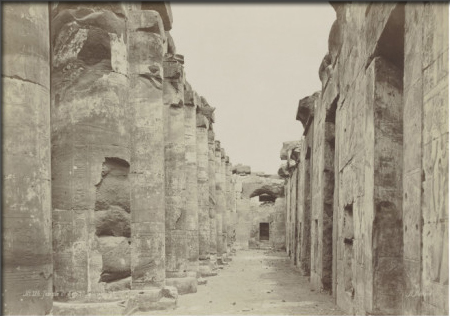
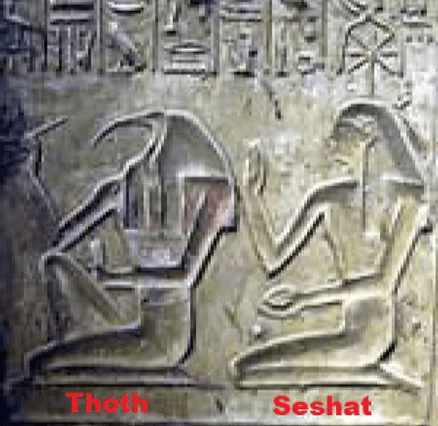


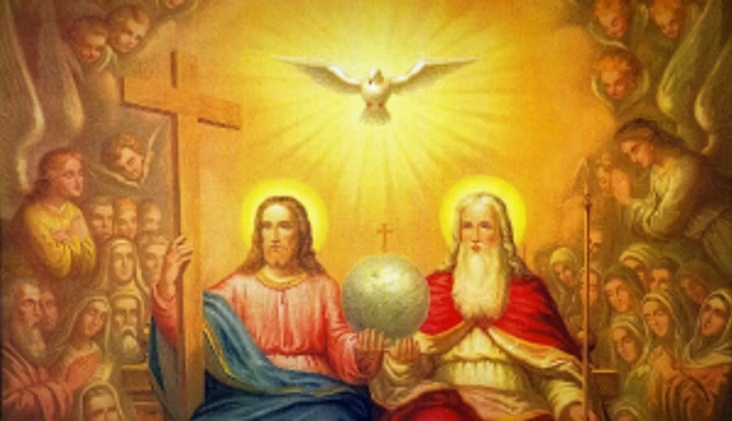


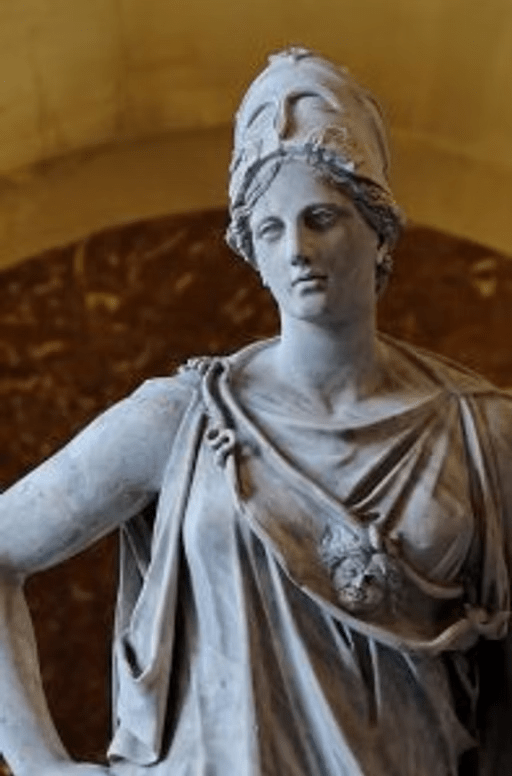

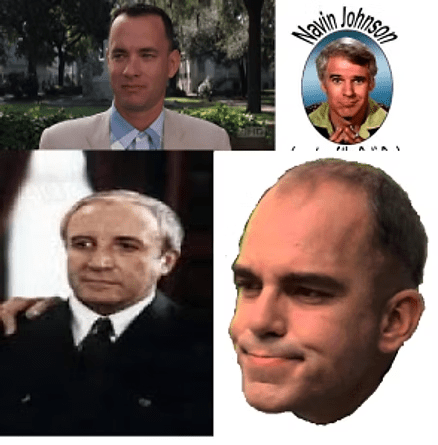





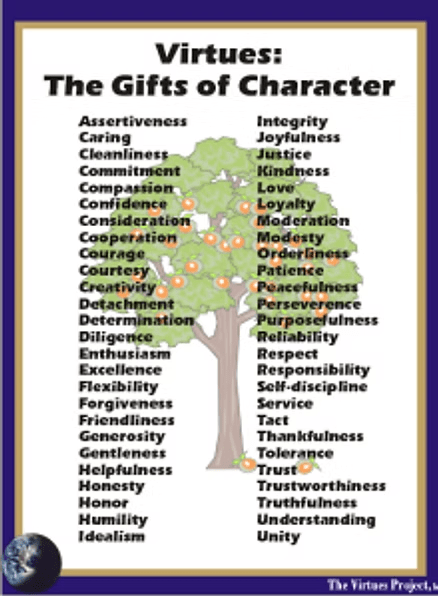



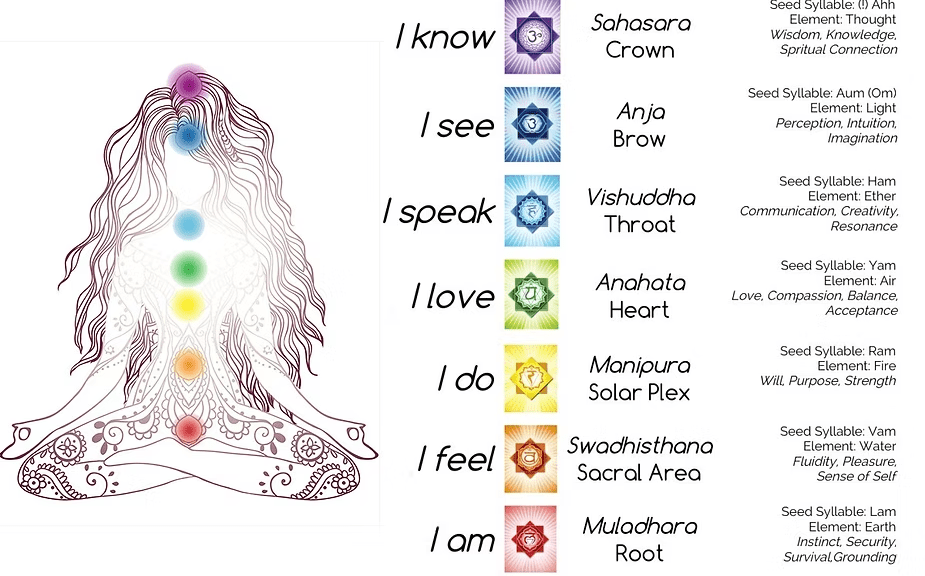
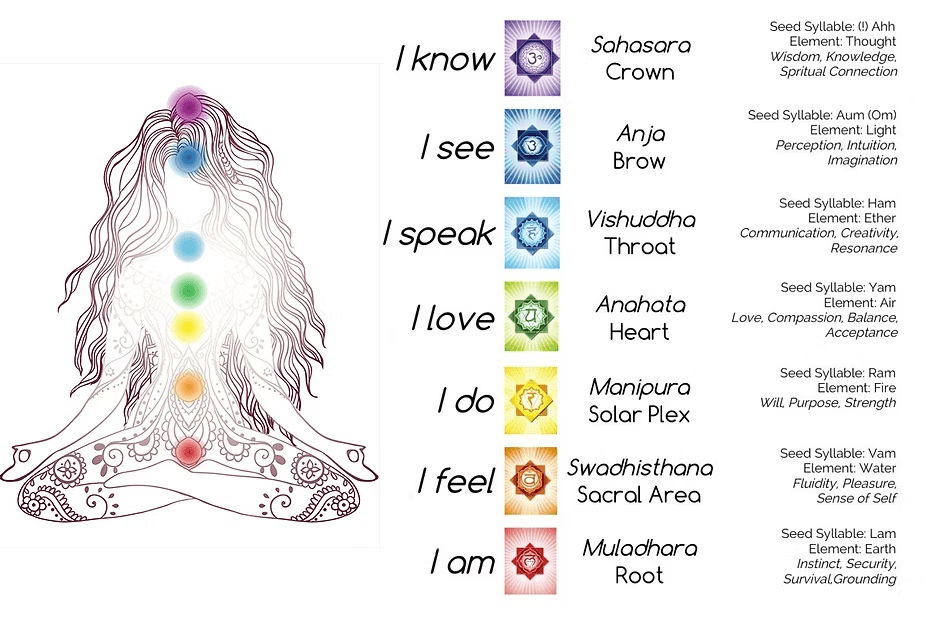


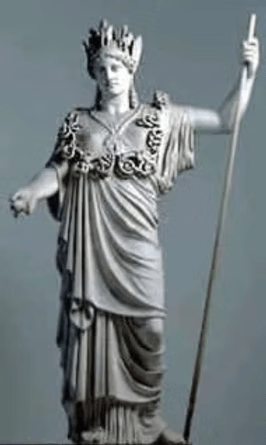
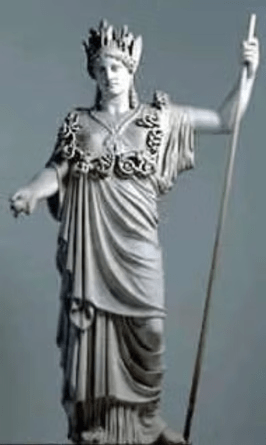
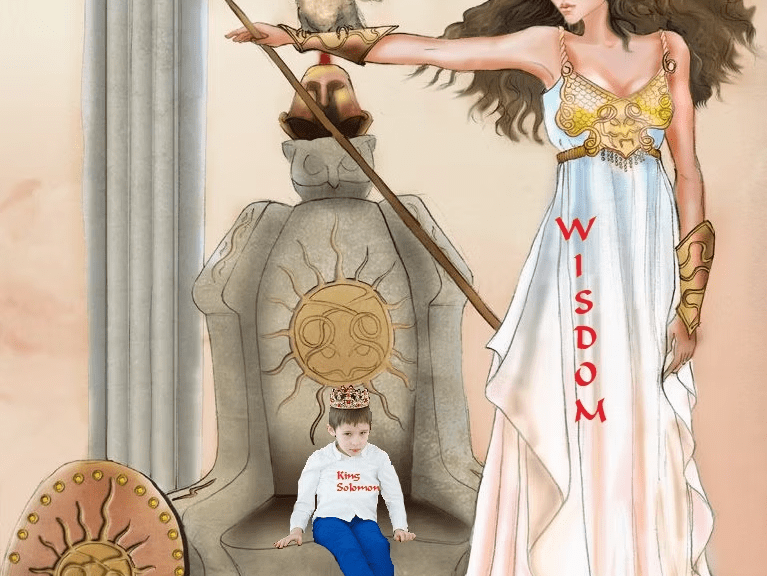
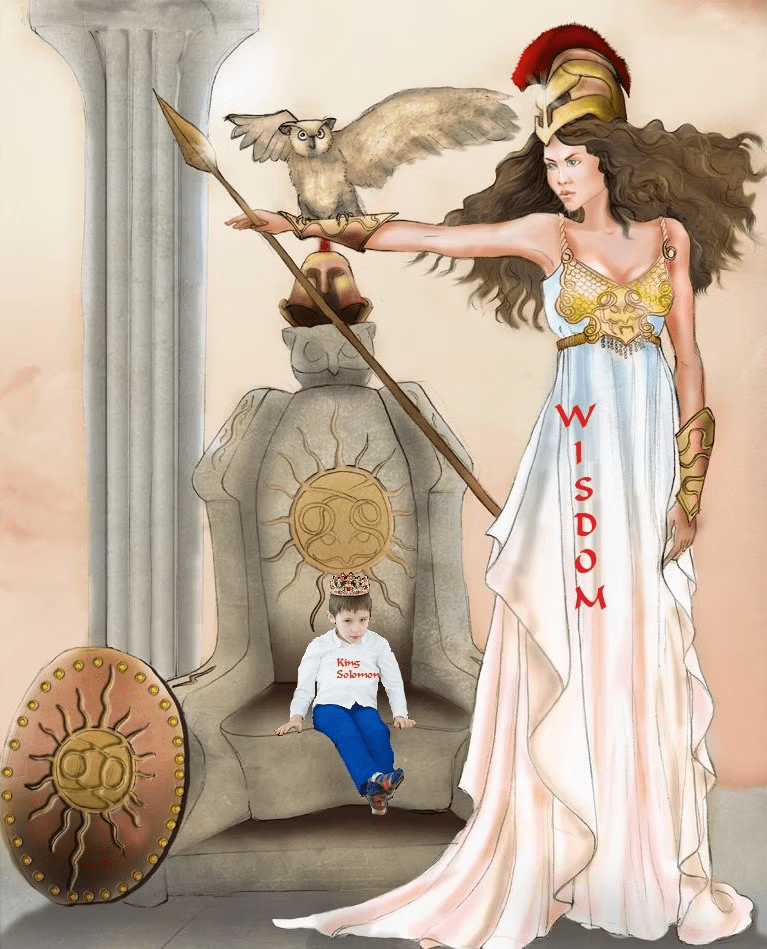
 Explaining the Readings