Category Archives: Psalms

Notes on the readings for the Seventh Sunday After the Epiphany

For Year A, February 19, 2017.

Leviticus 19:1-2,9-18

1 The Lord spoke to Moses, saying:

2 Speak to all the congregation of the people of Israel and say to them: You shall be holy, for I the Lord your God am holy.

9-18 When you reap the harvest of your land, you shall not reap to the very edges of your field, or gather the gleanings of your harvest. You shall not strip your vineyard bare, or gather the fallen grapes of your vineyard; you shall leave them for the poor and the alien: I am the Lord your God.

You shall not steal; you shall not deal falsely; and you shall not lie to one another. And you shall not swear falsely by my name, profaning the name of your God: I am the Lord.

You shall not defraud your neighbor; you shall not steal; and you shall not keep for yourself the wages of a laborer until morning. You shall not revile the deaf or put a stumbling block before the blind; you shall fear your God: I am the Lord.

You shall not render an unjust judgment; you shall not be partial to the poor or defer to the great: with justice you shall judge your neighbor. You shall not go around as a slanderer among your people, and you shall not profit by the blood of your neighbor: I am the Lord.

You shall not hate in your heart anyone of your kin; you shall reprove your neighbor, or you will incur guilt yourself. You shall not take vengeance or bear a grudge against any of your people, but you shall love your neighbor as yourself: I am the Lord.

______________________________________________________________

In verse two, it is most important to understand that God did not tell Moses to inform all the Israelites that they were holy because God had chosen them as followers.  God is laying down the foremost law – the Commandment that says, “If you follow me, then you must be holy.  You must be a Saint, because you reflect the presence of the LORD on earth.  Because God (YAHWEH) is holy, then only priests who are as holy as God can call him or herself “God’s chosen people.”  God chooses which human beings His Holy Spirit will fill … AND … that is based on the application of God’s laws, which were given to Moses to pass on to those who were in the ‘priests-for-the-One-God’ congregation.

Verses nine through eighteen are then some of those laws that become prerequisites for Sainthood.  You shall not be a greedy human being, one who takes everything possible as a priest and hoards it to one’s self.  You only possess that which you have worked for and earned, so you do not take that which is not yours, which someone else may or may not have worked hard to acquire.  If you are poor and take some grapes or wheat from the outer edges of a rich man’s field, then that is not stealing.

The law says you do not cheat and swindle people because you know how to take advantage of people who easily trust others.  This is stealing, which furthers the greediness of what one already has taken from the earth.  This means people like Bernie Madoff and Donald Trump, who have been caught making a profit off their taking advantage of others, are not worthy of calling themselves God’s chosen people.

The aspect of lying is a strong determiner of one’s holiness, as Jesus only told the truth, because God is truth.  God exposes liars.  Dealing falsely with someone means lying to them.  The opposite of false is true.  When God told Moses, “You shall not swear falsely by my name, profaning the name of your God,” the meaning is to lie to someone and “swear by God the lie is the truth.”  To make such a clam is to speak profanely, thus promoting lies in the name of holiness is the definition of “profanity,” as it is blasphemous speech.

In the laws of God, through Moses and Jesus, the use of “neighbor” has been grossly misunderstood.  In Moses’ case, he was giving laws to a cloistered group of people, all of whom were related to Jacob, descended from one of his sons.  Simply because these “relatives” were so many in number, they were strangers to a large extent, such that marriage to distant cousins was accepted (and preferred, to keep it “all in the family”).  Therefore, the prior commandments not to defraud or lie to “one another” were intended to be a condition between friends and close relatives.

That meant “Your neighbor” was one of those strangers who lived nearby.  Those became the hired hands and those stricken by infirmities (deafness and blindness).  God made it clear that you will be judged by how you treat those in the same “religion” or “race” as yourself.  A poor judgment was to be feared, at all costs, because condemnation meant being “excommunicated” from God and outcast as a regular sinful human being, not chosen by God.

Speaking of God’s judgment, Moses went on to state, “You shall not render an unjust judgment; you shall not be partial to the poor or defer to the great: with justice you shall judge your neighbor.”  To only render just judgment, to be impartial to those fortunes are higher or lower than yours, and to judge those of the same blood fairly and justly, one needs some very good guidance.  That comes directly from God, through the presence of His Holy Spirit.  Thus, a saintly priest for YAHWEH shall not do anything contrary to just judgment (and just judgment does not mean turned a blind eye to the sins of one’s neighbors and not calling another priest out for not doing what God wants).

To say you should not slander “among your people,” the word that translates as “slanderer” is also translatable as “talebearer.”  In modern legal definition, “slander” means: “Oral communication of false and malicious statements that damage the reputation of another.”  In general, it is “A false and malicious statement or report about someone.”  As a “talebearer” the reference is to the spreading of gossip and innuendos.  Therefore, the meaning is less in legal terms, where one’s abilities to profit off some secret dealings that people close to that person might intuit as unsavory and talk about it to others (without proof).  The meaning is wholly relative to a priest who is to be filled with God’s Holy Spirit, where knowledge goes well beyond intuition.  A priest has no need to talk the secret dealings of others who also call themselves priests to YAHWEH (among your people), as God knows their sinful deeds and so do they (from guilt).  As one who is to be holy, one needs to leave the rumor mill alone; but advise others from wisdom, which will protect the innocent by holy insight, not fear from tales unproved.

When God then added, “you shall not profit by the blood of your neighbor,” this can equally translate as, “you shall not stand [or act] against the life of your neighbor.” [NASB]  Whereas the word “blood” is read as meaning “life,” as “lifeblood” being spilt, leading to death, the pairing of this law with the act of slander means a priest of the One God is not to talk in ways that lead the death of another priest.  The translation of “profit” then hints at a purpose for taking a “stand,” or “acting” (via slander and tale bearing) against one’s own people (another priest).  There can be no profit for any priest going against this law, only loss in terms of spiritual reward.

When Moses was told to command, “You shall not hate in your heart anyone of your kin,” there are translations that state “kin” as “brother.”  The broader meaning beyond a “relative” is “countrymen,” where this is another reference to the lineage of the Israelites.  They are commanded not to hate “fellows” in religion or race.  By omission, they are not commanded to not hate anyone.  Remember that the heart is the seat of God within each individual priest.  By that relationship, where all the Israelites were “kin” of God (all Sons of God via the Holy Spirit), to hate another whose heart held YAHWEH means to hate God.  That hate is forbidden.  Evil, on the other hand, whose god Satan lurks in the hearts of many men and obviously so, should be expected to feel emotions like hatred, if God’s Spirit moves one to that state.  If two of God’s priests differ on how they react to evil, God does not give a priest whose heart is not filled with hatred about evil to hate another priest whose heart is so moved to hate evil.

This means that the amendment to this law states, “You shall reprove your neighbor, or you will incur guilt yourself.”  This means that a priest whose heart does not hate evil (for reasons God has chosen, from within that priest), they are to “reprove” or “argue” the “reason” for another’s hatred, in order to bring the other away from hatred, through understanding what all hatred does to one’s spirit.  If one does not take this approach, then one is affected by the mood of a “fellow” priest, so one’s hatred of evil makes another hate evil as if it were that fellow.   Two hates do not a holy one make.  As such, a failure to address hatred by way of God-led discussion will lead one to the same guilt as projected upon another.

Finally, as far as this reading allows, God told Moses to command: “You shall not take vengeance or bear a grudge against any of your people, but you shall love your neighbor as yourself.”  Again, vengeance and grudges are to be determined by God’s will, and many times God commanded his priest to take vengeance upon evildoers and God complained loudly against those who had promised God their faith, but turned away from God.  This means vengeance and grudges are the Lord’s, and the Lord will use His faithful to carry out His will.  Us mere priests must not start thinking we are God and ordering retribution, based on grudges, especially towards other priests (any of your people).  That becomes an extension of hatred in one’s heart directed towards one of God’s own.

This means that the “arguing” ordered before, to address hatred in another priest, must be done as an “act” of “love.”  Again, “your neighbor” is one whom a priest lives among, with that neighborhood being other priests, but those who are not necessarily blood kin or directly descended from a family’s blood.  A “neighbor” is not anyone else of a different religion or race.  In terms of Christians, who have lived in increasing melting pot nations for millennia, a neighborhood can consist of many different branches of Christianity, as well as religions that differ greatly from faith in YAHWEH or belief in Jesus of Nazareth as the Messiah.  God is not making a commandment to Moses for the Israelites to love the Ammonites, Midianites, Moabites, or Philistines.  Those enemies lived in the same lands as the Israelites would settle, but each had separate “neighborhoods.”  Therefore, Christians are not commanded to love those who hate Christians by living among them and accepting their ways.  Jesus said to love you enemies, and to do that you allow your enemies to be filled with hatred for you, but at a distance that respects their right to not be Christians.  You love by allowing others to choose to love God … or not.  You love them by letting them make that decision. Meanwhile, you are to love fellow Christians as the Christians you are.

Psalm 119:33-40

33 Teach me, O Lord, the way of your statutes, *

and I shall keep it to the end.

34 Give me understanding, and I shall keep your law; *

I shall keep it with all my heart.

35 Make me go in the path of your commandments, *

for that is my desire.

36 Incline my heart to your decrees *

and not to unjust gain.

37 Turn my eyes from watching what is worthless; *

give me life in your ways.

38 Fulfill your promise to your servant, *

which you make to those who fear you.

39 Turn away the reproach which I dread, *

because your judgments are good.

40 Behold, I long for your commandments; *

in your righteousness preserve my life.

______________________________________________________________

This song of praise focuses on the Mosaic Law.  David begins by asking God for His direct assistance in “teaching” the path of those laws in a real life, so David could maintain a righteous life until death.  That help from God is then explained as “understanding,” which does not come from the brain interpreting the written or oral Word, but from the Lord being loved and seated in one’s heart (a marriage to God via the Holy Spirit).

This love of God is then explained as “my desire,” which commands David to do as God wishes (like a wife obeys her husband).Thus, David sang longingly, “Incline my heart to your decrees.”  When one is completely committed to serving the Lord (like a wife to God) then one is free from worldly distractions.  All that can be seen as a worldly “gain” is just reward for service rendered, just as a husband provides for his wife or wives.  All that the world offers (beyond needs) is “worthless to watch.”

When David wrote this song that prays for God to show him the way, his prayers were answered by Jesus Christ.  To end by singing, “Behold, I long for your commandments; in your righteousness preserve my life,” the laws of Leviticus are expanded in meaning by Jesus and Paul, which is rooted in love.  From holy love comes holy wisdom, so one can then lead others to be preserved in life – eternally.

——————–

1 Corinthians 3:10-11, 16-23

According to the grace of God given to me, like a skilled master builder I laid a foundation, and someone else is building on it. Each builder must choose with care how to build on it. For no one can lay any foundation other than the one that has been laid; that foundation is Jesus Christ.

Do you not know that you are God’s temple and that God’s Spirit dwells in you? If anyone destroys God’s temple, God will destroy that person. For God’s temple is holy, and you are that temple.

Do not deceive yourselves. If you think that you are wise in this age, you should become fools so that you may become wise. For the wisdom of this world is foolishness with God. For it is written,

“He catches the wise in their craftiness,”

and again,

“The Lord knows the thoughts of the wise,

that they are futile.”

So let no one boast about human leaders. For all things are yours, whether Paul or Apollos or Cephas or the world or life or death or the present or the future– all belong to you, and you belong to Christ, and Christ belongs to God.

______________________________________________________________

When Paul wrote to the Christians of Corinth (who were equally filled with the Holy Spirit, from having heard the Gospel of Christ from him), “like a skilled master builder I laid a foundation, and someone else is building on it,” the foundation was that onset of the Holy Spirit.  When Paul then added, “that foundation is Jesus Christ,” he said that he and every other true Christian were based in the holiness that was the same as that which made Jesus the Messiah.  ALL SAINTS are (as their underlying foundation – their cornerstone) the rebirth of Jesus Christ.  From that foundation, “each builder must choose with care how to build on it, for no one can lay any foundation other than the one that has been laid.”  No one is or can be anyone other than that resurrection of Jesus, with the Christ mind.

Thus, Paul’s question, “Do you not know that you are God’s temple and that God’s Spirit dwells in you?” is rhetorical to another who is equally a Saint and filled with God’s presence.  The body of a Saint is the temple, with God’s throne seated in the heart of the Saint.  God only dwells in those who welcome God with love, believing in Jesus as the way to God.

When Paul wrote, “If anyone destroys God’s temple, God will destroy that person,” the point is at the root of why Paul wrote letters to Christians he had touched with God’s Holy Spirit and the knowledge of Christ.  His letters warned (in a friendly compassionate manner) that the presence of the Holy Spirit is not gift from God that makes life easy and comfortable.  Because of the struggles that Saints encounter typically, some may be influenced to turn away from God, for a moment of ease; but turning away for more than an occasional minor sin will destroy that holy seat in one’s heart, evicting God from one’s being.  Without God, the promise of eternal life is destroyed.  A human being with aspirations to be a Saint cannot serve two gods.  It is one or the other: God or earth.

In relation to this choice that one makes (and to which God reciprocates), the holy gift of wisdom, coming through the Christ mind, is understood by the human brain (God’s physical gift from which mortal life is maintained).  This wisdom must always be received as insight from God and not one’s own personal powers of observation and discernment.  Without God’s influence, a human being is nothing more than a fool.  Therefore, admission of how lame one’s brain is, when compared to the Christ mind, means admitting one’s abilities to know something wise has nothing to do with a simple brain.

Paul then quoted Job (Job 5:13), where Job wrote, “He captures the wise by their own shrewdness, And the advice of the cunning is quickly thwarted.”  Paul then quoted David (Psalm 94:11), whose psalm sings, “The LORD knows all human plans; he knows that they are futile.”  Therefore, Paul’s holy wisdom is pointing out to the Saints of Corinth to be careful not to think you can sneak anything past God, through a cunning brain that sees how easy it is to make others think what one wants them to think.  God exposes these cheats, so they will eventually be known as fools of no value.

Those who demand beliefs and trusts be put in human beings are those who “boast about human leaders.”  We see this every day in the politics of government.  When God is seated in one’s heart center, then the only leader of merit is God.  The Christ mind will point out ALL the flaws of those who boast of human wisdom and powers of influence.  Paul was a leader to the Christians of Corinth, but they need not boast of Paul, because a Saint has the same lone leader as Paul – God.  The resurrection of one body – Jesus Christ – is the proven result of God as one’s leader within.  The only one who matters in one’s future, in the world and beyond, in life and in death, is God … not some human being who makes promises that he or she cannot deliver.

——————–

Matthew 5:38-48

Jesus said, “You have heard that it was said, ‘An eye for an eye and a tooth for a tooth.’ But I say to you, Do not resist an evildoer. But if anyone strikes you on the right cheek, turn the other also; and if anyone wants to sue you and take your coat, give your cloak as well; and if anyone forces you to go one mile, go also the second mile. Give to everyone who begs from you, and do not refuse anyone who wants to borrow from you.

“You have heard that it was said, ‘You shall love your neighbor and hate your enemy.’ But I say to you, Love your enemies and pray for those who persecute you, so that you may be children of your Father in heaven; for he makes his sun rise on the evil and on the good, and sends rain on the righteous and on the unrighteous. For if you love those who love you, what reward do you have? Do not even the tax collectors do the same? And if you greet only your brothers and sisters, what more are you doing than others? Do not even the Gentiles do the same? Be perfect, therefore, as your heavenly Father is perfect.”

______________________________________________________________

When Jesus said, “You have heard that it was said, ‘An eye for an eye and a tooth for a tooth,’ this is misunderstood as Hammurabi’s Code (who ruled over what is now Iran), but is actually a reference (to Jews) to a partial law of Moses.  It is one verse of four, found in Exodus 21:22-25, which is Exodus 21:24.  That verse completely says: “eye for eye, tooth for tooth, hand for hand, foot for foot,” so Jesus was Jesus was saying part of a verse, to spur the memories of Jews who had been taught to memorize the Mosaic Law.  It was like him saying, “I say ‘eye for eye, tooth for tooth’ and you say … “(fill in the blank).”

If one is fully able to fill in the blanks before and after Jesus’ queue, one then will realize that Exodus 21:22 states, “If men struggle with each other and strike a woman with child so that she gives birth prematurely, yet there is no injury, he shall surely be fined as the woman’s husband may demand of him, and he shall pay as the judges decide.”  The initial aspect that one must grasp, which then directly relates to turning one’s cheek, is “if men struggle” and fight one another.  While verse 22 states a “whew, no harm done to the pregnant woman because her baby came out unharmed,” verse 23 says, “But if there is any further injury, then you shall appoint as a penalty life for life.”  This says (through implication) that if the woman dies in childbirth, or if the baby is born and dies, then death shall be the punishment to the one wrongly striking a pregnant woman – not for striking her husband and killing him in a fight.

When Jesus said, “An eye for an eye and a tooth for a tooth,” this is the damage done to the woman and/or child, although babies are not born with teeth.  When  there is also consideration for “hand for hand and foot for foot,” with verse 25 ending with “burn for burn, bruise for bruise, and wound for wound,” the implication is a husband of a pregnant wife would be due compensation (equal justice) for injuries wrongfully inflicted on his property – the wife and baby.  This is the only place in the Holy Bible’s Old Testament where such a law is stated.  Because it deals with men quarreling (with those men known to be the segregated men of the twelve tribes of Israel (to become the descendants known as Jews), it is not a reference made by Jesus about Jews fighting Romans … or anyone other than one another, those of the same religion and race.  Therefore, Jesus, who sat on the mount by the eastern shore of the Sea of Galilee, spoke to his Jewish followers, disciples, and pilgrims in Galilee for the Passover and Shavuot festivals.  The Hammurabi Code is more applicable to Persians, with that transferring to anyone seeking revenge.

From this perspective that Jesus was not speaking to the whole wide world about not fighting, but only to those who had chosen YAHWEH as their God and by following Jesus to hear his Sermon on the Mount sought to be good priest serving that God, Jesus was giving an understanding of how one avoids God’s Judgment in the end by avoiding the court system, where men interpret laws wrongly on a daily basis.  To avoid having your pregnant wife injured as a result of YOUR fight with ANOTHER PRIEST FOR YAHWEH, just don’t fight at all.  Stay away from evildoers to begin with, because the same as a Jew not being allowed to fight a pagan is that touching them with a fist makes you as heathen as they are.  If you are urged to come to blows with another Jew, it takes two to tango with evil.  Stay out of the court of law entirely, such that if someone tries to sue you for the shirt off your back, then give it to him prior to having to go to court.

When Jesus said, “If anyone forces you to go one mile, go also the second mile,” that is the story of Jacob.  He bargained with Laban for the right to marry his younger daughter Rachel, only to be given his elder daughter Leah.  Rather than take Laban into some court to settle that dispute, he repeated the bargain so he could win the woman he desired.  Jesus made that reference because a priest for the One God desires heaven for the labors; but if heaven on earth is not the reward given first – only fleeting phases of happiness – keep working for the second reward.  In this way one is begging the Lord for a handout, which makes one a spiritual beggar.  Therefore, do not turn away from those of your own kind whose hand comes out to you for a help or reward.

The saying stated by Jesus, “You shall love your neighbor and hate your enemy,” is not a direct quote from Mosaic Law.  Moses did speak for God when he said “Love you neighbor as yourself,” where “neighbor” was a commandment to Levites (Leviticus 19:18), which mean the Israelites were to live among other Israelites, not to mix with those of differing customs and religions.  Thus a “neighbor” was one of the same commitment to the One God and not just anyone who lives down the street (in the non-Jewish or mixed community).

The addition now is Jesus saying, “You have heard it said, ‘hate your neighbor’,” where that was those Roman soldiers who lived close, so they could control the dominions of the Emperor of Rome.  The Jews of Jesus’ day – in particular the Zealots and rebellious Jewish cliques [those seeking a warrior Messiah from God] – were trying to convince all Jews to lay down their lives to retake Jerusalem [and Judea] for them, as the Promised Land still owed.  It was about this new message that Jesus then spoke.

When Jesus then said to those Jewish listeners, “I say to you, Love your enemies and pray for those who persecute you, so that you may be children of your Father in heaven,” it is vital to understand the Greek infinitive verb “agapaó,” which translates as “to love.”  “Love” is a word that everyone recognizes, but when asked to define “love,” they stammer and become limited with the meanings of that emotion.  Strong’s states “agapaó” can be used in a context that means, “I love, wish well to, take pleasure in, long for; denotes the love of reason, esteem.”  Further, their help for understanding Biblical uses of Greek words says, “With the believer, 25 /agapáō (“to love”) means actively doing what the Lord prefers, with Him (by His power and direction).”  Since Jesus only spoke what God meant (and never what Jesus the man thought up), “To love one’s enemies” simply means to see your enemy as yourself.  Just as you have beliefs and faith in your God, so too do others feel devotion to their god(s).  You can then “love” you enemies by wishing your enemies well in their devotion to a different god.  You express that “love” through separation – giving your enemy the space they need to not be confronted by you and your differences.  You are “actively doing what the Lord prefers” (“loving God”) by staying focused on your love of God, rather than splitting your focus between love and hate.

Just as Jesus did not mean the world should give up fighting, because “eye for an eye, tooth for tooth” is the need for judgment for those who fight and cause injury, fighting as a part of combat training or a ritual for manhood, with all pregnant women far, far away, was a natural necessity for a nation of people.  Such preparation is due to knowing one nation means another nation that can profit from destroying that one nation.  Enemies are as natural as is fighting is, but the enemy is loved by allowing another nation to exist, without doing anything that promotes or compounds a natural dislike for differences, as sticking your tongue out and yelling, “Na, na, na, na, na.  We are better than you,” leads dislike to become hatred.

When Jesus then said good priests for the One God should “pray for those who persecute you, so that you may be children of your Father in heaven,” the meaning is a good priest is not a Saint by praying for selfish things.  To pray for an enemy means you are asking God to enlighten one’s persecutors to the sins they are committing.  Resisting persecution will only cause more persecution in return.  But to accept persecution and demonstrate to the persecutors that one is willing to suffer without fighting back, means one is serving God by believing God has the power to bring strong guilt to those who bear evildoing responsibilities.  Such sacrifice is what makes one a child of heaven.

When Jesus explained that God “makes his sun rise on the evil and on the good,” one should see how “his sun” is the illumination and enlightenment of truth.  The truth is true in all cases, both to liars and the truthful – so the truth rises on evil and good.  When Jesus then said that God “sends rain on the righteous and on the unrighteous,” one should see “rain” as the waters of emotion, such that “tears” fall like rain on all mankind, both those who do evil and those who do good.  One’s “rain” falls like tears of sorrow, while the other’s “rain” falls like tears of joy.  These “rains” come from the prayers of the faithful for the persecutors.

When Jesus ended this segment of words by saying, “For if you love those who love you, what reward do you have? Do not even the tax collectors do the same? And if you greet only your brothers and sisters, what more are you doing than others? Do not even the Gentiles do the same? Be perfect, therefore, as your heavenly Father is perfect,” the point was for true priests for the One God to go beyond self-serving acts and act for others.  This (we now know, from the Apostles letters) means being filled with the Holy Spirit.  From that perspective of knowledge (like that held by Jesus), Judaism goes beyond all other religions in the world.  From the abilities to withstand persecution given by the power of God, the enemies of the world can be led to the light and rain of YAHWEH.
Notes on the Last Sunday after the Epiphany – Transfiguration Sunday

These are my notes on the Episcopal Lectionary readings for February 26, 2017, Year A. Due to the option of two psalms, there are no notes on either in this report. However, the option of Psalm 99 offers these verses that fit well with the Old Testament, Epistle and Gospel readings that do follow:

6 Moses and Aaron among his priests,

and Samuel among those who call upon his Name, *

they called upon the Lord, and he answered them.


7 He spoke to them out of the pillar of cloud; *

they kept his testimonies and the decree that he gave them.

A most general summation for this Sunday – the last one in the Epiphany season – is “Transfiguration Sunday.”

Exodus 24:12-18

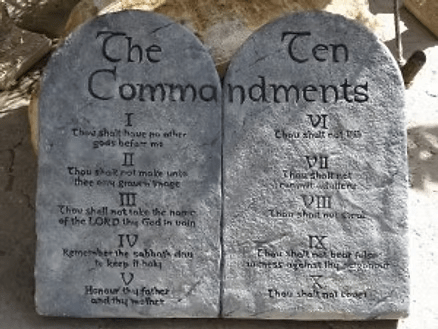
The Lord said to Moses, “Come up to me on the mountain, and wait there; and I will give you the tablets of stone, with the law and the commandment, which I have written for their instruction.” So Moses set out with his assistant Joshua, and Moses went up into the mountain of God. To the elders he had said, “Wait here for us, until we come to you again; for Aaron and Hur are with you; whoever has a dispute may go to them.”

Then Moses went up on the mountain, and the cloud covered the mountain. The glory of the Lord settled on Mount Sinai, and the cloud covered it for six days; on the seventh day he called to Moses out of the cloud. Now the appearance of the glory of the Lord was like a devouring fire on the top of the mountain in the sight of the people of Israel. Moses entered the cloud, and went up on the mountain. Moses was on the mountain for forty days and forty nights.

———————————————————————————————————-

Realizing that the Lord was speaking, and understanding that God never makes small talk, one should be able to see that the command, “Come up to me on the mountain, and wait there” is more than Him saying, “You know where my office is Moses. Just make yourself comfortable there and I’ll be able to meet you when my other business is taken care of.” There is meaning to the command to Moses, just as there is meaning to everyone who reads those words.

“Come” is a commandment to “Approach” God. It is not up to God to come to us. Instead, it is up to us to demonstrate our desire to act in ways that put us closer and in touch with God. Realizing that, the Hebrew word written is “‘ă-lêh,” which is fully translated as “Come up.” The root verb “alah” means “to go up; approach; arise, ascend, climb and went.” The essence of “up” and “climb” is to take actions that elevate one’s soul, as opposed to those that lower it, which is how one goes about “Coming” to the Lord (“Come up to me”).

When we read the word “mountain,” it is easy to see the majesty of high, snow-covered peaks, and imagine Zeus on Mount Olympus, as if God actually lives on a mountain somewhere (the Sinai?). That is not the meaning we should grasp. Near where I grew up was a well-known mountain – Stone Mountain. As kids we were taken there on outings, where climbing the mountain was part of the fun. There was a hiking trail that made the trek mostly a casual stroll. Then, as one neared the top, one had to basically crawl upward on one’s hands and knees, until the top leveled out and standing erect was possible. The climb up was fun, as long as one was young enough to handle the stress of making the final yards of elevation. As a tourist attraction, where people too old came to see the view from atop the mountain, there was installed a sky lift; but that had been a modern luxury, which afforded owners to haul up the building materials to erect a building of shops and meeting rooms, to which the sky lift would end and tourists could enjoy without all the physical demands of climbing up a mountain. The point then, which was made to Moses, is that God will meet with him after he has gone through the struggles of climbing up to God.

When God then said to Moses, “Wait there” – at the top of the mountain – the command was to not do something for God simply because you want God to give you what you want in return. To wait at the ascent means to enjoy the presence of that elevation – see the vista and feel the breeze. One needs to love satisfying God, as realizing how much self-sacrifice (from “climbing up to the Lord”) leaves one in awe from that elevated state, as looking down and seeing just how minuscule human life appears from your perspective makes it more special to know that God has a plan for those who serve Him.

The Hebrew word “weh-yêh” (from the root “hayah“) has been translated as “and wait” or “and remain,” but it is a modification of the root verb “hayah,” which means, “to fall out, come to pass, become, or be.” From this realization, the view of “waiting” after “coming up on the mountain” is now a statement to “ascend to new heights and be.” The following word says to “be there,” where “there” is in that state of elevated spirit. It says that “come up” is a command to face the task of a “mountain” of obstacles, so that once overcome one has “come there.”

For this effort to elevate one’s being, God promised a gift, saying: “I will give you the tablets of stone, with the law and the commandment, which I have written for their instruction.” In this promise to Moses (which is a promise to all who will become Saints and Apostles of Christ – then and today), the Hebrew words “lu-ḥōṯ hā-’e-ḇen” are translated as “tablets of stone.” This has given the impression of granite tablets, in which God had etched Hebraic words.

In actuality, the Hebrew word “eben” (which means “a stone”) is also found used in the Old Testament to denote both “cornerstones” and “gemstones.” In this regard, Strong’s lists the possibility of the specific gemstone, “lapis lazuli” (“blue stone”) as a translation of “eben.” This makes sense because a gemstone is a receptor of energy (and even granite with quartz and marble are similarly energy receptors), which makes tablets prepared by God reflect a greater value than simply as rock tablets. In addition, Exodus 24, prior to verse 12, tells of God giving the laws to Moses, which Moses wrote down, before making a blood sacrifice upon the altar, as a commitment by the Israelites to honor those laws. Therefore, going to the top of the mountain, as an ascension of the leader of the Israelites, was to receive a special gift of very deep powers. A stone like lapis luzuli then becomes a more apt image of this gift from God to Moses, for the people below him.

According to the website Crystal Vaults, and which prompts from a Google search of “lapis lazuli meaning,” one finds: “Lapis Laluzi is one of the most sought after stones in use since man’s history began. Its deep, celestial blue remains the symbol of royalty and honor, gods and power, spirit and vision. It is a universal symbol of wisdom and truth. … Its name comes from the Latin lapis, “stone,” and the Persian lazhuward, “blue.”’

Without any confirmation of God having presented Moses with tablets of precious stone, the website Healing Crystals for you says, “Lapis Lazuli stones resonate with the vibration of truth and enlightenment, and are powerful intense blue stones for opening the third eye and stimulating the pineal gland.”

That site goes on to state, “Lapis Lazuli is a useful stone to wear as it is said to relieve anger and negative thoughts, as well as easing frustrations causing the anger. They resonate with the energy of the inner king or queen, and are historically stones of royalty, and this crystal also helps to balance the male and female aspects of your personality.”

It is this value that is seen in crystal stones (which were also placed in the high priest of the tabernacle’s breastplate) that become an unseen power that surrounds a human being, just as God’s presence does the same. Still, such a gift does not manifest within and around one, until one has reached heights of spirit and has then remained in that state. Therefore, to see the “tablets of stone, with the law and the commandment, which [God had] written for [the priests of God’s] instruction,” can be read as two separate items – Stone symbols and the written Law.

Since God had already recited “the law and the commandments” to Moses, and since Moses and the people had already ritually sacrificed a bull to seal their covenant with the Lord, to now read that “God had written for their instruction” can mean both the words written by Moses (from God’s dictation) AND a less discernible form of “writing” that is contained within the esoteric properties of crystal stone.

In Exodus 31:18 one reads, “When [God] had finished speaking with [Moses] upon Mount Sinai, [God] gave Moses the two tablets of the testimony, tablets of stone, written by the finger of God,” one needs to understand a human’s need to use anthropomorphic descriptions for God.  The “finger of God” would not mean a physical etching into stone by a cloud touching gemstone, as much as it would be a direction commanded by God.  God figuratively pointed to the stone and caused its formation in the rock of Mount Sinai to have marks of significance in them.  Naturally formed stones (supernaturally inscribed) might well have been produced long before Moses reached the top of Mt. Sinai, as an All-Knowing God would not wait for Moses to arrive to make tablets of stone.  This means Moses might have had to break them free and rub them to a polished smoothness.

This means it could be possible that one simple mark (among many other simple marks) could have been found in the stone, which acted as a symbol for one law dictated to Moses that he had written. All marks equally applied to those laws written, with the origin of Hebraic script connected to those marks (a scholastic theory not of my origin).  From pondering the stones, the deeper meanings of the law would then fill one’s mind, from the Holy Spirit. Such a projection would leave the stones with the capability of being like modern computer chips: able to store vast amounts of words in each stone given to Moses, rather than limit God to ten commandments and a promise to honor God as His priests.

To see this intent then makes it easy to see how God would tell Ezekiel, “And I will put my Spirit in you and move you to follow my decrees and be careful to keep my laws.” (Ezekiel 36:27) It shows how God told Jeremiah, “This is the covenant I will make with the people of Israel after that time,” declares the LORD. “I will put my law in their minds and write it on their hearts. I will be their God, and they will be my people.” (Jeremiah 31:33) It is also how Isaiah was told by God, “As for me, this is my covenant with them,” says the LORD. “My Spirit, who is on you, will not depart from you, and my words that I have put in your mouth will always be on your lips, on the lips of your children and on the lips of their descendants–from this time on and forever,” says the LORD.” (Isaiah 59:21) Because the “tablets of stone” were to be placed inside the Ark of the Covenant the intent was less to read the stones, and more to feel the spirit of the stones being among the people.

Such a view means that aspiring to great heights in service to the Lord AND remaining in that state of subservience will bring about the presence of the Holy Spirit as the reward for that service. That gift of understanding the laws will then be passed along to those who have yet to climb up the mountain to God and wait there. The Holy Spirit makes explaining that which is written “for their instruction” possible to be passed on … by Saints and Apostles, those empowered by God’s gifts.

In respect of God telling His prophets that understanding the laws will be written within the priests of YAHWEH, instead of in some external form where brevity would be demanded, the aspect of “stone” must be seen as the physical presence of the laws. Rather than some granite monument in the courtyard of a local courthouse, the “stones” that will become the source of those laws are indeed the priests themselves [Jesus telling Peter he would be the Rock of his Church, with “peter” meaning “stone”].  Living Stones inspired by the Holy Spirit.  This makes the “tablets of stone” be the physical presence of God in his servants (via the Holy Spirit), which was the Covenant between God and the Israelites, spoken through Moses. Thus, “the law and the commandment, which I have written for their instruction,” was initially Moses, Aaron, Joshua, and Hur (et al), but would become every judge and prophet of Israel to later come, as well as Jesus Christ and all of his Apostles and Saints.

This means that one verse (Exodus 24:12), which seems so mundane and little more than a simple statement of Jewish history, is as deep and broad in meaning as is everything coming from the voice of God. This relates the power of the spiritual law, which then is contrasted with the remainder of the reading, which points to the common law of men arguing amongst themselves.

Prior to this reading, Exodus 24:9-10 states, “Then Moses went up with Aaron, Nadab and Abihu, and seventy of the elders of Israel, and they saw the God of Israel; and under His feet there appeared to be a pavement of sapphire, as clear as the sky itself.” Verse 11 then goes on to explain how none of them were stricken dead for having glimpsed God, with a celebratory feast taking place instead. The point of that says the elders and the named men were dedicated servants of God, meaning they would teach their tribe members to honor God and the Covenant. From the names mentioned: Nadab’s name means, “Willing, Volunteer, or Generous.” Abihu’s name means “Father is He.” Joshua’s name means “YAHWEH is Salvation.” Aaron’s name means “Bright” or “Very High.” Hur’s name means, “White” or “Splendor,” all are indicators of devotion, purity, and subservience.

When the translation says, “under His feet there appeared to be a pavement of sapphire, as clear as the sky itself,” the Hebrew words “kə-ma-‘ă-śêh liḇ-naṯ has-sap-pîr” can also state, “[was] a work of transparent lapis lazuli,” where the word “has-sap-pîr” seems to imply a blue sapphire. This then can also indicate (by translation options), “bones of heaven transparent,” more than “as clear of the sky itself.” The meaning of “bones” (which Bible Hub translates as “the essence”) is then an indication of the framework that represents the foundation upon which God stands (in heaven). Those “bones” represent the “body” that is God’s laws. When one is in touch with God, then the meanings of the laws become transparent and clearly understood.

The eating and drinking (“and they ate and drank” – Exodus 24:11b) is then no different than the sacraments consumed in celebration of having come in touch with God, through His Holy Spirit. Therefore, the judges left in the encampment below, after Moses and Joshua went up the mountain to meet God, were quite capable of fairly ruling in matters of dispute, based on their names reflecting the nature of their spirit. That was a reassuring message left by Moses, as he would be gone for an extended period of time.

Still, it should be seen that “legal matters” (the alternate translation of “disputes”) are only found on the low level of life, which are at the base of the mountain of God. Those “disputes” were based on the written law God had dictated to Moses, so sins could be identified; but identification of sins is only a first step, intended to elicit guilt and begging for pardon from God – the ultimate Judge.  That self-judgment is more valuable than any profit gained from pointing out the sins of others.

When we then read, “Then Moses went up on the mountain, and the cloud covered the mountain. The glory of the Lord settled on Mount Sinai, and the cloud covered it for six days; on the seventh day he called to Moses out of the cloud.” The “cloud” is a “heavy mist,” as a fog around elevated ground. It should be easily recognizable how a “fog” or “cloud” is an indication of obscurity and nebulousness.  A “cloud” points to conditions where clarity is sought. This cloud is then called “kə-ḇō-wḏ-Yah-weh,” meaning “glorious YAHWEH.” That means the confusion about the written law is “the glory of the LORD.” It is written from the mind of God, such that what seems simple and shallow is actually boundlessly deep and most meaningful.

The element of “six days” is then relative to the number of days that God created the world, so six days is symbolic of a week of work.  For humans, the rise and fall of the sun six times means 144 hours applying the laws of God in a worldly existence. The “seventh day” is then the day YAHWEH made holy, when He made Adam holy, as the first priest to serve God on earth. Moses was called on the seventh day because he was made holy. Therefore, when we read, “[God] called to Moses out of the cloud,” this is no different that God speaking to Jesus when he was in the Jordan River, saying “You are my Son, whom I love; with you I am well pleased.” All who apply the laws of God daily are filled with the Holy Spirit and recognized as Sons and Daughters of God … those humans who please Him.

In the ancient world there were seen four basic elements: earth, water, air and fire. Every time there is a mention of something that fits one of these four elemental states, there is a deeper symbolic meaning to consider. When we read, “Now the appearance of the glory of the Lord was like a devouring fire on the top of the mountain in the sight of the people of Israel,” this makes a statement that sees “fire” as a burning and harmful element. That view of “fire” was at the base of the mountain, far away from a perspective of understanding. Remember how Moses first encountered the Lord when he saw a burning bush that was not consumed by the fire. This is the symbolic fire of inspiration.

Inspiration is dangerous because it causes people to act, often with a lack of experience or knowledge. Having acted and been burned means people fear the heat that comes from being inspired. However, Moses entered into this cloud of inspiration and remained there for forty days and forty nights. This is a statement that Moses was being filled with the knowledge of God, which is so obscure to lesser human beings. This was Moses receiving the Mind of Christ, only it became the Mind of Moses then, with both linking equally to the Godhead.

The forty days and forty nights is then the symbolic time one spends in the wilderness, learning to be tested by the Almighty.  Numerologically (relative to the divinity of numbers), 40 is equal to a 4, as 4+0=4.  The number 4 is relative to foundations.  The day is when the light of the sun abounds.  Likewise, night is when the light of the sun is absent from the earth.  Thus, Moses spent time understanding the foundation of light, and an equal time understanding the foundation of darkness.  That equates to a full understanding of right (light) and wrong (darkness), which is the purpose of laws.

***

2 Peter 1:16-21

We did not follow cleverly devised myths when we made known to you the power and coming of our Lord Jesus Christ, but we had been eyewitnesses of his majesty. For he received honor and glory from God the Father when that voice was conveyed to him by the Majestic Glory, saying, “This is my Son, my Beloved, with whom I am well pleased.” We ourselves heard this voice come from heaven, while we were with him on the holy mountain.

So we have the prophetic message more fully confirmed. You will do well to be attentive to this as to a lamp shining in a dark place, until the day dawns and the morning star rises in your hearts. First of all you must understand this, that no prophecy of scripture is a matter of one’s own interpretation, because no prophecy ever came by human will, but men and women moved by the Holy Spirit spoke from God.

———————————————————————————————————-

When Peter stated, “We did not follow cleverly devised myths when we made known to you the power and coming of our Lord Jesus Christ,” it must be understood that a “myth” is a tale from antiquity that can never be proved. Thus, Peter was saying that everything about Jesus Christ is the truth and not made up or memories passed along with embellishments. To avow that his story was “not cleverly devised” is to say that there is nothing about the story of Jesus Christ that will profit him or the other Apostles in a worldly manner.  There were religious scam artists back then, which is a problem more so today. Churches with leaders who promote a “get rich with Jesus” agenda (available to all congregation members at a cost) are those that have been “cleverly devised.” Neither Peter nor his fellow Apostles and Saints had the latest, greatest clothes, cars, nor homes that projected to potential lambs just how well God had treated them, because of their ‘Jesus story’.

For Peter to say, “We had been eyewitnesses of his majesty,” this personal testimony would only be possible for one like Peter, who was a disciple of Jesus and aided him in his ministry. Because he was there with Jesus in the flesh, Peter and fellows were “eyewitnesses” to many of the miracles that Jesus performed in their presence. His use of “majesty” can also be read as “divine glory” and “divine greatness,” which is a term often applied to kingly rulers. The term is used to denote that presence of God within that leader, rather than to be a statement of landholdings or wealth.  Thus, Jesus is referred to as Christ the King, because of his “majesty.”

Peter’s writing, “For he received honor and glory from God the Father when that voice was conveyed to him by the Majestic Glory, saying, “This is my Son, my Beloved, with whom I am well pleased,”’ this is a testimony about Jesus’ receipt of that divinity (via the Holy Spirit).  Peter witnessed this divine glory with his own eyes and ears on Mount Hermon (along with James and John of Zebedee). Matthew wrote of hearing God say the same thing (Matthew 3:17), after Jesus was baptized by John the Baptist in the Jordan. Luke also recounted this voice of God saying the same thing (Luke 3:22). Peter was also present at that baptism of the Holy Spirit, but he might not have heard that voice of God then. It could have been like when Jesus foretold of his coming death, of which John wrote (John 12:28-30): “Father, glorify Your name.” Then a voice came out of heaven: “I have both glorified it, and will glorify it again.” So the crowd of people who stood by and heard it were saying that it had thundered; others were saying, “An angel has spoken to Him.” Jesus answered and said, “This voice has not come for My sake, but for your sakes.”

Those who hear the voice of God speaking are close to receiving the Holy Spirit. When Peter was on the “holy mountain” and God spoke after Peter’s eyes led him to see the bright white and ghostly images of Moses and Elijah with Jesus, God then commanded, “Listen to him!” Listening to Jesus means advancing to the point of receiving the Spirit, which brings one the Christ mind of understanding. Therefore, Peter wrote, “So we have the prophetic message more fully confirmed.” An Apostle, like Jesus, is able to confirm all that had been written in the holy books as coming directly from God to prophets. With the Christ mind comes full understanding.

This is then what led Peter to state, “You will do well to be attentive to this as to a lamp shining in a dark place, until the day dawns and the morning star rises in your hearts.” To know the text of the Torah, or to know the children’s Sunday school stories, leaves one in a dark place – as far as being able to defend one’s religious beliefs to one who doubts them. Even more dark is the constant influences to sin that overtake one who has not “fully confirmed” the meaning of God’s Word. A “lamp shining in a dark place” is the teaching of an Apostle, just as Peter learned from Jesus.

When “the day dawns and the morning star rises in your hearts,” then the disciple has received the Holy Spirit and the Christ mind, to become that lamp in the darkness for others.  Further, the “morning star” is actually the planet Venus, which symbolizes love, beauty and aesthetics.  Therefore, we should focus on the flame of truth until we are fully enlightened and the love of God fills our hearts.

This then led Peter to shine some light from the lamp that he was, saying “First of all you must understand this, that no prophecy of scripture is a matter of one’s own interpretation, because no prophecy ever came by human will, but men and women moved by the Holy Spirit spoke from God.” This says that those who bend the meaning of Scripture to meet the modern wants and desires (“one’s own interpretation”) will be wrong. This is what I call “the Big Brain Syndrome,” where scholars research and look for relics and historic documentation that proves the occurrence of a scene and storyline, while repeating the brainiac thoughts of those past as proper reason in discernment. No matter how profound their conclusions may be, if done alone – without the assistance of God’s mind – then “no prophecy ever came by human will.” This means the topics of abortion, death penalties, and human sexuality are most often passed off as “myth,” using Jesus as the reason their brains come to support sinful existence (which is ever present and cannot be justified simply because it has always existed).

The truth can only be known when “men and women moved by the Holy Spirit spoke from God.” That does not seek to justify personal views of the earthly realm and life amidst both beauty and sin. That only seeks to serve God as Christ reborn, which makes one a lamp in the darkness of a sinful world. An Apostle cannot remove the darkness and fill it with light alone. Only the Holy Spirit can do that.

***

Matthew 17:1-9

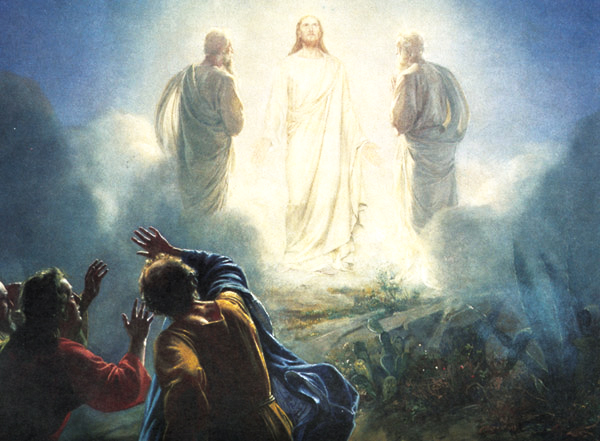
Six days later, Jesus took with him Peter and James and his brother John and led them up a high mountain, by themselves. And he was transfigured before them, and his face shone like the sun, and his clothes became dazzling white. Suddenly there appeared to them Moses and Elijah, talking with him. Then Peter said to Jesus, “Lord, it is good for us to be here; if you wish, I will make three dwellings here, one for you, one for Moses, and one for Elijah.” While he was still speaking, suddenly a bright cloud overshadowed them, and from the cloud a voice said, “This is my Son, the Beloved; with him I am well pleased; listen to him!” When the disciples heard this, they fell to the ground and were overcome by fear. But Jesus came and touched them, saying, “Get up and do not be afraid.” And when they looked up, they saw no one except Jesus himself alone.

As they were coming down the mountain, Jesus ordered them, “Tell no one about the vision until after the Son of Man has been raised from the dead.”

———————————————————————————————————-

From having read Exodus and Moses with Joshua working for six days in the cloud of God to reach the top of the mountain, we see the same number of days related to Jesus’ ascent on the holy (“high”) mountain. After six days Jesus was “transfigured before them.” This is the same as Moses being called by God into the cloud on the seventh day – the day recognized as holy. One can now make the assumption that Jesus was transfigured on a Sabbath, as was Moses. God does not do things haphazardly or by happenstance. Everything has purpose.

The Greek word “metamorphoó,” which is the root of the word written (“metemorphōthē”), means “to transform.” Strong’s adds this helpful analysis of the word: “3339 metamorphóō (from 3326 /metá, “change after being with” and 3445 /morphóō, “changing form in keeping with inner reality”) – properly, transformed after being with; transfigured.” [My highlights and underline.] This means that on the seventh day of the ascent upon the high mountain – after six days of effort – Jesus was in the cloud, with God. In that transformed condition, he reflected godliness: “his face shone like the sun, and his clothes became dazzling white.”

When we then read, “Suddenly there appeared to them Moses and Elijah, talking with him,” the point is a projection into heaven, where time on a linear plane dissolves. The soul that was within the body named Jesus (of Nazareth, born of a woman in Bethlehem) was the same soul as filled the bodies known as Moses and Elijah. This glimpse can only be seen when one realizes the holy thread throughout the books of the Holy Bible is souls reincarnated and those born of a holy line that loves God deeply and serves Him with all their souls.

When Christians believe the ‘three-in-one’ concept of Father-Son-Holy Spirit, one misses the Trinity of the Christ mind being in Moses-Elijah-Jesus. Each of those three figures was transfigured by the presence of God after being with Him, just as each was separately a ‘three-in-one’. Still, there can be no limit to how many human beings can become the Son, in whom God is very pleased, as all Apostles and Saints are likewise transformed by the Father’s extension of His Holy Spirit to a reborn Son. That resurrection always brings with it the Christ mind, as well as a brightly shining face and gleaming white clothes of purity.

When Matthew quoted God as what Peter said he had heard, the element of “Listen to him!” must be known to be a command from God to YOU. Because we cannot be an eyewitness to Jesus, as were Peter and Matthew, we can still listen to the voice of God, which was what Jesus was preaching. From the text of the holy scriptures God speaks to us through the words Jesus was remembered to have said. Too often we look to others to tell us what the meaning is; and if another is a Saint, they will guide up correctly. However, there are far more wolves in sheep’s clothing (bad shepherds) who will lead us the wrong way; and that is why we each are responsible to listening to our hearts, which will lead our brains. It takes practice hearing what physical ears miss.

We then read Matthew recount the reaction of the disciples after hearing God’s voice commanding them: “When the disciples heard this, they fell to the ground and were overcome by fear.” It is a scary thought to have – that we need to pay attention and hear, then act too. Our legs get rubbery when the idea is to learn, because you are expected to do this soon. We fall to the ground and cry like babies; but Jesus says, “Get up and do not be afraid.” Listen to that and believe you are not alone. Do not be afraid to serve God. That is why, after the disciples looked up, only Jesus was there. All the ghostly images and loud heavenly voices were gone. With the Christ mind, there will only be Jesus there with the devoted disciple, at all times and places, after one has seen and heard the divine.

When the group was leaving Mount Hermon to rejoin the others, Jesus told them to be silent about what they had experienced on the high mountain, until Jesus has died and been resurrected. While Jesus had spoken about his having to face death, the concept of being raised from the dead would have flown completely over the heads of any normal Jews (or Romans or Greeks, et al). Peter had rebuked Jesus for speaking of being punished to death, at which point Jesus said, “Satan, get behind me!” (Matthew 16:21-23) However, as the saying goes, “Seeing is believing.” Peter, James and his brother John saw Moses and Elijah raised from the dead, as real as Jesus. Still, without the Christ mind within them to fully understand their vision, Jesus was telling them to be silent until they had the wisdom of the Holy Spirit to speak about what they had seen.

***

#Exodus241218 #MosesElijahandJesus #TransfigurationofJesus #2Peter11621 #Matthew1719 #highholymountain #LastSundayofEpiphany

Psalm 116:1-3, 10-17: Proposing marriage on the Third Sunday of Easter (Year A)

The Third Sunday of Easter, like all Sundays inside the confines of Episcopalian churches in America, finds a Psalm of David read aloud.  Usually the congregation reads aloud, either by half or alternating whole verses, although some fancy churches will have a chanter sing the Psalm (which means “song”).  The production made over the Psalm is unlike the production made over the other readings, where only one person reads aloud (not singing aloud) and all the rest just listen.

Think back to when you were in elementary school.  Think back to your high school and college days.  No teachers sang any lessons to the class.  While some classes would read something from a book out loud, going from desk to desk, that was more to practice being bold enough to talk to a group, more than an exercise in learning what a book said by having people read only a portion aloud.  If anyone else is like me, then you will agree that it is hard to focus on what is said by someone else out loud, when I am trying to keep track of when I will have to read aloud.  Thus, no matter how powerful a Psalm of David is, it is only an exercise in “togetherness” – “See, we all read aloud together.  Aren’t we special?”

The problem with this approach is no priest will then walk into the aisle, announce a reading from a Gospel, read that aloud, and then rise above the masses at a podium saying, “I want to talk to you today about that Psalm we read.”  Nope.  Never happens.  However, it should today.

In the Gospel reading from Luke is read the story of Jesus appearing in unrecognizable form as Cleopas and wife (“two of Jesus’ disciples”) walked to their home in Emmaus.  That reading comes up Wednesday of Easter Week, Easter evening in Year C, and here on the Third Sunday of the Easter season, Year A.  So, regular church attendees regularly hear a sermon about that story from Luke’s Gospel.  The repetition might force a priest to put a new slant on an old topic, so his or her words don’t conjure up feelings of déjà vu.

In the Easter season there is always a reading from the Book of the Acts of the Apostles, and today we read about Peter speaking with a raised voice and how three thousand Jewish pilgrims would “save themselves from that corrupt generation” by being baptized in the name of Jesus Christ that day … instantly.  That is another reading that comes up multiple times during the Easter season.  Certainly, a sermon or two will have been focused on that story, so you remember that reading.

This year (A), during the Easter season, is the only time we read from 1 Peter.  So, if you did not listen carefully today, there is a good chance you will have forgotten all about what Peter wrote in his first epistle.  It is fairly short and says things that can easily be incorporated into any sermon, simply because the epistles tend to state the “catch phrases” that most adult Christians know.  Today Peter wrote, “live in reverent fear,” “you were ransomed,” “with the precious blood of Christ,” “your faith and hope are set on God,” and “you have genuine mutual love.” 

The Epistles do not get much deep attention in the Episcopal Church, simply because Episcopalians have short attention spans and a priest is limited to twelve minute sermons.  Those two traits are not conducive of deep understanding of anything; so it is best to just stick with the catch phrases found in the letters and maybe give the Apostle a quote credit (or not).

Parts of Psalm 116 are read on three different Sundays over the three-year cycle, and on two other week days.  It is read on Maundy Thursday – the foot washing service few people attend – so its words might ring a bell, but probably not.  Because we need to realize that David was led by God to write songs of praise and lament, his words are recorded to speak to us in the same way God led the other writers of Scripture to record God’s conversations as though directed to each of us, individually.

The people who organized the lectionary were also led by God to choose readings that link everything together, so divine purpose is in play here today and every Sunday.  The readings are not randomly picked, and they are not based on what a priest wants to talk about.  Certainly, they are not the product of some people in a smoke-filled room saying, “Okay what snippet do we have next to add here and there?”  By having that understanding – that everything read today is part of a whole with purpose – we are able to read the words of Psalm 116 and know they deeply relate with the words written by Peter and Luke.

Knowing that the divine purpose is to teach, not to attempt to twist words into some self-serving political message or current event words of encouragement, a sermon has to be a model of the Acts reading, where “Peter, standing with the eleven, raised his voice and addressed the crowd.” 

Were his words uplifted by the Holy Spirit; or did he scream like a maniac to get everyone’s attention?

The Greek word translated as “raised” is “epēren,” a form of “epairó,” meaning “to lift up” are “to exalt.”  Rather than “raised his voice” giving the impression of twelve Apostles screaming at the tops of their lungs, so three thousand Jewish pilgrims were scared into signing a petition to join the new Church of Jesus Christ, it is more sacred to read “with lifted voice.”  That way, it is easier for us to understand the Apostles spoke divinely.  Therefore, their words “testified with many other arguments and exhorted them.” 

That means God was speaking through the mouths of the Apostles, who not long before were still nervous about public anything.  Surely, before the Holy Spirit hit them, they were not longing to have some rabbi to tell them, “Today class we will read Psalm 116 out loud, with each disciple reading one verse.  Andrew, why don’t you start us off.”  God then spoke through the Apostles just as God had spoken through the mouth of Jesus.  We must agree that it was God coming out of Peter that encouraged seekers to be filled with the love of God in their hearts.

Therefore, the first verse read from Psalm 116 sings out with the same exalted voice of God.  There, David began by stating, “I love the Lord, because he has heard the voice of my supplication, because he has inclined his ear to me whenever I called upon him.”

Three thousand pilgrims in Jerusalem “welcomed [Peter’s] message [and] were baptized” because they were Jews seeking a closer relationship with their God.

David then sang, “The cords of death entangled me; the grip of the grave took hold of me; I came to grief and sorrow.  Then I called upon the Name of the Lord: “O Lord, I pray you, save my life.”

Peter told those whose ears heard his words, “Repent … so that your sins may be forgiven … saying, “Save yourselves from this corrupt generation.” 

The Greek actually written (“geneas tēs skolias tautēs”) says, “generation the perverse this,” where geneas means “race, family, and birth.”  One cannot presume Peter was only talking about those who just watched the Romans crucify Jesus, but all who think they are added to the family that calls Yahweh their God – at all times between then and today.  Thus, as Christians today, WE live in the perversion that has been allowed to be born around us – the generation of perverseness or a degenerate state.  It exists now, just like it existed prior to Jesus, when David cried out in fear.

Every Jew in Jerusalem who heard Peter (and the other eleven Apostles) felt the cords of death – MORTALITY – strangling them, not knowing how to ensure God would not punish them because they all had unforgiven sins.  They, like us and like David, called upon the name of the Lord to be saved.

You have to see yourself in that light of failure, or you do not call upon the name of the Lord for salvation.  If you are okay with your life of sin and say, “Its okay.  I’m good,” then you certainly are not getting God’s attention, whether you want it or not.  God does not compete with lesser gods – like oneself – so you are free to be part of the definition of a “corrupt generation.”  After all, we are each the center of our own universe, which goes whichever way we direct our universe to go.

Seekers, on the other hand, feel guilt and want to stop living lives that cannot cease wallowing in lusts and self-pity.  Like the hated tax collector Jesus saw, seekers silently beat their chests and bemoan there is no way to stop.  Sure, the money is great, but it all makes me feel dirty inside.

If only sin wasn’t so damn rewarding.  Then, like the Pharisee Jesus saw, one can be led to thank God for material things.  That’s when one prays, “How shall I repay the Lord for all the good things he has done for me?  I will lift up the cup of salvation and call upon the Name of the Lord.”

Everyone here today has many reasons to thank the Lord, more than for a good career, a nice house, or a fancy car.  God does more for you than give you the latest gadgets of technology to play with.  God has given you health, or children, or a sense of redemption.  Whatever your personal rewards, God gave them to you without you having to do anything in return.  Many Christians just take God for granted, like they deserve all that is good, simply because their parents let a priest drip some holy water on their little foreheads.  Not to mention them not complaining too loudly after being forced to learn all those Bible stories in children’s church.

Typical Christians today are just like the typical Jews of Jesus’ days – wallowing in self-gratifying sins with the pretense of being special because they were descended of the people chosen by God.  One corrupt and perverse generation after another.  The world is a place where perversion is easily handed out, asking nothing in return.  Christians do not even know what “the cup of salvation” is.

In the Episcopalian Church, where the Eucharist flows like welfare checks to the poor, freely given at the rail, asking nothing in return, it is easy to think the cup of salvation is the chalice that comes before one, with the altar server saying, “The blood of Christ the cup of salvation.”  That is not what David had in mind when he wrote those words.

THE cup of salvation is the second cup of wine poured out at the Jewish Seder meal.  That IS called “the cup of salvation,” which is poured out to commemorate the freedom from bondage in Egypt.  Whether David’s Israel practiced the Passover exactly the same as do Jews today is immaterial.  The “cup of salvation” was the marriage of the children of Israel to God.  A cup of wine is then symbolically drank to commemorate that eternal bond.  It is like a toast to the covenant, where marriage is a covenant.  One MUST marry with God, meaning He is the husband and everyone else is the wife.

With that understood, David then sang, “I will fulfill my vows to the Lord in the presence of all his people.”

The “vows” are the Laws Moses brought down to the Israelites.  Everyone had to announce their agreement to the covenant, in order to enter into a bond of commitment.  The wife submits to the will of the husband and the husband guarantees the wife will always be protected.  A marriage is therefore a public event of celebration.

Still, when David then sang, “Precious in the sight of the Lord is the death of his servants,” one needs to see how marriage means the death of the old self.  Commitment demands sacrifice.  In order to receive salvation, one must die of one’s old ways.  God does not take delight in the physical deaths of human beings, simply because death is nothing more than a stage of life.  Death is like the old 45-rpm records played on a phonograph – when the needle hits the space at the end, it rose and waited for it to be placed back down on that record again.  The soul is like the etched meaning in the grooves of the record, which is why it was made.

In the Hebrew of David’s Psalm 116, the word translated above as “servants” is “lahasidaw,” which is a statement from the root word “chasid,” meaning “kind, pious.”  The statement better says, “of his saints” or “of his godly ones.”  That means the death of God’s “servants” is the end of their life of sins, committed to fulfill a purpose of holy priesthood.  In a marriage ceremony, rather than drinking wine to celebrate a new partnership or union, a desired death is then like how the Jews symbolically break a glass wrapped in a napkin when a couple gets married.  The death of the old can never cut the marriage asunder.  The fragility of a sinful life is shattered, so it can no longer ruin a soul.

Marriage to God must be recognized as what that commitment truly means.  David sang, “O Lord, I am your servant; I am your servant and the child of your handmaid; you have freed me from my bonds.” 

Here, the repetition of “servant” is accurate, from the Hebrew “abdika,” from the root “ebed,”  meaning “servant, slave.”  To rise from the lowest of the low, which the state of being a “child of a maidservant” indicates, means one must feel deeply indebted to God for that favor granted.  The only thing one so low can ever be expected to repay is one’s complete devotion.  Devotion to God means serving His every need as His priest.

David then sang, “I will offer you the sacrifice of thanksgiving and call upon the Name of the Lord.”  This does not say that “thanksgiving” is a “sacrifice,” as if one begrudgingly has to suffer through repayment with lip-service, like: “Oh okay.  Thank you God.”  THE sacrifice is the death of your self-ego, which you do in the most sincere “thanksgiving” to God.  No words are necessary, as God knows each and every heart of His wives (i.e.: saints).  Still, when David sang, “call upon the name of the Lord,” that is equally not some “catch phrase” that is meaningless.  That needs complete understanding.

The literal Hebrew there says, “ubesim Yahweh eqra,” which means “upon the name Yahweh will proclaim.”  This is where one grasps that the wife in a marriage takes on the name of the husband.  Regardless of modern perversions of the human institution of marriage, “in the name of” means, “I am now known as.”  To take “upon the name of Yahweh” one has become married to God, becoming a saint in His service, so one can “call” or “proclaim” just like we read Peter spoke “with raised voice.”

This is important stuff, becuase just as David used “the name of” so too did Peter.  In Acts Peter said to the pilgrims, “Repent, and be baptized every one of you in the name of Jesus Christ so that your sins may be forgiven; and you will receive the gift of the Holy Spirit.”  That says one IS JESUS reborn.  God is the one who forgives sins through the “cup of salvation,” thus when one has married God then one’s sins are forgiven and one receives the wedding gift of God’s Holy Spirit.  The Holy Spirit is what baptizes one so one becomes Jesus resurrected in the flesh.

In Peter’s epistle he wrote, “with the precious blood of Christ,” [the sacrificial lamb] “you have come to trust in God, who raised him from the dead and gave him glory” [as THE WIFE OF GOD].  Peter then added, “You have purified your souls by your obedience to the truth so that you have genuine mutual love, love one another deeply from the heart.”  That is a statement about marriage and commitment.

From that, Peter was led to write, “You have been born anew, not of perishable but of imperishable seed, through the living and enduring word of God.”  To be “born anew,” one must first experience death, where David wrote, “Precious in the sight of the Lord is the death of his saints.”  Marriage to God means the death of the sinner and the rebirth of the Saint in the name of Jesus Christ.

David then sang again the words, “I will fulfill my vows to the Lord in the presence of all his people,” but this is not the same as the marriage vows first taken.  Those vows are taken publicly; but the life of a Saint is not for one’s personal enjoyment. 

A Saint lives to BE the resurrection of Jesus on earth, as God incarnate.  This is not so one can boast, “Look at me!  I am married to God!”  Instead, one becomes like “the child of [God’s] handmaiden,” a servant to the Word of God.  A slave whose only role is to offer the cup of salvation to seekers of the truth.  The vows of marriage to God are the realities of being a priest of God, using the gifts of the Holy Spirit in the midst of the public eye.

That is then the meaning in David’s last verse, where he sang, “In the courts of the Lord’s house, in the midst of you, O Jerusalem.  Hallelujah!”  That says the Saint, as the reborn Jesus Christ, is the house of God.  God resides within one’s heart center. 

Jesus is the High Priest who rules over one’s brain, as the Christ Mind.  Every area of life one comes into becomes the courts where divine judgment will keep one from wandering into the worldly traps of sin.  When David wrote “in the midst of you,” he was not focusing on a place on the earth, but his being one with God.  It has the same meaning as Jesus saying, “I am in the Father as the Father is in me.”  The word “Jerusalem” then bears the eternal meaning of “foundation of peace.”  Jesus Christ is the perfect cornerstone from which the foundation of eternal peace in heaven is built.

By seeing this coming from Psalm 116, it is easy to set one’s eyes on the affect an unrecognizable Jesus had on two disciples who had known him all his life.  Cleopas looked at his wife, Mary, and said, “Were not our hearts burning within us while he was talking to us on the road, while he was opening the scriptures to us?”  Those two were just like the three thousand who listened to Peter offer “arguments” as explanations of Scripture.  They all received an invitation of marriage to God, carried by God’s messenger Saints, and they all happily said, “Yes!”

On this Third Sunday of the Easter season, when the counting of fifty days marks when Moses came down with the marriage proposal of God to his Israelite brides AND also when Jesus returned from heaven and wrote the marriage Covenant on the hearts of those who said “Yes,” it is time to make your choice about God’s proposal to you.

Do you say, “I love the Lord, because he has heard the voice of my supplication, because he has inclined his ear to me whenever I called upon him”?  Do you love God because he feels like your sugar daddy, giving you everything you want?

Or, do you say, “The cords of death entangled me; the grip of the grave took hold of me; I came to grief and sorrow,” so you pray to God for forgiveness of your sins?

David sang a song about your life.  You just need to understand what the lyrics mean.  Ignoring them will do you no good.

A serious proposal has been made.  It is up to you to determine your outcome.

Psalm 66: 7-18 – Praise to what made Israel great under David

This song of praise is selected to be sung loudly in Episcopal churches on the Sixth Sunday of Easter.

The Easter season is when all of true faith answer the call – “Come out!” – and die of Self, experience the lowest of the low, and then rise as the resurrection of Jesus Christ, married to God Almighty, going out into the world in ministry [the purpose of an Ordinary season that follows Pentecost Sunday, the end of the Easter season] leading others to God, through Christ.

This song of David follows a reading from the Acts of the Apostles, where focus was placed on the Greek adoration of gods, including one whose name no one knew, as shown through idols, altars, shrines, temples, and statues.  David sang a song that points out where the Greeks had gone wrong, which is why this Psalm was selected to be sung on this day.  The elders who made this choice understood this connection; and the point of ministry is to amaze the disciples of Jesus with explanations that open their hearts wide and make them burn with desire to know more, falling in love with the Lord.  [Note: We read about this in the story of the road to Emmaus, during the readings on the Third Sunday of Easter.]

The Israelites learned these psalms like girls today learn pop tunes.

The English translation of Psalm 66, as read or sung aloud in church, comes from the Book of Common Prayer (pages 674-675).  This translation is not an exact match for the New International Version (NIV) or the New American Standard Bible (NASB), which the other readings are from (with modifications).  It is important to realize that the English translations, including the one found in the Book of Common Prayer, are misleading paraphrases.  They mislead by making this song of praise become as useless as a Greek statue to a Greek god.

As a human being that thirsted for open discussion about Scriptural matters, which I was not having quenched through listening to inane sermons Sunday after Sunday, I began a search for another human being who was seeing the same truths that I saw, so I could be confirmed that I was not mistaken.  My attendance at Bible Study classes on Wednesdays and lectionary study classes before church on Sundays found it was the blind leading the blind, falling into one hole after another.

This led me to leap at the chance to join the program offered by larger Episcopalian churches (large enough to field twelve enrollees per year) called Education for Ministry (EfM).  The program is designed to be four years long, with each year having about thirty-nine meetings (two hours each), once per week.  I enrolled in a class of twelve that was for the first year students.

The first year of the EfM program focuses on the Old Testament.  Right off the bat, as we were reading the course paperwork that came with the admission fee and the Book of Genesis, we were asked to believe the hypothesis of multiple writers of Hebrew Scripture.  Rather than think Isaiah wrote every one of the books under his name, scholars had determined Isaiah was like Shakespeare and anyone could have written a book under that name.  Those same scholars had determined the Hebrew text has four basic writers, with one of them called “the E writer,” where the “E” represents the Hebrew word “elohim” (“אֱלֹ֘הִ֥ים”).

The Hebrew word “elohim” is said by Strong’s to be “(plural) 1a. rulers, judges; 1b. divine ones; 1c. angels; 1d. gods.”  While being a plural form of the word “el” (“אֵל”), Strong’s adds, “(plural intensive singular meaning) 2a. god, goddess; 2b. godlike one; 2c. works or special processions of God; 2d. the (true) God; 2e. God.”  As a plural word that quickly implies “gods,” the E-writer was someone who liked writing in the plural number, while meaning the singular.  

Now, as a first year student in a course asking me to believeelohim” means “el” (and their reasoning was not “because Strong’s said so”), the course paperwork explained that belief should come because of a theory by scholars.  That theory (admittedly, in the course paperwork) could not be proved, but it needed to be accepted so the students would be able to continue reading their course paperwork, which assumed everyone believed that ‘ghost writers’ hypothesis. 

My question was, “Why would a writer choose to scribble four letters, when the intent meant only two were necessary?”  Besides the obvious confusion such a stunt would cause, I asked my ‘mentor’ (the class leader), “What is wrong with reading “gods” every time “elohim” is written?”  After all, I thought, God created everything, why not helpers?

I became a bad boy student, with thirty-eight (or so) more weeks to go.

I tell this story because the Book of Common Prayer, under the heading “Concerning the Psalter” states this:

“Three terms are used in the Psalms with reference to God: Elohim (“God”), Adonai (“Lord”) and the personal name YHWH.” (page 583)

It is with this understanding that one realizes five times in Psalm 66:7-18 (the numbering of verses differs in other publications) “God” is sung or spoken aloud, with each of those translations coming from the Hebrew word “elohim,” which means “gods.”  Once, in verse 16 (some publications list this as verse 18), the word “Lord” is read, which comes from the Hebrew word “adonai.”

Here is an article on Wikipedia that lists the various names for God in Hebrew. In that article one learns that “adonai” is the plural of the singular word “adon,” which means “lord.” Amazingly (to me), the Jews also adhere to the plural versions being acceptable to read in the singular, depending on the context surrounding each use (some plural uses do means “gods”).  So, a combination like “adonai elohim” is read as “Lord God,” not “lord of gods” or “lord of lords.”

With all this said, one comes to a point of decision.  A choice has to be made.  There are only two options: 1.) David wrote Psalm 66; or 2.) The E writer wrote Psalm 66. 

The choice is yours.  Now that you have been officially educated in scholastic reason (after the fact), do you build a temple to “E” and worship his word, or do you sing the song of David as if your own heart sings of “gods” and “lords”?

All of Genesis 1 says, “elohim” did this and “elohim” did that, only to have it translated so it reads “God” did this or “God” did that.*  My EfM mentor refused to allow discussion about my proposition, “Why was God incapable of having lesser gods [which God would have created] do the work He commanded?”  I asked, “Why couldn’t Creation be the work of God through His gods?

I believe God is smarter than ole Tom Sawyer. If he could get others to do his work, I’m sure God could do better.

I was told, “There is only One God, so shut up.” [I paraphrase.]

To understand “elohim” as “gods,” one has to understand Paul speaking to the Greeks as one of the “elohim” who had been filled with the Holy Spirit, reborn as God’s Son, and as such God was creating Christianity through “elohim” (then called Apostles).  If one can grasp that concept, then back up the calendar to the days of David.  David was also filled with God’s Holy Spirit, reborn as God’s Son, and creating a holy Israel.

The scholars who worship the E writer theory cannot even confirm that David existed.  They think (but cannot prove) David was a mythical creation of the Jews, something akin to King Arthur.  They will not come right out and say that, but there are few true Christians (like Paul) these days, and there are no more King Davids leading anyone anywhere in 2020.

There are no longer any Israelite “elohim” around, of whom David sang.  The collapse of Israel was due to the people not wanting to become sons of God (“elohim“).  They had asked Samuel to tell God to give us a King, so the Israelites could be like the Greeks and Egyptians, and build monuments to the “gods,” rather than having to make the commitment to be “gods” that did all the work of creation God commanded.

Again, the English translation of Psalm 66 hides the truth that underlies.  You can follow along with this Interlinear list of Hebrew and English.  If feeling a little lazy, just keep reading and ignore the link.  Here are some literal translations that do not ignore the plural number words:

Verse 7 is read aloud so it says, “Bless our God, you peoples; make the voice of his praise to be heard.” It literally can translate this way [keeping in mind that Hebrew has no capital letters]: “kneel you peoples  you gods –  and make be heard  –  the voice of his song of praise”.

Now, can that be read as if David was calling the Israelites the children of God, using “elohim” as a way of their Covenant meaning all “people” of Israel had to be married to God, reborn as His servants [i.e.: holy priests]?  You tell me.

Verse 8 then says, “who places our soul among the living  –  and does not allow out feet to be shaken.”

This is reference (“who”) to the one “voice of his song of praise,” who has the power to give souls away – Yahweh.  Still, it says the ‘one soul’ of Israel has been granted eternal life (“among the living,” versus being among the mortal dead).  That grant to Israel was to place His priestly servants among the world of peoples, to stand tall because of the faith of elohim, unable to be shaken from its solid foundation that is oneness with God.  Christian Saints have that solidity through the perfect cornerstone that is Jesus Christ.

Verse 9 says, “for you have tested us gods (elohim) –  you have refined us as is refined silver.” 

This says the test of faith means no impure hearts will ever be united in marriage to YHWH.  The merger of God with a soul means one is refined and all impurities have been burned away.  Having passed that test, the Israelites became “gods” who served the One God.

Verse 10 then says, “you brought us into the net  –  you laid afflictions around our loins”. 

This says that God was the suitor in the relationship with the Israelites.  The testing of their merits came from all the attacks they had to face, against the indigenous peoples of Canaan.  They had to pass the test of commitment through the times of the judges, when the people cried out to God in anguish.  They were not free to interbreed with others.

Verse 11 follows that by saying, “you have caused to mount mankind over our heads  –  we went through fire and through water  –  but you brought us out to abundance”. 

Following “afflictions around our loins,” where the Israelites were seen as responsible for the plagues of Egypt, is was “through fire” of anger that Pharaoh pursued the Israelites, forcing them to pass “through water” parted by Moses.  By God being married to Moses (an “elohim“), God took the Israelites to the Promised Land, the Land of Milk and Honey (“abundance”), with the rest of “mankind” seeking to destroy the Israelites for not being like ‘normal people’.

Verse 12 then says, “I will go into your dwelling places with burnt offerings  –  I will pay you my vows  which have uttered  –  and I have declared  –  in accordance I was narrowed”. 

Remembering the Fifth Sunday of Easter, when the reading from John 14 had Jesus telling his disciples about there being many dwelling places in his Father’s household, David spoke of each Israelite as models of himself, where the “I” of his ego was a “burnt offering” so God could dwell within his flesh.  That became a marriage, based on the “vows” of the Covenant being “paid” by living up to that commitment.  As in a marriage ceremony, two exchange “vows,” therefore God “uttered” and David (Israel) also “declared.”  With the bond set, David was then “distressed” or “narrowed,” in the sense that he became the servant of his Lord, without the freedom to do as he so pleased – the Covenant became Law.

And the ring symbolizes eternity.

Verse 13 then follows, saying “burnt sacrifices of fat animals  –  I will offer you with the sweet aroma of rams  –  I will offer bulls with goats  –   selah [lifted up]”. 

Certainly, this speaks of the Israelite-Jewish ceremonial rites of altar sacrifices, which are parts of the Covenant.  Because the first person singular is used, meaning David spoke of his marriage to God, this speaks on a broader sense of the ministry of the “elohim,” as the act of marriage is only the first step of many in submission to God’s Will.  Thus, “fat animals,” “rams,” and “bulls with goats” speaks of the role of a Son of God – to “lift up” others who will give up their self-egos and serve the Lord.

Verse 14 then says, “come hear  –  and I will declare [to] all you who fear gods (elohim) –  what he has done for my soul”. 

This fully supports verse 13 being about ministry, because this is what David preached to those who “come hear.”  He would speak to Israelites, but also the leaders of any other nations who met him [remember David was kept safe from angry Saul by the leader of the Philistines and welcomed to live among them].  The aspect of “fear” [from the Hebrew “yare“] is perfectly suited for all times, as fearing giving up one’s self-ego and self-identity to serve God is the same fear girls have before being given away in marriage.  When David sang about “what [God] has done for my soul,” he was speaking words of encouragement – “Everything will be more than okay.  It will be great!”  By saying “soul” [from the Hebrew “nephesh“] the marriage is Spiritual, as is being one of the elohim.

 Verse 15 then says, “to him with my language  –  I proclaimed and he was praised by my tongue”. 

This says that David was like Jesus, who did not speak for himself but for the Father, because the Father was with him.  This says being the voice of God is the role of the elohim.

And the voice of God came like tongues of fire.

Verse 16 says, “if wickedness I ponder in my inner mind  –  not will hear the Lord [adonai]”. 

More than stating God will turn His back from the wicked, it says that one who lets wickedness rule over one [remember Cain] then one will refuse to hear God speaking words that say, “You are going the wrong way.”  Human beings destroy themselves by refusing to let God into their hearts, through relinquishing their self-importance.

Verse 17 then says, “surely has heard gods (elohim) he has inclined the voice of my prayers”. 

Again, this is not David singing about God hearing someone, but that one who has become married to God, as one of His elohim, they have heard the voice of God coming through their prayers.  Prayer is a two-way street, such that God listens to and answers the prayers of His wives (human beings).

Finally, Verse 18 says, “kneel gods (elohim)  –  who not has turned away my prayer  –  nor his goodness to me”. 

Here, David repeated the word “barak,” which is translated both times as “blessed.”  The word means “kneel” also, like when a King of England would knight someone who would kneel before him.  That imagery is a comparison of one of the elohim being likewise touched by the sword of God’s power.  David sang that the elohim are those who pray to God and have their prayers answered, which comes in the way of “goodness,” which is also “mercy” given to their souls.

With all this said about the meaning, which centers on the concept of elohim not just being God, but being the plurality of God with another’s soul – as an Apostle or Saint – few people these days hear this song in this way.  Sermons are not written about the Psalms; but then sermons are not written that tell the people not to fear submitting their egos to serve God wholeheartedly.  Everyone sits in pews of the sheepfold or leans on the sheepfold fence wearing a robe of piety, becoming unsacrificed fat animals, foul smelling rams, and bull-headed ornery goats, all going nowhere beyond their mortal destructions.

Waiting for the sermon at the petting zoo?

The imagery of David’s Psalms needs to be modernized and taken to heart today, before it is too late.  As a side note, in Psalm 23, read on the Fourth Sunday of Easter, which is commonly referred to as Good Shepherd Sunday, the first verse says, “The Lord is my shepherd; I shall not be in want.”  David did not write “adonai” where the translation is “Lord.”  He wrote, “Yahweh” (or YHWH or yhwh – “יְהוָ֥ה”).  No need for the E writer to be called in for that one.

———-

Footnote:

– When Genesis 2 rolls around, “elohim” is found in verses 2 and 3, but then changes to “Yahweh elohim” (“יְהוָ֥ה אֱלֹהִ֖ים”), written in verses 4, 5, 7, 8, 9, 15, 16, 18, 19, 21, and 22.  Because that clearly states “God of gods,” the EfM course paperwork said, “Oh, by the way, the E writer ended Genesis 1 with the end of that chapter being verses 1-3 of Genesis 2 really being Genesis 1.  The scholars believe Moses called “Break Time!” and the E writer walked off leaving three verses at the top of a piece of parchment, but then the Genesis 2 writer came and sat at the scrib’s table and forgot to give those verses to “E.”

“Oh, what a tangled web we weave, when first we practice to deceive!”

Psalm 68 – A song of praise God’s angels sing

This is the selected Psalm to be sung or read aloud in catholic-churches [universal Christian churches] on the Seventh Sunday of Easter. This will next be Sunday, May 24, 2020.

I printed out the Lectionary page versions of the readings for this next-to-last Sunday of the Easter season and after analyzing the Acts reading (Acts 1:6-14) I was not getting the connection to the Ascension theme from any of the other readings. Often, there is a clear thread that connects all the readings, which is what ALL sermons or homilies should be addressing [not just one of the readings; because if one is too lazy to address more than one, then one needs to make reservations for the next life on earth, which might be called hell]. If you only attend church for the wafers and wine [realizing none of that is happening during this End of the World period we are in, due to a pandemic], not going to have your heart burn to know God and His Son PERSONALLY, then you don’t want to know anything that is truly worth knowing.

I looked up the Interlinear version of Psalm 68 and the theme jumped out at me. I had to focus my eyes a little, but once it was in focus it was clear. It goes back to a realization I had just last week. That realization is based on the mistranslation in the psalms of elohim.

I have long known that elohim is “gods” [plural] in Hebrew and not the singular God we worship, which is stated as “Yahweh” [YHWH]. However, just last week the inner voice led me to see how Apostles and Saints are elohim, because they are the union of a body-soul combination [a mortal entity] with God’s Holy Spirit [an immortal entity], being reborn as “gods.” More specifically, Apostles and Saints are reborn Sons of God, the elohim that are all Jesus Christ.

The heavenly host – the arms of God.

In the fourteen verses chosen from Psalm 68 to be sung [skipping over verses 11 to 32], there are fifteen references to “elohim,” one to “yah” [short for Yahweh] and one to “el” [as “the god of Israel”]. All of that is in fourteen verses sung aloud.  When each and every one of the mistranslations of “God” are erased and “elohim” sang instead, then the reading from Acts has perfectly set up Psalm 68, by ending with the following:

“Peter, and John, and James, and Andrew, Philip and Thomas, Bartholomew and Matthew, James son of Alphaeus, and Simon the Zealot, and Judas son of James. All these were constantly devoting themselves to prayer, together with certain women, including Mary the mother of Jesus, as well as his brothers.”

Those names and general identifications are stating those who would become Jesus Christ returning to earth in the flesh, the union of body and soul with the Divine. They are the elohim of Christianity, and they ALL express the divine duality of the Gemini twins (Castor and Pollux).

When this is seen, then Psalm 68 is ‘Transfigured” like this:

1 Let Jesus Christ reborn arise, and let his enemies be scattered; * let those who hate him flee before him.
2 Let them vanish like smoke when the wind drives it away; * as the wax melts at the fire, so let the wicked perish at the presence of Saints.
3 But let the righteous be glad and rejoice before those reborn as Jesus Christ; * let them also be merry and joyful.
4 Sing Saints, sing praises in his Name; exalt him who rides upon the clouds; * YAHWEH is his Name, rejoice before him!
5 Father of orphans, defender of widows, * Apostles in his holy habitation!
6 Apostles give the solitary a home and brings forth prisoners into freedom; * but the rebels shall live in dry places.
7 Saints, when you went forth before your people, * when you marched through the wilderness,
8 The earth shook, and the skies poured down rain, at the presence of Saints, the Apostles of Sinai, * at the presence of those reborn as Jesus Christ, the Saints of Israel.
9 You sent a gracious rain, Apostles, upon your inheritance; * you refreshed the land when it was weary.
10 Your people found their home in it; * in your goodness, Saints, you have made provision for the poor.
33 Sing Christians, O kingdoms of the earth; * sing praises to the Lord.
34 He rides in the heavens, the ancient heavens; * he sends forth his voice, his mighty voice.
35 Ascribe power to the Son of God; * his majesty is over Israel; his strength is in the clouds.
36 How wonderful are Saints in his holy places! * the Apostles of Israel giving strength and power to his people!


Blessed be those reborn as Jesus Christ!

In a couple of places the translations of the transliterated Hebrew words “bā·‘ă·rā·ḇō·wṯ” [“בָּ֭עֲרָבוֹת”] and “baš·šə·ḥā·qîm” [“בַּשְּׁחָקִֽים”] state “heavens” or “skies,” but the translations shown by Bible Hub are “on the clouds” and “in the clouds.” The italics are then pointing out those changes, as the Acts reading tells of Jesus ascending via a cloud.

Interestingly, the root word that leads to the translation “extol him who rides upon the clouds by Yahweh” [the literal Bible Hub translation], “arabah” has a defined translation as “a steppe or desert plain.” When this is then translated as “upon the clouds,” one can get an idea how being “hid from the eyes of them” has little to do with actual clouds up in the sky, but the heat that rises from the earth and makes things difficult to see. Additionally, the root word translated as “in the skies” is “shachaq,” which can also mean “dust,” as the wind sweeps dust from the earth and makes visibility impossible.

This is the meaning of Christ the King, which (as Jesus said), “My kingdom is not of this world. If it were, my servants would fight to prevent my arrest by the Jewish leaders. But now my kingdom is from another place.”  Jesus Christ is the Spiritual king of God’s chosen people.  His realm not of this world is over the elohim.

As a selection during the Easter season, when the symbolism is for disciples to commit themselves fully to service to God – become His wives, bound by the wedding band of the Holy Spirit – as elohim in the name of Jesus Christ, this song of praise needs little explanation, beyond the changes I have made. It should naturally be a song felt in one’s heart. It should be a song that will be sung in heaven, long after one’s flesh has returned to the dust.

In-Depth Pentecost Sunday Reading Explanations – Part 3 of 5 (Psalm 104:24-35)

The Acts 2 reading (a mandatory) and the two optional readings from Numbers and 1 Corinthians, wrap around a single Psalm – Psalm 104, verses 24-35 (although the lectionary lists the first verse as 25, with a verse 37, there are only 35, beginning at 24). After the Seventh Sunday of Easter, when “elohim” was sung many times (all translated as “God”), Psalm 104 states Yahweh four times (ending with “Yah”) and including one “elohay” – “my god.”  We also find forms or “ruach” (or “breath-spirit”) twice.

Those verses sing:

24 O Yahweh, how manifold are your works! in wisdom you have made them all; the earth is full of your creatures.
25 Yonder is the great and wide sea with its living things too many to number, creatures both small and great.
26 There move the ships, and there is that Leviathan, which you have made for the sport of it.
27 All of them look to you to give them their food in due season.
28 You give it to them; they gather it; you open your hand, and they are filled with good things.
29 You hide your face, and they are terrified; you take away their ruach,
and they die and return to their dust.
30 You send forth your ruach, and they are created; and so you renew the face of the earth.
31 May the glory of the Yahweh endure for ever; may the Yahweh rejoice in all his works.
32 He looks at the earth and it trembles; he touches the mountains and they smoke.
33 I will sing to the Yahweh as long as I live; I will praise elohay while I have my being.
34 May these words of mine please him; I will rejoice in the Yahweh.
35 Bless the Yahweh, O my soul. Yah!

The first verse sung in this selection gives a prelude of the following verses, singing “How manifold are the works of Yahweh?”

The word translated as “manifold” is “rabbu,” meaning “many are, numerous are, or great are.” Thus, the works of Yahweh include, but are not limited to: descending like a mist around the tabernacle and making seventy elder prophesy for the only time in their lives; coming on like a rush of violent wind, filling an entire house, and dividing tongues as of fire on Apostles; and, presenting those who God loves and those who love God in return with various talents that enable them to do many spiritual things, including prophesying.

When David sang, “in wisdom you make them all,” the word “chokmah” says everything created by God is from His Mind of perfection and skill. That means Eldad and Medad did not mistakenly receive the Holy Spirit. It means three thousand did not suddenly see some benefit in saying they would believe in a dead Jew as God’s Son. It means Paul did not write about how to be clear about what the Trinity is all about, as if there were to be some imperfection in God’s creation of apostles and Saints.  David knew God’s divine insight surrounds us all, at all times.

Verses 25 and 26 sing of the flow of creation, as a “great and wide sea” where ships ride on the surface and powerful creatures are known to be submerged beneath. This is metaphor for the power of God and the Holy Spirit (as the “Leviathan”) being the “sport” of God’s baptismal powers.

How many of God’s creations do we tremble and shake at the thought of? More than you want to admit.

The “Leviathan” (from the Hebrew “Livyathan”) is thought to be a “serpent, dragon, or sea monster,” which makes it be projected by David as the “sport” of God that would have him descend to earth and strike fear in the hearts of the Israelites, simply by making Eldad and Medad prophesy suddenly, without any inkling they would be cast into the mouth of that great Spirit. The reaction of Moses to Joshua’s concerns were how David used “sachaq” as God “play,” as the word also equates to “laughter.” The fear of two speaking in tongues certainly brought out a laugh from Moses.

In verse 29, where David sang, “you take away their ruach, and they die and return to their dust,” this speaks of the soul, which is the “breath” of life that fills all mortal creatures. The “ruach” is God’s breath of life that controls every aspect of a body’s growth and development, maintaining and regulating every internal system. When that soul spirit leaves a body of flesh it dies and returns to the earth, from which it came. However, in verse 30 David knew there was another form of God’s breath.

When David sang, “You send forth your ruach, and they are created; and so you renew the face of the earth,” this speaks of the creation of Apostles and Saints. Peter and the eleven-plus were only filled with the ruach of mortal life until Pentecost Sunday. Then, the Holy Spirit gave them a new creation, so they were renewed on the face of the earth.

The Hebrew word “chadash” is translated as “renew,” but the word implies “repair” as well. From the previous verse singing about the loss of “breath” and death, “the “repair” is the gift of God’s grace as a “rebirth” of eternal life, from which the soul never knows death in a physical body again. This is the presence of JESUS in a living body of flesh that Paul explained … when that Lord is placed alongside the life breath soul, as its King.

David then sang of this presence meaning “may the glory of the Yahweh endure forever; may the Yahweh rejoice in all his works.” Verse 31 then sings the praises of an apostle and Saint. It is less from David’s history and intellectual prowess that he knew of this state, but instead David was in a state of prophetic ecstasy and prophesied in his Psalms.

That means God spoke through his words just like God explained the Torah to the Israelites in ecstatic elders. The glory of Yahweh that endures forever is the living waters of Jesus Christ, which flowed through the Apostles and onto the streets of the Essene Quarter, filling three thousand souls with the same endurance of the Holy Spirit.

[Next is Part IV]

#Leviathan #1Corinthians12313 #Psalm1042435 #PentecostSunday2020 #Psalm104 #Numbers112430

Sixth Sunday after Pentecost – Reaching the point of decision

Please read these verses that come from the readings offered for today. A sermon will follow.

Genesis 25:23-26

And the Lord said to her,
“Two nations are in your womb,
and two peoples born of you shall be divided;
the one shall be stronger than the other,
the elder shall serve the younger.”
When her time to give birth was at hand, there were twins in her womb. 25 The first came out red, all his body like a hairy mantle; so they named him Esau. 26 Afterward his brother came out, with his hand gripping Esau’s heel; so he was named Jacob.

Psalm 119:107-110

107 I am deeply troubled; *
preserve my life, O Lord, according to your word.
108 Accept, O Lord, the willing tribute of my lips, *
and teach me your judgments.
109 My life is always in my hand, *
yet I do not forget your law.
110 The wicked have set a trap for me, *
but I have not strayed from your commandments.

Isaiah 55:11; 13

so shall my word be that goes out from my mouth;
it shall not return to me empty,
but it shall accomplish that which I purpose,
and succeed in the thing for which I sent it.

Instead of the thorn shall come up the cypress;
instead of the brier shall come up the myrtle;
and it shall be to the Lord for a memorial,
for an everlasting sign that shall not be cut off.

Psalm 65:2-4

2 To you that hear prayer shall all flesh come, *
because of their transgressions.
3 Our sins are stronger than we are, *
but you will blot them out.
4 Happy are they whom you choose
and draw to your courts to dwell there! *
they will be satisfied by the beauty of your house,
by the holiness of your temple.

Romans 8:5-8

For those who live according to the flesh set their minds on the things of the flesh, but those who live according to the Spirit set their minds on the things of the Spirit. To set the mind on the flesh is death, but to set the mind on the Spirit is life and peace. For this reason the mind that is set on the flesh is hostile to God; it does not submit to God’s law– indeed it cannot, and those who are in the flesh cannot please God.

Matthew 13:20-22

As for what was sown on rocky ground, this is the one who hears the word and immediately receives it with joy; yet such a person has no root, but endures only for a while, and when trouble or persecution arises on account of the word, that person immediately falls away. As for what was sown among thorns, this is the one who hears the word, but the cares of the world and the lure of wealth choke the word, and it yields nothing.

——————–

These are excerpts from the possible readings for the Sixth Sunday after Pentecost (Proper 10, Year A), which will be read aloud in Episcopal churches (those not out of business due to fear of viral disease) and/or broadcast via streaming video (live or recorded) displayed on Facebook (one of the elohim of Aquarian technology) on Sunday, July 12, 2020.

These excerpts are parsed from the whole, rather than present the whole. I cut and paste here to keep wandering minds from being confused by the surrounding verbiage, thus easily confused by the ramblings of a hired hand with a political agenda. If you read the words closely, you might be able to pick up the theme of duality, where “duality” means “an instance of opposition or contrast between two concepts or two aspects of something.” (Google #2)

This should become quite evident in the Genesis reading, as God told Rebekah she would deliver twins. The two fought within her womb, causing her great concern.

Psalm 119 sings of the troubles within the righteous, based on the opposition posed by the wicked, who set traps.

Isaiah sang of the differences present in the world (the duality), all which serves a purpose. He states the duality of a thorn and a cypress and a brier and a myrtle.

Psalm 65 sings of the human duality that is sinner and Saint, where the difference is based on who chooses to “hear prayer.”

Paul wrote to the Christians of Rome, telling them of two types of human beings: those who “set their minds on the things of the flesh” and those who “set their minds on the things of the Spirit.”

Finally, Jesus explained his Parable of the Sower (to his disciples who asked for explanation – found from the missing verses in the reading), such that the seeds will always produce growths that are by design, but dependent on their environment. The duality is (basically) that of a failed purpose and a successful purpose.

The duality of these readings is reflected in the news of America today.

There is fear of a pandemic getting bigger! Oh my!

There is the Caucasian mayor of New York City standing with militant Negroes painting “Black Lives Matter” on a main thoroughfare, in front of a building named after President Donald Trump.

There is the media portraying the demands to defund the police as if that were some kind of logical idea.

There are the Communist Chinese persecuting the Chinese of Hong Kong, while addle-minded (and morally corrupt) Joe Biden is propped up like a stuffed puppet, whose strings are pulled by his keepers making him condemn Donald Trump (like a pot calling a kettle black).

Donald Trump is commuting the sentence of Roger Stone, with Nancy Pelosi introducing a bill to limit presidential powers of pardon (although not a hindsighted bill that would send heinous criminals pardoned by Bill Clinton and Barack Obama back to prison).

Meanwhile, the land is being scorched by oppressive heat and humidity, making wearing a mask in public sweaty, if not life threatening.

The list of terrible news goes on and on and on.

There will never be an end to the terrible news.

It is a purposeful trap played by the media (the duality of left and right wings flapping against one another in the womb of civil war).

It is the illusion of evil that attempts to replace cypress trees with thorns and drown out all ears that hear the voice of God within their minds, designed to turn human brains towards matters of the flesh.

Black lives are souls in colored flesh, are they not? What color exists in the ethereal realm?

Rather than be true priests of Yahweh and speak as divine Apostles – the Saints of true Christianity – hired hands, false shepherds and community organizers with clerical collars around their necks do not teach “stay the course – keep your minds in the Spirit.”

They cannot teach that which they do not know.

One in the pews, who likewise does not know the Holy Spirit within, cannot possibly realize a hired hand, false shepherd, or social justifier is poisoning their minds with propaganda. The blind have no way of knowing who else is blind, but pretending to see.

When I watch the news of the day for five minutes (given that the first four minutes are always commercials – which draw a different rise of ire within me), I cannot believe the world is allowing such things. I boil with hatred.

I turn off the television and go to the computer and log onto Facebook. I am rewarded by meme after meme of worthless clutter, with it being just like the news. I boil with the ineptitude of ‘friends’ thinking an evil world can be kept at bay by inane sayings, stupid jokes, and items of horrific news not shown on the television.

It is enough to cause such deep anger within that one wants to go into the streets shooting anything that moves.

[Calm down. Slow deep breaths. Count to ten.]

To hell with some priest promoting a new protest march on the police department, planning to walk arm-in-arm with the poor Negroes (from another part of town) whose hearts are filled with such deep hatred of Caucasians that they lust for someone – anyone – to set them off as they protest, so they can capture the raw emotion of violence on a smart phone video, which they can then post on social media to further inflame souls.

I don’t need a priest to further my anger that sin has taken over the world, aiding and abetting it by becoming priests.

When Jesus preached a sermon in parable that told of seed planted in good soil, that good soil is the Holy Spirit.

Our souls are the seeds.

Nothing material, physical, or fleshy human – or even American national, including any and all political philosophies coming from the physics of human brains – is the intent of Jesus’ words.

Good seed is ONLY THAT GROWN IN HOLY SOIL – as Saints reborn as Jesus Christ.

From the words of Isaiah, who wrote a song about the ones who will become good seed, the purpose of evil is to tempt.

God knows evil is in the world. God sent His Son Adam to be the first priest to open hearts and minds to the dawning of knowledge of good and evil. To preach about that knowledge, Adam had to experience that evil is as forceful as a suggestionan ideaa whisper that asks, “Why don’t you go ahead and do it?”

Our souls are born into bodies of flesh that are bound to die. That element of death is our ultimate fear in this world. We fear death when we should only fear God – or losing God’s alliance, by turning away from God. With God within one, death becomes a joyful event.

God knows the world loves to bring death to scattered seeds – before they have any chance of doing anything good. That is the metaphor of birds eating them as soon as they are scattered. The symbolism is souls being reincarnated into a repeating of lost life in the death of flesh.

God knows souls are placed in races and in places that offer little in the way of guidance towards the light of Christ. That is the metaphor of rocky ground. Those souls planted might rejoice when they see the light; but that joy is short-lived, before reality throws a soul back into the darkness of the world.

God knows souls will be sown into fertile places, where Satan will be free to sow his seeds of evil alongside. That is the metaphor of the thorns [the duality of Isaiah’s cypress].

Does that not smell like the ‘freedom of Democracy’ and the governments of Republics?

No ‘slaves’ are sent out into the fields to pull the weeds up, which are there to choke the life Spirit out of good seeds, turning fertile ground into Satan’s paradise.

If a ‘slave’ was to do that, then the good would be destroyed with the bad. That is the meaning of the Parable of the Weeds. God told the “slaves’ “Let them all grow until the harvest [End Time], when a sorting will take place. Meanwhile, get the fire pit started.”

Does the news in the media not tempt one to go yank the hell out of the weeds, while stomping all over the innocent lambs that live in those neighborhoods – all the big cities run by fools that promote selective anarchy (only evil has the right to be unfettered by laws)?

The good soil that a seed is planted in is Jesus Christ.

Jesus was a human being, born of the earth. Adam was formed of dust, given the soul of Spiritual life that would reincarnate from the womb of the Virgin Mary. The Son of God is the Son of Adam. An Apostle is adopted into that Soul-Spirit state of being, as the fertile soil that again holds Jesus Christ.

The good soil today is a Saint that teaches other seeds of souls: “Turn off your televisions and computers. Look away from the evil in the world and look to God and Christ within. Be reborn as Jesus Christ!”

Alas, where is the good soil today?

The fertile soil of America is full of weeds, all of which are preaching insanity, trying to choke out the good of the United States of America and replace it with the evil of a philosophy that is whispering, “Why don’t you go ahead and do it?”

Jesus showed us how powerful evil is when he told Satan, “Get behind me!”

Jesus showed us how the demon named Legion begged not to be sent away from the flesh, crying out, “Send us into pigs!” Jesus gave those demons who possessed one man that freedom; but, then the pigs ran off a cliff and drowned.

Evil has no power other than the power you allow it to have over your soul and flesh.

Fallen angels still have to do the will of souls trapped in dust and clay. God ordered it. However, God did not tell them they could not tempt; and, that temptation serves a purpose in God’s overall plan.

Those who hear prayer will become stronger than the winds of suggestion. They will be able to resist temptation.

When David sang:

“Happy are they whom you choose
and draw to your courts to dwell there! *
they will be satisfied by the beauty of your house,
by the holiness of your temple.

Each individual is a house of the Lord. Each Saint becomes a temple for Jesus Christ.

The Israelites were taken away from the world (Egypt) and taught to live together as one separate people, not mixed and not promoted as equal to the evil of the world.

When David was pure of heart and had the Christ Mind, so too did the people of Israel. Evil always surrounded them. Evil always challenged them. It was God who always led His righteous to stand and defeat evil.

Still, defeating evil will never make evil be eliminated from the world. Evil will always be a test of righteousness.

When David was still a boy, he volunteered to go to battle against Goliath. His courage was God within. With God’s help he slew the evil beast and brought the fear of Yahweh into the hearts of people who had been led by evil.

The Israelites were a nation where evil was always trying to be weeds of growth within their land. The weeds were destroyed, pulled from their midst, just as a good gardener will keep weeds controlled. The Israelites did not attempt to eradicate evil from the whole world, as they left the weeds of evil to grow in the places where the Israelites did not live.

The Jews today still try to live in cloistered places, to keep non-Jewish thoughts from infiltrating their safety zones. That becomes the model of salvation for America today.

The fork in the road is upon us. America either becomes an evil nation, at which point the good seed will be destroyed or choked out for the most part by the weeds of evil. Or, America will be led by someone pure of heart and mind [like a Saintly David reincarnation], who will expel the evil from all power of influence in the nation. Evil will beg to be cast into pigs again.

Whichever way it goes, the path to the future will be drenched in blood.

Ashes to ashes, dust to dust. Human blood spilled is only more of the world returned to the world. The soul cannot be killed; but, a soul can either be recycled back to the world in a new body of flesh, or it can rejoice in being placed in an exclusive neighborhood where only good souls exist – Heaven.

To reach that destination, one must first be planted in the good soil of Jesus Christ, becoming a Saint.

Psalm 25 – A sinners plea for salvation

1 To you, O Lord, I lift up my soul;

my God, I put my trust in you; *

let me not be humiliated,

nor let my enemies triumph over me.

2 Let none who look to you be put to shame; *

let the treacherous be disappointed in their schemes.

3 Show me your ways, O Lord, *

and teach me your paths.

4 Lead me in your truth and teach me, *

for you are the God of my salvation;

in you have I trusted all the day long.

5 Remember, O Lord, your compassion and love, *

for they are from everlasting.

6 Remember not the sins of my youth and my transgressions; *

remember me according to your love

and for the sake of your goodness, O Lord.

7 Gracious and upright is the Lord; *

therefore he teaches sinners in his way.

8 He guides the humble in doing right *

and teaches his way to the lowly.

9 All the paths of the Lord are love and faithfulness *

to those who keep his covenant and his testimonies.

——————–

This is the Psalm of David that is either read [low church] or sung [high church] aloud in an Episcopal church on the first Sunday in Lent, the Year B. These verses are also read or sung aloud on Advent IC and Proper 10C, and [sans verse 9] on Proper 21A. So, these words are important to grasp, especially as a song of praise to the Lord at the beginning of a period of self-sacrifice.

After having presented baptism [the theme of this Sunday] in the light of marriage, one where the human [a soul-flesh combo] is the bridesmaid-in-waiting [regardless of human gender] and God is the bridegroom that decides when a marriage of permanence will take place, David began his song with the words: “To you, O Lord, I lift up my soul; my God, I put my trust in you.” That is a statement that parallels the commitment words “I do” at the altar, where marriage to God by a human means the soul being merged with God’s Holy Spirit, which is most uplifting. The use of the word “trust” in translation should be read as true “faith.” Thus, a human soul being wedded to God’s Holy Spirit does not come with demands made on God; one submits fully and completely to being a subservient wife of the Lord most high, with faith that God will never let one down.

When David began verse two by singing “Let none who look to you be put to shame,” those words express that a marriage to God is not exclusive, as is a human marriage. A human-soul wife of God shares their Husband with many others. One human being is merely a drop of water from an ocean of souls-in-flesh that can also become God’s wives. All have the proposal of marriage announced to them publicly, but only a few arrive at the wedding party, with even fewer coming with their lamps filled with oil. Those who reject God’s proposal and those who accept, but then get weak knees and cold feet and turn away at the altar are those who feel embarrassed by a sacrifice of self-ego, to be forevermore led by the Christ Mind. Only those who reach the altar and say, “I do” find the truth of holy matrimony and eternal commitment.

When David was then filled with the need to sing, “Show me your ways, O Lord, and teach me your paths,” those words express how little one knows about righteousness. A new wife of God is like a sixteen year old virgin given away to an experienced man. She is a girl that knows nothing of how to please a partner. That becomes a comparison to a new body of flesh with an age-old soul that needs a loving hand guide them into the ways of human life that not only pleases God, but also pleases the body-soul life form. The ways of the Lord are love and the paths lead one to righteousness.

It is from the sacrifice of self-ego that one can be led to do what pleases the Lord, as one is then able to be submissive to God’s Will. Thus, David then sang, “Lead me in your truth and teach me, for you are the God of my salvation.” This confirms that self-sacrifice is for a much higher reward, which can only be reached through truth. One in marriage to God will be shown the truth of the ways and paths, all of which lead the flesh-soul to eternal salvation.

David then confirmed this was for an eternity by singing, “Remember, O Lord, your compassion and love, for they are from everlasting.” While a human being can be seen as an innocent virgin, that is merely the absence of knowing true love and true compassion in a world where understanding such concepts must be filtered through physical sensory organs. The soul always becomes led to sin by the demands of the physical flesh. This means a soul has finally been able to say “No” to the carnal and stands naked and trembling before the One God, who holds complete judgment over a soul in His hand. This is where faith is understood to be the recognition that one cannot continue down a path to darkness, following the ways of sin. Thus, one stands before God at the altar knowing one is unworthy to be joined with pure holiness, as it can only be a union founded on absolute love and compassion.

This is why David then cried out to the Lord, “Remember not the sins of my youth and my transgressions.” We are all sinners coming to God for cleansing. The sins of one’s past are remembered in one’s brain, which become the pangs of guilt that confess themselves to the Lord as a way of purging the past from one’s being. Having been a soul led by the will of the flesh, one has to come to the point of denying the physical urges, but the mental reminders remain a constant lure to return to the ways of transgression. God knows one’s heart, which is the love connection that draws the bridegroom to the altar. Fear of the past will be erased by the presence of God’s love within, via baptism by the Holy Spirit.

When David then sang, “Gracious and upright is the Lord; therefore he teaches sinners in his way,” he knew the blessing of having lost all worldly desires and the guidance to the ways of righteousness. The lessons taught in marriage become much more pleasing to the flesh than anything physical could ever duplicate. The ways of sin become seen as they truly are: fleeting and worthless. The ways of sin are found self-defeating.

This is why David then sang, “He guides the humble in doing right and teaches his way to the lowly.” No human being is ever more than the limits of mortality bring. No amount of money, no amount of influence and power over others will ever translate into the afterlife, when only a soul continues after the flesh has met death. The soul repeatedly stands before the Lord trembling from guilts of a life then past. Judgement is always on the soul, based on how well the soul rejected the will of the flesh and received the will of the Spirit. In that regard, all souls are humble and lowly, as only God is high and mighty. A soul that is willing to listen to the teaching of God is one that can stop repeating past mistakes, over and over again.

Thus David sang, “All the paths of the Lord are love and faithfulness.” There is no other way to go, once one’s soul has married with God’s Holy Spirit, other than a path set by God’s love and one’s commitment through complete faith. The lesson of love is knowing physical pleasure does not equate to true love. This is how a marriage must be tested, so one’s faithfulness can be shown to God. The wilderness experience is not some short time of sacrifice, but a continual path that tests one’s true commitment. Once that test has been passed, then a wife of God becomes a minister in the world, bringing more human beings [flesh-soul combos] that seek redemption to the altar of love and faith.

———-

Note: in the reference I made to “eternal commitment,” one must understand that eternity is much longer than one soul having life in one body of flesh. This means reincarnation must be understood as the recycling of souls: mostly failed sinners; but also thos like Jeremiah, who was known by Yahweh before his birth (“Before I formed you in the womb I knew you, before you were born I set you apart; I appointed you as a prophet to the nations.” Jeremiah 1:5, NIV). Thus, some newborns return unaware that the soul of Jesus is “eternally” with their soul in its new flesh (all as one together), allowing them to form and develop in a human life until it is time for that eternal bond with Jesus to lead those souls in flesh to become saints (unbeknownst to them at the time). This means marriage to Yahweh does not allow for divorce; and Jesus is sent to ensure that forver commitment is maintained.

Psalm 22:22-30 – A descendant of salvation’s song of praise

22 Praise the Lord, you that fear him; *

stand in awe of him, O offspring of Israel;

all you of Jacob’s line, give glory.

23 For he does not despise nor abhor the poor in their poverty;

neither does he hide his face from them; *

but when they cry to him he hears them.

24 My praise is of him in the great assembly; *

I will perform my vows in the presence of those who worship him.

25 The poor shall eat and be satisfied,

and those who seek the Lord shall praise him: *

“May your heart live for ever!”

26 All the ends of the earth shall remember and turn to the Lord, *

and all the families of the nations shall bow before him.

27 For kingship belongs to the Lord; *

he rules over the nations.

28 To him alone all who sleep in the earth bow down in worship; *

all who go down to the dust fall before him.

29 My soul shall live for him;

my descendants shall serve him; *

they shall be known as the Lord’s for ever.

30 They shall come and make known to a people yet unborn *

the saving deeds that he has done.

——————–

This is the Psalm selection for the second Sunday in Lent, Year B, according to the lectionary for the Episcopal Church. It will be read aloud in some manner or sung by a cantor, accompanying an Old Testament reading about the covenant between God and Abram (Genesis), an Epistle of Paul where he spoke of Jesus in comparison to Abraham (Romans), and the Gospel selection from Mark, where Jesus told his followers to raise up their stakes if they were to follow him. This song of praise by David is read (in parts) on other lectionary schedule occasions.

In verse 22 [verse 23, according to the BibleHub Interlinear translations], David announced that all the descendants of “Yahweh” [rather than “the Lord”] must praise Him, saying all the offspring of Israel must respect Him with honor and glory. Relative to this second Sunday in Lent, when the story of the covenant between Yahweh and Abram is told, those descendants [specifically those of Jacob’s line] are the ones promised to be a multitude of nations. This multiplicity must now be seen not as many countries or the control of empires, but the people who, like David, give praise to Yahweh.

In verse 23 [24] we read, “[Yahweh] does he hide his face from them.”

There the word “pā·nāw” is written [a form of “panim”], meaning “his face.” This should be read as supporting detail to the Genesis reading, when God spoke to Abram, telling him, “walk before me” [“hiṯ·hal·lêḵ lə·p̄ā·nay”], where “le-panay” is translated as “before me.”
The usage actually says, “walk with my face upon you.” Therefore, what David said in this verse is from personal experience from himself have worn the face of God, as one who deeply loved God with all his heart and gave Yahweh praise for all his successes in life. By saying God “does not hide his face from them,” “them” becomes all descendants of Abraham, Isaac, and Jacob who live dedicated lives to Yahweh, as did Abram and David [and all in between of similar devotion].

In verse 24 [25], David sang, “I will perform my vows in the presence of those who worship him.” Here, the Hebrew “nə·ḏā·ray” is written [from “neder”], where “a vow” must be seen as a covenant that binds one to God. The covenant God made to Abram was “a vow,” but the covenant of one means an equal covenant from another. This says Abram made his “vows” to Yahweh, as equal promises made to one another. This means “neder” becomes a statement of a marriage, where the blessing given by Yahweh to one of His faithful wives, also says that faithful wife owes God the same blessing of commitment.

In verse 25 [26], the song confirms the “vows” to be based on a love of God, which can only be upheld when fully committed through marriage [one’s soul merged with God’s Holy Spirit – a divine possession of Master to servant]. Here, David sang out: “those who seek the Lord shall praise him: “May your heart live for ever!”

This says the kingdom of God is within one’s heart. Each body with a heart that is totally committed to God then has a soul that loves God for eternity [“for ever”]. Important here is David saying he was not the only one filled with God’s Holy Spirit, as all in Israel who likewise had God abiding in their hearts, they [like David] had sought that presence. Seeking “Yahweh” [rather than “the Lord”] means doing everything necessary to make Yahweh see the beauty of one’s soul in the flesh, so Yahweh will seek marriage with one in return.

When David sang these words, he was saying Israel was not great because all were descended from Abraham, Isaac, and Jacob – by birthright or blood – but because divine descendants will always be like their forefathers and seek to serve Yahweh with all their hearts, all their souls, and all their minds. That is a bond of love, which brings about marriage to the Holy Spirit.

In verses 26 and 27 [27-28], David sang out the promise made by God to Abram, singing:

All the ends of the earth shall remember and turn to the Lord, and all the families of the nations shall bow before him.

For kingship belongs to the Lord; he rules over the nations.

In these verses is a statement that the “nations” [“gō·w·yim,” the plural of “goy”] are the creations of “families” [“miš·pə·ḥō·wṯ,” plural of “mishpachah”]. This means each individual is a solitary “nation unto the Lord” [Yahweh], through absolute love and devotion, such that the presence of Yahweh within leads all other “family” members to likewise see the value of God’s presence and also seek to love and serve the Lord. Israel was a “family” under David, so all served Yahweh in kind. In this way Abraham was given a son through Sarah, who became “family,” and foreshadowed this model. That is how the covenant would become a multitude of nations. Rather than see a country under a king as a nation, where subservience is to that king, the subservience of a covenant of vows is to God as the king of the individual, making each a wife of Yahweh become a nation under God. Israel under David was a multitude of nations all married to the Lord [Yahweh].

In verse 28 [29] is found above, “all who go down to the dust fall before him.” Cut off from that line is Hebrew that translates to say, “even himself cannot be kept alive” [from “wə·nap̄·šōw lō ḥî·yāh”]. Here, David acknowledged the human flesh was bound to die, thus a return to the dust of the world, from which it came. All “dust” [“aphar”] is lifeless and only from receiving the breath of life from God can matter become animated. Thus, David sang that “even the soul” [where “wə·nap̄” comes from “nephesh,” meaning “a soul, living being, life, self, person, desire, passion, appetite, emotion” – Strong’s], which will be released upon death of the body of flesh, “cannot live.”

That is David knowing that death of the body releases an eternal soul, but the soul remains captive to the past deeds of the flesh. As such, the soul becomes sentenced to a return to a new body of flesh [eternal death, not life], if one’s life past had not been a marriage of that flesh’s soul to God. Thus he wrote, “To him [Yahweh] alone [totally] all who sleep in the earth [born in a dead body of matter] bow down in worship [become married to Yahweh for the promise of eternal life after death of the body].”

This realization of the afterlife caused David to then sing in verse 29 [30], “My soul shall live for him; my descendants shall serve him; they shall be known as the Lord’s for ever.” Here, when one is talking about souls, for David to say “my soul shall live for [Yahweh]” says he was married to the Holy Spirit. Therefore, a covenant of marriage had been made between David and Yahweh. The promise made to David was then the same as that made to Abram – eternal life of the soul.

When David then added, “my descendants shall serve [Yahweh],” that is not a statement of bloodline, but a statement that says all who follow after David, those who also marry their souls to the Holy Spirit, they will be the “descendants” spiritually. David had physical sons and daughters, but only those [and those of Israel] who came to know God as His wives [like David] would also gain eternal life.

When these selected verses end [verse 30 above, verse 31 in BibleHub] with David singing, “They shall come and make known to a people yet unborn the saving deeds that he has done,” the “saving deeds” are those acts based on a total commitment to do the works of Yahweh. In the Hebrew that is written here is the word “ṣiḏ·qā·ṯōw” {from “tsedaqah”], which clearly is a statement that the “saving” element is “righteousness.” When this is sang by David as the legacy of himself and the nation of people called Israel [after the divine name given to Jacob in marriage] is and can only be seen through acts of “righteousness.” Thus, when David sang, “my descendants shall serve him,” he then made that service be known as acts of “righteousness.” Nothing less can ever make one a descendant of Abraham, Isaac, Jacob, Israel or David.

It is also important to read “people yet unborn” [from “nō·w·lāḏ,” meaning “to bring forth, beget, bear”] as those souls in the flesh that have no yet been led to wear the face of Yahweh, through marriage to His Holy Spirit. This becomes an important link between the Genesis presentation of a covenant between God and Abram and the Gospel reading in Mark, where Jesus is found teaching those who had yet to receive that Holy Spirit and be reborn as Jesus Christ. That means “people yet unborn” is everyone in the world who has not committed his or her soul to serving the One God through lives of righteousness.

As a song of praise to God that is sung aloud on the second Sunday in Lent, these words of David perfectly explain the meaning of the covenant made between God and Abram [including his wife Sarai]. It perfect cements the meaning stated by Paul, in his letter to the Christians of Rome [all converted Jews], when he wrote: “For the promise that he would inherit the world did not come to Abraham or to his descendants through the law but through the righteousness of faith.” Furthermore, David confirmed in his psalm that not only must Jesus suffer rejection, death and resurrection, but all who are the descendants of the Most High must make the same sacrifices of self to Yahweh, in order for their souls to be saved eternally.

As a song of praise for Yahweh during a time dedicated to a personal sacrifice to God, as a test of one’s commitment to live righteously, one should feel the presence of Yahweh in one’s heart, if one is going to find a Lenten test a natural state of being, where only love permeates. If one is straining to go forty days without one trivial delight the world offers, one is missing the point of David’s praise. One must feel the love that exudes from a marriage to Yahweh as a normal state of being, where sacrifice has become a way of life.

Psalm 19:1-14 – Sacrifice for the love of God

1 The heavens declare the glory of God, *

and the firmament shows his handiwork.

2 One day tells its tale to another, *

and one night imparts knowledge to another.

3 Although they have no words or language, *

and their voices are not heard,

4 Their sound has gone out into all lands, *

and their message to the ends of the world.

5 In the deep has he set a pavilion for the sun; *

it comes forth like a bridegroom out of his chamber;

it rejoices like a champion to run its course.

6 It goes forth from the uttermost edge of the heavens

and runs about to the end of it again; *

nothing is hidden from its burning heat.

7 The law of the Lord is perfect

and revives the soul; *

the testimony of the Lord is sure

and gives wisdom to the innocent.

8 The statutes of the Lord are just

and rejoice the heart; *

the commandment of the Lord is clear

and gives light to the eyes.

9 The fear of the Lord is clean

and endures for ever; *

the judgments of the Lord are true

and righteous altogether.

10 More to be desired are they than gold,

more than much fine gold, *

sweeter far than honey,

than honey in the comb.

11 By them also is your servant enlightened, *

and in keeping them there is great reward.

12 Who can tell how often he offends? *

cleanse me from my secret faults.

13 Above all, keep your servant from presumptuous sins;

let them not get dominion over me; *

then shall I be whole and sound,

and innocent of a great offense.

14 Let the words of my mouth and the meditation of my

heart be acceptable in your sight, *

O Lord, my strength and my redeemer.

——————–

This is the Psalm of David selection for the thirds Sunday in Lent, Year B, from the lectionary for the Episcopal Church. This song of praise will be read in unison or sung by a cantor, following an Old Testament reading from Exodus 20, listing the Ten Commandments. It will precede an Epistle reading from Paul’s first letter to the Corinthians, where he talked of God’s foolishness being greater than all the world’s wisdom. Finally, this song of David accompanies a Gospel reading from John, which tells of Jesus’ first trip to Jerusalem for the Passover and his encounter at the temple.

This song of praise paints a clear picture of one’s faith, trust and devotion to Yahweh, the Lord God. Verses 1 through 4 show poetically the wonders of Creation, where the workings of nature – the sun, stars, planets, moons – have all be set on their courses with purpose and plan, which goes far beyond the ability of a human brain to comprehend. They become the way David sang about the wisdom of God being greater than human intelligence.

In verse 5, where the sun is said to rise above the horizon, bringing light and life to the earth, this is said to be “like a bridegroom out of his chamber.” The significance of that imagery states how David’s soul was married to God’s Holy Spirit. David’s soul was a wife to God. To then sing, in the same verse, “it rejoices like a champion to run its course” says the light of day is when the truth can be known. The joy of that light is the joy held in one’s soul.

In verse 7, where David sings, “The law of the Lord is perfect,” this refers to the Ten Commandments, which are the wedding vows that married the Israelites to God, as all became His wives. “The Law,” in Hebrew is “Torah,” which goes far beyond the Ten Commandments. The “perfection” becomes a statement of “completeness” (from “tamim”), where that implies a cleansing of a soul from blame or sin, making one as sound as is God. This state cannot exist in one without union, two joined as one whole. That unity is what “revives the soul,” where the Hebrew “shub” states a “return” of a lost soul to God.

When David sang in verse 8, “The statutes of the Lord are just and rejoice the heart,” this refers to the union of God placing His throne within one’s heart, where the laws are etched upon the walls of that organ. The heart center is the place of love, meaning God can only enter one’s heart when one loves God with all one’s heart, soul and mind.

When David sang in verse 9, “The fear of the Lord is clean,” the intent of “tahor” is purity, as a soul no longer dirtied by transgressions, past, present or future. That purity leads one’s life in the flesh to be righteous, so the only judgment of one’s soul by God can be the reward of eternal bliss in union with God. This reward is far greater than anything the material realm can offer, where gold is lusted for by so many who remain lost. Salvation is far better than gold.

In verse 11, David refers to the one whose soul is married to God as His “servant” (“ebed”), but service unto the Lord is enlightening and it leads one to repair all past inequities, especially those kept in secret. The Lord knows all, so no secrets can ever be hid.

It is that exposure that leads one to surrender self to the Will of God. This commitment of marriage then will “keep [God’s] servant from presumptuous sins; let them not get dominion over [one]; then shall [one] be whole and sound, and innocent of a great offense.” (verse 13)

Verse 14 then says poetically how a servant of God will speak the words that are God, which please Him and one’s soul. Those words come from the “meditation of the heart,” which is where God lives within a wife. That presence says one’s soul has been redeemed or saved from death of all mortal limitations. To avoid the traps of death demands one have the strength of God within one’s being. Without God, one is too weak to defeat the lures of the world.

As a song of praise read during the season of self-sacrifice that is Lent, it is clear that marriage to God is the epitome of that price one must pay for redemption. Lent is a period of personal experience, more than a test of what one has been taught to know, without having “been there, done that.” One cannot experience marriage by living with one’s parents or seeing friends being married at an altar. One can only know marriage by being married; and marriage to God is a feeling that cannot be imagined without personal experience.

This song of praise during Lent says a wilderness testing is not about forced compliance or an expectation to hurt and suffer from being torn from something one thinks one cannot ever do without. The Lenten experience can only be passed through love and willingness to be tested. This element of love is the essence of marriage to God. David sang praise to state how wonderful it is to be tested for one’s faith, because one’s faith comes from personal experience that one never wants to let go.