9 Have mercy on me, Yahweh, for I am in trouble; *
my eye is consumed with sorrow, and also my throat and my belly.
10 For my life is wasted with grief, and my years with sighing; *
my strength fails me because of affliction, and my bones are consumed.
11 I have become a reproach to all my enemies and even to my neighbors,
a dismay to those of my acquaintance; *
when they see me in the street they avoid me.
12 I am forgotten like a dead man, out of mind; *
I am as useless as a broken pot.
13 For I have heard the whispering of the crowd; fear is all around; *
they put their heads together against me; they plot to take my life.
14 But as for me, I have trusted in you, Yahweh. *
I have said, “You are elohay.
15 My times are in your hand; *
rescue me from the hand of my enemies, and from those who persecute me.
16 Make your face to shine upon your servant, *
and in your loving-kindness save me.”
——————–
This is the Psalm that will be read aloud in unison or sung by a cantor (inside the nave), after a congregation has met outside the inner sanctuary of a church, holding palm spears and reciting in precession verses from Psalm 118. Here is when they begin to go brain-numb from having reached their maximum normal Sunday allowance of readings, with still many more minutes of readings to come, before wondering, “Now I remember why I only go to church a couple of times a year!” They have shown up on Palm-Passion Sunday because there is no sermon; but, they show up having forgotten how dreadfully long the service is.
In March 2021 I posted this commentary on this selection from Psalm 31, which can be searched here by that name and number. That was when this same Psalm selection was part of the Year B schedule of readings. This Psalm selection is read every Passion Sunday, in Years A, B, and C. It is not read at any other time in the lectionary schedule; so, because no sermon will ever be preached on a Sunday when the Episcopalian ‘twelve minute rule’ has already been broken by reading aloud half the New Testament (well, almost two chapters of Luke in Year C), nobody’s brain is capable of focusing on religious thought. Like everything about finding true Salvation for a soul … it is best done alone, without allowing any church to get in the way, mucking everything up.
I have come to the conclusion that the reason Christians allow their English translation service to change “Yahweh” to “the Lord” and “elohay” to “our God” is because they do not want to ever accept a Jewish dedication to scriptural memorization. Christians would much rather learn five sets of verse and chorus from a popular song book: example being Silent Night or Old Time Religion (where scripture has been aborted by some songwriter that never understood any meaning to scripture), than to memorize one hundred fifty psalms, divinely inspired by David (and maybe others) – In Hebrew – because that would take away from so much party time in life (by whatever means one calls ‘partying’). So, even though most modern Jews know some Yiddish and pretend to be closer to God because of extensive early education in religious scripture, Christians want to be known for being dumb as stumps, while superior because the Jews rejected Jesus.
This Psalm selection is chosen to be sung aloud on Passion Sunday, because the Passion (a word meaning “suffering,” not sexual rubbing) never is about Jesus. It is repeated year after year because of all the new souls that need to be “Suffering” like David wrote of them all begging for forgiveness. Those who only show up at some Christian church to be entertained a few times a year will find their souls in this position one day … because ALL MORTALS DIE. Bodies of flesh do not beg for forgiveness. Souls do.
As a song of lament and begging for forgiveness (something David did later in life, but Jesus never did) to be read aloud on Passion Sunday, the point is to foresee your own worthless soul facing your inevitable death and have a ‘come to Jesus’ talk with Yahweh [learn his name you lazy sinner!]. Learn that when David sang, “I have said, “You are my gods,” that truly means Yahweh says to His ‘angels in the flesh’ – His elohim – “You trusted in Me, when you became extensions of Me on earth … as Yahweh elohim. An “elohim” is only going to receive the Salvation of eternal life. Party hardy you fools and find this truth out when you miserable end times come. Then prostrate your souls before Yahweh and explain to Him why you never had time to serve Him in life. Now is the time to practice being sincere with you future answer … in tears … knowing something bleak is going to be your Judgment.
1 Give thanks to Yahweh, for he is good; his mercy endures forever.
2 Let Israel now proclaim, “His mercy endures forever.”
———-
14 Yahweh is my strength and my song, and he has become my salvation.
15 There is a sound of exultation and victory in the tents of the righteous:
16 “The right hand of Yahweh has triumphed! the right hand of Yahweh is exalted! the right hand of Yahweh has triumphed!”
17 I shall not die, but live, and declare the works of Yahweh.
18 Yahweh has punished me sorely, but he did not hand me over to death.
19 Open for me the gates of righteousness; I will enter them; I will offer thanks to Yahweh.
20 “This is the gate of Yahweh; he who is righteous may enter.”
21 I will give thanks to you, for you answered me and have become my salvation.
22 The same stone which the builders rejected has become the chief cornerstone.
23 This is Yahweh doing, and it is marvelous in our eyes.
24 On this day Yahweh has acted; we will rejoice and be glad in it.
——————–
This is the Psalm selection for Easter Day, which is sung every Easter Sunday in Years A, B, and C. This posting is for it being sung during a Year C service. It will follow either the mandatory Acts 10 selection as the “First Lesson,” or a Year C possibility of Isaiah 65. Luke wrote in Acts, of Peter telling Cornelius, “God raised him on the third day and allowed him to appear, not to all the people but to us who were chosen by God as witnesses.” Isaiah wrote, “No more shall there be in it an infant that lives but a few days, or an old person who does not live out a lifetime; for one who dies at a hundred years will be considered a youth, and one who falls short of a hundred will be considered accursed.” If the Acts reading is the “First Lesson,” then the “New Testament” selection will come from Paul’s first letter to the Corinthians, where he wrote, “in fact Christ has been raised from the dead, the first fruits of those who have died.” All will precede a Gospel reading that tells of the women rising early and going to the tomb on the first day of the week. Every Year John’s version can be read, where he wrote: “Then Peter and the other disciple set out and went toward the tomb. The two were running together, but the other disciple outran Peter and reached the tomb first.” However, only in Year C can Luke’s version be the option. Luke wrote this: “Now it was Mary Magdalene, Joanna, Mary the mother of James, and the other women with them who told this to the apostles. But these words seemed to them an idle tale, and they did not believe them.”
In 2021 I wrote about this Easter Psalm and posted a commentary, which can be read by searching this site for the reading name and number. At that time, I did not correct the text as I have done above, showing the eleven times (in these thirteen verses) that “Yahweh” (the proper name that is necessary to learn) was translated as “the Lord.” I welcome all to read that commentary, as it addresses each verse adequately. At this time, I will only add a few comments that bear repeating.
Easter Day (or Easter Sunday) is not a remembrance of how great Yahweh is, so He miraculously raised His Son Jesus from death. Easter is not about Jesus being dead and then coming back to life. Jesus was the seed placed on the earth to die – meaning the outer shell of his flesh fell away from his soul – so that a most holy soul could be raised in new fruit of that most divine vine. Thus, the tomb reflects every Tom, Dick and Harriet that walks on two feet and thinks it is a god by doing so, because no matter how smart one thinks one is … one is going to die.
The tomb reflects the mortality of a soul animating a body of flesh, which without a soul is nothing but dead matter. There is no life in matter. There is only life in the breath of a soul. It is as dead as rock, with the only life in a rock being when workers cut the stone away, making a tomb. When the workers leave, the rock remains … dead to life. There is no eternal life without that soul joining with Yahweh’s Spirit. Therefore, Easter is symbolic of those who seek eternal life to find the divine soul of Jesus raised within his or her sentenced to die soul, held captive in a dead body of flesh – one’s tomb.
When that realization has dawned upon one’s brain, then one can see why these verses from David’s Psalm 118 are sang each Easter Day. There can be no resurrection of Jesus within anyone (not even Jesus could resurrect himself), if it were not for Yahweh (a proper name, whereby knowing that name says one’s soul is at least engaged to be married to Him). David knew that, because his soul was married to Yahweh when Yahweh poured out His Spirit upon David’s soul, soon after Samuel poured some oil on his head. The Spirit of Yahweh Baptized David’s soul with eternal life. So, while David would sin and die, his soul would be risen, because David was a wife of Yahweh, his servant on earth. Therefore, David knew to “give thanks to Yahweh,” because the mortality of death had been removed from his soul. Yahweh’s “mercy endures forever” in the eternity of a soul married to Him.
A soul cannot marry Jesus and give Yahweh the shaft. Jesus is the plan of Yahweh – has been since the beginning – to be the soul of His Son raised within all the wives He takes in marriage. David was a wife of Yahweh and served him as His Son resurrected on the earth. All the amazing things David did, he did because he was Jesus reborn, before the name Jesus (a Greek name) became vogue. The name (rooted in “Yeshua” or “Joshua”) means “Yah[weh] Will Save.” Save means a soul becomes transformed from mortality, through the Baptism that brings on immortality for a soul. To become Jesus resurrected, one’s soul must first marry Yahweh (not some generic “Lord” your brain refuses to name).
When David sang three times in verse sixteen about the “right hand,” it needs to be recalled how Jesus sits at the “right hand” of Yahweh. When Jesus is resurrected within one’s soul (after a divine union of a soul to Yahweh’s Spirit), then one’s soul-flesh becomes the “right hand” of Yahweh, as Jesus reborn. When oneself is not in divine union with Yahweh (therefore not Jesus reborn), then one is the “left hand,” which means your flesh leads your soul to the ways of the world. The world is made of dead matter; so, the path of the “left hand” is mortal death (if lucky, then reincarnation). The path of the “right hand” is eternal life.
In verses nineteen and twenty, David sang of the “gates of righteousness” and the “gate of Yahweh.” The “gates of righteousness” are 1.) a soul marrying Yahweh’s Spirit, becoming Baptized so the path of the “left hand” has gone away; and, 2) a soul married to Yahweh gives resurrected birth to His Son (Adam, now called Jesus), which keeps the cleansed soul clean, via acts of “righteousness.” This means the “gate of Yahweh” is Jesus, who told us (in John’s Gospel), “I am the gate. Whoever enters by me will be saved.”
David sang loudly in this song of “salvation.” He said, “I shall not die, but live, and declare the works of Yahweh,” which means a soul has been saved. To be saved means Yahweh has saved, which is the name “Jesus.” It is of this salvation that David sang, “The same stone which the builders rejected has become the chief cornerstone.” In my 2021 commentary, I spoke of the rejected “cornerstone” being the round stone that seals a tomb, but can be rolled away. This means the “builders” are those souls who built a life towards an expected death, with entombment. A squared edge block of rock cannot be removed, once one’s death tomb has been sealed. Therefore, Jesus shows a soul how salvation comes after death, when the seal on one’s death tomb is removed, so a soul can ascend to Yahweh and the Spiritual realm.
This round stone that rolls away after death must become the cornerstone of the life one builds. Instead of building a life in service to self; one must build a life in service to Yahweh. That makes one submit to His Will and agree to all the terms of divine marriage (the Covenant), so one can then receive the resurrected soul of Jesus in one’s own soul (breath of life in dead matter. When that happens, it then reflects upon one’s personal Easter Day. That day occurs well before one’s physical death; but when that physical death comes, having built in a rounded stone as one’s cornerstone, the seal of death is rolled away, so a soul can be raised from death.
Of this, David sang, “This is Yahweh doing, and it is marvelous in our eyes.” We cannot do this without Yahweh. There is no soul salvation without Yahweh. Therefore, He is due thanks for allowing one who had been built of sin, to then be rebuilt in the image of His Son. No one can pretend to be Jesus reborn. Yahweh does this; Yahweh alone.
When David ended this song by singing, “On this day Yahweh has acted; we will rejoice and be glad in it,” “this day” is a soul’s personal Easter Day. It is when Jesus’ soul has been resurrected within one’s bound-for-death soul. The gladness that comes from that new and everlasting personal experience cannot be faked. It is not something that is contagious. No one else can know the overwhelming swell of presence that is Yahweh’s Spirit within and surrounding one’s being. No soul can ever forget the special feeling of giving birth to Yahweh’s Son. No words can express one’s personal gain. All words spoken, so others can come to know this same presence, is the truth. That presence of gladness leads one to willingly, lovingly and gladly preach the true meaning of Scripture, so that all eyes will see the marvel of the truth themselves.
14 Yahweh is my strength and my song, and he has become my salvation.
15 There is a sound of exultation and victory in the tents of the righteous:
16 “The right hand of Yahweh has triumphed! the right hand of Yahweh is exalted! the right hand of Yahweh has triumphed!”
17 I shall not die, but live, and declare the works of Yahweh.
18 The Lord has punished me sorely, but he did not hand me over to death.
19 Open for me the gates of righteousness; I will enter them; I will offer thanks to Yahweh.
20 “This is the gate of Yahweh; he who is righteous may enter.”
21 I will give thanks to you, for you answered me and have become my salvation.
22 The same stone which the builders rejected has become the chief cornerstone.
23 This is Yahweh doing, and it is marvelous in our eyes.
24 On this day Yahweh has acted; we will rejoice and be glad in it.
25 Hosannah, Yahweh, hosannah! Yahweh, send us now success.
26 Blessed is he who comes in the name of Yahweh; we bless you from the house of Yahweh.
27 el is Yahweh; he has shined upon us; form a procession with branches up to the horns of the altar.
28 “You are eli, and I will thank you; you are elohay, and I will exalt you.”
29 Give thanks to Yahweh, for he is good; his mercy endures forever.
——————–
This is the Psalm selection that will be read aloud in unison or sung by a cantor on the second Sunday of Easter, Year C. It will follow the mandatory Acts reading, where Peter spoke to the high priest (Caiaphas), telling him: “The God of our ancestors raised up Jesus, whom you had killed by hanging him on a tree.” This will then be followed by a reading from Revelation, where John wrote, “Look! He is coming with the clouds; every eye will see him, even those who pierced him; and on his account all the tribes of the earth will wail. So it is to be. Amen.” All will accompany a reading from John’s Gospel, where he wrote: “Although the doors were shut, Jesus came and stood among them and said, “Peace be with you.” Then he said to Thomas, “Put your finger here and see my hands. Reach out your hand and put it in my side. Do not doubt but believe.” Thomas answered him, “My Lord and my God!” Jesus said to him, “Have you believed because you have seen me? Blessed are those who have not seen and yet have come to believe.”
Just one Sunday prior, on Easter Sunday, this Psalm was the mandatory song of praise sung. Those selected verses included one and two, but did not include the verses sung today, which are twenty-five through twenty-nine. Because both will be possible during this Easter season, when one’s own soul needs to find the resurrection of Jesus within as the importance, I will allow readers now to review what I wrote and posted last week. That commentary can be accessed through this link here. In that presentation, I included a link to a more expansive interpretation from the prior year’s Easter (2021), as those verses are sung every Easter (Years A, B, and C). Because that coverage still applies, I will now focus on addressing the ‘new verses,’ which are only possible to be sung during this second Sunday of Easter, in Year C.
I want to point out these additional five verses include six namings of “Yahweh,” where the NRSV has translated each as “the Lord” or (in verse twenty-five) simply “Lord.” I have restored the proper name that was written by David. In verses twenty-seven and twenty-eight are three forms of “el” written, including “eli” and “elohay,” both of which translate in the possessive (singular and plural), as “my god” and “my gods.” The NRSV has capitalized “God,” to make these references made by David become exclamations of an external entity that equated to “the Lord,” which is “Yahweh.” That is wrong, as one “el” is one of the collective “elohim” that are the angels of Yahweh, with the intent of possession being to show that the soul of David had become the hand of Yahweh, as His possession, making David be a “Yahweh elohim.” Therefore, “my god” or “my gods” are statements that David acted as Commanded by Yahweh, as one of His ‘right hand men.’
In the last verse sung on Easter Day, David sang, “On this day Yahweh has acted; we will rejoice and be glad in it.” That “day” refers to the marriage of Yahweh’s Spirit to the soul of David – when he was Anointed Spiritually and forever saved. At that time, the light of truth filled David’s soul; and, he communicated with Yahweh. That filling of the Spirit was the elation one knows from becoming a wife of Yahweh, a servant whose soul had been granted eternal life. Verse twenty-five is then shown by the NRSV as being what David sang out, while rejoicing, full of gladness. The problem is some liberties have been taken here, which need clarification.
The literal translation of the Hebrew written says this: “I beseech you Yahweh you save please ; I beseech you Yahweh you effect please .” The word “Hosanna” is Greek, taking two Hebrew words – “הושיעה נא” or “hosi ana” – which literally means “save now.” The Hebrew written by David has been translated by me as “save please,” from “hō·wō·šî·‘āh nā” This is rooted in “yasha na,” which says, “to deliver I pray.” The word “nā” is acceptably translated to be a request (as “please”), rather than a demand (“now”). The point is the rejoicing and gladness of David is not bursting out in a Greek song, but it is an “earnest prayer to Yahweh for deliverance,” as a thankful recognition of His presence within … answering all prayers for salvation.
When the NRSV translated verse twenty-six (famously) as saying, “Blessed is he who comes in the name of Yahweh” (rather than “the Lord”), one must understand that only Yahweh can “bless.” That “blessing” comes with divine marriage of a soul to His Spirit. Thus, the presence of His Spirit within is the “blessing” that is Yahweh’s Anointment. Other words for that are “messiah” and “christ.” The paradox of the NRSV translation is they cannot even get it together enough to say “Yahweh,” which is the proper identifying “name” told to Moses, to tell any who asked, “Who sent you here?” Still, “the name of Yahweh” is not the “name” taken on by a soul in divine union. That “name” is “Israel,” where the “el” word is part of that “name.” “Israel” means, “Who Retains el,” which means one “Who retains Yahweh within, possessed by Him as one of His elohim” (an “el”). This is when a “blessing exists when He comes in,” as one who is “blessed” by that Spiritual entrance.
When verse twenty-six switches to the plural pronoun “we,” in the translation “we bless you from the house of Yahweh,” that plural pronoun says two are one. As “we,” Yahweh makes the soul in a body of flesh become His wife, so His “house” is one’s body of flesh – a newly made temple unto Yahweh. For Yahweh to enter that temple, the soul there previously (a “lord” of self) must be “blessed,” thereby washed clean of sin and made Yahweh’s obedient wife-servant (a temple priest who maintains the house of Yahweh).
Remembering that this Psalm 118 is a mandatory Easter Day song of praise, with Easter being when oneself needs to find Jesus resurrected within one’s soul, verse twenty-seven then used the word “el” to indicate that divine possession. Since Yahweh made His Son as a “Yahweh elohim” (written eleven times in Genesis 2, when Adam was made, on the Seventh Day), to have an “el” be placed by Yahweh is His “blessing.” Here, the NRSV has David singing (my corrections), “el is Yahweh; he has shined upon us; form a procession with branches up to the horns of the altar.” This says one’s soul has resurrected the Yahweh elohim that is the Son (Adam-Jesus), who is one’s new Lord (as the “el that exists from Yahweh”).
When David sang, “form a procession with branches up to the horns of the altar,” this sings about many souls seeing the need to become sacrificial lambs (souls surrendering to Yahweh), where the High Priest (Jesus) stands at the altar of sacrifice. The “horns” of self-ego, self-will, and self-value will be burned, so the pleasing ‘smoke’ of one’s soul lifts up to Yahweh. For Jesus to be “raised from the dead,” oneself has to first die, so there is then a cleaned room made for Jesus to come into. The “horns of the altar” symbolize how the rams have forfeited their signs of self-strength, submitting them unto Yahweh’s use.
When the NRSV then places quotation marks around verse twenty-eight, so it is shown as oneself (or David) singing, “You are eli, and I will thank you; you are elohay, and I will exalt you,” this is actually Jesus the High Priest speaking to the one sacrificed. To say, “You are my el,” this says one’s body of flesh (along with one’s soul) is possessed by Jesus. You have become a soul-body that he is “Lord” over. Jesus thanks the soul for welcoming him in, through submission to Yahweh, made in divine marriage with His spirit. Jesus then repeats, “You are my elohim,” where the plural number says one’s soul is bow brothers with many other souls who have Jesus as their “Lord.” When the promise is then to be “exalted,” the Hebrew word “rum” implies “being raised up.” This means the “Spirit” comes first, followed by the possession of Jesus; and that divine possession makes one “exalted” as “Holy.” This is why “Spirit” and “Holy” must be read separately (when reading the Greek texts).
In verse twenty-nine, David then sang as Jesus telling his new subject (as the new King in that spiritual realm), “Give thanks to Yahweh, for he is good; his mercy endures forever.” To see this element of “goodness” (from “towb”), this must be realized as how Jesus said, “only God is good.” This means holiness is not something manmade or self-willed. In order to be “good,” one must be married to Yahweh’s Spirit. That marriage brings about the rebirth of His Son, who does not act on his own behalf. Jesus always says, “I speak for the Father, for the Father is in me.” So, when Jesus was called “good Teacher,” Jesus said only Yahweh is “good.” Not even Jesus (a divine soul in a body of human flesh) can pretend to be God. Thus, all thanks be to Yahweh for His presence; so, His Son’s possession has granted a soul a return to the Promised Land that is Yahweh’s Spiritual kingdom. That is eternal salvation, which lasts “forever.”
As additional verses added to an Easter standard, it is vital to see the Easter season as being about one’s own soul being “raised from dead,” which means one must become a new Jesus. Psalm 118 sings praise to Yahweh, because a soul has been saved through His presence. When one sees how “Yahweh Saves” is the meaning of the name “Jesus,” then one realizes the only way to be saved is to be Jesus reborn. Jesus explained this rebirth to Nicodemus, but those who have no connection to the Spirit find it impossible to understand such spiritual matters. One must die of self, in order to be the resurrection of Jesus in the flesh. One must sacrifice one’s soul to Yahweh in divine marriage and be reborn as His Son.
This is the Psalm selection that can be chosen for reading aloud in unison or being sung by a cantor on the second Sunday of Easter, Year C. If this song of praise is read, it will follow a mandatory reading from Acts 5, where Peter spoke as Jesus reborn, telling Caiaphas, “We are witnesses to these things [the resurrection of Jesus], and so is the Holy Spirit whom God has given to those who obey him.” Afterwards, a reading from Revelation will state, ‘“I am the Alpha and the Omega,” says the Lord God, who is and who was and who is to come, the Almighty.” All will accompany a reading from John’s Gospel, which tells: “Thomas (who was called the Twin), one of the twelve, was not with them when Jesus came. So the other disciples told him, “We have seen the Lord.” But he said to them, “Unless I see the mark of the nails in his hands, and put my finger in the mark of the nails and my hand in his side, I will not believe.”’
Three times in this short song, David wrote, “hal·lū yah.” Those two words say, “praise YAH,” which means “praise Yahweh.” David also wrote, “hal·lū-’êl,” which contains the same word “hal·lū.” Rather than translate that as “Halliluel!,” the NRSV shows “praise God.” While “’êl” does translate as a singular “god,” it does not compete with “YAH,” and they do a good job of translating “hal·lū” as “praise.” They do that in the second appearance in the lyric, unlike how they do not when that word is written separately, before connected to “YAH.” I have restored the truth of that written, so “YAH” and “el” can be explained and thereby understood properly.
In the first verse, David followed his “praise YAH” with a vertical bar – “׀”. This denote a place to rest, much like a period would indicate. The vertical bar can be read as a stop point, so the whole song will be seen singing about “Praise to Yahweh.” Following that vertical bar, David then wrote “praise el,” where the word meaning “praise” is connected to the word “el,” with a hyphen … as a combined word. This hyphen was not present after the first “hal·lū,” so this new connection says “praise” is not done by a human, who would be commanded by someone like David, singing out an order to “praise.” Instead, the connective mark says the act of “praising” is led by an inner “el,” where “el” means “god.” This is not Yahweh, or David would have loved to write that name again. Instead, an “el” is the singular number of the collective “elohim,” which are the divine spirits who only serve Yahweh. For David to write “praise-el” that says an “el” had been placed within his soul by Yahweh; and, that “el” led David to give “praise.”
When this is then continued by David singing, “in his holy temple” – from “bə·qā·ḏə·šōw” (a construct of “qodesh”) – the deeper truth says “praise-el” is a masculine presence of “apartness” or “sacredness” (the meaning of “qodesh”). This makes the “temple” be one’s body of flesh, where one’s soul is the attending priest to that “temple.” The High Priest is then the “sacredness” present in the “el” that gives “praise.” That “praise” is to “YAH” (meaning “Yahweh”).
There is no word written that says “temple,” but that can be assumed from the verse continuing to say, “praise him in firmament his mighty.” Here, the Hebrew word “raqia” is used, which means, “an extended surface, expanse.” Rather than see David singing about Yahweh in outer space, the “firmament” is the “extended surface” in which the “el” gives “praise;” and, that “expanse” is both one’s soul and its body of flesh. The “firmament” is the ‘kingdom’ in which the “el” rules. This is then “his mighty” or “his strength,” which is David explaining all his abilities of “power” were not from him being a really special guy (a hero). David gave “praise” to “Yahweh,” because everything he did physically was as “his strength” being expressed through David.
This understanding is then sung by David in verse two, when he sang: “Praise him for his mighty acts.” Here, it must be grasped that Yahweh is not like a mythological god that swoops down and does miraculous things (either good or bad). Everything done by Yahweh that is worthy of “praise” is done by those in whom Yahweh has placed an “el.” For David, some of those “mighty acts” were killing Goliath, escaping Saul’s wrath, and moving the Ark into the City of David (formerly Jebus, ancient Salem). David sang to give “praise” to Yahweh for his “mighty acts,” because they could not have been done without His assistance.
When the NRSV shows the second half of verse two to sing, “praise him for his excellent greatness,” this is really two statements (poorly translated). The first simply says, “praise him.” This is now separated from David giving inner praise, as this statement is David speaking to all who are like him – filled with an “el” of “YAH.” Thus, the second part of this says, “by multitude his greatness.” To turn this into “for his excellent greatness” is meaningless. There is no measure for “excellence” or “greatness” when Yahweh is known to be the one affording one to do “mighty acts.” David could not show that “greatness” alone. He needed others in the same state of absolute faith as he possessed (being equally possessed by YAH’s el); so, David sang of how all Israel (a name meaning “Who Retain the el of YAH”) are examples of the “multitude” or “abundance” of YAH’s “greatness” – as measured in human beings achieving His miraculous.
In verse three, David then sings, “Praise him with the blast of the ram’s-horn.” This needs to be seen as meaning to loudly blasted out “praise,” which announces the King is within one’s soul. The shofar (or shophar)is a ram’s horn, where the altar of the temple has “horns” on the four corners. This can then be seen as meaning to announce to the world one’s sacrifice of self, in order to marry Yahweh and become His wife – where His “el” is then born. This is then not some blowhard boasting, but demonstrated acts as a devotee to the High Priest of the temple. To “praise him with the sound of a trumpet” means to do the Acts of servitude that is his ”praise.”
[Readings from the book of Acts are mandatory during the Easter season; so, acts are key to the resurrection of Jesus theme. The horns of a ram make it designated to act for the flock. The sound made by a shofar call others into action.]
Whereas the “sound of a trumpet” is loud and direct, David then sang to also announce softly, “praise him with lyre and harp.” This is the symbolism of ministry. The words of David’s psalms were divine words sent to him by Yahweh in prayer (divine communication), received by his “el.” David sang the Word of Yahweh, so others could hear and sing along with that Word. This verse then says the blessing of Yahweh’s presence is not to be held secretly. It is to be announced boldly by one’s actions; and, it is to be shared with others, with love and tenderness, so others will feel the vibrations of Yahweh’s presence through understanding His Word.
Verse four then sings, “Praise him with timbrel and dance; praise him with strings and pipe.” A “timbrel” is a “tambourine,” which is a hand-held percussion instrument, one that provides a rhythmic beat, along with the sound of tiny cymbals shaken together. When “dance” is connected to that, then both the hands and the feet are shown to be giving “praise” to “YAH.” When one has been divinely united with His Spirit, receiving His “el,” then one becomes his hands on the earth, doing His work. This work involves traveling to where YAH says go; and, that involves one’s feet. Thus, the first portion of this verse uses musical instruments and the movement music causes to indicate one’s service to Yahweh.
The “stringed instruments” then indicate one’s soul being connected to His Spirit, so the strums made upon the ‘heartstrings’ makes one’s soul reverberate with the love of Yahweh. Their hearts [a metaphor for souls] sing “praises to YAH.” The “flute” or “pipes” must then be seen as “wind instruments,” where this involves the breath of life given by Yahweh, which is one’s soul. Not only does the physical body show its excitement ‘dancing’ to Yahweh’s tune; so too does one’s soul begin to make beautiful music in His name.
Wake Up!
Verse five then begins by singing, “Praise him with resounding cymbals,” this says a wife of Yahweh will make a “whirring, buzzing” sense of excitement be felt in others (the meaning of the root Hebrew word “tslatsal”). That acts like a ‘wake-up signal.’ David’s repeating of “cymbals” (another “whirring” noise made) is then said to be “praise” made as “a shout or blast of war, alarm, or joy” (the meaning of the root Hebrew word “teruah”). Together, this becomes a sounding of the urgency, as well as foretelling of the joy that comes from urgently acting in response to an alarm. There, waking up becomes synonymous with coming alive, versus being dead of Spirit.
The reason for sounding the alarm is stated in verse six, when David sang, “everything that has breath.” That points out that all souls come from Yahweh, so the blessing of life on earth should be recognized as the miracle of Yahweh, which needs to be “praised” in return. Because a soul is the “breath” of Yahweh, thereby being of eternal “spirit,” the soul (a “breath”) is expected to return to the source of “life.” To ensure that return (salvation), everyone must “Praise YAH! Praise YAH!” He must be recognized as the creator of “life;” so, the only way to defeat mortal death is to marry one’s soul to His Spirit, receive His “el,” and give Yahweh the “praise” He deserves. That “praise” comes through service – Acts.
As a song of “praise” that can be sung on the second Sunday of Easter, when the resurrection of Jesus should be within one’s soul, Jesus should be seen as the “el” within, who “praises YAH” and leads a soul to redemption and salvation. Christians are read this Psalm 150 only once in a ‘blue moon,’ and when it is read aloud in unison, no one is preaching about the “el” that nobody sees. Everyone just sits back in their comfortable pew, letting the relaxing breeze of another of David’s psalms cool their foreheads. “Wow,” they think. “That David sure was a prolific poet.” Nobody hears him calling them to do as he did. No priest routinely [as in every Sunday] spends as much as a minute explaining one of David’s songs of “praise.” Thus, nobody hears Jesus singing to them like a woodwind, “Let me in and we’ll sing a song of praise together.” Not many today have been resurrected as Jesus; so, not many today give Yahweh the praise He deserves. That is not a good thing, when everyone remains mortal and bound for judgment after death.
1 I will exalt you, Yahweh, because you have lifted me up *
and have not let my enemies triumph over me.
2 Yahweh elohay, I cried out to you, *
and you restored me to health.
3 You brought me up, Yahweh, from the dead; *
you restored my life as I was going down to the grave.
4 Sing to Yahweh, you servants of his; *
give thanks for the remembrance of his holiness.
5 For his wrath endures but the twinkling of an eye, *
his favor for a lifetime.
6 [5] Weeping may spend the night, *
but joy comes in the morning.
7 [6] While I felt secure, I said, “I shall never be disturbed. *
[7] You, Yahweh, with your favor, made me as strong as the mountains.”
8 [7] Then you hid your face, *
and I was filled with fear.
9 [8] I cried to you, Yahweh; *
I pleaded with adonay, saying,
10 [9] “What profit is there in my blood, if I go down to the Pit? *
will the dust praise you or declare your faithfulness?
11 [10] Hear, Yahweh, and have mercy upon me; *
Yahweh, be my helper.”
12 [11] You have turned my wailing into dancing; *
you have put off my sack-cloth and clothed me with joy.
13 [12] Therefore my heart sings to you without ceasing; *
Yahweh elohay, I will give you thanks for ever.
——————–
This is the Psalm that will read aloud in unison or sung by a cantor on the third Sunday of Easter, Year C, according to the lectionary for the Episcopal Church. It will follow the mandatory reading from the Book of Acts, where we read of Ananias coming to Saul (to become Paul) and “immediately something like scales fell from his eyes, and his sight was restored. Then he got up and was baptized, and after taking some food, he regained his strength.” This pair will be followed by a reading from Revelation, where the Apostle John wrote, “Then I heard every creature in heaven and on earth and under the earth and in the sea, and all that is in them, singing, “To the one seated on the throne and to the Lamb be blessing and honor and glory and might forever and ever!” All will accompany a reading from John’s Gospel, where Jesus appeared before his disciples at the Sea of Galilee, where we read: “When they had finished breakfast, Jesus said to Simon Peter, “Simon son of John, do you love me more than these?” He said to him, “Yes, Lord; you know that I love you.” Jesus said to him, “Feed my lambs.”’
In the above presentation, you will note several corrections that I have made. Most readily visible (from bold letters) is the proper name “Yahweh” replacing some variation of “the Lord” that has been presented, which is not what David wrote or meant. Of one of the presentations of a capitalized “Lord” (in verse eight), the reality is the word “adonay” was written, which is a plural number “lords” (not a singular, capitalized “Lord”). I have restored that in italics; and, in italic lettering, I have restored the Hebrew (transliteration) that David wrote, which has been glorified with capitalization and singularity, as “my God.” That is not the intent of those uses; so, I have restored the truth that is written. Finally, the Episcopal Church has modified this song of praise to be the odd number of thirteen verses, when in reality it is only twelve verses (as shown in the NRSV translation). I have amended the true verse numbers in bold, within brackets.
I wrote my observations about this Psalm when it appeared for singing during the Ordinary after Pentecost schedule last year (Year B). That commentary can be viewed at this link. Because my focus at that time was directed toward shining the light of this song of praise on the accompanying readings, which differ from those of this third Sunday of Easter, I will approach this Psalm 30 analysis from a perspective that makes it support the theme of Jesus being resurrected in those who have submitted their souls to Yahweh, serving Him as His wives. That service will thereby have the soul of Jesus reborn into new flesh.
Not read aloud today (or any other time a psalm has an introduction in verse one), is an introduction that literally states: “A psalm song to consecration of the house of David.” The NRSV places a header in bold, separate from and above the lyrics, stating: “A Psalm. A Song at the dedication of the temple. Of David.” In this, the Hebrew (transliterations) that says “hab·ba·yiṯ lə·ḏā·wiḏ “ – “the house of David” – needs to be seen as having more lasting value than a song sung at the opening of the new tabernacle on the mount, where the Ark of the Covenant had been securely placed, with all the altars and other temple articles arranged within. David would not be divinely inspired to write a ‘one-time psalm.’ This means “the house of beloved” [the meaning of “David” is “Beloved”] needs to be the deeper meaning that guides one through the singing of this song – forever. All who sing it are to be the “Davids” who are married to Yahweh and members of the “house” called “Israel” – a name that means: “Who Retain Yahweh as one of His elohim.”
In verse one, where the NRSV translates, “I will exalt you, Yahweh,” the Hebrew word “rum” (transliterated as “’ă·rō·w·mim·ḵā” – as “I will exalt you”) means “to be high or exalted, rise.” The first-person should not be read as David thinking he was so high and mighty that he, himself (“I”), had any ability whatsoever to “exalt Yahweh.” It is a statement that is meant to be read the other way around, as David saying “I have been exalted by you Yahweh.” Because the “I” of David “will be high” and “raised” by “Yahweh,” all credit for that “exaltation” goes to the true High and Mighty. When David wrote this lyric in the first-person, it was Yahweh leading him to write so all of his “house” would also sing in the first-person, singing the same “exaltation of Yahweh,” because Yahweh “will have raised” them too.
This aspect that gives credit to Yahweh is then found sung in the following words of verse one: “because you have lifted me up and have not let my enemies triumph over me.” In that, the Hebrew “ḏil·lî·ṯā·nî” (from “dalal”) means “drawn out (as of water),” such that “lifted up” implies bringing from underground to the surface, as opposed to raising from the surface to the sky. This is David singing praise for the escape from death, where bodies are placed underground after their souls have separated from their flesh. The element of water always implies (as metaphor) the emotional state of being. Therefore, not having one’s “enemies triumph over me” means Yahweh has saved David from being killed (taken to death) by enemies. All honor and glory from victory is Yahweh’s and Yahweh’s alone.
When verses two and twelve sing of “Yahweh elohay,” the possessive pronoun must not be read as David having any control or ownership of “God.” To say “my God” makes it appear that David saw Yahweh as his to call upon, like Yahweh were his slave. The possessive goes to Yahweh. The “my” refers to David being one of Yahweh’s “elohim,” so David’s soul was possessed by that inner angel (call it the resurrection of Jesus’ soul) – filled with the Yahweh elohim of Adam. The possessive states a relationship that is Father to Son (the Yahweh to the elohim) and the relationship of “brothers,” where the soul of David was able to call his possessive soul (Jesus) in that way. Thus, the possessive pronoun “my” says David was “Anointed” as a Son of Yahweh, which was the possession of “elohay” (“my elohim”). The plural number is then the soul of David having received the Spirit of Yahweh, along with the possessing soul of Jesus.
In verse two, following David announcement he was an elohim and in the possession of Yahweh, he again used the first-person to sing, “I cried out and you healed me.” The NRSV shows this as “restored my health,” but the Hebrew root word is “rapah” (transliterated as “wat·tir·pā·’ê·nî”), meaning “to heal.” The construct then says, “you have healed me.” This “crying out” (implying “for help”) is relative to the “enemies.” When David then sang “you healed me” from “my enemies,” this says the “enemies” are always those demon spirits possessing oneself (one’s soul), which reflect the emotional addictions to the world that sinks a soul underground (metaphorical death, due to unsaved mortality). Therefore, the “healing” done by Yahweh was removing all demons, who were the true “enemies” leading one to death.
When verse three then says, “You brought me up, Yahweh, from the dead; you restored my life as I was going down to the grave,” this must be seen as the resurrection theme of the Easter season. While this translation makes that clear to see, the literal translation offers insights that the translation cannot capture. Here is the Hebrew text (transliterated) of verse three:
Notice the brackets and parentheses that surround the last three words. Whenever brackets or parentheses appear in the written text, this denote an unsaid – therefore spiritual statement – that must be discerned. This literally translates to state this:
“Yahweh you ascended from the underworld my soul , you have kept me living , [that I should not go down](that I should not descend as waters seep) .”
Here is verbiage that supports the view of being “drawn out (like water).” The use of “sheol” (meaning “underworld”) becomes like metaphor for a cistern, which is a natural hole in the rocky earth that collects rainwater runoff in the wilderness, before sinking further underground. To have a “soul” (“nephesh” as “nap̄·šî”) be kept from sinking lower and lower, to be “drawn out” is now “to ascend.” Here, the word “alah” (“to go up, ascend, climb”) must be realized as singing about the penetration of a “soul raising one from death.” That soul is Jesus’ (a Yahweh elohim). The unspoken words (in brackets and parentheses) mean this sinking is not physical, but spiritual; so, an eternal soul (which can never die) is not “kept living” or “kept alive” when it is always destined to reincarnate in a body of mortal (death bound) flesh.
Verse four then echoes the words of Psalm 150, which says “Hallelujah!,” which means “Praise YAH!” Here, David wrote, “sing praises Yahweh you pious of him.” Again, this is not David suggesting that the brains of people think up the words of songs to sing to Yahweh. It is Yahweh within one’s soul that elicits an immediate joy and elation that has such a high vibratory rate it is greater that music can define. As for “his pious,” that can only be a state of righteousness that is possible from being cleansed by an outpouring of Yahweh’s Spirit and the divine possession by His Son’s soul. This is the presence that brings one to “praise.”
The last half of verse four sings, “and give thanks , from remembrance from apartness .” Here, the Hebrew “godesh” (as “qā·ḏə·šōw”) means “apartness, sacredness,” where one’s soul has been set apart from those unsaved mortals. It is this “apartness” that makes one become a “saint” (or “pious one”); and, for that “sacredness” one owes Yahweh His “thanks” due. Still, one “gives thanks” because one “remembers” how close one’s soul was to death, when it was “separate” from Yahweh.
Verse five is shown by the NRSV as saying, “ For his wrath endures but the twinkling of an eye, his favor for a lifetime.” That over-simplifies the truth of what is stated; but that simplicity is nice to know. It just has little depth of meaning, really making no sense. The Hebrew written literally translates to state the following:
“because a moment his face accompanies his acceptance to evening may pass the night weeping , and dawning shouts of joy .”
In this, the Hebrew word “aph” is constructed as “bə·’ap·pōw,” giving the impression of “his wrath” or “his anger.” The same word means “face,” which must always be read as the Covenant’s First rule, which is to wear no other “face” before Yahweh, other than His “face.” To wear that “face” shows the world the “wrath” one has possessing one’s soul, protecting one’s soul from predators. By reading this as “face,” the words “ḥay·yîm bir·ṣō·w·nōw” become the “alive” state of being, which is a “favor” placed upon one’s soul. The word “hayim” means “alive, living,” but also is acceptable as “accompany,” so in the plural it says two are ”alive” in one. That is the resurrection of the soul of Jesus; and, this presence makes it possible to enter into the “evening,” when light weakens and the darkness (death) of “night” comes. That death “may pass” as the time of Salvation for a soul; so, the soul not being condemned to reincarnation is then awakened to a new “morning” or “dawning” that brings forth exceeding “shouts of joy.”
This second half of verse five is where the Episcopal Church saw fit to make death and resurrection its own verse. That is impossible without wearing the “face” of Yahweh; and, that can only come from divine marriage of a soul to His Spirit. This makes verse five (the whole written by David) be an explanation of the “praise” that is due Yahweh.
Verse six is a short verse, which literally states: “and I said in my prosperity ; not shall I be shaken I eternal .” Here, the construct “wa·’ă·nî” states “and I.” This states a possessing identity that has been “added” to one’s ordinary first-person “I.” It is this possessing entity that “speaks” for one’s soul-flesh. It is this possessing soul (the resurrection of Jesus’ soul) that brings one’s soul “prosperity,” which is called “mine,” in the possession of a state of “ease.” It is then this possessing factor that makes it impossible for that possession to be “shaken” or “brought down.” By saying, “I eternal,” the first-person states the eternal soul has been freed to reach that “eternal” state of being. This verse this follows verse five singing about death and resurrection.
The true verse seven then literally says, “Yahweh by your acceptance you have taken a stance my mountain strong you concealed your face , I became terrified .” This is David singing about the presence of Yahweh giving him the strength that is insurmountable in the world. The second-person uses of “you” and “your” speak as a duality, where each are the other, so both are “you” in possession of one another. David’s soul had to make the commitment to “accept” Yahweh, just as Yahweh had to “accept” David’s soul. This “acceptance” (from “bir·ṣō·wn·ḵā” the construct saying, “with your favor” [NRSV]) also translates as “goodwill, favor, acceptance, will;” so, both David and Yahweh were joined out of mutual love. Once this union has allowed David to know the mountainous presence of Yahweh’s strength, the thought of losing that presence and protection becomes a fear of Yahweh,” in the sense the “fear” is in losing that union. This is the meaning of “fear only Yahweh” and nothing else.
Verse eight then has David singing, “to you Yahweh I called ; and to adonay I showed favor .” Here is where both “Yahweh” and “adonay” appear in the same verse, separated by a semi-colon. The word “adonay” (in the plural number) is like the use of “elohim,” and David’s use of “elohay” says “my gods,” not “my God.” The resurrection of the soul of Jesus within a wife of Yahweh means one’s soul has added a “Yahweh elohim,” which is the possession of “my elohim.” The plural of “adon,” meaning one “lord,” is the same as an “elohay,” but more than the “elohay” being only one’s “lord,” it is the minister overwhelming one’s soul, so the “adonay” are the “teachers” who will have disciples to teach. Thus, this verse says David “called out to Yahweh” for salvation; and, salvation came in the name “Jesus” (meaning “Yah Saves”). One then “shows favor” to others, expressing how Yahweh has “favored” oneself, by becoming an “adonay” for the benefit of others.
Verse nine then asks two questions, which are relative to this ministry for others. The first question asks, “what profit in my blood when I descend to the pit will praise you the dust ?” This says the physical presence of Yahweh and the soul’s possession by His Son does the world little good, when that presence is placed in matter without life, which will return to “dust.” The second question asks if “dust” is capable of “telling the truth.” Therefore, the focus of having Yahweh and His Son within one’s soul-flesh is to “tell the truth,” so others will know it and be led to the same divine unions.
Verse ten then sings the message of an “adonay.” It says, “hear Yahweh and have mercy on me Yahweh become my helper .” The Son of Yahweh (Yahweh elohim Jesus) speaks through a submissive soul, so the same cries for help oneself made – which found “favor from Yahweh” – are preached to others. In that way more than oneself will find “mercy” and “assistance.” Following verse nine ending with a focus put on the “truth” being “told,” only the “truth” of salvation will be “heard.” That means seekers of “truth” will be drawn to the message of a “teacher.”
Verse eleven follows, singing the praises of those led to salvation by an “adonay.” David literally wrote (in English translation), “you have turned my wailing into dancing for me you have opened my sackcloth ; and girded me with gladness .” In this, a “sackcloth” (from “saq”) is a garment of mourning, which means it is made of black animal hairs, symbolic of death. This means the “wailing” is self-pity, from knowing one will die and one fears the consequences of a sinful life. To “turn” that state of being into one of “dancing,” where the “sackcloth” has been “opened” and one is freed fro that ‘shroud,’ the elation comes from knowing salvation has been gained. To be “girded with gladness” means one’s soul has been made one with Yahweh and His Son, forevermore.
Verse twelve then begins with one construct that says, “to that purpose” or “to that intent” (as “lə·ma·‘an,” from “maan”). This is followed by a vertical bar, or a sign of rest and pause before continuing (“׀”). This says the final verse’s focus is on the “purpose” of David writing a song that would forever be to “consecrate his house,” where all who seek Yahweh in marriage will find this song as the “purpose” it is written. Following the vertical bar, David sang: “may sing praises glorious and not be silent ; Yahweh elohay, forever I will give thanks to you .” To “sing praises … forever” means to have one’s soul forever saved from the death of reincarnation. One who has received the Spirit of Yahweh and been reborn as His Son will never “be silent.” The intent is to make Apostles and Saints be the continuation of Jesus Christ walking the face of the earth – Saving souls!. All Saints are able to claim “Yahweh elohay,” as that means the soul of Jesus has been resurrected in their souls. The word “forever” is then a statement of eternal salvation; and, that is “intended” to be given to more than oneself.
As a chosen Psalm to be sung on the third Sunday of Easter, when the theme of Jesus’ resurrection is in full bloom, it is vital to realize Jesus’ soul existed long before Jesus of Nazareth was born from the womb of Mary. Yahweh created the soul of Jesus in Adam. It is the soul made for the purpose of saving lost souls. That salvation does not come from believing in stories about Jesus; it comes from having become Jesus reborn. That then extends well beyond selfish manipulation of Yahweh and His Son, to the point of one going into ministry as Jesus reborn. If David knew of this experience and wrote this song for all future members of his “house” to be led by, then it is time to become a family member in that holy “temple.” This song is meant to praise the resurrection of Jesus in all souls that will find salvation.
and guides me along right pathways for his Name’s sake.
4 Though I walk through the valley of the shadow of death, I shall fear no evil; *
for you are with me;
your rod and your staff, they comfort me.
5 You spread a table before me in the presence of those who trouble me; *
you have anointed my head with oil,
and my cup is running over.
6 Surely your goodness and mercy shall follow me all the days of my life, *
and I will dwell in the house of Yahweh forever.
——————–
This is the Psalm that will be read aloud in unison or sung by a cantor on every fourth Sunday of Easter, all Years, according to the lectionary for the Episcopal Church. This psalm is part of the “Good Shepherd Sunday” theme. It will follow a mandatory reading from the Book of Acts, which told of Peter healing Tabitha (or Dorcas), saying, “All the widows stood beside him, weeping and showing tunics and other clothing that Dorcas had made while she was with them. Peter put all of them outside, and then he knelt down and prayed. He turned to the body and said, “Tabitha, get up.” Then she opened her eyes, and seeing Peter, she sat up.” This pair of readings will be followed by a selection from John’s Revelation, where the prophet wrote, “Then one of the elders addressed me, saying, “Who are these, robed in white, and where have they come from?” I said to him, “Sir, you are the one that knows.” Then he said to me, “These are they who have come out of the great ordeal; they have washed their robes and made them white in the blood of the Lamb.” All will accompany the Gospel reading from John, where it is written: “The works that I do in my Father’s name testify to me; but you do not believe, because you do not belong to my sheep. My sheep hear my voice. I know them, and they follow me. I give them eternal life, and they will never perish.”
I wrote a commentary about this Psalm 23 in 2021 and published elsewhere. It can be accessed here by searching for that reading in Psalms. At that time, I did not change the two places where “the Lord” has been the translation so many have memorized to quote, as children. Now, I have restored the proper name written by David, which is “Yahweh.” My prior commentary is still valid and worth reading. However, now I will add some thoughts that make it clearer why there is a “Good Shepherd Sunday” every Easter season.
The symbolism for the Easter season must be realized to be one’s own self – one’s own soul – having been raised from the dead, because the soul of Jesus has been the possessing spirit that causes that rise to eternal life. The Easter season is all about attaining Salvation, so one is no longer worried about death. Death is conquered by having Jesus resurrect within one’s soul. So, all of the lesson read during the seven Sundays of Easter deal with reflections upon that personal change within. This must now be equated with the concept of shepherding.
In last Sunday’s Gospel reading from John, a divine vision of the future was shown him, with the names of saints used to show failures in the future to be truly raised from the dead. At the end of that lesson, Jesus told Simon, “Follow me.” That was not a suggestion. It was a command. Prior to that, Jesus had told Simon (after three failure of him to state his love of Jesus being because he had given birth to him, in his soul (he felt he only loved Jesus as a brother), Jesus gave commands to Simon that said, “Feed my lambs, Shepherd my sheep, and Feed my sheep.” All of those commands can only be done by following the command that says, “Follow me.” Jesus is the Good Shepherd, so the only way Simon (or anyone else) can tend the flocks of Jesus is to be raised from the dead, as Jesus reborn. That lesson must be securely grasped to understand David’s Psalm 23.
In John’s tenth chapter, Jesus spoke of being the “good shepherd.” Prior to saying he was that, he said, “I am the gate for the sheep.” He said the sheep knew the voice of their owner. When David begins his Psalm 23 by stating “Yahweh is my shepherd,” that says Yahweh is the owner. Jesus is then the doorway to Yahweh, where the sheepfold becomes synonymous with salvation, as heaven and eternal life. In order to reach that place of safety, one must enter through Jesus. One must be raised from the dead by having the soul of Jesus resurrected within one’s soul. When that is known to only be a result of having married one’s soul to Yahweh, receiving His Spirit, made sacred as a Christ (Hebrew “Messiah”), then the soul of Jesus can be reborn within that Virgin womb made sin free. Jesus is then the voice of the Father that leads the sheep to green pastures and beside still waters. That is the meaning of “feeding my sheep” with spiritual food and giving my sheep living waters to drink.
When David sang in verse three, “He restores my soul,” the Hebrew word for “restore” is “shub,” which means “to turn back, return.” One cannot sing those words and get some fantasy vision of Jesus making one’s soul feel rejuvenated and young again. The “restoration” is all about Yahweh cleaning all one’s past sins, so a soul headed for ruin and damnation does not get lost out in the pasture and eaten by a wolf. Jesus cannot enter into a filthy dirty soul. All souls must be possessed by the owner Yahweh; and put into his sheepfold of cleaned wife-souls. This cleaning comes by the Spirit of divine marriage to Yahweh.
Here is where Christianity is not a request or volunteer work, where only partial submission to Yahweh is done. This is where Jesus telling Simon, “Follow me,” where “Follow” was a capitalized “Akolouthei,” making it have divinely elevated significance as a command, not a friendly request. Your soul “Follows” through complete and total submission to Yahweh. This is seen in verse two saying, “he makes me lie down” (“yar·bî·ṣê·nî”) and “he leads me” (“yə·na·hă·lê·nî”). The repeating of “he leads me” in verse three (“yan·ḥê·nî”) says Yahweh (the owner) has sent His Son to shepherd His flock. The mindless sheep do not know how to stay out of danger. Therefore, they must have a soul in firm control of their safety, so he watches and the sheep does as he says. He leads and he makes the sheep go to “paths of righteousness.”
I have stated this prior, but it bears repeating that whenever we read in Scripture “for sake of his name” (or “in his name’s sake”), the meaning of “name” says a soul is married and no longer in the name one was before. A wife of Yahweh takes on the name “Israel,” which means one has taken on an elohim within one’s soul. That “el” is Jesus. Therefore, one in the name of Yahweh can equally be called “Jesus,” because that name means “Yahweh Saves.” David sang that having the same “el” that is the soul of Adam (aka Jesus) within his soul is what “led him in the paths of righteousness.” Like Jesus told Simon, no one choses a path of righteousness because they are brotherly friends of Jesus. To “Follow me” means to be “in my name,” so I will lead you to become righteous.
When verse four sings, “Though I walk through the valley of the shadow of death,” that sings about every soul in a body of flesh being mortal … born to die. The “shadow of death” (Hebrew “tsalmaveth”) can be read as the evil influences that are prevalent in the world, tempting one’s soul to sin and please the flesh, where those sins place a “shadow” on one’s soul (dirty filth) that will keep it from gaining eternal life in heaven upon Judgment. When one is like the failed souls of the future, who will be cions of saints, not true Saints, the “shadow of death” is always “feared.” One always “fears” being trapped by “evil,” even when one calls oneself a brother of Jesus. Only when one has become married to Yahweh, so His Son is always with one as it grazes, does it never think, so it never thinks to “fear evil.” The presence of Jesus within one’s soul always keeps “fear” and “evil” away from one’s tiny (sacrificed) brain.
When the tools of a shepherd are seen in “your rod and your staff,” that says a whack from a “rod” will get one’s attention to go in another direction. These ‘love taps’ are the necessary lessons one learns as one goes long in life. If one gets into some place where rescue is necessary, then the “staff” becomes the crook that can reach into tight places and pull one to safety. Still, the shepherd will primarily use those tools against any dangers, before they threaten one’s soul. Therefor, they become part of the imagery of one’s shepherd; so seeing them “comforts” one’s soul to know one is being diligently watched over. When Jesus told Simon to “Follow me,” that said to be the shepherd in whom Jesus held the “rod and the staff” that made him able to feed and care for flocks.
In verse five, the aspect of a “table” being “prepared” is meant to mean the Seder meal. When the Egyptians refused to allow Moses to use his staff and lead the flock (Yahweh’s children) out to pasture, the yearling lamb became the central focus of a prepared meal. Each soul is raised to be that lamb without blemish, who will willingly sacrifice itself in the “presence of one’s enemies.” The symbolic foods eaten at the Seder meal symbolize the self-sacrifices a soul must make to gain the Promised Land (metaphor for Heaven, not real estate in the Middle East). To sing “My cup runneth over” reflects the drinking until one passes out drunk, drinking cups of wine after the four of the Seder meal. One’s “head is anointed with oil” means self-sacrifice in marriage to Yahweh (becoming an Israel) means His Spirit has made one a Messiah (Greek a Christ). This verse then sings of the total commitment to serve Yahweh, through the commands of His Son. In this preparation to become served on the plate of self-sacrifice, one’s worst “enemies” are the sins one’s flesh has become addicted to (and the friends who like you filled with sins). One must sacrifice one’s soul to Yahweh so those “enemies” can be defeated.
The final verse then sing of the “goodness” that can only come from uniting with Yahweh. Jesus said, “Only God is good.” One cannot pretend to be “good,” as only the presence of Yahweh allows “goodness” to shine forth. When Jesus said, “I am the good shepherd,” his use of “good” says Jesus does only what Yahweh tells him to do. Therefore, he is a shepherd sent by Yahweh to do “goodness.” This presence can only come after a total cleansing of sins, which is the “mercy” shown by Yahweh to His wife-souls. When David sang, “shall follow me” (“yir·də·p̄ū·nî”), this sings of David doing as Jesus commanded Simon. He did not refer to “mercy following David,” he said “mercy” will come by David “following” as commanded. Those orders will be followed as long as David’s body of flesh held his soul. When released from that flesh, David’s soul would experience eternal life in heaven – “the house of Yahweh.” The experience would last for eternity.
As a standard Psalm to be sung on every fourth Sunday of Easter, it is vital to see the depth of meaning that comes from David’s divinely inspired words. While David did not know Jesus of Nazareth, his soul knew the same soul within his. It is the Yahweh elohim told in Genesis 2, when Yahweh created His Son Adam. Yahweh created Adam to become the eternal soul to be resurrected in the souls of Yahweh’s lambs. The Good Shepherd is Jesus reborn. Jesus told his disciples, prior to his final Passover week, the parable of the sheep and the goats. The goats are those like Simon, who thought being a brother of Jesus (his equal in the flesh) was enough. In Jesus’ parable, the goats were as worthless as branches that bore no fruit – they were thrown into the outer darkness. The Church elders knew the meaning of Easter; and, it is not to worship Jesus as some hero that did things nobody else can do. Easter is all about the sacrifice of self, so one can be raised from the shadow of death, as Jesus reborn. Oneself must rise from slaughtered lamb to be a new good shepherd.
1 Hallelujah! (Praise YAH!) Praise Yahweh from the heavens; *
praise him in the heights.
2 Praise him, all you angels of his; *
praise him, all his host.
3 Praise him, sun and moon; *
praise him, all you shining stars.
4 Praise him, heaven of heavens, *
and you waters above the heavens.
5 Let them praise the Name of Yahweh; *
for he commanded, and they were created.
6 He made them stand fast for ever and ever; *
he gave them a law which shall not pass away.
7 Praise Yahweh from the earth, *
you sea-monsters and all deeps;
8 Fire and hail, snow and fog, *
tempestuous wind, doing his will;
9 Mountains and all hills, *
fruit trees and all cedars;
10 Wild beasts and all cattle, *
creeping things and winged birds;
11 Kings of the earth and all peoples, *
princes and all rulers of the world;
12 Young men and maidens, *
old and young together.
13 Let them praise the Name of Yahweh, *
for his Name only is exalted, his splendor is over earth and heaven.
14 He has raised up strength for his people and praise for all his loyal servants, *
the children of Israel, a people who are near him. Hallelujah! (Praise YAH!)
——————–
This is the Psalm that will be read aloud in unison or sung by a cantor on the fifth Sunday of Easter, Year C, according to the lectionary for the Episcopal Church. It will follow the mandatory Acts selection, where Peter explained to the Jewish Christians of Jerusalem why he met with the Gentile Cornelius (and his house), saying, “The Spirit told me to go with them and not to make a distinction between them and us.” That pair will precede a reading from Revelation, where John wrote of a loud voice saying, “See, the home of God is among mortals. He will dwell with them as their God; they will be his peoples, and God himself will be with them.” All will accompany the Gospel choice from John, where it is written: “Jesus said, “Now the Son of Man has been glorified, and God has been glorified in him. If God has been glorified in him, God will also glorify him in himself and will glorify him at once.’”
You will note in the above translation that I have placed several words in bold type. Primarily, those are reinstatements of “Yahweh,” where the NRSV has translated “the Lord.” In addition to that, I have added the truth of the word “Hallelujah,” which is two separate Hebrew words: “hal·lū yāh.” Those words translate as saying, “praise YAH;” and I have placed that truth within parentheses, placing “YAH” in bold type.
This psalm will only be read on the fifth Sunday of Easter, in the Year C. It is the epitome of a “psalm of praise.” In the fourteen verses of this song are thirteen forms of “hal·lū” written. That word is written four times, counting the two translations of “Hallelujah!.” The word “hal·lū” is part of eight constructs, which are two forms: “hal·lū·hū” (meaning “praise him”) and “yə·hal·lū” (meaning “let him praise”). Another word is then added – “tə·hil·lāh” – which is a separate word [“tehillah”] meaning “the praise.” Only six verses in this song of praise do not contain a word stating “praise.”
Three times (once in verse five and twice in verse thirteen) are found references to “the name,” which is relative to the “praise” to be given. It should be noted that the “name” David wrote four times (“Yahweh”) and abbreviated two other times (“YAH”) states that “name.” To remove that “name” and replace it with a generic statement as “the Lord” is to not give praise to that “name.”
To fully understand why David would say to give praise to the “name,” one must grasp that is a statement of “name” change, which is what a wife takes on in marriage. Here, “name” is then that of her husband’s, where his “name” added to hers, becoming a statement of possession. A wife becomes the possession of her husband when she is given away by her father, making the “name” of the husband be responsible for the wellbeing of the wife. When this concept of marriage is understood to be on a soul level (not physical marriage on the material plane), then Yahweh marries a soul through the transfer of His Spirit (Pneuma, in Greek, ruach in Hebrew). Rather than take on the last “name” of “Yahweh,” like a human female takes on the surname of her husband, the “name” change is spiritual. Thus, the “name” one praises is “Israel,” which means “Who Retains God,” where “God” is actually one “el” of Yahweh’s elohim. Being a Yahweh elohim means taking on the name of His Son, who is now called Jesus – a name meaning “Yahweh Saves.” That “name” leads one’s soul to give praise to Yahweh, having been resurrected within one’s soul.
It has to be understood that normal human beings may like their religion and may love the people of the church which they attend, but once out in the real world there is not a lot of praise for Yahweh going on. While inside a church building, when the organist (or multi-piece band) begins playing music for the sing-along hymns, few people (outside of Pentecostal churches) will stand from their pew seat (arms raised to the sky), shouting out “Praise God!” because a priest said anything spiritually moving. Only when someone strikes it rich in the real world does one hear, “Praise God!” outside of a church. This failure to “praise YAH!” on a regular basis says David was not singing a song of praise to get people to ape beliefs, as some show of love that is not true. He was singing a song of praise because his soul was possessed by Yahweh; and, the words of his songs were whispered to him melodically by his inner voice – Jesus.
Verse one sings, “praise Yahweh from the heavens.” The Hebrew word “shamayim” can translate as “the sky,” which makes it read as “the heavens” project higher than “the sky,” as into outer space. Here, it is important to realize outer space is part of the physical universe; and, David was not singing physical praises. This means “heavens” must be equated with the “spiritual.” So, the continuation that says, “praise him in the heights” means the “heights” of one’s soul’s “spiritual elevation.” One does not offer “praise to Yahweh” because one feels drugged or because one gets rich. One offers “spiritual praises from the heights” that come from His Son being one with one’s soul. It cannot get any higher than that presence within.
In verse two, David included “angels” in the mix of who gives “praise to him.” Here, it is important to realize that the soul of Jesus resurrected within one’s soul is the same thing as an “angel.” The ‘“angels” in the flesh’ are Yahweh elohim, where the elohim are the gods that never die, which makes them “angels” or “spirits.” The word used here by David is “malak,” which equally translates as “messengers.” While there are “angels,” such as Gabriel, who appear as “messengers,” the implication by David is David was also a “messenger,” due to his being possessed by the divine Spirit of Yahweh. Thus, the last two words of verse two are surrounded by brackets and parentheses, which makes them silently present, while making praises to him, as His “hosts of hosts.” This is the vast army of “angels, messengers, and souls” in human bodies of flesh that serve Yahweh totally.
In verse three it appears the “hosts of hosts” are those lights in the sky in outer space; but, again, the physical is not the intent of the words sung. The metaphor of “sun and moon” are the lights in the sky that illuminate during both day and night. All light on earth exposes truth that cannot be seen in darkness. Thus, for “the sun and the moon to praise him,” this means all who are led by the light of truth that comes from within (Jesus reborn), praise is due Yahweh because without that illuminating truth one would be lost and fall into a pit. As for the “stars of light,” those are the flashes of insight that the Mind of Christ (call it of the Messiah within) speak to one and lead one divinely. Again, this must not be read as physical stars twinkling in the night sky [and the sun is a star that makes all life on earth be possible].
In verse four, David returned to the use of “heavens,” writing it now like he silently wrote “hosts of hosts.” Here, he wrote the “praise to him” comes from “heavens of heavens,” where the same metaphor is for “spirits of spirits.” This sings of a duality, where Yahweh is the premier Spirit and His Son is the soul of His making. The praise is then motivated by the soul of Jesus resurrected within a lost soul in human flesh. When David then sang of “the waters above the heavens,” this is the everlasting ‘waters” of Yahweh’s Spirit of Baptism, which elevates a normal soul “above,” to eternal life through salvation. That is the praise due Yahweh.
In verse five David’s first use of the “name of Yahweh” being “Praised,” which is the marriage of a soul to His Spirit. This marriage is then confirmed by his singing, “for he commanded and they were created.” The Hebrew word “tsavah” can be translated as “to give a commandment,” as it means an “order.” For one to take on the “name of Yahweh,” one then has to agree to the “commandments” made by Yahweh to all His wives. This means the wedding vows are the “Commandments” brought down the mountain by Moses. To say “I do” to those orders makes one become a true “Israel,” in the “name of Yahweh.”
Verse six then says these “commandments” last “forever.” They are the “decrees” made by Yahweh and they will “never pass away.” There will be no modifications to those agreements. In return, a soul gains eternal life from redemption of all past sins. For that promise, no one would dare break any of those “commandments.”
In verse seven, one must again force oneself to leave the illusion of the physical and ascend to the spiritual meanings that come from “earth” and “sea creatures.” When David wrote, “praise you Yahweh from the earth,” the “earth” must be seen as the “flesh” of a human body. This says the “praise” due “Yahweh” is not solely from angelic spirits that do not possess a soul on the earth. This says a divinely possessed soul has the Son of Yahweh resurrected within its soul, within one’s “flesh;” and, it is from that “earth”-center that “praise” comes.
As for the “serpents” (from the Hebrew “tannin”), which can also translate as “dragon” or “sea monster,” this becomes the Leviathan that is metaphor for the elohim that lurks in the “waters” of souls on the physical plane. A Leviathan can be an evil (demonic) possession, which preys on lost souls that refuse to marry Yahweh and agree to His “commandments.” When the Leviathan is a divine elohim that possesses a lost soul, it comes as the soul of Jesus resurrected. Either way, a lost soul fears being possessed; but, once possessed divinely, that divine presence will bring forth praises to Yahweh.
Verse eight then uses the metaphor of weather to show the changing states of human emotions: anger (“fire”); hurtful barbs (“hail”); cold-heartedness (“snow”); secrecy (“clouds”); self-ego (“wind”); and, arguments (“storms”). All of these fill the “sea” of souls filling the “earth.” These can become stable by the inner presence of a divine Spirit – the Yahweh elohim of Jesus – or, they can be aggravated by the presence of a malevolent spirit possessing one’s lost soul.
Verse nine sings of “mountains and all hills,” which are the challenges facing a soul in the flesh. The presence of Yahweh’s Spirit makes overcoming those challenges less tiresome. The “mountains” become reduced to “hills,” with each rise accomplished a lesson that increases one’s reason to give praise. As for the “trees,” all souls must become “fruitful” and produce good fruit. A “cedar” is a lasting hardwood which produces fragrance that is pleasing. This element of usefulness keeps these “trees” growing and not cut down and thrown into the fire.
Verse ten then is a statement that everything living on earth that breathes air (oxygen), including “beasts and all animals, creeping things (including insects and snakes), and fowl that flies” are given souls by Yahweh. A human soul that has not married Yahweh does not take on any greater importance in the totality of life on earth, just because it has a larger brain than most. Here, in the third of six verses that does not state the word “praise” (in any form) says Yahweh receives a natural form of praise by all life forms on earth. Mankind needs to see the only thing that separates them from these listed in verse ten is the brain allowing it to realize it must marry Yahweh or return to the worldly plane in reincarnation.
Verse eleven then leaps to that level of civilized mankind, who are groups of people led by “kings of the earth.” Here, again, “earth” should be read as “flesh.” Souls are not kings anywhere other than their own physical bodies of flesh. A “king” allowed to lead many people is still human and mortal. The “princes” are then those whose blood relationship is to a leader, who sets them up to be future “kings,” when they might not have the support (or forced capitulation) of the “people.” Those who act as “the judges of the earth” will be found to have no voice as judges over their souls, once they leave their beloved “earth.” Only when a soul leads the flesh to submit totally to the Will of Yahweh can a soul be judged favorably.
In verse twelve, the last of the six verses that does not say “praise” places focus on age, beginning with those young – “young men and virgins” – where there is a need to be taught the “commandments” of Yahweh. If left alone to figure things out on their own, they will become misused by those who know the young are impressionable and easily misled. In nature, the predators focus on those animals without the strength and knowledge of an adult. Human youths are no different. Likewise, in the hunt the aged are vulnerable as well. When one has lived a long life and not been led to find reason to sacrifice self and marry Yahweh, there is no favor given by Yahweh because a soul lasted a long time in a body of flesh. Age does not matter when judgement comes at death.
In verse thirteen David returned to using the word “let him praise,” saying “the name of Yahweh is exalted alone.” This says all the verses that told of the circumstances of life in the material realm, no one is “exalted” or “lifted up” without taking on His “name.” When David sang, “his splendor [or majesty] over the earth and the heaven,” this says taking on the “name of Yahweh” adds the divine elevation of marriage, with His Spirit making it possible for His Son to resurrect. It is with that “splendor” “above” or “over” (can you say Lord?) the flesh and the soul (“earth and heaven”) that brings “praise.”
In the final verse, David sang that Yahweh “has exalted the horn of his people praise to all his saints.” The “horn,” which (from “qeren”) is a symbol of strength, which brings forth “praise,” as well as making common souls become “pious” or “chaste” (from “chasid”). These “people” are the sheep of Yahweh, as His wives in marriage, who are led by the “horn” (as a ram) that is each of theirs individual Lord. Here, David sang the “name of Yahweh,” when he wrote the “sons of Israel” are those who are “saints.” Again, the “name Israel” means a soul (not a physical body of any kind) “Who Retains God,” with “god” and “el” of Yahweh’s elohim. All of these will keep Jesus “near,” so “near” his soul will be resurrected within each apostle’s soul. Then, all will “praise YAH!”
As a Psalm of David that is only read on this fifth Sunday of Easter, where the theme of the Easter season is about the resurrection of Jesus in the dead of lost souls, saving them for eternity, this message must be seen in this song of praise. All praise to Yahweh is due to this theme of salvation.
show us the light of his countenance and come to us. selah
2 Let your ways be known upon earth, *
your saving health among all nations.
3 Let the peoples praise you, elohim; *
let all the peoples praise you.
4 Let the nations be glad and sing for joy, *
for you judge the peoples with equity and guide all the nations upon earth. selah
5 Let the peoples praise you, elohim; *
let all the peoples praise you.
6 The earth has brought forth her increase; *
may elohim, elohenu, give us his blessing.
7 May elohim give us his blessing, *
and may all the ends of the earth stand in awe of him.
——————–
This is the Psalm to be read aloud in unison or sung by a cantor on the sixth Sunday of Easter, Year C, according to the lectionary for the Episcopal Church. It will be sung following the mandatory Acts reading, where Paul, Silas and Timothy were unable to speak the word. We read, “We set sail from Troas and took a straight course to Samothrace, the following day to Neapolis, and from there to Philippi, which is a leading city of the district of Macedonia and a Roman colony. We remained in this city for some days.” Those will be followed by a reading from John’s Revelation, where he wrote: “Then the angel showed me the river of the water of life, bright as crystal, flowing from the throne of God and of the Lamb through the middle of the street of the city. On either side of the river is the tree of life with its twelve kinds of fruit, producing its fruit each month; and the leaves of the tree are for the healing of the nations.” All will accompany a Gospel reading, which will either come from John 14 or John 5. The first choice will offer Jesus saying to his disciples, “I have said these things to you while I am still with you. But the Advocate, the Holy Spirit, whom the Father will send in my name, will teach you everything, and remind you of all that I have said to you.” The John 5 offering we read of Jesus asking a lame man if he wanted to be healed, then, “The sick man answered him, “Sir, I have no one to put me into the pool when the water is stirred up; and while I am making my way, someone else steps down ahead of me.” Jesus said to him, “Stand up, take your mat and walk.”’
In this seven-verse song of praise, you will note how I have restored the five times David sang “elohim,” and the one time he wrote “elohenu.” I have placed them in italic type, because that is a Hebrew word. In all cases the words written as “elohim” are nouns in the masculine plural, with “elohenu” a noun in the masculine plural construct, a first-person common plural. In all cases the translation has been as “God” (“elohim”) or “our own God.” The word “God” qualifies as a masculine singular noun; so, it is wrong. Because it is wrong, it is not what David intended (he understood the language he wrote in and knew the difference between Yahweh and one of His “elohim”); and, I have restored the word so the intent can be seen.
In addition to those obvious changes, I have also added the word “selah,” in two places. The NRSV shows both clearly; but the Episcopal Church has decided to remove them. The word “selah” means “to life up, exalt,” which can be seen by some as a musical direction, to the “chief musician on stringed instruments,” as named in verse one (not translated) for this reading. Again, the NRSV states that in a pseudo-title to this psalm, seeing it as instructional, not lyrics. As a note to the chief musician on stringed instruments, “selah” might be read by some as a place for a ‘harp solo,’ to “exalt” one’s soul through some heavy strumming. I see it as soul directional, not a direction to ignore; so, I have restored that too in italics.
I believe the English translations lack the necessary insight that needs to be realized, in order to understand that the use of “elohim” means a possessing Spirit that comes from David having been Anointed by an outpouring of Yahweh’s Spirit. While we read of Samuel “way·yim·šaḥ” (a construct of “mashach” – “messiah”) and can understand a physical “anointment” with oil poured from a “horn,” but it is difficult to understand the following text, which says, “and came the spirit of Yahweh upon David from that day forward.” (1 Samuel 16:13) That is a capitalized “Mashach,” meaning David received the Spirit of Anointment by Yahweh – in Greek, David became a Christ. That cleanses the soul for possession by the divine soul of Yahweh’s Son; and, today we call that the soul of Jesus (a name that means “Yahweh Saves”).
For this reason, I will list each verse as they literally translate into English. No paraphrasing is allowed, as that has been done under the misguided idea that the plural word which would translate as “gods” is (for whatever reason) changed wrongly to “God.” In David’s psalms, “God” is written “Yahweh.” All of the “elohim” are the creations of Yahweh, as His “gods” or “angels,” with a soul also an eternal spirit, like an “elohim,” but set free at birth into flesh. A soul is returned to Yahweh by divine possession, which must first be cleansed of all past sins (the “Mashach” of “Spirit.” Therefore, in this psalm of praise, David was singing of praise to the “elohim” possessing his soul and flesh, which was sent to his being by Yahweh.
Verse one then literally states: “elohim will be merciful to us and bless us ; will cause to shine his face together with ours exalted .” When “elohim” is understood to be a possessing Spirit within one’s soul (the resurrection of the soul of Adam-Jesus), then it is easy to see that this presence bestowed upon a soul in the flesh is “merciful” (the cleansing of past sins) and a “blessing” (an inner feeling that drops one to his or her “knees” in thanks to Yahweh). It is the same for all souls so divinely possessed. When David then sang, “will cause his face together with ours” says the First Commandment is forever upheld by this presence of an “elohim.” That possessing Spirit places the face of Yahweh “upon” each “face,” so all are then “exalted” or “lifted up” (from “selah”) to a state of righteousness by this inner presence.
Verse two then literally states: “that will be known on earth your pathway ; among all peoples , your deliverance .” Here, the use of “erets” or “earth” (“bā·’ā·reṣ”) should be seen as the elements of the material realm that are the bodies of flesh that house a soul. The “face” of Yahweh has no reason to “shine” on mountains, or deserts, or oceans, as none of that possesses a soul. So, the verse says the “ways” of righteousness will be known by “bodies of flesh” that are animated by souls. This then leads to the large collection of “bodies of flesh” that are the “people,” from which “nations” cover the “earth.” By Yahweh’s “face together with ours,” then the “ways” of Yahweh will be demonstrated by those possessed by “elohim.” It is then that divine possession that “delivers” a soul back to Yahweh upon death in the flesh, which means “salvation” given by Yahweh to His servants (wives).
Verse three then literally states: “will praise you the peoples elohim; will praise you the peoples all .” In this, it must be realized that “the peoples” have no true ability to “praise” Yahweh. In the fifth Sunday of Easter (Year C), when Psalm 147 was sung, which sings “praise YAH, praise Yahweh’ and praise him” thirteen times, I mentioned that it was the presence of a possessing Spirit (the inner soul of Jesus resurrected) that brings forth “praise.” One cannot know the true depth of divine “praise” without a possessing soul within. Here, in Psalm 67, David is naming that inner source of “praise” as the “elohim,” which possesses “the peoples.” This “praise” is not from a personal perspective that sings out, “Look what God gave to me!” That is not divine “praise.” Divine “praise” is the “elohim” source within, which takes that “praise” of Yahweh to “all the peoples,” so all whose souls are lost can be found.
Verse four then literally sings: “oh will be glad and sing joyfully , the peoples because you will govern the peoples righteously ; and the people on earth will be led exalted .” Following a verse that sang of the inner “praise” for Yahweh emanating from the possessing “elohim,” the soul in a body of flesh will feel the divine elevation that “praise” will bring through their beings. Their happiness will cause them to “sing joyfully” or put to melodic words what is beyond verbal expressions. This will be from the promise of salvation leading “the peoples” to live “righteous” lives, led by the “elohim” within. Here, again, “the earth” must be seen as the flesh inhabited by a soul divinely possessed, as dead soil cannot be “exalted” (from “selah”).
Verse five then literally translated into English saying: “will praise you the peoples elohim; will praise you the peoples all .” This is a repeating of that sung in verse three. The same divine presence within – the possessing “elohim” – is the source of all “praise” in “the peoples.” Wherever one takes this “praise” and others accept it – marrying their souls to Yahweh [ala David] – then “all the peoples” will know the same “gladness and urge to sing” aloud to Yahweh.
Verse six then literally states: “the earth it will yield her increase ; will bless us , elohim elohenu.” In this, once more, the use of “erets” must not be read as the dead matter that does not contain a soul. The use of “earth” means a body of flesh, so just as “the people” reflect the “land,” “she will yield her increase” (using the feminine gender application to the transliterations “nā·ṯə·nāh yə·ḇū·lāh”) is applying femininity to “the earth.” This says “all the peoples” are souls in flesh as ‘brides-to-be,” so the “yield” of divine pregnancy is the resurrection of the “elohim” within a ‘womb soul.’ This says the “blessing” that comes from the “yield” is the birth of a new Spirit in that which became the wife of Yahweh (“she” and “her”).
A divine pregnancy is not so noticeable outwardly.
This ‘child’ reborn is then stated clearly as an “elohim,” but the addition of “elohim” in construct, saying, “our own elohim,” the plural number says all will have given birth to the Son of Yahweh, within their souls. All “the peoples” will have the same “elohim” within each (a divine duplication in multitude), so the same “elohim” will be “our own.” That states a possession, but it is not the soul that possesses this “elohim” Spirit. Instead, it is the “elohim” Spirit that possesses the soul.
Verse seven then literally sings: “will bless us elohim; and will fear him , all the ends of the earth .” Once more the use of “the earth” must be read as “bodies of flesh” made alive by a soul given by Yahweh. Following the ‘birth’ or “the yield of the flesh,” that birth is now called “a blessing” (as all children born are). The ‘child’ is again identified as an “elohim.” The element of “fear” is not that Yahweh scares “the peoples” to serve Him. Instead, the “fear” comes from knowing the presence of the inner “elohim,” such that a soul “fears” ever being without that divine possession. This is the truth of “fear nothing but Yahweh,” where the “fear” is of losing that divine protection. This presence within will last an eternity, which is the metaphor of “the ends of the flesh,” which is death. One’s soul is assured of salvation beyond the death of the “flesh” that holds captive a soul. The “fear” of not being saved keeps one serving Yahweh the rest of one’s life “on earth.”
This Psalm 67 being chosen to be sung on a Sunday of Easter, following a Sunday where “praise Yahweh” was repeated, today’s use of “elohim” connects this psalm with Psalm 147, explaining it is the “elohim” within a soul that brings forth divine “praise.” Both psalms say it is impossible to truly offer “praise” to Yahweh without personally coming to know His inner presence. The purpose of the Easter season is to be resurrected from the dead. Here, the repetition of “earth,” rather than stating a human being or one of mankind, forces one to see that a body of flesh is only alive temporarily, when only animated by a soul from birth (first breath). A body of flesh alone is death. A body of flesh, whose soul has been resurrected with the Son of Yahweh (His elohim) means one has been raised from the dead. This is when one wears the face of Yahweh and lives righteously, as directed by that inner “elohim.” It is vital to realize this song of praise as it is intended to be sung. No songs sung by a soul unmarried to Yahweh will truly “sing joyfully” the “praise” Yahweh deserves.
righteousness and justice are the foundations of his throne.
3 A fire goes before him *
and burns up his enemies on every side.
4 His lightnings light up the world; *
the earth sees it and is afraid.
5 The mountains melt like wax at the presence of Yahweh, *
at the presence of adown of the whole earth.
6 The heavens declare his righteousness, *
and all the peoples see his glory.
7 Confounded be all who worship carved images and delight in false gods idols! *
Bow down before him, all elohim.
8 Zion hears and is glad, and the cities of Judah rejoice, *
because of your judgments, Yahweh.
9 For you are Yahweh, most high over all the earth; *
you are exalted far above all elohim.
10 Yahweh loves those who hate evil; *
he preserves the lives of his saints and delivers them from the hand of the wicked.
11 Light has sprung up for the righteous, *
and joyful gladness for those who are truehearted.
12 Rejoice in Yahweh, you righteous, *
and give thanks to his holy Name.
——————–
This is the Psalm that will be read aloud in unison or sung by a cantor on the seventh Sunday of Easter, Year C, according to the lectionary for the Episcopal Church. It will follow a mandatory Easter reading from Acts, this time where Paul and Silas are imprisoned in Philippi. We read: “About midnight Paul and Silas were praying and singing hymns to God, and the prisoners were listening to them. Suddenly there was an earthquake, so violent that the foundations of the prison were shaken; and immediately all the doors were opened and everyone’s chains were unfastened.” The psalm of David will be followed by a Year C staple of readings from Revelation, where John wrote, “It is I, Jesus, who sent my angel to you with this testimony for the churches. I am the root and the descendant of David, the bright morning star.” All will accompany the Gospel reading from John, where we read: “Jesus prayed for his disciples, and then he said. “I ask not only on behalf of these, but also on behalf of those who will believe in me through their word, that they may all be one. As you, Father, are in me and I am in you, may they also be in us, so that the world may believe that you have sent me.”
In the above translation you will find I have made several changes. The first and foremost is the NRSV (and all others) erroneously translating “Yahweh” as “Lord.” The Hebrew word for “lord” is “adon” and a singular construct form of that word is found written in verse five. There, I have restored the Hebrew written by David (a transliteration), which is “adown,” meaning “of lord.” The NRSV has confused all readers by making this appear to be the same as “Yahweh,” by capitalizing it as “of the Lord.” It does not make such a statement. Additionally, in verse seven I have stricken out the translation of “bā·’ĕ·lî·lîm,” as “false gods.” The word means “worthlessness,” but is translated most routinely (16 times out of 20 appearances in the Hebrew texts) as “idols.” I have replaced that translation into the text. Finally, in verses seven and nine are found the word “elohim” written, which is a masculine plural noun, not the singular “God,” as is usually the NRSV translation. However, because it here suits their wistful need to see “elohim” as a plural “gods,” in the lower case, they have translated these two words as “you gods” and “gods” (respectfully), with that missing the point of what “elohim” meant to David. Thus, I have restored “elohim” in the above text.
Because I am dissatisfied with the NRSV translation, I will now reproduce each verse in a literal translation, which can (optionally) be compared to the one above. This will show how often paraphrases are produced, which takes the truth and bends it around preconceptions, which quite frequently are missing the point, thus misleading and dangerous. It is important to realize that David was not like some pop singer-musician on some network television production, where he wrote lyrics he felt would make him a rock-country-pop star. His words, like the music he played to them as songs, were all divinely inspired. Yahweh is singing to us through David’s Psalms. In comparison, badly paraphrased English translations of Scripture have been turned into the music played in Christian churches, when the quotes they sing popularly about are some translator’s paraphrases and often not the point of that written. Realizing this makes it important to understand how David was not writing catchy jingles to stroke his ego. He was moved to record divine word musically.
The first verse sings literally in English: “Yahweh reigns let rejoice the earth ; let be glad , islands many .” In the NRSV translation, they capitalize “King,” which becomes a paraphrase and preconception that “God is King.” David was the King of people who were a true nation of “Israelites” – those Who Retained Yahweh as their inner elohim. In the Easter readings from John’s Revelation, the “throne” is within one’s soul; and, that is what David was singing here: Yahweh reigns within my soul. This understanding then allows one to see “earth” as metaphor for “flesh and blood,” or within the physical body of David. The expansion of “earth” beyond David, to his Israelite followers, says then that their “flesh” was also where Yahweh reigned; so all who had Yahweh’s Spirit within their souls could “rejoice” and “let be glad.” When David then sang of “islands many,” this refers to the individuality of where “Yahweh reigns.” He does not reign as a distant King, hidden away behind the clouds of the sky, but in each and every “island” whose soul has married His Spirit, making Him become one’s King. The rejoicing and gladness come from that inner presence, which is His elohim – the soul of Jesus resurrected within one’s individual soul.
Verse two then literally translates into English as: “mass of cloud and thick cloud round about him ; rightness and judgment , the foundation of his throne .” The double words stating “cloud” is David speaking of the impossibility to see Yahweh, when one does not wear his face upon one’s soul. This means the uses of “cloud” are those confusions that surround each “island” that must seek and find Yahweh. To make the clouds disappear, one must then live a life of “rightness,” which will become a life of righteousness, when an elohim has been born within one’s soul, following marriage of a soul to Yahweh’s Spirit. Yahweh will judge one’s merits, based on the way one’s soul judges self and others. This becomes the ‘dating’ dance done to attract Yahweh and remove the clouds. Those “foundations” of lifestyle will prepare one’s soul for divine marriage, when the “seat” of the Spirit that will “reign” within will be placed in one’s soul.
Verse three then translates into English as, “a fire on the face of him walks ; and will blaze his enemies .” While this projects connotations of the pillar of smoke during day (the cloud) and the fire behind the Israelite at night, here the word “lə·p̄ā·nāw” (from “paneh”) needs to be read as the “fire” being the Spirit of Yahweh, which is the light of His “face” that shines so one can see the path of righteousness and “walk” that path. This “fire” will then “blaze” away “one’s enemies,” such that all “enemies” to oneself are self-inflicted wounds, due to allowing sin to reign over one’s soul and flesh. The “fire” of the “face” of Yahweh will “burn away” those influences, so they no longer enslave one’s soul.
Verse four then says in literal English translation, “he made lights his lightings the world ; it has seen and trembles the earth .” This is David singing about the “many islands” who have married Yahweh and put the “fire of his face” on theirs; so, Yahweh has made each and everyone of them “his lights” utilized for Him “lighting the world” from its darkness of mortal death. All souls alone in bodies of flesh are condemned to die and repeat, until they either see the light and marry their souls to Yahweh for salvation, or do worse sins and become burned in the great flames of the abyss. It is the saints and apostles who carry forth the light of truth that allows the world to see their fates, should they not surrender their selves and become servants to Yahweh. The alternative brings forth “trembles” of fear, both for being condemned to darkness and from losing eternal life from turning away from Yahweh, once saved. Fear of losing Yahweh is the only fear to be allowed.
Verse five then sings literally in English, “mountains like wax melt at the presence of Yahweh ; at the presence , of the lord of all the earth .” Here, again, the use of “earth” must be read as metaphor for the body of flesh (which is made up of matter). This then is reflected in “mountains,” which are not heaps of rock and dirt, by souls in human bodies of flesh who think they are mighty and above all others. Those self-perceived heights “melt like wax,” once Yahweh becomes present within their souls. They are then able to see how miniscule a worldly position is, as no matter how high one achieves in the world of death, death will always overcome that height. This is why David sang singularly of “at the presence,” as when one’s soul becomes “in the presence” of Yahweh, then one bows in submission, lowering one’s face from attempting to stand as almighty before the true Almighty. When David used the construct “adown,” which means “of the lord,” this sings of the inner “presence” that is Yahweh’s elohim. This is the ”presence” of the soul of Jesus, who becomes the “lord” over each individual soul married to Yahweh. This is “all those in the flesh” who walk the face of the “earth” as “lights” for Yahweh.
Verse six then says in literal English: “he has told the heavens his righteousness ; and they see all the peoples his abundance .” Here, Yahweh speaks to souls, which makes “heavens” be metaphor for all things spiritual, which souls are. A soul alone cannot choose to live a life of righteousness, as the world will influence the flesh to convince the soul to allow it to sin. When “he has told” is understood to be Yahweh speaking to the soul-flesh through His elohim (Jesus resurrected within a soul-body), “his righteousness” is then directed to the subservient soul-body to live as commanded; and, that is by “his righteousness.” Once this change has been done, the possessed souls are able to see how easy “righteousness” comes, due to the “abundance” brought within by this gift of an elohim.
Verse seven then sings in literal English, “they will be put to shame all those who are serving idols , those boasting of worthlessness ; they worship him all elohim.” Here, the strikethrough can be seen truthfully stated, where it is most important for Christians today to see a wooden cross as a “carved image” or an “idol of worship.” To worship Jesus’ death on a cross, is to worship one’s own death in a mortal existence, doing absolutely nothing to hang their own soul-bodies on a cross and die of self-will and self-ego, so one can be raised from the dead and be resurrected as Jesus. The symbolism of a “stake” (shaped like a cross) is to hold the vine of Yahweh, which is the growth of His Son Jesus (the vine), so the branches producing fruit are kept high off the ground (the life of righteousness gained by that stake). To worship, “I am saved because Jesus died for my sins” is to “boast of worthlessness,” as one’s soul that plans on still sinning, because Jesus did all the work so it can keep sinning. That is worthless worship of all the demonic elohim that exist in the world, making souls become their prey and worship their worthlessness (money, power, influence … that all ends up given back in death). When David sang, “they worship him all elohim,” this is how Jesus can command demon elohim to leave souls they possess. They do as commanded because “allelohim worship Yahweh.” They do not worship souls alone in the flesh, those who worship their own worthless selves as gods.
Verse eight then literally sings in English, “they have heard and they will rejoice dryness [the meaning of zion] , and they will rejoice the daughters of praisers [the meaning of judah] ; purpose of your judgment Yahweh .” Here, the seeming proper names “Zion” and “Judah” must be replaced with the meaning behind the names. As such, “dryness” is a state of selflessness, where there are no emotions feeding the soul from the flesh. This outer dryness is kept moist by the inner presence of an elohim of Yahweh (Jesus). As “daughters” these souls have become the brides of Yahweh, in divine marriage; and, once married so Jesus is resurrected within each soul of those “daughters,” then Jesus becomes the “praiser” that leads the host soul to also join in the “praise” given to Yahweh. The “purpose” or “intent” of this inner “praise” is another soul has been “judged” cleansed of all past sins, thereby destined to eternal salvation. This salvation means “Yahweh Saves,” which is the meaning of the name “Jesus.”
Verse nine then sings in literal English, saying “for you Yahweh most high above all the earth ; exceedingly you have ascended , above all elohim.” Once again, the metaphor of “earth” must be read as meaning “flesh.” The Hebrew stating “for you Yahweh” says souls have submitted themselves to Yahweh in divine marriage. This brings within a soul-body His Spirit, which is a Spirit “high above” a spirit that is a soul, which was given by Yahweh to rule over its flesh. Once divinely married, Yahweh becomes the ruler over everything a soul-flesh does. In that divine union, which brings about the resurrection of the soul of Yahweh’s Son Jesus, all souls becoming the wives (mothers) will have “exceedingly ascended” to a higher state of being. That inner presence of Jesus in “all” becomes their “elohim” that is the same within “all.” Jesus the Yahweh elohim will become the Lord of every soul-body, thereby being “above all,” acting “for you Yahweh.”
Verse ten then has a literal English translation that sings, “those loving Yahweh hate evil preserving those souls of his saints ; from the hand of the wicked he takes away them .” When the Hebrew word “aheb” (“to love”) is used, it goes far beyond all human concepts of mortal “love,” to a statement of divine union, through the most holy forms of matrimony. To “love Yahweh” is to be one with Him and know His “love.” While Jesus told his disciples to “love one another as I have loved you,” this was Yahweh speaking through His Son, about a form of “love” none of the disciples understood at that time. Still, to have David sing that “loving Yahweh hates” is beyond the comprehension of the feeble minds held dear by pretend priests (hired hands and false shepherds), who break out in worship of The Beatles, singing, “love, love, love … love is all you need” … when they do not have any idea what “loving Yahweh” means (having never walked that sacrificial path of marriage).
To “hate evil” says Yahweh and Jesus agree, “You cannot serve two masters, because you will hate the one and love the other.” If Yahweh told David his “loving Yahweh” meant his soul must “hate evil,” then that is a Commandment that says “hate evil.” One hates evil by wanting to have nothing to do with it; but today’s Christian priesthood (in the Catholic denominations especially evident) goes out of its way to become the evil that Yahweh hates, decorating their pagan houses of worship with the worthlessness of rainbow colored flags and vestments. They praise homosexuality as if they have souls that are “loving Yahweh,” when they do not. Their evil ways speak for their souls. None of them are “saints,” so none of their souls have been “preserved” as saved (guarded and watched over by Jesus). The “hand of the wicked” is all forms of sin. To promote forgiveness of sin, while avowing, “I am a practicing sinner!” is to speak praise for being a lost soul, leading other lost souls to damnation and ruin. Thus, such false shepherds and hired hands are ”snatching away” the victory of salvation possible, from the jaws of eternal salvation to be gained.
Verse eleven then sings in literal English, “a light is being sown by the righteous ; and to the right of heart joy .” Here, David sang of the joy brought within the souls of Yahweh’s wives, coming to them as his “lights” placed in the world, to lead lost souls to Yahweh. The use of “sown” (“zara”) says Yahweh is the owner of fertile land, who plants good wheat to feed the world. His seed is His Son’s soul, which died on a cross in the same way a seed loses its outer covering. Then its inner purpose can grow through its vine and branches that produce good fruit. To be a part of that plan brings a soul great happiness and fulfillment.
Verse twelve then translates literally into English, singing “they rejoice your righteousness Yahweh ; and give thanks , in the memorial of his sacredness .” This sings praises by those souls who have been saved by the presence of Yahweh’s Son Jesus. It is that inner presence, as one’s Lord, who leads the sheep to “righteousness,” as their individual soul’s Good Shepherd. All souls saved “give thanks” for having been found and having been allowed to submit fully unto Yahweh. It is their souls in bodies of flesh that become the “memorials” of Jesus reborn, as it is his presence within that makes them walk the face of the earth as Jesus reborn. Again, in the times of David the name “Jesus” still had the meaning, “Yahweh Saves.”
As the Psalm to be sung on the seventh Sunday of Easter, mostly sung during this Year C Easter season (it is also sung in the II service on Christmas, all Years), it is important to see the depth of meaning being applied to rebirth, as a song of praise by souls having been raised from the dead, with Jesus being born anew within them. In these verses are found several mentions of “joy, rejoicing, gladness, and giving thanks.” It is a song of praise, where the impetus of praise comes from the presence of an “elohim” within. That “elohim” must be seen as a divine possession, sent by Yahweh; and, we know the name of that “elohim” as Jesus – a name that means “Yahweh Saves.” Jesus is not the only “elohim,” which David knew and sang about. Every sin one’s soul-flesh can become addicted to is an “elohim” that is sent by Satan to test if a soul’s will, to see if it will succumb to evil influences. When one’s soul has been protected by Yahweh, as marked by Jesus, then one knows divine love through divine possession. It is that divine possession that casts out all other spirits, because they too know the “love of Yahweh.” To know Jesus is to know his soul as one’s Lord; and that love will lead one’s soul to hate evil. It will not ever again fall for the tricks of the serpent; and, it will teach others to walk the path of righteousness, not the road to ruin.
in wisdom you have made them all; the earth is full of your creatures.
26 [25] Yonder is the great and wide sea with its living things too many to number, *
creatures both small and great.
27 [26] There move the ships, and there is that Leviathan, *
which you have made for the sport of it.
28 [27] All of them look to you *
to give them their food in due season.
29 [28] You give it to them; they gather it; *
you open your hand, and they are filled with good things.
30 [29] You hide your face, and they are terrified; *
you take away their breath, and they die and return to their dust.
31 [30] You send forth your Spirit, and they are created; *
and so you renew the face of the earth.
32 [31] May the glory of Yahweh endure forever; *
may Yahweh rejoice in all his works.
33 [32] He looks at the earth and it trembles; *
he touches the mountains and they smoke.
34 [33] I will sing to Yahweh as long as I live; *
I will praise lelohay while I have my being.
35 [34] May these words of mine please him; *
I will rejoice in Yahweh.
37 [35] Bless Yahweh, O my soul. *
Hallu-YAH!
——————–
This is the Psalm that will be read aloud in unison or sung by a cantor on Pentecost Sunday, all Years, according to the lectionary for the Episcopal Church. It will follow the First Lesson choice, which can be the mandatory Acts selection, where the Spirit filled the Apostles with the ability to speak in foreign languages, attracting the attention of the pilgrims in Jerusalem for the Shavuot festival. We read: “All were amazed and perplexed, saying to one another, “What does this mean?” But others sneered and said, “They are filled with new wine.”’ If the First Lesson comes from Genesis, we will then read, They said to one another, “Come, let us make bricks, and burn them thoroughly.” And they had brick for stone, and bitumen for mortar. Then they said, “Come, let us build ourselves a city, and a tower with its top in the heavens, and let us make a name for ourselves; otherwise we shall be scattered abroad upon the face of the whole earth.”’ Following the first two readings, the New Testament selection will either be the Acts mandatory reading, or one from Paul’s letter to the Romans. In that he wrote, “When we cry, “Abba! Father!” it is that very Spirit bearing witness with our spirit that we are children of God, and if children, then heirs, heirs of God and joint heirs with Christ”. All will accompany the Gospel selection from John, where we are told Jesus told his disciples, “I have said these things to you while I am still with you. But the Advocate, the Holy Spirit, whom the Father will send in my name, will teach you everything, and remind you of all that I have said to you.”
I have written my views on these selected verses from Psalm 104 twice before, when they were sung in Years A and B. Those commentaries can be viewed by searching these titles: “Pentecost Sunday 2020 – Part III (Psalm 104)” and “Harpooning the Leviathan” (2021). Both do well in explaining the words of David. Rather than restate what has been written before, I will only focus now on how this song of praise relates to the Year C readings that accompany it, as the grand finale to the Easter season.
The three unique reading selections for Pentecost Year C are those from: Genesis 11; Romans 8; and, John 14. Two of those three will be read aloud, along with the standards from Acts 2 and this Psalm 104. The Genesis reading places focus on the tendency of mankind to fall away from Yahweh, no matter how closely related they are by physical blood (lineage) to most holy men. The ones of Genesis 11 are all descendants of Noah; but they are headstrong for a self-identity that rejects a life devoted to serving Yahweh. That is until they realize the errors of their ways of self. The key words to understand in that reading are when we read “Yahweh descended.” This is relative to the Spirit made by Yahweh to possess souls (His Son – Adam-Jesus), who would confuse the brains of those who thought they knew it all, in a similar manner that Jesus confused the thinking of the Temple elite in Jerusalem.
In the Romans reading, Paul made it clear that those “led by the Spirit are the children of God.” That says, without being written, the vast majority that reject God and do not receive His Spirit are not His children. This is the error of thinking that makes so many Christians today think they are saved, simply because Jesus died on a cross thousands of years ago, knowing mankind was too weak to make such a sacrifice. That rubbish is like trying to build a tower to heaven, which cannot be done physically. When we read Paul say, “it is that very Spirit bearing witness with our spirit that we are children of God,” “our spirit” is each individual’s soul. Paul said to be a child of Yahweh, able to truthfully call Him “Father,” then one’s soul must be filled with “the very Spirit” that allows one to know that relationship. Paul wrote of a divine possession that must take place; and, people reject that Spirit by believing in false ideas that say, “Jesus did all the work, so you don’t have to do any work at all.” That denies the reason we always read on Pentecost from the Book of the Acts of the Apostles.
In the John reading, a drunken Philip has been moved by his possessing spirit (a taste of Jesus’ soul before the real deal would come on Pentecost) to ask Jesus, “Where does your father live?” When Jesus said, “Do you not believe that I am in the Father and the Father is in me?” that question confirms what Paul wrote, as Jesus’ soul was divinely possessed by Yahweh’s Spirit. Jesus then repeated, “Believe me that I am in the Father and the Father is in me,” then adding: “Very truly, I tell you, the one who believes in me will also do the works that I do and, in fact, will do greater works than these, because I am going to the Father.” That is an explanation that the sacrifice Jesus is about to make (being killed) will release his soul to fully fill the souls of his disciples. That foretold that their coming divine possession (on Pentecost Sunday) would make them all become Jesus reborn, each sent out into ministry, just as Jesus had been out in ministry.
When those clear themes of spiritual possession are seen, David’s Psalm 104 is the one that has him dwell on the Leviathan. Where David wrote, “Yahweh, how manifold are your works!” that says “many are the Acts of Yahweh,” with the NRSV saying “creatures,” when the word written in Hebrew means “possessions.” The Hebrew root word “qinyan” means, “something gotten or acquired, acquisition,” where the implication is “goods, possessions, or property.” Because Yahweh is wholly Spiritual, His “acquisitions” in the material realm are souls animating bodies of matter. It is this element of “possession” that led David to speak of the “sea dragon” or “sea serpent” that swam among the “sea” of “living things,” which are souls.
When David sang [NRSV translation], “There move the ships, and there is that Leviathan, which you have made for the sport of it,” the “ships” refers more to the “sailors,” rather than the lifeless crafts they man. This becomes a statement that parallels who Jesus said to Simon (Peter), James and John (of Zebedee), who were “sailors” as fishermen, told by Jesus, “I will make you fishers of men (meaning “men’s souls”). This becomes Jesus says his divine possessing soul within the souls of his apostles would be like the Leviathan David sang of, where the soul of Jesus was created by Yahweh “for the sport” of saving men’s souls from other equally possessing ‘Leviathans’ that swam among a sea of souls.
When David sang [NRSV], “All of them look to you to give them their food in due season,” this is like the bait on a fishhook. It says a fish can only be caught when it is ready to receive the spiritual food dangled in the water before it. When an apostle is filled with the Spirit of Yahweh and has the soul of Jesus resurrected within its soul, this becomes the bait, while the apostle is merely the hook. A hook alone will catch nothing; but when the hook holds the truth of the Word, a soul ready to sacrifice itself for salvation will ‘take the bait’ … ‘hook, line, and sinker.’
This receipt of the Spirit is then the larger fish eating the smaller ones whole. That physical reality is reversed in the spiritual truth. Rather than being swallowed whole, it is the soul that swallows whole the ‘Leviathan’ of Jesus’ soul. The soul dies in that transaction (given salvation and eternal life beyond the flesh), while it remains to animate its flesh as Jesus reborn. This is the meaning behind David then singing, “You give it to them; they gather it; you open your hand, and they are filled with good things.” “You give” and “they gather,” as “filled with good things” is a verse singing of divine oneness, where two are merged together as one, with the giver the new Lord and Master, leading the “gatherer” to “good” Acts.
For a soul alone in a sea of soul, which are all lost, given their freedom to find a home in the material world, to have David sing, “You hide your face, and they are terrified; you take away their breath, and they die and return to their dust,” the “face” of Yahweh is His Son. In the First Commandment [the first vow of divine marriage], a bride soul agrees, “I will not wear any other face before my Yahweh than His face” [where “panim” is the key Hebrew word to discern). A bride wears a veil to hide her face, only lifting it up after married, so her face is then that as a wife possessed by her husband. To “hide your face” speaks of a soul afraid to take the bait of truth and sacrifice self for a new face. Yahweh does not ever hide His face. The “terror” is brought on by one’s fear of submission of self, to a higher cause. To “hide one’s face” from marriage to Yahweh, so one will not wear the face of His Son (the possessing soul within one’s soul), then death takes away one’s “breath” that is a soul in a body of flesh, making the flesh return to dust, while the soul is judged as a failure (thrown back into the sea).
When David sang of the alternate taking place: “You send forth your Spirit, and they are created; and so you renew the face of the earth,” this sings of a soul submitting to Yahweh, receiving the Spirit of Yahweh in divine union, so a new self is “created.” The “earth” is one’s body of flesh, which takes on a new “face,” which is that of one possessed by Jesus. This leads one to become a “sailor” who helps Yahweh in ministry, fishing for men’s souls to marry Yahweh.
This ministry is the meaning found in David singing [NRSV], “May the glory of Yahweh endure forever; may Yahweh rejoice in all his works.” The “glory of Yahweh” is the soul He created in Adam-Jesus. That “honor, renown, glory” endures “forever” as the soul that allows souls eternal life, while never dying, as long as more men’s souls are caught and the continuation of Jesus reborn lasts. The ”sport” of the “Leviathan” created by Yahweh never ceases through the dead continuously being raised to salvation. The “rejoicing” is then done by those souls possessed by Jesus’ soul, who sing songs of praise by doing the Acts of the Apostles.
All of these verses sing of divine possession and the saving of soul by Yahweh. The name “Jesus” means “Yahweh Will Save.” This was found occurring after Noah’s death, after the sea of soul began to think they were gods, as nothing more than fish with tiny brains in a sea of lostness. Yahweh sent His Son to descend upon that school of fish and string them on a line as Yahweh’s catch. When Paul sat constrained in a Roman prison, he wrote that he had long before been caught by Yahweh, when His Son came and asked him why he persecuted Jesus. Jesus told his disciples that just as his soul was possessed by Yahweh, so too would their souls be possessed by Him, likewise being Jesus in the Father and the Father in Jesus reborn. That ability to call Yahweh “Father” made all souls [in the flesh of male and female bodies] brothers, all in the name of “Jesus.” Thus, this song of praise sys David also knew this possessing Spirit and the divine Son whose face David wore. All of Israel would become the fish caught and transformed into ministers for Yahweh.
As the Psalm to be sung aloud on Pentecost Sunday, when the lessons of being raised from the dead [the Easter message] must still be heeded, the “sport of the Leviathan” becomes the challenge placed before all Apostles, before they enter ministry. It is one thing to be caught and saved; but it is another thing to become the bait dangled on a hook, for the sport of saving souls. To enter ministry one must become the Leviathan of Yahweh, in the name of His Son, because that is the only way one is capable of feeding lost souls the truth, so they will take that bait and be saved.
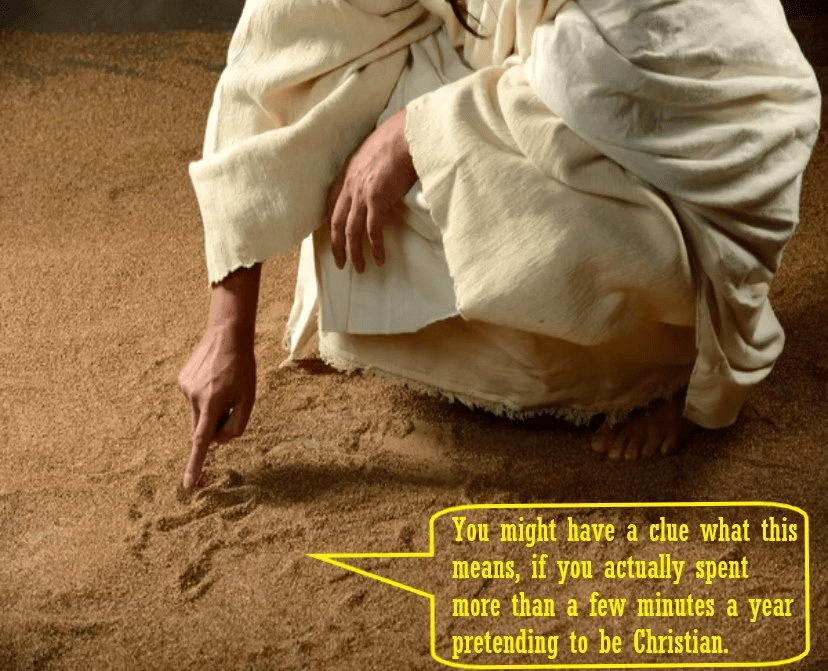
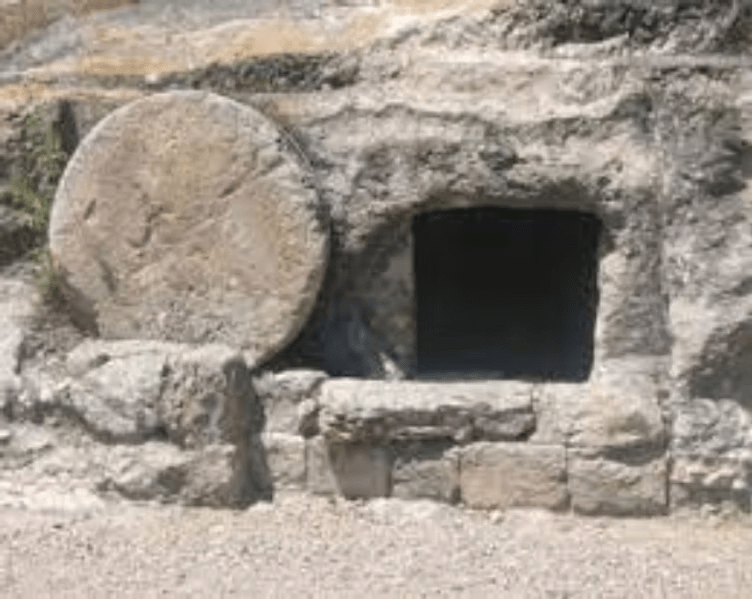
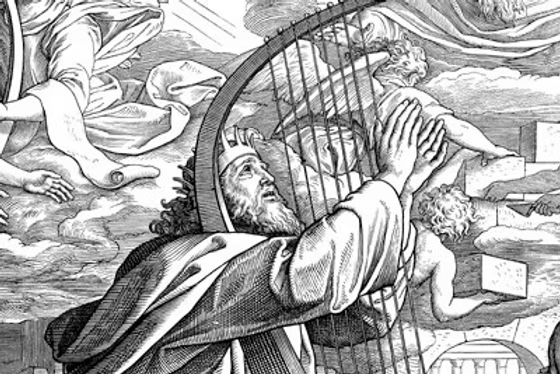
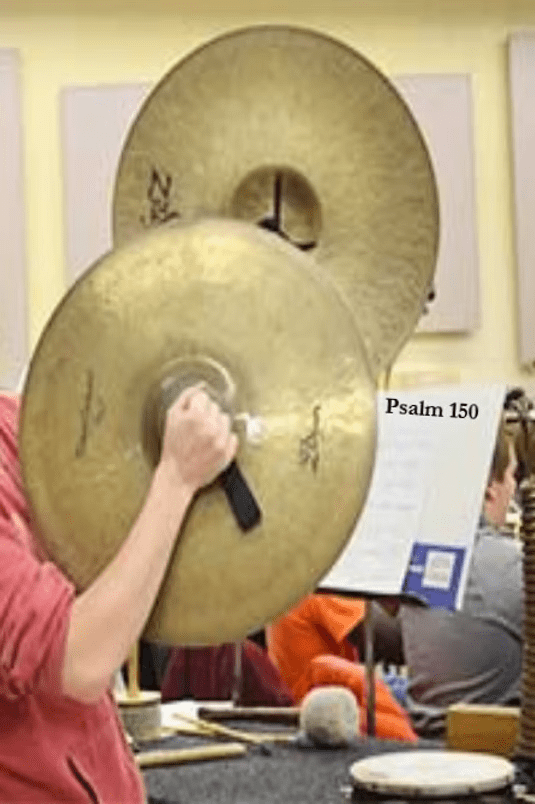
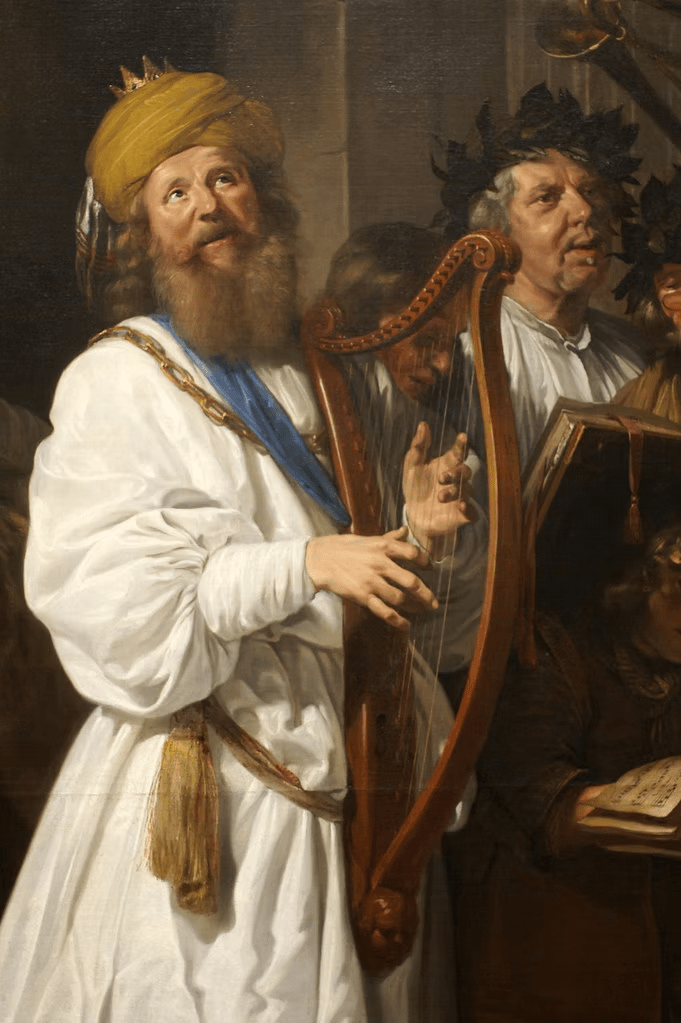



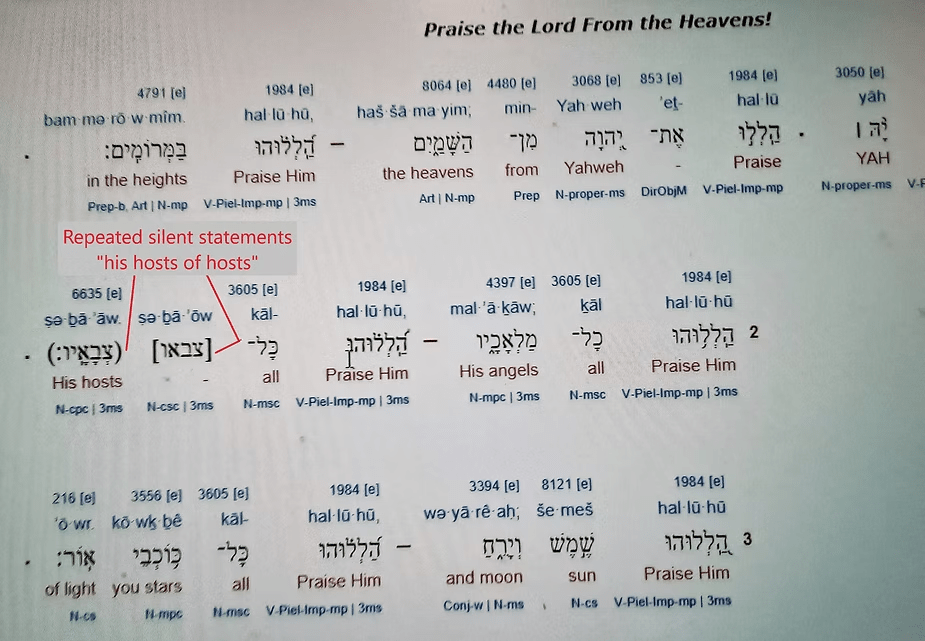




 Explaining the Readings