2 In your righteousness, deliver me and set me free; *
incline your ear to me and save me.
3 Be my strong rock, a castle to keep me safe; *
you are my crag and my stronghold.
4 Deliver me, elohay, from the hand of the wicked, *
from the clutches of the evildoer and the oppressor.
5 For you are my hope, adonay Yahweh, *
my confidence since I was young.
6 I have been sustained by you ever since I was born; from my mother’s womb you have been my strength; *
my praise shall be always of you.
——————–
It is clear to see how this Psalm 71 selection is the companion to the Track 1 Old Testament reading from Jeremiah 1, as both sing of being a youth whose soul was known by Yahweh to serve Him prior to birth. What is not so easy to see, due to the translation aborting “Yahweh” into “the Lord,” while making “adonay” be “the Lord,” followed by “Yahweh” translating as “God.” The use of “elohay” – a masculine plural construct of the singular “el” – is translated as “my God,” as if all three words are interchangeable and were written by some ignoramus. The uses of “elohay” and “adonay” are references to the possessing soul of Yahweh’s Son, who then becomes the twin soul that “lords” over one’s flesh.
In verse one, David sings of being “in Yahweh. This is a statement of submission of self, which relates to a divine marriage of David’s soul and the Spirit of Yahweh. David is not external to Yahweh, nor is Yahweh external to David. The two are one, with David’s soul “in Yahweh,” as His to control. This presence is then called “refuge.” Just as Yahweh would tell Jeremiah to have no fear, because He was with him, David sang of this presence “never bring him to shame.” In that, “shame” means sin.
In verse two, David sing that being “in Yahweh” brings his life to a state of “righteousness.” It is that “righteous” lifestyle that “delivers” him or saves his soul from the punishments of having unrepented sins. David “escapes” this Judgment because his “ear” is able to hear the voice of Yahweh. This voice leads David to wake from sleep, take down his harp and record the messages of Yahweh spoken to him spiritually.
Verse three speaks metaphorically about the “strength” the “refuge” within Yahweh is. It is a bond that can never be broken. That “strength” is then called “my elohim” (“elohay”), which is the presence of Yahweh’s Son’s soul within David’s soul. That comes from Yahweh as His gift of salvation (the name “Jesus” means “Yah Saves”); and, it is this possessing soul that is the Lord (his “adonay”) that keeps David from falling prey to the “wicked,” who are spirits and demons that seek to make David become a “cruel and unrighteous man.”
In verse five, David sings of Yahweh’s Son being his lifeline (or “cord”) that connects his soul to the Spirit of Yahweh. This connection is then stated by David as the “adonay Yahweh” that governs his every move in life. That presence took hold of David’s soul in his “youth” and it is his true source of faith, which is personally known and trusted.
In verse six, where David sings like Yahweh sang through Jeremiah, about being a soul known before entering his “mother’s womb,” the same references can be seen saying that the soul of David would likewise become a “mother’s womb,” in the resurrection of the soul of Adam-Jesus. This says the “Mother” must be a virgin, as far as sin is concerned. This implies that all “youths” possessed by Yahweh in divine marriage were so divinely wed before conception [Samuel, David, Jeremiah, John the baptizer and Jesus … minimally]. As such, once David’s soul was cleansed of all sins – made a virgin soul – his soul could become a divine mother where the Son of Yahweh could be reborn.
The translation (as usually is the case) is bad here, especially in the first two verses. The implication given by having David say, “Bless Yahweh, O my soul,” twice, is not what David wrote. The literal translation says, “bless my soul to Yahweh,” with the Hebrew word “barak” better translate as “kneels” (rather than “bless”). This makes it clear that David’s “soul kneels to Yahweh,” as his Lord and Master – his Husband in a divine marriage of “soul” to Spirit.
In this regard, it is corrupt for any human being to think he, she, or it can “bless Yahweh” in any way. A soul trapped in a human body of flesh is then the equivalents of a woman (regardless of what sex organs those bodies of flesh have); and, in the olden days past, a woman (and her children) were best seen, not heard. Humans are thus to act the same in respect to Yahweh, as an unmarried woman (a soul trapped in a body of flesh) is bound for nothing. Only when she marries can she be taken care of. Yahweh does not marry flesh, as flesh is always bound to die. Yahweh only marries souls that totally submit to Him; so, the only “blessing” possible is that of Yahweh possessing a soul in divine marriage. David was so divinely married; and, his psalm begins by stating his total submission to Yahweh, as His wife-soul.
When verse one sings, “all within me the name his sacredness,” this places focus on David’s soul being saved by his submission to Yahweh. Yahweh’s Spirit cleansed the soul of David, so it could be the virgin womb in which the soul of Yahweh’s Son (Adam-Jesus) would be resurrected, becoming Lord over David’s flesh. That Lord “within” is the “name” David took on in divine marriage – “Israel.” That name means he “Who Retains the el of Yahweh – the Yahweh elohim that is Adam (a.k.a Jesus). With that soul then the Lord over David’s soul and his flesh, David walked a path of righteousness, as a Saint. That “sacredness” is not to be applied to Yahweh (in the same way Yahweh cannot be “blessed”), but to David, who has taken on the name of Yahweh’s Son, as His Son reborn into flesh.
Verse two adds to the “kneeling one’s soul before Yahweh,” “and not you will forget , all its recompense .” This says that the inner Lord becomes the Christ Mind (call it the Messiah Mind, for David’s Hebrew speaking singers), which is the All-Knowing Mind of Yahweh overcoming the gross limitations of a fleshy brain trying to be able to consciously recall memorizations. The written Word is divinely inspired (just as are all David’s psalms), so it takes divine inspiration to understand that memorized. To “forget” the meaning of Scripture is to read it, memorize it, and then put it out of one’s brainly thoughts, because it is too much to understand alone. This “forgetting” always leads to the failures of human knowledge that cause one to break the Laws and sin. The meaning of “all its recompense” means “forgetting” Yahweh’s Word makes one become a sinner, while being one with Yahweh and having the Word written within one’s soul (a.k.a. Jesus reborn within) makes one “make amends” (the definition of “recompense”) for all past sins [divine Baptism by Yahweh’s Spirit in divine marriage].
To reassure one this is the meaning, verse three then sings, “him forgiving all your inequities , him healing , to all your pains .” The Hebrew word “tachalu” can mean “pain,” but its primary translation into English as “disease.” This means a soul alone in its body of flesh leaves itself open for the ‘infections’ of Satan’s minions, the demon spirits or fallen “elohim” that enter a body and turn that body against its soul. The urges to sin (thus “forget” Scripture and the Law) is then like a ”disease” that kills the body of flesh (like a plague).
The body of flesh is bound to die in some way, at some time. The meaning of “mortal” is “born to die.” Thus, the ”healing” is the casting out of impure and unclean spirits, which can signify the curing of a bodily ailment. However, the true “pain” prevented by such “healings” of Yahweh’s Spirit within one’s soul is the “pain” of Judgment, for having turned away from His offer of divine marriage and becoming His Son reborn into the flesh. This verse then sings of eternal salvation earned by those souls that serve Yahweh totally.
This element of salvation is then sung in verse four. There, the literal translation into English sings: “him redeeming from the pit your living ; him surrounding you with kindness and compassion .” In this, the Hebrew word “chay” means “alive, living,” which means “your living” is salvation, so a soul gains eternal “life.” Without that divine salvation from Judgment that sends sinners to “the pit,” this destination must not be seen as a physical conception of ‘Hell’ or ‘Sheol.’ The “pit” is the realm of the dead; and, because a soul is eternal, being sent to the realm of the dead means reincarnation, born anew into a fleshy body that is bound to die again. To never be “redeemed” from one’s sins of the flesh, a soul is never truly “alive,” as it is always trapped in a body of death.
Following the semi-colon, Yahweh led David to sing of the “surrounding” of one’s soul with Yahweh’s Spirit and His Son’s soul as one’s Lord. The presence of Yahweh’s Son is then the epitome of ‘God’s Love,” as the soul of Adam-Jesus is the true source of all “kindness and compassion” a soul “living” can know. No physical things can define this “love.” It is the ‘wedding gift’ Yahweh gives to His brides, as this marriage made in heaven it bound securely by the love of God – Adam-Jesus. One must be reborn in that name to know this most true love.
Verse five then sings of the benefits that come from the promise of a soul being saved for everlasting life. David was moved to sing, “him satisfying with good ornaments ; it will renew like an eagle your youth .” This says the ‘fountain of youth’ is not some eternal spring in Florida (sorry Ponce de Leon) but the Spirit poured out upon one’s soul forevermore.
It makes one feel the excitement, joy and exuberance of “youth,” as one becomes a minister in the name of Yahweh. The Hebrew word “adi” (constructed as “‘eḏ·yêḵ”) means “ornaments,” but can sometimes be read as “your mouth.” The “satisfactions” that come from one’s ‘mouth’ are then the “ornaments, jewels, decorations” of the “good” and “agreeable” understandings of Scripture, which are delightfully explained so others can have their eyes opened. One sparkles with the truth, which makes one’s mouth like a fine gem. One soars high, “like an eagle,” which is metaphor for ascending to the higher realm of the Spiritual, soaring above the base and ordinary. It speaks the truth as a child reborn of Yahweh, as His Son resurrected into “young” flesh. The soul of the Son of Yahweh is then the fountain that springs forth with everlasting waters of life.
The youthful exercise of ministry in the name of Yahweh is then sung about in verse six. David was inspired to write: “making righteousness Yahweh ; and judgment , to all who are oppressed .” This sings that “righteousness” is impossible without a soul having bowed down in submission to Yahweh in divine union, at the altar of marriage. Only when Yahweh’s Spirit has purified one’s soul of past sins, so one’s soul becomes a virgin womb into which His Son’s soul can resurrect, can one be led Spiritually to live a righteous life. That life remaining in the flesh then serves Yahweh as His Son reborn, led to be walking to meet seekers in need of “judgment.” This tells sinners, “You are walking a path to destruction and must change now.” When those souls sense the divine presence near [“the kingdom of God has come near”], then they will ask questions and be told the truth; so, with the truth in hand, their souls can decide to continue rejecting holy matrimony with the divine or turn back to Yahweh and bow down and serve Him. Those “who are oppressed” can find salvation as their escape from the imprisonment of a body of flesh that urges their souls to sin.
Verse seven then sings, “he will know his manner of Moses ; to the sons Israel , his deeds .” In this, two historic names from David’s history arise, with “Moses” meaning (among other possibilities) “hidden, covered.” The name “Israel” has already been stated: “Who Retains elohim of Yahweh.” Thus, Yahweh led David to sing about a soul filled with Yahweh’s Spirit having “knowledge of the ways hidden,” which is the beauty of divine Scripture. Certainly, Moses was enlightened when he met Yahweh at the burning bush, which allowed Moses to possess a staff that had “hidden” powers of Yahweh in it (as a tool given Moses by the One God). Everyone who followed Moses (in the same way everyone who truly follows Jesus becomes Christian souls) those souls became “sons” of Yahweh (regardless of physical sex organs), as His Son resurrected within each of them (male and female they are made Sons). The children descended of Jacob became descendants of Abram, by becoming points of light in the darkness, as those “Who Retained Yahweh elohim” as their Lord. When the soul of Adam-Jesus led the children chosen by Yahweh into the wilderness, with Moses, it was to grow into ministers who would do the “deeds” of their possessing soul-Spirit.
In verse eight, Yahweh inspired David to again sing of the love of God that is His Son – the Yahweh elohim that is Adam (a.k.a. Jesus). David wrote: “compassionate and gracious Yahweh ; long of face and much kindness .” Here, the Hebrew word “arek” (transliterated as “’e·reḵ”) means “long,” implying “patience,” thus “slow.” When that word is connected to the Hebrew “’ap·pa·yim,” a construct of “panim,” meaning “faces,” the better translation says “long of faces” paints a picture of the duration of those who are truly able to be called “Israel,” as possessed by a “Hidden” Spirit and divine soul. Every one of those who follow in doing the “deeds” of Moses (and Jesus, with all the prophets and Saints) will be one in the great line of descendants of Abram. All will be possessed by the “compassionate and gracious” Son of Yahweh – the ‘love of God’ that is Adam-Jesus – wearing the “face” of Yahweh as His Son reborn in the flesh and spreading “much kindness” to seekers of truth. This is the gift of salvation that endures and brings “patience” to those who submit fully to Yahweh in divine marriage.
10 I am Yahweh eloheka, who brought you out of the land of Egypt and said, *
“Open your mouth wide, and I will fill it.”
11 And yet my people did not hear my voice, *
and Israel would not obey me.
12 So I gave them over to the stubbornness of their hearts, *
to follow their own devices.
13 Oh, that my people would listen to me! *
that Israel would walk in my ways!
14 I should soon subdue their enemies *
and turn my hand against their foes.
15 Those who hate Yahweh would cringe before him, *
and their punishment would last forever.
16 But Israel would I feed with the finest wheat *
and satisfy him with honey from the rock.
——————–
This is a Psalm of Asaph, which means a song of the gatherer. David was the gatherer of souls, who taught them the way to truly be “Israel” was to each marry their own souls to Yahweh and each receive His Son’s soul – the Yahweh elohim that is the soul of Adam (a.k.a. Jesus). This understanding would be taught by David, as there could be no king of a nation of people that would physically lead everyone to salvation through swinging a sword and defeating their enemies in war. Each soul had to be possessed by Yahweh, as His wife-soul; and, each soul had to be joined with the Son’s soul, the “elohim” of which David taught in verse one. The “strength” of “Israel” was “our elohim” within our souls – each possessed by the Son’s soul, who acted as the Lord of each. The use of the name “Jacob,” which means “Supplanter,” says to sing loudly about the “elohim” that “Supplants” each individual soul as the lord of its flesh, becoming the Lord that leads each to victory.
As a companion psalm to the Track 1 Old Testament reading selection from Jeremiah 2, which sings loudly as a divorce decree, verse one in Psalm 81 should be seen as singing the praises of divine union with Yahweh. In return from that most holy marriage, the birth of Yahweh’s Son (the true and only purpose for marriage) – the resurrection of the soul of Adam-Jesus in each and every true Israelite – David was divinely inspired by his personal “elohim” to sing of what all souls like him knew to praise. With verse one being the celebration of that Holy Matrimony, we skip forward to verse ten and hear David singing of what was known to have gone wrong in the pasts of the people, which was not pure divorce but a rejection of marriage, refusing to surrender individual souls to Yahweh, choosing instead to serve self.
Verse ten begins with the Hebrew word “’ā·nō·ḵî,” followed by a vertical bar of pause (“׀”). Because the word “anoki” is the first-person common singular pronoun meaning “I,” this must be read as Yahweh speaking as the owner and possessor of all who claim Him as their Lord and identify as “Israel.” The meaning of “I” can be read as “I AM,” which is what Yahweh told Moses He should be named for all His children in Egypt to know. Following the vertical bar of pause, David sang (divinely inspired to speak for Yahweh), “Yahweh eloheka ,” which says Yahweh is “your elohim,” meaning the Yahweh elohim of Genesis 2 (Adam) is now one with each soul divinely wed to Him. It was this divine inner presence that led the children of Israel out of Egypt (a name meaning “Married To Tragedy”). Moses was likewise filled with Yahweh’s elohim; but nobody crossed the parted sea or survived any of the trial of the wilderness without also being personally and individually “Yahweh your elohim.” Moses not being named says those infants with His Son’s soul were fed spiritual food by Yahweh and His Son’s soul within, not by any other human being (a soul trapped in a body of flesh, prone to sin and die). This says the only thing that keeps a soul from sinning and dying is knowing Yahweh as “I,” because one’s soul has become the resurrection of “Yahweh elohim,” individually as “yours.”
In verse eleven, David names “Israel,” which can be read as the nation of twelve tribes, each descended from a son of Jacob, but the truth to that name is “Who Retains el” of Yahweh. Jacob became “Israel” – an individual soul, not a nation, nor his children – because he wrestled with his demons possessing his soul and forced them away from him, so his soul could serve Yahweh and be forgiven for all his past sins. Jacob was giving the name “Israel” as the name of Yahweh, to whom Jacob’s soul married and the defeated demon spirit told Jacob (led by Yahweh his Creator) told Jacob, “You are now Israel.” In the rest of Genesis, Jacob is still referred to as Jacob, not “Israel.” “Israel” is a spiritual name attached to a soul married to Yahweh, taking on His name in submission and sacrifice.
In the verse eleven, Yahweh said through David, “my people would not heed my voice,” where the “voice” of Yahweh is His Son’s soul becoming the Lord over the soul-flesh of each of His wife-souls, so the fleshy brain is led to divine thoughts spoken by the soul of Adam-Jesus within – one with one’s host soul. By not hearing the “Yahweh elohim” within, “none of the people not hearing an inner Yahweh elohim were not married to Him. Those were the children of parents (like Jacob was Israel to ten of his sons who were not – selling Joseph after trying unsuccessfully to kill him). Each soul born into human flesh must be taught to sacrifice self and marry their souls to Yahweh, so Adam-Jesus can become Lord over their flesh and keep them from waywardness. But, the natural way of humanity is to learn to reject Yahweh, find sin, and then feel the guilt of sin from the teachings of their parents. This is nature’s way, because one must know sin to truly know Yahweh as “I Am” the way – as Jacob came to know Yahweh.
Verse twelve then sings of Yahweh allowing souls to reject marriage to them. He lets them go the way of their own counsel, which invariably leads to a life of sin, following the urges of the flesh. Their “own counsel” becomes demon spirits that possess their souls and lead their brains to follow urges, which are addictions to the worldly realm. Verse thirteen then concludes that this waywardness will take one further away from Yahweh. Here, David again was led to write the proper name “Israel,” which is taking on a false name, as that of a nation of people who believe they are special in the world, because God chose them over all other souls breathed into human forms. That is a lie and taught by false shepherds. The truth of “Israel” is sung by David as “in my ways that should walk.” The lesson of the history of people by that name was waywardness and self-indulgence, which always led to misery and oppression by their enemies (who saw them as just like them, only spewing off at the mouth about being chosen by God to steal land). Not walking righteously made stronger enemies form against them.
Verse fourteen then sings of that history, where the enemies of the people rose up and oppressed those squatting on their lands, while not truly being “Israel.” By living a lie – using the name of Yahweh in vain – Yahweh did not protect those liars from the attacks of their enemies. Rather than Yahweh giving the enemies great powers, the lack of Yahweh’s protection – over people who were ordinarily weak of body, while strong of brain – meant the illusion of an enemy with great powers (like the giant Goliath, who was just a large ordinary soul in human flesh).
In verse fifteen, David sang of “the haters of Yahweh would pretend submission to him,” which is the lie of thinking being born to some descendant of Jacob, who had horrific histories before they submitted their souls to Yahweh, when they knew their guilt of sin when they stood before Joseph, as a great leader of Egypt. To track physical lineage to a sinner makes one be the descendant of a sinner. That praise promotes one’s own acts of sin. All the while those sinners are claiming to be children of Yahweh, when His only Son must be resurrected within each and every soul that can truthfully make that claim. To lie and use the name of Yahweh in vain means those souls will know a “fate” of Judgment that will endure forever. That is the divorce decree of which Yahweh spoke through Jeremiah.
In verse sixteen, David was inspired to sing: “and he would have fed them with the finest wheat ; and from the rock , with honey I would have satisfied you .” This needs to be seen as the proposal of marriage that Yahweh offers all souls. First He promises to “feed” your soul with spiritual food – the “bread” of heaven, manna. This is done by being cleansed by His Spirit – made a Messiah or a Christ – so His Son’s soul can be joined with His wife’s soul and become its Lord. The voice of Yahweh then flows through the Yahweh elohim within. That is where the understanding of Scripture is, so the Law is written on the walls of one’s heart (soul). The soul of Adam-Jesus then becomes the “rock,” from which flows the never ceasing flow of spiritual water. This is the promise of eternal life and is spiritual nourishment that never needs replenishing. The “honey” is the love of Yahweh, which is His Son. The “satisfaction” of all marriages comes in the marriage tent – the tabernacle where a marriage is consecrated and His Son’s seed is sown in the wife-soul’s virgin womb. The Promised Land is a soul in its flesh being given Salvation and eternal life with Yahweh.
1 Hallelujah! Praise YAH! Happy are they who fear Yahweh *
and have great delight in his commandments!
2 Their descendants will be mighty in the land; *
the generation of the upright will be blessed.
3 Wealth and riches will be in their house, *
and their righteousness will last forever.
4 Light shines in the darkness for the upright; *
the righteous are merciful and full of compassion.
5 It is good for them to be generous in lending *
and to manage their affairs with justice.
6 For they will never be shaken; *
the righteous will be kept in everlasting remembrance.
7 They will not be afraid of any evil rumors; *
their heart is right; they put their trust in the Yahweh.
8 Their heart is established and will not shrink, *
until they see their desire upon their enemies.
9 They have given freely to the poor, *
and their righteousness stands fast for ever; they will hold up their head with honor.
10 The wicked will see it and be angry; they will gnash their teeth and pine away; *
the desires of the wicked will perish.
——————–
Verse one begins with the Hebrew words “hal·lū” and “yāh,” which translators of that language into English have created the word “hallelujah.” There is a perverse song (written by a Socialist Jew) named “Hallelujah,” with nary a mention of the true One God, named Yahweh. The Hebrew word “yah” (Hebrew has no capital letters) is defined as a “Proper Name,” and said to be the “name of the God of Israel.” (Strong’s) Well, the “name of the God of Israel” is Yahweh, which becomes abbreviated as “yah.” The Hebrew word “halal” means “to shine” (Strong’s), where “to shine” is a puzzling thing to say about “the God of Israel,” so they transform “to shine” into “praise.” In reality, David was divinely inspired to begin this song of praise by shouting out, “shine Yahweh.” The way one “shines Yahweh” is by being a soul married to His Spirit, so His Son’s soul (Adam-Jesus) has resurrected within one’s self-soul and that “shine” of “Yahweh” is a Saint who walks as Jesus reborn into flesh (even well before Jesus came and left in his flesh). To place emphasis on this shout of praise, David wrote a vertical bar after “yāh,” telling the singer to let that note ring long.
Where the translation in verse one sings “happy,” the Hebrew construct written is “’aš·rê” (from “esher”), meaning “happiness, blessedness.” (Strong’s) More often than not, this word is shown to mean “blessed,” which rings true loudly, after pausing to reflect on “shining Yahweh.” To “shine Yahweh” means one has become “blessed” by the presence of Yahweh’s Spirit and the resurrection of His Son’s soul. Certainly, that “blessed” state of being would lead to an accompanying state of “happiness,” but to say “happy are they who fear Yahweh” makes it seem possible to find “happiness” without the commitment of spiritual marriage of a soul to Yahweh.
Where it says “fear” of “Yahweh” is what leads to one’s soul being “blessed,” this means marriage to Yahweh is motivated by the command that one’s soul will “fear” only Yahweh. If one “fears” not having money or not being powerful or not having someone be attracted to one, then one will begin worshiping the demon spirits of the world, for “fear” of not being rich, influential, and sexually attractive. Those “fears” will turn one away from seeking Yahweh in divine union; so, one’s soul will not be “blessed,” meaning true “happiness” (from eternal life) will not be found.
When verse one ends by singing “delight in his commandments,” the “commandments” (construct of “mitsvah”) are the Covenant brought down the mountain by Moses. The Commandments are the terms of marriage that all individual souls must agree with. One Commandment is “Thou shall fear only Yahweh.” All other Commandments must be written on the walls of one’s heart (i.e.: soul), which is done by a wife-soul of Yahweh being joined (divine possession) by the soul of Adam-Jesus. That most holy soul leads one’s soul-body to obey ALL Commandments, without having to think about them. Thus, memorization of the Covenant is good practice and seen as attractive by Yahweh (so all Jews must memorize the Covenant as children), leading Him to propose Holy Matrimony to those souls proving sincerity and love. The “delight” is the when the wedding takes place and two are joined as one – the ‘all tingly with Spirit Baptism time.’
In verse two, the word translated as “land, earth” (“erets”) should be (always in Old Testament Scripture) read as “flesh.” This is because “flesh” is metaphorically made from dirt, dust and clay – all dead matter that become animated by the breath of life (an eternal soul) breathed into that worldly prison at birth. As such, verse two sings, “mighty in flesh will be his offspring ; dwelling in the upright will be blessed .” This is then a confirmation of the “blessed” state in verse one, now said to be from the presence of Yahweh’s Son (“the mighty”) returned to be “in flesh,” where Yahweh’s “offspring” are the multiplicity of Adam-Jesuses reborn “in flesh.” With the soul of Yahweh’s Son “dwelling in flesh,” then those wife-souls will be held “upright” in their actions (this “uprightness” is the truth to the meaning of “the cross of Jesus”), as the Son’s soul will stake their bodies of flesh “upright.” To then be righteous is to be “blessed.”
In verse three, this element of “righteousness” is stated, as coming from a “sufficiency of riches in this house.” Here, the “house” (like “earth”) is metaphor for the tabernacle that is one’s body of flesh. There will be no lack of sustenance (spiritual food and living waters) that a wife-soul (in male and female bodies of flesh) needs to feel “blessed.” This inner presence becomes the “riches” that extend eternally, not locked into only lasting in the material plane. A high priest’s soul within makes “this house” become the tabernacle that is the “house” of Yahweh. When David then sang, “this righteousness endures forever,” this says “righteousness” is only motivated through the spiritual presence of Yahweh’s eternal Son – His elohim Adam (a.k.a. Jesus). Only the spiritual can “endure forever,” which a soul is. However, trapped in a body of flesh makes a soul alone imprisoned to the death of the “earth.” Only the eternal soul of Adam-Jesus in possession of one’s wife-soul to Yahweh can free it from the realm of death, granting a soul eternal life through a return to be one with Yahweh.
Verse four sings that a soul alone exists in “darkness,” where an absence of “light” means no access to the truth of Yahweh’s Word. Divine possession by the Son’s soul brings in the “light” of truth, which begins to raise the fallen into an “upright” position, where good fruit can then be produced. This inner presence brings with his soul graciousness, compassion and righteous ways to live.
When verse five begins with the word meaning “good” (“towb”), one must remember how Jesus told the young, rich man who addressed Jesus as “good teacher,” “Only God is good.” The “goodness” of Yahweh is sewn into the fabric of His Son’s soul, so the presence of the Son makes the “good man” of Yahweh project His image. To worship the reflection is to turn away from Yahweh. The “good man” can never be “good” without Yahweh’s presence within. When David sang about this “good man deals graciously and joins,” this is the divine possession of his soul with a host soul, with the Son becoming the Lord of both host soul and its body of flesh. As the Lord of that soul-flesh, “he will guide the affairs with discretion,” which means as judged by Yahweh.
Verse six then sings of how marriage to Yahweh will be lasting, with no divorce ever desired. This sings that the union of a soul with Yahweh’s Spirit and the possession by His Son’s soul will never grow tiresome. It will always be sought. It will always be pleasing. A soul will never ‘retire’ from ministry or ‘take a leave of absence,’ in order to catch one’s breath. Only those who work too hard making up lies about their piety need such ‘time off.” Their souls never married Yahweh and they were never reborn as His Son; so, a true Saint is always looking for another assignment from Yahweh, in order to serve Him more and more.
In verse seven, one needs to recall the story of David when he was a boy and the entire army of Israel was trembling with fear. Even Sul, the king, was afraid to do battle with the giant, because they knew a loss would occur. This speaks loudly of the hearts of men who have not married Yahweh, received His cleansing Spirit and been reborn as His Son’s soul within their flesh. The element of “evil” can only exist in the world. It cannot join with the Spiritual realm of the divine. Saints are souls married to Yahweh and only fear losing that relationship. They are reborn as the Son in the flesh of the world for the purpose of confronting evil and defeating it, with no fears whatsoever that evil will triumph over the Son. To say they have the utmost “trust” in Yahweh’s protection says the truth of faith has come to them from personal experience of the Spirit and the Son. They do not enter battle having only read about the divine in books or told about beliefs to hold dear by others. They know the truth and have faith.
The strength of this faith comes from the presence of Yahweh’s Son’s soul “established in the heart” (i.e.: soul). The presence of Adam-Jesus within makes one a Saint in that name. The Son of Yahweh has the Mind of Christ (or Messiah), which is the Spirit of Yahweh making the Son the voice of Him. There is absolutely “no fear” of evil, as Yahweh knows all. The brains of the enemy will be known and revealed to the Son. This will lead the Son to command the flesh to act accordingly, to defeat the evil plots of one’s enemy.
Verse nine then sings about the ministry of Saints. They are “disbursed abroad,” so the do as Jesus commissioned his disciples, sent out in his name to spread the truth of Scripture. When we sing, “he has given to the poor,” this is not Jesus handing out promises to pay off the student loans of “the poor.” The meaning of “the poor” is all souls who are starved of spiritual food and living waters by false shepherds and hired hands, none of who have ever considered marrying their souls to Yahweh and becoming Saints in the name of His Son. Once a soul has been reborn as the Son, that “righteousness endures forever,” through the promise of eternal life after the dead body of flesh falls away. The “horns” that announce a soul’s return to be one with Yahweh will blare in “honor of an exalted” soul’s return.
Verse ten then sings of the opposite result, which will come from Judgement to all souls of the “wicked.” They will have happen to them as Jesus often said would happen to evil souls, where “the gnashing of teeth,” “grieving,” melting away” and “perishing” are all statements of the return of a soul into the physical realm – reincarnation. A soul has no “teeth to gnash,” so a return into an adult body that will find physical punishment for past sins the “gnashing of teeth” that denotes much anger (at self). The “grief” will be from recalling on Judgment day all the times that lost soul heard the truth of Yahweh spoken to him or her, but that soul refused to listen (often acting out with persecution of the innocent). The “melting away” will be the death of an old body of flesh, which might have secured large amounts of material possessions and great esteem as a ruler. However, all that will be lost in death, with Judgment meaning a return life in the flesh where the challenges of having too much will be replaced by the challenges of having too little. All challenges are agreed upon prior to reincarnation; so, the point of all challenges is to overcome them and submit to Yahweh in spiritual marriage. To “perish” then means to return, over and over again, into a body of flesh bound to die at some time, with the clock always ticking as a sign a soul must forego the entrapments of the material realm in order to be set free. The truth will set a soul free; but the truth can only come from personally joining with Yahweh – the source of all truth.
1 Yahweh, you have searched me out and known me; *
[2] you know my sitting down and my rising up; you discern my thoughts from afar.
2 [3] You trace my journeys and my resting-places *
and are acquainted with all my ways.
3 [4] Indeed, there is not a word on my lips, *
but you, Yahweh, know it altogether.
4 [5] You press upon me behind and before *
and lay your hand upon me.
5 [6] Such knowledge is too wonderful for me; *
it is so high that I cannot attain to it.
—–
12 [13] For you yourself created my inmost parts; *
you knit me together in my mother’s womb.
13 [14] I will thank you because I am marvelously made; *
your works are wonderful, and I my soul know it well.
14 [15] My body was not hidden from you, *
while I was being made in secret and woven in the depths of the earth.
15 [16] Your eyes beheld my limbs, yet unfinished in the womb; all of them were written in your book; *
they were fashioned day by day, when as yet there was none of them.
16 [17] How deep I find your thoughts, el! *
how great is the sum of them!
17 [18] If I were to count them, they would be more in number than the sand; *
to count them all, my life span would need to be like yours.
——————–
Notice how the Episcopal Church (not their source translation service) has combined verses one and two into what they call verse one. That change at the beginning then offsets the rest of the verses in the psalm; so, all have to be renumbered to match the truth that all other sources of Psalm 139 offer. I have added the appropriate verse numbers in bold type, within brackets. Additionally, I have restored “Yahweh” in two places, where the translation is a generic “the Lord.” In verse seventeen (Episcopal Church 16), the Hebrew text of David shows “el,” which I have restored, from the translation of “God.” All forms of “el” [singular] and “elohim” [plural] are references to an inner presence that is the Son of Yahweh, His “Yahweh elohim” of Genesis 2. To deny that inner presence is to make mankind seem capable of godlike abilities, where man can save itself from personal ruin, simply by expressing belief in a generic “Lord” and nebulous “God.”
In the true verse one, David wrote simply: “Yahweh you have searched me , and know .” This does not imply that David was so young that he was like a needle in a haystack, so Yahweh had to “search” for David. It says Yahweh “searched” David’s soul, prior to him being born, when David’s soul last knelt before Yahweh in Judgment. David was found pure, which means David’s soul (departed from flesh that went by some other name) had previously been a true representation of “Israel” [“Who Retains the el of Yahweh” in his soul] and his Lord had become the soul of Adam-Jesus, leading his soul to that Judgment as a pure soul. Thus, Yahweh “knew” David’s soul before it was born again; and, for a Saint to be born again, it is with Yahweh’s intent to serve Him again, in a new incarnation.
In verse two (the Episcopal Church’s 1b), when David sings that Yahweh “knows his dwelling and its rising,” this sings of the Spirit of Yahweh having been outpoured upon David’s soul forever. That cleaning Baptism made it possible for the soul of Yahweh’s perfect Son to “dwell” (or “sit down”) within his soul, making sure that David’s soul “rose” to divine heights, as a Saint in His name. When David sings, “you discern my purpose at a distance,” this does not say Yahweh is not one with David’s soul. Instead, the word translating as “at a distance” (of “far off”) – “mê·rā·ḥō·wq” – means “in space and time.” Yahweh discerned David’s purpose well before he was born and knew he would lead His chosen people to adhere to His Covenant properly – through divine union of their souls with His Spirit, so all were true to the name “Israel.”
In verse three, where David sings, “my path and my lying down you winnow ; and all my roads are in your service .” this sings of David’s soul being like seed planted into the earth. His “lying down” is Yahweh “scattering” David’s soul in various furrows into which Yahweh “fans” or “blows” David. When he continues, “all my roads are in your service,” this speaks prophetically of David’s failure, near the end of his life. That “road” would “serve” Yahweh, as Yahweh did not make David King of the Jews, because Yahweh was their King. David’s perfect success had to be known as totally due to Yahweh; so, his failure spoke loudly that all souls trapped in human flesh are flawed and cannot find a Judgment as pure, without Yahweh’s help. David’s failure was akin to the designed failure of Adam (and wife), because they had to leave Eden to become the first priests of Yahweh in the world.
In verse four, David sang that he was like Jesus, who regularly said he did not speak for himself, but for the Father. For David to sing, “for not a word on my tongue”, that sings that David did not manufacture words that came from his mouth for self-satisfaction. When he then added, “behold Yahweh you know the whole,” this sings of every word from David was the word of the Father, spoken through David’s mouth and lips.
In verse five, David’s singing, “behind and in front you have confined me” is about the dual souls that are the soul of David united with the soul of the Son of Yahweh (Adam-Jesus). When this state of being ‘doubly fruitful’ occurs, one must follow, while the other leads. David’s soul is the one “behind,” while Jesus’ soul is the one “in front of” David’s soul, leading it to righteousness. This then “confines” of “binds” David’s soul, so it will not be influenced by worldly demon spirits. With that “confinement” desired, not forced, David wrote, “and set upon me your hand”. This means that Yahweh’s Spirit and Jesus being the Lord soul of David’s soul and flesh made David become the physical “hand” of God on earth.
In verse six (the Episcopal Church verse five), David begins this verse with the repeated Hebrew word “pili,” with two constructs of that placed within brackets and parentheses, as: [ “pil·’î·yāh” ] ( “pə·lî·’āh” ) . The brackets and parentheses reflect unspoken words of spirituality, where “too wonderful too incomprehensible” are not truly words sung in this psalm. They are silent reflections of just how supernatural the “knowledge for me” or “knowledge coming from me” is. This sings of how impossible it is for any human being to possess the “knowledge” of Yahweh. As such, David then sang, “it is inaccessibly high,” stating not ever the greatest mind the planet would come to know [Solomon] could ever have the scope of “knowledge” that David would open his mouth and speak (without forethought). David then admitted, “cannot I attain” this intellect from a human flesh organ between the eyes and ears.
In the leap forward to verse thirteen (Episcopal Church verse twelve), David then sings, “for you formed my inward parts.” This can be seen as why this Psalm 139 is the companion song to the track one Old Testament reading selection from Jeremiah 18. In that reading, the word translated as “potter” actually means “fashioner” or “former.” Here, David sings of the “formation” of his “inner parts,” which is his “heart” and “soul” – spiritual in “form.” The Hebrew word translated as “inward parts” actually is the “kidney,” which is an organ of purification. Thus, the heart and soul are likewise purifying essence in the soul-flesh. When Yahweh “forms” a soul to be pure, then one has been Baptized by His Spirit and reborn as His Son as one’s Lord. Thus, when David sang this “formation” was continued “within his mother’s womb,” that says all of the physical features of David’s flesh (from Yahweh joining DNA from his mother and father purposefully) were designed by the hand of Yahweh. Yahweh guides the formation of every human being into which He breathes a soul giving life to the flesh He guided to be made in a mother’s womb.
In verse fourteen, where David wrote, “I will praise you upon for I am fearful,” the source of true “praise” is initiated by the soul of Adam-Jesus within. The soul-flesh follows that lead to “praise” Yahweh for His Salvation given. The element of “fearful” is following a Commandment written upon the walls of one’s soul – as the soul of Jesus being one’s Lord – which says, “fear only Yahweh.” The “fear” is knowing a personal relationship with the Spirit and the Son and then being afraid of losing that relationship as the wife-Son. This leads the soul-flesh to lovingly seek to please Yahweh, so the Son makes “marvelous works” come from the soul-flesh, as a Saint in the name of the Son. David’s “soul knew very well” that the source of those feats (all that David did and all that all Saints do) was Yahweh and His Spirit emanating from one’s soul.
Verse fifteen sings of “my hidden bones,” which is the framework that is the Son of Yahweh, made by His hand from dust and clay on the seventh day, the day He deemed holy. The aspect of “secret” is then the spiritual, as the ‘doubly fruitful’ soul that adjoined David’s soul … forever. In the use of the Hebrew construct “ruq·qam·tî,” which means “skillfully wrought” or “masterfully weaved,” this too related to the “fashioner” or “former” of Jeremiah 18. It says that David was made by the hand of Yahweh as perfection, which included the soul of His Son within “the lowest parts of the earth” or the dead matter that is void of life, until a soul animates it to life.
In verse sixteen, David sings, “my embryo saw with your eyes , and in your book the whole they will be writtenthe days you fashioned for me”. Here, again, is the word “fashion,” which is the same root word translated as “potter” (because “clay” is also written). This says the life of David is written into the future, which his unfolding life will confirm. When an “embryo sees with the eye of Yahweh,” it is reading the Commandments written on the walls of its heart and soul. It sees the expectations for that flesh which will receive a pure soul reincarnated. David knew his life would be in service of Yahweh, guided by his Lord Jesus; and, he had no qualms with facing any foe that was destined to cross his path of righteousness.
At the end of verse sixteen, David again repeated a word enclosed in brackets, followed by parentheses. This, again, is an unstated, silently experienced spiritual element that says, “[ “wə·lō” ] ( “wə·lōw” ) , means “when not when not”. With the last words saying aloud, “one of them,” the silent intent says the soul of David saw “fashioned” for him a life that was “not” like that or ordinary souls. Still, the repetition says that “when not” David’s soul would see the planned divine life written for him by Yahweh, his would “would not” be holy, as David would become as “one of them.” This states the planned life of David included his fall from grace, because that was a necessary evil to keep “one of them” to be seen as a god (a king over people), when only Yahweh is their King.
In verse seventeen we find the one time “el” is written (in this selection). David sings, “and to me how precious are your thoughts el”. This is not the same as Jeremiah (and other prophets hearing the voice of Yahweh coming to them), as Jeremiah named “Yahweh” as the source of that “word.” Since David has already stated (twice) the name “Yahweh,” his use of “el” speaks of his inner united soul – his Lord – which becomes “the thoughts” of Adam-Jesus that guided David’s actions as a Saint. David greatly appreciated that guidance from within; and, he then sings, “how great is the sum (of those thoughts).” The “sum of those thoughts” was the whole of Israel being led to be souls married to Yahweh, because David spoke the word of Yahweh, following the whispers of the Son merged with his soul.
In verse eighteen (the Episcopal Church’s verse seventeen), David sings, “I will relate them to the sand to be more in number”, which says the mind of David was interlinked to the Mind of Christ, where the Son of Yahweh was Lord. Every day, for every minute of every day, David’s brain heard the whispers of Jesus telling him insights from Yahweh. Those insights were more numerous than the grains of sand by a sea or river. David then sings “when I awaken,” which is his times getting up from sleep to write down a psalm inspired by Yahweh; but the greater meaning is the voice of Jesus, speaking for the Father, made the soul of David always be “alive” and “awake” as a soul saved. Thus, David sang, “I am still with you.” This says the voice of Jesus assures David that the love of Yahweh has not left him; so, he can still faithfully serve Yahweh as He sees fit.
1 Happy are they who have not walked in the counsel of the wicked, *
nor lingered in the way of sinners, nor sat in the seats of the scornful!
2 Their delight is in the law of Yahweh, *
and they meditate on his law day and night.
3 They are like trees planted by streams of water, bearing fruit in due season, with leaves that do not wither; *
everything they do shall prosper.
4 It is not so with the wicked; *
they are like chaff which the wind blows away.
5 Therefore the wicked shall not stand upright when judgment comes, *
nor the sinner in the council of the righteous.
6 For Yahweh knows the way of the righteous, *
but the way of the wicked is doomed.
——————–
This is the accompanying Psalm to the Track 2 Old Testament reading selection from Deuteronomy 30. This Psalm 1 reading is found on six occasion in the lectionary cycle, with five of those Sunday services. I have written commentaries about this Psalm 1 lesson when it was part of the Epiphany 6C, earlier this year. I also posed a commentary when it was the reading selection on Easter 7B and Proper 20B. With this the chosen selection for the track 2 path on Proper 18C, only a commentary for it coming up for the Proper 25A Sunday is left. Because I have already posted a verse-by-verse breakdown of the meaning of what David was inspired to sing, I will leave that up to the serious student of Christianity to click on the above links and read what has already been written. I will make the assumption that only serious students of Christianity will read beyond this point, where I will only make comments about how this song of praise fits the warning made by Moses to the true Israelites, prior to them being deemed ready to cross into their ‘Promised Land’ (led by Joshua, following the death of Moses).
The title that my main source for the Hebrew text (BibleHub Interlinear) presents for this Psalm 1 is “The Two Paths.” The NRSV states that as “The Two Ways,” with the NASB stating those “two paths” as “The Righteous and the Wicked Contrasted.” This should be seen in the warning Moses gave to the true Israelites, as the “two ways” are always those taken by a soul in its body of flesh, which is either led by the soul of the Son of Yahweh [righteousness] or led by a soul unmarried to Yahweh [self-ego driven], which is often a soul possessed by a demon spirit.
In verse one, where David sings of the “happiness” that “comes to a soul inhabiting a body of flesh [a man or one of mankind] “ that “happiness cannot be fully realized unless it has the sorrow of a wicked life known, to which a comparison can be made. This means all human beings will know sin, such that being saved from a judgment for sins is a true “blessing” by Yahweh. That “blessing” can only be known through total self-sacrifice to Yahweh in divine marriage, with a test of that total devotion being the waiting period between spiritual engagement and the actual outpouring of Spirit that cleanses a soul of all past sins on the wedding day.
In the Deuteronomy reading, every soul of the true Israelites had proved their devotion to Yahweh and had become His wife-souls. Prior to that day when Moses gave them the warning about the future, that future foretold of a repeating of the past. Every soul that had been saved by divine marriage had previously rebelled against Moses, Aaron and Yahweh, knowing sinful ways and the sorrows that path brought them. Each soul had to individually submit willing to Yahweh – out of love – and spend their time in the wilderness proving their devotion. That proof was learning the lessons of Moses from their parents (who were saved souls), so they could grow in understanding what the Law meant. Thus, each saved soul had children who were like them and wayward, being in need of lessons that they could cling to when their sins brought upon them sorrows. The warnings of Moses was to teach their children as they had been taught, eat the manna from heaven (divine insight for Scriptural lessons), and learn to love Yahweh deeply and spiritually.
Everything then sung by David in Psalm 1 sings of knowledge and personal experience of righteousness and wickedness. One path is where everything a soul needs is provided; and, the other way is where all the material lusts of the world will lead to pains and sufferings. To “meditate on the Laws” of such goods and evils in both “day and night” means to see the truth of one’s Scriptural lessons in the light of truth, as well as in the darkness when Yahweh is absent from one’s soul.
The elements of David singing about the ways of the wicked are then the projection by Moses to the true Israelites that says, “If you enter into the ‘Promised Land’ and see that as being dead earth as your inheritance from Yahweh, then you will “wither” and bear no useful fruit. Your souls and those souls of your children will then be dry and without the everlasting waters that Yahweh provides to those wife-souls of His, who have His Son as the Lord over each of them. Without that inner soul watering, their souls will become like chaff that is as dead as the material realm – blown away as are ashes to ashes.
When David sang of the time when “judgment” will come, that is the path to the true Promised Land – the spiritual realm, one with Yahweh forever. To be judges as wicked – a soul unmarried to Yahweh and unborn as His Son – will be deemed a failure and sent back into the realm of dead matter, in order to try to find commitment to Yahweh in a new body of flesh (reincarnation). Those who sacrifice the lures of Satan and the offers to sell their souls for money, property, influence and power over others on earth, remaining strong in their commitment to the marriage vows (the Covenant), due to the inner strength given them by Jesus’ resurrection, they will be saved [“Jesus” means “YAH Saves”]. They will find eternal peace and happiness the truth of Yahweh’s Promise.
1 The fool has said in his heart, “There is no elohim.” *
All are corrupt and commit abominable acts; there is none who does any good.
2 Yahweh looks down from heaven upon us all, *
to see if there is any who is wise, if there is one who seeks after elohim.
3 Every one has proved faithless; all alike have turned bad; *
there is none who does good; no, not one.
4 Have they no knowledge, all those evildoers *
who eat up my people like bread and do not call upon Yahweh?
5 See how they tremble with fear, *
because elohim is in the company of the righteous.
6 Their aim is to confound the plans of the afflicted, *
but Yahweh is their refuge.
7 Oh, that Israel’s deliverance would come out of Zion! *
when Yahweh restores the fortunes of his people, Jacob will rejoice and Israel be glad.
——————–
Verse one in this Psalm 14 makes it a natural as a companion for the Track 1 Old Testament reading selection from Jeremiah 4. In verse twenty-two of Jeremiah 4, we read “for ׀ foolish my people , me not they have known , children silly they , and none have understanding them ; wise they do no evil , but to do good not they have knowledge .” This makes David singing, “has said the fool in his heart no elohim, they are corrupt , they have done abominable works , none who does good .” Both say the rejection of marriage to Yahweh and the subsequent receipt of His elohim Adam-Jesus within their individual souls (to lead them to acts of good) means the result for such unwed souls is to do evil and set up a Judgment by Yahweh that reflects their transgressions.
In verse two it is nice and sweet to imagine Yahweh floating on a cloud somewhere in outer space, where He “looks down” on all us tiny speck on planet earth. The verse must be read as metaphor. A viable translation of the Hebrew word “looks down” is “overhangs” or “overlooks” (from “shaqaph”). When “from heaven” (“miš·šā·ma·yim”) is understood to be metaphor for “in the Spirit,” where “heaven” is the presence of Yahweh within (not in outer space), then David is singing about the soul of a wife of Yahweh has His Spirit always “overseeing” one’s life in service to Him. When the NRSV translates “all of us,” that gives the impression that Yahweh plays no favorite and is present in all souls in human flesh. That is a false concept and not what is written. The literal English translation has David singing of “the sons of Adam” (from “bene-adam”). The “Sons of Adam” are all those souls that have been sent the “elohim” of Yahweh that is His Son, making them be reborn as “sons of men.” With Yahweh watching and His Son resurrected within a soul imprisoned in flesh, it is then “to see if there are any who understand ; who seek elohim.” This means Yahweh sends His Son’s soul into saints, who then minister to the lost souls that seek salvation and want to “understand” – where the Hebrew word here means “to be prudent” (from “sakal”).
In verse three, Yahweh inspired David to sing that those souls who “turned aside” the proposal from Yahweh to marry Him divinely and surrender one’s soul loving to His Son’s direction will be those “who have become corrupt.” From having corrupted souls, “none” of them “does good.” The ability to do “good” is totally dependent on the Son of Adam being led down a path of righteousness, which cannot be traveled without his guidance. While some may attempt to go “good” by adhering to the Law passed to the Israelites from Yahweh through Moses, their lack of “understanding” will lead them to question right from wrong, so “not one does” the right thing without the whisper of Adam-Jesus as their inner Lord.
In verse four, Yahweh has David ask the question, “have no knowledge?” This relates back to the “no not one” statement that ends line three, proving that the “no not” is referring to the “understanding” of verse two. This is “knowledge” of the Law, which is the marriage vows that must be willingly agreed to before divine union with Yahweh can take place. Those who “turn aside” this agreement do not “know” what the agreement means. When David then sang for Yahweh, “all workers of iniquity that eat up my people they eat bread.” This must be read as a double-edged sword of knowledge, where the souls led to sinful lives destroy those servants of Yahweh as their physical “bread.” They profit materially on their destruction. However, those souls married to Yahweh “eat the bread” of heaven, which is spiritual food that is fed to them by their inner “elohim” – Adam-Jesus. Those without divine wisdom (“knowledge”) are “fools” (from verse one) because they “do not call upon Yahweh.” They do not answer His call for divine marriage to their souls. They “turn aside” Yahweh for ignorance and wickedness.
In verse five, David placed a vertical bar after the word “there” (“sham”), which forces one to pause and reflect on where “there” is. It is the earth or worldly plane of existence, where their flesh feels quite at home, as dead matter waiting to return to dust and ash when its soul departs. This says those who reject Yahweh in marriage have no place other than the material realm to think they are gods. Their souls know the truth of Judgment, however, which is why those whos souls have been sold for “there” will only know “great fear.” That “fear” is the afterlife, which they keep denying, but their souls keep letting them know the guilt of their ways. They see those souls who are married to Yahweh (from David’s perspective this is those of true Israel) and see how they are led “to righteousness” unlike them, which can only be due to their advocate or assistant that guides them on that path – their “elohim” from Yahweh.
Verse six sings that it is the “righteous” “who counsel the poor” of soul, letting them know the great “shame” of not following the Law – the marriage vows between a soul and Yahweh. Once the sinners feel the “shame” an know their souls are responsible for their past sins, the ministers of truth let them know that “Yahweh” is their only “refuge.” To find that shelter, they must repent and find love in their hearts for Yahweh and His Savior.
In verse seven words that appear to be proper names confuse the meaning of this verse. The word “Israel” means “Who Retains the elohim of Yahweh,” which is the truth of the name of the people under David, who became like their leader-king-minister as a nation of people that were all “Who Retained the elohim of Yahweh.” The word “Zion” means “A Dry Place,” with the name “Jacob” meaning “Supplanter.” When this is realized, the verse says: “who gives out of a dry place the salvation who retains who retains Yahweh’s elohim the captivity of his people ; let rejoice supplanter , be glad who retains Yahweh’s elohim.”
This says a lost soul is “a dry place” that cannot offer “salvation” – the Hebrew word from which the name “Jesus” comes (“yeshuah”). The “captivity of his people” is another ‘cuts two ways’ statement, where those “dry” hold subjects “captive” to their rules; but souls married to Yahweh are replenished with living waters and “captive” to everlasting life. Therefore, David sang, “rejoice” to those who “supplant” the “dry place” of a sinner and receive the “gladness” that comes from Yahweh’s elohim as one’s Lord within.
1 Have mercy on me, elohim, according to your loving-kindness; *
in your great compassion blot out my offenses.
2 Wash me through and through from my wickedness *
and cleanse me from my sin.
3 For I know my transgressions, *
and my sin is ever before me.
4 Against you only have I sinned *
and done what is evil in your sight.
5 [4] And so you are justified when you speak *
and upright in your judgment.
6 [5] Indeed, I have been wicked from my birth, *
a sinner from my mother’s womb.
7 [6] For behold, you look for truth deep within me, *
and will make me understand wisdom secretly.
8 [7] Purge me from my sin, and I shall be pure; *
wash me, and I shall be clean indeed.
9 [8] Make me hear of joy and gladness, *
that the body you have broken may rejoice.
10 [9] Hide your face from my sins *
and blot out all my iniquities.
11 [10] Create in me a clean heart, elohim, *
and renew a right spirit within me.
——————–
Verse one includes information that explains the context of this song. Not sung aloud is: “a psalm of beloved [David] when went towards gift [Nathan] the prophet ; after he had gone into the daughter of oath [Bathsheba] .” This says David went to Nathan to beg for forgiveness for his sins and that was the divine inspiration that came to David in song. This notification lets the reader-singer realize that David felt the guilt of his sins and understood he would have to pay for them, according to whatever Yahweh would place before him in life. While these verses from Psalm 51 are companioned with the Track 2 Old Testament reading selection from Exodus 32 (a prophecy of future failures to come, just like this set of failure to one saved soul), the difference must be seen in how David confessed and repented, while the futuristic “corruption” of Moses – brought down to dirt level by sinners who were arguing for the right to sin – refused to hear Yahweh speak of their Judgment coming at their deaths. The future (our modern times included) rejects feelings of guilt and the reality of Yahweh.
David was like Adam and his wife-companion, who were made perfect and placed in an idyllic surrounding, with Yahweh knowing they would eventually sin – a necessary evil for the betterment of mankind. David was a saint placed in an idyllic environment where the people followed his guidance, in the same way future Christians would follow Jesus. Jesus had to die for Yahweh’s plan to have its full effect; and, David had to sin so the people he would leave behind in his death would be forced to maintain the ways David taught them or face becoming the first steps towards the prophecy of Exodus 32. This means David’s soul would be forgiven by Yahweh, as he repented, while not realizing his sins were necessary evils that would leave young Solomon in his wake.
Once we know why David was moved to write this psalm, he began verse one as shown above, asking his “elohim” to “show favor” to him or “have mercy” upon his soul. It is vital to know that David knew the name of Yahweh, having sung it loudly many times in his songs. Psalm 51 has zero namings of Yahweh. Instead, David wrote “elohim” five times (twice in these selected verses for singing aloud), with another use of “elohe,” which is the same masculine plural form of “elohim” with “the” constructed into the word. My reference source (BibleHub Interlinear) shows a heading for this psalm, which is “Create in Me a Clean Heart, O God.” The ”O God” is the failure to accept the masculine plural word “elohim” as not translating as the masculine singular (“God”). Rather than see David was not praying for forgiveness to “the gods,” like some polytheistic pagan, and see “elohim” as the title given to the Son of Yahweh (His “Yahweh elohim”) of Genesis 2, English translations refuse to see David praying in song to his own, personal elohim” – his Adam-Jesus that was merged with his soul and his Lord within – such that David had Nathan to tell David what Yahweh thought about his sins, but his source of inspiration for all his psalms was his inner “elohim;” and, David did not want to lose that Son of Yahweh leading him.
In the remainder of verse one, David sings to his inner “elohim” to “wipe out” David’s “transgressions.” This is a return to the pure state of being that a soul Baptized by the Spirit of Yahweh causes. That “wiping clean of transgressions” is what makes a soul-flesh be worthy of receiving the soul of Yahweh’s Son to resurrect within a virgin womb – a cleansed soul-flesh. This means the Son of Yahweh cannot exist within sinners; so, David was begging for redemption, so he could continue to hear the whispers of divine guidance sent to David through His Son. Because David would continue to be led by divine insights, his sins were planned by Yahweh, meaning His Son would have to withdraw and withhold guidance, so David could act as would any mortal king, whose heart lusted from unchecked worldly power.
In verse two, David sings (as translated above): “Wash me through and through from my wickedness and cleanse me from my sin.” That, obviously, is a request for another outpouring of Yahweh’s Spirit upon David’s soul, so his past sins would be forgiven. In the written text (not shown in the NRSV translation), this is written: “har·bêh [ he·reḇ ] ( kab·bə·sê·nî) mê·‘ă·wō·nî ;” which literally translates into English as “bring in abundance [ much great amount ] ( to wash me ) from my guilt of iniquity ;”. In the brackets and parentheses, David sang silently or spiritually, so the words written cannot convey a physical request for a large amount of water to bathe his body clean. The enclosure marks are speaking to his inner soul, which was in union with the Yahweh “elohim” sent to be David’s Lord, when just a child of Jesse, anointed by Samuel physically, Anointed by Yahweh spiritually.This confirms that verse one sought his “elohim” to be within his soul.
In verse three, David admits his sins are his and they will remain for him to pay for the rest of his life.
In verse four, David says he knows his soul had “separated from” his “elohim,” which admits he acts alone in his sins. His actions were “evil in the sight” of Yahweh’s Son. This means David followed the whispers of Satan, when he split the dual soul arrangement (his soul following his elohim as his Lord) David had no protection against the worldly influences to sin. That “spoken” by the elohim is the word of Yahweh; and, David knows his soul will stand before Yahweh in Judgment, after the remainder of his life on earth has ended. David knew his “elohim” was “blameless” for the sins done by David, as pointed out to him by Nathan.
In verse five, the element of “in sin conceived me my mother” can be read metaphorically as the world or planet earth is the “mother,” who forms a body of flesh in her womb to receive a soul. Because all of the physical realm is death, without any breath of life (souls from Yahweh) all souls are breathed into flesh that will always seek sinful ways. This means David is singing about the natural urges within flesh that will always lead to transgressions, if the soul has not married Yahweh, been cleansed by His Spirit, and reborn as His Son as Lord over that soul-flesh. The only way to avoid sins that naturally beacon is to stand behind Adam-Jesus (in his name) and let a divine spirit reject material influences.
In verse six, David singing, “behold! truth you desire in inward parts ; and in the hidden , wisdom you will make me to know .” This sings about the presence of the Yahweh elohim that is Lord over David’s soul and flesh. The “inward parts” (from “tuchah”) means the innermost being, which is one’s soul. The soul is “hidden,” but it cannot find divine “wisdom” and “knowledge” alone. It must be married to Yahweh and be a soul where the Yahweh elohim has resurrected – two souls in one – Ephraim means “Doubly Fruitful” and the statement by Jeremiah – “Ephraim is my first born” – means two souls in one body of flesh, led by the soul of Adam-Jesus. It is then only from that divine soul presence, “hidden within one’s soul,” that true “wisdom” and “knowledge” comes.
Verse seven then states another request for a divine Baptism with Spirit that will wash away all of David’s sins. When he sings about “I shall be white,” this says “white” is the presence of light, where the light of truth exposes all sins, so they can be “purged.” This says sins come from the blackness that symbolizes an absence of light. As such, Baptism by the Spirit brings a great white light upon one’s soul.
In verse eight, David sings of the voice of his elohim bringing him “joy,” where his soul is enlightened. When he sings (NRSV above), “that the body you have broken may rejoice,” the literal English translation says, “it will rejoice , the self that has been crushed .” The Hebrew word “etsem” does not translate as “body,” but that can be seen implied from “bone, substance, self.” Still, David is not asking for healing of his body or bones, because his true need for “joy” comes from his soul (“self”) having lost touch with his elohim.
In verse nine, David is not telling his elohim to “hide your face from my sins.” Instead, he is stating that David let down the “face” of Yahweh that shone as the Son, so David’s sins came because he wore his own face, hiding that if his Saint within. Again, David knows that a sinful soul-flesh cannot justify a twin soul that is Yahweh’s Son within. The inner elohim leads souls in the flesh away from sin; and, that guidance is eternal and cannot be broken. This is a subtle clue that Yahweh planned for David to fall from grace, which meant His Son’s soul would withdraw from David and stay at a distance until reunited after David’s death.
In verse ten, David again stated the word “elohim,” singing: “a heart clean create in me elohim.” In that, the Hebrew word “leb” says “heart,” but infers the “inner man” or “soul.” This is David confessing that his soul has sinned and needs to be forgiven. When David then used the Hebrew word “ruach,” singing that he wanted a “spirit steadfast to renew within him,” the root Hebrew also means “breath,” which is synonymous with a soul. David is not begging for a body that can be forgiven crimes against humanity (as a king can break no rules set for a kingdom), but for a soul to be renewed eternally. That is the “steadfast” presence of the Adam-Jesus soul being one with one’s soul.
1 elohim, the heathen have come into your inheritance; they have profaned your holy temple; *
they have made Jerusalem a heap of rubble.
2 They have given the bodies of your servants as food for the birds of the air, *
and the flesh of your faithful ones to the beasts of the field.
3 They have shed their blood like water on every side of Jerusalem, *
and there was no one to bury them.
4 We have become a reproach to our neighbors, *
an object of scorn and derision to those around us.
5 How long will you be angry, Yahweh? *
will your fury blaze like fire forever?
6 Pour out your wrath upon the heathen who have not known you *
and upon the kingdoms that have not called upon your Name.
7 For they have devoured Jacob *
and made his dwelling a ruin.
8 Remember not our past sins; let your compassion be swift to meet us; *
for we have been brought very low.
9 Help us, elohe our Savior (“yesha”), for the glory of your Name; *
deliver us and forgive us our sins, for your Name’s sake.
——————–
While the above translation does not identify Psalm 79 as such, it is stated simply to be “a psalm of Asaph” (as “miz·mō·wr lə·’ā·sāp̄”). The word “asaph” means “gatherer,” and this is how one must see the divine soul within David’s soul – the soul of Adam (a.k.a. Jesus) – the resurrected soul of the “Yahweh elohim” listed eleven times in Genesis 2, when Yahweh created Adam (Jesus). Because David’s soul had merged with this Yahweh elohim when Yahweh poured out His Spirit upon David’s soul, David became the Son of Yahweh reborn into flesh. That then became the ‘magnet’ of Spirit that acted upon the people of Israel, in the same way Jesus was such a “gatherer” of souls that would be led to marry Yahweh divinely, receive the outpouring of His Baptismal Spirit and become a wife-soul that would resurrect the soul of Adam-Jesus within, so it becomes the Lord over that soul and flesh. Thus, the “psalms of asaph” are all divine inspirations that call upon the seekers and believers to do as their leader’s soul has done, so all become the truth of the name “Israel” – “Who Retain the elohim of Yahweh.”
Now, verse one is show to begin with the mistranslation of the plural masculine construct “elohim” as the singular masculine noun “God.” This mistranslation leads all gathered away from the truth, as images of “God” sitting on a cloud in heaven is conjured up. It leads the seekers away from the realization that a divine “elohim” must become one with each follower’s soul. This means the word “elohim” is the plurality of souls that can be merged with the spiritual addition of “elohim.”
The following translation of David’s words as if saying “the heathen have come into your inheritance.” The literal translation is this: “elohim have come in the people ׀ into your possession ,” which says “elohim” is not only the spiritual possession by Yahweh’s “elohim,” but the worldly demon spirits who are those fallen “elohim,” who follow Lucifer-Satan and refuse to assist mankind. Thus, when David then adds, “they have made unclean the temple your sacredness they have set upon the teaching peace in ruins .” In that, the name “Jerusalem” is stated as the meaning behind the name: teaching peace. The “temple” is the soul-body of each of “the people,” all of whom were sworn to serve Yahweh by agreeing with His Covenant of divine marriage. Once possessed by demon “elohim,” those bodies of flesh “have been made sinful,” transforming everything said to be “holy” that “teaches peace” (like a gatherer will do) into “the ruins” of the truth.
This “ruin” is then seen stated in verse two as, “they have given this corpse of your servants food for the flying creatures of the spiritual ; the flesh of your saints , to that alive in the flesh .” In this, “they” is the demon “elohim,” where “a corpse” is a statement about the state of death they lead souls towards. The souls born into those “corpses” were intended to be “servants” of Yahweh, as His brides in divine union. The words translated as “birds of the air” actually say “flying creatures of the spiritual” realm, which as demonic angels enslaved in the physical realm. The “flesh of your pious” or “of your saints” are supposed to serve Yahweh, as ministers in the name of His Son. The only “living” element of a body of “flesh” (from “the earth”) is a soul, as all souls are eternal. However, demonic possession removes the promise of eternal release from the physical realm of death, whereas divine possession makes that promise be true.
Verse three again begins with the third-person plural “they,” which is demon “elohim.” David writes here: “they have shed their blood ׀ like water surrounding them teaching peace , nothing to bury .” The placement of a vertical bar forces one to pause and reflect on David singing, “they have shed their blood.” This speaks physically of the lineage that makes the children of Jacob that Moses led to the Promised Land, where their blood was not their right of passage to eternal salvation. This means “shedding their blood” says the people possessed by demon “elohim” have no life-blood that is filled by the Spirit of Yahweh. They bear no relationship to Him, as that can only come from divine union and receipt of His Spirit upon their souls. To have “shed” that relationship, all of those then “teaching peace” (the meaning of “Jerusalem”) do so as those baptized by “water,” not Spirit. They know no whole truth of Scripture, as they only mouth watered-down versions of the Law. This lack of substance as spiritual food being fed to the people means their souls have been lost; so, when their bodies return to a state of death, then there is “nothing to buddy” in water.
In verse four, when David sings, “We have become a reproach to our neighbors,” the hidden truth of “to our neighbors” (from “liš·ḵê·nê·nū”) is the truth that answers the question asked of Jesus, “Who is my neighbor.” The Hebrew root word “shaken” means “neighbor,” but also “inhabitant.” This means the truth of “a neighbor” is a “co-inhabitant” of one’s soul, in one’s body of flesh. To become a “disgrace” to such a spiritual possession, means to shun divine union with Yahweh’s Spirit, so one’s “neighbor” is the soul of His Son resurrected in flesh, to instead allow a demon spirit to take that place of control. Thus, to pretend to be “teaching peace” in the name of Yahweh, while obviously seen with “scorn” by true Israelites and as a “laughing-stock” to those who had feared those led by Yahweh, the whole of the Promised Land has been reduced to a piece of dead earth, with no deeds possessed for eternal life in the spiritual realm with Yahweh gained.
Verse five then places focus on the eternal life promise having been lost, in three questions that ask: “how long with Yahweh?” “will His anger last forever?” and “will He burn like a passionate fire?” All point to the temporal value of a soul inhabiting a body of dead earth, which will always die off and return to dust, ash, and clay. The soul comes from Yahweh, so it is eternal and everlasting. The questions are then, “Why would anyone sell his or her soul for eternal damnation, when service to Yahweh might mean a few decades of trials and tribulations to prove one’s merit?”
Verse six is then David singing out a plea to Yahweh to act to destroy all that falsifies His name on earth. Rather than “pour out” your Spirit, David sings that “wrath” will fill the souls of those who reject Yahweh as their spiritual Husband. When his words single out “those people who do not know you,” this sings of the infidelity of wayward daughters (bridesmaids) that refuse to be divinely penetrated by Yahweh’s Spirit. When David then sang of this “wrath” befalling those “kingdoms not in Yahweh’s name,” that name can only be truthfully pronounced by bowing before the altar of divine marriage, whereby a bride takes on the name of her Husband. All who lie about this relationship of marriage are taking Yahweh’s name in vain, as there is no truth to such false claims.
In verse seven, David’s use of the name “Jacob” must be read as the meaning behind that name, which is “supplanter.” When his words sing, “for they have eaten the supplanter,” where “supplanter” means “one who wrongfully or illegally seizes and holds the place of another,” their souls have stolen a birthright that is not rightfully theirs. Jacob had to come to terms with his name’s meaning, when he wrestled with his soul all night long, before the soul of Yahweh’s “elohim” told Jacob he would then spiritually be called “Israel” – as one “Who Retains the elohim of Yahweh as his Lord.” Unless that sin has been equally washed clean by the Spirit of Yahweh in divine union, then the flesh possessed by a supplanter soul (the “dwelling place” of a demon spirit) will be “laid waste.”
Verse eight is then David pleading for salvation, asking Yahweh, “do not remember and hold against us our iniquities.” This is a prayer of repentance, which is followed by David singing out, “former speedily let come to meet us your tender mercies.” This begs for a return to a soul’s “former” state of being, so as soon as one’s soul is threatened by a demon “elohim,” send your protector angel (Adam-Jesus) to “meet us” and bring in to our souls “your tender mercies,” rather than your wrath. When David sang, “for we have been brought low very,” this is admission of sin and submission of one’s soul unto Yahweh for forgiveness. Those souls who are demonically possessed do not admit sin, as they defend them as their right on earth, where sins raise their status artificially.
In verse nine, David wrote “help us,” followed by a vertical bar of pause. This, again, is repentance in a prayer for divine assistances, as no soul in its flesh alone can resist inequities without Yahweh’s “help” being sent. Following the vertical ba, David then wrote “elohe yisenu,” which actually names Jesus as the “elohim” of “salvation.” David then knew this possessing soul was the “word glorious of your name,” which says being in “the name” of Jesus is the same as being in the “name of Yahweh.” Yahweh speaks through His servants that are possessed by His soul of salvation (Jesus’ name means “YAH Saves”) and those “words glorious” are spoken by ministers and gatherers, so other will also be saved. It is then the service of following Jesus as one’s Lord that takes the path of righteousness as the model that others will follow spiritually. That will be the acts of “atonement for one’s sins.” This means one sacrifices one’s name at the altar of marriage, so one can find “atonement” “in the name of Jesus.”
5 Who is like Yahwehelohenu, who sits enthroned on high *
[6] but stoops to behold the heavens and the earth?
6 [7] He takes up the weak out of the dust *
and lifts up the poor from the ashes.
7 [8] He sets them with the princes, *
with the princes of his people.
8 [9] He makes the woman of a childless house *
to be a joyful mother of children. praise YAH!
——————–
Note: Verse six is shown as a second half of verse five, which it is not. There are nine verses in Psalm 113. Verse nine has words omitted from this singing, as it ends with a second “Praise YAH!”
Psalm 113 will only be read on this designated Sunday (once), in the three-year Episcopal lectionary cycle. It is the Track 2 companion lesson with the Old Testament reading selection from Amos 8. In the Track 1 companion Psalm 79 reading selection, not sung aloud in Episcopal churches is the introduction that states, “a psalm of asaph,” where the Hebrew word “asaph” means “gatherer.” Here, in Psalm 113, there are introductory words written, which in Hebrew are “hal·lū yah.” This, much like the misunderstanding of “asaph,” has been diminished in value, by a translation into English that says “hallelujah.” This leads singers of Psalm 113 to miss the meaning of “halal yah,” in the same way the ignorance of “asaph” keeps singers of Psalm 79 from understanding a spiritua; gathering is the intent of that psalm.
The Hebrew word “halal” is translated into English as “praise,” but the true meaning of the word is “to shine.” The Hebrew word “yah” (“יָ֨הּ”) is an abbreviated form of “Yahweh.” The two Hebrew words written to begin verse one – “hal·lū yah” – are followed by a vertical bar of pause (“׀”), which acts as a separation point for the instructional guidance for Psalm 113 being like that introducing Psalm 79, where Psalm 113 is a psalm “to shine Yahweh.” When “to shine” is seen, rather than “praise,” this makes the “gatherer” intent of Psalm 79 is spiritual, rather than physical; so, the spiritual intent of “to shine Yahweh” is also not a call for audible words of “praise.” The truth then of “to shine Yahweh” is to emit a halo of sacredness outwardly, emanating from within one’s soul.
In other psalms of David, where he seems to speak of “praising Yahweh,” it has become clear to me that David is not singing a command for readers of his songs to physically “praise Yahweh.” He sings that along with usage of the word “elohim,” where the true indication of David’s words are singing that the inner presence of the “elohim” is emanating this “praise” of Yahweh, which is actually a “shine” or halo. This means physical “praise” is impossible to maintain, as human emotions are like the Moon, always in a state of flux, waxing and waning. It is then physically impossible to “praise Yahweh” by human will-power. Thus, the only way possible to “praise Yahweh” is to be Spiritually Anointed by Yahweh (become a “Messiah” or a “Christ”) and spiritually elevated by the resurrection of Yahweh’s Son’s soul (Adam-Jesus) within one’s own soul, where that “elohim” becomes one’s Lord. That inner presence of the soul of Adam-Jesus then is the “shine of Yahweh” that David is calling his followers to also possess.
When all of this is seen and understood, then the remainder of verse one sings, “shine servants of Yahweh ; shine the name of Yahweh .” This says all souls that “shine Yahweh” are His “servants” or “slaves,” which is metaphor for a soul becoming a totally submissive wife of Yahweh. When “servant” is seen as a soul married to Yahweh, then “shine the name of Yahweh” is stating the assumption of a bride as a possession of her Husband, which places her soul (all souls trapped in human flesh are feminine, thus receptive of Spirit) “in His name.” The “name of Yahweh” is “Israel,” meaning one “Who Retains the elohim of Yahweh.” However, when that “elohim” has a “name” – as Adam or Jesus (a name meaning Yahweh Saves”) – then being “in that name” means being a minister of the Son, for the Father.
In verse two, David then expands on the intent of “to shine the name of Yahweh.” Here he sings, “come to pass the name of Yahweh kneeling,” where the Hebrew word “mə·ḇō·rāḵ” (rooted in “barak”) is translated as “blessed,” but also means, “to kneel.” The aspect of “blessing” is not something any soul trapped in a body of human flesh can do, just as no human can forever “praise Yahweh.” When the spirituality of “blessing” is seen as when Yahweh’s Spirit pours out upon a soul, then the element of “kneeling” says this occurs spiritually at the altar of divine marriage between a soul in flesh and Yahweh. Thus, the remainder of verse two sings, “from this time forth and forevermore.” That says the “blessing” of “kneeling” is the eternal salvation that comes from a soul permanently being infused with the soul of Yahweh’s Son (the presence of “shine,” thus “praise”), who becomes a wife-soul’s Lord ever after.
Verse three is translated above to project the sun’s rise and setting, but that is inaccurate. The Hebrew construct “mə·ḇō·w·’ōw” is rooted in “mabo,” meaning “entrance, a coming in, entering.” This in no ay projects an absence of light, as would be the case of the sun setting. This means verse three actually says, “from the rising of the sun until coming in ; to be shining , name of Yahweh .” This then says the “rising of sun” is the period of one’s life when a soul begins to see the light of truth that leads one to a commitment to Yahweh. The “rising of the sun” means the darkness of ignorance is removed and the truth of Scripture is sought. Those souls seeking the truth will then find the answers to their spiritual questions “coming in” to their souls, so their fleshy brains will begin to understand in a “new light” – the dawning of truth. It is from this path of truth that leads a soul to prove its commitment to Yahweh in spiritual marriage that the union between soul and Spirit then brings on the “shining,” which stays forever in the soul of the Son joining with a wife-soul. This is again restating the marriage that allows a soul to take on “the name of Yahweh.”
In verse four, the Hebrew word “gō·w·yim” is the masculine plural form of “goy,” which means “nation, people.” Because Yahweh does not marry “nations,” it is imperative to understand “people” is the intent of this usage by David. This means the verse sings, “exalted above all people ׀Yahweh ; over the souls his glory .” Here, the Hebrew word “haš·šā·ma·yim” (from the root “shamayim”) is commonly translated as “heavens” or “sky,” but this (again) is a physical sense of understanding the spiritual. The truth of “the heavens” is that projects all eternal spirits or souls that exists between the physical realm and Yahweh. Yahweh created the “elohim” of Creation (who did His work) and “souls” are eternal spirits that are trapped in human bodies of flesh. The vertical bar of pause, placed after “above all the people,” forces one to contemplate how the “people” are souls trapped in bodies of flesh. The following use of “Yahweh” then says “the people” are eternal souls breathed into their flesh by “Yahweh.” The marriage of a soul in flesh to Yahweh is then what creates Yahweh’s Spirit and His Son’s soul joining those wife-souls, with the soul of Jesus being “over the souls [heavens] his glory.” This then says “his glory” is relative to “the shine of Yahweh.”
Verse five might imply the word “is,” but that statement of being is not written. David wrote, “who as Yahweh our elohim ; exalted who dwells .” In this, a letter added to “Yahweh” adds the preposition that becomes “of Yahweh,” “as Yahweh,” or “in Yahweh,” which says “who” is an extension that comes from “Yahweh,” who takes possession of “our” souls for Yahweh, becoming “our elohim,” which is the soul of the Son of Yahweh. This is then stated to “dwell” or “remain” as “our” possessing “elohim,” as that soul “exalted” within our souls, which is the source of the “shine of Yahweh.”
At this point, each of the first five verses has expressed direct association to the name “Yahweh.” Verse five is then the only verse that connects “Yahweh” to “our elohim.” This then becomes a signal that the following verses in this Psalm 113 are singing about this “elohim” that has taken possession of one’s soul, having been sent “by Yahweh” to be “our” Lord.
Verse six literally states in English (from the Hebrew): “this being brought down to behold ; in the souls and the flesh .” This says that this soul of Adam-Jesus is not to be some ‘pie in the sky’ imagination that is never personally known. Instead, it comes from on high (Yahweh) and is “brought down” into the worldly plane so a wife-soul can “behold” this divine presence within. Following the semi-colon mark, the metaphor of “heavens and the earth” must be related to “the people,” who are “souls and the flesh.” This says Yahweh sends His Son’s soul into the worldly plane of soul existence to save lost souls, who are imprisoned in the flesh of the earth.
In verse seven, it is important to see how David spoke from divine inspiration, knowing the soul of Jesus within his soul, well before the name Jesus became synonymous with the soul of Adam reincarnated into flesh by that name. When Jesus told his followers they would have to “raise you your stakes in the ground” (which commonly misleads as “your crosses,” making this act of support that raises a soul be seen as the self-sacrifice of death on a crucifix) be missed. Here, David sings, “he rises within the dust of the poor ; within the ash heap , he exalts the needy .” This is the meaning of what Jesus told his followers. It says every soul trapped in “dust” cannot be a soul married to Yahweh and one with the soul of His Son Jesus, unable to follow his lead as one’s Lord, unless one has taken the steps on the path that leads to divine marriage and the rebirth of Yahweh’s Son “within dust.” The “exaltation” of “the needy” says souls lost, seeking divine assistance, who sacrifice themselves in total submission of Yahweh’s Will, is found when the soul of His Son is found to be that “raised stake within the dust” and “within the ash heap” that is a self-ego burned to nothingness, in order to serve Yahweh as His wife-soul.
Verse eight then sings of “princes,” where the proper English translation has verse eight sing: “that he will dwell with princes , with princes him to the people .” In this, it must be realized that a “prince” is the son of the king, an heir in line to the throne. This title of royalty then means that the only “Prince” in line to Yahweh’s kingdom is Adam-Jesus; so, every soul that his soul possesses (as Lord) means those souls (those in both male and female bodies of flesh) will likewise be Sons of man and therefore “princes” in his name (Jesus – Yah Saves). Once thos divine soul has become the Lord that “dwells” within a soul and its flesh, these “princes” in the name of Jesus will be sent as “him to the people.” This states the ministry of saints in the name of Jesus, as the whole intent and purpose for Yahweh marrying a soul and sending His Son into that soul. It is not to save just one soul. It is for the Son to be reborn into the flesh many times over, so “Yahweh Saves” all lost souls who seek to marry Yahweh and become His Son reborn into ministry.
Verse nine then sings: “his dwelling ׀ the barren a human body , like a mother of children joyful , to shine Yahweh .” In this, the presumption to add “women” to the word written – “barren” – becomes limiting these words to the physical. Because all souls breathed by Yahweh into a body of flesh (either male or female) are of feminine essence, all souls (regardless of gender) are “barren” and unable to reproduce within their souls another soul. This makes the vertical bar denoting a time to pause and reflect on “his dwelling” being to realize “his dwelling” in any soul-flesh is NOT by any human design. Wishing to be a soul saved does not make one a saved soul, because ALL souls are “the barren in human bodies.” When David sings, “like a mother of children joyful,” this is the story told often in Scripture, when a “barren” woman” would be made pregnant with child, bring great “joy” into her life. As such, a soul that had been “barren in human body” knows “his dwelling” within his or her soul is an act of Yahweh, when the “barren” have now given resurrection to the Son of Yahweh, so his soul is reborn within each’s “human bodies.” The “joy” felt within that soul is then the theme of this Psalm 113: “to shine Yahweh.”










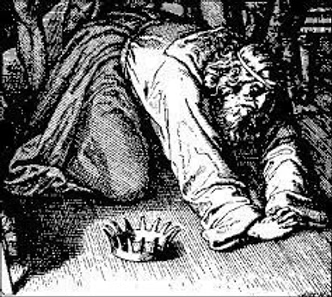
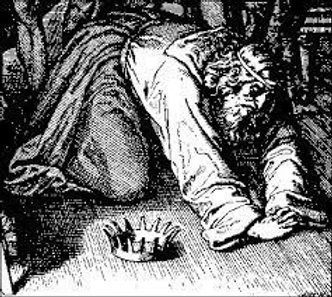
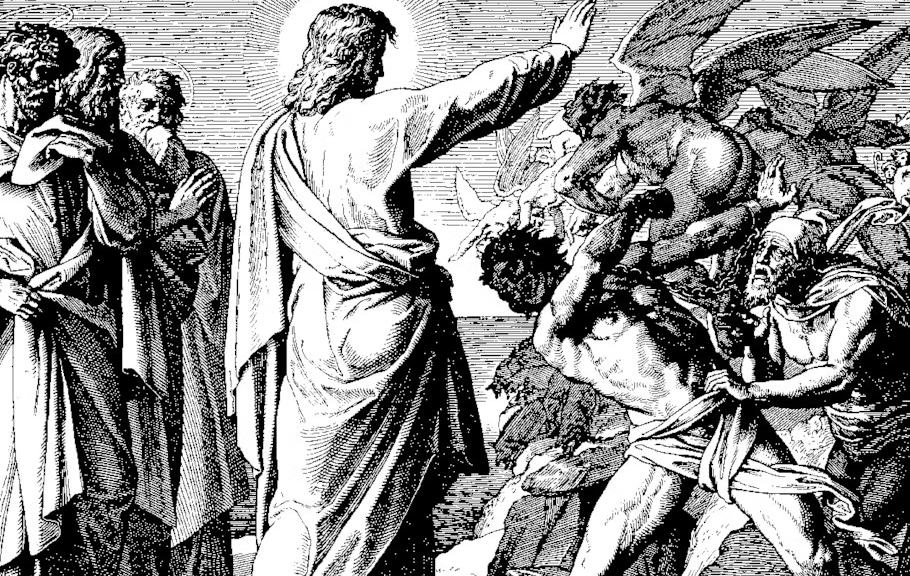
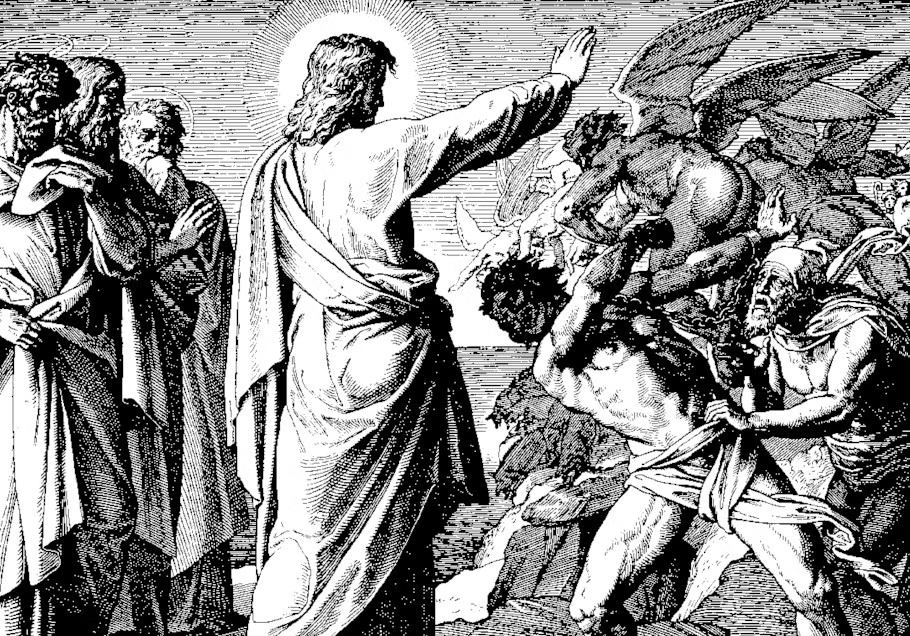
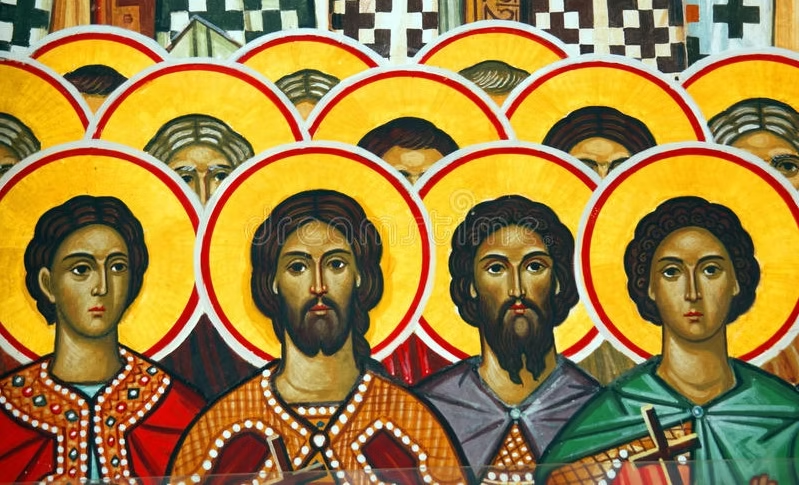
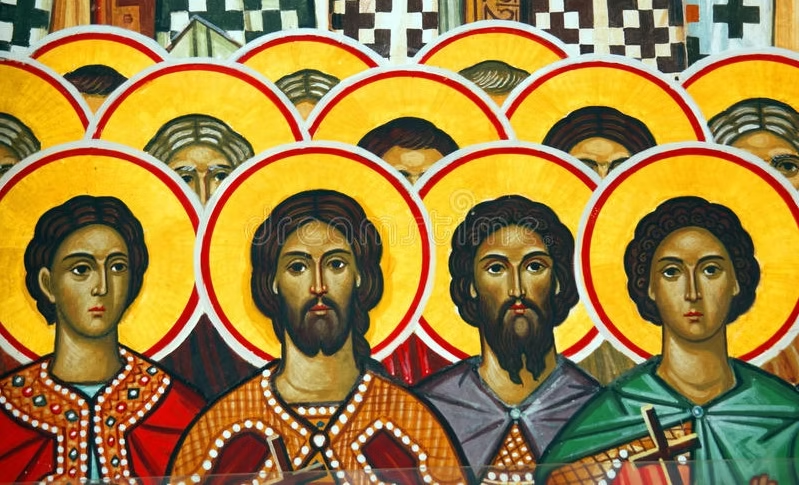
 Explaining the Readings