Category Archives: Psalms

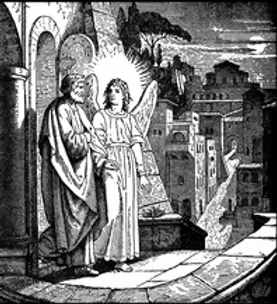
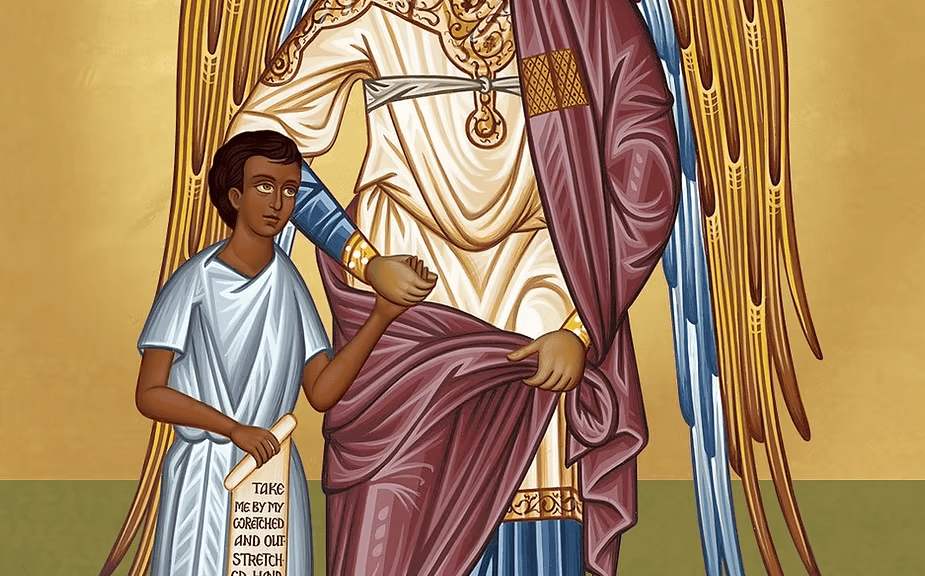
Psalm 91:1-6, 14-16 – Beneath the wings of one’s guardian angel

1 He who dwells in the shelter of the Most High, *

abides under the shadow of the Almighty.

2 He shall say to Yahweh, “You are my refuge and my stronghold, *

elohay in whom I put my trust.”

3 He shall deliver you from the snare of the hunter *

and from the deadly pestilence.

4 He shall cover you with his pinions, and you shall find refuge under his wings; *

his faithfulness shall be a shield and buckler.

5 You shall not be afraid of any terror by night, *

nor of the arrow that flies by day;

6 Of the plague that stalks in the darkness, *

nor of the sickness that lays waste at mid-day.

—–

14 Because he is bound to me in love, therefore will I deliver him; *

I will protect him, because he knows my Name.

15 He shall call upon me, and I will answer him; *

I am with him in trouble; I will rescue him and bring him to honor.

16 With long life will I satisfy him, *

and show him my salvation.

——————–

This is the companion Psalm for the Track 1 Old Testament reading selection from Jeremiah 32, where Yahweh spoke to His prophet telling him to buy land from his cousin and seal the deed in an earthen jar, which would be buried in the ground, preserved for a long time. The symbolism of that story is one of repentance for past sins, with reincarnation the promise to have another chance to live a life in the flesh for Yahweh (as His prophet, or priest, or saint), with the promise also being that the future will include those like Jeremiah, who are the necessary agents of Yahweh who lead willing souls to the altar of marriage and then officiate that most holy union. The lesson says to be a soul saved and to gain freedom from the imprisonment a body of flesh in a sinful world – to die and be granted eternity with Yahweh in His spiritual realm – one must be led into that light by the servants of Yahweh on earth. Psalm 91 sings of both the divine possession of saints by Yahweh and His Son’s soul, while also being the truth they personally know and teach to seekers, so their souls in their flesh can duplicate that prophet, priest, and saint in many others.

The above translation into English is weak; so, I will reproduce what was written and then interpret each verses.

Verse 1: “he who dwells in the secrecy as the highest , as the shadow of the flesh shall abide .

In this, the Hebrew word “elyown” is translated as “highest,” with “most high” a common replacement. The word is said to be “the name of God.” (Brown-Driver-Briggs) This makes the implication of “he who dwells in the secrecy” of Yahweh, as the shadow of the flesh” is a profound statement of divine spiritual possession of a soul in its flesh, by the Son of Yahweh – Adam-Jesus. When the masculine singular is recognized as a statement of a non-physical entity – as a spirit, angel, eternal soul – as a masculine entity, this relates to the Son’s soul. For it to “dwell” and “abide” in “secrecy,” “as a shadow,” then this is a second soul resurrected within the host soul of a body of flesh. To “abide” then means this divine second soul “will lodge” or “pass the night” in a host soul, keeping it from the darkness of a world without light.

Verse 2: “I will say , Yahweh is my refuge and my stronghold ; my elohim , I will trust in him .

This is not David pronouncing “I will say,” but the “shadow of the flesh” that has become the Lord over his flesh (willingly and lovingly). This means David is led to hear and enthusiastically support the soul of Yahweh’s Son “saying, Yahweh is my refuge and my stronghold.” In this, “Yahweh” is specifically named, unlike the weak English translations that throw that name out with the garbage associated with the Jews who killed Jesus. This says ALL souls that will be Anointed by the Spirit of Yahweh (like David – made a “Messiah” [Hebrew] and a “Christ” [Greek]) will likewise hear an inner voice speaking that the Lord within comes from “Yahweh.” That gift is a wedding gift, as the consummation of a divine marriage, where the Son is each time reborn in a new soul, in new flesh. The presence of the Son is then the guardian that protects a once sinful soul (cleansed by the Baptism by Yahweh’s Spirit) from ever sinning again. One’s soul takes “refuge” as a soul that follows that divine lead and, a Lord over one’s soul-flesh, will be the inner strength that will keep all urges to sin from ever being heard, thus never followed. This will then make the “Yahweh elohim” that is the Son (Adam-Jesus) become one’s own personal “elohim.” This is the necessary resurrection that ensures salvation. With that inner strength as one’s Lord, then one has transformed from the belief of religion based on Scripture, to “trust in him,” which is the deep faith that the Son enlightens one to the light of truth, making all questions of darkness disappear.

Verse 3: “for he will deliver you from the snare of the trapper , from the plague of desires .

Again, the third-person masculine pronoun “he” (“”) is reference to the soul of Yahweh’s Son within one’s soul-flesh, as its Lord and protector. The essence of “to deliver” means to “to snatch away” from the dangers of sin. The Hebrew words translated as “the snare of the trapper” can equally say “the bird trap of the fowler,” where the metaphor of a bird (as a winged creature) is that of an angel, which also relates to the ethereal realm as a spirit or soul. The soul is ensnared in a body of flesh and naturally wants to fly away, which means death, when the soul is released to Yahweh. The “fowler” or the “trapper” is then no different than the serpent in Eden, as the craftiest of the creatures. He is himself a spirit, fallen angel, condemned soul, who earned that distinction by going against Yahweh command to help mankind. Instead, he tries to lure souls into the “snares” of sin, which not only keeps a soul imprisoned within a body of flesh, but makes it come back again (reincarnation), if those sins have not been redeemed. This means “he will deliver you” has to do with Yahweh erasing past sins by His Baptism of Spirit upon one’s soul forever, with His Son then sent in to make sure no further “traps” will be entered.

Verse 4: “with his wings I he will overshadow you and underneath his wings you will find refuge ; target and shield his truth .

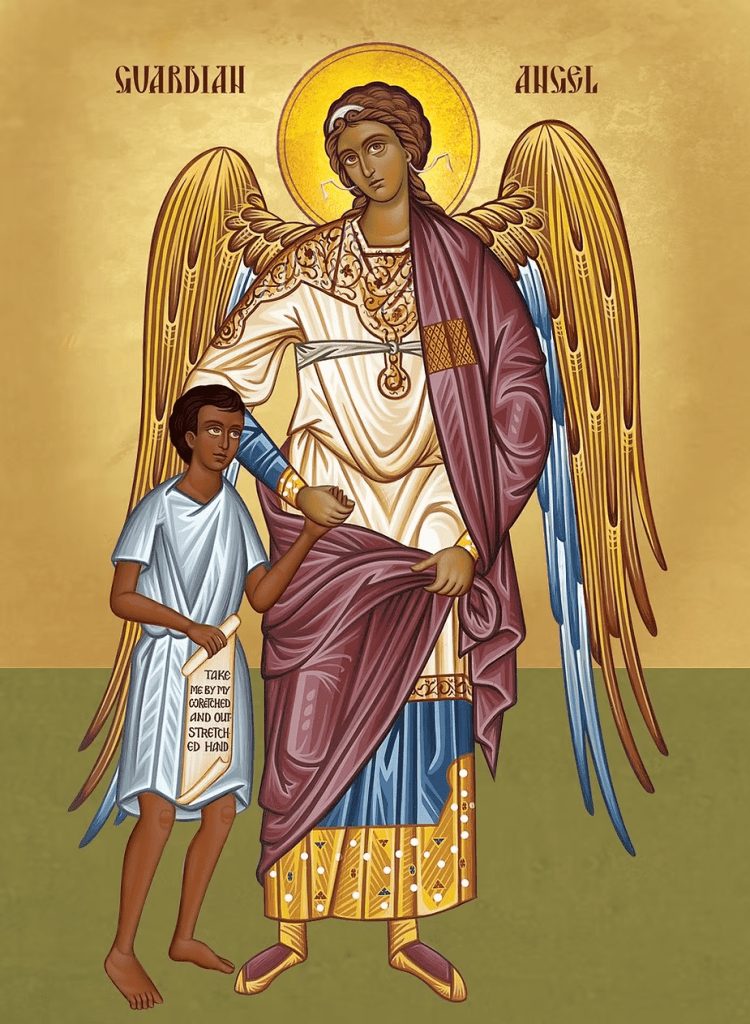
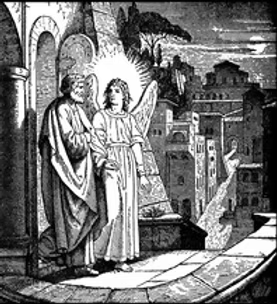
Here, the metaphor of birds continues, where the inner soul of the Son (Adam-Jesus) is projected as a most divine angel of Yahweh that uses “his wings” as the protection that surrounds a wife-soul of Yahweh and its body of flesh. The vertical bar denotes a place to pause and reflect on “his wings” being a statement that the soul of Adam-Jesus is indeed a guardian angel. Following the vertical bar (I), the Hebrew word that can state “cover” is translated as “overshadow,” which matches the statement in verse two: “as the shadow of the flesh shall abide.” When “his wings” are seen as “over” one’s soul and flesh, one is then “underneath his wings,” and that is where “refuge’ is provided. This says one cannot be separate from Yahweh’s Spirit, nor the possession of His Son’s soul, as a soul in flesh that ‘believes’ in God and Jesus, but never commits to the truth of that personal experience, which can only come from self-sacrifice and complete submission to Yahweh. This makes one’s soul and flesh become a “target” (also translatable as the ”hook” sought by demon spirits, but “his wings” act as the “shield,” defending one from the lies of demonic persuasion, by knowing the “truth” of all attacks coming forth.

Verse 5: “not you will fear from the dread of night ; of the arrow , it will fly by day –“

In this verse, the opposites presented in “day” and “night” have to be understood as the “light” of truth that comes from the inner voice and the covering of angelic “wings” enlightens the submissive soul-flesh to all dangers that the presence of Adam-Jesus is defending. The “arrow” is then the flight taken by the truth, against all incoming threats. With the truth always shooting down lies, there is no “dread” coming from unseen lures, urges, or demonic whispers. The “arrow will fly by day” as the light of truth setting the path of righteousness, from which one will not be sways to veer off.

Verse 6: “in the plague of darkness walks ; to the destruction will lay waste in daytime .

Here, David sings that the “darkness of fear” lurks. The Hebrew construct “ya·hă·lōḵ,” rooted in “halak,” the meaning “to go, come, walk” can also be found in Scripture translated as “crawls, grows, prowls and wanders.” This says the “pestilence” or “plague” that lurks in “darkness” tries to remain hidden, so “fear” will “come” into one’s soul and flesh. The cure for that “fear” is the “destruction” of the “darkness,” which comes in the dawning of light, “laying waste” to all “fears,” as they are seen for what they truly are – illusions of shadows. The soul of Adam-Jesus is then the protector who brings the “daytime” and “destroys” the darkness.

—– skip forward in the verses —–

Verse 14: “when on me he has set his love then he will rescue me ; he will set me on high , because his has become my name .

In this, it is important to grasp the truth of spiritual “love” (rooted in “chashaq”). Spiritual “love” is well above and far beyond anything that can be related to the physical emotion of the flesh, which is called ‘love.’ Spiritual “love” comes from the Son of Yahweh, as Adam-Jesus IS the truth of Spiritual “love.” Only by having “his love set upon” one’s soul-flesh can one begin to attempt to put into words what that ‘feels’ like. It is indescribable in human terms. It can only be known by personally experiencing the presence of Adam-Jesus within one’s soul, as the Lord over one’s self. That presence means one’s soul has been “delivered” or “rescued” from all past sins, which can only be washed away by the Spirit of Yahweh pouring out upon one’s soul forever. That cleansing by the Spirit makes it then possible for one’s soul to receive the soul of the Son, who is the epitome of Spiritual “love.” To be “set on high” means to ‘feel’ the presence of Spiritual “love,” which is on the level of Yahweh, with nothing possible to be “higher.” When David sang, “because he has become my name,” this is a statement of a soul’s self-sacrifice at the altar of divine marriage, so one’s soul-flesh is in His “name.” When one receives the soul of the Son, then one’s flesh walks the earth in ministry, “in the name” of the Son – Adam-Jesus reborn.

Verse 15: “he will call upon me ׀ and I will answer him , from him I am in distress ; he will rescue me and I achieve honor from him .

This is a statement of ministry, where the “call” is to serve as a devoted wife-soul. The vertical bar leads one to pause and reflect on this “call” being an expectation. A soul cannot “call upon Yahweh” and tell Him to serve one’s needs. Total submission means to be on “call” for the lead of His Son’s soul within – as one’s Lord – which makes the “call” to be ministry “in his name,” for the purpose of leading others to self-sacrifice unto Yahweh and being reborn as His Son. When one has not made this divine “union” – one’s soul to the Spirit of Yahweh – then one will forever be in “distress,” due to the guilts of sins committed. When David sang, “he will rescue me,” this sings about the redemption of all past sins, where the payment agreed to (the Covenant vows of marriage) is to heed the “call” that will come from His Son’s soul within one’s soul-flesh. When one obeys the “call,” then one will “achieve honor from him” – the name of Adam-Jesus – as a saint in his name leading the lost to salvation with words of truth.

Verse 16: “with eternal life I will satisfy him ; and see him , my salvation .

This is David singing to the marriage that is sealed with a soul’s self-sacrifice and forever commitment to Yahweh. In return, the wedding gift is His outpouring of Spirit that cleanses a soul forevermore. That gift is like a wedding band, which signifies an eternity of satisfaction between two Spiritual lovers. In the eternal realm one is able “to see Yahweh,” because the warning says, anyone who sees Yahweh will die.” When one has been “satisfied” with “eternal life” – a great length of daylight” – the no death can ever occur to the soul. When a souls’ body of flesh can no longer support a soul within it, then the flesh will die; but the soul will never again experience the punishment of death when sins have not been paid. The “salvation” gained is “mine,” which is a possessive pronoun that says that soul is possessed by Yahweh in divine marriage (in His name) and also possessed by the soul of the Son (in his name in the flesh).


Psalm 146 – Shine Yahweh and heed the warning of Amos

1 Hallelujah! Shine YAH!

Praise Shine Yahweh, O my soul! *

[2] I will praise shine Yahweh as long as I live;

I will sing praises lelohay while I have my being.

2 [3] Put not your trust in rulers, nor in any child of earth, *

for there is no help in them.

3 [4] When they breathe their last, they return to earth, *

and in that day their thoughts perish.

4 [5] Happy are they who have se-el of Jacob for their help! *

whose hope is in Yahweh elohaw;

5 [6] Who made heaven and earth, the seas, and all that is in them; *

who keeps his promise for ever;

6 [7] Who gives justice to those who are oppressed, *

and food to those who hunger. 7 Yahweh sets the prisoners free;

[8] Yahweh opens the eyes of the blind; *

Yahweh lifts up those who are bowed down; 8 Yahweh loves the righteous;

[9] Yahweh cares for the stranger; *

he sustains the orphan and widow, but frustrates the way of the wicked.

9 [10] Yahweh shall reign forever, *

elohayik, O Zion, throughout all generations. Hallelujah! Shine YAH!

———————

I have posted about this Psalm 146 three times prior. I advise those who are interested in what this Psalm 146 says to review the links to those three commentaries. The postings are as follows:

October 2021: Psalm 146 – Same song, Elijah verse

September 2021: Psalm 146 – Praising Yahweh as a reflection on Naomi and Ruth

August 2021: Psalm 146 – Praise Yahweh

All are the same verses, sung aloud in the Ordinary after Pentecost season for Year B. Psalm 146 is also scheduled to be sung aloud on Proper 5 Sunday, in the Year C, but the year 2022 had Trinity Sunday (the first Sunday of the Ordinary after Pentecost season) be on the equivalent of Proper 6, with no Proper 5 readings scheduled in 2022. Still, the point that must be seen in this (along with an absence from the Year A schedule) is this song that places focus on Praising Yahweh! (more accurately Shining Yahweh! from within one’s soul) is an advanced lesson, whose repetitiveness makes it vital to understand.

As the only public singing of this Psalm 146 in Year C for the calendar year 2022, it becomes important how it is companioned now with the Amos 6 reading selection, when Yahweh spoke through His prophet about the laziness of the wayward. That desire to sleep in beds of ivory, while devouring the souls of those putting their trust in false shepherds that wear fancy robes, high hats and carry ornate shepherd’s crooks (never been used to save any souls), this Psalm 146 warns the truly faithful to not follow the liars and cheats of the world.

In verse one, the main focus must go to David singing “nap̄·šî,” where this construct is the feminine (the “soul” – from “nephesh”) and “of me” or “mine,” which is stating the femininity of an eternal “soul” (masculine, as spiritual, non-material) in a body of flesh, where “my” is a statement of the flesh possessing the “soul” – not the other way around. This then makes the repetition of “shine YAH!” and “shine of Yahweh” become a statement that a “soul” alone is incapable of “shining” (therefore “praising” as well) as a feminine entity, a “soul” alone in its body made from the physical realm.

The ability to “shine” – from the word “halal” being an imperative masculine plural – comes from “YAH,” as “of Yahweh,” with both words in Hebrew being masculine singular nouns, denoting the spiritual allowing the material to “shine” a spirituality that is unseen physically, but depicted in Christian religious artwork as a halo. No leaders of temples or synagogues or cathedrals or churches can lead a soul trapped in a body of flesh to emit a divine radiance – the “shine” – as this is an individual commitment between the feminine soul and the masculine Yahweh. It says “to shine of Yahweh” is to be spiritually married to Him, so the outpouring of His Spirit upon one’s “soul” forever is the only way this “shine of Yahweh” can manifest.

In verse two the repetition if the first-person constructs that sing, “I will shine” and “I will make music (to Yahweh).” In that the first-person is a combined spirituality that is the masculine Spirit of “I Am” and the feminine soul that is the sacrificial “I” that receives the Spirit. This is then singing of a union of two as one, where this union brings the promise of eternal “life,” which is guaranteed by the offspring of that divine union, which is “to my elohim I gain my continuance.” The Spirit makes it possible to receive the seed soul of the Son, who merges with a soul forever, making a soul be saved as a reproduction of Yahweh’s Son of love.

It is after David sings two verses about “shining Yahweh,” through the presence of his “elohim” within his “soul” that David then warns of the dangers of following the lead of those who would steal that “shine of Yahweh” away.

While beginning verse three singing “not will put your trust in nobly inclined” humans berobed in the finest cloths, David sings loudly, “in the son of man.” In that, those who will falsely lead souls away from “shining Yahweh” will be deemed “sons of men,” denoting their obedience to bloodlines and souls trapped in sinful bodies of flesh. However, the double edge of that cutting segment says, “in the Son of Adam,” where the Hebrew word “’ā·ḏām” is the name of the Yahweh elohim of Genesis 2, when the divine priestly Man we call Adam was created by the hand of Yahweh. This segment then places a name on what David called “my elohim.” To this name, David then sang, “nothing else offers salvation;” and, here it is vital to know the name “Jesus” means “YAH Saves.”

In verse four, David sings about his inner “elohim” of “salvation.” When one sees “in the son of Adam,” where the preposition indicates this inner union with David’s soul, he then explains this phenomena of “the son” resurrecting there. He sings, “it departs his spirit it will return it to the flesh,” where the Hebrew word “adamah” means “ground, land,” this is metaphor for the material real where souls inhabit bodies of flesh (not ground or land). When the soul is seen as that “returning,” then “it departs” refers to the death of Adam’s flesh, which took 930 human years to accomplish, after the departure from Eden. It is then not the flesh of “the son Adam” that “will return,” but his “soul,” which will divinely possess a soul married to Yahweh, joining with that wife-soul in its body of flesh. This “return” will bring an eternity of “day” – the light of truth within – that will keep a host wife-soul from ever ‘perishing” of soul. Like Adam, when the death of the flesh comes, then the soul will be released to do the work of the Father, as He sees fit.

Verse five then begins with the Hebrew word “esher,” which means “happiness, blessedness.” The construct leads one to sing “blessed” as the first word of this verse. Here, David wrote a vertical bar of rest, which forces the singer to contemplate this word “blessed.” The insight comes from the Greek written by Matthew, which told what Jesus spoke on the mount by the sea, called the Beatitudes. They are called that because the Latin word “beātī” means “happy, rich, or blessed” (plural adjective). The Greek word written by Matthew is capitalized, as “Makarioi” (plural adjective), meaning “happy, blessed,” and implying “to be envied.” The capitalization of the Greek elevates this word to a divine level of meaning, which is “shining Yahweh.” The word then goes much higher than a word of human emotion (as “happy” or even “blessed”), so it should be read as Jesus explaining the attributes of “Saints.” Thus, David’s mark of pause to reflect on “blessed” relates to the “day” light of truth that “shines Yahweh” that is Yahweh’s “plan” to keep His souls from “perishing.” They avoid that fate as being “sainted.”

Following the mark of pause, David sang, “this el of supplanter it needs a helper.” In this, the singular construct “še·’êl” says “the soul” of a body of flesh acts as royalty, as a “god” that always runs into trouble, attempting to “supplant” the possessions and material things of others, to claim as one’s own. This is the guilt of sins heaping up to a debt that must be repaid; and, the only way to repay that debt is to join spiritually with “a helper.” This is the Advocate Jesus promised to send to his disciples who served Yahweh. That coming is then sung to be “his hope in Yahweh his elohim.” This says the “hope” of sins being forgiven comes from divine union with Yahweh’s Spirit, so “his elohim” (“the son of Adam”) will be sent as the savior.

In verse six, David sings about the power of Yahweh. As the Creator, David wrote the Hebrew construct “‘ō·śeh,” rooted in “asah,” meaning “making.” David then wrote a vertical bar of pause for the singers to reflect on this “Yahweh elohaw” that ended verse five. That says “Yahweh His elohim,” which is the Son “made” on the seventh day, after Creation was ended. In Genesis 1:1a, Moses had written (translated into English), “in the beginning created elohim.” This says Yahweh Created all the elohim of Creation, so spirit, angels, gods, laws, and souls did the work that Yahweh planned. Those “elohim of His” are those ethereal beings that were “making” everything; so, everything is “made” was of the plan of Yahweh. Following the vertical bar of pause, David sang of “heaven” and “earth,” which becomes metaphor for “souls” within “flesh.” The totality of mankind (created on day six, unlike Adam) is then a ‘sea” of these souls within flesh. Mankind is then like the fish of the sea, who breathe the least breath of Yahweh to live; so, like the fish of the sea, mankind must be caught by souls in flesh possessed by the Yahweh elohim that is Adam-Jesus – the “son of Adam.” Once caught, those would will be led to the altar of marriage (if willing and loving), where the “truth can be kept in them forever.”

In verse seven, David began with the same word as that beginning verse six (“ō·śeh”), but then he added the word “judgement” to “making,” before placing another vertical bar marking pause for reflection. By being filled with the “truth” that comes into one’s “soul and flesh” (“heaven and earth”) from Yahweh’s elohim, this is “making judgment” an event that a soul can face securely, or with great fear. Following the vertical bar, David wrote the Hebrew construct that places focus on “those who are the oppressing,” which are those souls who reject divine union with Yahweh, making their own souls be the lords over their flesh, seeing themselves as gods. It is they who “oppress” those other souls trapped in bodies of flesh, by leading them to believe there will be no harsh “judgment” to come. Thus, it is they who are “making judgment,” based on lies and half-truths.

Following a comma mark of separation, David then sang of the masculine soul (the son of Adam) that is “giving bread to the hungry.” While modern pastors and priests can take such words and see it as the duty of a religious organization to collect “food” donations and open “bread lines” for the poor, this is missing the intent. In the same way Jesus said, “Give a man a fish and feed him for a day, but teach a man to fish and you feed him for a lifetime,” the purpose of pastors and priests is to offer spiritual food (the truth of Scripture) to seekers (“the hungry”), sos they can be led to themselves seek the truth of Jesus, through divine marriage to Yahweh. That will transform a lost soul into a saint, who will be transformed in that way to serve Yahweh as His Son on earth. It is then from such commitment (divine marriage forever) that David sang, “Yahweh is giving freedom to those in bindings.” This “freedom” is the promise to a soul for eternal life beyond the grave, as a saintly servant in the name of Jesus who saves other souls in His name.

Next, David begins verse eight with the singular word “Yahweh” (“יְהוָ֤ה”), followed by the placement of a vertical bar of pause. This makes one place reflective focus on “Yahweh” as the only way a soul that is bound in flesh, which is wrapped with the “bindings” of sin can be “freed” from repeating that eternal soul’s “imprisonment” in the worldly realm, away from “Yahweh” forever in His spiritual realm. Relative to the “truth” being told, David then sang of “Yahweh” – “opening the eyes of the blind,” which is as Jesus said to many, “you have eyes but cannot see.” The translation “of eyes” is assumed, as this fits the following “of the blind,” but in reality the “opening” is not physical (as making “eyes” see the “truth”) but spiritual. The “truth” is ‘seen’ through divine inspirations, such that the written word does not readily make the “truth” visible to the naked eyes reading those words. The inner “elohim” must whisper this truth to the mind’s ears, which project the “truth” onto the written word with the mind’s eye.

David then sang in verse eight, “Yahweh raises up those who have bowed down.” This is not a statement about religious ritual, where souls trapped in human flesh believe intellectually that they are born special and can do no wrongs on earth, as long as they enter holy buildings, where false shepherds and hired hands are employed, who then direct the believers to kneel before an altar and pray prayers from a book or scroll … mindlessly and without emotional commitment. The “truth” meant by “bowing down” is a soul kneeling spiritually at the altar of divine union, when that soul will become the wife-soul of Yahweh, receiving His outpouring of Spirit, so one’s soul will be pure and able to receive the soul of His Son, resurrecting there within. Thus, David sang of “Yahweh loving the righteous,” where “loving” is the bond of total commitment, where a soul self-sacrifices out of ‘love” for Yahweh, who then are given His “love,” as the Son’s soul resurrected within a wife-soul. It is the presence of the Son’s soul that leads the “sojourner” to change its path and walk “righteously.”

David then again begins verse nine with the word “Yahweh” (“יְהוָ֤ה”), which he also then followed with a vertical bar of pause. David then sings that “Yahweh” – “watches over sojourners,” who are eternal souls “traveling” from body of death to body of death, until “freed” from that cycle, through divine union with Yahweh, becoming His Son resurrected in flesh. Each of those lost souls are then said to be “fatherless and a widow,” which says their most holy Husband has died to them and they have no Son in His name to be their redeemer. At this point, David sang of “Yahweh,” – “he will return them,” – which sings both of the repetition of reincarnation of souls “returning” to the material realm, while also singing the wonder of a soul being found by a saintly priest, who has those lost souls “returning” to be one with Yahweh, in divine marriage of their souls to His Spirit. This then happens to ‘those who sojourn the paths of the wicked,” when “Yahweh” will “bend their course,” or turn their paths “upside down,” so the “criminal” can become lawful (out of love).

In verse ten, David begins with the words that say, “will reign Yahweh.” Here, he again posted a vertical bar mark of pause and reflection. From seeing the end of verse nine speak of “the journey of the wicked will be bent,” we can now confirm that the change of course will be relative to a future course coming, when “will reign Yahweh” over all souls who marry with His Spirit. This means a total and complete subjection of self-will and self-ego, so a soul will never ‘think’ it is an equal to Yahweh. Yahweh “will reign” as King, just as Yahweh told Samuel (when the people asked for a king to be like other nations), “I Am their King.” Yahweh commands and His wife-souls respond, “Yessir, with love to You Master.” David then sang, following the vertical bar of pause, “forever.” This is a statement of eternal salvation, saying that a soul has “returned” to be one with Yahweh and will “forevermore” serve Him as a Yahweh elohim, in the name of His Son.

Following a comm mark of separation, this “foreverness” is confirmed to be as a Yahweh elohim, as David sang, “your elohim” (from “elohayik”). To this, David added “Zion,” which is a word that means “dry place.” This “dry place” is then “to all the generations,” which becomes a statement that Yahweh is not related to any souls trapped in human bodies of flesh, based on a bloodline or a lineage of physical birth. This means “a dry place” is the emotionless flesh that is devoid of spirit relating it to Yahweh, when only a lost soul animates dead ground to mimic life. This then says “your elohim” is the flow of Yahweh’s Spirit that relates all lost souls to Him, which is then the symbolism of the blood of the lamb on a doorway and the blood of Jesus metaphor for that symbolism, where his blood was spilled and run dry in death on a cross. Likewise, all lost souls must bleed their self-egos dry, so they can open their souls to receive the Spirit and be saved. It is at this point that David again sang, “shine YAH!” The flow of the blood of a Christ comes into a wife-soul of Yahweh when it has become reborn in the name of the Son. Then, it can “shine of Yahweh,” as that Son again on the earth in ministry, in new flesh that has been purified forevermore.

Here, with the lesson of Psalm 146 presented, it is important to look back at my reproduction of the reading above, where verses six through ten have many bold references to “Yahweh,” which routinely is translated into English as some generic “Lord.” Beginning in verse six, David placed vertical bars at the beginning of all verses following. To look simply at those words that are supposed to be paused and reflected upon, the following is sung by David:

6 “him making ׀

7. “him making judgment ׀

8. “Yahweh ׀

9. “Yahweh ׀

10. “shall reign Yahweh ׀

Relative to this Psalm 146 being chosen as the companion to the Amos 6 reading selection (Track 2), it should be seen that David is likewise making it a clear warning that it is much easier to do nothing that seeks eternal salvation, when one is born as a baby and told, “You are special and can do no wrong in God’s eye.” These five places where David makes the singer pause and reflect says, “You have to be made special by a relationship with Yahweh. That relationship begins by realizing unrepentant sins will bring a surprise judgment from Yahweh. Yahweh is the only way. Yahweh is the only one who can wash away sins. To have that purification as repayment of past crimes against the Law, you must fully submit before Yahweh and serve him in your cleansed flesh – as His Son reborn anew – or salvation will not be found.” The name “Jesus” must be understood to mean “YAH Saves.” Jesus does not save. Jesus was Adam, who was made by Yahweh for the purpose of saving lost soul; but to do that, Adam had to die in the flesh, so his soul could be released to serve the Father, as the Son of Adam being resurrected in new flesh throughout the ages. Submission unto Yahweh in divine marriage does not allow any soul to ‘think’ “There can only be one Adam and one Jesus, because Yahweh cannot make one soul return as the same soul in different flesh.”

Psalm 137 – Don’t get misled by the names you do not understand

1 By the waters of Babylon we sat down and wept, *

when we remembered you, O Zion.

2 As for our harps, we hung them up *

on the trees in the midst of that land.

3 For those who led us away captive asked us for a song, and our oppressors called for mirth: *

“Sing us one of the songs of Zion.”

4 How shall we sing Yahweh song *

upon an alien soil.

5 If I forget you, O Jerusalem, *

let my right hand forget its skill.

6 Let my tongue cleave to the roof of my mouth if I do not remember you, *

if I do not set Jerusalem above my highest joy.

7 Remember the day of Jerusalem, Yahweh, against the people of Edom, *

who said, “Down with it! down with it! even to the ground!”

8 O Daughter of Babylon, doomed to destruction, *

happy the one who pays you back for what you have done to us!

9 Happy shall he be who takes your little ones, *

and dashes them against the rock!

——————–

Verse 1: “above streams gate of God [Babel] , there we dwelt also we wept ; until we remember the dry place [Zion] .

This is a profound statement of reincarnation. Our souls are sent to the earthly realm by Yahweh, as prisoners locked in that lower state of being until “we remember the dry place.” This “dry place” is a state of submission and commitment in divine marriage to Yahweh, where we self-sacrifice for a “higher” cause: “above streams” that flow from the Spirit in divine marriage and the coming of the soul of Yahweh’s Son to possess our souls in its flesh and become our Lord to salvation. When this state has not been “remembered,” then at death our soul is released for Judgment, where for a brief time (time does not exist in the spiritual realm) “we dwelt,” before “we wept” when our sins of the flesh bring forth a judgment of return to the prison of flesh that simulates life when a soul is present, but always is death animated, until it returns to its natural state. The “dry place” means each soul is called to be “Zion,” shunning the lures of a sinful world, while the hidden flow of Spirit within our souls keep us prepared to serve Yahweh and earn a return to eternal life in the spiritual realm.

Verse 2: “above the willows a trapped soul in the midst of ; imprisoned souls have been hung up , our harps .

Here, the use of “willows” (“arabim”) is symbolic of the “hopes” of redemption and salvation that are infused within each soul, although that inner quest implanted to seek Yahweh is most easily forgotten. [Willow Place for Women] This means “the willows” are relative to the “remembering the dry place” of verse one. Each soul trapped in a body of flesh takes on a feminine essence, whereby “she” (the third-person feminine singular written in “bə·ṯō·w·ḵāh”) has been replaced as “a trapped soul.” The “midst” is the body of flesh, which is beneath the masculine realm of spirituality and Yahweh.

This is again repeated in “imprisoned souls,” where the first-person common plural written into “tā·lî·nū” is reference to the “she” prior (before the semi-colon mark). The aspect of being “hung up” is dual in nature, as it indicates a method of execution to death (by “hanging”), while also making a statement of “suspension” in the material realm, when a soul is natural to the spiritual realm. We are “hung up” souls by the lures of sins, which make us forget our inane quest to seek salvation. The element of “our harps” or “our lyres” is the tunes we play our life to. Either we will be like David and “suspend” his “harp” over his bed, so he can sing the praises inspired by Yahweh within (His Son’s soul), which become songs that lead other souls to divine marriage to Yahweh; or, we fiddle away our lives, plucking on the strings that please our selfish wants of material gains.

Verse 3: “for there he asked of us those being taken captive word songs and those wasting us mirth ; he sings to us in the songs of a dry place .

This verse sings of the figurative “streams of the Negev,” which are not visible in that dry place, but underground. This states the forgotten request made by Yahweh to souls returning to the material realm, which asks them to remember. This is then the written “word” of Scripture, to which the children of Yahweh will be taught; but it is from these dry words that “songs” of praise come from. This has to be a direct relationship established by Yahweh and “those” souls, as teachers not so connected will be “wasting us” who depend on them for our souls to find “mirth.” They, instead, will find “happiness” in misleading soul, sending them away from Yahweh and keeping them from remembering their goal set before them. When an individual soul hears the “songs sung” by divine inspiration (as did David), then that soul will flow with the Baptismal Spirit and its ever living waters unseen, but streams within the soul.

Verse 4: “how we will sing the song of Yahweh ; above , land foreign .

Here, it is important to be aware of the punctuation marks, as it is easy to discount them and rewrite that written in a paraphrase that leads away from the truth. The first segment sing praise that is made by the wife-souls “of Yahweh,” who will be the only ones hearing the lyrics of His “song” of inspiration. As ministers in the name of His Son, those saints “will sing” in the same manner as did David and all the prophets. The semicolon mark separates that from a new statement that is relative to these wife-souls “singing His sons,” which simply states “above” or “over.” This is a word (“‘al”) that denotes a higher realm as the source of these divinely led “songs.” This word is written four times in this Psalm 137, with it being the first word written in verses one and two. The comma mark of separation that follows “above” then says “land foreign,” which must be read metaphorically, such that “land” is the material realm, therefore representative of the flesh surrounding a soul. This then clarifies “above” as the spiritual source of the “songs sung,” with the fleshy brain having nothing to do with the origin. To mimic such songs would produce lies and false lessons, without divine inspiration being the origin. This means the spiritual meaning of the “sons sung” coming from Yahweh have “foreign” meaning to those who live only in the flesh, denying marriage to the Spiritual.

Verse 5: “if I will forget you teaching peace [Jerusalem] , she will forget her right hand .

This verse must be read as an explanation of “land foreign” or “flesh alien” to Yahweh. The Hebrew word “im” means “if,” thereby presenting a scenario of choice, where options are available. This is a statement relative to verse one singing “until we remember,” where “forgetting” is part of the process that covers a soul in its flesh with sins. The meaning behind the name “Jerusalem” (“yə·rū·šā·lim”) is “teaching peace,” where the word “peace” (as spoken by the resurrected soul of Jesus to his disciples in hiding – “Peace be with you” – actually translates as “wholeness” [from “Eirēnē”]. This means “teaching peace” is the purpose of Scripture, understood by Yahweh singing songs of inspiration to a soul in its flesh, led by the soul of His Son. To “forget” these lessons that were prior to reincarnation, which leads to “weeping,” from “forgetting,” the “she” (third-person feminine singular construct “tiš·kaḥ”) “forgetting the right hand” is a statement about a soul’s failure to receive the Spirit and the resurrected soul of the Son, sent to be Yahweh’s “right hand” extended into the worldly plane. This is “forgetting” to become reborn in the name of the Son, and go forth into ministry in that name.

Verse 6: “she will keep close my tongue ׀ to the palate if you will not remember I if not I will ascend in teaching peace ; above head of my mirth .

In this verse is placed a vertical bar, which is a signal to pause (as a musical direction), where reflection must be made on singing “she will keep close my tongue.” The third-person feminine singular makes the focus be on the soul within a body of flesh, which is of feminine essence, having forgotten to submit to Yahweh in divine marriage and let the eternal soul imprisoned on the earth to be released spiritually as a possession of Yahweh (the masculine essence). To have the ”tongue kept close” means to silence it, so it cannot speak the truth of Scripture as a minister in the name of the Son. This then leads to a focus on the “palate” or “the roof of the mouth,” which implies the spiritual has been silenced by “tastes” preferred from the world. Here, a double “if” scenario says “not remembering” the goal set for a soul by Yahweh (prior to rebirth in the flesh) will not only lead to a life where sins must be forgiven, but the scenario where known sins will be one’s worldly addictions, keeping one’s soul from “ascending” in divine union, with repentance cleaning away sins through Baptism of the Spirit, so the soul of the Son can lead one’s soul in ministry – “teaching peace” to other lost souls. The “if” scenarios say salvation is “above,” where Yahweh’s spiritual realm must be welcomed into one’s “head,” so the Son becomes one’s Lord. “If” not, the “head” is led by a fleshy brain that lusts after those illusions of the lower realm. The “if” determines the type of “mirth, joy, or happiness” one’s soul seeks.

Verse 7: “remember Yahweh ׀ not the sons of red [Edom] , the day teaching peace them saying they naked ׀ bare ; until , his foundation to her .

In this verse are two uses of a vertical bar, forcing the reader to paus and reflect on that written prior. David began by saying “remember Yahweh,” where the pause needs to be seen as a reflection of the “if” scenario stated in verse six, where the opposite of “forgetting” (“not remembering”) is now explained as “remembering Yahweh” is a soul’s goal in an incarnated stated of being. Following the vertical bar, David stated the other “if” scenario as what “not” a soul does, when it “remembers Yahweh.” Here, David writing “not the sons of Edom,” where “Edom” is the nation of Esau, the brother of Jacob, who was given his name because his skin was ruddy, means “not” to remember “the sons” of the flesh, whose skin tone in the sun will turn “red.” This exposure to “daylight” is then said to “not” be for doing things of the flesh in the light of “day,” but to “remember Yahweh” means to have the truth of the light of “day” be the inspiration shining upon one’s soul, leading it to be “teaching peace,” not known for one’s physical attributes. The second vertical bar comes after one of two use of “arah” (construct “‘ā·rū”), which means “to be naked or bare.” The first use makes one pause and reflect on the physicality of being “naked” in the sun of “day,” where the repeated use of the same word means to “bare” one’s soul to Yahweh Spiritually. The use of a semi-colon says the same theme is continued (exposure to Yahweh’s Spirit), while going in a different direction. This says simply, “until,” which means there is no fixed timeframe for this exposure. A committed soul married to Yahweh will endure forever in His light of truth, with that truth coming in the resurrection of the Son’s soul adjoining one’s soul, becoming the “his foundation to her.” It is from this possessive “foundation” that a soul is then able to be “teaching peace.”

Verse 8: “daughter gate of God [Babel] , she having been ruined blessedness he will complete you ; it recompense , as she has dealt fully with us .

In this, the femininity of a soul in a body of flesh is called a “daughter.” Then, we have a repeating of “Babel,” last read in verse one, meaning “gate of God.” Rather than read this “gate” as an entrance to “God,” like the gate forbidding souls from entering Eden, guarded by the cherub Uriel – “Uriel is often identified as a cherub and the angel of repentance. He “stands at the Gate of Eden with a fiery sword” (Wikipedia) – the “gate of God” should be seen as a forbidden point of entry, requiring an angelic escort to get into Yahweh’s presence. It is this “daughter” (the feminine essence of the material plane) that must be “destroyed” or “ruined,” before a soul can reach a state of “blessedness,” which is a soul’s marriage to Yahweh and the outpouring of His Spirit that cleanses a soul of the “daughter” (much like the laws of women needing to bathe clean after their periods, before be allowed into a sanctuary), so the soul (a masculine, thus eternal essence) can be released to pass the “gate of God.” When David sang, he will complete you,” this is like the aspect of “peace” meaning “wholeness.” When a soul is sent into the worldly realm, it becomes incomplete, as separated from Yahweh. The goal (we recall) is to “remember Yahweh.” To “remember Him” means to be made “complete.” The “recompense” is then the payment a soul must pay for being cleansed by the Spirit of Yahweh, allowing one beyond His gate. This making “amends” means service to Yahweh, in the name of His Son, in ministry leading others to hear the truth of Scripture. That becomes the meaning of “she has dealt fully with us,” as “she” (the second-person feminine singular) is a priest in the name of the Son, with “us” being those in need of salvation.

Verse 9: “blessedness ׀ he will take possession and he shatters her children , into the mountain .

Here, a vertical bar follows a repeating of the word “blessedness” (“’aš·rê”), which was stated in verse eight. The signal to pause and reflect on this meaning, where many read “blessed” and “blessedness” as an attribute of Yahweh, it is only souls that find their ways to married Yahweh that become “blessed” by Baptism by Yahweh’s Spirit. In the Greek word meaning “blessed” (“Makarioi”) is repeated in the verses of Matthew 5 that are called ‘The Beatitudes’ (from the Latin “Beato,” which means “blessed, lucky”). The meaning of one who finds this “blessedness” of Yahweh is a saint in the name of His Son. Thus, when we read “he will take possession,” this is the dual possession of Yahweh owning His wife-soul, while also the possession of His Son’s soul over the host soul in its body of flesh. The word “olel,” meaning “a child,” should not be seen as physical “children,” but the judgment of future “infants” into which a soul will be reincarnated, if it remains a “daughter” of sins. For those “children” to be shattered” means Baptism by the Spirit will wash them all always. To then read “into the mountain,” this is the soul of Yahweh’s Son becoming the Lord over the soul-flesh he possesses. His strength is the “mountain” that “dashes” any future sins from being born to a soul saved.

Psalm 37:1-10 – Relax those angry faces

1 Do not fret yourself because of evildoers; *

do not be jealous of those who do wrong.

2 For they shall soon wither like the grass, *

and like the green grass fade away.

3 Put your trust in Yahweh and do good; *

dwell in the land and feed on its riches.

4 Take delight in Yahweh, *

and he shall give you your heart’s desire.

5 Commit your way to Yahweh and put your trust in him, *

and he will bring it to pass.

6 He will make your righteousness as clear as the light *

and your just dealing as the noonday.

7 Be still before Yahweh *

and wait patiently for him.

8 [7] Do not fret yourself over the one who prospers, *

the one who succeeds in evil schemes.

9 [8] Refrain from anger, leave rage alone; *

do not fret yourself; it leads only to evil.

10 [9] For evildoers shall be cut off, *

but those who wait upon Yahweh shall possess the land.

——————–

In verse one, the word “not” (“’al-”) is attached to words twice, as a combined word statement of “not do fret” and “not be envious.” This separation and repetition should be read as a dual statement that tells the faithful to “not” be like those who are of no faith, who are those who are “angered because of evildoers” and are “envious of those acting unrighteous.” Thus, verse one states both what the faithful will do, in regards to those who customarily break Yahweh’s Law, while setting the example of a lack of faith as being that which “angers” and “makes envious” those forcing themselves to comply with the Law, when they do not understand how so many so-called Israelites can sin without punishment from Yahweh.

In verse two, David pointed out why one should “not” be like those who lack faith. His metaphor was they were “like the grass they shall be cut down soon,” as the “grass” is like “green herbs that wither.” This metaphor compares the faithless as those who are connected to the earth, where everything of the material realm is part of an endless cycle of birth, growth, withering and death, to be repeated. Those who have faith, on the other hand, have the consistency of eternal life on the spiritual plane, where death (reincarnation back into a body that will be born, grow, wither, and die) is assured. Those of true faith avoid this cyclic repetition.

In verse three, the concept of faith is repeated in David singing the words “trust” and “his steadfastness.” David here explains that those of faith “trust in Yahweh,” which means their souls are led spiritually to guide their bodies to “do good.” The truth of “doing good” (as Jesus reminded the rich man who called him “good Teacher”) is only possible by Yahweh, which manifests through His hands on the earthly plane. When it appears that David is saying the faithful “pasture on the land,” as the rewards of the “faithfulness” His presence brings, this is wrong to see. David said that the saved souls “of the land” will themselves become the nourishment (like lush green grass feeds the sheep) that those lacking faith shall “feed on,” so they can also find “his faithfulness.”

In verse four, it appears (again) that having faith in Yahweh is greatly rewarding, as the NRSV translation has David singing, “he shall give you your heart’s desire.” This also is the wrong way to view these lyrics. The verse begins with a statement that says, delight in your souls, where the meaning to “have delight self” is a statement that equates a ‘self” to a soul.” No body of flesh has a “self” without a “soul.” A body without a soul is a corpse and has no identity. This “soul-delight” comes because a soul has become elevated by the Spirit of “Yahweh above” that “soul,” bringing the soul “delight” in that presence. When this “delight” of presence is felt spiritually by the soul, then it is because “Yahweh has given you” the wedding gift of His Spirit. The “delight” is then the divine union between a soul and Yahweh. The “gift” fulfills the “desires” or “prayers” for redemption, through repentance that leads to the altar of divine marriage. Once a soul has knelt before this altar in complete submission to Yahweh – as His wife-soul – then this marriage will be “of your heart,” where the Hebrew word “leb” means “inner man, mind, will, heart.” The “heart” of all human beings is their souls; so, the “desires of their hearts” is eternal salvation for their souls.

In verse five, this concept of divine marriage is stated in David singing, “commit to Yahweh your path,” where commitment is the whole foundation of marriage. The Hebrew word translating as “commit” is “galal,” which actually means “to roll” or “roll away,” such that when connected to “dar·ke·ḵā” (from “derek”), meaning “your journey, road, path, way, manner, or distance,” the suggestion is to cease “rolling away” from Yahweh and turn “your path” into His. This is the commitment one takes in marriage, where two separate ways must be blended into one. As a soul being the wife and Yahweh the Husband, faith is then the “trust” that His “path” is the best for one’s soul. When this “commitment” is made, then “he will bring to pass” this new “way.” That is the “path” of righteousness.

This concept of “righteousness” is then sung of in verse six. Following David singing at the end of verse four, “he will bring it to pass,” he begins verse five by singing, “and he will bring forth” (from the construct “wə·hō·w·ṣî,” rooted in “yatsa”). This means the darkness of one’s past “path” or “way” will be exposed by “his bringing out the light,” which is symbolic for the “light of truth” that comes from His Son (Adam-Jesus), being “brought out” (reborn) in one’s soul, as its possessing Lord. This resurrection of the Son’s soul in a wife-soul will then lead one along the “path” of Yahweh, as the “path of righteousness,” only possible through His Son’s guidance, protection and revelations. This “path” led by the Son’s soul will then ensure a wife-soul’s “judgment” upon death, where the worthiness of a soul will be clearly seen in the “bright light of the noonday” sun. One’s soul will become the Son reborn, thereby perfected by his “light.”

In the Episcopal Church’s presentation of Psalm 37 (above), it is at verse seven that it is divided into two verses, creating a pseudo verse eight, which is not so. The rest of this analysis will then stay true to the written word and not veer onto the path set by the Episcopal Church, for whatever motivations they might have had to alter the divine test of David’s Psalm 37. It should be noted that the NRSV (supposedly the source for the Episcopal readings) does not divined verse seven as shown above.

Verse seven then begins by saying one word, before a vertical bar is placed, denoting a place to pause and reflect on that one word. David wrote, “dō·wm ׀,” where the root verb (“damam”) means “to be or grow dumb, silent or still.” This statement is then prompting a soul to see that self-will or self-ego must be completely surrendered in this state of marriage with Yahweh, where that union “brings forth the light” of His Son as one’s Lord. This means one’s soul must “be silent” and listen. Nothing of importance can ever come from a soul, whose fleshy brain is no match for the Mind of God. The soul of His Son (Adam-Jesus) speaks the Word of Yahweh to the soul, as the soul obeys the commandments given and listens to the truth being exposed in the “light.”

Following the vertical bar, David then sang, “in Yahweh and make bring forth for him not you are angered by those rushing onto his path”. Here, the element of “in Yahweh” must be read as verse four is the “delight in one’s soul” because the presence of “Yahweh” comes “over” or elevates one’s soul “above” the ordinary. Here, “in Yahweh” should be seen as a soul being “within” that protective envelopment of Spirit, as well as the divine possession surrounding one’s soul by His Son. This inner presence that is “in Yahweh” – Adam-Jesus – is then the influence that is the “not” of verse one. Here, one’s soul is “not angered” by those with no faith, who come “rushing” to Yahweh as His children, when the only children of Yahweh are those who have the resurrected soul of Adam-Jesus as their Lords. This pretense does “not raise ire” within a saved soul, because “only those rushing are doing their souls harm.”

This is then explained by David singing, “because the man who brings to pass wicked schemes,” which says a “man” is a soul not married to Yahweh (not His child reborn), and one “rushing onto the path of Yahweh’ (to prosper from such pretense) will not be led divinely by the Son. All a “man” is capable of “bringing to pass” is “wicked schemes,” which will be trespasses dirtying the soul.

Verse eight then repeats this warning that “anger causes harm.” David sings here, “relax from face,” where the root noun “aph” implies flaring “nostrils” and a “face” that is marked by hard lines along the brow, in “anger.” To ‘relax from (this) face,” one’s soul must not be influenced by the feelings submitted it by the flesh (especially a big brain). This “relaxation” then allows one to “release from rage” or “leave the heat” of troubling times. Then, again, David sang, “not you be angered,” as this “only causes harm.” The “harm” is not to one’s body of flesh, but to one’s soul, as determined when Judgment of a soul comes.

In verse nine (the last of this reading selection), David wrote, “for those doing evil will be cut off ; but those waiting on Yahweh they shall take possession of the earth.” This says that the souls of those who are sinning will not be facing Yahweh, so their pleas and prayers, supplications and requests will be unheard. They are those who wear the distorted “face” that does not reflect the presence of Yahweh within. This breaks the first vow of marriage stated in Mosaic Law – Thou shall not wear the face of another god before my face – which says a rejection of that first agreement in marriage disallows their souls to be granted ‘children of God’ status. When David says “waiting on Yahweh” (“wə·qō·wê Yah weh”), this is another word of dual meaning, where “waiting” is not only sitting silently and doing nothing until told, but it is also the actions that come after being told an order; so, a soul is ‘waiting on Yahweh” as a servant that is obedient to His Will. Those who enter ministry in the name of the Son will then be taking His orders and “waiting on Yahweh” as His priests on the earth.

In the final segment of words, which say “they shall take possession of the earth,” the use of “erets” or “earth, land” must be read as metaphor for one’s body of flesh (which is made of the matter of the “earth”). This segment of David’s Psalm 37 is then like Jesus saying in Matthew 5, “and the meek shall inherit the earth.” Those souls of “humble” submission to Yahweh will be “taken possession of” by the soul of Yahweh’s Son and become his ministers on earth, who “wait” on Him. This makes the plural “they” be less about those souls who submit to Yahweh in marriage and more to the Spirit of Yahweh that cleanses a soul-body of all past sins, so Yahweh and His Son (“they”) “will take possession of the flesh” of one’s soul.

Verses ten and eleven are not part of this reading, but the element stated in verse nine is furthered in the following verses not read aloud on this seventeenth Sunday after Pentecost (Proper 22), Year C.

Psalm 66:1-11 – Saved by one’s elohim

1 Be joyful lelohim, all you lands; *

[2] sing the glory of his Name; sing the glory of his praise.

2 [3] Say lelohim, “How awesome are your deeds! *

because of your great strength your enemies cringe before you.

3 [4] All the earth ׀ bows down before you, *

sings to you, sings out your Name.”

4 [5] Come now and see the works elohim, *

how wonderful he is in his doing toward all people. Selah.

5 [6] He turned the sea ׀ into dry land, so that they went through the water on foot, *

and there we rejoiced in him.

6 [7] In his might he rules ׀ forever; his eyes keep watch over the nations; *

let no rebel rise up ׀ against him Selah.

7 [8] Bless you peoples ׀ elohenu; *

make the voice of his praise to be heard;

8 [9] Who holds our souls in life, *

and will not allow our feet to slip.

9 [10] For you, elohim, have proved us; *

you have tried us just as silver is tried.

10 [11] You brought us into the snare; *

you laid heavy burdens upon our backs.

11 [12] You let enemies ride over our heads; we went through fire and water; *

but you brought us out into a place of refreshment.

——————–

Psalm 66:1-8 was the reading selection for Proper 9 Year C; and, I posted my views on those verses in this commentary: Psalm 66: Following the commands of our elohim. Feel free to read that and compare notes with this commentary today. Also, on the sixth Sunday of Easter (Year A) Psalm 66:7-18 is read aloud; and, I posted a commentary about those verses in 2021. The name of that is Psalm 66: 7-18 – Praise to what made Israel great under David and it can also be read by clicking on the link. By reading both one can see if there is any different views I have expressed today, in the following commentary.

Because I have written about Psalm 66 twice before, I will not compete with myself to rewrite what has already been written now. Instead, I will make this Psalm 66 fit the Old Testament reading (Jeremiah 29), to which it is paired. In that reading, Jeremiah 29:4 begins by saying, “Thus says Yahweh of hosts, elohe of Israel.” In that, the Hebrew word “elohe” is a plural noun, equal to the Hebrew word “elohim,” which must always be understood as the divine presence of an inner spirit that leads one (a soul in its flesh) to serve Yahweh (as His wife-soul). This makes every reference to “elohim” be relative to the Yahweh elohim in Genesis 2, which was Adam, the only Son of Yahweh. David was married to Yahweh when He poured out His Spirit upon David’s soul (a form of an “el,” as an eternal being) forevermore. That made David be a “Messiah” (meaning “Anointed one”), which allowed the soul of Yahweh’s Son to be resurrected alongside the soul of David, leading him as David’s Lord. David sang five time in these verses of Psalm 66 about this “elohim.”

In the directions given by Jeremiah to the captives of Jerusalem, telling them to do things that appear to be in the physical sense, that physical sense becomes metaphor for the true message, which is to grow spiritually while slaves of a foreign ruler. Thus, in verse one, David sings loudly, “make a joyful noise unto your elohim, all your flesh.” In that, “earth” is the physical reading, with the spiritual intent to refer to the “flesh” that houses the souls – oneself and one’s Lord soul. This inner presence means salvation, therefore a noise of praise must be heard by others who are lost and wanting to be found.

In verse two, David says to give full credit to one’s inner elohim, as his works are those done by the soul in the flesh, who submits to the elohim as his or her Lord. The great works are the effects of ministry in his name. That submission is then stated as evidence of the elohim being one’s Lord, while also being the submission of a wife to her Husband, where all humans are souls in flesh that equate to the feminine, therefore wives-to-be (males and females are all feminine essence in the flesh). The “enemies” overcome by the presence of an elohim are the sins that lead souls to become lost, taken into captivity by worldly powers. The Son of Yahweh defeats these influences and attackers of one’s beliefs, because the weak soul stand behind the strength of Yahweh, possessed by the Son.

In verse four there is the first of five vertical bars, which indicate places of rest. The rest is designed for one reading or singing to reflect on that said before the mark of note. In verse four that highlights “all the earth.” Again, the physical “earth” must be reflected upon as the intent to see the spiritual elohim within one’s “flesh,” as the earth has no soul, thus no life. A body of flesh is a corpse without a soul. This means to reflect on “all the flesh,” this relates back to the power the Son has over the “enemies” of sin, which are equal influencers over “all flesh” on earth, alive with a soul that is lost. Thus, verse four sings of the ministry that goes out to help lost souls become found, in the name of the inner elohim.

In verse five, David again sings praises to his elohim, calling those lost souls “sons of men.” They are called to “come and see the works of elohim,” and those who are true seekers will receive the proposal of marriage from Yahweh and then find their own elohim within their souls, transforming them into “sons of Adam.” Here, the Son of Yahweh is named as the elohim.

In verse six is the second of the vertical bars, where the pause of reflection is placed on “he overturned the sea.” Here, the metaphor of “the sea” is that of the souls covering the earth. This is the metaphor that makes a soul in its flesh become the fish of “the sea,” who would become the targets of saints made “fishers of men” by the inner presence of Jesus’ soul. To be “overturned” is to be taught the truth, so the influence of the world to sin is “turned away from.” This then leads to an outer dryness that rejects the ways of the world, while being nourished within by “streams” or “rivers” of life. This can be seen as the blood of Jesus flowing spiritually through one’s soul and flesh.

Verse seven then finds the third vertical bar of rest, which leads one to reflect on “he rules by his strength.” The strength of Jesus is Yahweh. This is why Jesus said to his disciples (and others) he spoke only what the Father told him to speak. This focus then leads to a second vertical bar in verse seven, which make the focus on “his strength” be powerful against the “rebellious.” The translation above does not make this second vertical bar fit into the poor translation; but the point (which is stated by enclosure marks over two words, making them reflect in the inner beings of the “rebellious,” which is to make them powerless against Yahweh’s strength. This predicts a failure of the “rebellious” to gain eternal life after physical death. Their only hope is to submit to the strength of Yahweh.

In verse eight is the fifth of the vertical bars of rest, pointing out the need to understand “oh kneel you peoples.” To “kneel” must be seen as a form of submission, whereby a soul “kneels” at the altar of marriage to Yahweh. This says the rebelliousness has been “overturned.” David then says the “elohim” comes after this divine marriage and submission to serve Yahweh as His wife-soul. As a wife in marriage, the birth of a new Son comes next. Once resurrected within a soul, his voice is heard; and, that voice leads one as one’s new Lord.

Verse nine sings, “he keeps the soul among the living,” which is the promise of eternal life. In verse ten, David sings his fifth recognition of his elohim, as the one who tests our souls as a refiner tests silver. This is the testing of one’s soul to follow the lead of one’s Lord, where this test must be made to ensure a soul is worthy of eternal life. In verse eleven, David sings that “you brought us in the net,” which again is the fishers of men promise of Jesus. This says all souls in flesh are wayward, before a minister in the name of Yahweh, as His Son reborn (as was Samuel) leads one to the truth. The testing of one’s metal is then the true value of salvation; and, that is what truly makes a soul “rich.”