Category Archives: Psalms

Psalm 107:1-3, 17-22 – Sacrificing foolishness for God’s mercy

1 Give thanks to the Lord, for he is good, *

and his mercy endures for ever.

2 Let all those whom the Lord has redeemed proclaim *

that he redeemed them from the hand of the foe.

3 He gathered them out of the lands; *

from the east and from the west,

from the north and from the south.

17 Some were fools and took to rebellious ways; *

they were afflicted because of their sins.

18 They abhorred all manner of food *

and drew near to death’s door.

19 Then they cried to the Lord in their trouble, *

and he delivered them from their distress.

20 He sent forth his word and healed them *

and saved them from the grave.

21 Let them give thanks to the Lord for his mercy *

and the wonders he does for his children.

22 Let them offer a sacrifice of thanksgiving *

and tell of his acts with shouts of joy.

——————–

This is the Psalm selection to be sung aloud on the fourth Sunday in Lent, Year B, according to the lectionary for the Episcopal Church. This song of praise follows an Old Testament reading about the bronze serpent raised upon a pole by Moses. It precedes the Epistle reading of Paul writing to the Ephesians, saying “by grace you have been saved through faith, and this is not your own doing; it is the gift of God.” Finally, this song accompanies John’s Gospel account of Jesus telling Nicodemus, “For God so loved the world that he gave his only Son, so that everyone who believes in him may not perish but may have eternal life.”

This song of praise is 43 verses in total, meaning only 9 of the whole are read today. That equates to roughly 21% or one fifth of that stated by David. The selectivity for today can be seen (fairly easily) as cherry-picking verses that fit the Numbers theme of disobedience, death, repentance, and salvation. Still, because David did not specifically list that event, the same themes fit all wayward believers, at all times.

In these nine verses, the NRSV has translated the word “Lord” four times (which I marked in red above). The Hebrew word written each time is “Yahweh” [“לַיהוָ֣ה”]. While calling Yahweh the “Lord” is certainly appropriate for all (like David) who sing praises to God [“Yah-weh”], the mistake in always using that title, because it can mislead the weaker believers to see God as an entity that lords over one, forcing one to do His Will. Because these selected verses are David recalling Israelite history [from the Torah], where Moses was the intermediary between Yahweh and the Israelites, the name “YHWH” [which means, from “’ey-yah ’ă·šer ’ey-yah” – as YHWH] says “I Am Who I Am.” Moses knew God by that name; and, while Yahweh was the Lord of Moses, it was based on his willingness, from love, to allow that domination of the Lord come over him. It is, therefore, important to feel “Yahweh” when one reads these verses, more than know “Yahweh” is the Lord God.

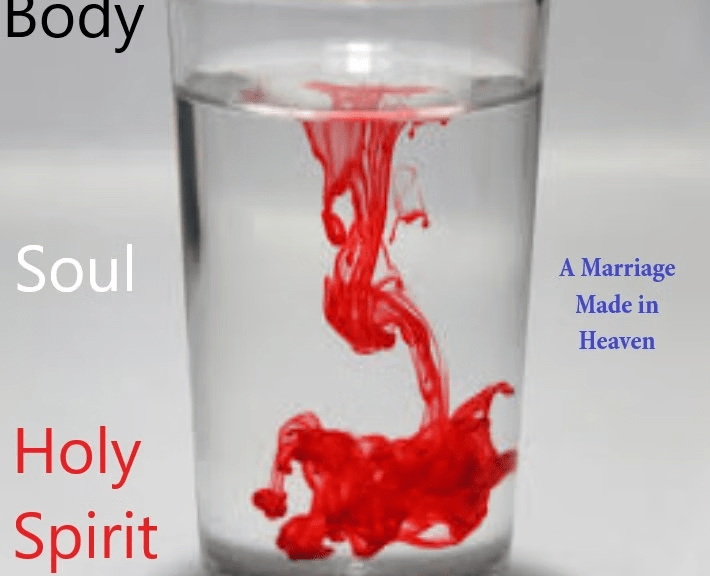
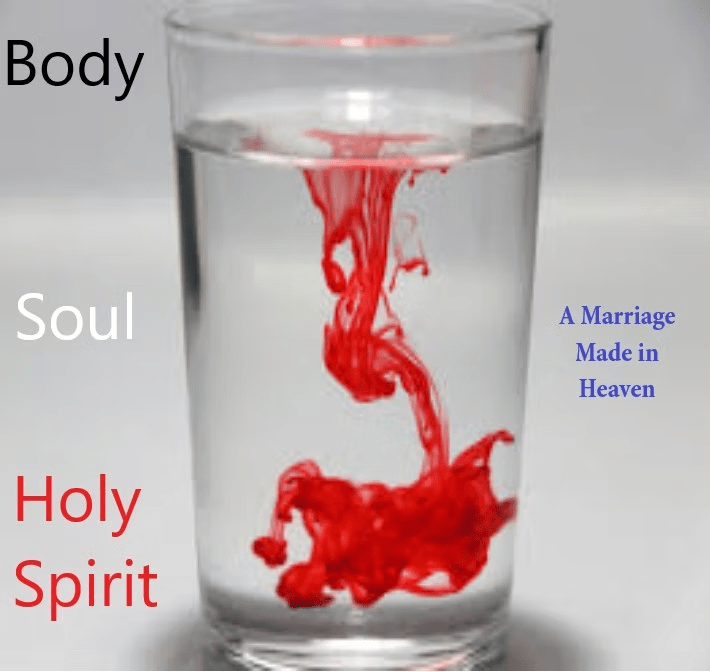
Realizing that one needs to ‘be on a first name basis’ with Yahweh, where one’s soul should be in a marriage relationship with God, through union with His Holy Spirit [as His wife], the first verse sings praise to that presence within. David was married to Yahweh and his having been filled with the Holy Spirit allowed him firsthand knowledge of Yahweh. David knew he was not the only one who had willingly submitted his soul to Yahweh, so he sang to all Israelites, “Give thanks to Yahweh for he is good and his mercy endures forever.” That says David’s soul knew the eternal salvation being married to Yahweh provided.

In verse two, where David sang, “Let all those whom the Lord has redeemed proclaim that he redeemed them from the hand of the foe,” this becomes a statement that marriage to Yahweh is not the norm. While God’s goodness and mercy extends endlessly, most people will not have a deeply spiritual relationship with Him. This says that David was singing out to Israelites, “those whom Yahweh redeemed” by leading their forefathers out of Egypt, as brides He chose. The “hand of the foe” is all worldly places (like Egypt), where the lures away from marriage to God are strong. Therefore, David knew not everyone would be able to sing praises to Yahweh.

In verse three, David sang about who God will accept as His wives, because many in Israel (like Saul, and some military leaders under David) refused to marry Yahweh. God accepts anyone, regardless of which direction they come from, as long as they repent wayward ways and offer complete submission to do the works of Yahweh. In verses one, two and three, the foundation of this song of praise is established, allowing the selection of the following verses to be examples of this goodness and mercy that only the truly blessed will want to sing loudly about.

In verse seventeen, David sings loudly, “Some were fools and took to rebellious ways; they were afflicted because of their sins.” Here, David calls all those who refuse to become wives and servants of Yahweh “fools,” a word that in Hebrew is “evil” [“אֱ֭וִלִים”]. By saying the Israelites who followed Moses into the wilderness were “fools” when they acted in “rebellious ways,” it was foolishness to willfully act against Yahweh and Moses [the epitome of a ““transgression”]. That “sin” led them to bring about their own “afflictions,” which came from themselves attracting poisonous serpents to come bite them, having turned away from Yahweh.

Verse eighteen then adds to their “rebellious ways” by saying they “abhorred all manner of food.” Here, the Hebrew actually states: “kāl- ’ō·ḵel — tə·ṯa·‘êḇ nap̄·šām;” which literally translates to say, “the whole of food — abhorred their souls.” In that, the Hebrew word “nephesh” is used, making this a reflection of their “rebellious ways” being rooted in their hatred of “spiritual food,” which fed “their souls.” The only way to withstand all the challenges of life in the wilderness, the Israelites needed more than food for the flesh. Manna became the “whole food” that kept them from perishing.

Those Israelites “abhorred” having to eat manna from heaven, because it kept their faces bowed down in submission to Yahweh, not leaving them the freedom to dwell on sinful thoughts. This is the way of normal mortal, not those married to Yahweh. Thus, this verse sings loudly not only about the past of David’s Israel, but well into the future, reverberating strongly in the present.

Verse eighteen also sings about one drawing “near to death’s door.” This is a realization that the soul cannot maintain life in a body of flesh, beyond the limits of the flesh. Being poisoned by snakebites is not something easily remedied. Many had already died from the poisons of sins. All were mortal, thus known to die. Those who felt death close by were filled with great fear, due to knowing it was their faults [sins] that brought them to that doorstep.

Verse nineteen then sings, “Then they cried to the Lord in their trouble, and he delivered them from their distress.” There, David restated verse one, where Yahweh is known by His wives to be “good and show mercy for ever.” Those who realize their ways of evil, seeing the ‘up close and personal’ aspect of death being the only reward of sin, sincerely repented their wrongdoings and begged Yahweh for forgiveness (mercy) is their last hope. This then says that those who seek the salvation of Yahweh do so after having reached the bottom. Those riding high in life are never the one’s who feel “distress,” so they think of themselves as gods. However, when one has an epiphany about one’s mortality, then one often turns to God for divine assistance.

Verse twenty then places focus on God hearing the prayers, which were mediated by Moses in order to save the sinful Israelites. Since the coming of Jesus, who is the model from which all souls can become duplications of Moses-David-Jesus, as Saints reborn in the name of Christ [as Jesus resurrected], Jesus Christ merged with one’s soul becomes the mediator in all true Christians. The Transfiguration revealed Jesus in this light, along with Elijah and Moses [other mediators for Yahweh]. Thus, “[Yahweh] sent forth his word [through His mediator] and healed them and saved them from the grave.” Being “saved from the grave” does not say death will not happen to the flesh, as it means death will still come; but it means the soul is freed from returning into mortal flesh, once redeemed.

Verse twenty-one then sings, “Let them give thanks to [Yahweh] for his mercy and the wonders he does for his children.” This is a repeat of verse one, while now letting one know that songs of praise to Yahweh come from those who have receive God’s Holy Spirit and become His obedient wives. Here, the inclusion of “children” leads one to see this be a reflection of the “children of God,” who were the Israelite people. That can be misleading to Christians today. However, that translation ignores the truth of what is written.

In verse twenty-one, David wrote, “wə·nip̄·lə·’ō·w·ṯāw, liḇ·nê ‘ā·ḏām.” Those words [rooted in “pala ben adam”] say, “and his wonderful works, to the sons of man.” The insertion of a comma after “and his wonderful works” means the works of Yahweh are not His directly, as they can only manifest on earth through His children. The important point to grasp from the Hebrew is it says all His wives were [and always are] “sons of man,” thereby the resurrections of His Son. One can only be a child of God by being His Son [which differentiates normal mortals with souls from divine beings with souls merged with God’s Holy Spirit]. We Christians today know that as us having been reborn as Jesus, after our souls marry Yahweh and we receive the Christ Mind [individually].

David’s verse twenty-two then ends this selection song by singing, “Let them offer a sacrifice of thanksgiving and tell of his acts with shouts of joy.” Here, the word that fits the season of Lent is “sacrifice” [“zabach”]. While modern minds will think “sacrifice” means doing without, which will lead some to think the wayward Israelites who complained against their souls and Moses, then gave up whining in order to be forgiven and saved from the grave [like a Lenten promise]. That is not how one should read the word written, which relates it back to being the “works” that will be shown by “the sons of man.”

As a selection that fits the theme of the bronze serpent hung from a pole, the reality was the “serpent” was a “fiery serpent,” which is one of the “seraphim” [a “seraph”]. God told Moses to fashion a likeness of himself, whose soul was eternal, like an angel. The wayward souls were then like seraphim, which needed to be “sacrifice” and mounted on a pole for all to see the result of sinful ways. Thus, the Hebrew written that translates as “and let them sacrifice” [“wə·yiz·bə·ḥū”] really means “to slaughter for sacrifice,” so their “sacrifices” were themselves as the lambs of the Passover. The only way to save one’s soul from a return to a mortal existence [death repeated, via reincarnation] is to kill one’s self-ego and be mounted upon a pole for all the others to see. Death of self keeps one’s body of flesh from being led by a wayward soul that wants to complain against God, his mediators, and make one feel forced to go to Bible Studies [hating manna]. Thus, being the “works, those of the sons of man,” means doing as Moses and Jesus did, which means raising one’s soul upon a cross of death, so that others may be saved.

As a Psalm chosen with verses that are specific to the season of Lent, it is the element of self-sacrifice that must be seen as only possible when a soul has already surrendered itself to Yahweh, having already become His obedient wife. This self-sacrifice comes on the altar of marriage, when one hangs from the sacrificial pole as the bronze serpent or when one hangs on the sacrificial cross as Jesus dying. The ceremony of marriage takes place when the slaughter sacrifice is complete and one’s own holy blood [the blood of Jesus] has been smeared around the door frame of one’s flesh. That self-sacrifice is the sacrifice of self-ego, so one can take on the name of Yahweh – become another of the “sons of man.”

Lent is then the honeymoon of one’s relationship with Yahweh, when one can call Him by the name that means “I Am Who I Am,” because one has become one with God, wearing His face, in the name “I Am Who I Am” from marriage. The wilderness experience that is not from marriage to God is one of failure. It is when one acts foolish, through rejecting that presence within. Rejection of God’s Holy Spirit in marriage to a soul means one’s flesh is the god one serves obediently. Attempting to survive a wilderness experience by depending fully on one’s own intellect will lead to mortal death, and a soul bound to the grave.

This year one needs to hear the words of this song of praise, as one who has made the sacrifice of marriage and become one of the sons of man [regardless of human gender]. This is when one becomes a wife of Yahweh and can truly sing about His goodness and mercy, from having experienced I personally. In that way, Lent becomes a honeymoon that lasts for ever.
Psalm 51:1-13 – Sacrificing oneself in marriage to Yahweh

1 Have mercy on me, O God, according to your loving-kindness; *

in your great compassion blot out my offenses.

2 Wash me through and through from my wickedness *

and cleanse me from my sin.

3 For I know my transgressions, *

and my sin is ever before me.

4 Against you only have I sinned *

and done what is evil in your sight.

5 And so you are justified when you speak *

and upright in your judgment.

6 Indeed, I have been wicked from my birth, *

a sinner from my mother’s womb.

7 For behold, you look for truth deep within me, *

and will make me understand wisdom secretly.

8 Purge me from my sin, and I shall be pure; *

wash me, and I shall be clean indeed.

9 Make me hear of joy and gladness, *

that the body you have broken may rejoice.

10 Hide your face from my sins *

and blot out all my iniquities.

11 Create in me a clean heart, O God, *

and renew a right spirit within me.

12 Cast me not away from your presence *

and take not your holy Spirit from me.

13 Give me the joy of your saving help again *

and sustain me with your bountiful Spirit.

——————–

This is the first choice for a Psalm reading for the fifth Sunday in Lent, Year B, according to the lectionary for the Episcopal Church. It follows a reading from Jeremiah, where we hear read, “says the Lord, … I will make a new covenant with the house of Israel and the house of Judah.” That precedes a reading from Hebrews, where it is written: “In the days of his flesh, Jesus offered up prayers and supplications.” The Gospel selection this song accompanies is from John, where Jesus said, “Whoever serves me must follow me, and where I am, there will my servant be also.”

This is a song of praise to Yahweh, sung from the perspective of one having realized the errors of one’s ways and thereby having been saved by the grace of God. In David’s first verse is recognized this salvation as being due to the “mercy” of Yahweh, “according to [His] loving-kindness.” The soul of David knows God by his soul feeling the “great compassion” that marriage to God’s Holy Spirit brings. That union is only possible after one’s past “offenses” have been erased [blotted out].

Verse 2 is then a statement of baptism by the Holy Spirit, where the Hebrew that states “wash me thoroughly” is set within brackets, preceded by the word not translated, “har·bêh.” That word becomes a signal that “much” is silently done that both washes clean oneself from one’s flesh; so, it is not simply physical but all-encompassing – heart, mind, and soul. The translation as “through and through” reflects a soul [“through”] within a body [“and through”], so all inclusive is this cleansing of past sins.

Saying “No!” to sin only happens when one has married God and become His Son reborn.

Verse 3 is then a statement of intellect, such that one’s soul has been placed in a state of shock or worry, so the brain has been enabled to understand the danger it has entered, through sinful acts. The words expressing “my sin is ever before me” says the physical world will never cease presenting lures to sin, just as it has done in the past. The mind has been able to discern how one’s soul is incapable of resisting the temptations to sin at all times. Therefore, the brain knows is will always sin if left without the help of Yahweh.

Verse 4 then states, “Against you only have I sinned and done what is evil in your sight.” This is an admission of one’s sins that are known to break the Covenant of marriage to Yahweh. By doing evils that are known to break that union, one is confessing to have turned one’s back to the Lord. A soul hides, as did Adam and Eve, to keep one’s evil deeds from being seen by Yahweh; but God sees all.

Verse 5 [actually a continuation of verse 4, in the Hebrew text] then advances this confession as a statement of mental awareness to one’s sins. It becomes an admission that the sins one has done have hurt more than oneself. By seeing that, one has ceased being the center of one’s universe. Standing outside oneself, one can then see the truth of the marriage vows established by Yahweh and understand “[Yahweh is] justified when [He] speak and upright in [His] judgment.” There are deep feelings expressed here.

Verse 6 [actually verse 5] is then a judgment of one’s mortality, as a body of flesh given life in a world that promotes sinful pleasures and selfishness. When David was inspired to admit, “Indeed, I have been wicked from my birth, a sinner from my mother’s womb,” this becomes the marvel of Jesus having been seeded into the Virgin Mary, making him not be the norm of children born into the world. The miracle is Jesus was born of a woman and not born as a sinner. Jesus reflects God incarnate in the flesh. All mortals must marry God and be reborn as Him incarnate in aged flesh. As innocent as babies and young children are, they are born mortals and thereby bound to sin before death.

Verse 7 [actually verse 6] is then singing praise for how one has been made aware of this mortal flaw. David singing, “For behold, you look for truth deep within me, and will make me understand wisdom secretly” speaks of the presence of God’s Holy Spirit, which not only knows what secrets have been hidden but also speaks the truth to one’s mind, elevating one’s knowledge to divine wisdom.

When David then sang in verse 8 [actually verse 7], “Purge me from my sin, and I shall be pure; wash me, and I shall be clean indeed,” the Hebrew refers to Yahweh as “hyssop,” which is a herb used in Jewish ritual of cleansing with water. The aspect of “purge” is then repeating a confession of sins done that must be washed away, in order to be made clean and pure. To use of “purge” says Yahweh is the only way possible for a soul to be made pure.

Verse 9 [actually verse 8] then makes this a song of praise, singing, “Make me hear of joy and gladness, that the body you have broken may rejoice.” The Hebrew here can actually be translated to say, “may rejoice the bones you have broken,” where “‘ă·ṣā·mō·wṯ” is written. The root word, etsem, means: “bone, substance, self.” This should then be read as a breaking of one’s soul controlling the deeds of the flesh, which becomes the joy, gladness, and rejoicing that reflects a marriage celebration and the ways of the self have been replaced by the ways of the Lord. Rejoicing is celebrating a rebirth, or being born from above.

Verse 10 [actually verse 9] then speaks of the breakage of self, where one’s own “face” then “hides” the “face” of Yahweh upon one’s own “face.” This speaks of the halo over one’s head, which is flesh invisibly wearing the face of God upon it. This is not singing praises that one will continue to turn away from God [one cannot wear any face other than God’s before Him], but instead praises how one’s past of sinning has ceased with marriage to God [wearing His face forevermore], so all self-generated iniquities have forever been blotted out.

Verse 11 [actually verse 10] then praises the presence of Yahweh within one’s heart, where “heart” becomes metaphor for a living body of flesh. The “heart” is what gives life to that body of flesh, thereby the “heart” is the soul. When one’s soul has married God, through a soul’s merger with God’s Holy Spirit, where the two become one flesh, then that presence means “a right spirit” has become oneself – one’s soul. The ‘renewal” means a wayward soul has been “repaired.” However, the Hebrew that says “Create in me a clean heart, O God,” actually is the soul begging to become an “elohim,” singing, “The inner me [heart], clean create in me gods [elohim] — and a steadfast spirit renew within me.” The plural of “gods” is then a recognition that one’s eternal soul is just one of many souls married to Yahweh, all then becoming His elohim – a God of gods.

In verse 12 [actually verse 11], David sings, “Cast me not away from your presence and take not your holy Spirit from me.” Here, the marriage to Yahweh is clearly announced as “wə·rū·aḥ qāḏ·šə·ḵā” [roots “ruach qodesh”], which can only be present from marriage. This is not a statement of request not to be divorced from God, but a praise that says a soul that has been joined forever with Yahweh cannot then be cast away. The sinful state-of-being prior to marriage was that “cast away” soul, or lost sheep; marriage means having been found and saved.

In the last verse [actually verse 12], David sings, “Give me the joy of your saving help again and sustain me with your bountiful Spirit.” Here, the key word of focus is “again,” as the Hebrew actually asks for “restoration.” The “joy” received, thus a gift from Yahweh, is salvation. When that gift has been received, then one is upheld by the Holy Spirit, so one’s soul no longer can fall from grace and wallow in a world of sin.

As a song of praise purposefully chosen to sing aloud during the final Sunday in the season called Lent, when self-sacrifice is an admitted necessity for salvation, this clearly paints a picture of that being the result of marriage to Yahweh. The season of Lent must be seen as a love story and not some unwanted task or dreaded sacrifice of something sinful still wanted. This psalm of David tells it like it is, there are only tow possibilities: a single soul always seeing its coming sins before it; or, a married soul that no longer has to worry about falling prey to the world’s temptations. It is this way that David’s song of praise sees marriage to Yahweh as a period of honeymoon when love abounds.

Psalm 119:9-16 – Sacrificing a whole heart to seek God

9 How shall a young man cleanse his way? *

By keeping to your words.

10 With my whole heart I seek you; *

let me not stray from your commandments.

11 I treasure your promise in my heart, *

that I may not sin against you.

12 Blessed are you, O Lord; *

instruct me in your statutes.

13 With my lips will I recite *

all the judgments of your mouth.

14 I have taken greater delight in the way of your decrees *

than in all manner of riches.

15 I will meditate on your commandments *

and give attention to your ways.

16 My delight is in your statutes; *

I will not forget your word.

——————–

This is an optional Psalm selection for the fifth Sunday in Lent, Year B, according to the lectionary for the Episcopal Church. This set of verses from Psalm 119 are only available to be read on this one day. Psalm 119 is 176 verses in length, as twenty-two sets of eight verses, each set corresponding to one of the twenty-two different letters in the Hebrew alphabet. The Episcopal Church lectionary allows for eight of these sets to be sung aloud during a service, with verses 1-8 and 33-40 each sung on multiple Sundays, while fourteen sets are never sung. Verses 9-16 are the second set of eight, thereby headed under the letter “Beth” [or “Bet”]. According to the website “Hebrew4Christians,” the letter Bet is actually the first letter of that alphabet, because Aleph is silent, representing Yahweh. That makes Bet represent Creation, when the world of matter began. The site also says Bet is “the house of Creation in sacrificial love,” making this selection from Psalm 119 fit the theme of Lent.

I believe the translation of verse 9 is incorrect as it does not clearly state the intent that comes from translating “naar” as “young man.” This makes one think of a young adult, anywhere from eighteen to thirty years of age. The better way to translate that word is as “lad” or “youth” or “a boy.” (Strong’s Usage). By seeing that, verse 9 then asks the question, “What can purify a child’s life path?” The answer is then (rather than “By keeping to your words”) is “By teaching him the ways of Yahweh” [the Laws memorized, but also demonstrated].

David was taught to be pure at a very early age, by his father Jesse. Once anointed, Samuel gave him sage advice. Still, learning has to be seen as coming from external influences, thus David sang, “With my whole heart I seek you; let me not stray from your commandments.” That becomes the answer to the question posed in verse 9, as it says teach a child to love Yahweh by teaching him to seek God, by talking to God. In that way the external laws become internalized, written on the heart center, which is the soul, due to love of God.

When David sings, “I treasure your promise in my heart,” this is a statement of love. The Hebrew word “tsaphan” is translated as “treasure,” but another translation is “hidden.”

That adds another dimension to love, such that it is an inner peace that is not openly displayed, like that of young lovers caught up in the physicality of acts commonly called “love.” To treasure the love of another, especially when the other is Yahweh, means one’s soul [the “heart”] holds an unseen treasure within, through marriage to God’s Holy Spirit. It is then that inner bond of love becomes the security of true love, which is faith and trust and knowing one loves pleasing the Lord with all one’s heart, mind, and soul.

In verse 12, David names “Yahweh” specifically, rather than read the generalization of “O Lord.” To sing that Yahweh is “blessed,” as the One God, becomes an understatement for the Most High. This should then be sung form one’s own heart, as a statement about knowing oneself is “blessed” in being, by having become Yahweh in name [as “you”]. It is then that personal blessing by Yahweh that instructs the body-soul in how to act, which are the “statutes” of righteousness. It is then that state of being that is “blessed,” justifying Yahweh’s presence within.

David then sings, in verse 13, about the blessing brought upon him by the presence of the Lord. He has become righteous and a prophet. Here, David sings of the sacrifice of self, so one’s own opinions become submissive to the Word of God that comes from one’s mouth. In this verse, the point is made that Yahweh does not take on a human wife [regardless of gender] because it is pretty or important among others. This state of marriage is not as if God wants the greatness of a mortal to be seen as a reflection of His greatness. This verse says God chooses to marry souls that willingly surrender to His Will, so that soul’s flesh will become the voice of God on earth, so others can be likewise saved.

Verse 14 then becomes David’s soul rejoicing because of the wealth of knowledge that flows through his body, all processed by his brain, so everything spoken by Yahweh makes sense. This is the presence of the Mind of Christ, where “Christ” says all who are married to Yahweh become His “Anointed One.” God knows all the questions the faithful pose, which have been generated by the widespread ignorance held by their religious leaders. When the Lord speaks the truth through one’s mouth, the brain possessed by a soul understands the vast capacity of knowledge the Christ Mind flows through one, which becomes filtered through a human organ for thought.

Because of this awe inspiring presence making one speak in ways others have never heard reasoned thought be expressed before – all being heard as truth and light shed on misunderstandings – the soul is then allowed to sit alone to ponder these revelations. It is this processing of the truth that one is transformed from simple believer into a prophet and saint, able to speak the truth of God to all seekers. This means contemplation expands into ministry, so others who are begging for help can be led into the same light and their own soul-sacrifice to Yahweh. A saint trusts that Yahweh will always speak the truth through one’s mouth, so others can be led to the light.

In the eighth and last verse in this set that praises marriage to Yahweh, David sings, “My delight is in your statutes; I will not forget your word.” This says the ways of righteousness are a delight to a soul, such that the body of flesh feels pleasure in ways no worldly addiction can ever bring. By never forgetting the statutes of God, those words have become ingrained in the soul and can never be erased. This becomes the delight of knowing one’s soul has been saved from the death of the flesh, having gained eternal life.

As an alternate song of David possible to be sung aloud during the final Sunday in the season we call Lent, it is clear to see it as a song of praise from one’s soul having come to know the Lord through marriage. The season of Lent is recognized as a mandatory sacrifice that must be made, in order to serve Yahweh. That servitude can only come from the complete sacrifice of self-ego, so one’s soul submits totally to the Will of God, merging the soul with His Holy Spirit. This psalm makes it clear that this transformation is worthy of rejoicing. It becomes the celebration of marriage, when children join to be come adults … then parents. Lent is a reflection of that cycle of commitment.

When Lent is seen as some partial willingness to please God, it diminishes the purpose of the period set aside as sacrificial by some Christians. Lent is a willing release of one’s soul to Yahweh, allowing Him to control one’s body of flesh forevermore. It represents a marriage of permanence, where vows of promise are made between a spiritual couple that never end. To see a forty day period that recognizes this sacrifice, it should be period that celebrates a blessed event in the past, like a most holy wedding anniversary remembrance. If it is seen as a new forty-day plan, so oneself can maintain control of one’s body [not God], then the meaning of Lent has been lost.

Psalm 31:9-16 – Submission of one’s soul to Yahweh

9 Have mercy on me, O Lord, for I am in trouble; *

my eye is consumed with sorrow,

and also my throat and my belly.

10 For my life is wasted with grief,

and my years with sighing; *

my strength fails me because of affliction,

and my bones are consumed.

11 I have become a reproach to all my enemies and even to my neighbors,

a dismay to those of my acquaintance; *

when they see me in the street they avoid me.

12 I am forgotten like a dead man, out of mind; *

I am as useless as a broken pot.

13 For I have heard the whispering of the crowd;

fear is all around; *

they put their heads together against me;

they plot to take my life.

14 But as for me, I have trusted in you, O Lord. *

I have said, “You are my God.

15 My times are in your hand; *

rescue me from the hand of my enemies,

and from those who persecute me.

16 Make your face to shine upon your servant, *

and in your loving-kindness save me.”

——————–

This is the Psalm selection that will be read aloud in unison or sung by a cantor on Passion Sunday, Year B, according to the lectionary for the Episcopal Church. With an outdoor service held first, when palm leaves are passed out to all in attendance, other readings are presented, called the Liturgy of the Palm [thereby “Palm Sunday”]. Afterwards, the congregation is then solemnly led inside, where the regular service is called Liturgy of the Word. This particular selection from David’s songs will be read in indoors, in all three years of the lectionary cycle (A,B, and C); but due to the length of the Palm Sunday service [aka Passion Sunday] nothing will be said about these words at those times. However, these verses will also be presented (partially – two verses) on two other occasions in the church calendar [one a set Sunday service], with it being possible something will be said about verses 15 and 16, but even that is doubtful to leave lasting value.

The NRSV title for this song of David is “Prayer and Praise for Deliverance from Enemies.” The NASB calls it “A Psalm of Complaint and of Praise,” while the BibleHub Interlinear heads it as “Into Your Hands I Commit My Spirit.” When these verses of this psalm are read on Passion Sunday (from the Greek word “paschó,” meaning “to suffer, to be acted upon, to experience ill will”), they become heard as prophetic of Jesus’s arrest, trials, punishment, ridicule, and execution. It is from the fifth verse in the Psalm 31 that Jesus was heard to recite, before he breathed his last breath of life on the cross. (Luke 23:46) Still, this is a song from the heart of David.

To hear this song sung and only think it is prophetic of the punishment that Jesus would go through, thus no longer applicable to anyone else, is wrong. David felt this need to pray for deliverance from enemies, because Israel was land given to the followers of Moses – a promise by God for the marriage between their souls and Yahweh – and the people who had lived on the land of Canaan before (and after) knew nothing of Yahweh; and, they always saw the Israelites as thieves. Thus, David led Israel as a warrior king, one who led his troops out and back in, always doing battle with the enemies that held only hatred for Israelites. Thus, this psalm is written for everyone who has ever lived and who will ever live, because everyone has and will always have enemies; and, successfully dealing with enemies is why souls need to find God and marry Yahweh.

Again, where the translation says “O Lord,” “Yahweh” is written. The name “Yahweh” is written ten times in the Psalm 31, with two of those times found in these parsed verses read aloud. In verse 14, where the second usage of Yahweh is found, David is shown to state, “You are my God.” In reality, what David wrote (thus intended to be understood) is “’ĕ·lō·hay ’āt·tāh,” which literally translates to say, “gods of you.” The word “elohim” (which is plural for “gods,” not “God”) has to be read as a claim that David’s soul (an eternal spirit, like a “god”) was married to Yahweh, thus becoming one of His “elohay.”

To translate it as if David was making some statement of possession, as “You are my God,” this is the opposite meaning intended. Its intent becomes why David prays to Yahweh for help. Rather than be seen as possessing God, so God acts to save the flesh of David (at his beck and call), David knows his flesh is meaningless; it is his soul that begs Yahweh for salvation. Therefore, David would put up with any punishments his enemies could bring upon his body, because his soul was entrusted to Yahweh.

By realizing that error of translation, which is even present in the King James Version (KJV), thereby a longstanding problem for English-speaking Christians, it becomes worthwhile to review all that is translated in this selection. Verse 9 is another that has embellishments that miss the point of what God spoke through the words of David.

The Hebrew written by David in verse 9 states: “ḥān·nê·nî Yah·weh , kî ṣar-lî ‘ā·šə·šāh ḇə·ḵa·‘as ‘ê·nî , nap̄·šî ū·ḇiṭ·nî .” That is divided into three segments that are rooted in “chanan Yahweh , ki sarar ashesh ka’ac ayin , nephesh beten .” Literally those segments state: “show favor on me Yahweh , for bound am I to waste away with anger in my eye , my soul my body .

This becomes a prayer to God for the strength of Yahweh to withstand the constant barrage of anger and wrath that is always before one to see. It admits one’s own mortality, as a confession that a body of flesh will always be in need. The prayer is then for the soul of David to be strengthened, so then can be the body able to withstand punishments, undue or naturally caused. When David is seen as a wife to Yahweh [a “soul,” a “nephesh”], who has trust in Yahweh – and will forever – this statement to “show favor” becomes a known blessing given to all His wives. In that, David becomes a reflection of Jesus, as well as a reflection of all who are born again as a wife of God.

Verse 10 is then translated so the points of focus are the same. It continues this prayer for divine strength, more closely related to the needs for a “body” of flesh [not a womb or belly]. Rather than David’s “life” being “spent with grief or sorrow,” the word “life” is found in the second segment of words. By removing it from the first segment, the statement recognizes the world is a place where grief and sorrow can find need for Yahweh as its husband.

The focus placed on “my life” [the life of David] is then all “the years” of marriage between his soul and God. The concept of “life” can only come from that union, where marriage to Yahweh allows one to escape the death a soul faces from a body limited by mortality. This means the “sighing” present is that sorrow and grief a soul-body is always confronted with in the state of death that is mortality. All “failures” found in human beings are the “iniquities” that come from being unmarried to Yahweh. Thus, human strength, that found in bones and muscles, always wastes away over the years, with age, when the soul is not strengthened by marriage to Yahweh.

In verse 11, David points out how being married to Yahweh makes one an outcast in a world where so many souls stand alone in their bodies of flesh, unable to find the strength of Yahweh to assist them. The use of “enemies” means those who bind one in the world (from the meaning of “tsarar”), which relates to verse 9 saying, “for bound am I.” This makes “enemies” those who entwine a soul-flesh with expectations of worldliness, not righteousness.

By following that with the word “neighbors” [“shaken”], David said he lived among those who were not married to Yahweh. That was not only Gentiles who submitted to the will of Israel, but also included Israelites who followed rules set by Moses, without marriage to Yahweh. The translation of “acquaintances” [“lim·yud·dā·‘āy,” rooted in “yada”] means others will be known not to be true wives of Yahweh (by their deeds), causing them to run away (an act of a cowardly enemy). They flee a responsibility of commitment to Yahweh, so their actions are not those of a friend and neighbor, not as another of Yahweh’s wives.

In verse 12, David should be heard as Yahweh speaking through his body, as the first person singular “I” having been “forgotten.” For the Israelites to have forgotten the God of their forefathers, that was a present time recall of David. It was his fathers [the elders of Israel] who went to Samuel and demanded a king, to be like other nations. They had forgotten that Yahweh was their King, their Lord.

This forgetfulness then means their “minds” [“mil·lêḇ,” meaning their “inner man, mind, will, heart”] had lost divine insight and guidance, having become solely dependent on the size of their brains. David certainly was not useless and neither was Yahweh; but to those Israelites who were working against being wives of Yahweh, Yahweh was a useless to them as a broken clay pot. Likewise, Yahweh was discarded by many, just as a broken clay pot was tossed into a heap of waste.

In verse 13, David again is speaking the words of Yahweh as the first person singular “I.” The “whispering heard [from “dibbah,” which means “whispering, defamation, evil report”], God hears all minds and all talk, being omniscient. David could then become knowing of those secret plans as a king with aides who reported the scuttlebutt to him.

When “fear” is about, that becomes a signal that many have not accepted the proposal of Yahweh to be married with their souls. Without His presence, the world becomes a place that readily generates fears. Here, again, the element of “life” means a soul granted eternal life, due to a divine merger with His Holy Spirit. Therefore, the plots and schemes are to weaken the aspect of religious education, fearing its call for commitment. That plot would be so others would soon forget all about the delivery of land and protection coming with the promise [marriage vows] of complete servitude, as a holy wife.

With this train of thought realized, it is then that verse 14 proclaims David to be such a wife, one that is thoroughly devoted to serving Yahweh. The “trust” [“batach”] put in Yahweh goes well beyond belief, as “trust” comes from personal experience. It is meant as a statement of true faith. That trust comes from marriage and the experience of the Holy Spirit leading one’s body of flesh, so it only serves God. Therefore, David says he (like all like him) is one of Yahweh’s “elohim,” or souls granted eternal life from servitude in a body of flesh.

Verse 15 then follows this statement of commitment to Yahweh by David singing, “My times are in your hand.” Here, the Hebrew begins with one word – “bə·yā·ḏə·ḵā” – where the root importance is laser focused on “in your hand” [rooted in “yad,” or “hand”]. David sings out that everything about his being – soul-flesh – is in the hands of Yahweh. It is then that power of God that gives David the ability to withstand the “times” when his enemies come down on him. It is that “hand” of God that delivers David’s soul and body the strength to overcome any and all persecutions his enemies can ever bring to him.

Finally, in verse 16, David sings praisingly about having lowered his face in submission to Yahweh, by “Let[ing] your face shine upon your servant.” This is a confirmation of the First Commandment, where one must not wear one’s own face before Yahweh, as that acts as if oneself is a “god,” equal to God. Those who love Yahweh and seek to marry Him will never try to act as equals to Him, by showing one’s face [or any number of other faces of gods] before His. David was married to Yahweh, thereby he wore the face of Yahweh to the world. That means the soul of David had achieved the comfort of knowing salvation was his [“hō·wō·šî·‘ê·nî” as “I am saved” or I have been delivered”].

As a psalm sung aloud on Passion Sunday [the Liturgy of the Word, not the Palm] and easily attributed to Jesus and the enemies that had brought him pain and suffering, the lack of focus on educating the seekers about the deeper meaning become an example of what David’s song sang. If this message from God being in David’s heart goes without explanation, it cannot be applied to all who seek to become wives of Yahweh. As some misguided extension of the forty days of Lent, where somehow Sundays do not count, making Lent extend all the way to “Holy Saturday” [six days from Passion Sunday], the message of marriage to Yahweh is foregone through ignorance.

Jesus was able to withstand the sufferings, read aloud about his suffering, because he was one with Yahweh’s Holy Spirit. David was equally filled with that divine husband, as were all the Apostles. To listen to these selected verses of David and then simply be left go, sent home to let them sink into some subconscious state, simmering under a plethora of other words, all telling of injustice and human enemies of the flesh, means our ‘teachers’ [rabbis, priests, pastors, ministers, etc.] never allow their flocks to be fed the truth. Yahweh expects all seekers to submit their selves to Him and become His servants. Without that alliance of marriage, then one’s soul is only filled with fears brought on by a world of sin.

Psalm 118:1-2, 19-29 – Singing praise as a living temple whose cornerstone is the Holy Spirit

1 Give thanks to the Lord, for he is good; *

his mercy endures for ever.

2 Let Israel now proclaim, *

“His mercy endures for ever.”

19 Open for me the gates of righteousness; *

I will enter them;

I will offer thanks to the Lord.

20 “This is the gate of the Lord; *

he who is righteous may enter.”

21 I will give thanks to you, for you answered me *

and have become my salvation.

22 The same stone which the builders rejected *

has become the chief cornerstone.

23 This is the Lord’s doing, *

and it is marvelous in our eyes.

24 On this day the Lord has acted; *

we will rejoice and be glad in it.

25 Hosannah, Lord, hosannah! *

Lord, send us now success.

26 Blessed is he who comes in the name of the Lord; *

we bless you from the house of the Lord.

27 God is the Lord; he has shined upon us; *

form a procession with branches up to the horns of the altar.

28 “You are my God, and I will thank you; *

you are my God, and I will exalt you.”

29 Give thanks to the Lord, for he is good; *

his mercy endures for ever.

——————–

This is the Psalm selection that will be read aloud in unison or sung by a cantor on Palm Sunday, Year B, according to the lectionary for the Episcopal Church. The same psalm of praise will be scheduled for presentation in Years A and C. Each year the Liturgy of the Palm will include a Gospel reading that tells of Jesus’ “Triumphal Entrance into Jerusalem” [Mark 11:1-11 and Matthew 21:1-11]. All will be performed in an outdoor service that is held first, when palm leaves are passed out to all in attendance, this and another reading are presented, called the Liturgy of the Palm [thereby “Palm Sunday”]. Afterwards, the congregation is then solemnly led inside, where the regular service is called Liturgy of the Word [thereby “Passion Sunday”]. This particular selection from David’s songs will be read in all three years of the lectionary cycle (A,B, and C), but due to the length of the Palm Sunday service [aka Passion Sunday] nothing will be said about these words at those times. However, these verses will also be presented on two other occasions in the church calendar (partially on Easter Sunday [A,B, and C] and entirely, with additional verses on Easter 2-C), with it being possible something will be said about the meaning of these verses from David’s Psalm 118.

In this collection of verses, the translations of “Lord” are written as “Yahweh,” ten times. In verse 28, twice is translated “my God.” The first of these is written “el,” and the second is written “elohay.” Neither of those, nor the appearance of “God” in verse 27 [“God is the Lord”], where “el” is again written, should be capitalized. Capitalization is only allowed for words of divinely elevated meaning, as Hebrew has no capital letters in it usage. Still, the repetition of “Yahweh” has to be known and recognized as the specific God to whom David sang praise.

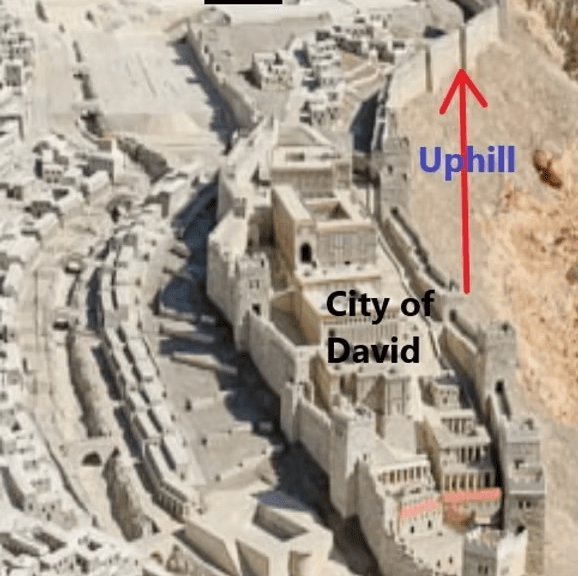
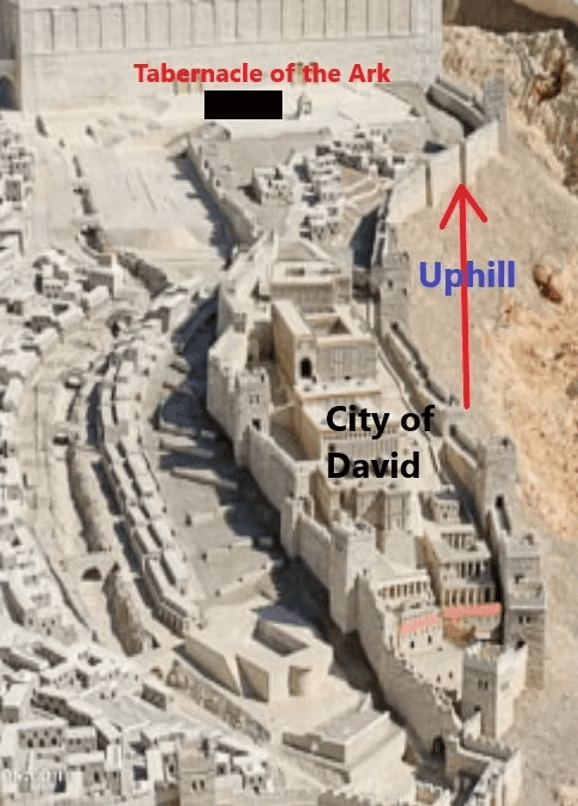
Because these parsed verses begin with verses 19 and 20 using the word “gate” and “gates,” this seems to be an appropriate choice to partner with the story of Jesus’ triumphal entrance into Jerusalem. He entered Jerusalem’s City of David, at the gate known as Zion, with Mount Zion being the hill [the steps formed upon that hill] he climbed to get to the Temple of Jerusalem, atop Mount Moriah. That Temple of stone and mortar did not include the cornerstone that had the name “Jesus” inscribed on it. Thus, this is another song of David that is easily heard as a prophecy of Jesus; but it is God speaking through David, because David was devoted to Yahweh, like Jesus, which means these words are prophetic for all who become Spiritually born as a Son of man.

Because verses 1 and 2 can be seen simply as David expressing his faith in Yahweh, from having surrendered his self-ego to serve God completely, these verses must apply to all who will be able to truthfully sing these words of praise. It can only be from that surrender of self to Yahweh that Yahweh is good and that goodness endures forever. That speaks of having received the gift of eternal life to one’s soul. Only a soul can know Yahweh. Therefore, when David sang to all Israel, verses 1 and 2 speak to all who proclaim belief in Yahweh as their Lord and Master. One must submit in that way for receipt of God’s Holy Spirit, through a marriage to one’s soul, in order to know God personally.

In verse 19 it is most important to see the “gates of righteousness” [“ša·‘ă·rê-ṣe·ḏeq,” from “shaar tsedeq”] are metaphor for the opening of one’s soul to receive the Holy Spirit. The “gates” are then reflections of all the inhibitions of a physical world, where the body has become the fortress in which the soul is imprisoned. In Jerusalem, all gates are entrances within high and imposing walls of defense from attack. The gates were opened at sunrise and closed at sunset, and always manned with guards. This is a projection of the way a human body of flesh defends against the unwanted; but for most sinners, Yahweh is unwanted, thereby the gates are closed to His presence. God will never force His Will to smash down any gates of resistance. It is up to one to lower one’s guard, as a bride must do for her husband to enter her body.

The thanks given to Yahweh represents praise to His presence. That becomes the willing receipt of the Holy Spirit and the birth of a righteous way of being. Because Jesus is the model of righteousness, the Holy Spirit’s penetration into one’s body, upon willing submission by marriage, means David became like Jesus [a name that means “Yah Will Save]. After that birth of righteousness, the gates of one’s body will forevermore refuse entrance of sin. The body of flesh becomes a fortress of righteousness, which is the freedom granted a soul, from a prison representing a body of flesh, so one wholly is granted eternal life. Verse 21 then sings of this salvation [“lî·šū·‘āh” or “yeshuah”].

When it is recognized how verse 22 sings, “The stone that the builders rejected has become the chief cornerstone,” that cornerstone is eternal life, which comes from salvation. The Hebrew word for “salvation” is (in essence) the name “Yeshuah,” which translates into a name as “Joshua” or “Jesus.” The main building block for one’s body to become a temple unto Yahweh is righteousness. Righteousness can only come from the presence of the Holy Spirit; and, the Holy Spirit can only become the ruler over a body of flesh through willing sacrifice of the soul to Yahweh.

When David then sang, “This is the Lord’s doing; it is marvelous in our eyes,” that says no soul-body alone can transform one’s temple of flesh into a palace of righteousness. All the beautifications Herod the Great began to remodel the Second Temple, meaning decades of hard physical labor, was all thrown down in a sudden act of violence. That speaks against human will-power being enough to will oneself to resist sins of the flesh. Only the presence of Yahweh can bring about “marvelous” [from “nip̄·lāṯ,” from “pala,” meaning “to be surpassing or extraordinary”] acts of self to behold. The eyes of self cannot believe its own acts of body; and, the eyes of others find it miraculous that the human being they knew before has now been so remarkably transformed.

When David then followed that verse by singing, “This is the day that the Lord has made; let us rejoice and be glad in it,” that “day” is the Sabbath day, which was made holy. It is also the “day” when one’s soul was forever transformed through a spiritual marriage of one’s soul to Yahweh. It is as one’s wedding day. It is also when the “daylight” of truth entered into one’s being, never to leave. That “day” is when the rejoicing of a freed soul becomes glad it sacrificed self to God, a day never forgotten.

In verse 25, confusion can come from thinking the presence of Yahweh will bring about wealth, influence and power over others. The translation that says, “Hosannah, Lord, hosannah! Lord, send us now success,” actually states the power of prayer overtaking one’s body and soul. “Hosannah” means “I pray.” One prays as Yahweh allowing one to freely talk to Him. The meaning of “send us now” is separated by comma mark from “success.” That becomes a prayer to God to be sent out to do His Will. Therefore, the successes prayed for are to find other lost souls and deliver them a marriage proposal, just like the one they said “Yes” to. Successes are measured by souls saved, not by material gains received from prayers.

Verse 26 is then a most popular verse for Christians to sing aloud. It says, “Blessed is the one who comes in the name of the Lord. We bless you from the house of the Lord.” Verses 25 and 26 become those sung by the people along the road Jesus travelled into Jerusalem. While they sang those praises in mockery, as disbelief in the words’ meanings, David sang them as a statement of truth about all who are filled with God’s Holy Spirit and made righteous. Those wives will truly be “blessed,” having taken on His Holy name [which would later be known to be “Jesus”], as a “Son” of the Father [regardless of human gender]. The “house of Yahweh” is one’s body of flesh, which God’s Holy Spirit then controls fully.

Verse 27 begins by saying, “el Yahweh,” which is more than the translation “The Lord is God” states. The word ‘el” means a little-g “god,” which is one’s soul. Because a soul is eternal and never dies, it is godlike, as a god. David was then saying “My soul is Yahweh’s” or “Yahweh owns my soul.” That is important to grasp, when David then added, “he has given us light.” The “light” given [from “or”] is the truth that leads one to a life of righteousness.

This then had David sing the words that are vital to know, relative to a Palm Sunday outdoor psalm being sung: “Bind the festal procession with branches, up to the horns of the altar.”

The word “festal” comes from the Hebrew “chag,” which is a “festival gathering, feast, pilgrim feast,” one where “sacrifice” has been made to Yahweh. This means the sacrifice is the sacrifice of living “branches,” not cut date palm leaves [where no Hebrew is written that states “branches”]. The Israelites were those who Yahweh had commanded recognition of sacrifice of pure lambs, whose flesh would be burned upon the altar. Therefore, “a procession with branches, up to the horns of the altar” is a call for wives to submit to Yahweh forevermore, so Israel would eternally be filled with the light of truth, as servants to Yahweh. Only living branches can supply that need, not dead ones.

Verse 28 is then where two uses of lower-case spelling of “el” and “elohim” are used, both of which must be seen as David speaking about the souls called to be sacrifice upon Yahweh’s holy altar. The translation by the NRSV says, “You are my God, and I will thank you; you are my God, and I will exalt you.” In reality, the way this verse should be understood is as: “I am a god , and I will confess you , to other gods , I will be exalted because of you.” This becomes a confession [from “wə·’ō·w·ḏe·kā” rooted in “yadah,” meaning “to throw, cast,” as “confessing”] of s soul’s weakness without the presence of Yahweh within. The mission of a wife to God, as David proved in his psalms, is to bring other lost souls into the light of truth, and marriage to Yahweh.

Finally, verse 29 sings, “Give thanks to the Lord, for he is good; his mercy endures for ever.” This is a return to the very beginning of this song of praise, so it can end as a cycle completed, with a new cycle to begin. From a wife of Yahweh having confessed the blessings of becoming one with Yahweh, then others will receive the Holy Spirit and renew this cycle of eternal life.

As a psalm that is sung outside of churches in a ceremony that passes out dead palm leaves for all in attendance to hold, it is important to take it upon oneself and contemplate the words of this song written by David [at least the verses selected to be presented]. No one will take the time to do that for you. The words sing of David being in a loving relationship of commitment to Yahweh. The truth of that relationship – that marriage between a soul and God’s Holy Spirit – is it is not limited to just David.

While David was a king over Israel, it was when he was a boy that God had Samuel anoint David. It was that Anointing that made David the Christ, as a wife of God. Jesus was born with his soul married to Yahweh, so he too was the Anointed One. Still, this song sings praises that all can be just as was David and just as was the man Jesus, because marriage to Yahweh makes one a Son of man, as the Christ. That makes Jesus be reborn time and again in the “elohay” who sacrifice those little-g gods to service to the Lord.

Psalm 118:1-2, 14-24 – The Easter Sunday version

1 Give thanks to the Lord, for he is good; *

his mercy endures for ever.

2 Let Israel now proclaim, *

“His mercy endures for ever.”

14 The Lord is my strength and my song, *

and he has become my salvation.

15 There is a sound of exultation and victory *

in the tents of the righteous:

16 “The right hand of the Lord has triumphed! *

the right hand of the Lord is exalted!

the right hand of the Lord has triumphed!”

17 I shall not die, but live, *

and declare the works of the Lord.

18 The Lord has punished me sorely, *

but he did not hand me over to death.

19 Open for me the gates of righteousness; *

I will enter them;

I will offer thanks to the Lord.

20 “This is the gate of the Lord; *

he who is righteous may enter.”

21 I will give thanks to you, for you answered me *

and have become my salvation.

22 The same stone which the builders rejected *

has become the chief cornerstone.

23 This is the Lord’s doing, *

and it is marvelous in our eyes.

24 On this day the Lord has acted; *

we will rejoice and be glad in it.

——————–

This is the Psalm selection that will be read aloud in unison or sung by a cantor on Easter Sunday, Year B primary service, according to the lectionary of the Episcopal Church. This same song of David was read during the outdoor presentation of the Liturgy of the Palm just last Sunday. The difference now is verses 14 through 18 have been added, while verses 25 through 29 subtracted from the Psalm 118:1-2, 19-29 selection read last week. As the theme transitions from Lent to Easter, or death to resurrection, that change makes the focus of a song of praise need to shift from pain and suffering to promise and hope. The additional five verses now come to the forefront of this reading at Easter, with the removal of the verses singing praise that matched Jesus triumphal entrance into Jerusalem [“Hosanna!]. Because of the duplication of verses 1-2 and verses 19-24, I will leave what I analyzed for Palm Sunday as is, as it too applies to Easter. I will only address the new verses with new interpretative text.

In this collection of verses, the translations of “Lord” are written as “Yahweh,” appearing here seven times, with an additional four written simply as “Yah.” Capitalization is only allowed for words of divinely elevated meaning, as Hebrew has no capital letters in it usage. The Hebrew words “yah-weh” and “yāh” should be seen as worthy of divine elevation, but that capitalization allowance must be seen as greater than any word equating to “lord,” “god” or “gods,” coming from words like “adonay, el,” and “elohim.” The repetition of “Yahweh” and “Yah” has to be known and recognized as the specific God to whom David sang praise.

Because verses 1 and 2 can be seen simply as David expressing his faith in Yahweh, from having surrendered his self-ego to serve God completely, these verses must apply to all who will be able to truthfully sing these words of praise. It can only be from that surrender of self to Yahweh that Yahweh is good and that goodness endures forever. That speaks of having received the gift of eternal life to one’s soul. Only a soul can know Yahweh. Therefore, when David sang to all Israel, verses 1 and 2 speak to all who proclaim faith in Yahweh as their Lord and Master. One must submit in that way for receipt of God’s Holy Spirit, through a marriage to one’s soul, in order to know God personally.

In verse 14, the NRSV translation shows David singing, “ The Lord is my strength and my song, and he has become my salvation.” As the new ‘first’ verse added for Easter Sunday, it is easy to hear and see these words and think only of Jesus, as this is seen as the day he resurrected. In reality, Jesus rose from death on the Sabbath, while in the tomb, prior to anyone leaving at the crack of dawn to go attend to his corpse. It is thus them who should be seen as singing the words of this verse, just as David sang them. Yahweh must be the strength of all who are seeking salvation. The name “Jesus” means “Yahweh Will Save,” thus we all, like David, must become resurrections as those whose faith sings, “Yahweh Will Save,” because Yahweh has sent me the strength to become Jesus reborn.

The floggings of life always leave marks that only Yahweh can erase.

In the next verse, the song says “There is a sound of exultation and victory in the tents of the righteous.” Here, the Hebrew word translated as “sound” can equally be stated as “voice.” From singing about “my salvation,” rather than “sound,” David knew that was due to his hearing “the voice” of Yahweh speaking to him, leading him to “rejoice” from having defeated all fears of death. That means the true meaning of “salvation” comes from hearing Yahweh say, “Your soul is saved” [the meaning behind the name “Jesus”]. This inner voice then becomes the “sounds” of the “righteous,” who speak out within their “homes” or “tents,” so others will also find “salvation.”

Verse 16 then adds: “The right hand of the Lord has triumphed! the right hand of the Lord is exalted! the right hand of the Lord has triumphed!” Here, the Hebrew has “The right hand of the Lord has triumphed!” as the final segment of verse 15, with verse 16 beginning with “the right hand of the Lord is exalted!” It is obvious that the NRSV [possibly others?] has combined the three segments together, so they all act as a chorus. As they, they all sing the word “yə·mîn” [or “yamen”], which means “right hand,” while repeating “ḥā·yil” [or “chayil“], translated as “triumphed,” but meaning “strength.”

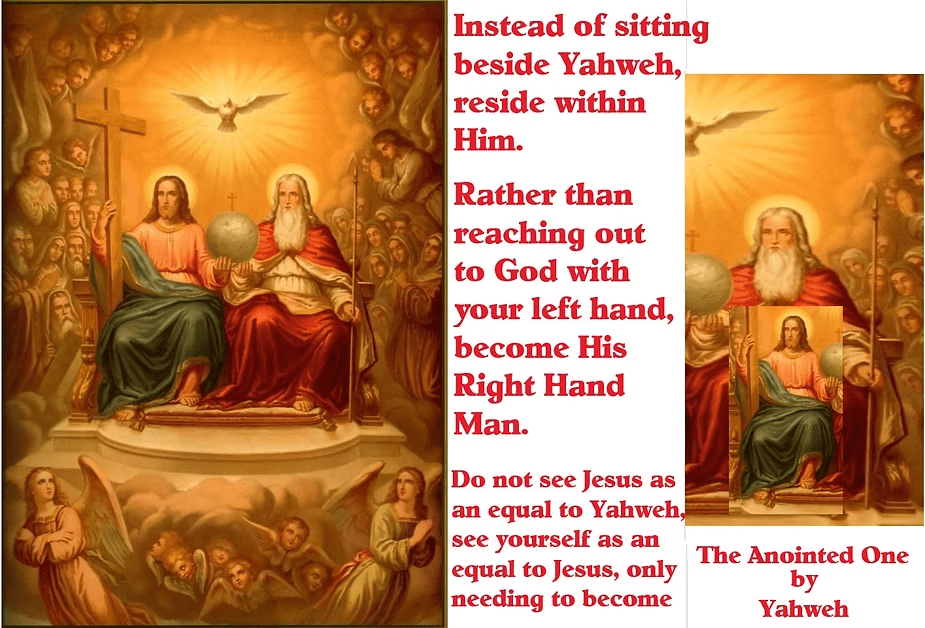
In all Scripture repetition is a statement of importance. The meaning of “right hand” or “right side” is to be seen as a position taken where Yahweh is within one. The English word “righteous” has roots in “right wise,” as a reflection of one being “right” in one’s actions, with “right” meaning one knows the ways of the Lord. Thus, the “right hand” refers to one who has married Yahweh and become an extension of Him on earth. It is from this ability to act righteously that one becomes victorious over the evils of the world and triumphs over the traps the world sets for lost souls. One’s soul has become “exalted” by the presence of Yahweh, an undefeatable presence.

From that repetition of a righteous state reached, David sang in verse 17: “I shall not die, but live, and declare the works of the Lord.” In this declaration of faith, one knows a body of flesh will forevermore cease to be a place of imprisonment for an eternal soul. All flesh is earth or clay, thus all flesh is death that can only temporarily be animated by a living soul. To triumph over death, David knew the life granted his being was freedom from the prison a body of flesh becomes for a soul. By not dying, David was saying his soul had been freed of reincarnation by Yahweh. The gift of life, while still in a body of flesh, means the soul leads its body to sing praises to Yahweh, doing the works of a Saint. The purpose of those works is to allow others to come to God and likewise be saved.

In the last of the Easter Sunday additions to this song of praise, verse 18 sings loudly, “The Lord has punished me sorely, but he did not hand me over to death.” This is an important verse to be sung aloud on Easter Sunday, because those who arrived at the tomb found Yahweh had released His Son from death, even though his body of flesh had suffered greatly at the hands of the Romans. Again, this has greater meaning when one hears the words singing to oneself, as one who has a lifetime of experiences that knows full-well the meaning of “punishment sorely.” Many wounds still linger and keep one’s past festering. It is therefore the promise of Yahweh, made to all who completely submit to His Will and become His wives, that the same freedom from reincarnation can be one’s own. All one has to do is commit to Yahweh in spiritual marriage.

[Note: From this point on, until verse 24 is explained, the same is presented here, as is written in the Palm Sunday interpretation. Please read them in the light of the Resurrection, keeping in mind it is your soul placed in the tomb that is a body of flesh. Therefore, it is your soul that needs to be found risen, just as was Jesus in the flesh on Easter Sunday.]

In verse 19 it is most important to see the “gates of righteousness” [“ša·‘ă·rê-ṣe·ḏeq,” from “shaar tsedeq”] are metaphor for the opening of one’s soul to receive the Holy Spirit. The “gates” are then reflections of all the inhibitions of a physical world, where the body has become the fortress in which the soul is imprisoned. In Jerusalem, all gates are entrances within high and imposing walls of defense from attack. The gates were opened at sunrise and closed at sunset, and always manned with guards. This is a projection of the way a human body of flesh defends against the unwanted; but for most sinners, Yahweh is unwanted, thereby the gates are closed to His presence. God will never force His Will to smash down any gates of resistance. It is up to one to lower one’s guard, as a bride must do for her husband to enter her body.

The thanks given to Yahweh represents praise to His presence. That becomes the willing receipt of the Holy Spirit and the birth of a righteous way of being. Because Jesus is the model of righteousness, the Holy Spirit’s penetration into one’s body, upon willing submission by marriage, means David became like Jesus [a name that means “Yah Will Save]. After that birth of righteousness, the gates of one’s body will forevermore refuse entrance to sin. The body of flesh becomes a fortress of righteousness, which is the freedom granted a soul, from a prison representing a body of flesh, so one wholly is granted eternal life. Verse 21 then sings of this salvation [“lî·šū·‘āh” or “yeshuah”].

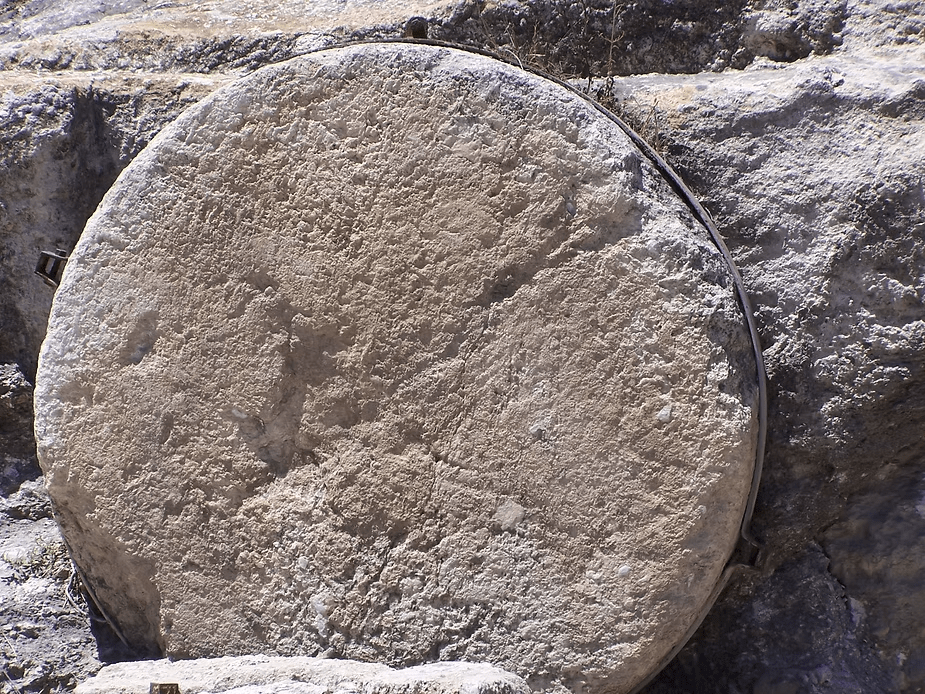
When it is recognized how verse 22 sings, “The stone that the builders rejected has become the chief cornerstone,” that cornerstone is eternal life, which comes from salvation. The Hebrew word for “salvation” is (in essence) the name “Yeshuah,” which translates into a name as “Joshua” or “Jesus.” The main building block for one’s body to become a temple unto Yahweh is righteousness. Righteousness can only come from the presence of the Holy Spirit; and, the Holy Spirit can only become the ruler over a body of flesh through willing sacrifice of the soul to Yahweh.

A “cornerstone” with no straight edges would easily be rejected by builders of a temple.

When David then sang, “This is the Lord’s doing; it is marvelous in our eyes,” that says no soul-body alone can transform one’s temple of flesh into a palace of righteousness. All the beautifications Herod the Great began to remodel the Second Temple, meaning decades of hard physical labor, was all thrown down in a sudden act of violence. That speaks against human will-power being enough to will oneself to resist sins of the flesh. Only the presence of Yahweh can bring about “marvelous” [from “nip̄·lāṯ,” from “pala,” meaning “to be surpassing or extraordinary”] acts of self to behold. The eyes of self cannot believe its own acts of body; and, the eyes of others find it miraculous that the human being they knew before has now been so remarkably transformed.

When David then followed that verse by singing, “This is the day that the Lord has made; let us rejoice and be glad in it,” that “day” is the Sabbath day, which was made holy. Jesus was risen on the Sabbath. The day of Resurrection becomes the day Yahweh has made holy for all who will be raised from death. It is the “day” when one’s soul is forever transformed through a spiritual marriage of one’s soul to Yahweh. It is as one’s wedding day. It is also when the “daylight” of truth entered into one’s being, never to leave. That “day” is when the rejoicing of a freed soul becomes glad it sacrificed self to God, a day never forgotten.

As a psalm that is sung within churches on Easter Sunday, it is important to take it upon oneself and contemplate the words of this song written by David as your praises to Yahweh, for all Yahweh has truly done for you personally. No one can do that for you. The words sing of David being in a loving relationship of commitment to Yahweh. The truth of that relationship – that marriage between a soul and God’s Holy Spirit – is it is not limited to just David.

While David was a king over Israel, it was when he was a boy that God had Samuel anoint David. It was that Anointing that made David a “Christ,” as a wife of God. Jesus was born with his soul married to Yahweh, so he too was the Anointed One. Still, this song sings praises that all can be just as was David and just as was the man Jesus, because marriage to Yahweh makes one a Son of man, as the Christ.

Psalm 133 – Brothers with beards anointed as mountains of Yahweh

1 Oh, how good and pleasant it is, *

when brethren live together in unity!

2 It is like fine oil upon the head *

that runs down upon the beard,

3 Upon the beard of Aaron, *

and runs down upon the collar of his robe.

4 It is like the dew of Hermon *

that falls upon the hills of Zion.

5 For there the Lord has ordained the blessing: *

life for evermore.

——————–

This is the Psalm that will be read aloud on the second Sunday of Easter, Year B, according to the lectionary of the Episcopal Church. It will be read aloud in unison or sung by a cantor, following the mandatory reading from Acts [this Sunday Acts 4:32-35], which says, “the whole group of those who believed were of one heart and soul.” This song of praise will precede an Epistle reading from First John, which states, “God is light and in him there is no darkness at all.” Finally, this song will accompany the Gospel reading from John 20, where Jesus says, “Blessed are those who have not seen and yet have come to believe.”

This Psalm is actually only three verses in length, although everything above [5 verses] is stated in three verses. It begins [although not translated] with a statement that says, “A song of Ascents of David.” The psalms of David numbered 120-134 [fifteen] are “Songs of Ascent,” or “variously called Gradual Psalms, Songs of Degrees, Songs of Steps, songs for going up to worship or Pilgrim Songs.” (Wikipedia) This is then believed to be a song sung as one was walking up the steps of the Lower City, leading to the Tabernacle or [later] the Temple of Jerusalem. Others say it could refer to walking up the steps that led from the women’s court to the temple. Since the Temple was not built when David wrote songs, the assumption is pilgrims coming to Jerusalem for the three festivals would sing them as they walked the road to there, and then up the steps leading to the Tabernacle.

The three verses, based on the BibleHub Interlinear of the Hebrew-English presentation, is like this (using the NRSV translations):

  1. Oh, how good and pleasant it is, when brethren live together in unity!
  2. It is like fine oil upon the head that runs down upon the beard, upon the beard of Aaron, and runs down upon the collar of his robe.
  3. It is like the dew of Hermon that falls upon the hills of Zion. For there the Lord has ordained the blessing: life for evermore.

This needs to be read as a song of praise for all who had married their souls to Yahweh, such that that common bond of relationship brought “brothers moreover together in unity (or unitedness)” [from “’a·ḥîmgam- yā·ḥaḏ”]. Here, the element of “unity” must be seen as being “brothers” in “Christ,” where the masculinity of being “brothers” is a Spiritual designation [all that is Spiritual is masculine; all that is material is feminine], as “Sons of God.” This must not to be read as a limitation to only human male Israelites. It is in this way that the songs of David apply globally, at all times, to more than certain people or religious beliefs. The “good and pleasant” [from “mah- ṭō·wḇ ū·mah-nā·‘îm”] can only be brought about by Yahweh within one’s being.

Evidence in this regard comes from Jesus, when we read in both Mark’s and Luke’s Gospels: “As [Jesus] was setting out on a journey, a man ran up and knelt before him, and asked him, “Good Teacher, what must I do to inherit eternal life?” Jesus said to him, “Why do you call me good? No one is good but God alone.” [Mark 10:17-18, Luke 18:18-19] That needs to be seen as a universal law that states no one is “good” unless one’s soul is married to Yahweh, so He brings one true “goodness” and “pleasure.”

It is then from that awareness that one can see the element spoken of in the second verse as relative to one’s being Anointed by Yahweh. David was anointed by Samuel, when he did not have a beard, because he was still a child. Thus, the metaphor of “like fine oil upon the head” acts as the presence of the Holy Spirit of Yahweh that has been poured out upon one’s soul. The prophet Joel said, “I [YHWH] will pour out my Spirit upon all people.” With the “head” being where one’s brain is encased; the metaphor then becomes the Mind of Christ, which is a Spiritual outpouring that fills one with the Holy Spirit. No longer will one then think in terms of self-preservation, through the weakness of a big brain. When one has been Anointed by Yahweh, one ceases all intellectual pursuits for self, in complete subjection to the Lord’s Will.

The element of a beard must then be recognized as how adult Jewish males [and those of Islam and other religions] do not trim the edges of their whiskers, as a way of signaling to the world, “I am a wife of Yahweh.” The beard is therefore a sign of a priest that serves the One God completely. In this regard, Aaron was the High Priest who served Yahweh, under Moses. Therefore, the naming of Aaron and his robes [or garments] is another way for David to say all who are married to Yahweh will serve Him as His High Priest.

The naming of Aaron then acts as intended to denote the meaning behind the name. In that regard, “Aaron” means “Bright,” “Accumulation,” “Center of Cheer,” and “Very High.” (Abarim Publications) All of these meanings can be seen as known by David, such that they all point to one being illuminated by the Godhead, which becomes a gathering of deeper meanings [the accumulation of wisdom and the illumination as brightness], which elate the soul within [the center core filled with happiness] and place one’s being with a most high responsibility of commitment [becoming very high].

Relative to the meaning being “Very High,” David then sang of Mount Hermon, which holds the highest peaks of northern Israel. That was where Jesus went, along with Peter, James and John [of Zebedee], and was seen transfigured. This means the “dew” is metaphor for the emotions that a soul is filled with, from being one with Yahweh. That “dew” becomes so much that those feelings drift down to the “hills” or “mountains” [from “har·rê”] of “Zion” [“ṣî·yō·wn”], which is the mount of the City of David. The life of a High Priest means having to always climb the steps to reach Mount Moriah. One is Very High when one’s body has become the Temple where Yahweh resides.

When this height becomes the place from which David then sang, “For there the Lord has ordained the blessing: life for evermore,” this must be seen as connecting the first verse to the last, where a soul’s marriage to “Yahweh” [not simple a “Lord”] makes Him one’s husband, while making all souls [in bodies of male and female flesh] become “brothers Anointed.” In that relationship, Yahweh does the “commanding” and a willing servant gladly complies. It is that servitude, from a state of gladness and peace, that becomes the willingness to do whatever Yahweh commands, as that is how one’s soul gains “eternal life.”

As a song of praise to be sung during the second Sunday of Easter, the lesson of learning to serve Yahweh is clearly conveyed in these words. To graduate after six weeks of training, and enter ministry as a new Jesus sent into the world, one must reach the point of marriage to Yahweh. It is impossible to go it alone. One must become uplifted by that presence of the divine within. God has to cease being external to one’s being, as an idea that one believes. One must come to know Yahweh, personally, which can only come through one’s soul being married to His Holy Spirit. This is the message of this second Sunday of Easter.

Psalm 4 – Putting your trust in the Lord

1 Answer me when I call, O God, defender of my cause; *

you set me free when I am hard-pressed;

have mercy on me and hear my prayer.

2 “You mortals, how long will you dishonor my glory; *

how long will you worship dumb idols

and run after false gods?”

3 Know that the Lord does wonders for the faithful; *

when I call upon the Lord, he will hear me.

4 Tremble, then, and do not sin; *

speak to your heart in silence upon your bed.

5 Offer the appointed sacrifices *

and put your trust in the Lord.

6 Many are saying, “Oh, that we might see better times!” *

Lift up the light of your countenance upon us, O Lord.

7 You have put gladness in my heart, *

more than when grain and wine and oil increase.

8 I lie down in peace; at once I fall asleep; *

for only you, Lord, make me dwell in safety.

——————–

This is the Psalm that will be read aloud in unison or sung by a cantor on the third Sunday of Easter, Year B, according to the lectionary for the Episcopal Church. This song of praise will follow the mandatory reading from Acts [Acts 3:12-19], which states, “by faith in his name, his name itself has made this man strong.” After, the Epistle reading will come from First John, where the Apostle wrote, “we should be called children of God; and that is what we are.” Lastly, this will accompany the Gospel reading from Luke, which tells of Jesus asking, “Why are you frightened, and why do doubts arise in your hearts?”

In the translation of this song, there are five references to “the Lord,” with the first verse shown to state “O God.” In reality, the five references translated as “Lord” state “Yahweh” [realizing the capitalization is to satisfy translators, because Hebrew has no capital letters]. In the first verse is actually written “‘ă·nê·nî ’ĕ·lō·hê ṣiḏ·qî,” which literally says, “hear me gods of my rightness.” There, “elohim” is mistakenly [on purpose] translated in the singular and capitalized as “God,” with “tsedeq” [“ṣiḏ·qî”] made to fit a state of being deserved of a servant of Yahweh.

Verses one and two are David placing emphasis on the difference that exists between an Israelite [or anyone who believes in God] and a servant of Yahweh. The first word of this song sings out, “When I call,” followed [after a comma mark] by this command of a human being, demanding of God, “hear me gods of my rightness.” The word “tsedeq” can mean both righteousness or rightness, but the use as a demand of “gods” [“elohim”] is to justify one’s acts [which may be pious or sinful]. That makes “defender of my cause” be a statement about self-will and self-ego, which is not recognized by Yahweh. The “defender” becomes seeking to twist the words of Law to suit one’s needs.

Where the translation sings, “you set me free when I am hard-pressed,” that becomes relative to one’s guilts resulting from one’s actions, which are known sins that are not allowed to God’s children. Thus, wayward Israelites [which also reflects on today’s wayward Christians] will offer up meaningless prayers, begging God for mercy and forgiveness, so the sins may continue. A poor Israelite sees prayer as the way to justify sin, always presented after the sin has been committed, never before, as a prevention.

In verse two, David is calling those failures out. The translation that has him call them “mortals” [a clear denial of them being children of Israel] actually says, “bə·nê ’îš,” or “sons of men.” That is insulting because all male human beings equate to that recognition, whereas being children of Abraham, Isaac, and Jacob implies being Sons of men. Being a “son of man” means being mortal, thus flawed and prone to sin. Jesus referred to himself as a “Son of man,” where the capitalization of “Son” indicated his soul had been given over to Yahweh, whereas “sons of men” have retained their souls for selfish reasons.

The question then asked those “sons of men” [as a lowlife] is voiced by Yahweh, who knows of their selfish prayers, knowing they think they control Yahweh, not the other way around. Yahweh then had David ask them [in song], “How long before you welcome My glory upon your flesh, through marriage of your souls with My Holy Spirit?” [paraphrasing] This question is posed by Yahweh, knowing they “worship dumb idols and run after false gods.” The Hebrew of that is literally translated into English as: “you will love worthlessness , seek falsehood.” That says the wayward will always be more in love with themselves and see themselves as false gods, than see Yahweh as a deity to fully submit to, as a wife in marriage devoted to her husband.

In verse three, David turns the focus away from the wayward and places it on Yahweh. In the NRSV translation, we hear sung, “Know that the Lord does wonders for the faithful; when I call upon the Lord, he will hear me.” The literal translation in English is: “but know has set apart Yahweh , him who is godly for himself Yahweh will hear when I call to him.”

This says first that Yahweh is set apart, meaning He is above that which lingers on the earthly plane. Yahweh is divine and will never stoop as low as Satan, pandering to the whims of lowlifes who sin and then ask to be excused. By being set apart, it becomes the responsibility of the human to recognize Yahweh is set apart, therefore it is one’s responsibility to know Yahweh by likewise setting oneself apart from the distractions of the worldly plane. That is what makes one “godly,” rather than “justified by law” [“rightness].

That state of being that is “godly” [“chasid”] comes from marriage to Yahweh, through submission of one’s soul to His Holy Spirit. This sacrifice makes “himself” [“lōw”] become a “soul of Him.” That relationship means Yahweh will always know when a part of Him is in need, so “Yahweh will hear when I call to him,” before one actually makes that call.

This state of comforting trust [faith] then led David to sing, “Tremble, then, and do not sin; speak to your heart in silence upon your bed.” Here, the first word translated as “tremble” is rooted in the Hebrew “ragaz,” which allows a meaning seen as “to be agitated, quiver, quake, be excited, perturbed.” This is then the freedom of a soul in the flesh to feel natural flows of negative emotions, ranging from anger to fear. This one word is then separated from another single word that follows, which rather than “then” says “and not.” This says Yahweh knows it is human to become disturbed in life, but when one is married to Yahweh those impulses to strike out and sin will “not” manifest.

When the NRSV translation says, “speak to your heart in silence upon your bed,” this becomes more than saying one’s prayers before going to sleep at night. It says at times of agitation one must get in touch with one’s heart, which is where the marriage of a soul to Yahweh connects. The words “in silence” can then be read as a state of “meditation,” which is the proverbial “count to ten.” That pause of reflection becomes calming, as if one has put negative emotions to bed. When that has happened, then one will reconnect to the stillness of Yahweh surrounding one’s being.

David then sang out in verse five, “Offer the appointed sacrifices and put your trust in the Lord.” More than “the appointed sacrifices,” the sacrifice offered is one’s soul being placed upon the altar of marriage. The death of self-will and self-ego means one is resurrected in a state of righteousness [“ṣe·ḏeq”], where the word “tsedeq” is now repeated and “righteousness” overcomes “rightness” through self-sacrifice. To “put your trust in Yahweh” means one has carried all the wood to build an altar upon which to make a sacrifice to Yahweh, knowing the only lamb around is you. The trust Isaac had as he walked with Abraham to make a sacrifice is faith that one will never be harmed in sacrifice to Yahweh. The Lord will provide.

Verse six then has David singing, “Many are saying, “Oh, that we might see better times!” Lift up the light of your countenance upon us, O Lord.” The first element of better times is asking, “Who will show us good?” The sacrifice of one’s soul to Yahweh, where David knew “many” of the Israelites he led had done just that, always leads to results that will be “good.” That is a state of “righteousness,” without sin.

That promise is more than eternal life being found after years of suffering in life, but rather the appearance of an inner light that goes on and will never turn off. That is the insight of day, which never returns to the death of mortal existence as the night bring on sleep. Here, one has put on the face of Yahweh [“your countenance upon us”], where one is no longer looking to enhance life on earth, because one’s soul has entered into the light of Yahweh and it can get no better than that.

It is this presence of Yahweh within and wearing his face as a glow [a halo] that led David to sing out, “You have put gladness in my heart, more than when grain and wine and oil increase.” This inner joy is greater than any seasonal change that brings about the bounties of the earth. It is constant, as if one never runs out of the best spiritual food and one is always intoxicated by the finest spiritual blood. This presence within makes one feel as wealthy and established as any king of a bountiful land ever can.

This contentment then led David to end this song of praise by writing the lyrics, “I lie down in peace; at once I fall asleep; for only you, Lord, make me dwell in safety.” Here, the Hebrew text literally states: “in peace , united I will lie down to sleep , for you , Yahweh , alone in safety make me dwell.”

In the first word, separated by a comma, we can hear David utter the same state of being that Jesus said to those he appeared among – “Peace to you.” David then followed this state by adding the word “yachad,” which means “unitedness” or “both” together as one. It is the marriage to Yahweh that brings about this state of serenity.

When the lyrics turn to “sleep,” this becomes metaphor for “death,” where one willingly submits one’s soul to the Lord in marriage. One’s ego “lies down” so that Yahweh can lead one’s body. This sacrifice is made “for you,” which is then clearly stated as “Yahweh,” set apart by commas. It is this safety that cannot be found in any other worldly god.

As the Psalm sung aloud on the third Sunday of Easter, it is clear that David knew the presence of Yahweh within him. It is also clear that David knew how those who pretended to serve the gods of the world claimed to be right by law. This song praises the “all or nothing” that comes with divine marriage to Yahweh. One is either a sinner or a saint. There is no wandering back and forth allowed. Thus, the Easter season is set aside as a time when one learns full submission to one’s heart and practices what Yahweh preaches. It is when one puts on the countenance of the Lord and lies down forevermore to His care.

Psalm 23 – Yahweh is my Good Shepherd

1 The Lord is my shepherd; *

I shall not be in want.

2 He makes me lie down in green pastures *

and leads me beside still waters.

3 He revives my soul *

and guides me along right pathways for his Name’s sake.

4 Though I walk through the valley of the shadow of death,

I shall fear no evil; *

for you are with me;

your rod and your staff, they comfort me.

5 You spread a table before me in the presence of those who trouble me; *

you have anointed my head with oil,

and my cup is running over.

6 Surely your goodness and mercy shall follow me all the days of my life, *

and I will dwell in the house of the Lord for ever.

——————–

This is the Psalm chosen to be read aloud in unison or sung by a cantor on the fourth Sunday of Easter, Year B, according to the lectionary for the Episcopal Church. This song of praise will follow the mandatory reading from the Acts of the Apostles, where Peter and John were asked, “By what power or by what name did you do this?” This will precede the Epistle reading from First John, which says, “God is greater than our hearts, and he knows everything.” This will also accompany the Gospel reading from John 10, where Jesus said, “So there will be one flock, one shepherd.” Because of the theme in this Psalm and the Gospel selection, today is called Good Shepherd Sunday.

This Psalm is commonly taught to children to memorize. Most Christians can recite Psalm 23 by heart because of that teaching. Everyone recognizes the verse that begins it: The Lord is my shepherd; I shall not want.” Still, the word written in Hebrew, which is translated as “Lord” in the first and last verses is “Yahweh.”

While it may or may not be understood that saying, “The Lord is my shepherd” means Yahweh, the One God of Israel, that is the intent. It is possible that confusion arises when this Psalm is paired with a Gospel reading that has Jesus say, “I am the good shepherd.” It becomes imperative that no confusion exist, because Jesus made the same claim about Yahweh being his shepherd. That understanding becoming clear makes this song of praise be at the core of Jesus’ words.

In the Hebrew that is translated as “shepherd” [“rō·‘î,” rooted in “ra’ah”], the basic meaning is “to pasture, tend, graze.” (Strong’s) It is from reading this word figuratively that it takes on the meaning “of ruler, and teacher, of people, as flock.” The etymology of the English word “pastor” comes from the Latin word that means “shepherd,” “from pastus, past participle of pascere “to lead to pasture, set to grazing, cause to eat.”’ [Online Etymology Dictionary] Thus, because human beings are not farm animals, needing humans who “tend” to them, Yahweh is the one who sends our souls out into the world for others to find spiritual food to “graze” on.

The element of “I shall not want” comes from the Hebrew “lō ’eḥ·sār,” where the key word is rooted in “chaser,” meaning “to lack, need, be lacking, decrease.” This then says that Yahweh will not keep a soul from finding spiritual food. Plenty will be available; but, as with grazing animals, finding it requires moving from place to place. When Yahweh is indeed one’s shepherd, one has become the spiritual food for others, such that one is never in need or lack of spiritual food, sending it out as a ‘field of spiritual food,’ so those without and searching can find one of bountiful spirit.

In verse two, it is important to see how David wrote, “yar·bî·ṣê·nî,” meaning “he makes me to lie down.” That must be equated to Jesus saying, “lays down” or “to lay down.” The figurative speech means to set one’s own desires aside. Thus, when Yahweh “makes me to lie down in pastures green,” this says oneself has set self-motivation aside to become “green pastures” for others to graze upon. It says one has been made lush with spiritual food to become a pasture for others.

By David writing, “yə·na·hă·lê·nî,” stating “he leads me,” this is again relative to oneself having laid down in submission to the Will of God. When one is led by Yahweh, then one feels no anxieties or fears that are distresses of the soul. The symbolism of “waters” are the gamut of emotions that fill a body of flesh, when the soul is restless. When one’s emotions are “stilled,” then one is at peace and has no fears of anything the world brings. This state of calm radiates outward to others, so they are drawn into a safe place to fill their spiritual needs.

In verse three, the use of “nap̄·šî,” or “my soul,” should be compared to Jesus making references to “my life.” The root meaning of “life” is a “soul,” which is God’s breath of animation to all forms of worldly existences. Since all human beings possess a soul, the aspect of “reviving,” which comes from “yə·šō·w·ḇêḇ,” as “he restores,” this must be seen as a lost soul [one without union with Yahweh] being saved by Yahweh. As such, the root Hebrew verb, “shub” means “to turn back, return.” This means “reviving” and “restoring” is the “return” of a soul to its source – Yahweh.

David then said this “restoration of his soul” meant David was no longer in control of his actions. Instead of David doing what David wanted to do – whether good or evil – he had sacrificed himself [his soul] in that soul’s “return” to God. Thus, his soul was “led by Yahweh” and that meant David then “walked the path of righteousness.” Because Jesus did the same, this can only mean that Yahweh will always lead one’s soul to act righteously in the flesh, whenever a soul has been restored to Yahweh.

When David wrote, “lə·ma·‘an šə·mōw,” or “for his name’s sake” this means becoming a Son of Yahweh. The root Hebrew word “maan,” translated as “sake,” means “for the intent” or “for the purpose” that is Yahweh’s plan for all souls returned to Him. This means “of his name” [rooted in “shem”] means taking on the responsibility that comes from joining the family of Yahweh. This “intent” or “purpose” that is relative to “his name” has to be seen as a marriage, where all human beings [male and female] are to be seen by Yahweh as His wives. Thus, through marriage a wife takes on the name of her husband; so, David [and Jesus, et al] have taken on the name of God, as Sons of God [regardless of human gender].

When Yahweh is leading one to walk a path of righteousness, then wherever Yahweh sends one’s soul-flesh feels safe and secure. The presence of God within one’s being (through spiritual marriage – soul united with the Holy Spirit) is felt, no matter how dangerous a path shall be. There is no fear possible when merged with the Holy Spirit. This includes a fear of death, as all human beings walk under the darkness that is known death coming, as mere mortals. The “valley” represents the lowness of mortal existence, which is always overshadowed by the mountains of the world that creates those deep recesses. The mountains are the evils of the world that must be surmounted, in order to get out of the valley. The valley becomes metaphor for reincarnation, such that the challenge of a mortal existence is to rise from that depth. Overcoming the mountains means achieving the heights of heaven, which a soul is guaranteed after marriage to Yahweh.

When David wrote, “I will fear no evil,” this is because a soul led by Yahweh can do no evil. That means the temptations and lures to sin are of no consequence to a soul led by Yahweh. This speaks of the wilderness test that must be faced, in order to enter ministry for God. For Jews [Israelites during David’s reign], the Law set boundaries that one could not go beyond, or one would be deemed a sinner. That created a fear of boundaries and at the same time made those boundaries enticing to test, to go beyond and then come back. That was testing God, as to what punishments sin would bring. When Yahweh is with one’s soul, then the Law is written within one’s heart, so the boundaries of the Law are always beyond wherever one is, so there can be no fear of sinning, as long as Yahweh tells one what to do.

In this regard, David wrote, “your rod and your staff they comfort me.” Here, the word “rod” [Hebrew root “shebet”] is the same word used by David and Isaiah, as a “rod of iron,” only Yahweh’s “rod” is His voice that corrects one’s actions. It is a shepherd’s tool that keeps the sheep in the flock, so they will not stray. Doing something that is beyond the boundary of Yahweh will mean Yahweh will tap one with His “rod” of correction, so the comfort that comes from divine correction is knowing why something done should not be repeated. The “rod” teaches, without harm. The “staff” is then a multi-use tool that assists along one’s path [as a walking stick], while being a high marker that the flock can see from afar, and be a crook that can reach into difficult places and bring back those lost and stuck. The “staff” of Yahweh must be seen like the “staff” of Moses, such that it is comforting to know the power of Yahweh is at one’s disposal, when it comes to saving others.

In verse 5, where David sang, “You prepare a table before me” or “You spread a table before me,” the element of “a table” [ Hebrew “shulchan”] should be recognized as the tool [piece of furniture] used when one eats and drinks. Spiritual nourishment is placed on “a table before” one by Yahweh, so that all the strength one needs is available to a soul of Yahweh whenever one is “in the presence of one’s enemies.” Here, the Hebrew word “tsarar” is translated as “enemies,” while bearing a meaning as that which “binds, ties up, restricts, narrows or cramps.” This, again, becomes reflective of the strength made available by Yahweh, when one enters a wilderness test, before entering ministry.

When Jesus said to his disciples, “love your enemies and pray for those who persecute you” (Matthew 5:4), this went beyond the teachings of Mosaic Law. When others test one by attempting to bind and restrict them, then one offers one’s enemies that which always sets one free – the truth. The table prepared before one is where Yahweh serves His wife the truth that no enemy can deny. The truth comes from the Christ Mind, which is given to all Yahweh’s wives’ human brains. By planting seeds of truth within the brains of one’s enemies, one is then showing them an act of love, which can afterwards take root within them and transform them into one’s friends. Still, love for one’s enemies means never force-feeding them anything; it only means sharing with those who seek the truth.

When David then sang, “you anoint my head with oil,” it is most important to realize that Yahweh told Samuel to anoint David, when David was a young son of Jesse, who was left to tend the flocks, while Jesse took his older sons to be inspected by Samuel [and Yahweh]. David was brought, chosen, and anointed with oil, but in a private ceremony that had no immediate effect. As such, David would spend years as a boy servant to Israel, before he would be king. This being known makes one realize that the words “Messiah” and “Christ” both mean “Anointed one,” where the anointment is designated by Yahweh. Rather than oil, Yahweh anoints with the Holy Spirit. Rather than water, Yahweh baptizes with the Holy Spirit, where cleansing and anointment come through the same union.

In the Hebrew text, the words stating “you anoint with oil” are separated from the word “head,” by a long dash [“—“]. That separation means the figurative anointing in not physical, with oil, but spiritual, such that the “head” is where the brain lives. The human “head” controls the body, but the marriage between a soul and Yahweh make Him take control of the “head.” When one becomes the “Anointed one,” then the “head” is no longer the soul-brain but the Holy Spirit-Christ Mind that controls one’s actions. The meaning of “the Messiah” and “the Christ” is not about one’s physical presence, as a leader like David or Jesus, but about one admitting one’s physical weaknesses and surrendering one’s self-ego and self-will in service to Yahweh. Being His wife means bowing down one’s “head” in service to the Lord. That subservience then makes one the Christ, where one’s brain will act like those possessed by David and Jesus.

Here, David added, “my cup runs over.” This becomes the fluidity of emotions, most commonly seen as “love.” When one’s cup is filled beyond the brim, it flows out, beyond the boundaries set by the cup. This means that when one’s head has become the Christ Mind, the flow of Yahweh’s love cannot be ceased, so it flows out from one’s being [the “cup”] onto others. This must be seen in the context of having one’s table prepared before one, in the presence of one’s enemies, because one has been anointed by Yahweh to become an overflowing source of truth and love, by which others can be nourished.

In the final verse of this song of praise, David began with the word “’aḵ,” which becomes a statement of certainty [“surely”]. That word says that there can be no question that being filled with Yahweh’s Holy Spirit will mean “goodness and mercy shall follow me all the days of my life.” Here, the use of “ṭō·wḇ” [“goodness”] must be seen in the reading from John, where Jesus spoke of the “shepherd” that is “good.” Only Yahweh is “good” [said Jesus], so the certainty is that Yahweh’s “goodness” will be with His wives.

The aspect of “mercy,” where the Hebrew root “checed” says, “goodness, kindness,” such that the repetition is David speaking of Yahweh having forgiven David of his sins, to the degree that Yahweh’s “mercy” in that regard is enough to keep David forever doing everything Yahweh desires of David. Mercy becomes the motivation, so David will never dare losing that “goodness” that is the presence of Yahweh within him. Thus, “shall follow me” becomes a statement that David will “pursue” or “chase after” whatever Yahweh sends him to do, as his motivations for the remainder of his life are to please Yahweh.

In the use of the Hebrew word “chay,” which is translated as “life,” this means one has been redeemed or had one’s soul saved from the promise of mortal death. A soul alone in a body of flesh is condemned to repeat the imprisonment of an eternal soul in a temporal body of flesh, until the time when it marries Yahweh and is freed to experience eternal life with Yahweh, following the release of a soul upon physical death. Thus, the motivation to maintain the “goodness” of Yahweh is the promise of eternal life in heaven.

Therefore, the final segment of words in this song of praise says that reward is known to be gained. By singing, “and I shall dwell in the house of Yahweh forever,” that means a soul will no longer be trapped in the physical realm. The aspect of reincarnation is how an eternal soul returns to the earthly plane, again and again, given the opportunity by Yahweh to find its way home [“to have a soul revived”]. Each new physical life means a soul must start over from scratch, having lost all that one thought had been gained in a past life. To know that promise has been gained, then one must go into the world as Yahweh’s servant, spreading love and truth to all.

Yahweh does not marry selfish souls, who think they are just so pretty that marriage alone will be a gift for Yahweh, so the flesh can just sit back and continue doing as it pleases self. The reward of the spiritual realm forever demands devoted work in the physical realm, in order to escape it. Reincarnation becomes self-punishment, brought on by a soul’s laziness.

As a Psalm for the fourth Sunday of Easter, it perfectly fits the Good Shepherd theme. By studying the language of David, who pre-dated Jesus by hundreds of years, one can see that Yahweh is the shepherd, who is good, so any other good shepherds must become extensions of Yahweh. It is important to see Yahweh in that light, as it was Yahweh who created Jesus, who raised Jesus from death, and who planned the soul of Jesus to be the perfection in human flesh that will be raised again, and again, and again ….

In this Easter season, when the weeks are being counted towards the time when ministry will begin, it must be realized that ministry cannot take place before marriage to Yahweh. Marriage to Yahweh involves a true, deep, spiritual connection and a desire to please the One God. It demands one be reborn in the name of Jesus Christ, being reborn as the Anointed one of Yahweh. One should be preparing now to become the Good Shepherd by practicing what all that entails now. The Easter season is like internship in a most holy seminary, where Yahweh is the dean and Jesus is your professor. Ministry means loading up that school and taking it with you into the world.

Psalm 22:24-30 – Living as a nation unto God

24 My praise is of him in the great assembly; *

I will perform my vows in the presence of those who worship him.

25 The poor shall eat and be satisfied,

and those who seek the Lord shall praise him: *

“May your heart live for ever!”

26 All the ends of the earth shall remember and turn to the Lord, *

and all the families of the nations shall bow before him.

27 For kingship belongs to the Lord; *

he rules over the nations.

28 To him alone all who sleep in the earth bow down in worship; *

all who go down to the dust fall before him.

29 My soul shall live for him;

my descendants shall serve him; *

they shall be known as the Lord’s for ever.

30 They shall come and make known to a people yet unborn *

the saving deeds that he has done.

——————–

This is the Psalm choice that will be read aloud in unison or sung by a cantor on the fifth Sunday of Easter, Year B, according to the lectionary of the Episcopal Church. This song will follow the mandatory reading from the Acts of the Apostles (chapter 8), which says, “He asked, “Do you understand what you are reading?” He replied, “How can I, unless someone guides me?’” A reading from John’s first epistle will follow, which says, “God is love, and those who abide in love abide in God, and God abides in them.” Finally, this song of praise will precede a Gospel reading from John, where Jesus said, “Whoever does not abide in me is thrown away like a branch and withers.”

The numbering of some Psalms do not always match, from version to version. In the BibleHub Interlinear version of this Psalm 22 it shows thirty-one verses, with the last being numbered above [NRSV] as 30. This means the verses numbered by the NRSV are numbered 25 – 31 by BibleHub. Psalm 22 has nothing missing, as the different numberings are relative to how some break up what is written.

Psalm 22 is read in its entirety on Good Friday. The NRSV gives this Psalm the title: “Plea for Deliverance from Suffering and Hostility.” BibleHub lists it as: “Psalm of the Cross,” which is due to the prophetic verses found in this song of lament that apply to the crucifixion of Jesus. This Psalm is divided into sections that are read at different times in the lectionary schedule.
As such, the last section is read after Easter Sunday, where these verses reflect the hope of revival that comes from the resurrected Lord, after the pain and suffering has passed. The first and second sections will be read during the Ordinary season after Pentecost (Year B and Year C), with the last section read today also read during Lent (Year B). This attention says Psalm 22 makes it an important one to become familiar with.

The first verse [not read today] is one Jesus began to recite while on the cross: “My God, my God, why have you forsaken me? Why are you so far from helping me, from the words of my groaning?” That was not Jesus questioning Yahweh, his Father, but David writing while filled with the Holy Spirit about all who will reject God within them. Jesus recited the first verse of this song. This makes Psalm 22 be a song of lament, leading to David foreseeing this scene: “they divide my clothes among themselves, and for my clothing they cast lots.” [verse 18] Still, the lament turns to rescue, which is the praise of this reading, begun in verse 22 as: “I will tell of your name to my brothers [“lə·’e·ḥāy”]; in the midst of the congregation I will praise you.”

Verse 25 [NRSV 24] repeats this. It begins with “in the great assembly” [“rāḇ bə·qā·hāl” from “qahal”], which means a large “assembly, convocation, or congregation.” The word “rab” means “much, many, or great,” such that this must be read [relative to David] as all of Israel, or all of the twelve tribes who claim devotion to the One God Yahweh. The Israelites were “those who worship him,” where the Hebrew “yə·rê·’āw” is actually a statement saying, “those who fear him.” Fear of God is the only fear allowed to those who serve Yahweh. Therefore, “my vows in the presence” [correctly “my vows I will complete in the face of”] are vows of marriage, so one has Yahweh within one’s being [i.e.: united with one’s soul, in one’s flesh]. It is from that complete submission that one’s own face is lowered so one then wears the face of Yahweh.

Verse 26 [NRSV 25] then places immediate focus on what one “eats” [“yō·ḵə·lū”], which after marriage to Yahweh must be seen as spiritual food. Thus, the word “anav,” which means “poor, afflicted, humble, meek” is not a statement about one’s material status in the world, but rather a statement about all who have yet to marry Yahweh. All are spiritually impoverished before that time, thus seeking spiritual uplifting. Being fed spiritual food by God satisfies all spiritual needs, eliminating all fears.

When verse 26 sings, “those who seek the Lord shall praise him: “May your heart live for ever!”, this is incorrect as a declaration for eternal God to live forever. Instead, it says those who seek Yahweh [led to the altar of marriage] will then “let live your heart forever.” That says the soul of the one who loves Yahweh [“lə·ḇaḇ·ḵem” – “your heart”] will find the reward of eternal salvation, as “heart” means “inner man, mind, will, heart.” (Strong’s Usage)

When verse 27 [NRSV 26] sings, “All the ends of the earth shall remember and turn to the Lord; and all the families of the nations shall worship before him,” this becomes prophetic of Christianity and its spread around the world, when Yahweh would become available to Gentiles. This still reverts one back to verse 25, where marriage vows are statements of seekers, not those forced [at the point of a sword] to convert and call themselves “Christian.” Those from all over the world must seek to join as one with God, which is love that can only come from the heart.

When this verse sings, “yiz·kə·rū wə·yā·šu·ḇū ‘el-Yah·weh” or “shall remember and return to Yahweh,” the memory of God can only be from that space between physical incarnations, when one’s soul returns to be judged by Yahweh, before returning to a body of flesh. Because this memory is spread around the world, the presumption can be a reference to those souls who were once Israelites, but those who rejected marriage to Yahweh. Seen as those condemned to death in the wilderness [and many other examples] says their judgment was to come back as Gentiles [not sent to hell], having forsaken their birthright as Israelites. Their memories of past lives [or life] will be when they were taught to know Yahweh as their God.

This dispersal of lost souls all around the globe will then give rise to families and nations that will have some influence of the spiritual, which would develop into religions to false gods and philosophies. Those religions would then preach fear of gods, which would turn into fear of the priests who served those gods. Those pagan beliefs, having forgotten Yahweh, while retaining some sense of “god,” will make them lost souls still. They would be the cause of Israel’s collapse into ruin, so many Israelites would be scattered to the four corners of the earth. Still, having once known Yahweh will be the seed of insight within a list of souls, which will remain with those souls and draw them to seek the truth, life after life. When found, their memories of Yahweh will return, like they had become prodigal sons redeemed.

Verse 28 [NRSV 27] is one that needs to be read spiritually, so the metaphor can rise to the forefront. The translation says, “For kingship belongs to the Lord; he rules over the nations,” which leads one to think that Yahweh is the king of nations. That was not true for David, as Israel rejected that arrangement when the elders told Samuel to tell Yahweh to give them a human king, like other nations. When Jesus was asked by Pilate, “Are you a king?” Jesus said, “My kingdom is not of this realm.” Thus, one must read this verse and see “nations” [“goy” – also meaning “people”] as each body of flesh ruled over by an individual soul. Each soul rules over the ‘nation’ of self. When that soul submits to Yahweh in marriage, God Anoints a new king [Jesus] to reign over that ‘nation,’ with the collective becoming His empire of ‘nations’ (Christianity).

Verse 29 [NRSV 28] then sings, “To him alone all who sleep in the earth bow down in worship; all who go down to the dust fall before him.” This speaks about the eternity of Yahweh’s reign as King. The metaphor of “sleep” and “dust” speaks of the mortality of all human life on earth, which makes a body of flesh become metaphor for a prison in which an unsaved soul must continuously return. Here, this verse is confusing, as to how someone came to this translation. To remove the confusion, the Hebrew needs to be closely analyzed.

The verse begins by stating, “’ā·ḵə·lū way·yiš·ta·ḥăw·wū kāl- diš·nê- ’e·reṣ,” which literally says, “shall eat and bow down all the prosperous of the earth.” In that, the first word returns the reader back to verse 26 [25], which began [NRSV] “The poor shall eat and be satisfied.” That verse and this verse each begin by stating “shall eat” [“yō·ḵə·lū” and “’ā·ḵə·lū”]. That has been ignored in this verse’s translation; but the point is the same, where spiritual food becomes the truth fed to the poor and the rich. It says the knowledge of Yahweh makes Him the ruler who even the “prosperous” [or “fat” – “dashen”] will “bow down before,” upon their deaths. That is when one either eats one’s words of self-importance, or one rejoices for having eaten the manna supplied to one by Yahweh.

Either way, all souls will be released when their bodies of flesh are no longer able to support spiritual animation; and, the return to the “dust” [“aphar”] from which those bodies came means death. The NRSV translation that ends the verse, saying “fall before him” actually says “even himself” [the “fat” of “self-worth”] “cannot keep alive” (or, “no human lives forever, no matter how rich with material wealth they are”). All must prostrate their souls before the Almighty God for judgment.

Verse 30 [NRSV 29] then says, “My soul shall live for him; my descendants shall serve him; they shall be known as the Lord’s for ever.” This sings praises to Yahweh, as a soul who has married Yahweh and led those after him or her to likewise marry Him. Here, the Hebrew word “zera” begins this short verse, which means “a sowing, seed, offspring,” implying “posterity.” That intent led the translators to use the “vine of truth” concept that shows all descendants who serve Yahweh must come from one who lived for Him. Thus, “zera” leads to “ya·‘aḇ·ḏen·nū,” which says “shall serve him.”

The translation that says, “they shall be known as the Lord’s for ever,” actually says, “they will be counted as those of the lord’s generation” [“yə·sup·par la·ḏō·nāy lad·dō·wr”]. In that, the word “lad·dō·wr” must be seen as where the Lord dwells, which becomes reinforcement that one is a nation unto Yahweh. Those who truly know Yahweh will be those who submit self so Yahweh lives in their hearts, with Jesus reborn as their Lord. It is that “generation” or “dwelling” that is the living branches of the vine made of truth. [John 15 reference.]

Finally, verse 31 [NRSV 30] says, “They shall come and make known to a people yet unborn the saving deeds that he has done.” This is a good translation that says all who have been sown with the seed of God’s Love in their souls will seek the same as returning servants, as souls returning to become Apostles and Saints that will lead seekers to find a marriage proposal from Yahweh awaits their decision. Those saintly human beings have prophesied of Jesus and Yahweh and Salvation [writers of Biblical books], so seekers can find themselves new teachers of truth [again married to Yahweh] and new pupils [those led to their first marriage to Him].

As the Psalm reading for the fifth Sunday of Easter, it sings praises to the love of Yahweh that saves souls. All Christians are now the same as were all Israelites, as the same Yahweh is King of all who have faith in Him. That faith can only come from a marriage that makes Yahweh personally known to one’s soul, felt throughout one’s flesh. It is this depth of personal experience that leads one into ministry, to save other souls that are lost. That marriage brings about the resurrection of Jesus, as a new Anointed one, which demands adjustment to that divine level of obedience and commitment. The Easter season is the time to find that comfort as Christ reborn on earth.