his righteousness has he openly shown in the sight of the nations.
4 He remembers his mercy and faithfulness to the house of Israel, *
and all the ends of the earth have seen the victory of our God.
5 Shout with joy to the Lord, all you lands; *
lift up your voice, rejoice, and sing.
6 Sing to the Lord with the harp, *
with the harp and the voice of song.
7 With trumpets and the sound of the horn *
shout with joy before the King, the Lord.
8 Let the sea make a noise and all that is in it, *
the lands and those who dwell therein.
9 Let the rivers clap their hands, *
and let the hills ring out with joy before the Lord,
when he comes to judge the earth.
10 In righteousness shall he judge the world *
and the peoples with equity.
——————–
This is the Psalm that will be read aloud in unison or sung by a cantor on the sixth Sunday of Easter, Year B, according to the lectionary for the Episcopal Church. It will follow the mandatory reading from the Acts of the Apostles (this Sunday from chapter 10), which says, “they heard them speaking in tongues and extolling God.” Following will come a reading from First John, which states, “his commandments are not burdensome, for whatever is born of God conquers the world.” Lastly, the Gospel reading from John will have Jesus saying, “I have said these things to you so that my joy may be in you, and that your joy may be complete.”
The BibleHub Interlinear version of Psalm 98 lists only nine verses [using all the words that appear in the Episcopal Church’s ten verse version]. The NRSV displays Psalm 98 as only having nine verses also; but the Episcopal Church references its translations as from that source. In that listing of the Hebrew text, verse 1 includes the first segment shown by the Episcopal Church as in verse 2. I tend to have more faith in the BibleHub Interlinear presentations; and, seeing how nine verses makes three sets of three-verse stanzas, that makes more sense to me as divine. So, I will adhere to the BibleHub Interlinear version, while making references to where in the Episcopal Church text that takes me.
Some of the translators of the psalms like to give them titles. The BibleHub title of Psalm 98 is “Sing the Lord a new song!” The NRSV title is “Praise the Judge of the World.” The NIV and the NASB list it simply as “A psalm.”
Again, as is the case always, the word translated as “Lord” is actually written as “Yah-weh.” According to Strong’s, “Yahweh” is defined as “the proper name of the God of Israel.” To run around saying “Lord” is like some school children mocking someone who has a proper name for God, like fools singing, “Your Daddy.” If it were “their daddy,” they would show more respect. For David to state “Yahweh” then says he had a personal relationship with Yahweh, as would all who knew Him well enough to call Him by name. To translate that relationship in some extended – “We do not know Him” – form is to weaken the meaning in the Psalms. The name of “the Lord” is “Yahweh” and (like David) Yahweh is my only God.
Verse 1 states: “Sing a new song to the Lord, For He has done wonderful things, His right hand and His holy arm have gained the victory for Him.” [NRSV] To sing a song to Yahweh reflects this being a song of praise. Singing is how one praises all that a soul has been delivered by the grace of Yahweh. One is capable of singing a song because the lyrics become the words that tell what Yahweh did through one of His servants, who act as both His “right hand” and His “holy arm.” If one is not the “right hand” of Yahweh, then one is lessened to the disgrace of referring to Yahweh as someone else’s “Lord.”
Verse 2 states: “The Lord has made His salvation known; He has revealed His righteousness in the sight of the nations.” Here “Yahweh” is the only God that is judge of souls. The world is full of “lords” that control who has what, how many, and how often, after making sure they have most; but salvation only applies to souls. For “salvation by Yahweh to be known” [from “hō·w·ḏî·a‘ Yah-weh yə·šū·‘ā·ṯōw”] one has “to know Yahweh” in the Biblical sense. That equates “knowledge” coming from personal experience. That comes through marriage – the union of a soul to Yahweh’s Spirit [“ruach”].
When this is seen by a reader, that makes “nations” [“hag·gō·w·yim,” from “goy”] be relative to “people,” such that each soul controls a “nation” unto itself. That says all who become “peoples” led by “righteousness” are those married to Yahweh; and, all have had their souls promised eternal life. That is what makes one able to write a song of praise to Yahweh.
Verse 3 then sings: “He has remembered His graciousness and His faithfulness to the house of Israel; All the ends of the earth have seen the salvation of our God.” This sings about the longevity that comes from eternal salvation of a soul. One’s “memory” is extended to all times, so one is able to know the depth of meaning written in the past and which projects that constant into the future. Everything written comes from those who wrote to preserve the goodness that comes from sacrifice to Yahweh.
The promise of marriage is one that brings such awareness that belief is transformed into faith that cannot be shaken. Faith is what weakens all challengers, by using truth as its only weapon The aspect of “faithfulness” raises “Israel” to a house that only worships Yahweh and no other lords. This steadfast love of God is recognized as undefeatable all around the world, and other people will submit to Yahweh in turn.
Verse 4 then sings, “Shout joyfully to the Lord, all the earth; Be cheerful and sing for joy and sing praises.” Take note how verse 4 restates that stated in verse 1, meaning three-verse stanzas set the metrics of a nine verse song [not 10]. This says that one’s soul cannot be silent about having married with Yahweh. As His wife [regardless of one’s human gender], one is deployed to the world to sing the truth so others will be led to that light. The truth breaking forth shatters all blocks of doubt, leading to great rejoicing, cheer and joy from having finally found the truth one sought for so long.
The words of verse 5 then say, “Sing praises to the Lord with the lyre, With the lyre and the sound of melody.” Here, the metaphor of a lyre [or a harp] is the musical instrument of life, which follows notes, octaves and keys, all the elements that make a stringed instrument mimic the ways of the world – from sour notes to beautiful melody. This makes one’s body of flesh become the strings that are tuned by the hand of Yahweh, so when His holy fingers strum and pluck on one’s strings, one then responds as a song of praise.
Verse 6 then sings: “With trumpets and the sound of the horn Shout joyfully before the King, the Lord.” Here, the metaphor of brass instruments or the horns of rams hollowed into instruments that make loud noises says the attention of others must be obtained. David knew Yahweh was the true “King,” even after Saul died and David was made king. One man can only lead himself and hope others will fall in line behind his lead; but David led the Israelites to reject him as a god, recognizing that he was only a figurehead of state. Yahweh becoming the “King” of many “peoples” is what made Israel great under David. The “trumpet” call of that history is still heard today, while there are no sounds of greatness coming from human nations that make ownership of the same land be their lord.
Verse 7 begins the third stanza in this nine-verse song of praise. It sings, “May the sea roar and all it contains, The world and those who dwell in it.” In this, the first word is separated from the rest, where “yir·‘am” [from “raam”] places emphasis on “let roar.”
This needs to not be seen as the sound of the “sea,” because that soft sound is attractive and draws vacationers to sandy beaches all around the globe. They do little more than laze about, scantily clad, soaking up the sun and falling asleep to the sound of the waves. The point of “roar” is this: It is the loud sound made by a lion, also known as the “king of the jungle.” Following the middle stanza’s focus on musical symbolism, this verse begins with each who has Yahweh as his or her “King” “roaring” or “letting roar” that inner guide that makes them sing praises to Yahweh. That “roar” must then encircle the globe, from sea to shining sea, with all the land in between. More than a noise heard by animals, it is a roar that all peoples must hear and fear: the “roar” of Yahweh, the “King.”
Following that awareness, verse 8 then sings: “May the rivers clap their hands, May the mountains sing together for joy.” Since it is easy to realize that “rivers” do not possess “hands,” the “rivers” must be seen as metaphor for those who are filled with Yahweh’s flow of Spirit. Those are the “right hands” and “right arms” of Yahweh and “clapping” is a methodical beat that sets the rhythm of a song of praise. The element of “mountains” [which can be equally translated as “hills”] speaks of those so filled with Spirit that they stand tall above the rest. Not only do they elevate themselves to a higher state of being, they make a joyful noise unto Yahweh that attracts others to raise themselves as well.
The final verse in this nine-verse song of praise then sings, “Before the Lord, for He is coming to judge the earth; He will judge the world with righteousness And the peoples with fairness.” Here, the first word that has been translated as “before” is “lip̄·nê,” which is an abbreviated form of “paneh,” meaning “face.” This says the first address of this verse deals with those who wear the “face of Yahweh” to the world. They meet the first commandment, which says one cannot wear any other “face” to Yahweh, or one has broken the covenant of marriage to Him.
By wearing that “face of Yahweh,” one can go tell the world that all souls will be judged as to whether or not they too wear that “face of Yahweh.” That “face” is that which brings on righteous living, thus eternal salvation. Judgment will depend on whose “face” a soul wears. This judgment will be “fairly” administered, such that each soul will know whose “face” they decided to wear; so, each soul will know their judgment has not been based on opinions, gossip, or personal dislikes.
As a song of praise to be sung aloud on the sixth Sunday of Easter, this once again supports the concept that a soul must be married to Yahweh. The purpose of the Easter season is to prove one is married to Yahweh, so one’s soul has become joined with that of Jesus, so one is also an Anointed one of Yahweh. With Jesus’ presence becoming one’s persona [after sacrificing one’s own ego-driven lusts], one needs to become comfortable with that guide of righteousness within. One must practice being Jesus, and that immediately means shouting out the meaning of divine Scripture, which was unknown before. This song of praise states that practice metaphorically, while perfectly capturing how one needs to know what Yahweh wants one to do by trying to do just that.
1 Happy are they who have not walked in the counsel of the wicked, *
nor lingered in the way of sinners,
nor sat in the seats of the scornful!
2 Their delight is in the law of the Lord, *
and they meditate on his law day and night.
3 They are like trees planted by streams of water,
bearing fruit in due season, with leaves that do not wither; *
everything they do shall prosper.
4 It is not so with the wicked; *
they are like chaff which the wind blows away.
5 Therefore the wicked shall not stand upright when judgment comes, *
nor the sinner in the council of the righteous.
6 For the Lord knows the way of the righteous, *
but the way of the wicked is doomed.
——————–
The is the Psalm to be read aloud in unison or sung by a cantor on the seventh Sunday of Easter, Year B, according to the lectionary for the Episcopal Church. This will follow the mandatory reading from the Acts of the Apostles (this Sunday from chapter 1), which states: “Then they prayed and said, “Lord, you know everyone’s heart. Show us which one of these two you have chosen to take the place in this ministry and apostleship from which Judas turned aside to go to his own place.’” After will be the Epistle from First John, which says, “Those who believe in the Son of God have the testimony in their hearts.” Finally, this will accompany the Gospel reading from John, where Jesus is heard to say: “Holy Father, protect them in your name that you have given me, so that they may be one, as we are one.”
Verse 1 begins with the combined Hebrew words “’aš·rê-hā·’îš” [from “esher ish”], where “happiness” is understood as one being “blessed” by Yahweh. These two word are combined and separated from the rest of verse 1 by a comma mark. This means the rest pertains to those of mankind who are not led by Yahweh.
Those not led by Yahweh are then those who “walk in the counsel of the wicked,” tread the “path of the sinners,” and “sit in seats” that display mockery of the righteous. Here, the one who “counsels the wicked” is Satan, who enjoys turning the heads of those not married to Yahweh, so they will not be inclined to live righteously. The righteous travel the road that leads one to marry Yahweh; so, as His servant, one then does only what He leads one to do. Those who veer from that path to marrying Yahweh are left alone to find their own way, assisted by worldly counsel. That invariably leads one to take the easy path to sin. They then place scorn on all who would tell them they are going the wrong way.
Verse 2 then places more focus on what the one “blessed” by Yahweh does, rather than what one does not do. In verse 2, where the NRSV has been to ashamed to translate “Yah-weh” as Yahweh [instead listing Him generically as “the Lord”], it is “his law” that becomes “their delight.” Here it is important to see David as the one who knew this “delight” [“chephets”], because his soul was married to Yahweh. It was Yahweh who Moses stayed with for forty days on top of Mount Sinai [not “a Lord”] and brought down “the Law,” which all the Israelites needed to agree to maintain. That “Law” [as I have stated prior] was the marriage vows that merges one’s soul to Yahweh’s Spirit. Thus, when David said, “they meditate on his law day and night,” this is a statement of soul union, not some conscious state of brain-thinking, twenty-four-seven.
Verse 3 then sings about this marriage of a soul to the source of all “happiness,” where he compared this constant presence to being like “streams of water” [or “rivers”], with one being “planted like a tree.” The metaphor of a “tree” means a fruit-bearing tree [or “vine”], where the fruit produced comes from the source of eternal life, Yahweh. The root system of the “tree” is the soul, which intermingles with the flow of Spirit that is the “stream.” When David said “bearing fruit in due season,” the fact that he added “with leaves that do not wither” is that “season [or “time”] is year-round. The “tree” of Yahweh is always bearing good fruit, where “everything they do shall prosper.”
Verse 4 then returns to the opposite of one married to Yahweh, referring to them as “the wicked” [“hā·rə·šā·‘îm,” from “rasha”]. This returns one to verse 1, where “the wicked” are those counseled by Satan, therefore without Yahweh merged with their souls. Rather than a “tree” firmly “planted” in the ground, always having the flow of the Spirit to keep them alive and righteous, the “wicked” are called “chaff.” The Hebrew word for “chaff” is “mots,” which also implies “squeezer” or “extortioner.” (Strong’s)
As such, the “chaff” is the useless covering that keeps the inner fruit from being readily available and useful [as food or as seed]. However, the “chaff” will fall from the kernel and be blown away by the wind. That says, the soul will outlast the body that surrounds it; and, sins are always the soul pleasing the flesh, not a soul being submissive to Yahweh. Therefore, the “wind” is a reference to “time,” such that the fruits of a “tree” are always relative to the “time” one is married to Yahweh. The “chaff’s” enemy is “time,” which means mortality and death.
That understanding then makes it easy to see why David wrote of death in verse 5, where he wrote: “the wicked shall not stand upright when judgment comes.” That says a soul always has to pay the price for sins; if not before death, then after. The Hebrew word “yā·qu·mū” [rooted in “qum”] has been translated as “stand upright,” but the word means “to arise, stand up, stand.” (Strong’s) This usage then says that when an eternal soul that has sins to pay for has been released from its body of flesh, after death, it cannot remain in the eternal realm with Yahweh. Its judgment will be “I do not know you,” which says that soul never married with Yahweh [for totally selfish reasons]. The judgment then means a return to the soul’s past lover – the mortal-material realm [reincarnation].
The meaning of David singing, “nor the sinner in the council of the righteous” is better understood when one realizes “ba·‘ă·ḏaṯ” [from “edah”] does not say “counsel” but rather “congregation.” In verse 1, where David did write “counsel of the wicked,” the word translated as “counsel” was correct, coming from “ba·‘ă·ṣaṯ” [from “etsah”]. The “congregation” represents the souls of the righteous, all who were married to Yahweh while in the flesh. Only the wives of Yahweh are allowed to remain with Him forever, being those so judged as worthy.
This is why verse 6 says, “For the Lord knows the way of the righteous,” as Yahweh was the source of those righteous ways. While the sinful souls were counseled by Satan and headed down self-pleasing paths of wickedness and wrong-doing, Yahweh was merged with the souls of the righteous, who were constantly in touch with His presence, obeying [delightfully] all His commands. The element of “knowing” [“yō·w·ḏê·a‘,” from “yada”] has Biblical connotations that imply ‘intercourse,’ which comes after marriage. It is Spiritual ‘intercourse,’ not physical. Thus, Yahweh has entered His wives [both human genders] and “knows” them personally, having merged with those souls.
When David ends by saying, “but the way of the wicked is doomed,” this is the judgment of those souls that have received “counsel” from Satan. The translation of “doomed” is somewhat mild, as the word written “tō·ḇêḏ” [from “abad”] means “to perish.” The English word “perish” is defined as: “suffer death, typically in a violent, sudden, or untimely way.” Therefore, the judgment of an eternal soul that has previously died in a sinful body of flesh, rising spiritually for judgment, is “death.” Since the only way an eternal soul can know death [“to perish” or be “doomed”] is reincarnation, where the soul will recycle back into new flesh and have to start all over, the soul cannot ‘graduate’ to the peace of heaven. It has failed to make the grade and must repeat the course. This repetition means a cycle of death that continues eternally; it can only be avoided through submission of self-ego to Yahweh, becoming His wife and obeying His laws.
As the Psalm sung aloud on the seventh Sunday of Easter, it is clear that David sang of two paths in life: one to salvation; and, the other to sin. One path leads to release from bondage. The other leads to perdition, where the payment for self-worship is found to be reincarnation.
During the season of Easter, one should have already found its soul married to Yahweh, such that one knows His Son has been resurrected oneself – twin souls merged. To be reborn as Jesus, also chosen by Yahweh as His wife, Anointed with His presence, the challenge is to learn the delight in following God’s laws. The Law is written upon one’s heart [i.e.: a soul] when one married Yahweh, but like anything new, one needs to practice obeying laws and learning the meaning of what one says “I believe” to.
This means being like David sang. One is either doing the will of Yahweh or one is pleasing oneself, regardless of the consequences of judgment. Yahweh knows the path to righteousness means work serving others, not pleasing self at the expense of others. Therefore, one needs to break a lot of old habits; and, the only way to do that is to stop trying to think what to do and start having faith that Yahweh will lead you properly, as His Son reborn.
you open your hand, and they are filled with good things.
30 You hide your face, and they are terrified; *
you take away their breath,
and they die and return to their dust.
31 You send forth your Spirit, and they are created; *
and so you renew the face of the earth.
32 May the glory of the Lord endure for ever; *
may the Lord rejoice in all his works.
33 He looks at the earth and it trembles; *
he touches the mountains and they smoke.
34 I will sing to the Lord as long as I live; *
I will praise my God while I have my being.
35 May these words of mine please him; *
I will rejoice in the Lord.
37 Bless the Lord, O my soul. *
Hallelujah!
——————–
This is the Psalm that will be read aloud in unison or sung by a cantor on Pentecost Sunday, Year B, according to the lectionary for the Episcopal Church. This song of praise will follow the First Lesson, which will either be from the mandatory reading from the Acts of the Apostles (chapter 2 this Sunday), which states: “All were amazed and perplexed, saying to one another, “What does this mean?”’ or, the First Lesson will come from Ezekiel’s prophecy that says, “Thus says the Lord God: Come from the four winds, O breath, and breathe upon these slain, that they may live.”’ If the Acts reading is the First Lesson, then the New Testament reading will come from Paul’s letter to the Christians of Rome, where he wrote: “Likewise the Spirit helps us in our weakness; for we do not know how to pray as we ought, but that very Spirit intercedes with sighs too deep for words.” All will precede the Gospel reading from John, where Jesus said: “Now I am going to him who sent me; yet none of you asks me, ‘Where are you going?’”
I wrote about this selection in 2020. It is short and sweet, to the point. Everything I interpreted then still has value today, so I welcome those who are seekers of Yahweh to read that commentary by searching this site for the title: Pentecost Sunday 2020 – Part III (Psalm 104).
The source that I use for the Hebrew and Greek written text is BibleHub Interlinear. It presents the punctuation marks where they actually appear in the divine text, the capitalization [Greek only, Hebrew has no capital letters] and other special marks that are written, but cannot be translated. In the Psalms, there often is a discrepancy in the numbering of the verses, between my source and that designated by the Episcopal Church. This can be seen in Psalm 104, as the verses listed as 25-35, with 37 added, is shown by BibleHub to actually be verses 24-34, with 35b being the addition. Whereas the Episcopal lectionary page cites their translations to be from the NRSV, the NRSV also only has 35 total verses in Psalm 104, matching the numbering of BibleHub. Still, the NRSV lists verse 25 as what BibleHub shows as verse 24. I will now list notes from each verse, according to the BibleHub presentation, with asides to what the NRSV claims.
First of all, I want to point out that this Psalm has twenty-three verses that lead up to this reading presentation. All sing praises to Yahweh, as the God of Israel, specifically named. In all thirty-five verses, “Yahweh” is written nine time, with nine being a mystical number that cannot be ignored or thought to be happenchance. Of those nine times, two appear in verse 1. Another appears in verse 16. The remaining six appear in the verses selected for reading on Pentecost Sunday.
All six have been translated by the NRSV as “Lord.” This is not what is written. When Moses asked, “Who shall I say sent me?” The answer was not, “O just tell them you come from the Lord.” To not call Yahweh by the name that says, “I Am Who I Am,” says “I Ain’t got no Lord” in oneself.
Verse 24 [NRSV 25] sings about how much Yahweh can do. When David sang, “how manifold are your works!” he was not looking out the window, while sipping on a toddy, leaning over from his recliner, watching Yahweh build pyramids, cities, defeat evil, and all kinds of things that make Christians sweat just thinking about them all. The “manifold” of “works” come from those like David, who serve Yahweh as those who ACT in His name.
Seeing that, when David then sang, “in wisdom you have made them all,” this then reflects on the presence of the Christ Mind [the Godhead allowed those Anointed ones of Yahweh]. The intelligence of commoners pales in comparison to the “wisdom Yahweh has made” come to His servants. It is this “wisdom” that causes ACTS that create miracles and does the works of Yahweh on earth.
The last word in verse 24 [25] is “qin·yā·ne·ḵā.” This form is rooted in the Hebrew word “qinyan,” which means “something gotten or acquired, acquisition.” BibleHub translates this word as saying “your possessions.” The NRSV translates it to say “your creatures.” The point of this says “wisdom” from Yahweh has made “creatures” [dumb animals called humans, no matter how smart they think they are] His “possessions,” as He has “acquired” their souls as His wives. In return, those “creatures” have become divinely “possessed” by the Spirit of Yahweh, bringing His “wisdom” upon them.
In verse 25 [NRSV 26], David spoke metaphorically about the expanse of Yahweh being like “a sea.” His words “gā·ḏō·wl ū·rə·ḥaḇ yā·ḏā·yim” have been translated as saying, “great and wide.” In reality, they state “great wide hand,” where “yā·ḏā·yim” is rooted in “yad,” meaning “hand.” This is David comparing his Israel as a “sea” of those who served Yahweh, all as His right “hands.” This is the same “sea” that became Christianity, so the metaphor still applies today.
When David then sang of those “there teeming innumerable” [NRSV = “too many to number”], he then added “ḥay·yō·wṯ” [from “chay”], meaning “alive” or “living.” This element of “alive” means the “hand” of Yahweh is a “sea” of “souls,” all eternally “alive” as redeemed. They include those from all ranks in life: “great and small.” Still, all are “both small” [“qə·ṭan·nō·wṯ”] “with great” [“‘im- gə·ḏō·lō·wṯ”], as souls who had been lost and alone [small], until they submitted themselves to Yahweh, uniting with the greatest possible.
Verse 26 [27] then continues the metaphor, placing “ships” that “sail about.” Here, one must see that a “ship” floats atop the waters of the “sea,” not united with it. Within the “sea” is known to be the “leviathan,” or “a sea monster-dragon.”
The motto of humanity is this: If it breathes, kill it!
This is said by David to be a creation of Yahweh, made “to play there” or “to laugh there” [from “lə·śa·ḥeq- bōw”]. The NRSV says “which you have made for the sport of it.” When one sees the “sea” as those souls saved through marriage with Yahweh, the “sea dragon made” by Yahweh is the Spirit that is Sacred, which knows which “ships” are seeking to marry Yahweh. Still, the “ships” fear the Spirit, because it means sinking all that makes them float above the “sea,” as something special [not “small”]. Therefore, the sport [“laugh”] is the game we love to call religion, where Christians and Jews alike try to play the role of Captain Ahab, all trying to spear the Great White whale, to make the Spirit their prize possession, so they can hold their superiority above all others. They risk losing everything, rather than admitting defeat to a greater power and becoming possessed by it.
When verse 27 [28] then sings [NRSV], “All of them look to you to give them their food in due season,” this says the “ships” are the synagogues of Israel, which correlate today to the churches [many denominations] of Christianity. They enter the “sea” that is the outstretched “hand” of Yahweh, seeking the fish of that “sea,” with expectations to be fed spiritual food. Still, the truth of what David wrote is this: “kul·lām ’ê·le·ḵā yə·śab·bê·rūn,” which literally says, “these all to you inspect.” That says the religious read what Yahweh has fed them [spiritual food in Scripture], at the same time Yahweh waits for that feeding to lead one to say, “Yes” to Yahweh’s marriage proposal [the Covenant]. When the “time” is right [“in due season”] the “leviathan” will rise out of the “sea” and the Spirit of Yahweh will consume their souls.
Verse 28 [29] then sings [NRSV], “You give it to them; they gather it; you open your hand, and they are filled with good things.” This says the religious will find what is needed to bring about a personal love of Yahweh. It is up to them to prove their worthiness to become a bridesmaid [not a human gender word]. Here, “your hand” [from “yā·ḏə·ḵā”] is a reflection back on the “hands” [from “yā·ḏā·yim”] in verse 25 [26]. This is the “sea” of souls that are in Yahweh’s “hands,” such that here it means Yahweh’s “hand” is “open” [from “tip̄·taḥ”] to welcome another soul to His “sea.” To enter that realm of Salvation, those souls “will be filled with good” [from “yiś·bə·‘ūn ṭō·wḇ”].
Verse 29 [30] then sings [NRSV], “You hide your face, and they are terrified; you take away their breath, and they die and return to their dust.” This begins with the statement, “you conceal your face,” which implies Yahweh turns away from seekers, which would only be those who reject Him as their Husband. In reality, a marriage of a soul to Yahweh means that human body [male or female] then secretly wears the face of Yahweh, as the meaning of the First Commandment. There, wearing the “face” of Yahweh is the only “face” allowed, where “pā·ne·ḵā” is written as “paneh.” [“Thou shall have the face of no other gods before my face.”]
This then leads one to see death as the result, which is the greatest fear to which all human beings hold dearly. That fear is said by David to be “they are terrified” [from “yib·bā·hê·lūn”], but the only fear one is allowed is that of Yahweh. Therefore, that explains this “fear,” which is brought on by putting on the “face” of their Master. When that leads to David singing, “you take away their breath,” that “breath” [from “rū·ḥām”] is their “soul of life.” The only reason Yahweh would take away His “breath of life” [“ruach” or “spirit-soul”] is through marriage. Yahweh then takes possession of a soul upon marriage to Him.
The aspect of death, from “they die and return to their dust,” this relates to the sacrifice of self in marriage to Yahweh, so the “soul” is released from a prison that keeps a soul on the physical plane. Death does not come instantly, but when it comes the body of flesh remains in the material realm, while the “soul” has been taken away to remain forever with Yahweh.
Verse 30 [31] then begins by singing, “You send forth your Spirit, and they are created.” This is not some opposite way that Yahweh behaves, but a continuation of the freedom given to the soul of a wife to Yahweh. After taking away a “breath of life” [a “soul”], Yahweh then “sends forth” that “soul” combined with the “spirit” [both from “rū·ḥă·ḵā”]. This in not a new “creation,” as all souls are as eternal as Yahweh, with no beginning and no end. What is “created” [from “yib·bā·rê·’ūn”], however, is a Saint, Apostle, or one newly Anointed by Yahweh as His Son on earth [regardless of human gender].
This is confirmed in the words that have been translated to say, “so you renew the face of the earth.” In reality, the Hebrew text says, “and you renew” [from “ū·ṯə·ḥad·dêš”], where the root word “chadash” also means “repair.” To “renew” or “repair” a lost soul, that soul becomes “reborn” as a likeness of Yahweh’s Spirit. That likeness is then “the face” [“pə·nê”] of Yahweh that is hidden beneath the skin and bones of the “face” of a new wife. It is in this way that mortal human beings are continuously replenished with divine extensions of Yahweh, which enter into the flesh “of the earth” – the material realm.
Verse 31 [32] then confirms that intent, by repeating the name “Yahweh” twice. The NRSV translation suffices by saying, “May the glory of [Yahweh] endure forever; may [Yahweh] rejoice in all his works.” In this, “endurance” [assumed from “yə·hî … lə·‘ō·lām”] is relative to a human characteristic, which is the “patience” Paul wrote of in his letter to the Romans. (Romans 8:25) This means the wives of Yahweh will set aside their personal ego-driven desires, in order to do the many “works” [“bə·ma·‘ă·śāw”] that are His through His wives on earth.
Verse 32 [33] then returns to David’s use of metaphor, which sings out [NRSV], “He looks at the earth and it trembles; he touches the mountains and they smoke.” To presume that Yahweh has eyes like human beings, so “he looks” [from “ham·mab·bîṭ”] “at the earth,” is as if something might be missed if he stopped looking. That is a human perspective and therefore flawed reasoning.
David meant that Yahweh sees all; but His extended eyes on earth see all the evil that is there. This becomes reminiscent of Jesus coming upon the man who had many demons within, called Legion. The simple presence of Jesus had that demon cream out, “What do you want of me!?” Thus, the presence of Yahweh’s wives in ministry makes evil in the world “tremble” [“wat·tir·‘āḏ”].
The aspect of “touching” can be seen as a laying on of “hands,” but the “touch” [“yig·ga‘,” from “naga”] of Yahweh is His Spirit, not physical hands. Thus, Jesus could heal without having had any physical contact with those in need. This presence is felt by those who think they are most high – the “mountains” or “hills” [“be·hā·rîm”] – when they are nothing more than “small” [from verse 25 [26]]. Feeling how powerless those most high are, next to one possessing Yahweh within, they “smoke” with “anger” [“wə·ye·‘ĕ·šā·nū”], causing them to strike out against the flesh containing God Almighty. Still, the metaphor of a “mountain mist” says no matter how high in the material realm one reaches, it cannot escape the all-surrounding vapors of Yahweh [His “sea”], none of which can be grasped, controlled, or forced away.
Verse 33 [34] then sings praises, such that David promised [NRSV]: “I will sing to the Lord as long as I live; I will praise my God while I have my being.” While David certainly did live up to his love of Yahweh, the repeated used of “I” must be seen as a confession sung by everyone whoever sings this song of praise. This says “I” (the first person singular) is forever those souls who are married to Yahweh and set free from the cycle of reincarnation.
Verse 34 [35] is then David wanting to please his Yahweh, where the Hebrew written first says, “ye·‘ĕ·raḇ,” which acts as a prayer that seeks to please Yahweh, as conditions set for “sweetness.” Following, David wrote, “‘ā·lāw śî·ḥî,” which says, “to him my complaints,” as well as “to him my musings.” This speaks of prayer that tells all to Yahweh, whether or not words are expressed.
This is followed by the word “’ā·nō·ḵî,” which stands as a one-word statement about “I.” It says the ego of self has become one with the Spirit of Yahweh, so prayer is as easy as an inkling of thought. That single thought then leads to David writing, “’eś·maḥ Yah-weh,” which says his soul “will be glad in Yahweh.” That “rejoices” His presence, which caused David to sing songs of praise to his God.
Verse 35b [numbered as 37 by the NRSV] then says [NRSV], “Bless the Lord, O my soul.” In reality, verse 35a has sang about the destruction of the sinful and wicked of the world, so 35b becomes a new sentence that sings, “be nothing knelt [before] my soul.” That must be seen as a promise made by David that sings of commitment, such that the soul of David will never profess to be anything, without Yahweh. There will be no lures of the world worthy of kneeling before in worship. No sacrifices of the soul will be made to Satan. Only to Yahweh will David’s soul be given, which led him to “praise Yah” [from “hal·lū- yāh”] which is the translation of “Hallelujah.”
As a song of praise lifted up to Yahweh on Pentecost Sunday, the element of graduation into ministry after forty days of maturing as Jesus reborn, that theme is sung loudly by these lyrics of David. Everything is based on one’s soul being married to Yahweh. Well before the birth of Jesus of Nazareth [born in Bethlehem], David was singing about the Spirit of Yahweh merging with one’s soul. This is the “Advocate” Jesus prophesied to come to his disciples. The element of patience and endurance matches what Paul wrote.
The distraction of this psalm is the leviathan, which is seen as a sea monster, mistaken as an evil creature. This is the fear that possesses all those calling themselves religious, as the vast majority are too afraid to sacrifice a job that pays all the bills, for service as a wife of Yahweh. A servant to Yahweh must put in the “works” that reflects the “hands” of God. All that “work” is too much, when added to 40-70 hour weeks at the old slat mine. Everyone sees Yahweh as a monster beneath the water that is waiting to pounce on one whose guard has been lowered. All who hear and sing along with these words do little to ponder the meaning these words contain.
In the last day of the Easter season, when a soul should have been practicing to be comfortable with Jesus reborn within one’s flesh, few will make the grade on this graduation day. Few will be praising Yah from their hearts [a soul’s center]. The sad truth is most people have given up on Jesus coming, just like the Jews long ago gave up on their promised Messiah and actually expecting Elijah to come back. Everyone is just going through motions, floating on the “sea” that is Yahweh’s outstretched “hand.” Few are willing to become the “hand” of Yahweh on earth, leaving all the “many works” required for a soul to be saved up to someone else.
1 Ascribe to the Lord [Yahweh], you gods [bene elim – sons mighty ones], *
ascribe to the Lord [Yahweh] glory and strength.
2 Ascribe to the Lord [Yahweh] the glory due his Name; *
worship the Lord [Yahweh] in the beauty of holiness.
3 The voice of the Lord [Yahweh] is upon the waters;
the God [el] of glory thunders; *
the Lord [Yahweh] is upon the mighty waters.
4 The voice of the Lord [Yahweh] is a powerful voice; *
the voice of the Lord [Yahweh]is a voice of splendor.
5 The voice of the Lord [Yahweh] breaks the cedar trees; *
the Lord [Yahweh] breaks the cedars of Lebanon;
6 He makes Lebanon skip like a calf, *
and Mount Hermon like a young wild ox.
7 The voice of the Lord [Yahweh] splits the flames of fire;
the voice of the Lord [Yahweh] shakes the wilderness; *
the Lord [Yahweh] shakes the wilderness of Kadesh.
8 The voice of the Lord [Yahweh] makes the oak trees writhe *
and strips the forests bare.
9 And in the temple of the Lord [Yahweh] *
all are crying, “Glory!”
10 The Lord [Yahweh] sits enthroned above the flood; *
the Lord [Yahweh] sits enthroned as King for evermore.
11 The Lord [Yahweh] shall give strength to his people; *
the Lord [Yahweh] shall give his people the blessing of peace.
——————–
This is the selected Psalm of David that will either be read aloud in unison or sung by a cantor on Trinity Sunday, Year B, according to the lectionary for the Episcopal Church. This song will follow a reading from Isaiah, which says, “Seraphs were in attendance above him; each had six wings: with two they covered their faces, and with two they covered their feet, and with two they flew.” Following this song of praise will come a reading from Paul’s Epistle to the Romans, where he wrote: “if children, then heirs, heirs of God and joint heirs with Christ– if, in fact, we suffer with him so that we may also be glorified with him.” All will accompany the Gospel reading from John, where Jesus said, “Indeed, God did not send the Son into the world to condemn the world, but in order that the world might be saved through him.”
In these eleven verses, the word written by David eighteen times, which has been translated as “the Lord” is “Yahweh.” Yahweh is the name of the One God of Israel, which means Yahweh was the One God of Jesus. To lower this name to “the Lord” becomes a statement of self-will, which indirectly says, “I do not want to identify with the God of Jews.” In the New Testament Greek, the word used to denote Yahweh was “Theos,” or “God” [capitalized]. David did not sing praises to a god or a lord.
When Moses asked Yahweh who he should tell the Israelites had sent him, we read Yahweh told Moses, “’eh·yeh ’ă·šer ’eh·yeh,” which says, “I Am who I Am.” That has become the letters “YHWH,” with vowels added so it becomes: YaHWeH. The meaning of “I Am who I Am” says Yahweh IS whoever – whose soul – He marries and becomes One with. In Exodus 3, where this name is told, the name Yahweh appears written seven times, all before Moses asked that question. That says the name is meant to be used from that point on [before any divine texts were written]. Anything lesser in verbiage means one is not One with Yahweh [He is a stranger one is ashamed to call by name]. Such translations reflect how Christianity has degenerated into a lost flock religion.
In verses 1 and 2, both are shown to begin with “Ascribe to the Lord.” That is stated twice in verse 1, so three times that is said in two verses. Such a translation is wonderful, if the lambs in the pews understand the meaning of “ascribe.” It sounds like “subscribe,” so weak brains think [always a weakness in human beings] Yahweh filled David’s heart and led him to write, “Tell everyone to give me some praise, so my Ego will swell.” That is not what is repeated here at the beginning of this song of praise.
The comma mark following “Yahweh” means “hā·ḇū Yah·weh” is a complete statement in one two-word segment. It says, “give Yahweh.” The only thing a human being possesses that is worthy of being “given to Yahweh” is one’s soul. A soul is above and beyond one’s brain of flesh, which often claims possession of the soul within. If a soul is to be one’s “gift to Yahweh,” then one needs to know the name of the God one’s soul is marrying. To get to know that name Yahweh, one needs to free itself [one’s soul] from its brain’s control.
Following the comma mark in verse 1 is written “bə·nê ’ê·lîm,” which the Episcopal Church has translated as “you gods.” The NRSV shows, “O heavenly beings,” with a footnote that says the Hebrew says “sons of gods.” The truth of what is written by David is “sons gods,” where “elim” is akin to “elohim,” as an abbreviated form that states in the plural number “gods.”
It is a routine practice for the Episcopal Church [and others] to fund translators so they change every use of “elohim” to “God.” They love to pretend “elohim” is a statement of “Yahweh” that has not been stated correctly by someone they call the “E writer.” If they did that here, the words would be shown as “sons of God,” or maybe “Sons of God.” In reality, the act of giving one’s soul to Yahweh makes a neuter soul take on the masculine essence of the heavenly, so a neutered soul has transformed [through marriage] into being a “son” [regardless of human gender, as souls are eternal and sterile – no need to reproduce]. That marriage – union – makes those souls have the powers of “elohim,” as a “wedding gift” returned by Yahweh.
That is the truth of the last segment of verse 1, where David wrote “hā·ḇū Yah·weh kā·ḇō·wḏ wā·‘ōz.” Because all “glory and strength” is a statement of Yahweh and not human in any way, thus making it incapable for a soul to “give Yahweh power and glory,” the way to translate this is as “Yahweh gives [His sons elohim] glory and strength.” These “gifts” are what Paul termed the “gifts of the Spirit,” as that which makes one Set apart by God [“Holy” or “Sacred”]. One gives a soul to Yahweh and Yahweh gives that soul the “glory and strength” of Him.
Verse 2 then expands on this return “gift.” In repeating “hā·ḇū Yah·weh” [“give Yahweh”], David added “kā·ḇō·wḏ šə·mōw” [“glory in his name”] which [again repeats] “glory,” while stating that “glory” is from taking on “His name.” When one investigates the ritual of marriage, it is traditional [regardless of how aborted all traditions have become in the modern era] for a wife to lose her family name [daddy’s family name] and assume the family name of her husband. That is why a father “gives away” a daughter in marriage. Since all human beings are feminine in essence [males and females alike], all are expected to have their souls [a neuter spirit presence, which assumes the “name” of the flesh – feminine] lose that earthly family and assume the “name of Yahweh.” We generally call those “Saints” these days, but “Apostles” also works; and, while David did not know Jesus of Nazareth when he was alive in the flesh, being reborn in the “name of Jesus, reborn as a Christ” reflects the same transformation of marriage, as marriage comes with the expectation to produce a child of Yahweh.
Following a long dash [“—“] after “his name,” David then said to “worship Yahweh in the beauty of holiness.” The meaning of “worship” means “to bow down” to Yahweh, such that a wife [a soul] must be obedient and submissive to her Husband [again, regardless of the slackadasical attitude of modern human beings]. This is the attitude shown by Ezekiel, when asked a question by Yahweh. A subservient wife does not offer personal opinions [Yahweh knows all those anyway]. A submissive wife says, “Oh lord of my soul, You know.” This is said with the “beauty of holiness,” which means one obeys while being “adorned” [“beauty”] with that which sets one “apart” and makes one “sacred.” A “Saint” always obeys Yahweh.
The next three verses all begin by saying, “qō·wl Yah-weh,” or “the voice of Yahweh.” Verse 4 states this twice, so the same words were written four times in three verses. When one has read the repetition of the first two verses and understands that “give Yahweh” means marriage, the “voice Yahweh” is not limited to one’s ability to hear Yahweh speak [“voice”]. Just as in the Ezekiel example, after Yahweh told Ezekiel what to do, Ezekiel then did that. Thus, Ezekiel became the physical “voice of Yahweh,” who prophesied to dry bones, their breath, and the house of Israel. Ezekiel spoke what Yahweh told him to say, the way He told him to say it. A soul married to Yahweh is so betrothed because that soul must become “the voice of Yahweh,” and love being “His voice.”
It is in the remaining verses that metaphor takes over and needs to be understood. As such, “the voice of Yahweh” is “upon the waters” [from “‘al- ham·mā·yim”]. When David wrote about the leviathan, it swam beneath the “waters” that was the “sea of Yahweh’s hands,” or those whose souls had become married to Him. The leviathan was the “Spirit” of Yahweh that inter-related them as a “sea.” In the Gospel reading this Sunday, from John 3, Jesus told Nicodemus one must be “born from above of water and Spirit.” This is the flow from Yahweh that is the breath of life that is a soul. A soul must be seen as water, in metaphor. A soul is the “breath” that returned moisture to “dry bones,” so they could produce sinew, flesh, and skin. This watery essence makes the soul reflect the ever-changing states of emotions, just as the tides of the earth ebb and flow. When not married to Yahweh, a soul has no control over human emotions, which are the symbolic waters ships sail atop, but fear sinking into.
When the NRSV translates the second segment of verse 3 to say, “the God of glory thunders,” where this is an example of the knee-jerk reaction of reading “el” and transforming it to “God.” One “el” comes from a sea of “elim,” which is the collection of the married souls of Yahweh. One “el” is one soul married to Yahweh. This means what David wrote says, “a wife adorned in the glory of Yahweh thunders.” Again, by realizing that it is a “son el” [“ben el,” the singular of “bə·nê ’ê·lîm“] who becomes the “voice of Yahweh,” the metaphor of “thunder” is the power of Yahweh’s truth being spoken by a wife of Yahweh. We saw Ezekiel have that power.
When verse 3 ends with a segment of words saying, “Yahweh is upon the mighty waters,” this multiplies “el” to “elim” [“elohim”] and the “waters” become the sea I mentioned from Psalm 104 [Pentecost Sunday]. When David was led to write this, he was one who was a soul married to Yahweh. Still, as the leader of Israel [a “Christos” chosen to be “Anointed” by the prophet Samuel], all of Israel followed suit and likewise married their souls to Yahweh. They too became reproductions of David, all as a “sea” of souls married to Yahweh. That must be seen as a projection [a [a prophecy] to Jesus, as Jesus is NOT the only “el” of Yahweh. “Yahweh is upon souls many” [David did not add the word “mighty”]. The implication is they all have the “glory and strength of Yahweh,” as “His sons.”
In verse 4 is stated, “The voice of Yahweh is powerful — the voice of Yahweh is full of majesty.” The aspect of “powerful” [from “koach”] implies “human strength” that is sourced from the divine. Samson has such divine power as physical strength. When this is attributed to the “voice of Yahweh,” the power and strength become an “ability” or “efficiency” [Brown-Driver-Briggs] to understand prophecy.
Again, using the Ezekiel example, when Yahweh told him to “prophesy,” and he did, that means speaking the Word so the souls led by human brains could see the power that was written. Ezekiel exposed the truth that they could not see. Ezekiel spoke with the ‘Advocate’ within – the Spirit of truth. Thus, the Word of Yahweh is found to be “full of majesty” or “splendor,” the great power of which cannot be known by souls not married to Yahweh. Therefore, it is the role of Saints to become “Messengers” [the meaning of “Apostles”] that expose the “power and beauty” of the “voice of Yahweh,” which has been spoken through His prophets.
Verse 5 then begins by singing, “The voice of Yahweh breaks the cedar trees.” What the NRSV does not translate here is the long dash [“—”] that adds “way·šab·bêr,” where the repetition of “breaks” [from “šō·ḇêr,” of the same root “shabar”] becomes a way of emphasizing “breaks to pieces” or “splinters.” It is that word that attaches to the second segment that translates as “Yahweh breaks the cedars of Lebanon,” where “splintering” must be seen.
The “cedars of Lebanon” must be seen as the strong trees that marked the northern border of Israel, from which strong dwellings were made. When this is seen as metaphor for the “voice of Yahweh,” the strong dwellings for His Word are the holy books written by prophets married to Yahweh. Thus, the “cedars” are metaphor for Divine Scripture.
A couple of Psalm trees standing side-by-side.
The aspect of “breaking to pieces” is what I do here, now and in other Biblical commentaries I produce and publish freely. One must break to pieces, “splinter” the words of the texts and examine each word for the “voice of Yahweh. Only after doing that can one begin to see the “power and glory” of what is contained therein.
It should be noted that verse 6 is the only verse in this song of praise that does not include the name “Yahweh.” The translation that sings, “He makes Lebanon skip like a calf, and Mount Hermon like a young wild ox” actually first states, “and he makes them skip about like a calf.” This says a Saint does not stay put. It says they do not wear a cow path to the same church pew, Sunday after Sunday. Instead, they are filled with the delight of youth [“like a calf”] that keeps them always on the move.
Following a semi-colon separation, when David then combined two words together – Lebanon Hermon [“lə·ḇā·nō·wn wə·śir·yōn”] – he did so by separating the two by a comma mark. This become prophetic of the range Jesus took in ministry, where he went to Tyre and Sidon, which were Lebanon and Syria [Mark 7], before he crossed the northern reaches of Israel and “came to the region of Caesarea Philippi,” before going up the “high mountain” that is Mount Hermon. [Matthew 16 & 17] There he was Transfigured. Thus, “like the son of a wild ox” [from “kə·mōw ḇen- rə·’ê·mîm”] Jesus appeared as the youngest offspring of a holy line of metaphoric oxen – him being of Moses and Elijah. As ‘oxen,’ Yahweh’s wives all have His strength with their souls.
Verse 7 is the shortest verse of the song of praise, as it only states, “ The voice of Yahweh splits the flames of fire.” What the Episcopal Church places in verse 7 is actually in verse 8; and, the NRSV shows that truth in their version in English translation. The literal translation of verse 7 says, “voice Yahweh divides , flames of fire.” The placement of a comma mark needs to be seen as a point of necessary separation, such that one who has married Yahweh and has become “His voice” then becomes one who “hews, chops, cuts in pieces, or hews out” the “cedars of Lebanon.”
The “cedars of Lebanon” act as the Holy Texts that people bow down before [worshiping] without knowing what they honor. They take for granted the whole, while never doing the work of “chopping wood,” which is the work of a servant of Yahweh [a wife]. While belief is a step in the right direction, the “splintering” must be done so one knows personally the power of the splinters. It is those “splinters” that ignite the “flames” within that sets a soul on “fire” with passion for Yahweh. To have a “fire” within, one must “cut some wood,” otherwise one takes for granted the source that burns, warming oneself from the past actions of others.
Verse 8 then sings, “the voice of Yahweh shakes the wilderness; Yahweh shakes the wilderness of Kadesh” [which the Episcopal Church has incorrectly made subdivisions of verse 7]. The use of “shakes” should be read as a “dance” or the “twirls” of “anxious longing” [Brown-Driver-Briggs]. This should be read as seductive moves that are only between Yahweh and His new bride. In this, the “wilderness” must be seen as a place of seclusion.
In the capitalization of “Kadesh,” the actual word written is “qā·ḏêš,” which is “qadesh.” The word is not capitalized [there are no capital letters in the Hebrew alphabet], so it simply means “sacred.” The “wilderness” implies an area without named places. The repetition of “wilderness” [from “miḏ·bār”] says that this is the separation of oneself from society, for the purpose of ‘honeymooning’ with one’s new Husband. This is not a normal ‘honeymoon,’ because it is “sacred.”
The aspect of the number “forty,” which does not matter if it is days or years, is it boils down to representative of a 4 [40 > 4 + 0 = 4]. The number four is symbolic of a foundation or a solid base, upon which a structure is built. Thus, Moses spent forty days atop the mountain with Yahweh, the Israelites spent forty years in the wilderness with Moses led by Yahweh, and Jesus spent forty days in the wilderness with Yahweh – all to build a solid relationship with Yahweh. Thus, the forty days of the Easter season should depict the “wilderness” experience, when one tests one’s soul for its “sacredness” as the wife of Yahweh. Because the “voice of Yahweh” must be on the move in ministry, skipping as a calf, reincarnated as an oxly Saint, it must be tested in the “wilderness,” separate from all distractions. Think of it as a real good time to ponder Scripture, while Yahweh tenderly stokes the synapses of one’s brain, so enlightenment takes place.
The Episcopal Church then shows verse 9 as saying: “The voice of the Lord makes the oak trees writhe and strips the forests bare.” In reality, they have reduced a most important element of this verse [which they number as verse 8] to a confusing afterthought. That reduced is “yə·ḥō·w·lêl,” which is a variation of the prior use of “yā·ḥîl,” translated as “shakes.” Their translation tosses in “writhe” here, following their translation of “shakes” before.
Both words are rooted in “chuwl,” which is defined as meaning “to whirl, dance, writhe.” Whereas before the “dances” in the wilderness symbolized the consummation of a soul as one being united with her Husband, now the same word can be read as the “pains” and “writhing.” The essence “to bring forth” are then meant to be seen as the natural “dances” of childbirth.” [Brown-Driver-Briggs] To now associate that with an “oak tree” [as the Episcopal Church translation implies] makes the word lose all intent and purpose. Thus, the first segment of words in verse 9 says [from “qō·wl Yah-weh yə·ḥō·w·lêl”], “voice of Yahweh makes give birth.” [BibleHub Interlinear]
Omitted completely from both the Episcopal rendition and the NRSV is the Hebrew word “’ay·yā·lō·wṯ,” which translates as “a hind, doe,” which is a female red “deer.” It is this that is said to “strip the forests bare.” After having realized this verse begins with “the voice of Yahweh gives birth,” following a ‘honeymoon’ with a soul-wife in the “wilderness,” that which is born is as gentle as a “doe.” Here, one must be returned to the “splintering” of the “cedars of Lebanon,” which are the “firewood” that produces the “flames” of love for Yahweh, leading to marriage and a honeymoon.
With the birth of a doe [the female gender indicates a soul in human form], which “strips bare the forests,” it is then with gentleness and tenderness that the prior splintering has been practiced, so it is learned to be presented in ministry. Knowing “deer” are not known to be notorious devourers of trees [they may rut against them], the only “stripping bare” would be the leaves. Such feasting can then be read as metaphor for the words and verses that make up a divine book of Scripture [a cedar tree].
The “doe” can then be seen as the soul of Jesus being reborn within the soul-body of a wife of Yahweh. This birth of a doe then makes perfect sense of what Jesus told Nicodemus about being “born from above.” Without giving birth to the “doe,” as a human being whose soul has married Yahweh, one is still as ignorant as Nicodemus [without him pondering how a deer could take his place in his mother’s womb].
This then leads to the third segment of words in verse 9, which says [according to the Episcopal Church, similar to the NRSV], “And in the temple of the Lord all are crying, “Glory!” In that, David wrote the word “ū·ḇə·hê·ḵā·lōw,” which means “and in his temple” or “palace” [from “hekal”]. Remembering that there existed no ‘Temple of Solomon’ while David reigned, with the Ark of the Covenant still housed in a portable tabernacle, there should be no impression given to a brain that interprets metaphor about forests and a temple as being literal. There are no deer devouring forests of trees and there is no Temple upon Mount Zion to think about. The metaphor of a “temple” is the body animated by a soul, which has married Yahweh and become His voice. That now is possible to be seen as the presence of a little “doe” named “Jesus” – “Yah[weh] Will Save.”
The comma marks that create a one-word statement that says, “everyone” [from “kul·lōw”], then speaks of “all” whose bodies of flesh have also become “temples” for the “voice of Yahweh.” The high priest of that temple is then the “Spirit” of Yahweh, which will be known as Jesus reborn. It is that “all” who were Israelites under David, “all” married to Yahweh as “His voices,” and it will be “all” reborn as Jesus, another Christ “temple,” who will “speak” [as “the voice of Yahweh”] all the “glory” that is His Word. Ezekiel was possessed by that Spirit when he prophesied to dry bones and the breath that came to those relics.
This means “everyone” will “voice” meaning that comes from Yahweh within. They will not “all” be chanting in unison one word of meaningless value: “Glory.” Without one having been married to Yahweh [in soul], so one has “given birth” to His Son reborn [as oneself], so one’s body has become the “temple” of Yahweh, where His high priest rules, there can be no “glory” to sing about.
The Episcopal Church finally catches up and lists verse 10 as singing, “The Lord sits enthroned above the flood; the Lord sits enthroned as King for evermore.” This is a weak translation that needs to be more closely inspected. The Hebrew written by David shows: “Yah-weh lam·mab·būl — yā·šāḇ;way·yê·šeḇ Yah-weh me·leḵ lə·‘ō·lām.” That literally translates to state: “Yahweh outpouring — dwelling ; remains Yahweh as king forever .”
In that, the aspect of a “flood” [from “mabbul”] brings one again to the aspect of “water,” seen in verse 3. The word should then take on the motion of an overwhelming flow of Spirit, which is the filling that becomes one’s true baptism. As stated before, about the symbolism of water to the emotional state of human beings, the “flood” of emotions brought on by Yahweh’s presence is the truth of God’s love, which cannot be defined by human brains. All “water” is metaphor for Spirit merging with spirit [soul].
A long dash then leads to a one-word statement that says “dwells, sits, or remains.” This says that once one has been filled with the Spirit of Yahweh, one is always filled. It is the “everlasting waters” of which Jesus told the Samaritan woman at the well. It stays with a soul, as that soul remains the wife of Yahweh forevermore.
Following that one-word statement, the same word is repeated [in a variant form], saying this “siting” of Yahweh makes the body of flesh that has been possessed then transform the soul into His “temple.” There, He will “be enthroned” as king forever.” This is possible countless times, so the same Yahweh [as His extension, Jesus] is enthroned is a “sea” of souls. Yahweh cannot be limited in any way. He has the greatness to marry all souls, should they all agree to His Covenant of marriage.
When the Israelites asked Samuel to tell Yahweh to give them a human king to lord over them, Yahweh said, “I am their king.” The meaning of that truth is individual, not collective. Each soul must marry Yahweh and create their body of flesh as His throne upon which He will sit.
Finally, verse 11 sings [Episcopal Church, similar to the NRSV], “The Lord shall give strength to his people; the Lord shall give his people the blessing of peace.” In that, there is no conditional stated, as “shall” implies. The first segment of words states a truth: “Yahweh strength to his people.” That says “Yahweh is strength,” plain and simple. There is no conditions that can be set upon that truth. For all who become “his people,” individually, and then collectively, the “strength of Yahweh” exists in the world.
Following a long dash after “to his people” [“lə·‘am·mōw”] is written the additional part of this first segment: “will give” [“yit·tên”]. This then says that all “the people” who become Yahweh’s [through the marriage of their souls to Him], they “will give” to Him their soul and He “will give” back to them His Spirit. It is the union of a “soul” [“spirit”] to Yahweh’s “Spirit” that transforms a neuter “spirit” into a Holy Spirit. The addition of the Divine makes one’s soul Sacred, a Saint, one Set apart as holy. That means it will require “strength” to “give” of oneself to Yahweh, but once given, Yahweh will forevermore feed one’s strength needed. The only conditional is whether or not a soul takes the first step towards that marriage.
Once that statement is concluded with the word meaning “will give,” the result of that marriage is then said to be: “Yahweh will bless his people with peace.” The aspect of “blessing” means there will be an “abundance” of Yahweh’s Spirit present, which matches the “flood of Yahweh” that fills one’s soul. The element of “peace” says there will be no fear, as “completeness” will have been found. The greatest fear humans face is death; but once a soul has married Yahweh and become His wife, then there can never be anything more than a known death of a physical body of flesh [as a mortal]. That does not elicit fear, but joy. That is because at which point there will be no return to a material prison. Peace is the certainty of faith.
As the Psalm of David chosen to be sung aloud on Trinity Sunday, which signals the beginning of ministry for Yahweh, it is clear why the elders chose this song of praise. It states the truth of ministry, which was known by David, through the marriage of his soul to Yahweh. The metaphor is thick, but with divine assistance the message shines brightly through.
1 I will give thanks to you, O Lord [implication, not written], with my whole heart; *
before the gods [elohim] I will sing your praise.
2 I will bow down toward your holy temple
and praise your Name, *
because of your love and faithfulness;
3 For you have glorified your Name *
and your word above all things.
4 When I called, you answered me; *
you increased my strength within me.
5 All the kings of the earth will praise you, O Lord [Yahweh], *
when they have heard the words of your mouth.
6 They will sing of the ways of the Lord [Yahweh], *
that great is the glory of the Lord [Yahweh].
7 Though the Lord be high, he cares for the lowly; *
he perceives the haughty from afar.
8 Though I walk in the midst of trouble, you keep me safe; *
you stretch forth your hand against the fury of my enemies;
your right hand shall save me.
9 The Lord [Yahweh] will make good his purpose for me; *
O Lord [Yahweh], your love endures forever;
do not abandon the works of your hands.
——————–
This is the track 1 Psalm of David that will be read aloud in unison or sung by a cantor, following the Old Testament reading from 1 Samuel on the second Sunday after Pentecost, Year B, according to the lectionary for the Episcopal Church. The 1 Samuel reading will say, “So Samuel reported all the words of the Lord to the people who were asking him for a king.” An Epistle selection from Paul’s second letter to the Corinthians will then be read, which states: “I believed, and so I spoke.” All will accompany a reading from Mark’s Gospel, which says, “And looking at those who sat around him, [Jesus] said, “Here are my mother and my brothers! Whoever does the will of God is my brother and sister and mother.”
To begin, this translation presented by the Episcopal Church, referencing the New Revised Standard Version [NRSV] states “Lord” seven times. David wrote “Yahweh,” not “Lord,” six times. The first presentation of “O Lord” is a fabrication that, based on intuiting this is a song of praise to Yahweh, is written to Him. Verse 1 presents the word “’ō·wḏ·ḵā,” which says, “I will give thanks,” “I will praise,” or “I will laud,” with the implication being “to you. This word has led translators to explain to readers “O Lord,” when David was led by the Spirit of Yahweh to simply state, “I will praise with my whole heart.” Only the Psalms of the NRSV say “O Lord” when it was not written. It must be known that using a general reference to Yahweh acts as lowering the name of Yahweh to be “Lord,” when that name is written. It makes a statement that lessens one’s personal experience with God, saying “I know of Him, but I do not know him personally.” It also says the translators were just doing a job and didn’t want to offend Christians who hate Jews, because protocol says only Jews call “God” “Yahweh.” David was not a Jew.
Where we read, “with my whole heart,” the Hebrew word “lib·bî” is written [“my heart”], with the central word “leb” meaning “inner man, mind, will, heart.” (Strong’s) The translation that limits this word as only meaning “heart” forces brains to think in terms of human love and emotion. While that certainly is the motivation for a human to “praise, give thanks, and laud,” a physical “heart” is not the source of such emotions. Thus, one needs to see the “heart” as the core of one’s life in the flesh, which is one’s soul. Therefore, one does not utter praises by singing words alone; one praises from a soul that is married to Yahweh and His love is reverberated throughout one’s being, emanating from one’s flesh. [It is difficult to see this spiritual “heart” as the intent, when one has hard feelings for a general “Lord,” not the Spirit of a specific Yahweh in one’s core being.]
After the pause point of verse 1 [ * ] is written: “before the gods I will sing praises,” with “to you” again assumed. Here, the word “elohim” is found properly translated as the plural of a lower-g “god” [“el“] as “gods.” It has become fashionable in English translations of Hebrew to see “elohim” written and then presto-chango make that translate as “God” [upper case]. This has been done quite regularly, with the justification of that right to change given to the elusive and non-existent “E writer” [where “E” stands for “elohim”]. It has not been changed here, meaning the word “elohim” should be read as “souls,” which have also [like David] been elevated to eternal “gods” by marriage of their souls [“hearts”] to Yahweh [not “O Lord”].
In verse 2 is translated the word “temple.” Here, it is important to remember that David erected no “Temple” for the Ark of the Covenant, as that was still kept in a portable tabernacle. To read, “I will bow down [or “worship”] in temple” means David submitted his ‘first person pronoun’ – “I” or “ego” – to Yahweh, as His wife in spiritual marriage. David became, as a wife of Yahweh, a “temple” in which Yahweh could reside. This then led David to attribute this submission to “the sacredness and praise to your name.” This confesses that David was married in spirit to Yahweh, such that as His wife David had taken on the name of Yahweh, as His wife.
This then leads to David singing about the “kindness,” which sent David the “truth” from “above,” or from the Godhead. At this point, David continues to write in his second verse; but the Episcopal Church figured it would be better to place this text in a third verse [not the NRSV]. That addition then makes an eight-verse song become nine verses. As still relative to the theme established in the second verse, David added: “the magnification of your truth from above is only possible for those in your name.” This refers to those souls also married to Yahweh. David then said that “truth of greatness” – an expansion of the written text hidden from unmarried souls’ ‘eyes’ – is “your word” or “the Word” of Yahweh.
Verse 3 [Episcopal Church 4] then sings “When I called.” The reality of this is written “bə·yō·wm,” which translates to say, “in the day.” This is a greater statement than simply “when.” By saying “in the day,” David was alluding to the “light” that shines from the “truth” being seen. It was then the “light of truth” that caused David to sing praises and give thanks, as Yahweh “answered” David’s prayers by leading his eyes to see the truth. By seeing the “truth,” David’s “soul was embolden with strength” [from “tar·hi·ḇê·nî ḇə·nap̄·šî ‘ōz”].
Verse 4 [Episcopal Church 5] then begins by singing, “Will praise you Yahweh,” which is a clear statement that those who call upon the name of the God (who is their Husband), not those too ashamed to know Yahweh personally, soul to Spirit. This recognition raises a soul to a higher state of being that even “kings” will see reason to bow down before Yahweh, giving praises to the truth of His Word. Those “kings” only have dominion on the “earth,” but all “souls” being equal will “hear” the call of Yahweh’s Word and know all of the “earth” is temporal life within the realm of death. No “king” has the power to cheat death,
Verse 5 [Episcopal Church 6] then “sings” praise to “the ways of Yahweh.”
The Hebrew word “bə·ḏar·ḵê” means “the road, path, distance, journey, manner,” which is that of righteousness. To say a soul, whose flesh is led to travel the remaining “distance” of life as a wife to Yahweh, is “great is the glory of Yahweh” gives the wrong impression. There is never a question about Yahweh being “glorious” [Hebrew “kabowd”]. The question is which souls will know the greatness of Yahweh’s “glory,” which is measured in how a lowly “soul” is enabled to walk a “path of righteousness” and “sing” about the presence that one experiences in that “journey.”
Verse 6 [Episcopal Church 7] then sings, “For exalted, Yahweh, the lowly sees.” Instead of making it seem as if Yahweh is like a human “king” and aloof, as haughty, the truth of David’s words say the “soul” is elevated through divine marriage. Those souls become “Yahweh” incarnate on earth. While the flesh is and always will be “the lowly,” the ability to “see” the “truth” leads the wives of Yahweh to show the “truth” to others in the flesh, so they too can be led to “see.” Conversely, those human beings who think possession of material things is what makes them be “exalted” [even if attempting to give credit to a god for their exclusivity on earth], they are “distant” and “far away” from “knowing” Yahweh. [They would be the ones calling Yahweh “Lord.”]
Verse 7 [Episcopal Church 8] says [NRSV], “Though I walk in the midst of trouble, you keep me safe.” The Hebrew word “bə·qe·reḇ” refers to the “midst” of one’s being, which is the “inward part” that is the soul. The soul is imprisoned in flesh, making the earthly realm be where all failed soul return, incarnation after reincarnation, eternally finding life breath filling new dry bones. This sentence of reincarnation becomes the fear of death, due to the mortality of the flesh, which innately causes “distress” or “trouble” that all souls know inwardly. The ‘safety’ of the NRSV translation is the promise for a “revived” soul, where “life” has been granted to a soul married to Yahweh.
This then makes the translation that says [NRSV], “you stretch forth your hand against the fury of my enemies” mean the protection Yahweh gives to His wife-souls, where the “paths of Yahweh” keep one always going “above, over, beyond” [from “‘al”] the “fury” that is the world’s influences to sin. This means “the enemies” of Yahweh are oneself, when a soul rejects marriage to Yahweh. Others of that disposition then attempt to lure a wife of Yahweh away from a commitment of fidelity, only to fail and feel self-guilt in their wake.
This means “your right hand shall save me” speaks of the outstretched hand of Yahweh” that is His Spirit. Rather than an invisible “hand of God” streaking down from the sky, one’s soul is transformed into a “hand of Yahweh,” where all His “hands” are His wives that become His presence in the flesh – Saints and Apostles. Rather than being “saved” [from “yasha”], one becomes an instrument offering “to deliver” the marriage proposal to others, those in need of soul salvation. It is in this way that the “right hands” of Yahweh are divine “messengers” who “deliver” the opportunity that knocks. Those who seek salvation will answer when opportunity knocks.
The final verse [8, but 9 for the Episcopal Church] says, “Yahweh will complete me,” which means “an end” will come to a long cycle of failures for lost souls. The Hebrew word “gamar” means, “to end, come to an end, complete” (Strong’s), with the implication that “perfection” will fix all that was broken. Since this applies to souls, as all flesh is death animated by a soul, the soul is then freed from repeated trips of reincarnation.
All of this completion says the missing link has always been marriage to Yahweh, while a soul is imprisoned in a body of flesh. Amid the worldly lures and influences to break laws [divine and civil], one must know the punishment of crimes, in order to feel the soul’s need for redemption. Marriage to Yahweh must become one’s soul’s only “concern,” as nothing else will bring salvation and freedom to know eternal life with Yahweh.
It must be understood that the gift of freedom is Yahweh’s “mercy.” It is only given to His wives. While Yahweh is total “goodness” and all “kindness,” which “endures eternally,” a soul has been given the ultimate test of faith, by being cast into a world that never wants to lose a “life breath” animating the death that permeates the earth. In that way the world lures a soul to remain in its realm, with the test being to fall in love with Yahweh and turn away from the illusion of life that is the reality of mortality. To escape that ‘siren,’ one must experience the “mercy” of Yahweh.
That “mercy enduring eternally” is then the reward for a life of service in the flesh. To return to the heavenly state of existence “forever,” one must first commit to a marriage of Spirit, which makes one the “hand of Yahweh” on earth. That “hand” is expected to do the “works” of Yahweh incarnate, which reflects the truth of being Jesus reborn. It is from those “works” that a soul will not be “forsaken.
As the companion Psalm to the First Samuel reading about the elders rejecting Yahweh for a king, which came with the warning what a commitment to a king would mean, the elders readily chose to serve a king like a god, thinking their souls could escape a responsibility of marriage, as innocent onlookers. This Psalm says such notions are foolishness. The only way to find salvation of a soul is through marriage to Yahweh, becoming His “hand on earth,” and then doing all the “works” that He commands. There is no escaping the soul’s responsibility to Yahweh, and there is eternity to pay for such rejections of marriage.
let your ears consider well the voice of my supplication.
2 If you, Lord, were to note what is done amiss, *
O Lord, who could stand?
3 For there is forgiveness with you; *
therefore you shall be feared.
4 I wait for the Lord; my soul waits for him; *
in his word is my hope.
5 My soul waits for the Lord,
more than watchmen for the morning, *
more than watchmen for the morning.
6 O Israel, wait for the Lord, *
for with the Lord there is mercy;
7 With him there is plenteous redemption, *
and he shall redeem Israel from all their sins.
——————–
This is the Psalm selection that will be read aloud in unison or sung by a cantor as the accompaniment to the track 2 choice that has Genesis 3 be the Old Testament reading choice. As such it will follow that, which has Adam saying to Yahweh, “The woman whom you gave to be with me, she gave me fruit from the tree, and I ate.” Both will precede the Epistle reading from Second Corinthians, where Paul wrote, “We know that the one who raised the Lord Jesus will raise us also with Jesus, and will bring us with you into his presence.” All will accompany the Gospel reading from Mark, where Jesus said, “How can Satan cast out Satan? … If Satan has risen up against himself and is divided, he cannot stand, but his end has come.”
In this translation provided by the New Revised Standard Version [NRSV], there are eight presentations of the word “Lord.” The words written by David, which have all been assigned the exact same translation, are “Yahweh” and “adonay.” It is important to realize the differences these two words state. The name “Yahweh” states a personal relationship with God, as simply saying “Lord” is a statement that screams, “We do not know you, nor care to know you!” The word “adonay” means “lord” [in the lower case], where one’s “soul” is the “lord” that gives life to its flesh. A soul is not always [most likely not] married to “Yahweh,” such that a married to “Yahweh” soul becomes a production that is referred to as “Yahweh adonay,” equating to one of the “elohim.” Because both “Yahweh” and “adonay” are written in this “song of ascents” [announcement made in verse 1, but not translated], one can expect that the “lord” of David’s flesh was “Yahweh.”
Verse 1 then properly states: “Out of the depths I have cried to you Yahweh.” It is in verse 2 that David then wrote, “lord hear my voice! Let your ears be attentive to the voice of my supplications.” The NRSV shows this properly, but the Episcopal Church has taken it upon itself to place verse two’s language in verse 1.
Still, seeing ahead to this translation that truly says “lord,” one can intuit this as the cry of David’s soul to have his soul possessed by “Yahweh.” The word translating as “out of the depths” [in verse 1] is “mim·ma·‘ă·maq·qîm.” That should be read as reference to “the depths” that is metaphor David has used prior, for the sea of souls that are the hands of Yahweh. It is in the depths that the leviathan [Yahweh’s Spirit] becomes the “lord” over all flesh, whose souls have become Yahweh’s wives. Thus, “out of the depths” was David’s soul crying for salvation. His cries were sent to “Yahweh,” because David’s soul had committed to Him, making Him be his “lord.”
This means David writing, “hear my voice; let your ears consider well the voice of my supplication,” says prayers must be a spiritual wife’s clear channel of communication with the Husband Yahweh. A “supplication” is defined as: “the action of asking or begging for something earnestly or humbly.” This means such “cries” are made from a position of subservience and servitude, where a ‘slave’ has no right to demand anything from the Master. This is then the aspect of “ask and you shall receive.” While Yahweh knows one’s soul and knows one’s prayer before they are asked, it becomes the responsibility of the soul to establish a clear line of communication, where the wife is expected to state needs. Those truly married to Yahweh will make supplications for others, more than self.
Verse 3 [Episcopal Church 2] then says, “if iniquities you should mark Yah ; lord , who could stand ?” Here, both “Yah” [an abbreviated form of “Yahweh”] and “lord” are written, with a semi-colon separating the two words. The separation says “Yahweh” is in the spiritual realm, where He keeps tabs on all sins and guilts possessed by souls in the physical realm. The semi-colon says the heavenly realm can never be a place where sins are allowed, thus the earth is the only allowable place where sins can exist. Following the semi-colon, the word “lord” stands alone, with a comma mark following it. This says the soul is an extension of Yahweh, placed in the material world, such that it is the “lord” of an unmarried soul that causes iniquities and guilts to materialize. A “lord” alone, without marriage to “Yah,” is thereby always forced to ask, “who can stand?” No one can stand alone as “lord” over oneself and ever get into heaven. In essence, David was asking, “Why would any soul not marry Yahweh?”
Verse 4 [Episcopal Church 3] translates to say, “when with you forgiveness , intent you may be feared .” The mistake of translating this as David writing, “For there is forgiveness with you; therefore you shall be feared” is it gives the impression that God simply existing means forgiveness comes without sacrifice of oneself to Him. This is a false impression to receive; but most Christian churches play gods by promising “belief in God” and “belief that Jesus died so your sins are forgiven” and “belief that everyone goes to heaven when they die because Jesus and God are all about love,” which are all misunderstandings of that which is written.
David writing “when with you” [“kî-‘im·mə·ḵā”] means what it says. The meaning of “with Yahweh” means a soul married to His Spirit. Only when that precondition has been met does “forgiveness” come. Without marrying one’s soul to Yahweh – AND THAT MEANS NO SINS, ONLY SERVICE TO GOD FOREVERAFTER – can one be forgiven for transgressions and be allowed into heaven, washed clean by His Spirit.
When David wrote “lə·ma·‘an,” which means “the intent” or “purpose” of “forgiveness,” the usage states a necessity, so one’s soul knows failure to be forgiven means a resulting fear of death and the fear of not being allowed to spend eternity in heaven with Yahweh. While a fear of God is the only fear allowed, such an allowance is not to fear the wrath of God when one sins, but to fear the loss of Yahweh if one turns away from Him and sins. When one’s soul is afraid of marriage to Yahweh, because one is afraid of losing all the worldly addictions one has become accustomed to – mostly being the addiction to self-worth and laziness to work for anything of true value – that fear is intended to be addressed through a spiritual union with Yahweh. Only with Yahweh’s help can a soul resist the temptations of the world that are projected upon a body of flesh.
Verse 5 [Episcopal Church 4] says, “I wait for Yahweh who waits for my soul , and in his word I await .” Unlike what the NRSV translates, the repetition of “waiting” [three times repeated] becomes a statement of “patience” being necessary. There is nothing stated that says “hope,” as “hō·w·ḥā·lə·tî” implies “hope” through the expectations of “waiting” patiently.
In the Hebrew written by David [“qiw·wî·ṯî Yah-weh qiw·wə·ṯāh nap̄·šî”], “Yahweh” is central to two uses of “await” [“qavah”]. This means “Yahweh” becomes the focus of which “I wait for” and it becomes “Yahweh” who “waits for my soul.” With “Yahweh” central, the soul has married Yahweh and then patiently does what Yahweh asks, knowing Yahweh waits patiently for an obedient soul to finish doing what He wants. While a soul is doing the work required by Yahweh, the strength and motivation comes from Scripture and an ability given by Yahweh to understand what He has said through His prophets.
[A good lesson that helps one realize the meaning of this verse is that which tells of Jacob working for Laban, based on his desire to marry Rachel. He ended up working fourteen years to get what he wanted, displaying an ability to “wait” and work.]
Verse 6 [Episcopal Church 5] then says, “my soul lord , more than those who keep watch for the dawning , more than those who keep daybreak .” In this, David admits his “soul” is the “lord” over his body of flesh. However, it is from the “patience” that that comes from a most holy agreement with Yahweh [the marriage Covenant] that has set expectations between a “soul” and “Yahweh.” From that, Yahweh can be intuited to be “my soul lord.” That makes the beginning of this verse be a statement confirming a spiritual marriage having taken place within David. Yahweh has become the “adonay” of David’s “soul.”
The repetition of “miš·šō·mə·rîm lab·bō·qer” [slight variation] should not become a perfect duplication of text because there is flexibility to amend the translations so they show difference. In both, David is saying that the “lord” of his “soul” is Yahweh, which is “more than those” whose “soul lord” is themselves [or worse, a demonic possession]. The element of “keeping watch” must be seen as those who live in the darkness the night symbolizes, as there is no “day watch” necessary. The “watchmen” stand guard by night, when the majority of souls in flesh go to sleep and are unprotected from the things that come out at night. When day has come and light exposes all, everyone clearly sees, so keeping watch is an easy chore then.
For those who “watch for a dawning,” this symbolizes some sort of desire to see proof of Yahweh, through a miracle or a test placed before Yahweh. When “dawning” turns to “daybreak,” then the proof has been seen, but still not acted upon. Therefore, David was singing to the beauty of the light of Yahweh’s presence, which always makes keeping watch be a sign for a lack of commitment to Yahweh.
Verse 7 [Episcopal Church 6, bleeding into the first half of 7] then sings, “wait Israel , in Yahweh for with Yahweh mercy , and abundant with him redemption .” In this, there is separation placed after the word “Israel,” such that David was encouraging all who were supposed to be priests of Yahweh to wait and show patience. The world throws itself at all souls, hoping the immediacy of now will cause souls to act rashly; and, later finding regrets. Following the comma mark, David then repeated “Yahweh,” as “in Yahweh,” followed by “with Yahweh.” These repetition are recognitions of both belief (“in Yahweh”) and faith (“with Yahweh”). The former leads to the latter. The faith that comes from a soul marrying Yahweh then brings about the “mercy” of forgiveness, as well as the strength to show patience. For those who have fallen to the urges presented by the lures of the world, marriage to Yahweh makes available an “abundance” of forgiveness, allowing all souls the possibility of “redemption.”
The last verse [8, Episcopal Church 7b] says, “and he shall redeem Israel , from all its guilts .” In this, the Hebrew word translated as “shall redeem” is “yip̄·deh,” stemming from “padah.” The truth of “redeem” is to “ransom,” where there is a “price to pay.” The price of redemption is marriage and commitment, such that “Israel” is not a nation, but a collection of individuals considered truly to be the children of Yahweh. All are so noted with the expectation of service to Yahweh, with righteous lives meaning obedience to the Law [their marriage agreement]. This means the words of David do not apply to a land or a nation, but only to those souls who are redeemed through their souls having been merged with the Spirit of Yahweh. “Israel” then reflects in the same way as does “Christian,” where the name “Israel” means “He Is Upright” and a “Christian” is one “Anointed by Yahweh.” Only with the assistance of Yahweh can either exist and be released of all “guilts” or “sins.”
As the companion Psalm for the Genesis reading, where God found “man and woman” had sinned, having been influenced by “the serpent,” this song of praise sings of the duality of “Yahweh” and “adonay.” Everyone receives the “breath of life” [“ruach”] from Yahweh at birth, when the soul enters a growth exiting from its mother. The “spirit” of life makes one become a separate individual born into the world, as mothers do not create souls. All souls at birth will encounter the “serpent” in their life experiences and all will be tricked into sinning. All will pay the price for having sinned; but redemption can only come from a soul marrying Yahweh and letting His Spirit become the “soul lord.” Without that divine assistance, one is always hoping the dawn will remove the darkness and one’s fear of death might be removed.
1 May [Yahweh] answer you in the day of trouble, *
the Name of the [elohim] of Jacob defend you;
2 Send you help from his holy place *
and strengthen you out of Zion;
3 Remember all your offerings *
and accept your burnt sacrifice;
4 Grant you your heart’s desire *
and prosper all your plans.
5 We will shout for joy at your victory
and triumph in the Name of our [elohim]; *
may [Yahweh] grant all your requests.
6 Now I know that [Yahweh] gives victory to his anointed; *
he will answer him out of his holy heaven,
with the victorious strength of his right hand.
7 Some put their trust in chariots and some in horses, *
but we will call upon the Name of [Yahweh] our [elohim].
8 They collapse and fall down, *
but we will arise and stand upright.
9 [Yahweh], give victory to the king *
and answer us when we call.
——————–
This is the psalm of David that is the track 1 accompaniment to the 1 Samuel reading for the third Sunday after Pentecost [Proper 6], Year B, according to the lectionary for the Episcopal Church. It will follow that Old Testament reading, which states: “When they came, [Samuel] looked on Eliab and thought, “Surely the Lord’s anointed is now before the Lord.” But the Lord said to Samuel, “Do not look on his appearance or on the height of his stature, because I have rejected him; for the Lord does not see as mortals see; they look on the outward appearance, but the Lord looks on the heart.” An Epistle reading from Second Corinthians will then follow, where Paul wrote: “We are always confident; even though we know that while we are at home in the body we are away from the Lord– for we walk by faith, not by sight.” All will be presented before the Gospel reading from Mark, where Jesus said, “With what can we compare the kingdom of God, or what parable will we use for it? It is like a mustard seed, which, when sown upon the ground, is the smallest of all the seeds on earth.”
In the presentation above [NRSV], I have edited [in brackets] all the places where “Yahweh” was written by David, but someone felt the need to reduce that specific name of God to “Lord.” In addition, this psalm includes three variations of the Hebrew word “elohim,” which is the plural form of “el,” meaning “gods.” I have amended those three, to the root spelling, as the NRSV has translated them all as “God,” as a capitalized word, making “elohim” out to be the equivalent to “Yahweh.” It is not so equivalent; and, as I discern these verses the truth of what “gods” means will come forth. Without displaying this reality as I have above, simple minds will get on their knees and worship the NRSV, thinking them [or it] to be “gods.”
In Luke’s thirteenth chapter [after he mentioned the parable of the mustard seed], he told of Jesus being asked, “Lord, are only a few people going to be saved?” (Luke 13:22) In the ensuing verses (24-30) Jesus told the parable of the narrow door, which is metaphor for the entrance into heaven [being “saved”]. Twice, the one answering the knock [I think this is Yahweh] said, “I don’t know you or where you come from.” That speaks loudly, in response to a question that asks, “How many will be allowed into heaven?” It says, “If you do not have a strong personal relationship with the one who opens that narrow door, then forget about ever being “saved.”
It might help one towards establishing such a strong relationship by knowing the name of the one opening the narrow door is “Yahweh,” not “Lord.” Knowing your neighbor casually does not mean he will open his door to you as a voice in the night asking to be let in, because you are not close family your neighbor can trust. Why would anyone open the door if you have to explain who you are: “I live a few doors over. We have waves at each other while working in the yard. Remember?” Jesus made a point in his answering a question by leading one to ask, “Why would getting into heaven be any different?”
In this translation by the NRSV is missing three Hebrew words written in the third person subjunctive [a Greek language term, not Hebrew], which all state “may he” before the root verb. In each of those translations by the BibleHub Interlinear presentation, the “He” is capitalized. Based on the first verse beginning with the subjunctive [sic] first person – “may answer you,” leading to “Yahweh,” the usage projects a hypothetical. Due to the absence of that shown above, the NRSV makes “may he” be intuited, when they begin verses 2, 3, and 4 with simply “send,” “remember,” and “grant.” All are not certainties for everyone, as the point made by David is a wish or a prayer, “may he” do those things mentioned.
It is vital to realize David did not pray to an unknown god, who he believed was the God of Israel. He prayed specifically to “Yahweh,” who was the “lord” of David’s soul. That special relationship made David’s soul be one of Yahweh’s “elohim.” Therefore, David wrote this song of praise for everyone whose soul would be exactly like his, as “elohim” means many souls will know the name “Yahweh” personally, through marriage.
In verses 1-5, it is important to see the hypothetical or conditional [the Greek subjunctive, the Hebrew perfect for imaginary actions]. What “may be” is relative to the condition having been met that “will be” allowed, if one has met the preconditions. Thus, when verse 1 begins by stating, “May Yahweh answer you in the day of trouble,” this states there will be a “day of trouble” [“bə·yō·wm ṣā·rāh”], at which time there will be pleas for help that will be sent to the divine, as no help will be present in the material world. In most lives there will be many of these troublesome times, with many prayers for divine assistance being offered up. In some instances, there may be help arriving. However, the most troublesome time for all mortal humans will be when death comes. That is when all souls will cry out to Yahweh [no other gods] for forgiveness from sins committed. David’s song, therefore, is for those souls who will have married Yahweh and become faithful wives, so death will no longer represent a a day [a reckoning] of trouble.
The answer to those souls will be [NRSV], “the Name of the [elohim] of Jacob defend you.” In this, it is important to know that Jacob was the given name of a second-born twin, who held onto the heel of his brother Esau at birth. Jacob was pretty much a gutter rat kind of human being, as his momma coaxed him into using deceit and deception to steal the birthright of the firstborn, leaving his brother with nothing by a curse from Isaac. Of course, all of this was planned, because Jacob would need to have an epiphany of conversion.
The story of Jacob wrestling all night long with an angel is true, as Genesis 32:1 states “mal·’ă·ḵê,” which means “the angels.” While that word is only written once in Genesis 32, it is immediately followed by the word “elohim,” a word written four times in that chapter. Because that word has been translated as a capitalized “God,” the false impression is given [and received] that Jacob wrestled with “God,” when Jacob was a soul-flesh entity and Yahweh is the divine that cannot wrestle anything made of flesh – simply because flesh born into the world is sinful. This means Jacob wrestled with “mal·’ă·ḵê ’ĕ·lō·hîm,” which were “messengers of souls married to Yahweh.” When Jacob pleaded to end the fight, as day had come, the symbolism of night [a soul in mortal flesh = death] and day [a soul no longer dead from sins] must be seen. At that dawn of day Jacob was told, [paraphrased] “you will not be called Jacob any more, but Israel, because you have struggled with elohim versus mankind and prevailed.” The meaning of the name “Israel” is “He Retains God,” so the soul of Jacob had married Yahweh’s Spirit, making Jacob’s sins be forever washed clean, so his soul was saved from his coming to know Yahweh personally.
By understanding that transformation that occurred within Jacob, where his physical flesh wrestled with himself [self = soul], over who would control his human actions, the night symbolism of death changed to the eternal life symbolism of day. That dawning meant his soul prevailed over the desires of his flesh. That means the “angels elohim” came to fight Jacob, who was struggling at a critical moment in his life [his “day of trouble”]. The angels elohim came when he cried out to Yahweh for help and he was taken kicking and screaming to the altar of spiritual marriage. The night was what his flesh was fighting to keep surrounding his soul; but when Jacob’s flesh became injured [hip displacement, leaving his body with a limp], he saw the light of day and submitted to a higher power.
By prevailing over his wicked ways and choosing to marry Yahweh, his name changed. Therefore, David wrote, “may defend you the name elohim of Jacob.” That “name” was Jacob taking on the “name” of Yahweh in marriage, which is the tradition of a wife to a husband. The giving away of a daughter to her husband means, “She is now your possession.” In that same tradition, Yahweh possesses a soul Spiritually, so the soul submits to His Will. Being “defended in the name” as a wife of Yahweh [an “elohim“] means all such soul become “Israel,” where the “name” means “He Retains God” or “God Is Upright.” Therefore, David presented all singers of his song of praise with the wish or prayer to likewise marry Yahweh [not some unknown lord], as the condition of having one’s prayers answered.
When verse 2 is translated to say, “may he you help from his holy place and strengthen you out of Zion,” the “holy place” is the “sanctuary” [from “qodesh”] of the altar. It is upon the altar that sacrifices were made to Yahweh [not some other god]. This says “help is sent” to that soul released from its flesh, in the same way that Jacob released his soul from his self-sacrificed worship of self-control over his flesh. The place known as “Zion” is the mountain where the City of David was erected, where the Tabernacle was set up that housed the Ark of the Covenant. The Covenant is one’s marriage agreement to Yahweh; so, one sacrifices one’s soul to Yahweh through a Spiritual marriage of a soul to His Spirit, agreeing to maintain His terms.
Verse 3 then says, “may he remember all your offerings and accept your burnt sacrifice,” which states the sacrifice of one’s flesh is the condition. Yahweh will forever remember the souls of each of His wives. That “acceptance” means His taking on the responsibility of guaranteeing eternal life for His wives’ souls. The “burnt sacrifice” is a holy state of matrimony, done upon the altar where only the flesh becomes charred, while the soul is released unharmed.
Verse 4 then says, “may he give you your heart’s desire and prosper all your plans,” where this becomes the wedding gift of salvation. The Hebrew word translating as “according to your hearts” [where “desire” is intuited, not written] draws on the word “lebab,” which means “heart.” In actuality, the word implies “inner man,” where the masculinity is totally relative to the positive essence of the spiritual, whereas the physical is negative or feminine. Because a soul penetrates the flesh, it is masculine essence; and, because the flesh receives the soul, it is feminine. The gender of a soul has nothing to do with human sex organs, as souls cannot reproduce and have no need to, being eternal.
Thus, the “gift” of Yahweh [if married to His Spirit] is eternal life, where that is when “all your counsel fulfills” [not “prosper all your plans”]. The Hebrew word “‘ă·ṣā·ṯə·ḵā” is a form of “etsah,” meaning “counsel, advice.” The Hebrew word “yə·mal·lê” is a form of “male,” which means “to be full, to fill.” This says the “gift” of eternal life means a soul hs been “filled” with a Spirit that leads one to live righteously in the flesh, by following “all advice” sent by one’s most Holy Husband.
Verse 5 then turns away from the hypothetical presentations of “may he,” as well-wishing all singers of his song of praise, to make the decision of Holy Matrimony. David then wrote “We will shout for joy at your victory and triumph in the Name of our [elohim].” That says David had made the decision to marry Yahweh [we read about that today, when Samuel anointed David and “the spirit of Yahweh came mightily upon David from that day forward”], so he personally knew that union was worth celebrating, not only for his soul but also when others tied that proverbial knot. Here, the repeating of “in the name of our elohim” [“ū·ḇə·šêm-’ĕ·lō·hê·nū,” from “shem-elohnu”] says another has become a wife of Yahweh, taking on His “name.” A wedding celebration then comes with “banners” of announcement.
Verse 5 then returns to the hypothetical, saying “may Yahweh grant all your requests.” In reality, that written literally translates to say, “may fulfill Yahweh all your petitions,” which is a two-way street. By stating the condition of “may fulfill,” the meaning repeats one’s soul being “filled” with the Spirit of “Yahweh.” This is not a partial filling, such that Yahweh is like a human spouse, where sexual needs make a wife or husband fill a sexual desire petition or a desire to have children petition. A marriage of a soul to Yahweh fills one wholly and completely. Therefore, “all petitions” work both ways: a soul does as Yahweh asks; and, Yahweh provides the soul with everything it needs.
The NRSV shows verse six beginning with: “ Now I know that [Yahweh] gives victory to his anointed.” In that, the Hebrew word translated as “victory” is “hō·wō·šî·a‘,” from “yesha,” actually means “saves, delivers.” The implication of “giving” is not actually written, as what David “knew” was a certain state of “deliverance” automatically led to the result of “his [being] anointed.” That comes from “mə·šî·ḥōw,” rooted in “mashiach,” where David’s knowledge comes from his having been so “anointed,” with the oil of Samuel’s horn accompanying the Spirit of Yahweh’s presence. Here, one needs to see how this word is duplicated in the Greek use of “Christos,” which means an “Anointed one” of Yahweh. As such, David was a “Christ” or a “Messiah,” a word rooted in “mashiach.” David is then saying all souls that have become “his anointed” [only something Yahweh can do] have had their souls “saved,” which is the ultimate meaning of a “Messiah” and/or a “Christ.”
David then followed that realization by adding [NRSV], “he will answer him out of his holy heaven, with the victorious strength of his right hand.” In this, Yahweh is “him” who “he will answer,” such that the third person “he” is the masculine essence of a “soul,” which has become a wife of Yahweh, while in a body of flesh. As one “anointed,” the expectation is then to be subservient to the Master’s call, thus “answering.” This makes “from heaven” [“miš·šə·mê”] be the soul [“heart” or “inner man”], such that ‘heaven is where the “heart” is.’ A spiritual presence of Yahweh is where “heaven” can be found. Thus, the body of flesh possessed by a married soul of Yahweh is “his holy” ground [from “qā·ḏə·šōw”], where “ground” means matter, thus “flesh.”
In the words that state “with the victorious strength of his right hand,” one again finds “victorious” is actually “deliverance,” from the root “yesha.” This then says the “delivered” soul has the “strength” of Yahweh’s Spirit to resist all the temptations of the world. Once “saved,” forever “saved,” with no regressions [divorces] possible. As such, “his anointed” become “his right hand” [“yə·mî·nōw”]. This means all who walk the earth with heaven in their souls, due to the presence of Yahweh’s Spirit [made holy through anointment] will naturally become the extensions of Yahweh into the material plane, as “his instruments of guidance” – shepherds and apostles – messengers sent to the flock.
Verse 7 then states [NRSV]: “Some put their trust in chariots and some in horses, but we will call upon the Name of [Yahweh] our [elohim].” In this, the Hebrew “’êl·leh ḇā·re·ḵeḇ” has caused intuition to find “put their trust in” as a way to make sense of what is written: “these chariots.” Thus, the ensuing “wə·’êl·leh ḇas·sū·sîm” [meaning literally “these horses”] gives the impression that “chariots” are pulled by “horses.” Because an inference from “בַסּוּסִ֑ים” [“cuwc”] can also be a “swallow or swift,” as a kind of “bird” [a winged creature], one can now imagine winged horses as the translation, which would presumably pull a chariot very fast.
The implication from the NRSV translation seems to be that of kings of nations, whose power is based on the ability to get into battle quickly and mightily, by overwhelming an enemy, depending on physical agility and strength to defeat enemies. That simply does not fit the flow of this song of praise, meaning the translation has been misread [imagine that!]. That demands one transform the confusion of the remaining words in this verse, so it becomes an exception [“but we”] that makes the wives of Yahweh better than kings with chariots and horses.
The remaining words literally state: “ourselves the name of Yahweh are elohim will remember.” In that, “ourselves” must be seen as a statement of the souls who have married Yahweh’s Spirit and become His wives in the flesh of their human bodies. By being both a soul and a divine Spirit in union, the wives of Yahweh are “elohim,” not simply souls. Their ability to “remember” does not say they will call upon Yahweh, remembering Him, as a source of power that defeats kings in battle. Instead, it says the souls married to Yahweh never forget who their Master is. That makes Yahweh their King, which makes His wives be His “chariots,” who He sends into the world as messengers. They appear as both “winged creatures” [angels on earth] and “horses” who deliver His messages, which are never forgotten by the messenger nor the one receiving the message.
Verse 8 then sings [NRSV], “They collapse and fall down, but we will arise and stand upright.” Here, the word translated as “collapse” actually says “have bowed down,” which relates to “they,” who are those who need to receive the messages of Yahweh. As such, “those who have bowed down” are the Israelites [and by osmosis Christians these days], all of whom “have bowed down” to the Law of Moses and profess belief in Yahweh. The Hebrew word “wə·nā·p̄ā·lū” adds those have fallen, which does not mean they have prostrated themselves before God. Instead, it says those souls have sinned [a normal expectation in a world where sin naturally exists – and no other realm]. This then returns one to the theme of verse 1, where “they have reached their day of trouble.” Thus, the reason Yahweh marries souls is not to simply to save one soul here and one soul there, like Him playing favorites who He saves [no Jews and no Christians, you cannot claim a right to heaven because you think you are favored]; but souls married are by purpose – to multiply those who can be sent out so Yahweh can save many others.
The meaning of “we will arise” is actually best stated as: “we elevated [in Spirit],” which is how the literal is written. That says the “elohim” of Yahweh are His right hand extensions on the earthly plane, as Sons of man who are Yahweh incarnate. It is their righteous presence that leads those who have “fallen” to likewise “return” to their faith, implying those who receive the message will arise from their laying down with sin [a symbol of sleeping with death] and be saved.
Verse 9 then literally says, “Yahweh save.” The Hebrew words here – “Yah-weh hō·wō·šî·‘āh” – become the name of “Jesus,” as “Yeshayahu.” This statement by David says he was the resurrection of Jesus, well before Jesus was known as the Son of man. This then led David to conclude, “the king may answer us day we call.” This also returns one’s focus back to verse 1, where the hypothetical was “may answer you Yahweh in the day of trouble.” The condition of salvation is then a soul’s marriage to Yahweh [not some generic “Lord”], as that proposition of marriage is always “the answer” that brings a soul the light of “day.” That means eternal life, without the failure of reincarnation.
As a companion Psalm to the 1 Samuel reading that tells of Yahweh sending Samuel to anoint David, this song of David’s praise says his anointment was Yahweh’s answer to the “day of trouble” that Saul had brought upon the Israelites. In that reading, the elders of Bethlehem were terrified when they saw Samuel arrive. Their terror says they felt the guilt of sin, from having forced Samuel to anoint Saul, who was their choice, not Yahweh’s. They knew Saul had failed them and feared Samuel had come with the power of Yahweh to bring them harm. Instead, Samuel came to answer their prayers of forgiveness.
The message all the “elohim” of the Scriptures is the same: Marry one’s soul to Yahweh, in order to be saved. The responsibility of one’s own soul’s judgment does not rest in the hands of someone outside one’s flesh, like some king [or president] is going to be righteous in one’s place. One’s soul will be judged by the actions one’s body of flesh does. To be righteous, one needs Yahweh’s Spirit to guide one along that path. There is no other way to salvation. No one will die in your place. So, it is up to you to decide to marry Yahweh and serve Him obediently, or accept the responsibility for your decision not to serve Him.
A marriage means making one’s ego be a “burnt offering” to Yahweh, on the altar of marriage. Once married, a soul takes on His name, as His wife; and, that spiritual union is total and complete, not a ‘pick and choose’ commitment.
1 It is a good thing to give thanks to [Yahweh], *
and to sing praises to your Name, O Most High;
2 To tell of your loving-kindness early in the morning *
and of your faithfulness in the night season;
3 On the psaltery, and on the lyre, *
and to the melody of the harp.
4 For you have made me glad by your acts, [Yahweh]; *
and I shout for joy because of the works of your hands.
[12] The righteous shall flourish like a palm tree, *
and shall spread abroad like a cedar of Lebanon.
[13] Those who are planted in the house of [Yahweh] *
shall flourish in the courts of [elohim];
[14] They shall still bear fruit in old age; *
they shall be green and succulent;
[15] That they may show how upright [Yahweh] is, *
my Rock, in whom there is no fault.
——————–
This is the Psalm that will be read aloud in unison or sung by a cantor in accompaniment to the track 2 choice from Ezekiel on the third Sunday after Pentecost [Proper 6], Year B, according to the lectionary for the Episcopal Church. This will follow an Old Testament selection that says, “I myself will take a sprig from the lofty top of a cedar; I will set it out.” An Epistle reading from Second Corinthians will then follow, where Paul wrote: “knowing the fear of the Lord, we try to persuade others; but we ourselves are well known to God, and I hope that we are also well known to your consciences.” All will accompany the Gospel reading from Mark, where Jesus said: “The earth produces of itself, first the stalk, then the head, then the full grain in the head. But when the grain is ripe, at once he goes in with his sickle, because the harvest has come.”
In the presentation of these selected verses, you will notice I have bracketed my insertions of “Yahweh” and “elohim.” In the whole song [all fifteen verses], David wrote “Yahweh” seven times, with four of them in these selected eight verses. The NRSV has translated every one of the seven as “Lord,” which is an insult to Yahweh. Also, for some reason, the Episcopal Church shows verses 12-15 as numbered 11-14. The NRSV does not show that numbering and neither does my source for the Hebrew, as the NRSV and the BibleHub Interlinear, as both versions match the numbering I have amended by brackets. Finally, verse 13 finds a use of Yahweh and a use of “’ĕ·lō·hê·nū,” which is a possessive form of “elohim,” stating “us gods” or “our gods,” which I have noted above. A similar word is found in verse 1, which is “elyown,” meaning “high, upper.” The NRSV has capitalized this as “Most High,” as they obviously believe in the mental conditioning that “elohim” [“el” in the plural number] must translate as “God” [capitalized, in the singular number]. Both words state an elevated state of being that comes from a soul being married to Yahweh’s Spirit, so a soul is raised to a divine state of being [“most high”] and the collection of Yahweh’s wives on earth are referred to as “elohim.”
The NRSV shows verse 1 as singing, “It is a good thing to give thanks to the Lord,” when David sang “It is a good thing to give thanks to Yahweh.” It seems the NRSV has done the opposite by doing as it has done. Yahweh is a specific name for the One God over all – that which is spiritual. In the physical universe, there are many gods.
Genesis 1 repeated says “elohim” made this and “elohim” made that. It is wrong to change that, so it is changed to say: “God” made this and “God” made that.” It is wrong because Yahweh does not wade into the physical. He allowed it and ordered his “elohim” [which He made] to make everything Genesis 1 says was made.
Just as an architect does not physically make a building that has been designed, so too did Yahweh delegate the responsibility of “creating.” One must see that the physical realm is a lower state of being that is the spiritual realm; and, like the saying goes – “When in Rome, do as the Romans do” – Yahweh does not stoop so low as to wallow in the gutter with the physical. The physical is the realm of death and Yahweh is the realm of life. The only thing that brings the semblance of life into dead matter is the breaths of spirit [ruach] that comes from Yahweh, and those breaths are both “elohim” and souls.
The optional Old Testament reading for the second Sunday after Pentecost [last Sunday] told of the judgment given to “man,” “woman,” and “serpent,” as they were all banished from heaven. That story is a statement about the sending of “elohim” into the world, where only those of “man” and “woman” were allowed to return to the divine spiritual world. On the other hand, the “serpent” was forbidden from ever returning, due to its sins in heaven. That “serpent” becomes the precursor for Satan or the Devil. The realm of Satan is thus the physical, so Satan is a “Lord” that reigns happily over failed souls that have been breathed out by Yahweh into the physical of human flesh.
The “serpent” is then the “Seraphs” we read of in Isaiah’s dream, on Trinity Sunday. There are many who bow down and worship the Seraph as the highest angel, calling that “Lord.” The Jewish scholars recognize seraphim as being neither angel or divine, because the word means “fiery serpent.” It was the serpent that influenced Cain, who was influenced by the serpent to become the first priest for false religion in the world. Adam and Eve were the first priests to teach animal-mankind [male and female the elohim made them]about Yahweh and that He wants His souls back. The curse of knowing of good and evil means a soul must pick one over the other, not both. Calling “Yahweh” “Lord” is then a sign of worshiping Satan, the same error of reasoning that Cain made.
With that background stated, it is evil to give thanks to an unnamed “Lord.” I know that because the NRSV also deleted the words of David that said, “This is a song for singing on the Sabbath.” The Sabbath was the day blessed and made holy by Yahweh, when He said Creation [His design] was completed. Without making that distinction of divinity known specifically, every day becomes a wonderful time for heathens to run around giving thanks to every “Lord” those souls bow down before and worship as sinners. The Sabbath day is when Yahweh declared “This day is holy,” and the “seventh day” of Yahweh still exists today, until the end of the age. The only way to cut out the words David wrote as the introduction and be justified is to state the name of Yahweh as to whom thanks is good to give.
The second half of the first verse then adds, “to sing praises to your Name, O Most High.” Here is where the word “‘el·yō·wn” must be seen as connected to the statement “lə·šim·ḵā,” which is “in your name.” When a human being has taken on “the name” it has become married, as a wife takes the name of a husband. How can one professing to have religious faith ever take on “the name” of Yahweh, if that person cannot stomach saying that “name”?
To sing praises “in your name” means to be elevated Spiritually [the essence of making music, which cannot be seen] from a divine union. That union is then called “elyown,” because a soul has climbed “most high,” entering into an “upper” realm that is most holy.
Verse 2 then sings, “To tell of your loving-kindness early in the morning,” where that “declared” [“lə·hag·gîḏ,” or “nagad”] is the “speaking in tongues of divine language.” This is such that the “declarations” are bringing attention to that written in holy texts, unseen by normal eyes. By having one’s soul raised “most high,” the purpose is then to shout out the truth that represents the “dawning” of light. These revelations come from a soul being married to Yahweh, bringing forth “His loving kindness.”
The second half of verse two then adds, “of your faithfulness in the night season.” Here, the element of “night” [“bal·lê·lō·wṯ,” or “layil”] speaks of the state of death all mortals are born into – soul in flesh. The “night” brings out all temptations, as a time when the cover of “darkness” makes it seem easy to sin, without detection. Normal souls always fall prey to those lures and traps. It is the “faithfulness” of a soul married to Yahweh, who then submits to His Will while remaining as a soul in mortal flesh, so the light of truth becomes a beacon of “faith at night.” That ‘nightlight’ is so others can not only hear the words of truth, but they will see the works of truth too.
Verse 3 then sings: “On the psaltery, and on the lyre, and to the melody of the harp,” where it is obvious that musical instruments are used as metaphor for those “most high.” This becomes the way Yahweh plays His wives in ministry. They becomes His ministers who produce the music of Scripture in ways that makes the hearts [the inner souls] of others smile, dance and sing praises.
Verse 4 then follows by singing, “For you have made me glad by your acts, Yahweh; and I shout for joy because of the works of your hands.” In that, the words translated as “in your acts” are not written. They are paraphrase additions. The first half says, “you have made me glad Yahweh,” where the “rejoicing” comes from the touch of a soul to Yahweh. This is not physical emotions, such that “gladness” does not come from the flesh being emotionally tickled from something [anything] emanating from the world. This means the state of “gladness” has totally Spiritual origins.
The second half of this verse actually repeats the focus on “works.” The Hebrew “bə·p̄ā·‘o·le·ḵā” [from “poal”] says “through your works,” which becomes the minister or priest who does the “works, deeds, achievements” of Yahweh. These “works” are the playing of the instruments that send forth beautiful music. Next, David wrote “bə·ma·‘ă·śê” [from “masseh”], which says “in the works.” That reference then become those acts of the ministers and priests of Yahweh. As such, these “works” are done by “the hands” of Yahweh [“yā·ḏe·ḵā” = “your hands”], meaning souls married to Yahweh becomes His “elohim,” who are extensions of Yahweh on earth, as “His hands.” The “triumph” is actually “a ringing cry” [“’ă·ran·nên”] sounded by Yahweh’s instruments.
At this point, the Episcopal Church leaps forward to verse 12 [which they number as 11], singing, “The righteous shall flourish like a palm tree, and shall spread abroad like a cedar of Lebanon.” Here, the metaphor shifts from musical instruments to growths of plant life on earth, with “the righteous” [“ṣad·dîq,” from “tsaddiq”] must be understood to be those souls married to Yahweh. Since it is impossible for any single soul [one not married to Yahweh] to actually be “righteous” or “just” [although many pretend to be self-righteous], the skipped verses have developed the marriage of souls to Yahweh to this point of metaphorical development. That development is so that they have now become ready to spread like plants, through their seeds being a statement of their ability to bear fruit. This then prophesies Christianity. The aspect of a “cedar tree” makes this Psalm choice be a perfect match for the track 2 Ezekiel reading. The key phrase here is “he shall grow” [from “yiś·geh”], which means “increase” in number.
Verse 13 then sings, “Those who are planted in the house of Yahweh shall flourish in the courts of us elohim.” In this, the word “flourish” is repeated from verse 12 [“yip̄·rāḥ” and then “yap̄·rî·ḥū”], where the root meaning is to “bud” and “shoot.” The root word that translates as “those who are planted” [“shathal”] means “transplanted,” where a purposeful act of “planting” takes place. This is opposed to some wind-blown natural occurrence of the world. The “planter” is then Yahweh, as it is from His “house” [“bə·ḇêṯ” or “beth”] they are initially “grown” – the ‘greenhouse’ of true religion.
The word translated as “in the courts” [“bə·ḥaṣ·rō·wṯ,” from “chaster”] means “an enclosure,” which is the same meaning coming from the word used in Genesis 2 as “garden.” This has the effect of stating that those planted by Yahweh are sealed away or enclosed with the divinity of Yahweh, which cannot be penetrated by the weeds of the world. Thus, it is “us elohim” [“our souls made gods of Yahweh” through holy matrimony] that “will flourish” by taking root and producing good fruit.
Verse 14 then says, “They shall still bear fruit in old age; they shall be green and succulent.” Rather than translate the intent of “‘ō·wḏ” as “still,” the word has more impact as “continuing” or “a going around.” This says the fruit produced by the plants of Yahweh do not wilt and die, but have eternal lasting power. The typical degeneration of “old age” is when one becomes weak and non-productive, as the flowers cease and the plant dies. A minister or priest of Yahweh, however, is still able to give sage advice and explain the truth, so new fruit will always be the potential. Thus, the vine of truth is always kept “fat” [“də·šê·nîm,” from “dashen”] and “fresh” [“wə·ra·‘ă·nan·nîm,” from “raanan”]. This is now a third way David sang of “flourishing,” which is omitted from the translation.
Verse 15 the concludes, “That they may show how upright Yahweh is,” where David wrote “lə·hag·gîḏ” [from “nagad”], which returns the reader to verse 2, where the same word began that line of song. The word says, “to declare,” in a way that a minister or priest “is upright” [“yā·šār”], from having married Yahweh. It is ridiculous to think anyone would write lyrics to a song of praise that gives thanks to Yahweh, for Yahweh being upright. Yahweh is Yahweh, which has all, including every possible direction. For one to be “right” or “upright” is then a statement that one is so, because of Yahweh is merged within him or her. The use should be seen as one’s declaration being of righteousness, which is spoken less in words [the Law] and more in deeds and acts.
When David then said “Yahweh my rock,” the reality is “Yahweh” is a stand-alone name, which separately follows “upright.” That separation says those “upright” as not directly a part of Yahweh, such that His elohim reflect the influence His presence – the Spirit that makes one be Holy. This presence [the symbolism of the Leviathan David sang of in another song] is the only way one “declares righteousness.” Those “declarations” are more demonstrative than spoken.
Following “Yahweh” is the separate word that says “my rock” [“ṣū·rî”]. This should bring to mind how Jesus changed the name of Simon bar Jonah to “Petros” or “Peter,” meaning “Stone.” Such a claim says one is immovable in one’s faith. That is another statement that says the soul is married to Yahweh, whose Spirit is permanent. It also reflects on the Rolling Stone of Easter Sunday, such that Jesus becomes the “Rock” that allows one’s soul to escape the limitations of the grave, which is reincarnation.
The final statement translated as “in whom there is no fault,” which is another superfluous statement. Seeing Yahweh as having “no fault” is as pointless as saying Yahweh is “upright.” Duh!
In actuality, David placed brackets around “‘aw·lā·ṯāh” [“unrighteousness”] and parentheses around “bōw” [implied “him”], where the final words state the alternative to “not” having Yahweh as one’s “rock,” so one stands “upright” and “declares” the truth to the world is the absence of Yahweh. The only connection to Yahweh those souls have is He breathed life into the dead matter that became their bodies of flesh. The brackets then silently say [like the uses of elohim in Genesis 1] there can be nothing unrighteous in Yahweh, ever. Let the brackets be seen as a separation from eternal life for all single souls [those unwed to Yahweh].
As the accompanying Psalm that goes along with the Ezekiel reading, the metaphor of planted growths and fruit producing instruments of Yahweh must be seen amplified in the Gospel reading from Mark, where Jesus spoke similarly, in parables using seeds. Everything boils down to the marriage of a soul to Yahweh’s Spirit, as simply wanting to do good will not make one always do good. The world will break one’s soul down to a sniveling dog that does whatever the flesh says to do [a “Lord” over a soul], without that divine union.
10 Those who know your Name will put their trust in you, *
for you never forsake those who seek you, Yahweh.
11 Sing praise to Yahweh who dwells in Zion; *
proclaim to the peoples the things he has done.
12 The Avenger of blood will remember them; *
he will not forget the cry of the afflicted.
13 Have pity on me, Yahweh; *
see the misery I suffer from those who hate me,
O you who lift me up from the gate of death;
14 So that I may tell of all your praises
and rejoice in your salvation *
in the gates of the city of Zion.
15 The ungodly have fallen into the pit they dug, *
and in the snare they set is their own foot caught.
16 Yahweh is known by his acts of justice; *
the wicked are trapped in the works of their own hands.
17 The wicked shall be given over to the grave, *
and also all the peoples that forget elohim.
18 For the needy shall not always be forgotten, *
and the hope of the poor shall not perish forever.
19 Rise up, Yahweh, let not the ungodly have the upper hand; *
let them be judged before you.
20 Put fear upon them, Yahweh; *
let the ungodly know they are but mortal.
——————–
There are seven times David wrote the name “Yahweh,” where the NRSV has lessened that name to “Lord.” I have changed them all and added bold text to make up for that slight. Additionally, foolish scholarly brains have taken a Hebrew word that translates as “gods,” in the plural number, and capitalized it, in the singular, as “God.” I have changed their text to show the italicized spelling of David, leaving “elohim” intact, because it is a reference to a soul that has married Yahweh, which David was one. With these correction made; I will now offer opinion as to the meaning of the verses.
Let me explain the difference. Anything that controls your life is a “Lord.” That can be your job, your children, your house maintenance, your need to keep friends, and certainly your addictions. By saying “Lord,” you generalize (by title) something that is greater than your ability to withstand or resist against, because you are powerless. David specifically named his controller as Yahweh, who is the specific One God of Israel.
Israel is not a country. Israel is a state of being that announces “He Retains God.” To think “Yahweh” is the name of a Jewish God, then get on your worthless knees and raise your worthless hands in the air and sing this song of praise to your Mammon and name it Ba’al Mammon. See how far that gets you; because thinking Christianity is better than Judaism misses the whole point of a personal relationship with Yahweh, soul to Spirit, in marriage. If you are afraid to state the name of your Spiritual Husband [no matter what side of the human gutter you wallow on sexually], then you are not married to Him. Go sing some rap song that swears vulgarly every other word.
When verse nine sings “Yahweh will be a refuge for the oppressed, a refuge in time of trouble,” the future tense says one’s soul has to act first. One has to agree to the proposal of marriage and then say “I do” to the Commandments [the Covenant] that binds two together. With that done, then Yahweh will be one’s protector. The inverse means all other gods and lords are those who lead one’s life into oppression and trouble.
When verse ten sings, “Those who know your Name will put their trust in you, for you never forsake those who seek you, Yahweh,” the reason someone capitalized “Name” [which isn’t written, as Hebrew has no capitalized letters] is “those who know your name” means a soul married to Yahweh. A wife takes on a “name” of a husband in marriage. To “know” means to consummate that marriage, which means get pregnant with a resurrected Jesus within one and then enter ministry in his “name.” One never forsakes Yahweh by trying to get butt blisters from always squirming on a wooden church pew, as one goes out into the world, like Jesus reborn; so, Yahweh will never forsake one of His priests in ministry [not a university diploma distinction].
When verse eleven then sings, “Sing praise to Yahweh who dwells in Zion; proclaim to the peoples the things he has done,” the singing of praises is not done in a synagogue or church. There are no big screens with bouncing balls following the lyrics. Singing praises is the works of ministry, which brings out the truth of Scripture for others to hear and join in with praises. While “Zion” is read as the mountain where David built his city, the word means “Dry Place, Sign Post, Tradition; Fortress.” This is then the state of one’s body of flesh, where Yahweh sits enthroned with one’s soul [a.k.a. – “heart”]. The “things he has done” is lead prophets to write the history of His presence in the world, more commonly known as the Holy Bible [but His Word extends beyond that book of books].
Verse twelve then sings, “The Avenger of blood will remember them; he will not forget the cry of the afflicted.” In that, there is nothing capitalized. David wrote, “kî- ḏō·rêš dā·mîm,” which literally translates to say, “when he resorts to blood,” with “darash” [“avenger”] actually meaning “seeks, inquires of, consults.” The aspect of “blood” should be seen as the source of life that pumps through a heart. So, marriage is the “seeking of blood” that will keep the name Yahweh alive in the material plane. Those “afflicted” need to be told their souls can be saved through marriage to Yahweh.
The meaning of verse thirteen is then placing focus on those “afflicted,” by singing out: “ Have pity on me, Yahweh; see the misery I suffer from those who hate me, O you who lift me up from the gate of death.” The aspect of “pity” is actually “mercy,” where prayers specifically naming Yahweh can bring “favor” and “grace” to His new bridesmaids. The “misery” is actually a repeating of “afflictions,” where “those who hate me” are not some other suffering souls, but all those false “Lords” that never answer any prayers, because they are DEAD. Only Yahweh [remember that name] offers a soul salvation, which is the only way to be “lifted from the gate [of Judgment] at death.”
Verse fourteen then sings loudly, “So that I may tell of all your praises and rejoice in your salvation in the gates of the city of Zion.” This is akin to getting to the “gate of Judgment after death” and happily handing Yahweh your marriage certificate in songs of praise. The translation is wrong when it says “city of Zion.” The words written say “daughter of zion,” where all human flesh with a soul is a “daughter,” regardless of what sex organs are between their legs. The word “zion,” again, means “dry place,” where no ‘wet dreams’ have led a body of flesh to become a “Lord” of the soul. One’s emotions have been dried up, replaced only with the “fortress” that is Yahweh’s love. Thus, one happily dances into heaven as a saved soul.
Verse fifteen then sings, “The ungodly have fallen into the pit they dug, and in the snare they set is their own foot caught.” The “ungodly” are all those who trade in Yahweh for some lowlife “Lord,” so there is no true God within their beings. In actuality, David wrote nothing about “the ungodly.” He wrote, “ṭā·ḇə·‘ū ṭā·ḇə·‘ū bə·ša·ḥaṯ ‘ā·śū,” which literally says, “have sunk down the nations in the pit they made.” This means the NRSV thinks “nations” are “ungodly,” which is a perfect analogy for the “Lords” of Patriotism, Philosophy, Nationalism, Party, and everything else horrid that is the crap spewn by people worshiping governments. Likewise, the reference is to souls whose filthy ass feet always get caught in their own traps set for others to fall into. This would be things like writing laws that forbid Christianity from growing, while inviting enemies of Christianity into a land, to cut the throats of Christians while they sleep. Those who take glee in calling Yahweh a simple “Lord” will always find themselves gurgling on their own blood, when they arrive before the seat of Judgment.
The sixteenth verse then sings, “Yahweh is known by his acts of justice; the wicked are trapped in the works of their own hands.” This says all the perverts who have entered into Christian denominations and risen like a bad fart under a blanket to lead congregations, who all place blame on Yahweh for all the death and punishment of the Old Testament as being a mean God. They like to lick all over Jesus as the new god to replace Yahweh, when Jesus called Yahweh Father. Jesus never came to change anything about the Law [the marriage agreement – live it and love it, or cheat it and die bitch]. All the Old Testament punishment is self-inflicted; and, besides, death for losers is just a minor setback, before being squirt out of another vagina into some new life, having to start all over again … trying not to go wrong one more time.
Verse seventeen then sings, “The wicked shall be given over to the grave, and also all the peoples that forget elohim.” Here is written the special word “elohim,” which does not translate as “God.” The “elohim” are those souls in bodies of flesh who have married Yahweh, so they become His “hands” [plural number] on earth, as extension of God, like “gods.” None have any self-power, as all “elohim” are commanded by Yahweh.
The literal translation of this verse actually has it say, “shall be turned the wicked into Sheol , all nations that forget “elohim.” In that, “wicked” equally translates as “criminals,” where the Law [Mosaic] has been broken by those professing to serve God [Yahweh]. This makes “hell” disappear and become “Sheol,” which is akin to Purgatory or a holding area for souls facing Judgment after death, where their “crimes against the marriage agreement” [the Covenant] will have them come back to try again [reincarnation]. The focus then placed on “all nations” means reincarnation can not be expected to be the cushy life as an Israelite or American Christian, where one thinks being born into a family that practices one particular religion is a birthright to salvation, with no work by a self [a soul] ever needed. Thus, memorizing laws that are known, but broken anyway probably means coming back into a new body of flesh where such laws are forgotten at birth, making it harder to feel one’s way to find Yahweh and marry Him, becoming the true expectation of His wives – and “elohim.”
The eighteenth verse then sings, “For the needy shall not always be forgotten, and the hope of the poor shall not perish forever.” Here, reincarnation into some starving baby in some undeveloped nation, led by pagan religious practices, will always generate newly born “needy,” whose sufferings from poverty will lead their souls to cry out for divine assistance. The translation that truly says “shall not always be forgotten” says the light of truth that is Yahweh will be found by some [not all]. This means enjoying a life that makes Yahweh be known is the best opportunity a soul will have – maybe ever – to marry Yahweh’s Spirit and “not perish forever.” The use of “poor” has nothing to do with material gains and profits, as it only refers to soul made “poor” by their own spiritual neglects.
Verse nineteen then sings, “Rise up, Yahweh, let not the ungodly have the upper hand; let them be judged before you.” In this, David wrote “qū·māh,” where the root word “qum” means “to arise, stand up, stand.” Since Yahweh is an omnipresence that is all directions and cannot physically “arise” or “stand up,” the meaning is for a soul to marry Yahweh and become uplifted to the state of an “elohim.” Here, again, nothing about “the ungodly” is written, as David literally wrote [translated into English]: “do not let prevail man,” where “man” is a soul animating dead dirt called flesh. This says when a soul “arises” to a divine state of marriage, the flesh of “mankind” [including boys and girls and freaks of nature] will not “prevail” over a weak soul. A soul will reject its flesh by holy matrimony forever with Yahweh. The last half of this verse takes the Hebrew word for “face” and changes it to “before you.” In reality, David said “all nations of peoples will be judged by the face their souls [each individually at death] wear before Yahweh.” Wearing any other “face” than that of Yahweh [all those wearing the face of some or many “Lord” or “Lords”] will be judged for not being a wife of Yahweh [an “elohim”].
Verse twenty then ends this song of praise by singing, “Put fear upon them, Yahweh; let the ungodly know they are but mortal.” Again, there is nothing written about “the ungodly.” David wrote, “set Yahweh in fear,” where the “fear” of wearing any other face after divine marriage will be known to cause eternal damnation of a soul, such that “fear of Yahweh” is the mandatory, yet only “fear” allowed. David then wrote, “they may know nations,” which is the ministry of Saints spreading the “knowledge” of Yahweh’s Word so others will likewise know only to “fear” not having their souls married to His Spirit. This message must be given to “mankind,” which is “them” whose flesh controls their souls. The addition of being “mortal” [not written] simply is recognizing that all flesh is death animated by an eternal soul. While a soul is eternal, reincarnation is a statement of failure to serve Yahweh over self.
As the accompanying psalm of David that will be sung after the Old Testament reading about David and Goliath, the duality is here painted of those saved [“elohim”] and those not. It does not matter how big one is in the material realm, all souls appear naked and exposed before Yahweh at death, when judgment comes. The Judgment of eternal life in heaven can only come from a soul marrying Yahweh while still possessing flesh. That flesh can only have its sins absolved by the presence of Yahweh’s Spirit. Once divinely possessed by that Spirit, a body of flesh becomes a priest of Yahweh and enters ministry, making the message of salvation known to all lost souls. Fear of the world means wearing some “face” other than Yahweh’s, and David only wore His face when he slew the giant.
When this Psalm 9 selection is read before the Gospel reading from Mark, one sees the dangers of the world as an excuse to turn one’s back on Yahweh and be fearful. Fear is wearing the face of Lord Satan, who used worldly threats to win weak souls over to him. He rewards dead flesh with Lordship over weak souls, laughing that another soul has been kept in his realm. When one has his or her soul married to Yahweh, then Jesus ‘sleeps within,’ as the resurrection of the Son of man. That merger of souls [divine possession] makes it the soul-flesh’s responsibility to have complete faith that Yahweh will protect His wife from all storms. David likewise sang the praises of one having gained true faith.
This is a “Song of Ascents,” which means they were written to be sung as one was walking up the steps on Mount Zion, leading to the place of the Tabernacle. Once the Temple of Jerusalem was built by Solomon, these songs were sung while walking up the steps that included Mount Ophel.
This Psalm is the accompaniment to the reading from 1 Samuel, which tells of David being made a resident of Saul’s household, where he would have to divinely elude the spear thrown at him by Saul. It also will be read along with the Epistle from Second Corinthians, where Paul wrote of the challenges expects by Saints. All will accompany the Gospel reading from Mark, where the vision of a storm on the sea caused fear in the disciples.
Verse one sings out, “Oh, how good and pleasant it is, when brethren live together in unity!” In this, the first word written is “hin·nêh,” which is better translated as “behold!” Rather than some statement of surprise [“oh”], it becomes a statement of one’s ability to “see!” that which had been unnoticed before. That seen is then “good and pleasant.” When this leads to a statement that praises [literally], “to dwell brothers moreover united,” this must be seen as a statement of a soul married to Yahweh, so the masculinity of becoming an “elohim” makes the Spirit be the “brother” of one’s soul, united in Spiritual marriage.
Verse two then adds to this marriage of unity with the Father: “It is like fine oil upon the head that runs down upon the beard.” Here, “like fine oil” actually translates better as “like oil agreeable,” which becomes a Spiritual anointment by Yahweh after marriage. When Samuel poured oil from a horn on David’s head, unseen [behold!] the divine Spirit poured out upon David’s soul, remaining there forever. In the same way, that Spiritual anointment was “like oil agreeable upon the head.” The word “head” is then metaphor for the Mind of Yahweh that overtakes a human brain. The anointment coming from Yahweh makes one a “messiah,” or “anointed one of Yahweh,” which is the equivalent in Greek to a “Christos,” or “Christ.” The element of a “beard,” which David would have grown with age, is symbolic of a priest of Yahweh.
Psalm 133 only has three verses, which the Episcopal Church has changed to be presented as five. That shown as verse three is actually the second half of verse two. Thus, after the one word “beard” leads one to see a priest, the next part names “Aaron,” while repeating the word “beard.” This repetition, followed then by the word that translates best as “garments,” makes the assumption that the “garments” worn by a true priest are then “robes.” The translation of “collar” works wonders for all universal church [catholics] that prance about with priestly “collars” of distinction; but David knew no such priests. His word in Hebrew translates as “mouth,” which can be read as the top edge of a garment [like where the neck fits], but the “mouth of his garments” becomes metaphor for the priest wearing the words of truth that come from Yahweh. Another translation of “pî” is as “the edge” of Yahweh, as His right hand, clothed in righteousness.
The real third verse, which the Episcopal Church presents as verse 4, then sings, “It is like the dew of Hermon that falls upon the hills of Zion.” Here, the metaphor is “like the mist of Hermon,” which is the high mountain where Jesus would be Transfigured.
As a snowcapped high mountain, year-round, “the “mist” or “dew” would be crystalized water molecules in the cold air. This sings of the words of righteousness coming from nowhere, like out of the blue, after one’s soul has married Yahweh and reached the heights of being an “elohim.” This mysterious insight is then poured out, so “it descends” [“it falls”] to the place of David’s city. Here, the name “Zion” means “dry place,” such that the flow of truth from one of Yahweh’s priests is sorely needed. It is the everlasting water arriving, brought from the well that Jesus spoke of.
The second half of verse three, which the Episcopal Church has made believe is verse 5, then sings praise to Yahweh as the source of this flow of divine insight [which David’s soul possessed]. The Hebrew word written [“ṣiw·wāh,” from “tsavah”] means “to lay charge (upon), give charge (to), command, order,” where “ordained” must only mean by Yahweh (not some university divinity school program that is all bookstore-bought knowledge and scholarly opinions of nonsense [usually]). This follows the line of thought of a divine priest of Yahweh, one of which David was [although he was not officially of the House of Prophets]. The “blessing” of this arrangement comes from Yahweh, not from some high-hat man in a robe, holding an ornate scepter or staff. Such an “ordination” comes with an eternal lifetime guarantee [albeit without paperwork], which can only be given by Yahweh, not some temporary leader of a social club who is more concerned about what villa he or she will live out retirement years luxuriously in, after selling a soul to falsely lead lambs to slaughter … in the name of Jesus Christ [an eternal damnation offense].
As the accompanying Psalm that goes along with the First Samuel reading about David being thrown at by a deadly spear of Saul’s, to sing that the “mist of Hermon” needs to “descend upon the mountains of religion” [which have become “dry gulches” of pretense] is due to the nations of the world being led by false shepherds and wolves in sheep’s clothing. Saul was a grand pretense as the King of Israel, when the name “Israel” must mean the name of Yahweh a soul is given after marriage to His Spirit. That “name of God” means “He Retains God,” where the implication is being filled with water “retained.” This is the “high mountain knowledge” that must “fall down to those of dry souls,” so their thirst for truth can be satiated.
Saul was a false leader, just like any Pope, Cardinal, Bishop, or Priest hired by some religious organization, ordained by sheepskin, not Yahweh. The spears they throw at the Saints [who wear no collars nor leashes of subservience and obedience to human beings that molest and abuse the weak] are attempts to kill all who serve Yahweh in the world. David sang praises that were intended to be sung as one’s soul ascended to the true God, so those could be made Christs, as His Anointed wives in ministry.
As a song of praise sung on the fourth Sunday after Pentecost, when all true priests of Yahweh should have entered ministry as a Christ, with Jesus asleep in the stern of one’s being [soul], the truth sung here says no priest can ever walk the earth without Yahweh’s blessing. One must walk clothed in righteousness, not some robe of pretense of holiness. One must walk the walk and talk the talk, saturated by the holy oil of Anointment. Nothing less serves Yahweh. Less only serves self.















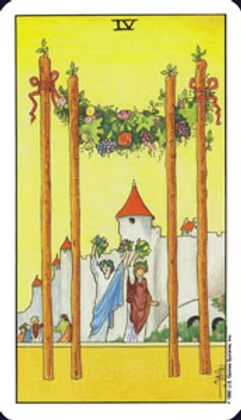




 Explaining the Readings