2 Let all those whom Yahweh has redeemed proclaim *
that he redeemed them from the hand of the foe.
3 He gathered them out of the lands; *
from the east and from the west,
from the north and from the south.
23 Some went down to the sea in ships *
and plied their trade in deep waters;
24 They beheld the works of Yahweh *
and his wonders in the deep.
25 Then he spoke, and a stormy wind arose, *
which tossed high the waves of the sea.
26 They mounted up to the heavens and fell back to the depths; *
their hearts melted because of their peril.
27 They reeled and staggered like drunkards *
and were at their wits’ end.
28 Then they cried to Yahweh in their trouble, *
and he delivered them from their distress.
29 He stilled the storm to a whisper *
and quieted the waves of the sea.
30 Then were they glad because of the calm, *
and he brought them to the harbor they were bound for.
31 Let them give thanks to Yahweh for his mercy *
and the wonders he does for his children.
32 Let them exalt him in the congregation of the people *
and praise him in the council of the elders.
——————–
This psalm of David is 43 verses long in total. Thirteen of them are recited on the fourth Sunday after Pentecost, as an accompaniment to the optional reading from Job, where Yahweh answered his pleas for explanation why he was suffering. In these thirteen verses, the same God of Job was the God of David. Both wrote the name Yahweh, as neither were so disconnected from hearing His voice that they deceitfully muttered a degenerate “Lord,” due to having no connection whatsoever to Yahweh. Both Job’s and David’s souls were married to Yahweh, thus they called out His name directly, having a most close relationship. No one at the NRSV headquarters, nor anywhere in the Episcopal Church [none at lease these dark days of religious heresy] can dare to say Yahweh, without falling dead from the fright of seeing their soul cast into the outer darkness where there will be a gnashing of teeth. Say “Hi” to Judas Iscariot and your “Lord” Satan, when you get there.
When verse one is shown as, “Give thanks to Yahweh, for he is good, and his mercy endures forever,” it is idiotic to say Yahweh is “good.” Since David was no idiot, he wrote, “kî- ṭō·wḇ” or “for good-pleasurable-agreeable.” The “thanks given” is “for” oneself [a self = a soul] has done the opposite of “bad-sorrowfulness-disagreeable.” This says “thanks” is “given” because without Yahweh’s presence [His Spirit in marriage] one would be a constant sinner and a reject from eternal salvation. Therefore, when one’s soul has received “goodness” through marriage, then the “mercy” that is forgiveness of past sins lasts “forever,” meaning one receives “mercy” through a Covenant that promises a soul will forever serve Yahweh as His wife.
Verse two then follows, saying “Let all those whom Yahweh has redeemed proclaim that he redeemed them from the hand of the foe.” This then speaks of “letting” those who have married Yahweh and thereby been “redeemed” “speak” of salvation. The “hand of the foe” must be seen as the soul-body having previously been possessed by Satan, the “enemy” of Yahweh and single [unwed] souls. This mean “let speak the redeemed” as Yahweh incarnated on earth, which comes as one of the “elohim,” as a Christ – Sacredly Anointed.
Verse three then sings, “He gathered them out of the lands; from the east and from the west, from the north and from the south.” From David’s perspective, the four points of direction refer to all corners of Israel, which pointed to the “lands” of the Twelve Tribes of Israel. Under David, his having been Anointed by Yahweh through Samuels’ pouring of oil, meant his leadership led other Israelites to likewise be married to Yahweh, bringing about a time when that nation of peoples was indeed Holy. In modern times, the worldly spread of Christianity has meant Saints have been raised from the four corners of the globe. It does not matter where a soul comes from, as long as it is married to Yahweh.
At this point, the selected verses to be sung aloud or read in unison leaps forward to verse twenty-three. There David sang, “Some went down to the sea in ships and plied their trade in deep waters.” Here, the reason for the leap is to draw in sailing metaphor that matches the Gospel reading from Mark, where Jesus calmed the wind and made the sea peaceful. The metaphor being stated by David in this verse says the “sea” is reference to the collection of souls married to Yahweh. The aspect of “trade” or “business” must be realized as the “acts” of apostles in ministry, but also the “business” of religion. Therefore, the “deep waters” refer to the hidden meaning of Scripture, which releases a flood of emotional waters that send other souls seeking marriage to Yahweh.
Verse twenty-four then adds, “They beheld the works of Yahweh and his wonders in the deep.” This is a wife of Yahweh being enabled to find the deeper truth that comes forth, which other Israelites fail to see.
Verse twenty-five then sings, “Then he spoke, and a stormy wind arose, which tossed high the waves of the sea.” This “stormy wind” comes from “rū·aḥ sə·‘ā·rāh” or “ruach ca’ar,” which matches the “whirlwind” from which Yahweh spoke to Job [the pairing for this psalm] and the “storm” with “winds” in the Mark story of Jesus on the sea. The Hebrew means Yahweh spoke in a soul [“ruach”] and the soul was moved to become a “tempest.” This makes the “waves” that are “raised” in understanding as the tumult that comes from seeing the truth be exposed that no leader has ever explained before. To find Scripture after Scripture having deeper meaning, a Saint is in a “ship” of religion that is being rocked by the truth being exposed.
Verse twenty-six then says, “They mounted up to the heavens and fell back to the depths; their hearts melted because of their peril.” The Hebrew word translated as “they mounted up” more aptly means “they ascended.” This says their souls were elevated to a divine state of being, after marrying Yahweh and becoming one with His Spirit. From that height of being Spiritually raised, they could then descend into the depth of Scriptural meaning, like never capable of before. The word translated as “heart” [“nephesh”] actually means “souls,” such that all the troubles or “perils” felt by their souls prior “melted” away, when the truth was read.
Verse twenty-seven then sings, “They reeled and staggered like drunkards and were at their wits’ end.” This imagery gives the impression of sailors being tossed about on a boat on a stormy sea. While that is a valid image in a dream or vision, the metaphor says the “ship” that is the religion that sailed upon [either Judaism or Christianity], those onboard were “reeling to and fro.” This reflects how the verses of Scripture have been made to say so many things, when deeply inspected they appear contradictory. Thus, when asked to explain some of those contradiction, they stagger around like drunken sailors, unable to give a clear answer, without slurring their words. They had been put at their wits’ end by trying to stretch the fibers of their brain matter to see what was impossible to be seen, without divine guidance.
Verse twenty-eight then sings, “Then they cried to Yahweh in their trouble, and he delivered them from their distress.” Here is the truth of souls married to Yahweh, as whenever a wife is in need of explaining the truth to someone, when the rockiness of contradiction seems to be about to make a soul ‘jump ship,’ that close relationship receives the answer needed. By asking one’s Holy Husband to bring the calm needed to see the light, a wife will be comforted.
Verse twenty-nine then sings, “He stilled the storm to a whisper and quieted the waves of the sea.” This states that one’s prayers will be answered, if one calls out to Yahweh. Calling out “Lord” might bring some huge satanic bird from the sky to come flying down, making things worse. This is what Jesus did, when his apostles cried out “Master” when they thought all was lost. They did not call him by name because they had no faith. No faith says one keeps a soul free and single, able to do whatever oneself wishes. That works best when not in troubling times.
Verse thirty then sings, “Then were they glad because of the calm, and he brought them to the harbor they were bound for.” This speaks of the desire to not be faced with tumult and grief. The “safe harbor” or “haven” is where one is no longer in a quest to make one’s religion a “business” or “trade.” The safety comes from being surrounded with souls who love to be of same mind. This can be seen in the Epistle reading from Paul’s letter to the Corinthians, as Corinth was such a “haven” for souls seeking to marry Yahweh.
Verse thirty-one then sings, “Let them give thanks to Yahweh for his mercy and the wonders he does for his children.” Here, again, the reader is returned to the proposal “to give thanks to Yahweh,” as was seen in verse one. Again the thanks is given for “his goodness” [not “mercy”], which is not an assessment of God’s being “good,” but His wives, through marriage to Him. When the translation says, “the wonders he does for his children,” the Hebrew more aptly says, “for the wonderful works of his sons of men.” While all human beings become wives in marriage to Yahweh, their souls when merged with His Spirit become His “elohim,” which takes on a masculine essence, such that even the souls of boys and girls and circus freaks that marry Yahweh becomes “sons of mankind,” as all “elohim” in human flesh are His “sons.”
Verse thirty-two then sings, “Let them exalt him in the congregation of the people and praise him in the council of the elders.” This then becomes a reflection of the same message told in verse two, where the meaning is the wives of Yahweh go into ministry for Him, singing praises about being so divinely in union, so all who express belief in Yahweh [the “congregation” or “assembly of people”] can likewise be married in Spirit and become true “elders” who teach “praises” of truth to all they lead.
As a Psalm accompanying a reading from Job, where Yahweh speaks from a whirlwind, as well as before the Gospel reading from Mark, when Jesus calms the storm at sea, they all speak of becoming married souls to God and becoming His priests in ministry. This makes this a good choice for the fourth Sunday after Pentecost, when those who have true faith have been sent out into the world as Yahweh’s servants. It is important to see how this ministry is not to be a profession. The payment for service rendered is salvation. As salvation comes from the sacrifice of self-ego, so one dies symbolically, just like Jesus died, the soul must relinquish all material desires. Ministry is not about a meager salary, with great benefits and a retirement package. If it were, death would mean one’s soul had already received payment in full. Therefore, true ordination as a priest of Yahweh comes without a job title and without a uniform.
let your ears consider well the voice of my supplication.
2 If you, Yah[weh], were to note what is done amiss, *
adonay, who could stand?
3 For there is forgiveness with you; *
therefore you shall be feared.
4 I wait for Yahweh; my soul waits for him; *
in his word is my hope.
5 My soul waits for adonay,
more than watchmen for the morning, *
more than watchmen for the morning.
6 O Israel, wait for Yahweh, *
for with Yahweh there is mercy;
7 With him there is plenteous redemption, *
and he shall redeem Israel from all their sins.
——————–
This is the Psalm selection that will be read aloud in unison or sung by a cantor as the accompaniment to the track 1 choice that has David’s Song of the Bow [2 Samuel] be the Old Testament reading choice. As such it will follow that, which states, “How the mighty have fallen.” Both will precede the Epistle reading from Second Corinthians, where Paul advised, “For if the eagerness is there, the gift is acceptable according to what one has– not according to what one does not have.” All will accompany the Gospel reading from Mark, where Jesus told Jarius, “Do not fear, only believe.”
This same Psalm was the Track 2 option for the second Sunday after Pentecost, just three Sundays back. Therefore, I will post here what I posted then, with minor adjustments made so it becomes relative to these different readings. The words written by David still bear the same meanings.
In this translation provided by the New Revised Standard Version [NRSV], there are eight presentations of the word “Lord.” The words written by David, which have all been assigned the exact same translation, are “Yahweh” and “adonay.” It is important to realize the differences these two words state. The name “Yahweh” states a personal relationship with God, as simply saying “Lord” is a statement that screams, “We do not know you, nor care to know you!” The word “adonay” means “lord” [in the lower case], where one’s “soul” is the “lord” that gives life to its flesh. A soul is not always [most likely not] married to “Yahweh,” such that a married to “Yahweh” soul becomes a production that is referred to as “Yahweh adonay,” equating to one of the “elohim.” Because both “Yahweh” and “adonay” are written in this “song of ascents” [announcement made in verse 1, but not translated], one can expect that the “lord” of David’s flesh was “Yahweh.”
Verse 1 then properly states: “Out of the depths I have cried to you Yahweh.” It is in verse 2 that David then wrote, “lord hear my voice! Let your ears be attentive to the voice of my supplications.” The NRSV shows this properly, but the Episcopal Church has taken it upon itself to place verse two’s language in verse 1.
Still, seeing ahead to this translation that truly says “lord,” one can intuit this as the cry of David’s soul to have his soul possessed by “Yahweh.” The word translating as “out of the depths” [in verse 1] is “mim·ma·‘ă·maq·qîm.” That should be read as reference to “the depths” that is metaphor David has used prior, for the sea of souls that are the hands of Yahweh. It is in the depths that the leviathan [Yahweh’s Spirit] becomes the “lord” over all flesh, whose souls have become Yahweh’s wives. Thus, “out of the depths” was David’s soul crying for salvation. His cries were sent to “Yahweh,” because David’s soul had committed to Him, making Him be his “lord.”
This means David writing, “hear my voice; let your ears consider well the voice of my supplication,” says prayers must be a spiritual wife’s clear channel of communication with the Husband Yahweh. A “supplication” is defined as: “the action of asking or begging for something earnestly or humbly.” This means such “cries” are made from a position of subservience and servitude, where a ‘slave’ has no right to demand anything from the Master. This is then the aspect of “ask and you shall receive.” While Yahweh knows one’s soul and knows one’s prayer before they are asked, it becomes the responsibility of the soul to establish a clear line of communication, where the wife is expected to state needs. Those truly married to Yahweh will make supplications for others, more than self.
Verse 3 [Episcopal Church 2] then says, “if iniquities you should mark Yah[weh] ; adonay , who could stand ?” Here, both “Yah” [an abbreviated form of “Yahweh”] and “lord” are written, with a semi-colon separating the two words. The separation says “Yahweh” is in the spiritual realm, where He keeps tabs on all sins and guilts possessed by souls in the physical realm. The semi-colon says the heavenly realm can never be a place where sins are allowed, thus the earth is the only allowable place where sins can exist. Following the semi-colon, the word “adonay” stands alone, with a comma mark following it. This says the soul is an extension of Yahweh, placed in the material world, such that it is the “lord” of an unmarried soul that causes iniquities and guilts to materialize. A “lord” alone, without marriage to “Yah,” is thereby always forced to ask, “who can stand?” No one can stand alone as “adonay” over oneself and ever get into heaven. In essence, David was asking, “Why would any soul not marry Yahweh?”
Verse 4 [Episcopal Church 3] translates to say, “when with you forgiveness , intent you may be feared .” The mistake of translating this as David writing, “For there is forgiveness with you; therefore you shall be feared” is it gives the impression that God simply existing means forgiveness comes without sacrifice of oneself to Him. This is a false impression to receive; but most Christian churches play gods by promising “belief in God” and “belief that Jesus died so your sins are forgiven” and “belief that everyone goes to heaven when they die because Jesus and God are all about love,” which are all misunderstandings of that which is written.
David writing “when with you” [“kî-‘im·mə·ḵā”] means what it says. The meaning of “with Yahweh” means a soul married to His Spirit. Only when that precondition has been met does “forgiveness” come. Without marrying one’s soul to Yahweh – AND THAT MEANS NO SINS, ONLY SERVICE TO GOD FOREVERAFTER – can one be forgiven for transgressions and be allowed into heaven, washed clean by His Spirit.
When David wrote “lə·ma·‘an,” which means “the intent” or “purpose” of “forgiveness,” the usage states a necessity, so one’s soul knows failure to be forgiven means a resulting fear of death and the fear of not being allowed to spend eternity in heaven with Yahweh. While a fear of God is the only fear allowed, such an allowance is not to fear the wrath of God when one sins, but to fear the loss of Yahweh if one turns away from Him and sins. When one’s soul is afraid of marriage to Yahweh, because one is afraid of losing all the worldly addictions one has become accustomed to – mostly being the addiction to self-worth and laziness to work for anything of true value – that fear is intended to be addressed through a spiritual union with Yahweh. Only with Yahweh’s help can a soul resist the temptations of the world that are projected upon a body of flesh.
Verse 5 [Episcopal Church 4] says, “I wait for Yahweh who waits for my soul , and in his word I await .” Unlike what the NRSV translates, the repetition of “waiting” [three times repeated] becomes a statement of “patience” being necessary. There is nothing stated that says “hope,” as “hō·w·ḥā·lə·tî” implies “hope” through the expectations of “waiting” patiently.
In the Hebrew written by David [“qiw·wî·ṯî Yah-weh qiw·wə·ṯāh nap̄·šî”], “Yahweh” is central to two uses of “await” [“qavah”]. This means “Yahweh” becomes the focus of which “I wait for” and it becomes “Yahweh” who “waits for my soul.” With “Yahweh” central, the soul has married Yahweh and then patiently does what Yahweh asks, knowing Yahweh waits patiently for an obedient soul to finish doing what He wants. While a soul is doing the work required by Yahweh, the strength and motivation comes from Scripture and an ability given by Yahweh to understand what He has said through His prophets.
[A good lesson that helps one realize the meaning of this verse is that which tells of Jacob working for Laban, based on his desire to marry Rachel. He ended up working fourteen years to get what he wanted, displaying an ability to “wait” and work.]
Verse 6 [Episcopal Church 5] then says, “my soul lord , more than those who keep watch for the dawning , more than those who keep daybreak .” In this, David admits his “soul” is the “lord” over his body of flesh. However, it is from the “patience” that that comes from a most holy agreement with Yahweh [the marriage Covenant] that has set expectations between a “soul” and “Yahweh.” From that, Yahweh can be intuited to be “my soul lord.” That makes the beginning of this verse be a statement confirming a spiritual marriage having taken place within David. Yahweh has become the “adonay” of David’s “soul.”
The repetition of “miš·šō·mə·rîm lab·bō·qer” [slight variation] should not become a perfect duplication of text because there is flexibility to amend the translations so they show difference. In both, David is saying that the “adonay” of his “soul” is Yahweh, which is “more than those” whose “soul lord” is themselves [or worse, a demonic possession]. The element of “keeping watch” must be seen as those who live in the darkness the night symbolizes, as there is no “day watch” necessary. The “watchmen” stand guard by night, when the majority of souls in flesh go to sleep and are unprotected from the things that come out at night.
For those who “watch for a dawning,” this symbolizes some sort of desire to see proof of Yahweh, through a miracle or a test placed before Yahweh. When “dawning” turns to “daybreak,” then the proof has been seen, but still not acted upon. Therefore, David was singing to the beauty of the light of Yahweh’s presence, which always makes keeping watch be a sign for a lack of commitment to Yahweh.
Verse 7 [Episcopal Church 6, bleeding into the first half of 7] then sings, “wait Israel , in Yahweh for with Yahweh mercy , and abundant with him redemption .” In this, there is separation placed after the word “Israel,” such that David was encouraging all who were supposed to be priests of Yahweh to wait and show patience. The world throws itself at all souls, hoping the immediacy of now will cause souls to act rashly; and, later finding regrets. Following the comma mark, David then repeated “Yahweh,” as “in Yahweh,” followed by “with Yahweh.” These repetition are recognitions of both belief (“in Yahweh”) and faith (“with Yahweh”). The former leads to the latter. The faith that comes from a soul marrying Yahweh then brings about the “mercy” of forgiveness, as well as the strength to show patience. For those who have fallen to the urges presented by the lures of the world, marriage to Yahweh makes available an “abundance” of forgiveness, allowing all souls the possibility of “redemption.”
The last verse [8, Episcopal Church 7b] says, “and he shall redeem Israel , from all its guilts .” In this, the Hebrew word translated as “shall redeem” is “yip̄·deh,” stemming from “padah.” The truth of “redeem” is to “ransom,” where there is a “price to pay.” The price of redemption is marriage and commitment, such that “Israel” is not a nation, but a collection of individuals considered truly to be the children of Yahweh. All are so noted with the expectation of service to Yahweh, with righteous lives meaning obedience to the Law [their marriage agreement]. This means the words of David do not apply to a land or a nation, but only to those souls who are redeemed through their souls having been merged with the Spirit of Yahweh. “Israel” then reflects in the same way as does “Christian,” where the name “Israel” means “He Is Upright” and a “Christian” is one “Anointed by Yahweh.” Only with the assistance of Yahweh can either exist and be released of all “guilts” or “sins.”
As the companion Psalm for the Song of the Bow, where David wrote into the Book of Jasher a song of lament for the deaths of Saul and Jonathan [and others of Saul’s family], this song of praise makes it clear that the only might that a human has that is lasting is the soul having married with Yahweh. The merging of “Yahweh” and “adonay” becomes a reflection of what true might is. It is when one’s soul has allowed Yahweh to become one’s “lord” or “adonay.” By knowing Jonathan was a “soul brother” of David, we can intuit his soul was likewise married to Yahweh. Jonathan went to his death bravely, not trying to defend is status as a prince, but out of duty for a king [his earthly father]. Jonathan was then a sacrificial lamb ordered slaughtered for the delight of a ruler; while Saul would cowardly commit suicide, rather than face his enemies’ swords. In that light, this song of praise sings of the promise of eternal life, when one’s soul has married Yahweh; and, the promise of reincarnation when there is all hell to pay for having rejected His hand in marriage.
you restored my life as I was going down to the grave.
4 Sing to Yahweh, you servants of his; *
give thanks for the remembrance of his holiness.
5 For his wrath endures but the twinkling of an eye, *
his favor for a lifetime.
6 Weeping may spend the night, *
but joy comes in the morning.
7 While I felt secure, I said,
“I shall never be disturbed. *
You, Yahweh, with your favor, made me as strong as the mountains.”
8 Then you hid your face, *
and I was filled with fear.
9 I cried to you, Yahweh; *
I pleaded with the Yahweh, saying,
10 “What profit is there in my blood, if I go down to the Pit? *
will the dust praise you or declare your faithfulness?
11 Hear, Yahweh, and have mercy upon me; *
Yahweh, be my helper.”
12 You have turned my wailing into dancing; *
you have put off my sack-cloth and clothed me with joy.
13 Therefore my heart sings to you without ceasing; *
Yahwehelohay, I will give you thanks forever.
——————–
This is the second option as a “Response” to the Track 2 optional Old Testament selection from the Wisdom of Solomon. If chosen, this will be read aloud in unison or sung by a cantor on the fifth Sunday after Pentecost [Proper 8], Year B, according to the lectionary for the Episcopal Church. It will follow the wisdom that says, “God created us for incorruption, and made us in the image of his own eternity.” These will precede the Epistle reading from Paul’s second letter to the Corinthians, where he wrote: “I am giving my advice: it is appropriate for you who began last year not only to do something but even to desire to do something– now finish doing it.” All will accompany the reading from Mark’s Gospel, where Jesus raised a daughter from death, saying, ‘“Little girl, get up!” And immediately the girl got up and began to walk about (she was twelve years of age).”
To begin with, this psalm [a dedication to the house of David] is twelve verses, as shown by the NRSV and BibleHub Interlinear. For whatever reason, the Episcopal Church has decided to make it thirteen verses, using the same text. In addition to that inconceivable mutation, the NRSV and the Episcopal Church bastardize the name Yahweh, which was written by David ten times in this son of praise, changing all to “Lord.” In addition, there are two places where David wrote “elohay,” which have been translated as “my God.” Since this misses the point of what David wrote, I have reverted those references to the Hebrew text [italicized]. I have left the numbering as is will be presented to pewples who know no better, but I have inserted the name Yahweh in all places where it has been desecrated.
The first verse is translated to state: “I will exalt you, Yahweh, because you have lifted me up and have not let my enemies triumph over me.” In this, the word “exalt” needs to be understood as Yahweh being allowed by a soul [the first person “I will”] to join with one’s soul, so a “raised” state of being [the “I”] takes over one. There is no way to “exalt” the One God who all exaltation comes from, other than being one who knows that “exaltation.” This is stated in “you have lifted me up.” Second, the element of “enemies” or “foes” must be seen as all who reject Yahweh in marriage and thereby reject all souls who have become “exalted” by His Spirit’s presence in their souls. There can be no way evil triumphs over Saints. Therefore, the correct translation is “rejoice” or “be glad,” which is stated as what those lost souls do not know, so they are further losers simply by rejecting what a state of happiness means to a soul.
Verse two then sings out [NRSV]: “Yahwehelohay, I cried out to you, and you restored me to health.” This verse begins by making a statement that Yahweh is not only “my god,” where the possessive form of the plural “elohim” truly says “my gods” or “gods of me.” This address says one’s soul is only one of many souls who Yahweh has possessed through Spiritual marriage. The union that brings a most holy Spirit alongside an ordinary soul transforms an ordinary eternal soul into a divine extension of God on earth. Therefore, a soul is just like the souls of one’s “foes,” until a soul “cries out” for redemption, where the harm of sins has injured a soul. The “healing” comes through Holy Matrimony, when becoming one of the “elohim” means salvation, no longer headed towards reincarnation.
Verse three is then sings about this saving, as [NRSV]: “You brought me up, Yahweh, from the dead; you restored my life as I was going down to the grave.” The literal translation makes Yahweh be the initial focus, saying, “Yahweh you ascend from the underworld – my soul you have kept alive [otherwise I would descend into the pit].” The use of brackets here means all souls are eternal, but all have been born into matter that is dead and cannot retain an eternal soul forever. Death is then the destination of a soul, through a “pit” or “descent” from heaven [the spiritual] to the physical. A soul reincarnated is not truly “alive,” as it is limited by the death that surrounds it. Therefore, Yahweh offers the escape from a descent, through the ascent that is eternal freedom and returning to life. That demands a soul marry Yahweh’s Spirit.
Verse four then says [NRSV]: “Sing to Yahweh, you servants of his; give thanks for the remembrance of his holiness.” Here, the aspect of “singing” means to “make music” to Yahweh, where the intent becomes the soul vibrating an a divine level of being, which can only be seen as meaning the melodies of music being related to the unseen delights that are mimicked in sound. The presence of His Spirit makes one’s soul sense such high notes of praise. Where the translation says “you servants of his,” the Hebrew written [“ḥă·sî·ḏāw,” from “chasid”] state “piousness, godly, and kind,” where the “servant” is a “saint. It is then this state of being that becomes a statement that “gives thanks” as a vehicle placed on earth for the “memory” of Yahweh being the source of all “holiness.”
Verse five then sings, “For his wrath endures but the twinkling of an eye, his favor for a lifetime. Weeping may spend the night, but joy comes in the morning.” Here is where the Episcopal Church has split one verse of David and turned this into their presentation of verses 5 and 6. The truth is all is verse five. The literal translation sates this: “for a moment — his face is alive — his favor for evening ; may endure weeping until in the morning joy .” Here, the statement of “a moment” sums up a lifetime of misery for a soul in a body of flesh. All of that dissipates when salvation come from divine marriage. When one’s soul wears the “face” of Yahweh, then the first Covenant agreement has been met and eternal life has returned. Marriage to Yahweh means a soul has earned the “favor” that ends the darkness from being a lost soul. All the “weeping” that made one’s soul “cry out” for help is forgotten, once the “morning” comes and light has been restored. The light brings “joy” to a soul.
The Episcopal Church then shows verse seven as: “While I felt secure, I said, “I shall never be disturbed. You, Yahweh, with your favor, made me as strong as the mountains.”’ This is yet another bastardization of the truth that has been produced by the Episcopal Church [not the NRSV nor BibleHub Interlinear]. The reality is verse six states [literally]: “and I said in my prosperity , never shall I be shaken for long .” Verse seven then begins [but not stated fully] by saying, “Yahweh by your favor you have made stand my mountain strong .” As far as verse six is concerned, the “prosperity” must be seen as the salvation that comes from marriage to Yahweh, so one’s soul is filled with His Spirit and no longer lacking of needs being met. While the world will offer setback and challenges, none will have any lasting effect. No changes will weaken one’s faith.
As for verse seven, the reality of that shown having begun in the Episcopal Church’s concept of verse seven, is “Yahweh by your favor you have made stand my mountain strong” now adding: “— you hid your face , I was troubled .” In that, the Episcopal Church has made this addition appear as verse eight: “Then you hid your face, and I was filled with fear.” The reality of the whole true verse then says the presence of Yahweh’s Spirit within one’s soul being makes one as strong as a mountain, immovable and towing above the others of the world. To have become so strong, one has to have memory of a past of sin, like all those of the lowlands, where the reality of Yahweh hiding His “face” says a sinner has turned away from Him AND the “face” of Yahweh can only be worn by His wives. Therefore, all who reject marriage of a soul to Yahweh will always be “troubled,” with all troubles being of their own making.
The reality that is verse eight is stated by the Episcopal Church as [under the numbering of verse 9]: “I cried to you, Yahweh; I pleaded with the Yahweh, saying,” The reality of this can be seen in the literal translation that accurately states: “to you Yahweh I cried out — and to Yahweh I made favor shown .” This speaks of the “joy” one feels when one’s soul has indeed married Yahweh. There is no “crying” or “pleading” like selfish brats saying, “Gimme, gimme, gimme.” When one has become the wife of Yahweh, then that soul cries out praises, so others can hear. Thus, for Yahweh having shown “favor” to one’s soul, one’s soul then “makes that favor be shown” outwardly into the world.
Verse nine than asks rhetorical questions to all souls in human flesh, which are stated as [Episcopal Church verse ten]: ‘What profit is there in my blood, if I go down to the Pit? will the dust praise you or declare your faithfulness?” In the question that begins, “What profit is there in my blood,” the Hebrew word translated as “profit” is “be·ṣa,” from “betsa.” That word means properly, “gain made by violence, unjust gain, profit.” The Episcopal Church [and all churches descended from the Roman Catholic Church] need to see how their self-piousness is their “blood” causing their brains to think they have exclusive rights to deform a Psalm of David and call Yahweh by some lesser title. They should ask those who run that god forsaken Church, “What can I possibly gain from being corrupt?” Such self-piety leads downward, not upward towards Yahweh. The second half of that first question then concludes with the reality, “when I descend into the pit.”
The second question than rhetorically asked by David then literally says, “will give thanks the earth a conspicuous truth?” That ‘tongue in cheek’ question says the “earth” or “dust” cannot speak anything, because it is nothing but death, never having any life that can speak. This means “dirt” speaks silently about death, which is the “truth” that “conspicuously” speaks from the gravestones, above the dead whose souls have descended to reincarnation. The overall question then asks, “Why would any soul choose to come back and start all over again in another bag of dirt that is bound to fall off the soul again? What can be gained by that repetitious failure?
Verse ten then sings out [Episcopal Church 11], “Hear, Yahweh, and have mercy upon me; Yahweh, be my helper.” This is an accurate translation, but it must be realized as a confession of weakness without the presence of Yahweh in one’s being. One must be the one who “hears” the proposal of marriage, which offers redemption and salvation for a soul that otherwise is headed in the descent of human flesh. This means “mercy” is not some right to sin and sin some more, as “favor” and “graciousness” are only extended in an agreement [marriage vows] that is total commitment. This makes the first statement of “Yahweh” be the marriage,” with the second statement of “Yahweh” being one’s ministry in commitment, where that ministry demands Yahweh’s “help.”
Verse eleven [Episcopal Church 12] then sings, “You have turned my wailing into dancing; you have put off my sack-cloth and clothed me with joy.” Here, the aspect of “wailing” denotes the grief of a soul in judgment. It is the descent that comes after a body of flesh has been deposited into a hole in the ground – a grave. The “dancing” is then the joy of redemption, when a soul receives the promised eternal life that comes from the commitment of divine marriage. Then, the “sackcloth” should not be seen as some burlap bag or the haircloth of monks and priests of some religious order, as it is not intended to be read as physical clothing at all. It is metaphor for a burial shroud, no matter how finely woven that material may be. The “opening” [rather than “put off”] of the “sackcloth” is a prophecy of the shroud of Jesus being left open on the ground of the tomb, when his soul was freed from death. Being “clothed in joy” or “gladness” is the Spirit’s continued presence surrounding a soul in heaven.
The final verse then sings, “Therefore my heart sings to you without ceasing; Yahwehelohay, I will give you thanks forever.” In this, the word “heart” is not written. The literal translation begins with focus placed on the “purpose” or “intent” having been reached, which is the redemption of all souls, released from the material plane so they can rejoin Yahweh in the spiritual realm. It is the fulfillment of that “purpose” that becomes the “music of praise” to Yahweh. It is the “glorious” return that cannot be “kept silent.” When a soul has married “Yahweh” and become one of His “elohim” as one of “His gods the same as my soul” [“elohay”], then the reward of eternal life will mean that souls “forever sings praises” for having been saved.
When one is not too busy playing god in some social organization, which prances around fraudulently pretending to be some god’s gift to human flesh, one will realize from deep study of the Psalms that David was not just some bozo who memorized all the catchphrases of religion or theology. David’s soul became married to Yahweh [not some “lord” that was unknown or too numerous to name specifically] when Samuel anointed him as a young boy. At that time [we read], “from that day on the Spirit of Yahweh came upon David.” [1 Samuel 16:13] That means David was not thinking what lyrics would be popular with all the teenie groupies. The Spirit spoke through him and David understood what he wrote, as the Spirit showed him the meaning. Thus, as a soul still alive in a body of flesh, David could understand the deaths of past lives and fully fathom all the waywardness of a lost soul, realizing the joy of redemption. Yahweh then wrote this son of praise for people who bow down before the Episcopal Church and wear its sinful face as their own. This song is Yahweh’s message to you sinners to stop thinking your stuff don’t stink and see your corpse releasing a soul full of grief … if you do not wake up and beg Yahweh [not some pagan “lord”] for forgiveness.
As one of the options for reading with another option on the fifth Sunday after Pentecost, the message is one of ministry. To reach a state of salvation, one must realize one’s own descent into the pit of human waste that is always bound to condemn a soul to “Come back soon!” Ministry cannot be real without one having reached that personal epiphany. Ministry cannot be real when one is simply repeating what some organization says, “Here, read this. The people love to be told this.” Ministry must know the truth of Yahweh from having come to experience Him and His Son, having oneself been sacrificed so Jesus can resurrect with one’s soul. Ministry demands one be Jesus reborn; and, David was a true minister of Yahweh, so his songs must strike melodic chords within one’s soul, so others can feel the silent praise and invisible inner dancing one knows, so their souls will long for the same.
2 Beautiful and lofty, the joy of all the earth, is the hill of Zion, *
the very center of the world and the city of the great King.
3 elohim is in her citadels; *
he is known to be her sure refuge.
4 Behold, the kings of the earth assembled *
and marched forward together.
5 They looked and were astounded; *
they retreated and fled in terror.
6 Trembling seized them there; *
they writhed like a woman in childbirth,
like ships of the sea when the east wind shatters them.
7 As we have heard, so have we seen,
in the city of Yahweh of hosts, in the city elohenu; *
elohim has established her forever.
8 We have waited in silence on your loving-kindness, elohim, *
in the midst of your temple.
9 Your praise, like your Name, elohim, reaches to the world’s end; *
your right hand is full of justice.
10 Let Mount Zion be glad
and the cities of Judah rejoice, *
because of your judgments.
11 Make the circuit of Zion;
walk round about her; *
count the number of her towers.
12 Consider well her bulwarks;
examine her strongholds; *
that you may tell those who come after.
13 This elohim is elohenu for ever and ever; *
he shall be our guide for evermore.
——————–
This is the accompanying Psalm for the Track 1 Old Testament possibility from 2 Samuel 5, which says, “David occupied the stronghold, and named it the city of David.” If selected, it will be the “Response” read aloud in unison or sung by a cantor on the sixth Sunday after Pentecost {proper 9], Year B, according to the lectionary for the Episcopal Church. The will precede a reading from Paul’s second letter to the Corinthians, where he said another and himself were “caught up into Paradise and heard things that are not to be told, that no mortal is permitted to repeat.” All will accompany the Gospel reading from Mark, where Jesus “called the twelve and began to send them out two by two, and gave them authority over the unclean spirits.”
I have amended the language above so it correctly states “Yahweh,” rather than the generic insult stated as “Lord.” More importantly, this song of praise accompanies a reading that tells of David taking Zion as his stronghold. He took Jerusalem from the Jebusites, who were not truly human beings. They were elohim, like David, due to their souls having been forever committed to serving Yahweh. David wrote about them in the Psalm, which is not readily seen because translators fail to translate what is truly written as what is truly written. I will explain these uses verse by verse.
In addition to liberties taken by translators, such as the New Revised Standard Version [NRSV], the Episcopal Church has waved its magic wand over this song and changed it from the fourteen verses it is, into one shown as thirteen verses. The NRSV agrees that this is fourteen verses, so the Church has condemned itself before Yahweh for promoting itself as a god that can mislead the flocks. I will explain each verse as is written, leaving the Episcopal Church to explain why it went against divine text as a false shepherd.
This song is identified by David as being written and composed as one “of the sons of Korah,” which needs to be understood. The Israelite Korah led a rebellion against Moses and Aaron in the wilderness [story told in Numbers]. As punishment, Yahweh caused the earth to open up, swallow Korah and then close up. Korah can then be seen as having gone underground. Samuel, a great prophet, was from the line of Korah – a name meaning “Baldness” [Abarim Publications] – and “the Korahites became doorkeepers and custodians for the tabernacle.” After David became king, the Korahites assisted him in battles. [Reference] Still, it must be understood that all of this history stems from the one man who led a rebellion against Moses and Aaron and who was swallowed up within the earth. The sons of Korah can then be understood to be Jebusite allies who assisted David’s reign, with eleven Psalms written and composed that are announced as being relative to them.
With this understood, verse one then sings, “Great is Yahweh, and highly to be praised; in the city elohenu is his holy hill.” This gives immediate praise to the greatness of Yahweh [not some generic “Lord”] as ALLelohim are His creations and from them were created the material universe, according to Yahweh’s plan. Mankind is then a breath of life in a body of flesh, which can be possessed by elohim.
When Korah rebelled, he was a custodian of the Tabernacle as a Levite under Aaron, but he also wanted to be a high priest as was Aaron. His followers among the Israelites were destroyed by fire and plague, to remove dissent from the midst of the whole. As punishment, Korah was forced by Yahweh to forever guard the city named Jerusalem, which was on and within Mount Zion [and beyond]. Yahweh made his descendants [his sons] be the protectors of the land given by Yahweh to those whose souls would be His wives. Thus, David moved from Hebron to Jerusalem, as a way of Yahweh releasing the Jebusites of that responsibility.
Verse two is then translated by the NRSV to state: “Beautiful and lofty, the joy of all the earth, is the hill of Zion, the very center of the world and the city of the great King.” In reality, the verse begins with the Hebrew words “yə·p̄êh nō·wp̄,” which actually say “appropriate elevation” or “fair [fitting] height.” When this then leads directly to naming “Mount Zion” [“har- ṣî·yō·wn”], this must be seen as a statement about the lowest of the seven hills in the Jerusalem area. That “height” is easily surmounted by all foes, thus a beautiful site for an invader’s eyes to see. To say that mount is “the joy of all the earth” misses the point that underneath that “hill” is the gate to Eden, which is truly “the joy of all the earth.”
This is a good representation of how everywhere other than Mount Zion was strategically superior.
The addition of “the very center of the world” is a mutation of that written, which literally says “the sides north” [“yar·kə·ṯê ṣā·p̄ō·wn”]. As far as Biblical symbolism is concerned, the meaning of “north” is this: “the north—represented by the left hand—is also a symbol of disaster. The enemy of God’s people came from the north (Jer. 1:14, 15; Eze. 38:6), bringing destruction. In a sense, the enemy was the false king of the north who tried to usurp God’s role and is finally destroyed by the Lord (Zeph. 2:12; Dan. 11:21-45).” [Reference] The inference as at “the center of the world” says insight makes this within the earth, not on the surface. However, the truth of “the sides north” says it was a place watched by those who were the enemy of the people, those who were not truly Israel reborn [a name meaning “He Retains God”].
To further grasp this darker meaning as the intent, when David then added “city of the king of many,” that “king” [“me·leḵ”] was Melchizedek. Melchizedek had become a son of Korah [a son of Hebron], who ruled Salem [or Jebus or Jerusalem] by the will of Yahweh. Melchizedek never died, he ascended, so he could always come back whenever needed.
Verse three then says, “elohim is in her citadels; he is known to be her sure refuge.” Here, the use of “elohim” must be seen as intended to define the “sons of Korah,” who were divinely married souls that were possessed by Yahweh, in the same way as was David. The “elohim” are the equivalent of demi-gods, in the sense that they have divine powers afforded them, through their complete subservience to Yahweh. This means “her citadels” are the strongholds underground, such that “her sure refuge” was not some low hilltop, but the depths of tunnels underground.
Verse four then sings, “Behold, the kings of the earth assembled and marched forward together.” This verse is better translated as: “when found the royals appointed they passed through together.” The true meaning of “the royals” or “the kings,” seeing how David wrote this as only the third King of Israel in their history, with Saul and Ish-bosheth being the two prior losers, the intent is to point out the judges who routinely saved the Israelites. Those judges [including Samuel] were “together with” the “elohim” sent by Yahweh to lead the people back to serving Him. That history is what David said to “Behold!”
Verse five then sings, “They looked and were astounded; they retreated and fled in terror.” The translation of “they” must be seen as double-edged, where the acts of the judges did amaze those they defeated, but likewise the people of Israel. The words of the second half of this verse say “they were troubled and they hastened away.” Here, “they” is more in line with the people of Israel being “terrorized” with how their waywardness was about to ruin all their souls. So, while the enemies also were filled with terror and fled, the Israelites turned away from their sins and gave praises to Yahweh again.
At this point the Episcopal Church has changed this song, so their translations will be tossed aside, so my literal translations can be presented. Feel free to compare this breakdown to the above presentation to see where they have become false shepherds.
Verse six then literally sings, “trembling took possession of them there , writhing as a woman in birth pangs.” Here, this must be seen as the transformation of the Israelite people, who had been led by judges “together with elohim,” where the souls of the judges had likewise been “taken possession” by Yahweh’s Spirit. This divine possession makes their demon spirits within writhe in pains as they are cast out, no longer having control over human flesh. Thus, the comparison to a woman in labor pains says the Israelites were being reborn as truly Yahweh’s people, divine “elohim.” Rather than giving birth to a baby, they were casting out demon spirits and themselves being reborn as clean souls.
The true verse seven then sings, “with a spirit east , you break to pieces the ships of Tarshish.” Here, one finds David balancing “the sides north” with “a spirit east” [“bə·rū·aḥ qā·ḏîm”], where “east” becomes a reference to Eden. [Reference] This then has the intent of saying that the divine “elohim” that possessed the judges and thereby transferred to the souls of the wayward Israelite people, the “tree of life” [guarded by the Cherubim who descended into Jebusites] made all who were so possessed empowered to defeat the influences of sin. Those influences are then said to be like “the ships of Tarshish,” where the name “Tarshish” means “Breaking, Subjection.” The root word means “to break down and shatter,” which would be the influences to break down one’s commitment to Yahweh and shatter the Covenant. Because Tarshish was known as a seaport with many ships in its fleet, so it could have a far-reaching effect of foreign shores, the metaphor used by David says the Spirit of Yahweh shattered and broke to pieces all such foreign influences that always led to sin.
Verse eight then adds, “who we have heard , thus we have seen the city of Yahweh’s army in the city of [His] elohenu; gods will set firm there forever . Selah”. In this, twice is written “bə·‘îr,” the first time joined with Yahweh, as “in the city of Yahweh” and again as a separate word leading to “elohenu,” which are “His gods” as divinely possessed earthly beings. The meaning of “in the city of Yahweh” must be understood as “Eden,” such that the word translated as “city” actually means “excitement.” This says a “city” is a place of “excitement,” where the “excitement” of “Yahweh’s place on earth” is the place where “elohenu” praise Yahweh constantly – a heavenly place. Such a place on earth is Eden. Eden has been guarded by Cherubim ever since Adam and Eve [and serpent] were cast out. Those guards have “been set firm” to ensure the path to the tree of life is forbidden to sinners. With that “city of Yahweh” being seen as Jebus or Jerusalem, the “army” or “host” of Yahweh are the Jebusites.
At the end of this one verse [one of fourteen] is found the word “Selah.” This word is not fully grasped by Biblical scholars. Many believe it is a note to the musicians to recognize, in their accompaniment to this song. However, the word in Hebrew means “to exalt, to lift up” and that meaning the “heavenly host” – the “elohenu of Eden” – are constantly singing praises that exalt Yahweh, while Yahweh “lifts up” their souls as heavenly beings.
Verse nine then sings, “we have become like gods from your lovingkindness , in the midst of your temple.” In this, the Hebrew word “dim·mî·nū” is written, where the root word is “damah,” meaning “to look like, resemble.” This has erroneously been translated as saying “wait silently.” The meaning must be seen as like that stated in Genesis 1, where the “elohim” made mankind [males and females] in their likeness. Now, the souls of David and the Jebusites “have become resembling gods,” as having been souls reborn as the “elohim” by Yahweh’s divine Spirit possessing them. Thus, “in the midst” becomes the same as the tree “in the midst” of the garden [or enclosure], where a soul is “in the midst” of one’s body of flesh. When Yahweh’s Spirit possesses that flesh, joined in marriage with a soul, the flesh becomes a “temple.” Thus, the “kindness” and “goodness” is extended to the plane of the earth through the hands of Yahweh that are His “elohim.”
Verse ten then sings, “from your name elohim, thus your praise to the boundaries of the material plane , righteousness , it is fully placed into your right hands [by you].” In this David clearly wrote “in the name of gods,” which is no different than the association of Jesus and all his Apostles as “being in the name” that is holy. What David made clear is only elohim are in the “name” of Yahweh [not some lesser generic “lord”]. Bein a divine “elohim” means being a Saint. Jesus and David were both “elohim,” as both were divinely possessed by Yahweh, through having [a word meaning possession] His Holy Spirit poured into their souls, as Anointed by Yahweh. Thus, all who are the “elohim” on the material plane will forever “praise” Yahweh by speaking what He tells them to say. They will only live “righteously.” They will all become His “right hands” as His servants [souls having become His wives in marriage].
Verse eleven then sings, “let rejoice ׀ Mount Zion , let rejoice the daughters of Judah , the purpose , of your judgments.” Here, the element of “rejoicing” or “being glad” is repeated, once alone and once joined with “the daughters of Judah.” The stand alone rejoicing is the presence of Yahweh as a potential Husband, whose offer of marriage goes out to all souls, seeking all to become His “right hands” in marriage [soul to Spirit]. That proposal is worthy of celebration. Mount Zion is separately stated as that is the altar where a divine marriage takes place metaphorically. David placed the Tabernacle, with the Ark of the Covenant and altar, on Mount Zion, atop steps that ascended from below. Physically, “Mount Zion” is the mound of earth covering the gate to Eden and the tree of life. Marriage allows one’s soul to find that path to eternal life. Thus, the celebration of eternal life must be shouted by all the “daughters of Judah,” as Judah is where Mount Zion is located. The “daughters” means the bodies of flesh [males and females] whose souls will be married to Yahweh’s Spirit, with Him the Husband. The “purpose” of marriage is to gain eternal life, for all made of flesh will find death leading a soul’s release to judgment. Wives of Yahweh will rejoice for their souls will have been forever saved.
Verse twelve then sings, “turn about Zion , and surround her , and count her towers.” This is a statement about the move of David from Hebron to Jerusalem, where the control of that citadel had “turned about” and changed hands. The walls of Zion became the City of David, which became the outer shell of that temple. The “towers” were metaphor for all who had taken that place and flown the flags of human rulers over that spot. David was the first and the Jebusites flew no flag and took no pride in a fortress built on the lowest hill in that area.
Verse thirteen then sings, “set well her soul defenses , go through her citadel , purpose you may recount generations following.” This is a clear call for all the Israelites to become like Jerusalem and marry their souls to Yahweh, bringing about His “bulwark” of strength protecting them from being overtaken by invading sins. Each Israelite was asked to become a model of that sanctuary of strength. The reason was for the continued success of Israel – as individuals, a people, and a nation – was so that all would realize the necessity of being seen as “He Retains God” [the meaning of “Israel”]. The call by David was for future generations beyond that one under David to follow suit, forevermore.
Verse fourteen then sings, “for this gods our gods forever and ever , he will be our guide to death.” Here, the words “elohim elohenu” must be read as “gods our gods,” so it becomes a statement of the continuation of “elohim” in the name of Yahweh. The future “gods” in His name will then be due to the “gods” of David and the Jebusites and the following Israelites, so one set of divine “gods” produce regenerating souls married to Yahweh, possessed by His Spirit. This was David’s prayer in song, as all souls born into bodies of flesh will find death eventually. Only those who would be guided to salvation as an “elohim’ will not be condemned to repeat life and death, through reincarnation.
This reading certainly fits the theme established in every other reading choice for the sixth Sunday after Pentecost. It explains why David moved to Jerusalem and took control of the citadel of the “elohenu” who were the Jebusites. As a song of praise during a time when all true Christians should be in ministry for Yahweh [not some unspecified “Lord”], this sings praises about oneself becoming a fortress of God, as one of His “elohim.” The only way to lead another soul to salvation is to know firsthand the experience of Yahweh’s presence within, when one is “in the name of Jesus Christ.” One must have lived the truth of Yahweh in order to preach the truth for others to hear.
2 As the eyes of servants look to the hand of their masters, *
and the eyes of a maid to the hand of her mistress,
3 So our eyes look to Yahwehelohenu, *
until he show us his mercy.
4 Have mercy upon us, Yahweh, have mercy, *
for we have had more than enough of contempt,
5 Too much of the scorn of the indolent rich, *
and of the derision of the proud.
——————–
This is the Track 2 accompanying “Response” to the Old Testament reading choice from Ezekiel 2, when Yahweh told him, “son of man, stand up on your feet, and I will speak with you.” If chosen, this will be read prior to the Epistle reading from Second Corinthians, where Paul wrote, “Three times I appealed to the Lord about [a thorn that was a messenger of Satan to torment Paul], that it would leave me, but he said to me, “My grace is sufficient for you, for power is made perfect in weakness.” All will accompany the Gospel reading from Mark, when “Jesus came to his hometown, and … they took offense at him.”
In the above, I have made changes in the English translation where “Yahweh” is written but translated as some unknown “Lord.” David knew Yahweh because his soul was married to Yahweh and David called his Spiritual Husband by His name. In addition, I have returned the Hebrew word written – “elohenu” – rather than let the mistranslation as “our God” stand. First, the word is written in the plural and must be seen as a word that denotes a soul that has married with Yahweh’s Spirit, as those demigods who have become divinely possessed, as His wives on earth. Finally, the numbering of this song of praise – a Song of Ascent – has become the creation of the Satanic church calling itself Episcopal. The New Revised Standard Version [NRSV], which the Episcopal Church lectionary page claims to be the source of its translations, clearly lists this psalm as having four verses. Please contact them and inquire as to what god they worship that gave them the idea they could rewrite divine Scripture. I will write about the meaning of the four verses based on the numbers written by David.
In the first verse, the meaning of “I lift up my eyes” must be read as beyond the scope of physicality. There are no “eyes” that can see Yahweh. If one were to see Yahweh physically, one would be die. Being removed from one’s sack of flesh means one’s soul no longer has the limitations that a body of flesh places on a soul. Physical eyes cannot possibly see spiritual things. Therefore, “lift up” becomes a statement of divine elevation, so “eyes” takes on the figurative meaning of spiritual trust for insight.
This means the second half of verse one is then saying Yahweh is not external to oneself [a “self” equates to a “soul”], but within one’s being. The place where Yahweh “dwells” [mistranslated as “enthroned”] is with one’s soul in one’s flesh, together as one, due to marriage of one’s soul to the Spirit of Yahweh. As such, one becomes mereged, as His hand reached into the physical realm. Thus, “the heavens” are not some distant place [such as outer space or in a cloud in the sky] but within; such that “heavens” are the source of life within dead flesh – souls plus possessing spirits. The plural form, as “heavens” rather than “heaven,” means there is a soul within each human being and this soul become a “heaven” when married to Yahweh’s Spirit, so many “heavens” are possible.
When one realizes this is a Song of Ascent, it was designed to be sung by Israelites walking up the steps carved into Mount Zion to the altar at the Tabernacle. This song was then like a marriage march, so one’s physical “eyes” could be raised to see the fire burning on the altar of spiritual marriage to Yahweh. As such, the smoke rising from the altar fire would be representing the transformation of a soul, from the flesh to the spiritual. This song was meant for all devout Israelites to sing as a vow before marriage, with the Covenant being the bond that held the soul to the Spirit forever.
Verse two then sings, “behold! as the eyes of the servants to the hand of the masters , as the eyes of the maidservant to the hand of her mistress , so our eyes to Yahweh us gods , until he has shown favor to us .” In this, the first word places focus on “beholding,” where this is more than a vision, as a presence that is felt and understood as all-powerful. The two aspects of metaphor [“servants” and “maidservants”] reflect both men and women are called to be “subjects” or “slaves” as wives to Yahweh. This relationship shows a union recognitzing that a “master” or a “mistress” is a source of stability and security, as a symbiotic necessity. The “eyes” are not to be read as for physical sight, but symbolic of an ability to see the value of servitude. Both men and women are then called to become the “hands” of a greater source of wealth and benevolence than can ever be the worldly reality of most.
It is here that David combined “Yahweh elohenu,” which is a statement of possession [like the genitive in Greek], which says “the gods of Yahweh” or “Yahweh’s gods.” The possessive form is attached to the plural “elohim,” which then says all of these “elohim” are divinely generated by Yahweh alone. Again, the “elohim” are the demigods formed from a soul marrying Yahweh and receiving His Spirit which makes those souls special: one Anointed [a Greek Christos] and Sacred – Set apart as holy – a Saint-Apostle. The plural number here says David wrote a song for all the Israelites to sing as they celebrated their individual soul’s marriage to Yahweh, where they would begin to see [be the “eyes”] as Yahweh led them to see. Lastly, this transformation within one marrying Yahweh – becoming His servant as a wife – would bring about the greatest favor of redemption and salvation, so eternal life would be granted for one’s payment in servitude.
Verse three then sings, “show favor to us Yahweh be gracious to us , for a great many , we are satisfied with contempt .” This becomes a prayer of repentance, as it confesses one’s waywardness that must come before the marriage becomes official. This Psalm is sung in accompaniment with the reading from Ezekiel 2, when that holy prophet had become married to Yahweh and was then sent out into ministry with the purpose of telling the wayward they too must repent or suffer the fate of their evil souls’ judgment. One must respect Yahweh as one’s Husband, acknowledging only He can show favor to a soul. If accepted as His wife in marriage, that favor will be His gracious forgiveness of past sins. A soul’s past debt will be wiped clean. This cleansing of spirits says many are still unmarried to Yahweh, as all have been filled with some level of contempt, as unwilling to submit totally or unworthy to be forgiven. This confession must be made to Yahweh to receive His forgiveness.
Verse four then sings, “a great many are filled to our soul with the scorn of those who are secure , with the contempt of the proud .” The above translation differs, as: “Too much of the scorn of the indolent rich, and of the derision of the proud.” The NRSV translation demans one see this only on the material view, which is not wrong, only limited. Again, as a companion piece to the fall of Jerusalem and the enslavement of the Judeans to Babylon, when Yahweh sent Ezekiel to warn them of His anger with their waywardness, this verse sings of David feeling then like Yahweh would feel in the end days to come. There is a false sense of security that comes when the flesh [and brain] enslaves a soul to do its bidding. Those souls then do not see any reason to themselves become a servant to anyone or anything [denying they are slaves to the flesh]. They bring ruin upon themselves [again, “self” equals “soul”] and those surrounding them as well. This makes those who serve Yahweh also feel His “scorn” as His “hands” on earth. This then ends with the identification of “pride” as a most deadly sin.
In the final days of Jerusalem, it was the pride of those who reigned as all-powerful in the Temple of Solomon that forever lost the land their forefathers had been given graciously by their Husband Yahweh. Their pride was in bloodline, not the spirit-line of souls marrying Yahweh. Their pride was centered on a birthright, seeing themselves [their souls] as the descendants of some people in the past who earned the right to call Canaan “Israel” and then leave it to their heirs in their deaths. When Yahweh sent Ezekiel [and Yahweh sent other prophets as well] it was to make sure the “sons of Israel” knew a prophet had been among them. It is this same sense of pride that leads Christianity to the same ruinous end.
As a companion song of praise to join with that Ezekiel reading on the sixth Sunday after Pentecost, when one’s personal ministry to Yahweh should be underway, the message here says one must find divine insight through a soul’s commitment to serving Yahweh [not some generic Episcopalian “Lord”] and become His “hand” on earth. This says one should go into ministry – as did Paul, as did Jesus, as did his disciples, and as have all true Christian Saints – to warn the wayward that they must repent and return their souls to Yahweh, before they die in the flesh and are forced to begin again in a new body of flesh [reincarnation]. The “scorn” felt by the souls merged with Yahweh [His elohenu] will lead them to find many who will reject them, as well as Yahweh.
and a just reward from me-elohe of their salvation.”
6 Such is the generation of those who seek him, *
of those who seek your face, Jacob. Selah.
7 Lift up your heads, O gates;
lift them high, O everlasting doors; *
and the King of glory shall come in.
8 “Who is this King of glory?” *
“Yahweh, strong and mighty,
Yahweh, mighty in battle.”
9 Lift up your heads, O gates;
lift them high, O everlasting doors; *
and the King of glory shall come in.
10 “Who is he, this King of glory?” *
“Yahweh of hosts,
he is the King of glory.” Selah.
——————–
This is the companion Psalm for the Track 1 Old Testament selection from Second Samuel, telling of David bringing the ark into Jerusalem. If chosen, it will be read aloud in unison or sung by a cantor on the seventh Sunday after Pentecost [Proper 10], Year B, according to the lectionary for the Episcopal Church. This set of readings will precede an Epistle reading from Paul’s letter to the Ephesians, where he wrote: “In him we have redemption through his blood, the forgiveness of our trespasses, according to the riches of his grace that he lavished on us.” All will accompany the Gospel reading from Mark, which tells of the beheading of John being followed by the rise in popularity of Jesus.
In the reading as shown above, I have removed all translations of the word “Yahweh” that erroneously say “Lord.” In addition, there are two verses in this song of praise that end with the word “Selah.” I have added them in bold text. The word “selah” translates as “lift up, exalt,” which must be seen as an indication that one’s soul must become elevated through marriage to Yahweh. Therefore, it would be remiss to exclude that direction from the song.
Verse one makes more sense in a literal translation, as “the earth” must be seen as metaphor for a body of flesh. The translation says, “Yahweh the earth and its fullness , inhabited world , and to dwell therein .” This says a soul is in its fullness when it is married with Yahweh. The “inhabited world” [from “tebel”], or simply “inhabited,” means the flesh [the “earth”] has become where Yahweh “inhabits.” Yahweh does not dwell in “the earth,” as He made the physical universe as a compliment to the spiritual universe. Thus, Yahweh only entends to “the earth” as a Spirit that possesses the physical. It is “elohim” who Yahweh creates that dwell in “the earth.”The dwelling, or sitting, or remaining [from “yashab”] makes a human being become the hand of God on earth.
Verse two then literally says, “for he upon the seas has founded it , and upon the rivers , has set firm .” Here, the use of “seas” and “rivers” are water references that are metaphor for the emotions brought by the presence of Yahweh within. This extends beyond the physicality of the five senses that create the feelings of a human body, as the presence of Yahweh is Spiritual. The Spirit is greater than a ‘sixth sense.’ Thus, the “seas” and all engulfing waters reflect as the marriage that pours in the Spirit of eternal life that becomes one with a soul. The “rivers” are then the flow of the Word that causes one’s body of flesh to move as directed by Yahweh.
Verse three poses the question, “Who may ascend into the hill of Yahweh?” To grasp the directions of “ascent,” in conjunction with “into,” one needs to visualize the setting on Mount Zion. There were steps carved into the stone of the mountain or “hill,” which led to the place of the Tabernacle near the top, under which the ark was placed. The “ascent” is metaphor for the steps up the mountain to reach the altar, with “into the hill” meaning a marriage that “uplifted a soul” to the point within the place that was Jebus. Jebus [or Jerusalem] reflects where the entrance “into Eden” was; and, it is there that a soul gains entrance, as the result for a soul having married Yahweh. Thus, the answer to the question “Who,” is “all souls who marry Yahweh.”
The subsequent question then literally asks, “then who may stand in place his holy?” This is a question about the elevation of a soul still in its flesh, so the flesh becomes an upright body [“standing” on a path of righteousness], which makes that person become representative of God incarnate. Only as one with Yahweh can one truly be “sacred” and “set apart by Yahweh as holy.” Again, the answer to that question is all who marry their souls to Yahweh.
Verse four then becomes a clarification of these answers, saying literally, “clean hands , and pure soul [that’s] who ׀ not to suffer to an idol his soul , nor sword deceitfully .” In this, there is no need to indicate anyone needs to possess “clean hands.” The word “clean” is stated, which is the answer to “who?” Those who seek redemption are thereby those cleansed of past sins, having been made “clean” by Yahweh. After such cleansing, those souls will each become Yahweh’s “hand” on earth. The word translated as “heart” [“lebab”] means, “inner man, mind, will” [in addition to “heart”], which is more importantly seen as a statement of one’s “soul.” By a “soul” being “pure,” this is an indication of both Yahweh’s Spirit and the resurrection of the “soul” of Jesus, as the “lord” of the flesh to command righteousness has become reborn. This addition marries one in a Trinity union [three in one]. Those are the answers to “who.”
The last part of this verse can be read two ways, based on the words stating “not to lift, carry, take.” In the positive sense, as a continuation of the “clean” and “pure,” they will “not suffer” [an alternative use of “nasa”] from “idol” worship, thereby condemning one’s “soul.” The married to Yahweh “souls” do not “swear” the wedding vows “deceitfully.” However, on the opposite end of the spectrum, as to “who not,” those are the souls that do “not” marry Yahweh, such that they will “not be uplifted” spiritually, so by “not” marrying they will “suffer to the idols” of their worldly lusts. They will call themselves Christians, while having “deceitfully sworn” to believe in and follow commandments they will not keep.
Here, it must be understood that a soul married to Yahweh does become an “idol,” such that the English defines this as the image of God, but the Hebrew means “vanity and emptiness.” The Law that says one should not worship idols says an entity, such as Jesus and all Saints and Prophets, are images and representations of Yahweh on earth. They should be listened to as the voices of God; but they must not be worshiped as gods. A truly holy icon is then empty of self, with all vanity placed upon Yahweh. Thus, one’s own soul should become an “idol,” so one’s “soul does not suffer” after death; but an “idol” brings suffering to all who think Yahweh has made another a god to worship upon the earth, so a true Saint can only be deemed as such postmortem.
Verse five then sings, “he shall receive blessing from Yahweh , and righteousness from elohim.” Here, the use of “elohim” [as “me-elohe”] becomes yet another way to understand how “elohim” are those eternal beings of spirit who are merged with a divine Spirit, who do the acts commanded by Yahweh. An “elohim” can be a law of science and mathematics, thus inhuman but never changed by the wills of humans. An “elohim” can be angels, who are spirits created by Yahweh to be His messengers; but they are never wholly human, although they may appear in human form. Angels cannot be defeated by human souls; and Yahweh commanded His elohim to serve Man. Then, there are the “elohim” who are the saints and apostles, who are wholly human in the flesh, but not influenced by worldly things. Being chosen as an “elohim” of Yahweh through marriage means one’s soul has found “salvation.” Therefore, this verse sings of the “who” that marry Yahweh, as they will be shown “favor” by His Spirit, which makes one become an “elohim” that acts “righteously” in His name, taking forward the message of “salvation” to others.
Verse six then sings, “this a generation of those who seek , who seek your face Jacob . Selah .” In this, the word “generation” must be seen as a “time” or “period” that dwells upon one, as something necessary. Because David had brough the ark into the City of David, forever symbolizing a “generation” of personal soul responsibility for the Israelite people, that was a “time” when birthright no longer did anything for one’s soul. Thus, all had to become “seekers” of redemption and salvation from that point in time on.
When the reference turns to “your face” [from “panim”], this is a direct restatement of the First Commandment, which is the marriage vow that says the wife [soul] of Yahweh will lower his or her face [self-ego] and wear only the face of Yahweh [no other gods before my face]. That “face” does not come by being born a Jew. This becomes the lesson of “Jacob,” who was the second of two twins born, thereby not entitled to a birthright from Isaac. The parents of Jacob named him that because the word captured the essence of him “holding his brother’s heel” [or “He Who Closely Follows” or “Supplanter”]. The divine marriage of Jacob’s soul to Yahweh led to him receiving the name “Israel,” which means “He Retains God,” as one who then had Yahweh within his being. Thus, to seek to earn the “face” of God requires one sacrifice one’s own self-ego [one’s own “face”], so that new “face” can be worn.
It is at this point that the first of two uses of “selah” is found. Again, this word means “to lift up, exalt.” Following the use of “Jacob” [where the capitalization as a proper name is assumed in translation only], the aspect of Jacob must be realized that he was a twin, the lesser of the two from being second-born. This means Jacob reflects the status of one’s own soul, after it has been merged with the Holy Spirit, where that Spirit becomes the ‘firstborn’ and thus the one who rightfully inherits the body of flesh. It is that presence that must be celebrated as a “lift up” and reason to “exalt” that presence. Therefore, the word is not written as a musical direction alone [if at all]. It says rejoice!
Verse seven then sings, “lift up the gates of your head , be lifted up doorways everlasting ; and shall come in the king of glory .” It should not take much to realize the “head” is where a brain is kept. The brain is the central control organ of the being, as the soul communicates with the flesh through that center. It should also be seen that a city is protected by walls, with “gates” opened and closed as needed. When the “gates of the head” are closed, the brain has become the keeper of the flesh, more than simply keeping the body alive when one sleeps. An “open gate” means being receptive to the Spirit being welcomed in to take control of the brain. Once the brain has been reduced to a function that acts as an influence to righteousness, then the doorway to Eden is opened to the soul. The gates of Eden are guarded by Cherubim [“elohim”], as through those doors lie the tree of life and eternity in heaven. Therefore, once one has removed all blockages to the tree of life, then one shall become one with Yahweh “the King of all that is glorious.”
Verse eight then asks the question, “who this king of glory?” That answer is then sung out as, “Yahweh powerful and strong , Yahweh mighty in battle .” The answer clearly says “Yahweh” is “the king” [from being stated twice], but the deeper question about “who” is relative to those whose brains will receive the Spirit. There is no way a human being can understand the “power, strength, or might” of Yahweh, since the ethereal is not measured by such material principles. Therefore, the question of “who” asks what souls in the flesh will receive the ability of the Holy Spirit [Jesus and Paul referred to them as talents and gifts], to become “powerful” enough to fight the “war” against the lures of sin, cast out by the world. Yahweh grants that power and might to His wives, through the resurrection of His Son Jesus, who is truly “this king of glory.”
Verse nine then sings a refrain of verse seven, stated now as “lift up the gates of your head , and lift up doorways everlasting ; and shall come in the king of glory .” The repetition says those who open themselves [again, a “self” equals a “soul”] up to receiving the Spirit of Yahweh, coming through divine marriage, then there will be no need to repeat the first proposal of marriage. The first opportunity taken [verse seven] means a soul welcomes Yahweh into their submissive body and soul, so the subsequent times when “power” and “strength” and the “might to battle” comes, all “gates” and “doors” will have remained “open,” so no souls will be caught with their ‘gates down.’ The marriage will last eternally, beyond the time a brain will remain fleshy.
Verse then then sings a refrain of verse eight, asking the same questions of “who “ and giving the same answer that is “Yahweh.” The change now says “Yahweh of hosts,” which says the “might of battles and wars” are all easily won by those who form the heavenly “armies” of Yahweh. Yahweh is still “the King of all glorious.” This, once more, is followed by “selah,” which is another statement of “exaltation” from an uplifted soul to salvation.
As the accompanying Psalm for the Second Samuel readings about David taking the ark into Jerusalem, this confirms a theme of marriage between a soul and Yahweh. As a song of praise sang on the seventh Sunday after Pentecost, when one’s own personal ministry for Yahweh should be well underway, this sings the praises of wearing the face of Yahweh, after the submission of one’s own self-ego unto Yahweh, accepting His gift of a righteous life being possible. All the battles against sin will be personally won, because once one opens the gates that resist and reject holy matrimony, then all things are possible. The sustaining strength of ministry does not come from self-will. It comes from the sacrifice of self so one can be lifted up into service.
9 Truly, his salvation is very near to those who fear him, *
that his glory may dwell in our land.
10 Mercy and truth have met together; *
righteousness and peace have kissed each other.
11 Truth shall spring up from the earth, *
and righteousness shall look down from heaven.
12 Yahweh will indeed grant prosperity, *
and our land will yield its increase.
13 Righteousness shall go before him, *
and peace shall be a pathway for his feet.
——————–
This is the companion Track 2 song for the reading from Amos, where Yahweh showed him a wall and a plumb line. If chosen, it will be read aloud in unison or sung by a cantor on the seventh Sunday after Pentecost [Proper 10], Year B, according to the lectionary for the Episcopal Church. These two will precede an Epistle reading from Ephesians, where Paul wrote, “when you had heard the word of truth, the gospel of your salvation, and had believed in him, [you] were marked with the seal of the promised Holy Spirit.” All will accompany the Gospel reading from Mark, where we learn a mother coached her daughter to say: “I want you to give me at once the head of John the Baptist on a platter.”
Verse eight begins this reading selection. In this is written “hā·’êl Yah-weh,” which the NRSV has translated as “God the Lord.” I have restored what was written above, but still this does not show the presence of a vertical bar in between the two words, which may or may not be a direction to the musicians accompanying this song of restoration.
To better understand this, it becomes important to realize Psalm 85 is stated in verse one to be “to the enduring sons of Korah,” where Korah was one who challenged Moses and Aaron as a Levite wanting more responsibilities in the Tabernacle, more than cleaning up after sacrifices [and such]. God opened up the earth and had Korah swallowed, while all his supporters among the Israelites were destroyed by fire. The “sons of Korah” [a.k.a. “Korahites”] (I believe) were the priests who became the watchers of the Ark of the Covenant, when it was placed in the City of Honeycombs at Baale-judah [or Kirjath-Jearim]. When the descendants of Korah are seen as servants of Yahweh sent underground, then they become “elohim.” Thus, David was singing a song that said he would listen to a “god” that had been divinely inspired to speak for Yahweh, as that would amount to “hā·’êl Yah-weh.”
Verse eight literally translates to sing, “I will hear , what will speak hā·’êl Yahweh for he will speak soundness , for his people and to his pious , not let them turn back to stupidity .” The first word form [“I will hear”] says a soul married to Yahweh will listen for instructions. By “hearing,” one is not telling anything first. After “hearing,” then one’s flesh “will speak” as an extension of Yahweh that acts as “a god,” which can only happen after one’s soul [an eternal spirit] has been merged with the Spirit of Yahweh. That establishes a marriage of commitment by both parties. By “speaking as a god of Yahweh,” that says what He “will speak” one then passes on, becoming a prophet. Thus, this Psalm selection is paired with the marriage of Amos’ soul with Yahweh, when he did likewise. What is “spoken” is “soundness,” such that everything spoken relates to the divine texts, where a prophet is necessary both to write them and to bring them “completeness” and “soundness” by explaining them.
When David sang out that this prophecy will be “for his people,” this refers to all who call themselves the children of God. In David’s time, those people were called Israelites. In Jesus’ time, those people were called Jews. In our times, those people are called Christians. At all times, those people are the ones who seek knowledge that leads to understanding; therefore, they are the people who makes pleas for redemption and receive a divine proposal for marriage with acceptance. By oneself [a “self” equals a “soul”] being married to Yahweh’s Spirit, then one is truly one of “his people,” as a “saint” or one whose soul has been cleaned of all past sins, forevermore to be “pious.” That is a merger that is forever, which means once married there will be no divorce or turning back to the ways of sin.
Verse nine then literally sings, “surely related to those who fear [losing] his salvation ; that may dwell glory in our land .” This first addresses a “fear” of God, where rejecting His marriage proposal means accepting the full responsibility of one’s sins at judgment. Only those souls who fear losing Yahweh in their lives, by their own actions that turn away from His presence, will choose to sacrifice self-ego while living in the flesh. That sacrifice in the present will bring the promise of salvation to be known later.
The second half of this verse is much less focused on Yahweh “dwelling in the land,” as the only way this factors into this verse is through those souls who have married Yahweh going to others in Israel and ensuring they too marry Yahweh, as a protection of “His people” there. The real meaning of “land” or “earth” is the flesh of one’s body that surrounds one’s soul. Yahweh’s Spirit will “dwell” where His wives [males and females] “dwell.” In those will be found the ”glory” of His presence.
Verse ten then literally sings, “goodness and truth have met together ; righteousness and completeness have kissed .” In this, two sets of pairs are united, with the second set saying “have kissed.” That act of “kissing” certainly reflects as a common act of love. This verse is then singing about the union of a soul with Yahweh’s Spirit. The sins of the past are forgiven as the dowry paid by the wife [males and females], meaning “goodness” replaces wickedness and “righteousness” replaces waywardness. In return, the union with God means “truth” becomes an essence of one’s new being, as well as a calmness or “peace” that knows “completeness” and “soundness.”
Verse eleven then sings literally, “truth out of the earth shall spring ; and righteousness , from heaven shall grow .” Here, again, the use of “eretz” or “earth, land” must be read as “truth springing out of one’s flesh.” That “spring” becomes the free-flow of “truth” that comes from Yahweh. It is the never-ending flow of living waters that makes one’s being act righteously, as a well offering eternal life that always quinches any hint of thirst. This is the ministerial nature of divine marriage, as each soul becomes a prophet who spreads the meaning of Scripture to others who are seeking the “truth.”
This “spring” also becomes a sign of the “living waters” that eternally have been opened to lead one’s life; and, that becomes a new way of living, which only walks a righteous path. All paths will be divinely led, coming from “heaven” as the influence of the Spirit, so one’s ministry in service to Yahweh “will grow,” never decreasing. This also means the Spirit will wholly encompass one’s being; so, the way one views the world will be from above, “looking down” on all influences of sin.
Verse twelve then sings literally, “moreover Yahweh will give good ; and our land will yield its increase .” Once more, the use of “land” or “earth” has little to do with reaping the bounties of crops and herding. The material world of a soul is its flesh. This means, again, the body will be given a “pleasure” from the presence of Yahweh’s Spirit within one’s soul, so all troubles will be able to be dealt with positively. This is a gift of marriage; so, one who rejects Yahweh in marriage, but then reaps bountiful harvests, those benefits must not be seen as a gift of God. It is not the One God who gives material rewards, but a lesser god of the world who brings gains and profits to humans as lures to sin. To be given “good” means one will be removed from evil. Thus, that becomes a state of being that is more profitable than all the world can bring.
Verse thirteen then literally sings, “righteousness before him will go ; and shall make pathway his footsteps .” This verse sings of one walking a path of “righteousness,” which cannot be done alone. One’s soul cannot will oneself to walk a sin-free life, as a soul cannot defeat a god, which Satan most assuredly is. One can only defeat Satan by being married to Yahweh, becoming His possession through His Spirit. When that marriage has taken place, then all steps one takes will be those of a wife who follows the Will of her Husband [males and females following Yahweh].
As an accompanying Psalm to the Amos reading possibility, it should be seen that this reflects the marriage between Yahweh and the prophet Amos, while also reflecting the message he took to the false prophet Amaziah, to give to Jeroboam. Neither of them accepted the marriage proposal made necessary by David’s actions years before; therefore neither were leading the Israelites towards that spiritual end. If this set is chosen for reading on the seventh Sunday after Pentecost, when one’s personal ministry to Yahweh should be underway, it speaks of the growth one can expect to come from holy matrimony with Yahweh. This says the only “land” or “earth” anyone should be focused on is that which confines one’s soul. All else is a trick of illusion. To see the truth, one must hear the voice of Yahweh and speak those words to others.
32 I will punish their transgressions with a rod *
and their iniquities with the lash;
33 But I will not take my love from him, *
nor let my faithfulness prove false.
34 I will not break my covenant, *
nor change what has gone out of my lips.
35 Once for all I have sworn by my holiness: *
‘I will not lie to David.
36 His line shall endure forever *
and his throne as the sun before me;
37 It shall stand fast for evermore like the moon, *
the abiding witness in the sky.’ “
——————–
This is the accompanying Psalm to the Track 1 Old Testament reading from Second Samuel, which tells of David telling Nathan he wants to build a house for the Ark to be placed inside. If chosen, this pair of readings will precede the Epistle selection from Paul’s letter to the Ephesians, where he wrote: “In him the whole structure is joined together and grows into a holy temple in the Lord; in whom you also are built together spiritually into a dwelling place for God.” All will be presented along with the Gospel reading from Mark, when Jesus told his apostles, “Come away to a deserted place all by yourselves and rest a while.”
This not a song written by David, but by Ethan the Ezrahite. This whole song is called “a contemplation of Ethan the Ezrahite.” Ethan is said to be a cymbal player in David’s court. Because faith believes all Holy Scripture is of divine origin, every reference to “I” must be seen as Ethan being moved by the Spirit of Yahweh to write this song. Therefore, a “contemplation,” from the Hebrew “maś·kîl,” should be seen as a statement both of a “skillful and artistic song” and “a didactic and instructive song.” In it, there are fifty-two verses; but only seventeen are presented here.
Verse twenty says, “I have found David my servant; with my holy oil have I anointed him.” This speaks of Yahweh choosing David as the Israelite who would replace Saul as king. Yahweh knew Saul (the choice of the elders) would fail, so He also knew David would be the choice. Samuel was the one who “found David,” where the Hebrew can also mean “attain,” meaning David was the one Israelite soul who was most able to “attain” the successes Yahweh planned for the Israelite people. To reach those heights, David had to be a servant of Yahweh, which Saul most certainly was not. The word that is translated as “holy” can also mean “sacred,” and the word translating as “oil” come before “sacred.” That means it was not the “oil” poured on David by Samuel that made him “sacred.” David’s soul was made “holy” after Samuel anointed him with “oil,” which was when Yahweh poured out His Spirit upon David. That “anointment” made David a “Messiah” or [in Greek] a Christ.
Verse twenty-one then sings, “My hand will hold him fast and my arm will make him strong.” This translation makes it appear that Yahweh was external to David, as a holy hand reaching down from heaven, with a holy arm giving him strength. In reality, the literal Hebrew translation begins with “who” [“’ă·šer”], which is totally focused on David. That is then “who” is “my hand” that “shall be firm with” or “who shall be established with.” In that use of “my hand,” it is David “who” is a “hand” of Yahweh, which says Yahweh was within his soul, “firmly” guiding his body of flesh. When the Hebrew of the second half says “also my arm,” this says the “hand of Yahweh” will “also” be how Yahweh will extend outward into the Israelite people. As their king, David “shall be strengthened” divinely, as that “arm” of their One God.
Verse twenty-two then sings of this divine presence in David, singing “The enemy shall not outwit him, the wicked shall not humble him.” Because of the history told in the Old Testament of the “enemies” of the Israelites, as those who fought against their presence into the Promised Land [they knew nothing of any promise], that human level of existence is ”not” what this verse sings about. Because of the divine possession of Yahweh, absent from his soul [“not” as “lo-”] was Satan. It is Satan, who as the serpent was the craftiest of the animals in Eden, who is the true “enemy” that the presence of the Yahweh Mind knows all beforehand, so David could not be tricked by Satan’s influences. It was then the “sons of wickedness” [“ū·ḇen-‘aw·lāh”] who were those people who made war against the Israelites, as their souls had become demonically possessed and led to sin. None of their sinful ways could penetrate the armor of Yahweh that David’s soul always wore.
Verse twenty-three then sings, “I will crush his foes before him and strike down those who hate him.” Here is the first person singular returning, as “I will beat down” those “enemies” of Israel. What is missing in this NRSV translation is “before him” actually says “before his face” [“mip·pā·nāw”], where the root word is “paneh” meaning “face.” This says David’s self-ego will have been lowered, in submission to Yahweh, so David did not wear the “face” of self [as Saul had worn], giving all honor and glory to the successes of Israel to Yahweh. David followed the First Commandment in this verse, which sings he had no other gods before the face of Yahweh [which for most is their own face seen as a god]. Therefore, when David went into battle, it was always as the “hand” and “arm” of Yahweh, which “crushed” and “struck down” all who challenged David’s marriage to the true One God. Those who “hated” David and were David’s “foes” were those against Yahweh, who always lose in battle.
Verse twenty-four then sings, “My faithfulness and love shall be with him, and he shall be victorious through my Name.” The key word to this verse is “ū·ḇiš·mî,” which translates as “in my name” [where “shem” means “name”]. One must understand that “in my name” is something said by a Husband to His wife, as the wife is then the property of the Husband and “in his name.” This is seen in the livestock industry as branding, where the owner’s symbol is burned into the hides of animals they possess. Instead of a physical brans making it known that David was the wife of Yahweh, it was “my faithfulness” and “my kindness” [“we·’e·mū·nā·ṯî wə·ḥas·dî”] that marked David [as “with him,” from “‘im·mōw”]. The element of being “victorious” is actually stated as “qar·nōw,” which means the “horn” David would blare [a ram’s horn or shofar] to announce all victories were Yahweh’s. The symbolism of the “horn” that was “exalted” says David was the lead sheep of a flock, who all bore the mark of Yahweh.
Verse twenty-five then sings, “I shall make his dominion extend from the Great Sea to the River.” This is a poor translation, as it forces one to ask, “What river?” The nation of Israel extended beyond the Jordan, but not as far east as the next major river, so is this verse wrong? The answer comes from seeing the literal translation and realizing the metaphor of “sea” and “rivers.”
The literal translation [BibleHub Interlinear] says, “and I will set over the sea his hand ; and over the rivers his right hand .” This speaks of the “sea” of souls who would be married to Yahweh through the “hand” of David. Because David’s “hand” had been taken in divine marriage, so too would a “sea” of Israelite souls become married as extensions of that one “hand.” As such, all Israel would be considered a “sea” of souls married to Yahweh. It would then be the actions of David that became outward flows of spirituality from Yahweh to the Israelites, which are now metaphorically called “rivers” that moved the Israelites to become the “right hands” of Yahweh. In all cases where a “hand” is referred to specifically as a “right hand,” the inference is not a left hand, which is that marriage of souls to Satan, as the hands of wickedness.
Verse twenty-six then sings, “He shall cry to me, ‘You are my Father, my God, and the Rock of my salvation!’” This accurate translation makes it clear that David was a Son of God, just as was Jesus, as any soul that has married Yahweh will be reborn as his feminine flesh will have been transformed by the presence of Yahweh’s positive Spirit, making David an “elohim.” For Christians, such an elohim is a Saint, whose soul has submitted its control over a body of flesh to Yahweh, wherein is resurrected the Son, whose soul is that of Jesus. To be able to truthfully call Yahweh “Father,” one’s soul has to have married Him, been anointed by His Spirit [made a Messiah or Christ] and be reborn as His Son. The name “Jesus” means “Yahweh Saves,” so David was reborn as “Jesus,” thus he cried out Yahweh was his “rock of salvation.” When one calls Jesus the “cornerstone” that the builders rejected, that “rock” was then said to be the “rock” upon which the soul of David was built.
Verse twenty-seven then sings, “I will make him the firstborn, the highest of the kings of the earth.” In this, it is important to see how David being denoted as “the firstborn” [from “bə·ḵō·wr”] that designation says the soul of David gained the right of eternal salvation, the inheritance of submission in marriage to Yahweh AND having been reborn as His Son. This then says the soul of David had been lowered in submission to the soul of Adam entering and merging with his soul-flesh, such that David had the right of eternal life through becoming Adam reborn. This is important to grasp, as Jesus referred to himself as the “Son of man,” where the Greek word for “man” equates to the Hebrew word, which is “adam.” This says Jesus was the reincarnation of Adam’s soul, making him a “firstborn” at conception in Mary’s womb. As Christians realize Jesus to be the King of the “highest” caliber, his kingdom is always the flesh he is resurrected within, alongside but ruler of a host soul that has married Yahweh. Therefore, “kings of the earth” can be seen as “rulers of the flesh,” as no soul or lesser god ruling flesh will ever reach the height of Yahweh’s Son reborn in the flesh.
Verse twenty-eight then sings, “Forever I will keep my steadfast love for him, and my covenant with him will stand firm.” In this, the word “forever” [“lə·‘ō·w·lām”] becomes a statement of eternal union. The word means a “continuing existence,” where “love” is a repeat of the “kindness, goodness” seen earlier, in verse 24. Still, the aspect of “love” [which is beyond the sensations called “love” in the physical flesh] is the foundation upon which marriage comes. Thus, “my covenant” [“ū·ḇə·rî·ṯî”] becomes the marriage vows, of which the first states to lower one’s face and wear the face of Yahweh. By having this agreement “standing firm” [“ne·’ĕ·me·ne”], this says the laws of marriage will have been written on the walls of one’s heart [the ‘love center’]. Still, the meaning of “heart” is the “soul,” which is the only marriage of significance [no nunneries or monasteries necessary, nor monuments on courthouse property].
Verse twenty-nine then sings, “I will establish his line forever and his throne as the days of heaven.” This is another weak translation, as it makes one think all the Israelites who became Jews [after centuries of failing to marry Yahweh] are “forever established as a holy line of human beings.” This is not what is sung; therefore it is a wrong impression to take away. The literal translation expands this to all souls who do marry Yahweh, and that becomes a spiritual lineage that includes all true Christians and Jews who became Apostles and Saints.
The BibleHub Interlinear translation shows: “and I will set forever his seed ; and his seat of honor as the days of heaven .” In that, the use of “forever” is again the promise of eternal life, which equates to the “salvation” cried out about in verse 26. Again, Yahweh’s salvation is stated in the name “Jesus.” This then promises all who are the “seed” [those “sown” or the “offspring”] will be souls, not temporal bodies of flesh [which cannot live “forever”]. This becomes a vine of eternal life, from which souls are married to Yahweh, all becoming His Son, such that a lineage is created by souls who are all related as brothers [Spirit is only masculine] that are all Anointed ones by Yahweh. This then says the “seat of honor” [or “throne”] is only allowed to those souls who marry Yahweh and become “enlightened” by the eternal presence of “day,” which is only possible in the spiritual realm of a soul [“heaven”], not a body of flesh in a rotating world that repeats night and day.
Verse thirty then sings, “If his children forsake my law and do not walk according to my ordinances,” which begins a four-verse series of stipulations and conditions for the aforementioned lineage of David. This sets up the scenario that would befall Israel, including David, where Yahweh is set as an external deity and no longer married spiritually. When a rejection of “law” [from “tō·w·rā·ṯî”] is seen to mean one’s soul is no longer “directed, instructed, or taught” by the Spirit, so one’s soul always maintains the conditions of the marriage agreement, then one separates from that union of bond. This verse then sets up the foundation of spiritual divorce, where sin has crept into one’s fleshy brain and influenced one to stop eating only from the tree of life [eternal salvation] and take a bite of the apple from the tree of know sin in the world, after knowing the law only allows good.
The continuation of this development is then sung in verse thirty-one as: “if they violate my statutes and do not keep my commandments,” where the conditional of “if” is repeated. The foremost example of this “violation of statutes” was when David became tired and did not lead the troops out in the spring. He knew lust in his soul.
As king, he had the right to command anything and anyone to follow his orders, which was an automatic compliance by those expecting David to only speak the Word of Yahweh. Instead, David knew he was breaking the laws and he hid his adultery. He had a love child and he tried to make Uriah lay with his wife, Bathsheba, so she could lie and tell him her baby with David was his. When Uriah was led by Yahweh to not follow the ruse of Satan, that forced David to have Uriah killed in battle, which meant he condoned murder. All of these acts became one sin compounding another, because the soul of David had separated from Yahweh and raised the ugly face of self-will against the face of God. The seduction that befell Saul would befall David, as he violated known statutes and cheated on his marriage vows with Yahweh.
The continuation of this possibility of waywardness, from breaking one’s promise in marriage to Yahweh, verse thirty-two sings, “then I will punish their transgression with the rod and their iniquity with scourges;” where this verse says waywardness will not be tolerated. The use of “rod” here [from “ḇə·šê·ḇeṭ,” root “shebet”] should not be taken as an act of utter destruction. While a “rod” would shatter a potter’s vase into shards, the “rod” was also a stick used by a shepherd to force sheep who acted waywardly into the fold. Thus, in Psalm 23 we read how David sang there was comfort in knowing the shepherd used the “rod” as a tool of caring. It becomes the root of the proverb, “Spare the rod, spoil the child.” As such, no breaking of the laws of a soul’s marriage to Yahweh will go unpunished; but punishment does not mean being cast into the outer darkness, as eternally punished.
When the verse adds “their iniquity with scourges,” there is no addition of any word beyond the first statement of “transgressions” [“piš·‘ām”]. As the central word in this verse, it can be assumed to apply to the “stripes” or “scourges,” as a whipping as punishment can only come due from “transgressions” or sins. Here, the implication of a whip must also be seen as a tool of herding, where the primary use is to get the attention of a stubborn animal and force it into compliance. Returning to the theme of being branded in marriage to Yahweh, where Yahweh possesses a soul as would a rancher possesses livestock, the tools of a rancher are not designed for a purpose to inflict pain and suffering. They are merely intended to be used for guidance, to ensure that the dumb animals do what is best for them wellbeing. Only humans take a tool and misuse it as an instrument of destruction for personal pleasure.
The final verse in this run of verses that state the conditional of stubbornness in a wife of Yahweh, verse thirty-three sings out the hope maintained, singing “but I will not remove from him my steadfast love, or be false to my faithfulness.” Here, once again, is the “kindness and goodness” of “checed” being stated, which has been seen as the “love” that binds two in marriage. The repeating of “steadfastness,” as the “firmness” of “commitment” that is the promise of marriage vows, says waywardness is not grounds for breaking a divine marriage.
In the example of David, Yahweh knew before pouring out His Spirit onto the soul of David that he would break the vows and err. That was all part of the plan that had a committed David set up everything for his own fall, as all subsequent falls from grace would demand a marriage with Yahweh to prevent a divorce. This verse says the soul of David retained the eternal reward, even though his body of flesh left behind a legacy of failure. His flesh’s fall says all flesh will fail. Therefore, each soul must be committed to Yahweh for redemption after death.
Verse thirty-four then sings, “I will not violate my covenant, or alter the word that went forth from my lips.” This verse must be seen as the marriage agreement set by Yahweh on Mount Sinai and taken down by Moses to the Israelites to agree with, which is forever the marriage vows of ALL CHILDREN OF YAHWEH – not just the Jews of today – such that none of them are open for discussion and none of them can be amended. The terms of a souls return to be one with Yahweh are His and His only. All souls are given the freedom to chose whatever face to wear they want. This verse then sings that there is only one Covenant set forth from the “lips” of Yahweh and that are the terms that must be either fully accepted in submission of self, or fully rejected as being a god unto thyself. Like pregnancy, there is no halfway state of being.
Verse thirty-five then sings, “Once and for all I have sworn by my holiness; I will not lie to David.” This verse is better understood by seeing it literally set to English. BibleHub Interlinear shows it as: “once I have sworn by my sacredness , if to David I will not lie .” Here, perhaps most of all statements of the name David, the meaning of that name needs to be realized as meaning “Beloved.” Therefore, this becomes a statement of commitment by Yahweh that says, “All souls who have become my Saints through marriage; I will fill them only with the truth that comes from shared love.” The conditional [not shown by the NRSV translation] says, “if a soul becomes the Beloved of Yahweh, then that soul will always know the truth, and truth is the bond of commitment.”
Verse thirty-six then sings, “His line shall continue forever, and his throne endure before me like the sun.” Here, again, the use of “zar·‘ōw,” as “line,” when the truth says “seed,” gives the false impression that human beings born of the flesh have some special right to eternal life [“foreverness”]. The reality of this verse is it sings about those souls [a truly “forever” entity] who follow the established model of each Israelite soul needing to marry Yahweh, in order to achieve salvation. Here, Israelite needs to be seen as meaning “He Retains God,” as a statement of divine marriage, not birthright. Thus, that begun by David being anointed by Yahweh will forever continue to all souls who become the offspring of that model.
The repeating of “the seat of honor” [or “throne”] says all who will have their flesh become led by the Son of Yahweh [Adam and Jesus] will make their bodies become “thrones” upon which that divine soul will sit. This becomes the light of truth, which is symbolized by the “Sun.” That metaphor matches the use of “days” in verse 29, which makes verse 36 be a repeating of that former verse. The reward of eternity means forever being in the light of truth, never again in darkness.
The last verse in this reading selection is number thirty-seven. It sings, “It shall be established forever like the moon, an enduring witness in the skies. Selah.” It should be noted that the NRSV does include the word “Selah,” which means “to praise, exalt,” but the Episcopal Church chooses not to include it in their presentation for reading aloud. This verse then becomes a reflection of verse 36, just “like the moon” is a body that reflects the light of the sun, itself having no light to project on its own. The light of the sun is the truth that a servant of Yahweh will become a “witness” for. As a “witness,” it will testify to the truth, so that light is reflected from Yahweh to others through the body that is His wife. This way of leading other souls to marriage with Yahweh, through bodies that reflect the light of the sun [the Son], as moons in service to their Husband, the people will forever be shown to look upwards for a better solution to the worries of life. In this, the “sky” [from “baš·ša·ḥaq,” meaning “dust, cloud”] becomes the inner self, or the soul, which is that cloud that is known to be present, but cannot clearly be seen. All praise for Yahweh can only come from the soul.
As a long Psalm that can be read aloud or sung is Track 2 is chosen on the eighth Sunday after Pentecost, when one’s own personal ministry for Yahweh should be well underway, this makes it clear that a true priest of Yahweh is in the offspring of David, where one’s soul has married Yahweh. There can be no faking ministry. Ministry is not for self-glorification, where one’s soul cares nothing about any other soul. In such cases, one lost can never lead any other lost souls to be found. Being “found” is the first focus of this song of praise. A soul “found” is pure and open to be taken by Yahweh. No souls are “found” in the libraries of a seminary or university, while doing a term paper that will earn one’s flesh a passing grade.
1 The fool has said in his heart, “There is no elohim.” *
All are corrupt and commit abominable acts;
there is none who does any good.
2 Yahweh looks down from heaven upon us all, *
to see if there is any who is wise,
if there is one who seeks after elohim.
3 Every one has proved faithless;
all alike have turned bad; *
there is none who does good; no, not one.
4 Have they no knowledge, all those evildoers *
who eat up my people like bread
and do not call upon Yahweh?
5 See how they tremble with fear, *
because elohim is in the company of the righteous.
6 Their aim is to confound the plans of the afflicted, *
but Yahweh is their refuge.
7 Oh, that Israel’s deliverance would come out of Zion! *
when Yahweh restores the fortunes of his people,
Jacob will rejoice and Israel be glad.
——————–
This is the Track 1 accompanying Psalm to the Old Testament choice from Second Samuel, when David falls into sin. This will be read aloud in unison or sung by a cantor if chosen on the ninth Sunday after Pentecost [Proper 12], Year B, according to the lectionary for the Episcopal Church. This will precede the Epistle reading from Paul’s letter to the Ephesians, where he wrote, “he may grant that you may be strengthened in your inner being with power through his Spirit.” All will accompany the Gospel reading for John 6, where Jesus told his fearful disciples, “It is I; do not be afraid.”
In the presentation above, I have restored seven words to what was written by David. Four are removing the NRSV translations of “Yahweh” to “the Lord.” I have returned “Yahweh” as the specific name David used, as it is the name known by all souls truly possessed by Yahweh in marriage. The other three all pertain to the translation of “elohim” as “God.” I have returned those to the original Hebrew, because “elohim” is the theme of this psalm. The first of these uses appears in the first verse, where the NRSV translated “God” [capitalized, in the singular] from “elohim” [not capitalized, in the plural number]. This use of “elohim” must be seen as why this Psalm was chosen to accompany a reading that tells of David’s fall into sin.
Verse one literally states in the Hebrew, “’ā·mar nā·ḇāl bə·lib·bōw ’ên ’ĕ·lō·hîm,hiš·ḥî·ṯū,hiṯ·‘î·ḇū ‘ă·lî·lāh,’ên ‘ō·śêh-ṭō·wḇ”. That literally translates in English to say, “to say foolish inner man no elohim, they lead to ruin , they have done abominable works , none are good”. This becomes a statement that is akin to the scholars of Hebrew and other languages that say, “Pppppppttt to “elohim” meaning “gods.” I will change it to “God,” so I can make sense of what David wrote, as there is only one God, so only fools say there is “no God.”
In reality, David would have never defeated Goliath, evaded Saul’s spear, converted two hundred Philistines, or done any of the other good works he did, if he had not been one of Yahweh’s “elohim,” which as divinely possessed souls. To deny they exist is “foolishness.” By teaching there are “no elohim,” then the teachers are “fools,” who lead others “to ruin” and do “abominable” acts [such as promote homosexuality as a forgiven sin], because all who think that way are “no good.” This first verse must be seen as the theme of failure; and, that is why it is attached to the reading that tells of David living up to his own statement of truth, as a self-fulfilling prophecy. He was a fool to do what he did.
To prove this is the meaning, David wrote in verse two a second use of “elohim,” where he explained they were those seeking to assist Yahweh, through the submission of their souls to Him in marriage. The reality of what the literal translation says in English is this: “Yahweh from heaven looks down upon the sons of Adam to see if there are any who are prudent , who ask for elohim”. This says that “heaven” is the spiritual realm in which souls connect to Yahweh. Rather that “looking down” from the sky, the all-seeing eye of Yahweh “looks out” for those souls who are descended from His Son Adam, as servants who believe, pray, and act according to Mosaic Law. Those who demonstrate a “competency” for marriage with His Spirit those whom Yahweh proposes marriage. Those who say, “Yes,” and receive His Spirit are then those who become a spiritual wife of Yahweh, becoming one of His elohim. David, again, was one of the elohim; and, so too was Jesus and all his Apostles-Saints. Every time one reads “elohim” in Old Testament [Hebrew] texts, this can be translated into English as a statement of the Saints [or true angels].
With this understood about the qualification for who Yahweh chooses to become His elohim [Saints], verse three then lays it on the “fools” named in verse one. In the NRSV English translation that says, “Everyone has proved faithless; all alike have turned bad; there is none who does good; no, not one,” this captures the essence, but not the whole truth. The truth says, “All have turned aside [from being] united [allowing their souls to] have become corrupt [morally] — [of those] none have done good ; none , not one”. This places focus on the Hebrew word “yaḥ·dāw,” which means “unitedness” (Strong’s); and, this is a word stating their lack of faith, which has rejected marriage with Yahweh [“turned aside” – “sār”]. Instead, their souls have “united with” unclean spirits, which is what has “corrupted them [morally]” [“ne·’ĕ·lā·ḥū”]. It is from this evil possession that “none have done good,” because “good” only comes from souls who have married Yahweh.
Verse four is then presented as one long question, such that the NRSV shows: “Have they no knowledge, all those evildoers who eat up my people like bread and do not call upon Yahweh?” The question is asked in the first two words [“hă·lō yā·ḏə·‘ū”], which asks, “have no knowledge?” As the central question, the root word “yada” [“to know”] is not focusing on the powers of a human brain, as that is the organ through which Satan does his tricks of corruption. Therefore, the question asks, “Do they not seek wisdom?”
The following words are not written to give the example of bread as something eaten, such that those who reject marriage to Yahweh are cannibals, who eat Yahweh’s chosen “people” like “bread.” The truth of that series of words says those who reject marriage to Yahweh are Israelites who are the “workers” of Satan [“pō·‘ă·lê”], whose “iniquities [“’ā·wen”] are judged and known to be by all routinely “consuming” [“’ō·ḵə·lê”] divine Scripture, which is the “bread” that is manna from heaven to “people of Yahweh [and David].” For all the memorization those wicked ones do, none of them “call upon Yahweh” to unite with them and show them how to live by His Word.
Verse five then adds the third use of “elohim,” and in divine Scripture repetition is important to realize. The NRSV translation [with “elohim” kept intact] says, “See how they tremble with fear, because elohim is in the company of the righteous.” This translation takes the repetition of “dread” [“pā·ḥă·ḏū p̄a·ḥaḏ”] and morphs “great dread” into “tremble with fear.” This denies the existence of Israelites [in name only] who bow down and worship demons, who then possess them until they cannot escape. More then trembling with fear as coming from an external source, this is “great dread” that has set upon their souls, within their bodies of flesh. Therefore, David then followed that demonic possession with the alternative, which is “for elohim, [there is an inner] dwelling that brings righteousness.” This is then a statement of divine possession, which defines one of the “elohim.”
Verse six then literally translates into English as saying, “the advice of the poor you shames , but Yahweh shelters”. This says that those who “greatly dread” their state of being are told by those “poor” souls that have married Yahweh to do likewise and their “dread” will be erased. Instead of accepting that “advice of the poor” [“‘ă·ṣaṯ- ‘ā·nî”], where “poor” is better stated as “humble,” from subjection to a higher power, they spit the “shame” their souls feel outward onto those who dare to call them out. However, the “shame” is known to be upon their souls only, as “Yahweh has sheltered” all His wives from harm.
Verse seven then sings [NRSV], “Oh, that Israel’s deliverance would come out of Zion! when Yahweh restores the fortunes of his people, Jacob will rejoice and Israel be glad.” This translation misses the points made in several places, as “Israel,” Zion” and “Jacob” have all been assigned proper name status, which blinds the reader from the underlying truth. The Hebrew written is this: “mî yit·tên miṣ·ṣî·yō·wn yə·šū·‘aṯ yiś·rā·’êl bə·šūḇ Yah-weh šə·ḇūṯ ‘am·mōw,yā·ḡêl ya·‘ă·qōḇ,yiś·maḥ yiś·rā·’êl”. Literally, this translates into English saying, “who gives out of a dry place [the meaning of “Zion”] the salvation of he who retains God [the meaning of “Israel”] when returns Yahweh the captivity of his people , let rejoice supplanter [the meaning of “Jacob”] , be glad he retains God [the meaning of “Israel”].” This verse sings loudly that the freedom of the Israelites from Egypt signifies their release from an unclean spirit ruling over their bodies of flesh. Still, that release from bondage then made their souls the “servants” or “slaves” of Yahweh, as His people. Therefore, the rejoicing is for the transformation of a sinner [Jacob] to a Saint [Israel], all by divine possession, which makes those like David become “elohim.”
As the accompanying Psalm for the Second Samuel optional reading that tells of David’s fall from his commission of sins, David foresaw this when he most likely was seeing Saul when he wrote this [not realizing it would become him too, when the time was deemed right by Yahweh]. David’s transformation into a sinner become the reverse image painted in this song of warning. The protection of David, which made him the greatest king in the history of Israel was due to his soul having joined with Yahweh’s Spirit, so David did as Yahweh commanded. This Psalm 14 then sings about the constant presence of sinners in one’s midst, who are always trying to take one down. David’s fall was purposeful, as no king should ever last in the realm of death that is the material world. Thus, a soul’s only hope for eternal salvation comes through divine marriage and becoming one of Yahweh’s elohim.
If Track 1 is chosen and this song is sung aloud on the ninth Sunday after Pentecost, when one’s own personal ministry to Yahweh should be well underway, the call is to examine the truth of one’s soul state of being. It is not enough to covet salvation for oneself only [a “self” equates to a “soul”], as an elohim is one soul subjected to serve Yahweh, as His willing conscript. If one “dreads” having to deal with the “poor souls” who constantly do nothing to help themselves, or “dreads” having to tell anyone the only way to salvation is through total self-sacrifice, then one is a soul that has “turned aside” the marriage proposal from Yahweh, instead choosing to kneel down at the altar of self and pray one’s own soul is a god. Not only will that not save one’s soul, it will not save anyone else’s; and, that is the danger that needs to be seen in this song. It has never been about your soul. It has always been about all souls, with your just a drop in that bucket.
Q Ms Gk Syr”; and, they are not numbered as verse 14.]
15 [14] Yahweh upholds all those who fall; *
he lifts up those who are bowed down.
16 [15] The eyes of all wait upon you, Yahweh, *
and you give them their food in due season.
17 [16] You open wide your hand *
and satisfy the needs of every living creature.
18 [17] Yahweh is righteous in all his ways *
and loving in all his works.
19 [18] Yahweh is near to those who call upon him, *
to all who call upon him faithfully.
——————–
This is the accompanying Psalm to the Track 2 Old Testament reading from Second Kings 4:42-44, where Elisha instructed: “Give it to the people and let them eat, for thus says Yahweh, ‘They shall eat and have some left.’” If chosen, this song will be read aloud in unison or sung by a cantor on the ninth Sunday after Pentecost [Proper 12], Year B, according to the lectionary for the Episcopal Church. Both will precede the Epistle reading from Paul’s letter to the Ephesians, where he wrote: “you may have the power to comprehend.” All will be presented before the Gospel reading from John 6, where he told of the multitude being fed and afterwards seen walking on the sea.
It must be noted that I have made adjustments to this song of praise, where the Episcopal Church has taken it upon itself to renumber the verses, as if David’s hand was inadequate and their more divinely led. The NRSV, to whom the Episcopal Church notes is the source of its translations into English, presents two lines as unnumbered, between verses fourteen and fifteen. They note those two lines as coming from a source other than the standard verses of Psalm 145. That note brings into question the source and ask why it is included at all. The Episcopal Church has yanked that football from the NRSV and begun running hard towards their own endzone, foolishly playing gods. I have bracketed the actual verse numbering that the NRSV presents, as they do not number the added lines. As an error on both their parts, they fear calling the God of David “Yahweh,” as did David. They put the words “o Lord” on his quill, rather than call Yahweh the name that is their God. I have returned all the mentions of a specific “Yahweh” to that state, as Yahweh is MY GOD.
It should also be noted that Psalm 145 is fully twenty-one verses, with each verse identified by a letter in the Hebrew alphabet. These letters numerically align with the verse number, such that the first Hebrew letter [aleph] is assigned to the first verse, and so on. Verse thirteen has the thirteenth letter assigned to it [mem – מ], but the fourteenth verse has assigned to it the fifteenth letter [samech – ס], which makes the fourteenth letter [nun – נ] be excluded, which makes the addition of a missing verse take that position, as the NRSV has placed it. Still, the point now is this reading is only a portion of the alphabet’s representations. Psalm 145 is read on five different dates in the lectionary cycle, once entirely and the other times partial, like this reading is. This is the only reading during Year B, with it optional. The added verse [numbered 14 by the Episcopal Church] will also be part of selected verses during the Proper 9 service, Year A. Two other readings [the exception being the one whole reading] avoid the verse 14 anomaly.
Verse ten is shown to say, “All your works praise you, Yahweh, and your faithful servants bless you.” While not read, verse nine ends by singing of “his works” [“ma·‘ă·śāw”], which is now continued in verse ten as “your works” [“ma·‘ă·śe·ḵā”]. The error of this translation is it makes it seem that “the works” [“massah”] appear out of thin air, for all to marvel at and praise. The reality must be seen as all of “the works” of Yahweh referenced here are those done by those married to Yahweh’s Spirit. As such, those doing “the works” must give “praise to Yahweh.” These are “the works” done by “the pious,” therefore “saints” [from “chasid”], who have been “blessed” by Yahweh to do these “works,” which then also “bless” others.
Verse eleven is then shown to say, “They make known the glory of your kingdom and speak of your power.” This says the “glory of Yahweh’s kingdom will speak” through those who have become the place where Yahweh rules. That place makes their bodies of flesh be His “kingdom.” As such, their “works” are what “speak” of that “glory,” as normal human beings are incapable of producing such “works.” Because normal human beings cannot produce such “works,” that reflects upon a divine “power,” which is only possible for those whose souls have married Yahweh.
Verse twelve is then improperly translated as “That the peoples may know of your power and the glorious splendor of your kingdom,” because “the peoples” is a paraphrase of that written. David wrote, “lə·hō·w·ḏî·a liḇ·nê hā·’ā·ḏām gə·ḇū·rō·ṯāw,” which literally translates to say, “he makes known through the sons of man his mighty acts.” The implication that “peoples may know” misinforms, as it gives the impression that all peoples have knowledge of what great things Yahweh makes happen. Those things are the “works” of the “sons of man,” of whom Jesus said he was one. The truth of knowledge [rooted in “yada”] is it means personal experience, from which comes true faith. This is knowledge the normal people do not possess, just as they cannot perform miracles and great things.
Verse thirteen then sings, “Your kingdom is an everlasting kingdom; your dominion endures throughout all ages.” This accurate translation requires one to recall verse eleven also speaking of a “kingdom.” Yahweh is Yahweh. Yahweh is the King only in the sense that a soul inhabiting a body of flesh is itself a ‘king’ with the power of that realm being its flesh – its ‘kingdom.’ This means a soul is “everlasting,” such that the submission of that soul, through marriage to Yahweh, makes Yahweh’s “kingdom” be the realm of each wife’s flesh, which is temporal and bound to die. Thus, David was not singing about Yahweh being a God so great that he lived in some vast place that is the fantasy of ‘heaven,’ because the reality of Yahweh’s kingdom is the soul and body of David, which was all David knew. To marry one’s soul to Yahweh means the “dominion throughout all ages” is eternal salvation earned by one’s soul.
The unnumbered verse, which would naturally seem to fall under the position for the letter nun, my seeking Hebrew websites that present Psalm 145 in the Hebrew, along with English translations, none of them show twenty-two verses, which is the number of Hebrew letters. All show Psalm 145 as a twenty-one-verse psalm. From investigating the esoteric meaning of the letter nun, the word means “snake” in Hebrew, with the glyph thought to be borrowed from the Egyptian hieroglyphic of a snake. The word also means “eel,” in Aramaic. Simply from this meaning, it seems quite possible that this one letter would be the one omitted from the Hebrew alphabet, so twenty-one verses would still be seen as metaphor for the whole alphabet. The one letter to leave out would be that designated to the serpent.
Because there are no sources of the Hebrew to audit, with only the insertion by the reference source listed by the NRSV to evaluate the English, it seems snakelike to offer any opinions in this commentary. I will add that the NIV makes a better footnote about what the Episcopal Church has assigned a number fourteen to, stating: “One manuscript of the Masoretic Text, Dead Sea Scrolls and Syriac (see also Septuagint); most manuscripts of the Masoretic Text do not have the last two lines of verse 13.” That will be as far as I can go with this set of words. It seems someone must have felt the need to add what seemed to be missing; and, I am certain whoever that was did not write in English; and, anything seen as “the Lord” would mean “Yahweh” was written.
Verse fourteen then sings, “Yahweh upholds all those who fall; he lifts up those who are bowed down.” In this fairly accurate translation of the Hebrew, the aspects of “fall,” “bow down,” “uphold” and “uplift” need to be see in spiritual terms, more than physical. The spiritual “upholding” and “falling” needs to be seen as the forgiveness of sins, when a soul makes sincere repentance to Yahweh. This leads to marriage of one’s soul to Yahweh’s Spirit. This continues through the persecution that comes, up to and including death, when the body “falls” away, while the soul is “upheld.” When the aspect of “uplifting” is seen, this is both the state of righteousness a soul leads while in the flesh and also the reward of eternal life after death. This spiritual “uplifting” comes after marriage, which is when one’s soul “bows down” or “bends” to the Will of Yahweh, as His servant as His wife.
Verse fifteen then sings, “The eyes of all wait upon you, Yahweh, and you give them their food in due season.” This verse most closely aligns with the Second Kings reading of the first fruits taken to Elisha, where grain for twenty loaves fed one hundred prophets, with leftovers remaining. This means “the eyes” are not physical, but those of spiritual insight, such that the truth is looked for, expected to be coming from Yahweh. The aspect of “in due season” means the truth will be exposed when the time is right. All “food” is spiritual knowledge which is fed to His wives so their devotion is enhanced daily, as omers of manna gathered.
Verse sixteen then sings, “You open wide your hand and satisfy the needs of every living creature.” In this, there should be a comma mark after “hand,” which separates the words that begin this verse saying, “you open your hand.” This must not be read as some cloudy “hand” of God coming down to earth and “surprise!” something material falls out for good little boys and girls to gather freely – like manna. A wife of Yahweh is “His hand” on earth. Therefore, to be “open” means the soul of that “hand” is no longer closed to receiving His Spirit.
To then read, “and satisfy the needs of every living creature,” the word translated as “living creature” is “ḥay” [“chay”], which means “living, alive.” This needs to be seen as a statement that a soul has gained the promise of eternal life – beyond the grave of physical death – so the “satisfaction” that comes is not for a need [that word, like “creature,” is an addition of paraphrase and not written] but for desire. Once a soul has been opened as a “hand” of Yahweh, the desire is to “satisfy” all the commands of Yahweh [as a submissive wife in marriage], because one’s soul has come “alive.”
Verse seventeen then sings, “Yahweh is righteous in all his ways and loving in all his works.” In this, the first word of the verse actually places focus on a state of “righteousness.” It is ridiculous to think Yahweh acts in any way, as Yahweh IS, thus the name “I AM That I Am.” It is only on the worldly plane that acts of life occur, with most acts being self-motivated, thus bound to eventually find sinful acts as routine. Those souls who have married Yahweh and become one with His Spirit then submit their bodies of flesh to His Will. That Will allows a soul to resist the influences of sin and that becomes one’s path that is “righteous.” That path is impossible to travel alone, with a soul not married to Yahweh.
The word translated as “loving” is “wə·ḥā·sîḏ” [from “chasid”], which means “kind, pious, godly, good, merciful, and saint.” This comes after a comma mark, which means this state of being [“following His ways”] has transformed a human being into one others will naturally gravitate to, either to persecute or learn from. The intuition of “love” makes this relationship justified as being a state that has come from marriage, where marriage is based on a love relationship. Still, this “love” is not to glorify one person’s soul, as it is to produce the “works” that are “saintly” and bring other souls to Yahweh.
The last verse in this selection is actually verse eighteen, which sings, “Yahweh is near to those who call upon him, to all who call upon him faithfully.” In the first half of this verse, the operative word is “near” [“qā·rō·wḇ”]. This word must be seen in terms of being “in relationship” with Yahweh, where “near” means being married – soul to Spirit. As Christians, a soul that is the wife of Yahweh then gives birth to the soul of His Son Jesus, which is resurrected alongside one’s soul. That divine presence then becomes the dominant soul in divine possession, which causes one’s body to act in righteous ways. As far as Yahweh being “near” then, the relationship that IS marriage [wife to Husband] then changes to also be a soul becoming another Son of man, making Yahweh be the Father. This is the purpose of David using that word first.
When one then sees this “near” state of being is due to “those who call upon him,” this does not mean Yahweh responds like a dog when called, where all one has to do is pray to Yahweh and He comes to the rescue. The word translated as “who call upon him” [“qō·rə·’āw”] means “those who proclaim [or speak] as him.” The word then written that has been translated into “faithfully” [“be·’ĕ·meṯ”] means that “called out” by His Saints will always be “the truth,” with “firmness” that cannot be bent and twisted to mean something other than the “truth.” The “faithfulness” is then, again, in the receiver of Yahweh’s Spirit, not Yahweh being “faithful” to someone who is not in relationship with Him.
This Psalm is chosen to accompany the Second Kings reading of a miracle of first fruits feeding a hundred prophets during a famine. This song of praise says Elisha and his hundred prophets were all married souls to Yahweh and the first fruits were the spiritual food that was Yahweh’s gift to them, to give them strength to continue without fear. Each verse in this song of praise places focus on a personal relationship that a soul must have with Yahweh. In that regard, one must be in love with God enough to call Him by name, not mumble out something generic, like “the Lord,” which every pagan on the planet has a god like that. One must have the soul guts to know Yahweh personally.
As a reading chosen to be sung aloud on the ninth Sunday after Pentecost, when one’s own personal ministry for Yahweh should be well underway, this sings of a know presence of Yahweh that others do not know and cannot know. This song of praise must be the individual saint’s song that revels in understanding, because one has ‘been there, done that.’ A ministry without a grasp of the meaning found here is lost and wayward. One must cease denying one’s soul marriage to Yahweh and begin a true ministry that knows the truth afforded upon one’s soul.


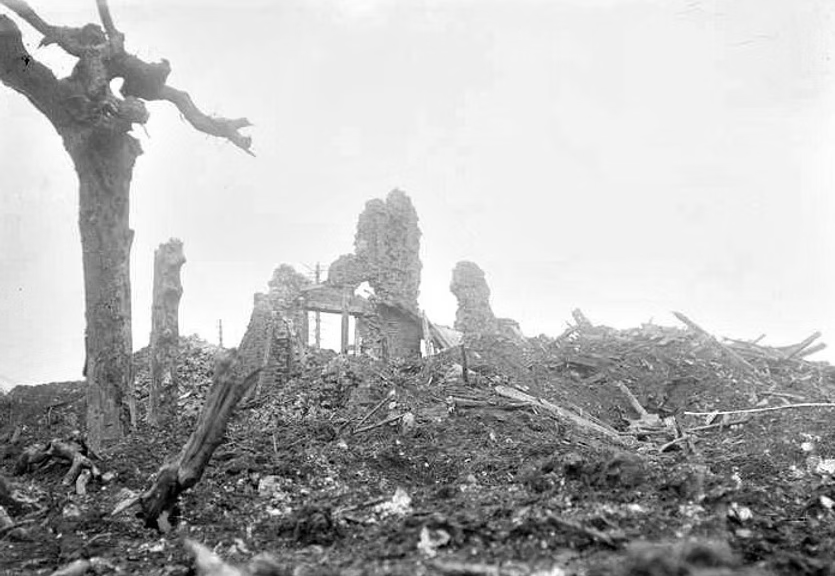
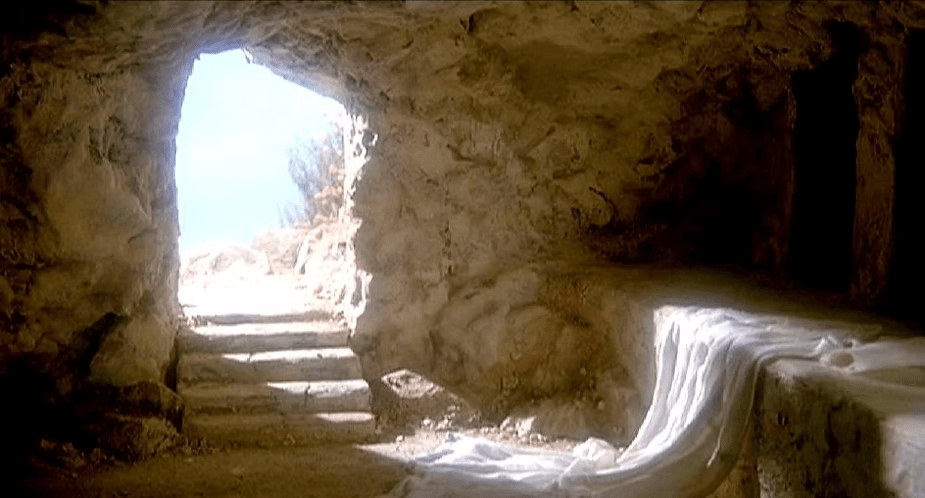
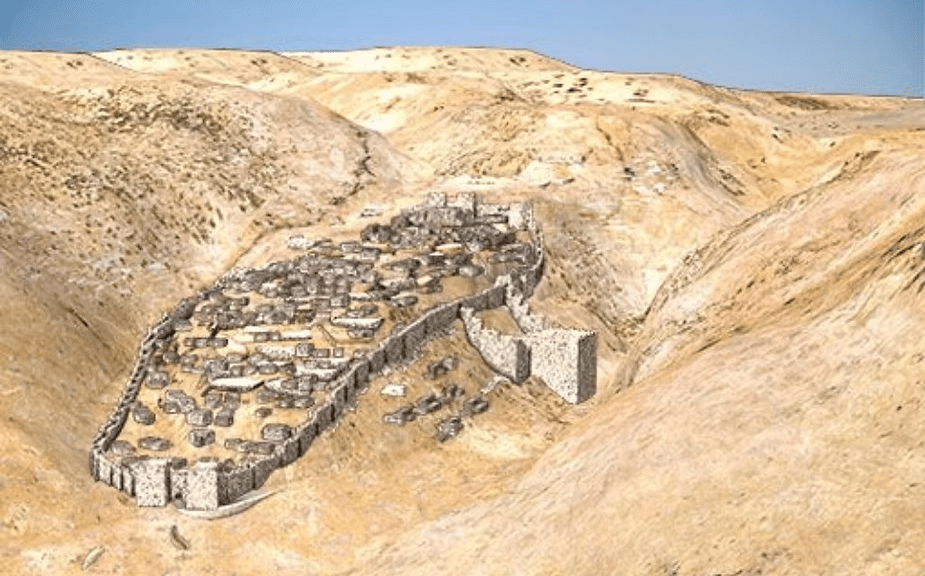
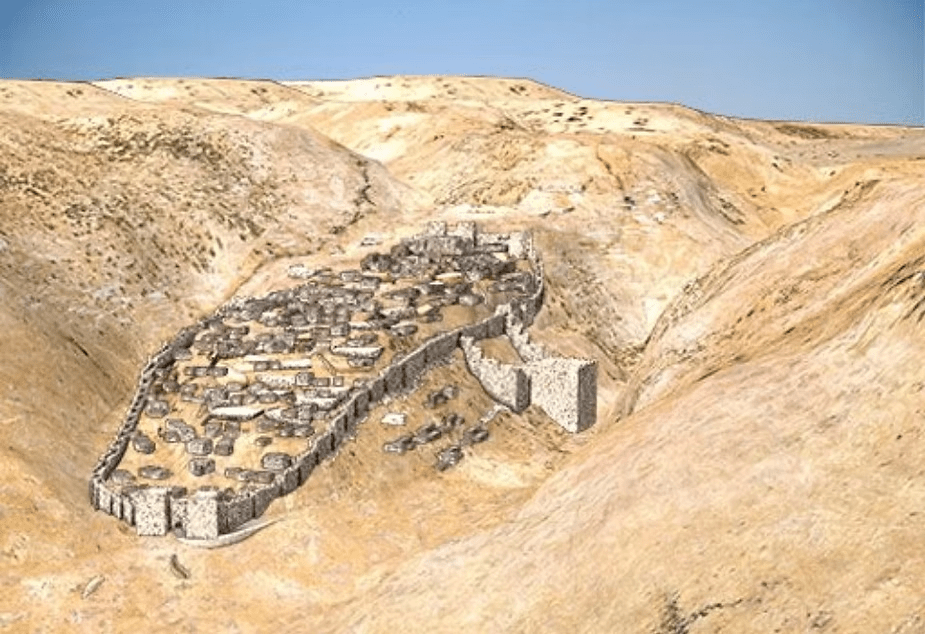












 Explaining the Readings