Category Archives: Psalms

Psalm 51:1-13 – David’s song admitting his sins, begging for forgiveness

1 Have mercy on me elohim, according to your loving-kindness; *

in your great compassion blot out my offenses.

2 Wash me through and through from my wickedness *

and cleanse me from my sin.

3 For I know my transgressions, *

and my sin is ever before me.

4 Against you only have I sinned *

and done what is evil in your sight.

5 [4] And so you are justified when you speak *

and upright in your judgment.

6 [5] Indeed, I have been wicked from my birth, *

a sinner from my mother’s womb.

7 [6] For behold, you look for truth deep within me, *

and will make me understand wisdom secretly.

8 [7] Purge me from my sin, and I shall be pure; *

wash me, and I shall be clean indeed.

9 [8] Make me hear of joy and gladness, *

that the body you have broken may rejoice.

10 [9] Hide your face from my sins *

and blot out all my iniquities.

11 [10] Create in me a clean heart elohim, *

and renew a right spirit within me.

12 [11] Cast me not away from your presence *

and take not your holy Spirit from me.

13 [12] Give me the joy of your saving help again *

and sustain me with your bountiful Spirit.

——————–

This is the Track 1 psalm that accompanies the 2 Samuel 11-12 reading about David’s sins and Nathan giving him Yahweh’s judgment against him. This song of lament was written by David specifically because of that event with Nathan, making it the perfect accompaniment. The pair of readings will precede a reading from Paul’s letter to the Ephesians, where he wrote, “We must no longer be children, tossed to and fro and blown about by every wind of doctrine, by people’s trickery, by their craftiness in deceitful scheming.” All will accompany the Gospel selection from John, where Jesus said, “I am the bread of life. Whoever comes to me will never be hungry, and whoever believes in me will never be thirsty.”

Verse one of this Psalm actually includes what the NRSV has separated and presented as the heading for this song. They identify Psalm 51 as “A Psalm of David, when the prophet Nathan came to him, after he had gone in to Bathsheba.” This is written into verse one, but omitted from that presented as verse one.

The Episcopal Church, in all it’s almighty David-being-equal self has changed the numbering of this song, although the words of the NRSV are maintained. Verse 4, according to the NRSV, is four lines, like verse one but the other verses all only have two lines. The Episcopal Church has looked down upon this as a glaring mistake, waved its holy wand and <poof & presto> they have added a nonexistent verse that happily [in their eyes] throws more confusion onto the Christian faithful, which they have no intention of ever addressing, much less explaining. You will note that I have amended the verse numbers to what they really are.

Also in my corrections above are two uses of “elohim” [there is a third in the verses not included in this reading] that have been erroneously translated as “O God.” The Hebrew word “elohim” is the plural form of “el,” clearly translating as “gods,” of which none of the translators recognize. They all take a word clearly written in the plural number and transform it into being a capitalized “God.” The name of the “God” David, Nathan, Bathsheba, and Uriah the Hittite worshipped was “Yahweh.” The use of “elohim” is important to see as the “elohim” are the angels and saints who are two as one with Yahweh, as His messengers to the world. David had been one of the “elohim,” but now his fall has endangered that state of being.
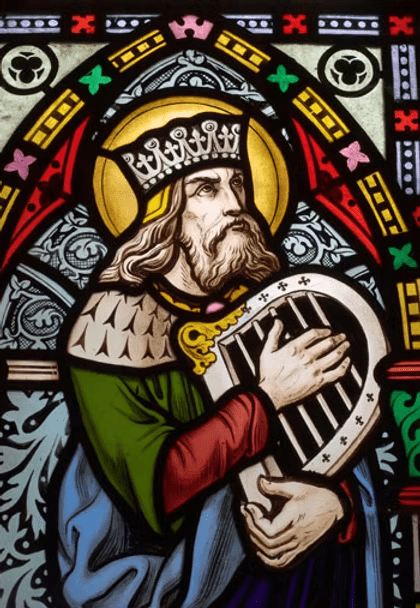
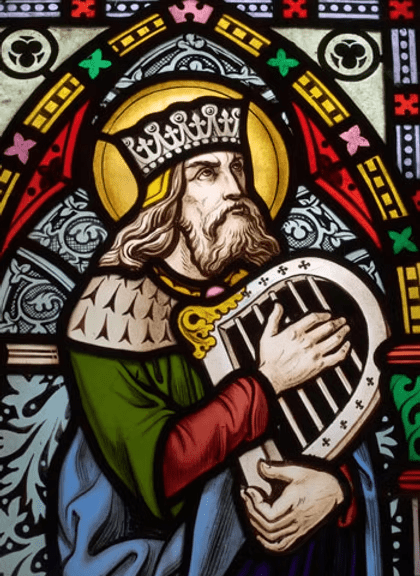
It should be realized that David was not just some talented songwriter. The lyrics of the Psalms were divinely inspired. This should be seen as an example of his soul still be married to Yahweh, after Yahweh poured out His Spirit upon David’s soul [after Samuel poured physical oil from a horn on his head]. That spiritual event would remain with David’s soul forever. David was allowed to fail in order to condemn the line of kings that would rule the land they coveted more than Yahweh. Thus, it was as an “elohim” that David wrote this song of lament, after Nathan had told him Yahweh’s judgment upon his human house, which had been disgraced.

It should also be understood that Yahweh does not inspire His elohim to write Scripture for simply telling historical facts and figures. Everything David did and was punished for is a reflection of everything sinful done ever since and to this day [and well beyond]. The reader of Scripture needs to see how Scripture is a finely tailored fit for the reader’s past, present, or future. Scripture is thus written for the benefit of warning others that what has happened once will happen again; no one is immune to the trappings of sin.

In the part of verse one that follows the introduction that has been omitted, three Hebrew words start, which are: “ḥān·nê·nî ’ĕ·lō·hîm kə·ḥas·de·ḵā”. These words make a statement in the first segment of words, saying “show favor upon me elohim according to your loving kindness.” This needs to be read as David requesting Yahweh show favor to his status as an elohim [a wife whose soul has forever merged with Yahweh’s Spirit], with that state of being said to be because of Yahweh’s “loving kindness.” The aspect of “love” is read into this translation because that elohim relationship was due to a marriage based on love and subjection.

That statement containing elohim is then followed by two more segments of words, which say, “according to multitude of your mercies” and “blot out my transgressions.” This says that not only has Yahweh created many elohim out of “kindness,” but He also has created states of forgiveness very many times, as all human souls face lives knowing sin before they become sincerely repentant and submit their souls to Yahweh for judgment. All who have married their souls with Yahweh’s Spirit, having become His elohim, have had all of their “transgressions blotted out” and erased. Verse one is David’s plea for forgiveness, which comes from admitting his sins, as made clear to him by Nathan about his dealings concerning Bathsheba.

Verse two then furthers this state of having sins blotted out, where the comparison is being “washed clean.” The NRSV translates this as, “Wash me through and through from my wickedness and cleanse me from my sin.” So many Christians hear about baptism by the Spirit [the anointing Yahweh personally poured out unto David’s soul] and then load up on trucks and drive down to the nearest Christian church and stand in line for a baptism by water. David is not expecting holy water to be poured over his head, because he had no concept of water doing anything more than washing filth off one’s body. This means verse two is David asking for a second helping of Yahweh’s divine Spirit to be the cleansing agent that restores his transgressed soul to elohim status.

In verse three, David confesses his sins. This is a required element of repentance. To remove a problem, one first has to admit one has a problem. David did that by stating [NRSV], “For I know my transgressions, and my sin is ever before me.” In that, to say “I know my transgressions,” the Hebrew word for “know” [“yada”] is more than a brain remembering how events of the past went down. Because David was an elohim and his soul was married to Yahweh, his “knowledge” came from the Mind of God [as a “Christ” or “Messiah” or “Anointed one”], so David totally “knew” his “transgressions,” because his soul had become immersed in his sinful acts. His actions became ever-present to his being, haunting his soul, as if the soul of Uriah had become his constant reminder surrounding him.

The first half of verse four states [NRSV], “Against you only have I sinned and done what is evil in your sight.” This says David had the legal right to do everything he did, as a king. Because Yahweh had instructed Samuel to set the framework for what having a human king meant for the Israelite people, David had broken none of those parameters. He had the free reign to rule as corruptly as would any other human king, like those who ruled over other nations. The marriage of David’s soul to Yahweh raised him to a level of responsibility that meant David’s soul was where Yahweh was the only King. As long as David lived righteously, as a good wife to Yahweh, then Yahweh ruled as King of Israel, with David along for the ride. However, when David began to act as that king, he cheated on his commitment to Yahweh; so, everything a human king ever does with unchecked power is “evil” in the eyes of Yahweh.

The second half of verse four [which the Episcopal Church calls verse five], says [NRSV], “And so you are justified when you speak and upright in your judgment.” This is David admitting he did everything he has been blamed by Yahweh for having done, saying Yahweh spoke justly in his judgment that David’s house will face ruin. Nathan told David that Yahweh had promised: “I will raise up trouble against you from within your own house” and “I will do this thing before all Israel, and before the sun.” That said David’s kingship would collapse publicly, as punishment for his sins. David agrees that spoken through Nathan was “justified” and “upright.”

It is this verse four that is what separates the souls of sinful Christians from the soul of sinful David. The lesson to be taught here is accept one’s punishment in the physical world, no matter how hard and bad it may be. David admitted he sinned and asked for Yahweh to wash clean his soul; and, if that meant destroying his kingship and everything surrounding him in the physical world, then let that be. It is far better to suffer for ten years until death and then have one’s soul released to eternal life, all debts of sins paid in full, than it is to beg God to forgive one’s sins and then beg to not lose everything one has sinned a lifetime amassing. Christians beg Yahweh for all kinds of luxuries in the material realm, when none have ever considered their soul’s need to marry Yahweh and become an elohim. In that way, they all play King of Self, subjecting God to being their lackey who needs to be forgiving, with perks.

In verse five, David wrote a truth that all human beings must realize. He sang [NRSV], “Indeed, I was born guilty, a sinner when my mother conceived me.” This fairly accurate translation is still in need of tweaking, because there is absolutely nothing anyone knows about David’s mother being the bearer of sinners into the world. A literal translation of the Hebrew makes this verse state: “behold in iniquity I was brought forth , and in sin , conceived me my mother.” This becomes the elohim of David singing, because when the Spirit poured out upon David’s soul, it surrounded him with the presence of the Father. That is different from “my mother,” where the masculinity of Yahweh and the femininity of the material world is what is being stated here, not maternal birth.

The “mother” that must be seen is the ‘goddess’ known as “Earth.” The world is the realm of the feminine essence, with “Mother Earth” also being one of Yahweh’s elohim. The feminine essence, being the opposite of the masculine Spiritual essence, makes the material realm ripe for offers that turn souls away from Yahweh and towards “mother” earth. This is the meaning of David saying, he looked [“behold!] and was lured into the world of “iniquity,” so he “was brought forth” into the feminine essence, away from the masculine. Once away from Yahweh, David “sinned.” Rather than being a product of union in the masculine – a soul merged with divine Spirit [an elohim] – David became “conceived” of “my mother,” not the Father. While the general statement of this verse says ALL HUMAN BEINGS are born of sin, being neuter souls implanted into feminine essence bodies of flesh, that becomes a crutch – an excuse for sins – which is easily overcome through divine marriage of a soul to Yahweh. It is, however, easier to not marry Yahweh than it is to make that commitment.

Verse six then sings [NRSV], “For behold, you look for truth deep within me, and will make me understand wisdom secretly.” In this, there is balance or symmetry that reflects on the “Behold in inequity” of verse five, now with “Behold truth” David was able to see, in a state of being that was the opposite of sins. Rather than reading “you look for truth deep within me, “”truth” is the Spirit that leads all elohim. The element “deep within me” comes from “ḇaṭ·ṭu·ḥō·wṯ,” which means “inward parts.” The “inward parts” of a human being is the “soul,” which can also be stated as one’s “heart.” That then leads to the literal stating, “and in the hidden wisdom you will make me to know.” This says Yahweh does no look for truth within, as much as David made it clear that truth is wisdom, which comes through the unseen element of one’s soul, through marriage to Yahweh.

Verse seven then sings [NRSV], “Purge me from my sin, and I shall be pure; wash me, and I shall be clean indeed.” In this, the NRSV has eliminated the presence of “hyssops,” which is an aromatic fragrance that adds a pleasing scent to that which is washed. This then leads to “wash me than the snow I shall be whiter than.” What David sang here says the stench of his sins needed to be purged with strong aromatic smells that mask the odors of sin that surrounded David. There was also a blackness of filth that surrounded his soul’s glow, which he wanted scoured until gleaming white. The symbolism is a soul married to Yahweh is fragrant and clean, not foul and dirty.

Verse eight then sings [NRSV], “Make me hear of joy and gladness, that the body you have broken may rejoice.” In the first part of this verse, the converse says David could not sense the sounds of happiness that came from those who surrounded him, because not only were they lamenting his plight, but so too was his own wails of sorrow drowning out everything else. When David wrote, “may rejoice the bones you have broken,” this is more than a plea for his body to stop aching, as much as “bones” [from “‘ă·ṣā·mō·wṯ”] is more a statement about “self,” or his “soul” no longer feeling the presence of Yahweh. David feels his “substance” has become “broken” away from Yahweh; and he longs to “rejoice” the mending of that break.

Verse nine then sings [NRSV], “Hide your face from my sins and blot out all my iniquities.” Whenever the Hebrew word “paneh” is written, the meaning of “face” must be seen as relative to the first Commandment, where one married to Yahweh promises to always wear only the “face of Yahweh before Him.” Thus, what David is saying here is he “hid the face of Yahweh” by wearing the “face” of self, which then led him to “sins.” Again, David’s soul makes a plea for the sins of the flesh to be removed from the soul, restoring the eternal union of an elohim.

Verse ten then returns to that concept of an elohim, as David sang [NRSV], “Create in me a clean heart elohim, and renew a right spirit within me.” Here, the literal translation says, “a heart clean create in me elohim , and a spirit steadfast , renew inward parts”. In that, the word translated as “heart” [“leb”] also means, “inner man, mind and will.” As “inner man,” this balances the use of “qereb” at the end, or “inward parts.” They are both the same, as a soul. Thus, David was pleading to be made “clean of soul,” where “ruach” is the “steadfast spirit” of Yahweh married to David’s soul, which will “renew” his “soul” by the return of Yahweh’s presence.

Verse eleven then sings [NRSV], “Cast me not away from your presence and take not your holy Spirit from me.” This repeats the word “ruach” [both uses as “wə·rū·aḥ” – “and spirit, breath, wind”], where the plea specifically asks Yahweh “not to cast away” David’s soul from the presence of Yahweh. One must see this as a cheating wife begging her Husband [who refuses to grant or demand a divorce] not to keep her around, while having nothing to do with her as punishment. The translation of “holy spirit” is misleading, as the Spirit of Yahweh can be nothing other than Yahweh, the epitome of holiness. The “spirit” is the same as in verse ten, which is more than a “soul” [a “breath of life” into a body of flesh], because the “Spirit” is the marriage of Yahweh to a soul. Thus, the condition of “sacredness” or “holiness” is that the “spirit” projects upon the “soul” of the wife. David is pleading that his status as an elohim not prevent him from continuing to do Yahweh’s work on earth.

Verse twelve then sings [NRSV], “Give me the joy of your saving help again and sustain me with your bountiful Spirit.” Here, the idea of doing Yahweh’s work is confirmed, as David pleaded, ‘restore to me the joy of your salvation,” where the true “joy” came from David leading all the Israelites to be saved. Again repeating the word “wə·rū·aḥ” [“and spirit”] for the third verse in a row, David is asking Yahweh to be generous to those who depend on David [as their king] to benefit from a leader that was divinely married to Yahweh and the conduit of His Spirit for the people.

It is important to realize this song of prayer for cleansing continues for seven more verses, none of which will ever be read aloud in an Episcopal church. The point made by these verses is David was led by the love of Yahweh to sincerely repent his wrongdoings in song, asking not for a return to the way things were, but to allow him to salvage some good in the remainder of his time on earth. One must realize that Yahweh led David to write this song for the many others after David who would also know the failure of their souls to wear the face of Yahweh and become His elohim through divine marriage.

As an accompanying song of lament that is clearly the choice to sing along with the sad story of Nathan’s words told to David, about Yahweh’s judgment against David, the lesson to be gained on the tenth Sunday after Pentecost, when one’s own personal ministry for Yahweh should be already well underway, is to see the warning placed upon one’s soul. David was righteous as a spiritual wife to Yahweh for over fifty years of his life, having been anointed when just a boy shepherd. David was allowed to turn away from Yahweh and fail miserably, in order to forever set a curse upon the lineage that would be the rulers of nations that claim assistance from Yahweh. This song of repent and lament has to be seen as one’s own, should one ever lie about being “in His name” or murder the pure and innocent, where Uriah is a projection of Jesus. It is very easy to let oneself fall into this web of deception and think punishment is unjust.

David was rewarded with eternal life, just as was Adam and Eve after breaking the laws; but the remainder of David’s life was anything but peaceful. There are so many ways that one’s physical body can become the punishment for past sins, where the test is to allow that sad state of existence, always praying to Yahweh for strength to stay the course of pain and suffering, so one can be released to eternal peace. So many false shepherds in Christianity today pander to the moans and groans of the few who cry the loudest, never giving any comfort to the ones who silently withstand pain and suffering, knowing the truth that this world is no longer worth sacrificing eternal peace for a moment of restitution. All priests who pander to social media and politics should resign their positions and begin a lifetime of self-flagellation, while begging Yahweh to forgive their selfish blindness.
Psalm 130 as a prayer for the bread of life as one’s Lord

1 Out of the depths have I called to you, Yahweh;

adonay, hear my voice; *

let your ears consider well the voice of my supplication.

2 If you, Yah[weh], were to note what is done amiss, *

adonay, who could stand?

3 For there is forgiveness with you; *

therefore you shall be feared.

4 I wait for Yahweh; my soul waits for him; *

in his word is my hope.

5 My soul waits for adonay,

more than watchmen for the morning, *

more than watchmen for the morning.

6 O Israel, wait for Yahweh, *

for with Yahweh there is mercy;

7 With him there is plenteous redemption, *

and he shall redeem Israel from all their sins.

——————–

I last posted a commentary about this Psalm on May 27th of 2021. It was the song of praise that accompanied the presentation of David’s Song of the Bow, after Saul died (along with Jonathan). The same breakdown of each of these seven verses applies now, when Absalom has likewise reached his peak of human achievement and fallen back down hard, can be found by searching this site. I will simply offer now a short adjustment to the accompanying readings for the Proper 14 reading selections.

As a Psalm that fits well with the Epistle reading from Paul’s letter to the true Christians of Ephesus, the chapter four verses about how one needs to transform oneself [a “self” always equates to a “soul”], away from cheating, towards commitment, away from lying, towards the truth, away from theft, towards giving, and away from violence, towards peace, the only way for one to make such drastic changes is to make Yahweh one’s salvation. The truth of the Hebrew word “adonay,” is it means “lords” [the plural number of “adon”]. The body of “self” has many “lords” that rule over it. They are everything that is external to one’s soul, including one’s body of flesh. The only way those “lords” that lead one to cheat, lie, steal, and hurt can be overcome is through marriage to Yahweh and the union of His Spirit with one’s soul.

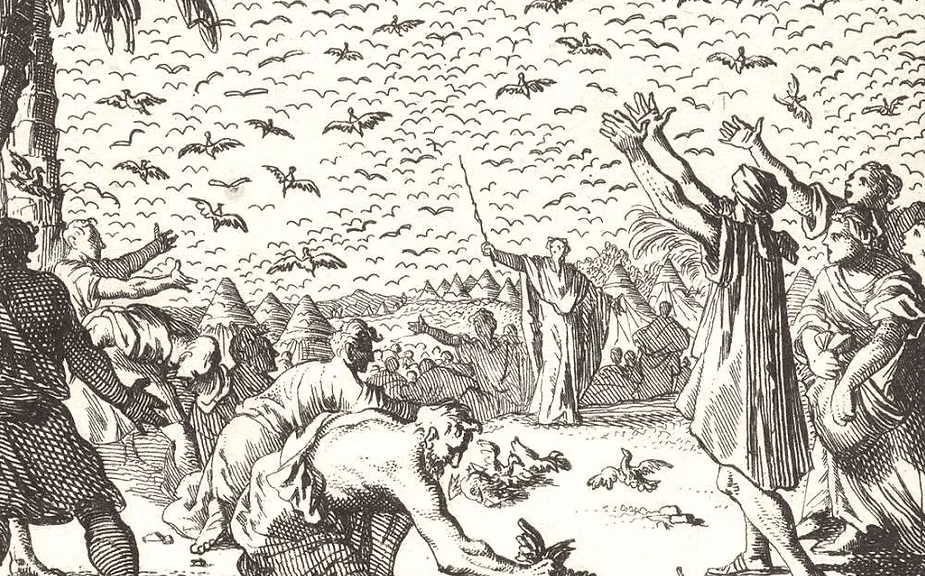
The Old Testament reading from First Kings [which has its own Psalm connected to it] speaks of the bread and water set by Elisha’s head, after he lay down and fell asleep. The metaphor of sleep is death. Elijah surrendered his soul to Yahweh, much in the same way David’s Psalm 130 sings of calling upon Yahweh for help. This Psalm is then like manna from heaven, as Yahweh strengthening David’s resolve to defeat his “lords” and gain forgiveness. Elijah, on the other hand, died of self and was fed the spiritual food of rebirth. Elijah would be reborn as the Son of Yahweh.

In the Gospel reading from John, Jesus is announcing he is the fulfillment of David’s prayer in song. He is the “lord” of the Jews; but he cannot be an external king that lords over them. For Jesus to become their “adonay” [one soul ruling many soul-body combos, each individually], they have to sacrifice their heads [self-egos] and die of self, to arise and eat the bred of life that will transform them into Jesus.

“and there at his head was a cake baked on hot stones”

As a song asking for the help of salvation, one a day when so many big brains hang suspended in the web of branches, born from their sinful pasts, the lesson so often sung in Psalm 130 is to marry Yahweh and stop sinning. A marriage to Yahweh takes one beyond the daily strength one helping of manna will bring. It brings the bread of life and the everlasting waters of an eternal presence with Yahweh as one’s wedding gift. Only by turning one’s back to the “lords” of sin can Yahweh bring the “Lord” of a soul into one’s being. The whole purpose of ministry is to become Jesus resurrected in the flesh, so others can know Yahweh offers them the same opportunity for salvation.

Psalm 34:1-8 – Being saved from fears

1 I will bless Yahweh at all times; *

his praise shall ever be in my mouth.

2 I will glory in Yahweh; *

let the humble hear and rejoice.

3 Proclaim with me the greatness of Yahweh; *

let us exalt his Name together.

4 I sought Yahweh, and he answered me *

and delivered me out of all my terror.

5 Look upon him and be radiant, *

and let not your faces be ashamed.

6 I called in my affliction and Yahweh heard me *

and saved me from all my troubles.

7 The angel of Yahweh encompasses those who fear him, *

and he will deliver them.

8 Taste and see that Yahweh is good; *

happy are they who trust in him!

——————–

This is the accompanying Psalm to the First Kings reading selection that tells of Elijah falling asleep under a broom tree [when “sleep” equates to “death”]. If Track 2 is chosen for Year B, then this pair will be read along with the Ephesians reading, where Paul wrote, “do not grieve the Holy Spirit of God, with which you were marked with a seal for the day of redemption.” All will join with the Gospel reading from John, where Jesus said, “I am the living bread that came down from heaven. Whoever eats of this bread will live forever; and the bread that I will give for the life of the world is my flesh.”

Today’s verses from Psalm 34 will present eight of the twenty-two that compose this song of praise. Next Sunday a second set of verses from Psalm 34 will be read. A Sunday later a third set will present every verse in this Psalm, with some parts read again on three other occasions; so, this is a Psalm that gets much attention.

One will note that I have taken the NRSV translations [others do the same] that call Yahweh by the generic name “Lord.” Please, feel free to call upon some generic Lord all you want. David specifically named Yahweh and the Jews who ‘assist’ Christians with translations that say “O Lord” have as close a relationship with some “Lord” as do the Christians who happily dance along behind people who barely believe in God, much less ever dare to say His name. David wrote a song of praise to the specific God named Yahweh; and, I have placed that name back into the translation.

Missing from the Episcopal Church’s presentation of verse 1 is the words that the NRSV has spliced out and turned into the ‘header’ of this son. Their translation states: “[A Psalm] Of David, when he feigned madness before Abimelech, so that he drove him out, and he went away.” According to my research into Abimelech, the popular opinion is the name is actually Ahimelech, who was the only priest with a name similar that David encountered. He was the high priest of Nob [a place near the border of Judah and Benjamin, close to Jerusalem], where the Tabernacle was kept during Saul’s reign.

When David was fleeing Saul, along with his devoted soldiers, David entered the Tabernacle in Nob and convinced Ahimelech that he was on a mission ordered by Saul, David convinced the high priest to give David five loaves of showbread [which routinely was only to be consumed by priests, but Ahimelech saw hunger and need the reason to give those loave away to David, to feed his troops]. This story would make the ‘title’ be less about David faking madness and transform it into saying, “David went beyond normal protocols by presenting the face of poor judgment to Ahimelech, who saw that face of David as a demon that he cast out of David, sending him away healed [with five loaves of showbread].”

In what David wrote in verse one [as the ‘introduction’], the Hebrew word “lip̄·nê” is rooted in “paneh” or “face.” Whenever “paneh” or “panim” is used in Hebrew Scripture, it needs to be read as the “face” one wears to the world, which is either the “face” of Yahweh [a righteous soul-body] or the “face” of a lesser god [like self]. When one sees how David showed his “face” to Ahimelech, he was fearful, due to Saul pursuing him, wanting to kill him.

While the Spirit of Yahweh had been poured out upon David’s soul, David was seeking some form of asylum within the lands of the Israelites; and, he entered the Tabernacle unjustly. David would have to find refuge in Gath, under Philistine protection; but fear of killing Saul drove him to the Tabernacle, which could be considered a form of madness. Either way, Ahimelech played a role for Yahweh, where the face of fear was removed from David, so David could continue to evade Saul, without worry about Saul being killed by David. This fortunate encounter should be seen as Yahweh’s blessing of David guiding him, beyond the loyalty of David’s body of flesh; and, that becomes the motivation for this song of praise.

Verse one [according to the translation read aloud] is then a statement that no other faces will be worn by David again. He will give Yahweh the praise of his body and voice by only wearing the face of God to lead others.

Verse two sings that the face David will wear will come from the marriage of his soul to Yahweh. Verse two sings the word “nap̄·šî,” which is rooted in “nephesh,” meaning “a soul, living being, life, self, person, desire, passion, appetite, emotion.” The NRSV translation seems to have translated this as “glory,” when in reality David said his “soul” would be “humbled” by having married Yahweh. This will lead to a sense of joy and gladness that comes from his soul, no longer afraid of anything.

The aspect of verse three that leads the NRSV to translate “Name” as a capitalized word [meaning the name of Yahweh], becomes affirmation of this spiritual marriage. The word written is “šə·mōw,” rooted in “shem,” which means “name.” David was singing that his soul would wear the face of Yahweh as His wife, completely in willing submission to the Will of Yahweh. A wife routinely takes on the “name” of her husband; and, David’s body of flesh was feminine to the masculinity of the Spirit. Here, one must see the absurdity of one taking on the “Name” of one’s Husband, and being to idiotic to call that Husband by His Name [instead wallowing around the bush, saying “Lord”].

Verse four is then where the ‘heading’ can be found to make sense, as it was the ‘madness’ or “judgment” that was led by “fear” that was driven out of David by Ahimelech. The translation by the NRSV that says, “I sought Yahweh, and he answered me and delivered me out of all my terror,” takes “mə·ḡū·rō·w·ṯay” and states it as “my terror.” The root word, “megurah” or “magur” means both “storehouse” and “fear.” As such, David’s body acted like a silo that filled up with fear, as that was the crop being harvested by Saul’s madness over the land. David sought the help of a high priest to be “delivered,” where “hiṣ·ṣî·lā·nî” [rooted in “natsal”] meant having the storehouse “stripped clear” or emptied. Thus, David’s fears were “cast out.”

Verse five is then the only verse in this sequence that does not directly name Yahweh. Instead, David speaks in the plural, as “their faces,” which “were not ashamed.” This speaks of Ahimelech and the other tabernacle priests at Nob, who were not shaken by the fears David brought into their presence. The face of Yahweh was worn by them all, as the “radiance” of Yahweh glowed as “their faces.”

Verse six is David’s confession that he was lacking the wealth of faith, as he proclaimed he was “a poor man [“‘ā·nî”] who cried out” from “troubles.” Yahweh heard his pleas, so He led David to the tabernacle in Nob.

In verse seven, David wrote that “the angel of Yahweh encamps all around those who fear Him.” This is the angel that is one with one’s soul, making that soul be elevated to an elohim. David had that angel within his being; but his fears had crippled that presence. Therefore, David was divinely led to enter a presence where the “radiance of Yahweh” could ease the fears and Ahimelech could cast out his demons.

Verse eight then speaks of Ahimelech “tasting” the fear that overwhelmed David, with David likewise “tasting the good” that was in Nob. Yahweh was with Ahimelech and also with David, so the fear was cast out of David and that place.

As a reading selection that accompanies the story of Elijah asking Yahweh to take his life, he too was afraid of Ahab, who had promised Elijah’s death, after he heard Elijah had killed four hundred fifty priests of Ba’al. While David found the angel of Yahweh in Ahimelech, Yahweh sent an angel of transition to Elijah, which made it impossible for Ahab to kill that which was already self-sacrificed to Yahweh. Elijah experienced the same casting out of fear while under the broom tree. Thus, the lesson here is to recognize fear cannot lead one to righteousness. One must be purged of fear, so the only fear that remains is the fear of Yahweh and losing eternity with His presence.

Psalm 111 – Being putty in Yahweh’s hands

1 Hallelujah!

I will give thanks to Yahweh with my whole heart, *

in the assembly of the upright, in the congregation.

2 Great are the deeds of Yahweh! *

they are studied by all who delight in them.

3 His work is full of majesty and splendor, *

and his righteousness endures forever.

4 He makes his marvelous works to be remembered; *

Yahweh is gracious and full of compassion.

5 He gives food to those who fear him; *

he is ever mindful of his covenant.

6 He has shown his people the power of his works *

in giving them the lands of the nations.

7 The works of his hands are faithfulness and justice; *

all his commandments are sure.

8 They stand fast for ever and ever, *

because they are done in truth and equity.

9 He sent redemption to his people;

he commanded his covenant forever; *

holy and awesome is his Name.

10 The fear of Yahweh is the beginning of wisdom; *

those who act accordingly have a good understanding;

his praise endures forever.

——————–

This is the accompanying Psalm for the Track 1 Old Testament reading from First Kings, which will be read aloud in unison or sung by a cantor on the twelfth Sunday after Pentecost [Proper 15], Year B, according to the lectionary for the Episcopal Church. The First Kings focus is on David’s death and Solomon rising to power, asking for and receiving the gift of wisdom. This will precede a selection from Ephesians, where Paul wrote, “do not be foolish, but understand what the will of the Lord is.” All will accompany the Gospel reading from John, where Jesus said, “the bread that I will give for the life of the world is my flesh.”

In the translation presented above, one will note where I restored mistranslations that say “Lord” with the proper “Yahweh” [ in bold type]. It is vital that each and every child of God learn His proper name and become comfortable speaking that name, rather than be trained to always think of God as some distant and separate entity that one recognizes as a great power, albeit one to great to ever come to know personally. By calling Yahweh a “Lord” one subjects oneself to an unknown power. The call for God’s chosen people is to marry their souls to their God and take on His name after that marriage. As one’s Holy Husband, a wife [regardless of human gender] calls her Husband by His proper name, such that speaking the name Yahweh says one is in a personal relationship with a known God – Yahweh.

To see just how hidden is the name of Yahweh in these English translations that are commonly read aloud in churches of Christianity, the first word in this translation is a word as recognizable as is “Lord” – “Hallelujah.” In reality, the Hebrew written is two words: “hal·lū yāh,” which have the roots “halal” and “yah,” saying “to shine Yah” – with “Yah” the “proper name of the God of Israel.” That says, “praise Yah,” where “Yah” is the short version of Yahweh. Thus, the word “Hallelujah” is praising a specific God, the one named Yahweh; but few Christians understand that.

When “Hallelujah” is understood to mean “give praise to Yahweh,” the following statement says “Hallelujah” is more than some fluff added without cause. To follow a specific statement of giving praise to Yahweh, David then wrote, “I give thanks to Yahweh with my whole heart.” This clearly has David telling all the children of Yahweh to give praise to their Holy Husband, just as David thanked Yahweh by surrendering his “whole soul” [“leb” means “inner man”] in marriage to Yahweh. It says David not only praised Yahweh, he thanked Yahweh for overwhelming his soul.

When verse one then adds, “in the assembly of the upright, in the congregation,” this says all who do the same as David are the true children of Yahweh, as all will be alike in their souls being married to Yahweh’s Spirit, so all live righteous lives [“the upright”] and all gather together as the “congregation” of Yahweh’s wives – Saints.

Here, it is important to realize how Jesus said the first most important commandment was “to love God with all one’s heart, all one’s mind, and with all one’s soul.” That confirms what David knew, as he also followed the Laws of Moses. All of Israel [a name that means “He Retains God”] must be married to Yahweh and all who retain Yahweh within their souls will praise and give thanks to that most holy union. The “assembly” [ not a “synagogue” but a “counsel” – from “sod”] is not Jewish and is not Christian. It is all whose souls have married Yahweh and submitted their souls to His Will. The proof of that marriage says one’s soul has become joined with the soul of Jesus, so that pair within one body of flesh [countless times over] means that flesh has been Anointed by Yahweh, thus is the rebirth of a Christ, as in the name of Jesus – which means “Yah Will Save.”

Verse two then states, “Great are the deeds of Yahweh!” This says the “works” of Yahweh are done by His wives, who are true Israelites, in whom Yahweh raises all to be “upright” and “righteous.” That is not simply some glow that one receives from marrying Yahweh, as if being the prettiest and the smartest is why Yahweh picked out some arm candy to show off to the world, like a lap dog that can do nothing but make a mess that needs to be cleaned daily. Righteousness means acting, which are the “works and deeds” of true faith.

When David then added, “they are studied by all who delight in them,” this says it is the acts of the righteous – those souls married to Yahweh’s Spirit – that brings in those lost sheep who want to also be able to act righteously. Those, of course, are the sinners who want to know “the Lord,” but never thought it was possible for lowlifes like themselves. Those need to be brought to desire marriage to Yahweh; and, they can only find the light shining on that path to redemption by those who possess the light of Christ in their souls. Their acts in the name of Yahweh is what brings others to “seek” [translated as “studied”] what their souls are missing.

Verse three then expands this concept of “deeds” and “works.” David sang, “His work is full of majesty and splendor, and his righteousness endures forever.” This says Yahweh is the one doing all the greatness of a soul’s actions. The four Gospels tell of the “works” and “deeds” of Jesus. Jesus performed miracles, which no one else could do. Jesus has been worshiped as a god, when Jesus routinely said he did the work of the Father, because he was in the Father and the Father was in him. Everything Jesus did was “Yahweh’s work,” done “full of majesty and splendor.” The promise of Jesus is, “You too can be redeemed and do greater works than I have done.” The meaning of the name “Jesus” is “Salvation,” which does not come by believing in Jesus, but by marrying “Yahweh.” Doing the “works” of Yahweh will bring one eternal life in the spiritual realm.

Verse four says “to be remembered” [from “zê·ḵer”], which the NRSV does not translate as such. This says it is most important to keep in mind that no human being is capable of doing any of the “works” or “deeds” of true “righteousness” – no miracles performed – without all honor and glory being given to Yahweh. Those are “his marvelous works” [“lə·nip̄·lə·’ō·ṯāw”] and all “gracious and compassionate” acts [as the miracles of curing are] are the acts of Yahweh alone. This is the truth behind the translation that says, “He makes his marvelous works to be remembered; Yahweh is gracious and full of compassion.”

Verse five then sings, “He gives food to those who fear him; he is ever mindful of his covenant.” In this, the Hebrew word “tereph” [from “ṭe·rep̄”] has been translated as “food,” when the full scope of meaning includes “prey” and “a leaf.” This should be seen as the treatment given to the sick and frail, who have become the “food” of predators, such that many illnesses [seen as from sins] are treated by medicinal concoctions based on the leaves of plants. The healings of Yahweh, through a saint, become the bread of life passed on by a medium, which are given to those who seek Yahweh through fear of having not pleased Him. These healings become transformative.

When one has been touched by Yahweh, through one who serves His Will as His ministers, the one who has then been fed spiritual food – the result of healing, as being “touched by an angel of Yahweh” – those will be “ever mindful” of the power of Yahweh [not the servant]. In that, the use of “ever mindful” [“yiz·kōrlə·‘ō·w·lām”] means the same as having become “upright.” The soul has become promised “everlasting life,” such as that promise takes over one’s body of flesh, leading it to always be lawful in one’s actions. Still, the “covenant” is less about remembering the laws of Moses, but understanding those laws are one’s marriage vows that join a soul to His Spirit. Being fed healing not only cleanses one’s soul of sins, but also writes the laws of the Covenant on the walls of one’s inner man [i.e.: soul].

Verse six then sings, “He has shown his people the power of his works in giving them the lands of the nations.” This says Yahweh’s proof is known through those whom He possesses divinely. This is not a nation of people, as the Jews mistakenly believe, because all the nations who thought that way failed miserably and turned to ruin. Yahweh shows His power through those whose souls have married His Spirit, giving birth to the power that is a Christ in human flesh. They are all Sons of man [regardless of human gender], who go in search of seekers of the truth. The element of “giving them the lands of the nations” means ministry throughout the world, in all nations. However, this is not an organizational pursuit, but individual [sent in pairs of pairs – individuals both married to Yahweh], as no religious industry can ever display the power of Yahweh.

Verse seven then sings, “The works of his hands are faithfulness and justice; all his commandments are sure.” Here, the key words of importance are “verity” [“emeth”] and “judgment” [“mishpat”], meaning “truth” is the power of all works and “judgment” is one’s own, based on the “faith” produced by the truth. Faith can never be the result of reading or hearing of good things, as that is only the first step towards belief. One’s soul judges what is true, based on personal experience. By testing the truth and finding “all his commandments are sure,” then one knows from having walked the walk that the truth is indeed true. It has been proved by “the works of His hands” in the hands of sinners redeemed.

Verse eight then sings, “They stand fast for ever and ever, because they are done in truth and equity,” which echoes how faith is found through personal experience. Words of promise are spoken by ministers sent into the world; all souls married to Yahweh [Saints]. The presence of Yahweh’s Spirit in their being, the uprightness in their acts, touches a seeker and this touch drives them to test the truth as such. The result of those acts of testing is the truth is found just and one seeking has found righteousness, through soul’s marriage to Yahweh. That divine spiritual marriage is what becomes eternal life.

Verse nine then sings, “He sent redemption to his people; he commanded his covenant forever; holy and awesome is his Name.” Whenever one hears David singing about “his name” [“šə·mōw”], this is a statement of marriage. A wife takes on the name of her husband. Likewise, a soul takes on the name of its Husband, Yahweh. The element of “redemption” [“pə·ḏūṯ”], where the true root word “peduth” means “ransom,” says a life of sin was headed towards utter failure, but then was saved. The use of “his name” means “Jesus” become appropriate upon redemption, as it means “Yah[weh] Will Save.” The marriage vows [“his covenant”] are forever, as the truth of “until death do we part” means death has been erased by the gift of eternal life. There will never be a parting, once a soul has united with Yahweh’s Spirit.

Verse ten then sings, “The fear of Yahweh is the beginning of wisdom; those who act accordingly have a good understanding; his praise endures forever.” It is in this verse that one can see a connection to the First Kings companionship that tells of Solomon being granted wisdom. Solomon broke the covenants by burning incense in the tabernacle, which says he did not fear the punishment of Yahweh. It was not a marriage of his soul to Yahweh that granted him wisdom. Solomon married a demonic spirit of the world, which granted him the powers of the tree of knowledge of good and evil – the spirit of the serpent. Where David’s words are translated as “good understanding” [from “sekel twob”], this is the fruit of the tree of life, where no knowledge of evil needs to cloud one’s mind. Only good comes from the fruit of the tree of life – the fruit that is Jesus – the bread of life. The food from the tree of life last forever, whereas the fruit of the tree of knowledge of good and evil banishes one from the eternal realm, condemning one to death and reincarnation.

As a companion song to that story of young Solomon falling prey to the lures of Satan, the lesson must be seen as Solomon was not a soul married to Yahweh, as his father David was. When the saying goes, “the apple doesn’t fall far from the tree,” Solomon was the fruit of a fallen David. Young David and young Solomon are night and day opposites. The lust for knowledge, where multiple college degrees allows one to earn higher salaries and become empowered over more and more people is the sin of selfishness. Solomon would belittle those who did not seek wisdom as their goddess. David sang out, “Praise Yahweh! I give thanks to Yahweh for His marrying my soul completely.”

Psalm 34:9-14 – Turning aside evil and only seeking good

9 Fear Yahweh, you that are his saints, *

for those who fear him lack nothing.

10 The young lions lack and suffer hunger, *

but those who seek Yahweh lack nothing that is good.

11 Come, children, and listen to me; *

I will teach you the fear of Yahweh.

12 Who among you loves life *

and desires long life to enjoy prosperity?

13 Keep your tongue from evil-speaking *

and your lips from lying words.

14 Turn from evil and do good; *

seek peace and pursue it.

——————–

This is the companion Psalm to the Track 2 Old Testament option from Proverbs, which is a song of praise to the goddess wisdom. If chosen, this will be read aloud in unison or sung by a cantor on the twelfth Sunday after Pentecost [Proper 15], Year B, according to the lectionary for the Episcopal Church. They will be partnered with the Ephesians reading that has Paul writing, “Do not get drunk with wine, for that is debauchery; but be filled with the Spirit.” All will accompany the Gospel reading from John, where Jesus said, “Those who eat my flesh and drink my blood abide in me, and I in them.”

Last Sunday the first eight verses of this song were read. Today the next six verses are sung. With these verses now being attached to Proverb 9, where Solomon had the audacity to praise the “woman of wisdom,” with the feminine stated repeatedly as “she” and “her,” it is most important to see how David expressly sang of Yahweh [not some generic Lord]. To make that point clear, I have reinstated the three uses of “Yahweh,” striping this song bare of “Lord.” Hopefully, one can see how Solomon’s lust for some goddess of wisdom [called by different specific names in different mythologies] would equate to such a generality, as generalities are all dead gods.

In verse nine is the Hebrew word “qə·ḏō·šāw,” from “qadosh,” which has been translated as “saints.” The word means “sacred, holy, or consecrated,” which is not a distinction of anyone who has not married their souls to Yahweh. Thus, David was saying that a “fear” of not having Yahweh in one’s life leads one’s soul to that marriage, thereby transforming one into a “saint,” or one who acts “holy.”

In the second half of verse nine, David sings that all souls who do marry Yahweh and become His saints will “lack nothing.” Here, the Hebrew word “maḥ·sō·wr” is written, rooted in “machzor,” where the translation of “lack nothing” is better stated as “need” or “poverty.” The intent says all needs will be met; and, one will never feel impoverished by the world temptations of things, which force human souls to fear death more than Yahweh. David meant the presence of Yahweh through marriage is a greater reward than all the unnecessary things the world offers, and Yahweh will provide a means for all needs.

When verse ten sings, “The young lions lack and suffer hunger,” this is metaphor for the drive to succeed that younger humans sell their souls for. The lusts for worldly goods has then overextending to the point of never having enough to suit their wants and desires. The use of “hunger” is metaphor for these lusts that lead to sin; and, this is not relative to physical needs for food. The deeper meaning of “hunger” is their souls “lack” spiritual food, because they are so involved in placing themselves above others, making self all-important.

The second half of verse ten then sings that those who “seek Yahweh” will find nothing lacking in their souls. When Yahweh is merges with one’s soul, within one’s flesh, then that presence brings joy and peace, which makes whatever one has be “good.”

Verse eleven then turns the focus on “children,” where the Hebrew written actually says “sons” [from “ḇā·nîm,” plural of “ben”]. For Israelites, education of one’s laws was home taught, with local rabbis or teachers assigned for basic intellectual development of children [sons more than daughters]. In that system of schooling, the Psalms of David were taught and learned. Thus, David is speaking to the “sons” of Israel, as their king, teaching them in son to fear Yahweh. To be taught to fear Yahweh was to be taught to sacrifice one’s soul for spiritual gains, so one does not act like a wild animal that preys on the weak.

Verse twelve then sings a question, asking “Who among you loves life and desires long life to enjoy prosperity?” In that, the first part makes a statement that focuses on “mankind” [“hā·’îš,” from “ish”] that asserts that being “alive” [“ḥay·yîm,” from “chay”] brings the flesh all the “pleasures” [“he·ḥā·p̄êṣ,” from “chaphets”] of the world. It is this “love of life” that makes one fear death. The question is then turned to the “days” [“yā·mîm,” the plural of “yom”], where the NRSV evades the question of life being most desirable in the light, when one feels more alive. The question then posed by David is: Why would one not desire the light of day to always surround one’s being, because the light of day makes all the good be easily seen?”

Verse thirteen then sings of the benefits of the light of truth, which is the eternal “day” that comes when one’s soul has married Yahweh and been promised eternal life after death. The translation that says, “Keep your tongue from evil-speaking and your lips from lying words,” those are the actions of darkness. Such words would rarely be spoken in the light of day, face-to-face with another. The light of day exposes the truth; so, the presence of Yahweh makes telling the truth a standard, based on a fear of losing the promise of eternal life in heaven, for one’s soul.

The last verse in this selection then sings, “Turn from evil and do good; seek peace and pursue it.”

It is in this verse that the concepts of “good and evil” are presented. This is relative to what young Solomon asked the voice in his dream to receive: the ability to determine good from evil. This becomes the paradox of two trees in the center of the garden that Yahweh told His children they could only eat the fruit of one. The tree of life is then the source of “completeness, soundness, welfare, and peace” [“shalom”]; and, that fruit is what one must “seek.” To “turn aside evil” means to receive the Spirit of Yahweh within one’s soul [the truth of the tree of life], so one will always only do good, with there being no need to know what “evil” is. To seek to know evil is to become evil, and thereby be cast out of the promise for eternal life.

As a Psalm chosen to partner with the Proverb that sings praises to the goddess of wisdom, where simple folk are mocked for not desiring to be wise [on a human level of being], the lesson to learn here is David taught the sons of Israel not to fear death, which is rooted in the young lions always being starved of spiritual food. This lesson then aptly applies to the Gospel reading in John, where Jesus said he was the bread of life. To eat that spiritual food – and become Jesus resurrected – means to fear Yahweh and turn aside evil ways. When ministry is the work that must be done to gain eternal life, one needs no big brain to figure out the best way to reach that goal. The smarter one thinks one is, the further away from the light of truth one strays.

Psalm 84 – Being a house of God

1 How dear to me is your dwelling, Yahweh of hosts! *

[2] My soul has a desire and longing for the courts of Yahweh;

my heart and my flesh rejoice in the living el.

2 [3] The sparrow has found her a house

and the swallow a nest where she may lay her young; *

by the side of your altars, Yahweh of hosts,

my King and welohay.

3 [4] Happy are they who dwell in your house! *

they will always be praising you. Selah

4 [5] Happy are the people whose strength is in you! *

whose hearts are set on the pilgrims’ way.

5 [6] Those who go through the desolate valley will find it a place of springs, *

for the early rains have covered it with pools of water.

6 [7] They will climb from height to height, *

and el-elohim will reveal himself in Zion.

7 [8] Yahweh elohim of hosts, hear my prayer; *

hearken, elohim of Jacob. Selah

8 [9] Behold our defender elohim; *

and look upon the face of your Anointed.

9 [10] For one day in your courts is better than a thousand in my own room, *

and to stand at the threshold of the house of elohay

than to dwell in the tents of the wicked.

10 [11] For the Yahweh elohim is both sun and shield; *

he will give grace and glory;

11 [11] No good thing will Yahweh withhold *

from those who walk with integrity.

12 Yahweh of hosts, *

happy are they who put their trust in you!

——————–

This is the accompanying Psalm for the Track I option from First Kings, which tells the story of Solomon’s dedication of his new temple. If chosen, that pair will be read aloud before the Epistle from Ephesians, where Paul wrote, “take up the whole armor of God, so that you may be able to withstand on that evil day, and having done everything, to stand firm.” All will precede the Gosple selection from John, where the disciples told Jesus, “This teaching is difficult; who can accept it?”

This is another Psalm identified as “of the Sons of Korah,” who were the descendants of the cousin of Moses, who staged a rebellion against Aaron and Moses. As punishment, Yahweh opened the earth and swallowed Korah, which indicates he was sent underground. His descendants [Kohahites] became the “porters” of the Tabernacle and Ark [they maintained the baking pans for meat-offerings]. We last read another of the Psalms dedicated to the Sons of Korah, when Psalm 48 was sung aloud on Proper 9 [sixth Sunday after Pentecost]. That song accompanied the Old Testament reading from Second Samuel, which told about David taking Jebus and building his city there. Because the Old Testament reading this Sunday is associated with also involved a change that is relative to the Tabernacle and Jerusalem [Jebus], this psalm must be viewed in that light and seen as a song of praise to Yahweh and to those who honor His holy ground.

In the translation presented above, I have amended the NRSV-Episcopal Church translation so that every place the translation had been “Lord,” it has now been restored to “Yahweh” [what was written]. In addition to those changes, every place where “God” has been translated, I have restored the Hebrew transliteration, with the singular “el” and the plural forms of “elohim” are found. This becomes important to realize, when one notices “of hosts” [from “ṣə·ḇā·’ō·wṯ” or “tsaba”] must be understood as the angels [minimally], which are “elohim” [“gods”]. Additionally, in two places the Hebrew word “Selah” is written at the end of a verse. Those had been erased in translation, seen as some musical instruction; but I have reinstated those also. Finally, the numbering of the Episcopal Church is wrong, for no understandable reason. Their numbering does not match that of the NRSV, meaning they have presented some paraphrase, as if they are holy enough to do that. I have noted the truth of the verse numbers; and, they will be how I address the analysis by verse.

In verse one, the literal translation says, “a song how beloved your tabernacle , Yahweh of hosts.” In that, the Hebrew word translated as “tabernacle” [from “mishkan”] can also translate as “dwelling place.” This alternate translation makes it clearer that David was speaking of the “beloved” presence of Yahweh within his soul, more than his seeing a tent and altar configuration as a site of beauty. This leads one to be more apt to see “Yahweh of hosts” in the light of David’s soul not being the only one married to Yahweh, because all of Israel under David felt the same inner presence. This use of “of hosts” then allows one to see such devotees as “elohim.”

Verse two then begins with this: “My soul has a desire and longing for the courts of Yahweh.” This is literally stated as, “longs and yes also faints for the courts of Yahweh.” In that, the word translating as “courts” [“lə·ḥaṣ·rō·wṯ,” from “chaster”] means “enclosure.” When one realizes that one’s “soul” can only “long and yes even faint” within the “enclosure” of its body of flesh, the use of “courts” becomes metaphor for the tabernacle of Yahweh being one’s body of flesh. The key is to see the presences of Yahweh, atop the Ark of the Covenant of marriage, as being within one’s heart [and “soul”], where love is the bond.

The second half of verse two then literally sings, “my heart and my flesh cry out for the living God.” Here, the Hebrew word “lib·bî” [from “leb”] translates as “heart,” which affirms the condition of love; but the same word also means “inner man, mind, will,” which are elements of a soul, more than the “flesh.” By then adding the word “flesh,” the outer and inner being is the result, such that “heart and soul” equate to “soul and body.” The use of “el” states the singular was indeed possible, making the writing of “elohim” become upheld as meaning “gods,” which are the divine creations of the “living God.” The focus on living says there are lesser “gods” that are dead, which means those gods only last in the physical realm, having no lasting effect on an eternal soul. The dead gods only serve a body through external delights, while Yahweh delights both the body and soul, the only God offering the promise of eternal life.

Verse three then starts by singing, “The sparrow has found her a house and the swallow a nest where she may lay her young.” The missing word that begins this verse is “even,” which makes this be a comparison to birds that are winged creatures. That makes the comparison to a soul suggest the soul has wings in comparison, which makes one become angelic. The focus on a “house” [“bayith”] and a “nest” [“qen”] is then the place built to provide self-security, from which new growth can come. This makes the body of the soul become a sanctuary, where one is then able to bring forth new life within one’s body of flesh, under the protection of Yahweh. This then reflects as the parable Jesus told, about the mustard seed growing into the mustard shrub, which becomes synonymous with Yahweh providing a home for such nesting angels.

When the conclusion of verse three sings, “by the side of your altars , Yahweh of hosts , my King and welohay,” the bird comparisons to a soul, in a home built within a bush that is Yahweh, the “altars” are then symbolic for self-sacrifice. The sanctuary that is a metaphoric tree, where trust in the protective branches that allows for a bird to lose all inhibitions about entering the tree or shrub. The “altars” [from “mizbeach”] reflect the sacrifice of self-presence, knowing rest and protection means a need for sacrificing individuality to advance one’s life. A shrub, such as the mustard plant provides, becomes the home of many birds, so there are multiple sacrifices within the same sanctuary. When we read “Yahweh of hosts,” the “hosts” are the many angels of God, such that the possessive “my” says one’s soul has submitted to Yahweh, becoming one of His angels, with Him as one’s King to whom a soul submits fully. The use of “welohay” sings of marriage, where each of the soul sacrifices have become married to Yahweh, so His name has been taken and a state of possession exists between His Spirit and one’s soul.

Verse four then sings, “Happy are they who dwell in your house! they will always be praising you. Selah” In this, the word translated as “happy” can equally mean “blessed.” By using “blessed,” the picture becomes more evident that the soul is that “blessed” and “happy.” When this then leads to “those who dwell in your house,” this again relates back to the “hosts” aspect of “elohim.” The “house” is not an external structure, such as a tabernacle or tent of meeting, but the body of flesh that is the “house” [temple] of the soul. This then says the state of “blessedness” and “happiness” is because Yahweh now resides within one’s body, having become one with one’s soul. Because this reflects the “blessed” event of permanent marriage [therefore salvation from past errors of life], the soul “will always be praising” the presence of Yahweh with one’s soul. As noted before, the first appearance of “Selah” comes at the end of this fourth verse, with “selah” meaning “to lift up, exalt.” As a musical direction, it follows the soul’s “praising always,” where the praise is because one’s soul has been “lifted up” to eternal life, from the imprisonment of a corporal body that offers only death.

As a way of continuing this theme of “uplifted praise,” verse five then repeats the first word that began verse four, as singing, “blessed is the man whose strength is in you ; on highway whose soul .” This continues to sing praises of thanks to Yahweh being one with one’s soul, as that union makes one a Son of man. A Son of man is an elohim, because Yahweh is one with one’s soul. In the Hebrew word for “man” written – “’ā·ḏām” – this has to be recognized as the name Christians believe Yahweh gave to His first priestly elohim. One who knows the presence of Yahweh becomes the resurrection of that Yahweh-made “man,” whose “strength” comes from having been made by the One God. The second half of this verse then sings praises to the ministry that comes on the “highway” [from “mesillah”] that is a pilgrim’s path of righteousness. Again, it is not the flesh that leads one on this path, but the “soul,” which has married Yahweh and become His elohim.

In verse six there is a vertical bar following the first word, which acts as a musical direction to pause [I assume], as a long note held, more than a separation from the words that follow. By seeing that marker, the literal translation becomes, “pass through ׀ the valley of weeping a fountain they make it ; moreover with pools , it envelops oneself the rain”. This translation shows a verse that reflects life without Yahweh having married one’s soul. It shows the true cause of self-sacrifice in marriage to His Spirit. The metaphor of a “valley” [from “emeq”] is an erosion of self-worth into despair, where “weeping” [the meaning of “bakah”] is the misery that leads one’s soul to seek Yahweh. Life is a soul “passing through” from one body of flesh to another, in a long series of reincarnations, each finding the deep rut that comes from refusing to marry Yahweh, life after life. It is the “pools” of hope [where the word translated as “pools” is “berakah,” meaning “blessings”] that leads one to pray for forgiveness sincerely, so one’s soul become immersed in the “rain” of Yahweh’s love.

Verse seven then follows by literally singing, “they walk from strength to efficiency , sees before elohim in Zion”. This says the presence of Yahweh within a soul is how it gains the ability to walk a path of righteousness, in a way that is regimented. The words “mê·ḥa·yil ’el-ḥā·yil” pulls in the word “chayil” twice, where the multiplicity of translation allows this to translate as “from strength to efficiency.” Still, the word also means “wealth, army,” where the walking becomes the training and exercises that are demanded to be successful. It is not the strength of self but the strength of many learning the same tactics from a central instructor. The second half of this verse then explains that source, as all the soldiers in this “army” are “seeing” how to “walk,” because they all wear the face of Yahweh as the “elohim” of “Zion.” The word “zion” can mean “dry place,” where the dampness of self-pity and weeping has been removed, so one relies on the deep pools of strength that is Yahweh’s presence. The pre-Israelite meaning of “zion” is “fortress,” meaning becoming an elohim puts a soul within the “fortress” of Yahweh.

Verse eight then begins with the confirmation of this face of Yahweh being that worn by His elohim, as it begins with “Yahweh elohim of hosts.” In that, the use of “hosts” can also have a military-like essence, as it is another word meaning “army,” as an “army of angels.” It is they who have asked Yahweh to marry them, as David sang, “hear my prayer.” That says they have accepted the proposal for marriage and submitted themselves before Yahweh, praying for forgiveness. The second half of the verse then sings, “listens the elohim of Jacob.” Here, it is important to realize that the elohim of Jacob was his elevation from a worldly name [a name that means “Supplanter”] to a divine name – Israel – a name meaning “He Retains God.” Those who “listen” to the commands of Yahweh do so because they have learned to follow orders and march to the instructions of Yahweh.

This verse is the second which ends with the word “Selah,” which means another point of being uplifted is recognized. Hearing the voice of Yahweh giving insight to action is then worthy of praise. One does not feel forced to do anything unwanted. One is amazed at the ease of the work, no matter how difficult, because one’s soul is assured of eternal life.

Verse nine then literally sings about “our shield,” where the “army” [“hosts”] of Yahweh’s elohim are together as one group, where Yahweh is their “shield” against all challengers and obstacles. Whereas the Greeks and Romans were known militarily for tactics, where phalanxes were formed by holding shields forward, along with spears protruding outward, it is similar how the Israelites [and true Christians] are “beheld as elohim.” In that, their personal “shield” of Yahweh gives them no fear in their hearts, regardless of how strong those they face seem. When David sang, “those who look upon the face of your anointed, the “face” [from “paneh”] worn by all Yahweh’s wives [servants] is His “face.” To be “anointed” [from “mə·šî·ḥe·ḵā” or “mashiach”], that says one’s soul has had Yahweh’s Spirit poured onto it, making all become His “messiahs.” This is a holy presence that will be recognized from one’s actions, in the name of God.

Verse ten then sings [NRSV], “For one day in your courts is better than a thousand in my own room, and to stand at the threshold of the house of elohay than to dwell in the tents of the wicked.” Again, the Hebrew word “chatser” is used, which alternatively means “enclosure.” The aspect of “a day” [“yō·wm”] means the light of truth has become eternal, such that one day of Yahweh’s presence is equal to “a thousand” years or physical time. While nothing is written that states “in my own room,” the words literally state, “I choose to be a doorkeeper in the house of my elohim,” such that “elohay” is a statement of possession, as Yahweh’s elohim. To be the doorkeeper becomes synonymous with Jesus saying, “I am the gate” to the sheepfold. The preference is to be the Son of Yahweh, rather than be outside His protection and forced by the world to sleep [metaphor for death] in the “tents of the wicked.”

Verse eleven then includes another bar denoting to hold a note, so it literally sings, “for the sun ׀ and shield Yahweh elohim grace and glory will give Yahweh , not will he withhold good from those who walk uprightly”. The note hold makes the light of truth, which is dwelling in the “sun” of Yahweh’s truth, become the light of truth that is the shield protecting all of Yahweh’s elohim. That, in turn, will have all of Yahweh’s elohim always give full credit to Yahweh for His saving their souls from oblivion. That credit will give all praise for salvation to Yahweh; and, He will never darken His light that shines the path of righteousness before His wives in marriage.

Verse twelve then simply sings, “Yahweh of hosts , blessed is the man who trusts in you.” Once more, Yahweh of hosts says Yahweh is the source of all elohim, which is the army of angels and divine servants in human flesh who serve Yahweh’s needs in the material plane. All who place their souls in the trust of their God will be rewarded with eternal life with Yahweh in heaven, after their mortal flesh has been destroyed.

As the accompanying Psalm that goes along with the First Kings story of Solomon dedicating his glorious Temple in Jerusalem, and his moving the Ark and the Covenant into that enclosure, no longer in a portable tabernacle, the paradox needs to be seen. David sang a song dedicated to the Sons of Korah, which were the spiritual descendants given the task of watching after the holy place [as themselves elohim]. The fact that Solomon constructed a building of stone, against the wishes of Yahweh, as told to David through Nathan, says Solomon was not an elohim. Solomon could not understand the divine language that said the “seed of David” would become a tabernacle of flesh, as a true elohim, in whom the truth of Yahweh would reside. This song of praise sings about the truth of commitment to Yahweh, as Solomon reflects the lie of self-worth. Solomon would lead generations of Israelites and Judeans into the valley of weeping, never again to feels the pools of hope presented by their God, much less be enveloped in the rain of His love.

As a Psalm that stands alone for public reading on the thirteenth Sunday after Pentecost, when one’s own personal ministry for Yahweh should already be well underway, the lesson here is devotion to Yahweh. Oneself [a self is always equal to a soul] must come to the realization that Yahweh does not stay in some distant house, as an external deity who watches down on mere humans from above. Yahweh lives within, and that life comes from a soul marrying Yahweh and feeling the eternal presence of His life in one’s being. One must know Yahweh, not believe in Him. Ministry can only be walking in His light of truth, so that others can be led away from the darkness of death that covers an unwed soul.

Psalm 34:15-22 – Being saved bones of Yahweh

15 The eyes of Yahweh are upon the righteous, *

and his ears are open to their cry.

16 The face of Yahweh is against those who do evil, *

to root out the remembrance of them from the earth.

17 The righteous cry, and Yahweh hears them *

and delivers them from all their troubles.

18 Yahweh is near to the brokenhearted *

and will save those whose spirits are crushed.

19 Many are the troubles of the righteous, *

but Yahweh will deliver him out of them all.

20 He will keep safe all his bones; *

not one of them shall be broken.

21 Evil shall slay the wicked, *

and those who hate the righteous will be punished.

22 Yahweh ransoms the life of his servants, *

and none will be punished who trust in him.

——————–

This is the accompanying Psalm for the Track 2 Old Testament reading from Joshua 24, when Joshua convened a meeting of the Israelites in Shechem, telling them the Tabernacle would become fixed at that location, therefore all Israelites were free to choose what gods or God they would serve. Joshua said his “house” would serve Yahweh and the others added their commitment to do the same, saying the true tabernacle of Yahweh is in the soul, within the flesh of the servant-wife. If chosen, this pair will be read before the Ephesians reading, where Paul wrote, “Pray in the Spirit at all times in every prayer and supplication. To that end keep alert and always persevere in supplication for all the saints.” All will accompany the Gospel reading from John, where Jesus asked his twelve apostles, “Do you also wish to go away?” and Peter responded, “Lord, to whom can we go? You have the words of eternal life. We have come to believe and know that you are the Holy One of God.”

This is the third Sunday in a row where Psalm 34 has been presented in sections. Today, verses 15 – 22 are sung openly. In the translation presented above, you will note that I have restored the proper name written, “Yahweh,” in the six places where the English translation has presented a generic “Lord.” David did not write songs that were inspired divinely by some generic “lord,” as a generic “lord” can be the same as a lust for wisdom that comes without a soul needing to marry Yahweh. Solomon sold his soul to Satan, refusing to submit his self-will to a “lord” that would not promise to serve him above all others. This Psalm has been attached to the Joshua reading because Joshua and the Israelites chose “Yahweh,” rather than some other “lord.”

In verse fifteen, the first half places focus on “the eyes of Yahweh are upon the righteous”. This can sound as if Yahweh is watching the righteous from heaven. That is the wrong way of reading these words, as they mean “the righteous” wear the face of Yahweh, because their souls have married Him. Therefore, “the righteous” are able to see with “the eyes of Yahweh.” It is impossible for any human being to truly be “righteous” without this presence within, guiding all actions, so having the ability to see the traps and lures of wickedness are part of one’s being.

When the second half of verse fifteen sings, “and his ears are open to their cry,” this again must be seen as from a perspective of Yahweh being joined with one’s soul. There is no physical presence of Yahweh, other than those who have joined with His Spirit. All prayers are heard by Yahweh, because the prayer aligns one’s soul to that union. The reality is Yahweh’s “ears” are those of the prayer’s source, which is not normally an audible prayer, as much as a thought. The conversation heard in one’s mind is then where the “ears of Yahweh” are found. When prayers are only “cries” [from “shavah,” meaning “cries for help”], one has been led to seek Yahweh because of sins, meaning one is not “righteous” or “just.” However, because the “eyes of Yahweh” are on the “righteous,” Yahweh will lead His ministers to those in need, by knowing who is seeking to become a bridesmaid to Him.

Verse sixteen then affirms this, by literally singing, “the face of Yahweh is set against evil.” This says all His priests and servants who are His brides and wear His “face” [“paneh”], so they become the antithesis of “evil.” Their presence on earth is to lead others away from “evil,” and to also wear “the face of Yahweh.” Thus, the second half of the verse sings the reason Yahweh sends out His priests, which is “to cut off from the earth the remembrance of them.” This states a forgiveness of sins. From a soul’s marriage to Yahweh all past sins in the material world will be forgotten, wiped clean.

Verse seventeen then repeats the second half of verse fifteen, singing an instruction for those who do evil, “cry out and Yahweh hears.” The assumption that it is the righteous who are “crying for help” is wrong, as those souls that have become in union with Yahweh’s Spirit no longer experience “troubles” and “distress.” While all His servants will attract evil to them, and evil acts will be turned against those who wear the “face of Yahweh,” they will not be making pleas to make it all go away. Therefore, David was singing about those who have offered prayers for help, who then receive that help in the form of the righteous. When they arrive, it then becomes time to receive Yahweh in marriage and have one’s “troubles” erased, through divine “deliverance” within one’s being.

When verse eighteen is shown to sing, “Yahweh is near to the brokenhearted and will save those whose spirits are crushed,” the implication is Yahweh desires to rescue the downtrodden. The problem with that view is it glories being downtrodden, and says little about the presence of Yahweh keeping that situation from reoccurring. The truth is the Hebrew uses words that divide “brokenhearted” into separate words that are joined together, as “lə·niš·bə·rê- lêḇ.” The language written literally says, “near Yahweh to those who have broken heart.” This says a soul ‘engaged’ to marry Yahweh has brought Him “near” [“qarob”], but not yet drawn the two together as one in divine union. The wedding does not take place until after a soul “has broken his or her inner self” from controlling their flesh. This makes “brokenhearted” not be a state of inner misery, but instead be a soul’s rejection of outer influences that tempt it away from Yahweh, making Him be distant [rather than near].

This then sings [in the second half of the verse] about “those who have a contrite spirit,” where that “crushed” [a NRSV translation of “contrite”] is the influences of sin. A renewed “spirit” of commitment has come, demonstrated by a desire to be one with Yahweh [not married to some “lord” of addiction]. The proof of one’s commitment then leads to the “salvation” [from “yasha”] or “deliverance” from death that is brought about by the sins of the flesh. It is deliverance from reincarnation [or worse], so eternal life for the soul is gained.

Verse nineteen then sings [NRSV], “Many are the troubles of the righteous, but Yahweh will deliver him out of them all.” This, again, is not a statement about the righteous after they have become so, with holy matrimony having taken place, between their souls and Yahweh’s Spirit. The meaning of “righteous” [from “tsaddiq”] are to be seen as “blameless, innocent, right and just.” Those are not “afflictions” [a better translation of “ra’,” not “troubles”], which come from doing “bad” and “evil” things” [the true translation of “ra’”]. The “many evils” is then the possible number of “lords” that can possess a body of flesh and lead it away from Yahweh. The meaning of “many evils” is then the strength one’s soul must display, which can only come from the truth of love and a deep desire to stop sinning and gain eternal life. To gain a “righteous” state of being, every other god must be turned away by one’s soul, knowing Yahweh is nearby. By displaying the courage of love in resisting evil, Yahweh will then be the hand that sweeps in and removes all temptations from having affect.

When verse twenty is shown to sing, “He will keep safe all his bones; not one of them shall be broken,” the word translated as “bones” needs to be understood. The Hebrew word “‘aṣ·mō·ṯāw” is written, as “his bones,” which pulls from the root word “etsem.” According to Strong’s, “etsem” means “bone, substance, self,” with Strong’s Exhaustive Concordance adding: “body, bone, life, selfsame, strength, very.” The figurative usage implies “the substance, i.e. (as pronoun) Selfsame.” When that meaning is seen, it becomes David prophesying the question that Yahweh would present to the prophet Ezekiel, “Mortal, can these bones live?” The answer to that question is now sung by David’s words as being, “Yahweh will keep safe all who are the selfsame as Yahweh.” That says Yahweh will preserve all souls who have become His “bones” on earth.

When the second half literally sings, “one of them not is broken,” the intent of “shabar” [“to break, break in pieces” – Strong’s] says no soul married to Yahweh will ever divorce Him and leave His protection. The word written that translates as “will keep safe” is “šō·mêr,” which means “he keeps, watches, preserves,” or “he guards.” There, the intent means Yahweh has absolute control once His Spirit possesses a soul [i.e.: a bone]. In this way, the soul of David never broke free of Yahweh when he sinned and ruined his legacy as king. David’s sin was really no different than the sins of Adam and wife [the woman we love to call Eve]. Those sins were necessary for Yahweh’s plan to progress; so, no bones were broken in the portrayal of those sins.

When verse twenty-one sings, “Evil shall slay the wicked, and those who hate the righteous will be punished,” the first half must be seen as stating how all breakage of souls [bones] comes from the lords of “evil” [“rā·‘āh,” from “ra’”]. Those “lords” lead souls to be slaves of their flesh, which then leads them into lives of “wickedness” [“rā·šā‘,” from “rasah,” meaning “wicked, criminal”]. Those souls will become “broken bones” because their “same selves” [a self should always be read as a soul] will have married Satan [the premier “Lord” that is not Yahweh]. Those sold souls will then be the ones “who hate the righteous,” and thereby persecute them. Those souls will receive the ultimate breakage from receiving “condemnation” [“ye’·šā·mū,” from “asham”] from Yahweh, upon their souls’ releases from their dead bodies of flesh.

The last verse in this song, number twenty-two, then sings, “redeems Yahweh the soul of his servants , and none shall be condemned , of those who trust him”. This sings the truth of redemption, from souls married to Yahweh having gained eternal life after death. The use of “servants” [from “ebed” – “a slave, servant”] means marriage to Yahweh does not bring a life of luxury, where doing nothing more than sitting in a pew and listening to orations of hot air by hired hands, is the chore of putting up with no sin in one’s life. A “servant” is a minister who goes into the world as an extension of Yahweh [His bones that live]. As David served Yahweh, so too did the Israelites under David serve Yahweh. Those who will find eternal life for their souls will be those who marry Yahweh and do His bidding, lovingly and willingly.

As the accompanying Psalm to the Old Testament reading from Joshua, where the focus is clearly on deciding to serve Yahweh or whatever gods your soul chooses, the lesson of this choice must be seen as wearing the face of Yahweh against those in the world, who number “many,” that are married to Satan and his worldly “lords.” No ministry can ever commence before one’s soul has made the commitment “to have and to hold” the presence of Yahweh “from this day forward,” forever. The death of the physical body does not end a relationship that is spiritual; and, the servants of Yahweh will lead other souls to that same commitment, rather than mislead others as agents of evil.

Psalm 45:1-2, 7-10 – A marriage made in heaven

1 My heart is stirring with a noble song;

let me recite what I have fashioned for the king; *

my tongue shall be the pen of a skilled writer.

2 You are the fairest of men; *

grace flows from your lips,

because elohim has blessed you forever.

7 [6] Your throne, elohim, endures for ever and ever, *

a scepter of righteousness is the scepter of your kingdom;

you love righteousness and hate iniquity.

8 [7] Therefore elohim eloheka, has anointed you *

with the oil of gladness above your fellows.

9 [8] All your garments are fragrant with myrrh, aloes, and cassia, *

and the music of strings from ivory palaces makes you glad.

10 [9] Kings’ daughters stand among the ladies of the court; *

on your right hand is the queen,

adorned with the gold of Ophir.

——————–

This is the accompanying Psalm to the Track 1 Old Testament selection from the Song of Solomon 2, which are selected verses that sing of ‘a bride’s adoration’ for her bridegroom. That song of marriage must be seen as why this Psalm’s verses were selected in accompaniment, to be read aloud in unison or sung by a cantor on the fourteenth Sunday after Pentecost [Proper 17], Year B, according to the lectionary for the Episcopal Church. If chosen, this pair will precede the Epistle from James, where was written, “You must understand this, my beloved: let everyone be quick to listen, slow to speak, slow to anger; for your anger does not produce God’s righteousness.” All will be read along with the Gospel selection from Mark, where Jesus said, “Listen to me, all of you, and understand: there is nothing outside a person that by going in can defile, but the things that come out are what defile.”

This Psalm actually begins, as verse 1, stating: “upon the flowers of the sons of Korah ; an instructive song [or didactic poem] , a song of love moving my heart to speak good , I recite my work as king ; my tongue styles recount ready .” The NRSV lists this as a heading, showing: “Ode for a Royal Wedding – To the leader: according to Lilies. Of the Korahites. A Maskil. A love song.” It then adds as verse 1: “My heart overflows with a goodly theme; I address my verses to the king; my tongue is like the pen of a ready scribe.”

Once again, it is important to realize this song of David is dedicated to the “flowers of the sons of Korah,” where some hypothesize the “flowers” might be “lilies.” Because the flower is the blossom of a fruit, one can see this “song of love” as focusing on the elohim of the Tabernacle, which was the symbol of Israel’s marriage to Yahweh [knowing “Israel” means “He Retains God”]. The history of Korah, as the cousin of Moses who led a rebellion for greater responsibilities in the Tabernacle and who Yahweh had the earth open up and swallow, says his “sons” [one of whom was Samuel] were the Yahweh elohim who judged the waywardness of the people, based on the vows of marriage. Therefore, this love song is announced to be on a much higher plane than simply singing about a man and a woman joining in wedlock.

In these selected verses, I ask that you take note of the three places when the NRSV translation into English has changed the plural Hebrew word “elohim” into the singular “God.” The word was used to direct the singer and listener to the need to be a soul married to Yahweh’s Spirit, where that becomes a union of the divine, where an extension of God on earth has manifest. Rather than be an angel, which may or may not be seen, an elohim of soul in the flesh yields a Saint, which is a human form with godly talents. It is this proposed creation that comes from a divine marriage that led David to sing, “My heart is stirring with a noble song,” or literally, “a song of love moving my heart to speak good , I recite my work as king.”

In verse two, David wrote [literally translated], “you are more beautiful than the sons of man , is poured out favor from your speech ; together with then has knelt you elohim always .” In this translation, which differs significantly from the NRSV paraphrase, the key Hebrew words to closely examine are “yā·p̄ə·yā·p̄î·ṯā” (from “yaphah”), “bə·śə·p̄ə·ṯō·w·ṯe·ḵā” (from “saphah”), and “bê·raḵ·ḵā” (from “barak”). In the order of presentation, the English translations from the root words are as such (all from Strong’s):

yaphah” – “to be fair or beautiful”

saphah” – “lip, speech, edge”

barak” – “to kneel, bless”

Seeing the scope of meaning that is viable to insert into a literal English translation, it is important to first of all see “sons of man” [“mib·bə·nê ’ā·ḏām”] as love that is directed towards the masculine, which then becomes the perspective of the feminine. As an accompanying psalm to the verses from the Song of Solomon that are clearly those spoken by a bride of her bridegroom, the same scenario fits here. However, the “beauty” or “fairness” of appearance must be seen not in physical terms, but in terms of promise. Yahweh is then the love focus of David, such that there can be no human [male or female, but male in particular as a “son of mankind”] that offers more promise in marriage than Yahweh.

The NRSV translation of “grace flows from your lips” that misses how “chen” can mean, “favor, grace, charm, or pleasures,” with “grace” making one lean more in the direction of refined speech, with “lips” drawing an image of a kiss. This takes on a seductive view that makes the aforementioned “beauty” be aligned with sexual appeal. When one sees how it is “favor” that makes the “beauty” greater than that offered by any man on earth [including kings], it is not so much because of having succulent “lips,” but the words spoken from the “speech” or voice of Yahweh. For David, such “love” talk would be the Torah, or the books of Moses.

From that realization that David would not be singing a love song about another man, knowing it was his love of Yahweh that drew his soul to the metaphorical altar, the last segment places focus on that step, where “kneeling” is a sign of submission. That becomes a statement about a soul’s marriage to Yahweh, so the Hebrew “‘al-kên” better translates as “together with then,” rather than what the NRSV portrays. Here, the use of elohim makes the statement that the marriage has not been human, but a divine elevation in spirit, one where an eternal bond has been created between Yahweh and His bride.

At this point, the Episcopal Church has changed the numbering of verses six through nine, portraying them as seven through ten. This does not match the NRSV numbering, although there are Hebrew sites that list a numbering that matches the Episcopal Church; but that system states verse one to be verse two, and the Episcopal Church shows verse one as verse one. Therefore, I have bracketed the actual verse numbers and placed them in bold text; and that will be my reference numbers now.

In verse six is another of the references to elohim. There, the literal translation says, “your seat of honor elohim always perpetuity ; staff of uprightness , scepter of your royal power .” Because translators of elohim have transformed it into “God,” rather than the reality [“gods”], the Hebrew word “kis·’ă·ḵā” (from “kisseh”) has been read as a “throne of God.” When elohim is read truthfully as a divine creation of Yahweh, from marriage to a soul in human flesh, there is no need to portray Yahweh as some mystical entity that requires a “throne” to rest on. It anything, Yahweh resides between the Cherubim [elohim] atop the Ark [which is not a “throne”]. This makes “seat of honor” be a better choice in translation, when David is singing about the honor that comes from having Yahweh within his soul [the true “throne”]. It is taken for granted that Yahweh is “always perpetuity” (eternal), but the “seat of honor” comes from a soul born into dead flesh having received that promise of eternal life.

In the two subsequent segments of words, the Hebrew word “šê·ḇeṭ” (from “shebet”) means “rod, staff, club, scepter, tribe.” Because there are multiple translations possible, there is no need to repeat the same translation. Thus, the middle segment places focus on the ability to stand upright or be righteous, which is only possible in human beings [Yahweh is Yahweh]. With there no need for Yahweh to possess a “scepter” to prove His “uprightness,” the usage then best applies as a description of the tool given by Yahweh to a human being, enabling him or her to be righteous. That tool is best described as a “staff,” like that given to Moses, or as a “rod” or “staff” utilized by shepherds. The translation as “scepter” best fits in the last segment, where David has honored Yahweh as his King, where a “scepter of royal power” becomes that admission.

Verse seven then presents the reader with the back-to-back combo that says, “elohim eloheka.” This is important to grasp, as verse seven ventures into the realm of the “wickedness” (“re·ša‘,” from “rasha”). The importance of this says David realized that demonically possessed souls were likewise elohim, as they too were led by a spiritual (thus eternal higher power) entity that had them do bad and evil deeds. That makes “elohim eloheka” become a statement that marriage to Yahweh created elohim that were “your gods,” where the modification to include “your” acts as a possessive case; and, this is a statement of divine Spiritual possession that prevents acts of “wickedness.”

The literal English translation of verse seven then sings, “you love righteousness and hate wickedness together with then you have anointed elohim [that are] eloheka [“your gods”] with the oil of rejoicing more than your companions .” Here, again, is the focus on “love” [“’ā·haḇ·tā,” from “aheb”], which is the whole reason a marriage takes place. Those who Yahweh takes as His brides (souls in human flesh) then have the ability to act righteously, as opposed to sinful. All past sins are forgiven, with no future acts of sin possible, because Yahweh “hates wickedness.”

That becomes a huge statement that tells all the sinners today (those promised the moon by sinful false shepherds [i.e.:” Jesus loves homosexuals,” for one example]), two things: First, it says sinful acts that cannot be controlled by a soul are due to demonic possession, as Yahweh’s presence removes all such inabilities to refrain from sins; and, Second, it says Yahweh’s hatred of sin prevents Him from ever marrying a soul that serves self and does not seek to change to attract Yahweh in marriage.

Again, as was seen in verse two, the words “‘al-kên” are presented, which should be translated as “together with then,” as a sign of marriage. This combination of words is written three times in this love song, but the third is in the last verse (seventeen), which is not part of this reading selection. This statement of union, based on the “love” shared between a soul and Yahweh, is what creates a righteous state in an elohim that is Yahweh’s elohim, not a demon-possessed elohim. David then used the metaphor of oil being poured to anoint a couple in marriage, where the “oil of anointment” is Yahweh’s Spirit that brings about that state of “righteousness.” That is the addition (“more”) that comes upon Yahweh’s marriage “companion” [“mê·ḥă·ḇê·re·ḵā,” from “chaber”].

Verse eight then literally translates into English as, “with myrrh and aromatic tree oils [aloes] , cinnamon all your robes , from the temples ivory harp has made you rejoice .” Following a verse that sings of anointment, David then specifically named pleasing scents, which were “aloes,” or oils from aromatic trees, used in the making of perfumes. The use of “cassia” [“qə·ṣî·‘ō·wṯ,” from “qetsiah”] means the powered bark of a cinnamon tree, which was used in Egypt in embalming fluids. When the use of “ivory strings” [“n min·nî”] is seen as a harp made of ivory, the combination of all these named scents and sounds have the air of being imported, thus of great expense. The “rejoicing” from the music can then be seen as the wedding celebration, after a couple has been married, where that one-time event spares no expense. Still, the hint of embalmment offers a celebration of death, where the ways of the past have been buried, with the celebration being the promise of the future. It says the stench of sin has been replaced with the sweet fragrance of righteousness.

Verse nine then literally translates into English as saying, “daughters kings among your highly valued women ; stands the consort at your right hand , in gold from Ophir .” While the combination of “daughters, women, and consorts [or queens]” gives this verse some sense of Yahweh being a ‘lady’s man,’ the reality is all souls in human flesh take on the femininity of being earthbound, therefore all human beings are of female essence. This is how David was a bride of Yahweh, in the same was as was Moses, Abram, Samuel, et al. To bring a soul to marriage with Yahweh and receive His Spirit within one’s being, that whole point of penetration is the point of a marriage: a man [masculine] enters his wife [feminine]. The male projects and the female receives. Thus, David was a “king” who was a “daughter” soul that married Yahweh, becoming a “highly valued woman” [“bə·yiq·qə·rō·w·ṯe·ḵā,” from “yaqar”] over the Israelites, in the sense that one whose soul has married Yahweh becomes “precious, rare, splendid, weighty” among the common folk.

When the middle segment places focus on the “queen at His right hand” [“šê·ḡal lî·mî·nə·ḵā”], this paints a picture of Jesus in heaven at God’s right hand. David had Yahweh within him, in the same way that Jesus was born with Yahweh within his soul-flesh, so both represented the “right hand” of Yahweh extended into the earth plane. Again, the feminine gender, as a “consort” or a “queen” is a statement of human essence being in the feminine gender, with an empowerment [as a queen] coming from a royal wedding that is meant to lead others, not do nothing. The “gold from Ophir” is then another statement of an import of valuable resources that are not naturally found within. The presence of Yahweh’s Spirit is then stated in metaphor as being more valuable than “gold.”

In this accompanying Psalm to the love song found in the Song of Solomon, chapter two, the connection of both comes from seeing the divine level of union, which is a soul’s marriage to Yahweh, not the common marriage of a man and a woman. When chosen to be read or sung aloud on the fourteenth Sunday after Pentecost, when one’s own personal ministry for Yahweh should already be well underway, the lesson is to stop seeing human gender as anything relative to a soul.

A soul has no gender, because it is eternal and has no need nor any capability to regenerate. A soul does need to submit itself to Yahweh in marriage to be cleansed of past sins and be returned forever to the eternal realm after the flesh dies away. Human beings become so distracted by the day-to-day actions of material life that they refuse to accept that material life is an illusion, because all matter is dead. Matter can only sustain a soul for a limited amount of time. Accepting that before one’s flesh begins to show signs of aging and wear, making death become a closer reality, means a soul-flesh entity can have time to serve Yahweh as His instrument on earth. After all, one’s soul is not so important that it must be forced into marriage by Yahweh, in order to save it from reincarnation [or worse]. That importance is self-ego, which blocks a soul from divine marriage. It is the other lost souls who have importance, making a soul saved become the saint used by Yahweh to serve those needs.

Psalm 15 – Being at home in the tent of Yahweh

1 Yahweh, who may dwell in your tabernacle? *

who may abide upon your holy hill?

2 Whoever leads a blameless life and does what is right, *

who speaks the truth from his heart.

3 There is no guile upon his tongue;

he does no evil to his friend; *

he does not heap contempt upon his neighbor.

4 In his sight the wicked is rejected, *

but he honors those who fear Yahweh.

5 [4] He has sworn to do no wrong *

and does not take back his word.

6 [5] He does not give his money in hope of gain, *

nor does he take a bribe against the innocent.

7 [5] Whoever does these things *

shall never be overthrown.

——————–

This is the accompanying Psalm for the Track 2 Old Testament reading option, from Deuteronomy, where Moses spoke to the Israelites about forever retaining Yahweh, so they can always obey the Commandments. If that set is chosen, they will be read before the Epistle selection from James, where he wrote, “For if any are hearers of the word and not doers, they are like those who look at themselves in a mirror; for they look at themselves and, on going away, immediately forget what they were like.” All will accompany the Gospel reading from Mark, where Jesus said, “For it is from within, from the human heart, that evil intentions come: fornication, theft, murder, adultery, avarice, wickedness, deceit, licentiousness, envy, slander, pride, folly. All these evil things come from within, and they defile a person.”

In the presentation above, it should be noted that I have restored “Yahweh” to the two places where the NRSV has made the common error of generalizing the proper name of the God of Israel, as “Lord.” In addition, it must be realized that this Psalm is only five verses, not seven. The NRSV shows five verses, but the Episcopal Church has modified this for some unknown reason. I have bracketed and listed in bold type the actually verse numbering. I will refer to the actual verse numbers in this analysis.

The literal English translation of verse one is this: “Yahweh who may sojourn in your tabernacle ? who may dwell , in hill of your sacredness ?

To understand this verse, one must have a firm grasp on the meaning of “bə·’ā·ho·le·ḵā,” which is rooted in “ohel,” meaning “a tent.” Because the first word addresses “Yahweh,” the proper name of the God of Israel, it has to be accepted that Yahweh rested atop the Ark, which was within the Tabernacle, which was an elaborate “tent” that surrounded that holy presence. From that realization, the Hebrew word “yā·ḡūr” is written, which stems from “guwr,” meaning “sojourn.” Strong’s Exhaustive Concordance expands this usage as “abide, assemble, be afraid, dwell, fear, gather together, inhabitant, remain.” I see “sojourn” as a reflection of the reason the Tabernacle was designed to be taken down, moved as needed, and reassembled, so it always went where the Israelites went. This mobility is best reflected in “sojourn,” still the movement allowed that “tent” to be where the people “dwelled.”

The questions asked are two: “who may sojourn?” and then “who may dwell?” In those is stated there is no certainty that all “may” enter that “tent.” The subjunctive assumes a condition that must be met first. The second question then centers on the subjunctive, “mî-yiš·kōn” (rooted in “shaken”), where the root means “to settle down, abide, dwell.” Again, the conditional is surrounding the essence of “living,” where “living” means “motion” and “rest.” The seemingly automatic answer to both would be: the Levites. It was they who were the ones allowed within the “tent,” with the High Priest also of that lineage. Still, that is not the intent of David’s song.

Verse two then answers the questions of verse one. It literally translates into English to state: “he who walks uprightly and acts righteously ; and speaks the truth in his soul .” When the first question of verse one is seen to ask about a “sojourn” or “temporary stay,” meaning after a major portion of life has passed, the aspect of “walking uprightly” fits this translation. The Hebrew word written, rooted in “tamin,” says the answer is “he who is complete or sound.” Thus, to enter Yahweh’s “tent” covering, one has to have been made clean of anything incomplete or unsound. This completeness is then equated to “righteousness” [“ṣe·ḏeq,” from “tsedeq”]. The final segment of words then sings about the “truth” [from “emeth”], which comes from the “heart” [“lebab”], meaning the “inner man” or “soul.” When the “soul” is seen as the point of truth’s origin, this is not a soul alone coming to an understanding of what is true or false. The “truth” can only come from Yahweh.

Verse three then literally translates into English as, “not does he slander with his tongue ,
not does he do evil to his fellow ; and a disgrace , not does he take up against those near .” In this, the first key word in Hebrew to examine is “rā·ḡal” (“ragal”). According to Strong’s, this word means “to go about on foot,” with the NASB informing us that the word has been used in Scripture twenty-six times, with the most times (20 total) being translated as “spies” or “spy;” but other translations used have been “slander, slandered, spied, taught to walk.” This means “to go about on foot” brings the connotation of being a gossip, where one is seen as part of the background, so others act naturally around one; but that witnessed is then talked about in a negative light. Obviously, this verse is now explaining the difference between the “truth” coming from one’s “heart” (“soul”) and that which does not come forth for the betterment of others. This now, instead, comes from a brain in a body of flesh that is controlled by a negative presence within. This is not what comes from the mouth of a soul married to Yahweh in the flesh, who is “righteous.”

In the next segment of words, the “not” (“lo-“) is repeated, where the key word now becomes “lə·rê·‘ê·hū,” rooted in “rea,” meaning “friend, companion, fellow.” Here, other uses found also translate as “another, lover, neighbor, and opponent.” From “rā·‘āh” (“ra’”) bringing “bad, evil” into the focus, the expansion moves from “not slandering with one’s speech” to “not making friends, foes, companions, lovers, or neighbors evil.” The operative word now is “‘ā·śāh,” which means “do [or] make.” This is a statement that one’s actions come forth as deeds, like words come forth from speech. A righteous person will neither say or do that which is “evil” or “bad” towards another, but the righteous also will not make another act or react in evil ways. While being righteous can elicit evil to come forth from others, in their own sinful acts of persecution, the righteous never make evil, because speaking the “truth” and acting “righteous” can only make others see the light of properly how to be.

Following a mark of separation, taking one’s focus from what a righteous person does not say or do, David wrote one word that was to be separate from the rest. That Hebrew word is “wə·ḥer·pāh,” from “cherpah,” meaning “a reproach,” while allowing that to also imply “contempt, disgrace, scorn, shame, and taunting.” (NASB Translations) This single word, set apart from the rest, must be seen as a summation of those who are not righteous and not filled with the truth of Yahweh. The summation of those souls is a “disgrace” to Yahweh, which is a soul that has turned away from Yahweh from “shame.”

In the final segment of words in verse three, the key word to contemplate is “nā·śā” (“nasa”), which means “to lift, carry, take,” with the implication being “accept, arise, forgive, exalt, spare, or take” [plus many other uses shown by the NASB]. This has been translated by the NRSV as “take back,” in “take back his word.” That misses the point of this series of segments. Here, the negative (“not”) places focus on one who is sinful and cannot “raise” others from their evil ways. This means a positive sign of one who is “righteous” is he or she does will uplift those near to them. That elevation comes by speaking the truth and demonstrating how the righteous act. In that way they pass on the desire to be like them, which opens their hearts to receiving the Spirit of Yahweh.

Verse four then translates into English literally to say, “is despised in whose eyes is a vile person , but those who fear Yahweh he honors ; he swears to his own evil , and not does change .” This furthers the view of one who does not marry his or her soul to Yahweh, as a sinner. Because humans love the saying, “Beauty is in the eye of the beholder,” the use of “eyes” (“bə·‘ê·nāw,” from “ayin”) should not be seen as physical “eyes,” but “in whose eyes” is Yahweh. The “eyes” are what highlights one’s face, so when one is not wearing the face of Yahweh [the First Commandment], then one is wearing the “eyes” of one who is “a vile person.” In that, the Hebrew word written, “nim·’ās,” from “ma’ac,” actually means “reject.” This is not description of a “reject” from a mold, but a statement that the reason one does not wear the “eyes” of Yahweh is because that soul “rejected” His face, refusing to marry one’s soul to His Spirit.

In the second segment of words another Commandment is stated, where those of faith “fear only Yahweh.” This comes when one’s soul is married to His Spirit; and, then the only “fear” is losing that relationship. This then says “he honors” those who wear His face in the presence of physical life that is “heavy, weighty, or burdensome,” the true meaning of “yə·ḵab·bêḏ” (from “kabed”). That fearlessness comes from the presence of Yahweh, as an “honor” shared by the faithful with Yahweh.

In the third segment of words, the Hebrew word “niš·ba” is written, which means “to swear.” This must be seen as a statement of one’s admission of past sins, coming at the altar of divine marriage, when a soul “curses” its past existence without Yahweh, while agreeing to the Covenant of marriage set by Yahweh, sent down by Moses. In this way one admits “to his own evil,” and begs for forgiveness, while bowing one’s face to the ground, submitting self-ego to wear the face of Yahweh. Still, this segment of words cuts two ways, as those who do not so submit to Yahweh will then “curse” their own soul, having instead married “his own evil.”

The final segment alludes to this failure to submit to Yahweh, where the sign of an evil human being is it becomes addicted to doing bad deeds and will never “change.” The twist in this segment that must also be seen, it the Hebrew written – “wə·lō yā·mir” – says, “and not does change.” This means the indication of “does change” for the good, when one chooses “not” to serve Satan. Both ways are marked in this segment, so the Word of Yahweh tells the whole “truth,” in unseen ways.

Verse five then literally translates into English as saying, “his money he does not pay in interest as a bribe against the innocent , not does he take he who does these ; not shall be shaken forever .” The first segment of words says no value can be placed on sins, such that it is impossible to do as the Roman Catholic Church once offered – indulgences. This says the “interest” (from “neshek,” meaning “usury”) for future sins cannot be paid in advance, as a way of using “silver” – a material substance – to pay the debts of a soul. This says donations given to charitable organizations [supposedly “the innocent”], while living a self-indulgent lifestyle, will not become a negotiation ploy, in some concept of weighing out the positives versus the negatives, hoping to find some slight advantage in one’s favor on the Day of Judgment. A soul is only saved when all past sins have been absolved by Yahweh, through one’s total submission of self-will at the divine marriage altar, forevermore.

The second segment of words is then focused on that Judgment of a soul, such that it is Yahweh who does not “take” pre-payments. Likewise, Yahweh does not take souls who try to sidestep innocence, where the Hebrew translated as that (“naqiy”) means, “clean, free from, exempt.” There is no way to enter into the realm of eternal salvation without having totally paid the price of one’s soul living in the flesh as a servant to Yahweh on earth – sin free from divine marriage until death do you part the flesh. There is nothing short of that payment in full that allows a soul to return to heaven.

This is then confirmed in the third segment of words, which places focus on “eternity” (“lə·‘ō·lām,” from “olam”). This usage is translated by the NRSV as “never,” but the same spelling is found in many other Old Testament verses, translated consistently as “forever,” which is a relative of “never.” To “never” be overthrown means to “forever” not be overthrown. The translation of the Hebrew word “yim·mō·wṭ” (from “mot”) as “overthrown” takes excessive liberties of paraphrase, for a word that means “to totter, shake, slip,” with allowances in usage to be “be carried, cast, be out of course, be fallen in decay, exceedingly, falling down.” Again, the initial focus being set on “not” allows for everything after to cut two ways. One whose soul is married to Yahweh will “never be shaken” from His Will. Conversely, those souls “not” married to Yahweh will “forever be shaken.”

It is important to realize this short Psalm was purposefully selected to pair with a short reading from Deuteronomy, which has Moses address the children calling themselves [a “self” equals a “soul”] “Israel.” The Laws were their marriage Covenant. Their souls had to be married to Yahweh forever, in order to receive the promise of eternal salvation (not some land of monetary value in the Middle East, and nothing else). This Psalm sings about the two ways of being that the future held: either a soul is married to Yahweh; or, a soul is married to the material realm of Satan. That is why Moses told them to teach their children’s children to never forget the marriage vows. One’s soul is either saved or not. There is no in between, when death comes [and death will always come to mortals].

As a Psalm to be read aloud in unison or sung solemnly by a cantor on the fourteenth Sunday after Pentecost, when one’s own personal ministry to Yahweh should already be well underway, the lesson is to hear David ask yourself the questions, “Who may sojourn in your tabernacle of Yahweh? And, “Who may dwell in the hill of His sacredness?” Those questions say not everyone will make that commitment, realizing how hard it is for a soul to sacrifice self for a higher goal. The tabernacle of Yahweh must be seen as one’s body of flesh, with one’s soul being the inner sanctum, where the Holy of Holies resides. One cannot pretend to be sacred, as that will be wearing a face with the eyes of wickedness; and, punishment will be harsh for those pretending to be righteous, while misleading the innocent to ruin. This song sings about marrying Yahweh and speaking the truth, so others can be saved.