2 [3] All my delight is upon the godly that are in the land, *
upon those who are noble among the people.
3 [4] But those who run after others *
shall have their troubles multiplied.
4 [4] Their libations of blood I will not offer, *
nor take the names of their gods upon my lips.
5 Yahweh, you are my portion and my cup; *
it is you who uphold my lot.
6 My boundaries enclose a pleasant land; *
indeed, I have a goodly heritage.
7 I will bless Yahweh who gives me counsel; *
my heart teaches me, night after night.
8 I have set Yahweh always before me; *
because he is at my right hand I shall not fall.
9 My heart, therefore, is glad, and my spirit rejoices; *
my body also shall rest in hope.
10 For you will not abandon me to the grave, *
nor let your holy one see the Pit.
11 You will show me the path of life; *
in your presence there is fullness of joy,
and in your right hand are pleasures for evermore.
——————–
This is the accompanying Psalm to be read aloud in unison or sung by a cantor on the twenty-fifth Sunday after Pentecost [Proper 28], Year B, according to the lectionary for the Episcopal Church. If an individual church is set upon the Track 2 path for Year B, this will be sung after a reading from Daniel 12, where it is written: “Those who are wise shall shine like the brightness of the sky, and those who lead many to righteousness, like the stars forever and ever.” That set will precede a reading from Hebrews, where Paul wrote, “Where there is forgiveness of these [sanctified by Yahweh], there is no longer any offering for sin.” All will accompany the Gospel reading from Mark, where Jesus told his disciples, “Many will come in my name and say, ‘I am he!’”
In the above translation into English, derived from the NRSV, you will note that the Episcopal Church has slightly altered the verse numbering, making verse two be shown as part of verse one, which changes verse three into verse two; and, the first half of verse four is transformed into verse three, with the second half of verse four remaining verse four. I have restored the verse numbers but placing bold type numbers within brackets, indicating the true numbering. This matches what the NRSV presents. Additionally, I have placed in italic type words that have erroneously been translated as “God” [changing a plural word to the singular number] or are misleading as referring to “God,” when that is not the intent. David knew the name of his divine Husband, which I have restored in bold type as “Yahweh.” These four uses of the proper name have been translated as “Lord,” in some way. Because David knew the difference between Yahweh [a name that needs no title lessening that name applied to Him] and a “god” or “lords.” I will explain these as each verse is interpreted.
Omitted from the translation is the announcement in verse one that this song is a “miktam,” a word whose meaning is unknown. There are six “miktam” Psalms. It is believed this means the songs are more memorial poems, as epigrams, with some saying it has similar connection to the Babylonian word “nakamu,” which means a “lid, a cover to a vessel.” When one realizes the elders of the Church who arranged this Psalm to accompany a short reading from Daniel 12, which is seen as prophetic of times still to come, to see this song as a “lid to a ceremonial container for ashes,” one can see this leans the meaning of David’s words to prophecy the most typical of end times – one’s own death. Thus, for those who say a “miktam” can be satirical, David is singing praise to Yahweh at his soul’s release, well in advance of that release coming to be. As a funeral poem of celebration, this song can be sung by all whose souls have married Yahweh.
In verse one, the word that says “preserve me” [“šā·mə·rê·nî”] leads to the word “el,” which means “god” in the lower case. It is then David referring to “me” as a “god,” which means David’s soul has married Yahweh and become one of His elohim, as one “el.” Rather than see David asking for Yahweh’s protection or preservation [keeping or watching], David is making the statement that he is “preserved” as an extension of Yahweh on earth, through divine marriage.
Following a comma mark, that statement is then explained by David singing, “I put my trust in you.” In that, the translation of “my refuge” is most accurate to translate, as David knew his soul had been “preserved” because it did not attempt to stand alone, seeking Yahweh as his helper. Instead, David submitted his soul to Yahweh fully, allowing Yahweh to envelop his soul, placing his soul within that divine “refuge” or place of safety.
Verse two then sings, “has said Yahweh “lords you” , my goodness is not apart from you .” In this, the word “adonay,” which is Hebrew stating the plural number of “lords,” not a statement in the singular, as Yahweh calling Himself a Lord. It is a word stated by Yahweh, relative to David and all souls like him, who were “lords you,” meaning as extension of Yahweh in the flesh, they could become good shepherds of the flock of Israelites, which was Yahweh’s. Therefore, the truth of that arrangement says Yahweh’s “goodness, pleasantness, agreeableness” is one with their souls. This is the creation of an aura of righteousness that emits from a Saint to those seeking Yahweh for their souls, so a commitment to His Covenant is welcomed.
Verse three then sings, “as for the sacred ones who on earth they ; the excellent ones , all whom delight of mine .” This takes the statement of verse two, as those who are “lords” of Yahweh projecting to seekers the ease of marrying their souls to Him are now “sacred ones” or “saints.” Those like David walk the earth in flesh, as those who are elevated above all others, due to the ‘halo effect.’ As a “saint” of Yahweh, all are His possessions, as His wives [the “elohim”], whose souls take great delight in that presence.
Verse four then sings, “shall be greater their pains another who hasten not I will offer their drink offerings of blood ; nor take up their names , on my lips .” In this, the Hebrew word “acher” [transliterated “’a·ḥêr”] means “another,” with the assumption being “another” means “another deity.” This should be seen as anyone whose soul seeks “another” to serve in marriage by their souls, which makes anything less than Yahweh be “another,” with no need to specify that as a “god.” The element of “hasten” means a soul [also called a “heart”] does not rapidly beat in desire [love] of Yahweh, because their lusts are in material desires. It is those desires that those souls “drink,” which offers their “blood” to a lesser idol. Thus, those who celebrate marriage to “another” will not be “taken up” and those will not receive the “name” of Yahweh [“Israelite” – “He Who Retains Yahweh as His elohim”]. Those souls will not know the “kiss” of marriage, as Yahweh will not face them.
Verse five then sings, “Yahweh part my inheritance and my cup ; you , support my destiny .” Here, “Yahweh part” must be seen as a statement that one’s soul is “part” or a “portion” of His greatness, as one of His elohim. Because that comes from self-sacrifice in divine union, one’s “inheritance” is returning to be one with Yahweh after death. The “cup” is the shared blood of marriage, which is celebrated by the cup two drink from in marriage. The one-word statement that says “you” means a soul has totally submitted to Yahweh, so there is no “me” or “we.” Only Yahweh matters. In return for that complete commitment of marriage, Yahweh will then “support the destiny of one’s soul,” which means Salvation.
Verse six then sings, “the lines have fallen in me pleasantly ; yes possession , plenty abounds .“ In this, the Hebrew word translated as “lines” can also mean “bands” or “cords,” with “bands” being the physical things worn by a prophet. This then means the difficulty in communicating with Yahweh have “fallen” or gone away. Speaking with Yahweh becomes a “pleasant” ability. The use of “yes possessions” should be seen as a soul saying “I do” in the submission of oneself to Yahweh. He is then the owner of one’s soul, which places a wife soul in His name, as His wife. In that marital arrangement, there is nothing that cannot be accomplished by a soul-wife of Yahweh in ministry. All of His power can be used, when He sees fit.
Verse seven then sings, “I will kneel to Yahweh who has given me counsel ; also in the night , he disciplines my heart .”The use of “kneel” is another symbol of submission to Yahweh, as the altar of marriage. It also denotes a position of prayerful subservience, through which Yahweh leads one through life. The use of “night” reflects upon the darkness of a world that offers no light of truth, meaning Yahweh shines light in those dark times of need. One is taught to have faith in inner guidance, where one’s soul has great love of Yahweh.
Verse eight then sings, “I have set Yahweh before me always ; for at my right hand , not I shall be moved .” In the first word’s translation as “I have set,” this is less about what one’s soul has determined to be best, but that which has been set, which one allows. Where the translation is “Yahweh before,” this must be seen as oneself wearing the face of Yahweh, which is maintenance of the First Commandment. This then says a soul married to Yahweh will “continuously” wear the face of Yahweh as one’s own. Rather than see Yahweh as one’s right hand, the meaning is one becomes the right hand of Yahweh, becoming His arm reaching out to the world. One become a hand for the right, as a wife of Yahweh. Once this commitment has been made, there will be no changing back, as no divorce is desired, nor sought.
Verse nine then sings, “thus is glad my heart and rejoices my glory ; yes my flesh will abide in hope .” Here, the use of the Hebrew word “leb” means “inner man, mind, and will,” which is deeper than simply “heart.” This is the delight a soul feels merged with Yahweh’s Spirit. The presence brings forth “rejoicing” and projects the “glory” of Yahweh for others to sense also. When Yahweh is one with one’s soul, the body of “flesh” is then the projecting presence of “hope” that seekers will find.
Verse ten then sings, “when not you will leave my soul in Sheol ; not you will place your pious , to see the pit .” Here is where David sings of death known to come to all mortals. The first word then sings of ‘when,” adding that the guarantee of the Covenant says no divorce will leave a soul alone at the time of judgment [“Sheol”]. That judgement will “not” have a negative effect on where a soul will be “placed,” as all who have been made “sacred” will join Yahweh in His realm. Never again will those souls be returned to earth, or thrown into the pit of corruption.
Verse eleven then sings, ‘you will show me the path of life abundant with joy in your presence ; pleasures at your right hand forevermore .” This sings of the Salvation promised to come after service as Yahweh’s wife and Saint on earth. The “path of life” means eternal “life,” which is “abundant with joy in Yahweh’s presence.” This is the meaning of being seated at the right hand of Yahweh, as one’s soul will have become an angel of Yahweh, to be used forever as He sees fit.
As a companion Psalm to the Daniel reading that raises the name Michael, which asks the question, “Who Is Like God?” this sings all Yahweh’s elohim will pass that call when one’s end time comes. Being sung on the twenty-fifth Sunday after Pentecost, when one’s own personal ministry for Yahweh should already be well underway, the lesson here is to realize this is a song of thanksgiving, sang by all souls who have been assured of Salvation after their mortal lives end and their eternal life go one. Verse four is the warning to all who will fear “End Times,” not once thinking they will die, making that the only ‘end time’ of significance. One must sacrifice self in submission to Yahweh and be transformed into His blood, as His servant. Ministry is only meaningful when one’s soul has married Yahweh and one does as He commands.
9 Let your priests be clothed with righteousness; *
let your faithful people sing with joy.
10 For your servant David’s sake, *
do not turn away the face of your Anointed [mesiheka].
11 Yahweh has sworn an oath to David; *
in truth, he will not break it:
12 [11] “A son, the fruit of your body *
will I set upon your throne.
13 12 If your children keep my covenant
and my testimonies that I shall teach them, *
their children will sit upon your throne for evermore.”
14 13 [For Yahweh has chosen Zion; *
he has desired her for his habitation:
15 14 “This shall be my resting-place forever; *
here will I dwell, for I delight in her.
16 15 I will surely bless her provisions, *
and satisfy her poor with bread.
17 16 I will clothe her priests with salvation, *
and her faithful people will rejoice and sing.
18 17 There will I make the horn of David flourish; *
I have prepared a lamp for my Anointed [lim·šî·ḥî]
19 18 As for his enemies, I will clothe them with shame; *
but as for him, his crown will shine.”]
——————–
This is the accompanying Psalm for the Track 1 Old Testament reading from 2 Samuel 23 (David’s last song). If this path has been predetermined for an individual church, then it will be read aloud in unison or sung by a cantor on the last Sunday after Pentecost, also called Christ the King Sunday [Proper 29], Year B, according to the lectionary for the Episcopal Church. The last song of David includes this verse: “Is not my house like this with God? For he has made with me an everlasting covenant, ordered in all things and secure.” That pair will precede a reading from Revelation, where John wrote: “Grace to you and peace from him who is and who was and who is to come, and from the seven spirits who are before his throne, and from Jesus Christ, the faithful witness.” All will accompany a reading from the Gospel of John, where we read of Jesus before Pilate being asked, “Are you the King of the Jews?” Jesus answered, “Do you ask this on your own, or did others tell you about me?”’
This Psalm announces in the introduction of verse one that it is a song of ascents. As such, this Psalm would have been commonly sung by all Israelites proceeding up the steps of Mount Ophel, rising about the City of David, to where the Tabernacle had been placed, with the Ark of the Covenant within. This means all the Israelites would sing these words of David as their own words, confessing their commitment to Yahweh in marriage, their souls one with His Spirit. Thus, those who sang these words were truly those “Who Retain Yahweh as His elohim” [the meaning of “Israel”].
For some reason, the Episcopal Church has changed the numbering of this song of praise, dividing verse eleven in two, creating a verse twelve that is actually still verse eleven. This then offsets the remainder of the verse numbers, making an eighteen-verse psalm appear to be nineteen. The source for the non-psalms used by the Episcopal Church [the NRSV] shows Psalm 132 as having eighteen verses, not nineteen. The actual source is the Book of Common Prayers, which I imagine the Episcopal Church owns the copyrights for, implying that organization is the owner. Regardless, I have restored the correct verse numbers in bold type, within brackets.
In two places [verses 10 and 17] the NRSV has translated forms of “mashiach” as “your Anointed” and “my Anointed,” where the added capitalization [Hebrew has no capital letters] makes this a recognition of “your Christ” and my Christ,” when Greek is applied to state “Christ.” I have restored the Hebrew transliteration and placed as a replacement word “messiah.” That is the typical translation of the Hebrew into English; and, it is important to realize this means being “Anointed,” not with physical oil but with the Spirit of Yahweh, which come from a soul’s marriage to Him. David knew of that anointment, as would all who truly sang these words while ascending the steps to sacrifice before Yahweh.
The Episcopal Church has allowed church rectors to make the decision to save time by making verses fourteen through nineteen [actually verses thirteen through eighteen] as optional reading. This is why they have applied brackets before the first word in verse 14 [13] and after the last word in verse 19 [18]. Here, it is important to see the pronoun focus changing in verse eleven, from David singing for himself and other Israelites, to Yahweh singing in return. The first person use of “I” must be understood as a statement or “I Am,” which is not David, but Yahweh within him. To not read verses thirteen to eighteen would mean to cut Yahweh off, as if His words to us are unimportant.
Finally, at six places in these eighteen verses, David wrote the proper name “Yahweh.” I have restored each of those with bold text. The NRSV has translated them as some variation as “Lord.” This is incorrect and misleading, as Yahweh is Yahweh. One either knows His name from marriage to Him, so one takes on His name as one of His elohim; or, one does not truly know Him. Marriage to Yahweh brings on His influence over one’s soul, causing one to please Him in a loving relationship. Yahweh is one’s Husband, but one’s soul is the “lord” of one’s body of flesh. That is until one’s soul gives rebirth to the Son of Yahweh, which is the soul of Jesus, unknown as a proper name to David and the Israelites. The name Jesus means “Yah[weh] Will Save,” which says the divine soul sent by the Husband to possess the wife becomes one’s true “Lord.” As a song of praise sung on Christ the King Sunday, when David and Yahweh sing praise to the “Anointment,” that outpouring of Spirit is the soul of Jesus taking a position as the high priest and the king of the flesh, all through the divine union of a soul to Yahweh’s Spirit. Therefore, it is incorrect to call Yahweh one’s “Lord,” as that diminishes His greatness and erases the value of Jesus’ soul being resurrected in all Yahweh’s wives.
It is always important to realize Scripture was written in languages that are more complex than English. All English translations become paraphrases, even when literally translated, so the order of the words originally written become important and should not be changed. The application of syntax differences make the beloved translations that people who only speak English know and memorize become little more than a concept derived by a translator, who asks himself or herself (or itself), “Now, how would someone speaking English say this?” The truth is always closest to the exact written word, with the complexities of the original languages [Hebrew and Greek] making one selected word in English be a guess, with other possibilities always still applicable and viable. This means divine Scripture is written by souls married to Yahweh, speaking in divine tongues, which require those who understand to likewise speak in the language of Yahweh, through union with His Spirit. Those who memorize English and put their trust in translators, putting zero time in investigating the truth, to elevate their faith, are those who are more consumed with serving self, than serving Yahweh.
In my effort to eliminate as much of the paraphrase as possible, I have translated all eighteen verses into literal English. This song of ascents can now be read as stating the following, with my comments stated after each verse:
1. “remember Yahweh David , along with all his afflictions .”
The element of “remembrance” needs to be seen as relative to “mind.” This is then applicable as a statement to love Yahweh with all one’s mind. When all one’s mind is in love with Yahweh, then one’s mind is merged with the Mind of Yahweh, so all thoughts one has from Yahweh are instantly known. These divine thoughts will “accompany” those which are temptations to do evil. The word translated as “afflictions” means “to be bowed down to,” such as one’s submission. When one “remembers Yahweh,” then one’s submission is to do the Will of Yahweh, not one’s self-will.
2. “who he swore Yahweh ; vowed , to the strength of Jacob .”
This verse sings of the marriage vows between the soul of David and Yahweh. When a minister reads questions as to one’s commitment to another, when one says, “I do,” that is swearing an oath of forever commitment in marriage. For the marriage of a soul to Yahweh, the “vows” are those of the Covenant or Mosaic Law. It is the marriage of a soul that defeats evil influences, as Jacob [the Supplanter] knew, when he defeated his demons and became known as Israel. The “strength of Jacob” is the union of Yahweh’s Spirit forevermore upon his soul.
3. “if I will come into the tent of my house ; if ascend , upon the couch of my bed .”
The element of a “tent” or “chamber of my house,” where one would find a “bed” or “couch,” indicates the body of flesh, in which the soul resides. Twice in this verse the Hebrew word “im” is used, which states “if.” That means David sang of it being a choice that must be made, where the first person “I will come” is not a forced union, but one willingly made. The “if” is then stating this is only true when the decision made by David is also done by others. It is a hypothetical, in that sense.
When “chamber” and “couch” is written, the symbolism acts in two ways. First, marriage means a physical union, where two join to make a third – a child. This means the “bedroom” is where a marriage is consummated. Second, the symbolism of sleep, which is done in a “bedroom,” is death. The “if” is then whether or not one’s soul commits to the symbolic death of self, just as a wife submits her self-will to please her husband. In order to make a third, one must first die of self-will and receive the seed of the Husband. That consummation will bring forth the Son of Yahweh in the form of a man – the child of Yahweh.
4. “if I will give sleep to my eyes ; to my eyelids slumber .”
Here, the metaphor of self-sacrifice is shown in “sleep,” which symbolizes “death.” The way one saw oneself has died. Divine marriage brings forth a new way of seeing, which is through the eyes linked to the Mind of Yahweh. The “eyelids” symbolize the daily recycling of life and death, through a wake state and a sleep state. By not having the eyelids cover and uncover one’s sight, this is a statement of vigilance, which is the presence of Jesus within one’s soul, who always keeps watch.
5. “until I find standing Yahweh ; a tabernacle , for the strength of Jacob .”
In this, the word I have translated as “standing” is “maqom,” which better means “a standing place.” Here, the element of “standing” must be seen as raised, not fallen. The symbolism of “standing” is then a divinely placed “Yahweh.” By finding that within one’s being, one’s body of flesh then is transformed into “a tabernacle,” as a “dwelling place” [from “mishkan”] within – soul in body. It is this internal presence (not something left outside) that becomes a reflection of “the strength of Jacob” – earning the name of Yahweh [“Israel”].
6. “behold! we heard of it in Ephrathah ; we attained it , in the fields of the forest .”
Here, the name Ephrathah means “Fruitful” and is associated in Old Testament writing as a place near Bethel, also Bethlehem in Judah, and here the scholarly thought makes it be Zion or Jerusalem. This confusion means the base meaning of Fruitful must be the way to read this verse. Seeing that, “behold! is the realization of the “strength of Jacob” being his encounter with his own soul (which he defeated), which took place in Bethel [Hosea 12:4], with Bethel meaning “House Of God.” Bethlehem is where Ruth married Boaz and brought forth the fruit that would be Samuel. Thus, it is not important as one place, but wherever a soul will become “Fruitful” as a wife of Yahweh. David then proclaimed he and others like him (“we attained it”) had achieved the same “strength of Jacob,” thus were “Fruitful” wives of Yahweh. This included the places where fruit became food – “fields” and “trees” – such that Israel was a place of spiritual food.
7. “let us come to be his dwelling place ; let us bow down , footstool for his feet .”
In this verse, the tendency is to translate “nā·ḇō·w·’āh” as “let us go,” rather than its viable alternative: “let us come.” To use “god” leads to the thought of a fixed external structure, which one can enter. This misdirects a marriage as something one witnesses, not engages. The better way to read this says, “let us come to be his dwelling place,” which makes oneself be the building which Yahweh enters. In order to do that, one must submit one’s soul to Yahweh, such that one lowers one’s ego (head) and “worships” His holy presence. By “bowing one’s head” to Yahweh, one’s eyes only see His feet, which makes on kneel to be His “footstool.”
8. “stand up Yahweh in your resting place ; you , and the ark of your might .”
Here, again, is a word saying “stand up, arise, make a stand,” all of when must be understood as spiritual directions, not physically getting up from a laying or sitting position. It means to “elevate” one’s soul, in order to allow for the presence of Yahweh within. Again, the use of “resting place” becomes metaphor for “sleep,” which symbolizes the death of self-will. It means for one’s soul to “take a stance for Yahweh,” one has to lie down before Him. This symbolizes death and rebirth, in a reverse order of statement. Here, a new “you” becomes the sole focus, as “you” are no longer who one was, but who one has become – in the name of Yahweh. That new “you” is with Yahweh seated on His throne within one’s soul, as King, placing all His powers symbolized by the “ark” at one’s disposal, as He commands.
9. “your priests let be clothed in righteousness ; and your saints let shout for joy .”
In this, the use of “priests” [from “kohen”] is reference to what all whose souls marry Yahweh become. This is not a Levitical designation by David. All tabernacles require a priest to maintain it, so that is the role played by a soul. The clothes of righteousness are not physical garments, such as those worn by Aaron and the Levites, but the presence of Yahweh’s Spirit. Therefore, a “kohen” becomes a “chasid,” which is a “saint, godly or pious person.” This means the influences of the worldly realm cease to affect a soul married to Yahweh, so all past sins are wiped clean and no new ones will ever replace them. The shouting for joy is both the exuberance of the presence of Yahweh known, as well as the promise of eternal salvation also known.
10. “so that David your servant ; not do turn away , face of your anointed [messiah] .”
Here, the Hebrew word “ba-abur” is translated as “so that,” but it can equally say “for the sake of, on account of.” This means that the focus is on all being like David, “so that” all will be equally “servants” of Yahweh, shouting for joy, clothed in the righteousness of Yahweh’s Spirit. That means commitment, so a soul cannot “turn away,” due to deep, spiritual love. Whenever the Hebrew word “paneh” [“face”] is found, one must see this as a confirmation of the First Commandment, where “face” is a requirement relative to how one approaches Yahweh. One’s “face” must be the face of Yahweh, and Yahweh alone, as no other “faces” are to be seen by Him. Yahweh “will turn away” if the “face” of any other gods [including oneself worshiping “self” as a god] are worn. Only those who wear the “face” of Yahweh will become His “Anointed” or a “Messiah.”
11. “has sworn Yahweh to David ; faithfulness not he will turn from it of the fruit your body , I will set upon throne yours .”
Again, the use of “sworn” [repeated from verse 2] must be seen as the marriage vows, which are the Commandments, with only wearing the “face” of Yahweh being the first “sworn.” To then say “Yahweh to David” means the agreement is between Yahweh and a soul in the flesh. The name “David” means “Beloved,” so that “sworn” is an act of love, thereby marriage. The Hebrew word translated as “faithfulness” is “emeth,” which also means “truth” and “firmness.” This says “faithfulness” comes from knowing the “truth” and the “firmness” that is the presence of Yahweh’s Spirit. One will not ever attempt to wear any face other than that of Yahweh; and, in turn one’s body will become the “fruit” that walks in ministry as Jesus reborn, after Jesus becomes the “face” of one’s soul, in one’s body of flesh.
It is at this point that the Episcopal Church adds a new verse, subdividing verse eleven in two. The aspect of the “fruit of your body,” added to “will I set upon your throne” [NRSV], needs to be set apart because this reading selection is to be read on Christ the King Sunday. To be Jesus reborn means the soul of Jesus comes to one “Anointed” [thus a “Christ”], where Jesus is set by Yahweh upon the “throne” of one’s soul-flesh, becoming one’s “King.” The separation is due to the elders of the Church wanting to set this segment of verse eleven as separate and worthy of note for this day.
12. “if will keep your sons my covenant and my witness this ; I shall teach them their sons forevermore forevermore .”
Here is where the voice of Yahweh speaks. Because we know that Yahweh has now set His Son within one like David, upon a throne as king, this is when Jesus begins to speak as “I,” having been given that right for the Son to speak for the Father. In that, the plural number of “your sons” [“ḇā·ne·ḵā”] is Yahweh speaking of all who will become Jesus resurrected within their souls. Each [regardless of human gender] will be “sons” brought about by the Covenant of marriage. As His “sons” reborn through marriage, all will “witness” or see the truth of Yahweh through the Mind of Jesus, where this vision is spiritual insight. It is, therefore, Yahweh who will teach all His “sons” that become Jesus reborn in the same way, over and over, eternally being the same resurrection of the Jesus soul in the multitude of souls that will marry Yahweh.
13. “when has chosen Yahweh zion [a dry place] ; he has desired , for dwelling place his .”
In this verse, the meaning of “zion” must be understood as not being a mythical place, or a physical place such as Jerusalem or Israel. The name means “Dry Place, Sign Post, Tradition; or, Fortress.” While all can find merit in translation, I see the word root that means “Dry Place” as symbolizing a soul being no longer overrun with the ebbs and flows of emotions, from which fears, despairs, sensual urges, and hungers satiates bring excitement and pleasures. When a soul has turned off that flow of ‘weather’ related rainfall, the soul can seek spiritual nourishment from a higher source. Thus, “when one has chosen Yahweh [and He has chosen one in return], the soul becomes arid of desires – other than a desire for Yahweh. This leads to the segment that focuses on that. It becomes the truth of how one is not led by physical desires, only those of the soul. When Yahweh is married to a soul, the “dwelling place” is purely spiritual, with the time left in a body of flesh being fleeting, in the long run.
14. “hereby in my resting place forever forever ; here I remain , when I have desired it .”
This is the promise of eternal life. The use of “I” is Yahweh speaking through a soul that has become possessed by the Son Jesus. Once merged with the soul of Jesus, a soul becomes a Yahweh elohim and will always serve Yahweh as an angel, in whatever need that may bring (forever and forever is a long time). All of this is due to the love and “desire” of servitude to Yahweh.
15. “her game abundantly to bless I will kneel ; her in want , I will satisfy with bread .”
In this verse, the pronoun usage turns to the feminine, as “her game” and “her in want.” This becomes the voice of Yahweh (spoken through the Jesus Mind) that relates the soul He is married to as a wife. This “her” is a reflection on all souls, regardless of what sex organs their bodies of flesh might have. A soul in a body of flesh is feminine essence, due to the femininity of matter [death] clinging to that soul [neuter gender, when in the flesh]. This means “her game,” which is a hunting reference that makes one’s body of flesh be seen as sacrificial, like a slaughtered lamb. It is then through that sacrifice of the flesh that abundance will be allowed spiritually, due to the presence of Jesus causing the flesh to “kneel” in service to Yahweh. The Hebrew word transliterated as “’eḇ·yō·w·ne·hā” means “her poor, her needy, her in want,” which is a stand-alone statement of the desires of the flesh, which do require needs being met. This says the presence of Jesus within will bring forth the spiritual food to sustain a soul in a body of flesh, where “bread” or “food” is how Jesus said, “I am the bread of life. Whoever comes to me will never go hungry, and whoever believes in me will never be thirsty.” [John 6:35]
16. “and her priests I will clothe with deliverance ; and her saints , aloud shall shout for joy .”
Here, Yahweh is speaking through Jesus, repeating that said by David in verse nine. Again, the pronoun usage is feminine. Once more, this has nothing to do with human genitalia. A “her” is a soul born into human flesh – all genders. When those souls have married Yahweh, they then become His “priests,” which makes them become His “saints,” after the soul of Jesus possesses their souls. Being now “clothes with deliverance” says the clothes of “righteousness” – the covering of Yahweh’s Spirit – are now the clothes of souls reborn as Jesus – the name that says “Yah[weh] Saves.” The “clothes of deliverance” says one has been reborn as Jesus, the Son of man again in the flesh. The “shouts for joy” are then the ministry that attracts seekers to hear the Word of truth, as told by Jesus.
17. “there I will make sprout the horn of David ; I will prepare a lamp , for my anointed [messiah] .”
Following verses where the feminine pronoun has been incorporated into the lyrics, that needs to be seen here as a parallel to the parable told by Jesus, that of the ten bridesmaids or ten virgins. The “horn of David” is the “horn” carried by Samuel to Bethlehem, to anoint one of Jesse’s sons with the oil the “horn” contained. In this way a “lamp” prepared becomes the light kept lit by a seeker who is engaged to be married to Yahweh, where the oil of those “prepared lamps” is the love to know more. The light that shines keeps a lover’s heart open and awaiting more revelations of Yahweh’s truth. Those who will hold those “lamps” in good working order [full of oil, with a wick that is lit and a flame that is shining brightly] will then have the oil from the “horn of David” poured out upon their souls, when the day of spiritual marriage comes and the bridegroom has arrived for those prepared. When “anointed,” those souls all become Messiahs or Christs, and the presence of the soul of Jesus justifies that title.
18. “his enemies I will clothe with shame ; but above himself , shall sparkle his crown .”
Again using the metaphor of the parable of the ten virgins, the “enemies” [from “oyeb”] will be those who claim to be servants of Yahweh, when most could not pass a one-question test that asked, “What is the name of your God?” So many Christians claim to worship Jesus, while doing little more than lip service to Yahweh [calling Him “Lord”]. Their “prepared lamps” have no oil in them; and, they do not care to go down to the marketplace and buy some books that are somebody else’s opinion on religious matters, to put on their bookshelves at home. They are “enemies” of Yahweh because they do nothing to promote marriage to Yahweh in their children, family, or neighbors. They will be left behind, which is the meaning of the “shame” their souls will know on Judgment Day [it comes for everyone, one at a time]. This then leads to the exception [“but”], which are those souls who are joined with the possessing soul of Jesus, who becomes the soul “above himself” [a “self” equals a “soul”]. It is this ‘twin condition’ that is what has then been depicted in religious art, where a halo is the “crown” worn by Saints. This is the soul of Jesus emanating from the flesh of a soul married to Yahweh, which says “Christ the King” walks the earth again.
As the Psalm to be sung in accompaniment to the reading of David’s last song, on the last Sunday after Pentecost, when one’s own personal ministry for Yahweh should already be well underway, the lesson is clear. David sang, as did his one Jesus within, saying one’s soul must submit to marriage to Yahweh, so Jesus can be resurrected and lead those wives of Yahweh to eternal life. That does not mean running around showing all your friends how big the engagement ring you received is, as divine marriage is not about how good you look or how wonderful you might be in bed, or how rich you will become and how easy life will be. Marriage in these modern times has degenerated into arrangements not expected to last more than a few years, with agreements about who gets what, for nothing. Marriage means wearing the face of Yahweh and tossing your own face away, forever. It means love is what joins a soul to Yahweh. It says love is what leads that soul to be like Jesus and enter ministry, teaching others how to fall in love with Yahweh and become His bride.
3 [1] Ever since the world began, [2] your throne has been established; *
you are from everlasting.
4 [3] The waters have lifted up, Yahweh,
the waters have lifted up their voice; *
the waters have lifted up their pounding waves.
5 [4] Mightier than the sound of many waters,
mightier than the breakers of the sea, *
mightier is Yahweh who dwells on high.
6 [5] Your testimonies are very sure, *
and holiness adorns your house, Yahweh,
forever and for evermore.
——————–
This is the accompanying psalm to the Track 2 Old Testament selection from Daniel 7, which will be read aloud in unison or sung by a cantor on the last Sunday after Pentecost, also called Christ the King Sunday [Proper 29], Year B, according to the lectionary for the Episcopal Church. If an individual church has predetermined to be on this path, this it will follow verses that include: “As I watched, thrones were set in place, and an Ancient One took his throne.” That pair of readings will precede one from Revelation, where John wrote, “To him who loves us and freed us from our sins by his blood, and made us to be a kingdom, priests serving his God and Father, to him be glory and dominion forever and ever. Amen.” All will accompany the Gospel reading from John, where Jesus told Pilate, “My kingdom is not from this world. If my kingdom were from this world, my followers would be fighting to keep me from being handed over to the Jews. But as it is, my kingdom is not from here.”
This is a five verse song of praise to Yahweh, not six. The Episcopal Church has split the first verse into two full verses and part of verse three. Verse two is the second half of what they show as verse three. That adds a number that is not present in the NRSV source they use. I have adjusted the numbering by placing the appropriate numbers in bold type, within brackets.
Also, according to the BibleHub Interlinear page for Psalm 93, they add the title to this psalm that says, “The Lord Reigns!” The NRSV places this title before Psalm 93: “The Majesty of God’s Rule.” These uses of “Lord” and “God” are paraphrases, as nowhere in this psalm are “lord” of “god” written. Five times, in five verses, David wrote the specific name “Yahweh.” That must be any presumed title for this song of praise: Yahweh Reigns!
This title comes from the first two words written by David [“יְהוָ֣ה מָלָךְ֮”], which transliterate as “Yah·weh mā·lāḵ.” Those words translate into English as stating (literally), “Yahweh reigns.” Because Yahweh is known to be the Father, as the supreme god, He is masculine essence; so, a substitution for “reigns” would be “in king.” In the word written by David that specifically names the one who reigns, as king, it lessen this specific naming to refer to Yahweh as a “lord” or “god.” That is because it says the translator: 1.) Does not personally know Yahweh; and, the translator lumps Yahweh in with all the lesser elohim, who are eternal angels, a.k.a. gods. Yahweh made all the elohim, so He is the Creator; and, that elevates Him to greater than god status. Plus, when Moses asks, “Who should I say sent me?” the answer was not tell them a lower “lord” or one of the many “gods.” He specified “Yahweh” [“יְהוָ֣ה”] and throughout Old Testament Scripture that specific name is written (as seen here in Psalm 93).
Because the NRSV translation is weak and absent of any specific naming of Yahweh, I will now present a literal translation of these five verses. Following each verse, I will then add commentary as to what David meant.
1. “Yahweh reigns is clothed is clothed Yahweh strength encompassing ; also set firm the world , not so it be shaken .”
After beginning “Yahweh reigns” or “Yahweh is king,” the word (transliterated) “lā·ḇêš” is repeated, meaning “is clothed is clothed.” Here, one needs to be cognizant that Yahweh can only be understood in human terms, where humans have forms (bodies of flesh), which are so weak (compared to animals) they cannot exist in the climates of the world without wearing clothes (they have no hides, pelts, or fur to speak of). This repetition following a statement about “reign” means “is clothed” first becomes the cloak of presence that human souls who serve Him as king wear. The repetition a second time means this “clothing” is not only relative to the servant, but the master is denoted “king” by those He allows to wear Him. This says “is clothed is clothed” reflects the union of two joined as one (divine marriage). This then is the presence of “Yahweh” on earth, which is the “strength” of His kingdom, while also being the “strength” within each subject that makes up that kingdom. This presence of “Yahweh” is “strength encompassing” all.
Following a semi-colon mark, a separate but aligned to this theme of “reign” makes it clear where Yahweh’s kingdom is. It is “set firm in the world.” In that, “the world” must be seen as where souls fill dead matter that is flesh. The elements of a human body are all from the “earth,” thus physical and material. While “the world” is one of the elements of the Creation, which Yahweh ordered His elohim to make; and, all created in ‘six days’ would become “set firmly” in place, one aspect of His Creation was for “the world” to be where souls (eternal entities) would be released to enjoy “the world,” until death returned the souls to Yahweh for judgment as to where the souls would go next.
The final segment of words in this first verse then says this element of Creation would be “set firm,” “not so it would be shaken.” While that becomes a set-up of life on earth, where souls would be released and returned to “the world” through reincarnation, the advent of religion was a creation of Yahweh, when He made the first man and woman (Adam and Eve) who would be priests, set to teach “the world” about the “reign” of “Yahweh.” Once the seventh day began, Yahweh became the king of a kingdom of two souls in the flesh, which would grow greatly over time. They taught other souls in the flesh how “to be clothed” and how to “clothe others” in the presence of Yahweh as their king; so, the kingdom of Yahweh grew greater and greater. Once a soul marries with Yahweh’s Spirit, that union “not so it would be broken.”
2. “set firm your throne at that time ; from antiquity you .”
In this verse the repetition of “set firm” [“tik·kō·wn” in verse 1] is continued in verse two [as “nā·ḵō·wn”]. Now the focus has moved from “the world” to “the throne.” One must realize that “a throne” is where a king sits, thus from where “Yahweh reigns.” The use of “at that time” [“mê·’āz”] is not only when Yahweh ordered His Creation, but when the seventh day was when He personally made man and woman to be where His “reign” would reside. Therefore, “from antiquity” [where Daniel named Yahweh “Ancient of Days”] means from the beginning of religion teaching a soul to serve Yahweh as king, to “you,” who sits reading these words. “You” would know nothing of Yahweh had He not “set firm” His “throne” in souls walking the earth in human flesh.
3. “have carried the rivers Yahweh have lifted the streams their voice ; take up the canals their pounding waves .”
In this verse there are three uses of “nə·hā·rō·wṯ, from “nahar,” which means “a stream, river” or alternatively “canal, current,” implying “a flood.” Also repeated three times is “nā·śə·’ū” [once as “yiś·’ū,” all from “nasah”], which means “to lift, carry, take,” while implying “accept, advance, arise, able to, armor, suffer to bearer, up, bring forth.” The use of “voice, sound” [from “kol”] and “pounding waves” all tie together to show the fluidity of Yahweh’s presence, where the outpouring of His Spirit follows the course of His subject, who then become the voice of Yahweh that waters the land and makes it fertile with the knowledge of Yahweh. The “pounding waves” becomes metaphor for the heartbeat that denotes love for Yahweh, by a soul that seeks divine marriage.
4. “from the sound of waters many , more majestic the breakers of the sea ; great height Yahweh .”
The element of “voice, sound” [from “qō·w·lām” in verse 3] is then made the focus of verse four [as “miq·qō·lō·wṯ”]. This says the “sound” for Yahweh sings out His name, just as David’s psalms sing praises to Yahweh. This is from the “waters” [“mayim”] that make up the bodies of flesh on the earth. This “sound” then comes from “many.” At the time of David, the “many” were the true Israelites. The meaning of that name [“He Who Retains Yahweh as His elohim”] is then compared in metaphor to the “breaker waves of the sea.” Here, the use of “waves” connect this verse to verse three, where were “lifted up the canals their pounding waves.” The rhythm of Yahweh’s presence is “more magnificent” than even tsunami waves caused by earthquakes under the Mediterranean Sea. As tall as those crashing waves might be raised, they are miniscule in comparison to the heartfelt “waves” of Yahweh’s Spirit upon one’s soul.
5. “your witnesses do confirm abundance , your house befits sacredness ; Yahweh length of day .”
In this verse, all the “voice” and “sound” of verses three and four are stated as “your witness,” which can equally be translated as “your testimony.” In that, the pronoun “your” can be seen both from the perspective of Yahweh within His wives and those through from whom Yahweh speaks, from that marriage. The use of “witness” means a personal experience is the source of “testimony,” not hearsay. All who speak of the presence of Yahweh within “confirm” the truth of Him and all the “abundance” that comes with marriage to His Spirit. Therefore, all who give such “testimony” are where Yahweh resides, each a “house of the holy,” as Saints born onto the earth. The final segment of words then becomes a statement both of the eternity of those souls in submission to Yahweh, but also to the fact that His presence become the “length of day,” when only the light of truth shines forever. “Yahweh length of day” says the darkness of death has been overcome, through the promise of salvation; and, it says the remainder of one’s life will be to shed the light of truth to seekers, in ministry to His name.
In this song of praise that accompanies the Daniel reading that tells of the meeting of the elohim, who were all seated on thrones surrounding Yahweh, where judgment would be cast upon Satan and his wayward angels [at the end of the sixth day], this Psalm 93 message places focus on the seventh day, when Yahweh reigns as the king of one’s soul. This makes it important to see the name of this Sunday – Christ the King – as not being a direct reference to Jesus. Just as when Samuel spoke to Yahweh and told him the elders of Israel sought a king (to be like other nations), Yahweh told Samuel, “I am their king.” As such all who sing this song of praise truthfully are confessing to be each a Christ [Anointed by Yahweh’s Spirit], in whose soul Yahweh is their king. In turn, this brings about the resurrection within one’s soul of Yahweh’s elohim who saves each soul – Jesus. The soul of Jesus becomes one’s high priest, within the soul-body that has become the “house of Yahweh,” through divine marriage.
As a song to be sung loudly on the last Sunday after Pentecost, when one’s own personal ministry for Yahweh should already be well underway, the lesson to gain is submission of one’s soul to Yahweh, so one can receive His Spirit and let His presence reign over one’s soul. This is the only way for salvation, with redemption coming through self-sacrifice to His Will. One must serve Yahweh as a minister on earth, bringing other seekers into His realm.
let the treacherous be disappointed in their schemes.
3 [4] Show me your ways, Yahweh, *
and teach me your paths.
4 [5] Lead me in your truth and teach me, *
for you are elohe of my salvation;
in you have I trusted all the day long.
5 [6] Remember, Yahweh, your compassion and love, *
for they are from everlasting.
6 [7] Remember not the sins of my youth and my transgressions; *
remember me according to your love
and for the sake of your goodness, Yahweh.
7 [8] Gracious and upright is Yahweh; *
therefore he teaches sinners in his way.
8 [9] He guides the humble in doing right *
and teaches his way to the lowly.
9 [10] All the paths of Yahweh are love and faithfulness *
to those who keep his covenant and his testimonies.
——————–
This is the Psalm that will be read aloud in unison or sung by a cantor on the first Sunday of Advent, Year C, according to the lectionary for the Episcopal Church. These verses will accompany the Old Testament selection from Jeremiah 33, where the prophet wrote of Yahweh saying, “I will cause a righteous Branch to spring up for David.” That pair will precede a reading from First Thessalonians, where Paul asked, “How can we thank God enough for you in return for all the joy that we feel before our God because of you?” All will accompany the Gospel reading from Luke, where Jesus said, “There will be signs in the sun, the moon, and the stars, and on the earth distress among nations confused by the roaring of the sea and the waves.”
The first eight of these verses (according to the way the Episcopal Church numbers them) will be read each year during Proper 21A. This selection of nine verses (as numbered by the EC) will get more ‘air time,’ being designated to be sung on Lent 1B and again on Proper 10C. Relative to that schedule, I wrote a commentary about this reading as it applied to the Lenten theme. That can be read bysearching this site. I will not repeat that opinion now, as I will address it from a fresh perspective.
First of all, this Psalm is twenty-two verses long, with one verse for every letter of the Hebrew alphabet. The Episcopal Church will never read more than these ten verses (shown as nine). I have corrected the verse numbers in bold type, between brackets. Second, there are six references to the proper name Yahweh, which the NRSV translates (along with all other translators) as “the Lord.” This is wrong. As a Psalm following the three verses from Jeremiah 33, which ends with what people call one of the names of God [called “Jehova Tsidkenu” by many], nobody calls this name of God “the Lord Tsidkenu,” because “Yah-wehTsidkenu” is written. I have restored the name Yahweh, and it is important to learn that name. Finally, there are two references to “elohim,” in different forms. I have made those appear in italics. An “elohim” is not a capitalized “God.” An “elohim” is a soul in a body of flesh that has married Yahweh’s Spirit and become the hand of Yahweh on earth. They are angels in the flesh or Saints; and, this too should be learned.
The BibleHub Interlinear title for this song of David is “To You, O Lord, I Lift Up My Soul.” That title comes from the translation into English of verse one. Verse one literally states in English: “into you Yahweh my soul I take,” although BibleHub lists the literal English as “to you Yahweh my soul I lift up.” The words “el” and “nasa” offer the variation between the two. The word “eleka” is a form of “el” [not the word meaning “god”], which means “in, into, towards.” The modification as “eleka” adds “you” to this directional preposition, as “into you.” The word “nasa” means “to lift, carry, take,” with the modification as “essa” adding “I” to this. When one sees Yahweh and soul as the two nouns in this statement, it become ridiculous to think one’s soul has any ability (on its own) to give “to” Yahweh a soul “lifted.” If a soul could lift itself, it would not need Yahweh. Therefore, it becomes a clear statement of truth when one hears David state, “into you Yahweh I take.” That becomes a statement of trust and faith that is a giving of one’s soul to Yahweh, where a divine union places one’s soul within Yahweh’s Spirit, thereby “into Yahweh.”
Where verse two begins (which the Episcopal Church sees as a continuation of verse one), it places a comma after the first word, “elohay” [transliterated], which sets that one word alone as important to grasp. This translates into English as the possessive form of “elohim” [a plural form of “el,” meaning “gods”], as “my gods” [not a capitalized “my God”]. The reality of the possessive is it relates to that stated in verse one, where a soul has been “taken” or “uplifted.” The word “elohay” then becomes David singing that his soul [“my”] has joined with all the other souls [the plural number] that have also been “taken” and “uplifted” by marriage to Yahweh, having entered “into His” [“into you”] realm Spiritually. Thus, this one-word statement must be realized as David saying his soul’s state of being was as a Yahweh elohim [a combined term used eleven times in Genesis 2, after Yahweh declared it to be the seventh day].
Following that first word in verse two, the remainder of the verse literally translates into English as singing, “you I trust not to be ashamed ; not let triumph the enemies of me .” The first segment of words then makes a statement that is relative to David’s soul having been transformed into a Yahweh elohim through divine union. The combination of “you” with the first person singular “I” [“you I”] is then stating that marriage, where two have become one. The element of “I trust” is a statement of personal knowledge of Yahweh, through His presence, where “trust” equates to “faith.” More than belief in something never experienced, the union of “you” [Yahweh] and “I” [David’s soul] have made each know one another intimately, such that “trust” becomes the bond that joins two.
The element of “shame” must be seen as the cleaning of all past sins, where those who do not marry Yahweh are regularly said by David (in his psalms) to be put to “shame.” This says being a Yahweh elohim means all past sins have been erased and wiped clean, with there no longer being the threat of sin returning into a soul’s presence in a body of flesh. Thus, the final segment sings about that “not” happening, where the “enemies of me” are the lures of the physical realm [Satan and his temptations], who might have “triumphed” in the past, but never again. The “not” is then a statement that the bond of divine marriage with Yahweh is unbreakable.
Verse three then continues this element of the “enemies” who seek to make souls know the shame of sin. This verse literally states in English, “moreover all who wait for you not let be ashamed ; let be ashamed , who act treacherously vainly .” This defines the “enemies” of Yahweh, who prey on lost souls. They outnumber those who commit to serving Yahweh through eternal union, as the lie in “wait” as lures for self-gratification and self-worship. By having allowed one’s soul to enter “into Yahweh,” so His Spirit becomes one’s protection against “enemies,” the “shame” of sin will “not” have an effect on one’s soul. Instead, those souls who have “shamed” themselves will be those who are “ashamed,” when the judgement of death releases those souls. At that time, those souls will know their acts of sin, as well as their being “enemies” of lost souls, will be determined to be “treacherous acts” against themselves. The “vanity” or “emptiness” of their acts will become their punishment meted by Yahweh, where they placed more value on self, than salvation.
Verse four then literally translates into English as singing, “your directions Yahweh show me to know ; your paths cause me to learn .” This verse then shows the duality of two being one, as “your directions” is both a true statement of the “ways” one is led to take by Yahweh and also the “ways” of Yahweh that let one know He walks the same “paths.” By using “directions,” this acts as the lost having been found, so one is no longer wandering but has a “direction” of course in life. The plural number means many “roads” lead to the same end. The second segment of words becomes the lessons of life, where one often will travel the same “roads” or “paths,” but having circled back to the same points where one was lost before, one realizes the mistakes that cause one to lose “direction” and not repeat the same mistakes. This becomes learning how to be “righteous,” by submission to Yahweh and letting Him lead one through life.
Verse five then sings in literal English: “march me in your truth and have me learn ; because you elohe my deliverance , with you I wait the whole day .” Here, one finds the repeat of “elohim,” now stated as “the gods,” or “elohe.” This is still a form of the plural number of Yahweh’s elohim, or His angels in the flesh, the extension of Him on the earth plane. The first segment of words begins with “haḏ·rî·ḵê·nî,” a form of “darak,” which means “to tread or march.” To translate this as “march” makes it affirm the use of “directions,” where “march” is like a soldier’s trek, following orders. While orders might be too strong, one’s soul knows what is right and what is wrong, based on divine marriage and hearing the voice of Yahweh reveal the truth that makes those paths always known. A soul then follows the orders to travel the right path, thus one acts righteous. Again, this is an exercise that brings understanding from actually doing both, over the course of a lifetime and realizing the errors of one’s past ways. We learn by being able to hear the “truth.” When the combination of “you elohe” is a reflection on Yahweh’s lead [“you”], this then says “Yahweh elohim,” because one’s soul has become one with Yahweh and knows Him as “you.” Thus, David was singing the ‘truth” that says “deliverance” or “salvation” is only awarded to those who know Yahweh as His elohim. This, in turn, means salvation is based on “marching” to the orders of “truth,” which come from one’s soul being led by Him directly.
The final segment of words that sing, “with you I wait the whole day,” here again is a statement of marriage, in “with you” [knowing “you” is Yahweh] and “you I” [knowing “I” is oneself or David]. The aspect of “waiting” bears the element of desire, where the Hebrew [“qavah”] implies “eagerness” [“to look eagerly for”], while also having the “patience” required to receive that expected. The element of “day,” as always, has nothing to do with time [time only exists in the material realm] and everything to do with “light.” The “whole day” is then a statement about the “truth one’s soul marches its body of flesh to,” because one no longer stumbles along, lost and blinded by darkness. The “light of truth is always” present and leading oneself.
Verse six then literally translates to sing in English: “remember your compassion Yahweh and your goodness ; for eternity they .” Here, the Hebrew word “zakar” begins this verse, which means “remember.” One cannot see this as being a request of Yahweh, who is All-Knowing [omniscient] and will never be capable of forgetting. This is then David speaking of his own “mindfulness” that is able to compare his past with his present and promised future. This means “your compassion” [“ra·ḥă·me·ḵā,” from “racham”] becomes a statement of Yahweh’s “tender love” or “tender mercies” shown to David, through forgiveness. This forgiveness was not through petition or prayer, as a child saying to a parent, “gimme, gimme, gimme” until given something wanted out of desperation; but an agreement of marriage, where that merger makes the Husband take on the debt of the wife, freeing her of that past burden. That is an act of mutual love. The “goodness” is the presence of Yahweh within, remembering how Jesus said, “Only God is good.” One whose soul is married to Yahweh becomes the expression of that “goodness.” These qualities within a saved soul are not such that they wear off or only last until something new is wanted, as “for eternity they.” Once forgiven, always in debt, always in love, always giving thanks to Yahweh.
Verse seven then sings in literal English: “the sinful ways of my early life my transgressions ; not you remember because of your kindness remember me you , the purpose of your goodness Yahweh .” In this verse, David sings as a soul that knew forgiveness, through divine insight from his soul being married to Yahweh [not from his experience, being Anointed by Yahweh as a child or youth]. The point is his singing about the waywardness of the past is always the path human beings take to find Yahweh’s love and a desire to repent and be saved through divine union [self-sacrifice]. This then leads to the double statement of “remember,” which says David knew Yahweh does not dwell on past wrongs, once a soul has been taken in marriage and the Covenant vows are spoken as truth and commitment. David remembered his sins, but Yahweh’s focus is for David to most remember “me you” [David joined with Yahweh in marriage], which was when the past errors were to be remembered no more. Yahweh does not seek souls to punish. Those will all find their way to Him eventually. His “purpose” in marrying souls is to place the “goodness” of “Yahweh” in humanity, as Yahweh elohim in the world.
Verse eight then literally holds these words of song: “good and right Yahweh , upon thus he teaches sinners on the journey .” This verse sings praise to the qualities human being take on, after marrying their souls to Yahweh. Those human beings become good and right, because of His inner presence leading those directions. As all who marry their souls to Yahweh will have known sin, as a prerequisite to grasp the fullness of self-shame from waywardness, it is this “journey” through life on the physical plane that makes one become filthy spiritually, to the point of realizing a need to be cleansed spiritually. It is the “teachings” of other forms of cleaners [all temporary, at best] that lead souls to the despair that teaches them self-sacrifice [a last resort] is the only way for the past of sinful ways can be forgiven forever, through divine marriage to Yahweh.
Verse nine then sings literally in English, “he marches the humble in judgment ; and he teaches the poor in his manner .” This verse begins with the same root word that began verse five [“darak”], with the third person singular applied [as “he”]. Because the use of “march” made sense there, it should be reapplied here. The same Hebrew is repeated in this verse, such that “‘ă·nā·wîm” [rooted in “anav”] means “the poor, afflicted, humble, meek,” so different English translations can be used and still be the truth. This says that Yahweh restores the downtrodden and finds the lost, so they follow His voice in thanks for His choice to marry those souls. The Hebrew word “mishpat” translates as “judgment,” but because marriage is implied through “he marches,” the “judgment” should be seen as one following the “ordinances” of the Covenant, which is set by Yahweh and agreed to by the soul at the altar of marriage. It is then compliance to these rules of life that become desired, so that the “poor” of spirit are increased by “teachings” “in this manner.” One “learns” the values of the Law, once it is written on the walls of one’s heart and soul.
Verse ten then sings literally in English, “all the ways Yahweh goodness and truth ; to keep his covenant , and his witnesses .” This confirms that sung in verses four and five, while also confirming that the use of “judgment” in verse nine is relative to the “covenant.” When one is “to keep his covenant,” where “natsar” means “to watch, guard, keep,” this says more than complying to orders of marching, one desires to remain vigilant to all insight that comes and “keeps” one “mindful” of the “directions” that life can take one. All of the turns of life, once a soul has married Yahweh, means lessons are the teachers that can be taught to one’s children [et al]. Because of a personal relationship with Yahweh, through divine marriage of soul to Spirit, one is not offering hearsay as evidence of God. One is a verifiable “witness” to this fact, thus able to truly “testify” to Yahweh, so others can be led to His altar of marriage as well.
When this Psalm is read as a follow-up to the reading from Jeremiah 33, which says a certain day will come, when a branch of David will execute judgment and righteousness, David wrote of marriage to Yahweh in this Psalm 25, singing praise to that transformative state of being. David was Anointed as a child, but his soul was allowed to see the truth of all souls, including those when Jeremiah would likewise be shown the failures of soul supposedly committed to Yahweh by their ancestors. Knowing waywardness is the path that leads to Yahweh; and, finding Yahweh is the path that leads to righteousness and righteousness is the path to repentance and salvation.
As a song to be sung on the first Sunday of Advent, when one’s soul should be sensing there is a better way, feeling an emptiness within one’s soul, the lesson here is to listen to David sing about his love of Yahweh – a name that must be known and used. Just as verse one sings, one needs to let one’s soul enter into Yahweh’s protection, so one’s state of being can be uplifted. That speaks of a spiritual need that can only be met through a soul’s submission to Yahweh in divine marriage, so one is transformed into a Yahweh elohim. Before one can become ‘pregnant’ with baby Jesus, one needs to fall in love with his Father.
1 Hear, O Shepherd of Israel, leading Joseph like a flock; *
shine forth, you that are enthroned upon the cherubim.
2 In the presence of Ephraim, Benjamin, and Manasseh, *
stir up your strength and come to help us.
3 Restore us, elohim of hosts; *
show the light of your countenance, and we shall be saved.
4 Yahweh elohim of hosts, *
how long will you be angered
despite the prayers of your people?
5 You have fed them with the bread of tears; *
you have given them bowls of tears to drink.
6 You have made us the derision of our neighbors, *
and our enemies laugh us to scorn.
7 Restore us, elohim of hosts; *
show the light of your countenance, and we shall be saved.
——————–
This is the song that will be the Response to the Old Testament reading from Micah on the fourth Sunday of Advent, Year C, according to the lectionary for the Episcopal Church. It will be read aloud in unison or sung by a cantor, if the verses from Luke 1 (called Canticle 15) are read as part of the Gospel reading. The Micah reading says, in part, “And he shall stand and feed his flock in the strength of Yahweh, in the majesty of the name of Yahweh elohaw.” This pair will precede a reading from Hebrews, where Paul wrote of Jesus saying, “You have neither desired nor taken pleasure in sacrifices and offerings and burnt offerings and sin offerings … See, I have come to do your will.” All will accompany the reading from Luke 1, where it is written: “In those days Mary set out and went with haste to a Judean town in the hill country, where she entered the house of Zechariah and greeted Elizabeth. [She sang]: His mercy is for those who fear him from generation to generation.”
This psalm is nineteen verses in length, meaning less than half are chosen to be sung on this Sunday. It is identified as “testimony of Asaph,” where the Hebrew word “asaph” means “gatherer” or “collector.” It is believed that a person named “Asaph” wrote this son, along with others that mention his name. However, when the theme then turns to a “Shepherd of Israel,” the words should be considered as David’s way of writing a “psalm of gathering.” To think otherwise lessens the divine intent of writing it down. David was inspired to write by Yahweh, leading him to use this identifying word.
Because David was a shepherd when he was Anointed by Yahweh Spiritually, as well as by Samuel physically, he became elevated to the position of “shepherd of Israel,” with the name “Israel” understood to mean those “Who Retain Yahweh as His elohim.” When the NRSV states “Hear” as the first word of verse one, the truth is the literal translation into English is as this:
“pastor of Israel listen , you who lead like a flock Joseph ; you who establish the cherubim shine forth .”
In the naming of “Joseph” (“yō·w·sêp̄,” from “yoseph”) means “Increaser” or “May He Add.” This says anyone who pastors as one who retains Yahweh as His elohim is then a leader of a flock with the purpose to increase the number of sheep in the fold. Therefore, by understanding the “elohim” of “Israel” as a reflection of a soul merged with Yahweh becoming an “angel” in the flesh, that is explained as “you who establish the cherubim” within one’s soul. The Hebrew word “yō·šêḇ,” from “yashab,” means “to sit, remain, dwell,” with “establish a valid substitution. Whereas the NRSV translates this as a paraphrased that says “enthroned upon the cherubim,” the reality is the pastor-shepherd-increaser is a soul whose body of flesh has “set” within (not upon) the presence of Yahweh, which then “shines forth” as a “pastor Who Retains Yahweh.”
In the naming of “Ephraim, Benjamin and Manasseh,” three brothers of Joseph make it seem as if this Psalm is speaking of the flocks of Jacob, after the twelve tribes had been delivered into Canaan by Joshua. Again, to see the deeper truth, the meaning of the names needs to be realized.
Logistically, the three tribes representative of those sons of Jacob filled the middle regions of the Promised Land. It included the most sacred places in the history of the Patriarchs, which included the stronghold taken by David (Jerusalem, as the City of David), but not where David reigned as the King of Judah, nor his birth place, Bethlehem. Since David was a “shepherd of Israel” that was greater than these three regions, one needs to look at the name meaning, which are this:
The name “Ephraim” means “Two-fold Increase, Doubly Fruitful.” The name Benjamin” means “Son Of The Right Hand, Son Of The South.” The name “Manasseh” means “Forgetting, Evaporating.” When this is seen, the deeper meaning of verse two literally translates as saying: “the face doubly fruitful and sons of the right hand and forgetting , awaken as your strength ; and come save us .”
Here, seeing “Ephraim” as meaning “doubly fruitful” this points out how one lets shine forth the “cherubim” within one’s soul. That “increase” makes one the “right hand” of Yahweh, as His “son.” The old self is then that which is found “evaporating,” with all past sins “forgotten.” This then lead to the Hebrew word “‘ō·wr·rāh” (from “ur”), where “arousing” or “awakening” means leaving the state of sleep that symbolizes the death of a soul alone in its flesh. To be “awakened” is the “strength” of the promise of eternal life. That promise is then what “comes to save us,” with the root of “save” (“yeshuah”) being in the name “Jesus.”
Verse three then confirms the “cherubim” as being the “angels within,” as David proceeds to write “elohim” three times in the next five verses, twice pairing this word with “of hosts.” In verse two, a seemingly innocent use of “the face” (“lip̄·nê,” from “paneh”), regularly translated as “before,” is found confirmed as meaning “face,” as here the clear word “paneka” is found. The NRSV translates this as “countenance,” but it is relative to the First Commandment, where Yahweh’s wives only wear His “face” before Him, having taken on that “face” (Hi name) in marriage and the submission of a soul to Him and only Him.
Verse three literally states this: “elohim return us ; and cause to shine your face , and we shall be saved .” In this, “elohim” is following the end of verse two, which stated “and come save us.” That which Yahweh sends for this purpose is His Spirit, which transforms a soul in a body of flesh to one of the Yahweh elohim He creates, for the purpose of “returning” a soul to His fold. This is then the “establishment of cherubim [plural angels, as is elohim] whose presence within one’s soul causes it to “shine forth. This can be depicted in art as a halo surrounding one’s “face” or head. That presence within then assures one that all such souls who are the “elohim” of Yahweh “are saved.”
This is then confirmed in verse four, where David sang “Yahweh elohim” (not “the Lord God”). The combination of words – “Yahweh elohim” – is found written eleven times in Genesis 2, after the seventh day has been announced with the creation of Adam. Adam was the first “Yahweh elohim,” whose soul was merged with an “angel” of Yahweh, making Adam be immortal, as a demigod.
The whole of verse four then literally translates into English as saying: “Yahweh elohim of hosts ; as far as when you will burn , against prayer of your people ?” Because this ends with a question mark, the words meaning “as far as when” (“ad-mathay”) are translated by the NRSV as “how long”. The Hebrew word translated as “be angry” (“a-san-ta,” from “ashan”) also means “smoke,” which means, “where there is smoke there is fire.”
Here, it is important to realize Yahweh appeared as a pillar of “fire” or “smoke,” to watch the Israelites by night. Thus, the question should be seen as “How long will Yahweh watch over His people, when their “prayers” are against marriage to His Spirit?” When a “prayer” is seen to say, “Save me,” the “burn” must be when one’s soul sacrifices self unto Yahweh, so one’s flesh becomes “smoke” that no longer leads a soul astray. To then say “against prayers” in one word (“biṯ·p̄il·laṯ”) becomes a statement that “prayers” are for having broken the marriage agreement – the Covenant.
When this song is about the “gatherer” [“Asaph”], a “shepherd” or “pastor” can only call to the sheep to come, but it is up to the sheep to hear the voice and go. To pray against being saved is to play the fool, which is how many Christians go through life. The call Jesus their Good Shepherd, but they never take the steps necessary to become Jesus reborn and become the “gatherer” of lost souls. Thus, verse five sings of what “against prayers” bring into the lives of perpetually ‘lost sheep.’
The literal translation of verse five is as such: “you have fed them the bread of tears ; and you have given them drink tears a third .” In this, the last word written in Hebrew is “šā·lîš,” from “shaliysh,” This means “a third,” where the assumption is one of three parts. The repeating of “tears” twice is then the choice made by those who call themselves ‘believers,’ while they refuse to go towards true faith, by merging their souls with Yahweh. Yahweh offers them His “bread” of Scripture, but they refuse to see the deeper truth. Therefore, they focus only on the “tears” that come forth. As for the “drink” offered by Yahweh – the blood of His Son, in relationship – they again refuse to marry Yahweh and become both His wife and the mother of His Son. They then refuse to form the Sacred Trinity, denying themselves the most important “third” of the Trinity. This places them into the category of fallen angels, where “a third” went “against” Yahweh’s command to serve mankind.
David then sang about the constant state of turmoil that surrounds transplants into Canaan, where they were never meant to remain there forever. The seed of Jacob was deposited into the womb that was the Promised Land. However, that placement of seed was to grow into a baby that would be born into the world, for the purpose of saving the souls of others – as themselves being shepherds. This makes verse six be pointing to the childbirth a true Christian is expecting during Advent.
This means the literal translation of verse six says this: “you have made us a contention to our neighbors ; and our enemies , laugh among themselves .” Here, the element of being “made” must be seen as meaning the purpose of Yahweh planting His people in a place where others already lived. The “contention” or the “strife” is what eventually will be labor pains that expel the fetus from the womb, leaving only the natural organs and tissues (“the neighbors”) as they were before. They are meant to be “enemies,” because a new human being cannot exist within another human being. Such mergers of two into one can only be done spiritually, as a soul becoming filled with Yahweh’s Spirit, and a soul giving birth of His Son’s soul as the new Lord-Shepherd within. The element of “laughing” comes when the baby has been birthed and new life is in the world.
Verse seven is then a repeat of verse three, where “elohim of hosts restore us , and cause to shine your face , and we shall be saved .” This says the new birth os Saints does not and cannot end with one. David was not an end. Jesus also was not an end. There is no end to childbearing responsibility. The point of this Psalm 80 is to see the Spiritual aspect of bringing new life into this world. It is our souls that must become the brides of Yahweh and the mother of Jesus, over and over and over again.
As a Response to the Old Testament reading from Micah, where childbirth is stated as: “she who is in labor has brought forth,” the purpose of this song of shepherding or gathering has to be seen from that perspective. Christians are placed in a state of pregnancy by a profession that says, “I am a child of Yahweh who believes in Jesus.” The bread and the wine given by Scripture and the deeper meaning it exposes cannot be turned to the “tears” of “against prayers.” The womb can only hold a fetus for so long. It must become a live birth or stillborn. This song sings of becoming a “Yahweh elohim,” one of “the hosts” who have served Yahweh as His wives and His Sons reborn. The call is to be expecting that end to come, where salvation is known.
11 [10] He is not impressed by the might of a horse; *
he has no pleasure in the strength of a man;
12 [11] But Yahweh has pleasure in those who fear him, *
in those who await his gracious favor.]
13 [12] Worship Yahweh, O Jerusalem; *
praise elohayik, O Zion;
14 [13] For he has strengthened the bars of your gates; *
he has blessed your children within you.
15 [14] He has established peace on your borders; *
he satisfies you with the finest wheat.
16 [15] He sends out his command to the earth, *
and his word runs very swiftly.
17 [16] He gives snow like wool; *
he scatters hoarfrost like ashes.
18 [17] He scatters his hail like bread crumbs; *
who can stand against his cold?
19 [18] He sends forth his word and melts them; *
he blows with his wind, and the waters flow.
20 [19] He declares his word to Jacob, *
his statutes and his judgments to Israel.
21 [20] He has not done so to any other nation; *
to them he has not revealed his judgments.
Hallelujah! Praise YAH!
——————–
This is the Psalm that will be read aloud in unison or sung by a cantor on the first Sunday after Christmas. It will follow a reading from Isaiah, which sing in part: “[Yahweh] has clothed me with the garments of salvation, he has covered me with the robe of righteousness”. These will precede a reading from Galatians, where Paul wrote, “When the fullness of time had come, God sent his Son, born of a woman, born under the law, in order to redeem those who were under the law, so that we might receive adoption as children.” All will accompany a reading from John’s Gospels, where the saint wrote, “In the beginning was the Word, and the Word was with God, and the Word was God. He was in the beginning with God. All things came into being through him, and without him not one thing came into being.”
The truth of Psalm 147 is it is twenty verses in length. This is found confirmed by the NRSV, which the Episcopal Church uses as its source for the other readings; but the psalms come from their Book of Common Prayers. From that source the text is altered, to the point of falsely creating a fictitious verse nine, which is half verse eight and half made up (not part of the text of David). While it might be that some long-gone Episcopal priest was moved by the Spirit to change divine Scripture, I will leave that up to the reader to discern. I will follow the statement of Jesus that not one dot over an “i” or “one iota of text can be changed.” Therefore, I have amended the verse numbers [bold text within brackets] to show the actual verse numbers; and, I will interpret each accordingly.
In these twenty verses, there are five times David clearly wrote the name “Yahweh,” but the NRSV (and their translation cohorts) fail to recognize that as the name told to Moses by YAHWEH. Instead, they diminish that name in English translation as “the Lord.” A soul is “the lord” over its body of flesh; but souls can become demonically possessed (a theme found commonly in Scripture). Those possessions by evil spirits become “the Lord” over one whose soul has been sold into slavery to a spirit of the world (drug addiction, sex addiction, crimes, violence, etc., etc.). This is why a measly identification of YAHWEH as some equal to Satan and his demons is wicked, even if not meant to be so. Christians have been led away from the name of the true God they say they worship, by translators and hired hands who are afraid “Yahweh” is too Jewish for English-speaking pew sitters (paying customers). Thus, I have restored those five erroneous translations to the name written by David.
Relative to this, the first words and the last words of this Psalm of praise are (transliterated) “hal·lū yāh” [two words, not one], which is translated into an English substitute word: “Hallelujah.” Because it is not common practice for Episcopal priests (or any other heads of Christian denominations) to explain what “Hallelujah” means (ignorance is the best excuse), I have restored the proper English translation of those two words, as they say: “Praise YAH!” When that is seen, along with the restorations of “Yahweh,” the short form of “Yahweh,” as “YAH” (caps applied by translators, not Hebrew), then no explanation should be needed. If anyone does ask, “What does “YAH” mean?” then the answer is quick and easy. It all depends on having been taught the name of Yahweh.
There will also be found four times David wrote in the plural number forms of “elohim” and “adonay,” which mean respectively: “gods” and “lords.” These have been translated based on a complete misunderstanding of what those words mean, because it is a common practice of idiocy that takes a plural number word and translates it in the singular, even capitalizing it: as God and Lord. The verse where David penned “adownenu” (meaning “your lords”), the Episcopal Church Prayer Book translates that in the same way they improperly translate “Yahweh,” saying “Yahweh” says “the Lord,” but “adownenu” says, “our Lord.” This possessive form [“your”] is relative to the possession of a soul by Yahweh, where His “angels in the flesh [“elohim”] have risen to the level of leaders, so other souls will also find Yahweh and divinely marry their souls to Yahweh’s Spirit, so those leaders [like David, Isaiah, Paul, and Jesus] were Yahweh’s “lords in the flesh” on earth. The plural number means many can be “gods” and “lords” in the flesh, who are extensions of Yahweh, as His hands. Therefore, I have restored all of this mistranslated words to their transliterated forms.
Because this psalm begins and ends with the pronouncement, “Praise Yah!” it should be seen as the way David’s soul felt, thereby being instructional for all who would sing their own songs of praise to Yahweh. Because David was divinely led (inspired) to write his psalms, each of his words come from the Mind of Yahweh as teaching tools of truth. One can only fully understand the way David felt by having also married one’s soul to Yahweh. Therefore, one should seek to see the truth of what Yahweh led David to write and compare that to one’s own relationship with Yahweh (to whom one should likewise give praise).
In the first verse David wrote the word “elohenu,” which has been translated commonly as saying, “to our God.” First of all, there is no directional preposition that says “to.” That is an imagination, based on thinking “elohim” (a plural number form of “el”) means a singular “god.” Yahweh is the true “God,” and the desire to translate the plural into the singular is to deny there are any other “gods.” The reality is all souls in the flesh who marry Yahweh become His extension on earth, thereby they become “Yahweh” Spiritually. The possessive form that makes “our” come into play is again a statement of the plural number. Thus, the reality of what David sang is “all whose souls have married Yahweh,” so He is “our” Husband. This means the praises sung are relative to one having become one of those “elohim” belonging to Yahweh; and, that is what David felt was “pleasant” and “beautiful,” worthy of “praise.”
In verse two one finds the words “Jerusalem” and “Israel,” which certainly had meaning to David as those places and people on the earth. Still, David knew the meaning behind both of those name, as did Yahweh. This means a verse that is shown to sing “Yahweh rebuilds Jerusalem; he gathers the exiles of Israel” can be transformed to sing for all through eternity as, “builds up teachings of peace Yahweh ; the outcasts of those who retain Yahweh as His elohim he gathers together .” This then sings praise for the wives of Yahweh [His elohim] having established Mosaic Law and teachings that lead souls to marry Yahweh, while herding together those who are outcast by choosing to serve self and other “lords.” By having a core of true faith, that burning light of salvation will attract the outcast, so they can be also gathered as brides of Yahweh.
Verse three then sings praise for those who are outcast. David saw the power of love for Yahweh as what mends broken hearts. In the use of the word “leb,” it is the prior concept of “outcast” that leads the reader to see “heart” as broken. The word itself means “heart,” while also implying “inner self, mind, and will.” For this to be “healed,” the ailment is a lack of Yahweh’s Spirit. Once that soul has found love of Yahweh, it can then be “bound” by the agreement of marriage. Thus, the bandages are the laws of the Covenant, which one’s “inner self” fully agrees to uphold.
In verse four, the third-person “he” can certainly mean Yahweh, but when Spiritual marriage is seen as the “binding” that “heals wounded” souls, the third-person equally applies to “she” as well. All souls, regardless of their sexual gender in the flesh, are then one of the “stars counted.” All of the wives of Yahweh have received the eternal light of truth within their “inner selves.” All are “counted” equally. To this degree, the names of all wives of Yahweh are known, more than saying Yahweh supplies names to distant stars that He never forgets. While that is true too, one sings songs of praise about Yahweh remembering one’s own name, when it takes on His name in divine marriage.
From this naming of His wives, David then sang in verse five about the “adownenu,” which is the possessive form of “adonay,” as “our lords.” Here, there is no attempt to add “to” to this word in translation, as was prior with “elohenu” in verse one. Again, the “our” is a plural reference to all those souls who have become the “lords” that lead other souls (the “outcast”) to become themselves “Yahweh elohim.” Thus, the element of “greatness” that those who are possessed by Yahweh find as “ours” is “mighty in power.” While the word “koach” is used here and translated as a word denoting amazing strength (such as that possessed by Samson), the root word means “little reptile,” like a “lizard.” When the word “adownenu” is shown by the NRSV to be “our Lord,” that forces them to adjust a word meaning “lizard” to say “in power,” when there is nothing ‘lizardly’ or ‘reptilelike’ in Yahweh. This becomes a significant statement about how a soul-flesh entity (such as Samson) could receive “might in power,” above and beyond what normal humans can possess. This use of “koach” is then intended to state it is unseen (like lizards hiding under rocks) that darts out when needed. It is then not some overt display of righteousness, like some musclebound beachcomber.
When the serpent is recalled from Genesis three, it was a reptile that was the wisest of all animals. When the word “koach” is then linked to David singing, “there is no limit to his wisdom” (actually written: “his understanding insurmountable”), this sings of a “mighty” ability to convince other souls to see the light of truth, which is a talent of ministry that today’s priests lack. To lead to a word about “understanding” from the “great of us who have been tasked as lords,” ministry is not about force. It is about simply telling the truth and let the “lizard” in other souls and minds see it for themselves. That is a power that cannot be greater.
Verse six then sings praise that those souls who “humble” themselves in submission to Yahweh, they will be “lifted up.” That does not mean physically, as making one stand up, as much as it means one takes a higher stance in the way one lives one’s life. By being “humble” one becomes closer to Yahweh. Those souls that reject Yahweh in marriage, or who reject those souls in the flesh that have shown themselves to be “humble,” they will continue to live “wicked” lives. The third-person “he” that “casts down the wicked” is now more a case of being without the ”uplift” that “Yahweh” provides, such that the soul rejecting a “humble” state “casts down” oneself. It is then that lower state of being that lives “wickedly.” The “ground” those souls find is the graves their dead bodies are placed in, leaving those souls to be judged for their ‘wicked” deeds.
Verse seven then says, “sing to Yahweh with thanksgiving,” which is a soul being in love with ‘her’ Husband. Thanks are given because of Yahweh having taken one soul as His wife. That change in one’s being, which is worthy of singing praises that say “thank you Yahweh,” is how the second half of this verse uses “elohenu” again [as “lelohenu”], where the possession of a plural “our” says “praise” is deserved for Yahweh making one soul part of the many souls that serve Him out of love. The “praise” due is oneself becoming one of Yahweh’s “angels in the flesh,” raised on earth to become “lords” that lead others to His marriage altar.
Because David played the “harp” when he became divinely inspired to sing, play, and write songs for others, the “harp” reflects every soul’s ‘musical instrument’ of “praise.” This is a talent aided by Yahweh’s presence and not something honed to become a business proposition, as religion sold. Returning to the use of “koach” as a “lizard,” that use of a religious talent would be demonic possession. The “lizard” in those cases are the serpent. One needs to resonate as Yahweh sees one’s talents best put on display, so others will be led by the purity of the vibrations one’s soul emits.
In verse eight (which the Episcopal Church chose to divide and add to), the theme is clearly growth on the earth. The clouds bring rain from above, making the ground receptive to seeds, which then grow lush and green. While that metaphor can be seen as reflecting the ways of Yahweh in His wives, there is a better way to read these words. The “cloud of the heavens” is the invisibility of the Spirt, with the Spirit being the presence of Yahweh in the soul-bodies of His wives. While this can be seen vaguely and clearly sensed, it is the nebulosity of Yahweh in physical form that is the metaphor of “heavenly cloud.” Then, when David sang of “preparing the earth,” one must see the physical bodies surrounding a soul as the “matter” that is of the world. It is the invisible presence of Yahweh within that “prepares” the body to reject the temptations of sin and accept the Will of Yahweh, as a new wife. Finally, when the growth is seen to come from the “rain,” covering the ”mountainside,” this is the outpouring of Spirit on one of Yahweh’s “Messiahs” or “Anointed ones,” who will produce good fruits in ministry. The “mountains” of ministry are those “lords” spoken of prior.
Verse nine, the metaphor is of being fed spiritual food. This is what true ministers in service of Yahweh teach. These teachings feed the “beasts” that are the burden of human life on earth. Everything that come to one comes because of the labors demanded to bring that which is desired. All men and women as slaves to the world, thereby beasts of burden that cannot rest until death. The symbolism of the “raven” is as a voice of wisdom. Instead of “young,” the root word written is “bene,” which means “sons.” This then sings of the offspring of Yahweh, as His Sons, who have the ability to speak wisely to those who must know salvation does not come without a total commitment, with absolute subjection to the Will of Yahweh (the Covenant).
In verse ten the metaphor of horses and runners is seen. The “strength of a horse” is greater than one man’s strength; but this is “not” what Yahweh seeks in His wives. In the story of Gideon defeating the Medians, Yahweh took “delight” in having Gideon sending home the strongest soldiers, choosing to keep only three hundred of the poorest excuses of military men. The meaning says Yahweh does not look for the humans with physical strengths to serve Him as His subjects. As for runners, these were the messengers used by armies, to communicate by long distances. Yahweh does not take “delight” in those human beings who are the fastest to check the Internet (libraries in olden times) and read up on every intellectual’s opinions on Scripture. Yahweh takes delight in those like Ezekiel, who when asked a question of some complexity said, “You know, Yahweh.” The messenger is within in Yahweh’s wives, because they can hear His voice faster than any man can run to find Yahweh’s voice.
In verse eleven the element of “fearing Yahweh” is posed. This gives the impression that one cowers before Yahweh as a slave physically defeated by Yahweh’s strength. That is not the case at all. David is singing praise to one having found the presence of Yahweh within, which is so great one then “fears” ever slipping up and losing that presence. That “fear of Yahweh” is then a motivation a soul has to please Yahweh, because His love is too valuable to lose. This then leads to David singing about the “hope” that fills one’s being, once one’s soul knows it has been forgive all past sins. That is the “mercy” one “fears” losing. Yahweh is then one being promised eternal salvation, in return for deep commitment and loyalty.
Before, in verse two, David wrote “Jerusalem,” which I said should be read as the meaning behind the name, which is “teaching place of peace.” In verse twelve he repeats this word, where he sings “praise to teaching peace coming from Yahweh.” He then adds the name “Zion,” while using a form of “elohim” that says, “your gods” [“elohayik”]. Again, realizing that all forms of “elohim” are the wife-souls merged with Yahweh’s Spirit, “your” is also takes on a plural distinction that states possession. The “praise” that David now says to give is to being given the ability to take the baptism of Spirit into those who are “dry places” [the meaning of “zion”]. With all concept of specific places in the world removed, this verse can easily be sung as praises by souls subjected to Yahweh out of love.
Verse thirteen then has David singing praise for Yahweh having “strengthened the bars of your gates,” where the possessive use of “your” is clearly attached to the plural number of “gates.” Because a “gate” is an entranceway, the “strengthening of bars” means being given the ability to choose what enters and exits. Sin cannot enter, while love can be let to freely leave from one to others. This usage of “gates” has to make one remember Jesus saying he was the gate to the sheepfold and no one could enter except through him. This verse of David sings praise to Jesus being the “strength” added that makes one become Jesus resurrected, as the “gates” possessed by his soul. When David then followed this up talking about the “children within you,” which is a plural of one Jesus is each child], being reborn as Jesus is “your blessing.”
Verse fourteen then sings, “he makes your borders peace ; with the finest wheat , fills you .” This becomes David singing of the granary that one metaphorically becomes, when married to Yahweh. The “peace” of Yahweh expands to every corner of one’s being, so no place in one’s soul-body is untouched or unfilled. From “wheat” comes bread, so one becomes a “house of bread” [the meaning of Bethlehem], with the “finest” [the “fat”] being the Son of Yahweh that has been born within one’s soul. David is then singing praise for one becoming spiritual food, which is how Jesus could say, “You must eat my body and drink my blood.”
Verse fifteen then sings praise to one’s being “sent out” into ministry, as the source of spiritual food for others. This food is then dispensed verbally, by Yahweh’s utterances coming from the Son, in one’s body of flesh. That body of flesh is “the earth,” and it is taken to other bodies of flesh for them to consume the Word. This speech is not something prepared and taken to a podium as papers or notecards. It is instantly being filled with the Word, not having to think about what one says beforehand. In this way, where “speech runs swiftly,” the truth surprises the speaker, while amazing the listener.
In verses sixteen through eighteen the metaphor takes on a projection of warmth that thaws that which is cold. The “snow” is like a blanket of ice crystals, but Yahweh transforms that coldness to a warm fuzzy mohair blanket (“wool”). The “frost” is frozen dew that is blown away like transformed “ashes” that feeds the earth. The hard frozen projectiles that fall from the sky (“hail”) are turned into “morsels” of manna that are mere tests of the truth. The Word warms cold “faces,” so nothing negative about the truth “can stand.” Yahweh “sends out” His ministers who spread His “Word.” It melts away all resistance and becomes like Jesus breathing to his disciples: “Receive the Spirit.” It blows into their souls and causes the Spirit’s outpouring to flow into new brides of Yahweh.
In verse nineteen we read: “He declares his word to Jacob, his statutes and his judgments to Israel,” where again names must be transformed into the meaning behind the names. This says, “he is conspicuous in words spoken to supplant ; his statutes and judgments to who retains Yahweh as His elohim.” This can now be seen as David saying the overnight wrestling match between Jacob and his own soul was a great debate over religious philosophy. Jacob satisfied his soul by saying sins were necessary evils; but Yahweh spoke through his soul and made Jacob clearly see the error of his ways. For all Jacob’s efforts to “supplant” his claims over that expected to be others’, he saw his own judgment – as a soul before Yahweh – and saw clearly how many sins he had committed (before the Covenant was brought down by Moses, hundreds of years later). That submission to a higher self earned Jacob the right to become in the name of Yahweh (the meaning of “Israel”).
In verse twenty, rather than read “nation,” one should read “people.” Yahweh does not marry “nations.” His only concern is saving souls and returning them to Him, rightfully. This means “nations” are not judged, as they are where sin is allowed to exist [in the world, on the material plane]. It is the individual souls that fill the “people” who will face “judgment” by Yahweh. That is why Yahweh marries souls and transforms souls into angels in the flesh [“elohim”], who them become His ”lords” on the earth. It is their presence, as the wives of Yahweh that David sang praises for. He was one and he thanked Yahweh for giving him that opportunity to serve Yahweh as his wife.
Everything about this son “praises Yahweh.” It is how true Christians are expected to be. That is made difficult when nobody is taught the name of Yahweh and told the truth of words like “elohim” and “adonay.” People regularly say, “Hallelujah!” without having a clue what that means.
As a song to be sung aloud on the first Sunday after Christmas, this long song of David is meant to shine the light of praise on those who have yet to marry their souls to Yahweh. With baby Jesus only a day old, according to Christmas being yesterday (on December 26th), this song sings that Jesus comes ready, willing, and able to become one’s Jerusalem (a teaching place of peace). One is not expected to teach baby Jesus anything. It says to sing a song that praises Yahweh, because one just gave birth to His Son, as the wife of Yahweh and the mother of Jesus reborn. What could be more praiseworthy than that?
1 How dear to me is your dwelling, Yahweh of hosts! *
[2] My soul has a desire and longing for the courts of Yahweh;
my heart and my flesh rejoice in the living el.
2 [3] The sparrow has found her a house
and the swallow a nest where she may lay her young; *
by the side of your altars, Yahweh of hosts,
my King and welohay.
3 [4] Happy are they who dwell in your house! *
they will always be praising you. Selah
4 [5] Happy are the people whose strength is in you! *
whose hearts are set on the pilgrims’ way.
5 [6] Those who go through the desolate valley will find it a place of springs, *
for the early rains have covered it with pools of water.
6 [7] They will climb from height to height, *
and el-elohim will reveal himself in Zion.
7 [8] Yahweh elohim of hosts, hear my prayer; *
hearken, elohim of Jacob. Selah
8 [9] Behold our defender, elohim; *
and look upon the face of your Anointed.
[9 [10] For one day in your courts is better than a thousand in my own room, *
and to stand at the threshold of the house of elohay
than to dwell in the tents of the wicked.
10 [11] For Yahweh elohim is both sun and shield; *
he will give grace and glory;
11 [11] No good thing will Yahweh withhold *
from those who walk with integrity.
12 Yahweh of hosts, *
happy are they who put their trust in you!]
——————–
This is the Psalm that will be read aloud in unison or sung by a cantor on the second Sunday after Christmas, Year C, according to the lectionary for the Episcopal Church. It will follow the Old Testament reading selected from Jeremiah, which says, “those with child and those in labor, together; a great company, they shall return here. With weeping they shall come, and with consolations I will lead them back.” A reading from Ephesians will follow this pair, where Paul wrote, “[Yahweh-God] destined us for adoption as his children through Jesus Christ, according to the good pleasure of his will, to the praise of his glorious grace that he freely bestowed on us in the Beloved.” All will accompany one of three Gospel choices, two from Matthew and one from Luke. Those include the following quotes:
[Yahweh-God] appeared to Joseph in a dream and said, “Get up, take the child and his mother, and flee to Egypt, and remain there until I tell you; for Herod is about to search for the child, to destroy him.”
When the festival was ended and they started to return, the boy Jesus stayed behind in Jerusalem, but his parents did not know it. Assuming that he was in the group of travelers, they went a day’s journey. Then they started to look for him among their relatives and friends. When they did not find him, they returned to Jerusalem to search for him.
In the time of King Herod, after Jesus was born in Bethlehem of Judea, wise men from the East came to Jerusalem, asking, “Where is the child who has been born king of the Jews? For we observed his star at its rising, and have come to pay him homage.”
I wrote about this Psalm and posted my commentary in July 2021, when it was the Track 1 Psalm on the thirteenth Sunday after Pentecost (Proper 16, Year B). I entitled that observation “Being a house of God” and it can be read by searching this website. In my prior commentary, I presented all the changes that I had made to the text presented by the Episcopal Church. Those same changes are duplicated in the above translation. Due to my having written about this before, I will not repeat that already said. Instead, I will now address this reading from the perspective of the two-Sunday Christmas ‘season,’ when all true Christians should have a history of having died of self-will and been reborn as Jesus, led by the Spirit of Yahweh into ministry. Christmas is the time when there is newness and excitement about having one’s soul be first promised eternal life, free of reincarnations (or worse).
Four times in these twelve verses the word translating as “of hosts” [“ṣə·ḇā·’ō·wṯ,” from “tsaba”] is found written four times [verses 1, 3, 8, and 12]. Each time that word is preceded by the specific name “Yahweh” [not “the Lord”]. It is important to realize how the Christmas theme relates a “host” as being “heavenly” and “angels.” The proof of this comes from Luke 2:13-14, where the saint wrote: “And suddenly there was with the angel a multitude of the heavenly host, praising God and saying, “Glory to God in the highest heaven, and on earth peace among those whom he favors!” This is then followed by Luke writing, “When the angels had left [the shepherds] and gone into heaven.” Thus, reading now “Yahweh of hosts” must be understood to be an “army of angels who serve Yahweh.”
The plurality present in “of hosts” must then be read into the repetition of the word “elohim” [written four times], “elohe” [once], “elohay” [once], and “welohay” [once], as all are forms of “elohim,” which is the plural number to the singular “el” [written one time in this Psalm 84], all meaning “gods” [including the variants: “of gods” / “gods of” and “my gods” / “gods mine”]. Only the one word written – “el” – can be translated as “god,” but not in a capitalized for. This is because Hebrew has no capitalized words; and, Yahweh is named specifically as such a capitalized recognition of “God.” Thus, the seven references to “elohim” [multiple “gods”] must be seen as statements relative to “of hosts,” where the “elohim” are “angels of Yahweh.”
Because the specific combination of “Yahweh elohim” is found written twice here (verses 8 and 11), this must be seen as duplications of the combination stated eleven times in Genesis 2, when Yahweh was making Adam. Yahweh was assisted by the “elohim” He created to do the works of the Creation, as “elohim” is stated thirty-two times in Genesis 1 and three more times in Genesis 2:1-3. This says “Yahweh elohim” is a special creation by the hand of Yahweh-God, where His divine Son would not only be given a soul allotted to human beings, but also one of the spirits that was an “el,” from the “elohim.” Thus, whenever one reads “Yahweh elohim,” this is a human form of “angels” – “angels in the flesh” – which are equally part of the “hosts of Yahweh.”
When verse one is translated by the NRSV to say, “How dear to me is your dwelling, Yahweh of hosts!”, the Hebrew word translated as “dwelling” is “miš·kə·nō·w·ṯe·ḵā,” from “mishkan,” meaning “dwelling place, tabernacle.” In fact (according to the NASB Translations list), this word is translated 109 times as “tabernacle,” with less than thirty times something indicating “dwelling.” This means verse one is not happy about some new church down the block, where God has moved in, but directly a statement that says, “to me is your tabernacle Yahweh of hosts!” Still, the actual Hebrew written says, “how beautiful [my] tabernacle [now] yours Yahweh of hosts!”
Simply by the plurality of “hosts,” there can be no one “tabernacle” that Yahweh can “dwell” in. Because everything is Yahweh’s Creation, everything is His. Because Yahweh does not hear praises coming to Him from mountains, oceans, earth or skies, a “tabernacle” can only be where a soul exists in bodies of flesh. This means David’s first verse is the exclamation of joy he personally knew on the equivalent of Christmas morning, when he realized his soul had become the tabernacle of Yahweh; and, it was that presence that was pure beauty. David became one of the many whose souls had been promised eternal life, because David had welcomed Yahweh into his soul.
In verse two, when David sang, “My soul has a desire and longing for the courts of Yahweh; my heart and my flesh rejoice in the living el,” the one use of “el” has to be understood as David recognizing his “soul” [“nap̄·šî”] and his “inner self” [“lib·bî”] had a love of Yahweh, leading to a “longing and desire” [“niḵ·sə·p̄āh wə·ḡam-kā·lə·ṯāh”], which brought about the marriage of David’s soul to Yahweh’s Spirit [David’s divine “Anointment” by the outpouring of Yahweh’s Spirit]. From that deep spiritual love came a most holy union.
When the NRSV translates David’s third verse to sing, “The sparrow has found her a house and the swallow a nest where she may lay her young,” the concept of divine marriage is now shown metaphorically to be for the natural purpose of making offspring. The tree branches provide protection for a nest, in the same way that a woman’s womb provides a safe haven for a fetus to develop. The metaphor of birds – which have wings and fly – is then that of angels (as human minds see them in their imaginations). To “lay her young” [“šā·ṯāh ’ep̄·rō·ḥe·hā”] is then a statement that a soul in flesh is feminine in essence, thereby a wife and mother, with the “young” or “chicks” being all the souls who bring forth the resurrection of the soul of Jesus, born anew many times, into many new “tabernacles.”
When verse three follows the birth of Jesus anew [as “young”] with “Yahweh of hosts” and then statements that say, “my king , my gods” this says two things. First, the individual soul has submitted to Yahweh in marriage, but then also the soul becomes a subject to the soul reborn into it (Jesus), who is then the “king” of that soul-flesh entity. This is why Jesus is “the Lord” that rules over one body of flesh at a time, while many at the same time. The soul of Jesus could not exist in a body of flesh that has already been given a soul to govern itself, if not for the Will of Yahweh. Thus the possession is Yahweh’s, so “my king” says, I am the possession of the king – the “king of me” – which is both Yahweh (the King of the soul) and Jesus (the king of the flesh). Second, “my gods” (where “elohim” is written as “welohay”) must be seen in the same light of possession, where Yahweh has made one soul join into His “hosts” of “angels,” so one’s soul can claim Yahweh possesses me in the same way He possesses all “His angels in the flesh.”
When verse four is shown to sing, “Happy are they who dwell in your house!”, the better way to read this is as “Happy are those who dwell as you house!” That matches verse one’s “beauty as a tabernacle for Yahweh.” To read “your house” [“ḇê·ṯe·ḵā,” from “bayith”] means to think Yahweh-God has some “house” one can visit once a week, on the Sabbath, and be made “happy” [better said as “blessed” – from “esher”]. This leads the moneymakers of religion to build more and more “houses” that hired hands can be placed in to manage, with every new “house” demanding a mortgage (and, of course, mortgage payers). Thus, when verse four concludes by singing, “still they will be praising you,” this “continued praising” [from “od”] means Yahweh abides in one’s soul, which animates flesh; but the soul is the “house” where Yahweh lives.
From verse five onward, the birth (from verse three) has become settled within one’s being, so ministry becomes the focus. The “pilgrimage” is the making oneself available for seekers to find. The name “Baca” (or “Baka”) means “weeping,” so verse six is focus on the seekers being those who have suffered greatly as souls in flesh that do not have marriage to Yahweh. The purpose of ministry is to give “strength” to those who are weak. The metaphor of “strength” is Jesus resurrected within one’s soul, where his soul has been called “the mighty one” by David before.
It is the presence of Jesus reborn that brings a “shield” for the soul-flesh. Jesus reborn protects a soul from returning to sinful ways. When Jesus has been resurrected within one’s soul, one then wears the “face” of Yahweh and becomes His Christ [as an “Anointed one” – “mə·šî·ḥe·ḵā,” from “mashiach”].
When verse ten sings, “I would rather be the doorkeeper in the house that is one of the elohim of Yahweh,” this should cause one to recall John’s Gospel telling of Jesus saying he was the gate to the sheepfold, and no one enters except through him. This is what David was singing here. He was taking delight in having chosen to let the Son of Yahweh be the guard that stands at the “doorway” to David’s soul, keeping all evil influences away.
The final two verses then sing praise that David was not expected to fight evil alone. He knew evil can only be defeated by the divine presence of Yahweh within, which includes His sending His Son to be one’s “shield.” This presence within is what makes one truly “praise Yahweh,” completely upheld by “faith” that comes from personal experience. That experience comes from being the tabernacle in which Yahweh dwells. To have Yahweh with one’s soul, one’s soul must have fallen in love with him and married Him in Holy Matrimony. The only reason Yahweh merges His Spirit with a soul in flesh is to resurrect the soul of His Son in that soul, reborn into that flesh. That is worthy of praise.
As a reading chosen for the second Sunday after Christmas, this Psalm sings of the birth that is “doubly fruitful” (from “Ephraim”). There can be no individual rights or freedom, as far as eternal salvation is concerned. All souls have the right and freedom to reject a marriage proposal from Yahweh, because to accept His proposal means utter and complete subjection to His Will – a Will that is stated in the Covenant (the marriage vows). Understanding those vows comes when Yahweh enters one’s soul-heart and writes the Law upon the ‘walls’ of one’s being. The high priest that will interpret those laws is Jesus. That makes one’s soul be a lowly Levite-like priest, whose only duty is to maintain the “tabernacle” for that Holy presence. David sings here about how “blessed” that role is.
8 [9] The voice of Yahweh makes the oak trees writhe *
and strips the forests bare.
9 [9] And in the [his] temple of the Lord *
all are crying, “Glory!”
10 Yahweh sits enthroned above the flood; *
Yahweh sits enthroned as King for evermore.
11 Yahweh shall give strength to his people; *
Yahweh shall give his people the blessing of peace.
——————–
This is the Psalm that will be read aloud in unison or sung by a cantor on the first Sunday after the Epiphany, Year C, according to the lectionary for the Episcopal Church. It will be in response to the Old Testament reading from Isaiah, where Yahweh spoke through the prophet, singing “Do not fear, for I have redeemed you; I have called you by name, you are mine.” This Old Testament pair will precede a reading from Acts, where it is written: “Peter and John laid their hands on [seekers in Samaria], and they received the Holy Spirit.” All will accompany the Gospel reading from Luke, where the saint wrote: “John answered all of [the Jewish seekers] by saying, “I baptize you with water; but one who is more powerful than I is coming; I am not worthy to untie the thong of his sandals.”
I wrote a commentary about this song of praise when it last came up in the lectionary cycle: Trinity Sunday, Year B (May 30, 2021). That commentary can be read by searching this site. In that writing, I had not yet begun making necessary changes to the text presented by the Episcopal Church, in bulletins made available at their churches, passed out before a service. In the above presentation, it should be clear how many times David wrote “Yahweh,” when the translations say for all “the Lord.” I addressed that in my prior observations; so, there is no need to repeat that again now. I will point out how the verses are numbered (not a consistent feature of the Church’s style), but misnumbered, as I point out between verses seven and nine. In verse nine, the Episcopal Church had inferred “of him” (“autou”) to be “of the Lord,” so I struck out that assumption and restored the truth.
Because Trinity Sunday is when the ‘trifecta’ occurs and Father, Son, and Holy Spirit join as one, where the Father is Yahweh, the Son is the soul married to Yahweh, having given rebirth to His Son Jesus, this means the glue for those two becoming One is Yahweh’s Spirit, that date recognizing that most holy union is no different than the “Epiphany” when Magi officially recognized baby Jesus as the promised Messiah. The same interpretations can be found befitting both Trinity Sunday and the first Sunday after the Epiphany [this song of praise is sung every 1st Sunday after the Epiphany]. Therefore, I will not re-interpret this son.
I will point out a few nuisances that are befitting one’s soul having absorbed the soul of Jesus, after having witnessed his “Appearance” [the essence of ”Epiphany”]. This can be seen in verse one, where David sang, “Ascribe to Yahweh bene elim.” The two words in italics are the truth of the Hebrew written, which translate to say, “sons gods.” This says Yahweh is unquestionably greatest, the Creator, therefore the highest, so high that labeling Him a “God” (different from the “gods,” when “elohim” is the plural number of “gods”) diminished Him. This means Yahweh created “elohim,” which were thirty-two times said to be the “ones” (plural number) who did the Creation of Genesis 1. After three more references in the first three verses of Genesis 2, Moses switched to saying “Yahweh elohim,” which was focused on Adam (Man). That is the meaning of “bene elim,” as it means a soul merged with the soul of Adam (aka Jesus), so those souls become “sons” (including female bodies alive via a soul), who are then elevated soul, as “elim” (short for “elohim”). Verse one is the transference of the soul of the Son of Yahweh into an ordinary soul, making it be a hand of Yahweh on the earth (in the flesh). This is “the Epiphany.”
When verse two says to “give” (the word “hā·ḇū,” from “yahab,” means “ascribe, give”) “the glory due his name,” this must be seen as a statement of divine marriage. Idiots who run around saying “the Lord,” rather than “give the glory due Yahweh,” are obviously missing the point here. “Giving the glory due” means to allow the “glory” of Yahweh’s presence within one’s soul to shine forth. When Yahwehe’s presence is within one’s soul, then one’s soul has married Yahweh and taken on His name. That name is “Israel,” which means “Who Retains Yahweh as His elohim.” However, when the soul of Jesus [a name meaning “Yahweh Saves”] has been resurrected within that soul [the purpose of all marriage is “giving” birth to offspring], then “the glory due Yahweh” is being “in the name of Jesus.” This is “the Epiphany.”
The truth of verse nine (where the strike-out is shown) is “his temple” is one’s body of flesh, in which the soul of Jesus has been reborn, as the High Priest. When Jesus has been “given” the reign over one’s body of flesh – as “his temple” or tabernacle – then one’s soul becomes like a Levite, who has no ownership of property (i.e.: flesh), but it is assigned the duties of maintaining the “temple.” That means one’s soul, in thanks being to Yahweh that it has become Saved, it does all the ordinary stuff that keeps the body of flesh fit and clean. Meanwhile, Jesus – the High Priest – is making the body of flesh cy out, “Glory!” because that is what “temples” are for. That exemplifies “the Epiphany.”
Again, I welcome all readers to see the full commentary I posted for Trinity Sunday, Year B. What I wrote then should be seen as still applicable for the first Sunday after the Epiphany. As a reading chosen for that date (Year B) and this (all years), it should be seen how many times David wrote “Yahweh” in this song of praise. Yahweh must be known as the name of your soul’s Holy Husband. Yahweh must be understood to be the Father of one Son only, although that Son has two names: Adam and Jesus. One must also realize that the resurrection of Jesus IN ONE’S SOUL (not some icon on a wall or car bumper) makes one an “elohim” of Yahweh, so one’s soul has been given angelic powers. One of those is to walk the face of the earth in ministry, looking like you (male or female), while being the rebirth of Jesus. You become “Israel” and “Jesus,” both “in the name of Yahweh; and, Yahweh becomes both your soul’s Husband and Father.
6 Your righteousness is like the strong mountains,
your justice like the great deep; *
you save both man and beast, Yahweh.
7 How priceless is your love, elohim! *
your people take refuge under the shadow of your wings.
8 They feast upon the abundance of your house; *
you give them drink from the river of your delights.
9 For with you is the well of life, *
and in your light we see light.
10 Continue your loving-kindness to those who know you, *
and your favor to those who are true of heart.
——————–
This is the Psalm that will be read aloud in unison or sung by a cantor on the second Sunday after the Epiphany, Year C, according to the lectionary for the Episcopal Church. This song will follow a reading from Isaiah, where the prophet wrote: “for Yahweh delights in you, and your land shall be married. For as a young man marries a young woman, so shall your builder marry you.” That pair will precede a reading from Paul’s first letter to the true Christians of Corinth, telling them: “There are varieties of gifts, but the same Spirit; and there are varieties of services, but the same Lord; and there are varieties of activities, but it is the same God who activates all of them in everyone.” All will accompany the Gospel reading from John, where Jesus performed his first miracle, as we read from this: “Now standing there were six stone water jars for the Jewish rites of purification, each holding twenty or thirty gallons. Jesus said to them, “Fill the jars with water.” And they filled them up to the brim. He said to them, “Now draw some out, and take it to the chief steward.”’
These six verses chosen from this song of praise will only be sung on this Sunday in Year C [verse eleven will be added for a presentation on Monday of Holy Week each year]. The other verses will never be sung in an Episcopal church, with reason. The NRSV gives this Psalm 36 the title: “Human Wickedness and Divine Goodness.” My BibleHub Interlinear reference for the Hebrew text calls it, “There is No Fear of God Before His Eyes.” From those differences in title, “human wickedness” and “fear” leading one’s soul-flesh are linked. That focus is found in the omitted verses; so, that omission – focusing only on “divine goodness” – is the intent of these selected verses being sung during this “after the Epiphany” time period.
You will take note that I have restored the specific proper name, “Yahweh,” and placed each in bold type, to highlight the error that must be recognized to come when one calls Yahweh “the Lord.” Such a translation into English is a dangerous aspect of semantics, where a generic term like “the Lord” leans the sheeple to keep a distance from the God they say they worship. True worship of Yahweh means to love Him intently, so one’s soul is asked to wholly sacrifice itself to His Spirit, at the sacrificial altar of divine marriage. To come into a deeply spiritual relationship with one’s Husband means no marriage can be consummated when the wife feels forced into submission, thereby calling her dominator her “Lord” and “Master.” These selected verses are heavily seeped in words of “love” and affection, meaning David’s soul was a wife to Yahweh; and, a wife in true love of her Husband knows His name … because marriage means a wife takes on that name forevermore. The name “Jesus” – the child born of divine marriage – means “Yahweh Saves” (not “the Lord Saves”).
When one sees this state of “love” being equated to “divine goodness” [NRSV title], then the “human wickedness” must be seen as reflecting the traits of people who refuse to marry Yahweh [preferring to call Him some forceful over-“Lord”]. In reality, all human beings [souls occupying bodies of dead flesh for a period of linear time] are born pure, only to be turned away from Yahweh as worldly existence grows. This means the reason David began with the filthy and fearful, before changing the tune to love and roses, is because that is the path all humans follow. Unless you are Jesus, John the Baptist, young Mary and young David, you begin life leaning towards waywardness, not salvation. Thus, the omitted verses are the dirty little secrets we all know from our pasts; and, now [the second Sunday after the Epiphany, when everyone is supposed to have given all that up for good] is not the time to air dirty laundry.
When the NRSV translates verse five to sing, “Your love, O Lord, reaches to the heavens, and your faithfulness to the clouds,” that is not a good presentation through paraphrase. Perhaps their seeing “Yahweh” being clearly written and their “fear” of that being a name only Jews use made their perception be clouded? The literal translation of the Hebrew text written is this: “Yahweh in the heavens your goodness ; your fidelity , even to the dust .” There is great meaning here, which is not seen in the nebulosity of “heavens” and “clouds.” Let me explain.
When Old Testament writers speak of “heaven” or “the heavens,” this is not to be understood as them imagining the depths of outer space or the endlessness of the atmosphere surrounding the earth. That imagery becomes metaphor for the all encompassing spiritual presence that reflects a soul married to Yahweh [the specific name written]. Next, the possessive personal pronoun “your” must not be read as oneself having any ability to project upon Yahweh, as “your goodness” to give, or “your” expectations that Yahweh will maintain “fidelity.” The possession is one’s soul being totally that of Yahweh’s possession, so David was singing about his “goodness” that had been given to him by Yahweh, through His presence within that was leading David. Likewise, it was David displaying commitment to Yahweh, such that “your fidelity” is not Yahweh being faithful, but Yahweh’s presence brings true faith to David, which he never wanted to lose. David was faithful to Yahweh out of love, so David’s return gift to Yahweh was his “fidelity.”
When the translation of “šə·ḥā·qîm” [from “shachaq”] is most often translated as “clouds,” this misses the viability of the word to fully mean “a powder (as beaten small): by analogy, a thin vapor; by extension, the firmament — cloud, small dust, heaven, sky.” [Strong’s Exhaustive Concordance] When “fine dust” is seen as the minute cells of one’s body of flesh, all of which came from dust and to dust they will return, the commitment being expressed by David (his “fidelity” to Yahweh) is then stated to last forever – “even to the dust”. When one reads the prior verses that speak of wickedness, a soul in human flesh can now be seen as an invisible shape that has been covered with a fine powder that gives it appearance in the material realm. Seeing this, David was singing about the wickedness being powder that would be blown away by the winds of divine love [like “the clouds” shift and dissipate], with the “fine dust” having no ability to blind one from the “goodness” beheld of Yahweh, leading to absolute trust in Him.
When verse six then begins by stating “your righteousness” [“ṣiḏ·qā·ṯə·ḵā,” form of “tsedaqah”], here again it is impossible for any human being to ever think he or she has any right or ability to determine Yahweh to be “righteous.” Yahweh IS. When one’s soul-flesh becomes the possession of Yahweh [the intent of “your”], then that previously “wicked” soul-flesh suddenly knows what “righteousness” is [an Epiphany]. The actions of the soul in the flesh cannot be equated to the totality that is unfathomably Yahweh.
By seeing that, the following comparison that mere human beings make is the great heights and impossible strength and inner depths that are the manifestations of “mountains.” This is then a statement that it would be easier for a soul-flesh entity to become as great as “a mountain,” than to ever begin to compare one’s tiny soul-flesh to His magnitude. Still, when one has been given the ability to become upright and righteous, through the presence of Yahweh, one becomes “like the mountains” because one has become an extension of Yahweh on the physical plane; and, here, unrecognized by the NRSV translation, one’s soul-flesh is said to be an “el,” which means one has become one of the many angels in the flesh that are Yahweh’s elohim. A soul married to Yahweh is transformed into an “el” that carries with it (invisibly) the “righteousness” possible in Yahweh’s elohim.
This then leads to David singing about “your judgments,” where (again) these are the “judgements” of Yahweh made possible for one of His elohim to understand. When this is then said to be “the great deep,” which is both “the abyss” and a “sea” of knowledge that the subconscious mind has access to, the word translating as “great” is better realized as “many.” This becomes reminiscent of David singing about the Leviathan and the “sea” of souls it swims among. The Leviathan is both a “sea monster” that devours those trying to maintain self-identity amid turbulent storms; but it also is the Spirit that overtakes a soul and leads it, making it synonymous with Spiritual possession. To then combine “judgment” with the “sea” or “deep” is then David singing that marriage to Yahweh offers the promise of eternal life, among the sea of souls He has released into the physical realm.
It is in this remembrance of the Leviathan that one can see the combined words – “’ā·ḏām- ū·ḇə·hê·māh” – which have been translated separately by the NRSV, as “man and beast.” Here, it is first important to see the use of “adam” and realize verse seven will again repeat that word, where it must be seen that “adam” is a double-edged word that cuts one way as “man,” but the other way as “Adam” – the Son of Yahweh. When one realizes “adam” is the soul of the Son, when it is then combined into one word, as “Adam within the beast,” this is the “goodness” meaning to the Leviathan in a “sea” of souls. The union of “Adam-and-beast” is the truth of an “el,” which is one soul married to Yahweh, who has received His Son to give them a “mountain” of strength, able to live “righteously.” This then leads to the words “ṯō·wō·šî·a‘ Yah weh,” which the NRSV translates as “you save … O Lord.” That is David singing the name of “Jesus,” which says “you save Yahweh” [“Yahweh Saves”]. The soul of “Adam” is the same soul in Jesus.
In verse seven, David then sang about “your loving kindness,” where the Hebrew word “checed” is repeated from verse five” [translated there as “your love” (NRSV) or “your goodness” (literal)]. The word still means the same: goodness, kindness. The aspect of the possessive state [“your”] again needs to be seen as that received by David, known only through the presence of Yahweh in a human body. There is no way for David to know Yahweh, thus know what is His. He does, however, know the goodness that overcomes his soul-flesh after marriage to Yahweh.
In this verse, that knowledge of “goodness” in himself is then separated by a comma mark, leading him next to explain how he knows “goodness.” The NRSV has paraphrased this to say, “How priceless is your love, O God!.” The reality of that written literally translates as this: “how splendid your goodness , elohim sons of Adam”. This explains how David knew the “goodness” of Yahweh, as Yahweh’s presence is a gift to him, because David knew his soul-flesh was one of Yahweh’s “elohim” – “angels in the flesh” – who were all “the sons adam” – the Sons of Yahweh reborn in different human flesh. The plural number (“sons”) were all of the same one (“adam“).
This means when the NRSV translates the remainder of verse seven to sing, “take refuge under the shadow of your wings,” these words show the “angel” metaphor as those human forms with “wings.” The use of “shadow” [from “tsel”] must be seen as one reads “heavens” and “clouds,” as the word reflects that which becomes hidden from clear view. A “shadow” is a ‘twin’ that is non-material, like a “cloud” within projecting outwardly. In this metaphor, the “wings” can be seen as the clothes of “righteousness,” which drape over one’s body of flesh, keeping one from sinning. Those “wings” can then also be relative to “yasha Yah-weh,” as the “sons of Adam” bears the name “Yeshua.” When one is in the name of Yahweh, then one has divine (unseen) protection, which is less concerned with the flesh and more concerned with the soul.
When the NRSV translates verse eight to say, “They feast upon the abundance of your house; you give them drink from the river of your delights,” this once again projects “your house” as if Yahweh has provided some place to live. Now the possessive is a reference to one’s body of flesh, in which a soul has been given a “house” to animate. An eternal soul is placed by Yahweh, at birth, in dirt, dust, or clay [human cells constantly changing to grow and adapt]. One’s body of flesh is possessed by its soul; but souls have a tendency to invite unwelcome guests, who move in and take over [demonic spirits]. When one has reached the depths of despair and begged Yahweh for His help, He will cast out the demons and take up residence in “your body,” which gives one the impression ‘self’ is a new “house” of God.
As far as the translation that places focus on “feasting,” which sounds to me like plenty of food to eat, the reality of the Hebrew word “ravah” [the root of “yir·wə·yun”] is it means “to be saturated, to drink one’s fill.” This then implies that “to feast upon the abundance of your house” means to get drunk on free drinks. Instead, it says a soul can never contain all the Spiritually that Yahweh pours outward, upon a soul. This is Yahweh’s Spirit overflowing upon one’s soul [as in “my cup runneth over”]. There is so much more than one little soul in a body of flesh can imagine.
The implication of a feast comes from the word “deshen” meaning “fatness.” This should not be seen as a statement of gluttony, but instead as a well-nourished sacrificial animal, where the essence of altar sacrifice is the burning of the carcass. The smoke created represents the soul’s release to Yahweh, while the fat makes for tasty drippings on the charred meat that will be served to those coming to the ceremony [seekers]. This makes the “house” be the Tabernacle, wherein is the Ark of the Covenant [the marriage vows] – the Law written upon one’s heart [soul] by Yahweh. So, the presence of the Son of Yahweh becomes the High Priest handing out the tasty morsels to the devoted.
When verse eight then concludes with the NRSV singing, “you give them drink from the river of your delights,” this speaks of the ministry of a servant-wife-soul of Yahweh. The purpose of divine marriage is not to make anyone special [higher than thou], but to provide a receptacle from which others can freely become intoxicated on the proposal to marry Yahweh. This should be seen in terms of Jesus telling the Samaritan woman of a presence that would be the well that provided living waters, which never needed to be replenished. When Jesus is the Son of Adam in one’s soul, then one’s body becomes his house, with his words and deeds being the food and drink that saves the souls of others [oneself having been saved].
This is then confirmed in verse nine, where the NRSV translates it to sing: “For with you is the well of life, and in your light we see light.” When David wrote “mə·qō·wr ḥay·yîm,” this literally sings of “the fountain of life” or “the spring alive.” To call this a “well” is to be reminded of Jesus and the Samaritan woman. Here. It is vital to see this verse in the light of today’s Gospel reading from John, where the belief is that Jesus changed water into wine. To think that means this verse of David is implying that Yahweh makes His apostles be the source of the finest wine in town. That is not the intent (in either reading), as living water is more intoxicating than any earthly wine containing the highest alcohol content. Jesus did not change water into wine. He changed water placed into purification jugs [those used for cleaning dirty bodies] into living waters of salvation. In that, “life” must be seen as eternal salvation, because without marriage of a soul to Yahweh, one’s soul is destined to repeat life in a dead body of dirt [reincarnation]. Getting drunk on wine merely allows sinners to forget their sins … until the hangover comes.
When verse nine then says, “in your light we see light,” once more the possessive is applied. Now it is “your light.” This gives the impression that Yahweh is reaching down from heaven with a flashlight, pointing the way for His ministers to see and go. The reality is it is the apostles who are each a “light,” possessed by Yahweh. His “light” is found in the ones who speak the truth so others can see. To “see the light” is to understand the truth. The key words involved there are combined as one – “nir·’eh-’ō·wr,” meaning “to see light.” Until one’s soul is married to Yahweh, it is like Jesus said, “You have eyes [physical flesh things], but you cannot see [understand spiritual matters].” Thus, “to see light” means to understand the truth. The truth will set you free; so, an apostle shines the light of truth so brightly that the blind are made to see.
When these elements of verse nine are seen clearly, verse ten can then be understood as connecting “the fountain of life” and “the light of truth” to the two themes set in verses five and six: “goodness” and “righteousness.” When the NRSV translates verse ten as singing, “Continue your loving-kindness to those who know you, and your favor to those who are true of heart,” this is again misleading. Simply by reading-singing “continue your loving-kindness” … and “your favor,” sheeple think David is singing like a Socialist Liberal Democrat politician. That translation makes is seem David was singing, “Everybody get in the free God stuff line. You deserve it! Just because He has it, then He can afford to give it to you. Therefore, you deserve it for doing nothing!!!” That is a bad message to send.
The truth of what David wrote literally translates to sing, “continue your goodness to those who you know ; and your righteousness to the upright in heart .” This takes the ministry of apostles shown in verse nine and then sings about them “continuing” the spread of the promise of salvation, through the light of truth. Those who know Yahweh are the souls married to His Spirit; and thus, are those reborn as the ‘sons of Adam.” They have been entrusted with the “goodness” of Yahweh expressed in their soul-bodies, so they take the message of divine marriage to the blind and let them see. Those who hear the truth being told will take a stand and take the steps of “upright” living, to attract Yahweh to propose marriage to them. When the word “heart” is found in Scripture [“leb”], it should be read as “soul.” An “upright soul” is one who will repeat verses five through nine. They will sing songs of praise to Yahweh, just as did David.
As a song of praise specifically chosen to be sung on the second Sunday after the Epiphany, the reason should be to understand the deeper message that hides from those who cannot see. The clouds of dust and them looking up into the sky to find an external God has been the result of bad translations and false shepherds. One needs to learn to have faith that one can be reborn as Jesus and then enter ministry with him doing as he did in the Gospels, in your body of flesh. The Epiphany is realizing one can be Jesus reborn. The after period is learning the value of why Yahweh chose your soul-body to be His house.
5 In the deep has he set a pavilion for the sun; *
it comes forth like a bridegroom out of his chamber;
it rejoices like a champion to run its course.
6 It goes forth from the uttermost edge of the heavens
and runs about to the end of it again; *
nothing is hidden from its burning heat.
7 The law of Yahweh is perfect
and revives the soul; *
the testimony of Yahweh is sure
and gives wisdom to the innocent.
8 The statutes of Yahweh are just
and rejoice the heart; *
the commandment of Yahweh is clear
and gives light to the eyes.
9 The fear of Yahweh is clean
and endures forever; *
the judgments of Yahweh are true
and righteous altogether.
10 More to be desired are they than gold,
more than much fine gold, *
sweeter far than honey,
than honey in the comb.
11 By them also is your servant enlightened, *
and in keeping them there is great reward.
12 Who can tell how often he offends? *
cleanse me from my secret faults.
13 Above all, keep your servant from presumptuous sins;
let them not get dominion over me; *
then shall I be whole and sound,
and innocent of a great offense.
14 Let the words of my mouth and the meditation of my
heart be acceptable in your sight, *
Yahweh, my strength and my redeemer.
——————–
This is the Psalm that will be read aloud in unison or sung by a cantor on the third Sunday after the Epiphany, Year C, according to the lectionary for the Episcopal Church. It will follow a reading from the Book of Nehemiah, where was read the Book of Law to the people in Jerusalem. There we read, “And Nehemiah, who was the governor, and Ezra the priest and scribe, and the Levites who taught the people said to all the people, “This day is holy to the Lord your God; do not mourn or weep.” Those two will be read before that coming from Paul’s first letter to the Corinthians, where he wrote: “Now you are the body of Christ and individually members of it. And God has appointed in the church first apostles, second prophets, third teachers; then deeds of power, then gifts of healing, forms of assistance, forms of leadership, various kinds of tongues.” All will accompany the Gospel selection from Luke, where Jesus read in the synagogue in Nazareth from the scroll of Isaiah, who prophesied: “The Spirit of the Lord is upon me, because he has anointed me to bring good news to the poor.”
I wrote about this prior, as it is a song of praise possible to be sung on the sixteenth Sunday after Pentecost, Year B. I wrote deeply about all these verses then; and, that commentary can be reviewed by clicking on this link. Because the meaning is still the same, I will not reinterpret the whole of this song of praise. Instead, I will address a few ideas that spring from this song, which makes it relative to the lessons of this third Sunday after the Epiphany.
Following Christmas, which should be a time when one reflects on a personal experience that says the soul of Jesus has resurrected within one’s own soul-body, becoming its ‘High Priest’ or “Lord,” the “Epiphany” becomes the “Appearance” of someone or something that divinely manifests before one, letting one know, “The Son of God is within you.” It is not just an “aha moment,” but a Spiritual Awakening that speaks strongly to one’s soul, saying, “You cannot return to what you were before.” The gifts of true Christmas never get old or wear out. The Spirit within, including the presence of Jesus reborn, means putting oneself to work for Yahweh, willingly, gleefully, and thankfully.
The first verse in this psalm of praise sings of that Amazement: “The heavens declare the glory of el.” The “heavens” is written in a plural number, not a singular “heaven.” The plural number says there are more than one “heaven.” This means the concept of “heaven” is not ‘outer space’ or the ‘sky above,’ as “the heavens” is reference to all ‘things’ spiritual. The constant ‘sprit’ in all human beings is their soul. So, one “heaven” equals one soul. That which now makes one soul gloriously recount is the presence of multiple “heavens” or spirits having been added to one’s single soul. Thus, “the heavens” are the Spirit of Yahweh and the soul of His Son Jesus all intermingling – all as one – with one’s soul. This is then the definition of an “el.”
The singularity of one “el” [the Hebrew word for “god,” not stating Yahweh] can now be seen as speaking of one “soul.” A soul alone is not an “el,” but a single soul that has become filled with the Spirit of Yahweh and reborn as His Son. Since this is in no way a limitation that can be placed on Yahweh, one “el” is the singularity of one soul who has become one of the many, which are collectively deemed Yahweh elohim. Thus, the use of “el” is singing of the “glory” one knows when one’s soul has been divinely elevated, so it has become a hand or extension of Yahweh.
This is the stuff that comes from an Epiphany.
In verses seven, eight, and nine, the bold type above makes it easy to see how twice in each verse David wrote of “Yahweh” having become one with his soul. In verse seven he sang: “The law of Yahweh is perfect and revives the soul; the testimony of Yahweh is sure and gives wisdom to the innocent.” In that, the “law of Yahweh” is His Covenant. That is the divine agreement made for a soul to marry Yahweh, bringing in His Spirit to one’s soul. It is the Spirit that brings “perfection,” when the law is written on the walls of one’s heart … “soul.” The eternal “soul” – a spirit of one – becomes “revived” by having become washed clean of all past sins. The “testimony of Yahweh” is then the way a soul’s flesh now speaks the Word of Yahweh. This ability comes from the soul of Jesus, which is the gift that brings “wisdom” supernaturally. The once filthy with sin soul-flesh has now been washed in the blood of the Lamb of God, made “innocent” by his presence.
Verse eight then reaffirm this presence, where the “statutes of Yahweh and the “commandments of Yahweh” are welcomed and cherished. Verse nine then sings praise to the cleansing being relative to eternal salvation, where the only fear possible is one’s soul losing Yahweh and Jesus within it. True faith brings a lack of that fear, which then welcomes the peace and comfort of knowing Yahweh’s “judgment” has determined one as “righteous.” That state of being can only be led by His Son’s presence and guidance over a soul.
This is the stuff that comes from an Epiphany.
Verses ten through fourteen then sing praise about one’s ministry for Yahweh, as Jesus reborn. For the gift of eternal salvation, a soul made an “el” is ready to go forth and tell others of the beauty that comes from divine marriage between a soul to Yahweh. One is a willing “servant,” where serving Yahweh is the “reward.” Others become attracted to such an “el,” leading them to ask and receive questions to and from others, about sins and the removal of guilts. While an “el” will find itself amid the temptations and lures of an evil world, the protection of Jesus keeps one forever clean and calm. One speaks of the value of self-sacrifice, even if the world is ready to accommodate such an attitude, bringing forth slanders and persecutions. Nothing sways an “el” from its commitment in marriage.
This is the stuff that comes from an Epiphany.
As a song of praise to be sung aloud on the third Sunday after the Epiphany, it is important to see how this song also has applications in the ministry period recognized by the Church – the Ordinary after Pentecost ‘season.’ The after the Epiphany time period becomes now a reflection of when Jesus sent out the twelve, then the seventy, in internship. At all times the disciples walked as “Yahweh elohim,” each being in the name of Jesus, each being protected by the Spirit of divine marriage. Thus, this period after the Epiphany is when ministry is new and the delights of touching others positively is so fresh, it manifests as a youthful exuberance from wanting to please Yahweh. Still, some ‘powers’ might not be within one’s experience level, while just an ‘intern.’ In time, the exuberance will even out, while always remaining is an inner glow that never ceases. This period is when a soul is learning ‘all the buttons on a new toy’; a time for experimentation. Still, it is a prophecy of that to come, once one learns to sit back and let Jesus run all the controls Spiritually.


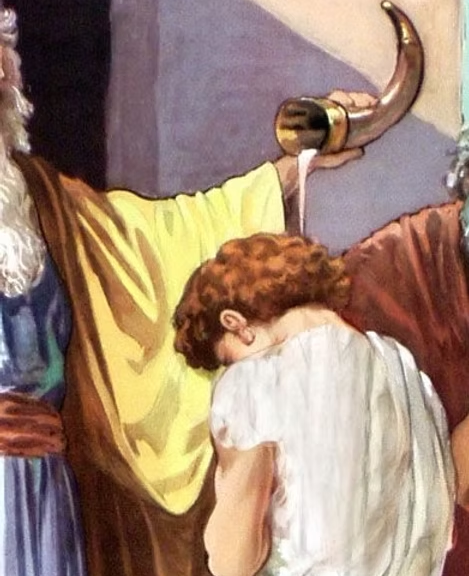
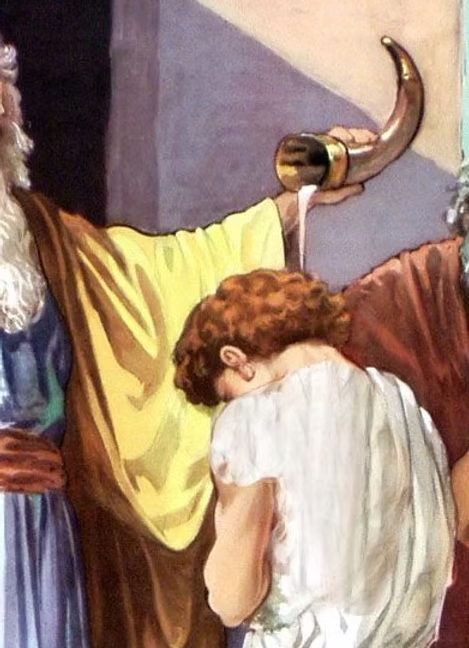




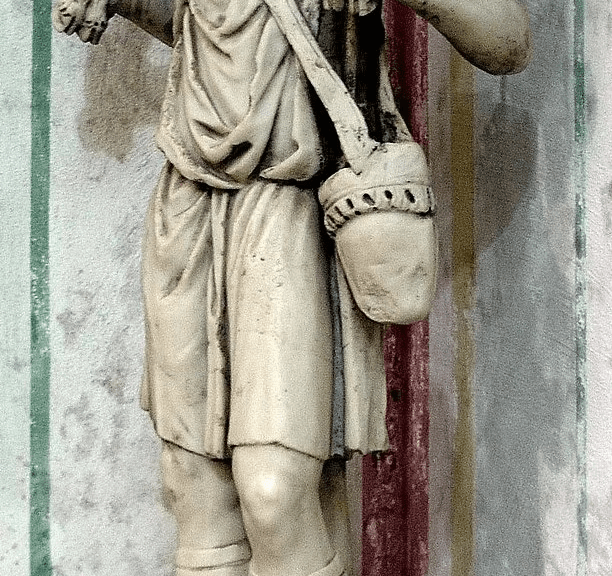

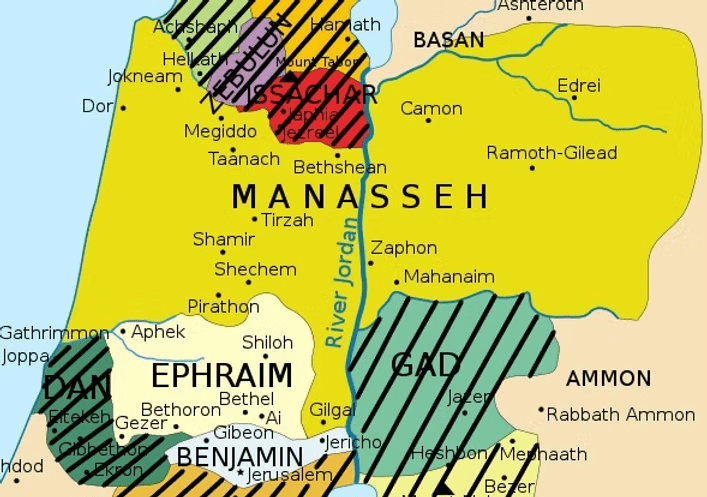










 Explaining the Readings