Category Archives: Romans

Romans 6:1-11 – Submerged into Christ Jesus [Third Sunday after Pentecost]

This article focuses on Romans 6:1-11, which can be read here: https://www.biblegateway.com/passage/?search=Romans%206:1-11

In this reading, Paul asks the question: “Do you not know that all of us who have been baptized into Christ Jesus have been baptized into His death?” I realize that the words of Paul are not easy to understand; but think about what “baptized into His death” says.

The root Greek word “baptizó” is recognizable as “baptize,” but let us examine the true meaning of that word. According to Strong’s Concordance, the basic definition says, “I dip, sink.” The literal meaning is said to be: “I dip, submerge, but specifically of ceremonial dipping; I baptize.” That means the religious mind takes a word of basic meaning and elevates it to a ceremonial title, such that “baptize” means, “I baptize.” It assumes everyone knows that is a ceremonious sinking underwater, just as John the Baptizer did to Jews in the Jordan River.

That is part of the reason Paul is so difficult to grasp. He wrote in basic terms that are interpreted by the later mind – those who possess the Big Brain of Hindsight – as having greater than basic meaning. Paul somehow transforms from being just a normal guy that is filled with the Holy Spirit to suddenly being a pope, dressed in the finest papal robe and tiara, holding a golden scepter and silver staff.  Simple Paul speaks on such a high level that the majority of normal folk whisper to one another, “This is over my head. Thank God we have priests who know what Paul meant.”

Consider the same words written by Paul in ‘ordinary guy’ language: “Do you not know that all of us who have been submerged into Christ Jesus have been sunk into His death?”

First of all, Paul spoke as if his question could not be misunderstood by asking, “Do you not know?” He spoke to those who would easily understand what his words meant. Thus, he began chapter six with the question: “Should we continue in sin in order that grace may abound?”

That leads one to “grace” being another word that the Big Brain thinks it knows, but goes too far beyond a meaning easily defined by the ordinary Joe. The Greek word translated as “grace” is “charis,” which is defined in simple-to-understand terms like “favor, gratitude, thanks, and kindness.” The higher meaning is then: “a gift or blessing brought to man by Jesus Christ.”

Paul said that being submerged into Christ Jesus means our little brains have gone under the control of the Christ mind, so we act just as did Jesus. The favor of that presence … the blessing brought … is Salvation. Salvation means we have been washed clean of our past sins AND that gift means everyone who understands Paul readily agrees that going back to sin would mean rejecting that holy presence … that grace from God. No one who has submerged into Christ Jesus would return to the old ways, bobbing like a Big Brain float on the surface of the water, unable to sink.

This brings out the most confusing part, where Paul added, “all of us … were baptized into his [Jesus’] death.” We know Jesus died for our sins, but we think that means Jesus suffered death and was buried, so we can all go on sinning. All we have to do is realize when we have sinned (like reciting the Confession of Sins aloud together) and ask God for forgiveness. However, that is not the meaning of “we were sunk into his death,” after having been “submerged into Christ.”

Paul goes on to explain: “Our old self was crucified with him so that the body of sin might be destroyed, and we might no longer be enslaved to sin. For whoever has died is freed from sin.” To have ourselves also be crucified, so we too die alongside Jesus, such that “whoever has died is freed from sin,” these are concepts the uninitiated struggle to grasp.  Confusion is how a Big Brain attaches baptism to death.

Certainly, human beings are not fish and cannot survive in a submerged state, when water is the element of submersion. If someone were to hold a human being underwater for more than ten minutes, that human being would drown and be dead. In that way, someone could be washed clean of sins by being executed via baptism by water … the ritual where someone dunks a willing participant’s head underwater. If Christians were killed in that act of willing sacrifice, then Judaism and Christianity would be celebrated in cemeteries, rather than synagogues and churches, with priests and pastors in prison for murder.

Realizing how this means “baptism” has absolutely nothing to do with submersion in water seems so difficult for Christians to grasp. It becomes like Consuela, the maid on Family Guy: “Baptism no water. That’s nice. I dunk clean now.”

Priests call christening with water sprinkles a sacrament, while pastors who dunk congregation members in industrial baptismal pools or go down to the local river to do it; both are making their followers believe baptism by water is the cat’s meow. This is even though John the Baptizer said, “I dip you in water. The one after me will submerge you with the Holy Spirit and fire.” Getting wet does not make a Christian “baptized into  his [Jesus’] death.”

When Paul then wrote, “We have been united with him in a death like his” … because all Apostles can equally say, “Our old self was crucified with him” … think about what that means.

The Greek word “anthrōpos” was written by Paul and translated into the word “self.” The Greek word actually means “man” (parallel to the Hebrew “adam”), inferring then “human, mankind,” with the contextual reference there being the body of flesh that holds a soul within. A body without a soul is nothing more than dust or clay – matter without the spirit of life. When the English definition of “self” is then understood to mean, “The total, essential, or particular being of a person; the individual,” as well as “one’s consciousness of one’s own being or identity; the ego,” and “the distinct individuality or identity of a person or thing,” “self” or “man” is that part of a Christian-being that must suffer a death like Jesus.

Christians are expected to have already experienced that death, stated by Paul, if they can truly say they have received the gift of the Holy Spirit. The “spirit of life” (man with self) is not the same as “the Holy Spirit.” Thus, the true sacramental baptism cannot be given by a priest or pastor, as they can only symbolically mimic what God’s presence (His gift) in a human being is like. This is seen in each of the Seven Sacraments of the Universal Church.

Baptism through the Holy Spirit is like being submerged in the water of God in Christ. Confirmation through the Holy Spirit is like being able to explain why one wants to be with others of like Mind (the Mind of Christ). That Mind fills Saints with all knowledge of the prophecies of Holy Scriptures, knowledge coming from being filled with the blood of Christ, via the Holy Spirit (not seminaries).  Such understanding is then symbolized by the Eucharistic ritual of bread and wine, as the body of words that leads a disciple to be filled with the blood of Jesus – God’s Son. Confession by the Holy Spirit is the admission of sins past, made with the power and promise of never sinning again. The Healing of the Sick is a talent given to those who have the Holy Spirit, thus becoming a reproduction of Jesus Christ, with God’s healing touch the gift given. The Holy Orders of ordination means each Apostle is a Saint, as the rebirth of Jesus Christ, who then repeats a ministry that goes to others for the purpose of passing that Spirit on (as Paul did to the Christians of Rome). They preach the truth via the Holy Spirit, so the kingdom of heaven goes to them (not vice versa). Finally, Marriage is human, when on the human level of two uniting for the physical reproduction of offspring. However, marriage by the Holy Spirit comes when a human being sacrifices self (subservience), in order to become the bride of God. That holy union produces the offspring that is a reborn Jesus Christ, into the human form that has died of ego (self).

When Paul wrote, “The death he [Jesus] died, he died to sin, once for all,” Paul meant Jesus suffered in the death of his physical body only one time. The “once for all” part of that statement of truth does not mean no one else has to die. It means that, like Jesus dying only once before his resurrection, those who will pick up their crosses and follow, “in a death like his,” also only have to die once. Jesus died physically so we can die figuratively, of self. The Apostles all died in that manner, even though they were then likewise persecuted to physical death, similar to that imposed on Jesus.  That “pre-death” death is necessary, because it is the ego that will easily be tricked into following sin and make one lower his or her stake (cross) to the ground (no longer lifted up). Thus, the ego must die, so that “we will also live with him,” as him reborn.

So, as Paul wrote, “You must consider yourselves dead to sin and alive to God in Christ Jesus.” The Romans to whom Paul wrote were not trainees. They were Jews who believed the prophecy of a Messiah. They were Jews who believed Paul’s conviction that Jesus of Nazareth was indeed their Christ. Still, they were not believers in Paul. They were alive to God through a deep love in their hearts and a willingness to be subservient to their most holy husband. They were alive to God in Jesus Christ as the deaths of their egos allowed them to be reborn versions of the Savior … just as Paul was.

All this means you don’t need to worry about the way the world is heading, praying to God to save the world of the sin that has taken over. That prayer can only find the “tag, you’re it” response. The world is the mother of all sin, thus (as matter/dust) humans are all born of sin.  Jesus had died on a cross and ascended into heaven, but his absence meant his disciples would carry the torch of Christ Jesus, leading others to the kingdom of heaven, where sin does not exist. Paul too was tagged; but his imprisonment did not mean Christianity would die on the vine, because Paul spread the Gospel to thousands of new Jesus Christs. The stakes have been kept high, so the vine can bear good fruit … until today.

Today, as always, maintenance in the vineyard is necessary, so the wild grapes of sin are kept out.  Test yourself: Can you fluently understand Paul? Or, do you need it explained to you? Is it clear as mud? Or, is it crystal clear … clear as day?


Romans 13:8-14 – The light of Jesus within drives away the darkness of ignorance [Fourteenth Sunday after Pentecost]

“Owe no one anything, except to love one another; for the one who loves another has fulfilled the law. The commandments, “You shall not commit adultery; You shall not murder; You shall not steal; You shall not covet”; and any other commandment, are summed up in this word, “Love your neighbor as yourself.” Love does no wrong to a neighbor; therefore, love is the fulfilling of the law.

Besides this, you know what time it is, how it is now the moment for you to wake from sleep. For salvation is nearer to us now than when we became believers; the night is far gone, the day is near. Let us then lay aside the works of darkness and put on the armor of light; let us live honorably as in the day, not in reveling and drunkenness, not in debauchery and licentiousness, not in quarreling and jealousy. Instead, put on the Lord Jesus Christ, and make no provision for the flesh, to gratify its desires.”

——————————————————————————————————-

This is the Epistle reading for Proper 18, the fourteenth Sunday after Pentecost.  It will be read aloud in Episcopal churches (and others) on Sunday, September 10, 2017.  While a short reading selection, it is a powerful disclaimer message, one worth taking note of.

When Paul said – again, realizing that Paul spoke as did Jesus, “for the Father,” through the Holy Spirit – “Owe no one anything, except to love one another; for the one who loves another has fulfilled the law” means a true Christian (only Saints and Apostles) repays everyone to whom he or she ever associates with love.  LOVE (which is grossly misunderstood, but what else is new?) has been given as God’s blessing, making LOVE the only currency that matters.  Thus, LOVE is all a true Christian owes in return for receipt of the Holy Spirit.

When Paul wrote, “The one who loves another has fulfilled the law,” the message between that line is: “Jesus Christ is LOVE.”  Think back to the encounter Jesus had with the young rich man, who asked Jesus, “How can I be assured of going to Heaven?”  When Jesus said, “Of course, there is the Law,” he meant step number one was to LOVE.

The rich man mistook obedience to the Law of Moses as step one, when LOVE is the only way anyone can be so compliant to the demands that include “You shall not commit adultery; You shall not murder; You shall not steal; You shall not covet,” … on and on.  We know he mistook what Jesus meant, when Jesus then followed up the young man’s happy acknowledgement of the religious legal maintenance requirements by saying (in essence), “Don’t forget how much you owe!”  That means that Jesus telling the young rich man to sell what he owned and give to the poor, was him saying, “The love of the poor made you rich; now go and show your return LOVE, which is you debt that holds you in the material realm.”

That is what Paul was saying as he wrote, “Love does no wrong to a neighbor; therefore, love is the fulfilling of the law.”  Paul wrote that after stating the second greatest commandment that Jesus told an “expert of the law” (like a lawyer, only religious), when asked which was the greatest commandment.  The first was, “Love the Lord your God with all your heart and with all your soul and with all your strength and with all your mind.”  This means Paul was repeating that line of thought, speaking from the same Mind of Christ.

When Paul told the Christians of Rome, “Love your neighbor as yourself,” you have to realize the context.  Romans ruled vast regions of the world as the Roman Empire; and they ruled as pagans, in the sense that they believed in many gods.  Those Romans certainly did not believe in Jesus of Nazareth as the promised savior of Jews.  Just as Jesus had his ministry for the Jews of Judea and Galilee (and the neighboring places where Jews lived), Paul was a Jew of Roman citizenship.  Therefore, he wrote to the Jews of Rome, who were Romans.  However, they were the lowest class of citizens of Rome, most of whom lived in the slums that Nero would burn, so he could build a more beautiful Rome.

Simply by understanding these logistics, where Roman domination saw Jews as little more than slaves to the State – which was certainly in the minds of most Jews – Rome was the enemy Gentiles that enslaved poor Jews.  Jews were then neighbors only to other Jews, because they believed in the same YHWH – the living God, while giving honor to the Law set forth by Moses.

This means a “neighbor” is someone of like kind.  Of course, it is normal for human beings to question my views, pondering just who is a “neighbor” in the eyes of Paul and Jesus.  Much confusion has come in modern times, since the Christian world (primarily Europe and the Americas) has become so culturally blended.  World wars pitted nations against neighboring nations, so perhaps the blending is a grand plan to confuse who neighbors are, with immigration, migration and refugee displacement testing the limits of Christian acceptance of foreign “neighbors.”

According to the various definitions of the word “neighbor,” it commonly is a word used to denote someone who lives next door or in the same general area; but the word also bears a most generalized meaning, as that of “a fellow human.”  Non-Christians like to focus on that definition, such that everyone on the planets can be called a “neighbor.”

That, of course, makes it hard to differentiate a family member who lives in the house on the lower 40 acres of the family ranch, and the enemy who hates your guts, who lives near the same town where you buy groceries.  That makes subsets of the “neighbor” set, so a “neighbor” is a separate subset that is exclusive of “family” and “enemies.”  This means a “neighbor” has to be someone who lives nearby.  When geographic areas are widened, so that “near” becomes the same country,” a “neighbor” easily becomes any fellow countrymen.

Because Jesus spoke of love that identified enemies, neighbors, and friends (and by association family), and because Jesus was a Jew, who as a group segregated themselves from those of other religious-cultural values, a “neighbor” was (and still is) clearly a reference to someone who believes in the same God and follows the same moral codes.  These are personal and cultural values passed on over great lengths of time, and not government declarations.

As a Christian in the eclectic neighborhoods of the United States of America, a “neighbor” would be other Christians; but they would represent those that one was not in a close personal relationship with.  Further, in America, where so many religious backgrounds have relocated that do not worship the same God, but a brotherhood exists as “Americans,” one would want to show the same love that you would expect in return as another American.

Because Paul was a true Christian, Apostle, and Saint, we Christians who truly want to be just like Paul (and just like Jesus) should read “Love your neighbor as yourself” and only think in terms of having the same Christian mindset.  There is a commandment to love the rest of the world, so it is okay to differentiate “neighbors” as just being other Christians.

The Jews could truly call someone in their subdivision a “neighbor,” because the Jews lived among those of the same faith and did not mix with Gentiles.  We do not have that same arrangement today, especially in the United States of America.  We can identify people by race, creed, or national origin, such as “My India Indian neighbor” or “My Facebook Muslim friend” or “My son’s Catholic teacher at the parochial school,” but this is simply a sign that Americans have largely lost their Christian identity.  Political correctness requires that everyone must be a friend, regardless of how little one knows about someone’s personal and cultural values.  That is quite relative to the newfound inability to properly identify who we are supposed to love like we love ourselves.

Meet the neighbors through children and block parties.

Relative to that dawning, when Paul then wrote, “You know what time it is, how it is now the moment for you to wake from sleep,” he was not referring to “time” as if wrist watches were common in 50 AD.  He was referring to the “opportunity” that came with the presence of the Holy Spirit.  He meant and other Apostles understood (thus “you know”) that the Holy Spirit made it the “right moment” to “rise up” and help their neighbors, as enlightened disciples.  It was a presence that made putting on the armor of light possible: the protection of the Holy Spirit and the knowledge of the Mind of Christ.  It was a light that easily identified friends, neighbors, and enemies … with LOVE.

The slumber they had awakened from was their prior state of confusion about the purpose of being a Jew.  The Law had been difficult to incorporate into their daily lives and they struggled with the responsibility of be chosen by God, but not knowing what that meant.

Or dreams can become nightmares in the darkness.

The “works of darkness” kept neighbors divided against one another, while their fear of contact with their enemies led to disdain and animosity towards them by Gentiles. However, the presence of the Holy Spirit brought them to that state of understanding love automatically, especially in seeing all who welcomed Christ as their “neighbors.”

The Apostles found their love of God allowed them to “live honorably as in the day,” as shining examples of what God truly chose them to be – ministers of the truth and fishers of men’s souls. The light of day removed all fear of inadequacies and guilt that always surrounded them in a lustful world.  As Saints, they could release that worry and realize the Christ Mind made them much closer to “salvation” than they ever thought they would be, when they first believed Jesus was their Christ.

The presence of the Holy Spirit being understood by the Romans to who the letter was addressed is the only explanation for how Paul could write, “Let us then lay aside the works of darkness and put on the armor of light.”  The works of darkness are the imaginary dreams and fantasies of those asleep.  Thus, being asleep is akin to being a mortal in a world that cannot sustain life eternally.  To survive eternally is to awaken from the illusions of the world.  That wake state is only possible when one “puts on the Lord Jesus Christ, and make no provision for the flesh, to gratify its desires.”  To “put on the clothing of Christ” means to be reborn as him.

Romans 14:1-12 – Judgement on another becomes a reflection of one’s own Judgement before Yahweh [Fifteenthe Sunday after Pentecost]

“Welcome those who are weak in faith, but not for the purpose of quarreling over opinions. Some believe in eating anything, while the weak eat only vegetables. Those who eat must not despise those who abstain, and those who abstain must not pass judgment on those who eat; for God has welcomed them. Who are you to pass judgment on servants of another? It is before their own lord that they stand or fall. And they will be upheld, for the Lord is able to make them stand.

Some judge one day to be better than another, while others judge all days to be alike. Let all be fully convinced in their own minds. Those who observe the day, observe it in honor of the Lord. Also those who eat, eat in honor of the Lord, since they give thanks to God; while those who abstain, abstain in honor of the Lord and give thanks to God.

We do not live to ourselves, and we do not die to ourselves. If we live, we live to the Lord, and if we die, we die to the Lord; so then, whether we live or whether we die, we are the Lord’s. For to this end Christ died and lived again, so that he might be Lord of both the dead and the living.

Why do you pass judgment on your brother or sister? Or you, why do you despise your brother or sister? For we will all stand before the judgment seat of God. For it is written,

“As I live, says the Lord, every knee shall bow to me,

and every tongue shall give praise to God.”

So then, each of us will be accountable to God.”

———————————————————————————————–

This is the Epistle selection for the Episcopal Lectionary readings for Year A, Proper 19, the fifteenth Sunday after Pentecost. It will next be read in church on Sunday, September 17, 2017. This is an important lesson that can be summarized as a notice to all true Christians that they are not to judge their brothers or sisters in Christ.

The first verse of this reading, as translated by the New International Version (and similarly by other versions) has English syntax pull the Greek word “proslambanesthe” (meaning “receive, take aside, take to yourself,” thus “welcome”) to the front, so we think an instruction is given to “Welcome” those who have “weak faith.”

This can be confusing if one assumes (which many people readily do) that Paul was asking you (the reader) to greet some newbies. Instead, as I see it, it addresses all of the Christians of Rome (Romans) who had not yet fully welcomed the Holy Spirit. That is the majority of Christians today, so modern Christians can read Paul telling them (all who are weak in the gifts of the Holy Spirit) to “receive.” Once that is grasped, those true Apostles are to welcome those who are struggling with the letting go of the ego and the opening of the heart to God, so others can increase and strengthen their faith.

In John 20:22, Jesus breathed upon the disciples-in-hiding and then said, “Receive the Holy Spirit.” The word written there is “Labete,” which means “take hold of” or “get.” The difference between “proslambanesthe” and “Labete” (or “welcome” verses “Take hold of”) can be seen as relative to the different states of the disciples.

When Jesus “breathed into them” (or “blew upon them”), his followers had been stricken with fear, afraid they would be the next to be crucified, if they were to be identified as  followers of Jesus. His “breath” was then akin to someone telling a panicked child, “breathe … slowly … in … out.” In other words, Jesus calmed the disciples before he then gave an order to God that those in that upstairs room were his to be saved. As such, Jesus made a prayer to God, for those present to be given his approval to “Receive the Spirit of Sainthood.”

In Paul’s case, he was writing to those who had been presented the revelation that the promised Messiah had indeed been delivered to them, in the person that was Jesus of Nazareth. Those Jews (and a few Gentiles possibly, other slave citizens in the slums of Rome) had “welcomed” that Good News. Certainly, some had believed and readily acted upon that belief, such that they full-heartedly were filled with the Holy Spirit. Others were not so able to be so self-sacrificing, which hindered their progress to sainthood. Therefore, Paul was telling those filled with the Holy Spirit to help those who still had doubts and questions, while also telling those who were struggling to stop thinking so much … and just let the Holy Spirit come into you.

“Breathe … slowly … in … out.”

Giving birth to a new you requires some labor.

When one is able to see that significance that comes from looking deeper at just one word written, one then needs to understand the second half of verse 1.  It is translated above as, “but not for the purpose of quarreling over opinions.”

This seems to be a clarification as to why one has “weak faith,” as they are using their brains too much (“quarreling opinions”). As such, one of true faith should “welcome” those who like to argue about faith. That actually leads one to missing the point of what Paul wrote.

The Greek of the letter has verse 1 saying, “mē eis diakriseis dialogismōn.”  This literally states, “not for passing judgment on reasonings.” It could also be translated to say, “not for discernment on deliberations.” This means a new disciple who, for example, believes Jesus was the Messiah, but struggles with the concept of resurrection and ascension, should be aided in that struggle (‘welcomed, received”) but not for the purpose of “setting them straight” on what to believe.

This is why Paul went into the example of foods.  Some meats and vegetables are seen by some as acceptable to eat, but by others as forbidden. Because new disciples are seeking God in their struggles to understand (“discernment by deliberations”), they are seeing ways that faith can be weakened by outside influences. (“Hey, I ate pork and nothing bad happened!  What’s up with that?”)

These become confusing at first; but because new disciples have been “welcomed by God,” this is part of their “discernment” towards stronger faith. This means it is not for an Apostle “to pass judgment on servants” other than themselves, as their “reasonings” [the Apostle’s] may not be where God will lead another [the weak-faith disciple] to conclude. Therefore, “Let all be fully convinced in their own minds.”

This means that following someone else’s brain will never lead one to ownership of an idea. Each disciple must be convinced of the truth alone, with only God’s whispers being the breath that one’s mind follows.

Since Paul was an Apostle, one who never personally knew the living man that was Jesus of Nazareth, he had to have a metaphysical experience of Jesus Christ to find his own way to receiving the Holy Spirit.

In Acts (9:9) we read, “For three days he [Saul] was blind, and did not eat or drink anything.” Remembering that, see how that parallels Paul writing to the Romans about food and eating.

A new disciple has “blind faith,” which is “weak faith.” Paul was stricken blind by his encounter with Jesus Christ, which is a symbolic statement that Saul was no longer able to see as he had seen before – as a Jew who condemned Jesus and those Jews who believed he was the Messiah. Saul had been totally influenced by one view prior to encountering that Holy Spirit, which was that view the Pharisees preached to him.

This means the symbolism of food and drink are those words and beliefs that one consumes, which come from external sources. This is where those who are not filled with the Holy Spirit will preach what to eat or what not to eat, with opposing viewpoints on religious matters being that which further weakens faith [contradictions]. Thus, Paul wrote of his personal experience of going without food and drink for three days (three is a symbolic number that denotes a period of initial completion), simply by saying in his letter to the Romans how someone else’s views do nothing to strengthen the faith of new disciples.  Without external influences, Saul became Paul.

From this understanding, one is then led to understand the deeper meaning that caused Paul to write, “Those who observe the day, observe it in honor of the Lord.” The only light of day one observes that matters is that of God’s, which is absorbed like photosynthesis and nourishes the new disciples (young vines) inwardly. This inner growth of awareness is then what leads one to stronger and stronger faith, such that one cannot owe honor to another human being, as all honor and thanks is due to the LORD.

When Paul posed the question, “Why do you pass judgment on your brother or sister?” he asked from personal experience. Saul held the coats for those who stoned Saint Stephen to death, when his “brother” Jews had cast their judgment on Stephen, for proclaiming Jesus as the Christ. Paul, as Saul, it was written: “Saul was still breathing out murderous threats against the Lord’s disciples.” That action brought on his spiritual encounter, where the Spirit of Christ asked Saul, “Why do you persecute me?” Thus Paul (the name of the converted Apostle) knew not to judge others, and by the Holy Spirit he advised those Christians of Rome, “We will all stand before the judgment seat of God.”

True Christians stand together as fountains of water of eternal life.  They support one another by offering a drink of the Spirit, when another may become thirsty. But Apostles do not judge others, as they known no human can get any soul to Heaven, other than their own; and that means supporting others in their own individual relationships with God.

This is why Paul quoted Isaiah, who wrote: “Before me [the LORD] every knee will bow; by me [the LORD] every tongue will swear.” (Isaiah 45:23b) In that way Paul reminded those Christians of Rome to lead by example, with the Holy Spirit being the only motivation for tongue-wagging.

[Isaiah 45:23 – “By myself I have sworn, my mouth has uttered in all integrity a word that will not be revoked: Before me every knee will bow; by me every tongue will swear.”]

“Each of us will be accountable to God.” When each individual has found his or her judgment coming from within, knowing there are no secrets kept from God, where every heart is truly known by the Christ Mind, then total commitment to God lead each one’s knee to bow to Him and an oath of love is sworn to serve only Him [engaged to God].

Accountability leads to repentance, which means one is able to gain a clear idea of where all false influences come, leading to the severance of loyalties to those who offer opinions that weaken one’s faith. We become “accountable to God,” which means we are each “expected or required to account for one’s actions.” One is then able to receive the Holy Spirit and then ACT for God, “in the name of Christ.”

The moral of this part of the Epistle to the Romans is directed at those human beings who claim to be Christian, but really have “weak faith.” I like to use the Forrest Gump analogy, where a true Christian sits at the bus stop meeting strangers. Strangers are those of all varying degrees of faith, most very weak in their devotion to the One God.

Weak-faith Christians often will “go to battle” for Christ, as if humming the tune to “Onward Christian soldiers” in their heads (an external influence). Many follow the mega-church superstars of cable television as their teachers, who tell them what to eat and what not to eat (or what trinket to buy for a “love offering”, so in return Pastor [fill in the blank] will have God bless them).

At the bus stop encountering the “Forrest Gump” Christian, those of weak faith open their mouths and insert their feet.  Time and again Forrest asks them a question they have never been told the answer to. Those so-called Christians hop on the next bus or run away with their tails between their legs. All atheists (those of faith in science, not God) are left scratching their heads, with no learned retorts of biblical quotes they have memorized as examples of contradiction. The “Forrest” Christian explains all of that seeming inconsistency for them, using the tongue of God (not his brain … he’s not a smart man).

Like Forrest, Paul would not be judging any of the varying opinions that show up at the bus stop.  When one is fishing for souls, you still have to put bait on the hook.  The elderly woman that was enthralled by what Forrest was saying, offering, “Oh, there will be another bus.  Please, go on.” was like the Romans.  The ones who want to hear the truth have weak faith, but they want their faith strengthened.  An Apostle has to speak for God, because God will have it no other way.

Silence is not the way.  We need to talk about it.”

The Israelites made lots of commitments to God, through Moses, Aaron, and Joshua, but they really had weak faith. They eventually went to Samuel and told him to go tell God they wanted to be led by a king, to be like other nations. That meant they were tired of being personally responsible for their own souls. They wanted to put all the guilt of a nation on one scapegoat, and then catch the bus into town so they could do wicked deeds for self-advancement. They lost everything in that process.

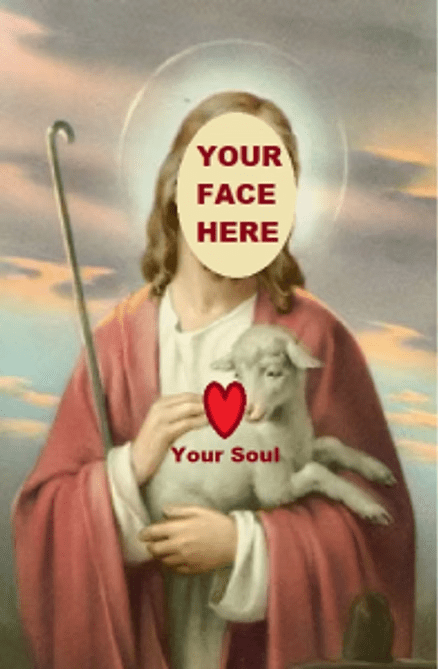
Paul was writing letters to lead the lost sheep back to the One God. The picture in Sunday School for children shows Jesus carrying a lost lamb to safety. In the adult word of true Christianity, the picture is you doing the carrying of your little lamb ego, while you can barely make out the Jesus Christ Mind that is behind your face. The moral of that picture is you must bow your knee to the LORD. After you make that commitment, then you go to bus stops and let God speak the truth. Forget ever getting on a bus and getting lost again.

“Each of us is accountable to God.” I know that is a fearful concept. So … breathe … slowly … in … out. Receive the Holy Spirit.

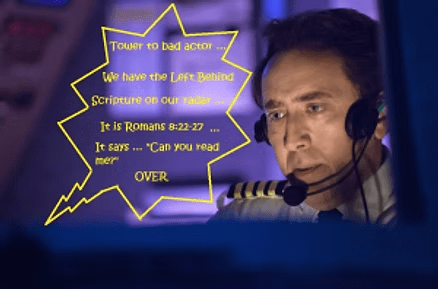
Romans 8:22-27 – Groaning in labor pains

We know that the whole creation has been groaning in labor pains until now; and not only the creation, but we ourselves, who have the first fruits of the Spirit, groan inwardly while we wait for adoption, the redemption of our bodies. For in hope we were saved. Now hope that is seen is not hope. For who hopes for what is seen? But if we hope for what we do not see, we wait for it with patience.

Likewise the Spirit helps us in our weakness; for we do not know how to pray as we ought, but that very Spirit intercedes with sighs too deep for words. And God, who searches the heart, knows what is the mind of the Spirit, because the Spirit intercedes for the saints according to the will of God.

——————————————————————————–

This is the optional Epistle selection from the Episcopal Lectionary for Pentecost Sunday, Year B 2018. It will next be read aloud (if chosen by a priest) in church by a reader on Sunday, May 20, 2018. This is important as it speaks from the perspective of one born of death, who has gained the promise of eternal salvation, through the Holy Spirit. It alludes to the weaknesses that cause dried bones in those born mortals, which can only be brought to life by the love of God, the Mind of Christ, and the Will of God through His Holy Spirit.

The chances are this short reading from Paul will never be read aloud in an Episcopal church, simply because it is in a “pick two out of three,” with one of the three a must pick. That leaves the battle of the Scripture readings to Ezekiel 37 (the dried bones in the valley) and this from Romans 8. Simply from a theatrical perspective, Paul is always good for an audience response that says, “Huh?” That makes it probable that this reading may never be read aloud in church. The reason the probability is not zero is it is short, so some priests might choose it to save printing costs on any accompanying read-along handouts.

Imagine this, a Scripture waiting three years to be chosen for presentation to a congregation, and it never gets picked. If churches were like seminary and tests were required for graduation as a Christian, everyone would fail the test if passing meant writing an essay about the meaning of Romans 8:22-27.

Who remembers this reading?

While some concepts are easy to see here – creation, labor pains, hope, and the Holy Spirit – few would jump and scream, “Romans 8:22-27!!!” … if asked to quote a verse of Scripture that was relative to those concepts.

Maybe I’m wrong and just don’t hang out with enough Pauline scholars?

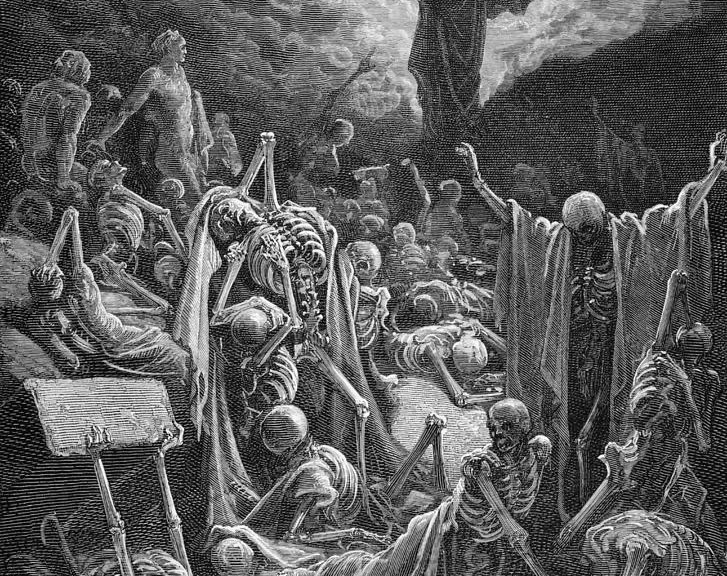
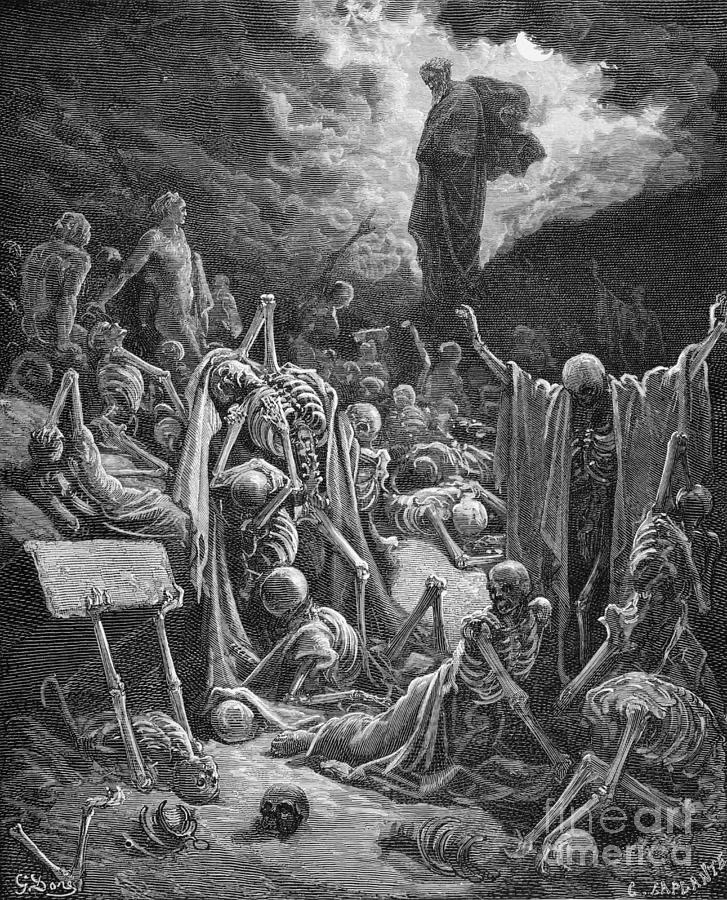
If it were not for the demand to choose the Acts 2:1-21 reading for Pentecost Sunday – because (after all) what is a Pentecost without the Pentecost story from Acts 2, right? – this reading from Paul’s letter to the Jews of Rome paints a perfect picture of how difficult it is for a bag of dried bones in new flesh (zombie Christians?) to actually move those chest muscles and breathe deep, after being prophesied to the breath.

Begin C.P.R. to open the heart to God.

Out with the dusty air. In with the Holy Spirit.

Out with the egomania. In with the Mind of Christ.

While Ezekiel can be seen as the Holy Spirit in a human Saint prior to Jesus Christ, Paul should be seen as the Holy Spirit in a human Saint after Jesus Christ. Just as God told Ezekiel to prophesy to the dried bones in new bodies, God likewise to Jesus of Nazareth (His Son) said to prophesy to dried bones in new bodies. Now, God is telling Paul to prophesy to those who received the Holy Spirit and eternal life in re-hydrated bodies, while indirectly prophesying to dried bones in new bodies reading his words today. The same God is using multiple righteous bodies (prophets) as His Christ to prophesy to the breath of eternal life.

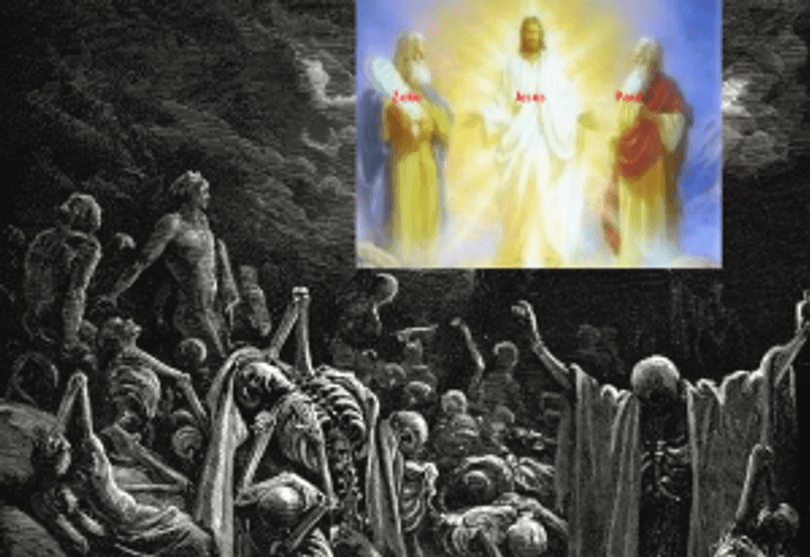
What if the Transfiguration occurred in Ezekiel’s vision and the past, present, and future were prophesying to the breath at the same time?

Paul was told to prophesy to those like him about what “we know” (Greek “oidamen”). This was relative to faith as belief based on personal experience. Paul could make that statement in the plural number because he had witnessed others who had transformed from dried bones in new bodies of flesh, from mortals plodding along like zombies towards certain death to Saints filled with the light of truth and assured eternal life.

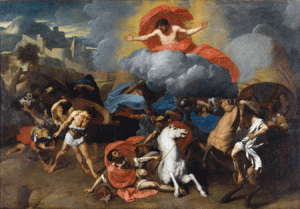
For those who know Paul’s story, he was named Saul before he encountered the Spirit of Jesus Christ, was knocked off his mule and blinded for three days. Saul was transformed from Christian-persecuting Pharisee into Saint in the name of Jesus Christ; but that transformation was not a smooth snap of the fingers, presto-change-o, where Jewish Saul became Christian Paul. He went through labor pains, from being born Saul headed towards another dead end, to being reborn as Jesus Christ. To give a name to the new him, he began going by the name Paul.

Saul was a creation, who was like all the Apostle-Saints Paul encountered in his travels. They had all been created of matter – bones, sinews, flesh and skin – forming as fetuses in their mother’s wombs, and grown to maturity in a world of evil influences.  The Jews Paul sought were clinging to their Judaism as a way to justify their sins. Saul was one of them, a reflection of their lifeless state.

It has always been a challenge for a soul released into a universe of matter to find its way beyond the veil of deepest, darkest outer space as to the origin that is God. That must be where He lives and watches over us dust mites of His Creation.  The labor pains of finding God, especially for souls locked inside zombie bodies, comes from straining and groaning to reach the highest, widest, deepest outer edges … to where brains think God must be ….

When God has always been within.

For Saints like Paul and his fellow Roman Christian Jews, the receipt of the breath of the Holy Spirit did nothing to ease their pains. To those first fruits of the Spirit, their souls still resided in temporal bodies and they faced the same struggles Ezekiel and Jesus faced – prophesying to dried bones standing before them like zombies.

The first fruits are the earliest harvest of grains, which are then measured by a weight called an “omer.”  As a symbolic gesture, those early grains and fruits were gathered and placed in the Temple on the second day of the Passover Festival. The first fruits were then allowed to become ripe and matured, which began a daily count to when those fruits would be worthy to eat. They were ripe and ready on the Fiftieth Day – Pentecost.

All the Apostles serving the Father in the name of Jesus Christ had “groan inwardly” waiting for their “adoption” as true Christians, just as do everyone who seeks the same gift of eternal life. The redemption of their bodies meant, like first fruits that appear ready for harvest, their egos had to be removed.

In the zombie analogy, the walking dead or the living dead can only truly die when their brains are blown to bits.  I imagine the “death” of a zombie would symbolize eternal damnation, where the soul can no longer find anything earthly to call “home.”  Still, the zombie analogy says the living dead live because of a brain and not because of a soul.  Thus, the first fruits represent the initial receipt of the Spirit of Christ, so the soul begins to retake control over what was a lost cause before.  Life for a zombie consists of destroying life in others; but dried bones without a brain – sacrificed for the Holy Spirit – have life to offer others.

Just as Jesus breathed on his disciples, giving them the first fruits of the Salvation harvest, they needed to be aged to perfection.  The disciples and followers of Jesus would then begin a forty-day test of one’s true readiness to have eternal life.  That education was mandatory and had to be passed. Therefore, the “groan inwardly” is one’s time spent in the Wilderness, where brains cannot find water and food; only angels can keep the body of flesh thriving on heavenly manna and living waters.

When Paul wrote to his brothers in Christ, he stated, “For in hope we were saved.” The Greek word “elpidi” is translated as “hope,” but the word equally means, “expectation, trust, and confidence.” This means an Apostle knows that salvation has come, when one has met the test for “redemption of the body,” because of an inner presence that instills deep trust and confidence in the Holy Spirit, with an expectation of eternal life.

The Apostles were saved as examples of hope that others could sense and feel.  The presence of “hope,” as most mortals know the meaning, is the thrill and excitement that is brought on in anticipation of good things coming.  The righteousness of hope comes by a willingness to serve the LORD, no matter what the earthly consequences might be.

When Paul made the statement and then questioned, “Now hope that is seen is not hope. For who hopes for what is seen?” this is the “hope” that comes from others. When in danger, we are trained to respond – “Call 9-1-1!”  We look for rescue to come to us, in the form of flesh and blood heroes.

Human beings routinely place their hope, expectations, trust and confidence in leaders. The Israelites went to Samuel pleading for a king to lead them, like those who led others nations. They wanted to see a king as holy, rather than take the responsibility of being holy themselves. Individually, one offers little value as hope for others, when one sees oneself, and others see one as well, as an ordinary human being that is lowly and insignificant.  We equate the power of worldly influence as the rays of hope to bow down before.  We look for that which can be seen … not God.

That error is what makes people be born to death, as walking brains on top of dried bones and rotting sinews, flesh and skin.

For the majority of people today who profess belief in Jesus of Nazareth as the Messiah promised by God to the Jews, and said to be “our Christ,” the error comes from placing the body of a dead man on a wooden instrument of death. We look for the “second coming of Christ” as though that is eons down the road of linear time. The error is in making an idol of Jesus to pray to externally, such that the hopes, expectations, trusts and confidence is that Jesus Christ will come down from heaven like a Greek hero and slay evil with his double-edged sword and rapture all Christians up to heaven. All of that “hope” calls for no one talking self-responsibility, no self-sacrifice is necessary, no groaning inwardly has to be experienced, and no fruits need be grown that will be in the name of Jesus Christ.

Paul said, “But if we hope for what we do not see, we wait for it with patience.” We cannot see God, but God wants our hearts to open for Him. God wants dried bones with new sinews, flesh and skin to love Him enough to be wedded to Him. God wants our souls to be in Holy Matrimony with His love.

We cannot see the Holy Spirit, but God wants to wrap His wives in that protective covering. We cannot see the child growing within us that brings the labor pain as we are reborn as the Son of God, Jesus Christ [regardless of one’s human gender]. No one can see the hope of Jesus Christ in us, as we still look like Saul did, before he took the name Paul. No one can see the hope an Apostles breathes upon dried bones, zombie-brained people.

That is why patience is required.

In that period of patience, weakness will come. Once a bag of dried bones, then always a bag of dried bones. It is why priests say at funerals, “Ashes to ashes, dust to dust.” Forget the possessions (land, money, jewelry, etc., etc.), you can’t take your bag of bones with you.  Believe me, the Egyptians tried and we have the dried bones of mummies to prove that.  That means evil influences will pull on dried bones, just as gravity will always make what goes up always come down.

Patience means not over-reacting to that which is normal.  Patience means not becoming disoriented.  Patience means remaining centered in the Holy Spirit.

So, with hope, trust, confidence, and expectations being based on the unseen, influences of evil will always drift by. When you pray to an external God and kneel before a Jesus hanging on a cross on a wall, you find those worldly temptations always wrapping their tentacles around you, choking the mortal life from you. That is why it is so important to receive the breath of prophecy and know the true meaning of faith.

True faith is knowing nothing that comes from a small human brain can bring anything that lasts forever. It is the Holy Spirit that maintains one’s path to eternal life, swatting away the lures of Satan. When you are Jesus Christ reborn, another in the line of Sons of God, you tell Satan to go where the sun don’t shine.

And, he has to obey that command, when he knows it was spoken with confidence.

So much influence of the world, while living in a worldly domain, means fear of failure to withstand it all. As Christians, we believe in the power of prayer. Prayer is indeed a powerful ally.  Reciting serial prayers helps place our hearts in a centered state of reception.  The problem, as stated by Paul, is “we do not know how to pray as we ought.”

The disciples of Jesus raised this issue when they asked Jesus to teach them to pray. From the point that “The Lord’s Prayer” was written on paper and published in books called Holy Bibles, zombies have been repeating the same words without understanding what righteousness was the intent behind those words. It reminds me of the movie Monty Python and the Holy Grail, and the scene at the rope bridge over the great abyss.

There each knight had to answer three questions to get across. Repeating the answers someone else gave did not work out too well.  That is like reading a prayer from a book of prayers for all occasions, when sometimes it is best just to wing it and speak from the heart.

When God is in one’s heart, when the Christ Mind overrides an imperfect brain, and when the soul has been baptized by the Holy Spirit that means prayer is faster that a thought can be verbalized. It is known before a human brain could ever know what to ask for. This is what Paul meant by saying, “God, who searches the heart, knows what is the mind of the Spirit, because the Spirit intercedes for the saints according to the will of God.”

This is how God could ask Ezekiel, “Mortal, can these dried bones live?” and Ezekiel could only answer, “O LORD God, you know.”

If a Saint cannot answer a question posed by God, how can a Saint propose to ask God a question in prayer, without God already knowing the question?

Too often, our prayers are scripted. Too often our prayers are for personal wants and desires. Too often our prayers are public, rather than private and personal. And, too often we visualize what our brain thinks we want to come as an answer to a prayer, ignoring any possibility that the answer has been there before we prayed.

As a too often overlooked reading choice for a Pentecost Sunday service, it should be easy to see now how Paul is an equal to Ezekiel, as both were Saints in service to God. The symbolism of Pentecost is the maturation of the first fruits, where zombies are transformed into righteous examples of the way to be. Saints act like the twelve who were filled with the Holy Spirit, leading others to immediately cease being bags of dried bones in warm flesh and become alive with the Holy Spirit also.

Paul called it as it is, when he wrote to those like him who knew what it was like to be Saints. He wrote, “The Spirit intercedes for the saints according to the will of God,” and Paul and friends were Saints.

The call each week is not to be good, because no one really knows what that means. The call is to stop holding God and Christ at arm’s length, trying to keep you one of the living dead.  The answer is not and can never be endless begging for forgiveness [misuse of prayer] because the brain’s will power slipped yet again. The call is to actually be a Saint – “hagios” in Greek – which means, “set apart by (or for) God, holy, sacred.”

No one is good enough to be that without God’s help.  God knows we need help before we do.

The call then is to open your mouth and breathe in ….  Receive the Spirit.

#zombiesofdriedbones #Pentecostreadings #Faith #Patience #FirstFruits #Saints #Romans82227 #Hope

Romans 8:12-17 – Heirs of God and joint heirs with Jesus as the Anointed

So then, brothers and sisters, we are debtors, not to the flesh, to live according to the flesh– for if you live according to the flesh, you will die; but if by the Spirit you put to death the deeds of the body, you will live. For all who are led by the Spirit of God are children of God. For you did not receive a spirit of slavery to fall back into fear, but you have received a spirit of adoption. When we cry, “Abba! Father!” it is that very Spirit bearing witness with our spirit that we are children of God, and if children, then heirs, heirs of God and joint heirs with Christ– if, in fact, we suffer with him so that we may also be glorified with him.

——————————————————————————–

This is the Epistle selection from the Episcopal Lectionary for the First Sunday after Pentecost, Year B 2018. This day in the lectionary schedule is also known as Trinity Sunday. It will next be read aloud in church by a reader on Sunday, May 27, 2018. It is important as Paul wrote of the debt all human beings owe to the Father, which has to be understood as beyond the time we spend on earth in the flesh.

Again, it is modern paraphrasing that identifies “sisters” in the above translation. Paul wrote, “Ara oun , adelphoi  ,” which says, “So then  ,  brothers”.  This states the result of (“So then”) what Paul had stated prior (Romans 8:1-11), with that now being “brothers.”  Because one has to believe that Paul wrote divinely (not just as some ordinary guy), every word he wrote has divine purpose, which should not be overlooked.  Therefore, “brothers” must be understood, rather than slap “sisters” to that word.

The word “adelphoi ” is set alone by commas, placing importance on its meaning.  It is a stand-alone statement of “brotherhood,” as “brothers” or “brethren.” The word “adelphoi ” says nothing about “sisters.” The Greek word “adelphé” means “sister” and “adelfés” says “sisters.” The exclusivity of women is NOT the point of what Paul wrote.  It should be read as a word similar to “mankind,” which includes all human beings under one heading.

By placing commas around the plural form of the word “brother”, Paul was placing emphasis on the relationship ALL Christians share. Both men and women are “brothers”, as “Sons of God”, because they ALL have been reborn as Jesus Christ. By adding the word “sisters,” the glaring differences between males and females is entered into the interpretation erroneously.

It is unnecessary, as ALL Christians are the wives of God (regardless of human gender), just as ALL Christians are reborn as the Son of God (regardless of human gender), making ALL Christians be brothers of the same Father.  One must get beyond the modern training that gender be given equal status, because that is only a distraction away from the truth.

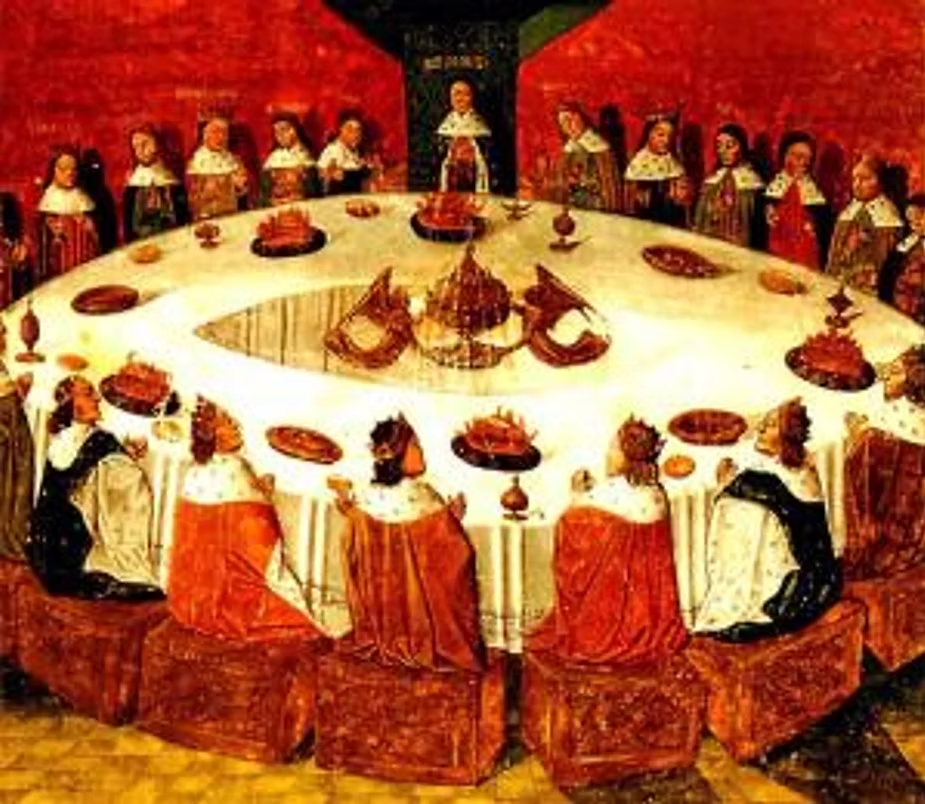
The same qualifications for a knight of the round table are the same for a Saint.

Seeing “brothers” as ALL who are related spiritually, one should then see this familial relationship with the Father as being what makes one a debtor. Thus, following the pause of a comma after “brothers,” this becomes stated as “we are debtors” (literally “debtors we are”).  This makes “debt” be relative to this announcement of “brothers.”

From that realization, Paul discounted how “brothers” were “not to the flesh.”  From this statement, one must grasp how it is the “flesh” that differentiates a man from a woman.  Thus, it is the “flesh” that separates “brothers” from sisters. This statement says (in essence): “Do not mistake “brothers” as saying “brothers and sisters,” because the debt owed has nothing to do with one’s sexuality on the earthly plane.

When Paul wrote, “If you live according to the flesh, you will die,” this was reference to all mortal human beings, who come in the shapes and forms of men and women, males and females. The only reason souls are incarnated (reincarnated) in different shapes and forms is to reproduce. Souls cannot reproduce souls, as souls are immortal, thus asexual by nature. The flesh reproduces so souls can be reincarnated.

To put that in gender terms, souls are masculine “energy,” while bodies (regardless of human gender) are feminine “energy.” God can be seen as masculine, as the Father, whereas the Earth is called a Mother.  In this sense, my use of “energy” should be seen as non-physical, but a compatibility, such as is positive and negative.  It is similar to the notion that opposites are attracted to one another, as compliments.

Thus, the feminine flesh of a baby (regardless of human gender) is penetrated by the masculine soul.  The flesh of the baby receives that breath of life.  The soul’s asexuality then aligns with the human gender, based on the flesh.  This union then stimulates an innate drive to procreate. That innate drive is a need of the flesh, because the flesh knows it is temporal and must reproduce to continue the possibility of life returning to the worldly plane, as returning souls need flesh to inhabit.

The aspect of “the Spirit,” as translated in verse 13, where we read, “If by the Spirit you put to death the deeds of the body, you will live,” is inaccurate.  The Greek actually shows “pneumati” in the lower case (“πνεύματι”). This is then a reference to “the breath” of life, which is the entrance of a “soul” into a form of flesh. A “spirit” that is a soul is eternal; but a returning soul into a form of flesh is not commonly holy.  There are exceptions, such as Jesus, born of a woman.

Verse 13 is also divided by commas, where the better translation can make this lack of holiness more evident.  Literally, the verse states, “If however the breath (wind, soul spirit)  the deeds of the body you put to death  you will live.” This is not a statement of God’s reward to a soul of eternal life, but a promise of reincarnation to a soul.  Reincarnation is a new “breath of life” in human form.  Still, that “spirit” of life brings about the opportunity to achieve eternal life – IF the normal deeds (normal “doings, acts, functions”) of a body of flesh lead an eternal soul to lose its host body (a mortal death).  If a soul directs its body wisely, then it will be reborn into a new body of flesh (i.e.: a newborn baby).

The condition (the “IF”) is then based on the soul somewhat controlling the actions of a body. This admits there will be sins accrued that will prevent the reward of everlasting return to the Father, but enough good deeds will have been done to warrant another chance on the physical plane.  It is just as do not punish a first grader to hard labor in the fields for failing to make the grades that would allow it to go to the second grade.  We also do not graduate straight A first graders to the college level.  This is a mirror of how much is required to be one with God again.  However, should the soul allow the body (by evil influence) to earn itself eternal damnation, then the soul will not find new life in human form. This is the proverbial “Hell.”

When Paul then wrote, “For all who are led by the Spirit of God are children of God,” the capitalized version of “Pneumati” was written (“Πνεύματι”). This is then a reference to those of humanity who are led by the Holy Spirit. The translation of verse 14 shown above, as using the neuter gender word “children,” actually states “huioi,” which means “sons.” The proper translation here then supports the initial claim of being “brothers,” as now the presence of the Spirit  makes one be identified as “son of God.”

This parental relationship with God is then stated as a relationship that reproduces the Son, Jesus Christ.  This masculine association also means the “Spirit,” which is masculine in nature, has caused this relationship to be. Since this masculinity is asexual, there is no sexuality implied by being “sons of God.” Spirits and souls have existed from the Creation and have no need (no ability whatsoever, for that matter) to reproduce.  This is, again, the masculine “energy” of Spirituality being within the feminine “energy” that is a human body.

Angels are neither male of female, in the sense that human beings are. Angels have no sex organs, which includes breasts that would only have a human purpose, such as to nurse babies.

It is then important to see how there is no capitalization of the word “spirit” in verse 15, where we read above it stating, “For you did not receive a spirit of slavery to fall back into fear, but you have received a spirit of adoption.” When one realizes the difference between the “spirit” of life (God’s breathing an eternal soul into flesh) and the “Spirit of God” (the Holy Spirit), then one can see how this translation is saying the renewing of a soul into flesh, giving that flesh life, is not done by God so that the soul will enter into a state of “slavery,” which is an addiction of the flesh to sin.

The reborn soul (reborn into new flesh) is meant to lead the flesh to serve God, not to “fall back into fear,” where “slavery” is to Satan and his material realm. Instead, a soul, as an extension of God that needs redemption to return to God, is placed back into new flesh so it can lead the flesh to “receive a spirit of adoption.” One is adopted by God when one is reborn anew (the transformation of the same soul in the same flesh) as Jesus Christ.

One is not adopted prior to birth into the flesh.  One is adopted after one has lived enough life to understand sin and experience guilt from sin.  Then one has to petition for adoption by repentance for the sins one feels remorse from.

That represents a spiritual change within, which means one’s whole being (soul in flesh) opens to God, through acts of repentance.  One becomes active in learning the messages of holy Scripture.  When one has proved to God one’s sincerity for seeking atonement, the love of God will enter one’s being.  The result of that union brings about a reproduction of the Son of God, so one is truly in the name of Jesus Christ.  True Christians are then those who become the “brothers” of all other Saints on earth (regardless of human gender). Until that transformation takes place, one is “a spirit to slavery” that all human beings are, since the soul is a slave to the flesh, just as the flesh is a slave to the soul.

Human beings are slaves to mortality. The only way to break those chains is through Jesus Christ.

Where Paul wrote about “you have received a spirit of adoption,” here again is an overlooked statement about “brothers” and “sons.”  The Greek actually states “elabete pneuma huiothesias,” where the literal translation says, “you have taken hold of (or received) the spirit [lower case] of adoption as sons.”  The implication of divine adoption can be read into this, but not as total adoption, as the sons of God.  The lower case “spirit” is a statement that one’s soul has “received” or “taken hold of” the ways of righteousness, as far as one can do good alone.  This is how one shows oneself worthy to progress to that point of being “adopted as a son” of God.

Still, the form of the word making the statement about adoption is masculine, thus more properly translated as “adoption of sons.”  This can be seen as how God saw the disciples of Jesus of Nazareth, prior to their official recognition as sons of God on Pentecost Sunday, the day after Jesus ascended to the Father.  While The Acts of the Apostles places focus on the male disciples becoming “adopted sons of God,” it still must be assumed that women (such as Mother Mary, Mary Magdalene, Mary of Cleopas, and other females in the crowds who received the Spirit) were also adopted “sons.” Their female human gender was not a limitation on their adoption worthiness.

Paul then wrote, “When we cry, “Abba! Father!” it is that very Spirit bearing witness with our spirit that we are children of God.”  Here, both the capitalized and lower case versions of “pneuma” are used. That says that the Holy Spirit has made entrance into one’s soul (one’s spirit), causing a thrill of awareness overcome one’s being, such that it knows (“bearing witness”) the Father is in one’s heart center.

By saying “with our spirit,” this is the baptism of one’s soul by the Holy Spirit’s presence, so both become one. When that happens, all baptized souls become the “children of God,” where “children” is the correct translation, from the Greek “tekna.” The use of “children” comes with the understanding of asexuality, since both human genders are equally incapable of reproduction, therefore “children” is a word deemed neuter gender. The word “children” then also implies a lack of adult mentality, where “children” are dependent on the Father for learning.

The aspect of mentality is then found in Paul writing, “and if children, then heirs, heirs of God and joint heirs with Christ.” It says that the “children of God,” as “sons of God,” will inherit the knowledge of God, which comes through the Mind of Christ. It then lets one realize that this awareness that comes from being “children of God,” “inheriting” the Mind of God’s Son, allowing Christians to become “brothers” in Christ (regardless of human gender) is to realize the debts of sins being washed clean by the Holy Spirit then makes one in debt to the grace of God.

The Mind of Christ frees our spirits from thinking we are slaves to a mortal body that will die. The Mind of Christ frees our spirits from the fears of a mortal existence. The Mind of Christ is the realization that we are indeed “heirs” to the same Holy Spirit that was made man by God and sent into the world as Jesus of Nazareth.

This selection then ends with Paul writing, “If, in fact, we suffer with him so that we may also be glorified with him,” which again poses a conditional requirement.  This tells how one knows that one’s “spirit” has indeed been “led by the Spirit of God.” IF that condition has been met, then “we suffer with him.”  The word “sumpaschó” means “I suffer together with,” but this is synonymous with “sympathize.”  This means one suffers by knowing so many in the world are still blind to being adopted by God.

The Greek word “sympaschomen” states “we suffer together with,” which implies the Spirit of God, as one being with Jesus Christ. This says that the Mind of Christ is what enables one to withstand the suffering that causes others to lament.  Personally, one knows the same agony that one faces when denying the pleasures and comforts offered by a sinful world. Still, that experience of suffering is what proved oneself as worthy for adoption by God.

The bond of togetherness – one’s soul spirit with the baptism from the Holy Spirit having brought about the Mind of Christ – is what brings one the “glory of being together with” (“sundoxazó”) Jesus Christ. This is how one can claim to be in the name of Jesus Christ. This is also how ALL who are likewise baptized by the Holy Spirit are “brothers” in Christ, where ALL SAINTS also share the same “glory [from being] together with” Jesus.

As a reading selection for the First Sunday after Pentecost, where the ministry of Apostles has begun, symbolically having taken its first step, we must then see how this is called Trinity Sunday because the Father, Holy Spirit, and Son have been reignited in a soul. All who have this Trinity within them are then “brothers” as having been reborn as Jesus Christ.  Christians are those who have truly become the adopted sons of God (regardless of human gender).

This is the message of the accompanying Gospel reading from John, where Jesus of Nazareth tried to explain this necessary requirement for salvation to Nicodemus, only to see how easy it is to deny this message. The first step of ministry leads to many others, where the “glory of being with Jesus Christ” does not stop with one soul being saved – one’s own. Christian souls are saved for the purpose of sending Jesus Christ into the world, as one with oneself, to save others. The brotherhood of Christianity goes well beyond the limitations and divisions of mortal life on earth, where men and women are called to serve the LORD as His Son.

Ezekiel 37:1-14 & Romans 8:6-11: A Flesh versus Spirit Theme on the Fifth Sunday in Lent (Year A)

Romans 8:6-11

To set the mind on the flesh is death, but to set the mind on the Spirit is life and peace. For this reason the mind that is set on the flesh is hostile to God; it does not submit to God’s law– indeed it cannot, and those who are in the flesh cannot please God.

But you are not in the flesh; you are in the Spirit, since the Spirit of God dwells in you. Anyone who does not have the Spirit of Christ does not belong to him. But if Christ is in you, though the body is dead because of sin, the Spirit is life because of righteousness. If the Spirit of him who raised Jesus from the dead dwells in you, he who raised Christ from the dead will give life to your mortal bodies also through his Spirit that dwells in you.

—–

The above reading from Paul’s letter to the true Christians of Rome will next be read aloud in a church on March 29, 2020, the Fifth Sunday in Lent.  This is a perfect match to the Old Testament reading from Ezekiel (Ezekiel 37:1-14), where God talked to the prophet in a dream about life returning to dry bones.  The same theme is presented here by Paul when the reading begins with him saying, “To set the mind on the flesh is death, but to set the mind on the Spirit is life and peace.”

Yeah buddy! I feel so alive, as long as I am protected from a deadly virus.

Simply from that contrast, from “flesh is death” and “Spirit is life,” one should be able to see how God asked Ezekiel if dry bones (“flesh is death”) could live again (“Spirit is life”).  That transformation was only possible by “prophesying to dry bones.”  Alas, that is where all the dry bones sitting in pews and the dry bones talking to them (certainly not prophesying) fail to grasp the meaning of “prophesying.”

Part of the problem is basic.  Prophecy is “an inspired utterance of a prophet” (Webster’s #1 definition).  A prophet is “one who utters divinely inspired revelations: such as (a) often capitalized the writer of one of the prophetic books of the Bible.” (again Webster’s,#1 definition plus (a)).  Ezekiel was a Prophet (often capitalized).  We all get that, but we tend to miss that Paul was a Prophet, as was John (who will be read telling about the raising of Lazarus to life, from dead bones).  The tendency is to read everything in the New Testament as simply being stories that confirmed the prophecies of the OT Prophets had come true.  Yea!  We believe those Prophets!  However, the problem comes from not reading Paul and John as Prophets that are prophesying to us, today (as well as the OT Prophets have relevance today).

That failure leads to dry bones going nowhere but to another death, fulfilling only the part of Paul’s prophecy that says, “To set the mind on the flesh is death.”  The answer Ezekiel would give to God today, relative to our generation (plus or minus a hundred years) is, “Well God, they no longer appear to have ears that hear any prophesying, nor do they have eyes that see it written, nor do they have tongues that speak any prophesying.  All their sinews have become like dead flesh.”

If our dry bones of lifeless sinews really wanted to find eternal life, then we would see Paul as a Prophet (often capitalized) and realize a Prophet is not some man in a robe and collar who knows some things but a man like Ezekiel who professes to know nothing (“You know Lord” [meaning “I know nothing.”])  If we saw Paul in that light, knowing that Paul used to be Saul, who was a worthless human being, but he gave up his evil ways to be totally led by the Will of God, reborn as His Son, then we would know that Paul is nothing more than a man who let God speak through his words.  The words are not really Paul’s but GOD’s.  If we saw Paul in that light, then we would be more careful about saying Paul said things Paul (as the voice of GOD) did not say.

This has to do with translations.  As hard as it is to believe, none of our heroes from the first century A.D. spoke English.   While a movie about Paul could have him played by an English thespian, so we can be soothed by his accent into thinking Paul spoke our language, the stark reality is Paul wrote in Greek.  In addition, Paul (as GOD’s Prophet) wrote in a divine written language that is prophecy (it contains messages from God to us and everyone before and after us) AND that divine language requires another Prophet of GOD to not only understand it BUT to then go about prophesying the truth of GOD to dry bones, so they might “set their minds on the Spirit that is life.”

One easy way to know that the New International Version of Paul’s letter to the true Christians of Rome is incorrect comes from comparing the translation to the Greek text.  In the above translation (the one read aloud in church by a reader and also printed in a pewple’s bulletin) one find the word “Spirit” written seven times.  Every one of those times the word is capitalized.  Unfortunately, because Paul did not write a capital P each time he wrote (as GOD’s Prophet) variations of “pneuma,” the one who is supposed to be prophesying to dry bones is doing little more than speaking with a dry tongue, reading with dry eyes, and hearing with dry ears.  We don’t know what the difference is between little-p “pneumati” and big-P “Pneuma“; and we do not care to look at it, pray for guidance for understanding it, nor be patient to listen to why there is difference, like a devoted Ezekiel would do. 

Brother Paul is like Nostradamus in his writings, and we all know how much we hate the thought of Nostradamus being a Prophet of GOD. 

Nostradamus wrote in Old French, but modern masters of English can spin that French any way they want.

I have posted 5,000 word articles here about some of Paul’s meanings in his letters, just as I used to write quite lengthy articles about what four lines of Nostradamus poetry means.  Paul is so difficult to understand fully, he has his own cult of scholars that pour over his letters day in and day out.  Paul, like Nostradamus, wrote “sentences” that take up half a page, even though they are broken repeatedly into small segments of words and even verse changes.  To sit in a pew and listen to some man or woman read a section of Paul’s letter (usually in the most horrific monotone or nasally, whiny voice humanly possible) is to listen to fingernails scratching on a chalk board.  Paul is meant to be read slowly and with meditation; otherwise, it is too much too soon, impossible for a normal brain to capture.

Here is how the above NIV (English) translation should be seen in Greek:

6

to gar phronēma tēs sarkos thanatos  ;          [the (one) for mind of the flesh (is) death  ; ]

to de phronēma tou pneumatos ,           [the (one) now mind of the spirit , ]

zōē           [life]

kai  eirēnē  ,          [(symbol of importance to follow)  peace  ]

7

dioti to phronēma tēs sarkos echthra eis Theon  ;          [because the mind of the flesh is hostility towards God  ]

tō gar nomō tou Theou ouch hypotassetai            [the (one) for law those of God not it is subject  ]

oude gar dynatai            [nor even for can it (be)  ]

8

hoi de en sarki ontes            [those now in flesh being  , ]

Theō aresai ou dynantai            [God to please not are able  ]

9

Hymeis de ouk este en sarki            [You now not are in the flesh  ]

alla en pneumati           [but in spirit ]

eiper Pneuma Theou oikei en hymin            [if so (the) Spirit of God dwells in you  ]

ei de tis Pneuma Christou ouk echei  ,          [if now someone Spirit of Christ not has  ]

houtos ouk estinautou           [he not is of him  ]

10

ei de Christos en hymin  ,          [if now Christ in you  ]

to men sōma nekron dia hamartian            [the (one) truly body dead on account of sin  ]

to de pneuma zōē dia dikaiosynēn            [the (one) now spirit life on account of righteousness  ]

11

ei de to Pneuma tou egeirantos ton Iēsoun ek           [if now the (one) Spirit those having raised up the (one) Jesus                                                                     nekrōn oikei en hymin  ,  out from dead dwells in you  ]

ho egeiras ek nekrōn ⇔ Christon Iēsoun zōopoiēsei     [the (one) having raised out of (the) dead Jesus Christ will give life

kaita thnēta sōmata hymōn ,          [(symbol that something important follows) to the mortal bodies of you  ]

dia tou enoikountos autou Pneumatos en hymin  .          [on account of those dwelling his Spirit in you  ]

—–

Now, I know this about Episcopalians:

1.) Most do not want long sermons.

2.) Most do not like Bible Studies.

3.) Most are way too old to be told it is time to change how they live now.

In short, they are the epitome of dry bones with their minds set in the flesh.  That means they are okay with sinning for most of seven days a week, as long as they can say, “I’m sorry and I humbly repent,” and then expect a priest to give them a holy wafer and some holy wine.  “All is forgiven!!!  I’ll see ya next week on Sunday morning.”

For that reason, I will not fully address what Paul said here.  I will simply go over the difference between little-p “pneuma” and Big-P “Pneuma.”

To understand this lesson, one needs to re-ponder the reading from Ezekiel.  

God first told Ezekiel, “Prophesy to these bones, and say to them: O dry bones, hear the word of the Lord. Thus says the Lord God to these bones: I will cause breath to enter you, and you shall live. I will lay sinews on you, and will cause flesh to come upon you, and cover you with skin, and put breath in you, and you shall live; and you shall know that I am the Lord.”

In that first instruction, God used the term “breath” (twice).

The Hebrew word translated into English as “breath” is “ruach” (“rū·aḥ“). That same word also means “spirit” or “wind.” Thus, when Ezekiel prophesied to dry bones, “the bones came together, bone to bone” and “tendons and flesh appeared on them and skin covered them, but there was no breath in them.” This has to be seen as the “breath of life” being the little-p “pneuma” (or a variation of that word), such that dry bones reflect death from a lack of mortal existence, but dry bones with sinews, flesh and skin are what most people confuse with life (little-l), which is different from the true breath of Life eternal.

[Hebrew does not have capital letters, but we love to play with that language to suit our needs. The Jews do too. So, a little-r rauch might imply a Big-R Rauch; but, if God asks, just say, “You know. I know nothing.”]

With all that said, little-p pneuma means an eternal soul (which never dies), but when connecting dry bones together is only going to return to dry bones, human life after human life.

When God then told Ezekiel, “Prophesy to the breath; prophesy, son of man, and say to it, ‘This is what the Sovereign Lord says: Come, breath, from the four winds and breathe into these slain, that they may live,” this was God telling an Apostle (“son of man” or “ben adam“) to go into the pulpit and preach the truth of eternal life so that pewples have a great epiphany and stop sinning forevermore. [No more need to recite the Confession of Sin.]

This is what Paul said when he switched from little-p pneuma to Big-P Pneuma. Notice how the Pneuma is connected with other capitalized words, such as “God” (“Theou“), “Christ” (“Christou“), or “Jesus” (“Iēsoun“)? The first two state “Spirit of God” and “Spirit of Christ.” The two words are linked together as one. This is different that saying “the soul of Larry” or the “life of Sally.” The third use is then the joining of God’s Holy Spirit (which comes with the Christ Mind) and a human being (like Larry and Sally). However, that presence then makes “Jesus” be raised in one’s own dry bones, so one begins walking and talking like the Spirit of Jesus reborn. The fourth Big-P word, Pneumatos, states that as being in a “mortal body” where the “Spirit” dwells.

This is the prophesying of the “breath of Life.” It is the fulfillment of what God told Ezekiel (about the remnants of Israel), ” I will put my Spirit in you and you will live.” Paul said of this, “if now the (one) Spirit those having raised up the (one) Jesus out from dead dwells in you” (NIV = “If the Spirit of him who raised Jesus from the dead dwells in you”). When Jesus dwells in one, then one is reborn as Jesus and no longer sins. That says it is impossible to stop sinning in a fleshy, mortal body, in a world that loves sin, without help from the Spirit of God and the Spirit of Christ, which brings about the rebirth of the Jesus Spirit that guides one’s soul away from sin … eternally.

Relative to the “leftright arrow” found in verse 11 (omitted in the NIV translation), this is a symbol used that states “logical equivalence.” It means: Proposition follows from proposition and vice versa. When Paul wrote “the (one) having raised out of (the) dead Jesus Christ will give life” the logical equivalence is: raised out of death is Jesus reborn with the Christ Mind, just as Jesus reborn with the Christ Mind is being raised out of death. When one is , then one is . When one is raised out of death (flesh is death), then one is alive in the name of Jesus Christ (the Spirit is life). And, vice versa.

When one’s eyes have been opened to see this, then one can look back on the dream of Ezekiel (chapter 37) and see that Ezekiel was not just some ancient Prophet that God was playing games with, relative to dry bones. When you read, “The hand of the Lord was on me, and he brought me out by the Spirit of the Lord and set me in the middle of a valley; it was full of bones,” then you should see that ALL of those dry bones are your past lives, when you held dearly to a “mind of the flesh” that was “hostility towards God,” when you did not feel it necessary to live up to the laws of God. Mortal life after mortal life you relished the flesh of death, leaning on the crutch of an inability to please God. Mortal life after mortal life you found death again and again. Rather than being reborn to eternal life, you re-died to eternal loss of all that seemed to be gains (the illusions sin causes … like making flesh is death seem to be living flesh).

As the season of Lent winds down, when the agony of sacrificing something menial is almost over and a return to that one sin seems permissible again, it is important to have the dream of Ezekiel. When God asks you, “Mortal, can your dry bones ever find eternal life?” what will your excuse be this time?

Or, will you say, “O Lord God, you know, because the evidence shows I know nothing of value.”

Sixth Sunday after Pentecost – Reaching the point of decision

Please read these verses that come from the readings offered for today. A sermon will follow.

Genesis 25:23-26

And the Lord said to her,
“Two nations are in your womb,
and two peoples born of you shall be divided;
the one shall be stronger than the other,
the elder shall serve the younger.”
When her time to give birth was at hand, there were twins in her womb. 25 The first came out red, all his body like a hairy mantle; so they named him Esau. 26 Afterward his brother came out, with his hand gripping Esau’s heel; so he was named Jacob.

Psalm 119:107-110

107 I am deeply troubled; *
preserve my life, O Lord, according to your word.
108 Accept, O Lord, the willing tribute of my lips, *
and teach me your judgments.
109 My life is always in my hand, *
yet I do not forget your law.
110 The wicked have set a trap for me, *
but I have not strayed from your commandments.

Isaiah 55:11; 13

so shall my word be that goes out from my mouth;
it shall not return to me empty,
but it shall accomplish that which I purpose,
and succeed in the thing for which I sent it.

Instead of the thorn shall come up the cypress;
instead of the brier shall come up the myrtle;
and it shall be to the Lord for a memorial,
for an everlasting sign that shall not be cut off.

Psalm 65:2-4

2 To you that hear prayer shall all flesh come, *
because of their transgressions.
3 Our sins are stronger than we are, *
but you will blot them out.
4 Happy are they whom you choose
and draw to your courts to dwell there! *
they will be satisfied by the beauty of your house,
by the holiness of your temple.

Romans 8:5-8

For those who live according to the flesh set their minds on the things of the flesh, but those who live according to the Spirit set their minds on the things of the Spirit. To set the mind on the flesh is death, but to set the mind on the Spirit is life and peace. For this reason the mind that is set on the flesh is hostile to God; it does not submit to God’s law– indeed it cannot, and those who are in the flesh cannot please God.

Matthew 13:20-22

As for what was sown on rocky ground, this is the one who hears the word and immediately receives it with joy; yet such a person has no root, but endures only for a while, and when trouble or persecution arises on account of the word, that person immediately falls away. As for what was sown among thorns, this is the one who hears the word, but the cares of the world and the lure of wealth choke the word, and it yields nothing.

——————–

These are excerpts from the possible readings for the Sixth Sunday after Pentecost (Proper 10, Year A), which will be read aloud in Episcopal churches (those not out of business due to fear of viral disease) and/or broadcast via streaming video (live or recorded) displayed on Facebook (one of the elohim of Aquarian technology) on Sunday, July 12, 2020.

These excerpts are parsed from the whole, rather than present the whole. I cut and paste here to keep wandering minds from being confused by the surrounding verbiage, thus easily confused by the ramblings of a hired hand with a political agenda. If you read the words closely, you might be able to pick up the theme of duality, where “duality” means “an instance of opposition or contrast between two concepts or two aspects of something.” (Google #2)

This should become quite evident in the Genesis reading, as God told Rebekah she would deliver twins. The two fought within her womb, causing her great concern.

Psalm 119 sings of the troubles within the righteous, based on the opposition posed by the wicked, who set traps.

Isaiah sang of the differences present in the world (the duality), all which serves a purpose. He states the duality of a thorn and a cypress and a brier and a myrtle.

Psalm 65 sings of the human duality that is sinner and Saint, where the difference is based on who chooses to “hear prayer.”

Paul wrote to the Christians of Rome, telling them of two types of human beings: those who “set their minds on the things of the flesh” and those who “set their minds on the things of the Spirit.”

Finally, Jesus explained his Parable of the Sower (to his disciples who asked for explanation – found from the missing verses in the reading), such that the seeds will always produce growths that are by design, but dependent on their environment. The duality is (basically) that of a failed purpose and a successful purpose.

The duality of these readings is reflected in the news of America today.

There is fear of a pandemic getting bigger! Oh my!

There is the Caucasian mayor of New York City standing with militant Negroes painting “Black Lives Matter” on a main thoroughfare, in front of a building named after President Donald Trump.

There is the media portraying the demands to defund the police as if that were some kind of logical idea.

There are the Communist Chinese persecuting the Chinese of Hong Kong, while addle-minded (and morally corrupt) Joe Biden is propped up like a stuffed puppet, whose strings are pulled by his keepers making him condemn Donald Trump (like a pot calling a kettle black).

Donald Trump is commuting the sentence of Roger Stone, with Nancy Pelosi introducing a bill to limit presidential powers of pardon (although not a hindsighted bill that would send heinous criminals pardoned by Bill Clinton and Barack Obama back to prison).

Meanwhile, the land is being scorched by oppressive heat and humidity, making wearing a mask in public sweaty, if not life threatening.

The list of terrible news goes on and on and on.

There will never be an end to the terrible news.

It is a purposeful trap played by the media (the duality of left and right wings flapping against one another in the womb of civil war).

It is the illusion of evil that attempts to replace cypress trees with thorns and drown out all ears that hear the voice of God within their minds, designed to turn human brains towards matters of the flesh.

Black lives are souls in colored flesh, are they not? What color exists in the ethereal realm?

Rather than be true priests of Yahweh and speak as divine Apostles – the Saints of true Christianity – hired hands, false shepherds and community organizers with clerical collars around their necks do not teach “stay the course – keep your minds in the Spirit.”

They cannot teach that which they do not know.

One in the pews, who likewise does not know the Holy Spirit within, cannot possibly realize a hired hand, false shepherd, or social justifier is poisoning their minds with propaganda. The blind have no way of knowing who else is blind, but pretending to see.

When I watch the news of the day for five minutes (given that the first four minutes are always commercials – which draw a different rise of ire within me), I cannot believe the world is allowing such things. I boil with hatred.

I turn off the television and go to the computer and log onto Facebook. I am rewarded by meme after meme of worthless clutter, with it being just like the news. I boil with the ineptitude of ‘friends’ thinking an evil world can be kept at bay by inane sayings, stupid jokes, and items of horrific news not shown on the television.

It is enough to cause such deep anger within that one wants to go into the streets shooting anything that moves.

[Calm down. Slow deep breaths. Count to ten.]

To hell with some priest promoting a new protest march on the police department, planning to walk arm-in-arm with the poor Negroes (from another part of town) whose hearts are filled with such deep hatred of Caucasians that they lust for someone – anyone – to set them off as they protest, so they can capture the raw emotion of violence on a smart phone video, which they can then post on social media to further inflame souls.

I don’t need a priest to further my anger that sin has taken over the world, aiding and abetting it by becoming priests.

When Jesus preached a sermon in parable that told of seed planted in good soil, that good soil is the Holy Spirit.

Our souls are the seeds.

Nothing material, physical, or fleshy human – or even American national, including any and all political philosophies coming from the physics of human brains – is the intent of Jesus’ words.

Good seed is ONLY THAT GROWN IN HOLY SOIL – as Saints reborn as Jesus Christ.

From the words of Isaiah, who wrote a song about the ones who will become good seed, the purpose of evil is to tempt.

God knows evil is in the world. God sent His Son Adam to be the first priest to open hearts and minds to the dawning of knowledge of good and evil. To preach about that knowledge, Adam had to experience that evil is as forceful as a suggestionan ideaa whisper that asks, “Why don’t you go ahead and do it?”

Our souls are born into bodies of flesh that are bound to die. That element of death is our ultimate fear in this world. We fear death when we should only fear God – or losing God’s alliance, by turning away from God. With God within one, death becomes a joyful event.

God knows the world loves to bring death to scattered seeds – before they have any chance of doing anything good. That is the metaphor of birds eating them as soon as they are scattered. The symbolism is souls being reincarnated into a repeating of lost life in the death of flesh.

God knows souls are placed in races and in places that offer little in the way of guidance towards the light of Christ. That is the metaphor of rocky ground. Those souls planted might rejoice when they see the light; but that joy is short-lived, before reality throws a soul back into the darkness of the world.

God knows souls will be sown into fertile places, where Satan will be free to sow his seeds of evil alongside. That is the metaphor of the thorns [the duality of Isaiah’s cypress].

Does that not smell like the ‘freedom of Democracy’ and the governments of Republics?

No ‘slaves’ are sent out into the fields to pull the weeds up, which are there to choke the life Spirit out of good seeds, turning fertile ground into Satan’s paradise.

If a ‘slave’ was to do that, then the good would be destroyed with the bad. That is the meaning of the Parable of the Weeds. God told the “slaves’ “Let them all grow until the harvest [End Time], when a sorting will take place. Meanwhile, get the fire pit started.”

Does the news in the media not tempt one to go yank the hell out of the weeds, while stomping all over the innocent lambs that live in those neighborhoods – all the big cities run by fools that promote selective anarchy (only evil has the right to be unfettered by laws)?

The good soil that a seed is planted in is Jesus Christ.

Jesus was a human being, born of the earth. Adam was formed of dust, given the soul of Spiritual life that would reincarnate from the womb of the Virgin Mary. The Son of God is the Son of Adam. An Apostle is adopted into that Soul-Spirit state of being, as the fertile soil that again holds Jesus Christ.

The good soil today is a Saint that teaches other seeds of souls: “Turn off your televisions and computers. Look away from the evil in the world and look to God and Christ within. Be reborn as Jesus Christ!”

Alas, where is the good soil today?

The fertile soil of America is full of weeds, all of which are preaching insanity, trying to choke out the good of the United States of America and replace it with the evil of a philosophy that is whispering, “Why don’t you go ahead and do it?”

Jesus showed us how powerful evil is when he told Satan, “Get behind me!”

Jesus showed us how the demon named Legion begged not to be sent away from the flesh, crying out, “Send us into pigs!” Jesus gave those demons who possessed one man that freedom; but, then the pigs ran off a cliff and drowned.

Evil has no power other than the power you allow it to have over your soul and flesh.

Fallen angels still have to do the will of souls trapped in dust and clay. God ordered it. However, God did not tell them they could not tempt; and, that temptation serves a purpose in God’s overall plan.

Those who hear prayer will become stronger than the winds of suggestion. They will be able to resist temptation.

When David sang:

“Happy are they whom you choose
and draw to your courts to dwell there! *
they will be satisfied by the beauty of your house,
by the holiness of your temple.

Each individual is a house of the Lord. Each Saint becomes a temple for Jesus Christ.

The Israelites were taken away from the world (Egypt) and taught to live together as one separate people, not mixed and not promoted as equal to the evil of the world.

When David was pure of heart and had the Christ Mind, so too did the people of Israel. Evil always surrounded them. Evil always challenged them. It was God who always led His righteous to stand and defeat evil.

Still, defeating evil will never make evil be eliminated from the world. Evil will always be a test of righteousness.

When David was still a boy, he volunteered to go to battle against Goliath. His courage was God within. With God’s help he slew the evil beast and brought the fear of Yahweh into the hearts of people who had been led by evil.

The Israelites were a nation where evil was always trying to be weeds of growth within their land. The weeds were destroyed, pulled from their midst, just as a good gardener will keep weeds controlled. The Israelites did not attempt to eradicate evil from the whole world, as they left the weeds of evil to grow in the places where the Israelites did not live.

The Jews today still try to live in cloistered places, to keep non-Jewish thoughts from infiltrating their safety zones. That becomes the model of salvation for America today.

The fork in the road is upon us. America either becomes an evil nation, at which point the good seed will be destroyed or choked out for the most part by the weeds of evil. Or, America will be led by someone pure of heart and mind [like a Saintly David reincarnation], who will expel the evil from all power of influence in the nation. Evil will beg to be cast into pigs again.

Whichever way it goes, the path to the future will be drenched in blood.

Ashes to ashes, dust to dust. Human blood spilled is only more of the world returned to the world. The soul cannot be killed; but, a soul can either be recycled back to the world in a new body of flesh, or it can rejoice in being placed in an exclusive neighborhood where only good souls exist – Heaven.

To reach that destination, one must first be planted in the good soil of Jesus Christ, becoming a Saint.

Romans 8:12-25 – A spirit of slavery

The Epistle reading for the Seventh Sunday after Pentecost (Proper 11) will next be read aloud in Episcopal churches on Sunday, July 19,2020.  It comes from Paul’s letter to the Christians of Rome.  According to the New Revised Standard Version, the words read will be these:

Romans 8:12-25

So then, brothers and sisters, we are debtors, not to the flesh, to live according to the flesh– for if you live according to the flesh, you will die; but if by the Spirit you put to death the deeds of the body, you will live. For all who are led by the Spirit of God are children of God. For you did not receive a spirit of slavery to fall back into fear, but you have received a spirit of adoption. When we cry, “Abba! Father!” it is that very Spirit bearing witness with our spirit that we are children of God, and if children, then heirs, heirs of God and joint heirs with Christ– if, in fact, we suffer with him so that we may also be glorified with him.

I consider that the sufferings of this present time are not worth comparing with the glory about to be revealed to us. For the creation waits with eager longing for the revealing of the children of God; for the creation was subjected to futility, not of its own will but by the will of the one who subjected it, in hope that the creation itself will be set free from its bondage to decay and will obtain the freedom of the glory of the children of God. We know that the whole creation has been groaning in labor pains until now; and not only the creation, but we ourselves, who have the first fruits of the Spirit, groan inwardly while we wait for adoption, the redemption of our bodies. For in hope we were saved. Now hope that is seen is not hope. For who hopes for what is seen? But if we hope for what we do not see, we wait for it with patience.

———-

It is a passion of all the children pretending to be priests [those in particular hired by the Episcopal Church and sent out as community organizers, social justice advocators, and race-baiting ignoramuses, with no insight whatsoever from God’s Holy Spirit – ALL THINKING with pea-sized brains (as all children possess)] that God wants them to always protect the weak.  That misconception leads the children priests to see ‘po black folk’ [an uncommon element in Episcopal churches, overall] as being in need of the sympathy of ‘dem racists white Americans’ [which is the majority of Episcopalians].  Since children are never able to fully understand the real world, it is important now to get a jump on their condemnations of “White privilege” and the delusion that there are “White Nationalists” that Jesus would protest against (if Jesus were here today).  The need is to cut off their dim-witted sermons ‘at the pass’ and expose them as the charlatans they are – in advance.  Therefore, the following sermon is necessary.

First of all, Jesus is supposed to be here today AS CHISTIANS, as those who have been reborn AS HIM in different bodies of flesh.  Thus, the reason a true SAINT uses the word “Christian” is it explains that rebirth as meaning: IN THE NAME OF JESUS CHRIST.  An idiot thinks , “All I have to do to be powerful is call upon my boy Jesus, by saying, “in your name Jesus, Come to me!”  A child thinks Jesus walks invisibly next to him or her, with his invisible arm draped around his or her shoulders, asking, “What can I do for you today, massah?”

Idiots think Jesus is their slave.  Idiots pretending to be priests, projecting that inane  imagery is why there are fewer human beings calling themselves ‘Christians’ these days.

Today’s version of Christianity is a model of the rebirth of the final days of Nazi Germany, when all the adult soldiers, those between the ages of 18 and 45, had been so defeated and dwindled down to thin lines of panicked defense, there were too few of them left to be called up to defend the capital.  The adult fight to the death for a lost cause was ending.  It was then that ole Adolph called upon the Hitler Youth to defend Berlin.  You cannot depend on children to save the day.

Just like that failed attempt to save something gone terribly wrong, children dressing like priests, with all the paraphilia used by true Saints, but not filled with God’s Holy Spirit – not in the name of His Son – does not make them capable of filling the void that has been created by a lack of true Saints.  Pretending Jesus is beside you – that he has your back and wants to serve your wants and needs – always ends up with the result that Jesus prophesied would come: When [a hired hand] sees the wolf coming, he-she-it abandons the sheep and runs away. (John 10:12)

The hired hands of the Episcopal Church (presently led by a Martin Luther King-worshiping presiding bishop, who loves his hired hands to do the same) are just like Hitler’s youth, indoctrinated in the false philosophies of bad shepherds (many decades long now).  As such, they will take the words of Paul and twist them like some pretzel dough into propaganda that supports selective anarchy in America.  I guess (thinking about it now) that means they can freely call themselves: in the name of Josef Goebbels.

Since a full understanding of anything Paul wrote exceeds the Episcopalian twelve minute limit on oration [with no questioning of flawed premises allowed], most will only take the one word found above (“slavery”) and run amok with that, like looters who know some Black Lives Matter mayor has ordered the police to stand down and let anarchy reign.  None will even give an inkling of thought to “slavery” being how the American media has made Americans, due to the pandemic threat.  Unless one riots and protests, using masks as the way to avoid facial identification cameras still in operation, everyone else is a slave to catching the bad version of the common cold.  That includes the shackles placed on church doors, keeping Christians from entering churches [unless to demand entrance to violently protest and tear down statues].  Episcopal priests (children that they are, with soft impressionable brains) have been told to believe that the only slaves in America are negroes, with anyone not negro being responsible for slavery.

Paul was IN THE NAME OF JESUS CHRIST, so Paul was a true Christian, filled with God’s Holy Spirit.  Paul never limited himself to writing twelve minute letters.  Anyone who calls himself or herself a priest of Yahweh – the One True God – but then does not fully explain what Jesus said (through the man named Paul) is due the ‘reward’ of drowning:

“If anyone causes one of these little ones—those who believe in me—to stumble, it would be better for them to have a large millstone hung around their neck and to be drowned in the depths of the sea.” (Matthew 18:6)

Jesus said through Paul, “if you live according to the flesh, you will die.”  Not being filled by the Holy Spirit of God means all you have that is keeping breath going in and out of your lungs is a soul.  A soul is an eternal spirit of life given to a body of flesh at birth.  What that statement says is this: If your soul does what the body of flesh wants, then mortal death is a certainty.  A soul cannot save your ass from death and recycling.

Thus, Jesus said through Paul, “if by the Spirit you put to death the deeds of the body, you will live.”  That says the soul dies as the animator of sinful acts in the flesh, because one becomes filled with God’s Holy Spirit, which marries with the soul of a body of flesh [“Spirit” and “spirit” above] and the Holy Spirit becomes the overseer that denies any “deeds of the body” that are sinful.

Guess what?  That means one becomes Jesus reborn, through the Christ Mind, which is where all the muscular activities of the body are originated.  When one subjects oneself to Yahweh, becoming His Son reborn, no longer will the body be controlling the brain, no longer will a soul be a slave to the flesh.

When Jesus then said through Paul’s handwriting, “For all who are led by the Spirit of God are children of God,” the idiots wearing vestments and pretending to be speaking for Jesus, rather than as Jesus reborn, are incapable of understanding that God (Yahweh, the Only God) is not the Father of all humanity.  ONLY those “who are led by the (Holy) Spirit of God are children of God,” thus that select group represents the only ones able to call God “Father” (with a capital “F”).

The idiot children pretenders act as if everyone is a child of God, no matter how filthy with sin they are.  Born into the world that is the only place sin can thrive means being born to a father of flesh and a mother of flesh.  One is then a child of the flesh, much like the Egyptians, much unlike the Israelites.  Those hired hands have no clue that being clean from sin means being filled with God’s Holy Spirit, because they have never had the pleasure of that experience.

Listen hard in an Episcopalian service on July 19th and tell if you hear those hired hands talk, minimally, about Jesus saying through his Apostle Paul: “For you did not receive a spirit of slavery to fall back into fear, but you have received a spirit of adoption. When we cry, “Abba! Father!” it is that very Spirit bearing witness with our spirit that we are children of God, and if children, then heirs, heirs of God and joint heirs with Christ– if, in fact, we suffer with him so that we may also be glorified with him.”

Having never come close to ‘filling out the adoption papers,’ the sinners in robes and wearing crosses will not talk about how those sitting lifelessly in the pews having absolutely no right to “cry, “Abba!  Father!” when praying to a God that does not know them.  Listen and hear if that confession is forthcoming from the pulpit.

All the hired hands want to talk about is taking up your cross of responsibility for slavery having ever existed in America and feel the weight of guilt that should propel one to elect politicians that will enact new laws that will slap the shackles of reparations all over your white ass, making you responsible for adopting whole ghettos filled with worthless criminals and lazy welfare addicts.  Your priests will write off many millions of human beings that are the vast majority of all races, who understand slavery is a fact of life, having nothing whatsoever to do with the pigmentation of one’s skin.

Jesus said through Paul, “All humanity is a slave to the flesh,” meaning human beings are all born as slaves to the material realm.  Slavery to the flesh means death, as a soul being led to that end by a body of flesh.  It does not matter what lies the material world is telling the soul, whether it is: “All police murder black folk, whose only sin is an inability to keep from breaking the law and resisting arrest;” or, “If you don’t hate the politicians I vote against, then you are showing your hatred for Jesus … who I speak for because I wear a collar.”

A lie is a lie is a lie.

The only way to be free of a mortal death sentence is to die of self-ego before your body of flesh physically dies and be reborn as a new baby Jesus, led by the Christ Mind and the love of God as your new Father.  However, that does not free one from slavery.

It makes one a slave of God (Yahweh).  You become a true priest that no longer gets to preach a political party platform and call that a sermon for Jesus.  You naturally speak the WORD OF GOD, and that includes being able to tell the lies people speak, throwing filth all over the name of Jesus Christ.

Then Jesus said through the words in Paul’s letter to the Christians of Rome, “I consider that the sufferings of this present time are not worth comparing with the glory about to be revealed to us.”

If your worthless priest starts talking about the riots in major U.S. cities, the toppling and defacing of monuments and statues, the stealing of things not theirs from looted stores, the burning and destruction of cars and buildings, the savage beatings of innocent human beings, and the threats of armed insurrection  – if anyone dared try to stop their “right to protest” – then listen intently to hear if he or she is telling you this:

“Don’t be swayed to accommodate sin, resist it with all the might God sends you, because when Jesus told Peter ‘Those who live by the sword will die by the sword’ that implies someone has to stand up and kill those living in the present by the sword.”

In the media broadcasts of the rioters (like a televised replacement ‘sport’ for it being to dangerous to play baseball or basketball), who is it now ‘living by the sword’?  In the place identified as CHAZ in Seattle, who is it putting up barricades and forcing locals to bow to their will … or else?  Seems to me that evil is wielding the sword, with no one willing to face evil down.

Listen, then, to your young priest.  See if you can hear the children promising to lead you to kill the protestors ‘in the name of Jesus Christ.’

The glory that will be revealed to us true CHRISTIANS is the reward of being a good slave to the Holy Spirit.  Tell me when Jesus ran and hid from the threat of those who wanted him dead.  Tell me when Jesus was afraid to confront those in power by fighting – striking with truth against lies.  Tell me when Jesus was said to have promoted overthrowing either the Romans or the Temple elite and starting a new government.

You can’t, because Jesus was never a coward; not anything like the cowardice that is seen all over the face of the United States of America today.  The country is about to be overrun by evil and evil will not stop being evil, simply by gaining whole power of government.  Slavery will be the reward everyone will receive, if they gain control.  With that subservience comes assured death, with souls sold into the slavery of repeating that plight forevermore.

Jesus then added via Paul’s letter: “For the creation waits with eager longing for the revealing of the children of God; for the creation was subjected to futility, not of its own will but by the will of the one who subjected it, in hope that the creation itself will be set free from its bondage to decay and will obtain the freedom of the glory of the children of God.”  The antithesis of those words are in play now.

There are no longer Saints touching the hearts of sinners, transforming the sinners into Saints.  The futility of creation has returned in force, by the will of Satan, causing humanity to turn away from God and His Son.  The bondage of decay is once again the death sentence of mortality, regardless of one’s racial distinction.  If there are no “children of God” to stand and be counted, then the end will bring great misery.

Does the lesson of David mean anything?  David was a child of God, leading other Israelite children of God.  Israel constantly had to fight against evil; and they did so  with God’s help.  They had the Ark of the Covenant as their ally from God.  Jesus Christ is the Ark of the Covenant that is no longer kept in a box in a building of stones, as he is kept within the being of a Saint.  If there is no newborn David to fight age old Goliath today, then the illusion of freedom from the whips and chains of a world run by savages will bring about the end of the age of Christianity.

Jesus then spoke again as Paul, saying, “We know that the whole creation has been groaning in labor pains until now; and not only the creation, but we ourselves, who have the first fruits of the Spirit, groan inwardly while we wait for adoption, the redemption of our bodies.”

The labor pains of Christianity are being replaced by the labor pains of a new creation, brought about by the failure of Christianity to maintain a production of true Saints in the name of Jesus Christ.  The good fruit has been lowered to spoiled fruit.  The bodies redeemed these days are few and far between; certainly they are not those drawing a paycheck from the Episcopal Church.

They are the fathers of insurrection and destruction, because their souls are black and void of purity and righteousness.  They do not promote adoption, as they promote the abject failure of the Western world, to be replaced by a slavery to the State [Marxism decaying into Communism].  The priests are too naïve to understand that they too will be beaten savagely into submission to an evil overlord.

In this Epistle reading, Jesus ended by having Paul write: “For in hope we were saved. Now hope that is seen is not hope. For who hopes for what is seen? But if we hope for what we do not see, we wait for it with patience.”

Hope cannot come from empty shells of flesh speaking empty words of promise.  The hope of Christianity has been lost through the negligence of Church leaders.  Hope is seen through priests, ministers, pastors, and rabbis all walking arm-in-arm, leading some worthless protest that serves only as a distraction, while true evil is freed elsewhere to do it damage.  Such “hope” is not affording one redemption.

A pope was murdered in 1978.  His murder was covered up by his murderers, those within the Church the pope was about to expose and discipline.  A Communist was elected as the replacement pope.  That False Shepherd led the Church of Rome to ruin, over the course of his twenty-five years at the helm.  His co-accomplice in murder became his replacement; but then he resigned, rather than pretend to be holy any longer.  He took the money and ran.

The Church of Rome was considered a root to the vine of hope that was the flow of the blood of Christ that brought the good fruit of its vine.  That ceased to be.  That vine now snakes across the ground, where all evil has become one with it.  Patience will not restore that dead stump to life.

This is the sad state our religion has fallen into.  It is a repeating story throughout the Holy Bible’s Old Testament.  Forty years as faithful slaves, followed by forty years as worthless slaves, causing all the evils of an evil world to befall the children of God.  The lesson of hope can only be found in the cries of those who see the truth, pleading for forgiveness and God’s help to return life to souls lost.

You cannot gain God’s ear by promoting race.  You have to understand that a soul is without color, as color is a physical characteristic.  There are no physical characteristics in a spiritual entity.

You have to realize that God is the creator of all lifeforms, even though He is not the Father of a sinful soul being returned to the earthly realm – a failure, not a Son.  In that realization, one must understand that God decides what race, what birth defects, what imperfections, what barriers and hurdles one will be born to face.  A new birth – a returning soul in a reshaped ball of matter – is by the design of God, for the purpose of the soul facing up to challenges and doing what is right, rather than what is wrong.

Believe you me when I say, it is easier to follow the crowd and do everything wrong, than it is to stand against the crowd and demand that right be done.  That is the challenge we all face today.  Where is the faith that lives and breathes, “Thou shall only fear the Lord thy God”?

The problem is confounded by priests being part of the crowd preaching, “Do the wrong thing!”

Romans 14:1-12 – Accountability to God

Welcome those who are weak in faith, but not for the purpose of quarreling over opinions. Some believe in eating anything, while the weak eat only vegetables. Those who eat must not despise those who abstain, and those who abstain must not pass judgment on those who eat; for God has welcomed them. Who are you to pass judgment on servants of another? It is before their own lord that they stand or fall. And they will be upheld, for the Lord is able to make them stand.

Some judge one day to be better than another, while others judge all days to be alike. Let all be fully convinced in their own minds. Those who observe the day, observe it in honor of the Lord. Also those who eat, eat in honor of the Lord, since they give thanks to God; while those who abstain, abstain in honor of the Lord and give thanks to God.

We do not live to ourselves, and we do not die to ourselves. If we live, we live to the Lord, and if we die, we die to the Lord; so then, whether we live or whether we die, we are the Lord’s. For to this end Christ died and lived again, so that he might be Lord of both the dead and the living.

Why do you pass judgment on your brother or sister? Or you, why do you despise your brother or sister? For we will all stand before the judgment seat of God. For it is written,

“As I live, says the Lord, every knee shall bow to me,
and every tongue shall give praise to God.”

So then, each of us will be accountable to God.

——————–

In all the readings possible to be read and sermonized  today, this reading is the one most pliable to meet the needs of … as Paul wrote … “those who are weak in faith.”  This means understanding Paul’s audience is necessary.

I watched a Baptist preach last Sunday morning on television.  He read a verse from Romans and made a point of reminding everyone that “some scholars question if Paul wrote this epistle.”  He said, “sure sounds like Paul,” after he read the verse [about being content with what you have].  I agree with the brother Baptist.

Paul was writing to Jews in Rome [whether dictated or passed on to someone who visited him, for him to remember – divinely – and write it down, it does not matter to those strong of faith].  The Jews of Rome represented a subclass of humanity, slaves living in the equivalent of slums, and the Christian movement – those truly filled with the Holy Spirit, reborn as Jesus Christ – brought forth those who were seen as even lower on this scale of worthlessness [in the eyes of the Roman elite].  There might have been some Gentile slaves from elsewhere around the city that had converted and relocated to where the Christians lived, but Jews cloister because they do not mix with non-Jews.

Paul asked those who were strong in faith [the true Christians] to accept those Jews who believed in the same God, but struggled greatly with understanding their Scripture.  Thus, some could quibble over such meaningless things as figuring out what God wants Jews to eat.  When Paul wrote, “for God has welcomed them,” the meaning says “Jews have received Yahweh as their lone God.”  Paul was not making some political statement that God created all human beings on earth, even the heinous criminals and violent sinners, so God does not want anyone to not welcome those who are evil into their midst.  Only those of no faith would think that; and those are called wolves in sheep’s clothing.

This means Paul was writing to the Christian-Jews of Rome, telling them his wisdom [from God, as Christ reborn] was to pull together and help each other find deeper faith.  Judgement is for God to make, and some Jews will balk at being told to think differently about lessons taught to them by their family members.  At one point, everyone was a Jew, thinking pretty much the same at some point in their lives, before God took up residence in the hearts of true Christians, with His Son running all the thinking parts of their bodies.

In terms of Christianity today, where there is a plethora of denominations, with some so far out on the edge that they barely qualify as religions, much less Christian, the food becomes the commonality of Scripture.  Some only want to eat meme verses.  Some want to stay away from the Jewish Testament.  Some want to only eat the food that makes them stronger.  The message of Paul is for those who are truly reborn as Jesus Christ to welcome those who claim to be ‘Christian’ without complaint.  A true Christian is not a member of some brand of religion, because a true Christian is Jesus Christ resurrected, in communication with God the Father, becoming a burning light that will attract the weak seekers to it.

The danger that can come from this reading is it can very easily be politicized by priests that are like those Jews of Rome that Paul said to welcome.  Probably, there were those who made suggestions to the impoverished, “Rise and kill the Romans!  God will be on our side!”  Most assuredly, all the young [thus still strong] Jews were easily inspired by that message; and the young Jews were ready, willing, and able to die trying to right some natural form of injustice that always has been, and always will be, in a world filled with sin and sinners.  Probably, those who spoke the most moving vitriol that got the youngsters all riled up were old Jews, those too weak to do more than talk and plot.

If organizations are doing that today, then the same can be known to have gone on then.  I imagine Rome was a filthy place two thousand years ago, especially in the ghettos.  The United States of America might be cleaner in looks, because it is newer, but the same evil hearts have always existed.  Protesting and complaining has long been an identifying characteristic of the Jewish race.

Paul was telling all Jews and Christians to stop the insanity of trying to physically defeat a machine that was too much to tackle.  At that time, the Romans were rounding up the Jews and Christians and giving them an outlet for proving how great their God was, setting them free to demonstrate that excellence in the arena, against some wild, hungry beasts.  Supposedly, Nero was known to light his garden walk paths with the burning bodies of Jews and Christians on stakes.  So, when Paul advised the faithful, “If we live, we live to the Lord, and if we die, we die to the Lord; so then, whether we live or whether we die, we are the Lord’s,” that was a powerful statement about not judging the Romans for being Romans.  Evil will always exist in the world.  It just goes by many different names.

When Paul then added, “For to this end Christ died and lived again, so that he might be Lord of both the dead and the living,” he spoke from experience.  Saul had been a “dead man walking,” as a Jew persecuting Christians.  Paul became the resurrection of Jesus Christ, so he was still walking around in a body that was going to die (to be beheaded, as a Roman citizen), but as a true Christian he was living with the eternal promise of life everlasting.  Everyone Paul wrote to (even readers today) has the same opportunity to be “both the dead and the living,” possessed by the Holy Spirit and reborn into the life of Jesus Christ.

When Paul asked why some Jews would cast judgment on Christians and why some Christians despise Jews for their hatred, he told it like it is: “We will all stand before the judgment seat of God.”

In the United States of America currently there is a strong Roman presence, as if a million little Nero reincarnations want to set fire to all who would stand in the way of their complete destruction of a way of life that once was proud to say “In God We Trust.”  Judgement is cast condemningly on the police, as if protesters have some immunity from being treated like criminals, even while caught in criminal acts.  Priests have come out publicly as being for racist, anarchist, and violence urging organizations … sounding just like the old Jews that wanted the youth to overthrow an empire.

Nowhere within the Episcopal Church do I see priests preaching to the multitude: “If we live, we live to the Lord, and if we die, we die to the Lord; so then, whether we live or whether we die, we are the Lord’s.”

I hear no one saying, “We are all accountable to the Lord, so Christians need to embrace Christians, whether one Christian says abstain from wearing masks, while another Christian says social distancing and wearing masks must be done in all public gatherings.” 

Instead of preaching the meaning of Scripture – fully and completely like Apostles reborn with the knowledge of Jesus Christ, I watch Facebook sermons done by priests who give the impression they think: “Doctor Fauci lives, says the governor of my state, every face shall bow to expert opinion about a virus that cannot be seen, and every tongue shall give praise to the CDC for protecting us.”

So much for “In God We Trust.”

Romans 4:13-25 – Having the faith of Abram

For the promise that he would inherit the world did not come to Abraham or to his descendants through the law but through the righteousness of faith. If it is the adherents of the law who are to be the heirs, faith is null and the promise is void. For the law brings wrath; but where there is no law, neither is there violation.

For this reason it depends on faith, in order that the promise may rest on grace and be guaranteed to all his descendants, not only to the adherents of the law but also to those who share the faith of Abraham (for he is the father of all of us, as it is written, “I have made you the father of many nations”) —in the presence of the God in whom he believed, who gives life to the dead and calls into existence the things that do not exist. Hoping against hope, he believed that he would become “the father of many nations,” according to what was said, “So numerous shall your descendants be.” He did not weaken in faith when he considered his own body, which was already as good as dead (for he was about a hundred years old), or when he considered the barrenness of Sarah’s womb. No distrust made him waver concerning the promise of God, but he grew strong in his faith as he gave glory to God, being fully convinced that God was able to do what he had promised. Therefore his faith “was reckoned to him as righteousness.” Now the words, “it was reckoned to him,” were written not for his sake alone, but for ours also. It will be reckoned to us who believe in him who raised Jesus our Lord from the dead, who was handed over to death for our trespasses and was raised for our justification.

——————–

This is the Epistle reading selection for the second Sunday in Lent, Year B, according to the Episcopal Church lectionary. It is read along with the Old Testament reading from Genesis 17, where is found the covenant God made with Abram to become the father of many nations. It is also read along with Psalm 22, where David sang that “kingship belongs to the Lord,” as it is He who “rules over the nations.” Finally, Paul’s selection from his letter to the Jews of Rome is accompanied with the Gospel reading from mark, where Jesus told his followers they must pick up their crosses and follow him.

Verse 13 here is very important to grasp, as Paul said the Law is not the source of salvation. Paul was not necessarily referring to Mosaic Law, but all the laws of man that have streamed from that [for Jews], which become the foundation for many civil laws. As such, the law [from “nomou”] is a collection of customs that are an external force of influence that impels actions. This form of external law becomes a way for forced conformity, rather than being representative of an internal influence to do what is right [righteousness]. This is opposed to doing that which is against a law [sinfulness].

Paul then wrote this assessment: “If it is the adherents of the law who are to be the heirs, faith is null and the promise is void.” By “adherents of the law,” the reference is to Jews, the descendants of Abraham, Isaac, and Jacob [at that time]. The use of “heirs” is relative to the promise between God and Abram [to be named Abraham] that a multitude of nations would come, with kings who will rule those nations. This means all nations professing to be Christian then fall into this lineage.

The change of course that says “faith is null” means the concept of a birthright as a form of exclusivity, as a child of God amid others who are no so blessed, ceases all true faith. This is like James wrote: “faith without deeds is dead.” (James 2:26b) Without true faith, there is no promise of a multitude of nations with kings born of Abraham’s blood.

This concept was stated by Jesus in Matthew 5:5, when he said, “Blessed are the meek, for they will inherit the earth.” The Greek word translated as “meek” is “praeis.” According to HELPS Word-studies: “This difficult-to-translate root (pra-) means more than “meek.” Biblical meekness is not weakness but rather refers to exercising God’s strength under His control – i.e. demonstrating power without undue harshness.” They add that the word is read as a combination of “gentleness (reserve) and strength.” Therefore, Jesus preached that the kings of a multitude of nations from Abraham would be “meek,” like their progenitor.

This is why Paul then wrote, “it depends on faith, in order that the promise may rest on grace and be guaranteed to all his descendants, not only to the adherents of the law but also to those who share the faith of Abraham.” That says that meekness is a demonstration of faith. Where there is faith there law exists within, with no need for it to be externalized in written law. Had the Israelites all possessed true faith in God [as Moses possessed], then there would have been no law needed to be brought down from the mount.

This is why Paul said, “For the law brings wrath; but where there is no law, neither is there violation.” “Wrath” is a legal punishment for breaking a law, demanded in a society where all are not on the ‘honor system’ of true faith. True faith means one never goes beyond the boundaries of law, as if no law existed beyond oneself.

Abram had faith without any external laws guiding him. When Paul wrote of Abram, saying “the presence of the God in whom he believed, who gives life to the dead and calls into existence the things that do not exist,” he was saying God was within Abram, so the law was written on his heart, exercised by his mind. The “life to the dead” is relative to any and all descendants of Abram, who at that point was childless, having cast away Hagar and Ishmael [a statement that God disowned a child born to Abram that was not from Sarai].

All souls come from God. They are breathed into clay [flesh], such that all humanity [including Abram and Sarai] is soul-flesh life forms called “into existence” that become all descendants of God, beyond those who adhere to any law given Moses. Law did not exist external to Abram; but God breathed into Abram the ways of righteousness, as an addition to his breath of life in a body of flesh, which became the codes by which Abram lived.

The faith of Abram led him to live righteously, not because he benefited from others for his good acts, but because it pleased God and that made Abram happy. The promise made to Abram by God was that he would sire a child through Sarai, when he was ninety-nine years of age, and seemingly beyond the age of parentage. As such, God made a promise of a miracle birth coming, which did not change Abram in any way [other than he started going by Abraham]. Paul wrote: “No distrust made [Abraham] waver concerning the promise of God, but he grew strong in his faith as he gave glory to God, being fully convinced that God was able to do what he had promised.” The promise increased Abram’s faith.

The promise of one producing a multitude of nations is a way of promising eternal life, through progeny. This is then a story of God’s promise to all human beings, as they too can live on forever through lineage that is founded in true faith. God’s promise that we recognize today is the eternal live through the covenant of Jesus Christ. This promise must increase one’s faith, rather than let one lose faith because one believes more in a promise than God.

When Paul then used the story of Abraham and the covenant made to him by God to turn it to a Christian theme, he wrote: “Therefore his faith “was reckoned to him as righteousness.” Now the words that translate as “it was reckoned to him” were written not for Abram’s sake alone, but for ours also. Thus, Paul wrote, “It will be reckoned to us who believe in him who raised Jesus our Lord from the dead, who was handed over to death for our trespasses and was raised for our justification.”

This says true faith is much more than a profession of belief. Whereas belief in an inheritance to God’s family through birth [Judaism and now Christianity] will be tested, judged by how righteous one is, the reckoning we all face today, in Lent, is one’s faith in God. Lent is not a test of beliefs, but a test of one’s true faith in God.

In verses 22 and 23 is the translations above that state “was reckoned to him.” In the Greek, the capitalized word “Elogisthē” is written, which means [in the lower case spelling], “was reckoned, was considered,” with usage including “was counted, charged with; reasoned, decided, concluded; thought, supposed.” However, that ignores the importance Paul placed on that past state of being between God and Abram, where the capitalization places importance on a time “Taken into Account.” Just as Abram was judged by God to be righteous, as a demonstration of his true faith, so too will everyone who claims the right to be a child of God, through Abraham, will be judged.

That is the meaning of Paul writing, “It will be reckoned to us who believe in him who raised Jesus our Lord from the dead, who was handed over to death for our trespasses and was raised for our justification.” We will be judged as to how well we have faith in a promise between us and God that says we will be granted eternal life and the absolution of past sins. Without the true faith possessed by Abram, we will distrust God, we will waver in our commitments to serve God unconditionally, and we will grow weak in what we say we believe in, as far as God’s promise is concerned. This becomes why this reading is read during the season we call Lent.

For a Christian to say he or she believes that Jesus of Nazareth “was handed over to death for our trespasses and was raised for our justification,” we need to fully understand what “justification” means. The word written by Paul is “dikaiōsin,” which means “the act of pronouncing righteous, acquittal.” (Strong’s) The word implies “a process of absolution,” whereby a demand is made upon us, individually upon each of our own deaths, such that the word’s usage “is closely associated with the pressing need to be released from deserved punishment.” (HELPS Word-studies) In other words, each individual’s faith will be judged by God, based on one’s acts of righteousness.

To say one believes Jesus died for our sins is meaningless, unless one has walked that walk, so one has the right to talk that talk. One needs to become Jesus, so one’s self-ego becomes “handed over to death,” due to the guilt one has for one’s own sins of the past; so, sacrifice of self-ego, replaced by the name of Jesus Christ, one can be judged so one’s own sins are no longer reflective of one’s faith. One has to become Jesus to know Jesus firsthand, in order to have faith that Jesus Christ has redeemed one’s soul.

The only way one can then become “raised for our justification” is to have died of self, having been reborn as Jesus Christ. The “process of absolution” can only pass the Lenten test of faith when God looks upon our flesh and sees His Son reborn within. Otherwise, one will be sweating bullets to give up one meaningless sin for forty days, longing for that time of pretend sacrifice to end, so one can return to the ways that justify eternal damnation.

This is where one needs to look closer at the story of God’s covenant with Abram, so one can understand just what it means to be a multitude of nations, where kings born of Sarah will proliferate. Each body of flesh must be a nation alone unto God, whose laws are the faith that result in righteous acts. The laws of one’s flesh are written on one’s heart, not on something external to oneself. Each body of flesh that becomes such a nation is ruled by the Christ Mind, where the true kingdom of Jesus resides. With that guidance in one’s brain, one becomes the rebirth of Jesus [name meaning “Yah(weh) Will Save”]. To be that, one must die of self.