John the baptizer appeared in the wilderness, proclaiming a baptism of repentance for the forgiveness of sins. And people from the whole Judean countryside and all the people of Jerusalem were going out to him, and were baptized by him in the river Jordan, confessing their sins. Now John was clothed with camel’s hair, with a leather belt around his waist, and he ate locusts and wild honey. He proclaimed, “The one who is more powerful than I is coming after me; I am not worthy to stoop down and untie the thong of his sandals. I have baptized you with water; but he will baptize you with the Holy Spirit.”
In those days Jesus came from Nazareth of Galilee and was baptized by John in the Jordan. And just as he was coming up out of the water, he saw the heavens torn apart and the Spirit descending like a dove on him. And a voice came from heaven, “You are my Son, the Beloved; with you I am well pleased.”
———-
Some important things to realize, when this reading is compared to the way things are today:
John the baptizer appeared in the wilderness says John was a performer, as such, who made appearances in places that were not official institutions of religious belief. His performances were designed to bitch-slap the religious institution that was Judaism [today this includes all branches of Christianity, thus is Judeo-Christian], because any religion that calls itself a holy extension of God, but then has nothing but sinners as members is a farce and an insult to God Almighty. Thus, John the baptizer was putting on a show that made fun of the pretense of all religions.
When we read, “Now John was clothed with camel’s hair, with a leather belt around his waist, and he ate locusts and wild honey,” ask yourself when the last time was you went to a church or synagogue and saw some preacher, priest, rabbi, pastor, or minister dress in such a comedic manner? NEVER!!! Then ask yourself, “When was the last time I knelt at some ‘to-go’ rail and held my hands out like a cup, for somebody to drop a locust into them, to be washed down with some wild honey?” NEVER!!!
The Jews had all kinds of cleansing rituals involving water. They weekly baked showbread and placed loaves in the Temple, in case God got hungry; but they always replaced the old loaves with fresh ones and then the Temple priests ate the leftover bread, because God never had an appetite for the bread the Temple priests placed before Him. A locust, on the other hand, is a destroyer of grain. John the baptizer destroyed the destroyers of physical bread as his means of survival. [Does that make you think of a priest as a locust?]
The use of wine or grape juice by the Jews was a symbol of redemption [Seder cups], whereas Christians see it as the blood of Jesus [Communion cups]. You cannot get redeemed by getting drunk on wine, nor can you get a transfusion of grape juice when your body has lost blood. John the baptizer ate the waste product of bees, symbolic of the sustenance produced for a hive of new life, which has a lingering flavor in the mouth, gives a sugar rush in the blood, and makes one act, rather than want to lie down or pass out drunk. Honey symbolizes the fertility shown by the fruit of the land, as does milk, as do GRAPES: the good fruit of the vine [not grapes stomped on by dirty feet and left to ferment]. John drank honey to receive the good fruit (not the juice) of the vine of God’s truth. John the baptizer consumed that which made him holy, not that which pretended to give him a right to claim superiority.
John the baptizer “proclaimed, ‘The one who is more powerful than I is coming after me; I am not worthy to stoop down and untie the thong of his sandals.'” Jews then had to understand, just as Christians today must be able to see, the “I” in what John said applies to each and every Tom, Dick, and Harriet that claims “I am a believer!” The state of being that is “after me” is that most divine state of being that “is more powerful than I.” That one who is a great elevation to oneself is Jesus Christ.
Jesus Christ is not some mythical figure who sits on a throne next to God, in heaven, as an ethereal being external to oneself, because if that were the case there would never be a more powerful I for John the baptizer to tell people was coming. Jesus was the divine extension of God, as THE SOUL that would become merged with every Tom, Dick, and Harriet soul-flesh, which would make them each and all become the resurrection of Jesus in the flesh. When that transformation takes place afterwards, then rather than go by the name on one’s drivers’ license, one realizes one is “in the name of Jesus Christ.” “I” just got demeaned in value, thus “I is not worthy to stoop down and untie the thong of the sandals of the Son of God.” Without “I” getting in the way [self-ego], one’s flesh just became the Son of God (regardless of human gender).
When John the baptizer said “he will baptize you with the Holy Spirit,” it is a mistake to think the human flesh that was Jesus walked around with a magic wand that he could wave [like some Pope], saying, “Domini, Domini, You’re all baptized with the holy spirit now. Pay the clerk.” The ONLY ONE WHO CAN BAPTIZE WITH THE HOLY SPIRIT is GOD. God baptized Jesus so he was the Christ on earth. Belief in that possibility means you too can be touched by God and be made His Son (regardless of human gender). If you are not so touched, you are still just a worthless “I,” which everybody thinks is important, until death comes a calling.
To read, “In those days Jesus came from Nazareth of Galilee and was baptized by John in the Jordan,” says Jesus the human being in the flesh found a need to go to the wilderness and let John baptize him with the water that redeems sin, since the Temple and synagogues [aka churches these days] did nothing towards that end. Jesus might have thought of some Temple priests being boiled in oil for their sins against God, so he wanted to wash those thoughts away [maybe]. Jesus was not going to his cousin John for the Holy Spirit.
When the translation above say, “just as he was coming up out of the water, he saw the heavens torn apart and the Spirit descending like a dove on him,” the Greek text needs a closer look. That text states (in Greek): “kai euthys anabainōn ek tou hydatos , eiden schizomenous tous ouranous , kai to Pneuma hōs peristeran katabainon eis auton .“
Notice how I have placed the word “kai” in bold text. That is because God does not stutter when He talks to Saints and Prophets, so a meaningless conjunction like “and” is not the divine meaning. The word “kai” puts emphasis on what is said next, such that the reader sits up and pays special attention to the words that follow. That said, those word in Greek should be translated as such:
“TAKE NOTICE: immediately rising up [or, ascending; or, becoming elevated] from this water [“this” = Jesus baptized by John in the Jordan] ,
he experienced [the third person masculine singular must be seen as meaning both Jesus and John] opening that spiritual heaven ,
TAKE NOTICE: this [“this” = “spiritual heaven opening”] Spirit like a dove descending [a statement of “fluttering” in one’s heart] upon them [“auton” viable as “them”] .“
This says the presence of both John and Jesus in the Jordan River, for the purpose of cleaning the flesh from sin meant both had truly become sacrifices before God, as servants of the Lord, such that the Holy Spirit overwhelmed both John and Jesus, with an inner feeling that dropped their souls to their proverbial knees, in submission to God, enabling them to both receive the blessings of God the Father. Because John was a true Apostle, also filled with God’s Holy Spirit, both felt the power of being Sons of God. Therefore, when Mark wrote of God saying: “You are my Son, the Beloved; with you I am well pleased,” God was pleased with both John and Jesus. Both were Sons of God.
That statement is another than needs language inspection, as it too begins with that special word “kai.” The Greek text states, “kai phōnē egeneto ek tōn ouranōn : Si ei ho Huios mou ho agapētos , en soi eudokēsa .” This properly states:
“TAKE NOTICE: a voice came out from within [both Jesus and John] the heaven [which had opened in them] : You [both Jesus and John, individually] are the Son of me , this [“this” = “the relationship as God’s Son”] the love of the Christ I give , in you [both Jesus and John] I am pleased to be .“
If you can get your brain around that translation, you will see that both Jesus and John had God’s love within the core of their beings – as total love of God from their hearts, minds, and souls – which was what allowed God to take up residence within both of them. The voice of God emanated from each of their lips at the same time, as heaven had opened within their bodies of flesh, from their hearts, minds, and souls. The two were together in water (the element symbolizing floods of emotions), as two becoming united as one, both married to the Father.
If you can see that, then you can become just like both Jesus and John, where you [not some Temple, synagogue, church, or organization] take it upon yourself to wash your sins clean [as John was doing, while also washing others as he washed himself clean]. Then Jesus will come get in the same baptismal pool you use and together both you and Jesus will feel the joy of your souls opening and feeling the flutter of God’s Holy Spirit taking up residence, telling you both “I love being in you,” … because you love God unconditionally.
The reason this is read during the day of Epiphany is you need to have this flutter land upon you. It must be an emotional experience that remains within you for a lifetime … not some temporary rush once a week, on Sunday.
That state of union becomes impossible if you think only Jesus could ever have that experience. It is impossible if you deny you must leave the crowd of know-nothings and go to the river to wash yourself clean, so you must become John. It is impossible if you look to a church for baptism by water, never once thinking Jesus will come to you to be submerged into your soul, so God can become your Father and you His Son reborn (regardless of your human gender).
“All things are lawful for me,” but not all things are beneficial. “All things are lawful for me,” but I will not be dominated by anything. “Food is meant for the stomach and the stomach for food,” and God will destroy both one and the other. The body is meant not for fornication but for the Lord, and the Lord for the body. And God raised the Lord and will also raise us by his power. Do you not know that your bodies are members of Christ? Should I therefore take the members of Christ and make them members of a prostitute? Never! Do you not know that whoever is united to a prostitute becomes one body with her? For it is said, “The two shall be one flesh.” But anyone united to the Lord becomes one spirit with him. Shun fornication! Every sin that a person commits is outside the body; but the fornicator sins against the body itself. Or do you not know that your body is a temple of the Holy Spirit within you, which you have from God, and that you are not your own? For you were bought with a price; therefore glorify God in your body.
———-
Here are a few of the words used in the above reading (as translated by the NASB):
Included with those words is Paul telling the Christians of Corinth (symbolically everyone who God intended this epistle to be read thereafter – you) about the natural state of union: Food is meant for the stomach and the stomach for food; The body is meant not for fornication but for the Lord, and the Lord for the body; God raised the Lord and will also raise us; whoever is united to a prostitute becomes one body with her; two shall be one flesh; anyone united to the Lord becomes one spirit with him; and, your body is a temple of the Holy Spirit within you.
All of this duality reflected in the words of Paul says there is a right way and there is a wrong way. When he said “All things are lawful for me,” he then added “not all things are beneficial.” When he said, “Food is meant for the stomach and the stomach for food,” that says all things have a purpose. The implication is God made both stomachs in mortal creatures and God made food for mortal creatures to eat and digest in their stomachs; therefore, “God will destroy both one and the other.” Everything made by God on His green earth is seasonal: it comes and it goes, as by natural design, intended by God.
Of that “natural selection,” Paul said, “The body is meant not for fornication but for the Lord, and the Lord for the body.” Paul was writing a letter to others like him, those who were true Christians and not just a bunch of heathens thinking he or she could gain some benefit from going to listen to Paul speak his epistles out loud. To affirm that targeted audience, Paul asked a rhetorical question, which (in essence) states how a true Christian is measured by God. There he stated, ” your body is a temple of the Holy Spirit within you, which you have from God … you were bought with a price; therefore glorify God in your body.” That is the measure of all true Christians, then and today and for all times.
It seems that Christianity in the West, in particular in the United Snakes of America, the only words remembered from this reading are: “All things are lawful for me.” In that statement, the word “exestin” would be better translated as “permitted,” or better yet as “possible.” The law or the legality of what could be done is a moot point. Paul was a Roman citizen, although also a Jew, which meant anything permissible by Roman laws was good to go for a Roman citizen. Paul, being a Jew, was limited in what he could do, relative to Mosaic Law; but still, that is not what Paul was saying.
Paul was saying he had a penis [a sex organ that tingles with delight sometimes] and although it was possible for him to stick his penis in someone’s mouth [human or animal], or up the anus of another [again, human or animal], or in the vagina of a hooker … that was all possible physically; but it was not beneficial to his soul. While Paul later implied sticking a penis in a prostitute was possible, when he asked “Do you not know that whoever is united to a prostitute becomes one body with her?” he was saying your soul merges with whatever your body leads it to merge with.
When Paul ended this reading with the statement (one made to other true Christians), “you were bought with a price,” that applies to everyone, no matter how perverted one is. You pay the price for the actions of the body. That price is a soul.
The word written that has been translated as “fornication” (“porneia“) also can translate literally as “whoredom” and metaphorically as “idolatry.” (Strong’s) HELPS Word-studies says of the word: “[It] is derived from pernaō, (“to sell off”) – properly, a selling off (surrendering) of sexual purity; promiscuity of any (every) type.” This means to limit that meaning to simply “sexual intercourse between people not married to each other” (the Oxford Dictionary definition of the English word “fornication”) is to miss the widescale meaning that selling one’s soul for whatever it is the world offers the body to wallow in.
When Paul wrote “sōma,” “sōmati,” and “sōmata,” words that translate as “the body, body, and bodies,” it is easy to know the reality of one’s flesh and know food goes in the stomach and sex organs mesh pleasurably with other sex organs, and fail to realize the spirituality of his using an extension of those words when he wrote “melēChristou” – “members of Christ.” It is missing the point to think of a physical “body” as a church, when a brick and mortar building, or a network of buildings each run by some brain in a human body writing the rules that say what an organization finds permissible in its “members” (where membership comes with a price called tithes), cannot receive the Holy Spirit. Buildings and institutions are not “bodies.”
The meaning of a “body” is one that is alive. The Greek word for a corpse is “ptóma,” where that translates specifically as a “dead body” or “carcass” (Strong’s) Still, that word “ptóma” (very similar in sound to “sōma“) also has the primary meaning that states “a fall, hence a misfortune, ruin.” (Strong’s Concordance). When one sees how the figurative meaning for “sōma” is “the mystical Body of Christ (= the Church, the one people of God)” (HELPS Word-studies), the implication is a “body” that is alive because of the “mystical” presence of the Christ Spirit.
A “body” is only alive because it has a soul – the breath of life that in Hebrew is “ruach” or “ruah.” That is the true “member” (“melos“) of importance in a living “body.” It is not one’s lips, tongue, eyes, mouth, throat, stomach, anus, penis, vagina, or any other part of flesh, because all of that is nothing more than parts of a corpse waiting to happen – KNOWN TO HAPPEN because human beings are mortal bodies of flesh, hung around eternal souls of life. Still, a soul is single. A soul needs to find union … which is the theme of duality Paul states in this reading.
When God breathes a spirit (“ruach“) into a body of flesh, the flesh grows and grows, so it surrounds and envelops the soul, with the soul feeding that growth. In this process that mankind has deemed to be “biological,” a brain becomes the central organ, through which all commands of God are received and transmitted throughout the developing body. In this normal growth and human development, the brain slowly begins to take control over the soul, eventually making the soul a slave to the body’s wants and desires, beyond its essential needs. Once a body of flesh reaches a point of development called “puberty,” the sex organ kicks in big time. The natural purpose of this law of nature is for creating babies, as an innate drive for survival of the species; but, as Paul said about all things being possible, the brain can be usurped by Satan’s voice, keeping the soul from hearing the voice of God. Thus, not all things are beneficial for the growth and development of the soul, once the body has taken full control.
This is where one needs to understand the meaning of “pornēs” or “prostitute.” This word can mean “harlot” (Strong’s), but the word’s use in the New Testament is universally read as meaning “any woman indulging in unlawful sexual intercourse, whether for gain or for lust.” (Thayer’s Greek Lexicon) That brings out the feminine essence that needs to be explained; but let me first point out the similarity to this word and “porneia” (“fornication”). Just as “porneia” was metaphorically a statement about “idolatry,” so too does “pornēs” have the same metaphorical meaning.
Now, as to the feminine essence that “prostitute” (“pornēs“) yields, the metaphor of the duality of a living body – body with soul spirit – is this: Flesh equals earth, physical, material, such that a body is feminine in essence; and, Soul equals spiritual, invisible, immaterial, such that a soul is masculine in essence. By understanding that metaphysical aspect, the body is what receives the spirit of life, just as a vagina opens and receives a penis. Rather than make it seem like female human beings are the only life forms that can prostitute their bodies, it is important to realize that all humanity is a collection of prostitutes.
The primary definition of “prostitute” [Meriam-Webster] is “a person who engages in sexual intercourse in exchange for pay,” where no human gender is applied. The axiom most adults know is: The world’s oldest profession is prostitution. (Again, without any human gender being assumed.) The key element of “prostitution” is then based on personal profit, which mostly is measured in some form of monetary exchange; but some people may profit emotionally or physically, if addicted to sex, rather than money. This needs to take one’s mind back to Paul saying, “not all things are beneficial,” where moolah and tingly feelings might seem beneficial, but the benefit is fleeting, thus on the grand scheme of things temporal. Temporal things always leave a body wanting more.
All things human are thus possible, but not all possible things are beneficial. All things human (the capitalized importance of “Panta“) are then all things created by humans, where human beings become the parts or members of those things created. When Paul says “members of Christ” and those calling themselves “Christians” interpret that as an organization created by human beings, called a “church” (but denominational and separate from other bodies called churches, all with their own “lawful things permissible”), the reality is all things created by human beings are feminine in essence and therefore prostitutes because they profit in some way (moolah or pleasure), usually by playing God on earth, speaking for some external man known as Jesus.
In my history of writing articles on blogs, I have come down hard and heavy on all those prostitutes that call themselves popes, because they are the furthest from being filled with the Holy Spirit a human being can be. The whole pope thing began because someone misconstrued Jesus telling Peter he would be his rock [“Petros” means “Rock”] and some others figured out the cornerstone statement, so brains came together and figured out Saint Peter was like the first pope, even though he was never a member of the body [organization] called the Roman Catholic Church. Peter, like Jesus and like Paul, never found reason to build a new building and call it a church. Paul never wrote to a building in Corinth, Ephesus, or Colossae. He wrote to people filled with the Holy Spirit, who met together as many people with the same Christ Mind, all reborn in the name of Jesus Christ. The Emperor of Rome saw a need to change directions, in order to keep profiting from the little guys of its world, so it decided to start calling its emperors popes.
Well, let me just add here that the Roman Catholics are not the only group of human beings with organizations for profit that have false shepherds acting as leaders that have the magical ability to know what Jesus would say, if Jesus were alive today. One of such churches is the Episcopal Church [whatever name it officially goes by now, after it became so disgusting itself splintered into another denomination of a similar name], the one with Michael Curry named as the presiding bishop. He is nothing more than the head prostitute [do they call those Madams?] of a prostitution ring. Beside the fact that Mister Curry is parading like some political celebrity negro [he married the bastard Harry boy to the mulatto Meghan in some cathedral in London and now has opinions about crucifying Donald Trump in Washington D.C.] that benefit (as a leader of an “organizational body” calling itself a church) can only be seen as such because so many white Episcopalians are so guilt-ridden over being white that they will sell what’s left of their souls for a non-white (from Chicago) to be presiding bishop over them, simply to keep them from being afraid to go to the Target or Walmart and mix with peoples of color. Mister Bishop Curry took the place of a presiding bishop that was openly gay [maybe two: 1 male, 1 female?], who supported a bishop who denied Jesus ever lived [his name sounds like a virus – Spong]. So, the Episcopal Church has all its members of its body kneel at the rail each Sunday and open an orifice so it can be filled with some penis of social injustice and political punishment.
This mistreatment by organizations whose creators and members call their groups “religious,” based on an ability to proclaim “All these things we believe make them lawful to us to do and remain religious,” is little more than enslavement of people as prostitutes. This is actually why Paul asked the question and then immediately answered it: “Should I therefore take the members of Christ and make them members of a prostitute? Never!”
When Paul then continued, saying “Do you not know that whoever is united to a prostitute becomes one body with her? For it is said, “The two shall be one flesh,” you are who you lie down with. If you submit yourself to an organization, then how can you then submit yourself to God … without being called a prostitute? When Jesus said you cannot serve two masters, he was referring to the Jews who bowed down before the Temple leaders and did what they said to do, rather than bow down before God and let Him lead them submissively through life.
One has to be able to read Paul’s writings and see how him stating “anyone united to the Lord becomes one spirit with him. Shun fornication! Every sin that a person commits is outside the body; but the fornicator sins against the body itself” as meaning “fornication” is not having physical sex with anyone, IT IS WORSHIPING A CHURCH AS AN IDOL. Any church leader who says, “It is okay to suck penises or kiss labia out of wedlock, because I speak for Jesus” is a fornicator; and, anyone who believes a fornicator is a prostitute looking for a good time.
This is where understanding “sin” becomes vital. The Greek word “hamartanó” translates as “sin,” but more often means “miss the mark, do wrong.” (Strong’s Concordance) The roots of the word say, “properly, having no share in.” (HELPS Word-studies) By understanding this, when Paul wrote “Every mistake that a person commits is outside the body; but the idolater misses the mark against the body itself” … that says humans are born flawed, prone to make mistakes, thus always led to sin. However, when one begins to enjoy missing the mark, finding pleasure and profit in all those tingly sensations the world brings upon one’s body, then one begins searching out those who justify one’s sinful way of life. For a homosexual to go to an Episcopal church and think God has forgiven all his sins is akin to a drug addict going to a drug dealer who has free samples … temporarily (until you can sell your body for the money to pay for the next fixes). Finding someone who tells you what you want to hear is only going to benefit the one using an idiot with no backbone and a weak soul.
When Paul then asked the true Christians he knew in Corinth if they knew “your body is a temple of the Holy Spirit within you, which you have from God, and that you are not your own?” that said one who is filled with the Holy Spirit of God is married to Him and has given birth to His Son within their flesh, as a companion that leads their soul. The human organ called a brain no longer leads the body to seek pleasurable and profitable experiences that come and go, as quickly as they came. The brain’s self-ego has bowed down before the true Lord, knowing all things might be possible, but all things are not to be done. The soul is not left alone to fight against the wants and desires of a body that is as fleshy as is the brain. The presence of Jesus Christ means the brain becomes an organ that only acts as designed by God, just like every other body part. That means the High Priest of one’s body is no longer a Satan influenced brain, but the Mind of Christ. That means the Ark of the Covenant has become one’s heart, upon which God sits and all Law is therein written. One no longer needs an organization to explain the rules, which they make up as they go along, making sure they make the most in that exchange.
When Paul ends this reading by being shown to say, “For you were bought with a price; therefore glorify God in your body,” it means a true Christian has sold his or her soul to God Almighty, the true owner of that breath of life. The price paid is the price of servitude and obedience. One has to prove one’s merit to God, which comes by showing one wants to learn what Scripture says. This can mean being educated in an organization that calls itself religious. It does not matter what sect, form, or denomination that is, as none of the leaders will have their names as the author of any holy books. The truth is always in the words written, but one needs to get rid of all laziness and search for that truth, which means looking up words, asking others what they think, or asking close advisors what they see the meaning being. Sitting in a pew and thinking receipt of the Holy Spirit comes as easy as laying in a tanning bed for a tan won’t cut it.
Jesus decided to go to Galilee. He found Philip and said to him, “Follow me.” Now Philip was from Bethsaida, the city of Andrew and Peter. Philip found Nathanael and said to him, “We have found him about whom Moses in the law and also the prophets wrote, Jesus son of Joseph from Nazareth.” Nathanael said to him, “Can anything good come out of Nazareth?” Philip said to him, “Come and see.” When Jesus saw Nathanael coming toward him, he said of him, “Here is truly an Israelite in whom there is no deceit!” Nathanael asked him, “Where did you get to know me?” Jesus answered, “I saw you under the fig tree before Philip called you.” Nathanael replied, “Rabbi, you are the Son of God! You are the King of Israel!” Jesus answered, “Do you believe because I told you that I saw you under the fig tree? You will see greater things than these.” And he said to him, “Very truly, I tell you, you will see heaven opened and the angels of God ascending and descending upon the Son of Man.”
———-
I last wrote about this reading on December 7, 2017. It is available to be read here. I stand behind what I was led to write then. I have also written about how this reading has become the root of a campaign ad for a theological school in Tennessee, as part of a sermon that includes this reading and the others that accompany it on the Second Sunday after the Epiphany. You can read that sermon by searching this site. I also stand behind those words I was led to post in January 2015. Still, if one compares the two previous articles, one can see how the same NASB translation of nine verses in John’s Gospel can inspire one to see the same things in new and different light. That is the motivation here, now; and, I imagine I will have more insights to share in the future, God willing I live till then.
Today I want to make sure everyone understands what Jesus meant, when he said to Philip “Follow me” (“Akolouthei moi“). The Greek word “akoloutheó ” translates as “to follow,” with the definition being “I accompany, attend, follow.” (Strong’s) The form written by John is the present active imperative, written in the second person singular. Thus, Jesus commanded Philip specifically “to follow me.”
What is missed there is the capitalization of “Akolouthei,” where capitalization acts like a sign from God, running from the Christ Mind to the fingertips that held a quill with ink, forcing John to make it discretely clear that the command to “Follow” meant more than standing up and forming a line behind me, as some simple command to do what I do, as I say, for as long as I have human life on earth. It is vital to see that and understand what the more means.
To understand the more, one needs to understand the implication of what ears today hear, assuming that is what Philip heard. A command “to follow me,” which was received simply as, “Okay,” transformed Philip into a “follower.” When Christianity lost the Holy Spirit (when Saints became as rare as unicorns), those pretending to be saintly convinced the pagans (those not allowed to read Latin or ask questions) that Jesus commanded duty in his believers, such that all must be like Philip and become “followers” (again, without reading between the lines or asking questions); and, that is the state of Christianity today – a bunch of sheep walking in line behind someone holding a book of New Testament quotes.
Bah!
The dictionary defines “follower” in two ways: “1. an adherent or devotee of a particular person, cause, or activity.” [That would be the motivation of Jesus]; and, “2. a person who moves or travels behind someone or something.” [That would be the motivation of Philip]. This makes everyone who claims to be Christians be believers, because like Philip they “follow” what Jesus had to say, by going to a church and listening to someone tell them what that was. However, that is the result of a lower case “akoloutheó,” not a capitalized “Akolouthei.” [Meriam-Webster calls those “FANS, DEVOTEES.”]
The capitalized word, as one bearing divine meaning, coming from the Godhead, even though it came from the mouth of Jesus, speaks as bearing the importance of lineage. God the Father spoke that Command to Philip, which (if you read between the lines) says, “This is My Son, in who I am well pleased. You are to Follow him and become My Son reborn in you, so you too will be My Son who will survive him when I take his body away.” That voice of God resonated to the soul of Philip, causing him to stand up quickly, snapping to attention, saying, “YESSIR!”
Think about it. If you were in the lunch room at work, on your time off without pay, and some unknown person walks up to you and barks out a command, “Follow me.” You would refuse that order, unless that person was wearing a uniform and had a badge; and, then you would resist, saying, “Let me finish my sandwich” or “When I’m on the clock.”
The importance of the capitalization of “Akolouthei” goes well beyond the immediate and projects to the end of Jesus’ ministry, beyond his death and resurrection, beginning when he and the other eleven disciples graduated from “followers” (disciples) and were ordained “Followers” (Apostles, which also means Saints). Jesus had the power to speak the Word of God and he had many “followers” of his three-year ministry, with many who were touched by him having the Holy Spirit secretly becoming “Followers” that did not walk behind Jesus after being touched by God. (They began ministries of their own, as Jesus reborn within their souls.) On Pentecost Sunday, those twelve “Followers” of Jesus spoke the Word of God and three thousand more “Followers” were instantly born – all resurrections of Jesus Christ, as Apostles-Saints.
That has to be understood as why Philip would go find Nathaniel and tell him, “We have found him about whom Moses in the law and also the prophets wrote, Jesus son of Joseph from Nazareth.” In this is something worth investigating the Greek text. Philip goes to Nathaniel and from Jesus speaking to him he knows Jesus is “whom Moses in the law and also the prophets wrote.” That would be Philip knowing the voice he heard, commanding him to become a disciple of Jesus, so he could eventually become Jesus, spoke to him that Jesus was the Messiah. That says Philip was a devoted Jew, who knew the Torah, Psalms, and the Prophets. However, he introduced Jesus as such:
This is two statement, one that says “Jesus son of Joseph” and another that says “who of Nazareth.”
Because John had previously informed the reader that Philip was from the same place as was Andrew and Peter, Bethsaida, Jesus was not in Nazareth when he spoke to Philip. He was in Bethsaida, which is confirmed when Nathaniel replied to Philip with the question, “Can anything good come out of Nazareth?”
What Philip said to Nathaniel (in two parts) was that Jesus was the adopted son of Joseph, where “huios” is “from hyiós – properly, a son (by birth or adoption).” If we know Jesus was divinely born, then God made it known to Philip that Jesus was divine, not the offspring of Joseph, but known as his son taken to raise. The same order of words says “Jesus (the) son,” which designated him as the “son” of Prophecy. The addition of Joseph then named someone Philip knew (in some way), named Joseph, with that name meaning “Increaser, Repeater or Doubler.” (Abarim-Publications) As such, Jesus was a “Double son,” the Son of God and the son of Joseph.
When part two of what Philip said is a separate statement, “who of Nazareth,” it should be realized that when Jesus first met Simon (who would be called “Peter”), he called him “bar Jonah” – the “son of Jonah,” the father of Simon. A son would typically be named as such, differentiating two of the same name as being different because of who his father was. When Philip said “Jesus son of Joseph,” he clarified that as meaning “Jesus of Nazareth.” The naming of a son after the town where the father lived was a statement that the father was not the true father of the son (as a foster parent or father by adoption), which many times was a statement of a bastard son, one claimed by a man who sired a son through a woman he was not married to. This relates to Joseph having first decided to not marry Mary, because she was pregnant with a child that was not his. Even though Joseph married Mary and adopted Jesus as his son, Jesus would not have been allowed to be known as the “son of Joseph,” because he was not.
For Philip to even know the name of Joseph, who had died at least a decade before this event took place, Joseph must have made a name for himself, in one way or another, such that people talked about him after his death. I believe Joseph was a rabbi and priest of the Essenes, and that would have been a way for his name to take on a legacy among other Essenes. I believe that every disciple Jesus touched, who became his disciples, were of the Essene sect, neither Pharisee or Sadducee influenced. The reputation of Joseph as a high ranking Essene would pass beyond his death, to other Essenes.
When Nathaniel replied to Philip with the question, “Can anything good come out of Nazareth?” the key word to focus on is “agathon,” a form of “agathos.” This cannot be read as some negative opinion on Nazareth, as Nazareth was the town created to serve the Essene temple, on Mount Carmel (ten miles to the west of Nazareth). The question of inherent goodness was based on Philip saying Jesus was the Messiah foretold in Scripture. Thus, the question by Nathaniel was like asking, “Is Nazareth said to be where the Messiah will be born?” [Flash back to the Magi asking Herod the Great where the king of the Jews would be born.]
When Philip then answered Nathaniel by saying, “Come and see,” the actual words written is this:
If you look closely, you will see the first word in that response is capitalized, which announces a higher meaning must be sought. Next, you should see how the magic word “kai” has been made clear in bold type. That is because that little word must never be translated as a simple conjunction (at least not at first), but as a sign from God (through the fingertips of a Prophet) that separates words and announces importance to follow that mark or sign. Thus, Philip told Nathaniel two important things about what was intrinsically good about Nazareth.
First is “Erchou” is written in the present imperative middle voice, second person singular, such that Philip spoke to Nathaniel from personal experience, rather than from memory of his Torah lessons and synagogue teachings. What is good has “Come” already and Philip is now commanding Nathaniel to rise up and “Go” with him, so he too can become a disciple of Jesus. After all, the promise of the Messiah was what all Jews were awaiting.
Following the word that marks importance, the word “see” is written, which is another imperative in the second person singular, meaning the word implies an exclamation point with it, as “see!” or “behold!” or “look!” This becomes a most important element of what makes one become a disciple of Jesus [then, now, forever], as it implies spiritual insight, not physical eyes viewing panoramic vistas and beautiful icons. It says Philip had been shown the truth of Jesus, so everything written about him was absolutely, perfectly true, but he could not begin to put all that insight into words.
This is when the story of John goes into Jesus meeting Nathaniel: “When Jesus saw Nathanael coming toward him, he said of him, “Here is truly an Israelite in whom there is no deceit!” Nathanael asked him, “Where did you get to know me?” Jesus answered, “I saw you under the fig tree before Philip called you.”’ This begins by stating Nathaniel went to Jesus, which must be realized as the first steps a disciple of Jesus must take. One must seek Jesus in order to be found by Jesus.
When Jesus declared from seeing Nathaniel coming to him that he was “an Israelite” (not a Jew) who had “no deceit,” that says Jesus knew the heart, mind and soul of Nathaniel and it was where only truth took root. This means that Nathaniel was one who questioned what he was told, rather than listen to what he was told and obey without investigation. That says Nathaniel would not have gone to Jesus had Philip not emphasized Nathaniel had to “behold!” Jesus with his own truth-seeking eyes.
Jesus making the statement, “I saw you under the fig tree before Philip called you” is much more than this translation allows one to see. The key part comes last, as the words “onta hypo tēnsykēn, eidon se .” Those words state: “being under the fig tree , I saw you .” The word “onta” is a form of “eimi,” which states “I am, exist.” Thus, “being” is more than resting, taking it easy in the shade of a tree. It says Nathaniel’s soul was the roots of truth that made for fertile ground so he could become the good fruit of the vine, or produce countless figs as a tree of life-giving Spirit.
There is the story in the Book of Judges, about the prophetess Deborah, who is thought to hang out each day in the shade of a palm tree. The same implication there (she produced good fruits, like a date tree) is the same here. God would not have John write meaningless fluff that only meant Nathaniel was some lazy guy that rested under fig trees. In Mark 11:12-25 is the story of Jesus cursing a barren fig tree so that it withered and died. Jesus was making the point that anyone who does not produce good fruit in the name of Jesus Christ (barren like was Judas Iscariot) has no place in heaven. That must be a point grasped by Christians today, who God only sees lounging in the shade of a church pew, doing little to determine the truth and produce good fruits.
When Nathaniel then told Jesus, “Rabbi, you are the Son of God! You are the King of Israel!” he spoke as the good fruit he would become three years later, on Pentecost Sunday. He knew through the Holy Spirit that Jesus was indeed the King of the Jews, a new David, the promised Messiah. Nathaniel had indeed “seen” the truth in Jesus.
We then read that Jesus said to Nathaniel, “Do you believe because I told you that I saw you under the fig tree? You will see greater things than these.” That says that the roots of Nathaniel’s soul were just beginning to transform his body from Jew, to disciple, to good fruit-bearing tree of life. All he had to do from then on was keep his eyes open to the truth of Jesus and God.
When this selection ends with Jesus telling Nathaniel, “Very truly, I tell you, you will see heaven opened and the angels of God ascending and descending upon the Son of Man,” this verse is relative to the Epiphany season. Last Sunday was read of Jesus going to John in the Jordan, when Jesus and John had their souls opened and the divine voice of God spoke to them both, saying “You are my Son.” The dove (or pigeon) lit upon them, as a symbolic fluttering in their hearts (pigeons are not graceful fliers). Now, we are continuing that theme of the Holy Spirit becoming one with a “Follower,” who will become filled with the Holy Spirit – a Saint – the union of Father, Son, and Holy Spirit. Jesus told Nathaniel the truth, that he too would have the same experience as he and John had in the Jordan River. On Pentecost Sunday, at the end of Jesus as a physical human being on earth, Nathaniel (some think he was also named Bartholomew) would become the Son of Man, along with eleven others who would also become the Son of Man, all the physical embodiment of Jesus the Messiah reborn.
Until a Christian has that epiphany, one has not yet “Come” and one has not yet “Seen” the truth. One is still needing to be told what to believe.
After John was arrested, Jesus came to Galilee, proclaiming the good news of God, and saying, “The time is fulfilled, and the kingdom of God has come near; repent, and believe in the good news.”
As Jesus passed along the Sea of Galilee, he saw Simon and his brother Andrew casting a net into the sea—for they were fishermen. And Jesus said to them, “Follow me and I will make you fish for people.” And immediately they left their nets and followed him. As he went a little farther, he saw James son of Zebedee and his brother John, who were in their boat mending the nets. Immediately he called them; and they left their father Zebedee in the boat with the hired men, and followed him.
———-
In this reading selection, which is the Gospel presentation on the third Sunday after the Epiphany in the Year B, it appears as a puff of cloud in the void of space that is a sheep’s head. It seems as if nothing is written before it or after it. It is the honing of words and the paring of verses, served nicely on a platter for fine dining. Bon appetit!
While it is normal to walk through the line at the cafeteria and point to the sacrificial meat one desires and have the attendant pass you a portion, nobody cares to see the whole of the beast prepared, before it was butchered, then glazed, marinated, battered, baked, or deep fried, before being dumped in a pan or set, waiting on a board to be carved up. One takes a portion without questions of foresight or hindsight.
Mmmmmmm. Yum.
Divine Scripture is food for the soul. It is manna from heaven. It is prepared by the hands of the most high, with the intention being that a very small portion will expand greatly once consumed. It does not feed the stomach or even the brain, as those physical organs cannot digest divinity nor can they ever come to a state of satiation from having spiritual food set before one’s body of flesh. Only a hungry soul will chew on a small portion of Scripture and feel the fullness of all that is both before and after that portion.
This reading begins with the capitalized word “After.” That word is followed by words that state “John was arrested.” While that might feel to the tongue to be a hard, gristly piece of fat, which needs to be discretely spit out into one’s hand, it should be realized that the master chef [God] is smiling as he watches you eat His carefully prepared presentation, waiting to see how well you enjoy His Word.
Good? Yes?
The text prepared by God, written by his assistant Mark [who wrote the story of Simon Peter], actually begins with a capitalized “Kai,” which is then followed by the word “after” (“meta“). The word “kai” – in the lower case – is a mark that alerts the reader that the words to follow that mark are important to pay close attention to. When a capitalized “Kai” is written, the words that follow take on a most important meaning that needs to be understood. Thus, before one should spit out this importance into one’s church napkin, one needs to grasp what “meta to paradothēnai ton Iōannēn” means.
The longest word in that mix is “paradothēnai.” The root verb is “paradidómi .” According to Strong’s, that word states “to hand over, to give or deliver over, to betray.” [definition] The word’s “usage” then denotes “I hand over, pledge, hand down, deliver, commit, commend, betray, abandon.” The form written is a passive aorist infinitive, thus stating what happened in the past. The word, as shown above, then states “was arrested,” but by realizing the capitalized “Kai” is an alert for higher meaning, that realization makes one pause before spitting something out. You suddenly can dissolve the gristle with a quick flip with the tongue, so the flavor is released as “was handed over.”
More than the power of a tetrarch over Galilee and Perea being in play, “Kai” lets one realize God is somehow involved in this change involving John the Baptizer.
Savor this: HELPS Word-studies says of this word, “paradídōmi” it is from pará, meaning “from close-beside” and dídōmi, “give”. The word is then “properly, to give (turn) over; “hand over from,” i.e. to deliver over with a sense of close (personal) involvement.”
This understanding then allows one to elevate a simple meaning [“was arrested’] to a higher level [the capitalization of “Kai“], so one is led into this reading by the realization that John (the baptizer, the cousin of Jesus, the one who would come before Jesus, the one representing the reincarnation of Elijah who would come before the Messiah) has been handed over to the authorities by God, as a most necessary timing element that had to come before Jesus could begin his ministry.
The words of Mark, prior to this important statement, tell of Jesus being tested at the end of his forty days in the wilderness. The test of Satan was like Jesus’ final exam before graduating from seminary, so he was officially ordained to go out into the world and preach the truth of God. However, God did not plan for His Son to be in competition with His other Son, John; so, before Jesus could begin his ministry, John’s ministry had to come to a close.
In Malachi 4:5 is prophesied: ““See, I will send the prophet Elijah to you before that great and dreadful day of the Lord comes.”
For anyone who keeps up with what the four Gospels of the New Testament says, there are several places where a prophecy stated before will be fulfilled by Jesus. One example is found in Matthew 2:15: “[Jesus] stayed [in Egypt] until the death of Herod. so was fulfilled what the Lord had said through the prophet: “Out of Egypt I called my son.”‘ That final quote comes from Hosea 11:1.
Thus “Kai after this handing over who John” [a literal translation of the Greek text] is a major statement of the fulfillment of Jesus (the Messiah) coming after Elijah.
When John said [Matthew 3:11], “after me comes one who is more powerful than I,” that says [reading between the lines] John’s ministry had to end first, in order for the ministry of Jesus to begin. As such, the same Jesus who told his mother [at the wedding in Cana], “My hour has not yet come” (John 2:4), knew he could not begin his ministry until John’s ministry had ended. Therefore, after Jesus had successfully completed his time in the wilderness, he was prepared to enter that practice; but only “After John’s ministry had been handed over to Jesus, by the Will of God.”
When one reads this introductory partial verse that way, it then allows one to see the importance of what followed: “Jesus came to Galilee, proclaiming the good news of God, and saying, “The time is fulfilled.”
The hour of Jesus had arrived; so, “the kingdom of God has come near.”
Just as John had washed the sins off the Jews who were repentant, so too did Jesus say, “repent.”
Here comes the final part of what Mark’s fifteenth verse has Jesus saying. That statement is begun by the lower case spelling of “kai.” That word again marks a point of importance needing to be read into the words that follow. Those words state “believe in the good news,” but can also be translated as “put your trust in the Gospel.”
Now, modern Christians call the four books of Matthew, Mark, Luke and John the “Gospels.” Most adult Christians have heard it said so many times they also know “gospel” means “good news,” thus the translation above affirms that knowledge.
This translation as “gospel” or “good news” comes from the Greek word “euaggelízō,” which is recognizable as the root of the English word “evangelize,” which is commonly defined as meaning: “preach the Christian gospel” (while also being a means to “convert someone to Christianity”). Few know that the Greek word “euaggelízō” is a combined form word, where “eú” means “good, well” and “angellō” means “announce, herald.” Thus, the word literally means “proclaim the good message.” [HELPS Word-studies]
Well, let’s pause and reflect on that for a moment.
<pause, with quiet whispers of reflection>
Raise your hands if everything I proposed about the words “After John was arrested” was something you knew, so everything I wrote above was boring as heck [as if you were reading and saying to yourself, “Come on! We know that already. Get past that!”]?
<look out at a sea of people sitting on their hands>
Okay. That is an example of what “Gospel” truly means. It is not going into work and proclaiming, “I went to a Christian church Sunday, so I believe in Jesus .. <singing> Because the Gospels tell me so.”
When we read Mark 1:15 end by Jesus stating, “believe in the good news,” everyone has to grasp that Jesus was talking about the same words Jews had been memorizing for many centuries, but few had ever figured out what they truly meant, much less how to believe in words that no rabbis could properly explain. Jesus announced, “have faith in the truth of God’s Word.” [Rather than “believe in the Gospel.”]
That has to be grasped; and, it must be understood that every time Jesus began a statement by saying “Truly” he was speaking the truth of what everyone knew was written, but nobody knew what it meant. The same condition is still around today, because God does not allow just anyone to read His Word and know what His Word means. If that were to be the case, then Christians would know only what they read [very little] and atheists would know everything [by reading the Bible just to make fun of ignorant Christians].
That proclamation of Mark says the ministry of Jesus began as a new phase of letting the truth of God’s Word be known. The ministry of John, which had come to an end, was to find out who wanted to know the truth enough to ask John to wash their sins clean, because nobody in the synagogues [or the Temple of Jerusalem] could tell them how to stop sinning. By identifying there were indeed seekers of the truth, Jesus could begin sowing the seeds of truth to those who truly repented and sought a life of righteousness.
Okay, I have written over 1500 Word Count words explaining two of seven verses in this reading. To be perfectly honest, not one sermon on the third Sunday after the Epiphany will focus on Mark 1:14-15. No truth of those verses will be shared. No truth of those verses will be heard; so, nothing inspiring faith will be spoken that will lead a pewple to rise up [become spiritually elevated – one’s soul merged with the Spirit of Christ] and become the next in a lineage of most divine priests [aka Saints]. If anything, sermons will focus on Jesus calling Simon and Andrew, then James and John.
Rather than spoil those orations, let me just point out a few pieces of deduced fact, based on a holographic whole view of what is written, which connects to verses 16 – 20.
First, John wrote about Jesus coming out of the river after being baptized by John, where he met Andrew, who went and got Simon to bring him back to meet Jesus. That was when Jesus said he was going to call Simon “Peter” (“Kēphas“), an Aramaic name meaning “Rock” (“Petros” in Greek). Since John was still baptizing then, that meeting occurred before John was arrested. Therefore, one should realize that when Jesus called to Simon and Andrew, they were already acquainted; so, the call by Jesus was awaited, causing the immediacy of their response.
What is missed in the truth of these verses is the presence of the word “kai” between the names Simon and Andrew. The imagery created makes me see two men holding onto one large net, which they are both about to cast into the water, meaning they were on the sea, not at a dock. That leads one to think Jesus saw the two, making them out at a distance; and, knowing it was the two he knew, Jesus then hollered as loud as he could to get their attention (maybe waving his arms too), with both hearing him at the same time.
The “kai” announces that Andrew was as important as was Simon, the way Jesus “perceived” them. So, Jesus did not “see” them so much with his physical eyes. What Jesus “said” to the pair was heard by their souls, equally, more than their ears.
The translation of what Jesus said, [above shown as] “Follow me and I will make you fish for people,” is not the best translation for the truth to shine forth. The Greek text states, “Deute opisō mou , kai poiēsō hymas genesthai halieis anthrōpōn .” Notice the comma-kai combination in the middle. That separates what Jesus said into two commands, one important by beginning with a capitalized word (“Deute“) and the other important because of the marker word “kai.”
The first command says, “Come after me,” where the word “Come” is important as an imperative command, which can also say “Follow!” When the word “opisō” is seen as a statement of “after,” by having realized the truth of Jesus’ ministry “Coming after” that of John, the command is much more than Jesus saying, “Hey guys! You remember we agreed that you would carry things for me when I begin my ministry?” It is a command that his ministry had begun and they would need to stay close to Jesus, so they could be the next in the lineage as most divine priests.
The second important statement is then best read as, “I will act you to be born fishers of men.” Here, one needs to pause after one word, without a mark written to indicate that need. This makes the word “kai” directly place focus on “poiēsō” alone, which says, “I will act” (in the future active indicative). By reading that one word separately, it becomes a statement that the four Gospels of Matthew, Mark, Luke and John could be dubbed “The Acts of Jesus.” The fifth book of the New Testament being named “The Acts of the Apostles” is then a statement that the disciples of Jesus had all [sans Judas] been born as those who acted like Jesus, all fishing for souls to bring to God.
The word “halieis” translates as “fishers,” but because both Simon and Andrew were fishing by casting nets, the promise of Jesus says each [the individualization of “kai” between Simon and Andrew] will cast nets in the world, where men live as fish out of water. Such a realization also becomes metaphor for a spiritual soul being lost in the material realm. The acts of Jesus would be the model of preaching the truth of God’s Word, which says the nets that will catch the souls of men [and women] are woven by the truth of God’s Word.
An important point in this regard comes from remembering what was written in John 1:39, when Jesus told Simon and Andrew, “Erchesthe kai opsesthe” or “Come kai you will see.” Last week, we read how Philip told Nathaniel, “Erchou kai ide” or “Come kai see.” Today, those commands relate to the importance of being a “Follower” [a Saint] that will have divine insight into the truth, so one who “follows behind” Jesus will be enabled to “Come after” him, doing the acts of true evangelism.
At this point in the reading, the truth of what Jesus had promised Simon and Andrew is brought as proof before their eyes. The reality of Jesus walking along the shore of the Sea of Galilee, where Jesus saw James kai John, might have been what physically took place; so, when Jesus called to them and they immediately came, such a response makes one think the brothers of Zebedee had also made some arrangements with Jesus.
While that might be the case, the truth becomes exposed more easily in the form of metaphor, as new ways to view fishers of men, and their use of nets. This metaphor is then aptly set upon the model of Judaism, where the rabbis were the fishers of Jews, whose nets were woven by the scrolls of Mosaic Law, the Psalms, and the Prophets.
This means the names of James, John, and Zebedee are meaningful and necessary to realize. James is a Greek form of the Hebrew name Jacob, which is a word meaning “Supplanter.” A supplanter is one who takes the place of another, as Jacob would do to Esau. The name John means “Yahweh Is Gracious,” with the male children of Jews seen as God’s blessings upon parents. The name Zebedee means “Yahweh Has Bestowed.” Together, the three names reflect the state of Judaism, where Zebedee is the religion God Bestowed upon Israel, with the sons reflecting a need to replace the Old with the New, by receiving God’s Graciousness and Supplanting Judaism with Christianity.
In this metaphor, we are told James and John “were in their boat mending the nets.” Here, the word “ploiō” can be generalized as a “vessel,” which should be seen as a building for believers, like a nave is both a boat and a church. This means the nets used by synagogues to catch Jews was the Law; but their nets were traps that entangled human beings, rather than freeing them. By using the Law as a battering ram on sinners, that misuse caused many holes to be opened, letting sinners escape punishment the rulers used against Jews. In order to keep the Jews compliant to Law, and thus their rule, that net was always in need of being mended.
This means Jesus “called” out to James and John the truth of the Law, which they heard for the first time. The truth was so attractive to the ones who would Supplant Jesus and become bearers of the Graciousness of Yahweh that they left the synagogue. That identified Zebedee as being left there with “hired hands,” where the Greek word “misthōtōn” implies someone who is only there for selfish reasons, not seeking to help anyone else without pay.
The power that the truth these words of Mark bears says all true Christians are those who hear the voice of truth calling, such that he or she cannot stop from becoming a Follower in the lineage of Jesus. Anyone who is still sitting in a church pew, waiting for Jesus to wander by the shoreline and call out to him or her is out of luck. That ship has sailed.
Jesus has to be reborn in someone that looks more like Simon, Andrew, James or John (and women like Mary too), whose voice sound is inconsequential, because the soul is not listening with ears that hear vibrations of sound, but feeling the truth that is spoken from God. Those souls hearing the truth of God’s Word do not stay in the nave mending nets. They jump out and become Jesus reborn.
This reading from Mark only comes during the third Sunday after the Epiphany. The meaning of Epiphany is echoed in the responses of Jesus, Simon and Andrew, and James and John. Jesus did not have John arrested so his path to priestly stardom was free and clear [there were no lures of high hats and crosiers with golden handles that led him to his wilderness experience]. The disciples of Jesus did not drop their nets and leave their boats simply because Jesus called them in words that made them coo like women listening to their favorite minister preach. The all had Epiphanies that heard the voice of God speaking to their souls, telling them, “You’re next, so get in line.”
When was the last time your pastor, preacher, minister, priest, or rabbi had that effect on anyone?
Hmmmm. Maybe someone needs to tell them the truth.
I mean, brothers and sisters, the appointed time has grown short; from now on, let even those who have wives be as though they had none, and those who mourn as though they were not mourning, and those who rejoice as though they were not rejoicing, and those who buy as though they had no possessions, and those who deal with the world as though they had no dealings with it. For the present form of this world is passing away.
———-
This is the epistle reading selection for the third Sunday after the Epiphany, Year B, which is next scheduled to be read aloud in universal “catholic” churches on January 24, 2021. This is a short selection from Paul’s letters, only being three verses. It clearly presents the paradox true Christians experience (and have for the length of time since Jesus ascended and returned in Spirit form to inhabit true Followers).
Anyone who has ever read a dozen or so of my posts here has seen me write about self-sacrifice being the only way for the soul Spirit of Jesus to be born into one’s ordinary soul, inside one’s fleshy body. That self-sacrifice means the reduction of the ego to nothing of value, which is what makes one become a willing servant of God. It means one has to lower one’s brain in subjection to the Lord and become His obedient servant. In old fashioned ways of thinking [a lost way of life acceptance, which is why this is so hard to fathom these days], subjection to God is the equivalent to the submission of a wife to her husband. A soul in a fleshy body [regardless of human gender, because souls do not have gender] marries with God, such that His Holy Spirit penetrates the soul inside a physical body. This is divine possession, which can only take place after one’s ego has died.
Saul had a big ego. Saul had a position of power and influence, as a Jew with Roman citizenship that was free to hunt down and punish severely anyone who was a follower of some guy named Jesus. Saul had an Epiphany. Saul died of that self-ego. Saul was resurrected as Jesus Christ, who changed his name to Paul, a word that means “small, very little, restrained.” [Abarim-publications]
Paul [or Saul] never knew Jesus physically. He was never a follower of Jesus, as one of his disciples. He was a follower of the Temple of Jerusalem, most likely as a member of the Pharisee sect. Paul [as Saul] thought in his Big Brain that he was most devout and supremely religious. Paul [as Saul] thought he was doing God a favor by hunting down Christians and having them tortured. Therefore, Paul [as Saul] is vastly important as a model for all humanity after Jesus ascended, as the prototypical Christian, which means anyone who sits in a church pew listing to an sermon and following rituals, anyone who presents sermons and performs rituals in churches, and anyone else who has little-to-nothing to do with churches in the world since the Romans tore down the Temple of Jerusalem is a model of Saul, not Paul.
To become a true Christian means a transformation of self, a transfiguration of soul, and a metamorphosis in the way a human body of flesh becomes completely submissive to the Mind of Christ and the resurrections of Jesus, so two souls exist in one body. Again, because a soul has no gender designation, because souls have no need for reproductive organs [only fleshy bodies need those], a paradox is created that is a body of flesh becoming the wife of God [even in manly mans] and a neuter soul becoming the Son of God [even in womanly womans]. If there is no Christ within a soul-body lifeform, then there is no Christian present.
Certainly, this is not typically an immediate change, from one state of being to one completely new. In Saul’s case, he was caused to go blind. He stayed blind for three days. He had to be blessed by a man who had become a true Christian, who talked with God because of that change within himself – just as Jesus talked to God the Father. The disciples that followed Jesus around for three years had to wait for Jesus to ascend to heaven, before they suddenly were reborn in his name on Pentecost Sunday. This means there can be a period of confirmation in this process, kind of like that of a squire, before one is tapped with Excalibur and knighted.
If this concept is foreign, then the words of Paul in this reading selection will fly well over your heads [where Big Brains lie]. Paul wrote to true Christians [those he came in contact with and God’s Holy Spirit within Paul, so they too were completely changed], encouraging them to keep the faith and pass it on – an Apostle thing to do. Therefore, Paul wrote to those true Christians in Corinth, reminding them that sainthood means a continued existence of sacrifice on the earthly plane, as sacrifice here allows a soul to ascend into heaven, where none of the normal worldly practices are normal anymore.
When the above translation says, “brothers and sisters, the appointed time has grown short,” Paul simply wrote “adelphoi,” which states only “brothers.” The addition of “sisters” is because most Christians who sit in churches are women, so the ones who run the churches don’t want them to feel left out. Certainly, Paul wrote to both men and women true Christians, but he was not addressing them by their sex organs. He was addressing them by their Holy Spirit designation – as all being Sons of God. Thus, they were all “brothers.”
Still, Paul wrote that “the appointed time has grown short,” which is a statement about the amount of life a true Christian has left in him or her, before one’s soul is released from a body of flesh [death] and the Day of Reckoning comes. Here, the Greek word “kairos” has been translated as “appointed time,” but a better viable translation would be “opportunity.” For all who had not yet been fully committed to being a wife of God – still virgins awaiting their bridegroom – as those disciples of those resurrected as Jesus Christ, still in training, the time between now and a known death, assured to come eventually, is that “appointed time” human beings dread. However, death to a true Christian is an “opportunity” to not fail God one more time, and be reincarnated in this world of pains.
When Paul then wrote “from now on” that is a statement to make the most of one’s “opportunity” in whatever life one has remaining. His words of encouragement were saying, once you commit your soul to the Lord there is no going back to being a virgin again. The time remaining after becoming Jesus Christ reborn means constantly doing the Will of the Father, because self-ego has become blinded and died.
Paul then wrote a series of statements that are relative to that death of the old and the changes into the new. First he wrote, “let even those who have wives be as though they had none.” Those who have wives are male human beings. In that ancient world, no matter how harsh the outside world was on a man, there was always the wife that all one’s frustrations could be taken out on. Paul was saying, a Saint no longer has anyone below that can be treated as a servant or a slave. A true Christian has to see oneself as the lowest form of life there is. ALL true Christians are the wives of God, meaning ALL are equally expected to keep their eyes bowed down. ALL are expected to answer any question posed to him or her by God with words like, “You know Lord,” “Here I am, choose me,” and “The Spirit is willing, but the flesh is weak.”
Similar to that flip-flop from some sense of superiority over others, to one of becoming the lowest of the low, Paul wrote: “those who mourn as though they were not mourning.” To receive the Holy Spirit within one’s soul means to stop worrying about death coming. As one grows older, entering into the twilight of life, when death is felt stronger and stronger each year, with people close to one more frequently meeting death and departing this world, mourning becomes an act of selfishness. To mourn the dead does their souls no good. Mourning is only for self-benefit. Even when mourning becomes a reflection of the dread one has that the world will once again thrash one about, causing more pain and agony, that is merely some perverse desire to live longer and enjoy life on earth more. Paul is saying to true Christians, realize there is no pain or suffering that the world can heap upon one’s body of flesh that will be any more than a fleeting whisper of illusion, once heaven’s eternity is gained.
When this aspect of self-pity is said to be denied, Paul then wrote: “those who rejoice as though they were not rejoicing.” That becomes a statement that being happy because something good has come into one’s life, something that can be measured in worldly gains, anything received in the material realm is nothing to find happiness for. God does not reward His servants by letting them win the lottery or get a promotion at work that means more money and benefits. All of that celebration is selfish. Still, God may find it appropriate in one’s spiritual development to receive more than one needs; but that is not to be a time of rejoicing, because one having more than one needs is simply God giving to one so one can help many, as a servant of God. Nothing received in this physical world is worthy of celebrating, as receipt of the Holy Spirit is not of this world.
Paul then advised: “those who buy as though they had no possessions.” This goes along with the receipt of worldly things, such that money is the measure that allows one to buy things. To read this as if Paul said “those who spend like poor people having money for the first time” is wrong. It must be read as Paul telling true Christians that there is nothing in the world that will go along with one’s soul to heaven. The only “possession” one has it one’s soul, as the body will be left behind, along with anything and everything bought over one’s lifetime in the flesh. When this reality is understood, then one does not go making deals with the devil, where things bought come with the price of one’s soul – one’s only possession. Therefore, those who buy as though they had no possessions are those who are the wives of God and their souls have already been given freely to the Lord, leaving them with nothing they possess, thus no buying power.
Paul then ends this string of statements designed for true Christians to grasp, writing “those who deal with the world as though they had no dealings with it.” When one has freely promised one’s soul to God Almighty, then one is committed to serving God on earth, until one leaves all physical parts behind and goes to be one with God. The only dealings one has in the world, during the remaining time one’s soul has on the earthly plane, are those God commands. The Greek word translated as “deal with the world” focuses on “chrōmenoi,” which means “uses.” The word translated as “no dealing with it” is “katachrōmenoi,” meaning “using it as their own.” Seeing this, one realizes “dealing with the world” is all about what uses what. Paul is telling true Christians that they will no longer allow themselves to be used by the world, because they no longer have use for what it offers.
Finally, Paul wrote to the true Christians in Corinth, telling them “the present form of this world is passing away.” The key word written there is “paragei,” which means “is passing away.” The Greek root word, “paragó,” is metaphor for “death.” This means that the “present” state of being a true Christian knows is the “passing away” of the self-ego, as one has died of self-will and only does the Will of the Father. There can be no other way.
As a short reading from Paul on the middle Sunday in the season recognized as the ordinary time between the Epiphany and the coming sacrifice of Lent, this is preparing one for the ultimate sacrifice of self that is one’s personal wilderness experience, when one is tested for one’s true level of commitment to God. An Epiphany leads one to subject oneself to that extreme test of faith, and survival cannot be found by a soul alone, because Satan’s lures will force the body to drag the soul back into the world of sin. One can only survive a wilderness test by being married to God’s Holy Spirit and having been changed from whatever name one went by to being “in the name of Jesus Christ.” An Epiphany is realizing changes must come and they can only come with God’s help. God helps His wives, so marriage means a change of name is a mandatory self-sacrifice that must be made.
The word of the Lord came to Jonah a second time, saying, “Get up, go to Nineveh, that great city, and proclaim to it the message that I tell you.” So Jonah set out and went to Nineveh, according to the word of the Lord. Now Nineveh was an exceedingly large city, a three days’ walk across. Jonah began to go into the city, going a day’s walk. And he cried out, “Forty days more, and Nineveh shall be overthrown!” And the people of Nineveh believed God; they proclaimed a fast, and everyone, great and small, put on sackcloth.
When God saw what they did, how they turned from their evil ways, God changed his mind about the calamity that he had said he would bring upon them; and he did not do it.
———-
This is the Old Testament reading selection for the third Sunday after the Epiphany, which is read during the Year B of the Episcopal lectionary. As a source of insight during one’s personal season of Epiphany, it is important to see oneself as a Ninevite.
Human beings are born into a world that slowly overcomes a soul and turns a body of flesh towards serving all that pleases the flesh, with little concern about God or His gods. In the U.S. of A. this very moment, Americans are celebrating the overthrow of its flawed form of philosophy. Those who once ruled have fled into the mountains surrounding what Ronald Reagan made famous as a “bright, shining city on the hill” – as if Washington, D. C. is some great place where the powerful worship lesser gods and receive all the benefits of having cheated half of the people of any say in how their government should work. America is Washington D. C. and Nineveh is metaphor for all governments like the one in America today.
Americans are as corrupt as was Nineveh. Therefore, this prophecy is most important to be understood personally, seeing oneself as a Ninevite.
In this sliver of the whole story of Jonah, Jonah appears to be a dutiful prophet of the Lord. In the reality of the whole story known, Jonah had run away from his duties, no longer wanting to tell people, “God says you are going the wrong way. Change or die.” His presence on a ship caused a storm to threaten to sink the ship and kill everyone on board; but the sailors figured out everything was being caused by Jonah, so they threw Jonah overboard. There a large fish, like a whale [metaphor for a submarine?] swallowed Jonah and made him sit for three days in the belly of that whale. This part of his story begins after Jonah has had an Epiphany and he was willing to go back to work for the Lord, as His Prophet.
When this part of the story ends with God showing pity on the sinners of Nineveh, who changed their evil ways, that was not what Jonah wanted God to do. He threw a hissy fit and moaned and groaned for quite a while, praying for God to destroy Nineveh. Jonah, as a prophet, knew any changes in that wicked city were nothing more than temporary. After Jonah was slapped around by God, he left Nineveh and went back to square one.
Jonah was right, however. The people of Nineveh would return to being sinful. God would send another Prophet to tell them to change. They laughed that time; so, God destroyed them. That is what awaits America in the future. Evil ways always end in destruction. It is the law of the pendulum. Once it has been set in motion, it keeps swinging back and forth, as a change one way being replaced by a change the other way. Cheat to win today, be cheated to lose tomorrow. Back and forth; and, so it goes.
On the third Sunday after the Epiphany [hump day of that season, so to speak] the whole lesson of Jonah is not read. The listeners are only told the good news. That message is, “If you change from your sinful ways, God will show mercy on your soul and not condemn your soul to hell.” As bad as you know you are (deep down, on the inside), if you wash yourself clean, God will reward that effort. But, God is not going to wash your soul clean for you. God didn’t wash the Ninevites clean. Jonah certainly didn’t either. Jonah is like your guilty conscience showing up to say, “You filthy pig! You disgust me! Imagine how God feels!!!”
When we read, “And the people of Nineveh believed God; they proclaimed a fast, and everyone, great and small, put on sackcloth,” that foretells the coming of Lent. Lent is the sackcloth and fast of a wilderness experience. Saying to yourself, “I need to change my evil ways” is only the first step. It is like an alcoholic taking the first step of a twelve step program, where admitting one is an alcoholic is headed in the right direction [all addictions fit this model, with sin the heading for them all]. The second step is self-imposed abstinence.
When you get to the end of forty days of sacrifice, God will allow Satan to come offer you a drink [or a fix, or whatever sin you love most]. Most people come out of Lent starved for that one little thing they have tried for forty days to do without. All the natural-born cheaters never give up cheating for Lent, so they substitute some minor lust – like chocolate or cigarettes – always finding the time to cheat one here and there. All while making it seem to others like they have been a good boy or girl.
Jonah knew that human nature to cheat. He did not believe the Lent Nineveh was going through was a permanent union of their heathen souls with God. He hung around to watch them feast on the sins they loved so much, once the forty days was up. He was denied seeing that failure, so he left. After he left, the people of Nineveh would fall off the wagon and binge to make up for their lost sins. That is a normal failure in mankind. It is why AA assigns helpers (sponsors); because nobody can successfully go the abstinence route alone.
The value of this reading in the middle of the Epiphany season is it offers the promise of hope. Hope is the only good thing that came out of Pandora’s Box, along with all the evils that people have struggled avoiding ever since she opened that dang thing. She was known to open it. That is why Zeus sent that ‘gift’ to Pandora. That is why God sends Satan as a ‘gift’ sent to you. Satan is the one who offers the delights of the world, sent by God as your test of commitment. The only redeeming value of a world full of sin is hope; but hope must be seen as a lack of faith, and a confession of sins that says, “I cannot do this alone! Please help me!”
The hope of this reading is you have to take the first step, before you can ever get to the point of making a follow-up step. A first step is reason to celebrate, because God is watching. God knows all. God knows your heart. God knows your brain. God knows your flaws and weaknesses, better than you admit to them.
So, I expect there will be a lot of sermons preached about this message of hope. Listen to it. Then go home and feast on all the sinful things you might consider doing without for forty days. Get all the sinning out of your system, because God will let you destroy your soul if you refuse to go an eternity without sinning again.
“You are the salt of the earth; but if salt has lost its taste, how can its saltiness be restored? It is no longer good for anything, but is thrown out and trampled under foot.
“You are the light of the world. A city built on a hill cannot be hid. No one after lighting a lamp puts it under the bushel basket, but on the lampstand, and it gives light to all in the house. In the same way, let your light shine before others, so that they may see your good works and give glory to your Father in heaven.
——————–
I watched the local Baptist minister do his Sunday sermon last year. The core of his reading addressed was the above. Matthew 5:13-20 is read in Episcopal churches on the fifth Sunday of the season of Epiphany. As the Episcopal-Roman Catholic-Anglican-Lutheran-Methodist (et al) churches have seasons and follow lectionary schedules that have a large heavy spike driven deeply into the ground that is Easter Sunday, from which (working backwards) is the fixed season of Lent (always 40 days), there can be a larger or lesser amount of time between the fixed date of Epiphany (always January 6) and the beginning of Lent. The maximum Sundays in the Epiphany season (the Sundays after the Epiphany) is six, but some years that number can only be four Sundays. So, if a Year A is one of those shorty Epiphanies, then so much for the Salt and the Light reading (at least as far as it being preached by the wafer and wine gang is concerned).
Since Baptists have no such lectionary [that I know of, or care to know of], other than Christmas and Easter are fixed on their schedules, they can preach about this message whenever the mood strikes them. The Baptist minister’s message seemed so familiar, I thought it might be some rebroadcast of an old sermon; but, since he mentioned the COVID19 pandemic in the same breath with Labor Day weekend, I assume it was a new rendition of the same ole same ole – whenever he preaches about this the same words always flow out.
This preacher made a point of telling everyone listening how he had travelled around the world as a missionary seminarian, going to poor countries not like our golden, high-tech America. [I imagine Eastern Europe has no need for missionaries.] He said he went to Haiti. There, he indicated the poor Haitians have no refrigeration, so they know all about the value of salt. While he didn’t say it [I thought about it as he was talking], the implication was Americans are told to stay away from salt. I know my doctor has said that, because I have hypertension. Haitians, on the other hand, salt their fish and meats as a necessary preservative, regardless of what stress that puts on their hearts and arteries.
The minister pointed out how the poor people in undeveloped nations easily understand the messages of Jesus, because when he told parables they were in a language that agricultural societies easily understood. Us Americans [I presume, from his explanation] struggle grasping what Jesus meant when he said, “You are the salt of the earth.”
We have become so spoiled by smart phones and refrigeration that we only know salt is what you put on mashed potatoes, to give potatoes some taste. The Baptist minister added that salt has a taste too.
He also told how salt used to be harder to get back then, so it was valuable. He said soldiers were paid in salt, thus the saying “worth your salt.” The Baptist minister said that Jesus saying “You are the salt of the earth” was a statement of value. Jesus told his listeners [those hanging around the mount by the sea – disciples and pilgrims – all Jews] that they were valuable as a light to the world.
Before the preacher read these four verses from his Bible, he prefaced it by saying, “This comes from the Sermon on the Mount, which is the greatest sermon ever preached.”
I disagree with that assessment. Rather than turn this interpretation into a lesson on how much one human brain can remember from one sermon preached, I will just say three chapters in one book does not one sermon equate.
Regardless, the lesson of the salt follows the stating of the Beatitudes, which in itself is a full plate to take home and continues munching on, just to savor everything said. The lesson of the Salt and Light is a separate sermon, taught to Jesus’ disciples. Sure, the acoustics on the mount to the east of the Sea of Galilee were so good, a crowd of pilgrims down by the shore could hear what Jesus said; but to even begin to understand what that means, there would have to be some context. I believe that context was from the Torah, so more than Jews being told to keep memorizing scrolls of text as salt on tradition that lit the way to being Jews, Jesus was telling his closest followers: “You are the preservative of Christianity and the Light of truth for the world.”
The Baptist preacher was saying things that were right, as he preached. I admired him for doing so. After watching and listening to Episcopalian priests speak nonsense for years, listening to flowery prose that only told me, “I went to school and studied more books than you,” the Baptist method of delivery was refreshing. Episcopalians preach as if someone in the audience is going to send in a report to some place where sermon awards are mulled over. There, only the most elite educated scholars are recognized, with grandiose judges announcing in an awards ceremony: “You’ve been nominated for the Noble Sermon Prize!” So, I can appreciate someone actually explaining Scripture.
Still, the Baptist minister fell short of telling the whole truth and nothing but the truth, so help him God. Because I feel how important it is to make this truth be known commonly, I want to leave his sermon behind and begin my own here now. I thank him for bringing these verses to my conscious forefront.
The use of salt, of course, is metaphor and not to be read literally. The truth about salt is human beings need salt to live. The body uses salts for balancing fluids and for muscles and nerves to properly function. The levels of salt in the body are regulated by the consumption of water and the passing of salts out through the kidneys. Without salts taken in, the body begins to break down. With too much salt the body develops problems. So, salt needs to be balanced by water.
This is symbolic of Jesus posing the known condition, “salt losing its saltiness,” or “salt becoming tasteless” (from “halas mōranthē“). Rather than add a question mark and change what Jesus said to “how can it be made salty again?” Jesus actually just stated “on which salt is sprinkled” (from “en tini halisthēsetai“). When one’s salt level gets low, more salt must be added. The truth of this necessity is why salt had monetary value back in the day. Salt is salt and salt tastes like salt. Too much is bad, too little is bad, just right it the balance that must always be found.
When we read Jesus saying, “It is no longer good for anything, but is thrown out and trampled under foot,” the impression is someone having found some old salt that is no longer salty, so it gets thrown out as dirt, where people walk over it. According to a Google search about “Can salt lose its saltiness?” the immediate answer at the top says, “Salt itself, sodium chloride (NaCl), is extremely stable and cannot lose its flavor.” Realizing this, the translation implying salt getting old and no longer tasty is wrong. Therefore, the translation needs to be seen as saying, “for nothing that is potent any longer , if not being cast out , to be trampled upon under this men .” [“eis ouden ischyei eti , ei mēblēthen exō , katapateisthai hypo tōn anthrōpōn .“]
Nothing in that statement mentions salt. It implies that if one’s level of salt gets too low [loss of saltiness, or salinity] then one dies, from a lack of strength [no potency]. If salt is not added to one’s system, then a dead body is cast out for burial. This returns one’s flesh and bones into the ground from which is came, which is as worthless as the dirt men walk upon. That should be the literal implication of what Jesus said; but the metaphor of that needs to then be seen.
This can be seen easier by realizing the Greek word “mōranthē” (translated as “lost its taste” or “become tasteless”) has a basic definition that is “to be foolish.” There are two basic uses that Strong’s points out, being : “(a) I make foolish, turn to foolishness, (b) I taint, and thus: I am tasteless, make useless.”
Seeing this has little to do with salt, the metaphor is relative to Jesus talking to Jews about their religious practices – led by the rulers in the Temple – which had been reduced to “foolishness.” This means his reference to salt becomes weaker as a metaphor for preserving fish and meat, where salt is applied on the outside of flesh, while becoming stronger as the lifeblood of their religion, where Jews reflected how strong or weak Judaism was. The metaphor was not about preservation, as much as it was about remaining alive and vital.
The metaphor is the blood of faith, where belief is like salt mined and distributed to those needing belief in their bodies to keep Judaism alive, but that belief was so void of true saltiness that Judaism was dying because their belief was little more than memorized words, none of which had instilled faith within them. By understanding that metaphor, one can look at how John wrote of Jesus telling those lacking saltiness, “Very truly I tell you, unless you eat the flesh of the Son of Man and drink his blood, you have no life in you.” (John 6:52, NIV) The lifeblood of Judaism, as shown by the Jews arguing with Jesus, knew nothing about the salt of faith in the Torah, Psalms, and Prophets, so they were eating the food of foolishness. None of them had more than some tainted belief in their blood, making them so anemic they had faith-poor blood, which could only be fixed by drinking the blood of Jesus – the blood of true faith.
God had sent Jesus to be the restoration of faith in those who maintained the Law of Moses, without having a clue why that Law was written. Jesus was sent to enlighten the Jews to the meaning of Scripture, as the salt that must be eaten and drank, lest Judaism would surely die and be trampled underfoot.
Now, in the words Jesus taught about this death of religion, if it did not add the necessary salt of life into their bloodstream, is “katapateisthai,” which is translated above as “trampled under.” In this series of teaching presented by Jesus [which the Baptist minister called the greatest sermon ever spoken], in Matthew’s seventh chapter, Jesus gave this instruction: “Do not give dogs what is sacred; do not throw your pearls to pigs. If you do, they may trample them under their feet, and turn and tear you to pieces.” (Matthew 7:6) There is written the Greek word “katapatēsousin,” which translates as “they shall trample upon.” The two verses link together in meaning, relative to faith (or the lack thereof).
The same theme of a lack of salt (as faith being necessary for a religion to stay alive) is present in Jesus saying, “Do not let dogs (animals) run your Temple (sacred). Do not let pigs (filthy animals) be the ones to tell you what Scripture (pearls) says. Because if you do that, then they will destroy the truth (the source of faith) and thereby send your bodies to death (underground where feet walk).” The same concepts of sacred pearls has to be seen as the salt of Christianity (the revitalization of Judaism).
Without turning this into a chemistry lesson (feel free to look it up and go as deep as you wish), salt in water conducts electricity, and electricity will produce light. This conductivity then becomes relative to why salt is necessary for muscles and nerves; but that is a story to be told by biologists. There are a plethora of articles that debunk “Himalayan salt lamps,” but simply from there being discussion about some form of homeopathic treatment involving salt and light, there is reason to see the transition in what Jesus taught here. There is a requirement for the salt of faith for there to be a light generated by that faith.
When Jesus added to the verse that says “You are the light of the world,” saying ” A town built on a hill cannot be hidden,” that was a reference to Jerusalem. The Greek word “orous” not only means “hill” but also “mountain.” Jerusalem is a “city” (the true translation of “polis“) that is on and surrounded by hills called mountains: “Jerusalem’s seven hills are Mount Scopus, Mount Olivet and the Mount of Corruption (all three are peaks in a mountain ridge that lies east of the Old City), Mount Ophel, the original Mount Zion, the New Mount Zion and the hill on which the Antonia Fortress was built.” [Wikipedia] This means Jesus was referring directly to the Jews of Judaism being a light of God that must be seen, because God has built that light on a hill for the whole world to see.
When Jesus then said, “No one after lighting a lamp puts it under the bushel basket, but on the lampstand, and it gives light to all in the house,” this cannot be missed as being a reference to a symbol Jews are known by: the menorah.
In that statement, the lampstand is a mainstay in the Temple, which means the “house” is both the Temple of Jerusalem and the Jews who see that “house” as sacred.
When this reading ends with Jesus saying, “In the same way, let your light shine before others, that they may see your good deeds and glorify your Father in heaven,” he said a Jew that does not shine the truth of God’s Word to others, by the way one lives and the way one helps others to live is incapable of good deeds and glorifying God. This is a direct correlation to the amount of true faith that is coursing through one’s body, creating an electrical current that shines the light of truth to the world.
When I first began to write this, it was after Labor Day 2020. I didn’t like the direction I was taking, so I did not complete writing it, leaving it as a draft. I didn’t delete it because I wanted to write about the meaning of Jesus saying “You are the salt of the earth.”
The Baptist minister did not have a lectionary leading him, so he was not presenting this reading during an Episcopalian’s Year A, in the fifth Sunday after the Epiphany [February 9, 2020; February 5, 2023; not read in 2026]. Because of that misdirection, he was not placing any focus on how this reading about what Jesus taught on the hill overlooking the sea had to do with one’s own personal epiphany. Clearly, one has to hear Jesus telling one directly, up close and very personal, “You are the salt of the earth,” meaning you have to have faith transforming you into a lampstand for God’s light of truth. Without that epiphany within one’s soul, one is foolishness waiting to die and come back to try again once more time [reincarnation].
This is where eating the flesh of Jesus brings that pH balance into one’s bloodstream. The flesh of Jesus is Scripture. Still, reading Scripture, memorizing quotes, and listening to preachers make up stuff about what it all means, is never going to put the salt of faith in that blood. That means one must drink the blood of Jesus, which is filled with just the right amount of faith, so one immediately understands what Scripture means. To drink the blood of Jesus means to be reborn in his name. Then one has died of self-ego, but no one is trampling upon your returned to dust bones.
Having an Epiphany means being filled with tasty salt and just the right amount of holy water, so one has become a conductor of Jesus Christ and one’s body has become a lampstand for the light of Christ. One becomes a shining beacon on the hill that leads others to be likewise filled with that Holy Spirit.
Jesus and his disciples went to Capernaum; and when the sabbath came, he entered the synagogue and taught. They were astounded at his teaching, for he taught them as one having authority, and not as the scribes. Just then there was in their synagogue a man with an unclean spirit, and he cried out, “What have you to do with us, Jesus of Nazareth? Have you come to destroy us? I know who you are, the Holy One of God.” But Jesus rebuked him, saying, “Be silent, and come out of him!” And the unclean spirit, convulsing him and crying with a loud voice, came out of him. They were all amazed, and they kept on asking one another, “What is this? A new teaching—with authority! He commands even the unclean spirits, and they obey him.” At once his fame began to spread throughout the surrounding region of Galilee.
———-
In this reading found early in Mark’s Gospel [the story told by Simon Peter], it is good to see that Jesus began his ministry by “preaching the good news of God” in Galilee [where the Greek “kēryssōn to euangelion tou Theou” is found in Mark 1:14], the word “euangelion” must be read as “truth,” because that becomes the “good” factor of Scripture. Many people can read the words and come away without seeing the truth being exposed to them. Jesus then went through Galilee spread the truth of God’s word, bringing clarity to that element.
When we read this took place on “the sabbath” and inside a “synagogue” in the city of Capernaum [where Jesus had recently moved], he was welcomed as a newcomer Jew, thus one who brought a fresh voice to the meaning of the readings on the sabbath. As a teacher in a synagogue, Jesus was recognized as a rabbi.
When the translation says, “They were astonished at his teaching,” the Greek word “exeplēssonto” is translated as “astonished.” Strong’s states the root word (“ekpléssó”) to be defined as “to strike out, hence to strike with panic, to amaze.” This should not be read as a good response to the truth Jesus taught the Jews in the synagogue in Capernaum. The meaning says the truth shocked them, making them be aghast at what Jesus said, because no one had ever said such things before.
This means that when we read “he taught them as one having authority, and not as the scribes,” that means the Jews in that synagogue in Capernaum expected Jesus to be approved by those in the Temple of Jerusalem to teach as a rabbi, such that he had been given the power to act as were all other rabbis. All the other rabbis had been taught by the scribes what the words of Scripture said, proposing a meaning, but more often proposing a way to use those words in false ways, sidestepping the truth. Therefore, Jesus taught that sabbath lesson with a confidence that expressed the assuredness of having authority to say what he said; but, nothing he said matched what had been said before, by those rabbis having learned from the scribes.
One has to then see this past history as being why “immediately [from “euthys”] there was in their synagogue a man with an unclean spirit.” As soon as Jesus spoke the truth in convincing ways [leaving the Jews with absolutely nothing they could say in retort, thus speechless], one in the congregation stood as a reflection of what not teaching the truth in a holy house will do – it will fill the seats with sinners pretending to be clean of sin. The man who rose to speak was probably a leader in that synagogue and not some newcomer like Jesus. He was probably expected to speak for those Jews in Capernaum, committed to challenge anyone who threatened what they had come to believe. That makes this man be [albeit unstated clearly] a false shepherd who had something to protect by lying to the congregation.
We then read: “[The unclean spirit within the man] cried out, “What have you to do with us, Jesus of Nazareth? Have you come to destroy us? I know who you are, the Holy One of God.” In this, a lead Jew in Capernaum knows Jesus is from Nazareth. Nazareth was a place where the Essene sect of Judaism thrived. The Essenes were seen as zealots, who did things differently than the Pharisees and Sadducees. As such, the question “What have you to do with us?” is asking, “Why are you here and not with other Essenes?” The question asking, “Have you come to destroy us?” is related to the astonishment that what Jesus taught caused. He was saying that to believe what Jesus said would mean the destruction of Judaism altogether. While the exclamation, “I know who you are, the Holy One of God!” appears to be an unclean spirit knowing who Jesus is, the reality is the man stated he knew who Jesus was proposing to be, which was the Messiah. That he said as an exclamation that nobody can ever be that holy. When Jews were led by false shepherds, he was asking, “How can anyone ever be the Holy one of God?”
This is where it is important to recall how Mark 1:14 had begun by stating, “After John was put in prison.” That was the beginning of the transfer of power from John the baptizer to Jesus the baptizer with truth, from the Holy Spirit. John, like Jesus, was an Essene. John did not teach as a rabbi in synagogues because the synagogues denied him entrance. Because John did not preach what the scribes taught, John was forced to go into the rivers, in the wilderness. Rather than dress like a highfalutin rabbi and act wealthy because of the Law, John dressed like a Wildman. Since Jesus was of the same sect as was John, he was just as unwelcome as an Essene; but Jesus did not act like John, so he was allowed into the synagogue in Capernaum.
When the translation states, “Jesus rebuked him, saying, “Be silent, and come out of him!” the Greek word “epetimēsen” is translated as “rebuked,” but also means, “to mete out due measure, hence to censure.” As such, Jesus refused to allow this man [leader of Capernaum Jews] to have any voice in that place of reverence to God. The unclean spirit had just blasphemed God by denying Jesus was His Son [even though the man did not know it]. Therefore, when Jesus spoke to the man is was stern, as a firm warning to “Be silent!” That was God speaking through the Son, as a Commandment. The man would have immediately stopped talking. Then God spoke through Jesus saying, “Come out of him,” which was a command to the unclean spirit. It, likewise, did as God Commanded.
When Mark wrote, “the unclean spirit, convulsing him and crying with a loud voice, came out of him,” it is easy to see this scene with one’s mind’s eye, but it is not as easy to see this Command from God [through the Son] being to a man who had a soul of life that had been joined to an unclean spirit – a soul of death – a possession of a demon that was bad. The clarity of truth that must be seen is the man [a leader of the Jews in Capernaum] had his soul married to the soul of an evil being that had departed this world, entering his soul because he was weak and powerless to deny that unclean spirit entrance. The marriage had worldly benefits to that leader, such that he fell in love with his inner self, which whispered sweet nothings into his brain, which caused him to sin, time and again. However, when God told that dead soul to leave that body immediately, the convulsions were not unlike having a tooth pulled or local surgery without anesthesia. The unclean soul had become so much a part of the man that it was like tearing a part of him off, with the unclean soul knowing it had to leave, but the weak soul fighting to hold on.
When the man was left a weakened body of flesh, trembling on the floor or in a chair, the people are then said to say: ““What is this? A new teaching—with authority! He commands even the unclean spirits, and they obey him.” That must be seen as a synagogue of Jews, all who had been taught to memorize Scripture their whole lives, but none knowing anything of value behind the words they learned to recite, none of them had ever come to know God [YHWH]. Just like when God sent manna from heaven [manna was the truth the Israelites needed to consume daily, in order to know God], they asked, “What is it?” [the meaning of “manna” or “μάννα”]. The Jews in Capernaum had never been fed spiritual food – the manna from heaven – the truth of God’s Word [the Gospel]. They had never experienced the authority of God’s presence among them, as they only knew false shepherds. They had never had a leader who could teach them all the truth of Scripture, thereby keeping all who entered that building clean in spirit and soul. They never had a good shepherd who could spot one with an unclean spirit and cast it out, with the authority of the Holy Spirit.
When this reading closes by stating, “At once his fame began to spread throughout the surrounding region of Galilee,” a better way of translating the Greek is as: “Went out the news of him immediately , everywhere into the surrounding region of Galilee .” In this, the Greek word “akoē” is translated as “fame” or “news.” This has to be seen as a word that is comparative to the word “euangelion,” where the word “akoē” does not demand the truth be told. It is thus “rumor” or second-hand scuttlebutt, while some truth would become embellished by things made up, which are not the truth. This should then be seen as how the truth being told to someone is as lasting as is a ripple made in calm water. As soon as the truth is told, things change to cover it up and make it seem like there never was a ripple. This is why Scripture is not the truth that can be learned from listening to others, because everything becomes hearsay and hearsay is often filthy with make believe and untruths. This means crowds began to follow Jesus because they heard he did some stuff, not because they too wanted to do the things Jesus did, which demanded knowing the truth of God’s Word by being a Son of God.
What is told by Mark in these verses are not seen for what happened afterwards. The man who had the unclean spirit cast out of him was forever changed. God had spoke to him directly, through Jesus. The unclean spirit left him, leaving him not only a clean soul, but one who had become touched by God’s Holy Spirit. While names were not used, and this man was not named as a rabbi or leader of a synagogue, it would be him who went to find Jesus where he had to begin preaching (by the sea) because the synagogues had banned him. It would be that leader of a synagogue whose daughter was ill and dying, who went to have Jesus heal her. These loose parts can be seen connecting, as the truth untold, only seen when one is led by the Holy Spirit to see and know the truth. Therefore, Jesus is not limited to being only one man, as God sent Jesus to die and be reborn in many, many men and women.
———-
Now, this reading is read during the fourth Sunday after the Epiphany, in Episcopal churches. These verse speak loudly to the parallel ways that modern Christian churches have become, compared to that ancient Jewish synagogue in Capernaum. Christian church leaders speak just like men and women filled with unclean spirits – a false shepherds, who deny the truth of Scripture ever be known. They do not know the truth, because they have unclean spirits, and they do not want anyone who comes [never looking like Jesus of Nazareth] teaching with authority. They ask, “Where did you get a diploma to preach?” knowing a true Saint never needs a seminary to teach him – they only know what scribes know.
While there was Jesus of Nazareth walking into that synagogue, way back then, who taught the truth like it had neve been taught, and it made the jaws of Jews drop agape, the physical body of that Jesus left the world long ago. Jesus of Nazareth can only appear in a Christian church today as a Saint reborn in the name of Jesus Christ. A Saint, like Jesus, speaks the Commands of God, and all souls hear that voice. Saints are very rare these days.
Still, the truth of what Mark wrote is always there. It is in the Word. Anyone can read the Word and find Jesus of Nazareth speaking to him or her, just as Jesus spoke to the man with an unclean spirit. You become one with an unclean spirit who sees oneself in the Word, to the point that one prays to God to make you clean again. That might mean a long time of prayer; but one day, if one is truly committed to being married to God and being reborn as His Son, then suddenly one will hear the Command, “Be silent! Come out!” Then, be prepared to fight like heck to keep from changing – from filthy sinner to righteous Jesus reborn.
Moses said: The Lord your God will raise up for you a prophet like me from among your own people; you shall heed such a prophet. This is what you requested of the Lord your God at Horeb on the day of the assembly when you said: “If I hear the voice of the Lord my God any more, or ever again see this great fire, I will die.” Then the Lord replied to me: “They are right in what they have said. I will raise up for them a prophet like you from among their own people; I will put my words in the mouth of the prophet, who shall speak to them everything that I command. Anyone who does not heed the words that the prophet shall speak in my name, I myself will hold accountable. But any prophet who speaks in the name of other gods, or who presumes to speak in my name a word that I have not commanded the prophet to speak—that prophet shall die.”
———-
This is the Old Testament selection to be read aloud in Episcopal churches on the fourth Sunday after the Epiphany, which will next come on January 31, 2021. This is a Year B reading; but verses 15-18 are also read yearly, as a selection for the feast of Saint Bartholomew, recognized each year on August 24th [in 2021 that will be a Tuesday]. In that regard [a feast for a Saint], it is good to know that the reading above cannot be only seen as prophetic of Jesus [Saint Bartholomew also, minimally]; and, that is necessary to realize during the season when a personal epiphany is the expectation for all calling themselves Christian.
This is a fairly simple conversation between Moses and the Israelites, promising them that after Moses will come another who will lead the Israelites like Moses led them. To then think beyond Joshua, to the time of Jesus, is ludacris. If there had not been a long series of prophets who truthfully spoke what God’s Will was, then the Israelites would have been overrun by the tribes of Canaan, which is the lesson taught in the Book of Judges, where one judge after another had to come with the Word of God to save those days. Each time the Israelites had to be willing to believe and follow that prophet [judge], for their salvation to be realized.
Saul was the choice of the Israelite people and Saul was not a prophet who spoke the truth of God, so Saul died. David was the choice of God, after the Israelites rejected God, much in the same way the Israelites told Moses they feared the fire leading them. So, Jesus was the one who came after all the prophets who wrote of the collapses and exiles, all who spoke the truth of God’s Word. The coming of Jesus, however, meant he would become the foremost prophet being fulfilled; but Jesus still was not the last.
Jesus would immediately be followed by twelve Apostles [Saints], who were all reproductions of Jesus, as the Christ reborn in the flesh of others. Those twelve then immediately transferred the Holy Spirit to three thousand other Jews / pilgrims, who all became reborn in the name of Jesus Christ on Pentecost Sunday [aka Shavuot]. The advent of Christianity was based on the one seed of Jesus being planted in fertile flesh, so plenty of good fruit came forth over the subsequent centuries, which is why there are people calling themselves Christians today. The problem is there is a great shortage of Saints [Apostles] now, so Christianity has reverted back to the state of being followers of Yahweh that have become lost and in dire need of a judge to come make everyone get back on the path of righteousness and be saved as a people.
When Moses said to God, “The Lord your God will raise up for you a prophet like me,” and then the Lord said back to Moses, “I will raise up for them a prophet like you,” this says Moses was a model of all prophets who will act as he acted. God told Moses: “I will put my words in the mouth of the prophet, who shall speak to them everything that I command.” Moses did that.
When John began his Gospel by writing, “In the beginning was the Word, and the Word was with God, and the Word was God,” that says “the Word” [“ho Logos”] was that model, with Jesus being the one born of God to be in the flesh speaking His Word, as He commands it. This makes Jesus be, in essence, the ‘prototype’ of that model, which Moses had enter his flesh [reference “the burning bush”]. Thus, Moses was in the name of Jesus Christ, as was Elijah [and all others in Judaic lineage], such that Simon Peter, with James and John of Zebedee, saw this multiplicity of the Christ Mind shining through the ages [reference “the Transfiguration”] as having been Jesus … from the beginning. The “Christ” is the Mind of God, with “Jesus” being the model of all flesh that would speak for God, always known by God as His ‘prophet sharing’ plan.
This means “in the name of Jesus Christ” is the model of all prophets of YHWH. So, when God told Moses to tell the Israelites [give them fair warning]: “I will put my words in the mouth of the prophet, who shall speak to them everything that I command. Anyone who does not heed the words that the prophet shall speak in my name, I myself will hold accountable,” that means hear the truth or be judged accordingly for not understanding the truth. The message of Jesus said the old model of one prophet being sent to act as the liaison for God, to the people, so the people can be led like sheep by a divine leader of many, those days are over. The new model brought by Jesus [sent by God] is one that from then on demands each and every one of “the people” have God speak the truth of His Word directly to them, so they become His prophet who speaks His commands [the truth of the Word].
The Hebrew words that translate as saying “does not heed” are “lō-yiš·ma,” from “lo shama,” they actually mean “not to hear.” This leads one to seeing a refusal “to listen” to the Word of God, which comes from every prophet of YHWH. While Moses spoke audible words to the Israelites that were his people, he later had them write everything down on scrolls, which means all of the Torah [et al the Mishnah] is the Word of God through His prophet; and, every book written by one of God’s prophets [those of canon and non-canon designation] is the Word that must be heard [read] as the truth that must be followed. All divine Scripture acts just like Moses going to his people saying, “Listen up guys, this is what God told me to tell you to do.” It means every book in the Holy Bible [a collection of divine books] is God speaking to the reader[s], such that if the reader[s] is one of God’s people, then that reader[s] will heed [hear, listen to] those Words and ACT accordingly.
This means that those who do not listen and act accordingly will be judged for that inaction.
In that judgment, God will hold each soul accountable. When the translation above says, “I myself will hold accountable,” the Hebrew written [“’ā·nō·ḵî ’eḏ·rōš mê·‘im·mōw, from “anoki darash im”] says, “I [God] will require with.” The word “darash” brings about the aspect of an “inquiry” or “a reckoning,” from “careful study,” which means an “accountability” that each soul must go through, because God will “seek” the truth as to why one would read the Word of God [written through a prophet] and not heed that Word.
The biggest reason for that failure of ordinary souls in flesh is the answer, ‘Nobody told me I had to do any of that stuff!” That places the blame of oneself on those who oneself followed in life, like a sheep. That always places the blame on the teachers [a rabbi then; a pastor, priest, minister, preacher and a rabbi today]. Therefore, God then told Moses to tell the Israelites [modern Christian readers of the above text], “any prophet who speaks in the name of other gods, or who presumes to speak in my name a word that I have not commanded the prophet to speak—that prophet shall die.” That needs to be understood.
Here, the use of the Hebrew word “nabi,” which translates as “prophet,” should be read as a secondary [lesser] distinction, as “a spokesman” or “speaker.” This means one who speaks, without making a claim to be a “prophet,” while explaining divine text [i.e.: anyone who stands before people who say they believe in Yahweh], they become seen as “prophets,” when they are not. The literal translation of the Hebrew presents the possibility that someone will be a “speaker” who “presumes” [from the Hebrew word “yā·zîḏ,” from “zud” or “zid”] to speak for God [this perfectly fit the Pharisees Jesus pointed out, where “presumption” is a display of “arrogance”]; and, the option can also be an “or” situation, where the “speaker” stands before followers of Yahweh, while speaking “in the name of other gods” [“elohim”]. This use of “gods” is very important to grasp.
Christians [especially Episcopalians] love to translate all the uses of “elohim” in the Old Testament [especially those found in Genesis 1 and 2] as meaning “God” [rather than the clarity of the word stating “gods”]. This means Christians struggle with accepting there are many “gods” in the world, with many of them creations of God, designed to do the physical works on the material plane. Such works of “gods” are then the gods of physics, biology, mathematics, and others with laws and truths founding them. The aberration of such “elohim” are human brains, which misconstrue such “gods” created by YHWH as an understanding within their brains, which makes them stand before audiences [including those who follow God] and speak in reverence to the “gods” of science, philosophy and politics. Those are the intelligent, from whom God has hidden the truth of his Word, so they beat their chests, saying, “Look at me as a god, because I am smart!” In reality they have no authority to speak for God. They see themselves as the “gods” others should follow.
Now, when this warning that has been set forth by God, through Moses, to the Israelites [his people] and by writing to us [all readers] who follow God, the punishment stated is clear: “that speaker shall die.” Here, again, is where people refuse to accept the grander meaning of “shall die” [Hebrew “ū·mêṯ,” from “muth”]. That grander meaning says everyone born as a soul in human flesh is going to eventually die, where death is the separation of the soul from matter. Matter has no life, meaning the material plane is the plane of death [the absence of life]. Therefore, the judgment for anyone who speaks falsely as a prophet of God, and/or anyone who listens to a false prophet [or a bad shepherd] is likewise being led down the path to death. At death, the soul condemned “to die” can only be placed back into a temporary body of flesh [reincarnation].
The true prophets of God [all in the name of Jesus Christ] offer life eternal for a soul, which means a release from the physical plane. To be given eternal life, one’s soul must become married to God, as was Moses and Jesus [and all true prophets who spoke the Word of God]. Such a marriage [call it a divine spirit possession – a soul merged with the Holy Spirit of God] yields the birth of God’s Son [many names in Judaic history with the Christ Mind, the model always being Jesus]. So, the result of that marriage is one becomes Jesus Christ resurrected within one’s flesh. If one wants to avoid the judgment of death [call that reincarnation (at best) or sent to wander in darkness forevermore (at worst)], then one needs “to heed the words.”
Then one needs to act righteously, as a prophet of the Lord, who then takes the truth to others who seek eternal life, not death.
———-
In today’s perverse state of being that is found in the “United States” of America, people calling themselves “Christians” are down on their knees thanking God for having allowed theft to be the way to dethrone Donald Trump. As they do that, others calling themselves “Christians” are down on their knees praying to God for vengeance and justice, to stop the thieves and demonstrate the power of God, by casting out lightning bolts that destroy half of the people in the U. S. of A. [a political distinction]. Every one of those calling themselves “Christians” needs to look hard at the words God spoke to Moses [in Deuteronomy 18:15-20], meant to be known by them [as readers]. None of you are true prophets of the Lord. All of you are worshipers of false speakers [Joe Biden, Donald Trump, all politicians], thus your souls will be held accountable, after an inquiry as to why you think God gives a stinky about who runs the place where the name is a misnomer, with nothing being “united” about it. The leaders are all going to face the judgment “you shall die,” just as will all those who lament and rejoice the happenings related to those “other gods.”
As a lesson read aloud for followers of God to hear [thus heed] as part of a season where the expectation should be on a personal Epiphany, this says one needs to understand where one truly is. The people of Moses (by the time the book of Deuteronomy was orated by the prophet) were those who had long before left Egypt behind, where Egypt is symbolic of the world that America is today [a mess of idol worshipers]. The people of Moses were the true followers of God, walking behind a true prophet [Moses], who was born in the name of Jesus Christ, the model for all true prophets of YHWH. This country lived in today has no Moses, has no Jesus, and has no prophets who heed the Word of God and lead the flock of God’s followers, because that old system was changed with the coming of Jesus, born of a woman in Bethlehem. Thus, a personal Epiphany is YOU have come to the clear realization that little ole You is expected to lead yourself to the truth, with God’s help, as a prophet who hears, listens, and acts on what one hears the Word say … to you.
Next, look at how the Episcopal lectionary pairs this reading with one from Mark 1, where Jesus spoke in a synagogue and one with an unclean spirit spoke out against Jesus being there. The personal Epiphany all Episcopalians should have is YOU have become people with unclean spirits that need to be cleansed. The problem is clear: You think you know some things, when there is no truth in what is known by You.
Post Script: The amazing thing about the writings of the Holy Bible – First and Second Testaments – it the depth of truth contained in that written never ceases to amaze and abound with new revelations of that found amazing prior. This was written in 2020-2021, for a reading to take place in January 2021. I now write three years later, in late-November 2023.
Deuteronomy 18:15 states this, as is verifiably translatable for the Hebrew written:
“a prophet from your inward self from each to the other [all brothers] like me [Moses] , [he] will raise up in you Yahweh two eternal souls [elohim] possessing you [each soul to the other soul, in all each brothers] ; him [the possessing el sent from Yahweh] you shall listen to .“
This has Moses telling each follower of him – Moses – they would each have to be joined with the soul of Yahweh elohim [Adam, stated eleven times in Genesis 2]; and, this is what makes one (a soul in a body of flesh) different from someone born in Egypt, who followed many priests, to many gods (elohim). The descendants of Jacob – the sinner – would be considered Jacobites, not Israelites. Jacob was called Jacob in Genesis, from birth until his death; but when he wrestled with his own soul (an angel el) and his soul won, when he was told he was “Israel” – a name meaning “Who Retains El” – his soul became like Moses said. Jacob became reborn as “a prophet within his soul, a brother to Adam [tba “Jesus”], therefore a Son of Man, one “Who Retained El” that was the Son of Yahweh. Jacob was then raised up spiritually by an inner Lord soul, who possessed Jacob’s soul. Jacob would never sin again, because he heard, listened to, and followed the inner commands of his newly acquired Lord soul.
Thus, what Moses said cannot be seen simply as a prophecy of Jesus coming, to be a replacement Moses, for lost sheep to follow behind. The coming of “a prophet raised for you” is YOU; but to become that prophet, YOU must wrestle with your soul and your soul must win. Otherwise, your body of flesh will always lead you away from total commitment to Yahweh and toward some external false shepherd that says two things: 1. “I am the prophet raised up for you, as Moses prophesied;” and, 2. “You can do all the sins you want, because Jesus told me he would forgive everyone.”
Moses did not lead Jacobites into the wilderness. If he took non-believers, nobody would have needed to leave Egypt. Moses would have simple said, “I’m back! Guess what. I was touched by One God and told to be the prophet everyone in the world should follow.” Moses, had he done that, would have been crucified like Jesus, with nobody ever having left Egypt [metaphor for a sinful world]. Moses led Israelites into the wilderness, where all who left with him from Egypt found the Passover the night when they all wrestled with their souls, each winning. The reason Moses had to restate this prophecy is those Israelites who originally followed him, as Israelites, then went and made babies [a responsible thing to do, as Jesus said, “bring the children to me.”]. Of those newborn in the wilderness, ALL grew up to be self-serving brats, who preferred external prophets to being responsible prophets themselves.
This is the way of life and a necessary path to knowing sin, before one can have that wrestling match with one’s soul. One has to desire Yahweh with ALL one’s heart, soul, strength, and mind … not just a little bit … which means one needs to prophesy one’s own eternal damnation and fear that end. Only when one has found the serpents of the wilderness will kill one will the message of Moses be truthfully understood. Salvation means being raised up a prophet to listen to … within, not without.
The prophecy of Jesus coming is true; but only when one’s soul has been joined with the resurrected soul of Jesus [a.k.a. Adam]. YOU must be reborn as Jesus in new flesh (that does not look like his pictures), in both males and females. To mature in Christ means to know sin first; so babies sprinkled with water does not prevent that from happening.
Now concerning food sacrificed to idols: we know that “all of us possess knowledge.” Knowledge puffs up, but love builds up. Anyone who claims to know something does not yet have the necessary knowledge; but anyone who loves God is known by him.
Hence, as to the eating of food offered to idols, we know that “no idol in the world really exists,” and that “there is no God but one.” Indeed, even though there may be so-called gods in heaven or on earth—as in fact there are many gods and many lords— yet for us there is one God, the Father, from whom are all things and for whom we exist, and one Lord, Jesus Christ, through whom are all things and through whom we exist.
It is not everyone, however, who has this knowledge. Since some have become so accustomed to idols until now, they still think of the food they eat as food offered to an idol; and their conscience, being weak, is defiled. “Food will not bring us close to God.” We are no worse off if we do not eat, and no better off if we do. But take care that this liberty of yours does not somehow become a stumbling block to the weak. For if others see you, who possess knowledge, eating in the temple of an idol, might they not, since their conscience is weak, be encouraged to the point of eating food sacrificed to idols? So by your knowledge those weak believers for whom Christ died are destroyed. But when you thus sin against members of your family, and wound their conscience when it is weak, you sin against Christ. Therefore, if food is a cause of their falling, I will never eat meat, so that I may not cause one of them to fall.
———-
Note: Before reading this, be warned that understanding Brother Paul requires some effort. I have made an effort to help others realize the deeper meaning of this reading, in a modern context. If you are afraid of ‘blogs’ that are 4,000 words long, then leave now. I have actually skipped through the majority of this reading (verses 3-13), leaving the meaning that I have skimmed over for the true seeker to delve into later. Only the true seekers will take the time to see how deep Paul’s words are.
———-
This is the Epistle selection for reading in Episcopal churches on the fourth Sunday after the Epiphany. It is accompanied with the Old Testament reading from Deuteronomy 18:15-20 and the Gospel reading from Mark 1:21-28. All will be read aloud on Sunday, January 31, 2021. Because all writings of Paul are so rich with hidden meaning, so deep that understanding requires the reader be a true Christian and not someone void of the Holy Spirit, it is important to faintly grasp the meaning of these 305 words above, by knowing the theme of all the readings of this Sunday. In the season of Epiphany, one should be read Paul’s words from centering on the duality of: being a prophet of God; or, being an unclean spirit. A Saint knows both, but an ordinary human being has no knowledge of God’s voice.
That needs to be determined, because Paul starts this chapter off by talking about “food sacrificed to idols” (from the Greek “eidōlothytōn”). That Greek word is a combined form word, as “eidolon” (“an idol, false god) and “thuó” (“I sacrifice, generally an animal; hence: I kill). (Strong’s) This usage then becomes a statement about the pagan practices of eating the food generated by animal sacrifices to pagan gods, of which the Greeks were said to have many. By seeing that, there can be no misunderstanding the sacrifice of animals in the Temple of Jerusalem as being the direct reference here.
The issue here goes all the way back to Adam. While nothing is written about it, Adam was the first human on earth that was a priest. He was a priest to the One God – YHWH – and Adam was made for the same purpose as was Jesus: Both came to earth in mortal flesh to teach the ignorant masses about the One God. Before God sent Adam, the world was only inhabited by a Man that knew nothing of the One God; and, Man also knew nothing of other gods. Therefore, after Adam broke God’s rule and fell from grace, he was tasked with performing rituals that would be the first ever practiced by anyone. A couple of those ritual practices were altar building and animal sacrifice.
While that is not written about Adam, it can be assumed from the story of Cain and Abel. It is the role of a father to teach the children what to do and how to do it. That means the priest Adam raised his sons Cain and Abel to be priests as well. Because the ‘business’ of priesthood was new on the earth, Cain had not been taught God was only pleased with animal sacrifices. Cain’s sacrifice of grains and fruits did not please Yahweh because God cannot receive the physical, only the spiritual. The soul released by animal sacrifice is what pleases Yahweh. The burning of plants pleases the goddess we call Mother Earth. Mother Earth is not a living god, but a reflection of fertility on earth. The Greeks erected idols [altars inside temples] in the names of gods and goddesses; and, the Greeks had several masculine and feminine names for other gods. Many had Mother Earth qualities.
The story of Cain’s banishment should be seen as parallel to Adam’s banishment, but on two different levels. Adam was made pure, who sinned making him impure. Adam thus was placed into the realm where impurity is allowed. God spoke to Adam and guided him to do priestly acts that atoned for his sin. Cain was born of the world and took to the world as a grower of plants. His plant sacrifice was not pleasing to Yahweh, thus Cain was not told his sacrifice was welcome, like Abel’s sacrifice of a living creature. That led Cain to murder, which is an act only possible in the worldly realm, where life is temporal. [Adam could not have murdered in Eden, as all creatures in Eden were immortal.] That worldly sin led to Cain being banished from the priesthood that served the One God, causing him to be come the first priest that served the voice of the serpent, who likewise had been cast forever into the earth. Therefore, all religions that came to be in the world of human beings, which were not honoring the One God, were created by Cain. The lineage from Adam [those not banished] is that of Abraham, Isaac, and Jacob.
Certainly, God told Moses to have the Israelites [each family] kill a yearling lamb and spread its blood around the doorposts of their homes, then burn the flesh and consume it all before the next morning. The Passover of God meant death to all who did not know that ritual. Once the Israelites had escaped the passing of death [mortality], the ritual of Passover became one commanded [forevermore]. Thus, the pilgrimage to Jerusalem was for the purpose of sacrificing lambs to God, with the Jews consuming the meat. Still, that symbolic act did not please God, since God only received the life spirit [souls] of sacrificed animals, able to smell the smoke that was representative of the combustible fats [et al] that were transformed in burning to a gaseous state. The charred meat was of no use to God [just like He had no use for burned vegetables], so the priests and the Jews ate that meat.
God had actually told the Israelites he no longer wanted them to make animal sacrifices to Him, because God did not want the souls of animals sacrificed to prevent death. God wants human souls sacrificed to Him, so a figurative death makes eternal life the reward [not simply continued life on earth]. Here is some evidence of that.
Isaiah 1:11-14 (NIV)
“The multitude of your sacrifices— what are they to me?” says the Lord. I have more than enough of burnt offerings, of rams and the fat of fattened animals; I have no pleasure in the blood of bulls and lambs and goats. When you come to appear before me, who has asked this of you, this trampling of my courts? Stop bringing meaningless offerings! Your incense is detestable to me. New Moons, Sabbaths and convocations— I cannot bear your worthless assemblies. Your New Moon feasts and your appointed festivals I hate with all my being. They have become a burden to me; I am weary of bearing them.”
2. Hosea 6:6 (NIV)
“For I desire mercy, not sacrifice, and acknowledgment of God rather than burnt offerings.”
3. Psalm 40:6-8 (NIV)
“Sacrifice and offering you did not desire— but my ears you have opened— burnt offerings and sin offerings you did not require. Then I said, “Here I am, I have come— it is written about me in the scroll. I desire to do your will, my God; your law is within my heart.”
4. Psalm 51:16-17 (NIV)
“You do not delight in sacrifice, or I would bring it; you do not take pleasure in burnt offerings. My sacrifice, O God, is a broken spirit; a broken and contrite heart you, God, will not despise.”
All of this has to be grasped firmly, simply from Paul beginning this chapter of his letter to the Christians in Corinth by stating, “Now concerning food sacrificed to idols.”
The modern Christians will immediately turn his or her head off, simply because of the fact they do not recognize any form of animal sacrifice to idols as being relevant in modern times. They cannot see the sacrifice of a turkey in honor of the idol that is Thanksgiving in America – thanks that the natives did not kill us or let us starve to death in the winter. They cannot see the sacrifice of a lamb so one can buy meat to roast for Easter dinner. They cannot see the sacrifice of a hog, so they can glaze a ham [or buy one from Honey Baked Hams] to honor New Year’s Day. They cannot see the sacrifice of a bull, so they can roast a prime rib for Christmas dinner. Therefore, it is important to realize Americans still do what Paul warned the Corinthians to be alert for.
Paul then immediately seemed to spin the table around, changing direction from food sacrificed to idols to knowledge, writing “we know that “all of us possess knowledge.” [Notice the quotation marks around “all of us possess knowledge”.] Paul did not place marks around his words, which means the Greek translation here needs investigation. After all, what does food sacrificed to idols have to do with knowledge?
The Greek written here is “oidamen hoti pantes gnōsin echomen,” which literally translates to say, “we know that all doctrine we have.” The first word, “oidamen,” speaks of knowledge, because it says “we know.” The word “hoti” (as “that”) is then a reference to what is known, which is “that” referenced about sacrificing animals. The word “pantes” (as “all things” or “every kind”) becomes a statement saying “that sacrifice to idols” is the same as what Jews do at festivals. The word “gnōsin” is made out to be a duplication of “knowledge” (thus causing someone to see a need to quote the repeated word”), but the word also means “wisdom” or “doctrine,” which is the reasoning behind sacrificing animals on altars. Their wisdom was: “Because God said do it.” Thus, Paul began this chapter by plainly stating what pagans do is then a variation of sacrificing to idols, which is the same as what the Jews possess (“echomen” means “we have”).
This understanding allows one to take liberties with the Greek text written and translate it into English that modern Christians can more easily understand, as: “Now let us address the issue of thinking eating a certain meat for a holiday [notice how this relates to a holy day] is important to Yahweh, because everyone has an opinion about this.”
Can you see how that was the intent of Paul? Can you see how that main theme statement for this chapter makes everything else that follows make more sense?
Following this clarification of “gnōsin” as not meaning “knowledge,” but “doctrine,” it is easier to see the verse continuing by stating “hē gnosis physioi,” where this states “this” [pointing back to “doctrine we have”] is “doctrine” that “puffs up.” The word “physioi” does mean “puffed up,” but makes more sense as “inflates, makes arrogant,” or “becomes a source of pride.” This is then saying the Jews defend their sacrifice of animals as not being to idols, but to God Himself. That “doctrine” makes Jews think they are better than all the pagan [Gentile] religions that also sacrifice animals and then eat the cooked meat.
Following that is a comma mark, with the word “hē” repeated, which means “this,” referencing to “doctrine we have” [Jews]. So then, a comma marks a point of separation, with “hē” being a reference back to “inflated ideas,” which are then said to be relative to “love” (“agapē”).
The Greek word “agapē” is defined by Strong’s Concordance as meaning “love, goodwill.” In use, the word implies “love, benevolence, good will, esteem,” and in the plural number, “love-feasts.” This means the Jews find “benefit” from maintaining their doctrine, which has them be God’s chosen people, special in the world, thus able to make lots of money and give credit to God. Such a “love” has been “inflated” into love of an idol – Mammon / moolah – and not a “love” of God. It is important to catch that nuisance.
This is why Paul then said “love builds up,” from the Greek word “oikodomei.” That word is another of those combined form words, where the words “oíkos” [“a house”] and “domeō” [“to build”] are joined to yield a meaning that says “edify.” Still, the “benefit” gained by Jews is seen in the grandiosity of Herod’s Temple [then still standing]. This says the “love” that Jews have is not for God, but for themselves having inflated their relationship with Yahweh. That “love” has brought them enough “good will” to have the Romans allow them to spend tons of money on themselves [a temple], rather than have to give all that money to Rome.
By not correctly grasping the use of “agapé,” the confusion mounts when verse two is translated to state: “Anyone who claims to know something does not yet have the necessary knowledge.” The Greek is better translated literally as: “if anyone thinks to have known anything , not yet does he know as it is necessary to know” [“ei tis dokei egnōkenai ti,oupō egnō kathōs dei gnōnai”].
In that two-part statement, the words “egnōkenai” and “gnōnai” are continuing the theme of a duality between “to have knowledge” and “necessary perception” from “doctrine.” This is where Paul is speaking from personal experience, having been a Jew with puffed up self-worth and then a Christian in possession of the knowledge of God enlightening his soul.
Paul then stated that personal experience of “necessary knowledge” that makes the dogma of doctrine truly inflate, when he added: “but anyone who loves God is known by him.”
Here, verse three’s use of “agapa” is different that the use of “agapé” in verse one, such that “agapa” (a form of “agapaó”) means “to love, wish well to, take pleasure in, long for,” which is the way human brains think when they hear the English word “love.” Still, the use by Paul can also mean “the love of reason” and “esteem,” which is not about how one benefits from a “doctrine,” but how one is emotionally uplifted by knowing why the doctrine is and one “loves” how doctrine makes one feel. That feeling comes from a deep-seated relationship with God, where being “known by God” means “personal experience” or “first-hand acquaintance” [HELPS Word-studies], in the Biblical sense “knowing,” as that of marriage or union with God.
It is from this personal experience with God, through a love that makes Paul’s soul be one with Yahweh, that he states assuredly (as truth) that there are no gods [those to whom idols are erected] in the world. There is only the one God, who not one of the lesser gods can claim to be. When Paul then said there are many gods and many lords, those are the imaginary gods that human beings worship: money, beauty, power, influence, and self-worth, et al. All are nothing but false idols that souls in the flesh take a knee before, whether or not any animals are sacrificed and their cooked meat eaten in celebration.
When Paul referred to God as “the Father” (separated by comma marks), this was making a statement that he had become the Son of God, due to Jesus Christ having been resurrected within Paul’s body [the one that previously was named Saul]. It is that intimacy that allowed Paul and the true Christians of Corinth to know God through love. This is why Jesus referred to his relatives through marriage – Mary, Lazarus, John, Martha – as those who he loved. Paul was married to God and had given birth to God’s Son, becoming in the name of Jesus Christ. That made God able to be called “the Father” of Paul; and, it is the truth of the statement “Jesus Christ , through whom this the whole” [“Iēsous Christos,di’ hou ta panta”] and [“kai”] “we through him” [“hēmeis di’ autou”]. ONLY true Christians can call God “the Father,” excluding all pagans and Gentiles [all who are not in the name of Jesus Christ].
Paul clearly stated that this level of higher knowledge, from which the truth of doctrine comes, is not common to all people of all religions. In fact, it is uncommon to all. When Paul wrote, “Some people are still so accustomed to idols,” this reflects the common element in religions. A better choice for translation than “accustomed” is “habit” or “practice” (from “synētheia”). When one has reached that level of ritual adherence to doctrine, they have ceased all thought processes and simply plod along through memorized steps. One of those steps (from time to time) is ritually eating the cooked flesh of sacrificial animals.
When Paul wrote of those habitual followers of doctrine, “their conscience, being weak, is defiled.” There, the use of “syneidēsis” as “conscience” [it can also translate as “consciousness”] says the people are as mindless as sheep, followers in a flock that just meanders through life, grazing here and grazing there. Grazing is for self-preservation and only benefits each grazing sheep. That is well and fine for sheep, but it says human beings of that nature are displaying weakness. As such, the weak need a good shepherd to guide them; and, for the meek to inherit the earth, they must raise their consciousness level to that of Paul’s and the true Christians to whom he wrote in Corinth.
Paul then went into telling how the actions of one will be mimicked by others, especially if some think, “That guy or that gal is smart and they are doing these things, so it is okay for me to do them. I will win God’s love by acting like someone else grazing in the temple at the altar after animal sacrifices.” Paul said the weak love doing the easy things that do not require them thinking about anything. Thus, he asked: “For if others see you, who possess knowledge, eating in the temple of an idol, might they not, since their conscience is weak, be encouraged to the point of eating food sacrificed to idols?” That question is how modern Americans say, “Monkey see, monkey do,” with monkeys a reflection of mindlessness [thus the word “ape” means to mimic].
When Paul answered his question by stating, “So by your knowledge those weak believers for whom Christ died are destroyed,” he said the way you act, relative to doctrine, destroys any chance others will be led to be reborn as Jesus Christ, when you have not been, but still call yourself “Christian.” The same way Jews rejected Jesus as their Messiah back in Paul’s day is the same rejection that exists in the churches of Christianity today, where the doctrines of denominational worship act like Jesus is a newfound god, so they destroy worship to God and adherence to His Commandments.
Paul explained that in this way: “When you thus sin against members of your family, and wound their conscience when it is weak, you sin against Christ.” In that, one needs to understand that “Christ” is not Jesus. While Jesus was the Christ, the Christ is the Holy Spirit of God. As such, “Christ” means “God,” as the way God connects to human beings – souls in bodies of flesh. Saul was a soul in a body of flesh, who received the Holy Spirit of God and became Jesus, as the “Christ” reborn within his flesh, making his soul be married to God, giving birth to Paul’s flesh as the new flesh of Jesus. The Latin word “paulos” means “little, small,” which became the moniker for the soul who had taken on a new name, that of Jesus, because of God’s Christ Mind replacing the brain of Saul. Saul-Paul thus becomes a reflection of all would-be Christians today. His writings here point out the duality of knowledge: You are either Jesus reborn and the “Christ” in the flesh; or, you are not Jesus reborn because you reject that notion, thereby destroying all chance of eliminating sins in your life by becoming Jesus Christ reborn.
When Paul then ended this reading by stating, “if food is a cause of their falling, I will never eat meat, so that I may not cause one of them to fall,” that is less a promise to be vegan or only eat plants and more a commitment to lead others to become Jesus Christ reborn. To do that, Paul will cease making the ignorant mistakes that the weak of beliefs make, which includes everything ritual that has absolutely no bearing on one’s soul being married to God Almighty.
Give a man a wafer on Sunday and he’ll be back for more later; but teach a man to be a wafer of God and he’ll feed the world His truth.
———
The thing that needs to be taken out of this reading, as it does nothing but confuse modern Christians, is the element of food, sacrifices of animals and idols. That must be re-read as what a Christian consumes, as far as dogma and ritual is concerned. If one worships a church, a denomination, a priest-pastor-minister-preacher, then one is eating at the all-you-can-eat buffet of that idol. You become the sacrificial animal, because you bow down and pray to some false god that is dead, not alive as God’s wife.
No church, no religion, no leader [and I say this in the wake of Martin Luther King worship Day] can ever be a surrogate for personal weakness in conscience. YOU are the only one who can save you from eternal damnation [or reincarnation]; and, saints like Paul are trying to get you to ask God to tell you the meaning of his words, which flow through him from God and the Christ Mind. If Paul was to come stand next to you right now and tell you everything he meant, that would not save your soul, because your soul has to commit to God and only God. YOU have to be the one that leads others to God, having already died of self, with the blood of Jesus painted on your doorpost [flesh].
As a purposeful selection on the fourth Sunday after the Epiphany, accompanied by the readings from Deuteronomy 18 and Mark 1, where God has promised to send prophets like Moses and leaders of synagogues [and churches] were filled with an unclean spirit, YOU have to have a “come to Jesus” epiphany and stop being lazy about the doctrines you practice (lazily). You will not find your soul going to heaven when you die, if you do nothing now to transform your idol-worshiping self into an Apostle that stops doing everything for self-benefit and starts doing everything for God’s benefit.
You have to be like the man in the synagogue who convulsed wildly when his unclean spirit left him. Saul went through three days being blind as his unclean spirit left him. The Israelites would repeatedly backslide over twenty years, only to find death was not far from their front doors, before they begged God to send them a prophet like Moses to save them. Who are you going to pray to now?
Will you cook a turkey and pretend giving thanks to God will save you?
Please see the food you consume at an altar rail as what Paul was referring to in this reading. In the same vein of thought that a piece of charred lamb does nothing to make one closer to God, so too does eating a thin wafer and washing it down with a sip of wine do nothing to promote the “agapa” one has for God. Believing that does anything to one’s soul is having a weak consciousness. You see the priest and believe he or she has some magic power to bless wafers and wine, so you allow them to destroy your chances of becoming God’s Christ.
YOU have to make this reading from Paul fit you perfectly. Otherwise, you have no knowledge coming from God; and, all other knowledge is just brain farts and worthless.






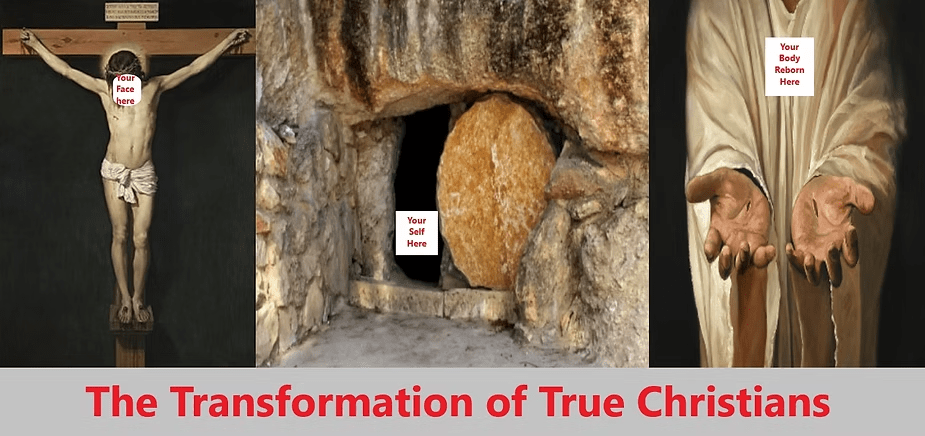
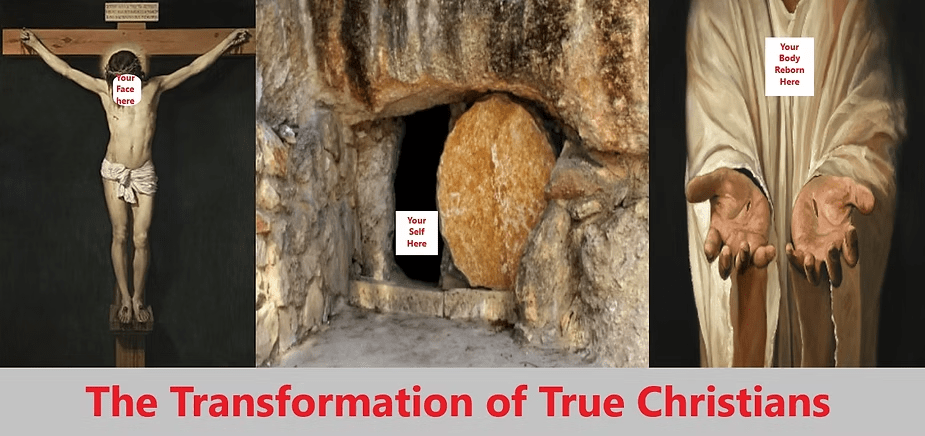





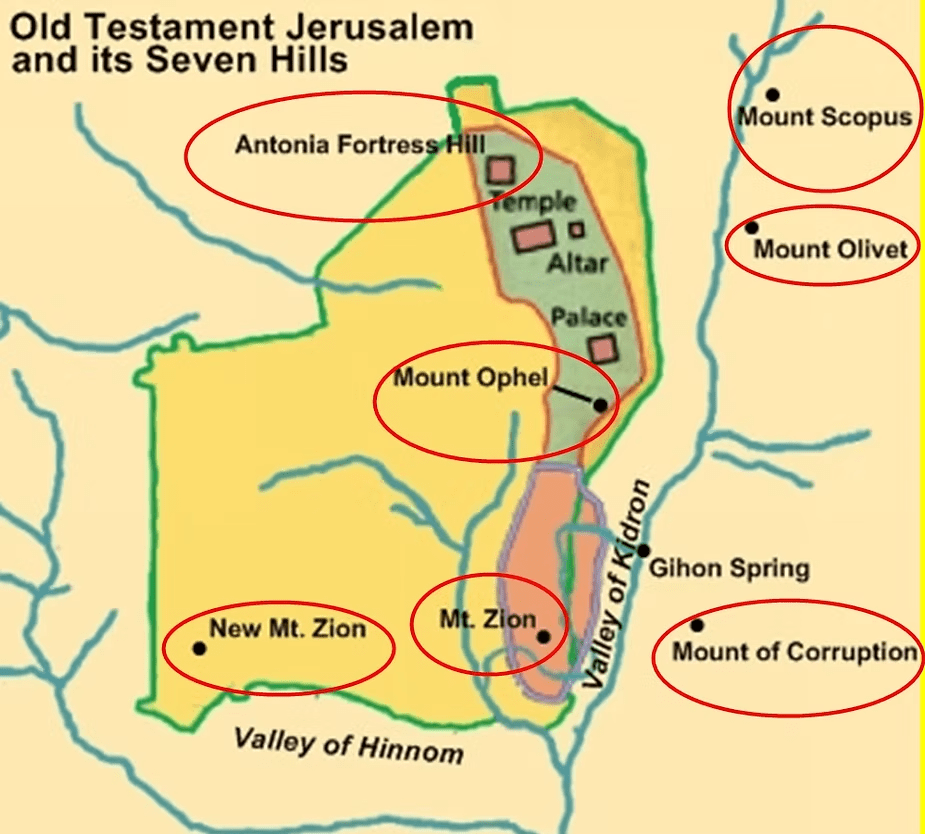
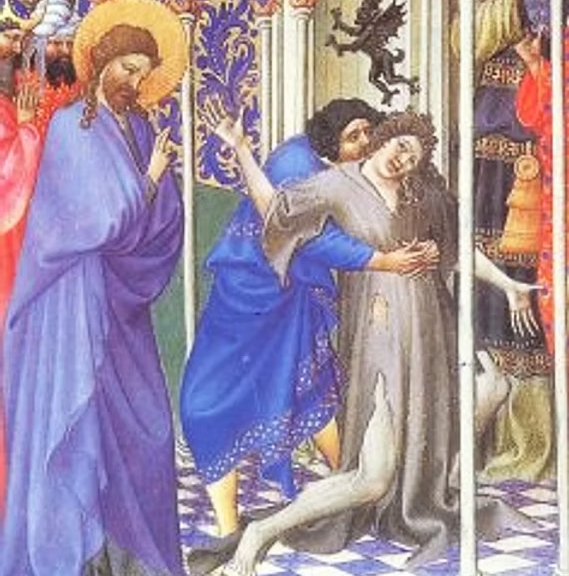
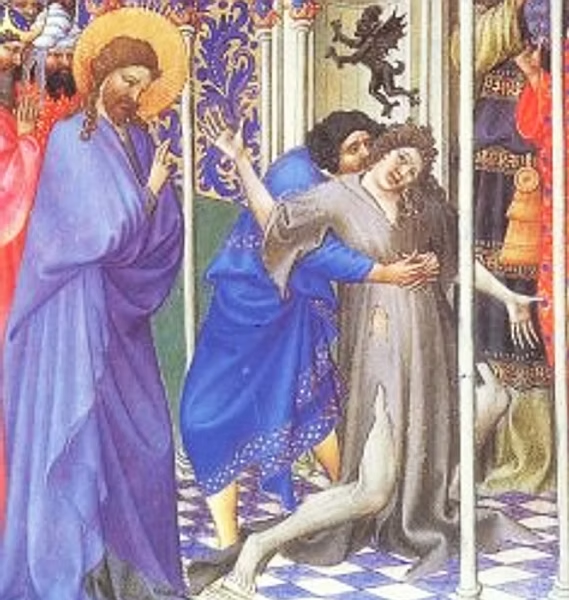
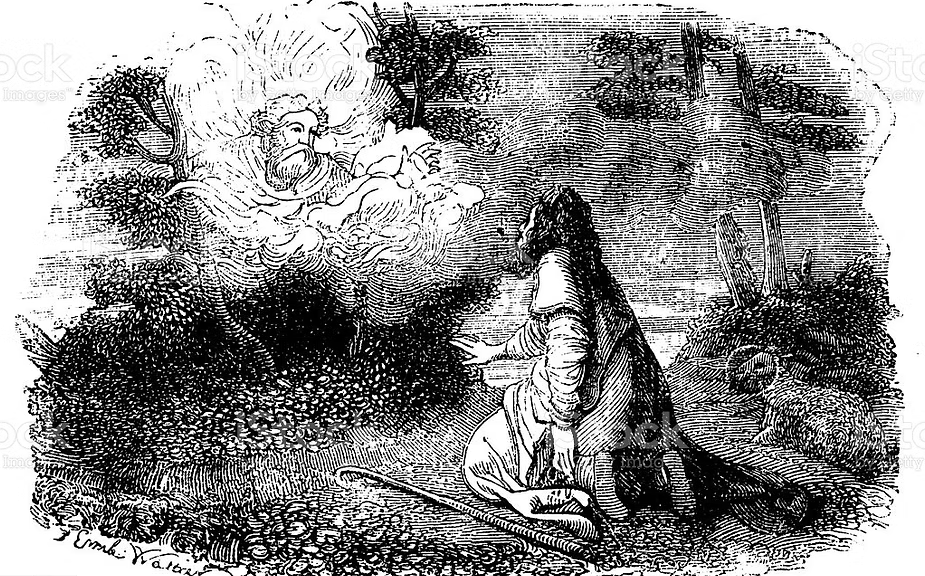


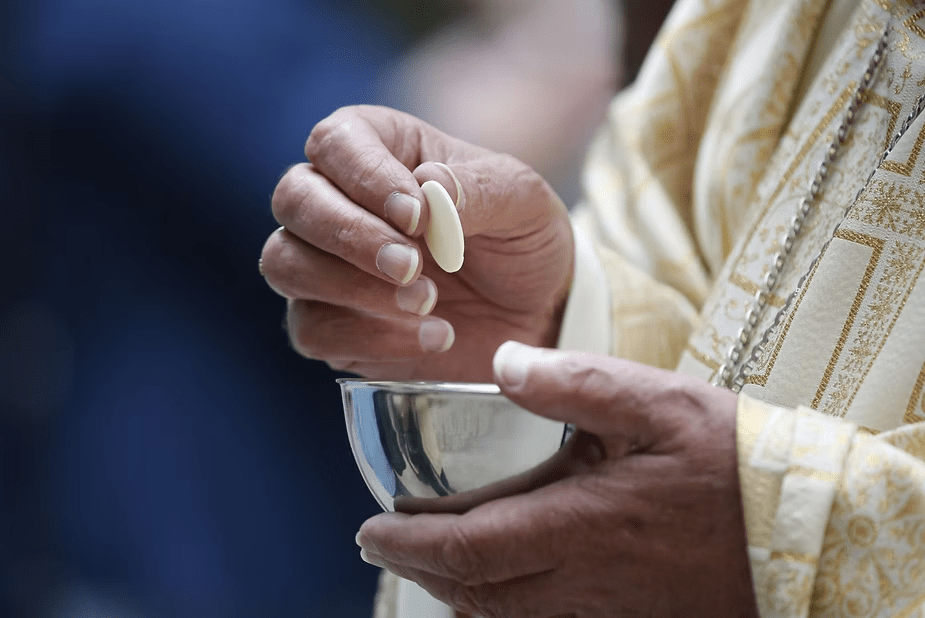
 Explaining the Readings