Category Archives: Teaching

Matthew 21:23-32 – The authority to be a reluctant yet obedient son or a liar versed in expected answers [Seventeenth Sunday after Pentecost]

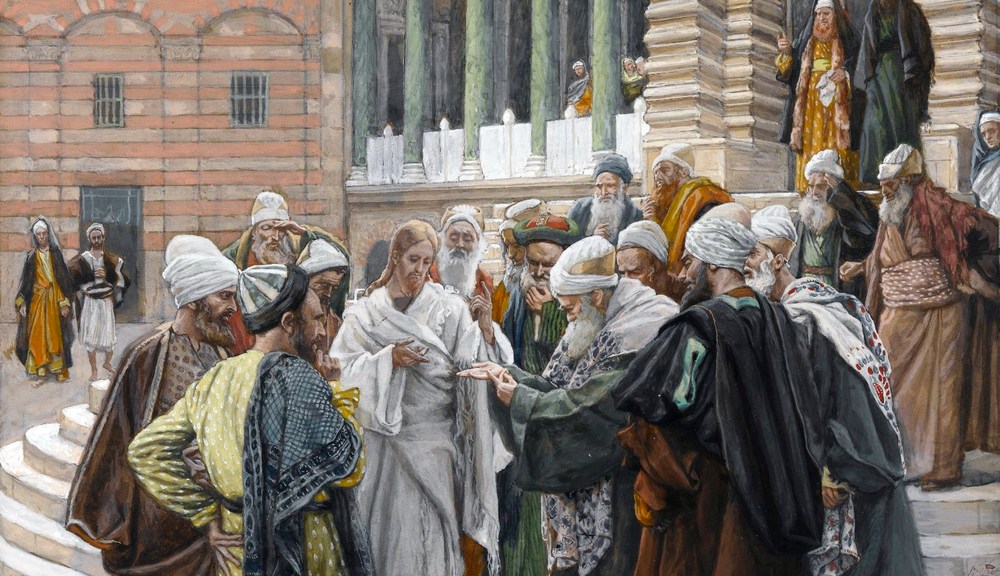
When Jesus entered the temple, the chief priests and the elders of the people came to him as he was teaching, and said, “By what authority are you doing these things, and who gave you this authority?” Jesus said to them, “I will also ask you one question; if you tell me the answer, then I will also tell you by what authority I do these things. Did the baptism of John come from heaven, or was it of human origin?” And they argued with one another, “If we say, ‘From heaven,’ he will say to us, ‘Why then did you not believe him?’ But if we say, ‘Of human origin,’ we are afraid of the crowd; for all regard John as a prophet.” So they answered Jesus, “We do not know.” And he said to them, “Neither will I tell you by what authority I am doing these things.

“What do you think? A man had two sons; he went to the first and said, ‘Son, go and work in the vineyard today.’ He answered, ‘I will not’; but later he changed his mind and went. The father went to the second and said the same; and he answered, ‘I go, sir’; but he did not go. Which of the two did the will of his father?” They said, “The first.” Jesus said to them, “Truly I tell you, the tax collectors and the prostitutes are going into the kingdom of God ahead of you. For John came to you in the way of righteousness and you did not believe him, but the tax collectors and the prostitutes believed him; and even after you saw it, you did not change your minds and believe him.

——————————————————————————————————–

This is the Gospel reading from the Episcopal Lectionary for Year A, Proper 21, the seventeenth Sunday after Pentecost. It will next be read aloud in church by a priest on Sunday, October 1, 2017. This in an important lesson because it addresses who has God’s approval to shepherd His flocks.

This reading reminds me of my experience at a seminary school. I was not a seminarian (my wife was), but I socialized with them at school functions and in the neighborhood housing arrangements. I saw several glaring problems with the whole system of educating priests (too many to get into now), but the statement, “the chief priests and the elders of the people came to [Jesus] as he was teaching, and said, “By what authority are you doing these things?” hit home for me.

I was writing books back then, which explained how to read Nostradamus, so that what he wrote can be understandable. Nostradamus can be seen as John the Baptizer, as “the chief priests and elders of the people” have not believed as I believe – that Nostradamus was a prophet of Jesus Christ. Because I fully believe that, I cannot hold my tongue about that belief.

When asked, “What do you do?” I told seminary students about Nostradamus. I told some teachers about Nostradamus. I even told some invited guest speakers coming to that school (whom I picked up or took back to the major airport nearby) about Nostradamus.

It was like I asked them all, “Do you believe The Apocalypse of John of Patmos is similar to The Prophecies of Nostradamus?”  It was like I posed the question, “Whose authority did those books come from: Prophet of Christ or Charlatan?”

Some wanted to shun me forever; but some were patronizing.  It was as if their minds were calculating, “If we say, ‘Prophet of Christ,’ he will say to us, ‘Why then did you not believe him?’ But if we say, ‘Charlatan,’ we are afraid we might be talking to an unstable, dangerous person.”  They all seemed well-versed in the “smile and nod” reaction to uncertain situations.

My amazing ability to understand Nostradamus was a gift given to me by God. There can be no other explanation for that talent.  I was the last person on earth who I figured would be able to understand Nostradamus; but I was led by a higher power, and not simply to understand his cryptic writings.  I found that I was able to apply the same systems applicable to making sense of Nostradamus to everything in the Holy Bible. That syntax is God’s, as His Holy Language … Speaking in Tongues not taught in schools.  So, it applies to everything He had His people write for Him.

There really are no authorities that grant doctorates or even bachelor’s degrees about the meaning of Nostradamus; so if I am seen teaching about his writings, authority figures have no reason to confront me. They just snicker and poke each other.  However, since I have been allowed to put Nostradamus on the back burner (so to speak), due to carpal tunnel in both wrists from writing so much, I have been encouraged to write Biblical interpretations. That will attract some frowns and questions by the religious elite.

What school did you attend to learn that? What scholastic volumes of books have you read and footnoted, while preparing properly detailed papers and dissertations that have been argued before expert authorities? How many reputable scholars can you quote in support of your views?

I will answer your questions, if you let me ask you one first. If you can answer that, then I will answer your question.

What seminary did Jesus and his Apostles attend? The same one begun by Moses in the wilderness, or a different one?

When Jesus said, “Neither will I tell you by what authority I am doing these things,” we all know he was authorized by God the Father. We know because he said that a few times, as noted in the Gospels.

“Very truly I tell you, the Son can do nothing by himself; he can do only what he sees his Father doing, because whatever the Father does the Son also does.” (John 5:19)  “ Then Jesus said to them, “When you lift up the Son of Man, then you will know that I am He, and that I do nothing of Myself; but as My Father taught Me, I speak these things.” (John 8:28)  “For I did not speak on my own, but the Father who sent me commanded me to say all that I have spoken.” (John 12:49)

The original plan was to have ALL the Israelites be ordained priests for YWHW. When Moses first took them on a 40-year hike, you have to look at the Israelites as babies and infants, because they were incapable of doing anything on their own. Forty years of rote memorization of the laws was priestly training that was more like children’s church on Sunday mornings. They just learned the stories, but the deep meaning escaped them.

When the Israelites were supposed to be priests for YHWH in the Promised Land, they were like teenagers under the Judges – always backsliding and getting into trouble, while having to be bailed out time after time. They entered the rebellious age.  By the age they asked for a king, “to be like other teens,” they were like young adults who no longer lived by the rules of their parents. But, by the time Israel and Judah fell in ruin, led by politicians whose only god was self, they were like twenty-somethings with arrest records. All their promise was washed away.

By the time the Jews had formed from those Israelite ashes and been released from Babylon, they were like thirty-somethings, who were “street smart.”  You could say they had become charismatic, prison ordained street preachers. That was who Jesus ran afoul of in Jerusalem. It was them acting with the know-it-all of young adults – their audacity – that made them the priest police.

In the parable-like question that Jesus posed to those learned men of the Law. both sons sinned against the father. One refused to go at first, but then thought about it and went (to stay out of trouble). The other said he would go, but flat out lied – a sin against his father. However, the one who refused, but then changed his mind, he was easier to forgive.

This lesson is no different than the one Jesus taught when observing the Pharisee and the Publican in the Temple. When Jesus said here, “Truly I tell you, the tax collectors and the prostitutes are going into the kingdom of God ahead of you,” this is not saying the son who lied by saying “No,” but then did “Yes,” is the exact same as a prostitute or tax collector (Publican). Saying “No,” and then thinking about it, before acting, put him in the same boat. Both were sinners, so unless change comes, both are forbidden from heaven.

What Jesus was really saying was, “You Law police fellows are too full of yourselves to ever realize you are going in the opposite direction of heaven.”
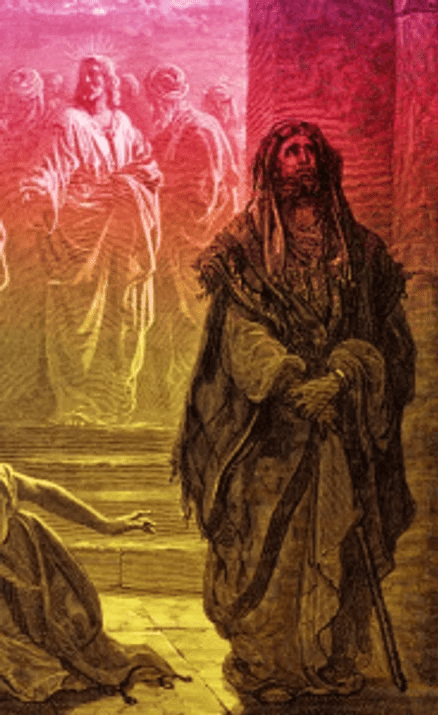
Thank you God for making me holy and not like the riffraff of the world. This is the pretense of a priest who knows nothing of spiritual matters.

At least the tax collectors and prostitutes are aware of their sins. They just can’t see how to stop sinning, in a world that forces sin upon everyone.  That is where a good teacher – such as John the Baptizer and Jesus – can get the losers to stop being a loser and change.

When the Pharisees and high priests see good teachers like that, they want to hurl stones at them. They certainly don’t want to pull up a chair and listen to what good teachers are saying. They might learn something then.  However, whose authority determines who the good teachers are, without a sheepskin to prove one has that approval?

Remember when Jesus said, “Watch out for false prophets. They come to you in sheep’s clothing, but inwardly they are ferocious wolves.” (Matthew 7:15)  That was the Pharisees wearing clerical robes, and what was then has always been and will continue to be.

This is why I see Christianity turning into a cesspool of teachers. It is not that all the sordid pieces and parts of waste in a cesspool were made for that ultimate purpose. Waste is the degradation of value.  What goes in good is split in two: the unseen nourishes, while the residue usually does not pass the smell test.  That gets flushed with good water.  It is just that when you mix the bad in with the good water, the good water has to be purified before it can be good water again.

A couple of years ago, my wife (a priest now) followed a bishop of another diocese on Facebook. She liked a few of his sermons that he posted on his website. He wrote one about the lesson of the Tax Collector and the Publican (Luke 18:9-14), which was uninspiring to me.  It was what I call out of the “puppy mill” of sermons. What priest has stood in the pulpit and looked at the smiling faces of tithers in the pews and not said the message of the Pharisee and the Publican was, “The sinners of the world have hope, because they are closer to heaven than those who think they have it made”? (The same sermon that can be preached about the two sons who disobeyed the father.)

That bishop published a sermon that had nothing new in it. What is the lesson of “being closer to heaven than some other guy,” if the sinners never hear a good teacher tell them how to “get to heaven.” Jesus was giving a sermon that said YOU bishop (and every priest who cannot see him or herself in this story) are the Pharisee in that story.  Forget about the obvious sinners, because it is YOU who Jesus said is farther away from salvation.

Telling those who feel guilt about their sins, “Have hope!  Keep coming here and I will keep telling you to have hope!” they will always come back for more of the same sermons.  But, who wants to stay in a pew when the priest says, “Jesus was pointing out how far away from heaven I am. But hey, who gets to heaven anyway?”

That’s entertainment, not a good shepherd.

A good sermon would be a true Apostle (like were Peter and Paul), who stands in front of a group of attentive sinners, all of whom want to hear how to stop sinning, and admit they too were sinners … sinners who changed.

In a good sermon the priest says, “I was the Pharisee in this story. I was farther away from heaven than you people are now; but I saw myself and felt ashamed. I had lied to the Father when I went into the priesthood. It was all about me being holier than thou. I was young and stupid and thought learning about religion would make me holy.  Therefore, I raised my arms to the sky and thanked God for giving me a sweet job that has so many fringe benefits.

Then I realized all my work had been only for me, even when I made it seem like I was helping others. I was only imagining I was working in the vineyard, when I was simply tasting the wine. I want to apologize for having not made every one of you self-sufficient priests for Yahweh.

I now speak to the LORD every day and He wants me to teach you the real meaning of the Scriptures, so you can understand by the Holy Spirit and go tell others the truth.  Truth comes not from having learned what someone else knows, but from a love of God that thirsts within one for His knowledge.

Please, I invite each and every one of you to join me in Bible Studies and fellowship, so our love of God branches out and produces fruit. Amen”

I made a post on that bishop’s blog, which suggested this alternative view … politely, in different words than here above. While he politely responded to my post, it was another example of people not really hearing what is being said or not being truthful about what they heard. He wrote back something like, “But who would be left in the pews, if I told them that?”

Wasn’t that the point when Moses freed the Israelites from Egypt? At some point the baby has to grow up, the student has to graduate from school and get a job. God didn’t free cradle to grave sons that say, “Yes sir! I’ll be working in that vineyard bright and early!” who then never do.

Did He?
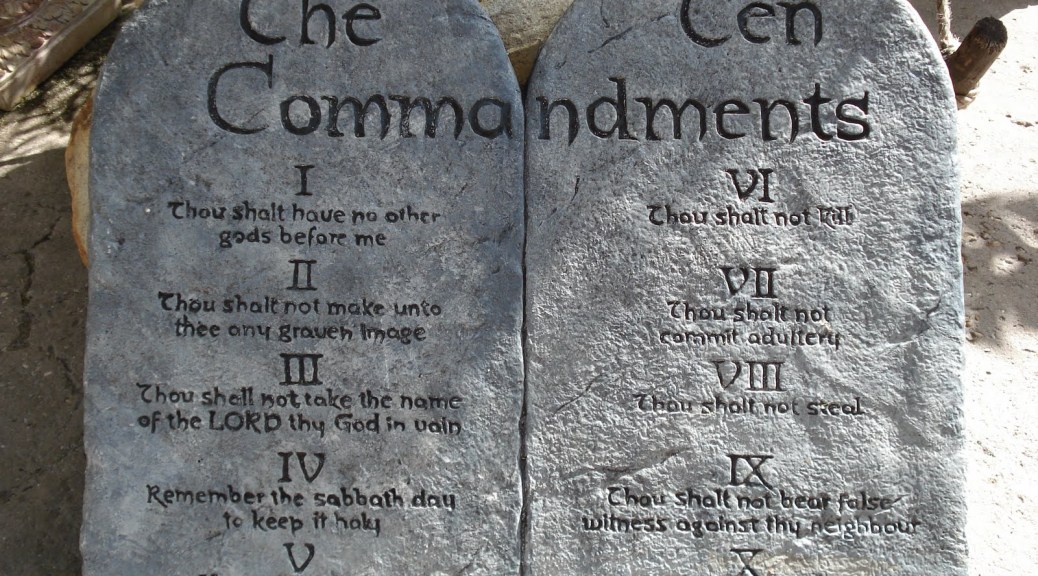
Exodus 20:1-4, 7-9, 12-20 – The Ten Commandments are the marriage vows between one’s soul and Yahweh [Eighteenth Sunday after Pentecost]

Exodus 20:1-4, 7-9, 12-20

“Then God spoke all these words:

I am the Lord your God, who brought you out of the land of Egypt, out of the house of slavery; you shall have no other gods before me.

You shall not make for yourself an idol, whether in the form of anything that is in heaven above, or that is on the earth beneath, or that is in the water under the earth.

You shall not make wrongful use of the name of the Lord your God, for the Lord will not acquit anyone who misuses his name.

Remember the sabbath day, and keep it holy. For six days you shall labour and do all your work.

Honor your father and your mother, so that your days may be long in the land that the Lord your God is giving you.

You shall not murder.

You shall not commit adultery.

You shall not steal.

You shall not bear false witness against your neighbor.

You shall not covet your neighbor’s house; you shall not covet your neighbor’s wife, or male or female slave, or ox, or donkey, or anything that belongs to your neighbor.

When all the people witnessed the thunder and lightning, the sound of the trumpet, and the mountain smoking, they were afraid and trembled and stood at a distance, and said to Moses, “You speak to us, and we will listen; but do not let God speak to us, or we will die.” Moses said to the people, “Do not be afraid; for God has come only to test you and to put the fear of him upon you so that you do not sin.”’

—————————————————————————————————

This is the Old Testament selection from the Episcopal Lectionary for Year A, Proper 22, the eighteenth Sunday after Pentecost. It will next be read aloud in a church on Sunday, October 8, 2017. It is quite important because this is what Christians call the Ten Commandments.

As a disclaimer: There can be no “pencil-whipped,” Cliff Notes explanation of this reading, as the Ten Commandments stands as the cornerstone of Judaic-Christian beliefs. This article of interpretation is therefore of some length, simply because it addresses each Commandment. Because a standard Episcopalian sermon is between ten and twelve minutes in length, one can expect the totality of time spent on this Old Testament reading selection will be the time the reader puts into reading it. At most, a priest might gloss over one or two laws, to suit the points of a sermon hammered solidly to the Gospel (after all, Christians aren’t Jews, so no need to spend a lot of time on the Law). This posting might be the only time some people will have any of this explained.

With those added words set into the word count, let me begin.

———-

A few things are important to realize before digging deeper into the meaning found in these selected verses (skipping a few between verse 1 and verse 20).

First, the Jews laugh when they hear Christians talk about “the Ten Commandments.” Statues have been removed from courthouse lawns that condense this reading to “10 easy steps to living holy.” The Jews recognize that Moses brought down 613 commandments.

Second, Moses did not come down the mountain and send out messengers to all nations of the world, telling them the news of laws that must be adopted universally. That inaction means ALL of the Laws of Moses (God’s Commandments) are directed at His priests, and only to those who were to be totally freed from the “house of slavery” – life in a world that allures with sin.

This means God was (and is) quite aware that: 1.) There are other gods mankind serves; 2.) Idol worship is normally accepted around the world; 3.) People everywhere play the “god card”; 4.) Some people like to play golf on Friday, some Saturday, and some Sunday, with all calling that their holy day; 5.) Everyone has a mother and father, even if everyone has not personally met them; 6.) Humans love to kill just about anything that moves; 7.) People love sex, in all forms; 8.) People love to have what others have, even if they cannot afford it; 9.) People commonly lie to protect their behinds from punishment; and 10.) People everywhere always think someone else has more than them.

In other words, God knew the world more commonly served Satan (Beelzebub, Baal, Lucifer, etc., etc., by many other names), so the males and females created by God regularly did what displeased YHWH, making Him turn His back to the world in general.   But, to save that world, God was laying down the Law only for those who would serve Him in that effort towards Salvation.

Third, these laws of God, sent down by Moses, were given to the Israelites who had followed Moses to Mt. Sinai, but they always apply to those who wish to enlist their services to the LORD. The Jews (of Jesus days and of today) follow these rules religiously (meaning they know when they have broken one or all). Christians (who have delighted in killing Jews in the name of the Jesus – a sin, as listed above) enjoy the fact that they are not Jews, so they can trim down the 613 laws to just ten (while retaining the holy right to amend and adjust the penalties stated by God, through Moses, as they see fit). Jesus, however, made it clear the Law is fixed and just the first step to being a priest for God, when he said, [After obedience to the Law] “sell your possessions and give to the poor, and you will have treasure in heaven. Then come, follow me.” (Matthew 19:21)  So, if you cannot live up to Ten Commandments, you might as well find another god to openly serve.

With those basic realizations grasped, it is next worth looking at what is actually written, versus the English translations that are posted above and will be read in churches.

For the First Commandment, the Hebrew of verse 3 is: “lō yih·yeh- lə·ḵā ’ĕ·lō·hîm ’ă·ḥê·rîm ‘al- pā·nā·ya.” Literally, this translates to state, “Not (lo) you shall have (yih·yeh-) to you (ḵā) gods (’ĕ·lō·hîm) other (’ă·ḥê·rîm) before me (‘al-) the face of (pā·nā·ya).” (Bible Hub Interlinear) When this is translated into English as saying, “You shall have no other gods before me,” an important element is lost – “the face of” (pā·nā·ya).

Certainly, a priest serving YHWH can have no other gods that he, she, or it holds in higher accord than the One God. In fact, I have met people who (supposedly) educate people for Christian ministry, who vehemently deny there are any other gods. They translate “elohim” as “God” (singular capitalized), when it is the Hebrew plural form of “el,” meaning “gods.” Genesis’s first chapter is filled with references to “gods” (“elohim”) acting during the Creation, but all those references have been lost in translation, so we learn: “God” did this and “God” did that.

True. God WAS … before the Creation. Therefore, “In the beginning [it was God who had] gods created.” YHWH made and then commanded little-g gods to do everything; and, this proves there are many other gods around (angels and Satan being a couple of examples of non-human spiritual entities … gods).

Sure, the First Law says do not worship any other gods; but isn’t that too simple? Doesn’t every Judaic-Christian believer get credit for that one (well, except the 51% of people in the 2010 U. S. Census who claimed their religion to be “Jew”, but then checked the “no” box asking, “Do you believe in God?”)?  Still, doesn’t every believer believe only in God?
The answer lies in “panaya” – “the face of.” That answer says, “It is not that simple.

While the English translators (and probably the Hebrew translators, way back to the time of origin?) see this as something like colloquialism, where “before me the face of” was an ancient way of overstating “before, above, over” God, whom all servant-priests must face. However, “panaya” (according to Brown-Driver-Briggs) “literally [means] [faces] of Man,” as found stated in “Genesis 43:31; 2 Samuel 19:5; 1 Kings 19:13; Leviticus 13:14; Daniel 8:18; Daniel 10:9, 15 +; ׳עוֺר”.

This says, Man thinks of himself or herself as just as important in the worldly scheme of things as is God. Humans can say they have no other God they believe in “above God,” but then they say that wearing that sinful “face” of himself or herself, when they plead “before God.”  Man has proven to be too full of itself to bow down “before God’s face,” so God’s face cannot be then reflected back at God, from the bald scalp of Man having self-sacrificed.

In Jesus message terms, the First Law goes beyond memorization of the words and continues on to giving away everything that keeps you bowing down before self, until you then follow in the ways of Jesus, as Jesus reborn, with the Christ Mind.  We know this because “Jesus said to his disciples, “Whoever wants to be my disciple must deny themselves and take up their cross and follow me.”‘ (Matthew 16:24)

A hint at how this is the correct meaning intended to be honored, I recommend reading the end of Exodus 19, as God told Moses a few things that are relevant here:

“So Moses went up and the Lord said to him, “Go down and warn the people so they do not force their way through to see the Lord and many of them perish. Even the priests, who approach the Lord, must consecrate themselves, or the Lord will break out against them.” Moses said to the Lord, “The people cannot come up Mount Sinai, because you yourself warned us, ‘Put limits around the mountain and set it apart as holy.’” The Lord replied, “Go down and bring Aaron up with you. But the priests and the people must not force their way through to come up to the Lord, or he will break out against them.” So Moses went down to the people and told them.” (Exodus 19:20b-25, NIV)

Moses and Aaron were holy (“consecrated” means that, as “sacred”). The mountain of God is therefore the Law. “Do not force your way through to see the LORD” means do not say you obey the Law, when you really do not understand it as non-consecrated plebes. “Even the priests, who approach the Lord, must consecrate themselves,” which applied to the elders then, the ones in the days of the Pharisees, and the ones who call themselves Rabbis, Pastors, Ministers, and Priests today. Just because you have a following that makes you feel mighty important, do not approach God wearing that face; “or the Lord will break out against you.”

Hint: One can only be sacred when a divine presence has joined with one’s soul. Moses and Aaron were so divinely possessed. Their souls were possessed by the soul of Jesus (a name meaning “YAH Saves“); and, that union is eternal. This means when alive in a body of flesh, one has forever submitted to serve Yahweh; and, Yahweh has sent His Son Jesus to forever keep one from breaking the marriage vows. So, when one dies and one’s soul goes “before” Yahweh, one will always wear the “face” of the Father, through the Son. First Commandment, therefore, demands this self-sacrifice to marry Yahweh and become His bride, as well as the ‘mother’ soul to His Son reborn.

If you have read this far and are thinking, “Wow! So many words on just the First Law! I don’t know if I have the time to read the rest,” then keep in mind how Jesus said, “’Love the Lord your God with all your heart and with all your soul and with all your mind. This is the first and greatest commandment. And the second is like it: ‘Love your neighbor as yourself.’ All the Law and the Prophets hang on these two commandments.” (Matthew 22:37-40, with similar in Luke 10:27; Mark 12:30-31) The following nine Commandments are relative to loving God and loving your neighbor as a God-loving you (consecrated, holy, sacred, and Saintly Apostle).

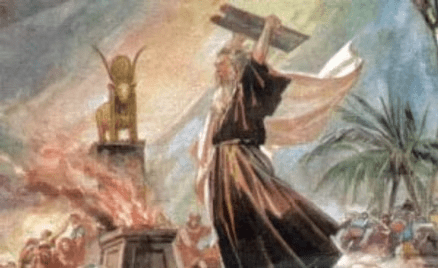
When you read the Second Commandment, ask yourself, “Have I ever watched American Idol?” We read this and think of the Golden Calf the Israelites made, when we never once think of our worship of idols and heroes, politicians and ministers, as being what God instructed against. America’s knees are flat from bowing down to movie stars, singers, activists and protesters, and even sweet Jesus himself.

I imagine it was the Holy Roman Emperor who saw the fish symbol (Pisces = sacrifice) and said, “Scrap that! Make the cross the symbol of Roman power and might. Hang a Jesus on it and put it around the necks of every Roman Catholic … and charge a pretty denarii for it!” This too is a graven image that is in the “form of earth,” as the instrument that killed the body of Jesus, even though it became an earthly symbol of his soul’s release to heaven.  In its precious metal presentation, a cross is an idol.

[Aside: The cross, as a symbol of death and destruction, is as pagan as a Roman temple to Pluto.  The holiness of a cross symbol comes through seeing it as representative of the Trinity: Horizontal (God) + Vertical (Son) + Intersection (Holy Spirit).  Each Christian must be that cross of the Trinity.  The presence of that Intersection makes each Christian be Jesus resurrected; but he sure ain’t hanging dead on it.  You are!  You cannot be reborn as Jesus with the Christ Mind while still being a living ego trying to control things in your world.]

The Third Law does not mean “Do not cuss like a sailor, using God as a word in that process.” This is actually why Jesus had such a problem with the Pharisees and Temple scribes and priests. They were using the name of God as a way to get rich and as a way to condemn those who challenged their racket. They used the Lord’s name in vain every time they said, “I condemn you in the name of the LORD!” Today, a whole lotta ministers go around saying, “I rebuke you in the name of Jesus Christ!” It is great theatrics; but God is not pleased when His name is tossed about like that.

The Forth Commandment seems like all a believer has to do is go to church on Sunday (a Christian Sabbath … not). The Jews who returned from exile, self-flagellating themselves for having strayed so far they lost their valuable property, made it a well-monitored rule that no one could do anything on the Sabbath, except walk to the synagogue and walk home. That is more than the Christian view of getting a day off work on Sunday, with attendance in a church optional. My deceased mother turned to watching religion on television, rather than go to church. She was not alone.

What is missed in this Law is the part that says, “For six days you shall labor and do all your work.” As a priest of YHWH, what “work” is that which makes one consecrated? Selling Ponzi scheme stock options, or used cars, or life insurance, or practicing being someone one is not, as an actor in the movie industry does? If one is going to be a priest for the One and Only God, the work required is 24/7 practice being His servant. He might want you to shear a sheep or hammer some nails and sweat a lot in the sun; or, He might want you to raise children right or tend to the elderly and sick.  You just get to stay home on the Seventh Day and eat the manna that God provided the day before and thank God He leads you in your labors.

Intermission: I know this is a long article, but what can be better than spending a whole Sabbath looking at the opinions of others and expanding you own views of the truth. Interpreting Scripture should be fun and uplifting, when one’s mind is seeking to be consecrated. After all, the Law comes from sacred ground, so take off your sandals and let the Holy Spirit guide your thoughts for a few hours. Remember, it is not what I think and write that matters. It is what you think and do that leads to Sainthood. That takes more work than one day a week can satisfy.

———-

When Law number five says, “Honor your father and your mother,” it does not mean draw a picture for the refrigerator for mom, or let mom tell you which tie to pick out for dad, two days a year. It does not even imply that you have parents worthy of any kind of respect. The Hebrew word “kab·bêḏ” means, “to be heavy, weighty, or burdensome.” Thus, you “honor” your parents by taking on the same “burden” they took on when they began cleaning up your messes as a baby. It means to be fruitful and multiply; but the true “honor” is to teach your children to serve the LORD, like you were taught (Charles Manson, et al, excluded).

The Sixth Commandment, “You shall not murder,” is one of those that Americans struggle with, especially those who want to have the government make it illegal for Americans to get their hands on guns and shooting anything that moves (forgetting that humans can kill with their bare hands and anything that fits into them can make killing easier). Cain used a rock, we think. On top of that, Americans think it is murder to execute someone who actually did murder, so there is less effect that law will keep anyone from murdering. Beyond that, Americans argue “murder versus kill,” and try to justify war, if certain criteria are met … none of which has anything to do with loving your neighbor like yourself.

If you are consecrated, you don’t go looking to kill anyone in any way. You do not love a country more than God, so some politician or general cannot order you to, “Go kill in the name of us.” Just don’t kill, unless God blesses you with an Ark and an order to do so. Then be prepared to die for God.

Here lies a true conscientious objector.

With the Seventh Commandment we come up with adultery, which is the human urge to have sex without planning to propagate. “Adultery” is a word used to denote (especially a man) having extramarital sex; still, Ezekiel, Jeremiah, and Isaiah used this same word (“naaph”) as figurative when a priest of YHWH cheats on Him (an indication that a priest is the wife, regardless of human gender). Still, as a word in English, the root word is “adult,” which makes the intent be related to those urges that begin at puberty, which usually results in getting married and making babies. However, adults who are led by their groins and sensuality will rub on anything, kind of like human hands love to grasp powerful instruments of death.

As such, “Do not commit adultery” means do not have sex with anyone and everyone prior to marriage.  It also means do not have sex with anyone other than your spouse after marriage.  It also means do not have sex with yourself.  It also means do not have sex with someone of the same sex (where making babies is impossible).  It also means do not have sex outside your own species.  It also means do not have sex with minors.  It means once you become a mature human being you have uncontrollable physical urges.  Congratulations!  You are normal; but normal and being sacred are two different creatures.

Again, I know this sexual limitation is almost impossible for anyone between the ages of 14 and 84 to comply with; but the point of consecration is why Paul wrote, “”It is good for a man not to have sexual relations with a woman.” (1 Corinthians 7:1). Sex becomes like one of those gods that likes to stand between you and God, when it is Face Time. That is why Jesus said, “And if your right hand causes you to stumble, cut it off and throw it away. It is better for you to lose one part of your body than for your whole body to go into hell.” (Matthew 5:30) The hand causes adults to stumble when it strokes those sensual parts of the body.

For the Eighth Law, “Thou shalt not steal,” the element of adultery implies consent with another adult, and what seems stolen from a spouse is really still there (just missing the heart part). This command is then relative to the material world and innate human lusts for things and gadgets. The people of Israel and Judah who owned land and grew crops were supposed to allow 10% of their crops (the outer fringes) to be for the needy. The needy were going to take what they needed, just to survive; so, one loves a neighbor by allowing one to take freely what one needs, rather than deny them that right. Denial would make them steal for it, because food is a necessity.  That is a way to love your neighbor as yourself.

This means stealing is relative to excess, or taking more than you need. That can mean taking that which is not yours to take; but that can also mean taking that which should be left for someone else. After all, how many billions of dollars does one need to live comfortably within the Law?

The Ninth Commandment then addresses bearing false witness against your neighbor. This is certainly meaning not to badmouth someone behind his or her back, where sowing the seeds of hate, in hopes of personal benefit, are a long way from being consecrated. I see it more as a warning to stay out of court as much as possible. Stay away from the “sue me sue you” mentality, especially as it has become such an easy way to make a profitable living – easy money. If you are called to witness in a trial, tell the truth – and that means no paid experts who are willing to twist the truth into a knot that benefits the highest bidder.

It is not coincidence that the Pharisees were Lawyers.  Their law practices dealt with the Laws of Moses exclusively.  Then, as now, lawyers are very closely related to the eighth No-No, stealing.  Middlemen, like people who charge interest on loans (Usurers), are like lawyers and advertisers who stir up business by promoting people bearing false witness.  (“I’m not a doctor, but I play one on TV.”) These are the people who say, “I’ll get you $100 and all you have to do is nod “yes” when I point to you.”  Then, after you follow those instructions, he gives you $50, saying “$40 goes to me and $10 to the court.”  Then you feel dirty and used … like an adulterer that has been robbed.

Finally, the Tenth Commandment is about coveting, which is all about jealousy and envy. As far as priests for YHWH go, if your mind is on what someone else has, what someone else looks like, or how important someone else seems to be, you are not serving the LORD. As the song sang, “Don’t worry, be happy,” you can only do that when you wear sacred blinders.  God will provide everything you need.  Everything beyond that is not yours for a purpose.  So, deal with it.  It is your test.

In conclusion, The Israelites “said to Moses, “You speak to us, and we will listen; but do not let God speak to us, or we will die.” Moses said to the people, “Do not be afraid; for God has come only to test you and to put the fear of him upon you so that you do not sin.”’ This point means it is so very easy … normal, common, expected … to let someone else be consecrated. Getting close to God is frightening, simply because of all the worldly things you like to do having a damper be put on them. However, that is just a typical fear of those who are addicted to the worldly.  The holy have no fears.  The consecrated can enter hallowed grounds.

Those fears are erased when you start to take the test and realize, “this is easier than I thought.” When the Holy Spirit comes everything is possible. The Holy Spirit is a reachable goal, just like Mount Sinai was. However, as is stated in Exodus 19, Moses set “limits around the mountain [to] set it apart as holy.” (Exodus 19:23b). It is the Law that forms those boundaries.

Philippians 3:4-14 – Confidence in the flesh offers little towards faith from the Spirit [Eighteenth Sunday after Pentecost]

“If anyone else has reason to be confident in the flesh, I have more: circumcised on the eighth day, a member of the people of Israel, of the tribe of Benjamin, a Hebrew born of Hebrews; as to the law, a Pharisee; as to zeal, a persecutor of the church; as to righteousness under the law, blameless.

Yet whatever gains I had, these I have come to regard as loss because of Christ. More than that, I regard everything as loss because of the surpassing value of knowing Christ Jesus my Lord. For his sake I have suffered the loss of all things, and I regard them as rubbish, in order that I may gain Christ and be found in him, not having a righteousness of my own that comes from the law, but one that comes through faith in Christ, the righteousness from God based on faith. I want to know Christ and the power of his resurrection and the sharing of his sufferings by becoming like him in his death, if somehow I may attain the resurrection from the dead.

Not that I have already obtained this or have already reached the goal; but I press on to make it my own, because Christ Jesus has made me his own. Beloved, I do not consider that I have made it my own; but this one thing I do: forgetting what lies behind and straining forward to what lies ahead, I press on toward the goal for the prize of the heavenly call of God in Christ Jesus.”

——————————————————————————————————–

This is the Epistle selection from the Episcopal Lectionary for Year A, Proper 22, the eighteenth Sunday after Pentecost. It will next be read aloud in church on Sunday, October 8, 2017. It is an important message from Paul, an Apostle and Saint, that says nothing of this world is worth sacrificing one’s soul for.

When Paul wrote, “If anyone else has reason to be confident in the flesh, I have more,” he wrote of the false assurances one thinks one has because of following the orders of Man (those in religious robes). When Paul then went on to make statements about his devotion as a Jew – a member in the “God’s Chosen People Club” – this should be taken (in our modern “Christian” times) as though Paul spoke for you.

Imagine Paul knows you as he knew himself. See him writing as if he knows your claims of the flesh.  A generic statement of your accomplishments might go like this:

“I was placed in a silver bowl full of holy water as an infant, sprinkled by a man (or woman) in a robe, and then placed in a cradle in the church nursery. I earned all gold stars at children’s church (Sunday school). Today I am an adult member of the church with the largest membership in the United States of America. I am a devout follower of the most highly recognized televangelist (or syndicated televised minister or local pastor whose Sunday service is telecast). I also graduated from a school with a revered seminary program (gaining a Bachelor of Arts degree, not a Master of Divinity). I am a regular attendee at my church on Sunday mornings (when not vacationing), with a plaque bearing my parent’s names on the sill of a stained glass window and everyone knows which pew my family sits on. I assist in the setting up chairs in the room where adult Sunday School is held (and sometime putting the chairs back). I am a devoted ten-percent tither, who also donates to multiple national charities. To top that off, I have been certified to assist the priest (or preacher) on the altar, as well as read aloud in church on occasion.”

Paul would say about you, as he said about himself: “As to righteousness under the law, [you are] blameless.”

Still, such resumes do nothing to gain entrance into Heaven, because it is lacking the most important qualification – humility. When Paul wrote about all the boxes he had checked off for righteousness, saying, “Yet whatever gains I had, these I have come to regard as loss because of Christ,” he was blind to what really counted.

If you remember, Paul was named Saul, when he was seen by the people who take notice of such things as being a devoted Pharisee in the service of the Temple of Jerusalem. The “I” was all important to Saul.  Thus he implied, “I was “circumcised of the eighth day.” I was “a member of the people of Israel, of the tribe of Benjamin, a Hebrew born of Hebrews.” I was “a Pharisee.” I was “a persecutor of the church” (Christians). I was “blameless,” because I was somebody important.”

Saul lost his I-sight after encountering the Spirit of Jesus Christ and then became Paul. Can you hear his new Paulian voice saying, “I have come to regard [that] loss because of Christ.”

The presence of the Christ Mind changed him forever, as he lost the I that Saul’s ego was.

“I regard everything as loss because of the surpassing value of knowing Christ Jesus my Lord,” is a statement by a reborn Christ Jesus, named Paul.  That new name comes from the Latin adjective “paulus,” meaning “little or small.” That name symbolizes how such a proud, important, big-ego man lost all that he was, becoming most humble … a little man, as far as his self was concerned.

When Paul went on to write that his change meant he “suffered the loss of all things,” this says big egos are attracted to grand examples of God’s favor surrounding them. So many see worldly success as a sign of God’s approval to the way so many are living.  But, as Jesus told the young rich Pharisee in Matthew 19:21, “Go, sell your possessions and give to the poor … and then come, follow me,” big egos walk away sad, with heads hung down.

Their brains think, “Give up all things? I can’t do that.”

When Paul then wrote that righteousness “comes through faith in Christ, the righteousness from God based on faith,” one has to realize that “faith” can never be rewarded with “things.” True “faith” is belief in intangibles. When “things” come to those who check all the boxes that look good on a resume, their reward of “things” negates a heavenly reward.

When the brain is blind to spiritual rewards, it works just as hard as one of true “faith” does, but all the work done goes to reward self, in just one temporal life. Those works are “confidence in the flesh,” rather than confidence in God.

Righteousness is the intangible reward for true faith, because the presence of the Christ Mind supports the soul, as faith motivating the flesh.  The brain stops plotting what the flesh can do to bring even greater reward in “things.”  The Christ Mind uses that flesh to find more souls who need to see the light … they are motivated to fish for men’s souls.

For Paul to write, “I want to know Christ and the power of his resurrection and the sharing of his sufferings by becoming like him in his death, if somehow I may attain the resurrection from the dead,” this is THE desire for righteousness. Paul’s desire should be mirrored by all Christians.

All Christians want to know Christ, where knowledge is the Christ Mind within (not written in some book or on the pages of some sermon). The “power of his resurrection” is when one changes and is born anew as Christ Jesus. To feel one’s self “sharing his suffering,” one is walking in the footsteps of Jesus AS Jesus reborn, attracting souls and opposition. Thus, one has become “like him in his death,” by sacrificing one’s own self, like changing from Saul to Paul.

That says it is a requirement for everyone – Changing from (your name here) to another who is filled with the Holy Spirit of God, gaining a righteous name (“in the name of Christ Jesus”). The desire has to be there first, for you and all who want to gain the right to Heaven, in order “to attain the resurrection from the dead.”

If you look around you, you will find many souls born of death, simply by being in mortal bodies. They are born to die, over and over again, as eternal souls continually trapped in new bodies of flesh, which can only surround them until death returns. To “attain the resurrection from the dead,” your soul has to be released from this material world cycle.

Only righteousness brings that freedom.

By Paul writing, “Not that I have already obtained this [resurrection from the dead] or have already reached the goal [Heaven]; but I press on to make it my own,” he knew that Apostles are the ones who Satan most tries to lure back into the dead. Satan tempted Jesus in the Wilderness with wealth, fame, and worldly glory; but Jesus told Satan where to go.

The life of a Saint means one of tests and more tests, so one has to press on. The Holy Spirit makes that work be seen as happiness, amid denials of pleasure and the acceptance of suffering.

You cannot make it through the righteousness obstacle course alone. You need Christ Jesus making you his own, just as he made Paul his. That is why the I has to die.  Your ego’s death means God in your heart and Christ leading your thoughts.  Your body becomes another Trinity.  So, although you look alone, you are with good company.

That is why a promising resume cannot be written in the present, as everything in the past has to be forgotten. Straining forward is not the stuff that wins smiles from V.I.P.’s looking for new managers and partners, as suffering means the loss of all one’s old material world references.

The only writing that matters will be a headstone in a pauper’s field that says, “Here lies a fool who gave up everything for others.”

The Fool card symbolizes innocence with faith. Eyes to heaven about to take a leap of faith. He is not concerned about what happens next, as all he knows is, “I can no longer stay here.”

That is the kind of resume God likes. It is the kind that attains “the goal for the prize of the heavenly call of God in Christ Jesus.” And, if you are really good at gaining righteousness, people whose lives crossed your righteous path will write honorable words about the you who you became, when you changed, after you’ve gone to heaven.

Matthew 21:33-46 – Bad tenants give Christianity a bad name [Eighteenth Sunday after Pentecost]

Jesus said, “Listen to another parable. There was a landowner who planted a vineyard, put a fence around it, dug a wine press in it, and built a watchtower. Then he leased it to tenants and went to another country. When the harvest time had come, he sent his slaves to the tenants to collect his produce. But the tenants seized his slaves and beat one, killed another, and stoned another. Again he sent other slaves, more than the first; and they treated them in the same way. Finally he sent his son to them, saying, ‘They will respect my son.’ But when the tenants saw the son, they said to themselves, ‘This is the heir; come, let us kill him and get his inheritance.” So they seized him, threw him out of the vineyard, and killed him. Now when the owner of the vineyard comes, what will he do to those tenants?” They said to him, “He will put those wretches to a miserable death, and lease the vineyard to other tenants who will give him the produce at the harvest time.”

Jesus said to them, “Have you never read in the scriptures:

‘The stone that the builders rejected
has become the cornerstone;
this was the Lord’s doing,
and it is amazing in our eyes’?

Therefore I tell you, the kingdom of God will be taken away from you and given to a people that produces the fruits of the kingdom. The one who falls on this stone will be broken to pieces; and it will crush anyone on whom it falls.”

When the chief priests and the Pharisees heard his parables, they realized that he was speaking about them. They wanted to arrest him, but they feared the crowds, because they regarded him as a prophet.

——————————————————————————————————-

This is the Gospel reading from the Episcopal Lectionary for Year A, Proper 22, the eighteenth Sunday after Pentecost. It will next be read aloud by a priest in church on Sunday, October 8, 2017. It is called “The Parable of the Tenants,” and is important because Christians are the current tenants of the Father’s vineyard.

The context of this parable is it follows the parable of the two sons, which was the Gospel selection for the prior Sunday. When we begin by reading, “Jesus said, “Listen to another parable,” there is no space of time between the two.  Both parables are told to “the chief priests and the elders,” those who questioned Jesus’ authority to teach on the Temple steps.

Additionally, at the beginning of Mathew’s chapter 21, Jesus entered Jerusalem on a donkey with her colt, for his final Passover. So, Jesus was speaking in Jerusalem, prior to his being arrested.  At the beginning of Matthew 26, Jesus said “As you know, the Passover is two days away.” (Matthew 26:2) The day of preparation (Friday) was one of those two days, with Passover Day being on Saturday (Shabbat), the second day away.

The Seder meal (the Last Supper), beginning after 6:00 PM, was thus on the Sabbath eve.  This means Passover (15 Nisan) began on a Shabbat and ended eight-days later on another Sabbath. This means one can deduce how Matthew’s chapters 21 to 25 (and the beginning of 26) were accounts of Jesus’ time in Jerusalem over a four day stretch: Monday through Thursday.

The parables were told to the pilgrims who were gathering in increasing numbers for the week-long festival, and the officials overseeing the festival were also about, checking things out.  Therefore, these stories should be seen as the inspection of the Lamb to be sacrificed.  Jesus made himself publicly available for all to inspect; but Jesus knew the ones who held the slaughter knife would be the ones looking most closely.  The parables told there are how we know Jesus would be found unblemished.

With that understood, look now at the symbolism of a vineyard, one with a fence around it, with a wine press within and a watchtower overlooking. Certainly, that was meant to be seen as metaphor for Jerusalem, which was a beautiful walled city, with a refurbished Temple (credit to Herod) built to the LORD.  Upon its watchtowers, at its gates of entry, were the watchers.  That symbolically meant the watchers of that Temple, who were the high priests, scribes, Sadducees and Pharisees. However, because Holy Scripture is the Living Word, can you see how the same parable is speaking also about modern times and modern places?

Beginning with a focus on the vineyard, this is that of Christianity.  The wine press represents the churches devoted to Jesus Christ.  The fence represents the restrictions (as laws) that mark a nation as obedient to the LORD.  Finally, the watchtowers are manned by those whose job it is to protect the holiness of that vineyard.  We should see them as kings, popes, priests, pastors, ministers, rabbis, and preachers.  Do you see that from this parable?

This means to hear these words as those spoken long ago, about people who have long since died, as a parable to be focused only on a religion that makes it exclusively pertinent to Jews is WRONG. The past is long gone, but Jesus is telling us today, “Listen to another parable” relative to those who say they follow him.  Therefore, it means combing through the wool to find how this parable is always a perfect analogy of now, and not a blemish on Jesus, who spoke as the mouth for an All-Seeing God.

Many a Crusade has been fought to gain possession of THE Holy Land. The Jews and Arabs who farmed the land were always caught in the middle, as the poor folk living there.  Minding their own business, they were being killed by the religions of Roman Catholicism and Islam. Still, was not North America a holy land to Native Americans (tribes of people who saw Mother Earth as sacred and unable to be possessed by Man); and did they not find the religion of the white man meant, “Give us all you’ve got, or we’ll kill you heathens in the name of Christ”?

Think about that history (I know history always put students to sleep, but try to stay focused and do that), and see if any of that recorded past sounds like, “The tenants seized [the] slaves [of the landowner] and beat one, killed another, and stoned another.”

The theft of land, as if legal and proper if an official declaration of war is made so the spoils go to the victor, is still theft.  If the declared “war” results in a greedy adult snatching candy from the little hands of a baby, the declaration was evil and the war was one-sided.  Man cannot declare war for God; but God can wreak justice on all who take His name in vain.

Someone must have felt pangs of guilt over the pretend war that allowed the new United Nations to declare Palestine legal tender to the Jews of the world [new name Israel], didn’t someone?

Beginning way back when the “landowner” (psssst – it is God) “finally sent his son to [the Jews], saying, ‘They will respect my son,’” and the Jews had the Romans kill him (by divine plan), the same story has been repeated time and time again. It is a story that keeps on keeping on, as contemporary as can be.

The Inquisitions in Europe were examples of Christians nailing Jesus back on the cross, killing him again, so someone would be allowed a window of opportunity to kill anyone and everyone who moved that did not have a silver cross around their necks, for personal gain and quests to acquire more lands. The evil that exists in the New World today (way too many corrupt players to name), began long ago.  Still, it kills Jesus Christ Monday through Saturday, before taking the family to church on Sunday (or otherwise relaxing).

Can you hear Jesus asking Donald Trump, Barack Obama, George Bush (x2), William Clinton, et al American Presidents, “What will the Father do to those tenants?”  If only politicians had hearts that loved God more than lobbyists.

The correct answer, which was given by the watchmen to Jesus, still applies today: “The Father will put those wretches to a miserable death, and lease the vineyard to other tenants who will give him the produce at the harvest time.”

One should read the symbolism of “miserable death” as being more than simply being drawn and quartered in the royal field of punishment. If killing was the answer to sin, organizing a storm and siege of Washington D.C., taking over the rule of the land, with the streets then lit by the burning corpses of government officials (and religious ones too) would be the answer.

The French peasants (led by Zionist Jews in Geneva) went there, did that.  After cutting off the heads off every royal figure they could try in a kangaroo court (a period known reflectively as “The Reign of Terror”), they found out that wasn’t the answer. Napoleon slapped some Republican sense into them.  Then, given a hundred years to let all that sink in, Hitler-karma came to even that score once again.

The path to Dante’s Inferno must go through France.

“Miserable death” means a soul sentenced to eternal reincarnation.  It is the misery of mortality.  All humans are born of flesh, to die in flesh that will always be in between – either a bad tenant stealing the land, or a messenger of the Father who is mercifully slaughtered as a sacrificial lamb.  Decisions, decisions.

When Jesus asked the watchmen of Jerusalem “Have you never read in the scriptures,” he quoted Psalm 118:22-23. Jesus quoted the part that focuses on a “stone that the builders rejected.” That “reject” is too simple to be seen as Jesus, because (after all) many Americans cry out “Sweet Jesus, save me” all the time (to no avail).

Needing salvation comes from having “rejected the stone that has become the cornerstone.” The “stone” rejected is the “Tablets of Stone” sent by God to His priests.  It is easy to revere the stone, on the one hand, but then point with the other and say, “Hide it away somewhere, so we don’t feel guilty about not living up to its righteousness.”

In the parable, the tenants had rejected the Law by stealing, killing, bearing false witness, coveting … you name it. The Pharisees and other officials of the Temple could easily see the answer to Jesus’ hypothetical question, because they had memorized those stones.  Still ….

They just did not live by those laws, whole heartedly. They rejected that stone, if it did not mean profit for them.

For the Law to become the “cornerstone,” they needed to cease using a brain that calculated, “This is the heir; come, let us kill him and get his inheritance.”  Instead, they needed to be like Jesus – living by the Law because he was filled with the Holy Spirit, the Mind of Christ, and love of God. With that cornerstone, you stop being the one taking advantage of a landowner and you start taking messages to those who do.

That is what Jesus meant when he said, “Therefore I tell you, the kingdom of God will be taken away from you and given to a people that produces the fruits of the kingdom.” If you are not bearing the fruit of an Apostle, who takes a message from the Father to the world, then you are breaking all the Laws God sent to His priests. Without acting faithfully as a true priest, you are still in the reincarnation “Return to Sender” category. No “kingdom of God” is in the future of the ones who love land (material things) more than heaven (spiritual gifts).

When Jesus told the watchmen, “The one who falls on this stone will be broken to pieces; and it will crush anyone on whom it falls,” those “holy men” had all fallen upon the Law of Moses, like a Crusader hitting the shores of Jaffa, or a Pilgrim on the beaches of Plymouth Rock. Holding a cross in left hand and a sword in the right hand will crush the living life out of a soul’s wish for freedom from a world of sin.

A New Land with a new promise? Or a new opportunity for the New Testament?

When Matthew wrote, “When the chief priests and the Pharisees heard his parables, they realized that he was speaking about them,” the next thing to ask is, “How do I fit into this parable?”

Can you see how Jesus was “speaking about” all Christians alive in the twenty-first century? Can you see yourself as a tenant in a leased vineyard that has an understanding (a Covenant) that you are supposed to tend the garden, pick some grapes, turn the ripe grapes into holy wine, and then stand before the landowner saying, “I not only have fulfilled my obligation, Sir, but I have done more than required. I offer you everything and thank you for allowing me to serve you in such a wonderful place.”

Help Wanted. Apply Within.

Or, are you paying the minimum, or skimming off the top, thinking there is still time to put back that which has been stolen … maybe … one day … we’ll see?

Exodus 32:1-14 – A dream of the future when believers will lose patience and turn to evil ways [Nineteenth Sunday after Pentecost]

When the people saw that Moses delayed to come down from the mountain, the people gathered around Aaron, and said to him, “Come, make gods for us, who shall go before us; as for this Moses, the man who brought us up out of the land of Egypt, we do not know what has become of him.” Aaron said to them, “Take off the gold rings that are on the ears of your wives, your sons, and your daughters, and bring them to me.” So all the people took off the gold rings from their ears, and brought them to Aaron. He took the gold from them, formed it in a mold, and cast an image of a calf; and they said, “These are your gods, O Israel, who brought you up out of the land of Egypt!” When Aaron saw this, he built an altar before it; and Aaron made proclamation and said, “Tomorrow shall be a festival to the Lord.” They rose early the next day, and offered burnt offerings and brought sacrifices of well-being; and the people sat down to eat and drink, and rose up to revel.

The Lord said to Moses, “Go down at once! Your people, whom you brought up out of the land of Egypt, have acted perversely; they have been quick to turn aside from the way that I commanded them; they have cast for themselves an image of a calf, and have worshiped it and sacrificed to it, and said, ‘These are your gods, O Israel, who brought you up out of the land of Egypt! The Lord said to Moses, “I have seen this people, how stiff-necked they are. Now let me alone, so that my wrath may burn hot against them and I may consume them; and of you I will make a great nation.”

But Moses implored the Lord his God, and said, “O Lord, why does your wrath burn hot against your people, whom you brought out of the land of Egypt with great power and with a mighty hand? Why should the Egyptians say, ‘It was with evil intent that he brought them out to kill them in the mountains, and to consume them from the face of the earth’? Turn from your fierce wrath; change your mind and do not bring disaster on your people. Remember Abraham, Isaac, and Israel, your servants, how you swore to them by your own self, saying to them, ‘I will multiply your descendants like the stars of heaven, and all this land that I have promised I will give to your descendants, and they shall inherit it forever.’“ And the Lord changed his mind about the disaster that he planned to bring on his people.

———————————————————————————————————-

This is the Old Testament selection from the Episcopal Lectionary for Year A, Proper 23, the nineteenth Sunday after Pentecost. It will next be read aloud in church on Sunday, October 15, 2017. This is important as it is about the Israelites building an idol of a golden calf, when Moses was not back on time; and how Moses seems to bargain for the LORD’s patience.

To me, this reading has been a source of slight confusion. First of all, Aaron appears to have fallen in with the wayward Israelites, even helping them with their rebellion. Second, it seems to make God appear surprised at that panic in the camp at the foot of the mountain. However, knowing the truth is always spoken in Scripture and confusion is always a matter of not putting deeper thought into that which confuses, I believe I have something to offer about these aspects of the reading.

In the Exodus 19 we read, “Moses said to the Lord, “The people cannot come up to Mount Sinai, for You warned us, saying, ‘Set bounds about the mountain and consecrate it.’” Then the Lord said to him, “Go down and come up again, you and Aaron with you; but do not let the priests and the people break through to come up to the Lord, or He will break forth upon them.” (Exodus 19:23-24) A.) This means that Aaron was holy, just as Moses was holy; and B.) Moses came down from the mountain of God and presented the Laws to the people, as was the reading from Exodus 20, about the “Ten Commandments,” the selection for Proper 22 Sunday.

Now, in Exodus 32, we have jumped beyond the chapters that tell of the other laws, and the willingness of the people to serve the LORD. They accepted the Covenant. Chapters 25 through 30 deal with building an ark to hold the tablets, the specifics of the tabernacle, and the specifics of the priests who will be allowed in that holy place. Aaron and his sons were designated the first priests of that tabernacle. This means chapter 32 is like one of those Quentin Tarantino time jumps (i.e.: Pulp Fiction), or it is a dream sequence.

Wait. He was in Pulp Fiction?

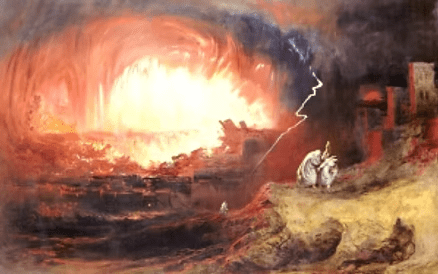
When the story of Genesis was telling about Abraham, a similar dream sequence was presented in the second telling of the destruction of Sodom and Gomorrah. Abraham’s nephew, Lot, was simply held ransom by the kings of the five cities on the plain in the first telling (where Sodom and Gomorrah were two of those cities), at which point Abraham got some friends together and went and defeated those kings, freeing Lot. Several chapters later, we then read the dream of the fire and brimstone destruction, after Abraham bargained with God about saving those cities … if there were five good people in them. Lot became a weak character in that second telling of Sodom and Gomorrah (along with his whole family), much like Aaron appears to be in this second telling of Moses on the mount.

The reality is that the dream sequences are not to be read as literal history. The dream sequences are to be read as prophecies, with prophecies focused on an omnipresent and continuing future. In dream sequences, metaphor plays a greater role in interpretation. However, a dream sequence cannot ever be used as reason for doubt, as an error reproducing a previous story.  Anything that seems to be contradiction is not.

Realizing that prophecy needs to be seen as the value here, we read: “When the people saw that Moses delayed to come down from the mountain, the people gathered around Aaron, and said to him, “Come, make gods for us, who shall go before us; as for this Moses, the man who brought us up out of the land of Egypt, we do not know what has become of him.”’ The Hebrew word translated as “delayed” is “ḇō·šêš” (or “buwsh”) which is rooted in the word “bosh.” That word actually states “to be ashamed, or disappointed.”

This means the entire dream sequence is founded on a time when the people shamed Moses, after he came down with the Law. It reflects their disappointment caused by their inability to honor those holy laws, leading them to figuratively seek Aaron.  That name means, “Very High” (Jones’ Dictionary of Old Testament Proper Names) or “Bright” (NOBSE Study Bible Name List). This means the people will invariably fail to live up to their commitments to God and seek out a surrogate in their stead (a king to be like other nations, a pope to be God’s link to mankind, or a televangelist who needs money to keep from being called home by God).  It is an ongoing disappointment.

In this reading, Aaron became the figurehead spokesman for God, whom the people approached, saying, “Come, make gods for us, who shall go before us; as for this Moses, the man who brought us up out of the land of Egypt, we do not know what has become of him.” The Hebrew word translated as “gods” is the infamous “elohim,” which in Genesis chapter one was written many times, with each routinely translated in the singular (and capitalized) as “God.” By matching the plural number to “us” and the prior use of “the people,” it is easier to see how the Israelites asked Aaron to make them (little-g) “gods,” as those chosen by God to be led out of Egypt.

In the prophecy, this says a future will come when the people will act as gods on earth, due to their religious heritage. Certainly, there are many Christians who see the Jews in this light, and the history of disappointment to uphold their end of the Covenant with God  making the Jews a fulfillment of this prophecy. Still, Christians do a good imitation of the miserable records held by “chosen by God” people, with their shameful acts in the name of Christ.

Seeing Aaron, a “Bright,” upstanding holy man (man of the cloth), who has suddenly been elected to a “Very High” position of responsibility, a quick brain hears the people clamoring for him to make them able to claim eternal life in heaven ownership (“gods”).  Having gone to his head, he does what all future High Priests, Popes, and Megachurch pastors always do. Aaron said, “Bring me all your gold!”

By specifying “golden earrings” (“gold rings”) the symbolism is the people wanted to be “gods,” but they sought words of approval about material wealth [golden news to their ears]. Therefore, this is a prophecy of the people wanting to see holy men in robes, holding tall staffs, wearing “Very High” hats, who live in palatial estates that are trimmed in gold; and it is a statement of the willingness of the people to contribute to that end.

In regard to this, we read: “[Aaron] took the gold from them, formed it in a mold, and cast an image of a calf; and they said, “These are your gods, O Israel, who brought you up out of the land of Egypt!”’ This is an over simplification of the Hebrew text, as it is not actually stated, “He took from them.”

The literal translation has Aaron “receiving [the gold earrings] from their hands,” which makes the gold an offering, more than a demand. It was motivated by an instruction from the “Very High” holy man, but compliance was never mandatory.  It is received in the same way that believers are told they can do the Lord’s work by sending them their pledges and check.

Once the gold was received, it was then “fashioned with a graving tool,” which says the gold was altered with some form of writing etched into the earrings. This was a separate process that took place, prior to the gold being changed into a “molten calf.”

The Hebrew words that are translated as “molten calf” are “‘ê·ḡel mas·sê·ḵāh.” There is evidence that this translation may be misleading and not saying the golden earrings were melted and poured into a mold. Such a transformation would negate all fashioning with an engraving tool, begging the question, “Why do that?”  In the reading read in church, this aspect of engraving is omitted in translation.

The word “egel” does mean “calf,” but “maccekah” (theroot word) means “covering.” It makes more sense that Aaron would call for a real, live, “nearly grown male steer” to be brought before him. The golden earrings would have been engraved with the names of the families contributing them, and these would be “made” into a ceremonial “covering” of metal, which would be placed over that “calf.”

I imagine that, especially from a distance, the calf would look golden when covered in a woven spread with many thousands of golden earrings pinned to it.  It would look like a young live bull had been molded as molten gold.

Given this possibility, Aaron saying, “These are your gods, O Israel,” is a plural statement that the individual earrings were symbolizing the wealth given to the Israelites as they exited Egypt. This makes revisiting Exodus 12:35-36 worthwhile, which took place after the angel of death passed over the Egyptians and killed every firstborn male.

As their exodus began, we read: “Now the sons of Israel had done according to the word of Moses, for they had requested from the Egyptians articles of silver and articles of gold, and clothing; and the Lord had given the people favor in the sight of the Egyptians, so that they let them have their request. Thus they plundered the Egyptians.” (NASB)

This can now be seen as Aaron calling for all those ill-gotten gains, which would be deemed as the cause for why Moses was “delayed.” Worry had set in that God was no longer leading them because of that greed. So, with all those Egyptian earrings pinned to a cloth spread that was placed over a bull of sacrifice, it makes perfect sense to read, “When Aaron saw this, he built an altar before it.”

From Genesis 4 and throughout the Old Testament, an altar was “a place of slaughter or sacrifice” (the meaning of the Hebrew word mizbeaḥ, which is written in the text of this reading). Christians today seem to think all the Old Testament altars were some stone barbecue pits, used for outdoor grilling and fun. All the people in the Old Testament who used altars were priests, those who ritually sacrificed fresh slaughtered animals to please God. Ordinary people had campfires and usually ate breads, dairy products and vegetables. Therefore, Aaron had an altar built to sacrifice a living, young bull “calf.”

Popes don’t make steak sacrifices.

It is difficult for me to grasp Aaron making an altar to sacrifice an idol made of gold.  I am fairly certain this is not commonly taught, so I ask you: “What does you brain tell you about this?”

When Aaron then said to the Israelites, “Tomorrow shall be a festival to the Lord,” the word written that is translated as “Lord” is “Yah·weh.” This means the calf was not a sacrifice to Egyptian gods. It was a cleansing offering to YHWH – “I Am that I Am” – the One God of Israel (and Jesus and Christians).

To then read, “They rose early the next day, and offered burnt offerings and brought sacrifices of well-being; and the people sat down to eat and drink, and rose up to revel,” the people celebrated a festival not commanded by God.  This too acts to say this reading from Exodus 20 is then a prophecy of such festivals.

Rosh Hashanah (Beginning of the Year) and Yom Kippur (Day of Atonement) can be seen as such a Jewish festival of New Year celebration. The Day of Atonement is when a scapegoat is released into the wilderness, carrying away all the sins of the people.  In John there is mention of the Festival of the Dedication (aka Festival of Lights – Hanukkah), which was added when the Second Temple was erected.  None of these festivals were ordered observed by God. However, this festivity that seems dedicated to God does not stop there.

In America, there is Thanksgiving, which is in some sense a quasi-religious holiday, where Americans (mostly Christians) give thanks for all the fruits of a new world. The festival known as Mardi Gras (Fat Tuesday) and even Halloween (All Hallows Eve) are examples of how Christians like to party, more than care about a religious connection to a holiday (from holy day). These can then be seen as the symbolism of this festival created by a High Priest, Pope, or King (President, Prime Minister) and not God.  This story of Aaron and the golden calf festival prophesied that future that has since come.

When the focus of the story then goes to God and Moses on top of the mountain, we have an example of the Abraham story retold, when he bargained with God about how few holy people being present in wicked places would be required for God to spare those places His wrath.

At this point we read, “But Moses implored the Lord his God.” This also is a weak translation of what is written.

The literal translation states, “And sought Moses the face of the LORD his God.” This includes the Hebrew word “paneh,” which was the last word in the First Commandment, the one that all translations leave out. That Commandment fully states, “Thou shall not have the face of another god before [God].” The same words still mean you should not hold any other gods in higher respect than the LORD; but that now includes the face of one’s self.

The presence of that word here says that Moses did not speak as holy Moses, as if he were an equal to the LORD. In the same way, Abraham did not debate with God wearing his face as worthy of divine consideration. Moses then spoke as God speaking through him, because “the face of the LORD” was upon Moses.  Undoubtedly, that face had a bright glow.

Keep in mind the symbolism of Moses being with God, on a plane that is high above the ordinary folk. Remember also how Peter, James, and John (of Zebedee) saw Jesus aglow next to Moses and Elijah. The symbolism is Moses was in heaven with the LORD, and the LORD was telling Moses to “Go down at once!”  Those stubborn Israelites are at it again!

The same soul in Moses was in Elijah (who went down and ascended without death), and in Jesus (who went down and ascended after death and resurrection). What God told Moses in anger was a prophecy of the terrible ways that his priests were foreseen to act. For God to say, “Now then let Me alone, that My anger may burn against them and that I may destroy them; and I will make of you a great nation,” that is a prophecy of Christianity  to come.  A “great nation” of Moses followers would come through Jesus Christ (the same soul as Moses).

When we then read how Moses told the LORD a thing or two about how it would be wrong to punish the people He just saved, this has to be seen as God speaking through the face of Moses. The defense of mankind’s priests would come through the Judges, David, the Prophets, and Jesus of Nazareth (then Apostles).  All would come speaking to the children of Israel who had sinned, telling them to repent or face destruction. Jesus and his followers were like Lot and his small family, in the corruption that was Sodom and Gomorrah, and the corruption that had come over Jerusalem.

Moses speaking as God on the mountain is a prophecy of all the prophets who would come in the name of the LORD. The message is always the same: “Repent or face destruction.”  It is (needless to say) a prophecy that is in effect until the End Times.

When this reading ends by stating, “And the Lord changed his mind about the disaster that he planned to bring on his people,” the LORD did not change His Mind. What was written was “way·yin·nā·ḥem,” which is rooted in “nacham.” That word means, “To be sorry, console oneself, or comfort.” It means God would send messengers of repentance to the people, which was part of His plan all along.

It is God’s pity for mankind that is why he bothers to comfort a bunch of stiff-necked backsliders.

I recall when in a class that was reading Genesis, I commented that God knew Adam and Eve would sin. I said it was part of His plan there also. However, a woman blurted out, “How can you say that!?!?!”

I replied, “Because God is Omniscient.” God knows the story from beginning to end, but we love to put a human face on God, because that makes him more approachable … more like an equal.  God is not surprised by anything human do.  He’s the Father, which means He has “eyes in the back of His head.”

Thus, the moral of this dream sequence prophecy is that God knows us so-called believers are like children who are told not to take a cookie from the cookie jar, which is then left unattended right in front of the children. To be born in a sinful world means sinners will abound … even those chosen by God to help redeem the ones not chosen.

To see anger in God is really to see anger in believers, when God is not giving believers their way. We love to say, “God turned His back to us,” when the reality is we turn away from God when we sin. The wrath of God is reincarnation, just as the wrath of a first grade teacher is to send little Johnny, who never learned anything, back to the first grade.

This prophecy tells us there will be the Law; but after that presence that will only mean breakage of the Law, requiring repentance.

Same story forever told.

Philippians 4:1-9 – Some saints might be hot and others cold, depending on the Spirit [Nineteenth Sunday after Pentecost]

My brothers and sisters, whom I love and long for, my joy and crown, stand firm in the Lord in this way, my beloved.

I urge Euodia and I urge Syntyche to be of the same mind in the Lord. Yes, and I ask you also, my loyal companion, help these women, for they have struggled beside me in the work of the gospel, together with Clement and the rest of my co-workers, whose names are in the book of life.

Rejoice in the Lord always; again I will say, Rejoice. Let your gentleness be known to everyone. The Lord is near. Do not worry about anything, but in everything by prayer and supplication with thanksgiving let your requests be made known to God. And the peace of God, which surpasses all understanding, will guard your hearts and your minds in Christ Jesus.

Finally, beloved, whatever is true, whatever is honorable, whatever is just, whatever is pure, whatever is pleasing, whatever is commendable, if there is any excellence and if there is anything worthy of praise, think about these things. Keep on doing the things that you have learned and received and heard and seen in me, and the God of peace will be with you.

——————————————————————————————————–

This is the Epistle selection from the Episcopal Lectionary for Year A, Proper 23, the nineteenth Sunday after Pentecost. It will next be read aloud in church on Sunday, October 15, 2017. It is important because Paul made a call for Apostles to be steadfast in their support of one another, making it a point to mention the role women played in assisting in the spread of the early church.

Chapter 4 of Paul’s letter to the Christians of Philippi is the end of that epistle of encouragement. By beginning his closing statements with, “My brothers and sisters, whom I love and long for, my joy and crown, stand firm in the Lord in this way, my beloved,” he was stating their closeness in Spiritual relationship. They were all, sender and receivers, “firm in the Lord” as true Christians, filled with a deep love of God, gifted the Christ Mind, via the Holy Spirit of God. This statement of closing says the love of God produces a love within, which is so strong it generates a desire for others to seek their own inner strength of love. They are brothers and sisters as born from the same love that comes from the Father.

When Paul named three people of the church in Philippi, to whom the whole of the epistle was written, those three (a number that is symbolic of initial completion, as representative of the Trinity) were in need of special attention. To recommend that the two women “be of the same mind in the Lord,” says they were still struggling to let go of their egos fully. That could have then been a statement of those two having opposite agendas for the Lord, thus making it difficult for one to fully support the other. Clement then became the one man that both women loved and respected, so he could mediate the differences between the two women. Therefore, Paul was asking all to leave their egos behind and follow the one mind of Christ, as that represents a strengthening of their faith.

On a symbolic level, the names of those mentioned have meanings. A name (then) was given as a parent’s blessing to a child, as a prayer to the Lord. A name then reflects a parent’s wish upon the life of the child, which the child then knows to live up to. Euodia means “Good Road” or “(Have a) Good Trip.” It can be used to denote “Success!” or “Good Luck!” Syntyche means “Great Fortune” (Good or Bad Fortune), but can also mean “Accident” or “Happy Event.” Clement means “Calm or Peaceful or Tranquil.”

Given these name meaning, for Paul to write: “They have struggled beside me in the work of the gospel, together with Clement and the rest of my co-workers,” the intent is less to say those people were actually with Paul in his travels; but the purpose was to show how they were remembered by the meanings of their names, as Paul struggled in his evangelism. Paul needed to find the “good road” to travel, so he had “a nice trip” spreading the Gospel. He was having the “good fortune” of encountering people of all walks in life (some good and some bad), with each meeting yielding the “happy event” of another soul led to Christ. Those people met Paul seemingly by “accident.” Still, through his travels, Paul longed for those friends in Christ that he had to leave behind. Therefore, he struggled with that heartfelt pain, by remaining “calm” and at “peace” in the Lord.  Paul reached out to the other disciples of Christ, with true love and affection … that of brotherhood.

The remainder of this letter touched on the traits characterized by the presence of the Holy Spirit. Those become the measuring sticks that show one’s growth in spiritual love. Those traits are: 1.) “Rejoice in the Lord,” as your heart leads your brain; 2.) “Gentleness,” which means one is considerate of others; 3.) “Do not worry,” because fears only come in the absence of God’s love; 4.) “Prayer and thanksgiving,” which is staying in touch with the Lord’s presence within; 5.) “The peace of the Lord,” which is letting the Christ Mind lead your actions; and 6.) Be a model of Christ Jesus, which means all truth, honor, justice, pleasure, and commendation that comes to you is due to his presence within.

n this closing chapter of Paul’s letter to the Philippians, the message that should be taken today is Love. Paul is doing (naturally) what Jesus said to do: “A new command I give you: Love one another. As I have loved you, so you must love one another.” (John 13:34) Jesus said that to his disciples at the Passover Seder meal (the Last Supper), and should not be read as a general “love everyone” message. This is known by the subsequent verse, which says, “By this everyone will know that you are my disciples, if you love one another.” Therefore, Paul was doing as Jesus would have him do, from his heart and soul.

Paul loved his brothers and sisters, and everyone knows that Paul was a disciple of Jesus Christ because of the love he showed in his travels and follow-up letters. It is a commandment given by God, through His Son, and is therefore not an option.  To be Christian is to support all Christians with love and acceptance.

What Christians do not read in the books of the Holy Bible are the letters written back to Paul. Paul might have received letters from Euodia, Syntyche, and Clement while traveling, which he responded to in this letter’s closing statements. The same answer spoke to all three.

The point is a true Christian does not shun other Christians. Love is not a silent emotion. Love throws its arms around its brothers and sisters in Christ; and when physical touch is impossible, love throws its arms around its brothers and sisters in Christ through communications and prayers.

It is not the confessions of the disciples that proves they have obeyed this final commandment of Jesus Christ. Jesus gave that command as he was telling the eleven that one would betray him. Judas Iscariot stood as a symbol of Christians without true faith.  As such, many will confess they believe in Christ, but not all will join together in unity and steadfastness, as some will sneak out in betrayal.

The measure of success is then the love one expresses to other Christians – the Acts of the Apostles.  And that love is known by God , as He knows the heart quite well.

Love comes from the heart, where the throne of God rests. Are you of one mind, which means God sits upon that throne in you – making you his kingdom? Or, do you keep God from ruling over you, because there are so many other Christians who promote agendas in opposition to yours?

Matthew 22:1-14 – The parable of the wedding banquet [Nineteenth Sunday after Pentecost]

Matthew 22:1-14

Once more Jesus spoke to the people in parables, saying: “The kingdom of heaven may be compared to a king who gave a wedding banquet for his son. He sent his slaves to call those who had been invited to the wedding banquet, but they would not come. Again he sent other slaves, saying, ‘Tell those who have been invited: Look, I have prepared my dinner, my oxen and my fat calves have been slaughtered, and everything is ready; come to the wedding banquet.’ But they made light of it and went away, one to his farm, another to his business, while the rest seized his slaves, mistreated them, and killed them. The king was enraged. He sent his troops, destroyed those murderers, and burned their city. Then he said to his slaves, ‘The wedding is ready, but those invited were not worthy. Go therefore into the main streets, and invite everyone you find to the wedding banquet.’ Those slaves went out into the streets and gathered all whom they found, both good and bad; so the wedding hall was filled with guests.

“But when the king came in to see the guests, he noticed a man there who was not wearing a wedding robe, and he said to him, ‘Friend, how did you get in here without a wedding robe?’ And he was speechless. Then the king said to the attendants, ‘Bind him hand and foot, and throw him into the outer darkness, where there will be weeping and gnashing of teeth.’ For many are called, but few are chosen.”

———————————————————————————————————-

This is the Gospel reading from the Episcopal Lectionary for Year A, Proper 23, the nineteenth Sunday after Pentecost. This will next be read aloud by a priest in church on Sunday, October 15, 2017. This is the parable of the Wedding Banquet and is important because it speaks of all who are invited to serve the Lord, but treat that invitation with ridicule and scorn.

This parable immediately follows the parable of the tenants, which was the Gospel reading for the prior Sunday. Because it begins a new chapter, one can say a day in Jesus’ “inspection” has passed and a new day has begun. This would be why Matthew began by writing, “Once more Jesus spoke to the people in parables.”

Still, the Greek word “apokritheis” was written and not factored into the translation above. That word states that Jesus “answered” the people, or “took up conversation” with them.  The implication is that some question asked or something said that needed clarification. This means Jesus did not simply begin speaking in a parable, as a parable is an answer created to make someone think about its symbolism.

This parable begins with the statement that is the overview. Everything hangs from Jesus beginning by stating, “The kingdom of heaven may be compared to a king who gave a wedding banquet for his son.” Thus, the question being answered or the clarification needed is relative to the kingdom of heaven.

The parable could then be addressing the question, “How do we gain the assurance of Heaven?” A similar question was posed to Jesus at a prior time to his return to Jerusalem for the Passover festival.  That time a young, wealthy Pharisee asked, “Teacher, what good thing must I do to get eternal life?” (Matthew 19:16-22)  Jesus answered quite clearly then: Law, Give, Follow. Now, it is answered symbolically.

When Jesus said the comparison was “to a king who gave a wedding banquet for his son,” the focus given by all Christians today is on “his son.”  This (of course) is Jesus. Still, to think that Jesus is telling a parable about about himself is over-simplifying this message.

Over-simplification is part of what I call “Big Brain Syndrome.” We think we know a thing or two today, so we are smarter than those rubes who were standing around Jesus then. We slap Jesus on the back and say, “Tell them Jesus, we know you’re talking about you as his son.” However, the sad reality is most people do not have a clue about the real meaning of this parable; but because people today know how to operate a smart phone, they think that makes them become Jesus-like.

Sure, the “king” is God and “his son” is Jesus; but the operative word that needs to be grasped here is “wedding.”

When we read, “[The king] sent his slaves to call those who had been invited to the wedding banquet, but they would not come,” “his slaves” are those who serve the LORD. Those who would not come are those who think they are better than slaves and equal to a king.

In the symbolism of this parable, the “slaves” are the descendants of Abraham, Isaac and Jacob [aka Israel], who served God and attended to His needs.  There are quite a few over a long period of time: The Israelites were freed by Moses, who was one of “his slaves”; All the Judges (like Gideon, Deborah, Samson, Eli, et al) were the king’s slaves; all the leaders of the people (like Joshua, Samuel, David, et al) were the slaves of God; and all the temple prophets (like Elijah, Elisha, Ezekiel, Jeremiah, Isaiah, et al) were “his slaves.”  That is the meaning of those who were sent out “to call” the invited.

Some of the slaves of God.

The “invited” are all the children of Israel, which includes Jews (who were then surrounding Jesus) and Christians (now, who are reading about this parable).

What flies over everyone’s head is how the invitation was not to have a bunch of party-goers come to the king’s palace for free food, with plenty of wine available for getting drunk. The invitation has to be seen symbolically as quite important, meaning the invitation was to marry his son. Better yet, it was to marry God and become his son, which would make that person be reborn as Jesus Christ.

Either way, the books of the Holy Bible (then called the Torah and the scrolls) are the record of “slaves” inviting those following the trail of the One God, who all believed they were promised land AND Heaven. The problem was the invitations (then, as an allusion to those standing within earshot of Jesus) only went to Jewish men of position and power.

That is why those who were invited got angry and upset, so that “they made light of it and went away, one to his farm, another to his business, while the rest seized his slaves, mistreated them, and killed them.” Keep in mind this was a parable told well before “women’s lib,” so all the invited were adult Jewish males – menfolk who owned property and wares (things).  Now, it applies to anyone (both sexes, Judeo-Christian) who own stuff and control people.

Even in these modern times, when human beings love to call 0 and 1 equal [we’re all numbers], and when the concept of marriage has been rolled in the mud for so long it is barely recognizable and hardly desirable, those who still hold marriage in high regard do so by standards that are considered “old fashioned.”

By this, I mean the man asks a woman to marry him. The man give something of value to the woman (an engagement ring, usually).  The woman takes the man’s name in marriage.

To some, perhaps, marriage pleasantly leads to dreams of the husband going off to work and earning a living.  He buys the wife a house.  The wife then stays home, to cook, clean, and raise babies (the intent of a honeymoon).

Admittedly, fewer and fewer people grow up with this ideal in mind, especially now that some primary schools and kindergartens are teaching gender identity is what you want to be, not what you are.  Go figure.

No wonder marriage is seeming more and more like dinosaur bones and relics (“Mortal can these dried bones live?”)

Because of this innate social concept of marriage and submission being a matter of the heart and not one of brawn, females have long been much more inclined to look forward to marriage, as well as believe in religion, God, prayer, and all the things “church ladies” do. Nuns are such devoted believers they marry Christ.  Faith, therefore, is a matter of the heart.

Men [gruff, gruff], on the other hand, tend to stay away from all this faith stuff, as much as possible.  They usually pray only when they are about to lose money gambling on sports teams.  Most men will go along with the pretense of faith, “as long as it keeps the wife happy.”  Men also like children … God’s blessings … but still men like the sex part about making babies too (an outward sign of inward grace?).

Women are from Venus, men are from Mars?

Because of that male-dominated-world mentality, when a man is invited to marry the “son” of “the king,” … well forget that! Men have property to purchase and wares to sell, because they have families to provide for … thank you very much for understanding that!

How ’bout dem Bears?

Well, the application of this parable is “one size fits all.” Men and women – equally – are invited to marry God and become Jesus Christ, by receipt of God’s Holy Spirit. Accepting the invitation means gladly saying, “I do!”  That does not mean, “I comply.”  It means, “I love you God.”

When Jesus said the king announced, “I have prepared my dinner, my oxen and my fat calves have been slaughtered, and everything is ready; come to the wedding banquet,” this is the ceremonial sacrifices for all those planned marriages. The “oxen” and “fat calves” are those egos that overestimate their virility and net worth. They are egos fattened by the blessings of God, so those who took the engagement rings of wealth are His beasts of burden … His chosen ones.  Once those animals are sacrificed, “everything is ready” to join with the Christ Mind and become “his son” (for the umpteenth time … regardless of one’s human gender).

When we read, “they made light of it and went away, … (and) seized his slaves, mistreated them, and killed them,” this is how every Jew of Jesus’ Jerusalem and every Christian today, any who will admit “I am no Saint,” they reject this plan of God. God’s plan is for lost human beings to be found, through the light of Christ. But, lost human beings have so much fun being lost, they think self is more important than holy selflessness.

They hear all those slaves of the king giving the same invitations in the holy texts (differently), but they only laugh at it as nonsense, or they mistreat it by writing it off as being a long time ago – no longer applicable in this complex world.  Some even kill those writers through the scientific methods of agnosticism and atheism (where they attempt to kill the spirit of anyone reading an invitation and thinking, “Hmmmm. Maybe I’ll go.”)

This kind of response to God’s wedding invitation did not go over well with God. We read, “The king was enraged. He sent his troops, destroyed those murderers, and burned their city.” Can you recall how the divided kingdoms, Israel and Judah, were overrun and destroyed? Scattered people who had their Promised Land repossessed by God, for failure to accept His invitation to be married to God as “his son.”

This same fate applied to the Second Temple businessmen, and it applies to the exponentially growing number of “Christian” churches that are preaching (through the absence of a “How to be a Saint” message), “Don’t be married to God.” Those are seen as murderers of wide-scale Apostlehood, as the bad shepherds holding flocks of sheep in centers designed for wool profiteering.

When we then read, “He said to his slaves, ‘The wedding is ready, but those invited were not worthy. Go therefore into the main streets, and invite everyone you find to the wedding banquet,” those unworthy were the Pharisees (and other Temple-related well-to-dos). That then factors to modern times as Christians who make a living selling Christianity on TV or in mega-churches [including the Vatican].

This makes “the main streets” be the mainstream of humanity that flows in torrents around the world. The invitation is for anyone who picks up a Holy Bible and reads a slave pronouncing an invitation to be married to God and become “his son” (regardless of human gender).  If that person says, “Yes! I want that!”, then, “You’re engaged to marry God!”

To then read, “[The slaves] found, both good and bad; so the wedding hall was filled with guests,” the “good and bad” actually states “the wicked, evil, malicious, slothful” (“ponērous”) and “the intrinsically good, good in nature, good whether or not it can be seen, and believers” (“agathous”). That means there are those found by the “slaves” who were like those who Jesus said were closer to salvation (tax collectors and prostitutes) than the Pharisees (Popes, televangelists, authors of bestselling Christian novels, et al). The “bad” were those sinners who wanted to not be bad, and the “good” were those who fought hard to find support and encouragement to keep up the good fight.

None of those were led to marry God by anyone other than the king’s slaves.

Written by God’s slaves.

When we read “guests” filled the banquet hall, this is misleading, as weddings are typically many more guests than marriage participants. The Greek word written is “anakeimenōn,” which means “recliners” or those “seated” at the dinner table. Because we are told, “[the king] noticed a man there who was not wearing a wedding robe,” the implication is all those “seated” were properly dressed for their marriage. Now, here was this guy who strolled in wearing his street clothes, or perhaps he was looking like a wolf, uncovered?

When Jesus said the king (God) asked this man, politely, “Friend, how did you get in here without a wedding robe?” the implication is the man had proclaimed to be a “friend” of God and “his son.” However, to be wedded to God, to become “his son” through marriage, to be ceremoniously sacrificed of ego means to be more than simply a “friend.” The Greek word here is “Hetaire,” which means, “a companion (normally an impostor), posing to be a comrade but in reality only has his own interests in mind.”

This is actually a statement of what a true Church consists of. Paul wrote, “There is one body, but it has many parts. But all its many parts make up one body. It is the same with Christ.” (1 Corinthians 12:12) The same can be said of this wedding banquet, where many types of people had submitted themselves to God, to be married through His Christ.  All would become “one body” through marriage, as all would become one with God and Christ.

Anyone who is not a true Saint or Apostle, not having talents of the Holy Spirit, is just a “pal,” who “has his or her own interests in mind.” When one’s own interest is a “Big Brain” and not the Christ Mind, then that person is spotted by God the king and questioned.  God does not call those “Friend.”  He calls them “Impostor!” and asks, “What are you doing with my chosen people?”

Jesus said the response to that questioning by God was, “And [the uninvited guest] was speechless.” That impostor, who didn’t even dress like he was going to get married to “his son,” had nothing to say.  When saying the truth, “Just here for the food and wine,” would have been a good start to a conversation; the reality is he was “speechless” for a symbolic reason.

Here, “speechless” means the man’s tongue had not been lit “like a violent rush of wind,” which gave him “a tongue of fire.”  His being speechless meant he was unable to answer, because he could not begin speaking in holy language, as would be given from the Spirit within.  This is confirmed when one sees how the Greek word translated as “speechless” is “ephimōthē,” which implies “muzzled” or “put to silence.” Thus, only those who were rightfully present at the wedding banquet could speak, but they could only speak what the Holy Spirit allowed.

The moral of this parable is then stated by Jesus as being, “The king said to the attendants, ‘Bind him hand and foot, and throw him into the outer darkness, where there will be weeping and gnashing of teeth.” Clearly, the easy summary says, “Ignore the invitations found in the Holy Bible and go to Hell.”  However, it is not that simple.

To be bound “hand and foot” is less about the acts of the Lord’s “servants” or “attendants” (those rightfully present at the wedding banquet), but that which binds is self-inflicted.  The man was bound by his own actions. He was bound by the path he had taken and those whom he had walked upon to get there (“feet”).  Additionally, he was bound by what he had taken from others and kept for himself, instead of giving freely (“hands”).

It was those self-binding actions that cast himself “into the outer darkness,” away from the light of Christ. In darkness souls suffer, because they are reborn time and time again into fleshy bodies that feel the pains of a sinful world.  In the world of flesh “there will [always] be weeping and gnashing of teeth.” Lamentations will always be for the pains of that which was lost; and, the gnashing of teeth comes from eternally biting on the backs of others, causing a karmic debt that makes one’s own back always be bitten.

The “outer darkness” is the opposite of an inner light.  To be cast there is to deny the Mind of Christ.  The outer darkness is all the answers a Big Brain becomes speechless to know.  The inner light comes from a heart in love with God.

This moral then makes it easier to read the last verse, which states: “For many are called, but few are chosen.”  It can lead to confusion, since the man who ended up being cast out can seem to have answered a call. Why, then, wasn’t he chosen?  Doesn’t God love everyone?

The man has to be understood as being there under false pretenses. It is like someone going to a church because he thinks he will be more promotable at work that way. The man was not there to be committed to God and Christ on a permanent (24/7/365.25) basis. He was called, but he rejected the true call.

When we read “few are chosen,” certainly God only allows those who love Him deeply from their hearts to marry Him and become One with the Trinity – be a Saint.  But, the deeper meaning is (sadly) how few will choose to sacrifice their egos and submit totally to God’s Will.  All are called to do that, because the “slaves” took the invitations to those who were not born of a special race and/or religion.  No one goes to the kingdom of God simply by birth, with no special requirements of any kind.

One has to earn that.  And, when they say you can’t take it with you, it means more than material things.  No Big Brains allowed either.  The young, rich ruler who Jesus told how to be assured of eternal reward was to get rid of that brain that thinks having more than others makes that point.  Then, when Jesus said, “Follow me,” that meant accept God’s invitation to be married, so he would be the next Jesus … Christ … God’s Son.

If only the males of the world could see themselves as called to a wedding banquet to be the bride of God … to become “his son” through marriage … then the world would have a chance of being a better place.  However, the world makes men surround themselves with that defender mentality; and, it is hard for both sexes to sacrifice ego and trust in the LORD.

We all know there is only one Son of God, who is Jesus Christ, who sits at the right hand of God. Marriage to God brings about the rebirth of Jesus Christ in the one wearing the wedding gown, reclining before God in subservience. This is quintessentially the meaning of being Christian.  Listen to what the “slaves” are saying.

Exodus 33:12-23 – Being Jesus reborn is finding favor by Yahweh [Twentieth Sunay after Pentecost]

Moses said to the Lord, “See, you have said to me, ‘Bring up this people’; but you have not let me know whom you will send with me. Yet you have said, ‘I know you by name, and you have also found favor in my sight.’ Now if I have found favor in your sight, show me your ways, so that I may know you and find favor in your sight. Consider too that this nation is your people.” He said, “My presence will go with you, and I will give you rest.” And he said to him, “If your presence will not go, do not carry us up from here. For how shall it be known that I have found favor in your sight, I and your people, unless you go with us? In this way, we shall be distinct, I and your people, from every people on the face of the earth.”

The Lord said to Moses, “I will do the very thing that you have asked; for you have found favor in my sight, and I know you by name.” Moses said, “Show me your glory, I pray.” And he said, “I will make all my goodness pass before you, and will proclaim before you the name, ‘The Lord’; and I will be gracious to whom I will be gracious, and will show mercy on whom I will show mercy. But,” he said, “you cannot see my face; for no one shall see me and live.” And the Lord continued, “See, there is a place by me where you shall stand on the rock; and while my glory passes by I will put you in a cleft of the rock, and I will cover you with my hand until I have passed by; then I will take away my hand, and you shall see my back; but my face shall not be seen.”

———————————————————————————————————-

This is the Old Testament selection from the Episcopal Lectionary for Year A, Proper 24, the twentieth Sunday after Pentecost. It will next be read aloud in church on Sunday, October 22, 2017. It is important as God tells Moses His presence will go with Moses, with Moses able to be shown the way of the LORD to God’s chosen people. The glory of the LORD will rest on Moses.

This reading continues the dream sequence that Exodus 31 presented, about the golden calf. In between that dream and this selection are other elements that are best seen as prophecy.  We find that YHWH directed Moses to record a second version of the Covenant,  after getting so angry he smashed the first tablets of stone, which can then be seen as prophesying the coming of Jesus and the New Covenant. Rather than the stone tablets being broken in anger by Moses, it was the Israelites (over a millennia) who broke the Law and lost their lands.  The second story is then pertinent to the second phase of the agreement to abide by the Law, while the Jews were in Babylon.

I am fed up with you people continually dragging my name through the mud for centuries.

I recommend every Christian re-read Exodus and Deuteronomy, paying close attention to the stories told that are repeated, but told differently.  Simply be aware of the possibility that the differences are due to a prophetic dream being the purpose, which would later be fulfilled, well into the future from then.  See the purpose of two versions of the tablet story and the agreements made, and the other duplicate stories that complete Exodus (and repeat in Deuteronomy), as God looking to see who pauses and begins to look deeper, looking for truth, rather than excuse to disbelieve.

In regards to this reading, the text above suffers greatly from the Hebrew text.  The reality of the Hebrew exposes more insight into the dream powers that Moses possessed. This makes the prophecy of Joel worth remembering, when he prophesied as the voice of God:

“And afterward, I will pour out my Spirit on all people. Your sons and daughters will prophesy, your old men will dream dreams, your young men will see visions.” (Joel 2:28)

One needs to see Moses as an “old man,” since he was neither young nor a child when on Mount Horeb.  We regularly read of Moses going to have a talk with God; but the question now becomes, “Just how did Moses have those conversations?”

In the Tent of Meeting?
“Your old men shall dream dreams.” Joel 2:28

That prophecy written by Joel, which Peter quoted to the pilgrims in Jerusalem on Pentecost, was fulfilled on that Pentecost morning; but it was not the only fulfillment.  Prophecy by the pouring out of Spirit is repeatedly seen fulfilled every time God’s Spirit comes upon men of God. Moses was one of those men who spoke to YHWH in a dream state. Samuel answered the call of God as a child when asleep. Joseph interpreted the dreams of Pharaoh, and Daniel did the same for Nebuchadnezzar. Therefore, the tent of meeting might well have been the place where Moses went to find solitude (outside the camp of Israelites), so that there he could drift into a prophetic dream state.

To grasp this Exodus 33 reading, I recommend the readers here visit this Interlinear page on BibleHub.com. It shows the Hebrew text for all of Exodus 33, so scroll down to verse 12; and the remainder of the page is this reading.  The page lists the Hebrew root word and an English translation. The written words have links to a page that offers examples of other uses and their translations, with the root word (above the actual text word) having a link to a page that details the root meaning and translations, based on their possible usage. The English translation is then literal, as it maintains the order of the written text.  Reading literally is a great way to realize the Hebrew text before it becomes mutated in English translation.

When the literal is compared to the English translation that will be read in churches (the New International Version), it is eye-opening how much meaning is lost. Seeing the words that were actually written, thus representative of the language of the LORD, means one is freed (somewhat) of translations that act as paraphrases of what God told a prophet to write.  Looking at the root language is a good beginning, from which God will see an effort made to learn.  Understanding the words of Scripture (at all times) requires the Holy Spirit’s  assistance, so one can be fluent in that holy tongue.

The word count for the selected reading is 319 words. Beginning where the first verse says, “See,” the focus is strongly placed on vision. We have “my sight,” “your sight,” “show me,” “show mercy,” and “see” written multiple (14) times. Additionally, we find “the face” and “my face” three more times, with “face” an omitted part (in English translation) of the First Commandment, and the “face” is where the eyes are located.  This is not coincidence, as this reading (entitled “Moses and the Glory of God” on some translation sites) is about Moses seeing, in a special way, as one filled with God’s Holy Spirit. Therefore, everything is metaphor for being led by the Mind of Christ.

Yahweh: “Samuel!”
All like Samuel: “Here I am!”

Here are some notes I made, from looking at the Hebrew translated into literal English translations.  If you open a separate window by clicking the link to BibleHub.com, you can see what I am taking notes from, as well as check the links to word meanings.

“See” = “rə·’êh” = “Vision, View, Understanding.” The meaning is to have access to visions of prophecy and hearing what YHWH wants a prophet to “See.”

“Bring up” = “ha·‘al” = “Ascend, Raise.” This indicates that it was Moses’ role, as the leader of the Israelites and who was in touch with YHWH, to elevate the Israelites Spiritually. That helps explain 40 years in the wilderness – they were slow learners?

“you have not let me know whom you will send with me.” This means that Moses has not yet seen (through dream insight) what powers of elevation God will send to him, which can then be passed on to the Israelite followers.

“I may know you by name” = “yə·ḏa‘·tî·ḵā bə·šêm” = “I know you by name.” By Moses having the presence of YHWH, he knows what YHWH knows, as if Moses were YHWH. This does not mean God knew Moses was named Moses. It means a union of God and Moses, so Moses can know what needs to be known “in the name” of God.

“in My sight” = “bə·‘ê·nāy” = “in My eyes.” God has shown favor to Moses, where “favor” means with God’s blessing. Moses was “accepted” [translation possibility for “favor”] by God, known by His showing Moses visions to guide him. The word for “favor” (“ḥên”) also means “grace.”

“Consider” = “ū·rə·’êh” = same as “See” [see above – “rə·’êh”]. Moses was shown that the Israelites (“‘am·me·ḵā” – “your people”) are a “nation” or “community of people.” They too are to be “this,” or the “same,” as was Moses … able to “See.”

“My presence” = “pā·nāy” = “My face.” This means that Moses will wear the face of YHWH, as the presence of God within him.

“I will give rest” = “wa·hă·ni·ḥō·ṯî”. “I will give calm or rest” means God will allow Moses to have daydreams and night dreams of prophecy and guidance.

“If your presence will not go, do not carry us up from here.”  This means that without the presence of YHWH on Moses, the Israelites will not be raised or elevated.  They cannot progress as servants of the LORD without that spiritual elevation.

“For how shall it” = “ū·ḇam·meh” = “Wherein” or “How many?” This asks the question “How many will know the grace of God’s Sight, [besides] I [Moses] and your people [the Israelites].” The question then applies to all who will be allowed the Sight of YHWH. If they ever become separated from that presence [face of YHWH], then they will go nowhere, nor will anyone else in the world. The “face of the world” will not be that of God, if the Israelites and Moses are separated from the “face of God.” Separated mean wearing “the face of the world.” This is a statement of importance placed on Moses and the Israelites. It is a prophecy that the world is that which needs to be saved by “the people” (of God), so they must not be separated from that service to the LORD.

“show me your glory” = “har·’ê·nî nā , ’êṯ kə·ḇō·ḏe·ḵā” = “show me now” or “show me I beg, pray, saying please” [pause of separation comma implied] “your abundance, riches, honor, glory” This says Moses asked God to give him the gifts of the Holy Spirit, so he could See for the LORD, recognizing that “glory” was not his own, but that only of God.

“I will make all my goodness pass before you” = “’ă·nî ’a·‘ă·ḇîr kāl- ṭū·ḇî ‘al- pā·ne·ḵā” = “I will pass over all My goodness over your face.” This says Moses was to shine with the face of the LORD upon him.

“and will proclaim before you the name, ‘The Lord’” = “I will proclaim the name of Yahweh on your face [which projects before your head].” This says the people will know Moses has the face of the LORD, because of the glow on his face.”

“and I will be gracious to whom I will be gracious, and will show mercy on whom I will show mercy.” = “and will show blessing to whom I favor, and will show compassion to whom I am compassionate.” This means God’s face will shine upon only those who, like Moses, are compassionate for the LORD [compassionate means, “from suffering,” meaning drawn to the LORD through suffering AND willing to suffer to serve the LORD].

“you cannot see my face” = “lō tū·ḵal lir·’ō·wṯ pā·nāy” = “not are you able to See my face [upon your face].” This means one with the Holy Spirit upon him or her will See what the LORD allows to be seen, but will still look like the human being they are [look like themselves].

“for no one shall see me and live” = “for not can See me [“hā·’ā·ḏām , wā·ḥay”] man , and be alive [live].” This means to know the image of God is impossible for human bodies of flesh, as YHWH is unfathomable to such little brains. Only through death, when the soul is released from the narrowmindedness of a physical brain, can the soul See God as He is.

“See, there is a place by me where you shall stand on the rock” = “the LORD behold! , wherever [a space, any physical place] near me a pillar over of strength [or a cliff, a rock].” This says that wherever one Sees through the face of God, that person will stand like a pillar of strength for others.

“while my glory passes by I will put you in a cleft of the rock” = “And it will come to pass over , the pass over of my favor [glory] , and you will be set [or placed, or granted] in a cleft [or fissure, or cavern] of my strength [that rock].” This means that one filled with the Holy Spirit of God is within an encasement of the LORD’s covering.

“I will cover you with my hand until I have passed by” = “I will cover you with my power [or my branches] , will cover through the pass over.” This means the powers of the Holy Spirit, and all talents given by the LORD, surround the one wearing the face of God, for as long as God’s presence is within one.

“then I will take away my hand, and you shall see my back” = “And will turn aside with my power [my branches] , and you shall Know my back side [or hind part].” This means that the result of God’s power will be all that is Seen, as none of the power will be explainable. This is how Jesus routinely said, “Go. Your faith has healed you.” He did nothing that could be Seen, but the result (“the back side”) was the power of the LORD.

“but my face shall not be seen.” This means the face of God cannot be seen as the one who wears the face of God. One cannot say, “I am the Son of God. See? I look just like Him.”

When Jesus made insinuations, proclamations or affirmations that his Father was God, Jesus only looked like a man. Thus, Jesus did not appear to have the face of God. God’s face shall not be seen, but it is present in all who become reproductions of His Son, shining through inner powers of strength.

Hopefully, these notes will make my point clear, which is this story of Moses talking to God was a prophecy that says all who are chosen to follow God need to be elevated spiritually. If you look closely at the Greek text of Acts 2:14, where a standard translation states:

“Then Peter stood up with the Eleven, raised his voice and addressed the crowd: “Fellow Jews and all of you who live in Jerusalem, let me explain this to you; listen carefully to what I say,”

You will see that what is written more importantly says that Peter spoke, “with an elevated voice.” Maybe he yelled, or maybe elevated voices carry to ears without screaming?  The meaning is that after having been given the gift of speaking in foreign languages (without formal training or education), his voice was elevated to speak interpretation of Scripture. All Apostles were, are, and will always be elevated spiritually.

Christians today are called to become Moses in this prophecy. We are to converse with God, asking Him to guide us as we take on the task of “bringing up these people” that look at us for spiritual guidance. We need to be able to wear the face of God, so He knows us by name … Jesus Christ reborn.

Peter became Christ Peter when he stood in a cleft of rock and let the Holy Spirit send words out of his mouth. He certainly lived up to his nickname (given by Jesus), as Peter the Rock of Jesus Christ.  Peter was encased by the strength and power of God’s Holy Spirit.

Three thousand pilgrims did as Peter instructed that day and listened carefully to what he and the other Apostles said. Those listening also were filled by the Holy Spirit, from being told the meaning of Scripture in ways they had never been taught. That was the pass over of God; but no one saw His face. Only the back side of God was seen in the conversion of Jews, to faith in Jesus as their true Messiah.

This reading prophesied that event, and all other conversions since and still to come.

#Exodus331223 #Joel228 #twentiethSundayafterPentecost #Proper24YearA #Acts214

1 Thessalonians 1:1-10 – The message of the Gospel comes spiritually not vai sound waves [Twentieth Sunday after Pentecost]

Paul, Silvanus, and Timothy, To the church of the Thessalonians in God the Father and the Lord Jesus Christ:

Grace to you and peace.

We always give thanks to God for all of you and mention you in our prayers, constantly remembering before our God and Father your work of faith and labor of love and steadfastness of hope in our Lord Jesus Christ. For we know, brothers and sisters beloved by God, that he has chosen you, because our message of the gospel came to you not in word only, but also in power and in the Holy Spirit and with full conviction; just as you know what kind of persons we proved to be among you for your sake. And you became imitators of us and of the Lord, for in spite of persecution you received the word with joy inspired by the Holy Spirit, so that you became an example to all the believers in Macedonia and in Achaia. For the word of the Lord has sounded forth from you not only in Macedonia and Achaia, but in every place your faith in God has become known, so that we have no need to speak about it. For the people of those regions report about us what kind of welcome we had among you, and how you turned to God from idols, to serve a living and true God, and to wait for his Son from heaven, whom he raised from the dead– Jesus, who rescues us from the wrath that is coming.

———————————————————————————————————-

This is the Epistle selection from the Episcopal Lectionary for Year A, Proper 24, the twentieth Sunday after Pentecost. It will next be read aloud in church on Sunday, October 22, 2017. This is important as Paul addressed the Christians of Thessaly as all true Christians must recognize – as being beloveds of God, chosen to become imitators of Christ the Lord, sharing their love of God and Christ to all they live among and come in contact with.

As the introduction chapter to a new letter, it is worthwhile to note how Paul includes his Christian travel companions as equally supporting the contents of this letter. One should not see Paul adding those names as though it was some cordial inclusion of his helpers or underlings. The Greek text says, “Paul, and Silvanus, and Timothy,” where the conjunction “kai” can be translated as “also, even, indeed, again, same,” and (among many other possibilities) “together.” When this equality is seen, those three men (each filled with the Holy Spirit) become representative of a holy Trinity, or a triple Trinity, as each were Father, Son, and Holy Spirit, just with different travel names.

That multiplicity being stated at the beginning of this letter (chapter) can then be seen as a governing factor for the rest of this reading.

The salutation above is missing a comma (which was written or implied), as it is “To the church of the Thessalonians.” The Greek word “ekklēsia” also states “To the assembly,” where that meant “the whole body of Christian believers” who lived in Thessaly. Following the comma, the address states: “in God [the] Father and [the] Lord Jesus Christ.” The separation of the comma allows for this segment of words to say that Paul, Silvanus, and Timothy, along with the assembly of Christians in Thessaly are all related “in God,” the “Father.” The use of “kai” here then adds that the relationship all have, through the Father, is they all have become reborn versions of Jesus, with the Christ Mind. This is the deepest meaning that was written with intention and thus it was received by the Thessalonians with understanding.

It is not a greeting without deep and sincere meaning attached, regardless of how many times others will read that greeting and miss that intent.

When Paul then continued with his salutation (following the colon – a mark of clarification about the intent of “in God Father and Jesus Christ”), writing, “Grace to you and peace,” please understand that Paul is not attempting to give “Grace and peace” to anyone. Such use of flowery language today is a sign of how people throw about good wishes, with no idea how grace and peace ever comes to be. The Greek word “Charis” means “Grace,” but the usage states, “a gift or blessing brought to man by Jesus Christ,” as well as “the Lord’s favor” and refers “to God freely extending Himself, reaching to people because He is disposed to bless (be near) them.” Thus, Paul (and his co-equals) were stating a known fact about the Christians of Thessaly: They had been given Grace by the Father and that comes with peace of mind and general good health and welfare.

To further clarify (which has been omitted above [NIV], but is in the KJV), Paul followed another comma and stated that Grace and peace had come “from God our Father and Lord Jesus Christ.” He made it clearly stated that he was not making some kind of papal decree of holiness bestowed, as Paul sending his blessings out to people he once spent time with.

After the greeting, this letter demonstrates how difficult it can be to read the epistles of Paul. He appears long-winded as his sentences seem to go on and on, with few period marks. In this regard, I have found the same characteristic of writing in the two letters that Nostradamus wrote (a Preface and a letter to King Henry II of France), which have become fixtures to the publications entitled The Prophecies. The same long-windedness and scarcity of period marks are repeated there; and this means both Paul and Nostradamus wrote in the same manner, without attempts to copy this style. The commonality of the two says they were both filled with God’s Holy Spirit (by their own admission), which makes this style of writing that which can be termed the language of God – Holy Scripture.

It is important, therefore, to not attempt to read Paul as one would read the latest (fill in the name of your favorite fiction author here) novel, as if you can’t wait to see what is written several pages away, because the excitement builds so rapidly. Prophets of God write in ways that demand one pull up a chair at a table, get out the paper and pen, and make some notes. Reading must then be done slowly, rather than as a graduate of some speed reading program.

This makes all internal punctuation become the stepping stones (or speed bumps), from which pause and reflection are demanded. Because one’s brain is trained to read quickly, it becomes an automatic process where “auto-correct” occurs … with the same inabilities one sees a cell phone make. Errors of understanding are commonplace, and the more they occur the more they are accepted as correct.  Therefore, reading slowly allows the full impact of what has been written to appear, so the words of prophets can amazingly become specific in choice, yielding detailed and meaningful text.

This is God at work.

In regard to reading in this manner, keep in mind that God has set apart the seventh day as holy. It is to be a day of rest – the peace of the Lord upon one. No ordinary or daily work is to be done on the Sabbath. So, what better way to spend eight hours on a Saturday can there be, other than letting the Holy Spirit enlighten one and increase one’s faith through understanding?

On the other hand, what better way is there to make the cornerstone of one’s religion erode and crumble into nothing meaningful, when one does not take dedicated time to explore the Word of the Lord?  This is why God commanded attention be paid to holy matters.

With that said, consider the statement made in verse two, which begins by saying, “We always give thanks to God for all of you and mention you in our prayers.” This is how true Apostles and Saints go about their daily business: “We give thanks to God always.” Being filled with the Holy Spirit is a gift that keeps on giving. Therefore, the thank-yous to God keep on coming. This is not something only Paul, Silvanus and Timothy did, as “concerning all of you [the Christians of Thessaly],” for they too continuously gave thanks to God.

Following the comma (not recognized in the text above), verse two goes on to state, “mention you in our prayers.” The actual text becomes more accurately stated as a separate segment (following a comma), beginning with “remembrance,” which is more a follow-up on the prior statement of “giving thanks to God.” Therefore, one gives thanks to God through their “remembrances made in the prayers of everyone” Christian.

Certainly, thanks would be made to God, through prayers, for having been found, led, and made associated with others who likewise became rebirths of Jesus Christ. This means Paul’s (et al) prayers were not pleas that God would keep the Thessalonian Christians remembered (as God knows all hearts and minds that are His), but that all Christians remembered other Christians through prayers of thanksgiving.

In verse three, the above statement is likewise missing quite a few commas (each either written or implied), as we read, “constantly remembering before our God and Father your work of faith and labor of love and steadfastness of hope in our Lord Jesus Christ.” The literal Greek text breaks this into a series of segments, where each part stands alone as meaningful, before joining with the other segments. The series states: “unceasingly remembering your work of faith,” followed by “and the labor of love,” followed by “and the endurance of hope of the Lord of us,” followed by “Jesus Christ,” and finally followed by “before the God and Father of us.” As one needs to be able to see, reading slowly, segment by segment, allows a much deeper and meaningful letter to unfold.

After one has been thankful to God’s presence within one, thankful through remembrance in prayer, one is then constantly praying. The prayers of thanks are not like those of a child, on one’s knees at the bedside before sleep. One is “constantly recalling one’s work of faith” in prayer. One is thankful because those works are “labors of love,” where the love is a relationship with God, and God’s direction of that work.

So often people speak highly of “hope,” when “hope” becomes an “enduring desire to maintain the presence of the Lord” within one. One’s “hope” is to forever act as “Jesus Christ,” whose Mind has been the product of one’s love of God (baby Jesus born within one, as the consummation of one’s love with God). It is through that rebirth of “Jesus Christ” within one that allows all Christians to truly stand “before God,” knowing He is the “Father of us all,” as each true Christian is a reproduction of the Son of God.

Verse four then states above, “For we know, brothers and sisters beloved by God, that he has chosen you.” The translation “For we know” comes from one Greek word, which is “eidotes.” With that one word set apart by period before and comma after, it bears more importance than simply a statement of what Paul “knew.”

The word implies “perception” and “understanding,” as “a gateway to grasp spiritual truth (reality) from a physical plane.” (Word Studies reference) Therefore, this “knowing” comes in the same way it came to Paul (et al), as all were “brothers [and sisters]” due to the consummation of God’s love (“beloved by God”).” This is not a casual spreading of God’s seed, as would occur in human nature through unmarried and unprotected sex [fornication, like animals]; but , instead, all Christians are brothers [and sisters] because they have all been “chosen by God.” God chooses His brides; thus being chosen by God is metaphor for being married to God.

Marriage begets baby Jesuses.

Aaaahhh. I think he looks just like you!

Verse five then begins by stating (as shown above): “because our message of the gospel came to you not in word only.” The Greek word translated as “message” is “euangelion,” which means, “The good news of the coming of the Messiah, the gospel,” but implies “the human transmitter (an apostle).” This then explains the “hope in our Lord Jesus Christ.” An Apostle spreads this “hope” to others; but this “hope” did not come to the Saint simply by reading or hearing “words only.” Therefore, being an Apostles means more than telling people about Jesus as the Christ.

Hope that comes only from words means that which is hoped for is always beyond one’s reach.  We hope for things to materialize in this realm, when hope is only truly answered “in our Lord” being our Lord within.  A true Christian’s hope is to become Jesus Christ.

The second segment of verse five then states (as above): “but also in power and in the Holy Spirit and with full conviction.” This means that an Apostle gives others the keys to fulfilled “hope,” by explaining the intent of the “word” so that others can see the “power” those words contain. That power illuminates the presence of the Holy Spirit, in the writer of the words, in the Apostle explaining those words, and in the abilities within one being enlightened. Only from one being exposed to the light of truth can one personally feel the power within and realize the “full assurance” and “conviction” that the Word is indeed Holy.

Only from that personal relationship can one have “full confidence” in God and His Christ. This is how “hope” is “assured.”

Verse five concludes by stating (as above): “just as you know what kind of persons we proved to be among you for your sake.” This says that the personal experience then allows each new believer to “know” and “appreciate” that a Saint has come to him or her, in order for him or her to be enlightened personally. That personal connection to God is what leads one to choose to be “that kind of person” who likewise seeks others to enlighten. It is a light that opens one’s eyes to helping others, more than self.

Verse six begins by simply stating, “And you,” where the focus of the letter changes from the wonders that all Apostles and Saints feel, to specifically address the accomplishments of the Thessalonian Christians. Paul pointed out that, by stating that they “became imitators of us and of the Lord.” Paul, Silvanus, and Timothy had been welcomed by them in their travels, but that presence had the effect of passing on the Holy Spirit to all.

As “imitators,” the Thessalonians had become “followers,” in the way that Jesus meant when he said, “follow me.” The Greek word here is “mimētai,” which was only used by Paul in his letters and means, “imitators” or “followers,” but more properly: “the positive imitation that arises by admiring the pattern set by someone worthy of emulation.”  There was nothing artificial – no pretense – in their following holy men into sainthood.

This is an example of an imitator, who never is who he acts to be. This is a reflection of idol worship.

To clarify that this was a statement of the Thessalonians being “followers” in Christ, following a comma (not shown above) Paul then wrote, “and of the Lord.” This means all were “imitators” of Jesus Christ, just as were Paul, Silvanus, and Timothy.  By Paul stating “the Lord,” using the Greek word “Kyriou,” he meant it was understood that Jesus becomes “the Master” of one’s physical body (his kingdom), and that “Lord” is whose commands a “follower” or “subject” obeys.

When is read, “for in spite of persecution you received the word with joy inspired by the Holy Spirit,” this is split in two by a comma not brought into the translation above. By Paul separating this into a segment that stated the Thessalonians “had received the word amid much tribulation,” this says the Thessalonian Christians primarily were Jewish. They were then outcast by Jews who rejected the “word” that the Christ had come. Similarly, as had occurred in Jerusalem and Galilee, attempts had been made to harm them or force them to recant their beliefs. Still, they believed Jesus of Nazareth was the promised Messiah because of more than simply words having been spoken.

They maintained their faith in Jesus Christ because they “received the word.” The Thessalonians had “welcomed” and “accepted” the Good News, but they had also breathed in the Spirit that news brought.  Therefore, that receipt came “with the “joy” and “gladness of the Holy Spirit.”

Verse seven then continues the thought line on the Thessalonian Christians being imitators of Paul, Silvanus, and Timothy, through the joyful presence of the Holy Spirit and the Christ Mind, as they too have evangelized to others. Rather than just become “couch potato Christians” and stay at home, doing nothing, some “became examples” of Jesus Christ reborn, bringing forth “all the believers in Macedonia.” Some of them spread the Gospel “in Achaia,” which is stated separately via comma. Those two places represent distances traveled to the southwest and northeast, in mainland Greece, from Thessaly.

In verse eight, Paul stated his certainty (from personal experience) that the Christians of Thessaly were in no way limited to how far and to whom their “words” of Christ Jesus were announced, with joy motivating them to speak that truth wherever they traveled and wherever they lived. This means they were not limited to telling Jews only, in Macedonia and in Achaia. That meant it was unnecessary for Paul to list every place in the world where Greeks had access, as places where they might consider going. Just as Paul (et al) was driven by the Holy Spirit to evangelize, he and his travel companions knew the same motivation was present in the Christians of Thessaly.

In verse nine, Paul informed the Christians of Thessaly that he and his companions, in their travels, were meeting other Christians who had been affected by those Thessalonians. The Greek word that has been translated as “welcomed” (“eisodon”) actually translates as “reception,” implying an “entering” or “entrance into.” As such, these reports Paul (et al) were hearing were more than the Christians of Thessaly saying how happy they were to meet Paul and his traveling companions; but the same Spirit had entered them.

When Paul wrote, “and how you turned to God from idols,” this clarified how they had been filled with the Holy Spirit of the LORD. The Greek word “eidolon” means “idols,” but denotes an “image (for worship),” thus “false gods.” While the history of the Greeks is known to be polytheistic, as their mythology had them erecting many statues to the gods (including one to “the unknown god”), the “false gods” that the Jewish converts to Christianity had turned away from were the leaders who condemned Christianity (as a belief in the Messiah having come as Jesus of Nazareth). Evidence of this can be seen reflected in the story of Jesus and the young, wealthy ruler (Pharisee), who proved he served a material master.  The “idols” worshipped by many leading Jews were representative of things possessed (land, coins, clothing, and the rest), where those “idols” were proof to them of their God.

From grasping this connection to Judaism, which believed in the God of Moses (ancient history, thus perhaps a dead God – after their ancestors lost their land?), they served themselves as the special ones whom God rewards with things. All of the Greeks of paganism worshipped dead gods (stone monuments) out of fear, more than belief. They offered sacrifices out of ritual, with few expectations beyond the uncertainty of Mother Nature. Still, those pagan Greeks were not persecuted for “mailing in” their “faith card,” so they did not “turn to God from idols” because someone told them about Jesus dying, resurrecting, and ascending to heaven, before witnesses. The Jews had belief in such things in their history (Elijah for one), but they had reverted (once again, in a history of many times) to idolatry.

This is why Paul then wrote about that turn away from idols as being “to serve a living and true God.” The Greek text presents a comma (written or implied) between “God living ,  and true.” The separation is important, as “a living God” (“Theō zōnti”) placed focus on God being alive in the servant (or “slave, devotee, subject” – from “douleuein”). It is not a statement that God is Alive, but one that says one lives as God incarnate.

This is the story of Jesus of Nazareth, who walked the earth as the living presence of God. ALL subsequent Apostles and Saints are then reproductions of Jesus of Nazareth, as the Son of God still living on the earthly plane. Those who worship idols are as dead as the stone images they stand before, or as dead as the rabbis who cannot teach one to be filled with God’s Holy Spirit and make God be Alive on earth. Therefore, the separate statement, “and true,” means one is “genuine,” “real,” and literally “made of truth.”

The Greek word “alēthinō” means “true,” while “emphasizing the organic connection (authentic unity) between what is true and its source or origin.” Every time Jesus said “verily,” he said, “I only speak the truth.”  The truth is certain.  God becomes alive and present through those who speak His truth.

When Paul began to wind down this introductory page of his letter to the Christians of Thessaly, he continued by stating, “and to wait for his Son from heaven.” This has to be seen as adding meaning to the use of “to serve God living,” where “truth” is all important. By Paul adding the need “to wait for the Son of him of the heavens,” the reason one calls a “waiter” in a restaurant by that name, is the customer decides what the waiter will bring forth; and until that time an order is determined, it is the place of that servant “to await” that order. For Paul to say “to wait for his Son” or “await the Son,” this is confirmation that each true Christian is indeed a body of flesh that is the attendant of the Son, as the rebirth of Jesus Christ.

That presence in a human body is then not physical, but spiritual, being “from heaven” or “of the heavens,” which is the Holy Spirit.

This too is confirmed when Paul next wrote, “whom he raised from the dead.” Each and every true Christian is the one “to wait for his Son,” as the one (one of many) “whom God raised from the dead.” All human beings are born of death, as mortal creatures housing living souls. Death means reincarnation; whereas Life means the release of the soul to eternal life, without the restraints of mortal death.

Jesus of Nazareth was one “whom God raised from the dead,” but all true Christians are likewise raised from the dead by the rebirth of Jesus Christ within them. Therefore, Paul stated “Jesus” between two commas, standing alone as that statement of rebirth.

The presence of “Jesus” within a servant waiting on that Son is the only way one becomes “rescued from the wrath” that is mortal death, as repeating the life of a soul imprisoned in another body of flesh. Becoming a servant to the LORD means dying of self and being reborn with the Mind of Christ, which makes one like Paul, Silvanus, Timothy, and the Christians of Thessaly – those who await the Son sent to them from heaven, and go to others so they too can be “rescued from the wrath.”

The Greek word that has been translated as “rescues” is “rhyomenon.” The word actually says, “delivering.” The servant who makes deliveries is always seeking the one who will receive. Thus, salvation is more than the words one takes out to the world. It is about finding those who will be receiving them spiritually.

From this detailed interpretation of the 256 words Paul wrote here, in his first letter to the Thessalonians, one should come away with either a headache or the “wow effect.” There is so much contained in so few words that to listen to them be read aloud in a church requires amazing abilities of grasping meaning and retention of that meaning, for Paul to be understood fully. I have written over four thousand words in explanation of 256 written by Paul.

The same depth of meaning comes from the writings of Nostradamus; but then God purposefully had Nostradamus write in more confusing text than did he tell Paul.  Nostradamus clearly entitled his work The Prophecies, as a statement that the future was only knowable by God.  Something only knowable by God requires God to understand.  Paul also wrote of the future, with the confusion being in a letter addressed to people long gone.  To not see that fixed in the past state of 1 Thessalonians 1, one likewise needs God to see Paul wrote a prophecy of the future – now – always now.

The point here is that Paul was not simply rubber stamping a “thank you” letter to the Thessalonians. He wrote words that only one filled by the Holy Spirit could fully comprehend, after happily spending hours poring over each word written. Each of Paul’s letters should be seen as written to every true Christian who will ever read or listen to his words.

They are written to me and to you, because that is the power of God and His Word. If you read Paul and are thinking “Yada, yada, yada” (which is actually Hebrew, stating, “I know, I know, I know”), then you might want to look around and see if you spend more time worshiping things (idols) and much less time having fun letting the Holy Spirit enlighten you about Scripture. Hopefully, you read my words here and said, “YADA! YADA! YADA!, because you saw the same things, but felt you had no one to tell.

If that is the case, consider this interpretation of a letter of Paul my congratulations to you.  Thank you for being Christian.

Matthew 22:15-22 – Give unto Caesar materially and give spiritually what is due Yahweh [Twentieth Sunday after Pentecost]

The Pharisees went and plotted to entrap Jesus in what he said. So they sent their disciples to him, along with the Herodians, saying, “Teacher, we know that you are sincere, and teach the way of God in accordance with truth, and show deference to no one; for you do not regard people with partiality. Tell us, then, what you think. Is it lawful to pay taxes to the emperor, or not?” But Jesus, aware of their malice, said, “Why are you putting me to the test, you hypocrites? Show me the coin used for the tax.” And they brought him a denarius. Then he said to them, “Whose head is this, and whose title?” They answered, “The emperor’s.” Then he said to them, “Give therefore to the emperor the things that are the emperor’s, and to God the things that are God’s.” When they heard this, they were amazed; and they left him and went away.

———————————————————————————————————-

This is the Gospel selection from the Episcopal Lectionary for Year A, Proper 24, the twentieth Sunday after Pentecost. It will next be read aloud by a priest on Sunday, October 22, 2017. It is important as Jesus saw through the trick of the Pharisees and told them worldly debt is owed to worldly rulers, but spiritual debt is owed to God.

When this reading is compared to the deeply metaphysical dream state of Moses speaking with God (Exodus 33) and Paul’s letter thanking the Thessalonians for helping spread the message of Christ (1 Thessalonians 1), a confrontation between Jesus and those planning to trap him in his teachings seems quite plain and simple. Certainly, many a priest will take this easy out and prepare a sermon about paying dues money, omitting the Moses and Paul connections.

After all, October is when those pledge cards are needed to be turned in and this Gospel reading is about sending in money. Right?

There are deeper issues involved in this reading, one of which is that few people today fully understand the financial responsibilities first century Jews bore. Another little grasped aspect is the different coins that were legal tender in the New Testament writings; and that ignorance makes it is easy to read this Gospel selection and think ALL coins bore the image of the emperor. That was not the case.

A Gospel reading every Sunday needs to relate that aspect of Jesus’ life with the lives Christians face in a modern world.  Every reading must be applied in that manner, as if each person listening is personally involved in the story unfolding from the text.  This leads one to question today, “How does this message apply to the American greenbacks (paper money or digital numbers) I own?  How do I tithe, pay bills and taxes, help those in need, and still have enough for my family, including my retirement?”

To begin to address such monetary issues, here is a quick ancient history lesson first:

The coinage of Jesus’ day were either coined by the descendants of Herod the Great – shekels of silver mostly (but some of brass) – or those coined by the Romans, of which the denarius was one. The denarius and the assarius both had the Emperor’s image on them, but a lesser coin did not, as the Romans knew the Jews had complaints about graven images.

Still, the civil tax Rome demanded of all its subjects (including those in Judea and Galilee) had to be paid in denarius coins only. The Temple Tax, which was a financial burden on the Jews for the remodeling of Herod’s Temple, was to be paid in Tyrian Shekels, which were minted in Jerusalem. Those had the image of a plant on them.

The Tyrian Shekel was originally a Greek monetary unit (minted in Tyre), which was adopted by Herod the Great. Herod’s survivors (Archelaus, Antipas, Herod II, and Philip the Tetrarch) each eventually minted coins with their names, for circulation in the provinces they ruled for Rome.

The Herod family had Jewish roots, but little devotion or personal attention to tradition.  They mostly did as Rome said, while honoring the Jewish people’s presence in a lost land, due to their willingness to accept foreign rule, as long as they could freely worship their God. Jerusalem had become something like Vatican City is to Italy, as special allowances were permitted within its walls.  The Herodians were Jewish partisans of Herod Antipas, who had a palace in Jerusalem, although his area of official control was Galilee and the land beyond the Jordan.

With this brief background established, one can then read, “The Pharisees went and plotted to entrap Jesus in what he said. So they sent their disciples to him, along with the Herodians” and realize two important elements are stated in that. One is the Pharisees involvement and the other is the involvement of their underlings.

First, the Pharisees were those who got personal wealth from knowing the Law. They were the first of a LONG line of Jewish lawyers, which is a profession Jews still excel in today.  They learned lawyers never make any money simply by knowing the law. Obedience to the law means no one needs a lawyer. Lawyers only make money when legal questions stir up unrest, which then demands a lawyer help straighten things out … legally. Therefore, the Pharisees hatched a plan to entrap Jesus so his words could be used legally against him.

Second, the lawyers can never be the ones seen stirring up legal messes, which would void their rights to be part of the legal proceeding that follow. This means it is important to see how they sent their followers, or the disciples of the Law, as those underlings were not fully versed in all the intricate details of the Law.  They were  learning the practice that later would be applied before the judicial body of the Temple.

The Herodians were those who favored the Temple Tax, knowing that the Roman Civil Tax (a poll tax) lessened the amount Herod’s Temple could assess on Jews. The Pharisees, who held vast amounts of Jewish wealth, were not exempt from the Roman taxes, so their disciples were sent to stir the hornet’s nest that was the tax burdens placed on the Jewish people.  Then, as today and commonly throughout history, taxation rubs a sore spot on taxpayers.

To then read these law students said to Jesus, “Teacher, we know that you are sincere, and teach the way of God in accordance with truth, and show deference to no one; for you do not regard people with partiality,” this is standard classroom training of lawyers-to-be, where the pleasantries have little to do with proving Jesus was a Rabbi, was a sincere Law teacher, was trained to know the Law, and was unbiased in his application of the Law.  Their smooth talk was a tactic of wooing the jury and courtroom watchers (the crowd surrounding Jesus on the Temple steps) with their complete lack of bias, as they set Jesus up for the kill question.

All that “buttering up” was designed to make a statement that Pharisees were fine and upstanding figures in Jewish society; and if Jesus wants to be speaking his mind on the Temple steps, then he needs to be a fair and balanced lawyer … like the Pharisees.  His answer would be something like an unofficial bar exam.

In this regard, remember how three years earlier, following Jesus’ first Passover as a Rabbi on the Temple steps in Jerusalem, Nicodemus (probably the young, rich ruler unnamed later) came by night to recruit Jesus to the ranks of the Pharisees. The charisma they saw in Jesus would have been an excellent addition to their fund-raising abilities; so they wanted that fresh new face on their team. Jesus, however, rhetorically asked Nicodemus, “You call yourself a teacher of spiritual matters, when you do not know anything about spiritual matters?” That encounter meant that the Pharisees only stood for financial gain, through knowledge (a Big Brain power) of legal words.

The zinger question that was designed to be the trap Jesus was then, “Is it lawful to pay taxes to the emperor, or not?” To paraphrase that question a little, they could have said, “Did Moses say the children of God should send silver to the Roman Empire?”

The obvious answer was, “No.” Moses never knew about the Temple of Jerusalem, nor the Romans.  However, law is purposefully written in black and white, so that everything in between the lines of written text becomes the gray matter that Big Brained lawyers love to argue.

The trap was to have Jesus speak words that could then be used against him, as a Jew preaching rebellion against Roman taxation. A simple answer (the obvious answer) would have been enough to convict Jesus in a Roman court of law, as a seditionist. However, Jesus (led by the wisdom of the Holy Spirit and the Christ Mind) saw through the trap and went on the offensive.

Jesus asked, “Why are you putting me to the test, you hypocrites?”  The operative word in that question was “hypocrites.”

The Greek word, “hypokritai,” actually means, “A stage-player,” as a “pretender.” The hypocrisy was those young lawyers-to-be knew the answer to their question, but pretended not to. They were “two-faced” in that regard. The use here, as a stand-alone statement in one word, says Jesus said they were those “whose profession does not match their practice.” They acted like they were seeking teaching (as disciples), when they were trying to get Jesus to perjure himself, as guilty of preaching revolution.

When Jesus then said, “Show me the coin used for the tax,” we are then told “they brought him a denarius.” By knowing that the denarius was the only currency accepted for payment of the Roman tax, which was required of all registered property owners and based on the value of that property, this explains why the Jews inside the Temple grounds would bring out that specific coin.

That says the Pharisees knew full well that an “income tax” on their wealth demanded they have a supply of denarii readily available; so they charged their Jewish clients in Roman coins or Tyrian Shekels, whichever they had on hand.  Those silver coins would then be sold by weight (minas or talents) to Roman moneychangers, getting back only denarii when tax time was due.

The purpose of asking for an example of that coin then leads to a logical question in return (not asked), for the Pharisees disciples to answer: “What did Moses say the children of God owed in taxes to the Temple, so tax-exempt priests, scribes, and their legal advisers could have beautified office space there at the expense of the ordinary Jews, with no costs passed onto them?”

It was hypocritical to ask about the Law of Moses being applied to any worldly tax or material cost.

We then read that Jesus asked, after receiving a Roman denarius, “Whose head is this, and whose title?” That was not simply a question about who Tiberius was (or Augustus, if a coin that had been left over from the previous emperor’s minting). It was a jab at the rules of the very people who oversaw the Temple, and sent their disciples to ask an asinine question.  The Temple of Jerusalem was deemed a sacred place that Romans needed to be very careful about how they acted when within those walls.  If Romans had to tread lightly, the Jews were most certainly expected to be reverent there.

The first ruler of Judea, after Herod the Great’s death, was Herod Archelaus. He killed over 40 Jews who took down and chopped to pieces a golden eagle that had been placed over the Temple entrance.  It had been ordered placed there by Herod the Great, just before his death. In response to that action by a mob of Jews, Archelaus ordered troops kill two Rabbis and 40 zealots.  Their actions were because they saw that foreign image as blasphemous. Archelaus even cancelled Passover and dismissed a high priest, due to the sedition that arose over his actions.

Rome would remove this son of Herod the Great and send him into retirement exile in southern France. His replacement was a Roman governor (which Pontius Pilate was later to be one), who were ordered not to make the natives restless. Therefore, Jesus was pointing out that history of Jewish sedition in the past; and now here was a blasphemous coin with the graven image of a Roman ruler, on the same sacred grounds.

The simple answer given to Jesus was, “[Um.  That is] The emperor’s [graven image].”

<cue the sound of crickets chirping>

The emperor?  Of Rome?  Wasn’t he the one who had standards with golden eagles on them?  A graven image of a Roman emperor is on this coin … here?

No one was up in arms over that sacrilege. The Jews there that day were cool with the idea of Roman emperors.

So, what was the big deal about paying a tax to the Roman owner of their land?

When Jesus saw no outburst of unrest caused by the presence of an image of the ruler of the land previously possessed by Israelites (centuries prior), the unspoken answer to the question about the lawfulness of taxes paid to the empereur-du-jour of Rome was: “Moses did not receive any Laws from God about tributes made to kings, emperors, or any other kind of custodian of the physical world.”

God was not concerned with how many things one should have, or how much one should charge for legal advice.  I doubt God would even send His blessing to modern Israel, even if that theft of land is said to be stolen in the name of God.

God’s only reason for choosing a groups of descendants of Abraham (a truly righteous dude), a lineage passed on through Isaac and Jacob, was to groom those descendants to  serve only God. All the laws were then designed to slap the hands of any who tried to have more than God allowed, based on need alone.

The sole responsibility of God’s servants was (eventually, through Jesus of Nazareth and the Holy Spirit) to lead disciples away from a dependency on human rulers and to God as their only King. This, obviously, was why Jesus then told the crowd, “Give therefore to the emperor the things that are the emperor’s, and to God the things that are God’s.”

Within a week, Jesus would be dead, nailed to a tree by Roman hands. At the time of his death, an earthquake would split open the rock that entombed buried Saints, and the curtain that kept the Holy of Holies private, for God to live in that chamber, it was split in two, from top to bottom. A few decades later, the Roman tore down the Second Temple.

God has no use for material things. He left that building forever.  Let the Romans have the property. Let the Jews pay them as their debt to the One God they serve.

The souls, on the other hand, no physical body can hold onto one for longer than a matter of decades. Ashes to ashes, dust to dust is all about paying the earth its due. The soul is forever the possession of God, whether it turns away from God for things, or faces God in servitude. Thus, the “amazing” effect Jesus had on legal beagles was his words resonated within them as if God Himself touched their hearts and they knew the truth had been spoken to them, saying “Give … to God the things that are God’s.”

As always, Christians today need to be more than disciples of Pharisees, who “left [Jesus] and went away.” The Big Brain of the Twenty-first century says, “You told them Jesus, ole boy! Hooray for us!”  Unfortunately, anyone who sees him or herself as separate from Jesus can never speak as Jesus.  God wants more who will be Jesus and speak words like Jesus spoke.  Christ wants more who will be led like Jesus.

The problem is so many people ARE THE PHARISEES. People calling themselves “Christian” are little more than the disciples of the Pharisees, hypocritically pretending to do good things for God and Christ, while keeping things to themselves. People today want to keep as much precious metals as they can get their hands on, so they try to entrap Jesus’ words.

Christians look for Scriptural justifications for cheating on their income tax returns. Some so-called ministers [those in concrete buildings with neon lights on the outside and stadium seating on the inside, with cup holders on chair arms rather than places for prayer books on pew backs, and a stage with a dancing choir and a live band playing while clapping audiences follow-the-bouncing-ball big screen monitors is the scene, rather an altar, organ, and song books] they preach that what Jesus said means he wants to make you cash rich!

Even the priest who preaches a sermon that places guilt on the shoulders of a congregation to give one’s fair share to the church, rather than everyone in the congregation already being all in … that is a remodeling of the Second Temple, in the Twenty-first century.  Tithing becomes a Temple Tax that never goes away.  It places more value on material things than on an honored pledge of spiritual ministry.  That was what was wrong then; and that is what is wrong still.

Every Christian should be amazed reading or hearing read, “Give therefore to the emperor the things that are the emperor’s, and to God the things that are God’s.” To paraphrase that: “Give therefore to the world the things that are of the world, and to God your whole heart and soul.”