Category Archives: Teaching

Deuteronomy 34:1-12 – Moses saw the whole land of his seed from spiritual heights [Twenty-first Sunday after Pentecost]

Moses went up from the plains of Moab to Mount Nebo, to the top of Pisgah, which is opposite Jericho, and the Lord showed him the whole land: Gilead as far as Dan, all Naphtali, the land of Ephraim and Manasseh, all the land of Judah as far as the Western Sea, the Negeb, and the Plain—that is, the valley of Jericho, the city of palm trees—as far as Zoar. The Lord said to him, “This is the land of which I swore to Abraham, to Isaac, and to Jacob, saying, ‘I will give it to your descendants’; I have let you see it with your eyes, but you shall not cross over there.” Then Moses, the servant of the Lord, died there in the land of Moab, at the Lord’s command. He was buried in a valley in the land of Moab, opposite Beth-peor, but no one knows his burial place to this day. Moses was one hundred twenty years old when he died; his sight was unimpaired and his vigor had not abated. The Israelites wept for Moses in the plains of Moab thirty days; then the period of mourning for Moses was ended.

Joshua son of Nun was full of the spirit of wisdom, because Moses had laid his hands on him; and the Israelites obeyed him, doing as the Lord had commanded Moses.

Never since has there arisen a prophet in Israel like Moses, whom the Lord knew face to face. He was unequaled for all the signs and wonders that the Lord sent him to perform in the land of Egypt, against Pharaoh and all his servants and his entire land, and for all the mighty deeds and all the terrifying displays of power that Moses performed in the sight of all Israel.

———————————————————————————————————-

This is the Old Testament selection from the Episcopal Lectionary for Year A, Proper 25, the twenty-first Sunday after Pentecost. It will next be read aloud in church on Sunday, October 29, 2017. This is important because it tells of the death of Moses and his legacy among the Israelites.

This reading becomes a confirmation of the dream state analysis I presented for the readings from Exodus 31 and Exodus 33. It also speaks about the use of “face,” which has been omitted from English translations of the First Commandment. The proper translation should state: “Thou shall have no other gods before me to face.” Because we are told here, “Moses, whom the Lord knew face to face,” that element (meaning one cannot even wear his or her own face before God, as that acts as another god before God) is key to grasping the depth of this whole reading.

The thirty-fourth chapter of Deuteronomy begins by stating, “Moses went up from the plains of Moab to Mount Nebo, to the top of Pisgah, which is opposite Jericho, and the Lord showed him the whole land: Gilead as far as Dan.” Simply from the imagery that comes from those segments, creating one statement, one can easily hear or read those words and think Moses went to some high elevation and God opened his eyes to see long distance. Without knowing how high Mount Nebo is (it is 817 meters, or 2,680 feet above sea level), one can think this is similar to going atop Lookout Mountain (see Rock City, elevation 2,389 feet), where one can see U. S. seven states. However, this is not how to read verse one.

To get the big picture, one has to focus on the word “Pisgah.” This is not a proper place, although some may offer conjecture that this is the name of another mountain in Moab, presumably beyond Mount Nebo. The word “pisgah” means “cleft,” in Hebrew. This means Moses did not go to the “top” of a specific ridge on Mount Nebo, but he went into a cleft at the top of Mount Nebo.  Any capitalization then written or implied acts to show this was not an ordinary “cleft,” but a most important one.

This is then a reference to Exodus 33:22, where the LORD told Moses, “See, there is a place by me where you shall stand on the rock; and while my glory passes by I will put you in a cleft of the rock, and I will cover you with my hand until I have passed by.” The Hebrew word used there is “bə·niq·raṯ” (root “neqarah”), which means, “a hole or crevice,” implying a “cavern or cleft.”

As I explained (hypothesized) in my interpretation of that Old Testament reading for Proper 24, Moses became one with God when in that cleft, as his body became encased in the “rock” that was God surrounding him. Thus, being in a “cleft” of the LORD implies being in that holy dream state, where prophetic visions make one see through the face of God. It is only after coming out of that state, when the results of the Holy Spirit’s presence can be seen, such that that becomes identified as the “back side of the LORD.”  This same meaning should be inferred in Deuteronomy 34:1, upon “Pisgah.”

By realizing that, one can now look at the map below and see the breadth of vision that was allowed Moses, while in a holy dream state atop Mount Nebo. Due east of Mount Nebo is Bethlehem, 35 miles away. The “sea” was twice that distance, 70 miles away. It was 80 miles, north and slightly west, to Bethsaida, at the northern shore of the Sea of Galilee, the southern edge of Naphtali. It was roughly 58 miles to the southwest where Zoar was located. The purple circle that I have added to the map then represents a panoramic view with a radius of 80 miles.  That distance captures all of the places mentioned in the first three verses of Deuteronomy 34.
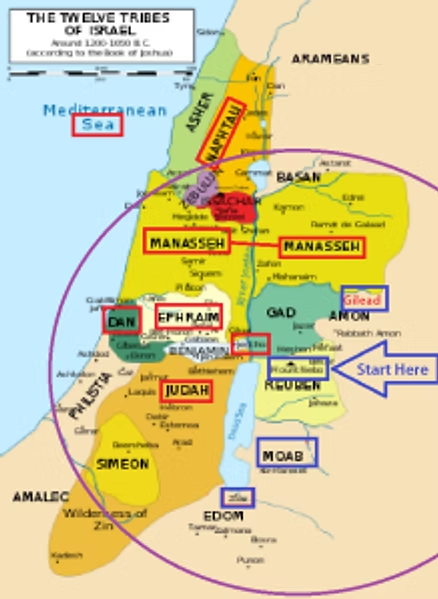
It might be possible to see the distant tops of mountains that border the valley of the Jordan River (and Gilead was a mountain range east of the Jordan River, between Manasseh and Gad); but was Moses limited to such a pedestrian view? If “Pisgah” does indeed mean “cleft,” then one can realize how God showed Moses much more than a vista of the Promised Land.

When we then read the LORD telling Moses, “This is the land of which I swore to Abraham, to Isaac, and to Jacob, saying, ‘I will give it to your descendants’; I have let you see it with your eyes, but you shall not cross over there,” we are returned to the element of “Seeing,” which began Exodus 33 and was the theme of that reading.

The translation, “I have let you see it with your eyes,” comes from the Hebrew “’et·tə·nen·nāh her·’î·ṯî·ḵā ḇə·‘ê·ne·ḵā,” which (as variations of three words) is more like three statements being made: “I will give” (“nathan: to give, put, set”), “I have caused you to see [it]” (“raah: to see”), and “with your eyes” (“ayin: an eye”). The allowance of God is a gift of the Holy Spirit, which then becomes the cause of a vision (acceptable variation allowed from “raah: to see”).  This “sight” was then seen by Moses in his mind’s eye.

When it then shows (by the English translation above) an exception to this “gift” of “sight” by God, as “but you shall not cross over there,” it gives the impression that God was teasing Moses. He was showing him all the bounty of the Promised Land, but then saying, “You can’t go there.” That is the wrong impression.

The Hebrew actually says, “wə·šām·māh lō ṯa·‘ă·ḇōr,” which is better translated as “and there not do cross over.” If anyone remembers the TV show Crossing Over with John Edwards, then one should be familiar with the term “crossing over” as it is relative to death.

A viable use of “abar” (the root of “ṯa·‘ă·ḇōr”) is “pass on” or “pass away.” Since the next verse states, “Then Moses, the servant of the Lord, died there in the land of Moab,” the meaning of “and you shall not pass away there, at the Lord’s command,” says God told Moses, while in a prophetic vision state, “You will die before setting foot on this land I am showing you.”

Because the verse that follows states, “Moses then died,” the assumption is that Moses died as soon as God told him that. However, the end of a verse with a period (mark of “complete stop”) and the beginning of a new verse with a capitalized first word (new thought) does not mean take a deep breath and then immediately continue.  To see how considerable time can pass between such transition points, I recommend looking at the Last Supper verses.  That evening took at least six hours of time.

Because of this realization, there is the distinct possibility that Moses awoke from that dream state atop Mount Nebo, knowing his future; and he was then able to make a few arrangements about his burial and inform key personnel about the coming change. According to lore, Nostradamus told his assistant (Chavigny) he would be found dead in the morning, and he was.  If you recall, Jesus made a few preparatory comments to his disciples, prior to his dying.  Therefore, it is reasonable to think God would not suddenly take the life of Moses away from him.

When we are then told, “Moses was one hundred twenty years old when he died; his sight was unimpaired and his vigor had not abated,” this firmly states that Moses and God were still of One-being, until the day Moses “gave up the ghost.” Moses was filled with the strength and longevity that the Holy Spirit brings. He was fully capable of seeing as a prophet of the LORD, and he was fully capable of acting on every command the LORD gave. In this case, the LORD commanded it was time for the physical presence of Moses among the Israelites to leave them.

The death of Moses, in this light, has to be seen in direct comparison to Jesus of Nazareth. Moses lived 120 years, which is a numerological 3 (1+2+0=12 > 1+2=3). The number three is symbolic of the Trinity, as well as “initial completion.” The children of Israel had reached a stage of training, where their most holy teacher had to let them graduate and take forth what they had been taught to the next level. Jesus lived 33 years, which is a numerological 3 elevated to the spiritual status of an 11 (3 x 11=33).  This means Jesus was on a higher plane spiritually than an ordinary 6 (3 + 3 = 6).

Additionally, Jesus was transfigured on the high mountain and Moses appeared beside him. Both Moses and Jesus were representatives of the Trinity (Father, Son, and Holy Spirit in one being).  Both obeyed the commands of the Father. Both were able to talk with God with “unimpaired vision” of what was before them. Both were doing the work of the LORD, without any weakness of Spirit.

When this reading from Deuteronomy 34 goes on to state, “Joshua son of Nun was full of the spirit of wisdom, because Moses had laid his hands on him,” the same way that Moses touched Joshua spiritually is then comparable to Peter standing (with the other ten Apostles), as Jesus had “laid hands upon him” similarly. Where as Moses touched one (Joshua), a Trinity led to a Trinity.  An an elevated Trinity, Jesus touched eleven, leading to eleven Trinities.  All who were touched became filled with the “spirit of wisdom.”

By adding, “the Israelites obeyed [Joshua], doing as the Lord had commanded Moses,” this says the disciples of Moses became the disciples of Joshua.  Joshua taught and the Israelites learned and believed.  This is also how the Jews converted to becoming Christians, with everyone doing as the LORD commanded, via the Holy Spirit. As was Moses, so was Joshua, and as were the Israelites. As was Jesus, so were the Apostles, and as are, and always will be Christians.

It is so easy for Christians today to see Jesus Christ as the Son of God, seated at the right hand of the LORD, and think less of those holy men who came before Jesus. However, to read, “Never since has there arisen a prophet in Israel like Moses, whom the Lord knew face to face,” one has to see Moses as the equivalent to Jesus, with this truth stated about Moses being tied to Israel, prior to their fall.

Jesus can have the same truth stated about him, as “Never since has there arisen a prophet in the world like Jesus, whom the LORD knew face to face.”

The element stated as “face to face” is in Hebrew “panim el- panim.” The “el” word is read as a prepositional prefix added to the first “panim,” but the noun “el” means “god,” which can be ignored or read as a clue about how to read this three-word statement. As a preposition, “el-” means, “to,” but also “into” and “towards,” with the implication being “against.” As such, the statement says the LORD knew Moses because Moses allowed his “face” to change “into” the “face of God.” His “face” was “towards” God, as subservient, to the point of being pressed “against” the “face” of God, so his own “face” was lost.  What the LORD’s Mind needed to be transferred, as the knowledge of Moses, it entered that person so Moses’ “face” shone like the sun. Jesus was known by God in the same way, but less physically obvious.  Still, Jesus is said to be the “light,” as he shines the “face” of God so all can see the truth.

I will leave it up to the reader to draw comparisons to the statement that Moses was “unequaled for all the signs and wonders that the Lord sent him to perform.” It should not be hard to do that now.
1 Thessalonians 2:1-8 – rue divinity does not require smoke and mirrors [Twenty-first Sunday after Pentecost]

You yourselves know, brothers and sisters, that our coming to you was not in vain, but though we had already suffered and been shamefully mistreated at Philippi, as you know, we had courage in our God to declare to you the gospel of God in spite of great opposition. For our appeal does not spring from deceit or impure motives or trickery, but just as we have been approved by God to be entrusted with the message of the gospel, even so we speak, not to please mortals, but to please God who tests our hearts. As you know and as God is our witness, we never came with words of flattery or with a pretext for greed; nor did we seek praise from mortals, whether from you or from others, though we might have made demands as apostles of Christ. But we were gentle among you, like a nurse tenderly caring for her own children. So deeply do we care for you that we are determined to share with you not only the gospel of God but also our own selves, because you have become very dear to us.

———————————————————————————————————-

This is the Epistle selection from the Episcopal Lectionary for Year A, Proper 25, the twenty-first Sunday after Pentecost. This will next be read aloud in church on Sunday, October 29, 2017. This is important as it sheds more light on the motives and actions of true Christians, in relationship with other true Christians.

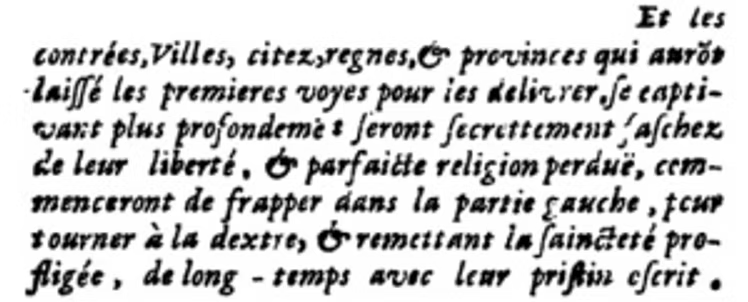
In the past interpretations of Paul’s epistles, I have made reference to “segments” of his long-winded “sentences.” I use that terminology because of my having been enlightened in how to read the complex letters of Nostradamus, which are part of the posthumous publications of his work The Prophecies (Les Propheties). In that regard, I have stated the need to slow down one’s natural reading process, from normally quite fast, to very slow. This means breaking the text down into “segments” (the words between punctuation marks, either directly written or implied in some way), so those words can be more deeply inspected for meaning.

One “sentence” of Nostradamus has a lot of internal marks.

Because the letters of Nostradamus are so difficult to read, due to a very limited number of period marks (among other difficulties), I have found it easier for the readers of my Nostradamus publications to grasp the deeper meaning by breaking down pages of block text into segments, dictated by the presence of punctuation marks. This process allows the actual text to be more clearly presented, and it prevents the automatic processes, of a brain taught to read text fast, that make auto-corrects of inconsistencies in tense, number, and gender, so that we are trained to quickly paraphrase complexities of writing into understandable language.

While Nostradamus was commanded by God to write extremely complex epistles, Paul was meant to be understood, making the two prophets seem only similar in their penchant for long, run-on statements. However, as the source influence for both was God’s Holy Spirit, meaning both were writing in a holy language, with its own purposeful syntax applied, Paul’s epistles can be broken down into segments, in the same way that I have done previously with the text of Nostradamus’ letters.

The translation of 1 Thessalonians 2:1-8 listed above is the New International Version of the original Greek text. This is a valid translation, based on the syntax of normal Greek being applied to the syntax of normal American English, where certain syntactical liberties are naturally taken. When translated in this way, one reads what normal Paul wrote, in a letter sent to normal Thessalonians. However, we know neither Paul (and his apostle companions) nor the Thessalonians receiving this letter were normal; as they were all true Christians, each filled with the Holy Spirit.

In order to see the holiness of this epistle more clearly, I advise the readers here to open a separate window and read along in the Interlinear Bible presentation of 1 Thessalonians 2, which shows the Greek, a standard translation for each word, and the root word that is linked to that word’s usage and definitions, as indicated by Strong’s Concordance (and others). With that guide to assist you, please read now the above eight verses in segmented fashion, reflecting on each segment before leaping rapidly to the next.

(Literal Translation of Interlinear Bible – Viable Literal Translation from Strong’s)

1. You yourselves indeed know, – Your selves truly know,

brothers, – brethren in Christ,

the coming of us to you, – the entrance of ourselves to you,

that not in vain has been; – that [entrance] not pretentious was born;

2. but having previously suffered and having been mistreated, – except suffered previously and having been injured,

even as you know, – just as you know,

in Philippi, – in Philippi,

we had boldness in the God of us, – we spoke freely within the God of us,

to speak to you the gospel of God, – to talk with you the good news of God,

amid much conflict. – among many [who] struggle.

3. For [the] exhortation of us [was] not of error, – Indeed a calling of us not of delusion [or wandering, sin],

nor of impurity, – nor of uncleanness [impurity],

nor in trickery; – nor in deceit [or guile, treachery];

4. but just as we have been approved by God, – but according to the manner we have been tested by God,

to be entrusted with the gospel, – to be given faith in the good news,

so we speak; – in this manner we proclaim;

not as men pleasing, – not as humans approving,

but God, – on the other hand God,

the [One] examining the hearts of us. – he proving [or testing] the intentions of us.

5. Never indeed at any time with word of flattery were we [coming], – not for once a word used for advantage or gain,

even as you know, – just as you know,

nor with a pretext for greed – – not in an excuse for covetousness —

God [is] witness; – God a witness;

6. nor seeking from men glory, – not desiring from humans praise,

nor from you, – not from you,

nor from others, – not from others,

[though] having authority in [it] burden to be, – having the ability by weight [or burden] to be,

as Christ’s apostles. – as the Anointed One’s messengers.

7. But we were gentle in [the] midst of you, – However our birth an infant in the middle of you,

as if a nursing mother would cherish her own children. – like as if a nursing care-giver would foster her own children.

8. So yearning over you, – In this way desiring earnestly for you,

we were pleased to have imparted to you, – we well-pleased to have given shares to you,

not only the gospel of God, – not only the good news of God,

but also our own lives, – but also our own souls,

because beloved to us you have become. – because beloved by God to us you have been born.

I will just make a couple of comments, beyond stating the obvious: The above text is from holy men to holy men, conceived by God in apostles and received by apostles who were enlightened by God to its true purpose. That truth lasts forever, to all who read these holy words, in all times: past, present, and future. The epistles of Paul are in a Holy Bible, for that reason – they are holy documents; and it requires the assistance of God to fully understand the holiness of their words.

That said, look at how the Greek word “adelphoi” was written and then translated as “brothers and sisters” in the New International Version above. That one word in Greek means, “A brother, member of the same religious community, especially a fellow-Christian.” (Strong’s) It is translated a number of times in the New American Standard Bible to be: “believing husband (1), brethren (170), brethren* (13), brother (111), brother’s (8), brothers (40).” (NAS)

As a typical statement of male apostles writing to male apostles, at an historic time when female apostles were never addressed as the caretakers of a church, it then becomes a modern paraphrase to change the essence to “brothers and sisters,” due to the allowance of female priests these days. However, that is not grasping the deepest spiritual meaning of this particular one-word statement, surrounded by two commas.

The word “adelphoi” means both the writer(s) and the recipient(s) were related. As such, the epistles were intended to both males and females, with both sexes referred to as “brothers.” They were not physically related, which means the differences in sex organs are inconsequential in this address. The relationship was solely Spiritual. All were brothers because all had been reborn as the Son of God, Jesus Christ. To reduce this to “brothers and sisters” is to put women back into a subservient role to men, as if only men could be filled with God’s Holy Spirit. That is not the intent of this word’s spiritual intent.

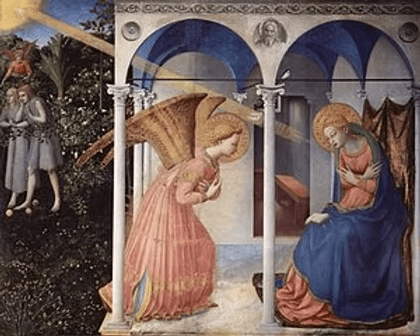
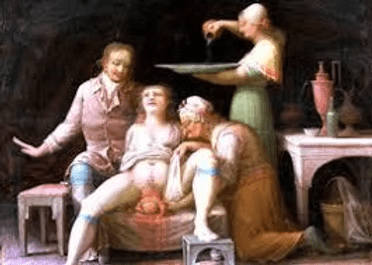
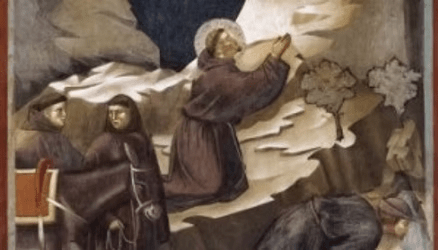
Mary has a halo in this work of art. Was it because she was holy? Or was it because the Son of God was within her womb? Think about that for a moment.

Second, the repeating of the segment that says “kathōs iodate,” translated as “just as you know,” says that Paul was not telling the Christians of Thessaly anything new. Because all were equally filled with the same Holy Spirit of God, the elements stated by Paul about the sufferings experienced and injuries caused, prior to becoming apostles of Christ, and the purpose their lives had taken on, after becoming apostles of Christ, were dawnings that all understood.
For this reason, Paul wrote that segment twice here (as influenced by the Mind of Christ to write) because the same statement is made to each reader, for as long as this epistle will be read. Understanding the steps of apostlehood is “even as you know.” If you are a fast reader, and everything Paul wrote seems to be “Greek to you,” then you know little of being an apostle of Christ (a true Christian). If you read Paul and believe this epistle was written to you, then the experiences recounted here as “just as you know.”

With that said, I will leave this letter to speak for itself, with the presentation I have shown an aid towards understanding. If anyone has questions or comments, then feel free to post them for all to see. I will answer any comment that specifically references the internal text of this posting.

Matthew 22:34-46 – Whose son is the Messiah? [Twenty-first Sunday after Pentecost]

When the Pharisees heard that Jesus had silenced the Sadducees, they gathered together, and one of them, a lawyer, asked him a question to test him. “Teacher, which commandment in the law is the greatest?” He said to him, “’You shall love the Lord your God with all your heart, and with all your soul, and with all your mind.’ This is the greatest and first commandment. And a second is like it: ‘You shall love your neighbor as yourself.’ On these two commandments hang all the law and the prophets.”

Now while the Pharisees were gathered together, Jesus asked them this question: “What do you think of the Messiah? Whose son is he?” They said to him, “The son of David.” He said to them, “How is it then that David by the Spirit calls him Lord, saying,

‘The Lord said to my Lord,

“Sit at my right hand, until I put your enemies under your feet”’?

If David thus calls him Lord, how can he be his son?” No one was able to give him an answer, nor from that day did anyone dare to ask him any more questions.

——————————————————————————————————

This is the Gospel selection from the Episcopal Lectionary for Year A, Proper 25, the twenty-first Sunday after Pentecost. It will next be read aloud in a church by a priest on Sunday, October 29, 2017. It is important because here Jesus stated the First Commandment as the most important, with loving your fellows that are also devoted to God the next greatest commandment, from which obedience to all other laws follows naturally.

As this reading begins, we read, “When the Pharisees heard that Jesus had silenced the Sadducees.” Matthew’s twenty-second chapter begins with Jesus telling the parable of the wedding banquet, followed by the test by the Pharisees as to whether or not Moses said paying tribute to Rome was legal. Prior to this reading was the approach by the Sadducees, who tested Jesus about seven sons marrying the same woman (repeatedly widowed without child), as to who would claim her as their wife in heaven, after all had died. All of these tests of Jesus are to be seen as the inspection of a sacrificial lamb for imperfections. Because Jesus continually sent his inspectors away humbled, each time he was found without blemish.

Again, these inspections are taking place in the Temple area, as the Jewish Holy Week of the Passover Festival is only days away from beginning.  That commanded ritual required eight days of pious recognition of God having saved them, that year beginning at 6:00 PM on Friday – a Jewish Sabbath evening. Thus, four days of inspection becomes Monday through Thursday, with Jesus entering Jerusalem on a donkey and her colt on Sunday – the first day of the week. Sunday was then 9 Nissan, with Monday through Thursday being 10-13 Nissan, and Friday (the day of preparation for the Sabbath) being 14 Nissan.  Passover always begins on 15 Nissan.

The multiple inspections of Jesus that were done each day is then a statement that the commandment given by God, through Moses, was important:

“Speak to all the congregation of Israel, saying, ‘On the tenth of this month they are each one to take a lamb for themselves, according to their fathers’ households, a lamb for each household.” (Exodus 12:3) “Y our lamb shall be an unblemished male a year old; you may take it from the sheep or from the goats. You shall keep it until the fourteenth day of the same month, then the whole assembly of the congregation of Israel is to kill it at twilight.” (Exodus 12:5-6) “This is a day you are to commemorate; for the generations to come you shall celebrate it as a festival to the LORD–a lasting ordinance.” (Exodus 12:14)

To put this in perspective, Jesus was not the only guy who had people running around calling him a prophet and possibly the Messiah.  People thought the same about John the Baptizer (since killed).  There were others as well.  In a way of protecting the people from following a false shepherd, the Pharisees, Sadducees, and Temple priests (all the Big Brains of Jerusalem) had taken it upon themselves to inspect all potential Christs for blemishes.  In that way, they played a valuable role, just as did the leaders of the Israelite families in Egypt, who could not allow a diseased sheep or goat to have its blood shed to save lives.  This was in spite of them being blind to themselves needing to be inspected.

In this reading, the inspection is a question posed to Jesus, about which of the 613 laws of Moses is most important for a Jew to obey. We then read, “[Jesus] said to [the legal beagle inspecting], “’You shall love the Lord your God with all your heart, and with all your soul, and with all your mind.’ This is the greatest and first commandment.”

Before going beyond this point, it is important to grasp how well this statement by Jesus, about the First Commandment, fits that which was written.

The Hebrew of the First Commandment (Exodus 20:3) says: “לֹא יִהְיֶה לְךָ אֱלֹהִים אֲחֵרִים עַל פָּנָי,” as “lo yih’yeh le’kha e’lo’him a’hhey’rim al pa’nai,” literally translated as, “NOT he~will~EXIST to~you(ms) “Elohiym POWER~s” OTHER~s UPON FACE~s~me other “Elohiym Powers” will not exist (for) you upon my face.” (Source: Ancient Hebrew Research Center) This is usually translated for English-speaking Americans as: “You shall have no other gods before me.”

(Notice how the literal translation places focus on the word “panim,” which clearly states “face.”)

Knowing that the question to Jesus was posed by a “lawyer” (“nomikos”), which is not someone versed in Roman laws, but Mosaic Law (all 613 of them), such an authority would know Hebrew and the text stated above (“lo yih’yeh le’kha e’lo’him a’hhey’rim al pa’nai”). Thus, he would not have floating in his legal mind, “You shall have no other gods before me,” as an official inspector hoping to find an ugly blemish on Jesus. Therefore, when Jesus said, “You shall love the Lord your God with all your heart, and with all your soul, and with all your mind,” that lawyer was processing, “Does love of Yahweh, from your heart, soul, and mind, mean you do not wear the face of any other gods?”

When Jesus then went on to state, “And a second is like it: ‘You shall love your neighbor as yourself.’ On these two commandments hang all the law and the prophets” … there was that “love” word (“Agapēseis”) again. Who can argue with the “love” word, especially when Exodus 20:6 says, “but showing love to a thousand generations of those who love me and keep my commandments”?

Hmmmmm. “Group think!” the lawyer must have thought, as he motioned to the other Pharisees standing there … speechless.

“Let’s put our heads together guys. Was that a blemish?”

As they were talking amongst themselves, Jesus asked them a legal question:

“What do you think of the Messiah? Whose son is he?”

After having mentioning the prophets, whose prophecies were further amendments to the Law, coming from the LORD, they (Isaiah, Ezekiel, Jeremiah, Zechariah, and Amos, along with some Psalms of David) were the primary ones who foretold of a coming Savior. Still, as a concept of Judaism, rather than a prophecy etched in stone (as was Mosaic Law), the standard answer was that instantly known by the Jews of the Second Temple: “The Messiah was to be a future Jewish king from the Davidic line.”

From that standard teaching that the Pharisees had memorized, they probably said in unison, “The son of David,” as a knee-jerk reaction, uncontrollable when that nerve was struck. Undoubtedly, Jesus asked a question to which he knew what the answer would be, setting up his next follow-up question.

Jesus asked, “How is it then that David by the Spirit calls him Lord, saying, ‘The Lord said to my Lord, “Sit at my right hand, until I put your enemies under your feet”?”

He quoted to them Psalm 110:1, which begins by stating, “Of David a Psalm said.” Jesus used the words of David himself, which the Pharisees regularly belted out in song, while drawing special attention to themselves in the synagogues.  So, they knew the words Jesus quoted.

They had just never really pondered what those words meant, until then, when Jesus used that as evidence that challenged their concept of a Messiah.

When David wrote, “Yah-weh la·ḏō·nî,” the “LORD of my lord,” this is similar to the repetitious use of “Yahweh elohim” in Genesis 2 – “LORD of lords” or “God of gods” – and the use of “ĕ·lō·hê hā·’ĕ·lō·hîm , wa·’ă·ḏō·nê hā·’ă·ḏō·nîm hā·’êl” in Deuteronomy 10:17 – “God of gods, the Lord, Lord God.” Because the First Commandment refers to “elohim” – as “god powers upon a face” or “gods before me” – the Pharisees had just stepped into a trap that had them putting a human face (a descendant of David) on the Anointed One – the Son of God.

When David sang, “The Lord said to my Lord,” the Pharisees understood that “The Lord” was God (Yahweh) and “my Lord” was the Messiah, who “sat at the right hand” of God, as God’s Son, the Lord of David. Therefore, it was impossible for the Messiah to be some human to be born as the Messiah, simply from bloodline and heritage.  God, and thus His Son, was more than flesh and blood.

When Jesus then asked the Pharisees, “If David thus calls him Lord, how can he be his son?,” they just got real silent and walked away, too afraid to say anything else.

The funny thing is that was a trick question asked by Jesus; but the Pharisees were not filled with any Holy Spirit to answer.  They could have said: “The Christ can be any human whom God chooses to be His Son. If the LORD is my Lord, as David said, then David was one in a long line of God’s chosen Messiahs.”

Adam was one.  Abraham was one.  Moses was one.  Samuel was one.  Elijah was one.  Jesus was one, and so on.  The presence of the Christ (Greek for “Messiah“) Mind means the the presence of the LORD within a human kingdom, making the LORD “my Lord.”

Therefore, the trick answer to the trick question becomes a statement of the two most important commandments:

“Anyone who loves God so much that he or she becomes the face of God on earth (a Messiah), and that face of God loves all others who wear the face of God on their faces, then the Messiah will always be a descendant of the Davidic lineage of Spirituality.”

Not many would know that answer then; but by the Fiftieth Day (6 Sivan), in remembrance of when Moses first delivered the Law to the Israelites, an ever growing number of Messiahs were then enabled to see this inference.  The question now is: Are we like the Pharisees all over again (blind), or are we like the Apostles (enlightened)?

Joshua 3:7-17 – Crossing the Jordan on dry ground [Twenty-second Sunday after Pentecost]

The Lord said to Joshua, “This day I will begin to exalt you in the sight of all Israel, so that they may know that I will be with you as I was with Moses. You are the one who shall command the priests who bear the ark of the covenant, ‘When you come to the edge of the waters of the Jordan, you shall stand still in the Jordan.’” Joshua then said to the Israelites, “Draw near and hear the words of the Lord your God.” Joshua said, “By this you shall know that among you is the living God who without fail will drive out from before you the Canaanites, Hittites, Hivites, Perizzites, Girgashites, Amorites, and Jebusites: the ark of the covenant of the Lord of all the earth is going to pass before you into the Jordan. So now select twelve men from the tribes of Israel, one from each tribe. When the soles of the feet of the priests who bear the ark of the Lord, the Lord of all the earth, rest in the waters of the Jordan, the waters of the Jordan flowing from above shall be cut off; they shall stand in a single heap.”

When the people set out from their tents to cross over the Jordan, the priests bearing the ark of the covenant were in front of the people. Now the Jordan overflows all its banks throughout the time of harvest. So when those who bore the ark had come to the Jordan, and the feet of the priests bearing the ark were dipped in the edge of the water, the waters flowing from above stood still, rising up in a single heap far off at Adam, the city that is beside Zarethan, while those flowing toward the sea of the Arabah, the Dead Sea, were wholly cut off. Then the people crossed over opposite Jericho. While all Israel were crossing over on dry ground, the priests who bore the ark of the covenant of the Lord stood on dry ground in the middle of the Jordan, until the entire nation finished crossing over the Jordan.

———————————————————————————————————

This is the Old Testament primary selection from the Episcopal Lectionary for Year A, Proper 26, the twenty-second Sunday after Pentecost. It will next be read aloud in church on Sunday, November 5, 2017. This is important as it tells of the Israelites’ entry into the Promised Land in the same manner that they departed Egypt, with all threats removed and the waters of emotional unbalance made dry.

It is easy to read this selection and think that God has told Joshua, “Not to worry, I’ll still be with you guys, making sure things go well for you.” But, that misses several important points that are stated in that assurance.

To read, “This day I will begin to exalt you in the sight of all Israel, so that they may know that I will be with you as I was with Moses,” the well-trained reading brain comes away thinking God said, “The Israelites will see Joshua as a big man;” but that fails to grasp God telling Joshua, “I will make you greater with the sight (or eyes) of Israel (the next place for the growth vision for a land of God’s priests).”

The Hebrew words “gad·del·ḵā bə·‘ê·nê” say, “to magnify you in the sight.” This is then a promise to “grow” the “sight” of Joshua, in the same way God gave “eyes” to Moses, through his prophetic dream state visions. The promise now says that Joshua will have the same talents of prophecy, as this is how God speaks to His prophets; but it still says that the Israelites will see this comparison to Moses in Joshua.  So, the Israelites will follow the lead of Joshua in the same manner.

Now, beginning in verse 8, the words “ark of the covenant” (“’ă·rō·wn hab·bə·rîṯ”) are found. That combination of words is then repeated (in variations) two more times (verses, 11 and 17), with “ark” stated alone, in verses 13 (“the ark of the Lord of lords”) and 15 (“the ark”). It should be noted that repetition is not to make one’s eyes tired, but to alert one to an important element being stated.  That awareness becomes important in this reading selection.

If one watches the plethora of programming on The History Channel, about “Ancient Aliens,” or if one reads any of the number of books that attempt to solve the mystery of the Holy Grail, one invariably comes across wild conjecture about the ark of the covenant. Some say, if you follow the directions given in Exodus 25 (verses 10 through 22) and repeated in Exodus 37:1-9, then you end up with a highly charged conductor of energy. The addition of a requirement that it should never be touched, thus carried by wooden poles, is another aspect of some device having been created that has super powers.

As ancient alien theorists believe, it connects to a spaceship somewhere, and God is more like the Wizard of Oz … just some guy behind a curtain.

The point I want to make about the carrying of the ark of the covenant into the ankle-deep waters of a swollen Jordan River, causing it’s waters to separate and the ground to be exposed and become instantly dry, a larger body of water was likewise effected by Moses and his staff. With all the mystery about the missing ark and if the Knights Templar found it and stole away with it, where is the mystery over the loss of the staff of Moses? Would Moses have been buried with his staff, when that staff had such amazing powers?

Perhaps it was not the staff as much as it was God. In the same way, perhaps it was not so much the electrical properties of a gold-plated cedar chest, but the presence of God in the holy men carrying those wooden poles (horizontal staffs). What if the ark of the covenant was symbolic of the powers of God, when He is placed inside a human body?

Imagine the diodes of the heart causing highly charged spiritual energy being fed through neural wires leading to the hands, eyes, ears, mouth, and of course … feet.

Anyone see the science fiction movie about a woman who accidentally gains psychokinetic powers, Lucy? I digress.

Not Lucy.

When we read or hear read, “Joshua then said to the Israelites, “Draw near and hear the words of the Lord your God,” this means he told them “the conditions set forth that must be met, coming from the LORD your God.” The Hebrew word “diḇ-rê” (root debar) means “speech” or “words,” but is also translatable as “commandments, conversations,” and ”conditions.” These “words” or “commandments” do not demand the Israelites recognize God had them craft a machine, in which to carry the stone tablets, as a chest that was radio-controlled from outer space and could zap anyone at will.

Joshua announced he was speaking as Moses had, allowing the words of the Lord God of Israel to use his voice to sound Spiritual instructions. We then see the conditions that were set said nothing immediately about an ark doing anything. Initially, we read that “Joshua said, ‘By this you shall know that among you is the living God who without fail will drive out from before you the Canaanites, Hittites, Hivites, Perizzites, Girgashites, Amorites, and Jebusites,’” The part that says “living God” is vital to grasp, as an ark is made of non-living materials.

“Among you is the living God” means “God is alive within you,” so the Israelites were the ones who had the power of God. It means that those human beings who were “without” that power within them (all those specifically named), they would “fail” to defend the land they had lived on. It would not be an ark leading the victories, as victories would be won by those with God’s power within them. Joshua, speaking “the words of the LORD,” then named all those tribes of people who were “without” the Holy Spirit, whose lands would be lost to the Israelites.

In a verse that precedes the selected verses above, in Joshua 3:5 is found: “Then Joshua said to the people, ‘Consecrate yourselves, for tomorrow the Lord will do wonders among you.”’ This order said to take steps to sanctify themselves and to take the necessary steps to be holy means the Israelites were prepared to be filled with God’s Holy Spirit.

The words translated as “the LORD will do wonders among you” can be read as “the LORD inwardly to be extraordinary.” As such, when Joshua gave instructions to the priests who carried the ark of the covenant (verse 3:6), where they were told to pass by the Israelites and lead the crossing with the ark of the covenant. The Israelites were filled with the Spirit of God within them, just as the ark contained their agreement with God inside it. That made the ark of the covenant symbolize those who followed it were empowered by the LORD.

When we read then in verse 11, “the ark of the covenant of the Lord of all the earth is going to pass before you into the Jordan,” and in verse 13, “the Lord of all the earth, rest in the waters of the Jordan,” we find repeated “the Lord of all the earth.” The Hebrew word “eretz” means “earth, lands, or world,” such that the LORD is not simply a deity that rules over all humanity; but God created everything material, of which human bodies are formed and of which lands and their rivers are made. Therefore, God is the LORD of all anomalies of physics (metaphysics?), including those that stand still flowing waters and force them back, making wet soil become immediately dry.

In the Old Testament reading of Proper 25, where Moses was told by the LORD, “You will not pass over there,” as reference to both his going across the Jordan River and his passing over from life to death, the same meaning can now be seen here in Joshua 3.  The words translated as “passing before” (“‘ō-ḇêr lip̄·nê·ḵem”) are repeated in some variation, multiple times.  Joshua 3:1, 3:4, 3:6 [not read in this selection], plus Joshua 3:11, 3:14, 3:16, and 3:17, state either “passed” or “before” or both.

The root words are “abar panim,” or “pass over to face.” This, again, is a hidden statement about the First Commandment that says, “Thou shall wear no other face as a god in the presence of the LORD.”

This acts as a confirmation that the priests – one from each of the twelve tribes [or “two and ten men from the tribes of Israel”] – were filled with God’s Holy Spirit. By not being limited as Levites, the priests of the tabernacle in which the ark of the covenant was kept, choosing “ordinary Israelites” demonstrated they all were holy, by having a love of the LORD in the chest [their ark] that was their hearts. Therefore, all of Israel had consecrated themselves, so the face of the LORD passed over theirs, so all had the same face of holiness.

This then leads to the statements, “When the soles of the feet of the priests who bear the ark of the Lord, the Lord of all the earth, rest in the waters of the Jordan” and “when those who bore the ark had come to the Jordan, and the feet of the priests bearing the ark were dipped in the edge of the water,” where “feet” become a focus. This brings back in mind the Psalm quoted by Jesus to the Pharisees (110:1), in the Proper 25 Gospel selection: “Sit at my right hand, until I put your enemies under your feet,” or “until I make your enemies a footstool for your feet.”

The Hebrew word translated as “your enemy” is “’ō·yə·ḇe·ḵā,” where an “enemy” is a “foe” or “adversary.” When Joshua named the tribes of Canaan who would “fail” before the “living God of Israel,” he was naming the “enemies” who would become “the footstools under the feet” of God’s priests. Thus, they would be defeated by God, with the priests being God’s agents, who were given the powers of the LORD.

As the LORD of the world, nothing material could overcome this power, meaning not even a swollen Jordan River could oppose the children of God entering into the lands the LORD had promised them; and, as with the difficulty factor of escaping Egypt in the face of a great sea, no earthly barrier can be a match for those who bear the power of the LORD.  Anything is possible to the LORD.

Because we read, “the waters of the Jordan flowing from above shall be cut off; they shall stand in a single heap” and “the waters flowing from above stood still, rising up in a single heap far off at Adam, the city that is beside Zarethan, while those flowing toward the sea of the Arabah, the Dead Sea, were wholly cut off,” after we read of the “feet” in the Jordan, this feat cannot be attributed to the ark of the covenant.  It was “the feet” of those carrying the ark of the covenant that entered (barely) the waters of the Jordan.  Because of that realization, one needs to see the subsequent actions involving water to be attributed to the human factor as the cause, more than the mechanisms of the ark of the covenant.

Consider how the wayward Israelites (under the priest Eli) had caused the loss of the ark of the covenant to the Philistines (1 Samuel 4). They lost it because they thought using the ark would bring about victory; but the ark had no effect that day in battle, when 30,000 foot soldiers died, the ark was captured and two sons of Eli (tabernacle priests) died. Without the human factor, where the Israelites became like the ark of the covenant, filled with the love of the LORD and the powers He bestows, the ark of the covenant is only a reflection of whose face one wears as a god before the LORD.

Then, the Israelites wore their own faces and depended on Eli, who had two sons committing atrocities that he would not punish.  They had turned away from God, selfishly.  The Palestinians wore the face of Dagon, their idol god, before which they placed the prize ark of Israel.  That act provoked the LORD, we are told (1 Samuel 5), and the Philistines would rue that act of putting the idol of another god before the LORD.

Ancient alien theorists don’t give much thought to this negative power that surrounded the ark of the covenant. If the ark of the covenant were some amazingly powerful energy generator, why would water be stopped, when water is a conductor of electricity? Why were the priest not electrocuted, once their feet touched the water? In the hypotheses of the Templar Knights, if they had found the ark of the covenant AND THEN STOLEN IT, would they not soon realize the same negative powers of an angry God, so the plague-ridden remainders of those knights would have left the ark out in the open land of southern France with a sign on it saying, “Do not touch unless you are a Saint”?

The point here is the power of God was in His priests, who bore the sacred chest that held the sacred tablets that represented the total commitment of the Israelites to the LORD their God. That love consecrated them, so their faith turned back the waters of the Jordan, in the same manner that the faith of lepers, blind men, possessed people, and the lame equally created miracles, as told in the Gospels. Jesus was a totally committed human, who represented the reappearance of the ark of the covenant, which had been lost by the time the Israelites lost the Promised Land [the Covenant broken was no longer stored away]. Therefore, Christians can make water (symbolic for emotions) “stand in a heap,” as the conduits of God’s powers on earth.

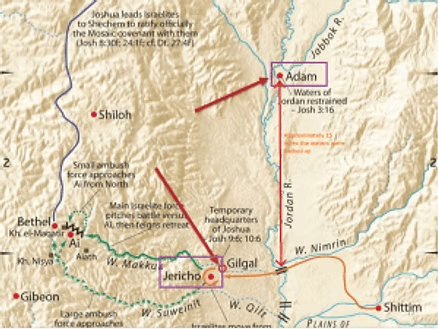
When we are then told the extent of the cessation of waters flowing, “rising up in a single heap far off at Adam, the city that is beside Zarethan,” this needs to be grasped both physically (actual locations) and spiritually (why those places bore those names). Here is a map that someone who has written about Joshua has posted online:

This map shows the physicality of what is stated. The Wadi Nimrin represents a dry ravine during the dry season, but since the text states, “Now the Jordan overflows all its banks throughout the time of harvest,” the wadi would have been flowing a lot of water into the Jordan, causing it to overflow its banks. Just north of Adam is the Jabbok River, which flows into the Jordan, and just to the south is where the Wadi Tirzah had its confluence. The sheer size of this area affected (15 miles roughly) must be seen as a necessary space that could accommodate a great number of Israelites.  If that many who were filled with the Holy Spirit of God were ready along the banks of the Jordan, awaiting Joshua’s commands of the LORD, the feet touching far away to the south would have started a backwards flow northward.

On a deeper level of thought, my opinion (which will not be found commonly stated in scholarly interpretations of Joshua) is that one has to ponder what the presence of the two names and what that means. All names presented in the Holy Bible are symbolic statements of meaning. Names were not made up because they sounded funny or cool back then. Names stood for people, places, and things for reason and purpose; and that reason and purpose needs to be examined here.

It does not take a biblical rocket scientist to see the name Adam and think of the Son of God, the one who used to live in the “eretz” (“land”) called “the garden of Eden.” Of course, little-a “adam” is Hebrew for “man,” but some say the word implies “red man,” or even “mud” (I assume “reddish clay”). In that case, the name of a place known as “Adam,” could be because of the muddy land surrounding it, where two rivers join – like a red delta. Still, after Adam and Eve were found to have sinned, they were cast out of Eden, with God placing cherubim to the east of Eden. Such a place where Adam could have begun to toil, working the land, could very well have been where this place named Adam was. The purpose of the name was that settlement identity.  While outcast, Adam might have still wanted to stay close to his old home, so he only went as far as just beyond where he was no longer allowed.

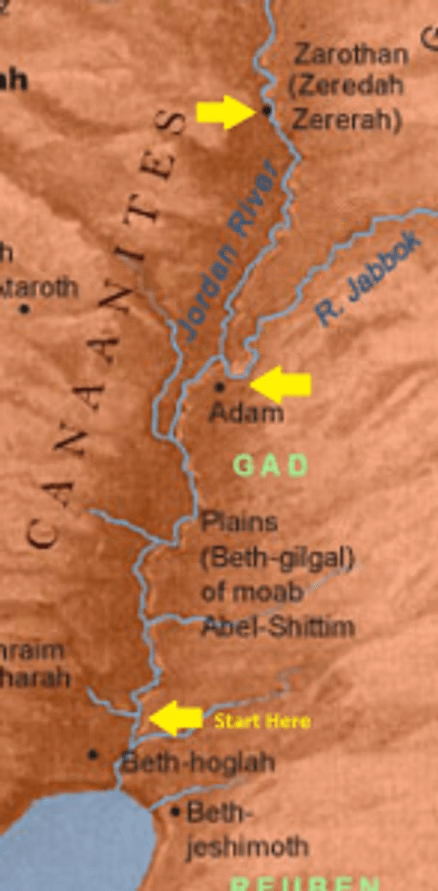
Now, the name “Zaretan” [a.k.a. “Zarethan”] means “the Fortress” or “Narrowness of Dwelling Place,” according to Abarim Publications. The map above shows where a place named Zaredah was located, and this is presumed (by some) to be the same place as Zaretan. As this location is about as far away from Adam (north), as Adam was from the crossing point opposite Jericho (south), it is not near and certainly not “beside” it.

In that regard, the word written (“miṣ·ṣaḏ”) means “beside, to the side,” or “an arm of.” This means the reference to “from the city” (“hā·‘îr“) means Adam was a place of “excitement,” as “towns” are (from “iyr”).

In the picture above, the southern tip of the land between the Jordan River and the Jabbok River is to the eastern side of Adam.  That land appears like an arm reaching down, with its hand almost touching the “town” of “Adam.” This can then be seen as defining that land as a “Narrowness of Dwelling Place,” with purpose and reason behind that name. As such, Zaretan can be read as descriptive of a delta formation of land that is next to the city (or town) that was Adam; and that could infer that Adam, the son of God, toiled that earth, from that place of “excitement.”

Beyond Joshua making a statement about how far north the Jordan River backed up, the symbolism states a claim that this crossing is into holy land, which is then backing up the flow of time, to the time when Adam lived in Eden, prior to his expulsion. It says the ark of the covenant and the Israelites filled with God’s Holy Spirit are returning to their ancestral home, as Adam’s heirs, through Abraham, Isaac, and Jacob.

From seeing this statement of two names that do little more than create surface confusion, as to “Why?” the continuation that is translated as: “while those flowing toward the sea of the Arabah, the Dead Sea, were wholly cut off,” then speaks of those who had migrated into that holy land (which Joshua, as a spy, had said was “flowing with milk and honey”).  To read “toward the sea of the Arabah, the Dead Sea,” where people were “wholly cut off,” the inference is cut off from that holy lineage.  The ones named held no rights of ownership.

As such, “the sea of the plain” (“yam ha-arabah”) and “the sea of salt” (“yam ham-melah”) are references to the sea of mankind that was “Arab” (“Arabah” is the Hebrew feminine form of “Arabia”). This means a statement of waters not being replenished to the south is something Captain Obvious would say, as it adds nothing of value to the miracle of waters backed up 15 miles.  The people there were “of the plain,” thus not “elevated” through consecration.  They were the “salt” of the earth, but the Salt Sea is known also as the Dead Sea, meaning the “salt” was mortal, not everlasting.  As the descendants of Ishmael and Esau, they were “wholly cut off” from knowing the LORD Yahweh.

When the reading then makes its conclusion by stating, “While all Israel were crossing over on dry ground” and “the priests who bore the ark of the covenant of the Lord stood on dry ground in the middle of the Jordan,” this element of dry ground is repeated. The Hebrew word “be·ḥā·rā·ḇāh” has that meaning, but implies a “desert.” This means more than the powers of God stopping the flow of rivers and wadis that were swollen with fall rains, backing those up 15 miles, and instantly making hard earth be under the feet of men holding the ark of the covenant. It means, despite the amount of annual rainfall, the land was void of spiritual recognition of Holy Land.  That earth was dried of all emotion for the true God, because the people had become lost.

This understanding then allows one to see the flow of living waters – spiritual waters that never need replenishing – coming back into the land that was once the garden of Eden. Without that presence of God being the source of the bounty of the land, since Adam had been cast out, and since Melchizedek, Abraham, Isaac, and Jacob had last dug wells and given life to that land, it had become a desert, as far as Spirituality was concerned. Therefore, when “the entire nation finished crossing over the Jordan,” so the garden was again in bloom. The Spirit of the LORD was being reinstated into the heart of the land, with the sacred ark becoming the central pump of the Holy Spirit to the far reaches of the Twelve Tribes of Israel.

1 Thessalonians 2:9-13 – Witnesses of Yahweh speak the truth of Jesus [Twenty-second Sunday after Pentecost]

You remember our labor and toil, brothers and sisters; we worked night and day, so that we might not burden any of you while we proclaimed to you the gospel of God. You are witnesses, and God also, how pure, upright, and blameless our conduct was toward you believers. As you know, we dealt with each one of you like a father with his children, urging and encouraging you and pleading that you lead a life worthy of God, who calls you into his own kingdom and glory.

We also constantly give thanks to God for this, that when you received the word of God that you heard from us, you accepted it not as a human word but as what it really is, God’s word, which is also at work in you believers.

——————————————————————————————————–

This is the Epistle selection from the Episcopal Lectionary for Year A, Proper 26, the twenty-second Sunday after Pentecost. This will next be read aloud in church on Sunday, November 5, 2017. This is important as it makes clear the work that is involved in being truly Christian.

To repeat what I posted previously about Paul’s letter to the Thessalonians, the statement above that says “brothers and sisters” is not what was written in this letter. The Greek word Paul wrote is “adelphoi,” which is the plural form of “adelphos” and says “brothers.” We can accept “brothers and sisters” in translation, because “brothers” was used in the epistles of Paul to denote “members of the same religious community, especially fellow-Christians.” (Strong’s) However, to translate it as both masculine and feminine Christians can become confusing, when one gets to the part where Paul wrote, “We dealt with each one of you like a father with his children.”

This is confusing because Paul treated the Christians of Thessaly “like a father.”  The deeper meaning in that statement says it was the Father’s love of Paul in him which Paul then modeled behavior from. God raised Paul to raise others like Paul, so all would have the same love of the Father within them, with all modeling their behavior after God the Father. This is why priests are addressed as “Father.”

This issue will be further addressed by Jesus in the Gospel reading that accompanies this epistle reading in 1 Thessalonians (Matthew 23:1-12). That was when Jesus made the remark that Pharisees and those of the Temple liked to be called “rabbi,” but they never taught by example. They were never the “Fathers” of the Jews, as those lowly people were raised as if they were orphans. So, when Paul said, “We dealt with each one of you like a father with his children,” all the “sisters” could be confused about what that means.

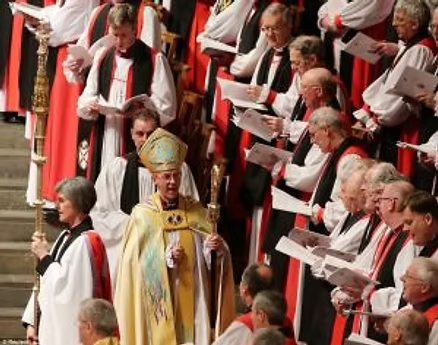
My wife is an Episcopalian priest. In seminary, she had a woman professor who was referred to as “Mother.” When my wife was ordained, the parishioners began calling her “Mother.”  In my mind, this is not a complimentary title.

Before I comment on that, let me also say that I have sat in some Episcopal churches and read along in the Prayer Book, for the Eucharist Rite II, Prayer C: “Lord God of our Fathers; God of Abraham, Isaac, and Jacob,” only to hear the priest (a male) say, “Lord God of our Fathers and Mothers; God of Abraham and Sarah, Isaac and Rebekah, and Jacob, Rachel and Leah.”

What?

I asked a different male priest, who did not make those additions for the wives of Patriarchs (Pater is Latin for Father), why some priests did and some did not. He said it was up to the priest; but it was a modern way of making unofficial changes to the Prayer Book, which took into consideration the role women play in the Church.

If that is why “adelphoi” is translated as “brothers and sisters,” then it misses the point of the Father as the teacher of His children, with Jesus Christ the Son of God, where ALL Christians are “brothers” [male and female He made them], as reborn Jesuses.  If that is why a female priest of the One God is called “Mother,” it misses the point of who is teaching, what is being taught, and how children know the difference between mommy and daddy.

It misses the point that ALL Christians are called to be “the brides of God” [male and female He calls them], with the consummation of that marriage bringing about the baby boy Jesus, with the Mind of Christ – who sits at the right hand of the Father, as the male heir to the throne – making a human being become One (a Trinity) in the flesh.

It misses the point that Christians are ALL “brothers,” because nobody speaks their sex organs as a servant of the LORD. The FATHER speaks, while Christians just open their pie holes and let the words come out.

Now, that said, let me inform whoever reads this that I had no father around when I grew up. I had a mother, and that was it. My mother did lots of things a father could do, such as go to work and leave me in someone else’s care, or go to work and leave me alone at home. Occasionally, my mother spanked me with a belt, but she never made me so afraid of punishment that I felt compelled to toe the line. In all actuality, I was allowed to do as I pleased, more and more the older I got.

My mother saw me as the “man of the house.” My mother loved me. My mother sacrificed for my benefit. My mother gave me as much as she could afford to give, and was sorry she could not give more. My friends with fathers AND mothers never had as much as I had; and as I grew older, I felt guilty for having too much … as a lower, middle-class male. (I call it middle-class because my mother bought a house to raise me in.)

From that personal historic background and experience, when I hear a priest of the LORD referred to as “Mother (fill in the blank),” it gives me the impression of one who is permissive, more than demanding.  It makes me think that “parent” is there to make all my boo boos feel better, more than tell me to get up when I fall … “Rub some dirt on it!”

Without the presence of a real father in my life (my father visited on some holidays – he was not dead, just very absent), I grew up male, but knowing very little about things boys with fathers are taught. As some model by which I could become an adult male, with eventually a wife and family and responsibilities of fatherhood, I looked to other fathers. Some were real fathers I spent time with, as a friend of their sons; and some were fictional characters on TV.

At no time did I ever learn any adult male skills from my mother. I watched other males and learned through observation.  Male teachers and gym coaches were the ones who told me how to become a man and do manly things; and I absorbed that knowledge like a sponge. Of course, my peers helped me learn too, by leading me down all the wrong paths of masculine ignorance.  Without a real father to guide me, I found trial and error was my best teacher.

In defense of my mom, she was always buying things that I was tasked to put together and she bought some tools that I could use in that effort. Indirectly, my mother taught me to read the directions first, not after you try to put something together wrong … over and over again … never thinking to read the print under the pictures.

The point that I have made in the past and still make today is this: A priest (or pastor, minister, reverend, padre, et al titles) is THE Father, via the Holy Spirit, regardless of one’s human gender. Paul said this when he wrote how he, Silvanus and Timothy had been acting like a father to his children, “urging and encouraging you and pleading that you lead a life worthy of God, who calls you into his own kingdom and glory.”

It was not those three men who were acting like fathers, because they called the Thessalonians “brothers.” They acted as “God” who was within them.  God is “who calls you into his own kingdom and glory.”

The modern Western rationale now is to find equality in the sexes (which is the same rationale that is applied to all efforts calling for equality).  This is little more than a philosophy of man that seeks (through the Big Brain) to lower those who have been artificially elevated, and to raise those who have been downtrodden. This is good when the ones pointing our all the mistakes in others comes from THE Father, and not some personal agenda.  That message, again, is the point made in the accompanying Gospel reading for Proper 26, where Jesus said, “All who exalt themselves will be humbled, and all who humble themselves will be exalted.”  He was referring to the usual suspects in Jerusalem (Pharisees, scribes, et al).

I am reminded now of the lyrics of a song written by Roland Orzabal (Tears For Fears video), about the humbling of Spain, due to its devotion to the philosophy of Salic Law and Patrilineal or Agnatic Succession, where only male heirs could wear the crown.  In two verses the song lyrics sing, “Did you know your father was an island Did you know your mother was the sea” and “Did you know all mothers come from heaven Did you know all fathers come from hell.”  The lack of a male heir in Spain was then symbolically stated as a lack of a fixed (island) and ruthless (hell) ruler, which led to the ultimate ruin of the Spanish monarchy.

The Spanish refused to make a Queen their supreme leader, as that would be recognizing Mother Spain as capable of being inspired by God THE Father.  A nation was not allowed to be ruled by changing emotions (the sea) or the nebulousness of spiritual faith (heaven) in the physical realm.

The Spanish did this (I presume) because the Pope had become their father figure, by whom Spain was raised.  The Vatican denied women the right to serve God as His priests, for Christians.  Therefore, Queens had no rights to serve God as His national rulers, over Christian lands.

That philosophy crumbled when a King of Spain sired no male heirs before dying.  The War of Spanish Succession ensued.  Because of that war, the Holy Roman Emperor, Charles IV, declared it would be legal for his daughter to become the Empress upon his death; a transition that was challenged by the War of Austrian Succession.  All the while, the English had managed to do fine with the succession of Queens, mixed with Kings.

I imagine it was the costs of wars over succession that led some to reflect on how priests of Rome could call themselves “Father,” when they were denied marriage, by edict, thus denied all capability of actually having children.  That system came tumbling down when brains began pondering, “Why can’t women be priests, if a queen can rule England?”

Still, men and women are different, or they would be called the same word (without gender application necessitating separate words). The same goes for fathers and mothers: They are different and not the same, because each was created for specific purpose, as compliments of the other.  The Commandment to honor your father and your mother recognized the equality of separate responsibilities.  Both sexes have equal value in the production of offspring and raising those children to serve a purpose.  However, anyone who exalts him or herself because of gender (this is called “Pride,” which is a Deadly Sin) is then destined to be humbled in the eyes of THE Father.

The Israelites went to Samuel and asked to be given a king, to be like other nations.  No man (and thus no woman) can ever be more than a human figurehead, because God told Samuel, “they have rejected me as their king.”  “All who exalt themselves will be humbled,” as only THE Father  leads His subjects to the true Promised Land.  Mother Earth is the ruler of the physical and material, and as harsh and/or as gentle as she can be, she can only offer ashes to ashes and dust to dust as the rewards for serving her.

This means to call oneself “Father,” simply because one is a male graduate of a seminary, ordained into a job for a religious order that brings that title of masculinity, because one is masculine, is wrong. Likewise, to call oneself “Mother,” simply because one is a female graduate of a seminary, ordained into a job for a religious order that brings that title of femininity, because one is feminine, is wrong. To deny women the right to be THE Father to a congregation is equally wrong.

It is wrong because everything religious is then reduced to the human level of gender identification, rather than being elevated Spiritually.  The trick question of the Sadducees put to Jesus, about who would be the rightful husband to the widow of seven brothers (where none produced a male heir), was answered by Jesus saying, “At the resurrection people will neither marry nor be given in marriage; they will be like the angels in heaven.”  That means the soul has no gender.  It is placed into flesh that may or may not be reproductive on earth.

Humans love attaching gender to angels. Gender is a human trait for reproduction. Angles are immortal and cannot reproduce.

The model of THE Father as being the one who sets the rules for a congregation to follow, and then fairly making sure those rules are followed – “urging and encouraging you and pleading that you lead a life worthy of God” – is God (Yahweh, the LORD). Moses did not make anything up from his own brain, such that a human male was written in stone as the only gender of humanity that could ever lead the Israelites. We know this because in the Book of Judges we are told of the Priestess Deborah, who God used to lead the Israelites back to leading lives “worthy of God.”

You might note that the Priestess Deborah was not referred to as “Mother Debbie.” She did not become a Judge of the Israelites because she knew how to raise children. Deborah was a prophet of the God of the Israelites, while also being recognized as being “a counselor, warrior, and the wife of Lapidoth.” As a wife, she presumably had babies, so that would mean she also was a mother; but her human roles, based on gender, had nothing to do with her saving the wayward from ruin. She was the physical embodiment of THE Father.

When Paul said God “calls you into his own kingdom and glory,” he did not mean a call for you to imagine your soul floating away to some magical place, where if unicorns do exist, then they run and play in heaven; and the ghost of Jesus is there to pick flowers with you, after Saint Peter allows your soul to enter that kingdom and glory, where God is the cloud that surround everyone. Paul said “God calls you.” His call is for you to be the physical embodiment of His own kingdom. Receiving that call means you become “the unspoken manifestation of God” (from the Greek word “doxa”).

To be my Brother as the Son reborn into flesh.

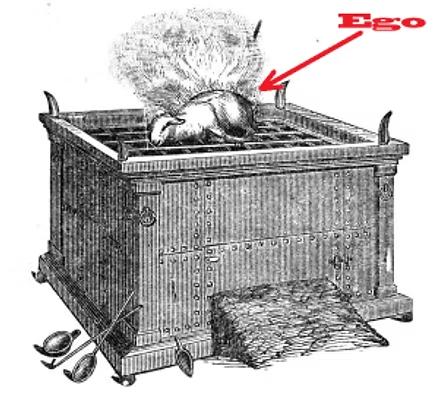
There is no sexual bias attached to this call “into his own kingdom and glory.” All are welcomed to open their hearts and become engaged to the LORD. Once married, your ego becomes completely subservient to the LORD. You are God’s committed wife (till death does your soul depart your flesh), so you stand to the rear as the LORD speaks out of your mouth. The LORD speaks as THE Father, just as He spoke through Jesus, as the Mind of Christ fills the newborn baby (reborn Christian) of that marriage.

In this arrangement, you are not alone. God takes on as many wives as He can afford (and He can afford every human being). You are summoned to marry God, and His proposal is that message brought by Apostles (male and female), and served as a father to his children.  Acceptance means you become “brothers” with all the other wives of the LORD. You all become like Paul and seek new Christians to raise, like a father does to his children. God calls you to be a Father, in the name of His Son, Jesus Christ.

In this way all Christians “accepted it [the words of proposal to marry God] not as a human word but as what it really is, God’s word.”  It does not matter what human form God takes, as it is not their gender uttering those words.  All words spoken by Saints come from THE Father.

Matthew 23:1-12 – The do not practice what they teach [Twenty-second Sunday after Pentecost]

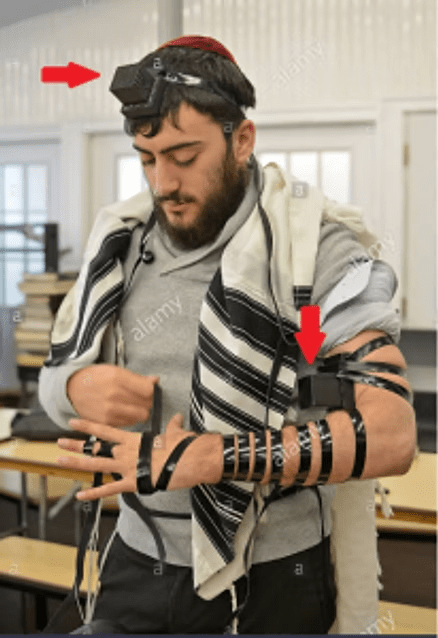
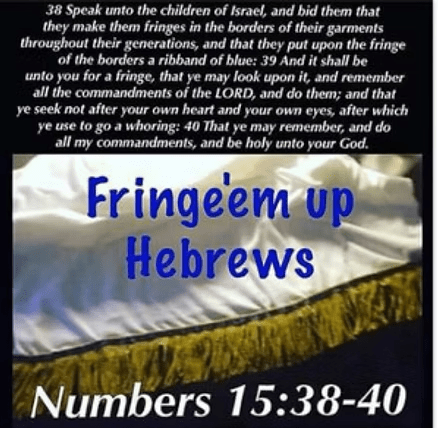
Jesus said to the crowds and to his disciples, “The scribes and the Pharisees sit on Moses’ seat; therefore, do whatever they teach you and follow it; but do not do as they do, for they do not practice what they teach. They tie up heavy burdens, hard to bear, and lay them on the shoulders of others; but they themselves are unwilling to lift a finger to move them. They do all their deeds to be seen by others; for they make their phylacteries broad and their fringes long. They love to have the place of honor at banquets and the best seats in the synagogues, and to be greeted with respect in the marketplaces, and to have people call them rabbi. But you are not to be called rabbi, for you have one teacher, and you are all students. And call no one your father on earth, for you have one Father– the one in heaven. Nor are you to be called instructors, for you have one instructor, the Messiah. The greatest among you will be your servant. All who exalt themselves will be humbled, and all who humble themselves will be exalted.”

———————————————————————————————————-

The is the Gospel selection from the Episcopal Lectionary for Year A, Proper 26, the twenty-second Sunday after Pentecost. It will next be read aloud by a priest in church on Sunday, November 5, 2017. It is important because Jesus pointed out how people who stand highly as religious leaders, in the eyes of human beings, will be humbled in the eyes of the LORD. This means the most exalted Spiritual teachers on earth will serve only God.

Verse two of this selection has Jesus telling his followers (both general listeners and valued assistants), “The scribes and the Pharisees sit on Moses’ seat.” This is the only specific reference to “Moses’ seat” in all the Holy Bible. Some take this statement as meaning there was some physical “seat, chair,” or “bench,” upon which Moses sat. Some say the Roman Catholic Church and the Pope now sits on that figurative “seat,” as the See of St. Peter.

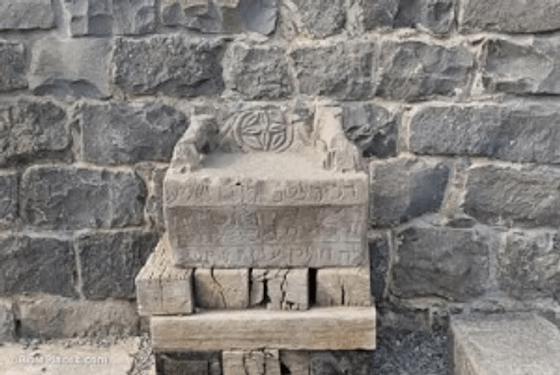
Some might sell tickets in the Holy Land, for pilgrims to have their picture taken by the “seat of Moses.”

Found in Chorazin, which is just north of the Sea of Galilee … a place Moses never went.

To best understand this statement by Jesus, one has to grasp how “Moses’ seat” was a reference to the state of Judea then, where Jerusalem was a place that had been set aside for exilic Jews to play the game, “What if?”

“What if our ancestors had not lost our land?” they would say. Then they would surmise, “We would be returned to the days when Judges would be sent by God to save us.” It was the Judges of Israel, before the Twelve Tribes had a king, and before they had a powerful prophet of the LORD in Samuel, who every 80 years would snap the wayward children of Israel back from their pagan ways, getting them to remember their Covenant to be righteous in the eyes of the One God.

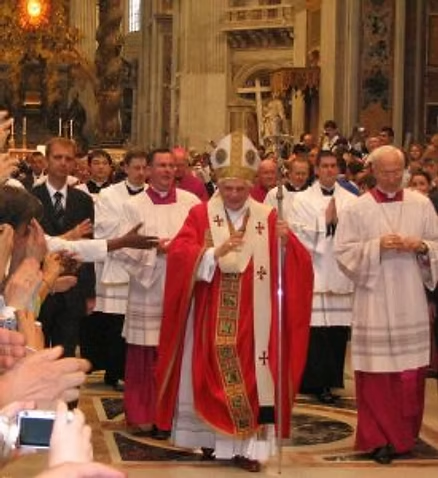
The Judges of Israel sat on “Moses’ seat,” just as Moses had judged the Israelites prior to their entrance into the Promised Land. Thus, “Moses’ seat” stands for “Tradition,” which is the claim the Vatican has made. The Pope and his entourage sit as Judges of Christians. Unfortunately, that makes Rome the epitome of what this Scripture says, where Jesus warned the Jews around him, “Do not do as they do, for they do not practice what they teach.”

This statement of “Moses’ seat” is best understood from careful examination of Exodus 18 (as all examination of Scripture should be … carefully done … as if one cares about the truth being revealed). Here is a link to that chapter, which the New International Version has entitled, “Jethro Visits Moses.”

Jethro was the father-in-law of Moses, the father of Zipporah, and a priest of Midian. In Exodus 18:13 we read, “The next day Moses took his seat to serve as judge for the people, and they stood around him from morning till evening.” (NIV) The actual Hebrew states, “way·yê·šeḇ mō·šeh liš·pōṭ,” rooted in “yashab Mosheh shaphat,” meaning “Sat Moses to judge.” The act of sitting implies a “seat, chair” or “bench,” but that specificity was not directly stated. Moses could have “sat” on the ground; but the implication of “sitting in judgment” implies an elevated position, like a mound that overlooked the people.

Today, furniture manufacturers sell “Judge’s chairs,” which have high backs, much like a king’s throne. In a courtroom setting, such a Judge’s chair would be set upon a raised floor (24”), higher than the people’s benches and the chairs of the jurors’ (set on a floor raised 12”).  This could imply the “seat of Moses” was a high-back chair, which went wherever the Tabernacle went, along with some platform to set the chair on.

In Exodus 18, the wisdom of Jethro is imparted to Moses, after Jethro saw Moses being the Judge of the Israelites. In Exodus 18:17 we read, “Moses’ father-in-law [said], “What you are doing is not good.” Jethro saw that doing everything alone was too heavy of a burden to bear; so he recommended that Moses choose “good men” to do the majority of the judging, so that only the major problems came before Moses.

Moses listened to Jethro and did what he advised; so we read in Exodus 18:26: “They [the “good men” chosen by Moses] served as judges for the people at all times. The difficult cases they brought to Moses, but the simple ones they decided themselves.”  Thus, the seat of Moses was only for matters that needed to be petitioned to the LORD.  It would be more in line with America’s Supreme Court, rather than a lesser court.

For Jesus to say, “The scribes and the Pharisees sit on Moses’ seat” (in the plural number), the intent was to point out how the wisdom of Jethro was missing in the Temple of Jerusalem’s justice system. That system revolved around a series of changing High Priests, with Joseph Caiaphas the ruler of that roost at that time. His appointment was based on support from “the scribes and the Pharisees,” in the artificial environment that made the Second Temple (Herod’s Temple) be like Disneyland (a Magical Kingdom), in the midst of Roman empirical domination.

The logic of that system was, “We lost our land because of our failure to follow the Laws of Moses, therefore we will model Judaism after the times when Judges sat on the seat of Moses, until God sends us our next Savior Judge.”  The idea of a Messiah (or a Christ) was thought to be a strong warrior-leader; but when the Roman Empire was the current champion whose title belt needed to be taken in a fight to the death, few scribes and Pharisees gave that prophecy any chance of ever happening.  If you ask a Jew today about that prophecy, he or she will say they are still waiting.  To wait 3,000 years for a prophecy to come true means one does not believe it will ever happen, but faith calls for polite patronizing.

This means those judges were sitting upon the seat of Moses, like Moses did prior to taking the advice of Jethro. The scribes and Pharisees eschewed such wisdom and shunned any thoughts about sharing the responsibilities of judgment, keeping that heavy burden all for themselves. After all, that system of Kings replacing Judges had failed miserably … to the Assyrians and the Babylonians. Thus, when Jesus said, “Do whatever they teach you and follow it; but do not do as they do, for they do not practice what they teach. They tie up heavy burdens, hard to bear, and lay them on the shoulders of others; but they themselves are unwilling to lift a finger to move them,” they had no problem with bearing a heavy burden, because they only had to pass judgments that benefited themselves, at the expense of others.

Because Jesus told the crowd and his disciples to do as they taught, he was saying they taught the Laws of Moses.  All the descendants of the Israelites must follow those rules. As for not allowing those judges to be their personal role models, the actions of writers and lawyers would only lead the crowds, and disciples who followed their leads, to lives of corruption.

When Jesus said, “For they make their phylacteries broad,” I imagine most Christians are like me and hear a word like “phylacteries” and wonder, “Hmmm what the heck is that.” Then, the majority of Christians ignore that thought and keep on reading, never doing anything to learn what Jesus said and what that meant.

These are “phylacteries.”

They are defined as: “two small leather boxes worn during morning prayers by Orthodox and Conservative Jews after the age of 13 years and one day. Each box contains strips of parchment inscribed with verses from the Scriptures: Ex. 13.1–10; 13.11–16; Deut. 6.4–9; 11.13–21. One box is fastened to the forehead and the other to the left arm; they are intended to serve as a reminder of the constant presence of God and of the need to keep Him uppermost in one’s thoughts and deeds, thereby safeguarding the wearer against committing a sin. They are not worn on the Sabbath or holy days, since these days are in themselves a reminder of God. Phylacteries are also called tephillin.” (Columbia Electronic Encyclopedia, via The Free Dictionary by Farlex) The word is Greek for “safeguard,” just as is the meaning of the Hebrew word “tephillin.”

When Jesus said, “They make … their fringes long,” this is what that refers to:

By increasing the size of two symbols of devotion to God, which made it easier for everyone to notice, the scribes and Pharisees were skilled in the art of deception.  They knew the power of suggestion.  They understood that acting a part makes people believe you are the character whose role you are playing.  And it technically wasn’t lying, if you never said you were what you led people to believe you were … erroneously.

The point made by Jesus saying the scribes and the Pharisees was that they were quite showy about their religious pedigree. They put on airs.  The saying, “The clothes make the man” (Mark Twain, as a paraphrase of Shakespeare: “Apparel oft proclaims the man”) means that the way one looks is how others will think of that one.

In the words of Billy Crystal (pretending to be Fernando Lamas): “You dahling? You look mahvelous!”

If Jesus were to reappear as Jesus before the crowd and his Christian disciples today, he would be pointing out the same flaws still present in religious clothing.

Popes
Archbishops
Televangelists

Jesus said of the writers (scribes) and the lawyers (Pharisees), “They love to have the place of honor at banquets and the best seats in the synagogues, and to be greeted with respect in the marketplaces, and to have people call them rabbi.” Those translated words make it easy to see the special societal favors that were expected by high-ranking Jews in ancient times. However, do the same words not identify these modern personalities, who “teach” as idols?

Tricky Dick
Hey hey hey
The wheels on the bike go round and roun

Seeing how such glittering stars in politics, acting, and sports have risen to the top and fallen to the depths of their popularity, after their public images have been exposed as unworthy of worship, Jesus spoke the truth when he said, “Do not do as they do, for they do not practice what they teach.”

We look up to teachers (rabbis) that surround us, blindly trusting that they are there to help us. Then, time and again, the truth comes out that our idols were only helping themselves. They were taking advantage of common ignorance.

Jesus warned the crowd and his disciples, “You are not to be called rabbi, for you have one teacher, and you are all students.” Our only teacher is God, who sent us laws to live by, through Moses. The only thing that can be taught of true value is this: “Listen to the LORD.” The word of the LORD can be recited for us, but only fear of God will make one obey that word.

Then, Jesus went on. He added, “And call no one your father on earth, for you have one Father– the one in heaven.” This applies to the interpretation that I did on Paul’s first epistle to the Thessalonians, where he wrote, “We dealt with each one of you like a father with his children, urging and encouraging you and pleading that you lead a life worthy of God.” (1 Thessalonians 2:11-12) Paul was not a genetic parent to adults he met in his evangelism. Paul was filled with the Holy Spirit of the Father; therefore he taught the Thessalonians how to be Christian, as the Father in heaven told him.

For that reason, Jesus then said, “Nor are you to be called instructors, for you have one instructor, the Messiah.” The “Messiah” is the “Christ.” This means Paul was an instructor, just as Jesus was instructing the crowd and his disciples in Jerusalem. If you ponder that instruction carefully, then you will see that every Apostle becomes an instructor, just as did Paul, Silvanus, Timothy, and those of Thessaly, the same way Jesus became one – God sent His Holy Spirit to be One with the faithful, allowing all to become “the Messiah,” “the Christ.”

I have said it before, and I will repeat it once again now: You fall in love with GOD and accept His proposal for marriage (males AND females). The you consummate your love of GOD by doing acts of faith, until you give birth to a new you, which is the rebirth of Jesus Christ in your body. Just as Jesus was “Christ Jesus,” you become “Christ (fill in your name here),”

The birth of Jesus Christ as you means you cease trying to “have the place of honor at [awards] banquets and the best seats in the [houses of worship], and to be greeted with respect in the marketplaces [places of employment, where so many sell their souls routinely], and to have people call [you] role model [based on the materials you amass].” You stop serving self and begin (forevermore) serving Yahweh. Thus, Jesus said, “The greatest among you will be your servant.”

To be reborn as Jesus Christ means “the abundance” [“the greatest”] of “the Christ” will be in “yourselves,” as within “you” [meanings of the Greek word “hymōn”]. This presence will ensure “you” or “yourselves” [repetition of “hymōn”] of becoming a “servant” or “waiter” or “anyone who performs any service.” As a “servant” of “the Messiah,” you will do exactly as Jesus of Nazareth did, and repeatedly say, “I speak the truth, for the Father.”

This way of grasping verse 11 makes understanding verse 12 easier. “All who exalt themselves will be humbled, and all who humble themselves will be exalted,” says that you choose which path you take in life. Do you lie, cheat, steal, prostitute yourself and covet those who wear the finest clothes and get into the most exclusive nightclubs and restaurants? Or, do you thank God for what little you have, while praying for those who are destroying the fabric of our society? One way will raise you to the heights the world has to offer. The other will raise you to the heights heaven holds for those who serve the LORD.

Either way, you will be humbled. As the old Fram oil filter commercial said: “You can pay me now or you can pay me later.” One way or the other, you are going to pay for your life choices.

When you play this forward to modern times, then you understand what Jesus meant, when he said what to watch out for. Can you see holy looking men and women that are “tying up heavy burdens, hard to bear, and laying them on the shoulders of others [Christians raised to think the Laws were etched in stone]; but they themselves are unwilling to lift a finger to move them”?

Are political challengers not interpreting Scripture in ways that seek to destroy all links between Christianity and American laws, through the pollution of the representatives who sit on the seat of Washington D.C.?  Jesus pointed out the writers of law (the scribes) and the enforcers of law (the Pharisees) were in no way holy, because they did not talk to God.  When they used holy Law as their excuse for leadership, then they were repeating what Moses had brought down from the mount to the people.  The long-standing fairy tale of the United States of America was it was founded as a nation of Christians (Protestants), who (collectively) did not want a King or a Pope sitting on the seat of Law in the New World.

Then non-Christians began elevating themselves into the government of the people, for the people to become as screwed as were the Jews of Judea and Galilee, when Jesus pointed out this is not preventable.  It is the common way of the world.  It is the way things will always deteriorate, degenerate, corrupt, and disintegrate, when led by self-serving men and women.

Moses spoke to God and then Moses passed on what God demanded to those who listened to Moses.  The Judges of Israel who sat on that same seat of holy Law did the same thing.  David did it with the help of Samuel.  Elijah, Elisha and other Prophets helped other kings, with less and less compliance to what God demanded.  Those holy people all  spoke holy Law  – the Word of the LORD – and then the people did what they wanted.

When Jesus said the scribes and the Pharisees were making up interpretations of holy Law, while quoting God’s Commandments, they were creating huge burdens for God-fearing Jews.  By saying, ” they themselves are unwilling to lift a finger to move them,” the key word to understand is the Greek word “kinēsai,” which means “to move,” as “to set in motion, excite, stir up.”  That says the written laws of Jerusalem, enforced by the lawyers of Jerusalem (the Disneyland police), never helped any typical Jews be inspired by explanations that said “God will reward you,” coming from anyone who said they sat on the “seat of Moses.” It was always demand more money and threaten punishment for sins.

Today, little has changed.  Who can be “moved” by a government that is in gridlock because two parties hate one another?  The members of Congress sit on the seat of legislative laws, which do little to “lift a finger” to cut taxes, guarantee health, welfare, and safety of the citizens; although they will pass benefit packages for themselves, none of which are commonly available for “regular folk.”

The Judicial Branch is petitioned by lawyers and law checkers, challenging any right to actually legally punish cities that break Federal laws, because local ordinances have been written that are contrary (approved by local voters).  Lawsuits have forced judicial reason to justify removal of monuments that are representative of Judeo-Christian faith, justify a redefining of marriage (which went unchanged for millennia prior) to meet modern needs, and to justify the killing of babies while people scream for the preservation of the lives of heinous criminals.  It has become a hate crime to defend America as a nation standing for Christianity, if that means trying to keep those who hate Christians out of America.

Jesus was not telling the crowd nor his disciples to rise up in rebellion and overthrow a world gone to the dogs.  Nope.  The world is the homeland of sin.  It will always find a way to rewrite the laws that makes good stand out of the way of evil.  Jesus was simply pointing out how you cannot be led by any human, no matter how big they smile, how fancy they dress, and how much of the world they promise can be yours.  People always talk a good game; but then they play by the rules they make up as they go.

You can only do what God’s Law says; and that means looking within, not without.  The only role model to follow is Jesus Christ, who fills one’s Mind, through the love of God.

If you listen to your heart, you know Jesus is talking to you when he said, “Do not do as they do, for they do not practice what they teach.” They are hypocrites, which means “actors” and “pretenders.”

Ron & Jerry

Joshua 24:1-3a, 14-25 – Serving Yahweh must be a personal choice [Twenty-third Sunday after Pentecost]

Joshua gathered all the tribes of Israel to Shechem, and summoned the elders, the heads, the judges, and the officers of Israel; and they presented themselves before God. And Joshua said to all the people, “Thus says the Lord, the God of Israel: Long ago your ancestors—Terah and his sons Abraham and Nahor—lived beyond the Euphrates and served other gods. Then I took your father Abraham from beyond the River and led him through all the land of Canaan and made his offspring many.

“Now therefore revere the Lord, and serve him in sincerity and in faithfulness; put away the gods that your ancestors served beyond the River and in Egypt, and serve the Lord. Now if you are unwilling to serve the Lord, choose this day whom you will serve, whether the gods your ancestors served in the region beyond the River or the gods of the Amorites in whose land you are living; but as for me and my household, we will serve the Lord.”

Then the people answered, “Far be it from us that we should forsake the Lord to serve other gods; for it is the Lord our God who brought us and our ancestors up from the land of Egypt, out of the house of slavery, and who did those great signs in our sight. He protected us along all the way that we went, and among all the peoples through whom we passed; and the Lord drove out before us all the peoples, the Amorites who lived in the land. Therefore we also will serve the Lord, for he is our God.”

But Joshua said to the people, “You cannot serve the Lord, for he is a holy God. He is a jealous God; he will not forgive your transgressions or your sins. If you forsake the Lord and serve foreign gods, then he will turn and do you harm, and consume you, after having done you good.” And the people said to Joshua, “No, we will serve the Lord!” Then Joshua said to the people, “You are witnesses against yourselves that you have chosen the Lord, to serve him.” And they said, “We are witnesses.” He said, “Then put away the foreign gods that are among you, and incline your hearts to the Lord, the God of Israel.” The people said to Joshua, “The Lord our God we will serve, and him we will obey.” So Joshua made a covenant with the people that day, and made statutes and ordinances for them at Shechem.

———————————————————————————————————

This is the Old Testament selection from the Episcopal Lectionary for Year A, Proper 27, the twenty-third Sunday after Pentecost. This will next be read aloud in church on Sunday, November 12, 2017. This is important as it clearly states that a Christian must serve only the LORD, totally, and there can be no variation in that service.

This selection begins by stating, “Joshua gathered all the tribes of Israel to Shechem.” This was a very special place, as Abram reached “the great tree of Moreh at Shechem,” where Abram built an altar and made a sacrifice to the LORD. (Genesis 12:6-7) This was where the LORD promised Abram’s descendants the land of the Canaanites.

The word “Moreh” is believed to mean “teacher” or “oracle.” The word “elon,” which is translated as “tree,” can mean specifically an “oak tree,” or generally a “tall tree.” As such, the site of Shechem (from shékém), indicates a “Saddle” or “Shoulder,” which sat between two ridges – Mount Gerizim and Mount Ebal. That resting place, situated between figurative shoulders and hips, is then important as the “Saddle” that was at a holy “tree.”

This makes Shechem similar to the place where Moses found the “burning bush,” on Mount Horeb. Moses was told to take off his sandals, because that was holy ground. The prophetess Deborah was said to get insights from God between two hills (near Beth-el, in Ephraim), under a palm tree.  Shechem must also be seen as where a tree of prophecy invoked the voice of the LORD, making that place be holy.

A mighty oak tree and the Kabbalah Tree of Life

Shechem was in the land given to the Manasseh tribe, which was split into two parts, on both sides of the Jordan River. Western Manasseh was between the far northern and southern reaches of Israel. Joshua was a member of the Ephraim tribe, whose land was just south of the western half of Manasseh. Because Manasseh was in a central location in Israel, and because it was the holy ground where God promised Abraham that his descendants would possess that land, and it was a place that Abram built an altar and offered sacrifices, it makes sense that Shechem was chosen for purposes that are not clearly stated in the Book of Joshua.

It is also worthwhile to realize that this reading from chapter 24 comes well after the Proper 26 reading, from chapter 3. Chapter 23 states that Joshua is getting old and is about to turn the leadership reigns over to the leaders of each tribe. This is why Joshua “summoned the elders, the heads, the judges, and the officers of Israel” to Shechem. Twenty-eight years (give or take a few months) had passed since the crossing of the Jordan, and many wars had been fought (and won), which had then secured all the lands that were subsequently divided among the tribes.

With this setting understood, the reading today is under the heading “Joshua’s Farewell Address” (Chapter 23, NASB), while this specific text falls under the overview entitled “The Covenant Renewed at Shechem” (Chapter 24, NIV). This review of the history of the Israelites, from Abraham being called by God out of Ur, to that holy ground in Shechem, where the land of Canaan was promised, to being back in Shechem again, symbolizes the history of the Israelites had come full circle. Thus, it was a time of transition, where the cycles of time repeat.

As a time of transition, Joshua said, “Choose this day whom you will serve.”  That led to him saying, “For me and my household, we will serve the Lord.”

What do you seek? I seek the Holy Grail.
Who does it serve? It serves You.

That additional statement is a powerful statement to grasp.

Joshua had told the leaders of the twelve tribes that they came from ancestry that had worshipped many different gods in the past. He basically said, “Your flesh and blood calls you as a distraction. It takes your eyes off YaHWeH” and lets your brain think, “If it was good for ole granpappy, it ought to be good for me.”’

It is the common ancestry of all human beings, since God had elohim create animal men and animal women in their likeness. Man will always find a way to do what Man wants; and knowing the difference between Good and Evil will never keep Man from being tricked into serving little-g gods: gods of harvest; gods of fertility; gods of buildings; gods of property; gods of money; and all the gods of pride, envy, lust, gluttony, sloth, wrath, and greed.

It’s what Man does.

So, serving the LORD goes beyond the oral promises made to men long since gone.  It goes well past physical agreements written or etched into stone; and it exceeds belief that someone died on a wooden cross, two thousand years ago (give or take a few decades). Serving the LORD is not what someone else did for you, so you could benefit without having to help anyone but yourself.

The cycles of time means the old is done and the new has begun.  Holding onto the past means you have an imaginary deed to a Promised Land.  It is the epitome of “What have you done for me lately?” The past is a dream that dissipates when reality wakes you up in the present.

“Oh dear! Oh dear! I shall be too late!”

Joshua said, “For me and my household, we will serve the Lord.”

The use of “we” means the plural pronoun indicating only those whom Joshua could influence via teaching [i.e.: his family]. The power of that says the history of the world is the illusion – the dream – that is as fleeting as is mortal life on earth. The future is imagination of that which one wishes for, but has no foundation in reality.

The Lord makes the reality of NOW be known, when one is awake and alive with promise fulfilled, through being in touch with YaWHeH’s Holy Spirit. NOW lasts forever, when one’s soul loves God with its whole heart and the dream state of the world becomes the holy ground upon which one walks, which others cannot detect.

Thus, each individual has to be like Joshua said and: “Choose this day whom you will serve.”  There is no better time than the present.

Of course, in the now, as one hears these words be read aloud in church or as one reads them here or in the Book of Joshua, chapter 24, as a Christian or a Jew (reading in English translation or in Hebrew on scrolls), the easy and fast answer is the same as Joshua heard shouted in unison by the leaders of the twelve tribes: “Far be it from us that we should forsake the Lord to serve other gods. Therefore we also will serve the Lord, for he is our God.”

“Here! Here!”

“Well said!”

“Same here!”

“I hear you, brother Joshua!”

“I agrees with the brother!”

“Amen to that!”

Forty years later … … prayers would go out from some last vestige of those who so gladly agreed to serve the Lord, when Joshua was old and gray (or grey). “Help us Lord,” someone cried, “for we have gone astray!”

That cycle of history repeated every 80 years: 40 years serving God, followed by 40 years serving themselves (little-g gods).  They needed Judges to bail them out.  They wanted a king, then two; and then they lost everything.

You cannot serve the Lord by edict, where someone says, “You must do this or you must do that.”

Governments do that, and all government-fearing citizens do the true patriotic thing, year in and year out: They hire a lawyer, and an accountant, and a financial advisor (or adviser) that recommends their actions, where all the letters of the laws are bent every which way.  Governments purposefully write laws in gray (or grey), between the official looking black and white of legal legislation, because everyone knows the people love ways to get around the Law.  The high and mighty are selected from among the low and feeble, so it is proclaimed okay to serve as many little-g gods as your heart desires.  That way one is still (legally) able to say, “I am a Christian!” or “I am Jewish!”

“I have the receipts to prove it, dang it!” some say.

Jesus said it best: “No one can serve two masters. Either you will hate the one and love the other, or you will be devoted to the one and despise the other. You cannot serve both God and money.” (Matthew 6:24) However, Joshua said the same basic thing, well before Jesus.

Adolf wasn’t the only one not filled with the Holy Spirit to misuse Scripture. How many Americans today (NOW) would sacrifice the State or the Party, as a master destroyed? I say few, if any.

Joshua told all those Israelites, the leaders who had seen a few things firsthand over the prior 70 years (give or take a couple of years), from Egypt to Shechem: “You cannot serve the Lord, for he is a holy God. He is a jealous God; he will not forgive your transgressions or your sins. If you forsake the Lord and serve foreign gods, then he will turn and do you harm, and consume you, after having done you good.”  Joshua said, “I know you guys.  I’ve been there and seen how stubborn you can be.”

That says that you can only serve YaWHeH by being holy [i.e.: righteous; sanctified; saintly]. There can be no “two- hours sitters” (give or take a couple of hours), as those who sit in a church or synagogue pew for that long each week, who can call themselves “servants of the Lord.”

That goes for “the elders, the heads, the judges, and the officers of Israel,” which translates in modern times (forevermore) as also going for “priests, pastors, ministers, rabbis, bishops, cardinals, archbishops, popes,” and anybody and everybody who is a leader of some religious tribe that professes complete devotion to the One God.

If you take 30 minutes off to make sure your tax receipts are in order, so you don’t miss out on any deductions; or if you take a couple of hours one day, shopping for the finest clothes to be seen wearing in church; or if you take a week off to look at exclusive properties near the beach, as an investment; or if you take 30 minutes to abuse a child sexually, or take the same 30 minutes to look the other way while that happens; or if you take a few hours to plan some political demonstration, because your fav politician-lawyer thinks your presence will have an impact on others; and so on and so on … then you are under the misconception that God does not see you serving yourself, over God.

Joshua, having been a common human being prior to becoming holy and righteous, prior to being able to hear the LORD, after being touched by Moses. He knew where the hearts of commoners (and their leaders) lay.  Hearts are fleshy muscles pumping blood, before they become spiritual reservoirs that flow forth living waters.  Joshua understood where the Israelites were bound and determined to go, whether they would admit it or not.

Joshua clearly said, “[YaHWeH] is a jealous God; he will not forgive your transgressions or your sins.”

But … but … but … Jesus said … didn’t he …?

This is because rule number one has been broken, “You shall not wear the face of any other gods before My face.” God will not forgive part-time believers or those of come-and-go faith.  It means that you cannot have a drawer of godly faces that you decide are okay to wear, interchangeably, depending on the special occasion. By thinking it up to you to decide when it is okay to take off the face of God and slide on another face of your choosing, you just made mistake Number One.

God don’t like that.

This means the moral of this story of old Joshua renewing the Covenant (the Holy Agreement, which came with legally binding words) with the Israelites (and thereby all of their spiritual descendants, Christian and Jewish) can be summed up with this statement: “Then put away the foreign gods that are among you, and incline your hearts to the Lord, the God of Israel.”

I have underscored and made bold the pronouns “you” and “your.” Please make sure you read those in the singular, as if old Joshua were having a face-to-face with you, individually. After all, nobody else in this world matters.

You think, therefore you are.” Everyone else – past, present, or future – is imaginary. Joshua wore the face of God, as His servant. Therefore, Joshua was speaking as if God where here NOW, telling you this.

This means that when we read the conclusion above: “So Joshua made a covenant with the people that day, and made statutes and ordinances for them at Shechem,” it was like when God spoke to Abram many years before.  Abram built an altar and made sacrifices after the covenant of his descendants was made.  Keep in mind that Abram had no – nada – zero – zilch – children then, meaning the agreement was based on the imaginary, not the real.  Likewise, Joshua made the leaders of Israel throw their egos on the altar he made that day, as immediate acts that sealed that agreement (with new statues and ordinances spoken).  Those leader sacrificed themselves on the altar built by Joshua, burning their egos in the flesh, so the smoke of their spiritual blood plumed towards heaven.

How would you like your ego cooked?

1 Thessalonians 4:13-18 – The reincarnated dead without Anointment will gain another chance for redemption [Twenty-third Sunday after Pentecost]

We do not want you to be uninformed, brothers and sisters, about those who have died, so that you may not grieve as others do who have no hope. For since we believe that Jesus died and rose again, even so, through Jesus, God will bring with him those who have died. For this we declare to you by the word of the Lord, that we who are alive, who are left until the coming of the Lord, will by no means precede those who have died. For the Lord himself, with a cry of command, with the archangel’s call and with the sound of God’s trumpet, will descend from heaven, and the dead in Christ will rise first. Then we who are alive, who are left, will be caught up in the clouds together with them to meet the Lord in the air; and so we will be with the Lord forever. Therefore encourage one another with these words.

———————————————————————————————————-

This is the Epistle selection from the Episcopal Lectionary for Year A, Proper 27, the twenty-third Sunday after Pentecost. It will next be read aloud in church on Sunday, November 12, 2017. This is important as it addresses the issue of death and the soul’s return to God, as understood by an Apostle and Saint.

Again, as I have done previously with the words of Paul, so we are forced to read what is written slowly and ponder translations that are valid, not what has been presented for us, let me simply present the above block (seemingly) paragraph in segmented fashion. Simply read this as the lines of a psalm that is slowly sung and let your mind’s eye see the message being unfolded before you. Read this before I offer an interpretation.

You can read along with the Interlinear breakdown of Greek and English here, and see how the translation above (the New American Standard Bible version) is compatible to the translation below.

13. I do not want you to be ignorant,
brothers,
concerning those who have fallen to sleep [that of death],
that not you should be grieved,
like are the rest,
those not having hope (confidence, trust, expectation).
14. If indeed we believe that Jesus died and rose again,
so also [we believe in] God,
those having fallen to sleep [that of death] for the sake of Jesus,
will bring (guide, lead away, go, carry) with him (the same).
15. This [statement of promise] indeed we declare to you in word of [the] Lord,
that [declaration] we the living surviving (left behind, remaining),
towards the coming (arrival, advent, presence) of the Lord,
all not shall proceed those having fallen to sleep [that of death],
16. because himself the Lord with a loud command (arousing outcry, word of command),
with the voice of the ruler of angels (archangel),
and with trumpet of God.
Will descend from heaven (the atmosphere, the starry heavens, the sky),
and the dead (lifeless, mortal) in Christ will rise before (at the beginning, first, in the first   place).
17. Then we the living remaining (left behind, surviving),
together with them,
will be caught away in clouds for meeting of the Lord in air (air we breathe);
and so always with the Lord will be.
18. Therefore encourage one another with these words.

If you noticed the repeating word, “died,” good for you! The repetition makes this the theme of this reading selection. Certainly, by comparing the two versions of translation, you noticed the word “died” has been replaced with “fallen to sleep” on three occasions, with “died” being maintained the other time.

The use of “fallen to sleep” is used as a symbolic statement of “death.” That translation comes from the words “koimōmenōn” (1x) and “koimēthentas” (2x), which are rooted in the word “koimaó.” The word “koimaó” (which is a variation of “keimai” – “to be laid, lie”) means, “sleep, fall asleep, die,” implying, “I fall asleep, am asleep, sometimes of the sleep of death.”

This is not insignificant, as in John 11:11 we are told Jesus said. about the news of Lazarus being “sick,” “Our friend Lazarus has fallen asleep; but I go, so that I may awaken him out of sleep.”  In John 11:4, the element of “death” was addressed when Jesus said, “This sickness is not to end in death, but for the glory of God, so that the Son of God may be glorified by it.”  Jesus being glorified by one falling asleep is an important message to hold onto as you read here how Paul wrote of that topic.

Jesus used the same Greek word as Paul used, referring to “having fallen to sleep,” with the word “thanaton” (rooted in “thanatos “) clearly meaning “death.”  The word maintained in translation here, as “died,” is “apethanen.” Immediately, a completely different word is visible (other than variations of koimaó ) as having been translated exactly the same as if rooted in “falling asleep.” The word “apethanen” is a form of the word “apothnéskó,” which means, “to die,” implying a usage saying, “I am dying, am about to die, wither, decay.”

Because the New American Standard Bible translation has presented a translation of “died” four times, with no indication of differences in the Greek, the reader’s and/or listener’s mind believes the exact same meaning is the intent, creating mental imagery of dead people in coffins, and all the finality that comes from mortal death. It then is important to grasp that the one use of “apethanen” is used in verse 14, where Paul wrote, “If indeed we believe that Jesus died and rose again.”  That states the common belief that Jesus died.

While Jesus was the name attached to a body of flesh and blood (like those possessed by Paul and the Thessalonians who had received this epistle), that state of finality (mortal death) did not end Jesus’ life. Because Jesus rose again, Jesus still lives.  Jesus lives in the bodies of Apostles and Saints. Thus, the implication in that statement (lost in translation) is that death – to a Christian (Christ Jesus and those filled with the Christ Mind) – is like being laid down to rest on a temporary basis, just like one goes to bed, sleeps, and then rises again.

To read a long-winded sentence that says, “For since we believe that Jesus died and rose again, even so, through Jesus, God will bring with him those who have died,” it is easy to come away thinking, “I believe Jesus died and was resurrected, so that belief means God will take my soul when I die.” That is as common a mistake as is thinking, “Jesus died for my sins.”

If Jesus did not die (he rose again), then Jesus awaits to awaken you from the death that is guaranteed by your sins.  Because the man Jesus was released from his physical body, his Spirit can continually rise again in others that die of sinful egos.  The ego goes to sleep, so the Mind of Christ can live again.

Nothing Jesus said in the Gospels (especially the parables where people think like that and find out the sad truth) says that anyone can sin all they want, while going to Heaven is guaranteed by belief in Jesus. Paul (even if it seems like he is saying all you have to do is believe and go to heaven) is telling believers you have to be Jesus reborn to get that reward.  It becomes a matter of seeing what you want to see, and that seeing then becomes the basis for believing.

Look again at verse 14 broken down into four segments. The first states, “If indeed we believe that Jesus died and rose again.” This segment begins with the Greek word “Ei,” which is a conjunction that relates this segment to the previous statement, “those not having hope,” which is a statement about those who do not have “trust, confidence,” or any “expectation” in eternal life. Thus, this segment depends on “If” that is the case,” “for as much as” that is the case, or as a direct reference to “that” lack of “hope,” then Christians indeed believe in a temporary state of death, because Jesus rose again.

The second segment then states how that resurrection was possible. Only God could cause a dead Jesus to rise again with life. Therefore, to believe in that miracle of the Resurrection, so also God is believed. Jesus did not raise himself from a state of being dead for three days (72 hours). God raised His Son.

Those two beliefs are more than simply the result of someone being told to believe in the resurrection of Jesus and the power of God. Keeping in mind that Paul was filled with the Holy Spirit of God, and he was writing to Christians in Thessaly who were likewise filled with the Holy Spirit of God, everybody was on the same page when Paul wrote, “those having fallen to sleep for the sake of Jesus,” he meant those who died like Jesus did – filled with the Holy Spirit.

The Greek word “dia” has been translated as “for the sake of” here, but as “through” in the NASB translation. The word means, “through, on account of, because of,” implying “through, throughout, by the instrumentality of, by reason of,” and “for the sake of.” The word is a preposition that is often used as a prefix, such that its use indicates “successfully across” (to the other side). Therefore, Paul was stating that for death to not be without “hope” or “expectations,” then one has become one with Christ Jesus, so one’s soul simply goes to sleep, to be resurrected in Heaven, because of that Christ presence within oneself.

From that realization, the fourth segment is clearly stated, such that we know Christ Jesus “will lead away with him,” “the same” as Jesus Christ “died and rose again.” Even for those who have no “hope,” they too will be “guided through” the soul’s removal from their dead mortal flesh, in an experience that is spiritual and heavenly. However, the impression given above (by the NASB), “God will bring with him those who have died,” is not stated; but to infer that meaning, one then has to realize that God will only keep those who have died as His Son reborn, with the rest recycled back into the mortal realm (reincarnation).

Paul then said that this promise of eternal life in Christ is the “word of the Lord,” which means it comes from God the Father, but was spoken by Apostles as Christ the Son. That “word” is truth, and when Paul then said, “we the living left behind,” “the living” means all those filled with God’s Holy Spirit, so those born of mortal bodies – “born of death” – had been made “living,” because they were then “alive” in Christ. That is the meaning of “towards the presence of the Lord,” as Paul explaining “we the living.”

The last segment of verse 15 begins with a double negative, “no not” or “no lest” (“ou ”), with “ou” also capable of being an indication of “all” (rather than “no”). As such, this then acts as a statement to be read two ways.

First, it says that “those having fallen asleep” (without the “presence of the Lord”) “will not proceed” to Heaven, while equally saying second, “all [that do] not expect” death, when “those have fallen asleep,” (because of the “coming of the Lord”), they will be the ones to go to Heaven. The double negative is then a reflection that not everyone (“not all”) who says they believe in Jesus and God will be saying “yes” to the “presence of the Lord” (due to the work that commitment involves).  That failure to say “yes” means, “no” “not” going to Heaven.

Verse 16 is then Paul telling of that “presence of the Lord” or the “coming of the Lord.” The first segment fails to see the importance of each word, when we think it says “the Lord with a loud cry.” We need to slow down and see the words saying, “because himself the Lord with,” where “himself” is not the Lord, but the one “the Lord is with.”

We get caught up in the imagery of God being this nebulous, separate entity on a cloud somewhere in the sky, but “the coming of the Lord” and “not” having to be recycled at death is “because the Lord is with oneself.” When one experiences God within, then there is a “loud” and clear “word of command” one hears.  It is not some sound that is audible, as vibrations registered in decibels. It means that  Christians let loose the “word of the Lord, loudly.”

It is then the Apostle who takes on the “voice” of the “ruler of angels,” and it is the “angels” sent by God that bring the whispers of the Mind of Christ. The one filled with the Holy Spirit then becomes the one who “trumpets” their faith in “God.”

At that point, “God will descend from the spiritual heavens,” in the ether that is the breath of life those born “dead,” as “mortals.”  By God coming down from above, His entrance into one’s heart means that one “will rise for the first time in Christ.” With that presence within, one stops fearing death and begins living as the resurrection of Christ.

When Paul wrote, “Therefore encourage one another with these words,” the “words” were about who dies and goes to Heaven. Not everyone gets to go to that spiritually everlasting paradise. Only those who become Jesus Christ reborn get that reward. There are only rooms set aside in Heaven for those who gave up selfishly living their mortal lives, so Jesus could return again, as the judge of who is “living” and who is dead. (See 1 Peter 4:5 and 2 Timothy 4:1)

The Greek word “parakaleite” is translated here as “encourage.” It can also mean “to call to or for, to exhort,” implying “I send for, summon, invite; I beseech, entreat, beg; I exhort, admonish; I comfort, encourage, console.” Paul was sending this letter to drive home the point to the Thessalonian Christians that they need to preach that message. No only should those filled with the Holy Spirit know their deaths are little more than falling asleep, waking up in Heaven; but, more importantly, they need to “encourage” those who are “like the rest” of humanity, “those not having hope,” that becoming a reborn Jesus is the way of “hope.”

This letter, again, was written for all who will read it, through all times, in all places. If you think you have Heaven solved and all you have to do to get there is believe Jesus died and was raised again, it is like thinking your beauty will pass that final exam, the one that will graduate you from the first grade to a doctorate in some field that means early retirement and exclusive homes on a paradise beach. You have to sacrifice to get the things you want in life … put in a lot of work, more mental than physical. Why would you think that same principle would not apply for the attainment of a spiritual goal?

The biggest problem the world has today is thinking. Heads filled with Big Brains ache when they read the epistles of the Holy Bible. To alleviate that ache, brains turn Greek words into English (or any other language, I presume, including that understood by Greek people) that makes Scripture say what they want to hear be said.

Those brains take the word “brothers” and turn it into “brothers and sisters,” so the sex organs of mortals – those born to die – are accommodated. It is so hard to see how all male and female Christians – those reborn as Jesus Christ – are all “brothers,” due to all being reborn as Jesus, the Son of the Father.

Commentaries of this selection that can be found published online focus on the “comfort of Jesus coming” to those who “have died” and to those left grieving the dead. We like to think that faith in Jesus will bring that deliverance, after it is time for us to leave this materialistic place we so fondly call home.

If we are still living to see it, then we expect Jesus to come down on a cloud at the end of the world and Rapture us, so we can watch all the heathen be fried like ants under a magnifying lens.

“Ha, ha, ha, ha,” they can say then, “Told you so, suckers!”  “You should have believed!”

Otherwise, we think it is all a matter of “We believe.  We die.  We go to Heaven.”  Since all moms are Saints, we will be greeted by mom, and she will probably have a hot apple pie ready for our arrival!

If you wait until death to find Jesus coming, then expect to be popping out of your new momma sometime soon afterwards. God will review all the common mistakes that mortals make; and, then <poof> your soul is in a mortal body again!

And the recycle of life rises again.

Everyone needs to read all the parables Jesus told and put themselves in the setting as the “fool,” rather than seeing themselves as Jesus talking about fools. The parables all say, “Never put off for tomorrow what you can do today.” Tomorrow is too late, as tomorrow may never come.

The only way to rest in peace is to know mortal death just means going to sleep, because the soul has a place reserved in Heaven. Those reservations require one’s ego taking a long, deep slumber, so God can send His Son in to make one’s body walk for the Lord and one’s tongue talk for the Lord. Now is the time to secure that reservation, because there is no better time than the present.

Matthew 25:1-13 – Vigilant and devoted bridesmaids [Twenty-third Sunday after Pentecost]

Jesus said, “Then the kingdom of heaven will be like this. Ten bridesmaids took their lamps and went to meet the bridegroom. Five of them were foolish, and five were wise. When the foolish took their lamps, they took no oil with them; but the wise took flasks of oil with their lamps. As the bridegroom was delayed, all of them became drowsy and slept. But at midnight there was a shout, ‘Look! Here is the bridegroom! Come out to meet him.’ Then all those bridesmaids got up and trimmed their lamps. The foolish said to the wise, ‘Give us some of your oil, for our lamps are going out.’ But the wise replied, ‘No! there will not be enough for you and for us; you had better go to the dealers and buy some for yourselves.’ And while they went to buy it, the bridegroom came, and those who were ready went with him into the wedding banquet; and the door was shut. Later the other bridesmaids came also, saying, ‘Lord, lord, open to us.’ But he replied, ‘Truly I tell you, I do not know you.’ Keep awake therefore, for you know neither the day nor the hour.”

———————————————————————————————————-

This is the Gospel selection from the Episcopal Lectionary for Year A, Proper 27, the twenty-third Sunday after Pentecost. It will next be read aloud in church by a priest on Sunday, November 12, 2017. It is important because of the warning of preparedness, as told in the parable of the ten bridesmaids.

This parable seems quite straightforward, in the sense that it paints a clear picture of being prepared for when the bridegroom comes, which appears to be Jesus in allegory. Of course, nothing is Scripture is that simple, as there is deeper meaning always embedded in the specific verbiage used. Every word coming from Jesus, and remembered by Matthew, came from the All-Knowing Mind of God. Each word of Greek is perfectly chosen.

In fact, one can see such knowledge as allegorically mentioned in this parable, as the oil that the lamps burn for light. Light is metaphor for the truth.  One assumes that some oil is already in the lamp, which had been lit in the evening.  By there being ten different lamps, this becomes metaphor for ten different ways the same words written in Greek can be made available to “light” one’s way in translation. However, meditation that goes beyond the apparent and ponders the scope of meaning that is possible from the Greek, then that acts as an extra “flask of oil” from which the “light” of truth can shine.

This Gospel reading is presented on the same Sunday as the story I interpreted about Joshua, who in his last year of life told the leaders of the Twelve Tribes, “Choose to serve God, or choose to serve the gods of others.” It also goes along with the first letter Paul sent to the Christians of Thessaly, where he wrote words that were read in church as saying “died,” but in reality three times the word implying death was used, metaphorically saying, “having fallen asleep.”

Can you see how this parable strongly links to those themes, when the bridesmaids have fallen asleep, with half having extra oil, and half only having the oil that was already in their lamps?  Can you see how “to become drowsy and sleep” is the same metaphor of death?  Can you see Jesus telling a parable that warns to be prepared for that time of death, which all mortals cannot escape?

In the interpretation I wrote referring to 1 Thessalonians 4, I wrote how one only needs to look at the parables that Jesus told and place oneself in the story “as the fools,” rather than as Jesus – the one telling the story. I had not read this Gospel accompaniment at that time; but as I prepared to write this, I saw the word “fool” used. Exactly as I stated prior, one has to ponder, “How am I one of the five bridesmaids that were foolish?”

This brings us back to the point that I have made previously, where we are all called to marry the King (and become his Son), as was the allegory in the parable of the Wedding Banquet. That thought, humanly mistaking the proposal to be to marry Jesus, causes manly men to stand up and pronounce, “That is gay! No man can marry another man!” Meanwhile, all the female Christians (especially Roman Catholic nuns and nuns of other denominations) gleefully proclaim, “I am already wearing the ring of marriage to Jesus Christ!”

As I have said, sex organs play no role in spiritual matters. When Jesus told Nicodemus that being reborn did not mean finding some physical way to get back into the mother’s womb, he was heard saying, “Truly, truly, I say to you, unless one is born of water and the Spirit he cannot enter into the kingdom of God.” (John 3:5) Jesus was not talking about bridesmaids being exclusively females because sex organs are not “born of water and the Spirit.” That says “water” is symbolic of “love,” and “the Spirit” is the HolySpirit.”

Love of God brings the Holy Spirit, as the marriage of the Son to the human being of faith, devotion, and submission – the traits of God’s bridesmaids.  That marriage of one’s heart with God – a Holy Union – in turn allows one entrance into the Kingdom of Heaven. That was what Jesus was talking about to Nicodemus – being reborn is what gains entrance into God’s Kingdom (Heaven). Therefore, the bridesmaids are symbolic of Christians that have sacrificed their self-egos, to be married to God.

In this way, anyone who thinks like Nicodemus and wonders how an old man can get back into his momma’s womb (via momma’s sex organ) is as “foolish” as a bridesmaid without extra oil for a lamp. Think of it as some male Christian saying he will marry God and have God’s baby Jesus Christ be born in him, but then that “fool” never gets the extra oil of Scriptural knowledge, to help him through the threshold of death, or “having fallen asleep” like Lazarus (the one Jesus loved) did.

When we read, “When the foolish took their lamps, they took no oil with them,” one can assume they took a lamp that had some oil already in it, so the lamp was able to shine a light for a few hours. All ten bridesmaids have lamps, so the similarity means all ten are led by the light of religion. That religion represents belief in the One God, YaHWeH, the LORD. So, they are either Jewish lamps or Christian lamps today, while Jesus was talking to Jews then.

Simply by having a lamp does nothing for anyone, so being Jewish or Christian in name only (by birth), with no knowledge of what that means as an adult, means one is not  deeply committed to God. No holy light leads one’s path through life. One is (figuratively) still “playing the field,” and “keeping one’s options open.”  One is a bachelor-bachelorette and not a bridesmaid (remembering that sex organs do not matter).

The oil that is already in the lamps should then be seen as one’s personal knowledge of what one’s religion says to believe. As such, all active Christians carry the knowledge that fuels the light that shines faith in God. Jews carry around lamps that are full of the oil that reflects memorizing 613 commandments, sent from God through Moses. In this way, the extra oil that five of the bridesmaids have with them is the oil of the New Testament, which fuels the light that shines faith in Jesus Christ, as the Son of God. The foolish bridesmaids do not carry that extra oil.

Still, the five foolish bridesmaids can be broken down into five different types of Christians and Jews. These can be compared to the seven churches, to which the Spirit of Jesus told John to write letters (in The Revelation). The Jews that reject Jesus as their Messiah, while remaining devout in their adherence to the laws of Moses, simply do not have that extra oil needed to get them beyond death, into Heaven. This was the reason Jesus preached in parables to such holy Jews in Jerusalem, to no avail. But, Christians who mirror those Jews in Jerusalem today, who maintain devotion to amassing fortunes and things, through  a misguided belief that God blesses His believers with things, they are not being filled with God’s Holy Spirit; and that means a “foolish” waste of holy oil.

When the ten had waited so long they had “became drowsy and slept,” this then states symbolically that the “delay” leading to that point of rest was a lifetime of waiting “to meet the bridegroom.” The Greek word that is translated as “slept” is “ekatheudon.” That is rooted in the word “katheudó,” which Thayer’s Greek Lexicon states is used: euphemistically [as], “to be dead,” and metaphorically [as], “to yield to sloth and sin, and be indifferent to one’s salvation.”

This hints at the weights placed upon human beings, as mortals, such that the “drowsiness” is brought on not only by the deterioration of bodily parts, from age, but the weariness that comes from denying oneself the lures of the world (being faithful and true to the bridegroom), as well as succumbing to them (secretly cheating on one’s verbal commitment).  It is a lifetime of temptation to worldly things that wears one out and makes one tired.

To then hear Jesus say, “At midnight there was a shout, ‘Look! Here is the bridegroom! Come out to meet him.’ Then all those bridesmaids got up and trimmed their lamps,” the symbolism of “midnight” has to be grasped. The actual Greek words written are “mesēs de nyktos,” which says, “the middle of the night.” That can be simplified as “midnight,” but a viable implication of “nyktos” (from “nux”) can be “midnight,” by itself.  As such, the simplification makes one miss the point of the word “mesēs” (form of “mesos”), where “in the middle” becomes less a statement of time of day, and more a statement about being in transition, from life to the afterlife, when “in the middle” means the transition of death.

Seeing “the middle” from that perspective, then one can grasp how death is that period of darkness when an absence of light surrounds one’s soul. This is termed “spiritual dryness,” but St. John of the Cross, OCD, wrote a poem that has been called “The Dark Night of the Soul.” An article on that poem and its topic explains: “The term “dark night (of the soul)” in Roman Catholic spirituality describes a spiritual crisis in the journey toward union with God.” The same “crisis towards union” can be seen in this parable told by Jesus.

Jesus, the teller of this parable, said, “There was a shout, ‘Look! Here is the bridegroom! Come out to meet him,’” which can be read as Jesus Christ making that cry of alert. Seeing that as the voice of the Christ Mind exclaiming, “Good News!” is then confirmed when Jesus said at the end of this story, “Keep awake therefore, for you know neither the day nor the hour.” This is clearer when the Greek text is found to add, “in which the Son of man comes,” (“en hē ho huios tou anthrōpou erchetai“), words with translations omitted, as they have not been included in the NASB translation above.

This parable then projects the future, when Jesus told his followers, while on the other side of the Jordan, about the death experienced by Lazarus. Jesus said, “Our friend Lazarus has fallen asleep; but I go, so that I may awaken him out of sleep.” (John 11:11) That parallels this story that tells allegorically of vigilance. The Lazarus story ended when we read, “There was a shout,” as John wrote, “He cried out with a loud voice, “Lazarus, come forth.’” (John 11:43)

The slumbering bridesmaids were awakened by a shout to “Look!” or “Behold!” or “See with the Mind of Christ!” (which is the intent of “horaó”). In both stories, the command was to “Come out,” which is an invitation to leave the darkness of death, but also the darkness of mortality. That command is to enter the heavenly realm of eternal life.

Kate Bush Video Waking the witch

In the statement, “Then all those bridesmaids got up and trimmed their lamps,” the Greek word “ekosmēsan” is translated as “trimmed.” It is the past tense of the word “kosmeó,” which means “to order, arrange,” implying “I put into order; I decorate, deck, adorn.” The word “trimmed” is then used like “trimming the Christmas tree,” and not like cutting a wick, or pulling the wick of a lamp out, so it can be re-lit. According to Thayer’s Greek Lexicon, this specific usage implies “to put in order,” as well as “to make ready” and “prepare” the lamp for the meeting of the bridegroom. This is where adorning the lamp ceremoniously would mean putting the extra oil into effect, as that was what would make meeting the bridegroom possible.

We know that is the case, because we read how Jesus then said, “The foolish said to the wise, ‘Give us some of your oil, for our lamps are going out.’” Because the “fools” said that, as a command to “Give,” this makes an important point of what makes a “fool” “foolish” and not “wise.” People expect to be given Heaven. They expect to be “placed, allowed, put, bestowed, granted, and permitted” (among other possibilities stemming from “Dote,” rooted in “didómi”), rather than having to do work themselves.

Can you hear St. James saying, “Faith without works is dead”? (James 2:14-26)

One can be given many things, but entrance into Heaven (the Kingdom of God) requires the work of the wise. This means being “wise” comes from being filled with the Holy Spirit, with all the “smarts” of the Christ Mind guiding one’s works. It is that presence of the Christ Mind’s “wisdom” that gives the five “wise bridesmaids” that “flask of oil.” That “oil” anoints them with the talents of the Holy Spirit, to prophesy and to understand prophecy, which is the fuel that “lights” their way to Heaven. It is the Holy Spirit that “adorns” the “lamp” of religion and simple faith.

Matthew 11:25 writes of Jesus saying, “I praise you, Father, Lord of heaven and earth, because you have hidden these things from the wise and learned, and revealed them to little children.”  There, “sophōn kai  synetōn” says “cleverness  importantly  intelligence” is the mistake of thinking a Big Brain will be all the ‘oil’ one’s lamp needs to stay awake until the bridegroom comes.  God does not come to meet those fools.  God does not propose to those who fall in love with convoluted masses of synapses that only serve mortal existence.  God proposes to “little children” whose faith is not hindered by the limits a human organ presents one’s soul.  Children are those who are neuter gender and not those who have not become limited to love that follows the lead of a sex organ.

In one commentary that I briefly skimmed over, the refusal of the five “wise bridesmaids” to “Give” lamp oil to the five “foolish” ones was seen as selfishness or petty bickering and jealousy. This is not the case at all.

To grasp that, I want you to think now of the story Jesus told about poor Lazarus, who in life sat at the gate of the rich man, begging for the crumbs off his table. In death, it was the rich man who begged Abraham’s Spirit to let Lazarus “Give” his tongue a touch of “cool water.” When Abraham refused, because the chasm between Heaven and Hell was too wide for Lazarus to cross, the rich man still wanted Lazarus to “Give” notice to his still living brothers, so they might change their ways (which were the ways of all rich humans).

In this parable, the five “wise bridesmaids” have to be seen exactly like poor Lazarus is seen, after death. None of them were able to “Give” what was not theirs to “Give.”  It was not a matter of selfishness, but the lesson that requires one earn that which one is “Given.”  Lazarus earned reward, while the rich man earned punishment.

The translation presented by the New American Standard Bible (NASB) has the “wise” saying, with an exclamation point, “No! there will not be enough for you and for us.” This is not what is written. The capitalized first word of this reply is “Mē¦pote” (root being “mépote”) which means “Lest.” It implies, “Lest at any time” and “Perhaps,” with the connotation of “Not” beginning their reply (without that being exclaimed).

The Greek written literally states the reply to a command to be “Given” the Holy Spirit, in the form of lamp oil.  The written words say, “Not cannot no [a triple negative] it is assistance for us and you.” That does not say there is not enough to be shared. It says there is plenty to go around, but they “cannot” “Give” that which the “wisdom” allows them to know: “not is it assistance for me and you.” The statement of reply says, “No cannot  [for] it is not to suffice for us and you.”  The “wise bridesmaids” knew, through the Christ Mind, that each individual must work for the unlimited shares that God has to Give.

The completion of the “wise bridesmaids’” reply, “you had better go to the dealers and buy some for yourselves,” states this individual responsibility to secure the holy oil necessary, by which one can enter Heaven. The literal translation says this in two segments: “but go rather to those selling,” and then “buy for yourselves.”

When one is hearing an allegory told, it is natural to think in normal, human terms; so when one hears lamp oil needed (a commodity), then it is natural to go to a lamp oil “dealer” to purchase that. In this story, we visualize some stupid girls running in darkness, trying to get an oil shop to open up and sell them some lamp oil.  However, the metaphor of “oil” is spiritual oil, or holy oil.

This means the “sellers” and “dealers” of holy oil are churches and synagogues. Therefore, the lack of work done by the “foolish” is being pointed out by those of “wisdom.” The ones who said they were “Giving” away “get to Heaven oil without working for it” I.O.U.’s are those who never “Gave” them the Holy Spirit’s “oil.”  They could not give what they did not themselves have; or they refused to give what they selfishly thought they had – scholarly knowledge – not wanting ignorant commoners to be special like them.  If you have the extra flask of oil and you are still alive, then you Give it away to those who seek it.

This, certainly, was a slap to the face of the Pharisees, Sadducees, scribes and Temple priests in Jerusalem, as Jesus was speaking allegorically in parable.  That was because it pointed the finger of “wisdom” at the lack of spiritual competence in those religious leaders.

Nicodemus, identified by John as “a man of the Pharisees” and “a ruler of the Jews” (John 3:1), was asked by Jesus, “Are you the teacher of Israel and do not understand these things (the spiritual meaning of being reborn)?” (John 3:10) This made Nicodemus one of those getting rich off selling the “oil” of Mosaic Law; but he and his pals never had in stock (as a commodity to sell) “spiritual oil,” the kind that anoints one for entrance into the Kingdom of God.

Jesus demonstrated how selling in the Father’s house was unappreciated.

Because the Holy Bible is a Living document, that which was written in ancient times, of ancient people, still applies at all times, to all people.  The eternal value of Scripture is as Paul wrote to the Hebrews of Rome: “For the word of God is living and active and sharper than any two-edged sword, and piercing as far as the division of soul and spirit, of both joints and marrow, and able to judge the thoughts and intentions of the heart” (Hebrew 4:12). Therefore, this slap at the leaders of Judaism in Jerusalem, by Jesus speaking in parable, is equally a slap at all religions professing belief in YaHWeH, the One God (the “lamps” of religion) that keep their flocks filled with costly physical “lamp oil” (like the vendors of the marketplace, selling shares of responsibility in the costs of buildings and programs), and do nothing that anoints the believers with the spiritual oil that prepares them to go beyond mortal death.

Those who are “wise” have become so by coming in touch with someone with the Holy Spirit. Jesus passed that onto his Apostles (who became Christ Jesus reborn), and they passed the Holy Spirit onto those they contacted (such as Paul and the Thessalonians). Apostles today have been led to Scripture, by those teaching programs of churches in the denominations of Christianity (readings, sermons, Bible studies, etc.); but the Holy Spirit does not come by trick or by human command.

Individuals have to show God their sincerity in wanting to become His bridesmaids-in-waiting, so that the extra flask of holy oil (the Holy Spirit) will be born within them. That rebirth of Christ Jesus in Apostles sends those Apostles out to “Give” that same opportunity to others. However, all who receive the Holy Spirit have to prove themselves as worthy, through the works of evangelism.

By the time one reaches that point of slumber, ready to meet the bridegroom they have worked so hard to please, there is no place a soul can go and “buy” or “purchase” the Holy Spirit. When Jesus said, “You cannot serve two masters. You cannot serve both God and money” (Luke 16:13), we see now how that means you cannot “purchase” a ticket to Heaven. You cannot reserve a room in the Father’s house with a credit card.

Seeing how the bridesmaids’ slumber is reference to death, after being told to go and “buy for yourselves,” the only place those five “foolish” souls could go was their own funerals.

Their souls would then hover over those grieving their passing, only to find prayers being recited over their physical corpses, as they were being lowered into the ground. Those souls then returned to the place of the wedding banquet, bringing with them the words spoken by priests, ministers, pastors, preachers, and rabbis, asking God to receive them.

Prayers are good.  Prayers are helpful to the living.  However, prayers for released souls are more for those left remaining in grief, than of any benefit for the dead.  A prayer cannot trump the requirement of being in possession of the Holy Spirit.

Reading, “Later the other bridesmaids came also, saying, ‘Lord, lord, open to us.’ But he replied, ‘Truly I tell you, I do not know you,’” that says those “virgins” (actual meaning of the word “parthenoi,” which is translated as “bridesmaids”) had supposedly set themselves apart from other lords, as committed to marry the bridegroom (God). While they promised their hearts to God, and confessed to others that was where their hearts were, the truth exposed (“Amēn legō” – “Truly I say”) is that they never did as promised nor publicly proclaimed.

God did not know those souls intimately. They were still “virgins,” “bridesmaids” with no real, committed relationship with the Lord; AND remember – we are not talking females for marriage. ALL are “virgins” until God consummates a relationship by sending His wives-to-be His Son and His Holy Spirit. The allegory of that is there must be possessed an extra “flask of oil.” Without that to light the lamp to Heaven, God can truly say, “I have not known you (in the Biblical sense).”

You have to be reborn as Christ Jesus to gain entrance into Heaven.

Jesus then said, as the storyteller who spoke for the Father, “Keep awake therefore, for you know neither the day nor the hour.” “Keep awake” means do not die before you have become baby Jesus reborn in the flesh. Do not die before the Holy Spirit has used you as an Apostle, to bring other bridesmaids-in-waiting to the Lord.

Keep awake because you never know when death will make it too late to run to the church and get some Holy Spirit.  You need to be prepared beforehand.

Judges 4:1-7 – The judge Deborah [Twenty-fourth Sunday after Pentecost]

The Israelites again did what was evil in the sight of the Lord, after Ehud died. So the Lord sold them into the hand of King Jabin of Canaan, who reigned in Hazor; the commander of his army was Sisera, who lived in Harosheth-ha-goiim. Then the Israelites cried out to the Lord for help; for he had nine hundred chariots of iron, and had oppressed the Israelites cruelly twenty years.

At that time Deborah, a prophetess, wife of Lappidoth, was judging Israel. She used to sit under the palm of Deborah between Ramah and Bethel in the hill country of Ephraim; and the Israelites came up to her for judgment. She sent and summoned Barak son of Abinoam from Kedesh in Naphtali, and said to him, “The Lord, the God of Israel, commands you, ‘Go, take position at Mount Tabor, bringing ten thousand from the tribe of Naphtali and the tribe of Zebulun. I will draw out Sisera, the general of Jabin’s army, to meet you by the Wadi Kishon with his chariots and his troops; and I will give him into your hand.’”

———————————————————————————————————-

This is the Old Testament selection from the Episcopal Lectionary for Year A, Proper 28, the twenty-fourth Sunday after Pentecost. It will next be read aloud in church on Sunday, November 19, 2017. It is important because it tells of God’s response to cries to help, through those who never lost their connection to God.

To make this shorter, I refer readers here to an analysis that I published on this “blog” in November 2014, about this same reading. I entitled that article “The Truth of the Prophetess Deborah.” If one browses the selected reading above, one will find that there are no less than nineteen names of people and places plus words identifying things, all which have hidden meaning that needs to be understood for this “simple” story to unfold fully. I explained this reading based on understanding those name-word meanings in that article; so I will not repeat that interpretation.

I will state in brief review that my thoughts of three years ago focused on Deborah being a High Priestess, more than on her being a “wife.” While that is certainly an identification based on the Hebrew text, there is question as to the meaning of Lappidoth.  Is it naming a husband or a personification of self-identity?  If the latter, then “ishshah” may take on a secondary meaning as the primary intent, intended to state that Deborah was nobody’s “wife,” but a female of Lappidoth.  For this interpretation, however, I will focus more on the traditional translation of Deborah being a “wife,” while looking at a couple of “side items.”

One is a view that I touched on a short while back, when I mentioned the Prophetess Deborah was an ancient example of God working through females.  Simply by her called a “prophetess” all priestly claims for male superiority (Roman Catholics primo uno) are false. My point was that female servants of God, when filled with the Holy Spirit and reborn as Christ Jesus, are not “mothers.” Likewise, males are not “fathers,” in the sense that the word implies progeneration.

All who speak the word of the LORD do not speak as the personal bringer of life to people. The words they speak come from the one they become identified with, through the title of “Father.” A female priest is not meant to nurse all of a congregation’s boo boos away, or give group hugs and lead pep rallies. A female priest calls upon the name of Jesus Christ, the same as does a male priest.  Therefore, a female priest is the Father, in the same way as a male priest is.  This is a simple matter of Spirituality, where the sex of the human cannot change the masculinity of God.

The example of Deborah says, foremost, that she was a “wife,” based on “ishshah” used as an identifier. The Hebrew text says, “’iš·šāh nə·ḇî·’āh” (rooted in “ishshah nebiah”), followed by some indication of separation (written or implied), then “’ê·šeṯ lap·pî·ḏō·wṯ” (rooted in “ishshah Lappidoth”). The word “ishshah” means “wife,” so the actual text says Deborah was “a wife prophetess.” Following that identification, we are told she was “the wife of Lappidoth.” This repeating of “wife” says that Deborah was married to a man who supported her. Together they were husband and wife.

The word “husband” comes from Old Norse, meaning “master of the house,” while implying “a man who has land and stock.” It also strongly implies a man who has a spouse. While these modern times are almost totally focused on the sexuality of a couple, so that “marriage” is only for two single people to have all the sex they want, without any plans for children, the true purpose for marriage is often overlooked.

Rather than marriage being between two lovers, to have and to hold till death does them part (a highly unlikely scenario in the modern world of divorce and multiple marriages), marriage means to have children. It is the marriage of one’s DNA to another’s that “can never be torn asunder.”  A child remains “married” to its parents, regardless of how the parental sexual appetites wane and begin to look elsewhere.

While overlooked today, it was clearly understood in ancient times;  such that a “husband” was more able to tend his land and stock with the assistance of male children.  The “wife” was able to have the female children help her as “mistress of the house.”

As a “wife,” it is then stated indirectly that Deborah was a “mother.” To understand this, I recommend reading Genesis and the history of Abram and Sarai, who were married – as a man and a woman who had sexual relations together, exclusively – but Abram kept introducing Sarai (to important men) as his “sister.” This was probably stated as, “Sarai is the daughter of my father,” which was the truth of a woman who had been “given away” in marriage. However, Abram could not truthfully say, “Sarai is my wife,” because that would cause the important men to inquire, “Oh, nice! Where are the kids?”

When one grasps that Deborah was a “wife” first, which meant she was (in essence) “Mother Deborah,” her sex organs that delivered and nursed babies had absolutely nothing to do with her identification as a “prophetess.” The Hebrew word “nebiah” says, “prophetess,” as the feminine form of “nabi,” which says “prophet.” This says that Deborah was a “wife” who “prophesied.”

In Isaiah 8, the Lord spoke to the “prophet” Isaiah, and in that process we read (Isiah 8:3a): “So I approached the prophetess, and she conceived and gave birth to a son.” This “prophetess” is believed to be the “wife” of Isaiah, the “prophet.” This relationship of a husband prophet to a wife prophetess is then more than a wife taking on the female title of the male (like “father-mother”), or the text would read, “So I approached the wife, and she conceived.” It says Isaiah the prophet was married to a woman who not only shared his household and bed, but a woman of like mind, who was also able to be in touch with God.

This means the prophet Isaiah was married to his female compliment; and that example can then be applied to the relationship between Deborah and Lappidoth. It says a “prophet” or “prophetess” cannot be joined with someone who acts like Darren Stephens, while Samantha was twitching her nose – always trying to get her to stop doing what came naturally. A husband prophet becomes supportive of a wife prophetess, so each knows when the word of God is being spoken by one or both. The words “prophet” and “prophetess” become statements of equality, although one is male and one is female.

According to one web page I found, in a search of “ancient school of prophets,” Samuel initiated that formal institution. It can be presumed that this school focused on presenting Kabbalistic studies to first-born male students who had been given to the priesthood by their parents. Thus, being an “educated” prophet can be seen as a parallel in modern times (since the advent of Christianity) to monasteries, seminaries, and schools of divinity and theology. The difference between then and now is a school of prophecy was designed to educate those who would advise kings, whereas Christian schools are designed to educate the heads of churches and parishes.

The Roman Catholic Church’s program of only allowing males to be leaders of churches, where those males were called “priests,” threw dirt and mud on the concept of a female “priestess.”  That title became associated with the pagan religions. like that Rome had. Forget the Greek mythology of the Oracle of Delphi, where a “priestess” spoke only the truth of Apollo (the Sun god), while in a trance of ecstatic prophecy, if the truth is spoken by a female, then it is a lie. Where a “prophet” and a “prophetess” have equal status, a “priest” and a “priestess” do not.

This is why female priests become such a difficult entity, where giving one a proper title is not as easy as tossing out the female form of the male title. That is where “Mother” comes from, even though people forget that “Mother” is the title of the head nun in a convent. Since a female “priest” is an educated head of a Christian church, the use of “prophetess” would imply almost the same as “priestess” (“oooh! Pagan!”), with neither seeming appropriate.

Still, “Mother” indicates “the Mistress of the Church,” while “Father” means, “I speak for God.”

What most Christians fail to grasp is the differences between human beings – man (little-a adam, identified as “zā·ḵār” – “male”) and woman (identified as “neqebah” – female) – versus holy man (capital-A Adam, made by the breath of God and identified as “the man whom Yahweh had formed” – “hā·’ā·ḏām” – “the man”) and holy woman (identified as “hā·’ā·ḏām lə·’iš·šāh” – “the wife of the man”). Because the human beings that Christians call “Adam and Eve” were created on the Sabbath day – the Holy Day – they are the first “prophet” and “prophetess” (because they spoke with God) AND they are the first “priest” and “priestess” (because they taught sacred rites). They are a complimentary pair, with both sent to the earth as the seeds of religion, teaching animal man and animal woman the differences between good and evil.

When we read of Adam’s son making altars, and Abram making altars, and Abraham going out with Isaac to make an altar and do a sacrifice, the purpose of those Patriarchs was to be “holy priests,” and only “holy priests” build altars and make sacrifices to the LORD. A father teaches his sons, just like the Father teaches His sons (to be the Son). What is not written, but can be assumed, is “holy wives” were also “holy priestesses,” who taught their daughters, just like the Fathers teaches His daughters (to be the Son).

While the sons of fathers turned out frequently to not be as holy as the father (Cain being the first example, but the sons of Eli, Samuel, and David are others – et al), one can see that God sending holy man and holy woman to the earth (a realm of evil), there were “priests” and “priestesses” who did a Darth Vader, and turned to the dark side. The lesson in that is a title is a way of self-aggrandizement, so the ones more likely to truly be holy priests and holy priestesses are those who do not stand before others in pretentious form, so the focus is on them and not the Father.

That is why I have a problem with a female graduate of a Christian seminary being referred to as “Mother.” If a “priest” is a male leader of a congregation, then “priestess” should be the natural feminine gender compliment title.  However, since “priestess” seems muddied by its association to pagan religions, then it might be worthwhile to look at the Jewish title of “rabbi,” which is the same for both sexes.  That translates as “Teacher.”  Both are called the same, with neither insinuating harder or softer.

The “prophetess” that was Deborah means she, like a male “prophet,” spoke to God and then passed that wisdom on to those in need. She taught what the LORD told her.  Ehud did as well, I presume.  That is what holy men and holy women do. It is called being filled with the Holy Spirit, where one prophesies via speaking in tongues – the Word of the LORD.

Seminaries and schools of prophecy cannot teach that; so they have no title for those who do that.  Graduates are sent to seek employment by religious institutions, which then ordains priests (male and female) and assigns them to buildings with congregations.  The problem with “Teacher” (for ordained Christians) is then the onus put on that title by ordained priests who really do not like a ministry shepherding congregations.  Some quit doing that mundane work and return to a school, in order to teach flocks of seminarians.  Fortunately, those add Professor to their title, rather than “Teacher.”

Another thing I wish to point out from this reading selection is the first verse, which states, “The Israelites again did what was evil in the sight of the Lord, after Ehud died.” Ehud was a judge from the Tribe of Benjamin, which was the area of land settled between Jericho, Jerusalem, and Gabaon (Gibeon).

Deborah was also a judge, like Ehud had been. This is a statement of equality, which has nothing to do with the sex of a judge and everything to do with one’s connection to the LORD. This means a “judge” is not some official title of government, as much as it identifies someone filled with the Holy Spirit, as one who is constantly in touch with God.  This ultimately makes God the true Judge. Therefore, Ehud and Deborah were vehicles of God’s judgment.

That judgment was essential because the Israelite people had turned away from their LORD and “did what was evil in [His] sight.” This would be a repeating theme of the Book of Judges. As it was then, so it is now, and forever.

Human beings who claim devotion to the LORD but then run and play like their heathen neighbors are no longer “children of the LORD.” They are no longer His chosen people. To be common is to be like 99.9% (plus) of humanity is, which is unholy (“evil”) and given over to following whomever or whatever human individuals can choose to follow. In this case it was some high ruler in Canaan, but that “King” can be reflective of any President, Pope, or movie star – anyone who puts people on their knees worshipping someone other than the One God, YaHWeH.

Finally, I will address the location of Deborah, which is said to be, “between Ramah and Bethel in the hill country of Ephraim.” Ephraim was the area of Israel that bordered Benjamin, to the north.

Ephraim was the tribe of Joshua; and Joshua was also one who judged Israel for God. Other than what I have written previously about the implications coming from the name meanings that add value in this story, this verse can be a clue as to Deborah’s heritage.  If it is an indication that Deborah (and/or Lappidoth) were descended from a line of holy men and women from the house of Joshua, this would help explain how she became a prophetess. This would mean Deborah was raised with priestly values taught to her, to which she adhered fervently and that devotion led to her abilities as a “prophetess.”

In this scenario, Deborah’s “husband” would be God.  Her marriage to the LORD was then what filled her with the Holy Spirit and allowed her to prophesy.  In the grand scheme of the books of the Holy Bible, the thread from Genesis to The Revelation is holy lineage, as the Tree of Life or the Vine of Christ, which includes many names of the dead branches that were gathered up and thrown into the fire.

The lesson of that lineage is the work involved in being filled with God’s Holy Spirit. Just as Deborah probably never knew Joshua (Ehud judged Israel for 80 years after Joshua died), people today never knew any of the holy figures of the Scriptures. We have to study the word of God, through His prophets and prophetesses and adhere to that teaching.  With hard work and prayer, God will see that devotion as worthy of allowing us to prophesy as God’s judges.

Lord knows we need that.