[19] If for this life only we have hoped in Christ, we are of all people most to be pitied.
[20] But in fact Christ has been raised from the dead, the first fruits of those who have died. [21] For since death came through a human being, the resurrection of the dead has also come through a human being; [22] for as all die in Adam, so all will be made alive in Christ. [23] But each in his own order: Christ the first fruits, then at his coming those who belong to Christ. [24] Then comes the end, when he hands over the kingdom to God the Father, after he has destroyed every ruler and every authority and power. [25] For he must reign until he has put all his enemies under his feet. [26] The last enemy to be destroyed is death.
——————–
This is the optional “New Testament” reading selection to be read aloud on Easter Day (primary service), should the mandatory Acts reading (Acts 10:34-43) take the place of the “First Lesson.” If that is the case, then the Acts reading will include how Peter told Cornelius, “They [the Jews of Jerusalem & Romans] put him [Jesus] to death by hanging him on a tree; but God raised him on the third day and allowed him to appear, not to all the people but to us who were chosen by God as witnesses.” That will be followed by a singing of part of Psalm 118, where David wrote, “Open for me the gates of righteousness; I will enter them; I will offer thanks to Yahweh. “This is the gate of Yahweh; he who is righteous may enter.” The Gospel reading to accompany all others will tell of the arrival at the tomb, early on Sunday, as told by either John (possible all Easter Days, all three Years) or Luke (only possible on Year C Easter Day). John wrote, “Supposing him to be the gardener, she said to him, “Sir, if you have carried him away, tell me where you have laid him, and I will take him away.” Jesus said to her, “Mary!”’ Luke wrote, “Peter got up and ran to the tomb; stooping and looking in, he saw the linen cloths by themselves; then he went home, amazed at what had happened.”
Verses nineteen and twenty were just recently read aloud – on the sixth Sunday after the Epiphany. The fifth, sixth, seventh, and eighth Sundays after the Epiphany, in Year C (some years never having so many Sundays after the Epiphany), all have the Epistle readings come from Paul’s fifteenth chapter of his epistle to the true Christians of Corinth. In that chapter Paul deeply addressed the issue of resurrection; but in doing so, Paul only twice mentioned the name Jesus. He wrote the name Adam three times, while writing “Christ” fifteen times (in fifty-eight verses). It is most important to realize Paul did not witness Jesus risen from a tomb in Jerusalem. His epiphany occurred on the road to Damascus; at which time Saul began to have the soul of Jesus resurrected within his soul, so he understood the truth of this resurrection others experienced (as told in the four Gospels). All knew (thus could write truthfully about) what “resurrection of the dead” truly meant.
Here, it is vital to realize the Greek word “christo” means “anointed one,” where the lack of capitalization means this is a human form of “anointment,” such as oil or water poured or smeared on a forehead or head. A lower-case “anointing” would likewise be a baptism by water, where one’s head is submerged in physical water. Such an “anointing” is significant in symbolic ways; and, that symbolism helps point a soul in a body of flesh towards Yahweh and Jesus. Still, to then capitalize this word (as Paul did), the meaning takes on a divine elevation in meaning, where the “Christ” is one’s soul being divinely “Anointed.” Such an “Anointed” state of being can only come from Yahweh (not a priest who serves Him). Instead of physical water, the “Anointing” is done by Yahweh’s Spirit (which makes one become “Holy” afterwards).
That which is also vital to understand is Paul not using the word “Christo” as a replacement word for “Jesus,” as if ‘Jesus Christ’ were one entity, incapable of being more. That is two divinely elevated words, each with its own divinely elevated meaning. Paul did not write “Christ” as a reference to Jesus, as he knew that specific word stated an “Anointment” by Yahweh; and, Yahweh can “Anoint” however many souls He sees fit to make a “Christ.” Paul was a “Christ,” who only met Jesus spiritually, after his death, resurrection and ascension had all taken place. Paul knew both the blessing of being “Anointed” by Yahweh and Paul knew the soul of Jesus personally, having been reborn in that name. While both “Christ” and “Jesus” do go hand-in-hand, one (the “Anointing”) most certainly comes before the other (the resurrection of “Jesus” within one’s soul), in the same way that marriage comes before parenthood.
Verse nineteen is shown separate from verses twenty through twenty-six for a reason. It is the last verse of eight verses (twelve through nineteen), where Paul wrote the “if” word six times. The “if” word is used to show the conditional, where something is only true “if” something else leads to that truth. It says one is dependent on the other. The pseudo-heading for those verses is “The Resurrection of the Dead” (both BibleHub Interlinear and NRSV). Verses twenty through thirty-four are called “The Order of Resurrection” (BibleHub Interlinear only). Thus, this selected reading – on Easter Day – states: “if” the meaning of “Christ” is seen by anyone as only being possible to be Jesus died, then got up and walked around again (ala Lazarus), so that view of resurrection is all one expects, then those of that mindset are to be “pitied.”
The exception stated in verse twenty (from a big “But” turning around the “if”) is seeing that which has “died” as not being Jesus, “But now” seeing the “first fruit” as that dead (picked from the limb green), so the “Christ” can raise them from that “death.” This means Jesus died in the flesh, so his soul could then be available to transform disciples into Apostles or Saints. For that transformation to take place, the disciples had to become sacrifices unto Yahweh, just as Jesus of Nazareth was. This makes Jesus be the seed that died (as a seed), so it could grow into a tree or vine that produces fruit. The “first fruits” are those who have been filled with the soul of the Jesus tree-vine (the ‘sap’ of Yahweh’s “Christ”), who are each filled within by the same seeds of Jesus reproduced.
In verse twenty-one, twice is repeated the word “anthrōpou.” That is the Genitive case form of “anthrópos,” which translates as “of man,” or generalized as “of humanity” (as “mankind, human race”). The NRSV does not show this possessive state, which is wrong. When Paul wrote, “seeing that indeed on account of of mankind death” (the first half of this verse), the thing that is “of mankind” that both eliminates “death” and results in “death” is the presence of a soul. A soul is eternal life that enters dead matter, simulating life to that death; but when that soul leaves a body of flesh, that body of flesh returns to being in a “death” state of existence. Without a soul a body of flesh is only a corpse … one that then turns to dust. Thus, in the second half of verse twenty-one, where Paul wrote: “kai on account of of mankind raising up of dead” (with “resurrection” substituted as “raising up”), that is important (use of “kai“) as a statement that souls remaining in their bodies of dead flesh are what is “raised from the dead.”
This says the a body of flesh is dead, only given the appearance of life by the presence of a soul. This then means that a soul alone will eternally be recycled into dead matter (reincarnation), unless it has been “raised up” to a higher state of being. A soul reaches that higher state of being through the “resurrection” of the soul of Jesus within that soul born into dead matter. The only way “resurrection” can occur is when a normal soul becomes “doubly fruitful” (the meaning of the name “Ephraim”), with the “resurrection” within it by the Son of Yahweh. That is when one ceases being a son “of mankind” and becomes a Son of Yahweh – a “Yahweh elohim” … a.k.a. “Israel.” The name “Jesus” is taken on, as a soul “Yahweh Has Saved.”
In verse twenty-two, where Paul wrote a capitalized “Adam” (“Ἀδὰμ”), that reference says the hand of Yahweh formed that body of flesh (from clay and dust), putting a most holy soul within that creation (Genesis 2 calls this a “Yahweh elohim,” where “elohim” is the term used 32 times in Genesis 1, translated each time as “God,” when the term implies an “angel” that Yahweh placed into flesh). Even with such a most holy soul within Adam … he died in the flesh. Sure, Adam lived nine hundred thirty years; but he still died. That is the point of Paul. The “resurrection” is not about living nine hundred thirty years on earth. It is about being “Anointed” by Yahweh with the Spirit (divine marriage of a soul back to Yahweh); and, that leads to the resurrection of Jesus (divine pregnancy) within a divinely married soul, leading to eternal life (Salvation).
This sequence of Spiritual events is then stated in verse twenty-three. The children’s song aptly applies here: “First comes love, then comes marriage; and, then comes Jesus in the baby carriage.” This is how BibleHub Interlinear placed the heading that says: “The Order of Resurrection.” The “first fruits” are those souls that marry Yahweh and receive His Spirit to surround their souls (in their flesh). This is the “Anointment” that makes one be deemed a “Christ” by Yahweh. That first step is the Baptism of the Spirit of Yahweh, which washes away all past sins and spiritual debts. That does not happen simply because one prays to God and asks to be saved. One must show one’s love of Yahweh (LEARN TO USE THAT NAME!), by putting more than an hour a week-month-year-or-lifetime into one’s desire to know the foundation of one’s religion – SCRIPTURE. Love means showing Yahweh you want Him to Save you; and Yahweh Saves mean you must give rebirth to His Son (the meaning of the name one takes on divinely). That order is the same in all Apostles-Saints. Your flesh (be it male or be it female) will be the new flesh in which Jesus continues his ministry for Yahweh. Jesus then returns in your flesh.
In verse twenty-four is Paul defining the “end times.” It is not at the end of the world. It is “this end” of one’s self-will, self-worth, and selfish state of being (a sinner, which is a soul controlled by one’s flesh). It is an individual’s end time (the capitalization of “Each,” in verse twenty-three). Jesus comes at the “end” of one’s resistance to salvation. Jesus comes after one loves Yahweh, one marries Yahweh, and one is reborn as Yahweh’s Son.
Verse twenty-four then states the conditions of this return of Jesus. The “kingdom of God” is entered through divine marriage, where one’s soul receives the Spirit of Baptism. The womb into which the soul of Jesus (the soul of Adam – Yahweh elohim) will be placed must be virginal, just like in young, innocent Mary. No filthy harlot’s soul will ever conceive holiness. It must be washed clean of all past trespasses and transgressions. Once cleaned by the Spirit, Yahweh (one’s Husband) then penetrates one’s soul and divinely places the soul of His Son. This makes Yahweh become not only one’s Holy Husband, but also one’s Father, because into one’s soul will be resurrected His Son. That resurrection means one’s soul had “annulled” all past relationships with demons, even relinquishing one’s soul having control over its own body of flesh. “All power and authority” over one’s soul-flesh becomes that of the soul of Jesus, which makes his soul the “Lord” over oneself. The presence of Jesus (with Yahweh’s Spirit cleansing one as His “Christ”) means one’s soul-flesh has become totally possessed by the divine.
Verse twenty-five then say all past addictions (all demons claiming rights to one’s soul) will be under divine “Subjection.” All demons will leave. The once weak soul will give way (submission) to Yahweh and Jesus (Father and Son). The once controlling body of flesh will place all past demonic relationships under its feet, stomping them into submission. All bad habits will be kicked.
Verse twenty-five then simply says: Everything of the world that once led a soul to “death” have themselves been “put to death.” Sin no longer has any power over the righteous. The only reason Satan sends demons to enslave a soul and flesh is to lead that soul away from Yahweh, taking it down a road of mortal “death.” Because “death” is the assured “end” of a breath of life placed into dead matter, what was of the world will return to the world; but what was of Yahweh will then return to Yahweh, Saved through one’s soul seeking Yahweh and His Son for Salvation.
This reading selection from Paul is selected for the purpose of it being read (if chosen) on Easter Day. That day is the foremost day when talk of “resurrection” is done. Paul’s words were led by the Spirit and by the hand of Jesus risen within his body of flesh (Paul’s Lord), to tell that “resurrection” is not of Jesus in the flesh. The “resurrection” only has meaning when the soul of Jesus has “resurrected” within one’s soul. There is an order that must be met for this to happen. When one thinks about it, the body of Jesus was never witnessed on Easter Day. The body of Jesus was taken away by angels, leaving the “appearance” (from Acts 10:40) of himself – which was within the followers in the upper room. They felt his wounds – saw his wounds – in themselves (not in the physical body of Jesus). The events of that Easter Day were Spiritual. They were of the soul of Jesus being prepared for their wombs, after they “received the Spirit” of divine marriage to Yahweh, being wombs cleans for his resurrection with in their souls (Pentecost Sunday).
Early on the first day of the week, while it was still dark, Mary Magdalene came to the tomb and saw that the stone had been removed from the tomb. So she ran and went to Simon Peter and the other disciple, the one whom Jesus loved, and said to them, “They have taken the Lord out of the tomb, and we do not know where they have laid him.” Then Peter and the other disciple set out and went toward the tomb. The two were running together, but the other disciple outran Peter and reached the tomb first. He bent down to look in and saw the linen wrappings lying there, but he did not go in. Then Simon Peter came, following him, and went into the tomb. He saw the linen wrappings lying there, and the cloth that had been on Jesus’ head, not lying with the linen wrappings but rolled up in a place by itself. Then the other disciple, who reached the tomb first, also went in, and he saw and believed; for as yet they did not understand the scripture, that he must rise from the dead. Then the disciples returned to their homes.
But Mary stood weeping outside the tomb. As she wept, she bent over to look into the tomb; and she saw two angels in white, sitting where the body of Jesus had been lying, one at the head and the other at the feet. They said to her, “Woman, why are you weeping?” She said to them, “They have taken away my Lord, and I do not know where they have laid him.” When she had said this, she turned around and saw Jesus standing there, but she did not know that it was Jesus. Jesus said to her, “Woman, why are you weeping? Whom are you looking for?” Supposing him to be the gardener, she said to him, “Sir, if you have carried him away, tell me where you have laid him, and I will take him away.” Jesus said to her, “Mary!” She turned and said to him in Hebrew, “Rabbouni!” (which means Teacher). Jesus said to her, “Do not hold on to me, because I have not yet ascended to the Father. But go to my brothers and say to them, `I am ascending to my Father and your Father, to my God and your God.'” Mary Magdalene went and announced to the disciples, “I have seen the Lord”; and she told them that he had said these things to her.
——————–
This is the Gospel selection that can be chosen for reading aloud by a priest on the Easter Day primary service. It is possible to be read every Easter Day in all three liturgical years (A, B, and C). This will follow a “First Lesson” that might be from Isaiah 65, where the prophet wrote: “The wolf and the lamb shall feed together, the lion shall eat straw like the ox; but the serpent– its food shall be dust!” If not that reading, then Acts 10 will take its place, where it is written that Peter told the Roman centurion Cornelius: “We are witnesses to all that he did both in Judea and in Jerusalem.” If Acts 10 is read as the “First Lesson,” then a reading from Paul’s first letter to the Corinthians will be read next, where it is written: “For since death came through a human being, the resurrection of the dead has also come through a human being; for as all die in Adam, so all will be made alive in Christ.” All will be accompanied by a singing of Psalm 118, where one verse says, “Open for me the gates of righteousness; I will enter them; I will offer thanks to Yahweh.”
I posted this commentary in 2021 entitled: An Easter Gospel like never been read before. That can be searched here. It is a deep commentary about what can be revealed in this reading from John. I advise readers seeking the truth to read that at this time. I will not repeat that which has already been written; and, eighteen verses of Scripture is much to discern. Instead, at this time, I will only offer some insight that needs to be firmly grasped from this reading that will only be read during Easter. One needs to realize that Easter is about one’s own soul being raised, not that of Jesus.
The first thing I want to make clear is the body of Jesus has ascended. This is stated when Mary Magdalene told Peter and John, “They have taken the Lord out of the tomb, and we do not know where they have laid him.” His body is gone.
Then John reached the tomb and “He bent down to look in and saw the linen wrappings lying there.” The “linen wrappings had been wrapped around the corpse; but they were “lying there” on the floor of the tomb. The body was gone.
Then, Peter arrived and entered the tomb, when he “saw the linen wrappings lying there, and the cloth that had been on Jesus’ head, not lying with the linen wrappings but rolled up in a place by itself.” He saw cloths, but no body. The body was gone.
When Mary Magdalene is said to have returned, “she saw two angels in white, sitting where the body of Jesus had been lying, one at the head and the other at the feet.” She then saw Jesus not looking like the Jesus she knew very well. She thought Jesus was the gardener – a statement of Jesus looking like Adam, from the Garden of Eden. That was the same soul in a different appearance; but the body of Jesus was gone.
To that point, Jesus told Mary not to try and grasp him, because he was “not yet ascended to the Father” … which means the soul of Jesus appeared as an apparition on the earthly plane, but that appearing to be a body was not a physical body. The physical body was gone. That physical body had been “raised from death.” Only the soul of Jesus lingered; and, that soul took on multiple appearances.
The second thing I want to point out is this reading shows the effect of finding out the body of Jesus is out of the tomb had on three close followers of Jesus. While other women are named in the Luke reading that is optional to replace this reading on Easter Day, the point needs to be seen that Easter Day is about a personal experience of a spiritual change within oneself. When we read that John, “saw and believed; for as yet they did not understand the scripture, that he must rise from the dead,” the lesson is belief (a.k.a faith coming from personal experience). While John and Peter did not experience Jesus, they recalled a personal experience, where Jesus told them this would happen.
Mary saw two angels, where “angels” are spiritual entities that are not physical. The number “two” must always be read in Scripture as a duality in self – where “two angels” become Mary witnessing the “two spirits” that then possessed her being: her soul and the soul of Jesus – together as one. That then leads to us reading, “she turned around and saw Jesus standing there, but she did not know that it was Jesus.” She experienced Jesus in her own soul for the first time and did not recognize his soul as hers. Jesus’ soul had remained to enter the souls of his closest followers; and, Mary Magdalene was one. Thus, the “two angels” were the souls of Mary meeting the soul of Jesus within. This is the truth of “resurrection,” where Mary was dead before that moment; but then when she saw the invisible truth, she was herself “raised from the dead.”
Going beyond what is written here in John, I want to point out the lack of sensation that speaks loudly by not being mentioned. When Jesus was placed in the tomb, his body had been prepared for burial by Joseph and Nicodemus. The women who arrived early in the morning (before the dawning of the light of truth) had gone to see where the tomb was, so they could return on the first day of the week to prepare the body for movement from Joseph’s loaner tomb to another tomb (not stated where that would be). They brought with them “spices that they had prepared” (Luke 24:1).
John had written that Nicodemus carried “a mixture of myrrh and aloes, weighing about a hundred pounds.” While this does not say “nard,” which is a most potent and strongly fragrant oil, the impression is smell is absent from the story of the tomb being empty. The wrappings and fine linen cloth and face cloth most certainly would have been soaked in perfumes, with the stench of death completely missing from all Easter sunrise scenes. It can be presumed that Nicodemus was sent by the Sanhedrin to soak the body of Jesus with strong perfumes, so a trail of scent could be followed (certainly by using bloodhound-like dogs), if someone broke the seal of the tomb and stole his body. The Sanhedrin employed soldiers to watch the tomb for that purpose (again, not told in this Easter Day reading).
Still, the recording of wrappings and linen (with face cloth) being witnessed, there is no mention whatsoever of either the sweet smell of perfumed death or a progressive state of death (in a warm climate), where the stench of death would exceed predatory perfuming, requiring follow-up spices to be prepared. This says the physical body of Jesus was like that of known Saints (males and females) whose bodies never decayed after death, with them smelling like roses (hundreds of years after death, when the bodies were exhumed for moving).
This sensual absence says even the physical odors of Jesus’ body were raised to the spiritual realm, leaving nothing behind that was part of physical Jesus (including his tallit and personal clothing he was buried in). Those wrappings and clothes left behind were meant for their rightful owner to repossess. This says there is nothing about one’s own physical body that needs to be coveted. One’s own physical body must take the place of Jesus’ body, as the one dead; so, his soul can be raised in one’s own soul and body.
The purpose of reading about Easter is not to prove that the man named Jesus really did die and resurrect. We read about the emptiness of his tomb because nobody reading any of this Gospel Scripture will ever be able to pay for a vacation to Israel and go on a tour of Jesus’ tomb and walk in and take photos to show all friends and family, “I was there!” There is no body of Jesus in the world anymore. It vanished on the Sabbath, the seventh day of the week. Each individual who is a close follower of Jesus, as family and friends of Yahweh, his Father, is called to experience the emptiness of that tomb becauseour bodies of flesh are being called to die and be raised as Jesus.
Anyone who thinks he or she can prove Jesus is risen by reading Scripture of Easter Day is missing the point of needing to have one’s own soul be raised from a body that will surely die; and, that raising can only come by being the soul in which the soul of Jesus is resurrected. Jesus continues to live, raised from his dead body and placed in the soul-body of one who loves Yahweh with all one’s heart, soul, and mind. Easter is about oneself being raised from the dead, so one’s soul can ascend to the promise of eternal life with Yahweh’s Spirit.
On the first day of the week, at early dawn, the women who had come with Jesus from Galilee came to the tomb, taking the spices that they had prepared. They found the stone rolled away from the tomb, but when they went in, they did not find the body. While they were perplexed about this, suddenly two men in dazzling clothes stood beside them. The women were terrified and bowed their faces to the ground, but the men said to them, “Why do you look for the living among the dead? He is not here, but has risen. Remember how he told you, while he was still in Galilee, that the Son of Man must be handed over to sinners, and be crucified, and on the third day rise again.” Then they remembered his words, and returning from the tomb, they told all this to the eleven and to all the rest. Now it was Mary Magdalene, Joanna, Mary the mother of James, and the other women with them who told this to the apostles. But these words seemed to them an idle tale, and they did not believe them. But Peter got up and ran to the tomb; stooping and looking in, he saw the linen cloths by themselves; then he went home, amazed at what had happened.
——————–
This is the optional Gospel reading that can be selected to be read aloud by a priest on Easter Day (primary service), during the Year C. If chosen, it will follow a mandatory reading from Acts 10, where Peter told the Roman centurion Cornelius, “They put him to death by hanging him on a tree; but God raised him on the third day and allowed him to appear, not to all the people but to us who were chosen by God as witnesses.” One of two readings will accompany that, with the first possible to be from Isaiah 65, where the prophet sang, “no more shall the sound of weeping be heard in [Jerusalem], or the cry of distress.” The other possibility comes from Paul’s first letter to the Corinthians, where he wrote: “Then comes the end, when he hands over the kingdom to God the Father, after he has destroyed every ruler and every authority and power.” Everything will be joined by the mandatory singing of Psalm 118, where David wrote, “Open for me the gates of righteousness; I will enter them; I will offer thanks to Yahweh. This is the gate of Yahweh; he who is righteous may enter.”
In the primary choice for the Gospel reading on Easter Day – John 20:1-18 – the focus is only on Mary Magdalene going to the tomb with spices; and, then she runs to tell Peter (and John), before returning herself to the tomb. That focus by John is on Mary as his mother, the wife of Jesus, with Jesus being John’s biological father. The difference now found in Luke, where the focus is on “the women who had come with Jesus from Galilee” is relative to a focus from the perspective of Mary the mother of Jesus. Mary Magdalene did not come from Galilee, as she came from Bethany, just outside Jerusalem. This difference does not mean that two separate trips were made by women to the tomb, as all came from a place they were all staying, which was close to the tomb. Thus, nobody travelled from Galilee or from Bethany, as all travelled from Joseph’s estate nearby, where all were welcomed to stay. Separate perspectives simply says separate groupings experienced the same event differently – with all true.
The preparation of spices would have been a group ritual for burial, in a warm environment that quickly made dead bodies smell of death. Tombs were cut into rock, and that means downward and outward, as a natural cellar that kept temperatures consistently cool. While not refrigerated, they slowed the process of flesh decay. Because Jesus had been placed in a local tomb – one never before used, commissioned by Joseph for his own burial … when that time of need came – Jesus’ corpse was to be removed on Sunday (after the Passover festival was over and the Sabbath had ended), to be transported to a family tomb. Because Luke places focus on the “women from Galilee,” this most likely says the body of Jesus was planned to be taken back to Nazareth, to a tomb near where Joseph (Mary’s husband) was laid. A trip to Galilee would take a couple of days; so, despite the amount of perfumes used when preparing Jesus for placement in Joseph of Arimathea’s tomb, the heavy use of perfumes would have been to maintain that ‘never been used before’ ‘new tomb’ smell. The spices prepared by the women would be most likely to drape around the corpse, to mask any odors that would begin, once the corpse was out of a cool environment; and, Sunday was the fourth day of death (like Lazarus), so they knew how bad the smell of death was (from past histories with relatives).
When we read that the women found the tomb already opened, this would not immediately be a sign for alarm. In Mark’s Gospel, Peter remembered the women talking about wondering who they would get to open the tomb for them, which was relative to the earliness of their departure to the tomb (pre-dawn). To find the tomb opened would have been an indication that someone (possibly Joseph) had ordered the tomb opened early, knowing the body would be prepared for removal and then removed. The women did not know of the rolling stone being sealed by Pilate, with a guard of soldiers put in place near it, to ensure nobody opened the tomb without permission. For the women to then find the tomb opened simply meant someone had prepared for the arrival of family and friends, who would prepare the body for removal from the tomb.
When Luke then wrote, “when they went in, they did not find the body” and “they were perplexed about this,” they were “perplexed” by the body not remaining in the tomb. The women tried to figure out where Jesus’ corpse would have been taken. This acts as proof that there was no plan to steal the body of Jesus, to make it seem he had risen and then took off running (presumably to go into hiding). Certainly, any such talk (especially by the rubes of Galilee, who were not the brightest bulbs on the tree) would have been commonly known by those who followed Jesus; and, nobody else would come up with an idea to steal a corpse in a warm environment. By Luke writing “they were perplexed” says no one expected the body to be removed – it had been seen dead as a doornail and wrapped without life – even if someone had been told to open the tomb before dawn. To remove it from a place of coolness made no sense to the women.
When Luke wrote (as the recorder of Mother Mary’s recollections), “suddenly two men in dazzling clothes stood beside them,” this needs to be compared to John (whose mother Mary Magdalen had told him), “But Mary stood weeping outside the tomb. As she wept, she bent over to look into the tomb; and she saw two angels in white, sitting where the body of Jesus had been lying, one at the head and the other at the feet.” (John 20:11-12) In John’s account, Mary Magdalene never entered the tomb, when the other women did enter. When the other women entered the tomb and cried out there was no body, Mary stayed outside tearful, like she had been when Jesus arrived after her brother Lazarus had been buried, showing her “weeping” was from being most close to a loved one that had departed. Hearing that Jesus’ body was gone then made her run back to Joseph’s compound, to alert Peter and John. Those two then took off running, while Mary caught her breath.
Meanwhile, the other women went into the tomb and saw two men dressed in “dazzling [white] clothes.” Later, after Peter left (and John stayed … seeing his mother returning), Mary came back and looked into the tomb. Mary Magdalene then saw what the other women (who had since returned to the compound) had found standing beside them (“two men in dazzling robes”). One was in the tomb (or at its entrance), with the other outside the tomb (Jesus), not initially seen. John called them “two angels,” whereas Luke recalled Mother Mary saying “two men.” The description of “dazzling clothes” says they had no wings; so, the description of “angels” also does not bear that implication. Therefore, “dazzling clothes” (“esthēti astraptousē” literally can say, “robes flashing as lightning”) means the brightness of white light projecting from their forms, made it seem like wings spreading behind them.
Luke then says, “The women were terrified and bowed their faces to the ground.” The word “emphobōn” translates as “terrified,” but the core verb means “filled with fear.” To then prostrate themselves from fear says the women knew they were in the presence of divinity. They could not look upon such a celestial glow and expect to stay alive. Thus, they were filled with a fear of God (Yahweh). This element of “fear” is found in all of the Gospels, whenever an “angel” appears before humans (those specially selected to appear before), with the angel (usually Gabriel) always saying, “Do not be afraid.”
The women, afraid, are shown to say nothing to these “two men.” To then have the women be speechless means Yahweh’s “messengers” (the meaning of “angelous,” along with “angels”) knew the hearts and minds of the women. Therefore, without the women posing a question (like Mary Magdalen did, from outside the tomb, without her laying face-down on the ground), the “two men” asked them, “Why do you look for the living among the dead? He is not here, but has risen.” This question makes a most important statement, as “the living” is the eternal life of a soul; but the truth of “the living” is a soul that has been divinely elevated by Yahweh’s Spirit to have no more need for a body of flesh (the meaning of “the dead”), because the Spirit has freed it from that ‘tomb.’
The metaphor says the women had gone to a graveyard (a ‘garden’ of tombs hewn into rock) seeking a soul that was the Son, which can never die. The question posed by the “angel” suggests the women should be seeking the soul of Jesus within their souls (living entities seeking eternal life), rather than hanging around a place of death (the metaphor of a soul alone in the tomb that is its own body). The question asked why they sought a dead body (the corpse of Jesus), when they already had dead bodies that their souls were animating until their own deaths. In other words, the question said seek to find the eternally living soul of Jesus within the tomb that is your own body of flesh (and that is not found in graveyards).
This question needs to bring to mind how Jesus confused the Sadducees, when they tried to trick Jesus about whose wife a woman would be, who died after having been without issue (having born a child), after having been married to seven brothers that all died. Jesus told them that Yahweh was “the God of the living, not of the dead.” An “angel” (or “messenger”) dressed in “dazzling robes,” causing one’s soul to immediately feel fear and bow one’s face before it, says the women knew a messenger of Yahweh stood before them. The number “two” always speaks of the duality of self; so, the “two” was the soul of a woman (multiplied to how ever many were there) becoming one with a “messenger” of Yahweh. This means the soul of Jesus was the “angel” who spoke to their souls (without any need to use audible words). Jesus was the Son of Yahweh, as a Yahweh elohim, so his question said, “You have found the one you seek; so, why keep looking here?” When the “two men” then said, “He is not here, but has risen,” the truth of that statement needs very close inspection.
The words written here are these: “ouk estin hōde , alla ēgerthē!” There, the word “estin” is the third-person singular form of the word “eimi,” which states, “I am, I exist.” Rather than show the simplicity of this word’s usage as “he is,” the reference is to a soul, as an “existence.” This then has the soul of Jesus (the “angel” with each of their souls) say, “not it exists here.” This is then followed by an exclamation that says, “but it exists risen!” That says the tomb reflects a place of the body, but the absence of a soul in that tomb-body says the Spirit has rolled away the physical holds on a soul to remain entombed in flesh (released from forever being a soul trapped in a cycle of reincarnation). So, instead of continued captivity of a soul to its tomb of flesh, the divinely raised soul-Spirit had escaped that worldly hold.
This is why Easter Day reading have nothing to do with the Son of Yahweh being (surprise!) “risen,” as his soul was born risen. The story of Easter is about the souls of those who go to a tomb of death and expecting to find death still containing their souls within. The “messengers” of Yahweh were saying, their souls would be just like this empty tomb – “risen” – because they served Yahweh and His Son Jesus. Yahweh did not send His Son to do a circus trick that says, “Na na na na na. Bet you can’t do this!” Yahweh sent His Son Jesus to tell all who have faith, “Do not exist in the tomb state of a soul in a body of death any longer! Be raised to eternal salvation!” That is the message that should be preached each Easter Day.
When Luke then wrote, “Remember how he told you, while he was still in Galilee, that the Son of Man must be handed over to sinners, and be crucified, and on the third day rise again,” this assumes the “angels” were just as able as were the Pharisees of Jerusalem and recognize a Galilean by the poor way they dressed … OR it says these “two men” knew their hearts and minds and made themselves (their souls) have this recall of what Jesus said, and where he said it. It says Jesus of Nazareth had been with them in Galilee; so, his soul having entered theirs meant a ‘mind meld’ of mental recall being shared with each connected to Jesus’ soul.
Because of that ‘mind meld,’ where no physical words were spoken, Luke then wrote: “Then they remembered his words, and returning from the tomb, they told all this to the eleven and to all the rest.”
With that end of their need to be present at a tomb, when they knew the body of Jesus had risen as them, the soul of Jesus had entered into their souls. The body of Jesus became the bodies of the “women” who so vigilantly stayed with Jesus’ body as it hung on a cross, then taken down and carried to be prepared for burial. The “women” had gone to the tomb with the body of Jesus (to know where to go on Sunday morning), so the raised “body” of Jesus had become one with their physical bodies. There was no purpose for them to be in a tomb as Jesus was “the living” promise that was then one with their souls. Their bodies were no longer tombs for an entrapped soul, because the body of Jesus had become their bodies, raising their souls so their body-tombs had the roll away stone that was Jesus (the cornerstone rejected by the builders of mortal death).
Here is where Mother Mary named the souls that had been “raised” by the presence of Jesus’ soul within, so each of their bodies of flesh were his soul’s new bodies – his body “risen”. They are named as “Mary Magdalene, Joanna, Mary the mother of James, and the other women.” Here, Mary Magdalene is named, so the connection to Galilee was no longer holding. “Mary the mother of James” is how Mother Mary named herself, as she knew she was not the true “mother” of Jesus, although she was the womb in which was placed an already ‘mothered’ soul. Mary was then acknowledging she was a surrogate who delivered the Son of Yahweh into the world (one of many incarnations that soul had made). The naming of “Joanna,” who is said to be “the wife of Chuza, the manager of Herod Antipas’ household estate” (ref.), she was one healed by Jesus, who became a devoted follower (one of the many like her, who were not named disciples). She was believed to be a woman of means (from Tiberias, on the Sea of Galilee), who helped fund Jesus’ ministry, out of love. Her name mentioned says the wife of Jesus, his biological family, his servants, and his extended family (“the other women”) had all stayed with Jesus throughout his times of trial, through deep, heartfelt love, which had then made their souls be one with his. Jesus’ new bodies of flesh were women and they came by many different names. This multiplicity IS the truth of Christianity: All true members are souls that have been raised from the dead, in bodies of flesh that have been reborn as Jesus.
When Luke then wrote the words that say, “told this to the apostles. But these words seemed to them an idle tale, and they did not believe them,” the use of “apostolous,” rather than “mathētōn,” says that being told the story of Jesus having been raised from the dead will never lead a soul to have faith, simply from having been told a story. A soul must see Yahweh, so two become one in divine marriage (soul plus Spirit), which cleanses one’s flesh so Jesus can make that his new body. Being told a story does not bring about this transfiguration. It is hearsay, which works until one is given the third degree questioning that screams in your face, “Were you there? Did you witness this event!”
In the same way honesty leads one to disbelief, where being questioned under oath (sworn to God to tell the truth, the whole truth, and nothing less) means admitting a lack of knowing Jesus is risen. Simply from being told a story by a trusted friend or family member can open one up to doubt; so, Christianity is not a matter of belief. Reading stories about Jesus – which took place roughly two thousand years ago – can never be more than “an idle tale.” This too needs close inspection.
Verse eleven states in Greek, “kai ephanēsan enōpion autōn hōsei lēros ta rhemata tauta , kai ēpistoun autais .” This begins with the word “kai,” which shows importance to follow; and, following an internal comma mark, another use of “kai” says another important statement is made in this verse. The first important statement says, “became clear before the face of themselves as it were silly talk these things spoken this”. This becomes a powerful statement that the souls (“themselves,” where “selves” equates to “souls”) of each of the women “clearly saw” the truth, from “two men” speaking to their hearts and minds. They had lowered their faces “before” the presence of Yahweh (his servant messengers), so when they rose (were “raised”) they each wore the “face” of Yahweh, although that divine “face” “appeared” as their own faces. When they “spoke” the truth to others not so divinely possessed, those “words” sounded like “folly” or “silly talk.” They began speaking “in tongues,” but not as Evangelicals like to think of that. Thus, the second statement of importance says, “the faithless were not the same,” so telling someone what to believe does not transfer to another as true faith.
This important lesson says, “One must bow one’s own soul down in submission to Yahweh. One must personally experience His presence and hear His Word spoken to one’s soul. Then one will be raised to wear the face of Yahweh before others; knowing the only way others will ‘come to Jesus’ is by doing the exact same thing themselves (where a “self” equates as a ‘soul”).”
When Luke then wrote, “Peter got up and ran to the tomb; stooping and looking in, he saw the linen cloths by themselves; then he went home, amazed at what had happened,” this confirms that one acting on what others say has wonderful results. Hearing is believing; but seeing brings true faith. That is why the fifth Gospel is the Acts of the Apostles.
Sitting in a church pew, crying tears into a hankie because poor Jesus died, but then was resurrected, is crying tears for oneself, who never goes to the tomb to realize the tomb is one’s own death coming assuredly. One never prostrates before Yahweh’s, as His servant, because one thinks (a curse of a fleshy brain) one is an equal to Jesus and God, simply by confessed belief. All one has to do is listen to a silly tale being read aloud in a church and then say, “Oh I believe that! Praise be to God! Get my heavenly mansion ready!” Doing that is chiseling away a nicely squared cornerstone, which will be locked into place at the doorway to one’s tomb, keeping one’s soul entombed in flesh (or the worldly realm) for as long as an eternal soul exists (forever).
Luke told us to “Go, read what John wrote … and Mark … and Matthew! They all tell of getting their disbelieving asses up and doing something!” The did that because hearing a good story told is not the same thing as proving the good in a story. Proving to oneself the truth is what leads one know the truth oneself. That is when Faith is born, which comes from a divine marriage and a possessing soul of Yahweh’s Son..
As the optional Gospel reading for Easter Day, only to be told in Year C, the same message as is found in all the stories of Easter Sunday morning is the same: to see Jesus has been raised in oneself. It does no good to only believe the story that Jesus was not in a tomb, when the stone was already rolled away when the women first arrived. That fact alone is reason to bring doubt into this wild story. Maybe the Romans stole the body, so nobody else could steal it? The point of all the Easter Day (primary service) readings is to see how those who cared for Jesus got up before sunrise, after having done the preparatory work beforehand, to go speak with “angel messengers of Yahweh.” Tell someone you spoke with an angel and see what their response is. The reason we read these stories of Faith is the same actions that bring about Faith must be continued. Belief alone is doubt buried in a tomb of death, not “the living within the dead.”
When the temple police had brought the apostles, they had them stand before the council. The high priest questioned them, saying, “We gave you strict orders not to teach in this name, yet here you have filled Jerusalem with your teaching and you are determined to bring this man’s blood on us.” But Peter and the apostles answered, “We must obey God rather than any human authority. The God of our ancestors raised up Jesus, whom you had killed by hanging him on a tree. God exalted him at his right hand as Leader and Savior that he might give repentance to Israel and forgiveness of sins. And we are witnesses to these things, and so is the Holy Spirit whom God has given to those who obey him.”
——————–
This is the mandatory selection from Acts that will be read aloud on the second Sunday of Easter, Year C, according to the lectionary for the Episcopal Church. It will be the “First Lesson,” meaning it will dislodge an Old Testament selection. It will be presented prior to either a singing of verses from Psalm 118 (an expansion of that sung on Easter Day), or a signing of Psalm 150. One verse added to Psalm 118 sings this: “Blessed is he who comes in the name Yahweh; we bless you from the house Yahweh.” Psalm 150 will include this verse: “Let everything that has breath praise Yahweh. Hallelujah!” Whichever one will be read in unison or sung by a cantor will precede a reading from Revelation, where John wrote, “To him who loves us and freed us from our sins by his blood, and made us to be a kingdom, priests serving his God and Father, to him be glory and dominion forever and ever. Amen.” All will accompany a Gospel reading from John, where he wrote: “When it was evening on that day, the first day of the week, and the doors of the house where the disciples had met were locked for fear of the Jews, Jesus came and stood among them and said, “Peace be with you.”
Because these selected verses are cut from the story that leads up to these verses, it being taken out of context means the Episcopal Church had made some things up to ‘bridge the gap,’ so to speak. There is absolutely nothing that identified “the temple police.” Verse twenty-six (not read aloud today) says (literally translated), “At that time [the apostles] having gone away , this temple captain together with these attendants [or underlings] was leading them [the apostles] , not with force [or violence] ; they were terrified indeed these people [or laity] lest they might get stoned .” Thus, the implication of armed “police” manhandling “the apostles” before the Sanhedrin should not be the image conveyed here. The apostles were not afraid; but those leading them were scared to death that any signs of force used against the apostles, displayed before common Jews who heard them preaching in the temple and loved hearing them preach would stone those men for being ungodly.
The story prior says a group of Sadducees on the Sanhedrin had heard the apostles preaching and ordered them to be arrested (privately and secretly) and then thrown into the same prison where Jesus had been held (at one time or another). While behind locked doors, with guards outside the cells, “an Angel” came and told the apostles to leave, which they did … unnoticed by anyone. The next daybreak, the apostles were back preaching where they had been before. The Sadducees ordered for the apostles to be brought before them, and the frightened captain and underlings went to the prison, opened the door, and found no one was there. It was a mystery, wrapped in an enigma and a riddle! Meanwhile, “a certain one” (which is code for one known, who would have been Joseph of Arimathea) went and told the Sadducees, “Hey guys, the ones you had arrested are preaching in the temple again; and, the people are loving it!” This set-up needs to be realized, in order to fully grasp the meaning of this reading.
Verse seventeen (not read aloud) says the reason the apostles were arrested was the Sadducees “were filled with jealousy,” where the word for “jealousy” also means they were very “zealous.” So, finding out the apostles had somehow gotten out of prison “perplexed” them. Knowing this, one should recall how several times the members of the Sanhedrin were so angered at something Jesus said that they tried to grab him and stone him. Every time he “escaped and walked away from their midst.” This says Jesus certainly could have escaped the same prison when he was arrested; but his time had come to release his soul, so his soul could be resurrected in his apostles. Thus, the apostles were acting as Jesus back again, multiplied; and, the rulers of Jerusalem’s temple had the same problem that they had before: Do something publicly against holy men makes you automatically become unholy men … and unholy men could not walk around town without threatening looks placed upon them.
In the above translation, a question posed by the “high priest” (Caiaphas) is changed into a statement, saying, “We gave you strict orders not to teach in this name.” In reality, this verse begins with a bracketed capitalized “Ou,” meaning “Not,” which is a divinely elevated statement that says the apostles did “Not” obey the Sanhedrin. That word is placed within brackets, so this “Not” situation was unstated, while divinely elevated to say privately, “because Yahweh willed against it, that order was “Not” upheld. It was “Not” just.
Following that ‘aside’ of divine meaning, the next word is also capitalized – “Parangelia” – meaning a divinely elevated “Command” or “Instruction.” This word means the Sanhedrin thought they were godlike in their issuance of a command; but Yahweh saw fit “to Command” otherwise, by sending one of His “underlings” (an Angel) to open the doors and tell the apostles, “The Father says to leave.” So, that “[Not] to Command” says Yahweh put the nix on anything the Sanhedrin had to say to His apostles.
The question then posed comes from the words that follow, saying, “we commanded to yourselves not to teach on the basis of this name here,” where the question is “Did you Not realize our order said stop mentioning that “name” we all hate to hear [Jesus]?” Those words clearly end with a “?” written, followed by a use of the word “kai,” showing the question was followed by the importance of “look here!” (from “idou,” meaning “behold!”).
The question was then rhetorical, so the focus (knowing they had given “Orders” to lock up the apostles, which did “Not” work as planned) made by Caiaphas was: “you have filled Jerusalem of this teaching of yourselves , kai you desire to bring upon on us this blood of this of human of here .” The NRSV translation does well in capturing how the point of Caiaphas’ address was to imply the charges against the apostles were for slander; when the truth was the blood of Jesus was indeed the Sanhedrin’s responsibility (Pilate was not about to crucify a hundred apostles, because some Sadducees were zealous). The proof of who was right at that time was the unspoken, “Okay, then explain how we got out of jail unnoticed, big guy.”
When we read, “But Peter and the apostles answered,” rather than think they all began clamoring in unison, so some teacher with a ruler would threaten to slap some knuckles if they all did not stop talking at once, the reality is ALL were Jesus resurrected within their souls, so they all thought the same answer, at the same time. Peter gets credit for being the one allowed to speak for the group; but Peter opened his mouth and Jesus did the speaking.
For Jesus to say, “We must obey God rather than any human authority,” that says they were all divinely led to do the Will of Yahweh. In the Greek text written, the word “Peitharchein,” is divinely elevated to say “Obeying.” That becomes a level that states complete submission of oneself (a “self” equates to a “soul”) as “necessary” in order to truly serve “God.” This capitalized word states all of the apostles were married to Yahweh (thus his divine wives in Spiritual union); and, no wife would ever be expected (back then at least) to go against the will of her Husband … no matter what the consequences would be. A wife of Yahweh had to be willing to pay any price, in order to possess such divine “Obedience.” As wives to Yahweh, each of the apostles had given birth to His Son Jesus (the only reason for marriage is to make babies). Thus, they all preached because His Son told them to preach. What they preached, Jesus told them the words to say, as he was directed by the Father.
Anyone else who was a Jew in Judea or Galilee (their realm of influence) would be expected to bow down before such “human authority,” as that held by the Sanhedrin; but then the Sanhedrin was not a collection of souls married to Yahweh, so they only pretended to be knowledgeable of Scripture. They were divinely clueless. The apostles, however, were Jesus reborn and under a Spiritual authority, which led them to preach the truth, to a most willing to receive audience.
Jesus then spoke through the mouth of Peter, adding the truth that said, “The God of our ancestors raised up Jesus, whom you had killed by hanging him on a tree.” In that, the word written and translated as “tree” is “xylou,” which means “wood.” While “wood” does come from “trees,” the implication must be realized as Jesus telling his murderers, “You hung me like a piece of meat (or fish) to eat (out to dry); and, you did that in the dead tree of your prized possession – the Promised Land (Judah, by last name), which you squandered through your ancestors’ divorce from Yahweh. Instead of Israel being a vineyard with clusters of good fruit hanging, as the result of your good actions, your vineyard is laid to waste. Your land has Roman overseers; and, none of you know squat about what Moses said to do.”
In verse thirty-one, the NRSV shows four capitalized words (all are internal words in the actual Greek): God, Leader, Savior, and Israel. The truth of that written has this verse literally saying, “himself this God Prince kai Savior he raised up to this right hand of himself , of this to give repentance to this to Israel kai dismissal of sins .” Here, the Greek word “Archēgon” can translate as “Leader” or “Founder,” but it is acceptable also as “Prince.” Perhaps, the best translation is as “Founder,” because it follows the word “Theos,” so two divinely elevated words together say “God” created the soul of Jesus, to be His “elohim” that will make all who possess that “elohim” (the soul of Jesus) be divinely elevated to that as a Son. When Yahweh is recognized as the “King” to whom all Christians and Jews profess to serve, to be truly reborn as His Son then makes one (regardless of human gender) a “Prince.” That divine presence within makes Jesus be the “Savior” of “God,” so the name “Jesus” means “Yahweh Saves.” The name “Israel” must then be seen as the name given to the divinely elevated soul of Jacob, where that name means “Who Retains God,” with the “el” of “Israel” meaning an “elohim,” which is a “Yahweh elohim” – the “Prince Savior.” Thus, Peter spoke as Jesus telling the Sanhedrin, “I am Saved, while you sinners will burn in eternity for killing the “Prince” of the “God” you profess to serve, while thinking “Israel” is some patch of dirt on earth. That dirt is who you really serve; and, to dirt you will return.”
When the last verse in this reading selection says, “And we are witnesses to these things, and so is the Holy Spirit whom God has given to those who obey him,” one needs to grasp what a “witness” is. The Greek word written is “martyres,” which must be seen as the root Greek word for the English word “martyr.” The definition of “martyr” is this:
“One who bears testimony to faith,” especially “one who willingly suffers death rather than surrender his or her religious faith,” specifically “one of the Christians who in former times were put to death because they would not renounce their beliefs.” (OnlineEtymology Dictionary)
This means being a “witness” is much more than saying, “I believe in Jesus Christ, because someone told me I get to go to heaven by believing that.” A priest once said in a sermon, “If those Jewish Christians being eaten by hungry lions in Roman arenas were allowing that to happen to them, it was because of more than belief. Belief would have been disavowed as soon as the first hungry lion began ripping a Jewish Christian to pieces.” This means they became “martyrs,” because their souls were true “witnesses” to the presence of Yahweh’s Spirit, having become possessed divinely by the soul of His Son Jesus. As such, every time a true Christian was unjustly persecuted to death, Jesus died again and again, many times over.
Where the NRSV translates “Holy Spirit,” appearing as one word, like “God Prince” or “Prince Savior,” the Greek text is actually this: “Pneuma to Hagion.” That literally says, “Spirit this Holy.” Because each capitalized word comes with its own divinely elevated meaning, “Spirit” is the greater soul than one’s normal “breath of life.” This says “Pneuma” means one’s soul has married Yahweh AND that Baptism by “Spirit” has allowed a normal soul to become “Doubly Fruitful” (the meaning of the name Ephraim), so the soul of Jesus has divinely possessed one’s soul (divine resurrection). It is then “this” that makes one’s human flesh (like that of Peter and the apostles) become “Holy.” While the Sanhedrin paraded around town in the fanciest robes and carried the most ornate staffs (perhaps a high hat too), they could only put on the airs of being holy. The capitalization says the presence of the “Spirit” brought “this” state of soul being about.
When Peter then said, “whom has given this,” the “this” between “Spirit” and “Holy” is now said to be a “gift of God.” However, it is only given to “those who exist in obedience to him;” and, that means whenever Jesus speaks, an apostle Acts.
It is important to see this mandatory Acts reading, which will only be read on the second Sunday of Easter (with all the missing context never read aloud in church) as Peter being a perfect example of what a true Christian is – one raised from death by receiving the Spirit of Yahweh in divine marriage and being reborn as Jesus. In today’s modern world, where all the church bodies are led by people in positions of “human authority” (popes, archbishops, cardinals, bishops, and tenured theological professors and their pet ordained priests), the expectation is to “teach the message approved by some gay-loving implant, set on destroying the churches.” They do this today in the same way Israel had fallen in ruin prior, splitting in two and then having pretend remnants come back to Jerusalem after exile. True Christians are those who stand before such rulers (all those rulers wearing something that says, “Look at me! I am holy, by god! See this collar!”) and find the jealousy that hates (zealously) anyone who acts like that dead guy Jesus. To them, Jesus is the deity they call down from heaven to bless their water, wine and crackers. Jesus does what they command; and, do not forget that God!
If someone claimed to be freed from prison by an angel, getting away without being judged as a criminal, he, she or it (trans-Christians?) would pee themselves before such “human authorities,” squealing like little piglets, “Look at me! I saw an angel! Aren’t I special!?” In these verses, nobody spoke about self. No invisible Angel was mentioned. They had all sacrificed self to serve Yahweh. They all had been reborn as Jesus to obey his every “Command.” To even take a position as one of those glorified employees listed above, means to admit, “I serve me. I serve a church organization. I serve some political agenda.” Nothing says, “I serve Yahweh,” because they would be out doing His Will; and, His Will is not likely wanting to make lambs be penned in pews, never told to go out in ministry and be reborn as Jesus. That would defeat the purpose of “God” making a “Prince” who importantly was created as the “Founder Savior.”
The Easter season is designed to make one’s soul be raised from the death that a simple breath in life, animating a body bound to die, is going to face one day. Yahweh might let that day be in a Roman arena, ripped apart by hungry lions. Death is an assured end to a mortal existence. Being afraid of death (cough – COVID19 – cough) means being a soul trying everything humanly possible to live as long as possible … in a body of dead dirt. Easter is a season designed by leaders no longer alive today, which is intended to say, “Do what Jesus said through Peter (and the other apostles) in this Acts reading.” Sitting in a pew for however many Sundays a year one sits in a pew is not Acting as Jesus. Jesus teaches. He does not take commands from lowlifes.
14 Yahweh is my strength and my song, and he has become my salvation.
15 There is a sound of exultation and victory in the tents of the righteous:
16 “The right hand of Yahweh has triumphed! the right hand of Yahweh is exalted! the right hand of Yahweh has triumphed!”
17 I shall not die, but live, and declare the works of Yahweh.
18 The Lord has punished me sorely, but he did not hand me over to death.
19 Open for me the gates of righteousness; I will enter them; I will offer thanks to Yahweh.
20 “This is the gate of Yahweh; he who is righteous may enter.”
21 I will give thanks to you, for you answered me and have become my salvation.
22 The same stone which the builders rejected has become the chief cornerstone.
23 This is Yahweh doing, and it is marvelous in our eyes.
24 On this day Yahweh has acted; we will rejoice and be glad in it.
25 Hosannah, Yahweh, hosannah! Yahweh, send us now success.
26 Blessed is he who comes in the name of Yahweh; we bless you from the house of Yahweh.
27 el is Yahweh; he has shined upon us; form a procession with branches up to the horns of the altar.
28 “You are eli, and I will thank you; you are elohay, and I will exalt you.”
29 Give thanks to Yahweh, for he is good; his mercy endures forever.
——————–
This is the Psalm selection that will be read aloud in unison or sung by a cantor on the second Sunday of Easter, Year C. It will follow the mandatory Acts reading, where Peter spoke to the high priest (Caiaphas), telling him: “The God of our ancestors raised up Jesus, whom you had killed by hanging him on a tree.” This will then be followed by a reading from Revelation, where John wrote, “Look! He is coming with the clouds; every eye will see him, even those who pierced him; and on his account all the tribes of the earth will wail. So it is to be. Amen.” All will accompany a reading from John’s Gospel, where he wrote: “Although the doors were shut, Jesus came and stood among them and said, “Peace be with you.” Then he said to Thomas, “Put your finger here and see my hands. Reach out your hand and put it in my side. Do not doubt but believe.” Thomas answered him, “My Lord and my God!” Jesus said to him, “Have you believed because you have seen me? Blessed are those who have not seen and yet have come to believe.”
Just one Sunday prior, on Easter Sunday, this Psalm was the mandatory song of praise sung. Those selected verses included one and two, but did not include the verses sung today, which are twenty-five through twenty-nine. Because both will be possible during this Easter season, when one’s own soul needs to find the resurrection of Jesus within as the importance, I will allow readers now to review what I wrote and posted last week. That commentary can be accessed through this link here. In that presentation, I included a link to a more expansive interpretation from the prior year’s Easter (2021), as those verses are sung every Easter (Years A, B, and C). Because that coverage still applies, I will now focus on addressing the ‘new verses,’ which are only possible to be sung during this second Sunday of Easter, in Year C.
I want to point out these additional five verses include six namings of “Yahweh,” where the NRSV has translated each as “the Lord” or (in verse twenty-five) simply “Lord.” I have restored the proper name that was written by David. In verses twenty-seven and twenty-eight are three forms of “el” written, including “eli” and “elohay,” both of which translate in the possessive (singular and plural), as “my god” and “my gods.” The NRSV has capitalized “God,” to make these references made by David become exclamations of an external entity that equated to “the Lord,” which is “Yahweh.” That is wrong, as one “el” is one of the collective “elohim” that are the angels of Yahweh, with the intent of possession being to show that the soul of David had become the hand of Yahweh, as His possession, making David be a “Yahweh elohim.” Therefore, “my god” or “my gods” are statements that David acted as Commanded by Yahweh, as one of His ‘right hand men.’
In the last verse sung on Easter Day, David sang, “On this day Yahweh has acted; we will rejoice and be glad in it.” That “day” refers to the marriage of Yahweh’s Spirit to the soul of David – when he was Anointed Spiritually and forever saved. At that time, the light of truth filled David’s soul; and, he communicated with Yahweh. That filling of the Spirit was the elation one knows from becoming a wife of Yahweh, a servant whose soul had been granted eternal life. Verse twenty-five is then shown by the NRSV as being what David sang out, while rejoicing, full of gladness. The problem is some liberties have been taken here, which need clarification.
The literal translation of the Hebrew written says this: “I beseech you Yahweh you save please ; I beseech you Yahweh you effect please .” The word “Hosanna” is Greek, taking two Hebrew words – “הושיעה נא” or “hosi ana” – which literally means “save now.” The Hebrew written by David has been translated by me as “save please,” from “hō·wō·šî·‘āh nā” This is rooted in “yasha na,” which says, “to deliver I pray.” The word “nā” is acceptably translated to be a request (as “please”), rather than a demand (“now”). The point is the rejoicing and gladness of David is not bursting out in a Greek song, but it is an “earnest prayer to Yahweh for deliverance,” as a thankful recognition of His presence within … answering all prayers for salvation.
When the NRSV translated verse twenty-six (famously) as saying, “Blessed is he who comes in the name of Yahweh” (rather than “the Lord”), one must understand that only Yahweh can “bless.” That “blessing” comes with divine marriage of a soul to His Spirit. Thus, the presence of His Spirit within is the “blessing” that is Yahweh’s Anointment. Other words for that are “messiah” and “christ.” The paradox of the NRSV translation is they cannot even get it together enough to say “Yahweh,” which is the proper identifying “name” told to Moses, to tell any who asked, “Who sent you here?” Still, “the name of Yahweh” is not the “name” taken on by a soul in divine union. That “name” is “Israel,” where the “el” word is part of that “name.” “Israel” means, “Who Retains el,” which means one “Who retains Yahweh within, possessed by Him as one of His elohim” (an “el”). This is when a “blessing exists when He comes in,” as one who is “blessed” by that Spiritual entrance.
When verse twenty-six switches to the plural pronoun “we,” in the translation “we bless you from the house of Yahweh,” that plural pronoun says two are one. As “we,” Yahweh makes the soul in a body of flesh become His wife, so His “house” is one’s body of flesh – a newly made temple unto Yahweh. For Yahweh to enter that temple, the soul there previously (a “lord” of self) must be “blessed,” thereby washed clean of sin and made Yahweh’s obedient wife-servant (a temple priest who maintains the house of Yahweh).
Remembering that this Psalm 118 is a mandatory Easter Day song of praise, with Easter being when oneself needs to find Jesus resurrected within one’s soul, verse twenty-seven then used the word “el” to indicate that divine possession. Since Yahweh made His Son as a “Yahweh elohim” (written eleven times in Genesis 2, when Adam was made, on the Seventh Day), to have an “el” be placed by Yahweh is His “blessing.” Here, the NRSV has David singing (my corrections), “el is Yahweh; he has shined upon us; form a procession with branches up to the horns of the altar.” This says one’s soul has resurrected the Yahweh elohim that is the Son (Adam-Jesus), who is one’s new Lord (as the “el that exists from Yahweh”).
When David sang, “form a procession with branches up to the horns of the altar,” this sings about many souls seeing the need to become sacrificial lambs (souls surrendering to Yahweh), where the High Priest (Jesus) stands at the altar of sacrifice. The “horns” of self-ego, self-will, and self-value will be burned, so the pleasing ‘smoke’ of one’s soul lifts up to Yahweh. For Jesus to be “raised from the dead,” oneself has to first die, so there is then a cleaned room made for Jesus to come into. The “horns of the altar” symbolize how the rams have forfeited their signs of self-strength, submitting them unto Yahweh’s use.
When the NRSV then places quotation marks around verse twenty-eight, so it is shown as oneself (or David) singing, “You are eli, and I will thank you; you are elohay, and I will exalt you,” this is actually Jesus the High Priest speaking to the one sacrificed. To say, “You are my el,” this says one’s body of flesh (along with one’s soul) is possessed by Jesus. You have become a soul-body that he is “Lord” over. Jesus thanks the soul for welcoming him in, through submission to Yahweh, made in divine marriage with His spirit. Jesus then repeats, “You are my elohim,” where the plural number says one’s soul is bow brothers with many other souls who have Jesus as their “Lord.” When the promise is then to be “exalted,” the Hebrew word “rum” implies “being raised up.” This means the “Spirit” comes first, followed by the possession of Jesus; and that divine possession makes one “exalted” as “Holy.” This is why “Spirit” and “Holy” must be read separately (when reading the Greek texts).
In verse twenty-nine, David then sang as Jesus telling his new subject (as the new King in that spiritual realm), “Give thanks to Yahweh, for he is good; his mercy endures forever.” To see this element of “goodness” (from “towb”), this must be realized as how Jesus said, “only God is good.” This means holiness is not something manmade or self-willed. In order to be “good,” one must be married to Yahweh’s Spirit. That marriage brings about the rebirth of His Son, who does not act on his own behalf. Jesus always says, “I speak for the Father, for the Father is in me.” So, when Jesus was called “good Teacher,” Jesus said only Yahweh is “good.” Not even Jesus (a divine soul in a body of human flesh) can pretend to be God. Thus, all thanks be to Yahweh for His presence; so, His Son’s possession has granted a soul a return to the Promised Land that is Yahweh’s Spiritual kingdom. That is eternal salvation, which lasts “forever.”
As additional verses added to an Easter standard, it is vital to see the Easter season as being about one’s own soul being “raised from dead,” which means one must become a new Jesus. Psalm 118 sings praise to Yahweh, because a soul has been saved through His presence. When one sees how “Yahweh Saves” is the meaning of the name “Jesus,” then one realizes the only way to be saved is to be Jesus reborn. Jesus explained this rebirth to Nicodemus, but those who have no connection to the Spirit find it impossible to understand such spiritual matters. One must die of self, in order to be the resurrection of Jesus in the flesh. One must sacrifice one’s soul to Yahweh in divine marriage and be reborn as His Son.
This is the Psalm selection that can be chosen for reading aloud in unison or being sung by a cantor on the second Sunday of Easter, Year C. If this song of praise is read, it will follow a mandatory reading from Acts 5, where Peter spoke as Jesus reborn, telling Caiaphas, “We are witnesses to these things [the resurrection of Jesus], and so is the Holy Spirit whom God has given to those who obey him.” Afterwards, a reading from Revelation will state, ‘“I am the Alpha and the Omega,” says the Lord God, who is and who was and who is to come, the Almighty.” All will accompany a reading from John’s Gospel, which tells: “Thomas (who was called the Twin), one of the twelve, was not with them when Jesus came. So the other disciples told him, “We have seen the Lord.” But he said to them, “Unless I see the mark of the nails in his hands, and put my finger in the mark of the nails and my hand in his side, I will not believe.”’
Three times in this short song, David wrote, “hal·lū yah.” Those two words say, “praise YAH,” which means “praise Yahweh.” David also wrote, “hal·lū-’êl,” which contains the same word “hal·lū.” Rather than translate that as “Halliluel!,” the NRSV shows “praise God.” While “’êl” does translate as a singular “god,” it does not compete with “YAH,” and they do a good job of translating “hal·lū” as “praise.” They do that in the second appearance in the lyric, unlike how they do not when that word is written separately, before connected to “YAH.” I have restored the truth of that written, so “YAH” and “el” can be explained and thereby understood properly.
In the first verse, David followed his “praise YAH” with a vertical bar – “׀”. This denote a place to rest, much like a period would indicate. The vertical bar can be read as a stop point, so the whole song will be seen singing about “Praise to Yahweh.” Following that vertical bar, David then wrote “praise el,” where the word meaning “praise” is connected to the word “el,” with a hyphen … as a combined word. This hyphen was not present after the first “hal·lū,” so this new connection says “praise” is not done by a human, who would be commanded by someone like David, singing out an order to “praise.” Instead, the connective mark says the act of “praising” is led by an inner “el,” where “el” means “god.” This is not Yahweh, or David would have loved to write that name again. Instead, an “el” is the singular number of the collective “elohim,” which are the divine spirits who only serve Yahweh. For David to write “praise-el” that says an “el” had been placed within his soul by Yahweh; and, that “el” led David to give “praise.”
When this is then continued by David singing, “in his holy temple” – from “bə·qā·ḏə·šōw” (a construct of “qodesh”) – the deeper truth says “praise-el” is a masculine presence of “apartness” or “sacredness” (the meaning of “qodesh”). This makes the “temple” be one’s body of flesh, where one’s soul is the attending priest to that “temple.” The High Priest is then the “sacredness” present in the “el” that gives “praise.” That “praise” is to “YAH” (meaning “Yahweh”).
There is no word written that says “temple,” but that can be assumed from the verse continuing to say, “praise him in firmament his mighty.” Here, the Hebrew word “raqia” is used, which means, “an extended surface, expanse.” Rather than see David singing about Yahweh in outer space, the “firmament” is the “extended surface” in which the “el” gives “praise;” and, that “expanse” is both one’s soul and its body of flesh. The “firmament” is the ‘kingdom’ in which the “el” rules. This is then “his mighty” or “his strength,” which is David explaining all his abilities of “power” were not from him being a really special guy (a hero). David gave “praise” to “Yahweh,” because everything he did physically was as “his strength” being expressed through David.
This understanding is then sung by David in verse two, when he sang: “Praise him for his mighty acts.” Here, it must be grasped that Yahweh is not like a mythological god that swoops down and does miraculous things (either good or bad). Everything done by Yahweh that is worthy of “praise” is done by those in whom Yahweh has placed an “el.” For David, some of those “mighty acts” were killing Goliath, escaping Saul’s wrath, and moving the Ark into the City of David (formerly Jebus, ancient Salem). David sang to give “praise” to Yahweh for his “mighty acts,” because they could not have been done without His assistance.
When the NRSV shows the second half of verse two to sing, “praise him for his excellent greatness,” this is really two statements (poorly translated). The first simply says, “praise him.” This is now separated from David giving inner praise, as this statement is David speaking to all who are like him – filled with an “el” of “YAH.” Thus, the second part of this says, “by multitude his greatness.” To turn this into “for his excellent greatness” is meaningless. There is no measure for “excellence” or “greatness” when Yahweh is known to be the one affording one to do “mighty acts.” David could not show that “greatness” alone. He needed others in the same state of absolute faith as he possessed (being equally possessed by YAH’s el); so, David sang of how all Israel (a name meaning “Who Retain the el of YAH”) are examples of the “multitude” or “abundance” of YAH’s “greatness” – as measured in human beings achieving His miraculous.
In verse three, David then sings, “Praise him with the blast of the ram’s-horn.” This needs to be seen as meaning to loudly blasted out “praise,” which announces the King is within one’s soul. The shofar (or shophar)is a ram’s horn, where the altar of the temple has “horns” on the four corners. This can then be seen as meaning to announce to the world one’s sacrifice of self, in order to marry Yahweh and become His wife – where His “el” is then born. This is then not some blowhard boasting, but demonstrated acts as a devotee to the High Priest of the temple. To “praise him with the sound of a trumpet” means to do the Acts of servitude that is his ”praise.”
[Readings from the book of Acts are mandatory during the Easter season; so, acts are key to the resurrection of Jesus theme. The horns of a ram make it designated to act for the flock. The sound made by a shofar call others into action.]
Whereas the “sound of a trumpet” is loud and direct, David then sang to also announce softly, “praise him with lyre and harp.” This is the symbolism of ministry. The words of David’s psalms were divine words sent to him by Yahweh in prayer (divine communication), received by his “el.” David sang the Word of Yahweh, so others could hear and sing along with that Word. This verse then says the blessing of Yahweh’s presence is not to be held secretly. It is to be announced boldly by one’s actions; and, it is to be shared with others, with love and tenderness, so others will feel the vibrations of Yahweh’s presence through understanding His Word.
Verse four then sings, “Praise him with timbrel and dance; praise him with strings and pipe.” A “timbrel” is a “tambourine,” which is a hand-held percussion instrument, one that provides a rhythmic beat, along with the sound of tiny cymbals shaken together. When “dance” is connected to that, then both the hands and the feet are shown to be giving “praise” to “YAH.” When one has been divinely united with His Spirit, receiving His “el,” then one becomes his hands on the earth, doing His work. This work involves traveling to where YAH says go; and, that involves one’s feet. Thus, the first portion of this verse uses musical instruments and the movement music causes to indicate one’s service to Yahweh.
The “stringed instruments” then indicate one’s soul being connected to His Spirit, so the strums made upon the ‘heartstrings’ makes one’s soul reverberate with the love of Yahweh. Their hearts [a metaphor for souls] sing “praises to YAH.” The “flute” or “pipes” must then be seen as “wind instruments,” where this involves the breath of life given by Yahweh, which is one’s soul. Not only does the physical body show its excitement ‘dancing’ to Yahweh’s tune; so too does one’s soul begin to make beautiful music in His name.
Wake Up!
Verse five then begins by singing, “Praise him with resounding cymbals,” this says a wife of Yahweh will make a “whirring, buzzing” sense of excitement be felt in others (the meaning of the root Hebrew word “tslatsal”). That acts like a ‘wake-up signal.’ David’s repeating of “cymbals” (another “whirring” noise made) is then said to be “praise” made as “a shout or blast of war, alarm, or joy” (the meaning of the root Hebrew word “teruah”). Together, this becomes a sounding of the urgency, as well as foretelling of the joy that comes from urgently acting in response to an alarm. There, waking up becomes synonymous with coming alive, versus being dead of Spirit.
The reason for sounding the alarm is stated in verse six, when David sang, “everything that has breath.” That points out that all souls come from Yahweh, so the blessing of life on earth should be recognized as the miracle of Yahweh, which needs to be “praised” in return. Because a soul is the “breath” of Yahweh, thereby being of eternal “spirit,” the soul (a “breath”) is expected to return to the source of “life.” To ensure that return (salvation), everyone must “Praise YAH! Praise YAH!” He must be recognized as the creator of “life;” so, the only way to defeat mortal death is to marry one’s soul to His Spirit, receive His “el,” and give Yahweh the “praise” He deserves. That “praise” comes through service – Acts.
As a song of “praise” that can be sung on the second Sunday of Easter, when the resurrection of Jesus should be within one’s soul, Jesus should be seen as the “el” within, who “praises YAH” and leads a soul to redemption and salvation. Christians are read this Psalm 150 only once in a ‘blue moon,’ and when it is read aloud in unison, no one is preaching about the “el” that nobody sees. Everyone just sits back in their comfortable pew, letting the relaxing breeze of another of David’s psalms cool their foreheads. “Wow,” they think. “That David sure was a prolific poet.” Nobody hears him calling them to do as he did. No priest routinely [as in every Sunday] spends as much as a minute explaining one of David’s songs of “praise.” Thus, nobody hears Jesus singing to them like a woodwind, “Let me in and we’ll sing a song of praise together.” Not many today have been resurrected as Jesus; so, not many today give Yahweh the praise He deserves. That is not a good thing, when everyone remains mortal and bound for judgment after death.
[4] John to the seven churches that are in Asia: Grace to you and peace from him who is and who was and who is to come, and from the seven spirits who are before his throne, [5] and from Jesus Christ, the faithful witness, the firstborn of the dead, and the ruler of the kings of the earth.
To him who loves us and freed us from our sins by his blood, [6] and made us to be a kingdom, priests serving his God and Father, to him be glory and dominion forever and ever. Amen.
[7] Look! He is coming with the clouds; every eye will see him, even those who pierced him; and on his account all the tribes of the earth will wail. So it is to be. Amen. [8] “I am the Alpha and the Omega,” says the Lord God, who is and who was and who is to come, the Almighty.
——————–
This is the “New Testament” reading selection to be read aloud on the second Sunday of Easter, Year C. It will follow a “First Lesson” from Acts, where we read: “When the temple police had brought the apostles, they had them stand before the council. The high priest questioned them, saying, “We gave you strict orders not to teach in this name, yet here you have filled Jerusalem with your teaching and you are determined to bring this man’s blood on us.” That will be followed by either a singing of Psalm 118 or Psalm 150. Psalm 118 will include the verse that sings, “Blessed is he who comes in the name of Yahweh; we bless you from the house of Yahweh.” Psalm 150 sings, “Praise him for his mighty acts; praise him for his excellent greatness.” All will accompany a Gospel reading from John, where the prophet wrote: “Jesus said to them again, “Peace be with you. As the Father has sent me, so I send you.” When he had said this, he breathed on them and said to them, “Receive the Holy Spirit.”
I wrote briefly about this in 2021, when the reading came up during the season of Pentecost. That commentary can be accessed by doing a search here of the reading name and number. In 2018, I wrote more deeply, similar to the depth I have written today. I believe today’s analysis is better. This commentary is a most deep breakdown of what is truly written. I feel anyone who is a true seeker will delve into what I have written here, even though it is going to great lengths explaining five verses. However, if you want to read the older version, it also can be accessed via a search here.
The above translation is a poor paraphrase. For that reason, I have placed the verse numbers in bold (within brackets), so my corrections will be more clearly seen. Verse four contains five capitalized words, which states them all being divinely elevated in meaning, with only three capitalized words displayed in verse four above. The truth written in verse four is this:
“Iōannēs , Tais hepta ekklēsiais tais en tē Asia : Charis hymin kai eirēnēapo ho ōn kai ho ēn kai ho erchomenos , kai apo tōn hepta Pneumatōn ha enōpiontou thronou autou ,”
This is four segments that make statements, with the third segment divided into four parts, with the last three important to grasp (due to the use of the word “kai”). The fourth segment is also important to grasp, due to another use of “kai” beginning it. Each segment needs to be understood, before linking that understanding to the next segment.
The first segment is a one-word statement, with that one word the capitalized “Iōannēs,” stating, “John.” Here, the divine elevation rises above a man (the son of Jesus in the flesh), to the true meaning behind the name. The meaning says, “Yah Is Gracious” or “Yah Has Been Gracious.” The abbreviation that says “Yah” means “Yahweh.” Thus, just as Yahweh was gracious when he sent the soul of the precursor to Jesus (in John the Baptizer), He was gracious when He sent the soul of Jesus. That means Yahweh was gracious when he sent John the Beloved. This has to be firmly grasped here.
Following that one-word statement, the second segment begins with the capitalized word “Tias,” which is the Dative feminine plural form of “ho,” which is divinely elevated to say, “To these.” In this segment there is a second use of “tias,” which is not capitalized. There, the same translation applies; but the divine elevation must be seen as “Yahweh” having been “Gracious To these,” which are souls in the flesh of human beings, like John. Thus, “To these” is a segment addressing Saints and Apostles, who would be the first wave of true Christians. Then, the second “to these” refers to those not being true Christians, because they reject “Yahweh Being Gracious” to them.
Connecting verbiage “To these” says “seven” is a number of importance. That number must be seen as relative to the “Rest” or “Completion” of the Seven Days of Creation. As such, “To these seven” means true rest has come. That means Apostles and Saints have been souls reaching the state of being that completes them, making them Saved through Jesus (a name that means “Yah Saves”). Those true Christians (Anointed ones by Yahweh’s Spirit) are the true “assemblies” that have found “Yahweh to be gracious,” thereby “These” who will be resting in congregations, called “churches.”
Here is where the second “tais” tells those true Christians assembled to address “to these,” who are not true Christians yet, the “rest assemblies comes to these in this Asia.” Here, “Asia” is a capitalized word. That capitalization takes it beyond the simple name of an earthly continent. The meaning behind the name raises it divinely to mean, “Place Of Healing” or “Place Of Ascent.” When “Place of Ascent” is read as the meaning, Yahweh told John the Beloved (speaking to him from within, as the soul of Jesus having been reborn in John’s soul), write “to these” who have yet to find me “Ascended” within their souls. This means the words of John have little (if anything) to do with “seven churches in Asia,” as physical buildings where people gathered as Jews to worship. In general, “Asia” meant the “East,” which was from where the Sun rose and “Ascended” in the sky. When that is applied divinely to one’s soul, then “Asia” means a true Apostle-Saint will lead seekers to find the Son “Rising” within their souls.
The third segment then begins with the capitalized “Charis,” which the NRSV shows capitalized as “Grace.” They make this out like a greeting, as if John was writing a blessing upon all who would read his words. The word means (ordinarily – in the lower-case): “(a) grace, as a gift or blessing brought to man by Jesus Christ, (b) favor, (c) gratitude, thanks, (d) a favor, kindness.” (Strong’s) Because this follows a colon mark, after the capitalized “Asia,” this is stating “Yahweh Is Gracious” in the “Raising” of His Son in the dead of souls (led by bodies of flesh); so, to experience that “Place Of Ascension” within one’s soul leads to a divinely elevated “Favor” to one’s soul. That “Favor” is the promise of eternal life. That divine promise is made “to yourselves” (from “hymin” being a Dative possessive personal pronoun, second-person plural), where “yourselves” must be seen as relative to “your souls.”
This leads to the first of three internal uses of “kai” (internal to this third segment), where importance is placed on the “peace” or “rest” that takes one “away from this existing” that is not yet filled with Yahweh’s Graciousness. To receive the Spirit is to receive the “Favor” that brings one’s soul (“yourselves”) “rest.” That completes one’s soul, so it can join the “assemblage” that has achieved the state of “seven.” The word “ōn” must be read as the present participle of “eimi,” meaning “I am, I exist,” such that one’s “existing” is as a living soul in a dead body of flesh. Here, the call is to elevate one’s soul to a state of “being” that is assured eternal life.
Next comes the second use of “kai” in this third segment, showing the importance of “this existed.” Here, the same focus is place on a form of “eimi,” now in the Imperfect Indicative third-person singular, as “this was.” The importance is a call to make one’s present state of “being,” or the way one now “exists,” be to walk “away from” that, leaving the past of sin behind. The importance of the “was” is the past if forgiven, when one’s soul has achieved “rest” and completion with Yahweh’s Grace.”
Next comes the third use of “kai” in this segment, showing importance placed on “this to be coming.” This says the three states of importance deal with the past, present, and the future. When the whole of this third segment is seen to be the importance of all times, the “Favor” that brings “rest” upon “your souls” is eternal life. What is, what was, and what will be says Yahweh’s Graciousness is forever.
A comma mark then sets off the third segment from the fourth, with another use of “kai” beginning this segment, showing more importance that must be grasped. Here, the importance points out that “away from this seven of Spirits that before the face of of this of throne of himself”. In this, the last three words are written in the Genitive case, meaning possession is stated. Following the capitalization of “Pneumatōn,” itself written in the Genitive, meaning “of Spirits,” this important segment says a state of “rest” (the symbolism of “seven”) comes when one’s soul (“yourselves”) has come into union (divine marriage) with Yahweh’s “Spirit,” so two “Spirits” exist as one. When that state of completion has been reached, then one’s soul wears the face of Yahweh “before the face of” self. This state of being (“of this”) is due to divine possession; so, one’s soul has become the possession of Yahweh, where His “throne” is now seated in one’s heart and soul. The final word – “autou” – then becomes a statement that one and Yahweh are “the same,” because one’s soul is possessed “of himself.” This is due to one’s bowing down one’s face of self in submission to Yahweh’s Graciousness,” wearing His face before one’s face. That states willing compliance to the First Commandment.
From looking at the numbering of verse five I have placed above, one can see how the verse begins after a comma mark and extends beyond a period mark, going to a point that reaches the word “and” in the next ‘sentence.’ This verse begins with another use of the word “kai,” meaning the ending of verse four (saying one’s soul has been possessed by Yahweh) now importantly says, “away from of Jesus of Christ”. This says the completion that brings the “Favor” of “rest” from a soul being possessed by Yahweh has been taken “away from,” where marriage is leaving one’s parents and cleaving to one’s Husband. That transformation importantly leads to the state “of Jesus,” where that capitalized name means “Yah Saves.” That state of Salvation means one’s soul has become “Anointed” by Yahweh – one of His “Christs.” One is possessed “of the Christ” that comes with His Spirit (the “rest Spirits” joined).
There are two subsequent segments that follow this most Holy transformation of self-identity. Those two segments state this, in the Greek text:
“ho martys ho pistos , ho prōtotokos tōn nekrōn kai hoarchon tōn basileōn tēs gēs .”
Here, the first segment says, “this witness this faith.” That follows an important statement about having transformed (been taken “away from” self) into “Jesus,” which can only occur by divine union with Yahweh’s Spirit, where the pouring out of His “Spirit” upon one’s soul makes one become a “Christ.” To be reborn as “Jesus,” one must be a “Christ.” Now, John is stating “this” state is personally “witnessed.” It is not something someone has been told to believe in. Thus, when one knows Jesus and knows the Anointment of Yahweh, one goes beyond simple belief, to ‘this faithful” and “this reliable.” That is a segment that says one has become capable of understanding what an Apostles-Saint wrote, because one has likewise become an Apostle-Saint.
When the next segment that begins by stating “this firstborn,” that in itself implies a rebirth. The “firstborn” soul of Salvation is Adam, who came back named as “Jesus” (Yahweh Saves). The coming of ‘this firstborn” is “of this” (a possessive state) “dead.” Here, the word “nekrōn” also says “lifeless,” which means a soul in a mortal body of flesh is bound to die, so it is “dead” and “lifeless” unless Yahweh Saves it, granting it eternal life.
Here, an internal use of “kai’ then announces the importance of grasping “this ruler of this of kings of this of earth.” In that multiple uses of the Genitive showing possession (“of”), “this firstborn” is the Yahweh elohim created by Yahweh on the seventh day, which was the “firstborn” priest sent to mankind to teach there was a Yahweh to return one’s soul to, with the Biblical story leading to Yahweh sending this same soul (having been sent many times prior) as “this firstborn” who would be deemed “this ruler of this of kings.” When Jesus told Pilate his kingdom was not of this realm, his equivalent of “rulership” and “king-like” state is when he becomes the Lord over a soul and its body of flesh. Here, “of earth” must be understood to mean “of flesh,” as a body of flesh is made of matter that comes from the earth.
With that segment ending with a period mark, a new series of statements are made next. The first segment begins with the capitalized “Tō,” which must be seen as parallel in divine elevation to the prior “Tais,” with the difference now being the Dative masculine singular, versus the Dative feminine plural. The same divine focus is on another, where the singular number is addressing a soul now ruled by the presence of “Jesus” as one’s King. Thus, “To this one” is found a state that is “loving us.” That then brings up another use of “kai,” where “loving us” is importantly said to be “releasing us from out of those of sins of us within this blood of himself”. This does not infer that Jesus’ death, where his “blood” was spilled (from lashings and a crown of thorn), so we could be saved. Because Jesus is one possessing another soul (“of us,” shows a soul, the Spirit, and the soul of Jesus resurrected is a plural state of “us”), in that soul’s body of flesh, the “blood” flowing through that body of flesh, pumped through the heart where the throne of Yahweh is seated, that “blood” becomes possessed by the soul of Jesus, making that be “this blood of himself.” When one is saved by the “blood of Christ,” one’s soul has married Yahweh’s Spirit, one has become a personal “witness” of that presence, one has been reborn as “this firstborn;” and, one’s past “sins” are no longer possessing one’s soul.
Verse six does not actually follow a comma mark. Instead, the BibleHub Interlinear shows a long dash. This is called an “em dash,” and it indicates a “break in thought or sentence structure, to introduce a phrase added for emphasis, definition, or explanation, or to separate two clauses.” This ‘punctuation’ is followed by another em dash, after two segments are stated, with the remainder of the verse then two additional segment, ending with a period mark, followed by a one-word ‘sentence” – “amen.” The whole of this verse is written as such:
“— kai epoiēsen hēmas basileian , hiereis tō Theō kaiPatri autou — autō hē doxa ,kai to kratos eis tou aiōnas tōn aiōnōn . amen .”
Following verse five ending by speaking of “this blood of himself,” the em dash separates two segments relative to that, with the first segment introduced by “kai,” showing the importance of “he has made of us a kingdom”. This says one’s soul-body is the realm of Yahweh the King, where His Son reigns as His right hand that is stretched into the earth (body). Previously, one’s soul was the little ‘lord’ over its flesh, until sins took possession and enslaved that, making the flesh become the ‘lord’ over the soul The work of “making” “of us a kingdom” says the work of Spiritual transformation has been done. The new clause is explaining how “this blood of him” has become such.
The second segment of this inset between two em dashes says, “priests to this God kai Father of him”. That clarifies that the King is Yahweh, meaning one’s soul is therefore becomes elevated from sinner to Saint. That saintliness then requires a priest to enter and serve in that temple of Yahweh, with Jesus’ role being that of one’s High Priest. Thus, the “kingdom” where Jesus rules is the temple that serves Yahweh. The insertion of a “kai” then says importantly that all in the temple (a body of flesh) serve Yahweh as His Son. This is the relationship that can only come from divine union, where being the “priests to this God” allows one to being in a relationship that calls Yahweh “Father.” Yahweh is the “Father of him” whose soul has become where Jesus’ soul has resurrected. One’s soul then becomes a “brother” to Jesus, so Yahweh is also one’s “Father.”
Following the second em dash, John wrote, “to himself this honor,” where the Greek word “doxa” is normally translated as “glory.” This is one of those confusing words, because few can answer the question, “What does “glory” mean? Whose “glory”?” When the double em dash is seen as creating something like an inset, explaining “this blood of him,” the reference here “to him” (from “autō”) relates back to that presence of “Jesus.” As such, the “opinion (always good in NT), praise, honor, glory,” including “renown, the unspoken manifestation of God, splendor” (Strong’s optional translations for “doxa”). These are reflections on Jesus having been reborn within one’s soul-flesh. While others will look at someone and remark about the great deeds one accomplished (read the Book of Acts), all “credit” is due Jesus within one’s soul.
This is then separated by a comma mark and followed with the word “kai,” showing the importance that is said to be “this strength into ages of the ages.” This says the “dominion” (alternate translation of “kratos”) that has Jesus one with one’s soul while in the flesh will last forever (the meaning of “ages of the ages”). An “age” is roughly twenty-five hundred years, as measured by the earth’s rotation and the precession of the planets along the elliptic. (An entire set of “ages” is twenty-six thousand years). Rather than think a soul that is forever one with Jesus just lounges forever, sipping cool drinks, it is most likely one will be sent back into the world as an angel in solid form or another divine reincarnation (like Jesus and John the Baptist).
When this ends with a period mark, followed by the one-word sentence, “amen,” the meaning of “amen” must be realized. The word means “truly.” As such, everything said prior is affirmed as being the truth. This comes from John as one resurrected as Jesus, who spoke as Jesus spoke: only speaking the truth.
Verse seven then begins with a capitalized “Idou,” which is a divinely elevated one-word statement (followed by a comma’s separation) that says, “Behold!” or “Look!” When this capitalization is seen, knowing a divine elevation takes this “Seeing” beyond that done by eyes connected to a brain (all fleshy parts). The one-word statement says, “See!” with your soul. This directly relates back to the use of “martys” in verse five, where being a “witness” to the soul “of Jesus” and being a “witness” to being “of Christ” is not a personal “testimony” that “I see Jesus and I see Christ with my own eyes!” The capitalization of “Behold!” says, “Let Jesus open the ‘eyes’ of your soul, so you can “See” the truth shine forth.”
See your soul as one of the cherubim on top, with Jesus the other. The ark is your body of flesh. See the light above? That is the “cloud” of Yahweh coming.
Following the comma mark, John was led to write, “he is coming in company with of these of clouds”. This segment of words, following “Behold!” makes it seem as if Jesus is going to be riding a cloud in the sky and come floating down to earth (someday, nobody knows when). The Genitive case stating the possessive (“of”) and the plural number says there are many times Jesus (“he will be coming,” when “it” can equally apply) will be experienced (“Behold!”) as “of these” whose souls will find “he will be coming” in resurrection within. Because this is a spiritual “Beholding!” then “of clouds” means his “coming” will be “clouded” and unseen physically.
John then followed this prophecy of the return of Jesus (many times over – past, present, future) will be confirmed in three segments, each beginning with the word “kai,” showing each segment is important to grasp. These three segments are shown in the Greek as follows:
“kai opsetai auton pas ophthalmos , kai hoitines auton exekentēsan , kai kopsontaiep’ auton pasai hai phylai tēs gēs . nai ! amen .”
The first important segment says, “he will see of himself all mind’s eye.” This use of “ophthalmos” gives the impression that one will “Behold!” by the use of one’s “eyes.” However, it is the presence of Jesus “coming in a cloud” that ‘will see himself,” where “auton” means “his soul,” while also meaning “the same.” As such, Jesus “will see everything” relative to the soul he possesses (“himself”), as a possessing soul (“himself”). Here, Strong’s says “ophthalmos” has an intended meaning in usage (figurative) to be “the mind’s eye.” This is how Jesus can see “everything,” which becomes a statement of the “All-seeing Eye of God.” Jesus brings that field of vision into a soul in the flesh.
Following a comma mark separating the second expectation, another important statement is made. Here, John wrote, “those whosoever possess him pierced through.” This gives the impression that one will see Jesus and (like doubting Thomas) see the pierce wound in his side. This is not the meaning, as an example of Jesus “coming in a cloud.” The meaning of “pierced through” says the soul of Jesus will become one with one’s host soul. To be “pierced through” means to have Jesus’ soul resurrected within one’s own soul. The selectivity of the relative pronoun in the Nominative plural (“hoitines”) says this will not be experienced by everyone. It is “whosoever,” which means there will have been first a marriage of one’s soul to Yahweh; so, that marriage (a Spiritual Baptism that washes away all past sins) will make one’s soul be a Virgin womb (a Christ) in which the soul of Jesus can be reborn. Again, the use of “auton” means “himself,” where that applies two ways (host and Son resurrected), so the word can be translated as ‘the same,” because one is “the same” in the other.
In the third important segment that needs to be grasped (following another comma mark of separation), John wrote: “he will cut (off) against himself all those tribes of this of earth.” Here, the Greek word “phylai” translates either as “clans” or “tribes,” but also meaning “races of people.” This relates to the Greek word “kopsontai ep’” or “cut off against” “all” past relationships in the world (“of the earth”). When “of earth” is remembered to earlier mean “of the flesh,” this says one will “cut off against all physical ties,” because not everyone will be Jesus reborn. The “races of people” or “tribes” means the Jews were less likely to “cut ties” with family, if one important family member would not marry his or her soul to Yahweh. That ‘weak link’ cannot be allowed to weaken one’s rebirth as Jesus. All who worship ‘blood’ (or skin color) over Yahweh will not be members of the “he came in a cloud to me club.”
When John placed a period mark after that third segment, he then wrote a one-word statement, which he marked with exclamation. That one word is “nai,” meaning “yes” or “certainly.” This says there will be no question about any of this stated. It will be. The exclamation says being of the “blood of Christ” will be much better than being of any ‘blood’ relative to a ‘tribe” or “race of people.” This was then followed by the one-word statement, “amen,” which again says everything written is the “truth.”
In verse eight, the first word is a capitalized “Egō,” which is the Nominative first-person singular possessive pronoun “I.” Because this word is capitalized, “I” becomes divinely elevated to become a statement of possession by Yahweh – “I AM.” Jesus is the soul created by Yahweh – the “Yahweh elohim” of Genesis 2 (Adam). That soul is not an equivalent to Yahweh, as another identifying God (another “I”), as it is the Son of Yahweh, who speaks for the Father. Thus, when John then wrote, “I exist this Alpha,” where “Alpha” is another capitalized word that is divinely elevated, the meaning is Yahweh “IS,” with Adam-Jesus His creation that is His “Firstborn.” Yahweh speaks through the Son. When Jesus is in possession of a soul (as that soul’s new identity – “I”), that possession makes that soul of Jesus “First” (“Alpha”), as the Lord over the host soul and its flesh.
When John then followed “Alpha” with the word “kai,” that says it is also important to grasp “this O,” where a capitalize letter (called “Omega”) is divinely elevated to mean not only the last letter of the Greek alphabet, but the shape of a circle. The circle becomes a symbol of the wedding ring that states an eternally existing relationship of love is importantly “this.” While the letter can be read as stating “Omega,” this means the “Last” relationship one will ever have will be with Yahweh’s Spirit and His Son’s soul being one with one’s birth soul. The quest for a soul to return and be one with Yahweh is now complete. The “Circle” no longer has any gaps, as is depicted in the Greek letter “Ὦ”. Jesus completes this “Great O,” so a soul can know “rest” (“seven”).
Once that statement has been completed, following another comma mark, John wrote what appears as an aside, due to the next three words being written within brackets. That text is this: “{archēkai telos},: which says, “{beginning kai end}”. When this aside is affixed to the use of an “O” and not an “Ὦ,” then John is not explaining “Alpha kai O” as meaning “beginning kai end,” as much as he is explaining the Circle as forever joining the “beginning and the end, at any point within the Circle. Thus, the aside is a statement about the foreverness of a divine union.
Following a comma mark after the bracketed words (which the NRSV does not place in their translation, because they toss asides aside), John identified who is saying these words in verse eight. He wrote this:
“legei Kyrios ho Theos , ho ōn , kai ho ēn , kai ho erchomenos , ho Pantokratōr .”
The first segment here translates as, “he says Lord this God.” The third-person singular allows for either “it” or “he” that speaks. The capitalization of “Lord” divinely elevates the meaning to the controlling soul of a body of flesh, where the “Lord” is the possessing soul of Jesus. Still, that Son does not “speak” for “himself” (as “he” or “it” possessing greatness that is worthy of speech), but as “this God,” who is Yahweh, the Father. Thus, everything said by Jesus through one’s soul was the words sent by God, through the Son. Here, it is imperative to see all honor goes to Yahweh.
Following the comma’s mark of separation, John wrote, “this existing,” which reflects back on the statement of “I exist” (from “Egō eimi,” or “I I am”). There can be no “being” without Yahweh. All souls come from Yahweh, giving animated life to dead flesh (matter-dust-clay). Thus, a “self” is a “soul,” and a “soul” is an “existence.” Only those souls who marry Yahweh will be able to come to this dawning, which says “this existing” (oneself) serves God, through His Son.
Another comma mark then sets up a final use of “kia” (in this selection), where the importance is now stated to be focus on “this coming,” which is then “this Almighty.” Here, John is saying that all the hype about waiting until some mythical ‘end of the world’ for seeing Jesus “coming in a cloud,” that “coming” is “this” one just stated. When Jesus begins speaking for the Father within one’s soul-flesh, then “this coming” has come. That is then relative to the capitalized “Pantokratōr,” which is a divinely elevated statement that says Yahweh can do whatever He wants to do, whenever He wants to do it, because He is the “Almighty.” For anyone to translate these words so they imply that Jesus will come a second time in some unknown future, after Yahweh created Adam-Jesus as a Yahweh elohim to save the world, that concept is taking away the Savior Yahweh created and then sent to save souls. This means translators are blind to the “Almighty” being able to send His Son into Apostles and Saints MANY TIMES, beginning on the famous Pentecost Sunday.
This reading has been purposefully selected for reading during the Easter season (second Sunday of). The Easter season has mandatory readings from The Acts of the Apostles, because one does not Act as an Apostle unless one has been resurrected as Jesus, a Christ in the name of Yahweh (Israel). Everything read during the Easter season is designed for one to see the depth of meaning that leads one to see instructions being given to true Christians to Act, from divine possession (not a selfish mind that likes to fool people). This reading from John says that Jesus comes spiritually (“the clouds”). He comes to possess and speak as one’s “Lord.” He comes to speak for “God.” When Jesus speaks through one’s soul-flesh, that soul-flesh is then doing the Acts of an Apostle or Saint. There is no Salvation without fully understanding what John wrote here; and, what John wrote here is completely misunderstood by those who love making a dollar leading souls to ruin, in the name of some church.
[19] When it was evening on that day, the first day of the week, and the doors of the house where the disciples had met were locked for fear of the Jews, Jesus came and stood among them and said, “Peace be with you.” [20] After he said this, he showed them his hands and his side. Then the disciples rejoiced when they saw the Lord. [21] Jesus said to them again, “Peace be with you. As the Father has sent me, so I send you.” [22] When he had said this, he breathed on them and said to them, “Receive the Holy Spirit. [23] If you forgive the sins of any, they are forgiven them; if you retain the sins of any, they are retained.”
[24] But Thomas (who was called the Twin), one of the twelve, was not with them when Jesus came. [25] So the other disciples told him, “We have seen the Lord.” But he said to them, “Unless I see the mark of the nails in his hands, and put my finger in the mark of the nails and my hand in his side, I will not believe.”
[26] A week later his disciples were again in the house, and Thomas was with them. Although the doors were shut, Jesus came and stood among them and said, “Peace be with you.” [27] Then he said to Thomas, “Put your finger here and see my hands. Reach out your hand and put it in my side. Do not doubt but believe.” [28] Thomas answered him, “My Lord and my God!” [29] Jesus said to him, “Have you believed because you have seen me? Blessed are those who have not seen and yet have come to believe.”
[30] Now Jesus did many other signs in the presence of his disciples, which are not written in this book. [31] But these are written so that you may come to believe that Jesus is the Messiah, the Son of God, and that through believing you may have life in his name.
——————–
This is the Gospel selection that will be read aloud by a priest on the second Sunday of Easter, Year C [and all Years], according to the lectionary schedule of the Episcopal Church. This Sunday’s lessons will begin with a mandatory reading from Acts, where Peter spoke as one with the other apostles, speaking as Jesus reborn before Caiaphas the high priest, saying “We must obey God rather than any human authority.” That will be followed by a singing of either Psalm 118 (where new verses will be added to those sung on Easter Day) or Psalm 150 (only possible to be sung on the second Sunday of Easter). A new verse from Psalm 118 sings, “God is the Lord; he has shined upon us; form a procession with branches up to the horns of the altar.” Psalm 150 sings, “Hallelujah! Praise el in his holy temple; praise him in the firmament of his power.” A reading from Revelation will then follow, where John wrote, “Jesus Christ, the faithful witness, the firstborn of the dead, and the ruler of the kings of the earth.”
In 2018, I wrote about this reading selection and posted my views on a website I had at that time. Those observations are available here by a search of the reading. In 2021, I made a couple of tweaks to that commentary; and I wrote a new commentary, which I published just last Easter season. That commentary can also be read by search of the title reading. What I offered before is still valid. Both commentary titles tell of the “Spirit Holy,” based on the written text. The Scripture has not changed. However, I will now deeply add some new observations to those before, some of which have comes to me just recently. All need to be restated as importance worth knowing fully.
In the above translation by the Episcopal Church, from the NRSV, I have added the verse numbers. I believe it is important to see the transitions of that written, as each verse holds its own set of important statements that must be firmly grasped. This truth can be seen in how the presentation above has gaps between the verses, as this is a story told in multiple parts. The first part is Jesus appearing while Thomas is away. The second part tells of Thomas returning and being told Jesus had appeared. The third part tells of Jesus re-appearing after Thomas has returned. The fourth part sums up the forty days Jesus would spend with his disciples, and the importance that period of teaching would have on the world. Each part must have deep meditation placed on it; and, each part must be seen as if John were writing these verses for you specifically to understand. If it is read only as a story, then one is far from realizing Salvation. It is imperative to see John trying to help you see the truth, so you will receive the Spirit and become Jesus reborn.
I want to place important focus on John writing, “ēlthen ho Iēsous kai estēeis to meson”. He wrote that segment of words as the fifth segment in a verse that has six segments. Those words separate from the rest (by comma marks) and say, “he came this Jesus kai made a stance into this midst”. In that, the use of the word “kai” indicates importance must be seen in this “stand into this midst”. One must realize that prior to this, where “he came” (“ēlthen”), John had said the disciples hid in fear of the Jews, in a room where all the doors were locked. There was no knock on the door [which could have been, had Thomas returned – a ‘secret code’ knock]. He just “came.” When John then said “this Jesus” (“ho Iēsous”), the name “Jesus” is capitalized, which makes it have divinely elevated meaning. While everyone knows Jesus was divine, the written name “Jesus” means it should be read as saying the meaning behind the name: “Yah Saves.” So, John said while the disciples shook with fear and hid away, “Yahweh came to Save them.”
This understanding then leads to the “kai,” so the importance of “taking a stance into this middle” is speaking of Yahweh, as His Son’s soul, not some physical entity that suddenly appeared as a separate man in the room. The soul of Jesus “came kai took an upright position in union with each soul” (“the center” of each) that sat, leaned, stood, or curled up in some fetal position on the floor. This is most important to grasp.
In the Greek written by John in this segment of words, the word “eis” translates as “into.” It leads to “meson,” meaning, “middle, in the midst of, between, in the middle.” While that can certainly be read as saying, “Jesus came and stood in the middle of the room,” the word “eis” needs deeper understanding. According to HELPS Word-studies, this preposition properly means, “into (unto) – literally, “motion into which” implying penetration (“unto,” “union”) to a particular purpose or result.” Now, it could be nice to see Jesus as “in union” with the room, having “penetrated” it; but the use of “kai” forces one to see a soul (that of “Jesus”) “penetrates” and “takes a stance” within the “center” of human beings, by importantly coming “in union” with other souls (one at a time, all at once).
Here, it becomes important to dovetail this reading from John in with the reading from Luke 24:13-35 (read during the third Sunday of Easter in Year A), which tells of Cleopas and his wife Mary walking home to Emmaus, on this same Sunday – the first day of the week – after the Passover festival was over. They encountered some man that they did not recognize; and, he filled their souls with marvel, quoting how Scripture had been fulfilled by Jesus. They invited him to “Abide” (a capitalized “Meinon”) and we read, “he entered in of this to abide with themselves” (where a “self” is a “soul”). The word Luke wrote that says this pilgrim traveler “entered in” is “eisēlthen,” which is similar to John writing “came this Jesus” (using “ēlthen”). Both mean “to come, go,” with Luke’s usage adding “in,” which is like John adding “eis.” In Luke’s story, he wrote that this man broke bread and blessed it and then “he vanished having become away from them.” Up until that time, the soul of Jesus had “come in union” with their souls (their midst), in the same way the soul of Jesus entered each of the disciples’ souls, as John recorded.
For this selection to be read aloud by a priest on a Sunday in the Easter season, the point is to see the resurrection of Jesus is pointless, if that resurrection is not within one’s own soul. One has to see the Easter season as that time when the body of Jesus has forever been taken away. What appears to be his body of flesh is an illusion that will suddenly “vanish having become away from” one’s peepers. In the Acts reading, where Peter spoke as one with “the apostles,” everyone of those apostles were shaking with fear in this reading from John. The difference between shaking with fear and standing before the High Priest Caiaphas and telling him things only Jesus would say speaks loudly that Peter and the apostles were reborn as Jesus. This is the truth of Christianity.
Now, in John’s account we find Thomas was not there. Because it was evening on the first day of the week, it was time for a bite to eat. While it is not stated where this room everyone was locked inside was, for it to be the upper room in the Essene Quarter of Jerusalem (real close to where Caiaphas’ house was), the owner would have extended his generosity to the group, so they had access for the entire eight days of the Passover festival [Essenes recognized the Passover as Mount Carmel, in Samaria]. Because that room would be a loaner, one that does not come with free meals or a well-stocked kitchen, it would be necessary to leave to secure food. Rather than send everyone out (and the disciples locked in the room included women and children), Thomas (and probable his sons or the sons of the others) would have gone to get food, in order to bring it back for the whole group. Meanwhile, after Cleopas and Mary sat down for their evening meal (when Jesus was realized, before disappearing), they jumped up and began a quick walk back to Jerusalem, to tell the ones in hiding what they had witnessed.
The first block of verses speaks of the typical fears human beings have. They think they are bodies of flesh with life. They think their brains are the most powerful gods on planet earth. Their thought surround them with an overwhelming knowledge that their little bodies of flesh, despite having such big brains, as powerless against the human authorities … if those human authorities decide to come for little people who think and squash them like bugs. Everybody is afraid of its own shadow; and, everyone’s soul trembles within that body of flesh, cowering down in submission to the world. This fear is the wilderness test that is miserably failed. That failure is because a soul alone is nothing. It must be joined in divine marriage to Yahweh; and, then it must become the soul that gives rebirth to the resurrected soul of Jesus. This first block paints a picture that says every lead disciple in that room would have never been arrested for preaching in the temple, using the name Jesus while they preached. They never would have been freed from lockup; and, they never would have gone before Caiaphas as brave men, without all that divine union transfiguring their souls. Without Yahweh and Jesus reborn, all human beings are afraid to ACT.
The second block says Thomas (a name that means “Twin”) is one who is less afraid than the typical human beings. The capitalization of this name gives it divine elevation as a “Twin,” where that word means “made up of two similar, related, or connected members or parts : DOUBLE.” (Merriam-Webster’s 2a) This brings out the duality of the number “two.” While the one was afraid, the two was brave. Thomas was the one who volunteered to go out into the world and get food. While there, he would see what was really going on. Rather than let his imaginations get the better of him, he wanted to see for himself if there was anything to be afraid of. On a deeper level, a “Twin” becomes a statement of one soul being where a second soul is resurrected. As such, the soul of Jesus becomes the ”Twin” that becomes the Lord over a soul and its body of flesh; so, bravery takes control, leaving the fear to hide deep within.
Taking this into account, Thomas was not yet a “Twin” reborn of Jesus. He was a “Twin” of fear, who was the opposite, to the point of being dangerous. When Thomas told the others, “I hear ya, but I remember watching all you trembling so bad, I volunteered to go get food, just to get away from all your fears. Now you say your wild imaginations saw the man we all saw dead on a crucifix and wrapped in burial cloths, put into a tomb is now up and walking around. Well, for me to believe in ghosts, I have to see one to believe in one.” This becomes the part of humanity that does not accept anything that cannot be measured by the five physical senses. Therefore, Thomas is the “Twin” for religion, which is “Science.”
Now, when Jesus appeared [a word that does not appear in any text written in John 20] the first time, we read of Jesus speaking to their souls (the words “legei autois” translates as, “he says to themselves,” where a “self” is a “soul”), saying, “Peace to your souls” (from “Eirēnēhymin” likewise places focus on “themselves” – “souls”), the capitalization of “Eirēnē” says a divine elevation must be applied to the word that translates as “one, peace, quietness, rest.” I have written in the past about this becoming a ‘catch phrase’ for the Episcopal Church, where everyone runs around saying, “Peace to you,” as if anyone not filled with Yahweh’s Spirit can give the ‘Lord’s Peace’ to anyone. Here, we need to look at the truth that is said, which is possible when one realizes this is not some separate entity standing amongst the fearful disciples, telling them to “Calm down fellas and fellettes.”
The translation as “one” needs to be grasped. According to HELPS Word-studies, the word “eiréné” is: “from eirō, “to join, tie together into a whole.” Therefore, they add, “properly, wholeness, i.e. when all essential parts are joined together; peace (God’s gift of wholeness).” So, “Peace” is a true translation; but it is one that leads one away from the whole truth. For Jesus to be raised in the dead of his disciples’ bodies, he has become “One to themselves,” as “One with their souls.” Jesus was not talking like a two-fingered hippie Episcopalian priest or bishop, his soul had raised their souls to a state of divine “Oneness.” They were spiritually told, “We are One now.”
This statement was made before all the disciples were shown “his hands” and “his side.” When one reads the Greek slowly, with prayer, one sees that written says, “he showed <kai> his hands kai his side to themselves”. As such, everyone in the room became like the man who walked with Cleopas and Mary to Emmaus. Each one “showed” their own bodies as that of Jesus. They had become “his hands” and more importantly (“kai” usage) they became “his side,” where each of “their souls” (“themselves”) had been pierced (“eis” as “penetrated”) by his soul. The angle brackets around the word “kai,” after “he showed,” says the following statements are not visible, but hidden within. Thus, seeing themselves as a resurrected Jesus, they “Rejoiced” (“Echarēsan”), where that capitalization states a divine elevation applied to “Gladness.” They saw with their souls, not with their eyes. Not only did they know Jesus was raised from the dead, Jesus was raised within them, saving their souls from death (eternal life makes one “Rejoice”). With this realization known to each and every living human in that room, Jesus then repeated what he had said before: “Oneness to your souls.”
When John wrote, “Then the disciples rejoiced when they saw the Lord” (verse 20, NRSV), the capitalization of “Kyrion” must be seen as another capitalized word, raised divinely to a higher meaning than “Teacher” or “Master,” as a title. Because the soul of Jesus had been raised within his disciples’ souls (him in each one) – and they knew it by “Rejoicing” – that soul resurrected within each became each soul’s “Lord,” over their souls and their bodies of flesh. This is vital to see, as it was this “Lord” that possessed all of the apostles, so they preached in the Temple “in the name of Jesus,” which led the Sadducees of the Sanhedrin to have them arrested [the Acts 5 reading for this day]. Peter spoke to Caiaphas as “the Lord” Jesus, not as scared of his own shadow Peter.
When Jesus divinely spoke within them all, saying they each were “One” with his soul, Jesus then explained, (I paraphrase now) “Just as the Father sent my soul in the flesh, now that that flesh has returned to Eden, I now send your flesh out as me reborn.” When John then wrote, “enephysēsen,” meaning “he breathed into,” this is a statement of a rebirth, where birth receives a soul – the breath of life by Yahweh – now a second “breath of eternal life” was “breathed into” each breath of life in a body of flesh.
When verse twenty-two has only three capitalized words in one segment – “Labete Pneuma Hagion” – that says each soul then “Received” that breath of eternal life, as a soul joined as “One” with the soul of Jesus. The capitalization of “Receive” is what a wife does to her husband on her honeymoon. The divine elevation says each soul there was then married to Yahweh, as having “Received” Him in the marriage chamber. That was fertilization of the seed of Jesus was compliments of the “Spirit” of Yahweh, who not only breathed life into dead matter when they were born, He now had poured out His “Spirit” in Baptism over their souls. From that “Spirit” infusing their whole being (soul and body) they were then deemed “Holy, Sacred, and Set Apart by God.” This means all of the followers of Jesus then became “Saints.”
When the NRSV translates verse twenty-three as saying, “If you forgive the sins of any, they are forgiven them; if you retain the sins of any, they are retained,” this is easy to misinterpret. Everything is written in the second-person and third-person plural. No one is given any powers to forgive anyone. Everything is relative to “if of a certain one,” which states a conditional for those new Saints, pertaining to their past sins. Some things they had been told were sins, when they were not (such as healing on a Sabbath). Some things they had done were sins they retained. The point of verse twenty-three is your past has been justified. It says, from now on you will act according to the voice of Jesus, who speaks for the Father; so, everything done in the future will be without judgment as a sin, regardless of what Sadducees on the Sanhedrin (and their minion scribes) might think. The problem that comes from not realizing this comes when some elevate mere human beings into pope-like positions, who then make believe he or she can forgive anything. Only Yahweh forgives. All others just say, “Yahweh, you know.”
When the second group of verses has Thomas returning, it is important to realize that Jesus did not leave. Jesus was still “One to their souls,” he was just “vanished” from someone doing the secret knock on the door and then being let in with some broiled fish and fixings (a super-sized to-go box). Therefore, when Thomas said, “Unless I do the physical proving that Jesus has indeed been raised from the dead, I will not believe,” there is merit to that statement.
The key word there is “pisteusō,” which either means, “I will believe” or “I will have faith.” The two are not the same thing. Thus, for Thomas to enter into a room that is filled with everyone else being Jesus reborn (just not looking like Jesus), Thomas reflects an outsider (a Jew, but without being reborn as Jesus that only meant he was a different style of Gentile) entering into a true assembly (ecclesia) of those Anointed by Yahweh’s “Spirit.” Everyone in that room was a true “Christian” because they had become “Received” by Yahweh, filled by the “Spirit” of Yahweh, and made “Sacred” by Yahweh’s forgiveness. Thomas was not so blessed. Thus, what Thomas said becomes the truth – the mantra – of ALL who are not filled with the “Spirit,” made “Holy” by Yahweh, and “Received” as Saints by the possession of Jesus’ soul. To be an outsider being told Jesus has risen will always have the same effect. Without proof of that divine presence within, nobody will do more than (“not”) say, “I will believe.” Christianity is not about belief. It is about faith; and faith comes by being Jesus resurrected within one’s soul – the proof needed.
In verse twenty-six, I have written in the past about this, but it bears repeating. The NRSV translation that says “a week later” is complete ignorance of how John wrote. He wrote, “after days eight,” which has absolutely nothing to do with saying “eight days later.” The Passover festival began a counting of the days until the first fruits would be deemed ripe and ready (on Pentecost – the Fiftieth Day). That count begins after the first full day of the Passover (15 Nisan) has ended. At six in the evening (official night; and, official change of date) the numbering of the “days” began with “one.” Sunday – the first day of the week – was the seventh of the “days.” When it became officially night (after six), then that time on the same day becomes the meaning of “after days eight.” The counting of the omer just became the “eighth” of the “days.” Each of the “days” means the Jews recite a prayer for that day. So, it wasn’t a week later. It was after the official time of night began and the official numbering of the “days” went from seventh to “eighth.”
This says Thomas had been out getting food and returned in time for all the food to be spread out on a table. All the people there (disciples and family – all filled with the “Spirit” and reborn as “Jesus”) were eating, with Thomas, when Jesus again suddenly appeared like he had before. Now, he is within Thomas, in the same way he was inside the souls of the others. Everything Jesus commanded Thomas to do, Thomas did it with his own body of flesh, having become the reborn body of Jesus. Thomas is truly a “Twin” with Jesus’ soul. Here, one needs to realize the truth of those words that make it seem as if Jesus were scolding Thomas.
After Thomas also realizes the soul of Jesus is his “Lord,” whose presence within his soul-body brough the blessings of Yahweh, his “God,” the soul of Jesus then “Spoke” within Thomas (from the capitalization of “Legei”). That divine inner voice said to Thomas, “Because you have seen me , you have faith.” The capitalization of “Because” raises this “Cause of faith” to an awareness of the presence of Yahweh’s Spirit AND Jesus’ possessing soul within. That “Cause” is the truth of divine possession. It goes well beyond anything possible to be believed, based on hearsay. The meaning of “pepisteukas” is it states true “faith in,” not simple “belief in.” When Jesus then continued, saying, “blessed those not having seen , kai having faith,” that demands one realize what “blessed” means.
In the so-called ‘Sermon on the Mount,’ the first focus made was on those “blessed.” This is generalized (based on the Latin word for “bless”) to be “the Beatitudes.” Everything written in Matthew (and others) uses the same word written here by John (only capitalized), “makarioi.” The translation as “blessed” transfigures into a statement that says, “saints.” Therefore, what Jesus told Thomas says, “saints are those souls having not seen with physical eyes, who importantly have faith nevertheless.” This says nothing bad about Thomas, because Thomas was a disciple of Jesus of Nazareth (born in Bethlehem), whose eyes knew what the body of Jesus looked like. Thomas, like all the others in that room, saw the body of Jesus as their own bodies. In the future, being able to visualize that long ascended body, having never laid eyes on the flesh that the soul of Jesus was born into, will be impossible. Still, saints will come as Jesus resurrected without that ability to see him as proof that he is raised from the dead.
This means that today, nearly two thousand years after Thomas had his personal epiphany that Jesus was raised in his flesh, one can still become a saint by Receiving the Spirit and being made a Saint, by doing the Acts told of in Scripture. One’s soul must hear n inner voice lead one to find the proof one needs through works of faith. One must be told to believe. One must take belief to a serious level of commitment. One must prove Jesus lived through the divine words of Scripture. When one sudden finds “he came this Jesus,” within one’s soul and flesh, then one will be able to see the truth of his wounds in one’s own flesh. One needs to be able to see divinely, not physically. That divine insight comes from sincere efforts of belief.
When this is realized, one can then see how John wrote that the full scope of Jesus is beyond what can be written and captured on pages placed in a book. When John wrote, “Now Jesus did many other signs in the presence of his disciples,” this must be read as meaning today, with one reading those words being a “disciple” of Jesus, who is “in the presence of his” soul. Those are the ACTS that Jesus commands one to do, once one has truly gained faith. When John then wrote, “these (words) are written so that you may come to believe that Jesus is the Messiah, the Son of God,” this says these words are written in a way that leads to belief, but through deeper inspection (with meditation and prayer) leads deeper to the truth, which becomes the proof of faith. One cannot simply believe that Jesus is the Anointed one, without being oneself (a “self” is a “soul”) a “Christ,” with the “Spirit” of Yahweh poured out upon one’s soul. That brings the divine possession of “Jesus” resurrected, where all such “Christs” are “brothers,” all “Sons” of the Father, in His name (Israel and Jesus).
As the Gospel reading chosen for the second Sunday of Easter, the point must be seen as oneself being like all of the frightened disciples. Fear comes from being mortal, knowing death awaits out souls, for Judgment. That fear can become the pretense of bravery, when one rejects the tenets of religion, as things said without proof. That rejection snowballs when those teaching have no divine possessions within their souls, being hired hands that recite prayers from books and do nothing that explained the truth of Scripture. To be in a room alone and frightened means to be a believer of Jesus, when the Church is known to persecute any and all who threaten their livelihoods by knowing the truth of Jesus raised from the dead. That says it is up to oneself to read Scripture and pray for the truth to be shown one. Acts of this nature bring forth the Angel of Yahweh that frees one from one’s prison and sets one free to teach, so others will not be led by the blind any longer. The truth of this reading from John has to be found on one’s own, because few priests are explaining this Scripture as I just have.
Saul, still breathing threats and murder against the disciples of the Lord, went to the high priest and asked him for letters to the synagogues at Damascus, so that if he found any who belonged to the Way, men or women, he might bring them bound to Jerusalem. Now as he was going along and approaching Damascus, suddenly a light from heaven flashed around him. He fell to the ground and heard a voice saying to him, “Saul, Saul, why do you persecute me?” He asked, “Who are you, Lord?” The reply came, “I am Jesus, whom you are persecuting. But get up and enter the city, and you will be told what you are to do.” [The men who were traveling with him stood speechless because they heard the voice but saw no one. Saul got up from the ground, and though his eyes were open, he could see nothing; so they led him by the hand and brought him into Damascus. For three days he was without sight, and neither ate nor drank.
Now there was a disciple in Damascus named Ananias. The Lord said to him in a vision, “Ananias.” He answered, “Here I am, Lord.” The Lord said to him, “Get up and go to the street called Straight, and at the house of Judas look for a man of Tarsus named Saul. At this moment he is praying, and he has seen in a vision a man named Ananias come in and lay his hands on him so that he might regain his sight.” But Ananias answered, “Lord, I have heard from many about this man, how much evil he has done to your saints in Jerusalem; and here he has authority from the chief priests to bind all who invoke your name.” But the Lord said to him, “Go, for he is an instrument whom I have chosen to bring my name before Gentiles and kings and before the people of Israel; I myself will show him how much he must suffer for the sake of my name.” So Ananias went and entered the house. He laid his hands on Saul and said, “Brother Saul, the Lord Jesus, who appeared to you on your way here, has sent me so that you may regain your sight and be filled with the Holy Spirit.” And immediately something like scales fell from his eyes, and his sight was restored. Then he got up and was baptized, and after taking some food, he regained his strength.
For several days he was with the disciples in Damascus, and immediately he began to proclaim Jesus in the synagogues, saying, “He is the Son of God.”]
——————–
This is the mandatory “First Reading” that comes from the Book of Acts. It will be read aloud on the third Sunday of Easter, Year C, according to the lectionary for the Episcopal Church. It will precede a singing of Psalm 30, where David wrote, “You brought me up, Yahweh, from the dead; you restored my life as I was going down to the grave.” That song will be followed by a reading from Revelation, where John wrote: “I looked, and I heard the voice of many angels surrounding the throne and the living creatures and the elders; they numbered myriads of myriads and thousands of thousands, singing with full voice, “Worthy is the Lamb that was slaughtered to receive power and wealth and wisdom and might and honor and glory and blessing!”’ All will accompany the Gospel reading from John, where the prophet wrote, “Jesus said to them, “Bring some of the fish that you have just caught.” So Simon Peter went aboard and hauled the net ashore, full of large fish, a hundred fifty-three of them; and though there were so many, the net was not torn.”
In this mandatory reading from Acts 9, which is only read on this third Sunday of Easter, in the Year C schedule, this must be understood as telling of the acts of surrender, the giving of oneself to Yahweh. this is the story of Paul’s conversion; but there is no mention of that name here. The name “Saul” is written six times (a NRSV presentation of a seventh is not written, so I have stricken it out). The name “Saul” means “Asked For.”
In verse one is written “mathētas tou Kyriou,” which is translated above as “disciples of the Lord.” The Genitive case in “tou Kyriou” makes this better understood as “of this of Lord.” The possessive statement – “of Lord” – makes it easier to realize the persecution that Saul took out on “disciples, pupils, learners,” was “breathing threats kai murder” (terrible sins) against those who were no longer who they had been, as they (having been raised from dead) were possessed divinely by the soul of Jesus. The presence of that soul then had the old “disciples” submit to Yahweh and the resurrection of His Son, so Jesus’ soul became the “Lord” of their souls. That is the truth “of this” relationship with Jesus, Jesus had gained possession, “of this of Lord.” The capitalization of “Kyriou” divinely elevates this from a physical student-teacher relationship (physical Jesus was forever gone), to a spiritual one, uniting two souls as one, with the soul of Jesus becoming the “Lord of” the two.
When we read that Saul went to the high priest (Caiaphas) and asked “for letters to the synagogues at Damascus,” the use of “synagogues” (from “synagōgas”) means a written introduction to all the Jewish “gathering places” or houses of “assembly,” saying Saul had Jerusalem’s authorization to take any Jew who said Jesus was his or her “Lord” prisoner, and take them “bound” back to Jerusalem to be tried for heresy and slander. The use of “synagogue,” instead of “churches” (“ecclesia”), says Jewish Christians did not gather separately. The meaning of “ekklesia” was less about a place where Christians gathered together, as that would be the epitome of “preaching to the choir.” An “ekklesia” is the true meaning of a “church,” which is wherever two or three (a traveling ministry group) were each in the “name of Jesus” – each Spiritually possessed – so Jesus was there in each. That is the truth behind the term “Christianity” – ALL are Christs in the name of Jesus.
To see that Saul planned to travel to Damascus, thus he sought a permission letter to round up those preaching in the name of Jesus there and arrest them, the name “Damascus” makes this trip more than coincidental. While the precise name is unsure, it is believed to be close to meaning “The Beginning Of Salvation.” This is based on the Hebrew word “dammasq” having that essence of “Salvation. This is opposed to the Greek meaning of “Damascus” means “tameness” of “synchronicity.” While those can still be read here, the capitalization makes these be a divinely elevated state that says “Saul” (“Asked For”) was heading to a Spiritual transformation (one he did not expect).
When the NRSV translates, “suddenly a light from heaven flashed around [Saul],” the Greek word “periēstrapsen” is the third-person past tense version of the word meaning “to tie around,” implying “flashing around like lightning.” This must be understood as a spiritual “shining” (from “light” – “phōs”) that only targeted Saul. Because it came “from heaven,” that metaphor must be read as “spiritual” in nature, not visible to human eyes. Thus, anyone traveling with Saul would not have witnessed this “sudden light.”
When we read that Saul “fell to the ground,” the Greek word “pesōn” means “having fallen” (Aorist participle), with the next words literally saying, “on the basis of this earth.” Here, “earth” (“gēn”) must be read as meaning “of this world” or “of the flesh;” so, the metaphor says the sudden light flashed around Saul because he had become like a “fallen” angel, serving Lucifer, not Yahweh. Whether Saul fell down off a mule or tripped on a stone while walking, the literal fall is minor, compared to this spiritual encounter. This is due to the soul of Saul having sunk to such a lowly state of existence.
When we then read that Saul heard a voice, this voice was like the light, as it was inaudible to anyone else nearby. The repeating of “Saul, Saul,” is saying, “You Asked For this by serving Satan.” Then, saying, “You Are Asked For elsewhere; and, this light and voice comes to you because Yahweh wants your soul not to go to Satan.”
When we then read that Saul was asked, “why me do you persecute?” it becomes imperative to know “Jesus” (jumping ahead to that identification) had been dead and gone (physically) for some time. The “disciples of this of Lord,” whom Saul did persecute, were each Jesus’ soul resurrected into their soul-flesh; so, Saul persecuted Jesus many times over. He was heading to a place to round up some more Jesuses to take back to Jerusalem and persecute.
When we read of Saul asking, “Who are you, Lord?” the reality of the Greek written (“Tis ei , Kyrie ?”) literally translates to ask, “Who you exist , Lord ?” That should be read as if Saul thought he had died. He was asking if he had gone to heaven, where Yahweh was the “Lord.”
Then, Saul was told, “I am Jesus , who you are persecuting .” In that, the capitalized “Egō” is a divinely elevated statement of “I,” which in the first-person becomes Yahweh – as “I AM.” Following that is the word “eimi,” which says in the lower-case, “I am.” To then use the capitalized “Jesus,” which is divinely elevated to be the meaning behind the name, saying “Yah Saves,” then what Saul was told by a voice said, “Yahweh speaks through His creation, who is His Salvation.” Keep in mind that Saul (“Asked For”) was headed to “The Beginning Of Salvation” (“Damascus”).
Because the voice of Jesus is heard by Saul, identified as the soul who speaks for the Father, the soul of Jesus had already penetrated the soul of Saul. The presence of Jesus had cast out the demons that had possessed Saul’s soul. In this regard, verse five includes the following statements within brackets (seen as asides, so the NRSV throws all asides out the window).
“{sklēron soi pros kentra laktizein} . {tremōn tekai thambōn eipi , Kyrie , ti me theleispoiēsai} .”
That literally translates to state: “{harsh to you towards stings to kick} . {him trembling both kai he astonishing said , Lord , what myself to you intend to do} .” This second aside, stated by Saul, is not ended with a question mark. As such, Saul knew instantly – in his soul (thus the aside brackets, indicating an unspoken awareness) – his actions had become cruel, placing others under his feet, as if he was of some superior race of mankind, with some god-given (not God-given) right to persecute whoever he deemed fit. The soul of Saul “both trembles” with fear, but importantly, he felt an overwhelming presence within him, which brought “astonishment” along with his fear. His fear was of Yahweh (which should be). His astonishment was from the Spirit bringing into Saul’s soul the soul of Jesus, which made him realize how wrong he had been and how little he knew. Therefore, he recognized the soul of Jesus as his “Lord;” so, Saul submitted to that “Lord,” saying, “do whatever you intend for me to do.”
It is here that verse six has the voice of Jesus tell Saul, “get up and enter the city, and you will be told what you are to do.” Knowing what was said silently by Saul’s soul to the soul of Jesus, unheard by those with Saul, this command given is then said to be heard by Saul’s travel companions. However, there was no physical source for the voice seen. In the use of “anastēthi,” translated cheaply as “get up,” the image still has Saul “haven fallen on the ground,” so a command to “get up” makes sense to a common reader (and translator). However, the word means “raise up,” where Strong’s specifically says this word implies, “I rise from among (the) dead.” This (regardless if Saul was laying on the ground or not) speaks spiritually, as a command for Saul to stop sinning and sentencing his soul to eternal death.
When verse eight says, “Saul got up from the ground, and though his eyes were open, he could see nothing,” this indicates that the soul of Saul was indeed spiritually raised; so, he was no longer the bad hombre he thought he was before. His eyes were opened, but he no longer saw anything of the world as he had before. Saul found his soul alone was utterly blind to the spiritual reality that he said he revered. Saul could see nothing, because Saul’s physical eyes would no longer allow his brain to process external stimuli in the only way his brain knew. Thus, from being divinely “raised” and fully “awake” (from “ēgerthē” beginning verse eight), Saul could no longer see as Saul had before, his vision was then blocked from reaching his brain. Therefore, big bad Saul had to be led around by the hand, like a little child.
In the naming of “Ananias,” saying he was “a certain disciple in Damascus” (“tis mathētēs”) this says Ananias was another who was led as Jesus reborn. His name means “Yah Has Been Gracious” or “Graciously Given Of Yah.” This makes the name “Ananias” have a similar meaning to “John.” In the ‘optional’ (bracketed by the Episcopal Church) verses that tell the story of Ananias, it is important to see he has apprehensions, just as Peter had about going to meet with Gentiles, in a Gentile home. Both expressed the truth of their concerns; and, both were told not to worry, so both did as the soul of Jesus within led them to do. Therefore, I will not go deeply into interpreting these verses; just know all servants of Yahweh, reborn as his Son, retain their own soul identity. So, Christianity is not about being a mindless robot. It is about learning why the right way is the right way.
What is important to grasp in these verses is shown by the NRSV as saying, “laid his hands on.” This is where I have stricken the NRSV inserting the name Saul, which the Episcopal Church runs with, even when the NRSV footnote that naming as “him” was written. The Greek text written is this: “kai epitheis ep’ auton tas cheiras,” which literally translates to state (importantly – from “kai”), “having added upon himself these hands.” The use of “auton” (which the NRSV footnoted as not stating “Saul”) as “himself,” where a “self” equates to a “soul,” the plural number of “hands” must be seen as those of Ananias and Saul, who both were equally “hands” of Yahweh. The mistake is thinking any human being (a soul in a body of flesh) has some power to “lay hands on” someone and act like a god on earth. The touching of Ananias to the blind Saul acts as a transfer of Yahweh’s Spirit from one soul to another. The Spirit within Ananias was not his to use as he wished. Thus, he was sent there for that transfer purpose; and, this is called a baptism of Saul, which is was. However, the Baptism was from Yahweh, through His servant Ananias.
Finally (for this commentary), verse twenty is shown to state, “[Saul] began to proclaim Jesus in the synagogues, saying, “He is the Son of God.”’ While that appears to be what is written, the truth of the Greek is this: “Kai eutheōs en tais synagōgais ekēryssen ton Iēsoun , hoti houtos estin ho Huios tou Theou .” This literally says, “[Most importantly] immediately within these assemblies he began proclaiming this Jesus , because this he exists Son of this of God .” That says that Saul became one of all the “assembles” that would become called “churches,” which is not a building, but gatherings of those who all were Jesus reborn. As such, Saul began “proclaiming” that he was “Jesus” reborn, a name that means “Yahweh Saves.” Saul could truthfully make that “proclamation because this he exists.” Saul became a “Son” in the name of “Jesus,” because he was divinely possessed “of this” soul of Jesus and “of God,” through the “Spirit Holy.”
This is a very important way to read this selection, it being a mandatory Acts reading during the Easter season. Following last Sunday’s commentary about Revelation 1, where the thought of waiting until the end of the world to see Jesus coming again on a cloud from heaven is simply bad translations and being lazy about one’s faith. Saul was acting like a Roman that wanted to round up Christians and throw them to the lions in Roman arenas, just because he saw anyone claiming to be Jesus reborn as a heretic. Such a claim would make the Sanhedrin seem like murderers (which they were). There is absolutely no way for anyone to do the Acts of the Apostles without being divinely married to Yahweh, having receive His Spirit and been made a Saint. That allows one’s soul to be the resurrection place for the soul of Jesus – Yahweh’s creation for Salvation of souls. It is not a hard thing to see. It is just the problem of so many calling themselves Christians (like Saul called himself an honored Jew) are blinded from spiritual matters. One has to stop seeing the lies as the truth and find a Saint to touch with his or her Spirit, so Yahweh can Baptize one to Holiness.
1 I will exalt you, Yahweh, because you have lifted me up *
and have not let my enemies triumph over me.
2 Yahweh elohay, I cried out to you, *
and you restored me to health.
3 You brought me up, Yahweh, from the dead; *
you restored my life as I was going down to the grave.
4 Sing to Yahweh, you servants of his; *
give thanks for the remembrance of his holiness.
5 For his wrath endures but the twinkling of an eye, *
his favor for a lifetime.
6 [5] Weeping may spend the night, *
but joy comes in the morning.
7 [6] While I felt secure, I said, “I shall never be disturbed. *
[7] You, Yahweh, with your favor, made me as strong as the mountains.”
8 [7] Then you hid your face, *
and I was filled with fear.
9 [8] I cried to you, Yahweh; *
I pleaded with adonay, saying,
10 [9] “What profit is there in my blood, if I go down to the Pit? *
will the dust praise you or declare your faithfulness?
11 [10] Hear, Yahweh, and have mercy upon me; *
Yahweh, be my helper.”
12 [11] You have turned my wailing into dancing; *
you have put off my sack-cloth and clothed me with joy.
13 [12] Therefore my heart sings to you without ceasing; *
Yahweh elohay, I will give you thanks for ever.
——————–
This is the Psalm that will read aloud in unison or sung by a cantor on the third Sunday of Easter, Year C, according to the lectionary for the Episcopal Church. It will follow the mandatory reading from the Book of Acts, where we read of Ananias coming to Saul (to become Paul) and “immediately something like scales fell from his eyes, and his sight was restored. Then he got up and was baptized, and after taking some food, he regained his strength.” This pair will be followed by a reading from Revelation, where the Apostle John wrote, “Then I heard every creature in heaven and on earth and under the earth and in the sea, and all that is in them, singing, “To the one seated on the throne and to the Lamb be blessing and honor and glory and might forever and ever!” All will accompany a reading from John’s Gospel, where Jesus appeared before his disciples at the Sea of Galilee, where we read: “When they had finished breakfast, Jesus said to Simon Peter, “Simon son of John, do you love me more than these?” He said to him, “Yes, Lord; you know that I love you.” Jesus said to him, “Feed my lambs.”’
In the above presentation, you will note several corrections that I have made. Most readily visible (from bold letters) is the proper name “Yahweh” replacing some variation of “the Lord” that has been presented, which is not what David wrote or meant. Of one of the presentations of a capitalized “Lord” (in verse eight), the reality is the word “adonay” was written, which is a plural number “lords” (not a singular, capitalized “Lord”). I have restored that in italics; and, in italic lettering, I have restored the Hebrew (transliteration) that David wrote, which has been glorified with capitalization and singularity, as “my God.” That is not the intent of those uses; so, I have restored the truth that is written. Finally, the Episcopal Church has modified this song of praise to be the odd number of thirteen verses, when in reality it is only twelve verses (as shown in the NRSV translation). I have amended the true verse numbers in bold, within brackets.
I wrote my observations about this Psalm when it appeared for singing during the Ordinary after Pentecost schedule last year (Year B). That commentary can be viewed at this link. Because my focus at that time was directed toward shining the light of this song of praise on the accompanying readings, which differ from those of this third Sunday of Easter, I will approach this Psalm 30 analysis from a perspective that makes it support the theme of Jesus being resurrected in those who have submitted their souls to Yahweh, serving Him as His wives. That service will thereby have the soul of Jesus reborn into new flesh.
Not read aloud today (or any other time a psalm has an introduction in verse one), is an introduction that literally states: “A psalm song to consecration of the house of David.” The NRSV places a header in bold, separate from and above the lyrics, stating: “A Psalm. A Song at the dedication of the temple. Of David.” In this, the Hebrew (transliterations) that says “hab·ba·yiṯ lə·ḏā·wiḏ “ – “the house of David” – needs to be seen as having more lasting value than a song sung at the opening of the new tabernacle on the mount, where the Ark of the Covenant had been securely placed, with all the altars and other temple articles arranged within. David would not be divinely inspired to write a ‘one-time psalm.’ This means “the house of beloved” [the meaning of “David” is “Beloved”] needs to be the deeper meaning that guides one through the singing of this song – forever. All who sing it are to be the “Davids” who are married to Yahweh and members of the “house” called “Israel” – a name that means: “Who Retain Yahweh as one of His elohim.”
In verse one, where the NRSV translates, “I will exalt you, Yahweh,” the Hebrew word “rum” (transliterated as “’ă·rō·w·mim·ḵā” – as “I will exalt you”) means “to be high or exalted, rise.” The first-person should not be read as David thinking he was so high and mighty that he, himself (“I”), had any ability whatsoever to “exalt Yahweh.” It is a statement that is meant to be read the other way around, as David saying “I have been exalted by you Yahweh.” Because the “I” of David “will be high” and “raised” by “Yahweh,” all credit for that “exaltation” goes to the true High and Mighty. When David wrote this lyric in the first-person, it was Yahweh leading him to write so all of his “house” would also sing in the first-person, singing the same “exaltation of Yahweh,” because Yahweh “will have raised” them too.
This aspect that gives credit to Yahweh is then found sung in the following words of verse one: “because you have lifted me up and have not let my enemies triumph over me.” In that, the Hebrew “ḏil·lî·ṯā·nî” (from “dalal”) means “drawn out (as of water),” such that “lifted up” implies bringing from underground to the surface, as opposed to raising from the surface to the sky. This is David singing praise for the escape from death, where bodies are placed underground after their souls have separated from their flesh. The element of water always implies (as metaphor) the emotional state of being. Therefore, not having one’s “enemies triumph over me” means Yahweh has saved David from being killed (taken to death) by enemies. All honor and glory from victory is Yahweh’s and Yahweh’s alone.
When verses two and twelve sing of “Yahweh elohay,” the possessive pronoun must not be read as David having any control or ownership of “God.” To say “my God” makes it appear that David saw Yahweh as his to call upon, like Yahweh were his slave. The possessive goes to Yahweh. The “my” refers to David being one of Yahweh’s “elohim,” so David’s soul was possessed by that inner angel (call it the resurrection of Jesus’ soul) – filled with the Yahweh elohim of Adam. The possessive states a relationship that is Father to Son (the Yahweh to the elohim) and the relationship of “brothers,” where the soul of David was able to call his possessive soul (Jesus) in that way. Thus, the possessive pronoun “my” says David was “Anointed” as a Son of Yahweh, which was the possession of “elohay” (“my elohim”). The plural number is then the soul of David having received the Spirit of Yahweh, along with the possessing soul of Jesus.
In verse two, following David announcement he was an elohim and in the possession of Yahweh, he again used the first-person to sing, “I cried out and you healed me.” The NRSV shows this as “restored my health,” but the Hebrew root word is “rapah” (transliterated as “wat·tir·pā·’ê·nî”), meaning “to heal.” The construct then says, “you have healed me.” This “crying out” (implying “for help”) is relative to the “enemies.” When David then sang “you healed me” from “my enemies,” this says the “enemies” are always those demon spirits possessing oneself (one’s soul), which reflect the emotional addictions to the world that sinks a soul underground (metaphorical death, due to unsaved mortality). Therefore, the “healing” done by Yahweh was removing all demons, who were the true “enemies” leading one to death.
When verse three then says, “You brought me up, Yahweh, from the dead; you restored my life as I was going down to the grave,” this must be seen as the resurrection theme of the Easter season. While this translation makes that clear to see, the literal translation offers insights that the translation cannot capture. Here is the Hebrew text (transliterated) of verse three:
Notice the brackets and parentheses that surround the last three words. Whenever brackets or parentheses appear in the written text, this denote an unsaid – therefore spiritual statement – that must be discerned. This literally translates to state this:
“Yahweh you ascended from the underworld my soul , you have kept me living , [that I should not go down](that I should not descend as waters seep) .”
Here is verbiage that supports the view of being “drawn out (like water).” The use of “sheol” (meaning “underworld”) becomes like metaphor for a cistern, which is a natural hole in the rocky earth that collects rainwater runoff in the wilderness, before sinking further underground. To have a “soul” (“nephesh” as “nap̄·šî”) be kept from sinking lower and lower, to be “drawn out” is now “to ascend.” Here, the word “alah” (“to go up, ascend, climb”) must be realized as singing about the penetration of a “soul raising one from death.” That soul is Jesus’ (a Yahweh elohim). The unspoken words (in brackets and parentheses) mean this sinking is not physical, but spiritual; so, an eternal soul (which can never die) is not “kept living” or “kept alive” when it is always destined to reincarnate in a body of mortal (death bound) flesh.
Verse four then echoes the words of Psalm 150, which says “Hallelujah!,” which means “Praise YAH!” Here, David wrote, “sing praises Yahweh you pious of him.” Again, this is not David suggesting that the brains of people think up the words of songs to sing to Yahweh. It is Yahweh within one’s soul that elicits an immediate joy and elation that has such a high vibratory rate it is greater that music can define. As for “his pious,” that can only be a state of righteousness that is possible from being cleansed by an outpouring of Yahweh’s Spirit and the divine possession by His Son’s soul. This is the presence that brings one to “praise.”
The last half of verse four sings, “and give thanks , from remembrance from apartness .” Here, the Hebrew “godesh” (as “qā·ḏə·šōw”) means “apartness, sacredness,” where one’s soul has been set apart from those unsaved mortals. It is this “apartness” that makes one become a “saint” (or “pious one”); and, for that “sacredness” one owes Yahweh His “thanks” due. Still, one “gives thanks” because one “remembers” how close one’s soul was to death, when it was “separate” from Yahweh.
Verse five is shown by the NRSV as saying, “ For his wrath endures but the twinkling of an eye, his favor for a lifetime.” That over-simplifies the truth of what is stated; but that simplicity is nice to know. It just has little depth of meaning, really making no sense. The Hebrew written literally translates to state the following:
“because a moment his face accompanies his acceptance to evening may pass the night weeping , and dawning shouts of joy .”
In this, the Hebrew word “aph” is constructed as “bə·’ap·pōw,” giving the impression of “his wrath” or “his anger.” The same word means “face,” which must always be read as the Covenant’s First rule, which is to wear no other “face” before Yahweh, other than His “face.” To wear that “face” shows the world the “wrath” one has possessing one’s soul, protecting one’s soul from predators. By reading this as “face,” the words “ḥay·yîm bir·ṣō·w·nōw” become the “alive” state of being, which is a “favor” placed upon one’s soul. The word “hayim” means “alive, living,” but also is acceptable as “accompany,” so in the plural it says two are ”alive” in one. That is the resurrection of the soul of Jesus; and, this presence makes it possible to enter into the “evening,” when light weakens and the darkness (death) of “night” comes. That death “may pass” as the time of Salvation for a soul; so, the soul not being condemned to reincarnation is then awakened to a new “morning” or “dawning” that brings forth exceeding “shouts of joy.”
This second half of verse five is where the Episcopal Church saw fit to make death and resurrection its own verse. That is impossible without wearing the “face” of Yahweh; and, that can only come from divine marriage of a soul to His Spirit. This makes verse five (the whole written by David) be an explanation of the “praise” that is due Yahweh.
Verse six is a short verse, which literally states: “and I said in my prosperity ; not shall I be shaken I eternal .” Here, the construct “wa·’ă·nî” states “and I.” This states a possessing identity that has been “added” to one’s ordinary first-person “I.” It is this possessing entity that “speaks” for one’s soul-flesh. It is this possessing soul (the resurrection of Jesus’ soul) that brings one’s soul “prosperity,” which is called “mine,” in the possession of a state of “ease.” It is then this possessing factor that makes it impossible for that possession to be “shaken” or “brought down.” By saying, “I eternal,” the first-person states the eternal soul has been freed to reach that “eternal” state of being. This verse this follows verse five singing about death and resurrection.
The true verse seven then literally says, “Yahweh by your acceptance you have taken a stance my mountain strong you concealed your face , I became terrified .” This is David singing about the presence of Yahweh giving him the strength that is insurmountable in the world. The second-person uses of “you” and “your” speak as a duality, where each are the other, so both are “you” in possession of one another. David’s soul had to make the commitment to “accept” Yahweh, just as Yahweh had to “accept” David’s soul. This “acceptance” (from “bir·ṣō·wn·ḵā” the construct saying, “with your favor” [NRSV]) also translates as “goodwill, favor, acceptance, will;” so, both David and Yahweh were joined out of mutual love. Once this union has allowed David to know the mountainous presence of Yahweh’s strength, the thought of losing that presence and protection becomes a fear of Yahweh,” in the sense the “fear” is in losing that union. This is the meaning of “fear only Yahweh” and nothing else.
Verse eight then has David singing, “to you Yahweh I called ; and to adonay I showed favor .” Here is where both “Yahweh” and “adonay” appear in the same verse, separated by a semi-colon. The word “adonay” (in the plural number) is like the use of “elohim,” and David’s use of “elohay” says “my gods,” not “my God.” The resurrection of the soul of Jesus within a wife of Yahweh means one’s soul has added a “Yahweh elohim,” which is the possession of “my elohim.” The plural of “adon,” meaning one “lord,” is the same as an “elohay,” but more than the “elohay” being only one’s “lord,” it is the minister overwhelming one’s soul, so the “adonay” are the “teachers” who will have disciples to teach. Thus, this verse says David “called out to Yahweh” for salvation; and, salvation came in the name “Jesus” (meaning “Yah Saves”). One then “shows favor” to others, expressing how Yahweh has “favored” oneself, by becoming an “adonay” for the benefit of others.
Verse nine then asks two questions, which are relative to this ministry for others. The first question asks, “what profit in my blood when I descend to the pit will praise you the dust ?” This says the physical presence of Yahweh and the soul’s possession by His Son does the world little good, when that presence is placed in matter without life, which will return to “dust.” The second question asks if “dust” is capable of “telling the truth.” Therefore, the focus of having Yahweh and His Son within one’s soul-flesh is to “tell the truth,” so others will know it and be led to the same divine unions.
Verse ten then sings the message of an “adonay.” It says, “hear Yahweh and have mercy on me Yahweh become my helper .” The Son of Yahweh (Yahweh elohim Jesus) speaks through a submissive soul, so the same cries for help oneself made – which found “favor from Yahweh” – are preached to others. In that way more than oneself will find “mercy” and “assistance.” Following verse nine ending with a focus put on the “truth” being “told,” only the “truth” of salvation will be “heard.” That means seekers of “truth” will be drawn to the message of a “teacher.”
Verse eleven follows, singing the praises of those led to salvation by an “adonay.” David literally wrote (in English translation), “you have turned my wailing into dancing for me you have opened my sackcloth ; and girded me with gladness .” In this, a “sackcloth” (from “saq”) is a garment of mourning, which means it is made of black animal hairs, symbolic of death. This means the “wailing” is self-pity, from knowing one will die and one fears the consequences of a sinful life. To “turn” that state of being into one of “dancing,” where the “sackcloth” has been “opened” and one is freed fro that ‘shroud,’ the elation comes from knowing salvation has been gained. To be “girded with gladness” means one’s soul has been made one with Yahweh and His Son, forevermore.
Verse twelve then begins with one construct that says, “to that purpose” or “to that intent” (as “lə·ma·‘an,” from “maan”). This is followed by a vertical bar, or a sign of rest and pause before continuing (“׀”). This says the final verse’s focus is on the “purpose” of David writing a song that would forever be to “consecrate his house,” where all who seek Yahweh in marriage will find this song as the “purpose” it is written. Following the vertical bar, David sang: “may sing praises glorious and not be silent ; Yahweh elohay, forever I will give thanks to you .” To “sing praises … forever” means to have one’s soul forever saved from the death of reincarnation. One who has received the Spirit of Yahweh and been reborn as His Son will never “be silent.” The intent is to make Apostles and Saints be the continuation of Jesus Christ walking the face of the earth – Saving souls!. All Saints are able to claim “Yahweh elohay,” as that means the soul of Jesus has been resurrected in their souls. The word “forever” is then a statement of eternal salvation; and, that is “intended” to be given to more than oneself.
As a chosen Psalm to be sung on the third Sunday of Easter, when the theme of Jesus’ resurrection is in full bloom, it is vital to realize Jesus’ soul existed long before Jesus of Nazareth was born from the womb of Mary. Yahweh created the soul of Jesus in Adam. It is the soul made for the purpose of saving lost souls. That salvation does not come from believing in stories about Jesus; it comes from having become Jesus reborn. That then extends well beyond selfish manipulation of Yahweh and His Son, to the point of one going into ministry as Jesus reborn. If David knew of this experience and wrote this song for all future members of his “house” to be led by, then it is time to become a family member in that holy “temple.” This song is meant to praise the resurrection of Jesus in all souls that will find salvation.


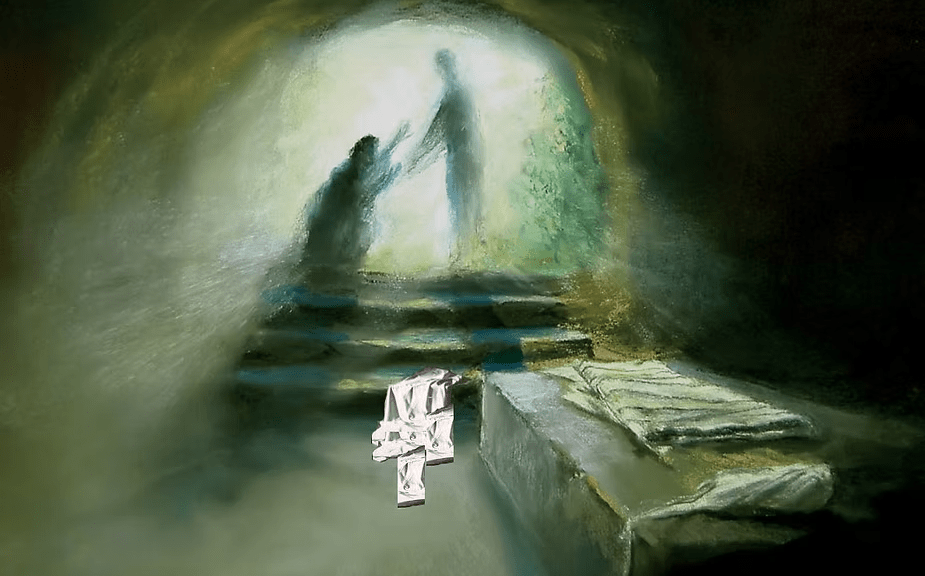
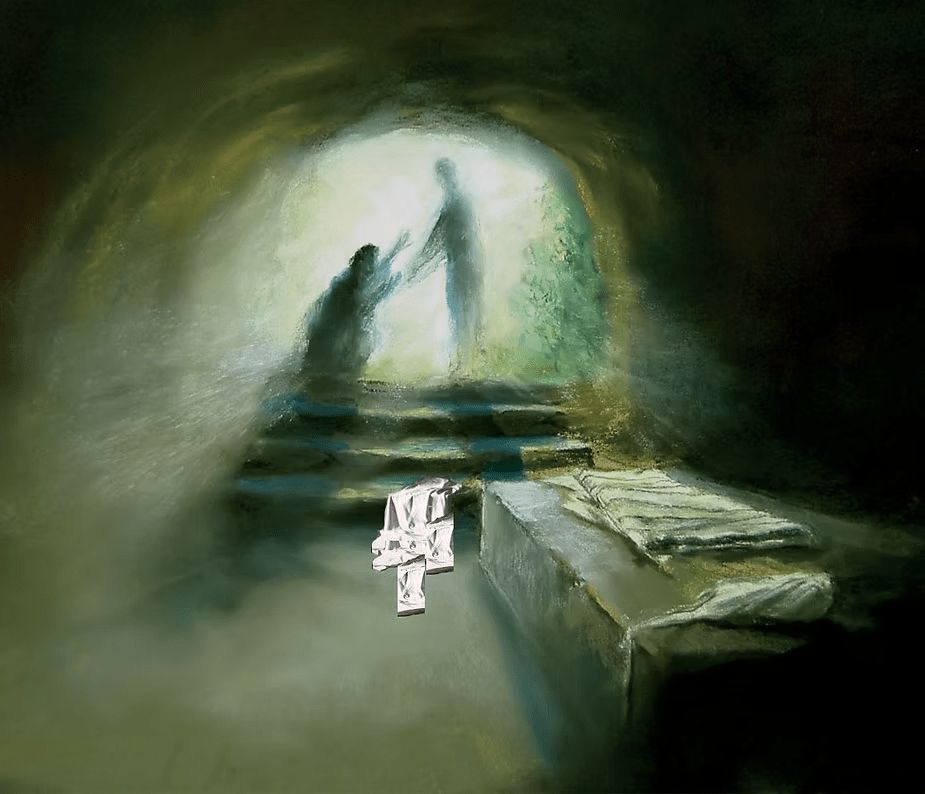
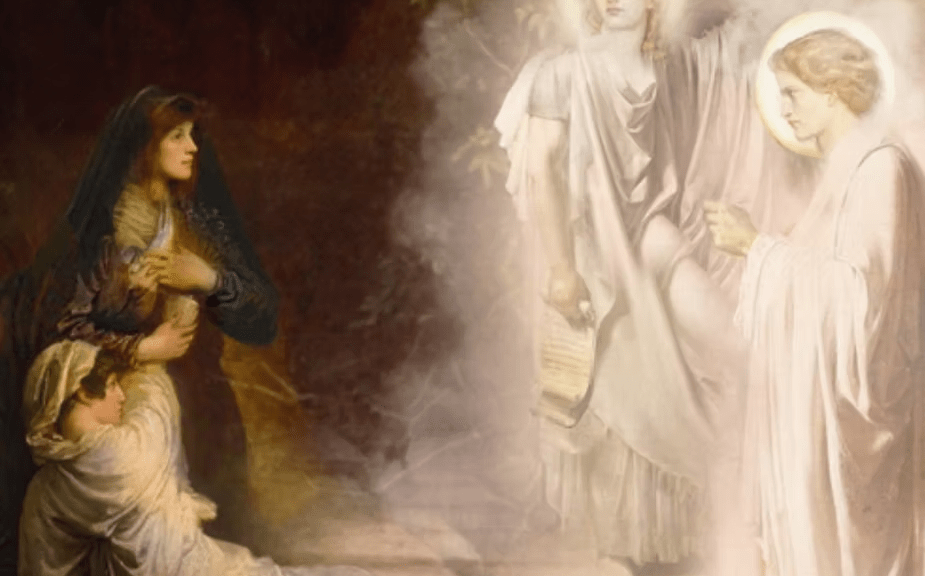
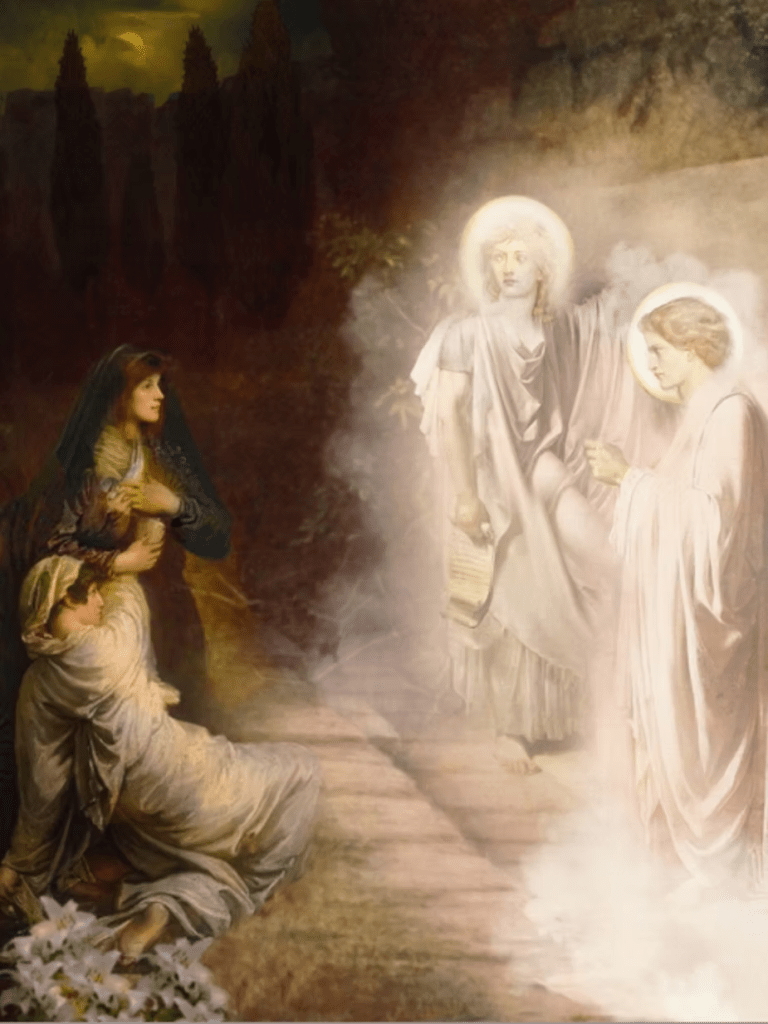


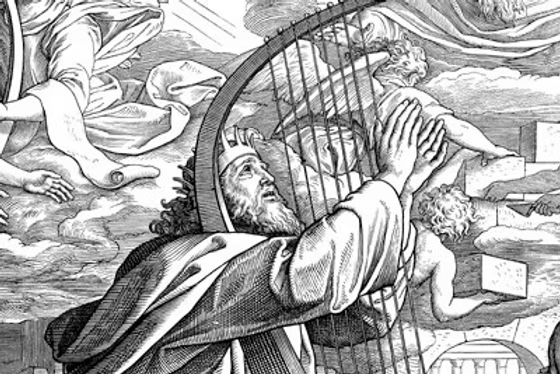
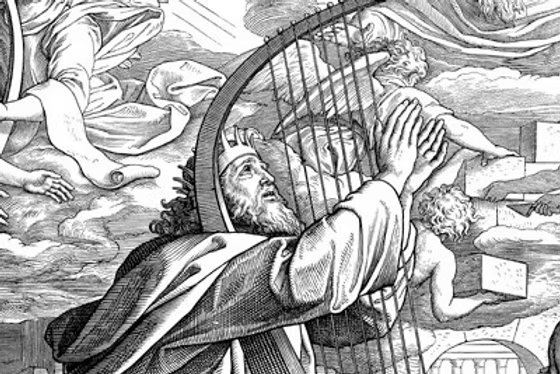
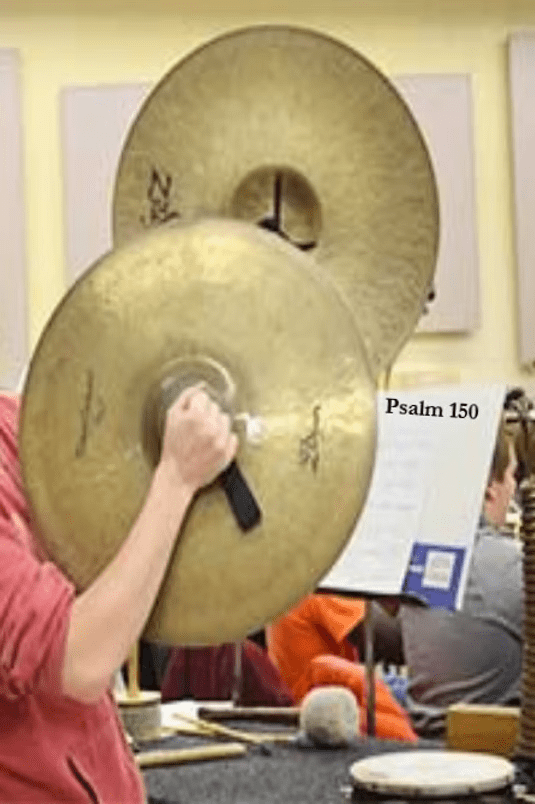






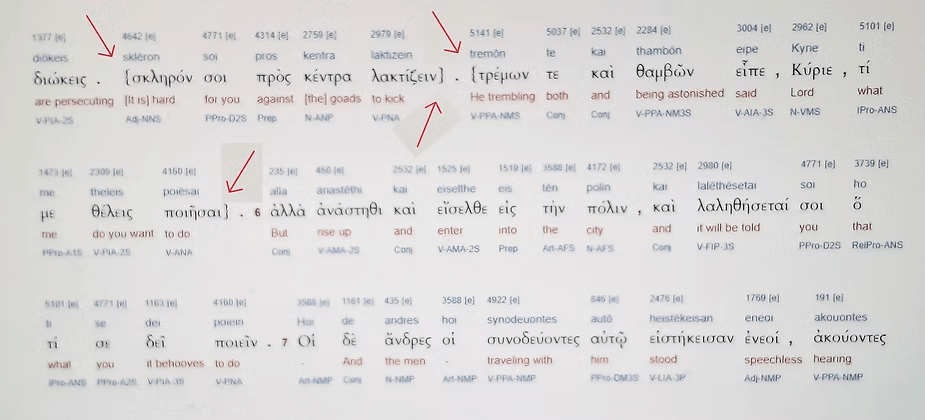
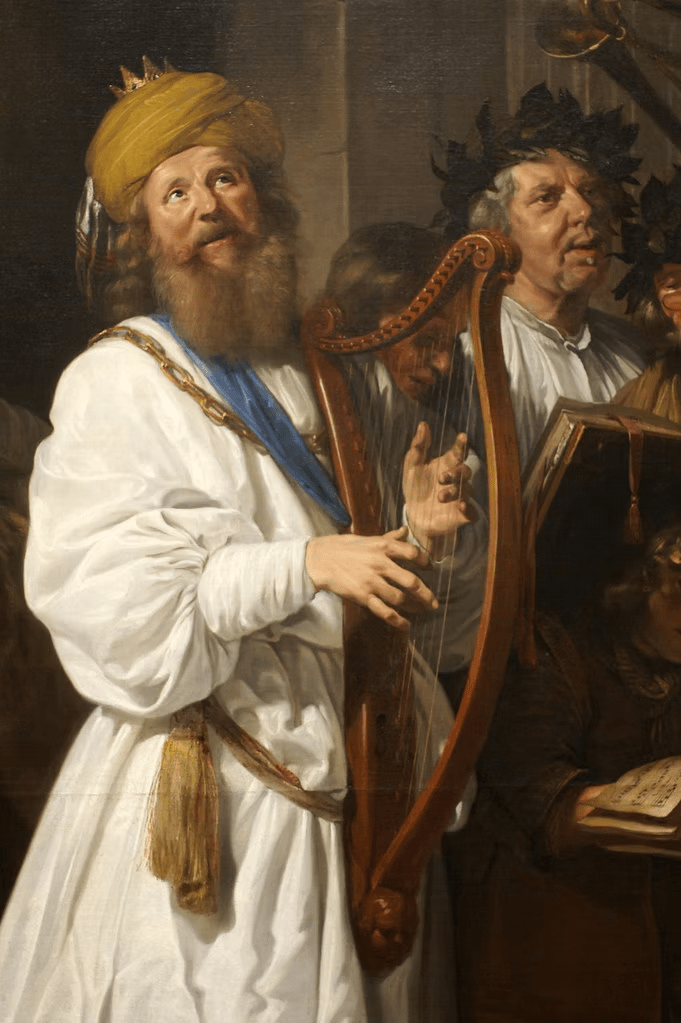
 Explaining the Readings